Study on the Mechanical Properties and Interfacial Interaction Mechanism of Nano-SiO2-Modified Expanded Polystyrene Lightweight Concrete
Abstract
1. Introduction
2. Experimental Methods
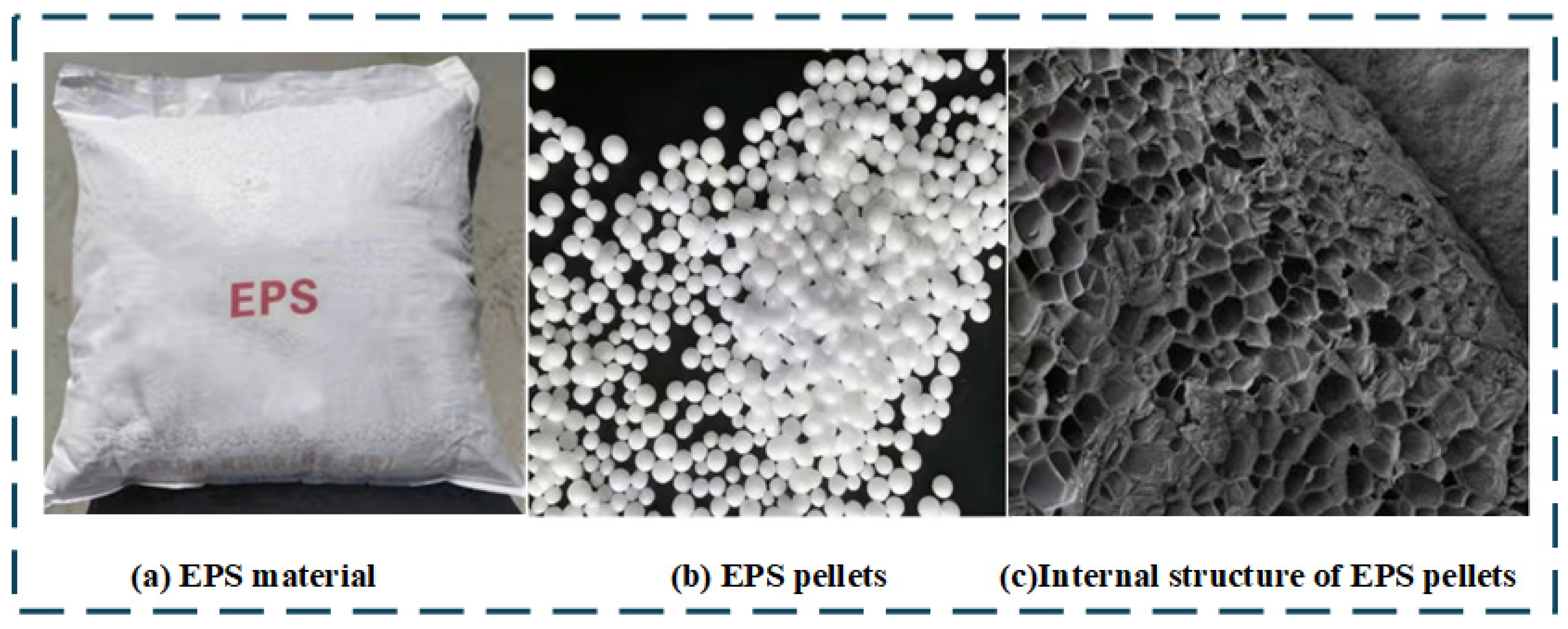
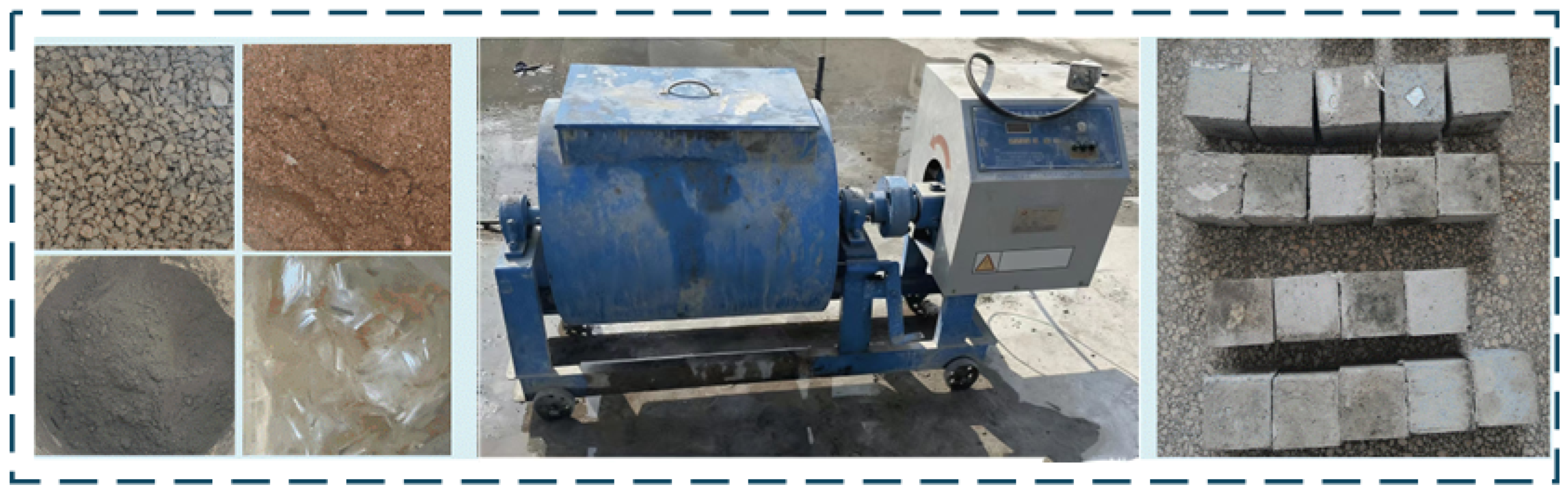
2.1. Raw Materials
2.2. Design of Mix Proportions for Experimental Specimens
3. Testing and Simulation
3.1. Macroscopic Mechanical Property Tests
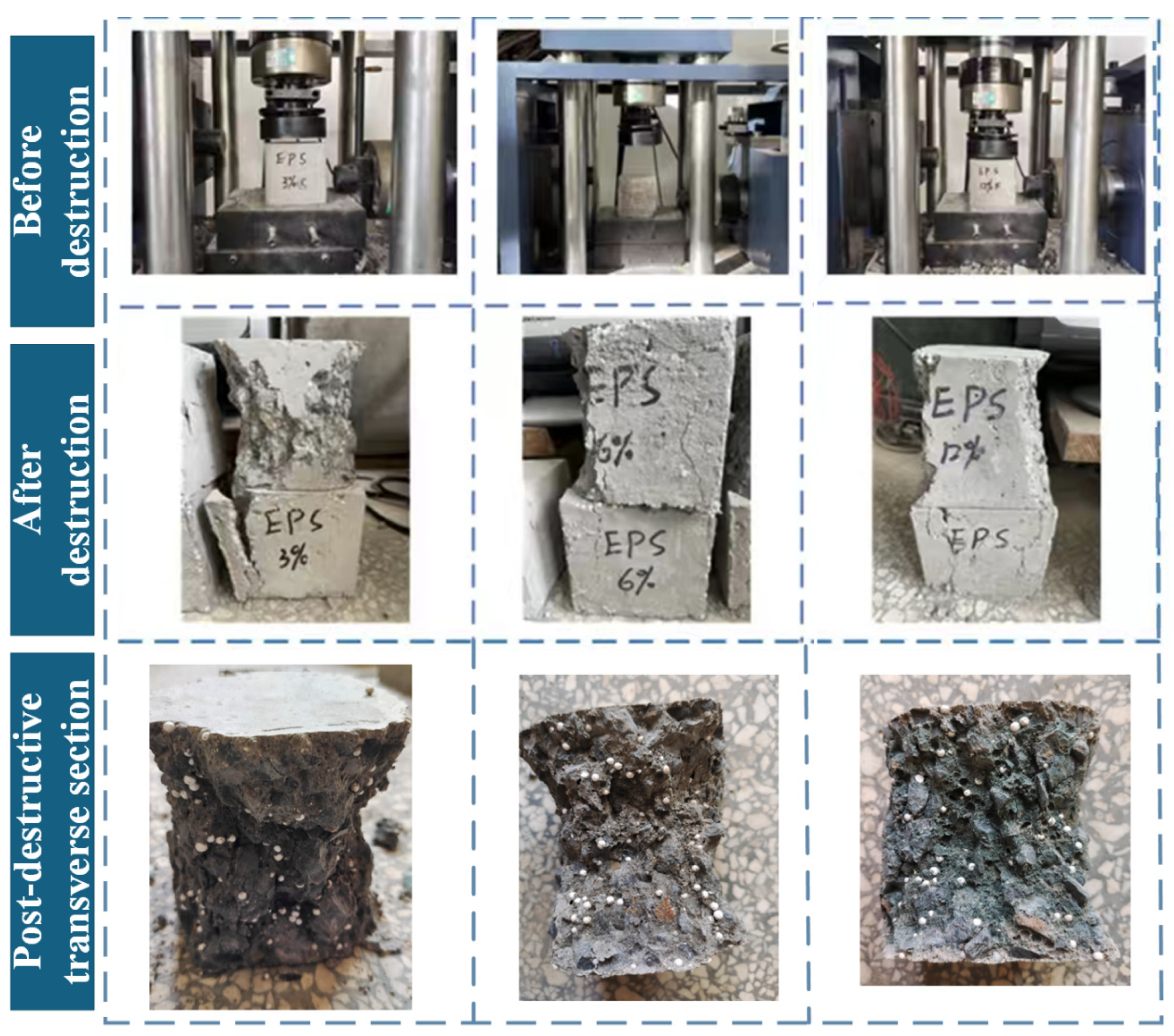
3.1.1. Compressive Strength Testing
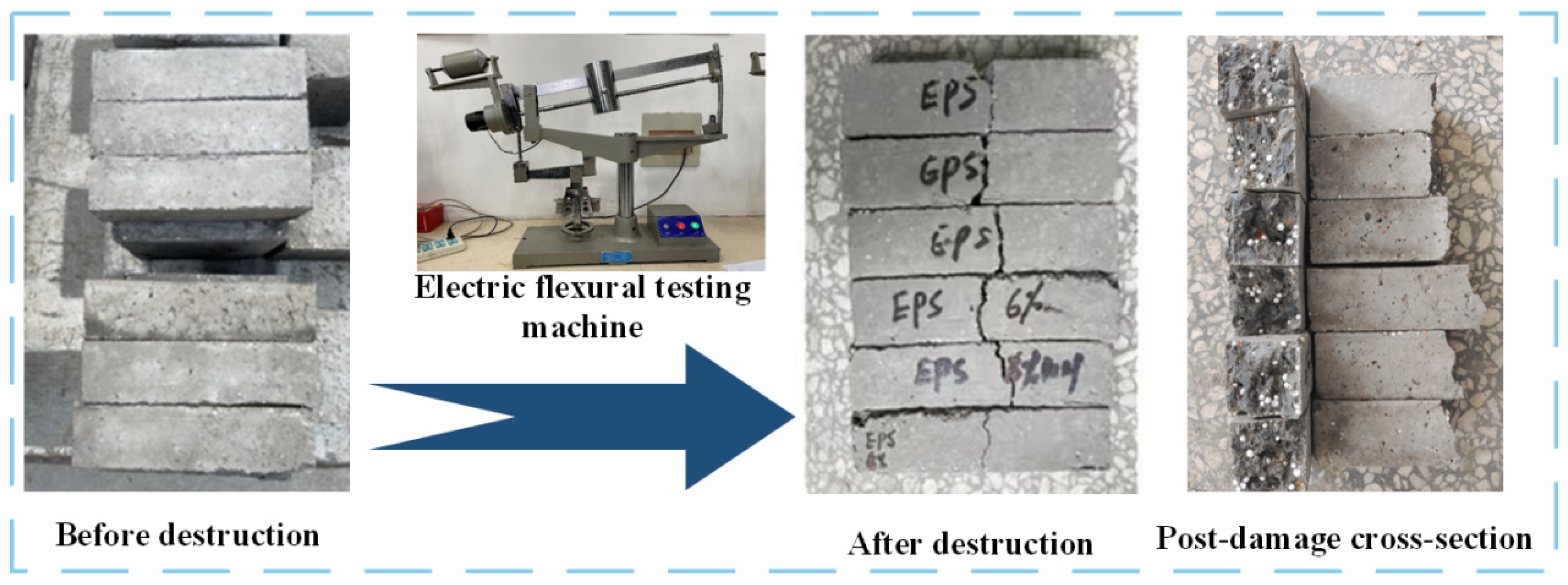
3.1.2. Flexural Strength Testing
3.2. Micromechanical Experiments
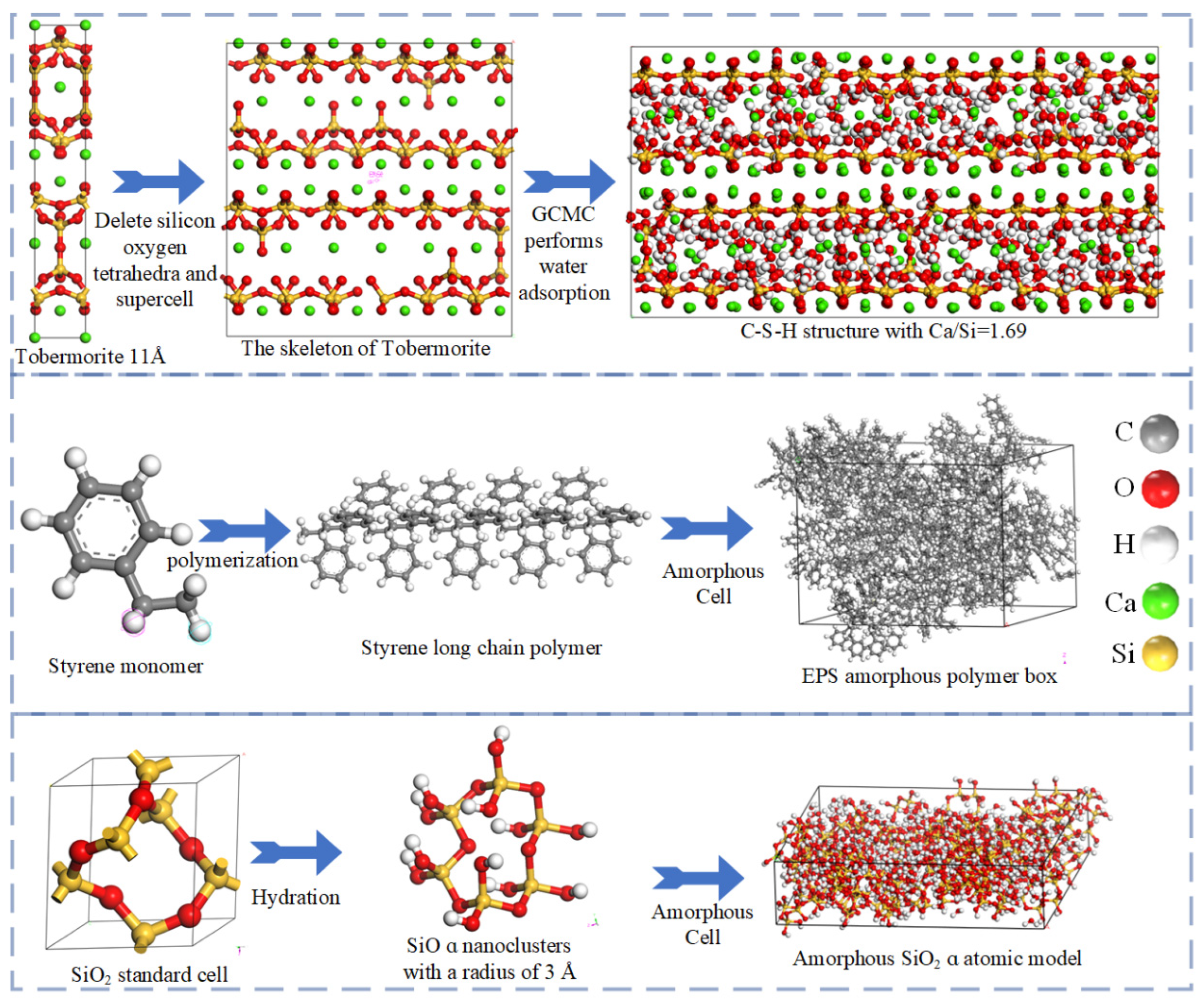
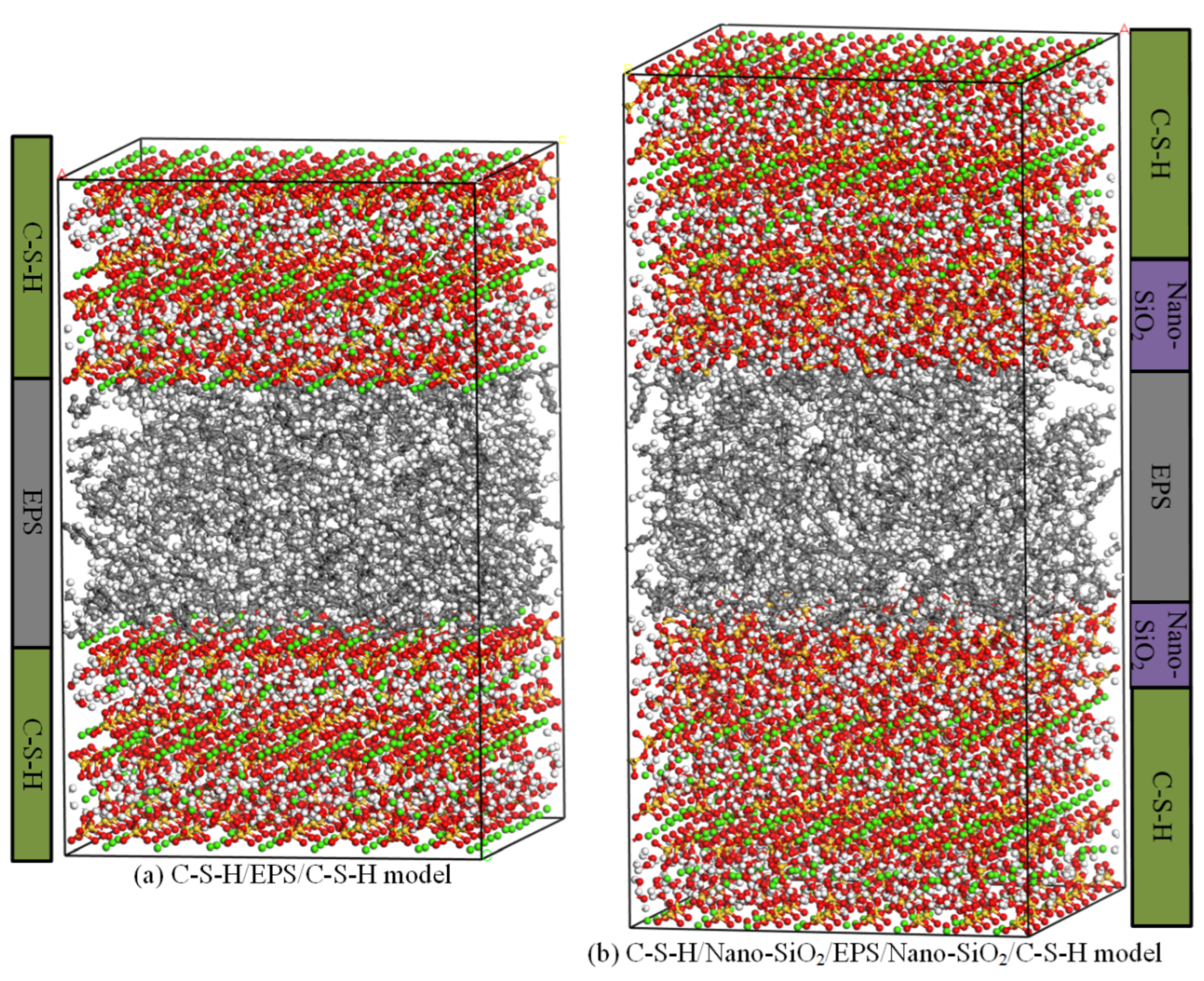
3.3. MD Model Development and Force Field Selection
4. Results and Discussion
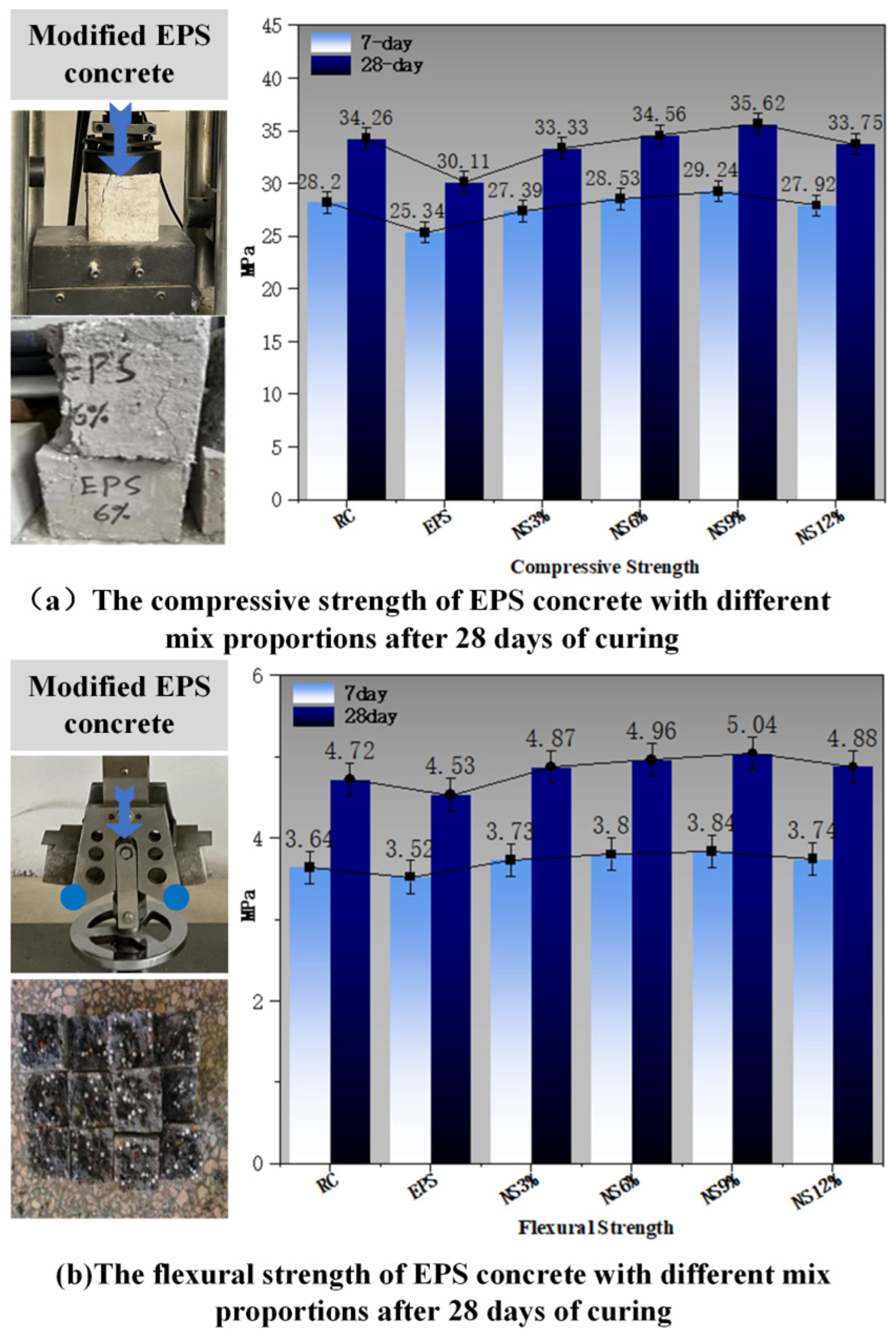
4.1. Macroscopic Test Results
4.2. Microscopic Test Results
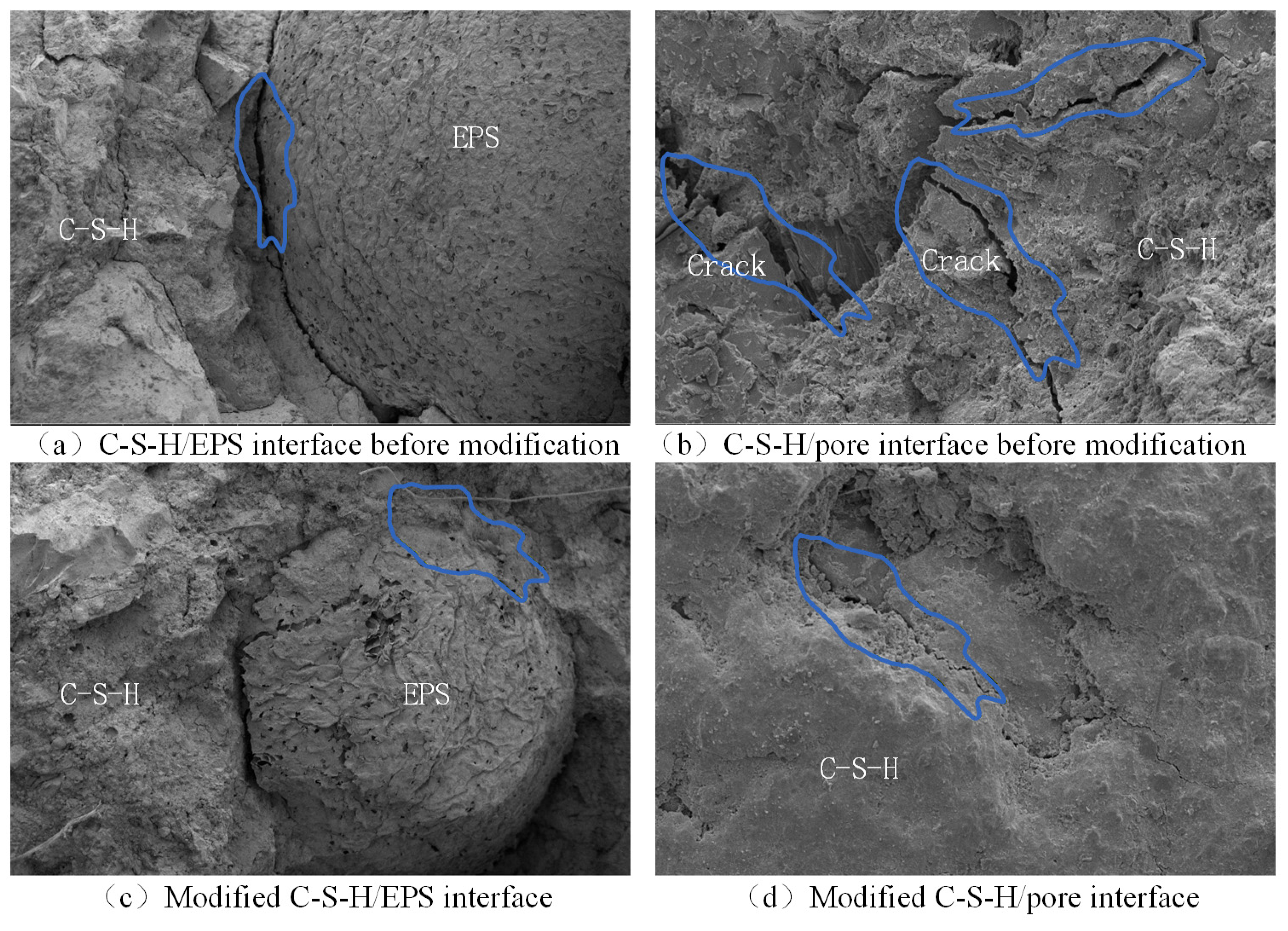
4.2.1. SEM
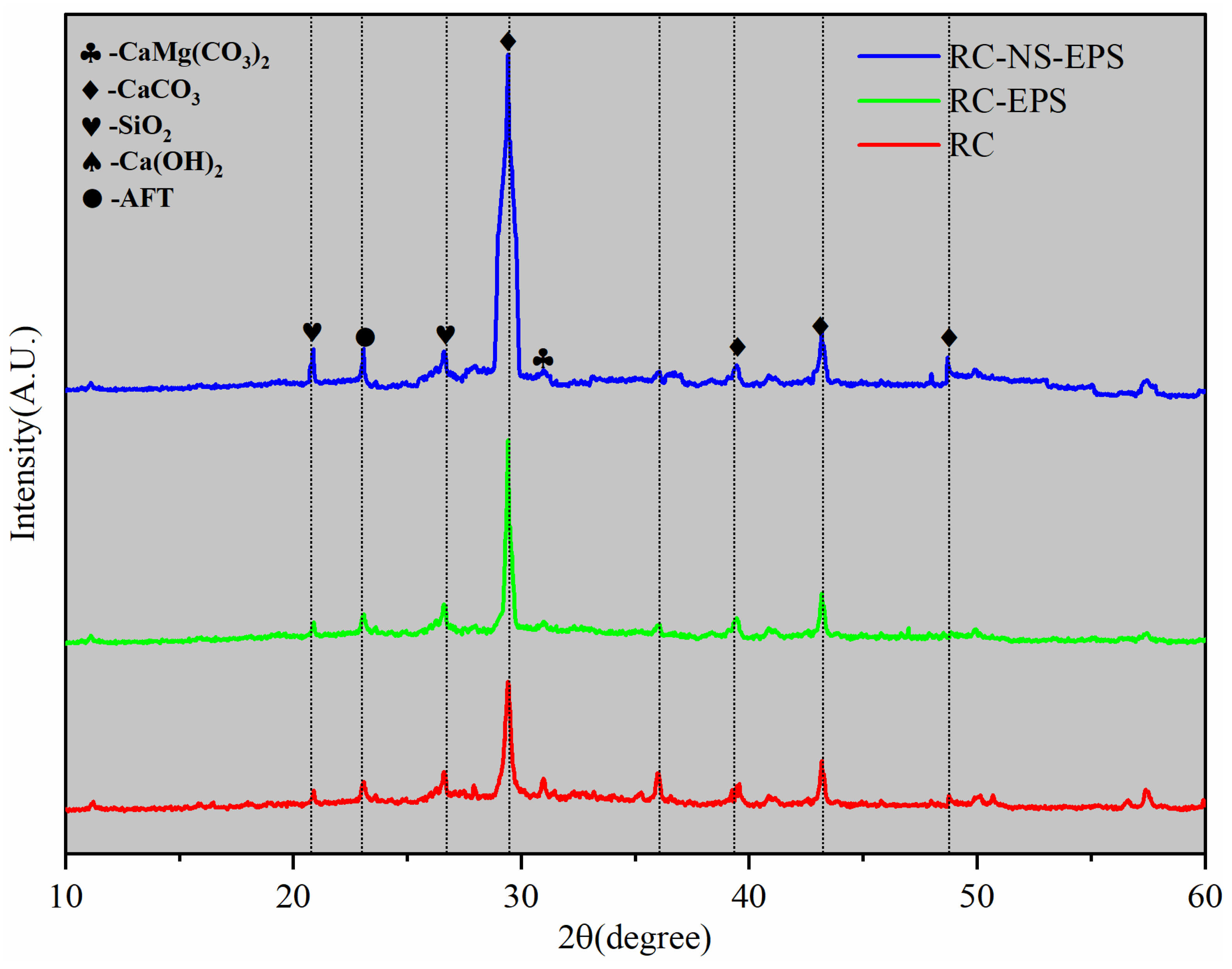
4.2.2. XRD
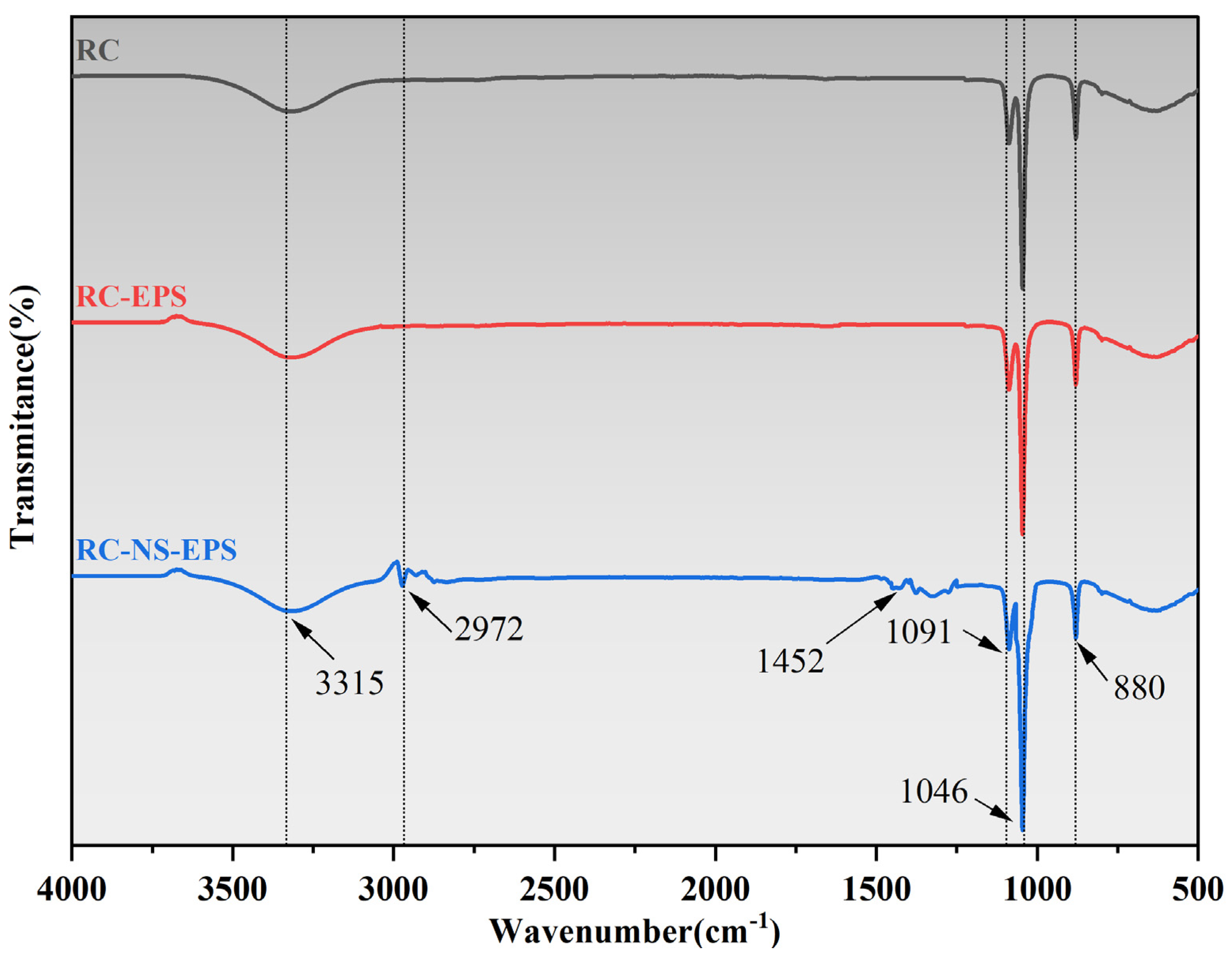
4.2.3. FTIR
4.3. Molecular Dynamics Simulations
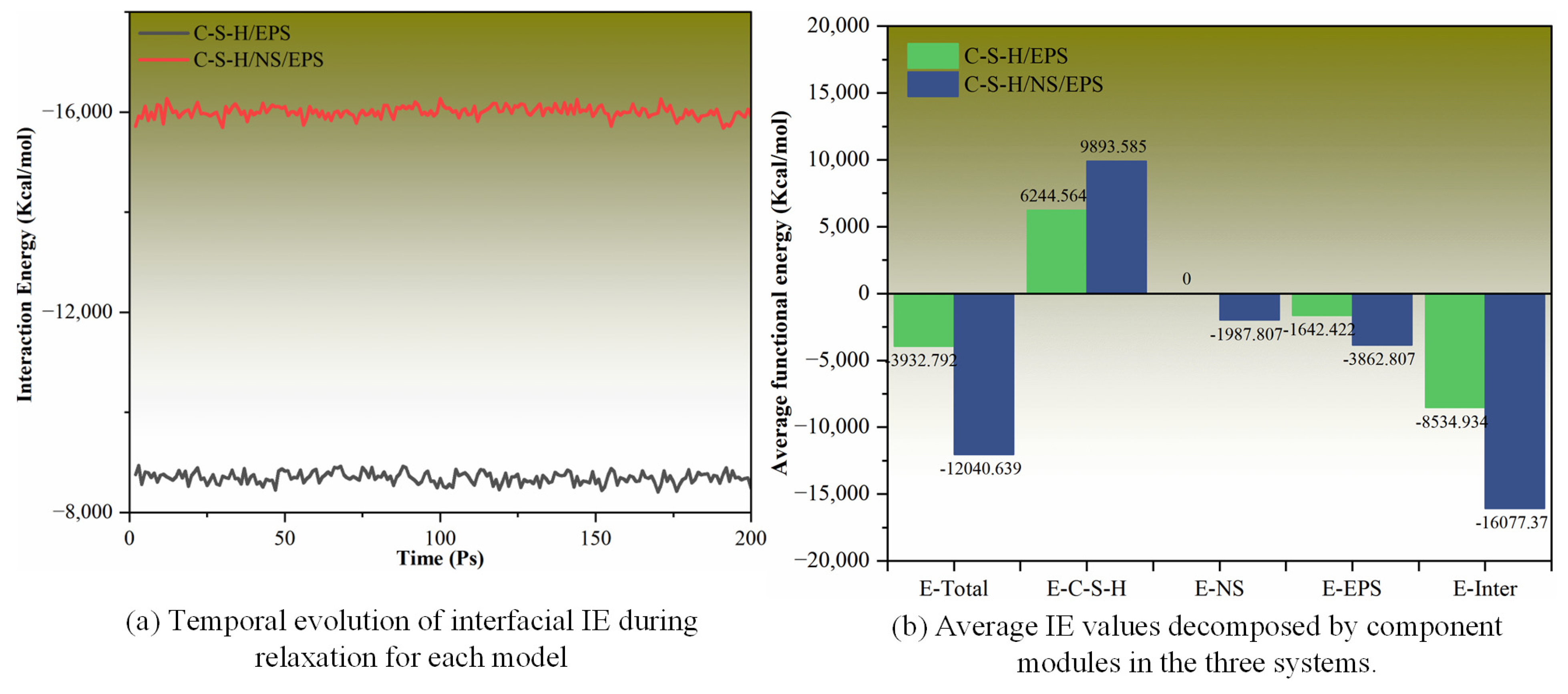
4.3.1. BE
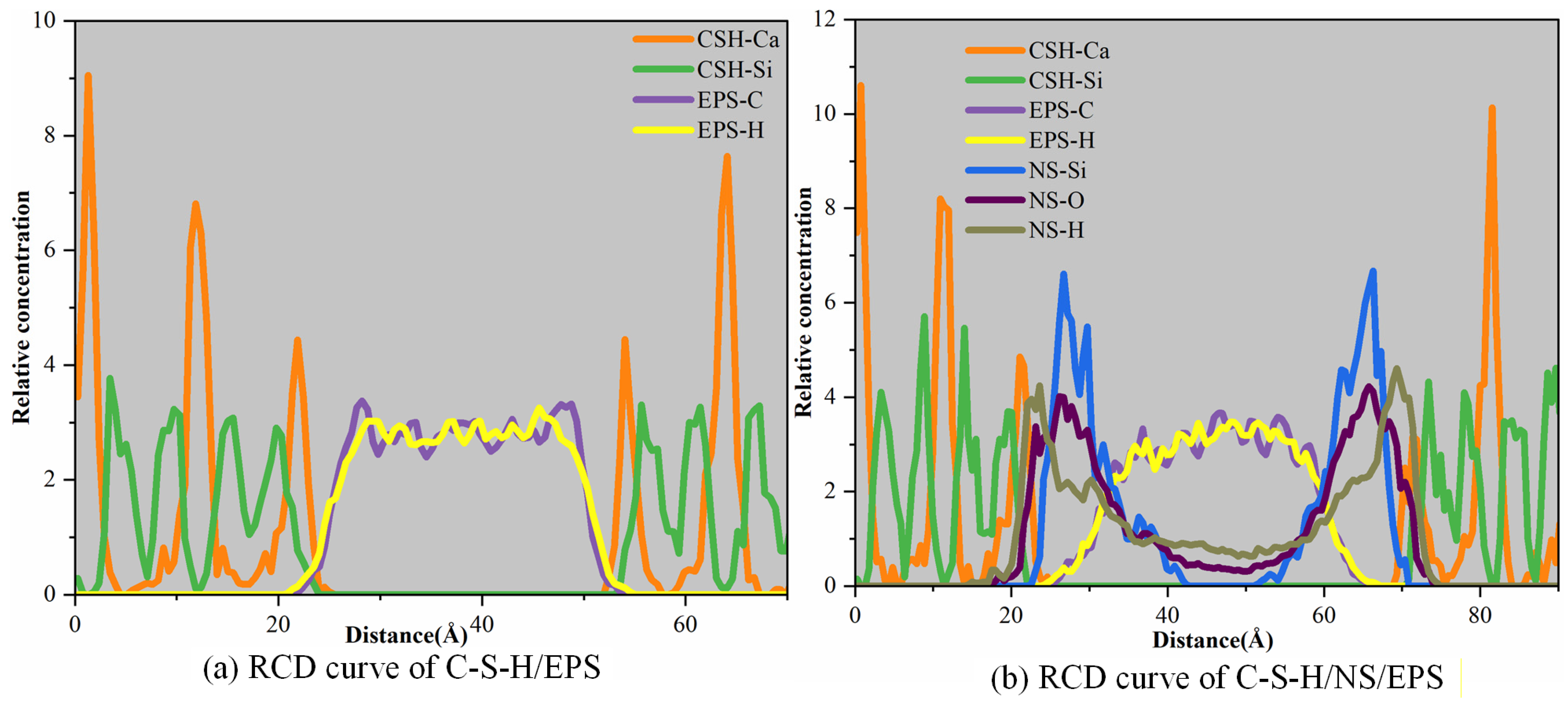
4.3.2. RCD
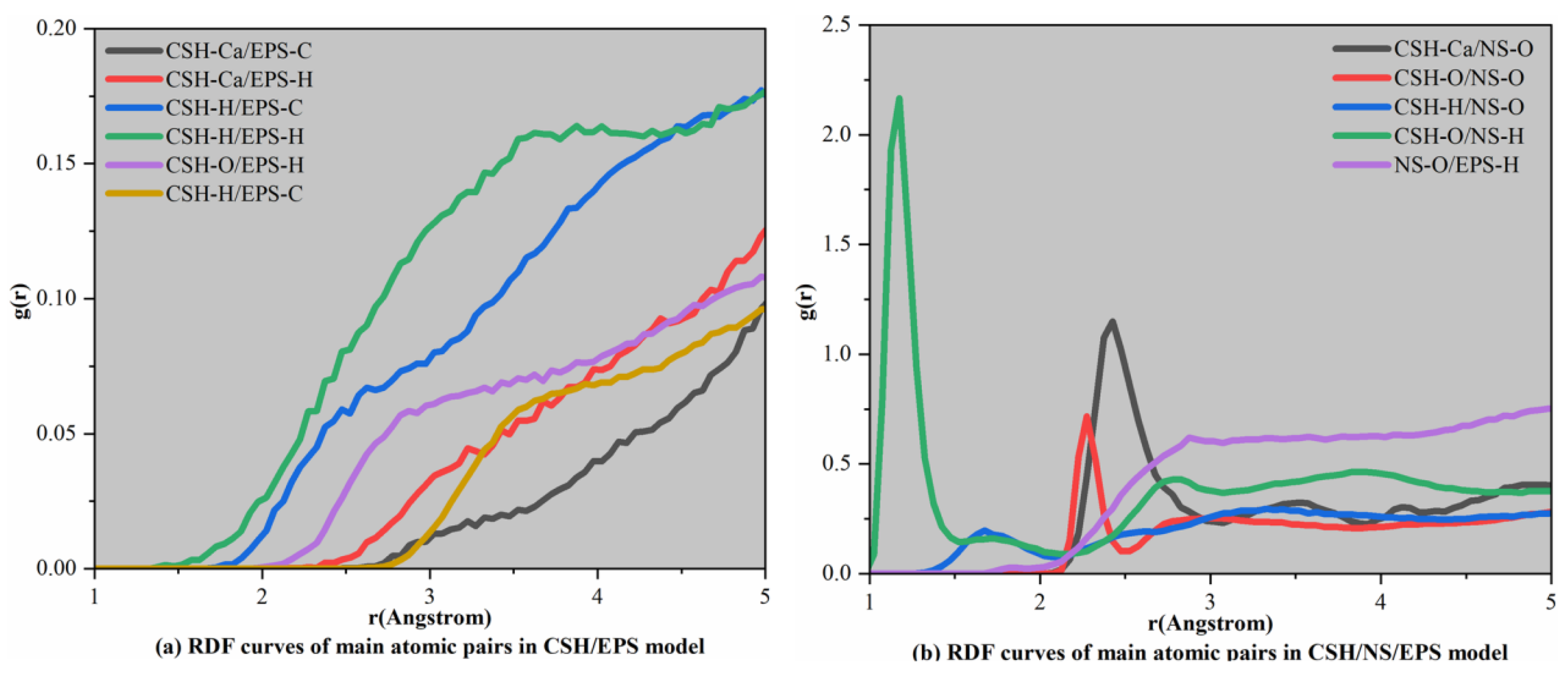
4.3.3. RDF
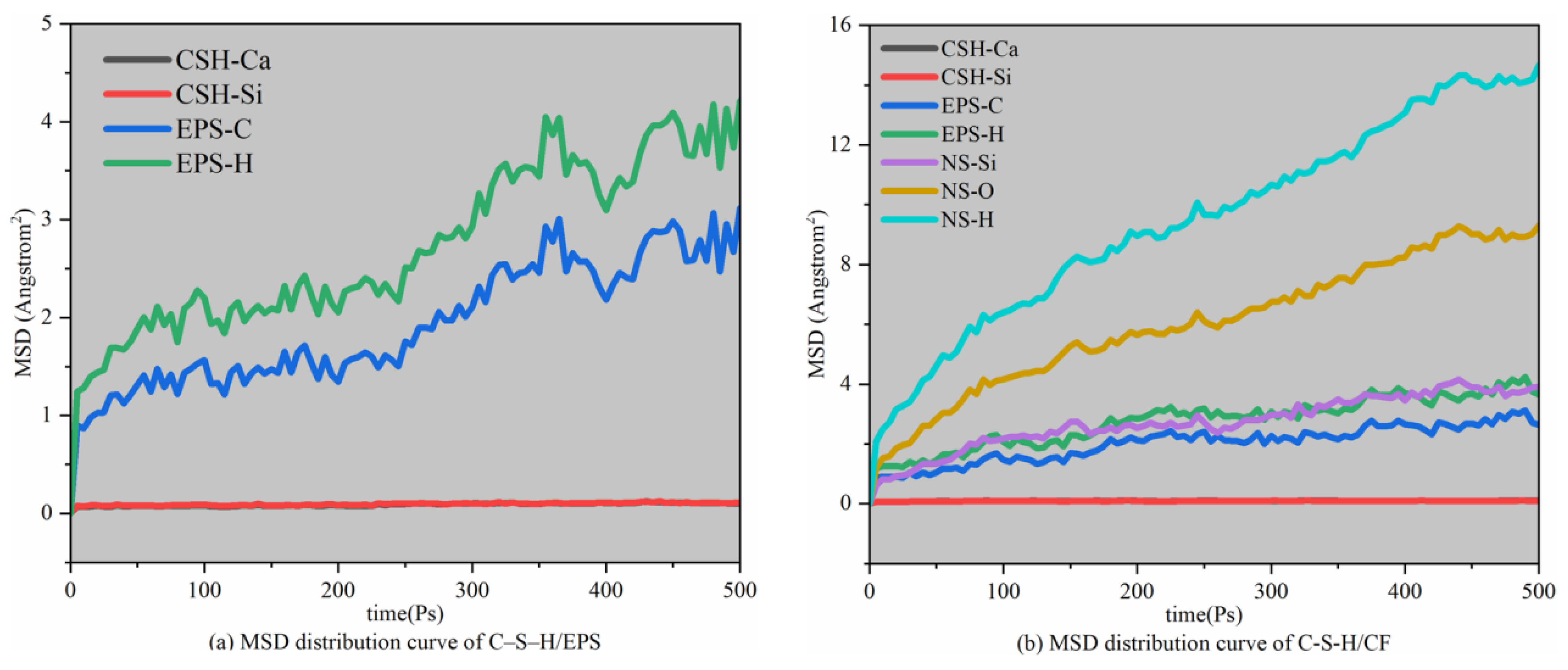
4.3.4. MSD
5. Conclusions
- The macroscopic tests reveal that EPS incorporation leads to a minor reduction in concrete compressive strength, while the introduction of NS offsets the strength deficiency caused by EPS, resulting in an overall increase in the compressive strength of the modified EPS concrete. In terms of flexural strength, both pre- and post-modified EPS concrete show significant improvements, with further enhancement observed after the addition of NS.
- Multiple microscopic tests indicate that the modified EPS enhances the connection between EPS and the cement matrix interface through friction and bonding interactions. At the same time, the application of NS promotes the further hydration of unhydrated cement, generating more gel materials that fill the pores in the concrete.
- MD simulations indicate that in the NS-modified EPS concrete system, there is not only mechanical adhesion between EPS and the cement matrix, but also the formation of a large number of hydrogen and ionic bonds, significantly enhancing interface stability and reducing the free expansion vibrations of interfacial atoms. These enhanced interfacial interactions significantly improve interface stability and restrain atomic mobility and thermal vibration at the interface, which is manifested as microstructural densification and corresponding improvement in macroscopic mechanical performance.
Author Contributions
Funding
Data Availability Statement
Conflicts of Interest
References
- Haller, T.; Scherb, S.; Beuntner, N.; Thienel, K.C. Renewable construction with lightweight concrete—Reclaimed recycled material systems with CO2-absorption. Constr. Build. Mater. 2025, 466, 140339. [Google Scholar] [CrossRef] [Scilit]
- Bian, S.; Tang, W.; Liu, X.R.; Li, Y.; Sun, X.L.; Yang, Y.P.; Yan, S.J.; Wu, Y.Y.; Liu, G.X.; Dan, J.M.; et al. Preparation of geopolymer-EPS core-shell lightweight aggregate and performance in lightweight geopolymer concrete. J. Mater. Sci. 2025, 60, 11381–11397. [Google Scholar] [CrossRef] [Scilit]
- Liu, N.; Chen, B. Experimental study of the influence of EPS particle size on the mechanical properties of EPS lightweight concrete. Constr. Build. Mater. 2014, 68, 227–232. [Google Scholar] [CrossRef] [Scilit]
- Xu, Y.; Tong, S.R.; Xu, X.; Mao, J.T.; Kang, X.; Luo, J.; Jiang, L.H.; Guo, M.Z. Effect of foam stabilization on the properties of foamed concrete modified by expanded polystyrene. J. Build. Eng. 2023, 73, 106822. [Google Scholar] [CrossRef] [Scilit]
- Niu, G.; Liu, C.; Jia, L.T.; Ma, L.; Shi, Y.F.; Jiang, Y.F.; Jia, Z.J.; Chen, Y.; Banthia, N.; Zhang, Y.M. Preparation and performance analysis of 3D printed lightweight EPS concrete: Insights from the excess paste theory. Cem. Concr. Compos. 2024, 149, 105509. [Google Scholar] [CrossRef] [Scilit]
- Li, Y.; Liu, N.; Chen, B. Properties of lightweight concrete composed of magnesia phosphate cement and expanded polystyrene aggregates. Mater. Struct. 2015, 48, 269–276. [Google Scholar] [CrossRef] [Scilit]
- Yuan, J.; Li, D.B.; Li, W.L.; Yang, H.L.; Zhang, W.H.; Wang, L.B.; Wang, J.J.; Xiong, Z.Z. Study on frost resistance of EPS concrete based on EPS beads wrapping modification. Constr. Build. Mater. 2022, 345, 128400. [Google Scholar] [CrossRef] [Scilit]
- Imtiaz, A.; Sharif, M.B.; Irfan-ul-Hassan, M.; Ghafoor, M.T.; Hasan, S. Effect of Expanded Polystyrene Beads on Mechanical, Thermal, and Acoustic Properties of Lightweight Concrete. Arab. J. Sci. Eng. 2025, 50, 1715–1727. [Google Scholar] [CrossRef] [Scilit]
- Zhang, L.W.; Huang, M.Y.; Yang, F.H.; Zhang, W.H. A novel hydrophilic modification method of EPS particles: Conception design and performances in concrete. Cem. Concr. Compos. 2023, 142, 105199. [Google Scholar] [CrossRef] [Scilit]
- Chung, S.Y.; Abd Elrahman, M.; Stephan, D. Effects of expanded polystyrene (EPS) sizes and arrangements on the properties of lightweight concrete. Mater. Struct. 2018, 51, 57. [Google Scholar] [CrossRef] [Scilit]
- Wei, J.; Yang, Q.S.; Yu, Y.; Jiang, Q.; Li, X.C.; Liu, S.C.; Li, K.X.; Wang, Q. Experimental study of multiscale hybrid fiber-reinforced ambient-cured LEGC under uniaxial compression. Constr. Build. Mater. 2024, 411, 134386. [Google Scholar] [CrossRef] [Scilit]
- Li, Z.N.; Shen, A.Q.; Zeng, G.P.; Chen, Z.T.; Guo, Y.C. Research progress on properties of basalt fiber-reinforced cement concrete. Mater. Today Commun. 2022, 33, 104824. [Google Scholar] [CrossRef] [Scilit]
- Wu, Z.; Wang, X.L.; Chen, Z.H. Experimental study on preparation and performance of the Corn Straw Fiber (CSF) reinforced EPS concrete. J. Build. Eng. 2024, 89, 109378. [Google Scholar] [CrossRef] [Scilit]
- Hu, P.F.; Wang, J.F.; Wang, W.Q.; Shen, Q.H.; Wu, X.T.; Wu, Y.E. Behaviour of fibre reinforced EPS lightweight concrete under dynamic splitting tension. J. Build. Eng. 2025, 111, 113360. [Google Scholar] [CrossRef] [Scilit]
- Yuan, B.X.; Huang, X.L.; Huang, Q.Y.; Shiau, J.; Liang, J.K.; Zhang, B.F.; Zheng, J.J.; Fahimizadeh, M.; Sabri, M.M. Effects of particle size on properties of engineering muck-based geopolymers: Optimization through sieving treatment. Constr. Build. Mater. 2025, 492, 142967. [Google Scholar] [CrossRef] [Scilit]
- Yuan, B.X.; Huang, X.L.; Li, R.C.; Luo, Q.Z.; Shiau, J.; Wang, Y.H.; Yuan, J.H.; Sabri, S.M.M.; Huang, S.Y.; Liao, C. Dynamic behavior and deformation of calcareous sand under cyclic loading. Soil Dyn. Earthq. Eng. 2025, 199, 109730. [Google Scholar] [CrossRef] [Scilit]
- Yuan, B.X.; Huang, Q.Y.; Xu, W.Y.; Han, Z.J.; Luo, Q.Z.; Chen, G.R.; Yuan, J.H.; Zhang, Q.Y.; Sabri, S.M.M. Study on the interaction between pile and soil under lateral load in coral sand. Geomech. Energy Environ. 2025, 42, 100674. [Google Scholar] [CrossRef] [Scilit]
- He, D.Y.; Zheng, W.K.; Chen, Z.L.; Qi, Y.L.; Zhang, D.W.; Li, H. Influence of Paste Strength on the Strength of Expanded Polystyrene (EPS) Concrete with Different Densities. Polymers 2022, 14, 2529. [Google Scholar] [CrossRef] [Scilit]
- Dorado, F.; Toledo, L.; de la Osa, A.R.; Esteban-Arranz, A.; Sacristan, J.; Pellegrin, B.; Steck, J.; Sanchez-Silva, L. Adhesion enhancement and protection of concrete against aggressive environment using graphite-Fe2O3 modified epoxy coating. Constr. Build. Mater. 2023, 379, 131179. [Google Scholar] [CrossRef] [Scilit]
- Althoey, F.; Zaid, O.; Martínez-García, R.; Alsharari, F.; Ahmed, M.; Arbili, M.M. Impact of Nano-silica on the hydration, strength, durability, and microstructural properties of concrete: A state-of-the-art review. Case Stud. Constr. Mater. 2023, 18, e01997. [Google Scholar] [CrossRef] [Scilit]
- Rath, B.; Praveenkumar, T.R.; Dhami, K.S.; Paramasivam, P.; Yusuf, M. Sustainable LC3 Concrete in the Circular Economy: Assessment of Mechanical, Microstructural, and Durability Characteristics with Surkhi, Metakaolin, Nano-Silica, and M-Sand Blended Concrete. Glob. Chall. 2025, 9, 2500026. [Google Scholar] [CrossRef] [Scilit] [PubMed]
- Rezaei, F.; Memarzadeh, A.; Davoodi, M.R.; Dashab, M.A.; Nematzadeh, M. Mechanical features and durability of concrete incorporating recycled coarse aggregate and nano-silica: Experimental study, prediction, and optimization. J. Build. Eng. 2023, 73, 106715. [Google Scholar] [CrossRef] [Scilit]
- Ashokan, A.; Dhairiyasamy, R.; Rajendaran, S. Investigating the influence of nano-silica incorporation on mechanical characteristics of steel fiber-reinforced concrete to mitigate solid waste and environmental contamination. Energy Sources Part A—Recovery Util. Environ. Eff. 2024, 46, 131–147. [Google Scholar] [CrossRef] [Scilit]
- Alvansazyazdi, M.; Alvarez-Rea, F.; Pinto-Montoya, J.; Khorami, M.; Bonilla-Valladares, P.M.; Debut, A.; Feizbahr, M. Evaluating the Influence of Hydrophobic Nano-Silica on Cement Mixtures for Corrosion-Resistant Concrete in Green Building and Sustainable Urban Development. Sustainability 2023, 15, 15311. [Google Scholar] [CrossRef] [Scilit]
- Nia, S.B.; Shafei, B. Synergistic effects of nano and micro silica on fresh and hardened properties of self-consolidating concrete. Case Stud. Constr. Mater. 2024, 21, e03443. [Google Scholar] [CrossRef] [Scilit]
- Ahmed, S.A.; Ebrahem, E.; El-Feky, M.S. Achieving sustainable performance: Synergistic effects of nano-silica and recycled expanded polystyrene in lightweight structural concrete. Sci. Rep. 2024, 14, 26648. [Google Scholar] [CrossRef] [Scilit]
- Ahmadi, S.H.; Mazloom, M.; Salehi, H. Total and initial fracture energies of self-compacting lightweight concrete containing silica fume and nano-silica. Eng. Fract. Mech. 2024, 308, 110382. [Google Scholar] [CrossRef] [Scilit]
- Zhang, C.P.; Fan, D.Q.; Lu, J.X.; Pang, C.M.; Poon, C.S. Ultra-stable foam enabled by nano silica engineering for foam concrete improvement. Cem. Concr. Compos. 2024, 150, 105575. [Google Scholar] [CrossRef] [Scilit]
- Du, Y.Y.; Korjakins, A.; Sinka, M.; Pundiene, I. Lifecycle Assessment and Multi-Parameter Optimization of Lightweight Cement Mortar with Nano Additives. Materials 2024, 17, 4434. [Google Scholar] [CrossRef] [Scilit]
- Majeed, S.S.; Mydin, M.A.O.; Bahrami, A.; Dulaimi, A.; Özkiliç, Y.O.; Omar, R.; Jagadesh, P. Development of ultra-lightweight foamed concrete modified with silicon dioxide (SiO2) nanoparticles: Appraisal of transport, mechanical, thermal, and microstructural properties. J. Mater. Res. Technol.—JMRT 2024, 30, 3308–3327. [Google Scholar] [CrossRef] [Scilit]
- Zhang, Y.T.; Sun, X.W. A comprehensive assessment of nanomaterials reinforced lightweight aggregate concrete containing high-volume artificial shale ceramsite. J. Build. Eng. 2024, 84, 108696. [Google Scholar] [CrossRef] [Scilit]
- Diotallevi, P.P.; Landi, L.; Guiduzzi, M. Experimental tests of RC beams strengthened with composite materials using IPN water-based resins. Mater. Struct. 2017, 50, 174. [Google Scholar] [CrossRef] [Scilit]
- Bai, G.; Pan, Y.; Zhang, Y.; Li, Y.; Wang, J.; Wang, Y.; Teng, W.; Jin, G.; Geng, F.; Cao, J. Research advances of molecular docking and molecular dynamic simulation in recognizing interaction between muscle proteins and exogenous additives. Food Chem. 2023, 429, 136836. [Google Scholar] [CrossRef] [Scilit]
- Al-Karmalawy, A.A.; Dahab, M.A.; Metwaly, A.M.; Elhady, S.S.; Elkaeed, E.B.; Eissa, I.H.; Darwish, K.M. Molecular Docking and Dynamics Simulation Revealed the Potential Inhibitory Activity of ACEIs Against SARS-CoV-2 Targeting the hACE2 Receptor. Front. Chem. 2021, 9, 661230. [Google Scholar] [CrossRef] [Scilit]
- Golewski, G.L.; Szostak, B. Strength and microstructure of composites with cement matrixes modified by fly ash and active seeds of C-S-H phase. Struct. Eng. Mech. 2022, 82, 543–556. [Google Scholar] [CrossRef]
- Wang, L.; Guo, F.X.; Lin, Y.Q.; Yang, H.M.; Tang, S.W. Comparison between the effects of phosphorous slag and fly ash on the C-S-H structure, long-term hydration heat and volume deformation of cement-based materials. Constr. Build. Mater. 2020, 250, 118807. [Google Scholar] [CrossRef] [Scilit]
- Wang, L.; Jin, M.M.; Zhou, S.H.; Tang, S.W.; Lu, X. Investigation of microstructure of C-S-H and micro-mechanics of cement pastes under NH4NO3 dissolution by 29Si MAS NMR and microhardness. Measurement 2021, 185, 110019. [Google Scholar] [CrossRef] [Scilit]
- Geng, Z.C.; Tang, S.W.; Wang, Y.; A, H.B.; He, Z.; Wu, K.; Wang, L. Stress relaxation properties of calcium silicate hydrate: A molecular dynamics study. J. Zhejiang Univ. Sci. A 2024, 25, 97–115. [Google Scholar] [CrossRef] [Scilit]
- Al-Muhit, B.; Sanchez, F. Nano-engineering of the mechanical properties of tobermorite 14 Å with graphene via molecular dynamics simulations. Constr. Build. Mater. 2020, 233, 117237. [Google Scholar] [CrossRef] [Scilit]
- Sarkar, P.K.; Mitra, N. Molecular level study of uni/multi-axial deformation response of tobermorite 11 Å: A force field comparison study. Cem. Concr. Res. 2021, 145, 106451. [Google Scholar] [CrossRef] [Scilit]
- Zhou, Y.; Zheng, H.; Li, W.; Ma, T.; Miao, C. A deep learning potential applied in tobermorite phases and extended to calcium silicate hydrates. Cem. Concr. Res. 2022, 152, 106685. [Google Scholar] [CrossRef] [Scilit]
- Pellenq, R.J.M.; Kushima, A.; Shahsavari, R.; Van Vliet, K.J.; Buehler, M.J.; Yip, S.; Ulm, F.-J. A realistic molecular model of cement hydrates. Proc. Natl. Acad. Sci. USA 2009, 106, 16102–16107. [Google Scholar] [CrossRef] [Scilit]
- Hamid, S.A. The crystal structure of the 11Å natural tobermorite Ca2.25[Si3O7.5(OH)1.5]·H2O. Z. Krist. 1981, 154, 189–198. [Google Scholar]
- Hou, D.; Wu, C.; Yang, Q.; Zhang, W.; Lu, Z.; Wang, P.; Li, J.; Ding, Q. Insights on the molecular structure evolution for tricalcium silicate and slag composite: From 29Si and 27Al NMR to molecular dynamics. Compos. Part B—Eng. 2020, 202, 108401. [Google Scholar] [CrossRef] [Scilit]
- Luo, Q.; Xiang, Y.; Yang, Q.; Liang, T.; Xie, Y. Molecular simulation of calcium-silicate-hydrate and its applications: A comprehensive review. Constr. Build. Mater. 2023, 409, 134137. [Google Scholar] [CrossRef] [Scilit]
- Mohamed, A.K.; Parker, S.C.; Bowen, P.; Galmarini, S. An atomistic building block description of C-S-H—Towards a realistic C-S-H model. Cem. Concr. Res. 2018, 107, 221–235. [Google Scholar] [CrossRef] [Scilit]
- Feng, Y.; Qin, D.; Li, L.; Li, Y.; Wang, C.; Wang, P. EVA enhances the interfacial strength of EPS concrete: A molecular dynamics study. J. Exp. Nanosci. 2021, 16, 383–397. [Google Scholar] [CrossRef] [Scilit]
- Wei, Q.; Wang, Y.; Wang, S.; Zhang, Y.; Chen, X. Investigating the properties and interaction mechanism of nano-silica in polyvinyl alcohol/polyacrylamide blends at an atomic level. J. Mech. Behav. Biomed. Mater. 2017, 75, 529–537. [Google Scholar] [CrossRef] [Scilit] [PubMed]
- Zhou, X.; Li, B.; Huang, Q.; Huang, J. Molecular Dynamics Simulation of Mechanical and Tribological Properties of Ultrahigh Molecular Weight Polyethylene Enhanced by Modified Silica Nanoparticles. J. Mater. Eng. Perform. 2024. Early Access. [Google Scholar] [CrossRef] [Scilit]
- Ke, Q.; Gong, X.; Liao, S.; Duan, C.; Li, L. Effects of thermostats/barostats on physical properties of liquids by molecular dynamics simulations. J. Mol. Liq. 2022, 365, 120116. [Google Scholar] [CrossRef] [Scilit]
- Feng, Y.; Lv, L.T.; Jiang, H.L.; Shi, X. Multiscale experimental and simulation analysis on the synergistic modification mechanism of nano-SiO2/EVA at the recycled concrete interface. Compos. Interfaces 2025, 32, 1097–1122. [Google Scholar] [CrossRef] [Scilit]
- Li, W.; Chai, W.; Zhang, L.; Guo, Y.; Wang, W.; Chen, S. Atomic insight into the influences of moisture ingress on the structures and dynamics of graphene-epoxy interfaces. Compos. Sci. Technol. 2022, 219, 109222. [Google Scholar] [CrossRef] [Scilit]
- Meng, H.; Cui, Z.; Yu, Y.; Li, Y.; Jiang, S.; Liu, Y. From Molecular Dynamics to Taste Sensory Perception: A Comprehensive Study on the Interaction of Umami Peptides with the T1R1/T1R3-VFT Receptor. J. Agric. Food Chem. 2024, 72, 6533–6543. [Google Scholar] [CrossRef] [Scilit] [PubMed]





| CaO | SiO2 | Al2O3 | Fe2O3 | MgO | SO3 | Na2O | K2O | Other |
|---|---|---|---|---|---|---|---|---|
| 63.20 | 21.05 | 5.31 | 4.17 | 3.32 | 2.02 | 0.42 | 0.3 | 0.21 |
| Physical Characteristics | Measured Values |
|---|---|
| Color | white |
| Nano silica content (%) | 99.9 |
| Specific surface area (m2/g) | 640 ± 60 |
| Particle size (nm) | 15 ± 5 |
| Bulk density (g/L) | ≤100 |
| PH | 6–8 |
| Apparent Density (kg/m3) | Caliber (mm) | Tear Strength (MPa) | Tensile Strength (MPa) | Absorbency (%) | Elongation (%) | Thermal Conductivity (%) |
|---|---|---|---|---|---|---|
| 20 | 2–4 | 0.26 | 0.34 | 0.01 | 125 | 0.02 |
| Sample ID | Raw Materials (kg/m3) | Water/Cement Ratio | Additives (g) | EPS/% | NS/% | ||||
|---|---|---|---|---|---|---|---|---|---|
| Cement | Fly Ash | Stone | Sand | Expander | Water Reducer | ||||
| A | 352 | 120 | 820 | 117 | 0.4 | 30 | 8.68 | 0 | 0 |
| B | 352 | 120 | 820 | 117 | 0.4 | 30 | 8.68 | 5 | 0 |
| C | 384 | 120 | 883 | 117 | 0.4 | 30 | 8.68 | 5 | 3 |
| D | 384 | 120 | 820 | 117 | 0.4 | 30 | 8.68 | 5 | 6 |
| E | 384 | 120 | 820 | 117 | 0.4 | 30 | 8.68 | 5 | 9 |
| F | 384 | 120 | 820 | 117 | 0.4 | 30 | 8.68 | 5 | 12 |
Disclaimer/Publisher’s Note: The statements, opinions and data contained in all publications are solely those of the individual author(s) and contributor(s) and not of MDPI and/or the editor(s). MDPI and/or the editor(s) disclaim responsibility for any injury to people or property resulting from any ideas, methods, instructions or products referred to in the content. |
© 2026 by the authors. Licensee MDPI, Basel, Switzerland. This article is an open access article distributed under the terms and conditions of the Creative Commons Attribution (CC BY) license.
Share and Cite
Zhao, C.; Xing, F.; Feng, Y.; Lv, L.; Kou, Z.; Li, L. Study on the Mechanical Properties and Interfacial Interaction Mechanism of Nano-SiO2-Modified Expanded Polystyrene Lightweight Concrete. Buildings 2026, 16, 1078. https://doi.org/10.3390/buildings16051078
Zhao C, Xing F, Feng Y, Lv L, Kou Z, Li L. Study on the Mechanical Properties and Interfacial Interaction Mechanism of Nano-SiO2-Modified Expanded Polystyrene Lightweight Concrete. Buildings. 2026; 16(5):1078. https://doi.org/10.3390/buildings16051078
Chicago/Turabian StyleZhao, Chen, Fang Xing, Yong Feng, Longteng Lv, Ziyang Kou, and Lijvan Li. 2026. "Study on the Mechanical Properties and Interfacial Interaction Mechanism of Nano-SiO2-Modified Expanded Polystyrene Lightweight Concrete" Buildings 16, no. 5: 1078. https://doi.org/10.3390/buildings16051078
APA StyleZhao, C., Xing, F., Feng, Y., Lv, L., Kou, Z., & Li, L. (2026). Study on the Mechanical Properties and Interfacial Interaction Mechanism of Nano-SiO2-Modified Expanded Polystyrene Lightweight Concrete. Buildings, 16(5), 1078. https://doi.org/10.3390/buildings16051078