Cooling Strategies for the Effective Mitigation of Summer Thermal Stress in City Laneways

 ,
,
Abstract
1. Introduction
2. Methodology
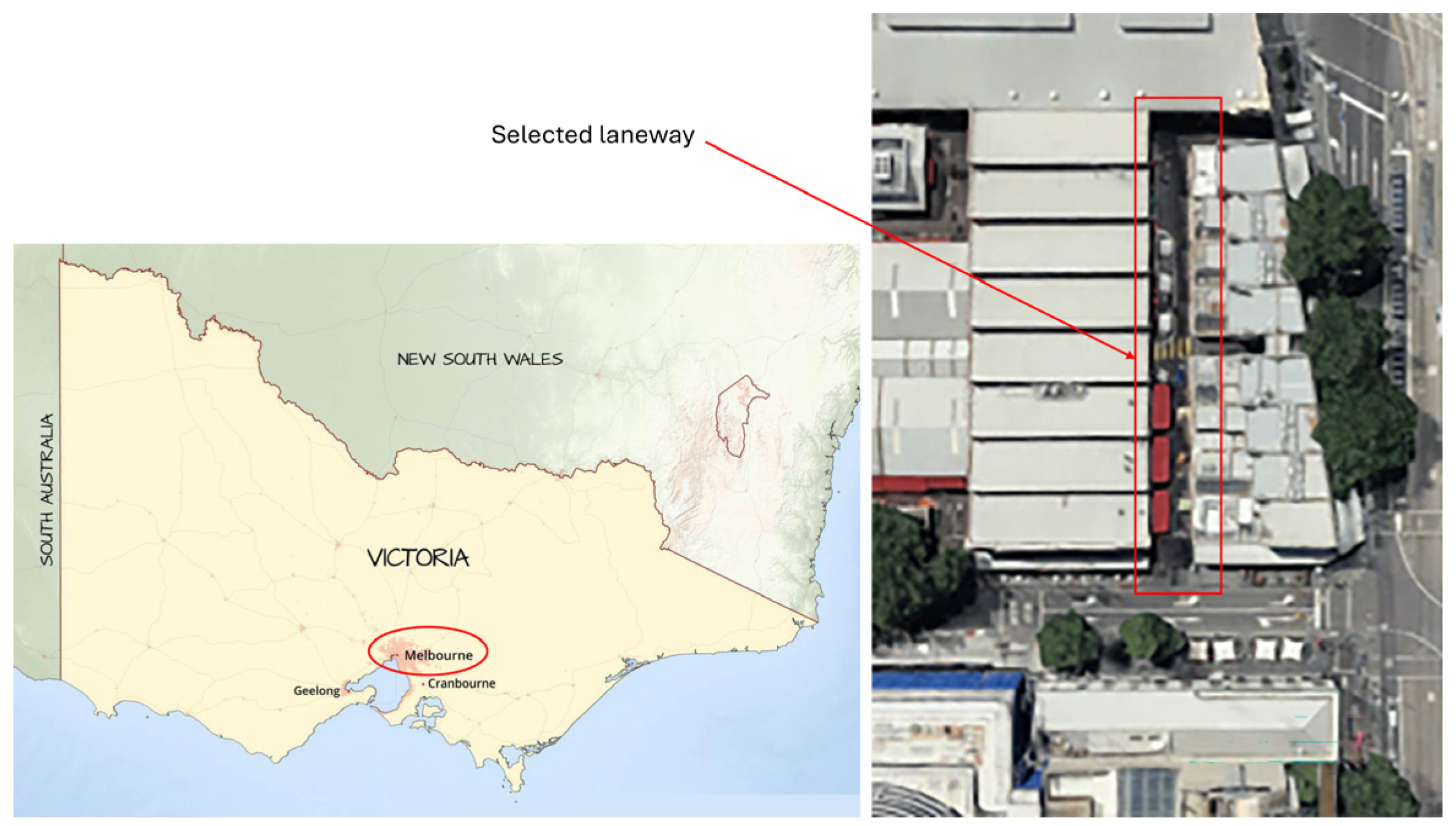
2.1. Site Description
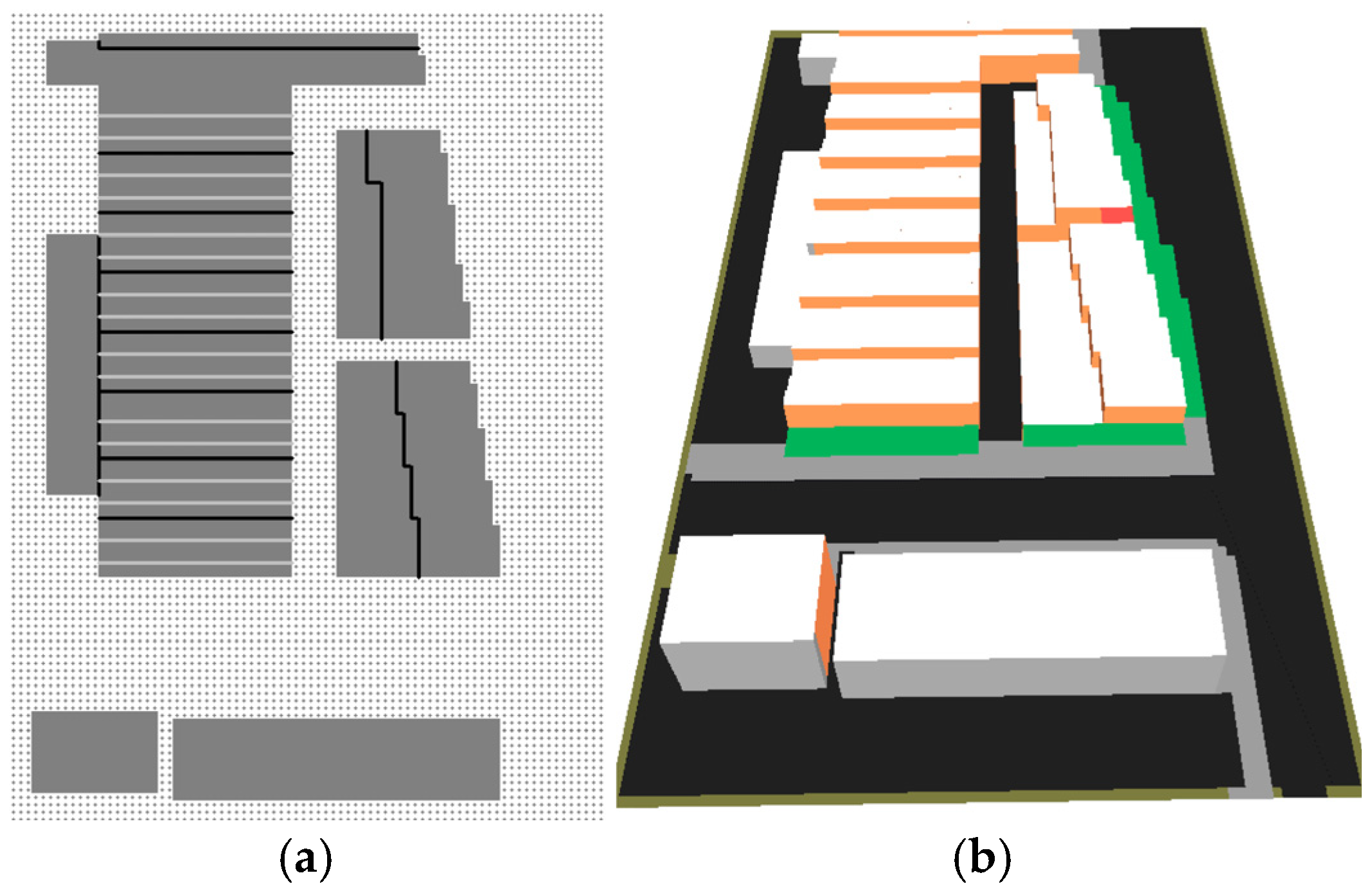
2.2. Modelling Using ENVI-Met
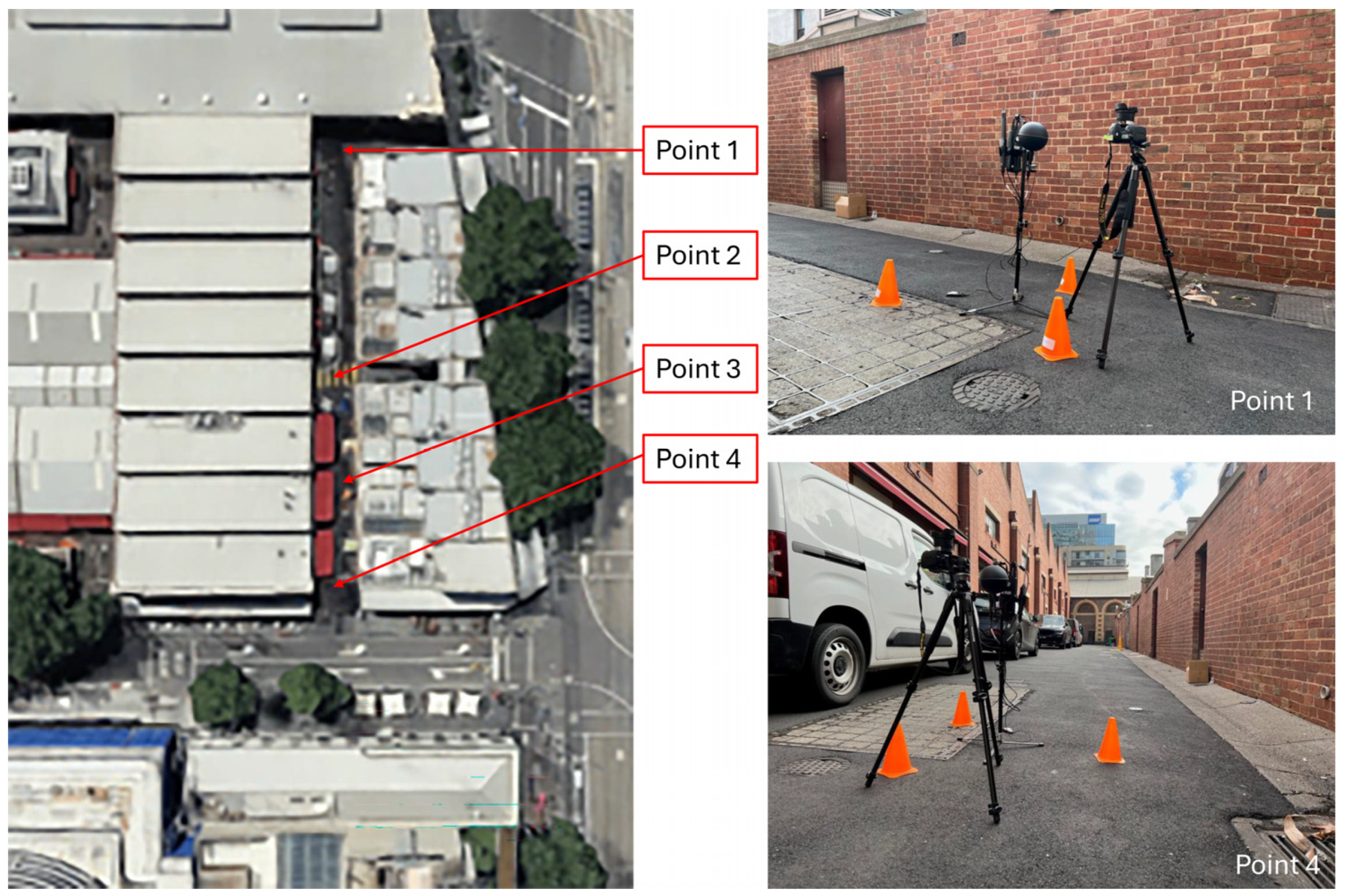
2.3. Model Validation
2.4. Thermal Comfort Indices
2.5. Cooling Intervention Scenarios
2.6. Climate Data
3. Results
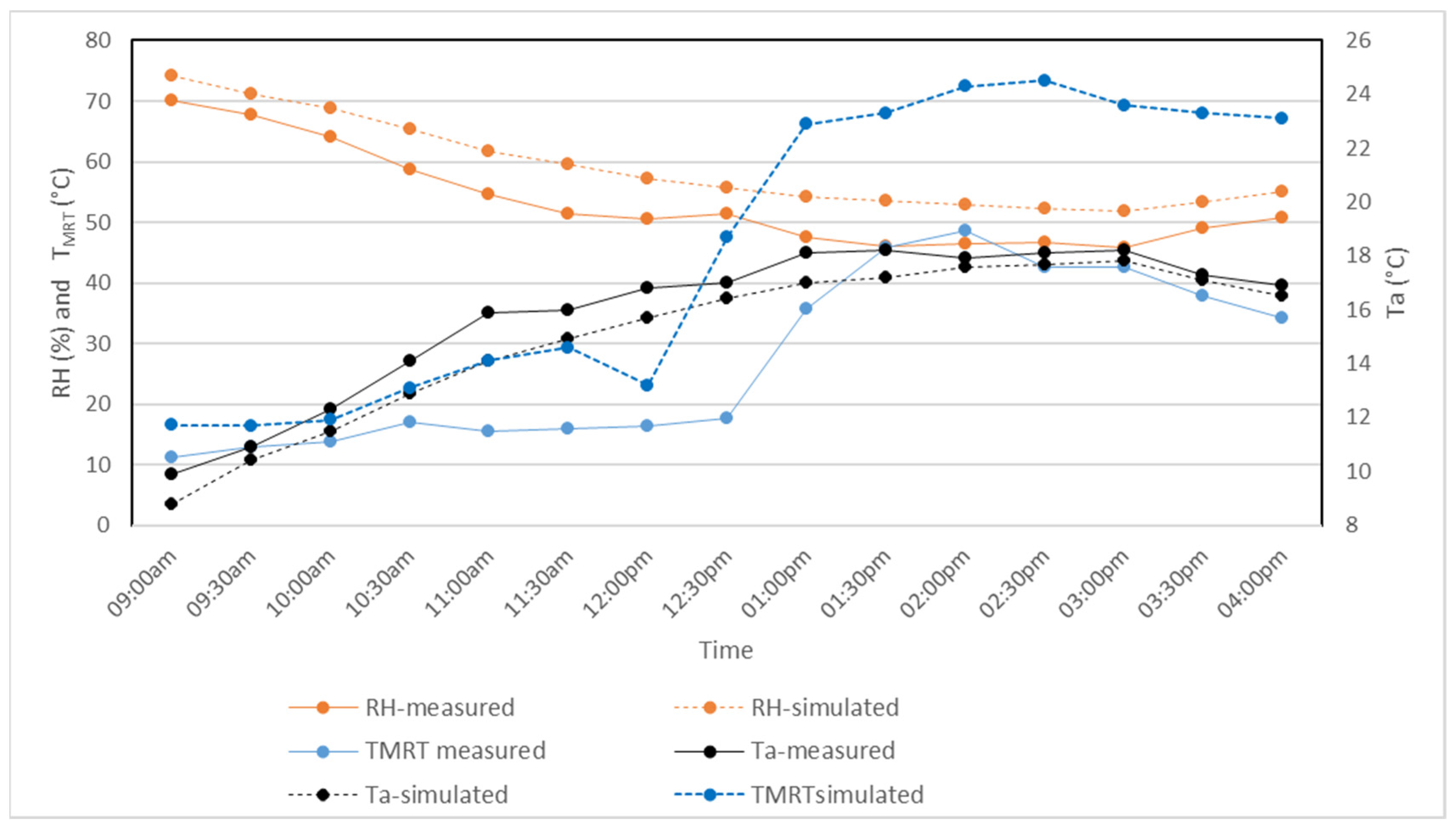
3.1. Model Validation Results
3.2. Effects of Cooling Interventions
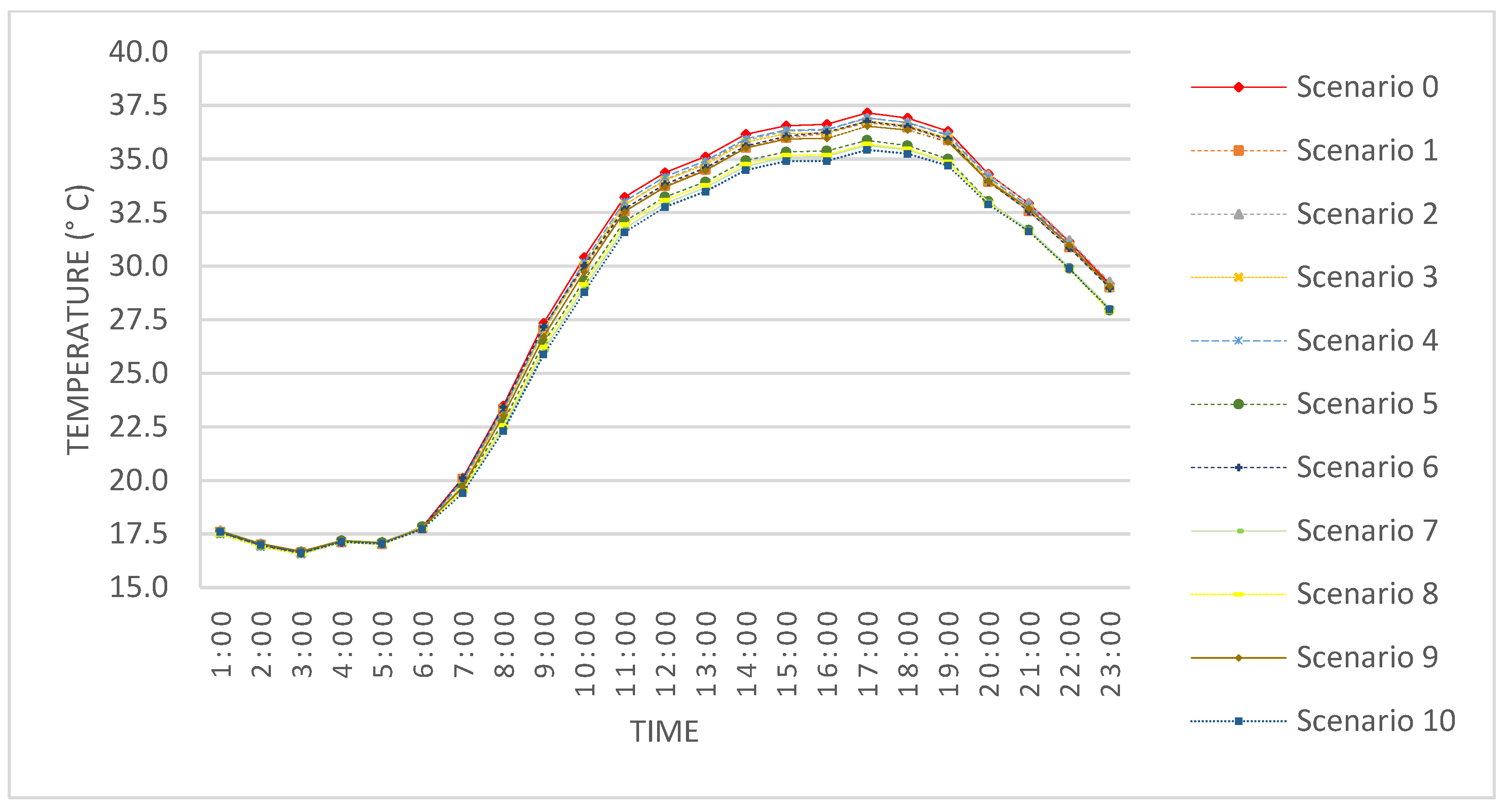
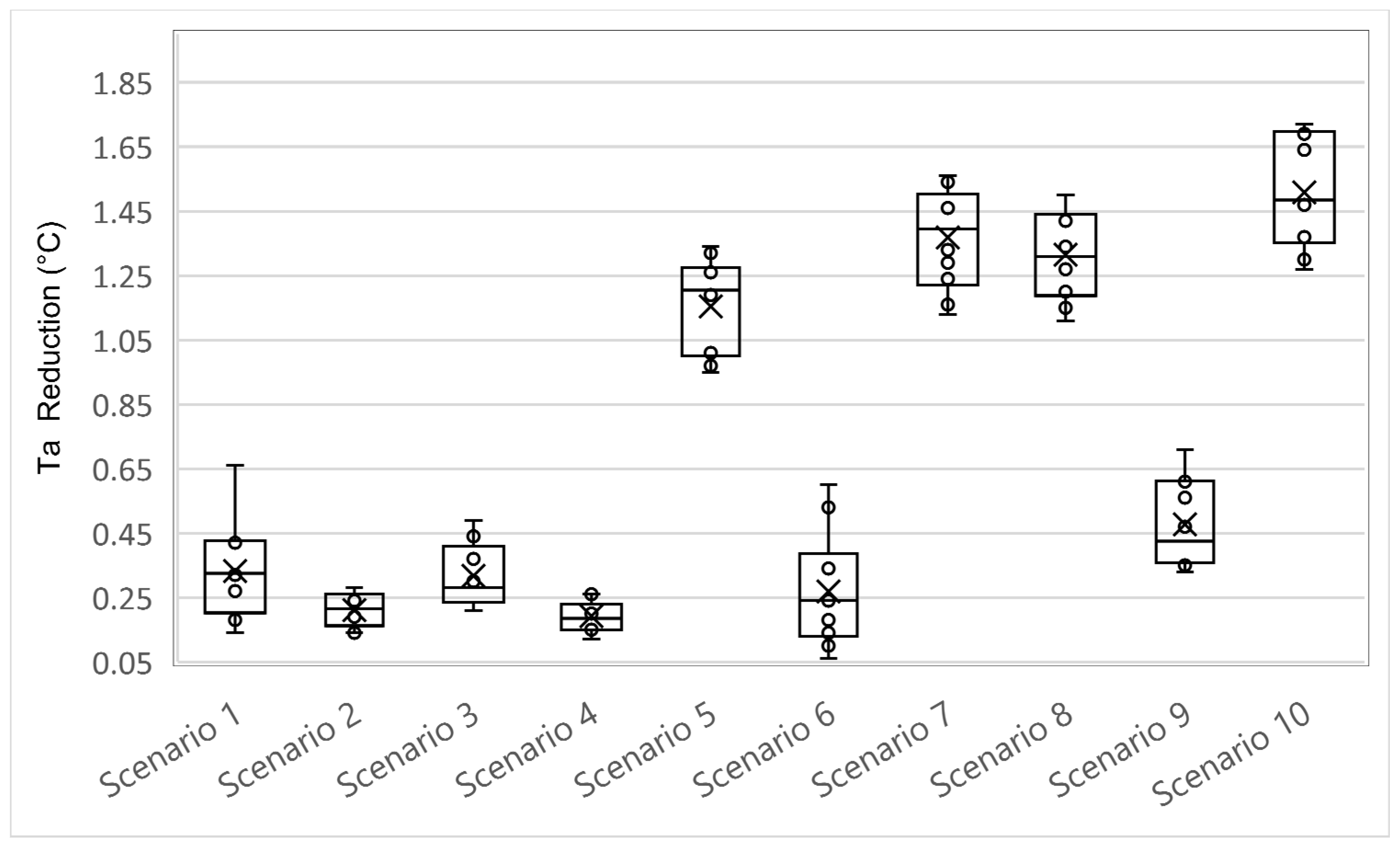
3.2.1. Air Temperature
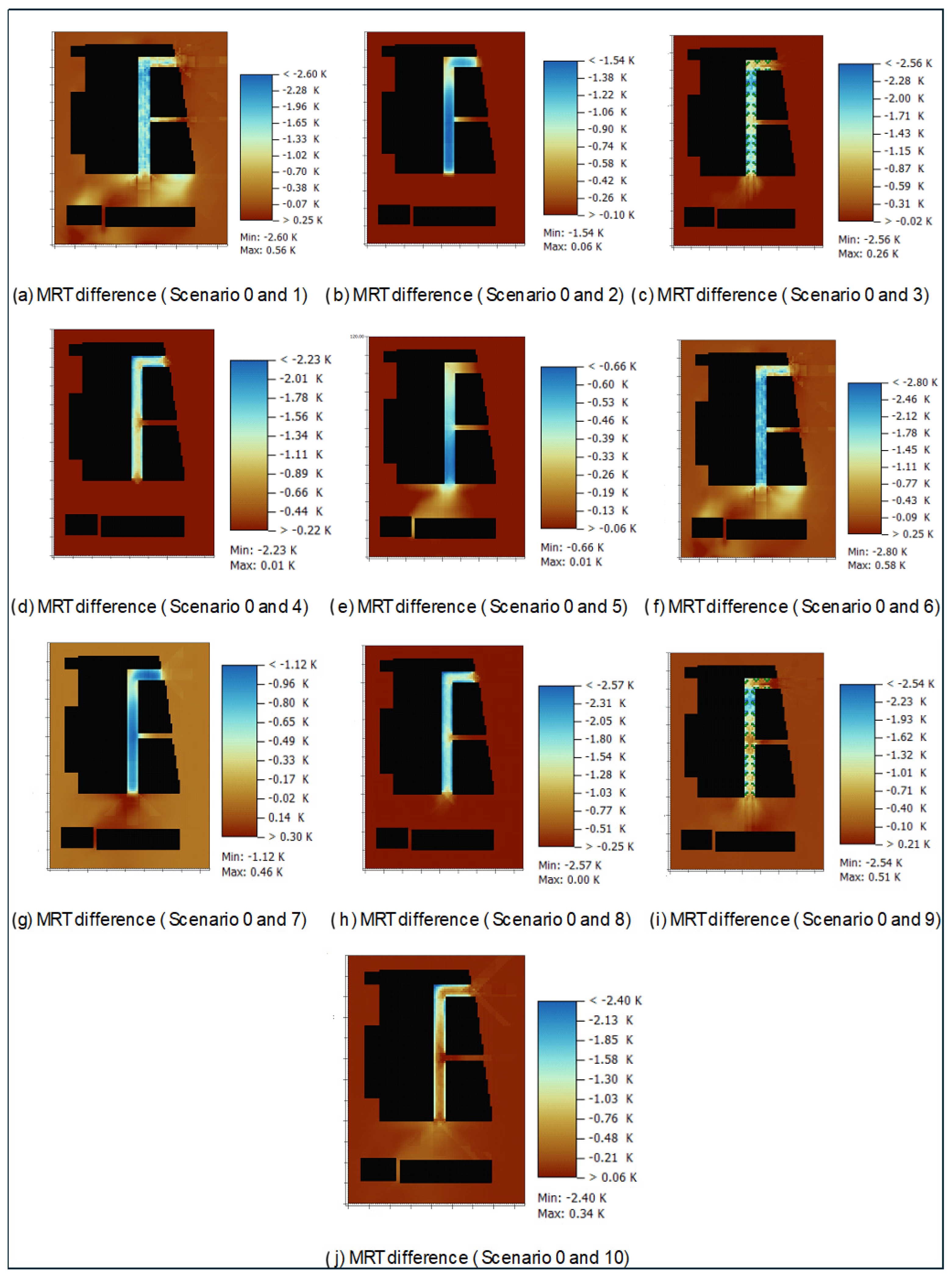
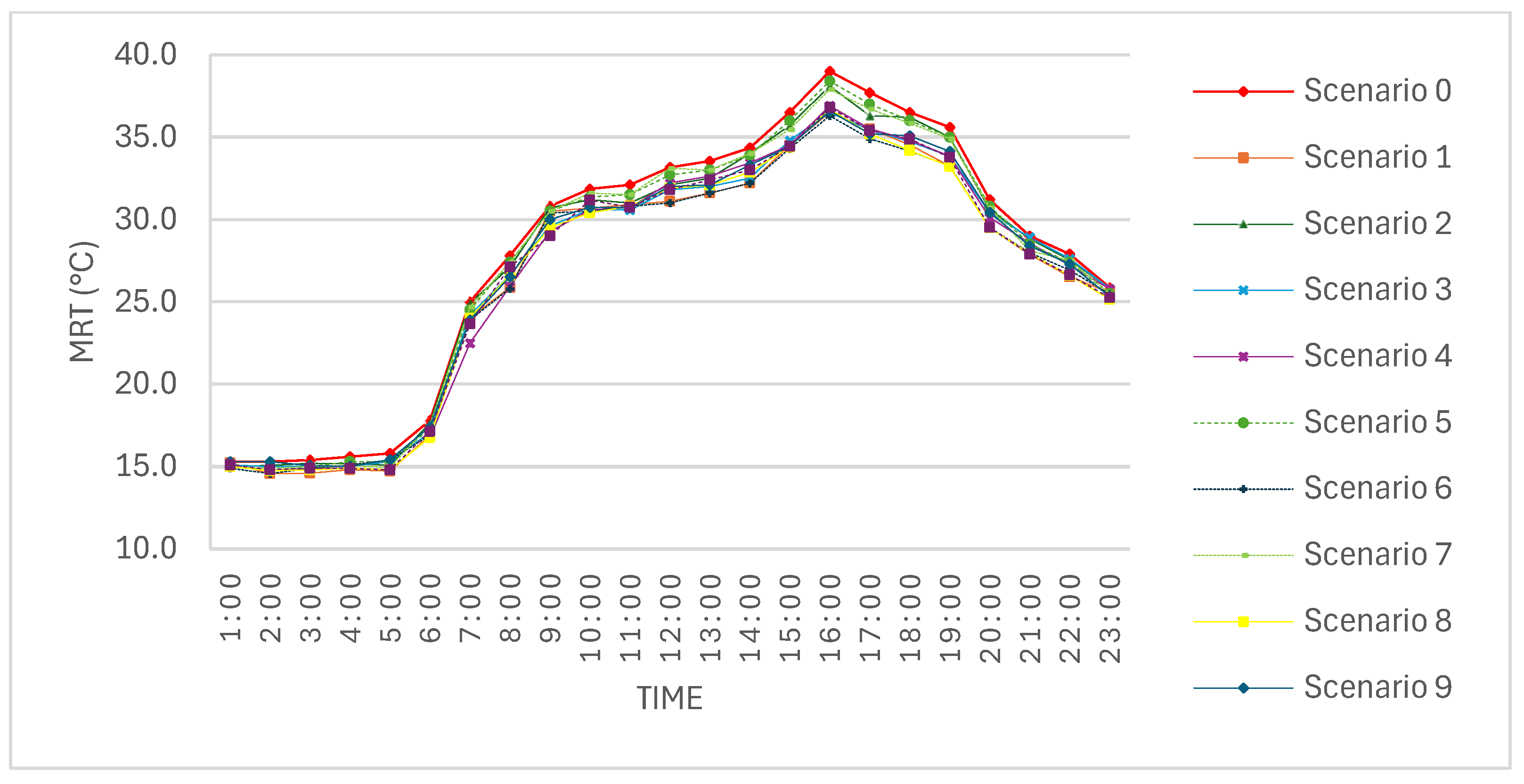
3.2.2. Mean Radiant Temperature
3.2.3. Analysis of Thermal Comfort Indices
4. Discussion
5. Conclusions
Author Contributions
Funding
Data Availability Statement
Acknowledgments
Conflicts of Interest
References
- Herath, H.M.P.I.K.; Halwatura, R.U.; Jayasinghe, G.Y. Evaluation of green infrastructure effects on tropical Sri Lankan urban context as an urban heat island adaptation strategy. Urban For. Urban Green. 2018, 29, 212–222. [Google Scholar] [CrossRef]
- Jareemit, D.; Srivanit, M. A Comparative Study of Cooling Performance and Thermal Comfort under Street Market Shades and Tree Canopies in Tropical Savanna Climate. Sustainability 2022, 14, 4653. [Google Scholar] [CrossRef]
- Di Giuseppe, E.; Ulpiani, G.; Cancellieri, C.; Di Perna, C.; D’Orazio, M.; Zinzi, M. Numerical modelling and experimental validation of the microclimatic impacts of water mist cooling in urban areas. Energy Build. 2021, 231, 110638. [Google Scholar] [CrossRef]
- Gao, Y.; Ge, L.; Meng, X. Employing the spray system to improve the regional thermal environment in outdoor open space. Urban Clim. 2025, 59, 102266. [Google Scholar] [CrossRef]
- Du, Y.; Chen, H.; Chen, G.; Hang, J.; Meng, H.; Mak, C.M. Integrated impacts of water mist spray and aspect ratios on thermal environment inside 2D street canyons: Scaled outdoor experiments. Build. Environ. 2026, 287, 113774. [Google Scholar] [CrossRef]
- Montazeri, H.; Toparlar, Y.; Blocken, B.; Hensen, J.L.M. Simulating the cooling effects of water spray systems in urban landscapes: A computational fluid dynamics study in Rotterdam, The Netherlands. Landsc. Urban Plan. 2017, 159, 85–100. [Google Scholar] [CrossRef]
- Balany, F.; Muttil, N.; Muthukumaran, S.; Wong, M.S.; Ng, A.W.M. Studying the Effect of Blue-Green Infrastructure on Microclimate and Human Thermal Comfort in Melbourne’s Central Business District. Sustainability 2022, 14, 9057. [Google Scholar] [CrossRef]
- Elgheznawy, D.; Eltarabily, S. The impact of sun sail-shading strategy on the thermal comfort in school courtyards. Build. Environ. 2021, 202, 108046. [Google Scholar] [CrossRef]
- Lam, C.K.C.; Weng, J.; Liu, K.; Hang, J. The effects of shading devices on outdoor thermal and visual comfort in Southern China during summer. Build. Environ. 2023, 228, 109743. [Google Scholar] [CrossRef]
- Lee, L.S.H.; Cheung, P.K.; Fung, C.K.W.; Jim, C.Y. Improving street walkability: Biometeorological assessment of artificial-partial shade structures in summer sunny conditions. Int. J. Biometeorol. 2020, 64, 547–560. [Google Scholar] [CrossRef] [PubMed]
- Debbage, N.; Zhai, W.; Ochoa, E.L.; Lee, R.J.; Pineda, A.; Jones, E.; Clearwater, T.; Rueda, S.; Pursch, T.; Renteria, J.; et al. Evaluating the Performance of Cool Pavement in San Antonio, Texas, as an Urban Heat Mitigation Measure. J. Appl. Meteorol. Climatol. 2025, 64, 1127–1146. [Google Scholar] [CrossRef]
- Feng, J.; Saliari, M.; Gao, K.; Santamouris, M. On the cooling energy conservation potential of super cool roofs. Energy Build. 2022, 264, 112076. [Google Scholar] [CrossRef]
- Santamouris, M.; Khan, H.S.; Paolini, R.; Julia, O.M.L.; Garshasbi, S.; Papakonstantinou, I.; Valenta, J. Recent Advances in Fluorescence-Based Colored Passive Daytime Radiative Cooling for Heat Mitigation. Int. J. Thermophys. 2024, 45, 90. [Google Scholar] [CrossRef]
- Schneider, F.A.; Cordova Ortiz, J.; Vanos, J.K.; Sailor, D.J.; Middel, A. Evidence-based guidance on reflective pavement for urban heat mitigation in Arizona. Nat. Commun. 2023, 14, 1467. [Google Scholar] [CrossRef]
- Wang, J.; Yan, D.; Ding, L.; An, J.; Santamouris, M. On the development of super cool paints for cooling purposes. Sol. Energy 2025, 296, 113592. [Google Scholar] [CrossRef]
- Gaitani, N.; Spanou, A.; Saliari, M.; Synnefa, A.; Vassilakopoulou, K.; Papadopoulou, K.; Pavlou, K.; Santamouris, M.; Papaioannou, M.; Lagoudaki, A. Improving the microclimate in urban areas: A case study in the centre of Athens. Build. Serv. Eng. Res. Technol. 2011, 32, 53–71. [Google Scholar] [CrossRef]
- Santamouris, M. Using cool pavements as a mitigation strategy to fight urban heat island—A review of the actual developments. Renew. Sustain. Energy Rev. 2013, 26, 224–240. [Google Scholar] [CrossRef]
- Kappou, S.; Souliotis, M.; Papaefthimiou, S.; Panaras, G.; Paravantis, J.A.; Michalena, E.; Hills, J.M.; Vouros, A.P.; Ntymenou, A.; Mihalakakou, G. Cool Pavements: State of the Art and New Technologies. Sustainability 2022, 14, 5159. [Google Scholar] [CrossRef]
- Osmond, P.; Sharifi, E. Guide to Urban Cooling Strategies; CRC for Low Carbon Living: Sydney, Australia, 2017. [Google Scholar]
- Karimipour, H.; Tam, V.W.Y.; Burnie, H.; Le, K.N. Simulating cooling street strategies on urban heat islands effects: An empirical study for blacktown city, Australia. J. Green Build. 2022, 17, 143–162. [Google Scholar] [CrossRef]
- Supersealing. Cool Road Trials; Supersealing: Boronia, Australia, 2021. [Google Scholar]
- Marchant, J.; VanderBerg, J.; Siebentritt, M.; Chambers, A.Y. Cool Road Adelaide Projects, Report for the Department for Environment and Water; Climate-KIC: Ultimo, Australia, 2020. [Google Scholar]
- Middel, A.; AlKhaled, S.; Schneider, F.A.; Hagen, B.; Coseo, P. 50 Grades of Shade. Bull. Am. Meteorol. Soc. 2021, 102, E1805–E1820. [Google Scholar] [CrossRef]
- Middel, A.; Krayenhoff, E.S. Micrometeorological determinants of pedestrian thermal exposure during record-breaking heat in Tempe, Arizona: Introducing the MaRTy observational platform. Sci. Total Environ. 2019, 687, 137–151. [Google Scholar] [CrossRef]
- Chatzidimitriou, A.; Liveris, P.; Bruse, M.; Topli, L. Urban Redevelopment and Microclimate Improvement: A Design Project in Thessaloniki, Greece, PLEA 2013. In Proceedings of the PLEA2013—29th Conference, Sustainable Architecture for a Renewable Future, Munich, Germany, 10–12 September 2013. [Google Scholar]
- Wai, K.-M.; Xiao, L.; Tan, T.Z. Improvement of the Outdoor Thermal Comfort by Water Spraying in a High-Density Urban Environment under the Influence of a Future (2050) Climate. Sustainability 2021, 13, 7811. [Google Scholar] [CrossRef]
- Narita, K.; Kohno, T.; Misaka, I. Experimental study on evaporative cooling of fine water mist for outdoor comfort in the urban environment. In Proceedings of the Third International Conference on Countermeasures to Urban Heat Island, Venice, Italy, 13–15 October 2014. [Google Scholar]
- Lin, C.; Zhang, S. Impact of Green Roofs and Walls on the Thermal Environment of Pedestrian Heights in Urban Villages. Buildings 2024, 14, 4063. [Google Scholar] [CrossRef]
- ENVI-Met. 2024. Available online: https://www.envi-met.com/ (accessed on 10 May 2024).
- Bröde, P.; Fiala, D.; Błażejczyk, K.; Holmér, I.; Jendritzky, G.; Kampmann, B.; Tinz, B.; Havenith, G. Deriving the operational procedure for the Universal Thermal Climate Index (UTCI). Int. J. Biometeorol. 2012, 56, 481–494. [Google Scholar] [CrossRef]
- López-Cabeza, V.P.; Diz-Mellado, E.; Rivera-Gómez, C.A.; Galán-Marín, C. Shade and Thermal Comfort in Courtyards: Experimental versus Simulation Results. Buildings 2022, 12, 1961. [Google Scholar] [CrossRef]
- BoM. Climate Statistics for Australian Locations. 2025. Available online: http://www.bom.gov.au/climate/averages/tables/cw_086071_All.shtml (accessed on 25 January 2025).
- Yang, X.; Zhao, L.; Bruse, M.; Meng, Q. Evaluation of a microclimate model for predicting the thermal behavior of different ground surfaces. Build. Environ. 2013, 60, 93–104. [Google Scholar] [CrossRef]
- Ketterer, C.; Matzarakis, A. Comparison of different methods for the assessment of the urban heat island in Stuttgart, Germany. Int. J. Biometeorol. 2015, 59, 1299–1309. [Google Scholar] [CrossRef]
- Tsoka, S.; Tsikaloudaki, A.; Theodosiou, T. Analyzing the ENVI-met microclimate model’s performance and assessing cool materials and urban vegetation applications—A review. Sustain. Cities Soc. 2018, 43, 55–76. [Google Scholar] [CrossRef]
- Evola, G.; Costanzo, V.; Magrì, C.; Margani, G.; Marletta, L.; Naboni, E. A novel comprehensive workflow for modelling outdoor thermal comfort and energy demand in urban canyons: Results and critical issues. Energy Build. 2020, 216, 109946. [Google Scholar] [CrossRef]
- Matzarakis, A.; Mayer, H.; Iziomon, M.G. Applications of a universal thermal index: Physiological equivalent temperature. Int. J. Biometeorol. 1999, 43, 76–84. [Google Scholar] [CrossRef]
- Middel, A.; Turner, V.K.; Schneider, F.A.; Zhang, Y.; Stiller, M. Solar reflective pavements—A policy panacea to heat mitigation? Environ. Res. Lett. 2020, 15, 064016. [Google Scholar] [CrossRef]
- Moretti, L.; Di Mascio, P.; Cantisani, G.; Carpiceci, M.; D’Andrea, A.; Del Serrone, G.; Loprencipe, G. Effect of Sampietrini Pavers on urban heat islands. Int. J. Environ. Res. Public Health 2021, 18, 13108. [Google Scholar] [CrossRef]






| Parameter | Item | Description |
|---|---|---|
| Buildings | As per the site plan (Figure 1) | |
| Building | Wall materials | Brick walls (emissivity: 0.93, absorption: 0.3, transmission 0, reflection: 0.4 thermal conductivity: 0.3) |
| Roof materials | Metal roof (emissivity: 0.1, absorption: 0.3, transmission 0, reflection: 0.7 thermal conductivity: 45) | |
| Road and pavement | Asphalt road (albedo: 0.1, emissivity 0.9); Pavement (albedo: 0.2, emissivity 0.9) | |
| Microclimate | Air temperature and RH | As per full-force weather file |
| Wind speed | As per full-force weather file | |
| Simulation period | 00:00–24:00 (24 h)–27th December 2022 |
| Parameter | Measuring Range and Accuracy |
|---|---|
| Air temperature Ta (°C) | 0 to +50 °C, ±0.5 °C |
| Relative humidity (%) | 0 to 100RH%, ±(1.8RH% + 0.7% or measured value) |
| Globe temperature Tg (°C) | 0 to +120 °C, Class 1 |
| Air velocity (ms−1) | 0 to +5 ms−1, ±(0.03 ms−1 to 4% of measured value |
| UTCI in °C | Stress Category | PET in °C | Stress Category |
|---|---|---|---|
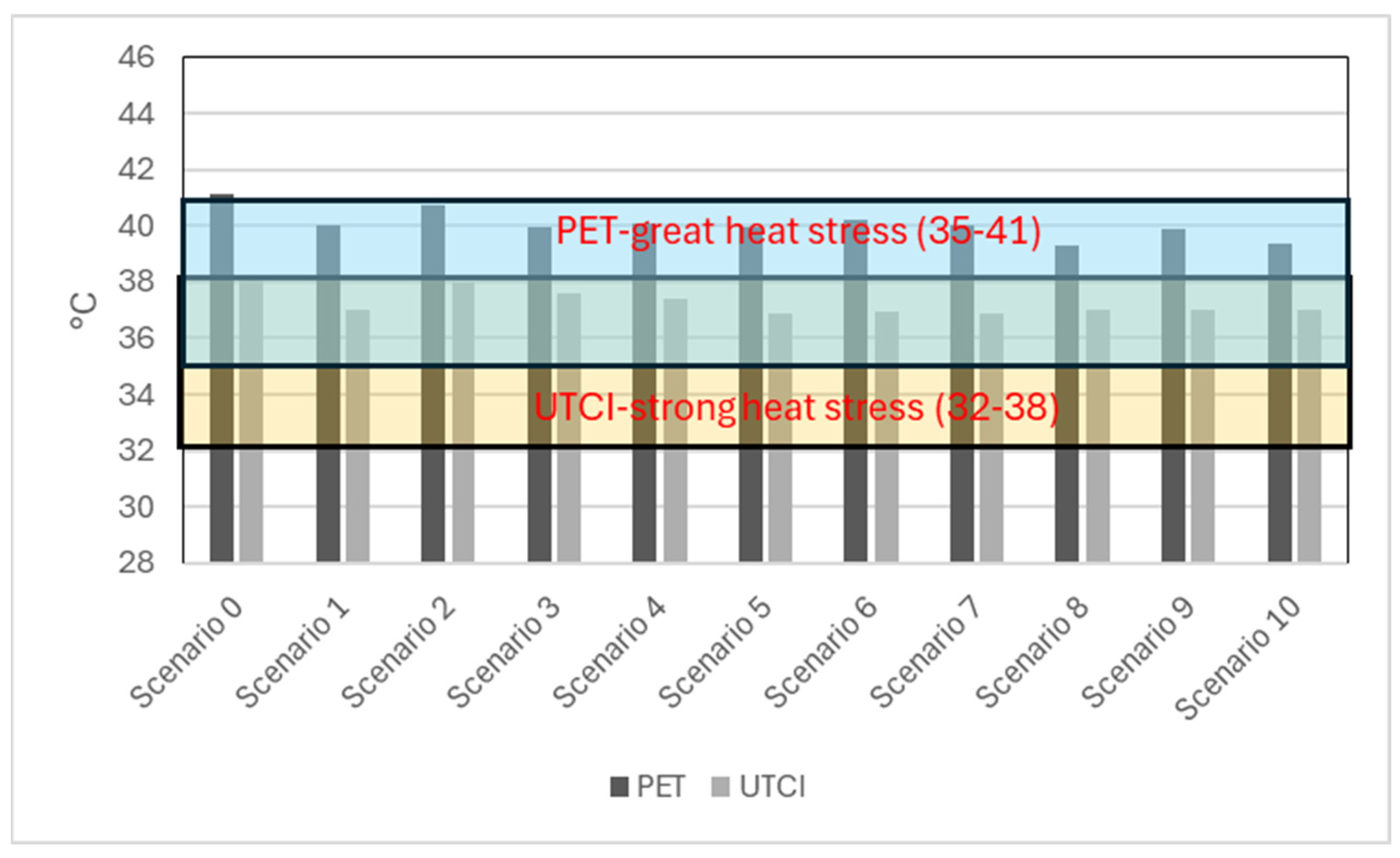
| Above 46 | Extreme heat stress | >41 | Extreme heat stress |
| 38–46 | Very strong heat stress | 35–41 | Great heat stress |
| 32–38 | Strong heat stress | 29–35 | Moderate heat stress |
| 26–32 | Moderate heat stress | 23–29 | Slight heat stress |
| 9–26 | No thermal stress | 18–23 | No thermal stress |
| 9–0 | Slight cold stress | 13–18 | Slight cold stress |
| 0 to −13 | Moderate cold stress | 8–13 | Moderate cold stress |
| −13 to −27 | Strong cold stress | 4–8 | Great cold stress |
| −27 to −40 | Very strong cold stress | <4 | Extreme cold stress |
| Below −40 | Extreme cold stress |
| Number | Type of Scenarios | Properties | Details |
|---|---|---|---|
| 1 | PVC shading at 4 m height | Thickness–0.005 m Colour–White Absorption–0.45 Transmission–0.13 Reflection–0.40 Emissivity–0.90 Specific heat–1470 J/Kg.K Thermal conductivity–0.19 W/m.K Density–1020 kg/m3 | 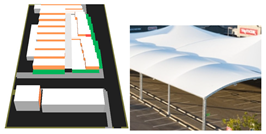 |
| 2 | Cool pavement | Surface coatings that can be used on the existing asphalt floor Albedo–0.60 Emissivity–0.90 Roughness length–0.01 Thermal conductivity–1.16 W/m.K Volumetric heat capacity–2214 J/m3.K |  |
| 3 | Green canopy | Representing small canopy trees in planter boxes placed along the lane–small deciduous trees canopy width 1 m, tree height 3 m |  |
| 4 | Green wall | Green wall system in planter boxes placed along the brick walls–made up of ivy (Hedera Helix). |  |
| 5 | Water mist | Several water nozzles at 6 m interval approximately are placed at a height of 2.5 m along the lane, nozzle type: high-pressure misting nozzles; flow rate: 5 g/s; droplet size: 10 µm; operation: continuous, control logic: none |  |
| 6 | PVC shading and cool pavement | Combination of 1 and 2 above | |
| 7 | Water mist and cool pavement | Combination of 2 and 5 above | |
| 8 | Water mist and green wall | Combination of 4 and 5 above | |
| 9 | Green canopy and cool pavement | Combination of 2 and 3 above | |
| 10 | Cool pavement, water mist and green walls | Combination of 2,4 and 5 above | |
| Statistical Indices | R2 | RMSE | d |
|---|---|---|---|
| Ta | 0.97 | 0.90 | 0.97 |
| RH | 0.97 | 5.92 | 0.86 |
| TMRT | 0.91 | 12.4 | 0.63 |
| Parameters | Temperature Reduction | Scenarios |
|---|---|---|
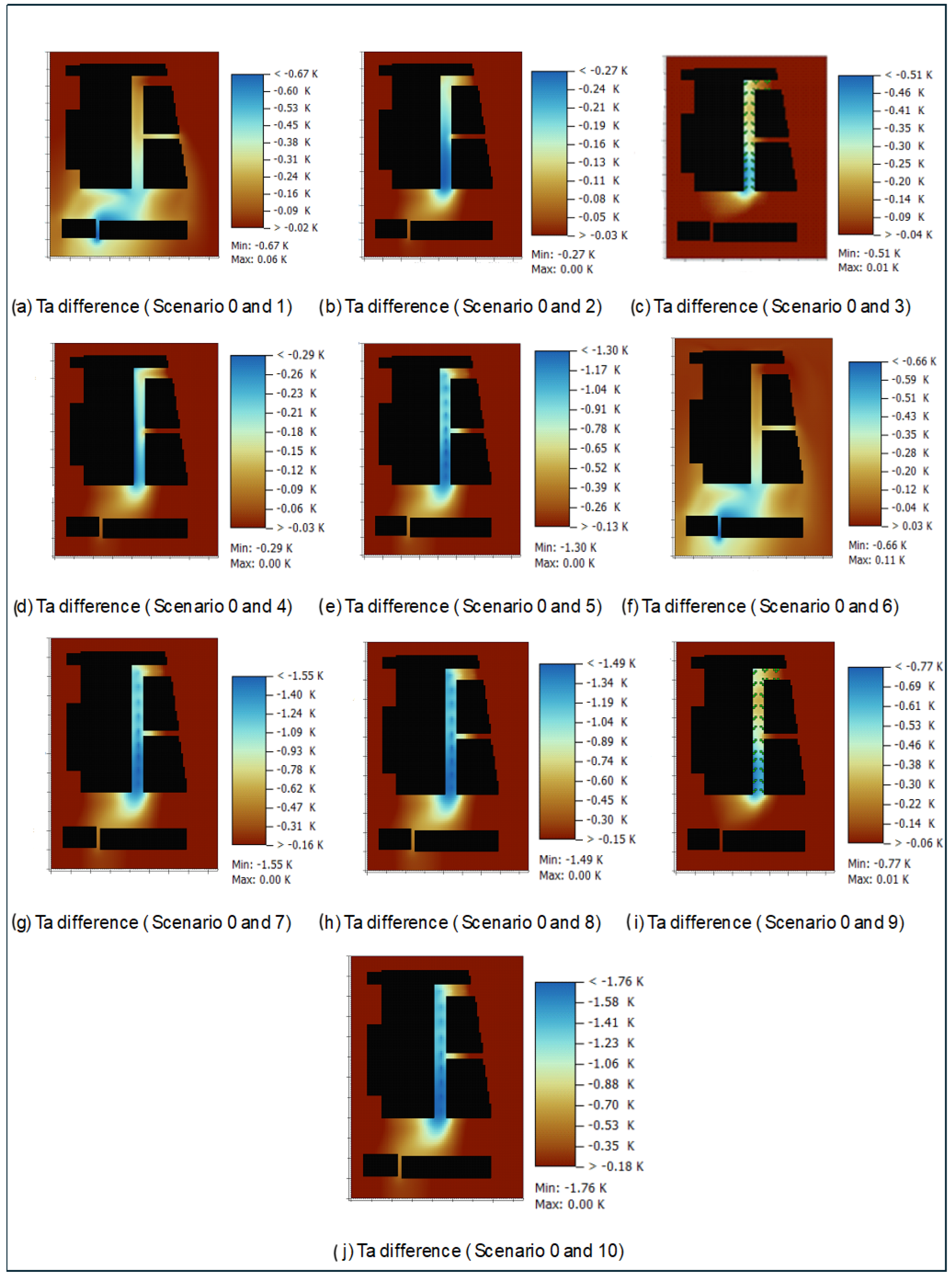
| Ta | 1.3 K | Scenario 5–Water mist |
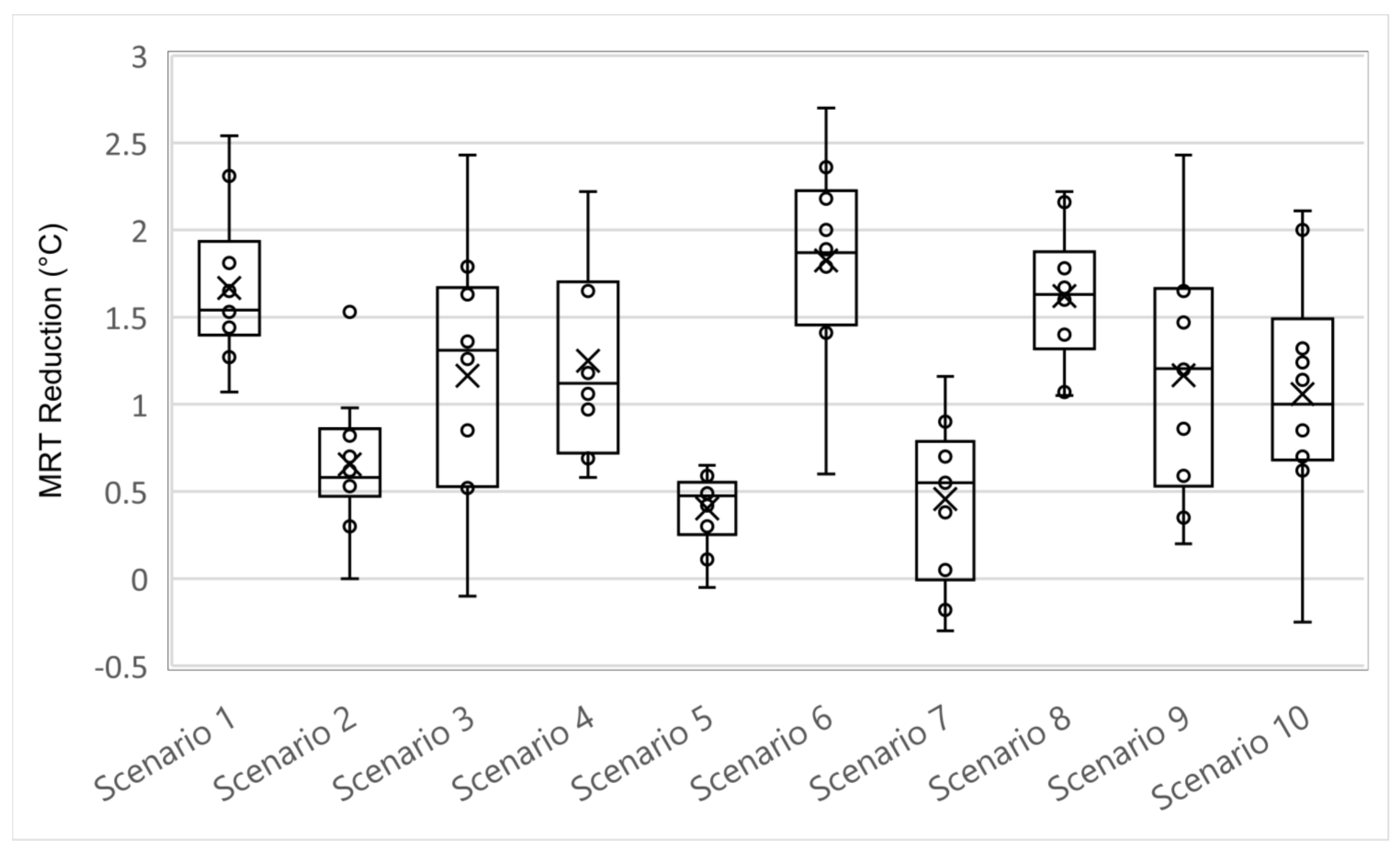
| TMRT | 2.6 K | Scenario 1–PVC shading |
| PET | 1.84 K | Scenario 8–Water mist + green wall |
| UTCI | 1.25 K | Scenario 5–Water mist |
Disclaimer/Publisher’s Note: The statements, opinions and data contained in all publications are solely those of the individual author(s) and contributor(s) and not of MDPI and/or the editor(s). MDPI and/or the editor(s) disclaim responsibility for any injury to people or property resulting from any ideas, methods, instructions or products referred to in the content. |
© 2026 by the authors. Licensee MDPI, Basel, Switzerland. This article is an open access article distributed under the terms and conditions of the Creative Commons Attribution (CC BY) license.
Share and Cite
Rajagopalan, P.; Duverge, J.J.; Carre, A.; Andamon, M.M. Cooling Strategies for the Effective Mitigation of Summer Thermal Stress in City Laneways. Buildings 2026, 16, 1079. https://doi.org/10.3390/buildings16051079
Rajagopalan P, Duverge JJ, Carre A, Andamon MM. Cooling Strategies for the Effective Mitigation of Summer Thermal Stress in City Laneways. Buildings. 2026; 16(5):1079. https://doi.org/10.3390/buildings16051079
Chicago/Turabian StyleRajagopalan, Priyadarsini, Jean Jonathan Duverge, Andrew Carre, and Mary Myla Andamon. 2026. "Cooling Strategies for the Effective Mitigation of Summer Thermal Stress in City Laneways" Buildings 16, no. 5: 1079. https://doi.org/10.3390/buildings16051079
APA StyleRajagopalan, P., Duverge, J. J., Carre, A., & Andamon, M. M. (2026). Cooling Strategies for the Effective Mitigation of Summer Thermal Stress in City Laneways. Buildings, 16(5), 1079. https://doi.org/10.3390/buildings16051079