1. Introduction
In recent decades, lifestyle migration has emerged as a form of voluntary mobility driven primarily by quality-of-life expectations rather than immediate economic necessity, including preferences for climate, environmental amenities, and social environment [
1,
2]. This type of migration is particularly concentrated in coastal regions and island settlements characterized by high natural and cultural attractiveness. Consequently, lifestyle migration has become closely intertwined with tourism development, residential mobility, and housing production, generating significant spatial transformations in these areas.
In tourism-oriented coastal contexts, housing development represents more than a quantitative response to increasing demand. It actively reshapes building typologies, densities, heights, and coastal landscapes, reflecting lifestyle-oriented patterns of consumption and settlement [
3,
4]. Across the Mediterranean basin, especially since the second half of the twentieth century, tourism investments and real estate development associated with lifestyle migration have accelerated coastal urbanization and intensified pressure on environmentally sensitive areas [
5,
6].
The existing literature extensively examines lifestyle migration, residential tourism, and second-home development in Mediterranean countries such as Spain, Portugal, and Greece [
7,
8,
9,
10]. Although these studies provide valuable insights into migration motivations, socio-economic impacts, and tourism-driven housing markets, the spatial and morphological consequences of lifestyle migration such as building density, housing typologies, vertical growth, and the relationship between housing development and topography remain comparatively underexplored, particularly from longitudinal and comparative perspectives.
These spatial impacts become even more pronounced in island contexts, where limited land availability, fragile coastal ecosystems, and tourism-dependent economies amplify development pressures. Northern Cyprus provides an instructive case, as tourism-driven lifestyle migration has shaped coastal housing development under conditions of fragmented planning and strong market influence [
11]. Within this setting, the coastal districts of Girne and Iskele present contrasting yet complementary development trajectories.
Girne has long functioned as an international tourism and residential centre, where housing development has evolved gradually since the 1960s within a mountainous coastal environment. In contrast, Iskele has experienced rapid and large-scale growth since the mid-2000s, characterized by high-rise residential projects on relatively flat terrain. Despite these differences, empirical research comparing how lifestyle migration has shaped the timing, form, and spatial intensity of housing development in these two regions remains limited.
Although lifestyle migration is often described as a non-economic form of mobility, in practice it frequently intersects with second-home ownership, investment behaviour, and tourism-related settlement patterns. In this study, lifestyle migration is therefore conceptualized as a hybrid process in which quality-of-life motivations are closely linked to housing consumption and real estate markets. This perspective clarifies how lifestyle-driven demand translates into concrete spatial and morphological outcomes.
Addressing this gap, the present study adopts a comparative and place-based approach to examine the spatial transformations associated with lifestyle migration in the coastal areas of Girne and Iskele. Housing development is analysed in relation to tourism dynamics, topography, and planning practices over time, with particular attention to variations in housing typologies, building heights, densities, and coastal settlement patterns. By integrating spatial analysis with planning contexts, the study contributes a more spatially grounded perspective to the literature on lifestyle migration and residential tourism while offering empirical insights relevant to sustainable coastal planning.
Existing research in the Mediterranean region has largely focused on countries with relatively established planning systems, such as Spain, Portugal, and Greece. By contrast, contexts such as Northern Cyprus characterized by fragmented legislation, weak governance, and strong market pressures have received limited scholarly attention. By comparatively examining Girne and Iskele, this study demonstrates how lifestyle migration interacts with tourism dynamics, topography, and planning practices to produce distinct housing typologies and spatial patterns, thereby contributing new evidence to international debates on housing development in island and coastal settings.
To this end, this study seeks to answer the following questions:
- (1)
How has lifestyle migration influenced the spatial and typological characteristics of housing development in the coastal areas of Girne and Iskele?
- (2)
What differences have emerged between Girne and Iskele in terms of housing typologies, building density, and building heights?
- (3)
How have topography, tourism policies, and market dynamics shaped the relationship between lifestyle migration and residential development?
- (4)
What are the implications of these spatial transformations for the planning and sustainable management of coastal areas in Mediterranean island contexts?
1.1. Lifestyle Migration Influences on Housing Development
Lifestyle migration refers to the voluntary relocation of individuals seeking an improved quality of life based on perceptions of well-being, the climate, the social environment, and everyday living conditions rather than immediate economic necessity [
1,
2] (p. 471). This form of mobility reflects broader transformations associated with globalization, increasing flexibility, and changing relationships with place and residence.
Within this framework, migration is understood as a consciously constructed life project. Migrants evaluate destinations according to their perceived ability to provide comfort, self-realization, and a desirable everyday lifestyle, often described as the search for the “good life” [
1] (p. 608). These evaluations directly shape residential preferences and housing demand beyond purely functional considerations such as employment or proximity to services.
Lifestyle migration is commonly associated with middle-class individuals from relatively affluent societies who possess sufficient economic resources—including pensions, savings, or property-based capital to sustain flexible mobility [
2]. Consequently, housing becomes not only a basic necessity but also a central component of lifestyle consumption. Residential choices are closely linked to expectations regarding aesthetics, security, environmental quality, and identity, which in turn influence housing typologies and development patterns.
One of the most visible consequences of lifestyle migration is its impact on housing markets and residential development. Growing demand for second homes, retirement housing, gated communities, and lifestyle-oriented projects contributes to rising property values and the diversification of housing forms. Housing is therefore increasingly produced and marketed as a lifestyle commodity that embodies symbolic and experiential values rather than merely providing shelter.
Beyond market dynamics, lifestyle migration also reshapes the spatial organization of settlements. The concentration of migrants in attractive coastal destinations often accelerates residential expansion, alters land-use patterns, and transforms existing housing stock. These processes may intensify socio-spatial differentiation, reduce affordability for local residents, and increase pressure on environmentally sensitive areas.
From a planning perspective, such dynamics raise critical questions regarding sustainability, spatial equity, and long-term development strategies. Understanding how lifestyle-driven residential demand influences housing production is therefore essential for balancing tourism-led growth with local housing needs and environmental protection.
In this study, lifestyle migration is conceptualized as a hybrid process in which quality-of-life motivations intersect with second-home ownership, real estate investment, and semi-permanent settlement practices. Rather than treating lifestyle and economic motivations as mutually exclusive, the analysis recognizes their interaction in shaping housing demand and spatial outcomes.
1.2. Lifestyle Migration Influences in Mediterranean Coastal Areas
Lifestyle migration encompasses a range of interconnected mobility practices, including second-home ownership, seasonal and retirement migration, and forms of international residential mobility. Among these, residential tourism is particularly prominent in Mediterranean coastal regions, where tourism-oriented mobility often evolves into long-term or semi-permanent settlement patterns [
11]. In such contexts, the boundaries between tourism and migration become increasingly blurred.
As argued by [
12], tourist cities and regions represent a distinctive form of urbanization primarily designed for consumption and oriented toward non-local users rather than permanent residents. Mediterranean coastal settlements therefore function as consumption landscapes shaped by the preferences of lifestyle migrants, retirees, and second-home owners [
13]. These environments reflect broader transformations in leisure, mobility, and housing consumption, where residential spaces become integral components of lifestyle projects.
Since the late 1970s, the concept of residential tourism has been widely used to explain the close relationship between coastal development, lifestyle migration, and increasing human mobility in the Mediterranean [
14]. Research on second homes and residential tourism demonstrates that housing production increasingly serves leisure and lifestyle-driven demand rather than local housing needs [
15]. Once migration decisions are made, residential choice becomes central to the process and is evaluated holistically through both economic and lifestyle considerations, including tenure preferences, price levels, dwelling size, and location [
16,
17,
18,
19,
20,
21].
Beyond economic criteria, socio-demographic and lifestyle variables such as age, household composition, and social class play a decisive role in shaping housing preferences and project selection [
22]. Housing therefore functions not only as shelter but also as a means of expressing identity and enhancing perceived quality of life [
23]. As [
24] emphasizes, lifestyle-oriented residential choices are closely linked to leisure consumption, identity formation, and place attachment.
Project-specific characteristics constitute another important dimension of decision-making. Accessibility, service provision, neighbourhood qualities, and site-specific features influence preferences, resulting in increasingly customized, market-driven, and project-based developments tailored to user expectations rather than standardized residential demand [
25,
26].
The interaction between lifestyle migration and housing development is particularly pronounced in Mediterranean coastal areas, where migration-driven demand accelerates construction activity, increases densities, and diversifies residential typologies. Large-scale projects often integrate tourism infrastructure and leisure facilities, reinforcing the consumption-oriented logic of coastal housing markets. These processes frequently produce fragmented and investment-oriented landscapes that remain weakly connected to local settlement structures and natural topography, raising concerns regarding sustainability, spatial cohesion, and long-term planning [
27].
In this study, tourism is considered a catalyst for lifestyle migration rather than an equivalent concept. The analysis therefore focuses specifically on long-term and semi-permanent settlement patterns that generate sustained housing demand and lasting spatial transformation.
2. Migration’s Influence on Housing Development in Northern Cyprus
Population movements have long shaped settlement patterns in Cyprus due to its strategic Mediterranean location, favourable climate, and tourism potential. These dynamics have played a decisive role in the evolution of housing, particularly in urban and coastal areas. Over time, changing lifestyle expectations and tourism-oriented settlement practices have increasingly influenced residential development.
Following Cyprus’s independence in 1960, tourism activity expanded rapidly. Improvements in air transport and accessibility attracted visitors from colder countries seeking leisure-oriented lifestyles [
28]. This period marked the initial phase of tourism-related residential development, during which apartment blocks and detached houses were constructed in major urban centres such as Lefkoşa, Gazimağusa, and Girne to accommodate growing demand.
From the 1960s onward, coastal zones gradually became focal points for both temporary visitors and longer-term residents. As tourism infrastructure expanded during the 1970s, housing production increasingly responded to lifestyle-oriented demand, leading to the construction of tourism-related residential complexes supported by private developers and foreign investors.
During the 1980s and 1990s, accelerating urbanization and residential diversification further expanded the housing supply. Although part of this production addressed local needs through government-led cooperative schemes [
29] and private housing initiatives [
30], coastal areas progressively attracted second-home owners, retirees, and lifestyle migrants. Consequently, housing development began to shift from locally oriented provision toward leisure- and lifestyle-driven markets.
From the 2000s onward, the influence of lifestyle migration became more pronounced, particularly in coastal regions. Foreign investment [
31] stimulated the construction of villas and low-rise apartment complexes associated with international mobility and leisure-oriented living. As noted by [
31], increasing population movements toward urban centres intensified housing demand and expanded mass-housing areas. However, the pace of development often exceeded planning capacities, resulting in fragmented and spatially uncoordinated growth.
After 2005, rising international demand triggered rapid and, in some cases, irregular coastal development. Traditional low-rise settlement patterns were gradually replaced by denser and more vertical housing forms. Although temporary legal and property-related [
32] uncertainties slowed foreign demand and left some projects incomplete [
31], lifestyle-driven housing production soon regained momentum.
Since the 2010s, diversification in migrant profiles including retirees, second-home users, and lifestyle-oriented residents has further intensified private-sector housing development in coastal areas. This process has generated a wide range of housing typologies across rural, urban, and shoreline zones. Within this context, Girne and Iskele have emerged as the most dynamic coastal development areas in Northern Cyprus.
Examining the housing trajectories of these two regions provides an appropriate framework for analysing how lifestyle migration interacts with tourism dynamics, topography, and planning practices to shape the spatial and architectural transformation of coastal settlements from the 1960s to the present.
3. Methodology
To ensure terminological consistency, this study uses the official Turkish place names Girne and Iskele throughout the text, with their English equivalents provided in parentheses at first mention.
This research investigates the impact of lifestyle migration on housing development in the coastal areas of Northern Cyprus through a comparative case study design. Girne and Iskele were selected as contrasting yet complementary cases due to their distinct development histories, topographical characteristics, planning contexts, and investment patterns. While Girne represents a long-established tourism and residential centre with gradual and fragmented growth, Iskele reflects a more recent and accelerated development trajectory characterized by large-scale, high-density projects. This contrast provides an appropriate basis for examining how lifestyle migration interacts with local spatial and planning conditions to produce different housing outcomes.
A mixed-methods approach was adopted to capture both the qualitative and quantitative dimensions of housing development. Qualitative interviews were used to explore perceptions, motivations, and sectoral practices, while quantitative surveys provided structured information on migrant profiles, housing preferences, and market trends. Combining these methods enabled a more comprehensive understanding of how lifestyle-driven demand translates into concrete spatial and typological patterns.
3.1. Data Collection and Sample
Data were collected through semi-structured interviews and structured surveys conducted with real estate agencies and construction companies operating in the selected coastal regions. These actors were chosen because they function as key intermediaries between lifestyle migrants and the housing market, directly translating user demand into housing production, design decisions, and project development. Their professional experience provides informed insights into market trends, buyer profiles, and the spatial characteristics of residential projects.
Real estate agencies were selected based on their active role in local property markets and exclusive focus on real estate transactions. Construction companies were selected according to their experience in housing design and development, their capacity to produce projects for diverse user groups, and their recognized presence within the sector. A proportional purposive sampling strategy was employed to ensure representation of both sectors while maintaining research feasibility.
The final sample consisted of ten real estate agencies (eight in Girne and two in Iskele) and four construction companies (two in each region). From each institution, one manager or director and two sales or technical staff members participated in the surveys and interviews. Although the number of firms in Iskele was smaller, this reflects the more limited institutional structure of its real estate sector. This imbalance is acknowledged as a limitation of the comparative design and is considered when interpreting the findings.
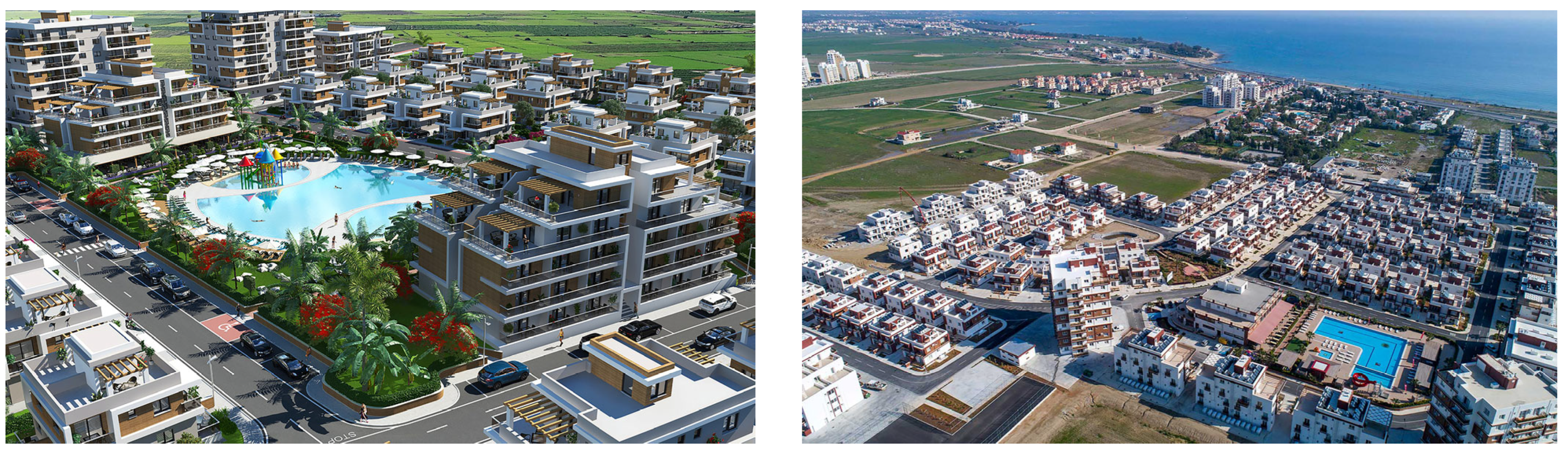
Visual materials presented in Figure 3 and Figure 5 were obtained from publicly accessible project images published on the official websites of the interviewed companies. These materials were used solely for analytical and illustrative purposes to support the interpretation of housing typologies and spatial development patterns.
3.2. Data Analysis
Qualitative data were obtained through semi-structured interviews focusing on migration motivations, housing selection criteria, project characteristics, and perceptions of lifestyle migration. With participants’ consent, interviews were recorded, transcribed verbatim, and anonymized. The transcripts were analysed manually using thematic coding. Codes were developed both deductively from the interview framework and inductively from recurring patterns identified in the data. These codes were subsequently organized hierarchically to identify dominant themes related to housing demand, user preferences, and spatial development outcomes.
Quantitative data were collected through structured surveys administered to participating real estate agencies and construction companies. The questionnaire consisted primarily of multiple-choice questions with predefined response categories addressing migrant profiles, motivations for relocation, duration of stay, housing preferences, and investment tendencies. Respondents selected the most appropriate options and were allowed to add comments when necessary. Survey data were analysed using SPSS software 25.0 through descriptive statistical techniques, including frequency distributions, cross-tabulations, and percentage comparisons, in order to identify prevailing trends and comparative differences between Girne and Iskele.
In the final stage, qualitative and quantitative findings were triangulated to provide an integrated interpretation of how lifestyle migration influences housing production, typological variation, and spatial development patterns. Given the exploratory nature of the study and the relatively small sample size, the analysis emphasizes pattern identification and comparative interpretation rather than causal generalization. To ensure confidentiality, all participants were anonymized, and institutional names are not disclosed.
4. Evaluation of Lifestyle Migration-Driven Housing Development
This section provides a comparative assessment of the impact of lifestyle migration on residential development in the coastal areas of Girne and Iskele. It examines similarities and differences between the two regions in terms of the timing of housing production, spatial distribution, housing typologies, topographical relationships, and planning practices. The spatial context is first introduced, followed by the analytical framework that guides the evaluation.
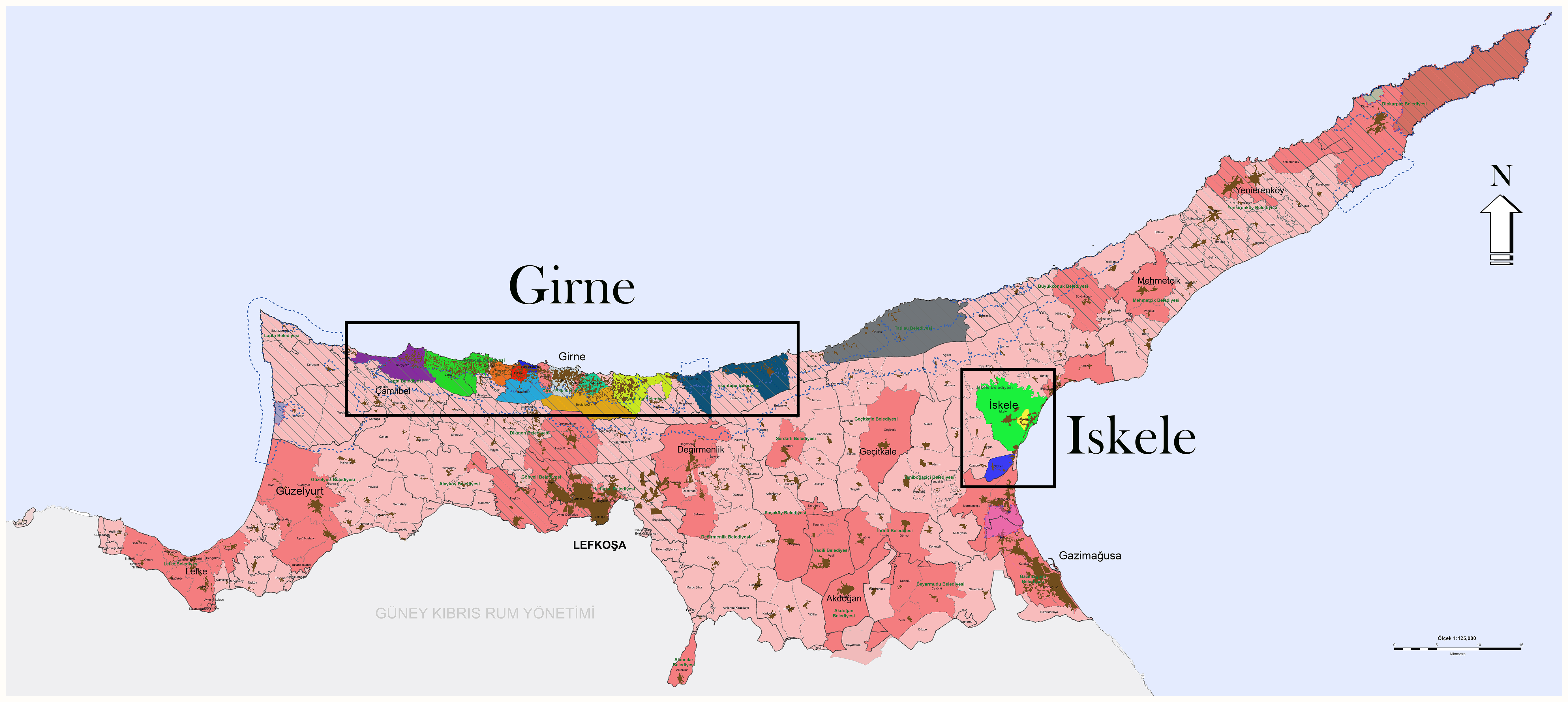
Figure 1 presents the geographical locations and principal topographical characteristics of the two regions. Girne is characterized by mountainous and sloping terrain, whereas Iskele exhibits a flatter and more continuous coastal morphology. These physical conditions have directly influenced lifestyle migration–driven housing development, resulting in fragmented and heterogeneous settlement patterns in Girne and more homogeneous, high-rise, and large-scale residential projects in Iskele (
Figure 1).
Within this spatial context, the analysis considers not only the quantity of housing produced but also the target user groups, intended lifestyles, and the spatial and planning strategies shaping development. Housing production is therefore evaluated across multiple dimensions, including migrant profiles, usage patterns (permanent residence, second homes, and residential tourism), preferred housing typologies, locational tendencies, and interactions with planning decisions.
The analytical framework adopted in this study is summarized in
Table 1. The table outlines the key evaluation criteria used to assess how lifestyle migration influences housing development and its spatial and planning implications. It also supports a systematic comparison between different migrant groups and settlement patterns, highlighting differences in housing demand, coastal–urban segregation, and topography-dependent development trends.
Based on this framework, Girne and Iskele are examined separately in
Section 4.1 and
Section 4.2, followed by a comparative interpretation of residential development, migration dynamics, and planning outcomes in both regions. These analyses directly address the research questions related to spatial form, typology, density, and planning responses to lifestyle migration.
4.1. Analysis of Girne District
Girne is a long-established coastal settlement in Northern Cyprus where lifestyle migration has continuously influenced residential development since the 1960s. Similar to other Mediterranean coastal regions such as Spain, Portugal, Italy, and Greece, its natural landscape, mild climate, and coastal amenities attracted both international tourists and lifestyle migrants at an early stage [
33]. The expansion of mass tourism in the late 1960s accelerated housing production along the coastline and laid the foundations for tourism-oriented residential development [
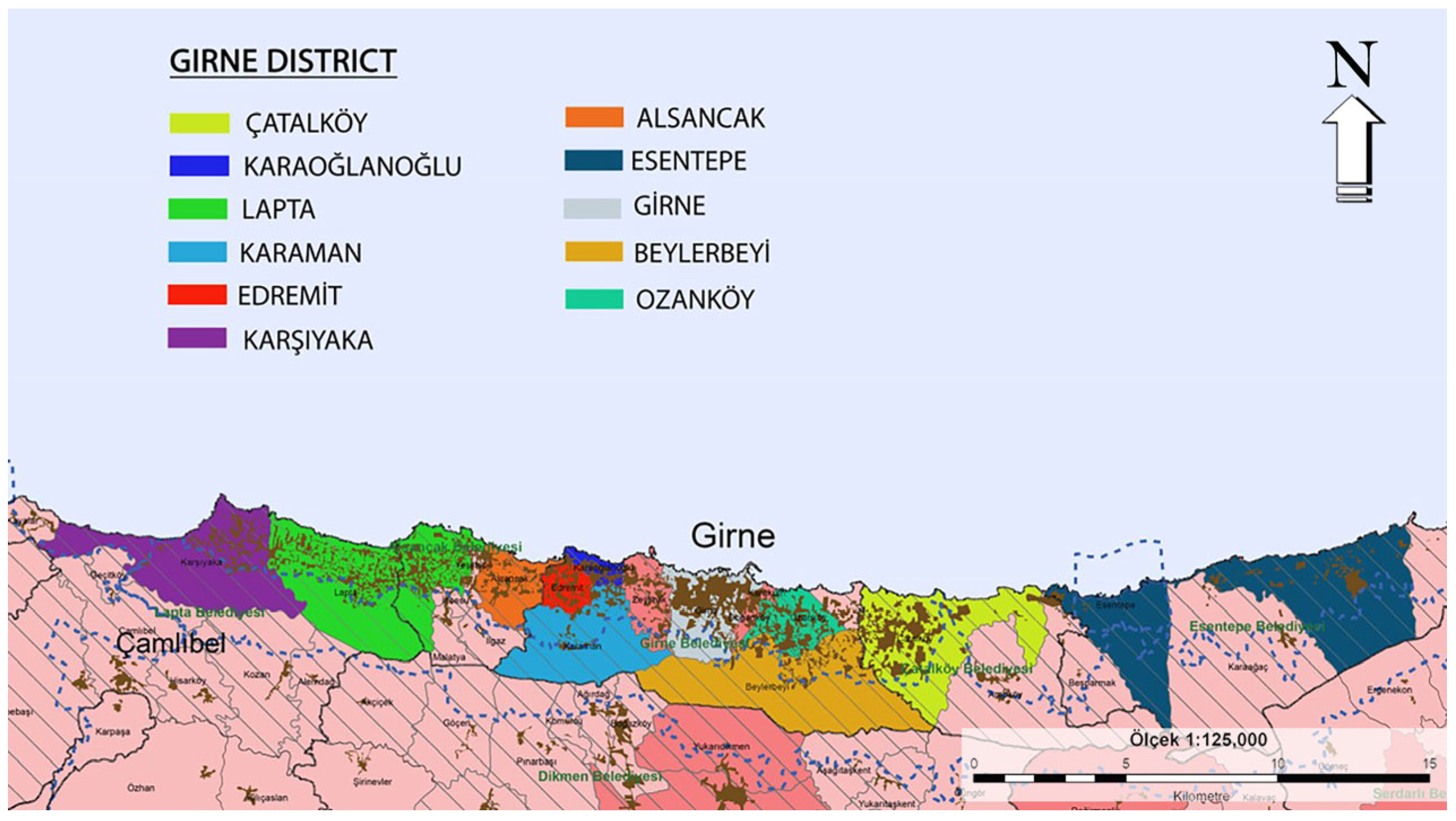
34] (p. 78). The concentration of settlements along the coastal strip is illustrated in
Figure 2.
Early private-sector projects in the 1970s integrated tourism and residential functions, prioritizing environmental qualities such as sea views, marina access, and landscape integration. These developments marked a shift toward housing production targeting lifestyle-oriented users rather than solely local needs. Public investments following the economic crisis of 1974 further supported tourism infrastructure and residential growth, reinforcing this trend.
During the 1980s and 1990s, the diversification of tourism activities and the arrival of retirees and second-home owners—particularly from the United Kingdom and other European countries—contributed to demographic and cultural heterogeneity [
28]. This period was characterized by an increase in medium- and large-scale residential projects that gradually altered the urban fabric and coastal morphology of Girne.
In the early 2000s, growing foreign interest in real estate, partly linked to the European Union accession process, shifted housing production from small-scale individual dwellings toward planned, multi-unit developments [
29,
31] (p. 91). Lifestyle migration during this period included retirees, temporary residents, investors, and transnational users, intensifying construction activity along the coastline.
After 2005, the absence of a comprehensive development plan [
35] made rapid and largely uncoordinated growth more visible. Parcel-based [
36] decisions and fragmented planning [
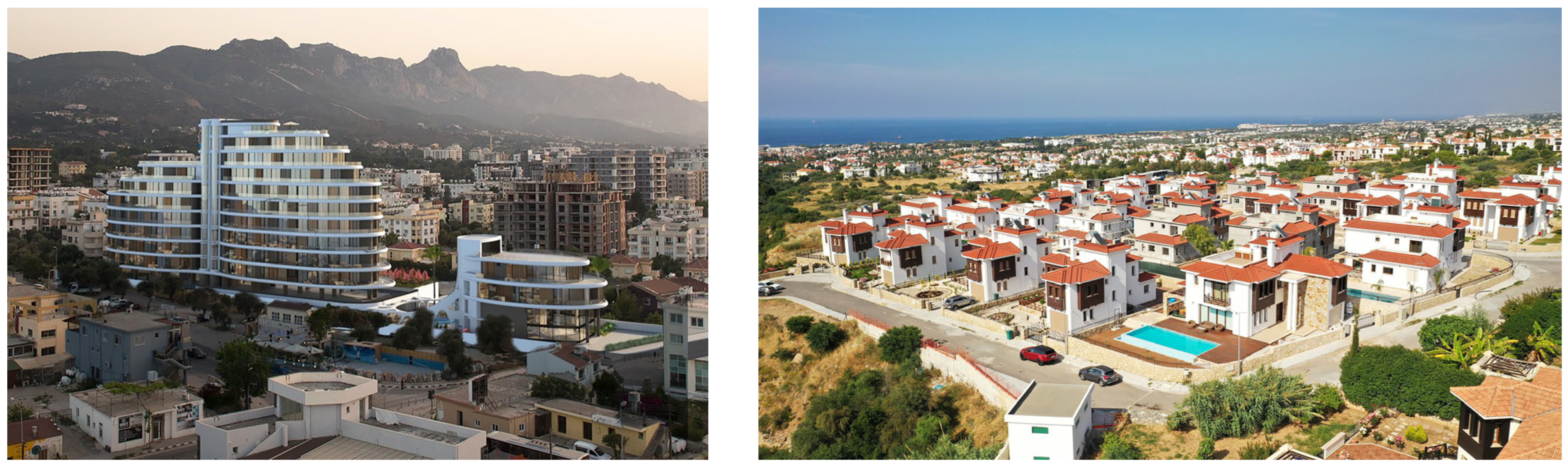
37] practices produced irregular building heights and a heterogeneous coastal skyline. Girne’s mountainous and sloping topography further amplified these effects, as demand for sea views encouraged vertical construction on steep terrain. Consequently, residential development became spatially fragmented and morphologically inconsistent.
Figure 3 illustrates the resulting diversity of housing forms across urban, rural, and coastal areas.
After 2010, the migrant profile diversified to include retirees, families, digital nomads, and investors from Europe, Russia, and the Middle East. This diversification was reflected in housing typologies ranging from low-rise gated communities and villas to high-rise coastal apartment blocks. Interviews with real estate agents and construction companies indicate that migrants from Turkey generally prefer centrally located housing for permanent residence, whereas international lifestyle migrants tend to select project-based coastal developments emphasizing environmental quality and sea views. This differentiation reinforces spatial segregation between inner-city areas and the coastline. These user profiles and their relationships with housing, topography, and planning are summarized in
Table 2.
Furthermore, according to interviews with real estate professionals, housing prices are perceived to be higher in coastal and view-oriented locations, reflecting strong demand generated by lifestyle migrants. This price differentiation further intensifies the concentration of lifestyle-oriented projects along the coastline.
Overall, Girne demonstrates how lifestyle migration interacts with topography, tourism history, and limited planning control to produce a long-term, layered, and fragmented pattern of residential development. Rather than occurring through a single phase of rapid growth, housing transformation has progressed incrementally, resulting in a heterogeneous settlement structure shaped primarily by market dynamics.
Table 3 presents the temporal relationship between lifestyle migration and residential development in Girne and provides a basis for comparison with the more recent and accelerated growth observed in Iskele.
4.2. Analysis of Iskele District
Iskele, located on the eastern coast of Northern Cyprus, has recently emerged as a significant destination for lifestyle migration, with residential development accelerating particularly after the 2000s. In contrast to Girne, which has a long-established tourism and housing market, Iskele functioned for many years primarily as a rural settlement within the Gazimağusa district and benefited only marginally from tourism and real estate investments.
During the 1960s, coastal development in the wider region was concentrated mainly in the Maraş (Varosha) area to the south of Gazimağusa [
39], while the coastal strip of Iskele largely retained its agricultural character and low-density settlement structure. Unlike the gradual and topographically constrained development observed in Girne, housing production in Iskele occurred within a shorter timeframe and at higher densities, with comparatively limited planning coordination. This makes Iskele a particularly relevant case for examining the intensified spatial impacts of lifestyle migration.
Throughout the 1960s and 1970s, residential development remained largely limited to traditional Cypriot housing addressing local needs [
40]. Tourism infrastructure was weak, and international investments were concentrated in Gazimağusa and Maraş. Nevertheless, several small-scale private projects linked to tourism such as the Lordos Seagate Court development in the Palm Beach area—can be considered early examples of tourism- and lifestyle-oriented housing production.
In the 1980s, new residential areas emerged in response to political and demographic changes following the events of 1974. Migration motivated by security and economic stability contributed to population growth and the formation of additional housing areas. However, development during this period remained relatively small in scale and low in density.
A significant shift occurred after 1998, when Iskele gained independent district status. From the late 1990s onward, lifestyle-oriented residential preferences became more visible, particularly as residents relocated from urban centres toward quieter coastal environments. Low-rise, site-based settlements such as Doktorlar Sitesi illustrate this early phase, characterized by low-density housing and closer proximity to nature.
The 2000s marked the beginning of a more substantial transformation. Iskele increasingly attracted European retirees and second-home buyers due to its tranquil environment, natural landscape, perceived safety, and relatively affordable property prices. These factors accelerated housing demand and stimulated the development of new residential projects in both the coastal zone and the district centre.
After 2005, however, the logic of housing production changed more fundamentally. Residential development shifted from small-scale individual housing toward large-scale, investment-driven, and market-oriented projects (
Table 4).
Although transitional planning decisions [
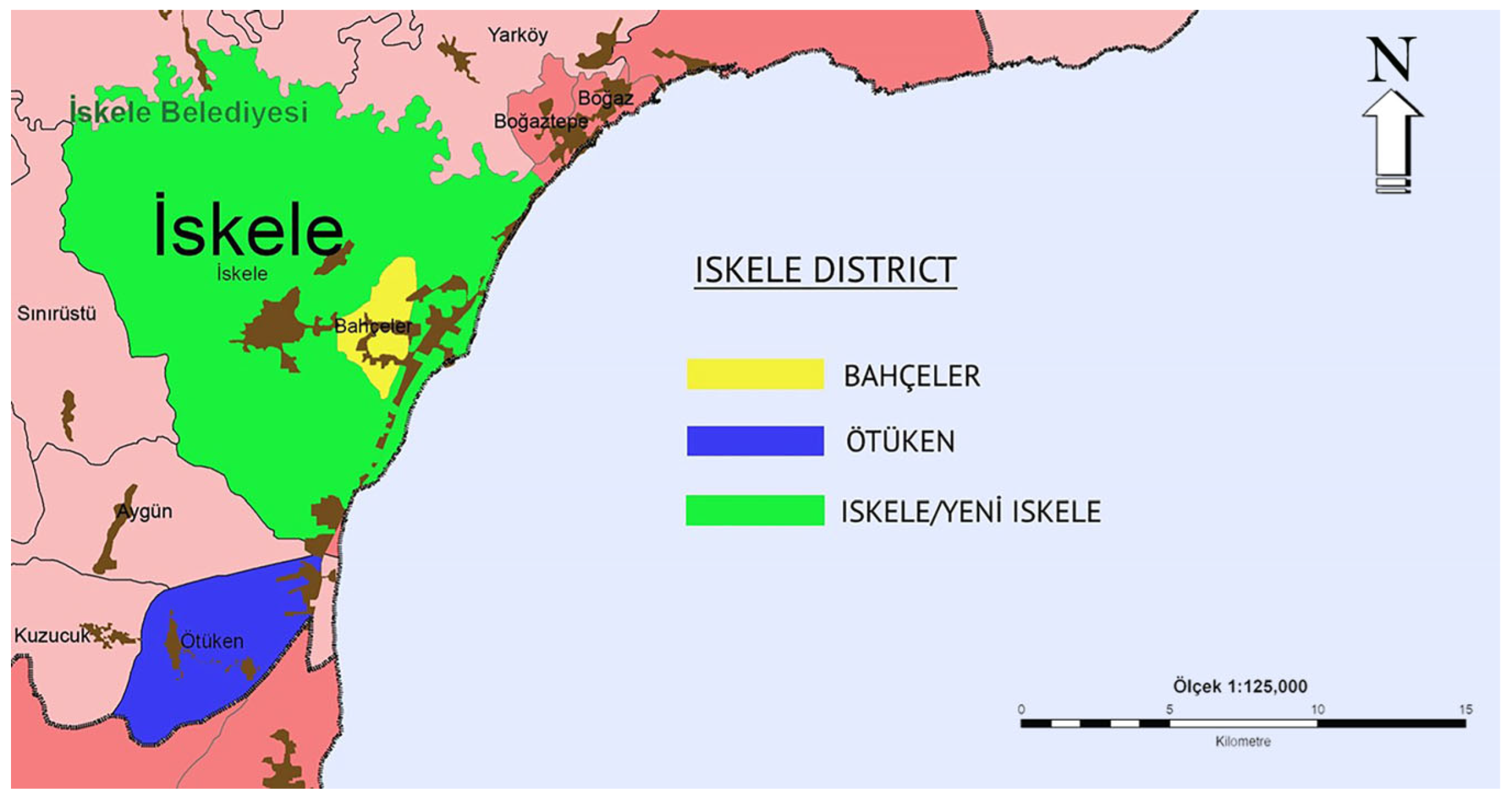
41] prepared for the Gazimağusa–Iskele–Yeniboğaziçi region sought to regulate this growth, implementation challenges limited their effectiveness. As a result, coastal areas increasingly exhibited a mixture of low-, medium-, and high-rise buildings, producing a heterogeneous built environment (
Figure 4).
During the 2010s, lifestyle migration intensified further, attracting users from Europe, Russia, the Middle East, and other regions. This diversification contributed to the emergence of an international and multicultural residential profile. Housing projects from this period commonly incorporated high-rise apartment blocks, on-site social facilities, and coastal-oriented design strategies (
Figure 5).
Topography has played a decisive role in shaping these spatial outcomes. Unlike Girne, where mountainous terrain restricts building heights, Iskele’s relatively flat landscape has facilitated vertical growth aimed at maximizing sea views. Consequently, high-rise and repetitive block typologies have become dominant features of recent housing production.
Interviews with real estate agents and construction companies indicate that housing preferences are largely driven by environmental quality, sea views, on-site amenities, and security considerations. These demands have encouraged the proliferation of project-based developments offering villas, apartments, and high-rise complexes tailored to different user profiles (
Table 5).
At the same time, planning practices have tended to respond to market pressures rather than proactively guiding development. Parcel-based and temporary decisions have contributed to discontinuities in public space, increased privatization of coastal areas, and difficulties in maintaining spatial coherence.
Although Iskele’s residential landscape may appear physically homogeneous, usage patterns reveal significant differences. Many dwellings function as seasonal homes, short-term rentals, or investment properties rather than permanent residences, resulting in weaker social integration and limited year-round community life.
Overall, Iskele illustrates how lifestyle migration can generate rapid and high-density residential growth within a relatively short period. Compared with Girne’s long-term and layered transformation, development in Iskele has been more accelerated, investment-driven, and spatially concentrated. This contrast highlights the importance of local planning capacity, topographical conditions, and market dynamics in shaping the spatial consequences of lifestyle migration, making Iskele a critical case for comparative analysis within the Northern Cyprus context.
5. Results: Evaluation of Districts Considering Lifestyle Migration and Housing Development
State-supported social housing and projects primarily addressing local needs were not evaluated as direct outcomes of lifestyle migration. Instead, they were considered contextual background to clarify the broader historical evolution of housing development in the coastal regions.
A comparative analysis of Girne and Iskele reveals clear differences in the scale, density, typology, and temporal dynamics of housing production associated with lifestyle migration. These differences are reflected not only in the quantity of development but also in the spatial configuration and morphological characteristics of settlements.
5.1. Housing Typologies and Building Form
Distinct contrasts emerge in housing typologies and building heights between the two districts.
In Girne, residential development is predominantly composed of two- to four-storey buildings organized as low- and medium-density, plot-based developments that adapt to sloping terrain. Detached villas, small apartment blocks, and gated communities constitute the dominant forms. This typological diversity results in a fragmented and heterogeneous urban fabric.
In Iskele, by contrast, housing production is largely characterized by site-based, high-density projects consisting mainly of ten- to twenty-storey apartment blocks and large residential complexes. These projects are typically developed as integrated estates with shared amenities, resulting in a more uniform and repetitive built environment.
These findings indicate that lifestyle migration demand is materialized through different architectural and morphological responses depending on local physical and planning conditions.
5.2. Temporal Development Patterns
The timing and pace of development also differ substantially between the two districts.
In Girne, housing growth associated with lifestyle migration has progressed gradually since the 1960s. Development occurred incrementally through multiple phases, producing layered and spatially dispersed settlement patterns.
In contrast, Iskele experienced limited residential expansion until the early 2000s, followed by a rapid acceleration after 2005. This compressed development period generated large-scale and high-density projects within a relatively short timeframe. As a result, the urban form appears more homogeneous but also more dependent on speculative and investment-driven production.
These temporal differences demonstrate that the spatial outcomes of lifestyle migration are strongly influenced by the duration and intensity of development processes.
5.3. User Preferences and Housing Demand
Interview and survey findings provide additional evidence regarding housing demand characteristics.
Real estate and construction professionals consistently report that lifestyle migrants prioritize:
▪ environmental quality,
▪ sea views,
▪ proximity to the coast,
▪ on-site social and recreational amenities,
▪ and project-based residential environments.
These preferences are reflected in the proliferation of gated communities, coastal apartment complexes, and mixed-use residential projects in both districts.
However, differences in usage patterns are observed. In Girne, a larger share of dwellings is used for permanent or semi-permanent residence, whereas in Iskele many units function primarily as seasonal homes, short-term rentals, or investment properties. This contributes to weaker year-round occupancy and lower levels of social integration in Iskele.
5.4. Housing Prices and Market Perceptions
Qualitative evidence from real estate professionals further suggests that housing prices are perceived to be higher in Girne than in Iskele. Respondents associate this difference with earlier market maturation, stronger international visibility, and sustained demand.
Because this assessment is based on professional perceptions rather than statistical transaction data, it should be interpreted as indicative rather than definitive. Nevertheless, these perceptions highlight differences in market positioning between the two districts.
5.5. Topography and Spatial Configuration
Topographical conditions play a decisive role in shaping these outcomes.
Girne’s mountainous and sloping terrain corresponds with dispersed settlement patterns and varied building heights, as projects adapt to elevation changes and view corridors. This results in an irregular coastal silhouette and fragmented spatial structure.
Conversely, Iskele’s relatively flat terrain facilitates vertical construction and large-scale planning layouts. The absence of significant physical constraints enables repetitive high-rise blocks and more continuous development along the coastline.
These observations demonstrate that the spatial consequences of lifestyle migration cannot be explained solely by migration demand but must be understood in relation to geographical constraints and planning practices.
5.6. Comparative Synthesis
Overall, the results show that although both districts experience lifestyle migration, the scale, density, and spatial configuration of housing development differ substantially.
▪ Girne exhibits gradual, diverse, and fragmented growth.
▪ Iskele displays rapid, concentrated, and high-density expansion.
This comparison indicates that lifestyle migration operates as a common demand driver, while local planning capacity, investment models, and topographical characteristics mediate its physical expression.
6. Conclusions
This study comparatively examined how lifestyle migration has shaped housing development in the coastal settlements of Girne and Iskele in Northern Cyprus within a historical framework extending from the 1960s to the present. By integrating qualitative interviews with real estate and construction stakeholders and quantitative survey data, this study analysed how tourism-related mobility has influenced housing production, spatial density, typological diversity, and coastal morphology over time.
The findings demonstrate that although both districts are affected by lifestyle migration, they exhibit markedly different spatial and morphological outcomes. Girne, characterized by a long-established tourism history and mountainous topography, has developed through gradual and incremental growth, resulting in a fragmented, heterogeneous, and topography-adaptive settlement structure. In contrast, Iskele, shaped by flatter terrain and more recent large-scale investments, has experienced rapid and concentrated development dominated by high-rise, homogeneous, and project-based residential complexes. These differences indicate that the spatial consequences of lifestyle migration are mediated not only by migration demand but also by local planning regimes, physical constraints, and the timing of development.
The results further reveal that housing transformation in coastal areas cannot be explained by lifestyle migration alone. Instead, it emerges through the interaction between migration-driven demand, tourism policies, real estate investment strategies, and planning implementation practices. In both districts, housing production largely responds to short-term market pressures, while planning mechanisms tend to remain reactive. This imbalance contributes to fragmented growth in Girne and intensive, high-density expansion in Iskele, increasing pressure on infrastructure capacity, environmental sustainability, and coastal landscape integrity.
From a planning and governance perspective, these findings highlight the need for more integrated and context-sensitive planning tools. Establishing clearer and enforceable criteria for building density, height limits, second-home development, and coastal land use could help manage lifestyle-driven demand while protecting environmental values and local spatial identity. Differentiated strategies that consider topographical conditions and regional capacities are particularly important for ensuring sustainable coastal development.
This study has several limitations. The analysis relies primarily on the perspectives of real estate and construction sector actors, while the direct experiences of lifestyle migrants and local residents are only partially represented. In addition, housing market information is based largely on secondary and qualitative sources. Future research could incorporate resident-based surveys, longitudinal transaction data, and GIS-supported spatial metrics to provide a more comprehensive and quantitative assessment of these processes.
Despite these limitations, this study contributes to the literature by providing a rare comparative and spatially grounded examination of the relationship between lifestyle migration and housing development in a Mediterranean island context with limited planning coordination. By demonstrating how similar migration dynamics can produce divergent urban forms depending on local geographical and institutional conditions, this study offers empirical insights and policy implications relevant to other island and coastal regions facing tourism-led residential growth.