


Abstract
To address the integrated demands of structural reinforcement and energy-efficient retrofitting for existing buildings, a cementitious material modified with vitrified microspheres and SiO2 aerogel was developed to realize the synergistic enhancement of thermal insulation and mechanical strength. By substituting fine sand with equal mass fractions of SiO2 aerogel and vitrified microspheres in the cement matrix, this study systematically investigated the synergistic regulatory effects of this binary modification on two core performance metrics—thermal conductivity and compressive strength. All performance tests were conducted in triplicate, and the results are presented as the mean values. The results indicated that the thermal conductivity of the composite exhibited a trend of decreasing first and then increasing with the rise in aerogel content. At an aerogel dosage of 6%, the thermal conductivity dropped to 0.2237 W/(m·K), achieving optimal thermal insulation performance while retaining a compressive strength of 17.96 MPa. The subsequent incorporation of 15% vitrified microspheres further reduced the thermal conductivity to 0.1642 W/(m·K) while maintaining a compressive strength of 15.34 MPa, thereby achieving an optimal balance between thermal insulation and mechanical performance. Microstructural characterization revealed that the incorporation of aerogel significantly increased the internal porosity of the composite, effectively reducing thermal conductivity by obstructing heat transfer pathways. Vitrified microspheres enhance thermal resistance via their closed-cell structure and promote the formation and densification of C-S-H gel. Synergistically with SiO2 aerogel, they construct a multi-scale porous composite system. By optimizing the interfacial bonding state and pore structure, this system achieves the synergistic optimization of mechanical strength and thermal insulation of cement-based composites, providing new materials and a theoretical basis for the functional integrated retrofitting of existing building structures.
1. Introduction
Against the macro-strategic backdrop of global responses to climate change and the advancement of sustainable development, energy conservation and carbon reduction in the construction sector have emerged as a pivotal link in achieving the goal of carbon neutrality. In recent years, countries around the world have successively issued a series of policy documents that clearly stipulate taking the optimization of the thermal insulation performance of building envelopes as the core direction of renovation, strengthening the renovation and utilization of existing buildings, implementing seismic retrofitting for urban buildings with seismic safety hazards and retrofitting value in a classified and phased manner, and steadily advancing the energy-saving renovation of existing civil and public buildings [1]. Therefore, the development of a new type of composite material that is synergistically optimized for thermal performance and mechanical performance to meet the integrated needs of existing structural reinforcement and energy-saving transformation of buildings can not only provide new theoretical support and technical paths for the multi-performance synergistic regulation of building materials but also deeply align with the major strategic orientation of national urban renewal, ‘double carbon’ development, and disaster prevention and mitigation.
Currently, building thermal materials are mainly divided into two categories, organic and inorganic: organic lightweight thermal materials, such as polystyrene foam plastics, have the characteristics of lightness and excellent thermal performance but have prominent problems such as flammability, insufficient durability, and environmental pollution; inorganic thermal materials, such as rock wool, although having advantages of good fire resistance and high durability, generally have shortcomings such as poor thermal performance and high water absorption rate, and both categories of materials find it difficult to adequately meet the development needs of our energy-saving building sector [2,3]. SiO2 aerogel is a novel nanoporous solid material. It has an ultra-high porosity of 99.8% [4], and its pore size distribution ranges from 1 to 100 nm. It features an extremely low thermal conductivity of 0.013–0.016 W/(m·K). Its thermal insulation performance is remarkably superior to that of traditional thermal insulation materials. Additionally, SiO2 aerogel exhibits a range of excellent properties. These include a high specific surface area, super-hydrophobicity, A-grade fire resistance, light weight, flexibility, and outstanding chemical stability [5,6,7]. Introducing SiO2 aerogel into cement matrices to prepare aerogel-based cementitious composites provides a novel strategy for developing high-performance building materials with integrated thermal insulation and structural reinforcement functionalities.
Standard structural masonry mortar has a compressive strength of no less than 20 MPa and a thermal conductivity of 0.5–0.8 W/(m·K). Conventional insulating mortar features a low thermal conductivity of 0.07–0.35 W/(m·K), but its compressive strength is below 10 MPa. Research shows that a reduction in thermal conductivity is usually accompanied by the deterioration of cement-based materials’ mechanical properties. Similarly, incorporating aerogel into cement matrices significantly enhances their thermal insulation performance. However, owing to the low strength and high brittleness of aerogel, the mechanical strength of the composites decreases markedly [8,9,10,11]. Ratke pioneered the preparation of lightweight concrete by incorporating aerogels into cement paste, and the resulting material achieved a thermal conductivity as low as 0.10 W/(m·K), albeit with a compressive strength of merely 0.6–1.5 MPa [12]. According to the study by Zhu et al. [13], when the aerogel volume fraction reached 60%, the composite exhibited a thermal conductivity of 0.065 W/(m·K), along with compressive and flexural strengths of 3.81 MPa and 2.23 MPa, respectively. In recent years, researchers have alleviated the aforementioned mechanical performance degradation to a certain extent via technical approaches such as optimizing the water–binder ratio, adding supplementary cementitious materials (e.g., silica fume and fly ash), and implementing aerogel surface modification, thereby realizing the improvement in the composites’ comprehensive performance. Han et al. fabricated high-performance aerogel concrete through formula optimization, which attained a 28-day compressive strength of 30.4 MPa, a 28-day flexural strength of 6.0 MPa, and a thermal conductivity as low as 0.24 W/(m·K) [14,15]. In another study, they incorporated aerogels into ultra-fine cementitious materials; the results showed that the thermal conductivity of the material decreased from 2.55 W/(m·K) to 0.24 W/(m·K), while the compressive strength dropped from 66.3 MPa to 14.1 MPa, representing a reduction of 76%. Lu et al. prepared cementitious composites with an aerogel dosage ranging from 2% to 6%, all of which maintained a compressive strength above 20 MPa; specifically, at an aerogel dosage of 6%, the thermal conductivity decreased to 0.347 W/(m·K) [16]. Additionally, combining aerogels with other lightweight aggregates and fibers represents a significant approach to optimizing material properties. Sun Yuqing et al. prepared a SiO2-aerogel-expanded perlite composite thermal insulation material (AEPM). Studies have shown that thermal insulation mortar additives can improve their workability and mechanical properties as well as enhance their flexibility and crack resistance. After optimization, the material exhibits a dry density of 235 kg/m3, a compressive strength of 0.55 MPa, and a thermal conductivity of 0.0472 W/(m·K) [17]. Hanif et al. [18] employed fly ash, vitrified microspheres, and aerogel as lightweight aggregates, combined them with P.O52.5 cement as a binder, and added polyvinyl alcohol fibers to enhance the mechanical properties of the cement-based composite material. The resulting lightweight thermal insulation composite exhibited compressive strengths ranging from 18.63 to 23.54 MPa, with a minimum thermal conductivity of 0.319 W/(m·K).
Despite the phased progress achieved in the aforementioned studies, it remains challenging to endow composites with both excellent thermal insulation and mechanical properties merely by regulating the aerogel dosage or its intrinsic properties. Therefore, the composite design of multi-functional components is regarded as a key strategy for realizing the synergistic optimization of material properties. As an inorganic lightweight aggregate [19], vitrified microspheres undergo surface vitrification to form a closed-cell structure, which endows them with not only low thermal conductivity but also relatively high compressive strength—their mechanical performance is generally superior to that of aerogels. Studies have shown that incorporating vitrified microspheres as lightweight aggregates into cementitious materials can alleviate the strength loss caused by aerogel addition to a certain extent; furthermore, by optimizing mix proportions and interfacial modification, the thermal conductivity of the material can be further reduced while maintaining acceptable mechanical properties [20,21,22]. At present, systematic research on aerogel–vitrified microsphere–cement ternary composite systems is still insufficient. In particular, the synergistic mechanisms among various components, the influence laws of multi-scale microstructures on macroscopic thermal and mechanical properties, and how to achieve ‘synergistic enhancement’ of performance through material design remain to be further explored.
Based on this, this study aims to develop a cement-based aerogel composite material suitable for integrated energy efficiency and structural reinforcement upgrades in existing buildings. The experiments employed SiO2 aerogel and vitrified microspheres as composite functional phases. Aerogel–vitrified microsphere composite-modified cementitious composites were prepared by replacing fine sand with an equal mass of the composite. By adjusting the blending ratios of aerogel and vitrified microspheres at different dosages, the optimal synergistic effect between the two was achieved, identifying the optimal dosage ratio that balances mechanical properties and thermal insulation performance. Concurrently, microstructural characterization techniques, including scanning electron microscopy (SEM) and X-ray diffraction (XRD), were employed to elucidate the interfacial synergistic reinforcement mechanism between components. This research provides novel functional materials and theoretical foundations for integrated energy saving and structural reinforcement of existing buildings, thereby advancing the construction industry’s transition toward green and low-carbon development.
2. Experimental Program Outlines
2.1. Materials
The test was carried out using P.O 42.5-grade ordinary silicate cement (see Table 1 for specific parameters), silica fume (SiO2 content ≥ 92%), standard quartz fine sand (particle size range: 0.06–2 mm), all of which were provided by Xi’an Spei New Material Technology Co., Ltd. (Xi’an, China). The hydrophobic SiO2 aerogel particles (see Table 2 for specific parameters) were supplied by Shaanxi Mengchuang Nano New Materials Co., Ltd. (Xi’an, China), and vitrified microspheres (see Table 3 for specific parameters) were provided by Langfang Haohanda Thermal Insulation Materials Sales Co., Ltd. (Langfang, China). The admixtures used in the test were water-reducing agents and defoamers produced by Xi’an Spei New Material Technology Co., Ltd. (Xi’an, China). The water-reducing agent was a polycarboxylic-acid-based high-performance water-reducing agent with a solid content of approximately 40%, appearing as a white powder. The defoamer was a P803 powder defoamer, used to reduce small bubbles and pinholes in mortar and cement products. The experimental water was local tap water.
Table 1.
Technical properties of the P.O 42.5 cement.
Table 2.
Basic properties of SiO2 aerogel.
Table 3.
Basic properties of vitrified microspheres.
2.2. Experimental Program
2.2.1. Mixtures Design and Samples Preparation
In this experiment, the coordination ratio was designed using aerogel and vitrified microspheres as functional thermal components using the method of substituting fine aggregate material (sand) with equal mass. The water–binder ratio was fixed at 0.5 to ensure adequate workability for all eight mixes. The cementitious material was composed of cement and silica fume, where silica fume accounted for 18% of the total mass of the cementitious material. The aggregate system was composed of fine sand and aerogel, and the colloidal ratio (cementitious material: aggregate material) was fixed to 1:1. To ensure that the aerogel was uniformly distributed in the cement substrate, the aerogel particles were mechanically pulverized before use. The dilution agent and foam remover dosages were 0.5% and 0.2% of the total mass of the cementitious material, respectively. The method of substituting fine sand with an equal mass was also used when the vitrified microspheres were re-doped. For detailed coordination ratios, see Table 4.
Table 4.
Mix proportion of aerogel-incorporated cementitious composites.
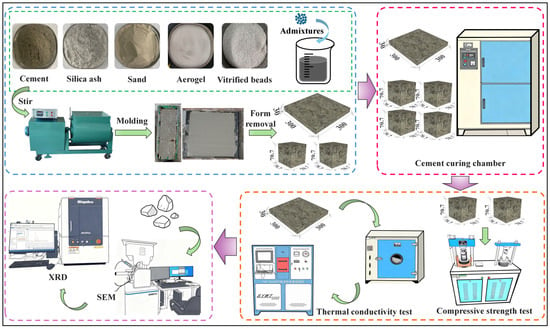
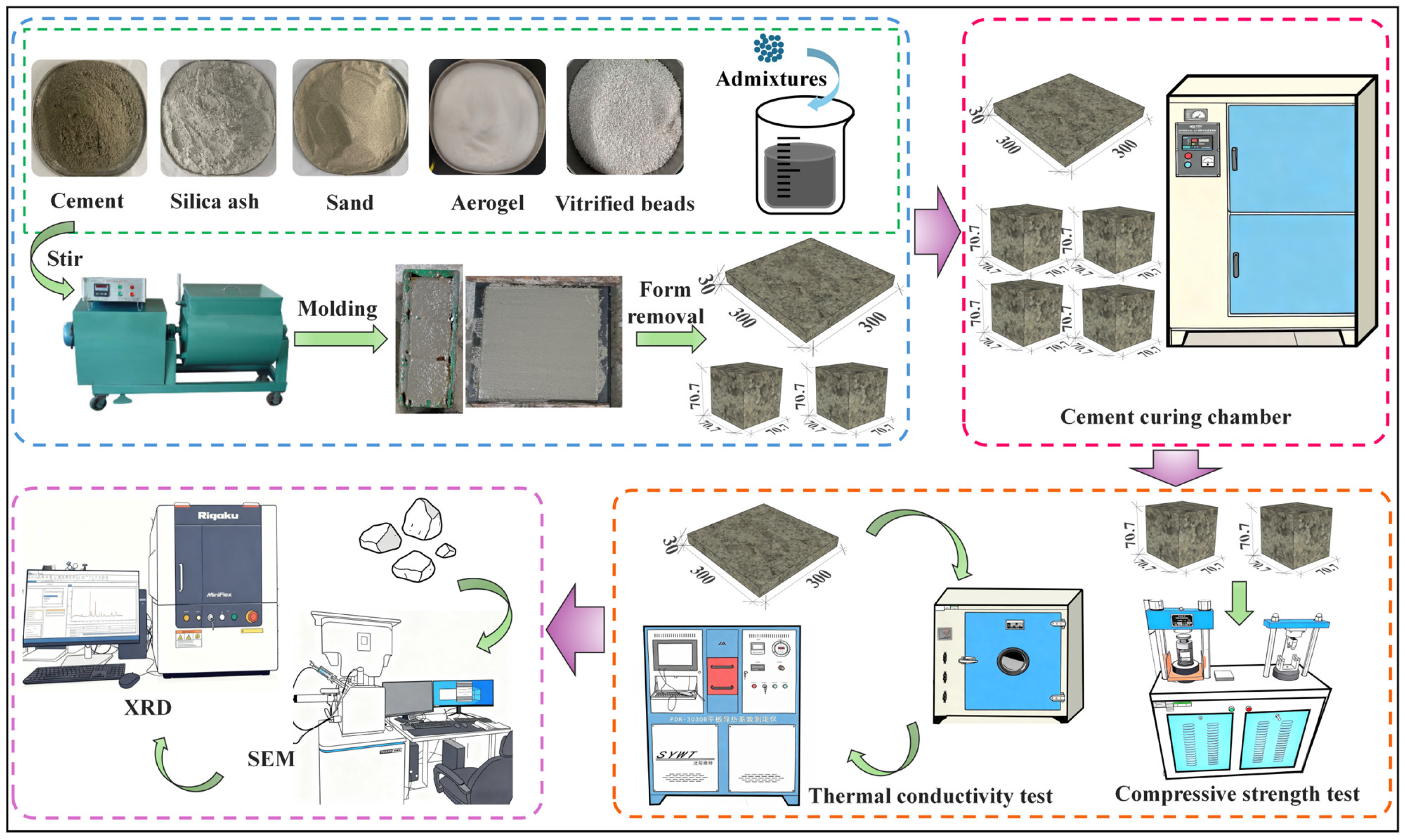
The specimen preparation procedure is as follows: First, precisely weigh each component according to the mix ratio. Then, dry-mix the cementitious materials and aggregates in a mixer until uniform. Simultaneously, thoroughly mix water and admixtures and set aside. Subsequently, slowly add the dry mixture to the wet mixture while stirring continuously until a uniform fresh paste is obtained (for the vitrified microspheres blend group, add the microspheres only after the aerogel is thoroughly mixed with the paste and gently stir). Finally, pour the mixed paste into molds coated with release agent. To prevent aerogel from rising, manually tamp the mixture until surface bleeding occurs and no significant air bubbles escape. Level the specimen surface and then cure in a standard curing chamber at (20 ± 2) °C and ≥95% relative humidity until the specified age. The sample preparation process is shown in Figure 1.
Figure 1.
Flow chart of experimental procedure.
2.2.2. Experimental Procedure
After standard curing for 28 days, specimens were tested according to the following procedure: first, the thermal conductivity specimens were dried, and their thermal conductivity was measured using the plate method; then, compressive strength tests were conducted on the specimens to evaluate their macroscopic mechanical properties; finally, specimens were prepared according to microstructural testing standards and subjected to scanning electron microscopy (SEM) observation and X-ray diffraction (XRD) analysis to characterize their microstructure and phase composition. The overall testing procedure is illustrated in Figure 1.
2.3. Performance Characterization and Testing
2.3.1. Physical Performance Tests
The consistency test was conducted in accordance with the consistency test method specified in Standard for Test Methods of Basic Properties of Building Mortars (JGJ/T 70-2009) [23]. The dry density test was carried out with reference to the relevant provisions of Building Thermal Insulation Mortars (GB/T 20473-2021) [24]; the specimens cured for 28 days were dried to constant weight, and then the dry density values were calculated in accordance with the specification requirements. Three parallel specimens were prepared for both tests, and the final test results were taken as the arithmetic mean of the measured values of the parallel specimens.
2.3.2. Test of Thermal Conductivity
In accordance with GB/T 10294-2008 [25], Determination of Steady-State Thermal Resistance and Related Properties of Thermal Insulation Materials, the thermal conductivity of the dried specimens was measured using a PDR-3030B double-plate thermal conductivity tester supplied by Shaanxi Zhongli Testing Technology Co., Ltd (Xi’an, China). The test conditions were set as follows: the temperature difference between the hot and cold plates was 20 °C, the average test temperature was controlled at 25 °C, and each specimen was measured repeatedly 3 times. The specimens, with dimensions of 300 mm × 300 mm × 30 mm, were demolded after 48 h of hardening. Their surfaces were ground smooth before being placed in a standard curing chamber for 7 days of curing, and they were then dried in an oven at 50 °C until the mass remained constant. Three specimens were prepared for each mix ratio, and the test results were taken as the arithmetic mean.
2.3.3. Test of Mechanical Properties
Referring to the Standard for Test Methods of Basic Properties of Masonry Mortar (JGJ/T70-2009), the compressive strength of cubic specimens (70.7 mm × 70.7 mm × 70.7 mm) was tested at an age of 28 days. Before loading, it was ensured that the specimens were centered and the bearing surface was perpendicular to the loading direction. The loading process was maintained uniformly and continuously, with the loading rate controlled at approximately 0.5 MPa/s until specimen failure occurred, at which point the peak load was recorded. For each test group, at least three valid specimens were selected, and the arithmetic mean was calculated as the final compressive strength result for that group.
2.3.4. Analysis of Hydration Products
X-ray diffraction (XRD) analysis was employed to determine the phase composition of the specimens. Single-frequency Cu Kα radiation was used, with measurement parameters set at a 40 kV operating voltage, 20 mA operating current, 2°/min scanning rate, and scanning range of 10–80°. All microstructural test samples were taken from specimens cured under standard conditions for 28 days. The test specimens were soaked in anhydrous ethanol to terminate the hydration reaction and then subsequently placed in a vacuum-drying oven to remove residual moisture. After the specimens were completely dried, they were ground into powder and passed through a 200-mesh sieve to ensure a uniform particle size of the powder, thus meeting the sample requirements for XRD testing.
2.3.5. Test of Microscopic Properties
The microscopic morphology of the specimens was observed using a Tescan Mira4 field emission scanning electron microscope (SEM) with an accelerating voltage of 3–30 kV, supplied by Xi’an Yancheng Technology Co., Ltd (Xi’an, China). After curing the specimens to the target age, the target cross-sections were dried and cleaned, followed by sputter-coating with a thin gold layer to enhance their electrical conductivity. For each mix proportion of specimens, 2–3 representative fields of view (FOV) were randomly selected for SEM observation to ensure the representativeness and reliability of the experimental results.
3. Results and Discussions
3.1. Consistency Value
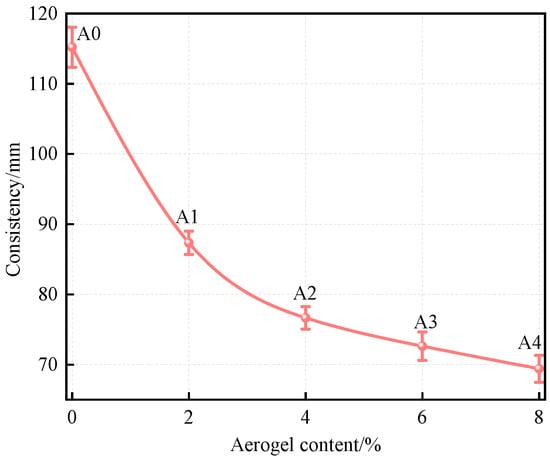
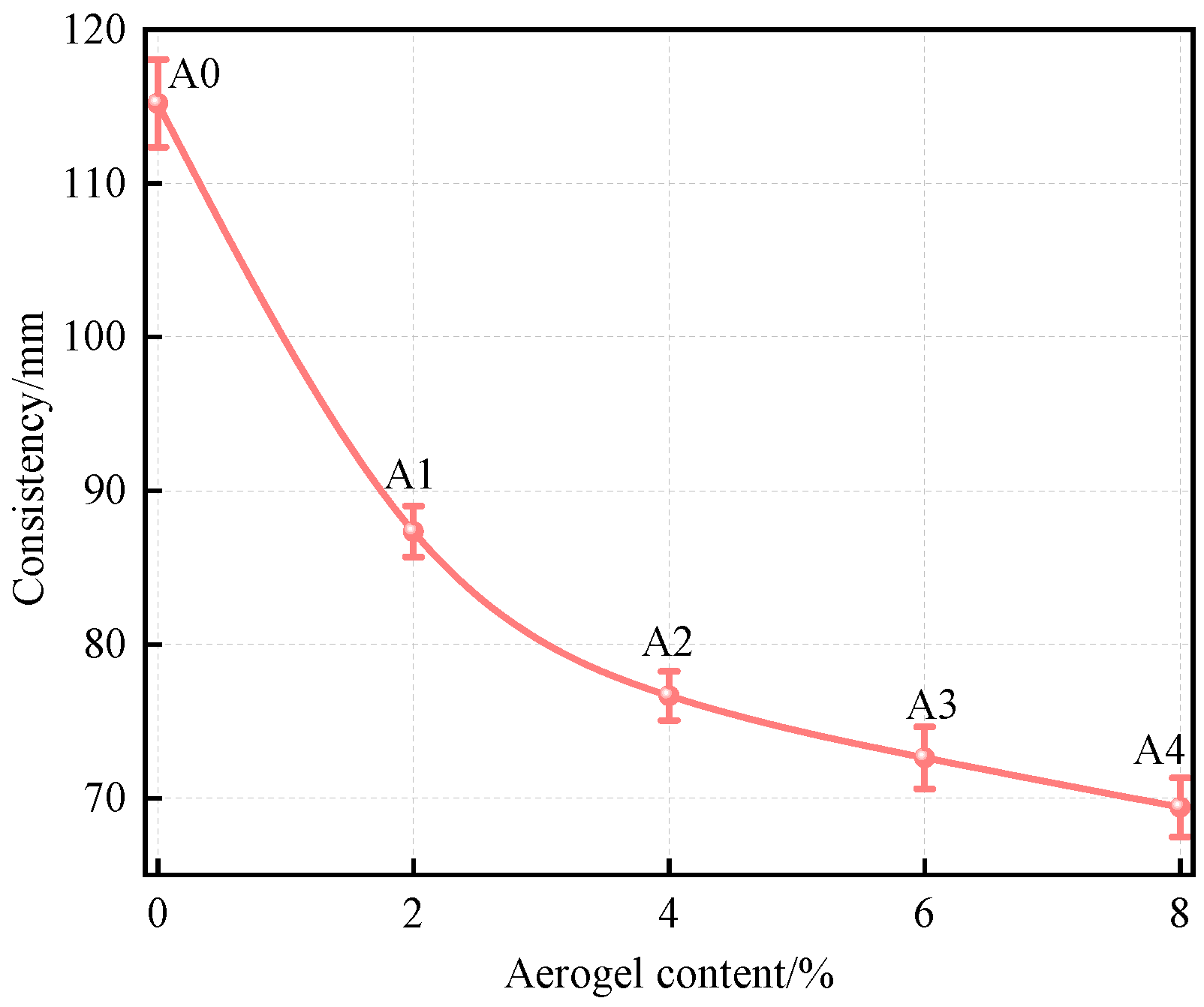
The results of the consistency test for the aerogel-incorporated composite materials are presented in Figure 2. The experimental results indicate that the consistency of the composite materials shows a monotonically decreasing trend with the increase in aerogel content. As the aerogel content rises from 0% to 8%, the consistency of the composites drops from an initial 115.19 mm to approximately 69.4 mm, representing a significant loss of fluidity. This phenomenon is attributed to the high porosity and high specific surface area of aerogel: its particles can adsorb a large quantity of free water in the mixing system, which drastically reduces the liquid-phase medium available for the flow of the paste; meanwhile, the ultrafine particle morphology of aerogel increases the interparticle friction within the paste. The synergistic effect of these two factors further impedes the flow of the paste, ultimately leading to a remarkable decrease in the fluidity of the composite materials.
Figure 2.
Consistency value of composites with different aerogel contents.
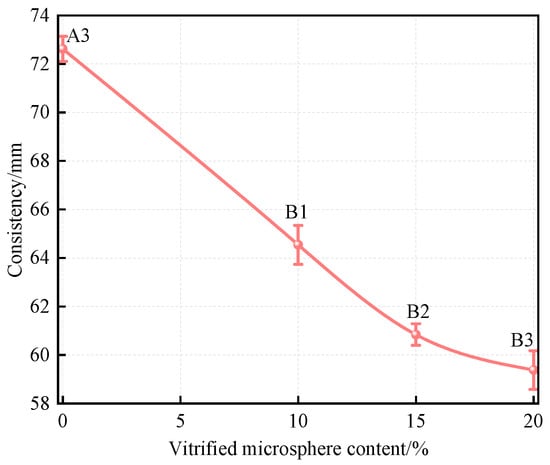
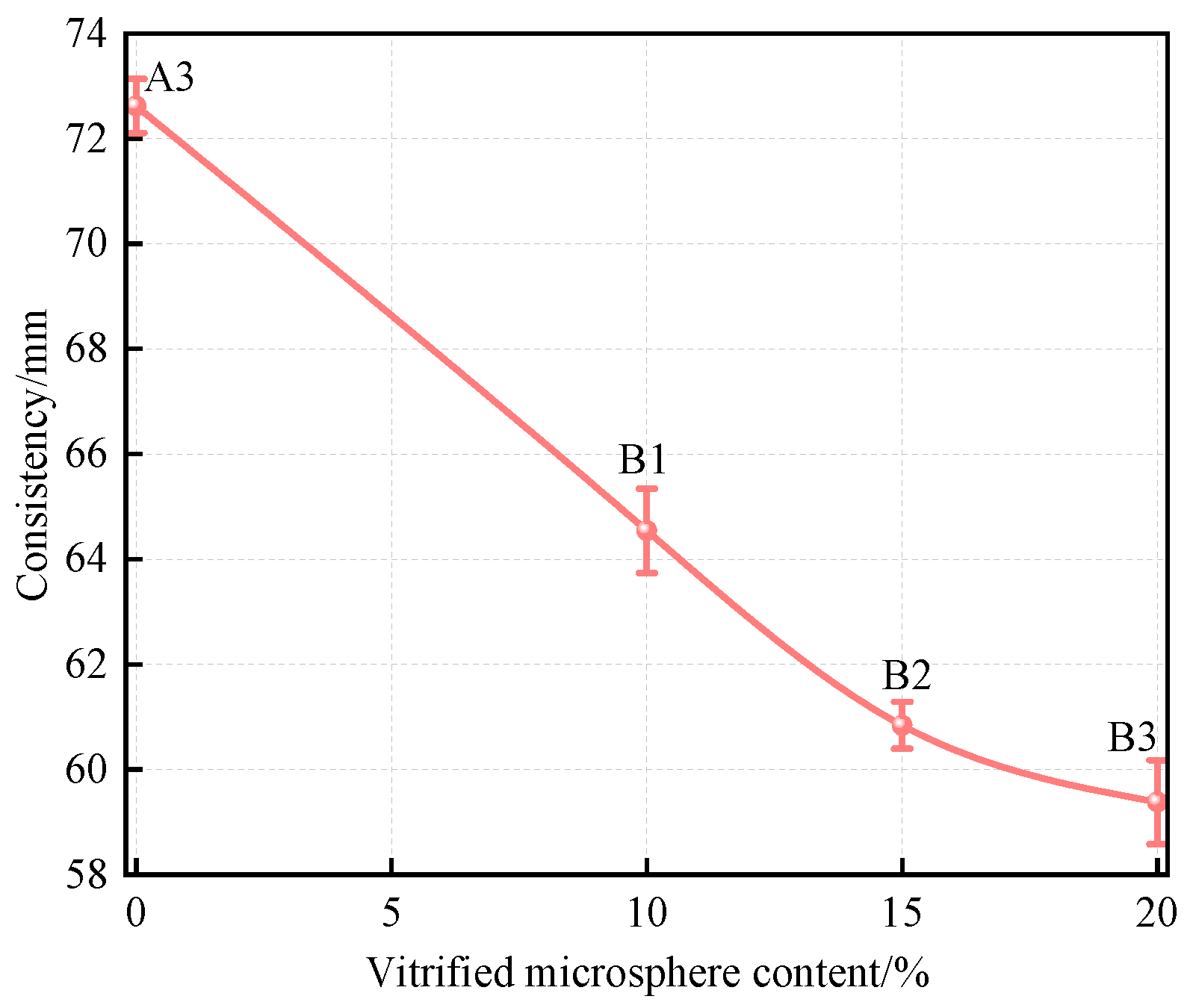
The effect of blended incorporation of vitrified microspheres on the consistency of composite materials with a fixed aerogel content of 6% is illustrated in Figure 3. It can be seen from the figure that the consistency of the composite materials shows a continuous decreasing trend with the increase in vitrified microsphere content. The rise in vitrified microsphere content directly increases the interparticle friction among solid particles inside the composites, which enhances the cohesion of the paste and thus leads to a reduction in its fluidity. Meanwhile, a high content of vitrified microspheres not only adsorbs more mixing water, resulting in a decrease in the free water content within the system, but also tends to cause uneven dispersion and agglomeration of solid particles, which further exacerbates the flow resistance of the paste.
Figure 3.
Consistency value of composites with different vitrified microsphere contents.
3.2. Dry Density
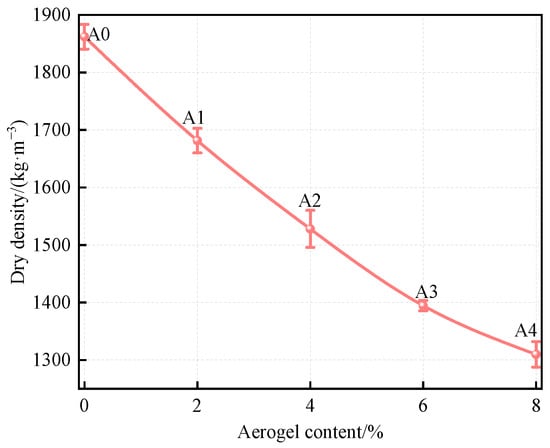
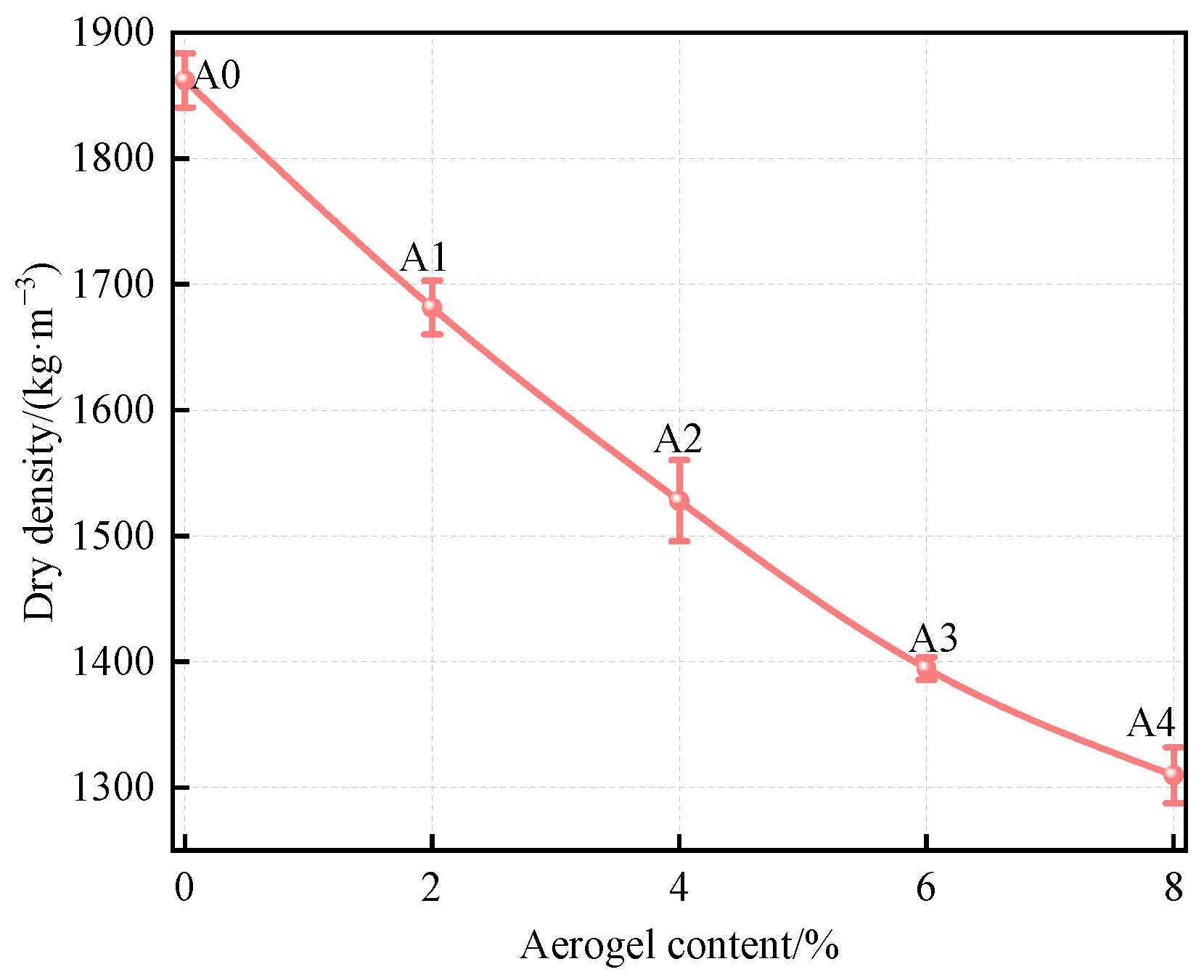
The test results of the dry density of the aerogel-incorporated composites are presented in Figure 4. The dry density of the cement-based composites exhibits an approximately linear decreasing trend with the increase in aerogel content. When the aerogel content rises from 0% to 8%, the dry density of the composite decreases from 1862.04 kg/m3 to 1309.75 kg/m3, with a reduction rate of 30%. This trend is attributed to the light porous structural characteristic of high porosity possessed by SiO2 aerogel. Upon incorporation, aerogel gradually replaces the dense components in the cement matrix, and its ultra-low-density feature directly alters the overall dense state of the composite, thereby resulting in a continuous reduction in dry density with increasing aerogel content.
Figure 4.
Dry density of composites with different aerogel contents.
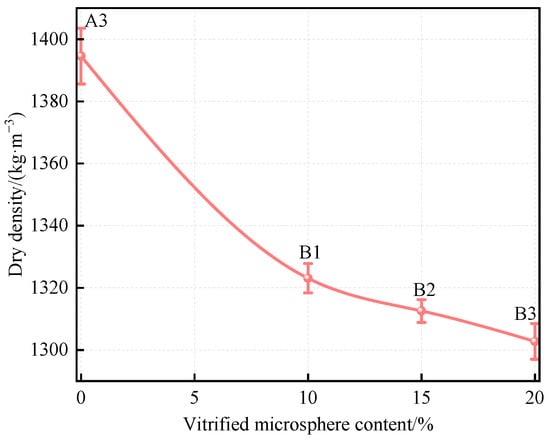
With a fixed aerogel content of 6%, the effect of co-blending vitrified microspheres on the dry density of the composite material is shown in Figure 5. The results indicate that the dry density of the composite material continuously decreases with increasing vitrified microsphere content. The reduction is significant when the microsphere content is below 10%, while the decrease becomes smaller when exceeding 10%. This pattern stems from vitrified microspheres being hollow lightweight aggregates with a density far lower than fine sand, thus significantly reducing the system’s dry density upon incorporation. However, due to the low strength of vitrified microspheres, they are prone to breakage during mixing. When the vitrified microsphere content is too high, the proportion of broken particles increases. These broken vitrified microsphere particles can embed more tightly into the paste, partially offsetting the original density-reducing effect of the vitrified microspheres. This leads to a gradual decrease in the rate of decline in the dry density of the composite material.
Figure 5.
Dry density of composites with different vitrified microsphere contents.
3.3. Thermal Conductivity
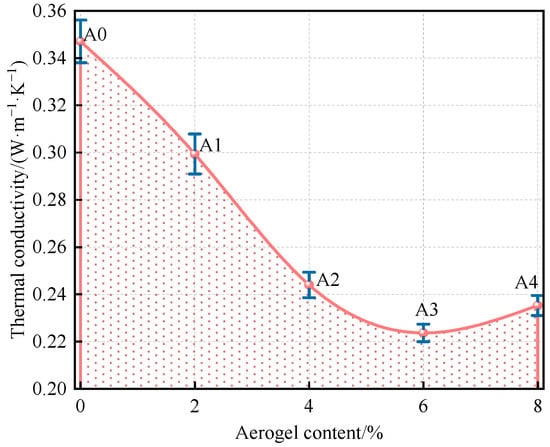
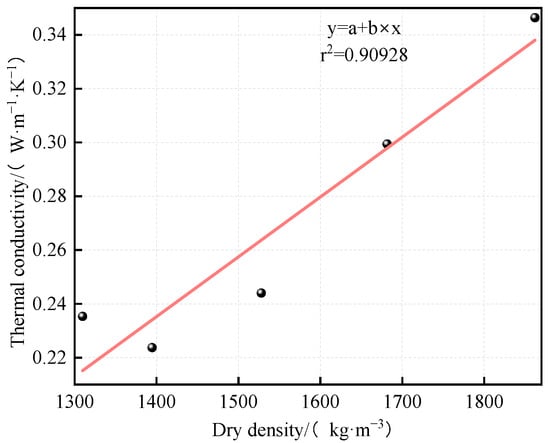
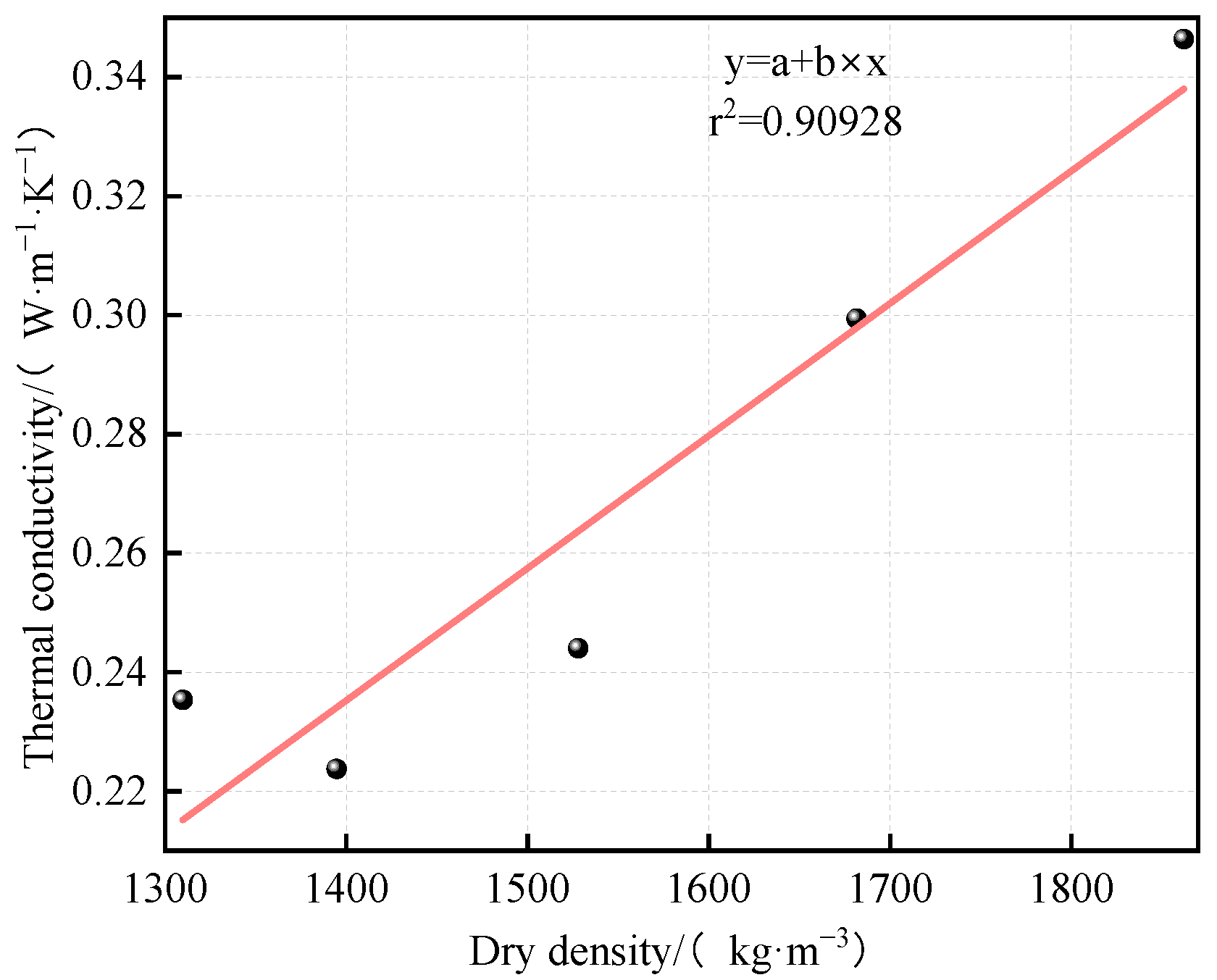
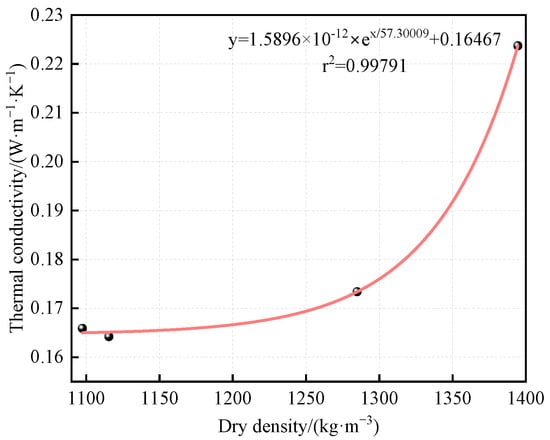
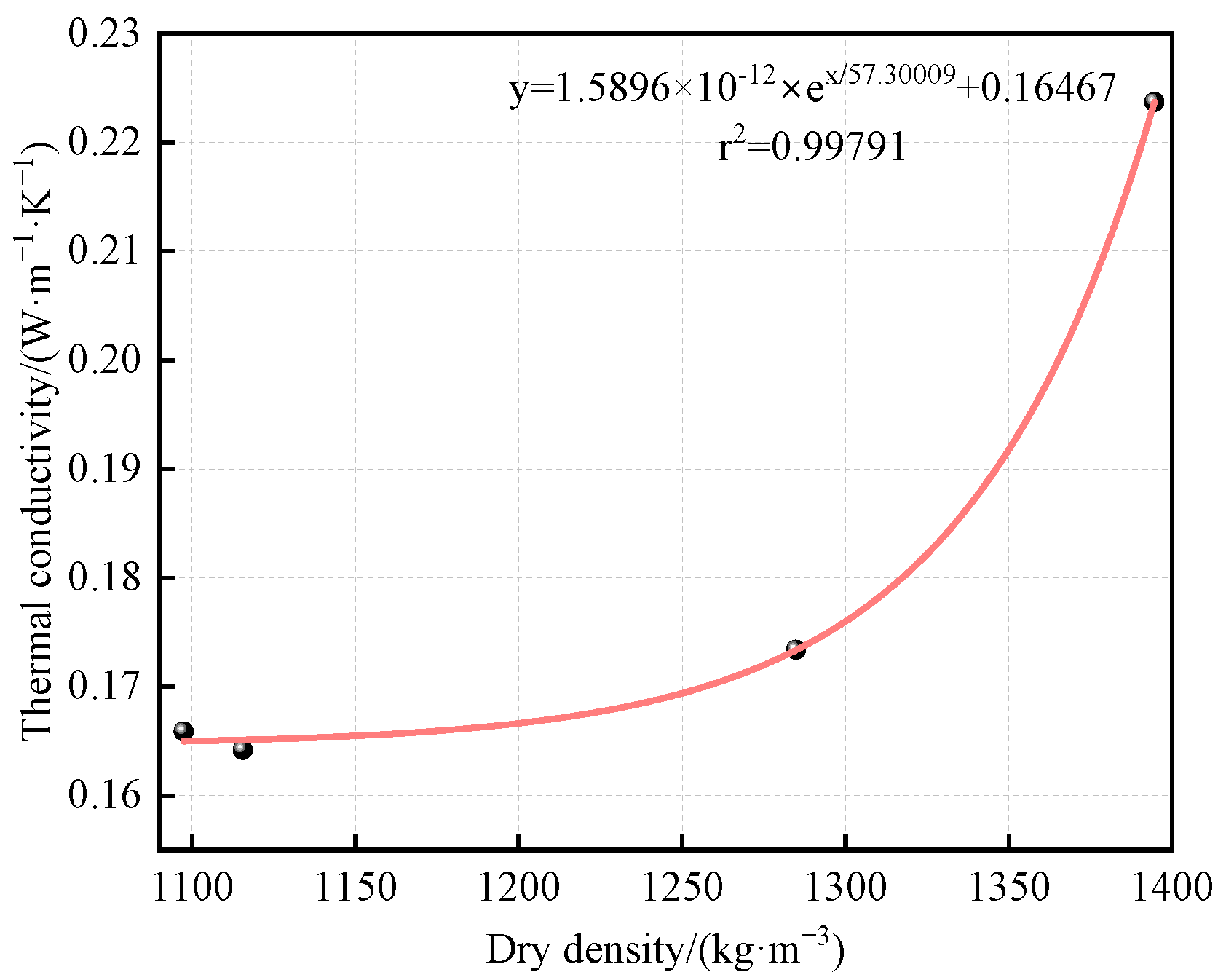
The thermal conductivity test results for the aerogel-reinforced composites are shown in Figure 6, and the relationship between their thermal conductivity and dry density is shown in Figure 7. As the aerogel content increased, the thermal conductivity exhibited a nonlinear trend, first decreasing and then increasing. When the aerogel content increased from 0% to 6%, the thermal conductivity of the sample decreased from 0.3464 W/(m·K) to 0.2237 W/(m·K), a reduction of 35%. This decrease primarily resulted from the aerogel’s nanopore volume fraction exceeding 90%, which effectively increased the interfacial thermal resistance within the system and lengthened the heat conduction path; on the other hand, as a low-density porous material, aerogel reduced the overall density of the composites. The lower density corresponded to a higher internal porosity, which further enhanced the thermal insulation performance of the material. When the aerogel content increased to 8%, the thermal conductivity rose to 0.2353 W/(m·K). This increase resulted from excessive aerogel content causing agglomeration, with the agglomerates readily encapsulating excess mixing water. The synergistic effect of these two factors created localized thermal bridges, weakening the aerogel’s inherent thermal resistance and reducing the material’s overall thermal insulation performance. Simultaneously, an excessively high content disrupted the dispersion stability of aerogel within the cement matrix, leading to uneven density distribution of the composites. The local dense regions formed by agglomerates acted as additional heat conduction paths, resulting in an increase in thermal conductivity even though the overall density of the system continued to decrease.
Figure 6.
Thermal conductivity of composites with different aerogel contents.
Figure 7.
Relationship between dry density and thermal conductivity of composites with different aerogel contents.
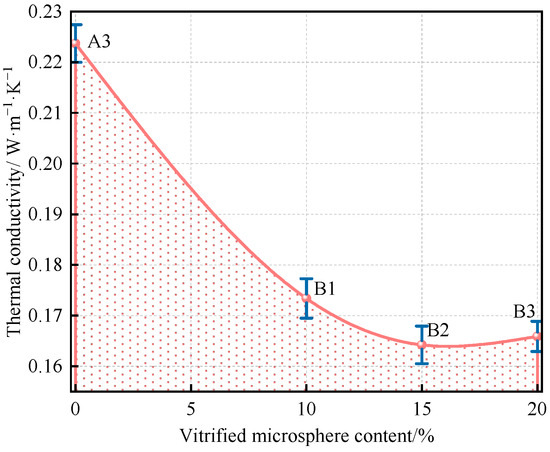
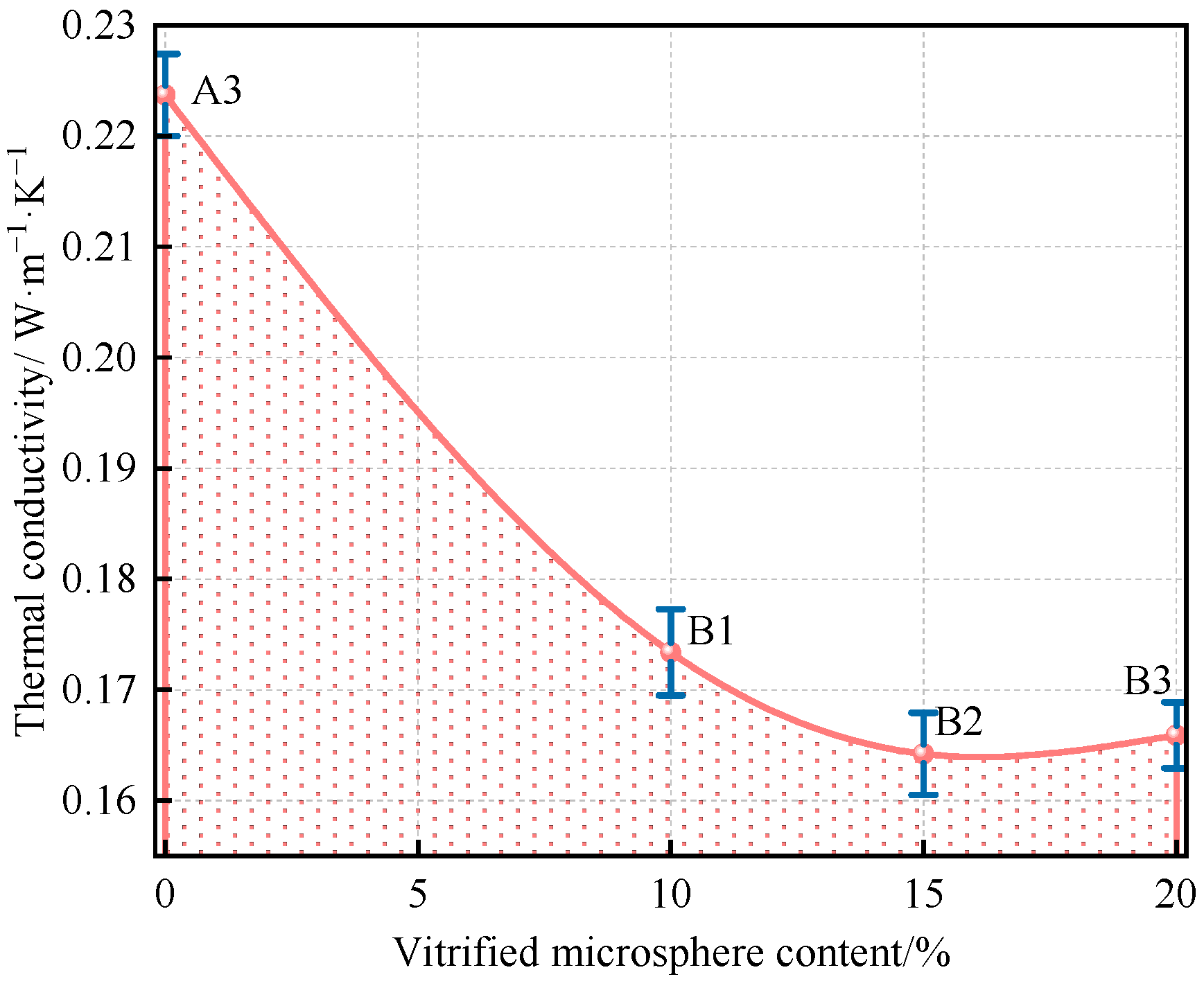
With a fixed aerogel content of 6%, the effect of co-dispersing vitrified microspheres on the thermal conductivity of the composite material is shown in Figure 8, and the relationship between their thermal conductivity and dry density is shown in Figure 9. As the content of vitrified microspheres increased from 0% to 15%, the dry density of the composite material showed a decreasing trend. Correspondingly, its thermal conductivity decreased gradually from 0.2237 W/(m·K) to 0.1642 W/(m·K), representing a 27% reduction. Compared with the A0 control group without aerogel and vitrified microspheres, the thermal insulation performance was improved by 53%. This reduction primarily stemmed from the closed-cell hollow structure of vitrified microspheres and their inherently lower thermal conductivity compared to fine sand. When replacing fine sand on a mass-equivalent basis, vitrified microspheres not only increased the overall porosity of the system but also effectively blocked heat flow pathways through uniform dispersion within the matrix. This extended the thermal conduction distance, further lowering the thermal conductivity. When the vitrified microsphere content increased to 20%, the thermal conductivity showed a slight rebound. This phenomenon occurred because excessive microspheres led to particle agglomeration and a looser internal structure, enhancing pore connectivity. This, in turn, intensified internal thermal convection effects, thereby weakening the material’s thermal insulation performance.
Figure 8.
Thermal conductivity of composites with different vitrified microsphere contents.
Figure 9.
Relationship between dry density and thermal conductivity of composites with different vitrified microsphere contents.
3.4. Compressive Strength
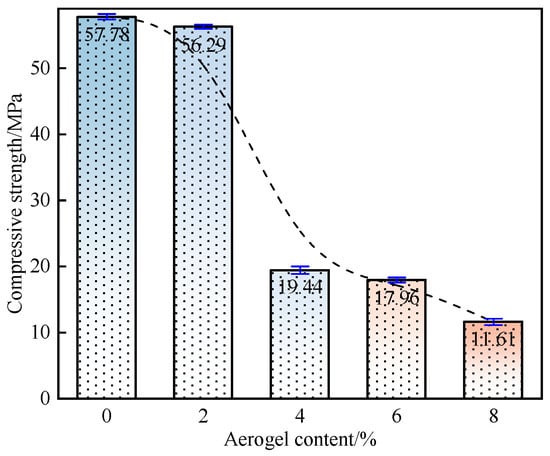
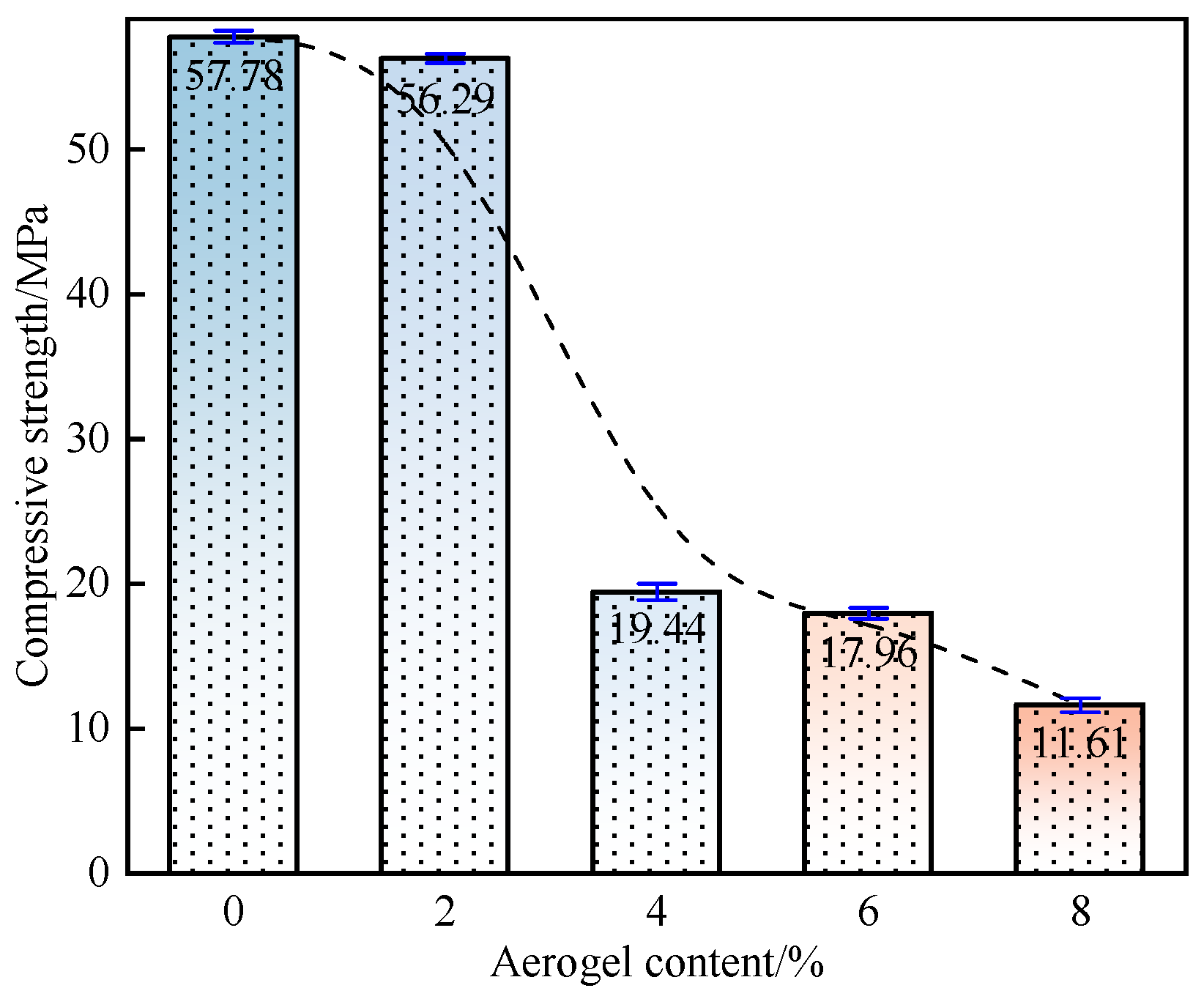
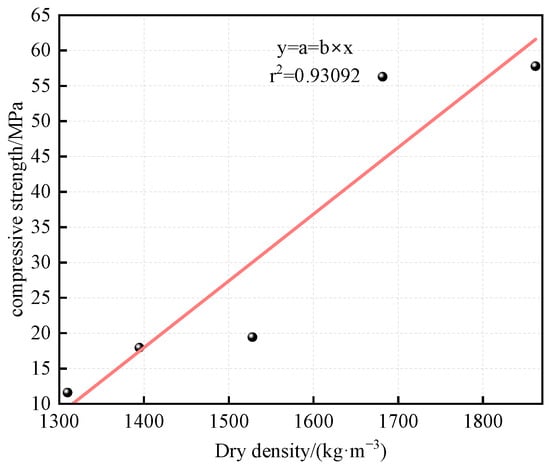
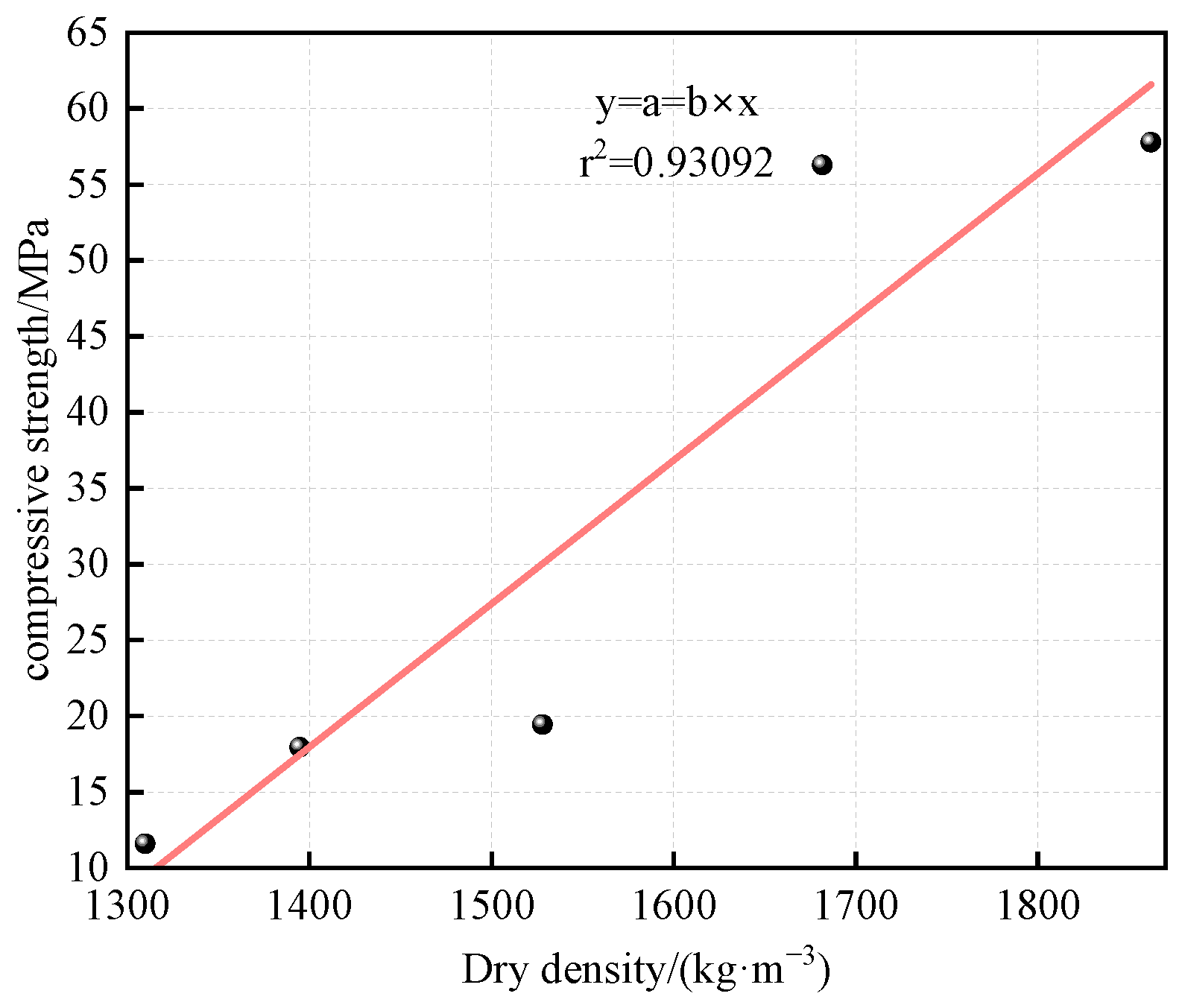
The 28-day compressive strength test results of the composite materials mixed with aerogel are shown in Figure 10, and the relationship between their compressive strength and dry density is shown in Figure 11. The 28-day compressive strength of the composites generally shows a decreasing trend with the increase in aerogel content and exhibits stage-wise variation characteristics in different dosage ranges, with this evolution law highly coupled to the change in material dry density. When no aerogel is incorporated, the compressive strength of the composites is 57.78 MPa, corresponding to a high level of dry density and a compact internal structure; when the aerogel content increases to 2%, its slight negative impact on the compaction of the sample is offset by the combined effect of the filling effect of silica fume, chemical reaction, and the dispersion effect of the water-reducing admixture. The internal pore structure of the material does not undergo significant deterioration; therefore, the compressive strength decreases only slightly to 56.29 MPa. When the aerogel content increases to 4% and above, the strength degradation effect intensifies significantly. At this stage, the dry density of the material continues to decrease with the increase in aerogel content, and the internal structure shows an obvious trend of loosening. On the one hand, the nano-framework structure of aerogel itself has extremely low strength, and it easily adsorbs a large amount of mixing water during the stirring process, hindering the normal hydration process of cement; this leads to insufficient generation of hydration products, weakening of the effective load-bearing skeleton of the matrix and causing a simultaneous increase in the connectivity of internal pores, reducing the compactness of the material. On the other hand, the weak interface regions between aerogel and cement matrix form a large number of interface defects with the increase in dosage, which become stress concentration points and accelerate the damage and failure of the material’s internal structure, ultimately leading to the simultaneous decrease in dry density and load-bearing area. The compressive strength of the composites experiences a cliff-like decline from the baseline value: it drops to 19.44 MPa at a dosage of 4%, and further decreases to 17.96 MPa and 11.61 MPa at dosages of 6% and 8%, respectively, with a reduction rate of up to 80% compared to the baseline group.
Figure 10.
Compressive strength of composites with different aerogel contents.
Figure 11.
Relationship between dry density and compressive strength of composites with different aerogel contents.
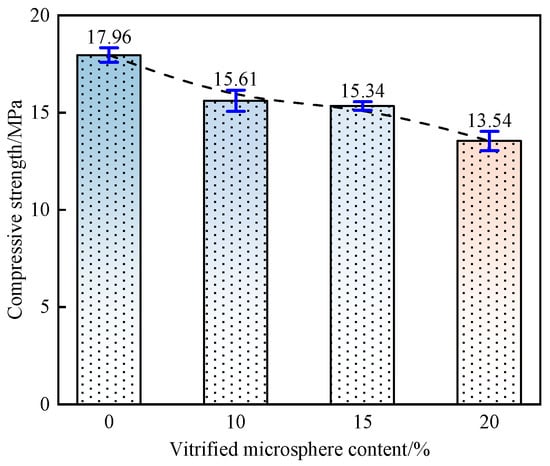
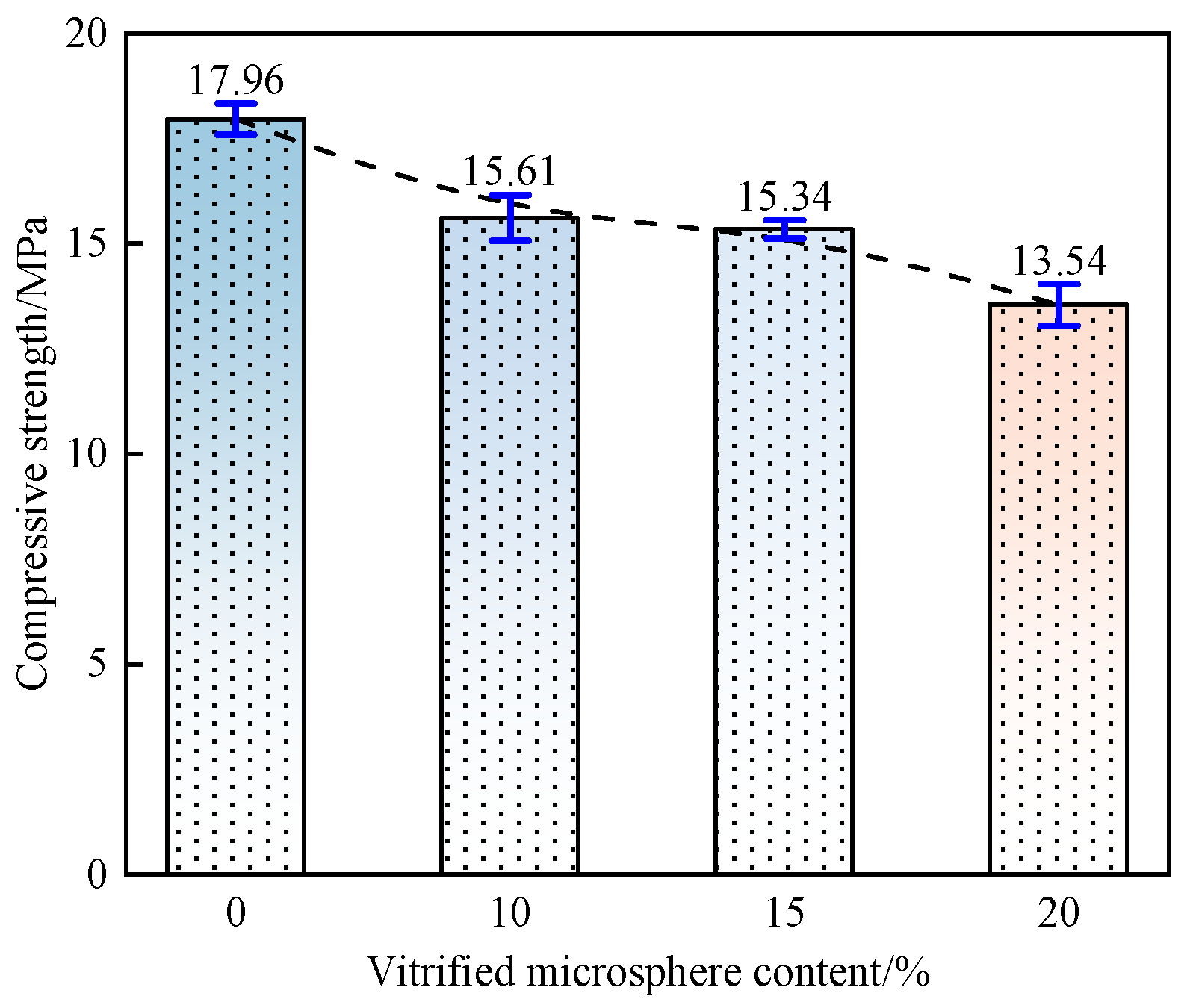
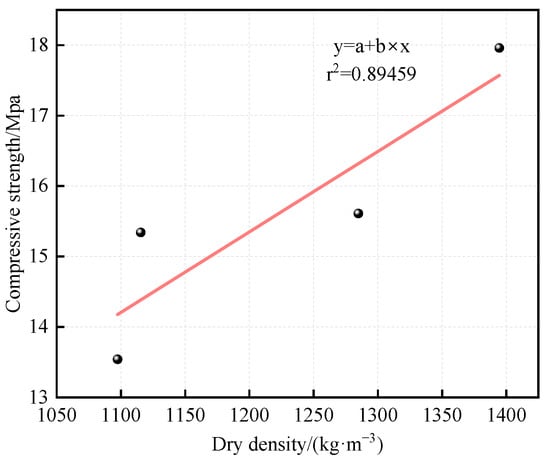
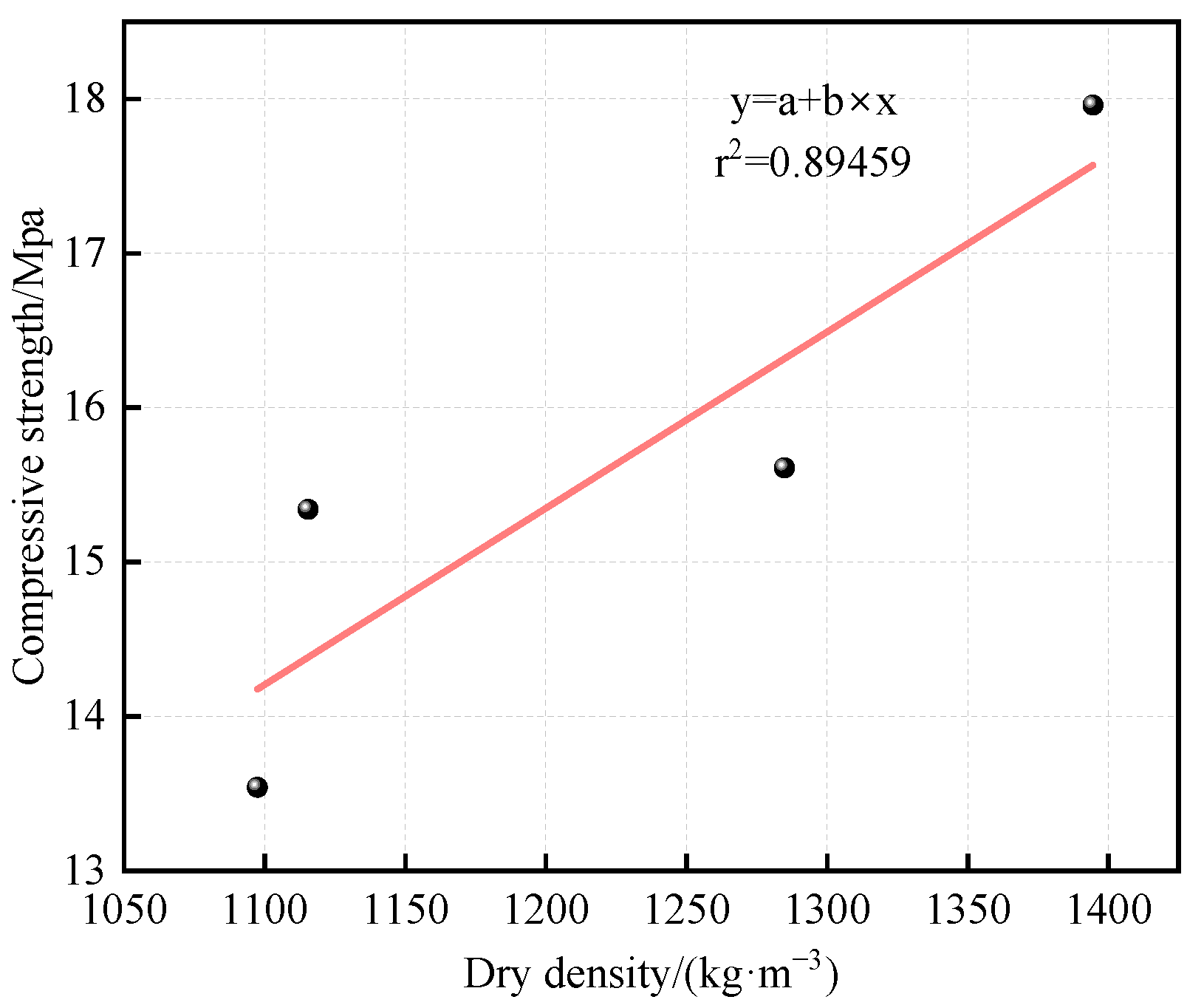
On the basis of a fixed aerogel dosage of 6%, the effect of vitrified microspheres on the compressive strength of composites with an age of 28 days is shown in Figure 12, and the relationship between their compressive strength and dry density is shown in Figure 13. The overall change in the compressive strength of composites with an increase in the vitrified microsphere dosage shows a trend of ‘slow decline–trend to smooth–moderate decline’, mainly due to the dynamic evolution of the material characteristics of the vitrified microspheres and the internal structure and density of the composites. When the dosage of the vitrificated microbead increases from 0% to 10%, the compressive strength decreases from 17.96 MPa to 15.61 MPa, a decrease of about 13%, mainly due to the lightness, porosity, and low compressive strength of the vitrificated microbeads themselves, weakening the compressive strength after dosage, while a small dosage degrades the buffer for the density disturbance of the small and lightly filled aerogel and substrate gaps. When the dosage increases to 15%, the compressive strength decreases slightly to 15.34 MPa, showing no significant decrease; moderate amounts of vitrificated microbeads can fill the gaps between the aerogel and the cement substrate, exerting a microaggregated material skeleton effect, optimizing the internal stress distribution, and, to some extent, counteracting the negative effects brought about by its own low intensity, making the intensity tend to be stable. When the doping amount increases to 20%, the compressive strength decreases to 13.54 MPa. Due to excessive vitrified microspheres replacing aggregate material, the proportion of the gelatin system is too low, the internal structure of the material loosens, the porosity increases, the skeletal effect is ineffective, and the strength decreases again.
Figure 12.
Compressive strength of composites with different vitrified microsphere contents.
Figure 13.
Relationship between dry density and compressive strength of composites with different vitrified microsphere contents.
3.5. Hydration Products
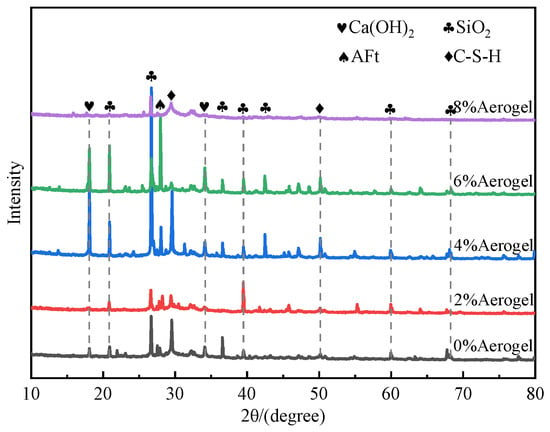
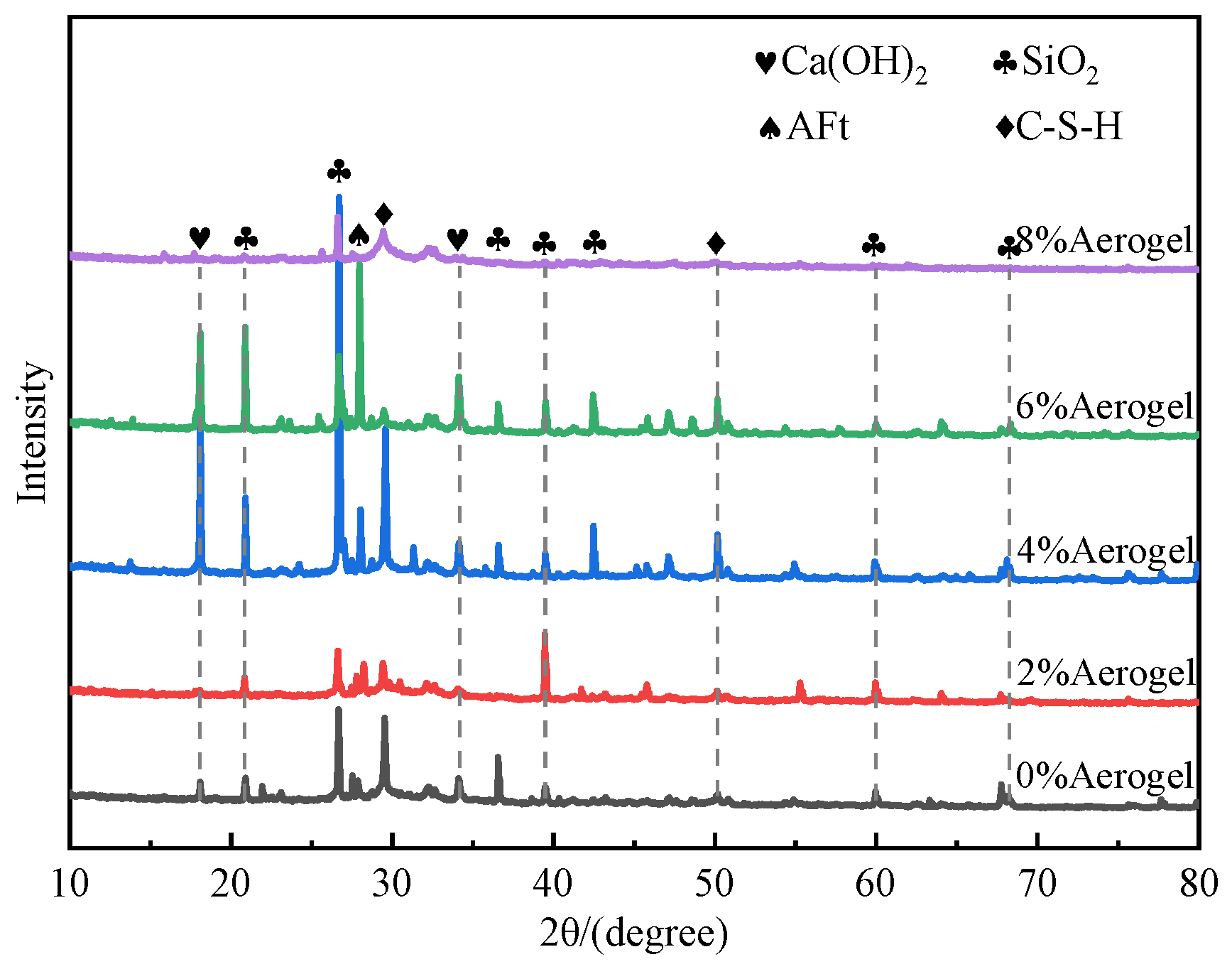
The XRD analysis in this study is qualitative and only used to verify the phase composition. Figure 14 shows the XRD patterns of the composite materials with different aerogel dosages. During the initial hydration stage, the primary hydration product was Ca(OH)2(CH), which originated from the hydration of tricalcium silicate and dicalcium silicate in the cement clinker. As the hydration process progressed, the intensities of the ettringite (AFt) and hydrate calcium silicate (C-S-H) diffraction peaks significantly increased, indicating that aerogel incorporation did not alter the types of early-stage hydration products in cement. The aerogel primarily acted as a physical filler and did not participate extensively in chemical reactions. However, varying the aerogel content affected the yield of hydration products. At high addition levels (A3, A4), the C-S-H diffraction peak intensity markedly decreased. This occurred because the increased aerogel content trapped substantial amounts of water, reducing the available water required for cement hydration. As C-S-H is a primary hydration product, this water shortage directly diminished its formation. When the aerogel content increased to 8%, excessive aerogel agglomeration occurred. This physical packing spatially crowded out the growth space for AFt while simultaneously slowing the hydration reaction rate, resulting in performance below conventional levels.
Figure 14.
XRD spectra of composites with different aerogel contents.
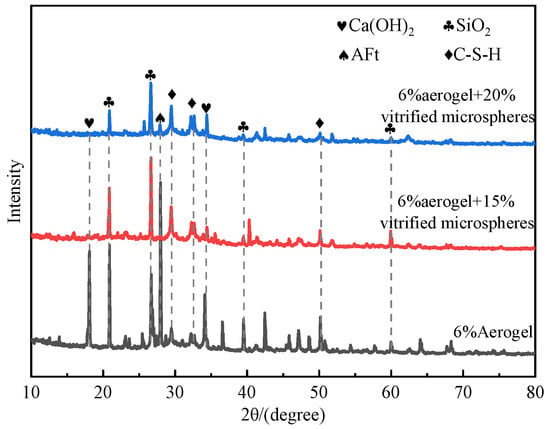
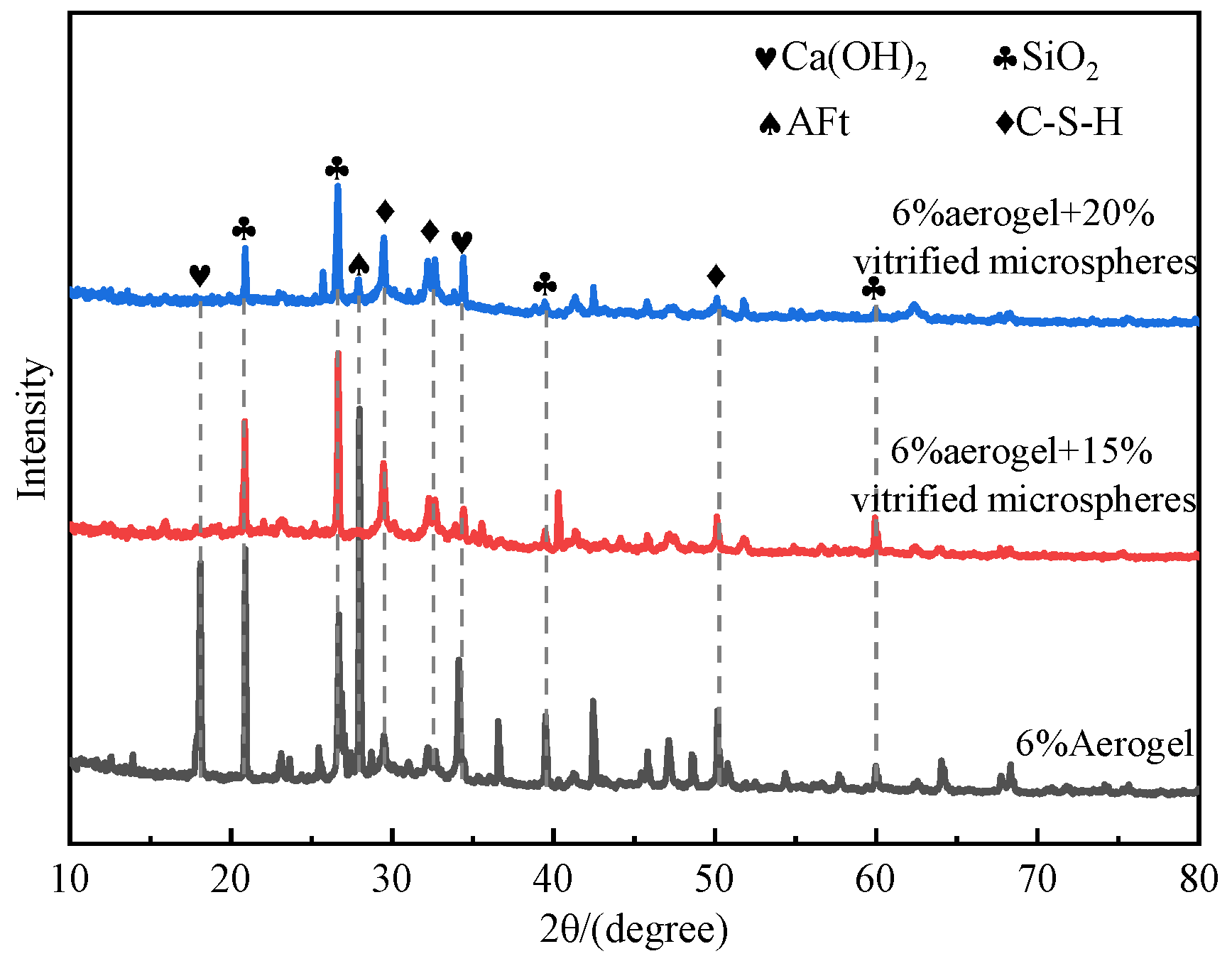
Figure 15 shows the XRD patterns of the composite materials with vitrified microspheres added at a fixed aerogel content of 6%. As illustrated, the addition of vitrified microspheres intensified the hydration product reaction, indicating that they acted as nucleation sites to accelerate hydration product formation. With increasing vitrified microsphere content, the C-S-H diffraction peaks gradually increased, suggesting a gradual pozzolanic effect on their surface. This further consumed Ca(OH)2 to generate additional C-S-H gel. No significant changes were observed in the diffraction peaks of later-stage hydration products, indicating that aerogel and vitrified microspheres had fully promoted hydration. As the vitrified microsphere content increased, they progressively filled voids, functioning as lightweight aggregates within the cement matrix. The micrometer-scale porous structure of the vitrified microspheres also formed an interfacial transition zone with the cement paste. The uneven surface created a local low water–cement ratio zone around the microspheres, disrupting the preferred orientation of the Ca(OH)2 and C-S-H gel. This forced them to grow randomly and interleaved, consistent with the microstructural analysis. Simultaneously, the external hydration product network connected with it to form a powerful mechanical anchoring effect, far exceeding the physical adsorption relying solely on van der Waals forces. Hydration product analysis indicates that the primary role of vitrified microspheres was to improve the spatial distribution of hydration products and optimize interfaces, reducing microstructural defects. Aerogel primarily served as a physical filler and reduced thermal conductivity, synergistically with vitrified microspheres, to construct lightweight, high-strength thermal insulation mortar with excellent thermal insulation properties.
Figure 15.
XRD spectra of composites with different vitrified microsphere contents.
3.6. Microstructure
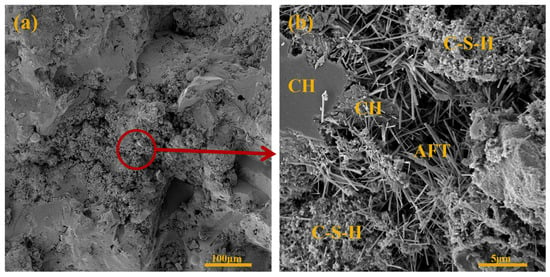
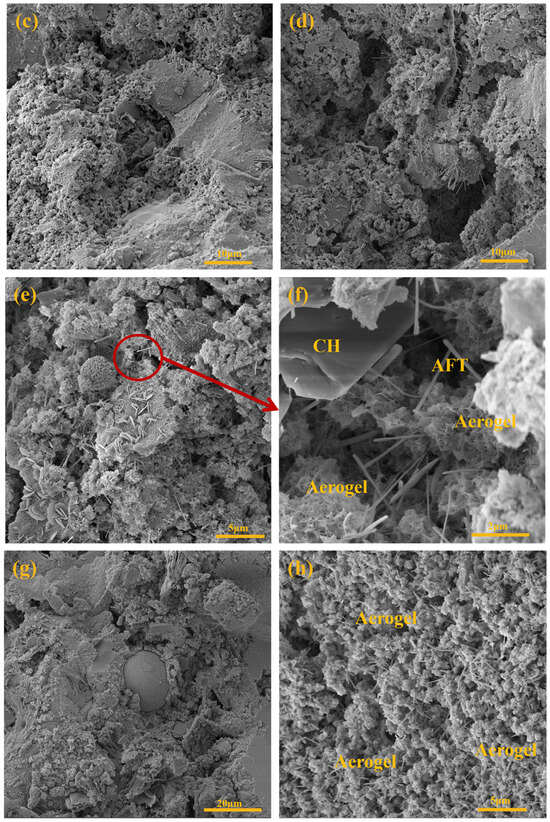
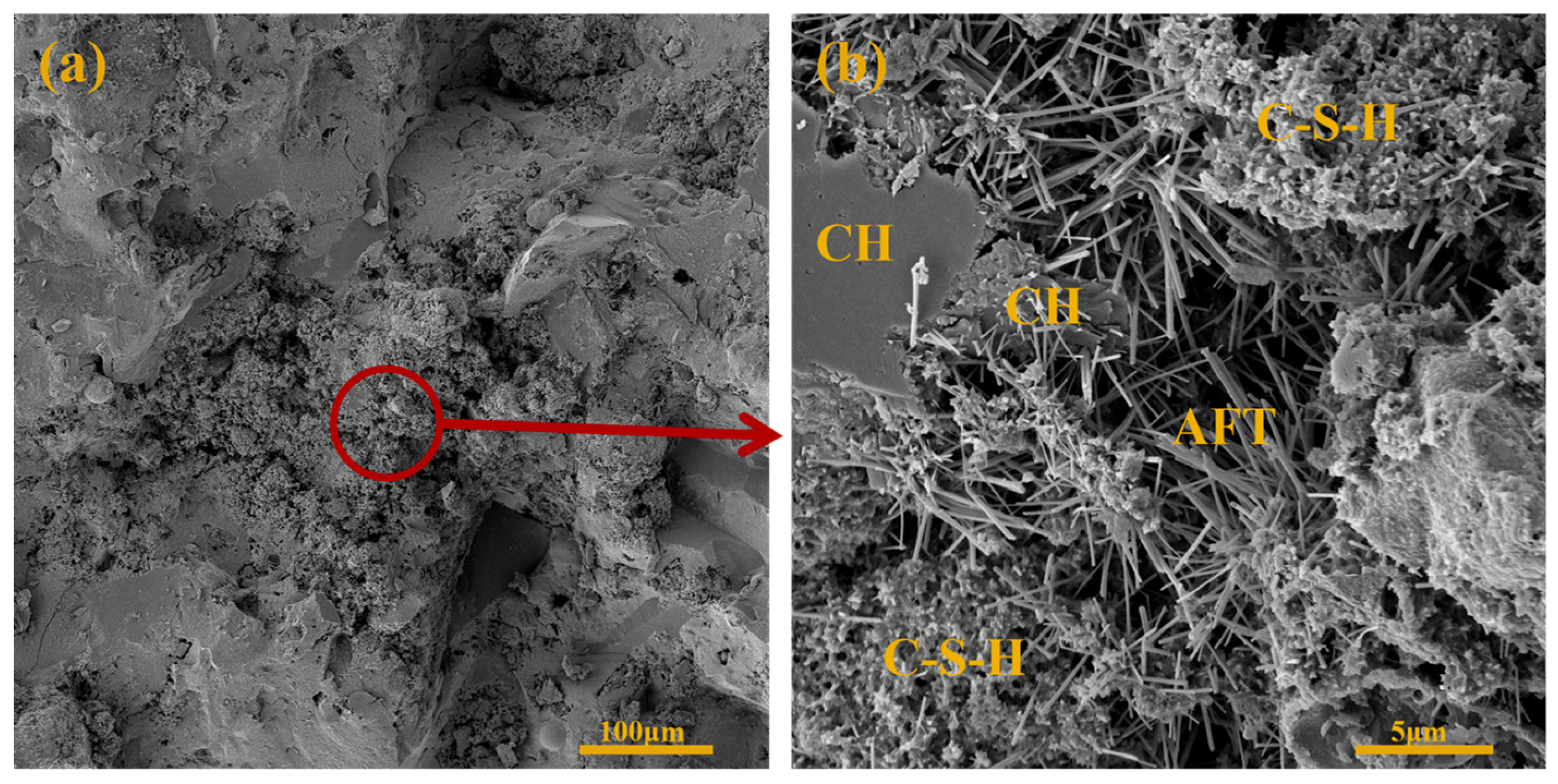
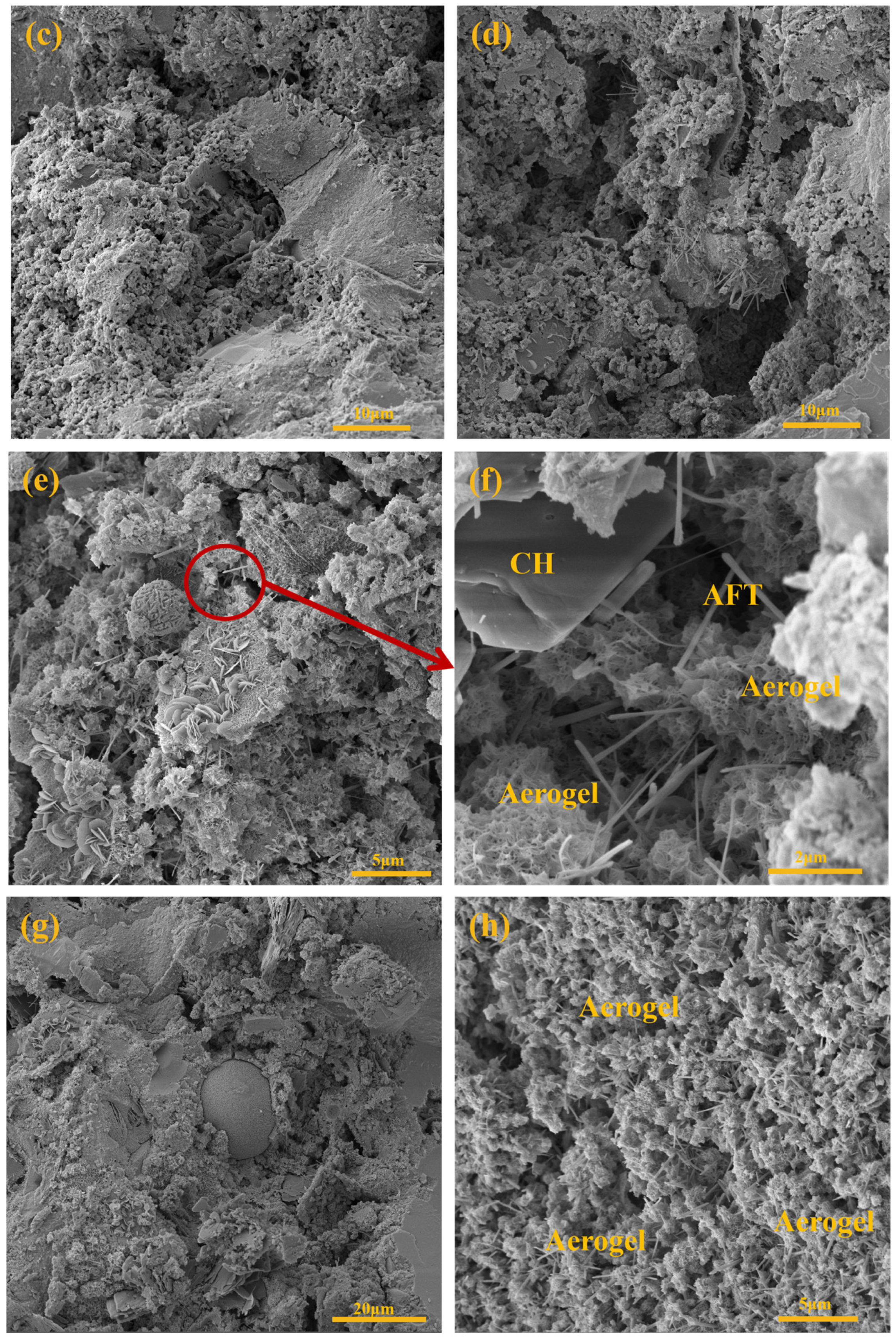
Figure 16 shows the microstructures of the composite materials at different aerogel content levels. As the aerogel content increases from 0% to 8%, the material microstructure exhibits a systematic evolution from a dense to a highly porous system. As shown in Figure 16a,b, the reference group exhibits a dense structure rich in flake-like CH, rod-like AFt, and compact C-S-H gel, with well-intertwined hydration products. As the content increases to 2–4% (as shown in Figure 16c,d), the internal porosity of the material significantly increases. This is primarily attributed to the high specific surface area and nanoporous structure of the aerogel itself, which introduces a large number of isolated and partially interconnected pores. At a 6% content, as shown in Figure 16e, localized agglomeration of aerogel particles occurs. This leads to an increase in micrometer-scale pores within the matrix and at the ‘aerogel–cement stone’ interface. These interfacial defects increase thermal resistance, significantly reducing the material’s thermal conductivity. Figure 16 further reveals substantial C-S-H gel adhesion around aerogel particles, with partial C-S-H growth occurring in situ within their nanopores. This structure enhances the interfacial transition zone and improves material toughness. At an 8% loading, as shown in Figure 16g,f, excessive aerogel agglomeration and pore connectivity result in increased unhydrated particles, structural degradation, and subsequent thermal conductivity recovery alongside further strength reduction—consistent with the macroscopic mechanical performance results.
Figure 16.
SEM images of composites with different aerogel contents: (a) 0% aerogel; (b) enlarged view of (a); (c) 2% aerogel; (d) 4% aerogel; (e) 6% aerogel; (f) enlarged view of (e); (g,h) 8% aerogel.
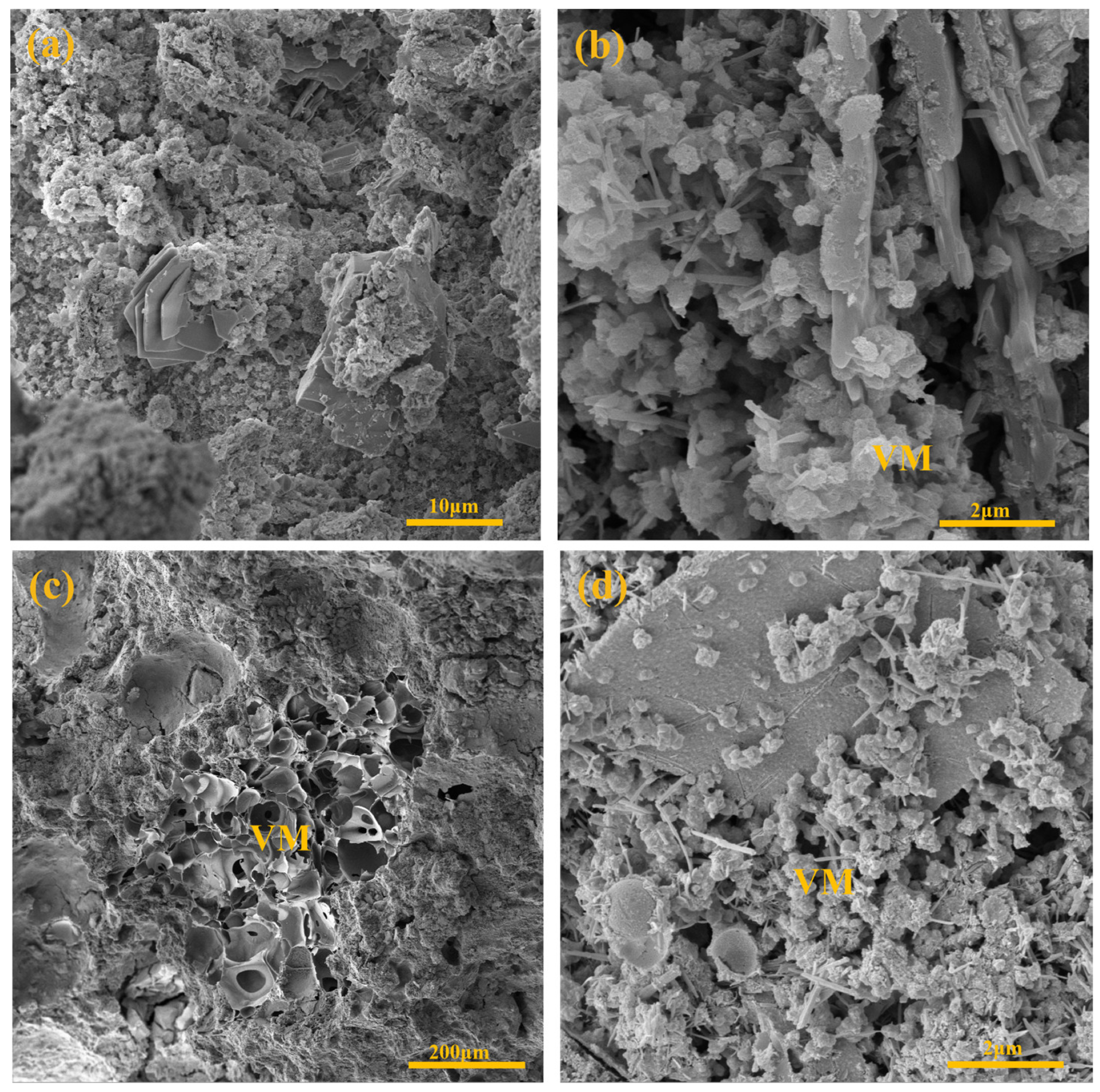
Figure 17 shows the SEM image of the composite material with dual-blended vitrified microspheres at a fixed aerogel content of 6%. As seen in Figure 17b, aerogel and vitrified microspheres coexist within the matrix: aerogel fills the interfacial region between vitrified microspheres and the cement matrix, while vitrified microspheres provide skeletal support to the system, effectively suppressing the structural loosening tendency caused by aerogel alone. Simultaneously, calcium aluminate growth along the vitrified microsphere surfaces and subsequent pore filling can be observed, a process that helps mitigate strength loss. The dual-blending system further reduces thermal conductivity by introducing additional interfaces that impede heat flow. Figure 17c reveals that the vitrified microspheres exhibit a hollow closed-cell structure, prone to fragmentation during mixing. When the vitrified microsphere content increases to 20%, as shown in Figure 17d, particle agglomeration and pore coarsening occur, weakening the optimization effect on thermal conductivity. Simultaneously, the relative content of hydration products decreases, leading to deterioration in mechanical properties. The experimental results demonstrate that with an aerogel dosage of 6% and an vitrified microbead dosage of 15%, both components achieve uniform distribution within the composite material and form good interfacial bonding states between the various phases, which can effectively promote the uniform transmission of stress. Meanwhile, both aerogel and vitrified microspheres are tightly encapsulated by the cement-based matrix, allowing their excellent thermal insulation properties to be fully exerted. Under their synergistic effect, the simultaneous optimization of the thermal and mechanical properties of the composite material is realized.
Figure 17.
SEM images of samples with different vitrified microsphere contents: (a) 6% aerogel; (b), (c) 6% aerogel + 15% vitrified microspheres; (d) 6% aerogel + 20% vitrified microspheres.
Based on the experimental results, the compound blending and synergistic modification of 6% aerogel and 15% vitrified microspheres can not only optimize the thermal insulation performance of cement-based composites but also effectively offset the loss in mechanical properties caused by a single admixture. In this compound blending system, the thermal conductivity of the composite is as low as 0.1642 W/(m·K), and the compressive strength is maintained at 15.34 MPa. Compared with composites prepared by other scholars (with compressive strengths of 20–30 MPa and thermal conductivities of 0.24–0.35 W/(m·K)), this system exhibits superior comprehensive performance and meets the strength requirements specified in Code for Design of Strengthening of Masonry Structures (GB 50702-2011) [26].
4. Conclusions
This study prepared cement-based composites using silica aerogel and vitrified microspheres as functional components, employing an equal-mass substitution method for fine sand. Through systematic testing of thermal insulation and mechanical properties, combined with microstructural observation via scanning electron microscopy (SEM) and phase composition analysis using X-ray diffraction (XRD), this study elucidates the synergistic regulation mechanism of SiO2 aerogel and vitrified microspheres on the thermal–mechanical properties of cement-based composites. The following conclusions are drawn:
(1) Aerogel significantly enhances the thermal insulation properties of materials. Within the tested loading range of this study, 6% loading yielded optimal results. At this loading level, the composite material exhibits the lowest thermal conductivity of 0.2237 W/(m·K), representing a 35% reduction compared to the unmodified control group. Its nanoporous structure effectively increases thermal resistance. However, excessive loading leads to pore connectivity and moisture entrapment, causing the thermal conductivity to rebound and significantly degrading the compressive strength.
(2) The synergistic modification scheme of compound blending with 6% aerogel and 15% vitrified microspheres can significantly improve the thermal insulation performance of cement-based composites while effectively compensating for the loss of mechanical properties caused by a single admixture. Under this compound blending ratio, the thermal conductivity of the composites decreases to 0.1642 W/(m·K), with a reduction rate of 53% compared to the unfilled group; the compressive strength remains stable at 15.34 MPa, showing no significant difference from the specimens with 10% vitrified microsphere compound blending. Based on the above optimal ratio, this study successfully prepared cement-based composites with excellent thermal insulation performance and compressive strength, which provides a basic reference for the development of material ratios in the integration of energy saving and reinforcement of building structures. This study still has certain limitations: the relevant tests only focus on a single water-to-binder ratio and compressive strength. In subsequent research, additional mechanical performance tests, such as flexural strength and splitting tensile strength, as well as durability tests, including impermeability and freeze–thaw resistance, will be carried out. These tests will further explore the performance evolution laws of the materials, improve their feasibility in practical engineering applications, and enhance the reliability of the research results.
(3) The micro-mechanism reveals that aerogel and vitrified microspheres jointly form a ‘nano-micron’ multi-level thermal barrier structure. Aerogel provides nano-scale filling, while vitrified microspheres, through their micron-scale closed-cell structure and surface nucleation effect, further reduce thermal conductivity while maintaining the material’s structural stability.
Author Contributions
Conceptualization, J.D.; methodology, J.D.; software, D.L.; validation, J.D.; formal analysis, D.L.; investigation, C.R. and S.H.; resources, J.D.; data curation, D.L.; writing—original draft preparation, D.L.; writing—review and editing, J.D. and M.S.; funding acquisition, J.D. and M.S. All authors have read and agreed to the published version of the manuscript.
Funding
This project is funded by the Special Fund for guiding technological innovation in Shaanxi Province (Fund) (2024ZC-YYDP-21), Project of National Quality Inspection and Testing Center for Green Wall Materials (KFKT202201), Shaanxi Qin Chuangyuan ’Scientist + Engineer’ team building project (2025QCY-KXJ-025) and General Project of the basic research program of natural science of Shaanxi Province (Part One) (2024JC-YBMS-436).
Data Availability Statement
The original contributions presented in this study are included in the article. Further inquiries can be directed to the corresponding author.
Conflicts of Interest
Author Jianbo Dai was employed by the company Shaanxi Zhongli Testing Technology Co., Ltd. The remaining authors declare that the research was conducted in the absence of any commercial or financial relationships that could be construed as a potential conflict of interest.
References
- IEA. Breakthrough Agenda Report 2024; IEA: Paris, France, 2024; Available online: https://www.iea.org/reports/breakthrough-agenda-report-2024 (accessed on 2 February 2026).
- Kumar, D.; Alam, M.; Zou, P.X.W.; Sanjayan, J.G.; Memon, R.A. Comparative Analysis of Building Insulation Material Properties and Performance. Renew. Sustain. Energy Rev. 2020, 131, 110038. [Google Scholar] [CrossRef] [Scilit]
- Li, H.Y.; Yang, Y. Research Progress in Inorganic Thermal Insulation Mortar. Chin. Concr. Cem. Prod. 2015, 2, 69–72. [Google Scholar] [CrossRef]
- Huo, W.; Zhang, X.; Hou, S.; Chen, Y.; Wang, Y.; Yang, J. Aerogel-like ceramic foams with super-high porosity and nanoscale cell wall from sol nanoparticles stabilized foams. J. Am. Ceram. Soc. 2019, 102, 3753–3762. [Google Scholar] [CrossRef] [Scilit]
- Lou, F.; Dong, S.; Zhu, K.; Chen, X.; Ma, Y. Thermal insulation performance of aerogel nano-porous materials: Characterization and test methods. Gels 2023, 9, 220. [Google Scholar] [CrossRef] [Scilit] [PubMed]
- Ding, J.; Liu, Q.; Zhang, B.; Ye, F.; Gao, Y. Preparation and characterization of hollow glass microsphere ceramics and silica aerogel/hollow glass microsphere ceramics having low density and low thermal conductivity. J. Alloys Compd. 2020, 831, 154737. [Google Scholar] [CrossRef] [Scilit]
- Mazrouei-Sebdani, Z.; Begum, H.; Schoenwald, S.; Horoshenkov, K.V.; Malfait, W.J. A review on silica aerogel-based materials for acoustic applications. J. Non-Cryst. Solids 2021, 562, 120770. [Google Scholar] [CrossRef] [Scilit]
- Lu, J.; Jiang, J.; Lu, Z.; Li, J.; Niu, Y.; Yang, Y. Pore structure and hardened properties of aerogel/cement composites based on nanosilica and surface modification. Constr. Build. Mater. 2020, 245, 118434. [Google Scholar] [CrossRef] [Scilit]
- Liu, Z.H.; Ding, Y.D.; Wang, F.; Deng, Z.P. Thermal insulation material based on SiO2 aerogel. Constr. Build. Mater. 2016, 122, 548–555. [Google Scholar] [CrossRef] [Scilit]
- de Fátima Júlio, M.; Soares, A.; Ilharco, L.M.; Flores-Colen, I.; de Brito, J. Silica-based aerogels as aggregates for cement-based thermal renders. Cem. Concr. Compos. 2016, 72, 309–318. [Google Scholar] [CrossRef] [Scilit]
- Wang, F.; Liu, Z.H.; Deng, Z.P.; Jia, Y.F.; Ding, Y.D.; Ban, G.D.; Liu, R. Effect on the performance of mortar using different volume content of SiO2 aerogel. J. Funct. Mater. 2016, 47, 4064–4069. [Google Scholar] [CrossRef]
- Ratke, L. Herstellung und Eigenschaften eines neuen Leichtbetons: Aerogelbeton. Beton-und Stahlbetonbau 2008, 103, 236–243. [Google Scholar] [CrossRef] [Scilit]
- Zhu, P.; Yu, S.; Cheng, C.; Zhao, S.; Xu, H. Durability of silica aerogel cementitious composites-freeze-thaw resistance, water resistance and drying shrinkage. Adv. Cem. Res. 2020, 32, 527–536. [Google Scholar] [CrossRef] [Scilit]
- Han, F.; Lv, Y.; Liang, T.; Zhang, X.; Yu, W.; Fu, X.; Deng, K. Modeling thermal conductivity of aerogel-incorporated concrete: A multi-scale approach. Constr. Build. Mater. 2024, 450, 138605. [Google Scholar] [CrossRef] [Scilit]
- Han, F.L.; Liu, Y.; Liu, T.; Zhang, X.F.; Lv, Y.; Zha, X.N.M. Experimental Study on the Influence of Silica Aerogel on the Properties of Superfine-cement Composites. Mater. Rep. 2023, 37, 97–103. [Google Scholar]
- Lu, X.; Ding, Y.; Xu, Q.; Zheng, S.; Zhao, W.; Wang, G. Investigation on the physical, mechanical, and durability properties of ductile aerogel powder cement-based composite. Constr. Build. Mater. 2025, 489, 142278. [Google Scholar] [CrossRef] [Scilit]
- Sun, Y.Q.; Hui, L.L.; Zhao, N.; Wang, Q.Y. Preparation of Aerogel Perlite and Its Application in Cement Matrix. Adhes 2021, 46, 18–22. [Google Scholar]
- Hanif, A.; Parthasarathy, P.; Li, Z. Utilizing fly ash cenosphere and aerogel for lightweight thermal insulating cement-based composites. Int. J. Civ. Environ. Struct. Constr. Archit. Eng. 2017, 11, 84–90. [Google Scholar]
- Gong, J.; Duan, Z.; Sun, K.; Xiao, M. Waterproof properties of thermal insulation mortar containing vitrified microsphere. Constr. Build. Mater. 2016, 123, 274–280. [Google Scholar] [CrossRef] [Scilit]
- Jia, G.; Guo, J.; Li, Z. Controllable preparation of aerogel/expanded perlite composite and its application in thermal insulation mortar. Constr. Build. Mater. 2023, 394, 132257. [Google Scholar] [CrossRef] [Scilit]
- Song, X.J.; Hu, Z.J. Influence of glazed hollow bead content on compressive strength and thermal conductivity of recycled concrete. New Build. Mater. 2016, 43, 72–73+90. [Google Scholar]
- Zhao, L.; Li, Z.; Wang, W.J. The Influence of Adding Glazed Hollow Bead Particles on the Mechanical Properties and Thermal Conductivity of Concrete. Constr. Technol. 2015, 44, 63–66+77. [Google Scholar]
- JGJ/T 70-2009; Test methods for basic performance of building mortar. Ministry of Housing and Urban-Rural Development of the People′s Republic of China. General Administration of Quality Supervision, Inspection and Quarantine of the People′s Republic of China (AQSIQ): Beijing, China, 2009.
- GB/T 20473-2021; Dry-mixed thermal insulating mortar for buildings. State Administration for Market Regulation of the People′s Republic of China. Standardization Administration of the People′s Republic of China (SAC): Beijing, China, 2021.
- GB/T 10294-2008; Thermal insulation - Determination of steady-state thermal resistance and related properties - Guarded hot plate apparatus. General Administration of Quality Supervision, Inspection and Quarantine of the People′s Republic of China (AQSIQ). Standardization Administration of the People′s Republic of China (SAC): Beijing, China, 2008.
- GB 50702-2011; Code for thermal insulation construction of external wall with external insulation composite system. General Administration of Quality Supervision, Inspection and Quarantine of the People′s Republic of China (AQSIQ). Standardization Administration of the People′s Republic of China (SAC): Beijing, China, 2011.

Disclaimer/Publisher’s Note: The statements, opinions and data contained in all publications are solely those of the individual author(s) and contributor(s) and not of MDPI and/or the editor(s). MDPI and/or the editor(s) disclaim responsibility for any injury to people or property resulting from any ideas, methods, instructions or products referred to in the content. |
© 2026 by the authors. Licensee MDPI, Basel, Switzerland. This article is an open access article distributed under the terms and conditions of the Creative Commons Attribution (CC BY) license.