


Abstract
Tracking worker identities across cameras is increasingly important for advanced construction site monitoring, such as safety and productivity monitoring. However, current computer vision-based tracking faces challenges in reliably associating worker identities due to frequent occlusions and extreme viewpoint shifts between aerial and ground cameras, resulting in fragmented trajectories and ID switches. This study proposes a Dual-Stage Graph-based Association framework that integrates worker detections across multiple views using complementary Re-identification models and camera-aware adaptive thresholding. The framework synergistically combines TransReID for viewpoint-invariant global features and BPBReID for occlusion-robust part-based features, producing more discriminative representations. Data association leverages a graph-based clustering approach to combine representation features, camera topology, and temporal cues for robust identity maintenance. The first stage enables cross-view clustering while preventing false matches, and the second stage ensures long-term identity stability through EMA-based gallery management. Experiments on two construction sites demonstrate that the proposed framework achieves an HOTA of 39.85% and an IDF1 of 63.58%, outperforming existing baselines while reducing ID switches by 35.0%. Results on the AG-ReID.v2 benchmark demonstrate strong generalization with 90.82% Rank-1 accuracy in aerial-to-CCTV matching. The approach highlights initial feasibility for cross-view multi-camera tracking in construction with potential for extension to more complex industrial environments.
1. Introduction
Recent advancements in computer vision (CV) are increasingly reshaping workforce monitoring practices across various industrial sectors. In the construction domain, traditional worker monitoring methods often suffer from human resource shortages and physical access inefficiencies [1,2]. CV-based systems provide a breakthrough to these physical and cognitive limitations, enabling remote observation through diverse image sources, such as closed-circuit televisions (CCTVs) and unmanned aerial vehicles (UAVs). At the same time, construction sites present uniquely challenging conditions for CV deployment, including constantly evolving site layouts, heavy equipment creating dynamic occlusions, visually similar workers wearing identical PPE, and extreme environmental variations in lighting, dust, and weather.
Early CV studies primarily focused on basic worker safety checks. Object detection techniques were employed to verify compliance with Personal Protective Equipment (PPE) [3], while pose estimation techniques were used to identify unsafe worker behaviors [4]. These methods perform well in tests but often struggle on real construction sites due to environmental variability and occlusions, leading to CV failures. Additionally, Single Camera Tracking (SCT) was simultaneously introduced to acquire a holistic understanding of each worker’s spatial trajectory, operational states, and cumulative history over time. However, SCT inherently faces critical limitations in complex construction environments due to its reliance on a single device’s limited field of view (FoV). When a worker leaves the frame or is occluded, tracking is interrupted, and the identity is typically re-initialized upon re-entry, resulting in fragmented trajectories [5].
To overcome these spatial limitations, Multi-Camera Tracking (MCT) has emerged as a practical solution. MCT aims to maintain consistent identities across disjointed camera views using Person Re-identification (Re-ID) techniques [6], thereby stitching together fragmented local paths into a global trajectory [7]. Additionally, aerial-ground cross-viewpoint (AGCV) Re-ID can continuously track workers at both ground and aerial levels, enabling the synergistic use of these two heterogeneous video sources [8]. AGCV Re-ID has practical potential on construction sites by overcoming the limitations of densely packed heavy equipment and materials, which frequently cause severe occlusions that lead to Re-ID failures [9]. For instance, when a worker is partially or fully occluded by construction materials in a ground view, their identity can be clarified by an unobstructed aerial drone view [10]. The successful implementation of MCT in construction has practical potential to advance safety, progress, and quality monitoring by enabling continuous worker-level tracking across the entire site.
However, despite this potential, current AGCV methodologies face fundamental challenges when applied to the dynamic and cluttered nature of construction sites. The prevailing approach, often described as “passive late fusion,” extracts features from heterogeneous views in isolation and combines them only at the final stage [11,12]. This strategy overlooks the opportunity for synergistic inference; it treats corrupted features from an occluded ground view with equal weight to clear aerial features, lacking any mechanism to correct errors actively [13,14]. Consequently, severe occlusions in one view often degrade the overall matching confidence rather than being compensated for by the other, as the corrupted features act as noise in conventional fusion schemes [15]. Furthermore, while graph-based methods have been introduced to model relationships between detections [16], their direct application to construction environments suffers from feature over-smoothing and severe ID switching, caused by the visual similarity of workers in identical PPE and the static connectivity criteria of conventional approaches [17].
While learnable graph association methods offer adaptive edge weighting, their application to construction environments is constrained by the scarcity of domain-specific training data, the highly dynamic nature of site conditions that undermines learned parameter generalizability, and the complexity of jointly optimizing heterogeneous dual-model feature spaces. These factors motivate a rule-based graph association strategy prioritizing deployment flexibility and interpretability.
To overcome these challenges, this study proposes a dual-stage graph-based association framework with camera-aware adaptive thresholding. Unlike conventional methods, the framework strategically integrates two complementary ReID models through an active information-exchange mechanism. First, intra-frame graph-based association dynamically adjusts edge connectivity based on camera topology, applying stricter criteria for intra-view associations to minimize false positives. Second, a synergistic fusion metric allows strong signals from one modality (e.g., global structure) to mathematically override the uncertainty of a corrupted modality, ensuring robust matching under occlusion. Finally, an Inter-frame Gallery Lifecycle Management system employing Exponential Moving Average (EMA) and Time-To-Live (TTL) logic ensures long-term stability against temporal appearance changes.
The main contributions of this work are summarized as follows:
- A novel framework that synergistically fuses features from complementary Re-ID models for robust AGCV person Re-ID in challenging construction environments.
- The application of a dual-stage graph-based association mechanism to achieve this fusion, enabling both intra-frame clustering across multiple camera views and inter-frame identity maintenance over time.
- Comprehensive experimental validation on two real construction sites and a benchmark, demonstrating the practical viability of the proposed approach for real-time worker monitoring across diverse camera configurations.
2. Literature Review
2.1. Site Monitoring and Computer Vision: From Static Compliance to Dynamic Tracking
The introduction of CV technologies has catalyzed a paradigm shift of construction site worker monitoring from a passive, reactive approach to a proactive and automated approach [18]. Early studies in this field primarily focused on object detection techniques, employing Convolutional Neural Networks (CNNs). These studies built a foundational layer for workforce management by not only identifying the presence of workers but also assessing their spatial relationships with diverse site elements, such as equipment and materials [4]. For example, Abbas et al. [19] proposed a CV-based mobile-scaffolding safety monitoring system that integrates depth sensors with a YOLO-based detector for proactive, real-time monitoring of unsafe conditions. They report reduced false alarms and improved robustness in cluttered site scenes via depth-informed status triggers.
Beyond simple object detection, more sophisticated approaches have explored comprehensive worker behavior and activity recognition. Pose estimation techniques have been employed to digitize granular movements, enabling the analysis of not only safety-critical postures but also operational actions for workflow optimization. Such methodologies offer a richer and more dynamic understanding of on-site activities. For instance, Park et al. [20] presented a CV pipeline that detects floor openings as quadrilaterals and estimates worker pose to assess and prevent fall hazards around unprotected openings. Their results indicate that coupling geometric opening detection with pose-based reasoning enables proactive, real-time warnings near hazardous openings.
Nevertheless, most existing CV-based monitoring frameworks exhibit fundamental limitations. They primarily operate on single frames or short temporal segments, thereby excelling at capturing instantaneous states [21]. This fails to represent the cumulative result of continuous actions, movement trajectories, and long-term interactions with the dynamic environment [22,23]. To bridge this temporal gap, Single Camera Tracking (SCT) was introduced to associate detections across consecutive frames. Algorithms such as DeepSORT [24] use motion prediction and appearance features to track worker identities within a given Field of View (FoV). However, SCT is inherently fragile in complex construction environments. Upon re-entry or reappearance, the worker is often re-initialized as a new entity. This fragmentation renders SCT insufficient for site-wide monitoring, necessitating a shift toward Multi-Camera Tracking (MCT) systems that can maintain identities across disjointed views.
2.2. Needs and Challenges of Person Re-ID for Construction Worker Monitoring
To overcome the spatial limitations of SCT, Person Re-identification (Re-ID) has emerged as a core component of MCT frameworks. Re-ID aims to maintain a consistent identity across a network of non-overlapping cameras by projecting worker images into a high-dimensional embedding space [25]. The goal of this training is to create an embedding space where features of the same individual are clustered closely together, while those of different individuals are separated far apart [26]. The actual matching is then performed by taking the feature vector from a query image and comparing it against all feature vectors in the gallery. The identity is matched to the gallery image with the smallest distance, typically calculated using metrics such as Euclidean distance or cosine similarity [27,28]. While early Re-ID techniques relied on hand-crafted features [29], modern methods are dominated by deep learning models trained with metric learning objectives, such as Triplet Loss [30] or Contrastive Loss [31]. These loss functions explicitly train the model to minimize the distance between features of the same individual while maximizing the distance between features of different individuals [26].
This capability of Re-ID serves as a foundation for the longitudinal management of comprehensive workforce profiles, encompassing both safety history and operational productivity [32]. For example, Cheng et al. [33] integrated worker Re-ID with PPE classification to enable multi-camera compliance monitoring on real construction sites, showing accuracy gains over single-task baselines. Khan et al. [7] present a multi-worker tracking framework that couples pose estimation with feature-assisted person Re-ID to maintain worker identities across cameras in complex construction scenes.
Despite these advances demonstrating the utility of ground-based multi-camera Re-ID, their effectiveness is notably limited by the unique environmental challenges of construction sites. The primary challenge is frequent and severe occlusion. Workers are often partially or fully hidden by building materials, heavy equipment, and physical structures. Conventional holistic Re-ID models are highly vulnerable to such occlusions, as obscured body parts corrupt the resulting feature vector, leading to matching failures [34]. Furthermore, even when multiple ground cameras are deployed, extreme variations in camera position and angle mean that the same individual may appear strikingly different across views, making it difficult to extract invariant identity features consistently [35]. Simply increasing the number of fixed CCTV cameras is not a practical or scalable solution, given the dynamic site layouts and budgetary constraints [36]. These persistent issues with ground-level perspectives necessitate a more versatile sensing modality to overcome visibility gaps.
2.3. Aerial-Ground Cross-Viewpoint Re-ID for Construction Worker Monitoring
To mitigate the limitations of ground-level occlusion, recent research has pivoted toward Aerial-Ground Cross-Viewpoint (AGCV) Re-ID. By incorporating Unmanned Aerial Vehicles (UAVs), monitoring systems can utilize elevated viewpoints to fill blind spots and resolve occlusions inherent to ground CCTVs [37,38]. Research in this domain has largely been driven by applications in smart cities and intelligent transportation systems, with benchmark datasets such as P-DESTRE [39] and AG-ReID [40] providing standardized evaluation platforms. These studies have demonstrated the feasibility of cross-viewpoint matching, often employing two-stream network architectures in which separate or partially shared feature extractors are trained for aerial and ground views, followed by comparison of the final feature vectors in a common metric space [40,41].
However, despite this promise, existing AGCV approaches in construction face a notable limitation: the lack of synergistic inference. The dominant paradigm in AGCV Re-ID is best described as late fusion or post-hoc matching. In this approach, aerial and ground camera streams are treated as independent channels: each processes its own video, extracts features, and only at the final stage are the feature vectors compared in the metric space (e.g., AG-VPReID [41] and VDT-AGPReID [38]). While such architectures mitigate cross-view discrepancies, they do not enable explicit mid-stream information exchange. Consequently, the system fails to utilize the clear aerial imagery to actively rectify the uncertain ground representation. Even if one view is severely corrupted by occlusion, it is weighted equally with the clear view, leading to a lack of complementary reasoning [42].
To mitigate these limitations, Graph Neural Network (GNN)-based message passing has been introduced. However, in construction environments characterized by high density and uniform appearance, this can induce a severe side effect known as ID switching. First, feature over-smoothing occurs due to the visual similarity of workers wearing identical PPE (e.g., safety vests and helmets). When messages are exchanged indiscriminately across the graph using a static threshold, the feature vectors of distinct workers become increasingly similar, causing the system to misidentify different individuals as the same person. Second, erroneous edge generation exacerbates this issue. In congested sites, detector errors or positioning inaccuracies can create false connections between unrelated nodes. As misinformation propagates through these wrong paths, an ID is incorrectly transferred from one worker to another.
The proposed framework addresses these research gaps by introducing a “Synergistic Graph-based Association” mechanism. To address over-smoothing and static topology issues, we employ Camera-Aware Adaptive Thresholding to dynamically adjust graph connectivity based on camera relationships. Furthermore, to overcome passive fusion limitations, a compensatory fusion metric is used to actively recover corrupted features through weighted compensation. A comparative analysis is presented in Table 1.
Table 1.
Comparative Analysis of Existing Person Re-ID Frameworks.
3. Dual-Stage Graph-Based Association and Re-Identification Framework
3.1. Framework Overview
To address the identified AGCV Re-ID challenges in construction sites and to overcome the limitations of existing AGCV research, this study proposes a framework (Figure 1) that synergistically combines a graph-based association architecture with Re-ID models specialized for each problem. The proposed framework enables synergistic inference by modeling worker detections as nodes in a relational graph where complementary Re-ID features serve as distinct feature representations that can be propagated and refined through graph-based clustering. Crucially, unlike frame-by-frame processing, the proposed framework operates on a short-term temporal buffer, aggregating detections over a small window to maximize information density before graph construction.
Figure 1.
Overall Architecture of the Proposed Framework.
The proposed framework employs a hierarchical tracking architecture to achieve robust worker Re-ID across multiple viewpoints. At the first level, each camera (CCTV or drone) performs real-time intra-camera tracking. It utilizes YOLOv12 [49] for initial worker detection, followed by the DeepSORT algorithm [24] to maintain consistent local_ids for each worker within its individual field of view. This step ensures temporal smoothness and filters out spurious detections. At the second level, features extracted from these locally tracked workers are forwarded to a central Re-ID Hub, which executes our novel graph-based mechanism for inter-camera global identity association. This hierarchical approach significantly enhances both the efficiency and robustness of the overall system.
The central design principle lies in reconceptualizing the multi-model fusion problem. Rather than simple late-fusion strategies (e.g., score averaging or feature concatenation), the proposed framework treats feature vectors from TransReID [50] and BPBReID [51] as complementary feature representations that can actively resolve ambiguities through structured information exchange. This approach is particularly crucial for construction sites where workers frequently experience partial occlusions from equipment, materials, and structures.
3.2. Dual-Model Feature Extraction Strategy
To tackle the frequent occlusion problem in ground-level CCTV views, the proposed framework employs two complementary Re-ID models to extract robust identity representations.
The first Re-ID model is TransReID [50], a model based on the Vision Transformer (ViT) architecture, to resolve the extreme viewpoint changes between ground CCTV and aerial drones. Whereas conventional CNN-based models focus on local patterns and textures, making them vulnerable to large viewpoint shifts, TransReID captures the image’s global structure. The core of ViT, the self-attention mechanism, enables the model to weigh the relative importance of all image patches, allowing it to capture long-range dependencies and learn a representation of the image’s global structure. This characteristic allows TransReID to generate feature representations that are inherently more robust to changes in viewpoint and pose. It learns the overall structural layout of a person rather than just superficial textures, making it well-suited for matching individuals across the drastic aerial-to-ground perspective shift.
At the same time, BPBReID [51], a body part-based Re-ID model, handles frequent occlusions. The core idea is to divide the human body into several distinct regions, such as the head, torso, and legs, and extract an independent feature vector for each part. This provides robustness even if one part of the body is occluded, as a successful match can still be achieved using information from the visible parts. BPBReID is particularly well-suited for the construction domain due to two key innovations:
- Batch DropBlock: During training, this strategy artificially simulates occlusion by randomly dropping regions of the feature map. This technique forces the network to learn a more distributed and robust representation by preventing it from over-relying on a single discriminative region.
- Part-based Bilinear-pooling: This mechanism effectively combines the learned features from each body part, creating a powerful final representation that captures fine-grained differences between individuals while maintaining part-level independence.
The complementary nature of these models directly addresses the two primary failure modes in AGCV Re-ID: (1) TransReID’s global structural understanding compensates for the appearance distortion caused by extreme aerial-ground viewpoint shifts, where part-based models struggle due to inconsistent body part visibility; (2) BPBReID’s distributed part representations compensate for occlusion-induced feature corruption, where global models fail because corrupted regions pollute the entire feature vector. This complementarity is exploited in both stages of the framework: during intra-frame clustering, the weighted fusion metric allows one model’s confidence to override that of the other mathematically; during inter-frame association, the fused gallery representation accumulates robust identity signatures that remain discriminative across temporal gaps.
3.3. Dual-Stage Graph-Based Association Mechanism
The proposed framework implements a hierarchical graph-based association mechanism operating at two temporal scales:
3.3.1. Intra-Frame Graph-Based Association for Cross-View Clustering
The first stage addresses the immediate challenge of associating detections of the same worker across multiple camera views within a short temporal window (typically 1 s). This stage constructs a graph where:
- Nodes (V): Each node represents a worker detection from any camera (CCTV or drone) within the temporal window, carrying both TransReID () and BPBReID () feature vectors, where is a feature vector from TransReID and is a feature vector from BPBReID.
- Edge Construction with Synergistic Fusion: To leverage the complementary strengths of our dual models, we calculate a fused distance metric. For any two nodes (, ), the cosine distance for each feature type is derived:
These distances are then combined into a single metric using a weighted average:
Here, w is a hyperparameter that balances the contributions of the global (viewpoint-robust) and part-based (occlusion-robust) models. This continuous fusion ensures that information from both models is always incorporated into the decision, allowing a strong signal from one model to compensate for a weak or corrupted signal from the other. Additionally, a Camera-Aware Adaptive Thresholding mechanism is introduced to effectively apply this robust metric within the heterogeneous construction environment. Instead of relying on a single static value, an edge is created based on the camera relationship between nodes:
where represents the camera ID of node i. is a stricter (lower) threshold applied to detections from the same camera to prevent false positives in crowded areas, while is a relaxed (higher) threshold applied to cross-camera pairs to accommodate feature variances caused by viewpoint changes.
Cluster Formation: Connected components in the resulting graph represent clusters of detections belonging to the same individual. This clustering inherently performs cross-view association, linking ground CCTV detections with aerial drone observations of the same worker.
Figure 2 illustrates the Camera-Aware Adaptive Graph Construction process in a 2D feature embedding space. Starting from two existing clusters (Worker 1 and Worker 2), new detections from the same-camera (blue) and cross-camera (red) sources are progressively integrated through iterative edge construction. The proposed mechanism applies stricter thresholds () for intra-camera associations, while relaxed thresholds () accommodate cross-camera feature variance. At convergence, same-camera detections are correctly merged into existing clusters, while genuinely new individuals form separate clusters (Worker 3 and Worker 4), effectively preventing the feature over-smoothing problem prevalent in dense construction environments.
Figure 2.
An Iterative Camera-Aware Adaptive Graph Construction process, where adaptive thresholds enable correct clustering while preventing false merges in dense environments.
3.3.2. Inter-Frame Graph-Based Association for Temporal Identity Maintenance
The second stage maintains consistent worker identities over extended periods through a gallery-based approach enhanced with lifecycle management:
Cluster Representation: Each cluster from the intra-frame stage generates a unified representation by computing the mean feature vectors weighted by detection confidence to mitigate the impact of low-quality detections:
where C represents the set of nodes in cluster c, and is the detection confidence score of node k.
Gallery Matching and Update: The framework maintains a gallery storing the identity features of all tracked workers. For each new cluster c with feature :
1. Matching: The candidate in the gallery that minimizes the synergistic fused distance with the cluster’s representative features is identified:
2. Identity Assignment: The identity is assigned based on a thresholding decision rule. If the minimum distance is within the acceptable range , the existing identity is maintained; otherwise, a new identity is initialized:
3. Gallery Update: After matching success, the matched gallery entry is updated using an Exponential Moving Average (EMA). This ensures the gallery adapts to the worker’s latest appearance while retaining historical stability:
where is the update rate determining the weight of the new observation.
4. Gallery Lifecycle Management: To prevent the gallery from growing indefinitely with obsolete identities (e.g., workers who have left the site) and to reduce false matching, a Time-To-Live (TTL) mechanism is implemented. The state of each gallery identity k is defined based on the elapsed time since its last update . Identities exceeding the lifespan threshold are pruned from the active set:
This mechanism ensures that the system maintains a compact and relevant set of global identities, minimizing computational overhead and ambiguity.
3.4. Synergistic Cross-View Inference and Error Correction
The key characteristic of the proposed framework lies in its capability to perform active error correction through synergistic inference. Unlike conventional methods that process features from heterogeneous views independently, the proposed approach utilizes the complementary nature of TransReID and BPBReID to resolve ambiguities dynamically. Figure 3 illustrates this synergistic process, demonstrating how the dual-model fusion recovers correct matches even under severe occlusion.
Figure 3.
Synergistic Distance Fusion mechanism where BPBReID compensates for TransReID failures under occlusion through feature combination.
1. Mechanism of Complementary Compensation: As shown in Figure 3a,b, when a worker is partially occluded in ground view A, the TransReID branch produces a high distance () due to corrupted global features, while BPBReID maintains a lower distance () by leveraging visible body parts. The fusion metric acts as a robust gatekeeper, where the sufficient condition for identity recovery is mathematically derived. Let denote the high distance score caused by feature corruption (where ). The system successfully recovers the identity if and only if the reliable modality satisfies the following bounds:
- Case A (Occlusion): When global features are corrupted (), the valid part-based distance () must satisfy:
This inequality ensures that the robust BPBReID signal compensates for the corrupted TransReID distance through weighted fusion.
- Case B (Aerial Viewpoint Shift): Conversely, when part-based features are distorted (), the global structural distance () must satisfy:
This demonstrates that TransReID’s viewpoint invariance acts as a safety net, actively overriding the distortion error.
2. Restoration of Graph Connectivity: This compensation directly safeguards the topology of the relational graph. In single-model approaches, high distances caused by occlusion or viewpoint shifts would sever edges, leading to fragmented trajectories (ID switching). By contrast, the dual-model fusion maintains the critical edges connecting ground and aerial detections, achieving a successful Re-ID match even under partial feature corruption.
3. Refinement of Identity Representation: Once the cluster is formed, the subsequent aggregation step acts as an ensemble of diverse perspectives. By averaging features from both the clear aerial view and the occluded ground view within the same cluster, the resulting representative vector becomes a “complete” representation of the worker. This process actively restores the corrupted information of one view using the clean information from the other, achieving a level of robustness unattainable by individual models.
This synergistic process extends beyond simple feature averaging, enabling each model to actively compensate for the other’s weaknesses in a unified manner.
4. Validation
This section presents the experimental results and analysis to validate the effectiveness of the proposed framework. The experiments were conducted using multi-camera datasets collected from actual construction sites. We performed comprehensive quantitative evaluations on two distinct scenarios involving simultaneous and sequential aerial-ground monitoring, complemented by qualitative assessments.
4.1. Experimental Setup and Data Collection
This section provides an overview of the experimental setup and data collection. Experiments were conducted on a Linux Ubuntu 22.04 (Canonical Ltd., London, UK) environment with a 13th Gen Intel® Core™ i9-13980HX CPU (Intel Corporation, Santa Clara, CA, USA) @ 2.2 GHz, 32 GB RAM, and NVIDIA GeForce RTX 4080 Laptop GPU (NVIDIA Corporation, Santa Clara, CA, USA) (12 GB VRAM). Further, the overall implementation was done in an Anaconda environment with CUDA 12.4 and CUDNN 8.9.7.
To validate the proposed methodology, video datasets were collected from two distinct construction environments representing different scales and operational complexities:
- Scenario I (small-scale exterior work, Site I): This scenario involves exterior and mobile scaffolding installation on an existing building, representing a spatially confined construction environment. Ground-level workers repositioned and maneuvered mobile scaffolding units across the work area, while one worker ascended the scaffolding to perform elevated tasks, repeatedly transitioning between ground and platform levels. This dynamic workflow created challenging Re-ID conditions: workers frequently occluded each other during scaffolding maneuvering, the ascending worker’s appearance changed drastically between ground-level CCTVs and the aerial drone view, and the confined working area (approximately 25 m × 15 m) resulted in dense worker proximity with an average of 2.3 workers simultaneously visible within overlapping camera FoVs. Ground CCTVs were positioned at heights of 1.5–2.5 m with limited elevation angles (0–15°), causing frequent partial occlusions when workers passed behind scaffolding structures or each other. This scenario comprises three ground CCTVs and one drone operating concurrently, evaluating simultaneous aerial-ground association capability.
- Scenario II (large-scale outdoor work, Site II): This scenario captures a real-world active construction site featuring multiple high-rise residential buildings undergoing interior and exterior finishing works. The expansive site layout (spanning approximately 200 m × 120 m) introduced significant challenges: ground CCTVs covered only 15–20% of the total working area, workers frequently transitioned through unmonitored zones, and the temporal gap between ground CCTV exit and drone re-acquisition ranged from 30 to 90 s. Considering the expansive spatial extent of the complex, this scenario aims to verify whether the aerial view can successfully Re-ID and continuously track a total of seventeen workers when they exit the ground cameras’ FoV or during the handover from ground to aerial monitoring.
These two scenarios were selected to represent the two most common aerial-ground monitoring paradigms in real construction sites. Scenario I reflects simultaneous monitoring, typical of high-risk activities such as scaffolding operations and crane lifting zones, where continuous multi-angle surveillance is required for immediate hazard detection. Scenario II reflects sequential handover, representative of large-scale projects where fixed cameras cover limited zones and drones periodically patrol broader areas. Together, these scenarios encompass the primary operational modes of multi-camera systems on construction sites, validating the framework under both spatially overlapping and temporally disjoint conditions. Figure 4 presents the camera layouts and representative video footage from both sites.
Figure 4.
Visual representation of the view layout and footage of Sites I and II.
Both environments posed practical challenges for AGCV Re-ID, including frequent occlusion, lighting variations, differences in camera settings (e.g., aperture, white balance, exposure, resolutions, and FoV), varying numbers of workers, and different view levels. From each site, four video recordings were collected: two Full HD (1920 × 1080) CCTV videos, one HD (1280 × 720) CCTV video, and one 4K (3840 × 2160) video captured by a DJI Mavic 3 Enterprise (SZ DJI Technology Co., Ltd., Shenzhen, China) drone, all at a standardized frame rate of 30 FPS. For Scenario I, the dataset consists of approximately 147 s of synchronized CCTV and drone videos, comprising 4436 video frames. For Scenario II, the synchronized CCTV videos are 86 s long, and the drone video is 228 s long, for a total of 314 s and 9317 frames. For each scenario, Ground Truth (GT) was annotated to enable quantitative performance evaluation using the local version of the Computer Vision Annotation Tool (CVAT) [52]. Based on the GT, more detailed dataset statistics for each scenario are provided in Table 2.
Table 2.
Dataset Statistics for Construction Site Scenarios.
4.2. Evaluation Metrics
The evaluation of the proposed framework requires assessing identity association and tracking performance, which goes beyond simple object detection and localization. Given the challenges posed by construction sites and heterogeneous camera perspectives, we employ both Multi-Object Tracking (MOT) and Re-ID metrics to evaluate performance comprehensively.
A critical aspect of this evaluation is identity consistency, measured via IDF1 (Identification F1 Score) and IDSW (ID Switching). IDF1 is particularly significant in this context, as it quantifies how well a worker’s unique ID is preserved across the video sequence. This metric is essential for validating the system’s ability to handle viewpoint changes (e.g., ground to drone) and Re-ID after long-term occlusions. IDF1 metric is calculated using IDPR (Identification Precision) and IDRC (Identification Recall), as follows:
where Identification true positives (IDTP), identification false positives (IDFP), and identification false negatives (IDFN) correspond to correct identity assignments, incorrect identity assignments, and missed identifications, respectively. IDSW counts the number of times a tracked trajectory changes its assigned identity. Minimizing IDSW is vital for generating reliable, non-fragmented operational logs for individual workers, as each erroneous identity transfer can corrupt a worker’s cumulative safety and productivity records.
HOTA (Higher Order Tracking Accuracy) [53] serves as the primary metric for evaluating overall tracking performance by jointly assessing detection accuracy and association quality. Unlike traditional metrics that may overemphasize one aspect, HOTA provides a balanced evaluation by computing the geometric mean of Detection Accuracy (DetA) and Association Accuracy (AssA):
where DetA measures the overlap between the set of predicted detections and ground truth, while AssA evaluates the alignment accuracy of the entire trajectory for matched identities. A high HOTA score indicates that the system not only detects workers accurately but also successfully links their identities across the disparate viewpoints of drones and CCTVs. This makes HOTA particularly suitable for evaluating the proposed AGCV scenario, where both spatial localization and temporal identity association are critical.
Additionally, to verify Re-ID accuracy and feature discriminative power, mAP (Mean Average Precision) and Rank-k (k = 1, 5, 10) are employed. mAP denotes the average retrieval precision across queries, providing a comprehensive measure of how well the system ranks correct matches across all identities. Rank-k indicates the probability that the correct identity is among the top-k candidates in the gallery. These metrics validate the algorithm’s matching capability, demonstrating how accurately workers are identified even under extreme viewpoint variations between drones and CCTVs. Rank-1 is particularly important as it reflects the system’s ability to identify the correct match as the top candidate, which is essential for automated monitoring applications where manual verification is impractical.
4.3. Evaluation Results
(A) Baseline Model: First, OSNet [43] and BoT (Bag of Tricks) [28] were employed to establish performance bounds. OSNet serves as a lightweight CNN-based Re-ID model, providing a reference for efficiency-performance trade-offs in resource-constrained deployment scenarios. BoT represents the most widely adopted strong baseline in Re-ID literature, establishing a standard reference point against which the proposed method’s performance gains can be quantified.
(B) Structural and Attention-based Methods: To evaluate the proposed graph-based fusion strategy against alternative approaches for handling occlusion and appearance variations, three representative methods were selected. AGW (Attention Guided Weighted) [11] employs attention mechanisms to address occlusion and background noise, serving as a direct benchmark for the occlusion-robustness objective of the BPBReID component. SBS (Stronger Baseline) [54] leverages the ResNet-IBN backbone to enhance domain generalization capability, enabling assessment of cross-domain stability. MGN (Multiple Granularity Network) [44] partitions images into multiple horizontal stripes for part-based learning, sharing conceptual similarities with the body-part reasoning in BPBReID; this comparison demonstrates the superiority of graph-based fusion over simple spatial partitioning.
(C) Foundation Model-based Methods: To assess competitiveness against recent advances leveraging large-scale pretraining and semantic knowledge, two foundation model-based approaches were included. SOLIDER-ReID [47] utilizes self-supervised pretraining on large-scale human-centric data to learn robust representations. CLIP-ReID [48] exploits vision-language knowledge from CLIP to enhance cross-domain generalization. These comparisons evaluate whether the proposed mechanism achieves comparable or superior reliability on construction-specific data without requiring extensive pretraining resources.
(D) Proposed Framework Configuration: The proposed framework introduces several hyperparameters that govern the synergistic fusion and gallery lifecycle management. These parameters were determined through systematic empirical evaluation on a held-out validation subset (20% of Scenario I data) prior to final testing. Table 3 summarizes the hyperparameter configuration and its design rationale.
Table 3.
Hyperparameter Configuration of the Proposed Framework.
The base combined threshold is calculated as: , where and represent the individual distance thresholds for TransReID and BPBReID, respectively. The camera-aware thresholds are then derived as and . This asymmetric design reflects the observation that intra-camera associations require stricter criteria to avoid merging distinct workers in close proximity, while cross-camera associations benefit from relaxed thresholds to accommodate the substantial feature variance induced by aerial-ground viewpoint changes.
The fusion weight was selected to emphasize BPBReID’s contribution, as part-based features demonstrated superior robustness to the frequent partial occlusions observed in construction environments [55]. Candidate values of were evaluated on the validation subset, with yielding the best balance between HOTA and IDSW. The sensitivity analysis in Table 4 further confirms this choice, as deviations from the Balanced configuration led to either excessive fragmentation or increased false merges. The gallery TTL of 60 s was determined based on the maximum observed worker absence duration in the validation data. Values of seconds were evaluated, where shorter values caused premature identity expiration during extended occlusions, and longer values increased gallery size and false matching probability. The selected value ensures sufficient coverage of typical worker absence periods while maintaining a compact gallery. To validate the robustness of the proposed hyperparameter configuration, a sensitivity analysis was conducted by varying key parameters from their optimal values. Table 4 presents the results across four representative configurations.
Table 4.
Sensitivity Analysis of Hyperparameter Configurations.
The sensitivity analysis reveals distinct trade-offs among configurations. The Strict configuration with lower thresholds resulted in excessive fragmentation, generating 1420 ID switches as legitimate cross-camera associations were rejected. Conversely, the Lenient configuration improved trajectory continuity but increased false merges, reducing HOTA to 38.70%. The Balanced configuration achieved optimal performance with the highest HOTA (39.85%) and lowest IDSW (171), demonstrating that the camera-aware adaptive thresholding mechanism effectively balances precision and recall in identity association. The Fine-tuned configuration showed marginal potential for HOTA improvement but at the cost of increased ID switches, confirming that the Balanced configuration offers the most robust trade-off for safety-critical applications.
Regarding geometric constraints, the proposed framework relies solely on appearance-based features without explicit geometric information such as field-of-view overlap or worker height estimation. This design choice prioritizes deployment flexibility across diverse camera configurations without requiring site-specific calibration, which is particularly important for dynamic construction environments where camera positions may change frequently. For cross-project deployment, the base thresholds (, ) are transferable as they depend on the pretrained Re-ID models’ feature distributions rather than site-specific conditions; only the camera-aware scaling factor () requires per-site adjustment based on camera topology.
4.3.1. Evaluation on Simultaneous Monitoring (Scenario I)
To ensure a fair and rigorous comparison, all evaluated methods share an identical detection and intra-camera tracking pipeline. Specifically, YOLOv12 [49] with pretrained weights (YOLOv12-m) is employed for worker detection, followed by DeepSORT [24] for intra-camera trajectory management. Importantly, all Re-ID models are evaluated using pretrained weights, trained on the Market-1501 dataset, without fine-tuning on construction data, thereby ensuring reproducibility while assessing cross-domain generalization capability. Consequently, this evaluation isolates the Re-ID feature extraction quality from implementation-specific optimizations present in original works, enabling an unbiased assessment of each method’s contribution to cross-view identity maintenance.
The evaluation of the proposed framework was conducted across various site conditions, as detailed in Section 4.1. To rigorously evaluate the efficacy of the proposed framework, a comprehensive comparison was conducted against a diverse set of Re-ID models. Additionally, to ensure statistical reliability, all experiments were repeated 5 times. Across all runs, the standard deviation remained below 1% for percentage-based metrics (e.g., HOTA: ±0.49%, IDF1: ±0.26%) and below 4% for count-based metrics (e.g., IDSW: 47 ± 2). These narrow confidence intervals confirm the reproducibility of the results. Consequently, Table 5 and Table 6 report only the mean values for clarity.
Table 5.
Performance Comparison on Scenario I: Simultaneous Aerial-Ground Monitoring.
As shown in Table 5, the proposed framework achieves the highest HOTA of 39.85% while maintaining the lowest ID switch count of 171. Compared to the second-best method SBS (HOTA: 32.77%, IDSW: 263), the proposed approach improves HOTA by 7.08 percentage points with a 35.2% reduction in ID switches. The proposed method also achieves the highest Rank-1 accuracy (43.84%), outperforming foundation model-based approaches such as SOLIDER-Base (41.41%) and CLIP-ReID (36.86%).
Among baseline methods, OSNet suffers from an exceptionally high ID switch count (7027), indicating fundamental limitations in distinguishing workers wearing similar PPE. Structural methods show varied performance: AGW exhibits the lowest HOTA (7.40%) due to feature confusion under uniform appearance, while MGN achieves only 14.93% HOTA, suggesting that simple horizontal partitioning is insufficient for construction environments. Foundation model-based methods achieve moderate HOTA values (19.67–26.77%) but fail to outperform the proposed domain-aware approach despite leveraging large-scale pretraining.
An interesting observation is that SBS achieves the highest IDF1 score (82.40%), significantly outperforming the proposed method (63.58%). This is attributed to IDF1’s preference for methods that maintain long trajectories, whereas the proposed method prioritizes conservative matching to minimize erroneous associations. In construction monitoring, minimizing ID switches is paramount, as each switch potentially corrupts a worker’s cumulative operational record.
Figure 5 presents qualitative visualization results for frames 500–800. OSNet exhibited fragmented trajectories due to failures in both local tracking and cross-camera Re-ID. SBS and MGN showed improved local tracking but suffered from frequent ID jumps. CLIP-ReID achieved superior local tracking with minimal ID jumps but exhibited near-complete failure in cross-camera Re-ID. The proposed method achieved the most balanced performance, demonstrating superior cross-camera association between aerial drone and ground CCTV perspectives through synergistic dual-model fusion. A common limitation across methods was Re-ID failure involving CCTV3 due to its higher brightness, highlighting the need for illumination normalization in practical deployment.
Figure 5.
Comparative visualization results from video inputs with OSNet, SBS, MGN, CLIP-ReID, and the Proposed Method on 500–800 frames from Scenario I. Different colors represent assigned unique worker IDs through Re-ID.
To further validate the discriminative capability of each Re-ID method, Figure 6 presents t-SNE visualizations of the extracted feature embeddings for Scenario I. The proposed method demonstrates the most compact and well-separated clusters among all evaluated approaches, with each identity forming a tight, clearly bounded region. This visual evidence directly supports the quantitative results in Table 5, where the proposed method achieves the highest HOTA (39.85%) and lowest IDSW (171). CLIP-ReID also exhibits relatively good clustering with compact shapes; however, its clusters show proximity to each other, which explains its strong local tracking but poor cross-camera Re-ID performance. In contrast, OSNet shows elongated cluster shapes with moderate inter-cluster overlap, correlating with its exceptionally high IDSW (7027). SBS and MGN display scattered clusters with irregular boundaries and significant overlap in the central region, explaining their limited HOTA performance despite reasonable local tracking capability.
Figure 6.
t-SNE visualization of feature embeddings for Scenario I. Each color represents a unique worker identity. The proposed method (Ours) demonstrates the most compact and well-separated clusters, indicating superior discriminative capability for cross-view Re-ID.
4.3.2. Evaluation on Sequential Handover (Scenario II)
Following the simultaneous monitoring analysis, Scenario II evaluates the framework’s performance in a sequential handover context, where maintaining identity continuity across spatially disjointed views is paramount. The evaluation focus in this scenario shifts to the robustness of the inter-frame graph-based association mechanism and the efficiency of the gallery lifecycle management. Specifically, the system’s ability to bridge temporal gaps when workers exit the limited field of view of ground CCTVs and are subsequently re-identified by the aerial drone was examined.
Unlike Scenario I, this evaluation employs Ground Truth (GT) detections to isolate Re-ID performance from detection errors, as the large-scale outdoor environment of Site II significantly degraded detection accuracy. This protocol ensures that performance differences are solely attributable to Re-ID feature extraction quality. The same set of Re-ID methods evaluated in Scenario I is employed for consistent comparison across both experimental settings. The quantitative tracking results for Scenario II are summarized in Table 6.
Table 6.
Performance Comparison on Scenario II: Sequential Handover Aerial-Ground Monitoring from Ground CCTV to Aerial Drone.
As shown in Table 6, the proposed framework achieves the highest HOTA of 34.22% among all evaluated methods, demonstrating consistent superiority across different monitoring scenarios. The proposed method also achieves competitive Re-ID accuracy with the highest Rank-1 (8.51%) and Rank-10 (55.32%) scores, indicating superior cross-view matching capability in the sequential handover context.
The most notable finding in Scenario II is the significantly higher ID switch counts across all methods compared to Scenario I. This phenomenon is attributed to three factors: (1) the larger number of workers (17 vs. 5) and longer duration (314 vs. 147 s), (2) broader site scale and far subject distance, and (3) the temporal gap between ground CCTV monitoring and drone handover, during which workers may change appearance due to lighting variations or partial clothing changes. Despite these challenges, the proposed method maintains competitive IDSW (19,813), outperforming foundation model-based methods such as SOLIDER-Base (22,116) and CLIP-ReID (21,911).
Figure 7 presents qualitative visualization results comparing tracking performance across methods for frames 1400–2000 (CCTVs) and 2800–3400 (drone handover). OSNet exhibits severe fragmentation in both CCTV and drone views, with frequent trajectory discontinuities indicating fundamental Re-ID failures during the handover phase. SBS demonstrates improved local tracking within individual cameras but fails to maintain identity continuity during the ground-to-aerial transition, resulting in workers being assigned new identities in the drone view. MGN shows similar limitations, with trajectories fragmenting at the handover boundary despite reasonable intra-camera tracking performance.
Figure 7.
Comparative visualization results from video inputs with OSNet, SBS, MGN, CLIP-ReID, and the Proposed Method on 1400–2000 frames (CCTVs) and 2800–3400 frames (drone) from Scenario II. Different colors represent assigned unique worker IDs through Re-ID.
The proposed method demonstrates the most robust handover capability among all evaluated approaches. While some identity discontinuities occur during the temporal gap, the dual-stage graph-based association mechanism successfully maintains several worker identities across the ground-to-aerial transition. The gallery lifecycle management with EMA updates and TTL pruning proves effective in bridging the temporal gap, as the stored identity features remain discriminative despite appearance variations between the CCTV and drone capture conditions.
Figure 8 presents t-SNE visualizations of feature embeddings for Scenario II, revealing distinct challenges in the sequential handover context on construction sites. A notable observation is that OSNet produces significantly fewer visible clusters (approximately 6–7) despite the presence of 17 workers in this scenario. This indicates severe under-discrimination, where multiple distinct identities are erroneously merged into the same feature cluster—a phenomenon directly reflected in its high IDSW (21,477) in Table 6. All methods exhibit increased cluster dispersion compared to Scenario I, reflecting the additional challenges posed by temporal gaps and appearance variations during the ground-to-aerial handover. The proposed method maintains relatively well-defined cluster structures despite the increased difficulty, with identities remaining more distinguishable compared to other approaches.
Figure 8.
t-SNE visualization of feature embeddings for Scenario II. The proposed method maintains relatively compact clusters despite increased dispersion across all methods due to temporal gaps in sequential handover.
4.3.3. Evaluation on Existing Benchmark (AG-ReID.v2)
To validate the generalizability of the proposed framework beyond construction-specific scenarios, additional experiments are conducted on AG-ReID.v2 [40], a publicly available benchmark dataset for AGCV person Re-ID. AG-ReID.v2 is a large-scale dataset comprising 100,502 images of 1615 unique identities captured from three heterogeneous camera platforms: unmanned aerial vehicles (UAVs) operating at altitudes of 15–45 m, fixed CCTV cameras, and wearable devices. The dataset provides 15 soft biometric attributes per identity and presents challenges analogous to construction site monitoring, including significant viewpoint variations between aerial and ground perspectives, resolution discrepancies due to varying capture distances, and frequent occlusions caused by environmental factors.
Following the standard protocol established in [40], performance is evaluated using mean Average Precision (mAP) and Cumulative Matching Characteristic (CMC) curves at Rank-1. The dataset defines four cross-domain evaluation scenarios: Aerial-to-CCTV (A2C), Aerial-to-Wearable (A2W), CCTV-to-Aerial (C2A), and Wearable-to-Aerial (W2A). For fair comparison, all input images are resized to 256 × 128 pixels, and the same train/test split as specified in [40] is adopted.
As shown in Table 7, the proposed framework is compared against existing state-of-the-art methods reported in the AG-ReID.v2 benchmark. The proposed method demonstrates competitive performance across all four cross-domain evaluation protocols, achieving the best results in two of the four scenarios.
Table 7.
Re-Identification Performance Comparison using AG-ReID.v2 Dataset.
In the A2C (Aerial-to-CCTV) protocol, the proposed method achieves a Rank-1 accuracy of 90.82% and mAP of 81.12%, surpassing the previous best method V2E by 2.05 percentage points in Rank-1 and 0.40 percentage points in mAP. This result validates the effectiveness of the synergistic dual-model fusion in bridging the substantial viewpoint gap between aerial drone and ground CCTV perspectives—the primary challenge addressed in this study.
The most significant improvement is observed in the C2A (CCTV-to-Aerial) protocol, where the proposed method achieves an mAP of 82.27%, outperforming V2E by 3.76 percentage points. This substantial gain demonstrates that the combination of TransReID’s viewpoint-invariant global features and BPBReID’s occlusion-robust part-based features is particularly effective when matching ground-level queries against aerial gallery images.
However, in the wearable-related protocols (A2W and W2A), the proposed method achieves relatively lower performance than V2E. In the A2W protocol, the proposed method achieves an mAP of 83.32% and Rank-1 of 91.24%, which are 1.53 and 2.38 percentage points lower than V2E, respectively. Similarly, in the W2A protocol, the proposed method achieves an mAP of 74.32%, 5.79 percentage points lower than V2E. This performance gap can be attributed to the distinct characteristics of wearable camera imagery, which exhibits more severe motion blur, dynamic viewpoint changes, and first-person perspective distortions. Since the proposed framework is specifically designed for aerial-CCTV cross-view scenarios commonly encountered in construction site monitoring, the optimization for wearable camera conditions was not prioritized.
4.3.4. Ablation Study and Computational Performance
To isolate the contribution of each major component, ablation experiments were conducted on both scenarios. Table 8 summarizes the results.
Table 8.
Ablation Study on Major Framework Components.
The single-model ablations confirm the synergistic gain of dual-model fusion. In Scenario I, TransReID alone achieves a higher HOTA (31.12%) than BPBReID alone (30.45%), reflecting its stronger global cross-view matching capability, whereas BPBReID alone attains a higher IDF1 (58.36% vs. 52.47%), indicating superior long-term trajectory continuity through part-based robustness. The combined framework improves HOTA by 8.73 and 9.40 percentage points over each single model, respectively, while reducing IDSW by 39.4% (vs. TransReID) and 59.6% (vs. BPBReID). In Scenario II, the synergistic gain persists under more challenging conditions: BPBReID alone generates 24,915 ID switches compared to 19,813 for the combined method, a 20.5% reduction, demonstrating that global feature compensation becomes increasingly critical as site scale and temporal gaps grow.
Removing Camera-Aware Adaptive Thresholding—applying a uniform base threshold to all camera pairs regardless of their source cameras—resulted in a HOTA decrease from 39.85% to 34.44% and a 29.2% increase in IDSW (171 to 221) in Scenario I, and a more severe degradation in Scenario II with IDSW rising from 19,813 to 26,571 (a 34.1% increase). This confirms that differentiated same-camera/cross-camera thresholds are essential for preventing false merges in dense intra-camera scenes while maintaining sufficient cross-camera association recall.
In summary, the ablation study identifies dual-model synergistic fusion and Camera-Aware Adaptive Thresholding as the two primary contributors to the framework’s performance.
Table 9 further reports the end-to-end processing throughput on Scenario II (9336 frames across five cameras).
Table 9.
End-to-End Processing Throughput Comparison (Scenario II).
The proposed framework achieves 14.43 FPS with two Re-ID backbones (TransReID + BPBReID), compared to 20.09–26.56 FPS for the single-model baselines. The approximately 1.4–1.8× throughput reduction is primarily attributable to the dual-model inference, as the graph-based association and gallery management operate on precomputed feature vectors with negligible computational cost relative to neural network forward passes. Despite this overhead, the achieved throughput remains practical for near-real-time construction site monitoring, where periodic cross-camera reconciliation at multi-second intervals is sufficient for safety compliance auditing and worker trajectory analysis. Furthermore, the two backbone models process each crop independently and can be trivially parallelized across multiple GPUs, thereby enabling straightforward throughput recovery in deployment scenarios that require higher frame rates.
5. Discussion
5.1. Key Findings
The experimental results across three evaluation scenarios demonstrate the effectiveness of the proposed dual-stage graph-based association framework for AGCV person Re-ID in construction environments. The most significant finding is the substantial reduction in ID switches—35.0% fewer than the second-best method in Scenario I. This improvement is directly attributable to the Camera-Aware Adaptive Thresholding mechanism, which applies stricter criteria for intra-camera associations while accommodating cross-camera feature variance. For construction monitoring applications—including safety compliance verification, productivity analysis, and quality traceability—minimizing the number of ID switches is paramount, as each erroneous identity transfer can corrupt a worker’s cumulative operational record.
The synergistic dual-model fusion strategy proved particularly effective in bridging the viewpoint gap between aerial and ground perspectives. The weighted combination emphasizes BPBReID’s contribution, reflecting its superior robustness to the frequent partial occlusions observed in construction environments. This fusion mechanism allows strong signals from one modality to compensate for corrupted signals from the other. The AG-ReID.v2 results validate this design, where the proposed method achieved 90.82% Rank-1 in A2C and 82.27% mAP in C2A, outperforming the previous best method V2E in aerial-CCTV protocols.
The inter-frame gallery management with EMA updates and TTL pruning proved essential for maintaining identity consistency during extended worker absences. This design choice addresses the unique challenge of construction sites where workers frequently move between monitored and unmonitored zones.
From a practical standpoint, these findings carry several important implications. First, the 35.0% reduction in ID switches directly translates to more reliable worker-level records, as each erroneous switch can falsely attribute hazardous zone exposure to the wrong worker, undermining compliance auditing and incident investigation. Second, the identity continuity during ground-to-aerial handover (Scenario II) enables site managers to construct comprehensive movement trajectories spanning both fixed-camera and drone-patrol zones, facilitating accurate time-in-zone measurements for productivity analysis. Third, the use of pretrained weights without site-specific fine-tuning demonstrates plug-and-play deployability across different projects—a valuable characteristic for the construction industry, where finite project durations and continuously changing site conditions make repeated model customization impractical.
5.2. Comparison with Existing Approaches
Unlike conventional graph-based methods such as ReST that rely on geometric calibration and homography estimation, the proposed framework operates solely on appearance-based features without requiring site-specific calibration. This design prioritizes deployment flexibility across diverse camera configurations, which is particularly important for dynamic construction environments where camera positions may change frequently due to site progression.
Compared with foundation-model-based approaches (SOLIDER, CLIP-ReID), the proposed domain-aware dual-model fusion achieved superior performance without requiring extensive pretraining resources. This suggests that targeted architectural design for specific domain challenges can outperform general-purpose large-scale models.
Additionally, compared to structural methods such as MGN that rely on fixed horizontal partitioning, the proposed dual-model fusion demonstrated superior adaptability to the irregular body part visibility caused by construction-specific occlusions. The camera-aware adaptive thresholding mechanism also differentiates the proposed approach from static graph construction methods, enabling context-sensitive association decisions based on camera topology.
5.3. Limitations and Future Research
Despite the demonstrated effectiveness, several limitations warrant discussion. First, a consistent observation across MGN, CLIP-ReID, and the proposed method was that cross-camera Re-ID failed on CCTV3, which exhibited substantially higher brightness than the other cameras. This illumination discrepancy caused feature distribution divergence, leading all methods to assign new identities to workers already tracked in other views. This failure is inherent to appearance-based Re-ID systems that lack explicit illumination normalization, and underscores the need for domain-adaptation techniques in practical multi-camera deployment. More broadly, both evaluation datasets were collected during daytime under clear weather conditions, with workers wearing visually similar PPE of limited color variation. This narrow environmental coverage may introduce dataset bias, as performance under adverse weather (e.g., rain, fog), nighttime conditions, or diverse PPE styles across different construction trades remains unvalidated. To mitigate this limitation, several preprocessing strategies can be integrated into the current pipeline without architectural modification: per-camera histogram equalization or CLAHE (Contrast Limited Adaptive Histogram Equalization) to normalize brightness distributions before feature extraction, and camera-specific batch normalization within the Re-ID backbone to align feature distributions across heterogeneous sources. These methods are directly applicable as preprocessing modules upstream of the feature extraction stage (Section 3.2), preserving the downstream graph association mechanism unchanged.
Second, the proposed framework showed relatively lower performance in wearable camera scenarios on AG-ReID.v2 (W2A: 74.32% mAP vs. V2E: 80.11% mAP). Since the framework is specifically optimized for aerial-CCTV cross-view scenarios commonly encountered in construction site monitoring, extending support to wearable devices would require additional architectural considerations to address motion blur and first-person perspective distortions. Potential directions include motion-robust feature extraction through temporal pooling, view-adaptive normalization for ego-motion compensation, and incorporating an additional model branch into the existing synergistic fusion metric (Equation (3)) without modifying the graph association mechanism.
Third, the current framework relies only on appearance-based features without explicit geometric information like field-of-view overlap or worker height estimation. While this approach focuses on deployment flexibility without site-specific calibration, adding spatial constraints could help reduce false associations in cases with overlapping camera coverage. Additionally, two recurring failure patterns were observed: (1) when workers remained outside all camera views near the TTL threshold and changed appearance upon reappearance, the gallery matching failed, assigning new identities; and (2) when workers in identical PPE operated in close proximity under the same camera, the intra-camera threshold occasionally failed to prevent false merges, as observed during scaffolding maneuvering in Scenario I.
Fourth, as noted in Section 1, the proposed framework adopts a rule-based graph association strategy rather than learnable graph operations due to practical constraints in construction environments. While this approach enables immediate deployment flexibility without domain-specific training, it introduces a trade-off: association quality becomes dependent on initial feature extraction quality, as the graph structure cannot adaptively refine node representations when both models produce ambiguous features under extreme conditions.
Based on these limitations, several promising directions for future research emerge. First, the development of large-scale Re-ID datasets specifically designed for construction site environments represents a critical need. Such datasets should capture the unique challenges of the domain, including workers wearing identical PPE, frequent occlusions, and extreme viewpoint variations. Second, addressing the illumination sensitivity issue requires investigation of domain adaptation techniques such as histogram equalization, learned illumination normalization, or adversarial training for lighting invariance. Third, extending the framework to support real-time safety intervention systems presents significant practical value. By integrating Re-ID output with zone-based risk assessment, the system could provide immediate alerts when workers enter dangerous areas, enabling proactive safety management rather than post-hoc incident analysis.
6. Conclusions
This study proposed a dual-stage graph-based association framework with camera-aware adaptive thresholding for robust cross-viewpoint person Re-ID in construction site monitoring. The framework addresses the fundamental challenge of maintaining consistent worker identities across heterogeneous camera networks, which is essential for comprehensive site monitoring encompassing safety compliance, productivity analysis, and quality traceability.
The key technical contributions include: (1) synergistic integration of TransReID for viewpoint-invariant global features and BPBReID for occlusion-robust part-based features through weighted distance fusion; (2) camera-aware adaptive thresholding that applies differentiated criteria based on camera relationships to balance precision and recall in identity association; and (3) gallery lifecycle management with EMA updates and TTL pruning for temporal identity consistency.
Comprehensive experiments on two real construction sites and the AG-ReID.v2 benchmark validated the framework’s effectiveness. In simultaneous monitoring (Scenario I), the framework achieved a HOTA of 39.85% with 171 ID switches, representing a 35.0% reduction compared to the second-best method. In sequential handover (Scenario II), it demonstrated the highest HOTA (34.22%) and Rank-10 accuracy (55.32%). On AG-ReID.v2, the proposed method achieved state-of-the-art performance in aerial-CCTV protocols (A2C: 90.82% Rank-1, C2A: 82.27% mAP), validating its generalizability beyond construction-specific scenarios.
The proposed framework contributes to construction site monitoring by enabling reliable cross-camera worker tracking without requiring geometric calibration or scene-specific training. By adopting a rule-based graph association strategy, the framework prioritizes immediate deployment flexibility across diverse construction sites, though this design choice constrains association quality to the initial feature extraction performance. This capability supports diverse monitoring applications including cumulative risk exposure analysis, time-in-zone measurement, and task-to-worker linkage. Future work will focus on developing large-scale construction-specific Re-ID datasets to enable learning-based association mechanisms and addressing illumination sensitivity for practical multi-camera deployment.
Author Contributions
Conceptualization, D.K.; methodology, D.K.; software, D.K.; validation, D.K. and D.L.; formal analysis, D.K.; investigation, D.K.; resources, J.L. and D.L.; data curation, D.K.; writing—original draft preparation, D.K.; writing—review and editing, D.K., J.L. and D.L.; visualization, D.K.; supervision, J.L. and D.L.; project administration, J.L. and D.L.; funding acquisition, J.L. and D.L. All authors have read and agreed to the published version of the manuscript.
Funding
This research was supported by a grant (RS-2022-00143493) from Digital-Based Building Construction and Safety Supervision Technology Research Program funded by Ministry of Land, Infrastructure and Transport of Korean Government. Additionally, this research was supported by the Chung-Ang University Graduate Research Scholarship in 2023 and Korea University Grant.
Institutional Review Board Statement
Not applicable.
Informed Consent Statement
Not applicable.
Data Availability Statement
The data presented in this study are available on request from the corresponding author. The AG-ReID.v2 benchmark dataset used for external validation is publicly available at https://github.com/huynguyen792/AG-ReID.v2 (accessed on 10 February 2026).
Acknowledgments
The authors acknowledge the use of AI-assisted tools (ChatGPT-4) for English grammar refinement. All scientific content, methodology, experimental design, and conclusions were developed independently by the authors.
Conflicts of Interest
The authors declare no conflicts of interest. The funders had no role in the design of the study; in the collection, analyses, or interpretation of data; in the writing of the manuscript; or in the decision to publish the results.
Correction Statement
This article has been republished with a minor correction to the Funding statement. This change does not affect the scientific content of the article.
Abbreviations
The following abbreviations are used in this manuscript:
| AGCV | Aerial-Ground Cross-Viewpoint |
| Re-ID | Re-Identification |
| CV | Computer Vision |
| CNN | Convolutional Neural Network |
| ViT | Vision Transformer |
| GNN | Graph Neural Network |
| SCT | Single Camera Tracking |
| MCT | Multi-Camera Tracking |
| PPE | Personal Protective Equipment |
| CCTV | Closed-Circuit Television |
| UAV | Unmanned Aerial Vehicle |
| FoV | Field of View |
| EMA | Exponential Moving Average |
| TTL | Time-To-Live |
| HOTA | Higher Order Tracking Accuracy |
| IDF1 | Identification F1 Score |
| IDSW | ID Switching |
| mAP | Mean Average Precision |
| GT | Ground Truth |
References
- Levitt, R.E.; Samelson, N.M. Construction Safety Management, 2nd ed.; John Wiley & Sons, Inc.: New York, NY, USA, 1993. [Google Scholar]
- Khan, M.; Khalid, R.; Anjum, S.; Khan, N.; Cho, S.; Park, C. Tag and IoT based safety hook monitoring for prevention of falls from height. Autom. Constr. 2022, 136, 104153. [Google Scholar] [CrossRef] [Scilit]
- Khan, N.; Saleem, M.R.; Lee, D.; Park, M.W.; Park, C. Utilizing safety rule correlation for mobile scaffolds monitoring leveraging deep convolution neural networks. Comput. Ind. 2021, 129, 103448. [Google Scholar] [CrossRef] [Scilit]
- Fang, W.; Love, P.E.D.; Luo, H.; Ding, L. Computer vision for behaviour-based safety in construction: A review and future directions. Adv. Eng. Inform. 2020, 43, 100980. [Google Scholar] [CrossRef] [Scilit]
- Konstantinou, E.; Lasenby, J.; Brilakis, I. Adaptive computer vision-based 2D tracking of workers in complex environments. Autom. Constr. 2019, 103, 168–184. [Google Scholar] [CrossRef] [Scilit]
- Ning, E.; Wang, C.; Zhang, H.; Ning, X.; Tiwari, P. Occluded Person Re-Identification with Deep Learning: A Survey and Perspectives. arXiv 2023, arXiv:2311.00603. [Google Scholar] [CrossRef] [Scilit]
- Khan, N.; Zaidi, S.F.A.; Abbas, M.S.; Lee, D.; Lee, D. Tracking multiple construction workers using pose estimation and feature-assisted re-identification model. Autom. Constr. 2024, 168, 105771. [Google Scholar] [CrossRef] [Scilit]
- Nguyen, H.; Nguyen, K.; Sridharan, S.; Fookes, C. Aerial-Ground Person Re-ID. arXiv 2023, arXiv:2303.08597. [Google Scholar] [CrossRef] [Scilit]
- Wang, X.; Panda, R.; Liu, M.; Wang, Y.; Roy-Chowdhury, A.K. Exploiting Global Camera Network Constraints for Unsupervised Video Person Re-identification. IEEE Trans. Circuits Syst. Video Technol. 2020, 31, 4020–4030. [Google Scholar] [CrossRef] [Scilit]
- Kim, C.; Van Der Schaar, M.; Lee, C. Discovering Features with Synergistic Interactions in Multiple Views. In Proceedings of the 41st International Conference on Machine Learning, Vienna, Austria, 21–27 July 2024; pp. 24562–24583. [Google Scholar]
- Ye, M.; Shen, J.; Lin, G.; Xiang, T.; Shao, L.; Hoi, S.C.H. Deep Learning for Person Re-identification: A Survey and Outlook. arXiv 2021, arXiv:2001.04193. [Google Scholar] [CrossRef] [Scilit]
- Zhuo, J.; Chen, Z.; Lai, J.; Wang, G. Occluded Person Re-identification. arXiv 2018, arXiv:1804.02792. [Google Scholar] [CrossRef] [Scilit]
- Zahra, A.; Perwaiz, N.; Shahzad, M.; Fraz, M.M. Person re-identification: A retrospective on domain specific open challenges and future trends. Pattern Recognit. 2023, 142, 109669. [Google Scholar] [CrossRef] [Scilit]
- Miao, J.; Wu, Y.; Liu, P.; Ding, Y.; Yang, Y. Pose-Guided Feature Alignment for Occluded Person Re-Identification. In Proceedings of the IEEE/CVF International Conference on Computer Vision (ICCV), Seoul, Republic of Korea, 27 October–2 November 2019; pp. 542–551. [Google Scholar]
- Cai, J.; Cai, H. Robust Hybrid Approach of Vision-Based Tracking and Radio-Based Identification and Localization for 3D Tracking of Multiple Construction Workers. J. Comput. Civ. Eng. 2020, 34, 04020021. [Google Scholar] [CrossRef] [Scilit]
- Brasó, G.; Leal-Taixé, L. Learning a Neural Solver for Multiple Object Tracking. In Proceedings of the IEEE/CVF Conference on Computer Vision and Pattern Recognition (CVPR), Seattle, WA, USA, 13–19 June 2020; pp. 6247–6257. [Google Scholar]
- Jeon, Y.; Tran, D.Q.; Kulinan, A.S.; Kim, T.; Park, M.; Park, S. Vision-based motion prediction for construction workers safety in real-time multi-camera system. Adv. Eng. Inform. 2024, 62, 102898. [Google Scholar] [CrossRef] [Scilit]
- Park, C.; Lee, D.; Khan, N. An Analysis on Safety Risk Judgment Patterns Towards Computer Vision Based Construction Safety Management. In Proceedings of the Creative Construction e-Conference 2020, Online, 29 June–2 July 2020; pp. 31–38. [Google Scholar]
- Abbas, M.S.; Hussain, R.; Zaidi, S.F.A.; Lee, D.; Park, C. Computer Vision-Based Safety Monitoring of Mobile Scaffolding Integrating Depth Sensors. Buildings 2025, 15, 2147. [Google Scholar] [CrossRef] [Scilit]
- Park, M.; Kulinan, A.S.; Dai, T.Q.; Bak, J.; Park, S. Preventing falls from floor openings using quadrilateral detection and construction worker pose-estimation. Autom. Constr. 2024, 165, 105536. [Google Scholar] [CrossRef] [Scilit]
- Zaidi, S.F.A.; Yang, J.; Abbas, M.S.; Hussain, R.; Lee, D.; Park, C. Vision-Based Construction Safety Monitoring Utilizing Temporal Analysis to Reduce False Alarms. Buildings 2024, 14, 1878. [Google Scholar] [CrossRef] [Scilit]
- Heinrich, H.W. Industrial Accident Prevention; McGraw-Hill Book Company Inc.: New York, NY, USA, 1936. [Google Scholar]
- Reason, J. Human Error; Cambridge University Press: Cambridge, UK, 1990. [Google Scholar]
- Wojke, N.; Bewley, A.; Paulus, D. Simple Online and Realtime Tracking with a Deep Association Metric. arXiv 2017, arXiv:1703.07402. [Google Scholar] [CrossRef] [Scilit]
- Yi, D.; Lei, Z.; Li, S.Z. Deep Metric Learning for Practical Person Re-Identification. arXiv 2014, arXiv:1407.4979. [Google Scholar] [CrossRef] [Scilit]
- Hermans, A.; Beyer, L.; Leibe, B. In Defense of the Triplet Loss for Person Re-Identification. arXiv 2017, arXiv:1703.07737. [Google Scholar] [CrossRef] [Scilit]
- Zheng, Z.; Zheng, L.; Yang, Y. A Discriminatively Learned CNN Embedding for Person Re-identification. ACM Trans. Multimed. Comput. Commun. Appl. 2017, 14, 13. [Google Scholar]
- Luo, H.; Gu, Y.; Liao, X.; Lai, S.; Jiang, W. Bag of Tricks and A Strong Baseline for Deep Person Re-identification. arXiv 2019, arXiv:1903.07071. [Google Scholar] [CrossRef] [Scilit]
- Gray, D.; Tao, H. Viewpoint Invariant Pedestrian Recognition with an Ensemble of Localized Features. In Computer Vision–ECCV 2008; Forsyth, D., Torr, P., Zisserman, A., Eds.; Springer: Berlin/Heidelberg, Germany, 2008; pp. 262–275. [Google Scholar]
- Schroff, F.; Kalenichenko, D.; Philbin, J. FaceNet: A Unified Embedding for Face Recognition and Clustering. In Proceedings of the IEEE Conference on Computer Vision and Pattern Recognition (CVPR), Boston, MA, USA, 7–12 June 2015; pp. 815–823. [Google Scholar]
- Hadsell, R.; Chopra, S.; Lecun, Y. Dimensionality Reduction by Learning an Invariant Mapping. In Proceedings of the 2006 IEEE Computer Society Conference on Computer Vision and Pattern Recognition (CVPR’06), New York, NY, USA, 17–22 June 2006; pp. 1735–1742. [Google Scholar]
- Park, M.W.; Brilakis, I. Continuous localization of construction workers via integration of detection and tracking. Autom. Constr. 2016, 72, 129–142. [Google Scholar] [CrossRef] [Scilit]
- Cheng, J.C.P.; Wong, P.K.Y.; Luo, H.; Wang, M.; Leung, P.H. Vision-based monitoring of site safety compliance based on worker re-identification and personal protective equipment classification. Autom. Constr. 2022, 139, 104312. [Google Scholar] [CrossRef] [Scilit]
- Deng, W.; Zheng, L.; Ye, Q.; Kang, G.; Yang, Y.; Jiao, J. Image-Image Domain Adaptation with Preserved Self-Similarity and Domain-Dissimilarity for Person Re-identification. In Proceedings of the 2018 IEEE/CVF Conference on Computer Vision and Pattern Recognition (CVPR), Salt Lake City, UT, USA, 18–23 June 2018; pp. 994–1003. [Google Scholar]
- Qian, Y.; Barthelemy, J.; Karuppiah, E.; Perez, P. Identifying Re-identification Challenges: Past, Current and Future Trends. SN Comput. Sci. 2024, 5, 271. [Google Scholar] [CrossRef] [Scilit]
- Tran, S.V.T.; Nguyen, T.L.; Chi, H.L.; Lee, D.; Park, C. Generative planning for construction safety surveillance camera installation in 4D BIM environment. Autom. Constr. 2022, 134, 104103. [Google Scholar] [CrossRef] [Scilit]
- Kim, K.; Kim, S.; Shchur, D. A UAS-based work zone safety monitoring system by integrating internal traffic control plan (ITCP) and automated object detection in game engine environment. Autom. Constr. 2021, 128, 103736. [Google Scholar] [CrossRef] [Scilit]
- Zhang, Q.; Wang, L.; Patel, V.M.; Xie, X.; Lai, J. View-decoupled Transformer for Person Re-identification under Aerial-ground Camera Network. arXiv 2024, arXiv:2403.14513. [Google Scholar]
- Kumar, S.V.A.; Yaghoubi, E.; Das, A.; Harish, B.S.; Proença, H. The P-DESTRE: A Fully Annotated Dataset for Pedestrian Detection, Tracking, Re-Identification and Search from Aerial Devices. arXiv 2020, arXiv:2004.02782. [Google Scholar]
- Nguyen, H.; Nguyen, K.; Sridharan, S.; Fookes, C. AG-ReID.v2: Bridging Aerial and Ground Views for Person Re-identification. arXiv 2024, arXiv:2401.02634. [Google Scholar] [CrossRef] [Scilit]
- Nguyen, H.; Nguyen, K.; Pemasiri, A.; Liu, F.; Sridharan, S.; Fookes, C. AG-VPReID: A Challenging Large-Scale Benchmark for Aerial-Ground Video-based Person Re-Identification. arXiv 2025, arXiv:2503.08121. [Google Scholar]
- Nguyen, K.; Fookes, C.; Sridharan, S.; Liu, F.; Liu, X.; Ross, A.; Michalski, D.; Nguyen, H.; Deb, D.; Kothari, M.; et al. AG-ReID 2023: Aerial-Ground Person Re-identification Challenge Results. In Proceedings of the 2023 IEEE International Joint Conference on Biometrics (IJCB), Ljubljana, Slovenia, 25–28 September 2023; pp. 1–10. [Google Scholar]
- Zhou, K.; Yang, Y.; Cavallaro, A.; Xiang, T. Omni-Scale Feature Learning for Person Re-Identification. arXiv 2019, arXiv:1905.00953. [Google Scholar] [CrossRef] [Scilit]
- Wang, G.; Yuan, Y.; Chen, X.; Li, J.; Zhou, X. Learning discriminative features with multiple granularities for person re-identification. In Proceedings of the 2018 ACM Multimedia Conference (MM ’18), Seoul, Republic of Korea, 22–26 October 2018; pp. 274–282. [Google Scholar]
- He, L.; Liao, X.; Liu, W.; Liu, X.; Cheng, P.; Mei, T. FastReID: A Pytorch Toolbox for General Instance Re-identification. arXiv 2020, arXiv:2006.02631. [Google Scholar]
- Cheng, C.-C.; Qiu, M.-X.; Chiang, C.-K.; Lai, S.-H. ReST: A Reconfigurable Spatial-Temporal Graph Model for Multi-Camera Multi-Object Tracking. arXiv 2023, arXiv:2308.13229. [Google Scholar]
- Chen, W.; Xu, X.; Jia, J.; Luo, H.; Wang, Y.; Wang, F.; Jin, R.; Sun, X. Beyond Appearance: A Semantic Controllable Self-Supervised Learning Framework for Human-Centric Visual Tasks. arXiv 2023, arXiv:2303.17602. [Google Scholar]
- Li, S.; Sun, L.; Li, Q. CLIP-ReID: Exploiting Vision-Language Model for Image Re-Identification without Concrete Text Labels. arXiv 2023, arXiv:2211.13977. [Google Scholar] [CrossRef] [Scilit]
- Tian, Y.; Ye, Q.; Doermann, D. YOLOv12: Attention-Centric Real-Time Object Detectors. arXiv 2025, arXiv:2502.12524. [Google Scholar]
- He, S.; Luo, H.; Wang, P.; Wang, F.; Li, H.; Jiang, W. TransReID: Transformer-based Object Re-Identification. arXiv 2021, arXiv:2102.04378. [Google Scholar]
- Somers, V.; De Vleeschouwer, C.; Alahi, A. Body Part-Based Representation Learning for Occluded Person Re-Identification. arXiv 2022, arXiv:2211.03679. [Google Scholar] [CrossRef] [Scilit]
- Computer Vision Annotation Tool. Available online: https://github.com/cvat-ai/cvat (accessed on 7 January 2026).
- Luiten, J.; Osep, A.; Dendorfer, P.; Torr, P.; Geiger, A.; Leal-Taixe, L.; Leibe, B. HOTA: A Higher Order Metric for Evaluating Multi-Object Tracking. Int. J. Comput. Vis. 2020, 129, 548–578. [Google Scholar] [CrossRef] [Scilit]
- Qi, F.; Yan, B.; Cao, L.; Wang, H. Stronger Baseline for Person Re-Identification. arXiv 2021, arXiv:2112.01059. [Google Scholar] [CrossRef] [Scilit]
- Khan, N.; Kim, D.; Kim, M.; Kim, D.; Lee, D. Message-passing framework for multi-camera worker tracking in construction. Autom. Constr. 2026, 181, 106610. [Google Scholar] [CrossRef] [Scilit]
- Sun, K.; Xiao, B.; Liu, D.; Wang, J. Deep High-Resolution Representation Learning for Human Pose Estimation. arXiv 2019, arXiv:1902.09212. [Google Scholar] [CrossRef] [Scilit]
- Liu, Z.; Lin, Y.; Cao, Y.; Hu, H.; Wei, Y.; Zhang, Z.; Lin, S.; Guo, B. Swin Transformer: Hierarchical Vision Transformer using Shifted Windows. arXiv 2021, arXiv:2103.14030. [Google Scholar] [CrossRef] [Scilit]
- Liu, Z.; Hu, H.; Lin, Y.; Yao, Z.; Xie, Z.; Wei, Y.; Ning, J.; Cao, Y.; Zhang, Z.; Dong, L.; et al. Swin Transformer V2: Scaling Up Capacity and Resolution. arXiv 2022, arXiv:2111.09883. [Google Scholar]
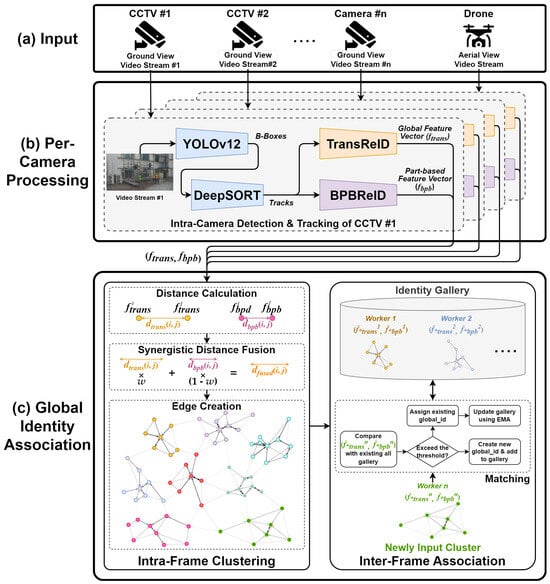
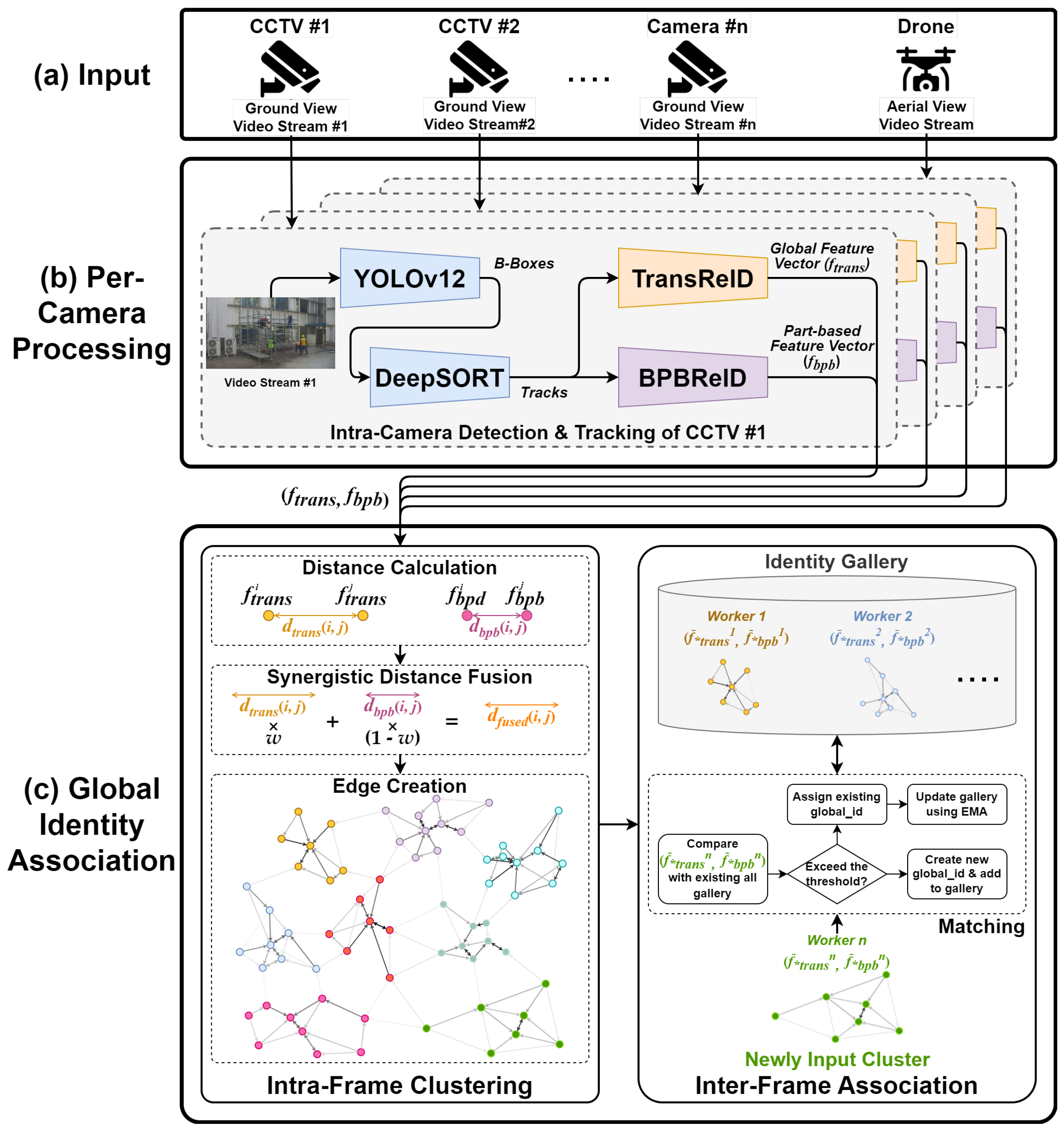
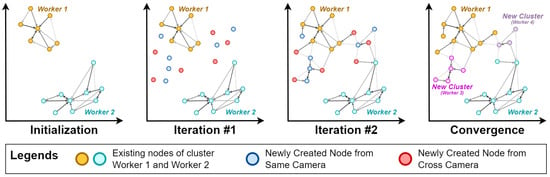
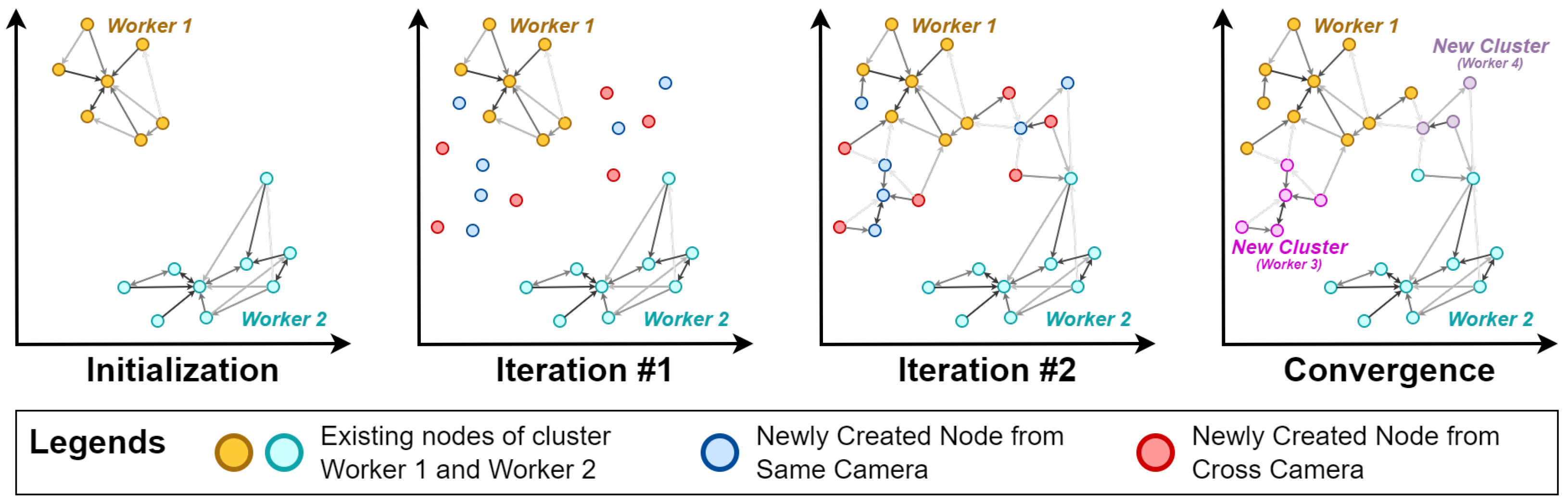
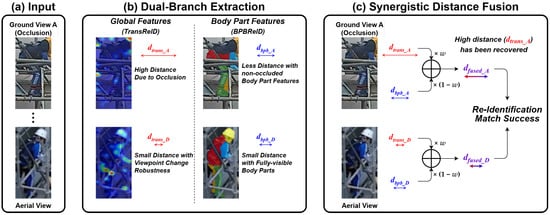
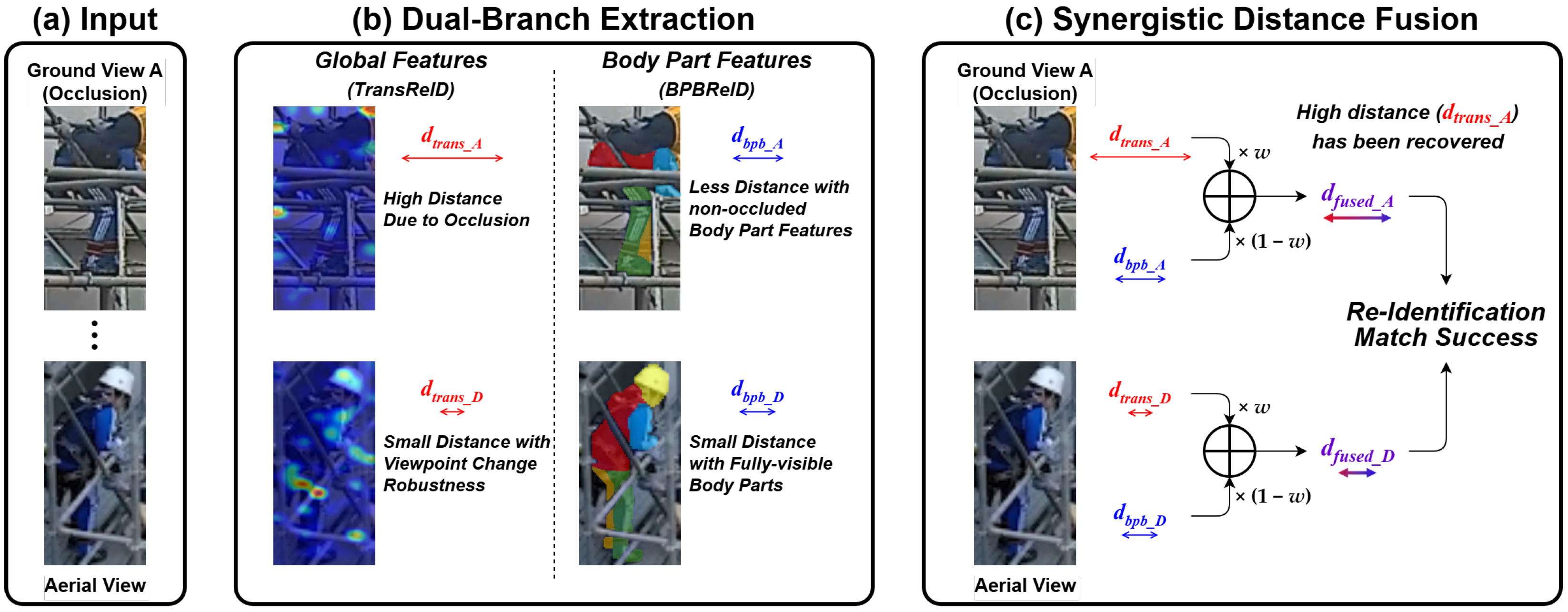
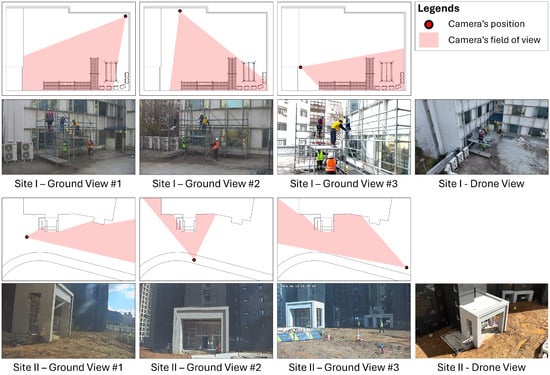
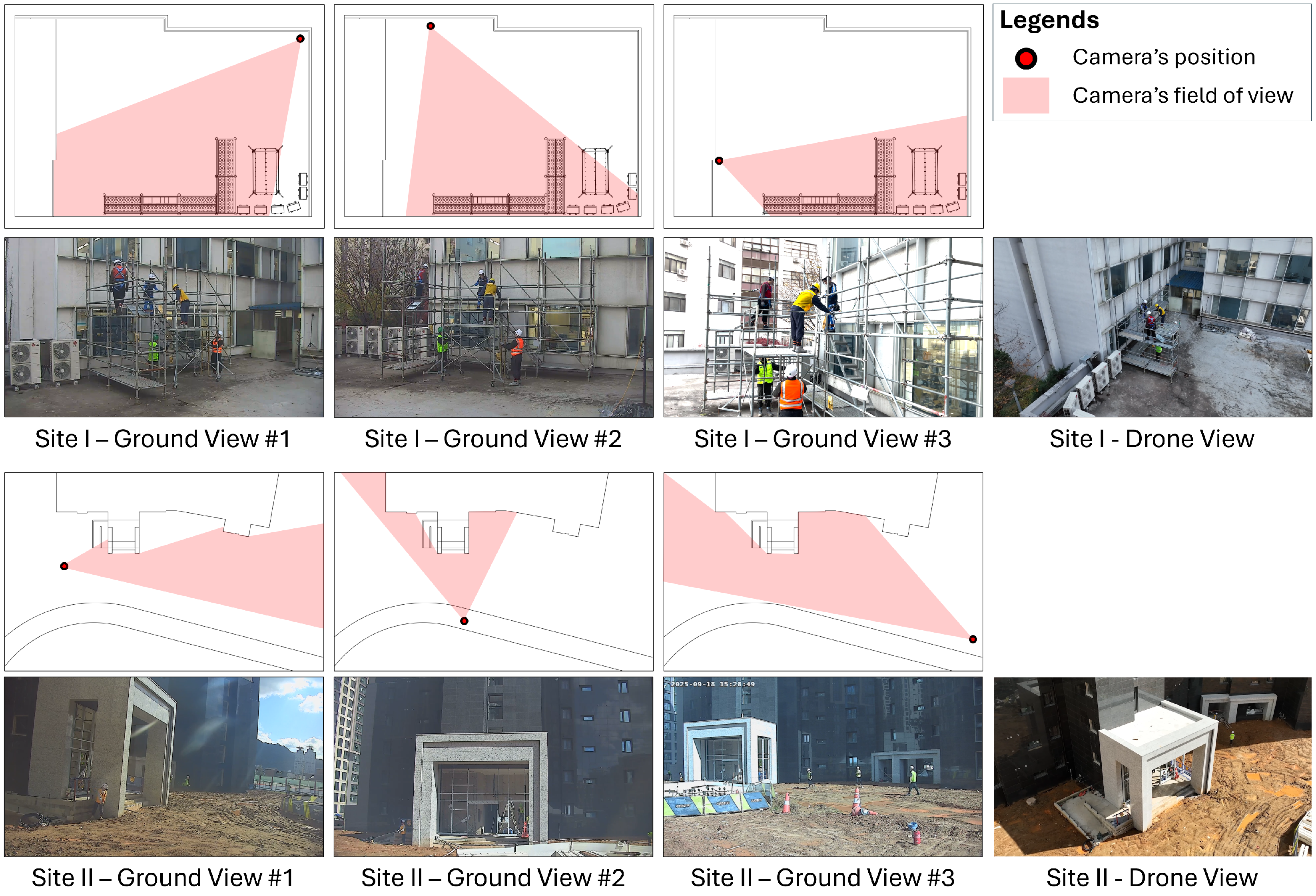
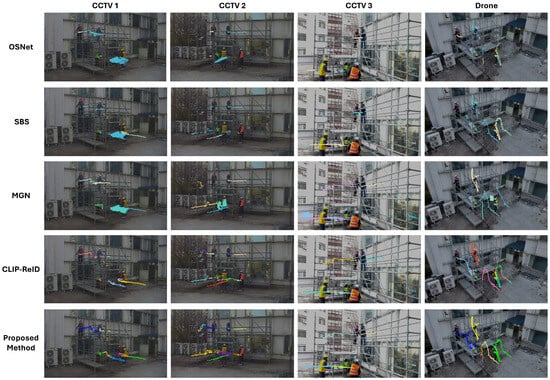
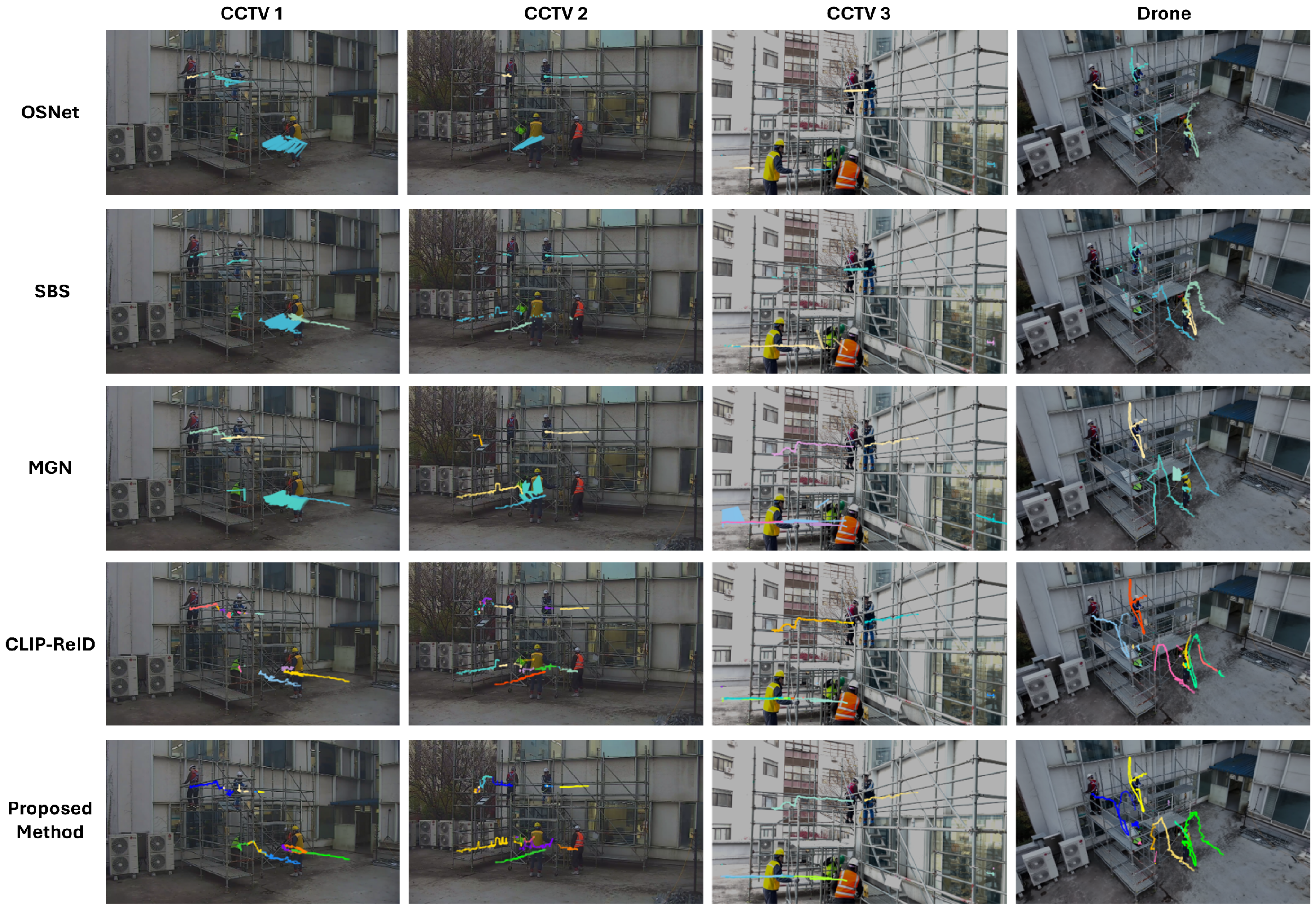


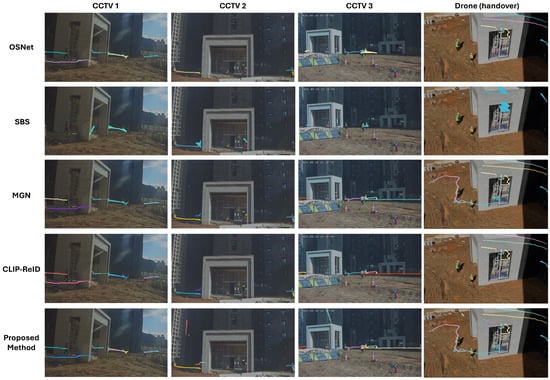
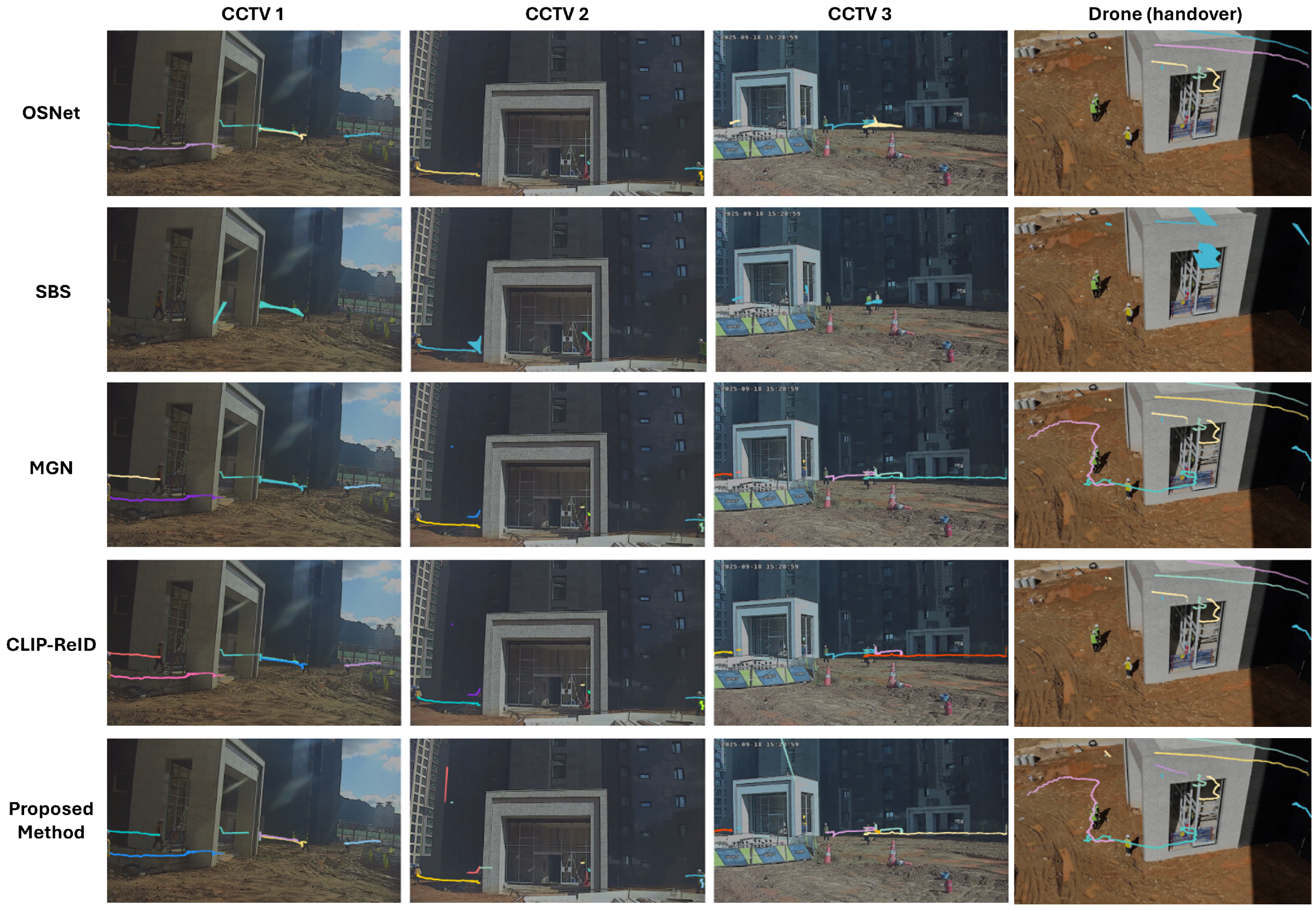



Disclaimer/Publisher’s Note: The statements, opinions and data contained in all publications are solely those of the individual author(s) and contributor(s) and not of MDPI and/or the editor(s). MDPI and/or the editor(s) disclaim responsibility for any injury to people or property resulting from any ideas, methods, instructions or products referred to in the content. |
© 2026 by the authors. Licensee MDPI, Basel, Switzerland. This article is an open access article distributed under the terms and conditions of the Creative Commons Attribution (CC BY) license.