Article

Finite Element Analysis of Steel Fiber-Reinforced Alkali-Activated Slag Concrete Beams Considering Interfacial Bond Behavior

1
College of Architecture and Civil Engineering, Xinyang Normal University, Xinyang 464031, China
2
Henan New Environmentally-Friendly Civil Engineering Materials Engineering Research Center, Xinyang Normal University, Xinyang 464031, China
*
Author to whom correspondence should be addressed.
Buildings 2026, 16(4), 842; https://doi.org/10.3390/buildings16040842
Submission received: 19 January 2026 / Revised: 16 February 2026 / Accepted: 18 February 2026 / Published: 19 February 2026
(This article belongs to the Section Building Structures)

Abstract

The primary objective of this research was to systematically investigate how bond–slip behavior affects the flexural behavior of alkali-activated slag concrete (AASC) beams reinforced with steel fibers. To this end, a finite element model incorporating the steel–concrete interface bond–slip effect was formulated in Abaqus using a separated modeling approach, grounded in a thorough analysis of established bond–slip constitutive models. Numerical simulations were conducted on both reinforcing bar pull-out specimens and beam members to examine the bond–slip interaction between steel reinforcement and steel fiber-reinforced alkali-activated slag concrete (SFR-AASC), as well as its influence on the flexural behavior of the beams. The results indicate that the bond–slip interaction at the steel–concrete interface can be effectively captured using nonlinear spring elements. The proposed modeling approach is simple to implement and demonstrates stable numerical convergence. For the pull-out specimens, the numerically obtained stress contours along the loading direction, together with the corresponding load–displacement curves, show good agreement with experimental observations. Further comparisons between numerical predictions and experimental results for beam specimens reveal that the prediction errors of the fully bonded model range from 0.2% to 9.7%, whereas those of the model accounting for bond–slip effects are reduced to 0.1–4.7%. The bond–slip model provides more accurate predictions of cracking load, ultimate load, and overall load–displacement behavior, thereby verifying the validity and accuracy of the developed finite element modeling strategy.

1. Introduction

Traditional concrete increasingly exhibits limitations in strength, durability, and environmental performance as engineering demands grow. Alkali-activated slag concrete (AASC) represents an innovative class of green, low-carbon construction material. It is produced by utilizing industrial by-products such as fly ash and blast furnace slag as primary precursors, which are then activated by a strong alkaline solution to bind with fine and coarse aggregates. Alkali-activated slag concrete enables significant reduction in energy consumption and greenhouse gas emissions during the production phase, while exhibiting distinctive characteristics such as early-age strength, low heat of hydration, high temperature resistance, and superior durability. The incorporation of steel fibers further enhances tensile capacity and deformability through crack-bridging, thereby restraining crack initiation and propagation. Consequently, steel fiber-reinforced alkali-activated slag concrete (SFR-AASC) shows promise for structural applications under complex loading conditions.
The bond–slip behavior between steel reinforcement and concrete constitutes the fundamental mechanism for their composite action, directly governing the structural load-carrying capacity, stiffness, and deformation compatibility. Experimental research in this area primarily relies on two established methods: the central pull-out test [1] and the beam test [2]. The central pull-out test is predominantly employed to characterize the local bond strength and the corresponding slip constitutive relationship at the material level. Conversely, the beam test is designed to more accurately simulate the integrated bond behavior within the anchorage zones of flexural members under realistic conditions. Rostásy et al. [3] investigated the bond–slip behavior between steel bars and steel fiber-reinforced concrete via pull-out tests. They concluded that incorporating steel fibers did not enhance the bond stiffness or the bond strength between steel bars and concrete. The observed improvement in crack control and deformation was primarily attributed to the crack-bridging effect and tensile stress transfer provided by the fibers. Furthermore, the fibers significantly improved the post-peak ductility of the specimens following splitting failure. Shen et al. [4] examined the effect of curing age on the early-age bond strength in high-strength concrete. Their results demonstrated that the early-age bond strength increased with curing time. Predictive models for both the early-age bond strength and the corresponding slip were proposed, elucidating the evolution of bond properties at different curing stages. Soroushian et al. [5] investigated the local bond–slip response of steel fiber-reinforced concrete and found that bond strength increased markedly as the fiber volume fraction increased up to 0.5%, with an approximately 30% increase observed at 0.5%. Beyond this level, further increases in fiber content yielded smaller incremental gains in bond strength, while the slip at peak bond strength decreased substantially. Peng et al. [6] conducted pull-out tests on CFRP bars embedded in geopolymer mortar to investigate the influences of mortar type, fiber content and type, bar diameter, and anchorage depth on bond strength. Based on the experimental data, a modified model for predicting the bond strength of CFRP bars in geopolymer mortar was proposed.
Bond–slip behavior in conventional reinforced concrete has been extensively studied, and numerous constitutive models have been proposed. Nilson [7] employed an experimental technique where strain in the anchored bar segment was measured using resistance strain gauges embedded in slots machined into the bars, while concrete strain was monitored with internal strain gauges. Using this approach, an early bond–slip constitutive model was proposed. Using a large database of centered pull-out tests, Eligehausen et al. [8] quantified the effects of loading protocol, load amplitude, reinforcement ratio, and lateral confinement on bond performance and developed bond–slip constitutive laws for ribbed bars under monotonic and cyclic loading. Xu et al. [9] performed a series of pull-out tests to assess the influences of concrete strength, stirrup ratio, and cover thickness, and proposed a five-stage bond–slip relationship by accounting for critical stress states and internal crack evolution. However, these models were largely developed for ordinary Portland cement concrete, and a unified, broadly applicable bond–slip constitutive framework for the rebar interface in steel fiber alkali-activated slag concrete has yet to be established.
From a numerical modeling perspective, rebar-concrete bond–slip has been investigated mainly using two approaches: interface elements and connector elements [10,11,12,13]. Interface-element models emphasize detailed contact formulations to reproduce interfacial conditions and typically require complex contact definitions, including the specification of normal contact behavior and tangential friction properties. Connecting element models introduce specialized bond elements, such as spring elements, cohesive elements, and zero-thickness interface elements, between steel reinforcement and concrete. The interfacial behavior is simulated by defining parameters including element elastic stiffness coefficients and bond–slip constitutive relationships, allowing for a more direct representation of the interaction. Based on linear arch static analysis and limit analysis theory, Cutolo et al. [14] developed a nonlinear finite element model of a masonry spiral staircase using Ansys (2021) software, accurately characterizing the material properties and boundary conditions. The results indicate that although the linear arch static analysis method can serve as an alternative to complex numerical simulations, it fails to account for critical factors such as sagging and settlements, which lead to structural failure or stress redistribution. This limitation underscores the necessity of employing refined finite element models to accurately capture material nonlinearity and interfacial interactions. Jin et al. [15] developed a three-dimensional mesoscale finite element model that incorporates the surface geometry of ribbed bars, providing insight into bond failure mechanisms and internal crack propagation. The influences of concrete strength, cover-to-bar diameter ratio, and stirrup confinement on the bond stress–slip response and failure modes were quantified. Yang [16] simulated the steel–concrete interaction using Spring2 elements in Abaqus. Finite element models of six reinforced concrete beams were developed to analyze the effects of concrete age and reinforcement ratio on mechanical behavior. The cracking, yield, and ultimate moments were observed to increase progressively with concrete age. Although increasing the reinforcement ratio notably enhanced the mechanical performance, this enhancement effect diminished beyond a certain threshold. Liu et al. [17] developed a novel simplified bond–slip model. To simulate the bond behavior in pull-out tests, connector elements were utilized, with their elastic, plastic, and damage behaviors representing different stages of slip. Comparisons between simulation results and theoretical calculations demonstrated that the connector element approach provided an effective prediction of the steel–concrete interfacial performance. Liu et al. [18] established an LS-DYNA model to evaluate the effects of specimen geometry, cover-to-bar diameter ratio, and concrete strength on the dynamic pull-out behavior. Their results indicated that concrete splitting dominated under dynamic bond–slip, that ultimate bond strength increased with loading rate, and that the rate effect was closely related to the dynamic increase factor of concrete strength.
Although spring- or connector-based simulation of bond–slip behavior is well-established for ordinary reinforced concrete, its application to the novel green material system of SFR-AASC remains scarce, particularly concerning model calibration and validation that integrates both pull-out and beam tests. Within this context, the present study focuses on SFR-AASC. A refined finite element model, explicitly accounting for the bond–slip effect, was developed in Abaqus using a discrete modeling approach. By incorporating appropriate constitutive laws for the materials and interface elements, the model’s accuracy and reliability were validated against experimental data from both pull-out tests and beam component tests. The findings of this research are expected to provide theoretical support and a technical reference for the design optimization and performance assessment of SFR-AASC structures, thereby facilitating the broader application of this sustainable construction material in civil engineering.

2. Separated Numerical Analysis Model and Methodology

2.1. Selection of Elements for the Separated Model

This study adopts a macro-scale separated modeling approach and does not involve mesoscale simulation. In this study, macro-scale modeling treats concrete and reinforcing steel as uniform, continuous materials, neglecting the explicit geometry of internal aggregates, fibers, pores, and rebar ribs. The bulk mechanical properties—such as compressive strength, tensile strength, and elastic modulus—serve as direct input parameters, focusing on the interfacial bond–slip behavior and the overall structural response of the member. Conversely, meso-scale modeling represents concrete as a multiphase heterogeneous material comprising aggregates, mortar matrix, and the interfacial transition zone, or involves explicitly modeling the surface topology of ribbed bars. This scale is employed primarily to investigate local damage mechanisms, crack propagation, and interfacial micromechanical behavior. The separated modeling approach facilitates the numerical modeling of reinforced concrete structures by discretizing the reinforcing steel and concrete into adequately refined finite elements and assigning element types according to their distinct mechanical characteristics. In this framework, the reinforcement and concrete are assigned independent node numbering schemes, while their interfacial mechanical interaction is represented through the introduction of connector elements. Although the reinforcement, concrete, and connector element nodes are geometrically coincident, they remain numerically independent within the finite element model. This modeling strategy enables explicit representation of the relative displacement between steel and concrete, thereby providing an effective means of capturing the bond–slip behavior at the reinforcement-concrete interface.
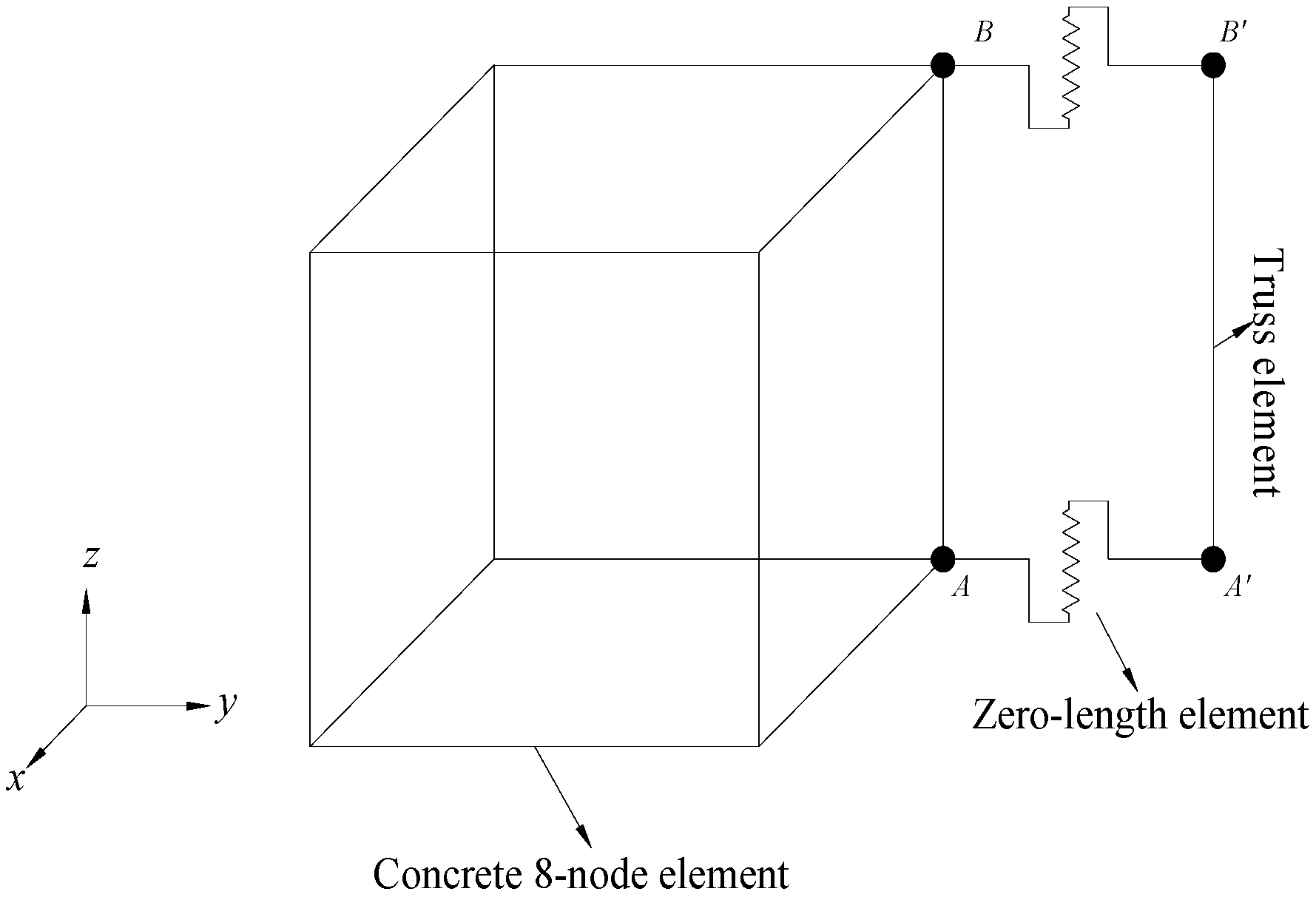
To investigate the bond–slip behavior, a three-dimensional separated finite element model was established, as illustrated in Figure 1. In the figure, the letters A and B represent the nodes of the concrete element, while A′ and B′ represent the nodes of the reinforcement element. The concrete was discretized using eight-node linear solid elements, which are suitable for representing the mechanical response of complex structures and enable accurate characterization of stress distribution and deformation within the concrete. For the reinforcement, two modeling strategies were considered in the numerical analysis. Reinforcing bars can be discretized using the same solid element formulation as that adopted for the concrete, which ensures mesh compatibility at the steel–concrete interface. Alternatively, given the slender geometry of reinforcing bars in structural members and their relatively small shear and bending stiffness, with load-bearing behavior dominated by axial tension and compression, the reinforcement may be modeled using two-node three-dimensional truss elements. These elements consider only axial force transfer and do not transmit bending moments, thereby providing a computationally efficient and mechanically appropriate representation of reinforcing steel behavior in reinforced concrete structures.
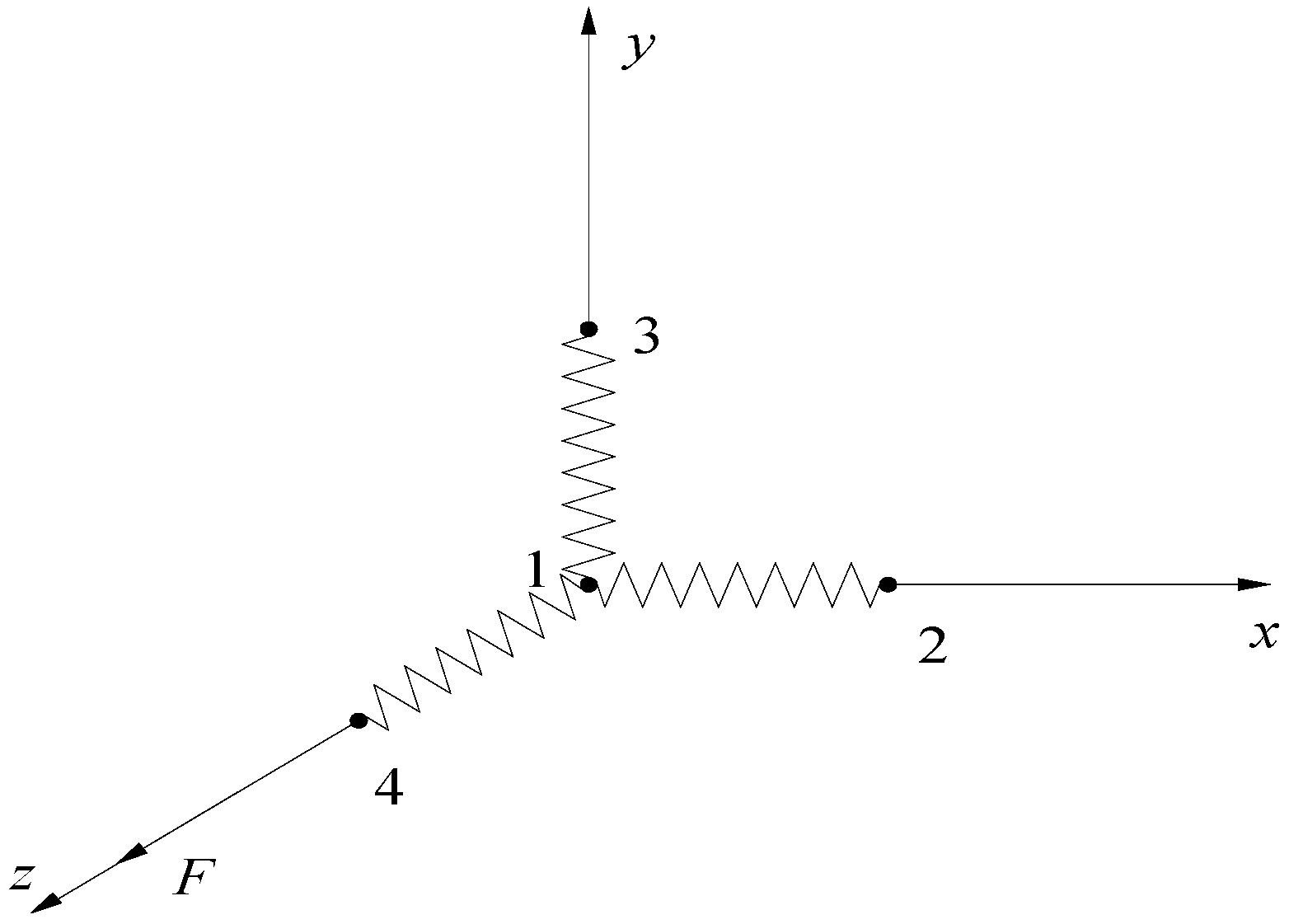
Zero-length spring elements endowed with predefined stiffness parameters were adopted as connector elements to characterize the interfacial interaction between reinforcing bars and concrete within the framework of three-dimensional finite element analysis. These spring elements were arranged along the normal, longitudinal tangential, and transverse tangential directions to capture the bond–slip behavior at the steel–concrete interface. As illustrated in Figure 2, Node 1 represents the reinforcement element, whereas Nodes 2, 3, and 4 correspond to adjacent concrete element nodes that are geometrically coincident with the reinforcement node. The z-axis was defined as the longitudinal tangential direction, parallel to the reinforcing bar axis. The stiffness of the corresponding spring element characterizes the bond–slip response along this direction. The x- and y-axes correspond to the transverse tangential and normal directions, respectively. The stiffness of the springs aligned with these axes simulates the dowel action and the bearing effect of the rebar on the concrete.

2.2. Constitutive Material Models for the Separated Numerical Framework

2.2.1. Constitutive Model for Concrete

In finite element analysis, three constitutive models are commonly employed to describe the mechanical behavior of concrete: the brittle cracking model available in the Abaqus/Explicit module, the smeared cracking model implemented in the Abaqus/Standard module, and the concrete damage plasticity (CDP) model [19,20]. The smeared cracking model exhibits inherent limitations in simulating crack propagation in concrete beams, as it is typically based on a fixed-crack formulation, whereby crack growth directions are influenced by the finite element mesh orientation. The brittle cracking model is primarily designed to capture tensile cracking behavior and demonstrates limited capability in representing nonlinear compressive response and damage evolution, making it difficult to accurately reproduce the post-cracking and crushing behavior of concrete. In contrast, the concrete damage plasticity model describes concrete failure through coupled tensile cracking and compressive crushing mechanisms, while explicitly accounting for stiffness degradation induced by plastic deformation. Moreover, crack initiation and propagation are governed by distinct failure criteria, enabling a more realistic representation of the global deformation response and crack evolution in concrete beams. Based on these considerations, the concrete damage plasticity model was adopted in this study to simulate the concrete material in the numerical analyses.
Based on previous work by the authors on the compressive constitutive behavior of SFR-AASC [21], the stress–strain relationship is characterized by two distinct stages: an ascending branch and a descending branch. The corresponding analytical expressions for these stages are given in Equations (1)–(11).
σ = ( 1 D ) E c ε
D = 1 exp 1 m ( ε ε c r ) m 1 β α ( x 1 ) 2 + x , ε > ε c r , ε ε c r
β = f c r E c ε c r
x = ε ε c r
m = 1 ln E c ε c r f c r
α = k ( k 1 ) 2
k = ε c u ε c r
where Ec is the elastic modulus of concrete (MPa), D denotes the damage variable, m represents the material shape parameter, εcr is the peak compressive strain of concrete, fcr represents the calculated value of the axial compressive strength for steel fiber-reinforced alkali-activated slag concrete, α is the parameter controlling the descending branch of the uniaxial compressive stress–strain curve, εcu is defined as the strain corresponding to a stress value of 0.5fcr on the descending branch of the stress–strain curve.
The tensile constitutive behavior of concrete is described using the full stress–strain relationship proposed by Han et al. [22], which accounts for the influence of different steel fiber volume fractions. The corresponding constitutive expression is given as follows:
y = 1.2 x 0.2 x 6 x 1.0 y = x α f t x 1 1.7 + x x > 1.0
α f t = 0.312   f f t 2 1 + A λ f
x = ε ε f t
y = σ f f t
where fft denotes the peak stress, λf represents the characteristic value of the steel fiber content, εft is the corresponding peak strain, and A is an empirical model parameter calibrated from experimental data, with a value of A = 1.83.

2.2.2. Constitutive Model for Reinforcing Steel

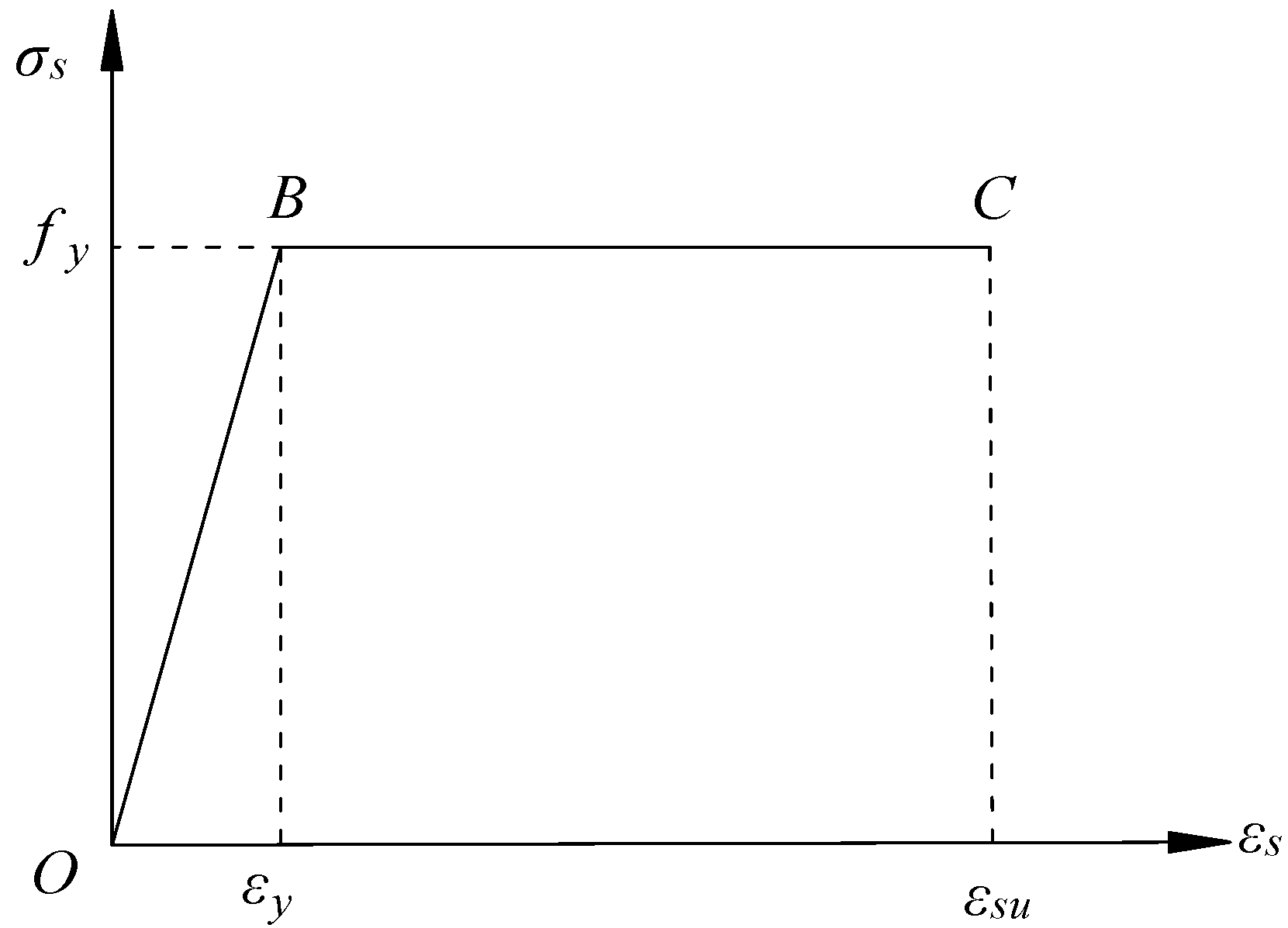
An idealized bilinear elastic–perfectly plastic model was adopted to represent the stress–strain behavior of the reinforcing steel, as shown in Figure 3. In this model, the stress–strain relationship of the steel is assumed to be linear elastic up to the yield strength. Once the yield stress is reached, the material is assumed to enter a perfectly plastic regime, in which the stress remains constant while the strain continues to increase with further loading. Consequently, the strain-hardening behavior of the reinforcing steel after yielding is neglected.
σ = E s ε s ε ε y f y ε > ε y
where Es denotes the elastic modulus of the reinforcing steel, σs refers to the stress in the steel reinforcement, εs refers to the corresponding strain, εy represents the yield strain, and fy is the corresponding yield strength.

3. Finite Element Analysis of Pull-Out Behavior

3.1. Finite Element Modeling

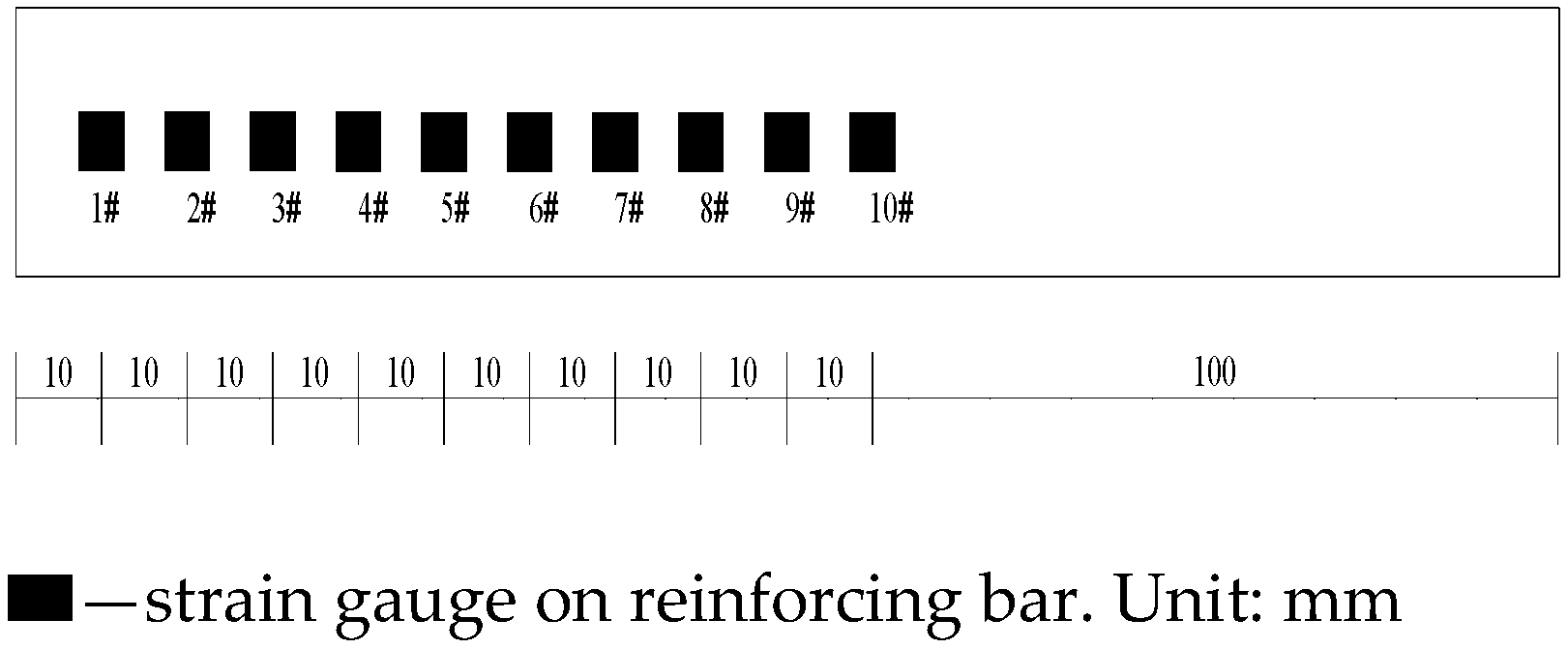
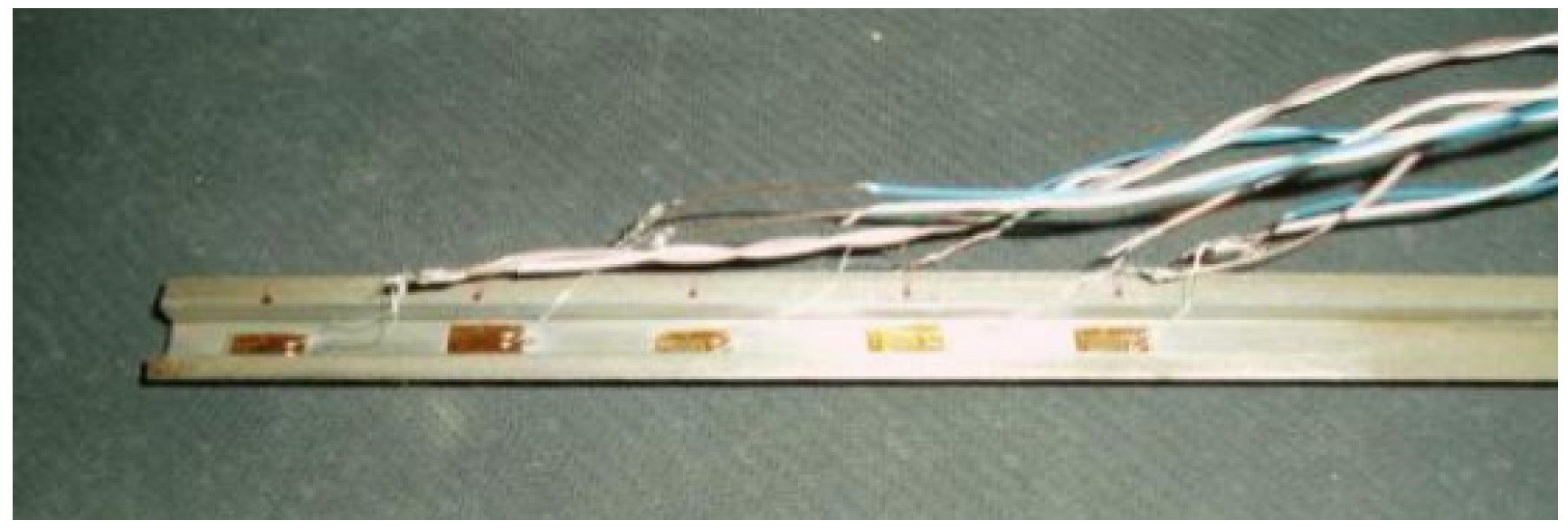
To validate the applicability of the discrete model in simulating bond–slip behavior between steel reinforcement and concrete, the present study was conducted based on previous experimental work by the research group [23]. Two series of specimens were prepared: Series Y and Series L, each consisting of three specimens, giving a total of six specimens. Series Y used plain round bars of 12 mm diameter with grade HPB335, while Series L used ribbed bars of 12 mm diameter with grade HRB335. The design strength grade of the alkali-activated slag concrete is 60 MPa, and the anchorage lengths were 100 mm, 120 mm, and 150 mm, respectively. By varying the anchorage length, the influence on bond stress distribution and failure mode was investigated, and normalized comparisons were conducted using the average bond stress. Detailed test parameters are listed in Table 1. As shown in Figure 4, a 4 mm × 4 mm groove was machined along the inner side of the bar. Strain gauges were installed at 10 mm intervals, and fine-strand wires were led out from inside the bar to external terminals labeled for accurate identification of each gauge location. The arrangement of strain measurement points on the bar is illustrated in Figure 5.
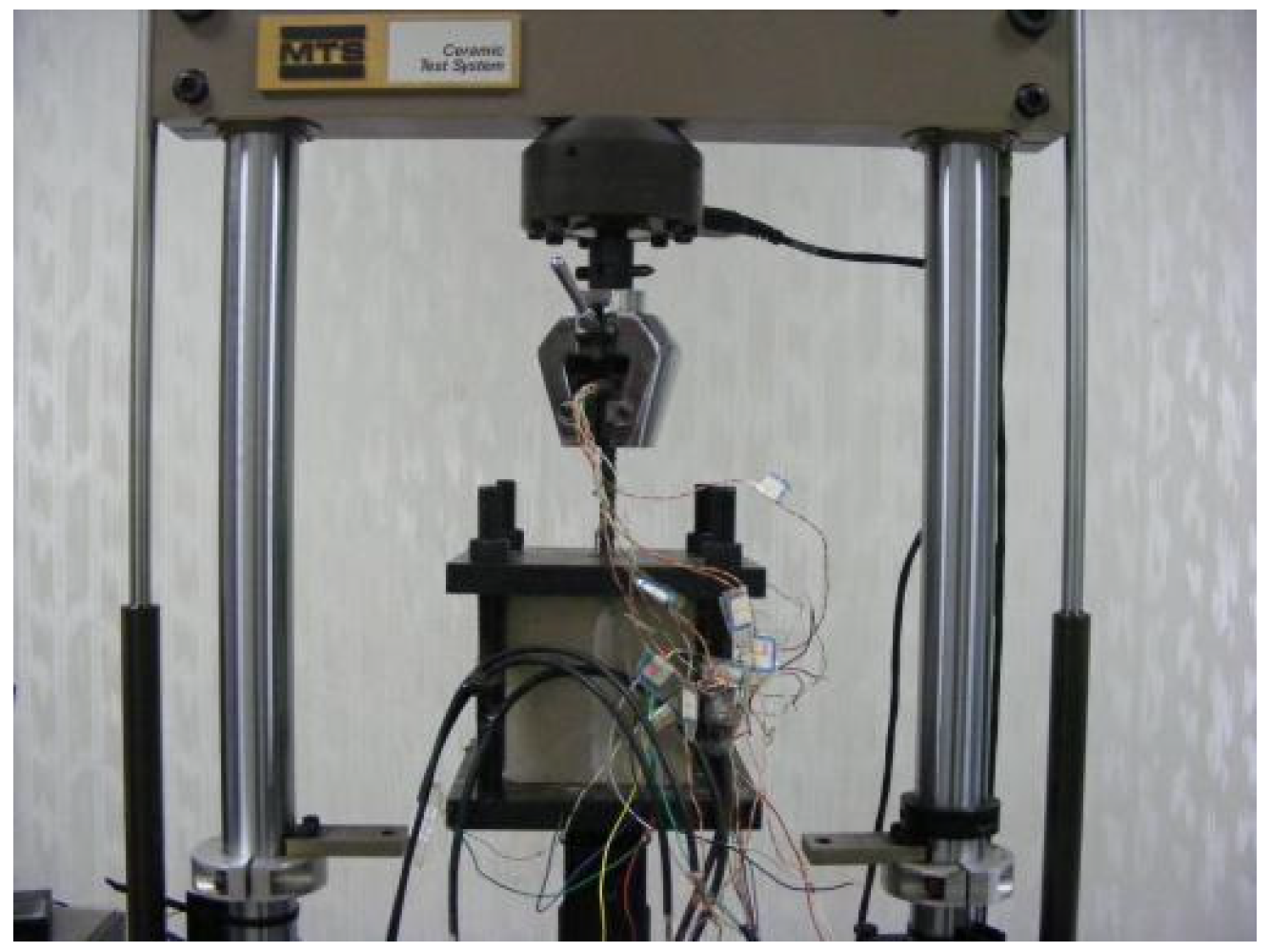
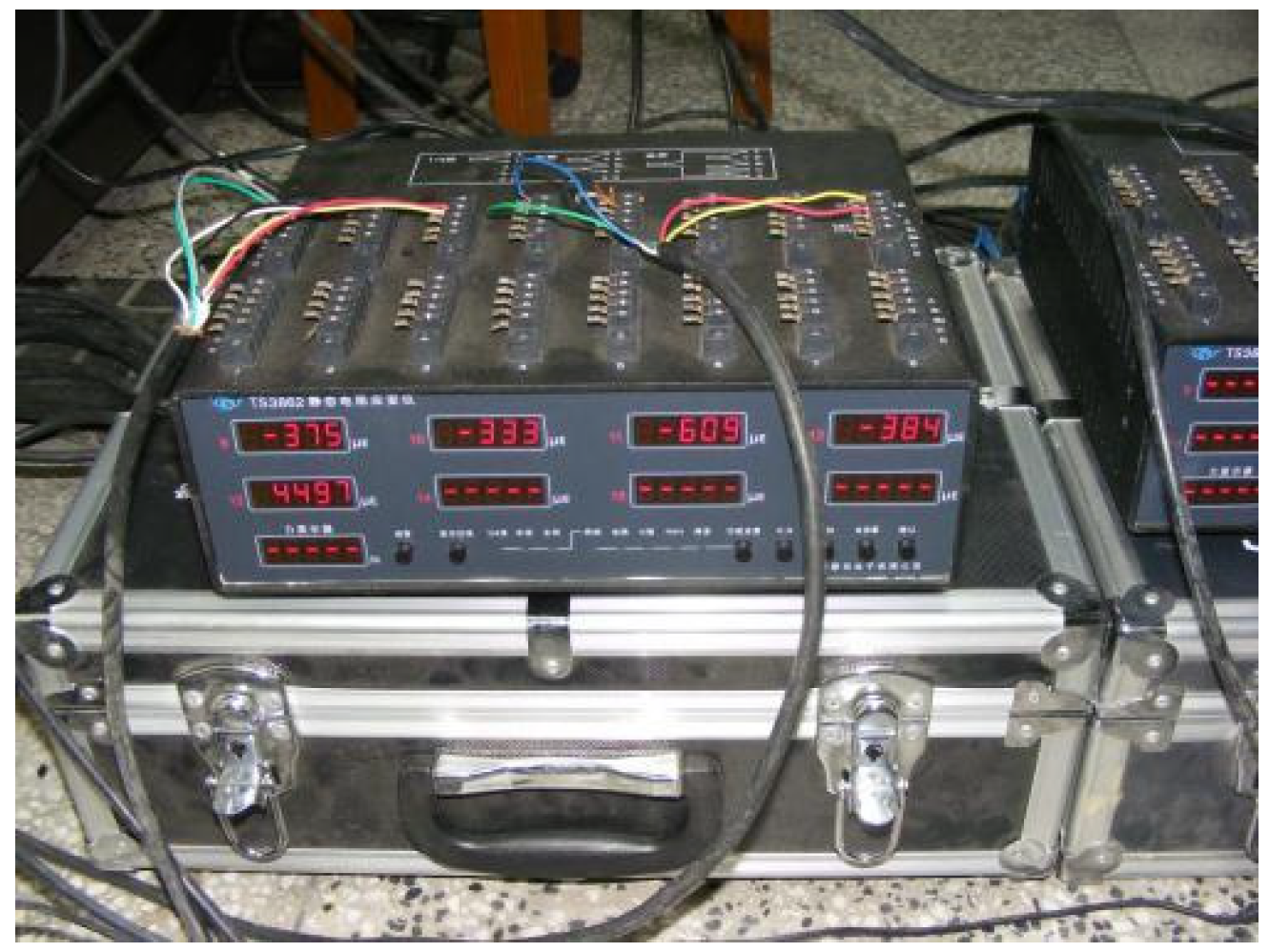
Direct pull-out tests were performed using a universal testing machine with a maximum capacity of 10 tons. The test setup is shown in Figure 6. Displacement was recorded directly by the testing machine, and steel strain was measured with a static resistance strain indicator. The instrumentation for acquiring slip and strain data is presented in Figure 7. The loading surfaces of the specimens remained as-cast, with only surface laitance removed to ensure a flat contact surface. The loading procedure was as follows: (1) The test fixture was installed and fixed to the universal testing machine. Strain gauge wires were connected to the strain indicator, and the system was calibrated to ensure stable data acquisition. (2) The ultimate pull-out load P was defined as the maximum load sustained by the bar. The test was conducted in 20 loading stages, each equal to 0.05P. A pre-loading stage of 0.05P was first applied; displacement and strain values were recorded, and then the load was removed. (3) Formal loading commenced. After each stage, the load was held for 5 min. The anchored end and the overall specimen condition were photographed. Data were recorded once readings stabilized. (4) Loading continued until specimen failure. The failure load was recorded, and final displacement and strain data were captured promptly. Photographs of the failed specimen were taken.
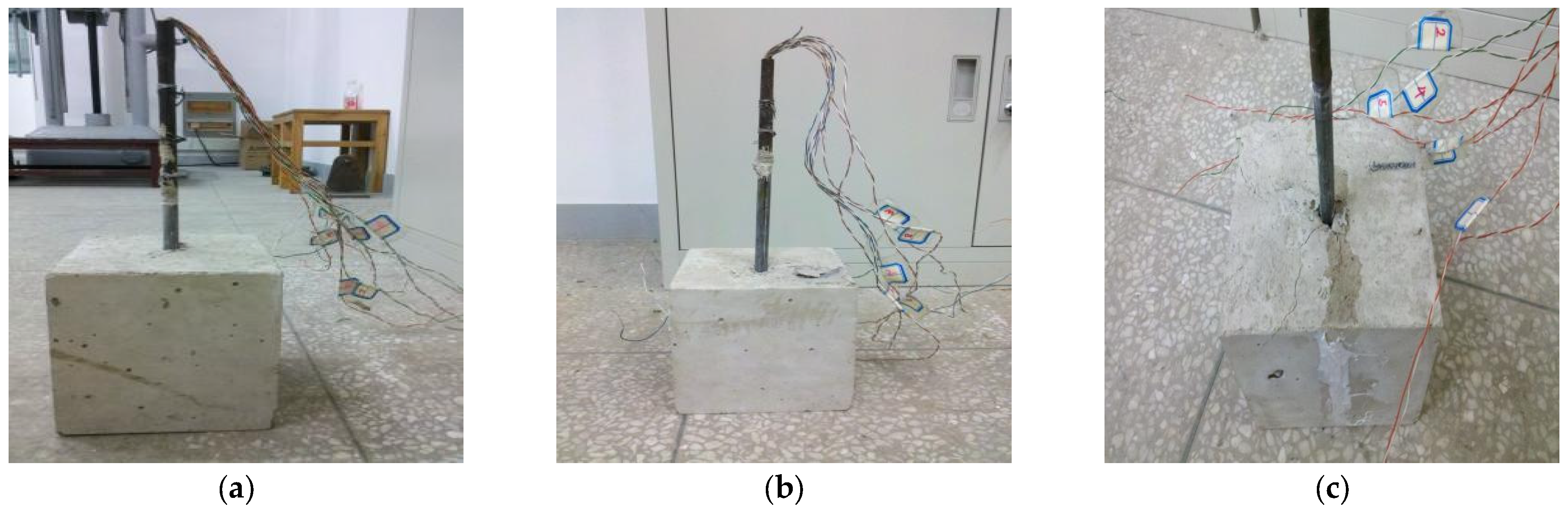
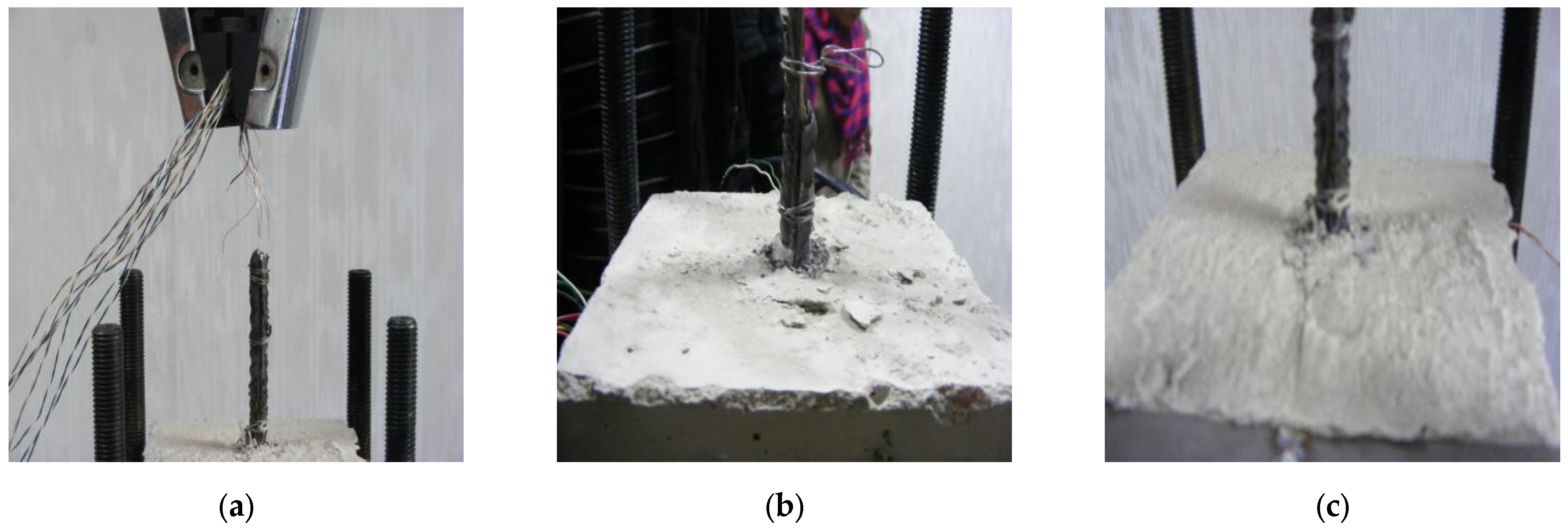
The compressive strength of 150 mm concrete cubes was tested, yielding an average 28-day strength of 62.3 MPa. After pull-out failure, the failure modes of the six specimens are shown in Figure 8 and Figure 9.
Based on Figure 8 and Figure 9, the following observations were made: The ribbed bar specimens were not pulled out; instead, testing was terminated when the bars reached their ultimate load capacity. Furthermore, no concrete splitting failure was observed, indicating excellent bond performance between the ribbed bars and the inorganic polymer concrete. In contrast, all plain round bar specimens failed by pull-out. For plain round bar specimen 3, surface cracking occurred in the concrete, though the interior remained intact. Post-failure examination of the bar from Specimen 3 revealed irregular protrusions at the embedded end. Comparing the two failure modes, the bond strength generated between ribbed bars and the inorganic polymer concrete was significantly greater than that for plain round bars.
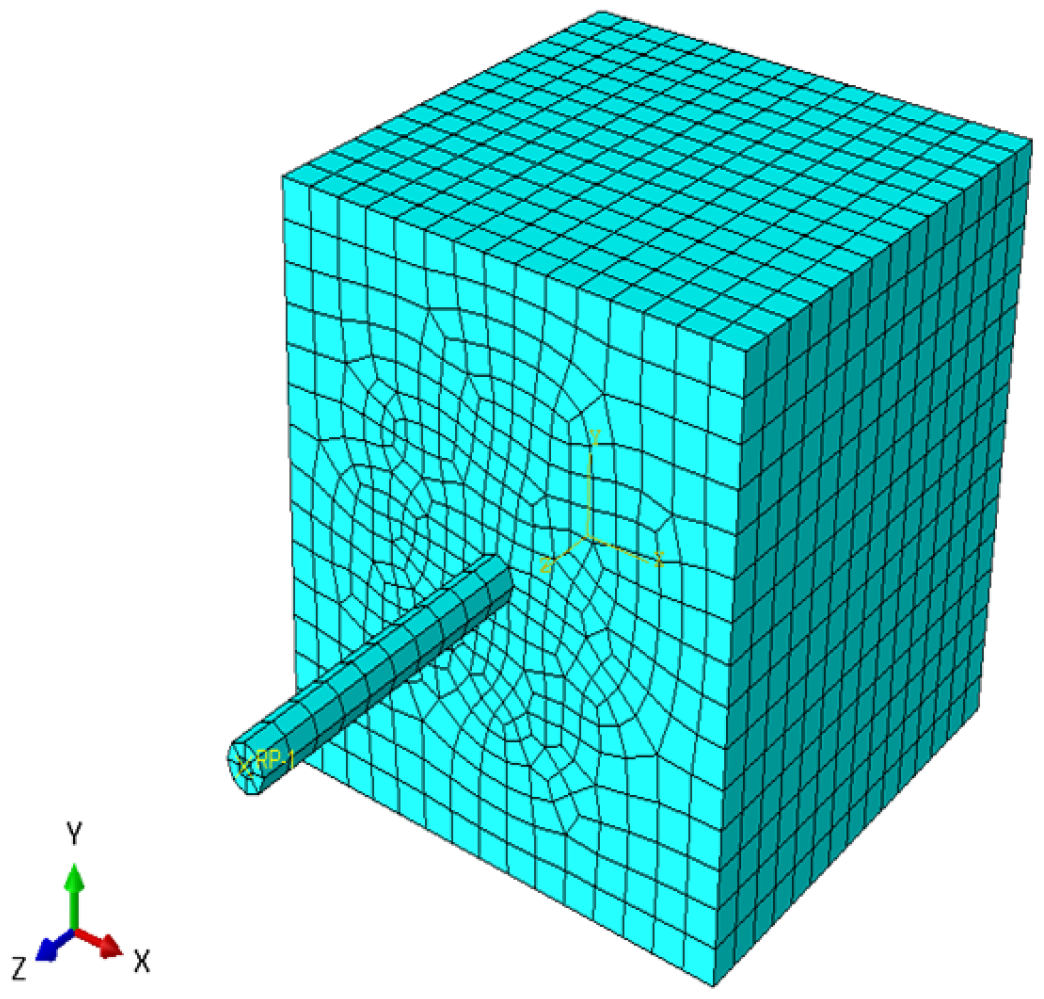
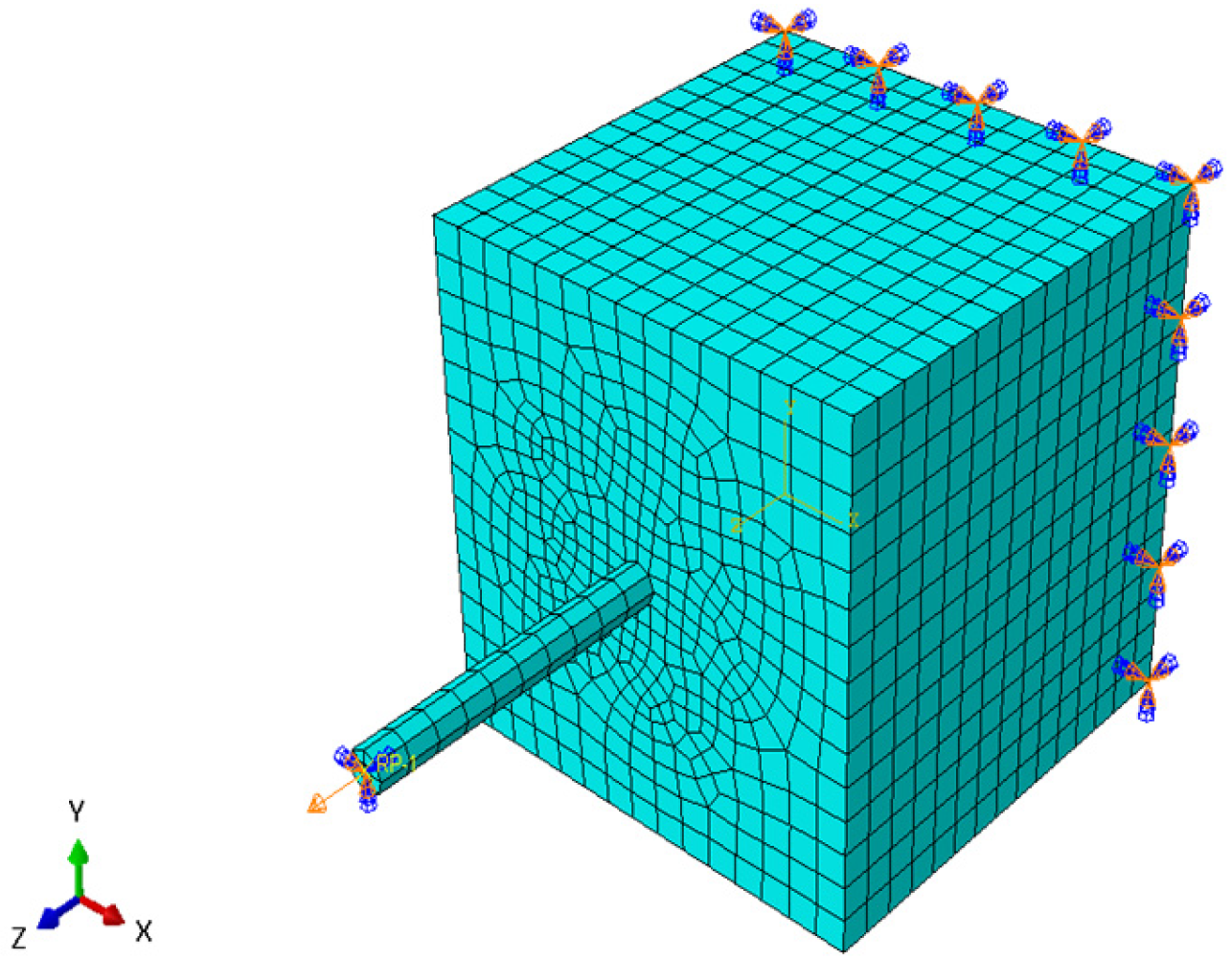
Based on the experimental design and parameter settings described above, a separated finite element model of the reinforced concrete specimens was developed by sequentially modeling the concrete and reinforcement components, as shown in Figure 10. A consistent 10 mm mesh of C3D8R elements was applied to both components, aiming to secure node coincidence at the interface and to ensure the fidelity of the bond–slip simulation. To ensure robust solution convergence, and in light of the absence of concrete splitting failure during testing, the analysis utilized only the elastic material parameters in the FE model. The elastic modulus of the alkali-activated slag concrete was determined from experimental strain measurements to be 3.1746 × 10⁴ N/mm2, with a corresponding Poisson’s ratio of 0.2512. For the reinforcing steel, an elastic modulus of 2 × 10⁵ N/mm2 and a Poisson’s ratio of 0.3 were adopted. An fully fixed boundary condition was applied to the bottom surface of the concrete specimen. Loading was implemented under displacement control, applying an axial displacement along the z-direction at the reinforcing bar’s free end. The boundary conditions and loading configuration of the numerical model are illustrated in Figure 11.

3.2. Bond–Slip Element Modeling

The configuration of spring elements is a critical component in developing the numerical model for dowel pull-out finite element simulations. The Spring2 element within Abaqus was employed to simulate the bond–slip behavior between reinforcing steel bars and alkali-activated slag concrete. Since the software defines spring elements as linear by default, manual redefinition to nonlinear spring elements was necessary in the model-generated INP file. In the Abaqus meshing module, nodal coordinate data at the interface between reinforcing steel bars and alkali-activated slag concrete were extracted using the node query function, after which the data were imported into an Excel spreadsheet. Concrete node numbers matching the coordinates of reinforcing steel bar nodes were identified via the VLOOKUP function, thereby determining the corresponding node pairs for the spring elements. Finally, the line containing the keyword “*Element” was located in the INP file; the element type was revised to the nonlinear Spring2 element, and the corresponding nonlinear spring element numbers were added below this line. At each coincident node, spring elements were independently assigned in the longitudinal tangential, transverse tangential, and normal directions to simulate the interfacial mechanical behavior between the steel and concrete. Because the relative deformations in the normal and transverse tangential directions are significantly smaller than the bond–slip deformation in the longitudinal tangential direction, the interactions in the normal and transverse tangential directions were simplified as spring elements with relatively large stiffness values. In theory, higher spring stiffness more effectively restrains relative penetration between the steel and concrete; however, excessively high stiffness may lead to numerical convergence difficulties. Conversely, overly small stiffness values may result in artificial interpenetration between interface elements, thereby causing deviations from the actual deformation behavior of the structural member. As suggested in Reference [24], the stiffness of the normal spring should be set to a large value on the order of magnitude of the concrete’s elastic modulus. Consequently, in this study, the stiffness for both the normal and transverse tangential springs was set to 1.0 × 10⁵ N/mm.
At present, no unified bond–slip constitutive relationship has been established for the interaction between reinforcing steel and alkali-activated slag concrete. To facilitate the numerical analysis, an average bond stress–slip constitutive relationship was adopted to characterize steel–concrete bond–slip behavior [11]. The average bond stress, τ, was calculated using the following equation [25]:
τ = P π d l  
where P denotes the applied load, d represents the bar diameter, and l is the anchorage length. The term πdl represents the effective bond contact area between the reinforcing steel and the surrounding concrete.
The average bond stress–slip constitutive relationship is established using a simplified mean-value method based on readily available parameters, such as the pull-out load and steel bar area. This approach eliminates the need for complex experimental data or sophisticated model computations, making it convenient for practical application. For alkali-activated slag concrete, for which no unified bond–slip constitutive model has yet been established, this relationship provides a reasonable estimate suitable for numerical analysis. Because the method neglects the non-uniform distribution of bond stress along the anchorage length, the development of local slip, as well as the effects of steel fibers on matrix confinement and micro-crack evolution, it is more applicable to simulations of structural members where the primary focus is on global load–displacement response and overall stress development trends.
The force-displacement relationship of the spring elements in the longitudinal direction is derived from the average bond stress–slip curve and can be expressed as follows:
F = τ × A = τ × π d l n
where F denotes the axial force carried by an individual spring element, τ is the average bond stress corresponding to the associated node, A represents the bond area assigned to a single spring element, and n is the total number of nodes involved in the steel–concrete bond interface. The bond–slip experimental curve adopted in this study was obtained from previous experimental investigations conducted by the authors’ research group, as reported in Ref. [23].

3.3. Comparison Between Numerical Simulation and Experimental Results

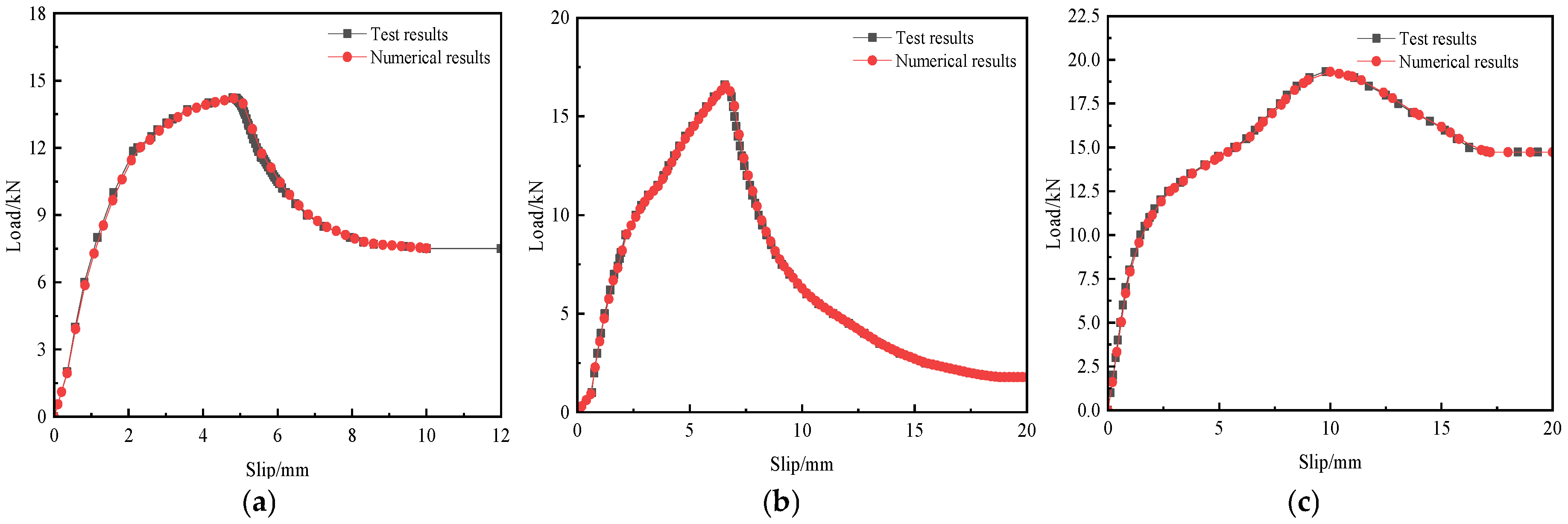
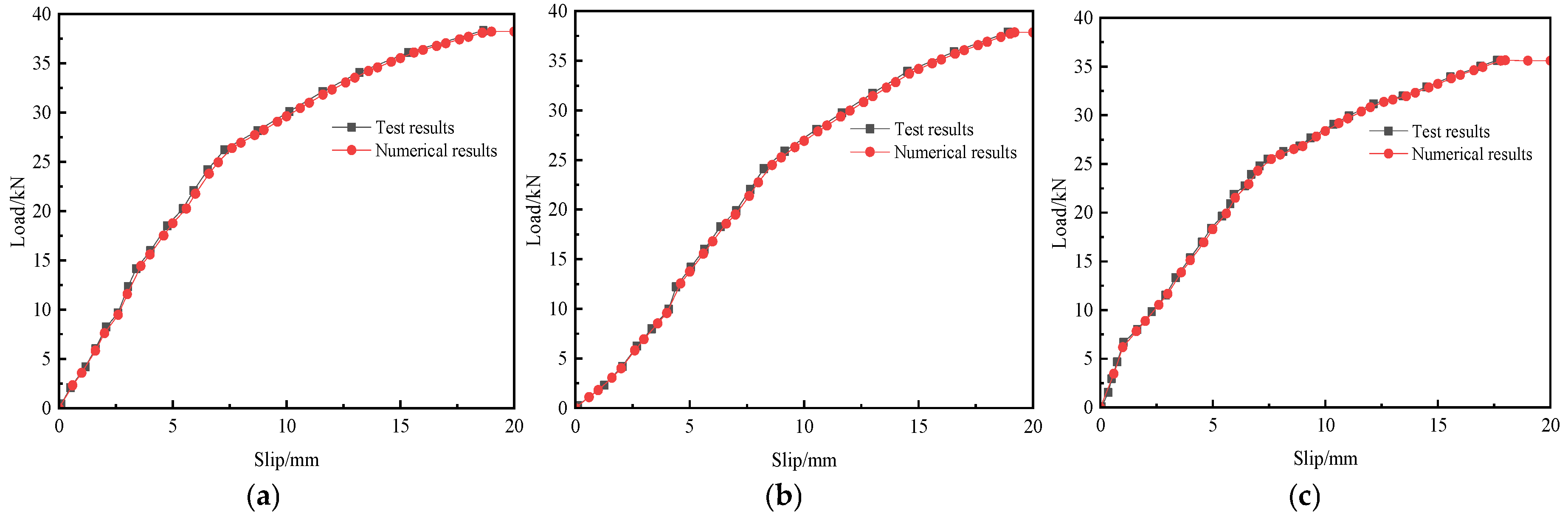
Table 2 provides the ultimate load and displacement results, comparing simulations with experiments for both plain round and ribbed bars with respect to varying anchorage depths. The numerical predictions show good agreement with the experimental results, with relative errors of the ultimate load and displacement consistently within 5%. This demonstrates the reliability and accuracy of the proposed finite element model in capturing the bond–slip behavior of reinforced concrete pull-out specimens.
Load and slip data at the loaded end were extracted for plain round bars and ribbed bars according to their respective anchorage depths. A comparison between the numerically simulated and experimentally obtained load–slip curves is presented in Figure 12 and Figure 13. As seen in Figure 12, the pull-out model of plain round bars implemented with spring elements produced load–slip curves that closely matched the experimental measurements. Throughout both the ascending and descending branches, the simulated curves consistently followed the trends observed in the tests. Figure 13 demonstrates that ribbed-bar Specimens 1, 2, and 3 exhibited close agreement with the spring-element simulations in the ascending stage of the load–slip response. In the experiments, loading was halted once the reinforcement attained the ultimate load; hence, the experimental curves terminate at that point.
Comparison between the numerical simulations and experimental results for both plain and ribbed steel bars indicates that the three-dimensional discrete numerical model established for bond–slip behavior, incorporating spring elements in Abaqus, can effectively simulate the bond–slip interaction between steel bars and AASC, validating the feasibility and accuracy of this approach. This modeling strategy can be further extended to the numerical analysis of steel fiber-reinforced AASC beams where bond–slip effects are considered.

3.4. Stress Distribution

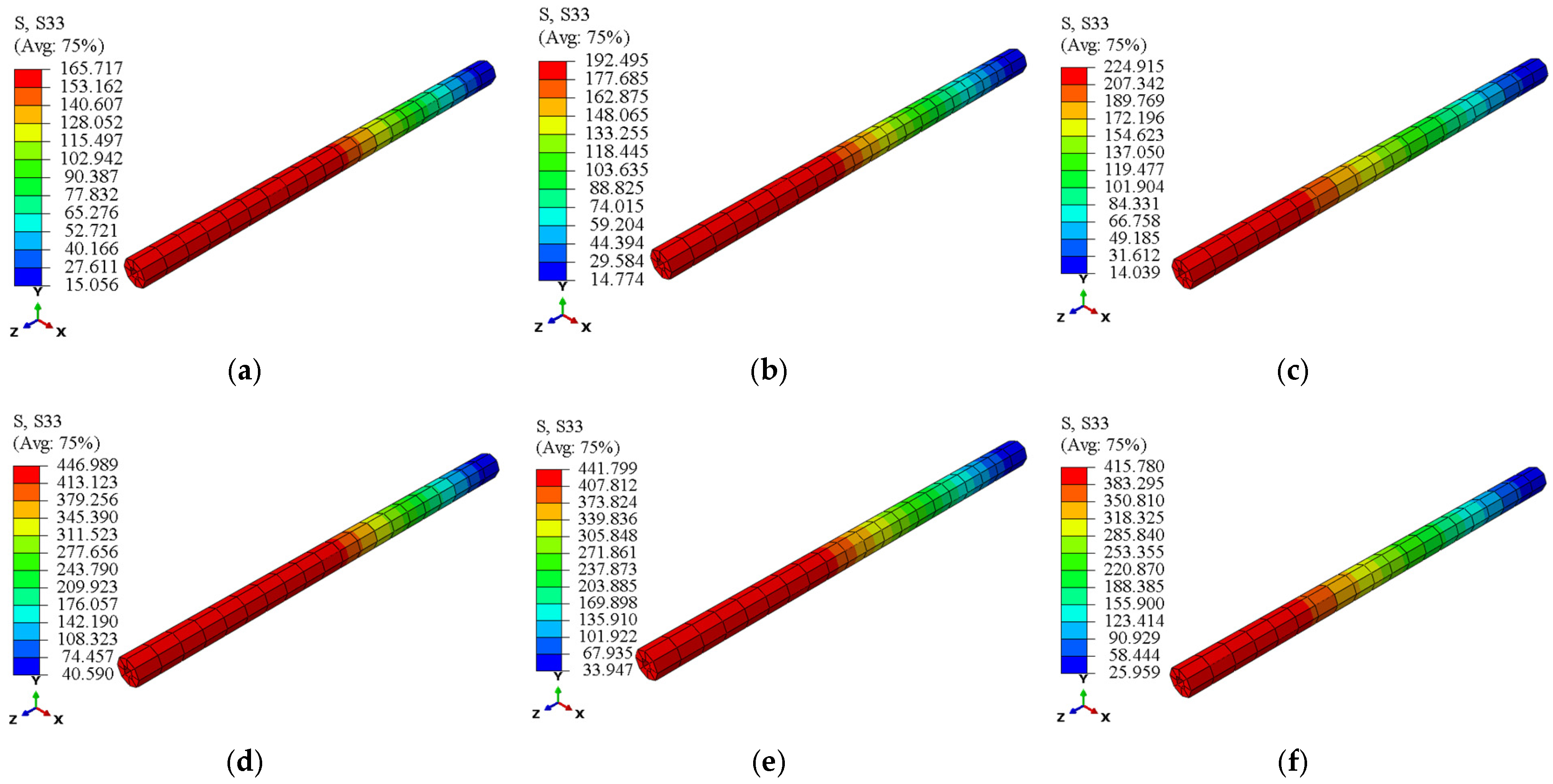
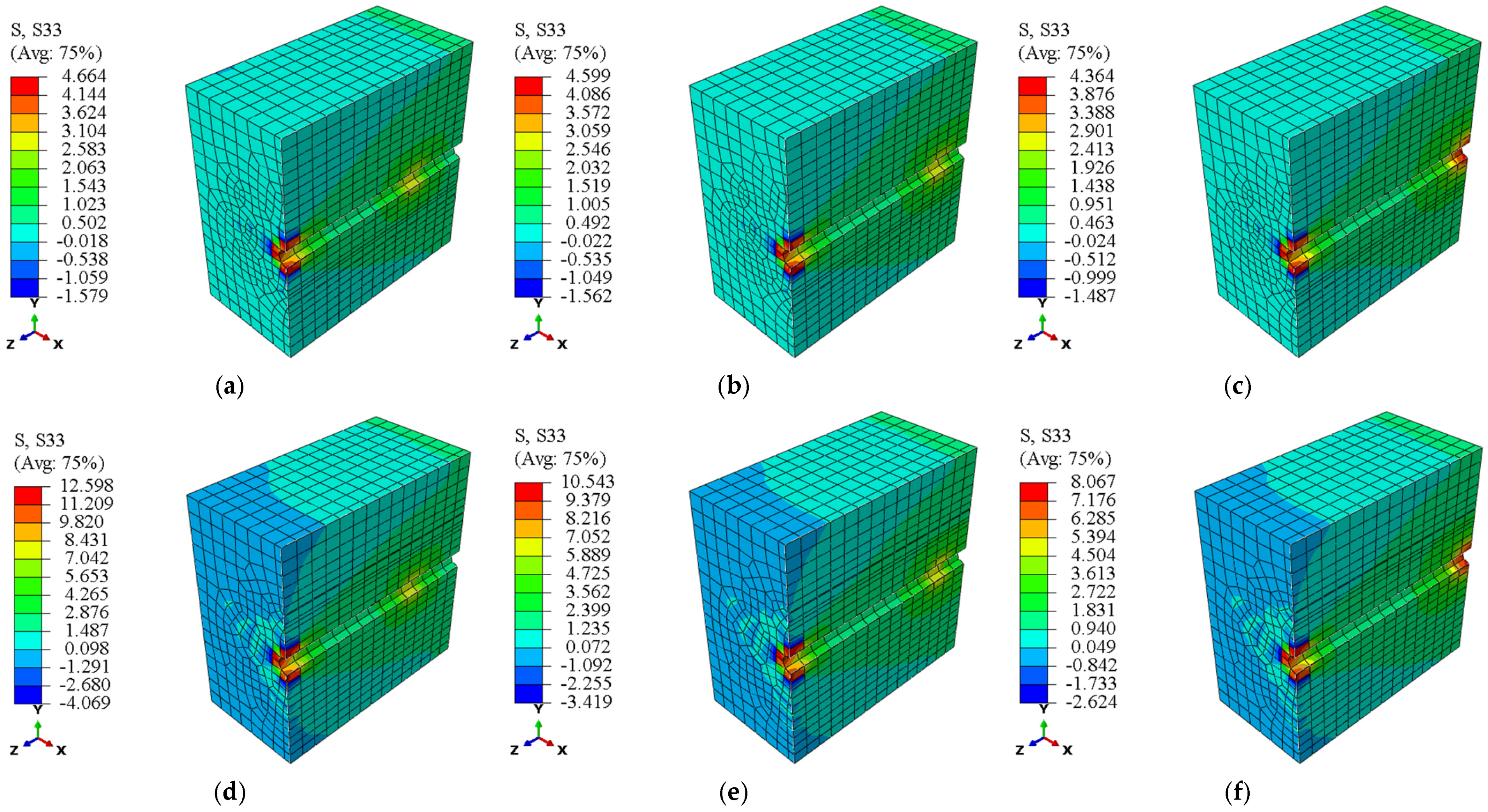
Figure 14 presents the tensile stress contour plots of plain round bar and ribbed bar specimens under ultimate load, as simulated using the spring element model.
Table 3 presents the measurement point data based on a single specimen, comparing the experimental and finite-element-model-calculated steel stresses at various measurement points for plain round bars with an anchorage length of 100 mm under ultimate load.
As shown in Figure 14 and Table 3, the stress in the reinforcing bar was highest at the loaded end and gradually increased from the anchorage end toward the loaded end. A comparison between the finite element calculated values and the experimentally derived results showed that the stresses at all measurement points were in close agreement. The maximum observed error in stress was only 5.2%.
As observed in Figure 15, during the early loading phase, concrete stresses are primarily concentrated at the steel–concrete interface within the bonded region and gradually propagate into the surrounding concrete. The stress field exhibits a conical distribution, with the stress magnitude decreasing away from the interface. Along the anchorage length, the maximum contact stress occurs at the free-end surface, and the concrete stresses in the pull-out direction exceed the ultimate tensile strength of 4.5 MPa.

3.5. Effect of Mesh Density on Numerical Results

In the separated modeling approach, spring elements are arranged at the grid nodes along the steel–concrete interface, with the mesh size directly corresponding to the spacing between adjacent springs. Consequently, the mesh size governs both the number of spring elements and the force carried by each individual spring. When a finer mesh is adopted, the spacing between springs is reduced, resulting in a larger number of spring elements and a lower force demand on each spring. Conversely, a coarser mesh leads to increased spring spacing, a reduced number of spring elements, and a correspondingly higher force carried by each spring. From a numerical standpoint, a larger mesh size is beneficial for improving computational efficiency but may compromise solution accuracy. Conversely, an excessively fine mesh can enhance accuracy while significantly increasing computational cost and potentially leading to convergence difficulties. Therefore, an appropriate mesh size should be carefully selected according to the specific characteristics of the problem under investigation.
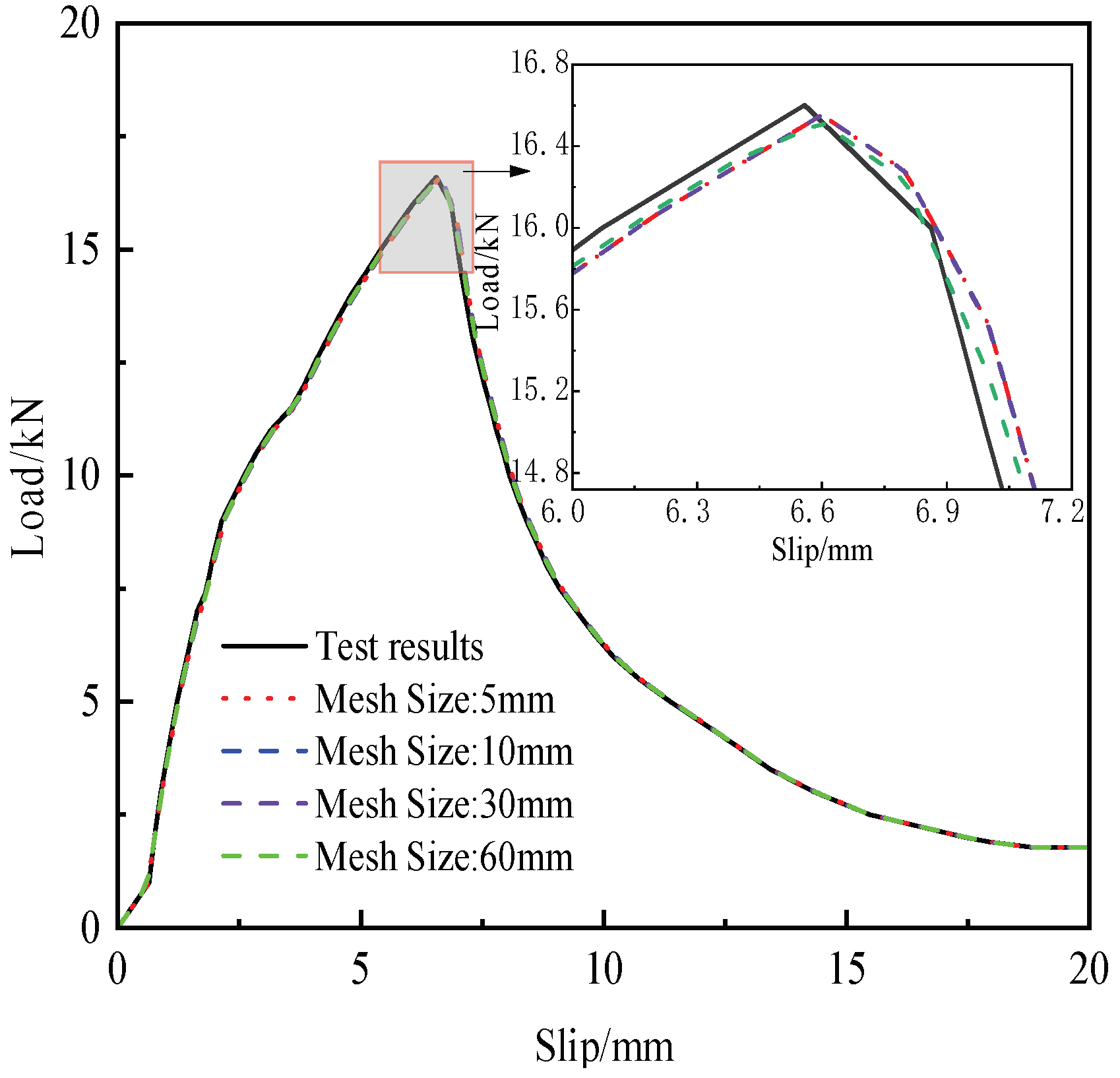
Taking plain round reinforcing bar Specimen 2 with an anchorage length of 120 mm as a representative case, a mesh sensitivity analysis was performed for the numerical model. The mesh sizes along the longitudinal direction of both the reinforcement and concrete were set to 5 mm, 10 mm, 30 mm, and 60 mm for comparison. The corresponding numerical results are shown in Figure 16. As shown in Figure 16, the load–displacement curves obtained with different mesh sizes exhibit nearly identical trends, indicating that the mesh size, spring element spacing, and number of spring elements exert only a minor influence on steel–concrete bond–slip behavior. As the mesh size increases, the predicted peak load shows a slight decreasing tendency. To quantify the influence of mesh size, models with element sizes of 5, 10, 30, and 60 mm were analyzed. The relative errors in ultimate load between simulation and experiment were 0.28%, 0.28%, 0.27%, and 0.51%, respectively. The results show that over the broad mesh size range of 5–30 mm, the simulation error varied by only 0.01%, whereas computational efficiency was substantially enhanced. However, when the mesh was coarsened from 30 mm to 60 mm, the error increased from 0.27% to 0.51%, an increase of 89%. Mesh discretization directly governs the accuracy, efficiency, and convergence of finite element models. Thus, the spring-element-based model developed herein exhibits low sensitivity to mesh size; variations in mesh size do not significantly affect the simulation results.

4. Numerical Analysis of Flexural Behavior of Steel Fiber Alkali-Activated Slag Concrete Beams Considering Bond–Slip Effects

4.1. Parameters of Test Beams

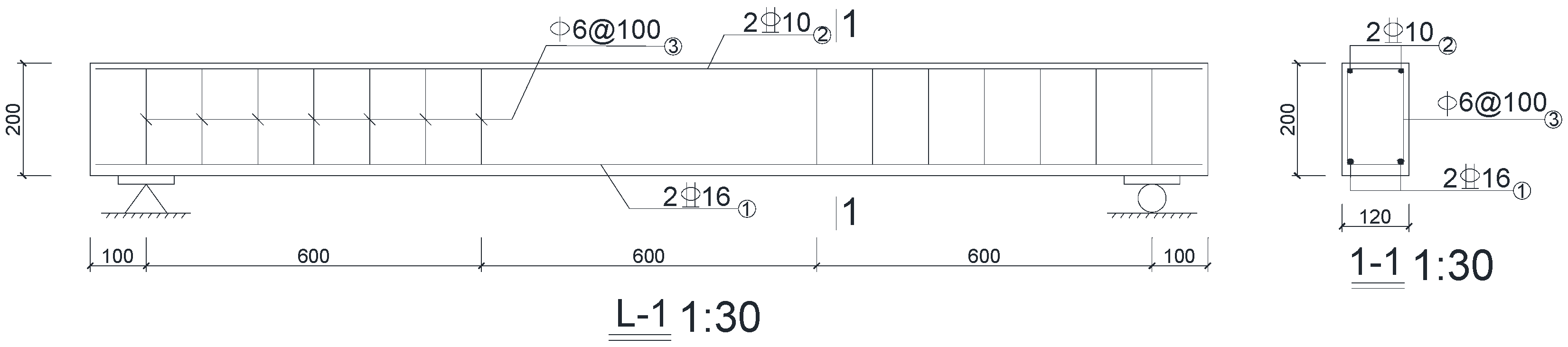
Based on previous experimental studies conducted by the authors’ research group [25], fiber-reinforced alkali-activated concrete beams were selected for numerical simulation to investigate flexural behavior considering the steel–concrete bond–slip. A series of eight alkali-activated slag concrete beams, with steel fiber content varying from 0% to 1.4%, were designed and tested in compliance with the relevant fiber-reinforced concrete technical specification. These beams were designated as SFR-AASC1 to SFR-AASC8. The test beams had a rectangular cross section measuring 120 mm × 200 mm and an overall length of 2000 mm. The concrete cover thickness was 25 mm. The reinforcement configuration comprised two HRB400-grade tensile longitudinal bars (2C16), two HRB400-grade erection bars (2C10), and HPB300-grade stirrups with a diameter of 6 mm, spaced at 100 mm (A6@100). Corrugated steel fibers with a length of 36 mm, an equivalent diameter of 1.08 mm, and a minimum tensile strength of 700 MPa were used in this study. The cross-sectional configuration and reinforcement layout of the test beams are shown in Figure 17.
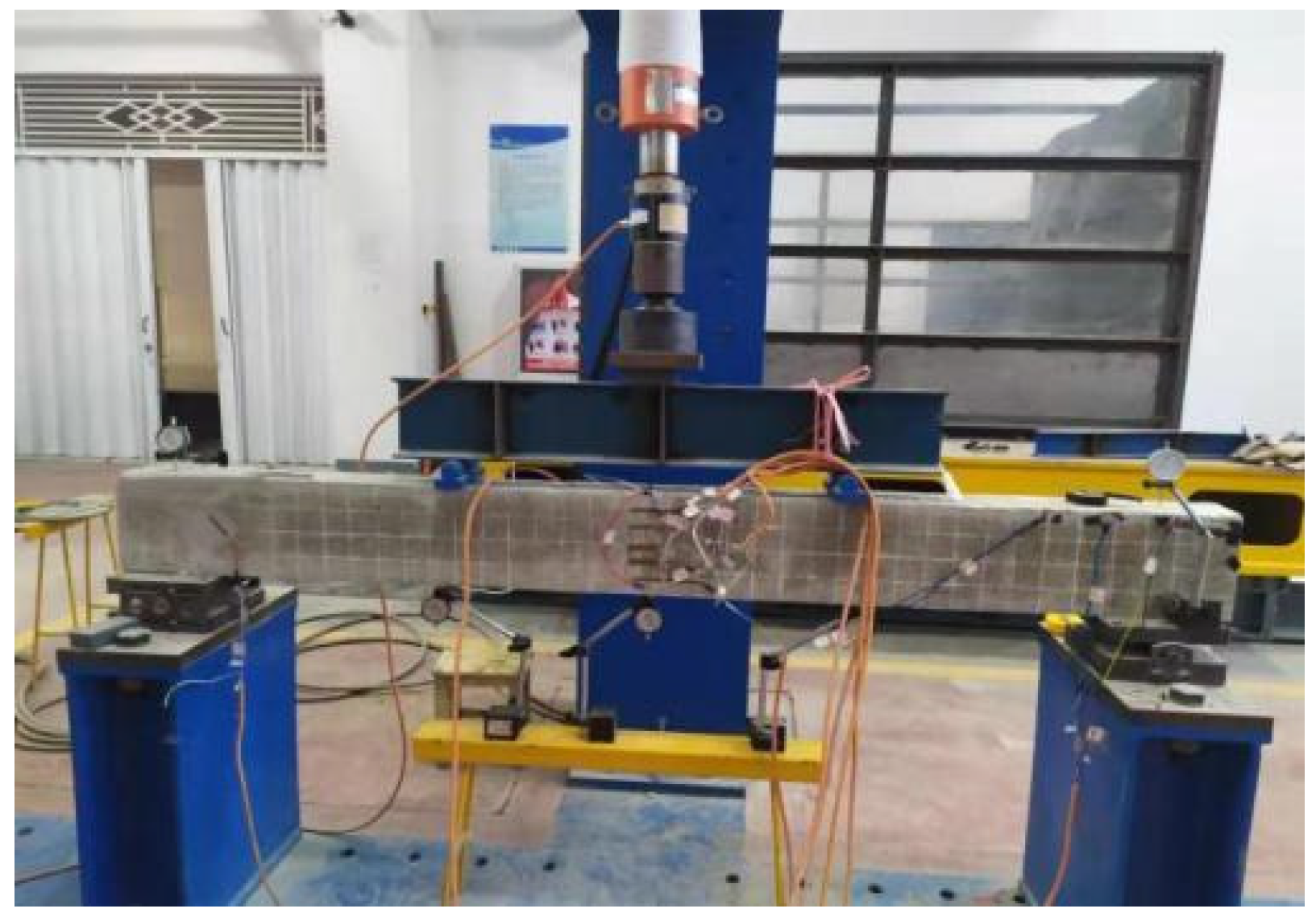
Testing was performed according to the Chinese standard GB/T 50081-2019 Standard for Test Methods of Concrete Structures [26] using a two-point loading scheme. The concentrated force from a hydraulic jack was distributed as two symmetrical point loads through a spreader beam onto the test beam. Prior to loading, the edges and corners were trimmed after demolding to ensure uniform compressive loading. The surface of the test beam was cleaned with alcohol, and the areas designated for strain gauge attachment were polished with sandpaper. After drying, strain gauges were applied to the side and bottom surfaces of the beam. Before formal loading, a preloading procedure was conducted to verify the proper operation of the dial gauges and hydraulic jack and to zero all instruments. Formal loading followed a stepped protocol. Load was increased in 5 kN increments until reaching 80% of the calculated cracking load, at which point the increment was reduced to 1 kN. After cracking occurred, 5 kN increments were resumed. Each load level was held for 10 min to observe crack initiation and propagation; crack height, width, and corresponding load values were recorded during this period. Loading continued until specimen failure. A schematic of the setup is provided in the Figure 18.
The key mechanical properties of the reinforcing steel and the SFR-AASC were determined through experimental tests. In accordance with relevant testing standards, concrete prism specimens were prepared to evaluate the cube compressive strength, prism compressive strength, elastic modulus, and Poisson’s ratio. The experimentally measured mechanical properties of the SFR-AASC are summarized in Table 4.
The mechanical properties of the reinforcing steel are summarized in Table 5.
The results of the pull-out tests and beam bending tests in this study were obtained experimentally. Throughout the testing process, the specimen fabrication, loading, and data acquisition were strictly carried out in accordance with the requirements of standards such as the Standard for Test Methods of Concrete Structures (GB/T 50152-2012) [27]. However, the reliability of the test results is subject to limitations imposed by factors such as test conditions and the number of specimens, and the findings are only applicable to the parameter range investigated in this study. The experimental results aim to validate the effectiveness of the established finite element model that considers bond–slip behavior, and the observed data trends can serve as a reference for related research on similar materials, rather than being directly used as the sole basis for engineering design.

4.2. Bond–Slip Constitutive Relationship

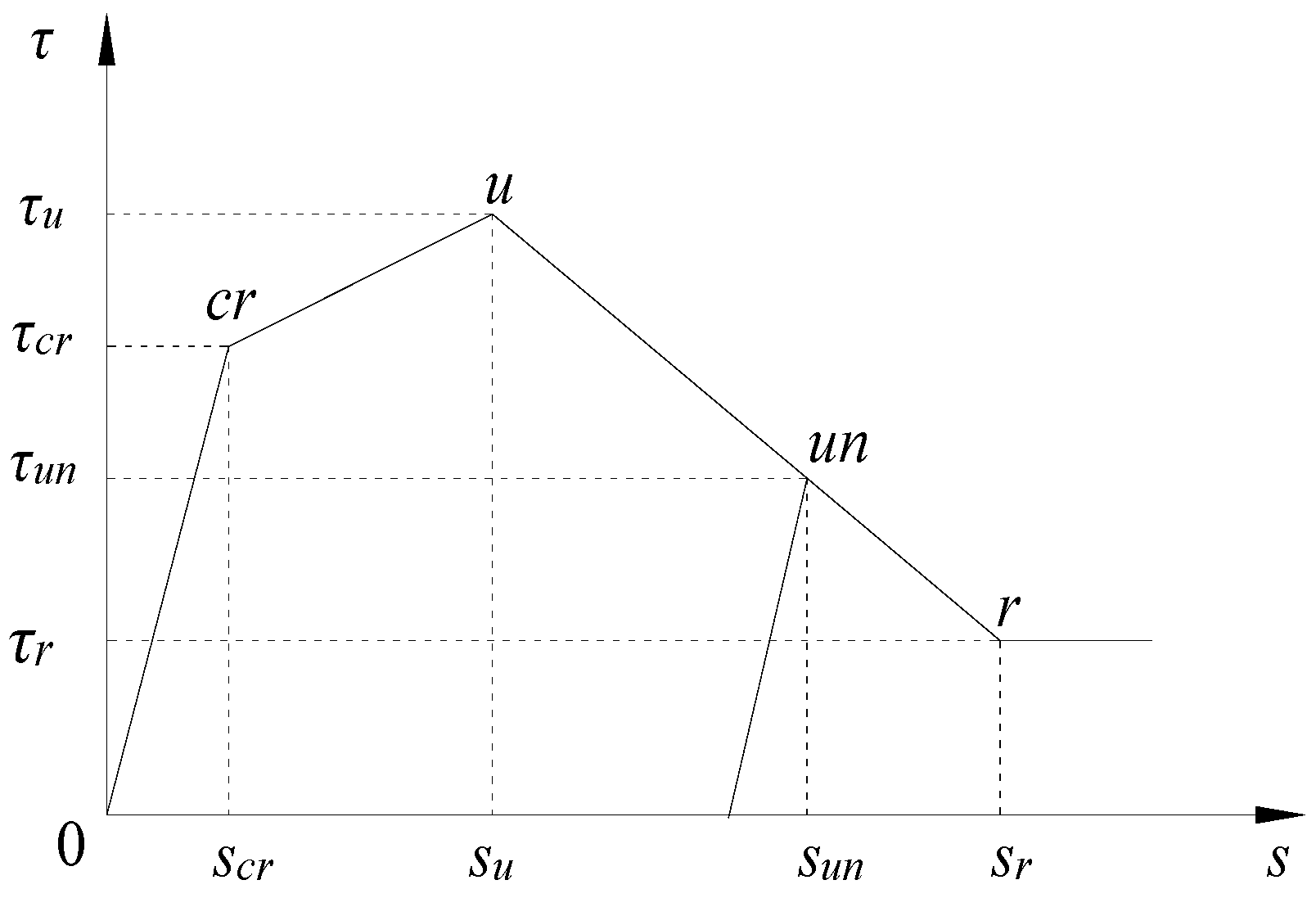
The transfer of internal forces and deformation compatibility between reinforcing steel and concrete are ensured through bond action, and the corresponding bond–slip constitutive relationship is generally established based on experimental investigations, often in empirical or semi-empirical form. Due to the lack of systematic experimental data on the bond–slip behavior between reinforcing steel and SFR-AASC, the bond–slip constitutive curve for ribbed reinforcing bars specified in the Code for Design of Concrete Structures (GB 50010-2010) [28] was adopted in the numerical analysis, all concrete parameters are derived from experimental data on steel fiber-reinforced alkali-activated slag concrete. As illustrated in Figure 19, this constitutive relationship was employed to represent the bond–slip interaction between the reinforcing steel and SFR-AASC.
The characteristic parameters of the curve were calculated using Equation (15), and the results are presented in Table 6. In this analysis, only the bond–slip between the bottom tensile reinforcement and the SFR-AASC was considered.
τ = k 1 s 0 s s c r τ c r + k 2 ( s s c r ) s c r < s s u τ u + k 3 ( s s u ) s u < s s c r τ r s > s r τ u n + k 1 ( s s u n )
where τ is the bond stress between concrete and ribbed reinforcing steel (N/mm2); s is the relative slip between concrete and ribbed reinforcing steel (mm); k1 is the slope of the linear branch, τcr/scr; k2 is the slope of the splitting branch, (τuτcr)/(suscr); k3 is the slope of the descending branch, (τrτu)/(srsu); τun is the bond stress at the unloading point (N/mm2); sun is the relative slip at the unloading point (mm); τcr and scr denote the splitting bond strength and the corresponding splitting slip, respectively; τu and su represent the ultimate bond strength and the corresponding ultimate slip, respectively; τr and sr refer to the residual bond strength and the corresponding residual slip, respectively.

4.3. Development of the Bond–Slip Model

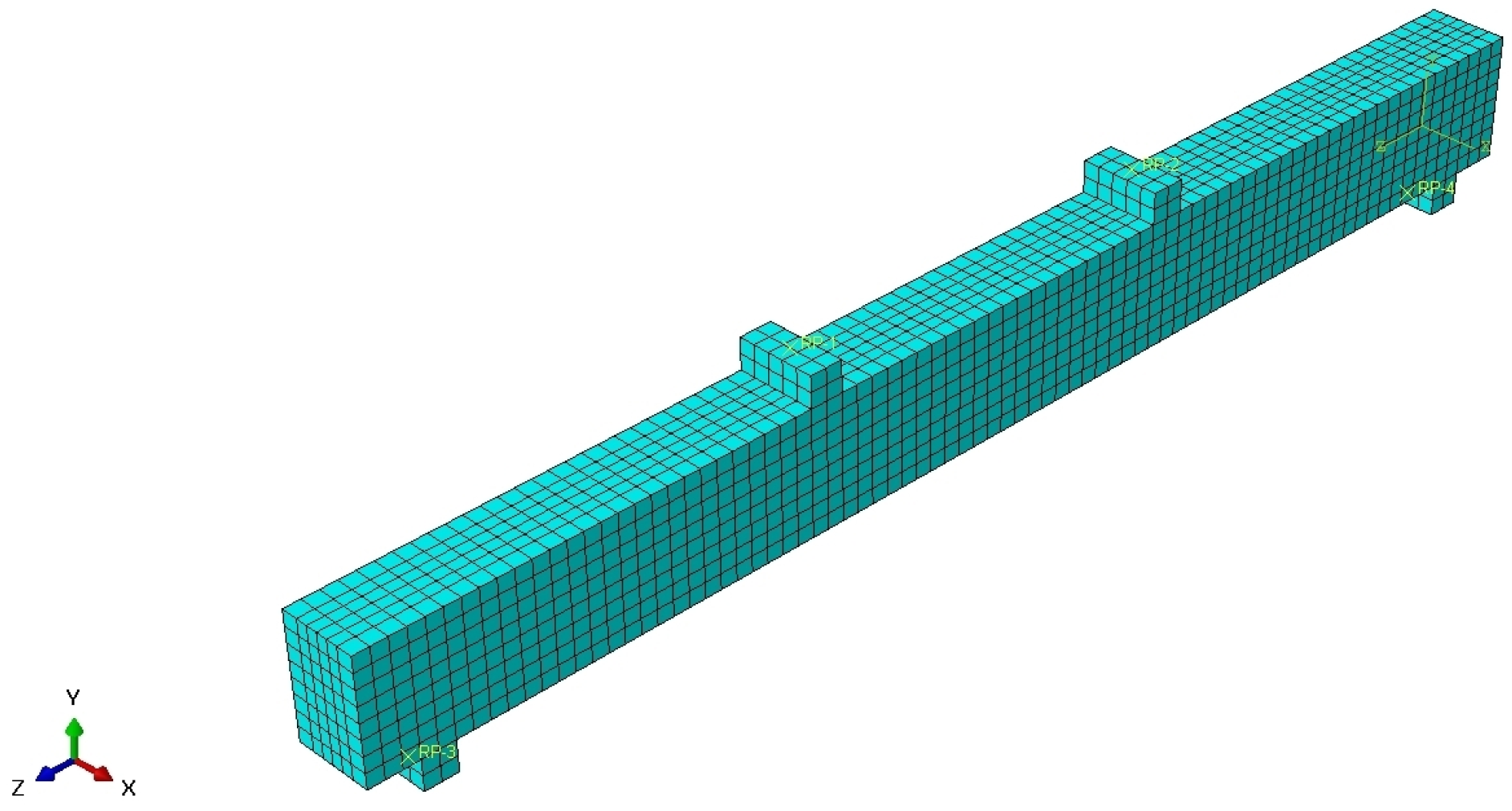
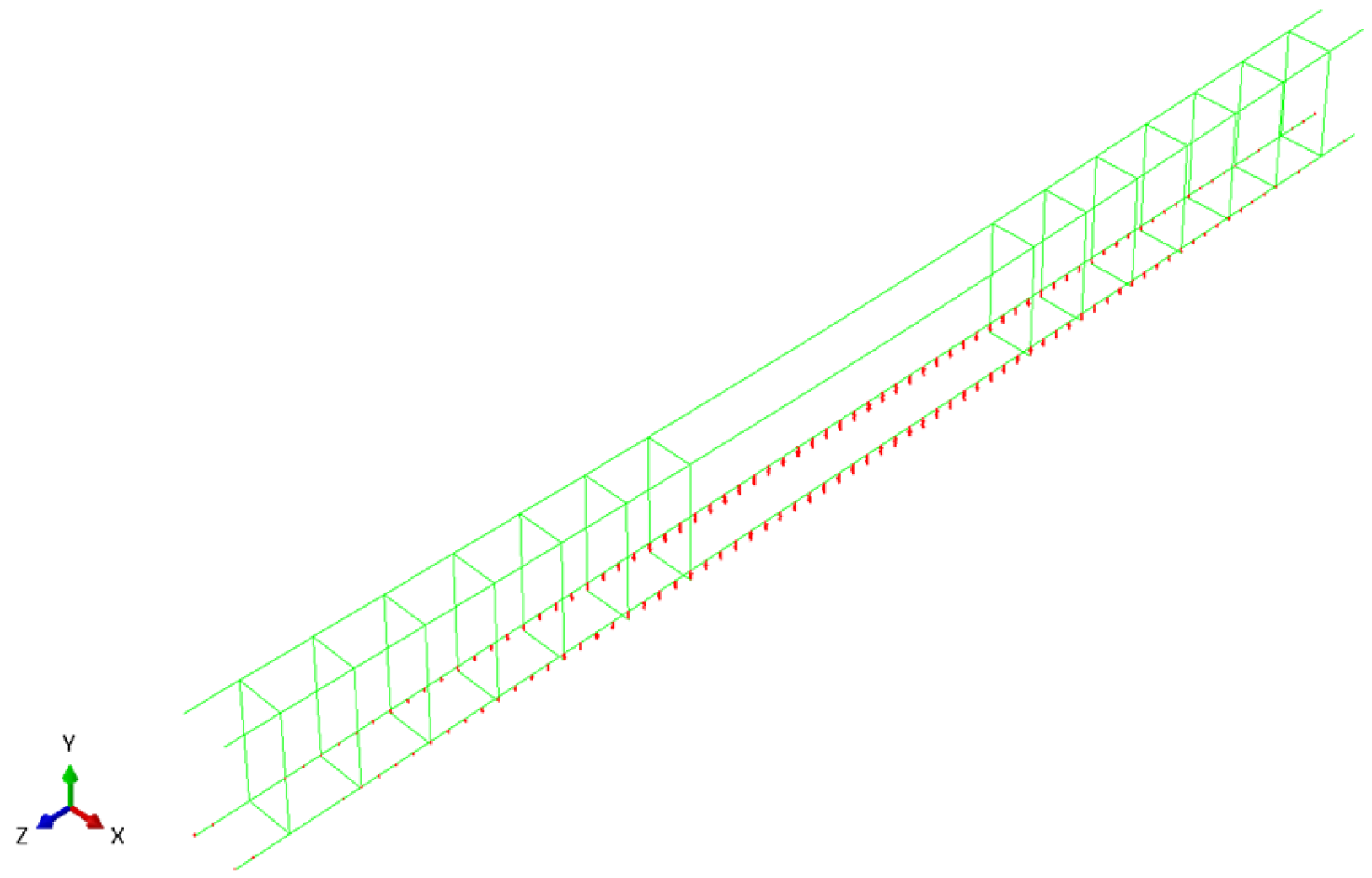
Both the concrete beam and the rigid bearing blocks were treated as three-dimensional continua and discretized using eight-node linear reduced-integration solid elements (C3D8R). The reinforcing bars were modeled using two-node three-dimensional truss elements (T3D2). To simplify the numerical analysis and accurately reproduce the experimental support conditions, the bearing blocks were defined as rigid bodies, thereby preventing unnecessary local deformations during the simulation and ensuring a realistic global structural response. A mesh sensitivity analysis conducted on pull-out specimens demonstrated that a 10 mm element size provides adequate accuracy at the steel–concrete bond interface. However, discretizing the entire 2000 mm beam with a uniform 10 mm mesh would generate an excessively large number of elements, leading to prohibitive computational cost. Consequently, a zoned meshing strategy was adopted for the beam model. To enforce nodal compatibility between the reinforcement and concrete, the mesh was tailored to the beam’s structural geometry. A mesh size of 25 mm was assigned to the rigid loading plates, concrete cover, and both longitudinal and transverse reinforcement, whereas the core concrete region was discretized with a finer 20 mm mesh. The final meshed configuration of the model is presented in Figure 20.
Because the concrete and reinforcement were discretized using independent element systems and the coincident interface nodes were neither coupled nor merged, the bond–slip behavior was represented by introducing nonlinear spring elements. Based on the bond–slip constitutive relationship specified in relevant structural design codes, together with constitutive parameters obtained from pull-out tests, spring elements were assigned between geometrically coincident nodes at the steel–concrete interface to model the interfacial bond interaction. The introduced spring elements were defined to account solely for the relative slip along the longitudinal (axial tangential) direction of the reinforcement, while relative displacements in the normal and transverse tangential directions were neglected. This simplification was adopted to isolate and emphasize the influence of bond–slip behavior on the flexural performance of the beam. The detailed arrangement of the spring elements is illustrated in Figure 21.

4.4. Finite Element Results and Analysis

4.4.1. Comparison of Concrete and Reinforcing Steel Stresses

As shown in Table 7, the bond–slip effect plays a crucial role in governing the stress distribution and internal force transfer between concrete and reinforcing steel. A comparative analysis of the concrete-steel stress responses of different test beams, with and without consideration of bond–slip behavior, indicates that accounting for bond–slip results in a noticeable reduction in the stress level carried by the concrete. Correspondingly, a larger proportion of the internal force is transferred to the reinforcement, leading to an increase in steel stress. This redistribution of stresses reflects a partial loss of strain compatibility between concrete and steel induced by interfacial slip, thereby underscoring the importance of incorporating bond–slip effects to achieve a realistic representation of the mechanical interaction in reinforced concrete members.
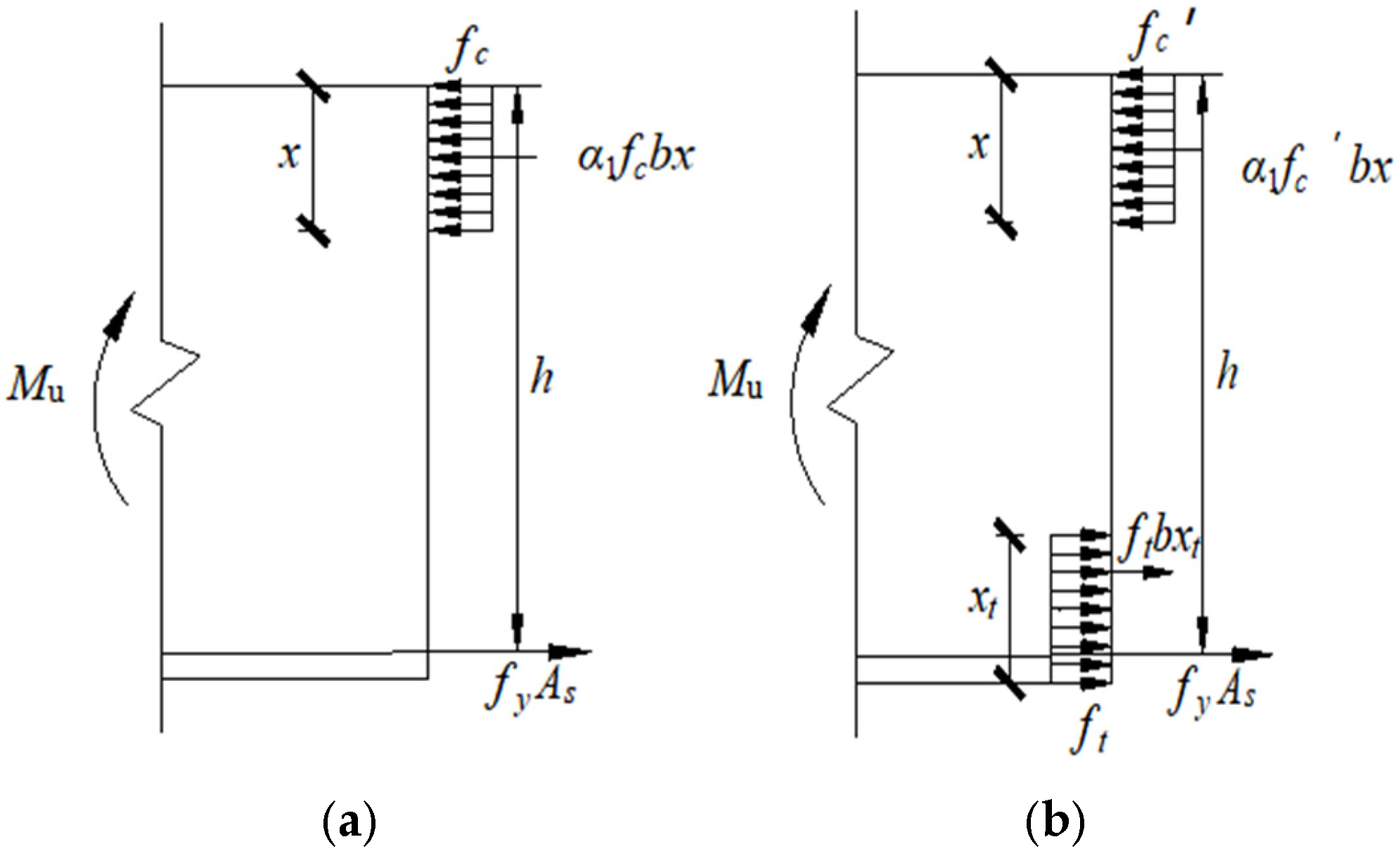
The underlying mechanism can be interpreted from the flexural behavior of a reinforced concrete member at the normal section. In conventional flexural capacity calculations for reinforced concrete sections, based on the fundamental principles of concrete structural design, two basic assumptions are typically adopted: the tensile strength of concrete is neglected, and the tensile force in the tension zone is assumed to be entirely carried by the longitudinal reinforcement. Figure 22a illustrates the equivalent rectangular stress distribution of the section under these assumptions, in which the contribution of concrete tensile strength is disregarded. Based on the static equilibrium condition that the resultant internal force in the horizontal direction of the cross section is zero, the internal force equilibrium equation of the section can be established, as given in Equation (16):
α 1 f c b x = f y A s
where α1 is the coefficient of the equivalent rectangular stress block; when the concrete strength grade does not exceed C50, α1 is taken as 1.0; when the concrete strength grade is C80, α1 is taken as 0.94, and linear interpolation is used to determine its value for intermediate grades. h denotes the section depth, fc is the design axial compressive strength of concrete, and ft represents the axial tensile strength of concrete. Mu denotes the ultimate bending moment of the normal section, b is the section width, and x represents the calculated depth of the compression zone; fy and As are the design yield strength and cross-sectional area of the longitudinal tensile reinforcement, respectively.
At a cracked section, although most of the concrete in the tensile zone no longer contributes to load resistance, a portion of effective tensile stress remains in the vicinity of the neutral axis. When the tensile contribution of concrete is considered, the equivalent rectangular stress distribution, as shown in Figure 22b, can be adopted, and the corresponding modified equilibrium condition is expressed by Equation (17), where ftbxt represents the tensile force carried by the concrete in the tension zone, denoted by the symbol Tc, xt is the calculated height of the concrete in the tension zone, and fc′ is the axial compressive strength of concrete considering the influence of its tensile strength.
α 1 f c b x = f y A s + T c
The flexural behavior of SFR-AASC beams is strongly governed by the interface bond behavior. When bond–slip is neglected, effective composite action is maintained, allowing the tensile concrete to fully mobilize its tensile capacity, corresponding to a tensile force T1. In contrast, when bond–slip is considered, interfacial bond degradation induces strain incompatibility, thereby reducing the tensile contribution of concrete to T2. Based on the composite action mechanism, it follows theoretically that T1 > T2.
As a result, the parameters in the modified equilibrium condition differ accordingly. For members in which bond–slip is neglected, the larger tensile contribution of concrete (T1) necessitates a higher compressive stress level in the concrete compression zone to satisfy sectional equilibrium. Conversely, when bond–slip is taken into account, the reduced tensile contribution (T2) leads to a lower compressive stress demand in the compression zone. This theoretical interpretation is in good agreement with the numerical simulation results, where specimens neglecting bond–slip exhibit higher maximum stress levels than those incorporating bond–slip effects.

4.4.2. Comparison of Cracking Load, Ultimate Load, and Ultimate Displacement

The complete flexural process of the under-reinforced beams was divided into three stages: the uncracked stage, the cracking stage, and the failure stage, with the bond–slip between steel and concrete neglected. A comparison of the experimental and finite element analysis results for the cracking load, ultimate load, and ultimate deflection of all specimens is presented in Table 8.
Compared with the experimental data, the simulated ultimate loads and deflections for all eight beams—obtained using the proposed meshing scheme—exhibited well-controlled errors. Table 8 indicates that when steel–concrete bond–slip effects are neglected, the finite element model consistently overestimates the cracking load, ultimate load, and ultimate displacement compared with the experimental results. The overall discrepancies range from 0.2% to 9.7%, indicating a systematic tendency toward overprediction under the assumption of perfect bond behavior. The primary source of this discrepancy can be attributed to the idealized assumptions adopted in the numerical simulations with respect to material behavior and interfacial interactions. Specifically, the steel fibers were assumed to be uniformly distributed within the concrete matrix, with perfect bonding at the fiber–matrix interface, and the composite material was treated as isotropic. In addition, an ideal rigid connection was assumed between the reinforcing steel and the surrounding concrete, thereby enforcing full strain compatibility without allowing for relative slip. Under practical construction conditions, however, these assumptions are difficult to fully satisfy. Steel fibers are prone to nonuniform dispersion and local clustering during mixing and casting, leading to spatial variability in mechanical properties. In addition, microcracks and pore structures inevitably develop during concrete mixing, placement, and curing, resulting in material heterogeneity and a reduction in effective stiffness and strength. These inherent imperfections cause the actual mechanical performance of concrete to deviate from the idealized material model adopted in the finite element analysis. Consequently, the numerical simulations tend to overestimate the structural response, yielding generally higher predicted load-bearing capacity and deformation than those observed experimentally.
The corresponding comparisons between experimental measurements and FE predictions for the cracking load, ultimate load, and ultimate displacement, this time with the bond–slip effect considered, are presented in Table 9.
Based on the data in Table 8, comparisons between the experimentally measured and numerically predicted cracking load, ultimate load, and ultimate displacement of the eight specimens considering bond–slip indicate that the relative errors are well controlled within 0.1–4.7%, demonstrating good agreement between the numerical simulations and the experimental results. Further comparison of the numerical results obtained with and without consideration of bond–slip against the experimental data shows that the cracking loads predicted by the two numerical models are in close agreement with each other and are both slightly higher than the measured values. In contrast, the ultimate loads predicted by the bond–slip model are lower than those obtained from the fully bonded model, while the corresponding ultimate displacements are larger. Nevertheless, both the ultimate load and the associated displacement predicted by the bond–slip model remain slightly lower than the experimental results. Overall, compared with the model neglecting bond–slip effects, the numerical model incorporating bond–slip predicts a lower ultimate load, a slightly larger ultimate displacement, and a reduced global stiffness. A comparative analysis of the errors in load and displacement for the eight test beams, with and without consideration of bond–slip, is summarized in Table 10.
As indicated in Table 10, compared with the numerical results obtained without considering bond–slip, the incorporation of the steel–concrete bond–slip effect leads to a substantial reduction in prediction errors for all key performance indicators. Specifically, the error in the cracking load decreases from 1.2–6.8% to 0.1–3.6%, the error in the ultimate load is reduced from 0.2–2.4% to 0.1–2.0%, and the error in the ultimate displacement decreases from 3.9–9.7% to 0.8–4.7%. These results demonstrate that explicit consideration of bond–slip effects significantly enhances the predictive accuracy of the finite element model for the flexural behavior of SFR-AASC beams. From an engineering standpoint, neglecting the bond–slip interaction in practical structural analyses can result in an overestimation of both the load-carrying capacity and global stiffness of structural members, thereby adversely affecting the reliability of structural safety assessments. Therefore, when performing finite element analyses of steel fiber alkali slag concrete structures, it is essential to explicitly account for the bond behavior between steel reinforcement and concrete to ensure accurate and reliable predictions of structural performance.

4.4.3. Comparison of Load–Displacement Curves

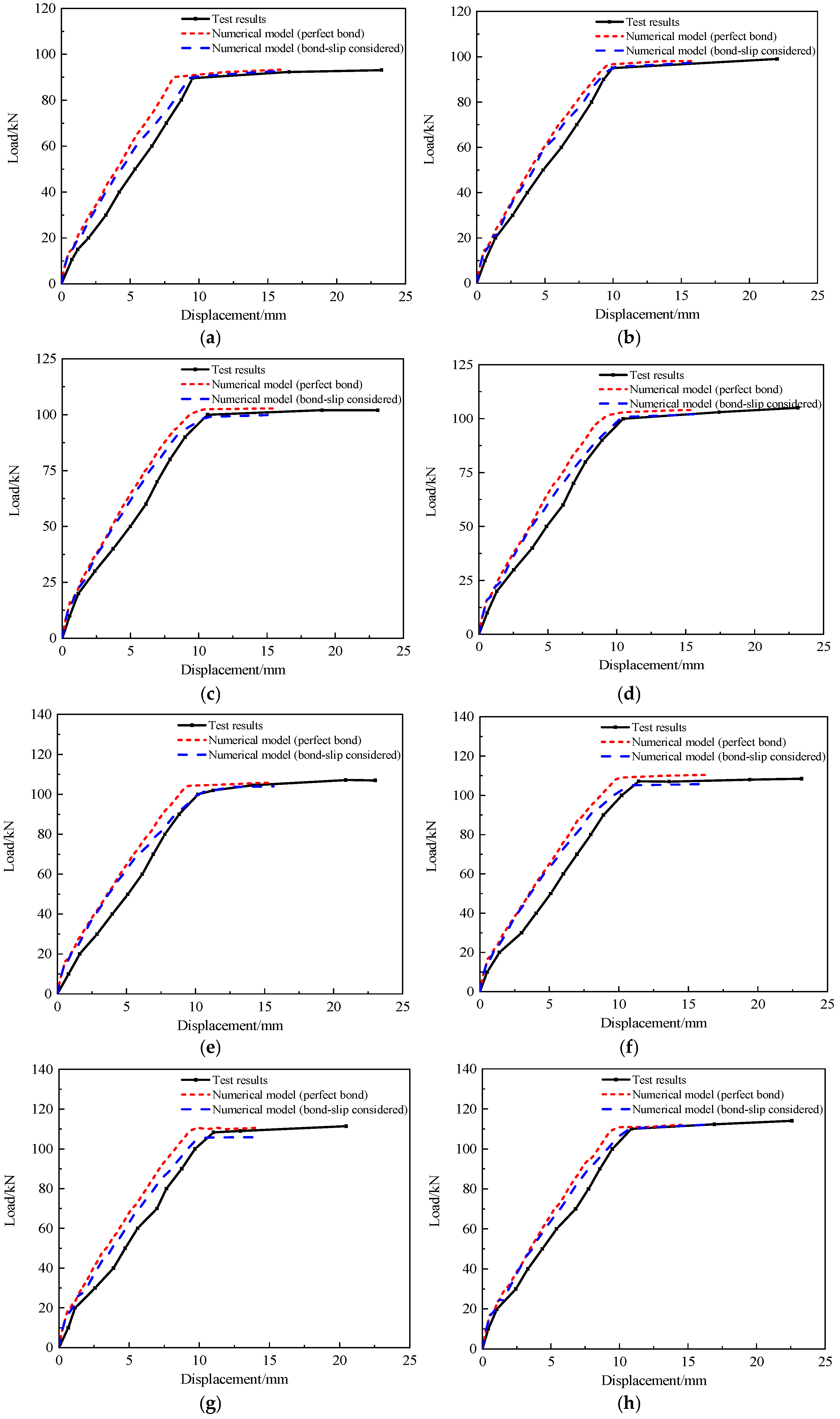
As shown in Figure 23, during the initial loading stage, i.e., prior to concrete cracking, the load–displacement curves obtained from the models with and without bond–slip are essentially identical. As the applied load increases, the model that neglects bond–slip gradually deviates from the experimental response. This discrepancy arises from the assumption of perfect composite action between the steel reinforcement and concrete, which leads to an overestimation of the global structural stiffness. Consequently, the predicted mechanical response becomes increasingly idealized and fails to capture the progressive stiffness degradation observed in the experimental results. In contrast, the model that accounts for bond–slip can more accurately capture the progressive degradation of mechanical interaction at the steel–concrete interface. The simulated stiffness degradation process shows closer agreement with experimental observations, and the resulting load–displacement curves are consistent with the test results. Moreover, the predicted ultimate load is closer to the measured value. These findings demonstrate that the adopted bond–slip model significantly enhances the accuracy of the finite element analysis and provides a more realistic representation of the interaction mechanism between reinforcing steel and steel fiber-reinforced alkali-activated slag concrete.

5. Conclusions

Based on extensive prior research on the steel–concrete bond–slip constitutive relationship, a discrete modeling approach was adopted. A refined bond–slip analysis model was developed in Abaqus to systematically investigate this behavior between steel bars and steel fiber-reinforced alkali-activated slag concrete through numerical simulations of pull-out specimens and beam members. The following conclusions were drawn:
  • The numerical bond–slip model, established using the discrete modeling concept, demonstrated good validity. By introducing nonlinear spring elements at the coincident nodes of plain round and ribbed bar pull-out specimens and adopting an average bond stress–slip relationship, the experimental load–slip curves were accurately reproduced. The model successfully simulated the stress contours in the reinforcement and concrete in the z-direction, and the simulated trends agreed well with experimental observations.
  • The influence of mesh density on simulations of pull-out specimens was investigated. It was found that the spring-element model exhibited low sensitivity to mesh size. Within a broad range of 5 mm to 30 mm, the simulation error fluctuated by only 0.01 percentage points, while computational efficiency was significantly enhanced. Coarsening the mesh from 30 mm to 60 mm increased the error from 0.27% to 0.51%, corresponding to a 0.24% rise in ultimate load error. Overall, variations in mesh size did not significantly affect the results.
  • Nonlinear spring elements were employed to simulate the bond–slip at the interface between the bottom longitudinal reinforcement and the concrete. The errors between the simulated and experimental cracking load, ultimate load, and ultimate deflection ranged from 0.1% to 4.7%. Comparative analysis indicated that simulations neglecting bond–slip produced load–displacement curves substantially higher than the experimental results. In contrast, simulations incorporating bond–slip yielded curves much closer to the test data, which more accurately represented the true interfacial behavior. These results verify that the proposed model can effectively predict the bond–slip behavior between steel reinforcement and SFR-AASC.

Author Contributions

Conceptualization, X.Y.; methodology, X.Y.; validation, X.Y.; investigation, G.C., Z.C. and C.J.; data curation, G.C., Z.C. and C.J.; writing—original draft preparation, G.C., Z.C. and C.J.; writing—review and editing, X.Y.; visualization, X.Y.; supervision, G.C. All authors have read and agreed to the published version of the manuscript.

Funding

This work was supported by the 2025 Henan Provincial Science and Technology Research Project (Grant No. 252102230150) and the Postgraduate Education Reform and Quality Improvement Project of Henan Province (Grant No. YJS2025GZZ31).

Data Availability Statement

The general data are included in the article. Additional data are available on request.

Conflicts of Interest

The authors declare no conflicts of interest.

References

  1. Ma, Y.; Guo, Z.; Wang, L.; Zhang, J. Experimental investigation of corrosion effect on bond behavior between reinforcing bar and concrete. Constr. Build. Mater. 2017, 152, 240–249. [Google Scholar] [CrossRef]
  2. Yu, X.; Robuschi, S.; Fernandez, I.; Lundgren, K. Numerical assessment of bond-slip relationships for naturally corroded plain reinforcement bars in concrete beams. Eng. Struct. 2021, 239, 112–309. [Google Scholar] [CrossRef]
  3. Rostásy, F.; Hartwich, K. Bond of deformed reinforcing bar embedded in steel fiber reinforced concrete. Int. J. Cem. Compos. Lightweight Concr. 1988, 10, 151–158. [Google Scholar] [CrossRef]
  4. Shen, D.; Shi, X.; Zhang, H.; Duan, X.; Jiang, G. Experimental study of early-age bond behavior between high strength concrete and steel bars using a pull-out test. Constr. Build. Mater. 2016, 113, 653–663. [Google Scholar] [CrossRef]
  5. Soroushian, P.; Mirza, F.; Alhozaimy, A. Bond of confined steel fiber reinforced concrete to deformed bars. Mater. J. 1994, 91, 141–149. [Google Scholar] [CrossRef]
  6. Peng, K.-D.; Zeng, J.-J.; Huang, B.-T.; Huang, J.-Q.; Zhuge, Y.; Dai, J.-G. Bond performance of FRP bars in plain and fiber-reinforced geopolymer under pull-out loading. J. Build. Eng. 2022, 57, 104893. [Google Scholar] [CrossRef]
  7. Nilson, A.H. Internal measurement of bond slip. ACI J. Proc. 1972, 69, 439–441. [Google Scholar] [CrossRef]
  8. Eligehausen, R.; Cook, R.A.; Appl, J. Behavior and design of adhesive bonded anchors. ACI Struct. J. 2006, 103, 822. [Google Scholar] [CrossRef]
  9. Xu, Y. Analysis and study of bond anchorage of steel bars and concrete. Build. Sci. 1992, 8, 18–24. [Google Scholar] [CrossRef]
  10. Chen, F.; Yu, Z.; Yu, Y.; Liu, Q.S. Study on the bond-slip numerical simulation in the analysis of reinforced concrete wall-beam-slab joint under cyclic loading. Constr. Build. Mater. 2024, 449, 138266. [Google Scholar] [CrossRef]
  11. Liu, B.; Bai, G.-L.; Xu, Z.-H.; Ma, J.-F.; Han, Y.-Y. Experimental study and finite element modeling of bond behavior between recycled aggregate concrete and the shaped steel. Eng. Struct. 2019, 201, 109840. [Google Scholar] [CrossRef]
  12. Ge, H.; Dai, G.; Wang, F.; Yu, Y.; Liu, W. Theoretical solution for bond-slip behavior of composite structures consisting of H-shape beam and concrete based on experiment, numerical simulation, and theoretical derivation. Eng. Struct. 2024, 302, 117456. [Google Scholar] [CrossRef]
  13. Qasem, A.; Sallam, Y.S.; Eldien, H.H.; Ahangarn, B.H. Bond-slip behavior between ultra-high-performance concrete and carbon fiber reinforced polymer bars using a pull-out test and numerical modelling. Constr. Build. Mater. 2020, 260, 119857. [Google Scholar] [CrossRef]
  14. Cutolo, A.; Guarracino, F.; Olivieri, C.; Mascolo, I. Nonlinear FE analysis of a masonry spiral staircase in Nisida: A refined numerical case study. Int. J. Multiscale Comput. Eng. 2022, 20, 105–114. [Google Scholar] [CrossRef]
  15. Jin, L.; Liu, M.; Zhang, R.; Du, X. 3D meso-scale modelling of the interface behavior between ribbed steel bar and concrete. Eng. Fract. Mech. 2020, 239, 107291. [Google Scholar] [CrossRef]
  16. Yang, Z.H.; Zhuang, J.P.; Cai, X.F.; Zhang, Z.G. Finite element analysis of anti-bending of early age reinforced concrete beam based on bond-slip constitutive. In Mechanics and Architectural Design: Proceedings of 2016 International Conference; World Scientific: Singapore, 2017; pp. 271–277. [Google Scholar] [CrossRef]
  17. Liu, H.; Chen, W.; Guo, R.; Liao, W.; Du, X. Theoretical and numerical study on the bond behavior between reinforcing steel and concrete. J. Build. Eng. 2024, 90, 109398. [Google Scholar] [CrossRef]
  18. Liu, Y.; Hao, H.; Hao, Y. Investigation on the dynamic bond-slip behaviour between steel bar and concrete. Eng. Fract. Mech. 2023, 291, 109540. [Google Scholar] [CrossRef]
  19. Xue, L.; Ren, X.; Ballarini, R. Damage-plasticity modeling of shear failure in reinforced concrete structures. Eng. Fract. Mech. 2023, 290, 109536. [Google Scholar] [CrossRef]
  20. Bilal, K.A.; Mahamid, M.; Hariri-Ardebili, M.A.; Tort, C.; Ford, T. Parameter selection for concrete constitutive models in finite element analysis of composite columns. Buildings 2023, 13, 1759. [Google Scholar] [CrossRef]
  21. Yuan, X.; Guan, H.; Shi, Y. Stress-Strain Relationship of Steel Fiber Reinforced Alkali Activated Slag Concrete under Static Compression. Adv. Civ. Eng. 2021, 2021, 7951646. [Google Scholar] [CrossRef]
  22. Han, R.; Zhao, S.; Qu, F. Experimental study on the tensile properties of steel fiber reinforced concrete. J. Civ. Eng. 2006, 39, 63–67. [Google Scholar] [CrossRef]
  23. Yuan, X.; Lu, Z.; Fan, X.; Zhang, C. Experimental study on inorganic polymer concrete-steel bar drawing. J. Wuhan Univ. Technol. 2013, 35, 117–122. Available online: https://kns.cnki.net/kcms2/article/abstract?v=adNygMj_jVCl1XJJkb5AuqnEFPbMpmwDd7YiEgvjUKHnCpLIjbhlLK-yeynXQ4m7WL6t53lEF7uyns9KVjp4ybW8NZj-NvQCPksfY3WlyS1p9OMrp9oV5HwVdWj4u2QUCmjPtBQhiofMVT3dYqDtsYX70-IKkqTM2LcwaReWMf3eBM5LvOFUZA==&uniplatform=NZKPT&language=CHS (accessed on 15 February 2026).
  24. Zhu, B. Principles and Applications of Finite Element Method; China Water Resources and Hydropower Press: Beijing, China, 1998; Available online: https://thinker.cnki.net/bookstore/book/bookdetail?bookcode=9787517065623000&type=book (accessed on 15 February 2026).
  25. Maranan, G.; Manalo, A.; Karunasena, K.; Benmokrane, B. Bond stress-slip behavior: Case of GFRP bars in geopolymer concrete. J. Mater. Civ. Eng. 2015, 27, 04014116. [Google Scholar] [CrossRef]
  26. Yuan, X.; Huo, R.; Zhang, X. Experimental study on flexural mechanical properties of steel fiber reinforced alkali-activated slag concrete beams. Front. Phys. 2024, 12, 1361605. [Google Scholar] [CrossRef]
  27. GB/T 50152-2012; Standard for Test Methods of Concrete Structures. China Architecture & Building Press: Beijing, China, 2012; pp. 23–24. Available online: https://kns.cnki.net/kcms2/article/abstract?v=adNygMj_jVBqdo-cEShz3r3tnwuYyd5QWTZMyWC2IvgeAATeQIVD7Ec7QPoetx7D6J3jWHjt-9fzQNts65uVuN7TGrJkWL7b0r6IbqA9djNL1-mj3AFn_-HQz3cYNWMV4F6nlIX4R2mWJYo0x2rXO5wfey2OAlIy3CxJtyP0HsJz7Ix2euAo1Q==&uniplatform=NZKPT&language=CHS (accessed on 15 February 2026).
  28. GB 50010-2010; Code for Design of Concrete Structures. China Architecture & Building Press: Beijing, China, 2010. Available online: https://kns.cnki.net/kcms2/article/abstract?v=h5hbu4VP4UREHwcva8JSpJ-vPWfBWzL0J65uUHO4Ffi3QsEj0Y2GzTN7UQDLBo_a4dgnA8hf87EKm1lO9Jw68mzLgiK0z0wCsLtP49VF9fKyNwjILOnOuirdhNuUHHxfs4gez0kuJyx9k-xmKZz0Mr54l3LFrGK04kPuPa1x9boMQW4snCN4_A==&uniplatform=NZKPT&language=CHS (accessed on 15 February 2026).
Figure 1. Schematic illustration of the three-dimensional separated modeling approach.
Buildings 16 00842 g001
Figure 2. Schematic representation of the spring element.
Buildings 16 00842 g002
Figure 3. Stress–strain relationship of reinforcing steel.
Buildings 16 00842 g003
Figure 4. Schematic illustration of strain gauges embedded in the reinforcing bar.
Buildings 16 00842 g004
Figure 5. Layout of strain measurement locations along the reinforcing bar.
Buildings 16 00842 g005
Figure 6. Test loading setup.
Buildings 16 00842 g006
Figure 7. Slip and strain acquisition equipment.
Buildings 16 00842 g007
Figure 8. Failure modes of plain round bar specimens. (a) Y1, (b) Y2, (c) Y3.
Buildings 16 00842 g008
Figure 9. Failure modes of ribbed bar specimens. (a) L1, (b) L2, (c) L3.
Buildings 16 00842 g009
Figure 10. Finite element model.
Buildings 16 00842 g010
Figure 11. Loading configuration and boundary conditions.
Buildings 16 00842 g011
Figure 12. Comparison of experimental and simulated load–slip curves for plain round bar pull-out specimens. (a) Y1, (b) Y2, (c) Y3.
Buildings 16 00842 g012
Figure 13. Comparison of experimental and simulated load–slip curves for ribbed bar pull-out specimens. (a) L1, (b) L2, (c) L3.
Buildings 16 00842 g013
Figure 14. Contours of reinforcing bar stress in the z-direction at ultimate load (unit: MPa). (a) Y1, (b) Y2, (c) Y3, (d) L1, (e) L2, (f) L3.
Buildings 16 00842 g014
Figure 15. Contours of concrete stress in the z-direction at ultimate load (unit: MPa). (a) Y1, (b) Y2, (c) Y3, (d) L1, (e) L2, (f) L3.
Buildings 16 00842 g015
Figure 16. Effect of mesh size on load–slip response.
Buildings 16 00842 g016
Figure 17. Geometry and reinforcement layout of test beams (unit: mm).
Buildings 16 00842 g017
Figure 18. Test setup.
Buildings 16 00842 g018
Figure 19. Bond stress–slip relationship between ribbed reinforcing bar and concrete.
Buildings 16 00842 g019
Figure 20. FE model of the reinforced concrete beam after mesh discretization.
Buildings 16 00842 g020
Figure 21. Schematic illustration of the arrangement of spring elements.
Buildings 16 00842 g021
Figure 22. Equivalent rectangular stress block of concrete in the compression zone. (a) Without considering the tensile strength of concrete, (b) considering the tensile strength of concrete.
Buildings 16 00842 g022
Figure 23. Comparison between numerical and experimental load–displacement curves of eight test beams with bond–slip effects considered. (a) Load–displacement curve of SFR-AASC1, (b) load–displacement curve of SFR-AASC2, (c) load–displacement curve of SFR-AASC3, (d) load–displacement curve of SFR-AASC4, (e) load–displacement curve of SFR-AASC5, (f) load–displacement curve of SFR-AASC6, (g) load–displacement curve of SFR-AASC7, (h) load–displacement curve of SFR-AASC8.
Buildings 16 00842 g023
Table 1. Specimen parameters.
Concrete TypeBar TypeSpecimen IDAnchorage Length/mmConcrete Dimension/mmQuantity
AASC40A12 Ribbed BarL1100150 × 150 × 1501
L21201
L31501
A12 Plain round barY11001
Y21201
Y31501
Table 2. Comparison of calculated and experimental ultimate load and displacement for specimens with different anchorage lengths.
Bar TypeSpecimen IDItemUltimate Load/kNRelative Error/%Ultimate Displacement/mmRelative Error/%Ultimate Average Bond Stress/MPa
Plain barY1Experimental 14.22-4.79-3.78
Numerical 14.200.144.902.303.77
Y2Experimental 16.60-6.56-3.67
Numerical 16.550.306.600.613.67
Y3Experimental 19.34-9.80-3.42
Numerical 19.320.1010.002.043.42
Ribbed barL1Experimental 38.31-18.65-10.17
Numerical 38.220.2318.80.8010.14
L2Experimental 37.87-18.90-8.37
Numerical 37.720.4019.201.598.34
L3Experimental 35.65-17.62-6.31
Numerical 35.640.0318.002.166.31
Table 3. Comparison of steel stress at different measurement locations for the plain round bar specimen with an anchorage length of 100 mm under ultimate load.
Measurement PointStress/MPa
1#2#3#4#5#6#7#8#9#
Experimental value28.644.560.074.894.0100.9116.0131.1152.6
Numerical value30.145.260.375.390.4105.5120.5135.6150.6
Error/%5.21.60.50.73.84.63.93.41.3
Table 4. Basic mechanical properties of SFR-AASC beams.
Specimen IDSteel Fiber Volume Fraction/%Cube Compressive Strength fcu/MPaAxial Compressive Strength fc,r/MPaTensile Strength ft/MPaElastic Modulus E/MPaPoisson’s Ratio μ
SFR-AASC10.045.240.23.222.55 × 1040.148
SFR-AASC20.553.443.83.672.59 × 1040.171
SFR-AASC30.955.246.64.032.72 × 1040.189
SFR-AASC41.056.047.54.122.75 × 1040.199
SFR-AASC51.158.553.84.212.77 × 1040.202
SFR-AASC61.260.755.04.302.87 × 1040.210
SFR-AASC71.364.659.24.393.04 × 1040.219
SFR-AASC81.470.067.64.483.06 × 1040.300
Table 5. Mechanical properties of reinforcing steel.
Steel GradeBar Diameter/mmCross-Sectional Area/mm2Yield Strength/MPaUltimate Strength/MPaElastic Modulus/N/mm2
HPB300628.33374632 × 105
HRB4001078.54496082 × 105
16201.14886462 × 105
Table 6. Parameters of the bond stress–slip relationship between reinforcing steel and concrete.
Characteristic PointSplitting/cr Peak/uResidual/r
Bond stress/MPaτcr2.5ft,rτu3ft,rτrft,r
Relative slip/mmscr0.025dsu0.04dsr0.55d
Where ft,r represents the tensile strength of concrete, for which the tested value of SFR-AASC was adopted in this study, and d denotes the diameter of the steel reinforcement.
Table 7. Comparison of concrete and steel stress parameters at the ultimate state for eight beam specimens with and without bond–slip consideration.
Specimen IDConcrete Stress Without Bond–Slip/MPaConcrete Stress With Bond–Slip/MPaAxial Compressive Strength
fc,r/MPa
Steel Stress Without Bond–Slip/MPaSteel Stress With Bond–Slip/MPa
SFR-AASC140.9140.2440.20451.50461.80
SFR-AASC243.9043.0043.80454.40465.70
SFR-AASC346.3345.7046.60472.90477.30
SFR-AASC448.0347.2847.50491.30494.10
SFR-AASC553.8852.0853.80486.30500.90
SFR-AASC655.2255.1655.00481.20484.20
SFR-AASC759.5157.8159.20499.70505.60
SFR-AASC866.3664.1867.60509.90513.10
Table 8. Comparison between numerical predictions and experimental results of cracking load, ultimate load, and ultimate displacement for eight beam specimens without considering bond–slip effects.
Specimen IDCracking Load/kNUltimate Load/kNUltimate Displacement/mm
ExperimentalNumericalError/%ExperimentalNumericalError/%ExperimentalNumericalError/%
SFR-AASC115.816.54.489.490.41.19.538.71−8.6
SFR-AASC219.520.13.196.496.60.210.149.74−3.9
SFR-AASC322.123.35.4100.2102.42.210.7610.34−3.9
SFR-AASC421.221.61.9101.2103.01.810.7210.01−6.6
SFR-AASC522.823.63.5103.8104.30.510.839.78−9.7
SFR-AASC623.725.36.8107.0108.51.411.5610.51−9.1
SFR-AASC724.424.71.2108.0110.62.411.019.99−9.3
SFR-AASC825.326.65.1110.5110.90.411.0810.33−6.8
Table 9. Comparison between numerical predictions and experimental results of cracking load, ultimate load, and ultimate displacement for eight beam specimens with bond–slip effects considered.
Specimen IDCracking Load/kNUltimate Load/kNUltimate Displacement/mm
ExperimentalNumericalError/%ExperimentalNumericalError/%ExperimentalNumericalError/%
SFR-AASC115.816.11.989.489.2−0.29.539.45−0.8
SFR-AASC219.519.60.596.496.6−0.910.149.89−2.5
SFR-AASC322.122.93.6100.299.1−1.110.7610.53−2.1
SFR-AASC421.221.61.9101.2100.8−0.410.7210.50−2.1
SFR-AASC522.823.42.5103.8103.7−0.110.8310.73−0.9
SFR-AASC623.723.70.1107.0105.6−1.311.5611.02−4.7
SFR-AASC724.424.71.2108.0105.8−2.011.0111.09−2.1
SFR-AASC825.326.44.2110.5110.2−0.211.0810.89−1.7
Table 10. Comparison of prediction errors in cracking load, ultimate load, and ultimate displacement for eight beam specimens with and without bond–slip effects.
Specimen IDCracking Load Error/%Ultimate Load Error/%Ultimate Load Error/%
Without Bond–SlipWith Bond–SlipWithout Bond–SlipWith Bond–SlipWithout Bond–SlipWith Bond–Slip
SFR-AASC14.41.91.1−0.2−8.6−0.8
SFR-AASC23.10.50.2−0.9−3.9−2.5
SFR-AASC35.43.62.2−1.1−3.9−2.1
SFR-AASC41.91.91.8−0.4−6.6−2.1
SFR-AASC53.52.50.5−0.1−9.7−0.9
SFR-AASC66.80.11.4−1.3−9.1−4.7
SFR-AASC71.21.22.4−2.0−9.3−2.1
SFR-AASC85.14.20.4−0.2−6.8−1.7
Disclaimer/Publisher’s Note: The statements, opinions and data contained in all publications are solely those of the individual author(s) and contributor(s) and not of MDPI and/or the editor(s). MDPI and/or the editor(s) disclaim responsibility for any injury to people or property resulting from any ideas, methods, instructions or products referred to in the content.