


Abstract
Urban community children’s play spaces play a crucial role in promoting both physical and mental health, significantly influencing children’s development and fostering a sense of belonging to the community. However, existing design practices often fail to adequately address the complex behavioral and emotional needs of children in these spaces. To overcome this gap, there is an urgent need for a system that can effectively respond to these complexities, thereby enhancing children’s play experiences and their attachment to the space. This study seeks to optimize the design of children’s play spaces in urban communities through a quantitative approach based on Exploratory Factor Analysis (EFA) and Structural Equation Modeling (SEM). First, multi-dimensional data concerning children’s physical environment, subjective perceptions, play behaviors, and satisfaction were gathered through field surveys and questionnaires. Reliability and validity assessments were conducted to ensure data quality. Subsequently, EFA was applied to perform dimensionality reduction and identify the underlying structure, resulting in the extraction of six key factors that influence children’s play experiences. Finally, SEM was utilized to construct a structural model, test hypotheses, and quantify the relationships between the identified dimensions. The results demonstrate that the EFA-SEM framework effectively transforms subjective concepts into actionable design parameters, meeting user needs and providing a solid scientific foundation for the design of children’s play spaces in urban communities.
1. Introduction
Urban community children’s play spaces serve as key settings for outdoor play, social interaction, and engagement with nature. The quality of these spaces has a direct impact on children’s physical and mental health and is widely regarded as an important indicator of refined urban governance and social development [1]. According to the Seventh National Population Census of China [2], the population aged 0–14 has reached 264 million, accounting for approximately one fifth of the total population. In response, China has placed increasing emphasis on the development of child-friendly environments [3]. To date, 93 cities have been included in the national child-friendly city initiative, covering all 31 provincial-level administrative regions. As future members of urban society, the quality of children’s developmental environments is closely linked to sustainable urban development and social cohesion. However, many existing children’s play spaces are characterized by limited facility diversity, insufficient integration of natural elements, and designs that fail to adequately respond to children’s behavioral needs. Insufficient availability and quality of outdoor play areas have been identified as significant risk factors contributing to reduced outdoor activity among children [4,5,6].
In high-density cities, urban community children’s play spaces constitute essential settings for outdoor activities and the promotion of children’s physical and mental development. A review of recent studies reveals three major research trends: (1) The first trend emphasizes the integration of multiple technologies and data-driven decision-making. Traditional approaches based on subjective questionnaires and observations are increasingly combined with objective measurement techniques, such as eye-tracking, behavior mapping, and geographic information systems [7,8]. This integration enables the collection of more accurate and comprehensive environmental and behavioral data. (2) The second trend focuses on heterogeneous needs and differentiated responses. Research has shifted from providing standardized spaces toward creating more inclusive and responsive play environments. Existing studies highlight the generally positive role of community social cohesion in promoting outdoor play among children of different ages and genders, while increasingly exploring the feasibility and effectiveness of tailored play environments for specific or vulnerable groups [9,10,11]. (3) The third trend emphasizes the generation of evidence-based and operational design strategies. Rather than merely identifying problems or verifying correlations, recent studies increasingly seek to translate research findings into explicit design principles and spatial configuration strategies [12,13].
Existing literature has created a multi-dimensional and interdisciplinary research framework addressing the core issue of how environmental characteristics influence children’s play behaviors and experiences. Researchers argue that the environment is not a neutral background, but actively shapes children’s play experience and developmental outcomes through sensory, behavioral, and emotional processes [13]. For instance, Zhishan Lin et al. [12], using the theory of affordance and the pleasure–arousal–dominance (PAD) emotion model, found that seasonal plants, open lawns, and structured facilities are key factors that foster children’s positive and multidimensional emotional experiences. Yu Bao et al. [9], focusing on special groups, found that reducing building density, increasing greenery, and enhancing accessibility to destinations can significantly promote play behavior among children with autism. Some researchers have incorporated biophilic design elements into children’s play spaces [14,15]. Huizi Deng et al. [13] systematically incorporated natural elements such as water, plants, and animals into children’s play spaces. This approach has been shown to significantly promote children’s physical activity, psychological resilience, and social adaptability. Zhishan Lin et al. [12] confirmed the independent value of natural elements and suggested that a spatial configuration strategy based on nature, which encourages play and provides clear structure, can better support children’s development. Additionally, researchers have widely explored spatial configuration, accessibility, and equity. In high-density urban environments, the quantity, distribution, and proximity of children’s play spaces to residential areas determine whether children can fairly enjoy their right to play [5,6,16]. Siqi Chen, Martin Knöll [17], and Shengzhen Wu et al. [18] argued that the entertainment value of facilities, service management level, and spatial accessibility are key variables affecting children’s overall satisfaction evaluation and social anxiety.
In conclusion, existing research has made significant progress in revealing the complex and multi-dimensional relationship between the environmental characteristics of play spaces and children’s development. The research methods have become increasingly scientific, and the perspectives more diverse. However, there are still the following challenges: (1) Most studies focus on the correlation between a single or limited environmental variable and specific outcomes. They lack an exploration of the multi-dimensional, systematic design elements of play space at the community scale and their internal structural relationships. (2) When investigating the mechanisms of environmental impact, children’s subjective perceptions, objective behaviors, and, ultimately, their developmental benefits are often considered separately. Environmental characteristics, children’s perceptions, and play behaviors have not been placed within an integrated theoretical model to examine their continuous transmission paths and influences. Therefore, it is necessary to introduce the research methods of Exploratory Factor Analysis (EFA) and Structural Equation Modeling (SEM). EFA helps to extract core and potential design factor structures from the complex attributes of community children’s play spaces in a dimensionally reduced way. SEM can construct and test an integrated theoretical model, examining how these potential design factors influence children’s environmental perception and play behavior, and how, in turn, they impact their physical and mental health as well as their social abilities. This approach provides actionable theoretical and practical support for the construction of child-friendly cities.
2. Overview of Spatial Design Methodology Based on EFA–SEM
The children’s play space in urban communities is a system influenced by multiple complex factors, such as the physical environment, social atmosphere, and children’s subjective perceptions [14,19,20]. These factors interact with one another, and the core research concepts are often latent variables that cannot be directly observed. There are also multiple causal steps between these variables. Traditional methods struggle to quantify and analyze these abstract yet crucial concepts effectively. To overcome these challenges, this study uses an integrated analysis framework combining EFA and SEM.
In methodological selection, construct validity is commonly examined using Exploratory Factor Analysis (EFA) or Confirmatory Factor Analysis (CFA). CFA is mainly used to verify predefined relationships between factors and observed variables in established measurement scales. In contrast, EFA explores the underlying structure among multiple variables while simultaneously performing dimensionality reduction [20]. For example, Eli R. Lebowitz et al. [21] used EFA to confirm a two-factor model of family accommodation in childhood anxiety. Lauren M. Little et al. [22] shifted the research focus to physical and social environments and identified latent dimensions of children’s activity participation, aiming to inform the optimization of children’s play spaces. Unlike CFA, which requires each observed variable to be assigned to a predefined factor, EFA allows variables to load freely across multiple factors. This characteristic makes EFA particularly suitable for research on children’s play spaces, where complex and interrelated attributes are common. In recent years, EFA has been increasingly applied in research on children’s spaces and environments to extract key design dimensions from complex facilities and environmental elements, thereby providing quantitative support for the development of spatial design frameworks and the prioritization of design elements [14,20]. SEM is a multivariate statistical technique that typically consists of a measurement model and a structural model. The measurement model specifies how latent variables are represented by observed variables, while the structural model describes the hypothesized causal relationships among latent variables and between latent and observed variables [23,24]. Erkang Fu et al. [23] applied SEM to demonstrate that user experience, landscape quality, and safety accessibility of greenways are key latent variables influencing residents’ willingness to engage in physical activity. Marco Maciel-Monteon et al. [25] employed SEM to validate theoretical models in higher education management. In research on children’s spaces, SEM is commonly applied to examine the structural pathways linking environmental conditions, children’s behaviors, and outcome variables. Previous studies have demonstrated its value in different research contexts. For example, Grazyna Kochanska et al. [26] used SEM to reveal the long-term positive effects of child-directed play on cooperation and socio-emotional abilities among young children from low-income families. Erika Ikeda et al. [27] applied SEM to analyze the direct and indirect relationships between children’s active travel behaviors and environmental and family factors. Similarly, Samantha McDonald et al. [28] showed that perceived community environments influence physical activity levels through children’s outdoor play. Overall, existing research has tended to focus on a single methodological approach or a limited set of outcome variables.
This study selected the EFA–SEM approach due to its systematic ability to address core research challenges and its unique advantages over other methods. (1) EFA–SEM creates a rigorous research loop, starting with exploration and followed by verification. The “bottom-up” data-driven nature of EFA effectively prevents researchers’ preconceived biases, ensuring that the identified factor structures reflect users’ real perceptions. Afterward, SEM performs a “top-down” theory-driven test based on the factor structures obtained from EFA [24]. (2) EFA–SEM can systematically overcome the limitations of traditional methods. Unlike Multiple Regression Analysis, EFA–SEM can directly handle latent variables, estimate measurement errors, and simultaneously test complex paths involving multiple variables. It also evaluates the multiple impacts of design on children’s physical and mental development in an integrated model [29]. Compared to factor analysis alone, EFA–SEM goes beyond the descriptive stage of answering “what the structure is” and delves into the causal relationships between variables, providing a deeper understanding of how they influence each other, thus completing the loop from hypothesis generation to hypothesis testing.
Therefore, for research focused on revealing the mechanisms influencing children’s play spaces in urban communities and promoting evidence-based design, adopting the integrated EFA–SEM methodology is a robust approach. It allows for the extraction of quantifiable evidence from complex phenomena and testing of theoretical paths.
3. Development of an EFA–SEM Coupled Design Methodology for Children’s Play Spaces in Urban Communities
In children’s play space design, it is essential to consider the interrelationships among environmental elements, behavioral responses, and emotional outcomes. This study integrates EFA and SEM into the design process, forming the theoretical framework of a quantitative design methodology. Through this integrated approach, the study identifies the core design dimensions of children’s play spaces and establishes a model describing the interaction mechanisms among these dimensions. It further derives design priorities and key control points to support decision-making. As a result, the methodology enables a repeatable transition from empirical judgment to evidence-based design.
3.1. Dimension Identification and Structure Extraction of Children’s Play Space Design Based on EFA
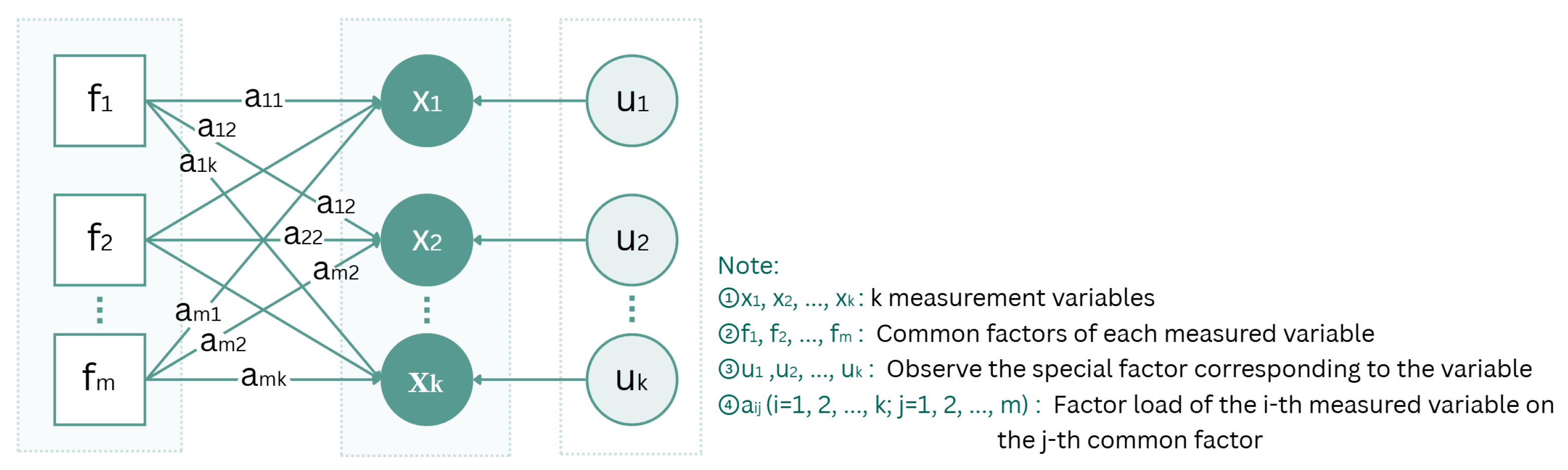
To determine whether the sample data meet the conditions for factor analysis, the data structure is tested using the KMO test and Bartlett’s test of sphericity. The KMO test compares the simple and partial correlation coefficients between variables to assess their relationships. Bartlett’s test evaluates the distribution of the data and the independence of the variables. After ensuring the data meet the required conditions, Principal Component Analysis (PCA) is used for factor extraction. The number of factors is determined by selecting those with eigenvalues greater than 1 and by identifying the inflection point on the scree plot. This process helps retain the most information from the original data. To further optimize the factor structure and improve the interpretability of the results, the Varimax rotation method is applied to the factor loading matrix, resulting in a clear factor structure, as shown in Figure 1. EFA provides a reliable basis for latent variables in subsequent SEM modeling and addresses the key design dimensions around which children’s play space in urban communities should be systematically constructed.
Figure 1.
Schematic Diagram of the EFA Path Analysis Model.
3.2. Path Analysis and Effect Quantification of Design Dimensions in Children’s Play Space Using SEM
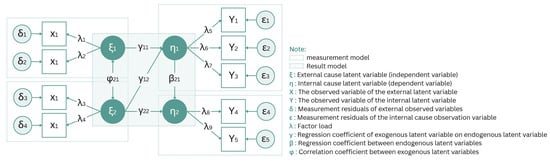
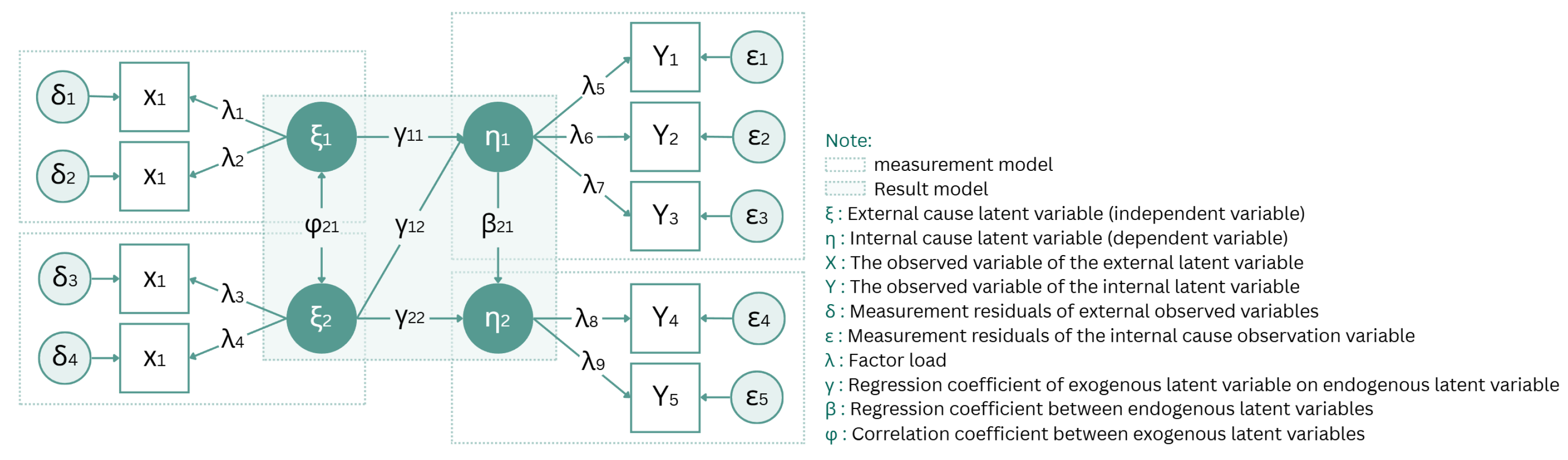
The common factors obtained from EFA are set as latent variables, and the high-load observation items under each factor are taken as their observation indicators. Based on theoretical reasoning and prior research, the causal relationships among latent variables are specified a priori, with particular attention to how these variables are interpreted and measured. Subsequently, Maximum Likelihood Estimation (MLE) was used for model fitting and parameter estimation. Model fit was evaluated using multiple fit indices, including the chi-square ratio (/df), the root mean square error of approximation (RMSEA), and the comparative fit index (CFI). If model fit was inadequate, theory-driven adjustments were performed based on modification indices. Finally, the research hypotheses were tested by examining the significance of standardized path coefficients, and both direct and indirect effects of each design dimension on use outcomes were analyzed. The variable composition and conceptual framework of the structural model for urban community children’s play space are shown in Figure 2. This figure illustrates the latent variables, observed indicators, and their theoretical relationships involved in the study. It defines the conceptual connotations and structural assumptions linking each design dimension with play behavior and emotional belonging and clarifies the logical formulation of the structural equation model. Building on the design factors identified through EFA, SEM allows this study to further examine how different design dimensions influence children’s play experience and place attachment. By comparing the strengths of different paths, the design framework is transformed into a spatial strategy generation tool with clear directionality and prioritization.
Figure 2.
Schematic Diagram of the SEM Model Structure.
3.3. EFA–SEM Coupled Analytical Framework and Application Workflow for Children’s Play Space in Urban Communities
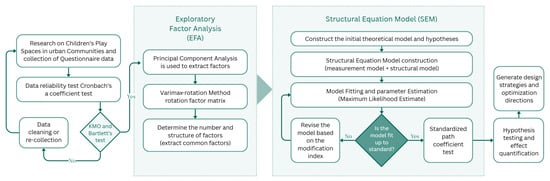
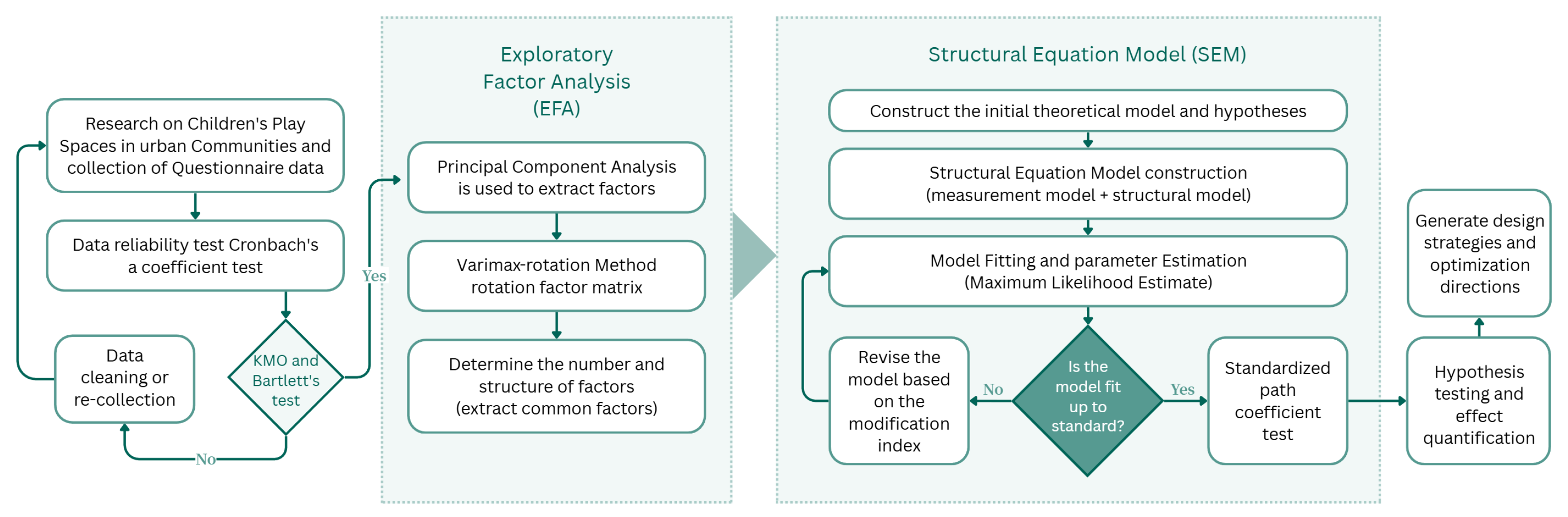
The coupled application of EFA and SEM establishes an integrated methodological framework for exploring design factors and validating underlying mechanisms. This framework supports systematic demand identification, precise causal verification, and evidence-based design decision-making. Methodologically, the study follows a progressive process that includes data suitability testing, factor structure extraction, and structural path validation. This process ensures that each analytical stage, from raw measurement data to mechanism interpretation, is supported by explicit statistical evidence and theoretical grounding. Based on this framework, the study conducts design-oriented research on children’s play spaces in urban communities. The overall application workflow is illustrated in Figure 3. It presents the analytical process of the study, including questionnaire data collection and suitability testing, exploratory factor analysis for design dimension extraction, and structural equation modeling to verify the interaction pathways among spatial elements, play behaviors, and emotional outcomes. Using this approach, the loading relationships between observed variables and latent design factors can be systematically evaluated. In addition, the structural paths and effect magnitudes among latent factors are quantitatively estimated, allowing the mechanisms through which different design dimensions influence children’s play space use to be revealed at a structural level.
Figure 3.
Application Workflow of the EFA–SEM Coupled Design Methodology for Children’s Play Space in Urban Communities.
4. Questionnaire Collection and Design Dimension Identification for Children’s Play Space in Urban Communities
4.1. Research and Sample Collection of Children’s Play Space in Urban Communities
To gain a deeper understanding of children’s needs in urban community play spaces, this study conducted a systematic field investigation in typical communities from different administrative districts and construction periods in Yueyang City, Hunan Province, China, from December 2024 to May 2025. Yueyang City lies within a subtropical monsoon climate zone. Its climatic conditions directly influence children’s outdoor play schedules, shading needs, and perceptions of spatial comfort. At the same time, prevailing family accompaniment practices and risk-management attitudes in Chinese urban communities may affect children’s subjective evaluations of safety, adventure, and freedom of exploration. The selected study sites are primarily high-density urban communities with a residential focus.
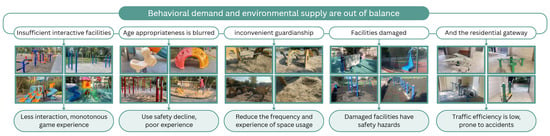
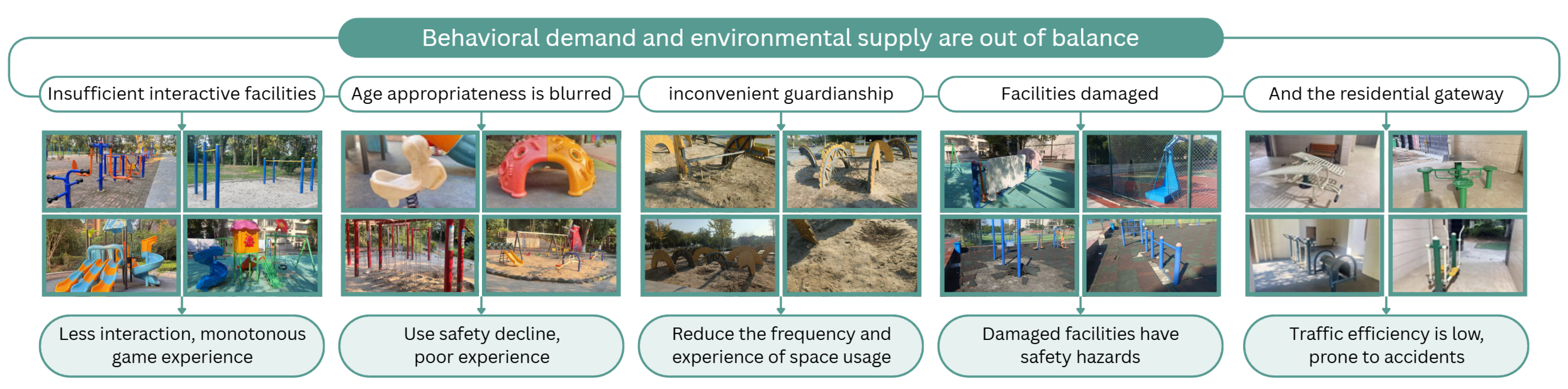
The investigation included on-site observation, interviews, behavioral records, and analysis of government data. As shown in Figure 4, the study found that the current design of children’s play spaces tends to be homogenized. Standardized facilities often replace a deeper consideration of children’s behavioral characteristics and actual needs, which leads to limited functionality, lack of interest, and low utilization efficiency.
Figure 4.
Issues Identified in the Design of Children’s Play Space in Communities of Yueyang City, Hunan Province, China.
A questionnaire survey targeting children was conducted. The questionnaire comprised two sections: respondent demographics and core measurement items. The core measures were developed based on prior literature and theoretical frameworks and organized into four categories: spatial physical environment, children’s subjective perception, play behavior and development, and overall use satisfaction. As shown in Table 1, the questionnaire included 25 items. In total, 210 questionnaires were distributed to children who could be contacted and were willing to participate during the survey period. After excluding invalid responses due to incomplete data or patterned answering, 201 valid questionnaires were retained, yielding a valid response rate of 95.7%. The gender distribution of the sample was balanced, with participants aged between 4 and 12 years. The wording of questionnaire items was adapted to children’s language comprehension levels. Questionnaires were primarily completed in community play spaces or adjacent public areas. Time, location, and potential external disturbances were controlled to minimize the influence of contextual differences on responses. For children aged 6 years and younger, questionnaires were completed by accompanying guardians or teachers based on their daily observations. Children aged 7–12 years completed the questionnaires independently with brief explanations and assistance from researchers or teachers. In addition, data from some participants were collected through semi-structured interviews, with responses subsequently converted into scale scores to ensure data reliability and accuracy. By standardizing survey procedures and questionnaire administration, consistency in data acquisition and measurement conditions across community samples was achieved, providing a comparable basis for subsequent factor analysis and structural modeling.
Table 1.
Composition of Core Measurement Indicators for Children’s Play Space in Urban Communities.
4.2. Data Adaptation Test of the Children’s Play Space Questionnaire
Because the measurement scale includes heterogeneous indicators related to spatial environment, subjective perception, and behavioral performance, internal consistency and data suitability were examined prior to factor analysis to ensure compliance with the statistical assumptions of exploratory factor analysis. The measurement variables in this study encompass several distinct dimensions, and the items are not highly homogeneous, which may have contributed to a lower internal consistency coefficient. The results of the reliability test are presented in Table 2. The coefficients of each subscale and the overall questionnaire are all above the acceptable threshold of 0.6, indicating that the responses of the children to the environmental factors, subjective perceptions, and usage evaluations of the community play spaces exhibit good stability and consistency. The scale reliably represents their actual usage experience.
Table 2.
Reliability Analysis of the Questionnaire.
On this basis, KMO and Bartlett’s test of sphericity were performed on the data. The results are presented in Table 3. The KMO value was greater than 0.6, and the p-value was less than 0.05. Bartlett’s test of sphericity was significant, indicating that sufficient correlation existed among the observed variables. This confirms that factor analysis can be conducted to extract latent design dimensions.
Table 3.
KMO and Bartlett’s Tests of the Questionnaire Data.
In conclusion, the questionnaire data meet the requirements for subsequent modeling in terms of reliability and structural validity. These results provide a reliable data foundation for identifying the key design elements of children’s play space in urban communities from a child’s perspective and further reveal their influence on play behavior and emotional belonging.
4.3. Extraction of Common Factors and Naming of Core Dimensions in Children’s Play Space Based on EFA
Based on the successful data compatibility test, this study used Principal Component Analysis (PCA) to perform Exploratory Factor Analysis (EFA) on 25 observed variables. The goal was to identify the key design dimensions with covariant structures in the evaluation of children’s play space usage in urban communities. The mathematical model is expressed as
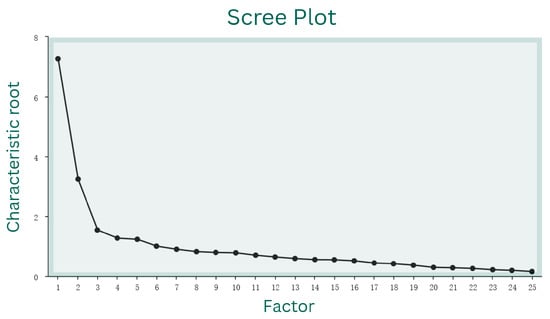
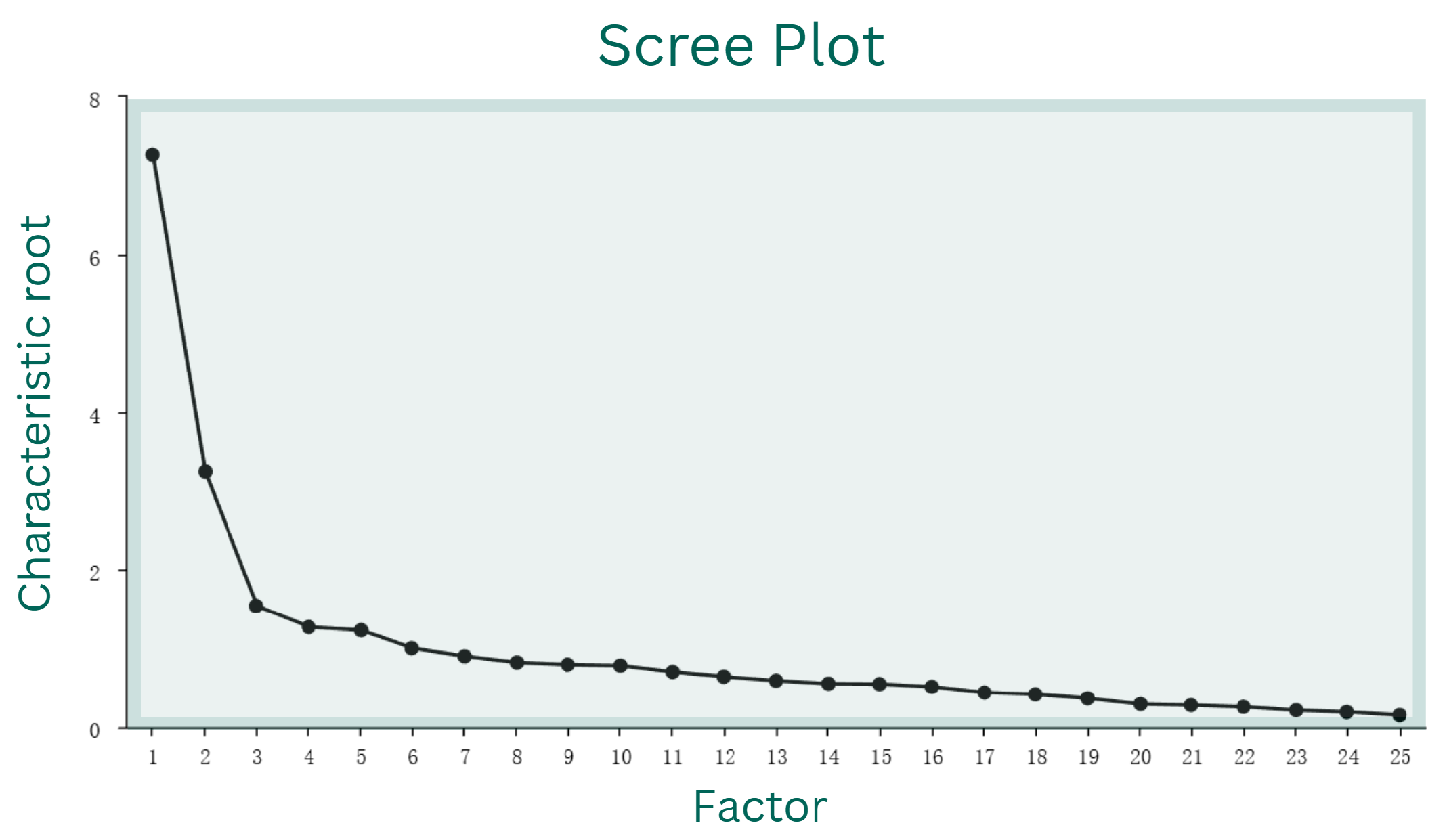
As shown in Figure 5 and Table 4, the number of factors was determined based on eigenvalues greater than 1 and the inflection point of the scree plot. As a result, six common factors were extracted. The cumulative variance explained after rotation was 62.194%, indicating that the factor structure effectively covers the main information of the original index system and has good explanatory power.
Figure 5.
Scree plot.
Table 4.
Explanation of Total Variance.
To improve the discriminatory power and interpretability of the factor structure, the Varimax rotation method was further applied for orthogonal rotation. The rotation results are shown in Table 5. The loadings of each observed variable on their respective factors were all above 0.4, and no significant cross-loadings were observed. This indicates clear variable attribution and stable factor structure, which can be used to construct the design dimension framework.
Table 5.
Factor Loadings after Rotation (Note: Only the items with factor loadings higher than 0.40 are retained).
Based on the common connotations of the high-load items for each factor, the six public factors are named and defined as follows: (1) Factor 1 aggregates indicators such as overall satisfaction, reuse intention, stay intention, recommendation intention, and social interaction and emotional experience. It reflects the comprehensive emotional results formed by continuous use and active interaction of children in the community play space. This factor is named “Play-related affective belonging,” which represents the final usage effect of the community children’s play space in terms of emotional identification and social connection. (2) Factor 2 consists mainly of indicators such as spatial layout connectivity, parental supervision and rest facilities, site maintenance conditions, and playability perception. It reflects the infrastructure configuration and operational management level of the children’s play space. This factor is named “Play-function assurance,” representing the material and management prerequisites for the stable conduct of children’s game activities. (3) Factor 3 is composed of indicators such as physical activity frequency, natural affinity, and inclusiveness perception. It reflects the degree of support provided by the natural elements for children’s participation in activities in the play space. This factor is named “Nature-affinity engagement,” reflecting the spatial role of the natural environment in stimulating children’s activities and interactions. (4) Factor 4 aggregates challenging elements and indicators such as creativity and unstructured play materials. It reflects the space’s support for exploration and creative play. This factor is named “Challenge and creativity affordance,” which highlights the play space’s design potential in promoting autonomous exploration and creative play. (5) Factor 5 consists of subjective evaluations such as safety, comfort, and freedom of exploration. It reflects children’s basic perceptions of the overall environment of the play space. This factor is named “Safety and comfort usability,” representing the key experience conditions that influence children’s willingness to enter and continue using the space. (6) Factor 6 includes indicators like the frequency of imaginative and constructive play. It reflects the occurrence of higher-order play behaviors within the play space. This factor is named “Higher-order play capacity,” which is used to measure the space’s ability to support complex social and cognitive games.
In summary, the six common factors integrate the scattered observation indicators into a core dimension system with clear spatial directivity. This provides a solid foundation for the subsequent establishment of SEM latent variables and structural model analysis.
5. Verification and Design Application of the Functional Mechanism of Children’s Play Space in Urban Communities Using SEM
5.1. Construction of the Theoretical Model and Research Hypotheses of the Mechanism of Children’s Play Space
Drawing from the six common factors identified by EFA, this study treats them as latent variables in SEM to investigate the underlying relationships in which spatial support conditions in urban community play spaces influence emotional outcomes through children’s play behaviors.
Before analyzing the structural model, this study further tests the reliability and convergent validity of the measurement model. Composite reliability (CR) and average variance extracted (AVE) are used to assess the internal consistency and convergent validity of the latent variables. CR reflects the overall reliability of the measurement indicators for the latent variables. AVE measures how well the latent variables explain the variance of their indicators.
The results are shown in Table 6. The CR values of F1 and F4 are both above 0.85, and the AVE values are greater than 0.50, indicating good reliability and convergent validity for these measurements. The CR values of the other latent variables range from 0.576 to 0.675, with AVE values slightly below 0.50. The constructs involved in this study cover multiple dimensions, including physical environment, subjective perception, and behavioral performance. The research focuses on identifying design dimensions and exploring their mechanisms. The quality of the measurement model is acceptable in the current research context and supports subsequent structural path analysis and mechanism explanation.
Table 6.
Composite Reliability (CR) and Average Variance Extracted (AVE) of the Measurement Model.
Based on the design attributes of community play spaces and the logic of children’s usage, the theoretical model defines Play function assurance (F2), Challenge and creativity affordance (F4), and Safety and comfort usability (F5) as exogenous latent variables. These variables characterize the key supporting conditions for the design and management of children’s play space. Nature affinity and engagement (F3) and Higher-order play capacity (F6) are defined as mediating latent variables, describing the main play activity patterns stimulated by spatial conditions. Play-related affective belonging (F1) is defined as the ultimate endogenous latent variable, reflecting children’s comprehensive evaluation and emotional outcomes in relation to urban community play spaces. This model follows the hierarchical structure of exogenous, mediating, and outcome variables in Structural Equation Modeling (SEM) and allows for correlations among exogenous latent variables. This approach fits the real-world context of urban children’s play spaces, where multiple factors coexist.
SEM consists of two parts: the measurement model and the structural model. The matrix expression is as follows:
- 1.
- The measurement model reflects the relationship between latent variables and their observed indicators. The expression of the exogenous measurement model is
- 2.
- The endogenous measurement model expression is
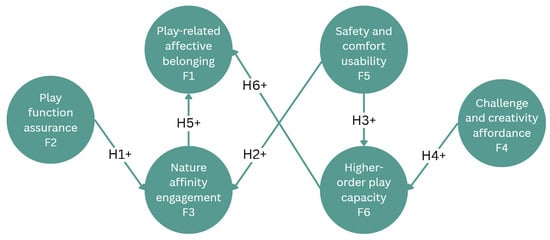
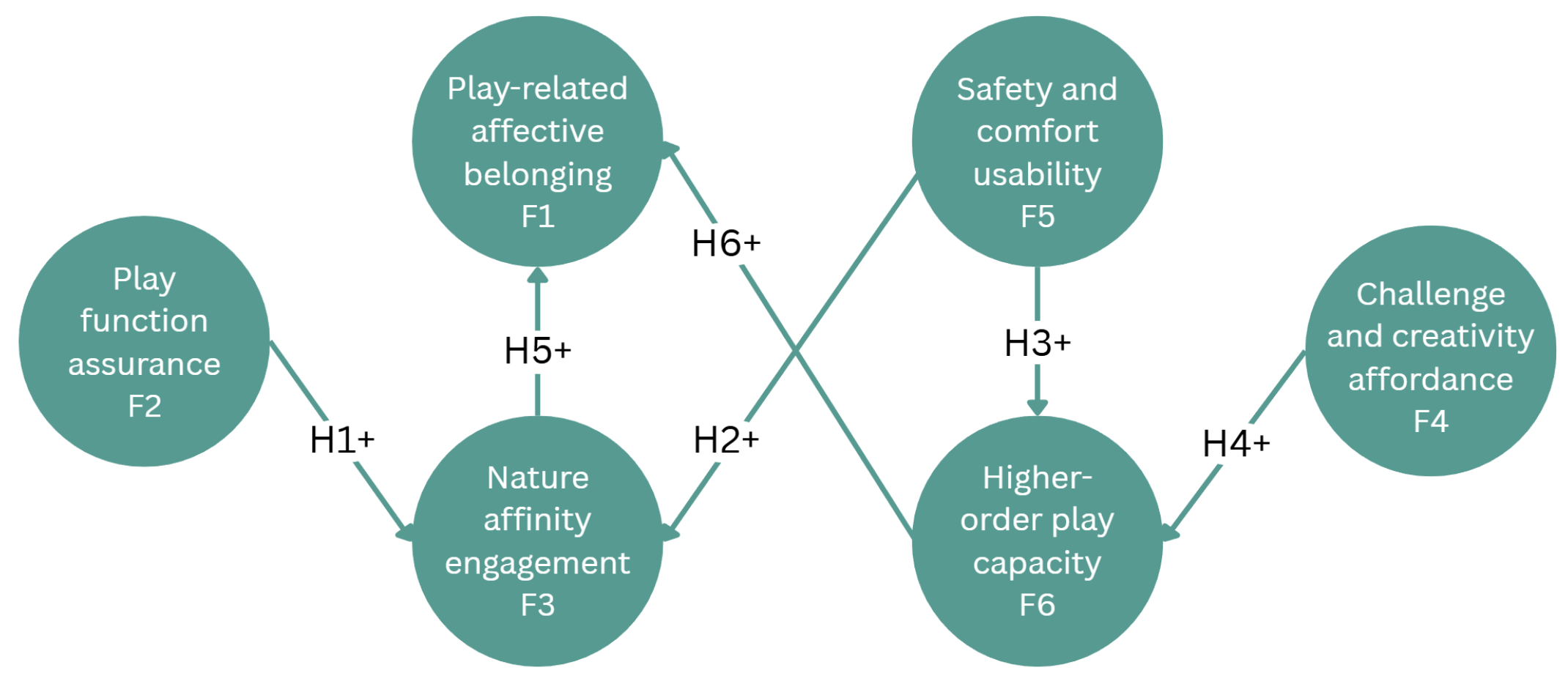
Building on the variable stratification and spatial–behavioral assumptions outlined in previous studies, as shown in Figure 6 and Table 7, this study proposes the following hypotheses: 1. The Play function assurance and Safety and comfort usability of children’s play spaces in urban communities will positively support children’s natural intervention activities (H1, H2). 2. Safety and comfort usability and Challenge and creativity affordance will positively promote hypothetical and constructive game behaviors (H3, H4). 3. Nature affinity and engagement as well as Higher-order play capacity will further positively influence the emotional belonging of community games (H5, H6).
Figure 6.
Theoretical model diagram of SEM hypotheses.
Table 7.
Research hypotheses and corresponding model paths.
5.2. Fitting, Correction, and Hypothesis Testing of the SEM Model for Children’s Play Space
After finalizing the theoretical model and research hypotheses, Maximum Likelihood Estimation (MLE) was used to estimate the parameters and conduct the overall fitting test of the Structural Equation Model (SEM) based on the 201 valid questionnaire data. The model parameters were solved through iterative algorithms, and the MLE fitting function is expressed as follows:
In the formula, represents the set of parameters to be estimated for the model, and tr denotes the trace of the matrix. The FML is minimized through iterative calculations to obtain the parameter estimates.
The initial model fitting indicators are shown in Table 8. Some relative fit indices did not meet the ideal standard. To avoid fitting the model simply for the sake of fitting, this study made local adjustments only when the modification index (MI) indicated potential improvements and the adjustments were supported by statistical and theoretical rationale. These modifications were mainly achieved by correlating a small number of measurement error terms to reflect specific associations among similar items, thereby improving the model’s consistency in explaining the sample data. After modifications, the model fitting indices reached a satisfactory level, indicating good compatibility between the model and the data. The model is now ready for significance testing and effect comparison in the structural path.
Table 8.
Model Fitting Indicators and Corrections. (Note: The values marked in the grey shaded area do not meet the standards.)
Once the overall model fit is acceptable, the research hypotheses in the structural model are tested directly. The structural model describes the causal relationships among latent variables, and it is expressed as
In the formula, represents the endogenous latent variable vector (F1, F3, F6), represents the exogenous latent variable vector (F2, F4, F5), B and are the path coefficient matrices to be estimated, and represents the residuals.
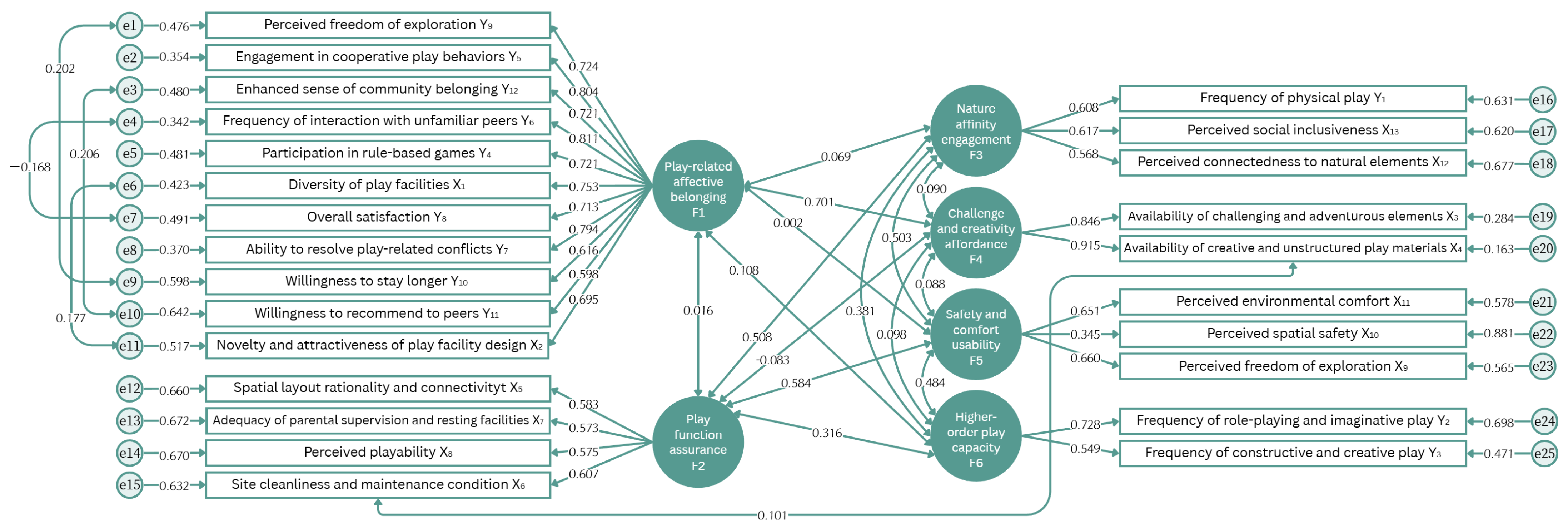
The results of the hypothesis testing are presented in Table 9 and Figure 7. Figure 7 illustrates the path relationships and directions of influence among the latent variables in the structural equation model. A detailed description of the model structure and the meanings of the variables is provided in Figure 2. H1, H2, and H3 are statistically significant at the p < 0.001 level, with the effects of F2→F3, F5→F3, and F5→F6 being the strongest. H4 and H6 are significant at the p < 0.05 level. However, H5 was not statistically significant.
Table 9.
Path Coefficients of the Structural Model and Results of Hypothesis Testing.
Figure 7.
Standardized Parameter Estimation Path Diagram of the SEM Model for the Design of Children’s Play Space in Urban Communities.
In conclusion, the modified model statistically supports most of the predefined path relationships. The comparison of path coefficients provides quantitative evidence of the varying intensity of influence across different design dimensions, laying an empirical basis for translating spatially controllable elements into key children’s play behaviors and emotional outcomes.
5.3. Mechanism Results and Design Application of Children’s Play Space in Urban Communities
5.3.1. Empirical Research Findings and Mechanism Results of Children’s Play Space
Based on the SEM test results, this study obtained the standardized coefficients () for each path. It also combined these with the standardized regression coefficients of latent variables on the observed indicators in the measurement model. This approach comprehensively assesses the intensity of effects from different design dimensions and identifies the key control points in urban community children’s play space. To eliminate dimensional differences, the path coefficients and factor loadings together form the quantitative evidence for determining design priorities and spatial translation. This enables the research findings to guide actionable spatial elements and management strategies from a statistical perspective.
- 1.
- The perception of safe and comfortable use is a key factor driving game participation and advanced play. F5 (Safety and comfort usability) has a significant and strong positive impact on F3 (Nature affinity and engagement) and F6 (Higher-order play capacity), indicating that whether children in urban communities are willing to enter, stay, and engage in play primarily depends on their overall judgment of spatial risk control and environmental comfort. Among the observation indicators corresponding to F5, the standardized regression coefficient for x9 (perception of exploration freedom) is the highest (0.660), followed by x11 (perception of environmental comfort) (0.651). In contrast, x10 (evaluation of spatial safety) is relatively low (0.345). This result clearly shows that, in the context of children’s play space in urban communities, children place greater importance on whether free exploration is allowed and whether they feel relaxed and comfortable compared to their judgment of perceived safety. Therefore, the design should focus on enhancing “explorability” and “sense of security” through spatial organization, visual connections, and environmental adjustments rather than relying solely on protective facilities or warning designs. In designing children’s play spaces in urban communities, it is essential to ensure a clear line of sight between the main play area and the fixed adult supervision points, with the sight distance controlled within 15 to 20 m. Continuous buffer paving should be applied beneath and around facilities with a potential fall height exceeding 0.6 m, with impact attenuation performance verified according to relevant standards. During peak usage periods in summer, it is recommended that the shading coverage in activity areas be no less than 30%, ensuring basic comfort conditions for entry and stay.
- 2.
- Functional guarantee significantly increases activity participation but does not directly translate into emotional belonging. F2 (Play function assurance) has a significant positive impact on F3 (Nature affinity and engagement), but the direct effect of F3 on F1 (Play-related affective belonging) is not significant. Under F2, x5 (spatial layout connectivity) serves as a reference indicator. The loadings of x6 (maintenance condition) (0.607), x7 (parental care and rest facilities) (0.573), and x8 (perception of playability) (0.575) are similar, indicating that functional support reflects a condition where the space is easy to use and continuously available. This finding suggests that simply enhancing facility completeness or natural configuration to increase activity frequency is insufficient to reliably translate results into emotional identification. Design must also address the quality of interaction behind the activities. For continuous barrier-free main paths, the clear width should be no less than 1.8 m to allow for parallel passage and accommodate baby strollers or wheelchairs. Facilities with complementary functions should be organized in groups, and the distance between nodes within each group should be between 2 and 5 m to support fluid movement and occasional social interactions.
- 3.
- Imagining and constructing game behaviors are key behavioral variables leading to emotional belonging. F6 has been identified as a key mediating variable that connects spatial conditions to emotional attachment. It has a significant direct effect on F1, whereas the direct path from F3 to F1 is not significant. This suggests that effective community place attachment is not solely cultivated by physical activities or short-term play, but by high-level games that include role-playing, narrative organization, and collaborative construction. Among the observation indicators for F6, the standardized regression coefficient for y2 (role-playing/hypothetical games) is the highest (0.728), significantly higher than y3 (constructive games) (0.549). This indicates that game forms with social context and narrative imagination have a more direct impact on promoting emotional belonging. This result provides clear guidance for designing spaces that can trigger narrative and role division. It is recommended to provide gradient targets such as 0.8m, 1.4m, and 1.8m in challenge facilities like climbing structures. The system should use modular components with standardized dimensions, such as 300mm, 600mm, and 1200mm, and include open pick-up and storage facilities to support assembly, handling, and collaborative construction. The design should also incorporate thematic microstructures that stimulate imaginative play, with an internal clear height of 1.2 to 1.5 m. These microstructures should have at least two openings, with each opening promoting movement and social interaction. The clear width should be greater than 0.6 m, thus increasing the likelihood of F6 occurrence and supporting the enhancement of F1.
- 4.
- Support for challenge-based play is a key spatial condition for stimulating advanced game behaviors. From the measurement model, the two observed indicators of F4 (Challenge and creativity affordance), x3 (supply of challenging elements) and x4 (creative/unstructured materials), have the highest standardized regression coefficients (0.846, 0.915) among all design-related indicators. This indicates a high degree of consistency and prominent weight of challenging conditions and creative materials in shaping children’s play experiences. Children’s perception of whether a space offers challenges or allows for free creation is not independent; instead, these perceptions work together to influence their level of engagement in play. Furthermore, the significant path from F4 to F6 in the structural model shows that support for challenge-based play does not directly influence emotional belonging. Instead, it has an indirect effect by stimulating higher-order game behaviors, such as hypothetical and constructive play. Therefore, in the design translation, “challenge” should not be simplified to a single dimension of height or difficulty. Instead, gradient challenge targets and open, modular materials should be used collaboratively to create problem-solving scenarios that continuously generate play situations. This will provide stable support for the occurrence of higher-level game behaviors.
- 5.
- Natural exposure alone is insufficient to directly predict children’s affective belonging. The SEM results show that the direct impact of nature-affinity engagement (F3) on play-related affective belonging (F1) was not statistically significant. This finding appears to contradict existing studies that suggest “nature benefits children’s emotional health,” but it is reasonable from the perspective of the underlying mechanisms. Existing literature mostly focuses on the immediate effects of natural exposure on psychological states such as emotion regulation and stress relief [46,47]. However, affective belonging, as a higher-level and stable social and emotional outcome, often depends on continuous social interaction, shared experiences, and meaning construction. Thus, mere exposure to nature is unlikely to directly generate it [48,49]. Secondly, in the urban community context, natural elements primarily serve to trigger activities. They indirectly influence children’s behavior by enhancing physical activity and exploration motivation. However, without the involvement of social play, such as imagination, collaboration, and role division, the emotional value of these elements is unlikely to form place attachment. Furthermore, children’s perception of nature is highly context-dependent. If natural elements are not transformed into participatory and narrative game scenarios, they tend to remain at the background level rather than becoming the core of emotional connection. Therefore, the results of this study do not deny the importance of nature but emphasize that nature must be mediated through high-level play behaviors and other mechanisms to effectively transform into stable emotional attachment. This also explains why the H6 path is significant, while the H5 path was not established.
Based on the above mechanism relationships, we further evaluate the model results by considering the determination coefficient (R2) of the endogenous latent variables, assessing both the overall explanatory power and practical intervention value. The results show that the R2 of F6 is 0.529, and the R2 of F1 reaches 0.520. This indicates that the spatial support conditions and play behavior variables in the model explain more than half of the variation in emotional belonging. This is considered a high level of explanatory power in community environment research focused on behavior and perception. It suggests that promoting children’s emotional belonging through spatial design and management interventions is practically feasible. In contrast, the R2 of F3 is low (0.323), which further supports the idea that natural elements mainly play a foundational and triggering role. Their emotional effects need to be transformed through higher-order play behaviors and social interaction mechanisms.
In conclusion, the design priority should first focus on strengthening F5. Next, F2 and F4 should be implemented, with promoting the occurrence of F6 serving as the core goal to achieve F1. The operational mechanism of children’s play space in urban communities follows a clear hierarchical structure: First, the perception of safe and comfortable use serves as the basic condition for entry and stay. Then, functional guarantees ensure daily accessibility and continuous use. Challenging and creative support activate high-level play behaviors. Finally, imaginative and constructive play leads to a stable improvement in emotional belonging to community games. The significant loadings and path relationships of each indicator in the model provide clear data support for the above design translation, offering a practical quantitative foundation for the refined design and renovation of children’s play space in urban communities.
5.3.2. Practical Application of Children’s Play Space Design in Urban Communities
Based on the mechanism revealed by the EFA–SEM model, this study focuses on the renewal of an abandoned air raid shelter in Yueyanglou District, Yueyang City, Hunan Province, China, for design practice. It systematically discusses the transformation path and implementation strategy of the quantitative design methodology in practice. Within the framework of ensuring both psychological and physical safety, the design of the physical environment actively fosters children’s exploration, creativity, and social narrative activities. This approach ultimately promotes the development of a deep sense of place attachment.
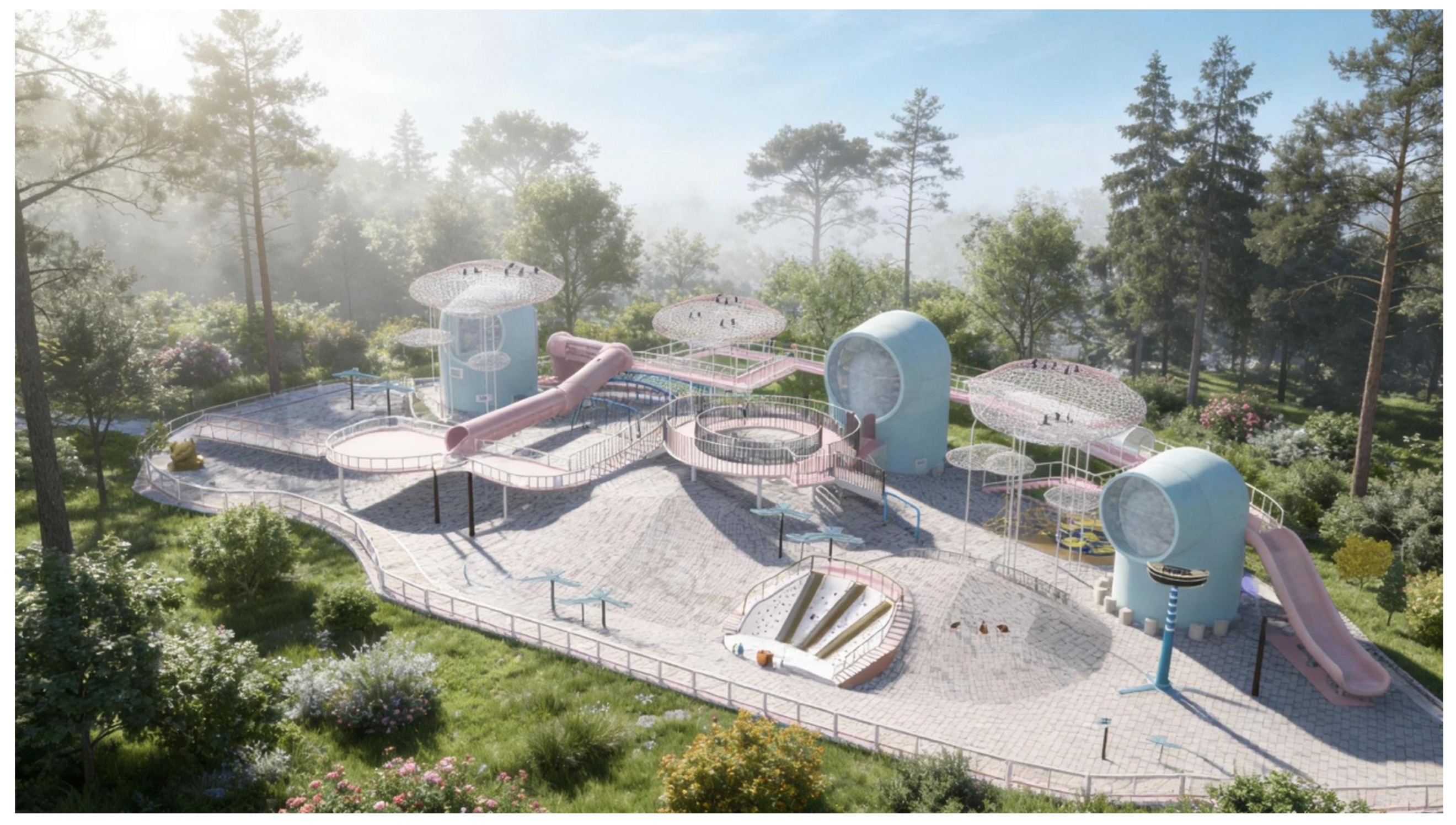
The original air raid shelter system has an elliptical layout, as shown in Figure 8, with a P-shaped facility at the center and an entrance. Six circular air raid shelters surround it, and the underground passages are interconnected to form an integrated shelter. The total area is approximately 1000 square meters, and historical features such as blue brick steps, arches, and floors are preserved inside the shelter. Given the “dark, deep, and adventurous” spatial characteristics, the renovation plan positions the space as a children’s play system integrating both above-ground and underground elements. It organizes various activities along continuous flow paths to cater to children’s preferences for crawling, climbing, jumping, rolling, and rocking, enhancing the space’s playability and the children’s willingness to stay.
Figure 8.
Bird’s-Eye View of the Children’s Play Space in the Air Raid Shelter.
- 1.
- At the F5 (Safety and comfort usability) level, the first step is to repair the issues of dampness, water accumulation, seepage, and uneven ground in the original shelter. Waterproof coatings are used to level the surfaces, and drainage ditches are organized to ensure moisture control and proper drainage, making the underground space continuously accessible and usable. Additionally, the existing ventilation shafts are utilized, with three “pipe-type observation towers” established as composite components for vertical transportation and natural ventilation. The components of the pipe-type observation tower are shown in Figure 9. These towers create a continuous airflow, improving ventilation inside the shelter by utilizing the temperature and pressure differences between the interior and exterior. To further maintain stable air quality in the underground space, a low-noise fresh air system is added. This approach addresses the comfort challenges of the underground space and provides children with an exploration path that allows for both upward and downward exploration.The plan establishes measurable thresholds for risk control. For all activity platforms, climbing nodes, and their surrounding areas with a potential fall height greater than 0.6 m, continuous buffer paving is installed. The materials and thickness are selected based on impact attenuation performance standards to ensure that children remain within a safe boundary of “risky but not harmful” during frequent climbing and chasing. On the ground, undulating terrain is created through curved panels and openings, dividing the large space into smaller groups of spaces that are “separated but connected”, and the thematic small-space clusters are shown in Figure 10. This design provides multi-scale hiding and crossing paths, while the continuous visibility through visual openings and corridors reduces the supervision pressure on parents. The visibility control ensures a stable supervision distance of 15–20 m, forming a secure and observable environment. Furthermore, the above-ground corridor is placed near vegetation and incorporates swings, viewing platforms, and cool rest areas, creating a comfortable base for staying. During peak times, the shading coverage of the activity area should be at least 30% to mitigate heat exposure and encourage longer stays, thereby providing the stable time conditions necessary for advanced games to occur.
- 2.
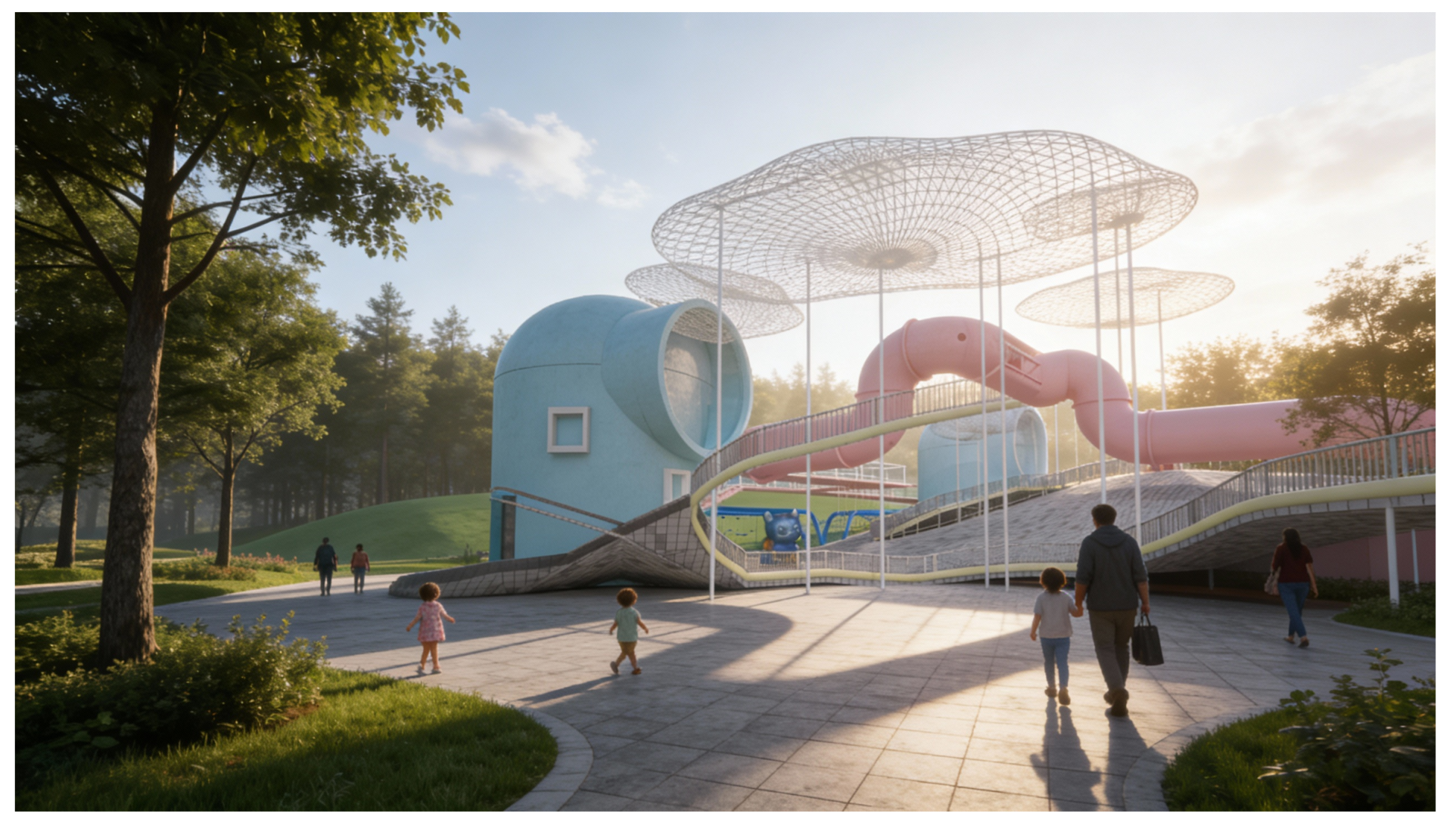
- In terms of F2 (Play function assurance), the focus is on enhancing connectivity and smooth organization to support daily accessibility and reusability. Based on the control requirements for “connectivity and smooth organization” from the SEM results, both above-ground and underground areas use circular main paths and node clusters to form continuous play loops. The main path should have a clear width of at least 1.8 m to accommodate parallel passage for children, accompanying parents, and strollers. Complementary facility nodes are arranged in clusters, and the thematic facility nodes are shown in Figure 11, with the distance between key nodes within each cluster controlled at 2–5 m. This design enables children to complete a rhythmic cycle of chasing, staying, and setting off again in short-distance switching, while also increasing the likelihood of occasional social interactions. Between the entrance of the shelter and the above-ground activity surface, guiding connections are provided through slides, ramps, and corridors; the paths of the game space are shown in Figure 12 and Figure 13. This helps avoid the psychological barrier of “the entrance is a black hole,” thus improving the acceptability of first-time entry.
- 3.
- In terms of F4 (Challenge and creativity affordance) driving F6 (Higher-order play capacity), the advanced game process is triggered by the physical environment, promoting F6 as the core verification goal. The plan identifies challenge and creativity as the key material conditions for triggering hypothetical construction games. Above ground, the design creates a gradient challenge sequence through the undulating board shell, the crossing of cave entrances, climbing in corridors, and rock climbing on observation towers. This allows children of different ages to choose the difficulty level of their play while managing controllable risks. Climbing challenges include multiple targets such as 0.8 m, 1.4 m, and 1.8 m, forming a progressive ability-testing scenario. Below ground, recognizable tunnel elements and lighting systems are added without damaging the shelter’s structure or historical features. Light and shadow interplay enhances the exploration experience. The functional zones are divided into areas such as the pink deer zone, ocean ball park, ocean climbing zone, natural tree house zone, and leisure reading zone. The color scheme provides spatial cues that children can easily understand, making the roaming experience both continuous and purposeful. To support construction and collaboration, loose components are organized using standardized modules, including wooden boards, ropes, canvas, and tires. Open access and storage facilities are also included; this theme-based facility node is shown in Figure 14. This ensures that materials are truly usable by children rather than merely decorative.
Figure 9.
Pipe-Type Observation Tower Component.
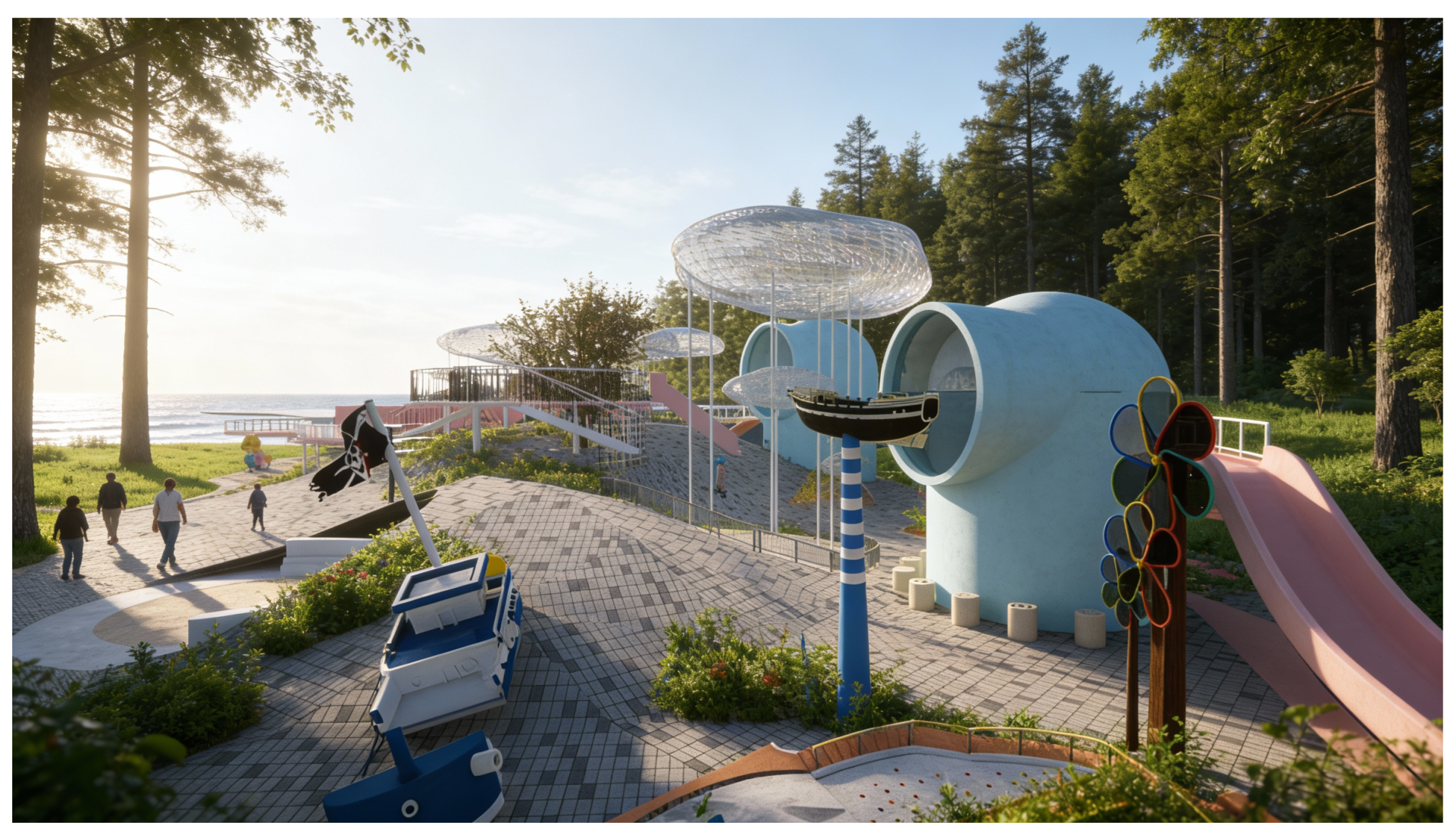
Figure 10.
Thematic Facility Node.
In conclusion, the design practice of the children’s play space in this urban community enhances both the recognizability and memorability of the place. It also provides children with a space to ask questions, make associations, and engage in imaginative play during their play process. Furthermore, it promotes communication between the children and the accompanying adult group, centered around the history of the place and their personal experiences. By embedding individual play behaviors within spatial contexts that offer historical continuity and social interaction potential, the design shifts the urban community children’s play space from a short-term use play area to a community emotional space. This new space encourages repeated use, narrative generation, and emotional sharing.
Figure 11.
Thematic Facility Node.
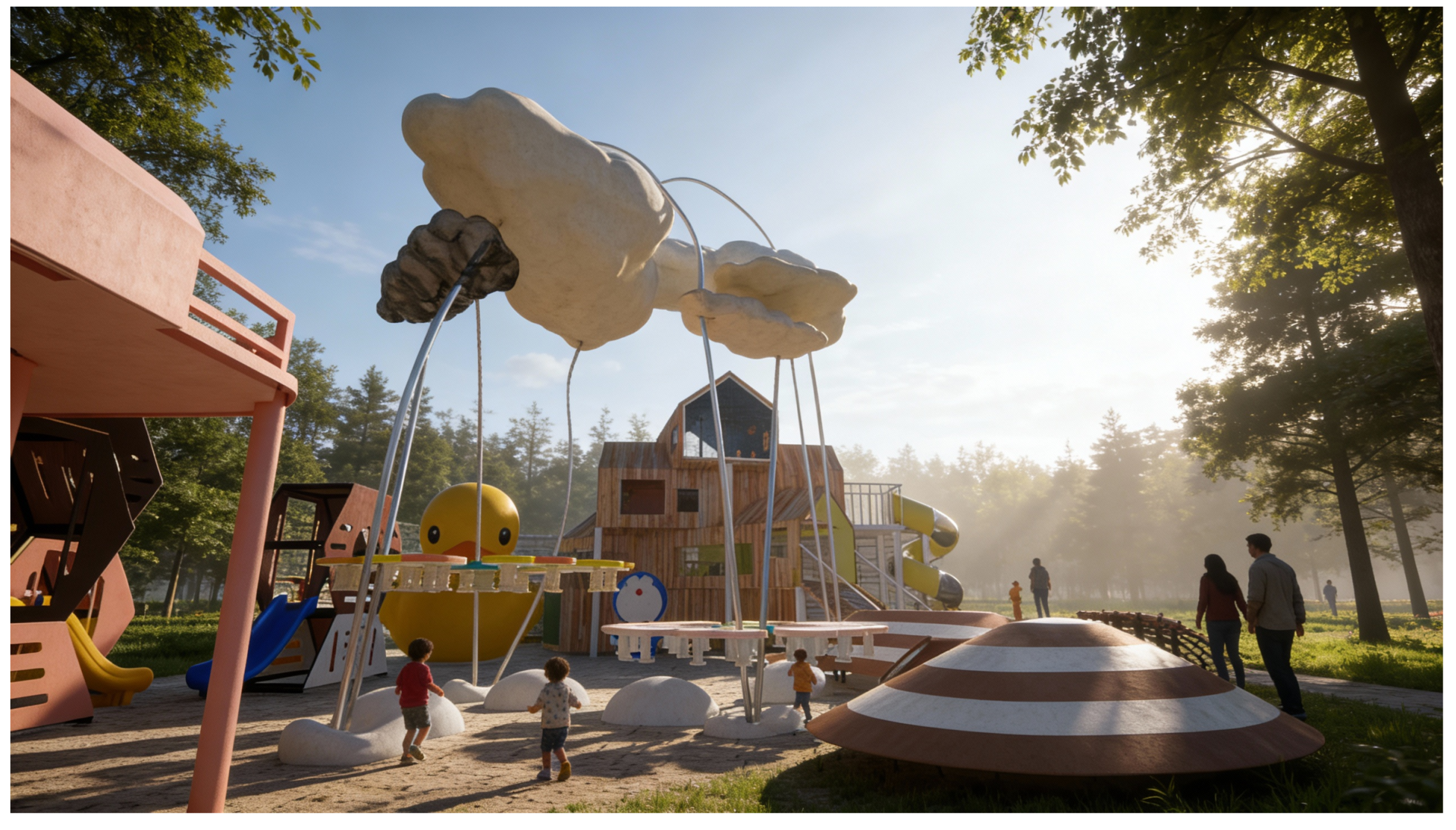
Figure 12.
Circular Path of the Play Space.
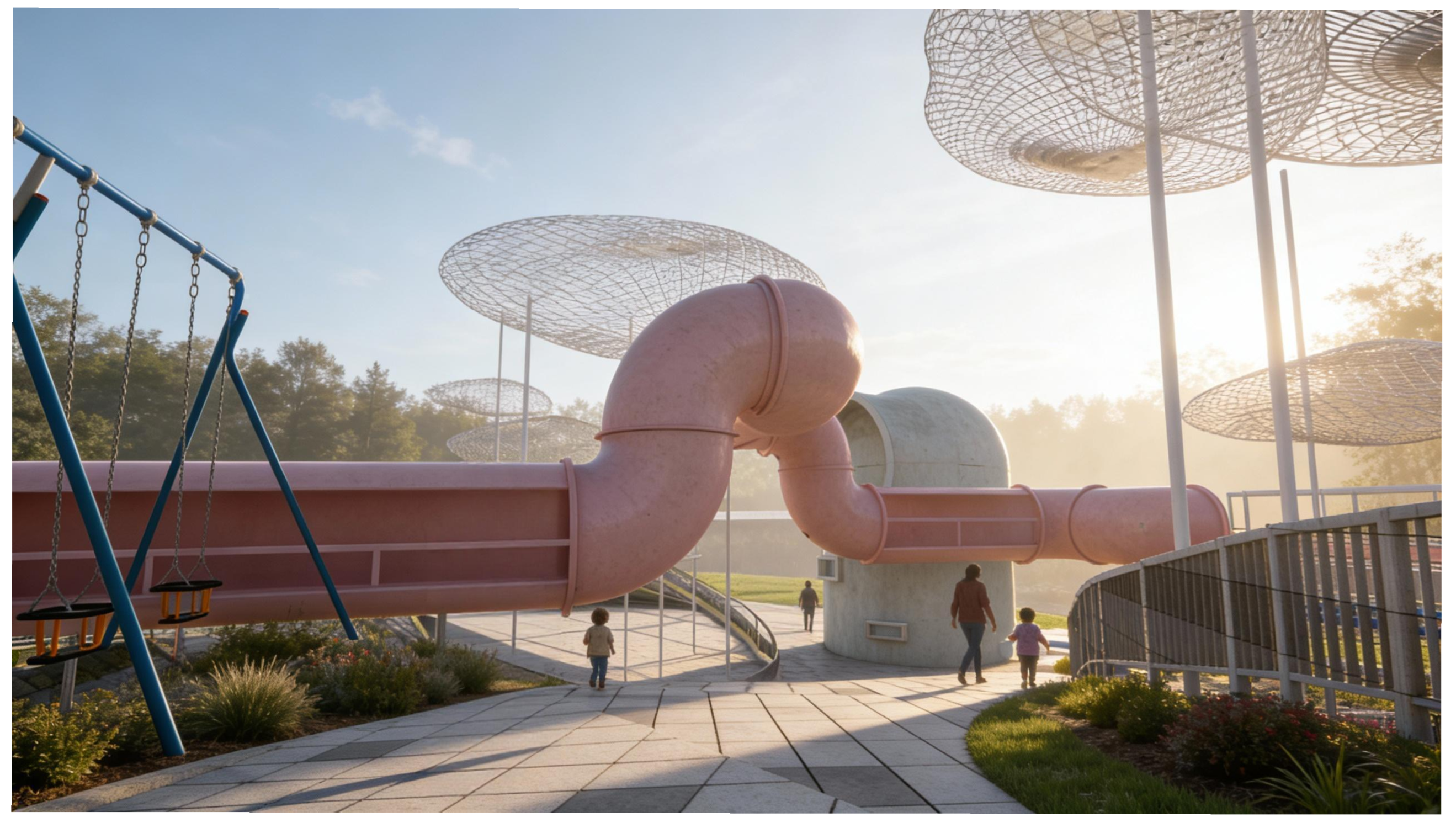
Figure 13.
Circular Path of the Play Space.
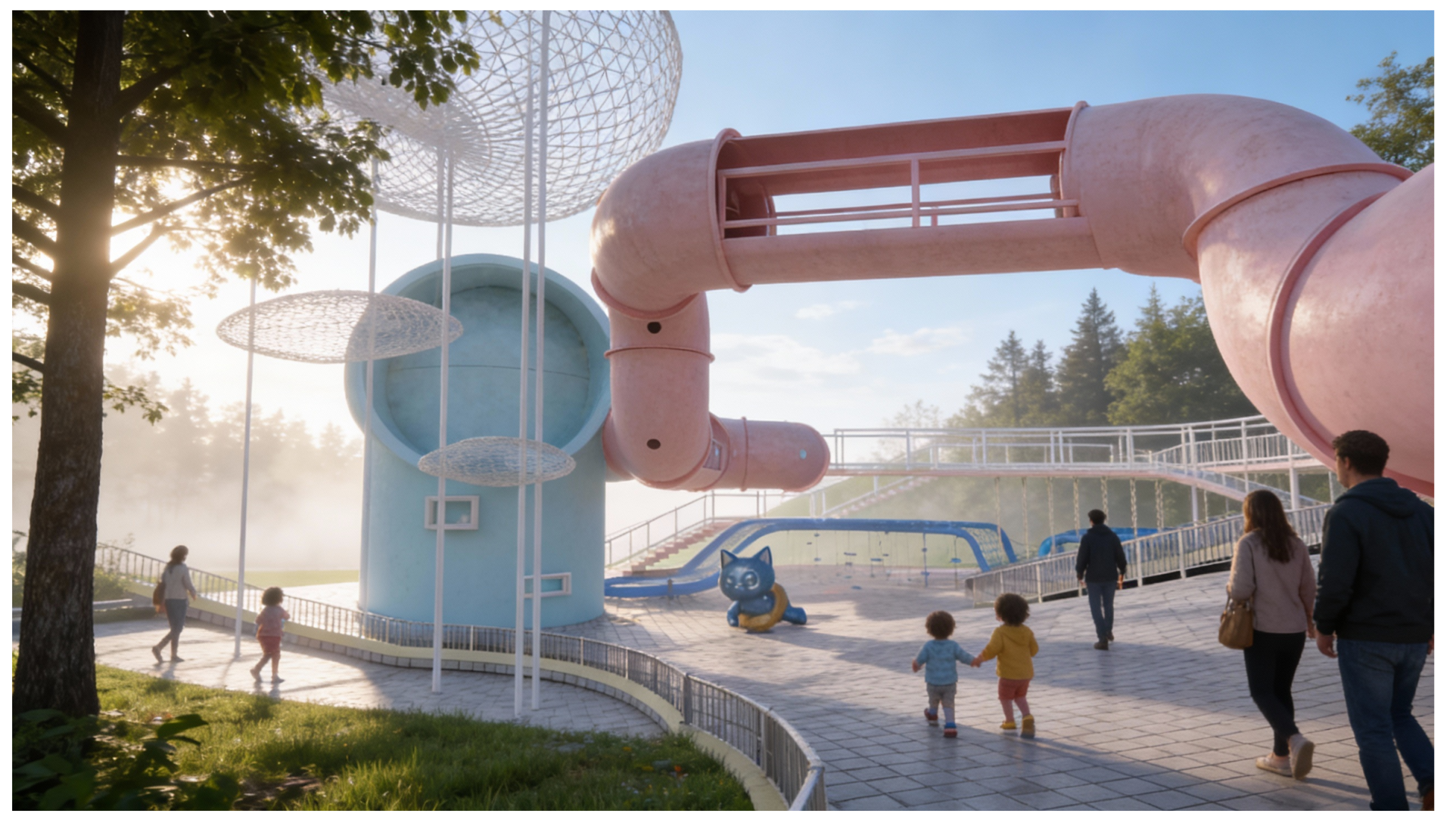
Figure 14.
Thematic Facility Node.
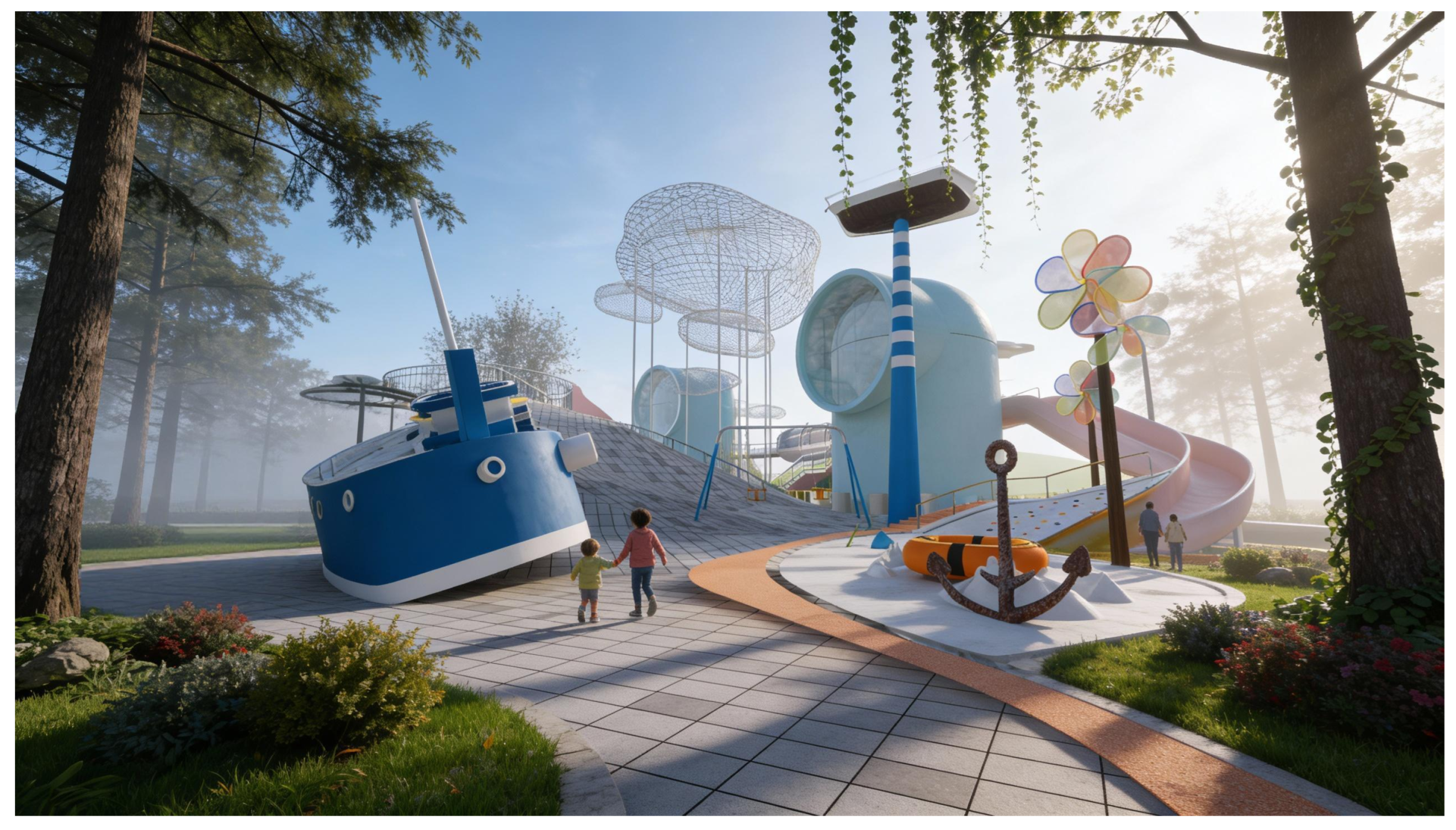
6. Conclusions
The children’s play space in urban communities is a crucial part of the community public service system. Its quality directly impacts the quality of children’s daily play activities and the formation of emotional connections within the community. This study focuses on children’s perception and play behavior as key evidence. Based on field research and questionnaire data, an EFA-SEM coupled analysis framework is developed to form a continuous loop that identifies design dimensions, tests the mechanisms of action, and verifies the design translation. EFA extracts six potential design dimensions, and SEM constructs structural paths while estimating the coefficients and mediating effects of each path. This allows us to characterize the intensity and relationships of each latent variable. Based on these findings, a priority order is established, where safety and comfort form the foundation, connectivity and maintenance provide support, and challenges and compostable materials act as the driving force. Finally, through the air raid shelter renewal project, the mechanism results are translated into actionable strategies for spatial organization, facility configuration, and operational guarantees, verifying the feasibility of the quantitative conclusions.
By comparing the research results with existing studies on children’s play spaces and child-friendly environments, both consistencies and differences can be identified. Most existing studies use EFA or related dimensionality reduction methods to identify the latent structure of children’s space or environmental elements [20,21,22]. This approach is consistent with the method used in this study, which identifies multi-dimensional support conditions in community children’s play spaces through EFA. Both approaches emphasize extracting core design dimensions from complex environmental elements using data-driven methods. At the structural level, studies that have applied SEM generally show that the influence of environmental factors on children’s behavior or developmental outcomes is not direct. Instead, it is mediated by mechanisms such as behavioral participation, ability levels, or social interaction [26]. This finding aligns closely with the path structure in this study, which shows that “space support conditions influence children’s emotional belonging through high-order play behaviors.” This further confirms the necessity of introducing intermediary mechanism analysis in children’s environment research. However, some previous studies have focused more on physical activity, travel behavior, or health indicators as outcome variables [27,28], with relatively less attention paid to the emotional and place attachment formed by children during their use of space. This study, in contrast, takes emotional attachment as the outcome variable and introduces play behavior as a key mediator. In doing so, it expands beyond existing research that emphasizes the relationship between environment and behavior, exploring the mechanisms of environment, play, and emotion. This difference is also reflected in the SEM model structure. The model not only tests the direct effects of environmental factors but also emphasizes the mediating role of behavior. Methodologically, existing studies often use a single-method framework. This study adopts a combined EFA-SEM approach, which helps bridge the gap between dimension identification and mechanism validation in the same study. It provides a valuable research paradigm for integrating spatial design analysis and behavioral mechanism interpretation in children’s play environment research.
Although this study systematically analyzed the mechanism of urban community children’s play spaces by combining EFA and SEM, certain limitations remain. First, at the sample and contextual levels, the data in this study were derived from a single urban community. The research subjects were influenced by geographical, climatic conditions, and urban form characteristics. Therefore, the applicability of the results across different urban types, cultural backgrounds, and stages of community development requires further verification. Future research could use cross-regional and multi-city samples to compare and test the stability and external validity of the model structure and path relationships. Second, in terms of sample size and structure, although the current sample size meets the basic requirements for structural identification and mechanism exploration using EFA-SEM, it is still relatively limited. Additionally, the proportions of children in different age groups vary, which may affect the stability of the model parameter estimates. Subsequent studies can expand the sample size and introduce multi-group analysis methods to further examine the measurement structure and path relationships of children’s behaviors and emotional experiences across different age groups or usage characteristics. At the measurement level, this study primarily relies on questionnaire data to assess children’s play behaviors and emotional experiences. Although the scales demonstrated acceptable reliability and validity, differences in children’s cognitive and expressive abilities necessitated different data collection approaches. Data for younger children were primarily obtained through proxy reports by guardians or interview-based data transformation, whereas self-reports were mainly used for older children. The coexistence of multiple data collection methods may introduce potential measurement heterogeneity. In addition, children’s self-reported data may be influenced by comprehension ability, situational perception, and social expectations, which could lead to bias in the estimation of relationships among variables. Future studies may integrate multiple data sources, such as behavioral observations, interviews, and wearable devices, to improve the objectivity and explanatory depth of measurement outcomes. Finally, from a methodological perspective, this study uses cross-sectional data to construct a structural equation model, focusing on examining the structural relationships between variables. However, it cannot fully capture the dynamic process of changes in children’s play behaviors and emotional belonging over time. Subsequent studies could introduce longitudinal designs or intervention frameworks to further explore the long-term effects and causal directions of the children’s play space mechanism.
In conclusion, this study provides a replicable evidence chain and methodological approach for evaluating, updating, and refining urban community children’s play spaces. It also offers clear direction for future research on child-friendly environments at larger scales, in multiple contexts, and using various methods.
Author Contributions
H.L. designed the study. All authors were involved in the analysis of the results and the collection of data. Y.L. collected user demand data. Y.Z. (Yi Zhong) wrote the first draft of the manuscript. Y.Z. (Yajie Zhao), H.C. and S.C. carefully reviewed the manuscript. All authors have read and agreed to the published version of the manuscript.
Funding
This research was supported by the Key Scientific Research Project of Hunan Provincial Education Department (24A0460), the Higher Education Teaching Reform Project of Hunan Province (HNJG-20230835), the Humanities and Social Sciences Research Planning Fund Project of the Ministry of Education (25YJA760055), the Joint Fund of Hunan Provincial Natural Science Foundation for Universities (2026JJ90090).
Institutional Review Board Statement
Ethics approval and consent to participate were obtained. The study protocol was reviewed and approved by the Ethics Committee at the School of Civil and Engineering Architecture, Hunan Institute of Science and Technology. The research process does not involve any ethical issues.
Informed Consent Statement
Not applicable.
Data Availability Statement
The raw data supporting the conclusions of this article will be made available by the authors without undue reservation.
Conflicts of Interest
The authors declare no competing interests.
References
- Park, S.; Jung, H.; Oh, S. A paradigm shift in the fences of a new play affordance city. J. Asian Archit. Build. Eng. 2024, 23, 1453–1470. [Google Scholar] [CrossRef] [Scilit]
- National Bureau of Statistics. National Census Bulletin. Available online: https://www.stats.gov.cn/sj/tjgb/rkpcgb/qgrkpcgb/202302/t20230206_1902005.html (accessed on 12 December 2025).
- China Child-Friendly City Development Report. China Child-Friendly City Development Report. Macroecon. Res. 2023, 5, 2.
- Fan, Q.; Wu, Y.; Qian, H.; Chen, L.; Ye, S. Factors Associated with Insufficient Outdoor Play and Physical Activity Participation among Chinese Children Aged 6–10 Years: Evidence from a Two-Wave Survey. BMC Public Health 2025, 25, 1056. [Google Scholar] [CrossRef] [Scilit] [PubMed]
- Lv, X.; Li, K.; Cheng, J.; Ren, Z. Demand-Responsive Evaluation and Optimization of Fitness Facilities in Urban Park Green Spaces. Buildings 2025, 15, 2500. [Google Scholar] [CrossRef] [Scilit]
- Onojeghuo, A.R.; Nykiforuk, C.I.; Belon, A.P.; Hewes, J. Behavioral mapping of children’s physical activities and social behaviors in an indoor preschool facility: Methodological challenges in revealing the influence of space in play. Int. J. Health Geogr. 2019, 18, 26. [Google Scholar] [CrossRef] [Scilit] [PubMed]
- Sheng, K.; Liu, L.; Wang, F.; Li, S.; Zhou, X. An Eye-Tracking Study on Exploring Children’s Visual Attention to Streetscape Elements. Buildings 2025, 15, 605. [Google Scholar] [CrossRef] [Scilit]
- Lai, P.-C.; Low, C.-T. Provision of Convenient Play Space in a Densely Populated City. Int. J. Environ. Res. Public Health 2019, 16, 651. [Google Scholar] [CrossRef] [Scilit] [PubMed]
- Bao, Y.; Gao, M.; Luo, D.; Zhou, X. The Influence of Outdoor Play Spaces in Urban Parks on Children’s Social Anxiety. Front. Public Health 2022, 10, 1046399. [Google Scholar] [CrossRef] [Scilit] [PubMed]
- Marte, E.; Calumpit, A.; de Sá Bessa, B.; Toledo, A.; Fadda, R.; Skoler, T. Testing Reliability of Biophilic Design Matrix Within Urban Residential Playrooms. Front. Psychol. 2020, 11, 570099. [Google Scholar] [CrossRef] [Scilit]
- Wang, Q.; Ma, J.; Maehashi, A.; Kim, H. The Associations between Outdoor Playtime, Screen-Viewing Time, and Environmental Factors in Chinese Young Children: The “Eat, Be Active and Sleep Well” Study. Int. J. Environ. Res. Public Health 2020, 17, 4867. [Google Scholar] [CrossRef] [Scilit] [PubMed]
- Lin, Z.; Yang, F.; Yang, D. How Environment Features Affect Children’s Emotions in Natural Playgrounds: A Context-Specific Case Study in China. Buildings 2025, 15, 3245. [Google Scholar] [CrossRef] [Scilit]
- Deng, H.; Sulaiman, R.; Ismail, M.A. Biophilic Design and Children’s Well-Being in Kindergartens in Henan, China: A PLS-SEM Study. Buildings 2025, 15, 1548. [Google Scholar] [CrossRef] [Scilit]
- Wang, Y.; Sun, Y.; Sun, Y.; He, T. Unveiling the Magic of Mega-City Block Environments: Investigating the Intriguing Mechanisms Shaping Children’s Spontaneous Play Preferences. Front. Psychol. 2024, 15, 1354236. [Google Scholar] [CrossRef] [Scilit] [PubMed]
- Nagi, S.; Kempe, S.; Barriault, S.; Masri, L.; Dyyat, S.; Muhl, C.; Bennett, S.; Racine, N. Into the wild: A mixed-methods pilot study of the mental health benefits of a nature summer camp for urban children with psychological needs. BMC Public Health 2025, 25, 647. [Google Scholar] [CrossRef] [Scilit]
- Huang, X.; Yang, Z.; Lin, J.; Li, Y.; Chen, Y.; Shi, F.; Zhang, A.; Lu, Y.; Chen, G.; Ma, M.; et al. A Study on the Spillover Effects of Children’s Outdoor Activity Space Allocation in High-Density Urban Areas: A Case Study of Beijing. Buildings 2024, 14, 2872. [Google Scholar] [CrossRef] [Scilit]
- Chen, S.; Knöll, M. Refugee Children’s Access to Play in Meso-Environments: A Novel Approach Using Space Syntax and GIS. Buildings 2023, 13, 111. [Google Scholar] [CrossRef] [Scilit]
- Wu, S.; Pan, C.; Yao, L.; Wu, X. The Impact of the Urban Built Environment on the Play Behavior of Children with ASD. Int. J. Environ. Res. Public Health 2022, 19, 14752. [Google Scholar] [CrossRef] [Scilit] [PubMed]
- Padial-Ruz, R.; Puga-González, M.E.; Céspedes-Jiménez, Á.; Cabello-Manrique, D. Determining Factors in the Use of Urban Parks That Influence the Practice of Physical Activity in Children: A Systematic Review. Int. J. Environ. Res. Public Health 2021, 18, 3648. [Google Scholar] [CrossRef] [Scilit]
- Wang, G.; Wang, R.-Y.; Liu, T.-L.; Zhuo, Y.; Shen, K. Application of Hybrid Multiple Attribute Decision-Making Model to Explore the Design Strategies of Children’s Facilities in Neighborhood Open Spaces Based on Sensory Integration Theory. J. Healthc. Eng. 2021, 2021, 5556172. [Google Scholar] [CrossRef] [Scilit]
- Lebowitz, E.R.; Marin, C.E.; Silverman, W.K. Measuring Family Accommodation of Childhood Anxiety: Confirmatory Factor Analysis, Validity, and Reliability of the Parent and Child Family Accommodation Scale—Anxiety. J. Clin. Child Adolesc. Psychol. 2020, 49, 752–760. [Google Scholar] [CrossRef] [Scilit]
- Little, L.M.; Ausderau, K.; Sideris, J.; Baranek, G.T. Activity Participation and Sensory Features Among Children with Autism Spectrum Disorders. J. Autism Dev. Disord. 2015, 45, 2981–2990. [Google Scholar] [CrossRef] [Scilit]
- Fu, E.; Deng, X.; Wu, Y.; Li, L.; Xiong, Y.; Li, M.; Zhang, Z.; Du, J.; Li, X.; Li, X. Exploring Restrictions to Use of Community Greenways for Physical Activity Through Structural Equation Modeling. Front. Public Health 2023, 11, 1169728. [Google Scholar] [CrossRef] [Scilit] [PubMed]
- Marsh, H.W.; Morin, A.J.S.; Parker, P.D.; Kaur, G. Exploratory Structural Equation Modeling: An Integration of the Best Features of Exploratory and Confirmatory Factor Analysis. Annu. Rev. Clin. Psychol. 2014, 10, 85–110. [Google Scholar] [CrossRef] [Scilit] [PubMed]
- Maciel-Monteon, M.; Limon-Romero, J.; Gastelum-Acosta, C.; Baez-Lopez, Y.; Tlapa, D.; Rodríguez Borbón, M.I. Improvement project in higher education institutions: A BPEP-based model. PLoS ONE 2020, 15, e0227353. [Google Scholar] [CrossRef] [Scilit]
- Kochanska, G.; Kim, S.; Boldt, L.J.; Nordling, J.K. Promoting Toddlers’ Positive Social-Emotional Outcomes in Low-Income Families: A Play-Based Experimental Study. J. Clin. Child Adolesc. Psychol. 2013, 42, 700–712. [Google Scholar] [CrossRef] [Scilit]
- Ikeda, E.; Hinckson, E.; Witten, K.; Smith, M. Assessment of direct and indirect associations between children active school travel and environmental, household and child factors using structural equation modelling. Int. J. Behav. Nutr. Phys. Act. 2019, 16, 32. [Google Scholar] [CrossRef] [Scilit]
- McDonald, S.; Dowda, M.; Colabianchi, N.; Porter, D.; Dishman, R.K.; Pate, R.R. Perceptions of the Neighborhood Environment and Children’s Afterschool Moderate-to-Vigorous Physical Activity. Pediatr. Exerc. Sci. 2015, 27, 243–251. [Google Scholar] [CrossRef]
- Lee, J.; Hoornbeek, J.; Oh, N. Social Cognitive Orientations, Social Support, and Physical Activity among at-Risk Urban Children: Insights from a Structural Equation Model. Int. J. Environ. Res. Public Health 2020, 17, 6745. [Google Scholar] [CrossRef] [Scilit]
- Yildirim, Y.; Keshavarzi, G.; Aman, A.R. Does play-based experience provide for inclusiveness? A case study of multi-dimensional indicators. Child Indic. Res. 2022, 15, 2197–2214. [Google Scholar] [CrossRef] [Scilit] [PubMed]
- Remmers, T.; Van Kann, D.; Thijs, C.; de Vries, S.; Kremers, S. Playability of school-environments and after-school physical activity among 8–11 year-old children: Specificity of time and place. Int. J. Behav. Nutr. Phys. Act. 2016, 13, 82. [Google Scholar] [CrossRef] [Scilit]
- Deng, C.; Zhao, Z.; Ahmad Noorhani, N.M.; Mustapha, A.A. An Eco-Psychological Framework for Research on the Physical Environment of Childcare Classrooms and Children’s Play Behavior. Front. Psychol. 2024, 15, 1463151. [Google Scholar] [CrossRef] [Scilit] [PubMed]
- Bjørgen, K. Physical activity in light of affordances in outdoor environments: Qualitative observation studies of 3–5 years olds in kindergarten. SpringerPlus 2016, 5, 950. [Google Scholar] [CrossRef] [Scilit]
- Dodd, H.F.; Nesbit, R.J.; Maratchi, L.R. Development and evaluation of a new measure of children’s play: The Children’s Play Scale (CPS). BMC Public Health 2021, 21, 878. [Google Scholar] [CrossRef] [Scilit]
- Sumiya, M.; Nonaka, T. Does the Spatial Layout of a Playground Affect the Play Activities in Young Children? A Pilot Study. Front. Psychol. 2021, 12, 627052. [Google Scholar] [CrossRef] [Scilit]
- Ishii, K.; Shibata, A.; Sato, M.; Oka, K. Recess Physical Activity and Perceived School Environment among Elementary School Children. Int. J. Environ. Res. Public Health 2014, 11, 7195–7206. [Google Scholar] [CrossRef] [Scilit]
- Brown, D.M.Y.; Ross, T.; Leo, J.; Buliung, R.N.; Shirazipour, C.H.; Latimer-Cheung, A.E.; Arbour-Nicitopoulos, K.P. A Scoping Review of Evidence-Informed Recommendations for Designing Inclusive Playgrounds. Front. Rehabilit. Sci. 2021, 2, 664595. [Google Scholar] [CrossRef] [Scilit]
- Duss, I.; Rüdisüli, C.; Wustmann Seiler, C.; Lannen, P. Playfulness from Children’s Perspectives: Development and Validation of the Children’s Playfulness Scale as a Self-Report Instrument for Children from 3 Years of Age. Front. Psychol. 2023, 14, 1287274. [Google Scholar] [CrossRef] [Scilit]
- Li, S.; Jiang, Q.; Deng, C. The Development and Validation of an Outdoor Free Play Scale for Preschool Children. Int. J. Environ. Res. Public Health 2023, 20, 350. [Google Scholar] [CrossRef] [Scilit]
- Lee, E.Y.; Hesketh, K.D.; Rhodes, R.E.; Rinaldi, C.M.; Spence, J.C.; Carson, V. Role of parental and environmental characteristics in toddlers’ physical activity and screen time: Bayesian analysis of structural equation models. Int. J. Behav. Nutr. Phys. Act. 2018, 15, 17. [Google Scholar] [CrossRef] [Scilit] [PubMed]
- van de Weitgraven, R.L.; Jansen, B.R.; Spaargaren, E.; Popma, A.; Oostrom, K.J.; Dekkers, T.J. Psychometric properties of the Dutch translation of the Child Self-Report Playfulness questionnaire. Sci. Rep. 2024, 14, 26843. [Google Scholar] [CrossRef] [Scilit] [PubMed]
- James, M.E.; Jianopoulos, E.; Ross, T.; Buliung, R.; Arbour-Nicitopoulos, K.P. Children’s Usage of Inclusive Playgrounds: A Naturalistic Observation Study of Play. Int. J. Environ. Res. Public Health 2022, 19, 13648. [Google Scholar] [CrossRef] [Scilit]
- Lee, S.-H.; Hong, I.; Park, H.Y. Development of a Social Play Evaluation Tool for Preschool Children. Healthcare 2022, 10, 102. [Google Scholar] [CrossRef] [Scilit] [PubMed]
- Remmers, T.; Kann, D.V.; Gubbels, J.; Schmidt, S.; de Vries, S.; Ettema, D.; Kremers, S.P.J.; Thijs, C. Moderators of the longitudinal relationship between the perceived physical environment and outside play in children: The KOALA birth cohort study. Int. J. Behav. Nutr. Phys. Act. 2014, 11, 150. [Google Scholar] [CrossRef] [Scilit]
- McEachan, R.R.C.; Yang, T.C.; Roberts, H.; Pickett, K.E.; Arseneau-Powell, D.; Gidlow, C.J.; Wright, J.; Nieuwenhuijsen, M. Availability, use of, and satisfaction with green space, and children’s mental wellbeing at age 4 years in a multicultural, deprived, urban area: Results from the Born in Bradford cohort study. Lancet Planet. Health 2018, 2, e244–e254. [Google Scholar] [CrossRef] [Scilit]
- Ríos-Rodríguez, M.L.; Rosales, C.; Hernández, B.; Lorenzo, M. Benefits for emotional regulation of contact with nature: A systematic review. Front. Psychol. 2024, 15, 1402885. [Google Scholar] [CrossRef] [Scilit]
- White, M.P.; Hartig, T.; Martin, L.; Pahl, S.; van den Berg, A.E.; Wells, N.M.; Costongs, C.; Dzhambov, A.M.; Elliott, L.R.; Godfrey, A. Nature-based biopsychosocial resilience: An integrative theoretical framework for research on nature and health. Environ. Int. 2023, 181, 108234. [Google Scholar] [CrossRef] [Scilit]
- Grigorian, K.; Östberg, V.; Raninen, J.; Brolin, Låftman, S. Loneliness, belonging and psychosomatic complaints across late adolescence and young adulthood: A Swedish cohort study. BMC Public Health 2024, 24, 642. [Google Scholar] [CrossRef] [Scilit] [PubMed]
- Petrova, K.; Schulz, M.S. Emotional experiences in technology-mediated and in-person interactions: An experience-sampling study. Cogn. Emot. 2022, 36, 750–757. [Google Scholar] [CrossRef] [Scilit] [PubMed]

Disclaimer/Publisher’s Note: The statements, opinions and data contained in all publications are solely those of the individual author(s) and contributor(s) and not of MDPI and/or the editor(s). MDPI and/or the editor(s) disclaim responsibility for any injury to people or property resulting from any ideas, methods, instructions or products referred to in the content. |
© 2026 by the authors. Licensee MDPI, Basel, Switzerland. This article is an open access article distributed under the terms and conditions of the Creative Commons Attribution (CC BY) license.