


Abstract
This paper reviews the current state of research on the seismic behavior of precast segmental bridge piers, systematically elucidating their performance under different connection configurations in the context of accelerated bridge construction and resilience demands. Additionally, it compiles commonly used research methodologies and strategies for enhancing seismic performance. The evidence indicates that emulative precast segmental piers can closely match monolithic cast-in-place structures, with reported peak lateral strengths typically within about 10% and comparable yield and peak displacements, whereas non-emulative systems generally provide superior self-centering with smaller residual displacements. Experimental studies, theoretical analyses, and numerical simulations have all proven effective in characterizing the mechanical behavior of these piers; each approach has distinct advantages, and a synergistic integration of methods is recommended for comprehensive evaluation. Measurable improvements in seismic performance have been reported through hybrid connection systems, innovative detailing, supplementary energy-dissipating devices, and the use of high-performance materials such as ultra-high-performance concrete (UHPC), engineered cementitious composites (ECC), fiber-reinforced polymers (FRP), and shape memory alloys (SMA); for example, representative tests reported about a 30% increase in energy dissipation at drift ratios exceeding 3%, and SMA-based reinforcement has been reported to reduce residual drift by roughly 67% relative to steel reinforcement. Finally, future research directions are proposed to support the wider adoption of precast bridge piers in high-seismicity regions, including addressing challenges related to performance degradation under multi-hazard coupling conditions, insufficient design criteria for connections, and the need for rapid post-earthquake repair and resilience.
1. Introduction
The precast segmental assembly method offers several advantages over traditional construction techniques. These include reduced construction time, minimized environmental and traffic impact, and improved quality assurance [1,2]. Consequently, there has been increasing academic interest in its application to bridge projects, particularly under accelerated bridge construction (ABC) and resilience-driven renewal demands.
Following World War II, numerous cost-effective techniques for designing and constructing bridges emerged in Europe, with the aim of rapidly rebuilding destroyed infrastructure. The first precast segmental bridge was completed in France in the 1940s. The 1960s saw the formal proposal of the accelerated bridge construction (ABC) concept in Europe and the United States, leading to an increase in the practical implementation of assembled bridge technology. The U.S. Federal Highway Administration has undertaken in-depth research into multiple precast segmental bridge projects, resulting in the issuance of pertinent design and construction guidelines [3].
The application of precast concrete column and cap was first implemented in the 1955 construction of the Lake Pontchartrain Causeway in New Orleans, USA. Following more than six decades of technological advancement, precast segmental piers have been gradually introduced in bridge engineering within non-seismic and low-intensity seismic zones. With the continued progression of bridge industrialization and post-event functionality requirements, extending this technology to moderate-to-high seismic regions has become an important and realistic engineering objective.
Piers are a critical structural element that support the superstructure and bear the primary seismic inertia forces. Therefore, the safety of a bridge during a major seismic event is largely determined by its substructure. Compared with monolithic cast-in-place piers, some conventional prefabricated piers using traditional emulative joints may exhibit a modest reduction in displacement ductility, primarily due to interface discontinuity and associated bond-slip; however, this limitation is connection-dependent rather than inherent, and recent UHPC-enabled joint details have been demonstrated to achieve ductility comparable to, or in some cases slightly improved over, cast-in-place references. Seismic loading can induce rigid rotation at plastic hinge sections near the column base due to high longitudinal compressive strains, which may cause extensive cracking and crushing of the cover concrete. In precast segmental piers, the presence of joints introduces additional complexities, because seismic damage patterns and residual deformation are strongly conditioned by connection detailing and its associated load-transfer mechanisms. For these reasons, improving the seismic performance of precast segmental piers is essential for the safety of bridge structures in seismic zones.
Research on connection technologies and seismic performance has evolved alongside engineering objectives. Early applications mainly targeted rapid construction, whereas seismic-oriented developments have gradually progressed along two complementary lines: one focuses on emulative connections (e.g., grouted sleeves, grouted ducts, wet joints, and socket details) that aim to reproduce monolithic cast-in-place behavior by ensuring reliable anchorage and interface shear transfer; the other emphasizes self-centering segmental systems with unbonded prestressing that dissipate energy through controlled rocking and replaceable fuses. More recently, hybrid connections, structural measures (e.g., external dissipation devices), and high-performance materials (e.g., UHPC, ECC, FRP, SMA) have been proposed to simultaneously address strength, ductility, residual drift, and post-event repairability.
Despite the rapidly expanding literature, existing studies remain fragmented across connection types, test protocols, and modeling assumptions, which complicates evidence-based technology selection and design. Key scientific issues and practical gaps include cyclic bond deterioration and slip accumulation in grouted systems; joint-localized three-dimensional effects and shear–flexure interaction that challenge simplified modeling; the trade-off between self-centering and energy dissipation under different seismic demands; and long-term performance stability, including grouting defects, durability, prestress losses, and low-cycle fatigue of dissipating components. From an industry perspective, there is a clear need for design-oriented synthesis that links connection forms to governing mechanisms, performance metrics, constructability, and maintenance strategies. To clarify the scope and logic of this review, a framework diagram is provided in Figure 1.
Figure 1.
Review framework diagram of this review.
Accordingly, this review aims to (i) consolidate and compare representative connection technologies and their seismic performance features, (ii) summarize and contrast commonly used research methodologies with emphasis on applicability and limitations, (iii) provide an organized synthesis of emerging technologies in terms of connection methods, structural measures, and high-performance materials, and (iv) identify actionable research directions grounded in current hotspots and engineering needs. As highlighted in Figure 1, the discussion is structured to connect connection detailing and research methodologies with performance evaluation metrics and gap-driven future prospects.
This paper is organized as follows. We first review conventional connection methods for precast segmental piers and summarize representative engineering applications. Then synthesize the mainstream research methodologies in this field, covering experimental investigations as well as theoretical and numerical approaches. Next, we discuss emerging connection technologies, structural measures, and the use of high-performance materials, with emphasis on their implications for seismic performance. In addition to outlining the state of the art, this review consolidates the evidence into a comparative perspective to support connection selection and performance-oriented discussion. We subsequently identify remaining knowledge gaps and future research directions toward high-resilience and rapid-recovery bridge systems. Finally, we conclude the paper.
2. Traditional Connection Method
Common connection methods for precast segmental piers include grouted sleeve connection, grouted corrugated duct connection, socket connection, and post-tensioned connection. Precast piers employing the first three methods are typically termed emulative precast piers, as they exhibit seismic performance comparable to or identical with conventional cast-in-place (CIP) piers in terms of load-bearing capacity, deformation, energy dissipation, and residual displacement. For precast segmental piers, the post-tensioned connection dissipates seismic energy primarily via the opening and closing of connection joints under seismic loading, and its force–displacement hysteresis curve typically exhibits significant differences from that of conventional monolithic CIP piers. Compared to emulative precast piers, nonemulative precast piers exhibit good recoverability but lower energy dissipation.
2.1. Grouted Sleeve Connection
Grouted sleeve connections are primarily used for splicing reinforcing bars. In this method, the rebars of precast segments are inserted into high-strength metal sleeves at both ends, followed by grouting with a cementitious material to create a strong bond be-tween the bars and sleeves, thereby completing the connection. A schematic illustration of the grouted sleeve connection is shown in Figure 2.
Figure 2.
Grouted sleeve connection diagram.
To evaluate the seismic performance of precast bridge piers using this connection method, numerous studies have been conducted [4,5,6,7,8]. Research findings indicate that grouted sleeves installed at the pier base provide local strengthening to the traditional plastic hinge zone, slightly improving the pier’s vertical bearing capacity. However, this shifts the plastic hinge position upward along the pier column, concentrating damage at the junction between sleeve-equipped and non-sleeve segments. Embedment of grouted sleeves in the pier body increases the curvature of the pier base joint, reducing both the equivalent plastic hinge length and displacement capacity. As the sleeve diameter and length increase, the pier’s final failure mode transitions from flexural failure to reinforcement damage at the pier base.
Grouted sleeve connections should prioritize controlling the length and positioning tolerance of rebar insertion, grout flowability and injectability, and acceptance criteria based on grout return and consumption during the grouting process. Type testing of the connection, specimen retention, and construction acceptance must be conducted in accordance with the technical specification for the application of rebar sleeve grout connections. Where necessary, a chain of evidence for grout fullness should be established through first article sectioning inspections and verification testing [9]. Additionally, in line with Prefabricated Bridge Elements and Systems (PBES) recommendations on grouting procedures, protocols for managing defects and traceable documentation requirements should be strengthened [10].
The grouted sleeve connection method has significantly facilitated the rapid construction of urban viaducts and shows strong potential for future bridge applications. This technique has been successfully implemented in real-world projects, including at the joints between piers and cap beams, as well as between piers and footing caps, in two notable structures: the I-85 Interchange Bridge in Georgia, USA [11], and the Xiqufu Bridge of the S201 Line Renovation Project in Weihai, China [12]. Additionally, grouted sleeve connections were applied to pier segment joints in the Jiamin Viaduct in Shanghai, China [13].
2.2. Grouted Corrugated Duct Connection
Grouted corrugated duct connections are predominantly employed for joining precast cap beams to precast pier segments and are also utilized for connecting precast pier segments. It offers advantages including rapid construction speed, relatively minimal wet operations on site, low demands on construction precision, and reliable connection performance. A schematic diagram of the grouted corrugated duct connection is shown in Figure 3.
Figure 3.
Grouted corrugated duct connection diagram.
Determining the anchorage length of reinforcements in grouted corrugated ducts is very important for the promotion and application of this connection method. Extensive pull-out tests have been conducted to characterize rebar anchorage behavior in grouted corrugated duct connection. Brenes et al. [14] proposed a baseline anchorage length formula for rebars in grouted corrugated duct connections. Chen et al. [15] investigated the effects of factors such as corrugated sleeve diameter, rebar diameter, the ratio of corrugated sleeve diameter to rebar diameter, and rebar anchorage length on the performance of rebar anchorage. Tazarv et al. [16,17] demonstrated that ultra-high performance concrete (UHPC) as grout material significantly reduces required anchorage lengths. The seismic performance of precast bridge piers utilizing this connection method has also been studied. Through quasi-static tests, Huang et al. [18] demonstrated that the load-bearing capacity of precast segmental bridge piers is comparable to that of their CIP counterparts. Nonetheless, the precast segmental specimens exhibited slightly inferior displacement ductility and cumulative energy dissipation, along with a tendency for larger residual displacements. Jia et al. [19] found that precast segmental piers with grouted corrugated duct connection exhibit lateral strength equivalent to CIP piers but slightly lower displacement ductility and energy dissipation capacity, with damage concentrated at joints and plastic hinge zones.
Grouted corrugated duct connections shall designate the following as critical inspection points: duct venting, pressure application and hold/maintenance, grout replenishment pathways, and anchorage sealing. Specific to each project, method statements should explicitly define grouting records and the required sampling and verification measures to mitigate the risks to durability and service life associated with duct voids [10,20,21].
This connection method was employed for the Lake Ray Hubbard Bridge in Texas [22], the Lake Belton Hubbard Bridge in Washington [23], and the connection between the cap beams and piers on the Interstate 5 Bridge in Washington [24].
2.3. Socket Connection
For socket connection, there is no reinforcement connection between the pier body and the components with reserved holes. It is often used for the connection between the bridge pier and the pier cap or the cover beam. This connection method has a large allowable error, simple construction process, and easy work. However, the surrounding area of the reserved hole is required to have sufficient strength to resist the lifting force caused by the horizontal deformation of the bridge pier under the action of earthquake [25]. A schematic diagram of the socket connection is shown in Figure 4.
Figure 4.
Socket connection diagram.
The interfacial roughness between precast elements significantly influences the structural performance of precast segmental piers. Osanai et al. [26] proposed a mechanical model for calculating the internal forces in precast columns by considering both the axial force in the column and the frictional resistance between the column base and the inner surface of the socket. The study provided specific recommendations for the selection of friction coefficients, as well as guidance on optimal embedment depth and the use of shear keys to enhance shear capacity. Canha et al. [27,28] established force transfer models for socket-type pier-foundation connections under both smooth and rough interface conditions, and developed corresponding design frameworks to predict connection behavior under monotonic and cyclic loading. Haraldsson et al. [29,30] emphasized the significance of socket depth in determining overall structural performance and demonstrated that when the embedment length exceeds the diameter of the pier, the seismic response becomes comparable to that of conventionally CIP piers. Wu et al. [31] experimentally identified the zone within 80 cm above the foundation as the critical region for potential failure, with cracking primarily concentrated within the lower 150 cm of the pier, indicating the formation of a plastic hinge and a ductile failure mode.
Socket connections must verify the depth of socket embedment and annular clearance, as well as the presence of shear keys/limiting devices, annular grout saturation and waterproofing, and localized confinement systems (e.g., stirrups and steel collars). They must also verify defect remediation procedures. Acceptance provisions should incorporate evidence of grout saturation, geometric tolerance control and post-earthquake repairability targets for high-demand projects. PBES-style organization can be used to supplement project-specific metrics and improve verifiability [10,20,32,33].
The socket connection method has been applied in practical bridge construction, including the Interstate 5 Bridge in Washington [24] and the Jiamin Viaduct in Shanghai [13].
2.4. Post-Tensioned Connection
Post-tensioned connection method applies prestressing to the segment-assembled piers, so that the piers have a certain self-centering ability, which can efficiently reduce the residual displacement after the earthquake. A schematic diagram of the post-tensioned connection is shown in Figure 5.
Figure 5.
Post-tensioned connection diagram.
In the early post-tensioned prestressed bridge piers, the main reinforcement was broken at the joint, and the segments were arranged in the precast segmental segments. Hewes [34] constrained the bottom section of the pier assembled with unbonded prestressed segments by steel circular tubes to prevent premature crushing of concrete at the joints. Under horizontal load, the lateral displacement was large, and the energy dissipation capacity was poor. At present, scholars improved the structure and arranged energy-consuming reinforcements between segments. The use of prestressed and energy-dissipating reinforcement at the same time can enhance the consumption of segmental piers, energy capacity and lateral stiffness, and make it have better self-centering ability. Ou [35] proposed the use of grouted corrugated ducts to splice energy-dissipating (ED) bars at the joints of rectangular hollow piers, while maintaining an unbonded prestressing zone at the base. This approach significantly enhances hysteretic performance by improving stiffness and energy dissipation. Similarly, Bu et al. [36,37,38,39] demonstrated that incorporating ED reinforcements increases lateral strength, ductility, damping capacity, and overall energy dissipation. Although a slight increase in residual deformation may occur, it remains considerably lower than that observed in conventional CIP piers. Wang et al. [40] further demonstrated that using UHPC to grout ED bar ducts improves performance, though the contribution of ED bars to lateral stiffness should not exceed 25% to maintain balanced behavior. Cai et al. [41] analyzed residual displacement using a fiber-based model and found that increasing post-tensioning stress beyond a certain level leads to larger residual deformations, which also rise with higher axial compression ratios. Wang et al. [42] reported that excessive axial compression ratios may cause premature cover concrete crushing in hollow piers, leading to early degradation and negative post-yield stiffness; hence, they recommend limiting the initial axial compression ratio to 10%. Bao et al. [43] confirmed through numerical studies that yield strength increases with ED bar ratio and prestressing level, but bearing capacity stabilizes once the prestressing ratio exceeds 5%.
Post-tensioned connections must meet the following core acceptance criteria: consistency between jacking force and measured elongation; tensioning sequence and locking; and anchorage-zone sealing and corrosion protection. A closed-loop documentation system comprising equipment calibration records, tensioning logs, and inspection records for sealing, waterproofing, and corrosion protection should support these requirements [20,21,33].
Notable bridge projects such as the Vail Pass Bridge in Colorado [44], USA, the Sunshine Skyway Bridge in Florida [45], USA, and the Hong Kong-Zhuhai-Macao Bridge [46] in China exemplify the successful application of prestressed segmental connection techniques.
2.5. CIP Wet Joint Connection
In addition to the four connection methods discussed above, the CIP wet joint connection is widely employed in practical bridge construction due to its excellent structural integrity and low technical demands on construction personnel. This method typically involves temporary alignment and fixation of pre-embedded rebars between precast segmental segments, along with the installation of vertical formwork for on-site concrete pouring. However, compared to other connection techniques, the CIP wet joint offers only marginal improvements in construction efficiency. As research advances on alternative, more rapid connection methods, CIP wet joint connections may gradually evolve into new forms in future practice. The engineering application of CIP wet joints for connecting precast bridge piers are East Sea Bridge [47], Hangzhou Bay Bridge [48], and Shanghai Yangtze River Bridge [49].
CIP wet joint connections require particular attention to interface preparation (roughening and cleaning), reinforcement lap splices and cover, adequate consolidation during casting, temperature control and curing regimes, and crack/water seepage inspections. For UHPC wet-joint schemes, the applicable regulatory framework should specify the acceptance criteria for mix proportions, construction windows and specimen strength requirements, aligning them with the requirements of the prefabricated construction process [20,21,32].
2.6. Economic Analysis
From an engineering implementation perspective, the economic differences among the five connection methods do not primarily depend on the unit price of the materials themselves, but on their comprehensive performance across four dimensions: initial direct costs; construction duration and traffic user costs; quality risk costs; and full-lifecycle operation, maintenance, and post-earthquake repair costs [10].
Post-tensioned connections usually require a higher initial investment due to the need for anchorages, tensioning and grouting processes, and corrosion protection. However, in projects with heavy traffic volumes and limited construction timeframes, the advantages of high assembly efficiency and significantly reduced closure periods can offset the initial cost through savings in user costs associated with reduced closure duration. User costs in operational zones can be quantified using metrics such as delay duration × time value, which indicates that traffic disruption often determines the economic viability of such solutions. Grout sleeve connections have lower apparent material costs and faster installation speeds; however, their economics depend heavily on grout saturation and process quality control. FHWA documentation emphasizes that grouting materials, environmental conditions, trial grouting and mixing, quality assurance and control, and tolerance management all require systematic consideration. Consequently, quality inspection and verifiability costs should be regarded as inherent expenses for such solutions; otherwise, concealed defects may necessitate rework and secondary closures, rapidly eroding the initial cost advantages [50]. Grouted corrugated duct connections have moderate initial costs and are compatible with post-tensioning systems. However, their economics are governed by verifiable grouting quality. PBES documentation addresses post-tensioned duct grouting as a specialized process, emphasizing degassing techniques, construction methods, and quality control. If voids and anchorage zone sealing issues are not adequately addressed, they can lead to durability risks and significant repair costs throughout the service life. Consequently, increased initial investment in improving grout verifiability can significantly reduce long-term uncertainties. CIP wet joint connections have moderate initial costs but are highly dependent on curing windows. Their long-term benefits primarily stem from reduced maintenance frequency due to enhanced integrity and durability. Life-cycle cost analysis of UHPC solutions indicates that incorporating owner and user costs can lower total life-cycle costs or improve cost-effectiveness for bridge repairs or critical components. This economic payback is particularly achievable in scenarios with significant traffic impact [51]. Socket connections offer high installation tolerance and notable time-saving advantages. However, inadequate grouting of ring joints or insufficient localized restraint may induce localized failure risks, thereby constraining their economic viability through defect risk costs. Using UHPC to fill or enhance restraint can be conceptualized as trading material or structural input for controllable and verifiable connections, thereby reducing the risks and uncertainties of rework in full-lifecycle maintenance.
Table 1 summarizes and compares the applicable scope, pier type, construction difficulty, construction speed, earthquake intensity and recommended environment of the above connection methods and CIP wet joints connection method.
Table 1.
Applicable conditions of connection methods.
3. Research Method
Research on precast segmental bridge piers typically relies on a complementary interplay among experimental investigations, analytical formulations, and numerical simulations. Experiments directly reveal governing mechanisms (e.g., joint opening and closing, interface slip, and prestress loss) and provide calibration targets. Analytical models offer transparent interpretation and rapid screening of key parameters. Numerical models generalize calibrated mechanisms to parametric studies and system-level performance assessment. To clarify their respective strengths, limitations, and recommended use scenarios, Table 2 provides a systematic comparison of commonly used research methods and highlights their complementarity in a practical validation loop.
Table 2.
Comparison of experimental, analytical, and numerical research methods for precast segmental bridge piers.
3.1. Experimental Research
Experimental studies on precast segmental bridge piers are mainly conducted via quasi-static cyclic tests, while shaking-table tests are less common due to capacity and similitude constraints. Quasi-static protocols are effective for identifying hysteretic characteristics, joint opening and closing, interface slip, bond and anchorage behavior, and progressive damage accumulation under controlled drift demands. In contrast, shaking-table tests reintroduce inertial coupling, period elongation, and residual-deformation accumulation under realistic ground motions, which is particularly relevant for evaluating self-centering performance and dynamic amplification. When full dynamic testing is impractical, substructuring and hybrid simulation provide an emerging alternative by combining a physical critical subassembly (e.g., joint region) with a numerical remainder to reproduce inertial demands. Recent experimental campaigns increasingly rely on higher-resolution measurements, such as full-field deformation tracking and distributed sensing, to separate deformation components (flexure, shear, bond-slip, and joint rotation) and to provide more reliable calibration data for simplified and numerical models.
Assembled bridge piers employing each connection method have corresponding experimental research findings. Qu et al. [52] compared the seismic performance of precast bridge piers using improved and conventional grout sleeve joints using shake-table testing. Results demonstrated that the improved GSSC joint effectively suppressed reinforcement buckling, limiting lateral displacement and optimizing strain distribution. Liu et al. [53] manufactured two precast segmental piers to investigate the influence of grouting sleeve positioning on seismic performance. Test results indicated that the precast segmental pier with sleeves positioned at the pier cap and pier top exhibited superior seismic behavior and higher energy dissipation capacity than the CIP pier. Pang et al. [54] conducted cyclic loading tests on precast segmental beam–pier connections using grouted corrugated duct connection and CIP specimens with identical design parameters. Results indicated that the force–displacement curves and damage states of the precast segmental specimens were comparable to those of the CIP specimens. Jia et al. [55] incorporated novel embedded elastic pads within the plastic hinge zones of precast segmental specimens connected by grouted corrugated duct connection. Pseudo-static test results demonstrated that precast segmental piers effectively reduced localized damage to the pier base concrete and enhanced energy dissipation capacity. Mohebbi et al. [56,57] conducted vibration table tests and analyses on precast segmental double-column pier specimens featuring socket connections utilizing UHPC and ECC within the plastic hinge zone. The test results demonstrated that the socket connections performed satisfactorily, maintaining structural integrity even under a drift ratio of 9.6% and a displacement ductility coefficient of 12. Ou et al. [58] conducted large-scale pseudo-static tests on prestressed precast segmental piers of grouting corrugated ducts under different prestressed and energy-dissipating reinforcement ratios. To examine the influence of loading direction on seismic performance, Jia et al. [59] designed a rotatable foundation system with screw-fixed connections, allowing the pier specimen to be inclined at various angles while keeping the loading apparatus unchanged, thereby enabling directional effect assessment under consistent boundary conditions. Wang et al. [60,61] proposed a novel UHPC connection method for railway precast segmental piers, wherein longitudinal rebars in UHPC wet joint connections may be secured via either conical sleeve or lap connections. Results indicate that precast segmental specimens employing lap connections outperformed CIP piers in terms of load-bearing capacity, initial stiffness, ductility, and energy dissipation capacity. Precast segmental specimens utilizing tapered sleeve locking-type couplers connections demonstrated superior equivalent stiffness and load-bearing capacity compared to CIP piers. Figure 6, Figure 7, Figure 8 and Figure 9 summarize the representative construction processes for precast segmental bridge piers using different connection methods.
Figure 6.
Construction process of a precast column with grouted sleeve connection. (a) Pier segment. (b) Pier cap. (c) Assemble pier segments. (d) Grouting. (e) Pier specimen.
Figure 7.
Construction process of a precast column with grouted corrugated duct connection. (a) Pier cap. (b) Pier segment. (c) Grouting. (d) Assemble pier segments. (e) Pier specimen.
Figure 8.
Construction process of a post-tensioned precast column. (a) Rebar cage. (b) Pier segment. (c) Pier specimen.
Figure 9.
Construction process of a precast column with CIP wet joint connection. (a) Pier cap. (b) Pier segment. (c) Connecting longitudinal rebars. (d) Casting UHPC. (e) Pier specimen.
From a methodological perspective, the above studies illustrate a common validation logic: connection-level tests first clarify the dominant deformation and energy-dissipation mechanisms, and the measured joint kinematics and stiffness degradation are then used to calibrate simplified hysteretic models or numerical joint components. A remaining challenge is that many existing datasets are dominated by unidirectional quasi-static loading, whereas engineering demand in earthquakes is inherently dynamic and multi-directional. Future experimental programs would benefit from reporting comparable indicators across studies (e.g., effective stiffness and damping versus drift, residual drift, and cyclic degradation), and from explicitly documenting construction quality variables (e.g., grouting quality, tendon losses, and interface preparation) to improve repeatability and transferability to design.
3.2. Theoretical and Numerical Research
Theoretical and numerical approaches are indispensable for translating experimental observations into reusable design models and for extending validated mechanisms to broader parameter ranges. In practice, analytical formulations provide interpretable relations and rapid sensitivity screening, lumped-plasticity representations (such as the equivalent plastic hinge approach) offer efficient global-response estimates for engineering evaluation, fiber-section models provide a practical balance between accuracy and efficiency for nonlinear seismic analyses at the system level, and solid finite element models are primarily employed to resolve local three-dimensional mechanisms and to inform calibration of reduced-order joint models. A critical requirement across these approaches is consistency in deformation decomposition and stiffness contribution, so that joint opening, bond-slip, and shear deformation are represented without double counting.
3.2.1. Analytical Method
Analytical methods are commonly used to derive the force–displacement skeleton curve of bridge piers under lateral and axial loads through simplified mechanical models. These models typically characterize the response using key performance points, such as concrete cracking, steel yielding, and ultimate displacement. Bao et al. [43] proposed a two-stage model for segmental piers based on joint opening behavior, showing good agreement with FE results for prestress forces but less accuracy in concrete response. Wang et al. [62] established a tri-linear model (decompression, yielding, large deformation) for hollow rectangular piers and developed a flag-shaped hysteretic model governed by initial stiffness, yield force, post-yield stiffness ratio, and energy dissipation coefficient. While effective in predicting peak displacements, the model overestimates energy dissipation under weak seismic actions and lacks accuracy in energy recovery simulation. Du et al. [63] classified the behavior of precast segmental piers into decompression, yielding, and limit states, proposing a performance-based design method focused on the yield state. Li et al. [64] defined decompression, equivalent yield, and recoverable limit states for segmental CFST self-centering piers, with an analytical model incorporating strain penetration and bond-slip effects from unbonded energy-dissipating bars.
3.2.2. Equivalent Plastic Hinge Method
In the elastic-plastic stage, material constitutive behavior is influenced by loading history, deformation path, and strain rate. Reinforced concrete structures also contain longitudinal bars and transverse stirrups in orthogonal directions, making it difficult to accurately model the nonlinear response of steel and concrete and their bond-slip interaction. As a result, rigorous analysis of nonlinear seismic performance is challenging. To simplify the analysis, the concentrated plastic hinge method is widely used. The equivalent plastic hinge model assumes that plastic deformation concentrates at the pier base and is uniformly distributed within a defined region, while elastic deformation varies linearly along the height, as shown in Figure 10.
Figure 10.
Pier column curvature distribution and ideal distribution.
Numerous equivalent plastic hinge models exist for conventional reinforced concrete bridge piers. The most common approach decomposes the base displacement into three components: bending, shear, and bond-slip of longitudinal reinforcement. However, for precast segmental piers, the presence of inter-segment joints, energy-dissipating bars, and shear keys alters the lateral deformation mechanism, making it distinct from that of CIP piers. Moreover, formulas for plastic hinge length derived from CIP pier tests often misrepresent actual behavior, necessitating model adaptations for seismic analysis of precast segmental piers.
Previous studies have addressed this issue. Ge et al. [65] tested five pier types, including three segmental configurations, and used a zero-length rotational spring with Pinching4 material in a fiber model to simulate the moment-rotation response at the base. Figure 11 shows model of Concentrated Rotation Spring. The results matched well with pseudo-static test data but underestimated the ultimate load capacity. Zhuo et al. [66] extended the plastic hinge method by decomposing lateral displacement into elastic, plastic, and joint opening-closing components, deriving the response from a modified moment-curvature relationship that accounts for rebar slip and joint rotation.
Figure 11.
Model of Concentrated Rotation Spring.
3.2.3. Fiber Model Method
The fiber model method discretizes the control section at each element integration point into a series of fibers, with material properties assigned according to their location. Sectional integration is used to compute the force–deformation relationship of the cross-section, while numerical integration along the element determines the response of the fiber-based element. Such beam-column fiber formulations are computationally efficient and are therefore frequently adopted for pushover analysis, quasi-static simulation, and other nonlinear seismic assessments. In platforms such as OpenSees (Version is: 3.7.1), when constitutive models and joint elements are properly calibrated, they can reproduce typical shear force–displacement responses and hysteretic loops of bridge piers [65,67,68]. However, for precast segmental piers, a purely sectional fiber idealization may be insufficient in two situations: (i) short members where nonlinear shear and shear–flexure interaction become significant, and (ii) segmental joints, where gap opening and closing, together with frictional contact and slip, are highly localized and inherently three-dimensional. These limitations indicate that the joint region often needs dedicated modeling beyond a standard section-based description, which is discussed in the following paragraphs. Figure 12 shows the typical fiber discretization of a pier section.
Figure 12.
Indication of fiber section.
For precast segmental bridge piers, modeling joint behavior accurately is crucial. One approach uses zero-length elements combined with restoring force materials to represent the overall mechanical response of the joint. Zhang et al. [69] applied a zero-length element with the Bond_SP01 material to simulate bond-slip of longitudinal reinforcement. For dry-jointed segmental piers, Zhao et al. [67] adopted zero-length elements with the ENT material model to capture joint nonlinearity. The joint model is illustrated in Figure 13. This approach accounts for the influence of segment width on joint deformation, improving agreement with experimental results. Du et al. [70] modeled glued joints by assigning tension–compression uncoupled constitutive laws to zero-length elements, assuming linear elasticity before failure and shear strength degradation based on the Coulomb failure criterion afterward.
Figure 13.
Dry joint element model.
An alternative strategy considers spatial variations in joint behavior by assigning different springs to specific locations. Ge et al. [68,71] developed a parallel spring model to represent distinct mechanisms such as compression, sliding, and uplift at the joint interface. The parallel spring model is depicted in Figure 14. Sun et al. [72] used compressive-only zero-length springs with an Elastic-No-Tension material to simulate rocking in double-column piers. Reinforcement pull-out and strain penetration effects were modeled using zero-length section elements with the Bond_SP01 material.
Figure 14.
Parallel spring.
The first method, which captures the global joint response, offers simplicity, high computational efficiency, and ease of implementation. The second method resolves local behavioral mechanisms and provides greater physical insight but requires more complex calibration, suffers from lower convergence stability, and demands higher computational cost [67,68,69,70,71,72].
3.2.4. Solid Finite Element
The solid finite element method offers a more theoretically rigorous representation of the nonlinear behavior of concrete, reinforcement, and joint mechanics in precast segmental bridge piers. However, it is associated with high computational cost and low efficiency, limiting its widespread application and calling for further development.
Accurate modeling of precast segmental piers using solid elements requires careful selection of material constitutive models and precise definition of contact interactions. Kim [73] employed a two-dimensional eight node solid element to simulate segmental hollow cylindrical piers, incorporating a lateral confinement model adapted from Mander’s formulation [74] under triaxial stress conditions. In this approach, confinement coefficients were modified based on the ratio of inner-to-outer diameters. The model successfully predicted the load–displacement response of prestressed concrete piers with hollow precast segments failing in flexure. Li et al. [75] developed a solid finite element model for grout sleeve connected precast segmental piers, in which reinforcing bars within 10 cm around the joints were explicitly modeled using solid elements embedded in the surrounding concrete. This approach enables accurate simulation of rebar anchorage and dowel action.
For specialized configurations, Yu and Zhang [76] treated CFRP as an orthotropic linear elastic material in segmental piers, defining its mechanical properties using a composite lamina model. The elastic modulus perpendicular to the fiber direction was taken as that of the epoxy matrix. Zhang et al. [77] adopted a combined isotropic damage elasticity and compressive plasticity model to represent the inelastic behavior of UHPFRC, following the framework proposed by Graybeal [78]. Jia et al. [79] have refined one of the most widely employed confining concrete models based on the confining pressure effects within high-strength centrifugal precast reinforced concrete hollow columns. This improved model accurately predicts the behavior of confining concrete within hollow columns, with its precision validated through numerical analysis. Figure 15 shows the solid finite element model.
Figure 15.
Solid finite element model.
In summary, no single method is sufficient for a defensible seismic evaluation of precast segmental piers. A robust evidence chain is usually established by combining targeted experiments to reveal governing mechanisms and provide calibration targets, interpretable analytical models to screen key parameters and clarify the load-transfer logic, and numerical simulations to generalize the calibrated mechanisms to system-level response and earthquake time-history demands. Iterative cross-checking among these methods, together with multiscale use of solid models to inform reduced-order joint representations embedded in fiber-based or concentrated-plasticity analyses, improves credibility while limiting model-form uncertainty.
4. Emerging Connection Technology
4.1. Connection Method
Beyond reporting peak strength and drift capacity, emerging rapid-assembly connections should be judged by the underlying load-transfer mechanism, the design variables that govern cyclic slip and hinge relocation, and the robustness of the connection to construction variability and time-dependent degradation. The following subsections therefore emphasize mechanism interpretation, key parameter sensitivity, and durability or maintainability constraints that currently limit broader engineering deployment.
4.1.1. Bundled Bars Connection Method
In heavily reinforced boundary zones, bundled bars–grouted corrugated duct connections are adopted to increase anchorage density and ease segment assembly. Pull-out tests show that bond anchorage is primarily governed by bundle size, bar diameter, embedment length and grout confinement, and design-oriented anchorage expressions have been proposed accordingly [80,81]. Under comparable grouting conditions, the detailed in-duct bar arrangement tends to be a secondary factor for peak bond resistance; instead, cyclic slip accumulation is more sensitive to confinement and grouting quality, which control debonding development and degradation under load reversals [17,82]. Two practical uncertainties therefore warrant systematic verification: increasing bundle size reduces the effective grout–steel contact per bar, potentially lengthening the debonding zone and amplifying non-uniform stress transfer within the bar group during seismic cycling; meanwhile, multi-bar placement raises sensitivity to workmanship, increasing the likelihood of voids and associated durability and performance uncertainty. These mechanism-based concerns also rationalize the conservative bundling limits and minimum duct provisions adopted in recent bridge-agency guidance and ABC specifications [83,84].
At the structural level, quasi-static tests indicate that bundled bars–grouted duct connections can reproduce the global failure mode and peak strength of cast-in-place counterparts, but the cyclic response becomes more sensitive to joint interface slip at large deformations. In particular, reduced energy dissipation at advanced drifts has been linked to cumulative slip and partial bond degradation concentrated near the joint region, implying that achieving an emulative hinge mechanism requires explicit control of cyclic slip demand in addition to meeting monotonic anchorage strength [82].
From a durability and life-cycle perspective, the bundled configuration raises the consequence of grout defects: incomplete filling and voids provide preferential pathways for moisture and aggressive ions, which can accelerate corrosion and increase performance uncertainty in ducted systems [85,86,87]. These concerns suggest that practical optimization should couple geometric design (bundle limit, duct diameter, transverse confinement) with constructability measures such as grout rheology windows, venting and inspection provisions, and non-destructive verification protocols that can quantify void volume and continuity in field production. The design of bundled bars–grouted corrugated duct connection is shown in Figure 16.
Figure 16.
Design of bundled bars–grouted corrugated duct connection.
Accordingly, future work should move from proof-of-concept testing to mechanism-based design rules that explicitly relate bundle geometry and grout quality to cyclic bond degradation and slip accumulation, including accelerated aging and repeated-repair scenarios that are representative of bridge service demands.
4.1.2. Hybrid Connection Method
Although emulative precast segmental piers improve overall integrity compared with purely post-tensioned systems, their residual drift may remain non-negligible because the restoring force after unloading is mainly governed by joint clamping and reinforcement unloading rather than by a dedicated recentering mechanism. Hybrid connections therefore combine two complementary components: an emulative force transfer path that secures strength and ductility, and an unbonded or partially bonded prestressing system that provides stable restoring force and limits residual deformation under cyclic loading [5,6]. Existing quasi-static tests and parametric studies indicate that prestress level, tendon location, reinforcement ratio, and axial compression ratio collectively govern the self-centering–dissipation trade-off; for the studied configurations, an axial compression ratio of about 10–15% and a prestressing ratio of about 0.3–0.6% were reported as beneficial operating ranges [88]. Notably, increasing prestress or relocating unbonded tendons toward the section core can enhance recentering and delay cracking, but it may also raise interface compression and shear-transfer demand, which requires coordinated design of transverse confinement and shear keys to avoid shear-dominated failure. For high-seismic applications, UHPC-based hybrid joints integrating UHPC grouted ducts and UHPC wet joints have been proposed to emulate monolithic behavior while improving construction robustness [89].
The other constraint is long-term stability: time-dependent losses in prestress due to concrete creep and shrinkage, tendon relaxation and anchorage slip reduce joint clamping and can shift the balance toward larger joint opening and slip over the service life. This implies that hybrid connection design should be checked against both short-term seismic demand and the degraded prestress state, consistent with guidance on prestressed bridge system design and maintenance [90].
For broader engineering deployment, the key research gap is not only demonstrating favorable hysteresis but establishing reproducible design procedures that link detailing variables (prestress level and unbonded length, tendon type, splice location, shear key geometry and interface roughness) to quantitative performance objectives such as residual drift limits, repairability, and robustness under construction tolerance and grouting variability.
An illustrative hybrid solution is the UHPC-connected precast segmental bridge column system proposed by Zhu et al. [89] for high-seismic regions. By combining UHPC-grouted duct connections for longitudinal reinforcement with UHPC wet joints between segments in a rectangular hollow section (Figure 17), the system aims to couple anchorage reliability with interface integrity so that the cyclic response can closely emulate a monolithic cast-in-place column while retaining constructability. This example also highlights that hybrid detailing should be evaluated as an integrated mechanism, because the interaction among prestress level, shear-transfer details, and joint material properties ultimately governs residual drift, damage localization, and repairability.
Figure 17.
Details for hybrid connections. (a) UHPC wet joint connection. (b) UHPC grouted duct connection.
4.1.3. Flange Connection Method
Embedded flange joints provide a direct mechanical moment transfer path through steel plates and anchors, which can facilitate rapid erection and offer clear inspection and potential replacement advantages for accelerated bridge construction. However, available numerical and quasi-static studies on flange-connected concrete piers consistently indicate semi-rigid behavior with limited rotational stiffness, and they have reported punching-type damage in the cap beam region, highlighting local load transfer and confinement as governing design concerns [91,92]. Accordingly, further development should prioritize improving rotational stiffness and moment-transfer efficiency, strengthening the cap beam local zone against punching, and validating long-term bolt and anchor performance under cyclic loading and environmental exposure. Figure 18 shows the details for flange connection.
Figure 18.
Details for flange connection.
Mechanistically, the rotational stiffness and moment capacity of an embedded flange joint are generated by a tension–compression couple transferred through flange plates and fasteners or welds, together with bearing and confinement provided by the surrounding concrete. Evidence from shallow-embedded column bases suggests that the embedment depth ratio is a dominant parameter because it affects the lever arm, as well as concrete bearing and confinement mechanisms, thereby governing both initial stiffness and ultimate moment resistance [93]. This interpretation provides a rational basis for detailing-sensitive joint performance in flange-connected pier systems [92].
The observed punching-type damage in the cap beam region under cyclic loading indicates that the local load-transfer mechanism, rather than global member strength, can control failure. Research on enhanced embedded column bases demonstrates that adding local strengthening components, such as diaphragm plates and strengthening beams, can improve punching shear resistance by redistributing concentrated bearing stresses and mobilizing a larger concrete volume [94]. At the substructure level, retrofit studies of bent caps similarly suggest that punching and ledge-related failures can be mitigated by targeted local strengthening and load-spreading details [95]. These findings point to clear improvement directions for flange-connected piers, including increasing joint rotational stiffness and enhancing cap beam local confinement and punching resistance before considering application in moderate-to-high seismic intensity regions.
Therefore, if flange connections are retained in a seismic performance review, they should be framed around the governing failure mechanisms and the corresponding design fixes, rather than treated as a mature connection option.
4.1.4. Mechanically Spliced Connection Method
Mechanical splices and bolted assemblies enable precast column-to-footing or column-to-cap connections while preserving reinforcement layouts close to cast-in-place practice, which is attractive for accelerated bridge construction. However, these connectors may introduce stiffness and deformation discontinuities, leading to strain concentration and unintended plastic hinge shift or spread, potentially reducing displacement ductility even when strength is maintained [96].
Representative applications in segmental precast CFST piers include bolted and sliding bolt connections. Jia et al. [97] reported favorable lateral resistance and energy dissipation, with improved self-centering when higher axial prestress was applied. Jiang et al. [98] further showed that connection device type, bolt slot length, connecting steel tube dimensions, and prestressing level govern the trade-off among stiffness, slip, energy dissipation, residual deformation, and local damage, highlighting that connector slip capacity and prestress level should be co-designed to control residual drift while avoiding excessive local bearing and fatigue demand at the bolt–slot interface. For precast column–footing joints using mechanical bar splices, Haber et al. [99] found that global strength-related response measures can be comparable to cast-in-place references, but splice type and, critically, splice location within the plastic hinge region can alter hinge development and reduce displacement ductility. Mechanism-based detailing strategies therefore include relocating splices away from peak-curvature demand or deliberately shifting the plastic hinge above the splice region through connection zone detailing.
Long-term and qualification requirements also deserve explicit attention. Because couplers must sustain repeated tension–compression reversals, low-cycle fatigue and cyclic slip limits become governing acceptance criteria in seismic regions. Standards and evaluation frameworks, such as ISO 15835, ICC-ES AC133, and ACI 439.3R, provide cyclic reverse loading categories and test protocols that can be used to screen splice products for seismic suitability [100,101,102]. In parallel, state-of-the-art reviews note that many seismic design provisions historically restricted coupler placement within plastic hinge regions, which reinforces the need for connection-specific qualification testing and hinge control detailing when couplers are used in high-demand zones [96].
Overall, the critical research gap is establishing reliable hinge control and fatigue-qualified detailing that can be generalized across splice products and construction tolerances, thereby converting proof-of-concept demonstrations into code-ready design provisions.
4.2. Structural Measure
4.2.1. External Energy Dissipator
In addition to unbonded internal reinforcement, external energy dissipation devices have been explored to enhance seismic performance and facilitate post-event repair of precast segmental bridge piers. From the perspective of seismic response control, these external replaceable components can be interpreted as passive supplemental damping devices, many of which exhibit predominantly rate-independent hysteretic behavior. Recent studies on rate-independent damping devices for low-frequency systems (e.g., base-isolated structures) have demonstrated their effectiveness in limiting displacement demands, providing a transferable theoretical basis and performance metrics (such as equivalent damping and energy balance) for discussing external dissipaters in self-centering or rocking pier systems. Samuel and Palermo [103] developed a rectangular post-tensioned segmental pier with externally mounted, replaceable energy-dissipating bars connected via couplers. Quasi-static tests confirmed improved energy dissipation and reduced residual displacements. Mehrshad et al. [104] tested a half-scale model incorporating lead–steel hybrid dampers at the base, achieving a 30% increase in energy dissipation at drift ratios exceeding 3%, along with reduced damage and residual deformation. Guo et al. [105] combined basalt and glass fiber wraps at the pier base with external aluminum dampers. Cyclic tests (up to 4% drift over 15 cycles) demonstrated excellent self-centering, energy dissipation, and durability. The fiber performance was comparable to carbon fiber, but at lower cost. Li et al. [106] applied BFRP wraps to individual segments and installed external steel dampers with tension-only sliding grooves between them, significantly enhancing energy dissipation without increasing residual displacements. Zhao et al. [67] studied steel duct jackets and rubber bearings as supplemental damping systems using fiber modeling. Both improved lateral strength and energy dissipation; however, rubber bearings elongated the natural period, increasing seismic displacement demands. Jia et al. [107] conducted a pseudo-static test on a self-centering pier with external replaceable dampers. Figure 19 shows the structure of self-centering precast segmental pier with replaceable external energy dissipation device. The steel dampers exhibited multi-wave buckling, indicating effective energy dissipation. Damping component replacement had negligible effect on lateral capacity or hysteretic behavior, and prestress losses could be compensated through re-tensioning, ensuring long-term resilience.
Figure 19.
Structure of self-centering precast segmental pier with replaceable external energy dissipation device.
4.2.2. Shear Key
In prestressed segmental assembled piers, shear force is primarily transferred through friction between segments. However, in cases of low pier height or limited axial load, shear keys are necessary to ensure adequate shear resistance. Various configurations of shear keys have been investigated. Kim et al. [73,108,109] incorporated shear connectors at the ends of segments in a hollow cylindrical segmental pier and conducted low-cycle reciprocating tests. The results showed ductile behavior across all segments without shear failure, and the design effectively reduced concrete spalling and residual displacement. Hung et al. [110] studied a hybrid semi-rigid connection comprising shear keys, couplers, and bonded prestressed tendons. Figure 20 illustrates the configuration of the hybrid semi-rigid connection with steel and concrete shear keys. Shear keys were implemented in two forms: steel and concrete. The pier exhibited hysteretic behavior comparable to that of CIP piers, with improved ductility. By providing interfacial shear resistance, the shear keys reduced the demand on unbonded tendons, allowing minimal prestress to achieve self-centering. Additionally, the presence of segmental joints contributed to seismic energy dissipation, resulting in less overall damage compared to conventional CIP piers. Zhang et al. [111] investigated prestressed segmental piers with concrete shear keys under cyclic and impact loading. The concrete shear keys enhanced joint shear capacity and energy dissipation under impact loads, though improvements under cyclic loading were marginal. However, shear keys may induce stress concentration and compromise flexural capacity, potentially leading to localized damage and reduced structural performance.
Figure 20.
Shear key. (a) Lower segment. (b) Upper segment.
4.3. Applications of High-Performance Materials
High-performance materials are typically introduced to address the highly localized demands at segment joints and adjacent plastic hinge regions. In emulative systems, cyclic force transfer across sleeves, corrugated ducts and wet joints is governed by bond and confinement of the anchorage zone, whereas rocking-dominated systems concentrate compressive damage at the joint toe and impose large cyclic tensile demands on post-tensioning tendons or energy-dissipating bars. Therefore, the effectiveness of UHPC (ultra-high-performance concrete), ECC, FRP, and SMA should be interpreted in relation to the connection form and the dominant stress path, as this directly controls the attainable ductility, residual displacement, and post-earthquake repairability.
4.3.1. UHPC as Grouting Material
UHPC is widely employed as a grouting medium in sleeve and corrugated duct connections of precast segmental bridge piers, owing to its high compressive strength and fiber bridging capacity, it improves crack resistance around the duct and helps sustain cyclic bond transfer, which is often the governing mechanism in emulative segmental piers. Tazarv et al. [16] connected a precast segmental pier to a bent cap using UHPC-filled corrugated ducts. Figure 21 illustrates the construction process of the UHPC-filled corrugated ducts connection. No duct damage or reinforcement pull-out occurred during pseudo-static testing, and the failure mode, base shear capacity, and degradation of strength and stiffness closely resembled those of CIP piers. Wang et al. [40] fabricated segments using coarse-aggregate UHPC and employed UHPC-grouted corrugated ducts for energy-dissipating reinforcement. Pseudo-static tests on three specimens demonstrated that UHPC significantly reduces segmental damage, provides excellent bond with reinforcement, and prevents bond failure. Zhou et al. [112] reported that UHPC-based joints can reproduce the load–displacement response, energy dissipation, and plastic hinge development of monolithic columns. Recent cyclic tests further indicate that UHPC wet joints combined with mechanical couplers can shift the plastic hinge away from the interface and improve cyclic stability [60]. Overall, UHPC grout can rationally shorten development or lap lengths without sacrificing an emulative global response, provided that void-free grouting and adequate confinement detailing are achieved in practice.
Figure 21.
UHPC-filled corrugated ducts connection.
4.3.2. UHPC as Pier Body
In addition to grouted connections, UHPC has been used for pier segments to improve structural performance. Mohebbi [57] applied UHPC to the plastic hinge zone of a precast segmental pier and used fiber-reinforced polymer FRP as unbonded post tensioning reinforcement. The pier was connected to the bent cap via socket joints. After testing, only minor cover damage occurred in the UHPC region, and residual deformation was negligible. Shafieifar et al. [113,114] proposed a connection where the precast segmental bent cap is welded to the pier reinforcement, followed by formwork installation and UHPC casting. Pseudo-static tests combined with finite element analysis showed no significant damage or shear failure at the splice even without transverse stirrups, provided the lap length reached eight times the bar diameter, ensuring sufficient bond. Zhang et al. [77] replaced the bottom segment of a conventional prestressed segmental pier with UHPC. The modification increased lateral strength, though residual displacement and joint rotation also rose slightly. Yang and Okumus [55] used UHPC for the bottom segment without conventional reinforcement and introduced resin between segments to promote shear slip. Tests on three specimens showed that initial stiffness was unaffected by the presence of reinforcement, and damage remained within acceptable limits. The results suggest that UHPC can eliminate the need for longitudinal and transverse steel, including stirrups, accelerating construction. Chan et al. [115] developed a UHPC joint with lapped longitudinal bars between precast columns and footing dowels. Under these configurations and test conditions reported in the literature, the ductility is comparable to, and occasionally slightly higher than, that of cast-in-place reference specimens, while noting that the outcome remains sensitive to joint detailing and failure mode control. Shafieifar et al. [113] proposed two column-to-cap beam connections using UHPC for seismic and non-seismic regions. In the seismic version, two UHPC layers controlled plastic hinge formation in the column. Quasi static tests on four specimens confirmed adequate displacement capacity and ductility to protect critical components such as the cap beam from severe damage. Zhu et al. [89] employed UHPC for connecting precast pier body segments. During cyclic loading, the UHPC wet joint connections demonstrated excellent reliability. Figure 22 illustrates the design details to connect precast column to precast column using UHPC.
Figure 22.
Design details of UHPC as pier body.
4.3.3. UHPC as Retrofitting Material
UHPC is used not only for full precast bridge columns but also as grout in plastic hinge zones and as a retrofitting material, owing to its high strength, ductility, and durability. Zhang et al. [116] demonstrated that repairing earthquake-damaged precast segmental bridge columns with an external UHPC jacket can recover initial stiffness and improve energy dissipation at large drift ratios. Wang et al. [117] developed an earthquake resilient segmental UHPC column with a replaceable bottom assembly: a central UHPC core, four external UHPC cover plates, and intermediate energy dissipaters. Cyclic tests showed damage confined to the dissipaters and covers, while the core remained intact, demonstrating excellent self-centering and deformation capacity. Figure 23 shows the assembly process for the resilient UHPC bridge pier.
Figure 23.
Assembly process for the resilient UHPC bridge pier.
4.3.4. Other High-Performance Materials
Engineering cementitious composites (ECC) exhibit high tensile strength and pronounced strain-hardening behavior under tension, making them well suited for use in critical regions of precast concrete structures. In plastic hinge zones, the incorporation of ECC significantly reduces concrete spalling, suppresses buckling of longitudinal reinforcement, and delays stiffness degradation. These improvements lead to enhanced load-carrying capacity, deformation ductility, and energy dissipation, while still allowing distributed microcracking to develop [48,118]. Fiber-reinforced polymer (FRP) composites offer high tensile strength and excellent corrosion resistance, whereas shape memory alloys (SMAs) exhibit intrinsic self-centering capabilities owing to their super elastic or thermally activated recovery properties. Both materials have been increasingly utilized to mitigate the excessive post-yield plastic deformations and large residual displacements observed in prestressing tendons [119] and energy-dissipating rebars [120]. Pseudo-static tests on precast segmental bridge columns reinforced with stainless steel and GFRP bars indicate that introducing GFRP can reduce residual drift and improve ductility, but may also reduce lateral strength and energy dissipation because FRP reinforcement remains linear-elastic and does not yield [121]. Shake-table tests further suggest that BFRP bars combined with local BFRP jacketing can effectively mitigate toe crushing and enhance seismic resilience of segmental piers [122]. Recent studies on Fe-SMA prestressed segmental column systems reported substantially increased equivalent viscous damping when SMA prestressing is combined with energy-dissipating bars [123]. Nevertheless, these materials introduce new uncertainties in anchorage detailing, cyclic degradation, and cost, and their optimal use remains closely tied to connection detailing and the targeted performance objective.
4.3.5. Engineering Economic Analysis
Of course, engineering economy is a key consideration when using high-performance materials such as SMA and UHPC. The decisive factor in evaluating their “cost–benefit tipping point” is not the increase in unit price, but whether the premium can be justified by monetizable system-wide benefits over the life cycle.
If the material is used primarily for rapid repair, its economic viability depends on whether the savings in user delay costs and rework expenses outweigh the higher initial investment by significantly shortening closure time. At critical nodes with heavy traffic and high detour costs, compressing closure from weeks to days can quickly tip the economic balance. For durability-focused applications, the added cost must be offset by reduced long-term maintenance, fewer repeated closures, and less damage from water or corrosion infiltration—making localized use in critical sections often the most cost-effective approach. In the case of toughness-oriented materials such as SMA, value is realized mainly in high-seismic zones, where reducing residual displacement and structural damage allows post-earthquake restoration to shift from full replacement to rapid repair, drastically cutting downtime and socio-economic losses.
Thus, in lifeline projects characterized by high seismic risk, high traffic volume, and high failure consequences, high-performance materials are most likely to meet the cost–benefit threshold. In contrast, in scenarios with low traffic impact, ample construction windows, and minimal failure consequences, a more cautious approach is advisable—favoring targeted, verifiable, and localized applications.
5. Development Prospects and Outlook
To facilitate broader engineering adoption of precast segmental bridge piers, future studies should move beyond proof-of-concept demonstrations and address performance, constructability, and durability in an integrated manner. Informed by current research hotspots (low-damage and rapid-recovery seismic design, replaceable fuses, and high-performance materials), as well as practical engineering needs (quality assurance, long-term service, and multi-hazard exposure), the following research directions are suggested.
- (1)
- Multi-hazard and operational load coupling. Future studies should clarify how joint opening and sliding, together with prestress loss, interact with in-service actions (traffic, braking, and overloading) and combined hazards such as scour, collision, fire, and aftershocks, and how these couplings reshape failure modes, residual drift, and repair demand. A promising step is to develop a unified performance-evaluation framework for jointed piers under coupled hazards, using hazard-consistent demand measures and interface-sensitive damage states. This can be supported by quasi-static tests with superimposed axial load variations and bidirectional demands, complemented by hybrid simulation or shake-table campaigns for representative coupled scenarios, and by probabilistic fragility models that explicitly incorporate joint-related residual drift and repair consequences.
- (2)
- Mechanism-based joint modeling and model validation. A central challenge is to represent three-dimensional joint phenomena, including gap opening and closing, contact compression, frictional slip, and local crushing, and their coupling with shear–flexure interaction, especially in short or squat piers. Advancing the state of the art requires calibrated multiscale joint constitutive models that link interface mechanisms to member-level response so that different connection details and loading protocols can be compared on a consistent basis. A feasible scheme is to perform component-level joint tests with full-field measurements, use them to calibrate contact-based solid models, derive simplified interface elements for efficient frame analysis, and validate them against system-level tests while quantifying model-form uncertainty.
- (3)
- Replaceable energy dissipation and self-centering systems. To meet rapid recovery objectives, it remains necessary to achieve stable cyclic energy dissipation while preserving self-centering, without inducing unacceptable stiffness reduction, strength degradation, or cumulative residual deformation. Future work should focus on replaceable internal or external fuses with controlled hysteresis, clear replacement criteria, and coordinated design among dissipaters, prestressing, and joint interfaces. Practically, this can be pursued by prototyping and testing candidate devices under large drifts and long-cycle loading, evaluating low-cycle fatigue and degradation, defining design-oriented parameters such as effective damping versus drift and replacement thresholds, and integrating the devices into pier-level tests to demonstrate rapid post-event repair.
- (4)
- Durability and life-cycle performance of connections and devices. Engineering deployment depends on how grouted ducts, sleeves, and UHPC joints evolve under time-dependent degradation processes, such as shrinkage, creep, relaxation, corrosion, and environmental attack, and how such degradation alters seismic performance and reparability. An important opportunity is to couple durability and mechanics models for segmental joints and dissipaters with resilience-informed maintenance strategies that are triggered by performance thresholds. Feasible research can combine accelerated aging and sustained-loading programs with subsequent cyclic tests, monitor prestress loss and corrosion-sensitive components, establish degradation laws for key parameters (bond, stiffness, and strength), and propose inspection intervals and replacement criteria linked to seismic performance targets.
- (5)
- Constructability, quality assurance, and standardization. Because joint behavior is sensitive to construction variability, future studies should quantify how grouting defects, voids, bar positioning, and tolerances affect anchorage reliability and interface response, and how such variability can be monitored and controlled in practice. Progress may come from standardized modular details with constructability-robust load paths, together with non-destructive evaluation and data-driven quality control for grouting and assembly. A practical route is to use full-scale mock-ups to map process-to-performance relationships, evaluate inspection methods for grouting quality, build databases linking workmanship indicators to seismic performance, and translate the findings into detailing recommendations and acceptance criteria.
- (6)
- Design frameworks and code-oriented deliverables. Broader adoption requires consistent performance objectives for precast segmental piers, including residual drift, repair time, and functional recovery, and design checks that can be implemented within current bridge-code workflows. Future research should develop performance-based and resilience-oriented procedures tailored to segmental interfaces, supported by benchmark datasets and open validation cases. This can be operationalized by establishing standardized test and analysis benchmarks, proposing simplified design parameters for major connection categories, verifying them through independent numerical studies and selected full-scale demonstrations, and outlining a pathway for code adoption and engineering guidance.
6. Conclusions
This review synthesized recent advances in connection methods and seismic performance of precast segmental bridge piers, with an emphasis on how joint detailing governs deformation localization, energy dissipation, residual drift, and repairability. The following forward-looking points can be drawn.
- (1)
- Connection detailing, rather than “precast versus cast-in-place” per se, primarily controls seismic performance. Emulative systems using grouted sleeves, grouted corrugated ducts, wet joints, and socket-type details can achieve global responses close to monolithic cast-in-place piers when anchorage reliability, interface slip control, and hinge relocation are explicitly addressed. In parallel, non-emulative post-tensioned segmental systems remain attractive where residual drift control and self-centering are prioritized, provided that joint opening and shear-transfer mechanisms are robust under cyclic reversals.
- (2)
- No single research method is sufficient for defensible evaluation; a closed-loop evidence chain is essential. Targeted experiments should identify governing mechanisms and provide calibration data; analytical and reduced-order approaches (e.g., equivalent plastic hinge representations) remain valuable for transparent parameter screening and design-oriented decomposition; fiber-section models offer an efficient platform for system-level nonlinear assessment when joint mechanisms are embedded through calibrated interface components; solid finite element models are best reserved for resolving localized three-dimensional joint phenomena and informing multiscale parameter transfer.
- (3)
- The most promising performance-enhancement direction is mechanism-compatible integration of hybrid detailing, replaceable dissipation, and high-performance materials. Hybrid connections can couple an emulative force transfer path with deliberate recentering capacity, while replaceable internal or external fuses enable low-damage objectives and rapid post-event recovery. High-performance materials such as UHPC, ECC, FRP, and SMA are most effective when their roles are matched to the dominant stress path of the specific connection form, rather than being treated as generic strength upgrades.
- (4)
- Bridging the gap from demonstrations to engineering deployment requires durability- and constructability-informed design deliverables. Key priorities include performance under multi-hazard coupling, time-dependent degradation and prestress loss, cyclic bond deterioration in grouted systems, and quality assurance for grouting and assembly. Progress toward code-ready implementation will depend on standardized performance indicators, qualification protocols for connections and devices, and inspection-repair strategies that preserve the modular advantage of precast segmental construction while meeting resilience-driven seismic objectives.
Author Contributions
Conceptualization, A.S., M.L., M.Z. and G.L.; investigation, A.S. and G.Z.; data curation, A.S. and G.Z.; writing—original draft preparation, A.S. and G.Z.; writing—review and editing, A.S., G.Z., M.L., M.Z. and G.L.; funding acquisition, A.S. and M.Z. All authors have read and agreed to the published version of the manuscript.
Funding
This work was supported by Key R&D Program Projects in Shaanxi Province (grant 2024SF-YBXM-644), Shaanxi Provincial Department of Transportation and Communications Transportation Research Project (grant 22-05K), Shanxi Province Transportation Science and Technology Project (grant 2021-02-03), Power China Northwest Engineering Corporation Limited Science and Technology Project (grant XBY-YBKJ-2023-2).
Data Availability Statement
The original contributions presented in this study are included in the article. Further inquiries can be directed to the corresponding author.
Conflicts of Interest
Anfan Shang, Minghui Li, and Guanchong Liu are employees of Power China Northwest Engineering Corporation Limited. This research received funding from Power China Northwest Engineering Corporation Limited (among other funders). The remaining authors declare that the research was conducted in the absence of any commercial or financial relationships that could be construed as a potential conflict of interest. The sponsors had no role in the design, execution, interpretation, or writing of the study.
References
- Zhu, G.Q.; Zhou, M.; Song, J.W.; Wang, J.X.; Zhao, X.N. Parameter identification of hysteretic model of UHPC-connected precast segmental columns under cyclic loading. Structures 2023, 58, 105614. [Google Scholar] [CrossRef] [Scilit]
- Zhou, X.H.; Wang, X.D.; Gu, C.; Chung, K.F.; Liu, J.P.; Liao, Y.; Chen, X.H. Seismic behavior of a novel precast segmental thin-walled CFST double-column pier system for simple on-site assembly. Thin-Walled Struct. 2023, 183, 110388. [Google Scholar] [CrossRef] [Scilit]
- Culmo, M.P.; Lord, B.; Huie, M.; Beerman, B. Accelerated Bridge Construction: Experience in Design, Fabrication and Erection of Precast Segmental Bridge Elements and Systems: Final Manual; Federal Highway Administration, Office of Bridge Technology: McLean, VA, USA, 2011. [Google Scholar]
- Ameli, M.J.; Parks, J.E.; Brown, D.N.; Pantelides, C.P. Seismic evaluation of grouted splice sleeve connections for reinforced precast concrete column-to-cap beam joints in accelerated bridge construction. PCI J. 2015, 60, 80–103. [Google Scholar] [CrossRef] [Scilit]
- Ge, J.P.; Yan, X.F.; Wang, Z.Q. Seismic performance of precast segmental assembled pier with grouted sleeve and prestressed reinforcements. J. Traffic Transp. Eng. 2018, 18, 42–52. [Google Scholar] [CrossRef]
- Wang, Z.Q.; Zhang, Y.B.; Jiang, S.C.; Wei, H.Y.; Jiang, H.X.; Yan, X.F. Experimental study of shear performance of precast segmental bridge piers with grouted splice sleeve. J. Tongji Univ. (Nat. Sci.) 2018, 46, 767–775. [Google Scholar] [CrossRef]
- Wei, H.Y.; Xiao, W.; Wang, Z.Q.; Li, T.T. Experimental study on seismic performance of precast bridge pier with grouted splice sleeve. J. Tongji Univ. (Nat. Sci.) 2016, 44, 1010–1016. [Google Scholar] [CrossRef]
- Xu, W.J.; Ma, B.; Huang, H.; Su, J.; Li, J.Z.; Wang, R.L. The seismic performance of precast bridge piers with grouted sleeves. J. Eng. Mech. 2020, 37, 93–104. [Google Scholar] [CrossRef]
- JGJ 355-2015; Technical Specification for Grouted Splice Sleeve Connection. China Architecture & Building Press: Beijing, China, 2015.
- Culmo, M.P. Connection Details for Prefabricated Bridge Elements and Systems; Report No. FHWA-IF-09-010; Federal Highway Administration (FHWA): Washington, DC, USA, 2009. Available online: https://rosap.ntl.bts.gov/view/dot/23680/dot_23680_DS1.pdf (accessed on 17 January 2026).
- Mallela, J.; Littleton, P.; Hoffman, G.; Ullman, G.L. I-85 Interchange Design-Build Project Using Precast Segmental Bridge Elements in West Point, GA; Department of Transportation, Federal Highway Administration, Office of Infrastructure: McLean, VA, USA, 2013. Available online: https://rosap.ntl.bts.gov/view/dot/54074/dot_54074_DS1.pdf (accessed on 17 January 2026).
- Sun, Z.S.; Xu, H.N.; Yu, S.X.; Zhuo, W.D.; Liu, Z. Comparison and selection of precast segmental pier connection structure of weihai XiQufu bridge. China Municipal Eng. 2019, 26, 80–83+141–142. [Google Scholar] [CrossRef]
- Liu, C.F. Study on Mechanical Properties of UHPC Connection Joints of Assembled Bridge Piers. Master’s Thesis, South China University of Technology, Guangzhou, China, 2019. [Google Scholar] [CrossRef]
- Brenes, F.J.; Wood, S.L.; Kreger, M.E. Anchorage Requirements for Grouted Vertical-Duct Connectors in Precast Bent Cap Systems; Federal Highway Administration: McLean, VA, USA, 2006; Available online: https://library.ctr.utexas.edu/ctr-publications/0-4176-1.pdf (accessed on 17 January 2026).
- Chen, J.; Xiao, Y.; Yin, Q. Bonding strength of rebar anchorage in embedded corrugated sleeve with high strength grout. J. Build. Struct. 2015, 36, 140–147. [Google Scholar] [CrossRef]
- Tazarv, M.; Saiidi, M.S. UHPC-filled duct connections for accelerated bridge construction of RC columns in high seismic zones. Eng. Struct. 2015, 99, 413–422. [Google Scholar] [CrossRef] [Scilit]
- Tazarv, M.; Saiidi, M.S. Design and construction of UHPC-filled duct connections for precast bridge columns in high seismic zones. Struct. Infrastruct. Eng. 2017, 13, 743–753. [Google Scholar] [CrossRef] [Scilit]
- Huang, Y.; Qiu, W.L.; Huang, C.L.; Tian, T. Experimental study of seismic performance of single segmental precast bridge piers. J. Dalian Univ. Technol. 2016, 56, 481–487. [Google Scholar] [CrossRef]
- Jia, J.F.; Guo, Y.; Song, N.H.; Zhu, Y.H.; Du, X.L.; Geng, L. Seismic testing of precast RC bridge pier columns anchored by grouted corrugated ducts. China J. Highw. Transp. 2018, 31, 211–220. [Google Scholar] [CrossRef]
- JTG/T 3654-2022; Technical Specifications for Prefabricated Concrete Bridges (Highway Engineering). China Communications Press: Beijing, China, 2022.
- GB 50204-2015; Code for Acceptance of Construction Quality of Concrete Structures. China Architecture & Building Press: Beijing, China, 2015.
- Brenes, F.I. Anchorage of Grouted Vertical Duct Connections for Precast Bent Caps. Ph.D. Thesis, The University of Texas at Austin, Austin, TX, USA, 2005. [Google Scholar]
- Marsh, M.L. Application of Accelerated Bridge Construction Connections in Moderate-to-High Seismic Regions; Transportation Research Board: Washington, DC, USA, 2011. [Google Scholar]
- Khaleghi, B.; Schultz, E.; Seguirant, S.; Marsh, L.; Haraldsson, O.; Eberhard, M.; Stanton, J. Accelerated bridge construction in Washington State: From research to practice. PCI J. 2012, 57, 34–49. [Google Scholar] [CrossRef] [Scilit]
- Wang, J.Q.; Wang, Z.; Gao, Y.F.; Zhu, J.Z. Review on a seismic behavior of precast piers: New material, new concept, and new application. Eng. Mech. 2019, 36, 1–23. [Google Scholar] [CrossRef]
- Osanai, Y.; Watanabe, F.; Okamoto, S. Stress transfer mechanism of socket base connections with precast concrete columns. Struct. J. 1996, 93, 266–276. [Google Scholar] [CrossRef] [Scilit]
- Campos, G.M.; Canha, R.M.F.; Debs, M.K. Design of precast columns bases embedded in socket foundations with smooth interfaces. Rev. IBRACON Estrut. Mater. 2011, 4, 304–323. [Google Scholar] [CrossRef] [Scilit]
- Canha, R.M.F.; Campos, G.M.; Debs, M.K. Design model and recommendations of column-foundation connection through socket with rough interfaces. Rev. IBRACON Estrut. Mater. 2012, 5, 182–218. [Google Scholar] [CrossRef] [Scilit]
- Haraldsson, O.S.; Janes, T.M.; Eberhard, M.O.; Stanton, J.F.; Affiliations, A. Seismic resistance of socket connection between footing and precast column. J. Bridge Eng. 2013, 18, 910–919. [Google Scholar] [CrossRef] [Scilit]
- Haraldsson, O.; Janes, T.M.; Eberhard, M.O.; Stanton, J.F. Precast Bent System for High Seismic Regions: Laboratory Tests of Column-to-Footing Socket Connections; Federal Highway Administration: McLean, VA, USA, 2013. [Google Scholar]
- Wu, P.P.; Zhou, X.W.; Wang, Z.T.; Liu, Z.Q. Full-scale model quasi-static test for modular pier with socket connection. Bridge Constr. 2020, 50, 76–80. [Google Scholar]
- JTG F80/1-2017; Standard for Quality Inspection and Evaluation of Highway Engineering-Part 1: Civil Engineering. China Communications Press: Beijing, China, 2017.
- JTG/T 2231-01-2020; Design Specifications for Highway Bridges. China Communications Press: Beijing, China, 2020.
- Hewes, J.T. Seismic Design and Performance of Precast Concrete Segmental Bridge Columns; University of California: San Diego, CA, USA, 2002. [Google Scholar]
- Wang, J.C.; Ou, Y.C.; Chang, K.C.; Lee, G.C. Large-scale seismic tests of tall concrete bridge columns with precast segmental construction. Earthq. Eng. Struct. Dyn. 2008, 37, 1449–1465. [Google Scholar] [CrossRef] [Scilit]
- Bu, Z.Y.; Tang, G.W. Seismic performance investigation of unbonded prestressing precast segmental bridge piers with energy dissipation bars. China Railw. Sci. 2011, 32, 33–40. [Google Scholar]
- Bu, Z.Y.; Wu, W.Y. Experiment on seismic behavior of precast segmental concrete bridge piers under quasi static cyclic loading. J. Archit. Civ. Eng. 2015, 32, 42–50. [Google Scholar]
- Bu, Z.Y.; Guo, J.; Zheng, R.Y.; Song, J.W.; Lee, G.C. Cyclic performance and simplified pushover analyses of precast segmental concrete bridge columns with circular section. Earthq. Eng. Eng. Vib. 2016, 15, 297–312. [Google Scholar] [CrossRef] [Scilit]
- Bu, Z.Y.; Ou, Y.C.; Song, J.W.; Zhang, N.S.; Lee, G.C. Cyclic loading test of unbonded and bonded posttensioned precast segmental bridge columns with circular section. J. Bridge Eng. 2016, 21, 04015043. [Google Scholar] [CrossRef] [Scilit]
- Wang, J.Q.; Wang, Z.; Tang, Y.C.; Liu, T.X.; Zhang, J. Cyclic loading test of self-centering precast segmental unbonded posttensioned UHPFRC bridge columns. Bull. Earthq. Eng. 2018, 16, 5227–5255. [Google Scholar] [CrossRef] [Scilit]
- Cai, Z.K.; Zhou, Z.; Wang, Z.Y. Influencing factors of residual drifts of precast segmental bridge columns with energy dissipation bars. Adv. Struct. Eng. 2019, 22, 126–140. [Google Scholar] [CrossRef] [Scilit]
- Wang, J.W.; Zhang, W.; Ai, Q. Comparative experiment on seismic performance of PC and RC hollow piers. China J. Highw. Transp. 2015, 28, 76–85. [Google Scholar] [CrossRef]
- Bao, L.S.; Wang, J.; Yu, L. Seismic performance analysis of segmental precast unbonded posttensioned concrete bridge piers. J. Shenyang Jianzhu Univ. (Nat. Sci.) 2014, 30, 429–435. [Google Scholar] [CrossRef]
- Billington, S.L.; Barnes, R.W.; Breen, J.E. A precast segmental substructure system for standard bridges. PCI J. 1999, 44, 56–73. [Google Scholar] [CrossRef] [Scilit]
- Ou, Y.C. Precast Segmental Post-Tensioned Concrete Bridge Columns for Seismic Regions; University of California: San Diego, CA, USA, 2002. [Google Scholar]
- Zhu, W.X.; Qin, H.Y.; Gan, G.R.; Fu, W. Key techniques of prestressed high strength rebar anchorage structure for segmental precast piers of Hong Kong-Zhuhai-Macao Bridge. J. China Railw. Soc. 2017, 39, 118–124. [Google Scholar] [CrossRef]
- Zhu, Z.B.; Liu, Y. Construction techniques for large precast pier columns of bridges over sea. Bridge Constr. 2004, 34, 50–52. [Google Scholar] [CrossRef]
- Wang, H.Z.; Lü, F.G. Development and exploration of modular design for offshore long bridge piers. Highway 2023, 68, 171–175. [Google Scholar]
- Guo, Z.W.; Huang, S.W.; Shao, C.Y. Application of precast segmental assembly technology in the Shanghai Yangtze River Bridge. World Bridges 2009, 37, 22–26. Available online: https://d.wanfangdata.com.cn/periodical/gwql2009z1006 (accessed on 17 January 2026).
- Federal Highway Administration (FHWA). Connection Details for Prefabricated Bridge Elements and Systems (ROSA P Archival Record, Dot:23680). Available online: https://rosap.ntl.bts.gov/view/dot/2368 (accessed on 17 January 2026).
- Hossain, A.; Chang, C.M. Modeling life expectancy and cost effectiveness for UHPC bridge retrofitting techniques. Adv. Bridge Eng. 2024, 5, 9. [Google Scholar] [CrossRef] [Scilit]
- Qu, H.; Fu, J.; Li, T.; Wu, C.J.; Sun, X.F.; Wei, H.Y.; Wang, Z.Q. Experimental and numerical assessment of precast bridge columns with different grouted splice sleeve coupler designs based on shake table test. J. Bridge Eng. 2021, 26, 04021055. [Google Scholar] [CrossRef] [Scilit]
- Liu, Y.; Li, X.; Zheng, X.; Song, Z. Experimental study on seismic response of precast bridge piers with double grouted sleeve connections. Eng. Struct. 2020, 221, 111023. [Google Scholar] [CrossRef] [Scilit]
- Pang, J.B.K.; Eberhard, M.O.; Stanton, J.F. Large-bar connection for precast bridge bents in seismic regions. J. Bridge Eng. 2009, 15, 231–239. [Google Scholar] [CrossRef] [Scilit]
- Jia, J.F.; Zhang, K.D.; Saidi, M.S.; Guo, Y.; Wu, S.W.; Bi, K.M.; Du, X.L. Seismic evaluation of precast bridge columns with built-in elastomeric pads. Soil Dyn. Earthq. Eng. 2021, 128, 105868. [Google Scholar] [CrossRef] [Scilit]
- Mohebbi, A.; Saiidi, M.S.; Itani, A.M. Shake table studies and analysis of a precast two-column bent with advanced materials and pocket connections. J. Bridge Eng. 2018, 23, 04018046. [Google Scholar] [CrossRef] [Scilit]
- Mohebbi, A.; Saiidi, M.S.; Itani, A.M. Shake table studies and analysis of a PT-UHPC bridge column with pocket connection. J. Struct. Eng. 2018, 144, 04018021. [Google Scholar] [CrossRef] [Scilit]
- Ou, Y.C.; Wang, P.H.; Tsai, M.S.; Chang, K.C.; Lee, G.C. Large-scale experimental study of precast segmental unbonded posttensioned concrete bridge columns for seismic regions. J. Struct. Eng. 2010, 136, 255–264. [Google Scholar] [CrossRef] [Scilit]
- Jia, J.F.; Zhang, K.D.; Wu, S.W.; Guo, Y.; Du, X.L.; Wang, X. Seismic performance of self-centering precast segmental bridge columns under different lateral loading directions. Eng. Struct. 2020, 221, 111037. [Google Scholar] [CrossRef] [Scilit]
- Wang, Y.; Cheng, Z.; Li, S.; Wang, J.; Zhong, R.; Zeng, M.; Ming, F.; Cui, B. Effect of a novel joint connection of UHPC wet joint and tapered sleeve locking-type couplers on the lateral cyclic response of precast segmental railway bridge columns. Eng. Struct. 2023, 289, 116333. [Google Scholar] [CrossRef] [Scilit]
- Wang, Y.X.; Cheng, Z.; Gao, C.S.; Cheng, Z.; Wang, J.Q.; Hu, Y.Q. Experimental and numerical study on cyclic behavior of precast segmental railway bridge columns with lap-spliced rebar connections using UHPC wet joints. Eng. Struct. 2024, 319, 118818. [Google Scholar] [CrossRef] [Scilit]
- Wang, Z.; Wang, J.Q.; Liu, T.X.; Zhang, J. An explicit analytical model for seismic performance of an unbonded post-tensioned precast segmental rocking hollow pier. Eng. Struct. 2018, 161, 176–191. [Google Scholar] [CrossRef] [Scilit]
- Du, Q.; Zhang, S.B.; Qing, L.B. Analysis and simulation of mechanical performance of precast segmental assembly piers. J. Chongqing Jiaotong Univ. (Nat. Sci.) 2020, 39, 73–80. [Google Scholar] [CrossRef]
- Li, N.; Zhang, S.C.; Li, Z.X.; Xie, L.L. Deformation analysis model and validation for precast segmental concrete filed steel tube self-centering bridge column. Eng. Mech. 2020, 37, 135–143. [Google Scholar] [CrossRef]
- Ge, J.P.; Wang, Z.Q. Seismic performance studies of segmental bridge columns with match-cast dry joints using concentrated plastic hinge method. Eng. Mech. 2010, 27, 185–190. [Google Scholar]
- Zhuo, W.D.; Tong, T.; Liu, Z. Analytical pushover method and hysteretic modeling of precast segmental bridge piers with high-strength bars based on cyclic loading test. J. Struct. Eng. 2019, 145, 04019050. [Google Scholar] [CrossRef] [Scilit]
- Zhao, J.F.; Meng, Q.Y. Numerical simulation of seismic performance of precast segmental bridge piers based on dry joint element. Earthq. Eng. Eng. Dyn. 2020, 40, 111–122. [Google Scholar] [CrossRef]
- Ge, J.P.; Shen, L.; Wang, Z.Q.; Yan, X.F.; Peng, D.W. Seismic analysis method of fabricated Pier Based on parallel spring joint mode. J. China Foreign Highw. 2014, 34, 86–92. [Google Scholar] [CrossRef]
- Zhang, Y.Y.; Wu, G.; Dias-da-Costa, D. Cyclic loading tests and analyses of posttensioned concrete bridge columns combining cast-in-place and precast segments. Bull. Earthq. Eng. 2019, 17, 6141–6163. [Google Scholar] [CrossRef] [Scilit]
- Du, Q.; Gao, S.S.; Qing, L.B. Seismic performance of prestressed assembled bridge piers with embedded steel tube. J. Chongqing Jiaotong Univ. (Nat. Sci.) 2017, 36, 6–11. [Google Scholar] [CrossRef]
- Xia, Z.H.; Ge, J.P.; Lin, Y.Q.; Qiu, F. Shake table study on precast segmental concrete double-column piers. Earthq. Eng. Eng. Vib. 2020, 19, 705–723. [Google Scholar] [CrossRef] [Scilit]
- Sun, Z.G.; Zhao, T.Y.; Wang, D.S.; Han, Q.; Guan, L. Seismic damage control design for double-deck bridge bents based on rocking self-centering system. China J. Highw. Transp. 2020, 33, 97–106. [Google Scholar] [CrossRef]
- Kim, T.H. Hollow precast segmental prestressed concrete bridge columns with a shear resistant connecting element. Can. J. Civ. Eng. 2017, 44, 472–484. [Google Scholar] [CrossRef] [Scilit]
- Mander, J.B.; Priestley, M.J.N.; Park, R. Theoretical stress-strain model for confined concrete. J. Struct. Eng. 1988, 114, 1804–1826. [Google Scholar] [CrossRef] [Scilit]
- Li, X.P.; Zhang, G.D.; Han, Q.; Xu, K.; Du, X.L. Analysis of influencing factors on shear strength of precast segmental assembled bridge piers connected with grouting sleeves. Earthq. Eng. Eng. Dyn. 2021, 41, 71–81. [Google Scholar] [CrossRef]
- Ma, Y.; Zhang, Y.Y. Effect of CFRP sheets on seismic performance of precast segmental piers. China Earthq. Eng. J. 2020, 42, 847–855. [Google Scholar]
- Zhang, Y.Y.; Fan, W.; Zhai, Y.; Yuan, W.C. Experimental and numerical investigations on seismic behavior of precast segmental bridge columns with UHPFRC bottom segments. J. Bridge Eng. 2019, 24, 04019076. [Google Scholar] [CrossRef] [Scilit]
- Graybeal, B.A. Finite Element Analysis of UHPC: Structural Performance of an AASHTO Type II Girder and a 2nd-Generation Pi-Girder; Federal Highway Administration: McLean, VA, USA, 2010. [Google Scholar]
- Jia, X.Z.; Su, S.B.; Xu, K.; Liang, X.; Jin, J.Z.; Han, Q. Seismic performance of high-strength centrifugally precast segmental RC hollow duct columns using grouted bellows connection. Eng. Struct. 2022, 275, 115257. [Google Scholar] [CrossRef] [Scilit]
- Jirsa, J.; Chen, W.L.; Grant, D.B.; Elizondo, R. Development of Bundled Reinforcing Steel; University of Texas at Austin: Austin, TX, USA, 1995. [Google Scholar]
- Galvis, F.A.; Correal, J.F. Anchorage of bundled bars grouted in ducts. ACI Struct. J. 2018, 115, 415–424. [Google Scholar] [CrossRef] [Scilit]
- Xu, Y.Z.; Wei, K.L.; Li, M.T. Study on seismic performance of precast bridge column-cap beam joints based on bundled bars-grouted corrugated duct. China Civ. Eng. J. 2023, 56, 12–22. [Google Scholar] [CrossRef]
- California Department of Transportation. Bridge Design Memo 20.34: Precast Bridge Component Connections; California Department of Transportation: Sacramento, CA, USA, 2025. Available online: https://dot.ca.gov/programs/engineering-services/bridge-design-memos (accessed on 17 January 2026).
- National Cooperative Highway Research Program. Appendix C: ABC Column Specifications (NCHRP 12-105); Transportation Research Board: Washington, DC, USA, 2020; Available online: https://onlinepubs.trb.org/Onlinepubs/nchrp/docs/AppendixC-ABC-ColumnSpec.pdf (accessed on 17 January 2026).
- Trejo, D.; Pillai, R.G.; Hueste, M.B.D.; Gardoni, P.; Reinschmidt, K.; Smith, B.J. Effect of Voids in Grouted, Post-Tensioned Concrete Bridge Construction; FHWA/TX-09/0-4588-1; Texas Department of Transportation: Austin, TX, USA, 2009; Available online: https://static.tti.tamu.edu/tti.tamu.edu/documents/0-4588-1-Vol1.pdf (accessed on 17 January 2026).
- Wang, L.; Shi, T.; Zhang, R.; Xu, S. Effect of insufficient grouting and strand corrosion on flexural behavior of prestressed concrete beams. Cem. Concr. Compos. 2014, 50, 1–11. [Google Scholar] [CrossRef] [Scilit]
- U.S. Department of Transportation. Guidelines for Sampling, Assessing, and Restoring Defective Grout in Prestressed Concrete Bridge Post-Tensioning Ducts; FHWA-HRT-13-028; Federal Highway Administration: McLean, VA, USA, 2013. Available online: https://rosap.ntl.bts.gov/view/dot/35951 (accessed on 17 January 2026).
- Qiu, F.Q.; Xia, Z.H.; Zhu, S.F.; Shao, S.Y. Seismic performance analysis of prestressing precast segmental bridge piers with grouting bellows. Earthq. Eng. Eng. Dyn. 2018, 38, 144–153. [Google Scholar] [CrossRef]
- Zhu, G.Q.; Zhou, M.; Song, J.W.; Tian, X.W. Seismic performance of the precast segmental hollow section bridge columns with UHPC wet joint connections and UHPC grouted duct connections. Structures 2025, 71, 108009. [Google Scholar] [CrossRef] [Scilit]
- Federal Highway Administration. Post-Tensioned Box Girder Bridge Design; FHWA-HIF-15-016; Federal Highway Administration: Washington, DC, USA, 2015. Available online: https://www.fhwa.dot.gov/bridge/concrete/hif15016.pdf (accessed on 17 January 2026).
- Ding, Y.X.; Zeng, Y.K.; Han, J.F.; Wang, Z.G.; Han, Q.; Xu, K. Mechanical capacity analysis of precast segmental bridge piers with flange connection. J. Nat. Disasters 2019, 28, 40–51. [Google Scholar] [CrossRef]
- Zuo, G.; Dai, S.; Zhang, S.; Xu, K.; Han, Q. Study on seismic performance of precast segmental and assembled double-column piers connected by flanges. J. Beijing Univ. Technol. 2022, 48, 496–506. [Google Scholar] [CrossRef]
- Zhao, X.; Nseir, J.; Jiang, J.; Uy, B. Flexural behaviour of shallow-embedded steel column bases. Eng. Struct. 2024, 310, 118125. [Google Scholar] [CrossRef] [Scilit]
- Tan, S.; Guo, L.; Jia, C. Experimental and numerical investigation on punching shear behavior of an enhanced embedded column base for CFSTs. Arch. Civ. Mech. Eng. 2023, 23, 157. [Google Scholar] [CrossRef] [Scilit]
- Hurlebaus, S.; Trejo, D.; Noble, C.; Sroka, D.; Desai, N. Strengthening of Existing Inverted-T Bent Caps—Volume 1; FHWA-HRT-18-083; Federal Highway Administration: McLean, VA, USA, 2018. Available online: https://rosap.ntl.bts.gov/view/dot/64550 (accessed on 17 January 2026).
- Dahal, P.K.; Tazarv, M. Mechanical bar splices for incorporation in plastic hinge regions of RC members. Constr. Build Mater. 2020, 258, 120308. [Google Scholar] [CrossRef] [Scilit]
- Jia, J.F.; Zhao, J.Y.; Zhang, Q.; Han, Q.; Du, X.L.; Qi, L.J. Seismic performance test of bolted precast segmental CFST bridge piers. China J. Highw. Transp. 2017, 30, 242–249. [Google Scholar] [CrossRef]
- Jiang, H.; Li, C.; Yang, S.Y.; Song, G.S. Double-column precast CFST bridge pier connected with sliding bolt and its seismic performance analysis. J. Huazhong Univ. Sci. Technol. (Nat. Sci. Ed.) 2022, 50, 129–137. [Google Scholar] [CrossRef]
- Haber, Z.B.; Saiidi, M.S.; Sanders, D.H. Seismic performance of precast columns with mechanically spliced column-Footing connections. ACI Struct. J. 2014, 111, 639–650. [Google Scholar] [CrossRef] [Scilit]
- ISO 15835-1; Steels for the Reinforcement of Concrete—Reinforcement Couplers—Part 1: Requirements. International Organization for Standardization: Geneva, Switzerland, 2009.
- ICC Evaluation Service. Acceptance Criteria for Mechanical Connector Systems for Steel Reinforcing Bars (AC133); International Code Council Evaluation Service: Whittier, CA, USA, 2020; Available online: https://icc-es.org/wp-content/uploads/2020/08/02-AC133-1020-R1-2.pdf (accessed on 17 January 2026).
- American Concrete Institute. ACI 439.3R-07: Types of Mechanical Splices for Reinforcing Bars; American Concrete Institute: Farmington Hills, MI, USA, 2007; Available online: https://www.concrete.org/publications/internationalconcreteabstractsportal/m/details/id/18603 (accessed on 17 January 2026).
- Samuel, W.; Palermo, A. Quasi-static testing of posttensioned nonemulative column-footing connections for bridge piers. J. Bridge Eng. 2016, 21, 04016025. [Google Scholar] [CrossRef] [Scilit]
- Amini, M.; Mirtaheri, M.; Zandi, A.P. Improving seismic performance of segmental precast post-tensioned bridge piers. Proc. Inst. Civ. Eng.—Struct. Build. 2017, 170, 928–938. [Google Scholar] [CrossRef] [Scilit]
- Guo, T.; Cao, Z.L.; Lu, S.; Lu, S. Cyclic load tests on self-centering concrete pier with external dissipators and enhanced durability. J. Struct. Eng. 2016, 142, 04015088. [Google Scholar] [CrossRef] [Scilit]
- Li, C.; Bi, K.M.; Hao, H.; Zhang, X.; Van, D. Cyclic test and numerical study of precast segmental concrete columns with BFRP and TEED. Bull. Earthq. Eng. 2019, 17, 3475–3494. [Google Scholar] [CrossRef] [Scilit]
- Jia, J.F.; Wei, B.; Ou, J.P.; Li, Y.S.; Cheng, S.S. Tests for seismic performance of precast segmental self-centering bridge piers with external replaceable energy dissipator. J. Vib. Shock 2021, 40, 154–162. [Google Scholar] [CrossRef]
- Kim, T.H.; Lee, H.M.; Kim, Y.J.; Shin, H.M. Performance assessment of precast concrete segmental bridge columns with a shear resistant connecting structure. Eng. Struct. 2010, 32, 1292–1303. [Google Scholar] [CrossRef] [Scilit]
- Kim, T.H.; Park, S.J.; Kim, Y.J.; Shin, H.M. Performance assessment of precast segmental PSC bridge columns with precast concrete footings. Mag. Concr. Res. 2010, 62, 773–787. [Google Scholar] [CrossRef] [Scilit]
- Hung, H.H.; Sung, Y.C.; Lin, K.C.; Jiang, C.R.; Chang, K.C. Experimental study and numerical simulation of precast segmental bridge columns with semi-rigid connections. Eng. Struct 2017, 136, 12–25. [Google Scholar] [CrossRef] [Scilit]
- Zhang, X.H.; Hao, H.; Li, C. Multi-hazard resistance capacity of precast segmental columns under impact and cyclic loading. Int. J. Prot. Struct. 2018, 9, 24–43. [Google Scholar] [CrossRef] [Scilit]
- Zhou, M.; Zhu, G.Q.; Song, J.W.; Zeng, H.; Lee, G.C. An emulative cast-in-place monolithic bridge column assembled with precast segments and UHPC materials. Bull. Earthq. Eng. 2022, 2022, 6991–7014. [Google Scholar] [CrossRef] [Scilit]
- Shafieifar, M.; Farzad, M.; Azizinamini, A. New connection detail to connect precast column to cap beam using ultra-high-performance concrete in accelerated bridge construction applications. Transp. Res. Rec. 2019, 2672, 207–220. [Google Scholar] [CrossRef] [Scilit]
- Shafieifar, M.; Farzad, M.; Azizinamini, A. Investigation of a detail for connecting precast columns to precast cap beams using ultrahigh-performance concrete. J. Bridge Eng. 2020, 25, 04020001. [Google Scholar] [CrossRef] [Scilit]
- Chan, T.; Mackie, K.R.; Haber, Z.B. Precast seismic bridge column connection using ultra-high-performance concrete lap splice. Struct. J. 2020, 117, 217–229. [Google Scholar] [CrossRef] [Scilit]
- Zhang, K.; Jia, J.; Bai, Y.; Bai, T.; Yang, K.; Li, Y. Design and seismic performance of precast segmental bridge columns repaired with UHPC jacket after earthquake-induced damage. Eng. Struct. 2023, 291, 116442. [Google Scholar] [CrossRef] [Scilit]
- Wang, Z.; Wang, J.Q.; Tang, Y.C.; Liu, T.X.; Gao, Y.F.; Zhang, J. Seismic behavior of precast segmental UHPC bridge columns with replaceable external cover plates and internal dissipaters. Eng. Struct. 2018, 177, 540–555. [Google Scholar] [CrossRef] [Scilit]
- Xu, L.; Pan, J.L.; Cai, J.M. Seismic performance of precast RC and RC/ECC composite columns with grouted sleeve connections. Eng. Struct. 2019, 188, 104–110. [Google Scholar] [CrossRef] [Scilit]
- Cai, Z.K.; Wang, Z.Y.; Yang, T.Y. Cyclic load tests on precast segmental bridge columns with both steel and basalt FRP reinforcement. J. Compos. Constr. 2019, 23, 04019014. [Google Scholar] [CrossRef] [Scilit]
- Roh, H.; Reinhorn, A.M. Hysteretic behavior of precast segmental bridge piers with super elastic shape memory alloy bars. Eng. Struct. 2010, 32, 3394–3403. [Google Scholar] [CrossRef] [Scilit]
- Jia, J.; Wei, B.; Bai, Y.; Wu, S.; Zhang, K.; Guo, Y. Seismic Performance of Precast Segmental Bridge Columns Reinforced with Both Stainless-Steel Bars and GFRP Bars. J. Bridge Eng. 2022, 27, 04021100. [Google Scholar] [CrossRef] [Scilit]
- Li, C.; Peng, Y.; Yang, P.; Zhou, H.; Wang, N. Behavior of a Precast Bridge Pier with Basalt Fiber-Reinforced Polymer (BFRP)-Strengthened Segments under Seismic Loading. Polymers 2024, 16, 2018. [Google Scholar] [CrossRef] [Scilit]
- Esmaelian, M.; Raza, S.; Shekarchi, M.; Motavalli, M.; Shahverdi, M. Self-centering and energy dissipation behavior of Fe-SMA prestressed segmental column systems. Structures 2025, 71, 108127. [Google Scholar] [CrossRef] [Scilit]
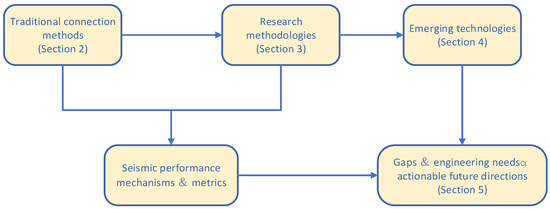
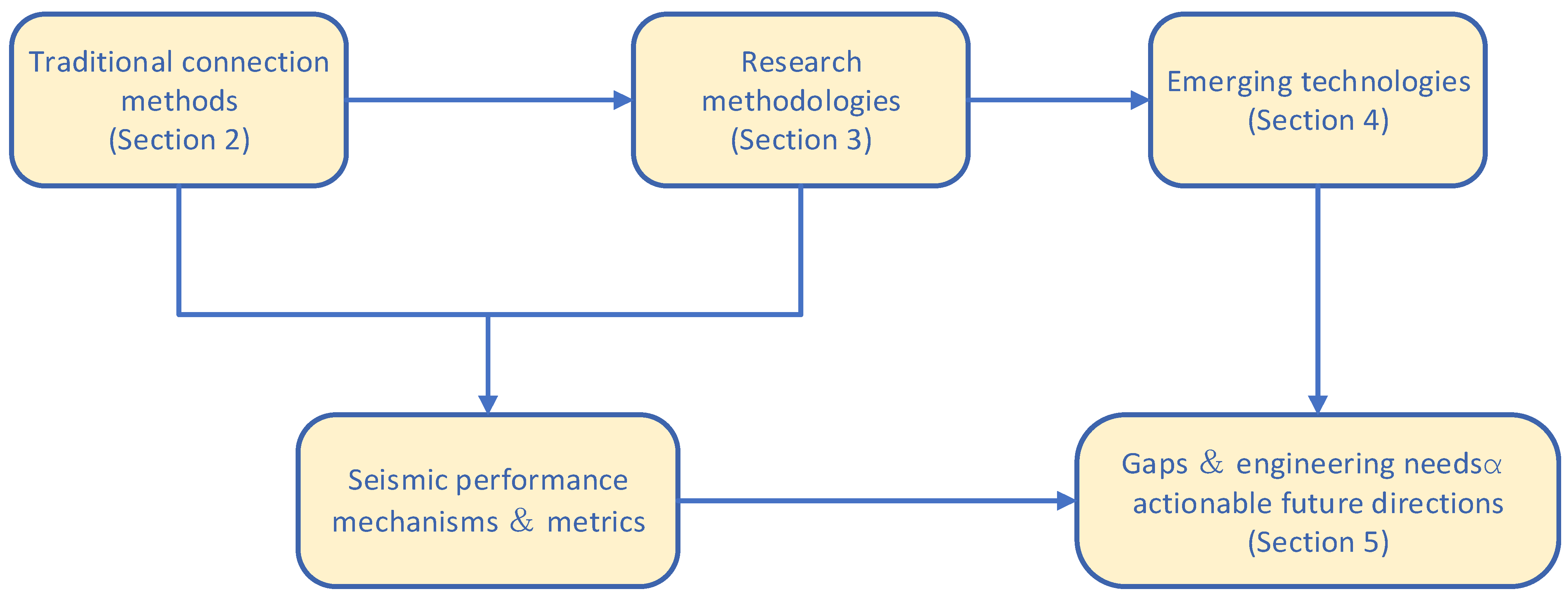
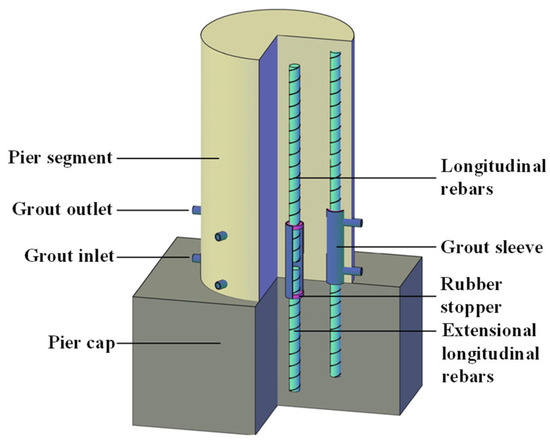
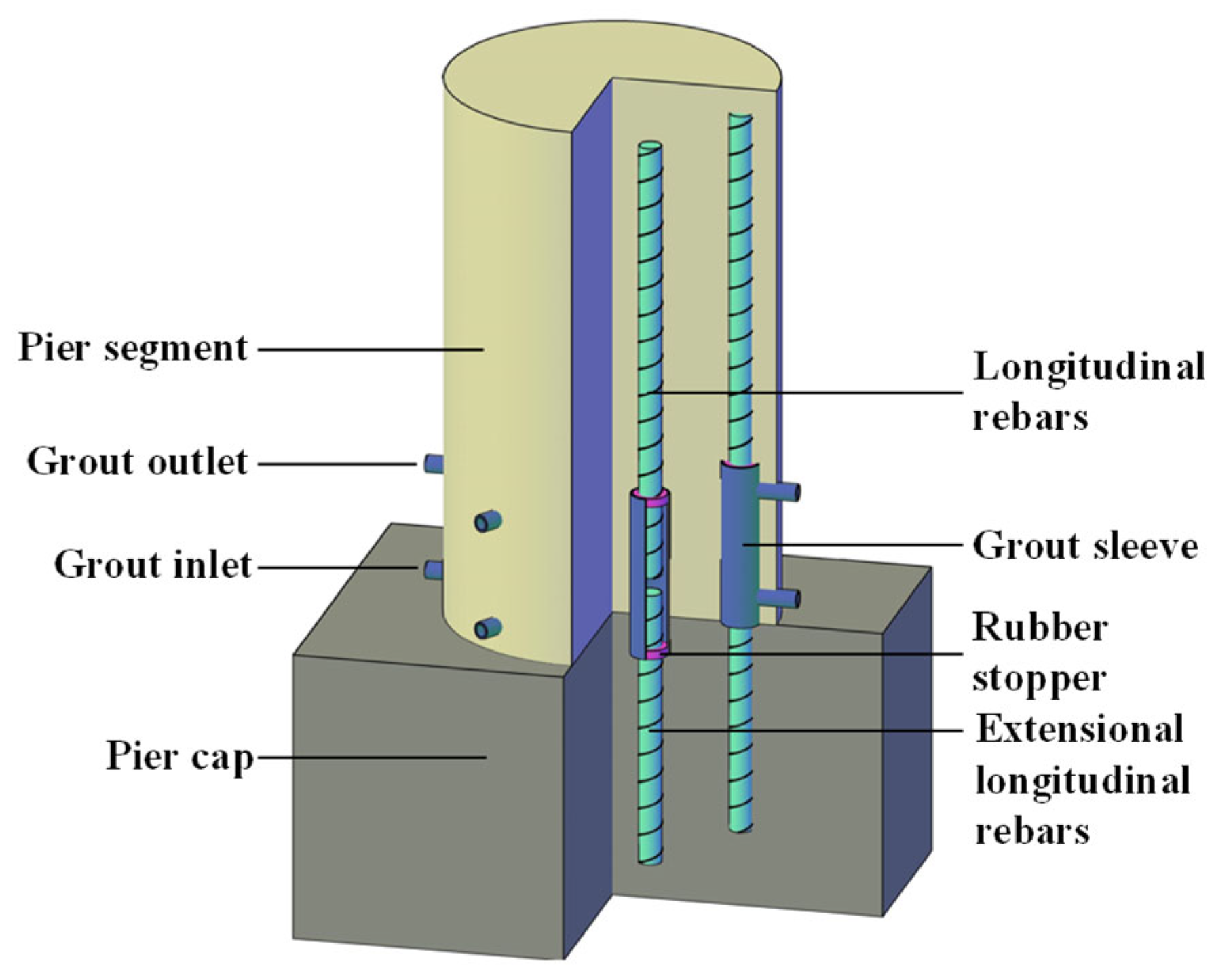
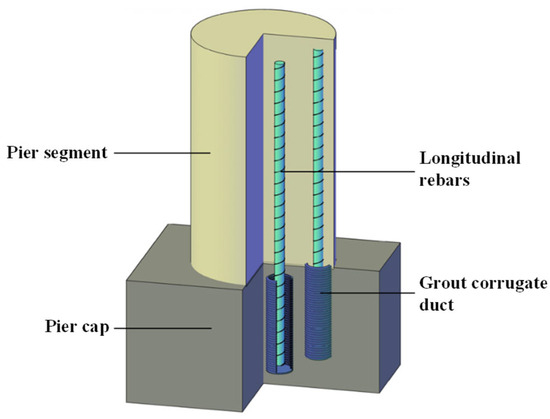
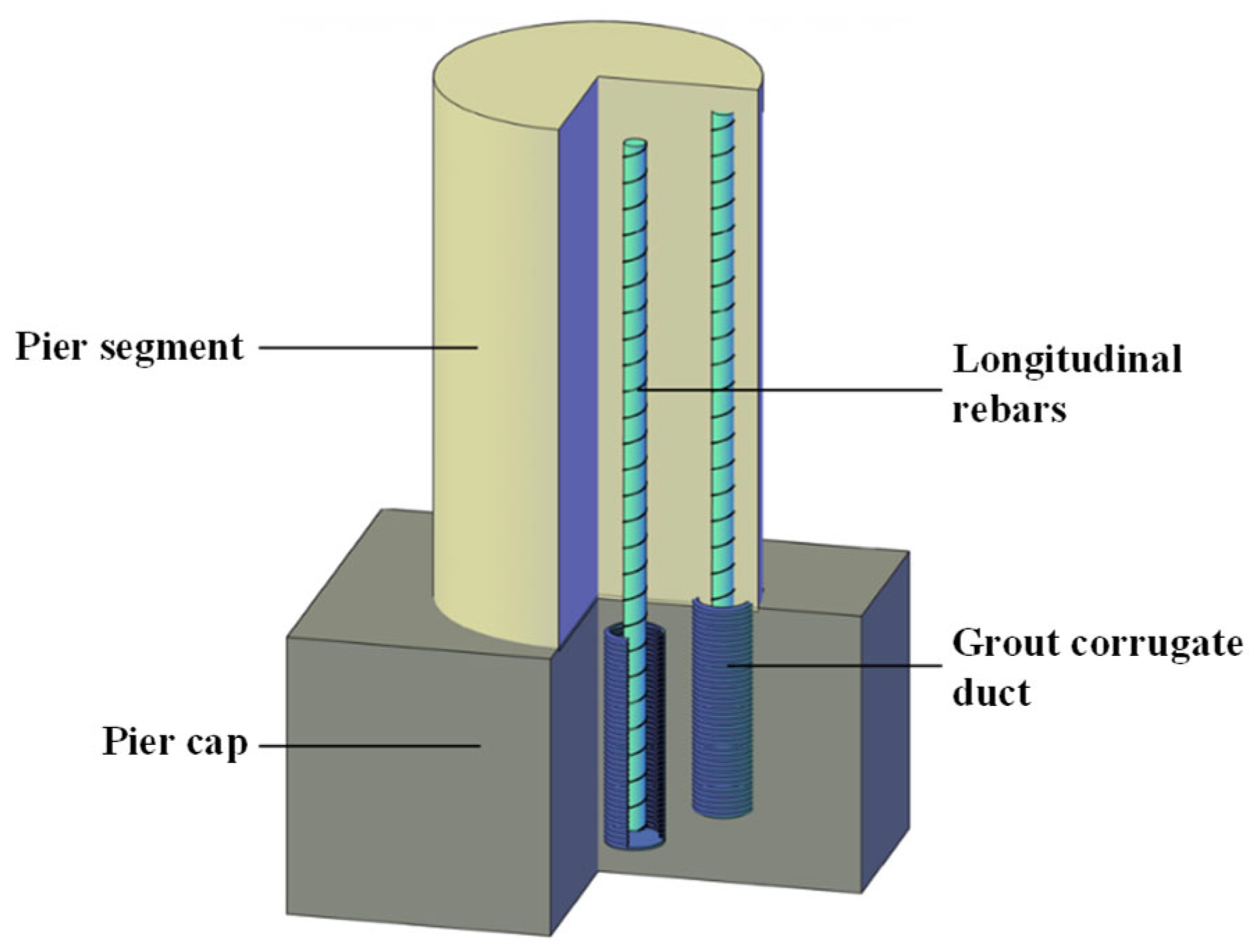
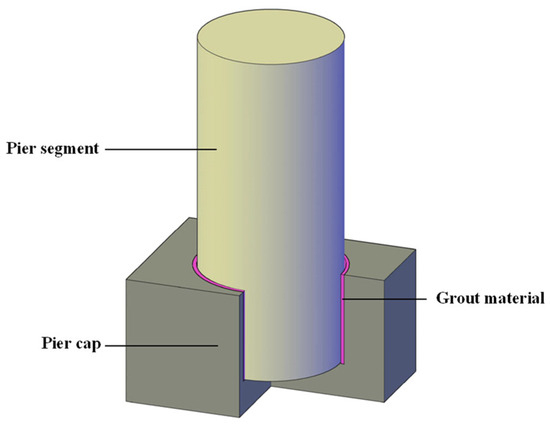
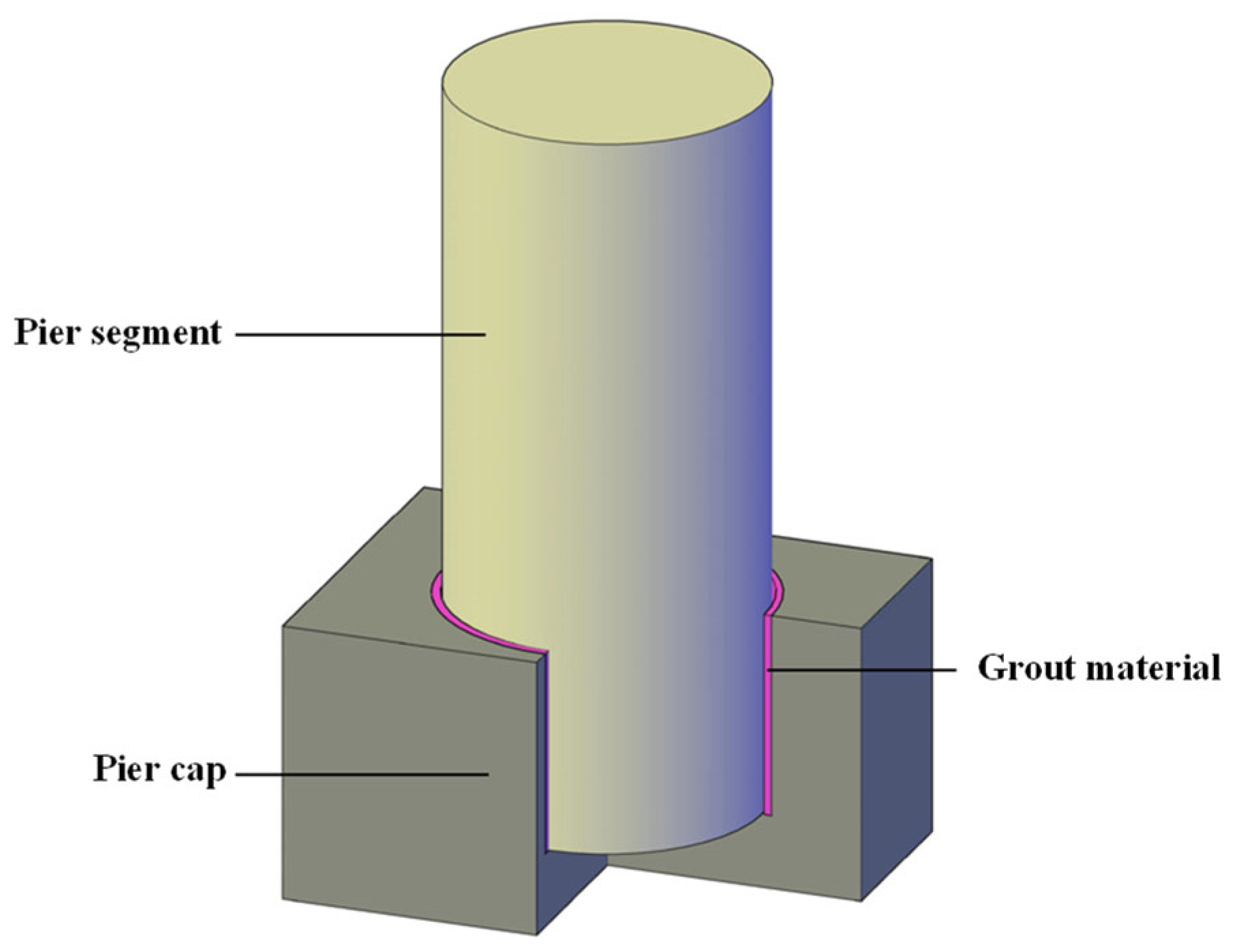
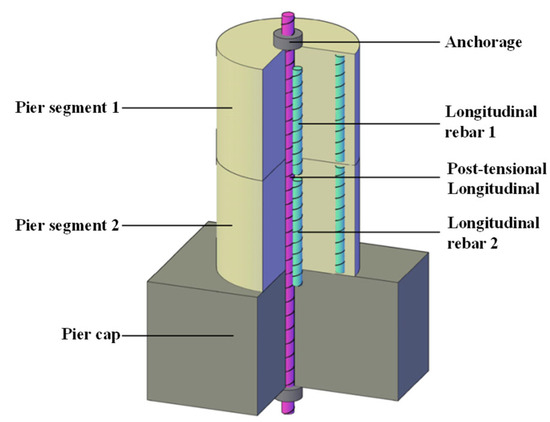
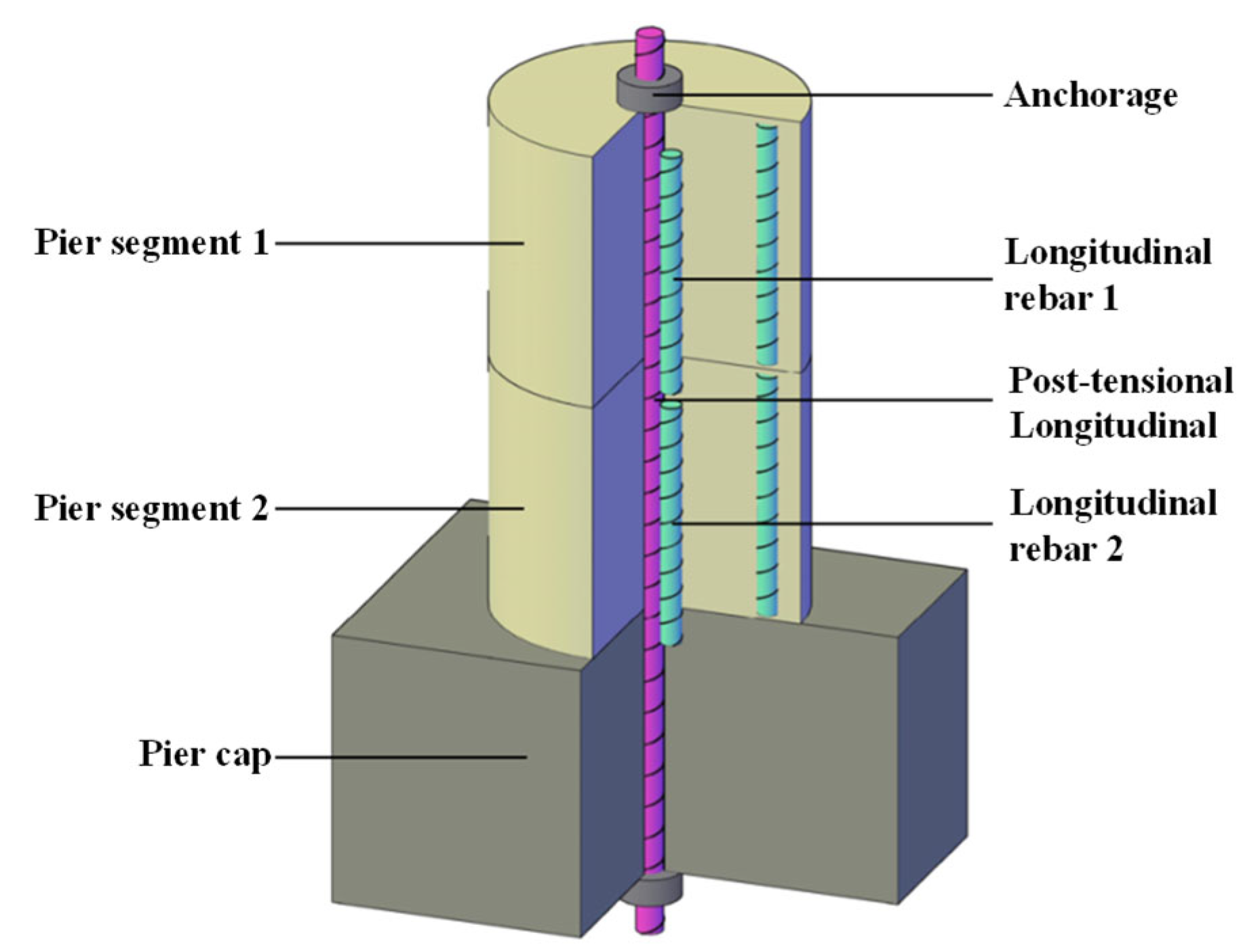
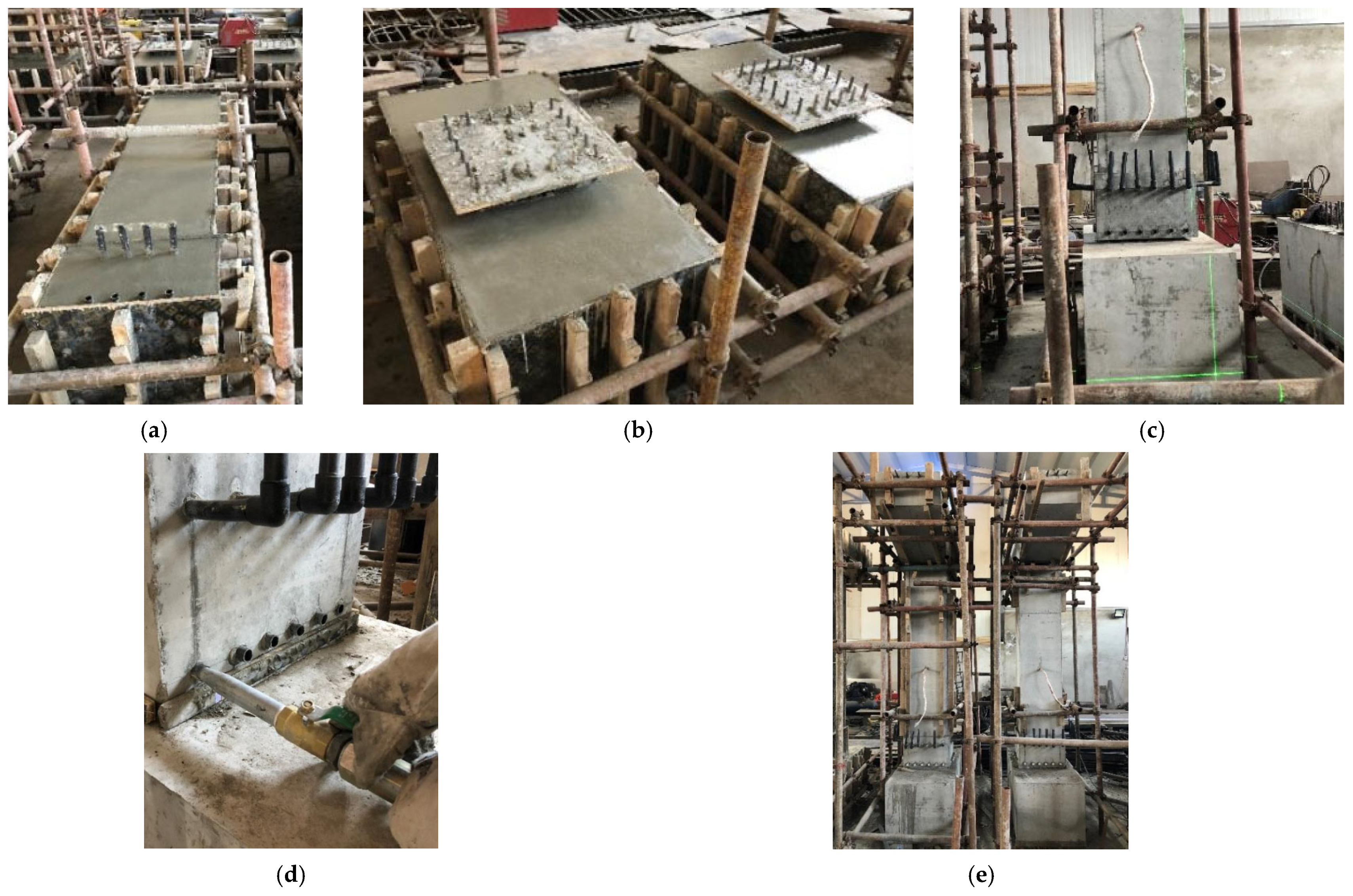
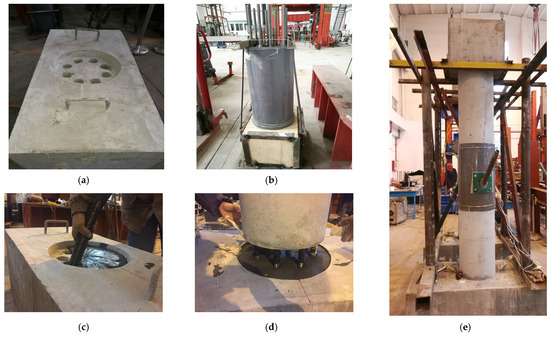
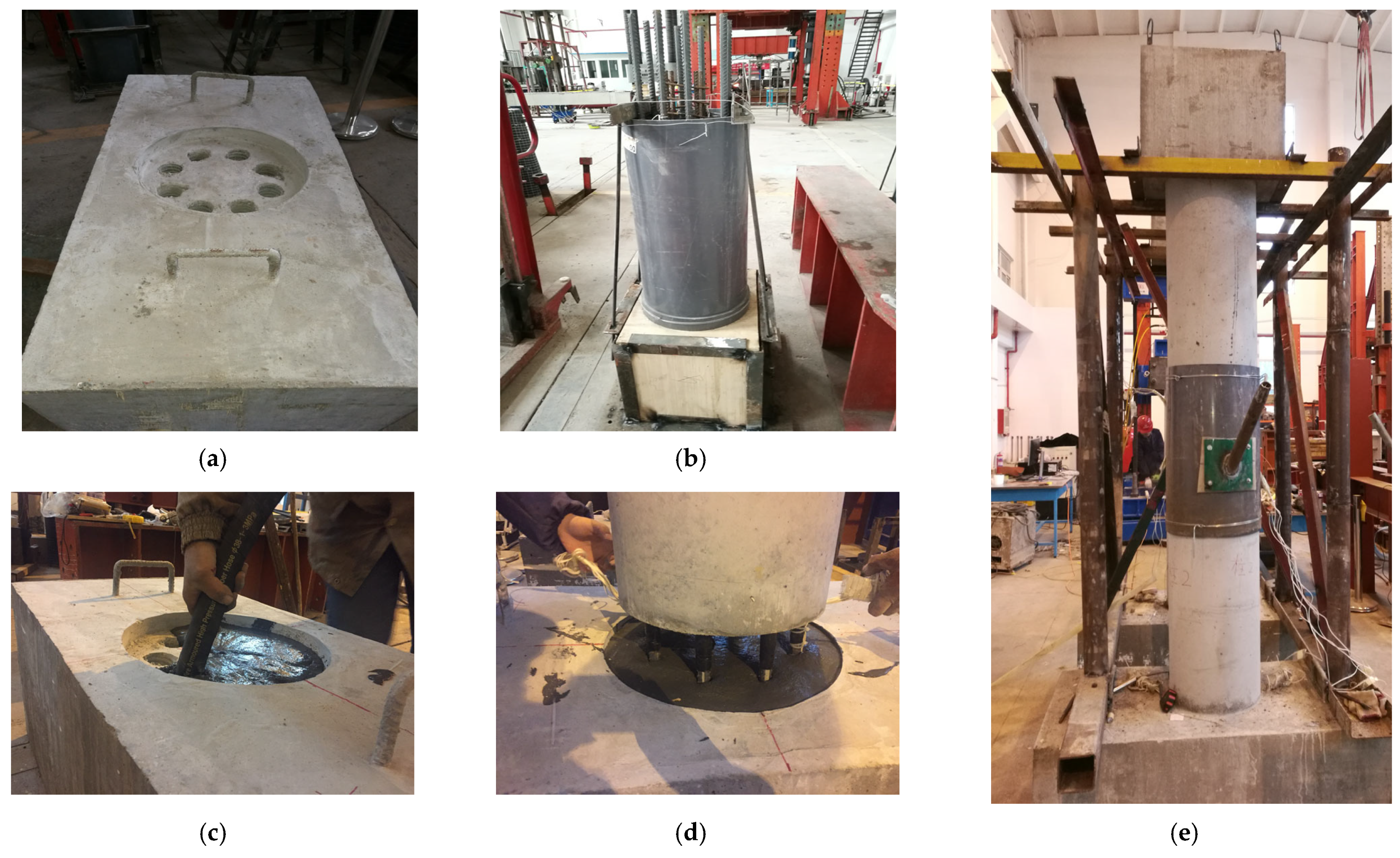
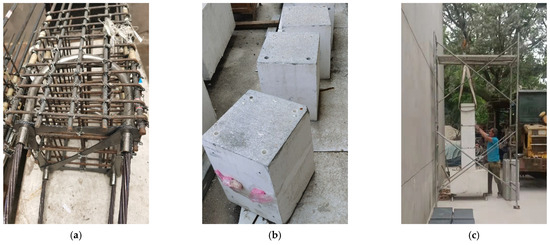
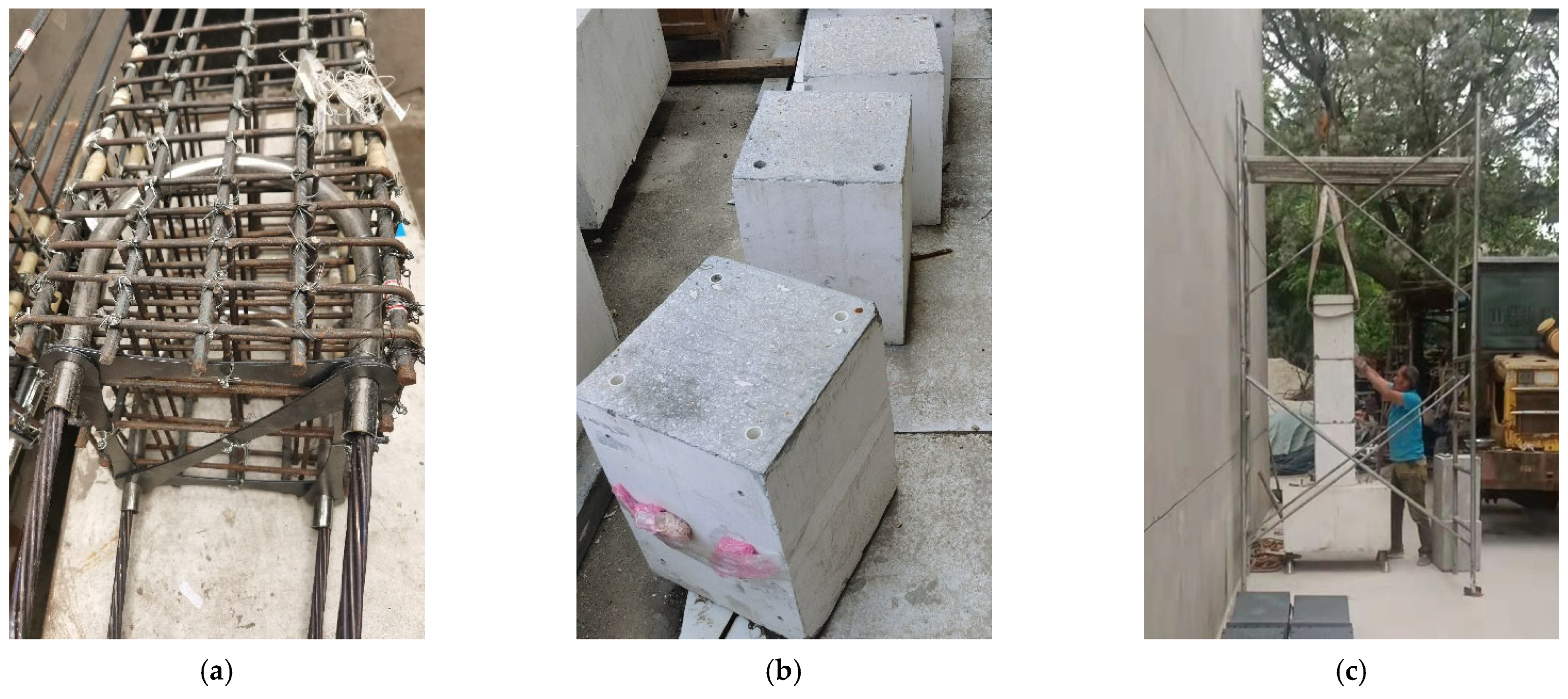
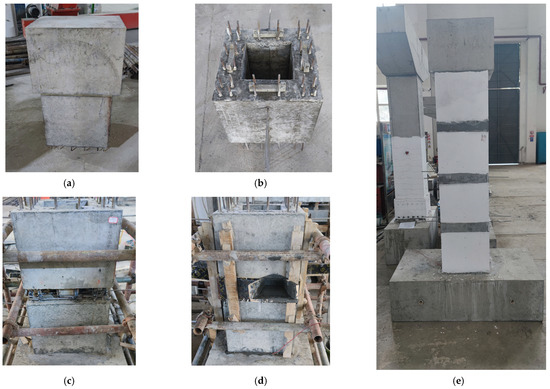
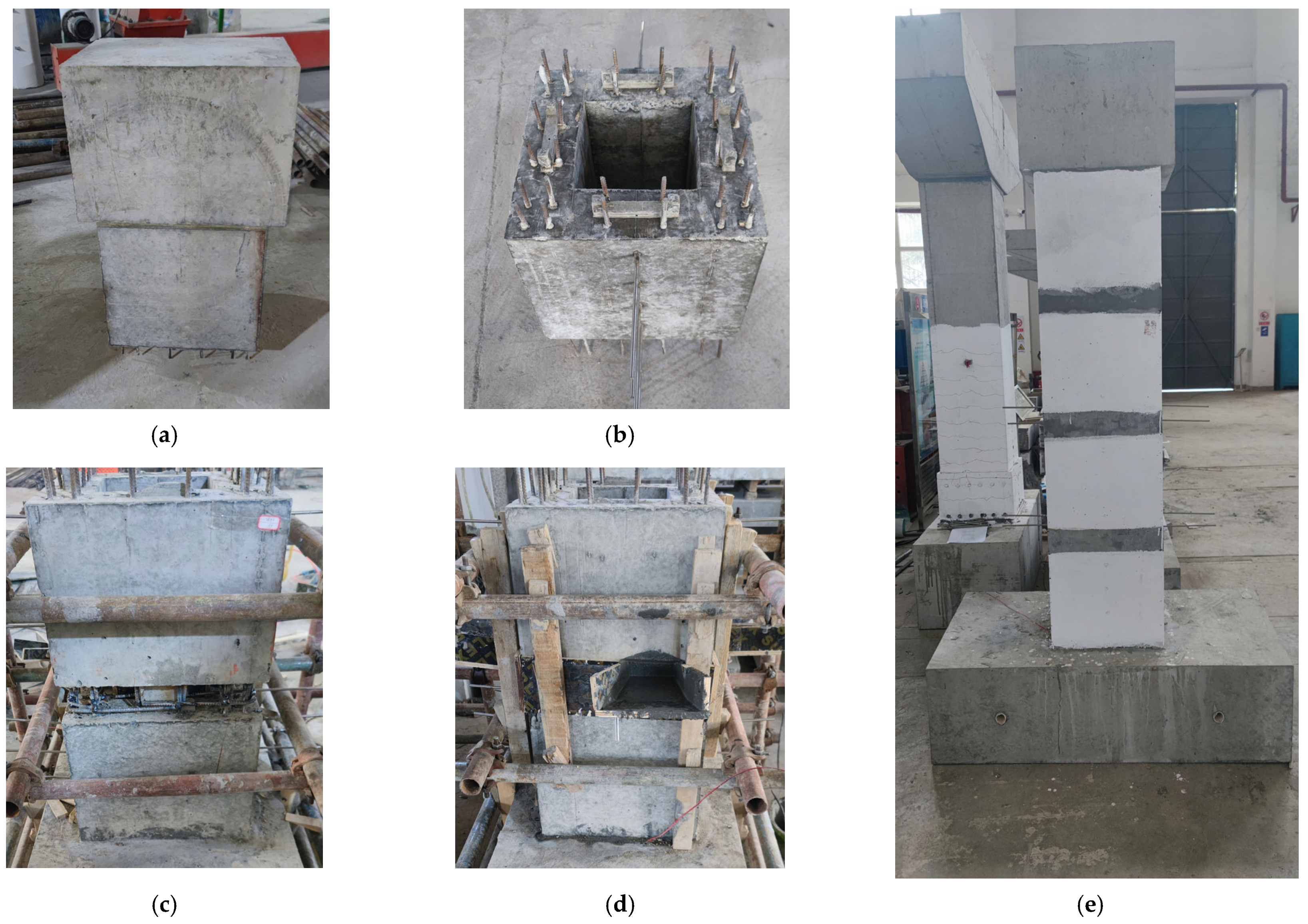
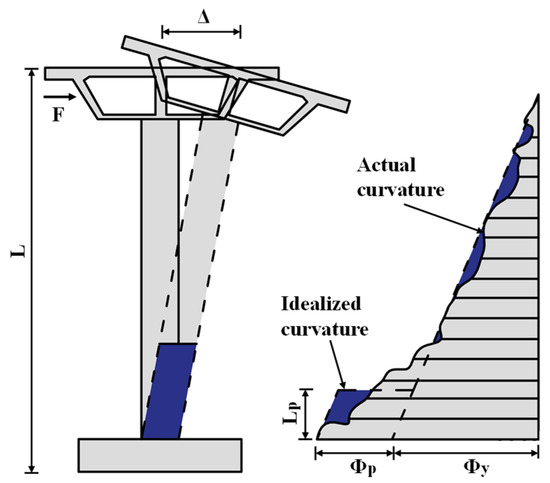
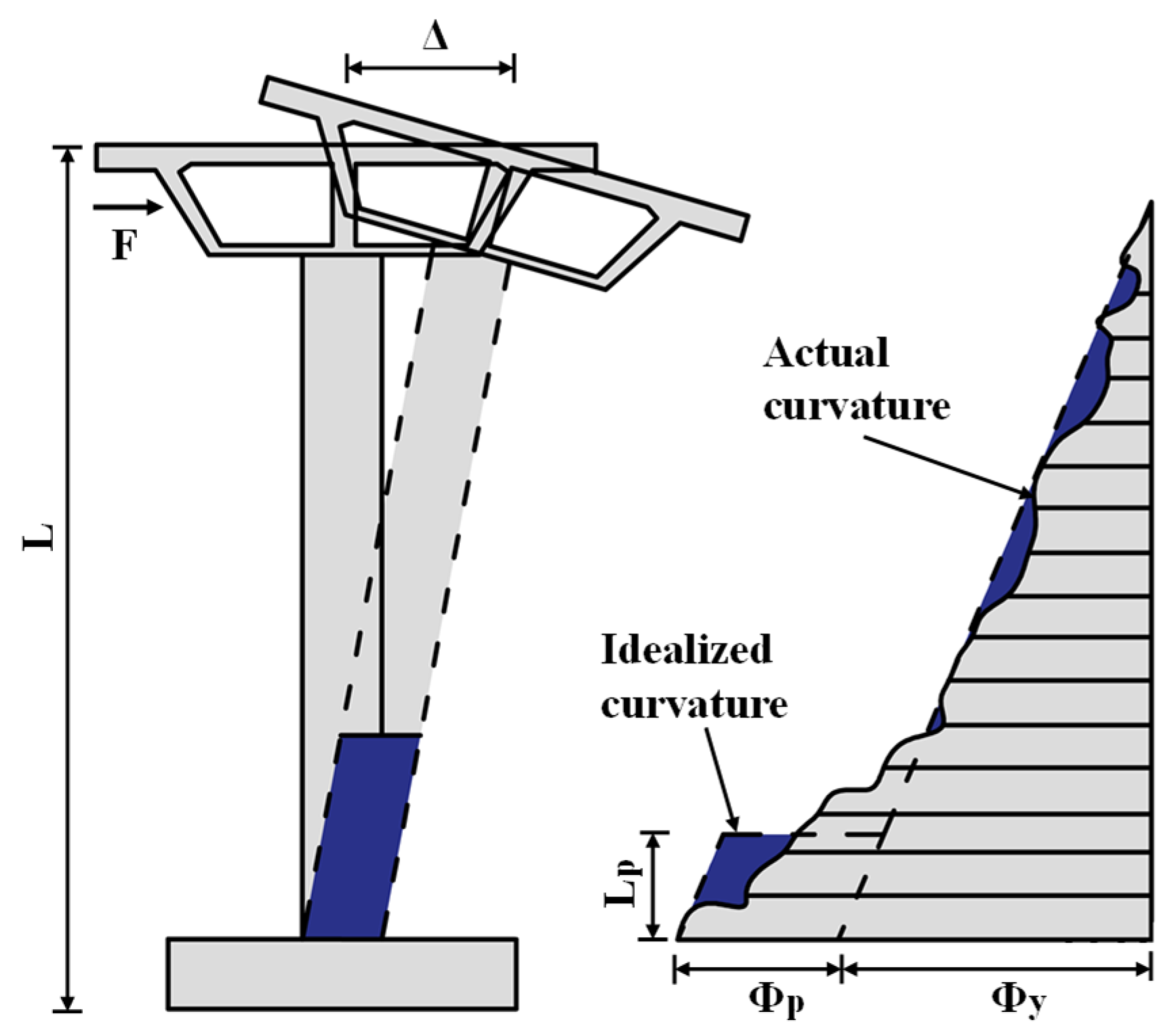
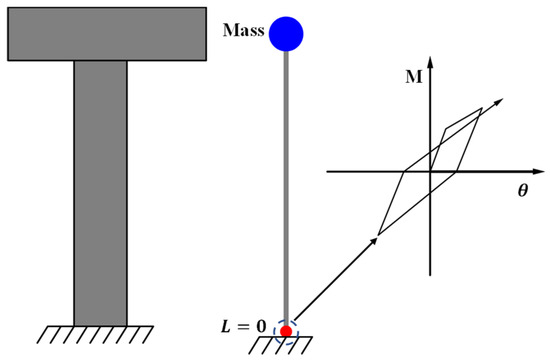
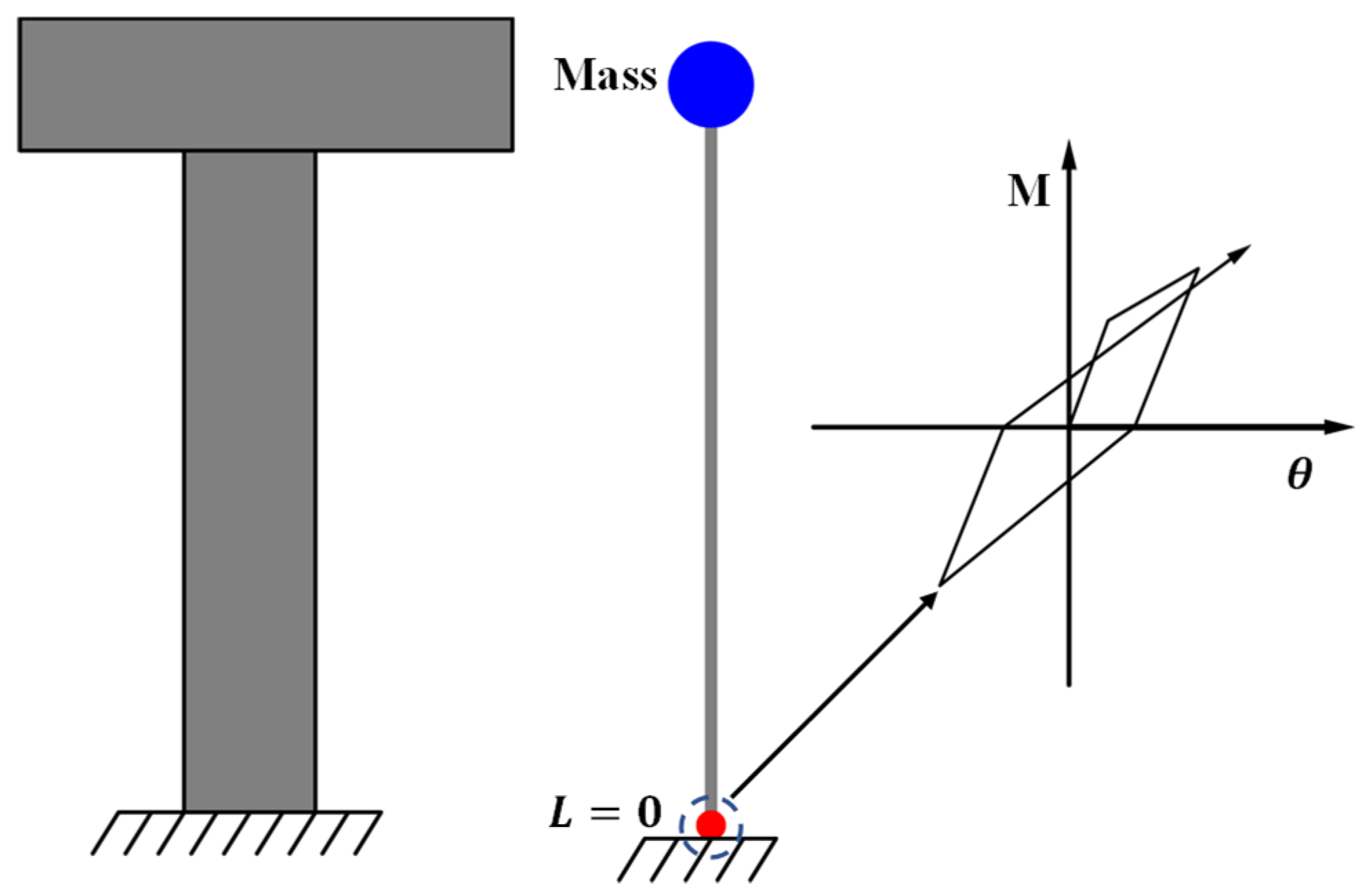
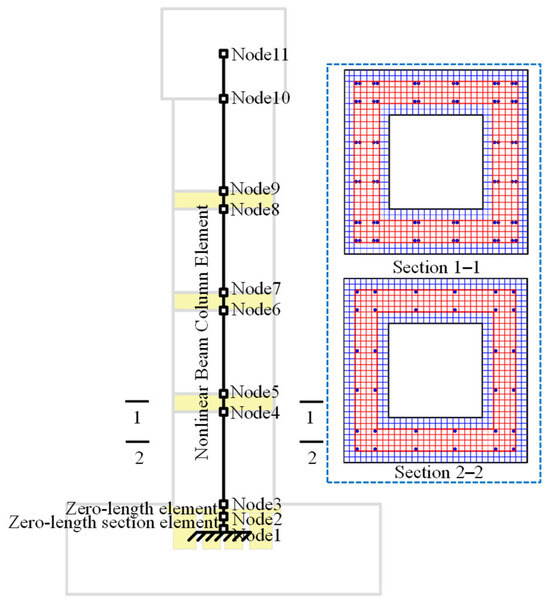
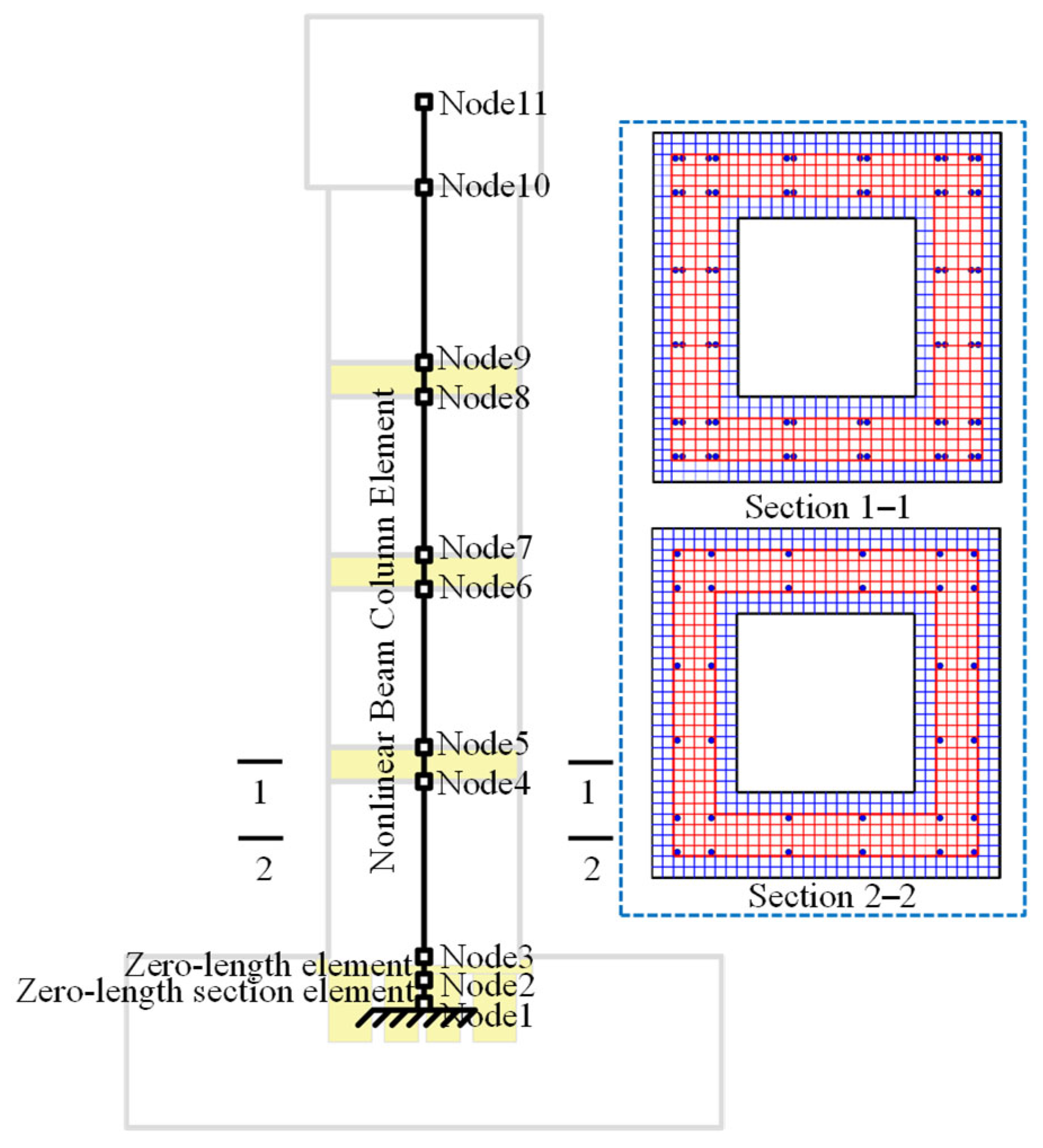
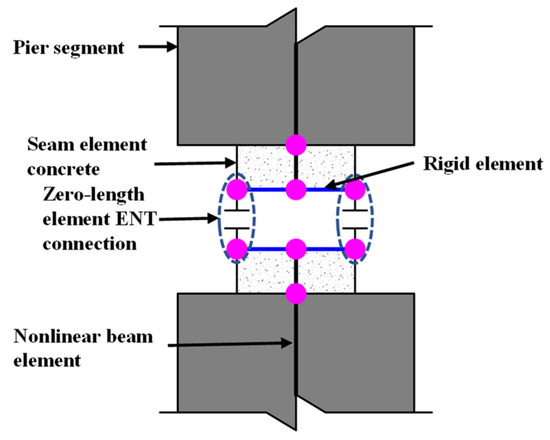
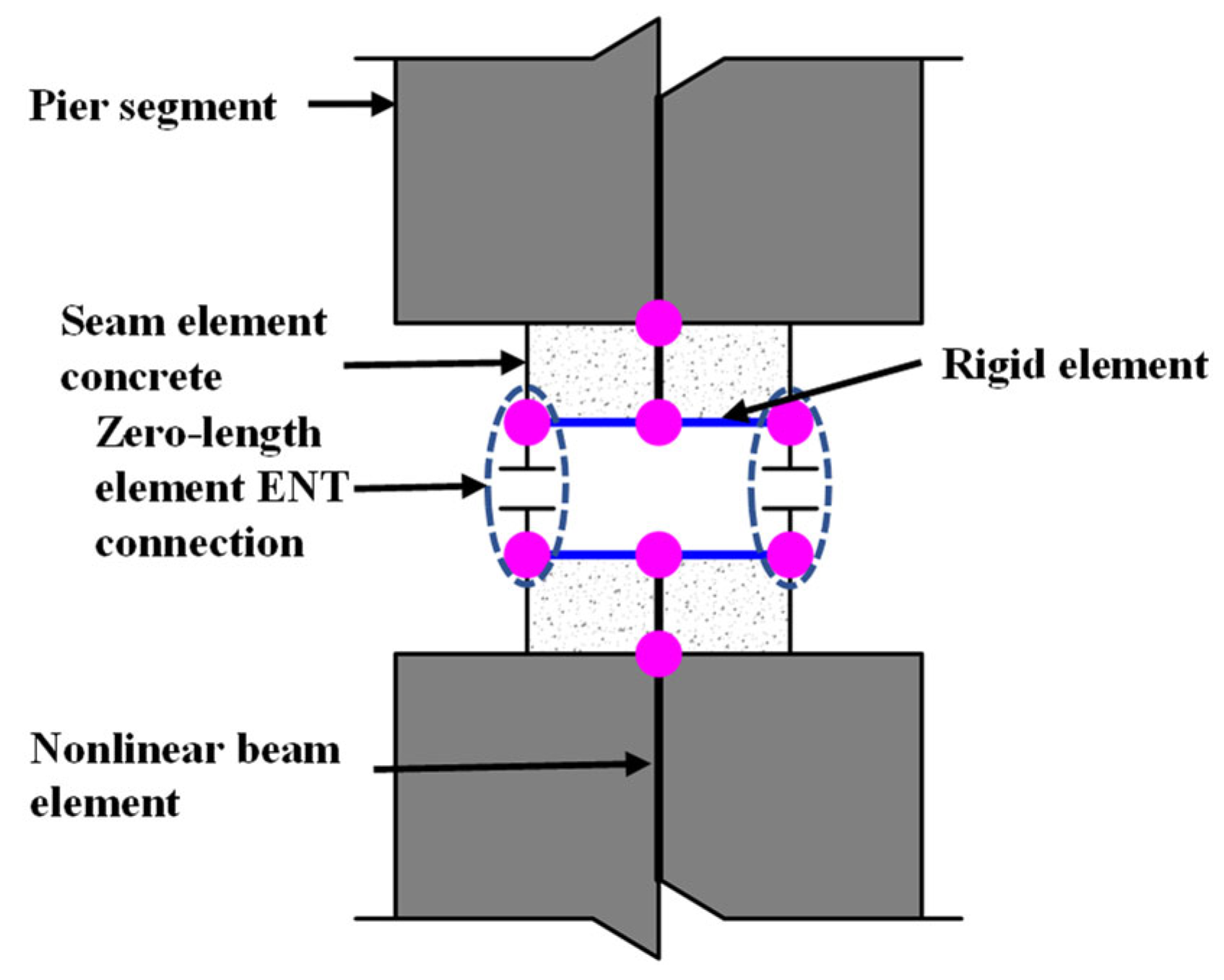
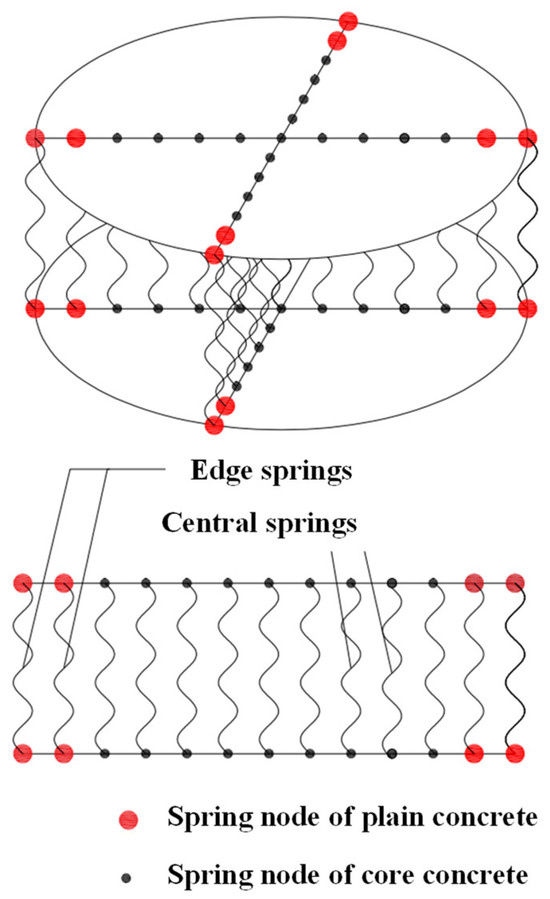
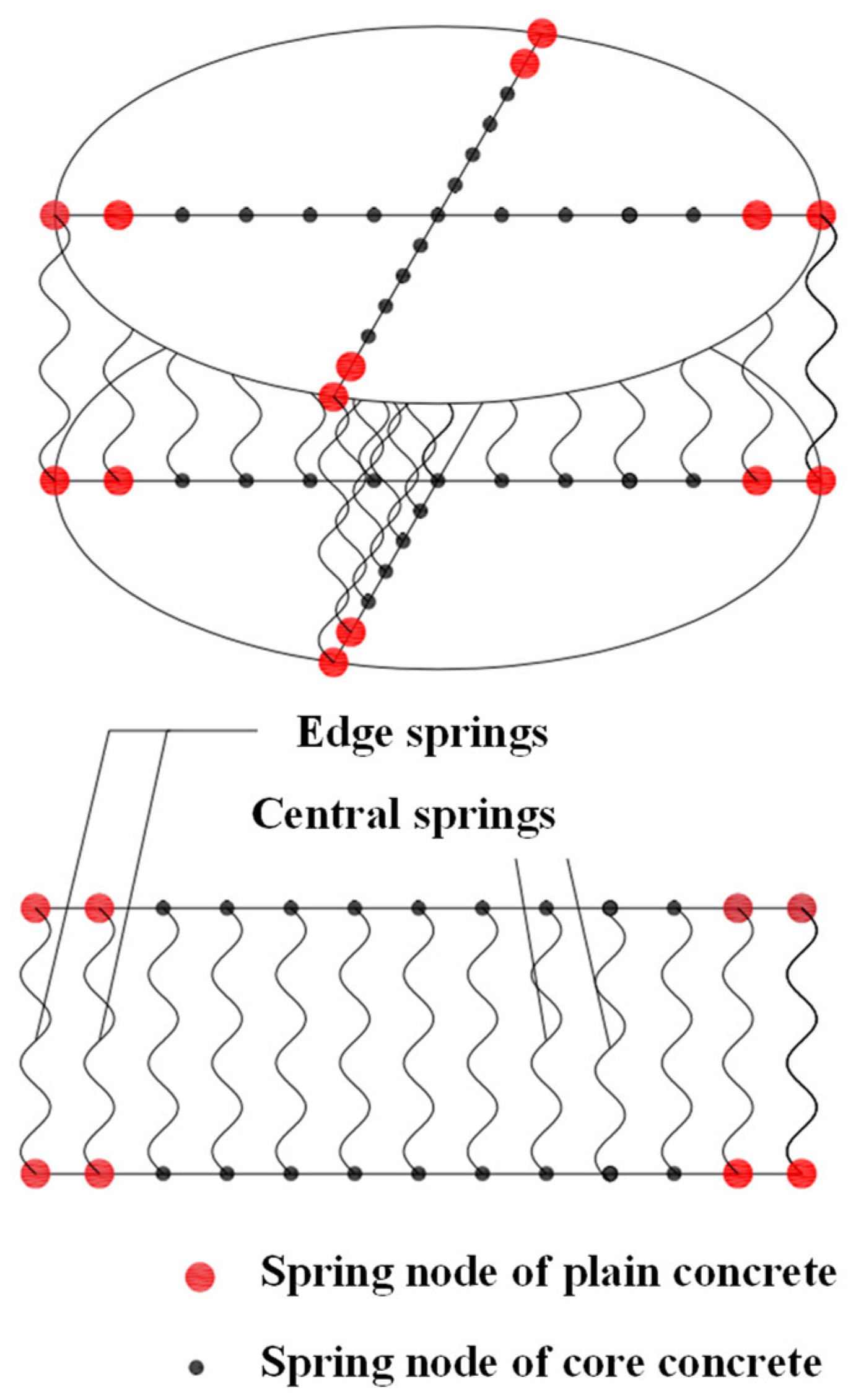
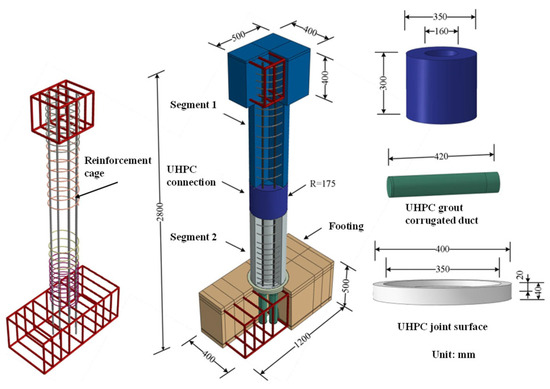
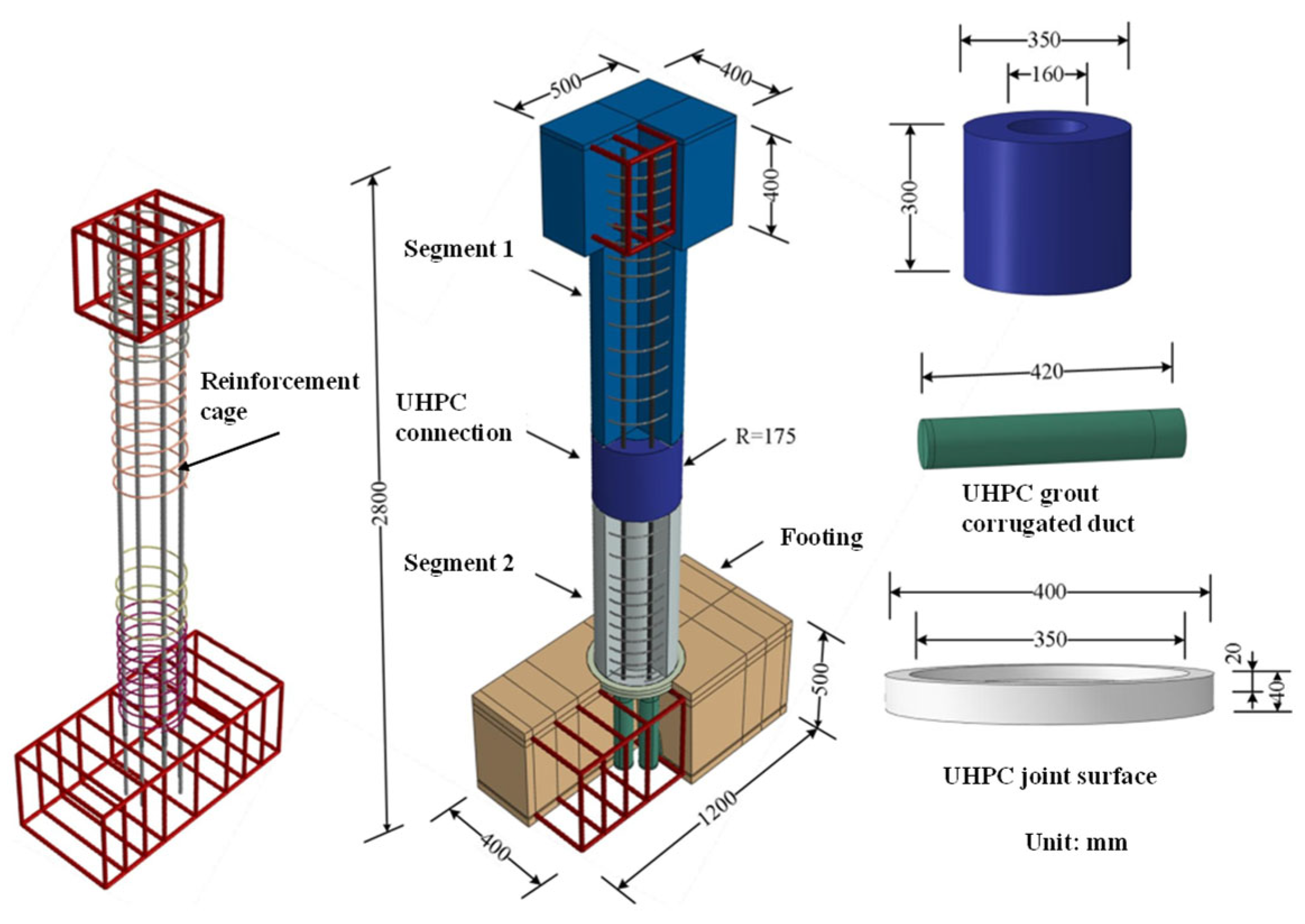
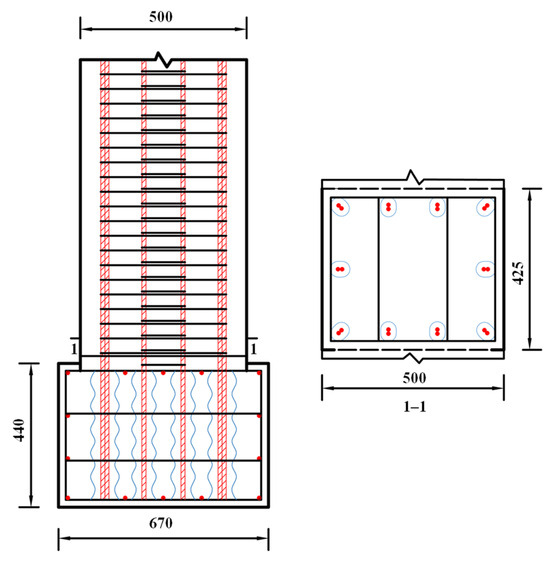
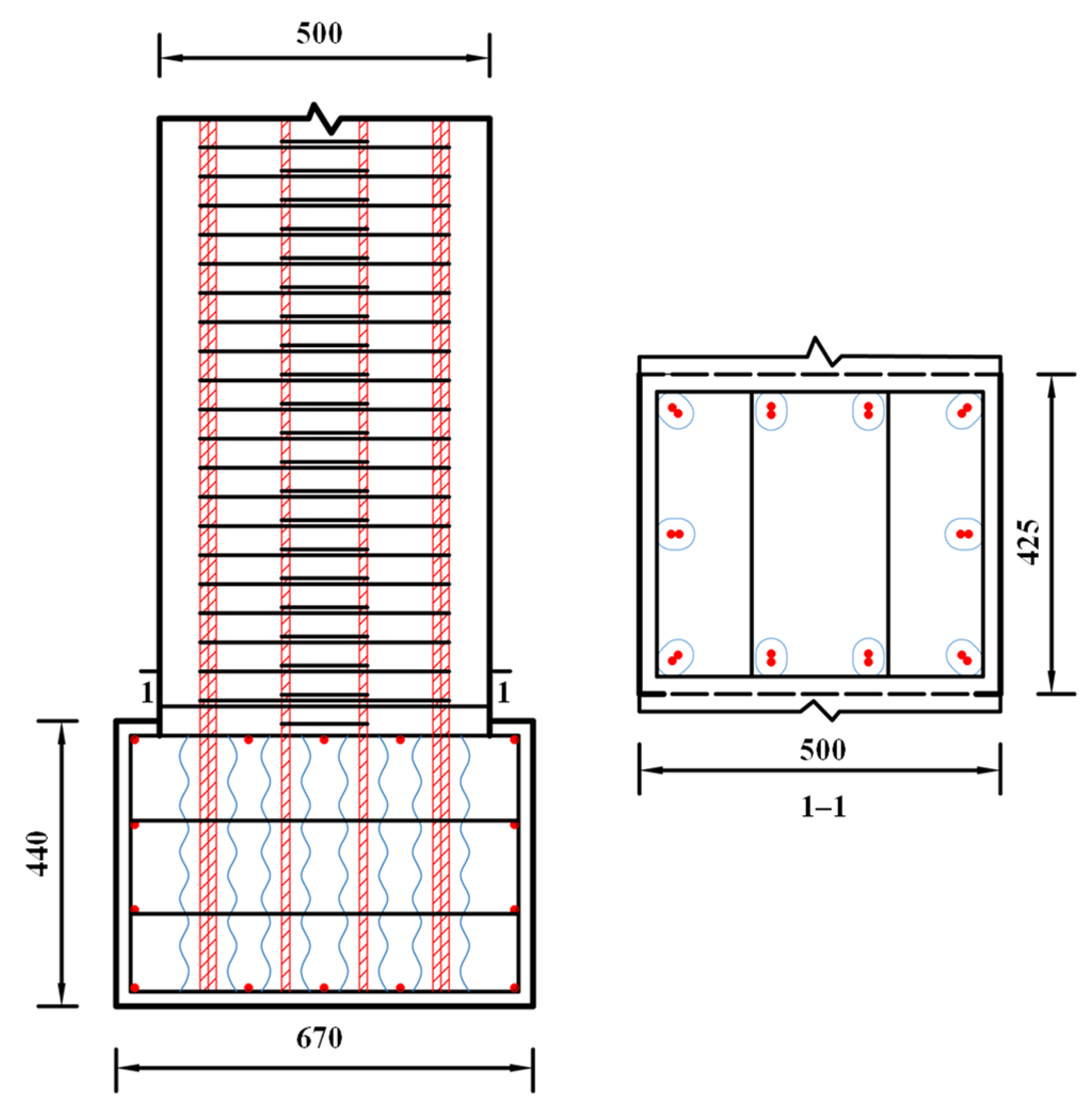
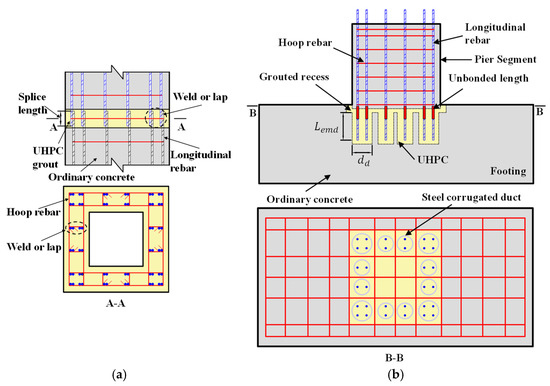
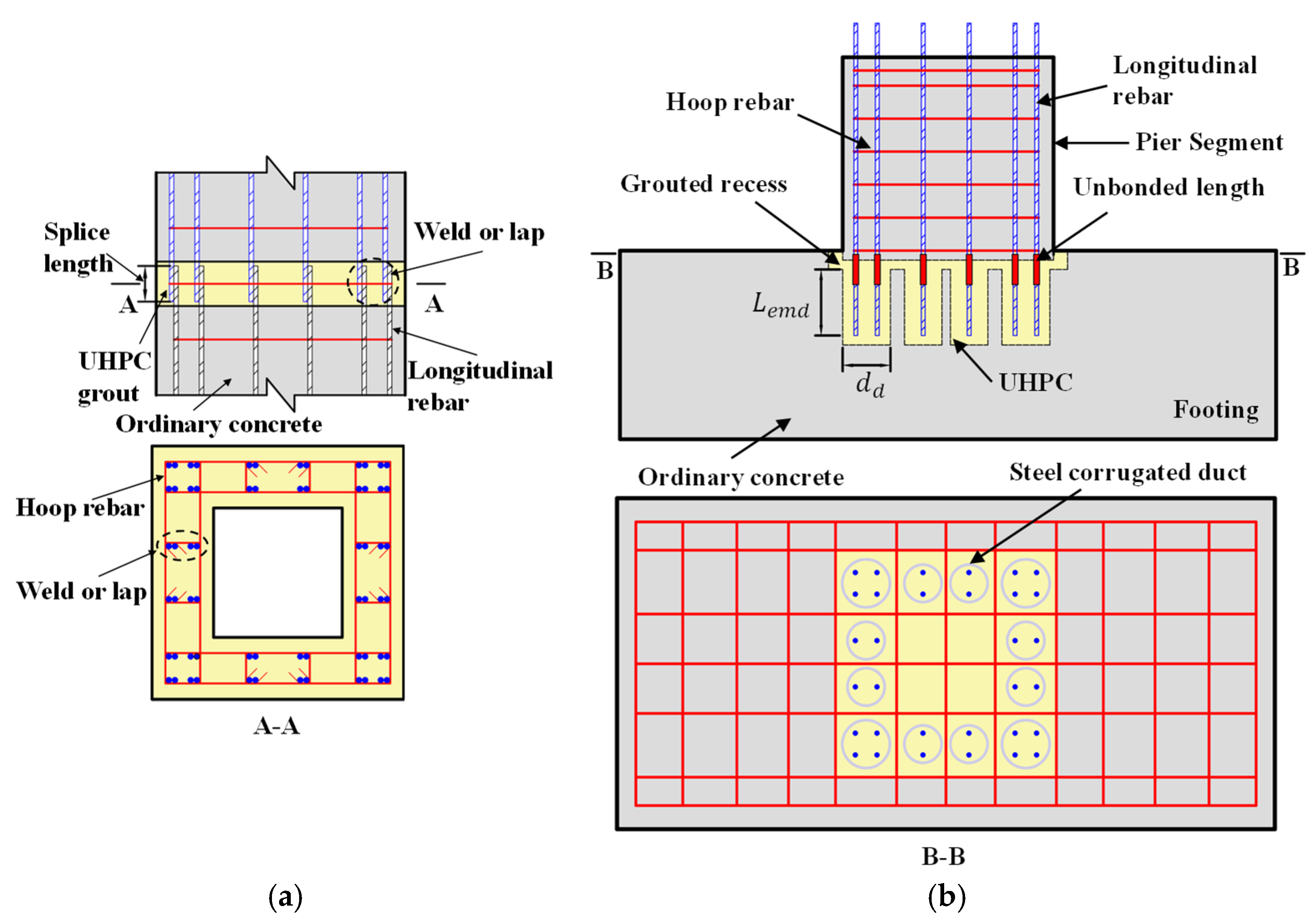
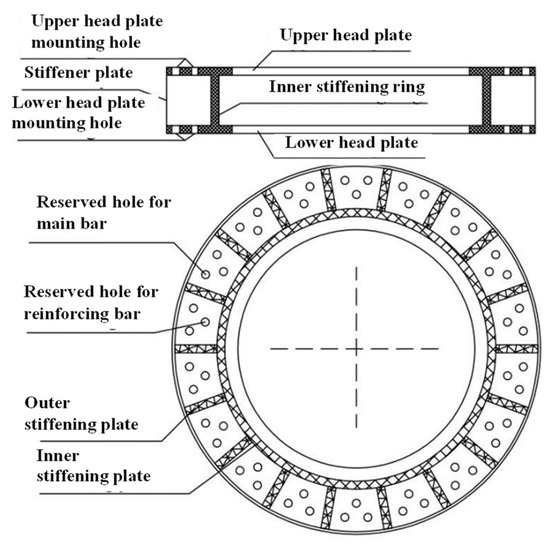
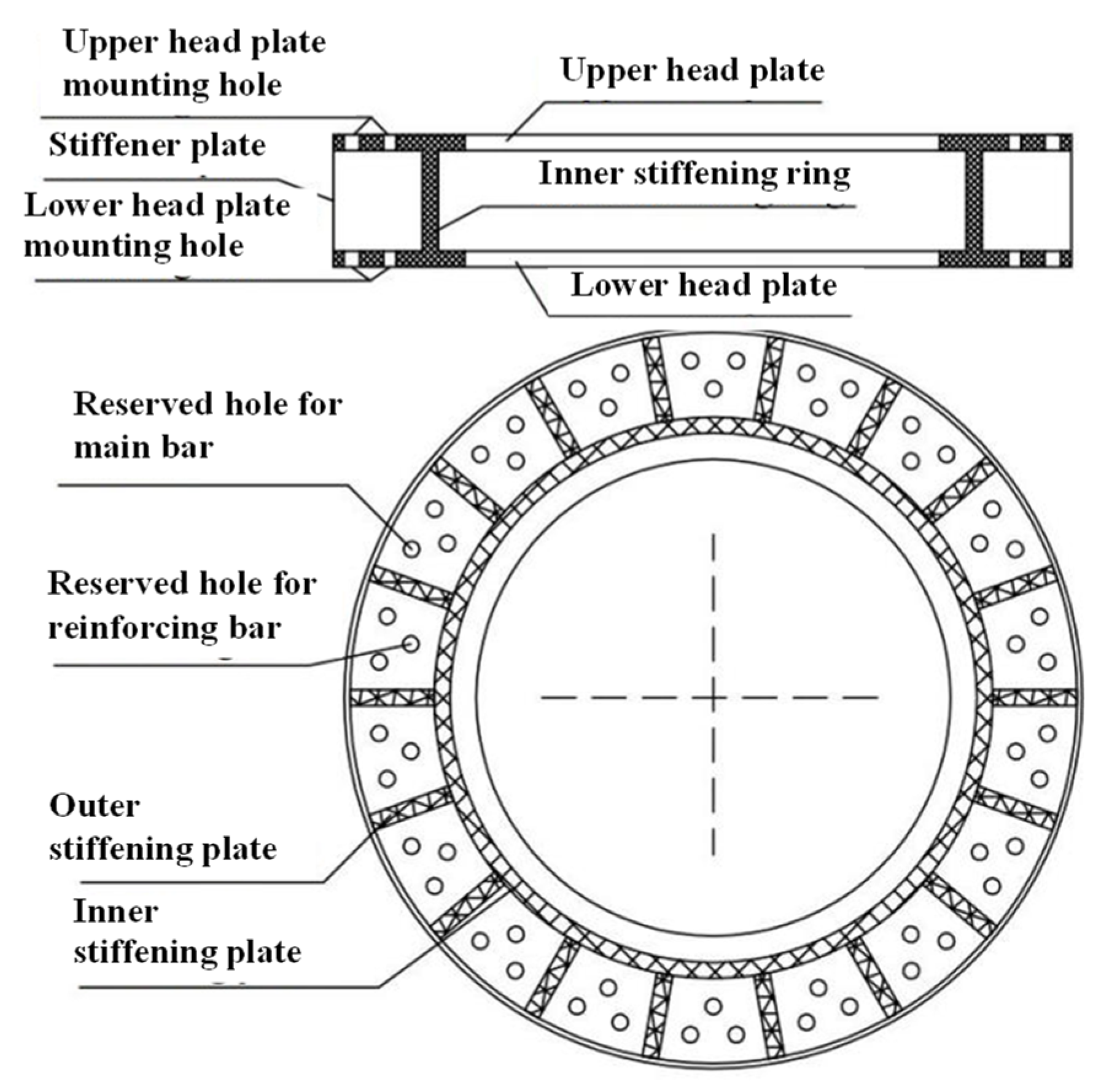
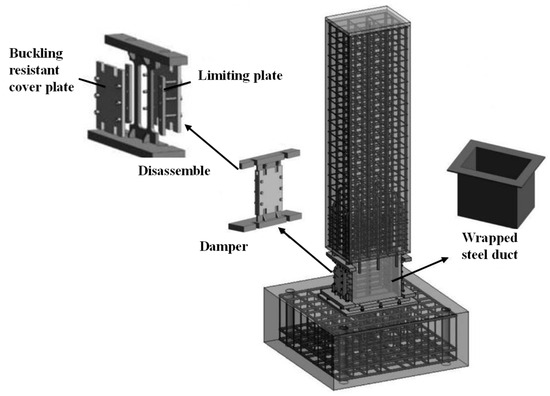
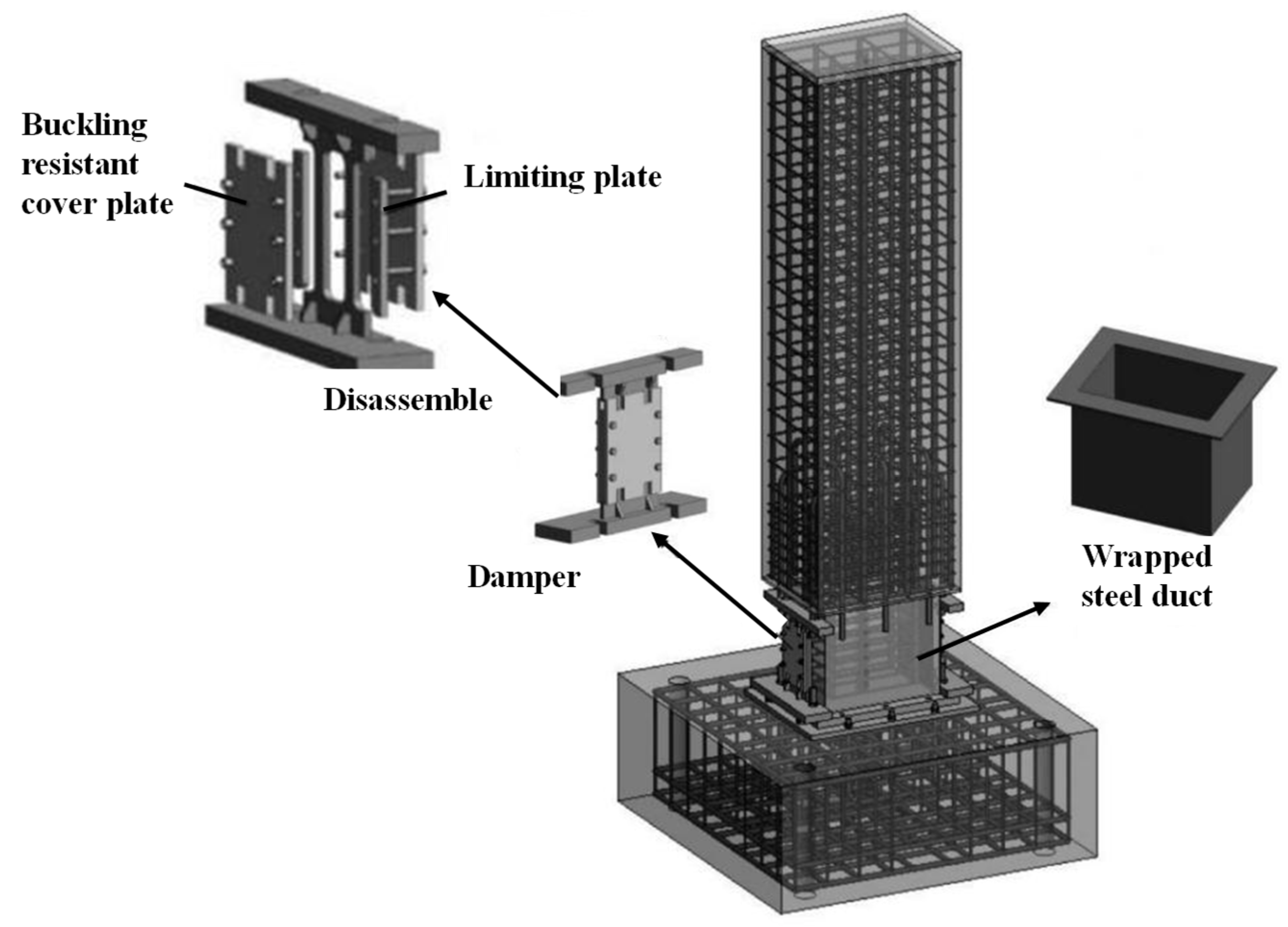
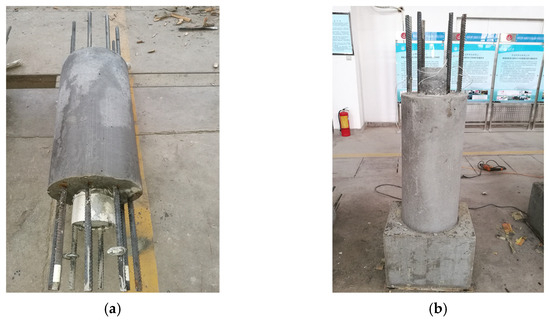
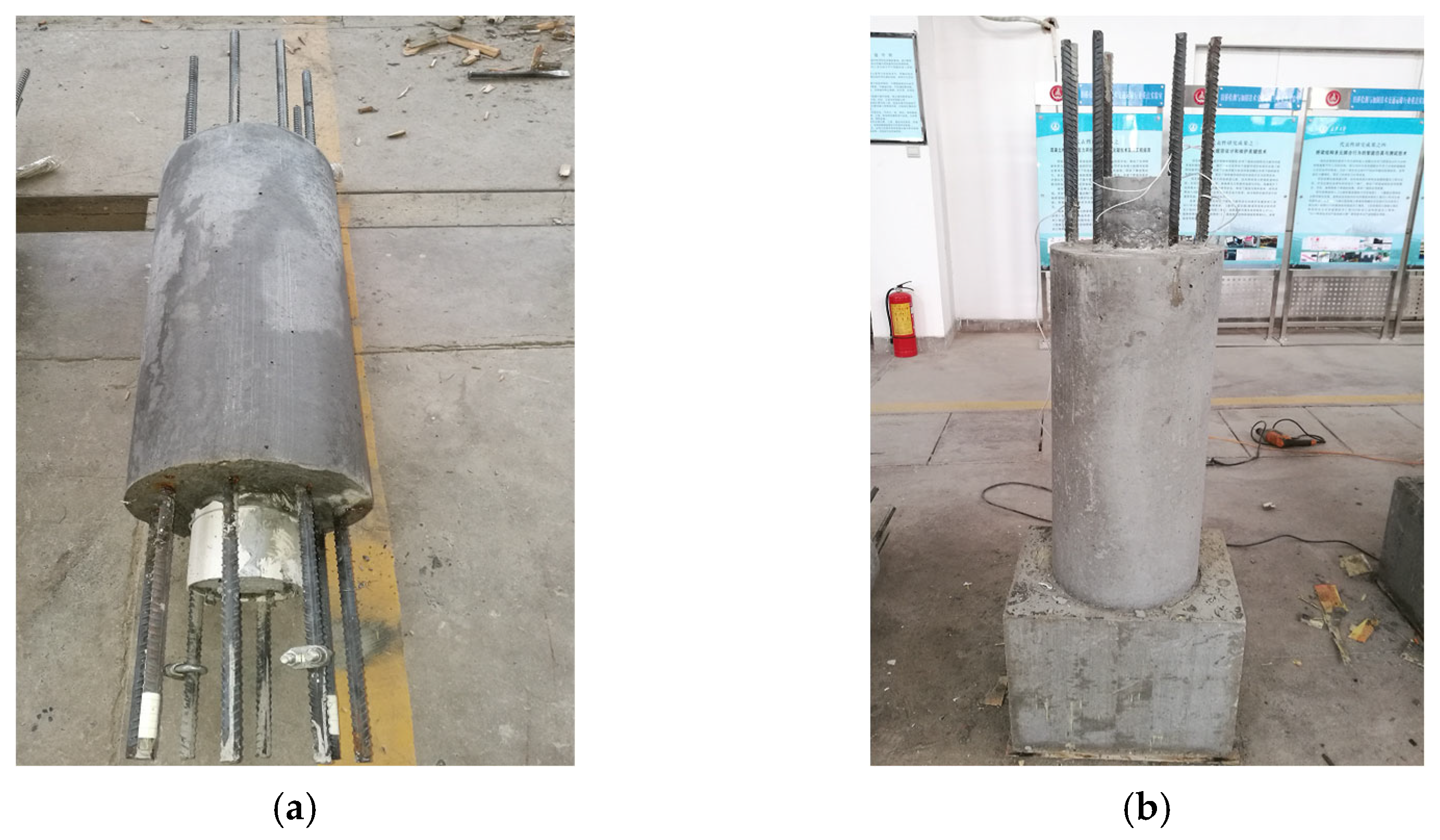
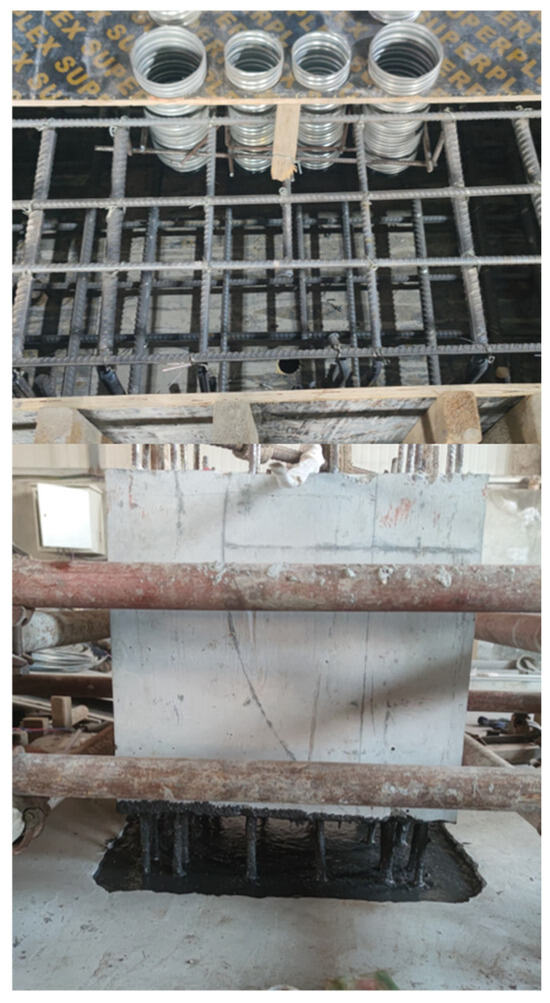
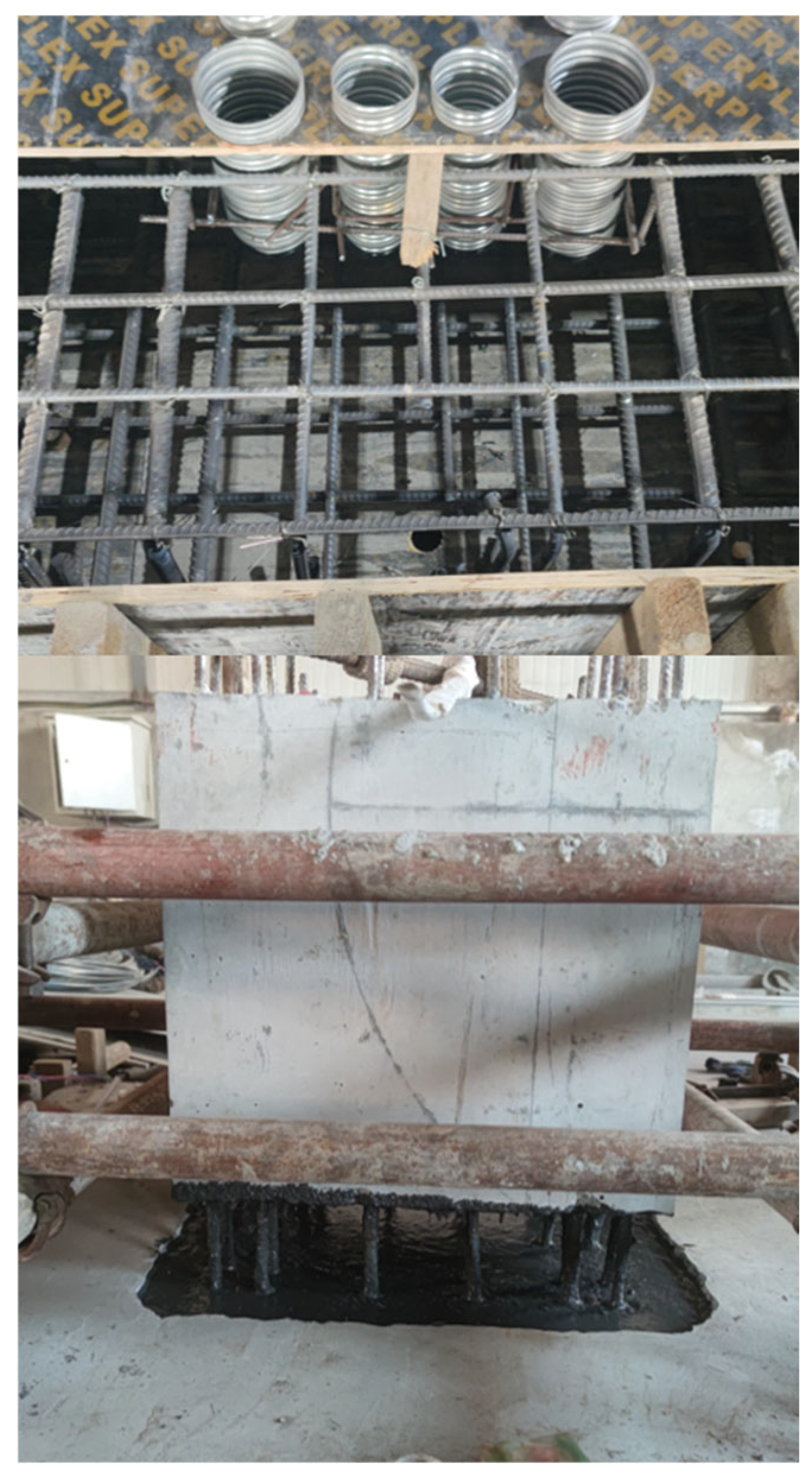
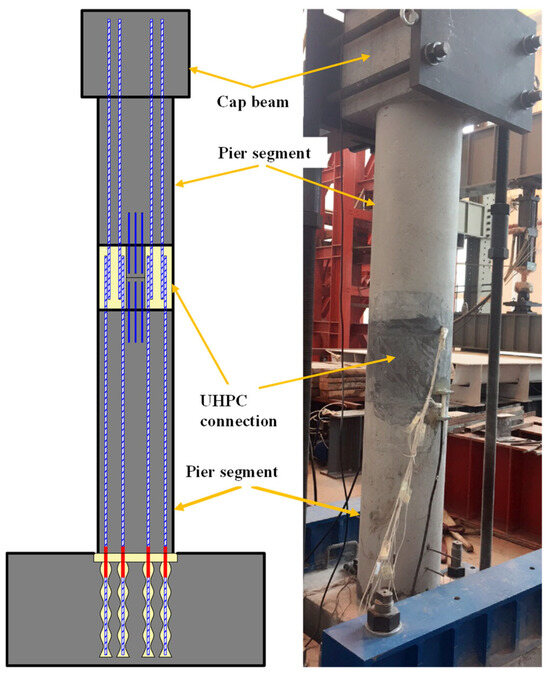
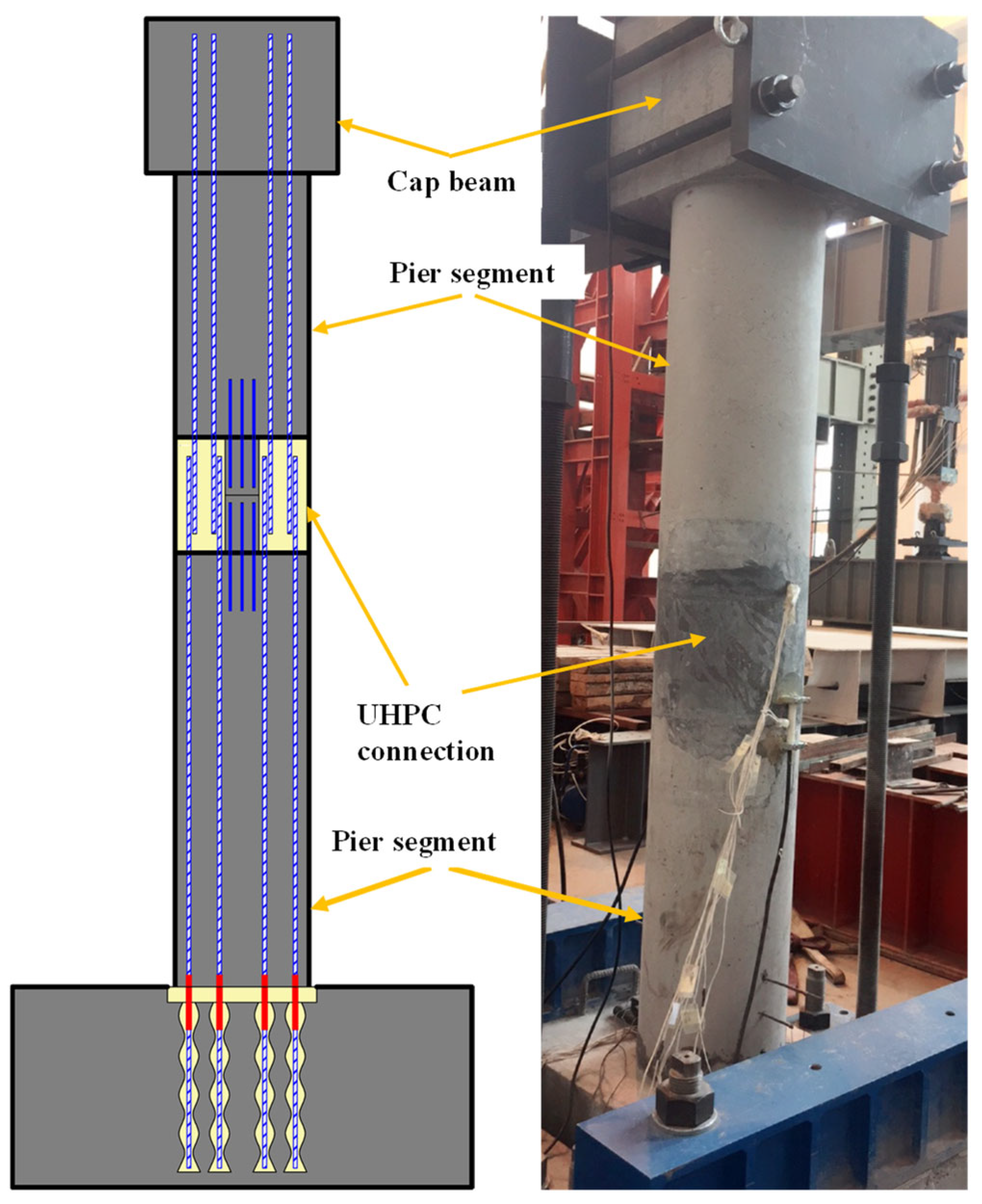
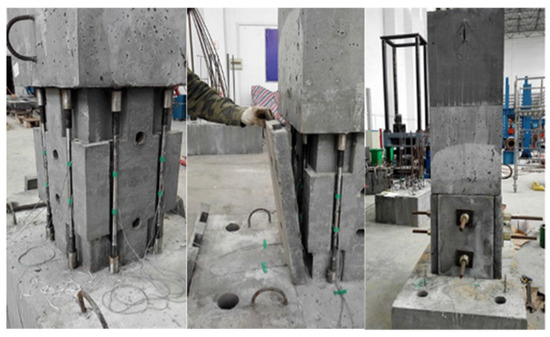
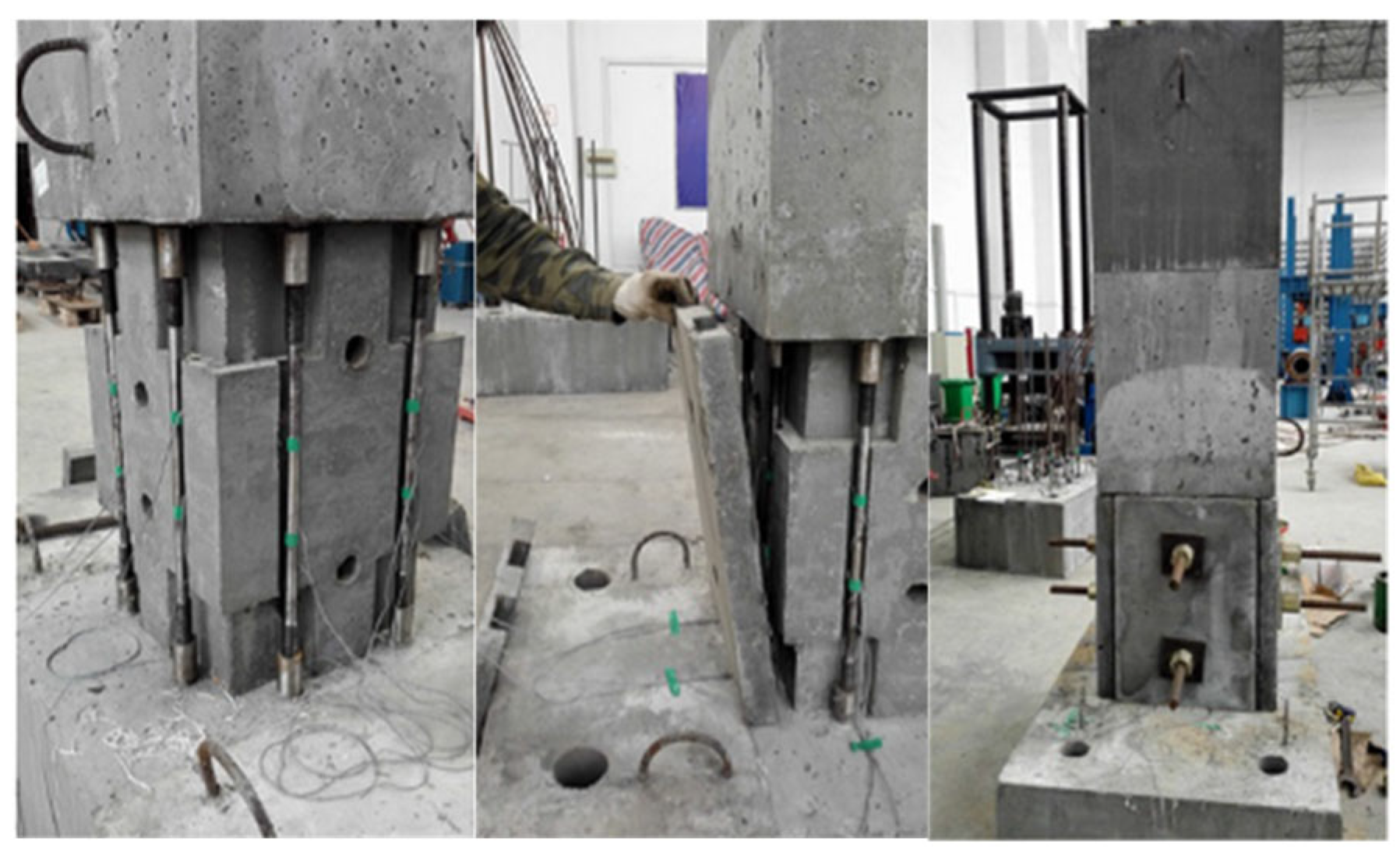

Disclaimer/Publisher’s Note: The statements, opinions and data contained in all publications are solely those of the individual author(s) and contributor(s) and not of MDPI and/or the editor(s). MDPI and/or the editor(s) disclaim responsibility for any injury to people or property resulting from any ideas, methods, instructions or products referred to in the content. |
© 2026 by the authors. Licensee MDPI, Basel, Switzerland. This article is an open access article distributed under the terms and conditions of the Creative Commons Attribution (CC BY) license.