


Abstract
In this study, phosphorus tailings sand (PTS) was ground into fine powder and incorporated with slag and fly ash to formulate a cementitious material composed solely of solid wastes. The current research aimed to promote the high-value utilization of local solid waste resources in Lianyungang and to explore their potential application in soil stabilization and ground improvement. Through optimization of component dosage and the proportions of alkaline activators, the effects on workability, mechanical properties, drying shrinkage, wet–dry cycles, microstructural evolution, and heavy-metal leaching behavior were comprehensively examined. The findings revealed that at the optimal ratio of PTS–slag powder–fly ash = 5:2.5:2.5, the developed cementitious material demonstrated a 28-day compressive strength of 33.8 MPa, along with 4.5 MPa flexural strength, and 168 mm flow spread. Moreover, the 28-day drying shrinkage reached a minimal value of 0.038%, with reduced mass loss of 6.7% after wet–dry cycling. Furthermore, under non-freezing conditions, the leaching content of Zn, Mn, Pb, and Cu from the PTS-based multi-solid-waste cementitious system remained below the permissible limits for non-hazardous discharge established by Chinese environmental regulations. These findings provide an innovative pathway for the resource-efficient application of phosphorus tailings sand and several solid wastes while offering technical guidance for silt stabilization and ecological restoration efforts in the Lianyungang region, highlighting promising engineering application prospects.
1. Introduction
The frequent growth of the global economy has led to the generation of enormous quantities of industrial solid waste annually, contributing not only to accelerated global warming but also to a range of adverse impacts on the environment [1,2]. In China, the government has implemented various policies, including the Guidelines for the Comprehensive Utilization of Bulk Solid Wastes during the 14th Five-Year Plan, to facilitate the recycling and high-value reuse of bulk solid wastes. Among these industrial by-products, phosphorus tailings, generated during the enrichment of P2O5 from low-grade phosphate ores, have attracted significant attention due to their high production volumes and low rates of utilization [3,4,5]. In China, annual phosphorus tailings production exceeds 10 million tons, while their overall utilization rate remains limited to only 17% [6]. Lianyungang City, located in northern Jiangsu Province, is considered one of the major phosphate mining regions in China. Decades of mining activities in the Xinpu phosphate deposit have led to a subsidence area of about 0.64 km2, posing significant safety risks and necessitating immediate remediation. Furthermore, the extensive accumulation of phosphorus tailings in the mining area highlights their low resource utilization and poses significant ecological risks. Phosphorus leaching from these wastes can lead to eutrophication of rivers and lakes, disrupting the ecological balance [7]. Meanwhile, the release of fluorine increases the risk of excessive fluoride intake in organisms, which can impair enzymatic functions, disrupt calcium–phosphorus metabolism, and ultimately pose significant health hazards to humans [8,9,10]. Hence, the safe treatment and resource-efficient utilization of accumulated phosphorus tailings have emerged as urgent challenges.
At present, the main disposal routes for phosphorus tailings include valuable element recovery, mine backfilling, tailings reuse, and application in building material production [11,12]. Among these options, the development of cementitious materials is regarded as particularly promising because of its high resource conversion efficiency and broad engineering applicability. Phosphorus tailings contain considerable amounts of cementitious oxides, such as SiO2, Al2O3, and CaO, which endow them with potential pozzolanic reactivity and make them suitable raw materials for cementitious systems [13]. In addition, their mineralogical composition typically includes stable skeletal phases such as quartz, calcite, and dolomite, which can provide mechanical support and contribute to the formation of dense hydration structures. Extensive studies have been carried out on the comprehensive recovery and utilization of phosphorus tailings, including the extraction of valuable metals [14] and their use in the production of construction and functional materials, such as aggregates, fired bricks, ceramic tiles, cement clinker, and refractory products [15]. However, these utilization pathways generally suffer from complex processes, high energy consumption, and limited overall efficiency. For example, Zhou et al. [6] prepared environmentally friendly magnesium hydroxide flame retardants with different morphologies from phosphorus tailings through a combined acid hydrolysis and hydrothermal process. Guo et al. [16] produced anorthite-based insulating ceramics by high-temperature calcination of phosphorus tailings, which exhibited excellent electrical properties when sintered at 1160–1190 °C. Nevertheless, high-temperature calcination not only requires substantial energy input but also often reduces the strength of cementitious systems when calcined tailings are incorporated, despite their ability to improve dimensional stability. Therefore, achieving efficient, low-energy, and large-scale utilization of phosphorus tailings remains a major challenge. In comparison, the use of phosphorus tailings in cementitious materials is considered a more sustainable approach. However, only a limited number of studies have incorporated phosphorus tailings into cementitious systems [10], and a systematic understanding of their reactivity, structural role, and synergistic behavior with other solid wastes, such as fly ash and mineral powder, under alkali activation is still lacking.
In recent years, the synergistic use of multiple solid wastes has become an important strategy for developing high-performance cementitious materials. For instance, Zhang et al. [17] developed a ternary system consisting of fly ash, slag, and desulfurized gypsum, using phosphorus tailings sand as aggregate, and achieved a 28-day compressive strength of 24 MPa. Zhang et al. [18] prepared cementitious materials from slag, steel slag, and desulfurized gypsum, obtaining an early compressive strength of 10.09 MPa after 3 days of curing. Idress et al. [19] investigated the effects of NaOH concentration, sodium silicate modulus, high-temperature treatment, and chemical admixture dosage on the properties of low-quality fly ash-based cementitious materials. Cheng et al. [20] produced cementitious binders from waste drilling fluid, slag, and red mud, achieving a maximum compressive strength of 16.7 MPa together with a relatively dense microstructure. Zhang et al. [21] examined the influence of molybdenum tailings content on fly ash-based geopolymers and found that it effectively prolonged the setting time and improved slurry fluidity. Ramli et al. [22] reported that sintering temperature has a significant influence on the pore structure of alkali-activated kaolin-based geopolymer ceramics. These studies indicate that the interfacial behavior of low-reactivity solid wastes plays a key role in the reaction process and final performance of alkali-activated systems. However, when phosphorus tailings are used alone as a cementitious precursor, their low reactivity, slow reaction kinetics, and insufficient early-age strength greatly restrict their engineering applications. To address these issues, some studies have attempted to improve the solidification performance of phosphorus tailings through alkali activation using NaOH and sodium silicate, and only limited improvements have been achieved [23,24]. Overall, existing studies have demonstrated that rational mix design and the synergistic activation of multiple solid wastes, such as slag, fly ash, desulfurized gypsum, and red mud, can significantly enhance the mechanical properties and microstructural densification of cementitious systems. Nevertheless, systematic investigations of multi-solid-waste alkali-activated systems incorporating phosphorus tailings, particularly regarding interfacial evolution during reaction and its role in structure formation and performance regulation, are still scarce.
In this context, the present study aims to develop an environmentally friendly multi-solid-waste cementitious system using phosphorus tailings sand from the Lianyungang area of Jiangsu Province as the main raw material, in combination with fly ash and mineral powder. The main contribution of this work lies not only in the systematic evaluation of macroscopic properties, including workability, mechanical strength, drying shrinkage, durability, and heavy metal immobilization capacity, but also in clarifying the interfacial evolution and synergistic consolidation mechanisms among phosphorus tailings, fly ash, and mineral powder during alkali activation by means of XRD, FTIR, and SEM. This approach is intended to elucidate the structural role and activation pathways of phosphorus tailings as a low-reactivity component in the composite system. The results are expected to provide a theoretical basis for the efficient utilization of phosphorus tailings and to support their application in regional ecological restoration engineering, thereby promoting green and high-value utilization of bulk solid wastes.
2. Materials and Methods
2.1. Raw Materials
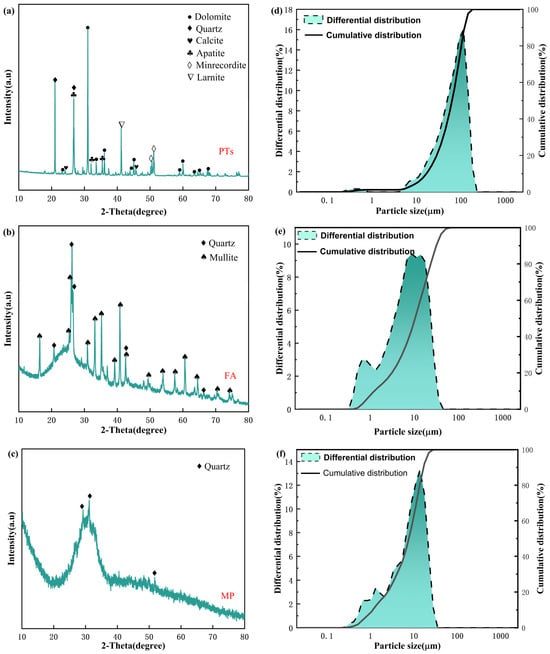
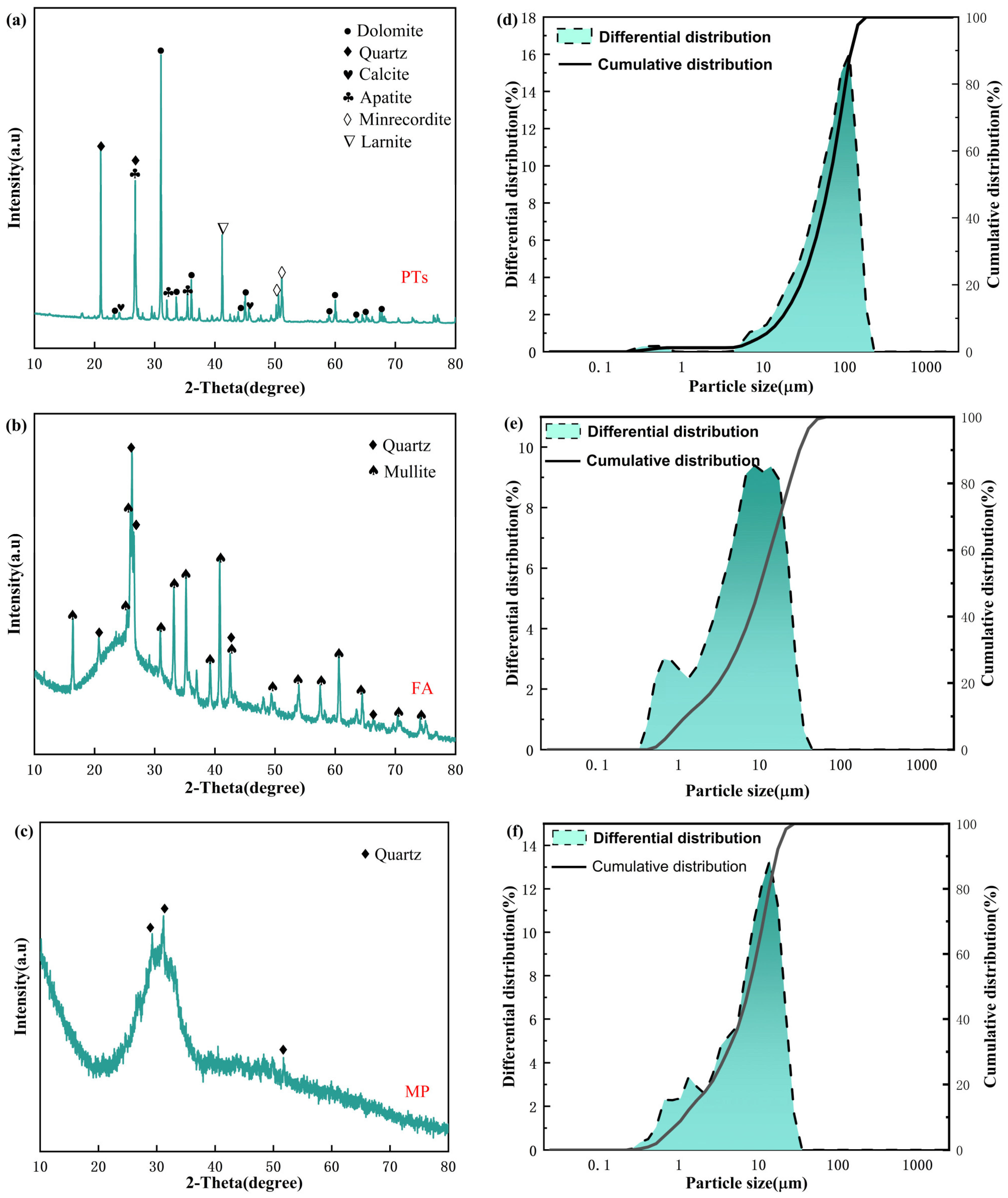
The employed raw materials include the following: phosphorus tailings sand (PTS), slag powder (MP), and fly ash (FA), purchased from a production enterprise in Lianyungang, Jiangsu Province, China. The PTS comprised SiO2, CaO, Al2O3, and P2O5 as the principal chemical components. FA was primarily composed of SiO2, Al2O3, Fe2O3, CaO, and MgO, while MP predominantly contained SiO2, CaO, Al2O3, and MgO. The raw material’s chemical compositions, investigated by X-ray fluorescence (XRF, Horiba Scientific, Tokyo, Japan), are summarized in Table 1. Further characterization regarding mineralogical composition, microstructure, and particle size distribution was carried out using X-ray diffraction (XRD, PANalytical, Almelo, The Netherlands) and laser diffraction particle size analysis (Japan Electron Optics Laboratory Co., Ltd., Tokyo, Japan), respectively, with the observed findings presented in Figure 1.
Table 1.
Chemical composition of raw materials.
Figure 1.
XRD patterns and particle size distributions of the raw materials: (a,d) phosphorus tailings sand (PTS), (b,e) fly ash (FA), and (c,f) slag powder (MP).
The water used in the experiments was taken from the laboratory tap supply and treated in a standardized manner to meet the test requirements. The chemical reagents employed were analytical reagent (AR) grade sodium silicate (Na2SiO3·9H2O) and sodium hydroxide (NaOH), both purchased from Sinopharm Chemical Reagent Co., Ltd. (Shanghai, China).
2.2. Experimental Procedures
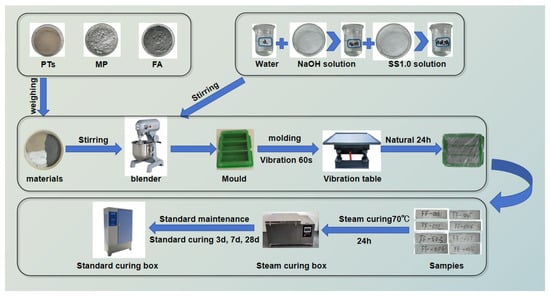
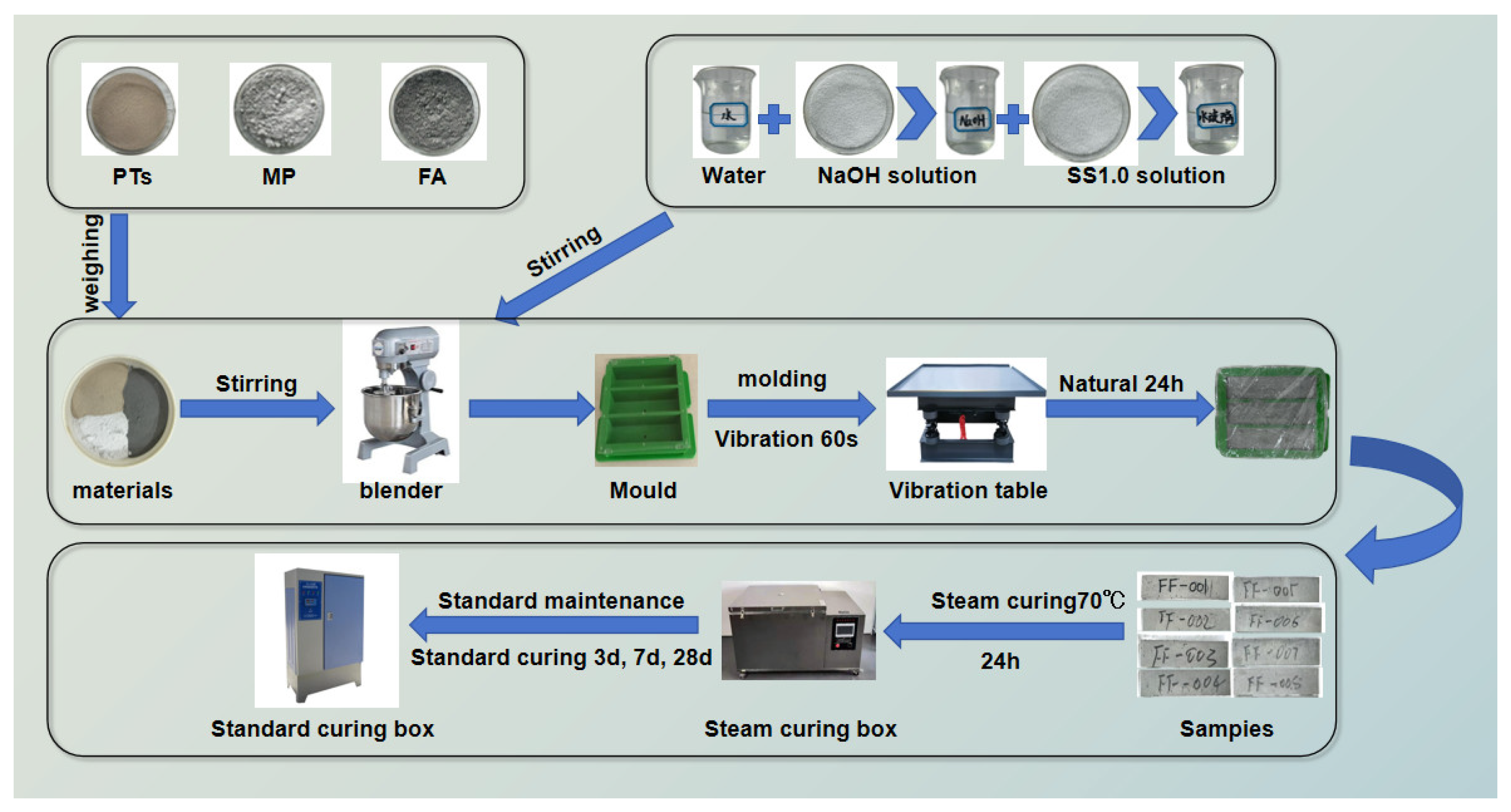
Figure 2 depicts the processing of raw materials, preparation procedure, and curing method employed for the cementitious materials in the current study. Based on previous research and principles of orthogonal experimental design [25], nine distinct formulations (F1–F9) were established (Table 2) to comprehensively evaluate the influence of varying composition parameters on the overall characteristics of the cementitious materials. The optimal formulation was identified through a comprehensive evaluation of workability (flowability), dimensional stability (drying shrinkage and wet–dry cycling), mechanical performance, and heavy-metal leaching behavior, supported by microstructural analyses for verification.
Figure 2.
Schematic illustration of the production process flow.
Table 2.
Raw material formulations.
During the specimen preparation process, the pretreated PTS, FA, and MP were first placed in a forced mixer according to the designed proportions and mixed at a speed of 60 revolutions per minute for 5 to 10 min until the materials exhibited uniform color, no visible segregation, and achieved overall homogeneity. Subsequently, under the condition of maintaining a constant water-to-solid ratio of 0.25, an alkali activator solution—prepared by proportionally mixing a sodium silicate solution (modulus 1.0) and a sodium hydroxide solution—was slowly added. Mixing was then continued for 10 to 15 min to form a uniform paste. The entire mixing process was conducted in a controlled environment at a temperature of 25 ± 2 °C and a relative humidity of ≤60%, with real-time monitoring of the paste consistency. If excessive viscosity or material agglomeration occurred during mixing, 0.5–1.0% additional water could be added to adjust the workability.
Specimen preparation was carried out following the GB/T 50448-2015 [26] standard. The blended paste was placed into steel molds with the dimensions of 40 × 40 × 160 (mm) and subjected to vibration for 60 s to remove entrapped air [27]. The surface was then leveled, followed by effective covering with plastic film to minimize moisture loss. After initial setting, the specimens were transferred to a steam-curing chamber at 70 °C with 99% relative humidity for a duration of 24 h to promote early hydration. Following steam curing, they were transferred to a standard curing condition maintained at relative humidity ≥ 95% and 20 ± 2 °C for continued curing over periods of 3, 7, and 28 days, followed by an analysis of performance tests and microstructural characteristics [28].
2.3. Test Method
2.3.1. Fluidity
Based on the specification of GB/T 8077-2012 [29], the mini-slump flow test was conducted using a specialized metallic truncated cone mold (bottom diameter 60 mm, top diameter 36 mm, height 60 mm, with smooth and seamless inner walls) for evaluating the workability of the cementitious pastes. During the test, the freshly prepared paste was quickly transferred into the metallic cone mold placed on a glass plate and leveled at the top surface. After that, the mold was vertically lifted to freely spread the paste. After 30 s, the spread diameters in two perpendicular directions were recorded using a ruler, followed by the determination of the average value as the flow diameter of the specimen.
2.3.2. Compressive Strength Test Method
According to the procedures specified in GB/T 17671-2021 [30], analysis of compressive strength was carried out, wherein each specimen was carefully aligned within the compression testing frame and loaded continuously at a uniform rate of 0.5 kN/s [31] until the occurrence of structural failure. The compressive strength was determined from the peak load sustained by the specimen before failure. For each mixture composition and curing period (of 3, 7, and 28 days), three specimens were tested under identical conditions, and the recorded average value was designated as the representative compressive strength, which was calculated using the equation described below:
where is the applied load at failure (kN), is the compressive strength (MPa), and A denotes the specimen cross-sectional area (40 mm × 40 mm).
2.3.3. Flexural Strength Test Method
Flexural strength tests were conducted following the descriptions specified in GB/T 17671-2021 [30], where specimens were positioned on a flexural testing machine, followed by monotonic loading at a constant rate of 0.5 kN/s until fracture. At the specimen failure condition, the recorded maximum load was employed to calculate the flexural strength. Tests were conducted using three distinct specimens for each mix proportion at curing ages of 3, 7, and 28 days, and the average value was recorded as the final flexural strength, which can be calculated using the following formula:
where is the applied load at failure (kN), represents the flexural strength (MPa), L is the span length between supports, is the cross-section width of the specimen (40 mm), and h is the specimen height (160 mm).
2.3.4. Drying Shrinkage Test Method
The drying shrinkage measurements were conducted in accordance with JGJ/T 70-2009 [32]. Specimens were first cured under standard conditions for 24 h, followed by the determination of their initial length and mass. The specimens were then transferred to water curing at 20 ± 2 °C, and lengths were measured at curing ages of 3, 7, and 28 days using a vernier caliper with an accuracy of 0.1 mm. The drying shrinkage was calculated using the following formula:
where is the initial length of the specimen (mm), denotes the drying shrinkage (%), is the length of the specimen at curing age T (mm), and L represents the specimen’s effective length (160 mm).
2.3.5. Dry–Wet Cycles Test Method
The wet–dry cycling tests were conducted according to the description of GB/T 50082-2009 [33]. Each wet–dry cycle consisted of two steps: the specimens were first immersed in water at (20 ± 2) °C for 24 h and then dried in an oven at 60 °C for 24 h, giving a total cycle duration of 48 h. After each cycle, the specimens were examined for visible surface defects, including cracks or spalling, and their masses were recorded using an electronic balance. The calculation of mass loss rate was performed using the following formula:
where and , respectively, denote the specimen masses before and after the wet–dry cycle (g), and is the corresponding rate of mass loss (%).
2.3.6. Microstructure Characterization Methods
The cementitious products and microstructure of raw materials (solid waste) were characterized using a MIRALMS scanning electron microscope (SEM, TESCAN, Brno, Czech Republic), with energy-dispersive spectroscopy (EDS) employed to determine their chemical composition. A powder X-ray diffractometer (Cu-Kα radiation, λ = 1.5406 Å, PANalytical, Almelo, The Netherlands) was used to determine the phase composition of specimens with different mix proportions, using the following parameters: voltage 40 kV, current 40 mA, 2θ scan range 5–70°, and scanning speed 5°/min [34]. Fourier-transform infrared spectroscopy (FTIR) was performed using an E55+FRA106 spectrometer (Bruker Optics, Ettlingen, Germany), with a resolution of 4 cm−1 over a range of 400–4000 cm−1 [35].
2.3.7. Leaching Toxicity Test Method
Analysis of Leaching toxicity tests was performed following the “Horizontal Shaking Method for Leaching Toxicity of Solid Wastes”. After 28 days of curing, the specimens were crushed and sieved to obtain particles smaller than 3 mm. Dried sample (100 g) was transferred into a 2 L extraction bottle, and the required volume of leaching solution was determined according to the sample’s moisture content to maintain a liquid-to-solid ratio of 10:1 (L/kg). The bottle was sealed after the addition of the leaching agent and vertically mounted on a horizontal shaker, where it was agitated at 110 ± 10 cycles/min for the duration of 8 h with an amplitude of 40 mm. After that, the bottle was removed and allowed to stand for 16 h. The resultant supernatant was then filtered using a 0.45 μm membrane, and the filtrate was collected for the analysis of leaching toxicity [36].
2.4. Statistical Method for Mix Proportion Optimization
To determine the optimal mixture proportion considering both mechanical performance and environmental safety, a multi-objective statistical optimization method was adopted. Compressive strength and heavy-metal leaching concentration were selected as the evaluation indicators. As these indicators differ in physical meaning and units, the experimental data were first normalized into dimensionless indices: compressive strength was treated as a benefit-type indicator, while the total heavy-metal leaching concentration was treated as a cost-type indicator. The normalization formulas are as follows:
where and represent the normalized strength index and leaching index of the -th mixture proportion, respectively; denotes the compressive strength, and denotes the total heavy-metal leaching concentration.
To achieve a balanced evaluation of mechanical performance and environmental performance, an equal-weight strategy was adopted to calculate the comprehensive performance score of each mixture proportion.
3. Results and Discussion
3.1. Setting Time and Flowability
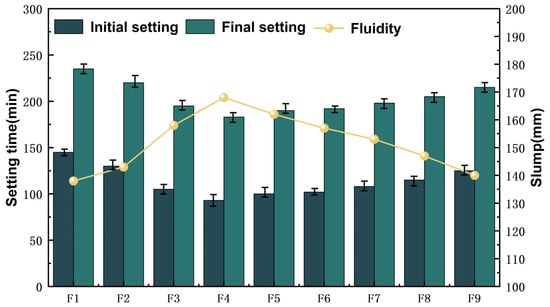
The flowability results and setting times of cementitious materials are presented in Figure 3. For varying mix proportions, reducing the PTS content from 80 to 0% resulted in a “V-shaped” trend for both the initial and final setting times, which, respectively, varied from 90 to 145 min and 180 to 240 min. Among the examined formulations, F4 demonstrated the shortest setting time of 93 min, indicating superior early-age hardening. F1 and F2 showed the longest delays in setting, which can be attributed to their high PTS content, leading to a dilution of reactive components and reducing overall reactivity. The low content of MP and FA further decreased the overall reaction rate, resulting in delayed setting. Upon comparison with F1, F7, and F9, the initial setting time of F4 was reduced by 35.9, 13.9, and 25.6%, respectively, while the final setting time was found to be decreased by the factor of 22.1, 7.6, and 14.9%. These findings suggested that at higher PTS content (>50%), soluble P2O5 and F- may partially inhibit early hydration reactions, extending the setting time.
Figure 3.
Trend chart of setting time and fluidity with changes in various mix ratios.
Regarding flowability, decreasing the PTS content from F1 (80%) to F4 (50%) while increasing the FA and MP contents led to a significant increase in flow diameter, reaching a maximum of 168 mm for F4. Further increasing the FA and MP contents to 30–50% (F5–F8) led to a gradual decline in flowability compared with F4, with reductions of 3.5, 6.5, 8.9, and 12.5%, respectively. The observed decline can be attributed to the higher proportion of fine FA and MP, which raises the wetting surface area per unit weight [37], increasing water demand and reducing workability.
The F4 formulation achieved the best compromise between workability and reactivity, exhibiting an initial setting of around 93 min with 185 min of final setting time, and a flow diameter of 168 mm. The superior performance of this optimal mix was attributed to a synergistic mechanism: spherical FA particles exerted a “ball-bearing effect”, decreasing the internal friction; MP facilitated the formation of C-S-H gel while also enhancing the structural development, and PTS provided a skeletal support contributing to microstructural construction. The outstanding flowability of this optimal formulation makes it well-suited for efficient PTS utilization in regions such as Lianyungang, providing reliable parameter support for future engineering applications.
3.2. Compressive Strength
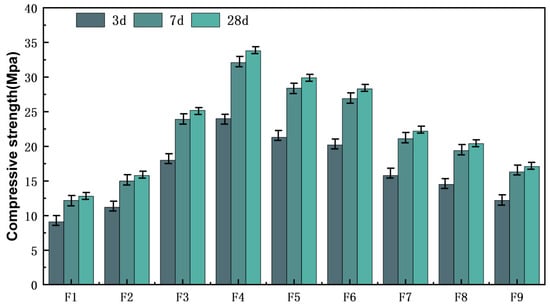
The influence of varying proportions of PTS, FA, and MP on the compressive strength of the cementitious materials is presented in Figure 4. With 60 and 30% PTS content, the 28-day compressive strength remained in the range of 25.2–29.9 MPa. Specimen F4 demonstrated the best mechanical performance, with compressive strengths of 24.0, 32.1, and 33.8 MPa at 3, 7, and 28 days, respectively. The superior strength of F4 can be attributed to the synergistic interaction among the three solid wastes; PTS served as a structural skeleton while contributing partially reactive components, and MP released active SiO2 and Al2O3, participating in hydration to form C-(A)-S-H gels [38], while the glassy phase of FA was progressively activated under the alkaline environment, working alongside MP to densify the matrix and accelerate strength development. Excessively high or low PTS content led to an evident reduction in compressive strength. For example, F1 achieved a 28-day compressive strength of only 12.8 MPa, which was 62.1% lower than that of F4, highlighting that PTS alone had low reactivity and was insufficient to sustain cementation reactions. With increasing the MP and FA contents from 20 to 50%, the 28-day compressive strengths of F2-F4 increased to 15.8, 25.2, and 33.8 MPa, respectively, demonstrating that a higher availability of reactive components promotes more extensive hydration and significantly improves mechanical performance.
Figure 4.
Trend chart of compressive strength variation with mix ratio.
When the PTS content decreased to 10% or lower, the respective 28-day compressive strengths of F8 and F9 were decreased to 20.4 and 17.1 MPa, respectively. The observed finding indicated that an adequate PTS skeleton is essential for strength development, as it optimizes the microstructure and improves structural integrity. These findings are consistent with Tang et al. [39], who demonstrated that combined reactions of multiple solid wastes can significantly improve early-age strength in a PTS–steel slag system. However, careful control of component proportions is essential to prevent microstructural inconsistencies or inhibition of the hydration process.
3.3. Flexural Strength
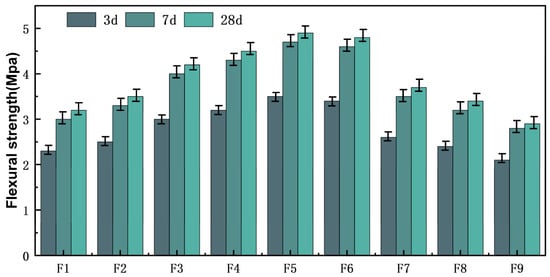
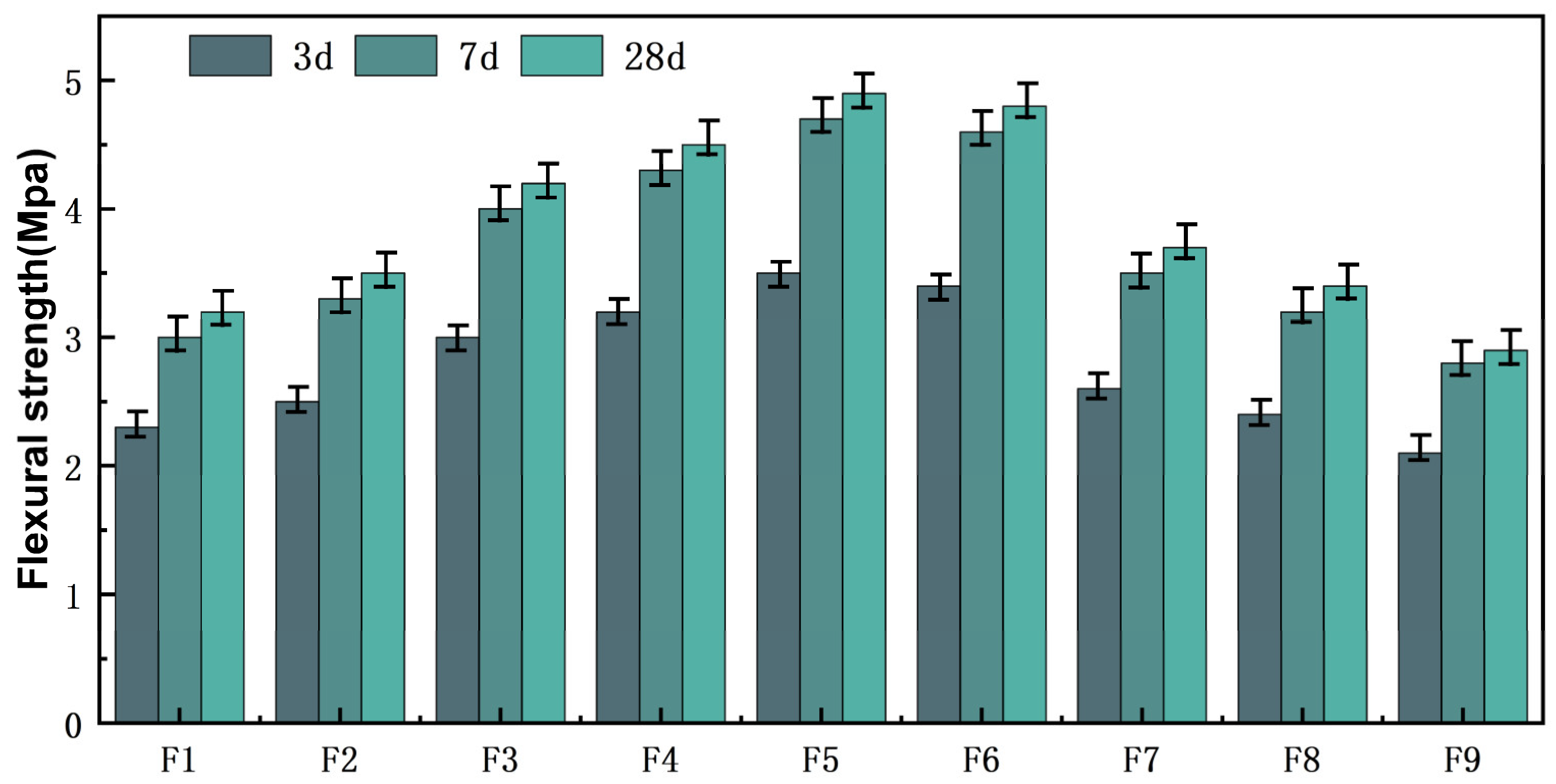
According to Figure 5, the flexural strength of all mixtures increased with curing age, following a typical pattern of rapid early-age gain followed by a slower increase at later ages. The strength growth rate between 3 and 7 days was generally higher than that observed from 7 to 28 days, consistent with the fundamental hydration law of cementitious materials. At an early stage (3 days), mixtures containing appropriate FA and MP amounts demonstrated improved flexural performance, with F4 achieving 3.2 MPa, surpassing most other formulations. The observed enhancement was attributed to the rapid activation of FA and MP under alkaline conditions, leading to the formation of C-(A)-S-H gels and a small amount of AFt crystals, which collectively contribute to the improvement of early-age strength.
Figure 5.
Trend chart of flexural strength variation with varying mix ratios.
The flexural strength of all specimens demonstrated a gradual increase with extended curing time. F4 reached 4.3 MPa at 7 days and 4.5 MPa at 28 days, reflecting its superior mechanical stability and the development of a compact, dense microstructure. These results suggest that maintaining a 50% PTS content combined with balanced proportions of FA and MP establishes an optimal ternary hydration synergy, promoting enhanced reactivity and superior strength development. However, when the PTS content was reduced below 30% (F8 and F9), the 28-day flexural strengths declined to 3.4 and 2.0 MPa, respectively, reflecting reductions of 20.9 and 53.5% relative to F4. This decline indicates that an excessive presence of FA and MP disrupted the continuity of the cementitious matrix, resulting in poor phase connectivity and diminished overall structural strength.
3.4. Drying Shrinkage
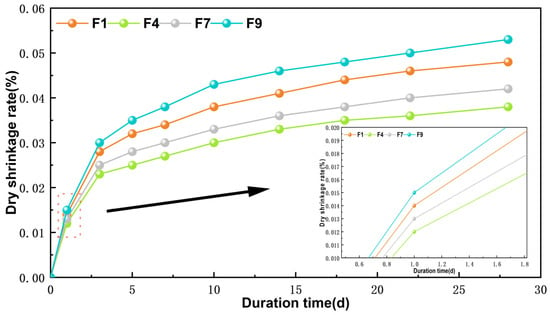
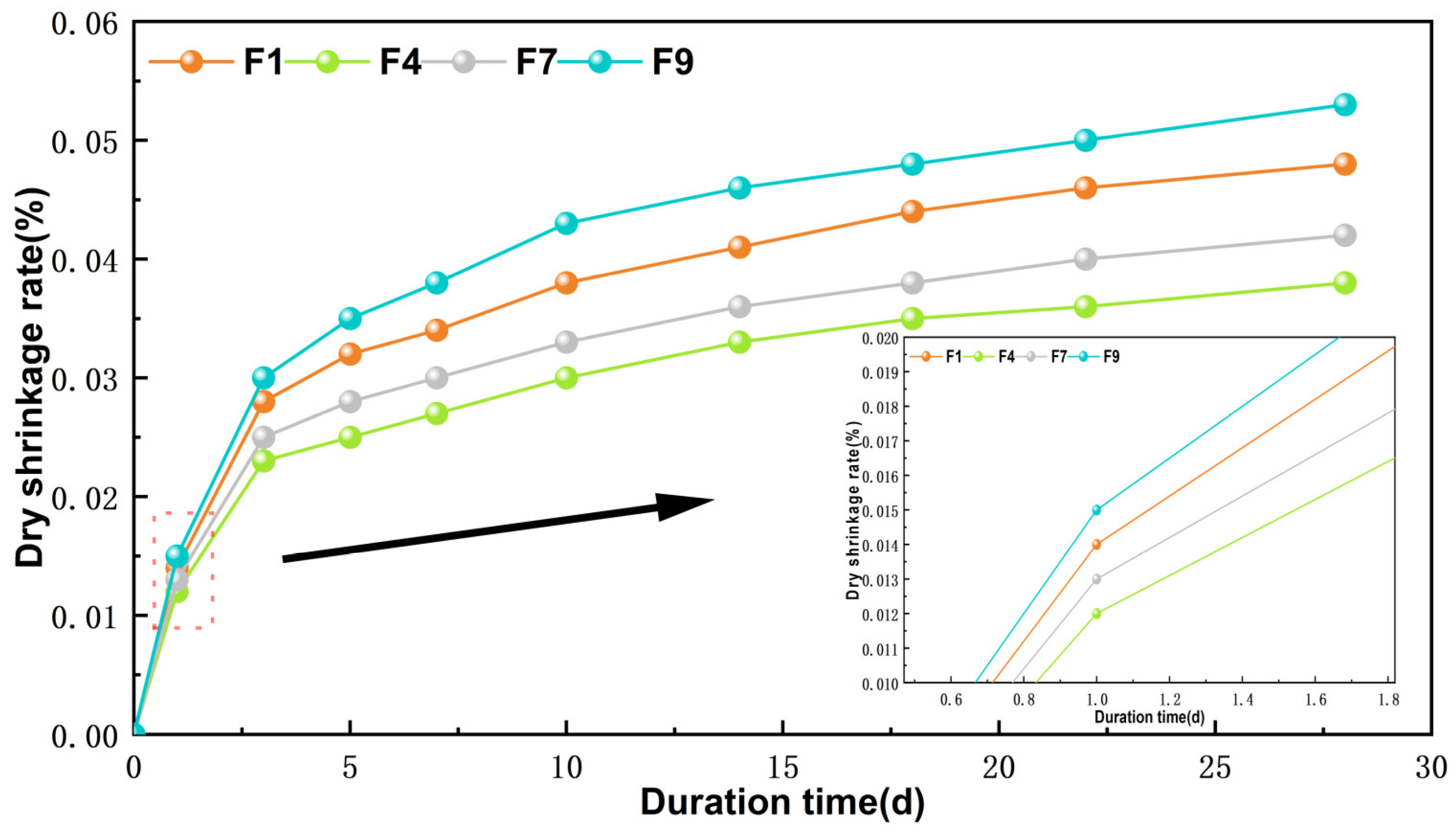
Figure 6 illustrates the drying shrinkage behavior of the composite cementitious materials incorporating various proportions of PTS, FA, and MP over a 28-day curing period. All materials demonstrated pronounced early-age shrinkage, primarily occurring within the initial 0–7 days, after which the shrinkage rate progressively declined and eventually stabilized.
Figure 6.
Trend chart of drying shrinkage with various mixing ratios.
Among all mixtures, specimen F4 displayed the most favorable volumetric stability, with a 28-day shrinkage ratio of only 0.037%, which was significantly lower than those of F1 (0.049%), F7 (0.042%), and F9 (0.053%), corresponding to the respective reductions of 25.5, 11.9, and 30.2%. Such results indicate that the synergistic interaction among the solid waste components in F4 facilitated the formation of abundant hydration products, including C-S-H gels, which effectively filled the pore spaces and enhanced microstructural compactness, minimizing shrinkage caused by moisture loss [40]. Specimen F7, with a 28-day shrinkage of 0.042%, showed remarkably higher deformation, approximately 13.5% higher than F4, suggesting limited resistance to drying shrinkage. Although some pore refinement was achieved, the overall compactness remained inferior to that of F4. However, specimen F9 demonstrated the highest shrinkage ratio (0.053%), suggesting the formation of a relatively open pore network within the FA-MP binary matrix during the hydration process. The presence of this porous framework increased sensitivity to capillary stresses during drying, ultimately resulting in pronounced volumetric contraction [41].
3.5. Dry–Wet Cycles
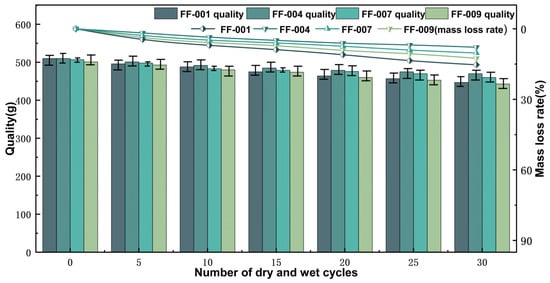
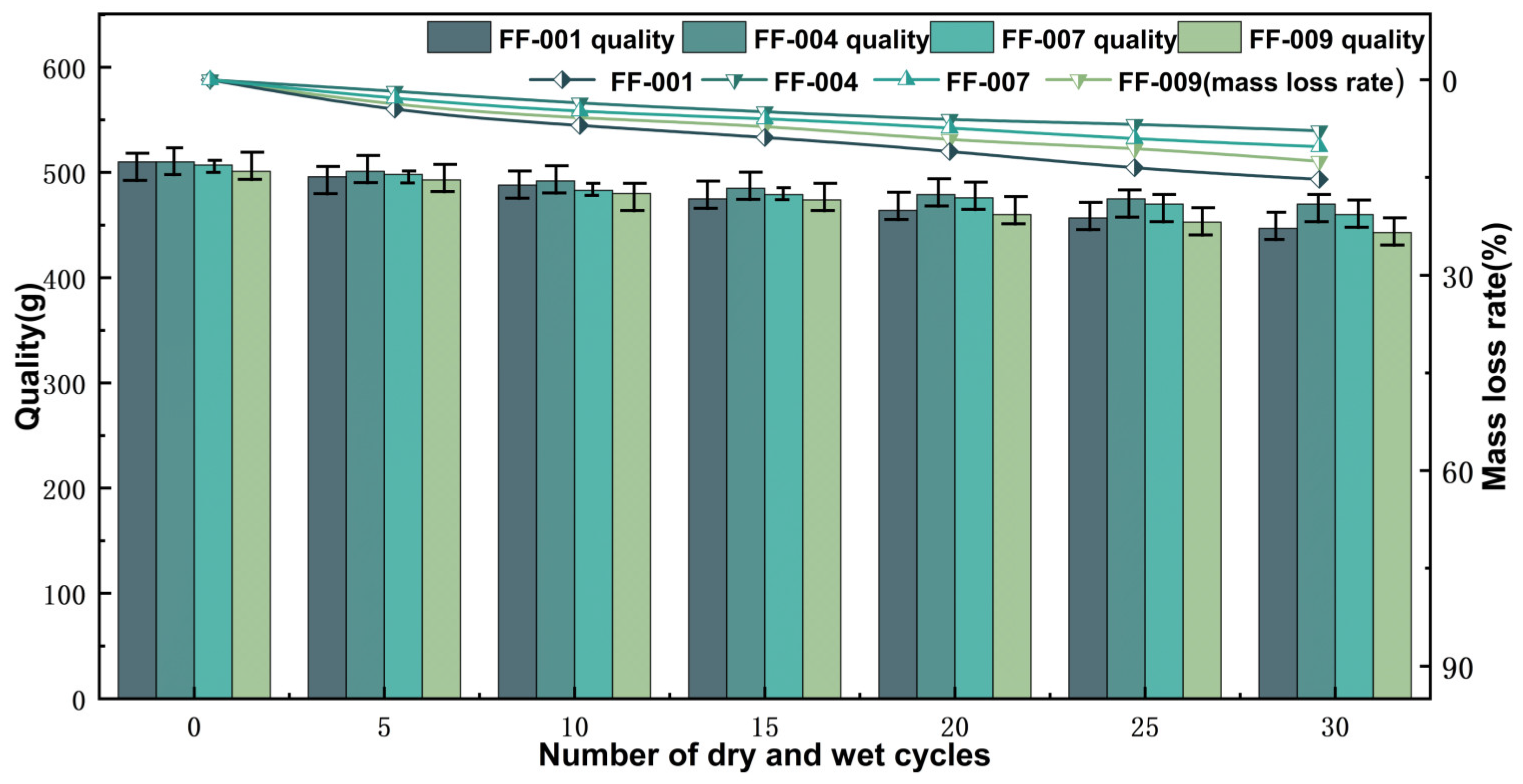
Figure 7 illustrates the mass variation and corresponding mass loss ratios of the cementitious materials with varying mix proportions during 0–30 cycles of wet–dry alternation. All specimens showed a continuous decrease in mass accompanied by a nearly linear rise in mass loss, indicating that the progressive loss of moisture and microcrack development were dominant factors contributing to material degradation.
Figure 7.
Mass loss and loss rate trends during the wet–dry cycle process with various mixing ratios.
F4 demonstrated the highest mass retention among all, with a mass loss ratio of 6.7% after 30 cycles, which was approximately 17.3% lower than F1 (8.1%) and 28.7% lower than F9 (9.4%). The observed finding confirmed that the synergistic interactions among PTS, FA, and MP in F4 facilitated the uniform formation of hydration products, including C-S-H gels, leading to the development of a denser and more cohesive cementitious matrix. The dense microstructure efficiently minimized pore connectivity, hindered water penetration, and suppressed microcrack propagation, improving resistance to cyclic wet–dry deterioration [42]. F1 and F7 showed mass loss ratios of 8.1% and 7.4%, respectively, with F7 showing an approximate 8.6% reduction relative to F1, indicating that appropriate adjustment of FA and MP proportions can enhance the distribution of hydration products, refine pore structures, and moderately improve durability under wet–dry cycling [43]. However, F9 displayed the highest mass loss ratio of 9.4%, 2.7% higher than that of F4, corresponding to a relative increase of approximately 40.3%. This poor performance can be attributed to the excessive active components and uneven distribution of hydration products, resulting in increased porosity and reduced structural integrity. Therefore, microcracks originated at capillary pores and progressively expanded during the hydration–dehydration alternation, ultimately accelerating mass degradation.
3.6. Microstructure Analysis
3.6.1. XRD
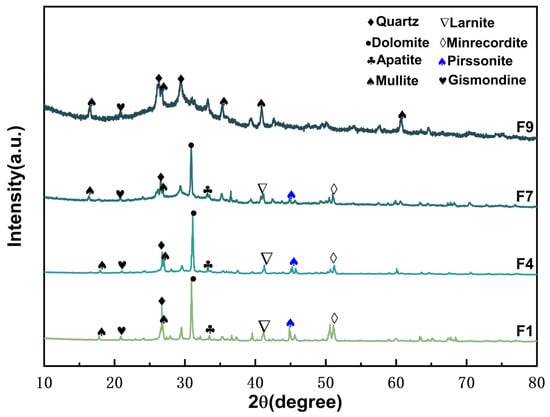
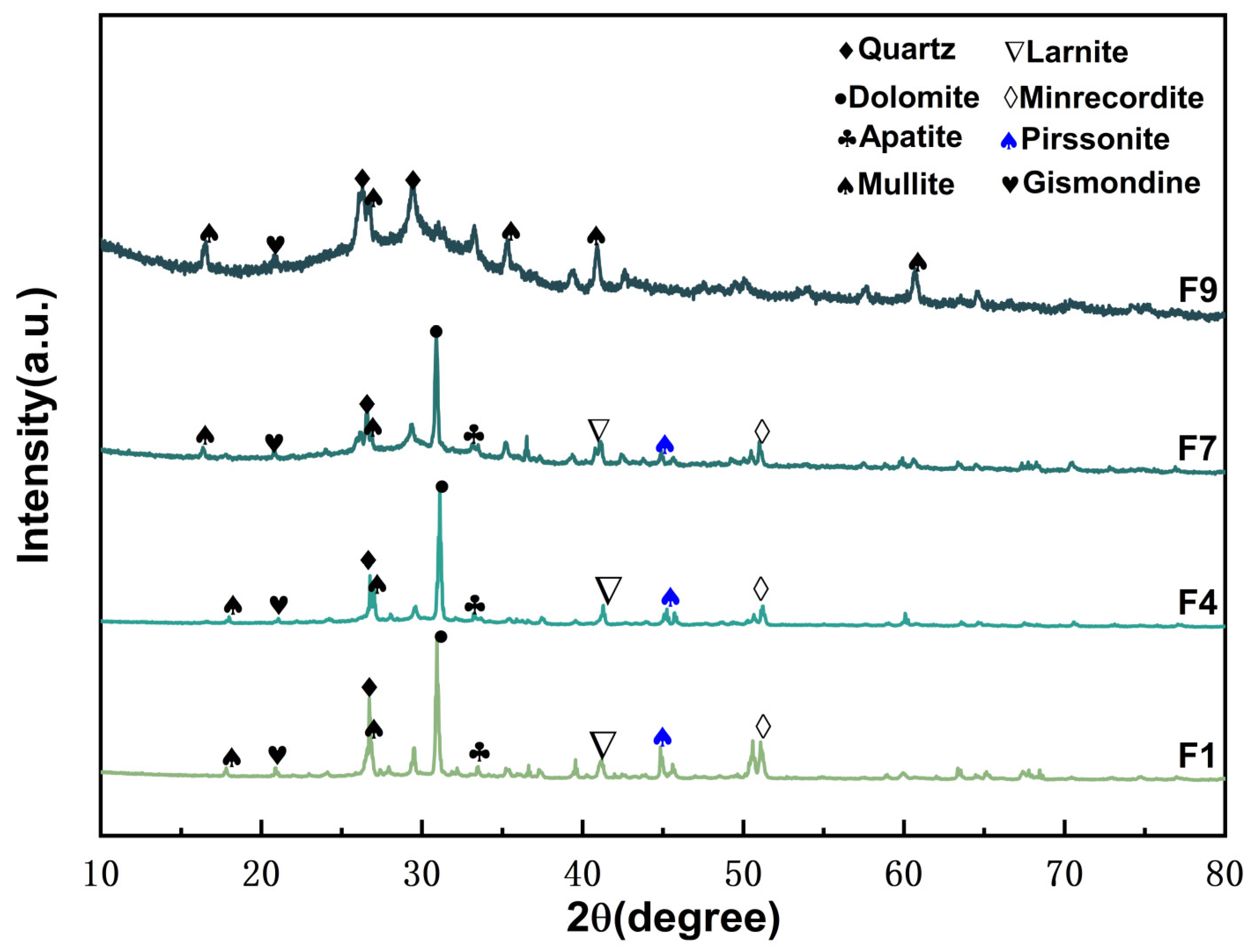
XRD analysis was performed on samples with different mix proportions to investigate the mineral composition and hydration mechanism of PTS-based multi-solid-waste cementitious materials, as shown in Figure 8. The main hydration product, C-(A)-S-H gel, is amorphous in nature and therefore does not exhibit distinct diffraction peaks in the XRD patterns; however, its presence can be inferred from the broad diffuse hump observed in the 2θ range of approximately 22–40° [44].
Figure 8.
XRD spectra.
In the F9 sample without PTS, clear diffraction peaks of calcium zeolite and a pronounced amorphous halo were observed, indicating that FA and MP were sufficiently dissolved under alkali activation and formed a large amount of C-(A)-S-H gel and zeolitic hydration products. With the gradual incorporation of PTS (F7, F4, and F1), the intensities of the calcium zeolite peaks and the amorphous diffuse hump gradually decreased, while the crystalline mineral peaks became more pronounced, indicating that the overall extent of reaction of the system decreased with increasing PTS content. Comparison with the XRD pattern of the raw PTS shows that the quartz, apatite, dolomite, and calcite peaks observed in the cementitious materials originated from the PTS itself, and their intensities increased with higher tailings content. In addition, mullite and quartz diffraction peaks were detected in all samples; these phases mainly originated from inert crystalline components in FA and remained as residual phases after alkali activation. In the F1 sample with the highest PTS content, the crystalline mineral peaks were the strongest, and the amorphous hump was the weakest, indicating that a large amount of PTS did not participate in the reaction and existed mainly as an inert skeleton. In contrast, sample F4 still exhibited a relatively distinct amorphous diffuse peak, suggesting that the reaction products of FA and MP formed a continuous C-(A)-S-H gel network between the mineral skeletons, resulting in a higher reaction degree and a denser structure, which is consistent with its higher mechanical strength. FA and MP slowly dissolved in the alkaline environment to form zeolitic structures and C-(A)-S-H gel, and these hydration products enveloped and filled the spaces between the low-reactivity PTS particles, indicating that the PTS mainly served as a micro-skeleton and filler rather than a primary reactive phase. Although the intrinsic reactivity of PTS is limited, it plays an important role in structural stability and pore structure regulation, which is beneficial to the overall mechanical performance and durability of the composite cementitious materials.
3.6.2. FTIR
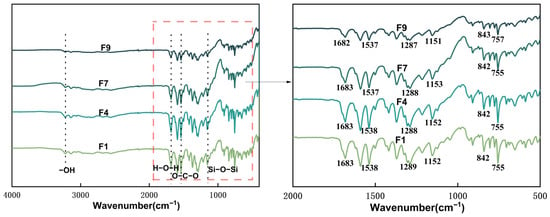
Figure 9 shows the FTIR spectra of cementitious materials with different mix proportions. The spectral features of all samples are highly similar, indicating that the main functional groups and hydration products are essentially the same, while their relative contents vary with the mix proportion. The broad absorption band located at approximately 3450 cm−1 is attributed to the O-H stretching vibration of structural water and adsorbed water, whereas the band at around 1680 cm−1 corresponds to the H-O-H bending vibration of molecular water. These characteristic bands are typical of hydration products and physically bound water in alkali-activated systems and are commonly associated with hydroxyl groups in C-(A)-S-H-type gels and zeolitic structures [45].
Figure 9.
FTIR spectra of F1, F4, F7, and F9.
The absorption band observed in the range of 1500–1550 cm−1 is assigned to the asymmetric stretching vibration of O-C-O groups, indicating the presence of carbonate species (CO32−) in the system. This band mainly originates from CaCO3 formed by the carbonation of calcium-rich hydration products during curing and sample preparation as a result of exposure to atmospheric CO2. The strongest absorption band at 1151–1153 cm−1 is attributed to the asymmetric stretching vibration of Si-O-T (T = Si or Al), which is a typical feature of alkali-activated cementitious materials [46]. Partial substitution of Si4+ by Al3+ in the tetrahedral framework promotes the formation of Si-O-Al bonds, thereby enhancing the polymerization and cross-linking of the aluminosilicate network and leading to a denser gel structure. In addition, the absorption peak located at approximately 842 cm−1 can be attributed to the asymmetric stretching vibration of Si-O-Si in SiO44− units [47], indicating that part of the quartz in the PTS underwent partial depolymerization under the action of the liquid alkaline activator. This result further demonstrates that some quartz present in the PTS can participate in the reaction during preparation and contribute to the formation of aluminosilicate gel structures, thereby providing additional strength support to the PTS-based geopolymer system. Consequently, the incorporation of PTS is, to a certain extent, beneficial for improving the overall mechanical performance of the geopolymer.
3.6.3. SEM and EDS
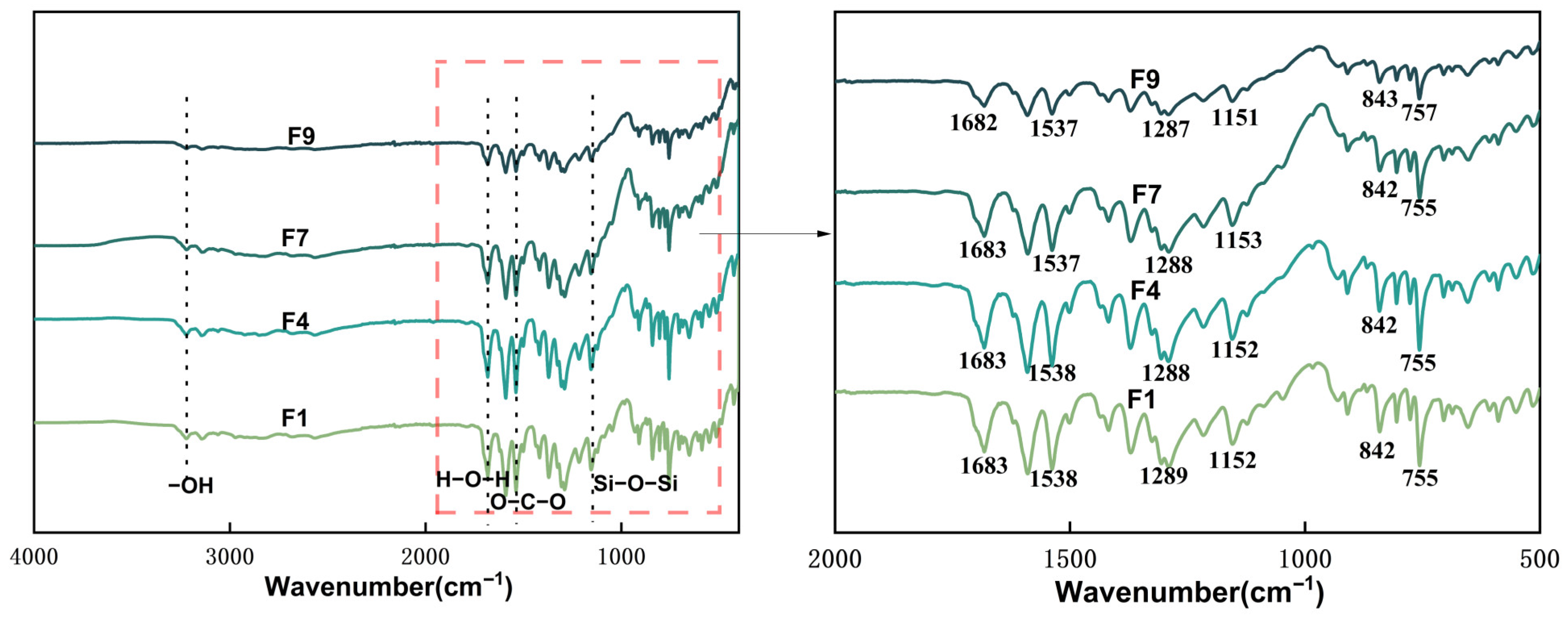
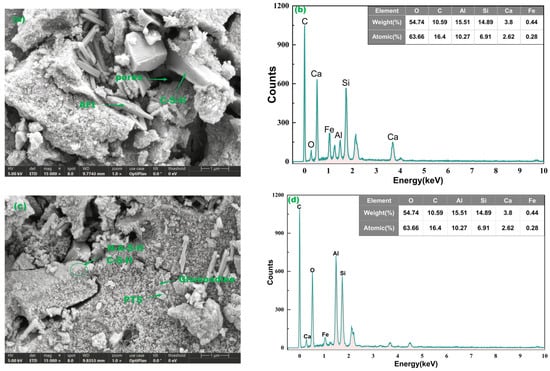
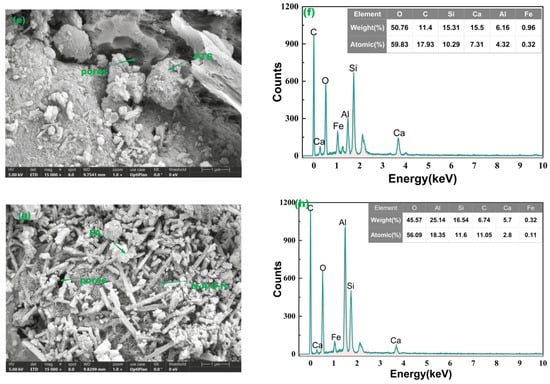
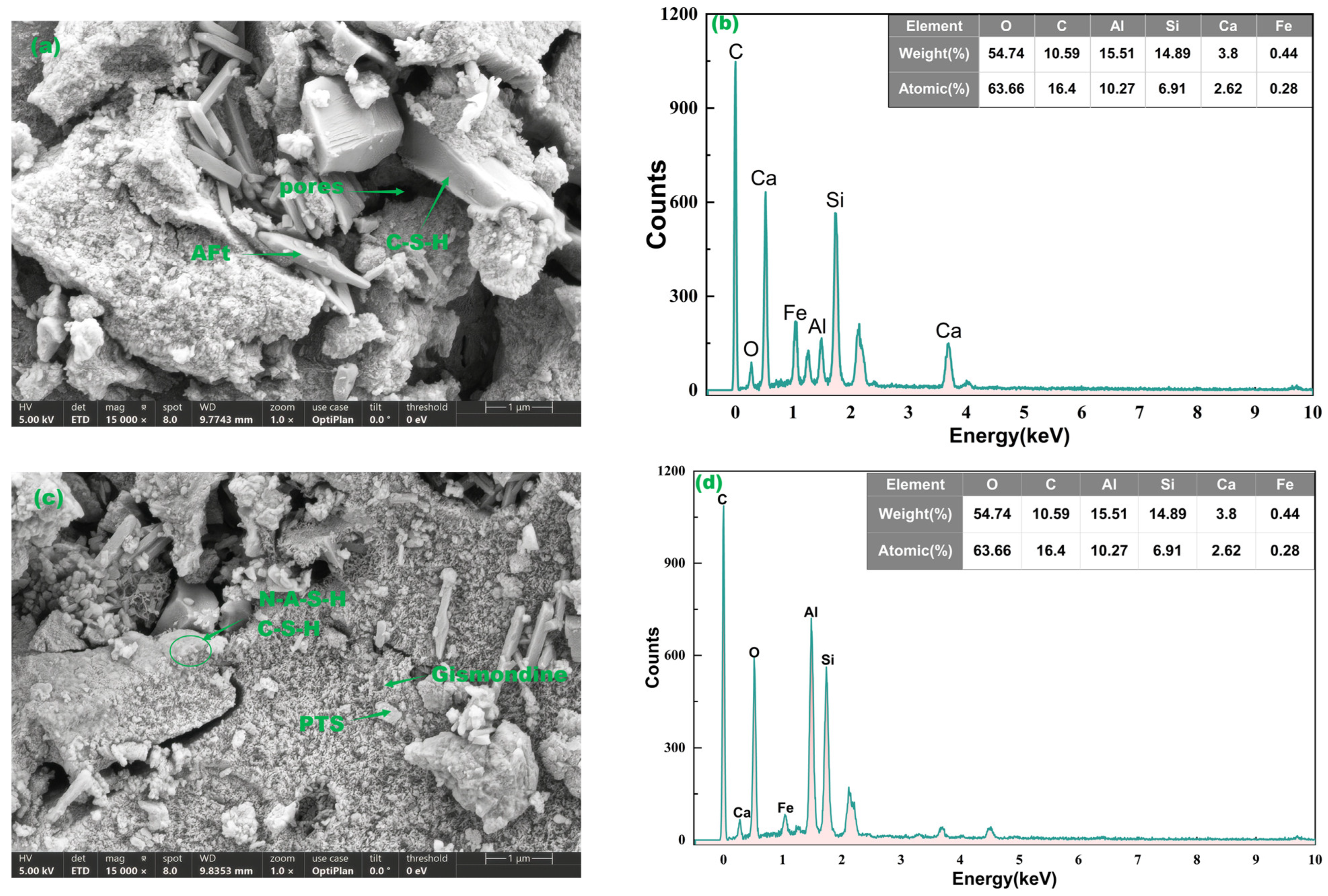
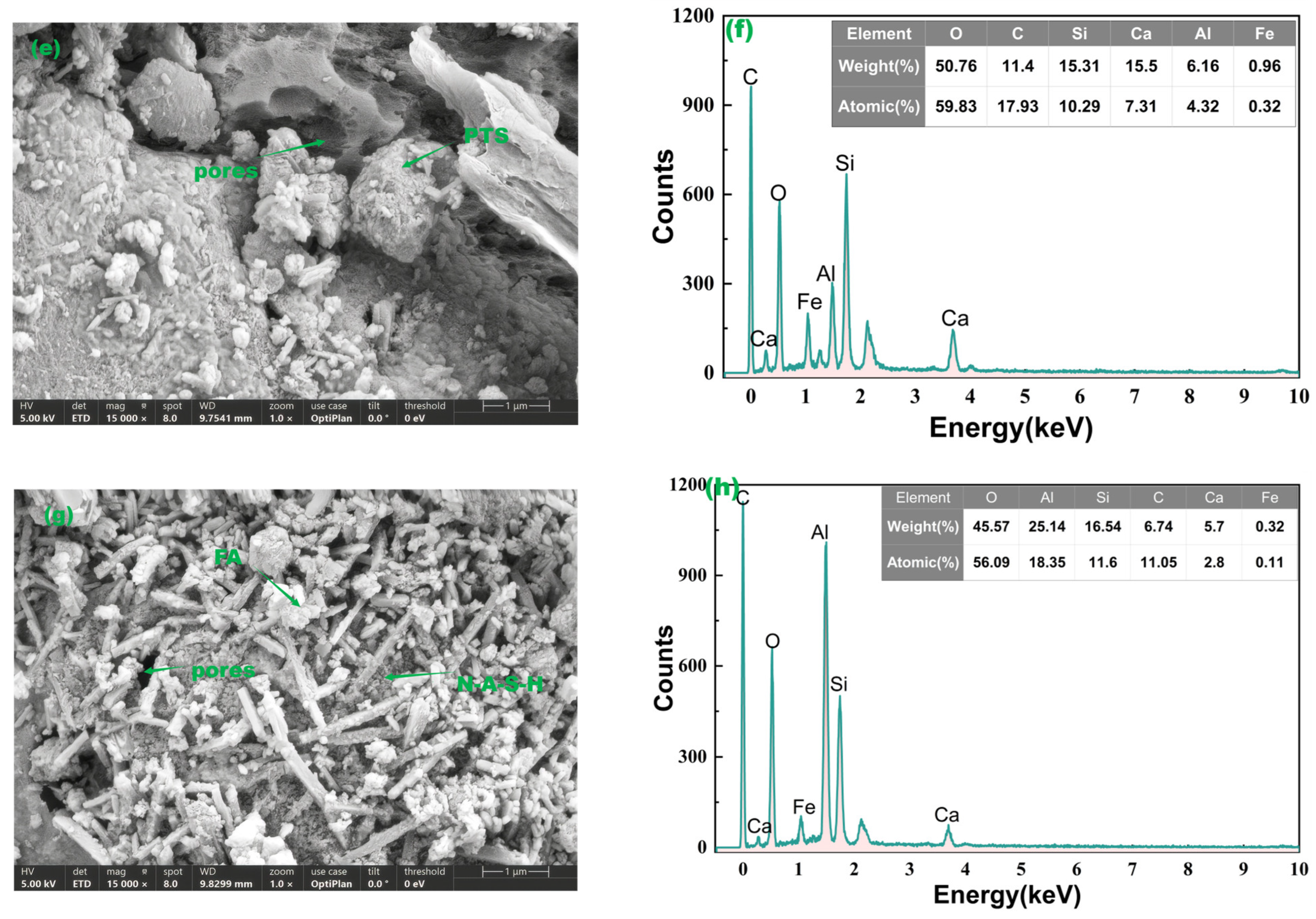
The F4 formulation was selected as the optimal formulation to further examine the influence of varying mix proportions on the microstructure of the cementitious materials, while F1, F7, and F9 were used as controls for SEM imaging and EDS analysis after 28 days of curing.
The C-S-H gels were primarily composed of lamellar structures intertwined with fibrous frameworks, forming a strong and compact network, while the needle-like crystals corresponded to Aft (Figure 10). In F1, where PTS dominated the system, the hydration reaction remained limited, and PTS functioned largely as an inert filler rather than actively participating in the reaction with other components. The SEM images indicate that the C-S-H gel exhibits a thick, plate-like morphology. This is mainly due to the high PTS content, which limits the availability of reactive Si and Al and increases the Ca/Si ratio. The low polymerization degree causes C-S-H to grow preferentially along specific crystal planes, resulting in layered stacking rather than a dense network or flocculent structure. F4, characterized by a lower PTS content and higher FA and MP proportions, contained greater amounts of amorphous SiO2 and Al2O3. These active components dissolved and reacted with Ca2+ to yield abundant C-S-H and N-A-S-H gels under strong alkaline activation (OH− ions). EDS analysis further supported these findings, revealing significantly higher concentrations of Si and Al, accompanied by stronger Ca and S signals, confirming the extensive formation of C-S-H gels and AFt. The compact and well-developed microstructure of F4 correlates with its outstanding compressive strength and flowability, reflecting the superior mechanical performance and workability. F7, however, displayed numerous blocky particles and agglomerates with a loose texture, lacking the typical morphology of hydration products. EDS revealed only 5.92% Ca content in F7, corresponding to a distinctly low Ca/Si ratio. The observed findings reflect insufficient hydration and restricted gel formation, ultimately leading to a less dense and weaker structural framework. Similarly, F9 is a cementitious material without PTS and is composed only of FA and MP. Due to the small particle size of FA, the resulting cementitious matrix exhibits a relatively dense structure, and almost no obvious pores can be observed in the SEM images. The morphology of fly ash particles changes significantly, with their surfaces covered by cementitious reaction products. EDS analysis shows that O, Al, and Si are the main constituent elements, and combined with the clustered needle-like morphological features, the product can be identified as sodium zeolite crystals. This indicates that the reactive aluminosilicate components in fly ash reacted with the alkaline activator to form sodium zeolite crystals and N-A-S-H gel. In addition, the low Ca content in this sample suggests that the hydration reaction was not yet sufficient.
Figure 10.
SEM–EDS images of mixtures F1 (a,b), F4 (c,d), F7 (e,f), and F9 (g,h).
In summary, the synergistic effect among multiple solid wastes in the F4 mixture significantly enhanced the overall reactivity and hydration efficiency, leading to the development of a compact and continuous gel network that served as the foundation for its improved performance.
3.7. Leaching Toxicity Analysis
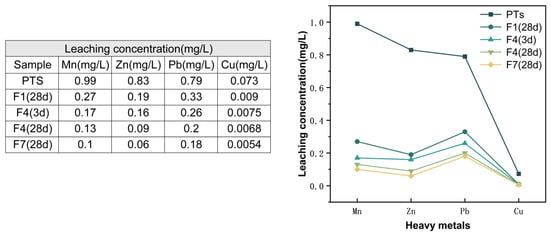
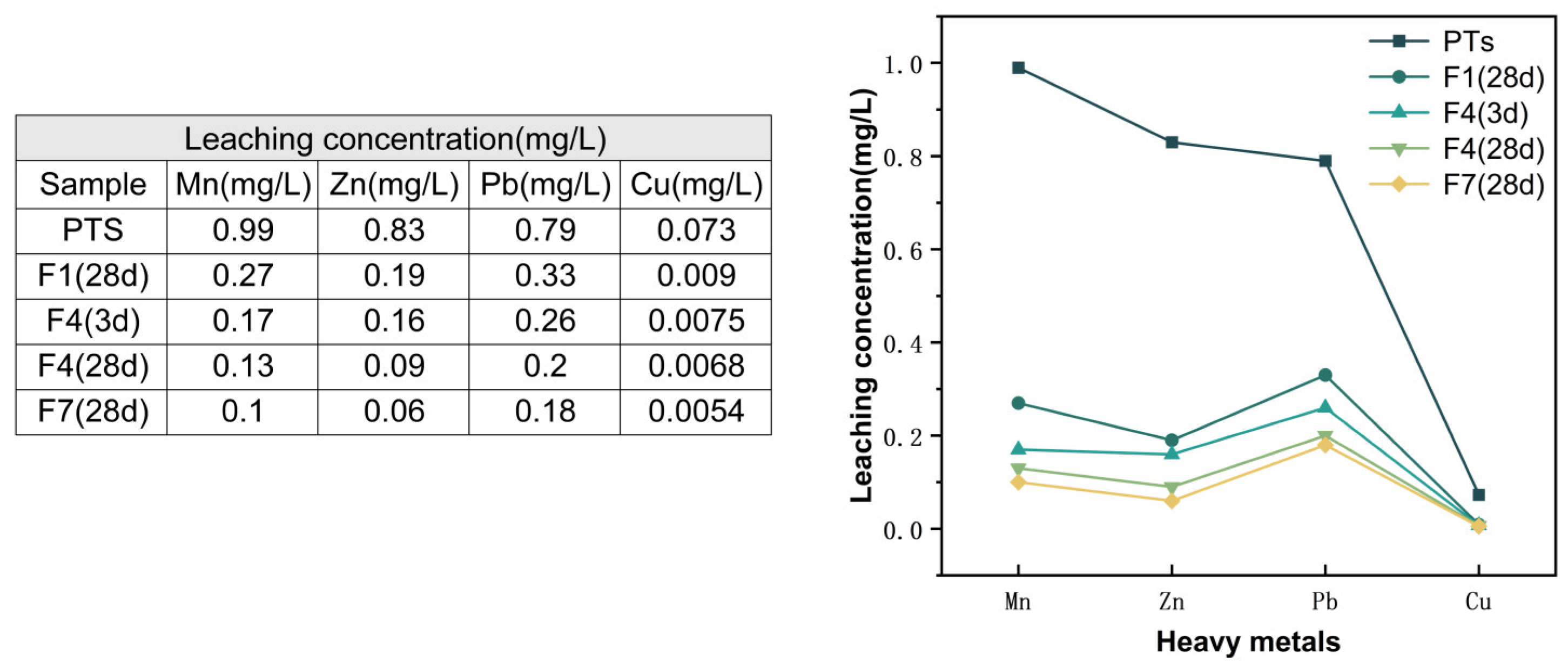
Figure 11 shows the leaching contents of Mn, Zn, Pb, and Cu under varying mixing proportions and curing ages. The results indicated that decreasing the PTS content and extending the curing period led to a consistent reduction in the contents of all heavy metal ions.
Figure 11.
Heavy-metal leaching behavior of cementitious composites.
For the F1 sample (80% PTS), the leaching contents of Mn, Zn, Pb, and Cu after 28 days of curing were, respectively, determined to be 0.27, 0.19, 0.33, and 0.0090 mg/L. F4 (50% PTS) demonstrated significantly reduced concentrations after 3 days (Mn: 0.17, Zn: 0.16, Pb: 0.26, Cu: 0.0075 mg/L), representing reductions of 37.0, 15.8, 21.2, and 16.7% relative to F1, indicating the preliminary encapsulation of heavy metals occurred even during the early stages of hydration. After 28 days, the leaching concentrations in F4 further decreased to 0.13, 0.09, 0.20, and 0.0068 mg/L, corresponding to additional reductions of 23.5, 43.8, 23.1, and 9.3% compared with their 3-day values. Compared with F1 at 28 days, a 51.9, 52.6, 39.4, and 24.4% reduction was observed, confirming that immobilization performance continuously improved with ongoing hydration and increasing microstructural densification. In the case of F7 (20% PTS), the leaching contents of Mn, Zn, Pb, and Cu were further decreased to 0.10, 0.06, 0.18, and 0.0054 mg/L, respectively. Compared with F1 (28 days), the reductions were 63.0%, 68.4%, 45.5%, and 40.0%. Pb concentration decreased from 0.33 to 0.18 mg/L, corresponding to a reduction of 0.15 mg/L (45.5%). These results highlight that incorporating multi-source solid wastes with reduced PTS content and increased proportions of reactive components (FA and MP) significantly improves heavy metal stabilization and overall environmental safety.
The heavy-metal immobilization increased with curing age, and the leaching concentrations in all specimens remained well below the limits described in the Chinese standard Identification Standard for Hazardous Wastes-Leaching Toxicity Identification (GB5085.3-2007) [48]. These findings confirmed that the cementitious composites incorporating PTS and supplementary solid wastes demonstrated remarkable solidification and encapsulation potential for heavy metals, thus effectively reducing the environmental risks associated with PTS.
3.8. Statistical Optimization of the Mix Proportion
Based on the test results of compressive strength in Section 3.2 and heavy-metal leaching in Section 3.7, the optimal mixture proportion was determined through a comprehensive statistical analysis method. The normalized indicators and comprehensive scores of each mixture proportion are summarized in Table 3.
Table 3.
Comprehensive performance indices of different mixtures.
As shown in Table 3, with decreasing PTS content, the compressive strength index first increased and then decreased, whereas the leaching index exhibited an opposite trend. Among them, mixture proportion F4 achieved the highest comprehensive score, indicating that it attained the optimal balance between mechanical performance and environmental safety. Although mixes with lower PTS content (e.g., F7 and F8) show lower leaching levels, their significantly reduced mechanical strength limits their engineering applicability. Conversely, mixes with higher PTS content (e.g., F1 and F2) fail to meet application requirements due to insufficient strength and poor solidification performance. It should be noted that mix F9 represents a baseline formulation composed solely of FA and MP without PTS. The data for this mix were used only for reference and were not included in the final performance ranking or optimization comparison. Therefore, F4 is identified as the optimal mix proportion, a conclusion that is consistent with the microstructural characterization and mechanical test results.
4. Conclusions
This study employed PTS as aggregate material, in combination with FA and MP, to develop a composite cementitious system aimed at the efficient valorization of multiple solid wastes. Through careful adjustment of mixing ratios and activator levels, the prepared composite cementitious materials can achieve improved workability and enhanced mechanical performance. A comprehensive investigation was performed using different mixing ratios with a constant alkali activator to evaluate their effects on mechanical properties, hydration behavior, and microstructural features. Based on these analyses, the optimal mixing design was determined. The current study revealed the following main findings:
- (1)
- Optimal mix performance: The composite cementitious material demonstrated the best overall performance at a mass ratio of 5:2.5:2.5 (PTS:FA:MP). At 28 days, a compressive strength of 33.8 MPa was observed with a flexural strength of 4.5 MPa, a flowability of 168 mm, and a 28-day drying shrinkage of only 0.038%. These values were significantly higher than those of conventional cement-based solidification systems, demonstrating remarkable structural stability and load-bearing capability, and completely satisfying the requirements for ground treatment and sludge solidification applications.
- (2)
- Microstructural mechanisms: Microstructural analyses, including SEM-EDS, XRD, and FTIR analysis, revealed that the optimal mixture led to the formation of abundant C-S-H gel, C-A-S-H gel, and AFt crystals. These products effectively filled the internal pores, strengthened the structural framework, and significantly increased compactness, resulting in a dense, continuous microstructure with improved strength and stability.
- (3)
- Application potential: The PTS-FA-MP composite cementitious material combines superior mechanical performance and dimensional stability with environmental benefits, including effective immobilization of heavy metals. Its simple preparation, low cost, and wide availability of raw materials further enhance its appeal, making it a promising candidate for industrial applications such as sludge solidification in the Lianyungang region, mine site rehabilitation, and other solid waste valorization efforts.
Author Contributions
Conceptualization, H.L.; Methodology, Z.W. and Y.H.; Investigation, Q.W. and H.S. (Haiqian Sun); Writing—original draft, Z.W.; Supervision, Y.H., H.S. (Huanqing Song), X.Z. and B.-J.H.; Project administration, B.-J.H. All authors have read and agreed to the published version of the manuscript.
Funding
This research received no external funding.
Data Availability Statement
The original contributions presented in the study are included in the article, further inquiries can be directed to the corresponding authors.
Conflicts of Interest
Authors Huanqing Song and Xuehui Zhao were employed by the company CCCC Third Highway Engineering Co., Ltd. The remaining authors declare that the research was conducted in the absence of any commercial or financial relationships that could be construed as a potential conflict of interest.
References
- Khan, S.; Anjum, R.; Raza, S.T.; Bazai, N.A.; Ihtisham, M. Technologies for municipal solid waste management: Current status, challenges, and future perspectives. Chemosphere 2022, 288, 132403. [Google Scholar] [CrossRef] [Scilit] [PubMed]
- Guo, W.; Xi, B.; Huang, C.; Li, J.; Tang, Z.; Li, W.; Ma, C.; Wu, W. Solid waste management in China: Policy and driving factors in 2004–2019. Resour. Conserv. Recycl. 2021, 173, 105727. [Google Scholar] [CrossRef] [Scilit]
- Gnandi, K.; Tchangbedji, G.; Killi, K.; Baba, G.; Ouro Salim, A.I. Processing of phosphate mine tailings by coagulation flocculation to reduce marine pollution in Togo: Laboratory tests. Mine Water Environ. 2005, 24, 215–221. [Google Scholar] [CrossRef] [Scilit]
- Teague, A.J.; Lollback, M.C. The beneficiation of ultrafine phosphate. Miner. Eng. 2012, 27, 52–59. [Google Scholar] [CrossRef] [Scilit]
- Yu, Y.; Du, C. Leaching of phosphorus from phosphate tailings and extraction of calcium phosphates: Toward comprehensive utilization of tailing resources. J. Environ. Manag. 2023, 347, 119159. [Google Scholar] [CrossRef] [Scilit]
- Zhou, K.; Zhou, Q.; Gong, K.; Zhang, J. Waste-to-resource strategy to fabricate environmentally benign flame retardants from waste phosphorus tailings. Compos. Commun. 2020, 19, 173–176. [Google Scholar] [CrossRef] [Scilit]
- Huang, X.; Feng, M.; Ni, C.; Xie, D.; Li, Z. Enhancement of nitrogen and phosphorus removal in landscape water using polymeric ferric sulfate as well as the synergistic effect of four kinds of natural rocks as promoter. Environ. Sci. Pollut. Res. 2018, 25, 12859–12867. [Google Scholar] [CrossRef] [Scilit]
- He, J.; Cui, A.; Ni, F.; Xie, D.; Li, Z. A novel 3D yttrium based-graphene oxide-sodium alginate hydrogel for remarkable adsorption of fluoride from water. J. Colloid Interface Sci. 2018, 531, 37–46. [Google Scholar] [CrossRef] [Scilit]
- Jin, C.; Yang, J.; Chen, B.; Qu, G.; Li, H.; Wu, F.; Li, J. Soilization utilization of solid waste: Ecological regulation of phosphorus tailings-based soil with physicochemical improvement and Bacillus_cereus-addition. Environ. Res. 2023, 236, 116856. [Google Scholar] [CrossRef] [Scilit]
- Moukannaa, S.; Loutou, M.; Benzaazoua, M.; Vitola, L.; Alami, J.; Hakkou, R. Recycling of phosphate mine tailings for the production of geopolymers. J. Clean. Prod. 2018, 185, 891–903. [Google Scholar] [CrossRef] [Scilit]
- Adesina, A.; Kaze, C.R. Physico-mechanical and microstructural properties of sodium sulfate activated materials: A review. Constr. Build. Mater. 2021, 295, 123668. [Google Scholar] [CrossRef] [Scilit]
- Wu, F.; Zhao, C.; Qu, G.; Liu, S.; Ren, Y.; Chen, B.; Li, J.; Liu, L. A critical review of the typical by-product clean ecology links in the Chinese phosphorus chemical industry in China: Production technologies, fates and future directions. J. Environ. Chem. Eng. 2022, 10, 106685. [Google Scholar] [CrossRef] [Scilit]
- Lazorenko, G.; Kasprzhitskii, A.; Shaikh, F.; Krishna, R.S.; Mishra, J. Utilization potential of mine tailings in geopolymers: Physicochemical and environmental aspects. Process Saf. Environ. Prot. 2021, 147, 559–577. [Google Scholar] [CrossRef] [Scilit]
- Abdel-Aal, E.S.A. Recovery of phosphoric acid from Egyptian Nile Valley phosphate tailings. Miner. Eng. 2000, 13, 223–226. [Google Scholar] [CrossRef] [Scilit]
- Zheng, K.; Zhou, J.; Gbozee, M. Influences of phosphate tailings on hydration and properties of Portland cement. Constr. Build. Mater. 2015, 98, 593–601. [Google Scholar] [CrossRef] [Scilit]
- Guo, C.; Chen, W.; Deng, T. Fundamental study on the preparation of insulating ceramics via the phase reconstruction of phosphate tailings. Ceram. Int. 2023, 49, 9419–9431. [Google Scholar] [CrossRef] [Scilit]
- Zhang, S.; Zhao, T.; Li, Y.; Li, Z.; Li, H.; Zhang, B.; Li, J.; Ni, W. The effects and solidification characteristics of municipal solid waste incineration fly ash-slag-tailing based backfill blocks in underground mine condition. Constr. Build. Mater. 2024, 420, 135508. [Google Scholar] [CrossRef] [Scilit]
- Zhang, Y.; Zhang, S.; Ni, W.; Yan, Q.; Gao, W.; Li, Y. Immobilisation of high-arsenic-containing tailings by using metallurgical slag-cementing materials. Chemosphere 2019, 223, 117–123. [Google Scholar] [CrossRef] [Scilit] [PubMed]
- Idrees, M.; Ameen, A.; Shi, J.; Saeed, F.; Gencel, O. Preparation and performance optimization of eco-friendly geopolymers prepared from coarser lignite-based waste fly ash. Constr. Build. Mater. 2023, 391, 131804. [Google Scholar] [CrossRef] [Scilit]
- Cheng, X.; Long, D.; Zhang, C.; Gao, X.; Yu, Y.; Mei, K.; Zhang, C.; Guo, X.; Chen, Z. Utilization of red mud, slag and waste drilling fluid for the synthesis of slag-red mud cementitious material. J. Clean. Prod. 2019, 238, 117902. [Google Scholar] [CrossRef] [Scilit]
- Zhang, J.; Fu, Y.; Wang, A.; Dong, B. Research on the mechanical properties and microstructure of fly ash-based geopolymers modified by molybdenum tailings. Constr. Build. Mater. 2023, 385, 131530. [Google Scholar] [CrossRef] [Scilit]
- Ramli, M.I.I.; Salleh, M.A.A.M.; Abdullah, M.M.A.B.; Aziz, I.H.; Ying, T.C.; Shahedan, N.F.; Kockelmann, W.; Fedrigo, A.; Sandu, A.V.; Vizureanu, P.; et al. The influence of sintering temperature on the pore structure of an alkali-activated kaolin-based geopolymer ceramic. Materials 2022, 15, 2667. [Google Scholar] [CrossRef] [Scilit]
- Wang, F.; Chen, G.; Ji, L.; Yuan, Z. Preparation and Mechanical Properties of Cemented Uranium Tailing Backfill Based on Alkali-Activated Slag. Adv. Mater. Sci. Eng. 2020, 2020, 6345206. [Google Scholar] [CrossRef] [Scilit]
- Qiu, J.; Zhao, Y.; Xing, J.; Sun, X. Fly Ash/Blast Furnace Slag-Based Geopolymer as a Potential Binder for Mine Backfilling: Effect of Binder Type and Activator Concentration. Adv. Mater. Sci. Eng. 2019, 2019, 2028109. [Google Scholar] [CrossRef] [Scilit]
- Mao, N.; Wu, D.; Chen, K.; Cao, K.; Huang, J. Combining experiments and molecular dynamics simulations to investigate the effects of water on the structure and mechanical properties of a coal gangue-based geopolymer. Constr. Build. Mater. 2023, 389, 131556. [Google Scholar] [CrossRef] [Scilit]
- GB/T 50448-2015; Technical Code for Application of Cementitious Grout. China Architecture & Building Press: Beijing, China, 2015.
- Brooks, A.L.; He, Y.; Farzadnia, N.; Seyfimakrani, S.; Zhou, H. Incorporating PCM-enabled thermal energy storage into 3D printable cementitious composites. Cem. Concr. Compos. 2022, 129, 104492. [Google Scholar] [CrossRef] [Scilit]
- Yang, T.; Zhu, H.; Zhang, Z. Influence of fly ash on the pore structure and shrinkage characteristics of metakaolin-based geopolymer pastes and mortars. Constr. Build. Mater. 2017, 153, 284–293. [Google Scholar] [CrossRef] [Scilit]
- GB/T 8077-2012; Methods for Testing Uniformity of Concrete Admixture. Standardization Administration of China: Beijing, China, 2012.
- GB/T 17671-2021; Test Method of Cement Mortar Strength (ISO Method). Standardization Administration of China: Beijing, China, 2021.
- Chen, M.; Liu, P.; Kong, D.; Wang, Y.; Wang, J.; Huang, Y.; Yu, K.; Wu, N. Influencing factors of mechanical and thermal conductivity of foamed phosphogypsum-based composite cementitious materials. Constr. Build. Mater. 2022, 346, 128462. [Google Scholar] [CrossRef] [Scilit]
- JGJ/T 70-2009; Standard for Test Method of Basic Properties of Construction Mortar. China Architecture & Building Press: Beijing, China, 2009.
- GB/T 50082-2009; Standard for Test Methods of Long-Term Performance and Durability of Ordinary Concrete. China Architecture & Building Press: Beijing, China, 2009.
- Hao, X.; Liu, X.; Zhang, Z.; Zhang, W.; Lu, Y.; Wang, Y.; Yang, T. In-depth insight into the cementitious synergistic effect of steel slag and red mud on the properties of composite cementitious materials. J. Build. Eng. 2022, 52, 104449. [Google Scholar] [CrossRef] [Scilit]
- Li, Z.; Corr, D.J.; Han, B.; Shah, S.P. Investigating the effect of carbon nanotube on early age hydration of cementitious composites with isothermal calorimetry and Fourier transform infrared spectroscopy. Cem. Concr. Compos. 2020, 107, 103513. [Google Scholar] [CrossRef] [Scilit]
- Li, B.; Shu, J.; Tao, C.; Chen, M.; Liu, Z.; Liu, R. An innovative method for simultaneous stabilization/solidification of PO43-and F-from phosphogypsum using phosphorus ore flotation tailings. J. Clean. Prod. 2019, 235, 308–316. [Google Scholar] [CrossRef] [Scilit]
- Li, Z.; Zhang, J.; Lei, Z.; Gao, M.; Sun, J.; Tong, L.; Chen, S.; Wang, Y. Designing low-carbon fly ash based geopolymer with red mud and blast furnace slag wastes: Performance, microstructure and mechanism. J. Environ. Manag. 2024, 354, 120362. [Google Scholar] [CrossRef] [Scilit]
- Wang, Q.; Kang, S.; Wu, L.; Tang, N.; Zhang, Q. Molecular simulation of NASH and CASH in geopolymer cementitious system. J. Build. Mater. 2020, 23, 184–191. [Google Scholar] [CrossRef]
- Tang, L.; He, Z.; Xia, Y.; Fořt, J.; Xiang, H. Development of phosphogypsum-based full-solid-waste cementitious materials: Mechanical properties, hydration mechanisms, and pollutant stabilization mechanisms. J. Build. Eng. 2025, 110, 113100. [Google Scholar] [CrossRef] [Scilit]
- Ghafari, E.; Ghahari, S.A.; Costa, H.; Júlio, E.; Portugal, A.; Durães, L. Effect of supplementary cementitious materials on autogenous shrinkage of ultra-high performance concrete. Constr. Build. Mater. 2016, 127, 43–48. [Google Scholar] [CrossRef] [Scilit]
- Liang, G.; Liu, T.; Li, H.; Wu, K. Shrinkage mitigation, strength enhancement and microstructure improvement of alkali-activated slag/fly ash binders by ultrafine waste concrete powder. Compos. Part B Eng. 2022, 231, 109570. [Google Scholar] [CrossRef] [Scilit]
- Li, X.; Sun, Q.; Geng, J.; Zhang, Y.; Hu, J. Pore-structure and damage behaviors of cement stone subjected to dry-wet cycles. J. Rock Mech. Geotech. Eng. 2024, 16, 4944–4954. [Google Scholar] [CrossRef] [Scilit]
- Van Jaarsveld, J.G.S.; Van Deventer, J.S.J.; Lukey, G.C. The effect of composition and temperature on the properties of fly ash-and kaolinite-based geopolymers. Chem. Eng. J. 2002, 89, 63–73. [Google Scholar] [CrossRef] [Scilit]
- Kapeluszna, E.; Kotwica, Ł.; Różycka, A.; Gołek, Ł. Incorporation of Al in C-A-S-H gels with various Ca/Si and Al/Si ratio: Microstructural and structural characteristics with DTA/TG, XRD, FTIR and TEM analysis. Constr. Build. Mater. 2017, 155, 643–653. [Google Scholar] [CrossRef] [Scilit]
- Xu, C.; Ni, W.; Li, K.; Zhang, S.; Xu, D. Activation mechanisms of three types of industrial by-product gypsums on steel slag-granulated blast furnace slag-based binders. Constr. Build. Mater. 2021, 288, 123111. [Google Scholar] [CrossRef] [Scilit]
- Liu, X.; Zhao, X.; Yin, H.; Chen, J.; Zhang, N. Intermediate-calcium based cementitious materials prepared by MSWI fly ash and other solid wastes: Hydration characteristics and heavy metals solidification behavior. J. Hazard. Mater. 2018, 349, 262–271. [Google Scholar] [CrossRef] [Scilit] [PubMed]
- Bernasconi, D.; Viani, A.; Zárybnická, L.; Mácová, P.; Bordignon, S.; Caviglia, C.; Destefanis, E.; Gobetto, R.; Pavese, A. Phosphate-based geopolymer: Influence of municipal solid waste fly ash introduction on structure and compressive strength. Ceram. Int. 2023, 49, 22149–22159. [Google Scholar] [CrossRef] [Scilit]
- GB 5085.3-2007; Identification Standards for Hazardous Wastes—Identification for Extraction Toxicity. China Standards Press: Beijing, China, 2007.

Disclaimer/Publisher’s Note: The statements, opinions and data contained in all publications are solely those of the individual author(s) and contributor(s) and not of MDPI and/or the editor(s). MDPI and/or the editor(s) disclaim responsibility for any injury to people or property resulting from any ideas, methods, instructions or products referred to in the content. |
© 2026 by the authors. Licensee MDPI, Basel, Switzerland. This article is an open access article distributed under the terms and conditions of the Creative Commons Attribution (CC BY) license.