


Abstract
Evidence on restorative university environments is fragmented across spatial features, contexts of use, and outcome measures. This systematic review synthesizes student-focused evidence and develops a Student–Environment Framework for campus design. Web of Science, Scopus, and ScienceDirect were searched through 15 September 2026, supplemented by Google Scholar and reference-list searches. Seventy-three empirical articles were appraised using the Crowe Critical Appraisal Tool and synthesized descriptively and thematically. Perceived restorativeness was examined in 47 articles, whereas only four used cognitive tasks. Findings on natural elements, spatial organization, window views, and multisensory conditions included favorable, null, and mixed results across outcomes and comparisons. Favorable restorativeness ratings did not consistently coincide with subjective, affective, cognitive, or physiological benefits. Geographical concentration in China, methodological heterogeneity, and limited longitudinal evidence constrained generalizability and causal interpretation. The framework translates established urban health and restorative design principles into campus-specific design considerations by distinguishing environmental conditions, student appraisals, activities, and restoration-related responses. It informs conditional considerations for nature contact, brief respite, solitude, and interaction. Specific configurations require local evaluation, and applicability beyond student populations remains to be tested.
1. Introduction
University campuses are complex built environments that accommodate sustained academic work alongside the everyday activities through which students rest, move, and interact. These environments therefore offer opportunities for recovery from attentional fatigue and stress within students’ daily routines [1]. Such opportunities occur across interconnected learning, residential, circulation, and common spaces, making the relationship between environmental provision and everyday use particularly relevant to campus design. Research has linked perceived campus greenness and restorativeness to students’ quality of life, while comparisons between objective greenness and student perceptions indicate that environmental provision and environmental experience are related but distinct [2,3]. For campus planning and architectural design, this raises a practical question: which characteristics of everyday university environments support restorative experiences, and under what conditions can students benefit from them?
Restoration encompasses recovery from depleted attentional resources and stress, processes addressed by two complementary theoretical perspectives. Attention Restoration Theory (ART) proposes that recovery from directed attention fatigue is supported by four environmental qualities: being away, fascination, extent, and compatibility [4]. Stress Reduction Theory (SRT) emphasizes affective and physiological recovery following stress, proposing that exposure to certain natural environments can support more positive emotional states and reduced physiological arousal [5]. Perceived restorativeness refers to an individual’s appraisal of an environment’s restorative qualities and is commonly assessed using ART-informed instruments [6]. It should be distinguished from subjective restorative experiences and measured changes in emotional state, cognitive performance, or physiological responses, which may diverge within the same study [7]. For campus design, favorable restorative appraisals therefore indicate perceived potential rather than sufficient evidence of cognitive, physiological, or longer-term health benefits.
Research on restorative university environments extends beyond outdoor greenery to include diverse architectural and landscape settings. Investigations have examined study and living spaces, libraries, indoor informal learning areas, and visual connections between buildings and their surroundings [1,8,9,10]. These studies bring architectural features, material choices, spatial organization, and opportunities for retreat into the discussion of campus restoration. Their interpretation also requires attention to students’ activities and circumstances of use. Research on audiovisual biodiversity exposure and multisensory window views has yielded mixed or conditional findings, indicating that additional natural elements or sensory inputs do not necessarily provide additional restorative benefits [11,12]. Studies concerning demographic characteristics, perceived naturalness, visit patterns, social encounters, and place-related meanings further indicate that similar settings may be experienced differently across users and contexts [13,14]. Research addressing cultural backgrounds and solitude further suggests that students’ restorative needs cannot be reduced to a uniform preference for either sociable or secluded environments [15,16]. Studies of campus common spaces have also identified associations between environmental characteristics, activity patterns, and psychological restoration [17]. Together, these findings motivate a relational account in which physical settings provide opportunities for activities and experiences whose relevance depends on users and context. However, associations and statistical mediation in observational studies provide limited grounds for establishing the direction or causality of these relationships.
These campus-specific questions should be situated within the established literature on urban health, healthy places, and restorative urbanism. Barton and Grant’s health map locates health within interconnected environmental and social conditions, providing a basis for considering how the built environment relates to activities, communities, and wider determinants of health [18]. The WHO–UN-Habitat sourcebook similarly addresses the integration of health, well-being, and health equity into urban and territorial planning, while emphasizing the need for context-specific application [19]. Restorative urbanism connects urban design with mental health and well-being through green, blue, sensory, neighbourly, active, playable, and inclusive environments [20]. Complementing these design perspectives, Markevych et al. distinguish pathways through which greenspace may reduce harm, restore capacities, and build capacities [21]. These approaches extend beyond the presence of natural elements to consider environmental exposures, opportunities for activity, and social experience. They therefore provide an established foundation for examining restorative campus environments.
The relevance of these broader perspectives does not, however, remove the need to examine how their principles operate within particular campus settings. For the purposes of this review, the campus meso scale concerns the arrangement and connections among learning buildings, residential facilities, common spaces, and pedestrian routes, whereas the micro scale concerns conditions encountered within particular spaces, including planting configurations, seating, enclosure, window views, and sensory conditions. At these scales, general principles such as accessible nature, opportunities for movement, and supportive social environments require further specification. Relevant questions include whether students can encounter and use restorative settings during everyday journeys, whether natural features are visible from occupied study positions, and whether common spaces provide choices between interaction and temporary retreat. Campus form, climate, access arrangements, and activity patterns may influence these opportunities. These frameworks provide principles for organizing health-supportive environments, but do not themselves determine which campus configurations support particular restoration-related responses during student activities. Addressing this question requires campus-specific synthesis that distinguishes spatial provision, use, appraisal, and measured response.
Existing reviews have examined biophilic design in university learning environments [22,23], nature in indoor and outdoor study settings [24], campus environments and student health [25,26], and campus landscape effects and proposed restorative pathways [27]. Building on these contributions, this review focuses on connecting spatial findings across architectural and landscape settings with their empirical grounds for design interpretation. Favorable restorative appraisals, cross-sectional associations, and changes measured following exposure provide different grounds for such recommendations. The gap addressed here concerns how these findings can be integrated with student activities, distinct restoration-related outcomes, and comparison conditions to inform campus-specific design considerations and identify relationships requiring further testing.
A person–environment perspective informed by social ecology provides an organizing basis for the synthesis. Person–environment fit theory addresses correspondence between personal characteristics and environmental conditions, while social ecology situates health within interacting individual, social, and environmental contexts [28,29]. Affordances draw attention to opportunities for action in relation to users’ capabilities and purposes [30]. Alongside ART and SRT [4,5], these perspectives guide interpretation of environmental conditions, appraisals, activities, and restoration-related responses without presupposing a single causal sequence. The synthesis output is termed a Student–Environment Framework to reflect its student evidence base. Its contribution is a campus-specific organization of evidence for conditional design interpretation, rather than a new general theory or a jointly validated causal model.
To address this practical question, this systematic review asks three research questions.
RQ1. What geographical contexts, student populations, campus settings, study designs, and measurement approaches are represented in empirical research on restorative university environments?
RQ2. What relationships have been reported among campus spatial characteristics, environmental appraisals, activities and patterns of use, and restoration-related outcomes, and how do these findings vary across individual, social, and contextual conditions?
RQ3. How can the synthesized evidence be integrated into a Student–Environment Framework to inform campus planning and architectural design, and what are the limits of its application?
Throughout the synthesis, appraisals of restorative qualities are distinguished from subjective restorative experiences and emotional, cognitive, and physiological responses, and findings are interpreted in relation to their study designs and comparison conditions.
2. Materials and Methods
2.1. Search Strategy
This systematic review was reported following PRISMA 2020 and PRISMA checklist is shown in Supplementary Material File S2 [31]. The main searches covered the Web of Science, Scopus, and ScienceDirect, combining multidisciplinary citation indexes with a publisher-hosted literature platform. Google Scholar topic searches and reference-list searching supplemented these sources. Eligibility was restricted to English-language, peer-reviewed journal articles. The selected sources covered disciplines relevant to campus environments and restoration, although they were not assumed to exhaust the literature indexed in specialist psychology, biomedical, education, or architecture databases.
The search strategy combined two conceptual domains: higher-education or campus settings and restoration-related processes or outcomes. Terms within each domain were combined using OR, and the two domains were combined using AND. Searches used the Topic field in the Web of Science, and the title, abstract, and keyword fields in Scopus and ScienceDirect. Expressions were adapted to each platform’s syntax and interface constraints. For ScienceDirect, word forms were explicitly listed instead of using wildcard symbols, and the strategy was divided into six queries. Complete search expressions and query-level result counts are provided in Tables S7 and S8 of Supplementary Material File S1.
Two supplementary Google Scholar topic searches were conducted on 15 September 2026, with results sorted by relevance. Their queries and reported search outcomes are provided in Table S9 of Supplementary Material File S1. The estimated result totals displayed by Google Scholar were distinguished from records actually screened. Reference-list searching was conducted separately to identify additional potentially eligible articles, with Google Scholar used to locate their full texts. Articles identified through the main and supplementary searches were assessed against the same eligibility criteria described in Section 2.2.
2.2. Eligibility Criteria
Articles were eligible if they met all five criteria: (1) examined landscapes, green spaces, outdoor areas, buildings, interiors, or other physical settings within universities, colleges, or other higher-education campuses, either through direct investigation or through photographic, video, virtual-reality, or other representations of these settings; (2) assessed perceived restorativeness, subjective restorative experiences, or affective, fatigue, stress, anxiety, cognitive, or physiological outcomes examined in relation to restoration in these settings; (3) involved higher-education students as the principal population or reported student-specific findings that could be extracted separately from a mixed sample; (4) reported original empirical research using quantitative, qualitative, or mixed-methods approaches; and (5) were published as peer-reviewed journal articles in English.
Articles were excluded if they examined only primary or secondary education, did not examine a higher-education campus setting, or assessed only general mental health, well-being, environmental preference, or behavioral intentions without an eligible restoration-related construct or outcome. Reviews, theoretical or conceptual papers, conference proceedings, the grey literature, and non-English publications were also excluded from the empirical synthesis.
For synthesis, eligible articles were grouped by restoration-related construct and spatial theme. An article could contribute to more than one group. Operational coding rules are described in Section 2.4, and synthesis procedures, including comparisons by study design, measurement approach, and context, are described in Section 2.6.
2.3. Study Selection
The study selection process is summarized in Figure 1. Three reviewers independently screened titles, keywords, and abstracts and assessed full texts against the predefined eligibility criteria. Disagreements or uncertainties were resolved through discussion. The main database searches identified 9281 records: 3541 from Web of Science, 2758 from Scopus, and 2982 from ScienceDirect. The ScienceDirect count represented cumulative hits across six queries before deduplication. Publication-type and language filters applied within the database platforms excluded 2392 and 301 records, respectively, leaving 6588 records for initial screening. Screening of titles, keywords, and abstracts excluded 5523 irrelevant records, leaving 1065 records.
Figure 1.
Literature screening process according to PRISMA.
Records retained after initial relevance screening were combined in Microsoft Excel. Duplicate records were identified by comparing titles, with manual review of incomplete or potentially duplicate entries. This process removed 625 duplicates, leaving 440 reports for full-text eligibility assessment. Thus, initial relevance screening preceded deduplication in the workflow used for this review. Following full-text assessment, 394 reports were excluded, and 46 articles were included. Reasons for exclusion concerned ineligible or insufficiently documented campus settings, absence of an eligible restoration-related construct or outcome, and failure to meet the original empirical research criterion.
Supplementary searching contributed 27 additional eligible articles: three from Google Scholar topic searches and 24 from reference-list searching, with Google Scholar used to locate the latter articles. These additional articles did not duplicate one another or those included through the database searches. The two pathways therefore yielded 73 included articles overall. Query-specific Google Scholar search and screening outcomes are reported in Table S9 of Supplementary Material File S1.
2.4. Data Extraction
Two reviewers extracted and verified data using a standardized spreadsheet aligned with the review objectives, with separate responsibilities for data extraction and checking entries against the included articles. Extraction covered four domains: study, participant, and methodological characteristics; spatial and design characteristics; individual, activity-related, social, and contextual factors and environmental perceptions; and restoration-related constructs, measurement approaches, and findings. Study-level information included authorship, publication year, journal, country or region, and the reported campus context. Participant and methodological information included sample characteristics, sample size, study design, data-collection methods, and analytical approaches. These characteristics are summarized in Table S1.
Spatial and design information included environmental settings, natural elements, spatial configuration, visual landscape characteristics, non-visual sensory attributes, and architectural features. Exposure conditions, comparison settings, and the operationalization and assessment of spatial attributes were recorded where reported. Features described as characteristics of a setting were distinguished from those directly manipulated or examined as explanatory variables. The extracted spatial characteristics and their reported relationships with restoration-related constructs and outcomes are presented in Table S2.
Individual, activity-related, social, and contextual information included participant characteristics, activities and patterns of use, social interactions, and cultural or other contextual conditions reported in the articles. General environmental perceptions, such as perceived naturalness, preference, safety, and comfort, were distinguished from perceived restorativeness. Where applicable, variables were described according to their analytical roles as predictors, covariates, mediators, moderators, or outcomes. Statistical mediation and moderation analyses were distinguished from mechanisms proposed only as theoretical explanations. These factors and their reported relationships are summarized in Table S3.
Restoration-related measures were classified according to their operational content and administration rather than their names alone. Six principal categories were distinguished:
Perceived restorativeness: evaluations of an environment’s restorative qualities or anticipated restorative capacity, including ART-based component ratings and restoration-likelihood assessments [4,6].
Subjective restorative experience: self-reported experiences or states of relaxation, renewed psychological resources, mental clarity, or restored focus.
Affective and subjective-fatigue responses: measures of affect, mood, emotional state, and subjective fatigue.
Stress- and anxiety-related outcomes: explicitly assessed stress or anxiety responses, distinguishing acute state assessments from longer-term symptom measures.
Cognitive task performance: performance on behavioral cognitive tasks, distinguished from self-reported attention or concentration.
Physiological responses: instrument-recorded autonomic, endocrine, or neural measures, including cardiovascular indicators, electrodermal activity, salivary cortisol, and electroencephalography (EEG).
Measures combining restoration-related content with other constructs were identified as mixed rather than treated as equivalent to a single outcome category. Preference, behavioral intentions, and broader well-being were retained as ancillary variables where relevant. Subjective reports of recovery were distinguished from cognitive-task performance and physiological recordings, and physiological changes were not automatically interpreted as evidence of restoration. Measurement instruments, reported adaptations, assessment time points, exposure and comparison conditions, main findings, and interpretation notes are summarized in Table S4.
Post-exposure ratings, pre–post changes, and between-group comparisons were distinguished, and nonsignificant and mixed findings were retained. Each article was counted once in the included set, while distinct studies and outcomes within an article were recorded separately where applicable. Article-level construct classifications and counting rules are also provided in Table S4. A thematic evidence index links the synthesis themes to contributing articles and their construct categories, with article IDs cross-referenced to manuscript reference numbers (Table S6).
2.5. Quality Appraisal
The Crowe Critical Appraisal Tool (CCAT), version 1.4, was selected to assess methodological quality as it provides a common appraisal framework for diverse research designs and has supporting evidence of construct validity and inter-rater reliability [32,33]. The appraisal followed the CCAT form and accompanying user guide and covered eight domains: preliminaries, introduction, design, sampling, data collection, ethical matters, results, and discussion [34]. Each domain was scored from 0 to 5, yielding a maximum total of 40. Percentage scores were calculated by dividing the total score by 40 and multiplying by 100.
Three reviewers participated in methodological quality appraisal and verification. Initial scores were reviewed jointly, and final scores were agreed upon through discussion. Domain scores, total scores, and percentages are presented in Table S5. Domain-level findings provided the basis for considering methodological limitations in the synthesis, including issues concerning study design, sampling, data collection, and reporting. CCAT scores were not used as statistical weights or interpreted as formal ratings of certainty in the overall body of evidence.
2.6. Data Synthesis
A descriptive and thematic narrative synthesis addressed the three research questions: characterizing the evidence base, examining student–environment relationships relevant to restoration, and developing an evidence-informed Student–Environment Framework. The approach was informed by guidance on narrative synthesis in systematic reviews [35].
Descriptive synthesis summarized geographical coverage, campus settings, participant characteristics, research designs, and measurement approaches. Article-level summaries used the 73 included articles as the denominator unless otherwise specified. Categories were not mutually exclusive, but each article was counted only once within each category. Article counts were not interpreted as independent sample counts or as the number of studies demonstrating improvement.
Thematic synthesis organized findings by spatial characteristics, environmental perceptions, individual characteristics, activities and patterns of use, social contexts, and restoration-related outcomes. Comparisons considered the direction and consistency of reported relationships, along with their measurement basis, study design, exposure and comparison conditions, and contextual characteristics. Nonsignificant, mixed, and contradictory findings were retained. Perceived restorativeness was distinguished from subjective restorative experiences, affective and fatigue responses, stress and anxiety outcomes, cognitive task performance, and physiological responses. Experimental contrasts, observational associations, qualitative accounts, and model-based predictions were interpreted separately. Cross-sectional mediation was treated as a statistical association rather than an established temporal mechanism [36]. Within-group changes were distinguished from between-group effects and were not taken as evidence of differential intervention effects [37].
The thematic index identifies all contributing articles within each theme; assignments reflect reported comparisons, associations, models, or qualitative findings rather than the mere presence of a feature in a setting. Candidate subsets for quantitative synthesis were examined for compatibility in research question, exposure or predictor, comparison condition, outcome construct, assessment timing, and statistical reporting (Table S6). This assessment identified both incompatible groupings and potentially comparable subsets requiring further targeted extraction; it did not constitute a completed effect-size dataset.
To develop the Student–Environment Framework, extracted findings were organized into environmental characteristics, perceptual appraisals, activities and patterns of use, and restoration-related responses, along with individual, social, and contextual conditions. These domains corresponded to the review objectives and extraction categories described in Section 2.4. Findings spanning multiple domains were assigned to each relevant domain, without treating co-classification as evidence of a relationship. Connections were interpreted alongside study design, measurement construct, and comparison conditions. Solid lines represent relationships directly examined in the included studies, including nonsignificant or mixed findings; the dashed line represents a proposed relationship whose direction and temporal ordering require further investigation. Methodological quality, inconsistencies, and gaps in evidence coverage informed interpretation and the scope of the resulting design implications.
3. Results
3.1. Characteristics and Methodological Quality of the Evidence Base
This review included 73 articles published between 2009 and 2026 (Table S1), of which 46 (63.0%) appeared in 2024–2026 (Figure 2). The evidence base is therefore concentrated in recent years, although the 2026 count includes only articles identified by the search update on 15 September. China was the most frequently studied location (51 articles, 69.9%), followed by the USA (5 articles, 6.8%) and Malaysia (3 articles, 4.1%). Taiwan, the UK, and Türkiye each featured in two articles (2.7%), while each remaining location featured in one. Two articles examined settings in two countries: the USA and the UK, and Türkiye and the USA. These articles contributed to each relevant location count; geographical categories were therefore not mutually exclusive. The articles were published in 34 journals, led by Building and Environment (8 articles), followed by Urban Forestry & Urban Greening and Buildings, with seven articles each, and the International Journal of Environmental Research and Public Health (6 articles), reflecting research across the built environment, urban greening, and public health.
Figure 2.
Annual number of included articles published between 2009 and 2026.
The evidence synthesized concerned higher-education students, including undergraduate and postgraduate populations; student-specific findings were considered where articles reported mixed populations. Reported participant sample sizes ranged from 10 to 2550 across studies or study phases. Participants represented landscape architecture, architecture, environmental design, engineering, psychology and business, although some studies focused on architecture and landscape design students or provided limited information on discipline or study level. Outdoor green and blue spaces were prominent in the evidence base, including woodlands, lawns, gardens and waterfronts. Architectural and other campus settings included courtyards, plazas, walking routes, libraries, learning and rest spaces, transitional spaces in teaching buildings, and views from indoor spaces (Tables S1 and S2). The synthesized findings therefore concern students rather than the full range of campus users.
Study designs included cross-sectional surveys, experiments, quasi-experiments, qualitative studies, and mixed-methods research, with some articles reporting multiple study phases. Scene comparisons and exposure studies used photographs, videos, virtual reality, or on-site activities. Data collection involved questionnaires, interviews, physiological and cognitive assessments, imagery and environmental measurements. Analytical approaches included between-group and pre–post comparisons, correlation and regression analyses, structural equation modeling and mediation analysis; some studies also used thematic or content analysis, spatial analysis and machine-learning prediction (Table S1). The evidence thus encompassed environmental appraisals, observational associations, experimental comparisons, qualitative accounts, and model-based predictions, which provided different bases for interpreting student–environment relationships.
The quality appraisal yielded CCAT scores ranging from 20 to 35 out of 40 across the 73 articles, with a median of 28. Mean scores were comparatively lower for sampling, results, and ethical matters, at 3.01, 3.10, and 3.19 out of 5, respectively (Table S5). Alongside these domain-level findings, the study characteristics documented in Tables S1–S4 identified limitations concerning sample representativeness, temporal inference, reliance on self-report, and separation of spatial and activity-related influences. Convenience or purposive sampling limited representativeness, while cross-sectional analyses could not establish temporal order or causal direction. Measures collected from the same respondents were potentially susceptible to common method bias. In studies examining combined environmental and activity conditions, the contribution of individual spatial features could not always be isolated. These limitations varied across articles and were not captured by total CCAT scores alone.
3.2. Restorative Constructs and Measurement Approaches
Restoration-related measures encompassed environmental appraisals, subjective experiences, and affective, fatigue, stress, anxiety, cognitive, and physiological responses. Table 1 summarizes the constructs, measurement approaches, main synthesis findings, and interpretive boundaries. Perceived restorativeness was the most frequently examined construct, addressed in 47 articles (64.4%). Subjective restorative experiences and physiological responses each appeared in 24 articles (32.9%), whereas only four (5.5%) used cognitive tasks. Alongside the Perceived Restorativeness Scale (PRS) and related instruments, the development and validation of the Restorativeness at University scale (Rest@US) extended the assessment of university learning environments; however, psychometric validation does not establish the effects of specific design features [38]. Mixed-construct measures and ancillary variables were identified separately to avoid equating preference, general health, or behavioral intentions with restorative change (Table S4).
Table 1.
Restoration-related constructs, measurement approaches, main findings, and interpretive boundaries.
Measurement approaches differed in whether they concerned anticipated restorative capacity, experienced states, or changes assessed over time. Ratings obtained under imagined fatigue or hypothetical visits primarily indicate anticipated restorative potential rather than demonstrated cognitive, emotional, or physiological improvement [1,39]. This distinction also applies to the Restoration Outcome Scale (ROS) and its adaptations: scores based on imagined walking reflect anticipated outcomes rather than measured change [40]. A single post-exposure assessment may capture environmental appraisal, current state, or retrospectively perceived improvement, depending on the items used [7,12]. Pre–post assessments documented changes relative to baseline, while evidence of differential effects depended on the comparison design and analysis [41,42]. Qualitative and retrospective accounts described students’ experiences but did not independently establish changes in cognitive performance or physiological functioning [9,14].
Studies assessing multiple outcomes indicate that favorable environmental appraisals do not necessarily coincide with consistent improvements in functioning or state. Waterfront and woodland settings received higher restorativeness ratings, yet blood pressure and heart rate declined across all settings, including the control, without significant between-setting differences in change [43]. Similarly, a field experiment found higher fascination ratings for woodland, garden, and sports-field settings than for a paved courtyard, while ROS scores, mood interactions, cardiovascular responses, and creativity measures did not show a consistent restorative advantage across settings [7]. Other studies reported differences between subjective appraisals and electrodermal or cognitive responses, or findings that varied across affective dimensions and physiological indicators [11,44,45]. The correspondence between environmental appraisals and restoration-related responses therefore varied across outcomes and comparison conditions.
3.3. Spatial and Design Characteristics Associated with Restoration
The included studies examined natural elements, spatial configuration, architectural settings, and multisensory conditions. This section synthesizes the main findings within each theme and distinguishes study designs from restoration-related constructs and outcomes. Table 2 summarizes the evidence, its conditions, and conditional design interpretations developed from the synthesis. Table S6 identifies all contributing articles by theme, while Tables S1–S5 provide study-level characteristics, findings, and methodological appraisal.
Table 2.
Summary of evidence linking campus spatial and design characteristics to restoration-related outcomes and conditional design interpretations.
3.3.1. Natural Elements and Visual Contact with Nature
Several studies associated campus vegetation and water features with higher restorativeness ratings and more favorable self-reported restorative experiences. Perceived greenness was positively associated with perceived restorativeness and quality of life, while perceived naturalness was associated with self-reported emotional and cognitive restoration [2,13,74]. A survey across three campuses likewise found a positive association between perceived greenness and restorativeness, although its model did not show that greening interventions reduced depressive symptoms [75]. Scene comparisons found higher restorativeness ratings for botanical gardens and some secluded green spaces [76]. Waterfront and woodland settings also received favorable appraisals, although their physiological advantages were not consistently established [43]. Rankings varied by context: a survey conducted during students’ return to campus rated blue spaces and sports settings more highly than green and grey spaces [46]. Photographic comparisons further showed that natural imagery or greenery increased anticipated restorativeness in specific settings [1,39,77]. Objective vegetation measures and subjective perceptions nevertheless represent distinct exposures. Gulwadi et al. [3] found positive associations of both a remotely sensed vegetation index and perceived greenness with restorativeness in the pooled sample, but the association with the objective index was not significant in country-specific analyses. These findings distinguish vegetation provision from the nature visible to users and their subjective evaluation of it.
Current evidence does not support a consistent increase in restorative benefits with greater quantities of natural elements. Multilayer planting, particularly tree–shrub–grass communities, outperformed simpler configurations on some physiological measures and restorativeness ratings, although the contributions of vegetation structure, species composition, and cover were difficult to separate [48]. Reported associations with indoor plant leaf size and color varied across cognitive and EEG measures; discrepancies between the article’s narrative and tables further limited interpretation, while leaf size was intertwined with overall plant dimensions [47]. A biodiversity experiment found no significant main effect of biodiversity and no significant differences in perceived richness between conditions, limiting interpretation of its restorative contribution [11]. In a window-view experiment, a 25% green view ratio produced favorable mood and selected cardiovascular outcomes, but higher ratios did not yield progressively greater benefits [45]. Image-based and spatial modeling studies further showed that association directions, model fit, and estimated turning points varied with season, analytical model, exposure metric, and outcome [40,49,78]. The evidence therefore concerns particular configurations, exposure measures, and outcomes; neither favorable experimental levels nor model-derived ranges establish a universal threshold for campus greenness.
3.3.2. Spatial Configuration and Visual Organization
Spatial openness, enclosure, sightlines, and accessibility were examined in relation to restorative appraisals, reported experiences, and patterns of use. Openness within building-enclosed spaces was positively associated with restorativeness ratings; field research also linked sky visibility and prospect to restorativeness ratings and selected electroencephalographic measures [50,51]. Students also valued shade, seating and privacy, while accessibility, visibility and legibility were associated with visit frequency [55]. Courtyards ranked similarly for restorativeness and overall environmental experience [79]. In campus public spaces, scale, privacy and activity opportunities were associated with a self-report composite encompassing restoration-related states and loneliness [62]. In building transitional spaces, spatial support was associated with a composite combining comfort, relaxation, interest and focus with intentions to revisit or stay longer [54]. These measures were retained as mixed constructs rather than interpreted as pure restorative appraisals or demonstrated recovery.
An indoor timber-component experiment reported higher ratings for configurations combining structural and enclosing components, without a uniform increase across coverage levels [10]. Its separate restoration-likelihood rating was distinguished from the restorative-quality composite, which combined ART components with naturalness and preference. An exploratory inverted U-shaped association between openness and restorativeness in open spaces, together with contrasting associations for sky openness in linear and non-linear green spaces, further indicates context dependence [52,53]. Across these studies, setting comparisons and composite measures did not consistently isolate the contribution of individual facilities, sightlines, or layout changes.
The associations of visual complexity and element combinations with restoration may depend on other environmental conditions. A courtyard virtual-reality experiment identified interactions between visual coherence and complexity for perceived restorativeness and skin conductance, but neither differences nor interactions were significant for heart rate or heart rate variability [61]. In a photographic study, complexity and surface texture diversity were positively associated with perceived stress-reducing quality, whereas order and focal points were not; coherence and order were also operationalized differently across studies [80]. Field research identified statistical interactions between buildings and sky, water and sky, and plant species count and paving proportion for selected cardiovascular measures, although these elements were not independently manipulated [58]. Comparisons of color and campus settings likewise found that subjective relaxation and electroencephalographic responses varied across functional zones, precluding attribution to color alone [59]. The reported relationships thus concerned combinations of visual features and setting conditions rather than consistent effects of isolated indicators.
Configurational and predictive studies further characterized combinations of environmental features. Configurational analysis identified multiple combinations associated with higher scores on a mixed self-reported restoration composite [52]. Image-based models separately examined a restoration-related composite containing willingness to stay, emotional-uplift ratings, and perceived social suitability, with feature associations varying by spatial function [63]. Color complexity, water, and openness contributed to predictions of restorative potential, while parametric virtual-scene research modeled relationships between building-height differences, tree height, shrub area, paving characteristics, and changes in self-reported restorative state [57,71]. Correspondence between image-based predictions and field ratings offers a tool for campus assessment, but model validation and algorithmic optimization do not establish the restorative effects of implemented design changes [57,60]. Model-derived combinations and parameter ranges therefore identify candidates for subsequent comparison rather than verified design optima.
3.3.3. Architectural Settings and Indoor–Outdoor Connections
Studies of learning, rest and circulation spaces examined how architectural settings supported activities and perceived psychological needs. Library interviews linked suitable facilities and opportunities for solitude and collaboration to comfort, concentration, and rest; some students also described immersive study as a temporary escape from social demands [9]. Courtyard photograph ratings and indoor timber-component experiments identified differences in restorative appraisals, while transitional-space surveys related spatial support to mixed restoration and approach-intention scores [10,54,79]. Lakeside areas and amphitheaters were frequently selected for different restorative experience items, although these responses do not directly compare their restorative effects [64]. Comparisons between settings also revealed outcome-specific findings. A café with a distinctive historical narrative received higher restorativeness ratings and showed advantages in selected heart rate variability measures over a conventional café, but not in total mood disturbance [65]. These were whole-setting comparisons and did not isolate the contribution of historical narrative or individual architectural features. Similarly, a within-group reduction in anxiety after walking along a pergola route did not establish its superiority over other routes [81]. The findings identify everyday opportunities for rest, solitude, interaction, and brief stays, but the evidence ranges from qualitative accounts and location selections to experimental comparisons. Favorable findings for an entire setting cannot establish the benefits of each material or facility within it.
Window-view studies examined visible natural content, window position, and viewing conditions in relation to restorative appraisals and responses. In a photographic study, natural window views and nature murals received higher anticipated restorativeness ratings than scenes without natural content, with some murals rated higher than window views, indicating that window presence alone does not account for appraisal differences [1]. In a simulated café, open-window conditions produced higher perceived restorativeness and restorative experience scores than windowless conditions, while closed-window conditions also performed better on selected measures. However, the open-window condition included additional sounds and smells, so researchers could not attribute the effects solely to visual contact [12]. Experiments in real and virtual settings found advantages for front-facing and some side-window configurations over windowless conditions, although these varied by outcome and exposure medium [67]. A dormitory survey also identified differences between natural- and built-window-view groups in the pathways linking restorativeness dimensions to well-being, without consistently stronger associations across all dimensions in the natural-view group [9]. Floor height showed no consistent pattern, while favorable findings for landscape type, season, and viewing angle varied by outcome [66,68]. The evidence therefore distinguishes window availability from the content and configuration of views encountered from particular indoor positions; it does not establish a universally preferable window arrangement or floor level.
3.3.4. Multisensory Environmental Conditions
Associations between soundscapes and restorative experiences vary by sound type, visual context, and outcome. In a campus courtyard audiovisual experiment, birdsong, fountain sounds, and rustling leaves received higher mean restorativeness ratings than traffic, crowd noise, and class bells. The birdsong-to-traffic signal-to-noise ratio was positively associated with overall restorativeness and selected dimensions, although differences in being away were not significant. Some reported mean rankings and narrative claims were not consistently supported by the corresponding omnibus tests. Physiological findings also varied by indicator, and within-condition pre–post changes did not establish differences between sound types [70]. An experiment combining plant richness and natural sounds identified an interaction for tension, but no significant improvement in self-reported restorative state or between-condition differences in fatigue [11]. Research using audiovisual recordings of real-world settings found positive associations between soundscape pleasantness and visual perception, as well as self-reported restoration, whereas the direct association with soundscape eventfulness—the perceived level of acoustic activity—was not significant [69]. Field soundscape assessments and walking studies provided further associative evidence, although covariation with visual and other site characteristics limited isolation of sound-related associations [50,72]. In image-based models, sound features used to predict restorative potential were inferred from environmental cues rather than representing participants’ actual acoustic exposure [71]. Perceived soundscapes, measured acoustic conditions, and image-derived proxies therefore represented different forms of evidence for exposure.
The available comparisons did not establish a consistent additional benefit of sound or odor over the corresponding visual conditions. In a simulated campus café, an open-window condition incorporating birdsong and soil odor did not yield significantly higher perceived restorativeness or restorative experience scores than a closed-window condition with the same natural view. Because sound and smell were introduced together, their independent contributions could not be isolated [12]. In a visual–olfactory experiment, attention task performance improved after exposure in the odor group, but between-group differences in attention and total mood disturbance were not significant. The interaction between green view ratio and odor on spatial comfort did not show synergistic cognitive or emotional recovery. Differences in odor preparation and the fixed presentation order of green view ratios further constrained interpretation [73]. These findings distinguish favorable responses within individual sensory conditions from evidence that an added stimulus improves outcomes beyond the existing visual environment.
3.4. Perceptions, Activities, and Individual, Social, and Cultural Contexts
3.4.1. Environmental Perceptions and Statistical Pathways
Environmental perceptions, preferences, and perceived restorativeness are related but distinct: perceived greenness and naturalness describe experienced environmental qualities, preference reflects liking, and perceived restorativeness concerns appraisals of an environment’s restorative qualities or anticipated restorative capacity. Positive associations between greenness or naturalness and self-reported restorative outcomes recur across campus studies [2,3,13,74]. However, their analytical roles vary. Perceived restorativeness has served as both an outcome and a statistical mediator, while self-reported restoration has been used to explain general health [13,81]. Safety and comfort also require item-level interpretation because they may be incorporated into environmental appraisals or restorative outcomes [54,82]. For example, one transitional-space study combined comfort, relaxation, and concentration with intentions to revisit or stay longer, creating potential overlap with preference [54]. Associations among these self-report measures may be affected by shared measurement methods and overlapping item content, limiting their interpretation as successive stages of restoration.
An observational model reported an indirect association between perceived sensory dimensions and restorative experiences through perceived restorativeness [83]. Other models examined parallel pathways through perceived restorativeness and solitude capacity [16], or serial pathways through landscape preference and perceived restorativeness to a mixed mental-restoration composite [82].
Models involving prosocial tendencies or intentions to study and interact socially provide additional relational evidence, but these constructs do not represent observed behavior [84,85]. Dimension-level associations with restorative experience also varied: nature and serenity were positively associated, whereas other perceived sensory dimensions showed nonsignificant or negative adjusted associations [16]. Artificial features showed a reported serial indirect association with the mixed mental-restoration composite despite a non-significant direct association [82]. Overall relationships therefore cannot be extended to every environmental attribute. As these models primarily used cross-sectional data, the proposed perception–appraisal–restorative experience sequence remains a hypothesis rather than an established process.
3.4.2. Activities and Patterns of Use
Activities and patterns of use were examined as correlates or potential pathways linking campus settings with reported restorative experiences. Park surveys and library interviews linked resting, socializing, solitary study, and temporary retreat to students’ accounts of calm, concentration, and respite [9,14]. These accounts identified opportunities for action relevant to an affordance interpretation, without independently testing their restorative effects. Questionnaire models identified statistical indirect associations through passive leisure, exercise, nature contact and social interaction, although pathways varied by spatial attribute: pathways from architectural characteristics through passive leisure or nature contact were not supported in the respective studies [17,62]. Activity interventions instead evaluated combined environmental and activity programs. In the confirmatory trial reported by Wang et al., students screened for frequent anxiety symptoms who participated in campus horticulture or forest recreation showed larger reductions in generalized anxiety symptom scores than those undertaking self-selected relaxing activities. The campus and forest programs did not differ significantly from each other [86]. These findings concerned repeated participation and symptom outcomes rather than immediate recovery. Perceived facilities, self-reported behavior, and assigned activities thus provide distinct evidence. Cross-sectional pathways cannot establish causal mediation, while combined interventions cannot readily separate environmental effects from activity content and group facilitation.
Associations of visit frequency and duration with restorative outcomes were inconsistent. Liu et al. [13] found a positive association between visit frequency and self-reported restoration but no significant direct association with duration. Du et al. [87] linked longer visits to higher restorative potential ratings, while direct and indirect associations with frequency were non-significant. The studies differed in setting selection and outcome measurement. Visit frequency was also associated with accessibility [55]. Such associations may reflect activity content, self-selection, or reverse relationships, in which favorable experiences encourage more frequent or longer visits. Experimental schedules address different questions: fixed-duration simulations and field walks did not compare exposure lengths and therefore cannot establish an optimal duration [12,81]. Repeated programs included eight-week forest activities and five-session guided interventions [86,88,89]. In the uncontrolled forest-walking study, self-reported attention recovery and reflection continued to improve through week eight, whereas mental health showed no further significant improvement after week four [89]. A separate forest-activity study reported mainly within-group tests and did not establish between-group differences in change [88]. Without direct comparisons of session duration or frequency, habitual use, single exposures, and repeated interventions should be interpreted separately. Current evidence does not establish a universally optimal restorative duration or frequency.
3.4.3. Individual Needs and Social and Cultural Contexts
The restorative value of solitude and social participation may vary with individual needs and contexts of use. Library interviews showed that students valued both temporary retreat through solitude and opportunities for shared learning and collaboration [9]. Solitude statistically mediated the association between environmental perceptions and restorative experiences, but this finding does not establish that spending more time alone is beneficial [16]. Self-reported companionship was associated with more frequent and longer visits, but showed no significant direct association with restoration or health. Perceived opportunities for social interaction were positively associated with restorativeness ratings, although they did not establish that interaction occurred [13,90]. Crowd-density studies provided distinct evidence: higher visible crowd density was associated with lower relaxation and contentment in virtual settings and lower photoplethysmography (PPG)-derived pulse-rate variability during field walks [91,92]. These findings concern visible crowding rather than social interaction or support tested independently. Some interviewees also described strangers, voices, and being alone in a virtual forest as barriers to relaxation [42]. The reported experiences therefore varied with the form of social presence, opportunities for retreat, and the context in which students used or viewed a setting.
Individual characteristics and cultural backgrounds were also associated with environmental preferences and restorative appraisals, although these differences remain only partly understood. A photographic study identified interactions between nature connectedness and selected design conditions for preference and anticipated restoration, whereas interactions involving age, gender, ethnicity and discipline were non-significant [39]. Another survey found a positive association between nature connectedness and perceived restorativeness, but no significant direct pathway to well-being; this does not establish that individuals with stronger nature connectedness recover more under equivalent exposure [93]. Demographic findings were likewise inconsistent. Some departmental and year-group differences in appraisals were reported, but adjusted associations varied, and some subgroups were small; another study found no clear gender differences in preference [94,95]. Noise and heat sensitivity were included as covariates for selected outcomes, but were not demonstrated to modify exposure effects through formal interaction tests [72]. Han and Uyghur students differed in restorativeness ratings and activity-category rankings in some settings, although aggregated activity categories and differences in group backgrounds limited the ability to attribute these differences to culture. Cross-country comparisons similarly could not isolate cultural influences from campus conditions [3,15]. Therefore, sample composition, adjusted associations, and subgroup differences cannot substitute for formal interaction evidence or justify treating observed patterns as fixed group attributes. The available evidence identifies context-specific variation in appraisals and experiences but does not establish stable restorative responses attributable to demographic or cultural group membership.
3.5. An Evidence-Informed Student–Environment Framework
The synthesis yielded an evidence-informed Student–Environment Framework that organizes relationships among campus environmental characteristics, student appraisals, activities and patterns of use, and restoration-related responses within individual, social, and cultural contexts (Figure 3). It integrates the spatial relationships synthesized in Section 3.3 with the perceptual, activity-related, and contextual findings summarized in Section 3.4. The framework organizes the available evidence without imposing a single causal sequence or representing a jointly validated model of restoration. Its student-specific designation reflects the population represented in the empirical synthesis.
Figure 3.
An evidence-informed Student–Environment Framework for restoration in university environments. Solid lines indicate examined domain-level relationships, including nonsignificant or mixed findings; the dashed line indicates a proposed relationship. Connections do not establish causality.
Environmental characteristics encompass natural elements, spatial configuration, architectural features, and sensory conditions. These include planting and sightlines in outdoor spaces, accessibility and legibility associated with use, facilities in learning and transitional spaces, and views from indoor positions. Perceptual appraisals include perceived naturalness, greenness, safety, comfort, preference, and perceived restorativeness, treated as analytically distinct constructs. Activity-related evidence distinguishes perceived opportunities for use from reported activities and visit patterns, and from activities assigned within interventions. Appraisals and use are represented as separate domains without assuming that either necessarily precedes the other. Individual needs, nature connectedness, social circumstances, cultural backgrounds, and campus settings provide contextual conditions; their inclusion does not imply that each has been established as a moderator.
Perceived restorativeness is located within the appraisal domain and distinguished from subjective restorative experiences, affective and fatigue responses, stress and anxiety outcomes, cognitive task performance, and physiological responses. This separation preserves the outcome-specific patterns identified in Section 3.2. Mixed constructs and ancillary variables retain the separate classifications reported in Table 1 and Table S4 rather than being treated as equivalent to a single restoration-related response.
Solid connections summarize examined relationships at the domain level, including nonsignificant or mixed findings; they do not imply that every relationship between the constituent variables has been tested. These include environmental associations with appraisals and use, appraisal- and activity-related associations with responses, and comparisons between spatial conditions in which intervening processes were not explicitly tested. The connections represent evidence from different designs, measures, and comparison conditions rather than equivalent estimates of a common effect. Cross-sectional mediation models provide statistical indirect associations, while combined environmental and activity interventions do not necessarily isolate spatial contributions [16,62,83,86]. The dashed connection between appraisals and use marks a proposed relationship whose direction and temporal ordering require further investigation. Neither perceived restorativeness nor activities are assumed to mediate every environmental relationship.
4. Discussion
The restorative relevance of a campus setting depends on how students perceive and use it and on which outcomes are assessed. The 73 articles reviewed (RQ1) span multiple geographical contexts, campus settings, and study designs. Differences in measurement and limitations in sample representativeness constrain comparisons and the transfer of findings across campuses. Across this evidence base, contact with nature was often associated with favorable appraisals, while findings for restorative experiences and other measured responses varied across settings, activities, student contexts, and outcomes (RQ2). The Student–Environment Framework (RQ3) integrates these findings by relating spatial conditions to appraisals, patterns of use, and distinct restoration-related outcomes. It provides a basis for identifying design opportunities and for specifying which outcomes to evaluate under local campus conditions.
4.1. Positioning and Interpreting the Student–Environment Framework
Zhang et al. [96] reported different patterns in restorativeness ratings and mood changes across campus green spaces, while cardiovascular and EEG measures did not provide consistent evidence of restoration. This divergence underscores the need to specify the intended outcome when interpreting a setting’s restorative value, rather than treating favorable environmental ratings as evidence of general recovery.
ART and SRT address attentional recovery and affective or physiological stress responses [4,5], while affordances concern opportunities for activities suited to users’ needs [30]. Social ecology situates these relationships within individual and social contexts [29]. Broader urban health and restorative urbanism perspectives likewise connect environmental conditions, activities, and health [18,20], while distinguishing restoration from other health-supporting pathways [21]. These perspectives provide a theoretical foundation; the campus evidence specifies the settings, uses, and responses to which particular design interpretations may apply.
Building on earlier reviews of biophilic learning environments, nature in study settings, and campus–health relationships [22,24,25], this review connects spatial findings across architectural and landscape settings with their evidential limits. Nature provision is distinguished from visible content and opportunities for use, activity opportunities from reported or assigned activities, and restorative appraisals from measured responses. The Student–Environment Framework therefore contributes a campus-specific basis for translating established principles into conditional design considerations, while identifying relationships requiring further testing.
4.2. Implications for Campus Planning and Architectural Design
Table 2 identifies design considerations whose relevance depends on the spatial setting, student activities, and intended restoration-related outcome. Their practical value lies in informing alternatives for comparison and evaluation. The following discussion develops these interpretations across campus planning, vegetation and spatial configuration, architectural settings, and sensory conditions.
4.2.1. Connecting Nature Contact with Everyday Campus Use
Campus planning and architectural design can prioritize opportunities for contact with nature and brief respite within everyday learning, circulation, and rest spaces. Planning can consider accessible green spaces, courtyards, and resting places near teaching and residential facilities and along frequently used walking routes [14,55], with access and seating adapted to local conditions and patterns of use.
Translating accessible nature into campus design requires distinguishing vegetation provision from visibility and opportunities for use. Accessibility was associated with visit frequency [55], but proximity alone does not establish restorative benefit. Smaller courtyards and resting places may support brief encounters during routine journeys, while larger green spaces may accommodate different activities. Their distribution should be assessed against student use patterns and intended outcomes rather than green-space area alone.
4.2.2. Configuring Vegetation and Spatial Organization
Favorable findings for particular planting structures and green-view levels were setting- and outcome-specific [45,47,48,49], while biodiversity findings were inconsistent [11]. Planting alternatives should therefore be compared through visible content and configuration rather than universal greenness thresholds.
Spatial configuration also involves balancing prospect and orientation with shade, seating, and temporary retreat [50,51,52,53,54,55]. Circulation routes, short-break courtyards, and quiet study settings may require different arrangements. Providing varied spatial options offers a response to differing uses, but their suitability requires local evaluation.
Visual complexity, color, and natural–built combinations should be assessed together because reported relationships depended on other site characteristics and varied across outcomes [56,57,58,59,60,61,62,63]. Predictive models can identify candidate configurations, but implemented proposals require evaluation rather than adoption of isolated model-derived optima.
4.2.3. Integrating Restorative Opportunities into Architectural Settings
Architectural design can combine natural views with facilities for brief stays, learning, and transitional spaces, offering options for quiet solitude and social interaction [9,54]. Window placement and seating can be coordinated to support natural views from occupied positions. Design should address environmental quality and support intended activities rather than simply increasing greenery, facilities, or sensory stimulation [17,45,70]. Specific window configurations and sensory combinations require comparison within relevant settings and against intended outcomes, rather than adoption as universal standards [12,67].
Window presence alone does not specify the natural content visible to students, and favorable configurations varied across viewing conditions and outcomes [1,8,66,67,68]. Refurbishment can therefore consider view obstructions and furniture orientation alongside daylight, glare, thermal conditions, and room function. These are implementation considerations, not independently established restorative effects.
Choices between solitude and interaction also involve a design trade-off. Students seeking temporary withdrawal may experience social presence differently from those seeking shared learning or companionship [9,13,16]. Relatively sheltered individual positions and shared seating can be considered as alternative opportunities within a setting. Evaluation should examine who uses each option, for which activities, and with what experiences, rather than assume that either increased separation or greater social interaction consistently improves restoration.
4.2.4. Evaluating Soundscapes and Additional Sensory Inputs
Natural sounds received favorable appraisals in some comparisons, but subjective and physiological findings did not consistently agree [11,69,70,71,72]. Soundscape design should consider intrusive sources and compatibility with activities: conditions suitable for outdoor movement may differ from those supporting concentrated study.
Additional sound or odor should be justified against an appropriate baseline. Comparisons did not establish consistent incremental benefits beyond corresponding visual conditions, and jointly introduced stimuli sometimes prevented attribution to a particular sense [12,73]. Sensory additions should therefore be compared with the same environment without those additions. Improvements in comfort, preference, or perceived restorativeness should be distinguished from changes in affect, cognitive performance, or physiological responses. Greater sensory stimulation should not be assumed to provide greater restorative benefit.
4.2.5. Evaluating Design Performance
Post-occupancy evaluation can combine environmental assessment, behavioral observation, and user feedback to examine whether intended spatial changes occurred, whether students used the setting as anticipated, and whether specified restoration-related outcomes changed. Measures should match the design claim: restorativeness ratings indicate perceived potential, whereas improved attention requires appropriate cognitive assessment. Repeated measurements and, where feasible, comparisons with unchanged settings can help evaluate design performance and refine the conditional interpretations in Table 2.
4.3. Transferability Across Campus and User Contexts
The concentration of included articles in China warrants caution when extending the findings to other campus contexts. Campus form, climate, access, and cultural practices may shape environmental exposure and opportunities for use. Studies examining seasonal variation and differences across cultural groups highlight the contextual conditions under which the findings were obtained [15,78]. Design considerations should therefore be adapted to local conditions rather than transferred on the basis of similar greenery or spatial features alone.
Evidence concerning nature connectedness and activity-related experiences further suggests that similar settings may have different restorative relevance for different users [17,93]. This variation requires a distinction between conceptual transferability and empirical generalizability. Environmental characteristics, appraisals, activities, and responses provide analytical domains that may be useful in studying other campus populations. Their usefulness as research categories does not establish that the same features have comparable relevance or produce similar responses across groups. Academic staff, administrative personnel, and visitors may encounter campus spaces through different tasks, schedules, and patterns of access; these differences require investigation.
Extending the framework would involve identifying the target population’s activities and environmental needs, determining whether relevant exposures and constructs are comparable, and examining the proposed relationships empirically. Where group comparisons use common scales, the suitability and comparability of those measures should also be assessed. Student findings can inform hypotheses for a broader person-centred account, but they do not establish its validity. The Student–Environment designation makes this boundary explicit while allowing future comparative development.
4.4. Limitations
This review has limitations relating to evidence coverage and synthesis methods. Specialist databases were not searched, and restriction to English-language, peer-reviewed journal articles may have excluded relevant evidence. Sampling methods in some studies further constrained generalizability (Tables S1 and S5). Cross-sectional self-report data could not establish temporal sequence, while correlated environmental, behavioral and social factors and combined interventions complicated attribution of independent effects. Short exposures and limited follow-up restricted assessment of sustained benefits, while heterogeneity in exposure conditions, outcome constructs and measurement timing limited cross-study comparisons.
Thematic classification and framework development relied on published reporting and interpretive judgment; overlapping constructs and inconsistent reporting introduced further uncertainty (Table S4). Effect estimates, confidence intervals, and complete adjustment sets were not systematically extracted, limiting assessment of magnitude, precision, and confounding. The feasibility assessment identified potentially comparable subsets but did not establish whether sufficient compatible data could be assembled for pooling (Table S6). Article counts do not represent independent samples or quantify effect magnitude. CCAT scores do not constitute ratings of overall evidence certainty. Framework connections summarize findings from separate studies rather than relationships jointly tested within a single model.
4.5. Future Research
Future research should prioritize design interventions in real campus settings with clearly defined controls and repeated measurements of environmental change, actual use, and restorative outcomes. Comparisons of exposure duration and frequency, together with follow-up assessments, are needed to examine dose–response relationships and sustained benefits. Perceived restorativeness and subjective, cognitive, or physiological responses should be assessed as distinct constructs using measures selected for specific hypotheses. Reporting should include effect estimates, confidence intervals, comparison conditions, and adjustment variables where applicable.
Testing the Student–Environment Framework’s perceptual and behavioral pathways requires temporally ordered measurements and targeted comparisons that distinguish environmental, activity-related, and social contributions. Such studies should test proposed mediation or moderation explicitly, without assuming that appraisals or activities necessarily mediate environmental relationships. Coordinated cross-campus studies could combine comparable core measures with participatory approaches to test which relationships recur across settings and student and non-student user groups.
5. Conclusions
Across the 73 articles reviewed, natural elements and visual contact with nature were often associated with favorable restorative appraisals. Evidence for subjective restorative experiences and for affective, cognitive, and physiological responses was more variable across campus settings, activities, student contexts, and comparison conditions. The studies covered a range of geographical contexts and campus settings, but differences in study design and measurement, together with limitations in sample representativeness, constrain how far these findings can be applied across campuses. The evidence-informed Student–Environment Framework brings together spatial characteristics, students’ appraisals, and patterns of use to help campus planners and designers identify opportunities for restoration in students’ everyday routines. Its application calls for specifying the intended outcome and evaluating it with the students and in the settings the design is intended to serve.
Supplementary Materials
The following supporting information can be downloaded at https://www.mdpi.com/article/10.3390/buildings16234671/s1. Table S1: Study, Participant, and Methodological Characteristics of the Included Articles; Table S2: Spatial and Design Characteristics and Their Reported Relationships with Restoration-Related Constructs and Outcomes; Table S3: Individual, Activity-Related, Social, Contextual, and Perceptual Factors and Their Reported Relationships with Restoration-Related Constructs and Outcomes; Table S4: Restoration-Related Constructs, Measurement Approaches, and Reported Findings; Table S5: Methodological Quality Appraisal of the Included Articles Using the Crowe Critical Appraisal Tool (CCAT); Table S6: Thematic Evidence Index and Quantitative Synthesis Feasibility; Supplementary Material File S1: Search Strategies and Supplementary Searches, comprising Table S7: Web of Science and Scopus Search Strategies; Table S8: ScienceDirect Search Strategies and Query-Level Result Counts; and Table S9: Google Scholar Topic Searches and Reported Screening Outcomes; Supplementary Material File S2: PRISMA 2020 Checklist.
Author Contributions
Conceptualization, J.Z., S.M. and N.U.; methodology, J.Z. and S.M.; investigation, J.Z.; data curation, J.Z.; formal analysis, J.Z.; validation, J.Z. and S.M.; writing—original draft preparation, J.Z.; writing—review and editing, J.Z., S.M. and N.U.; visualization, J.Z.; supervision, S.M. and N.U. All authors have read and agreed to the published version of the manuscript.
Funding
This research received no external funding.
Data Availability Statement
This systematic review is based on previously published studies cited in the manuscript. Search strategies and supplementary search information are provided in Supplementary Material File S1. Extracted study information, reported findings, and methodological quality appraisal scores are provided in Tables S1–S5. The thematic evidence index, article-level assignments, and quantitative synthesis feasibility assessment are provided in Table S6.
Acknowledgments
The authors thank Peng Zuowen and Shi Lin for their assistance with literature screening and methodological quality appraisal. During preparation of this manuscript, the authors used ChatGPT-6 (OpenAI) for language revision and Grammarly for language editing. The authors have reviewed and edited the output and take full responsibility for the content of this publication.
Conflicts of Interest
The authors declare no conflicts of interest.
Abbreviations
The following abbreviations are used in this manuscript:
| Abbreviation | Definition |
| ART | Attention Restoration Theory |
| CCAT | Crowe Critical Appraisal Tool |
| EEG | Electroencephalography |
| PPG | Photoplethysmography |
| PRAS | Perceived Restorativeness Scale for Activities |
| PRISMA | Preferred Reporting Items for Systematic Reviews and Meta-Analyses |
| PRS | Perceived Restorativeness Scale |
| PRSS | Perceived Restorative Soundscape Scale |
| RCS | Restorative Components Scale |
| Rest@US | Restorativeness at University Scale |
| ROS | Restoration Outcome Scale |
| RSS | Restorative State Scale |
| SRRS | Study-specific self-rated restoration measures; versions and administration are detailed in Table S4 |
| SRT | Stress Reduction Theory |
References
- Felsten, G. Where to take a study break on the college campus: An attention restoration theory perspective. J. Environ. Psychol. 2009, 29, 160–167. [Google Scholar] [CrossRef] [Scilit]
- Hipp, J.A.; Gulwadi, G.B.; Alves, S.; Sequeira, S. The relationship between perceived greenness and perceived restorativeness of university campuses and student-reported quality of life. Environ. Behav. 2016, 48, 1292–1308. [Google Scholar] [CrossRef] [Scilit]
- Gulwadi, G.B.; Mishchenko, E.D.; Hallowell, G.; Alves, S.; Kennedy, M. The restorative potential of a university campus: Objective greenness and student perceptions in Turkey and the United States. Landsc. Urban Plan. 2019, 187, 36–46. [Google Scholar] [CrossRef] [Scilit]
- Kaplan, S. The restorative benefits of nature: Toward an integrative framework. J. Environ. Psychol. 1995, 15, 169–182. [Google Scholar] [CrossRef] [Scilit]
- Ulrich, R.S.; Simons, R.F.; Losito, B.D.; Fiorito, E.; Miles, M.A.; Zelson, M. Stress recovery during exposure to natural and urban environments. J. Environ. Psychol. 1991, 11, 201–230. [Google Scholar] [CrossRef] [Scilit]
- Hartig, T.; Korpela, K.; Evans, G.W.; Gärling, T. A measure of restorative quality in environments. Scand. Hous. Plan. Res. 1997, 14, 175–194. [Google Scholar] [CrossRef] [Scilit]
- Xu, Z.; Zhong, Y.; Han, L.; Shang, Z.; Xu, F. Catalyzing college students’ well-being and creativity with campus outdoor spaces: A field study in China. Think. Ski. Creat. 2025, 56, 101744. [Google Scholar] [CrossRef] [Scilit]
- Yusli, N.A.N.M.; Roslan, S.; Zaremohzzabieh, Z.; Ghiami, Z.; Ahmad, N. Role of restorativeness in improving the psychological well-being of university students. Front. Psychol. 2021, 12, 646329. [Google Scholar] [CrossRef] [Scilit]
- Song, X.; Wang, Z.; Meng, X.; Liu, M. A qualitative study on university students’ restorative experience of the library space environment. Buildings 2024, 14, 1641. [Google Scholar] [CrossRef] [Scilit]
- Li, J.; Chen, S.; Xu, H.; Kang, J. Effects of implanted wood components on environmental restorative quality of indoor informal learning spaces in college. Build. Environ. 2023, 245, 110890. [Google Scholar] [CrossRef] [Scilit]
- Ha, J.; Kim, H.J. The restorative effects of campus landscape biodiversity: Assessing visual and auditory perceptions among university students. Urban For. Urban Green. 2021, 64, 127259. [Google Scholar] [CrossRef] [Scilit]
- Shin, S.; Browning, M.H.E.M.; Dzhambov, A.M. Window access to nature restores: A virtual reality experiment with greenspace views, sounds, and smells. Ecopsychology 2022, 14, 253–265. [Google Scholar] [CrossRef] [Scilit]
- Liu, Q.; Luo, S.; Shen, Y.; Zhu, Z.; Yao, X.; Li, Q.; Tarin, M.W.K.; Zheng, J.; Zhuo, Z. Relationships between students’ demographic characteristics, perceived naturalness and patterns of use associated with campus green space, and self-rated restoration and health. Urban For. Urban Green. 2022, 68, 127474. [Google Scholar] [CrossRef] [Scilit]
- Foellmer, J.; Kistemann, T.; Anthonj, C. Academic greenspace and well-being—Can campus landscape be therapeutic? Evidence from a German university. Wellbeing Space Soc. 2021, 2, 100003. [Google Scholar] [CrossRef] [Scilit]
- Dong, C.; Gao, T.; Qiu, L.; Jiu, J.; Yuan, W.; Xiao, T.; Liu, F. How cultural backgrounds affect perceived restorativeness of campus outdoor spaces: A pilot study in China’s multi-ethnic region. Land 2025, 14, 679. [Google Scholar] [CrossRef] [Scilit]
- Zhang, J.; Jin, J.; Liang, Y. The impact of green space on university students’ mental health: The mediating roles of solitude competence and perceptual restoration. Sustainability 2024, 16, 707. [Google Scholar] [CrossRef] [Scilit]
- Guo, W.; Wen, H.; Liu, X. Research on the psychologically restorative effects of campus common spaces from the perspective of health. Front. Public Health 2023, 11, 1131180. [Google Scholar] [CrossRef] [Scilit]
- Barton, H.; Grant, M. A health map for the local human habitat. J. R. Soc. Promot. Health 2006, 126, 252–253. [Google Scholar] [CrossRef] [Scilit]
- World Health Organization; United Nations Human Settlements Programme. Integrating Health in Urban and Territorial Planning: A Sourcebook; World Health Organization: Geneva, Switzerland; UN-Habitat: Nairobi, Kenya, 2020. [Google Scholar]
- Roe, J.; McCay, L. Restorative Cities: Urban Design for Mental Health and Wellbeing; Bloomsbury Visual Arts: London, UK, 2021. [Google Scholar]
- Markevych, I.; Schoierer, J.; Hartig, T.; Chudnovsky, A.; Hystad, P.; Dzhambov, A.M.; de Vries, S.; Triguero-Mas, M.; Brauer, M.; Nieuwenhuijsen, M.J.; et al. Exploring pathways linking greenspace to health: Theoretical and methodological guidance. Environ. Res. 2017, 158, 301–317. [Google Scholar] [CrossRef] [Scilit]
- Peters, T.; D’Penna, K. Biophilic design for restorative university learning environments: A critical review of literature and design recommendations. Sustainability 2020, 12, 7064. [Google Scholar] [CrossRef] [Scilit]
- Niu, Y.; Ma, H. Indoor biophilic design for higher education environments: A systematic mixed-methods review. Buildings 2026, 16, 3665. [Google Scholar] [CrossRef] [Scilit]
- van den Bogerd, N.; Dijkstra, S.C.; Koole, S.L.; Seidell, J.C.; de Vries, R.; Maas, J. Nature in the indoor and outdoor study environment and secondary and tertiary education students’ well-being, academic outcomes, and possible mediating pathways: A systematic review with recommendations for science and practice. Health Place 2020, 66, 102403. [Google Scholar] [CrossRef] [Scilit]
- Ding, Y.; Lee, C.; Chen, X.; Song, Y.; Newman, G.; Lee, R.J.; Lee, S.; Li, D.; Sohn, W. Exploring the association between campus environment of higher education and student health: A systematic review of findings and measures. Urban For. Urban Green. 2024, 91, 128168. [Google Scholar] [CrossRef] [Scilit]
- Li, J.; Cui, T. A meta-analytic review of campus open spaces in relation to student well-being. Buildings 2025, 15, 2835. [Google Scholar] [CrossRef] [Scilit]
- Zhou, T.; Fu, X. Campus landscapes and student mental health: A comprehensive review. Landsc. Archit. Sustain. 2026, 3, 100044. [Google Scholar] [CrossRef] [Scilit]
- Caplan, R.D.; Harrison, R.V. Person-environment fit theory: Some history, recent developments, and future directions. J. Soc. Issues 1993, 49, 253–275. [Google Scholar] [CrossRef] [Scilit]
- Stokols, D. Establishing and maintaining healthy environments: Toward a social ecology of health promotion. Am. Psychol. 1992, 47, 6–22. [Google Scholar] [CrossRef] [Scilit]
- Gibson, J.J. The Ecological Approach to Visual Perception; Houghton Mifflin: Boston, MA, USA, 1979. [Google Scholar]
- Page, M.J.; McKenzie, J.E.; Bossuyt, P.M.; Boutron, I.; Hoffmann, T.C.; Mulrow, C.D.; Shamseer, L.; Tetzlaff, J.M.; Akl, E.A.; Brennan, S.E.; et al. The PRISMA 2020 statement: An updated guideline for reporting systematic reviews. BMJ 2021, 372, n71. [Google Scholar] [CrossRef] [Scilit]
- Crowe, M.; Sheppard, L. A general critical appraisal tool: An evaluation of construct validity. Int. J. Nurs. Stud. 2011, 48, 1505–1516. [Google Scholar] [CrossRef] [Scilit]
- Crowe, M.; Sheppard, L.; Campbell, A. Reliability analysis for a proposed critical appraisal tool demonstrated value for diverse research designs. J. Clin. Epidemiol. 2012, 65, 375–383. [Google Scholar] [CrossRef] [Scilit]
- Crowe, M. Crowe Critical Appraisal Tool (CCAT) User Guide, Version 1.4. 2013. Available online: https://conchra.com.au/wp-content/uploads/2015/12/CCAT-user-guide-v1.4.pdf (accessed on 10 November 2026).
- Popay, J.; Roberts, H.; Sowden, A.; Petticrew, M.; Arai, L.; Rodgers, M.; Britten, N.; Roen, K.; Duffy, S. Guidance on the Conduct of Narrative Synthesis in Systematic Reviews: A Product from the ESRC Methods Programme; Version 1; Lancaster University: Lancaster, UK, 2006. [Google Scholar]
- Maxwell, S.E.; Cole, D.A. Bias in cross-sectional analyses of longitudinal mediation. Psychol. Methods 2007, 12, 23–44. [Google Scholar] [CrossRef] [Scilit]
- Bland, J.M.; Altman, D.G. Comparisons against baseline within randomised groups are often used and can be highly misleading. Trials 2011, 12, 264. [Google Scholar] [CrossRef] [Scilit]
- Menardo, E.; Brondino, M.; Damian, O.; Lezcano, M.; Marossi, C.; Pasini, M. Students’ perceived restorativeness of university environment: The validation of the Rest@U scale. Front. Psychol. 2024, 15, 1348483. [Google Scholar] [CrossRef] [Scilit]
- van den Bogerd, N.; Dijkstra, S.C.; Seidell, J.C.; Maas, J. Greenery in the university environment: Students’ preferences and perceived restoration likelihood. PLoS ONE 2018, 13, e0192429. [Google Scholar] [CrossRef] [Scilit]
- Mai, S.; Ma, H. More trees, more restorativeness? Exploring the influence of campus pedestrian space on stress recovery using street view imagery. Comput. Urban Sci. 2026, 6, 48. [Google Scholar] [CrossRef] [Scilit]
- Guo, L.-N.; Zhao, R.-L.; Ren, A.-H.; Niu, L.-X.; Zhang, Y.-L. Stress recovery of campus street trees as visual stimuli on graduate students in autumn. Int. J. Environ. Res. Public Health 2020, 17, 148. [Google Scholar] [CrossRef] [Scilit]
- Lee, H.-Y.; Wong, S.-W. Comparative analysis of real and virtual greenspaces: Perceived restorativeness and psychological health effects. Public Health 2025, 248, 105942. [Google Scholar] [CrossRef] [Scilit]
- Ning, W.; Yin, J.; Chen, Q.; Sun, X. Effects of brief exposure to campus environment on students’ physiological and psychological health. Front. Public Health 2023, 11, 1051864. [Google Scholar] [CrossRef] [Scilit]
- Zhang, J.; Liu, S.; Liu, K.; Bian, F. How does campus-scape influence university students’ restorative experiences: Evidences from simultaneously collected physiological and psychological data. Urban For. Urban Green. 2025, 107, 128779. [Google Scholar] [CrossRef] [Scilit]
- Jing, X.; Liu, C.; Li, J.; Gao, W.; Fukuda, H. Effects of window green view index on stress recovery of college students from psychological and physiological aspects. Buildings 2024, 14, 3316. [Google Scholar] [CrossRef] [Scilit]
- Sun, S.; Chen, Y.; Mu, S.; Jiang, B.; Lin, Y.; Gao, T.; Qiu, L. The psychological restorative effects of campus environments on college students in the context of the COVID-19 pandemic: A case study at Northwest A&F University, Shaanxi, China. Int. J. Environ. Res. Public Health 2021, 18, 8731. [Google Scholar] [CrossRef] [Scilit]
- Li, K.; Zhai, Y.; Zhang, Y.; Song, Q.; Luo, X.; Liu, J. Effects of indoor foliage plants on college students’ work attention recovery: An experiment focusing on plant characteristics. Eur. J. Hortic. Sci. 2021, 86, 642–650. [Google Scholar] [CrossRef] [Scilit]
- Guo, C.; Zhang, C.; Meng, Z.; Chen, L.; Lv, X.; Yu, X. Plant landscapes and student health: In-depth impact analysis and strategic design proposal. Landsc. Archit. Sustain. 2026, 3, 100023. [Google Scholar] [CrossRef] [Scilit]
- Dai, X.; Yang, B.; Zhou, Y.; Hu, J.; Chen, J.; Ren, Y.; Zhan, B.; Zhang, J. From quantity to visual quality: Unraveling nonlinear thresholds of campus nature exposure for precision mental health restoration. Build. Environ. 2026, 294, 114428. [Google Scholar] [CrossRef] [Scilit]
- Asim, F.; Chani, P.S.; Shree, V.; Rai, S. Restoring the mind: A neuropsychological investigation of university campus built environment aspects for student well-being. Build. Environ. 2023, 244, 110810. [Google Scholar] [CrossRef] [Scilit]
- Wen, H.; Lin, H.; Liu, X.; Guo, W.; Yao, J.; He, B.-J. An assessment of the psychologically restorative effects of the environmental characteristics of university common spaces. Environ. Impact Assess. Rev. 2025, 110, 107645. [Google Scholar] [CrossRef] [Scilit]
- Quan, H.; Xu, X.; Huang, H.; Gao, Z.; Ding, W.; Qiu, N.; Han, X. Green exposure and restorative quality of campus public spaces: A nonlinear multi-dimensional visual analysis using computer vision. Land 2026, 15, 1313. [Google Scholar] [CrossRef] [Scilit]
- Guo, W.; Li, Q.; Wen, H. The psychologically restorative effects of blue-green spaces in universities: A deep learning-based analysis of visual elements. Sustainability 2026, 18, 1780. [Google Scholar] [CrossRef] [Scilit]
- Shu, Y.; Hedayati Marzbali, M.; Song, Z. The impact of spatial factors on students’ perceived restoration in campus transitional spaces. Plan. Malays. 2026, 24, 130–146. [Google Scholar] [CrossRef] [Scilit]
- Lu, M.; Fu, J. Attention restoration space on a university campus: Exploring restorative campus design based on environmental preferences of students. Int. J. Environ. Res. Public Health 2019, 16, 2629. [Google Scholar] [CrossRef] [Scilit]
- Ma, H.; Xu, Q.; Zhang, Y. High or low? Exploring the restorative effects of visual levels on campus spaces using machine learning and street view imagery. Urban For. Urban Green. 2023, 88, 128087. [Google Scholar] [CrossRef] [Scilit]
- Huang, K.; Wang, T.; Li, X.; Zhang, R.; Dong, Y. Predicting and optimizing restorativeness in campus pedestrian spaces based on vision using machine learning and deep learning. Land 2024, 13, 1308. [Google Scholar] [CrossRef] [Scilit]
- He, H.; Zhang, T.; Zhang, Q.; Rong, S.; Jia, Y.; Dong, F. Exploring the impact of campus landscape visual elements combination on short-term stress relief among college students: A case from China. Buildings 2024, 14, 1340. [Google Scholar] [CrossRef] [Scilit]
- Li, Y.; Yu, Y.; Hu, D.; Shang, X.; Wang, T.; Liu, K.; Mou, S.; Zhang, X. The influence of campus landscape color environment on students’ emotions: A case study of Shandong Agricultural University. Buildings 2025, 15, 4290. [Google Scholar] [CrossRef] [Scilit]
- Wu, T.; Lin, D.; Chen, Y.; Wu, J. Integrating street view images, deep learning, and sDNA for evaluating university campus outdoor public spaces: A focus on restorative benefits and accessibility. Land 2025, 14, 610. [Google Scholar] [CrossRef] [Scilit]
- Gao, Y.; Liu, Q.; Yang, W.; Lin, L.; Huang, H. Vegetated landscape coherence and complexity shape psychophysiological stress recovery in campus courtyards. PLoS ONE 2026, 21, e0347162. [Google Scholar] [CrossRef]
- Wen, H.; Lin, H.; Liu, X.; Guo, W.; He, B.-J. Analysis of the characteristics of university common spaces that affect university students’ psychological restoration. Sci. Rep. 2025, 15, 14146. [Google Scholar] [CrossRef] [Scilit]
- Zhuang, X.; Tang, Z.; Lin, S.; Ding, Z. Prediction and optimization of the restoration quality of university outdoor spaces: A data-driven study using image semantic segmentation and explainable machine learning. Buildings 2025, 15, 2936. [Google Scholar] [CrossRef] [Scilit]
- Salleh, N.B.; Syed Othman Thani, S.K. Exploring the restorative spaces of biophilic campus landscapes in mitigating student stress. Malays. J. Sustain. Environ. 2024, 11, 233–254. [Google Scholar] [CrossRef] [Scilit]
- Zhong, C.; Zhang, R.; Lu, S.; Zeng, H.; Gao, W. Can historical environments rival natural environments? An empirical study on the impact of campus environment types on college students’ mental health. Buildings 2025, 15, 2163. [Google Scholar] [CrossRef] [Scilit]
- Sun, K.; Li, Z.; Zheng, S.; Qu, H. Quantifying environmental characteristics on psychophysiological restorative benefits of campus window views. Build. Environ. 2024, 262, 111822. [Google Scholar] [CrossRef] [Scilit]
- Li, J.; Xie, X.; Li, X.; Liu, C.; Fukuda, H.; Gao, W. Physical vs. virtual environments: A comparative psychophysiological study on the restorative effects of window views. Build. Environ. 2026, 299, 114675. [Google Scholar] [CrossRef] [Scilit]
- Feng, J.; Qu, H.; Sun, K.; Ma, F. Restorative benefits of campus window views: Evidence from an orthogonal experiment. Build. Environ. 2026, 305, 115204. [Google Scholar] [CrossRef] [Scilit]
- Xu, W.; Xu, S.; Shi, R.; Chen, Z.; Lin, Y.; Chen, J. Exploring the impact of university green spaces on students’ perceived restoration and emotional states through audio-visual perception. Ecol. Inform. 2024, 82, 102766. [Google Scholar] [CrossRef] [Scilit]
- Wang, Y.; Zhang, X.; Duan, Q. Soundscape restorativeness and its influencing factors in university teaching zones. Buildings 2025, 15, 3764. [Google Scholar] [CrossRef] [Scilit]
- Chen, S.; Chen, Z.; Hong, J.; Zhuang, X.; Su, C.; Ding, Z. Exploring the relationship between audio–visual perception in Fuzhou universities and college students’ attention restoration quality using machine learning. Front. Psychol. 2025, 16, 1572426. [Google Scholar] [CrossRef] [Scilit]
- Cheng, S.; Lei, B.; Fujiwara, K.; Miller, C.; Biljecki, F.; van Ameijde, J. Walking through green and grey: Exploring sequential exposure and multisensory environmental effects on psychological restoration. Build. Environ. 2026, 287, 113748. [Google Scholar] [CrossRef] [Scilit]
- Xu, Y.; Gao, S.; Hu, X.; Wu, Y. The interactive influence mechanism of visual and olfactory stimuli on college students’ preferences for campus green spaces. Front. Psychol. 2026, 17, 1737827. [Google Scholar] [CrossRef] [Scilit]
- Liu, Q.; Zhang, Y.; Lin, Y.; You, D.; Zhang, W.; Huang, Q.; Konijnendijk van den Bosch, C.C.; Lan, S. The relationship between self-rated naturalness of university green space and students’ restoration and health. Urban For. Urban Green. 2018, 34, 259–268. [Google Scholar] [CrossRef] [Scilit]
- Liu, H.; Wang, Y.; He, Q.; Wang, X.; Cui, C.; Gong, Y. Assessing the restorative effects of campus greeness on student depression: A comparative study across three distinct university campus type in Macau. BMC Public Health 2025, 25, 907. [Google Scholar] [CrossRef] [Scilit]
- Liprini, R.M.; Coetzee, N. The relationship between students’ perceptions of the University of Pretoria’s on-campus green spaces and attention restoration. Hum. Geogr. 2017, 11, 155–167. [Google Scholar] [CrossRef] [Scilit]
- Şirin Ayva, A.B.; Demir Çelebi, Ç. Students’ perception of campus area as a restorative environment. J. Acad. Soc. Sci. Stud. 2017, 55, 119–128. [Google Scholar]
- Ma, H.; Kwan, M.-P. Seasonal variations in the restorative quality of campus landscapes: A machine learning approach using crowdsourced data. Environ. Behav. 2026, 58, 3–31. [Google Scholar] [CrossRef] [Scilit]
- Cao, Y.; Huang, L. Research on the healing effect evaluation of campus’ small-scale courtyard based on the method of semantic differential and the perceived restorative scale. Sustainability 2023, 15, 8369. [Google Scholar] [CrossRef] [Scilit]
- Soliman, A.A.; Moustafa, Y.M.; Fahmy, A.A. Design characteristics of university campus outdoor spaces and their stress-reducing quality as perceived by students: Investigation in the Egyptian context. Civ. Eng. Archit. 2024, 12, 278–292. [Google Scholar] [CrossRef] [Scilit]
- Zhao, R.-L.; Bai, L.-Q.; Zhao, Y.-L.; Zhou, Y.-T.; Luo, M. Physiological and psychological effects of visits to different linear spatial landscape on the students: A field experiment in the campus environment. J. Health Popul. Nutr. 2025, 44, 145. [Google Scholar] [CrossRef] [Scilit]
- Gao, W.; Tang, B.M.; Liu, B. Effects of landscape characteristic perception of campus on college students’ mental restoration. Behav. Sci. 2025, 15, 470. [Google Scholar] [CrossRef] [Scilit]
- Malekinezhad, F.; Courtney, P.; bin Lamit, H.; Vigani, M. Investigating the mental health impacts of university campus green space through perceived sensory dimensions and the mediation effects of perceived restorativeness on restoration experience. Front. Public Health 2020, 8, 578241. [Google Scholar] [CrossRef] [Scilit]
- Xu, Y.; Wang, T.; Wang, J.; Tian, H.; Zhang, R.; Chen, Y.; Chen, H. Campus landscape types and pro-social behavioral mediators in the psychological recovery of college students. Front. Psychol. 2024, 15, 1341990. [Google Scholar] [CrossRef] [Scilit]
- Zhao, Z.; Zhang, M.; Wang, J.; Wang, X.; Guo, W. Restorative campus landscapes and student engagement: Dual affective pathways linking environmental perception to learning and social interaction. Acta Psychol. 2026, 267, 107091. [Google Scholar] [CrossRef] [Scilit]
- Wang, X.; Lymeus, F.; Yu, W.; Hartig, T. Nature-based interventions for university student stress and anxiety: Two randomized trials in urban campus settings. Urban For. Urban Green. 2026, 124, 129582. [Google Scholar] [CrossRef] [Scilit]
- Du, Y.; Zou, Z.; He, Y.; Zhou, Y.; Luo, S. Beyond blue and green spaces: Identifying and characterizing restorative environments on Sichuan Technology and Business University campus. Int. J. Environ. Res. Public Health 2022, 19, 13500. [Google Scholar] [CrossRef] [Scilit]
- Kim, J.G.; Jeon, J.; Shin, W.S. The influence of forest activities in a university campus forest on student’s psychological effects. Int. J. Environ. Res. Public Health 2021, 18, 2457. [Google Scholar] [CrossRef] [Scilit]
- Chou, W.-Y.; Hung, S.-H. Cumulative frequency of nature dose: How continuous and regular forest walking improves nature relatedness, restorativeness, and learning engagement in college students. Sustainability 2021, 13, 11370. [Google Scholar] [CrossRef] [Scilit]
- Yin, J.; Jia, R.; Peng, L. Socio-ecological dimensions linking campus forest ecosystems and students’ restorative perception: Quantile regression evidence from street-level PPGIS. Forests 2025, 16, 1668. [Google Scholar] [CrossRef] [Scilit]
- Chen, Z.; Zhang, J.; Zhang, M.; Gan, K.K.; Zeng, M. Impact of the landscape complexity of campus green spaces on students’ health using virtual reality models and EEG analysis. Landsc. Archit. Front. 2026, 14, 260035. [Google Scholar] [CrossRef] [Scilit]
- Li, X.; Liu, Z.; Liang, J.; Jia, T. Mapping the psychophysiological geography of campus commutes: A dose-response analysis of route environments. Build. Environ. 2026, 301, 114756. [Google Scholar] [CrossRef] [Scilit]
- Muljono, A.G.; Sari, R.F.; Koestoer, R.H.S.; Soesilo, T.E.B. From nature to nurture: Nature’s impact on students’ well-being and pro-environmental behavior in Indonesia’s green campus. J. Environ. Stud. Sci. 2026, 1–15. [Google Scholar] [CrossRef] [Scilit]
- Khasawneh, F.A. Students’ perceived restoration in campus outdoor spaces: The case of Bani Hashim Square in Al al-Bayt University, Jordan. Civ. Eng. Archit. 2024, 12, 624–642. [Google Scholar] [CrossRef] [Scilit]
- Aghabozorgi, K.; van der Jagt, A.; Bell, S.; Smith, H. The role of university campus landscape characteristics in students’ mental health. Urban For. Urban Green. 2025, 111, 128863. [Google Scholar] [CrossRef] [Scilit]
- Zhang, P.; He, Q.; Chen, Z.; Li, X.; Ma, J. An empirical study on the promotion of students’ physiological and psychological recovery in green space on campuses in the post-epidemic era. Int. J. Environ. Res. Public Health 2023, 20, 151. [Google Scholar] [CrossRef] [Scilit]
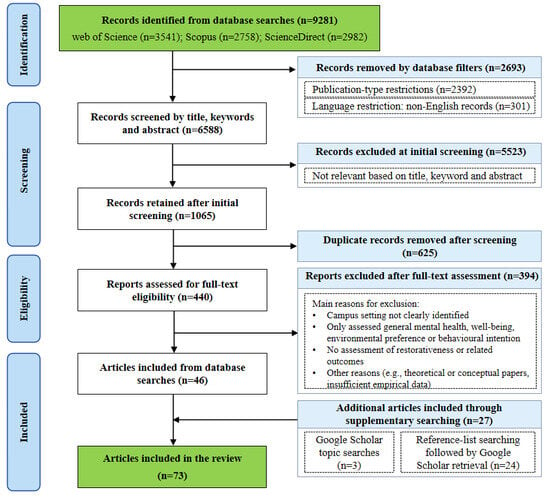
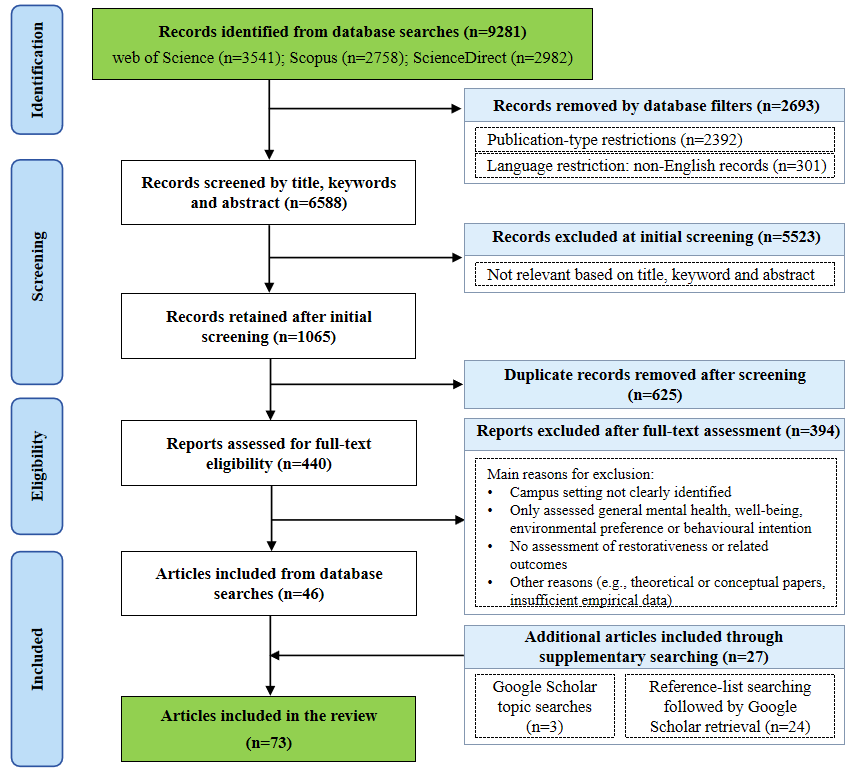
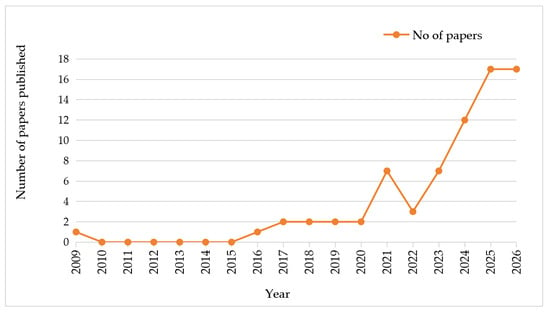
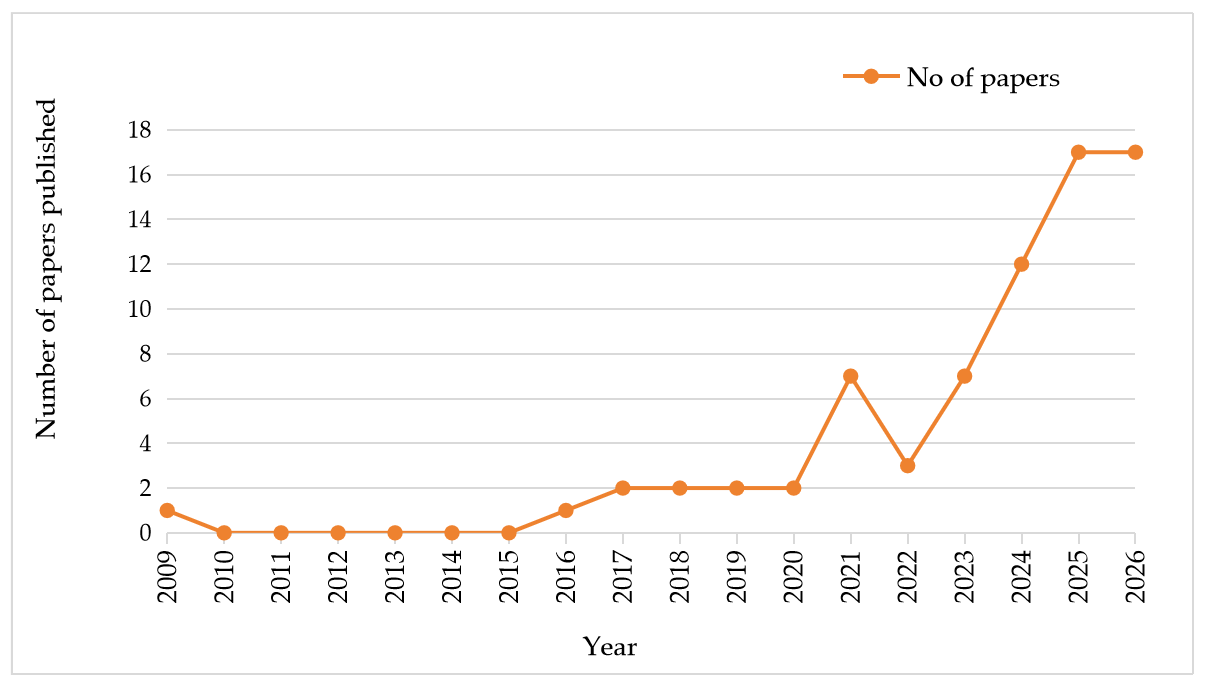
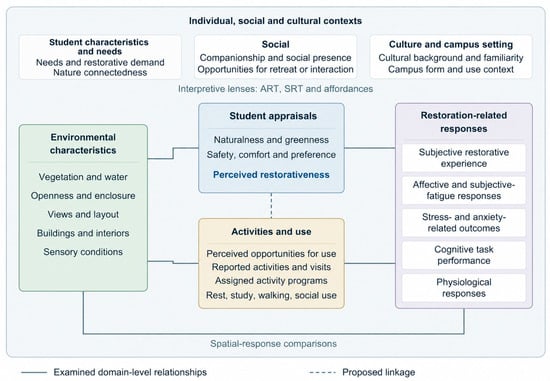
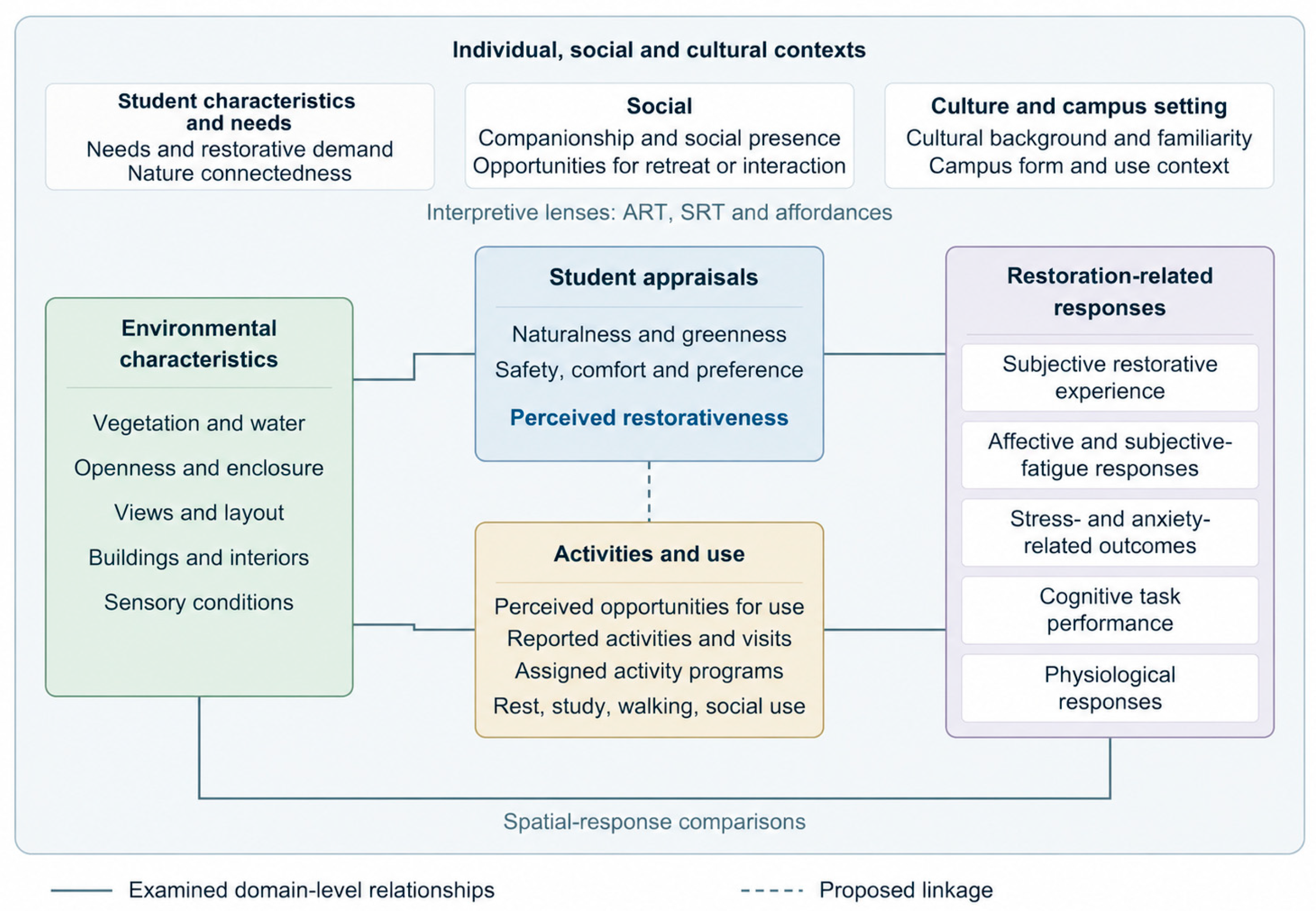

Disclaimer/Publisher’s Note: The statements, opinions and data contained in all publications are solely those of the individual author(s) and contributor(s) and not of MDPI and/or the editor(s). MDPI and/or the editor(s) disclaim responsibility for any injury to people or property resulting from any ideas, methods, instructions or products referred to in the content. |
© 2026 by the authors. Licensee MDPI, Basel, Switzerland. This article is an open access article distributed under the terms and conditions of the Creative Commons Attribution (CC BY) license.