


Abstract
Inclusive urban renewal requires balancing the interests of multiple stakeholders; however, many renewal projects stall due to interest conflicts, rooted in the long-standing marginalization of residents’ subjective fairness perceptions. This study introduces the Fehr–Schmidt inequality aversion model to characterize residents’ fairness preferences, constructs a tripartite evolutionary game model involving governments, developers, and residents, and uses MATLAB numerical simulations to reveal the influence of key parameters on system steady states. The findings show that: (1) the system admits eight pure-strategy equilibrium solutions, seven of which can evolve into evolutionarily stable strategies within specific parameter ranges; (2) the intensity of higher-level government accountability, residents’ policy-based compensation and subjective fairness perception, and penalties for developer violations all exert significant influence on the smooth implementation of inclusive urban renewal; and (3) various regulatory policies exhibit complementary and synergistic attributes, whereas any single governance instrument has inherent limitations. This study provides a reference for multi-stakeholder collaborative governance in inclusive urban renewal.
1. Introduction
As China’s urbanization has systematically shifted from an expansion-oriented development model toward the optimization of existing urban stock, inclusive urban renewal has become a critical practical path for improving urban spatial quality, safeguarding residents’ rights and interests, and reconciling the interests of multiple stakeholders. Unlike the traditional large-scale demolition-and-reconstruction model, which prioritizes development profits while ignoring residents’ interests, inclusive urban renewal centers on balancing governments’ public governance objectives, developers’ profit-seeking incentives, and residents’ resettlement demands. It aims to establish a mutually beneficial renewal framework by upgrading public facilities, guaranteeing reasonable compensation, and realizing balanced benefit distribution among different parties [1]. Nevertheless, numerous renewal projects for urban villages and old communities in China are still trapped in severe interest conflicts during implementation. Some governments relax inclusive planning control and adopt passive governance to cut administrative expenditures. Driven by profit-seeking motives, developers deliberately reduce investments in public-welfare facilities such as green spaces, public-service infrastructures, and the renovation of historic buildings, and thus adopt a low-inclusiveness development strategy. When residents perceive that their own interests have been impaired, they resist renewal through negotiation, petition, or collective rights-defense actions. Consequently, many renewal projects fall into governance deadlock, manifested as construction stagnation and confrontation among multiple stakeholders [2]. How to balance efficiency and equity in the process of urban renewal and coordinate the demands of diverse stakeholders has become a pressing practical problem to be solved.
Inclusive urban renewal is essentially a game process of multi-stakeholder interest coordination. Governments, developers, and residents hold different goals and demands corresponding to social governance, economic benefits, and residential rights, and there exist prominent divergences among the three parties in benefit distribution, cost sharing, and risk bearing [3]. Faced with dual assessment pressures from economic-development targets as well as social stability and rights protection, governments need to strike a balance between active governance and passive laissez-faire. Driven by profit-seeking incentives, developers have an inherent tendency to cut the cost of resettlement facilities and maximize short-term returns. Residents make strategic choices between cooperating with relocation and defending their rights through resistance. Their decisions are not only rigidly constrained by material factors such as compensation standards, but also significantly affected by subjective perceptions including distributive fairness and procedural transparency [4]. The strategic interactions among these three types of actors jointly shape the implementation efficiency and final benefit distribution pattern of urban renewal projects. The realization of inclusive urban renewal fundamentally depends on whether the three parties can reach a cooperative equilibrium in the game: whether the government can curb speculative behaviors of developers through institutional design and safeguard residents’ legitimate rights and interests; whether developers can strike a balance between profit-making and social responsibility; and whether residents are willing to cooperate under dual conditions of sufficient material compensation and perceived fairness [5].
From the practice of urban renewal, residents’ resistance cannot be fully explained merely by differences in material gains and losses; inequity aversion constitutes a crucial psychological driver of renewal-related conflicts [6]. According to the inequity-aversion theory proposed by Fehr and Schmidt, as bounded-rational individuals, residents consider not only their absolute benefits such as resettlement and relocation compensation, but also make horizontal comparisons between governments’ investment in public-welfare governance and developers’ supporting construction costs during decision-making [7]. Once residents perceive that their own benefits are far lower than those of the government and developers, a strong sense of unfairness will arise, which substantially weakens the positive incentives brought by land-acquisition compensation. Even if the material compensation reaches a reasonable level, residents may still resist renewal when they perceive distributive unfairness [8]. Nevertheless, existing governance frameworks and conventional game models generally ignore such psychological mechanisms and simply assume that residents only pursue the maximization of material interests [9]. This theoretical deficiency leads policy design to rely excessively on raising monetary compensation unilaterally, while overlooking the profound moderating effect of residents’ fairness perception on their strategic behaviors. Consequently, renewal conflicts cannot be fundamentally resolved [10].
To fill the above-mentioned theoretical research gaps, this paper takes inclusive urban renewal as the research scenario, introduces the Fehr–Schmidt (F-S) inequality aversion model to describe residents’ heterogeneous fairness preferences, and constructs a tripartite evolutionary game model that integrates residents’ material income and psychological utility. This study embeds residents’ disadvantageous inequality aversion coefficients into the strategic choice utility function, such that residents’ trade-off between cooperative participation and resistance behavior depends not only on the absolute level of policy compensation, but also on their subjective fairness judgment of the benefit gap between governments and developers. On this basis, this paper conducts multi-scenario numerical simulations via MATLAB to systematically quantify the regulatory effects and influence patterns of four core variables—higher-level government accountability intensity, penalty intensity for developers’ low-inclusiveness violations, resident resettlement compensation standards, and residents’ degree of inequality aversion—on the tripartite strategic evolution path and long-term system stability.
To clarify the core research objectives of this study and address the existing research deficiencies, this paper proposes three progressive and targeted research questions:
- (1)
- How do residents’ preferences for fairness change their strategic choices in updating games?
- (2)
- How do changes in the intensity of various policy tools affect the direction of system evolution and convergence speed?
- (3)
- How should the four core policy variables be synergistically configured to effectively promote the ideal steady-state convergence of the system towards multi-party win-win?
These three questions are progressive: the first focuses on the micro-level behavioral mechanism, the second on the macro-level regulatory effects of policy tools, and the third on the synergistic configuration of policies for achieving the desired equilibrium.
This article contributes in three aspects. Theoretically, this study extends the classical Fehr–Schmidt inequality aversion model from experimental economics to the governance research of inclusive urban renewal, revealing the internal transmission mechanism of how residents’ fairness preferences alter strategic comparative advantages and further drive the steady-state transformation of the governance system. Methodologically, this paper constructs a complete tripartite evolutionary game model covering governments, developers, and residents. Through replicator dynamic equation derivation and Jacobian matrix eigenvalue stability discrimination, multiple evolutionary stable strategy combinations and their corresponding parameter constraint conditions are identified, which expands the application boundary of evolutionary game theory in urban renewal governance research. Practically, based on MATLAB numerical simulation, this paper reveals the regulation characteristics of core policy and psychological variables, providing quantifiable and operable policy references for the multi-dimensional collaborative governance of inclusive urban renewal.
The remainder of this paper is organized as follows. Section 2 presents a systematic literature review covering the connotation and practical progress of inclusive urban renewal, multi-stakeholder interest conflicts in renewal projects, the application of evolutionary game theory in urban governance, and the latest research progress of inequality aversion theory. Section 3 establishes the tripartite evolutionary game framework, elaborating the basic game assumptions, stakeholder utility functions, and payoff matrix settings. Section 4 derives the replicator dynamic equations of the game system and analyzes the stability conditions of each equilibrium point. Section 5 conducts numerical simulation analysis to verify the theoretical deductions and quantitatively characterize the regulatory effects of core parameters. Section 6 summarizes the main research conclusions, expounds the theoretical contributions and practical policy implications, and discusses the research limitations and future research prospects.
2. Literature Review
Urban renewal is a key governance arena for coordinating multi-stakeholder interests and balancing efficiency and equity. As China’s urbanization shifts from incremental expansion to stock optimization, inclusive urban renewal has become an important issue. To clarify the theoretical starting point of this paper, this section sequentially reviews the connotation and practice of inclusive urban renewal, the policy framework and interest coordination, the application of evolutionary game theory and behavioral economics, and the application prospects of inequality aversion theory in urban renewal. On this basis, it identifies the gaps in existing research and the extension space of this paper.
2.1. The Connotation and Practice of Inclusive Urban Renewal
As an important paradigm responding to the social exclusion issues inherent in traditional renewal models, inclusive urban renewal has received extensive scholarly attention in recent years. Traditional urban renewal, oriented toward economic growth and the maximization of land value appreciation and development benefits, has often been accompanied by negative effects such as the marginalization of vulnerable groups’ rights, socio-spatial differentiation, and the fragmentation of community networks [11]. Against this backdrop, the concept of inclusiveness has been progressively introduced into the field of urban renewal. In 2007, the Asian Development Bank first put forward the concept of inclusive growth. The fundamental goal of inclusive growth is to generate more and higher-quality employment and development opportunities through efficient and sustainable economic growth, and to ensure that all members of society, especially vulnerable groups, can share these opportunities and outcomes in a fair and reasonable manner, so as to realize simultaneous advancement of economic growth and distribution improvement. In 2015, Sustainable Development Goal 11 (SDG 11) proposed in the United Nations’ 2030 Agenda for Sustainable Development further set “making cities and human settlements inclusive, safe, resilient and sustainable” as a core goal for global urban development [12].
The theoretical foundation of inclusive urban renewal can be traced back to Lefebvre’s right-to-the-city theory proposed in 1968. Its core contains two dimensions. The first is the right to occupy space, namely residents’ right to use urban space equally. The second is the right to urban participation: ordinary residents ought to take part in the production and decision-making of urban space, reject the one-sided domination of spatial order by capital and the state, and oppose pushing low-income groups to the urban periphery in the renewal process [13]. This theory reveals the close relationship between distributive justice, procedural justice, and inclusive renewal, and constitutes the original ideological basis for inclusive urban renewal. Distributive justice focuses on benefit-sharing in urban renewal, that is, the fair distribution of benefits generated by renewal among different social groups; procedural justice, by contrast, emphasizes substantive participation and discourse power of affected residents in decision-making [14]. From the perspective of international research, the justice connotation of inclusive urban renewal covers multiple dimensions including distributive justice, procedural justice and recognitive justice. Reliance merely on physical environmental renovation is insufficient to eliminate spatial injustice in the renewal process. It is essential to guarantee the marginalized groups’ right to speech in decision-making so as to achieve the balance of diverse values [15]. Compared with the traditional growth-oriented urban renewal, inclusive urban renewal stresses that the renewal process should go beyond the single logic of physical-space reconstruction and shift toward a comprehensive governance process that takes social equity, cultural inheritance, and multi-stakeholder interest coordination into account [16]. Furthermore, inclusive urban renewal pursues maximum efficiency not at the expense of the interests of vulnerable groups. Instead, institutional design should safeguard equal participation and reasonable benefit acquisition for different social groups [17].
Building upon the above-mentioned international consensus, many scholars have offered localized interpretations regarding the connotation of inclusive urban renewal by taking the institutional context and development history of urban renewal in their own countries into consideration. In recent years, policies such as the renovation of old residential communities and the comprehensive governance of urban villages have been successively implemented. The governance logic of inclusive renewal has gradually emerged and has been promoted and applied in a growing number of urban renewal projects. Some renewal projects have begun to attach importance to absorbing the demands of diverse groups, including residents, children, and the elderly. They transform previously idle or dilapidated community spaces into functional sites for daily communication and public activities, which reflects the people-oriented value orientation of inclusive renewal [18]. Pratt [19] points out that beyond the visible effects of improving the physical urban environment and expanding the supply of public services, the positive benefits of inclusive urban renewal also lie in other aspects such as creating more employment opportunities for residents and reconstructing neighborhood social networks. Nevertheless, inclusive urban renewal still faces structural obstacles at the operational level [20]. Renewal practices show that public participation is often trapped in the dilemma of “tokenistic participation”. It merely remains at the stage of information notification and superficial consultation and can hardly be transformed into substantive decision-making power, which has become a common problem restricting the implementation of inclusive renewal [21]. At present, public participation in urban renewal generally stays at the level of notification and consultation, and residents lack substantive decision-making rights. The formalization of the participation process makes it difficult for residents’ interests and demands to be effectively incorporated [22]. As community residents’ demands for participating in urban-renewal-related decision-making keep growing, channels for citizens to exercise their rights to know, to participate in, and to supervise urban planning and management remain to be established [23]. Within China’s institutional context, inclusive renewal is further confronted with practical constraints including imbalanced benefit distribution, mismatched rights and responsibilities among stakeholders, and the risk of gentrification. Multiple institutional barriers tend to trigger conflicts between residents and renewal implementers [24]. When institutionalized participation channels fail to satisfy residents’ rights-based and interest-related demands, some residents may shift from cooperation to resistance and express their dissatisfaction through petitioning and collective rights-defending activities. This represents the core dilemma encountered by inclusive renewal in reality [25]. How to strike a balance between efficiency and equity and coordinate multi-stakeholder interests through institutional design has become a critical issue to be urgently addressed in the research on inclusive urban renewal.
2.2. Policy Framework and Interest Coordination in Urban Renewal
Urban renewal is essentially a dynamic process of iterative release of land economic value, accompanied by the restructuring of interest patterns and resource redistribution. As a core institutional arrangement, urban renewal policies largely determine project implementation efficiency and dominate multi-stakeholder decision-making. China’s urban renewal governance has undergone a clear evolutionary shift: from physical-oriented renovation to human-centered renewal, from large-scale demolition and reconstruction to progressive organic renewal, and from government-dominated administration to multi-party collaborative governance. The prevailing model has gradually transformed into a hybrid mechanism combining top–down policy guidance and bottom-up community participation, based on tripartite partnerships among the government, market sectors, and local communities [23]. Regional institutional and economic differences have resulted in diversified policy orientations across China. Wang et al. [26] compared urban renewal practices in major Chinese regions and found distinct governance characteristics. The Pearl River Delta adopts a highly market-oriented model that relies on market investment and resource allocation to revitalize urban stock space. The Bohai Rim region focuses on industrial upgrading and the adaptive reuse of industrial heritage. The Yangtze River Delta integrates urban renewal into regional integration strategies to promote high-quality coordinated development.
Nevertheless, practical urban renewal still faces prominent dilemmas regarding efficiency and equity, survival and developmental rights, and multi-stakeholder interest conflicts. Ren [27] pointed out that urban renewal conflicts mainly occur among governments, developers, and property owners, including institutional rule conflicts, benefit distribution conflicts, and transactional bargaining conflicts. Zuk et al. [28] indicated that rising housing and living costs after renewal often force residents to relocate to urban peripheries, damaging community structures and undermining social equity. Empirical evidence from China further supports this dilemma. Peng [29] confirmed that although policy instrument combinations can mobilize market vitality and reduce transaction costs, efficiency-oriented governance tends to cause unequal benefit distribution and insufficient procedural and distributive justice for vulnerable groups.
From the perspective of developmental rights, Chen et al. [30] revealed structural imbalance in current renewal practices. While residents’ basic residential and resettlement rights are generally guaranteed, developmental rights including employment opportunities, social network continuity, and equal development resources are frequently compromised. Renewal projects merely realize physical resettlement rather than comprehensive social integration and sustainable development, resulting in mismatched protection between survival and developmental rights. Yang et al. [31] further argued that market mechanisms alone cannot resolve interest conflicts in urban renewal. Fragmented property rights substantially increase bargaining costs and easily lead to deadlock in tripartite games among governments, enterprises, and residents. Under inadequate institutional constraints, market-oriented renewal tends to prioritize capital benefits rather than social welfare, making multi-stakeholder benefit sharing difficult to achieve.
Existing studies have proposed optimization strategies, such as strengthening government–market cooperation, establishing multi-party benefit-sharing mechanisms, and implementing tax adjustment and supervision systems to standardize renewal implementation [32,33]. Other research has analyzed project risks from policy, land, historical, and financial perspectives, emphasizing the necessity of balancing governmental developmental goals, corporate profits, and residential demands [34,35]. Overall, the current literature has verified the decisive role of institutional design and power structures in protecting resident interests. However, few studies have systematically explored residents’ behavioral transformation and strategic resistance when formal participation channels fail, which constitutes a critical research gap for inclusive urban renewal governance.
2.3. Application of Evolutionary Game Theory and Behavioral Economics in Urban Renewal Research with Multiple Stakeholders
In recent years, evolutionary game theory has been widely applied in urban renewal research. Unlike the assumption of complete rationality, evolutionary game theory assumes that participants have bounded rationality and continuously adjust their strategies through imitation, trial and error, and learning, ultimately achieving stable equilibrium in dynamic evolution [36]. This theoretical framework is particularly suitable for analyzing social interaction processes such as urban renewal, which involve multiple agents, long cycles, and incomplete information.
From the perspective of behavioral economics, emerging studies have shifted research focus from pure interest-driven logic to residents’ cognitive perception and behavioral decision-making. Zhao et al. [37] applied conflict theory to interpret the evolutionary logic of resident resistance in urban renewal, verifying that resident resistance is a rational strategic choice rather than impulsive emotional behavior, which occurs when legitimate rights and interests are impaired and institutionalized demand-expression channels are blocked. Stahl’s [38] empirical research on public housing renewal in New York further supports this view. The study confirms that residents do not passively accept top–down renewal arrangements. Instead, they develop organized and strategic resistance behaviors based on their perception of procedural injustice and structural spatial inequality. This behavioral perspective provides a critical theoretical basis for explaining the triggering mechanism of residents’ strategic shift from cooperation to resistance in urban renewal.
Existing evolutionary game studies on urban renewal mainly focus on three research dimensions. First, numerous studies explore renovation mode selection and multi-agent behavioral interaction. Targeting urban village renewal practices, scholars have constructed tripartite evolutionary game models involving governments, developers, and village collectives to simulate strategic interactions and behavioral evolution among core stakeholders [39]. Second, scholars widely apply evolutionary game theory to institutional innovation and policy pilot research. Regarding the pilot program of collective construction land rental housing, relevant studies have established game frameworks for governments, village collectives, and rental housing enterprises, revealing the influence of policy parameter changes on stakeholder strategy evolution [40]. Third, recent research has extended the game model to emerging inclusive governance issues. Combining social capital theory, scholars have constructed tripartite game models covering governments, investment institutions, and the public, demonstrating that social capital can reduce transaction costs and stabilize multi-stakeholder collaborative governance [41]. In community collaborative renewal research, scholars have further incorporated housing price fluctuation factors into the game framework of governments, social capital, and residents, systematically exploring the evolutionary path of multi-agent collaborative strategies [42].
The above studies provide important methodological support for understanding multi-party interactions in urban renewal, but they also have notable limitations. First, the design of the core utility function places disproportionate emphasis on material benefits, while factors such as residents’ subjective perceptions of fairness and psychological expectations are rarely reflected in existing models. Second, there is a lack of systematic identification and testing of the threshold effects of policy instruments—that is, the range within which policy parameters can trigger shifts in actors’ strategies. Third, although some studies have addressed fairness issues in urban renewal, they mostly remain at the level of policy discussion and have not yet translated fairness preferences into quantifiable utility functions embedded in game models. The fairness concept emphasized in inclusive urban renewal has not yet been fully operationalized in game models.
2.4. Inequality Aversion Theory and Its Application Prospects in Urban Renewal
The inequality aversion model proposed by Fehr and Schmidt provides a theoretical tool for analyzing how fairness preferences affect individual decision-making. This model decomposes individual utility into two parts: absolute benefit and relative benefit. Individuals not only care about how much they have gained, but also about the gap between what they have gained and what others have gained. The intensity of individuals’ aversion to disadvantage inequality is significantly greater than their aversion to advantage inequality. This asymmetric setting captures the core characteristics of loss aversion and jealousy in real behavior, and has been successfully used to explain refusal behavior in ultimatum games, cooperative maintenance in public goods games, and efficiency wage phenomena in the labor market [43,44].
In recent years, the theory of inequality aversion has been expanded and applied in multiple fields. In the study of negotiation games, scholars have introduced the F-S model into the Rubinstein alternating-bid negotiation framework and found that the unfair aversion preferences of participants significantly affect the perfect equilibrium of subgames. When the quotation is lower than the fair reference level, there is a positive correlation between the participant’s benefit and the degree of unfairness aversion; When the quotation is higher than the fair reference level, the opposite is true [45]. In the field of supply chain management, researchers have found that an increase in retailers’ aversion to unfairness can reduce their optimal order quantity and supply chain profits, and wholesale price contracts can achieve supply chain coordination under certain conditions [46]. In the field of public policy, scholars have begun to introduce inequality aversion into environmental governance, public service supply, and social welfare policy analysis, and found that residents’ perception of policy fairness significantly affects their policy compliance and willingness to cooperate [47]. The above research indicates that the F-S model has strong explanatory power in explaining the impact of individual fairness preferences on decision-making behavior.
Akbaş et al. [48] experimentally revealed the interactive effect of procedural justice and individual agency in fairness judgments: when inequality arises from risks freely chosen by individuals, people tend to regard it as fair, whereas when inequality arises from unequal opportunities, their willingness to redistribute increases significantly. The relational model of Tyler and Lind [49] further indicates that whether procedures are fair conveys information to individuals about whether they are respected and valued as members of the group; procedural fairness makes individuals more willing to accept authoritative decisions, while procedural injustice weakens their identification and willingness to cooperate. Lind’s [50] fairness heuristic theory further clarifies that when individuals cannot obtain core information such as the true payoffs of their counterparts, they turn to externally perceivable cues to form fairness judgments. Extending these theories to the urban renewal context, it can be found that residents’ judgments about distributive fairness depend not only on the amount of compensation but also on whether the decision-making procedure is just and whether residents have substantive opportunities for participation. When residents face information asymmetry and feel marginalized, the psychological disutility caused by procedural injustice compounds that caused by distributive injustice and, acting as a heuristic framework, continuously influences their interpretation of subsequent compensation plans and cooperation offers. Even if material compensation improves, it may be difficult to reverse their confrontational tendencies.
However, the application of the inequality aversion model in urban renewal governance remains relatively limited. The distributive fairness and procedural justice emphasized by inclusive urban renewal can be quantified through the theory of inequality aversion, thus providing a theoretical foundation for extending and applying the F-S model to urban renewal. The aforementioned procedural justice theory further indicates that incorporating procedural fairness into the analytical framework of inequality aversion is not only supported by empirical evidence but also aligns with the practical logic of urban renewal governance—residents’ perceptions of unfairness stem not only from disparities in distributional outcomes but also from flaws in procedural processes, both of which jointly influence their decisions to cooperate or resist.
In summary, existing research provides conceptual tools, theoretical perspectives, and modeling methods for urban renewal game analysis, yet further exploration remains necessary. First, the concept of fairness in inclusive urban renewal lacks an operational expression path within game models; existing studies often mention fairness at the policy discussion level but have not yet quantified residents’ fairness preferences as utility functions embedded in game models. Second, although the F-S model has been validated in fields such as negotiation games and supply chain management, its application in the tripartite game context of urban renewal remains limited. Third, the analysis of the regulatory characteristics of policy tools in existing research needs further deepening, and the institutional conditions and policy boundaries of the multi-stakeholder collaborative governance advocated by inclusive renewal still lack clear modeling and interpretation. To address these gaps, this paper attempts to embed the F-S model into the tripartite evolutionary game framework of urban renewal, construct a resident utility function that balances material benefits and fairness psychology, and systematically examine the impact mechanism of fairness preferences, policy rewards and punishments, and cost structure on the equilibrium of the urban renewal game through replicator dynamic equation derivation and Jacobian matrix eigenvalue discrimination, so as to provide theoretical support for multi-dimensional collaborative governance.
3. Game Assumptions and Model Construction
3.1. Game Assumptions
Assumption 1.
The participants in the game are governments, developers, and residents. All three parties satisfy the assumption of bounded rationality and cannot directly make the global optimal decision in a single game. It is necessary to continuously observe the game situation, imitate high-quality strategies, and dynamically adjust their own behavior through multiple rounds of repeated games, in order to continuously optimize their comprehensive returns.
The set of strategies for each participating entity is as follows:
Strategy space of government: G = {compliant governance, Non − Compliant governance}. Let x denote the probability that the government adopts the “compliant governance” strategy, and 1 − x denote the probability of adopting the “Non-compliant governance” strategy. Compliant governance means that the government performs its duties proactively, taking into account distributive justice (regulating the fair distribution of urban renewal benefits) and procedural justice (guaranteeing residents’ right to voice their demands). Non-compliant governance refers to the government’s dereliction of regulatory duties, with inadequate adjustment of benefit distribution and insufficient safeguards for resident participation.
Strategy space of developers: D = {high − inclusiveness development, low − inclusiveness development}. Let y denote the probability that the developer adopts the “high-inclusiveness development” strategy, and 1 − y denote the probability of adopting the “low-inclusiveness development” strategy. High-inclusiveness development refers to the developer proactively undertaking incremental construction costs in aspects such as floor area ratio control, public space provision, historical building renovation, and ecological green space preservation, thereby balancing project profitability with public interests. Low-inclusiveness development refers to the developer reducing supporting facilities and public-welfare inputs with the core objective of maximizing short-term development returns.
Strategy space of residents: R = {cooperation, resistance}. Let z denote the probability that residents adopt the “cooperation” strategy, and 1 − z denote the probability of adopting the “resistance” strategy. Cooperation refers to residents endorsing the urban renewal implementation plan, actively cooperating with various renewal works, and ensuring the orderly progress of the project. Resistance refers to residents expressing their demands through negotiation, petitioning, legal litigation, and collective rights protection actions when their rights and interests are not satisfied, thereby impeding the implementation of urban renewal projects.
Assumption 2.
The comprehensive revenue and expenditure of governments consist of four components: positive social benefits generated when urban renewal projects achieve tripartite cooperation (i.e., when compliant governance, high-inclusiveness development, and resident cooperation are simultaneously realized), administrative costs corresponding to different governance models, rewards and penalties pertaining to developer behavior, and accountability penalty costs imposed by higher-level governments.
Assumption 3.
Developer revenues include project development and operational profits, as well as government subsidies for high-inclusivity development under compliant governance; costs include differentiated construction investments, losses due to project delays caused by resident resistance under various scenarios, and fines incurred for non-compliant activities under regulatory governance.
Assumption 4.
Residents’ comprehensive utility consists of objective material revenues and expenditures and subjective fairness perception utility. The objective material dimension includes basic resettlement compensation, policy-based additional compensation provided by the government, supporting resettlement benefits offered by developers, relocation costs, and rights protection costs for resistance. The subjective perception dimension considers both distributive fairness and procedural fairness, adopting different inequality aversion coefficients that vary with the government’s governance strategy (i.e., compliant vs. non-compliant governance). Only the disutility of disadvantageous inequality, where residents’ benefits are lower than those of the government and developers, is considered, and the psychological effect of advantageous inequality is neglected.
The meanings of each parameter are shown in Table 1.
Table 1.
Meanings of parameter symbols.
3.2. Utility Function
This paper adopts the Fehr–Schmidt inequality aversion model as its core analytical framework. The core logic of this theory is that individuals have both self-interested preferences and fairness-related preferences, and their total utility consists of absolute material payoffs together with psychological disutility caused by inequality. Individuals not only care about their own payoff levels but also form fairness perceptions by comparing their payoffs with those of their game opponents, generating negative psychological utility in response to unequal income distribution, which is termed “inequality aversion”. The model further divides inequality into two asymmetric scenarios to accurately characterize individuals’ differentiated fairness perception. The first is disadvantageous inequality: when an individual’s own payoff is lower than that of the game opponent, negative emotions such as envy and a sense of unfairness arise and lead to psychological utility loss. The second is advantageous inequality: when an individual’s own payoff exceeds that of the opponent, negative feelings including altruistic guilt and psychological discomfort emerge, which also reduce overall utility. The model explicitly states that individuals exhibit significantly stronger aversion to disadvantageous inequality than to advantageous inequality. Given an income gap of the same magnitude, the psychological distress from being at a payoff disadvantage far outweighs the sense of guilt generated by holding a payoff advantage. This feature is highly consistent with the law of individual fairness perception in reality.
In a multi-player game framework, suppose there are N participants in total, and participant i interacts with the remaining N − 1 opponents. The extended multi-player Fehr–Schmidt utility function for participant i is shown in Equation (1):
where xi denotes the actual material payoff of participant i, and xj denotes the payoff of any other participant j (j ≠ i). αi is the coefficient of aversion to disadvantageous inequality, measuring the psychological disutility of injustice and envy when one’s payoff is lower than others. βi is the coefficient of aversion to advantageous inequality, capturing the disutility from altruistic feelings and guilt when one’s payoff exceeds that of others. The model satisfies αi > βi > 0 and βi < 1, which means that for an identical payoff gap, psychological distress from disadvantage is much stronger than guilt from advantage.
Here, max{xj − xi, 0} represents the unfavorable payoff gap relative to opponent j, producing psychological loss only when xi < xj and equaling zero otherwise.max{xi − xj, 0} describes the favorable payoff gap relative to opponent j, triggering guilt-related disutility only when xi > xj and equaling zero otherwise. The weight term assigns equal weight to each opponent’s payoff gap and averages inequality gaps across all opponents to evaluate overall inequality perception in multi-agent interactions. For the three-player scenario in this paper, N = 3, and the equal weight is .
Based on the realistic context of urban renewal conflicts in China and the psychological characteristics of residents, renewal conflicts mainly arise from the imbalance of distributive justice and the absence of procedural justice, while the psychological distress caused by advantageous inequality is relatively weak. In the tripartite game of urban renewal, residents do not compare themselves with a single opponent, but simultaneously face two reference subjects, namely the government and the developer, and their perception of fairness depends on the relative gaps between their own payoffs and the inputs of the government and the developer. Accordingly, this paper modifies the basic F-S model by removing the utility loss term related to advantageous inequality and retaining only the mechanism of disadvantageous inequality aversion. From the perspective of the interactions among the government, the developer, and residents, this paper constructs an initial comprehensive utility function for residents applicable to urban renewal scenarios in China:
where UR denotes residents’ comprehensive utility; xR denotes the actual net material benefits obtained by residents under the tripartite strategy combination; and denotes the fairness-related psychological loss incurred by residents due to income disadvantage. Among them, both UR and xR are jointly determined by the tripartite strategy combination. Since the psychological loss term depends simultaneously on the government’s payoff xG, the developer’s payoff xD, and residents’ own payoff xR, it is also determined jointly by the tripartite strategy combination.
Equation (2) above inherits the inherent setting of the multi-player Fehr–Schmidt model, assigning an equal weight of 1/2 to the payoff gaps relative to the government and the developer. Nevertheless, this equal-weight assumption is rather rigid. In practical scenarios, residents do not necessarily attach the same degree of attention to payoff gaps from the two types of reference agents. A large body of literature does not assign fixed values to such weights; instead, they are treated as tunable continuous parameters within the interval [0, 1] [51,52]. Accordingly, on the basis of Equation (2), this paper relaxes the constraint of a fixed weight of 1/2, and introduces the weight parameter λ to characterize residents’ subjective and differentiated degree of attention toward the two reference agents (the government and the developer). On this basis, we construct the revised comprehensive utility function for residents:
UR = xR − αR[λmax{xG − xR, 0} + (1 − λ)max{xD − xR, 0}]
Based on Equation (3), we further explore the boundary cases of parameter λ. When λ = 0.5, Equation (3) degenerates into Equation (2), which ensures consistency with the baseline model. When λ = 0, residents only take the developer as the reference subject for fairness judgment and ignore the payoff gap relative to the government, and the utility function degenerates into Equation (4). When λ = 1, residents regard only the government as the fairness-reference subject and disregard the payoff gap relative to the developer, and the corresponding utility function degenerates into Equation (5).
UR = xR − αRmax{xD − xR, 0}
UR = xR − αRmax{xG − xR, 0}
The above Equations (3)–(5) adopt observable material payoff gaps between participants as fairness reference points, which is consistent with the classical Fehr–Schmidt framework. From the perspective of distributive justice in urban renewal practice, however, residents cannot directly observe the full profits and profit structure of the government and developers. According to the fairness heuristic theory, when individuals cannot obtain core information such as their opponents’ real payoffs, they turn to external perceivable cues to form fairness judgments. Residents can only rely on perceivable channels, including project quality, resettlement standards, the degree of information disclosure, and community supporting facilities, to indirectly infer the additional inputs of the government and the developer under the high-inclusiveness development scenario, and further judge whether the distribution of benefits is fair. Accordingly, this paper replaces the original payoff gaps xG − xR and xD − xR with perceptible input differences and , which represent the incremental input gaps of the government and the developer, respectively.
On this basis, game scenarios are further classified according to the strategy combinations of the developer and government. First, the developer adopts a low-inclusiveness development strategy, and the government chooses compliant governance. In this case, unfairness stems merely from the developer’s biased input. Residents’ fairness perception originates only from the input gap with the developer, and the psychological loss can be characterized by Equation (4). Second, the developer implements a high-inclusiveness development strategy while the government chooses non-compliant governance. Under this scenario, distributive unfairness arises solely from the government, and residents take only the government as the reference for unfairness perception. The psychological loss follows the analytical logic of Equation (5). Third, the developer adopts a low-inclusiveness development strategy, and the government selects non-compliant governance. Both the government and the developer generate unfair input gaps, and residents perceive input discrepancies from the two agents simultaneously. The psychological loss corresponds to the general form of Equation (3). Fourth, the developer adopts high-inclusiveness development, and the government implements compliant governance. The government and developer fully safeguard residents’ interests, and no obvious distributive inequity exists. Thus, residents suffer no psychological utility loss induced by distributive imbalance. Fifth, even if the strategy combination of the government and developer leads to distributive inequity, the psychological disutility caused by unfairness will also vanish when residents choose resistance, claim interests through legal channels, and obtain relatively fair compensation.
Meanwhile, residents’ degree of inequality aversion is moderated by procedural justice. Compliant governance of the government corresponds to procedural fairness, while non-compliant governance represents procedural unfairness. Given existing distributive inequity, higher procedural unfairness intensifies residents’ sense of relative deprivation and strengthens their aversion to distributive imbalance, which is reflected in a larger inequality aversion coefficient. In this paper, α1 denotes the coefficient of disadvantageous inequality aversion under compliant governance, and α2 denotes that under non-compliant governance, with α2 > α1 > 0, indicating that residents are more sensitive to payoff gaps when both procedure and distribution are unfair. Here, the general inequality aversion coefficient αR in Equation (2) takes the context-dependent value of α1 under compliant governance and α2 under non-compliant governance, i.e., αR ∈ {α1, α2}, depending on the government’s strategy. This setting not only preserves the theoretical nature of the inequality aversion coefficient as an individual-preference characteristic, but also introduces the context dependence induced by procedural justice, which is consistent with the behavioral implication of the Fehr–Schmidt model. Taking both distributive justice and procedural justice into consideration, we show residents’ psychological losses under different strategy combinations of the government and the developer in Table 2.
Table 2.
Residents’ psychological loss under different strategy combinations.
3.3. Construction of the Game Payoff Matrix
On this basis, this paper constructs a tripartite evolutionary game payoff matrix for governments, developers, and residents. The model encompasses a total of eight pure-strategy combinations. Table 3a,b present these combinations according to whether the government adopts compliant or non-compliant governance. The following subsection elaborates the payoffs of the three parties under each pure-strategy combination.
Table 3.
(a) Payoff matrix under compliant governance by the government (x). (b) Payoff matrix under non-compliant governance by the government (1 − x).
- •
- Scenario 1: (Compliant Governance, High-Inclusiveness Development, Cooperation)
With the successful implementation of the urban renewal project, the government obtains the social benefit R and deducts the administrative cost of compliant governance and the subsidy expenditure to the developer B, resulting in a final payoff of . The developer receives the project development and operating revenue π and the special government subsidy B and deducts the incremental construction cost , resulting in a final payoff of . Residents actively cooperate with the renewal, receiving basic resettlement compensation S, policy-based additional compensation W, and developer-provided supporting resettlement benefits M, deducting the relocation cost H, yielding a net payoff of S + W + M − H. Under this scenario, the government adopts compliant governance and the developer adopts high-inclusiveness development, and residents’ fairness perception utility loss is 0.
- •
- Scenario 2: (Compliant Governance, High-Inclusiveness Development, Resistance)
Resident resistance leads to project delays and failure to generate social benefits. The government bears the administrative cost of compliant governance , the subsidy expenditure to the developer B, and the project stagnation loss , resulting in a final payoff of . The developer receives the project development and operating revenue π and the government subsidy B, deducts the incremental construction cost , and shares the project stagnation loss , resulting in a final payoff of . Residents choosing resistance receive statutory expropriation compensation T and deduct the rights protection cost F, yielding a net payoff of T − F. Under this scenario, residents’ fairness perception utility loss is 0.
- •
- Scenario 3: (Compliant Governance, Low-Inclusiveness Development, Cooperation)
Although residents cooperate with the renewal, tripartite cooperation is not achieved because the developer adopts low-inclusiveness development, and the project fails to generate positive social benefits. The government deducts the administrative cost of compliant governance and receives the penalty revenue from the developer’s violation P, resulting in a final payoff of . The developer receives the project development and operating revenue π, deducts the basic construction cost , the administrative penalty P, resulting in a final payoff of . Residents actively cooperate with the renewal, receiving basic resettlement compensation S and policy-based additional compensation W, deducting the relocation cost H, yielding a net payoff of S + W − H. Under this scenario, the developer adopts low-inclusiveness development and reduces supporting construction costs, and residents’ fairness perception utility loss under cooperation is . Therefore, the comprehensive utility of residents is .
- •
- Scenario 4: (Compliant Governance, Low-Inclusiveness Development, Resistance)
Resident resistance leads to project delays and failure to generate social benefits. The government bears the administrative cost of compliant governance and collects the penalty revenue from the developer P, resulting in a final payoff of . The developer receives the project development and operating revenue π, deducts the basic construction cost and the administrative penalty P, and shares the project stagnation loss L, resulting in a final payoff of . Residents choosing resistance receive statutory expropriation compensation T and deduct the rights protection cost F, yielding a net payoff of T − F. Under this scenario, residents’ fairness perception utility loss under resistance is 0.
- •
- Scenario 5: (Non-Compliant Governance, High-Inclusiveness Development, Cooperation)
Although residents cooperate with the renewal and the developer adopts high-inclusiveness development, tripartite cooperation is not achieved because the government adopts non-compliant governance, and the project fails to generate positive social benefits. The government deducts the basic governance cost and bears the higher-level accountability cost K, resulting in a final payoff of . The developer receives the project operating revenue π and deducts the incremental construction cost , resulting in a final payoff of . Residents cooperate with the renewal, receiving basic resettlement compensation S and developer-provided supporting resettlement benefits M, deducting the relocation cost H, yielding a net payoff of S + M − H. Under this scenario, the government adopts non-compliant governance and reduces livelihood-related incremental inputs, and residents’ fairness perception utility loss under cooperation is . Therefore, the comprehensive utility of residents is .
- •
- Scenario 6: (Non-Compliant Governance, High-Inclusiveness Development, Resistance)
Resident resistance leads to project delays and failure to generate social benefits. The government bears the basic governance cost , the higher-level accountability cost K, and the project stagnation loss L, resulting in a final payoff of . The developer receives the project operating revenue π and deducts the incremental construction cost , resulting in a final payoff of . Residents choosing resistance receive statutory expropriation compensation T and incur the rights protection cost F, yielding a net payoff of T − F. Under this scenario, residents’ fairness perception utility loss under resistance is 0.
- •
- Scenario 7: (Non-Compliant Governance, Low-Inclusiveness Development, Cooperation)
Although residents cooperate with the renewal, tripartite cooperation is not achieved because the government adopts non-compliant governance and the developer adopts low-inclusiveness development, and the project fails to generate positive social benefits. The government deducts the basic governance cost and bears the higher-level accountability cost K, resulting in a final payoff of . The developer receives the project development and operating revenue π and deducts the basic construction cost , resulting in a final payoff of . Residents cooperate with the renewal, receiving basic resettlement compensation S, deducting the relocation cost H, yielding a net payoff of S − H. Under this scenario, the government adopts non-compliant governance and the developer adopts low-inclusiveness development, and residents’ fairness perception utility loss under cooperation is . Therefore, the comprehensive utility of residents is .
- •
- Scenario 8: (Non-Compliant Governance, Low-Inclusiveness Development, Resistance)
Resident resistance leads to project delays and failure to generate social benefits. The government bears the basic governance cost , the higher-level accountability cost K, and shares the project stagnation loss , resulting in a final payoff of . The developer receives the project development and operating revenue π, deducts the basic construction cost , and shares the project stagnation loss , resulting in a final payoff of . Residents choosing resistance receive statutory expropriation compensation T and incur the rights protection cost F, yielding a net payoff of T − F. Under this scenario, residents’ fairness perception utility loss under resistance is 0.
4. Game Equilibrium Analysis
Based on the tripartite evolutionary game payoff matrix, this section first calculates the expected payoffs of each player, constructs the system of replicator dynamic equations, and solves for all pure-strategy equilibrium points of the model. Subsequently, the stability of each equilibrium point is examined using the Jacobian matrix eigenvalue criterion to identify the evolutionarily stable strategies (ESSs) under different scenarios.
4.1. Expected Payoffs and Replicator Dynamic Equations for the Three Parties
The replicator dynamic equation is a core tool in evolutionary game theory for characterizing the dynamic iteration of players’ strategies, effectively capturing the evolutionary trend of strategy selection probabilities of boundedly rational players over time. Based on the tripartite game payoff matrix, this section calculates the expected payoffs of governments, developers, and residents under different pure-strategy combinations, and subsequently derives the corresponding replicator dynamic equations for each player.
4.1.1. Expected Payoff and Replicator Dynamic Equation of the Government
Let the expected payoff of the government when choosing the “compliant governance” strategy be denoted as UG1, the expected payoff when choosing the “non-compliant governance” strategy be denoted as UG2, and the overall average expected payoff be denoted as . The expected payoff expressions for the government are as follows:
According to the replicator dynamic mechanism in evolutionary game theory, the rate of dynamic change in strategy selection probability is determined by the difference between the expected payoff of a strategy and the overall average payoff. The replicator dynamic equation for the government is as follows:
From the above equation, it can be seen that the strategic evolution of government is mainly affected by the cost of non-compliant governance, the cost of compliant governance, penalty revenue from developers’ low-inclusiveness behavior, accountability penalty from higher-level governments, and subsidy expenditures for developers. Meanwhile, it is also jointly influenced by the social benefit generated under tripartite cooperation, project stagnation loss caused by resident resistance, as well as the strategic choices of developers and residents.
4.1.2. Expected Payoff and Replicator Dynamic Equation of the Developer
Let the expected payoff of the developer when choosing the “high-inclusiveness development” strategy be denoted as UD1, the expected payoff when choosing the “low-inclusiveness development” strategy be denoted as UD2, and the overall average expected payoff be denoted as . The expected payoff expressions for the developer are as follows:
Similarly, the replicator dynamic equation for the developer is derived as follows:
From the above equation, it can be seen that the strategic evolution of the developer is primarily influenced by the cost of low-inclusiveness development, the cost of high-inclusiveness development, special government subsidies, and penalties for non-compliant development. Meanwhile, it is also jointly affected by project stagnation loss caused by resident resistance, as well as the strategic choices of the government and residents.
4.1.3. Expected Payoff and Replicator Dynamic Equation of Residents
Let the expected payoff of residents when choosing the “cooperation” strategy be denoted as UR1, the expected payoff when choosing the “resistance” strategy be denoted as UR2, and the overall average expected payoff be denoted as . The expected payoff expressions for residents are as follows:
Similarly, the replicator dynamic equation for residents is derived as follows:
From the above equation, it can be seen that the strategic evolution of residents is primarily influenced by basic resettlement compensation, relocation cost, statutory expropriation compensation under resistance, rights protection cost, policy-based additional compensation, enterprise-provided supporting resettlement benefits, and the differentiated fairness-related psychological losses characterized by α1 and α2. Meanwhile, it is also jointly affected by the strategic choices of government and developers.
4.2. Game Equilibrium and Stability Analysis
4.2.1. Solution of System Equilibrium Points
The equilibrium state of an evolutionary game system refers to a stable condition in which the strategic evolution rates of all players tend to zero, at which point the strategy selection probabilities of governments, developers, and residents no longer change over time. Based on the equilibrium solution principle of replicator dynamic equations, by setting the replicator dynamic equations of the three players to satisfy F(x) = F(y) = F(z) = 0 simultaneously, all equilibrium solutions of the game system can be obtained, including eight pure-strategy equilibrium points and mixed-strategy equilibrium points. Among these, the pure-strategy equilibrium points can intuitively reflect the steady-state characteristics and strategic decision orientations of the urban renewal game system, serving as the core basis for stability analysis and the identification of system evolutionary patterns. The eight pure-strategy equilibrium points are: E1(0, 0, 0), E2(0, 0, 1), E3(0, 1, 0), E4(0, 1, 1), E5(1, 0, 0), E6(1, 0, 1), E7(1, 1, 0), and E8(1, 1, 1).
4.2.2. Construction of the Jacobian Matrix and Eigenvalue Solution
According to Friedman’s method [36], the stability of a replicated dynamic system involving governments, developers, and residents can be determined through local stability analysis of the Jacobian matrix. Firstly, the partial derivatives of the replicated dynamic equation system with respect to x, y, and z are calculated as follows:
In summary, this paper constructs the Jacobian matrix J of the tripartite evolutionary game system as follows:
Substituting the eight pure-strategy equilibrium points into the Jacobian matrix sequentially, the corresponding eigenvalues for each equilibrium point can be calculated. According to the stability criterion for evolutionary equilibrium, if all three eigenvalues ξ1, ξ2, and ξ3 corresponding to an equilibrium point are less than zero, then the equilibrium point is an evolutionarily stable strategy (ESS); if any eigenvalue is positive, the equilibrium point is unstable; if any eigenvalue is zero, the equilibrium point is in a critical unstable state. This paper presents the eigenvalue calculation results for the eight pure-strategy equilibrium points in Table 4. See Supplementary Materials for the detailed derivation of eigenvalues.
Table 4.
Equilibrium points and eigenvalues of the game matrix.
4.2.3. Stability Analysis of Equilibrium Points
According to the evolutionarily stable strategy (ESS) criterion, the system exhibits seven types of evolutionarily stable equilibrium points under specific parameter constraints: E1(0, 0, 0), E2(0, 0, 1), E3(0, 1, 0), E5(1, 0, 0), E6(1, 0, 1), E7(1, 1, 0), and E8(1, 1, 1).
- •
- Equilibrium Point E1(0, 0, 0)
When the constraints , , and are satisfied simultaneously, the system converges to equilibrium point E1(0, 0, 0), corresponding to the strategy profile of non-compliant governance, low-inclusiveness development, and resident resistance. This equilibrium represents an inefficient conflict steady state in the process of urban renewal. The government relaxes regulatory constraints and adopts non-compliant governance to save administrative costs. Driven by profit-seeking motives, developers cut resettlement-supporting inputs and implement the low-inclusiveness development mode. Exposed to unfair distribution and inadequate procedural safeguards, residents form strong inequality aversion psychology and ultimately resort to resistance, resulting in a three-party deadlock for the renewal project.
From the perspective of constraint conditions, indicates that the comprehensive constraints formed by higher-level accountability, penalty revenues from developers and project stagnation losses are insufficient. The government can obtain higher comprehensive benefits under non-compliant governance and thus lacks the internal motivation for active supervision. means that even considering project stagnation losses caused by resident resistance, developers can still achieve higher net returns from low-inclusiveness development, so they have strong incentives to adopt the low-inclusiveness strategy. reflects the significant influence of fairness perception on residents’ decision-making. Even if residents receive basic resettlement compensation, the psychological disutility caused by distributive and procedural injustice can still outweigh the benefits of cooperation, driving residents to choose resistance and rights-defending behaviors.
- •
- Equilibrium Point E2(0, 0, 1)
When the constraints , , and hold simultaneously, the system converges to the equilibrium point E2(0, 0, 1), corresponding to the strategy profile of non-compliant governance, low-inclusiveness development, and resident cooperation. This equilibrium is a passively sustained steady state with weak stability. The government fails to fulfill its regulatory responsibilities, and developers adopt low-inclusiveness development, leading to obvious inequities in the distribution of urban renewal benefits. Nevertheless, restricted by high rights protection costs, residents obtain limited actual gains from resistance and have to compromise passively to cooperate with the renewal.
From the perspective of constraint conditions, indicates that the administrative costs saved by the government under non-compliant governance exceed the losses it may incur, namely the sum of penalty revenues from developers and higher-level accountability penalties. In other words, the gains brought by non-compliant governance can offset the losses it incurs, thereby giving governments a strategic advantage and making them inclined to choose non-compliant governance. shows that residents’ cooperation is not a voluntary choice after their rights and interests are fully guaranteed, but a passive compromise under the constraint of high rights protection costs. This equilibrium features fragile stability. Once benefit distribution becomes more imbalanced or residents’ rights protection costs decline, the original steady state is likely to be disrupted and trigger social conflicts.
- •
- Equilibrium Point E3(0, 1, 0)
When the constraints , , and hold simultaneously, the system can converge to the equilibrium point E3(0, 1, 0), corresponding to the strategy profile of non-compliant governance, high-inclusiveness development, and resident resistance. This equilibrium represents a special conflict-ridden steady state. Although the government adopts non-compliant governance, developers voluntarily implement high-inclusiveness development out of considerations such as brand reputation and corporate social responsibility. Nevertheless, due to the lack of procedural guarantees from the government, residents still exhibit strong inequality aversion psychology. Since the comprehensive payoff of cooperation remains lower than that of resistance, residents keep resisting the renewal project.
These constraint conditions indicate that even if developers voluntarily raise resettlement welfare standards, the government’s failure to fulfill its responsibilities regarding procedural justice and distributive justice will still amplify residents’ perception of unfairness. indicates that the governance costs reduced by the government can offset the sum of its accountability costs and stagnation losses, leaving the government without sufficient incentive to adopt compliant governance. indicates that the costs reduced by developers through low-inclusiveness development are insufficient to offset the stagnation losses caused by resident resistance, so developers tend to adopt the high-inclusiveness development strategy. indicates that relying solely on enterprises to unilaterally improve resettlement conditions cannot offset the psychological losses caused by procedural injustice and distributive injustice, and residents will still choose resistance. This equilibrium demonstrates that conflicts in urban renewal cannot be resolved solely by enterprises’ self-discipline. The government itself bears irreplaceable responsibilities in procedural justice and distributive justice of benefit distribution.
- •
- Equilibrium Point E4(0, 1, 1)
For this equilibrium point, the developer-dimensional eigenvalue holds true for all parameter values. Consequently, E4(0, 1, 1) cannot be an evolutionarily stable strategy. This finding further corroborates the irreplaceable role of government supervision and institutional constraints in urban renewal governance.
- •
- Equilibrium Point E5(1, 0, 0)
When the constraints , , and hold simultaneously, the system converges to the equilibrium point E5(1, 0, 0), corresponding to the strategy profile of compliant governance, low-inclusiveness development, and resident resistance. This equilibrium reflects a scenario where the government performs its duties actively yet the urban renewal still ends in failure. The government implements compliant governance, incurs administrative costs, and provides additional policy-oriented compensation. Nevertheless, the combined constraints of subsidies and penalties are insufficient, so developers still opt for low-inclusiveness development. Driven by benefit gaps and fairness perceptions, residents keep resisting the project advancement.
From the perspective of constraint conditions, indicates that the losses incurred under non-compliant governance exceed the governance costs it saves, and thus the government is more inclined to adopt compliant governance. By contrast, means that the intensity of rewards and penalties is insufficient to offset the construction costs saved by developers through low-inclusiveness development, and therefore developers are more inclined to adopt the low-inclusiveness development strategy. indicates that even when the government adopts compliant governance, the imbalanced distribution of benefits caused by developers’ low-inclusiveness development will still generate psychological disutility among residents, thereby weakening their willingness to cooperate and driving them toward confrontation. This result suggests that if developers’ behavior cannot be effectively constrained, merely regulating government behavior unilaterally can hardly avoid renewal conflicts.
- •
- Equilibrium Point E6(1, 0, 1)
When the constraints , , and hold simultaneously, the system converges to the equilibrium point E6(1, 0, 1), corresponding to the strategy profile of compliant governance, low-inclusiveness development, and resident cooperation. The government performs its supervisory duties and offsets the benefit losses caused by developers’ low-inclusiveness development through policy-oriented compensation. Residents’ comprehensive payoffs can offset both material losses and psychological disutility, and thus they choose to cooperate with urban renewal.
From the perspective of constraint conditions, indicates that the losses incurred under non-compliant governance exceed the governance costs it saves, thereby prompting governments to adopt compliant governance. indicates that the combined effect of government subsidies and penalties is insufficient to offset the construction costs saved by developers through choosing low-inclusiveness development, and therefore developers still tend to adopt the low-inclusiveness development strategy. means that against the background of governmental compliant governance, additional policy-oriented compensation can offset losses caused by imbalanced benefit distribution. Residents obtain higher net comprehensive payoffs from cooperation than from resistance, and are therefore willing to cooperate with urban renewal. Although the government achieves resident cooperation through policy compensation, it fails to fundamentally reverse developers’ development choices. This equilibrium reflects the bottom-line guarantee function of government governance. Nevertheless, the advancement of renewal relies excessively on the government’s resource underwriting, while developers fail to fully fulfill their inclusive responsibilities. In the long run, if the government faces mounting fiscal pressure and the compensation policies become unsustainable, this locally stable state bears the risk of failure and is therefore a sub-optimal steady state.
- •
- Equilibrium Point E7(1, 1, 0)
When the constraints , , and S − H − T + F + W + M < 0 hold simultaneously, the system converges to the equilibrium point E7(1, 1, 0), corresponding to the strategy profile of compliant governance, high-inclusiveness development, and resident resistance. Both the government and developers fulfill their inclusive renewal responsibilities, and the material-oriented resettlement compensation standard is relatively high; nevertheless, residents choose resistance. In reality, resident resistance comprises both defensive rights-defending behavior and strategic bargaining motives. Even when distribution and procedures are relatively fair, residents will still adopt resistance strategies if resistance can yield expectations of higher compensation.
From the perspective of constraint conditions, means that the losses incurred by the government under non-compliant governance exceed the additional costs required for compliant governance, and therefore the government is more inclined to adopt compliant governance. indicates that the subsidies obtained, fines avoided, and stagnation losses avoided by developers under high-inclusiveness development exceed the construction costs saved under low-inclusiveness development, and therefore developers are more inclined to adopt the high-inclusiveness development strategy. S − H + W + M < T − F indicates that even when distribution and procedures are relatively fair, residents will still adopt a resistance strategy as long as resistance can generate the expectation of higher compensation. This equilibrium indicates that material payoffs remain the fundamental prerequisite for residents to choose cooperation.
- •
- Equilibrium Point E8(1, 1, 1)
When the constraints , , and S − H − T + F + W + M > 0 hold simultaneously, the system converges to the equilibrium point E8(1, 1, 1), corresponding to the strategy profile of compliant governance, high-inclusiveness development, and resident cooperation. It represents the ideal three-party collaborative steady state within the model framework.
From the perspective of constraint conditions, indicates that the positive social benefits obtained and the accountability losses avoided by the government under compliant governance exceed the additional administrative costs and special subsidies it incurs, and therefore the government has the incentive to persist in compliant governance. indicates that the sum of government subsidies and administrative penalties is sufficient to cover the incremental costs incurred by developers in implementing high-inclusiveness development, and therefore developers are willing to voluntarily choose high-inclusiveness development. S − H + W + M > T − F indicates that the net payoffs obtained by residents from choosing cooperation exceed those from choosing resistance, and therefore residents are willing to voluntarily participate in urban renewal. This set of constraint conditions reflects that the realization of the ideal win-win steady state requires the simultaneous establishment of accountability-incentive mechanisms for the government as well as reward-penalty mechanisms for developers to improve residents’ fairness perception, so as to mobilize the three stakeholders to promote inclusive renewal collaboratively.
4.3. Mixed-Strategy Equilibrium, Non-Hyperbolic Cases, and Basin of Attraction Analysis
The preceding stability analysis focused on the eight pure-strategy equilibrium points of the tripartite evolutionary game system. In addition to pure-strategy solutions, the replicator dynamic system also admits interior mixed-strategy equilibria satisfying x, y, z ∈ (0, 1), in which players randomize among multiple behaviors rather than committing to a single strategy. Setting F(x) = F(y) = F(z) = 0 together with 0 < x < 1, 0 < y < 1, and 0 < z < 1 yields the algebraic conditions for mixed-strategy equilibria. The existence of such equilibria requires the following conditions to hold simultaneously:
Owing to the strong nonlinear coupling among the parameters in the above system, the equations have no explicit analytical solution and can only be solved numerically under given parameter sets. It should be noted that this paper does not provide a complete global bifurcation analysis of mixed-strategy equilibria, and this limitation is left for future research.
When the Jacobian matrix possesses a zero eigenvalue, the equilibrium is classified as non-hyperbolic, and the stability criterion based on the signs of the eigenvalues is no longer applicable. In this system, zero eigenvalues arise mainly from three types of critical cases: the boundary mixed equilibrium characterized by , the boundary mixed equilibrium characterized by , and the boundary mixed equilibrium characterized by . The corresponding equilibria are neutral and lack parameter robustness; even a slight perturbation will drive the system toward pure-strategy states.
The basin of attraction refers to the set of all initial strategy states that converge to a given steady state. Under general parameter conditions, only evolutionarily stable pure-strategy corner equilibria possess non-empty effective basins of attraction. Unstable pure-strategy equilibria, boundary mixed equilibria, and various non-hyperbolic solutions all lack effective basins of attraction; once perturbed, the system will converge to a neighboring stable pure-strategy equilibrium. In summary, although boundary mixed equilibria and non-hyperbolic critical solutions do exist mathematically, the steady states with practical significance are all pure-strategy equilibria, which underpins the analytical framework adopted in this paper that focuses on pure-strategy equilibria.
Existing studies have shown that in tripartite asymmetric evolutionary games, all types of mixed-strategy Nash equilibria are saddle points and do not possess evolutionary stability, and only pure-strategy Nash equilibria can possibly become ESSs [53]. Therefore, focusing on pure-strategy equilibria in this paper is consistent both with the theoretical properties of evolutionary games and with the common practice in applied research.
5. MATLAB Numerical Simulation Analysis
To verify the effectiveness and practical explanatory power of the theoretical derivation conclusions in the previous section, this section designs multiple sets of comparative numerical simulation experiments based on the MATLAB R2017b platform to quantitatively identify the regulatory effects and underlying patterns of core variables—such as higher-level government accountability mechanisms, penalties for developers’ low-inclusiveness violations, resident material compensation, and fairness psychology—on the evolution path, convergence rate, and final steady state of the tripartite strategies.
5.1. Parameter Assignment and Initial Condition Settings
This study combines the real-world context of urban renewal with the parameter calibration methods used in the existing evolutionary game literature, strictly adhering to the model’s theoretical constraints—namely, , , and α2 > α1 > 0—to assign baseline parameters that meet the requirements for mechanism analysis and scenario simulation. It should be noted that the parameter values in this study are not derived from the measured data of any specific renewal project, but are set based on the value ranges in the existing literature, the theoretical constraints of the model, and reasonable assumptions. The basis for each parameter setting is as follows:
- (1)
- Cost-related parameters: and , with a difference of , represent the additional administrative costs of compliant governance relative to non-compliant governance. This setting refers to the common value range of government governance cost differentials in existing urban renewal evolutionary game studies and satisfies the model constraint . and , with a difference of , represent the incremental construction costs for developers implementing high-inclusiveness development relative to low-inclusiveness development, satisfying .
- (2)
- Payoff and loss parameters: R = 20 represents the positive social benefits generated when tripartite cooperation is achieved. L = 6 represents the project stagnation losses caused by resident resistance, which are shared between the government and the developer according to the principle of “whoever causes it bears it.” S = 9 and T = 12 represent the basic resettlement compensation received by residents when cooperating and the statutory expropriation compensation received when resisting, respectively. W = 2 and M = 3 represent the policy-based additional compensation and the developer-provided supporting resettlement benefits, respectively. H = 3 and F = 4 represent the relocation costs and rights protection costs, respectively. The above values all fall within the common ranges in the existing evolutionary game literature and satisfy the comparability requirements of the constraint conditions for each equilibrium point.
- (3)
- Policy-related parameters: P = 2 represents the administrative penalty revenue obtained by the government when the developer adopts low-inclusiveness development. K = 2 represents the accountability cost imposed by higher-level governments on governments for non-compliant governance. B = 1 represents the special government subsidy for developers implementing high-inclusiveness development. The relatively low values of these three parameters under the baseline scenario are intended to place the baseline scenario within the parameter region of the conflict steady state E1(0, 0, 0), thereby facilitating the subsequent sensitivity analysis of their threshold regulation effects.
- (4)
- Psychological parameters: λ = 0.5 indicates that residents attach equal attention weight to the differential in developer inputs and the differential in government livelihood inputs. This setting corresponds to the equal-weight averaging case in the three-player Fehr–Schmidt model, namely 1/(N − 1) = 1/2, and constitutes a simplifying assumption for the baseline scenario, the rationale of which has been explained in Section 3.2. α1 = 0.3 and α2 = 0.7 represent the residents’ coefficients of disadvantageous inequality aversion under compliant and non-compliant governance, respectively, satisfying α2 > α1 > 0. These values refer to the common ranges of inequality aversion coefficients in the Fehr–Schmidt model and related experimental studies, and reflect the theoretical setting that “the more unfair the procedure, the more sensitive residents are to payoff gaps.”
The baseline scenario parameters are summarized in Table 5.
Table 5.
Baseline simulation parameter settings.
To comprehensively reveal the intrinsic evolutionary mechanism of the system, this study designs two sets of simulation experiments: baseline steady-state simulation and key parameter sensitivity simulation. The baseline steady-state simulation aims to verify the evolutionarily stable strategy obtained from the theoretical analysis and to confirm the consistency between the system’s dynamic convergence path and the equilibrium analysis results. The sensitivity simulation focuses on examining the impact of fluctuations in core parameters on the game’s evolutionary trajectory and final steady state. To eliminate bias caused by initial strategy probabilities and to verify the robustness of the equilibrium results, five representative sets of initial strategy probabilities are selected for comparative simulation: (0.2, 0.2, 0.2) represents an initial state in which all three parties have low willingness; (0.5, 0.5, 0.5) serves as a neutral baseline; (0.8, 0.8, 0.8) represents a high-willingness initial state; and (0.8, 0.2, 0.5) and (0.2, 0.8, 0.5) represent asymmetric initial states dominated by the government and the developer, respectively. These five sets of data cover low, medium, and high willingness levels as well as symmetric and asymmetric scenarios, thereby comprehensively testing the robustness of system convergence.
All numerical simulations in this study are implemented in MATLAB R2017b. The built-in ode45 solver is adopted, which corresponds to the explicit fourth–fifth-order Runge–Kutta variable-step numerical integration method. The tolerance parameters are configured as RelTol = 10−8 and AbsTol = 10−10. The simulation horizon is set to t ∈ [0, 20], which was verified to be sufficient for full convergence to the steady state.
5.2. Baseline Scenario Simulation and Result Analysis
First, the replicator dynamic equations were numerically solved using the parameter settings in Table 5. Figure 1, Figure 2, Figure 3, Figure 4 and Figure 5 show the simulation results under different initial conditions.
Figure 1.
Evolutionary trajectory of tripartite strategies (x = 0.2, y = 0.2, z = 0.2).
Figure 2.
Evolutionary trajectory of tripartite strategies (x = 0.5, y = 0.5, z = 0.5).
Figure 3.
Evolutionary trajectory of tripartite strategies (x = 0.8, y = 0.8, z = 0.8).
Figure 4.
Evolutionary trajectory of tripartite strategies (x = 0.8, y = 0.2, z = 0.5).
Figure 5.
Evolutionary trajectory of tripartite strategies (x = 0.2, y = 0.8, z = 0.5).
Simulation results show that under multiple sets of differentiated initial strategy probabilities, the game system eventually converges to the identical evolutionarily stable equilibrium point E1(0, 0, 0) as iteration proceeds. Differences in initial states only affect the convergence rate of stakeholders’ strategies toward the steady state and cannot alter the final evolutionary direction of the system. This result verifies that the evolutionarily stable equilibrium obtained in this paper possesses strong robustness against initial conditions. No steady-state transition occurs with changes in the game starting point. Initial conditions merely govern the speed of convergence; the long-term evolutionary outcome of the system is jointly determined by cost–benefit configurations and residents’ psychological-perception mechanisms characterized in the model. These simulation findings also validate the effectiveness of the theoretical deduction of equilibrium stability presented in the previous section.
It can thus be seen that a stable multi-party collaborative framework cannot be established merely by relying on stakeholders’ initial subjective willingness to cooperate. Each agent’s cost–benefit structure constitutes the fundamental factor governing the system’s steady state. For practical urban renewal activities, simply stimulating stakeholders’ subjective cooperative willingness fails to achieve a sustainable cooperative steady state. Only by adjusting the cost–benefit structure of different stakeholders from an institutional perspective can the evolutionary outcome of the system be fundamentally reshaped.
5.3. Key Parameter Sensitivity Simulation Analysis
From the perspective of three stakeholders, including governments, developers, and residents, this section further explores the influences of key-parameter variations on the system’s evolutionary trajectories and final steady-state outcomes. It aims to reveal the differentiated response mechanisms of each agent facing parameter disturbances, so as to provide parameter-oriented policy implications for urban renewal governance. In the sensitivity simulation, the initial strategy probabilities of the three parties are uniformly set as (x,y,z) = (0.5, 0.5, 0.5), which represents the neutral strategic stance of governments, developers, and residents at the beginning of the game.
5.3.1. Government Dimension: Sensitivity Analysis of Higher-Level Accountability Incentive K
The higher-level government’s accountability incentive parameter K is selected as the core policy lever for shaping governments’ regulatory behavior. All other parameters are held at their baseline values, while K systematically varies at three intensity levels: K = 2 (baseline scenario, as shown in Figure 2), K = 5, and K = 8, in order to compare and analyze its marginal effects. Figure 6 and Figure 7 present the resulting evolutionary trajectories of the three stakeholders’ strategy probabilities (x, y, z) under each scenario, respectively.
Figure 6.
Evolutionary trajectory of tripartite strategies (K = 5).
Figure 7.
Evolutionary trajectory of tripartite strategies (K = 8).
Under the scenario with K = 2, superior authorities impose weak oversight constraints, leaving governments lacking endogenous incentives for proactive regulation. Consequently, the probability of government proactive regulatory action asymptotically converges to 0, and the system evolves toward a conflict-dominant equilibrium featuring regulatory abdication. For K = 5, which lies near the critical threshold, governments show no obvious trend of converging to 0 or 1, and the government strategy probability hovers roughly around 0.5, reflecting a state of strategic hesitation. Even under such circumstances, developers and residents still fail to switch to cooperative strategies. When K = 8, stringent superior accountability pressure drives governments toward consistent proactive supervision. Here, the probability of active governance converges swiftly and stably to 1.
From a governance-logic perspective, the superior assessment and accountability mechanism exerts a direct influence on governments’ regulatory behaviors. Higher accountability intensity strengthens governments’ willingness to sustain proactive supervision for inclusive urban renewal and the protection of residents’ resettlement rights. However, merely strengthening superior accountability cannot simultaneously push developers and residents toward cooperative decision-making. To achieve stable tripartite collaborative win-win evolution, a mix of multiple policy instruments, including penalties for developer violations and resident resettlement compensation, must be implemented.
5.3.2. Resident Dimension: Sensitivity Analysis of Policy-Based Compensation W and Inequality Aversion Coefficient α1 and α2
- (1)
- Sensitivity Analysis of Policy-Based Compensation W
With government accountability intensity fixed at K = 8, the policy compensation parameter W is used as the primary tool to guide residents’ strategic decisions. All other parameters remain at their baseline values. To assess its marginal impact, W is systematically set at three calibrated levels: W = 2, W = 4, and W = 6. Figure 8, Figure 9 and Figure 10 respectively display the evolutionary trajectories of the strategy probabilities (x, y, z) for the three stakeholders.
Figure 8.
Evolutionary trajectory of tripartite strategies (W = 2).
Figure 9.
Evolutionary trajectory of tripartite strategies (W = 4).
Figure 10.
Evolutionary trajectory of tripartite strategies (W = 6).
The simulation results show that the policy-based compensation standard for residents exerts a significant effect and differentiated regulatory influence on the direction of their strategy evolution and convergence speed. When W = 2, the resettlement benefits obtained by residents remain relatively low, and the limited economic gains cannot effectively offset the comprehensive costs and psychological losses from perceived unfairness caused by urban renewal, causing the probability of residents cooperating with renewal to continuously converge to 0, and the game system ultimately reaches a negative equilibrium state in which residents resist renewal. When the compensation standard is raised to W = 4, the economic benefits brought by resident cooperation improve to a certain extent; however, since these benefits are still insufficient to compensate for the renewal costs and negative fairness perception losses, residents’ strategies still converge to 0, although the convergence time of the resistance strategy is notably delayed. When the compensation standard is further raised to W = 6, the relatively high policy-based additional compensation can effectively offset residents’ renewal costs and psychological unfairness losses. Nevertheless, constrained by the lag effect of pre-existing unfairness perceptions, the probability of residents cooperating initially declines to about 0.35, then rises gradually and approaches 1.
From the perspective of governance mechanisms, differentiated policy-based compensation can reshape the benefit distribution pattern of the urban renewal game. Moderately raising the resettlement compensation standard and improving residents’ welfare protection can delay the formation of residents’ resistance strategies. However, when the compensation level has not yet reached the point of altering residents’ income expectations, a modest increase in resettlement compensation alone cannot reverse the ultimate outcome of residents’ resistance to urban renewal. Only when resettlement compensation is raised to a level sufficient to cover residents’ renewal costs and improve their income expectations can residents achieve stable cooperation with renewal.
- (2)
- Sensitivity Analysis of Inequality Aversion Coefficient α1 and α2
Under the condition that the accountability intensity of the higher-level government K = 8 and policy incentives W = 6 remain unchanged, while other parameters retain their original values, sensitivity simulation experiments were conducted on the inequality aversion coefficients α1 and α2 in the context of resident cooperation. Three pairs of parameters satisfying the constraint α2 > α1 > 0 were selected: (α1 = 0.1, α2 = 0.4), (α1 = 0.3, α2 = 0.7), and (α1 = 0.5, α2 = 1). Figure 11, Figure 12 and Figure 13 respectively show the evolutionary trajectories corresponding to the strategy probabilities (x, y, z) of the three types of stakeholders.
Figure 11.
Evolutionary trajectory of tripartite strategies (α1 = 0.1, α2 = 0.4).
Figure 12.
Evolutionary trajectory of tripartite strategies (α1 = 0.3, α2 = 0.7).
Figure 13.
Evolutionary trajectory of tripartite strategies (α1 = 0.5, α2 = 1).
The simulation results show that the inequality aversion coefficients α1 and α2 mainly affect the convergence path, fluctuation amplitude, and steady-state formation process of residents’ strategies by altering the intensity of their psychological disutility. Under the scenario (α1 = 0.1, α2 = 0.4), residents exhibit low psychological sensitivity to income gaps during urban renewal, and the negative utility arising from fairness perception is relatively weak. Supported by high-standard policy-based resettlement compensation, the probability of residents cooperating with urban renewal rapidly approaches 1. When (α1 = 0.3, α2 = 0.7), residents’ psychological losses increase; in this case, the probability of residents cooperating with renewal converges slowly to 1 only after an initial dip, resulting in a notable lag in the formation of the cooperative equilibrium. When (α1 = 0.5, α2 = 1), residents’ psychological losses rise significantly, and the probability of urban renewal rapidly approaches 0, ultimately leading to the evolutionary outcome of residents resisting urban renewal.
From the perspective of governance mechanisms, the inequality aversion coefficient reflects the psychological tolerance of residents towards the gap in interest distribution. Material-level resettlement compensation is the basic condition for promoting residents’ cooperation, but residents’ subjective perception of fairness will regulate the actual utility of material benefits. Under lower levels of inequality aversion, material welfare can fully exert its motivational effect; As the level of inequality aversion continues to rise, psychological injustice will continue to erode the positive benefits brought by material compensation, prolong the system’s evolution cycle, and even offset the policy effects of resettlement compensation. This means that urban renewal governance should not only focus on improving economic compensation, but also pay attention to residents’ subjective demands for fairness. While ensuring that the material resettlement welfare meets the standards, it is necessary to improve the information disclosure and interest negotiation mechanism throughout the entire urban renewal process and weaken the disturbance of inequality aversion psychology to the game system, in order to promote a multi-party collaborative urban renewal steady state more quickly.
5.3.3. Developer Dimension: Sensitivity Analysis of Developer Violation Penalty P
Under the conditions of higher-level government accountability intensity K = 8, policy-based compensation level W = 6, and residents’ inequality aversion coefficients α1 = 0.3 and α2 = 0.7, a sensitivity analysis was conducted on the penalty parameter P imposed on developers for low-inclusiveness urban development practices. Three calibrated penalty levels were specified: P = 2, P = 8, and P = 14. Figure 14, Figure 15 and Figure 16 present the corresponding evolutionary trajectories of the strategy probabilities (x, y, z) of the three stakeholder groups.
Figure 14.
Evolutionary trajectory of tripartite strategies (P = 2).
Figure 15.
Evolutionary trajectory of tripartite strategies (P = 8).
Figure 16.
Evolutionary trajectory of tripartite strategies (P = 14).
The simulation results reveal that the severity of penalties for developers’ violations acts as a critical regulatory tool to drive firms’ strategic transformation. At P = 2, economic sanctions against low-inclusive development fail to curb opportunistic behaviors. The excess returns from such behaviors far outweigh the corresponding penalty costs, leading the probability of high-inclusive development to gradually converge toward 0. At P = 8, violation costs rise remarkably, yet the penalty intensity remains insufficient. The probability of high-inclusive development still converges to 0, albeit at a slower rate. By contrast, at P = 14, stringent economic sanctions greatly squeeze the profit margin of low-inclusive development. The expected losses from violations exceed the net benefits derived from opportunistic practices, triggering a structural shift in the evolutionary system, where the probability of high-inclusive development rapidly converges toward 1.
From the perspective of governance mechanisms, the violation-penalty system aims to raise the opportunity cost of opportunistic development. When the deterrence effect of punishment is limited, this regulatory instrument can only slow down the evolutionary process of the system toward the opportunistic equilibrium, rather than reverse its overall trend. Sufficient punitive constraints can generate effective behavioral deterrence, prompting developers to take compliant development as their dominant strategy and consistently adopt high-inclusive development modes. Therefore, in the practical governance of urban renewal, scientific and moderate penalty standards for developer violations should be formulated to guarantee substantial restraints on opportunistic development. Meanwhile, regulatory instruments such as economic penalties for enterprises need to coordinate with government accountability mechanisms and residents’ policy-oriented resettlement compensation policies, so as to establish a diversified and complementary governance system and realize a balanced urban renewal pattern that benefits all stakeholders.
6. Discussion
6.1. Discussion of Main Findings
First, from the perspective of theoretical innovation and extension, most existing studies on multi-stakeholder games in urban renewal are confined to static comparative analyses of material payoffs, largely neglecting the critical role of residents’ subjective fairness perceptions in decision-making, and thus failing to fully explain the underlying mechanisms of demolition-related conflicts. This paper introduces the F-S model into the urban renewal context, extending the applicability of fairness-preference evolutionary game theory to the field of demolition and resettlement. Meanwhile, through multiple sets of numerical simulations, this paper identifies the regulatory characteristics of three core policies—government accountability, resident compensation, and corporate penalties—thereby filling the gap in static benefit analysis in describing the long-term dynamic strategic adjustment of agents.
Second, from the perspective of policy coordination and governance pathways, the simulation results show that single policy instruments suffer from significant governance deficiencies. Strengthening higher-level government accountability alone can improve government performance but cannot simultaneously curb developers’ opportunistic behavior or alleviate residents’ resistance. Focusing solely on the absolute level of economic compensation while neglecting relative fairness will severely weaken the incentive effect, because residents’ perception of unfairness undermines policy effectiveness. Likewise, relying solely on developer penalties cannot achieve long-term inclusive urban renewal goals. Therefore, urban renewal governance must move beyond fragmented regulatory approaches and shift toward a collaborative governance system involving multiple stakeholders. This requires: establishing a rigorous higher-level government assessment and accountability mechanism that incorporates resident rights protection and public infrastructure provision into local core performance indicators, and reducing the cost of compliant governance through fiscal sharing arrangements; implementing a graduated reward-and-penalty system for developers while providing special subsidies to incentivize improvements in supporting facilities; and setting a minimum guarantee standard for resident resettlement compensation, while establishing full-process information disclosure and regular resident consultation platforms, so as to balance material welfare provision with fairness-oriented psychological support and thereby reduce conflicts at their source.
Notwithstanding these findings, this study still has several limitations. First, the model adopts multiple simplifying assumptions: binary strategy spaces and deterministic quantifiable payoffs for all agents; only disadvantageous inequality aversion is captured for residents’ fairness perception; the game is constructed as a single-stage game with first-mover advantages for governments and developers. These assumptions define the boundaries of applicability of our conclusions. Second, model parameters are mainly derived from the existing literature and reasonable assumptions rather than empirical calibration from real-world renewal projects. Parameters are highly context-dependent, and residents’ psychological parameters lack local field-measurement support. Third, this paper does not incorporate project heterogeneity, third-party actors such as village collectives and social organizations, multi-stage negotiation features, as well as external shocks from macroeconomic and real-estate cycles, which partly restrict the model’s explanatory power for complex real-world scenarios. Fourth, this research is rooted in China’s urban renewal institutional context. The model carries prominent local institutional features. Hence, caution is needed when applying these conclusions to regions with divergent property rights, land finance, or public participation systems.
6.2. Policy Implications
Based on the research conclusions of the multi-stakeholder evolutionary game in inclusive urban renewal, the following policy recommendations are proposed for urban renewal governance practice.
First, an appropriately calibrated higher-level accountability system should be established to consolidate governments’ motivation to perform their supervisory duties. The intensity of higher-level assessment and accountability should be reasonably strengthened to incentivize governments to implement compliant governance. At the same time, reliance on accountability as a single instrument should be abandoned. Accountability mechanisms primarily serve to regulate government behavior and cannot independently guide developers and residents toward ideal strategic choices; they must be implemented in coordination with other supporting policies to fully realize governance effectiveness.
Second, a resident rights protection system that balances material compensation and procedural fairness should be constructed. Policy-based resettlement compensation standards for residents should be formulated scientifically, so that the compensation level matches residents’ actual costs and income expectations during the renewal process, thereby laying a solid material foundation for residents’ cooperative participation. Meanwhile, attention should be paid to residents’ subjective fairness perception arising from inequality aversion. Information disclosure, public participation, and interest negotiation mechanisms throughout urban renewal projects should be improved to alleviate residents’ perception of unfairness and prevent psychological disutility from weakening or even offsetting the incentive effect of material compensation.
Third, a scientific and moderate penalty mechanism for developer violations should be established, and multi-instrument coordinated governance should be strengthened. Reasonable penalty standards should be set for low-inclusiveness opportunistic development behavior, ensuring that penalty intensity is sufficient to raise the opportunity cost of opportunistic development and form effective deterrence against corporate opportunistic behavior, while avoiding excessive penalties that impose unreasonable operating burdens on developers. Government accountability, developer penalties, and resident resettlement compensation all suffer from the governance limitations of single instruments and cannot independently achieve a win-win outcome among the three parties. Therefore, it is necessary to promote coordinated linkage among these three policy instruments, build a diversified and complementary collaborative governance system, and drive the urban renewal system toward a win-win, inclusive renewal steady state.
7. Conclusions
7.1. Summary of Main Findings
This paper takes the conflicts in inclusive urban renewal as its research context, selects governments, developers, and residents as boundedly rational agents to construct a game-theoretic analytical framework, introduces the Fehr and Schmidt inequality aversion model to characterize residents’ differentiated fairness psychology, and develops a tripartite evolutionary game model that balances material benefits and subjective fairness losses. By deriving the replicator dynamic equations, determining the stability of each equilibrium point using the Jacobian matrix eigenvalue criterion, and conducting multi-dimensional univariate sensitivity numerical simulations in MATLAB, this paper reveals the regulatory patterns of various policy tools and residents’ fairness perception on the system’s evolutionary trajectory, convergence rate, and long-term stability. The main research conclusions are as follows:
- The tripartite urban renewal game system admits eight pure-strategy equilibrium solutions, seven of which can evolve into evolutionarily stable strategies (ESSs) within specific parameter ranges. Among them, (compliant governance, high-inclusiveness development, cooperation) constitutes the optimal collaborative steady state that accommodates the interests of all parties; in contrast, (non-compliant governance, low-inclusiveness development, resistance) corresponds to a conflict-ridden, inefficient equilibrium that may arise in practice. The remaining five equilibria correspond to sub-optimal or locally unbalanced steady states. The stability and persistence of each equilibrium point depend on its corresponding constraint conditions.
- The intensity of higher-level accountability exerts a significant regulatory effect on government supervision behavior. When accountability intensity is low, government performance incentives remain insufficient, and its behavior gradually shifts toward non-compliant governance. As the accountability standard increases beyond a certain level, governments’ willingness to regulate strengthens significantly, and their behavior gradually shifts toward compliant governance. However, a single accountability instrument can only optimize government behavior; it is insufficient to simultaneously guide developers and residents toward rational decision-making. Therefore, it must be complemented by supporting policy tools to form a comprehensive governance framework.
- The effectiveness of policy-based compensation for residents depends not only on the compensation level itself, but is also significantly moderated by residents’ subjective perception of fairness. When the compensation standard is relatively low, a moderate increase in resettlement benefits can only delay resistance and cannot alter the steady state of non-cooperation. Only when compensation rises to a level sufficient to cover renewal costs and improve residents’ income expectations will residents’ strategies genuinely shift toward cooperation. Meanwhile, inequality aversion continuously erodes the incentive effect of material compensation: the higher the degree of inequality aversion, the more easily the positive effects of material welfare are offset by perceived psychological unfairness, the longer the system’s evolutionary cycle, and the more delayed the formation of a cooperative steady state. Therefore, urban renewal governance should not rely solely on economic compensation. While raising material resettlement welfare, it is also necessary to improve information disclosure and interest negotiation mechanisms and reduce residents’ perception of unfairness, so as to more effectively promote a multi-stakeholder collaborative steady state of inclusive renewal.
- Penalties for developer violations serve as a key regulatory instrument for constraining opportunistic corporate behavior, yet their effectiveness depends on whether the penalty intensity is sufficient to generate credible deterrence. When penalty intensity is limited, it can only slow down the system’s evolution toward the opportunistic equilibrium, without fundamentally reversing developers’ profit-driven behavioral orientation. Only when penalty intensity is sufficient to compress the excess returns from opportunistic development and raise its opportunity cost can developers genuinely treat compliant development as their dominant strategy and consistently adopt high-inclusiveness development modes. Therefore, urban renewal governance should establish scientific and moderate penalty standards for violations, ensuring substantial constraints on opportunistic development. It should also promote coordinated linkage between economic penalties for developers, government accountability mechanisms, and residents’ resettlement compensation policies, so as to build a diversified and complementary governance system and realize a balanced urban renewal pattern that benefits all stakeholders.
- Various regulatory policies exhibit complementary and synergistic attributes, whereas any single governance instrument has inherent limitations. Relying solely on any one of government accountability, resident compensation, or developer penalties cannot achieve a win-win equilibrium among the three parties. Only by linking and coordinating the three instruments of higher-level assessment and accountability, graduated penalties for developers, and resident resettlement welfare, and by building a diversified collaborative governance system, can the system be promoted to converge in the long term toward a stable state of inclusive renewal that benefits all parties.
7.2. Applications and Future Research
The tripartite evolutionary game framework integrated with the Fehr–Schmidt fairness preference model developed in this paper offers a transferable analytical tool for conflict governance in land-related projects with public participation. First, within China’s urban renewal practice, this modeling approach can support ex-ante policy scenario simulation for demolition and resettlement projects. Planners and local policymakers can calibrate model parameters using project-specific survey data to predict system evolutionary trends under different combinations of accountability strength, compensation standards, and corporate penalty levels, helping select optimal policy portfolios in advance and mitigate mass conflict risks. Second, the methodological framework can be adapted for other multi-agent public governance scenarios featuring psychological fairness concerns, such as land expropriation, community renovation, environmental pollution governance, and public infrastructure construction involving multiple stakeholders. By adjusting agents’ payoff functions and fairness perception parameters, researchers can analyze strategic interaction and conflict formation mechanisms in similar collective interest contexts. Third, the numerical simulation workflow implemented in MATLAB provides a prototype tool for comparative policy testing. It enables quantitative comparison of governance performance under fragmented versus collaborative policy mixes, supporting evidence-based policy design for inclusive public governance.
Building upon the findings and limitations outlined in this study, several promising avenues are identified for subsequent research. First, future theoretical modeling may relax the setting for binary strategies and introduce spaces for continuous strategies. Researchers can incorporate richer behavioral psychological factors, including loss aversion, interpersonal trust, advantageous inequality, historical social comparison, and media discourse effects, so as to extend the theoretical framework for evolutionary games with fairness preference. Multi-stage dynamic game structures can also be constructed to better reflect iterative negotiation processes in real-world renewal activities. Second, empirical calibration and case simulation should be strengthened. Future work can collect primary data from field surveys of representative urban renewal cases, including government fiscal costs, developer benefit structures, and residents’ measured psychological parameters for fairness preference. Calibration of project-specific parameters will improve the external validity of model outputs and deliver more precise policy suggestions tailored to cases. Third, more stakeholders and contextual heterogeneity can be incorporated into the analytical system. Subsequent studies may add actors such as central government, village collectives, and non-governmental social organizations. Heterogeneous project attributes, cycles in the real estate market, macroeconomic shocks, and institutional variations in land finance can also be embedded into the model to capture equilibrium shifts dependent on context. Fourth, cross-institutional comparative research is worthwhile. Follow-up work may carry out cross-regional or cross-national comparisons to test to what extent conclusions derived from this fairness-driven tripartite game hold under different regimes for property rights and institutions for public participation, further clarifying the boundary conditions for the model’s generalizability.
Supplementary Materials
The following supporting information can be downloaded at: https://www.mdpi.com/article/10.3390/buildings16214180/s1.
Author Contributions
Conceptualization, Y.T. and K.H.; methodology, Y.T. and K.H.; software, Y.T.; validation, Y.T. and K.H.; formal analysis, Y.T.; writing—original draft preparation, Y.T.; writing—review and editing, Y.T. and K.H. All authors have read and agreed to the published version of the manuscript.
Funding
This research was funded by the Scientific Research Project of the Education Department of Hunan Province, grant number 23B0902.
Data Availability Statement
The original contributions presented in this study are included in the article/Supplementary Materials. Further inquiries can be directed to the corresponding author.
Acknowledgments
The authors wish to thank the anonymous reviewers and the Editors, whose insightful comments and helpful suggestions significantly contributed to improving this paper.
Conflicts of Interest
The authors declare no conflicts of interest.
References
- Zhang, Z.T.; Li, H.P. Theoretical Construction and Realization Method of Inclusive Urban Renewal. J. Hum. Settl. West China 2016, 31, 113–114. [Google Scholar] [CrossRef]
- Yang, Q.; Xie, J.; Wang, M. Research on the Dilemma and Implementation Path of Benefit Sharing in the Renewal of Urban Villages in Mega Cities: Taking Wuhan as an Example. J. Hum. Settl. West China 2025, 40, 76–80. [Google Scholar] [CrossRef]
- Tian, L. Exploring the Path of Balancing Individual Benefits, Collective Benefits, and Public Interests in the Three Olds Renewal. City Plan. Rev. 2018, 42, 78–84. [Google Scholar]
- Sun, H.; Zhang, Y.Y.; Wang, Y.H.; Chen, J.D.; Wu, H.C. How to Improve Collaboration in Sustainable Urban Community Renewal? An Evolutionary Game Model. Land 2025, 14, 1863. [Google Scholar] [CrossRef] [Scilit]
- Xu, K.X.; Su, J.Y.; Bao, H.J. The practical approaches and internal mechanisms of multi stakeholder collaborative governance in urban renewal: A case study of Hangzhou. J. Nat. Resour. 2025, 40, 1451–1467. [Google Scholar] [CrossRef] [Scilit]
- Yang, Q.; Wang, S.Z.; Cai, Y.Y. Study on the Renewal Satisfaction of Urban Villages in Megacities from the Perspective of Dependence: A Case Study of Wuhan City. Trop. Geogr. 2024, 44, 1387–1399. [Google Scholar] [CrossRef]
- Fehr, E.; Schmidt, K.M. A Theory of Fairness, Competition, and Cooperation. Q. J. Econ. 1999, 114, 817–868. [Google Scholar] [CrossRef] [Scilit]
- Cai, Y.Y.; Zhang, X.H.; Yang, Q. The Selection of Housing Compensation Base for Urban Village Renewal and Its Impact on Villagers’ Policy Satisfaction. J. Huazhong Agric. Univ. (Soc. Sci. Ed.) 2021, 5, 138–146+198. [Google Scholar] [CrossRef]
- Xiong, G.Q.; Zhang, Y. Influence of Psychological and Emotional Factors on the RDEU Game Model of Urban Demolition and System’s Brittleness Analysis. Oper. Res. Manag. Sci. 2019, 28, 99–106. [Google Scholar]
- Jin, X.; Chin, T.; Yu, J.; Wu, C. How Government’s Policy Implementation Methods Influence Urban Villagers’ Acceptance of Urban Revitalization Programs: Evidence from China. Land 2020, 9, 77. [Google Scholar] [CrossRef] [Scilit]
- Du, T.Y.; Guo, J.; Chen, H.; Zhang, Q. Beyond Physical Planning: Exploring the Social Impact and Renewal Strategies of Urban Renewal. Urban Dev. Stud. 2023, 30, 112–120. [Google Scholar] [CrossRef]
- Xu, B.X.; Wang, P.L.; Wang, Q.H.; Wang, B.; Gao, F.; Zhao, X.Y. Progress and Prospect of Sustainable Development Evaluation of Urban Human Settlement Environment for SDGs. J. Hum. Settl. West China 2025, 40, 41–50. [Google Scholar] [CrossRef]
- Long, Y. An Analysis of Lefebvre’s Urban Space Thoughts. World Philos. 2018, 6, 24–30. [Google Scholar]
- Wang, X.L. A Study on the Coordination Mechanism of Stock Space Detailed Planning from the Perspective of the People’s City: A “Benefit-Efficiency” Dual-dimensional Framework. Planners 2026, 42, 24–32. [Google Scholar] [CrossRef]
- Nzimande, N.P.; Fabula, S. What Sort of Justice for What Sort of Urban Development? A Systematic Review and Content Analysis of Urban Regeneration Programmes. Hung. Geogr. Bull. 2026, 75, 107–129. [Google Scholar] [CrossRef] [Scilit]
- Chen, Y.L.; Yan, Y.W.; Bian, L.C. Semantic Analysis and Conceptual Interpretation of Urban Regeneration from an International Perspective. Urban Dev. Stud. 2026, 33, 92–103. [Google Scholar] [CrossRef]
- Huang, Q. The Problem Origin, Theoretical Construction and Practical Reflection of Life-Oriented Urban Renewal. Dongyue Trib. 2024, 45, 152–158. [Google Scholar] [CrossRef]
- Zhang, Y.L.; Zhang, R.X.; Zhang, W.J. From Space Reconstruction to Comprehensive Governance: Policy Evolution of Urban Villages in the Context of Urban Renewal. J. Hum. Settl. J. Hum. Settl. West China 2026, 41, 17–24. [Google Scholar] [CrossRef]
- Pratt, A.C. Creative Cities: The Cultural Industries and the Creative Class. Geogr. Ann. 2010, 90, 107–117. [Google Scholar] [CrossRef] [Scilit]
- Bhasin, N.; Kumar, S.; Singh, G.S. Participatory Nature-Driven Urbanism: A Pathway to Achieving SDG-11 Through Community-Led Action. Urban Ecosyst. 2025, 28, 1573–1642. [Google Scholar] [CrossRef] [Scilit]
- Zhou, X.M.; Lin, Y.L.; Monstadt, J.; Hooimeijer, P.; Wang, S.F.; Liu, Z. Examining Collaborative Planning Processes and Outcomes in Urban Regeneration: A Deliberative Turn in China? Urban Stud. 2025, 62, 682–699. [Google Scholar] [CrossRef] [Scilit]
- Hewidy, H.; Harisa, E. Let Them Speak: Insurgent Planning and Urban Justice. Cities 2025, 162, 105918. [Google Scholar] [CrossRef] [Scilit]
- Wang, Z.P.; Zhang, A.Q. Research on the Realization Mechanism of Inclusive Urban Renewal in China. Study Pract. 2018, 9, 22–30. [Google Scholar] [CrossRef]
- Cheshmehzangi, A.; Chen, W.; Mangi, E.; Heath, T. Practical Challenges of Urban Regeneration in China. Front. Sustain. Cities 2023, 5, 913500. [Google Scholar] [CrossRef] [Scilit]
- Yang, C.W.; Ye, C.D.; Ding, Y.; Mi, J.Y.; Liu, Y.S.; Zhou, L. Life Cycle Participation in Urban Regeneration: A Policy Design–Implementation–Evaluation Assessment of Guangzhou. Land 2026, 15, 402. [Google Scholar] [CrossRef] [Scilit]
- Wang, P.; Hu, C.; Long, Y.; Bai, J.; Peng, J. Decision Matrix of Urban Regeneration with Multi-stakeholders: An Evaluation of Policy and Space Based on 20 Cities. Planners 2022, 38, 11–21. [Google Scholar]
- Ren, S. The Conflicts of Interests and Plan Coordination in Urban Renewal. Mod. Urban Res. 2011, 26, 12–16. [Google Scholar] [CrossRef]
- Zuk, M.; Bierbaum, A.H.; Chapple, K.; Gorska, K.; Loukaitou-Sideris, A. Gentrification, Displacement, and the Role of Public Investment. J. Plan. Lit. 2018, 33, 31–44. [Google Scholar] [CrossRef] [Scilit]
- Peng, S.N. Urban Renewal Through Transitional Pathways: Government Tools and a Reflection on Equity. Urban Plan. Forum 2024, 6, 96–103. [Google Scholar] [CrossRef]
- Chen, Y.J.; Cheng, Y.M. Governance Innovation in Reconstruction of Urban Villages in the Context of New Urbanization—A Framework of Developmental Rights. J. Hangzhou Norm. Univ. (Humanit. Soc. Sci.) 2021, 43, 107–113+123. [Google Scholar] [CrossRef]
- Yang, J.; Xu, C. Breakthrough and Limitations of Urban Renewal Marketization: From the Perspective of Transaction Cost. City Plan. Rev. 2016, 40, 32–38+48. [Google Scholar]
- Bland, R.L.; Overton, M. Assessing the Contributions of Collaborators in Public–Private Partnerships. Am. Rev. Public Adm. 2016, 46, 418–435. [Google Scholar] [CrossRef] [Scilit]
- K’Akumu, O.A. The Principles of Land Value Capture in the Perspective of Georgist Political Economy. Plan. Perspect. 2025, 40, 265–282. [Google Scholar] [CrossRef] [Scilit]
- Xie, H.; Zhang, L.; Cui, P.; Yuan, J.F.; Li, Q.M. Exploring the Evolution Mechanisms of Social Risks Associated with Urban Renewal from the Perspective of Stakeholders. Buildings 2024, 14, 1470. [Google Scholar] [CrossRef] [Scilit]
- Zhang, B.B.; Shen, X.H.; Lyu, S.N.; Liu, Y.; Cui, P.; Ding, G.F. Investigating the Factors Contributing to the Stakeholder Conflict in Urban Renewal Projects: A Case Study of China. Buildings 2025, 15, 4181. [Google Scholar] [CrossRef] [Scilit]
- Friedman, D. Evolutionary Games in Economics. Econometrica 1991, 59, 637–666. [Google Scholar] [CrossRef] [Scilit]
- Zhao, Y.Q.; An, N.; Chen, H.L.; Tao, W. Politics of Urban Renewal: An Anatomy of the Conflicting Discourses on the Renovation of China’s Urban Village. Cities 2021, 111, 10. [Google Scholar] [CrossRef] [Scilit]
- Stahl, V.E. Housing Publics: Situated Resistance to Public Housing Redevelopment in New York City under Racial Capitalism. Environ. Plan. C Polit. Space 2025, 43, 248–265. [Google Scholar] [CrossRef] [Scilit]
- Wang, Q.; Sun, W.; Yin, Q. The New Mode for Promoting the Redevelopment of Urban Villages in China: A Research on the Behavior of Stakeholders. Socio-Econ. Plan. Sci. 2025, 99, 102186. [Google Scholar] [CrossRef] [Scilit]
- Liu, L.; Cheng, D.; Wang, T.; Li, J. Stakeholder Strategies and Factors Influencing the Pilot Reform of Building Rental Housing on Collectively Owned Land: An Evolutionary Game Methodology. Land 2025, 14, 666. [Google Scholar] [CrossRef] [Scilit]
- Lu, Z.; Fan, R.; Chen, R.; Wang, Y.; Yin, Z. Promoting Urban Regeneration Through Multi-Agent Strategic Interaction Behavior: A Dynamic Decision Model for Industrial Park Renewal. Sustainability 2026, 18, 4831. [Google Scholar] [CrossRef] [Scilit]
- Yin, X.; Yuan, D.; Wang, S.; He, J.; Wang, X. An Evolutionary Game-Based Governance Mechanism for Sustainable Medical and Elderly Care Building Retrofits in Urban Renewal. Buildings 2026, 16, 138. [Google Scholar] [CrossRef] [Scilit]
- Engelmann, D.; Strobel, M. Inequality Aversion, Efficiency, and Maximin Preferences in Simple Distribution Experiments. Am. Econ. Rev. 2004, 94, 857–869. [Google Scholar] [CrossRef] [Scilit]
- Fehr, E.; Gächter, S. Cooperation and Punishment in Public Goods Experiments. Am. Econ. Rev. 2000, 90, 980–994. [Google Scholar] [CrossRef] [Scilit]
- Kohler, S.; Schlag, K.H. Inequality Aversion Causes Equal or Unequal Division in Alternating-Offer Bargaining. Bull. Econ. Res. 2019, 71, 47–57. [Google Scholar] [CrossRef] [Scilit]
- Sarkar, S.; Bhala, S. Coordinating a Closed Loop Supply Chain with Fairness Concern by a Constant Wholesale Price Contract. Eur. J. Oper. Res. 2021, 295, 140–156. [Google Scholar] [CrossRef] [Scilit]
- Epper, T.F.; Fehr, E.; Kreiner, C.T.; Leth-Petersen, S.; Olufsen, I.S.; Skov, P.E. Inequality Aversion Predicts Support for Public and Private Redistribution. Proc. Natl. Acad. Sci. 2024, 121, 6. [Google Scholar] [CrossRef] [Scilit] [PubMed]
- Akbaş, M.; Ariely, D.; Yuksel, S. When Is Inequality Fair? An Experiment on the Effect of Procedural Justice and Agency. SSRN Electron. J. 2014, 161, 114–127. [Google Scholar] [CrossRef] [Scilit]
- Tyler, T.R.; Lind, E.A. A Relational Model of Authority in Groups. Adv. Exp. Soc. Psychol. 1992, 25, 115–191. [Google Scholar] [CrossRef] [Scilit]
- Lind, E.A. Fairness Heuristic Theory: Justice Judgments as Pivotal Cognitions in Organizational Relations. In Advances in Organizational Justice; Greenberg, J., Cropanzano, R., Eds.; Stanford University Press: Stanford, CA, USA, 2001; pp. 56–88. [Google Scholar]
- Zhao, Y.; Peng, Y.; Xiao, L.; Li, L. On Opinion Propagation Mechanism of Collective Panic Buying under Emergencies. Syst. Eng.-Theory Pract. 2015, 35, 616–622. [Google Scholar]
- Wang, Z.; Lie, H.; Yang, X. Evolutionary Game Analysis of Sudden Panic Buying Events Considering the Perceived Value of the Public. Chin. J. Manag. Sci. 2020, 28, 71–79. [Google Scholar] [CrossRef]
- Ma, B.; Jiang, X. Stability Analysis of Tripartite 2 × 2 × 2 Asymmetric Evolutionary Game. Oper. Res. Manag. Sci. 2022, 31, 38–45. [Google Scholar]
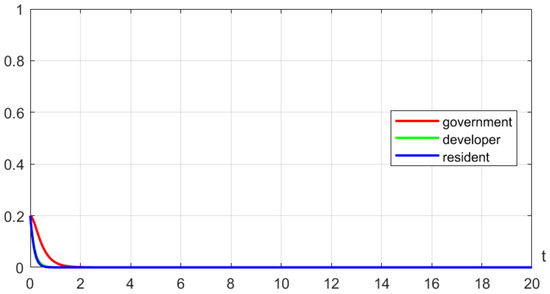
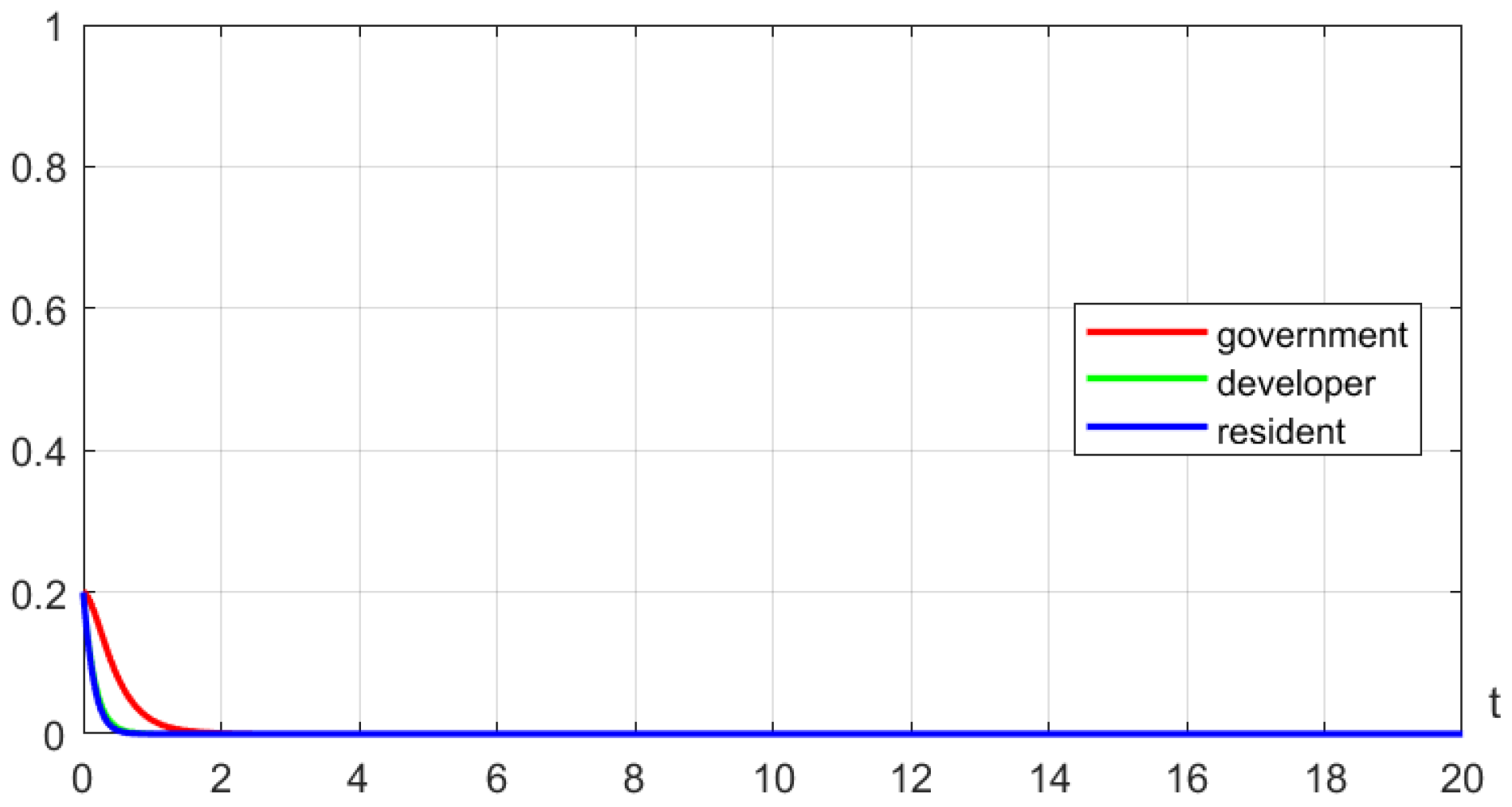
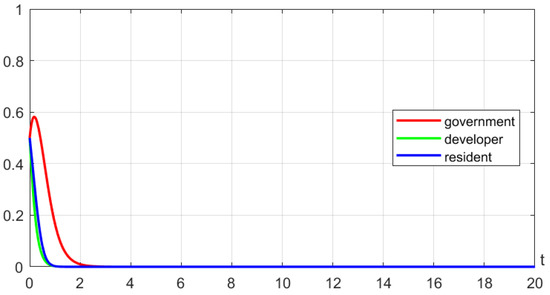
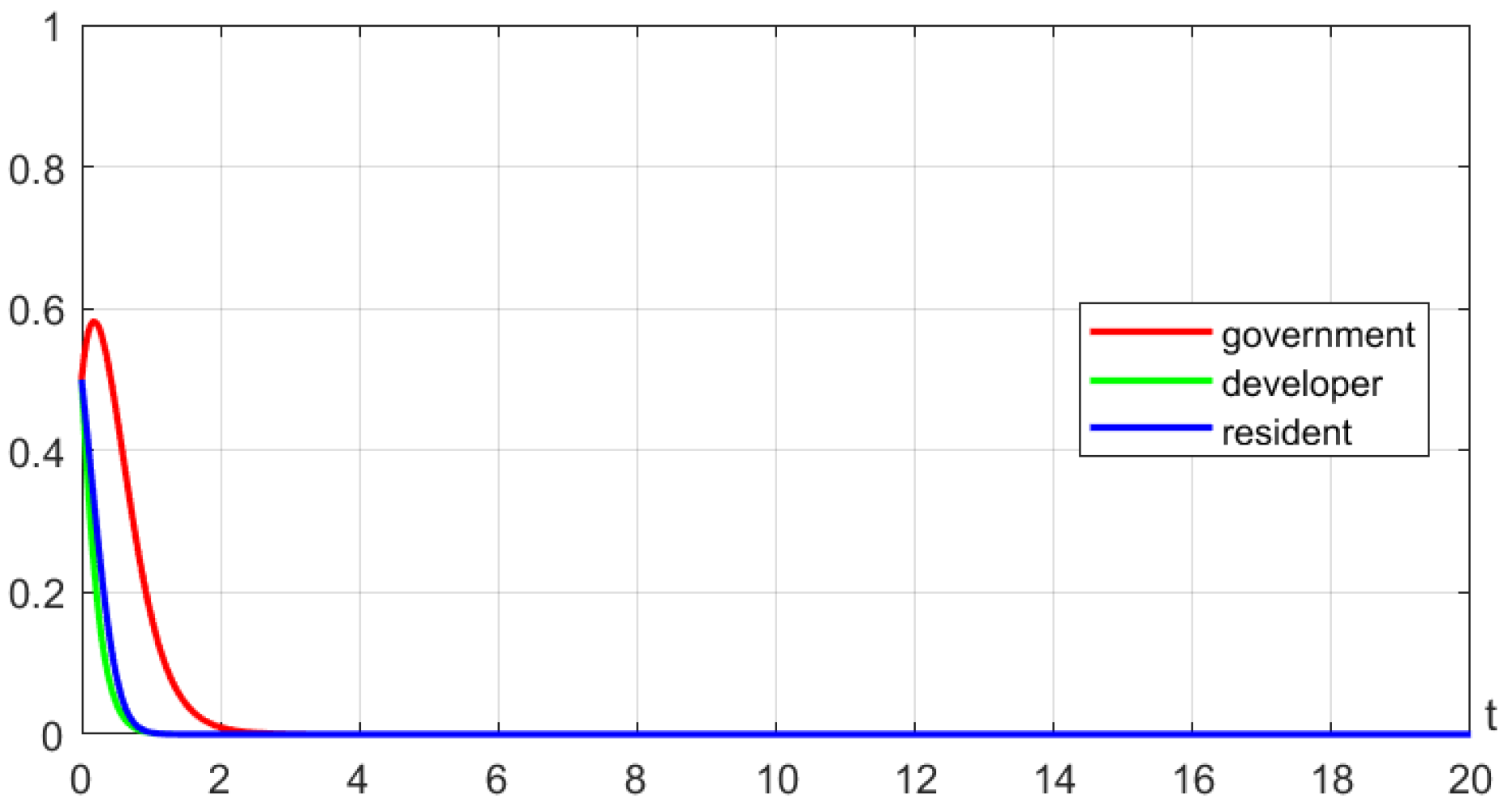
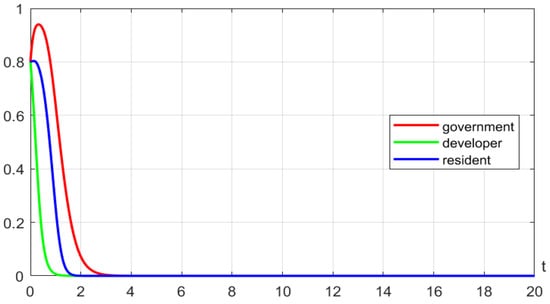
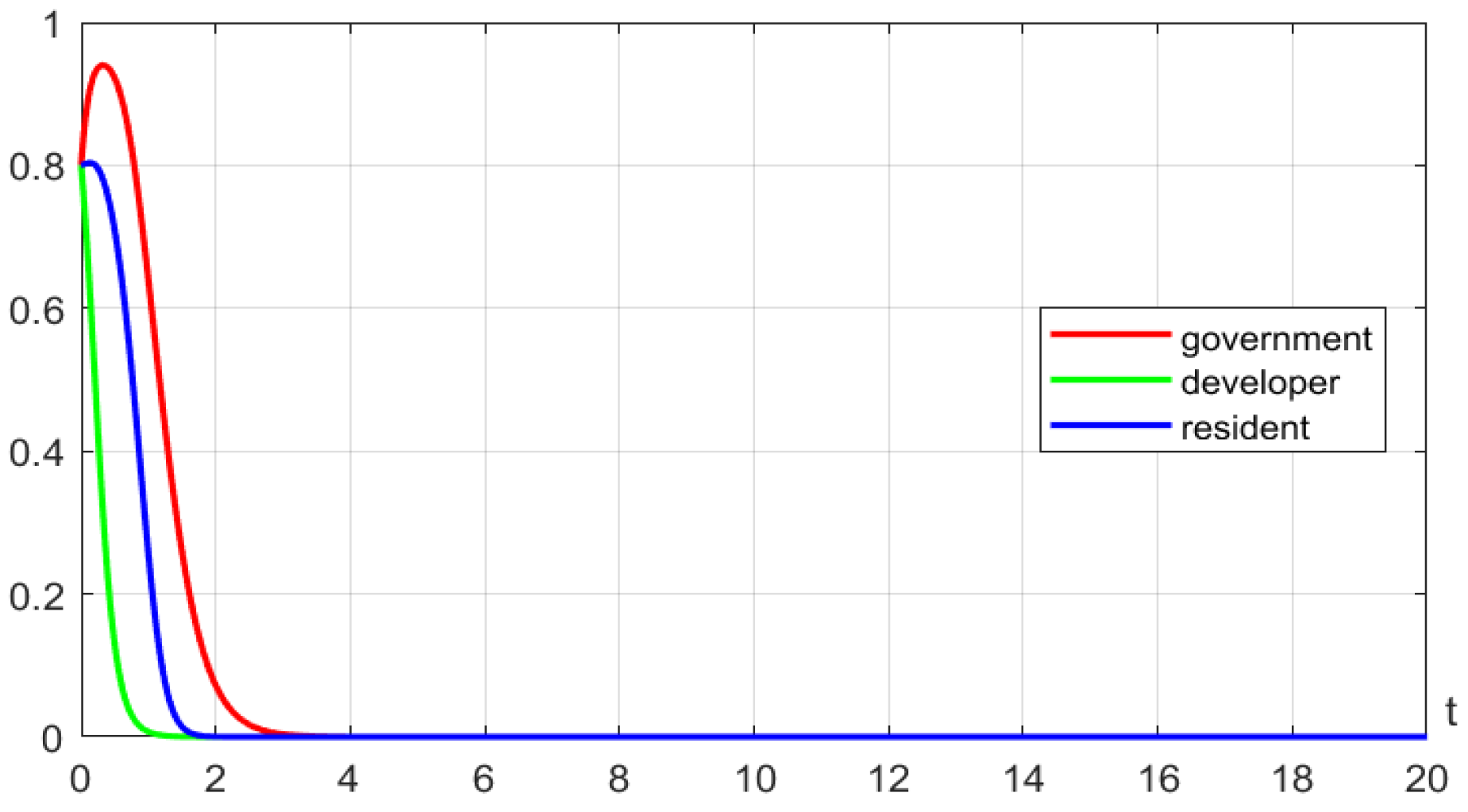
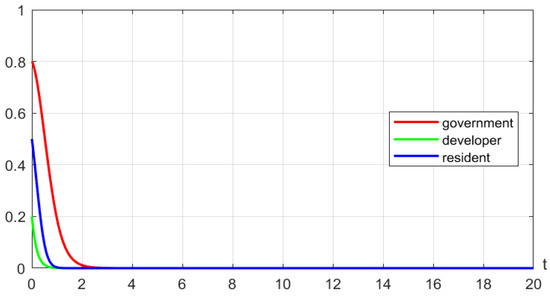
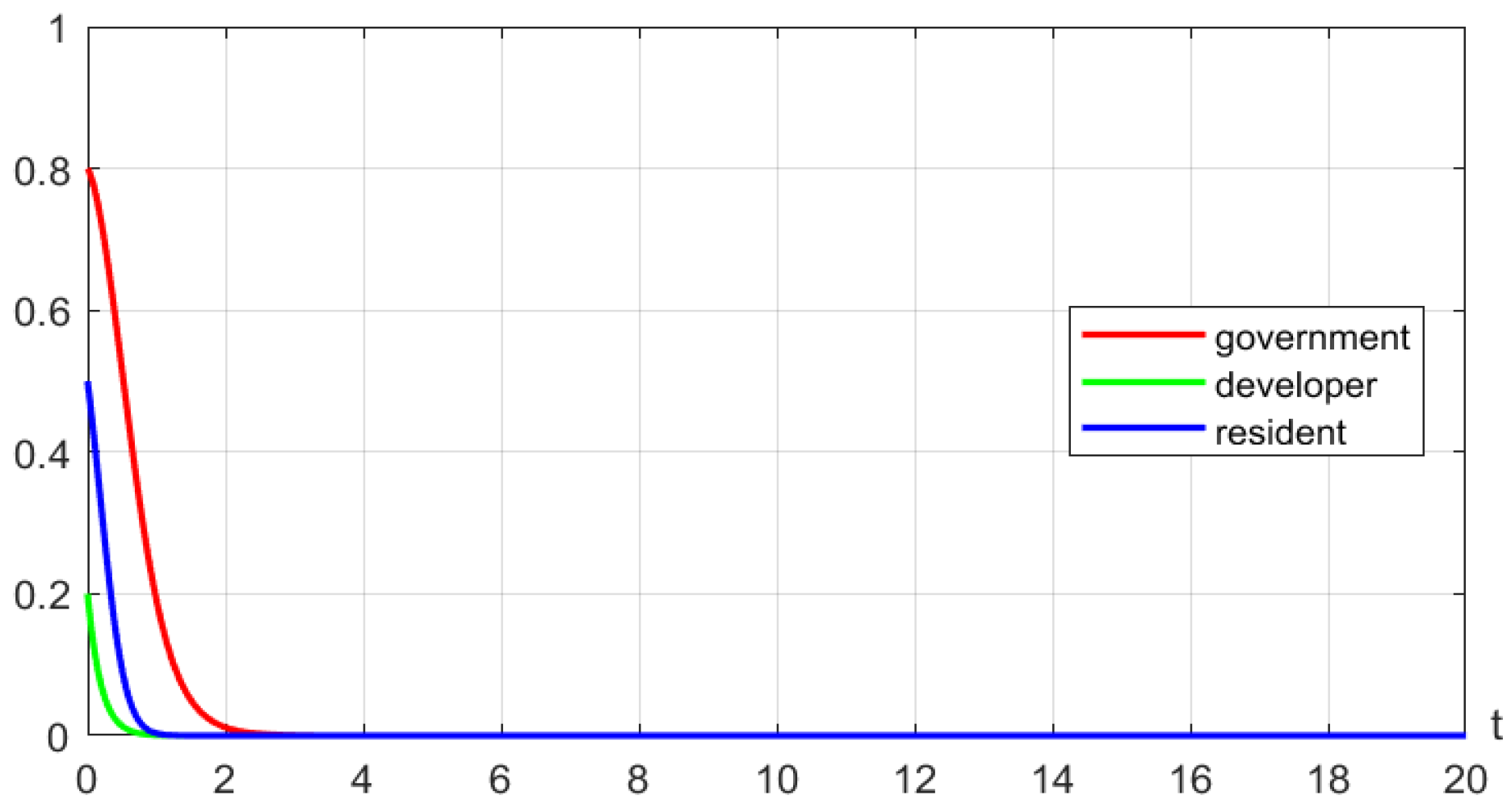
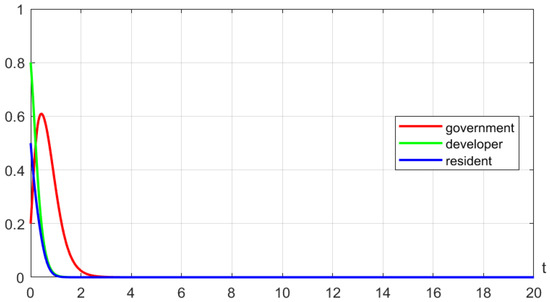
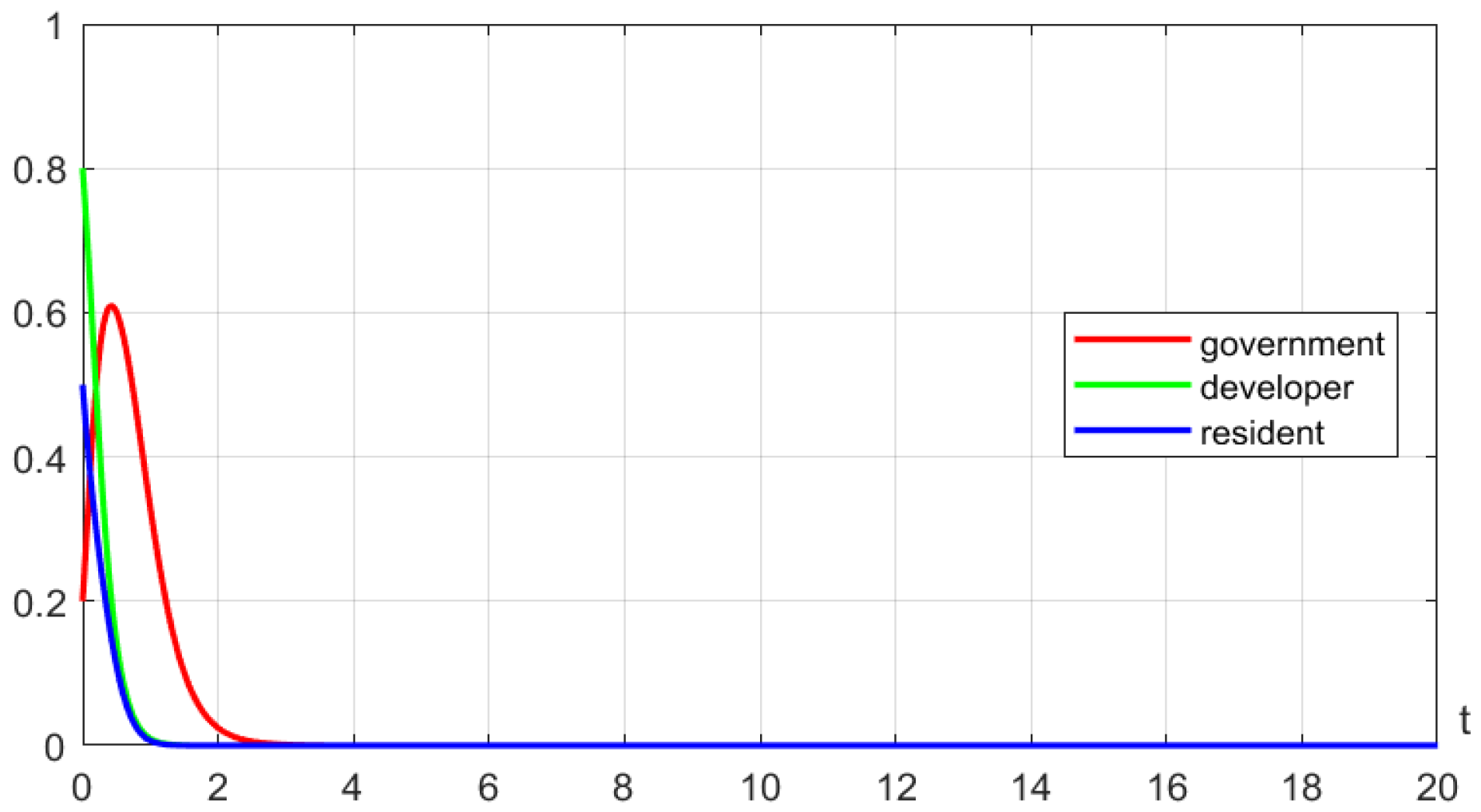
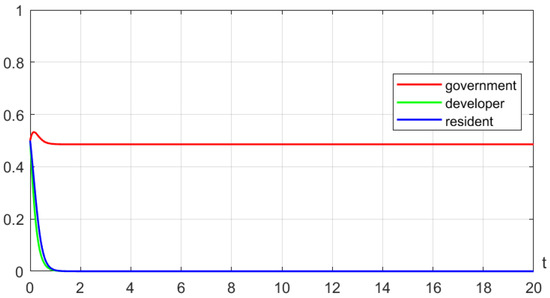
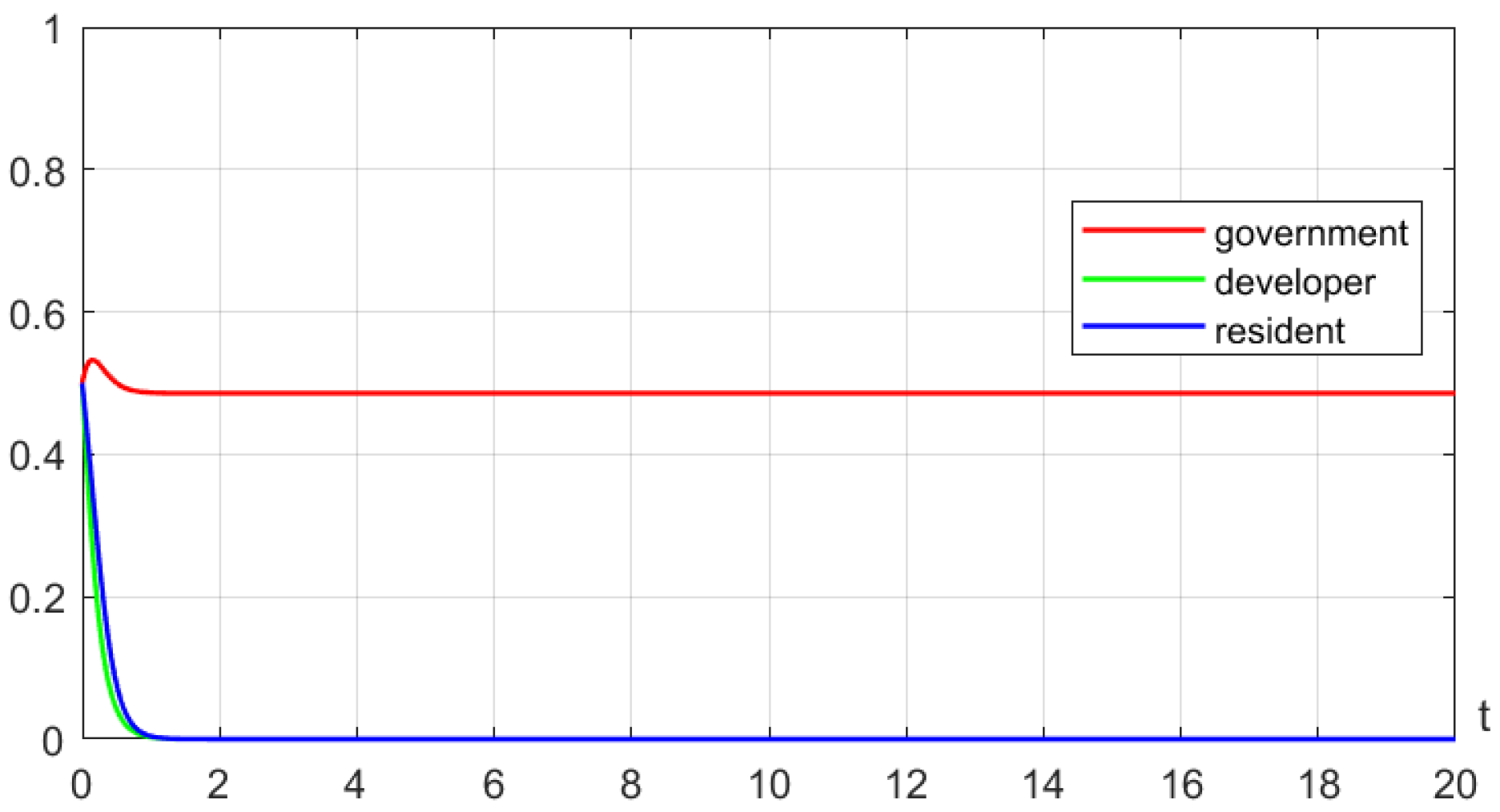
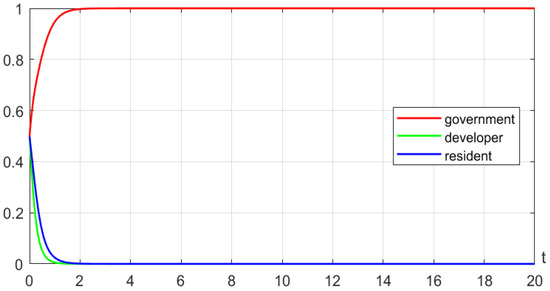
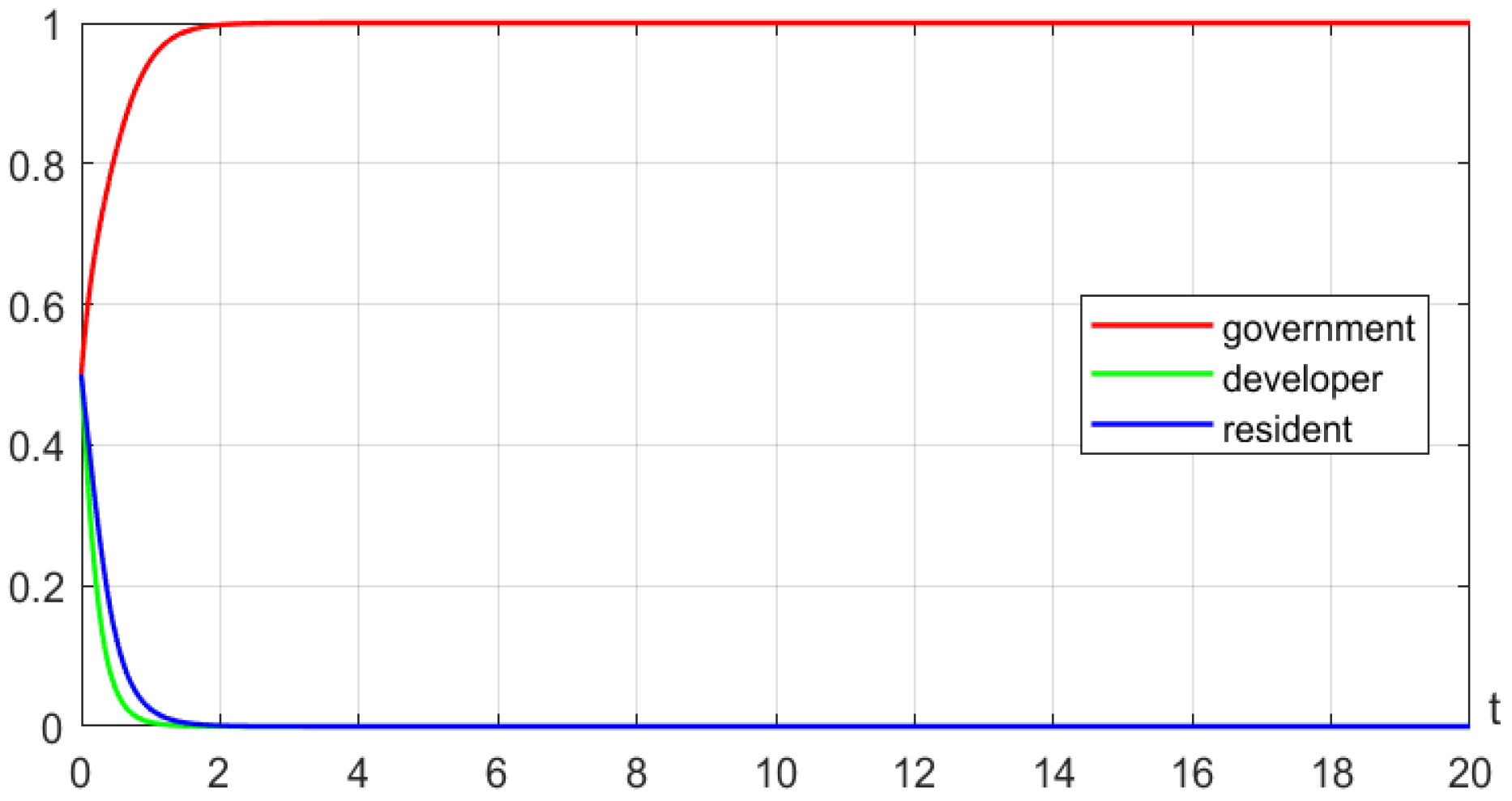
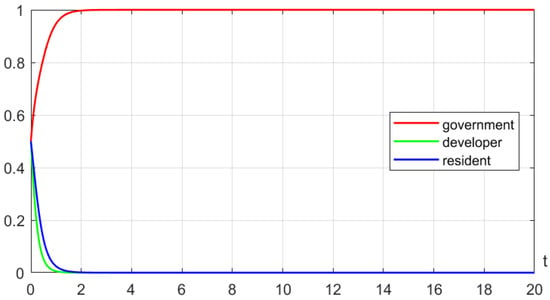
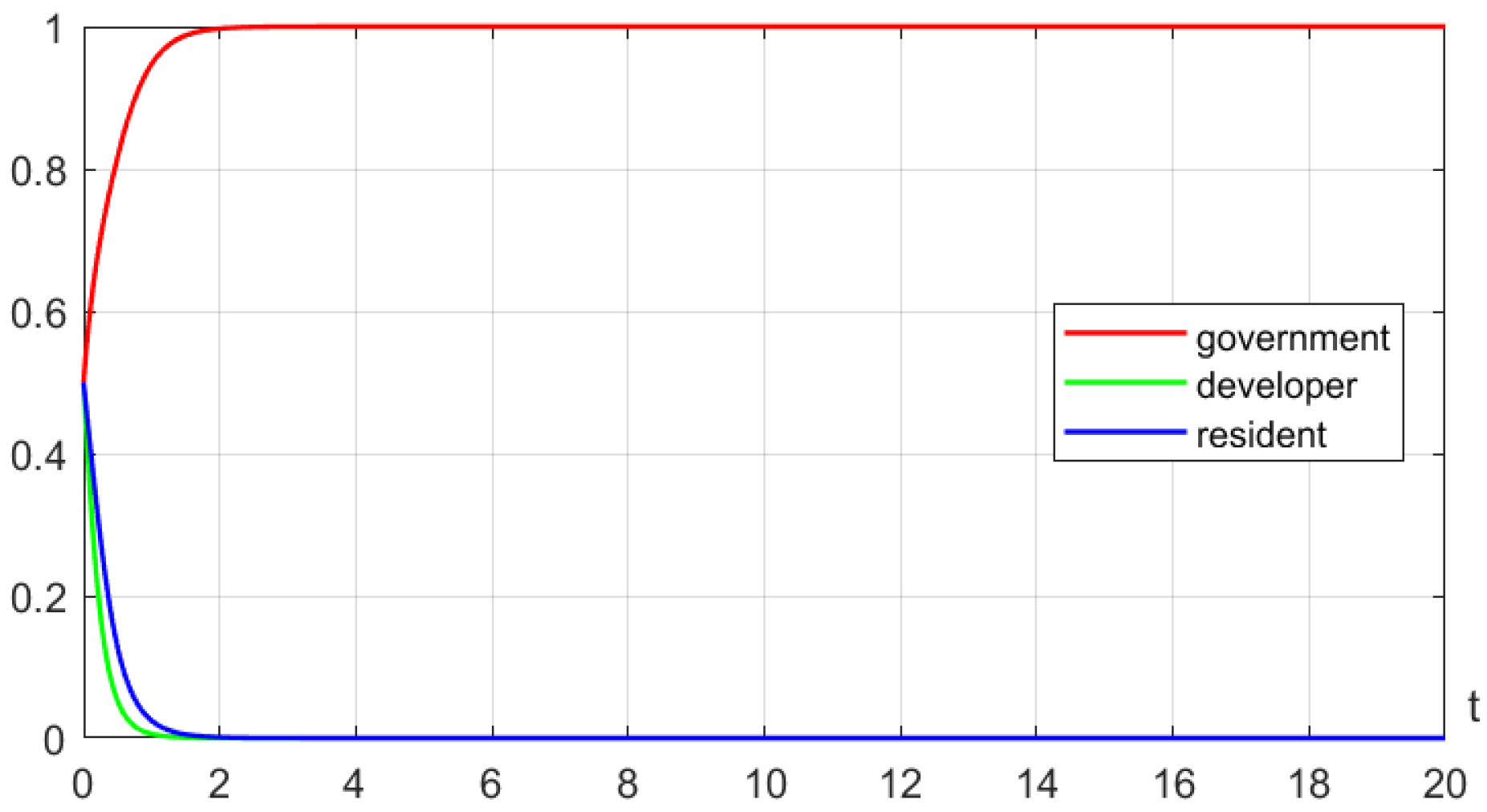
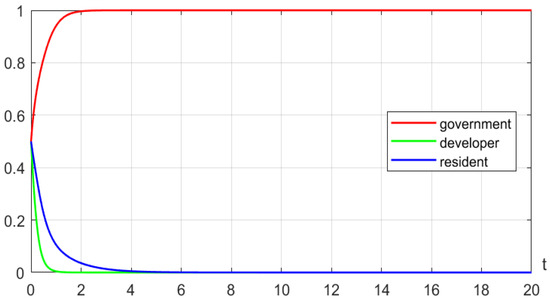
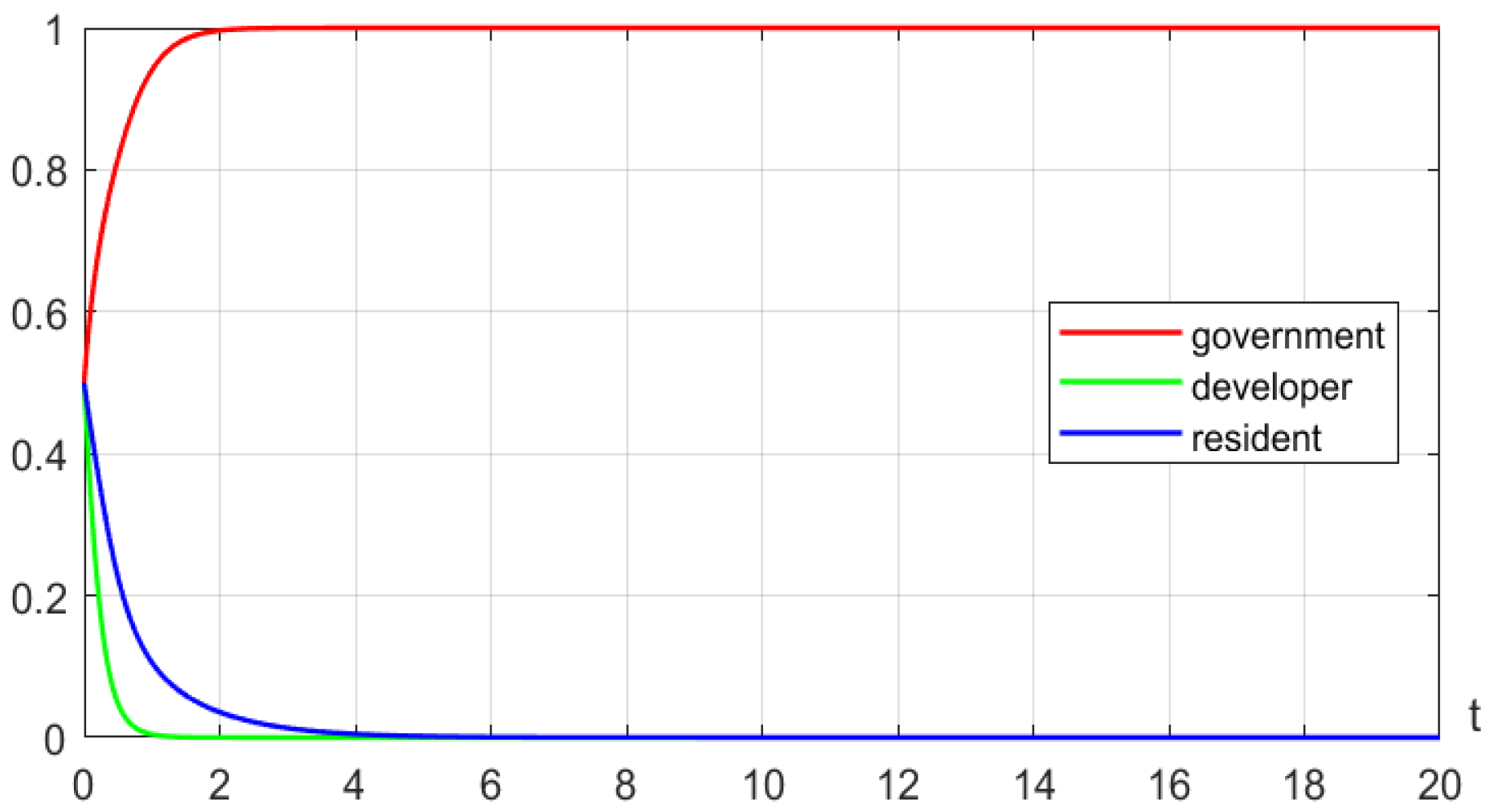
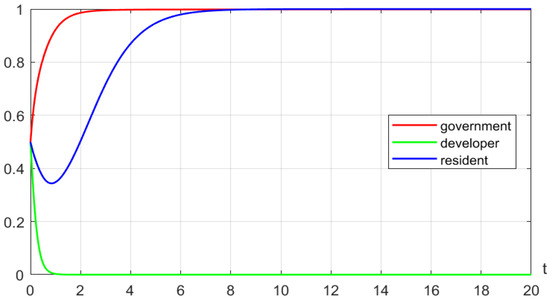
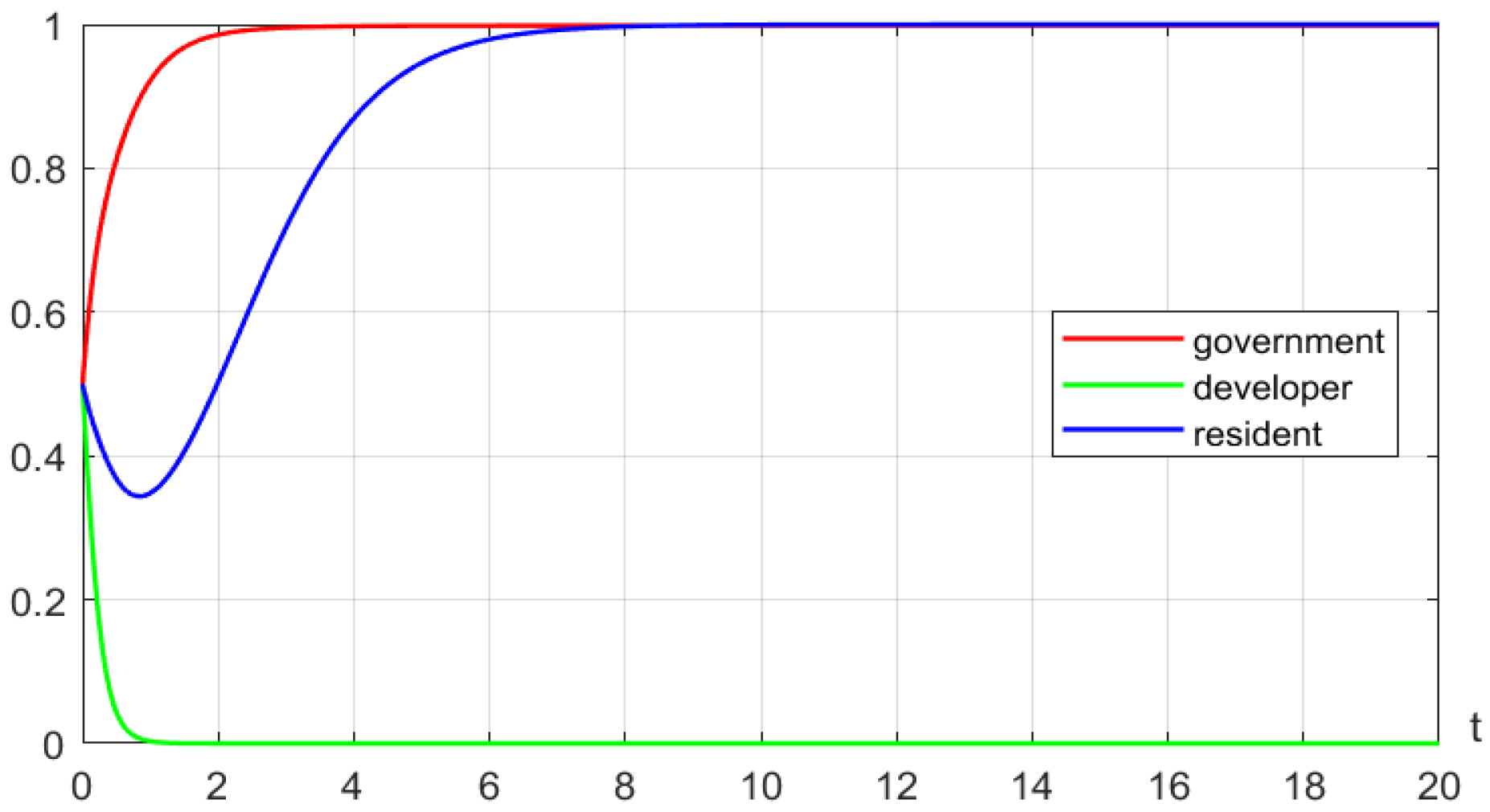
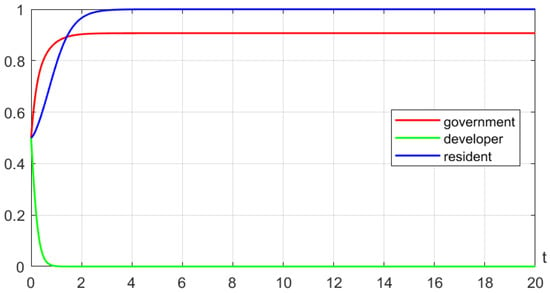
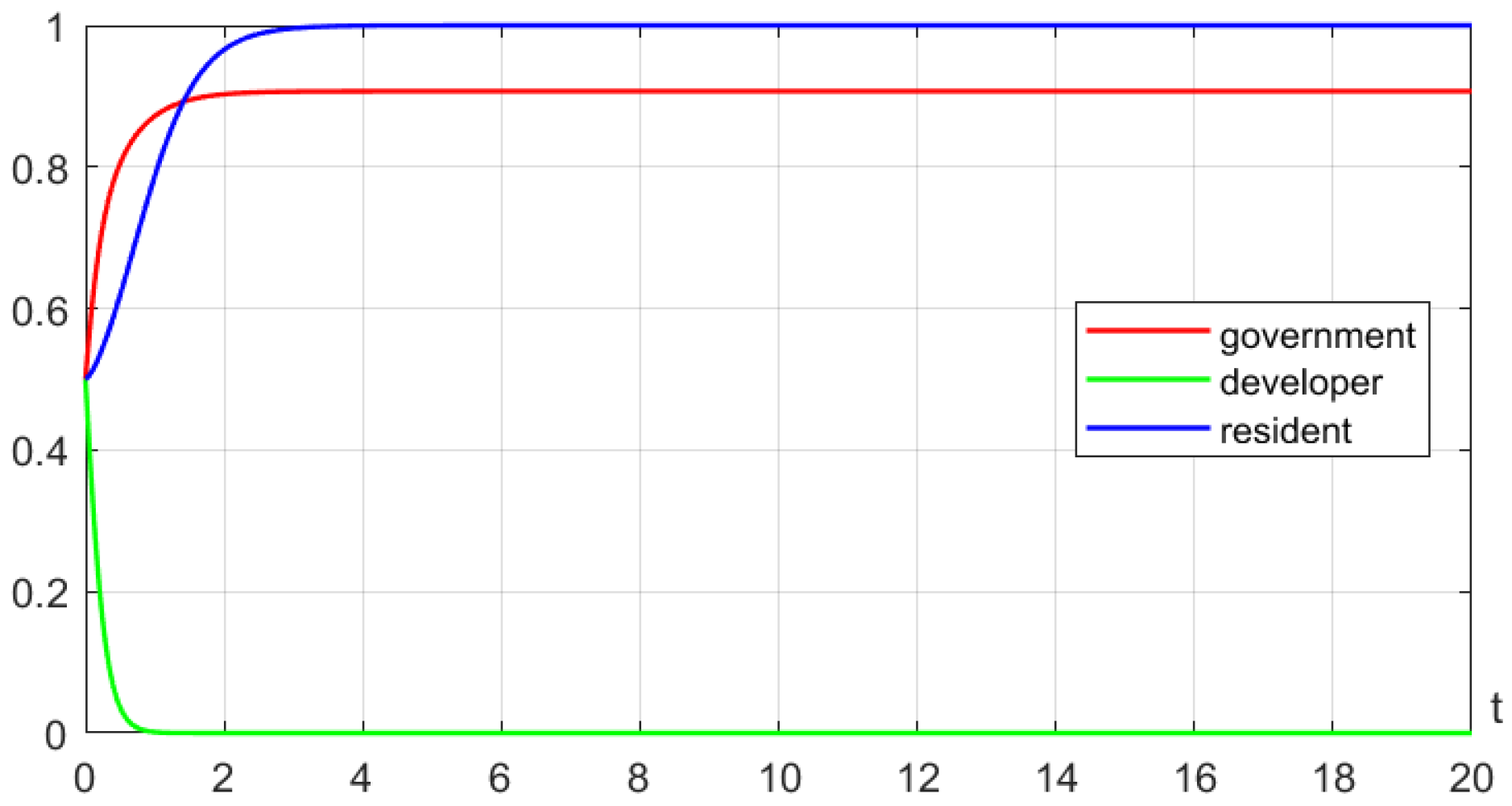
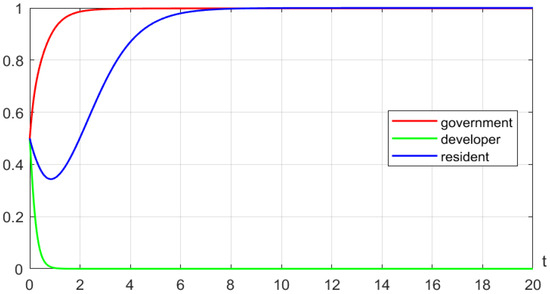
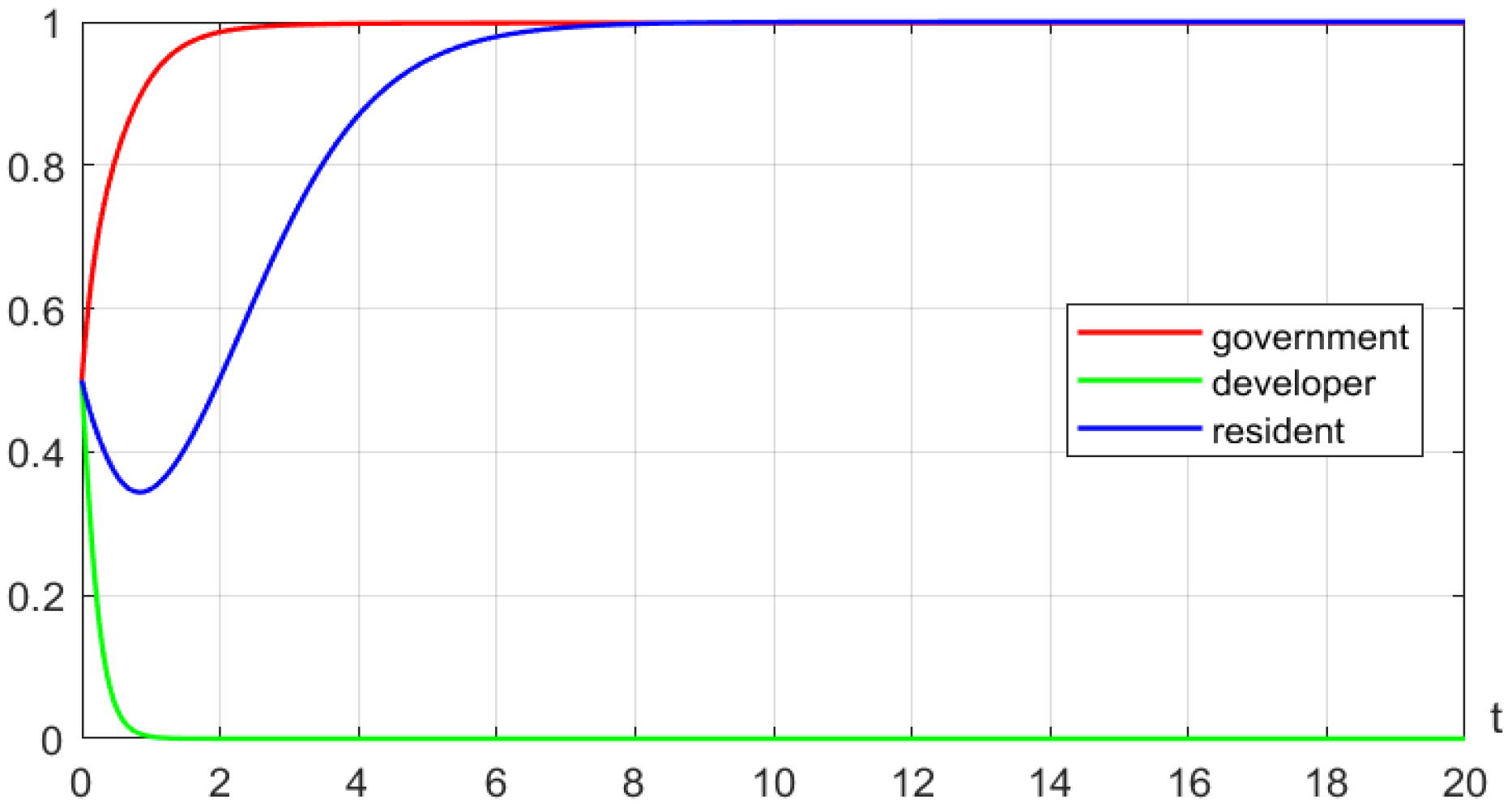
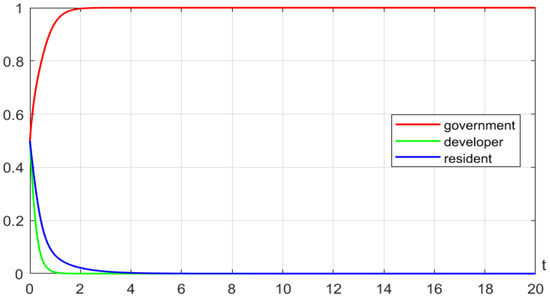
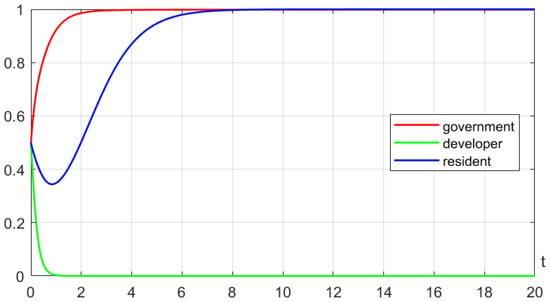
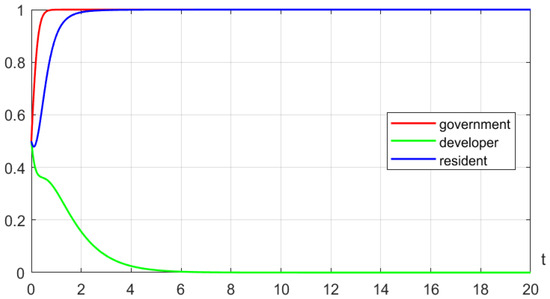
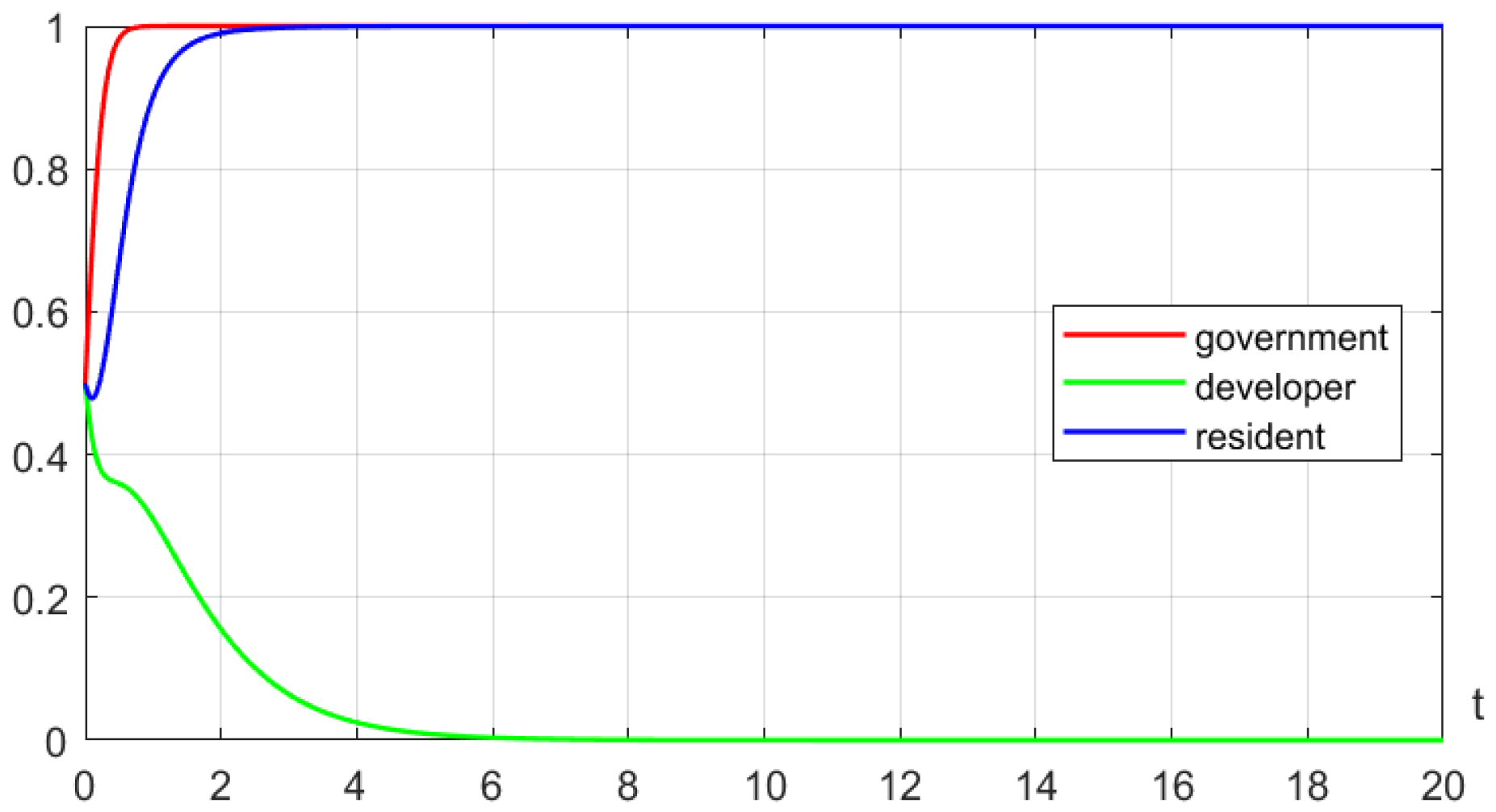
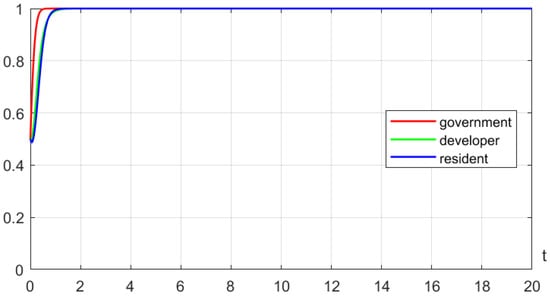
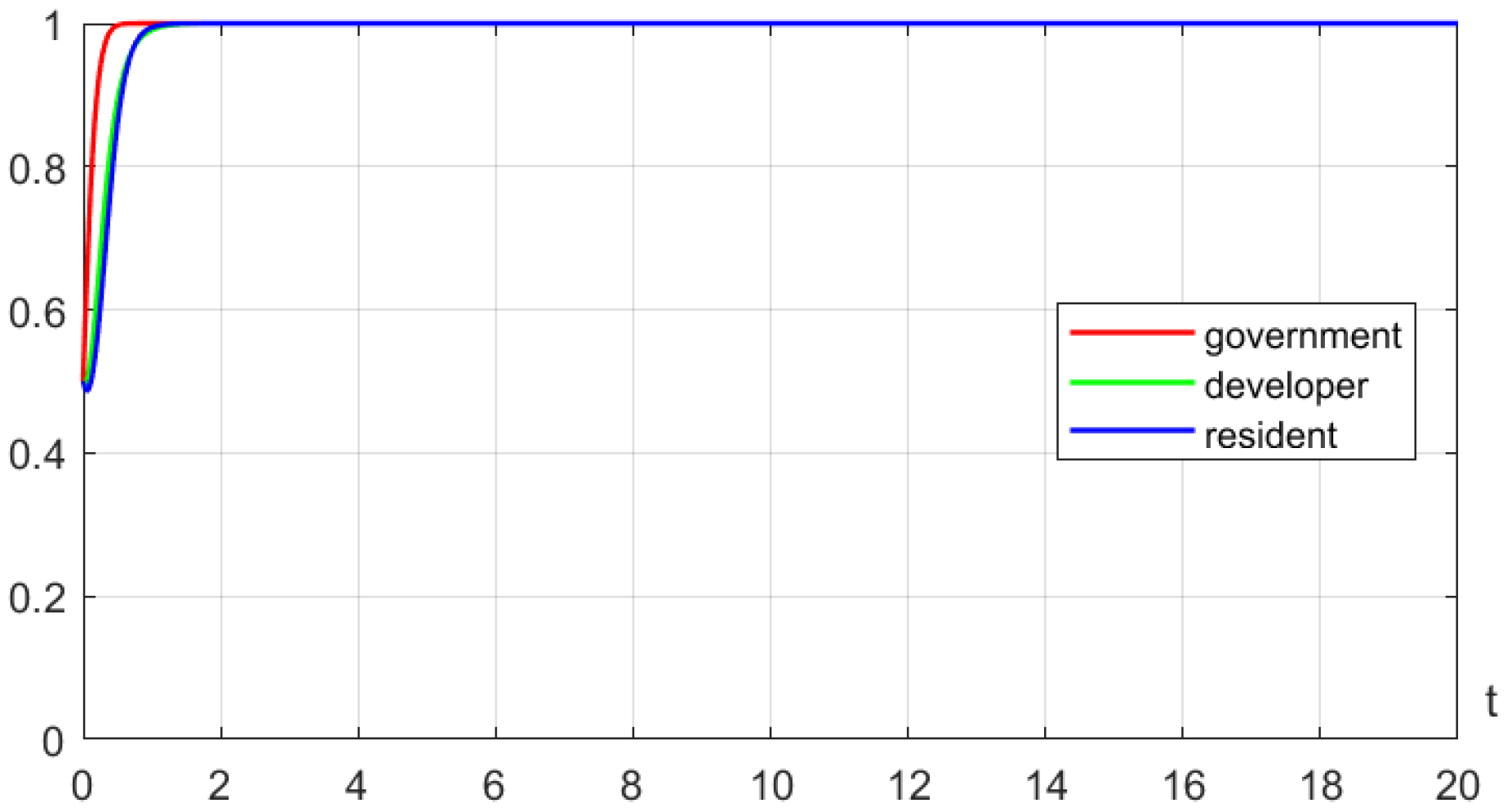

Disclaimer/Publisher’s Note: The statements, opinions and data contained in all publications are solely those of the individual author(s) and contributor(s) and not of MDPI and/or the editor(s). MDPI and/or the editor(s) disclaim responsibility for any injury to people or property resulting from any ideas, methods, instructions or products referred to in the content. |
© 2026 by the authors. Licensee MDPI, Basel, Switzerland. This article is an open access article distributed under the terms and conditions of the Creative Commons Attribution (CC BY) license.