


Abstract
Although soil stabilization has been widely studied, the mechanical behaviour and microstructural characteristics of unfired bricks produced from excavated soil waste have received limited systematic investigation, particularly across soils with different properties and stabilizer combinations. This study investigates the feasibility of producing unfired bricks from four excavated soils using cement, lime, and fly ash stabilization. Mechanical performance was evaluated through unconfined compressive strength tests and supported by microstructural observations. The 28-day UCS reached approximately 0.4–0.6 MPa for silty clay, 1.0–2.0 MPa for silt, and 0.8–1.6 MPa for silty sand when cement was the primary stabilizer. A simplified model was further developed to predict the strength performance based on soil properties and stabilizer composition. The results indicate that stabilization effectiveness strongly depends on soil characteristics, and different stabilizer combinations show different advantages for various soil conditions. Furthermore, life-cycle assessment and economic evaluation demonstrate that the proposed unfired bricks can reduce environmental impacts compared with conventional fired clay bricks by eliminating the high-temperature firing process and utilizing waste soil as a resource. The unfired brick showed a GWP of 332–394 kg CO2-eq/m3, compared with 503–721 kg CO2-eq/m3 for fired clay bricks. This study provides a practical approach for converting excavated soil waste into sustainable construction materials and supports the development of low-carbon and circular construction practices.
1. Introduction
Soil stabilization is a widely adopted technique in geotechnical engineering to improve the engineering properties of soils [1,2,3,4,5]. This method is commonly applied to increase the strength, reduce compressibility, and enhance durability, making soils suitable for construction and load-bearing applications. By improving the physical and chemical properties of the soil, stabilization provides a more stable foundation for infrastructure development [6,7]. It is important in regions where natural ground conditions do not meet engineering requirements for projects such as roadways, foundations, and embankments.
Incorporating soil waste into stabilization projects aligns with global sustainable development by promoting circular economy principles. The integration of soil waste into stabilization practices reduces the environmental burden of disposal. Countries such as China, where rapid urbanization is leading to massive amounts of soil waste are to explore reuse strategies [8]. Data (Table 1) from Chinese cities such as Shenzhen and Shanghai show soil waste production exceeding 50 million m3 annually [9,10], underscoring the urgency of effective soil waste management. Current disposal methods (Table 1), which often involve landfilling or temporary storage, are not sustainable in the long term, as seen in Shenzhen’s efforts to construct 15 additional soil storage facilities and Guangzhou’s focus on balancing soil production with treatment solutions. Beyond just managing soil waste, the potential for its reuse is well highlighted by China’s success in recycling construction waste.
Table 1.
Soil wastes production situation in different cities of China [9,10].
1.1. Potential of Circular Economy
The conventional economy model that is based on resource extraction, production, consumption, and disposal has resulted in substantial resource depletion and environmental pressures worldwide. In contrast, the circular economy provides an alternative development pathway by maintaining the value of materials through strategies including waste reduction, reuse, recycling, and resource recovery [11]. In the construction sector, where large quantities of natural resources are consumed and significant amounts of waste are generated, adopting circular economy principles has become increasingly important for improving resource efficiency and reducing environmental impacts [12]. By promoting the transformation of waste materials into secondary resources, circular construction approaches can reduce reliance on virgin materials, decrease landfill demand, and contribute to lower embodied carbon emissions throughout the material lifecycle [13,14].
Construction and excavated soil waste have received increasing attention as a major target for circular economy implementation due to its large generation volume and potential for material recovery (Table 1). Previous studies have demonstrated that recycling construction waste can provide both environmental and economic benefits by reducing disposal requirements and creating value from previously discarded materials [13,15]. In China, rapid urbanization has resulted in substantial growth in construction-related waste generation (Table 2), leading to increasing demands for effective waste management and resource utilization strategies [13,15]. The successful development of construction waste recycling systems provides valuable experience for extending circular economy principles to other underutilized waste streams [16,17,18].
Table 2.
Economic potential of construction waste recycling in China [9,10].
Among various construction-related waste materials, excavated soil waste represents a particularly significant but less explored resource. Unlike conventional construction and demolition waste, excavated soils are highly heterogeneous due to variations in geological origin, particle size distribution, and mineral composition, which limits their direct reuse in engineering applications. Consequently, large quantities of excavated soil are still disposed of through landfilling, temporary storage, or low-value applications, resulting in land occupation and inefficient resource utilization [19]. However, appropriate treatment technologies, such as chemical stabilization, can improve the engineering properties of excavated soils by enhancing strength, durability, and workability. Stabilizers including cement, lime, and fly ash have been widely investigated for improving the performance of weak soils and waste-derived materials through hydration and pozzolanic reactions [19]. Furthermore, many industrial by-products materials have substantial economic potential when appropriately valorized, as their conversion into secondary construction resources can generate economic value, reduce reliance on virgin materials, and promote a more circular and sustainable construction economy.
Therefore, converting excavated soil waste into value-added construction products, such as unfired bricks, provides a promising circular economy strategy that simultaneously reduces waste disposal, conserves natural resources, and supports the development of low-carbon construction materials. From an engineering safety perspective, insufficient compressive strength and a weak or porous microstructure may limit the load-bearing capacity and long-term reliability of unfired bricks. Therefore, understanding the relationship between soil type, stabilizer combination, mechanical performance, and microstructure is essential before excavated-soil bricks can be considered for structural or non-structural construction applications.
1.2. Dual-Stabilizer Systems for a Lower Carbon Footprint
The most commonly used stabilizers for soil stabilization are cement, lime, and fly ash, each offering distinct advantages and limitations [20,21,22,23,24,25]. Cement primarily works by forming calcium silicate hydrate (C-S-H) through hydration, which binds soil particles and provides early strength [26,27]. However, cement production is highly energy intensive and significantly contributes to carbon emissions, making it less favorable in countries such as China that aims to reduce cement consumption in construction projects to meet global carbon neutrality targets. The extensive use of cement is tempered by its high environmental cost and susceptibility to shrinkage and cracking over time, which limits its application in large-scale projects [28,29,30,31,32]. On the other hand, lime [33,34] and fly ash [26,35,36,37] have demonstrated benefits, particularly for expansive clays and long-term durability, respectively. Given the increasing focus on sustainability and the need to reduce cement usage, there is a pressing need to explore more effective stabilizer combinations. Lime is effective in high-plasticity soils by reducing plasticity through cation exchange and generating additional strength through pozzolanic reactions [2,28,30,38,39]. Nevertheless, lime reacts more slowly than cement and is less effective in sandy soils. Fly ash [26,35,36,37], an industrial by-product, offers a more sustainable alternative, contributing to strength enhancement through pozzolanic reactions over time. However, its strength gain is typically delayed, requiring extended curing periods to achieve significant improvement.
1.2.1. Cement + Fly Ash: Long-Term Strength Enhancement
In the short term, the cement + fly ash combination will provide moderate strength due to the rapid hydration of cement [1,8,22,38,40], which forms C-S-H (calcium silicate hydrate). During this stage, fly ash contributes minimally because the pozzolanic reaction has yet to fully engage [26,35,36,37]. The performance of this combination can vary depending on the soil type [22,38]. In clay soils, the fine particle size and high plasticity tend to hinder the development of early strength. Clay soils have a lower permeability, which slows down the movement of water and limits the extent to which the hydration products can form and disperse. In silt and silty sand, the situation is different. In the short term, the UCS is still primarily dominated by the hydration of cement, but these soils’ lower plasticity and higher permeability allow water to flow more easily through the soil matrix. This facilitates a better dispersion of cement hydration products, allowing for a more immediate contribution to strength. However, even in these soils, fly ash’s contribution is limited at this stage because its reaction is slower. In the long term, the pozzolanic reaction of fly ash becomes increasingly important. As fly ash reacts with Ca(OH)2 produced during cement hydration, additional C-S-H and calcium aluminate hydrate (C-A-S-H) compounds are formed. These compounds work to fill the voids between soil particles, leading to significant strength improvements. This effect is more pronounced in silt and silty sand [1,35,41], where the larger void spaces and higher permeability facilitate the interaction between fly ash and the soil. In clay soils, the long-term performance of the cement + fly ash combination may take longer to manifest, as the fine particles and limited permeability slow down the reactions. In silty sand, cement + fly ash is highly effective in the long term, as the soil’s coarser particles and greater permeability allow for better infiltration and reaction of the fly ash. The pozzolanic reaction fills the voids between the sand particles, creating a stronger and more interconnected structure, making cement + fly ash an ideal stabilizer for long-term performance in these soil types.
1.2.2. Cement + Lime: Rapid Short-Term Strength Development
The cement + lime combination will provide rapid strength gains across various soil types, particularly in high-plasticity soils like clay [1,28,42,43]. Lime’s cation exchange reaction reduces soil plasticity quickly, allowing for the accelerated formation of C-S-H and ettringite during cement hydration. This is significant in clay, where the early increase in UCS is most pronounced. In silt, although lime contributes to some plasticity reduction, cement remains the primary stabilizer of early strength. In sandy soils, lime has minimal effect due to the low reactivity of sand, but cement provides sufficient early stabilization [8,21,26]. However, the impact of lime is more profound in clay, where lime’s pozzolanic reaction plays a larger role in both reducing plasticity and enhancing strength. For silt and sand, cement dominates strength improvement in the early phase, with lime having a reduced but still positive effect. Clay soils continue to benefit from lime’s pozzolanic reaction, but silt and sand quickly stabilize, showing limited additional strength gains beyond the early period. This behaviour suggests that the combination is ideal for applications where short-term strength is critical, especially in projects involving high-plasticity soils like clay, where quick load-bearing capacity is essential.
1.2.3. Lime + Fly Ash: Gradual Long-Term Strength Improvement
The lime + fly ash combination is characterized by low early strength, especially in comparison to cement-containing stabilizer [2,44,45,46,47]. This is most evident in clay and silt soils, where lime’s reaction with fly ash takes time. Unlike cement, which hydrates rapidly and forms C-S-H, lime and fly ash react much more slowly due to the pozzolanic reaction, which requires an extended curing period. This result will significantly lower UCS in the short term, making the combination less effective for projects that require immediate strength or fast stabilization. However, over time, the lime + fly ash combination will become more effective, particularly in low-plasticity soils like silt and silty sand, where the pozzolanic reaction generates C-S-H or C-A-S-H, improving the soil’s densification and long-term strength. An important consideration when evaluating UCS is that higher early strength is not always good, as materials that develop very high UCS too quickly can become brittle. Brittle materials, although initially strong, tend to crack under stress, leading to poor long-term performance. In contrast, the lime + fly ash combination gradual strength gain results in a more stable development over time, reducing the risk of brittleness and cracking. This makes it particularly suited for projects where long-term stability is crucial, and immediate strength is less of a priority.
Overall, cement provides relatively rapid strength development through hydration, lime is particularly effective in improving high-plasticity soils through cation exchange and pozzolanic reactions, while fly ash mainly contributes through filler effects and slower pozzolanic reactions. However, their effectiveness varies considerably with soil type, and no single stabilizer system is universally suitable for excavated soils. Despite extensive studies on soil stabilization, the use of excavated soil waste for producing unfired bricks remains insufficiently understood, particularly regarding how soil type and stabilizer combination affect mechanical performance and microstructural development. From a practical perspective, this uncertainty limits the reliable selection of suitable excavated soils and stabilizer systems for construction applications. Therefore, this study aims to: (1) evaluate the UCS performance of four excavated soils stabilized with cement, lime, and fly ash combinations and the corresponding microstructural characteristics; (2) develop a simplified strength prediction model based on soil properties and stabilizer composition; and (3) assess the environmental performance of the proposed unfired bricks.
2. Materials and Methods
2.1. Materials
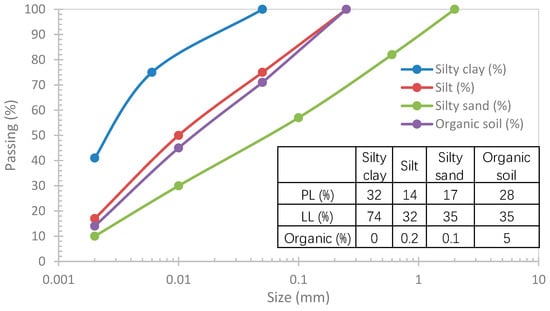
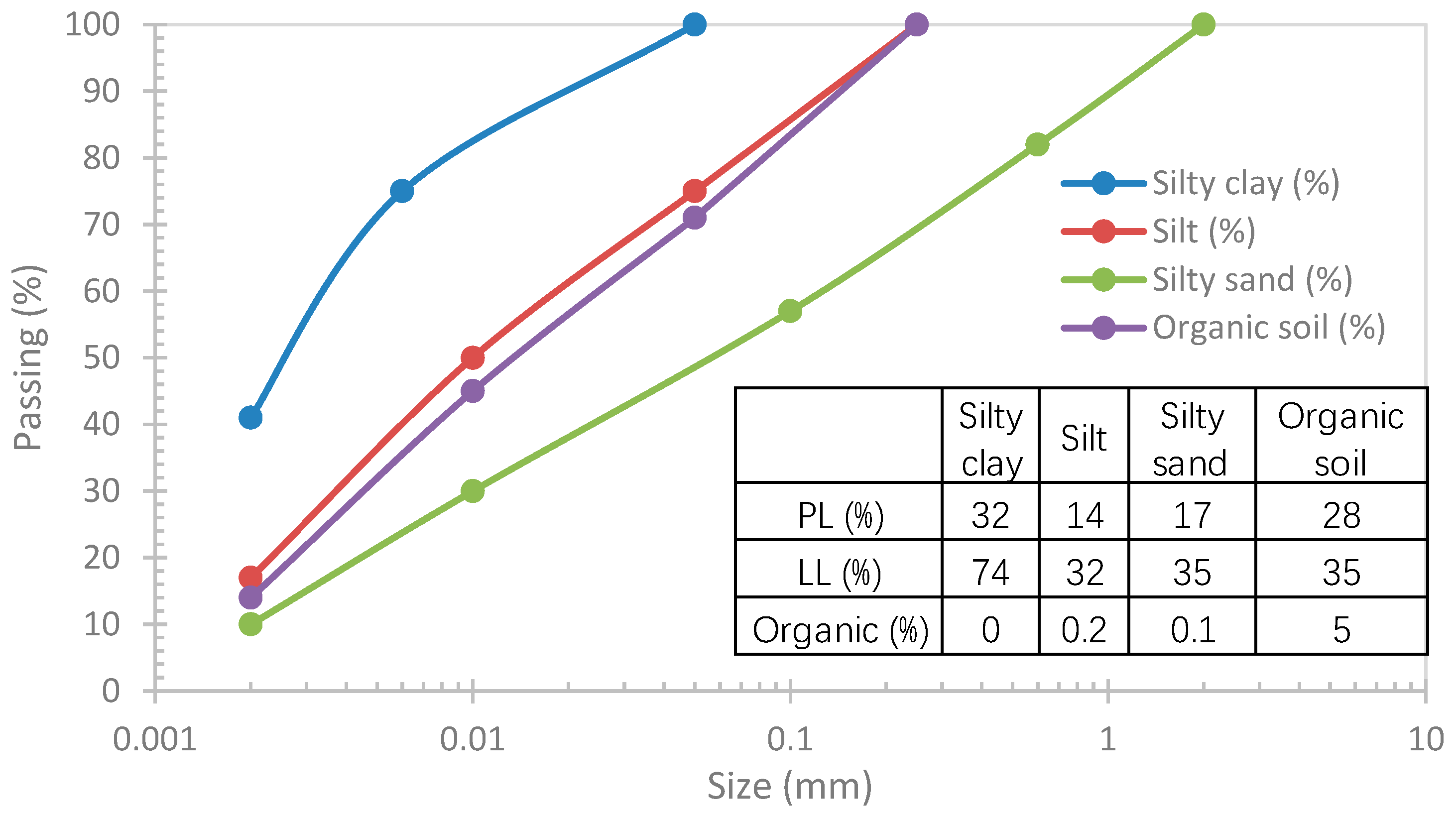
The particle size distribution curves and Atterberg limit tests for four different soils (silty clay, silt, silty sand, and organic soil) reveal differences in the composition and plasticity characteristics (Figure 1). Silty clay exhibits the finest and high plasticity index (PI = 32%) and liquid limit (LL = 74%) [48]. Silt, with a lower PI of 18%, shows a more well graded distribution. Silty sand has a coarser particle distribution, indicating it contains more sand particles, with a moderate plasticity index of 18%. Organic soil, characterized by 5% organic content, has a particle-size distribution similar to that of silt, and a PL of 28% and an LL of 35%. The chemical composition of the three stabilizers on cement, lime, and fly ash varies significantly (Table 3). Cement contains 52.3% CaO, 21.2% SiO2, and smaller amounts of Al2O3, Fe2O3, and MgO, contributing to the formation of C-S-H for strength development. Lime is mostly 98% CaO, making it effective in reducing soil plasticity and triggering pozzolanic reactions. Fly ash has low CaO (1.5%) but is rich in SiO2 (54.1%) and Al2O3 (26.8%), making it a pozzolanic material that reacts more slowly. The total stabilizer content was fixed at 20% to provide a consistent basis for comparison. For each binary stabilizer system, three proportions (20:0, 15:5, and 10:10) were selected to represent zero, partial, and equal replacement levels, allowing the effect of changing the relative contribution of cement, lime, and fly ash to be systematically evaluated while keeping the total binder content constant.
Figure 1.
Soil properties for silty clay, silt, silty sand and organic soil.
Table 3.
Composition of cement, lime and fly ash used in this study.
2.2. Experimental Programme
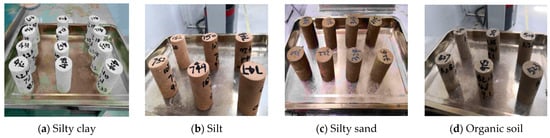
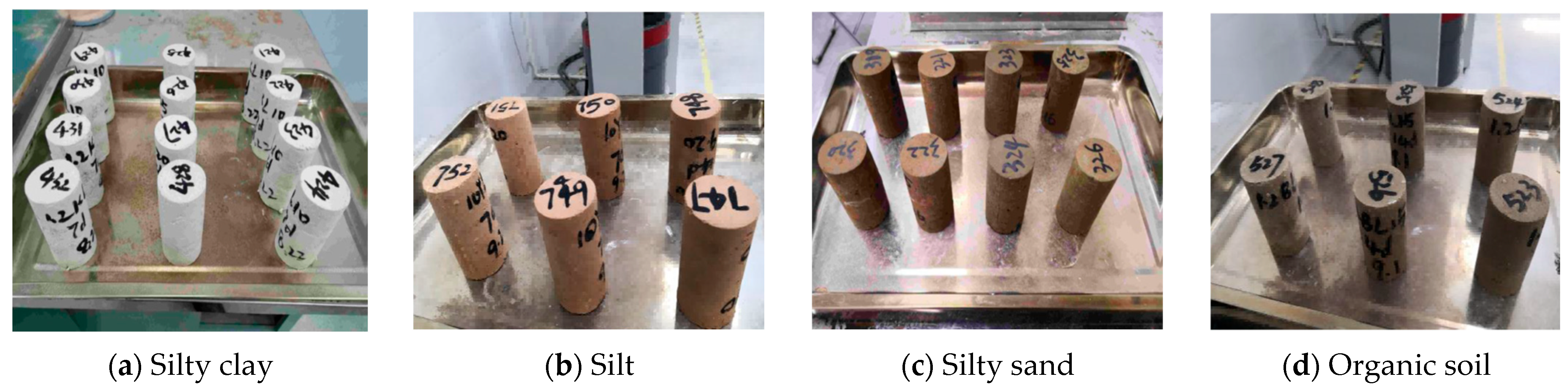
Stabilizers (cement, lime, and fly ash) were added at a fixed content of 20% by mass of dry soil. For stabilizer combinations, the proportions followed the mix ratios in Table 4. Water was then added to reach either 1.0 or 1.2 times the soil’s liquid limit (LL), determined through standard tests. The soil–stabilizer–water mixture was blended thoroughly using a mechanical mixer for 5–10 min to ensure uniform consistency [49,50,51]. After mixing, 250 g of the mixture was compacted in three layers into cylindrical molds (50 mm diameter, 100 mm height). Each layer was compacted using 25 blows from a standard Proctor hammer to eliminate voids. The compacted specimens were cured in molds for 2 days under controlled conditions (temperature 25 °C, humidity 100%). After demolding (Figure 2), the samples were cured for the additional days under the same conditions. Following the specific curing period, UCS tests were performed according to ASTM D2166 at a constant strain rate of 1.6 mm/min [52].
Table 4.
Mix proportions and testing conditions.
Figure 2.
Specimens prepared for UCS tests.
Representative fragments were collected from the tested specimens, dried, and carefully trimmed to obtain suitable surfaces for SEM observation. The prepared samples were mounted on SEM stubs, coated with a conductive layer, and imaged at different magnifications to examine the morphology and bonding characteristics of the stabilized soil matrix.
Overall, the experimental programme consisted of four excavated soil types stabilized with different cement, lime, and fly ash combinations. The total stabilizer content was fixed at 20%, while the proportions of individual stabilizers were varied to investigate their influence on the mechanical behaviour of unfired bricks. The fabricated specimens were subjected to curing and evaluated through unconfined compressive strength (UCS) tests and microstructural analysis. Based on the experimental results, a simplified strength prediction model was further developed, and the environmental performance of representative unfired bricks was assessed using life-cycle assessment.
3. Results and Discussion
3.1. General UCS Results Behaviour
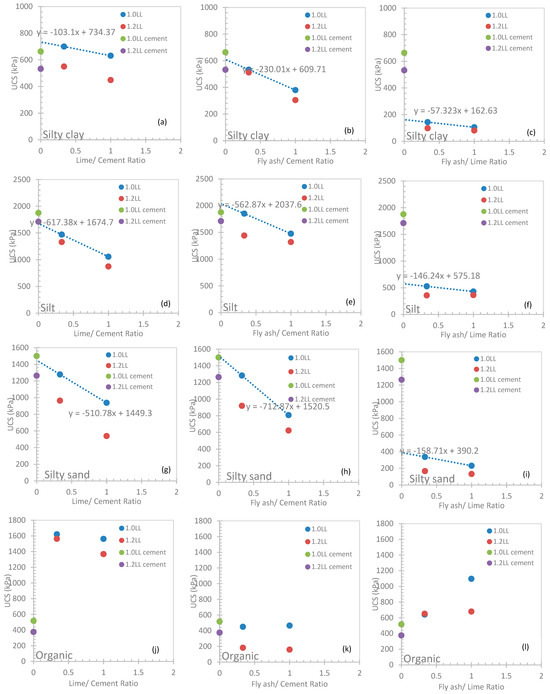
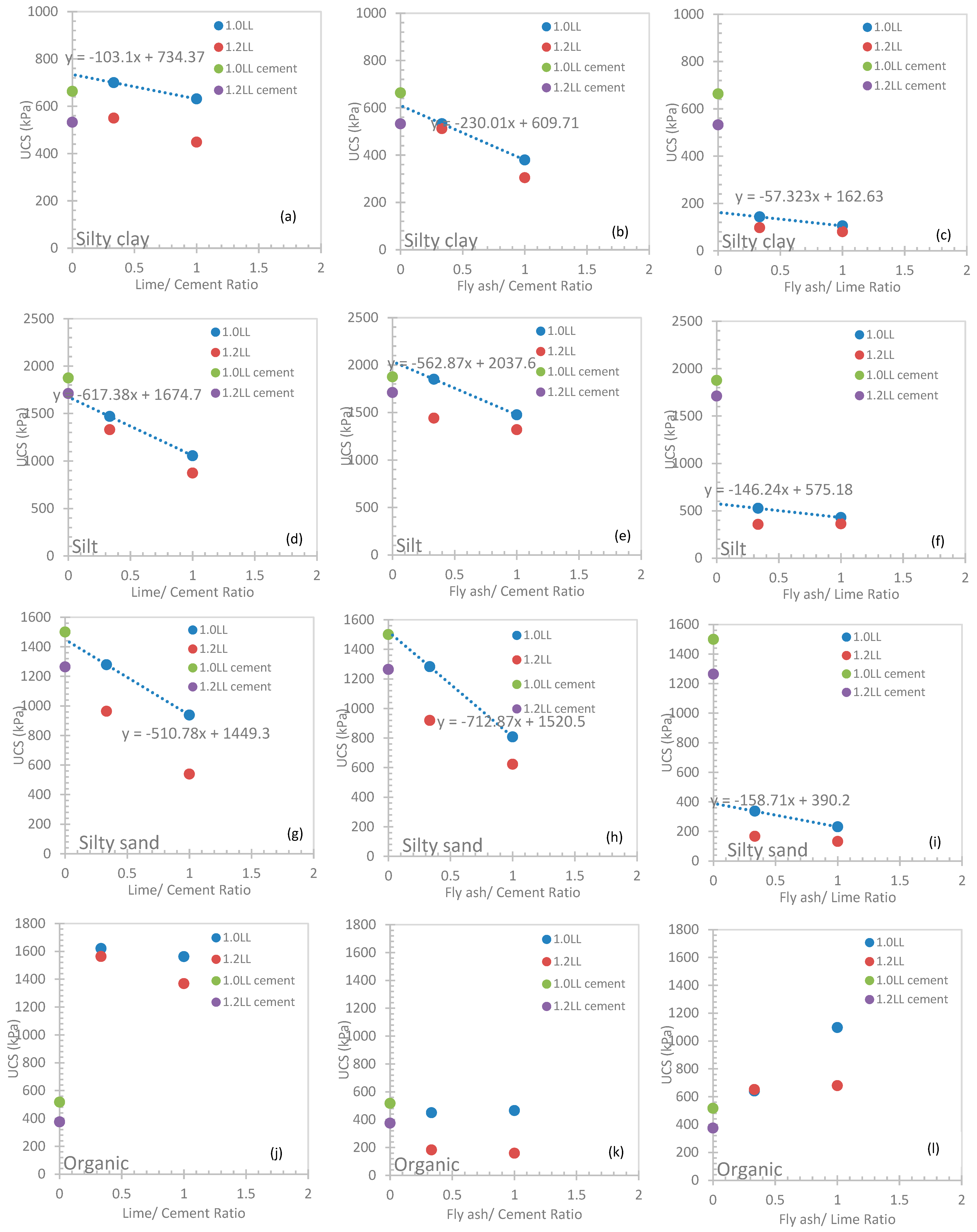
The UCS results reveal notable patterns across different soils and stabilizer combinations (Figure 3). For silty clay, the lime–cement combination yields consistently higher UCS values. This outcome is attributed to the pozzolanic reactions that lime initiates, which work effectively with the clay minerals to form stronger bonds. Lime acts by promoting calcium silicate hydrate (C-S-H) formation, contributing to a more robust soil matrix. These reactions are essential in soils with clay, as they reduce plasticity and improve strength, especially with an optimal lime to cement ratio. In silt, the fly ash-cement mix appears more beneficial. Silt particles, being finer and less cohesive than clay, that respond well to fly ash, which not only fills voids but also participates in strength enhancing reactions when combined with cement. The fly ash’s ability to blend effectively with silt creates a dense matrix, thus promoting strength gain. This combination shows a relatively linear strength improvement trend as the fly ash to cement ratio changes, highlighting fly ash’s reinforcing capacity in non-cohesive soils. For silty sand, both the lime–cement and fly ash-cement mixes exhibit similar UCS results, indicating that sandy soils do not exhibit a strong preference for either stabilizer combination. This may be due to the lower cohesion in sand-based soils, where both fly ash and lime can contribute to soil matrix densification and some pozzolanic reactions without significant differentiation in performance. The similarity in performance also suggests that sandy soils can accommodate flexible stabilizer choices without drastically altering UCS outcomes. When examining organic soils, the UCS results show no clear trend in strength development across different stabilizer combinations. Organic matter often interferes with stabilizer and soil interactions, weakening the bonds between soil particles and stabilizers. This interference limits the potential for consistent UCS improvement and highlights the need for specialized stabilizers or pre-treatment methods to mitigate the organic content’s impact. Organic soils challenge traditional stabilizers, as the organic materials can inhibit pozzolanic reactions and reduce bonding efficacy. Therefore, a tailored stabilization approach is essential for organic-rich soils to achieve reliable strength improvements. The limited strength improvement of the organic soil can be attributed to the interference of organic matter with cement hydration and bonding. Organic compounds can adsorb onto soil and cement particle surfaces, delay or inhibit the formation of hydration products such as C–S–H, and reduce the effective bonding between cementitious products and soil particles. As a result, the cement-treated organic soil develops a weaker and less continuous cemented matrix than the non-organic soils. Overall, these results underscore the importance of selecting stabilizers based on soil type and stabilization goals. While cement is effective for immediate strength, lime and fly ash offer benefits that develop over time, with lime requiring extended curing to achieve its full potential. For soils with high organic content, alternative approaches may be necessary to overcome the inherent limitations posed by organic interference in stabilizer efficacy.
Figure 3.
UCS test results for the four soils under different water contents and stabilizer combinations.
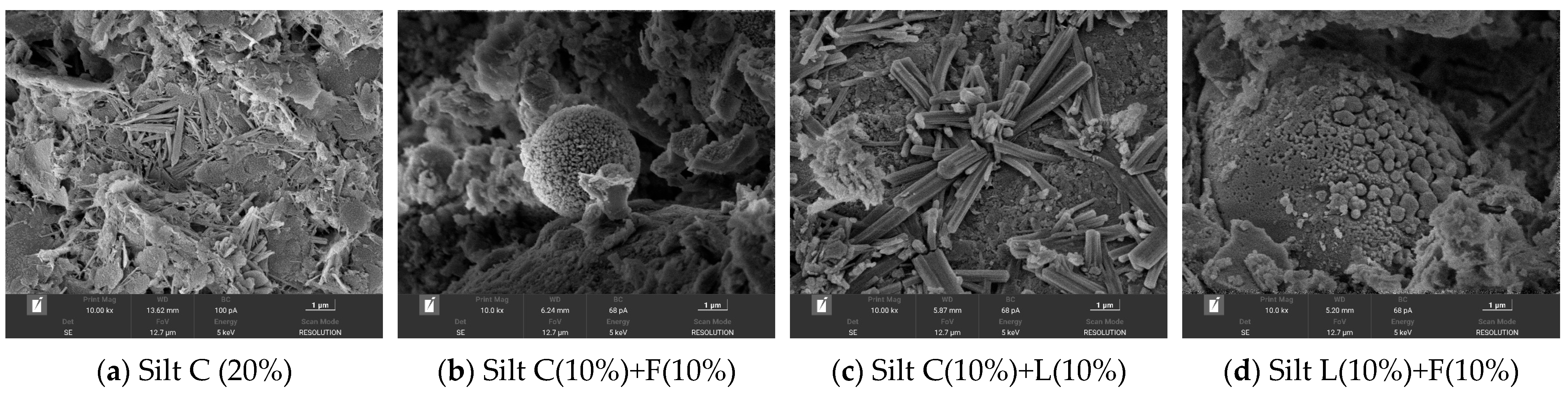
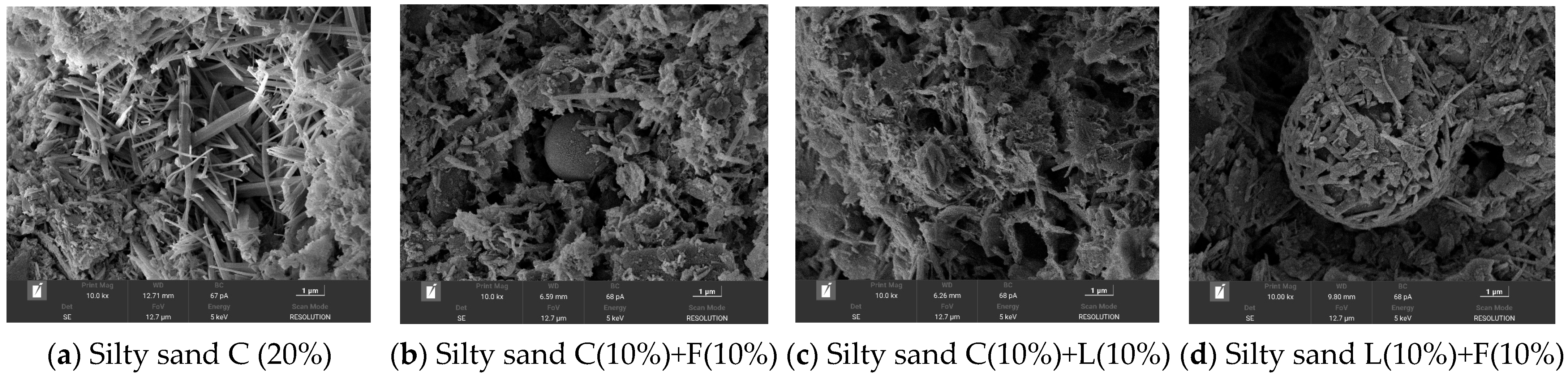
3.2. Microstructural Behaviour of Non-Organic Soils
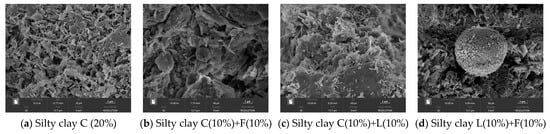
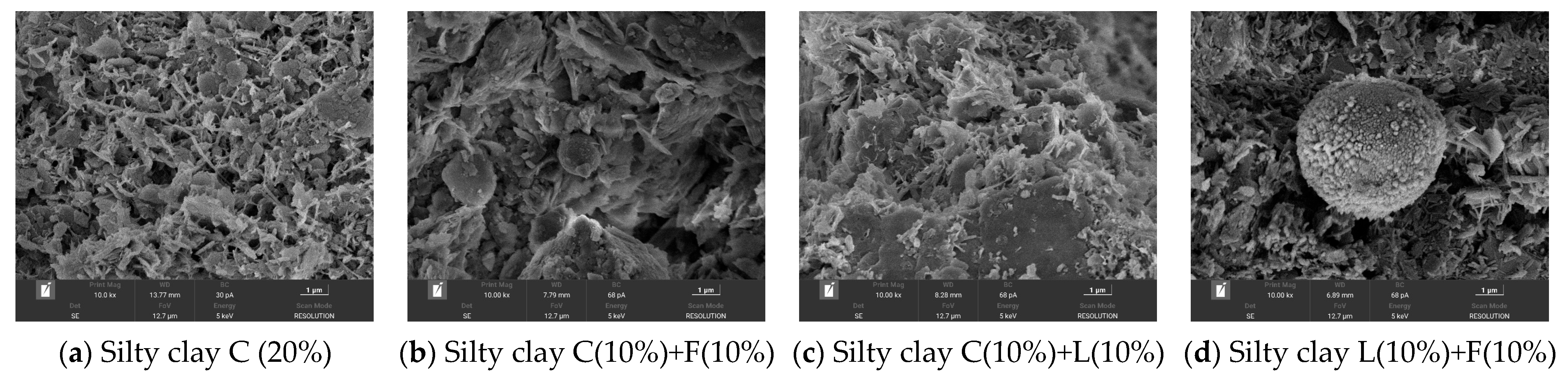
The SEM results (Figure 4, Figure 5 and Figure 6) reveal distinctive characteristics for different stabilizer combinations across silty clay, silt, and silty sand, showing varying structural formations. In silty clay (Figure 4), cement alone (C = 20%) creates a densely packed structure with small, sharp-edged particles, indicative of early-stage hydration. When fly ash is introduced (C = 10% + F = 10%), the fly ash particles act as fillers in the initial voids but do not immediately contribute to strength. This filler effect is visible through the smoother and more homogenous matrix, as the fly ash particles integrate into the voids. However, pozzolanic reactions are expected to develop over time. In silt and silty sand, the cement + fly ash combination (C = 10% + F = 10%) demonstrates different behaviors [53,54,55]. In silt (Figure 5), the fly ash’s finer particles integrate more effectively with the soil, leading to a more uniform and dense structure. In silty sand, the larger soil grains appear less integrated, with the fly ash filling the larger voids but contributing less to early strength development, as seen in the more porous structure. The combination of cement and lime (C = 10% + L = 10%) in silty clay and silty sand also exhibits variation. In silty clay, lime reacts with soil particles to form a relatively compact matrix by reducing plasticity, evident from the tightly bonded structure. However, in silty sand (Figure 6), the larger grain size reduces the interaction between lime and soil particles, leading to a more porous structure. This suggests that lime’s effectiveness is more important in finer-grained soils such as silty clay, whereas in coarser soils, its impact is limited. When comparing lime + fly ash (L = 10% + F = 10%) across different soils, it is clear that in silty clay, the lime dominates early-stage reactions, contributing to initial strength. In silty sand, the fly ash plays a more significant role in filling voids but appears less reactive, as indicated by the larger unreacted particles visible in the matrix. This suggests that fly ash’s role as a filler is crucial in the early stages, but its pozzolanic potential becomes more prominent over time, particularly in finer-grained soils [56,57].
Figure 4.
Microstructural changes in silty clay under different dual-stabilizer combinations.
Figure 5.
Microstructure change for silt at different dual stabilizer combinations.
Figure 6.
Microstructure change for silty sand at different dual stabilizer combinations.
4. A Simplified Model for Predicting UCS of Non-Organic Soils
A simplified model is constructed to predict UCS based on the experimental data and assumptions. The model incorporates key variables such as sand, silt and clay fraction, liquid limit (LL), and plasticity index (PI). The following assumptions are made for modelling.
- The soil water content is near the liquid limit, ensuring sufficient hydration.
- The combined effect of dual stabilizers is proportional to their individual contributions.
- Stabilizer content is within the optimal range for effective soil stabilization.
- The model is not applicable for organic soil
The model was internally validated by comparing the predicted UCS with the measured UCS, and the prediction error was represented by the deviation between the predicted and experimental values. The three coefficients in Table 5 are used in the predictive model to estimate the UCS of different soil types based on the stabilizer combinations (Equation (1)). The comparison (Table 5) between the predicted UCSp and the actual UCS shows a high correlation for silty clay (R2 = 0.9928), silt (R2 = 0.9947) and silty sand (R2 = 0.9887). The linear relationship indicated by R2 values demonstrates that the model can predict the UCS values for these soils, reflecting a reliable fit between predicted and actual performance. This suggests that the model captures key soil stabilizer interactions effectively.
where UCSP is the predicted UCS (kPa); CC is the cement content; CFA is the fly ash content; CL is the lime content; Wc is the water content; a1, a2, and a3 are the coefficients for cement, fly ash and lime, respectively.
where a1sand is the cement coefficient for sand; a1silt is the cement coefficient for silt; a2silt is the fly ash coefficient for silt; a2PI is the fly ash coefficient for the plasticity index; a3LL is the lime coefficient for liquid limit; a3PI is the lime coefficient for the plasticity index.
a1 = a1sand(sand) + a1silt(Silt)
a2 = a2silt(silt) + a2PI(PI)
a3 = a3LL(LL) + a3PI(PI)
Table 5.
Coefficients used for UCS prediction model.
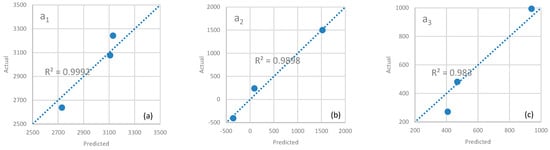
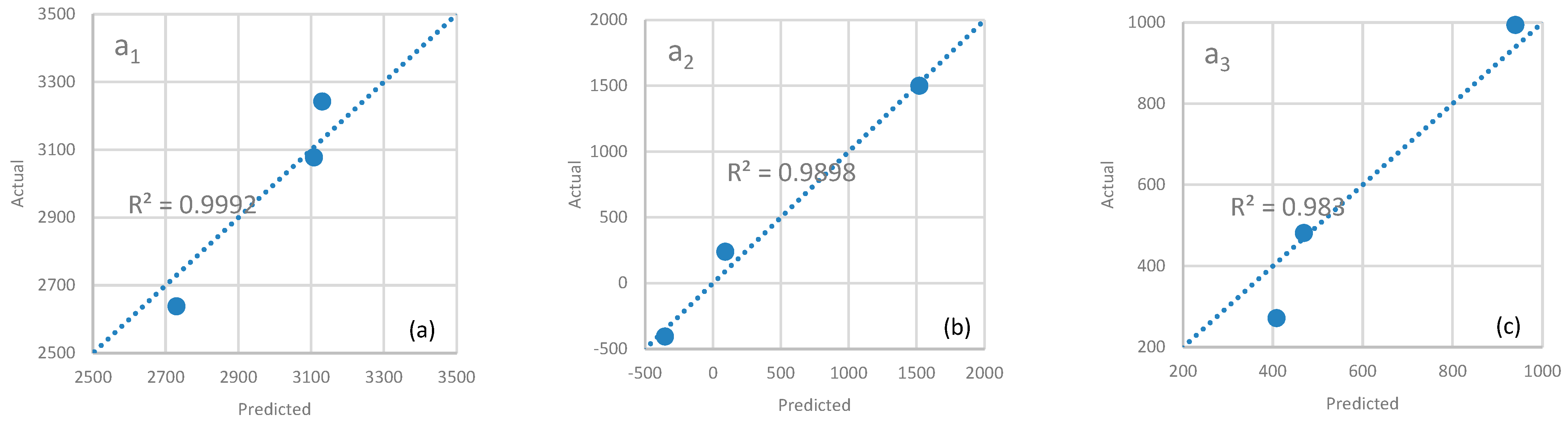
Subsequently, by further analysis, a1, a2, and a3 can be correlated with the key soil’s gradation and plasticity (Table 6). The selected parameter is considered the feature of cement, fly ash and lime with different soils. The predicted values and actual a1, a2, and a3 are shown in Figure 7 based on the parameters. The linear analysis of a1, a2, and a3 suggests a relationship between soil composition and the type of stabilizer used (Equations (2)–(4)). Coefficient a1, representing cement, is strongly influenced by sand and silt, indicating that cement is most effective in grained soils, where rapid hydration and early strength gain are crucial [30]. Coefficient a2, representing fly ash, has a strong relationship with silt and PI, reflecting fly ash’s role in fine-grained soils where it also contributes to long-term strength via pozzolanic reactions, particularly in soils with lower plasticity. Coefficient a3, representing lime, is dominated by LL and PI, showing lime’s capacity to react in more plastic soils, enhancing workability and strength through pozzolanic and cation exchange reactions. These findings indicate that the effectiveness of each stabilizer is soil dependent, and careful consideration of soil properties is necessary when selecting stabilizer combinations. Additionally, these findings together with the literature conclusion reinforce the idea that the effectiveness of each stabilizer is highly soil dependent [1,8,22,38,40]. Thus, the choice of stabilizer must be tailored to the specific soil properties to optimize performance, particularly when aiming to balance short-term strength and long-term stability.
Table 6.
Analysis of key influence factor in terms of soil gradation and plasticity for a1, a2 and a3.
Figure 7.
Relationship between predicted and actual values for a1, a2 and a3.
5. Simplified LCA and Economic Comparison of Unfired and Fired Brick
5.1. Environmental Assessment
Life Cycle Assessment (LCA) is a recognized methodology for evaluating the environmental performance of products and processes across their life cycle stages, typically from raw material extraction to manufacturing. In this study, a simple LCA was applied to preliminarily assess the environmental effect associated with the production of unfired bricks stabilized by cement. The impact categories selected include global warming potential (GWP), acidification potential (AP). The value was calculated in OpenLCA using the ecoinvent 3.4 database based on the production inputs of excavated soil, cement, water, electricity, and particulate emissions per cubic metre of unfired brick. The total GWP was obtained by summing the CO2-equivalent contributions associated with these material and energy inputs, while transportation and on-site construction were excluded from the system boundary.
The LCA of the unfired brick in this study was conducted based on the experimental formulation and input. However, it should be noted that the mechanical performance of unfired bricks is highly dependent on the specific gradation and mineral composition of the source soil. For instance, while the silty sand used in this study yielded comparable strength, other soils such as silty clay and silt soil produced insufficient strength for structural applications for bearing which required 15 MPa, indicating their unsuitability for unfired brick production without further modification. The data including excavated soil, cement, water, electricity, and associated particulate emissions, were sourced from the ecoinvent 3.4 database in the software of OpenLCA. To ensure consistency, the analysis focused solely on the production phase, excluding downstream processes such as transportation and on-site construction. Table 7 is the input parameters for unfired brick based on silty sand. The water was based on the liquid limit and 0.5 water to cement ratio in this study. The estimated electricity was modified into upper and lower case based on Brampton Brick Ltd. [50].
Table 7.
Input parameters for silty sand 1 to make brick per m3.
Table 8 presents the results for a silty sand unfired brick. It also compares the results with the literature [58,59,60,61]. The results show that the unfired brick in this study presents a GWP of 332–394 kg CO2 eq per cubic meter, which is slightly higher than that of concrete masonry units ranging from 164 to 252 kg CO2 eq per cubic meter depending on weight and stabilizer. However, it is lower than that of fired clay bricks, which generally falls between 503 and 721 kg CO2 eq per cubic meter. For AP, the values are 1.14–1.43 kg SO2 eq, which are higher than some cement and lime blended products but still lower than fired bricks in most cases. The results indicate that although cement contributes to the total carbon footprint, the avoidance of thermal treatment leads to a clear environmental advantage over conventional fired clay bricks.
Table 8.
Life-cycle impacts of the unfired brick compared with conventional masonry products per m3.
Overall, the unfired brick developed in this study shows better environmental advantages over traditional fired bricks, especially in GWP and energy input. The elimination of the firing process avoids fossil fuel combustion and related emissions. Although the current mix uses a high cement ratio and particular soil types to ensure structural strength, future work may incorporate fly ash, slag or aggregate. As a result, unfired bricks using recycled soils and cementitious agents present a viable low-carbon pathway aligned with circular construction goals.
5.2. Circular Economy Potential
In addition to environmental performance, circular economy potential is another important factor determining the practical application of recycled construction materials. The production cost of unfired bricks mainly depends on the cost of raw materials, binder consumption, energy input, and processing requirements. Compared with conventional fired clay bricks, the proposed unfired brick production pathway has the potential to reduce raw material expenses by utilizing excavated soil waste as the primary material, which is generally considered a low-value waste stream requiring disposal rather than a purchased resource. Furthermore, eliminating the high-temperature firing process significantly reduces energy consumption and associated production costs during manufacturing. However, the economic advantage of unfired bricks is strongly influenced by binder dosage, as cement represents the major contributor to both material cost and environmental impact. In this study, a relatively high cement content was adopted to achieve sufficient mechanical performance, resulting in increased production costs compared with low-cement alternatives. Future optimization through partial replacement of cement with supplementary cementitious materials, such as fly ash or slag, may further reduce material costs while maintaining adequate strength. In addition, the potential economic benefits of excavated soil recycling should consider avoided costs associated with soil transportation, temporary storage, and landfill disposal. Therefore, although the current unfired brick formulation requires further optimization, the integration of waste reuse, reduced energy demand, and lower disposal requirements indicates promising economic feasibility for sustainable construction applications.
6. Conclusions
This study investigated the feasibility of recycling excavated soil waste into unfired bricks through stabilization strategies, considering mechanical performance, strength prediction, and sustainability assessment. The main conclusions are summarized as follows:
- The performance of stabilized excavated soils was strongly influenced by soil properties. Non-organic soils showed greater potential for unfired brick production, while organic soils exhibited limited improvement. The SEM observations supported the UCS results by showing that higher-strength mixtures generally developed a denser and more continuous matrix, whereas lower-strength mixtures exhibited more porous structures and weaker particle bonding.
- Different stabilization systems showed different effectiveness depending on soil characteristics. The 28-day UCS values were approximately 0.4–0.6 MPa for silty clay, 1.0–2.0 MPa for silt, and 0.8–1.6 MPa for silty sand when cement was the primary stabilizer.
- The proposed empirical model based on soil properties and stabilizer composition provided reliable UCS predictions for non-organic soils, demonstrating its potential for supporting recycled soil material design.
- Life-cycle assessment and economic evaluation indicated that excavated soil-based unfired bricks could reduce environmental impacts compared with conventional fired clay bricks, with a GWP of 332–394 kg CO2-eq/m3 for the unfired bricks compared with 503–721 kg CO2-eq/m3 for fired clay bricks.
- Overall, recycling excavated soil waste into unfired bricks provides a promising pathway for developing sustainable construction materials within a circular economy framework.
Author Contributions
Conceptualization, Y.L. and T.J.; methodology, Y.L. and T.J.; software, Y.L.; validation, Y.L., A.B. and H.A.-N.; formal analysis, R.T.; data curation, H.A.-N.; writing—original draft, R.T. and T.J.; writing—review & editing, R.T. and T.J.; visualization, A.B. and H.A.-N.; supervision, Y.L.; project administration, A.B. All authors have read and agreed to the published version of the manuscript.
Funding
This research received no external funding.
Institutional Review Board Statement
Not applicable.
Data Availability Statement
The data presented in this study are available on request from the corresponding author.
Conflicts of Interest
The authors declare that they have no known competing financial interests or personal relationships that could have appeared to influence the work reported in this paper.
References
- Anburuvel, A. The Engineering Behind Soil Stabilization with Additives: A State-of-the-Art Review. Geotech. Geol. Eng. 2024, 42, 1–42. [Google Scholar] [CrossRef] [Scilit]
- Thyagaraj, T.; Rao, S.M.; Sai Suresh, P.; Salini, U. Laboratory studies on stabilization of an expansive soil by lime precipitation technique. J. Mater. Civ. Eng. 2012, 24, 1067–1075. [Google Scholar] [CrossRef] [Scilit]
- Wang, D.; Abriak, N.E.; Zentar, R. Strength and deformation properties of Dunkirk marine sediments solidified with cement, lime and fly ash. Eng. Geol. 2013, 166, 90–99. [Google Scholar] [CrossRef] [Scilit]
- Zuber, S.S.; Kamarudin, H.; Abdullah, M.; Binhussain, M. Review on soil stabilization techniques. Aust. J. Basic Appl. Sci. 2013, 7, 258–265. [Google Scholar]
- Zumrawi, M.M.; Hamza, O.S. Improving the characteristics of expansive subgrade soils using lime and fly ash. Int. J. Sci. Res. 2014, 3, 1124–1129. [Google Scholar]
- Baghbani, A.; Soltani, A.; Kiany, K.; Daghistani, F. Predicting the Strength Performance of Hydrated-Lime Activated Rice Husk Ash-Treated Soil Using Two Grey-Box Machine Learning Models. Geotechnics 2023, 3, 894–920. [Google Scholar] [CrossRef] [Scilit]
- Nguyen, M.D.; Baghbani, A.; Alnedawi, A.; Ullah, S.; Kafle, B.; Thomas, M.; Moon, E.M.; Milne, N.A. Investigation on the suitability of aluminium-based water treatment sludge as a sustainable soil replacement for road construction. Transp. Eng. 2023, 12, 100175. [Google Scholar] [CrossRef] [Scilit]
- Lu, Y.; Xu, C.; Baghbani, A. Initial state of excavated soil and rock (ESR) to influence the stabilisation with cement. Constr. Build. Mater. 2023, 400, 132879. [Google Scholar] [CrossRef] [Scilit]
- Chen, S.; Zhang, W.; Li, X.; Ge, Y.; Chen, S.; Feng, Y. Utilisation of Excavated Soils in China Quick Urbanisation. In Proceedings of the 2019 China Urban Planning Annual Conference (03 Urban Engineering Planning), Chongqing, China, 19 October 2019; p. 7. [Google Scholar] [CrossRef]
- Qian, Z. 2019 China Construction Waste Data and Industry Development, Future Trend. 2019. Available online: https://www.qianzhan.com/analyst/detail/220/190520-dd93bd75.html (accessed on 18 December 2023).
- Kirchherr, J.; Reike, D.; Hekkert, M. Conceptualizing the circular economy: An analysis of 114 definitions. Resour. Conserv. Recycl. 2017, 127, 221–232. [Google Scholar] [CrossRef] [Scilit]
- Pomponi, F.; Moncaster, A. Circular economy for the built environment: A research framework. J. Clean. Prod. 2017, 143, 710–718. [Google Scholar] [CrossRef] [Scilit]
- Ghisellini, P.; Ripa, M.; Ulgiati, S. Exploring environmental and economic costs and benefits of a circular economy approach to the construction and demolition sector. A literature review. J. Clean. Prod. 2018, 178, 618–643. [Google Scholar] [CrossRef] [Scilit]
- Benachio, G.L.F.; Freitas, M.d.C.D.; Tavares, S.F. Circular economy in the construction industry: A systematic literature review. J. Clean. Prod. 2020, 260, 121046. [Google Scholar] [CrossRef] [Scilit]
- Huang, B.; Wang, X.; Kua, H.; Geng, Y.; Bleischwitz, R.; Ren, J. Construction and demolition waste management in China through the 3R principle. Resour. Conserv. Recycl. 2018, 129, 36–44. [Google Scholar] [CrossRef] [Scilit]
- Su, Y.; Xu, Y.; Bao, Z.; Ng, S.T.; Gao, Q. Stakeholder interactions of government intervention in construction and demolition waste recycling market: A game theory approach. Dev. Built Environ. 2024, 18, 100391. [Google Scholar] [CrossRef] [Scilit]
- Bian, X.; Zhao, F.; Hong, J.; Zeng, L.; Li, X.; Yao, Y. Dynamics-based economic and environmental benefits of excavated soil utilization along metro line: A case study. Case Stud. Constr. Mater. 2024, 20, e03338. [Google Scholar] [CrossRef] [Scilit]
- Berglund-Brown, J.; Pandey, A.; Duarte, F.; Ganitsky, R.; Kirchain, R.; Zheng, S. Stakeholders’ perceptions of and willingness to pay for circular economy in the construction sector. npj Urban Sustain. 2024, 4, 46. [Google Scholar] [CrossRef] [Scilit]
- Lu, Y.; Leong, E.-C.; Zeng, L.; Xu, C.; Li, B. Suitability charts to select stabilizer for excavated soils and rocks (ESR). Int. J. Geotech. Eng. 2023, 17, 108–123. [Google Scholar] [CrossRef] [Scilit]
- Deepak, M.; Rohini, S.; Harini, B.; Ananthi, G.B.G. Influence of fly-ash on the engineering characteristics of stabilised clay soil. Mater. Today Proc. 2021, 37, 2014–2018. [Google Scholar] [CrossRef] [Scilit]
- Malkanthi, S.; Balthazaar, N.; Perera, A. Lime stabilization for compressed stabilized earth blocks with reduced clay and silt. Case Stud. Constr. Mater. 2020, 12, e00326. [Google Scholar] [CrossRef] [Scilit]
- Powrie, W. Soil Mechanics: Concepts and Applications; CRC Press: Boca Raton, FL, USA, 2018. [Google Scholar]
- Pu, S.; Zhu, Z.; Wang, H.; Song, W.; Wei, R. Mechanical characteristics and water stability of silt solidified by incorporating lime, lime and cement mixture, and SEU-2 binder. Constr. Build. Mater. 2019, 214, 111–120. [Google Scholar] [CrossRef] [Scilit]
- Renjith, R.; Robert, D.; Setunge, S.; Costa, S.; Mohajerani, A. Optimization of fly ash based soil stabilization using secondary admixtures for sustainable road construction. J. Clean. Prod. 2021, 294, 126264. [Google Scholar] [CrossRef] [Scilit]
- Tamanna, K.; Tiznobaik, M.; Banthia, N.; Alam, M.S. Mechanical Properties of Rubberized Concrete Containing Recycled Concrete Aggregate. ACI Mater. J. 2020, 117, 169–180. [Google Scholar] [CrossRef] [Scilit]
- Mahedi, M.; Cetin, B.; White, D.J. Cement, lime, and fly ashes in stabilizing expansive soils: Performance evaluation and comparison. J. Mater. Civ. Eng. 2020, 32, 04020177. [Google Scholar] [CrossRef] [Scilit]
- Wang, L.; Cho, D.-W.; Tsang, D.C.; Cao, X.; Hou, D.; Shen, Z.; Alessi, D.S.; Ok, Y.S.; Poon, C.S. Green remediation of As and Pb contaminated soil using cement-free clay-based stabilization/solidification. Environ. Int. 2019, 126, 336–345. [Google Scholar] [CrossRef] [Scilit]
- Al-Obaydi, M.; Al-Kiki, I.; Al-Zubaydi, A. Strength and durability of gypseous soil treated with waste lime and cement. J. Al-Rafidain Eng. 2010, 18, 28–42. [Google Scholar] [CrossRef] [Scilit]
- Jayanthi, P.N.V.; Singh, D.N. Utilization of Sustainable Materials for Soil Stabilization: State-of-the-Art. Adv. Civ. Eng. Mater. 2016, 5, 46–79. [Google Scholar] [CrossRef] [Scilit]
- Khemissa, M.; Mahamedi, A. Cement and lime mixture stabilization of an expansive overconsolidated clay. Appl. Clay Sci. 2014, 95, 104–110. [Google Scholar] [CrossRef] [Scilit]
- Kolias, S.; Kasselouri-Rigopoulou, V.; Karahalios, A. Stabilisation of clayey soils with high calcium fly ash and cement. Cem. Concr. Compos. 2005, 27, 301–313. [Google Scholar] [CrossRef] [Scilit]
- Venkateswarlu, D.; Anjan Kumar, M.; Prasada Raju, G.; Prasad, D. A study on the lime—Cement stabilized marine clay. Asian J. Microbiol. Biotechnol. Environ. Sci. 2014, 16, 437–442. [Google Scholar]
- Furlan, A.P.; Razakamanantsoa, A.; Ranaivomanana, H.; Amiri, O.; Levacher, D.; Deneele, D. Effect of fly ash on microstructural and resistance characteristics of dredged sediment stabilized with lime and cement. Constr. Build. Mater. 2021, 272, 121637. [Google Scholar] [CrossRef] [Scilit]
- Kumar, K.S.R.; Thyagaraj, T. Effect of short-term sulphate contamination on lime-stabilized expansive soil. Int. J. Geotech. Eng. 2021, 15, 964–976. [Google Scholar] [CrossRef] [Scilit]
- Abbasi, N.; Mahdieh, M. Improvement of geotechnical properties of silty sand soils using natural pozzolan and lime. Int. J. Geo-Eng. 2018, 9, 1–12. [Google Scholar] [CrossRef] [Scilit]
- da Rocha, C.G.; Passuello, A.; Consoli, N.C.; Quiñónez Samaniego, R.A.; Kanazawa, N.M. Life cycle assessment for soil stabilization dosages: A study for the Paraguayan Chaco. J. Clean. Prod. 2016, 139, 309–318. [Google Scholar] [CrossRef] [Scilit]
- Karim, M.E.; Alam, M.J.; Hoque, M.S. Effect of salinity of water in lime-fly ash treated sand. Int. J. Geo-Eng. 2017, 8, 1–12. [Google Scholar] [CrossRef] [Scilit]
- Moseley, M.P.; Kirsch, K. Ground Improvement; CRC Press: Boca Raton, FL, USA, 2004. [Google Scholar]
- Oh, S.-E.; Yeon, K.-S.; Kim, K.-S.; Kim, Y.-S. The compressive strength and durability characteristics of lime-cement-soil mixtures. J. Korean Soc. Agric. Eng. 2012, 54, 83–91. [Google Scholar] [CrossRef] [Scilit]
- Han, J. Principles and Practice of Ground Improvement; John Wiley & Sons: Hoboken, NJ, USA, 2015. [Google Scholar]
- Chiaia, B.; Fantilli, A.P.; Guerini, A.; Volpatti, G.; Zampini, D. Eco-mechanical index for structural concrete. Constr. Build. Mater. 2014, 67, 386–392. [Google Scholar] [CrossRef] [Scilit]
- Amouzadeh Omrani, M.; Modarres, A. Emulsified cold recycled mixtures using cement kiln dust and coal waste ash-mechanical-environmental impacts. J. Clean. Prod. 2018, 199, 101–111. [Google Scholar] [CrossRef] [Scilit]
- Arias-Jaramillo, Y.P.; Gómez-Cano, D.; Carvajal, G.I.; Hidalgo, C.A.; Muñoz, F. Evaluation of the Effect of Binary Fly Ash-Lime Mixture on the Bearing Capacity of Natural Soils: A Comparison with Two Conventional Stabilizers Lime and Portland Cement. Materials 2023, 16, 3996. [Google Scholar] [CrossRef] [Scilit]
- Tan, Y.; Hu, M.; Chen, J.; Liu, W.; Deng, Y. Effects of aggregate sizes on hydro-mechanical performances of treated laterite. Rock Soil Mech. 2021, 43, 2323–2329. [Google Scholar]
- Solihu, H. Cement soil stabilization as an improvement technique for rail track subgrade, and highway subbase and base courses: A review. J. Civ. Environ. Eng. 2020, 10, 1–6. [Google Scholar] [CrossRef] [Scilit]
- Rashid, Q.A.; Abuel-Naga, H.; Leong, E.-C.; Lu, Y.; Al Abadi, H. Experimental-artificial intelligence approach for characterizing electrical resistivity of partially saturated clay liners. Appl. Clay Sci. 2018, 156, 1–10. [Google Scholar] [CrossRef] [Scilit]
- Phanikumar, B.; Raju, E.R. Compaction and strength characteristics of an expansive clay stabilised with lime sludge and cement. Soils Found. 2020, 60, 129–138. [Google Scholar] [CrossRef] [Scilit]
- ASTM D698; Standard Test Methods for Laboratory Compaction Characteristics of Soil Using Standard Effort. ASTM International: West Conshohocken, PA, USA, 2012.
- Lu, Y.; Abuel-Naga, H.; Leong, E.-C.; Shang, Z. Reliability of Chilled-Mirror Hygrometer (WP4C) for Soil Total Suction Measurement. Geotech. Test. J. 2024, 47, 129–138. [Google Scholar] [CrossRef] [Scilit]
- Lu, Y.; Abuel-Naga, H.; Leong, E.-C.; Bouazza, A.; Lock, P. Effect of water salinity on the water retention curve of geosynthetic clay liners. Geotext. Geomembr. 2018, 46, 707–714. [Google Scholar] [CrossRef] [Scilit]
- Lu, Y.; Abuel-Naga, H.; Bouazza, A. Water retention curve of GCLs using a modified sample holder in a chilled-mirror dew-point device. Geotext. Geomembr. 2017, 45, 23–28. [Google Scholar] [CrossRef] [Scilit]
- ASTM D2166-16; Standard Test Method for Unconfined Compressive Strength of Cohesive Soil. ASTM: West Conshohocken, PA, USA, 2016.
- Lu, Y.; Xiong, C.; Qiu, Y.; Leong, E.-C.; Gu, M. Low-carbon and sustainability considerations of soil waste stabilisation. Environ. Geotech. 2026, 1–18. [Google Scholar] [CrossRef] [Scilit]
- Li, Y.; Wu, B.; Zhao, X.Y.; Tan, K.H. Multiphysics simulation of microwave drying process of excavated soil for resource recycling: Optimization toward enhanced drying efficiency and reduced energy consumption. J. Clean. Prod. 2026, 558, 148284. [Google Scholar] [CrossRef] [Scilit]
- Cao, Z.; Li, J.; Wei, X.; Cheng, J.; Ma, Y. An effective method for producing high-strength alkali-activated cold-bonded artificial aggregates with short-term water immersion resistance from excavated soil. Constr. Build. Mater. 2026, 533, 146625. [Google Scholar] [CrossRef] [Scilit]
- Dhriyan, S.S.; Verma, A.K.; Prasad, A. Evaluating the potential of bio-cementing pond ash using Microbially Induced Calcite Precipitation (MICP). Constr. Build. Mater. 2025, 467, 140232. [Google Scholar] [CrossRef] [Scilit]
- Ashiq, H.M.; Sabab, S.R.; Joy, J.A.; Zahid, C.Z.B.; Kabir, M.U. Analysis of cement-stabilized soil on road embankment employing finite element analysis-a case study. Eng. Res. Express 2024, 6, 045101. [Google Scholar] [CrossRef] [Scilit]
- Brampton Brick Ltd. Clay Brick Environmental Product Declaration; ASTM International: West Conshohocken, PA, USA, 2024. [Google Scholar]
- Athena Sustainable Materials Institute. Environmental Product Declaration: Concrete Masonry Units; A Cradle-to-Gate EPD According to ISO 14025 and ISO 21930; ASTM International: West Conshohocken, PA, USA, 2023. [Google Scholar]
- Brick Industry Association. Environmental Product Declaration: Clay Brick U.S.–Canada Industrywide Clay Brick; Brick Industry Association: Reston, VA, USA, 2020. [Google Scholar]
- Shaw Brick Ltd. Clay Brick Environmental Product Declaration—Shaw Brick Ltd.; ASTM International: West Conshohocken, PA, USA, 2022. [Google Scholar]

Disclaimer/Publisher’s Note: The statements, opinions and data contained in all publications are solely those of the individual author(s) and contributor(s) and not of MDPI and/or the editor(s). MDPI and/or the editor(s) disclaim responsibility for any injury to people or property resulting from any ideas, methods, instructions or products referred to in the content. |
© 2026 by the authors. Licensee MDPI, Basel, Switzerland. This article is an open access article distributed under the terms and conditions of the Creative Commons Attribution (CC BY) license.