


Abstract
Concrete is the most widely used building material in civil engineering, and its long-term performance and durability are directly related to structural safety and service life. To investigate the effects of early-age curing temperature and relative humidity (RH) on the performance of C20 concrete, this study designed two independent single-factor experiments: five curing temperature levels (20, 30, 40, 50, 60 °C) were set at a constant relative humidity of 55%; and five relative humidity levels (55%, 65%, 75%, 85%, 95%) were set at a constant temperature of 20 °C. Compressive strength and impermeability tests were conducted on C20 concrete specimens cured for 7 days, and comparative analysis was performed with specimens under standard curing conditions at different ages. The results show that under 55% RH, compressive strength first increases and then slightly decreases with rising temperature, with a more pronounced increase in the 40–50 °C range and a decline at 60 °C; the penetration height (the water stain height measured vertically upward from the compressed bottom surface of the specimen) first decreases and then increases with rising temperature, from 11.09 cm at 20 °C to 8.35 cm in the 20–40 °C range, and then rises to 12.21 cm in the 40–60 °C range, indicating that a moderate temperature increase is beneficial to the performance development of C20 concrete, while excessively high temperature leads to performance degradation. At 20 °C, as relative humidity increases, the compressive strength of C20 concrete continues to rise and the penetration height decreases significantly, indicating that higher humidity is conducive to strength formation and impermeability improvement. Compared with 7-day curing, C20 concrete under 28-day standard curing exhibits higher strength and better impermeability. These results indicate that, within the material system and working condition range of this experiment, suitable early-age curing temperature and relatively high humidity are favorable for the early-age strength and water impermeability development of C20 concrete.
1. Introduction
1.1. Research Background
Concrete is the most widely used building material at present, and its early-age curing conditions have a significant influence on its later service performance [1]. In practical engineering, concrete structures are often exposed to complex and varying environments, where temperature and humidity affect the early performance development of concrete and further influence its mechanical properties and durability [2]. Existing studies have mostly focused on the changes in concrete performance under standard curing conditions or under the effect of a single factor, while research on concrete performance under non-standard temperature and humidity conditions remains relatively insufficient [3]. In particular, the understanding of the influence patterns of curing temperature and relative humidity variations on compressive strength and impermeability performance still needs to be improved.
1.2. Current Research Status at Home and Abroad
Early overseas studies primarily focused on the effects of single environmental factors on concrete performance. Mehta and Monteiro, in their classic work, pointed out that curing conditions affect the cement hydration process and further influence the development of concrete performance [4]. Experimental studies by Tazawa and Miyazawa showed that within the temperature range of 20–40 °C, elevated temperature can promote the early-age strength gain of concrete [5]; however, when the temperature exceeds 50 °C, the strength may decrease instead, due to accelerated moisture loss or increased internal adverse effects [6]. Neville emphasized the important role of humidity: when relative humidity falls below 50%, premature moisture loss inhibits the hydration process, leading to degradation of concrete performance; whereas under high-humidity conditions (>90% RH), sufficient moisture is beneficial to the improvement of concrete performance [7,8], with particularly notable improvements in impermeability. Subsequent studies have generally supported the above views, suggesting that 40–50 °C is a favorable temperature range for early-age strength development [9,10,11] and that high-humidity environments play a positive role in enhancing concrete durability.
Chinese scholars have conducted further research on the effects of curing temperature and humidity on concrete performance in the context of practical engineering [12,13]. Lu Han et al., through comparative studies between standard curing and natural exposure conditions, found that high-temperature and dry environments tend to cause degradation in the mechanical properties and durability of concrete [14,15]. Related studies generally agree that curing temperature and relative humidity are important environmental factors affecting the development of concrete performance. Existing experiments have shown that increasing the curing temperature within a certain range is beneficial to the early-age strength gain of concrete; however, when the curing temperature is too high, it may adversely affect later-age strength development. In terms of humidity, as the curing relative humidity increases, the penetration height of concrete generally shows a decreasing trend, and specimens under standard curing conditions usually exhibit better impermeability, indicating that high-humidity environments are conducive to improving the compactness and durability of concrete.
In summary, existing studies have relatively clearly revealed the respective effects of temperature and humidity on concrete performance. However, systematic research on the variation characteristics of compressive strength and impermeability of concrete under different curing temperature and relative humidity conditions remains insufficient, and further analysis of these influence patterns through multiple controlled comparative tests is still needed. Based on the above research status, this paper conducts two independent single-factor experiments on C20 concrete: five curing temperature levels of 20, 30, 40, 50, and 60 °C are set at 55% RH, and five relative humidity levels of 55%, 65%, 75%, 85%, and 95% are set at 20 °C. After 7 days of curing, the compressive strength and average water penetration height of the specimens are measured and compared with specimens cured under standard conditions (20 °C, RH ≥ 95%) for 28 days, in order to reveal the effects of early-age curing temperature and relative humidity on the compressive strength and water impermeability of C20 concrete. The research results can provide experimental reference for the early-age curing control of similar C20 concrete.
2. Experimental Content and Methods
2.1. Test Specimens
The concrete prepared in this test had a strength grade of C20. The cementitious materials used were ordinary Portland cement with a strength grade of P.O 42.5 and fly ash with an average particle size of 10–30 μm. The aggregates were crushed stone with a particle size range of 3.75–25 mm and sand with a particle size range of 0.075–4.75 mm, both obtained from a quarry in Huaxi District, Guiyang City, Guizhou Province. The mix proportion is shown in Table 1. The specimens included standard cubic specimens (150 mm × 150 mm × 150 mm) and standard truncated cone specimens (175 mm × 185 mm × 150 mm).
Table 1.
Sum of nominal unit dosages of each material (Unit: kg/m3).
2.2. Experimental Procedures
2.2.1. Specimen Preparation and Curing
The materials were mixed in a concrete mixer according to the mix proportion to prepare fresh concrete, which was then poured into molds and cured at room temperature (20 ± 5 °C, indoor ambient humidity) for initial setting. After 24 h of curing in the molds, the specimens were demolded. Due to the large number of test conditions, specimens under different temperature and humidity conditions were prepared in multiple batches. For each batch, the C20 concrete was prepared with the same mix proportion, the same raw material sources, and the same mixing and molding procedures. After molding, the specimens were placed in pre-set constant temperature and humidity chambers (temperature control accuracy: ±1 °C; relative humidity control accuracy: ±3%) for 7 days of curing. To investigate the independent effects of curing temperature and relative humidity on the performance of C20 concrete, two single-factor experiments were designed in this study. The temperature effect test was conducted at a constant relative humidity of 55%, with five curing temperature levels: 20 °C, 30 °C, 40 °C, 50 °C, and 60 °C. The humidity effect test was conducted at a constant temperature of 20 °C, with five relative humidity levels: 55%, 65%, 75%, 85%, and 95%. In addition, a control group was set at 20 °C and 95% relative humidity for 28 days of curing (standard curing conditions) to compare the effect of curing age. The complete curing and testing schedule is shown in Table 2.
Table 2.
Complete schedule of curing and testing.
2.2.2. Compressive Strength Test
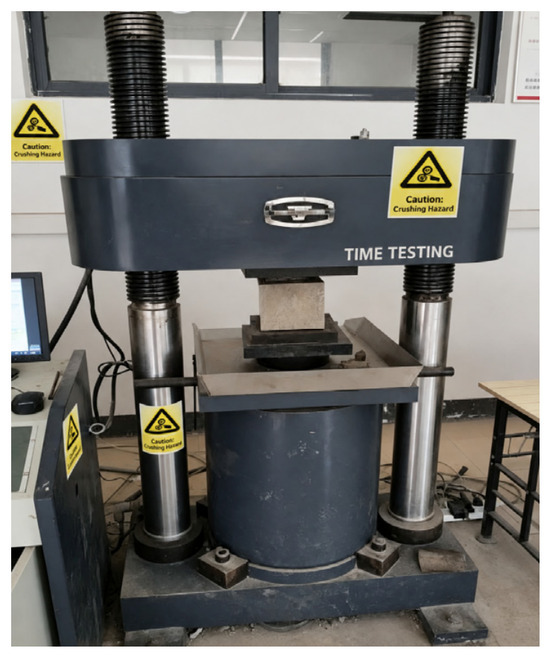
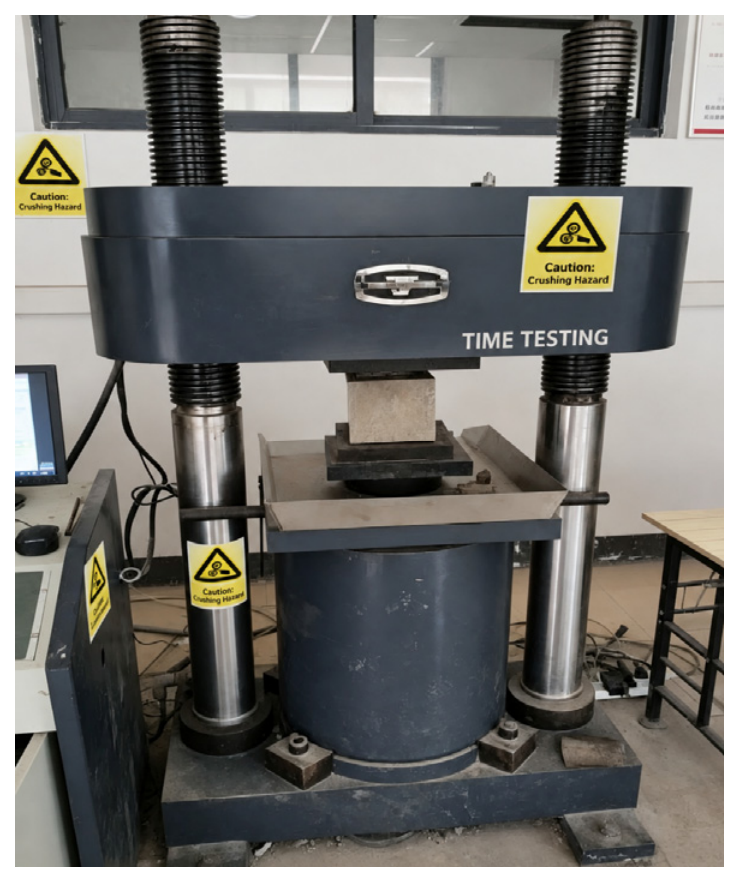
Standard cubic specimens (150 mm × 150 mm × 150 mm) were used, with three specimens in each group. The specimens were placed on the compression testing machine in three batches (as shown in Figure 1), and the compressive strength test was conducted in accordance with the provisions of Chapter 5 of the “Standard for Test Methods of Physical and Mechanical Properties of Concrete” [16].
Figure 1.
Compression testing machine.
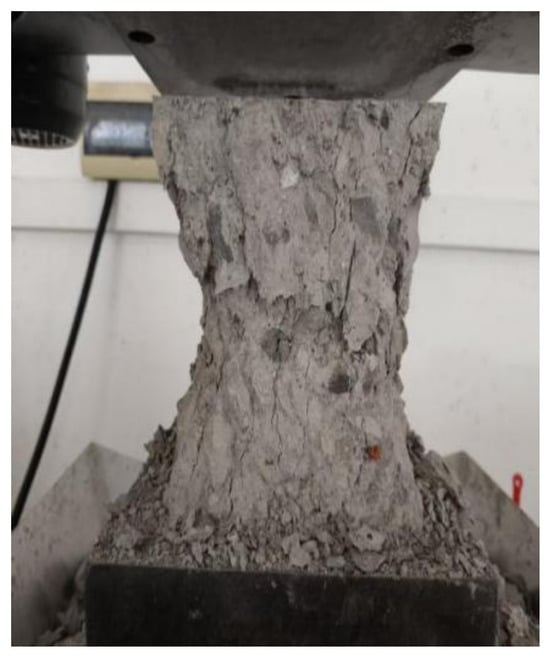
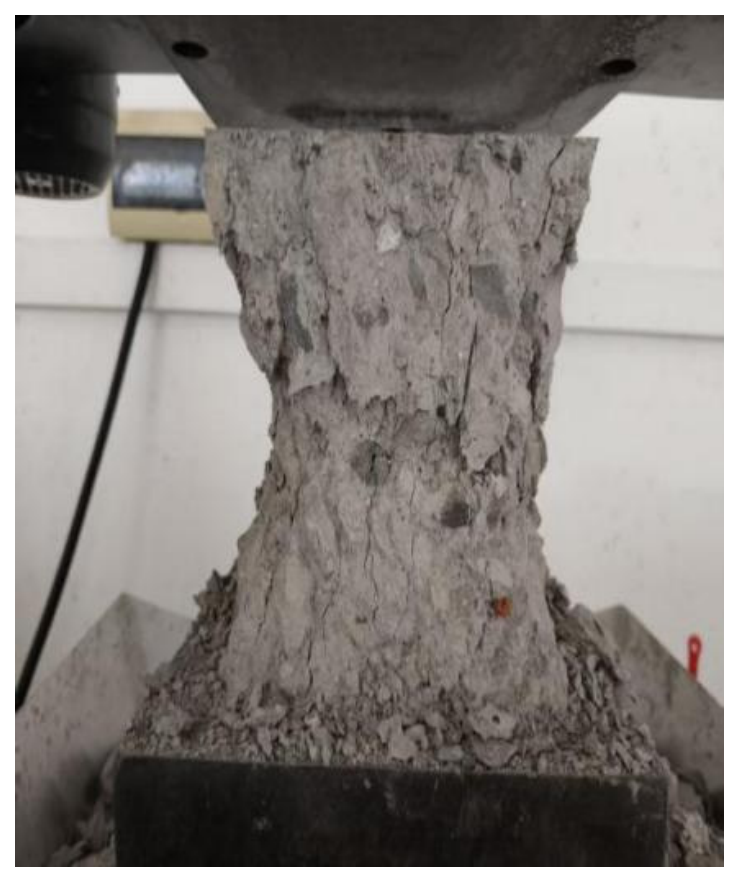
A force-controlled loading mode was adopted, with the loading rate set at 0.5 MPa/s ± 10%. The compressive strength of each group of specimens was obtained from the test. The compressive strength of the three specimens in each group was calculated (accurate to 0.1 MPa). If the difference between the maximum or minimum value and the intermediate value was ≤15% of the intermediate value, the arithmetic mean was taken as the result. If the difference exceeded 15%, the Grubbs test (significance level α = 0.05) was performed in accordance with Appendix C of the “Standard for Test Methods of Physical and Mechanical Properties of Concrete” [16]. After eliminating outliers, supplementary tests were conducted. The damage morphology of the C20 concrete specimens after testing is shown in Figure 2.
Figure 2.
Concrete specimen after failure.
2.2.3. Impermeability Test
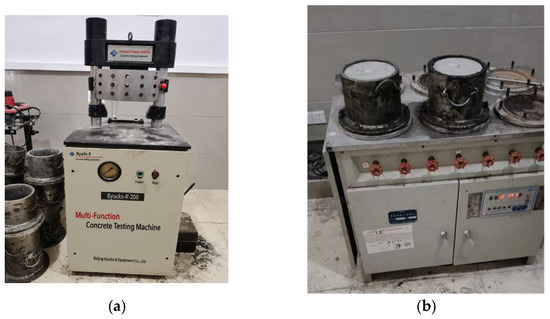
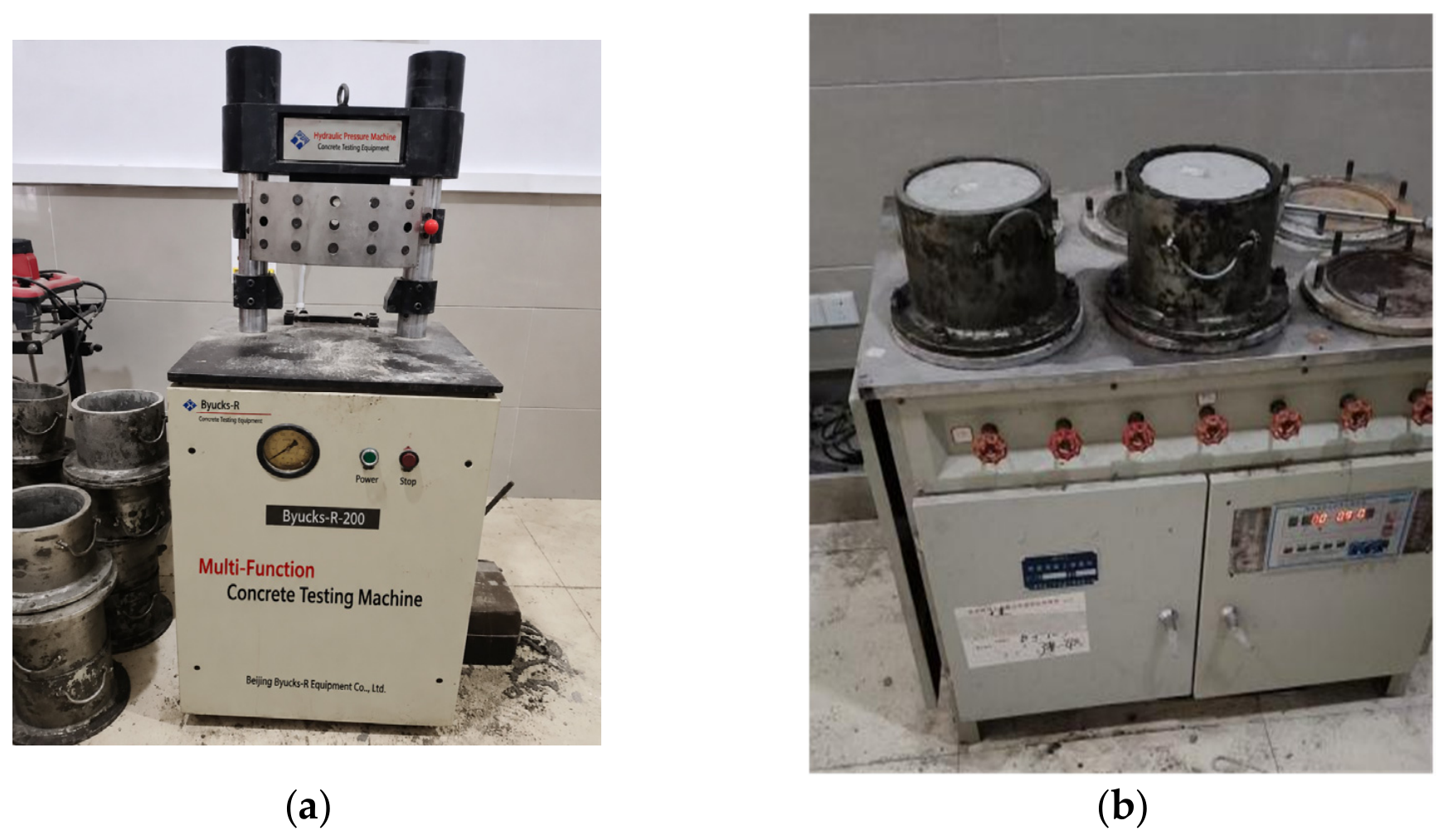
Standard truncated cone specimens (175 mm × 185 mm × 150 mm) were used. After being removed from the curing chamber, each concrete specimen was fitted with a sealing rubber ring to ensure good sealing performance. The specimens were then placed into the impermeability molds using a concrete specimen mounting and demolding machine and subsequently installed in the concrete permeability apparatus. The test was conducted in accordance with the provisions of the water penetration height method specified in Chapter 6, “Water Permeability Test” of the “Standard for Test Methods of Long-term Performance and Durability of Concrete” [17]. The concrete specimen mounting and demolding machine is shown in Figure 3a, and the concrete permeability apparatus is shown in Figure 3b.
Figure 3.
(a) Concrete specimen mounting and demolding machine; (b) concrete permeameter.
Before using the concrete permeability apparatus, the water inlet valve should be opened to expel air from the system, and then the specimens should be mounted. The lower pressure limit was set at 0.1 MPa, and the upper limit at 0.9 MPa. The total duration of the permeability test was 8 h, during which manual monitoring was maintained throughout. The termination criteria were as follows: three specimens were taken for each curing condition, and six specimens were installed simultaneously for each water permeability test. The test was stopped when water seepage appeared on the end faces of three out of the six specimens, or when fewer than three specimens showed seepage within 8 h after the pressure reached 0.9 MPa.
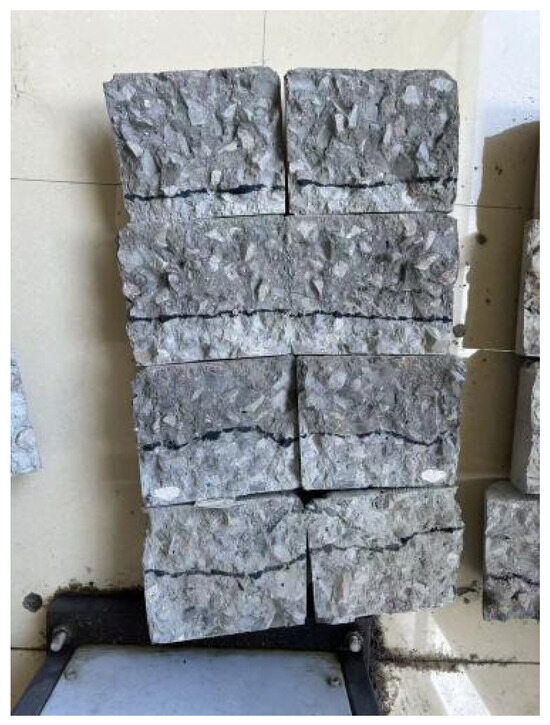
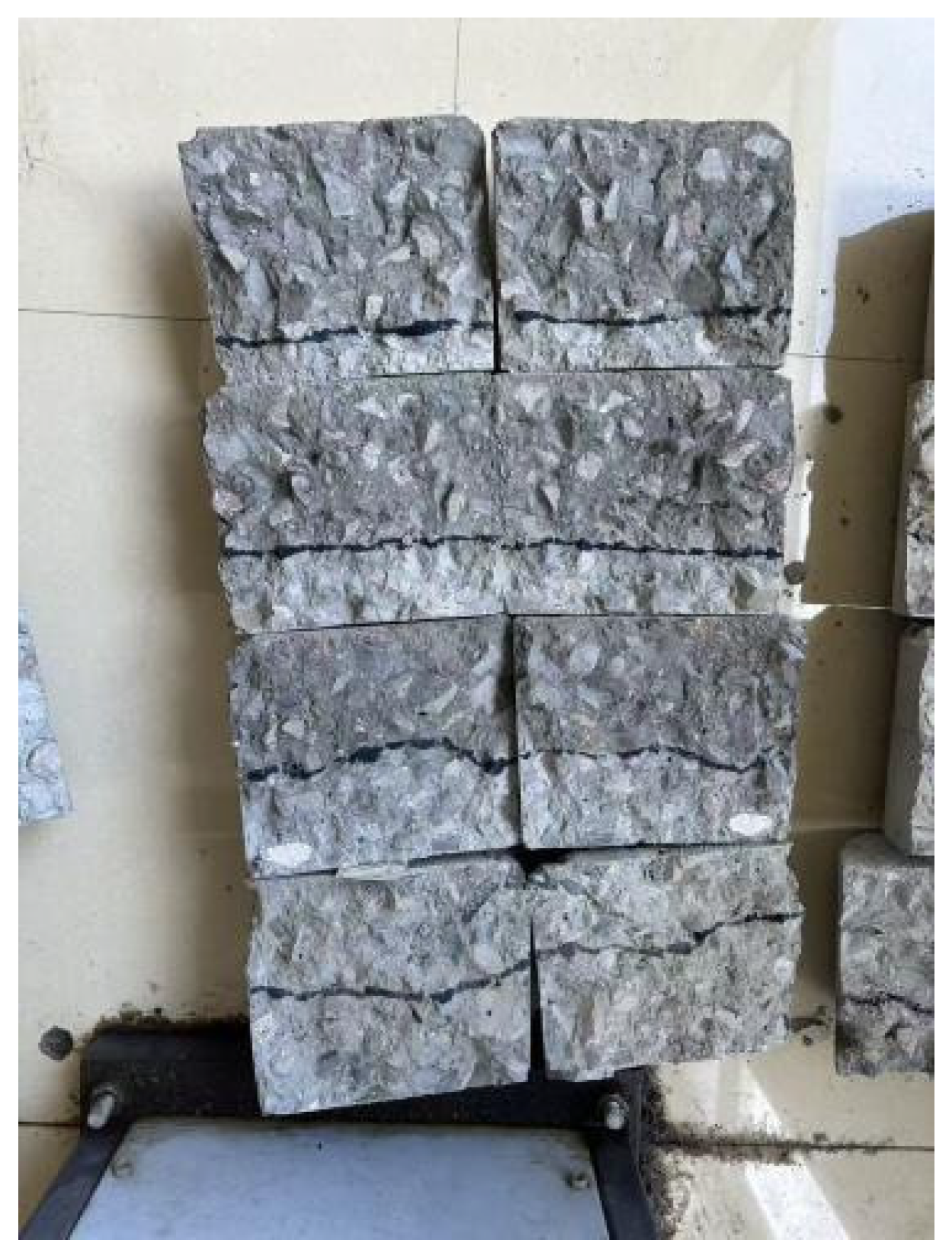
After the permeability test, the specimens were removed from the apparatus. After demolding, the concrete specimens were split using a compression testing machine under a force-controlled loading mode, with the loading rate set at 0.05 MPa/s ± 10%. After splitting, the water penetration height was measured with a steel ruler. The water penetration height was defined as the maximum distance that water penetrated vertically upward from the compressed bottom surface of the specimen, i.e., the vertical distance from the highest visible water stain point on the split surface to the compressed bottom surface, in centimeters (cm). For each specimen, 10 measuring points were selected, and the arithmetic mean of the 10 measured values was used to represent the water penetration height of that specimen. A lower water penetration height indicates better water impermeability. The morphology of the specimens after splitting is shown in Figure 4.
Figure 4.
Morphology of concrete specimens after splitting.
3. Results and Analysis
3.1. Effect of Temperature on Compressive Strength and Impermeability
3.1.1. Evolution of Compressive Strength
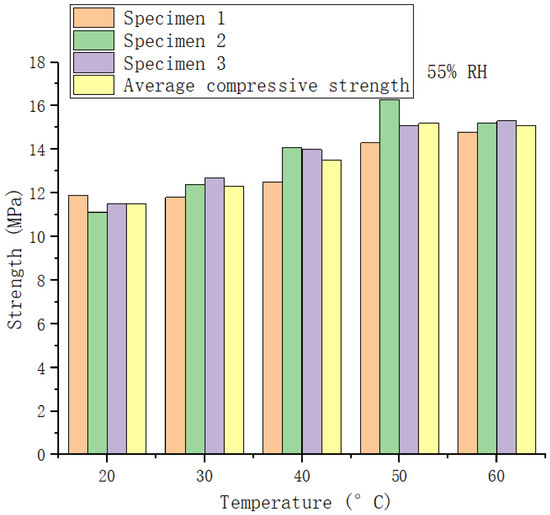
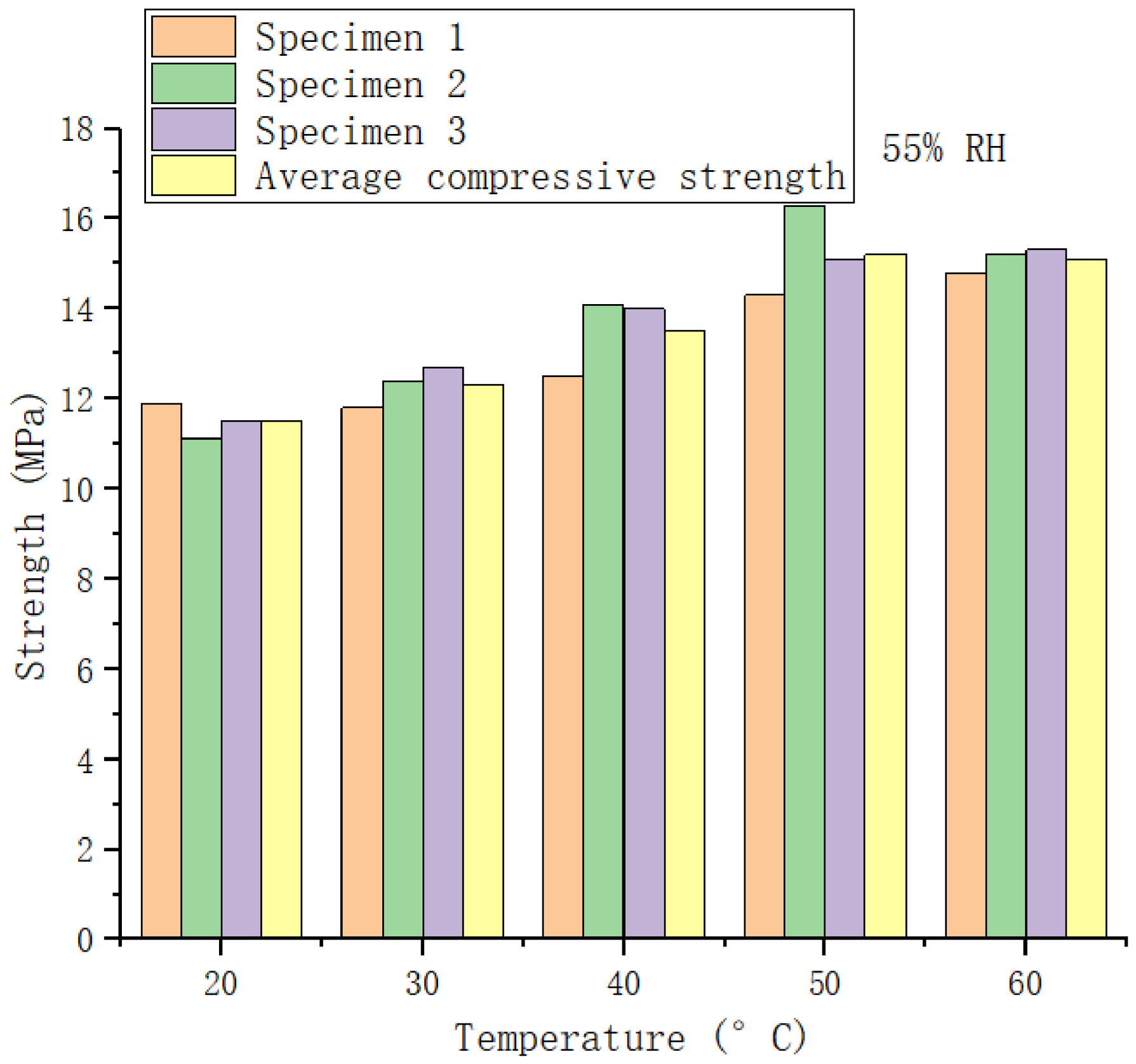
To investigate the effect of temperature on the compressive strength of C20 concrete, compressive strength tests were conducted on three C20 concrete specimens after 7 days of curing under constant humidity conditions of 55% RH. The results are shown in Figure 5 and Table 3. Under 55% RH, the 7-day average compressive strength of C20 concrete increased from 11.5 MPa at 20 °C to 12.3 MPa at 30 °C, 13.5 MPa at 40 °C, and 15.2 MPa at 50 °C, then slightly decreased to 15.1 MPa at 60 °C. Overall, within the temperature range of this test, increasing the curing temperature was beneficial to the early-age compressive strength development of C20 concrete; however, when the temperature rose from 50 °C to 60 °C, the average compressive strength no longer increased but showed a slight decline. This result is consistent with existing studies indicating that a moderate temperature increase is favorable to early-age strength development of concrete, while excessively high temperatures may limit strength gain [18]. Therefore, 50 °C corresponds to the highest observed average compressive strength within the temperature range of this test. This indicates that, under the test conditions, the effect of curing temperature on the early-age compressive strength of C20 concrete is not a simple monotonic relationship. Temperature increase within the range of 20–50 °C may promote early hydration processes, thereby accelerating strength development; when the temperature rises to 60 °C, the strength shows a slight decline. This result is generally consistent with the existing understanding that a moderate temperature increase is beneficial to early-age strength growth, while excessively high temperatures may have adverse effects [19,20].
Figure 5.
Evolution of the compressive strength of concrete with temperature.
Table 3.
Compressive strength of concrete under different temperature conditions (7-day curing).
3.1.2. Evolution of Impermeability
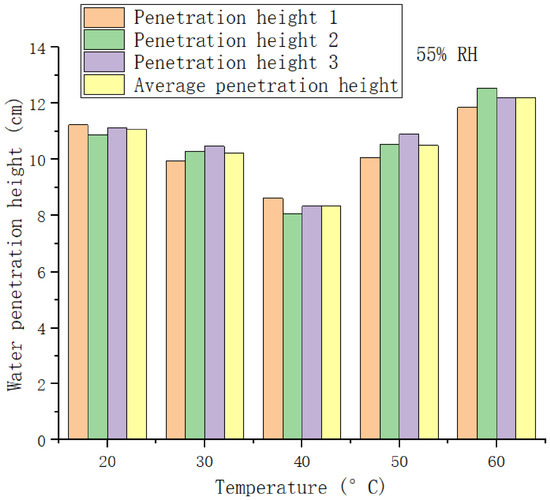
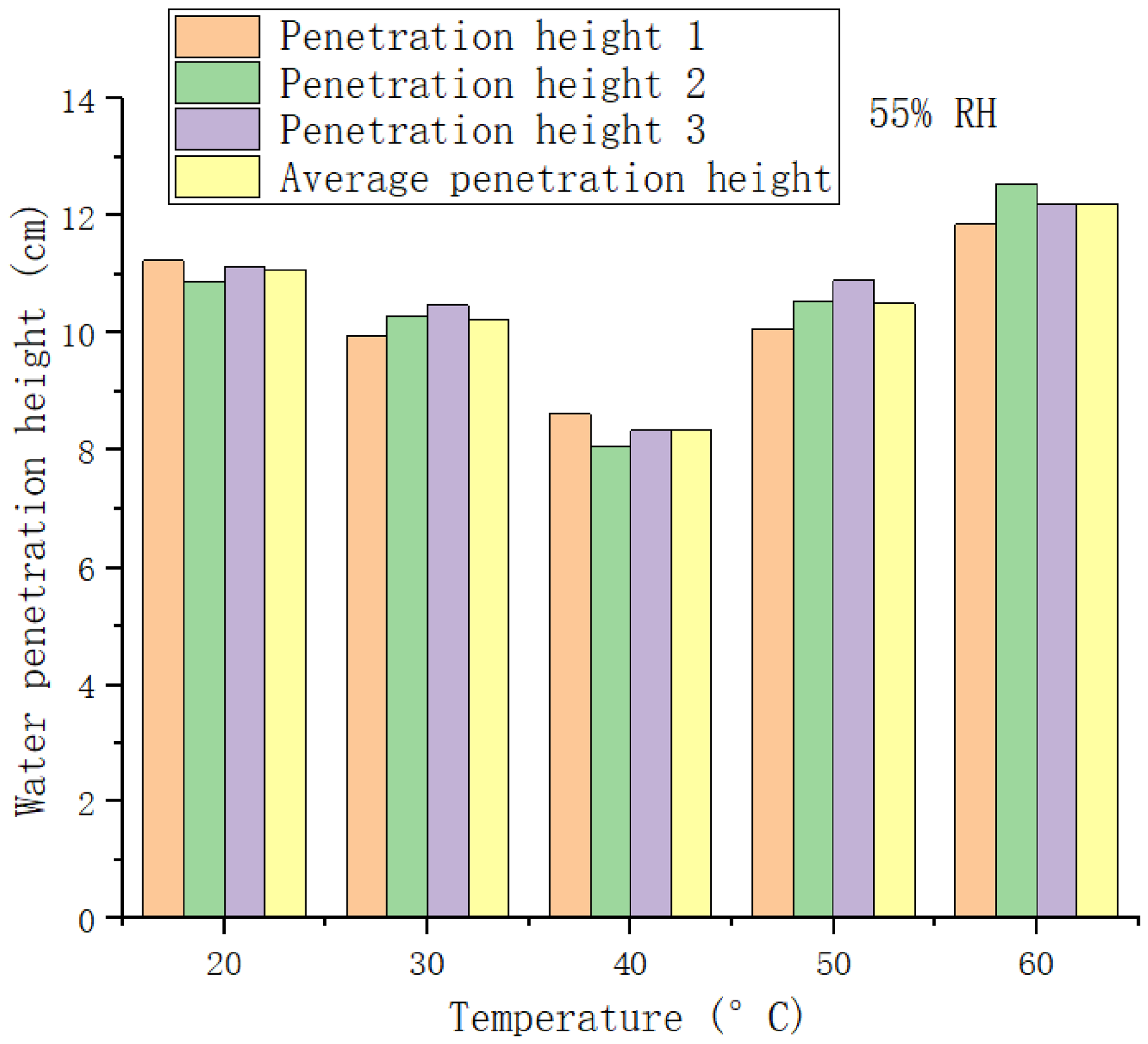
To investigate the effect of temperature on the impermeability of C20 concrete, the impermeability indices of 15 specimens were tested and statistically analyzed under constant humidity conditions of 55% RH. The results are shown in Figure 6 and Table 4. Under 55% RH, the average water penetration height of C20 concrete first decreased and then increased with rising curing temperature, indicating that the water impermeability first improved and then deteriorated. The turning temperature within the test temperature range was 40 °C. This trend—moderate temperature increase improving water impermeability while excessively high temperature leading to performance degradation—is generally consistent with existing research findings [21,22]. As shown in Figure 6, as the temperature increased from 20 °C to 40 °C, the average penetration height of Specimens 1–3 gradually decreased, indicating that a moderate increase in curing temperature is beneficial to improving the impermeability of C20 concrete. This is mainly because, within a certain temperature range, elevated temperature can promote the performance development of C20 concrete. When the curing temperature continued to rise from 40 °C to 60 °C, the average water penetration height increased from 8.35 cm to 12.21 cm and even exceeded the value of 11.09 cm at 20 °C, indicating that the water impermeability decreased with further temperature increase. Therefore, 40 °C corresponds to the lowest observed average water penetration height within the temperature range of this test. This indicates that excessively high curing temperature has an adverse effect on the impermeability of C20 concrete.
Figure 6.
Variation in average water penetration height of concrete with curing temperature.
Table 4.
Water penetration height of concrete cylinders under different temperature conditions (7-day curing).
3.1.3. Temperature Interval Change Rate Analysis
In this paper, the finite difference rate of change between the average values of adjacent curing conditions is adopted to describe the interval variation amplitude of the performance indicators. This method belongs to descriptive analysis. The temperature interval rate of change is introduced as follows:
where is the temperature interval rate of change; ΔY is the change in the performance indicator; and ΔT is the change in temperature. When Y represents the compressive strength , denotes the interval rate of change of strength with respect to temperature; when Y represents the average penetration height h, denotes the interval rate of change of impermeability with respect to temperature.
At 55% relative humidity, the 7-day compressive strength of concrete generally increased first and then slightly decreased with rising temperature. At 20, 30, 40, 50, and 60 °C, the 7-day compressive strength values were 11.5, 12.3, 13.5, 15.2, and 15.1 MPa, respectively. Calculated over adjacent intervals, the temperature interval rates of change are as follows:
It can be observed that within the temperature range of 20–50 °C, the temperature interval rates of change are all positive, indicating that an increase in curing temperature is generally beneficial to the early-age strength development of C20 concrete. Among them, the temperature interval rate of change in the 40–50 °C range is the largest, suggesting that temperature variation within this interval has the most pronounced promoting effect on early-age strength gain. When the curing temperature rises to 60 °C, the temperature interval rate of change turns negative, indicating that excessively high temperature has begun to exert an adverse effect on the strength development of C20 concrete. This is because, within a certain range, increasing temperature can accelerate the cement hydration process, thereby promoting the early-age strength gain of C20 concrete. This pattern is consistent with existing studies indicating that a moderate temperature increase promotes early-age strength development, while excessively high temperature may limit strength gain [23,24]. However, when the temperature is too high, the curing environment may deteriorate, thereby weakening subsequent strength development and ultimately resulting in a decline in strength.
In terms of impermeability, the average penetration height exhibits a “V”-shaped trend with temperature variation. When the temperature increased from 20 °C to 40 °C, the average penetration height decreased from 11.09 cm to 8.35 cm; when the temperature further rose to 60 °C, the average penetration height increased to 12.21 cm. The corresponding temperature interval rates of change are as follows:
Since a lower penetration height indicates better impermeability of C20 concrete, the temperature interval rate of change is negative in the 20–40 °C range, indicating that a moderate increase in curing temperature is beneficial to the improvement of impermeability. In the 40–60 °C range, however, the temperature interval rate of change turns positive, indicating that when the temperature continues to rise, the impermeability of C20 concrete decreases instead. It can thus be seen that the effect of temperature on the impermeability of C20 concrete exhibits distinct stage-dependent characteristics, i.e., a moderate temperature increase can improve impermeability, while excessively high temperature has an adverse effect.
Based on the test results, it is analyzed that curing temperature may affect the performance development of C20 concrete by influencing the hardening process and internal moisture retention condition of the concrete. Existing studies have shown that suitable curing temperature is conducive to promoting cement hydration and the early-age performance formation of concrete [25,26]. Within a relatively favorable temperature range, increasing the curing temperature helps promote the performance formation of C20 concrete, leading to certain improvements in both impermeability and mechanical properties. However, when the curing temperature is too high, the conditions for performance development may deteriorate, which may adversely affect the performance development of C20 concrete at the current age and ultimately manifest as a decline in impermeability.
Therefore, within the range of this test, the effect of temperature on the performance of C20 concrete is not monotonic, but rather there exists a relatively favorable curing temperature interval. In engineering applications, the curing temperature should be reasonably controlled in accordance with actual environmental conditions to avoid excessively high temperatures or large fluctuations, so as to ensure the stable development of the strength and durability of C20 concrete.
3.2. Effect of Humidity on Compressive Strength and Impermeability
3.2.1. Evolution of Compressive Strength
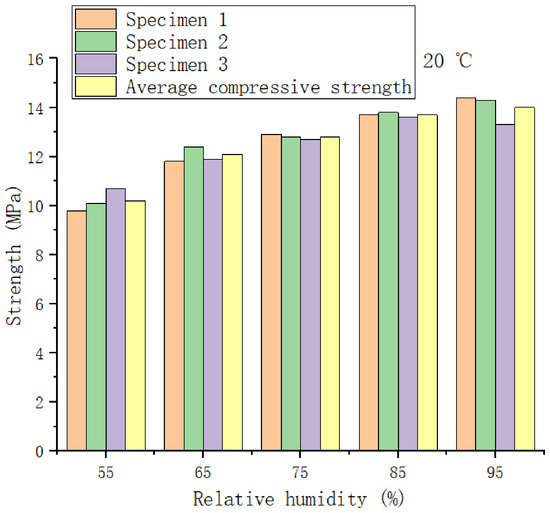
To investigate the effect of curing humidity on the compressive strength of C20 concrete, compressive strength tests were conducted on C20 concrete specimens cured for 7 days under different relative humidity conditions at a constant temperature of 20 °C. The results are shown in Figure 7 and Table 5. The test results indicate that as the curing relative humidity increased from 55% to 95%, the 7-day compressive strength of C20 concrete generally showed a monotonic increasing trend. At 20 °C, the 7-day average compressive strengths corresponding to 55%, 65%, 75%, 85%, and 95% RH were 11.5, 12.1, 12.8, 13.7, and 14.0 MPa, respectively. This result is consistent with existing studies indicating that higher curing humidity is beneficial to maintaining internal moisture in concrete, promoting early-age hydration, and enhancing strength development [27]. Under low-humidity environments (e.g., 55% RH), premature moisture loss severely inhibits the hydration reaction, resulting in insufficient strength development [28].
Figure 7.
Variation in compressive strength of concrete with curing humidity.
Table 5.
Compressive strength of concrete under different humidity conditions (7-day curing).
3.2.2. Evolution of Impermeability Performance
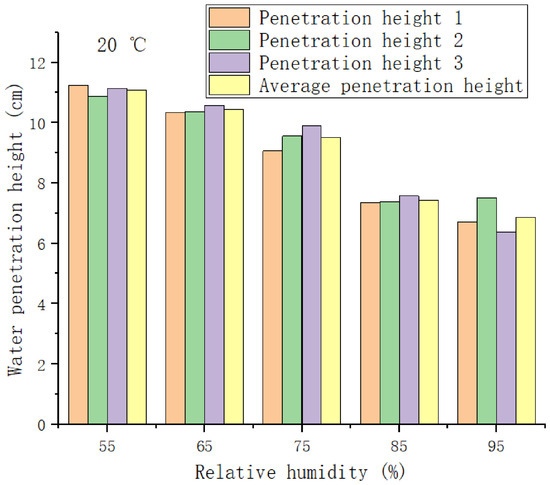
To investigate the effect of curing humidity on the water impermeability of C20 concrete, water permeability tests were conducted on C20 concrete specimens cured for 7 days under different relative humidity conditions at a constant temperature of 20 °C. The results are shown in Figure 8 and Table 6. At 20 °C, as the curing relative humidity increased from 55% to 95%, the average water penetration height generally showed a decreasing trend, indicating that specimens under higher humidity conditions exhibited better water impermeability. This trend is generally consistent with the test results showing that compressive strength increases with increasing curing humidity, suggesting that, within the scope of this test, increasing curing relative humidity is beneficial to the early-age performance development of C20 concrete. The above test results are generally consistent with existing studies indicating that higher curing humidity is beneficial to improving the water impermeability of concrete [29]. The test results of this study show that specimens under high-humidity curing conditions have lower average water penetration heights and thus exhibit better water impermeability; in contrast, specimens under low-humidity conditions have higher average water penetration heights and relatively poorer water impermeability. This result is generally consistent with existing studies on the effect of curing humidity on the water impermeability of concrete [30].
Figure 8.
Variation in average water penetration height of concrete with curing humidity.
Table 6.
Water penetration height of concrete cylinders under different humidity conditions (7-day curing).
3.2.3. Humidity Interval Change Rate Analysis
To analyze the effect of curing humidity on the performance of C20 concrete, the humidity interval rate of change is introduced at a constant temperature of 20 °C:
where is the humidity interval rate of change; is the change in the performance indicator; and is the change in relative humidity. When Y represents the compressive strength , denotes the interval rate of change of strength with respect to humidity; when Y represents the average penetration height h, denotes the interval rate of change of impermeability with respect to humidity.
At 20 °C, the 7-day compressive strengths of C20 concrete corresponding to relative humidities of 55%, 65%, 75%, 85%, and 95% were 11.5, 12.1, 12.8, 13.7, and 14.0 MPa, respectively. Calculated over adjacent intervals, the humidity interval rates of change are as follows:
The results indicate that, within the scope of this test, the humidity interval rates of change are consistently positive, suggesting that increasing relative humidity can continuously promote the early-age strength development of C20 concrete. Among them, the humidity interval rate of change in the 55–65% RH interval is the largest, indicating that under relatively low-humidity conditions, the early-age strength of C20 concrete responds more sensitively to changes in humidity. Comprehensive analysis shows that higher humidity curing conditions are more favorable for the formation and development of C20 concrete performance, thereby promoting early-age strength gain; whereas under lower humidity conditions, the strength development of C20 concrete is constrained to a certain extent.
In terms of impermeability, at 20 °C, the average penetration height decreased from 11.09 cm at 55% RH to 6.86 cm at 95% RH. The overall humidity interval rate of change is as follows:
Since a smaller penetration height indicates better impermeability, this result demonstrates that increasing curing humidity can significantly improve the impermeability of concrete. The main reason is that higher humidity conditions are conducive to the sustained development of concrete properties, making its internal structure denser, thereby reducing water penetration channels and lowering the penetration height. In contrast, under low-humidity conditions, the development of concrete properties is restricted and the internal structure is relatively weaker, leading to a decline in impermeability.
Further analysis reveals that humidity conditions directly affect moisture retention during the hardening process of concrete and the subsequent formation of properties. Under higher ambient humidity, moisture loss from the interior of concrete is slower, which is beneficial for the stable development of its properties, thereby simultaneously improving both strength and impermeability. Conversely, in a low-humidity environment, moisture is more easily lost, resulting in insufficient overall property development of concrete, ultimately manifesting as lower compressive strength and greater penetration height.
In summary, humidity exerts a significant influence on concrete performance. Higher humidity curing not only benefits early-age strength formation but also contributes to the enhancement of impermeability. Therefore, in practical engineering, attention should be paid to moist curing to ensure the coordinated development of the mechanical properties and durability of concrete.
Since a lower penetration height indicates better impermeability, this result suggests that increasing curing humidity can effectively improve the water impermeability of C20 concrete. This phenomenon may be related to the effect of curing humidity on early-age moisture retention and the performance development of concrete. Higher humidity conditions can reduce early-age moisture loss in concrete and may provide more favorable conditions for continuous hydration and internal structure formation, thereby reducing effective water penetration channels. Under low-humidity conditions, moisture loss occurs more rapidly, which may limit the early-age performance development of concrete.
Further analysis indicates that humidity conditions directly affect moisture retention status during the hardening process of C20 concrete and the subsequent performance formation. Under higher ambient humidity, the internal moisture loss of C20 concrete is slower, which is conducive to the stable development of its performance, thereby enhancing both strength and impermeability simultaneously. In contrast, under low-humidity environments, moisture is more prone to loss, resulting in insufficient overall performance development of C20 concrete, ultimately manifested as lower compressive strength and greater penetration height.
In summary, humidity has a significant effect on the performance of C20 concrete. Higher humidity curing is not only beneficial to early-age strength formation but also contributes to the improvement of impermeability. Therefore, in practical engineering, attention should be paid to moisture-retaining curing to ensure the coordinated development of the mechanical properties and durability of C20 concrete.
3.3. Effect of Curing Age on Compressive Strength and Impermeability
3.3.1. Comparison of Performance Between 7-Day Non-Standard Curing and 28-Day Standard Curing
To separately analyze the effect of curing age and to investigate the influence of curing age on the early-age performance development of C20 concrete, the 7-day specimens cured at 20 °C and 95% RH were compared with the 28-day standard-cured specimens under the same temperature and humidity conditions. Under the control conditions set in this study, the average compressive strength of the 28-day standard-cured specimens (20 °C, RH ≥ 95%) was 20.4 MPa. The detailed test results are shown in Table 7. Compared with the 7-day non-standard-cured specimens, the 28-day standard-cured specimens exhibited higher compressive strength. The average penetration height of the standard-cured specimens was also lower than that of the 7-day control specimens. This result indicates that, within the material system and age range of this study, extending the curing age is beneficial to the development of both compressive strength and water impermeability. The above results are generally consistent with existing studies indicating that appropriately prolonging the curing age is favorable for the development of concrete strength and impermeability. The experimental data are presented in Table 8 and Table 9.
Table 7.
Compressive strength of concrete at 7 days and 28 days of curing.
Table 8.
Water penetration height of concrete at 7 days of curing.
Table 9.
Concrete penetration height under standard curing conditions.
The experimental results showed that even after 7 days of curing at 20 °C and 95% relative humidity—the condition closest to standard curing—the C20 concrete had an average compressive strength of only 14.0 MPa and an average water penetration depth of 6.86 cm. Compared with the specimens subjected to 28 days of standard curing, its average compressive strength was lower (14.0 MPa versus 20.4 MPa), and its average water penetration depth was also lower (6.86 cm versus 5.59 cm). Under the other temperature and humidity conditions, the water penetration depth was even greater, exceeding 11 cm for some specimens. These findings suggest that, after 7 days of curing, cement hydration and internal microstructural development had not been fully completed, thereby limiting the compressive strength and water impermeability of the concrete. Previous studies have shown that extending the curing period and maintaining suitable temperature and humidity conditions generally promote the further development of concrete performance [31,32,33]. Therefore, for structures with high impermeability and durability requirements, such as basements, water tanks, and bridge piers, particular attention should be paid to early-age temperature and moisture curing. Appropriate measures should be taken under non-standard curing conditions to ensure the normal development of the strength and water impermeability of C20 concrete, thereby reducing the risks of subsequent leakage and reinforcement corrosion and improving structural safety and service life.
3.3.2. Curing Age Interval Change Rate Analysis
To analyze the effect of curing age on the performance of C20 concrete, specimens cured at 20 °C and 95% RH for 7 days were compared with those cured under standard conditions for 28 days. The results indicate that with the extension of curing age, the compressive strength of C20 concrete increases and the average penetration height decreases, demonstrating that both compressive performance and impermeability are improved.
To quantitatively describe the effect of curing age, the age interval rate of change is introduced as follows:
where is the age interval rate of change, ΔY is the change in the performance indicator, and Δt is the change in curing time.
In terms of compressive strength, the compressive strength of C20 concrete was 14.0 MPa at 7 days and increased to 20.4 MPa at 28 days. Therefore, the age interval rate of change of compressive strength is:
This indicates that during the 7–28 d period, the compressive strength increased by approximately 0.305 MPa on average for each additional day of curing age.
In terms of impermeability, the average penetration height was 6.86 cm at 7 days and decreased to 5.59 cm at 28 days. Therefore, the age interval rate of change of penetration height is:
Since a lower penetration height indicates better impermeability, this result indicates that the longer the curing age, the better the impermeability of C20 concrete.
Overall, curing age has a significant effect on the performance of C20 concrete. Compared with 7-day curing, C20 concrete under 28-day standard curing exhibits higher compressive strength and lower penetration height, indicating that extending the curing time is beneficial to the continuous performance development of C20 concrete and can further improve its internal structure and impermeability. Therefore, in practical engineering, sufficient curing age should be ensured to enhance the mechanical properties and durability of C20 concrete.
4. Conclusions
- (1)
- The effect of temperature on the performance of C20 concrete is stage-dependent.
At a relative humidity of 55%, as the curing temperature increased from 20 °C to 60 °C, the 7-day compressive strength of C20 concrete first increased from 11.5 MPa to 15.2 MPa and then slightly decreased to 15.1 MPa; the average penetration height first decreased from 11.09 cm to 8.35 cm and then increased to 12.21 cm. This indicates that a moderate temperature increase is beneficial for strength development and impermeability improvement, but excessively high temperature leads to performance degradation. The interval rate of change analysis shows that the compressive strength exhibited the largest interval rate of change in the 40–50 °C range, with an interval coefficient of 0.17 MPa/°C; in the 50–60 °C range, the interval coefficient was −0.01 MPa/°C, indicating that high temperature has begun to exert a slight adverse effect on strength development.
- (2)
- Increasing humidity can simultaneously improve the compressive strength and impermeability of C20 concrete.
At 20 °C, as the relative humidity increased from 55% to 95%, the 7-day compressive strength of C20 concrete increased from 11.5 MPa to 14.0 MPa, and the average penetration height decreased from 11.09 cm to 6.86 cm. This indicates that a high-humidity environment is conducive to continuous cement hydration, thereby improving both compressive strength and impermeability. The interval rate of change analysis shows that the compressive strength exhibited the largest response to humidity in the 55–65% RH range, with an interval coefficient of 0.19 MPa/%; thereafter, the interval rate of change gradually diminished, but the increase in humidity consistently promoted impermeability.
- (3)
- Extending the curing age significantly improves both the compressive strength and impermeability of C20 concrete.
At 20 °C and 95% RH, as the curing age was extended from 7 days to 28 days, the compressive strength of C20 concrete increased from 14.0 MPa to 20.4 MPa, and the average penetration height decreased from 6.86 cm to 5.59 cm. The corresponding age interval coefficient for compressive strength was 0.305 MPa/d, and that for average penetration height was −0.060 cm/d. This indicates that extending the curing age can effectively promote later-stage hydration reactions, thereby enhancing strength and improving impermeability.
Author Contributions
Conceptualization, Y.L.; resources, Y.L.; funding acquisition, Y.L.; validation, J.C.; writing—original draft preparation, J.C.; writing—review and editing, J.C. and Y.Y.; data curation, Y.Y.; project administration, Y.Y. All authors have read and agreed to the published version of the manuscript.
Funding
This research was funded by the Qiankehe Platform Project (grant number KXJZ(2025)054), the Qiankehe Basic Research Program for Youth (grant number [2024]011) and the Guizhou Provincial Science and Technology Platform Project (Qiankehe Platform KXJZ[2024]026).
Data Availability Statement
The original contributions presented in this study are included in the article. Further inquiries can be directed to the corresponding author.
Conflicts of Interest
The authors declare no conflicts of interest.
References
- Byard, B.E.; Schindler, A.K.; Barnes, R.W. Early-age cracking tendency and ultimate degree of hydration of internally cured concrete. J. Mater. Civ. Eng. 2012, 24, 1025–1033. [Google Scholar] [CrossRef] [Scilit]
- Du, X.; Li, Z.; Han, J.; Tan, C. Effect of different humidity-controlling modes on microstructure and compressive behavior of ordinary concrete. J. Mater. Civ. Eng. 2020, 32, 04019337. [Google Scholar] [CrossRef] [Scilit]
- Wang, Y.; Zhu, J. Multiscale Modeling and Simulation of Concrete Free Deformation under the Influence of Environmental Temperature and Humidity. J. Mater. Civ. Eng. 2025, 37, 04025313. [Google Scholar] [CrossRef] [Scilit]
- Kim, S.; Lee, N.; Lee, H.K.; Park, S. Experimental and theoretical studies of hydration of ultra-high performance concrete cured under various curing conditions. Constr. Build. Mater. 2021, 278, 122352. [Google Scholar] [CrossRef] [Scilit]
- Al-Gburi, M.; Abed, J.; Almssad, A.; Alhayani, A.A.; Jędrzejewska, A.; Nilsson, M. The effect of real curing temperatures on early age concrete strength development in massive concrete structures. Eur. J. Environ. Civ. Eng. 2025, 29, 1832–1847. [Google Scholar] [CrossRef] [Scilit]
- Li, J.; Yuan, G.; Li, Q. Effect of elevated temperature on the deformation behaviors of early-age concrete. Buildings 2026, 16, 2102. [Google Scholar] [CrossRef] [Scilit]
- Atiş, C.D.; Özcan, F.; Kılıç, A.; Karahan, O.; Bilim, C.D.; Severcan, M. Influence of dry and wet curing conditions on compressive strength of silica fume concrete. Build. Environ. 2005, 40, 1678–1683. [Google Scholar] [CrossRef] [Scilit]
- Atiş, C.D.; Bilim, C. Wet and dry cured compressive strength of concrete containing ground granulated blast-furnace slag. Build. Environ. 2007, 42, 3060–3065. [Google Scholar] [CrossRef] [Scilit]
- Kim, J.-K.; Moon, Y.-H.; Eo, S.-H. Compressive strength development of concrete with different curing time and temperature. Cem. Concr. Res. 1998, 28, 1761–1773. [Google Scholar] [CrossRef] [Scilit]
- Lee, C.; Lee, S.; Nguyen, N. Modeling of compressive strength development of high-early-strength-concrete at different curing temperatures. Int. J. Concr. Struct. Mater. 2016, 10, 205–219. [Google Scholar] [CrossRef] [Scilit]
- Yang, K.-H.; Mun, J.-S.; Cho, M.-S. Effect of curing temperature histories on the compressive strength development of high-strength concrete. Adv. Mater. Sci. Eng. 2015, 2015, 965471. [Google Scholar] [CrossRef] [Scilit]
- Liu, B.; Luo, G.; Xie, Y. Effect of curing conditions on the permeability of concrete with high volume mineral admixtures. Constr. Build. Mater. 2018, 167, 359–371. [Google Scholar] [CrossRef] [Scilit]
- Zhao, H.; Sun, W.; Wu, X.; Gao, B. Effect of initial water-curing period and curing condition on the properties of self-compacting concrete. Mater. Des. 2012, 35, 194–200. [Google Scholar] [CrossRef] [Scilit]
- Tan, K.; Gjørv, O.E. Performance of concrete under different curing conditions. Cem. Concr. Res. 1996, 26, 355–361. [Google Scholar] [CrossRef] [Scilit]
- Ewertson, C.; Petersson, P.-E. The influence of curing conditions on the permeability and durability of concrete: Results from a field exposure test. Cem. Concr. Res. 1993, 23, 683–692. [Google Scholar] [CrossRef] [Scilit]
- GB/T 50081-2019; Standard for Test Methods of Physical and Mechanical Properties of Concrete. China Architecture & Building Press: Beijing, China, 2019.
- GB/T 50082-2024; Standard for Test Methods of Long-Term Performance and Durability of Concrete. China Architecture & Building Press: Beijing, China, 2024.
- Kim, J.-K.; Han, S.H.; Song, Y.C. Effect of temperature and aging on the mechanical properties of concrete: Part I. Experimental results. Cem. Concr. Res. 2002, 32, 1087–1094. [Google Scholar] [CrossRef] [Scilit]
- Sugiyama, H.; Masuda, Y.; Abe, M. Strength development of concrete cured under high temperature conditions at early age. ACI Spec. Publ. 2000, 192, 965–982. [Google Scholar] [CrossRef] [Scilit] [PubMed]
- Balendran, R.V.; Martin-Buades, W.H. The influence of high temperature curing on the compressive, tensile and flexural strength of pulverized fuel ash concrete. Build. Environ. 2000, 35, 415–423. [Google Scholar] [CrossRef] [Scilit]
- Zou, C.; Long, G.; Ma, C.; Xie, Y. Effect of subsequent curing on surface permeability and compressive strength of steam-cured concrete. Constr. Build. Mater. 2018, 188, 424–432. [Google Scholar] [CrossRef] [Scilit]
- Wang, Q.; Shi, M.; Wang, D. Influence of elevated curing temperature on the properties of cement paste and concrete at the same hydration degree. J. Wuhan Univ. Technol. Mater. Sci. Ed. 2017, 32, 1344–1351. [Google Scholar] [CrossRef] [Scilit]
- Tan, K.-F.; Nichols, J.M. Performances of concrete under elevated curing temperature. J. Wuhan Univ. Technol. Mater. Sci. Ed. 2004, 19, 65–67. [Google Scholar] [CrossRef] [Scilit]
- Sugiyama, H.; Masuda, Y. Strength development of concrete cured under high temperature conditions in an early age. J. Struct. Constr. Eng. (Trans. AIJ) 1999, 64, 23–30. [Google Scholar] [CrossRef] [Scilit] [PubMed]
- Tang, Y.; Su, H.; Huang, S.; Qu, C.; Yang, J. Effect of curing temperature on the durability of concrete under highly geothermal environment. Adv. Mater. Sci. Eng. 2017, 2017, 7587853. [Google Scholar] [CrossRef] [Scilit]
- Mi, Z.; Li, Q.; Hu, Y.; Liu, C.; Qiao, Y. Fracture properties of concrete in dry environments with different curing temperatures. Appl. Sci. 2020, 10, 4734. [Google Scholar] [CrossRef] [Scilit]
- Ramezanianpour, A.A.; Malhotra, V.M. Effect of curing on the compressive strength, resistance to chloride-ion penetration and porosity of concretes incorporating slag, fly ash or silica fume. Cem. Concr. Compos. 1995, 17, 125–133. [Google Scholar] [CrossRef] [Scilit]
- Ptacek, L.; Strauss, A.; Bos, C.; Peyerl, M.; Torrent, R. Concrete curing performance assessment based on gas permeability testing in the lab and on site. Sensors 2022, 22, 4672. [Google Scholar] [CrossRef] [Scilit] [PubMed]
- Thomas, M.D.A.; Matthews, J.D.; Haynes, C.A. Effect of curing on the strength and permeability of PFA concrete. ACI Spec. Publ. 1989, 114, 191–218. [Google Scholar] [CrossRef] [Scilit] [PubMed]
- Liu, B.; Jiang, J.; Shen, S.; Zhou, F.; Shi, J.; He, Z. Effects of curing methods of concrete after steam curing on mechanical strength and permeability. Constr. Build. Mater. 2020, 256, 119441. [Google Scholar] [CrossRef] [Scilit]
- Shi, J.; Liu, B.; Shen, S.; Tan, J.; Dai, J.; Ji, R. Effect of curing regime on long-term mechanical strength and transport properties of steam-cured concrete. Constr. Build. Mater. 2020, 255, 119407. [Google Scholar] [CrossRef] [Scilit]
- Imoh, U.U.; Apata, A.C.; Movahedi Rad, M. Performance of Concrete Incorporating Waste Glass Cullet and Snail Shell Powder: Workability and Strength Characteristics. Buildings 2025, 15, 2161. [Google Scholar] [CrossRef] [Scilit]
- Imoh, U.U.; Habashneh, M.; Kaine, S.C.; Babafemi, A.J.; Hassan, R.; Movahedi Rad, M. Metakaolin-Enhanced Laterite Rock Aggregate Concrete: Strength Optimization and Sustainable Cement Replacement. Buildings 2025, 15, 4553. [Google Scholar] [CrossRef] [Scilit]

Disclaimer/Publisher’s Note: The statements, opinions and data contained in all publications are solely those of the individual author(s) and contributor(s) and not of MDPI and/or the editor(s). MDPI and/or the editor(s) disclaim responsibility for any injury to people or property resulting from any ideas, methods, instructions or products referred to in the content. |
© 2026 by the authors. Licensee MDPI, Basel, Switzerland. This article is an open access article distributed under the terms and conditions of the Creative Commons Attribution (CC BY) license.