


Abstract
This study investigates peak daylight exposure in zenithally lit museum rooms at 51° latitude through an experimental campaign using a 1:20 physical mock-up of a 12 × 12 × 6 m exhibition gallery space. Nine configurations of shading and light-transmitting elements (CSaLTE) were tested under real clear-sky conditions between June and October. To ensure a valid comparative analysis, indoor vertical illuminance (Ev) was measured at 15 min intervals and subsequently interpolated and normalised to a unified equinox-day solar geometry (06:00–18:00). This hybrid empirical-computational methodology allows for a direct performance comparison across different geometric arrangements regardless of their specific measurement dates. The results demonstrate that while traditional annual metrics are the standard, short-term illuminance peaks pose a severe and underexplored threat to conservation safety. Even the most light-attenuating diffusing-roof configurations produced short-term illuminance peaks and cumulative clear-sky exposures that are comparable in magnitude to commonly cited annual limits for highly light-sensitive materials, with several configurations recording extreme spikes surpassing the sensor’s 20,000 lx saturation limit. Stable, low-illuminance distributions were observed only in selected diffusing-roof arrangements (M05–M07), whereas direct-glazing systems (M01–M04) produced unsafe exposure patterns with high temporal variability and poor visual adaptation conditions. The study concludes that passive roof geometries alone are insufficient to ensure conservation-level safety without additional active filtering or adaptive control strategies, providing an experimentally grounded framework for designing zenithal daylighting systems in museum environments. The results are intended for relative peak-risk comparison under controlled clear-sky conditions rather than direct generalisation to whole-room annual conservation safety.
1. Introduction
Daylight plays a fundamental role in human well-being, supporting circadian rhythm regulation, visual comfort, and psychological health. However, the same natural light that benefits people can be highly detrimental to cultural heritage objects, accelerating fading and material degradation when artworks are exposed to excessive illumination [1]. The following section provides a brief overview of the reference standards and theoretical framework that guided the evaluation of daylight exposure in the tested configurations of shading and light-transmitting elements (hereafter referred to as CSaLTE). This background establishes the methodological basis for defining acceptable exposure limits and for interpreting the experimental results presented later in the paper.
1.1. Background
The use of daylight in museum and exhibition rooms remains a complex challenge in modern architecture. Daylight varies naturally over time and is strongly influenced by the geometry of the space, its orientation, and the placement of openings. While it offers excellent colour rendering and enhances visitors’ perceptual experience, it also poses significant risks to artwork conservation, primarily through fading and the potentially damaging effects of ultraviolet radiation. Many authors have noted that designing museum lighting requires a delicate balance between two opposing goals: the visual comfort of visitors and the preservation of artworks. According to Leccese et al. [2], the daylighting strategy in exhibition spaces must address curatorial, perceptual, and conservation needs simultaneously. Lucchi [3] emphasises that these goals are inherently conflicting, since the light levels that ensure good visual perception often exceed those recommended for the long-term preservation of sensitive materials. Therefore, any framework for daylight assessment in museums should incorporate both principles of preventive conservation and criteria for visual comfort.
1.2. Problem Definition
Many potential strategies exist for introducing daylight into exhibition spaces; for example, the authors of a recent study by Fathy et al. selectively placed and scaled façade openings on a north-facing exhibition wall to control how diffuse daylight enters the room [4]. In the present paper, zenithal illumination—where light enters from above through skylights, roof apertures, or diffusing elements—stands out as one of the most efficient and visually unobtrusive methods of daylight entry. However, its design requires careful planning to mitigate the negative effects of direct sunlight and to ensure both consistent illuminance on displayed surfaces and stable luminance levels that influence visitors’ visual perception.
Traditional daylight regulation methods—such as blinds, louvres, and translucent diffusing layers—aim to achieve these objectives. The performance of translucent systems has been examined in previous work by the author published in 2021 [5]. Although conservation research primarily focuses on annual luminous exposure (Hv) and total light dose, brief illuminance peaks recorded under clear-sky conditions have received little attention. These short-lived extremes, even if rare, can locally exceed recommended exposure limits and thus represent an important yet underexplored factor in evaluating daylight safety in exhibition spaces.
1.3. Research Gap
The present study addresses the identified research gap through an experimental investigation of a museum room illuminated by zenithal daylight, using a 1:20-scale physical mock-up of a 12 × 12 × 6 m gallery space. Lighting tests in museums using architectural scale models date back to 1994, when this method was formally proposed by S. Cannon-Brookes [6]. The mock-up is equipped with measuring instruments forming a calibrated “daylight testbed”. Nine CSaLTE configurations were tested under actual daylight conditions from June to October in Wroclaw, Poland, at 51° latitude. Instead of the conventional horizontal work-plane illuminance analysis (Eh), the experiment focused on short-term peak levels of vertical illuminance (Ev), measured on the north interior wall of the mock-up at a height referenced to the standard 1.5 m above the floor at the artwork location.
To facilitate quantitative comparison between CSaLTE, all recorded datasets were temporally interpolated and normalised to represent conditions on the equinox day, ensuring consistent comparison regardless of seasonal variation. The details of this procedure are extensively discussed in Chapter 3.2. The resulting dataset provides a basis for evaluating how the geometric and optical parameters of the zenithal openings influence both the quantity of daylight on the north wall of the exhibition room.
1.4. Study Objectives and Innovativeness
The objectives of this study are therefore:
- To measure and analyse the short-term peak vertical illuminance values Ev recorded on the surface of the artwork under clear-sky conditions for different CSaLTE configurations, providing a basis for assessing their relative exposition safety with respect to light-sensitive museum exhibits;
- To assess the potential of zenithal illumination to meet conservation thresholds defined by international guidelines;
- To indicate optimal geometric solutions for balancing artwork protection with adequate visual perception in exhibition spaces.
By combining experimental daylight monitoring with data interpolation into a standardised solar geometry, the presented research offers a repeatable framework for analysing and comparing daylight performance in museum rooms illuminated from above.
The main contribution of the presented paper lies in combining long-term physical experiments with an analytical normalisation process that enables daylight data, gathered under real sky conditions, to be directly compared across different geometric arrangements of CSaLTE.
The innovative aspects of this research include:
- The development of a hybrid empirical–computational methodology, bridging the gap between purely simulated studies and field experiments traditionally limited to short observation periods.
- The introduction of measured vertical illuminance (Ev) instead of the conventional focus on horizontal illuminance commonly adopted in daylight performance assessments, following the physical logic of vertically oriented museum artworks displayed on walls.
- The controlled use of daily luminous exposure (Hv,daily), calculated for selected representative calendar days only and explicitly employed as a sensitivity check of short-term daylight variability, rather than as a proxy for annual luminous exposure.
- The introduction of Hv,int,norm as the key comparative indicator, derived from interpolated and irradiance-normalised data, representing both instantaneous and cumulative daylight received by artworks and serving as a conservative proxy for relative daylight risk under worst-case clear-sky conditions.
- The identification of geometric and optical dependencies between roof aperture configuration and cumulative daylight dose, offering practical design insights for balancing conservation requirements and visual perception in zenithally lit museum spaces.
- Accordingly, this study is positioned as a peak-oriented, measurement-based comparative assessment under clear-sky worst-case conditions. It does not aim to replace annual exposure assessments, but to complement them by quantifying relative peak-risk differences among CSaLTE configurations.
- By explicitly addressing short-term clear-sky illuminance peaks, this study complements conventional annual exposure assessments and provides a measurement-based framework for comparing the relative conservation risk associated with different zenithal daylighting configurations.
A recent comprehensive review by Alsukkar et al. synthesises multi-objective optimisation studies on shading devices, highlighting the dominance of simulation-based workflows and parametric optimisation strategies across static, semi-dynamic, and dynamic systems [6]. A closer inspection of the temporal and conceptual overview (Table 1 in the paper [6]) reveals that, despite the breadth of the literature, experimental investigations based on physical models remain scarce. Among the studies reviewed, only one contribution by Khidmat et al. explicitly reports a performance assessment using a geometrically customised shading system evaluated through a reduced-scale physical model [7]. The authors emphasise the need to bridge the gap between numerical optimisation and real-world performance, explicitly calling for validation through physical testing and empirical studies, writing, “validation through field testing and post-occupancy evaluation remains essential” [7]. In this context, the present work directly addresses this research gap by providing systematic experimental evidence derived from a controlled reduced-scale testbed, thereby complementing and extending the predominantly simulation-driven body of existing research.
2. Reference Framework
Many museums and conservation organisations set maximum permissible light exposure limits for artworks, with the primary metric being annual luminous exposure (Hv), expressed in kilo lux per annum. Recommended exposure levels depend mainly on the type of artwork and the sensitivity of the materials involved. Specific thresholds are outlined for watercolours and other works on fragile paper. In contrast, oil paintings are generally allowed higher tolerances, and sculptures made of stone or bronze are usually exempt from daylight exposure restrictions [7]. Table 1, included in this study—previously published by the author in 2021 [8] and expanded for the current research—summarises recommended values from various organisations and researchers, compiled through an extensive literature review.
2.1. Annual Luminous Exposure
Guidelines vary considerably across institutions, historical periods, and the type of material being preserved. The present study adopts CIE 157:2004–Control of Damage to Museum Objects by Optical Radiation [9] as its primary reference, which remains one of the most comprehensive international documents addressing the relationships among illuminance level, exposure time, and material sensitivity. The standard distinguishes four categories of museum artefacts’ responsiveness to light: non-responsive, low, medium, and high.
Similar classification principles can be found in other documents, such as IES RP-30-96–Recommended Practice for Museum Lighting [10] and the more recent CIBSE LG08:2015–Lighting for Museums and Art Galleries [11]. For the present evaluation, the upper limit of Hv = 600–650 k lx·h year−1 was adopted as a representative threshold for moderately sensitive artworks, following the recommendations of CIE 157:2004 [9] and Cuttle (2007) [12].
Many standards define illuminance limits based on a specific exposure schedule—for example, 8 h per day over 250 days per year, as in the CCI recommendations [13]. In practice, however, museum opening times and exhibition durations often exceed these assumed conditions, particularly in large institutions open seven days a week. As emphasised by Arnold et al. (2017) [14], this discrepancy between assumed and actual exposure times can significantly affect the long-term luminous dose received by artworks, thereby exceeding conservation-oriented thresholds for light-sensitive materials. This must be carefully considered when interpreting annual exposure limits.
Table 1.
The comparative review of luminous exposure thresholds below is based on data previously compiled by the author [8]. The present version of the table has been updated to include additional standards and sources relevant to the current research.
2.2. Instantaneous Illuminance
It should be noted, however, that most existing standards and guidelines focus on defining annual luminous exposure (Hv) levels rather than instantaneous illuminance thresholds. Not all documents provide both the maximum instantaneous illuminance and the corresponding cumulative luminous exposure Hv, making direct comparison challenging. Only a few specify short-term or momentary limits that permit direct evaluation of exposure peaks under clear-sky conditions. The instantaneous illuminance on the artwork surface was assumed not to exceed 150 lx, in accordance with guidance from the Texas Historical Commission (2013) [18] and the Canadian Conservation Institute (CCI, 2017) [19].
This gap is significant in museum settings, where sunlight can cause brief but intense spikes in light levels that may exceed safe limits for delicate materials. Therefore, the current research aims to supplement existing references by experimentally examining these short-term extremes and assessing their impact on the safe exhibition of artworks.
3. Methodology
The following sub-sections describe the experimental setup and measurement procedures developed to quantify these short-term illuminance peaks under controlled clear-sky conditions and to evaluate their implications for the conservation safety of artworks.
3.1. Experimental Setup
The experimental setup consists of a modular 1:20-scale testbed designed to allow controlled, repeatable assessment of multiple zenithal daylighting configurations under real clear-sky conditions.
3.1.1. Mock-Up, Testbed
The experiments used a 1:20-scale physical mock-up representing a museum room measuring 12 × 12 × 6 m. The mock-up of the exhibition space measured 60 × 60 × 30 cm, with a total height of 40–45 cm depending on the CSaLTE configuration. The 1:20-scale physical model used in this study follows established guidelines for daylighting mock-ups tested under real-sky conditions, e.g., those given by Bodart et al. [20], who recommend this scale for detailed assessment of internal daylight distribution and illuminance levels. At 1:20, the model allows correct scaling of work-plane height and observer eye level while accommodating the physical dimensions of illuminance sensors and photographic equipment, as indicated in prior experimental studies (see the diagram in Figure 1a). In this study, the use of particle boards for model construction eliminated the need for external black wrapping required for translucent foam-core models, thereby reducing the risk of unintended light transmission through the enclosure and of falsifying results.
Figure 1.
Experimental reduced-scale testbed used for the measurement of Ev in a museum daylighting context: (a) schematic diagram of the 1:20 scale mock-up, showing the geometry of the testbed, the arrangement of shading and light-transmitting elements, and the location of the Testo 160 THL data logger at the measurement point; (b) interior view of the testbed with the measurement setup installed; the dashed yellow outline highlights the external envelope of the mock-up; (c) external view of the testbed equipped with the rooftop daylighting and shading system (for M01–M04); (d) reference configuration with an translucent light-scattering glazing (for M03–M04, M07, M09); (e) configuration with the louver-based shading system installed, illustrating the internal layout and spacing of the shading elements (for M06–M07). Full-resolution diagram is provided in the Supplementary_Data_S3.jpg file.
The mock-up was placed on the flat rooftop of Wrocław University of Science and Technology to ensure unobstructed solar access (see Figure 1b) at the exact location of lat. 51°10″ and long. 17°06″. The mock-up was built as a modular system, allowing the replacement of upper components to simulate different CSaLTE zenithal daylighting configurations. Each CSaLTE matched one of the tested geometries (M01–M09), which varied in the ratio of glazed, opaque, and diffusing surfaces.
The interior walls of the mock-up were covered with matte white panels with an average reflectance of 80 ± 2%, while the floor was represented by a light-grey panel with an estimated reflectance of 65%. Selected CSaLTE included translucent, diffusing ceilings that mimic the behaviour of light-scattering membranes commonly used in museum roof systems (Figure 1d), or saw-tooth clerestories (Figure 1c). Other CSaLTE utilised interchangeable static louvre modules comprising a series of 3 mm thick matte white blades mounted at adjustable angles, enabling controlled daylight entry and glare reduction (Figure 1e). The modular design of the testbed enabled rapid reconfiguration between experiments while maintaining consistent boundary conditions and measurement geometry. Dimensional data for all the CSaLTE variants are provided in the technical drawings available in Supplementary_Data_S2.pdf.
The mock-up testbed described was designed to ensure high geometric and photometric fidelity, enabling reliable assessment of daylight distribution under real-sky conditions. Particular attention was given to scale selection, material reflectance, sensor placement, and the elimination of unintended light leaks (18 and 12 mm particle board was used instead of foamed PVC), in line with established guidelines for physical daylight models.
As Bodart & Deneyer emphasised: “when properly constructed, scale models portray the distribution of daylight within the model as exactly as in a full-size room” [21]. Reinhard also stressed the importance of physical reduced-scale models, arguing that “illuminance measurements under artificial skies are somewhat impractical”, therefore advocating for reduced-scale models [22]. The use of a 1:20-scale physical mock-up, a methodology advocated initially by Cannon-Brookes [13], proved instrumental in capturing complex lighting phenomena that are often oversimplified in computer-based simulations. This empirical approach enabled precise recording of high-frequency ‘lighting noise’ and instantaneous fluctuations under real-sky conditions. By employing physical modelling, this study documented extreme exposure peaks and temporal variability that might otherwise remain undetected in purely algorithmic assessments, thereby providing a more robust foundation for evaluating the real-world conservation risks associated with zenithal openings.
On this basis, the adopted experimental setup provides a physically valid representation of the interaction among solar geometry, sky conditions, and the tested CSaLTE configurations, forming a robust foundation for the subsequent comparative exposure analysis.
3.1.2. Measurement Equipment
The mock-up was equipped with measurement equipment forming a calibrated experimental testbed. The setup employed multiple TESTO 160 THL (man. Testo SE & Co. KgaA, Lenzkirch, Germany, sourced form Testo Poland, Pruszków) daylight sensors with integrated data loggers, installed inside the 1:20 mock-up at a height of 7.5 cm above the model floor, corresponding to approximately 1.5 m at full scale (typical eye level). The sensor used for the comparative analysis was positioned at a single, fixed point on the north wall, representing a vertical artwork plane in a zenithally lit museum room. The results derived from this single measurement location should therefore be interpreted as representative of this specific reference surface only and should not be generalised to the preservation safety of the entire exhibition space, as artworks may differ in scale, spatial location, orientation, and exhibition-specific conditions.
The TESTO 160 THL is designed explicitly for museum environments and records illuminance values every 15 min, in line with DIN 5032-7, Class C. The sensor operates via Wi-Fi and transmits all data to a cloud storage system. According to the manufacturer’s specifications, the TESTO 160 THL has a measurement accuracy of ±3% and is supplied with calibration certificates (see Figure 2). TESTO 160 THL have an upper measurement limit of Esat = 20,000 lx. When this limit was exceeded, the recorded values were flagged as “HighFlag” and stored at the saturation level. Consequently, measured illuminance values during these intervals represent truncated signals and should be interpreted as lower-bound estimates of the actual illuminance.
Figure 2.
The Testo THL 160 sensor was used during the measurement campaign. The device integrates sensors for measuring illuminance and irradiance, enabling simultaneous recording of photometric and radiometric quantities: (a) labels, barcodes, and identification markings visible on the housing were applied by the device owner for inventory purposes only and do not affect the sensor’s operation; (b) the sensor’s calibration protocol.
Due to their specialised design for museum use and the availability of calibration protocols, the recorded illuminance values were deemed sufficiently reliable for this study, as they are considered sufficient for the protection of valuable artworks. The suitability of this equipment for museum and archival environments, particularly in preventing material degradation such as fading, has been widely acknowledged in professional practice [23].
Simultaneously, the irradiance data Irdif and Irtot (diffuse and total) were collected at the Meteorological Observatory of the Department of Climatology and Atmosphere Protection at Wrocław University (51°06′19.0″ N, 17°05′20.0″ E, elevation: 116.3 m) using a pyranometer Kipp and Zonen CM 11 (man. Kipp & Zonen, Delft, Netherlands, sourced from Radiotechnika Serwis, Wrocław, Poland) [24]. It should be noted that the distance between the testbed and the local weather station is 9 km; therefore, the cloud coverage dynamics are not always precisely replicated. The irradiance data were used to identify clear days and to construct sky matrices. Details of the experimental equipment are provided in Table 2.
Table 2.
The list of experimental equipment.
An additional external reference sensor, facing north and installed at 11 m, complemented the main measurement setup. The sensor was built using an Arduino MKR1010 (ABX00023) microcontroller (man. Arduino, Chiasso, Switzerland, sourced form Botland, Bralin, Poland) and a KAmodVL6180X sensing module (man BTC Korporacja sp. z o.o, Legionowo, Poland, sourced from Botland, Bralin, Poland), recording data every minute. Sensing module is using VL6180X sensror (man. STMicroelectronics, Geneve, Switzerland.) Although the sensor was not calibrated and therefore not used for precise measurements, its high temporal resolution provided useful indicative information, particularly for detecting short-term fluctuations in sunlight caused by intermittent cloud cover.
The measurement campaign was conducted between 19 June and 30 October 2023, during which selected clear-sky days were used to compare the CSaLTE configurations.
3.1.3. CSaLTE Geometry
The study examined nine shading and light-transmitting configurations (CSaLTE), each representing a unique geometric strategy for controlling zenithal daylight, named M01 through M09 (M like Museum). The configurations vary in the arrangement of roof apertures, the presence or absence of diffusing layers, and the balance between direct and diffuse light transmission. Table 3 summarises these variants and highlights the key functional characteristics of each geometry, including a simplified sectional diagram showing the CSaLTE in a section aligned with a North–South direction.
Table 3.
Overview of the nine CSaLTE variants (M01–M09) analysed in the study, presenting their geometric configuration, sectional representation, and operational daylight-admission principles. The legend distinguishes solid walls, transparent glazing, and translucent diffusing elements.
3.1.4. Materials and Boundary Conditions
Reflectance values of interior surfaces and the optical properties of the remaining spatial components are reported in Table 4. The glazing element was characterised by its nominal visible light transmittance, whereas the CSaLTE shading components were treated as predominantly opaque elements with negligible light transmission and geometry-driven diffusion. These material properties were kept constant across all tested configurations to ensure that observed differences in illuminance response are attributable primarily to geometric variation rather than material changes.
Table 4.
Optical characteristics of materials used in the 1:20 mock-up.
3.2. Data Processing and Analytical Framework
Although annual luminous exposure (Hv) is typically assessed using full-year datasets, this study focuses on determining Hv,int,norm as the key comparative indicator derived from interpolated, irradiance-normalised data, representing both the instantaneous and cumulative daylight received by artworks. In this framework, Hv,int,norm serves as a conservative proxy for relative daylight risk under worst-case clear-sky conditions, reflecting that, from a conservation perspective, the most critical factor is peak illuminance and its cumulative effect on the brightest days of the year.
Hv,int,norm is not intended to replace annual luminous exposure Hv. In addition, Hv,daily, calculated for individual days directly from raw vertical illuminance (Ev) data, is used exclusively for sensitivity analysis of short-term daylight variability. All comparative assessments and risk-related evaluations presented in this study are consistently based on Hv,int,norm. Hv,daily is therefore not intended to represent, predict, or bound annual luminous exposure under real museum operating conditions.
As a result, the analysed measurements represent a conservative worst-case scenario corresponding to the selected clear-sky summer conditions, which define the upper bound of daylight availability in the studied museum room. Such conditions are particularly relevant for evaluating the short-term risk associated with peak vertical illuminance levels, as they maximise the instantaneous and cumulative light exposure of artworks illuminated by zenithal daylight and would otherwise be masked in datasets affected by cloud cover or rapidly changing sky luminance.
The daily integrated value Hv,int,norm was computed as the area under the temporally interpolated vertical illuminance–time curve over the standardised 06:00–18:00 reference window using a fixed 0.25 h time step. Cumulative values were obtained by summing the interpolated illuminance samples on this regular temporal grid, which constitutes a numerical quadrature of the reconstructed illuminance profile. This approach ensures internal consistency between the interpolation strategy and the subsequent integration step and does not introduce additional smoothing or artificial modification of the measured data.
The experimental measurements were conducted under clear-sky conditions typical of the summer season. Clear-sky days were selected because they represent the upper limit of daylight availability, ensuring that each CSaLTE configuration is assessed under the most demanding and conservation-critical conditions. These peak-irradiance conditions enable identification of the worst-case exposure potential for each geometry, which would be obscured in datasets affected by cloud cover or changing sky luminance. All measurement data are provided in the Supplementary_Data_S1.xlsx.
The analysis utilised a multi-stage data-processing method to ensure that interior vertical illuminance Ev measurements collected on different calendar days, under standardised solar conditions and varying day lengths, could be compared within a unified analytical framework. All procedures outlined below were applied uniformly across each CSaLTE configuration and each selected clear-sky day. The following subsections summarise the adopted methodology for (i) clear-sky filtering, (ii) illuminance temporal interpolation, (iii) irradiance normalisation, and (iv) comparative exposure assessment. Table 5 and Figure 3 illustrate the data flow and briefly explain the steps.
Table 5.
CSaLTE Exposure Data Processing Pipeline.
Figure 3.
Data processing workflow for the derivation of the comparative exposure indicator Hv,int,norm. Measured vertical illuminance Ev,meas(t) and irradiance data are first filtered for clear-sky conditions using a diffuse fraction criterion (Df < 0.3). Illuminance time series are then temporally interpolated and resampled to a fixed 06:00–18:00 reference window, yielding Ev,int(t). Subsequently, irradiance-based normalisation using the factor knorm is applied to obtain Ev,int,norm(t). The final indicator Hv,int,norm is computed by summation over the reference window and used for comparative statistical analysis across CSaLTE configurations.
3.2.1. Clear-Sky Filtering
To identify clear-sky conditions suitable for comparative analysis of CSaLTE configurations, a filtering procedure based on the diffuse fraction (Df) was applied. For each day, only time intervals with valid irradiance measurements were considered. The diffuse fraction was calculated as the ratio of diffuse horizontal irradiance to global horizontal irradiance, expressed as the daily mean value according to Equations (1)–(3), where Irdif denotes diffuse horizontal irradiance and Irtot denotes global horizontal irradiance (GHI), measured at 60 min intervals:
A day was classified as clear-sky when the daily mean diffuse fraction Df fell below 0.3, indicating dominance of direct solar radiation and limited cloud influence. While no single publication defines a universal diffuse-fraction threshold for clear-sky conditions, low Df values are widely recognised as indicators of direct-sunlight dominance in daylighting and solar radiation studies. The adopted threshold is therefore treated as an operational criterion, consistent with commonly applied approaches that distinguish solar-dominated from cloud-influenced conditions.
To assess the sensitivity of the adopted Df threshold, additional filtering criteria of Df < 0.25 and Df < 0.35 were tested. The results of this analysis show that moderate variations in the diffuse fraction threshold primarily affect the number of eligible clear-sky days, while the relative ranking of CSaLTE configurations, based on both Ev,max and Hv,daily, remains unchanged or only marginally affected (Table 6). Considering the total number of configurations, a full one-position change corresponds to approximately 11%, whereas the observed 4% shift indicates that, on average, configurations changed by less than half a ranking position, reflecting only minor reordering.
Table 6.
Sensitivity analysis. This table shows how the number of eligible days and the relative rankings of shading configurations change when applying different diffuse fraction (Df) thresholds. Ranking changes are expressed as the average percentage shift in position compared to the previous threshold level.
The interpretation of diffuse fraction as an indicator of sky condition is supported by earlier studies. Carroll demonstrated that the diffuse fraction (denoted Kd) provides a reliable classification of sky conditions, with low values corresponding to clear or sunny skies and higher values indicating increasing cloudiness [25]. Similarly, Hofmann and Seckmeyer reported minimal diffuse fraction values ranging from approximately 0.062 to 0.328 for non-cloudy sites, further supporting the association between low Df values and clear-sky environments [26].
The diffuse fraction values used in this study were derived from irradiance data measured by a pyranometer located approximately 9 km from the experimental testbed. Although this spatial separation may introduce limited misclassification under highly localised cloud conditions, the applied clear-sky filtering strategy and the focus on pronounced direct-radiation events substantially reduce the likelihood of systematic bias in the selected dataset.
The analysis was intentionally restricted to days classified as clear-sky, as defined by the adopted diffuse fraction (Df) criterion, while the full measurement campaign extended from 19 June to 30 October. The resulting clear-sky subset, spanning from 22 June to 20 September (Table 7), provides a consistent basis for comparative evaluation under direct-radiation-dominated conditions. Throughout this period, the Df-based classification yielded a robust and internally consistent description of the measured irradiance conditions. Although physically based clear-sky models, such as the Adnot–Bourges–Campana–Gicquel formulation [27], are commonly used to reconstruct global horizontal irradiance from atmospheric parameters, the strong agreement observed within the Df-based assessment indicated that the application of such alternative formulations was not required for the present analysis. The use of Df as a classification variable for radiative conditions has also been adopted in atmospheric radiation studies, where it was shown to provide a stable and operationally robust descriptor of sky conditions independent of explicit clear-sky irradiance modelling [28].
Table 7.
Values of Df for the filtered clear-sky days used in the analysis and the corresponding CSaLTE configurations. The first eligible clear-sky day occurred on 22nd of June and the last on 20th of September.
3.2.2. Temporal Interpolation of Illuminance
Following the identification of clear-sky days, the measured indoor vertical illuminance values (Ev) were temporally interpolated and resampled to a common reference time grid in order to enable a consistent comparison of diurnal illuminance profiles across different calendar days and seasonal conditions. The adopted reference grid corresponds to a 12 h equinox-day window (06:00–18:00) and serves solely as a temporal alignment framework, rather than as a physical reconstruction of equinox solar conditions (e.g., equinox-day solar geometry is not reconstructed).
The reference time grid consisted of 49 equally spaced time points between 06:00 and 18:00, corresponding to forty-eight 15 min intervals (900 s). For each measurement day, the effective daylight period was identified by determining the first and last timestamps for which the global horizontal irradiance exceeded Irtot > 20 W/m2, indicating the presence of significant direct solar radiation. These boundary timestamps defined the operative daylight window for the given day. All measured illuminance timestamps within this window were then linearly mapped onto the fixed 12 h reference interval.
Measured vertical illuminance values were first interpolated in the time domain using a smooth interpolation function, yielding a continuous representation of the diurnal illuminance profile. Cumulative values were then obtained by summing the interpolated illuminance Ev,int values sampled on a regular 0.25 h grid. This procedure constitutes a numerical quadrature of the interpolated illuminance function and is sufficiently accurate for comparative analysis.
The interpolated vertical illuminance values, Ev,int(tq), at each of the reference time points were expressed as Equation (4):
where tq denotes a reference time point on the 06:00–18:00 grid, tlow and thigh represent the two nearest mapped timestamps bracketing tq, and Ev(t) denotes the measured indoor vertical illuminance at time t. The use of linear interpolation is consistent with the discrete temporal resolution of the measurements and avoids the introduction of artificial smoothing or higher-order assumptions. Although a continuous interpolation was used to reconstruct the diurnal illuminance profile, the values at the reference time points were obtained using linear interpolation between the nearest measured timestamps, consistent with the temporal resolution of the dataset.
Instances in which the illuminance sensor reached its upper measurement limit (indicated by a “high” flag at 20,000 lx) were not interpolated numerically. Instead, these events were propagated through the processing pipeline as qualitative indicators of over-exposure, ensuring that peak illuminance conditions were preserved in the subsequent analysis.
This temporal interpolation and resampling procedure enables the comparison of diurnal illuminance patterns across different days by aligning them to a common temporal framework. It does not modify the underlying solar geometry or atmospheric conditions associated with the original measurement dates. Consequently, the resulting interpolated profiles should be interpreted as comparative representations of diurnal illuminance distributions, rather than as physically exact reconstructions of illuminance conditions for a specific calendar day.
3.2.3. Treatment of Solar Geometry in Temporal Interpolation
A potential methodological concern arises from the fact that the measurements were conducted on different calendar days, which inherently differ in solar altitude and azimuth. To enable a consistent comparison across CSaLTE configurations, the measured indoor vertical illuminance (Ev) profiles were temporally interpolated and mapped onto a standardised equinox reference time window (06:00–18:00). The term ‘equinox reference window’ is used solely to denote a fixed 12 h temporal frame and does not imply equinox solar geometry or irradiance conditions. This procedure does not attempt to reproduce or transform the original solar geometry of each measurement day. No angular remapping of solar incidence is performed, and the resulting profiles do not imply equivalence of solar altitude or azimuth across different days.
The adopted interpolation strategy serves exclusively as a temporal alignment framework for comparative analysis. Equinox-based time referencing is commonly used in daylighting research to remove seasonal duration bias while preserving configuration-specific daylight response under real-sky conditions, as noted by Reinhart [22]. In the present study, this approach is methodologically appropriate for three reasons. First, the experimental dataset preserves the physical interaction between actual sky conditions, solar geometry, and each CSaLTE configuration as captured on individual clear-sky days. Second, the analysis focuses on relative exposure behaviour and peak-driven risk under solar-dominated conditions rather than on the exact replication of instantaneous solar angles. A full angular normalisation would require radiance-based backward ray tracing or parametric solar remapping, which lies outside the scope of an experimentally grounded exposure study. Third, seasonal variation in solar geometry is treated here as an inherent component of the measured response, not as an artefact introduced by the temporal interpolation procedure.
It should also be noted that alternative experimental approaches, such as the use of artificial skies or heliodons, do not eliminate this limitation; rather, they replace it with other intrinsic distortions, including parallax effects and incomplete sky representation. As reported by Bodart and Deneyer, scale models reproduce daylight distributions resulting from the actual interaction between sky conditions, solar position, and geometry, rather than from idealised angular equivalence [20,21].
To verify whether the comparative conclusions remain robust across different measurement days, a within-configuration sensitivity check was performed for CSaLTE M03 using two clear-sky days (8 July and 15 July). Although the temporal separation between these measurements is limited to 7 days, this interval is the largest achievable for the same configuration under comparable clear-sky conditions during the experimental campaign. Despite a slight change in solar geometry between the two days (approximately 1° difference in solar declination), Ev,max differed by 4.4%, while Hv,daily differed by only 1.3% (Table 8).
Table 8.
Within-configuration robustness check for CSaLTE M03 based on two clear-sky measurement days (8 July and 15 July). Despite a slight difference in solar geometry between the two dates (approximately 1° in solar declination), the resulting variability in peak vertical illuminance (Ev,max) and daily luminous exposure (Hv,daily) remains limited, confirming that short-term seasonal changes in solar position do not affect the peak-based comparative interpretation of the results.
From a comparative perspective, the critical methodological question is whether temporal interpolation introduces artefacts that alter the relative ranking of CSaLTE configurations. The results indicate that it does not. The observed performance differences between configurations exceed by an order of magnitude any secondary effects associated with short-term seasonal variations in solar geometry, and the resulting CSaLTE ranking remains stable.
3.2.4. Normalisation of Illuminance
To ensure direct comparability across all CSaLTE configurations measured on different clear-sky days characterised by varying levels of solar irradiance, an irradiance-based normalisation procedure was applied. The normalisation reference was defined as the maximum total solar irradiance measured on 20 September, corresponding to the equinox period, with a reference value of Ir,ref = 629 W/m2.
For each analysed day d, the daily peak value of total solar irradiance, Ir,tot,max(d), was extracted from the measured irradiance time series. A daily peak-based normalisation coefficient, knorm,max(d), was then calculated as the ratio between the daily peak irradiance and the reference value:
By definition, knorm,max = 1.0 for the reference day, while values for the remaining clear-sky days ranged from 0.77 to 0.97, reflecting lower absolute irradiance levels relative to the reference conditions (Table 9).
Table 9.
Normalisation coefficients knorm were determined for the analysed clear-sky days. These coefficients were used to scale measured vertical illuminance values so that all daily profiles follow a unified reference magnitude, enabling direct comparison of the nine CSaLTE configurations.
The normalisation factor was intentionally defined using the daily maximum irradiance, rather than the integrated daily irradiance. This choice is consistent with the peak-oriented objective of the study, which focuses on short-term extreme exposure conditions relevant for artwork conservation, rather than on cumulative energy balance.
The irradiance-based normalisation was applied to all previously interpolated vertical illuminance values according to:
where
dref—20 September (reference day);
knorm,max (d)—normalisation coefficient for a given day based on Irtot,max;
Ev,int (t,d)—interpolated vertical illuminance for a given time and day;
Esat = 20,000 lx—denotes the sensor saturation limit.
Values flagged as saturated (“High” flag) were excluded from the normalisation process and left unchanged, ensuring that extreme illuminance events were not artificially reduced.
As a robustness check, the analysis was repeated using an alternative energy-based normalisation (see Table A1 in Appendix A), defined by the ratio of integrated daily irradiance Hr,tot. Although this approach leads to different scaling coefficients—most notably for CSaLTE M06, where the deviation reaches 26%—the relative ranking of configurations based on Ev,max and Hv,daily remains largely stable, with only minor local swaps. This confirms that the comparative conclusions of the study are not sensitive to the selected irradiance normalisation metric.
After temporal interpolation and irradiance normalisation, each CSaLTE configuration is represented by a 49-point vertical illuminance profile corresponding to a standardised clear-sky day. These harmonised profiles form the basis for the comparative analyses presented in Section 4, including peak assessment, exposure integration, and configuration ranking. This harmonised dataset enabled direct configuration-to-configuration comparison independent of date, season, or sky conditions. The resulting exposure metrics underpin the evaluation presented in the Section 4.
3.2.5. Indicators/Metrics
To support a robust and transparent comparative assessment, the analysis employs a set of complementary indicators that characterise different temporal aspects of daylight exposure. The temporally interpolated and irradiance-normalised vertical illuminance profile Ev,int,norm (t) provides a consistent basis for comparing diurnal illuminance patterns and peak conditions across CSaLTE configurations M01 through M09. Measures of central tendency, including the mean and median of Ev,int,norm, describe the overall distribution of illuminance levels throughout the analysed clear-sky day and provide contextual information on typical exposure conditions.
The key cumulative comparative indicator is Hv,int,norm, computed as the area under the Ev,int,norm(t) curve over the standardised 06:00–18:00 window (i.e., numerical integration of the interpolated illuminance profile sampled at a 0.25 h time step). This metric represents the relative cumulative daylight received by artworks under clear-sky, direct-radiation-dominated conditions and is used as a conservative proxy for comparative peak-driven exposure potential. In addition, Hv,daily, calculated from raw measured illuminance data for individual clear-sky days, is used exclusively for sensitivity analysis of short-term daylight variability and is not intended to represent annual luminous exposure.
All indicators are employed strictly for relative comparison among CSaLTE configurations. None of the reported metrics is intended to represent, predict, or bound annual luminous exposure under real museum operation. Instead, the combined use of peak-based, distribution-based, and cumulative indicators enables a balanced comparative interpretation of daylight modulation performance across configurations.
4. Results
This section presents the quantitative outcomes of the measurement-based evaluation of the nine CSaLTE roof configurations, focusing on illuminance metrics derived from the temporally interpolated and irradiance-normalised vertical illuminance profiles (Ev,int,norm). For CSaLTE configurations exhibiting sensor saturation, the reported peak illuminance values correspond to the sensor limit (Esat = 20,000 lx) and therefore represent lower-bound estimates of the true peak illuminance. Similarly, the corresponding Hv,int,norm values constitute conservative lower bounds, as any illuminance exceeding Esat does not contribute additional increments beyond the saturation threshold.
Treating Esat as a fixed upper recording limit provides a conservative bounding approach, ensuring that neither Ev,max nor Hv,int,norm is overestimated for saturated intervals. While the absolute magnitude of peak and cumulative exposure may therefore be underestimated for the most transmissive configurations, the relative comparison among CSaLTE geometries remains valid, which is the primary objective of the present analysis.
4.1. Key Quantitative Results
Table 10 and Figure 4 summarise the principal quantitative results obtained for each CSaLTE configuration, including peak vertical illuminance (Ev,max), mean and median values of Ev,int,norm, and the Hv,int,norm indicator, which represents a comparative measure of cumulative daylight received by artworks under clear-sky conditions. Together, these metrics provide the basis for evaluating and ranking the performance of the individual roof geometries under identical clear-sky boundary conditions. Mean and median values reported in Table 10 refer to the temporally interpolated and irradiance-normalised illuminance profiles (Ev,int,norm), ensuring consistency with the comparative framework described in Section 3.2.
Table 10.
Values of key comparative indicators derived from the performed calculations for all CSaLTE configurations. The table reports peak vertical illuminance (Ev,max), mean and median values of the temporally interpolated and irradiance-normalised illuminance profiles (Ev,int,norm), and the cumulative comparative indicator Hv,int,norm. The latter is derived from interpolated and irradiance-normalised data and represents a relative cumulative daylight indicator rather than annual luminous exposure. Annual exposure was not evaluated, as the analysis is based on single-day clear-sky measurements.
Figure 4.
Vertical illuminance profiles Ev,int,norm(t) recorded for nine CSaLTE configurations (M01–M09) during clear-sky measurement days after interpolation and normalisation. Each curve shows the measured illuminance at the measurement point (on the north wall of the testbed) throughout the day, while the schematic diagrams below illustrate the corresponding CSaLTE geometry tested on each date. All measurements were carried out under solar-dominated, clear-sky conditions; differences between the curves reflect variations in the temporal distribution of illuminance levels within the temporally interpolated 06:00–18:00 reference window, rather than differences in irradiance conditions or day length. The horizontal threshold (dashed red line) marks the sensor saturation limit (Esat = 20,000 lx), indicating periods when peak values exceeded the measurement range. Dates refer to the day each configuration was tested; the sequence reflects the order of CSaLTE configurations rather than a strictly chronological progression.
All reported illuminance profiles correspond to clear-sky days and were temporally interpolated onto a common 06:00–18:00 reference window. As a result, the profile shapes reflect differences in the temporal distribution of illuminance within this interval, rather than variations in day length. The dates reported indicate the original measurement days, while the sequence shown follows the order of tested CSaLTE configurations rather than chronological order.
4.2. Overall Illuminance Behaviour
Configuration M05 exhibited distinctly different behaviour, delivering extremely high and unusually stable illuminance throughout the entire measurement period.
- Clear-sky vertical illuminance Ev,int,norm profiles. Figure 4 shows the normalised clear-sky vertical illuminance profiles for all nine CSaLTE configurations (M01–M09). Each profile includes 49 samples taken at 15 min intervals, covering the standardised 06:00–18:00 solar window. Table 9 summarises the main descriptive metrics derived from these data: peak illuminance, mean illuminance, median illuminance, and the estimated comparative cumulative vertical illuminance.
- Peak illuminance. Peak vertical illuminance differed substantially between configurations, ranging from 1803 lx in M04 to the sensor’s 20,000 lx upper limit in M05 through M06. These maximum values mark the moments when direct solar penetration occurred through the clerestory glazing.
- Mean and median illuminance. Mean illuminance varied by more than an order of magnitude across the configurations. The lowest mean values were recorded in M04 (998 lx), while the highest were in M05 (11,150 lx). Median illuminance followed the same pattern, with the lowest medians observed in M04 (approximately 1262 lx) and M02 (1336 lx), indicating relatively stable but lower-intensity light fields compared with the continuous skylight variants.
- Comparative cumulative vertical illuminance. Relative cumulative daylight indicator Hv,int,norm, computed using a 0.25 h integration time step, reflects the same gradients observed in the mean illuminance. The lowest exposures were found in the north-facing saw-tooth variants M04 (12.2 klx·h) and M02 (13.6 klx·h). The south-facing saw-tooth variants produced higher exposures: M01 (37.9 klx·h) and M03 (40.6 klx·h). Intermediate exposures occurred in the oblique-fin skylight configurations M09 (47.9 klx·h) and M08 (49.3 klx·h). The continuous skylight variants exhibited the highest exposures: M07 (77.2 klx·h), M06 (91.1 klx·h), and M05 (136.5 klx·h).
- Configurations adopting a fully glazed roof (M05–M09). Configurations M05–M09 share a distinct architectural approach, in which the entire roof surface is glazed, and daylight modulation depends exclusively on underlying diffusing or redirecting elements. This strategy follows the principle of the roof system with fully glazed surfaces and internal daylight-modulating layers. In M05 and M06, this results in exceptionally bright and uniform conditions, consistent with the high mean illuminance and large cumulative exposure values.
- Exposure duration relative to threshold values. Despite the substantial differences in peak illuminance, all configurations exceeded 150 lx for approximately 10.5–11.5 h of the clear-sky day. Time above 300 lx also varied only slightly (9.5–11.25 h). These results indicate that the primary differences between the configurations arise not from the duration of illumination but from the magnitude of illuminance, especially during the midday period.
4.3. Comparative Performance of Tested Daylighting Configurations
Among all tested variants, the lowest illuminance levels and lowest values of the comparative cumulative indicator Hv,int,norm were observed for the north-facing saw-tooth configurations (M02, M04). In contrast, the highest values occurred within the continuous skylight group (M05–M07), with M05 exhibiting both the highest mean illuminance and the highest cumulative indicator value. From a conservation-oriented perspective, the north-facing saw-tooth configurations demonstrate substantially lower exposure potential under clear-sky summer conditions at 51° latitude, whereas all continuous skylight variants would require additional filtering or adaptive control strategies to mitigate peak-driven exposure.
It should be noted that while Fathy et al. [4] focused on lateral (façade) daylighting, the present study indicates that zenithal (roof-based) illumination is more prone to generating short-term peak illuminance events under clear-sky conditions. This characteristic highlights the need for more robust daylight-modulation strategies when roof-based daylighting is employed in conservation-sensitive spaces.
5. Discussion
The experimental results reveal pronounced differences in daylight behaviour across the tested CSaLTE configurations, demonstrating that the geometry of zenithal openings, the presence of diffusing layers, and the orientation of clerestories have a decisive impact on both instantaneous peak vertical illuminance (Ev,max) and the comparative cumulative indicator Hv,int,norm, derived from temporally interpolated and irradiance-normalised data. The most significant distinction is observed between the saw-tooth configurations (M01–M04) and the continuous skylight variants (M05–M09).
While the saw-tooth configurations produced peak vertical illuminances ranging from 1803 lx (M04) to 10,625 lx (M01), the continuous skylight configurations reached values up to the sensor saturation limit of 20,000 lx. These results indicate that the optical pathway of direct solar penetration is the dominant factor governing peak-driven exposure potential, even when diffusing membranes or louvre systems are employed. The consistency of the comparative results across different irradiance normalisation strategies further confirms that the conclusions are driven by relative peak behaviour, rather than by the specific choice of irradiance metric.
5.1. Variants M01–M04
The lowest values of both peak illuminance and the cumulative comparative indicator were consistently observed for the north-facing clerestory variants M02 and M04, which exhibited reduced peak amplitudes and the lowest Hv,int,norm values (12.2–13.6 klx·h). These results confirm the well-established conservation advantage of north-light solutions in limiting direct solar penetration.
The observed behaviour is consistent with major conservation-oriented guidelines, including CIE 157:2004, as well as recommendations reported by Cuttle [12], which emphasise minimising direct beam components incident on sensitive artworks. Similar conclusions were reported by Asdrubali et al. [29], who demonstrated that north-facing configurations provide more uniform daylight distributions and reduce the risk of glare associated with direct solar radiation.
In contrast, the south-facing saw-tooth variants M01 and M03 exhibited pronounced local peaks caused by periodic direct solar penetration. Despite the presence of a diffusing layer in M03, neither peak illuminance nor the cumulative comparative indicator was reduced to levels typically associated with conservative conservation-oriented targets, with Hv,int,norm reaching 37.9 klx·h (M01) and 40.6 klx·h (M03). This confirms that diffusers placed below clerestories cannot reliably mitigate direct beam components during summer clear-sky conditions at 51° latitude, in agreement with earlier experimental findings [29,30].
5.2. Variants M05–M09
The continuous-glazing skylight variants exhibited fundamentally different daylight behaviour. In M05, where a diffusing ceiling constituted the sole regulating layer, both the mean vertical illuminance (Ev,mean = 11,150 lx) and the comparative cumulative indicator (Hv,int,norm = 136.5 klx·h) exceeded those observed in all other configurations.
This behaviour illustrates that a single diffusing layer is insufficient to compensate for the inherently large solid angle of the sky vault admitted through a fully glazed roof. Configurations incorporating vertical or oblique louvres (M06–M09) provided partial attenuation but remained substantially higher than saw-tooth variants. These configurations yielded median illuminances in the range of 4027–7434 lx and Hv,int,norm values between 47.9 klx·h (M09) and 91.1 klx·h (M06).
The results indicate that fixed louvre systems positioned below continuous skylights primarily redistribute incoming daylight rather than substantially reducing cumulative peak-driven exposure potential. Consequently, while such systems may improve spatial uniformity, they do not sufficiently limit short-term illuminance peaks under clear-sky summer conditions.
5.3. Exposure Duration Relative to Threshold Values
Despite substantial differences in peak magnitude and cumulative comparative indicators, all configurations exceeded 150 lx for approximately 10.5–11.5 h of the analysed clear-sky day. The duration above 300 lx varied only marginally, ranging from 9.5 to 11.25 h. These findings indicate that the primary differentiation between CSaLTE variants arises from illuminance magnitude, particularly during midday periods, rather than from exposure duration alone.
5.4. Summary of Configuration Performance
Among all tested variants, the north-facing saw-tooth configurations (M02, M04) consistently produced the lowest peak illuminance levels and the lowest values of the comparative cumulative indicator. In contrast, the continuous skylight group (M05–M07) exhibited the highest values, with M05 showing the greatest mean illuminance and the highest Hv,int,norm.
From a conservation-oriented perspective, the north-facing saw-tooth configurations demonstrate the lowest relative exposure potential under clear-sky summer conditions at 51° latitude. All continuous skylight variants would therefore require additional filtering strategies or adaptive control mechanisms to reduce peak-driven exposure in conservation-sensitive applications.
5.5. Precedent-Based Context for Layered Daylight Filtration
A direct inspiration for the geometrical forms of CSaLTE (nos. M05–M09) was the work of Renzo Piano Building Workshop. Comparable daylight modulation strategies can be observed in well-known architectural examples—such as the Fondation Beyeler near Basel, Switzerland (1997), or the California Academy of Sciences in San Francisco, CA, USA (2008)—which provides a rationale for a brief, contextual case-study analysis.
The roof of the Fondation Beyeler is described as a “light-filtering, translucent and multi-layered roof” [31], with arrays of shading fins limiting daylight penetration to protect artworks from overexposure, see Figure 5. The lower louvres, aligned along the north–south axis, are operable and located beneath structural glazing, whereas the upper elements—mounted counter-axially—consist of fixed, inclined glass panels that define the building’s characteristic optical and architectural expression.
Figure 5.
Multi-layer roof system of the California Academy of Sciences, showing structural louvres and diffusing glass panels used to modulate top daylighting (photo by author).
A conceptually related approach is seen in the California Academy of Sciences, which employs a multi-layer roof system incorporating structural louvres, diffusing elements, and automated skylights integrated into a series of domes. These components modulate daylight and ventilation across the building’s interior, and approximately 90% of regularly occupied spaces receive natural light [32]. Although designed for a different functional context and without conservation-driven lighting constraints, the underlying logic of layered daylight filtration is aligned with the strategies that informed the CSaLTE configurations.
The daylighting performance observed in the present study cannot be directly compared with either precedent. In the case of the Fondation Beyeler, publicly available descriptions do not provide critical quantitative parameters—such as transmittance values, spectral properties, maintenance regime, or operational strategies of the louvres—needed to form a one-to-one correspondence with CSaLTE. Likewise, the California Academy of Sciences relies on a highly integrated roof-environment system that combines vegetation, conditioned airflow, and active skylight control, placing it outside the conservation-oriented context considered in the present research. These distinctions underscore that the precedents were used as conceptual references rather than comparative performance benchmarks.
5.6. Final Observations
A notable aspect of the dataset is that all configurations maintained vertical illuminance above 150 lx for approximately 10.5–11.5 h on the temporally interpolated clear-sky reference day. Consequently, all CSaLTE variants exceeded commonly cited illuminance thresholds for a comparable duration, indicating that exposure time alone does not meaningfully differentiate between configurations under clear-sky summer conditions. Instead, relative exposure potential is primarily governed by the magnitude of illuminance peaks and by the cumulative illuminance during the midday period, represented by the area under the Ev,int,norm(t) curve, particularly between 11:00 and 14:00.
However, peak illuminance alone does not fully characterise exposure behaviour, as sustained elevated illuminance levels during midday also contribute substantially to cumulative exposure. Median illuminance values provide additional insight into this aspect. The lowest median values were recorded for M04 (1262 lx), M03 (1300 lx), and M02 (1336 lx), indicating a more stable and less extreme daylight regime that aligns more closely with conservation-oriented design principles.
This study further highlights the methodological importance of temporal interpolation and irradiance normalisation. Without these procedures, direct comparison between configurations measured on different calendar days would introduce seasonal bias and obscure the underlying geometric dependencies. By expressing all datasets within a common temporal reference framework and relative to a unified irradiance potential, configuration-dependent differences become more explicit and provide a consistent basis for ranking alternative design solutions.
The findings are consistent with the framework proposed by Leccese et al. [2], who emphasise the need to balance curatorial requirements, visual perception, and conservation constraints. While configurations admitting larger sky solid angles—such as south-facing saw-tooth or continuous skylight variants—may offer favourable colour rendering and visual qualities, the experimental data demonstrate that these configurations are also characterised by higher temporal variability and pronounced illuminance peaks. Such conditions increase exposure sensitivity and may additionally impair visitors’ visual adaptation, thereby undermining the perceptual benefits that zenithal daylighting is intended to provide.
The experimental results summarised in Table 10 indicate that several CSaLTE configurations exhibit very high peak vertical illuminance levels, frequently reaching the sensor saturation limit of 20,000 lx under clear-sky summer conditions. When interpreted in relation to commonly cited instantaneous illuminance targets for conservation-sensitive artefacts (e.g., 50–150 lx for CCC), these peak values illustrate the limited capacity of zenithal daylighting systems to attenuate direct solar components through geometry alone.
Importantly, the comparative cumulative indicator Hv,int,norm, derived from temporally interpolated and irradiance-normalised data, does not represent normative daily or annual luminous exposure. Instead, it highlights the relative accumulation of illuminance under peak-dominated conditions, allowing differences between roof geometries to be evaluated consistently. From this perspective, configurations characterised by extensive sky exposure—particularly continuous skylight variants—exhibit substantially higher cumulative indicators than saw-tooth solutions, even when diffusing layers are present.
These findings underscore the limited potential of purely passive geometric strategies to control peak-driven daylight exposure in museums relying exclusively on zenithal lighting. While passive roof design can enhance spatial quality and daylight distribution, the results suggest that additional measures—such as spectral filtering, adaptive shading, or operational control strategies—are required to mitigate short-term illuminance peaks for light-sensitive collections under clear-sky summer conditions.
6. Conclusions
This study experimentally evaluated nine CSaLTE zenithal daylighting configurations using a 1:20-scale physical mock-up and a standardised clear-sky comparative framework. The results demonstrate that roof geometry and optical modulation layers exert a decisive influence on peak vertical illuminance and on the relative cumulative daylight indicator (Hv,int,norm), derived from temporally interpolated and irradiance-normalised data.
Among the tested variants, the north-facing saw-tooth configurations (M02, M04) consistently produced the lowest peak values and the lowest cumulative indicators, indicating a substantially reduced exposure potential under clear-sky summer conditions at 51° latitude. In contrast, continuous skylight configurations, even when combined with diffusers or fixed louvre systems, exhibited pronounced illuminance peaks and elevated cumulative indicators, reflecting the inherent difficulty of controlling direct solar components through geometry alone.
The findings confirm that purely passive zenithal daylighting strategies are insufficient to reliably limit peak-driven daylight exposure in conservation-sensitive spaces under clear-sky conditions. Instead, the results highlight the necessity of additional daylight-modulation measures, such as spectral filtering, adaptive shading, or operational control strategies, to mitigate short-term illuminance peaks.
The presented methodology—combining measurement-based analysis, temporal interpolation, and irradiance normalisation—provides a repeatable and experimentally grounded framework for the comparative evaluation of zenithal daylighting strategies. This framework can support future research on adaptive façade and roof systems and contribute to the development of integrated, conservation-oriented daylight design approaches.
6.1. Limitation of the Study
As with any experimental study, the present research has several limitations that should be considered when interpreting the results. First, a primary constraint concerns the meteorological conditions during the measurement campaign. Although measurements were conducted over several months, only individual days meeting strict clear-sky criteria were suitable for temporal interpolation and irradiance normalisation, and thus for subsequent comparative analysis. Measurements obtained under different sky conditions may yield different outcomes, reflecting the natural variability of daylight availability. Consequently, the reported values should be interpreted as short-term, peak-oriented comparative indicators derived from clear-sky conditions, rather than as estimates of typical or annual daylight exposure.
Second, the study investigates a limited set of CSaLTE configurations, reflecting practical constraints related to time, budget, and the mechanical limitations of constructing and operating the experimental testbed. Alternative geometries, materials, or modulation strategies may exhibit different performance characteristics. Although previous studies have demonstrated that 1:20 scale-model daylight measurements can closely approximate full-scale behaviour [20], the present setup remains subject to unavoidable technical constraints. In particular, minimum wall thicknesses and fabrication tolerances may not fully reproduce the optical and geometric properties of a realised full-scale system.
The results are derived from measurements performed on a single, representative vertical reference plane located on the north wall, selected to correspond to a typical artwork plane in a zenithally lit museum room. While this approach enables a controlled and reproducible comparative assessment of short-term illuminance peak behaviour, the findings should not be interpreted as a comprehensive evaluation of conservation conditions throughout an entire exhibition space, where artworks may vary in size, orientation, location, and curatorial requirements.
More generally, all analytical and experimental methods entail inherent and non-removable limitations, and their methodological validity must be assessed in relation to the specific research question. No available method provides an exact representation of solar geometry under all conditions; therefore, critiques concerning the absence of an “ideal” solar geometry apply symmetrically across different methodological approaches. In the present study, the physical model serves as a comparative benchmark for evaluating relative daylighting performance, and its limitations should be understood within this context.
Finally, as with all physical model studies, the findings are constrained by the assumptions and simplifications inherent in the experimental setup. The testbed was designed to isolate selected geometric and optical variables, while inevitably excluding others, such as complex light–material interactions, secondary reflections from adjacent architectural elements, and long-term ageing effects. These limitations do not undermine the validity of the results but rather define the controlled conditions under which they should be interpreted.
The applicability of the present findings is constrained by the specific boundary conditions adopted in this study, including the geographic latitude (51° N), the exclusive focus on clear-sky conditions, and the use of a controlled experimental setup. Accordingly, the results should be interpreted as representative of short-term, peak-dominated illuminance behaviour under clear-sky summer conditions, rather than as a comprehensive description of annual luminous exposure under real museum operation. Variables not addressed in the present analysis include seasonal variation in solar geometry, regional differences in clear-sky frequency, and museum-specific operational factors, such as opening hours, exhibition schedules, and curatorial practices.
6.2. Future Work
Future research should extend the present framework by combining clear-sky, peak-oriented measurements with long-term climate statistics, enabling more informed estimates of annual luminous exposure Hv. Integrating normalised clear-sky profiles with the frequency of clear-sky occurrences at a given site would allow conservative upper-bound estimates of annual Hv to be derived for different CSaLTE configurations.
Such an approach would necessarily rely on simplifying assumptions regarding sky-condition classification, seasonal variability, and operational schedules, and therefore falls outside the scope of the experimentally grounded comparative framework adopted here. While this type of extrapolation may provide a conservative, order-of-magnitude indication of potential annual daylight impact—particularly for locations lacking long-term daylight measurements—it requires careful calibration against local meteorological datasets and explicit definition of clear-sky criteria.
In parallel, Radiance-based simulations could complement the experimental dataset by modelling seasonal variability, alternative orientations, and spectral characteristics not captured in the present setup. Additional studies may also investigate adaptive optical components, such as electrochromic glazing or dynamically controlled louvres, to assess whether hybrid passive–active systems can mitigate peak-driven exposure while preserving the perceptual benefits of zenithal daylighting.
Another methodological extension, not applied in the present study, would involve relating measured instantaneous Ev,meas profiles to annual exposure limits using local meteorological statistics. Such an approach could provide conservative annual exposure estimates for sites lacking long-term daylight measurements, but would require explicit assumptions regarding sky-condition frequencies and operational schedules.
Finally, future work may expand the framework by incorporating multiple measurement planes, representing different artwork locations, orientations, and mounting heights. This would enable a more spatially resolved assessment of illuminance peak behaviour across diverse exhibition layouts and curatorial scenarios, bridging the gap between controlled experimental comparisons and operational museum environments.
Supplementary Materials
The following supporting information can be downloaded at: https://drive.google.com/drive/folders/1CeLdzdaji6u6k-B3p6s7o_5zTNhymZrI?usp=sharing: Supplementary_Data_S1.xlsx, Supplementary_Data_S2.pdf, Supplementary_Data_S3.jpg. (accessed on 13 January 2026)
Funding
This research received no external funding. WroclawTECH and the Faculty of Architecture financed the testbed construction.
Institutional Review Board Statement
Not applicable.
Informed Consent Statement
Not applicable.
Data Availability Statement
The data supporting the findings of this study are provided in the Supplementary Materials. Additional raw measurement files and sensor-generated protocols are available from the author upon reasonable request.
Acknowledgments
The author wishes to thank Magdalena Baborska-Narozny, Wroclaw University of Science and Technology, for lending the Testo THL-160 data loggers used for the measurements in the paper. The weather data were collected from https://opendata.meteo.uni.wroc.pl/hour (accesses 13 January 2026) from the weather station of the Meteorological Observatory of the Department of Climatology and Atmosphere Protection, Wrocław University (51°06019.000 N, 17°05020.000 E, elevation: 116.3 m).
Conflicts of Interest
The author declares no conflicts of interest.
Nomenclature
| Ev | vertical illuminance [lx] |
| Ev,int | interpolated vertical illuminance [lx] |
| Ev,int,norm | normalised interpolated vertical illuminance [lx] |
| Ev,max | maximal vertical illuminance [lx] |
| mean vertical illuminance [lx] | |
| median vertical illuminance [lx] | |
| Eh | horizontal work-plane illuminance [lx] |
| Hv | annual luminous exposure [klux·h/y] |
| Hv,daily | daily luminous exposure [klux·h/d] |
| Hv,int,norm | relative cumulative daylight indicator [klux·h] |
| Irdif | diffuse irradiance [W/m2] |
| Irtot | total irradiance [W/m2] |
| Df | diffuse fraction of solar radiation [–] |
| tq | time step [–] |
| knorm | normalisation coefficient [–] |
| h > 150 lx | number of hours with Ev > 150 lux |
| h > 300 lx | number of hours with Ev > 300 lux |
Appendix A
Table A1.
Comparison of peak-based and energy-based irradiance normalisation coefficients for the analysed clear-sky days. The table reports the peak-based normalisation coefficient knorm,max and the integrated-irradiance normalisation coefficient knorm,int, and their relative difference Δknorm. Although absolute scaling differs—most notably for CSaLTE M06—the relative ranking of configurations remains stable. This confirms the robustness of the peak-based irradiance normalisation adopted in the present study.
References
- Farke, M.; Binetti, M.; Hahn, O. Light damage to selected organic materials in display cases: A study of different light sources. Stud. Conserv. 2016, 61, 83–93. [Google Scholar] [CrossRef] [Scilit]
- Leccese, F.; Salvadori, G.; Tambellini, G.; Kazanasmaz, Z.T. Application of climate-based daylight simulation to assess lighting conditions of space and artworks in historical buildings: The case study of cetacean gallery of the monumental charterhouse of calci. J. Cult. Herit. 2020, 46, 193–206. [Google Scholar] [CrossRef] [Scilit]
- Lucchi, E. Multidisciplinary risk-based analysis for supporting the decision-making process on conservation, energy efficiency, and human comfort in museum buildings. J. Cult. Herit. 2016, 22, 1079–1089. [Google Scholar] [CrossRef] [Scilit]
- Fathy, F.Y.; Sabry, H.; Refat, M.; Wagdy, A. A method for optimizing facades design for enhancing daylight distribution in exhibition spaces. In Proceedings of the 16th IBPSA Conference, Rome, Italy, 2–4 September 2019. [Google Scholar] [CrossRef] [Scilit]
- Brzezicki, M. An Evaluation of Useful Daylight Illuminance in an Office Room with a Light Shelf and Translucent Ceiling at 51°N. Buildings 2021, 11, 494. [Google Scholar] [CrossRef] [Scilit]
- Alsukkar, M.; Ibrahim, A.; Eltaweel, A. Multi-objective optimization of daylighting systems for energy efficiency and thermal-visual comfort in buildings: A review. Build. Environ. 2026, 288, 113921. [Google Scholar] [CrossRef] [Scilit]
- Khidmat, R.P.; Fukuda, H.; Paramita, B.; Qingsong, M.; Hariyadi, A. Investigation into the daylight performance of expanded-metal shading through parametric design and multi-objective optimisation in Japan. J. Build. Eng. 2022, 51, 104241. [Google Scholar] [CrossRef] [Scilit]
- Brzezicki, M. An Evaluation of Annual Luminous Exposure from Daylight in a Museum Room with a Translucent Ceiling. Buildings 2021, 11, 193. [Google Scholar] [CrossRef] [Scilit]
- CIE 157:2004; Control of Damage to Museum Objects by Optical Radiation. CIE: Vienna, Austria, 2004; ISBN 978 3 901906 27 5.
- IES RP-30-96; Recommended Practice for Museums, IESNA Museum and Art Gallery Lighting: A Recommended Practice. IES: New York, NY, USA, 1996.
- CIBSE. LG8: Lighting for Museums and Art Galleries; Chartered Institution of Building Services Engineers (CIBSE): London, UK, 2015; ISBN 978-1-906846-87-9. (archived PDF, 97 pp.). [Google Scholar]
- Cuttle, C. Light for Art’s Sake: Lighting for Artworks and Museum Displays; Butterworth-Heinemann: Oxford, UK, 2007. [Google Scholar]
- Cannon-Brookes, S. Daylight in Museum Galleries: Evaluation Using Scale Models. Stud. Conserv. 1994, 39, 6. [Google Scholar] [CrossRef] [Scilit]
- Arnold, R.; Baker, W.; Bourdeau, J.; Daly Hartin, D.; McKay, H.; Michalski, S.; Tétreault, J. Environmental Guidelines for Paintings, revised ed.; CCI Notes 10/4; Canadian Conservation Institute: Ottawa, ON, Canada, 2017. [Google Scholar]
- Thomson, G. The Museum Environment; Butterworth-Heinemann: Oxford, UK, 1986. [Google Scholar]
- Fontoynont, M. Daylight Performance of Buildings; Routledge: Milton Park, UK, 1999. [Google Scholar]
- GB/T 23863-2009; Code for Lighting Design of Museum (English Version). China’s Standardization Administration: Beijing, China, 2009.
- Recommended Light Levels for Museum Collections. Available online: https://www.thc.texas.gov/public/upload/publications/Light%20Level%20Recommendations%202013.pdf (accessed on 13 January 2026).
- Daly Hartin, D.; Baker, W. Caring for Paintings. 2018. Available online: https://www.canada.ca/en/conservation-institute/services/preventive-conservation/guidelines-collections/paintings.html#a3j (accessed on 10 January 2021).
- Bodart, M.; Deneyer, A.; De Herde, A.; Wouters, P. A Guide for Building Daylight Scale Models. Archit. Sci. Rev. 2007, 50, 31–36. [Google Scholar] [CrossRef] [Scilit]
- Bodart, M.; Deneyer, A. A Guide for the Building of Daylight Scale Models. In Clever Design, Affordable Comfort: A Challenge for Low Energy Architecture and Urban Planning, Proceedings of the PLEA 2006—The 23rd Conference on Passive and Low Energy Architecture, Geneva, Switzerland, 6–8 September 2006; Compagnon, R., Haefeli, U., Weber, W., Eds.; Imprimerie St-Paul Fribourg: Fribourg, Switzerland, 2006; pp. I139–I144. Available online: http://hdl.handle.net/2078.1/145839 (accessed on 25 December 2025).
- Reinhart, C.F. Daylighting Handbook I; Building Technology Press: Cambridge, MA, USA, 2018. [Google Scholar]
- Fox, J. What Is Testo’s Role in Preserving Australia’s Maritime Treasures? Testo SE & Co. KGaA: Lenzkirch, Germany, 2023; Available online: https://static.testo.com/image/upload/v1692777806/HQ/tr-ps-national-maritime-museum-en.pdf (accessed on 25 December 2025).
- Markowicz, K.M.; Stachlewska, I.S.; Zawadzka-Manko, O.; Wang, D.; Kumala, W.; Chilinski, M.T.; Makuch, P.; Markuszewski, P.; Rozwadowska, A.K.; Petelski, T.; et al. A Decade of Poland-AOD Aerosol Research Network Observations. Atmosphere 2021, 12, 1583. [Google Scholar] [CrossRef] [Scilit]
- Carroll, J.J. Global Transmissivity and Diffuse Fraction of Solar Radiation for Clear and Cloudy Skies as Measured and as Predicted by Bulk Transmissivity Models. Sol. Energy 1985, 35, 105–118. [Google Scholar] [CrossRef] [Scilit]
- Hofmann, M.; Seckmeyer, G. A New Model for Estimating the Diffuse Fraction of Solar Irradiance for Photovoltaic System Simulations. Energies 2017, 10, 248. [Google Scholar] [CrossRef] [Scilit]
- Adnot, J.; Bourges, B.; Campana, D.; Gicquel, R. Utilisation de Courbes de Fréquences Cumulées D’irradiation Solaire Globale Pour le Calcul des Installations Solaires. 1979. Available online: https://api.semanticscholar.org/CorpusID:99232572 (accessed on 15 December 2025).
- Grant, R.H.; Gao, W. Diffuse Fraction of UV Radiation under Partly Cloudy Skies as Defined by the Automated Surface Observation System (ASOS). J. Geophys. Res. Atmos. 2003, 108, 4046. [Google Scholar] [CrossRef] [Scilit]
- Asdrubali, F. Daylighting performance of sawtooth roofs of industrial buildings. Light. Res. Technol. 2003, 35, 343–359. [Google Scholar] [CrossRef] [Scilit]
- Mavridou, T.; Doulos, L.T. Evaluation of Different Roof Types Concerning Daylight in Industrial Buildings during the Initial Design Phase: Methodology and Case Study. Buildings 2019, 9, 170. [Google Scholar] [CrossRef] [Scilit]
- Beyeler Foundation Museum. Beyeler Foundation Museum, Riehen. Renzo Piano Building Workshop. Available online: https://arquitecturaviva.com/works/museo-de-la-fundacion-beyeler-riehen-9 (accessed on 9 December 2025).
- Ben-Alon, L.; Brager, G. High-Performance Facades: Design Strategies and Applications in North America and Northern Europe; Center for the Built Environment, University of California Berkeley: Berkeley, CA, USA, 2015; Available online: https://escholarship.org/uc/item/4vq936rc (accessed on 9 December 2025).
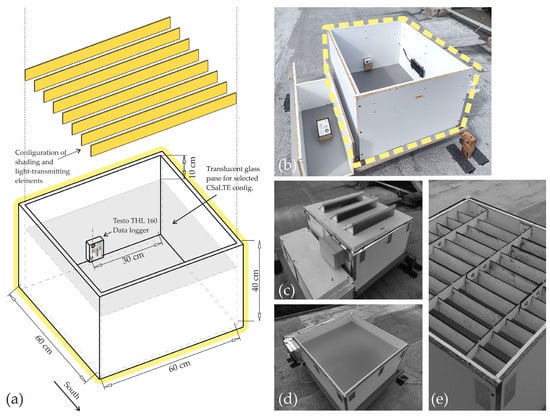
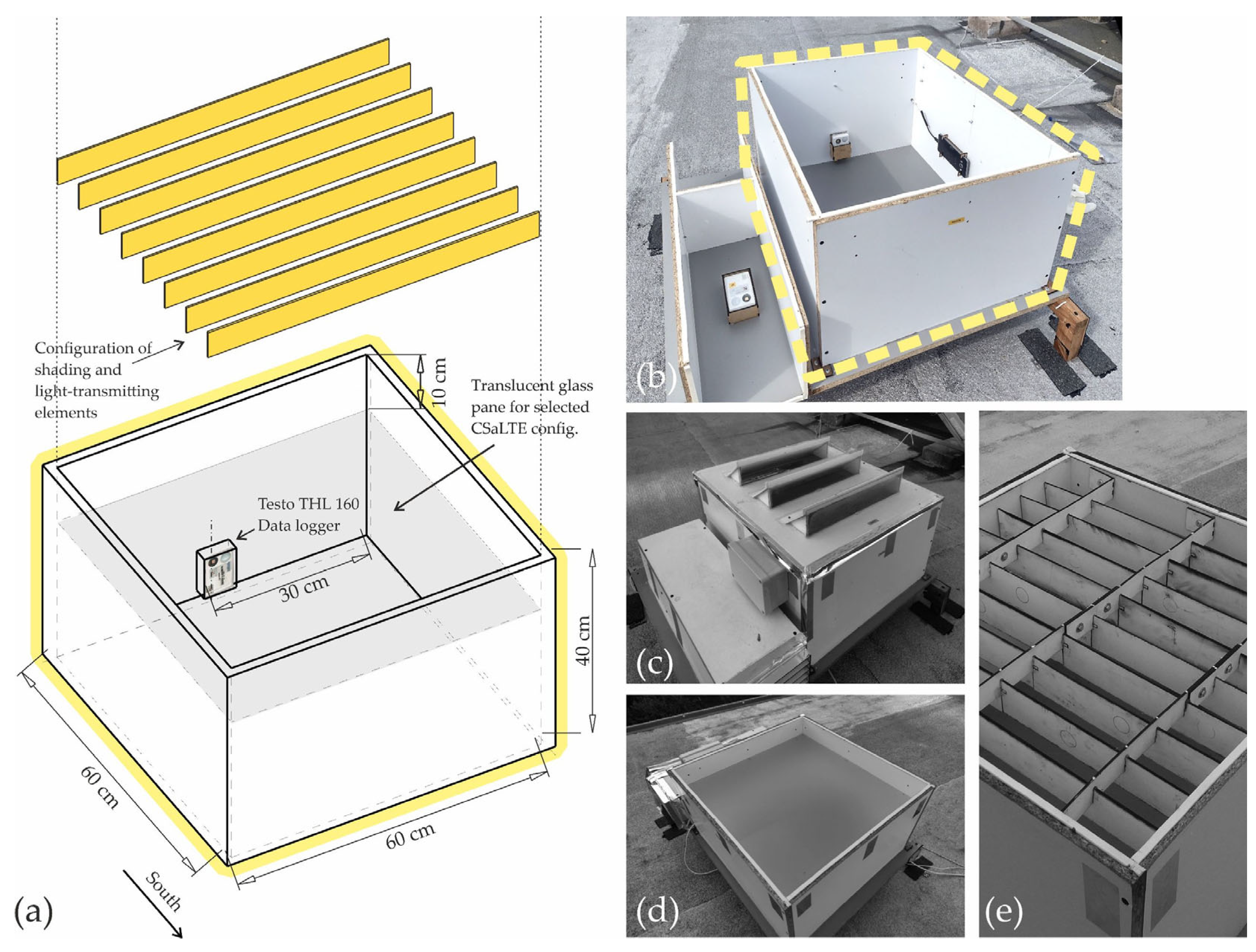
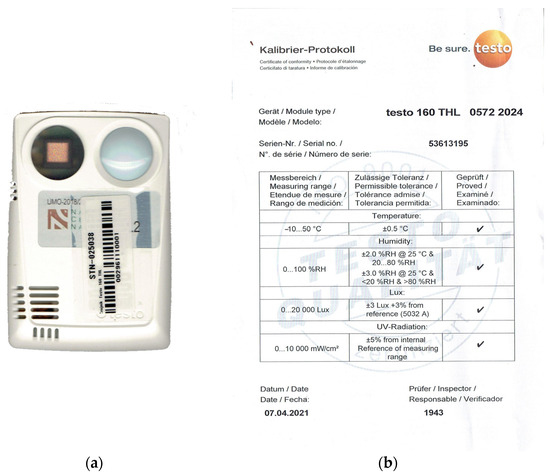
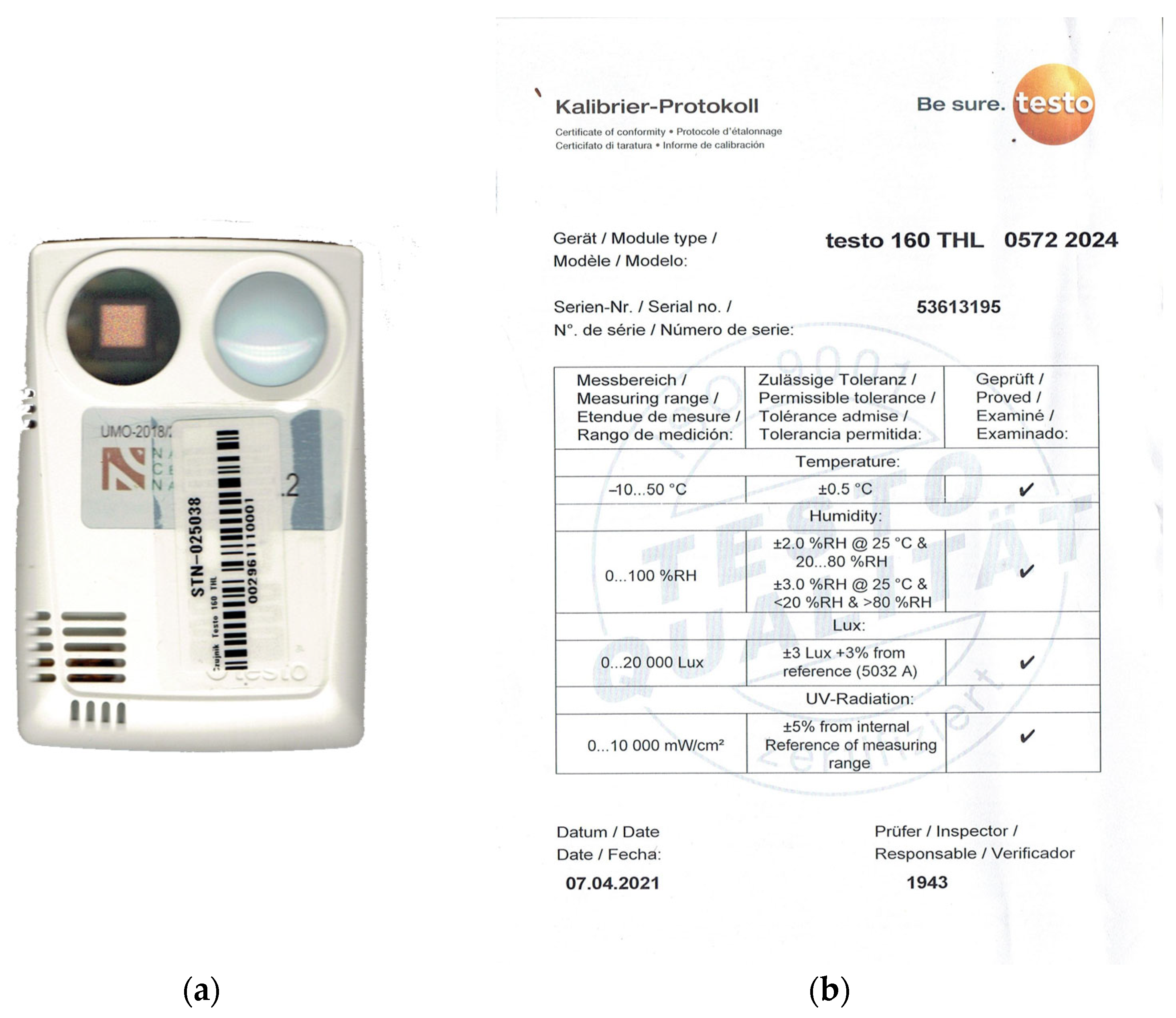
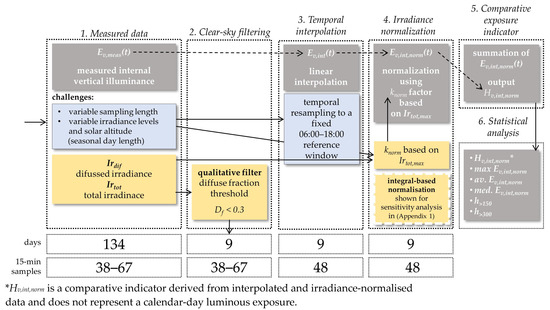
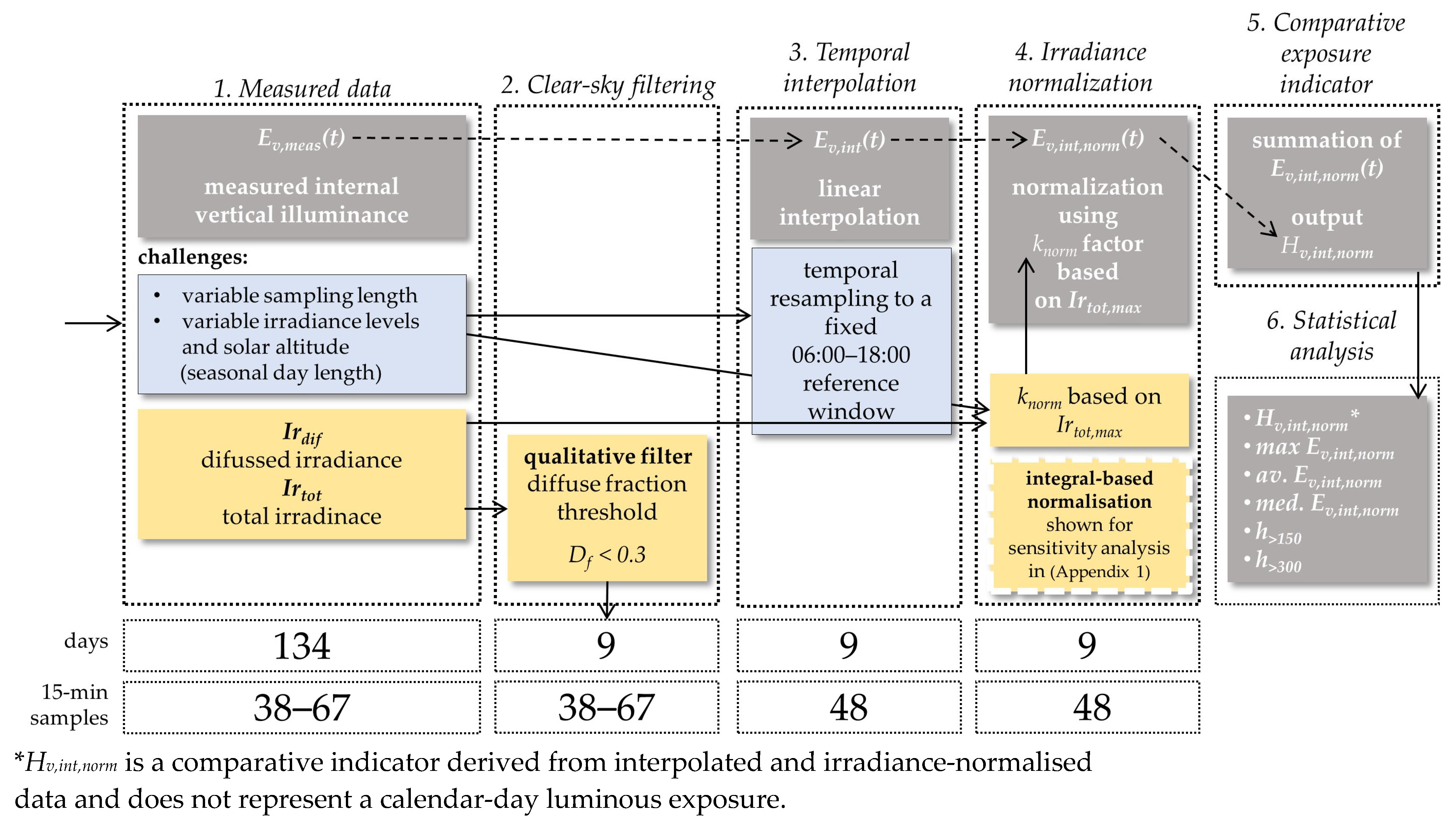
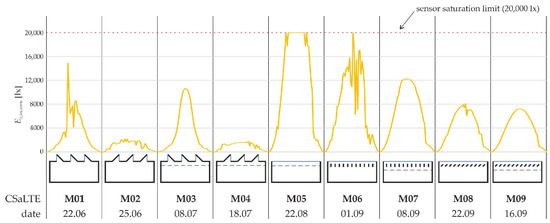
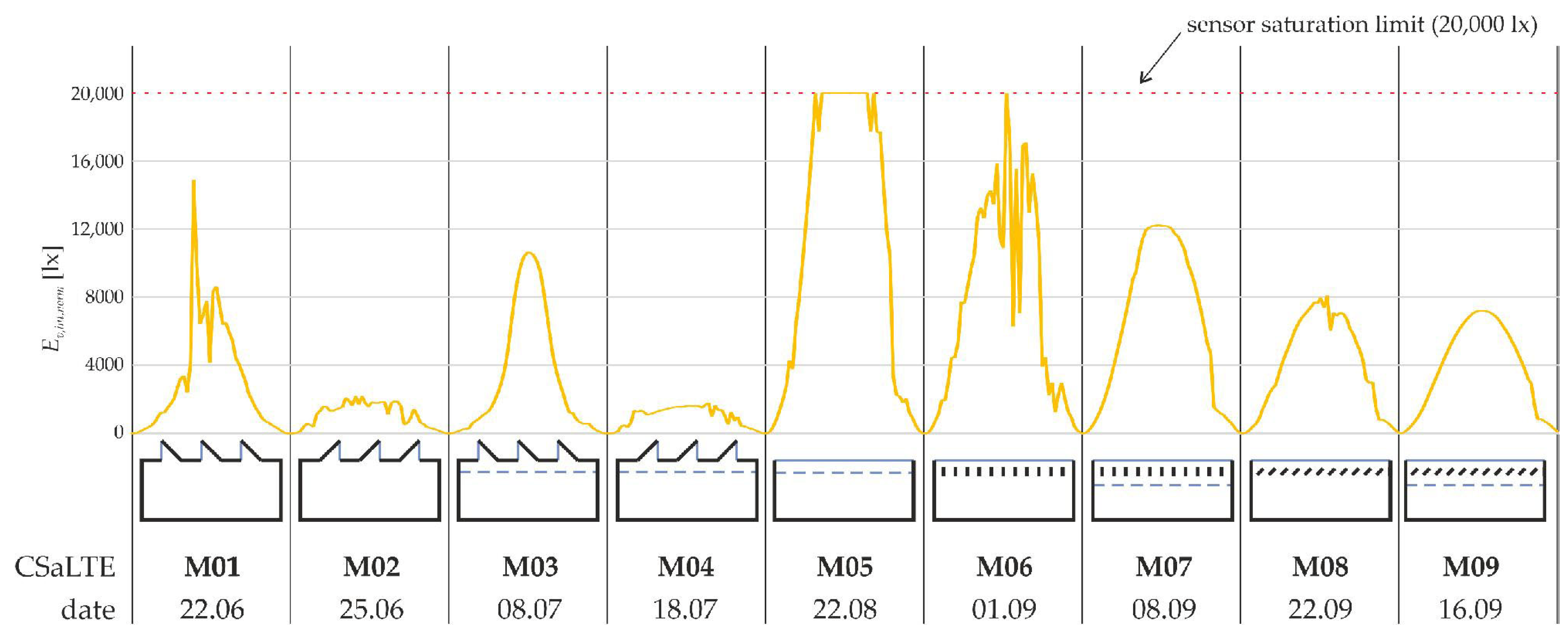
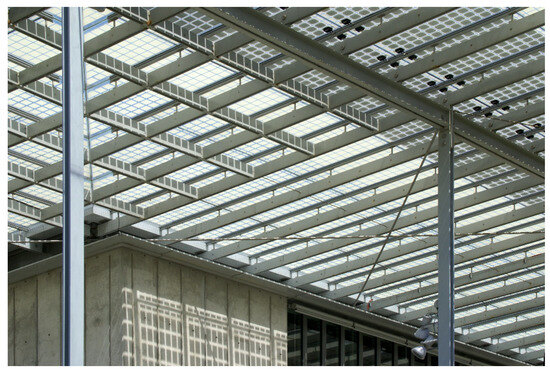
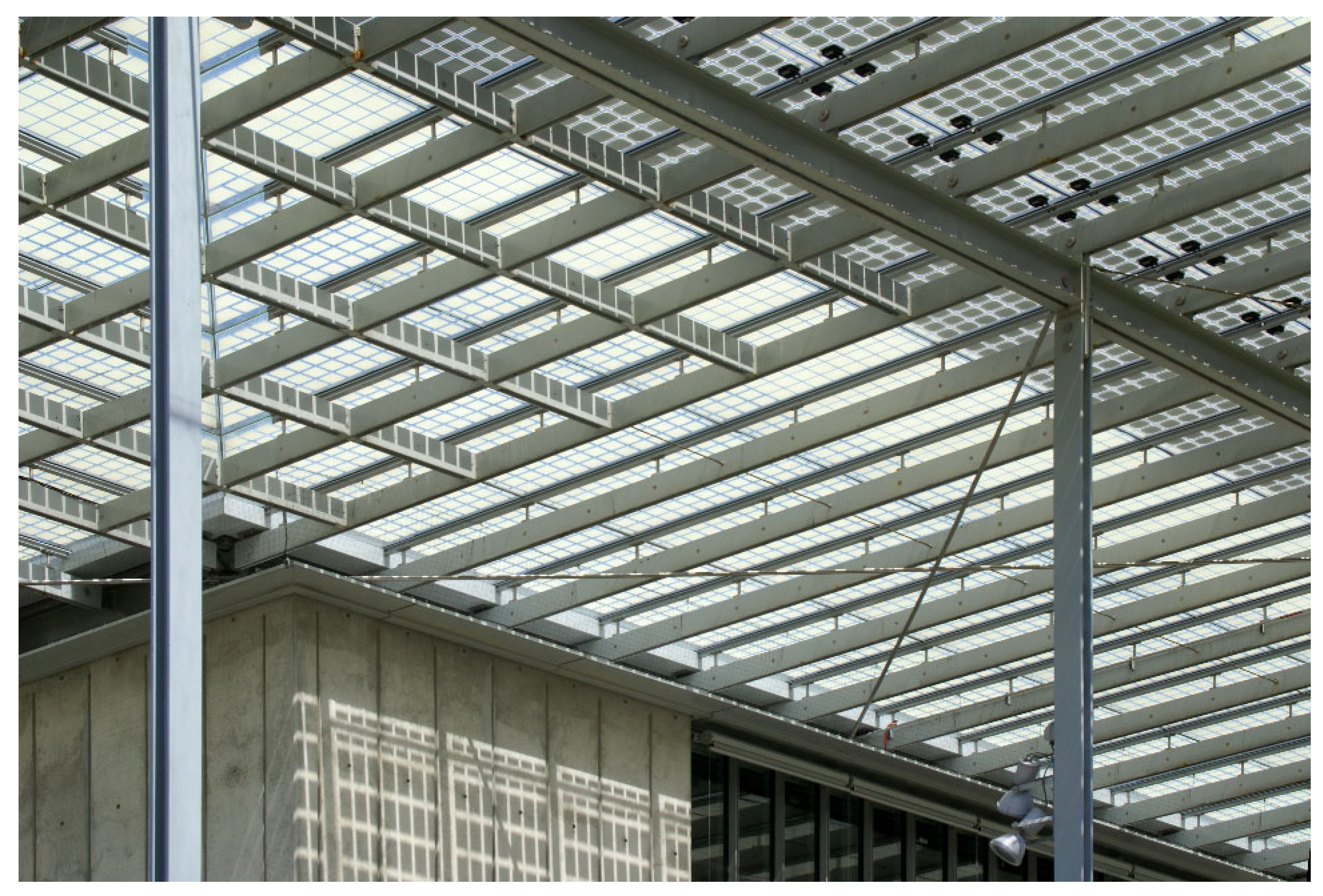

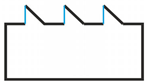

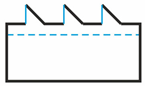
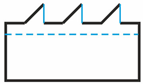


Disclaimer/Publisher’s Note: The statements, opinions and data contained in all publications are solely those of the individual author(s) and contributor(s) and not of MDPI and/or the editor(s). MDPI and/or the editor(s) disclaim responsibility for any injury to people or property resulting from any ideas, methods, instructions or products referred to in the content. |
© 2026 by the author. Licensee MDPI, Basel, Switzerland. This article is an open access article distributed under the terms and conditions of the Creative Commons Attribution (CC BY) license.