


Abstract
Urban design quality is often assessed through the presence or appearance of physical features, although residents experience design through what spatial form enables in everyday life. This study develops and tests a lived urban performance model explaining how perceived urban design quality is associated with perceived design–satisfaction attribution in Makkah, a hot-climate pilgrimage city where permanent residents coexist with recurring high-volume visitor pressure. Survey data from 340 valid respondents across Makkah neighborhoods were analyzed in R using hierarchical partial least squares structural equation modeling (PLS-SEM). Urban design quality and walkability and access were specified as reflective–formative higher-order composites and estimated through a disjoint two-stage approach. Inference was based on 5000 bootstrap samples, supplemented by measurement-sensitivity, original-specification, common-method, and repeated cross-validation checks. Urban design quality was strongly associated with walkability and access (β = 0.756), public-space quality (β = 0.358), and perceived local economic vitality (β = 0.522). Its direct association with perceived design–satisfaction attribution was not significant (β = 0.058), whereas its total indirect association was substantial (β = 0.464, 95% CI [0.340, 0.596]). Perceived local economic vitality showed the strongest direct association with perceived design–satisfaction attribution (β = 0.373), followed by public-space quality (β = 0.167). Open-ended responses identified shade and heat protection as the most salient local need. The findings show that urban design quality is associated with perceived design–satisfaction attribution primarily through its statistical associations with thermally viable access, usable public space, and continuity of everyday services. The study contributes a context-sensitive and reproducible framework for evaluating lived urban performance and social sustainability in hot-climate cities exposed to tourism, pilgrimage, or recurrent large-event pressures.
1. Introduction
Makkah presents an unusual urban contradiction. Walking is central to the city’s religious identity and seasonal operation, yet walking in its residential neighborhoods can remain difficult in ordinary daily life. High temperatures, discontinuous sidewalks, vehicle pressure, uneven shade, and the seasonal reorganization of services shape whether a route that is technically available is actually usable. A neighborhood may appear connected on a plan while remaining inaccessible to a resident walking with a child, an older adult, or a wheelchair user in afternoon heat.
This tension exposes a broader limitation in conventional assessments of urban design. Design quality is frequently represented through physical attributes or visual coherence, but residents encounter a street network, building frontage, or public square while trying to reach a mosque, purchase food, cross a road, rest outdoors, or maintain a routine during periods of visitor pressure—not as an abstract design object. The practical value of design therefore depends on the capabilities it enables: movement, access, sociability, safety, thermal protection, and local service continuity [1,2,3].
The conversion is especially consequential in hot climates. Much of the walkability literature was developed in settings where outdoor travel remains physically possible through most of the year. In hot-arid cities, the existence of a short route says little about its use unless shade, surface continuity, resting opportunities, and crossing conditions are considered. Thermal comfort is not simply an additional environmental preference; it changes the effective accessibility of destinations [4,5,6,7].
Makkah adds a second pressure. Its neighborhoods must support permanent residents while the wider urban system accommodates recurring, high-volume pilgrimage flows, which can restructure mobility, commerce, housing demand, and public-space use [8,9,10,11]. Recent Makkah-specific research further documents the operational importance of pedestrian movement and crowd-management strategies during Hajj, particularly under high-density conditions in which bottlenecks, pedestrian flow, and spatial organization become critical to safety and mobility [12]. Complementing this mobility perspective, recent research on Makkah has highlighted the role of adaptive and digitally supported urban-service management in strengthening resilience under mass-gathering and post-pandemic conditions [13]. Pilgrimage intensifies these dynamics because movement and temporary accommodation are constitutive of the city’s global role, not peripheral activities [14,15,16,17,18]. Yet the neighborhood consequences for permanent residents remain under-integrated in urban design models.
This study addresses that gap through a lived urban performance model, which treats urban design as an enabling system rather than a directly consumed aesthetic good. Its central proposition is that perceived design quality becomes consequential when residents can convert it into usable capabilities: thermally viable movement, access to daily destinations, safe and sociable public space, and continuity of neighborhood-supportive economic activity. The model therefore distinguishes the perceived design base from the pathways associated with its entry into neighborhood evaluation.
This study makes three main contributions. First, it specifies urban design quality and walkability as reflective–formative higher-order composites rather than unweighted item averages, allowing non-interchangeable dimensions—architecture versus planning structure, functional versus physical accessibility—to carry distinct empirical weight. Second, it tests a conversion-based mediation account in which design’s association with perceived design–satisfaction attribution is examined for both direct and indirect paths, mediated by public-space quality and economic vitality, rather than assuming a direct design–satisfaction link a priori. Third, it extends this test to a hot-climate pilgrimage city, where thermal exposure is incorporated into the walkability specification through the shade-and-greenery dimension, while recurrent pilgrimage pressure is treated as a contextual boundary condition rather than as a directly measured construct. The contribution is therefore not a claim that Makkah is universally representative, but a theoretically informative test of how design performance is assembled under demanding climatic and seasonal conditions.
Accordingly, this study examines how perceived urban design quality is associated with perceived design–satisfaction attribution in Makkah, and whether this association operates directly or through walkability and access, public-space quality, and perceived local economic vitality. Two research questions follow: (RQ1) How is perceived urban design quality associated with walkability and access, public-space quality, perceived local economic vitality, and perceived design–satisfaction attribution? (RQ2) To what extent are the associations of urban design quality and walkability with perceived design–satisfaction attribution mediated through public-space quality and perceived local economic vitality? The study therefore examines the pathways through which perceived spatial and design conditions are statistically associated with lived neighborhood performance within the hot-climate and recurrent-pilgrimage context of Makkah. Open-ended responses provide contextual evidence on the practical neighborhood needs associated with these conditions.
2. Theoretical Framework
2.1. Urban Design Quality as an Enabling System
Urban design quality spans planning structure, the relationship between buildings and streets, architectural coherence, and the mediation of these elements at pedestrian scale. Ewing and Handy [2] demonstrated that apparently intangible urban design qualities can be measured and linked to walking behavior, while Ewing and Cervero [19] showed that travel responds to multiple built-environment dimensions rather than a single physical feature. Subsequent work has emphasized that walkability is itself multidimensional and closely connected to health, sustainability, and livability [20,21]. Recent empirical evidence further shows that walkability-related urban form is associated with neighborhood social cohesion, while the direction and magnitude of these relationships vary across specific urban-form dimensions [22]. These traditions support a multidimensional understanding of design, but do not by themselves explain how design becomes a broader judgment of neighborhood livability.
The present study treats urban design quality as a formative higher-order composite. Urban planning quality, architecture and townscape quality, and urban design mediation each contribute distinct information: a neighborhood can possess a legible street structure but weak frontage relationships, or visually coherent buildings that do not produce a comfortable pedestrian experience. Removing one dimension therefore changes the conceptual domain rather than merely reducing repeated manifestations of a common factor, supporting a reflective–formative Type II hierarchical component model [23,24]. A reflective–reflective specification would instead imply that a single underlying factor causes planning, architecture, and mediation to vary together and that the dimensions are largely interchangeable—neither of which fits the substantive definition used here: each dimension can vary independently, has a distinct planning meaning, and is required to preserve the full content of UDQ.
2.1.1. Walkability as Thermal, Functional, and Inclusive Access
Walkability is often summarized through connectivity, density, land-use mix, safety, and destination access. In a hot-climate neighborhood, however, it is better understood as a bundle of jointly necessary capabilities: safe crossings do not compensate for an exposed route during extreme heat, shade does not compensate for an obstructed sidewalk, and nearby services do not constitute access when older adults or wheelchair users cannot reach them. Accordingly, the higher-order WALK composite is formed by walkability and traffic safety, shade and greenery, service accessibility, and universal accessibility.
This formulation places thermal adaptation inside walkability rather than treating it as external environmental context. Recent hot-climate planning research similarly treats pedestrian thermal protection as a core component of practical walkability and emphasizes continuous shaded or climate-protected pedestrian networks rather than isolated thermal-comfort interventions [25]. Research on outdoor comfort consistently shows that urban geometry, shade, vegetation, and psychological adaptation influence the use of public space [26,27]. For Makkah, the same physical distance can represent very different levels of practical access depending on exposure and continuity.
2.1.2. Public Space and Perceived Local Economic Vitality
Public space is the setting in which design and access become socially observable. Its quality depends not only on physical provision, but also on whether people can remain, meet, and feel secure there [1,28,29,30]. Recent evidence likewise emphasizes the multidimensional nature of public-space quality, showing that urban design quality and physical disorder capture distinct and non-substitutable aspects of street-space quality [31]. A walkable route may bring residents to a public space, but the space contributes to livability only when it supports interaction, comfort, and perceived safety.
Local economic vitality is equally experiential. The construct used here does not measure turnover, employment, or property value; it captures whether residents perceive planning, pedestrian presence, investment, and public space as sustaining local economic life. This distinction matters in a pilgrimage city, where economic activity may be intense while ordinary services become less convenient for residents. Perceived local economic vitality therefore refers to organized, neighborhood-supportive activity rather than growth alone, following the long-standing association between public life, active streets, and urban vitality [3,32], adapted here to a seasonally pressured residential context.
2.1.3. Perceived Design–Satisfaction Attribution and Mediated Performance
Within the present framework, neighborhood livability is conceptualized through lived urban performance: the capacity of neighborhood form to support practical access, thermally viable movement, usable and socially supportive public space, continuity of everyday services, and positive neighborhood evaluation. This interpretation integrates established relationships among walkability, sustainability, residential evaluation, public-space quality, and urban vitality, while retaining the specific climatic and pilgrimage-related conditions examined in Makkah [20,21,28,32].
Residential satisfaction is generally understood as a multidimensional evaluation emerging from the relationship between people, dwellings, services, social conditions, and neighborhood environments [33,34,35]. Here, the outcome is operationalized more narrowly as perceived design–satisfaction attribution—reflecting respondents’ perception that urban design affects their satisfaction with the neighborhood, rather than measuring general residential satisfaction across its cognitive, affective, and behavioral dimensions. Perceived design quality should not be assumed to enter this evaluation directly: residents may recognize an orderly street pattern while remaining dissatisfied because routes are exposed, public spaces are unusable, or daily commerce is poorly organized.
The mediated model consequently separates recognition of design quality from its statistical associations with the proposed lived-performance constructs. Direct paths from urban design quality and walkability to satisfaction are retained rather than omitted, allowing the observed coefficient pattern to be classified as indirect-only or complementary statistical mediation under the specified model. Significant indirect effects alongside weak direct effects would be compatible with the hypothesized mediation structure, but would not establish temporal mediation or causal transmission through public-space quality and perceived local economic vitality.
2.1.4. Lived Urban Performance as a Conversion-Based Analytical Framework
The proposed framework distinguishes between perceived urban resources and the practical lived-performance conditions associated with their use. The term “conversion” is used here as an analytical organizing concept rather than as a formal operationalization of capability theory. The model does not treat capabilities as a separately measured latent construct; instead, the resource-to-lived-performance distinction is used to organize the hypothesized associations between perceived design resources, practical neighborhood conditions, and neighborhood evaluation. Street structure, frontage relationships, architectural coherence, shade, crossings, and service distribution represent perceived urban resources, while safe movement, thermal relief, social use of public space, and reliable access to everyday needs represent the practical conditions through which those resources may become meaningful in daily life. Prior research indicates that physical street qualities are associated with the experience of walking, while thermal perception and psychological adaptation influence whether outdoor urban spaces can be used comfortably [2,27]. This translation from nominal provision to practical use is neither automatic nor uniform: climate, bodily ability, traffic conditions, and seasonal visitor pressure may alter these associations. The framework therefore specifies mediated rather than exclusively direct statistical relationships between perceived design quality and neighborhood evaluation.
This perspective also clarifies the role of the higher-order composites. Urban design quality is formed by planning quality, architecture and townscape quality, and urban design mediation because each supplies non-interchangeable information about the design system [23,24]. Walkability and access are formed by traffic safety, shade and greenery, service accessibility, and universal accessibility because practical access fails when any of these capabilities is absent. Public-space quality and perceived local economic vitality then represent the social and service-continuity pathways associated with how design performance becomes visible in daily life [28,32].
3. Research Model and Hypotheses
3.1. Design Quality and the Production of Access
Clear street organization, coherent building–street relationships, and effective mediation between planning and architecture should improve route legibility, crossing conditions, and access to destinations. In a hot-climate setting, these conditions also determine whether shade and inclusive movement are integrated into the neighborhood system rather than added as isolated amenities. Accordingly, urban design quality is expected to support walkability and public-space performance.
H1.
Urban design quality is positively associated with walkability and access.
H2.
Urban design quality is positively associated with public-space quality.
H3.
Walkability and access are positively associated with public-space quality.
3.2. Public Space, Local Vitality, and Satisfaction
Public space and neighborhood-supportive economic activity are treated as connected pathways. Usable public space can increase dwell time, social reassurance, pedestrian presence, and visibility of local services, while economically active and reliable service environments can strengthen residents’ evaluation of neighborhood performance. The model therefore tests both direct links to the satisfaction outcome and sequential pathways through public-space quality and perceived local economic vitality.
H4.
Urban design quality is positively associated with perceived local economic vitality.
H5.
Public-space quality is positively associated with perceived local economic vitality.
H6.
Urban design quality is positively associated with perceived design–satisfaction attribution.
H7.
Walkability and access are positively associated with perceived design–satisfaction attribution.
H8.
Public-space quality is positively associated with perceived design–satisfaction attribution.
H9.
Perceived local economic vitality is positively associated with perceived design–satisfaction attribution.
3.3. Mediated Lived-Performance Proposition
The central theoretical proposition is that perceived design quality will show indirect statistical associations with PDSA through the proposed lived-performance constructs. Retaining the direct paths allows the direct and indirect associations to be evaluated within the same specified model. A pattern of significant indirect effects alongside weak direct effects would be compatible with the proposed conversion-based analytical structure, but would not establish a temporal mediation sequence or causal conversion process. Figure 1 summarizes the conceptual research model and the hypothesized relationships.
Figure 1.
Conceptual research model and hypothesized relationships. Note. H1–H9 indicate the hypothesized direct relationships. H10 represents the hypothesized indirect associations of urban design quality and walkability and access with perceived design–satisfaction attribution through public-space quality and perceived local economic vitality. Light boxes represent reflective lower-order dimensions; arrows from the lower-order dimensions to UDQ and WALK indicate formative higher-order specification. UDQ = urban design quality; WALK = walkability and access; PSQ = public-space quality; PLEV = perceived local economic vitality; PDSA = perceived design–satisfaction attribution.
H10.
Urban design quality and walkability are indirectly associated with perceived design–satisfaction attribution through public-space quality and perceived local economic vitality.
4. Methods
4.1. Study Design, Context, and Survey Administration
The study used a cross-sectional, quantitative-dominant survey with contextual open-ended interpretation. The unit of analysis was the respondent’s evaluation of a neighborhood used for residence or regular local activity in Makkah. The design estimates theoretically specified associations among perceptions; it does not establish temporal or causal effects. Makkah is treated as a theoretically informative case because severe heat exposure and recurrent pilgrimage demand create conditions under which nominal proximity may differ sharply from practical accessibility.
The digital questionnaire was initially disseminated through a university-supported online platform and related digital channels and was subsequently circulated through neighborhood and community networks across different areas of Makkah. Participation was not restricted to university students or employees. Eligible respondents were individuals able to evaluate a Makkah neighborhood used for residence or regular local activity.
Before accessing the questionnaire, prospective respondents were presented with a mandatory informed-consent page explaining the study purpose, the voluntary nature of participation, the right to discontinue without consequence, the anonymous treatment of responses, the approximate completion time, secure data handling, and the absence of financial compensation. Only respondents who explicitly agreed to the consent conditions were able to proceed to the questionnaire.
The digital survey was conducted between 28 June and 30 July 2026, after ethical approval took effect on 27 June 2026. No participant data included in the analytical sample were collected before ethical approval. The questionnaire asked respondents to evaluate a Makkah neighborhood used for residence or regular local activity; it did not require them to isolate conditions observed only on the day of completion or to evaluate a separately defined pilgrimage period. Because survey administration occurred after the peak Hajj days of 1447 AH, the quantitative responses should be interpreted as general neighborhood assessments collected in the post-Hajj period rather than as direct measurements of peak-Hajj conditions.
No probability sampling frame was available; accordingly, the sample is treated as a geographically distributed convenience sample rather than as statistically representative of Makkah’s population. Because participation was voluntary and the questionnaire was disseminated digitally, self-selection and coverage bias cannot be excluded. Individuals with greater digital access, stronger interest in neighborhood conditions, or greater exposure to the dissemination networks may have been more likely to participate. Information on nonrespondents was not available; therefore, the direction or magnitude of potential selection bias cannot be directly assessed, and population-level representativeness cannot be established. The university-supported platform served only as an initial dissemination channel, and participation was not restricted to university students or employees. Before analysis, technical system fields, including GlobalIDs and collection timestamps, were removed from the analytical dataset.
4.2. Instrument Development and Construct Specification
The questionnaire contained background questions, five-point Likert items ranging from 1 (strongly disagree) to 5 (strongly agree), and open-ended questions. Instrument development followed a theory-led operationalization process. An initial item pool was constructed from the conceptual domains identified in established literature on urban design quality, walkability and pedestrian safety, accessibility, public-space quality, and urban vitality. The purpose was not to reproduce a single existing scale, but to operationalize the multidimensional lived-performance framework developed in Section 2 and Section 3. The initial items were therefore organized around the proposed lower-order domains of urban planning quality, architecture and townscape quality, urban design mediation, walkability and traffic safety, shade and greenery, service accessibility, universal accessibility, public-space quality, and perceived local economic vitality. The wording was then contextualized to the Makkah setting, where heat exposure, shade continuity, pedestrian safety, access to daily services, barrier-free movement, and recurrent pilgrimage-related pressure shape everyday neighborhood experience. Construct assignment and item retention were subsequently evaluated jointly on conceptual alignment and empirical measurement performance rather than on the significance of structural relationships. The complete wording and final construct assignment of the retained indicators are reported in Appendix A.1.
The open-ended item analyzed in Section 5.6 was formulated to allow respondents to identify, in their own words, the urban and neighborhood needs associated with accommodating pilgrims in residential areas, without restricting their responses to predetermined categories. The item supported the study objective by providing contextual evidence on the practical conditions through which urban design, accessibility, public-space quality, and local service vitality are experienced under pilgrimage pressure. The original question is provided in Appendix A.2.
Following the conceptual and measurement-screening procedure described in Section 4.3, the final quantitative model retained 33 indicators. Indicators were retained when they demonstrated conceptual alignment with their intended constructs and acceptable measurement performance. Indicators that were overly general, conceptually redundant, or weakly aligned with their intended constructs were excluded before interpretation of the final structural model. The specific exclusions and their rationale are reported in Section 4.3, while Appendix A.1 presents the wording and construct assignment of the 33 retained indicators.
Urban design quality comprised urban planning quality (UP), architecture and townscape quality (AT), and urban design mediation (UDM). Walkability and access comprised walkability and traffic safety (WTS), shade and greenery (SG), service accessibility (SA), and universal accessibility (UA). These lower-order dimensions represent related but non-interchangeable content domains. Urban planning quality (UP) captures the spatial and functional organization of the neighborhood, including street-network legibility, street organization, and land-use distribution. Architecture and townscape quality (AT), by contrast, captures finer-grained architectural and townscape qualities at the building–street interface, including façade articulation, building–street proportions, visual comfort, and townscape coherence. Thus, UP concerns how the neighborhood is spatially and functionally organized, whereas AT concerns how its built form is architecturally and visually expressed.
Within walkability and access, walkability and traffic safety (WTS) captures the comfort and safety of pedestrian movement and its interaction with vehicle traffic, while shade and greenery (SG) captures respondents’ perceived availability and functional contribution of shade and vegetation to outdoor movement and thermal comfort. It is therefore a perception-based measure of neighborhood shading conditions rather than an objective measure of shade coverage, solar exposure, or microclimatic performance. Service accessibility (SA) captures the proximity, distribution, and route-based reachability of everyday services and destinations. Universal accessibility (UA), by contrast, captures the perceived barrier-free physical usability of sidewalks, crossings, and public spaces, regardless of destination distance, reflecting environmental support for inclusive movement rather than respondents’ actual mobility status. Thus, SA concerns whether relevant destinations can be reached, whereas UA concerns whether the physical access environment is perceived as supportive of inclusive movement, free of physical barriers.
Public-space quality (PSQ) and perceived local economic vitality (PLEV) were first-order reflective composites. Perceived design–satisfaction attribution (PDSA) was represented by a single global evaluative item. This specification was retained because the study does not operationalize the outcome as multidimensional residential satisfaction, but as the narrower judgment that urban design affects respondents’ satisfaction with the neighborhood. Single-item measures can be appropriate for sufficiently narrow and concrete global judgments when the intention is not to represent a multidimensional latent construct [36]. Accordingly, PDSA is interpreted strictly as a perceived design–satisfaction attribution. The use of one item nevertheless precludes assessment of internal consistency and convergent validity and is therefore treated as a measurement limitation Several PLEV and UDM indicators capture residents’ beliefs about how planning and design perform or are expected to perform, rather than independently observed economic or physical conditions. Because these items are relational or effect-oriented, they also introduce potential conceptual overlap among the measured beliefs. Structural paths involving UDM and PLEV should therefore be interpreted as associations among related perception-based design-performance beliefs rather than as effects among independently measured physical, planning, or economic conditions.
The higher-order specification was theoretical rather than data-driven. The lower-order dimensions were modeled reflectively because their items were treated as manifestations of their respective content domains. UDQ and WALK were modeled formatively at the higher level because their dimensions are non-interchangeable components: omitting architecture changes the meaning of design quality, just as omitting universal access changes the meaning of walkability. The disjoint two-stage approach was used to avoid repeating indicators across levels and to estimate stable dimension weights [24].
Instrument evaluation combined conceptual and empirical assessment. Items were retained based on alignment with their intended content domains, while overly general, redundant, or weakly aligned indicators were excluded as described in Section 4.3. Reflective measures were evaluated using reliability, convergent-validity, and discriminant-validity criteria, whereas formative higher-order composites were assessed using dimension weights, bootstrap confidence intervals, and collinearity VIF. The final specification was also examined through original-specification and measurement-sensitivity analyses. Detailed results are reported in Section 5.1, Section 5.2, Section 5.7 and Section 5.8.
4.3. Data Screening and Analytical Sample
The source dataset contained 343 responses. Data completeness, response-pattern consistency, and indicator distributions were examined before model estimation. Three cases gave the same response across the complete original Likert battery and were classified as straight-lining before structural analysis; the primary analytical sample was therefore N = 340. Three indicators were removed before estimating the final model: UDM4, an overly general walkability item corresponding to the original WTS1, and SA4. These decisions were based jointly on conceptual alignment and measurement evidence rather than on the significance of structural paths. UDM4 was excluded because its content was conceptually redundant with the retained UDM indicators and did not add sufficiently distinct information to the urban design mediation domain. The original WTS1 was excluded because its wording was overly general and did not provide sufficiently specific information on the walkability and traffic-safety domain. SA4 presented the clearest problem because it loaded weakly and referred more directly to recreational infrastructure than to everyday service access. Visual identity remained in the source data but was excluded from the primary model because it was not required by the lived-performance argument and increased construct overlap. No further case or item deletion was undertaken after examining the structural results.
For the most complex endogenous equation, four predictors were used. With N = 340, α = 0.05, and power = 0.80, the sample could detect an effect of approximately f2 = 0.036, indicating adequate sensitivity for effects between conventional small and medium thresholds. The sample was geographically distributed across Makkah neighborhoods; the largest listed group was Al-Awali (21.2%), while 20.0% came from other smaller neighborhoods. Permanent residence was reported by 241 respondents (70.9%), temporary residence by 91 (26.8%), and both by eight (2.4%). Weekly walking frequency was recorded as a contextual sample characteristic. The full distribution was as follows: 183 respondents (53.8%) selected “rarely” for walking 10 min or more during a typical week, 98 (28.8%) selected “approximately every other day,” 55 (16.2%) selected “always,” and four (1.2%) selected more than one response category. Residence status was self-reported as permanent, temporary, or both. The questionnaire did not collect a more detailed classification of temporary respondents by reason for residence or local activity; these categories are therefore used descriptively rather than interpreted as distinct population strata. The category “rarely” referred specifically to the frequency of walking episodes lasting 10 min or more and should not be interpreted as indicating no pedestrian exposure or no direct familiarity with neighborhood conditions. Walking frequency was not used as an eligibility criterion or to restrict the primary analytical sample. It was included only as an additional control predictor of perceived design–satisfaction attribution in a supplementary sensitivity analysis reported in Section 5.10. Selected geographical and sample characteristics are reported in Table 1, including residence status and weekly walking frequency. The universal-accessibility items assessed perceived neighborhood conditions rather than respondents’ own disability status.
Table 1.
Geographic distribution and selected characteristics of the analytical sample.
4.4. PLS-SEM Analysis
The model was estimated in R 4.6.0 using SEMinR 2.5.0. PLS-SEM was selected because the study specifies composite-based, reflective–formative higher-order constructs and seeks to explain and predict theoretically ordered performance outcomes rather than reproduce a common-factor covariance matrix. Reflective lower-order composites were estimated with Mode A weights. Urban design quality and walkability and access were estimated as formative higher-order composites with Mode B weights using the disjoint two-stage approach, thereby avoiding repeated indicators and separating lower-order measurement assessment from higher-order dimension weighting. Statistical inference used 5000 bootstrap samples with a fixed random seed.
Reflective measurement assessment covered indicator loadings, Cronbach’s alpha, Dijkstra–Henseler’s rho_A, composite reliability, average variance extracted, and HTMT among reflective lower-order constructs [37,38,39]. Higher-order formative assessment focused on conceptual coverage, dimension weights, bootstrap confidence intervals, and collinearity VIF; reliability coefficients and AVE generated for formative composites were not interpreted as evidence of measurement quality. Structural assessment included path coefficients, two-sided bootstrap confidence intervals, R2, adjusted R2, f2, direct effects, specific indirect effects, total indirect effects, and total effects. Mediation was classified from the joint pattern of direct and indirect effects rather than from the omission of direct paths. Throughout the manuscript, mediation terminology refers to statistical indirect associations under the specified cross-sectional model and does not imply temporal mediation or causal transmission. Common-method concerns were examined using Harman’s single-factor result and full-collinearity VIF [40,41]. Because SEMinR does not provide a published indicator-level PLSpredict procedure for the fitted higher-order specification, predictive relevance was assessed separately through 20 repetitions of 10-fold cross-validation using retained item-mean construct scores. This procedure is reported as a supplementary predictive check rather than as formal PLSpredict [42].
The complete execution record was retained rather than reconstructed from reported tables. It includes the R scripts, serialized SEMinR model object, serialized 5000-sample bootstrap object, text summaries, package session information, and SHA-256 checksums. These files allow the reported paths, weights, confidence intervals, and derived mediation effects to be audited or regenerated from the de-identified analytical dataset.
4.5. Analytical Safeguards and Robustness Strategy
Five safeguards were specified to reduce the risk of model-dependent conclusions. First, the primary model was compared with the original N = 343 specification containing all original indicators and visual identity. Second, a measurement-sensitivity analysis tested whether removing the lowest-loading shade indicators and the service-access item implicated in the highest HTMT ratio materially changed the structural conclusions. Third, predictive performance was checked out of sample using repeated cross-validation. Fourth, potential neighborhood-level clustering was examined using one-way intraclass correlation coefficients based on the reported neighborhood variable, and the complete structural model was re-estimated after excluding Al-Awali, the neighborhood with the largest sample share. Because several neighborhood categories had small cell counts, the ICC estimates were interpreted as descriptive diagnostics rather than as a basis for fitting a full multilevel model. Fifth, weekly walking frequency was entered as an additional control predictor of perceived design–satisfaction attribution, and the model was re-estimated using the full analytical sample and 5000 bootstrap resamples. These analyses were used to assess stability, not to select the specification that produced the most favorable p-values.
No multi-group difference is claimed in this article. Although residence status and walking frequency are substantively relevant, the available convenience-sample subgroups were not treated as population-representative strata. A confirmatory multi-group study should first establish measurement invariance and use a sampling design capable of supporting group-level inference.
4.6. Contextual Open-Ended Coding Procedure
Open-ended responses were used to interpret the quantitative model. Open-ended responses were available from all 340 valid questionnaires included in the analytical sample. One member of the research team manually reviewed and deductively coded the responses using a coding framework aligned with the study constructs. The coding framework and category assignments were subsequently reviewed by the research team and finalized through consensus. Coding was limited to themes connected to walkability, public space, economic vitality, and pilgrimage-related contextual issues. Responses could receive more than one code, so percentages are not expected to sum to 100%. The resulting coding frequencies were summarized descriptively. The procedure should be understood as contextual interpretation rather than a separate qualitative strand: no claim is made to saturation or independent inductive theory building. Because the coding was not conducted independently in parallel by multiple coders, no statistical intercoder-reliability coefficient was calculated. The open-ended component was not used to validate the quantitative model, but to provide contextual interpretation of issues raised by respondents.
5. Results
5.1. Reflective Measurement Model
Table 2 Reflective measurement assessment. Indicator performance was generally strong. Loadings for UP, AT, UDM, WTS, UA, PSQ, and PLEV were at or above 0.700, with two WTS indicators rounding to 0.700. Lower loadings appeared for SG1 (0.587), SG4 (0.608), and SA3 (0.661). These items were retained because the corresponding constructs met composite reliability and AVE requirements and because shade distribution, shaded seating, and route access to daily destinations were not redundant content. Removing them would narrow the climatic and functional meaning of the model.
Table 2.
Reflective measurement assessment.
Composite reliability ranged from 0.818 to 0.918 and AVE from 0.555 to 0.788 across reflective multi-item constructs. SA returned alpha = 0.664 and rho_A = 0.678; these values are below the conventional 0.70 guideline, but CR = 0.818 and AVE = 0.602 support retention of the concise three-item domain. PSQ used two indicators and returned alpha = 0.681, rho_A = 0.681, CR = 0.862, and AVE = 0.758. With only two items, alpha is sensitive to item count; the strong loadings and convergent validity provide more informative evidence. Reliability statistics for PDSA are reported as not applicable because it is a single-item measure.
5.2. Higher-Order Composites and Discriminant Assessment
Table 3 reports the higher-order formative weights and collinearity statistics. All higher-order dimension weights were positive and statistically significant. In the formative specification, these weights represent each lower-order dimension’s unique relative contribution to its higher-order composite after accounting for the other dimensions within that composite; they should therefore not be interpreted as absolute rankings of substantive importance or as structural effects on downstream outcomes. A smaller but significant weight indicates that the dimension still contributes distinct information to the composite. Within UDQ, urban design mediation made the largest conditional contribution (weight = 0.639), followed by architecture and townscape quality (0.360) and urban planning quality (0.167). Within WALK, service accessibility (0.465) and walkability and traffic safety (0.454) made the largest conditional contributions, while universal accessibility (0.212) and shade and greenery (0.204) also contributed significant unique information. Formative VIF values ranged from 1.050 to 2.132, well below levels indicating problematic redundancy.
Table 3.
Higher-order formative weights and collinearity.
Table 4 reports the highest lower-order HTMT ratios. HTMT was assessed among the reflective lower-order constructs rather than between a formative higher-order composite and its own dimensions. The largest ratio was 0.869 between UDM and SA, followed by 0.840 between WTS and SA and 0.840 between PSQ and PLEV. All ratios remained below the 0.90 guideline, and their bootstrap confidence intervals excluded 1.00. The UDM–SA ratio does exceed the more conservative 0.85 heuristic and is therefore reported as a sensitivity concern rather than described as unambiguously low. Retention is supported by the constructs’ different theoretical roles, the ratio remaining below 0.90, and the upper bootstrap bound of 0.967 remaining below unity. The pattern indicates conceptual proximity without empirical identity. The Harman single-factor result was 34.7%. Full-collinearity VIF ranged from 1.657 to 3.117, remaining below the 3.3 diagnostic threshold.
Table 4.
Highest lower-order HTMT ratios.
5.3. Structural Model
Table 5 reports the estimated structural paths. The model explained 57.2% of the variance in WALK, 48.2% in PSQ, 57.9% in PLEV, and 39.6% in PDSA. Urban design quality showed a strong positive association with walkability and access (β = 0.756, p < 0.001) and moderate positive associations with public-space quality (β = 0.358, p < 0.001) and perceived local economic vitality (β = 0.522, p < 0.001). WALK was positively associated with PSQ (β = 0.382, p < 0.001), and PSQ was positively associated with PLEV (β = 0.310, p < 0.001). Taken together, the coefficients support the proposed ordering of design resources, realized access, public-space performance, and local service vitality. Because UDM and PLEV include relational and effect-oriented items, these structural coefficients represent associations among respondents’ perceived design-performance beliefs and should not be interpreted as effects of independently measured urban conditions on objective economic vitality or neighborhood satisfaction.
Table 5.
Structural paths.
The direct effects on satisfaction produced the study’s most important distinction. Neither UDQ (β = 0.058, p = 0.493) nor WALK (β = 0.114, p = 0.085) had a statistically significant direct association with PDSA once public-space quality and economic vitality were included. PSQ retained a smaller direct association (β = 0.167, p = 0.026), while PLEV showed the strongest direct association with PDSA (β = 0.373, p < 0.001). The findings support H1–H5, H8, and H9, but not H6 or H7. Figure 2 presents the estimated structural model with the standardized path coefficients.
Figure 2.
Estimated structural model. Note. Values are shown within the endogenous constructs. Solid paths are statistically significant, whereas dashed paths are not significant. * p < 0.05; *** p < 0.001; ns = not significant. UDQ = urban design quality; WALK = walkability and access; PSQ = public-space quality; PLEV = perceived local economic vitality; PDSA = perceived design–satisfaction attribution.
5.4. Mediation and Total Effects
Table 6 reports the bootstrap indirect effects. The indirect-effect results support H10 and sharpen its statistical interpretation. UDQ had a significant total indirect effect on PDSA (β = 0.464, 95% CI [0.340, 0.596]) alongside a nonsignificant direct effect. This coefficient pattern is consistent with indirect-only statistical mediation under the specified model, but it does not establish temporal mediation or a causal sequence. The largest specific route was UDQ → PLEV → PDSA (β = 0.195). The routes through PSQ alone, WALK and PSQ, and the sequential PSQ–PLEV chain were also significant. The simple UDQ → WALK → PDSA route was not significant, which indicates that walking conditions matter for satisfaction when they become socially and economically consequential rather than merely being recognized as movement conditions.
Table 6.
Bootstrap indirect effects.
WALK showed the same structure at a smaller scale. Its direct effect on PDSA was not significant, but its total indirect effect through PSQ and PLEV was significant (β = 0.108, 95% CI [0.050, 0.180]). PSQ exhibited a complementary statistical mediation pattern, with significant direct and indirect associations with PDSA through PLEV. Thus, public space is both an evaluative outcome in its own right and a setting through which local economic vitality becomes visible.
5.5. Supplementary Predictive Assessment
Table 7 reports the supplementary repeated cross-validation results. Repeated 10-fold cross-validation at the retained-score level produced positive Q2 predict values for all endogenous outcomes. Prediction error improved over the training-mean benchmark by 26.9% for WALK, 27.6% for PSQ, 31.4% for PLEV, and 21.1% for PDSA. The use of complementary predictive-performance criteria is consistent with recent built-environment studies emphasizing multi-metric evaluation of predictive models [43,44]. These results suggest that the explanatory pattern is not confined entirely to in-sample fit. They remain a supplementary check because the procedure does not reproduce formal indicator-level PLSpredict for the higher-order model.
Table 7.
Supplementary repeated cross-validation.
5.6. Contextual Open-Ended Interpretation
Table 8 reports the themes identified in responses concerning pilgrim residential needs. The open-ended responses help distinguish statistical contribution from lived salience. Shade and heat protection were mentioned by 33.8% of responses concerning pilgrim residential needs, followed by daily services and local commerce (31.5%), pilgrimage transport and access (30.6%), and pedestrian movement (22.1%). Shade did not have the largest formative weight in WALK because a formative weight represents a dimension’s unique conditional contribution after the other dimensions are considered. Frequency in an open-ended response represents salience. The two results answer different questions and, taken together, show that shade is highly visible to respondents while access and traffic conditions carry more unique statistical information.
Table 8.
Themes in responses concerning pilgrim residential needs.
5.7. Robustness Analysis Using the Original Specification
Table 9 compares the primary model with the original specification. The original N = 343 specification was re-estimated with all original model indicators and visual identity included in UDQ. The direction and significance of the central structural relationships were stable. UDQ and WALK again had nonsignificant direct paths to PDSA, while PSQ and PLEV remained significant. The total indirect effect of UDQ on PDSA was 0.492. However, the original measurement specification was weaker: SA had AVE = 0.481, the full-collinearity VIF for UDQ rose to 4.210, and the formative weights of UP and AT were not significant. In the cleaned model, both weights became significant and SA achieved AVE = 0.602. The comparison supports the cleaning decisions as measurement refinement rather than a strategy for creating the structural conclusion.
Table 9.
Primary model and original-specification robustness comparison.
5.8. Measurement-Specification Sensitivity
A further sensitivity audit examined whether the two SG indicators below 0.70 and the elevated UDM–SA HTMT ratio materially affected the conclusions. Removing SG1 and SG4 yielded a narrower two-item thermal-mitigation measure with alpha = 0.816, rho_A = 0.841, CR = 0.915, AVE = 0.843, and minimum loading = 0.901. Removing SA3, which combines destination access with walking-route comfort, reduced UDM–SA HTMT from 0.869 to 0.795 and improved SA reliability (alpha = 0.724, rho_A = 0.725, CR = 0.879, AVE = 0.784). The main UDQ paths and R2 for satisfaction remained similar. However, WALK → PDSA changed from nonsignificant in the theory-led model (β = 0.114, p = 0.085) to small and marginally significant in the narrower specification (β = 0.140, p = 0.046). This instability is disclosed rather than resolved by choosing the more favorable model. The indirect-only mediation conclusion is robust for UDQ, whereas the classification of WALK’s mediation should be interpreted cautiously.
5.9. Neighborhood-Level Clustering and Sensitivity to the Largest Neighborhood Share
One-way intraclass correlation coefficients were calculated using the reported neighborhood variable as the grouping variable. The ICC for perceived design–satisfaction attribution was 0.076, indicating a relatively limited neighborhood-level component in the study outcome. ICC values for the principal perception-based composite scores ranged from 0.145 to 0.165, indicating some shared neighborhood-level variation. Because several neighborhood categories had small cell counts, these estimates are interpreted as descriptive clustering diagnostics rather than as a basis for estimating a full multilevel model.
As a complementary sensitivity check, the complete two-stage model was re-estimated after excluding all 72 respondents who evaluated Al-Awali, the neighborhood with the largest individual sample share (21.2%). The reduced analytical sample comprised 268 respondents, and the same model specification and 5000-bootstrap procedure were retained.
As shown in Table 10, the direction and inferential status of all principal structural relationships remained unchanged. The direct paths from UDQ and WALK to PDSA remained nonsignificant, whereas PSQ and PLEV remained significant predictors of PDSA. The total indirect effect of UDQ on PDSA remained significant and increased from 0.464 to 0.539, while the explained variance in PDSA increased from 0.396 to 0.464. Taken together with the ICC diagnostics, these findings indicate that the central mediation conclusion was not driven by the neighborhood with the largest sample share.
Table 10.
Sensitivity analysis excluding Al-Awali (N = 268).
5.10. Walking Frequency as a Control
To examine whether the structural results were sensitive to respondents’ reported walking frequency, the model was re-estimated with weekly walking frequency included as an additional control predictor of perceived design–satisfaction attribution. Table 11 presents the results of this sensitivity analysis.
Table 11.
Structural model with weekly walking frequency as a control (N = 340).
Weekly walking frequency was not significantly associated with perceived design–satisfaction attribution (β = 0.006, p = 0.885). The principal structural coefficients changed by no more than 0.001 compared with the primary model, and the explained variance in PDSA remained unchanged at 0.396. The principal findings are therefore robust to the inclusion of walking frequency as a control variable.
6. Discussion
All principal constructs in this study—UDQ, WALK, PSQ, PLEV, and PDSA—are measured through resident perception rather than independently observed physical audits. Associations reported here describe how perceived design quality relates to perceived walkability, perceived public-space quality, perceived economic vitality, and perceived satisfaction, not how objectively measured physical conditions relate to objectively measured outcomes. Where UDM and PLEV indicators additionally reference beliefs about design’s performance or effect (Section 4.2), this perceptual framing is especially important to bear in mind.
6.1. From Urban Form to Lived Performance
The results support a simple but consequential proposition: residents do not reward design quality merely because they can recognize it. Urban design quality had a total association with satisfaction, while most of that association was statistically represented by indirect associations involving the performance-related constructs. Once WALK, PSQ, and PLEV were included, the direct UDQ–PDSA path was small and statistically indistinguishable from zero. The finding gives empirical content to the lived urban performance argument: planning and architecture are associated with satisfaction when they are associated with what residents can do, where they can remain, and whether their neighborhood sustains daily life.
These findings should also be interpreted in relation to the timing of data collection. Survey administration took place from 28 June to 30 July 2026. In Hajj 1447 AH, the Day of Arafat fell on 26 May 2026 and Eid al-Adha on 27 May 2026. Thus, data collection began more than four weeks after the peak-Hajj ritual period, and respondents were not surveyed during the peak pilgrimage days. Moreover, the questionnaire did not require respondents to evaluate a separately defined Hajj period. The structural model should therefore be interpreted as estimating associations among general perceptions of urban design, accessibility, public-space quality, perceived local economic vitality, and perceived design–satisfaction attribution in a post-Hajj survey window; it does not estimate an independent effect of Hajj-related seasonal conditions. Pilgrimage-related interpretations are consequently treated as contextual to Makkah rather than as period-specific effects identified by the SEM.
This result does not imply that visual or architectural experience is unimportant. Architecture and townscape made a significant contribution to UDQ, and the UDM dimension was particularly influential. The finding instead places those qualities within a broader pattern: coherence, frontage, scale, and spatial organization matter because they are associated with legible movement, useful public space, and viable local activity. Treating design as an enabling system avoids the false choice between physical form and human outcomes.
The comparatively small UP weight (0.167) also deserves interpretation. It does not indicate that planning structure is dispensable: the weight was statistically significant, its loading on UDQ was strong, and removing UP would alter the construct’s content. The conditional weight instead shows that once architecture and urban design mediation are considered, UP contributes less unique variance—part of its influence is shared with UDM, since street legibility, land-use organization, and daily access are the planning conditions most closely associated with urban design mediation in residents’ everyday experience. The findings favor integration between planning and street-level design rather than downgrading planning.
6.2. Why Walkability Is Powerful but Not Directly Satisfying
The UDQ–WALK path was the strongest in the model and had a very large effect size, consistent with the composition of the constructs: street organization, building–street relationships, and urban design mediation are associated with many of the conditions under which safe, continuous, and accessible movement becomes possible. In a hot-climate city, poor design is difficult to overcome through preference or information alone.
In the theory-led specification, WALK was not directly associated with satisfaction once PSQ and PLEV were included. This is more informative than a simple positive walkability–satisfaction association: it suggests that movement functions as an intermediate capability. Residents may value walkability because it is associated with access to sociable, safe public places and an economically functioning neighborhood. A technically walkable corridor associated with uncomfortable public space or unreliable services does not, in this cross-sectional pattern, complete the livability picture. The significant WALK → PSQ → PDSA and WALK → PSQ → PLEV → PDSA paths are consistent with this conversion-based pattern. Because the direct WALK → PDSA path became marginally significant under the narrower sensitivity specification, this interpretation is strongest as evidence that public-space and economic associations matter, not as an invariant claim that walkability can never have a direct evaluative role.
6.3. Shade: Conditional Weight and Lived Urgency
Shade offers a useful lesson in interpreting mixed evidence. Its higher-order weight was smaller than those of service accessibility and traffic safety, though still significant. At the same time, shade and heat protection were the most frequently stated open-ended need. The smaller weight should not be read as evidence that shade is unimportant: formative weights are conditional, identifying the unique information a dimension contributes once correlated dimensions are considered, while open-ended frequency instead captures what people notice and articulate first.
Together, the two signals suggest that shade functions both as a threshold condition and as a shared concern. Once shade co-varies with route quality, safety, and access, part of its statistical association is shared with those dimensions. In practice, however, residents experience the absence of shade immediately, which is consistent with thermal adaptation being structurally embedded in walkability while remaining prominent in residents’ own accounts. For hot-climate planning, shade should therefore be treated as access and public-health infrastructure rather than streetscape decoration [45].
6.4. Economic Vitality as Everyday Continuity
PLEV showed the strongest direct association of perceived design–satisfaction attribution. This finding should not be reduced to the claim that more commerce produces happier residents. The indicators instead capture whether design is associated with commercial activity, pedestrian vitality, investment, and the economic value of public space. PLEV should therefore be interpreted as a perception-based design-performance belief concerning local economic vitality, not as an independently observed measure of economic performance. In the Makkah context, the construct is better understood as perceived continuity: the neighborhood appears active, services remain available, and local economic life still supports residents under seasonal pressure.
This interpretation also clarifies the positive association between PSQ and PLEV. Public space provides visibility, dwell time, pedestrian presence, and social reassurance—conditions associated with residents perceiving neighborhood commerce as viable and accessible. The model therefore connects the social and economic functions of public space rather than treating them as competing objectives. For pilgrimage and event cities, the challenge is not to suppress visitor-oriented activity but to prevent it from displacing the ordinary service ecology on which perceived design–satisfaction attribution depends.
6.5. Theoretical Contribution and Boundary Conditions
The theoretical contribution lies in specifying the statistical mediation pattern and boundary conditions associated with how perceived urban design quality enters neighborhood evaluation. Existing research has documented separate associations among built environments, walking, public space, local vitality, and quality of life. The present framework organizes these relationships as a hypothesized conversion-based analytical structure and estimates the corresponding direct and indirect statistical associations. The observed coefficient pattern is compatible with this structure, but it should not be interpreted as evidence of temporal ordering or a causal conversion mechanism. The weak direct UDQ–PDSA association is therefore not a null result to be hidden; it is evidence that recognized design quality and realized livability are analytically distinct. The model further shows that thermal and universal access belong inside the practical meaning of walkability in hot-climate settings rather than being treated as external contextual controls.
The framework is transferable as a set of propositions rather than as a universal coefficient pattern. The Hajj context should be understood as a theoretically informative boundary condition, not as a prerequisite for the proposed lived-performance framework. The core proposition—that perceived urban design quality is associated with neighborhood evaluation through its statistical connection to usable movement, supportive public space, and functioning everyday services—can be examined in settings beyond pilgrimage cities, though the magnitude and relative importance of these associations are likely to remain context dependent. In Makkah, severe heat and recurrent concentrations of temporary visitors may heighten the importance of shade, access continuity, public-space performance, and service reliability; other contexts—tourism-intensive cities, major-event destinations, and neighborhoods with seasonal population surges—may exhibit similar pressures without reproducing the same coefficient pattern. In temperate or highly motorized settings, thermal protection may matter less while other dimensions of design performance become more salient. The present study therefore supports theoretical transferability of the proposed framework but does not establish empirical generalizability of the estimated coefficients beyond the sampled Makkah context; comparative studies across climatic, mobility, and visitor-pressure settings are needed to test whether this mediation structure recurs and how the higher-order dimension weights vary.
7. Practical Implications
The findings argue against isolated neighborhood interventions and favor connected performance packages. Facade improvement alone is unlikely to alter lived neighborhood performance when routes remain exposed, crossings unsafe, or daily services inaccessible; a shaded segment that terminates at an unusable public space addresses only one component of the proposed lived-performance framework. The appropriate planning unit is the complete daily journey linking residence, movement, thermal recovery, public-space use, and a functioning destination.
For Makkah, four priorities follow. First, shaded route continuity should be planned from residences to daily destinations and evaluated by time of day, route continuity, and user exposure rather than by canopy counts alone. Second, traffic calming, crossings, sidewalk continuity, parking control, and perceived barrier-free accessibility should be planned as one integrated movement system. Third, public spaces should support short stays, social interaction, perceived safety, and thermal recovery. Fourth, pilgrimage-season management should protect resident access to groceries, pharmacies, mosques, schools, and other ordinary services rather than judging local economic performance only through aggregate visitor activity. These priorities can be operationalized through neighborhood journey audits conducted in both ordinary and pilgrimage periods, using indicators for shade continuity, crossing delay, obstruction-free width, accessible destination reach, seating, and service availability.
The appropriate unit of intervention is therefore the complete daily journey: a resident should be able to leave home, move safely in heat, reach a useful destination, rest or meet others, and find the required service operating. Auditing this journey before, during, and after pilgrimage periods would operationalize the model as a practical neighborhood performance assessment.
8. Limitations and Future Research
Several limitations qualify the conclusions. The study design is cross-sectional and therefore cannot establish causal temporal order. All principal variables are perceptual and were collected from the same respondents. Harman’s single-factor test and full-collinearity VIF are diagnostic screens rather than definitive rulings-out of common method bias. Because UDQ, WALK, PSQ, PLEV, and PDSA were all self-reported by the same respondents in a single questionnaire administration, some inflation of the estimated path coefficients due to shared method variance cannot be fully excluded. This is therefore acknowledged as a standing limitation rather than a concern resolved by the reported diagnostics. Future work should combine perceptual assessments with objective measures, including GIS-based measures of shade and destination access, thermal observations, pedestrian counts, traffic-speed data, and audits of sidewalk continuity.
Neighborhood-level ICCs indicated some clustering in the perception-based composite scores. However, uneven and, in some cases, small neighborhood cell sizes did not support a full multilevel analysis. Future studies should use larger within-neighborhood samples to separate individual- and neighborhood-level variation and enable formal neighborhood-stratified or multilevel testing.
The sample was a geographically distributed convenience sample rather than a probability sample of Makkah’s population (Section 4.1). The findings should therefore be interpreted as theoretically informative for the present context rather than as population-representative estimates. External validity beyond Makkah and beyond this non-probability sampling frame has not been established. Although the proposed lived-performance framework may be theoretically relevant beyond pilgrimage settings, the estimated path coefficients and higher-order dimension weights should not be assumed to generalize to cities with different climatic conditions, mobility patterns, service structures, or levels of temporary visitor pressure. Replication using probability sampling and multi-city designs, including both pilgrimage and non-pilgrimage cities, is needed to distinguish relationships that are broadly transferable from those that may be specific to Makkah’s climatic, spatial, and seasonal context.
The shade and greenery (SG) construct is a perception-based measure rather than an objective assessment of microclimatic performance. It does not capture actual shade coverage, solar exposure, or direct thermal measurements. Two SG indicators (SG1 and SG4) also loaded below 0.70, although overall reliability and AVE remained acceptable. Sensitivity analysis showed that removing these indicators improved measurement performance but produced a narrower construct and slightly altered the WALK → PDSA result. Future studies should therefore combine perceptual measures of shade and greenery with objective shade, solar-exposure, and microclimatic assessments.
The outcome was measured using a single item stating that urban design affects satisfaction with the neighborhood. This item captures respondents’ perceived attribution that urban design affects their neighborhood satisfaction rather than their actual level of neighborhood satisfaction. It therefore cannot represent broader cognitive, affective, place-attachment, intention-to-remain, or recommendation dimensions, and its wording may partly cue respondents to connect urban design with satisfaction. The revised manuscript accordingly uses the narrower outcome label throughout to avoid construct overclaiming. Future validation should use a multi-item neighborhood-satisfaction scale that is independent of predictor wording and should test convergent and discriminant validity against related constructs such as place attachment and quality of life.
Several UDM and PLEV indicators also use relational or effect-oriented wording. These indicators should therefore be interpreted as measures of perceived design-performance beliefs rather than as independent observations of physical or economic neighborhood conditions. Future instruments should distinguish more clearly between condition-based items that assess perceived neighborhood characteristics and items that assess respondents’ perceived causal or performance-related attributions.
Although the retained UDM indicators demonstrated strong measurement performance, no separate formal expert-panel validation, cognitive-interview procedure, or pilot test was conducted specifically to examine how consistently residents interpreted their relatively abstract wording. Statistical coherence does not by itself establish uniform respondent comprehension. Future studies should therefore subject these indicators to expert content review, cognitive interviews, and pilot testing and should consider more explicitly neighborhood-anchored wording before structural validation.
The open-ended material was used primarily for contextual interpretation rather than as a full qualitative component. A dedicated qualitative or mixed-method design should use purposive sampling, independent coders, intercoder reliability or agreement assessment, and interviews conducted during both ordinary and pilgrimage periods. Future research should also examine demographic, household, and mobility-related heterogeneity and test whether the observed structural relationships vary across relevant population subgroups.
Finally, the supplementary prediction exercise was score-based rather than a formal higher-order PLSpredict procedure. Future studies should use software or custom resampling procedures that re-estimate the complete hierarchical measurement model within every training fold. In addition, the UDM–SA HTMT ratio exceeded the conservative 0.85 heuristic, although it remained below 0.90 and its confidence interval excluded unity. A new validation sample is therefore preferable to further item deletion in the present sample.
9. Conclusions
The findings indicate that perceived urban design quality is associated with perceived design–satisfaction attribution primarily through its statistical relationships with walkability and access, public-space quality, and perceived local economic vitality. In the Makkah sample, the direct association between urban design quality and the satisfaction outcome was small and statistically nonsignificant, whereas the total indirect association remained substantial. This coefficient pattern is compatible with the proposed conversion-based analytical structure, in which perceived spatial and design quality is statistically associated with PDSA through walkability and access, public-space quality, and perceived local economic vitality. These indirect associations do not establish temporal mediation or a causal conversion mechanism. Because some UDM and PLEV indicators are relational or effect-oriented, these pathways should be interpreted as associations among perception-based design-performance beliefs rather than as relationships among independently measured physical, planning, and economic conditions. Rather than suggesting that physical form alone determines neighborhood evaluation, the results distinguish recognized design quality from the lived-performance conditions through which it is associated with residents’ evaluations.
This interpretation gives human-centered urbanism a more precise empirical meaning within the scope of the present perception-based, cross-sectional study. A humane neighborhood is not merely attractive or spatially connected; it is perceived as traversable in heat, supportive of inclusive movement, socially supportive, and capable of maintaining access to everyday services while the wider city experiences recurrent seasonal pressure. The prominence of shade and heat protection in residents’ open-ended responses reinforces the practical importance of these everyday conditions. Taken together, the findings suggest that evaluating urban design through the continuity of ordinary journeys—from residence, through safe and thermally viable movement, to usable public space and functioning daily destinations—offers a useful framework for examining lived urban performance in Makkah and for testing comparable relationships in other hot-climate, tourism-intensive, pilgrimage, and recurrent-event cities.
Author Contributions
Conceptualization, A.A. and A.K.; methodology, A.K., A.M.M. and A.A.; software, A.M.M.; validation, A.A., A.K. and Y.M.A.N.; formal analysis, A.M.M. and A.K.; investigation, A.A., A.K. and A.A.B.; resources, A.A., M.A. and M.O.A.; data curation, A.M.M. and A.K.; writing—original draft preparation, A.A., A.M.M. and A.K.; writing—review and editing, A.A., A.K., Y.M.A.N., A.A.B., M.A. and M.O.A.; visualization, A.M.M.; supervision, A.A. and A.K.; project administration, A.A.; funding acquisition, Not applicable. All authors have read and agreed to the published version of the manuscript.
Funding
This research received no external funding.
Institutional Review Board Statement
The study was conducted in accordance with the Declaration of Helsinki, and the protocol was approved and granted exemption by the Institutional Review Board of Research Assistant for Research and Studies, Riyadh, Saudi Arabia (IRB Approval No. 0627.01/2026; IRB Application No. 06-27/2026; approval date: 27 June 2026).
Informed Consent Statement
Informed consent was obtained from all subjects involved in the study. Participation in the survey was voluntary, and respondents were informed about the purpose of the study, the anonymous nature of the responses, and their right to withdraw before completing the questionnaire. No personally identifiable information was collected, and no participating patients or identifiable individuals are reported in this paper; therefore, written informed consent for publication was not applicable.
Data Availability Statement
The data supporting the findings of this study are available from the corresponding author upon reasonable request. The data are not publicly available due to privacy and ethical considerations related to the human participants and the survey responses. Although the dataset was anonymized for analysis, public sharing is restricted in order to protect respondents’ confidentiality and to remain consistent with the ethical approval conditions under which the data were collected.
Acknowledgments
The authors would like to thank all survey participants who contributed their time and responses to this study. The authors also acknowledge the support received during the data collection process and the administrative and technical assistance that facilitated the completion of the survey. During the preparation of this manuscript, the authors used ChatGPT-5 by OpenAI for language refinement, editorial support, and improving the clarity of academic expression. The authors have reviewed and edited the output and take full responsibility for the content of this publication.
Conflicts of Interest
The authors declare no conflicts of interest.
Appendix A
Appendix A.1. Final Retained Indicators
Table A1.
Retained indicators and operational content.
Appendix A.2. Open-Ended Item Underlying Table 8
Table A2.
Wording and format of the open-ended item (OE1).
Appendix A.3. Coding Framework for Open-Ended Responses
Table A3.
Coding themes, rules, example keywords, and illustrative quotations for the open-ended item (OE1). All eight themes correspond to those reported in Table 8.
Appendix A.4. Permanent-Resident-Only Sensitivity Analysis
Table A4.
Two-stage PLS-SEM re-estimation, permanent residents only (N = 241) vs. full sample (N = 340).
Appendix A.5. Reproducibility Record
Table A5.
Analysis reproducibility details.
References
- Carmona, M. Principles for public space design, planning to do better. Urban Des. Int. 2019, 24, 47–59. [Google Scholar] [CrossRef] [Scilit]
- Ewing, R.; Handy, S. Measuring the unmeasurable: Urban design qualities related to walkability. J. Urban Des. 2009, 14, 65–84. [Google Scholar] [CrossRef] [Scilit]
- Jacobs, J. The Death and Life of Great American Cities; Random House: New York, NY, USA, 1961. [Google Scholar]
- Erell, E.; Pearlmutter, D.; Williamson, T. Urban Microclimate: Designing the Spaces Between Buildings; Earthscan: London, UK, 2011. [Google Scholar]
- Johansson, E.; Thorsson, S.; Emmanuel, R.; Krüger, E. Instruments and methods in outdoor thermal comfort studies. Urban Clim. 2014, 10, 346–366. [Google Scholar] [CrossRef] [Scilit]
- Lin, T.-P. Thermal perception, adaptation and attendance in a public square in hot and humid regions. Build. Environ. 2009, 44, 2017–2026. [Google Scholar] [CrossRef] [Scilit]
- Nasrollahi, N.; Namazi, Y.; Taleghani, M. The effect of urban shading and canyon geometry on outdoor thermal comfort. Sustain. Cities Soc. 2021, 65, 102638. [Google Scholar] [CrossRef] [Scilit]
- Ashworth, G.; Page, S.J. Urban tourism research: Recent progress and current paradoxes. Tour. Manag. 2011, 32, 1–15. [Google Scholar] [CrossRef] [Scilit]
- Getz, D. Event tourism: Definition, evolution, and research. Tour. Manag. 2008, 29, 403–428. [Google Scholar] [CrossRef] [Scilit]
- Gotham, K.F. Tourism gentrification: The case of New Orleans’ Vieux Carré. Urban Stud. 2005, 42, 1099–1121. [Google Scholar] [CrossRef] [Scilit]
- Müller, M. What makes an event a mega-event? Leis. Stud. 2015, 34, 627–642. [Google Scholar] [CrossRef] [Scilit]
- Kadi, S.; Abdullah, A.; Bachok, S.; Baydoun, Z.; Berghout, A. Analysis of the crowd management and pedestrian movement during Hajj pilgrimage on Makkah. Plan. Malays. 2024, 22, 448–466. [Google Scholar] [CrossRef] [Scilit]
- Aina, Y.A.; Abubakar, I.R.; Almulhim, A.I.; Dano, U.L.; Maghsoodi Tilaki, M.J.; Dawood, S.R.S. Digitalization and smartification of urban services to enhance urban resilience in the post-pandemic era: The case of the pilgrimage city of Makkah. Smart Cities 2023, 6, 1973–1995. [Google Scholar] [CrossRef] [Scilit]
- Collins-Kreiner, N. Researching pilgrimage: Continuity and transformations. Ann. Tour. Res. 2010, 37, 440–456. [Google Scholar] [CrossRef] [Scilit]
- Elgammal, I.; Alhothali, G.T. Towards green pilgrimage: A framework for action in Makkah. Int. J. Relig. Tour. Pilgr. 2021, 9, 39–57. [Google Scholar]
- Felemban, E.A.; Rehman, F.U.; Biabani, S.A.A.; Ahmad, A.; Naseer, A.; Majid, A.; Hussain, O.K.; Qamar, A.; Falemban, R.; Zanjir, F. Digital revolution for Hajj crowd management. IEEE Access 2020, 8, 208583–208609. [Google Scholar] [CrossRef] [Scilit]
- Henderson, J.C. Religious tourism and its management: The Hajj in Saudi Arabia. Int. J. Tour. Res. 2011, 13, 541–552. [Google Scholar] [CrossRef] [Scilit]
- Luz, N. Pilgrimage and religious tourism in Islam. Ann. Tour. Res. 2020, 82, 102915. [Google Scholar] [CrossRef] [Scilit]
- Ewing, R.; Cervero, R. Travel and the built environment: A meta-analysis. J. Am. Plan. Assoc. 2010, 76, 265–294. [Google Scholar] [CrossRef] [Scilit]
- Baobeid, A.; Koç, M.; Al-Ghamdi, S.G. Walkability and its relationships with health, sustainability, and livability. Front. Built Environ. 2021, 7, 721218. [Google Scholar] [CrossRef] [Scilit]
- Dovey, K.; Pafka, E. What is walkability? The urban DMA. Urban Stud. 2020, 57, 93–108. [Google Scholar] [CrossRef] [Scilit]
- Sonta, A.; Jiang, X. Rethinking walkability: Exploring the relationship between urban form and neighborhood social cohesion. Sustain. Cities Soc. 2023, 99, 104903. [Google Scholar] [CrossRef] [Scilit]
- Becker, J.-M.; Klein, K.; Wetzels, M. Hierarchical latent variable models in PLS-SEM: Guidelines for using reflective-formative type models. Long Range Plan. 2012, 45, 359–394. [Google Scholar] [CrossRef] [Scilit]
- Sarstedt, M.; Hair, J.F.; Cheah, J.-H.; Becker, J.-M.; Ringle, C.M. How to specify, estimate, and validate higher-order constructs in PLS-SEM. Australas. Mark. J. 2019, 27, 197–211. [Google Scholar] [CrossRef] [Scilit]
- Litman, T. Cool walkability planning: Providing pedestrian thermal comfort in hot climate cities. J. Civ. Eng. Environ. Sci. 2023, 9, 79–86. [Google Scholar] [CrossRef] [Scilit]
- Kleerekoper, L.; van Esch, M.; Salcedo, T.B. How to make a city climate-proof. Resour. Conserv. Recycl. 2012, 64, 30–38. [Google Scholar] [CrossRef] [Scilit]
- Nikolopoulou, M.; Steemers, K. Thermal comfort and psychological adaptation as a guide for designing urban spaces. Energy Build. 2003, 35, 95–101. [Google Scholar] [CrossRef] [Scilit]
- Mehta, V. Evaluating public space. J. Urban Des. 2014, 19, 53–88. [Google Scholar] [CrossRef] [Scilit]
- UN-Habitat. Streets as Public Spaces and Drivers of Urban Prosperity; United Nations Human Settlements Programme: Nairobi, Kenya, 2013. [Google Scholar]
- UN-Habitat. Global Public Space Toolkit: From Global Principles to Local Policies and Practice; United Nations Human Settlements Programme: Nairobi, Kenya, 2015. [Google Scholar]
- Ma, Y.; Tu, T.; Long, Y. Different perspectives are indispensable for public space quality: Exploring the relationship between urban design quality and physical disorder. Environ. Plan. B Urban Anal. City Sci. 2025, 52, 2153–2170. [Google Scholar] [CrossRef] [Scilit]
- Montgomery, J. Making a city: Urbanity, vitality and urban design. J. Urban Des. 1998, 3, 93–116. [Google Scholar] [CrossRef] [Scilit]
- Amerigo, M.; Aragones, J.I. A Theoretical and Methodological Approach to the Study of Residential Satisfaction. J. Environ. Psychol. 1997, 17, 47–57. [Google Scholar] [CrossRef] [Scilit]
- Bonaiuto, M.; Aiello, A.; Perugini, M.; Bonnes, M.; Ercolani, A.P. Multidimensional perception of residential environment quality and neighbourhood attachment. J. Environ. Psychol. 1999, 19, 331–352. [Google Scholar] [CrossRef] [Scilit]
- Mouratidis, K. Urban planning and quality of life. Cities 2021, 115, 103229. [Google Scholar] [CrossRef] [Scilit]
- Diamantopoulos, A.; Sarstedt, M.; Fuchs, C.; Wilczynski, P.; Kaiser, S. Guidelines for choosing between multi-item and single-item scales. J. Acad. Mark. Sci. 2012, 40, 434–449. [Google Scholar] [CrossRef] [Scilit]
- Dijkstra, T.K.; Henseler, J. Consistent partial least squares path modeling. MIS Q. 2015, 39, 297–316. [Google Scholar] [CrossRef] [Scilit]
- Hair, J.F.; Hult, G.T.M.; Ringle, C.M.; Sarstedt, M. A Primer on Partial Least Squares Structural Equation Modeling (PLS-SEM), 3rd ed.; SAGE: Thousand Oaks, CA, USA, 2022. [Google Scholar]
- Henseler, J.; Ringle, C.M.; Sarstedt, M. A new criterion for assessing discriminant validity in variance-based structural equation modeling. J. Acad. Mark. Sci. 2015, 43, 115–135. [Google Scholar] [CrossRef] [Scilit]
- Kock, N. Common method bias in PLS-SEM: A full collinearity assessment approach. Int. J. e-Collab. 2015, 11, 1–10. [Google Scholar] [CrossRef] [Scilit]
- Podsakoff, P.M.; MacKenzie, S.B.; Lee, J.-Y.; Podsakoff, N.P. Common method biases in behavioral research: A critical review of the literature and recommended remedies. J. Appl. Psychol. 2003, 88, 879–903. [Google Scholar] [CrossRef] [Scilit] [PubMed]
- Shmueli, G.; Sarstedt, M.; Hair, J.F.; Cheah, J.-H.; Ting, H.; Vaithilingam, S.; Ringle, C.M. Predictive model assessment in PLS-SEM: Guidelines for using PLSpredict. Eur. J. Mark. 2019, 53, 2322–2347. [Google Scholar] [CrossRef] [Scilit]
- Salem, K.M.; Rey-Hernández, J.M.; Rey-Martínez, F.J.; Elgharib, A.O. Assessing the accuracy of AI approaches for CO2 emission predictions in buildings. J. Clean. Prod. 2025, 513, 145692. [Google Scholar] [CrossRef] [Scilit]
- Salem, K.M.; Rey-Martínez, F.J.; Elgharib, A.O.; Rey-Hernández, J.M. Decarbonizing the built environment: An AI-powered framework for predictive energy planning. Earth Syst. Environ. 2026, 10, 9767–9790. [Google Scholar] [CrossRef] [Scilit]
- World Health Organization Regional Office for Europe. Urban Green Spaces: A Brief for Action; World Health Organization: Copenhagen, Denmark, 2017. [Google Scholar]
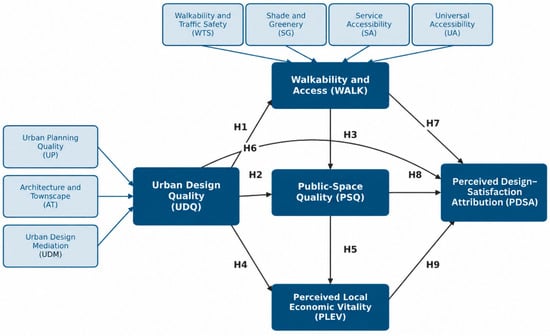
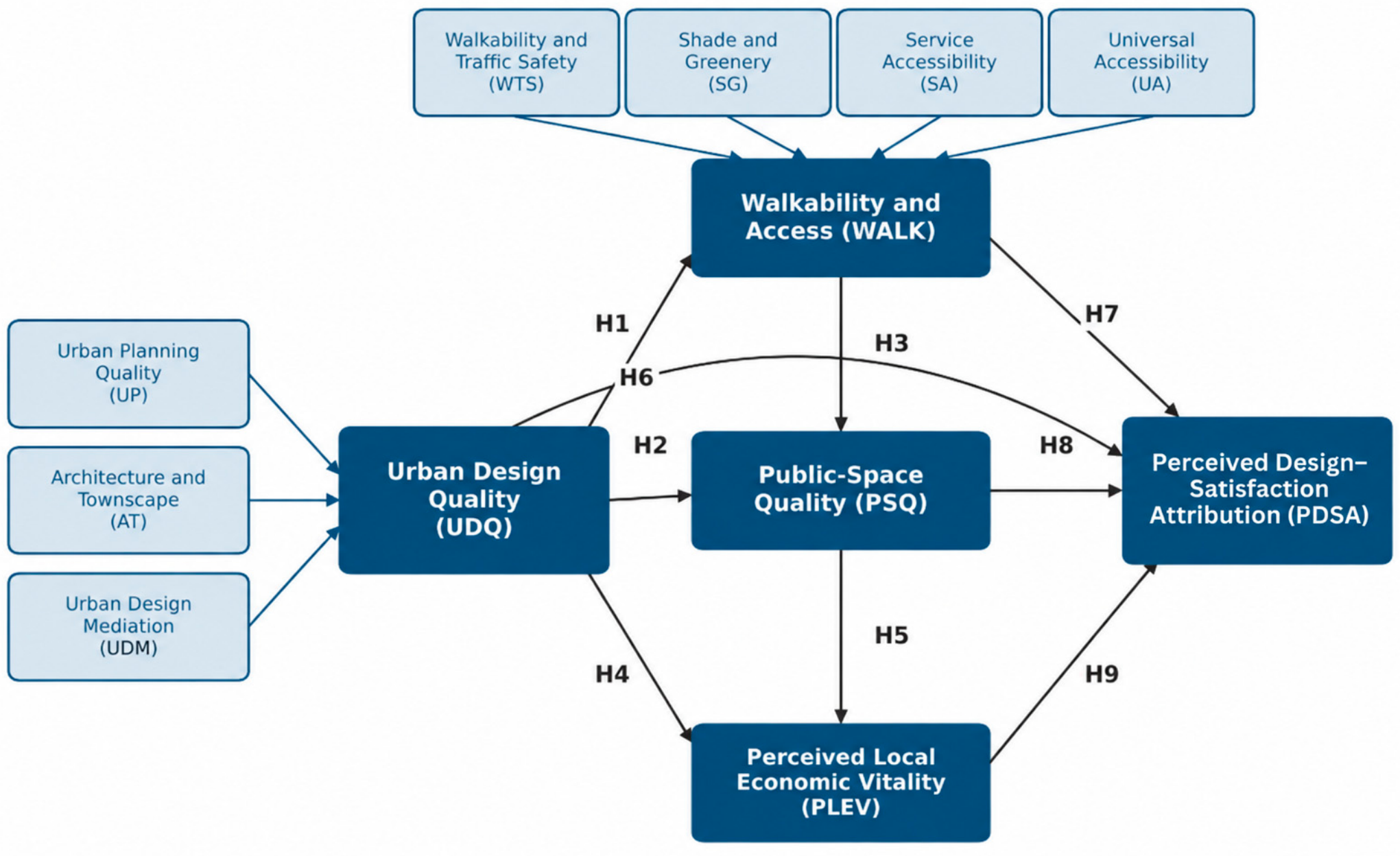
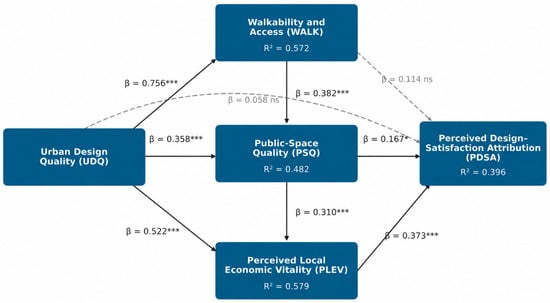
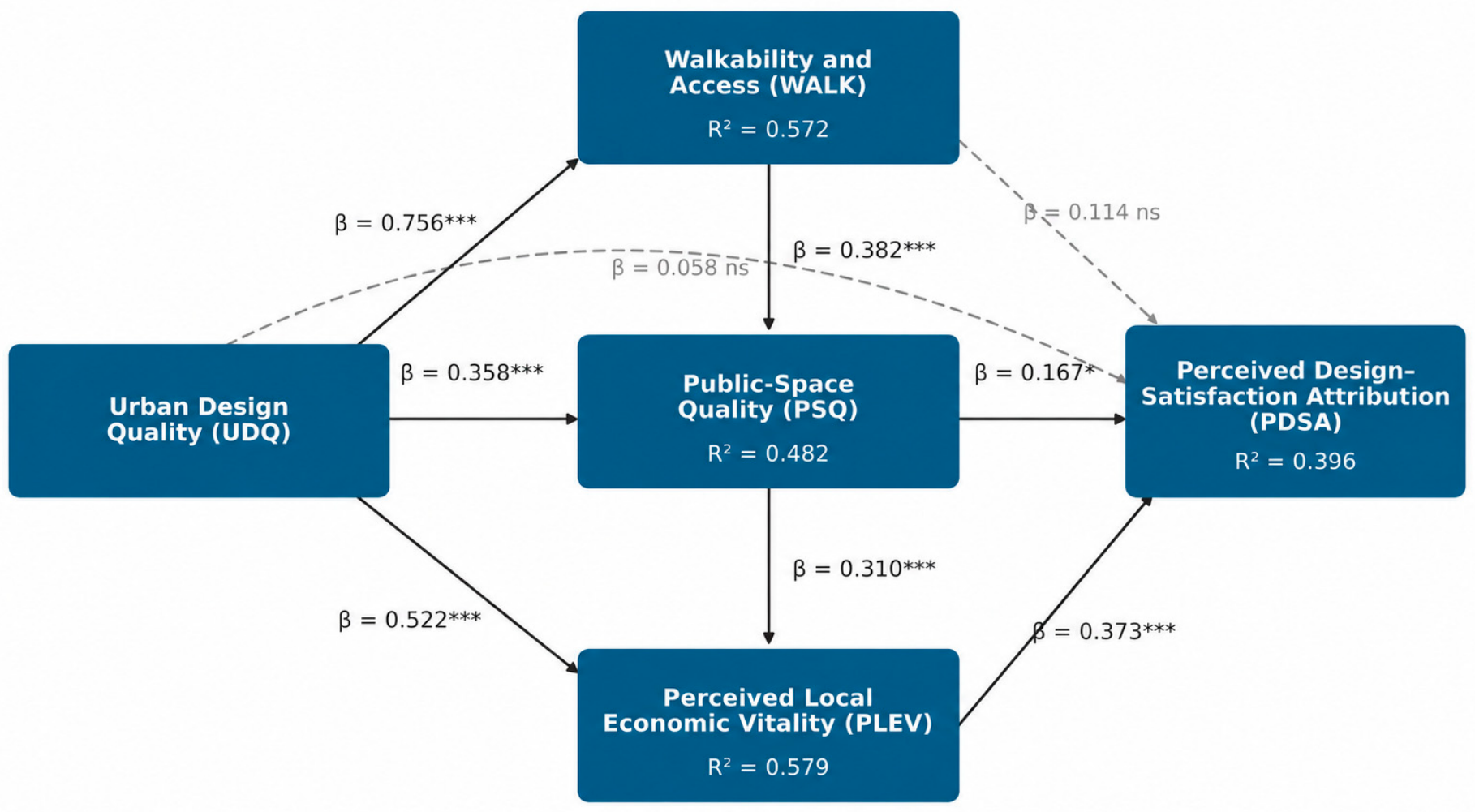

Disclaimer/Publisher’s Note: The statements, opinions and data contained in all publications are solely those of the individual author(s) and contributor(s) and not of MDPI and/or the editor(s). MDPI and/or the editor(s) disclaim responsibility for any injury to people or property resulting from any ideas, methods, instructions or products referred to in the content. |
© 2026 by the authors. Licensee MDPI, Basel, Switzerland. This article is an open access article distributed under the terms and conditions of the Creative Commons Attribution (CC BY) license.