


Abstract
Against the backdrop of the shift toward service-oriented business models, construction enterprises transition from traditional construction contractors to comprehensive service providers. This process is fraught with uncertainty, and as the environment grows increasingly complex, organizational resilience becomes a crucial capability for construction enterprises seeking to navigate the complex landscape. The existing research indicates that digital transformation is a crucial pathway in terms of enhancing organizational resilience. However, the underlying mechanisms through which digital transformation affects the organizational resilience of construction enterprises are yet to be systematically elucidated. The mediating role of digital capabilities and resource orchestration in this process also warrants further exploration. This paper focuses on construction enterprises and constructs the theoretical model of “digital transformation → digital capabilities/resource orchestration → organizational resilience.” This research combines structural equation modeling (SEM) with fuzzy set qualitative comparative analysis (fsQCA). It systematically investigates the mechanisms through which digital transformation affects the organizational resilience of construction enterprises, as well as the dual mediating pathways of digital capabilities and resource orchestration. The research results indicate that digital transformation has a significant positive impact on organizational resilience through the dual mediating pathways of digital capabilities and resource orchestration. What is more, through configuration analysis, it is found that the four combinations of conditions driving high organizational resilience in construction enterprises can be categorized as “analysis-driven,” “response-optimized,” “synergy-balanced”, and “resource-linked.” It reveals pathways for enhancing resilience in multi-faceted, concurrent situations. This study expands the “digital transformation–organizational resilience” research framework, which addresses the gaps in research on the coordination between competencies and behaviors in the context of construction enterprises. This paper also provides a theoretical basis and practical guidance for construction enterprises to effectively leverage digital transformation to enhance organizational resilience.
1. Introduction
The shift toward service-oriented business models is becoming a crucial strategic trend for construction enterprises seeking to adapt to market changes and rebuild their competitive advantages. Construction enterprises shift from traditional contractors to full-service providers, covering design, procurement, construction, and operations and maintenance [1]. However, construction enterprises face severe challenges, posed by both internal and external uncertainties, when they undergo a transition toward service-oriented operations. From an internal perspective, this transformation process is inherently complex and uncertain. The transformation process places higher demands on the strategic adjustments and the organizational adaptability of construction enterprises. From the external perspective, the combination of multiple shocks—including geopolitical conflicts, extreme weather, and adjustments to financial policies—makes the environment in which construction enterprises operate one characterized by significant “high uncertainty.” Traditional risk management strategies focused on short-term project performance are unable to effectively address external shocks [2]. It is difficult for construction enterprises to achieve rapid recovery and adapt to their environment when faced with emergencies [3,4]. Faced with the dual challenges of internal and external uncertainties, the limitations of traditional risk management—which “emphasizes prediction over recovery”—become increasingly apparent. There is an urgent need for a more forward-looking and adaptable approach to achieving a breakthrough. The existing research shows that organizational resilience is the core capability enabling construction enterprises to effectively perceive and respond to uncertainty, withstand shocks, and recover quickly [5]. Some construction enterprises are characterized by a significant project-based approach, a complex and diverse range of stakeholders, and a higher degree of vulnerability to external disruptions. Cultivating and enhancing organizational resilience is an urgent necessity, allowing enterprises to cope with complex and uncertain environments during their transition to a service-oriented model.
International experience demonstrates the growing convergence of digital transformation and servitization in the construction industry. Multiple-case evidence from internationally leading construction groups, including Grupo ACS, VINCI Energies, and Colas, shows that these enterprises have extended their activities beyond conventional project delivery to provide integrated services encompassing financing, design, construction, operation, and maintenance [6]. VINCI Energies, for example, combines infrastructure construction with energy services, information and communication technologies, and digital solutions, illustrating how digitalization supports lifecycle-oriented service provision. These developments reflect a broader shift among construction enterprises from one-off project delivery toward integrated and customized solutions covering the entire project lifecycle [7]. However, the transformation context in China has several distinctive characteristics. The digital transformation of China’s construction industry has been strongly influenced by government-led strategic planning, pilot programs, and policy instruments designed to accelerate the adoption of intelligent construction technologies [8]. In China, policy-driven efforts to accelerate the digital transformation of the construction industry have coincided with a substantial correction in the domestic real estate market since 2021 [9]. According to the National Bureau of Statistics of China, real estate development investment decreased by 10.6% in 2024, while the floor space of newly built commercial buildings sold declined by 12.9%. Consequently, many Chinese construction enterprises must advance digitalization and service-oriented transformation concurrently while responding to market contraction and heightened environmental uncertainty. This simultaneous transformation places particularly high demands on their organizational adaptability, resource-reconfiguration capacity, and resilience.
With the rapid development of digital technologies such as big data, cloud computing, and artificial intelligence (AI), the global economy has shifted into the digital age. Digital transformation evolves from a strategic option for construction enterprises to a critical path for adapting to the changing times [10]. In a Volatility, Uncertainty, Complexity, and Ambiguity (VUCA) environment, frequent and disruptive changes become the norm across all industries. Digital transformation is the core driver enabling construction enterprises to gain a competitive edge and achieve strategic renewal in a turbulent environment [11]. Actively advancing digital transformation is a critical measure for construction enterprises seeking to address external uncertainties and reshape their competitive advantage. There are studies indicating that digital transformation promotes organizational resilience in construction enterprises [12]. Digital transformation rapidly integrates information from all stakeholders and accelerates its flow through the establishment of communication platforms, which ensures smooth project collaboration and mitigates the risk of disruptions. In addition, digital transformation can enhance environmental perception and optimize the efficiency of resource allocation. It provides critical support so that construction enterprises can maintain stable operations, strengthen dynamic adaptability, and enhance emergency response and recovery capabilities in complex and ever-changing environments, thereby improving organizational resilience [13].
The pathways through which digital transformation impacts organizational resilience should be realized using digital capabilities. Digital transformation offers capabilities that include building communication platforms to accelerate the flow of information [14], enhancing adaptability to the environment through big data analysis [15], and using artificial intelligence to support crisis decision-making [13], among others. Digital transformation enhances organizational resilience in the following ways above. Specifically, digital perception capabilities enable construction enterprises to capture signals from internal and external environments in real time and quickly identify potential risks [16]. Digital connectivity breaks down data barriers within and outside an organization and enables cross-organizational collaboration and resource sharing [11]. Digital analytics capabilities transform vast amounts of data into a basis for prospective decisions, which enhance the ability of construction enterprises to anticipate and respond efficiently in complex environments [17]. These three types of capability form a complementary structure and collectively serve as critical channels through which digital transformation influences organizational resilience.
Digital transformation fundamentally reshapes the mechanisms governing resource operations through the deployment of digital technologies, thereby facilitating the creation, bundling, and leveraging of organizational resources. In doing so, it enhances firms’ resource orchestration capabilities [18]. At the resource development level, digital technologies expand the breadth of resource accessibility and augment the scale of resource reservoirs [19]. At the resource bundling level, digital platforms enable the integration of resources across organizational boundaries, generating synergistic value [20]. At the resource leveraging level, intelligent scheduling systems afford precise resource allocation and flexible deployment in response to dynamic operational demands [21]. Resource orchestration enables construction enterprises to establish networks of external resources, integrate synergies, and deploy resources in innovative ways, thereby significantly strengthening their capacity to respond to emergent risks. As a critical behavioral mechanism, resource orchestration is fundamental to the attainment of organizational resilience [18]. The extant research indicates that effective resource orchestration facilitates the rapid restructuring of resource portfolios during crisis situations, consequently enhancing the resilience of construction enterprises [22,23]. Given the existing research gaps, it is necessary to integrate digital capabilities and resource orchestration into the logical framework of “digital transformation–organizational resilience” for construction enterprises. Furthermore, the mechanisms underlying the synergy between capability generation and resource allocation should be explored. They are critical to revealing the underlying mechanisms through which digital transformation fosters organizational resilience. This paper aims to construct a model based on the logical framework of “digital transformation → digital capabilities/resource orchestration → organizational resilience.”
The goal of the research is to use this model to reveal the mechanisms through which digital transformation influences the organizational resilience of construction enterprises. The research result can expand and enrich research within the “digital transformation–organizational resilience” logical framework. It can address the gaps in research on the coordination of competencies and behaviors in the context of construction enterprises. The research result provides theoretical support so that construction enterprises can effectively leverage digital transformation in line with their specific contexts to enhance organizational resilience.
The structure of the paper is as follows. Section 2 provides a detailed literature review on digital transformation, digital capabilities, resource orchestration, and organizational resilience. Section 3 analyzes the relevant literature to propose theoretical hypotheses and construct a theoretical model of the mechanism through which digital transformation affects organizational resilience. Section 4 covers research design. Section 5 presents the data analysis and results of the structural equation modeling. Section 6 is an analysis and discussion of the configuration. Section 7 includes a discussion of the research findings and their implications, as well as the limitations of the paper and recommendations for further research.
2. Literature Review
2.1. Digital Transformation
Digital transformation (DT) has been conceptualized from technological, organizational, and strategic perspectives. At a broad level, Majchrzak et al. (2016) [24] argue that digital transformation primarily emphasizes the application of digital technologies to significantly improve operational processes and enhance overall efficiency and effectiveness. DeMark (2004) [25] takes a micro-level perspective and argues that digital transformation primarily emphasizes the use of digital technologies to promote innovation and change within organizations, thereby enhancing corporate competitiveness and market adaptability. Vial (2019) [11] points out that digital transformation is a systematic process through which construction enterprises adopt and integrate digital technologies to bring about changes in value creation pathways, structural processes, and organizational behavior. Based on the above, digital transformation is a comprehensive process of strategic renewal. Digital transformation integrates and leverages digital technologies such as big data, cloud computing, artificial intelligence, and the Internet of Things (IoT), which reshapes the business models, products, services, processes, and organizational structures of construction enterprises. This comprehensive process of strategic renewal could enhance corporate competitiveness and performance.
In the construction context, digital transformation refers to the organization-wide integration and application of technologies such as building information modeling (BIM), big data analytics, cloud computing, artificial intelligence, digital twins, and the Internet of Things. These technologies can facilitate information exchange among project participants, improve the visibility of project and environmental conditions, support data-driven decision-making, and enable the integration of activities across the design, construction, operation, and maintenance stages. However, construction enterprises are project-based organizations characterized by temporary project teams, fragmented stakeholder relationships, decentralized decision-making, and discontinuities between project-level and enterprise-level processes [25]. Consequently, the adoption of individual technologies does not necessarily constitute digital transformation. Transformation occurs when construction enterprises embed these technologies into their strategies, processes, organizational structures, and business models and convert technological applications into repeatable organizational practices.
The existing research reveals the underlying logic and driving mechanisms of digital transformation from multiple perspectives. Hanelt et al. (2021) [26] point out that innovation in digital business models primarily revolves around three crucial areas: the reshaping of factors of production, platform ecosystems, and performance impacts. Bharadwaj et al. (2013) [27] reveal that digital capabilities, through data acquisition, algorithmic insights, and scalable delivery, drive construction enterprises to shift from project-based delivery to replicable, platform-based growth. Furthermore, big data analysis must be mediated by mechanisms such as knowledge integration and organizational agility so that it can be truly translated into corporate performance [28].
Existing case studies illustrate how digital transformation operates within construction firms. Cao et al. (2023) [29] examined the digital transformation of a large Chinese state-owned construction group. This case demonstrates that the firm’s transformation involved balancing internal efficiency needs with external institutional pressures, leveraging digital technologies to optimize existing processes and develop new business models, and integrating ad hoc project operations with ongoing enterprise-wide processes. Furthermore, Bonanomi et al. (2020) [30] found that the adoption of digital technologies by large construction and engineering firms altered both formal organizational roles and informal technical advisory and support networks. Their findings suggest that the adoption of digital technologies must be accompanied by a realignment of responsibilities, relationships, and organizational structures; otherwise, the technology may remain merely an operational add-on rather than triggering organization-wide transformation. Recently, Nyqvist et al. (2025) [10] conducted a multi-case study of three companies in the construction industry, identifying fragmentation, insufficient client demand, and the limited influence of individual firms within the broader ecosystem as major barriers to digital transformation. Conversely, targeted technological solutions, standardized processes, and a shift toward data-driven operations can facilitate transformation.
These case studies demonstrate that digital transformation follows different paths in the construction sector. In China, the focus is on the combined impact of internal efficiency requirements and policy-driven institutional pressures, while in the construction engineering sector, the emphasis is on changes in organizational roles and informal collaborative networks. This further illustrates that the outcomes of transformation depend not only on internal technology adoption but also on client demands, industry standards, and ecosystem coordination. Despite these contextual differences, the cases consistently demonstrate that technology adoption alone is insufficient: construction firms must develop the necessary organizational capabilities to integrate digital information, coordinate stakeholders, improve processes, and translate digital resources into sustainable organizational change. These observations lay the groundwork for research into digital capabilities and resource coordination as mechanisms through which digital transformation enhances the organizational resilience of construction firms.
2.2. Digital Capability
Digital capability (DC) is generally understood as an organization’s ability to mobilize and deploy digital technologies, data, human expertise, and complementary organizational resources to achieve strategic and operational objectives [27]. Therefore, it should be distinguished from the mere possession of digital technologies. Khin and Ho (2019) [31] conceptualize digital capability as the skills, expertise, and organizational capabilities required to manage digital technologies and use them to develop digital products, services, and processes. From a value creation perspective, Lenka et al. (2017) [32] propose that digital capability helps organizations collect and interpret information, connect various stakeholders and resources, and support co-creation of value. Annarelli et al. (2021) [33] regard digitalization capabilities as higher-order capabilities that facilitate resource integration, organizational adaptation, and sustained competitiveness. In construction enterprises, digital capability is particularly important because value creation depends on coordinating temporary project teams and numerous external stakeholders across fragmented organizational boundaries.
Digital capabilities are a core competitive advantage for construction enterprises undergoing digital transformation. The existing research categorizes the dimensions of digital capability, primarily into two-dimensional, three-dimensional, and four-dimensional models. From the two-dimensional perspective, Khin & Ho (2019) [31] categorize digital capability into two levels: digital technology capabilities (the ability to develop and utilize digital technology tools) and digital business capabilities (the ability to translate digital technology into business value). Most studies classify them from a three-dimensional perspective. For example, Lenka et al. (2017) [32] categorize digital capabilities into intelligence, connectivity, and analytics. Hua et al. (2024) [34] classify digital capabilities into three dimensions: digital perception, digital connectivity, and digital analysis. Warner (2019) [16] categorizes digital capabilities into digital perception, digital acquisition, and digital transformation, among others. Building on this, Abbate (2021) [35] introduces the perspective of open innovation, arguing that digital capabilities should include functions such as perception, capture, integration, and interaction.
Although these classifications serve different analytical purposes, they consistently indicate that digital capabilities encompass not only technical proficiency but also an organization’s ability to perceive change, exchange information, and support data-driven actions. In a technology-intensive case study from the construction industry, Chacón et al. (2024) [36] demonstrated how sensors, images, point clouds, and mobile applications can be integrated into a digital twin platform to monitor the construction process and support management decisions. However, this case also revealed challenges related to heterogeneous data, system interoperability, and large-scale implementation. In summary, technology can only create value when organizations are able to continuously acquire relevant information, transmit it across organizational boundaries, and transform it into actionable knowledge.
Therefore, taking into account the characteristics of construction enterprises, this paper adopts the classification method that Hua et al. (2024) [34] propose to categorize digital capabilities into digital perception capability (DC1), digital connectivity capability (DC2), and digital analytics capability (DC3). Digital perception captures the ability to collect and monitor information about projects and their environments; digital connectivity enables information exchange and collaboration among organizational units and project stakeholders; and digital analytics converts heterogeneous data into insights that support prediction, decision-making, and operational adjustment. These capabilities are complementary: perception without connectivity may leave information isolated, while connectivity without analytics may increase information availability without improving decision quality. This classification is therefore well suited to the fragmented, data-intensive, and multi-stakeholder characteristics of construction enterprises.
2.3. Resource Orchestration
Resource orchestration (RO) stems from the resource-based view, but its focus shifts from resource ownership to managerial behavior. Sirmon and Hitt (2003) [37] initially emphasized that competitive advantage depends on how managers acquire, combine, and deploy resources, rather than merely possessing valuable resources. Subsequently, Sirmon et al. (2007) [21] conceptualized resource orchestration as a coordinated process involving the construction of resource portfolios, the integration of resources into capabilities, and the utilization of these capabilities to create value. Building on this framework, Sirmon et al. (2011) [18] defined resource orchestration as the synchronization of resource management behaviors across managerial levels and organizational development stages. Symeonidou and Nicolaou (2018) [38] revealed that the synergistic effects of resource orchestration are what generate positive outcomes in the context of startups. Therefore, this study views resource orchestration as a key mechanism through which construction firms build resources, integrate them into organizational capabilities, and leverage these capabilities to respond to strategic updates and enhance organizational resilience.
The existing research offers various perspectives on the classification of resource orchestration processes. Baert et al. (2016) [39] emphasize resource sharing, transformation, and coordination, while more recent studies have adapted resource orchestration to digital platforms and ecosystems by examining processes such as resource federation, incubation, reconfiguration, and ecosystem development [40,41,42]. Nevertheless, the structuring–bundling–leveraging framework developed by Sirmon et al. (2011) [18] remains the most established and provides a clear correspondence between resources, capabilities, and value creation. Resource structuring involves acquiring, accumulating, and divesting resources; resource bundling combines resources to stabilize, enrich, or create capabilities; and resource leveraging mobilizes, coordinates, and deploys those capabilities to exploit opportunities or address threats.
Construction cases demonstrate the contextual relevance of these processes. A longitudinal study of the Shanghai Airport Group found that integrating construction and operations requires identifying and developing human, technical, and cultural resources, which are then connected, transformed, and scaled through planning and organizational coordination [43]. A study of six Chinese small and medium-sized construction enterprises also showed that digital transformation relies on resource mobilization, ecosystem building, organizational learning, and coordination with external stakeholders [44]. A comparison reveals that large infrastructure organizations are primarily responsible for coordinating resources across all life cycle stages and among multiple participating organizations, whereas small and medium-sized construction enterprises rely more heavily on external partnerships and flexible resource mobilization to compensate for internal resource shortages. In both cases, value can only be created through coordinated managerial actions that consciously combine and deploy resources.
Based on this theoretical and construction-specific evidence, this study adopts the classification method that Sirmon et al. (2011) [18] propose, dividing resource orchestration into three aspects: resource structuring (RO1), resource bundling (RO2), and resource leveraging (RO3). This classification method is applicable to construction companies because project delivery requires them to continuously acquire resources from both internal and external sources, integrate these dispersed resources into project and organizational capabilities, and flexibly allocate these capabilities in the face of constantly changing project and market conditions.
2.4. Organizational Resilience
Organizational resilience (OR) has been conceptualized from three main perspectives: traits, processes, and capabilities [45,46,47]. The traits perspective views resilience as a relatively stable attribute of an organization that supports adaptation in turbulent environments [46,47,48]. The processes perspective emphasizes a series of organizational responses through which firms overcome adversity, learn from shocks, and restructure their business activities [49,50]. The capability perspective defines organizational resilience as a dynamic set of organizational capabilities that enables firms to anticipate threats, respond to shocks, and adapt to environmental changes [51,52]. Although these perspectives differ in emphasis, they collectively indicate that organizational resilience involves both the capacity to respond effectively to disruption and the ability to learn and evolve over time.
Research in the construction industry indicates that organizational resilience is multidimensional and influenced by contextual factors. Construction firms conduct business through temporary project-based organizations; their operations are geographically limited, their supply chains are relatively fragmented, and they are involved in a network of relationships comprising multiple external stakeholders. These characteristics make them vulnerable to various shocks, including economic downturns, public health emergencies, natural disasters, changes in policies and regulations, supply chain disruptions, and operational disruptions. Chih et al. (2022) [53] conducted a study of 80 construction firms across different regions during the COVID-19 pandemic and found significant differences in the severity and timing of disruptive events across different geographical contexts, thereby highlighting the importance of environmental perception, strategic response, and organizational restructuring. Tonetto et al. (2023) [54], based on empirical data from 39 construction sites in Brazil, identified inter-organizational collaboration, redundant resources, production planning and control, organizational culture, and optimized operational models as key supporting factors for ensuring resilience performance. Zhang et al. (2024) [15] reviewed and analyzed resilience-related information from 1572 annual reports of publicly listed Chinese construction companies, identifying 19 organizational resilience themes, which further corroborates its multidimensional nature. The above studies indicate that organizational resilience in the construction sector is not a fixed attribute, nor is it merely a simple return to the state prior to a disturbance. On the contrary, organizational resilience requires continuous monitoring of environmental changes, maintaining and restoring core business operations, while adjusting organizational operating models based on past experiences and changes in the external environment.
Based on the aforementioned theoretical and empirical foundations, this study defines organizational resilience as a multidimensional dynamic capability comprising three interrelated dimensions: situational awareness, business continuity, and environmental adaptation. Situational awareness refers to the ability to monitor internal and external environments, identify and interpret emerging risks and opportunities, and anticipate potential disruptions. Business continuity refers to the ability to maintain critical functions, coordinate core resources, and ensure or rapidly restore operations, encompassing project delivery, resource allocation, supply chain coordination, and stakeholder communication. Environmental adaptation refers to the ability to learn from disruptive events and adjust organizational structures, management models, business processes, and strategic priorities in response to environmental changes. While these dimensions are distinct at the analytical level, they are interdependent at the functional level: situational awareness ensures timely response; business continuity reflects an organization’s ability to withstand disruptions and achieve recovery; and environmental adaptability drives organizational learning and iterative improvement. The experience an organization accumulates while maintaining operations and responding to disruptions further strengthens subsequent environmental monitoring, risk assessment, and emergency preparedness. Together, these dimensions form a comprehensive analytical framework for assessing the organizational resilience of construction enterprises.
2.5. Research Gap
The existing research indicates that digital transformation can enhance organizational resilience by improving information processing, increasing organizational flexibility, and strengthening the ability to respond to environmental changes. However, most of this evidence comes from the sales and manufacturing sectors, while research on digital transformation in the construction industry has primarily focused on individual technologies and project-level outcomes. Given that construction firms are characterized by long project cycles, ad hoc organizational structures, fragmented supply chains, a large number of stakeholders, and significant risks, there remains a lack of sufficient understanding regarding how enterprise-level digital transformation can enhance organizational resilience.
The mechanisms underlying this relationship also require further study. The existing research typically examines the direct effects of digital transformation or the isolated effects of specific technological and organizational factors. Digital capabilities and resource orchestration are complementary mechanisms: the former enables organizations to perceive changes, connect with stakeholders, and analyze information, while the latter involves structuring, bundling, and utilizing resources through managerial actions. However, in the context of construction firms, the mediating roles of these two mechanisms—both individually and in conjunction—have not yet been systematically studied.
To address these research gaps, this study constructs a “strategy–capabilities/behaviors–outcomes” framework that links digital transformation, digital capabilities, resource coordination, and organizational resilience. The study employs structural equation modeling (SEM) to examine the net effects and mediating relationships among these constructs, while using fsQCA to identify alternative configurations associated with high organizational resilience. The combined use of these methods provides a more comprehensive explanation of the mechanisms through which digital transformation promotes organizational resilience in construction firms via multiple pathways.
3. Research Hypothesis
3.1. Digital Transformation and Resource Orchestration
The existing research indicates that digital transformation influences the development of organizational resilience. This research primarily analyzes three aspects: situational awareness [55,56], business continuity [12,57], and environmental adaptation [58,59]. First of all, digital transformation breaks through the constraints of time and space through the application of digital technologies, which makes information transmission more efficient and convenient [60]. Digital transformation reduces transaction costs and information asymmetry through the application of digital technologies, which improves decision-making efficiency and response times to emergencies [61]. Digital transformation enables construction enterprises to respond quickly and recover from crises, while enhancing their situational awareness capabilities [62]. What is more, digital transformation enables unmanned operations in high-risk areas, which is achieved through the introduction of construction robots, artificial intelligence of things, and other technologies [63]. Digital transformation can prevent chain reactions of business disruptions caused by delays resulting from manual intervention [64]. At the same time, the development of the BIM collaboration platform and the supply chain digital middleware further breaks down data silos across multiple stages, which include design, construction, and logistics, to create a visualized network of cross-organizational resources [65]. It enables construction enterprises to quickly mobilize resources to fill gaps when faced with the risk of business disruption, ensuring the continuity of core business operations. Finally, through data analysis and intelligent decision-support systems, digital transformation enables construction enterprises to quickly identify risks and opportunities when the external environment changes and to make timely and well-informed decisions [66]. Digital transformation enhances the ability to respond quickly and adapt through data analysis and intelligent decision-support systems.
Based on the above analysis, the following hypothesis is proposed:
H1.
Digital transformation has a positive effect on organizational resilience.
3.2. The Mediating Role of Digital Capabilities
Resources in construction enterprises are the foundation for mitigating risks and fostering organizational resilience. Digital transformation drives construction enterprises to develop core capabilities for integrating digital resources by restructuring value paradigms and management frameworks [67]. It also enhances digital capabilities by establishing a dynamic governance system that spans the entire lifecycle and enables data-driven decision-making [68]. Construction enterprises then use data integration and analysis to build a comprehensive governance system [69], which enables operational adaptation and business continuity in complex environments and ultimately enhances organizational resilience. This study explores the intermediary role of digital capabilities from the three perspectives of digital perception, digital connectivity, and digital analytics capabilities. Firstly, digital transformation drives construction enterprises to capture data from both internal and external environments in real time by using technologies that include the IoT and edge computing [70]. It significantly improves the accuracy of identifying complex risks and the speed of response, thereby enhancing digital perception. By leveraging dynamic threshold-based early warning systems and multi-source data fusion, construction enterprises could quickly identify potential crises and develop preventive strategies, reducing the decision-making lag between risk identification and action implementation [71]. As a result, construction enterprises can enhance their situational awareness, ensure business continuity and strategic agility, and improve organizational resilience.
Secondly, digital transformation drives construction enterprises to break down data silos across design, construction, and supply chain processes by using platforms that include BIM collaboration platforms, blockchain, and cloud-based data hubs [72]. Hence, digital transformation promotes real-time sharing and collaboration across organizations and strengthens digital connectivity capabilities. Based on dynamic resource scheduling and cross-organizational collaboration, construction enterprises can quickly integrate resources and provide optimal configuration plans [73], while dynamically adjusting construction sequences and resource priorities. Construction enterprises can enhance the flexible supply of resources, the efficiency of cross-regional collaboration, and their ability to share ecological risks [74]. Hence, construction enterprises can achieve a strategic upgrade from passive response to active adaptation, thereby enhancing organizational resilience.
Finally, digital transformation enables construction enterprises to use AI predictive models, digital twin simulations, and big data analytics platforms, which transform complex data into quantifiable risk signals and the basis for forward-looking decisions [75]. Hence, it enhances the digital analytics capabilities of construction enterprises. Construction enterprises can accurately identify potential crisis thresholds and generate contingency response strategies [76] when they apply dynamic modeling and intelligent simulation. In this way, construction enterprises can significantly reduce the downtime that is caused by uncontrollable risks and enhance the accuracy of decision-making. Ultimately, dynamic modeling and intelligent simulation enable a paradigm shift toward data-driven business practices, promoting sustainable development and enhancing organizational resilience.
Based on the above analysis, the following hypothesis is proposed:
H2.
Digital capability positively mediates the relationship between digital transformation and organizational resilience.
H2a.
Digital perception capability positively mediates the relationship between digital transformation and organizational resilience.
H2b.
Digital connectivity capability positively mediates the relationship between digital transformation and organizational resilience.
H2c.
Digital analytics capability positively mediates the relationship between digital transformation and organizational resilience.
3.3. The Mediating Role of Resource Orchestration
The analysis in the preceding section suggests that the positive impact of digital transformation on organizational resilience may be achieved indirectly through resource orchestration. Digital transformation reshapes the mechanisms governing resource operations, enabling the creation, bundling, and utilization of resources. Resource orchestration enhances organizational resilience by improving situational awareness, business continuity, and environmental adaptation. Digital transformation and resource orchestration form a progressive empowerment relationship. Hence, assuming that resource orchestration serves as an intermediary, this study analyzes it in detail from the following three perspectives.
First, it was analyzed in terms of resource development. Digital transformation leverages digital infrastructure and technology to broaden information channels and resource networks, accelerate the exploration and integration of resources, and promote internal information exchange through deep business integration, thereby providing effective support for resource development [77,78]. Resource development provides a buffer for crisis response through redundant reserves and promptly addresses capability gaps by restructuring resource allocation, thereby enhancing an enterprise’s ability to adapt to environmental changes and, in turn, improving organizational resilience.
What is more, with regard to resource bundling, digital transformation optimizes resource allocation and integration efficiency through technological progress and expands resource boundaries by deeply analyzing customer needs [79], thereby providing opportunities for enterprises to explore and create new resources [80]. Resource bundling produces complementary resource combinations through matching and reorganization, thereby enhancing enterprises’ ability to identify opportunities for resource synergy and environmental changes; it enables the mobilization of resources and the restoration of damaged business processes following shocks to ensure business continuity. During periods of environmental turbulence, it allows for rapid adaptation through creative reorganization, ultimately enhancing organizational resilience.
Finally, in terms of resource leveraging, digital transformation breaks through spatial and temporal constraints through information systems [77]. This enables resource substitution and synergistic efficiency gains and thereby enhances the efficiency and flexibility of resource leveraging. At the same time, digital transformation reduces information asymmetry among managers by accelerating information sharing [81] and enhances decision-making capabilities while reducing reliance on experience through algorithm-based decision-making [82]. Digital transformation curbs self-serving behavior through data monitoring systems [83], which enables precise resource allocation and enhances resource orchestration. When faced with a disruptive crisis, construction enterprises use resource orchestration to deploy resources to critical demand points, maximize utilization efficiency, precisely align with and sustain critical business operations, and thereby strengthen organizational resilience.
Based on the above analysis, the following hypothesis is proposed:
H3.
Resource orchestration positively mediates the relationship between digital transformation and organizational resilience.
H3a.
Resource structuring positively mediates the relationship between digital transformation and organizational resilience.
H3b.
Resource bundling positively mediates the relationship between digital transformation and organizational resilience.
H3c.
Resource leveraging positively mediates the relationship between digital transformation and organizational resilience.
Based on the aforementioned research hypotheses, this study proposes a validation theoretical model, as shown in Figure 1.
Figure 1.
The theoretical model.
4. Research Design
4.1. The Applicability of Research Methods
This study uses a cross-sectional survey of multiple construction enterprises to examine the relationships among digital transformation, digital capability, resource orchestration, and organizational resilience. It has two objectives: to estimate the general relationships among these constructs and to identify alternative combinations of conditions associated with high organizational resilience. To address these objectives, the study applies partial least squares structural equation modeling (PLS-SEM) and fuzzy-set qualitative comparative analysis (fsQCA) as complementary methods. PLS-SEM takes a variable-oriented approach by estimating the net effects among the main constructs. FsQCA takes a configuration-oriented approach by identifying asymmetric and equifinal pathways associated with high organizational resilience.
4.1.1. Partial Least Squares Structural Equation Modeling
SEM combines measurement and structural models. It allows researchers to assess the reliability and validity of latent constructs while estimating relationships among several constructs at the same time. Unlike conventional regression analysis, SEM can account for measurement error and examine multiple direct and indirect relationships within one analytical framework [84]. PLS-SEM is suitable for this study because the proposed model includes several latent constructs and mediating relationships and focuses on explaining organizational resilience in construction enterprises [85]. It is therefore used to evaluate the measurement model, test the proposed hypotheses, estimate the net effects among the constructs, and assess the explanatory power of the structural model.
4.1.2. Fuzzy-Set Qualitative Comparative Analysis
PLS-SEM can estimate net effects and statistical relationships among constructs, but it is less effective for examining conjunctural causation, causal asymmetry, and equifinality. Drawing on configurational theory, fsQCA examines how different combinations of antecedent conditions relate to a particular outcome [86]. In this study, the focal constructs in the theoretical model are calibrated as conditions for the fsQCA. The analysis identifies multiple configurations associated with high organizational resilience and shows how digital transformation, digital capability, and resource orchestration may work together in different combinations. Using PLS-SEM and fsQCA together allows the study to examine both the general relationships among individual constructs and the alternative configurations found in the sample.
4.2. Survey Questionnaire Design
Based on the latent and observed variables proposed above, and consistent with the approach adopted in prior studies [87], a preliminary questionnaire was developed. Prior to formal distribution, a pilot survey was conducted to identify potential issues with item wording and content validity. The preliminary questionnaire was distributed to 50 respondents with relevant professional experience in construction management. Based on the feedback collected, items that were ambiguous, unclear, or inappropriately worded were revised and refined. The finalized questionnaire was subsequently used for large-scale distribution.
The official questionnaire is divided into two main parts. Part One is a survey of the personal information of the respondents, primarily covering the type of organization they belong to, the nature of their enterprises, their educational background, and their level of familiarity with the position. Part Two consists of the formal survey questions, which include measures of each potential variable in this paper, and use the five-point Likert scale to score all measurement items. The degree of impact is indicated as follows: “1” for “completely non-compliant,” “2” for “non-compliant,” “3” for “moderate,” “4” for “compliant,” and “5” for “fully compliant”.
4.3. Sample and Data Collection
This study, a questionnaire, was created using Wenjuanxing and distributed online to professionals in the construction field. A total of 487 questionnaires were collected and screened according to the following criteria: ① missing responses; ② an excessive number of respondents selected a single answer or the “neutral” option; ③ the answers to the questions are contradictory; ④ the response time was less than 2 min. After screening, 368 valid questionnaires were obtained, representing a response rate of 76%. The characteristics of the sample are shown in Table 1.
Table 1.
Statistics of questionnaire characteristics.
4.4. Variable Measurement
The scales used in this model are all well-established instruments that are used repeatedly in the existing research and demonstrate good reliability and validity. The descriptions of specific test items are appropriately supplemented and modified to fit the context of this study. The measurement of digital transformation, drawing on the studies by Hess et al. (2016) [88] and Wang et al. (2020) [89], consists of 11 items. Considering digital perception within digital capability, this paper adopts the framework proposed by Warner et al. (2019) [16], which includes four items. Digital connectivity is measured using the scale developed by Kim et al. (2011) [90], which consists of 2 items. Digital analytics is measured using Kohtamäki et al. (2020) [91] and consists of three items. Resource orchestration draws on the research of Sirmon et al. (2011) [18] and Zhao and Wang (2015) [92] and consists of nine items. Organizational resilience is primarily based on the research by Koh et al. (2024) [57] and Zhang and Teng (2021) [93] and consists of 13 items. The specific items are shown in Table 2.
Table 2.
Test results for factor loading, reliability, and validity.
5. Empirical Study of Structural Equation Modeling and Discussion of Results
5.1. Reliability and Validity Testing
Based on factor loadings and internal consistency, the reliability of the questionnaire is analyzed using SPSS 27.0, as shown in Table 2. The results show that Cronbach’s α values for all variables are above 0.7 [94], indicating good reliability. The average variance extracted (AVE) is greater than 0.5 in all cases, and the composite reliability (CR) is greater than 0.7 in all cases [84], indicating that the scale has good reliability. In terms of validity, confirmatory factor analysis is conducted using AMOS 26.0 software. All item factor loadings exceed 0.5, indicating that the items possess high convergent validity [95]. Discriminant validity is assessed using the more rigorous AVE method. In Table 3, the values on the diagonal—the square roots of the AVE for each factor—are all greater than the standardized correlation coefficients off the diagonal. This indicates that the scale has high discriminant validity; the downward-sloping triangles represent correlation coefficients.
Table 3.
Correlation analysis and discriminant validity.
This paper uses Harman’s single-factor test to conduct a preliminary assessment of common method bias, which incorporates 42 items from all study variables into an unrotated principal component analysis. The first factor explains 56.113% of the variance, which is slightly higher than the reference threshold of 50%. To further validate the findings, this paper incorporates the Common Latent Factor (CLF) method into AMOS for supplementary testing. The results show that, both before and after adding CLF, the changes in the standardized factor loading for all 41 items are within 0.15. Only one item shows a relatively large change in coefficient, but its standardized factor loadings value in the baseline model is 0.671, indicating good measurement quality. The coefficient fluctuations stem from estimation errors in the CLF model under large-sample, complex structures and do not reflect the true common method bias. Based on the combined results of the two testing methods, the common method bias in this paper is within an acceptable range, which does not have a substantial impact on the research conclusions.
5.2. Multicollinearity Test
Due to the high level of correlation among the latent variables, it is necessary to eliminate the potential interference caused by multicollinearity. This study conducts a multicollinearity analysis that includes digital transformation, digital capabilities (digital perception, digital connectivity, and digital analytics), resource orchestration (resource structuring, resource bundling, and resource leveraging), and organizational resilience. The results show (Table 3) that the VIF values for digital transformation and digital capability (digital perception, digital connectivity, and digital analytics) are 1.978, 2.091, 2.959, and 3.145, respectively. The VIF values for resource orchestration (resource structuring, resource bundling, and resource leveraging) and organizational resilience are 2.280, 2.948, and 3.083, respectively. All results are less than 5. This demonstrates that there is no multicollinearity among the variables; they remain independent and effectively reflect their respective characteristics. Therefore, it can be confirmed that there is no multicollinearity in this study, and it does not have a significant impact on the results.
5.3. Path Analysis and Hypothesis Test
This paper uses hierarchical regression analysis in SPSS 27.0 to examine the relationships between organizational resilience and other variables. Model 2 builds on Model 1 by incorporating digital transformation. According to Table 4, digital transformation has a significant positive impact on organizational resilience (β = 0.501, p < 0.01, Model 2); that is, the greater the extent of digital transformation implementation, the higher the organizational resilience of construction enterprises. Therefore, research Hypothesis H1 is supported.
Table 4.
Structural equation model path coefficients.
5.4. Mediation Effect Test
5.4.1. The Mediating Effect of Digital Capability
This paper employs a hierarchical regression approach that further tests the mediating role of digital capability (digital perception, digital connectivity, and digital analytics) in the impact of digital transformation on organizational resilience. Models 3, 4, and 5 are developed by adding digital perception, digital connectivity, and digital analytics, respectively, to Model 2. The test results are shown in Table 5.
Table 5.
Mediation validation of digital capability.
The results indicate the following: Digital perception mediates the relationship between digital transformation and organizational resilience (β = 0.362, p < 0.001). Hypothesis H2a is supported. Digital connectivity mediates the relationship between digital transformation and organizational resilience (β = 0.356, p < 0.001). Hypothesis H2b is supported. Digital analytics mediates the relationship between digital transformation and organizational resilience (β = 0.325, p < 0.001). Hypothesis H2c is supported. Therefore, digital capabilities mediate the relationship between digital transformation and organizational resilience. Hypothesis H2 is supported.
5.4.2. The Mediating Effect of Resource Allocation
This study employs a hierarchical regression approach that further tests the mediating role of resource orchestration (resource structuring, resource bundling, and resource leveraging) in the impact of digital transformation on organizational resilience. Models 6, 7, and 8 incorporate resource structuring, resource bundling, and resource leveraging, respectively, based on Model 2. The test results are shown in Table 6.
Table 6.
Mediation validation of resource orchestration.
The results indicate the following: (1) Resource building mediates the relationship between digital transformation and organizational resilience (β = 0.527, p < 0.001). Hypothesis H3a is supported. Resource bundling mediates the relationship between digital transformation and organizational resilience (β = 0.557, p < 0.001). Hypothesis H3b is supported. Resource leveraging mediates the relationship between digital transformation and organizational resilience (β = 0.659, p < 0.001). Hypothesis H3c is supported. Therefore, resource orchestration serves as a mediator between digital transformation and organizational resilience. Hypothesis H3 is supported.
5.5. Research Results and Discussion
5.5.1. The Relationship Between Digital Transformation and Organizational Resilience
The results of the empirical analysis indicate that digital transformation has a positive impact on the organizational resilience of construction enterprises, and is discussed primarily in terms of situational awareness, business continuity, and environmental adaptation. Firstly, construction enterprises deploy IoT sensors, digital twin technology, and dynamic threshold early-warning systems at construction sites. This enables the real-time monitoring of potential risks, such as safety conditions at construction sites and supply chain fluctuations, which shortens the time required for risk identification and response. When IoT sensors, digital twin technology, and dynamic threshold early-warning systems are deployed, construction enterprises can intervene quickly during sudden crises to minimize losses, thereby significantly enhancing the situational awareness capabilities of construction enterprises. Secondly, digital transformation creates a visualized network of cross-organizational resources, which is achieved by breaking down data silos across business processes and establishing a digital supply chain middleware and a BIM collaboration platform. Digital twin technology further simulates the risk of business process disruptions under extreme scenarios and provides response strategies based on multiple contingency plans. Digital twin technology reduces operational uncertainty through process automation and intelligent systems, which effectively enhances the business continuity capabilities of construction enterprises. Finally, digital transformation helps construction enterprises to quickly identify risks and opportunities when the external environment changes and to make timely, well-informed decisions through intelligent decision-support systems. At the same time, digital transformation optimizes business processes and promotes automated management, which reduces human intervention and operational uncertainty, and enhances the resilience of construction enterprises in the face of unforeseen circumstances. Hence, digital transformation helps construction enterprises improve their environmental adaptation.
5.5.2. The Mediating Role of Digital Capabilities in the Relationship Between Digital Transformation and Organizational Resilience
Empirical findings indicate that digital capabilities play the crucial mediating role between digital transformation and organizational resilience. The three capabilities—which include digital perception, digital interconnection and digital analysis—play a crucial role in this mediating process. In terms of digital perception, construction enterprises use technologies that include the IoT and edge computing to accurately capture data from internal and external environments. This allows for the dynamic identification of uncertainties such as fluctuations in raw material prices, policy adjustments, or unexpected safety incidents. Construction enterprises use a dynamic threshold early warning mechanism to identify safety hazards in advance and develop response strategies. This effectively reduces losses from emergencies and enhances crisis response capabilities and organizational resilience. In terms of digital connectivity, construction enterprises use BIM collaboration platforms, blockchain networks, and cloud-based data hubs so that they could break down internal and external data silos. Through smart contracts, construction enterprises could automate supply chain management and automatically match alternative resources when issues arise with primary suppliers. Construction enterprises also use digital twin technology to simulate different construction scenarios, dynamically adjust construction schedules, enhance supply chain flexibility, and improve organizational resilience. In terms of digital analytics, construction enterprises use big data analytics, AI predictive models, and digital twin simulations to transform vast amounts of data into actionable insights, which enables them to anticipate market trends and project risks in advance. By simulating extreme scenarios to adjust construction schedules and resource allocation, construction enterprises can adapt more agilely to market changes, which enhances their organizational resilience.
5.5.3. The Mediating Role of Resource Orchestration in the Relationship Between Digital Transformation and Organizational Resilience
Empirical findings indicate that resource orchestration mediates the relationship between digital transformation and organizational resilience. In terms of resource structuring, digital transformation breaks down information barriers and improves the efficiency of resource acquisition, accelerating the complementary integration, innovation, and precise allocation of resources. It promotes the optimization of resource orchestration, which enhances business continuity and environmental adaptation for construction enterprises and systematically strengthens organizational resilience. In terms of resource structuring, construction enterprises build intelligent data collection and analysis systems that rely on the IoT and cloud computing to obtain real-time, multi-dimensional information on the market, supply chain, policies, and other areas. Construction enterprises use BIM technology to achieve precise matching and dynamic allocation of project resources, enabling them to quickly secure the necessary resources and adjust their supply chain structures when faced with external shocks. Hence, by resource structuring, construction enterprises can enhance their organizational resilience. In the area of resource bundling, construction enterprises use blockchain smart contracts to automate contract execution with suppliers, contractors, and property owners. Construction enterprises can use data-sharing platforms to promote the efficient integration of resources across the entire industry chain. As a result, construction enterprises can quickly coordinate and optimize the allocation of internal and external resources in the face of unexpected risks—such as supply chain disruptions or project delays—which enhances organizational resilience. In terms of resource leveraging, construction enterprises optimize resource allocation decisions through artificial intelligence, big data analytics, and digital twins, which enhances the efficiency of labor and equipment utilization with the help of intelligent scheduling systems. This enables construction enterprises to quickly adjust their production plans during extreme weather or major emergencies, which ensures the smooth operation of their business and thereby enhances organizational resilience.
6. Empirical Research and Discussion of Results on Fuzzy-Set Qualitative Comparative Analysis
6.1. Variable Calibration and Descriptive Analysis
Based on the empirical SEM analysis, this paper further incorporates the fsQCA method. Since the predictor variables and the collected data already undergo reliability and validity analyses as well as the necessary data processing, the current valid data can be used directly for calibration.
This study refers to the calibration standards for the 5-point Likert scale data in the existing research and uses the 95th, 50th, and 5th percentiles as anchor points to perform indirect calibration of the measurement variable data. Building on this, this paper adopts a “competence-behavior” configuration perspective. It systematically examines how the combined configuration of digital capabilities and the various dimensions of resource orchestration collectively contribute to enhancing the organizational resilience of construction enterprises. This paper thus reveals the multiple, concurrent conditions that drive both high and low organizational resilience, as well as their underlying logic. Next, the variable data are calibrated using the fsQCA 3.0 software to convert the raw data into fuzzy sets ranging from 0 to 1, as shown in Table 7.
Table 7.
Variable calibration and descriptive analysis.
6.2. Analysis of Necessity Conditions
After calibration, tests of necessity are conducted for all antecedent variables and their negated forms. The results are shown in Table 8. According to the table, the consistency of all conditional variables is less than 0.9, indicating that none of the conditional variables is a necessary condition for the mediating effect [44]. Digital transformation cannot be explained by a single factor alone; rather, it is driven by the interaction of multiple factors. Hence, the mechanism needs to be elucidated through an analysis of conditional combination paths.
Table 8.
Analysis of necessity conditions.
6.3. Analysis of Truth Table
The fsQCA results are obtained by constructing and minimizing truth tables, which involves organizing all samples into a recognizable truth table and outputting the minimized version of that truth table. For example, a truth table for two causal conditions provides several possible logical combinations between them. The truth table in this study is based on frequency and consistency results [96]. Frequency refers to the number of observations for each possible combination; for samples larger than 150, a threshold of 3 is recommended [97]. At the same time, consistency refers to the degree to which the case corresponds to the theoretical relationships expressed in the solution; a consistency threshold of 0.75 is recommended [96]. Taking into full account the coverage of the cases and the need to minimize conflicting configurations, the consistency threshold in this paper is set at 0.8, and the case frequency threshold is set at 1.
Table 9 presents the conditional configurations of organizational resilience. Coverage reflects the extent to which a given set explains the results, including raw coverage, unique coverage, and solution coverage. In this context, the raw coverage and unique coverage are analogous to the R2 and R2 change in regression analysis.
Table 9.
Organizational resilience condition configurations (intermediate solutions).
6.4. Configuration Results
The results of the fsQCA configuration analysis of organizational resilience in construction enterprises are as Table 10. In terms of organizational resilience, a total of four equivalent configurations (S1–S4) are identified, with a solution coverage of 0.745 and a solution consistency of 0.967, both of which meet the basic criteria for fsQCA analysis. This indicates that these four configurations collectively account for 74.5% of the cases of high organizational resilience, and the results are highly reliable.
Table 10.
Configuration analysis path table.
6.5. Configuration Analysis and Discussion
6.5.1. Configuration Analysis of the Analysis-Driven Type (S1: M3*M4*~M5*M6)
Configuration S1 consists of digital analytics, resource structuring, resource bundling, and resource leveraging, in which digital analytics plays a central role and resource structuring and resource leveraging serve as complementary components. High-level digital analytics enables construction enterprises to conduct in-depth analyses of vast amounts of data—including policy contexts, market conditions, customer needs, and technological advancements—so that they can identify market opportunities. The capability enables construction enterprises to integrate cross-domain resources and strengthen collaboration with partners. Advanced digital analytics enables construction enterprises to promptly adjust their resource structures and operational mechanisms, formulate development strategies which are tailored to their specific needs, and minimize the negative impact of market crises. Hence, a high level of digital analytics can enhance organizational resilience. Overall, while construction enterprises lack advanced resource orchestration, they need to leverage digital analytics to thoroughly analyze operational data and identify potential risks and opportunities. This optimizes resource allocation, helps construction enterprises anticipate and address future challenges, and enhances their adaptability to changing configurations. Based on this, the following recommendations are proposed. Construction enterprises prioritize investment in digital capabilities, particularly in the development of systems for business data collection, analysis, and decision support, so that they could accurately predict market risks and opportunities. In addition, construction enterprises use digital tools to support resource allocation, strengthen cross-departmental collaboration, and improve resource leveraging and corporate responsiveness.
6.5.2. Configuration Analysis of the Response-Optimized Type (S2: M1*~M2*M4*M5*M6)
Configuration S2 consists of digital perception, digital connectivity, resource structuring, resource bundling, and resource leveraging. Among these, digital perception and resource structuring play a central role, while resource bundling and resource leveraging play a supplementary role. Advanced digital perception enables construction enterprises to use the IoT and big data technologies to collect real-time data from various sources, which include project sites, market conditions, and the supply chain. It helps construction enterprises identify potential risks in a timely manner and provides early warnings, giving them sufficient time to make adjustments and respond. Exceptional resource structuring enables construction enterprises to establish long-term, stable partnerships with high-quality suppliers and optimize their supply chain structures. At the same time, high-level resource structuring enables construction enterprises to establish backup supplier mechanisms, which allows them to quickly switch suppliers in the event of unforeseen issues and ensure an uninterrupted supply of raw materials and equipment. The synergy between these two capabilities enhances market competitiveness and strengthens organizational resilience. Based on this, the following recommendations are proposed. Construction enterprises should establish a cross-departmental, cross-project digital collaboration platform to ensure that all departments share information in real time and communicate efficiently. Additionally, construction enterprises should establish a systematic resource reserve and allocation mechanism; build up reserves of critical resources; use a resource management system to ensure rapid allocation in the event of an emergency; and regularly assess and update resource reserves.
6.5.3. Configuration Analysis of the Synergy-Balanced Type (S3: M1*M2*M3*M4*M6)
Configuration S3 consists of digital perception, digital connectivity, digital analytics, resource structuring, and resource leveraging; the first four capabilities play the central role, while resource leveraging serves as the supplementary factor. High-level digital perception uses multidimensional data visualization to accurately monitor market fluctuations and risk factors, which establishes a dual mechanism of rapid early warning and precise response. Advanced digital connectivity breaks down information silos by establishing collaborative sharing platforms, which enables cross-domain data interoperability and flexible resource allocation. Exceptional digital analytics leverages machine learning and data modeling to deeply mine the value of multidimensional data, accurately identifying nonlinear risk correlations, which drives the intelligent optimization of resource orchestration. Advanced resource structuring could create a resilient resource allocation network by dynamically integrating core resource elements. High-level resource structuring thus enables rapid restructuring of resource portfolios and optimization of response pathways in the event of sudden environmental changes. The synergy of these four capabilities helps construction enterprises use data intelligence to improve decision-making accuracy and risk resilience in complex environments, which enhances organizational resilience. Based on this, the following recommendations are proposed. Construction enterprises should increase their investment in digital tools such as big data and artificial intelligence. Construction enterprises should monitor project progress, quality, and resource leveraging in real time during the construction process, supported by data-driven decision-support systems, so that they can promptly identify potential resource shortages and risks.
6.5.4. Configuration Analysis of the Resource-Linked Type (S4: ~M1*M2*~M3*M4*M5*M6)
Configuration S4 consists of digital perception, digital connectivity, digital analytics, resource structuring, resource bundling, and resource leveraging. Digital connectivity plays the central role, while resource structuring, resource bundling, and resource leveraging play supporting roles. Exceptional digital connectivity enables construction enterprises to use BIM collaboration platforms, blockchain networks, and cloud-based data hubs to break down internal and external data silos, which facilitates multi-party data sharing and real-time collaboration. It enables construction enterprises to automate supply chain management through smart contracts, which automatically match alternative resources when issues arise with primary suppliers. Digital twin technology further simulates resource requirements under various construction scenarios, dynamically adjusts construction schedules, and improves cross-departmental collaboration efficiency, enhancing supply chain flexibility and organizational resilience. Resource orchestration uses the IoT to monitor the supply and demand of construction resources in real time. It also utilizes AI optimization algorithms to enable dynamic resource matching, which allows for rapid, intelligent scheduling of contingency resources in the event of design changes or supply chain disruptions. Based on this, the following recommendations are proposed. Construction enterprises should build a unified intelligent information platform that integrates the IoT, BIM, and cloud computing to enable precise monitoring of data throughout the entire lifecycle of the project and facilitate collaboration among multiple parties. In addition, when construction enterprises standardize data and develop interfaces, they achieve interoperability among multiple systems, promote real-time information sharing and dynamic feedback, and enhance their ability to collaborate and adapt.
6.5.5. Configuration Analysis of the Ability-Behavior Deficit Type (NS1: ~M1*~M2*~M3*~M4*~M5*~M6)
Configuration NS1 consists of basic capabilities, which include digital perception, digital connectivity, digital analytics, resource structuring, resource bundling, and resource leveraging. Among these, low levels of digital perception, resource bundling, and resource leveraging play a crucial role. A low level of digital perception prevents construction enterprises from collecting multidimensional data in real time from construction sites, supply chains, and market environments, which results in “data vacuums” and “algorithm blind spots.” As a result, risk warning signs are difficult to identify, leaving construction enterprises in a position where they can only react passively to drastic environmental changes. Limited resource bundling leads to a fragmented supply chain, which results in information asymmetry and unclear responsibilities; repeated coordination for cross-departmental resource allocation significantly lengthens response times. As a result, during emergencies, it is impossible to quickly mobilize critical resources, and it is difficult to ensure the availability of the resource mix, which leads to a missed window of opportunity for crisis response. Due to low levels of resource leveraging, construction enterprises lack support from intelligent algorithms, which makes it difficult to resolve the coexistence of redundant and scarce resources through dynamic scheduling. Furthermore, the hierarchical decision-making process slows down the reallocation of resources, which leads to a doubling of recovery costs and a prolongation of the recovery cycle, and traps the system in a vicious cycle of “inefficient recovery–resource depletion.” This leads to low organizational resilience in construction enterprises and hinders sustainable development.
7. Conclusions
7.1. Research Conclusions
This study develops and empirically tests a mechanism model linking digital transformation to organizational resilience in construction enterprises, drawing on SEM and fsQCA. Research findings indicate that digital transformation indirectly enhances organizational resilience through two parallel mediating pathways: digital capabilities and resource orchestration. These two pathways do not operate in isolation but rather complement one another, collectively forming a transmission chain of “strategic orientation → capability building/resource orchestration → enhanced resilience.”
The fsQCA further identifies four equifinal configurations associated with high resilience: analysis-driven, response-optimized, synergy-balanced, and resource-linked. These configurations reveal the relationships of substitution and complementarity among various causal conditions in different contexts, highlighting the nonlinear, asymmetric, and path-dependent nature of resilience-building in construction firms. Since these paths are equivalent, firms can align their strategic priorities with the resource endowments that best suit their specific circumstances.
7.2. Theoretical Contributions
This study examines how digital transformation builds organizational resilience in construction firms by drawing on the capability and behavioral perspectives together. The analysis identifies two parallel mediating pathways, digital capability and resource orchestration, and all of the hypothesized relationships are supported empirically. These two pathways matter especially in project-based industries, where capabilities and resources are spread across temporary projects and partner organizations. Digital capability allows construction firms to monitor risks at dispersed project sites and among supply-chain partners, whereas resource orchestration enables them to shift resources across projects and phases when disruptions occur. By testing these pathways in the construction context, the study shows how digital investment is converted into organizational resilience.
In terms of methodology, the study combines SEM with fsQCA to examine the research question from two angles. SEM tests the average effects of individual conditions and confirms the parallel mediation mechanism, while fsQCA identifies the different configurations that lead to high resilience and shows how the causal conditions complement or substitute for one another. Used together, the two methods extend resource-based theory to the study of organizational resilience in construction management.
7.3. Management Insights
Currently, construction companies generally face practical challenges such as unclear digital transformation pathways, fragmented capacity building, and a lack of systematic coordination in resource allocation. As a result, significant investments in digital transformation often fail to translate into substantial improvements in organizational resilience. Based on this, this study offers the following management insights from three perspectives: organizational strategy, capacity building and resource development, and the selection of transformation pathways.
First, it is necessary to establish a strategic direction and formulate a digital transformation strategy centered on capability enhancement. Construction companies should break free from the limitations of the “technology-as-a-tool” mindset and move beyond a narrow focus on information system development. They should position digital transformation as a strategic engine for upgrading organizational capabilities, rather than as an isolated technology project. Only by aligning technology investments with capability needs can companies avoid the trap of “digital transformation for its own sake” and ensure that technology investments truly serve the goal of organizational resilience.
Second, it is necessary to promote integrated development and build a coordinated “technology–capability–resources” system. In terms of capabilities, we will advance the construction of digital infrastructure in phases, focusing on cultivating the three core capabilities of “digital perception, digital interconnection, and digital analysis.” In terms of resources, we will move away from the traditional linear “resources-to-value” conversion logic and shift toward a value-creation logic that balances efficiency, quality, and sustainability. In terms of systems, we will strengthen the dynamic construction, integration, and utilization of resources to form a systematic framework that supports the enhancement of organizational resilience.
Third, based on distinct endowments, it is necessary to dynamically select appropriate pathways to enhance organizational resilience. Configuration analysis indicates that achieving high organizational resilience does not rely on a single pathway, but rather involves multiple equivalent pathways. Enterprises should make differentiated choices based on their own digital capability foundations and business context characteristics: enterprises with weak digital capabilities should prioritize restructuring their resource allocation mechanisms to solidify the foundation of resilience; companies with leading digital capabilities should focus on strengthening data-driven and predictive modeling capabilities to build a forward-looking competitive edge; large construction firms, meanwhile, can integrate their digital capabilities with resource advantages to explore platform-based transformation models. It is recommended that companies establish a “capability–resource” dynamic matching matrix to achieve real-time alignment and dynamic adaptation between strategic objectives and the resource environment.
7.4. Research Prospects
This study combines structural equation modeling (SEM) and fuzzy set qualitative comparative analysis (fsQCA) to examine the net effects and configuration pathways between digital transformation and organizational resilience. Future research could expand the sample size to compare results across different regions, firm sizes, business environments, and levels of digital technology adoption, thereby assessing the model’s applicability in various contexts. Additionally, longitudinal panel or tracking study designs could be employed to examine how digital capabilities, resource coordination, and organizational resilience evolve as digital transformation progresses, thereby extending the analysis from static configurations to dynamic co-evolution.
Author Contributions
Conceptualization, L.L.; methodology, L.L., Y.Y. and J.C.; data curation, formal analysis and validation, L.L. and J.C.; investigation, L.L. and Y.Y.; project administration, L.L.; funding acquisition, Y.Y. All authors have read and agreed to the published version of the manuscript.
Funding
This research was funded by the National Social Science Fund of China, grant number. 21BGL029.
Data Availability Statement
The data that support the findings of this study are available on request from the corresponding author. The data are not publicly available due to privacy or ethical.
Conflicts of Interest
Author Jun Cai is the legal representative of Guizhou Yunzhongzhu Technology Co., Ltd. The remaining authors declare that the research was conducted in the absence of any commercial or financial relationships that could be construed as a potential conflict of interest.
References
- Zhang, B.; Mei, Y.; Xiong, Y.; Liu, Y. Can Digital Transformation Promote Service Innovation Performance of Construction Enterprises? The Mediating Role of Dual Innovation. Sustainability 2024, 16, 1176. [Google Scholar] [CrossRef] [Scilit]
- Aven, T. Risk assessment and risk management: Review of recent advances on their foundation. Eur. J. Oper. Res. 2016, 253, 1–13. [Google Scholar] [CrossRef] [Scilit]
- Annarelli, A.; Nonino, F. Strategic and operational management of organizational resilience: Current state of research and future directions. Omega-Int. J. Manag. Sci. 2016, 62, 1–18. [Google Scholar] [CrossRef] [Scilit]
- Teng Ma, Y.L. Multiple paths to enhancing the resilience of project-based organizations from the perspective of CSR configuration: Evidence from the Chinese construction industry. Eng. Constr. Archit. Manag. 2024, 31, 835–865. [Google Scholar] [CrossRef] [Scilit]
- Shan, Y.; Xu, H.; Zhou, L.; Zhou, Q. Digital and Intelligent Empowerment: How to Form Organizational Resilience in Crisis?: An Exploratory Case Study Based on Forest Cabin’s turning Crisis into Opportunity. J. Manag. World 2021, 37, 84–104+107. [Google Scholar] [CrossRef]
- Li, H.M.; Zhao, Z.C.; Cao, Y.C.; Su, L.M.; Zhang, Y.F.; Zhao, J. Servitization in the construction industry: A multiple case study from a value-adding perspective. J. Bus. Ind. Mark. 2025, 40, 116–135. [Google Scholar] [CrossRef] [Scilit]
- Liu, D.; Wang, H.; Zhong, B.; Ding, L. Servitization in Construction and its Transformation Pathway: A Value-Adding Perspective. Engineering 2022, 19, 166–179. [Google Scholar] [CrossRef] [Scilit]
- Zhang, J.; Chen, M.; Ballesteros-Pérez, P.; Ke, Y.; Gong, Z.; Ni, Q. A new framework to evaluate and optimize digital transformation policies in the construction industry: A China case study. J. Build. Eng. 2023, 70, 106388. [Google Scholar] [CrossRef] [Scilit]
- National Bureau of Statistics of China. Investment in Real Estate Development in 2024. 18 January 2025. Available online: https://www.stats.gov.cn/english/PressRelease/202501/t20250124_1958446.html (accessed on 18 January 2025).
- Nyqvist, R.; Peltokorpi, A.; Lavikka, R.; Ainamo, A. Building the digital age: Management of digital transformation in the construction industry. Constr. Manag. Econ. 2025, 43, 262–283. [Google Scholar] [CrossRef] [Scilit]
- Vial, G. Understanding digital transformation: A review and a research agenda. J. Strateg. Inf. Syst. 2019, 28, 118–144. [Google Scholar] [CrossRef] [Scilit]
- He, Z.Y.; Huang, H.L.; Choi, H.; Bilgihan, A. Building organizational resilience with digital transformation. J. Serv. Manag. 2023, 34, 147–171. [Google Scholar] [CrossRef] [Scilit]
- Saldanha, M.C.W.; Araújo, L.L.F.; Arcuri, R.; Vidal, M.C.R.; de Carvalho, P.V.R.; de Carvalho, R.J.M. Identifying routes and organizational practices for resilient performance: A study in the construction industry. Cogn. Technol. Work 2022, 24, 521–535. [Google Scholar] [CrossRef] [Scilit]
- Osorio-Gómez, C.C.; Herrera, R.F.; Prieto-Osorio, J.M.; Pellicer, E. Conceptual model for implementation of digital transformation and organizational structure in the construction sector. Ain Shams Eng. J. 2024, 15, 102749. [Google Scholar] [CrossRef] [Scilit]
- Zhang, Y.; Wang, W.; Mi, L.; Liu, Y.; Qiao, L.; Ni, G.; Wang, X. Deconstructing the organizational resilience of construction firms in major emergencies: A text mining analysis of listed construction companies in China. Int. J. Disaster Risk Reduct. 2024, 106, 104473. [Google Scholar] [CrossRef] [Scilit]
- Warner, K.S.R.; Wäger, M. Building dynamic capabilities for digital transformation: An ongoing process of strategic renewal. Long. Range Plan. 2019, 52, 326–349. [Google Scholar] [CrossRef] [Scilit]
- Mikalef, P.; Gupta, M. Artificial intelligence capability: Conceptualization, measurement calibration, and empirical study on its impact on organizational creativity and firm performance. Inf. Manag. 2021, 58, 103434. [Google Scholar] [CrossRef] [Scilit]
- Sirmon, D.G.; Barney, J.B.; Ketchen, D.J.; Wright, M.; Hitt, M.A.; Ireland, R.D.; Gilbert, B.A. Resource Orchestration to Create Competitive Advantage: Breadth, Depth, and Life Cycle Effect. J. Manag. 2011, 37, 1390–1412. [Google Scholar] [CrossRef] [Scilit]
- Brush, C.G.; Greene, P.G.; Hart, M.M. From initial idea to unique advantage: The entrepreneurial challenge of constructing a resource base. Acad. Manag. Perspect. 2001, 15, 64–78. [Google Scholar] [CrossRef] [Scilit]
- Helfat, C.E.; Peteraf, M.A. The dynamic resource-based view: Capability lifecycles. Strateg. Manag. J. 2003, 24, 997–1010. [Google Scholar] [CrossRef] [Scilit]
- Sirmon, D.G.; Hitt, M.A.; Ireland, R.D. Managing firm resources in dynamic environments to create value: Looking inside the black box. Acad. Manag. Rev. 2007, 32, 273–292. [Google Scholar] [CrossRef] [Scilit]
- Ivanov, D.; Dolgui, A.; Sokolov, B. The impact of digital technology and Industry 4.0 on the ripple effect and supply chain risk analytics. Int. J. Prod. Res. 2018, 57, 829–846. [Google Scholar] [CrossRef] [Scilit]
- Ambulkar, S.; Blackhurst, J.; Grawe, S. Firm’s resilience to supply chain disruptions: Scale development and empirical examination. J. Oper. Manag. 2015, 33–34, 111–122. [Google Scholar] [CrossRef] [Scilit]
- Majchrzak, A.; Markus, M.L.; Wareham, J. Designing for digital transformation. MIS Q. 2016, 40, 267–278. [Google Scholar]
- DeMark, E.F.; Harcourt, R.R. Companies must adapt to the Internet to survive. CPA J. 2004, 74, 9. [Google Scholar]
- Hanelt, A.; Bohnsack, R.; Marz, D.; Marante, C.A. A Systematic Review of the Literature on Digital Transformation: Insights and Implications for Strategy and Organizational Change. J. Manag. Stud. 2021, 58, 1159–1197. [Google Scholar] [CrossRef] [Scilit]
- Bharadwaj, A.; El Sawy, O.A.; Pavlou, P.A.; Venkatraman, N. Digital Business Strategy: Toward a Next Generation of Insights. MIS Q. 2013, 37, 471–482. [Google Scholar] [CrossRef] [Scilit]
- Zhu, X.; Li, Y. The use of data-driven insight in ambidextrous digital transformation: How do resource orchestration, organizational strategic decision-making, and organizational agility matter? Technol. Forecast. Soc. Change 2023, 196, 122851. [Google Scholar] [CrossRef] [Scilit]
- Cao, D.; Teng, X.; Chen, Y.; Tan, D.; Wang, G. Digital transformation strategies of project-based firms: Case study of a large-scale construction company in China. Asia Pac. J. Innov. Entrep. 2023, 17, 82–98. [Google Scholar] [CrossRef] [Scilit]
- Bonanomi, M.M.; Hall, D.M.; Staub-French, S.; Tucker, A.; Talamo, C.M.L. The impact of digital transformation on formal and informal organizational structures of large architecture and engineering firms. Constr. Archit. Manag. 2020, 27, 872–892. [Google Scholar] [CrossRef] [Scilit]
- Khin, S.; Ho, T.C.F. Digital technology, digital capability and organizational performance. Int. J. Innov. Sci. 2019, 11, 177–195. [Google Scholar] [CrossRef] [Scilit]
- Lenka, S.; Parida, V.; Wincent, J. Digitalization Capabilities as Enablers of Value Co-Creation in Servitizing Firms. Psychol. Mark. 2017, 34, 92–100. [Google Scholar] [CrossRef] [Scilit]
- Annarelli, A.; Battistella, C.; Nonino, F.; Parida, V.; Pessot, E. Literature review on digitalization capabilities: Co-citation analysis of antecedents, conceptualization and consequences. Technol. Forecast. Soc. Change 2021, 166, 120635. [Google Scholar] [CrossRef] [Scilit]
- Hua, Y.; Liu, S.; Hou, F.; Fu, Y.; Zhang, S. The Configuration Effect of Digital Capability and Innovation Strategy on Project Performance. Sci. Technol. Manag. Res. 2024, 44, 81–91. [Google Scholar]
- Abbate, T.; Codini, A.; Aquilani, B.; Vrontis, D. From Knowledge Ecosystems to Capabilities Ecosystems: When Open Innovation Digital Platforms Lead to Value Co-creation. J. Knowl. Econ. 2021, 13, 290–304. [Google Scholar] [CrossRef] [Scilit]
- Chacón, R.; Posada, H.; Ramonell, C.; Jungmann, M.; Hartmann, T.; Khan, R.; Tomar, R. Digital twinning of building construction processes. Case study: A reinforced concrete cast-in structure. J. Build. Eng. 2024, 84, 108522. [Google Scholar] [CrossRef] [Scilit]
- Sirmon, D.G.; Hitt, M.A. Managing Resources: Linking Unique Resources, Management, and Wealth Creation in Family Firms. Entrep. Theory Pract. 2003, 27, 339–358. [Google Scholar] [CrossRef] [Scilit]
- Symeonidou, N.; Nicolaou, N. Resource orchestration in start-ups: Synchronizing human capital investment, leveraging strategy, and founder start-up experience. Strateg. Entrep. J. 2018, 12, 194–218. [Google Scholar] [CrossRef] [Scilit]
- Baert, C.; Meuleman, M.; Debruyne, M.; Wright, M. Portfolio Entrepreneurship and Resource Orchestration. Strateg. Entrep. J. 2016, 10, 346–370. [Google Scholar] [CrossRef] [Scilit]
- Su, J.-Q.; Sun, Y.; Gao, X. The evolution mechanism of digital capability in continuous digital transformation—A resource orchestration perspective. Stud. Sci. Sci. 2022, 40, 1853–1863. [Google Scholar] [CrossRef]
- Ma, H.; Wang, K.; Ying, W.; Dai, X. Digital catch-up through resource orchestration: A case study of latecomers in intelligent manufacturing. Technol. Anal. Strateg. Manag. 2023, 35, 424–437. [Google Scholar] [CrossRef] [Scilit]
- Zeng, J.; Yang, Y.; Lee, S.H. Resource orchestration and scaling-up of platform-based entrepreneurial firms: The logic of dialectic tuning. J. Manag. Stud. 2023, 60, 605–638. [Google Scholar] [CrossRef] [Scilit]
- Xin, C.; Shi, Q.; Xiao, C.; Shao, Y.; Liu, C. Integrating Construction and Operation of Large Interorganizational Projects Based on Resource Orchestration: A Case Study of Shanghai Airports. Buildings 2025, 15, 866. [Google Scholar] [CrossRef] [Scilit]
- Wang, K.; Xu, X.; Mao, P.; Deng, X.; Cao, D. Digital transformation and organizational readiness: Evidence from Chinese construction SMEs with a dynamic managerial capabilities lens. Eng. Constr. Archit. Manag. 2025, 33, 5783–5819. [Google Scholar] [CrossRef] [Scilit]
- Andersson, T.; Cäker, M.; Tengblad, S.; Wickelgren, M. Building traits for organizational resilience through balancing organizational structures. Scand. J. Manag. 2019, 35, 36–45. [Google Scholar] [CrossRef] [Scilit]
- Conz, E.; Magnani, G. A dynamic perspective on the resilience of firms: A systematic literature review and a framework for future research. Eur. Manag. J. 2020, 38, 400–412. [Google Scholar] [CrossRef] [Scilit]
- Hillmann, J.; Guenther, E. Organizational Resilience: A Valuable Construct for Management Research? Int. J. Manag. Rev. 2021, 23, 7–44. [Google Scholar] [CrossRef] [Scilit]
- Herbane, B. Rethinking organizational resilience and strategic renewal in SMEs. Entrep. Reg. Dev. 2019, 31, 476–495. [Google Scholar] [CrossRef] [Scilit]
- McCarthy, I.P.; Collard, M.; Johnson, M. Adaptive organizational resilience: An evolutionary perspective. Curr. Opin. Environ. Sustain. 2017, 28, 33–40. [Google Scholar] [CrossRef] [Scilit]
- Tasic, J.; Amir, S.; Tan, J.; Khader, M. A multilevel framework to enhance organizational resilience. J. Risk Res. 2020, 23, 713–738. [Google Scholar] [CrossRef] [Scilit]
- Duchek, S. Organizational resilience: A capability-based conceptualization. Bus. Res. 2019, 13, 215–246. [Google Scholar] [CrossRef] [Scilit]
- Li, P.P. Organizational Resilience for a New Normal: Balancing the Paradox of Global Interdependence. Manag. Organ. Rev. 2020, 16, 503–509. [Google Scholar] [CrossRef] [Scilit]
- Chih, Y.-Y.; Hsiao, C.Y.-L.; Zolghadr, A.; Naderpajouh, N. Resilience of Organizations in the Construction Industry in the Face of COVID-19 Disturbances: Dynamic Capabilities Perspective. J. Manag. Eng. 2022, 38, 04022002. [Google Scholar] [CrossRef] [Scilit]
- Tonetto, M.S.; Formoso, C.T.; Saurin, T.A.; Bonesi De Luca, F.; Lora, F.P.; Lantelme, E. Resilient performance on construction projects in the post-pandemic era: An organizational perspective. Eng. Constr. Archit. Manag. 2023, 31, 5007–5028. [Google Scholar] [CrossRef] [Scilit]
- McManus, S.; Seville, E.; Vargo, J.; Brunsdon, D. Facilitated process for improving organizational resilience. Nat. Hazards Rev. 2008, 9, 81–90. [Google Scholar] [CrossRef] [Scilit]
- van Trijp, J.M.P.; Ulieru, M.; van Gelder, P.H. Quantitative modeling of organizational resilience for Dutch emergency response safety regions. Proc. Inst. Mech. Eng. Part O J. Risk Reliab. 2012, 226, 666–676. [Google Scholar] [CrossRef] [Scilit]
- Koh, S.C.L.; Suresh, K.; Ralph, P.; Saccone, M. Quantifying organisational resilience: An integrated resource efficiency view. Int. J. Prod. Res. 2024, 62, 5737–5756. [Google Scholar] [CrossRef] [Scilit]
- Buliga, O.; Scheiner, C.W.; Voigt, K.-I. Business model innovation and organizational resilience: Towards an integrated conceptual framework. J. Bus. Econ. 2015, 86, 647–670. [Google Scholar] [CrossRef] [Scilit]
- Liang, F.; Cao, L. Linking employee resilience with organizational resilience: The roles of coping mechanism and managerial resilience. Psychol. Res. Behav. Manag. 2021, 14, 1063–1075. [Google Scholar] [CrossRef] [Scilit]
- Liu, H.; Cong, R.; Liu, L.; Li, P.; Ma, S. The impact of digital transformation on innovation efficiency in construction enterprises under the dual carbon background. J. Asian Archit. Build. Eng. 2025, 25, 2358–2375. [Google Scholar] [CrossRef] [Scilit]
- He, J.; Fan, M.; Fan, Y. Digital transformation and supply chain efficiency improvement: An empirical study from a-share listed companies in China. PLoS ONE 2024, 19, e0302133. [Google Scholar] [CrossRef] [Scilit]
- Görsch, C.; Tezel, A.; Lappalainen, E.; Seppänen, O.; Koskela, L. Lean Construction 4.0: Enhancing situational awareness for autonomous decision-making through digital visual management. Eng. Constr. Archit. Manag. 2025, 33, 1070–1100. [Google Scholar] [CrossRef] [Scilit]
- You, K.; Zhou, C.; Ding, L.; Wang, Y. Construction Robotics in Extreme Environments: From Earth to Space. Engineering 2025, 55, 107–124. [Google Scholar] [CrossRef] [Scilit]
- Liu, Z.; Wang, N. The effects of emerging digital technologies on construction project resilience: The mediating role of relational governance. Build. Res. Inf. 2025, 54, 118–134. [Google Scholar] [CrossRef] [Scilit]
- Zhang, S.; Tang, Y.; Zou, Y.; Yang, H.; Chen, Y.; Liang, J. Optimization of architectural design and construction with integrated BIM and PLM methodologies. Sci. Rep. 2024, 14, 26153. [Google Scholar] [CrossRef] [Scilit]
- Waqar, A. Intelligent decision support systems in construction engineering: An artificial intelligence and machine learning approaches. Expert Syst. Appl. 2024, 249, 123503. [Google Scholar] [CrossRef] [Scilit]
- Cheng, L.; Mei, N.; Yi, G. How digital transformation enhances firm performance: Underlying knowledge and mechanisms from the perspective of value creation. J. Innov. Knowl. 2026, 14, 100952. [Google Scholar] [CrossRef] [Scilit]
- Shirwa, A.M.; Hassan, A.M.; Hassan, A.Q.; Kilinc, M. A cooperative governance framework for sustainable digital transformation in construction: The role of digital enablement and digital strategy. Results Eng. 2025, 25, 104139. [Google Scholar] [CrossRef] [Scilit]
- Hua, Y.; Kang, M.; Yao, H.; Fu, Y. How to foster project organization resilience in the construction industry: The role of data governance capabilities. Buildings 2025, 15, 1219. [Google Scholar] [CrossRef] [Scilit]
- Lee, C.-M.; Hsieh, S.-H. Edge-enabled real-time framework for context-aware data acquisition and hazard alerting in smart construction sites. Autom. Constr. 2026, 181, 106642. [Google Scholar] [CrossRef] [Scilit]
- Wang, J.; Fan, Y.; Pan, X.; Sun, J.; Zhang, L. Multi-source information fusion for dynamic safety risk prediction of aerial building machine using spatial–temporal multi-graph convolution network. Adv. Eng. Inform. 2025, 65, 103261. [Google Scholar] [CrossRef] [Scilit]
- Tang, S.; Shelden, D.R.; Gao, X.; Zhang, C.; Hao, J.; Guo, F.; Zhang, H. A framework for integrating BIM, building automation systems, and IoT: An application in design and operation using open standards. J. Build. Eng. 2025, 113, 114092. [Google Scholar] [CrossRef] [Scilit]
- Hu, X.; Li, J.; Li, F.; Wang, J.; Wang, Y. Priority rule-based heuristics for distributed multi-project scheduling considering global resource failures. J. Oper. Res. Soc. 2025, 76, 2112–2131. [Google Scholar] [CrossRef] [Scilit]
- Tian, Z.; Wang, T.; Jiang, K.; He, Q.; Xue, Y.; Chen, X. How do public owners’ dynamic capabilities improve project resilience in megaprojects: A configurational perspective. Eng. Constr. Archit. Manag. 2025, 33, 3799–3819. [Google Scholar] [CrossRef] [Scilit]
- Elkabir, A.M.A.; Naimi, S.; Amro, S.O.A.; Aburqaq, I.S.A. A Risk-Informed Digital Twin Framework for Sustainable Construction Scheduling and Carbon Optimization Under Uncertainty. Sustainability 2026, 18, 7599. [Google Scholar] [CrossRef] [Scilit]
- Korkmaz, M.; Akyildiz, Y.E.; Demirkesen, S.; Toprak, S.; Nowak, P.; Ciftci, B. A Digital Twin Approach to Sustainable Disaster Management: Case of Cayirova. Sustainability 2025, 17, 9626. [Google Scholar] [CrossRef] [Scilit]
- Jiang, W.; Li, J. Digital transformation and its effect on resource allocation efficiency and productivity in Chinese corporations. Technol. Soc. 2024, 78, 102638. [Google Scholar] [CrossRef] [Scilit]
- Jiang, L.; Li, B.; Zhang, M. The impact of digital transformation on the efficiency of corporate resource allocation: Internal mechanisms and external environment. Technol. Forecast. Soc. Change 2025, 215, 124107. [Google Scholar] [CrossRef] [Scilit]
- Acharya, A.; Singh, S.K.; Pereira, V.; Singh, P. Big data, knowledge co-creation and decision making in fashion industry. Int. J. Inform. Manag. 2018, 42, 90–101. [Google Scholar] [CrossRef] [Scilit]
- Yin, F.; Pan, J. Configuration of factors influencing the performance of new retailers in the context of digital transformation—Based on the resource action perspective. Manag. Decis. Econ. 2024, 45, 3606–3623. [Google Scholar] [CrossRef] [Scilit]
- Zhang, X.; Yue, S.; Tao, J.; Lai, X. Does digital transformation affect corporate mergers and acquisitions? From the perspective of information asymmetry. Econ. Anal. Policy 2025, 86, 764–778. [Google Scholar] [CrossRef] [Scilit]
- Korherr, P.; Kanbach, D.K.; Kraus, S.; Mikalef, P. From intuitive to data-driven decision-making in digital transformation: A framework of prevalent managerial archetypes. Digit. Bus. 2022, 2, 100045. [Google Scholar] [CrossRef] [Scilit]
- Hou, X.; Tang, Y. Big data empowerment: Digital transformation and governance of minority shareholders: Evidence from China. PLoS ONE 2024, 19, e0302268. [Google Scholar] [CrossRef] [Scilit]
- Hair, J.F.; Ringle, C.M.; Sarstedt, M. Partial Least Squares Structural Equation Modeling: Rigorous Applications, Better Results and Higher Acceptance. Long. Range Plan. 2013, 46, 1–12. [Google Scholar] [CrossRef] [Scilit]
- Anderson, J.C.; Gerbing, D.W. Structural equation modeling in practice: A review and recommended two-step approach. Psychol. Bull. 1988, 103, 411–423. [Google Scholar] [CrossRef]
- Du, Y.; Jia, L. The configurational perspective and Qualitative Comparative Analysis (QCA): A New Path for Management Research. J. Manag. World 2017, 6, 155–167. [Google Scholar] [CrossRef]
- Xiong, B.; Skitmore, M.; Xia, B. A critical review of structural equation modeling applications in construction research. Autom. Constr. 2015, 49, 59–70. [Google Scholar] [CrossRef] [Scilit]
- Hess, T.; Matt, C.; Benlian, A.; Wiesböck, F. Options for Formulating a Digital Transformation Strategy. MIS Q. Exec. 2016, 15, 123–139. [Google Scholar]
- Wang, H.; Feng, J.; Zhang, H.; Li, X. The effect of digital transformation strategy on performance. Int. J. Confl. Manag. 2020, 31, 441–462. [Google Scholar] [CrossRef] [Scilit]
- Kim, G.; Shin, B.; Kim, K.K.; Lee, H.G. IT Capabilities, Process-Oriented Dynamic Capabilities, and Firm Financial Performance. J. Assoc. Inf. Syst. 2011, 12, 487–517. [Google Scholar] [CrossRef] [Scilit]
- Kohtamäki, M.; Parida, V.; Patel, P.C.; Gebauer, H. The relationship between digitalization and servitization: The role of servitization in capturing the financial potential of digitalization. Technol. Forecast. Soc. Change 2020, 151, 119804. [Google Scholar] [CrossRef] [Scilit]
- Zhao, W.-h.; Wang, W.-q. A Study on the Impact of Resource-Building Based on Entrepreneurial Learning on Entrepreneurial Performance. Sci. Technol. Prog. Policy 2015, 32, 86–90. [Google Scholar]
- Zhang, X.; Teng, X. The Connotation, Dimensions and Measurement of Organizational Resilience. Sci. Technol. Prog. Policy 2021, 38, 9–17. [Google Scholar]
- Bonett, D.G.; Wright, T.A. Cronbach’s alpha reliability: Interval estimation, hypothesis testing, and sample size planning. J. Organ. Behav. 2014, 36, 3–15. [Google Scholar] [CrossRef] [Scilit]
- Kaplan, D.; Lee, C. Bayesian Model Averaging Over Directed Acyclic Graphs With Implications for the Predictive Performance of Structural Equation Models. Struct. Equ. Model. A Multidiscip. J. 2015, 23, 343–353. [Google Scholar] [CrossRef] [Scilit]
- Ragin, C.C. Redesigning Social Inquiry: Fuzzy Sets and Beyond; Bibliovault OAI Repository; The University of Chicago Press: Chicago, IL, USA, 2008. [Google Scholar] [CrossRef] [Scilit]
- Fiss, P.C. Building better causal theories: A fuzzy set approach to typologies in organization research. Acad. Manag. J. 2011, 54, 393–420. [Google Scholar] [CrossRef] [Scilit]
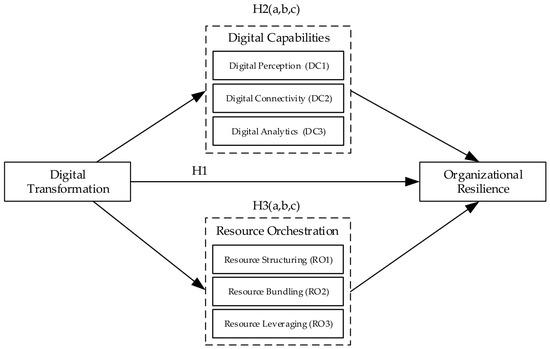
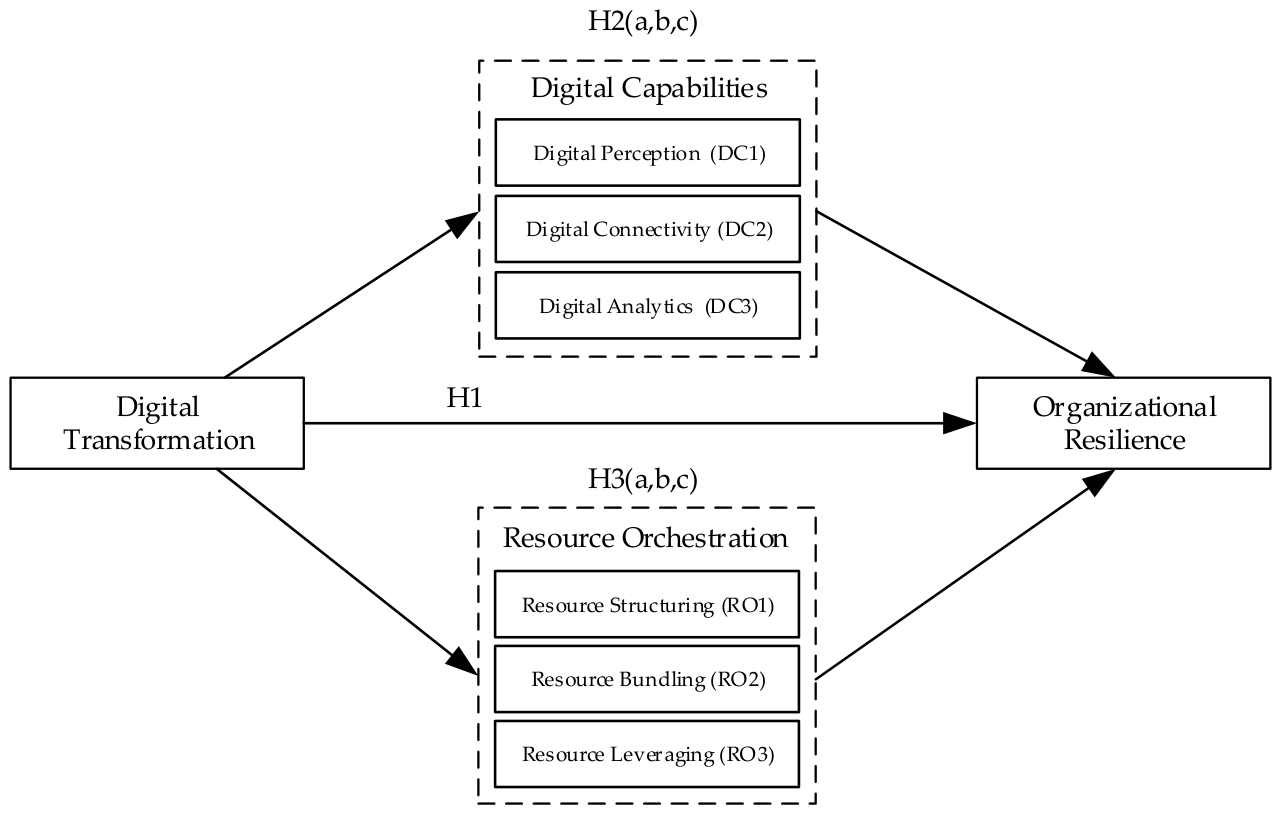



Disclaimer/Publisher’s Note: The statements, opinions and data contained in all publications are solely those of the individual author(s) and contributor(s) and not of MDPI and/or the editor(s). MDPI and/or the editor(s) disclaim responsibility for any injury to people or property resulting from any ideas, methods, instructions or products referred to in the content. |
© 2026 by the authors. Licensee MDPI, Basel, Switzerland. This article is an open access article distributed under the terms and conditions of the Creative Commons Attribution (CC BY) license.