


Abstract
Early architectural decisions shape building energy demand and life cycle carbon, yet digital support remains fragmented across modelling, simulation and performance workflows. This systematic review examines how digital twin (DT) frameworks, tools and workflows are applied at the architectural design stage to support net-zero building performance. It investigates whether design-stage digital twins function as decision support systems or remain BIM-plus-simulation workflows carrying a twin label. Following PRISMA 2020, Scopus, Web of Science, IEEE Xplore, ScienceDirect, SpringerLink and Taylor & Francis Online were searched, supplemented by citation searching. Searches were completed on 28 March 2026 and restricted to English-language, peer-reviewed publications meeting eligibility criteria. Thirty-three studies formed the analysed corpus, comprising 10 Tier 1 core digital twin studies, 15 Tier 2 DT-oriented studies and 8 Tier 3 DT-enabling studies, while 19 review and contextual sources supported framing. Studies were coded by DT conceptualisation, framework type, enabling technology, life cycle stage, net-zero indicator and validation approach. Findings were synthesised descriptively and thematically, and evidence maturity was assessed using a six-domain appraisal covering reporting quality, digital twin completeness, design-stage relevance, validation quality, reproducibility and architect usability. Only 11 studies, representing 33% of the corpus, were anchored in concept or schematic design. BIM, building-performance simulation and parametric or generative modelling were dominant, while IoT and AI or machine learning supported prediction, surrogate modelling and control. Energy was addressed in 26 studies and thermal comfort in 10, whereas embodied carbon, daylight, renewable generation and indoor air quality received limited attention. Eight studies were classified in the ‘Measured/large empirical’ validation class. Methodological heterogeneity and limited empirical validation precluded meta-analysis. Design-stage digital twins remain emerging rather than mature decision support systems. The review was retrospectively registered on the Open Science Framework (DOI: 10.17605/OSF.IO/N5Z8H) and received no external funding.
1. Introduction
The building and construction sector is among the largest single contributors to global environmental pressure. The United Nations Environment Programme and the Global Alliance for Buildings and Construction report that buildings accounted for roughly a third of global final energy demand and approximately 37% of energy- and process-related carbon dioxide emissions in recent assessments, alongside close to half of global material extraction [1]. Although the most recent monitoring indicates that floor-area growth has begun to decouple from associated sector emissions, with measurable gains in energy intensity and renewable uptake, the sector remains off the trajectory required for a net-zero building stock by mid-century [2]. With a substantial share of the buildings expected to exist in 2050 still to be constructed or deeply renovated, the design decisions taken now will shape emissions and energy use for decades [2].
Architectural design decisions carry particular weight. The configuration of building form, orientation, envelope, glazing ratio, spatial layout, passive strategy and material specification is largely fixed during concept and schematic design, when the cost of change is lowest and the influence on performance is highest. The observation that early-stage choices lock in a large fraction of subsequent environmental impact has been demonstrated repeatedly for embodied impacts, where the scope to reduce carbon contracts sharply once a design is developed and constructed [3,4]. Net-zero performance is therefore as much a design-stage problem as an operational one, demanding tools that give architects timely, intelligible feedback while the design is still fluid.
The digital twin has emerged as one of the most prominent candidate tools. The concept originated in product life cycle management, where it was articulated as a triad of a physical entity in real space, a virtual counterpart in virtual space, and the bidirectional flow of data and information connecting the two [5,6]. It was subsequently formalised in aerospace as a high-fidelity, multi-physics, multi-scale, probabilistic simulation maintained in correspondence with its physical twin through historical and real-time data [7]. Definitions have since proliferated, and the absence of a single agreed meaning is now itself a documented feature of the field [8]. For this review, a digital twin is understood as a dynamic, data-linked virtual model that supports prediction, evaluation and decision-making about a building, which is distinct from a static information model.
This distinction matters because the most mature applications of DTs in buildings sit downstream of design. The systematic review by Deng, Menassa and Kamat of 123 studies proposed a five-level ladder, from BIM, through BIM-supported simulation and BIM–IoT integration, to BIM-AI prediction and an idealised twin, and found that no reviewed study reached the highest level, with only a small minority integrating AI-based prediction [9]. Broader reviews of DTs in the AEC sector and in smart and green buildings reach a consistent conclusion: activity concentrates in construction, operation, facility management and monitoring, while design-stage and whole-life-cycle decision support remain comparatively thin and weakly validated [9,10,11,12,13,14]. BIM is repeatedly identified as the natural data foundation for a twin, yet the literature is equally clear that BIM as commonly practised supplies a static, non-real-time model rather than the live, bidirectional system that defines a twin [15,16].
Where DTs do reach toward design, the connection is often partial. On the carbon side, systematic work on BIM-based embodied-carbon evaluation finds that existing BIM–life-cycle-assessment workflows tend to rely on project-delivery or construction-phase data, which hinders precisely the early-design feedback and optimisation that would most reduce embodied impact [17]; whole-life analyses stress that opportunities narrow once a design is fixed [18]. Parametric and generative methods offer a complementary route, with studies using visual-programming environments to generate and evaluate large populations of schemes reporting meaningful reductions in heating and cooling load from early-stage form and fabric optimisation [19,20,21,22,23]. A critical review of BIM-based LCA methods further highlights the challenges of integrating life cycle assessment effectively into building-design workflows [24]. What is less clear is whether these parametric, simulation and carbon capabilities are being integrated into a coherent design-stage twin rather than used in isolation.
Existing reviews are valuable but broad: they survey the asset life cycle as a whole, concentrate on smart-building operation, or treat AI and DTs across building types without isolating the design moment [9,10,11,12,13,14]. The specific question of how DT frameworks, tools and workflows support early architectural decision-making for net-zero outcomes, and where that support is mature, partial or absent, has not been systematically consolidated. In particular, no prior review has established whether design-stage digital twins operate as genuine decision support systems or remain BIM-plus-simulation workflows carrying a twin label.
This review is distinguished from the prior literature on three axes, summarised in Table 1: life cycle emphasis (this review isolates the early-design stage rather than weighting operation and facility management), net-zero scope (this review foregrounds energy, operational and embodied carbon, comfort, daylight and renewable balance as an explicit indicator set rather than treating sustainability generically) and analytical contribution (this review cross-classifies the corpus by framework typology, enabling technology, net-zero indicator and validation maturity, and converts the result into a design-bounded integrative framework). Where Deng et al. chart the general evolution from BIM to twins across the AEC-FM life cycle [9], and reviews of smart, green and operational twins map energy management and monitoring use cases [10,13,14], the present review treats the design twin as a decision support category in its own right and asks specifically what it can and cannot yet do for net-zero design.
Table 1.
Positioning of this review relative to prior digital twin reviews.
The central argument of this review is that design-stage digital twins cannot simply be understood as operational twins moved earlier in the life cycle; they require a different decision support logic based on predictive modelling, uncertainty, scenario comparison and feedback from monitored precedents. Addressing this niche is the contribution of this paper, which is guided by five research questions:
RQ1. How are digital twins defined and conceptualised in architectural design-stage studies?
RQ2. What types of digital twin frameworks have been proposed to support architectural design decisions?
RQ3. Which tools, platforms and enabling technologies are used in design-stage digital twin workflows?
RQ4. Which net-zero performance indicators are addressed by existing design-stage digital twin studies?
RQ5. What technical, methodological and practical gaps limit adoption in architectural net-zero design?
Section 2 sets out the methodology. Section 3 reports study selection, the distribution across the life cycle, the framework typology, the tool technology landscape, net-zero indicator coverage and the maturity appraisal, with counts computed from the included corpus. Section 4 develops a thematic synthesis across seven themes. Section 5 discusses implications and limitations, Section 6 proposes an integrated framework and agenda, and Section 7 concludes.
2. Materials and Methods
2.1. Review Design
This systematic review was conducted and reported in accordance with the PRISMA 2020 statement (Supplementary File S1) and was complemented by descriptive content analysis. The review was retrospectively registered on the Open Science Framework after completion of the review (DOI: 10.17605/OSF.IO/N5Z8H). An a priori review protocol defining the research questions, search strategy, eligibility criteria, data extraction template and appraisal scheme was prepared before screening but was not prospectively registered. No amendments were made to the protocol during the review process. The review protocol and supporting materials are publicly available through the Open Science Framework registration. The methodological aim was not only to identify studies explicitly labelled as digital twins but also to distinguish between mature building digital twins, DT-oriented workflows and DT-enabling design methods. This distinction was necessary because the design-stage digital twin literature includes conceptual frameworks, prototype systems, BIM–simulation workflows, parametric optimisation studies and operation-dominant twins with design-transferable feedback. The review therefore combined systematic screening with descriptive synthesis, thematic interpretation and structured maturity appraisal.
2.2. Information Sources and Search Strategy
Six information sources were searched: three bibliographic or indexing databases (Scopus, Web of Science and IEEE Xplore) and three publisher search platforms (ScienceDirect, SpringerLink and Taylor & Francis Online). Search fields were adapted to the functionality of each source. Scopus was searched using TITLE-ABS-KEY, Web of Science using the Topic field (TS), IEEE Xplore using All Metadata, and the publisher platforms were searched using the title, abstract and keyword fields available within each interface. The source-specific search strings, fields and search dates are reported in Appendix A.2. Searches were executed between 2 and 28 March 2026. No lower date limit was imposed because the objective was to capture the emergence of design-stage digital twin logic from its earliest identifiable applications; however, the final corpus began in 2014 because no earlier retrieved record met the eligibility criteria. The search strategy combined four concept blocks: digital twin, architectural design stage, net-zero building and tool/performance. Boolean AND was used across blocks, while OR was used within each block. The tool and performance block was included deliberately, and defined a priori, to keep the search aligned with the review objective of identifying digital twin studies that support architectural design-stage performance evaluation or decision-making, rather than retrieving the much broader literature on generic digital building models, smart buildings or operational monitoring without design-stage relevance. The full Scopus search string was:
TITLE-ABS-KEY ((“digital twin*” OR “building digital twin”) AND (“architectural design” OR “building design” OR “early design stage” OR “design stage” OR “concept design” OR “schematic design” OR “design decision*”) AND (“net zero” OR “net-zero building” OR “zero energy building” OR “zero carbon building” OR “nearly zero energy building” OR “low carbon building” OR “sustainable building”) AND (“BIM” OR “building information model*” OR “parametric design” OR “energy simulation” OR “carbon assessment” OR “machine learning” OR “IoT” OR optim*)). The concept blocks and base search string are presented in Table 2.
Table 2.
Search concept blocks and base search string.
The searches across the six information sources identified 147 records: Scopus (n = 95), Web of Science (n = 22), IEEE Xplore (n = 8), ScienceDirect (n = 9), SpringerLink (n = 7) and Taylor & Francis Online (n = 6) (Table 3). A further 12 records were identified through backward and forward citation searching, producing 159 records before deduplication. Records identified through database searching and citation searching were combined into a single dataset before deduplication and screening. After 61 duplicate records were removed, 98 records were screened by title and abstract, of which 50 were excluded. Forty-eight reports were sought for retrieval. One report could not be retrieved, leaving 47 full-text reports for eligibility assessment. Fourteen reports were excluded following full-text assessment: operation or facility management focus without design-transferable feedback (n = 7), no explicit net-zero or low-carbon objective (n = 4), a BIM-only application without a digital twin or design-decision component (n = 2), and a secondary review article (n = 1). Thirty-three studies were included in the final systematic synthesis. An additional 19 review and contextual sources were used to support conceptual framing and discussion but were not part of the systematically analysed corpus. The study selection process is presented in the PRISMA 2020 flow diagram in Figure 1. The 14 reports excluded following full-text eligibility assessment and their specific exclusion reasons are listed in Appendix A.1.
Table 3.
Records identified per source.
Figure 1.
PRISMA 2020 flow diagram of the study selection process (n = 33 included studies).
2.3. Eligibility Criteria
Studies were eligible for inclusion if they applied, proposed or evaluated a digital twin, or an explicitly twin-oriented BIM, simulation, parametric modelling/design or performance workflow, in support of architectural design-stage decision-making for net-zero, zero-energy, low-carbon or comparable sustainable building performance. Eligible studies included work addressing concept design, schematic design, design development, or whole-life decisions taken at the design stage. Studies were also included if they examined design-stage energy, carbon, daylight, comfort, renewable generation or comparable net-zero indicators, or if they used AI-supported optimisation or DT-enabled feedback to inform architectural design decisions. Studies were excluded if they focused only on facility management, operation-only monitoring, construction management, maintenance or fault detection without design-transferable feedback. Smart-city twins without building-scale design relevance were also excluded, as were general BIM studies without a digital twin or net-zero component, general sustainability studies without a DT application, non-peer-reviewed records. The inclusion and exclusion criteria are summarised in Table 4. Operation-dominant studies were retained only where they generated occupant, performance or operational feedback capable of informing future architectural design decisions. These studies were not interpreted as evidence of mature design-stage DT practice, but as evidence of the operation-to-design feedback mechanisms that future design-stage twins may require. To make this distinction transparent, all included studies were coded by life cycle stage: D = concept, schematic, early design or whole-life-at-design; D + O = design and downstream, or design-relevant feedback; and O = operation-dominant, retained only for design-transferable feedback.
Table 4.
Inclusion and exclusion criteria.
Because the corpus deliberately spans more than fully realised digital twins, each study was also assigned to one of three evidence tiers. Tier 1 studies were core digital twin studies with explicit DT architecture or bidirectional data linkage. Tier 2 studies were DT-oriented studies applying partial or prototype DT logic, such as BIM–simulation, BIM–IoT, BIM–AI, scan-to-BIM or prototype feedback workflows, but without demonstrating a fully integrated twin. Tier 3 studies were DT-enabling design studies that did not constitute full twins in themselves but provided capabilities required by future design-stage twins, such as parametric optimisation, generative design, BIM–LCA or early-stage performance prediction. Tier assignment was based on the highest level of DT maturity evidenced in each study. The life cycle stage and tier classifications are provided in Appendix A.3.
2.4. Study Selection and Screening Process
Records were deduplicated and screened by title and abstract before full-text eligibility assessment. Search results were managed using a spreadsheet-based screening and extraction matrix. The lead author, A.S., and M.T. conducted the initial title and abstract screening and full-text eligibility assessment using the predefined criteria. Screening decisions and full-text exclusion reasons were subsequently checked by N.A., M.Z.A. and M.H. Any uncertain cases or disagreements were resolved through discussion and consensus. Screening was not conducted independently in duplicate. No automation tools were used during deduplication, screening or eligibility assessment. Full-text exclusions were recorded by reason. The final systematically analysed corpus comprised 33 studies. Nineteen review and contextual sources were used only for conceptual framing and discussion. To strengthen the reliability of the subjective study-level classifications used in the synthesis, a second reviewer independently reassessed the key coding variables for all 33 included studies before consensus discussion.
2.5. Data Extraction and Coding
A piloted extraction template was used to record bibliographic details, study context, life cycle stage, digital twin definition, framework type, tools, enabling technologies, data linkage, performance indicators, validation approach, strengths, limitations and reported gaps. Studies were coded by DT conceptualisation, framework typology, life cycle stage, enabling technology, indicator coverage and validation type.
Performance indicators were coded as non-exclusive categories. Direct net-zero indicators included energy balance or demand, renewable generation, operational carbon, embodied carbon and whole-life carbon. Supporting or constraint indicators included thermal comfort, daylight, indoor air quality, microclimate or indoor environmental quality, and cost. Frameworks were grouped as BIM-based, simulation-based, parametric or generative, IoT or sensor-based, AI or ML-based, life-cycle-oriented, or decision-support-oriented. Within this broad category, parametric modelling/design refers to rule- or parameter-based generation and modification of design alternatives, whereas parametric optimisation refers specifically to the systematic optimisation of parameter values against defined performance objectives; generative design refers to algorithmic generation of alternative design solutions. These terms are distinguished in the interpretation of individual studies.
In addition to indicator-level coding, the net-zero framing reported by each study was recorded according to the terminology and performance boundary explicitly stated by the original authors. Studies were classified as addressing net-zero or zero-energy performance (NZE), net-zero operational carbon (NZOC), whole-life or net-zero carbon (WLC/NZC), low-carbon performance (LC), broader sustainable-performance objectives (SPP), or no explicit net-zero boundary reported (NR). Classification was based on the stated study framing rather than inferred solely from the indicators assessed. The study-level net-zero framing and performance indicator coding matrix is provided in Appendix A.4.
Data were extracted by A.S. and M.T. using the piloted extraction template and were checked by N.A., M.Z.A. and M.H. All reported findings relevant to the predefined direct net-zero and supporting performance domains were considered for extraction. Where studies reported multiple relevant indicators, each applicable category was coded because the categories were non-exclusive. Missing or unclear information was recorded as not reported, and no values were estimated or imputed. Study authors were not contacted for additional information. No automated data extraction tools were used. Following identification of a reference-to-extraction mismatch during revision, the complete 33-study extraction matrix was re-audited against the original full-text publications, and bibliographic details, study characteristics, coding variables, validation information and reported outcomes were verified and corrected where necessary.
The independently reassessed variables were life cycle stage (D, D + O, O), evidence tier (T1–T3), validation class, decision support orientation and architect usability. Agreement was calculated before disagreements were discussed and resolved by consensus. Weighted Cohen’s kappa was used for the ordered categorical variables, including life cycle stage, evidence tier, validation class and architect usability, while Cohen’s kappa was used for the binary decision support classification.
2.6. Quality Appraisal and Maturity Assessment
Because the corpus included conceptual frameworks, simulations, prototypes, case studies and operation feedback systems, a conventional intervention-focused risk-of-bias tool was not considered appropriate. A structured appraisal was therefore used to assess six distinct dimensions of design-stage digital twin evidence: reporting quality, digital twin completeness, design-stage relevance, validation quality, reproducibility and architect usability. These six appraisal domains were reporting quality, digital twin completeness, design-stage relevance, validation quality, reproducibility and architect usability.
Each domain was scored from 0 to 2 using predefined criteria, producing a maximum score of 12. Scores of 0–4 were interpreted as low, 5–8 as medium and 9–12 as high maturity. Scores were assigned through direct assessment of the full-text evidence against the six domain-specific criteria. Life cycle stage codes (D, D + O and O), evidence tiers (T1–T3), indicator counts and validation classes were retained as separate descriptive variables and were not mechanically converted into appraisal scores.
Reporting quality assessed the clarity and completeness of the study aims, methods, workflow, framework or tools, and reported outputs. digital twin completeness assessed the extent to which the study demonstrated dynamic and persistent data linkage rather than a static or enabling digital model. Design-stage relevance assessed whether the approach explicitly supported concept, schematic, early-design or whole-life decisions made during design, provided only indirect downstream feedback, or had no direct architectural design-stage application. Validation quality distinguished conceptual or unvalidated work from simulation, surrogate, prototype or limited-context demonstration and from studies using observed or empirical data. However, measured data or larger empirical datasets were not assumed automatically to indicate strong external validity. Validation strength was interpreted in relation to the scale and context of the evidence, calibration procedures, independent testing, reported prediction or performance errors, and whether validation addressed the complete digital twin workflow or only an individual component. Reproducibility assessed whether sufficient information on data, tools, parameters and workflow was reported to support replication. Architect usability assessed the extent to which the workflow provided explicit, interpretable, comparative or scenario-based support for architectural decision-making.
The full 0/1/2 scoring definitions and study-level scores are provided in Appendix A.5. The initial appraisal was conducted by A.S. and M.T. and checked by N.A., M.Z.A. and M.H. Differences were resolved through discussion and consensus. No automation tools were used in the appraisal process. A formal certainty-of-evidence framework such as GRADE was not applied because the corpus comprised heterogeneous conceptual frameworks, simulations, prototypes and case studies rather than comparable intervention effect studies.
Inter-rater agreement was substantial to almost perfect across the five reassessed classifications, with κ values of 0.88 for life cycle stage, 0.88 for evidence tier, 0.80 for validation class, 0.81 for decision support orientation and 0.79 for architect usability. All disagreements were subsequently resolved through discussion and consensus, and the final study classifications reflect the agreed coding. Inter-rater agreement statistics are reported in Appendix A.7.
2.7. Data Synthesis
Findings were synthesised descriptively and thematically. Descriptive synthesis summarised distributions across life cycle stage, evidence tier, framework type, technology, net-zero indicators and validation approach. Because the corpus was heterogeneous in study type, method, scale and outcome, quantitative meta-analysis was not appropriate. Thematic synthesis identified seven cross-cutting themes: BIM-to-DT integration, energy simulation and optimisation, parametric or generative design, carbon assessment, AI and predictive analytics, IoT and real-time feedback, and architectural decision support. The maturity appraisal and thematic findings informed the proposed integrated framework, which is presented as a conceptual agenda for future development rather than a validated operational system.
No common effect measure was prespecified because the review did not calculate pooled intervention effects. Extracted information was coded directly from the included publications, and no missing statistics were imputed, converted or statistically transformed. Individual-study and synthesis findings were presented using structured tables, frequency counts, distribution charts, coding matrices, an indicator-flow diagram and a maturity heatmap. Heterogeneity was explored descriptively through comparisons by life cycle stage, evidence tier, framework type, enabling technology, net-zero indicator and validation class. Study-level scores for each of the six appraisal domains were averaged descriptively within Tier 1, Tier 2 and Tier 3 groups and across the full corpus. Each domain retained its original 0–2 scale, and no weighting or transformation was applied. The resulting mean values are reported in Appendix A.6. No formal subgroup analysis, meta-regression or sensitivity analysis was conducted.
3. Results
3.1. Overview of the Corpus
Thirty-three digital twin and digital-twin-enabling studies met the eligibility criteria and form the analysed corpus; they are listed with their extracted attributes in Table 5. To avoid overstating the maturity of the corpus, each study is assigned to one of three evidence tiers (defined in Section 2.3 and coded in Table 5): ten core digital twin studies (Tier 1) with an explicit DT architecture or bidirectional data linkage; fifteen DT-oriented studies (Tier 2) that apply DT logic in partial or prototype form, such as BIM–simulation, BIM–AI or scan-to-BIM workflows; and eight DT-enabling design studies (Tier 3) that are not full twins but provide the parametric, generative or BIM–LCA capabilities on which design-stage twins depend.
Table 5.
Included digital twin and digital-twin-enabling studies and extracted attributes (n = 33). Tier: T1 = core DT (explicit DT architecture or bidirectional data linkage); T2 = DT-oriented (DT logic, partial or prototype, e.g., BIM–simulation, BIM–AI, scan-to-BIM); T3 = DT-enabling design (not a full DT, but enabling future design-stage twins, e.g., parametric optimisation, BIM–LCA, generative design). Stage: D = concept/schematic/early or whole-life-at-design; D + O = design and downstream, or design-relevant feedback; O = operation-dominant, retained only for design-transferable feedback.
The review therefore analyses digital twin and digital-twin-enabling studies rather than core twins alone, and the findings below are interpreted with this composition in mind. This suggests that 23 of the 33 studies (70%; Tiers 2 and 3) apply digital twin logic only partially or provide enabling capabilities rather than representing fully integrated design-stage digital twins. Accordingly, results are interpreted according to evidence tier and life cycle stage role, and Tier 2, Tier 3 and operation-dominant studies are not treated as equivalent evidence of mature design-stage digital twin implementation. A further 19 review and contextual sources informed the framing and synthesis. The applied corpus spans 2014–2026, with the majority published from 2021 onward, reflecting the recent acceleration of DT research in buildings, and is concentrated in building-science and sustainability journals. The PRISMA flow is shown in Figure 1.
3.2. Distribution Across the Building Life Cycle
Of the 33 studies, 11 (33%) were anchored primarily in concept, schematic or early design, or in whole-life decisions explicitly taken at the design stage [19,20,21,22,23,30,37,39,41,44,45]. A further 12 spanned design and downstream stages, or fed retrofit, construction or monitoring results back into design [25,26,27,28,31,34,36,38,48,49,51,52]. The remaining ten were operation-dominant but were retained because they generate occupant and performance feedback of design relevance [29,32,33,35,40,42,43,46,47,50]; see Figure 2. This suggests that most of the evidence base still sits downstream of the very stage this review targets, so the literature does not yet constitute a mature early-design toolkit. This downstream concentration partly reflects the canonical digital twin requirement for a live link to a physical asset, which is unavailable during concept or schematic design. This helps explain why more mature twins are concentrated in operation, although the observed distribution also reflects the review’s eligibility and search boundaries. This distribution substantiates the review’s central premise: even within a corpus selected for design relevance, only 11 of the 33 studies (33%) are genuinely design-anchored, consistent with the ladder-taxonomy finding that no building twin has yet reached full maturity and with the wider review literature [9,10,11]. As a robustness check, excluding the ten operation-dominant studies leaves 11 of 23 design-relevant studies (48%) anchored in early design; moreover, none of these 11 design-anchored studies is a Tier 1 core twin (all are Tier 2 or Tier 3), which reinforces rather than inflates the review’s central claim that mature, core design-stage twins remain scarce. Only one of the eleven design-anchored studies [41] used measured data as part of its validation, further indicating that empirical validation remains particularly limited at the concept and schematic design stages. This 33% describes the life cycle distribution within the review’s deliberately defined corpus; it is not a claim that this proportion characterises the entire global digital twin literature.
Figure 2.
Distribution of the 33 included studies across building life cycle stages.
3.3. Typology of Digital Twin Frameworks
Frameworks were grouped into seven non-exclusive types (Figure 3). BIM-based foundations were the most common, underpinning 13 of the 33 studies. Building-performance simulation underpinned twelve studies, while parametric or generative modelling underpinned eight, concentrated in the design-anchored subset [19,20,22,23,44,45]. IoT/sensor linkage appeared in 11 studies, predominantly in operation-oriented work [26,29,32,40,42,50], and AI/ML in 13, as surrogates, predictors or control agents [27,33,35,39,46,47,48,50]. Life-cycle-spanning frameworks and explicitly decision-support-oriented frameworks were less common and were more often conceptual than empirically realised [30,32,37,39,51,52]. The pattern mirrors the ladder taxonomy of Deng et al., in which static BIM, BIM-plus-simulation, BIM-plus-IoT and BIM-plus-AI levels are populated while the fully integrated twin remains aspirational [9]. The inference is that the framework types best developed for early design are exploratory and predictive, while the decision-support-oriented twin remains the least populated and most conceptual category.
Figure 3.
Typology of digital twin frameworks for architectural design-stage applications (categories non-exclusive).
3.4. Tool and Technology Mapping
Tools cluster into six categories: BIM authoring (notably Revit, with IFC used for interoperable exchange in the carbon-oriented frameworks) [30,37]; parametric modelling and optimisation environments (Rhino and Grasshopper, Python and evolutionary solvers) [19,20,22,23,44,45]; building-performance simulation (energy, daylight and CFD engines such as EnergyPlus, DesignBuilder and Ladybug/Honeybee) [25,26,31,41]; carbon and life cycle assessment tooling, sometimes aligned to EN 15978 [37,48]; AI/ML and scripting (ANN and MOGA, LSTM and attention, reinforcement learning) [27,35,39,46,47,48,50]; and IoT/data and visualisation platforms [26,29,32,40]. The recurring pattern is a strong BIM–simulation–parametric core with thinner, less integrated coverage of carbon and AI feedback tooling, and with IoT concentrated downstream of design. The tooling therefore mirrors the corpus as a whole: the instruments for prediction and exploration are mature, whereas those for early-stage carbon accounting and closed-loop feedback, the capabilities net-zero designs most need, are the least integrated. Figure 4 presents the coverage matrix.
Figure 4.
Tool technology coverage matrix across the included studies. [19,20,22,23,25,26,27,30,31,34,37,39,41,44,45,48,50].
3.5. Net-Zero Performance Indicators
Indicator coverage is markedly uneven (Figure 5; counts in Table 6). Energy demand or load was addressed by 26 of the 33 studies and thermal comfort by 10, together accounting for the great majority of indicator instances [19,21,22,23,25,26,31,34,35,39,41,47]. Embodied carbon (4 studies) and operational carbon (4) were thinly represented, with embodied carbon confined largely to conceptual frameworks and shape optimisation studies rather than validated, integrated early-design tools [30,37,44,48]. Daylight (3 studies) and renewable generation (3) were sparsely covered; microclimate or indoor environmental quality (2) and cost (2) appeared in only two studies each, and indoor air quality was effectively absent [22,23,25,31,45]. This profile reproduces, in a design-stage corpus, the well-documented imbalance whereby operational energy is treated far more completely than embodied and life cycle carbon and confirms that the early-design integration of embodied carbon, where it matters most, remains weak [17,18]. This pattern indicates that coverage is uneven, but that the literature is concentrated on performance domains that are comparatively well established in building simulation, particularly operational energy and thermal comfort, while embodied carbon and other whole-life performance dimensions remain less fully integrated into design-stage digital twin workflows. For clarity, these indicators may be read in two groups: direct net-zero indicators (energy balance, renewable generation, operational carbon and embodied or whole-life carbon) and supporting or constraint indicators (thermal comfort, daylight, indoor air quality, microclimate or IEQ, and cost). The imbalance reported above is most acute among the direct indicators, where embodied and whole-life carbon are the least covered. This concentration suggests that the field tends to optimise the indicators that are easiest to simulate, leaving embodied carbon, daylight, renewables, indoor environmental quality and life cycle cost comparatively underdeveloped. These indicator categories should not be interpreted as implying a common net-zero boundary across all included studies. The studies varied in whether they addressed net-zero energy, operational carbon, whole-life or net-zero carbon, low-carbon performance, or broader sustainable-building objectives, and several did not provide an explicit net-zero definition. Study-level net-zero framing is reported in Appendix A.4.
Figure 5.
Life cycle stage–digital twin framework type–net-zero indicator flows across the included studies. Simulation and parametric/generative approaches are presented separately for consistency with the framework classification used in the manuscript. Carbon comprises embodied and operational carbon, while other indicators include daylight, renewable generation, microclimate/IEQ and cost. Band widths represent dominant study-level co-occurrence pathways.
Table 6.
Net-zero indicator coverage across the 33 included studies (non-exclusive; a study may address several indicators).
3.6. Quality and Maturity Appraisal
Figure 6 presents the mean six-domain appraisal profile by evidence tier, calculated directly from the study-level scores reported in Appendix A.5. The corresponding numerical values are provided in Appendix A.6. Each domain is reported on its original 0–2 scale. The appraisal reveals contrasting maturity profiles across the three evidence tiers. Tier 1 studies achieved the highest mean scores for DT completeness and reproducibility but showed limited design-stage relevance and architect usability. Tier 3 studies showed the opposite pattern, with high design-stage relevance but low DT completeness, while Tier 2 studies occupied an intermediate position. Validation quality remained comparatively modest across all three tiers.
Figure 6.
Mean quality and maturity appraisal scores across the six predefined domains for Tier 1, Tier 2 and Tier 3 studies, with the overall corpus shown for comparison. Scores range from 0 to 2 and are calculated directly from the study-level assessments reported in Appendix A.5; corresponding numerical values are provided in Appendix A.6.
Validation provided an important distinction in the strength of the available evidence (Table 7). Eight of the thirty-three studies were classified in the ‘Measured/large empirical’ validation class. Notable examples included the multi-family building forecasting study, which reported a predicted-to-actual energy performance difference of less than 3.5% across four buildings, and the DT-LCAF framework, which was validated using a large building dataset [41,48]. Ten studies were demonstrated using single real-building cases, eight relied on simulation-only validation, four remained conceptual frameworks without empirical testing, and three used modelled or surrogate validation [19,20,23,30,37,51].
Table 7.
Validation classes of the 33 included studies, showing predominant stage and framework, indicator coverage, and the design decisions each class can credibly support (descriptive synthesis).
The six-domain appraisal should be distinguished from the qualitative gaps identified through the thematic synthesis. Interoperability, embodied- and life-cycle-carbon integration, real-time design feedback, data quality and integration with architectural workflows emerged as recurring limitations in the reviewed studies, but these themes were not assigned separate quantitative appraisal scores. Figure 6 therefore reports only the six predefined appraisal domains, with values calculated directly from the study-level assessments in Appendix A.5.
As a descriptive robustness check, the principal findings were also examined across corpus subsets. Restricting the analysis to the 11 design-anchored studies, energy remained the dominant indicator, while embodied carbon appeared mainly through conceptual and shape optimisation studies [30,37,44], and validation was predominantly simulation-based or conceptual. Restricting the analysis to the 10 Tier 1 studies showed that the evidence was concentrated in operation and design-to-operation contexts, supporting the finding that core twins remain predominantly downstream of early design. Excluding the 10 operation-dominant studies, leaving 23 design-relevant studies, did not change the direction of the principal findings. A related observation across the corpus was that performance predictions, particularly for embodied carbon, were generally reported as deterministic values rather than with uncertainty ranges or confidence intervals. The framework proposed in Section Proposed Integrated Framework therefore requires outputs to be accompanied by an associated confidence or uncertainty level.
Taken together, the validation classes distinguish three broad types of contribution that should not be given equal evidential weight. Feasibility studies, conceptual frameworks and single demonstrations indicate that a design-stage digital twin may be technically possible, but they provide limited evidence about its reliability or generalisability. Partial workflows, including simulation-only, surrogate and prototype studies, typically validate one component of the proposed system, such as the prediction model, without evaluating a complete architectural design decision against measured performance.
The eight studies classified as ‘Measured/large empirical’ provide comparatively stronger empirical support than conceptual or simulation-only studies. However, this classification does not imply equivalent validation strength or external validity across studies. The credibility and transferability of individual findings also depend on dataset scale, building and climatic context, calibration, independent testing, reported errors and whether the complete digital twin workflow or only an individual component was validated. Table 7 organises the corpus according to these distinctions, while the maturity rubric evaluates decision support readiness rather than technical sophistication alone. In practical terms, fewer than one quarter of the included studies, 8 of 33, were classified in the ‘Measured/large empirical’ validation class. This limited empirical validation is itself one of the review’s central findings, indicating that design-stage digital twins remain largely at an experimental stage. The remainder primarily demonstrated conceptual or technical feasibility rather than fully validated design-stage performance.
No formal synthesis-level assessment of publication bias or selective reporting bias was conducted because the studies were methodologically heterogeneous and no quantitative meta-analysis was undertaken. No formal GRADE-style certainty rating was assigned. Confidence in the review findings was instead interpreted using the validation classes and the study-level quality and maturity appraisal presented in Table 7 and Appendix A.5.
The validation classes in Table 7 are broad descriptive categories rather than formal rankings of external validity. Studies within the same class may differ substantially in sample scale, building and climatic representativeness, calibration, independent testing, reported error and the extent of the digital twin workflow that was validated.
3.7. Cross-Comparison of the Evidence
Cross-comparison of the corpus indicates that framework type is associated with the type of architectural decision that can be supported. Parametric and generative workflows primarily enable rapid exploration and comparative evaluation of form, massing, envelope and performance alternatives, whereas simulation-based workflows support prediction of energy demand, thermal comfort and daylight performance. AI/ML-based approaches are used mainly for prediction, surrogate modelling and rapid screening of alternatives, while life-cycle- and decision-oriented frameworks extend the decision space toward embodied carbon, whole-life performance and multi-objective assessment. However, these latter approaches are less frequently supported by strong empirical validation. Table 7 further demonstrates that simulation-based and parametric modelling/optimisation approaches are most suited to comparative ranking of alternatives, whereas empirically validated and operation-linked digital twin approaches provide stronger support within the specific contexts in which they have been tested.
The degree of data linkage also differs across the evidence tiers. The 10 Tier 1 studies represent the most mature group, defined by explicit digital twin architecture or bidirectional data linkage, whereas Tier 2 studies demonstrate partial or prototype digital twin logic and Tier 3 studies provide enabling capabilities without constituting complete twins. Because bidirectional linkage was not coded as a separate binary variable from explicit digital twin architecture, the review does not report a separate numerical count for bidirectional linkage alone.
Direct participation of practising architects or formal usability testing was not a predefined extraction variable; therefore, no corpus-wide numerical count is reported. Similarly, uncertainty reporting was identified thematically rather than coded as a separate study-level variable. The synthesis nevertheless indicates that explicit uncertainty or confidence reporting remains uncommon, with performance predictions, particularly for embodied carbon, generally presented as deterministic values rather than accompanied by uncertainty ranges or confidence intervals. Architect usability was instead assessed through the predefined maturity appraisal, which evaluated whether workflows provided explicit, interpretable, comparative or scenario-based support for architectural decision-making.
Life cycle stage produced the clearest cross-comparison within the predefined synthesis dimensions. Of the 33 included studies, only 11 were design-anchored, while the more mature Tier 1 evidence was concentrated mainly in operation and design-to-operation contexts. Restricting the analysis to the 11 design-anchored studies did not alter the direction of the main findings: energy remained the dominant performance indicator, embodied carbon remained concentrated primarily in conceptual or shape optimisation approaches, and validation was predominantly simulation-based or conceptual. Excluding the 10 operation-dominant studies likewise did not change the principal direction of the synthesis.
Comparisons by country, climate and building type were not undertaken because geographical, climatic and building-context distributions were not predefined synthesis dimensions in the review protocol. These contextual factors may influence digital twin implementation and net-zero design performance, but the available corpus is therefore not interpreted as providing representative comparative evidence across these dimensions; this limitation is discussed further in Section 5.7.
4. Thematic Synthesis
Seven themes emerged during extraction and structure the interpretation.
4.1. BIM-to-Digital-Twin Integration
BIM supplies the structured data foundation in nearly every study, but as ordinarily practised it lacks the live, bidirectional linkage that defines a twin; the carbon-oriented frameworks pursue this through IFC-based integration [15,30,37]. At the design stage, the value of a twin lies less in live sensor feeds than in maintaining a coherent, queryable correspondence between an evolving design model and its predicted performance [9].
4.2. Energy Simulation and Design Optimisation
Building-performance simulation is the most established analytical capability. Coupled to a design model, it supports prediction of energy demand, loads and comfort during concept and schematic design, as in the parametric and multi-family forecasting studies, the latter achieving sub-3.5% agreement with measured energy performance [19,41]. The open question is the degree of integration, whether simulation is run as a discrete check or embedded as continuous feedback [26].
4.3. Parametric and Generative Design
Parametric and generative workflows allow large populations of alternatives to be generated and evaluated against performance objectives; the residential generative study evaluated 1595 schemes with the optimum 15.8% below the worst case, and preference-based and massing-typology methods extend this to multi-objective and form exploration [20,22,45]. Connecting these workflows to a persistent twin, so explored alternatives and their assumptions are retained and comparable, is the less-developed step [49].
4.4. Carbon Assessment
Coverage of carbon is uneven and largely conceptual. Operational carbon is comparatively well served through energy modelling, whereas embodied and life cycle carbon appear mainly in framework proposals and shape optimisation studies, including the whole-life net-zero-carbon BIM–DT framework, carbon-driven shape optimisation, and the EN 15978-aligned DT–LCAF, with only the last validated at scale [30,37,44,48]. Systematic evidence confirms that BIM–LCA workflows lean on later-stage data, constraining early-design feedback exactly where embodied-carbon reductions are cheapest [17,18]. Outside the analysed corpus, the critical review of BIM-based LCA methods [24] provides additional contextual evidence on the challenges of integrating life cycle assessment into building-design workflows. A related UK retrofit-focused systematic review and policy analysis similarly positions DTs as a route for connecting life cycle carbon assessment, net-zero policy and digital building information, while distinguishing whole-life retrofit workflows from fully validated design-stage architectural twins [53].
4.5. AI and Predictive Analytics
AI and machine learning appear chiefly as surrogates, predictors and control agents, an ANN surrogate cutting comfort prediction time by around 98%, ANN-MOGA tuning of energy and comfort, LSTM and attention models, and reinforcement-learning control of adaptive envelopes [27,35,46,50]. Reviews caution that such applications remain fragmented and confined to isolated functions rather than integrated into generalisable design workflows [11,14]. The design-stage opportunity is to use learned surrogates to accelerate the comparison of alternatives without sacrificing transparency [21,39].
4.6. IoT and Real-Time Feedback
Real-time data are central to operational twins but only indirectly relevant to design. In the corpus, IoT linkage clusters in operation-oriented studies [26,29,32,40,50]; the pertinent question is whether post-occupancy data are fed back to inform future design, closing the operation-to-design loop. The evidence suggests this loop is rarely completed, and design-stage twins would benefit most from structured feedback derived from monitored precedents rather than live feeds of a building that does not yet exist [9,16].
4.7. Architectural Decision Support
A key issue is whether design-stage twins genuinely support decision-making or remain advanced visualisation, monitoring and simulation. Across the corpus, technical sophistication is not matched by demonstrated fit with everyday architectural workflows or by support for the comparative, iterative judgements architects make in early design. Many of the reviewed workflows depend on specialist simulation, optimisation, data management or programming expertise and involve multiple software environments. While these approaches can provide technically sophisticated performance analysis, the reviewed literature provides limited evidence that they deliver the rapid, interpretable and comparative feedback required during concept and schematic design. Architect-centred digital twin development should therefore prioritise simplified interfaces, interoperable workflows, visual comparison of alternatives and performance feedback that can be understood without extensive specialist intervention. This usability and decision support gap, rather than any single missing technology, is the principal barrier to adoption.
5. Discussion
The discussion is structured around the principal gaps identified in the results and thematic synthesis. Section 5.1 considers the life cycle stage maturity of design-stage digital twins; Section 5.2 addresses interoperability and tool integration; Section 5.3 examines gaps in net-zero indicator coverage; Section 5.4 and Section 5.5 discuss validation, design-stage constraints and uncertainty; and Section 5.6 considers architect-facing decision support.
5.1. Design-Stage Digital Twins Are Still Emerging
The life cycle distribution reported in Section 3.2 and Section 3.7 indicates an important distinction between the maturity of digital twin technology in buildings generally and its maturity as an architectural design-stage tool. Although DT research in buildings is expanding, its most developed applications remain downstream of concept and schematic design. Only 11 of the 33 included studies (33%) were design-anchored, consistent with previous reviews reporting greater maturity in construction, operation and facility management applications [9,10,11]. This suggests that the challenge is not simply transferring existing operational twins into an earlier life cycle stage. Rather, design-stage DTs require a different form of decision support that can operate before a physical asset exists and while design variables remain negotiable.
5.2. Interoperability Is the Central Integration Challenge
The framework and tool mapping reported in Section 3.3 and Section 3.4 indicates that the principal technical limitation is not the absence of individual analytical capabilities, but their incomplete integration within a persistent design workflow. BIM, building-performance simulation, parametric modelling, carbon assessment and predictive tools can each support particular design tasks, but their value as a digital twin depends on reliable exchange and continuity of information across design iterations. The use of IFC in carbon-oriented frameworks represents an important response to BIM data integration difficulties [15,30,37], but such interoperability is not yet consistently demonstrated across the corpus. Future design-stage DT development should therefore prioritise semantic and bidirectional exchange, synchronisation between design and analytical models, and preservation of model evolution rather than simply adding additional analytical tools.
5.3. Net-Zero Decision Support Requires Broader Indicator Integration
The uneven indicator coverage reported in Section 3.5 and Table 6 has implications for the type of decisions that existing systems can support. Energy and thermal comfort can already be assessed comparatively during early design, whereas embodied carbon, renewable balance, daylight, life cycle cost and broader indoor environmental quality remain less consistently integrated. This imbalance matters because optimisation of one performance domain does not necessarily produce a net-zero outcome. For example, reducing operational energy without considering embodied impacts may shift rather than reduce life cycle carbon [17,18]. A useful design-stage twin should therefore enable architects to examine trade-offs among energy, embodied and operational carbon, comfort, daylight, renewable generation and cost within the same decision environment rather than treating them as separate downstream assessments.
5.4. Validation Must Extend from Individual Components to Complete Design Workflows
The validation profile reported in Section 3.6 and Table 7 shows that the principal validation challenge is not simply whether individual simulation or prediction models perform accurately, but whether the complete digital twin workflow provides sufficiently reliable information for architectural decision-making. Many included frameworks remain conceptual, prototype-based or simulation-only, while empirical validation against measured performance is comparatively limited. Studies such as the multi-family forecasting and DT–LCAF applications [41,48] demonstrate stronger empirical confrontation, but validation of one analytical component does not establish the reliability of an integrated design-stage twin. Future validation should therefore compare predicted and measured performance across several real buildings or independent datasets where feasible, document calibration and prediction errors, and distinguish component-level validation from validation of the complete decision support workflow.
5.5. Design-Stage Constraints and the Definition of a Design-Stage Digital Twin?
A conceptual tension sits beneath these findings. The canonical digital twin is defined by a live, bidirectional link between a physical asset and its virtual counterpart, yet at the concept and schematic stage no physical building exists. The strict real-time twin therefore cannot apply, which partly explains why so few corpus studies are genuinely design-anchored and why the most mature twins are operational. A design-stage twin is best understood not as a live mirror of a building but as a predictive, scenario-based, feedback-informed decision environment: a model that couples a developing design representation to performance prediction and to evidence drawn from monitored precedents, so that the consequences of early choices can be explored before anything is built. Because it cannot synchronise with a not-yet-built asset, a design-stage twin depends instead on simulation, predictive and parametric modelling, and precedent or monitored datasets, which raises distinctive challenges of predictive uncertainty, model interoperability and data availability, and helps explain why digital twin research has matured faster in operation and facility management than in architectural concept design. Read this way, the operation-dominant studies retained in the corpus are valuable precisely because the feedback they generate is the empirical substrate a design-stage twin needs in the absence of its own physical referent. This also explains why the maturity appraisal here judges decision support readiness rather than ‘twinness’: at concept stage the right benchmark is not live linkage but whether the model can inform a design choice.
This reframing also clarifies why architects rarely use such systems. The barriers are not only technical: the tools are complex and fragmented, demand analyst-level expertise, integrate poorly with the fast, comparative iteration of early design, and offer predictions whose uncertainty is seldom communicated, which erodes the confidence needed to act on them. Adoption depends less on adding analytical power than on lowering the cost of asking design questions and on making the reliability of each answer legible.
Net-zero sharpens the difficulty unevenly across indicators. Operational energy and comfort are comparatively tractable to model from a design representation, which is why the corpus covers them well. Embodied and life cycle carbon are harder at exactly the moment they matter most: reliable estimates require material and quantity data that are uncertain or unavailable in concept design, so embodied carbon appears in the corpus mainly through conceptual frameworks and shape optimisation studies rather than validated early-design tools. A credible net-zero design twin must therefore treat early-stage carbon as a problem of decision-making under uncertainty, propagating ranges and confidence rather than implying false precision. More broadly, the deterministic reporting of provisional early-design predictions is a limitation of the current literature rather than of any single study: future design-stage twins should communicate predictive uncertainty explicitly through ranges, scenario comparison, sensitivity information or confidence measures rather than presenting early estimates as single values. This requirement is carried forward into the proposed framework in Section Proposed Integrated Framework.
5.6. Architect-Friendly Decision Support Is Limited
The practical value of a design-stage digital twin depends not only on analytical capability but on whether information can be used within the rapid and iterative nature of architectural design. Many workflows in the corpus depend on specialist simulation, optimisation, programming or data management expertise. This creates a gap between technical capability and practical decision support readiness.
Future systems should therefore prioritise interpretable comparison of alternatives, transparent presentation of performance trade-offs, rapid feedback and integration with familiar design workflows. Architect usability in this review refers to these decision support characteristics rather than to demonstrated participation of practising architects in formal usability studies. Consequently, the evidence supports the conclusion that architect-centred decision support remains underdeveloped, but it should not be interpreted as a quantified assessment of professional adoption or actual architect use.
Taken together, the findings address the five research questions as follows. RQ1 showed that design-stage digital twins are conceptualised heterogeneously, ranging from core digital twin architectures to partial DT-oriented and DT-enabling workflows. RQ2 identified BIM-based, simulation-based, parametric/generative, AI/ML-enabled, IoT-enabled, life-cycle-oriented and decision-support-oriented framework types. RQ3 showed that BIM, building-performance simulation, parametric modelling/optimisation, AI/ML and IoT form the principal technology stack, although interoperability remains incomplete. RQ4 demonstrated that energy and thermal comfort dominate indicator coverage, whereas embodied carbon, operational carbon, daylight, renewable generation and broader whole-life indicators remain comparatively underrepresented. RQ5 identified the principal barriers as incomplete interoperability, limited empirical validation, weak whole-life carbon integration, uncertainty in early-stage prediction and limited architect-facing decision support.
5.7. Limitations of This Review
Seven limitations bound the claims made here. First, the synthesis is descriptive of a screened corpus of 33 digital twin and digital-twin-enabling studies. The distributions and gaps reported in Section 3 characterise this corpus and the broader patterns it reflects, but they should be interpreted as a structured representation of the field rather than as exhaustive population statistics.
Second, formal bibliometric or research concentration analyses by author, institution, country, research group, repeated dataset, case building or technical platform were outside the predefined research questions and review protocol. The review therefore does not assess whether particular teams, institutions or technical platforms are disproportionately represented within the corpus. Such clustering may influence patterns in an emerging evidence base and should be examined in future bibliometric or research network studies.
Third, the integrated framework proposed in Section 6 was derived from the descriptive and thematic synthesis of the reviewed evidence and represents an evidence-informed conceptual proposal rather than an empirically validated artefact. The distinction between what the corpus directly supports, namely the descriptive and thematic findings, and what the review proposes, namely the framework and research agenda, is therefore maintained throughout.
Fourth, the review was restricted to English-language, peer-reviewed publications, and the field is developing rapidly. Relevant studies published in other languages, grey literature, unpublished research and emerging projects may therefore fall outside the review scope. In addition, geographical, climatic and building-context distributions were not predefined synthesis dimensions of this review. Because digital twin implementation and net-zero design may be influenced by regional climate, regulation, professional practice, material and energy systems, and digital infrastructure, the findings should be interpreted as characterising the systematically retrieved English-language evidence base rather than as a globally representative estimate of design-stage digital twin practice.
Fifth, the search strategy combined a tool and performance block with the digital twin, architectural design-stage and net-zero blocks. Requiring at least one tool or performance term may have underrepresented purely conceptual design-stage digital twin proposals that did not name a specific technology or performance measure. It may also have modestly favoured studies with more detailed descriptions of tools and analytical methods. The broad OR-combined terms used within this block reduce this risk, but a confirmatory search omitting the tool and performance block would provide a useful robustness check in future updates. Such an update could also incorporate adjacent terminology not captured by the present blocks, including digital shadow, digital thread, cyber-physical system, performance-based design, whole-life carbon, design performance feedback and model-based decision support.
Sixth, no formal assessment of publication bias or selective reporting bias was undertaken because the included studies were highly heterogeneous and no meta-analysis was performed. Furthermore, because the review was restricted to peer-reviewed literature and did not include grey literature, studies reporting null, negative or inconclusive findings may be underrepresented. Accordingly, the conclusions of this review should be read as bounded to the systematically retrieved, English-language corpus rather than as universal claims about all digital twin research.
Seventh, screening, data extraction and appraisal were not conducted independently in duplicate. The initial screening, extraction and appraisal were undertaken by A.S. and M.T. and subsequently checked by N.A., M.Z.A. and M.H. This process may have increased the possibility of subjective selection, extraction or coding decisions compared with fully independent duplicate review. Uncertain cases and differences were discussed among the authors and resolved through consensus to reduce this risk.
6. Future Research Agenda and Proposed Framework
The gaps identified in this review, particularly fragmented interoperability and incomplete tool integration (Section 3.3, Section 3.4 and Section 5.2), limited empirical validation (Section 3.6 and Table 7), weak integration of embodied and whole-life carbon (Section 3.5 and Section 5.3), and limited architect-facing decision support (Section 3.7, Section 4.7 and Section 5.6), point to the need for integrated, empirically validated and architect-facing digital twins for early net-zero design. Three priorities are particularly important: improving interoperability so that BIM, simulation, parametric, carbon and visualisation tools can exchange data reliably; strengthening validation against measured performance so that predictions can be trusted in practice; and improving usability so that digital twins support the rapid, comparative and uncertainty-sensitive nature of architectural design. Future research should therefore focus on design-stage DT frameworks developed specifically for concept and schematic design, not adapted from operational dashboards. These frameworks should integrate embodied and life cycle carbon, support transparent AI-assisted comparison of design alternatives, connect post-occupancy evidence to future design decisions, and report predictive accuracy, uncertainty, data quality and cybersecurity clearly. A mature design-stage DT should ultimately support multi-objective net-zero decisions across energy, embodied and operational carbon, comfort, daylight, cost and renewable balance.
Proposed Integrated Framework
Synthesising the review, a layered design-stage digital twin for net-zero architectural decision-making is proposed (Figure 7). Rather than a single conceptual block, it is organised as four explicit layers. An input layer supplies the design assumptions a twin must work from: geometry and massing, material and assembly choices, climate and site data, occupancy assumptions and benchmark or precedent data. A model layer couples a BIM data core (exchanged through IFC or an equivalent open standard) to a parametric or generative model, energy and comfort simulation, embodied-carbon life cycle assessment, and an AI surrogate or optimiser. A feedback layer supplies the empirical substrate that the design stage otherwise lacks: post-occupancy monitoring, a monitored-precedent database, and explicit uncertainty and confidence ranges. The framework’s outputs span the full net-zero set: energy demand, embodied and operational carbon, daylight, thermal comfort, renewable balance and cost, each reported with an associated confidence or uncertainty level rather than as a single deterministic figure. What distinguishes this environment from a merely integrated design toolset is the feedback layer: it maintains a persistent, versioned correspondence between the evolving design model and its predicted performance, calibrates predictions against monitored-precedent and post-occupancy evidence, propagates uncertainty, logs design decisions, and supports bidirectional, semantically interoperable exchange as well as the transfer of post-occupancy evidence to future projects. These are the properties that make it a design-stage twin rather than a static, one-directional analysis stack.
Figure 7.
Proposed layered digital twin framework for net-zero architectural design decision-making, showing input, model, feedback and decision layers and their outputs (proposed as a hypothesis for development and testing, not a validated system).
The framework is deliberately design-stage-bounded and is offered as a hypothesis for development and testing rather than as a validated system. It treats the twin as a decision support environment for the period when building form, fabric and material choices remain negotiable. Its contribution is integrative, bringing together capabilities that the reviewed corpus shows are currently applied largely in isolation into a single feedback-informed workflow. Its value therefore depends on the interoperability, validation and usability advances identified above.
The proposed framework is distinguished from a conventional integrated design decision support environment by the persistence and continuity of information across design iterations and life cycle stages. Nine digital twin functions are therefore treated as requirements of the proposed architecture: synchronisation between the evolving design model and analytical models; version control that preserves model evolution across design iterations; traceable data provenance for geometry, materials, simulation assumptions and monitored evidence; feedback and calibration using measured or post-occupancy data; explicit propagation of predictive uncertainty; bidirectional information exchange between design, analytical and feedback components; logging of design alternatives and decisions; semantic interoperability through shared data structures and open exchange standards; and transfer of post-occupancy evidence from completed buildings to future design projects. These functions distinguish the proposed digital twin architecture from a collection of linked BIM, simulation, LCA, AI and visualisation tools.
These functions are proposed as requirements derived from the gaps identified across the reviewed literature and should not be interpreted as capabilities that have already been demonstrated together in a single validated design-stage digital twin.
To make the derivation of the proposed framework explicit, Table 8 maps the principal evidence gaps identified in the synthesis to the supporting corpus evidence, observed limitations, corresponding framework components and proposed validation requirements.
Table 8.
Traceability from evidence synthesis to the proposed design-stage digital twin framework.
This mapping separates findings directly supported by the reviewed corpus from the authors’ conceptual integration of those findings into the proposed four-layer framework.
7. Conclusions
This systematic review examined how digital twin frameworks, tools and workflows are applied at the architectural design stage to support net-zero building performance, analysing 33 digital twin and digital-twin-enabling studies alongside nineteen review and contextual sources. DT research in buildings is growing, but design-stage applications remain less mature than construction- and operation-stage applications: only 11 of the 33 studies (33%) are anchored in early design. BIM, building-performance simulation and parametric modelling form the common foundation, while embodied-carbon integration, AI-enabled feedback, real-time loops and architect-centred decision support remain comparatively underdeveloped. The principal gaps are interoperability, weak validation against measured performance, fragmented workflows, limited design-stage feedback, data-quality concerns and low practical usability for architects.
The review consolidates a fragmented field around the design stage and proposes, as an evidence-informed conceptual hypothesis distinct from its descriptive findings, an integrated framework and research agenda. The framework has not been operationally implemented or validated and should therefore be understood as a specification of capabilities that future design-stage digital twins should test rather than as evidence of an existing mature system. The most consequential finding is what the corpus still lacks: a validated, interoperable, architect-facing design-stage digital twin able to evaluate energy, embodied carbon and comfort early enough to shape concept and schematic design. Whether current systems meet that standard or remain BIM-plus-simulation workflows carrying a twin label is a question that future research must resolve.
Supplementary Materials
The following supporting information can be downloaded at: https://www.mdpi.com/article/10.3390/buildings16183584/s1.
Author Contributions
Conceptualisation: A.S., M.T., N.A., M.Z.A. and M.H.; methodology: A.S., M.T., N.A. and M.Z.A.; software: A.S.; formal analysis: A.S.; writing—original draft preparation: A.S., M.T., N.A. and M.Z.A.; writing—review and editing: A.S., M.T., N.A., M.Z.A. and M.H.; visualisation: A.S.; supervision: M.H., A.S. and M.Z.A.; project administration: A.S. and M.H. All authors have read and agreed to the published version of the manuscript.
Funding
This research received no external funding.
Data Availability Statement
The complete review materials are publicly available through the Open Science Framework registration (DOI: 10.17605/OSF.IO/N5Z8H). These materials include the full search records, deduplication and screening records, screening decisions and exclusion reasons, the complete study-level extraction matrix, quality and maturity appraisal scores, and the source data underlying Figure 2, Figure 3, Figure 4, Figure 5 and Figure 6. The database-specific search strategies, search dates and retrieved-record counts are additionally reported in Appendix A.2, while life cycle stage classifications, indicator coding and study-level appraisal information are provided in Appendix A.3, Appendix A.4 and Appendix A.5.
Acknowledgments
The authors acknowledge the valuable support, guidance, and scholarly contributions of all co-authors during the preparation and refinement of this manuscript.
Conflicts of Interest
The authors declare no conflicts of interest.
Abbreviations
The following abbreviations are used in this manuscript:
| Abbreviation | Full form |
| AEC | Architecture, Engineering and Construction |
| AEC-FM | Architecture, Engineering, Construction and Facility Management |
| AI | Artificial Intelligence |
| AI/ML | Artificial Intelligence and Machine Learning |
| ANN | Artificial Neural Network |
| BIM | Building Information Modelling |
| BIM-LCA | Building Information Modelling-based Life Cycle Assessment |
| CFD | Computational Fluid Dynamics |
| D | Design stage |
| D + O | Design and downstream/design-feedback stage |
| DT | Digital Twin |
| EN 15978 | European standard for assessing building environmental performance |
| FM | Facility Management |
| HBIM | Historic Building Information Modelling |
| HVAC | Heating, Ventilation and Air Conditioning |
| HVACDT | Heating, Ventilation and Air Conditioning Digital Twin |
| IAQ | Indoor Air Quality |
| IEQ | Indoor Environmental Quality |
| IFC | Industry Foundation Classes |
| IoT | Internet of Things |
| LCA | Life Cycle Assessment |
| LCAF | Life Cycle Assessment Framework |
| LSTM | Long Short-Term Memory |
| ML | Machine Learning |
| MOGA | Multi-Objective Genetic Algorithm |
| MOO | Multi-Objective Optimisation |
| MPC | Model Predictive Control |
| NZEB | Net-Zero Energy Building |
| O | Operation-dominant stage |
| O&M | Operation and Maintenance |
| PCM | Phase-Change Material |
| PRISMA | Preferred Reporting Items for Systematic Reviews and Meta-Analyses |
| PV | Photovoltaic |
| RL | Reinforcement Learning |
| T1 | Tier 1, core digital twin studies |
| T2 | Tier 2, digital-twin-oriented studies |
| T3 | Tier 3, digital-twin-enabling design studies |
| ZEB | Zero Energy Building |
Appendix A
Appendix A.1. Reports Excluded After Full-Text Eligibility Assessment and Reasons for Exclusion
Table A1.
Reports Excluded After Full-Text Eligibility Assessment and Specific Reasons for Exclusion.
Appendix A.2. Source-Specific Search Strings, Search Fields, Search Dates and Retrieved Records
Search strings were adapted to each database interface while preserving the same four concept blocks: digital twin, architectural design stage, net-zero building, and tool/performance. The asterisk (*) indicates truncation where supported by the respective search interface.
Table A2.
Source-Specific Search Strings, Search Fields, Search Dates and Retrieved Records.
Appendix A.3. Life Cycle Stage Classification and Evidence Tier, with Rationale
Stage codes: D = concept/schematic/early or whole-life-at-design; D + O = design and downstream, or design-relevant feedback; O = operation-dominant, retained only for design-transferable feedback. Tier: T1 = core DT; T2 = DT-oriented; T3 = DT-enabling design.
Table A3.
Life Cycle Stage Classification and Evidence Tier of Included Studies.
Appendix A.4. Study-Level Net-Zero Framing and Performance Indicator Coding Matrix
A filled cell (1) indicates the study explicitly addresses that net-zero indicator; blank indicates it does not. Column totals are provided at the foot of the table. Indicators are non-exclusive.
Table A4.
Study-Level Net-Zero Framing and Performance Indicator Coding Matrix.
Appendix A.5. Revised Six-Domain Quality and Maturity Appraisal
Scores were assigned through direct assessment of the full-text evidence against the six domain-specific criteria. Life cycle stage codes (D, D + O and O), evidence tiers (T1–T3), indicator counts and validation classes were retained as separate descriptive variables and were not mechanically converted into appraisal scores.
Scoring: 0 = not demonstrated or insufficiently reported; 1 = partially demonstrated; 2 = clearly demonstrated.
Total score: 0–12. Low = 0–4; Medium = 5–8; High = 9–12.
Reporting quality: 0 = aims, methods or workflow insufficiently described; 1 = basic description provided but important methodological details are missing; 2 = aims, methods, framework or tools, and outputs are clearly reported.
DT completeness: 0 = static or enabling digital model without dynamic linkage; 1 = partial or prototype DT logic with limited or one-way linkage; 2 = explicit dynamic DT architecture with persistent and/or bidirectional data linkage.
Design-stage relevance: 0 = no direct architectural design-stage application; 1 = indirect or downstream evidence with transferable design relevance; 2 = explicit support for concept, schematic, early-design or whole-life decisions made during design.
Validation quality: 0 = conceptual or unvalidated; 1 = simulation, surrogate, prototype or limited-context demonstration without substantial empirical confrontation; 2 = empirical validation using observed data, with the strength and transferability of that evidence interpreted separately according to validation scale and context, calibration, independent testing, reported error or accuracy, and whether validation addressed the complete Digital Twin workflow or only an individual component.
The validation quality score represents the broad level of empirical confrontation and should not be interpreted as a standalone measure of external validity. Detailed study-level validation characteristics are reported separately in Appendix A.8.
Reproducibility: 0 = insufficient methodological detail; 1 = core workflow reported but important data, parameter or procedural details are missing; 2 = data sources, tools, workflow, parameters and analytical procedures are reported in sufficient detail to support replication.
Architect usability: 0 = no architect-facing decision support function; 1 = potential design support value but delivered through a specialist or indirect workflow; 2 = explicit, interpretable, comparative or scenario-based support for architectural decision-making.
Table A5.
Six-Domain Quality and Maturity Appraisal of Included Studies.
Appendix A.6. Mean Six-Domain Appraisal Scores by Evidence Tier
Table A6.
Mean Six-Domain Appraisal Scores by Evidence Tier and Overall Corpus.
Appendix A.7. Inter-Rater Agreement for Independently Reassessed Classifications
Table A7.
Inter-Rater Agreement for Independently Reassessed Classifications.
Appendix A.8. Study-Level Validation Characteristics
Table A8.
Study-Level Validation Characteristics of Included Studies.
References
- United Nations Environment Programme; GlobalABC. Global Status Report for Buildings and Construction 2024: Beyond Foundations; UNEP: Nairobi, Kenya, 2024. [Google Scholar]
- United Nations Environment Programme; GlobalABC. Global Status Report for Buildings and Construction 2024/2025: Not Just Another Brick in the Wall; UNEP: Nairobi, Kenya, 2025. [Google Scholar]
- International Energy Agency. Net Zero by 2050: A Roadmap for the Global Energy Sector; IEA: Paris, France, 2021. [Google Scholar]
- Basbagill, J.; Flager, F.; Lepech, M.; Fischer, M. Application of life-cycle assessment to early-stage building design for reduced embodied environmental impacts. Build. Environ. 2013, 60, 81–92. [Google Scholar] [CrossRef] [Scilit]
- Grieves, M. Digital Twin: Manufacturing Excellence through Virtual Factory Replication; White Paper; Michael W. Grieves, LLC: Melbourne, FL, USA, 2014. [Google Scholar]
- Grieves, M.; Vickers, J. Digital twin: Mitigating unpredictable, undesirable emergent behavior in complex systems. In Transdisciplinary Perspectives on Complex Systems; Springer: Cham, Switzerland, 2017; pp. 85–113. [Google Scholar]
- Glaessgen, E.H.; Stargel, D. The digital twin paradigm for future NASA and U.S. Air Force vehicles. In Proceedings of the 53rd AIAA/ASME/ASCE/AHS/ASC Structures, Structural Dynamics and Materials Conference, Honolulu, HI, USA, 23–26 April 2012. [Google Scholar]
- Wuni, I.Y.; Grieves, M.; Yamin, M.J.; Koroma, S.A. Conceptualising the digital twin: An analysis of 358 definitions. Digit. Twin 2026, 3, 2600763. [Google Scholar] [CrossRef] [Scilit]
- Deng, M.; Menassa, C.C.; Kamat, V.R. From BIM to digital twins: A systematic review of the evolution of intelligent building representations in the AEC-FM industry. J. Inf. Technol. Constr. 2021, 26, 58–83. [Google Scholar] [CrossRef] [Scilit]
- Bibri, S.E.; Huang, J. AI and AI-powered digital twins for smart, green, and zero-energy buildings: A systematic review. Environ. Sci. Ecotechnol. 2025, 28, 100628. [Google Scholar] [CrossRef] [Scilit] [PubMed]
- Semeraro, C.; Biyrouti, S.J.A.; Abdelkareem, M.A.; Olabi, A.G. Digital twin-driven innovation in smart and green building: A structured review and research agenda. Int. J. Thermofluids 2025, 29, 101393. [Google Scholar] [CrossRef] [Scilit]
- Liu, W.; Lv, Y.; Wang, Q.; Sun, B.; Han, D. A systematic review of the digital twin technology in buildings, landscape and urban environment from 2018 to 2024. Buildings 2024, 14, 3475. [Google Scholar] [CrossRef] [Scilit]
- Sghiri, A.; Gallab, M.; Merzouk, S.; Assoul, S. Leveraging digital twins for enhancing building energy efficiency: A literature review of applications, technologies and challenges. Buildings 2025, 15, 498. [Google Scholar] [CrossRef] [Scilit]
- Cespedes-Cubides, A.S.; Jradi, M. A review of building digital twins to improve energy efficiency in the building operational stage. Energy Inform. 2024, 7, 11. [Google Scholar] [CrossRef] [Scilit]
- Nguyen, T.D.; Adhikari, S. The role of BIM in integrating digital twin in building construction: A literature review. Sustainability 2023, 15, 10462. [Google Scholar] [CrossRef] [Scilit]
- Zech, P.; Hammes, S.; Goldin, E.; Geisler-Moroder, D.; Breu, R.; Pfluger, R. From BIM to digital twin: A transformation process through advanced control modeling and automated commissioning using daylight and artificial lighting as examples. Energy Build. 2025, 329, 115184. [Google Scholar] [CrossRef] [Scilit]
- Huang, B.; Zhang, H.; Ullah, H.; Lv, Y. BIM-based embodied carbon evaluation during building early-design stage: A systematic literature review. Environ. Impact Assess. Rev. 2025, 112, 107768. [Google Scholar] [CrossRef] [Scilit]
- Keyhani, M.; Bahadori-Jahromi, A.; Fu, C.; Godfrey, P.; Zhang, H. Whole-life embodied carbon reduction strategies in UK buildings: A comprehensive analysis. Energy Sci. Eng. 2024, 12, 5370–5384. [Google Scholar] [CrossRef] [Scilit]
- Touloupaki, E.; Theodosiou, T. Optimization of building form to minimize energy consumption through parametric modelling. Procedia Environ. Sci. 2017, 38, 509–514. [Google Scholar] [CrossRef] [Scilit]
- Zhang, J.; Liu, N.; Wang, S. Generative design and performance optimization of residential buildings based on parametric algorithm. Energy Build. 2021, 244, 111033. [Google Scholar] [CrossRef] [Scilit]
- Pittarello, M.; Scarpa, M.; Ruggeri, A.G.; Gabrielli, L.; Schibuola, L. Artificial neural networks to optimize zero energy building (ZEB) projects from the early design stages. Appl. Sci. 2021, 11, 5377. [Google Scholar] [CrossRef] [Scilit]
- Lin, B.; Chen, H.; Liu, Y.; He, Q.; Li, Z. A preference-based multi-objective building performance optimization method for the early design stage. Build. Simul. 2021, 14, 477–494. [Google Scholar] [CrossRef] [Scilit]
- Rahmani Asl, M.; Bergin, M.; Menter, A.; Yan, W. BIM-based parametric building energy performance multi-objective optimization. In Fusion: Proceedings of the 32nd eCAADe Conference; CumInCAD: Newcastle upon Tyne, UK, 2014; Volume 2, pp. 455–464. [Google Scholar] [CrossRef] [Scilit]
- Soust-Verdaguer, B.; Llatas, C.; García-Martínez, A. Critical review of BIM-based LCA method to buildings. Energy Build. 2017, 136, 110–120. [Google Scholar] [CrossRef] [Scilit]
- Kaewunruen, S.; Rungskunroch, P.; Welsh, J. A digital-twin evaluation of net zero energy building for existing buildings. Sustainability 2019, 11, 159. [Google Scholar] [CrossRef] [Scilit]
- Lydon, G.P.; Caranovic, S.; Hischier, I.; Schlueter, A. Coupled simulation of thermally active building systems to support a digital twin. Energy Build. 2019, 202, 109298. [Google Scholar] [CrossRef] [Scilit]
- Escandón, R.; Ascione, F.; Bianco, N.; Mauro, G.M.; Suárez, R.; Sendra, J.J. Thermal comfort prediction in a building category: Artificial neural network generation from calibrated models for a social housing stock in Southern Europe. Appl. Therm. Eng. 2019, 150, 492–505. [Google Scholar] [CrossRef] [Scilit]
- Kaewunruen, S.; Sresakoolchai, J.; Kerinnonta, L. Potential Reconstruction Design of an Existing Townhouse in Washington DC for Approaching Net Zero Energy Building Goal. Sustainability 2019, 11, 6631. [Google Scholar] [CrossRef] [Scilit]
- Lu, Q.; Parlikad, A.K.; Woodall, P.; Don Ranasinghe, G.; Xie, X.; Liang, Z.; Konstantinou, E.; Heaton, J.; Schooling, J. Developing a digital twin at building and city levels: Case study of West Cambridge campus. J. Manag. Eng. 2020, 36, 05020004. [Google Scholar] [CrossRef] [Scilit]
- Chen, C.; Zhao, Z.; Xiao, J.; Tiong, R. A conceptual framework for estimating building embodied carbon based on digital twin technology and life cycle assessment. Sustainability 2021, 13, 13875. [Google Scholar] [CrossRef] [Scilit]
- Zhao, L.; Zhang, H.; Wang, Q.; Wang, H. Digital-twin-based evaluation of nearly zero-energy building for existing buildings based on scan-to-BIM. Adv. Civ. Eng. 2021, 2021, 6638897. [Google Scholar] [CrossRef] [Scilit]
- Clausen, A.; Arendt, K.; Johansen, A.; Sangogboye, F.C.; Kjærgaard, M.B.; Veje, C.T.; Jørgensen, B.N. A digital twin framework for improving energy efficiency and occupant comfort in public and commercial buildings. Energy Inform. 2021, 4, 40. [Google Scholar] [CrossRef] [Scilit]
- Abdelrahman, M.; Chong, A.; Miller, C. Personal thermal comfort models using digital twins: Preference prediction with BIM-extracted spatial–temporal proximity data from Build2Vec. Build. Environ. 2021, 205, 108532. [Google Scholar] [CrossRef] [Scilit]
- Tariq, R.; Torres-Aguilar, C.E.; Sheikh, N.A.; Ahmad, T.; Xamán, J.; Bassam, A. Data engineering for digital twining and optimization of naturally ventilated solar façade with phase-changing material. Renew. Energy 2022, 187, 1184–1203. [Google Scholar] [CrossRef] [Scilit]
- Hosamo, H.H.; Hosamo, M.H.; Nielsen, H.K.; Svennevig, P.R.; Svidt, K. Digital twin of HVAC system (HVACDT) for multiobjective optimization of energy consumption and thermal comfort based on BIM framework with ANN-MOGA. Adv. Build. Energy Res. 2022, 17, 125–171. [Google Scholar] [CrossRef] [Scilit]
- Massafra, A.; Predari, G.; Gulli, R. Towards digital-twin-driven cultural heritage management: An HBIM-based workflow for energy improvement of modern buildings. ISPRS Arch. 2022, 46, 149–157. [Google Scholar] [CrossRef] [Scilit]
- Shen, K.; Ding, L.; Wang, C.C. Development of a framework to support whole-life-cycle net-zero-carbon buildings through integration of BIM and digital twins. Buildings 2022, 12, 1747. [Google Scholar] [CrossRef] [Scilit]
- Santos-Herrero, J.M.; Lopez-Guede, J.M.; Flores Abascal, I.; Zulueta, E. Energy and thermal modelling of an office building to develop an artificial neural networks model. Sci. Rep. 2022, 12, 8935. [Google Scholar] [CrossRef] [Scilit] [PubMed]
- El-Gohary, M.; El-Abed, R.; Omar, O. Prediction of an efficient energy-consumption model for existing residential buildings in Lebanon using an artificial neural network as a digital twin in the era of climate change. Buildings 2023, 13, 3074. [Google Scholar] [CrossRef] [Scilit]
- ElArwady, Z.; Kandil, A.; Afiffy, M.; Marzouk, M. Modeling indoor thermal comfort in buildings using digital twin and machine learning. Dev. Built Environ. 2024, 19, 100480. [Google Scholar] [CrossRef] [Scilit]
- Nowak, R. Digital twin in the design and dynamic assessment of energy performance of multi-family buildings. Energies 2024, 17, 6150. [Google Scholar] [CrossRef] [Scilit]
- Liu, Z.; Li, M.; Ji, W. Development and application of a digital twin model for net zero energy building operation and maintenance utilizing BIM-IoT integration. Energy Build. 2025, 328, 115170. [Google Scholar] [CrossRef] [Scilit]
- Ni, Z.; Hupkes, J.; Eriksson, P.; Leijonhufvud, G.; Karlsson, M.; Gong, S. Parametric digital twins for preserving historic buildings: A case study at Löfstad Castle in Östergötland, Sweden. IEEE Access. 2025, 13, 3371–3389. [Google Scholar] [CrossRef] [Scilit]
- Nazari, F.; Dixit, M.; Yan, W.; Aryal, A. Building shape optimization based on interconnected embodied and operational energy and carbon impacts. Energy Build. 2024, 325, 114933. [Google Scholar] [CrossRef] [Scilit]
- Wang, L.; Janssen, P.; Ji, G. Optimization-based design exploration of building massing typologies—EvoMass and a typology-oriented computational design optimization method for early-stage performance-based building massing design. Front. Archit. Res. 2024, 13, 1400–1422. [Google Scholar] [CrossRef] [Scilit]
- Almadhor, A.; Ghazouani, N.; Bouallegue, B.; Kryvinska, N.; Alsubai, S.; Krichen, M.; Hejaili, A.A.; Sampedro, G.A. Digital twin based deep learning framework for personalized thermal comfort prediction and energy efficient operation in smart buildings. Sci. Rep. 2025, 15, 24654. [Google Scholar] [CrossRef] [Scilit] [PubMed]
- Lemian, D.; Bode, F. Digital twins in the building sector: Implementation and key features. E3S Web Conf. 2025, 608, 05004. [Google Scholar] [CrossRef] [Scilit]
- Albelwi, N. DT-LCAF: Digital twin-enabled life cycle assessment framework for real-time embodied carbon optimization in smart building construction. Sustainability 2026, 18, 2321. [Google Scholar] [CrossRef] [Scilit]
- Li, X.; Gan, W.; Liu, X.; Yang, J. Rule-based digital twin: An integrated parametric-BIM workflow for life-cycle delivery of free-form, special-shaped envelopes in large-scale public buildings. Buildings 2026, 16, 778. [Google Scholar] [CrossRef] [Scilit]
- Abuhussain, M.A. Digital twin and AI-driven smart adaptive walls for energy, comfort and carbon optimization in intelligent green buildings. Energy 2026, 353, 140990. [Google Scholar] [CrossRef] [Scilit]
- Nie, Y.; Wu, Z.; Xing, Z.; Luo, M. Digital twin for architectural heritage: A comprehensive conceptual framework integrating structural health, microclimate, and energy performance. Sustainability 2026, 18, 3080. [Google Scholar] [CrossRef] [Scilit]
- Hannan, M.A.; Arsad, A.Z.; Jang, G.; Ker, P.J.; Al-Shetwi, A.Q.; Begum, R.A.; Mahlia, T.M.I. Digital twin enabling net-zero energy building integrated grid digital transformation. Energy Strategy Rev. 2026, 64, 102148. [Google Scholar] [CrossRef] [Scilit]
- Shafique, A.; Tahir, M. Digital twin systems for whole-life carbon assessment in net-zero building retrofit in the United Kingdom: A systematic literature review and policy analysis. Front. Built Environ. 2026, 12, 1879853. [Google Scholar] [CrossRef] [Scilit]
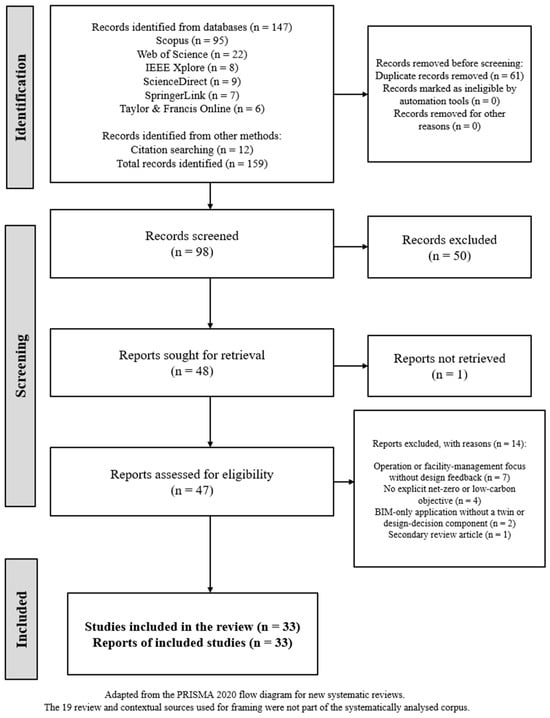
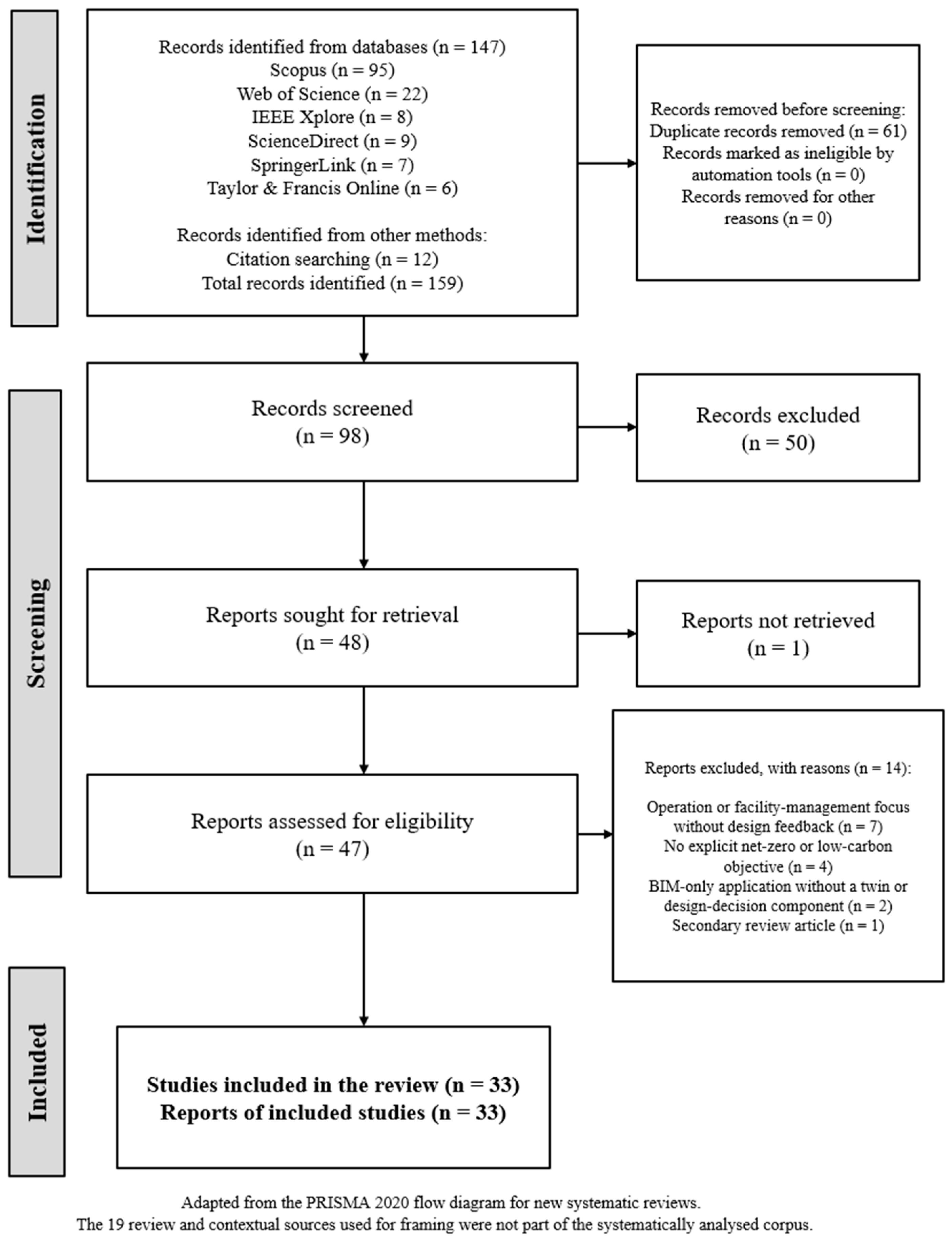
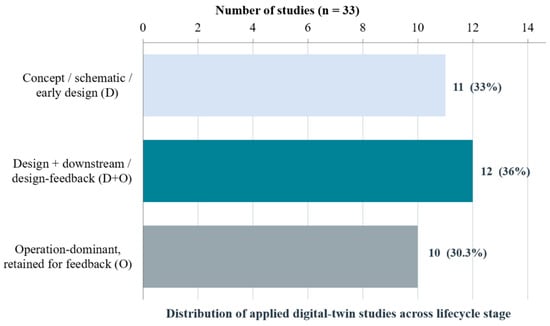
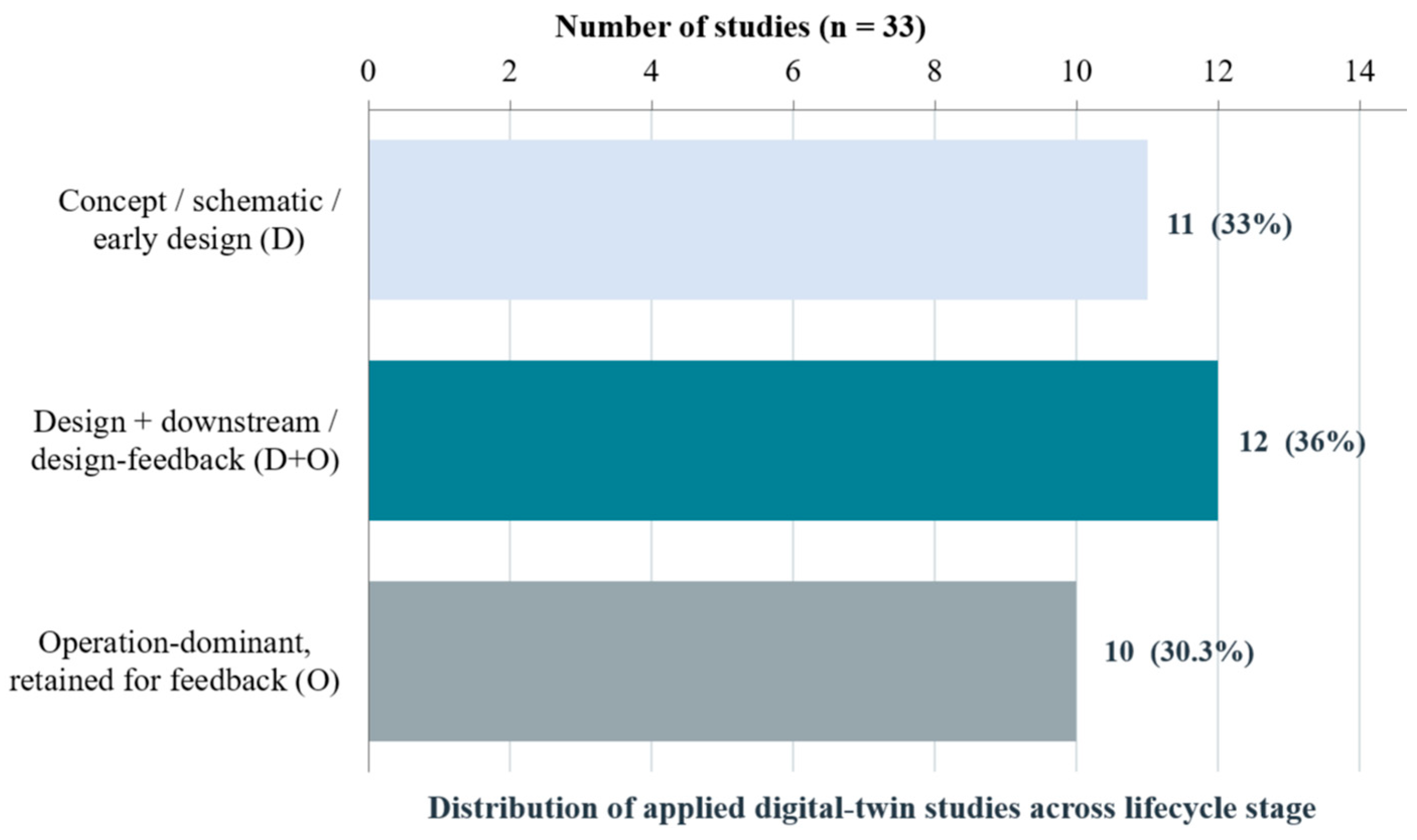
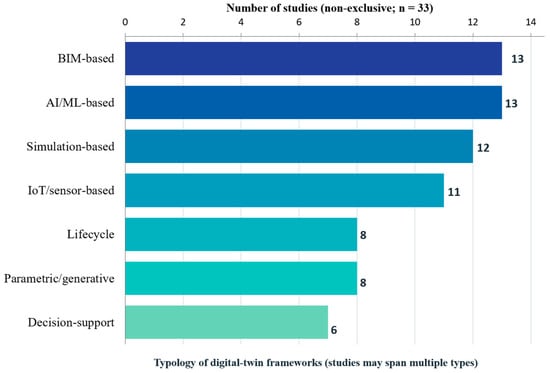
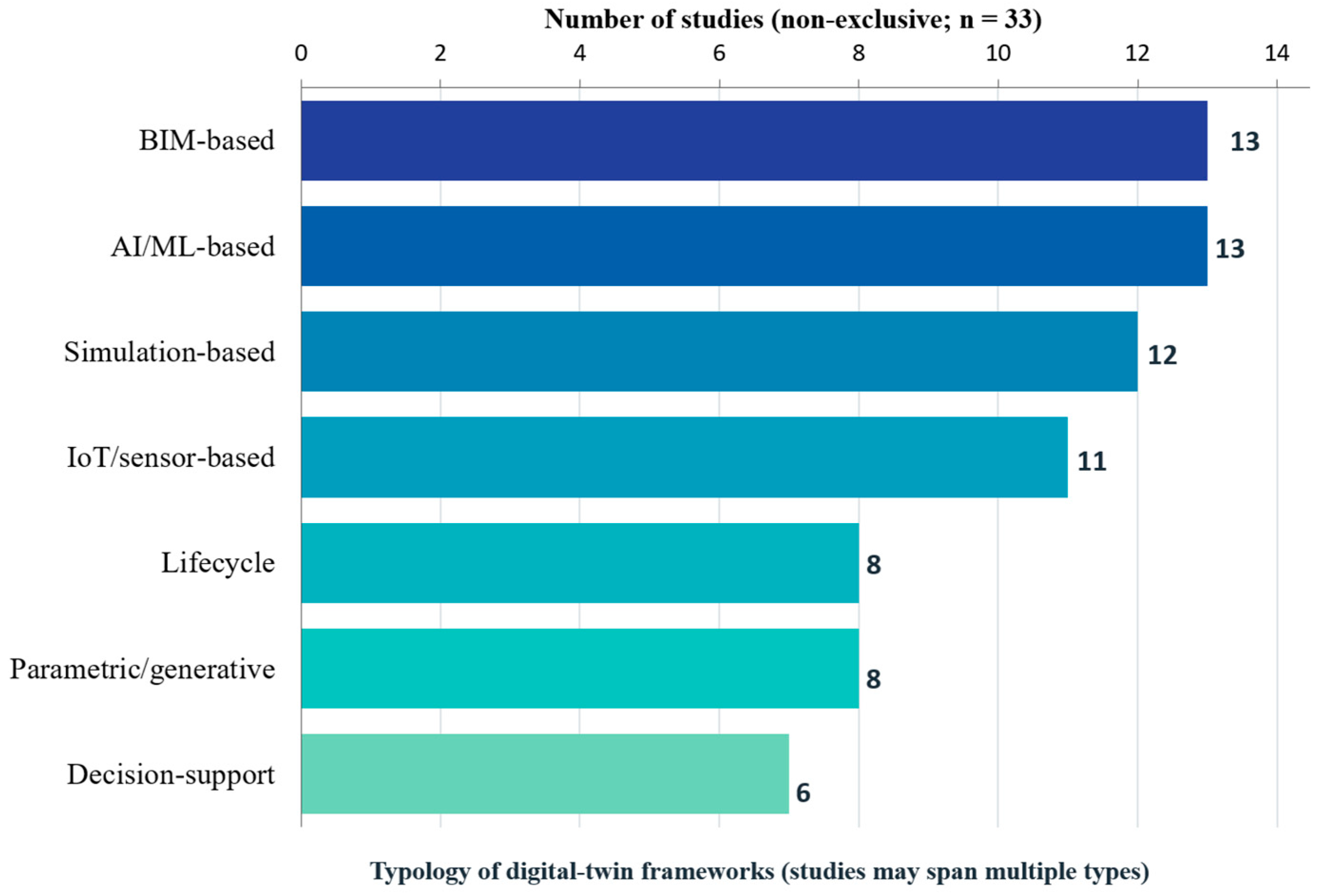
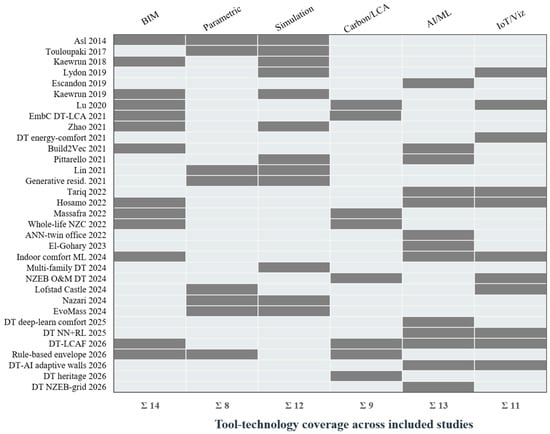
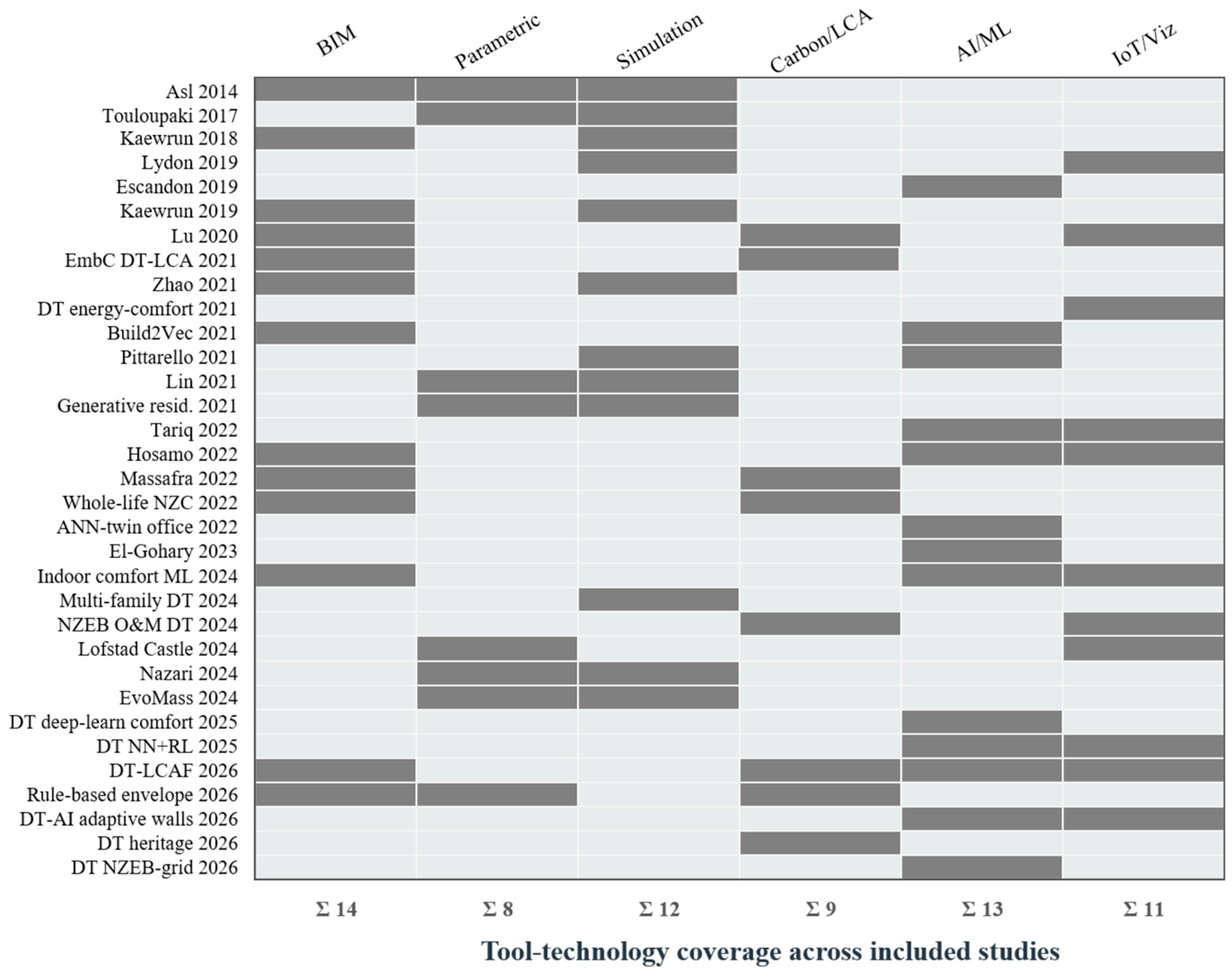
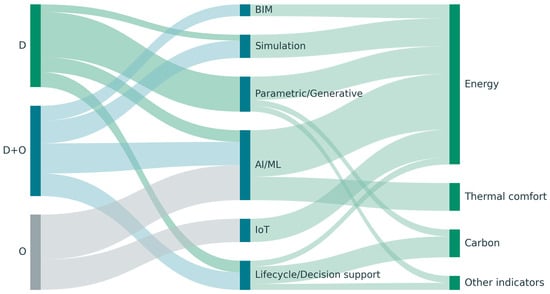
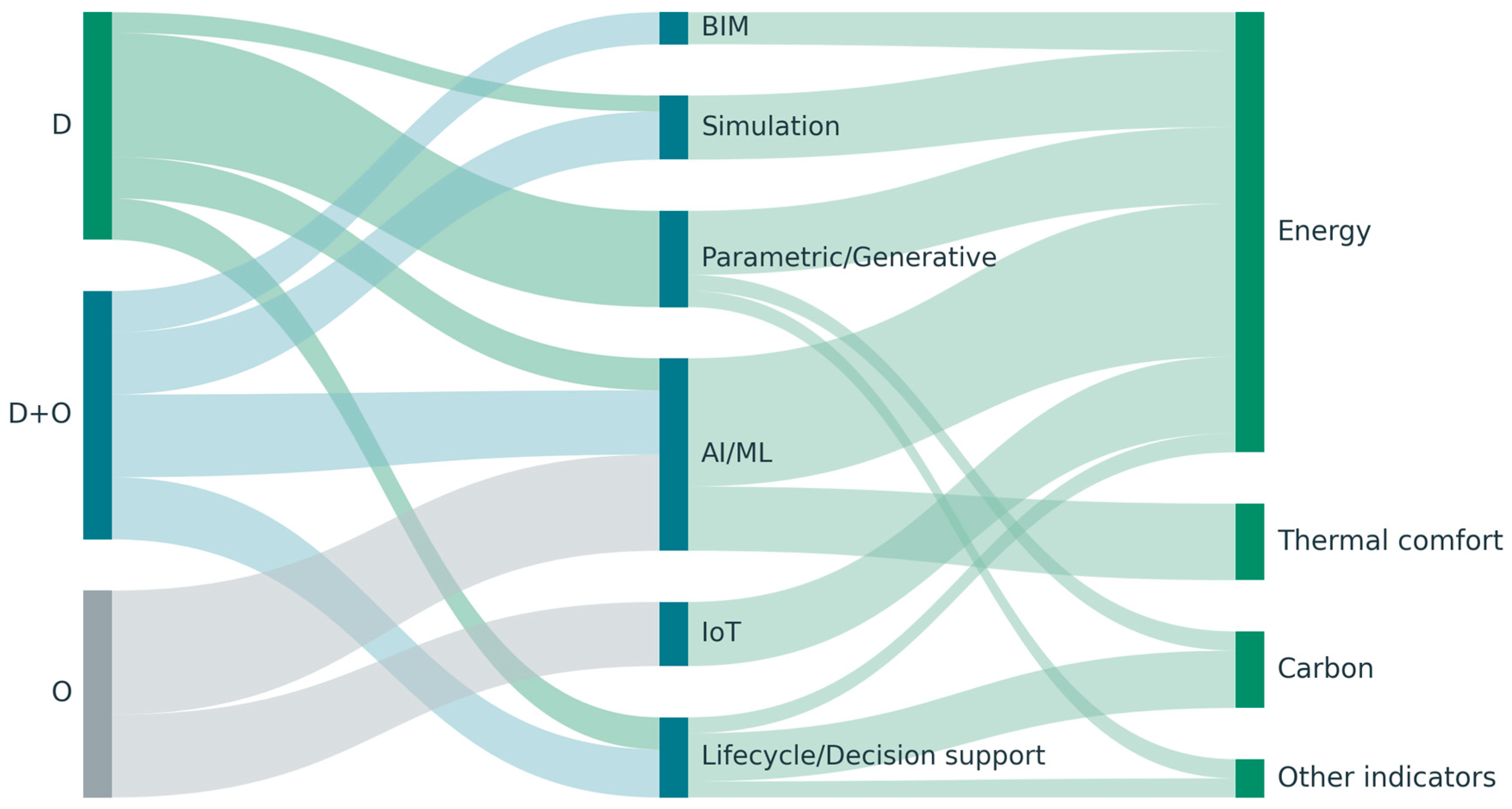
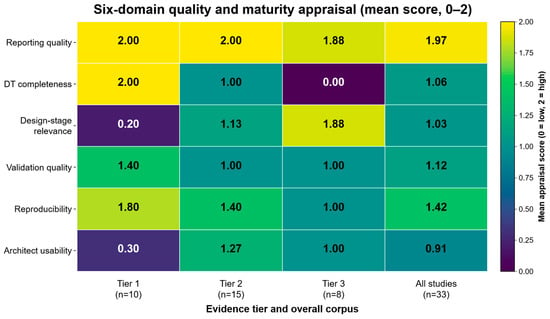
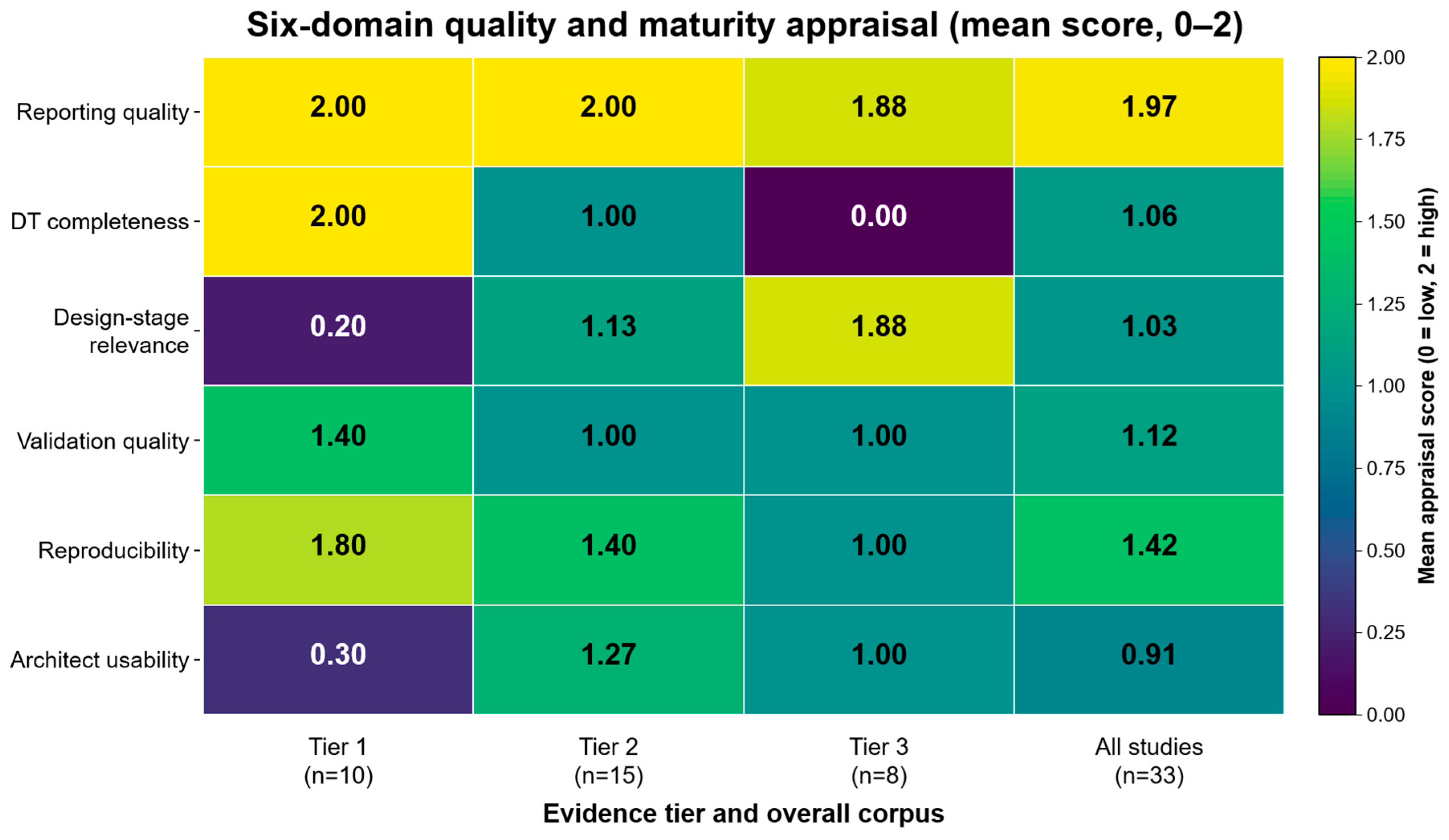
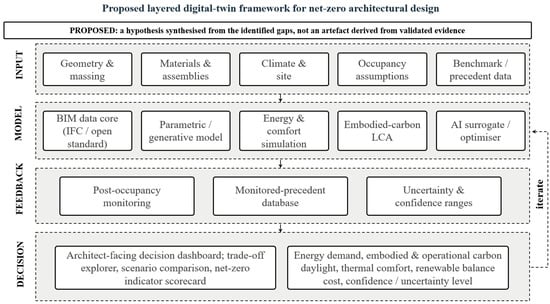
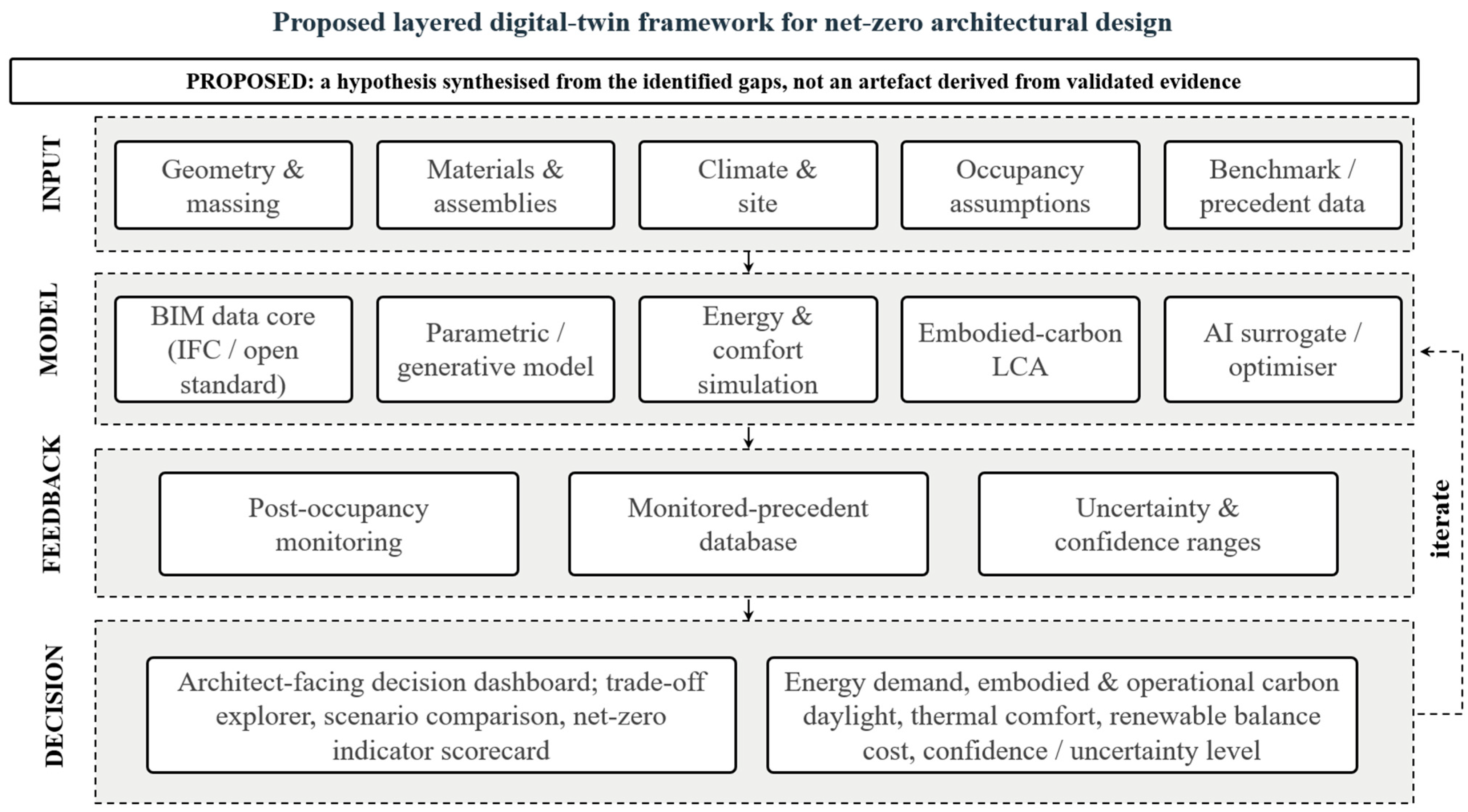

Disclaimer/Publisher’s Note: The statements, opinions and data contained in all publications are solely those of the individual author(s) and contributor(s) and not of MDPI and/or the editor(s). MDPI and/or the editor(s) disclaim responsibility for any injury to people or property resulting from any ideas, methods, instructions or products referred to in the content. |
© 2026 by the authors. Licensee MDPI, Basel, Switzerland. This article is an open access article distributed under the terms and conditions of the Creative Commons Attribution (CC BY) license.