


Abstract
Frailty represents a significant challenge for aging populations, as population age and the prevalence of functional decline, chronic conditions, and complex health needs increase. This study examines the role of the built environment in the prevention and management of pre-frailty and frailty, with the aim of identifying and synthesizing evidence on environmental elements that influence physical, mental, and social health. The review also explores different interventions and planning approaches that may help reduce the risk of frailty or delay its onset. This study used an umbrella review approach based on existing systematic reviews and meta-analyses focusing on adults aged 45 years and older. Eligible reviews focused on built environment characteristics in relation to frailty, healthy aging, or related health outcomes; reviews of institutionalized populations or those without relevant built-environment or health outcomes were excluded. PubMed, Scopus, ScienceDirect, the Cochrane Library, and COBISS were searched, with final searches conducted on 1–2 July 2025. Methodological quality was assessed using the JBI Critical Appraisal Checklist, and findings were synthesized narratively. A total of 26 reviews were included. The findings suggest that built environments that support and promote physical activity, social interaction, accessibility of services, and community engagement are consistently associated with a lower risk of (pre-)frailty and improved quality of life. In particular, high-quality green and blue spaces, safe and walkable neighborhoods with good connectivity, and accessible housing play an important role in maintaining functional independence. Furthermore, the review highlights the importance of subjective perceptions of safety, social cohesion, and neighborhood quality. The evidence is limited by methodological heterogeneity and by the frequent use of indirect frailty-related outcomes. These results provide a basis for the development of evidence-informed recommendations, planning guidelines, and spatial measures to support active and healthy aging in the community. The review was co-financed by the European Union and by the Republic of Slovenia’s State Budget under the European Cohesion Policy Programme 2021–2027 in Slovenia. The review was not registered.
1. Introduction
The built environment plays an increasingly important role in shaping public health, especially in the context of aging societies, as the environments in which people are born, live, work, and age are key determinants of health [1,2,3]. In this review, the focus is specifically on the urban environment at the neighborhood and community scale, rather than on individual buildings or on indoor environmental quality. The built environment is understood as the human-made physical setting in which people live, work and carry out their daily activities, including housing, public and green spaces, mobility and transport infrastructure, land-use patterns, and the spatial distribution and accessibility of services. Demographic trends show that populations are aging rapidly, as the proportion of older adults (65+) has grown substantially and is expected to continue increasing in the future [4,5]. In this context, urban design and urban planning significantly influence physical activity, social inclusion, access to services, and overall well-being, thereby shaping health outcomes throughout life.
Frailty is a geriatric syndrome characterized by a decline in physiological reserves across multiple organ systems and a reduced ability to respond to stressors. It is associated with an increased risk of disability, hospitalization, institutionalization, mortality, and a poorer quality of life. Clinically, it manifests as a decline in physical functions (e.g., unintentional weight loss, fatigue, reduced physical activity, decreased muscle strength, slower walking speed, and balance disorders), and often includes cognitive and social decline as well. Frailty develops gradually and is often overlooked in its early stages, making preventive and early intervention approaches crucial [6,7].
One of the key factors in preventing and managing (pre-)frailty is the built environment [8,9]. Key factors include access to green, blue, and recreational spaces [10,11,12], neighborhood walkability [11,13,14], mobility and transport infrastructure [15,16], proximity and accessibility of services [17,18,19], accessible housing [20,21], and actual and perceived safety [22,23,24]. These characteristics can also support social interaction, social cohesion, social support, and opportunities for social participation [18,19,25]. Participatory and community-based approaches also play an important role [26,27], as does addressing socioeconomic inequalities that affect access to a quality living environment and opportunities for healthy aging [28,29,30]. A well-designed and adapted environment can significantly contribute to maintaining the functionality, mobility, social inclusion, and independence of older adults [1,11,26,31,32,33,34] and to delaying the onset of (pre)frailty in later life [8,9].
The purpose of this review article is to systematically identify and synthesize the scientific evidence regarding the relationship between built environment characteristics and the prevention and management of pre-frailty and frailty.
The review addresses the following research questions: (1) What is the role of the built environment in reducing the risk of pre-frailty and frailty? (2) Which spatial measures and interventions have been identified as effective in preventing and managing (pre-)frailty? and (3) Which practices and approaches related to the design of a healthy built environment have been documented in the scientific literature?
This review contributes to a better understanding of how measures in the built environment can function as preventive and supportive mechanisms for healthy aging, as well as for the prevention and management of frailty.
2. Materials and Methods
2.1. Study Design
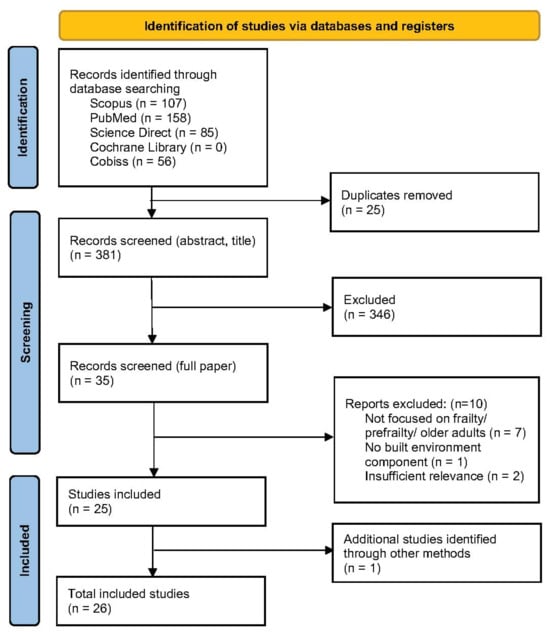
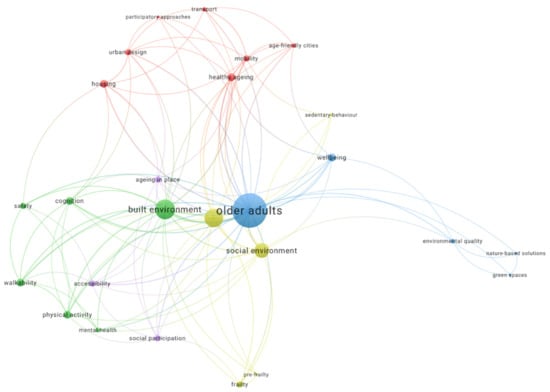
This study used an umbrella review approach to synthesize evidence from existing review studies examining the relationship between characteristics of the living and built environment and the prevention and management of (pre-)frailty. The review was reported according to the PRISMA 2020 statement. The study selection process is presented in the PRISMA 2020 flow diagram (Figure 1), while the completed PRISMA 2020 Checklist and PRISMA 2020 for Abstracts Checklist are provided in the Supplementary Materials (Tables S2 and S3). The review was not registered, and no formal review protocol was prepared.
Figure 1.
PRISMA 2020 flow diagram of the literature search and study selection process.
2.2. Search Strategy and Data Sources
The study population consists of community-dwelling older adults (not in hospitals, nursing homes, or other institutions; not hospitalized) aged 45 and older.
We included articles published in the last 10 years. The search was conducted in 5 bibliographic databases: PubMed, Scopus, Science Direct, Cochrane Library, and Cobiss. The final searches in PubMed, Scopus, ScienceDirect, the Cochrane Library, and COBISS were conducted on 1 and 2 July 2025. Various combinations of English keywords were used, including: (1) “built environment,” “urban environment,” “living environment,” “neighborhood,” “housing,” “environmental design,” “urban health,” and (2) “frail,” “prefrail,” “frailty,” “frail elderly,” “aging,” “aged.”
2.3. Inclusion and Exclusion Criteria
The studies were selected based on the inclusion and exclusion criteria shown in Table 1.
Table 1.
Eligibility criteria applied in the study selection process.
2.4. Screening, Selection Process, and Data Extraction
Three reviewers participated in the screening and study selection process, which was conducted using application Rayyan in 2025. Any disagreements regarding eligibility were resolved through discussion and consensus. Formal inter-rater reliability was not calculated. The study selection process followed the PRISMA 2020 guidelines.
The literature search identified 406 records. After removal of duplicates, titles and abstracts were screened, followed by full-text eligibility assessment. This process resulted in the inclusion of 25 studies identified through database searching. One additional study was identified through other methods, resulting in a total of 26 studies included in the final qualitative synthesis [8,9,10,11,12,13,14,15,16,17,18,19,20,21,22,23,24,25,26,27,28,29,30,34,35,36].
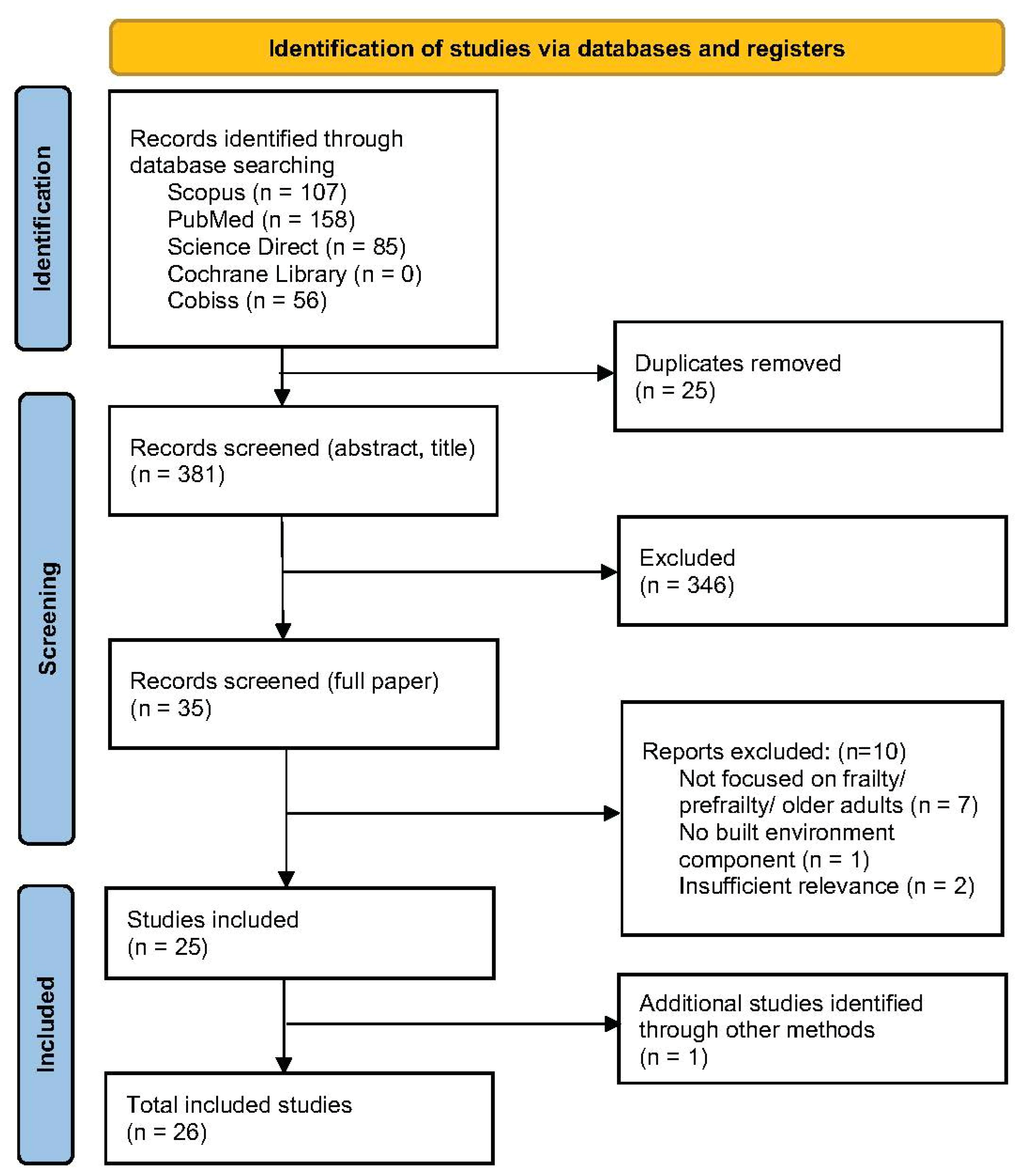
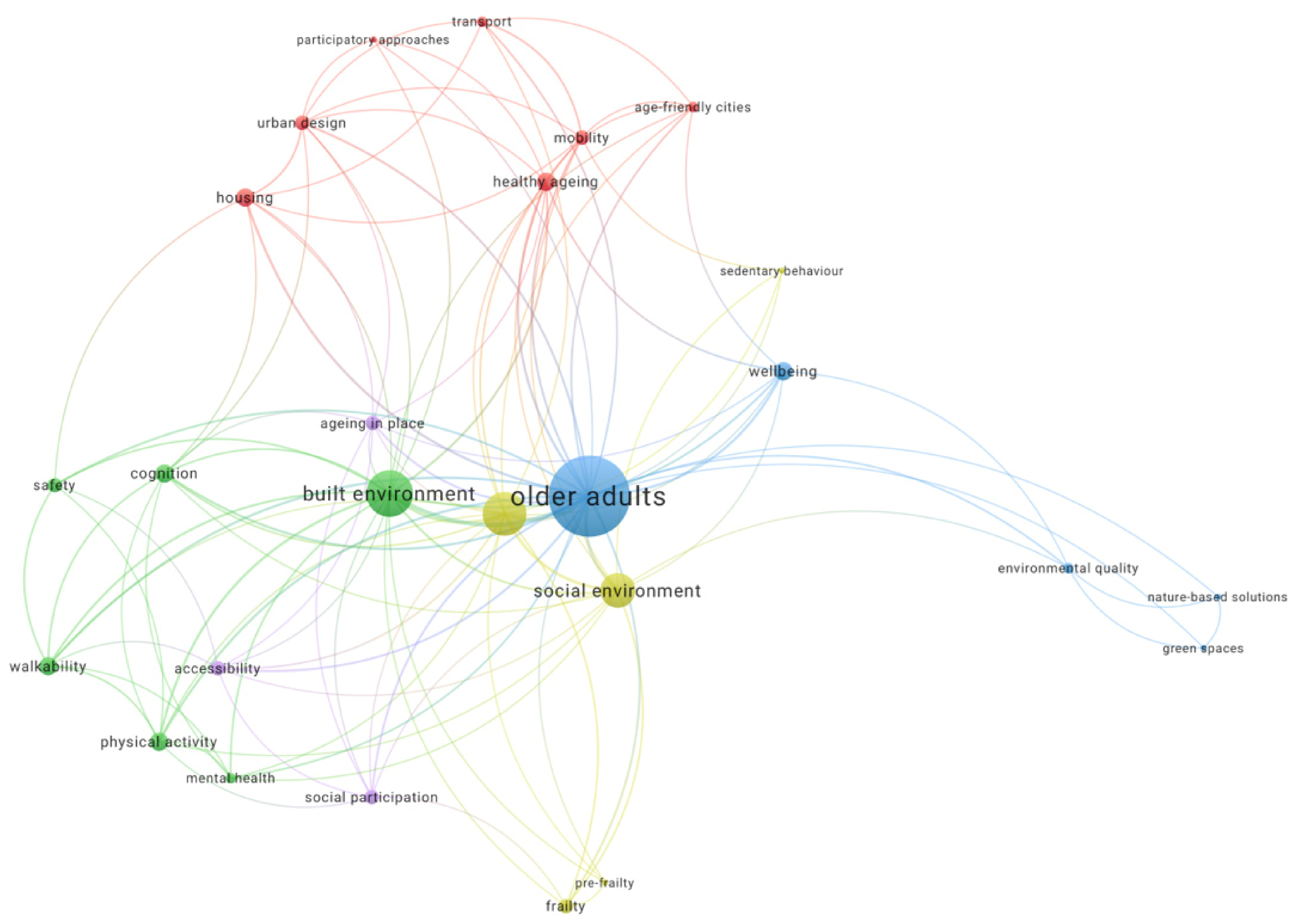
Data extraction was performed by two reviewers, with the included reviews divided approximately equally between them; each review was extracted by one reviewer. Data were extracted into pre-prepared tables that included the authors, year of publication, number of included primary studies, frailty-related outcomes, key environmental characteristics, and the main findings regarding the relationship between the environment and frailty prevention. Figure 2 presents the keywords co-occurrence network of research on the impact of the built environment on health.
Figure 2.
The keywords co-occurrence network of research on the impact of the built environment on health (Generated in VOSviewer).
2.5. Quality Appraisal
To assess the methodological quality of the included reviews, the Joanna Briggs Institute (JBI) Critical Appraisal Checklist for Systematic Reviews and Research Syntheses was employed. The full critical appraisal results are presented in Supplementary Table S1.
2.6. Data Synthesis
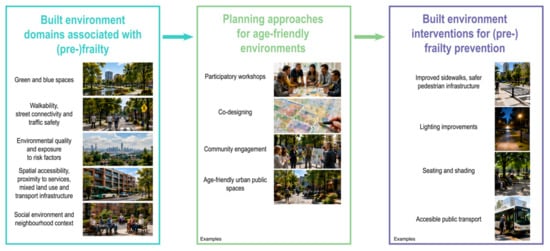
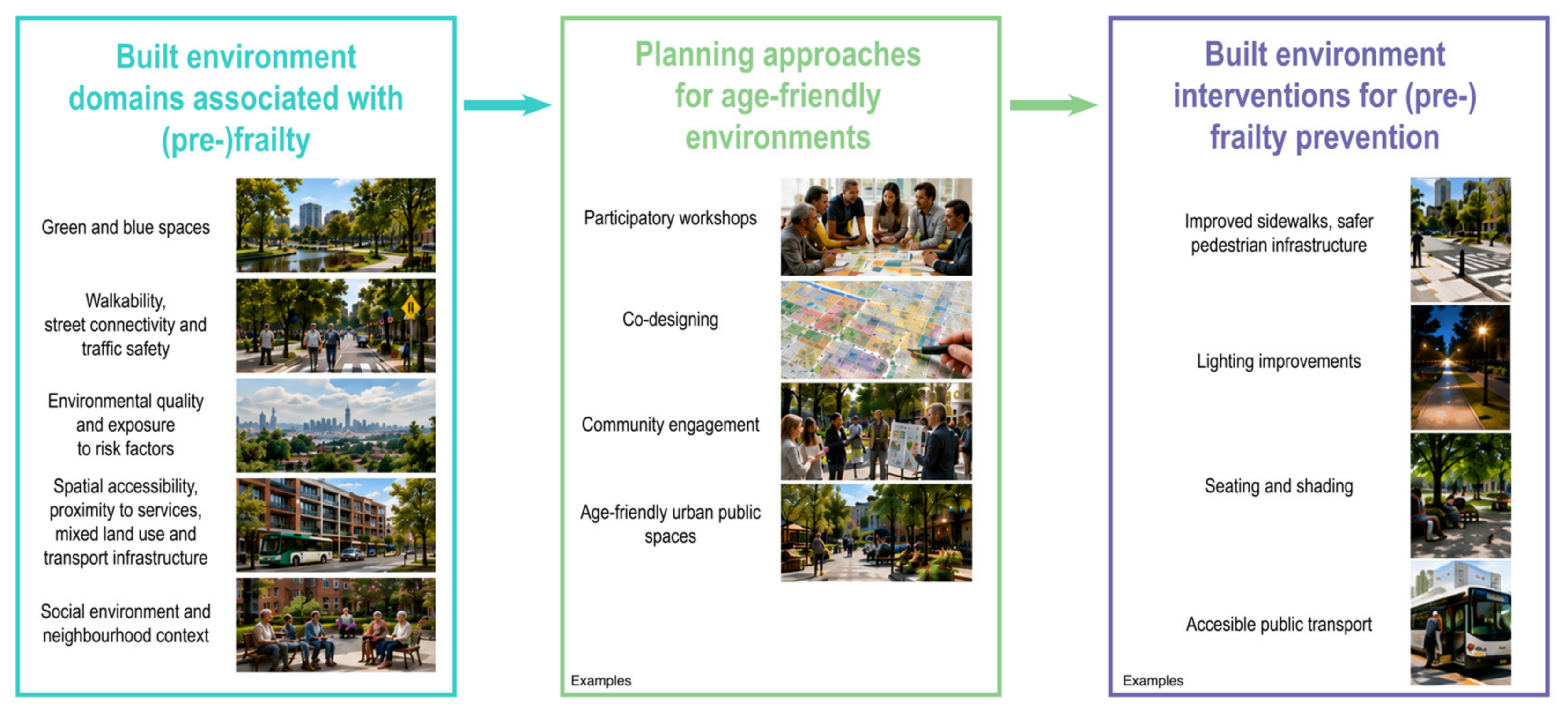
Due to the methodological heterogeneity of the included studies, a narrative synthesis was employed. The analysis was structured around three main thematic areas, each reflecting a distinct aspect of the relationship between the built environment and (pre-) frailty (Figure 3).
Figure 3.
Conceptual framework (images AI-generated).
The first thematic area, built environment domains associated with (pre-)frailty, included five subthemes: green and blue spaces; walkability, street connectivity and traffic safety; environmental quality and exposure to risk factors; spatial accessibility, proximity to services, mixed land use and transport infrastructure; social environment and neighborhood context.
The second thematic area, built environment interventions for (pre-)frailty prevention, addressed neighborhood- and urban-scale interventions, micro-scale environmental and home interventions, and integrated and multi-level interventions.
The third thematic area, planning approaches for age-friendly environments, addressed broader planning strategies and approaches relevant to creating environments that support healthy aging and the prevention and management of (pre-)frailty.
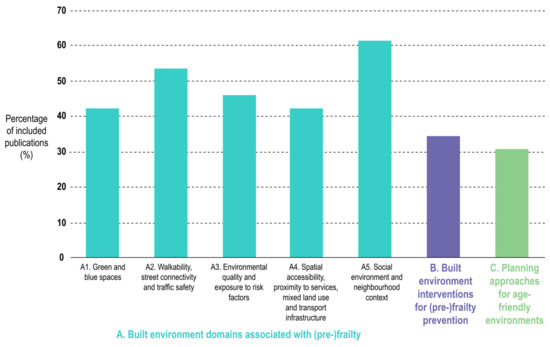
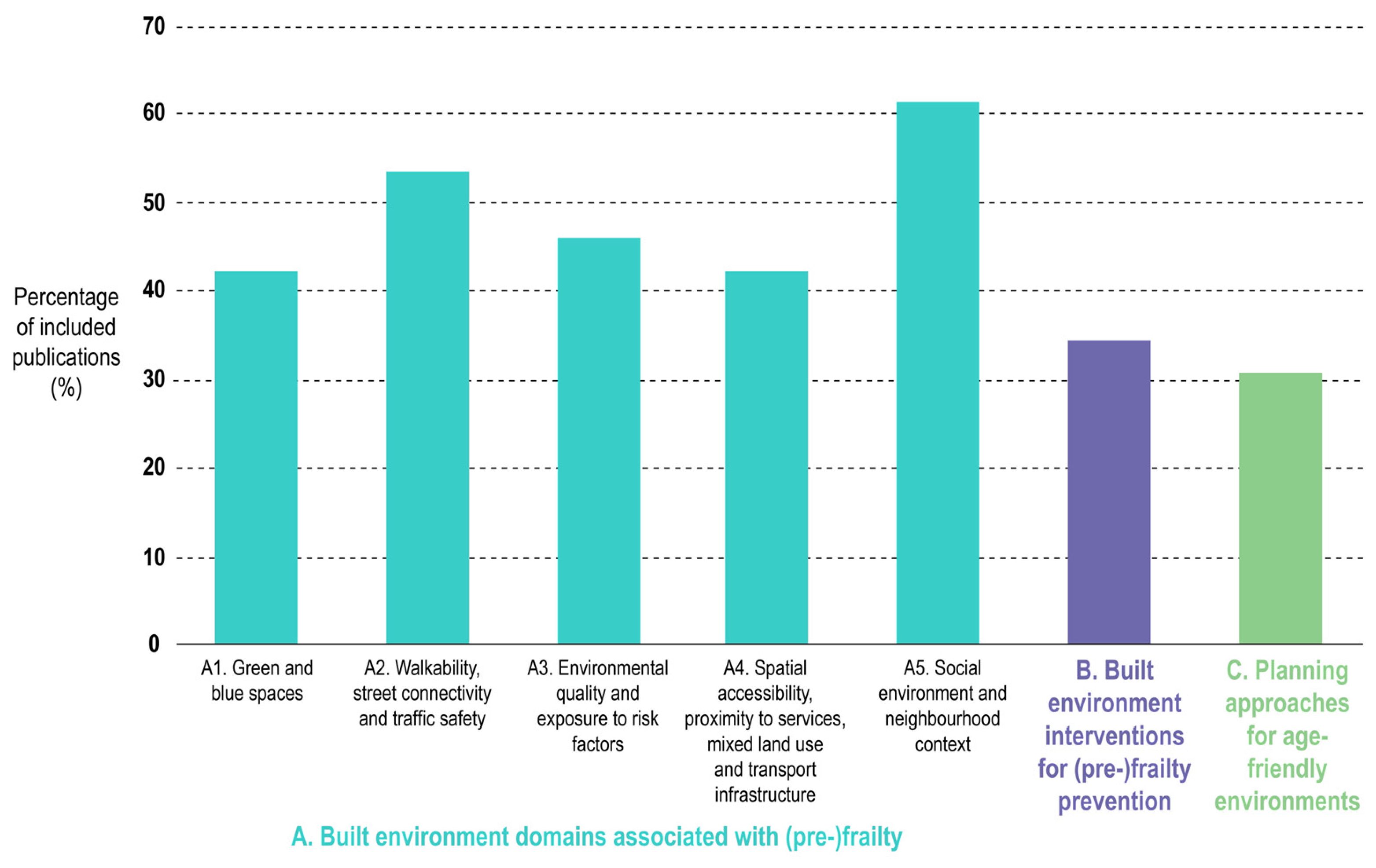
Figure 4 presents the proportional distribution of publications across these three main thematic areas and their respective subthemes. The analysis indicates that the literature most frequently addressed specific built environment domains associated with (pre-)frailty, particularly social environment and neighborhood context, while intervention-oriented topics and planning approaches for age-friendly environments were less commonly represented. Since many publications addressed multiple thematic areas or subthemes simultaneously, the categories are not mutually exclusive.
Figure 4.
The proportional distribution of publications across thematic categories: A. Built environment domains associated with (pre-)frailty—A1 green and blue spaces [8,9,10,11,12,13,18,19,24,34,35], A2 Walkability, street connectivity and traffic safety [8,9,11,13,14,15,16,17,18,19,23,24,34,35], A3 environmental quality and exposure to risk factors [9,10,11,12,13,18,19,23,24,29,34,35], A4 Spatial accessibility, proximity to services, mixed land use and transport infrastructure [9,11,13,14,15,16,17,18,19,24,34], A5 social environment and neighborhood context [8,11,12,14,17,18,19,24,25,27,28,29,30,34,35,36]; B. Built environment interventions for (pre-)frailty prevention [10,15,18,19,20,21,22,26,34]; C. Planning approaches for age-friendly environments [16,19,23,26,27,29,34,35] (Note: individual publications may address multiple thematic dimensions).
3. Results and Thematic Analysis
A review of the literature confirms that the built environment has an important influence on health and can directly influence the risk of developing frailty through its physical and social characteristics. The findings suggest that the design of neighborhoods and built environments plays an important role in supporting functional independence and quality of life among older adults. The results were organized into three thematic groups: (1) built environment domains associated with (pre-)frailty, (2) built environment interventions for (pre-)frailty prevention, and (3) planning approaches for age-friendly environments. The main findings are synthesized in Table 2, together with their implications and the key gaps identified in the evidence base.
Table 2.
Summary of key findings, implications, and evidence gaps identified in the review.
3.1. Built Environment Domains Associated with (Pre-)Frailty
The review consistently shows that the built environment plays an important role in the prevention and management of pre-frailty and frailty [8,25,34]. Its effects can be seen across different aspects of physical, mental, and social health [11,12,17] and are linked to behavioral factors such as physical activity, mobility, and social engagement [13,15,19].
3.1.1. Green and Blue Spaces
Green and blue spaces are the built environment features that are the most consistently associated with outcomes connected to frailty [9,11,12]. Longitudinal and systematic evidence suggests that higher residential greenness is associated with a lower risk of frailty and slower functional decline [8,9]. The presence of green spaces may promote healthier lifestyles by supporting physical activity and outdoor engagement [10,11].
Access to green spaces is linked to higher levels of physical activity, more walking, and less sedentary behavior [10,13,19,36]. Greater exposure to greenery is associated with a slower mobility decline and better functional ability, although results regarding the impact on certain clinical strength tests are not entirely consistent [9].
The effects on mental health are among the strongest findings in the literature. The presence of green and blue spaces is associated with lower levels of anxiety and depressive symptoms, greater psychological restoration, and improved emotional well-being [10,11,12]. Exposure to natural environments near the home is also associated with lower use of antidepressants among older adults [24]. Evidence also suggests a protective role for cognitive health, including a lower risk of developing dementia and slower cognitive decline [11].
In addition to their physiological benefits, green spaces also play an important social role. They provide opportunities for informal social interactions and gatherings, which strengthen a sense of belonging to the neighborhood and reduce social isolation [11,18,35].
The effects depend heavily on the quality and morphology of the space, not just its quantity. Key factors include accessibility, safety, and the availability of benches and shade, which influence the actual usability of green spaces among older adults.
3.1.2. Walkability, Street Connectivity and Traffic Safety
Higher walkability is consistently associated with higher levels of physical activity, better physical functioning, and lower rates of obesity and body mass index (BMI) [9,11,13,17,34]. Research confirms that neighborhoods identified as poor walking environments increase the risk of developing frailty [8,9]. Walkability is also associated with a greater amount of transport walking and a higher number of daily steps. Walkable environments encourage older adults to incorporate movement into everyday routines [8,11].
Micro-scale design elements in a neighborhood are key to maintaining walkability and safety. High-quality sidewalks, the installation of benches for resting at regular and appropriate intervals, good street lighting, and safe intersections with lowered curbs contribute to the use of public space by older adults [13,18,19]. These elements are particularly important for people with reduced physical capacity, as they can reduce physical effort and fear of falling, while supporting continued participation in community life [13,18,19,23].
Walkability is also associated with social and mental well-being. An environment with a high degree of walkability and access to local services reduces social isolation and feelings of loneliness by encouraging informal social interactions and community involvement. The perception of a neighborhood as safe and walkable is associated with better mood and lower levels of depression [13,15,23,24].
Findings regarding cognitive outcomes are mixed, but some studies suggest that better street connectivity and street integration support cognitive function and reduce the risk of cognitive decline [11].
3.1.3. Environmental Quality and Exposure to Risk Factors
Environmental risk factors, such as air pollution, noise, and extreme temperatures, can significantly affect the health and frailty risk of older adults [10,12]. Studies show that older adults living in areas with higher exposure to air pollution, particularly PM2.5 particulate matter, perform worse on cognitive function tests and may have a higher risk of dementia-related mortality [29]. Air pollution also acts as a behavioral barrier, as older adults perceive such environments as dangerous and stressful, which reduces their participation in physical and social activities in the community [11,19].
Noise and heat stress present additional risks to the mental and physical well-being of older adults. High levels of neighborhood noise (particularly traffic noise) are often associated with increased stress, cognitive fatigue, and increased depressive and anxiety symptoms [12]. Similarly, extreme temperatures, especially heat waves, are critical for older adults due to their reduced physiological ability to adapt, which increases the risk of cardiovascular disease and mortality [10]. Some studies also suggest that the combined effects of heat and noise may negatively affect sleep quality and emotional well-being [12].
Poorly maintained environments and physical hazards can further limit mobility and increase social isolation. Uneven sidewalks, high curbs, unsafe crossings, poor lighting, and winter conditions such as snow and ice may increase fear of falling and discourage older adults from leaving their homes. Neighborhood disorder, including litter, vandalism, and neglected public spaces, can reduce the perceived safety and attractiveness of the environment and may contribute to lower levels of outdoor activity and social participation [19,35].
Pedestrian safety and subjective perceptions of space play an important role in how the environment is actually used. Perceived safety from crime, the aesthetic appeal of the neighborhood (e.g., cleanliness, well-maintained green spaces), and seasonal conditions (e.g., snow, ice, or extreme heat) can significantly limit the mobility of older adults, regardless of objectively measured infrastructure [13,25,35]. Traffic safety, including safe pedestrian crossings, is crucial for preventing accidents and maintaining independence [9,11,13,24].
3.1.4. Spatial Accessibility, Proximity to Services, Mixed Land Use and Transport Infrastructure
Access to services and a mixed-use environment are important factors supporting independence and healthy aging among older adults. Diverse land use and shorter distances to public transportation are associated with better self-reported health and higher levels of physical activity. Studies also show that mixed-use neighborhoods, combined with well-designed street infrastructure and lighting, promote active mobility and are linked to lower levels of obesity or body mass index (BMI) [11,13,17].
The proximity of everyday services strongly encourages transport-related walking and supports independent participation in community life. Access to shops and commercial facilities, banks, post offices, and public transport within a 5 to 10 min walk (approximately 400–800 m) helps older adults maintain daily routines and reduces dependence on cars, even among those with declining physical abilities. This is crucial for maintaining independence and preventing sedentary behavior [13,17,19,20].
Findings related to cognitive outcomes are less consistent. Some studies suggest that thoughtfully designed, diverse, and stimulating environments (including improved street connectivity) support cognitive health and reduce the risk of developing dementia. However, a high density of specific destinations and excessive environmental stimulation may increase cognitive load and stress in some older adults. Nevertheless, mixed-use development encourages the use of so-called “third places,” such as cafes, markets, and libraries, which serve as spaces for informal gatherings, strengthen social networks, and enhance a sense of belonging to the neighborhood [11,20,24].
In rural and less populated areas, limited access to health, social, and transport services remains a major barrier to healthy aging. Poor public transport coverage often increases dependence on private vehicles or support from family members, which may lead to rapid social isolation when independent mobility declines [15,19,20].
3.1.5. Social Environment and Neighborhood Context
Research consistently shows that social cohesion, social support, and a strong sense of neighborhood belonging act as protective factors against functional decline and frailty [25].
Poorly maintained and disorderly environments can negatively affect both physical and mental health. Visible signs of neglect, such as litter, graffiti, vandalism, crime and violence, increase feelings of stress and insecurity and may contribute to reduced mobility, loneliness, and social isolation among older adults. This is linked to poorer mental health and a higher risk of depression [11,12]. As systematically reviewed by Buckingham et al. (2021) [28], area-level deprivation fundamentally shapes later-life health outcomes by exposing residents to chronic environmental stressors and limiting access to supportive local resources. This structural press is particularly critical for older adults, who spend large amounts of time within their immediate surroundings and whose lived area typically shrinks over time due to declining mobility [28]. Consequently, a lack of trust and weaker social cohesion within these disadvantaged neighborhoods can further exacerbate these negative effects and functional decline [17,29]. Prolonged sedentary behavior—a major behavioral precursor to functional decline, social isolation, and frailty—is significantly shaped by physical and social neighborhood attributes, such as transport options (e.g., driving status), social participation, and the perceived distance to local facilities [36].
In contrast, high-quality public spaces and so-called “third places”, such as libraries, cafés, markets, and places of worship, can support social interaction and well-being. These spaces encourage both planned and spontaneous social interactions, which strengthen social capital and a sense of community belonging [11]. Social support is also influenced by specific architectural elements, such as building entrances and porches/stoops, which increase residents’ visibility and enable informal neighborhood surveillance (the so-called “eyes on the street”) [19].
Subjective perceptions of the neighborhood (safety, accessibility, a sense of belonging) often influence behavior as much as objective environmental characteristics. A sense of safety in the neighborhood, especially during the day and at night, is a key factor in leaving the home. Older adults who perceive their neighborhood as safe, accessible, and welcoming are generally more physically active and socially engaged [13,24]. The literature further suggests that the social environment can influence emotional resilience and cognitive health. For this reason, age-friendly planning should include not only physical adaptations, but also measures that strengthen social participation and intergenerational connections, particularly in neighborhoods with poorer infrastructure [18,19,27,34].
3.2. Built Environment Interventions for (Pre-)Frailty Prevention
The reviewed literature describes a range of built environment interventions that may contribute to the prevention and management of (pre-)frailty. These interventions address different aspects of the built environment, from neighborhood and public-space improvements to house adaptations and broader approaches combining environmental, social, organizational, and policy measures.
At the neighborhood and urban scale, interventions include improvements that address walkability, street connectivity, pedestrian infrastructure, public transportation, service accessibility, and the quality of public spaces. Many studies also highlight the importance of green and blue spaces.
Urban planning interventions that improve walkability, accessibility, and the quality of public spaces are associated with increased physical activity, more frequent walking, and better mobility among older adults [15,17,19,36]. Measures such as well-maintained sidewalks, safe pedestrian crossings, lowered curbs, improved street lighting, separated pedestrian and cycling areas, and the removal of physical barriers can reduce mobility limitations and support independent daily functioning [13,15,19].
Green infrastructure interventions, including park renovations, recreational areas, improved access to green and blue spaces, and the provision of shade, benches, and safe pathways, may support physical activity, social connections, reduce stress, and contribute to better mental well-being [10,11,18,34]. However, the literature notes that it is not only the quantity of green spaces that matters, but also their quality, accessibility, safety, amenities, and integration into the broader spatial context [18,23,24,27].
Transportation and mobility interventions mainly focus on improving the accessibility, usability, and affordability of public transport. Free or subsidized public transport, adapted bus stops, better transport information, education on mobility options, training drivers to meet the needs of older adults, and volunteer transport services can support mobility and social participation, especially in areas with limited transport access [15,16,19,34].
The reviewed literature also identifies smaller-scale environmental modifications that can significantly influence the everyday lives of older adults. These include improvements to the immediate outdoor environment, such as benches, public restrooms, lighting, safe sidewalks, lowered curbs, clear crossings, and well-maintained walking paths, as well as adaptations in the home environment.
Small improvements to public spaces can increase comfort, sense of safety, and willingness to spend time outside the home. Benches provide a place to rest while walking, public restrooms support longer stays outside the home, and good lighting improves orientation and perceived safety, as well as the use of public space at different times of the day [13,19,24]. Such elements are especially important for older adults with limited functional abilities, as they enable them to use the neighborhood for longer periods and feel safer, while also supporting social inclusion and enabling greater involvement in community life [18,19,27].
Home modifications identified in the reviewed literature include removing architectural barriers, improving accessibility in bathrooms and kitchens, installing handrails, using non-slip materials, improving lighting, and other measures to reduce the risk of falls and injuries [21,22,25]. Evidence suggests that these adaptations can support functional independence and reduce difficulties in performing daily activities, although their direct effects on physical functioning are not always statistically significant [15,21].
The literature also mentions the growing role of assistive technologies for the home, such as fall detection sensors, alarm systems, night lighting, smart home solutions, and emergency notification systems. These solutions may increase the sense of security and support independent living for older adults, particularly among those living alone or at higher risk of functional decline [15,20,22]. Since some of these solutions are still in the development or pilot testing phase, further research is needed on their actual effectiveness in everyday settings. Home-based environmental interventions were less comprehensively represented in the literature included in this review; therefore, this area should be explored more systematically in future research.
Finally, several publications describe integrated approaches that combine changes in the physical environment with organizational, social, and policy measures. These approaches understand frailty not only as an individual health condition, but also as something shaped by the surrounding built environment and broader social context [12,27,34].
Such interventions may include home modifications, improvements to public spaces and transport systems, better access to services, and measures that support social participation and community engagement. Hérick de Sá et al. [15] emphasize that combined packages of measures addressing housing, transportation, and urban design are generally more effective in improving mobility and related outcomes than isolated interventions.
An important part of these approaches is also the involvement of older adults in planning and decision-making processes. Participatory approaches help identify real-life barriers and everyday needs more accurately and can improve the relevance and usability of proposed solutions. These approaches are particularly important in communities where frailty is closely linked to social inequalities, poor access to services, and lower-quality living environments [26,27,30].
3.3. Planning Approaches for Age-Friendly Environments
The reviewed literature explores different planning approaches relevant to the design and adaptation of the built environment for an aging population. Frequently highlighted approaches include age-friendly and inclusive planning frameworks, participatory methods, user involvement (e.g., citizen science), and cross-sectoral collaboration between urban planning, public health, social welfare, and policy-making [26,27,34]. Across these approaches, age-friendly planning is understood as extending beyond individual physical modifications to consider the interaction between older adults, their everyday environments, available services, and opportunities for social participation. This highlights the need for coordinated action across spatial, social, and health-related sectors rather than isolated interventions.
Most studies refer to the World Health Organization’s guidelines for Age-Friendly Cities and Communities (WHO AFCC), which include eight key domains: housing, transportation, social life, respect and social inclusion, participation in work and civil society, communication and information, community support and health services, and outdoor spaces and buildings [16,26,27]. These frameworks emphasize accessibility, safety, walkability, the usability of space, and opportunities for the active participation of older adults in the community. In planning practice, these broad domains translate into interconnected characteristics of the neighborhood environment, including accessible public transport, barrier-free pedestrian infrastructure, proximity to services and amenities, safe and attractive public spaces, and places that facilitate social interaction. Their combined consideration is particularly important because limitations in one domain, such as transport or pedestrian accessibility, may also restrict access to services and opportunities for social participation.
The literature also highlights community-based and participatory approaches, such as co-creation, citizen science, and active user involvement. Such approaches help identify local barriers and needs and increase the acceptance and usability of planned solutions in real-world settings [26,27]. Participatory approaches position older adults as active contributors to the assessment and improvement of their living environments. Methods such as citizen science, walking-based assessments, photographs, and participatory mapping can capture everyday experiences and locally specific barriers that may not be identified through conventional top-down assessments. This can provide planners with more context-sensitive information on how environmental characteristics are actually experienced and used by older residents.
Examples such as senior-friendly neighborhoods, intergenerational gardens, and integrated housing-service models illustrate how planning can support social inclusion, daily mobility, and quality of life for older adults. Among examples are initiatives for senior-friendly neighborhoods in Copenhagen, where older residents participated in co-designing spaces by installing benches and establishing intergenerational gardens. Another example is Kampung Admiralty in Singapore, an integrated development project in which housing for older adults is directly connected to key services, thereby promoting social interaction and quality of life [34]. These examples illustrate two complementary principles of age-friendly planning: adapting neighborhood spaces in response to the everyday needs of older residents and integrating housing, services, public spaces, and opportunities for social interaction within an accessible environment. Even relatively small spatial interventions, such as appropriately located seating, may improve the usability of public space for older adults with reduced mobility, while integrated developments can reduce spatial barriers between housing and essential daily services.
At the same time, the literature emphasizes that planning approaches must address social and spatial inequalities, as older adults living in disadvantaged or poorly accessible neighborhoods are often more vulnerable to functional decline, social isolation, and poorer health outcomes [29,30,35]. Socioeconomic disadvantage, unequal access to local resources, and differences in mobility and functional capacity may influence both exposure to environmental barriers and the ability of older adults to benefit from supportive neighborhood characteristics. Planning approaches therefore need to consider local context and prioritize environments and population groups where environmental and social disadvantages overlap.
4. Discussion
4.1. Key Findings and Interpretation
The results of the review show that the built environment plays an important role in preventing and managing (pre-)frailty, as it influences physical activity, mobility, functional ability, social inclusion, and mental health. Physical characteristics of the environment, such as access to green spaces, walkability, transportation infrastructure, and proximity to services, are primarily associated with physical functioning and daily mobility, while social characteristics of the environment influence social participation, a sense of belonging, mental health, and overall well-being. These findings are consistent with evidence from Slovenian older adults showing that physical activity and adequate nutrition are protective factors against sarcopenia, whereas sedentary behavior, older age, and lower cognitive function are associated with a higher risk of sarcopenia [37].
An important finding of the review is that the built environment cannot be viewed as a one-dimensional factor, but rather as a complex system of interrelated spatial, social, and organizational characteristics that together shape health outcomes. Findings suggest that combinations of built environment elements have greater influence than individual characteristics, highlighting the need for holistic urban planning.
The reviewed studies show that built environment interventions are most effective when they reduce environmental barriers, support mobility and physical activity, improve safety and accessibility, and are adapted to users’ functional abilities. Rather than emphasizing individual environmental modifications separately, the findings point to the importance of combining complementary measures across neighborhoods, public spaces, mobility systems, and home environments to support daily independence and participation among older adults.
At the same time, the results show that individual measures are generally insufficient unless they are part of broader, integrated strategies. Integrated or multi-component approaches that simultaneously address the physical environment, mobility, social participation, and access to services have the greatest potential for reducing the risk of (pre-)frailty. Such “packages of measures” better reflect the complex nature of frailty as a multidimensional condition that includes physical, cognitive, and social components. This supports the need to consider built environment interventions as part of broader prevention strategies rather than as isolated spatial measures. Although not specific to aging or frailty, population-based evidence also shows that lifestyle risk factors tend to cluster and that unhealthy lifestyle profiles are associated with poorer self-rated health, further supporting the need for multi-component prevention strategies [38].
Nevertheless, the review highlights some gaps between planning concepts and empirical evidence. Although the literature frequently refers to age-friendly cities, inclusive planning, and cross-sectoral collaboration, most studies focus on conceptual models, strategic recommendations, and case studies rather than systematically evaluated real-world interventions. In addition, most studies report indirect outcomes, such as mobility, physical activity, social inclusion, quality of life, or functional independence, while only a limited number directly assess the effects of spatial interventions on frailty development.
The results highlight the need for more longitudinal and intervention studies on the long-term effects of combined spatial and social measures on frailty prevention.
4.2. Implications for Urban Planning
The findings of this review have important implications for urban planning, which must be based on an understanding of the links between the built environment and the health of older adults. It is crucial to ensure spatial accessibility to basic services, such as grocery stores, pharmacies, and healthcare facilities, within a 5 to 10 min walk (approximately 400–800 m), which allows older adults to maintain their independence even as their physical abilities decline. Urban planners must pay special attention to micro-spatial design elements such as benches for resting, high-quality street lighting, safe pedestrian crossings, accessible public restrooms, and well-maintained and safe walking paths, as these elements reduce physical strain, enhance the sense of safety, and support the daily mobility of older adults. High-quality public spaces and nature-based solutions also play an important role, as they can simultaneously encourage physical activity and social interaction while reducing the impacts of environmental stressors such as noise and heat.
The results further emphasize the importance of participatory approaches and the active involvement of older adults in urban planning processes. Approaches such as co-creation, citizen science, and community planning help identify local needs and support the development of solutions that better reflect users’ everyday lives and experiences. Community-based co-creation can connect local communities, health and social care professionals, urban planners, and decision-makers in the development of locally adapted interventions for healthy aging [39]. Such approaches also enable older adults to stay active members of the community and co-creators of their own living environment.
Translating these findings into practice also requires effective cross-sectoral governance and policy coherence. Evidence from Slovenia’s engagement in global health highlights the importance of collaboration between governmental and non-governmental institutions, coordination across policy areas, and stronger evaluation mechanisms when addressing complex health challenges, including climate change and disease prevention [40]. Such cooperation is also essential for integrating healthy aging and frailty prevention into urban planning, public health, social care, and local development policies.
4.3. Methodological Limitations and Research Gaps
The review identified several important methodological limitations and research gaps. Existing studies are highly heterogeneous in terms of definitions, measurements, and analytical approaches, which limits the comparability of findings and the strength of the evidence synthesis. Most studies use cross-sectional designs, while longitudinal and intervention studies remain limited, making it difficult to better understand long-term relationships between the built environment and health outcomes.
In addition, frailty is still infrequently examined as a direct or primary outcome in built environment research. Most studies use indirect indicators, such as physical activity, walking speed, grip strength, or self-rated health, rather than explicitly assessing frailty itself. Research also frequently examines individual environmental characteristics separately, while links between physical, social, and environmental factors remain insufficiently explored.
Finally, most evidence comes from high-income Western countries and urban settings, which limits the transferability of findings to rural areas and low- and middle-income countries. Built environment factors such as walkability, access to public transport, services, and green spaces depend strongly on the local spatial, social, and cultural context. The findings may therefore not apply in the same way across different geographical and socioeconomic settings. This review contributes by bringing together evidence on built environment characteristics, interventions, and age-friendly planning approaches in relation to (pre-)frailty prevention.
5. Conclusions
This review confirms that the built environment plays an important role in the prevention and management of pre-frailty and frailty. A well-planned and designed built environment can contribute to health and quality of life throughout the entire life by supporting physical activity, mobility, social participation, access to services, and other elements of healthy and active aging. The findings indicate that the effects of the built environment should not be understood through individual spatial characteristics alone, but through the interaction of physical, social, and organizational features of the living environment.
Physical characteristics of a neighborhood, such as high walkability, access to quality green and blue spaces, and well-organized transportation infrastructure, are associated with higher levels of physical activity. The proximity and accessibility of essential services, along with mixed-use development, enable older adults to support daily routines and independence, which can reduce the risk of social isolation and the development of frailty. The social context of the living environment also influences health outcomes, with high levels of social cohesion, a sense of belonging, and perceived safety acting as important protective factors for mental health, social inclusion, and overall well-being. Taken together, these findings indicate that supportive environments depend not on individual spatial features alone, but on combinations of accessible, safe, walkable, socially supportive, and well-connected environments that enable older adults to maintain mobility, independence, and participation in community life.
At the same time, the review highlights some gaps in the existing literature, as most studies do not address (pre-)frailty directly, but rather through various functional and health indicators. The comparability of results is limited because of methodological heterogeneity among studies, as well as differences in the definitions and measurement of built environment characteristics. Longitudinal and intervention evidence also remains limited, restricting conclusions about how environmental characteristics and interventions influence the development and progression of frailty over time.
From the perspective of urban planning and design, the results emphasize the importance of creating accessible, safe, and inclusive environments that incorporate the principles of universal design and address the needs of vulnerable groups. Effective prevention and management of (pre-)frailty therefore require closer integration of urban planning, public health, and social policies, as well as cross-sectoral approaches that support healthy aging. Particular attention should be given to integrated and multi-level interventions that combine physical, social, and organizational measures, while also accounting for social and spatial inequalities and differences in the needs and functional capacities of older adults.
Future research should focus on developing more standardized methods for assessing both the built environment and frailty, together with more longitudinal and intervention studies that can clarify long-term relationships and intervention effects. Evidence should also be expanded to more diverse geographical and socioeconomic contexts, particularly rural areas and low- and middle-income countries, where current evidence remains limited.
The use of objective and digital assessment methods, including geographic information systems (GIS), sensors, and smart technologies, may improve environmental assessment and support the translation of research findings into planning practice. At the same time, greater involvement of older adults in research and planning processes may contribute to more context-sensitive and user-oriented solutions.
Supplementary Materials
The following supporting information can be downloaded at: https://www.mdpi.com/article/10.3390/buildings16183569/s1, Table S1: JBI Critical Appraisal Results; Table S2: PRISMA 2020 Checklist; Table S3: PRISMA 2020 for Abstracts Checklist; Table S4: Full Search Strategies for All Databases.
Author Contributions
Conceptualization, A.J.; methodology, A.J., K.B. and V.V.H.; writing—original draft preparation, A.J., K.B., V.V.H., B.G. and N.P.; writing—review and editing, A.J., K.B., V.V.H., B.G. and N.P.; visualization, A.J. All authors have read and agreed to the published version of the manuscript.
Funding
The operation is implemented under the European Cohesion Policy Programme 2021–2027 in Slovenia, Priority 7: “Long-term Care and Health, and Social Inclusion”, Specific Objective ESF+ 4.11. The investment is co-financed by the EU through the European Social Fund Plus (ESF+) and the Republic of Slovenia’s State Budget as the national contribution.
Data Availability Statement
No new datasets were generated or publicly shared during this study. The study was based on the synthesis of existing published literature.
Acknowledgments
During the preparation of this manuscript, the authors used AI exclusively for creating Figure 3. The tool was not used for generating textual content. The authors have reviewed and edited the output and take full responsibility for the content of this publication.
Conflicts of Interest
The authors declare no conflicts of interest.
References
- WHO. WHO European Healthy Cities Network. 2018. Available online: https://www.who.int/europe/groups/who-european-healthy-cities-network (accessed on 7 April 2026).
- Giles-Corti, B.; Vernez-Moudon, A.; Reis, R.; Turrell, G.; Dannenberg, A.L.; Badland, H.; Foster, S.; Lowe, M.; Sallis, J.F.; Stevenson, M.; et al. City planning and population health: A global challenge. Lancet 2016, 388, 2912–2924. [Google Scholar] [CrossRef] [Scilit] [PubMed]
- Carli, T.; Kukec, A.; Zaletel-Kragelj, L.; Eržen, I. Fifteen Years of Health-and-Environment Research in Slovenia. Slov. J. Public Health 2026, 65, 1–4. [Google Scholar] [CrossRef] [Scilit] [PubMed]
- Eurostat. Population Structure and Ageing—Statistics Explained—Eurostat. 2023. Available online: https://ec.europa.eu/eurostat/statistics-explained/index.php?title=Population_structure_and_ageing (accessed on 26 May 2026).
- United Nations. World Population Ageing 2023: Challenges and Opportunities of Population Ageing in the Least Developed Countries; United Nations: New York, NY, USA, 2023. [Google Scholar]
- Clegg, A.; Young, J.; Iliffe, S.; Rikkert, M.O.; Rockwood, K. Frailty in elderly people. Lancet 2013, 381, 752–762. [Google Scholar] [CrossRef] [Scilit] [PubMed]
- WHO. World Report on Disability—Summary. World Report on Disability 2011; (WHO/NMH/VIP/11.01); WHO: Geneva, Switzerland, 2011; pp. 1–23. Available online: http://www.who.int/disabilities/world_report/2011/report/en/ (accessed on 7 April 2026). [PubMed]
- Fritz, H.; Cutchin, M.P.; Gharib, J.; Haryadi, N.; Patel, M.; Patel, N. Neighborhood characteristics and frailty: A scoping review. Gerontologist 2020, 60, e270–e285. [Google Scholar] [CrossRef] [Scilit] [PubMed]
- Molaei, P.; Alidadi, M.; Badland, H.; Gunn, L. Associations between the urban neighbourhood built and social environment characteristics with physical functioning among mid- and older-aged adults: A systematic review. Soc. Sci. Med. 2024, 362, 117412. [Google Scholar] [CrossRef] [Scilit] [PubMed]
- Kabisch, N.; van den Bosch, M.; Lafortezza, R. The health benefits of nature-based solutions to urbanization challenges for children and the elderly—A systematic review. Environ. Res. 2017, 159, 362–373. [Google Scholar] [CrossRef] [Scilit] [PubMed]
- Finlay, J.; Westrick, A.C.; Guzman, V.; Meltzer, G. Neighborhood Built Environments and Health in Later Life: A Literature Review. J. Aging Health 2025, 37, 3–17. [Google Scholar] [CrossRef] [Scilit] [PubMed]
- Peralta, A.; Olivas, J.A.; Romero, F.P.; Navarro, P. The Influence of Ambient Factors on Emotional Wellbeing of Older Adults: A Review. Sensors 2025, 25, 1071. [Google Scholar] [CrossRef] [Scilit] [PubMed]
- Barnett, D.W.; Barnett, A.; Nathan, A.; Van Cauwenberg, J.; Cerin, E. Built environmental correlates of older adults’ total physical activity and walking: A systematic review and meta-analysis. Int. J. Behav. Nutr. Phys. Act. 2017, 14, 103. [Google Scholar] [CrossRef] [Scilit] [PubMed]
- Besser, L.M.; McDonald, N.C.; Song, Y.; Kukull, W.A.; Rodriguez, D.A. Neighborhood Environment and Cognition in Older Adults: A Systematic Review. Am. J. Prev. Med. 2017, 53, 241–251. [Google Scholar] [CrossRef] [Scilit] [PubMed]
- Hérick de Sá, T.; Sudsataya, D.; Fry, A.; Salehi, N.; Katiki, A.; Mcleod, M.; Rathmell, G.; Cylus, J.; Lafortune, L.; Buffel, T.; et al. The impact of transport, housing, and urban development interventions on older adults’ mobility: A systematic review of experimental and quasi-experimental studies. J. Transp. Health 2024, 38, 101859. [Google Scholar] [CrossRef] [Scilit] [PubMed]
- Hansmann, K.J.; Deemer, D.A.; Robert, S. Measuring Age-Friendliness of Transportation and Mobility Characteristics in Communities: A Scoping Review. Gerontologist 2024, 64, gnad106. [Google Scholar] [CrossRef] [Scilit] [PubMed]
- Wu, Y.T.; Prina, A.M.; Brayne, C. The association between community environment and cognitive function: A systematic review. Soc. Psychiatry Psychiatr. Epidemiol. 2015, 50, 351–362. [Google Scholar] [CrossRef] [Scilit] [PubMed]
- Padeiro, M.; de São José, J.; Amado, C.; Sousa, L.; Roma Oliveira, C.; Esteves, A.; McGarrigle, J. Neighborhood Attributes and Well-Being Among Older Adults in Urban Areas: A Mixed-Methods Systematic Review. Res. Aging 2022, 44, 351–368. [Google Scholar] [CrossRef] [Scilit] [PubMed]
- Gripko, M.; Joseph, A. The Role of the Built Environment in Supporting Older Adults’ Engagement: A Narrative Literature Review. HERD Health Environ. Res. Des. J. 2024, 17, 329–353. [Google Scholar] [CrossRef] [Scilit] [PubMed]
- Engineer, A.; Sternberg, E.M.; Najafi, B. Designing Interiors to Mitigate Physical and Cognitive Deficits Related to Aging and to Promote Longevity in Older Adults: A Review. Gerontology 2018, 64, 612–622. [Google Scholar] [CrossRef] [Scilit] [PubMed]
- Heller, C.; Haak, M.; Schmidt, S.M.; Chiatti, C.; Ekstam, L.; Nilsson, M.H.; Slaug, B. The Relationship Between Physical Housing Characteristics, Housing Accessibility and Different Aspects of Health Among Community-Dwelling Older People: A Systematic Review. J. Aging Health 2023, 36, 120–132. [Google Scholar] [CrossRef] [Scilit] [PubMed]
- Kivimäki, T.; Stolt, M.; Charalambous, A.; Suhonen, R. Safety of older people at home: An integrative literature review. Int. J. Older People Nurs. 2020, 15, e12285. [Google Scholar] [CrossRef] [Scilit] [PubMed]
- Figueiredo, M.; Eloy, S.; Marques, S.; Dias, L. Older people perceptions on the built environment: A scoping review. Appl. Ergon. 2023, 108, 103951. [Google Scholar] [CrossRef] [Scilit] [PubMed]
- Vahabi, S.; Lak, A.; Panahi, N. Driving the determinants of older people’s mental health in the context of urban resilience: A scoping review. BMC Geriatr. 2023, 23, 711. [Google Scholar] [CrossRef] [Scilit] [PubMed]
- Duppen, D.; Van der Elst, M.C.J.; Dury, S.; Lambotte, D.; De Donder, L. The Social Environment’s Relationship with Frailty: Evidence from Existing Studies. J. Appl. Gerontol. 2019, 38, 3–26. [Google Scholar] [CrossRef] [Scilit] [PubMed]
- Sánchez-González, D.; Rojo-Pérez, F.; Rodríguez-Rodríguez, V.; Fernández-Mayoralas, G. Environmental and psychosocial interventions in age-friendly communities and active ageing: A systematic review. Int. J. Environ. Res. Public Health 2020, 17, 8305. [Google Scholar] [CrossRef] [Scilit] [PubMed]
- Wood, G.E.R.; Pykett, J.; Daw, P.; Agyapong-Badu, S.; Banchoff, A.; King, A.C.; Stathi, A. The Role of Urban Environments in Promoting Active and Healthy Aging: A Systematic Scoping Review of Citizen Science Approaches. J. Urban Health 2022, 99, 427–456. [Google Scholar] [CrossRef] [Scilit] [PubMed]
- Buckingham, W.R.; Bishop, L.; Hooper-Lane, C.; Anderson, B.; Wolfson, J.; Shelton, S.; Kind, A.J. A systematic review of geographic indices of disadvantage with implications for older adults. JCI Insight 2021, 6, e141664. [Google Scholar] [CrossRef] [Scilit] [PubMed]
- Santos, C.J.; Paciência, I.; Ribeiro, A.I. Neighbourhood Socioeconomic Processes and Dynamics and Healthy Ageing: A Scoping Review. Int. J. Environ. Res. Public Health 2022, 19, 6745. [Google Scholar] [CrossRef] [Scilit] [PubMed]
- Hanlon, P.; Politis, M.; Wightman, H.; Kirkpatrick, S.; Jones, C.; Khan, M.; Bezzina, C.; Mackinnon, S.; Rennison, H.; Wei, L.; et al. Frailty and socioeconomic position: A systematic review of observational studies. Ageing Res. Rev. 2024, 100, 102420. [Google Scholar] [CrossRef] [Scilit] [PubMed]
- WHO. World Report on Ageing and Health. 2015. Available online: https://www.who.int/publications/i/item/9789241565042 (accessed on 26 May 2026).
- World Health Organization. WHO Housing and Health Guidelines; World Health Organization: Geneva, Switzerland, 2018; p. 149. [Google Scholar]
- Jutraž, A.; Pirnat, N.; Gabrovec, B. Preventing Frailty Through Healthy Environments: The Slovenian Systemic Pre-Frailty Project. Buildings 2025, 15, 3182. [Google Scholar] [CrossRef] [Scilit]
- Jiaxuan, E.; Xia, B.; Chen, Q.; Buys, L.; Susilawati, C.; Drogemuller, R. Impact of the Built Environment on Ageing in Place: A Systematic Overview of Reviews. Buildings 2024, 14, 2355. [Google Scholar] [CrossRef] [Scilit]
- Au, A.; Murad-Kassam, S.; Mukanoheli, V.; Idrees, S.; Ben Mabrouk, E.; Abdi, K.; Kennedy, M.; Whitfield, K.; Salma, J. Immigrant Older Adults’ Experiences of Aging in Place and Their Neighborhoods: A Qualitative Systematic Review. Int. J. Environ. Res. Public Health 2024, 21, 904. [Google Scholar] [CrossRef] [Scilit] [PubMed]
- Chastin, S.F.M.; Buck, C.; Freiberger, E.; Murphy, M.; Brug, J.; Cardon, G.; O’Donoqhue, G.; Pigeot, I.; Oppert, J.M.; DEDIPAC Consortium. Systematic literature review of determinants of sedentary behaviour in older adults: A DEDIPAC study. Int. J. Behav. Nutr. Phys. Act. 2015, 12, 127. [Google Scholar] [CrossRef] [Scilit] [PubMed]
- Puš, K.; Pišot, S.; Marušič, U.; Peskar, M.; Teraž, K.; Kalc, M.; Blažun Vošner, H.; Kokol, P.; Završnik, J.; Šimunič, B. Prevalence of Sarcopenia Among Slovenian Older Adults and Associated Risk Factors. Slov. J. Public Health 2025, 64, 103–111. [Google Scholar] [CrossRef] [Scilit] [PubMed]
- Dragnić, N.; Harhaji, S.; Mijatović Jovanović, V.; Čanković, S.; Ukropina, S.; Radić, I. The Clustering of Lifestyle Risk Factors in the Serbian Adult Population and Association with Self-Rated Health. Slov. J. Public Health 2025, 64, 208–217. [Google Scholar] [CrossRef] [Scilit] [PubMed]
- Gabrovec, B.; Cirar, N.; Cesar, K.; Pribakovič Brinovec, R.; Vinko, M.; Pirnat, N.; Erklavec, U.; Kosednar, H.; Bevk, J.; Eržen, I.; et al. Comprehensive management of frailty. A broader perspective of implementation project “Systemic Approach to Frailty with a Focus on Pre-Frailty for Healthy and High-Quality Aging”. J. Frailty Aging 2025, 14, 100075. [Google Scholar] [CrossRef] [Scilit] [PubMed]
- Kelhar, S.S.; Benčin, K.; Bitenc, K.; Pirnat, N.; Gabrovec, B.; Jutraž, A. Mapping Slovenia’s global health engagement: Alignment with European Union and national global health strategies. J. Health Popul. Nutr. 2025, 45, 1. [Google Scholar] [CrossRef] [Scilit] [PubMed]

Disclaimer/Publisher’s Note: The statements, opinions and data contained in all publications are solely those of the individual author(s) and contributor(s) and not of MDPI and/or the editor(s). MDPI and/or the editor(s) disclaim responsibility for any injury to people or property resulting from any ideas, methods, instructions or products referred to in the content. |
© 2026 by the authors. Licensee MDPI, Basel, Switzerland. This article is an open access article distributed under the terms and conditions of the Creative Commons Attribution (CC BY) license.