


Abstract
This study develops an innovative thermal energy storage approach for lightweight building systems by using eutectic phase change material (EPCM)-impregnated moss biomass (Cp/EPCM) in the internal voids of OKAL chipboard (OKS-Cp/EPCM). A high latent heat storage (LHS) capacity of 121.4 J/g was achieved with a 72% EPCM loading. Furthermore, the thermal conductivity of the OKS-Cp/EPCM decreased from 0.15074 W/m·K to 0.109 W/m·K. Thermal imaging results showed that the OKS-Cp/EPCM improved thermal comfort by reducing the surface temperature by approximately 10.5 °C in hot environments and providing an approximately 1 °C higher surface temperature in cold environments. However, TGA analyses revealed that the thermal resistance of the composite was limited. Relative humidity results also indicated that Cp/EPCM positively contributed to the moisture regulation performance of the board. Based on these results, OKS-Cp/EPCM offers a promising solution for the development of energy-efficient and thermally comfortable lightweight building elements.
1. Introduction
Global energy demand continues to rise due to population growth, urbanization, and industrialization. This increased energy demand is raising environmental concerns related to the use of fossil fuels [1]. The building sector represents about 40% of global energy consumption and 36% of CO2 emissions. Therefore, improving energy efficiency has become a significant priority [2]. In this respect, thermal energy storage (TES) systems improve building energy performance by releasing and storing thermal energy. Phase change materials (PCMs) are attracting significant attention because they reduce indoor temperature fluctuations and HVAC energy demand [1,3].
Because of their great energy storage capacity and capacity to maintain virtually constant temperatures throughout phase transition, PCMs have garnered significant attention as improved thermal energy storage materials. LHS employing PCMs can give about 5–14 times more energy storage density than sensible heat storage systems operating over the same temperature range, allowing for the development of lightweight and compact devices. By operating passively in building applications without the need for extra mechanical equipment, PCMs improve interior thermal comfort while lowering HVAC energy consumption and maintenance needs. Excellent thermal cycling stability is another feature of organic PCMs, especially paraffins and fatty acids, which retain their thermal performance across hundreds of melting–freezing cycles. The fact that they may be easily incorporated into traditional building materials like plasters, gypsum boards, wood composites, and insulation panels without necessitating significant structural changes is another important benefit. In addition to increasing thermal energy storage capacity, PCM incorporation in wood-based composites can offer other benefits like increased fire resistance when paired with flame-retardant additives, improved biological durability, and, in certain situations, improved mechanical performance [4,5,6,7,8]. However, organic PCMs have disadvantages such as low thermal conductivity, leakage, and limited thermal stability. These problems are largely overcome by developing form-stable composites with different porous carriers or through microencapsulation techniques [9,10,11,12]. The use of porous support materials increases the long-term performance and application potential of PCMs. Studies have incorporated various bio-based reinforcement materials to improve the thermal and mechanical performance of building materials. Wood fibers are widely used due to their renewability, low density, and ability to enhance thermal insulation. Recently, cellulose nanofibers (CNFs) have gained interest due to their high specific surface area and strong interfacial interaction with the matrix. Studies have shown that the inclusion of CNFs can reduce thermal conductivity, improve microstructure, promote matrix hydration, and enhance the mechanical performance of composite materials [13].
OKAL chipboard (OKS) is a widely used wood-based composite material in the construction industry due to its low cost, ease of processing, and homogeneous structure. They are preferred for wall and ceiling coverings, underlayment, partition wall systems, furniture frames, and modular building elements. These chipboards are produced by pressing sawdust and wood chips with resin-based binders. Lightweight properties are achieved thanks to the voids in the internal structure of the chipboards, and fire resistance, water resistance, and thermal insulation properties are improved with different additives [14,15]. In this study, the internal voids that can be created during the production of OKS chipboards were filled with PCMs-impregnated additive materials. Similarly, many building materials such as concrete and gypsum have been successfully integrated with PCMs-impregnated biomass [16,17]. However, there are no studies specifically on the integration of PCMs with OKS-type wood composite chipboards. The homogeneous structure, internal voids, and sufficient mechanical strength of OKS chipboards provide significant advantages for PCM applications. Therefore, PCM-integrated OKS chipboards offer an innovative research area for energy-efficient and thermally comfortable sustainable building systems.
The need for lightweight building materials that can be applied quickly and practically in reconstruction efforts following disasters such as earthquakes and landslides is increasing. In addition, the importance of temporary structures that can be erected in a short time has become evident during global crises such as the COVID-19 pandemic. In this context, OKS chipboards offer a remarkable alternative due to their low density, easily moldable structure, and application advantages. Furthermore, the ability to fill the internal voids of these chipboards with different functional materials adds further properties and expands their areas of application. In this study, eutectic phase change material (EPCM) impregnated moss biomass was placed in the internal voids of OKS chipboards. This presents an innovative approach to increasing energy storage capacity and thermal comfort performance in lightweight building systems requiring rapid assembly.
2. Materials and Methods
2.1. Material Properties
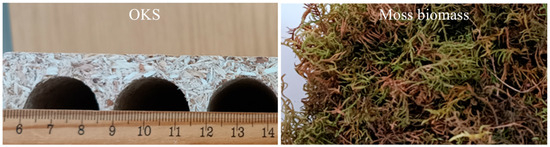
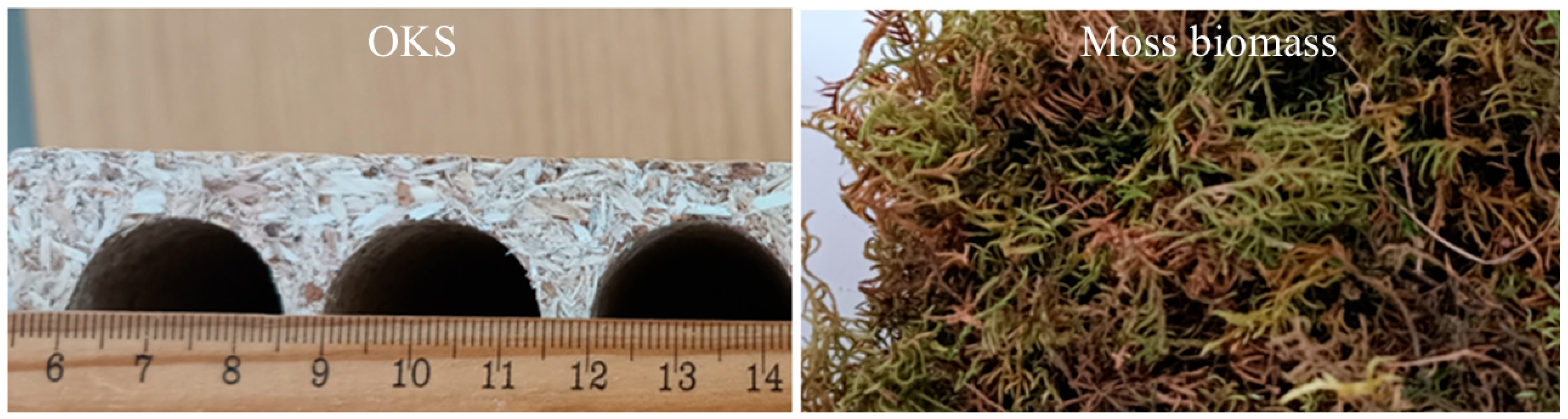
In this study, a commercially available OKAL chipboard (OKS) was used as the support structure, as shown in Figure 1, obtained from KOLÇAM Wood Industry and Trade Inc. (Kastamonu, Türkiye). Tubes reduce the weight of the board by up to 60% compared to solid boards. The board dimensions were 200 mm × 200 mm × 38 mm and a central layer of circular cavities designed for moss biomass incorporation.
Figure 1.
OKAL chipboard and moss biomass.
Cratoneuron filicinum (Hedw.) (Cp) Spruce species collected and identified by H. Erata from Doğancı village, Şalpazarı, Trabzon province (40°53′33″ N; 39°13′17″ E; Altitude: 1020 m). The samples were dried under suitable conditions and stored until use. The specimens were examined with a stereomicroscope, and identifications with a light microscope were based on [18,19,20,21].
Capric acid (CA), stearic acid (SA), and palmitic acid (PA) were combined at a weight ratio of 76:9:15 to create an EPCM. 45.6 g of CA, 5.4 g of SA, and 9.0 g of PA were weighed and put into a beaker for this purpose. A homogeneous eutectic mixture was achieved by heating the mixture to 80 °C and stirring it with a magnetic stirrer at 600 rpm for one hour.
2.2. Impregnation of Moss Biomass and Production of OKS-Cp/EPCM
The produced EPCM was then infused into the dried moss at a weight ratio of 1:1 (EPCM: moss). After spraying the moss with the molten EPCM, it was vacuum impregnated for 30 min at 50 °C. This vacuum treatment made it easier for the molten PCM to enter the moss’s porous structure. Following treatment, the moss impregnated with EPCM was left to stabilize at room temperature.
The OKS-Cp/EPCM panel was integrated with the EPCM-impregnated moss. The panel was 200 by 200 mm and had 25 mm-diameter circular chambers to hold the impregnated moss. The composite thermal energy storage panel was created by evenly distributing and filling each panel’s cavities with 155 g of EPCM-impregnated moss.
2.3. Testing Method
The LHS properties of EPCM and the Cp-EPCM were assessed using a DSC device (Hitachi 7020, Hitachi High-Tech Corporation, Tokyo, Japan) at a scan rate of 3 °C/min under nitrogen. The mean calculated from three replicate measurements of melting/freezing temperatures and enthalpy values recorded was ±0.10 °C/±0.11 °C and ±1.1/±1.2 J/g, respectively. The crystal structures of OKS, Cp, EPCM and Cp-EPCM were analyzed using the XRD technique (PANalytical B.V., Almelo, The Netherlands) with Cu K radiation (λ = 0.154 nm) in the 2θ range of 5–90°. The chemical compatibility of the components of the OKS, Cp, EPCM and Cp-EPCM was characterized in the band region of 400–4000 cm−1 by FTIR-ATR spectroscopy (Shimadzu model, ASCO Corporation, Hyōgo, Japan). Thermal degradation steps of OKS, Cp, and Cp-EPCM were assessed using a TGA instrument (PerkinElmer, Inc., Hopkinton, MA, USA). The measurements were performed at a 10 °C/min heating rate, 30–800 °C and under argon gas flow.
The thermal conductivity (TC) coefficient (k) of the OKS and OKS/CpEPCM samples was assessed using a cold–hot Plate TC Device. This device operates based on Fourier’s law of heat conduction [22,23]. In this method, the sample is placed between a hot surface (heated plate) at the top and a water- cold surface (cooled plate) at the bottom. The top plate is maintained at a constant temperature, while the bottom plate is continuously cooled, creating a linear temperature gradient across the sample under steady-state conditions. The heat transfer rate through the material was calculated using Fourier’s law.
In the above equation, q represents the heat flux passing through the Tube Sheets (W/m2), λ represents the TC (W/mK), Δx represents the sample thickness (m) and ΔT represents the temperature difference (K). Given that the heat flux is obtained from the applied heating power and the effective surface area of the sample, TC can also be expressed as follows:
Here, Q is the heat flow rate (W) through the tube sheet sample, L is the thickness of the sample (m), A is the cross-sectional area to the heat flux (m2), and ΔT is the temperature gradient measured across the sample (K). Tube sheet samples measuring 20 × 20 cm and 3 cm thick were used in the study. The device can make reliable measurements in the range of lightweight thermal insulation materials (0.02 W/mK) to high-density concretes and ceramics (2–3 W/mK). The experiments were conducted under steady-state heat transfer conditions with high repeatability and low error, thus reliably demonstrating the thermal performance of the investigated materials.
The moisture uptake behavior of OKS and OKS/CpEPCM samples was derived from storing oven-dried samples on grids placed over deionized water in a glass desiccator. The test environment was maintained at 30 °C, and the ambient relative humidity (RH) and temperature inside the desiccator were continuously measured. Samples were weighed at the end of periods of 24, 48, 72, 468, 336, 504, and 1008 h, respectively. Initially, the RH ranged from 75 to 80%, but from the 48th hour until the end of the test, it remained constant above 90%. The data obtained were used to calculate the equilibrium moisture content of the samples for each treatment group [24].
3. Result and Discussion
3.1. DSC Analysis of EPCM and Cp/EPCM Composite
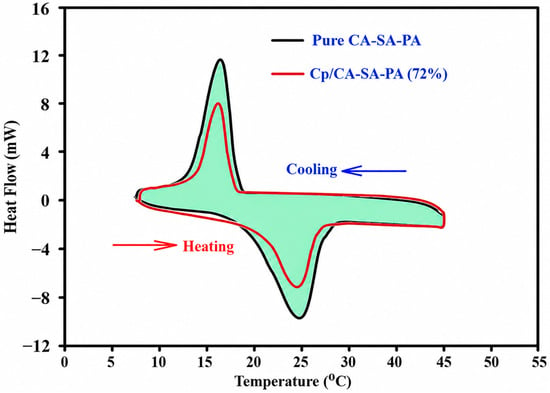
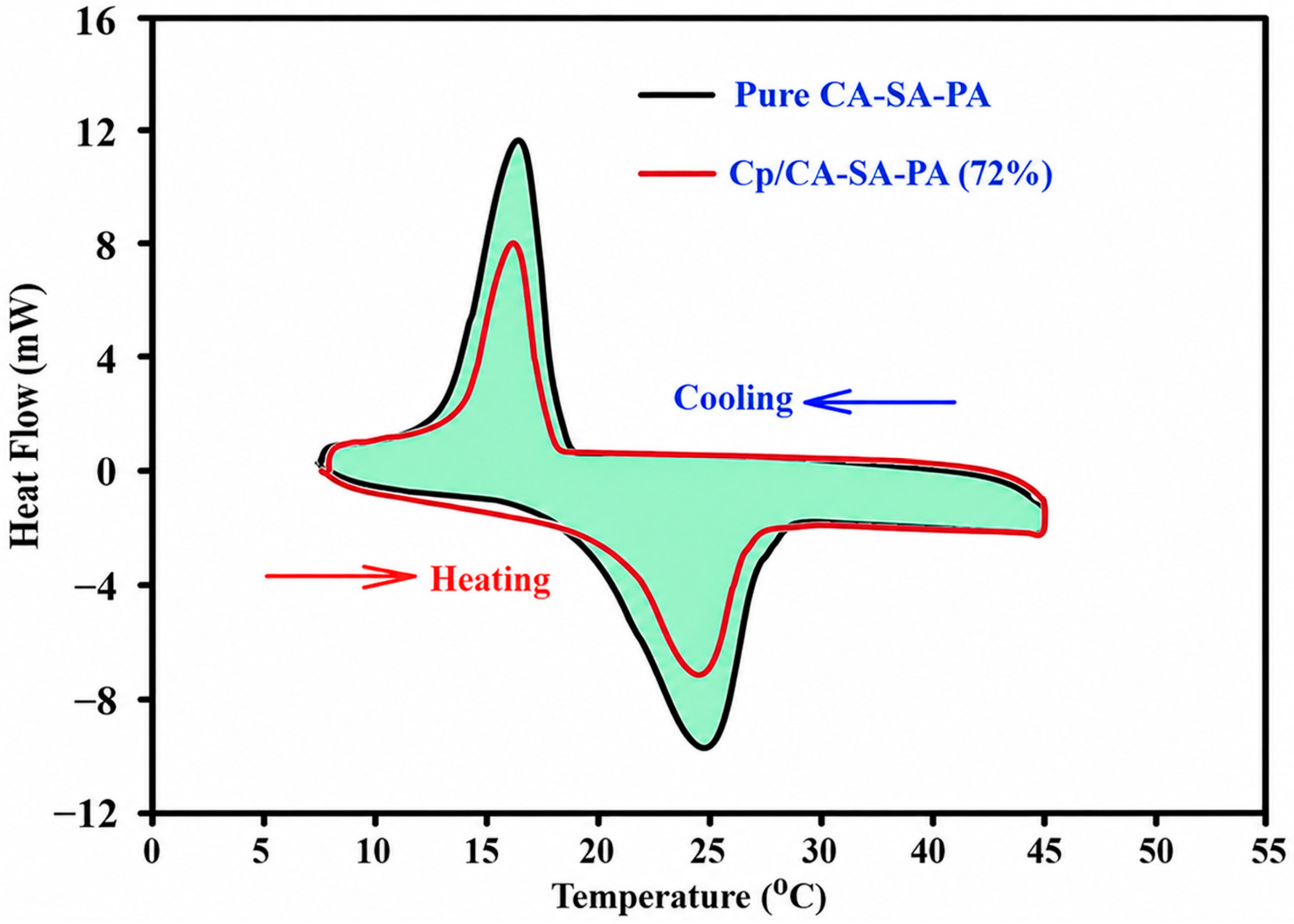
The DSC thermograms of EPCM and Cp/EPCM composite are presented in Figure 2. The thermal properties obtained are reported in Table 1. EPCM exhibited a melting temperature of 18.9 °C with a melting enthalpy of 169.8 J/g, and a freezing temperature of 18.1 °C with a freezing enthalpy of 167.3 J/g. After impregnation, the Cp/EPCM composite showed melting and freezing temperatures of 19.1 °C and 19.6 °C, respectively. The phase change temperatures changed only slightly (<1.5 °C). This demonstrates that the impregnation process did not considerably alter the phase transition behavior of the EPCM. The alteration in the melting may be attributed to physicochemical interactions between the Cp and EPCM components of the composites. Similar outcomes were documented for expanded graphite/n-decyl-lauryl alcohol/silicon carbide composite PCMs [25] and delignified wood flour/myristic acid composite PCMs [26]. The melting and freezing enthalpies of the composite decreased to 121.4 J/g and 120.2 J/g, respectively. This reduction is primarily due to the presence of the inert moss support, which does not lead to LHS. Since the composite contains 72 wt.% EPCM, the theoretical LHS can be calculated as 122.3 J/g (169.8 × 0.72).
Figure 2.
DSC thermograms of the synthesized composite PCMs.
Table 1.
LHS properties of Cp/CA-SA-PA(72%) composite PCM.
The obtained melting enthalpy (121.4 J/g) is close to the theoretical value. Likewise, the measured freezing enthalpy (120.2 J/g) agrees well with the theoretical value based on the EPCM content (167.3 × 0.72 = 120.5 J/g). These findings suggest that nearly all the impregnated EPCM remained thermally active after incorporation into the moss structure.
In the literature, wastes of biomass origin have been used as carrier scaffolds and composites have been prepared with various organic PCMs. The LHS capacity of the PA-LA (palmitic acid–lauric acid) composite PCM prepared using carbonized waste rice has been reported as 135.4 J/g [27]. An LHS value of 51.9 J/g was obtained in the activated garlic peel carbon/paraffin composite [28]; this value was determined as 110.0 J/g in the carbonized hazelnut wood/capric acid composite [29]. Similarly, the lauric acid–stearic acid eutectic mixture supported by carbonized corn cob showed a LHS capacity of 148.3 J/g [30]. LHS capacity was reported as 105.4 J/g in corn stalk biochar/polyethylene glycol (PEG) composite [31], 162.6 J/g in the moss biomass/lauryl alcohol study [32], 153.7 J/g in moss biomass/n-octadecane [14], and 106.3 J/g in carbonized sunflower stalk/stearic acid composite [33]. In line with the high LHS values reported in the literature, a high LHS value of 121.4 J/g was also obtained in our study.
Furthermore, the DSC curves show no additional phase transition peaks. This suggests that no chemical reaction occurred between the moss and the EPCM after impregnation. The composite PCM benefited from the porous supporting structure of the moss while maintaining the intrinsic phase change behavior of the original eutectic mixture, as evidenced by the preservation of the distinctive melting and crystallization peaks.
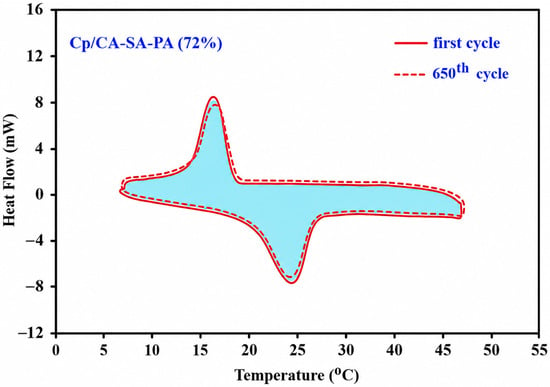
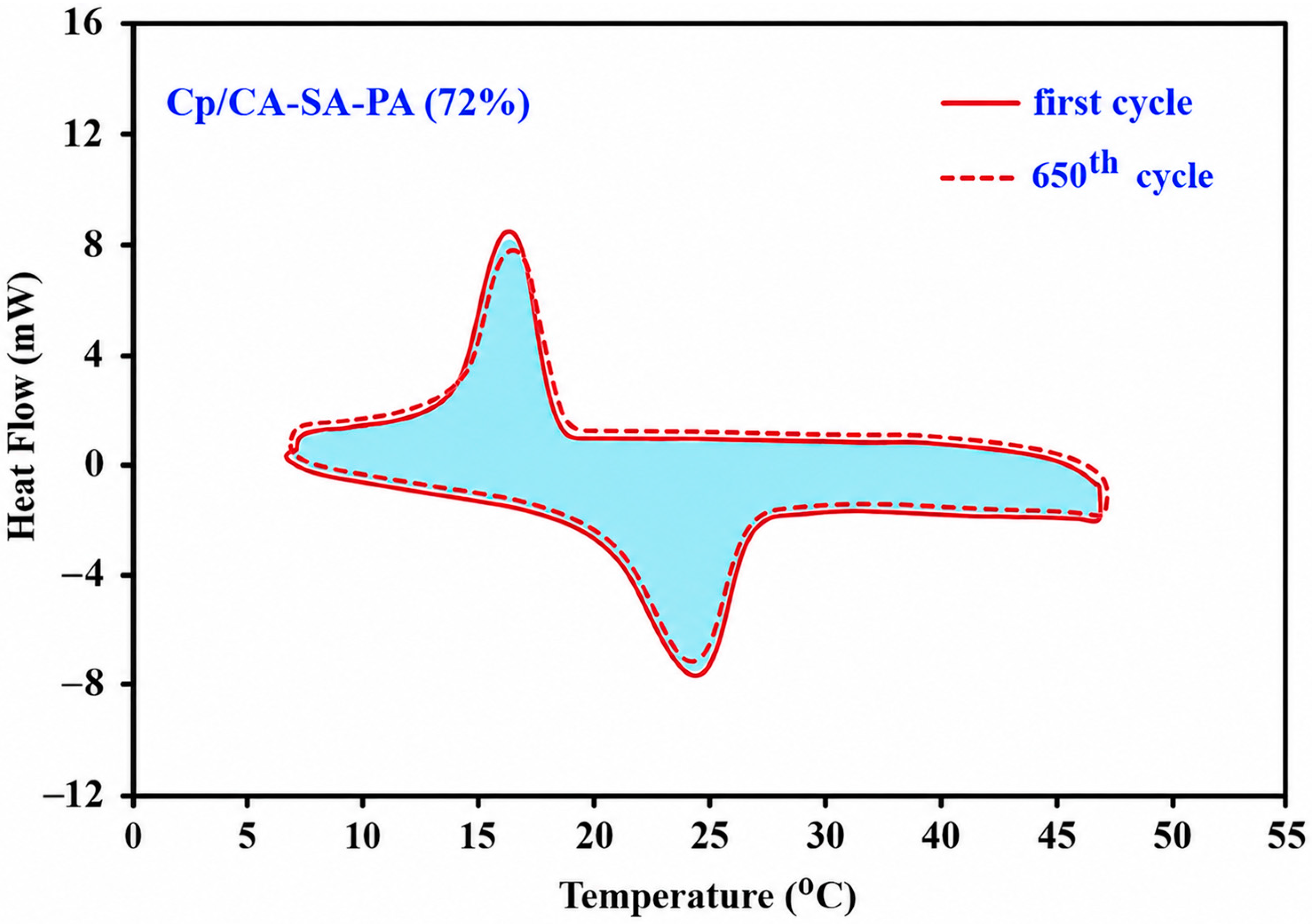
Cp/EPCM composites exhibit reductions in melting and freezing points and corresponding decreases in melting and freezing enthalpies, as shown in Figure 3 and Table 2. This test was used to assess the prepared composite PCM’s LHES characteristics and cycling reliability. In the Cp/EPCM (72%) sample, the freezing temperature did not change, while the freezing enthalpy decreased by 2.41%. Similarly, the melting temperature did not change, while the melting enthalpy decreased by 2.96%.
Figure 3.
DSC thermograms of the developed composite PCM for the first and 650th cycle.
Table 2.
LHS properties of the developed composite PCM for the first and 650th cycle.
- XRD, FT-IR and TGA of MPCM and OKL
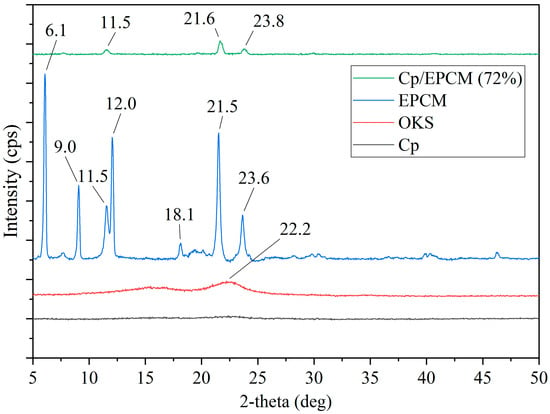
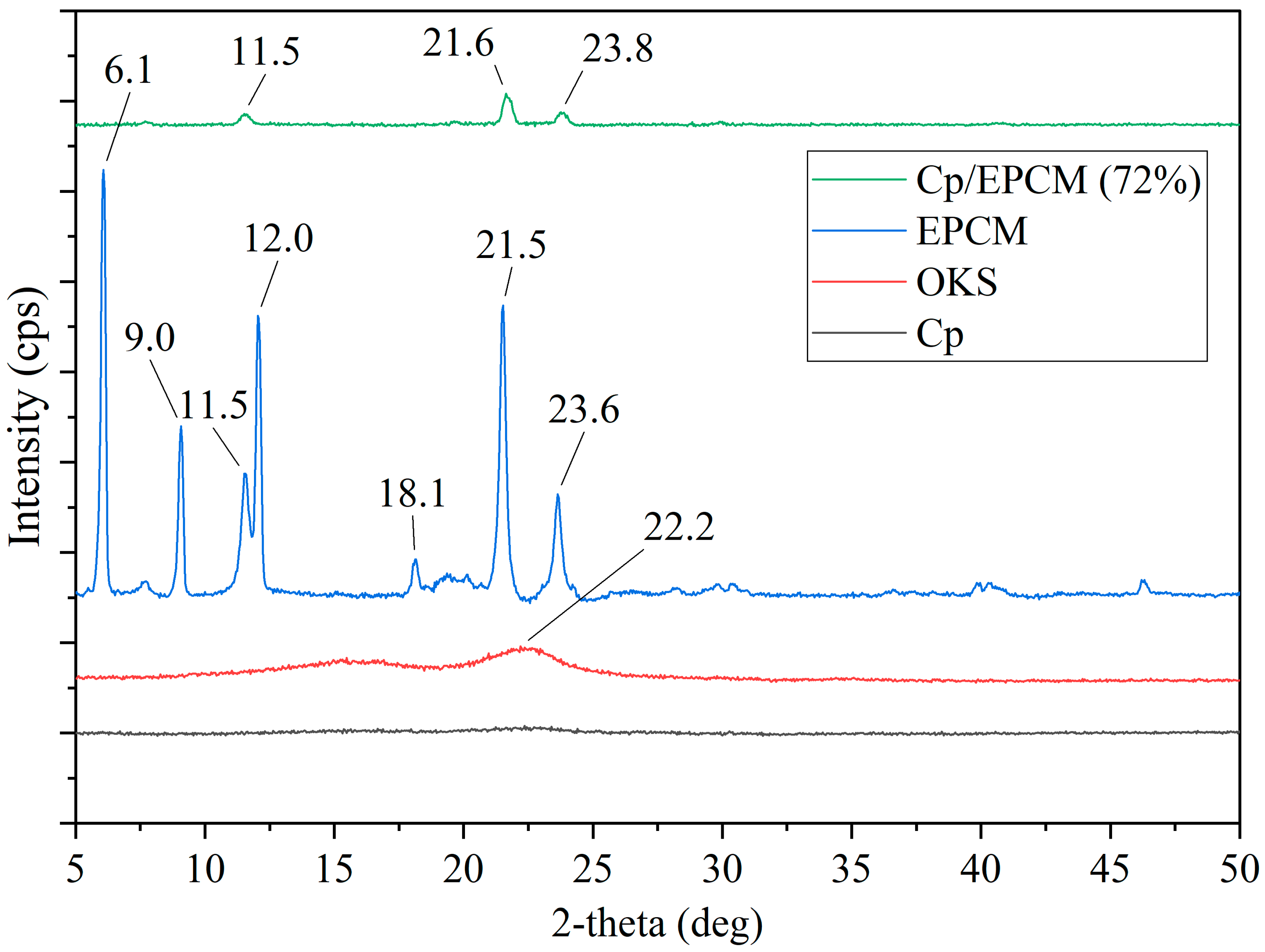
XRD graphs of the Cp, OKS, EPCM and CP/EPCM samples are presented in Figure 4. The moss sample (Cp) exhibited a broad peak, suggesting the low crystallinity of the amorphous lignocellulosic matrix. A similar result was revealed in the literature review [32].
Figure 4.
XRD patterns of Cp, OKS, EPCM and CP/EPCM samples.
The OKS sample exhibited a broad diffraction band around 2θ ≈ 22.2°. This band corresponds to the (200) crystallographic plane of cellulose I, but the broad and low-intensity peak indicates that the sheet has a low degree of crystallinity. In the literature, cellulose represents the crystalline phase in lignocellulosic materials, while hemicellulose and lignin constitute the amorphous phase [34]. The absence of sharp diffraction peaks in the OKL sample suggests that the wood particles used in the sheet contain a high proportion of amorphous components, and it is thought that the temperature, pressure, and adhesive additives applied during production partially disrupt the crystalline order of the cellulose.
The EPCM was distinguished by characteristic diffraction peaks attributed to the crystalline structure. High and sharp intensity peaks were recorded in the 2θ region of 5–50°. The diffraction peaks, attributed to the planes at 6.1°, 9.0°, 11.5°, 12.0°, 18.1°, 21.5°, and 23.6°, indicate the distinct crystalline structure of EPCM. The obtained peaks show the characteristic structure of CA, SA, and PA. The literature review reported that CA are located at 11.5°, SA are located at 20.6°, 21.66° and 24.26°, and PA are located at 20.43°, 21.66° and 24.22° [35].
The Cp/EPCM composite revealed that the EPCM partly retains its crystalline structure, with characteristic peaks detected at 11.5°, 21.6°, and 23.8°. This demonstrates that, despite the effective grafting of EPCM into the porous CP matrix, the crystalline properties do not totally disappear, and the structural order is maintained. The 11.5° peak is thought to originate from CA, the 21.6° peak from SA, and the 23.8° peak from PA.
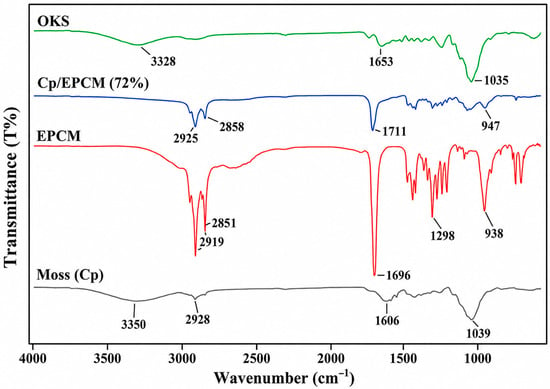
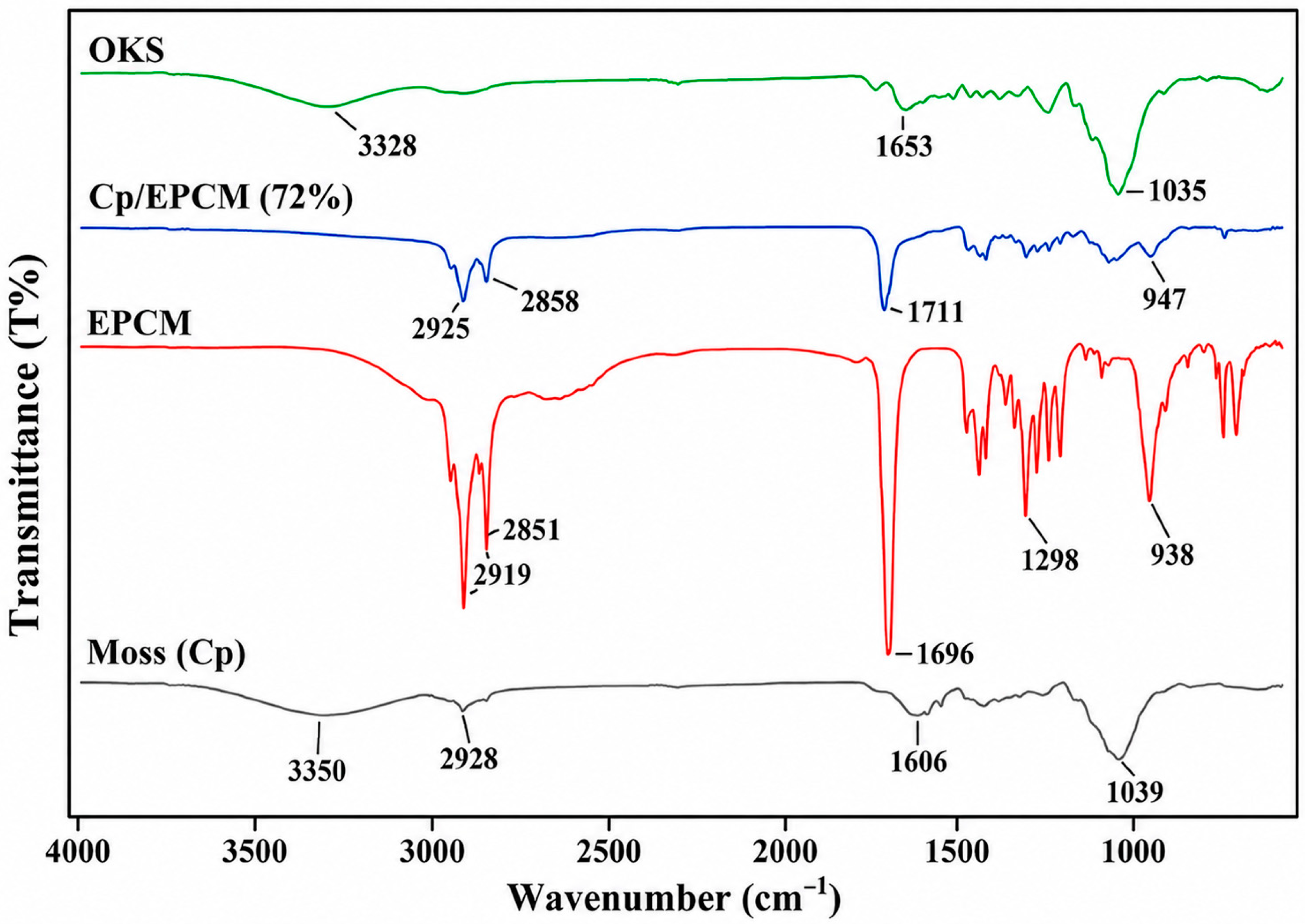
FTIR analysis was used for chemical structure characterization of Cp, EPCM, OKS, and Cp/EPCM composites. Figure 5 shows the FTIR spectra of these materials.
Figure 5.
FT-IR curves of moss, EPCM, Cp/EPCM and OKS.
The peaks at 1039 cm−1 show the stretching vibrations of the -C-O groups for Cp. The stretching vibrations of the –OH group are represented by the peak in the Cp spectra at 3350–2928 cm−1. Similar ranges have also been revealed in the literature review [32].
The peaks observed at 2919 and 2851 cm−1 in the FTIR spectrum of the ternary eutectic mixture consisting of CA, SA, and PA indicate symmetric and asymmetric stretching vibrations of the –CH2 groups in the long alkyl chains, respectively. The prominent peak at 1696 cm−1 indicates that it originates from the stretching vibration of the carbonyl (C=O) group in the carboxylic acid structure; the peak observed at 1298 cm−1 shows the C–O stretching vibration, and the peak at 938 cm−1 shows the –OH bending vibration associated with the carboxylic acid group. These characteristic peaks correspond to the functional groups reported in the literature for pure CA, SA, and PA, and the absence of a new absorption band in the eutectic mixture spectrum demonstrates that no chemical reaction occurred between the components. This confirms that the components of the ternary eutectic system are held together by van der Waals forces and hydrogen bonds (intermolecular physical interactions). It has been confirmed that a stable phase change material is formed without the creation of a new chemical structure.
In the OKS plate spectrum, the band at 1653 cm−1 represents the stretching vibrations of the aromatic C=C bonds in the lignin structure. The 1230 cm−1 and 1035 cm−1 bands represent C–O stretching vibrations and C–O–C unequal stretching in cellulose and hemicellulose, respectively. These peaks confirm the lignocellulosic content and cellulose-based structure of the OKS board. Cp/EPCM samples reflected EPCM eutectic mixing peaks; only slight shifts and reductions in peak intensity occurred.
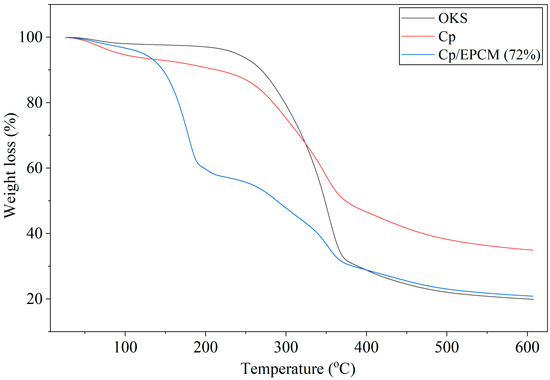
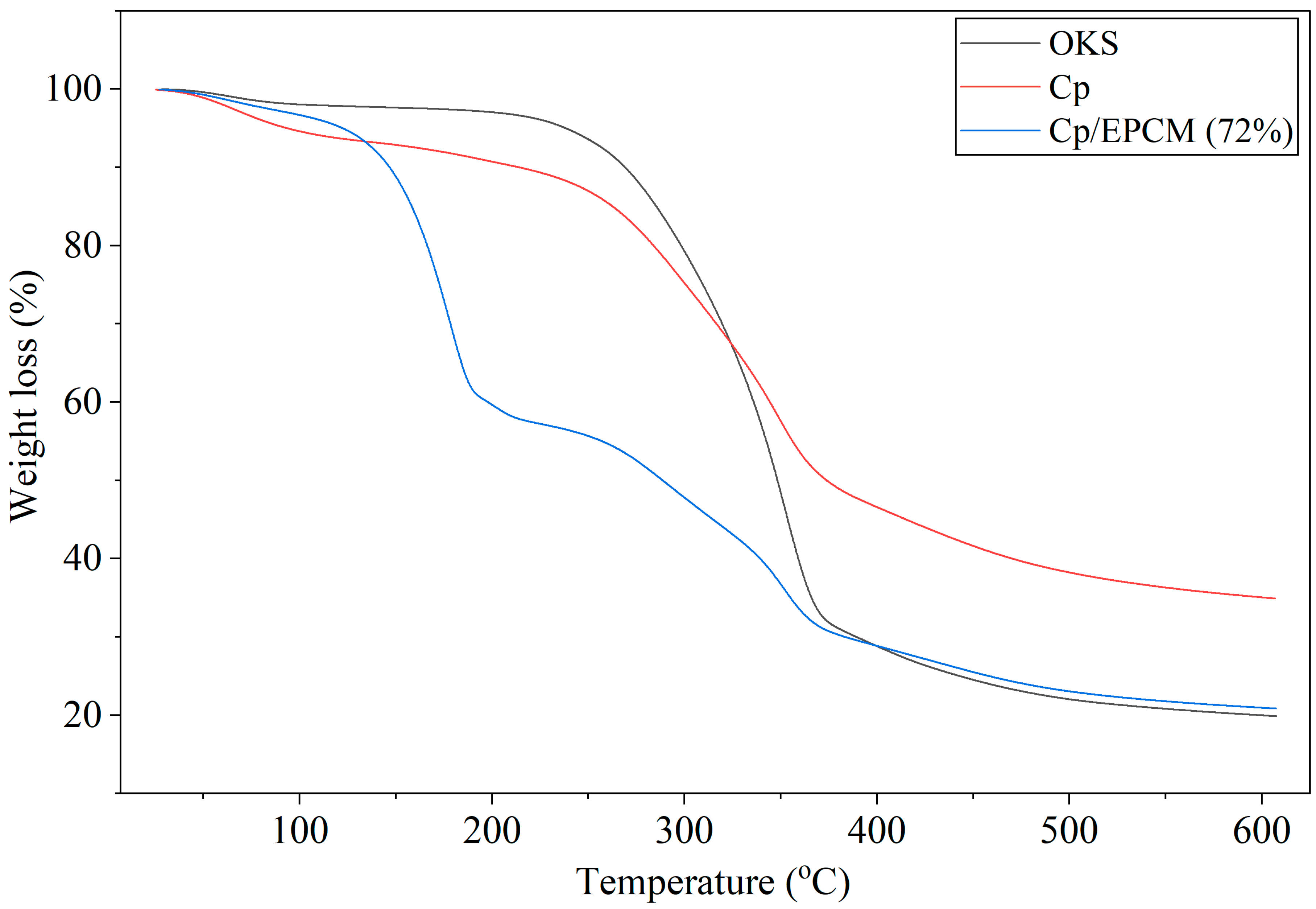
The thermal degradation behaviors of the OKS, Cp and Cp/EPCM chipboard used in this study were evaluated by TGA analyses, and the results are presented in Figure 6. The OKS chipboard exhibited a single-stage degradation. This gradual mass loss is attributed to the decomposition of its lignocellulosic components, particularly hemicellulose, cellulose, and lignin. Hemicellulose degradation begins first at approximately 240 °C, followed by cellulose decomposition between 320 and 370 °C. Lignin, on the other hand, degrades slowly and continuously over a wide temperature range (250–500 °C) [36]. Cp lost 6% of its weight in the first 100 °C, and 12% by 240 °C. By the end of 600 °C, only 34% of its mass remained. Cp remained stable up to 240 °C and exhibited a 52% weight loss between 218 and 526 °C due to the degradation of lignin and cellulose components. The subsequent decomposition of inorganic constituents occurred above 526 °C. This thermal degradation pattern agrees well with previous literature findings [37]. A two-stage degradation occurred in the Cp/EPCM samples. EPCM was observed to degrade between 100 and 210 °C, while Cp degraded between 240 and 390 °C. The residue level in Cp/EPCM samples is 20%. Literature studies have shown that impregnating algae biomass with PCM increases its flammability [32].
Figure 6.
TGA curves of OKS, Cp and Cp/EPCM.
3.2. Thermal Conductivity
The TC of the standard OKS chipboard used in the study was measured as 0.15074 W/m·K. In the OKS/CpEPCM, this value decreased to 0.109 W/m·K. This decrease can be attributed to the increased mass and thermal transfer resulting from the incorporation of EPCM into the porous structure. In contrast, the U-value, i.e., the total amount of heat transferred through a unit area of the chipboard (W/m2·K), was calculated as 3.91 W/m2·K for the OKS and 3.355 W/m2·K for the OKS/CpEPCM. This small decrease in U-value indicates a slight decrease in the overall heat transfer capability of the system. This suggests that the primary purpose of the EPCM additive is not to reduce conduction, but rather to provide thermal energy storage and time delay through phase change. Consequently, the MPCM additive only slightly decreases the thermal conductivity of the plate; however, when considered in conjunction with the heat storage capacity, this decrease can positively impact the dynamic thermal performance of the structural element.
3.3. Surface Temperature Changes
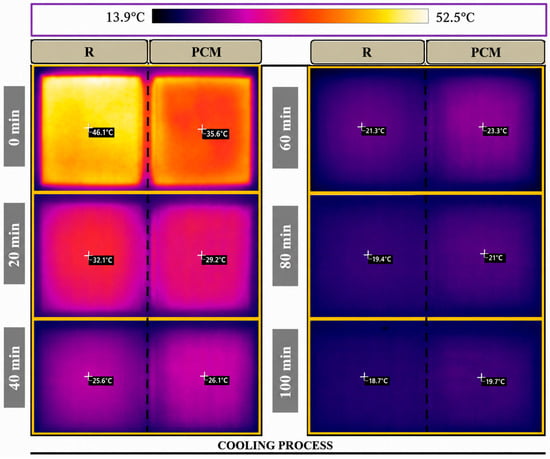
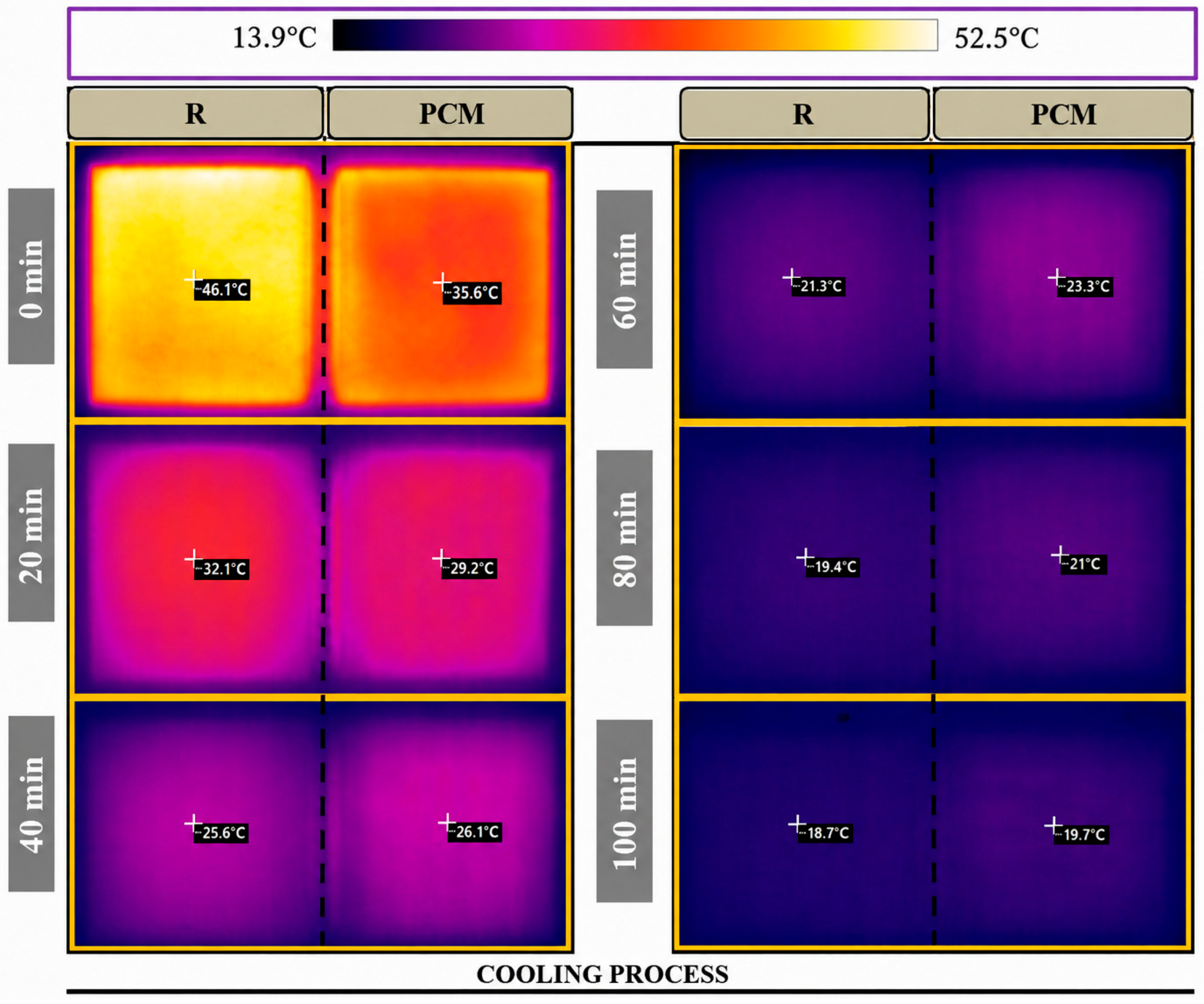
Figure 7 shows thermal camera images recorded at different time points during the cooling process of the OKS/CpEPCM (PCM) and OKS (R) samples. OKS and OKS/CpEPCM samples were initially subjected to comparable environmental conditions. In these conditions, both samples’ surface temperatures were determined. At minute 0, the surface temperature of the reference sample (OKS) was 46.1 °C. However, the temperature of the test samples containing OKS/CpEPCM was approximately 10 °C lower, at 35.6 °C. This difference between the samples indicates that EPCM limits the increase in surface temperature by absorbing heat. As time progressed, temperatures continued to decrease in both the control and test samples (minutes 20, 40, 60, 80 and 100). The temperature levels of Cp/EPCM remained more stable than the reference, and cooling proceeded at a slower rate. At minute 60, the reference sample was reduced to 21.3 °C, while the OKS/CpEPCM sample reached 23.3 °C. This difference reveals that EPCM delays temperature loss by releasing heat during the freezing process. The thermal storage capability of OKS/CpEPCM was still observable after 80 and 100 min, as its temperature remained above that of the reference samples (19.7 °C for OKS/CpEPCM versus 18.7 °C for control at 100 min). These findings indicate that EPCM releases its stored energy in a controlled manner because of its delayed cooling effect. Therefore, it provides thermal comfort by reducing temperature fluctuations. The obtained visual evidence suggests that OKS/CpEPCM can both temporarily preserve thermal energy and, by regulating heat release, contribute to maintaining ambient temperature stability.
Figure 7.
Infrared thermal images showing the cooling behavior of both OKS and OKS/CpEPCM samples.
3.4. Humidity Resistance
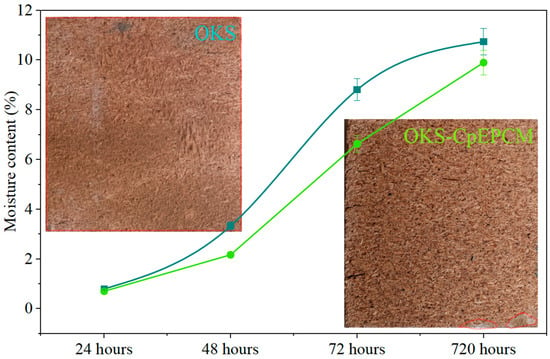
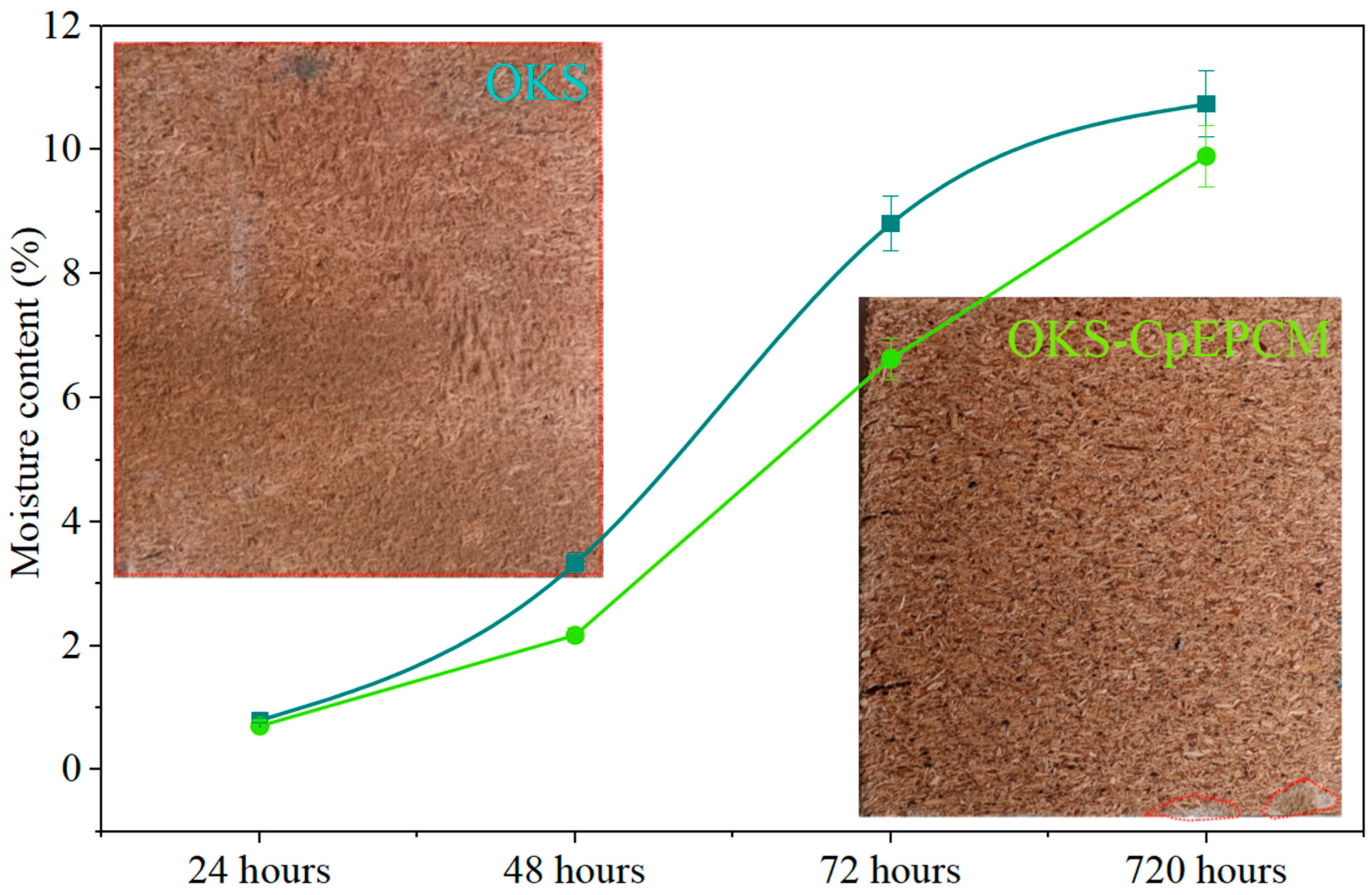
Visual inspection and relative humidity clearly revealed the effect of EPCM addition on the hygrothermal behavior of the OKS chipboard. As seen in Figure 8, high moisture absorption on the OKS chipboard (at 90% relative humidity) resulted in intense mold growth on the surface. In contrast, mold growth was more limited and only observed in small areas on the OKS/CpEPCM. Graphical data (Figure 8) also supports these findings. While the OKS chipboard reached an equilibrium moisture content of 10.74% over an exposure period of 720 h, the OKS/CpEPCM stabilized at 9.9% under the same conditions. This can be explained by the fact that EPCM creates a partial filling effect in the board pore structure, limiting the diffusion paths of water molecules and thus suppressing hygroscopic behavior. OKS/CpEPCM showed approximately 8% lower moisture uptake capacity, resulting in higher resistance to biodegradation and the potential for longer life in indoor use.
Figure 8.
Relative humidity changes and surface appearances of OKS and OKS/CpEPCM determined because of mass increase over time under 90% relative humidity conditions.
The porous structure of the algae biomass provides an effective support matrix for the retention of PCM. The OKS structure acts as a rigid framework that maintains the dimensional integrity of the composite. The interaction between the porous CpEPCM phase and the wood-based OKS matrix contributes to reducing PCM migration during phase transition and improving the functional stability of the composite. Furthermore, the hydrophobic properties of PCM can partially limit moisture penetration into the composite structure, while the lignocellulosic components provide structural stability. Therefore, the synergistic interaction between the OKS and CpEPCM phases is considered to play a significant role in the durability of the composite. However, further studies including long-term aging, thermal cycling, and mechanical strength tests are recommended to fully evaluate the service performance of the developed material.
4. Conclusions
In this study, EPCM-impregnated moss biomass was embedded in the internal voids of OKS chipboard. This presents an innovative approach to increasing energy storage capacity and thermal comfort performance in lightweight and rapidly assembled building systems. Impregnation of the moss biomass with 72% EPCM resulted in a high LHS value of 121.4 J/g. This demonstrates that the developed composite is an effective thermal energy storage material. However, it should not be overlooked that high PCM loading will lead to an increase in material costs. FTIR analyses confirmed that the characteristic functional groups of both the moss biomass and the phase change material were preserved in the Cp/EPCM composite. TGA results, however, showed that both Cp and Cp/EPCM samples exhibited limited thermal resistance. Specifically, the Cp/EPCM composite showed a weight loss of approximately 60% at around 200 °C. Therefore, it is recommended that future studies utilize flame retardant additives to improve the fire and high-temperature resistance of the composite. Furthermore, the thermal conductivity coefficient of the standard OKS plate, determined as 0.15074 W/m·K, decreased to 0.109 W/m·K in the OKS/CpEPCM composite, demonstrating a significant improvement in the material’s thermal insulation performance. Thermal infrared imaging results revealed that the OKS/CpEPCM plate resulted in approximately 10.5 °C lower surface temperature compared to the standard OKS plate under hot conditions, and approximately 1 °C higher surface temperature under cold conditions. Thus, the effectiveness of EPCM in reducing temperature fluctuations was confirmed. According to the relative humidity results, both plates exhibited similar behavior at the beginning of the experiment, the main reason being that the OKS plate absorbed the ambient humidity. However, significant differences were observed between the OKS and OKS/CpEPCM samples at 48 and 72 h. This was attributed to the humidity and temperature regulating effect of the Cp/EPCM placed in the plate voids. Future studies are proposed to optimize both thermal and hygroscopic performance using different phase change materials, EPCM loading rates, and biomass carriers.
Author Contributions
A.C. Supervision, resources, writing—original draft. H.E. Methodology, writing—original draft. O.G. Methodology. T.B.E. Methodology. A.S. Writing—review and editing, methodology, formal analysis. N.B. Methodology, investigation. All authors have read and agreed to the published version of the manuscript.
Funding
This research received no specific grant from any funding agency in the public, commercial, or not-for-profit sectors.
Data Availability Statement
No datasets were generated or analyzed during the current study.
Conflicts of Interest
The authors declare that they have no known competing financial interests or personal relationships that could have appeared to influence the work reported in this paper.
References
- Bošnjak Hordov, J.; Nižetić, S.; Jurčević, M.; Čoko, D.; Ćosić, M.; Jakić, M.; Arıcı, M. Review of Organic and Inorganic Waste-Based Phase Change Composites in Latent Thermal Energy Storage: Thermal Properties and Applications. Energy 2024, 306, 132421. [Google Scholar] [CrossRef] [Scilit]
- Choi, J.Y.; Nam, J.; Yun, B.Y.; Kim, Y.U.; Kim, S. Utilization of Corn Cob, an Essential Agricultural Residue Difficult to Disposal: Composite Board Manufactured Improved Thermal Performance Using Microencapsulated PCM. Ind. Crops Prod. 2022, 183, 114931. [Google Scholar] [CrossRef] [Scilit]
- Jiang, T.; Zhang, Y.; Olayiwola, S.; Lau, C.; Fan, M.; Ng, K.; Tan, G. Biomass-Derived Porous Carbons Support in Phase Change Materials for Building Energy Efficiency: A Review. Mater. Today Energy 2022, 23, 100905. [Google Scholar] [CrossRef] [Scilit]
- Can, A.; Gencel, O.; Sarı, A.; Hekimoğlu, G.; Ustaoğlu, A.; Temiz, A.; Erdoğmuş, E.; Erdeyer, Ö.N. Development of Poplar Wood/Bio-Based Composite Phase-Change Material as Novel Ecofriendly Thermo-Regulative Material. Forests 2025, 16, 763. [Google Scholar] [CrossRef] [Scilit]
- Liu, S.; Wu, H.; Du, Y.; Lu, X.; Qu, J. Shape-Stable Composite Phase Change Materials Encapsulated by Bio-Based Balsa Wood for Thermal Energy Storage. Sol. Energy Mater. Sol. Cells 2021, 230, 111187. [Google Scholar] [CrossRef] [Scilit]
- Choi, J.Y.; Nam, J.; Yuk, H.; Yang, S.; Kim, S. Enhancing the Hygrothermal Performance of Corn Cob Residue-Based Eco-Friendly Building Materials through Biochar and Microencapsulated Phase Change Material Incorporation. J. Build. Eng. 2024, 89, 109189. [Google Scholar] [CrossRef] [Scilit]
- Wu, W.-Y.; Yeap, I.S.R.; Wang, S.; Tomczak, N.; Lin, M.; Kai, D.; Ye, E.; Thitsartarn, W.; Tan, J.B.H.; Yin, X.; et al. Advancements in Sustainable Phase Change Materials: Valorizing Waste for Eco-Friendly Applications. Mater. Today Chem. 2024, 39, 102163. [Google Scholar] [CrossRef] [Scilit]
- Sharma, A.; Tyagi, V.V.; Chen, C.R.; Buddhi, D. Review on Thermal Energy Storage with Phase Change Materials and Applications. Renew. Sustain. Energy Rev. 2009, 13, 318–345. [Google Scholar] [CrossRef] [Scilit]
- Chen, Y.; Cui, Z.; Ding, H.; Wan, Y.; Tang, Z.; Gao, J. Cost-Effective Biochar Produced from Agricultural Residues and Its Application for Preparation of High Performance Form-Stable Phase Change Material via Simple Method. Int. J. Mol. Sci. 2018, 19, 3055. [Google Scholar] [CrossRef] [Scilit] [PubMed]
- Lu, X.; Huang, J.; Wong, W.Y.; Qu, J.P. A Novel Bio-Based Polyurethane/Wood Powder Composite as Shape-Stable Phase Change Material with High Relative Enthalpy Efficiency for Solar Thermal Energy Storage. Sol. Energy Mater. Sol. Cells 2019, 200, 109987. [Google Scholar] [CrossRef] [Scilit]
- Sarı, A.; Can, A.; Er, Y.; Çay, V.V.; Gencel, O.; Tyagi, V.V. Evaluation of Waste Corn Cob and Copper Slag for Production of Novel Leakage-Free Composite Phase Change Material with Improved Thermal Energy Storage. Sci. Rep. 2026, 16, 22444. [Google Scholar] [CrossRef] [Scilit] [PubMed]
- Can, A.; Ganguly, S.; Gencel, O.; Sarı, A.; Erata, H. Valorization of Moss Biomass as a Natural Porous Matrix for Shape-Stable Phase Change Material (PCM) Composites. Mater. Today Commun. 2026, 53, 115367. [Google Scholar] [CrossRef] [Scilit]
- Zormati, S.; Aloulou, F.; Sammouda, H. Effects of Cationic Surfactant on Fresh and Hardened Properties of Cement-Based Mortar. J. Renew. Mater. 2023, 11, 2345–2365. [Google Scholar] [CrossRef] [Scilit]
- Akbulut, T.; Ayrılmış, N. Yongalevha Endüstrisi; İstanbul Üniversitesi–Cerrahpaşa Yayınevi: Istanbul, Turkey, 2024. [Google Scholar]
- Nemli, G.; Örs, Y.; Kalaycıoğlu, H. The Choosing of Suitable Decorative Surface Coating Material Types for Interior End Use Applications of Particleboard. Constr. Build. Mater. 2005, 19, 307–312. [Google Scholar] [CrossRef] [Scilit]
- Laatiri, Y.; Sammouda, H.; Aloulou, F. Bio-PCM Panels Composed of Renewable Materials Interact with Solar Heating Systems for Building Thermal Insulation. J. Renew. Mater. 2024, 12, 771–798. [Google Scholar] [CrossRef] [Scilit]
- Gencel, O.; Ustaoğlu, A.; Erdoğmuş, E.; Sarı, A.; Can, A.; Batan, N.; Kolaylı, S. Engineering Thermal Enhanced Gypsum Composites with Novel Moss Biomass Based Shape-Stabilized Phase Change Material for Solar Heat Storage Composites. J. Build. Eng. 2026, 120, 115559. [Google Scholar] [CrossRef] [Scilit]
- Pedrotti, C.C. Flora Dei Muschi d’Italia, Sphagnopsida, Andreaopsida, Bryopsida (I Parte). Roma, Antonia Delfino Editore; Antonio Delfino Editore: Roma, Italy, 2001. [Google Scholar]
- Smith, A.J.E.; Smith, R. The Moss Flora of Britain and Ireland; Cambridge University Press: Cambridge, UK, 2004. [Google Scholar]
- Lüth, M. Mosses of Europe—A Photographic Flora; Michael Lüth: Freiburg, Germany, 2019; Volume 1. [Google Scholar]
- Kürschner, H.; Frey, W. Liverworts, Mosses and Hornworts of Southwest Asia (Marchantiophyta, Bryophyta, Anthocerotophyta); Schweizerbart Science Publishers: Stuttgart, Germany, 2020. [Google Scholar]
- Guattari, C.; Evangelisti, L.; Gori, P.; Asdrubali, F. Influence of Internal Heat Sources on Thermal Resistance Evaluation through the Heat Flow Meter Method. Energy Build. 2017, 135, 187–200. [Google Scholar] [CrossRef] [Scilit]
- Chen, H.; Yue, Z.; Ren, D.; Zeng, H.; Wei, T.; Zhao, K.; Yang, R.; Qiu, P.; Chen, L.; Shi, X. Thermal Conductivity during Phase Transitions. Adv. Mater. 2019, 31, 1806518. [Google Scholar] [CrossRef] [Scilit] [PubMed]
- Mitchell, P.H. Calculating the Equilibrium Moisture Content for Wood Based on Humidity Measurements. Bioresources 2017, 13, 171–175. [Google Scholar] [CrossRef] [Scilit]
- Chen, Y.; Huang, P.; Yang, X. Thermal Properties and Characterization of N-Decyl-Lauryl Alcohol/Expanded Graphite/Silicon Carbide Composite Phase Change Materials for Refrigerator Cold Energy Storage. Mater. Sci. 2022, 28, 440–448. [Google Scholar] [CrossRef] [Scilit]
- Cheng, L.; Feng, J. Form-Stable Phase Change Materials Based on Delignified Wood Flour for Thermal Management of Buildings. Compos. Part A Appl. Sci. Manuf. 2020, 129, 105690. [Google Scholar] [CrossRef] [Scilit]
- Zhang, X.; Huang, Z.; Yin, Z.; Zhang, W.; Huang, Y.; Liu, Y.; Fang, M.; Wu, X.; Min, X. Form Stable Composite Phase Change Materials from Palmitic-Lauric Acid Eutectic Mixture and Carbonized Abandoned Rice: Preparation, Characterization, and Thermal Conductivity Enhancement. Energy Build. 2017, 154, 46–54. [Google Scholar] [CrossRef] [Scilit]
- Luo, Y.; Zhang, F.; Li, C.; Cai, J. Biomass-Based Shape-Stable Phase Change Materials Supported by Garlic Peel-Derived Porous Carbon for Thermal Energy Storage. J. Energy Storage 2022, 46, 103929. [Google Scholar] [CrossRef] [Scilit]
- Hekimoğlu, G.; Sarı, A.; Kar, T.; Keleş, S.; Kaygusuz, K.; Yıldırım, N.; Tyagi, V.V.; Sharma, R.K.; Saleh, T.A. Carbonized Waste Hazelnut Wood-based Shape-stable Composite Phase Change Materials for Thermal Management Implementations. Int. J. Energy Res. 2021, 45, 10271–10284. [Google Scholar] [CrossRef] [Scilit]
- Zhang, W.; Zhang, X.; Zhang, X.; Yin, Z.; Liu, Y.; Fang, M.; Wu, X.; Min, X.; Huang, Z. Lauric-Stearic Acid Eutectic Mixture/Carbonized Biomass Waste Corn Cob Composite Phase Change Materials: Preparation and Thermal Characterization. Thermochim. Acta 2019, 674, 21–27. [Google Scholar] [CrossRef] [Scilit]
- Liu, S.; Peng, S.; Zhang, B.; Xue, B.; Yang, Z.; Wang, S.; Xu, G. Effects of Biochar Pyrolysis Temperature on Thermal Properties of Polyethylene Glycol/Biochar Composites as Shape-Stable Biocomposite Phase Change Materials. RSC Adv. 2022, 12, 9587–9598. [Google Scholar] [CrossRef] [Scilit] [PubMed]
- Sarı, A.; Can, A.; Çakır, E.; Batan, N.; Kolaylı, S.; Gencel, O. Graphene/Moss Biomass/Lauryl Alcohol Composites for Thermal Energy Storage. Mater. Chem. Phys. 2025, 344, 131122. [Google Scholar] [CrossRef] [Scilit]
- Wen, R.; Zhang, W.; Lv, Z.; Huang, Z.; Gao, W. A Novel Composite Phase Change Material of Stearic Acid/Carbonized Sunflower Straw for Thermal Energy Storage. Mater. Lett. 2018, 215, 42–45. [Google Scholar] [CrossRef] [Scilit]
- Broda, M.; Popescu, C.-M. Natural Decay of Archaeological Oak Wood versus Artificial Degradation Processes—An FT-IR Spectroscopy and X-Ray Diffraction Study. Spectrochim. Acta A Mol. Biomol. Spectrosc. 2019, 209, 280–287. [Google Scholar] [CrossRef] [Scilit] [PubMed]
- Du, W.; Fei, H.; He, Q.; Wang, L.; Pan, Y.; Liu, J. Preparation and Properties of Capric Acid–Stearic Acid-Based Ternary Phase Change Materials. RSC Adv. 2021, 11, 24938–24948. [Google Scholar] [CrossRef] [Scilit] [PubMed]
- Öztürk, G.; Temiz, A.; Hekimoğlu, G.; Aslan, M.; Demirel, G.K.; Erdeyer, Ö.N.; Sarı, A.; Gencel, O.; Subaşı, S. Microencapsulated Phase Change Material/Wood Fiber-Starch Composite as Novel Bio-Based Energy Storage Material for Buildings. J. Energy Storage 2024, 84, 110911. [Google Scholar] [CrossRef] [Scilit]
- Sheridan, E.; Filonenko, S.; Volikov, A.; Sirviö, J.A.; Antonietti, M. A Systematic Study on the Processes of Lignin Extraction and Nanodispersion to Control Properties and Functionality. Green Chem. 2024, 26, 2967–2984. [Google Scholar] [CrossRef] [Scilit]

Disclaimer/Publisher’s Note: The statements, opinions and data contained in all publications are solely those of the individual author(s) and contributor(s) and not of MDPI and/or the editor(s). MDPI and/or the editor(s) disclaim responsibility for any injury to people or property resulting from any ideas, methods, instructions or products referred to in the content. |
© 2026 by the authors. Licensee MDPI, Basel, Switzerland. This article is an open access article distributed under the terms and conditions of the Creative Commons Attribution (CC BY) license.