


Abstract
The main factor determining the conduct of this study is the progress of urbanization and the steady growth of the urban population, which contribute to the intensification of multidimensional challenges related to climate, the environment, transportation, and social issues—challenges that, in turn, necessitate the search for innovative and sustainable solutions for urban development. In this context, the Smart City concept is viewed as one of the key approaches to managing the development of modern urban areas. It is therefore essential to diagnose and assess the level of development of smart urban solutions. The main aim was to develop an interdisciplinary methodology for creating tools to benchmark smart cities, in accordance with the paradigm of sustainable development and the principles of social integration and egalitarianism in selected Polish cities. Various methods and techniques were employed to achieve the main aim. The study focuses on three provincial capitals in Poland: Gdańsk, Wrocław and Poznań. The result of the research is a proprietary methodology that enables the assessment and comparison of cities based on standardised and comparable data across six smart city components: mobility, environment, economy, governance, society and living conditions. Validation of the methodology has shown that all the cities studied are implementing the principles of the smart city concept, albeit to varying degrees and with different development priorities. The city of Poznań achieved the highest score. This reflects a high level of economic and social development, as well as a fairly balanced focus across all smart city areas. It achieved the highest scores in the following components: smart environment, smart community and smart living conditions. Future studies should include data updates, which would allow for capturing the dynamics of ongoing changes and identifying new trends in urban development. Such an approach would not only enable the assessment of the effectiveness of existing measures but also point the way for further urban interventions in the spirit of sustainable development.
1. Introduction
Rapid urbanization, coupled with a steady increase in urban populations, presents challenges—climatic, environmental, transportation-related, and social—that require urgent solutions today. With such dramatic growth (33.62% in 1960; 57% in 2022, with a projection of 66% by 2050 according to the World Urbanization Prospects 2025 [1], the priority in urban areas is the optimal use of cities’ spatial potential, in harmony with the natural environment, through rational administration and management that takes into account the needs of society—ensuring a high quality of life for residents—as well as through the application of innovative digital solutions.
When designing an efficient smart city, it is necessary to leverage modern technologies and develop an optimal system for determining value, which is extremely difficult due to the unique character of each city [2]. The key to developing an optimal system for managing administrative units is to create a network of connections, based on collaboration, between specific areas—mobility, the environment, the economy, governance, society, and living conditions—using modern technologies. Such measures will enable the creation of a smart city—that is, an urban center that invests in society, the economy, the environment, and transportation infrastructure to ensure high living standards and high-quality governance with active public participation [3].
A “smart city” is one that, through the application of management expertise and new technologies, becomes more functional for its residents, more competitive for potential entrepreneurs, and more modern compared with other urban areas [4].
The concept of a smart city is the idea of creating cities in which innovations and modern technological, information, and communication solutions across various areas of the city’s operations serve as tools to improve the quality of life for the local community and increase residents’ participation in decision-making processes critical to the city’s development [5].
A concept common to all definitions of smart cities is that of sustainable urban development—that is, the pursuit of ways to ensure the city’s efficient functioning through the use of smart digital solutions in the process of urban planning [1,6]. Actions taken by city authorities should lead to economic growth and an improvement in residents’ quality of life while simultaneously limiting harmful impacts on the natural environment [3].
In light of the above, this article sets the following aims:
Main aim—to develop an interdisciplinary methodology for smart city benchmarking tools, enabling the creation of innovative urban structures in line with the paradigm of sustainable development and the principles of social inclusivity and egalitarianism in selected cities of the European Union.
Specific Aim 1
Identification of benchmarks across six smart city components (mobility, environment, economy, governance, society, and living conditions).
The following research questions were formulated to achieve Specific Aim 1:
1. In which components (mobility, environment, economy, governance, society, living conditions) is the fastest current level of deployment being made in the implementation of smart city solutions?
Specific Aim 2
To assess the current level of deployment and scope of smart solutions being implemented in Poland’s largest urban centers.
The following research questions were formulated to achieve Specific Aim 2:
2. Which of the selected cities is characterized by and stands out for the greatest current level of deployment in the implementation of technological innovations within the smart city concept?
The article presents the following research thesis: the development of a consistent and interdisciplinary methodology for smart city benchmarking tools is a key prerequisite for shaping innovative urban structures.
The result of these objectives will be an original, universal methodology that will enable the evaluation and comparison of cities based on standardized, comparable data across six smart city components: mobility, environment, economy, governance, society, and living conditions.
This article aims to fill a research gap in the area of smart city benchmarking tools assessment in accordance with the paradigm of sustainable development, the principles of inclusivity, and social egalitarianism [7].
Public participation is essential and important because identifying needs and incorporating them into urban development policy contributes to the creation of cities tailored to the needs and expectations of residents and users [8,9,10,11].
The research conducted is part of the New Urbanism (NU) movement, which plays a key role in urban functionality and incorporates community initiatives [12,13,14,15], a factor crucial to creating safe, egalitarian, and inclusive cities [8].
The study will focus on three key cities (Gdańsk, Wrocław, Poznań) located in a European Union (EU) member state—Poland. Poland ranks fifth in the EU in terms of population. The cities were selected for analysis based on the following criteria: population, area, and administrative status. Key components of a smart city were selected to develop the methodology, namely: mobility, environment, economy, governance, society, and living conditions.
The urban centers under diagnosis are characterized by a spatial and demographic scale conducive to the implementation of advanced technologies and modern models of management, communication, and urban infrastructure development. Their high level of economic, social, and technical development creates favorable conditions for the implementation of initiatives aligned with the smart city concept. These cities have extensive institutional infrastructure, significant human capital potential, and a developed service sector, which fosters innovation in technological, environmental, and social dimensions.
2. Literature Review
2.1. Definition of a Smart City
The concept of a smart city is mainly based on the integration of smart solutions into urban spaces through the use of modern information and communication technologies. For a city to be fully recognized as smart, it must integrate state-of-the-art technologies with elements of its urban infrastructure. A smart city is built on components such as the economy, mobility, living conditions, the environment, society, and governance [16].
A smart city is a city that uses ICT technologies for intelligent management [17], based on the use of data to efficiently utilize urban resources through digital tools.
Operations in the field of smart cities also involve investment in social capital and transport infrastructure as the foundation for sustainable development and a high quality of life [18].
A smart city aims to maintain a balance between society, space [19] and innovative technology that supports planning decision-making processes and the social engagement of residents [20]. Integrated digital solutions [21] are intended to contribute to the creation of a smart city through knowledge, social cooperation and technology transfer, in order to create better living conditions, safety and environmental balance.
According to United Cities and Local Governments [9], a smart city is “a city that uses information and communication technologies to enhance the interactivity and efficiency of urban infrastructure and its components, as well as to raise residents’ awareness”.
Transforming a city into an ideal system brimming with smart solutions is a long-term and multifaceted process [22].
The term ‘smart city’ refers to ‘a city that utilises innovative technological, information and communication solutions to enhance the interactivity and efficiency of urban infrastructure and its components, as well as to improve the quality of life and awareness of residents’ [11].
The literature review identifies three generations of smart cities:
Smart City 1.0 is the earliest generation of smart cities, a phase of urban development driven by technology. This generation is inspired by the availability of technological solutions, and the driving force behind development initiatives is the companies that create the technology [23,24,25].
Smart City 2.0 involves development initiatives in which the role of initiator is taken over by local authorities, as they best understand and recognise the specific spatial conditions of the city and the needs of the community. The relevant administrative bodies identify local problems and then introduce smart solutions to address them [26,27,28].
Smart City 3.0 represents a generation of an informed public, as this model focuses primarily on public participation in shaping the city’s development strategy. In the process of introducing new technologies into the urban environment, residents and specialists play a significant role alongside the authorities [29,30,31].
The city authorities act as coordinators and oversee and test technological solutions following public consultation and the securing of public approval. This model is described as the most effective way to formulate urban spatial policy, due to the presence of public participation [32].
The concept of the smart city is currently entering the fourth stage of its evolution. The Smart City 4.0 model refers to an urban centre in which the development of advanced technologies is closely linked to the implementation of sustainable development principles [33,34,35,36,37].
Fourth-generation cities, whilst building on the achievements of earlier stages, place particular emphasis on implementing the UN Sustainable Development Goals (SDGs) [38] and foster cross-sectoral cooperation—with both public and private entities—to enhance the effectiveness of actions and seek innovative financing models [39].
In the context of rising public expectations and the economy’s ongoing preparation for the Fourth Industrial Revolution, those cities that achieve a high level of advancement in the use of digital technologies and data analysis, integrating them with the implementation of the SDGs, will gain a competitive advantage. These centres will be characterised by advanced digital transformation, a high level of sustainability and the ability to adapt to new business models. Such urban entities are referred to as Smart City 4.0.
In this context, UN-Habitat experts highlight the growing importance of integrating the smart city concept with sustainable development goals, whilst pointing out that a growing body of research shows that technological innovations can be associated with high carbon emissions and a negative impact on the natural environment [40,41].
The implementation of smart solutions, based on the use of advanced technologies, within the urban fabric is one of the key factors determining a city’s classification as a smart city [42,43]. Urban centres implementing innovative tools and systems aim to increase functional and spatial efficiency and strengthen their competitiveness in specific areas of the city’s operations. Regardless of the diversity of definitions and the generational evolution of the smart city concept, it is possible to identify a set of solutions addressing specific problems and processes occurring within the urban environment.
The smart city concept is based on forging multidimensional links between information and communication technologies and the city’s economic, social and environmental spheres, whilst also encompassing the transport system, residents’ quality of life, and mechanisms of management and governance at the local level.
A smart city is characterized by a competitive economy—one which, through the use of information and communication technologies [4], develops innovative business models, introduces new services and creates new products [19]. For the needs of this article, we have paraphrased the definition of “a smart city” proposed by Caragliu, Del Bo, and Nijkamp [44], according to which a smart city is a city that develops through investments in human and social capital, modern transportation infrastructure, and ICT technologies, supporting sustainable economic development and efficient resource management with the active participation of residents.
2.2. Components of a Smart City
When assessing a city in terms of the smart solutions it has implemented, the following are included: smart economy, smart living, smart mobility, smart environment, smart people, and smart governance [16].
One of the components of a smart city is the smart economy, where the characteristic features of cities should include creativity, high productivity, innovation, flexibility of business profiles and flexibility of the labour market.
Smart living refers to the creation of suitable living conditions for residents, the development of liveable neighbourhoods, and the provision of high-quality public, health and cultural services. Efficient access to modern technical, social and cultural infrastructure within the city is made possible by establishing a system of links between the various entities within the system—service providers and the local community [1,16].
Smart mobility refers to integrated transport network systems that utilise IT and communication devices and related services [45]. The transport system should be closely linked to resources [3], including transport infrastructure based on sustainable development, in particular with a zero-emission impact on the natural environment [46]. In the field of smart mobility, in addition to issues strictly related to transport, electronic forms of communication are also taken into account. A smart city should provide easy and reliable access to public services and urban resources via the internet (e-services) [47].
A smart environment is characterised by reduced pollutant emissions, environmental protection, and optimal energy consumption, including the use of renewable energy sources. This component is characterised by the rational use of natural resources, sustainable management of natural resources and the implementation of passive building design [19].
Smart people: This concept relates to a learning society that drives change, a society that utilises ICT, and which aims to optimise living conditions and improve the functioning of the city. The level of human and social capital development in a given city is one of the indicators of the stage of evolution at which that city finds itself [48].
Smart governance is a system for managing a municipal entity that is based primarily on cooperation between local authorities and the city’s residents. Cooperation between the authorities, residents and businesses involves defining development directions and management methods, but above all the use of innovative information tools and modern communication technologies [16].
This component defines rational development strategies and optimal prospects for the implementation of specific concepts related to urban development [47,48,49].
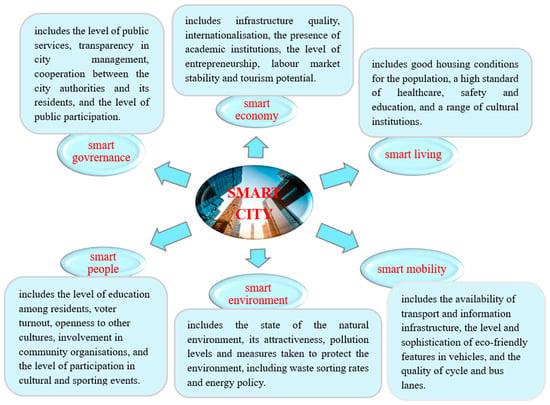
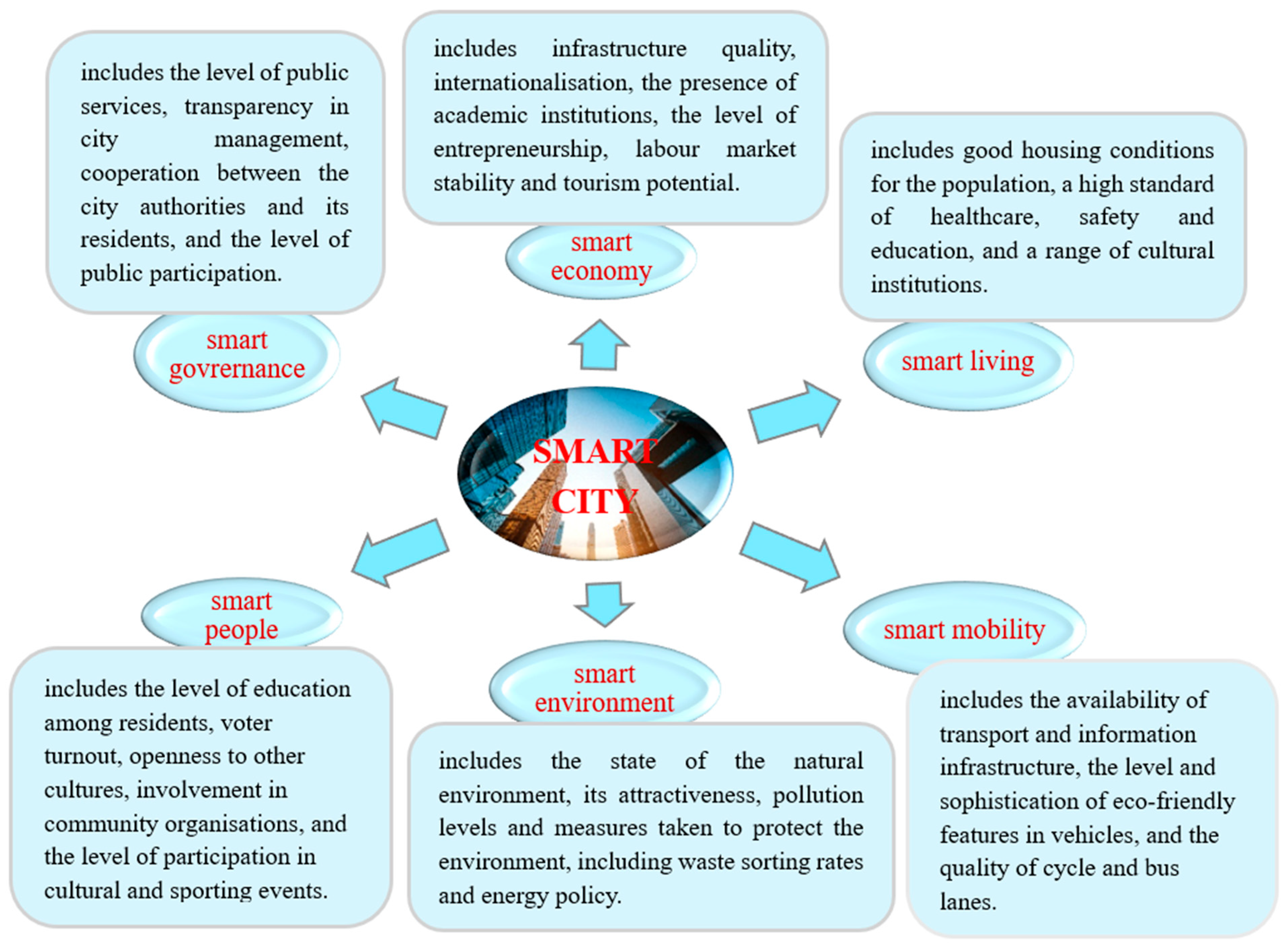
For the purposes of achieving the objectives of this article, a thematic scope has been identified for each of the six components, which will form the basis for the development of baseline indicators for the assessment of cities (Figure 1).
Figure 1.
Smart city components. Source: Own study based on [16,48,49,50].
Although the concept of the Smart City is growing in popularity both in academic literature and in urban development management practice, the term remains ambiguous and is the subject of intense academic debate. In particular, criticism focuses on the tendency to overemphasize information and communication technologies as the primary—rather than merely a supporting—factor in urban transformation.
The literature review also highlights the risk of technological efficiency taking precedence over the social dimension and residents’ quality of life. As Rob Kitchin [31,51] emphasizes, the development of smart cities is associated with the intensification of digital monitoring processes, the mass collection of data on users of urban space, and a potential increase in threats to individual privacy. Consequently, significant research questions arise regarding the transparency of data management, information security, and the extent of public oversight over digital infrastructure.
Another significant area of concern is the issue of digital exclusion. The implementation of Smart City solutions does not automatically lead to an equitable distribution of social and economic benefits [24]. Groups such as older adults, residents with lower economic status, or people with limited digital skills may face barriers in accessing public services based on digital technologies. Consequently, contemporary approaches to the Smart City concept increasingly emphasize the need for social inclusion, citizen participation, and the co-design of urban solutions with residents as a prerequisite for their effectiveness and social legitimacy.
2.3. The Assessments of the Level of Smart City
The development of urban spaces towards the implementation of smart technologies is currently highly sought after both by residents, with a view to improving their quality of life, and by municipal authorities aiming to improve the quality of their governance. This situation stems, to some extent, from the activities of national and international organizations promoting and encouraging the creation of smart cities.
The National Development Strategy 2030 indicates that Poland’s development should focus on three strategic areas: striving to create an effective and efficiently functioning state, modernising the economy towards competitiveness and innovation, and establishing the conditions for the development of territorial and social cohesion (National Development Strategy 2030, 2013). The developed concept for Poland’s development focuses on smart development and improving the quality of public services through the use of digitalisation and social capital, and the creation of modern transport systems through the introduction of smart transport networks (e.g., automated traffic surveillance systems) and communication channels (Long-Term National Development Strategy—Poland 2030).
ISO 37120: Sustainable social development—Indicators for urban services and quality of life (the standard was updated in 2018) identifies a range of indicators for measuring the quality of life of the urban community and the quality of services provided by the city [5].
Methods for determining a city’s level of intelligence also include the Global Smart City Performance Index, under which cities are assessed across four categories: mobility, public safety, healthcare and efficiency (productivity). A review of the literature on proposed Smart City methodologies reveals the Giffinger ranking (often referred to as the Giffinger Smart City model). This is a method for evaluating and comparing cities developed by Rudolf Giffinger and his colleagues at the Vienna University of Technology. The method was created in 2007 as a tool for evaluating “smart cities” in Europe. The model assumes that a “smart city” should be evaluated in six main areas: Smart Economy, Smart People, Smart Governance, Smart Mobility, Smart Environment, Smart Living) [52]. A publication explaining the methodology and application of the ranking, including the selection of indicators, how to interpret the results, and the use of the ranking as a tool for strategic urban planning [53]. In the next publication, the methodology focuses on comparing medium-sized cities in Europe and provides a theoretical basis for the subsequent smart cities ranking) [54]. Giffinger’s ranking made it possible to: compare cities (benchmarking), identify strengths and weaknesses, support strategic urban development planning, and monitor progress toward becoming a “smart city.” Key features of Giffinger’s Smart City model include: a model based on six dimensions of a smart city; it combines statistical data and city development characteristics; it enables the comparison of European cities; and it is recognized as a research model.
Among other methods and techniques, the Smart City comparative method compliant with ISO 37120 should be mentioned [5]. This method assesses and compares cities based on standardized indicators that describe the quality of urban services and sustainable development. Thanks to uniform definitions of the indicators, cities can be compared regardless of country or region. The research stages in this methodology are: data collection, calculation of indicators, benchmarking, assessment of urban development. The ISO standard covers the evaluation of the following areas: economy, education, energy, environment, public finance, safety, health, recreation, transportation, telecommunications and innovation, water management, waste management, land-use planning, and housing [5].
Key features of the ISO 37120 international standard include: it is based on standardized international indicators, focuses on measurable statistical data, and enables global benchmarking.
Creating an optimal model for measuring the intelligence of cities is difficult due to the specific nature of the smart city concept and the spatial, social, cultural and, above all, technological diversity [55]. The concept of a smart city is based on the use of modern technologies, which are subject to dynamic change due to civilisational progress, transformations and new inventions, and which should be continuously modernised and updated. Obrębalski [56] highlights the consideration of determinants in terms of: measurable indicators, physical indicators, financial values, technical indicators and qualitative assessment.
In this publication, the methodology for smart city benchmarking tools will be based on the indicators. The selection of indicators was determined by the potential impact of a given indicator on the assessment of a city’s ‘intelligence’ level, through the identification of an optimal level. Thanks to this approach, it is possible to comprehensively assess the level of intelligence of the cities covered by the study, including quality of life and both tangible and intangible aspects of urban community functioning.
3. Research Methods and Materials
3.1. Methods
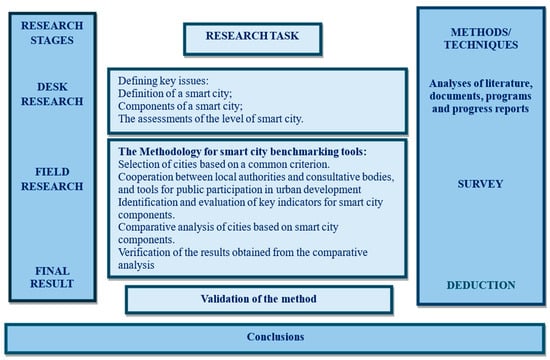
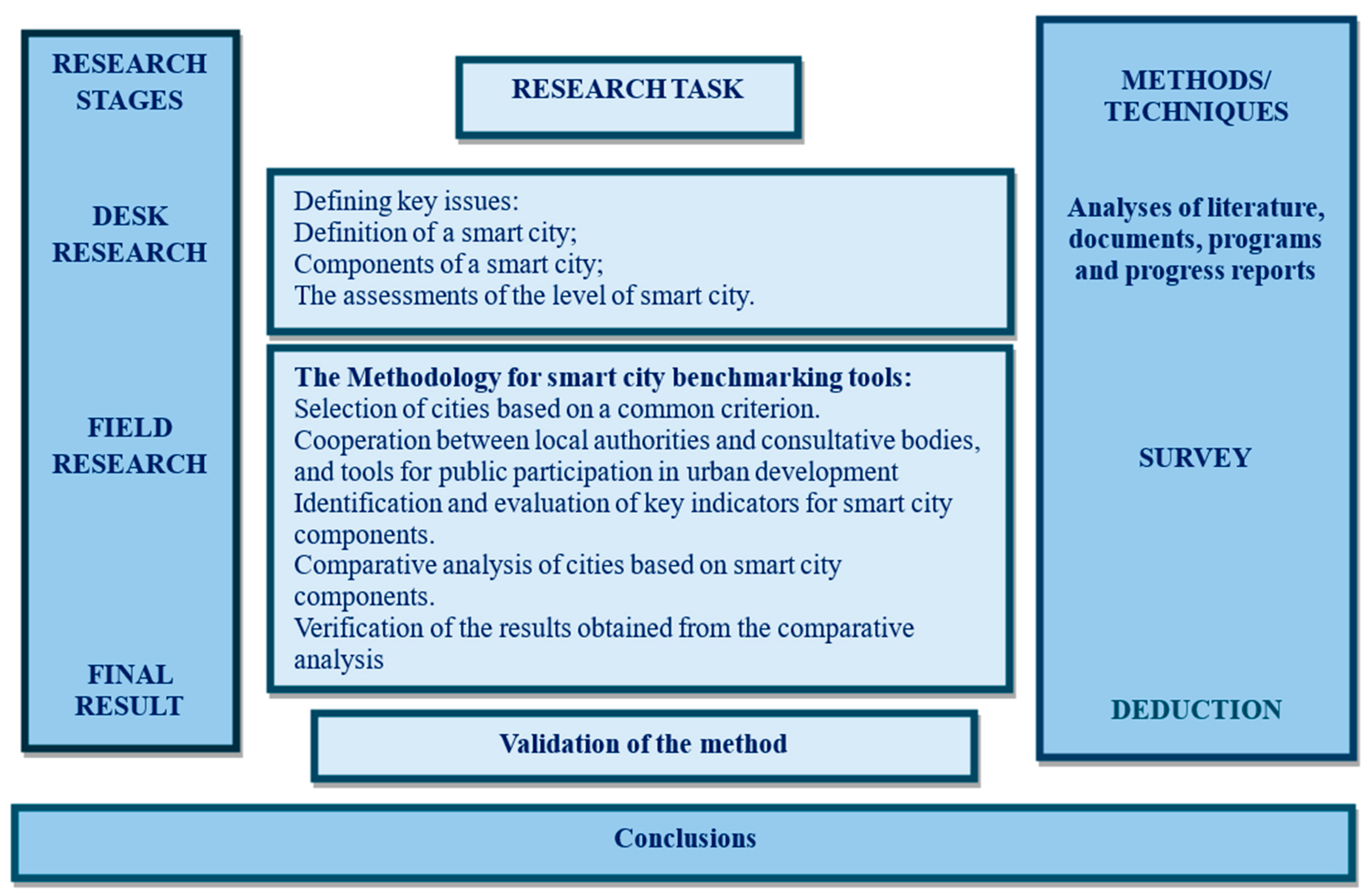
Various methods and techniques were employed to conduct the research and achieve the research objectives, as their complexity required a comprehensive approach (Figure 2).
Figure 2.
Stages of research. Source: Own elaboration.
In the first stage of the research, the authors will employ a historical-interpretative method, which will involve a review of the literature relevant to the research objectives set out in the article. This will include an international review of the literature, particularly regarding the concept of the smart city, its components, and the assessment of the implementation of smart city solutions [5]. In addition to issues related to smart cities, a review of documentation and thematic studies covering statistical, demographic, economic, and environmental data will be conducted.
Building on theoretical knowledge, a proprietary methodology for assessing smart cities will be developed, taking into account community engagement. This approach enables a comprehensive and interdisciplinary methodology for smart city benchmarking tools covered by the study, including quality of life and both tangible and intangible aspects of urban community functioning. The original methodology developed will be validated in three selected cities in Poland. In the final stage, conclusions based on the research findings will be proposed.
3.2. Study Area
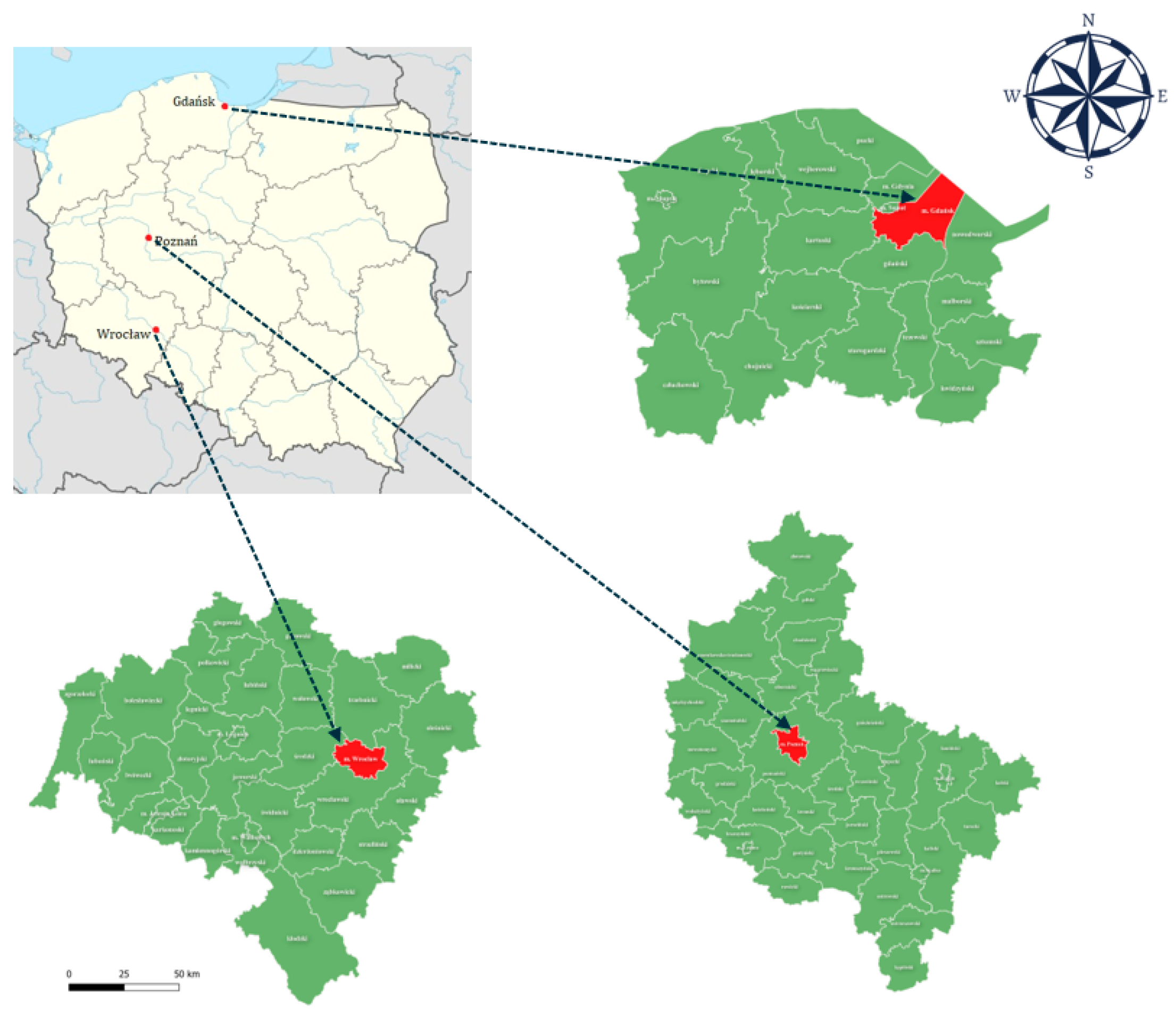
The study focuses on three provincial capitals in Poland: Gdańsk, Wrocław and Poznań (Figure 3).
Figure 3.
The location of the cities of Gdańsk, Poznań and Wrocław within Poland. Sources: Own elaboration based on [57,58].
Table 1 presents detailed socio-demographic data.
Table 1.
Socio-demographic data for Poland, Gdańsk, Poznań, Wrocław.
The City of Gdańsk
The city of Gdańsk is situated in northern Poland. Gdańsk is one of Poland’s most important cities and the largest urban center in the northern part of the country. The city is located in northern Poland, on the Baltic Sea, at the intersection of key transport routes connecting Scandinavia with Central and Eastern Europe. Thanks to its access to the sea and extensive port infrastructure, Gdańsk plays a significant role in the European transport and trade system. In terms of population, Gdańsk ranks sixth in Poland. In 2024, the city had a population of approximately 487,000, making it the sixth-largest city in Poland. Gdańsk’s level of economic development is among the highest in Poland. In the “Wspólnota” ranking of local government wealth, the city achieved a per capita wealth index of 2256 euros per resident. Economic development is based primarily on port operations, logistics, energy, the maritime sector, and the rapidly growing IT and business services sectors. Functionally, Gdańsk is primarily a port city. It is home to Poland’s largest seaport, which handles a significant portion of the country’s foreign trade. Gdańsk is also a major academic hub, hosting numerous universities and research institutions. Within the national urban system, Gdańsk serves as the main metropolitan center of northern Poland and a leader in the Polish maritime economy. It is an important maritime transport hub of national and international significance.
The city of Gdańsk is the dominant demographic centre of the Tri-City and the Pomeranian Voivodeship, accounting for a significant proportion of the region’s population. The age structure of Gdańsk’s population is characterised by a high proportion of people of working age, but also a relatively large proportion of the population of post-working age, which reflects the ageing of society.
The City of Poznań
The City of Poznań is situated in the western part of Poland. Poznań is one of the most important cities in western Poland and the capital of the Greater Poland Voivodeship. The city is situated on the Warta River, along a strategic transport route connecting Warsaw with Berlin. Its proximity to the German border and favorable location in the western part of the country have for many years fostered the city’s economic, commercial, and logistical development. As a result, Poznań serves as a bridge between the Polish economy and the markets of Western Europe. In terms of population, Poznań ranks fifth in Poland. In 2024, it had a population of approximately 536,000, making it the largest city in Greater Poland. Poznań is among the wealthiest cities in Poland. In the local government wealth ranking, the city achieved a score of 2410 euros per capita, placing it among the very top in the country. Poznań’s functional profile can be described as academic, industrial, and logistical. The city is one of the country’s most important centers for the automotive, food, and pharmaceutical industries. At the same time, business services, trade, logistics, and the new technologies sector are developing here. Another key aspect of the city’s functioning is its role as an academic hub and the organizer of Poland’s largest trade fairs. As a result, Poznań effectively combines industrial, scientific, and service functions. Within the national urban system, Poznań serves as the metropolis of western Poland and the economic center of Greater Poland. It is a major transportation hub between Warsaw and Berlin and one of the pillars of Poland’s export economy.
The City of Wrocław
Wrocław is one of the largest and fastest-growing cities in Poland. It is located in the southwestern part of the country, near the borders with Germany and the Czech Republic. Its location at the intersection of major European north–south and east–west transport corridors fosters economic development and enhances the city’s international accessibility. In 2024, the city had a population of approximately 673,000, making it the third-largest city in Poland. Wrocław is among the wealthiest urban centers in the country. In the local government wealth ranking, it reached a level of 2360 euros per capita. Foreign investments, modern business services, and a developed high-tech sector are of particular importance in this city. The city has a clearly defined technological and academic profile. Wrocław is one of Central Europe’s largest business service hubs and a center for the IT sector and startups. At the same time, it maintains strong industrial, scientific, and research-and-development functions. The presence of numerous universities and research centers fosters innovation and attracts highly qualified specialists. Within the national urban system, Wrocław serves as one of Poland’s major metropolitan cities. It is a leader in the development of the southwestern part of the country and an important hub of economic, scientific, and innovative growth of international significance. Thanks to its strong economic ties with Western Europe and its high level of innovation, it is one of the most important centers for the development of the modern economy in Poland.
4. Results
4.1. Elaboration of Smart City Methodology
To implement the main aim—the development of an interdisciplinary methodology for smart city benchmarking tools to the creation of innovative urban structures in line with the paradigm of sustainable development and the principles of social inclusivity and egalitarianism in selected cities of the European Union—a proprietary smart city methodology has been developed.
4.2. The Methodology Comprises the Following Stages
4.2.1. Selection of Cities Based on Common Criteria
The urban centres selected for analysis should exhibit common characteristics. These characteristics should be tailored to the objective and profile of the research. Consequently, they may include characteristics such as spatial scale; population; administrative status; and additional characteristics such as appropriate institutional and administrative development; a high level of economic development; and advanced technologies and innovation.
4.2.2. Cooperation Between Local Authorities and Consultative Bodies, and Tools for Public Participation in Urban Development
The methodology being implemented involves assessing the cooperation between local authorities and consultative bodies. This indicator will serve as the basis for determining whether social and consultative institutions, comprising non-governmental organisations and residents, are operational in the city under study. These bodies, acting as thematic consultative bodies, should be responsible for identifying social needs, developing proposals to address them, and co-creating local public policies. Identification will be carried out on a binary basis—if the form existed in a given city, 1 point was awarded. Scoring scale: total of pluses = 1—1 point awarded; total of pluses = 2 or 3—2 points awarded; total of pluses = 4 or 5—3 points awarded.
Tools for public participation in urban development include residents’ involvement in the creation of development strategies, through the identification of tools for communication with the public as the fundamental form of social dialogue.
In this regard, a qualitative indicator was used to reflect the extent to which residents’ views were taken into account in the process of formulating strategic documents and decisions concerning urban development policies (2023 City Status Reports and Development Strategies). The form of resident participation in the creation of development strategies was assessed on a binary basis—if the form was present in a given city, 1 point was awarded. Scoring scale: total of pluses = 1—1 point awarded; total of pluses = 2 or 3—2 points awarded; total of pluses = 4 or 5—3 points awarded.
4.2.3. Identification and Prioritisation of Key Indicators for Smart City Components
Six key smart city components were adopted for the study: economy, environment, governance, living conditions, mobility and community. For each component, five key indicators were identified to enable the diagnosis and assessment of that component’s development. The selection of indicators was based on the potential impact of each indicator on the assessment of a city’s ‘intelligence’ level, through the identification of an optimal level.
Each indicator was assessed individually by identifying the optimal trend (desired trend) that the indicator should follow. Two possible methods were established for determining the optimal level of the indicators included in the comparative analysis.
An upward-pointing arrow (⇧) is used to indicate indicators for which the highest possible value is desirable; in other words, a city with a higher value for a given indicator is in a more favourable position.
Conversely, the downward-pointing arrow (⇩) appears next to indicators for which a lower value indicates a positive situation in the city in question.
Determining the optimal level ((⇧) or (⇩)) depending on the type of indicator—the desired trend—will use points-based scoring, the (+++, ++,+) rating scale system, assuming that 3 points are awarded to the city with the best value and 1 point to the city with the worst indicator value.
The (+++, ++, +) rating scale was used in the benchmarking methodology because it is transparent, easy to interpret, and widely used in simple research methods. The three-point (+++, ++, +) scale allows for the comparison of the analyzed objects or criteria while maintaining a sufficient level of differentiation in the results. The use of such a scale limits the subjectivity of ratings, facilitates the aggregation of results, and allows for the effective conduct of comparative analysis (benchmarking) without the need for more complex statistical tools. This solution is particularly useful in exploratory research, comparative analyses, and expert evaluations, where the goal is to identify relative differences between the units under study. A similar approach to the use of three-point rating scales was described by [60] Jacoby and Matell, who noted their sufficient ability to differentiate between the objects under study.
4.2.4. Comparative Analysis of Cities According to Smart City Components
The collection and systematisation of indicators within each smart city component enables a comparison of the cities under study and simultaneously determines a city’s competitive position relative to other urban areas.
This analysis will form the basis for identifying areas where intervention and action should be taken to enhance the competitiveness of the urban unit in question.
The results obtained will serve as the foundation for strategic planning, actions within the city’s development strategy, and support for urban policy, and will act as a tool for local government decision-makers.
4.2.5. Verification of the Results Obtained from the Comparative Analysis
The comparison of smart city components (mobility, environment, economy, governance, society, living conditions) in the selected cities should be assessed using the following formula: P = A/B × 100%,
Where:
P—percentage;
A—the number of points obtained in a given component;
B—the maximum number of points available in a given component.
This will enable a final assessment of the level of smart development in each of the cities under review.
5. Validation of the Methodology Developed
5.1. Selection of Cities Based on a Common Criterion
The cities of Gdańsk, Poznań and Wrocław were selected on the basis of similarities in terms of population, area and status as voivodeship capitals.
5.2. Cooperation Between Local Authorities and Consultative Bodies, and Tools for Public
Participation in urban development
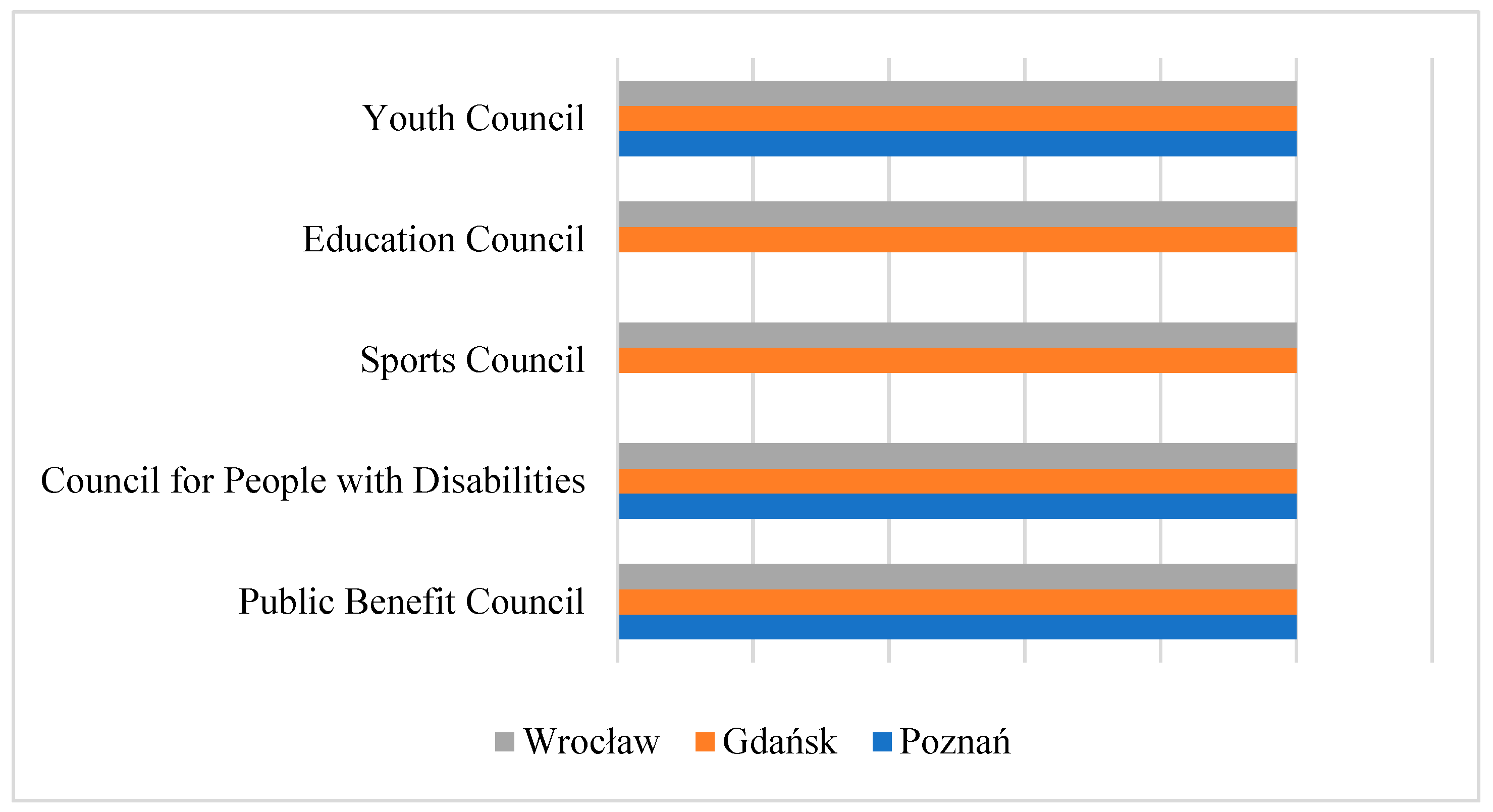
Cooperation between local authorities and consultative bodies, and tools for public participation in urban development, were identified on the basis of publications related to urban development. To this end, the following documents were analysed: the Gdańsk Urban Development Strategy to 2030 [61,62,63,64,65,66]. Cooperation between local authorities and consultative bodies is presented in Figure 4.
Figure 4.
Cooperation between local authorities and consultative bodies. Source: Own study.
The results of the analysis of cooperation between local authorities and consultative bodies indicate that the cities studied are implementing a variety of solutions that foster cooperation between local authorities and residents. The most common form of cooperation is youth councils and public benefit councils, which operate in all the cities studied. A high prevalence was also noted in the case of councils for people with disabilities, which should be interpreted as a sign of the growing importance of inclusive policies and the consideration of the needs of groups at risk of social exclusion. At the same time, public benefit councils for people with disabilities, sports councils, education councils, youth councils in Wrocław, Gdańsk, Poznań show slightly less diversity with regard to sports councils and education councils, which do not exist in all the cities analysed. Among the local authorities compared, the city of Wrocław and Gdańsk stand out, as they feature all the analysed forms of institutional cooperation. Poznań has the least extensive range of cooperation with consultative bodies, as it lacks a sports council and a council for people with disabilities. An important element of strategic management is the use of public participation tools in the development of urban development strategies (Figure 5).
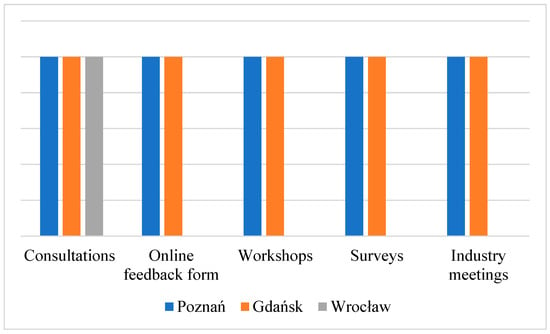
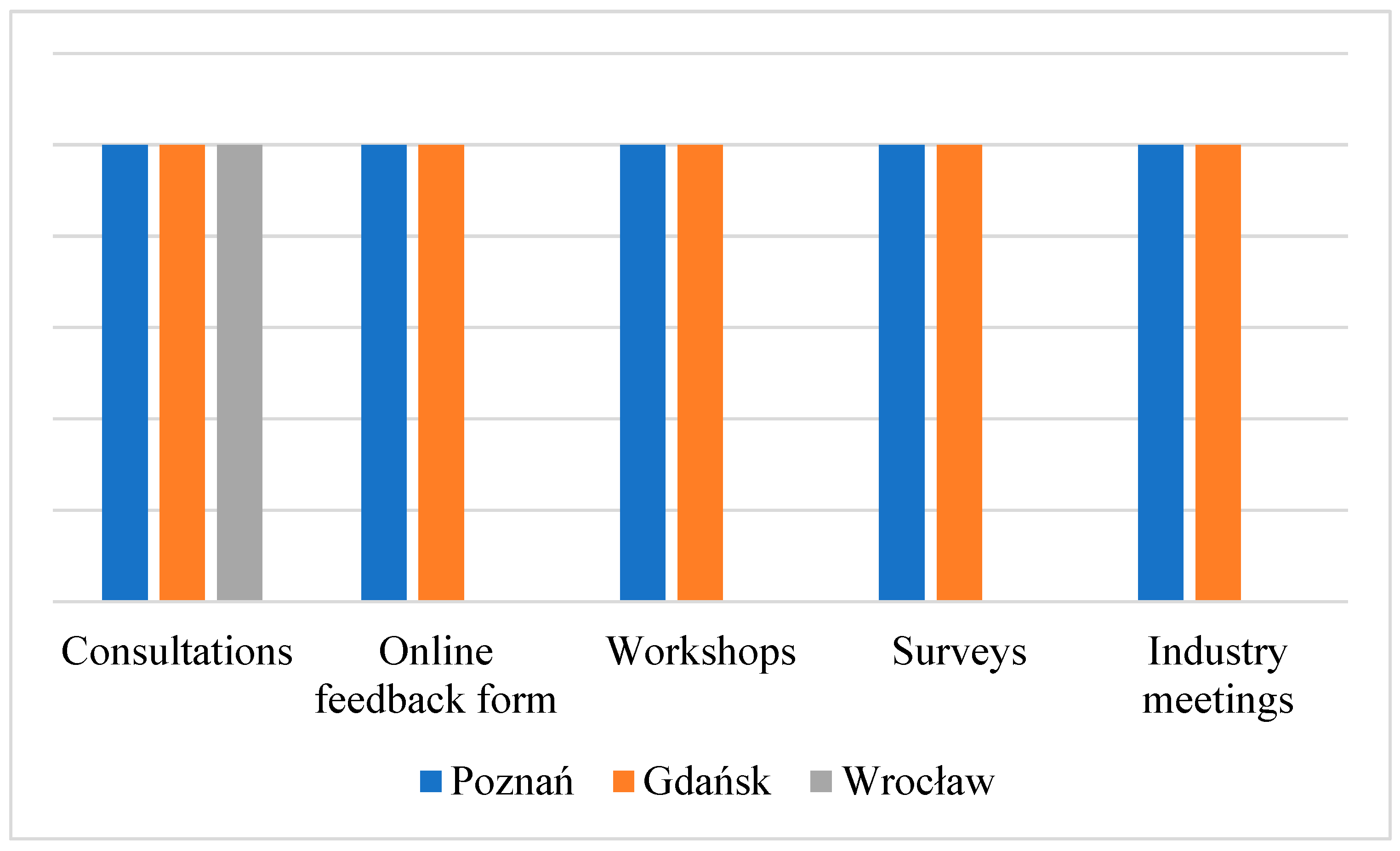
Figure 5.
Tools for public participation in the development of urban development strategies: Poznań, Wrocław, Gdańsk. Source: Own study.
Wrocław stands out slightly from the other local authorities compared, as it did not utilise the option of online feedback, workshops, surveys or sector-specific meetings, whilst retaining consultation as the primary form of public dialogue. This may indicate a greater emphasis on traditional methods of stakeholder communication or a different model for conducting the strategic process. In contrast, Poznań and Gdańsk are characterised by a more comprehensive use of the participatory instruments analysed, which may indicate a more holistic approach to engaging residents and socio-economic partners. It is particularly important to take into account both direct forms (consultations, workshops, sectoral meetings) and digital tools (online feedback, surveys), which increases the accessibility of the decision-making process for various groups of residents.
5.3. Identification of Key Indicators, Including the Mapping of Indicators to Smart City
The components and indicators that will form the basis for the smart city assessment, along with the identification of optimal trends in the three cities under analysis—Gdańsk, Wrocław and Poznań—have been developed on the basis of official city documents, statistical data and specialist studies [24,31,51,54,67,68].
The detailed scope of the components, together with their indicators, is presented in Table 2.
Table 2.
Components and indicators with the definition of the optimal trend.
5.4. Comparative Analysis of Cities by Smart City Components
Table 3.
Indicator results and scores.
An analysis of the results (Table 3) indicates the diverse nature of the cities’ development and specialisation, as none of the cities is a leader in all components simultaneously.
A comparative analysis showed that the city of Poznań ranks first in the following components: smart environment, smart community, and smart living conditions. The city is characterized by a high level of economic and social development, as well as a sustainable approach to its development policies.
Compared with other urban centers and based on this set of indicators, the city of Wrocław scored 58 points. The city leads in the components of smart mobility and smart economy, while it achieved the lowest scores in the components of smart living conditions and smart environment.
The city of Gdańsk came last. High scores were recorded in the components of governance and living conditions, confirming the high quality of public administration services and the good quality of life in the city. In the remaining components, Gdańsk achieved lower scores, highlighting the need to intensify efforts in the social, economic and urban mobility sectors.
5.5. Verification of the Results Obtained from the Comparative Analysis
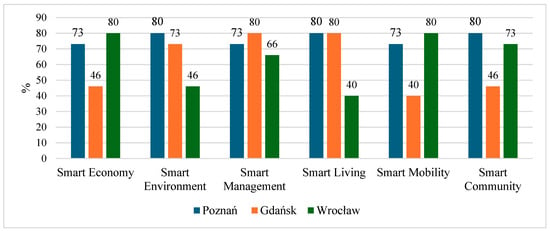
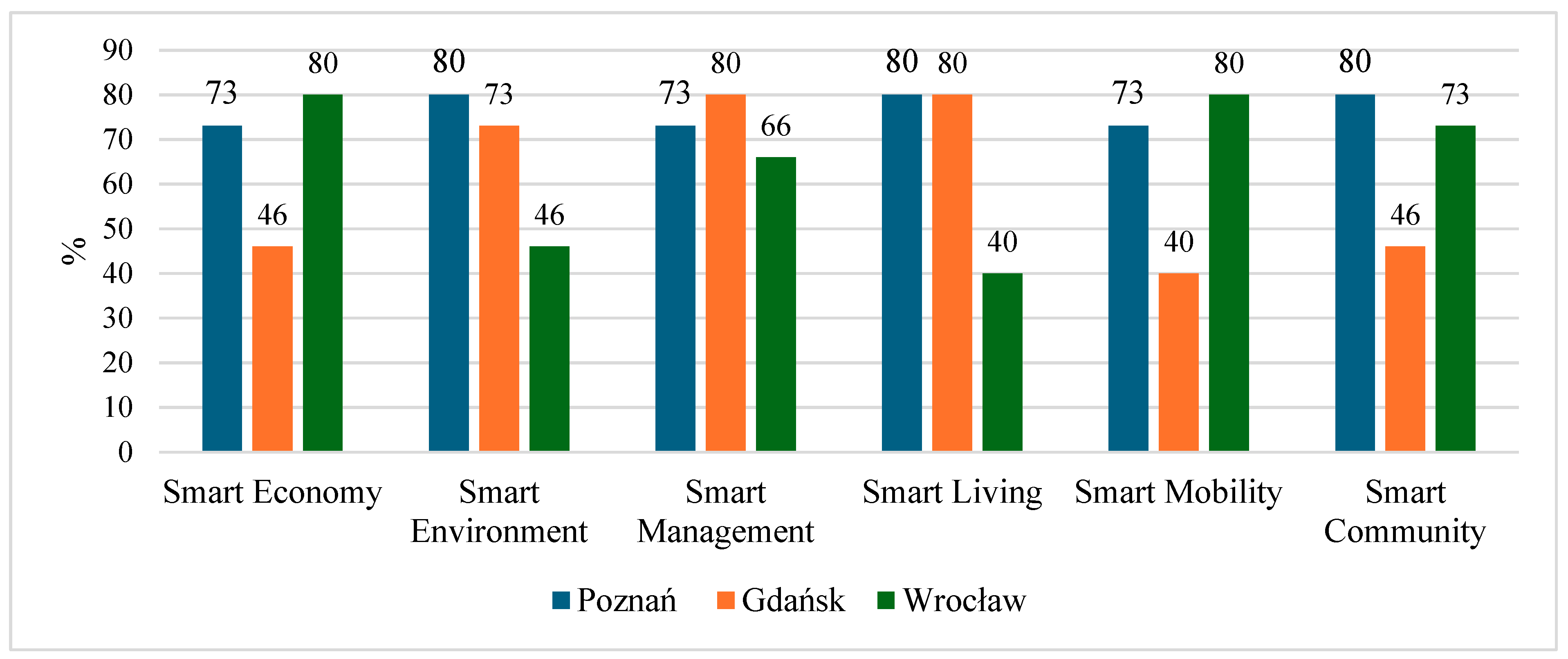
The comparative analysis of the cities indicated that the highest indicator value, with 80% of the points obtained out of the maximum possible, was for the smart environment. Smart people and smart mobility were the areas tied for second place. Their values were 80% each (Figure 6).
Figure 6.
Comparative analysis of components in the cities studied. Source: Own elaboration.
Smart management received the lowest proportion of points out of the maximum score. The smart environment is the leading area among the six components mentioned above. The significant value of the indicators in this component demonstrates a high level of public awareness regarding environmental care.
In summary, cities present a variety of solutions that fit within the smart city concept, which streamline their organisation, improve residents’ quality of life, or aim to protect the natural environment. Particular attention should be paid to projects that bridge the gap between the authorities and residents—such as the Mobile Resident Assistant introduced in Wrocław or Poznań’s Participatory Budget.
Wrocław is consistently building a smart city based on technology, collaboration with residents and innovation, as confirmed by numerous international awards, including the Green & Smart City Awards 2018 and City of the Year for cities with over 500,000 inhabitants (2016) at the Smart City Forum [32,69]. Such projects increase public participation, as residents know that their voice matters.
6. Discussion
A smart city is not a collection of individual modern, ‘smart’ solutions but rather a distinct philosophy, presenting the functioning of the city based on the latest generation of technologies as a whole.
In creating an efficiently functioning urban organism, i.e., a smart city, one must utilise modern technology and develop an optimal system for determining value [2], through appropriately selected indicators that allow for detailed analysis across the components of smart economy, smart living, smart mobility, smart environment, smart people and smart governance.
Determining the level of intelligence in cities is difficult to define unambiguously and reliably due to the individual character of each city. To carry out a reliable assessment, a proprietary method was proposed, which enables the evaluation and comparison of cities based on standardised, comparable data across the six components of a smart city: mobility, environment, economy, governance, society and living conditions.
The proposed methodological framework was validated in three key Polish cities. To this end, statistical data for 30 indicators across the six components were collected and systematised. The indicators enabled a detailed comparative analysis and the identification of the most optimal level of urban development through a standardised scoring system—the weighting of indicators. Some of the indicators could be improved or refined, and new assessment elements added, to ensure greater accuracy and reliability of the indicators in relation to the actual development of the city.
The research carried out has its strengths and weaknesses, which are set out in Table 4 for each stage of the research.
Table 4.
Identification of strengths and weaknesses for each stage of the research.
The proposed methodology is flexible and versatile, meaning it can be used by authorities, investors and citizens. When applied correctly, smart city indicators do not provide a complete picture, but they do allow for a uniform comparative assessment of cities against other urban centres. The research findings can serve as a basis for further studies, including analyses and comparative assessments of selected cities using the proposed methodology.
The main advantage of the study was the development of a universal methodology that can be freely modified by changing the indicators.
A weakness of the study is that it was conducted in a single country—Poland. In the future, similar studies should be carried out in other countries.
A significant constraint of the developed methodology is the cross-sectional nature of the data used. The proposed methodological approach does not account for capturing the dynamics of change over time. In future research, the authors will aim to use longitudinal data, which would allow for the analysis of change trajectories and a better understanding of development mechanisms.
The weaknesses of the developed methodology also include limitations resulting from the assumptions made, particularly regarding data quality and availability. Therefore, we emphasize the need for further validation of the approach across larger and more diverse administrative units, encompassing different spatial and socio-economic contexts.
Future studies should include data updates, which would allow for capturing the dynamics of ongoing changes and identifying new trends in urban development. Such an approach would not only enable the assessment of the effectiveness of existing measures but also point the way for further urban interventions in the spirit of sustainable development.
7. Conclusions
This article presents an interdisciplinary methodology for smart city benchmarking tools. The main aim was achieved through the development and validation of the methodology. In addition to the main aims, specific objectives were set. Specific aim 1: Identification of benchmarks across six smart city components (mobility, environment, economy, governance, society, and living conditions).
In response to the research question within the framework of this specific objective, the analysis showed that each of the cities studied focuses on different areas of operation. The city of Poznań exhibits the most balanced smart city profile—its scores are high and similar across all components, which indicates sustainable development and effective urban policy encompassing economic, social and environmental aspects.
The comparative analysis of the cities shows that Poznań is characterised by a high proportion of people of working age, but also a significant percentage of residents of post-working age. As is the case across Poland, the city is not immune to the ageing of its population. Despite these demographic trends, the authorities of the city of Poznań are striving to improve and enhance the quality of life for residents, including the implementation of innovative solutions in the areas of administration, the economy and the city’s public spaces.
In the validation process of the smart city methodology, the city of Poznań was awarded the title of winner, which confirms that the city is introducing the best and most modern smart solutions into its urban space, particularly in aspects relating to the following components: smart environment, smart living conditions and smart community. Poznań stands out for its balance between social and environmental aspects and the quality of life of its residents, which points to its sustainable development.
The city of Gdańsk has the lowest scores among the cities surveyed in the areas of smart economy, community and mobility. The city achieved high scores in the smart governance component.
The city of Gdańsk achieved the highest scores in the areas of smart governance and civic participation; however, in the remaining components, strategic measures require further strengthening. In the longer term, the population is projected to age further, contributing to an increase in the proportion of people of post-working age, which will consequently increase the demand for medical and care services. The countervailing factor to population ageing is the prospect of a further increase in Gdańsk’s population resulting from migration. Population growth, combined with the ageing of society, will require the adaptation of urban infrastructure, the development of housing, the transport system, and social and health services.
The city of Wrocław is characterised by significant disparities between its components. It achieved high scores in the areas of smart economy and smart community, but lower scores in the areas of living conditions and the environment. The development of Wrocław is focused on economic aspects.
Wrocław excels in areas related to the economy and mobility, which confirms its strong position as an innovative and well-connected hub. In the coming years, a further increase in the population is expected, driven primarily by migration, which is crucial in the context of addressing the labour shortage resulting from the ageing of the Polish-speaking population. The deepening ageing of the population will lead to an increase in the proportion of people of post-working age, which in turn will increase the demand for medical and care services, as well as the need to adapt infrastructure.
In summary, Wrocław ranked highest in the “smart economy” and “smart mobility” categories; Gdańsk ranked highest in the “smart governance” category; and Poznań ranked highest in the “smart community,” “smart environment,” and “smart living conditions” categories.
With regard to the implementation of Specific aim 2, which relates to the assessment of the pace and scope of smart solutions being implemented in Poland’s largest urban centres, it must be noted that the city of Poznań stands out for making the greatest progress in the implementation of technological innovations, significantly outpacing the other cities surveyed (Gdańsk and Wrocław), as it achieves high scores across all areas of urban functioning and exhibits the most balanced profile of smart city development.
The thesis put forward in the article has been proven, as the cities studied differ from one another in terms of the pace and scope of smart city solution implementation, which is reflected in varying indicator values and different intelligence profiles. It is also evident that in urban centres with a high level of economic and social development and substantial financial resources, smart solutions will be introduced more quickly than in less affluent areas lacking such significant social capital. It should be noted that the involvement of local authorities in the cities studied is at a high level; consequently, the implementation of smart city objectives proceeds more efficiently there than in smaller local government units [70].
The result of the research is a proprietary methodology that enables the assessment and comparison of cities based on standardised and comparable data across six smart city components: mobility, environment, economy, governance, society and living conditions.
Validation of the methodology has shown that all the cities studied are implementing the principles of the smart city concept, albeit to varying degrees and with different development priorities.
Author Contributions
Conceptualization, E.Z.; Methodology, E.Z.; Validation, E.Z.; Formal analysis, E.Z.; Investigation, E.Z.; Resources, E.Z. and N.K.; Data curation, N.K.; Writing—original draft, E.Z. and N.K.; Writing—review & editing, E.Z.; Visualization, E.Z. and N.K.; Supervision, E.Z.; Project administration, E.Z.; Funding acquisition, E.Z. All authors have read and agreed to the published version of the manuscript.
Funding
This research received no external funding.
Institutional Review Board Statement
We declare that the research does not require the approval of the ethics committee according to Order No. 30/2022 of the Rector of the University of Warmia and Mazury in Olsztyn, dated 29 April 2022.
Informed Consent Statement
Not applicable.
Data Availability Statement
The original contributions presented in the study are included in the article material. Further inquiries can be directed to the corresponding author.
Conflicts of Interest
Author Natalia Komendarska was employed by the company Energa-Operator S.A. Oddział Olsztyn. The remaining authors declare that the research was conducted in the absence of any commercial or financial relationships that could be construed as a potential conflict of interest.
Appendix A
Table A1.
Value Indicators.
References
- United Nations. World Urbanization Prospects 2025: Summary of Results; UN DESA/POP/2025/TR/ NO. 12; United Nations: New York, NY, USA, 2025. [Google Scholar]
- Demeri, R.P.; Rosenthal-Sabroux, C. Smart City. How to Create Public and Economic Value with High Technology in Urban Space; Springer: Cham, Switzerland, 2014. [Google Scholar]
- Zysińska, M.; Krysiuk, C.; Zakrzewski, B. Koncepcja Smart Cities w Kontekście Rozwoju Systemów Transportowych W: Logistyka 6/2014; Nowak, I., Ed.; Instytut Logistyki i Magazynowania: Poznań, Poland, 2014; pp. 11969–11982. [Google Scholar]
- Tota, P. Miasto inteligentne—Miasto dostępne. Nowoczesne technologie miejskie w kontekście projektowania uniwersalnego. Sr. Mieszk. 2017, 19, 4–12. [Google Scholar] [CrossRef] [Scilit]
- PKN-ISO 37120; Sustainable Cities and Communities -Indicators for City Services and Quality of Life. Polski Komitet Normalizacyjny (PKN): Warsaw, Poland, 2018. Available online: https://www.iso.org/standard/68498.html (accessed on 1 December 2025).
- Winkowska, J. Analiza wdrożeń smart city w Polsce i na świecie. Akad. Zarządzania 2021, 5, 207–224. [Google Scholar]
- Sobol, A. Inteligentne miasta versus zrównoważone miasta, Uniwersytet Ekonomiczny w Katowicach. Stud. Ekon. 2017, 320, 75–86. [Google Scholar]
- Gawroński, H. Efektywność partycypacyjnych instrumentów zarządzania miastem. Ruch Praw. Ekon. I Socjol. 2015, 77, 273–286. [Google Scholar] [CrossRef] [Scilit]
- UCLG. Smart Cities Study: International Study on the Situation of ICT, Innovation And Knowledge in Cities; Azkun, I., Ed.; The Committee of Digital and Knowledge-based Cities of UCLG: Bilbao, Spain, 2012. [Google Scholar]
- UCLG Global Charter. Agenda for Human Rights in the City—The UCLG Committee on Social Inclusion, Participatory Democracy and Human Rights. 2019. Available online: https://www.uclg-cisdp.org/sites/default/files/UCLG_Global_Charter_Agenda_HR_City_0.pdf (accessed on 9 February 2021).
- Zysk, E. Identification of Determinants That Reduce Women’s Safety and Comfort in Urban Public Spaces (UPS). Sustainability 2024, 16, 10075. [Google Scholar] [CrossRef] [Scilit]
- Jasiecki, K. Problemy partycypacji społecznej w Polsce i ich wpływ na politykę publiczną. Stud. Z Polityki Publicznej 2015, 2, 101–119. [Google Scholar] [CrossRef] [Scilit]
- Augustyniak, M. Partycypacja Społeczna w Samorządzie Terytorialnym w Polsce i we Francji. Studium Administracyjnoprawne na tle Porównawczym; Wolters Kluwer Polska: Warszawa, Poland, 2017. [Google Scholar]
- Wejchert, K. Przestrzeń Wokół Nas; Fibak Noma Press: Katowice, Poland, 1993. [Google Scholar]
- Ruczyński, R. Tradycyjna urbanistyka a współczesne realizacje przestrzeni publicznych. In Problemy Kształtowania Przestrzeni Publicznych; Lorens, P., Martyniuk-Pęczek, J., Eds.; Wydawnictwo Urbanista: Gdańsk, Poland, 2010. [Google Scholar]
- Sikora-Fernandez, D. Koncepcja “Smart City” w Założeniach Polityki Rozwoju Miasta—Polska Perspektywa, W: Acta Universitatis Lodziensis. Folia Oeconomica nr 290/2013; Sokołowicz, M., Ed.; Wydawnictwo Uniwersytetu Łódzkiego: Łódź, Poland, 2013; pp. 83–94. [Google Scholar]
- Manville, C.; Cochrane, G.; Cave, J.; Millard, J.; Pederson, J.K.; Thaarup, R.K.; Kotterink, B. Mapping Smart City in the EU, European Parliament, Directorate- General for Internal Policies, Policy Department A: Economic and Scientific Policy; European Parliament: Brussels, Belgium, 2014. [Google Scholar]
- Tataruch, A.; Zysk, E.; Tuyet, M. Changes the landscape of rural areas located close to city—Case study of Olsztyn. Acta Sci. Pol. Adm. Locorum 2019, 18, 397–410. [Google Scholar] [CrossRef] [Scilit]
- Czupich, M.; Kola-Bezka, M.; Ignasiak-Szulc, A. Czynniki i Bariery Wdrażania Koncepcji Smart City w Polsce W: Studia Ekonomiczne. Zeszyty Naukowe Uniwersytetu Ekonomicznego w Katowicach nr 276; Harasim, J., Ed.; Wydawnictwo Uniwersytetu Ekonomicznego w Katowicach: Katowice, Poland, 2016; pp. 223–235. [Google Scholar]
- Laska, A. Idea Smart City—Między Innowacyjnością Publiczną a Technologicznym Zagrożeniem. 2017. Available online: https://repozytorium.ukw.edu.pl/handle/item/7243 (accessed on 1 December 2025).
- Koviazina, K.; Kucheriavaia, S. Co znaczy bycie smart dla europejskiego miasta? Teoria trzech generacji rozwoju Smart City. Przegląd Eur. 2022. [Google Scholar] [CrossRef] [Scilit]
- FastCompany. 2015. Available online: https://kcls.bibliocommons.com/v2/list/display/220422687/561113708 (accessed on 13 February 2026).
- Cohen, B. The 3 Generations of Smart Cities; Fast Company: New York, NY, USA, 2015; Available online: https://www.fastcompany.com/3047795/the-3-generations-of-smart-cities (accessed on 9 February 2025).
- Townsend, A. Smart Cities: Big Data, Civic Hackers, and the Quest for a New Utopia; W.W. Norton & Company: New York, NY, USA, 2013. [Google Scholar]
- Hollands, R. Will the Real Smart City Please Stand Up? City 2008, 12, 303–320. [Google Scholar] [CrossRef] [Scilit]
- Chourabi, H.; Nam, T.; Walker, S.; Gil-Garcia, J.R.; Mellouli, S.; Nahon, K.; Pardo, T.A.; Scholl, H.J. Understanding Smart Cities: An Integrative Framework. In Proceedings of the 45th Hawaii International Conference on System Sciences, Maui, HI, USA, 4–7 January 2012; IEEE Computer Society: Washington, DC, USA, 2013; pp. 2289–2297. [Google Scholar]
- Albino, V.; Berardi, U.; Dangelico, R.M. Smart Cities: Definitions, Dimensions, Performance, and Initiatives. J. Urban Technol. 2015, 22, 3–21. [Google Scholar] [CrossRef] [Scilit]
- Demirel, D. The Impact of Managing Diversity on Building the Smart City A Comparison of Smart City Strategies: Cases From Europe, America, and Asia. SAGE Open 2023, 3, 13. [Google Scholar] [CrossRef] [Scilit]
- Zwick, A.; Spicer, Z. Examining the Smart City Generational Model: Conceptualizations, Implementations, and Infrastructure Canada’s Smart City Challenge. Urban Aff. Rev. 2024, 60, 1140–1167. [Google Scholar] [CrossRef] [Scilit]
- Lugo-Santiago, J.A. Is There Such a Thing as the Smart City 1.0, 2.0, or 3.0? In Leadership and Strategic Foresight in Smart Cities; Rodríguez-Bolívar, M.P., Ed.; Springer: Cham, Switzerland, 2020; pp. 19–35. [Google Scholar] [CrossRef] [Scilit]
- Cardullo, P.; Kitchin, R. Being a ‘citizen’ in the smart city: Up and down the scaffold of smart citizen participation in Dublin, Ireland. GeoJournal 2019, 84, 1–13. [Google Scholar] [CrossRef] [Scilit]
- Smartcityforum. 2026. Available online: www.smartcityforum.pl/artykul/inteligentne-miasta-trzeciej-generacji/ (accessed on 13 February 2026).
- Yun, Y.; Lee, M. Smart City 4.0 from the Perspective of Open Innovation. J. Open Innov. Technol. Mark. Complex. 2019, 5, 92. [Google Scholar] [CrossRef] [Scilit]
- Makieła, Z.J.; Stuss, M.M.; Mucha-Kuś, K.; Kinelski, G.; Budziński, M.; Michałek, J. Smart City 4.0: Sustainable Urban Development in the Metropolis GZM. Sustainability 2022, 14, 3516. [Google Scholar] [CrossRef] [Scilit]
- Postránecký, M.; Svítek, M. Smart City Near to 4.0—An Adoption of Industry 4.0 Conceptual Model. In Proceedings of the 2017 Smart City Symposium Prague (SCSP), Prague, Czech Republic, 25–26 May 2017; IEEE: New York, NY, USA, 2017. [Google Scholar] [CrossRef] [Scilit]
- Boichuk, N.; Pisz, I.; Bruska, A.; Kauf, S.; Wyrwich-Płotka, S. Exploring the Role of Industry 4.0 Technologies in Smart City Evolution: A Literature-Based Study. Sustainability 2025, 17, 7024. [Google Scholar] [CrossRef] [Scilit]
- Ergazakis, K.; Metaxiotis, K.; Psarras, J. Understanding City 4.0: A Triple Bottom Line Approach. Sustainability 2024, 16, 326. [Google Scholar] [CrossRef] [Scilit]
- SDGR. Sustainable Development Goals Report 2018—Goal 15: Land Degradation. 2018. Available online: https://www.un.org/en/desa/sustainable-development-goals-report-2018-%E2%80%93-goal-15-land-degradation (accessed on 10 April 2022).
- Stuss, M. Zarządzanie Talentami. Koncepcje, Modele i Praktyki; Wydawnictwo Uniwersytetu Jagiellońskiego: Kraków, Poland, 2021. [Google Scholar]
- UN Habitat. Transforming Our World: The 2030 Agenda for Sustainable Development; Resolution A/RES/70/1; UE Sustainable Development Agenda: Brussels, Belgium, 2015; Available online: https://unctad.org/system/files/official-document/ares70d1_en.pdf (accessed on 1 July 2020).
- UN Habitat. Urbanization and Development: Emerging Futures World Cities Report. 2016. Available online: https://unhabitat.org/world-cities-report-2016 (accessed on 28 July 2026).
- Korenik, A. Smart Cities: Inteligentne Miasta w Europie i Azji; CeDeWu: Warszawa, Poland, 2019. [Google Scholar]
- Smart City Expert— Blog o Miastach Prawdziwie Inteligentnych. Available online: https://smartcity-expert.eu/ (accessed on 22 February 2026).
- Caragliu, A.; Del Bo, C.; Nijkamp, P. Smart Cities in Europe. J. Urban Technol. 2011, 18, 65–82. [Google Scholar] [CrossRef] [Scilit]
- Puzio, E.; Drożdż, W.; Kolon, M. The Role of Intelligent Transport Systems and Smart Technologies in Urban Traffic Management in Polish Smart Cities. Energies 2025, 18, 2580. [Google Scholar] [CrossRef] [Scilit]
- Michalak, W.; Dworakowska, A. (Eds.) Chorzy na Smog, Publikacja HEAL (Health and Environment Alliance) Oraz PAS (Polskiego Alarmu Smogowego) z Wykorzystaniem Analizy Warunków Atmosferycznych Przygotowanej Przez Europejskie Centrum Czystego Powietrza (ECAC); HEAL: Warszawa, Poland, 2023. [Google Scholar]
- Gotlib, D.; Olszewski, R. Smart City: Informacja Przestrzenna w Zarządzaniu Inteligentnym Miastem; Wydawnictwo Naukowe PWN: Warszawa, Poland, 2016. [Google Scholar]
- Zysk, E.; Zalewska, K. The Methodology for Assessing the 15 Minute Age-Friendly Walkability (AFW) of Urban Public Spaces. Sustainability 2024, 16, 6406. [Google Scholar] [CrossRef] [Scilit]
- Szymańska, D.; Korolko, M. Inteligentne Miasta—Idea, koncepcje i Wdrożenia; Wydawnictwo Naukowe Uniwersytetu Mikołaja Kopernika: Toruń, Poland, 2015; pp. 65–66, 68–69. [Google Scholar]
- Szczech-Pietkiewicz, E. Smart City—Próba Definicji i Pomiaru Gospodarka Lokalna w Teorii i Praktyce; Wydawnictwo Uniwersytetu Ekonomicznego: Wrocław, Poland, 2015; p. 71. [Google Scholar]
- Kitchin, R. The Real-Time City? Big Data and Smart Urbanism. GeoJournal 2014, 79, 1–14. [Google Scholar] [CrossRef] [Scilit]
- Zysk, E.; Zalewska, K. The voice of society in designing public recreational spaces (PRS) in an urban environment. Econ. Environ. 2024, 88, 715. [Google Scholar] [CrossRef] [Scilit]
- Giffinger, R.; Haindlmaier, G. Smart Cities Ranking: An Effective Instrument for the Positioning of Cities? ACE Archit. City Environ. 2010, 4, 7–26. [Google Scholar] [CrossRef] [Scilit]
- Giffinger, R.; Fertner, C.; Kramar, H.; Kalasek, R.; Pichler-Milanović, N.; Meijers, E. Smart Cities—Ranking of European Medium-Sized Cities; Vienna University of Technology: Vienna, Austria, 2007. [Google Scholar]
- Ryba, M. Czym jest koncepcja smart city, a zatem dlaczego powinniśmy je nazywać miastem sprytnym. Pr. Nauk. Uniw. Ekon. WE Wrocławiu 2017, 82–90. [Google Scholar] [CrossRef] [Scilit]
- Obrębalski, M. Specjalizacja i Inteligencja Miasta—Identyfikacja, Pomiar i Ocean; Studia Komitetu Przestrzennego Zagospodarowania Kraju PAN: Warsaw, Poland, 2016; pp. 112–124. [Google Scholar]
- Wikipedia. Available online: https://pl.wikipedia.org/wiki/ (accessed on 9 February 2026).
- Polska w liczbach. Available online: www.polskawliczbach.pl (accessed on 9 February 2026).
- Geoportal. Available online: www.geoportal.gov.pl (accessed on 9 February 2026).
- Jacoby, J.; Matell, M.S. Three-Point Likert Scales Are Good Enough. J. Mark. Res. 1971, 8, 495–500. [Google Scholar] [CrossRef] [Scilit]
- Gdańsk 2030 Plus. Strategia Rozwoju Miasta. Available online: https://www.gdansk.pl/strategia-rozwoju-miasta-gdansk-2030/Gdansk-2030-Plus-Strategia-Rozwoju-Miasta-pobierz,a,38090 (accessed on 5 March 2026).
- The Report on the State of the City of Gdańsk for 2023; Raport o Stanie Miasta Gdańska za rok 2023. Available online: https://download.cloudgdansk.pl/gdansk-pl/d/202406231798/raport-o-stanie-miasta-gdanska-za-2023-rok.pdf (accessed on 5 March 2026).
- Wrocław City Development Strategy (Strategia Wrocław 2030), Strategia Rozwoju Miasta Wrocław Strategia Wrocław 2030. Available online: https://www.wroclaw.pl/beta2/files/news/61260/Strategia_2030-2.pdf (accessed on 25 April 2026).
- Report on the State of the City of Wrocław for 2023; Raport o Stanie Miasta Wrocław za 2023 rok. Available online: https://bip.um.wroc.pl/artykul/836/39990/raporty-o-stanie-miasta/ (accessed on 1 March 2026).
- Poznań City Development Strategy (Strategia rozwoju Miasta Poznania do roku 2030). Available online: https://cwd.info.pl/wp-content/uploads/2023/06/Strategia-Poznan-2030.pdf (accessed on 28 July 2026).
- Report on the State of the City of Poznań for 2023. Raport o Stanie Miasta Poznania za rok 2023. Available online: https://bip.poznan.pl/bip/raport-ostanie-miasta,doc,290/ (accessed on 5 March 2026).
- Eksperci 2023; Eksperci Szkoły Głównej Handlowej w Warszawie, Uniwersytetu Ekonomicznego w Krakowie oraz Grupy LUX MED, 2023, Raport Indeks Zdrowych Miast 2023. Available online: https://www.luxmed.pl/assets/media/Raport_Indeks_Zdrowych_Miast_2023.pdf (accessed on 5 March 2026).
- Dębkowska, K.; Kłosiewicz-Górecka, U.; Szymańska, A.; Wejt-Knyżewska, A.; Zybertowicz, K. Akademickość Polskich Miast (II); Polski Instytut Ekonomiczny: Warszawa, Poland, 2023; Available online: https://pie.net.pl/wp-content/uploads/2024/02/Akademickosc-miast-2.pdf (accessed on 20 April 2026).
- SMART. Supplementary Material. Available online: www.pkn.pl/smart-cities (accessed on 20 April 2026).
- Polska 2030, Długookresowa Strategia Rozwoju Kraju—Polska 2030. Trzecia Fala Nowoczesności; Ministerstwo Administracji i Cyfryzacji: Warszawa, Poland, 2013; Available online: https://kigeit.org.pl/ftp/prcip/literatura/002_strategia_dsrk_pl2030_rm.pdf (accessed on 5 April 2026).

Disclaimer/Publisher’s Note: The statements, opinions and data contained in all publications are solely those of the individual author(s) and contributor(s) and not of MDPI and/or the editor(s). MDPI and/or the editor(s) disclaim responsibility for any injury to people or property resulting from any ideas, methods, instructions or products referred to in the content. |
© 2026 by the authors. Licensee MDPI, Basel, Switzerland. This article is an open access article distributed under the terms and conditions of the Creative Commons Attribution (CC BY) license.