


Abstract
Concrete is inherently susceptible to cracking, which compromises durability and accelerates structural deterioration. Microbially induced calcium carbonate (CaCO3) precipitation (MICP)-based self-healing concrete has emerged as a sustainable strategy to autonomously repair cracks; however, its efficiency is often limited by challenges related to bacterial survival, nutrient availability, and uncontrolled crack geometry. In this context, the integration of natural fibers presents a promising yet underexplored approach to enhance microbial performance within cementitious systems. This study critically examines the interactions between natural fibers (e.g., coir and sisal) and microbial activity in bio-concrete, with a focus on their influence on bacterial viability, MICP efficiency, and crack-healing performance. Natural fibers are hypothesized to act as multifunctional components by serving as internal moisture reservoirs, providing surface sites for bacterial attachment, and regulating crack width through bridging mechanisms. These combined effects can promote localized microenvironments conducive to bacterial activation and calcium carbonate precipitation. The paper synthesizes current knowledge on fiber-reinforced concrete and bio-concrete systems and proposes a conceptual framework describing fiber–microbe interaction mechanisms, including moisture retention, interfacial transition zone (ITZ) modification, and enhanced nucleation of CaCO3. Key challenges such as fiber degradation in alkaline environments, variability in natural fiber properties, and long-term durability of hybrid systems are also discussed. Finally, future research directions are outlined, emphasizing the need for systematic experimental validation, microstructural characterization, and optimization of hybrid fiber–microbial systems. This work provides new insights into the synergistic role of natural fibers in bio-concrete and establishes a foundation for developing more efficient, durable, and sustainable self-healing construction materials.
1. Introduction
Concrete is the most widely used construction material worldwide due to its versatility, availability, cost-effectiveness, and favorable mechanical properties. Its high compressive strength, durability, and adaptability make it indispensable for the construction of buildings, bridges, highways, and other critical infrastructure systems. Concrete is commonly made with cement, aggregates, and water. Concrete has both benefits and drawbacks and is essential to the design and development of infrastructure. In the building sector, concrete is widely sought after due to its strength, durability, and permeability [1]. Additionally, its demand is growing because of its accessibility, affordability, and versatility. Concrete typically lasts for 50 years before weather-related factors (such as sunlight and rain) cause fissures. Cracks cannot, however, be completely avoided. When concrete cracks, the steel rebar reinforcements are exposed to air, which promotes corrosion and weakens the bars. Cracks can be seen in both the plastic and hardened stages. Cracks in the plastic state are caused by shrinkage, settlement, and rapid water loss; in the hardened state, they are caused by weather, thermal impacts, a lack of water content (dryness), and many other variables [2,3]. However, its brittleness makes it prone to microcracking, which can significantly reduce its durability, especially in aggressive environments. Traditional repair techniques (e.g., epoxy injection, patching) are costly, labor-intensive, and may introduce environmental and esthetic issues.
As announced by the Federal Highway Administration on 2 June 2025, $5.4 billion was allocated for the repair and maintenance of existing concrete structures and bridges in the U.S. [4]. In its 2025 Infrastructure Report Card, the American Society of Civil Engineers (ASCE) gave the state of roadway bridges in the United States a “C” rating, which is the same as the previous 2021 report card. The report card states that of the more than 623,000 bridges in the United States, 49.1% are in fair condition, and 6.8% are in bad condition [5]. In the UK, almost 45% of the total annual construction cost is spent on the maintenance of concrete structures [6]. In an article, according to the International Concrete Repair Institute (ICRI), the cost for repairing, protecting, and strengthening concrete structures in the U.S. is estimated at $18–21 billion annually [7]. These statistics show how expensive it is to maintain and repair concrete structures. Finding a remedy that will deal with the root cause of this issue and prevent dangerous substances from entering concrete structures is therefore essential.
Traditional repair and maintenance methods are often labor-intensive, costly, and may not effectively address microcracks that develop within the structure. As a result, increasing attention has been directed toward the development of self-healing concrete technologies capable of autonomously repairing cracks and restoring durability [1]. Among self-healing strategies, microbially induced calcium carbonate precipitation (MICP), often called “bio-concrete,” has gained considerable attention. In this approach, bacteria embedded in the concrete precipitate CaCO3 in cracks, sealing them and restoring functionality. The use of MICP for self-healing bio-concrete has shown promise, with bacteria like Bacillus megaterium and Bacillus subtilis being used to precipitate CaCO3 to seal cracks [2]. The goal of this self-healing mechanism is to prolong the service life of concrete structures, minimize reinforcement corrosion, and reduce the need for maintenance [8]. Beyond the obvious structural advantages, the potential impact further aligns with the objectives of infrastructure resilience and sustainable construction [9]. In order to solve the problems of infrastructure demand and global urbanization, self-healing concrete is essential [10].
Parallel to developments in bio-concrete, fiber-reinforced concrete (FRC) has been extensively studied for its ability to improve crack resistance, toughness, and post-cracking behavior. Fibers act as discrete reinforcement elements within the cement matrix, bridging cracks and redistributing stresses, thereby delaying crack propagation and reducing crack width. Synthetic fibers such as polyvinyl alcohol (PVA) and polypropylene (PP) are widely used due to their high tensile strength and durability, while natural fibers such as coir and sisal have gained increasing attention as sustainable alternatives due to their renewability, biodegradability, and low environmental impact [3,11]. However, natural fibers also present challenges, including variability in properties, susceptibility to degradation in alkaline environments, and high-water absorption capacity. Although both MICP-based self-healing systems and fiber-reinforced concrete have been independently investigated, the interaction between fibers and microbial activity within cementitious matrices remains insufficiently understood. In particular, the potential role of natural fibers in influencing bacterial viability, metabolic activity, and CaCO3 precipitation has received limited attention. This represents a critical research gap, as the efficiency of microbial self-healing is strongly dependent on local environmental conditions within the concrete matrix, including moisture availability, crack geometry, and nucleation sites for mineral precipitation.
Natural fibers possess unique characteristics that may directly influence microbial performance in bio-concrete systems [12]. Their hydrophilic nature enables them to absorb and retain moisture, potentially creating localized microenvironments that support bacterial survival and activation. Additionally, the rough surface morphology of natural fibers may facilitate bacterial attachment and serve as nucleation sites for CaCO3 precipitation [13,14]. Furthermore, through crack-bridging mechanisms, fibers can regulate crack width and stability, which are key parameters governing the effectiveness of microbial healing [15]. Narrow, stable cracks are more conducive to CaCO3 deposition, whereas wider cracks may inhibit efficient healing. These combined effects suggest that natural fibers could function not only as mechanical reinforcement but also as bio-functional components that enhance microbial activity and self-healing efficiency [16,17,18]. Despite these promising synergies, the underlying mechanisms governing fiber–microbe interactions in bio-concrete remain largely unexplored. Key questions persist regarding how fiber type, morphology, and dosage influence bacterial viability, how the Interfacial Transition Zone (ITZ) between fibers and the cement matrix affects microbial processes, and how these interactions ultimately impact the efficiency and durability of MICP-based self-healing systems. Addressing these questions is essential for advancing the design of next-generation bio-concrete materials that integrate mechanical performance with autonomous healing capabilities.
Therefore, this review provides a comprehensive examination of fiber–microbe interactions in bio-concrete, with particular emphasis on the role of natural fibers in enhancing bacterial viability and the efficiency of microbial-induced calcium carbonate precipitation (MICP). Unlike previous reviews that separately address microbial self-healing concrete, fiber-reinforced concrete, or natural fiber-reinforced cementitious composites, this work integrates these topics by examining the coupled mechanisms through which natural fibers influence self-healing performance. Specifically, it explores how fiber physical characteristics, moisture retention capacity, surface chemistry, and degradation behavior affect bacterial attachment, nutrient transport, crack-width regulation, calcium carbonate nucleation, and long-term healing efficiency. Based on these interactions, a mechanistic framework is proposed to illustrate the synergistic roles of fibers and microorganisms in promoting autonomous crack repair. In addition, the review critically discusses the challenges associated with fiber durability, degradation, and system optimization, identifies current knowledge gaps, and outlines future research directions to support the development of more effective, durable, and sustainable bio-concrete systems.
2. Review Methodology
This review was conducted as a critical narrative review supported by a structured literature search to synthesize current knowledge on fiber–microbe interactions in microbial-induced calcium carbonate precipitation (MICP)-based bio-concrete. A comprehensive search of peer-reviewed literature was performed using major scientific databases, including Scopus, Web of Science, ScienceDirect, SpringerLink, Wiley Online Library, and Google Scholar, to identify relevant studies published primarily between 2010 and 2025. Earlier publications were also considered where they represented foundational contributions to microbial self-healing concrete or fiber-reinforced cementitious composites. A Boolean search strategy was employed using combinations of keywords including “microbial-induced calcium carbonate precipitation (MICP),” “bio-concrete,” “self-healing concrete,” “fiber-reinforced concrete,” “natural fibers,” “synthetic fibers,” “fiber–microbe interactions,” “bacterial concrete,” “bacterial viability,” “calcium carbonate precipitation,” “interfacial transition zone (ITZ),” and “crack healing.” Additional relevant publications were identified through backward and forward citation tracking of key references.
Studies were selected based on their relevance to one or more of the following topics: (i) microbial self-healing mechanisms and MICP, (ii) natural, synthetic, or hybrid fiber-reinforced cementitious composites, (iii) bacterial viability, nutrient transport, moisture retention, and fiber–microbe interactions, (iv) crack-healing efficiency, durability, and mechanical performance, and (v) microstructural characterization using techniques such as SEM, EDS, XRD, FTIR, and related analytical methods. Preference was given to peer-reviewed journal articles with clearly reported experimental procedures and findings. Publications lacking sufficient methodological detail or direct relevance to the objectives of this review were excluded. Rather than performing a quantitative meta-analysis, this review critically synthesizes the available literature to identify the mechanisms governing fiber–microbe interactions, evaluate the benefits and limitations of different fiber systems, highlight current knowledge gaps, and propose future research directions for the development of durable and sustainable MICP-based self-healing bio-concrete. The overall structure and thematic organization of the review are illustrated in Figure 1.
Figure 1.
Structure of the manuscript.
3. Background
Microbially induced calcium carbonate precipitation (MICP) leverages bacterial metabolism to precipitate CaCO3 in cracks. In bio-concrete, bacteria like Bacillus subtilis are often used because they can survive in harsh cementitious environments and produce urease, which catalyzes urea hydrolysis, resulting in carbonate ions (CO32−). MICP is the capacity of bacteria to generate CaCO3 extracellularly through metabolic activity. The process by which living things create minerals as a result of their metabolic products reacting with their environment is known as biomineralization [19]. This bio-inspired method makes use of bacteria that have been specially selected to precipitate CaCO3 as a mineral binding agent. These bacteria’s spores are contained in the concrete matrix. The capsules burst open and release the bacterial spores when water gets into a crevice. In the presence of moisture and nutrients, which are frequently supplied alongside the bacteria, these spores germinate. The bacteria then begin to metabolize easily accessible substrates, such as calcium ions (Ca2+) and bicarbonate ions (HCO3−), which are frequently found in the pore water of concrete, to precipitate CaCO3 within the crack, promoting healing [2].
3.1. Microbial Induced Calcium Precipitation (MICP) Mechanism
MICP is a biocementation process that uses the metabolic activity of particular bacteria to precipitate CaCO3, which improves concrete’s mechanical qualities and promotes self-healing. Larger cracks up to 1 mm in width have been successfully healed by microbial self-healing [20,21]. Ureolytic bacteria are primarily responsible for this process; they hydrolyze urea to create CO32−, which reacts with Ca2+ to form CaCO3 [22,23]. The reaction sequence is as follows:
First, one mole of urea is hydrolyzed intracellularly to 1 mol of ammonia and 1 mol of carbamate, which spontaneously hydrolyses to form 1 mol of ammonia and carbonic acid Equations (1) and (2)
Then the products further equilibrate in water to form bicarbonate and 2 mol of ammonium and hydroxide ions (Equations (3) and (4)).
The breakdown of urea produces ammonia; it raises pH and creates an alkaline microenvironment surrounding the bacterial cell [19]. When super-saturation is attained, the presence of Ca2+ ions in the bacterial cell wall’s surroundings causes CaCO3 to precipitate.
The precipitation of CaCO3 is facilitated by the negatively charged groups in the bacterial cell wall, which act as a nucleation site for positively charged cations like Ca2+ [24]. As demonstrated by Equations (6)–(8), the bacterial cell surface is a crucial nucleation site in the precipitation of CaCO3.
Bacteria used in self-healing concrete can be classified based on their ability to thrive in different pH environments, ranging from acidophiles that prefer highly acidic conditions (pH 1–5.5), neutrophiles that grow in neutral to slightly alkaline environments (pH 5.5–8.5), and alkaliphiles that survive in highly alkaline conditions (pH 7.5–12) [25]. Gram-positive alkaliphilic bacteria are the most often used of them in MICP for self-healing concrete. Bacillus subtilis, Lysinibacillus sphaericus (formerly known as Bacillus sphaericus), and Sporosarcina pasteurii are among the species from the Bacillus genus that have shown exceptional resilience in harsh pH and temperature conditions. Because they can promote fracture healing by precipitating CaCO3, these bacteria are commonly utilized to increase the lifetime and durability of concrete.
3.2. Bacterial Types Used
A variety of bacterial strains have been investigated for their effectiveness in microbially induced carbonate precipitation (MICP) within cementitious systems. Among these, ureolytic and alkaliphilic bacteria such as Bacillus subtilis, Lysinibacillus sphaericus, and Sporosarcina pasteurii have been most extensively studied due to their ability to survive and remain metabolically active in the highly alkaline environment of concrete pore solutions (pH 9–12) [26,27]. These bacteria facilitate self-healing primarily through urease-driven metabolic pathways, in which urea hydrolysis produces carbonate ions (CO32−) that subsequently react with Ca2+ to form CaCO3. For instance, Bacillus sphaericus has demonstrated significant capability in precipitating CaCO3 under alkaline conditions by converting urea into ammonium and CO32−, thereby contributing to crack sealing and strength recovery [19]. Although numerous microbial species are capable of inducing CaCO3 precipitation through different metabolic pathways, ureolytic bacteria remain the most widely employed due to their rapid precipitation kinetics and high efficiency. However, the selection of suitable bacterial strains for self-healing concrete is governed not only by precipitation efficiency but also by their ability to withstand harsh environmental conditions, including high alkalinity, limited nutrient availability, and cyclic wet–dry exposure [28].
In this study, Bacillus subtilis, Bacillus sphaericus, and Bacillus megaterium are considered particularly suitable due to their demonstrated alkaliphilic resilience, high urease activity, reliable sporulation capability, and adaptability to varying environmental conditions. These characteristics enable them to remain viable within the concrete matrix over extended periods. Furthermore, these strains exhibit compatibility with porous carrier materials such as Lightweight Expanded Clay Aggregate (LECA), which are commonly used to protect bacterial spores and facilitate controlled activation upon crack formation [28,29,30].
In contrast, S. pasteurii, although widely recognized for its high urease activity and efficiency in CaCO3 precipitation, is relatively more sensitive to environmental fluctuations such as drying and temperature variations. This sensitivity may limit its long-term performance in practical field conditions where environmental control is less predictable [24]. Consequently, while S. pasteurii is highly effective under controlled laboratory conditions, Bacillus species often offer a broader operational range and improved robustness for real-world applications [21]. Overall, the literature indicates a strong preference for alkaliphilic Bacillus strains in self-healing concrete systems due to their combined advantages of durability, metabolic efficiency, and environmental adaptability [31,32]. The key characteristics of commonly used bacterial species in bio-concrete are summarized in Table 1.
Table 1.
Common Bacterial Species Used in Self-Healing Concrete and Their Key Advantages.
3.3. Bacterial Survival Challenges
The activity and survival of bacteria in concrete are influenced by a number of environmental conditions. Sporulation is influenced by a number of variables, including temperature changes, pH fluctuations, oxygen concentrations, and mineral concentrations. Bacterial growth may be inhibited by fresh concrete’s high alkalinity (pH 12). However, alkaliphilic bacteria have evolved to endure these circumstances [37]. The availability of oxygen affects the metabolism and sporulation of bacteria. The effectiveness of CaCO3 precipitation is directly impacted by the availability of calcium ions. Bacteria go into a latent state when growth-unfavorable conditions arise in order to retain genetic material until favorable conditions return [38]. Because of this decrease in metabolic activity, bacterial spores are more resilient to heat and cycles, chemical exposure, dry and wet cycles, and radiation.
3.3.1. Concentration of Bacteria Used
The amount and effectiveness of microbially induced calcium precipitation (MICP) are significantly influenced by the concentration of bacteria utilized in self-healing concrete. An ideal concentration of bacteria guarantees that there is enough metabolic activity to support urea hydrolysis, CO32− production, and the consequent precipitation ofCaCO3 [21,39]. However, the self-healing mechanism may be negatively impacted by concentrations that are either too high or too low. According to research, the best bacterial concentrations for self-healing applications are between 105 and 108 cells/mL. While concentrations beyond this range can cause nutritional depletion, decreased bacterial viability, and decreased healing efficiency, concentrations below this range are unable to create sufficient urease enzyme activity, which results in insufficient CaCO3 precipitation [40]. When employing Bacillus subtilis in self-healing concrete, Tie et al. [41] showed that a bacterial concentration of 2.5 optical density (OD) is ideal. Compared to concentrations of 2.0 or 3.0 OD, this concentration more successfully enhanced mechanical qualities, such as compressive and flexural strength.
The effectiveness of repairing cracks and regaining strength has been shown to differ depending on the number of bacteria. It has been demonstrated that Lysinibacillus sphaericus and Sporosarcina pasteurii may effectively precipitate CaCO3 at 108 cells/mL, sealing cracks and restoring compressive strength in injured specimens [42]. On the other hand, at 106 and 107 cells/mL, respectively, between 30% and 45% of urea hydrolysis was attained, with the most hydrolysis happening at 108 cells/mL, leading to better healing efficacy. Incomplete crack healing and reduced mechanical property recovery were seen at lower doses. In a different investigation, fly ash concrete’s compressive, split tensile, and flexural strengths were enhanced by Bacillus megaterium at a concentration of 105 cells/mL. This concentration demonstrated CaCO3 promise in structural applications by enabling efficient deposition [43].
The development of strength in various concrete grades is also influenced by the concentration of bacteria. Higher-grade concrete showed a faster rate of strength development than lower-grade concrete when Bacillus megaterium was present at 30 × 105 CFU/mL. Enhanced calcite precipitation led to a 24% improvement in strength in 50 MPa concrete [44]. The compressive strength of structural concrete was increased by 20% when Sporo-sarcina pasteurii was added at a concentration of 105 cells/mL and fly ash was substituted for 10% of the cement. CaCO3 deposition on bacterial cell surfaces was verified by microstructural investigation [45,46].
Table 2 summarizes the bacterial strains and concentrations used and the compressive strength values, which may vary depending on the calcium source supplied to the bacteria.
Table 2.
Summary of bacteria used, bacterial concentration, and the compressive strength values.
3.3.2. Nutrient Depletion
Bacterial metabolism in MICP-based systems requires a continuous supply of nutrients, including urea, calcium sources, and organic compounds such as yeast extract. However, the dense and low-permeability nature of concrete restricts the transport of these nutrients to bacterial cells embedded within the matrix. In self-healing concrete, nutrients are essential for sustaining bacterial activity. They supply the essential substrates needed for MICP, guaranteeing effective crack healing and prolonged metabolic activity. The efficiency of bacterial systems in concrete is directly impacted by the selection and concentration of nutrients.
Urea as a Nutrient—Because of its function in the ureolytic process, urea is one of the most often utilized nutrient sources in MICP. Urea is hydrolyzed by bacteria like Sporosarcina pasteurii to create ammonium and CO32−, which then combine with Ca2+ to precipitate CaCO3. Optimal urea concentrations promote the effectiveness of crack healing and boost bacterial activity [19,40,49]. For instance, Bacillus subtilis uses urea to create CaCO3, which is essential for the process of self-healing [49]. Calcium ion sources for the precipitation of CaCO3 include calcium salts including calcium lactate, calcium nitrate, and calcium chloride. Because of its great solubility and compatibility with bacterial systems, calcium lactate is the most effective of them. According to studies, calcium lactate promotes the deposition of CaCO3 on crack surfaces, which aids in effective crack healing [50,51,52]. The synergistic effect of mixing calcium and urea salts is also highlighted by research. A nutrient solution containing urea and calcium lactate, for example, enhanced crack repair after 28 days, highlighting the significance of a balanced nutrient composition [53]. Achal et al. [54], using the ureolytic bacterial strain, Bacillus megaterium, reported improvement in strength and permeability properties in fly ash-amended mortar and concrete specimens.
Peptone and yeast extract are examples of additional organic nutrients that might improve bacterial activity and growth. These substances give bacteria the necessary proteins and amino acids to maintain their long-term survival. According to Wong et al. [55], adding yeast extract to nutritional solutions greatly increased CaCO3 precipitation and bacterial viability. Over time, nutrient depletion can significantly reduce bacterial activity, limiting the extent and repeatability of crack healing. Additionally, uneven distribution of nutrients within the concrete may lead to localized healing rather than uniform crack sealing [24,31]. The challenge of maintaining long-term nutrient availability remains a critical barrier to the scalability of bio-concrete technologies. While excessive concentrations can lead to undesirable side effects like increased porosity and decreased mechanical strength, insufficient nutrients can restrict bacterial urease action. For self-healing concrete systems to effectively cure cracks and preserve their structural integrity, proper nutrient formulas are crucial. Researchers have successfully improved the mechanical recovery and healing efficiency of damaged concrete by adjusting nutrient levels.
3.3.3. pH Levels
Fresh concrete exhibits a highly alkaline pore solution with pH values typically ranging from 12 to 13. Such extreme alkalinity can disrupt bacterial cell membranes, denature essential enzymes (including urease), and significantly reduce microbial activity. Although alkaliphilic bacteria such as Bacillus subtilis and Sporosarcina pasteurii are capable of tolerating elevated pH conditions, prolonged exposure can still impair metabolic processes and reduce the efficiency of CaCO3 precipitation [32]. These bacteria demonstrate urease activity, which facilitates urea hydrolysis and subsequent CaCO3 precipitation. Extreme pH fluctuations, however, can hinder bacterial survival and metabolic efficiency, which lowers the effectiveness of healing. Sustaining bacterial activity and guaranteeing efficient self-healing require maintaining a steady pH within the ideal range [56]. According to Gauvry et al. [57], Bacillus subtilis can show growth between pH 4.8 to 9.2. According to Luhar and Gourav [58], Bacillus sphaericus grew in pH levels of 8–9. After five days, it is clear that Lysinibacillus sphaericus has the maximum urease degradation at pH 7. However, on the fourth day of observation, Sporosarcina pasteurii exhibits its maximum urea breakdown at pH 7. A review by Yasmeena Javeed et al. [38] summarizes findings by researchers on the urease activity of different bacteria at different pH levels. Spore-forming bacteria partially overcome this challenge by entering a dormant state, allowing them to survive during early hydration stages. However, successful activation requires favorable conditions, including the presence of moisture and nutrients, which are not always guaranteed in hardened concrete. Figure 2 [38] shows that different kinds of bacteria have different urease activity correlations with pH. Even at differing pH levels, the same species of bacteria can exhibit the highest urease activity.
Figure 2.
pH versus highest urease activity of bacteria [38].
3.3.4. Limited Moisture Availability
Moisture is a critical requirement for bacterial activation and MICP processes, as it facilitates both metabolic activity and ion transport. Following crack formation, bacteria require sufficient water for spore germination, nutrient transport, urease activity, and calcium carbonate precipitation [28]. In hardened concrete, internal moisture content is often insufficient to sustain active bacterial processes, particularly in dry environments or during prolonged service life. The lack of water inhibits urea hydrolysis and reduces the availability of dissolved Ca2+ necessary for CaCO3 precipitation. Consequently, bacterial spores may remain dormant or exhibit reduced healing efficiency [21,59]. This limitation is particularly significant in real-world structures exposed to cyclic wet–dry conditions, where bacterial activation becomes intermittent and inconsistent.
3.4. Natural Fibers in Concrete
Concrete has long been reinforced with fibers made from various materials, including regular Fiber-Reinforced Cement Composites (FRCC) and High-Performance Fiber-Reinforced Cement Composites (HPFRCC) [28]. Also, because of their sustainability, affordability, and advantageous mechanical qualities, natural fibers including flax, hemp, jute, banana, kenaf, bamboo, coir, and sisal have drawn more interest in cementitious composites. In Fiber-Reinforced Concrete (FRC), fibers like sisal and coir (coconut fiber) are frequently utilized as eco-friendly substitutes for synthetic fibers. These lignocellulosic fibers are derived from renewable resources and offer advantages including biodegradability, low density, and relatively high specific strength. Natural fibers, although cost-effective and eco-friendly, exhibit sensitivity to the alkaline environment of cementitious matrices. Studies have shown improvements in tensile, flexural, and impact strength with natural fiber use [60,61], yet their degradation over time due to embrittlement and mineralization poses durability concerns [62]. In addition to their environmental benefits, natural fibers contribute to improved crack control, toughness, and post-cracking behavior in concrete.
To provide a comprehensive comparison, Table 3 summarizes the key properties, treatment methods, mechanical characteristics, and self-healing performance of various natural and synthetic fibers used in cementitious composites.
Table 3.
Comparative properties, healing performance, and functional roles of natural and synthetic fibers used in self-healing concrete systems.
Properties of Coir and Sisal Fibers
Coir and sisal fibers possess distinct physical and mechanical properties that influence their performance in cementitious materials. Coir fiber, obtained from the outer husk of coconut, is characterized by high toughness, low modulus of elasticity, and excellent resistance to abrasion and microbial degradation [76]. The chemical composition of coir fiber typically includes cellulose, hemicellulose, lignin, and some ash content, with lignin content often particularly high compared to many other natural fibers [77]. Compared to hemicellulose and cellulose, lignin in plants is significantly less hydrophilic, which reduces water absorption. Additionally, lignin acts as a barrier to fend against insect and fungal attacks. Cellulose is surrounded and shielded by lignin, which increases the fiber’s toughness and stiffness. Additionally, it strengthens resistance against deterioration in moist environments. Because of its high lignin concentration, coir fiber is especially well-suited for outdoor applications where it might be subjected to inclement weather [78]. Its relatively high elongation capacity allows it to absorb significant energy under loading, making it particularly effective in enhancing impact resistance and ductility of concrete [79]. Guruswamy et al. [80] investigated coir fibers with contents ranging from 4% to 12% and fiber lengths between 4 and 12 mm as reinforcement in concrete. The optimum performance was reported at 4% fiber content and 10 mm fiber length, where the compressive strength increased to 34 MPa compared with 29.2 MPa for the control mix. Additionally, other studies reported that incorporating 3% coir fibers with lengths of 25–30 mm led to an approximate 5% increase in tensile strength relative to conventional concrete [81,82].
In contrast, sisal fiber is extracted from the leaves of Agave sisalana and consists primarily of cellulose, hemicellulose, lignin, pectin, and ash, with cellulose content typically ranging from 55 to 66 percent [83]. This composition provides a balance of strength and flexibility that is well suited for crack bridging in concrete. Sisal fibers typically possess tensile strengths in the range of 350–700 MPa and demonstrate good bonding characteristics with cementitious matrices [84]. This makes them effective in improving both tensile and flexural performance of concrete. The effectiveness of sisal fibers is strongly dependent on fiber dosage. Studies show that strength gains typically plateau beyond an optimal fiber content, often around 1.5% by weight of cement [85]. At higher dosages, fiber dispersion becomes less uniform, porosity increases, and workability decreases, leading to reductions in strength [61]. In a study by Selvam et al. [86], the mechanical qualities of concrete reinforced with sisal (SFC) were noticeably superior to conventional concrete (CC), especially when it came to compressive and flexural strength. In comparison to the average compressive strength of CC, which was 21.17 N/mm2, the average compressive strength of SFC was determined to be 30.82 N/mm2, a 45.5% increase. Studies have shown that adding sisal fibers improves the flexural and tensile strength of concrete, though the effect tends to plateau beyond an optimal volume fraction. However, at higher dosages, sisal fibers can reduce workability and increase water absorption in the concrete mix [61]. For example, in a recent study, concrete containing 1.5% sisal fiber (by weight of cement) exhibited the highest gains: compressive strength increased by about 29.7% relative to plain concrete, while flexural strength also improved. On the other hand, when sisal content exceeded the optimal threshold (e.g., above 1.5–2.0%), strength began to decline, likely due to poor fiber dispersion, increased voids, or weakening of the matrix [85,87].
3.5. Existing Research Gap
Although substantial progress has been made in the fields of MICP-based self-healing concrete and fiber-reinforced cementitious composites, these two research streams have largely advanced in parallel rather than as a fully integrated material system. Recent reviews note that microbial self-healing concrete research has focused mainly on bacterial selection, encapsulation strategies, crack-healing efficiency, and durability recovery, while fiber-reinforced concrete studies have primarily emphasized crack control, tensile and flexural performance, and post-cracking toughness. As a result, the specific interaction between natural fibers and microbial activity in bio-concrete remains insufficiently understood [38,55].
A critical gap in the current literature lies in the limited mechanistic understanding of how natural fibers influence bacterial viability and MICP efficiency within the concrete matrix. Natural fibers such as coir and sisal are inherently hydrophilic and possess porous microstructures, suggesting their potential to retain moisture, create localized microenvironments conducive to bacterial survival, and serve as nucleation sites for CaCO3 precipitation. Despite these promising characteristics, most existing studies continue to treat fibers primarily as mechanical reinforcements for crack bridging, rather than as bio-functional components capable of directly enhancing microbial performance. As a result, there is insufficient evidence regarding the extent to which natural fibers can improve bacterial survival under highly alkaline and moisture-limited conditions, or how they influence the distribution, continuity, and effectiveness of CaCO3 precipitation within cracks [88]. Furthermore, only a limited number of studies have investigated the role of fibers as potential microbial support systems within bio-concrete. The concept of utilizing natural fibers as carriers or facilitators for bacterial activity remains underdeveloped, despite its potential to address key limitations associated with bacterial survival, nutrient availability, and healing consistency. Overall, the primary research gap lies in the inadequate understanding of fiber–microbe interactions in bio-concrete, particularly with respect to the role of natural fibers in enhancing bacterial viability, regulating crack geometry, and improving MICP efficiency. Addressing this gap is essential for the development of next-generation self-healing concrete systems that effectively integrate mechanical reinforcement, biological healing, and sustainability into a single multifunctional material platform [55].
4. Fiber–Microbe Interaction Mechanisms
The incorporation of natural fibers into microbially induced MICP-based self-healing concrete creates a multifunctional material system in which mechanical reinforcement and biological activity are closely interconnected. Traditionally, fibers have been employed to improve crack resistance, toughness, and post-cracking behavior in cementitious composites [60,61]. However, recent studies indicate that natural fibers can also influence microbial processes within the concrete matrix, thereby contributing to the overall efficiency of self-healing systems [89]. This section presents a mechanistic framework describing the interactions between natural fibers and bacterial systems in bio-concrete. Particular emphasis is placed on the roles of fibers in moisture retention, bacterial attachment, crack-width regulation, interfacial interactions, and CaCO3 precipitation. Through these mechanisms, natural fibers function not only as structural reinforcements but also as bio-functional components that enhance microbial activity and healing performance.
Although fibers do not directly act as healing agents, they significantly improve healing efficiency by restricting crack propagation through crack-bridging mechanisms. By limiting crack width [90], fibers create more favorable conditions for MICP, as CaCO3 precipitation is more effective in narrow and stable cracks. In addition, natural fibers exhibit high water absorption capacity and possess relatively high polar surface areas, enabling them to act as localized moisture reservoirs and potential nucleation sites for CaCO3 formation [13]. These characteristics provide indirect but critical support to bacterial activity and mineral precipitation processes within the concrete matrix. Fibers used in self-healing concrete can generally be classified into natural and synthetic types. Natural fibers, derived from renewable sources such as jute, coir, sisal, and flax, are particularly advantageous due to their hydrophilic nature and porous structure [13]. These properties enhance their ability to absorb moisture, regulate crack geometry, and support mineral deposition. Consequently, natural fibers play a dual role in bio-concrete systems by improving mechanical performance while simultaneously facilitating microbial-induced healing mechanisms [91,92].
To summarize the coupled mechanisms discussed in this review, Figure 3 presents a conceptual schematic illustrating how natural fibers provide favorable surfaces for bacterial attachment, promote biofilm formation, retain moisture and nutrients, and facilitate localized calcium carbonate (CaCO3) precipitation at the fiber–matrix interface, thereby enhancing the self-healing efficiency of MICP-based bio-concrete.
Figure 3.
Schematic illustration of fiber–microbe interactions in bio-concrete, showing bacterial attachment on rough fiber surfaces, biofilm formation, protection within the cement matrix, localized metabolic activity, and targeted calcium carbonate (CaCO3) precipitation at the fiber–matrix interface.
4.1. Fibers as Moisture Reservoirs
Natural fibers such as coir, sisal, jute, and areca nut husk fiber (ANHF) exhibit a high-water absorption capacity due to their hydrophilic nature and porous internal structure [13]. This characteristic arises from the presence of cellulose, hemicellulose, and lignin, which contain polar functional groups such as hydroxyl (–OH) and carboxyl (–COOH). These groups enable natural fibers to absorb, retain, and gradually release moisture within the cementitious matrix, thereby influencing both the physical and biological processes in self-healing concrete. In MICP-based systems, moisture is a critical factor governing bacterial activation and metabolic activity [28]. The localized water retention provided by natural fibers can create favorable microenvironments that sustain bacterial viability, even in regions where the surrounding concrete matrix is relatively dry or exhibits low permeability. This is particularly important in hardened concrete, where limited internal moisture often restricts bacterial activation and reduces the efficiency of self-healing processes [32,93].
To complement the literature reviewed in this paper and provide mechanistic evidence supporting the proposed fiber–microbe interaction mechanisms, preliminary experimental observations conducted by the authors are presented in this section. These experiments investigated the water absorption and drying behavior of coir, sisal, and polyvinyl alcohol (PVA) fibers to evaluate their potential role as internal moisture reservoirs capable of sustaining bacterial viability, nutrient transport, and microbial-induced calcium carbonate precipitation (MICP). The results are intended to support the mechanistic discussion throughout this review and should therefore be interpreted as preliminary experimental observations rather than a comprehensive experimental investigation. Moisture availability is one of the most critical factors governing bacterial metabolic activity in MICP-based self-healing concrete [28]. Following crack formation, bacteria require sufficient water for spore germination, nutrient transport, urease activity, and calcium carbonate precipitation. Consequently, fibers capable of absorbing and gradually releasing water may function as localized internal curing reservoirs, thereby prolonging bacterial activity during repeated wetting and drying cycles.
The experimental program evaluated the moisture absorption capacity and drying behavior of coir, sisal, and polyvinyl alcohol (PVA) fibers under controlled laboratory conditions. Prior to testing, the fibers were oven-dried to obtain their initial dry mass (). The fibers were subsequently immersed in distilled water until saturation, after which the saturated mass () was recorded. Each fiber type was subsequently immersed in water for 24 h to achieve saturation before being removed and exposed to ambient laboratory drying conditions (23 ± 2 °C and 50 ± 5% relative humidity). The mass of the fibers was measured at predetermined time intervals (0, 0.5, 1, 2, 3, 4, 5, 6, 7, and 24 h) using a digital balance, and moisture retention was calculated as the percentage of retained moisture relative to the saturated mass. The experimental results, presented in Figure 4, were used to comparatively evaluate the water absorption and moisture release behavior of natural and synthetic fibers, particularly in relation to their potential role in sustaining bacterial activity in bio-concrete systems. The percentage of water absorption was calculated using Equation (9):
where
Figure 4.
Water absorption and moisture retention curves of PVA, sisal, and coir fibers.
- = initial oven-dried mass of the fiber (g)
- = saturated mass after water immersion (g)
After saturation, the fibers were removed from the water and allowed to dry under ambient laboratory conditions. Their mass was measured at predetermined time intervals to monitor moisture loss. The moisture retention at each drying interval was determined using Equation (10):
where:
- = fiber mass at a given drying time (g)
- = oven-dried mass (g)
- = saturated mass (g)
The moisture retention values were normalized with respect to the total amount of absorbed water , thereby providing a consistent basis for comparing the drying behavior of different fiber types. It should be noted that the 24 h drying period was not assumed to represent complete moisture removal or an absolute moisture content of zero. Instead, the 24 h measurement was selected as a reference point for normalized moisture loss under laboratory drying conditions, allowing direct comparison of moisture retention characteristics among the investigated fibers. Depending on their chemical composition, porosity, and hygroscopic nature, natural fibers may continue to retain bound moisture beyond 24 h under ambient conditions.
As illustrated in Figure 4, all fiber types exhibited a gradual reduction in moisture retention over time; however, notable differences were observed in their retention capacities. Coir fibers demonstrated the highest moisture retention throughout the testing duration, followed by sisal fibers, whereas PVA fibers exhibited a significantly faster rate of moisture loss. Within the first 5 h of drying, PVA fibers experienced a sharp decline in retained moisture, while coir and sisal fibers maintained substantially higher moisture levels. Even after 24 h, the natural fibers retained residual moisture, whereas the PVA fibers approached near-complete moisture loss. The superior moisture retention behavior of coir fibers can be attributed to their highly porous internal structure and relatively high lignin content, both of which contribute to enhanced water storage and slower moisture release. Sisal fibers, although hydrophilic, possess a comparatively denser microstructure, resulting in moderate retention capacity. In contrast, synthetic PVA fibers, despite exhibiting hydrophilic behavior, lack the internal capillary network characteristic of natural lignocellulosic fibers, leading to more rapid moisture dissipation. These findings support the hypothesis that natural fibers can function as localized moisture reservoirs within cementitious matrices, thereby promoting sustained bacterial viability and improving the efficiency of microbially induced calcium carbonate precipitation (MICP)-based self-healing processes.
The implications of these findings for bio-concrete systems are significant. The sustained moisture retention observed in natural fibers suggests their ability to support prolonged bacterial activity, particularly under moisture-limited conditions. The gradual release of stored water can facilitate repeated bacterial activation during cyclic wet–dry exposure, thereby enhancing the longevity and repeatability of the self-healing process [13]. Beyond moisture retention, the surface chemistry of natural fibers also contributes to their role in MICP processes. The polar functional groups present in their structure not only enhance water absorption but also promote (attraction) of Ca2+, thereby facilitating localized nucleation of CaCO3. These fiber surfaces can act as preferential sites for mineral deposition, improving the efficiency of crack sealing mechanisms [17].
Experimental studies further support the synergistic role of natural fibers in enhancing both mechanical and healing performance. For instance, the incorporation of jute fibers combined with Bacillus tropicus under wet curing conditions resulted in approximately 88% strength recovery and 92% crack healing efficiency. Similarly, ANHF integrated with Bacillus subtilis demonstrated the ability to fully seal cracks up to 0.813 mm. The addition of coir fibers (at 1% by weight of cement) in self-compacting Ordinary Portland Cement (OPC) concrete has been shown to increase compressive strength by 12.8%, while also reducing crack propagation and improving fracture behavior [18]. Likewise, sisal fibers in combination with microbial agents have demonstrated significant healing capability, repairing cracks up to 1.32 mm within 28 days, while simultaneously enhancing both tensile and compressive strengths and promoting substantial CaCO3 deposition [94].
Overall, the ability of natural fibers to retain moisture, regulate its release, and provide chemically active surfaces highlights their critical role as multifunctional components in bio-concrete. These properties not only support bacterial survival and activity but also enhance the efficiency of CaCO3, ultimately contributing to improved self-healing performance and durability of cementitious systems.
4.2. Fiber Surface as Bacterial Attachment Site
The surface morphology of natural fibers plays a crucial role in facilitating bacterial attachment, colonization, and subsequent metabolic activity within bio-concrete systems. Unlike synthetic fibers, which typically possess smooth and hydrophobic surfaces, natural fibers such as coir, sisal, and jute exhibit rough, irregular surface textures and porous microstructures [89]. These features significantly increase surface area and provide multiple anchoring points for microbial cells, thereby promoting physical adhesion and biofilm formation. The inherent roughness and microfibrillar structure of natural fibers enable bacterial cells to lodge within surface irregularities, reducing the likelihood of detachment during mixing or mechanical loading. Natural fibers such as coir, sisal, and jute are primarily composed of lignocellulosic materials, including cellulose, hemicellulose, and lignin. These components contain abundant polar functional groups, particularly –OH and –COOH groups, which contribute to the hydrophilic nature and surface reactivity of the fibers. These functional groups enable hydrogen bonding, electrostatic interactions, and van der Waals forces between the fiber surface and bacterial cell walls [32,95]. These combined effects improve bacterial immobilization and stability within the cementitious matrix [24,95].
Bacterial cell surfaces, particularly in Gram-positive species such as Bacillus subtilis and Sporosarcina pasteurii, are characterized by the presence of negatively charged components, including teichoic acids and peptidoglycan layers. These negatively charged sites can interact with positively charged ions (e.g., Ca2+) and polar functional groups on fiber surfaces, facilitating electrostatic bridging and adhesion. This interaction enhances bacterial immobilization on fiber surfaces, improving their stability within the highly alkaline cementitious environment [24]. In addition, the formation of extracellular polymeric substances (EPS) by bacteria further strengthens the attachment between microbial cells and fiber surfaces. EPS, composed of polysaccharides, proteins, and nucleic acids, act as a binding matrix that anchors bacterial cells to substrates while also trapping nutrients and ions. This biofilm-like structure not only enhances bacterial survival but also creates a localized microenvironment that supports sustained metabolic activity and CaCO3 precipitation [31].
At the microscale, fiber–microbe interactions play a crucial role in governing calcium carbonate (CaCO3) nucleation and growth. The functional groups present on natural fiber surfaces and bacterial cell walls—particularly hydroxyl (–OH) and carboxyl (–COOH) groups—facilitate the adsorption of calcium ions (Ca2+), thereby creating favorable conditions for mineral nucleation. In the presence of carbonate ions (CO32−) generated through urease-mediated hydrolysis, localized precipitation of CaCO3 occurs preferentially at the fiber–microbe interface. This localized mineralization promotes targeted deposition within cracks and interfacial regions, enhancing the efficiency of the self-healing process. In addition, the interaction between fiber surface chemistry and bacterial activity influences the morphology and spatial distribution of CaCO3 crystals, leading to more uniform and strongly bonded mineral phases that contribute to crack sealing and matrix densification. Microstructural observations presented in Figure 5 not only indicate enhanced interfacial bonding and mineral deposition but also provide insight into the possible CaCO3 polymorphs formed during the healing process. In MICP-based systems, CaCO3 can precipitate in different crystalline forms, primarily calcite, vaterite, and aragonite, each exhibiting distinct morphologies, thermodynamic stability, and mechanical contributions to crack healing. Based on previous SEM-based studies, the relatively dense and well-bonded crystal formations observed along the fiber surfaces and interfacial regions are likely associated with calcite, which is the most thermodynamically stable polymorph of CaCO3. Calcite typically forms rhombohedral or compact crystalline structures and is widely recognized for providing superior crack sealing, matrix densification, and long-term durability in self-healing concrete systems. In contrast, vaterite commonly appears as spherical or flower-like formations and is considered metastable, often transforming into calcite over time. Aragonite, which exhibits needle-like morphologies, is less frequently observed under ambient cementitious conditions due to its lower stability [28,96].
Figure 5.
SEM images showing CaCO3 precipitation on jute fiber surfaces and its role in enhancing intergranular bonding and crack filling at different fiber contents [97].
Studies by Al Imran et al. [97] (Figure 5) show that natural fibers, such as jute, provide rough and porous surfaces that facilitate bacterial attachment and subsequent mineral deposition. Notably, CaCO3 crystals are observed forming along fiber surfaces and at intergranular contact points, resulting in improved particle bonding and void filling. The progressive increase in fiber content also demonstrates enhanced mineral coverage and stronger interfacial bonding, confirming the role of fibers as effective nucleation sites and structural bridges within the matrix. Overall, these observations highlight the synergistic role of natural fibers in stabilizing bacterial activity and promoting localized CaCO3 precipitation, thereby improving the effectiveness of MICP-based self-healing systems [24,32,95].
4.3. Influence on Crack Geometry
Crack geometry is a critical factor governing the effectiveness of microbially induced MICP-based self-healing in concrete. Parameters such as crack width, depth, and continuity directly influence the accessibility of water, nutrients, and bacteria, as well as the efficiency of CaCO3 deposition. The incorporation of fibers into cementitious systems has been shown to significantly modify crack characteristics, thereby creating more favorable conditions for microbial healing [13,90]. One of the primary contributions of fibers is their ability to control crack width through crack-bridging mechanisms. When microcracks develop due to mechanical loading or shrinkage, fibers dispersed within the matrix act as discrete reinforcement elements that transfer tensile stresses across the crack plane [98]. This bridging action delays crack propagation and restricts crack opening, resulting in narrower and more stable cracks [13]. Numerous studies have demonstrated that fiber-reinforced concrete exhibits reduced crack widths and improved crack distribution compared to conventional concrete [99,100]. By limiting crack opening, fibers create more favorable conditions for bacterial healing, as MICP is most effective in relatively narrow cracks, typically below 0.5–1.0 mm [21,101]. By maintaining cracks within this optimal range, fibers enhance the conditions necessary for efficient bacterial activity and CaCO3 precipitation. Natural fibers such as jute, coir, sisal, and areca nut husk fiber (ANHF) exhibit significant crack-bridging capabilities, which can be attributed to their high aspect ratios and surface polarity.
Experimental studies further demonstrate the effectiveness of natural fibers in regulating crack geometry and enhancing healing performance. For instance, jute fibers combined with Bacillus tropicus under wet-curing conditions achieved a crack-healing efficiency of approximately 92%, maintaining crack widths within the optimal range for autogenous and microbial healing [17]. Similarly, the incorporation of coir fibers (1% by weight of cement) in self-compacting concrete resulted in a 12.8% increase in compressive strength, accompanied by reduced crack formation [18]. Sisal fibers integrated with Bacillus subtilis were able to heal cracks up to 0.48 mm during the initial healing cycle and 0.28 mm in subsequent cycles, while also reducing plastic shrinkage cracking by approximately 56% [66]. In another study, ANHF combined with Bacillus subtilis achieved complete sealing of cracks measuring up to 0.813 mm within six days [102].
Narrow and stable cracks promote efficient CaCO3 precipitation by facilitating better interaction between bacterial metabolic activity and the availability of ions within the crack environment. In contrast, wider cracks tend to disrupt the continuity of mineral deposition, thereby reducing healing effectiveness. Consequently, the ability of fibers to regulate crack geometry plays a crucial role in enhancing the performance of microbial self-healing systems. This interaction highlights the complementary relationship between mechanical reinforcement and biological healing, wherein fibers not only mitigate crack propagation but also optimize the microstructural conditions required for microbial activity. Overall, the influence of fibers on crack geometry represents a key link between structural performance and self-healing efficiency in bio-concrete systems. By reducing crack width, improving crack distribution, and stabilizing crack propagation, fibers create optimal conditions for MICP-based healing, thereby contributing to improved durability and long-term performance of cementitious materials.
4.4. Interfacial Transition Zone (ITZ)
The ITZ between fibers and the cementitious matrix plays a critical role in governing both the mechanical performance and microbial activity in fiber-reinforced bio-concrete systems [103]. Traditionally, the ITZ is considered the weakest region in concrete due to its relatively higher porosity, increased water-to-cement ratio, and heterogeneous microstructure. However, in the context of MICP-based self-healing, the ITZ can serve as a reactive and functional interface that facilitates microbial processes and mineral deposition [104]. The incorporation of fibers introduces additional interfaces within the concrete matrix, effectively increasing the total ITZ area [103]. These fiber–matrix interfaces often exhibit microstructural features such as localized porosity, micro voids, and enhanced moisture retention, which can create favorable microenvironments for bacterial survival and activation. The presence of these localized conditions is particularly important in bio-concrete systems, where bacterial activity is often limited by high alkalinity, restricted nutrient transport, and low moisture availability [31,95].
Natural fibers, such as coir and sisal, further modify the characteristics of the ITZ due to their hydrophilic nature and surface roughness. Their ability to absorb and retain moisture contributes to localized hydration and sustained bacterial activity at the fiber–matrix interface [89]. In addition, the rough and chemically active surfaces of natural fibers promote bacterial adhesion and facilitate the formation of biofilms, thereby enhancing microbial stability within the ITZ. These interactions transform the ITZ from a passive weak zone into an active site for microbial colonization and biochemical reactions [24,95]. The ITZ also serves as a preferential site for CaCO3 nucleation and growth. The combination of bacterial attachment, localized moisture availability, and the presence of Ca2+ within the pore solution promotes the initiation of mineral precipitation at the fiber–matrix interface. The polar functional groups present on natural fiber surfaces, along with the negatively charged bacterial cell walls, attract Ca2+, facilitating nucleation and subsequent crystal growth. This localized precipitation can lead to the formation of dense CaCO3 deposits that fill micro voids and cracks, thereby improving both the microstructural integrity and durability of the material [32].
Figure 6, adapted from Guo et al. [94], provides direct microstructural evidence supporting the role of natural fibers as preferential sites for the biomineral deposition within cementitious composites. The SEM image shows extensive mineral precipitation distributed along the sisal fiber surface, with deposits occupying surface grooves, fibrillar structures, and adjacent interfacial regions. The rough texture and hierarchical microstructure of the sisal fibers increase the available surface area for heterogeneous nucleation, enabling the formation of a continuous mineralized layer around the fiber. At higher magnification (Figure 6b), both fine granular precipitates and larger crystalline deposits are visible, indicating progressive crystal growth and interconnection of the deposited minerals. Such mineralization contributes to densification of the fiber–matrix interfacial transition zone (ITZ), improved interfacial bonding, and reduced local porosity. According to Guo et al. [94], complementary mineralogical characterization confirmed that these precipitates were predominantly calcium carbonate generated through microbial-induced calcium carbonate precipitation (MICP). These observations demonstrate that natural fibers function not only as crack-bridging reinforcements but also as favorable nucleation substrates that facilitate localized mineral deposition and enhance the efficiency of microbial self-healing.
Figure 6.
SEM images showing CaCO3 precipitation on sisal fiber surface: (a) 2000× magnification showing extensive mineral coverage along the fiber surface; (b) 10,000× magnification highlighting localized crystalline deposits [94].
Furthermore, the deposition of CaCO3 within the ITZ contributes to matrix densification and improved interfacial bonding between the fiber and the surrounding cement paste [105]. This process enhances load transfer across the interface and reduces the likelihood of fiber pull-out, thereby improving the mechanical performance of the composite [106]. In addition, the filling of microcracks and voids within the ITZ reduces permeability, limiting the ingress of harmful agents such as chlorides and carbon dioxide, which are responsible for long-term degradation [107]. Localized mineral deposition at the fiber–matrix interface enhances stress transfer efficiency and restricts crack opening, thereby altering the fracture behavior of the composite. Instead of allowing rapid crack propagation through a weak interfacial region, the modified ITZ promotes crack deflection, crack branching, and crack arrest mechanisms, which increase the energy required for fracture propagation. The interaction between fibers, bacteria, and the ITZ also has important implications for crack healing behavior. Since cracks often initiate and propagate along weak interfacial regions, the ability of the ITZ to support bacterial activity and mineral precipitation is critical for effective self-healing. By promoting localized CaCO3 deposition along crack paths and at fiber–matrix interfaces, the ITZ acts as a key region where mechanical reinforcement and biological healing mechanisms converge.
To strengthen the evidence supporting the proposed fiber–microbe interaction mechanisms, representative studies reporting direct microstructural characterization of mineral precipitation associated with natural fibers are summarized in Table 4. The table consolidates observations obtained from SEM, EDS, XRD, FTIR, and other analytical techniques, illustrating how natural fibers influence bacterial attachment, calcium carbonate deposition, and the evolution of the fiber–matrix interfacial transition zone.
Table 4.
Microstructural characterization of calcium carbonate deposition associated with natural fibers in MICP-based cementitious composites.
As summarized in Table 4, the available microstructural evidence consistently demonstrates that natural fibers serve as favorable substrates for microbial-induced calcium carbonate precipitation (MICP). SEM observations across multiple studies reveal localized mineral deposition along fiber surfaces and within the surrounding interfacial transition zone (ITZ), while complementary EDS analyses confirm calcium-rich precipitates associated with these regions. Furthermore, XRD and FTIR analyses consistently identify calcite as the predominant crystalline phase, providing strong evidence that natural fibers promote heterogeneous nucleation and localized biomineralization. Together, these findings, as indicated in Table 4, show that the rough surface morphology, porous cellular structure, and reactive functional groups of natural fibers create a favorable microenvironment for bacterial attachment, calcium ion adsorption, and subsequent CaCO3 precipitation. Overall, the ITZ in fiber-reinforced bio-concrete systems should not be viewed solely as a zone of weakness, but rather as a functional interface that can be engineered to enhance both mechanical and biological performance. The synergistic interaction between fiber properties, microbial activity, and interfacial phenomena highlights the importance of optimizing ITZ characteristics in the design of advanced self-healing concrete materials.
5. Effect of Fiber–Microbe Interactions on the Performance of MICP-Based Bio-Concrete
The interaction between natural fibers and microbial systems in bio-concrete extends beyond mechanistic phenomena and has significant implications for the overall performance of cementitious materials. The combined effects of crack-bridging, moisture retention, bacterial stabilization, and enhanced CaCO3 precipitation directly influence the mechanical, durability, and self-healing properties of concrete. By integrating physical reinforcement with biological healing processes, fiber–microbe interactions create a multifunctional material system capable of improving both structural performance and long-term durability. In a study by Wang et al. [114], combining bacterial-based self-healing concrete with fiber reinforcement led to enhanced healing efficiency for cracks exceeding 0.4 mm, which is typically beyond the healing capability of self-healing concrete alone. These results suggest that FRC can help localize damage and limit crack width, thereby improving the effectiveness of self-healing concrete systems that are more efficient in narrow cracks.
This section examines how fiber–microbe interactions translate into measurable improvements in material performance, thereby linking fundamental mechanisms to practical engineering applications.
5.1. Mechanical Role of Fibers
The incorporation of fibers in bio-concrete systems contributes to notable improvements in mechanical behavior, particularly in terms of tensile strength, flexural strength, and toughness. Fibers act as crack-bridging elements that redistribute stress across developing cracks, thereby delaying crack propagation and enhancing post-cracking load-carrying capacity. While the influence of fibers on compressive strength may vary depending on fiber type, dosage, and dispersion, improvements in ductility and energy absorption are consistently observed [85]. Natural fibers such as coir and sisal have shown mixed effects on compressive strength, often resulting in modest improvements or slight reductions depending on fiber content and treatment. However, when combined with microbial healing agents, these fibers contribute indirectly to compressive strength gains through improved crack control and enhanced mineral deposition. For instance, studies have reported that bacterial-induced CaCO3 precipitation can increase compressive strength by up to 10–25% due to pore refinement and crack sealing [24]. A study by Igbokwe [15] demonstrated that bacteria combined with cellulose fibers as carriers enhance both compressive and tensile strength through a self-healing mechanism, where CaCO3 precipitation autonomously closes cracks.
The most significant improvements in mechanical performance are observed in tensile and flexural properties. Fibers act as discrete reinforcement elements that bridge cracks and transfer tensile stresses across the crack plane, thereby enhancing tensile strength and preventing sudden brittle failure. Researchers have conducted numerous studies to evaluate the self-healing capabilities of concrete, particularly regarding its flexural strength. CaCO3 precipitation reduces porosity and creates a more compact concrete matrix by filling up spaces. The healing agent’s densification actions improve flexural strength [115]. Natural fibers such as sisal and coir have been shown to improve tensile and flexural strength due to their relatively high aspect ratios and ability to bond with the cement matrix [60,61]. The combined action of fiber bridging and mineral precipitation results in improved flexural performance and increased resistance to crack propagation. In particular, engineered cementitious composites incorporating fibers and microbial agents have demonstrated significant increases in flexural strength and multiple cracking behavior, which are desirable for durable structural applications. In a study by Meti et al. [87], concrete containing 1.5% sisal fiber (by weight of cement) exhibited the highest gains: compressive strength increased by 29.7% relative to plain concrete, while flexural strength also improved. On the other hand, when sisal content exceeded the optimal threshold (above 1.5–2.0%), strength began to decline, likely due to poor fiber dispersion, increased voids, or weakening of the matrix.
Overall, the mechanical properties of fiber-reinforced bio-concrete are governed by the complementary roles of fiber reinforcement and microbial activity. While fibers enhance the mechanical behavior, bacterial-induced CaCO3 precipitation contributes to matrix densification, improved interfacial bonding, and strength recovery. The synergy between these mechanisms results in a material system with enhanced mechanical performance, improved durability, and increased resilience to damage.
5.2. Biological Role of Natural Fibers as Microbial Carriers
In addition to their mechanical reinforcing function, natural fibers serve as microbial carriers, internal moisture reservoirs, and mineral nucleation substrates that collectively enhance the biological efficiency of microbial-induced calcium carbonate precipitation (MICP). Their porous cellular structure, rough surface morphology, and interconnected lumen network provide protected sites for bacterial attachment, spore immobilization, and biofilm formation [32,95]. These structural features help retain microorganisms within the cementitious matrix, reduce bacterial loss during mixing and curing, and provide localized microenvironments that protect bacterial cells from direct exposure to the highly alkaline pore solution [24].
Beyond physical immobilization, natural fibers influence several physiological characteristics that govern bacterial activity during MICP. Ureolytic bacteria commonly employed in bio-concrete, including Sporosarcina pasteurii, Bacillus subtilis, Bacillus sphaericus, and Bacillus megaterium, require sufficient moisture to maintain spore viability, germination, nutrient transport, and urease activity. The hydrophilic nature of lignocellulosic fibers enables them to absorb and gradually release water, creating localized hydrated regions that sustain bacterial metabolism during intermittent drying periods [17,94]. As demonstrated in the preliminary observations presented in Section 4, coir and sisal fibers retained moisture for considerably longer periods than PVA fibers, suggesting that natural fibers can prolong bacterial activity by reducing desiccation stress and maintaining favorable conditions for repeated microbial activation.
Natural fibers also facilitate nutrient transport and enzymatic activity within the surrounding matrix. The gradual release of stored moisture promotes the diffusion of urea, calcium ions, and other nutrients required for bacterial metabolism, thereby sustaining urease activity and continuous carbonate production. Although the highly alkaline environment of concrete favors the survival of spore-forming bacteria, the hydrated microenvironment created by natural fibers may further enhance bacterial persistence by reducing localized moisture fluctuations and maintaining conditions favorable for microbial growth and mineralization. In addition, the rough texture, longitudinal grooves, porous cellular architecture, and oxygen-containing functional groups present on natural fiber surfaces promote heterogeneous nucleation of calcium carbonate by increasing the available surface area for bacterial adhesion and mineral deposition [94,95,96,97]. Once MICP is activated, CaCO3 preferentially precipitates along the fiber surface and within the surrounding interfacial transition zone (ITZ), resulting in pore filling, interfacial densification, and improved fiber–matrix bonding. Consequently, the biological role of natural fibers extends beyond simply carrying microorganisms. They create a multifunctional microenvironment that supports bacterial retention, sporulation, moisture availability, nutrient transport, urease activity, and localized calcium carbonate precipitation, thereby enhancing the overall efficiency and repeatability of microbial self-healing in bio-concrete.
The interactions between natural fibers and microbial physiology extend beyond physical bacterial immobilization and involve several interconnected mechanisms that collectively govern the efficiency of MICP. Natural fibers influence bacterial attachment, moisture availability, nutrient transport, enzymatic activity, and subsequent biomineralization, thereby creating localized microenvironments that support sustained microbial function within the cementitious matrix. To summarize these coupled interactions, Table 5 presents the principal bacterial physiological processes affected by natural fibers and their corresponding implications for MICP performance.
Table 5.
Mechanistic influence of natural fiber microenvironments on bacterial physiology and MICP performance in bio-concrete.
5.3. Toughness, Ductility, and Post-Cracking Behavior
The use of fibers in bio-concrete systems significantly enhances toughness, ductility, and post-cracking behavior, transforming the inherently brittle nature of concrete into a more resilient and damage-tolerant material. Fibers serve as crack-bridging elements that transfer stresses across developing cracks, allowing the material to sustain loads beyond the initial cracking stage. This results in improved energy absorption capacity and a transition from brittle to quasi-ductile behavior [15]. Natural fibers such as coir and sisal are particularly effective in enhancing ductility due to their relatively high elongation capacity and flexibility. These properties enable fibers to accommodate deformation without immediate rupture, thereby delaying crack propagation and preventing sudden failure. As a result, fiber-reinforced systems exhibit improved post-cracking load-carrying capacity and increased resistance to fracture [61].
The synergy between fiber reinforcement and microbial healing is particularly evident in the post-cracking regime. While fibers maintain structural integrity by holding cracked sections together, bacterial precipitation progressively fills the cracks, reducing crack width and enhancing interfacial bonding. This combined action not only improves the durability of the material but also enables partial recovery of mechanical properties after damage. Experimental studies have demonstrated that fiber-reinforced bio-concrete systems can achieve significant recovery in both compressive and flexural strength following healing cycles [15]. The ability of various fibers to limit crack width ensures that cracks remain within the effective healing range of MICP systems, thereby enhancing the efficiency and repeatability of strength recovery. This highlights the importance of integrating fiber reinforcement with microbial self-healing to achieve a robust and resilient material system capable of sustaining and recovering from damage.
5.4. Emerging Fiber Reinforcement Strategies for Enhanced MICP Performance
Recent advances in MICP-based cementitious materials have expanded beyond conventional fiber reinforcement toward multifunctional fiber-carrier systems designed to simultaneously enhance mechanical performance and microbial activity. Fiber carrier-encapsulated MICP systems have demonstrated improved bacterial protection, sustained nutrient availability, and enhanced crack-healing efficiency under both static and cyclic hydro-mechanical loading conditions [116]. By immobilizing bacterial spores within fiber-based carriers, these systems reduce bacterial loss during mixing while maintaining favorable conditions for repeated microbial activation during service life [63,64]. Such approaches illustrate the evolving role of fibers from passive reinforcement elements to active biological delivery platforms that integrate structural reinforcement with microbial functionality.
Similarly, recent developments in ultra-high-performance concrete (UHPC) incorporating fiber mesh reinforcement and stress-oriented layered architectures demonstrate how optimized crack control can further enhance the effectiveness of autonomous self-healing. By promoting distributed microcracking rather than localized macrocracks, these reinforcement strategies maintain crack widths within the optimal range for microbial-induced calcium carbonate precipitation [117]. Although these systems have not yet been extensively investigated using natural fibers, they provide valuable design concepts for future bio-concrete materials that combine advanced reinforcement technologies with biological self-healing mechanisms. Collectively, these emerging reinforcement strategies indicate that future research should focus on multifunctional hybrid systems capable of integrating bacterial immobilization, moisture regulation, crack-width control, and long-term durability. Such developments represent an important step toward next-generation intelligent bio-concrete capable of maintaining structural performance under realistic service conditions.
5.5. Durability, Microstructural Evolution, and Design Considerations
The long-term performance of fiber-reinforced bio-concrete depends on the balance between microstructural improvements produced by microbial mineralization and the durability of the embedded fibers. During MICP, bacterial-induced calcium carbonate precipitation progressively fills pores, microcracks, and the fiber–matrix interfacial transition zone (ITZ), resulting in matrix densification, reduced permeability, and improved resistance to the ingress of water, chlorides, carbon dioxide, and other aggressive agents. The refinement of pore structure also enhances load transfer between fibers and the surrounding cement matrix, thereby improving interfacial bonding and contributing to increased durability [24,95]. Consequently, the coupled action of fiber reinforcement and microbial mineralization produces a denser and more durable composite capable of maintaining structural integrity under aggressive environmental exposure.
Despite these benefits, natural fibers remain susceptible to long-term degradation within the highly alkaline cementitious environment. Owing to their hydrophilic and porous cellular structure, alkaline pore solutions containing calcium hydroxide can penetrate the fiber lumen and cell walls, resulting in progressive mineralization and deposition of calcium-rich compounds within the internal capillary network [118,119]. Over time, this process increases fiber stiffness, reduces flexibility, and may eventually cause embrittlement. Simultaneously, alkaline hydrolysis of cellulose and hemicellulose can weaken the fiber microstructure and degrade the fiber–matrix interface, reducing crack-bridging capacity and limiting the long-term effectiveness of repeated healing cycles [120,121,122,123]. Fibers with higher lignin contents, such as coir, generally exhibit greater resistance to alkaline degradation than highly cellulosic fibers, including sisal and flax. These degradation mechanisms illustrate an important design trade-off in fiber-reinforced bio-concrete. The characteristics that make natural fibers attractive microbial carriers, namely: high water absorption, surface roughness, and porous cellular morphology—also increase water demand, reduce workability, and may accelerate long-term deterioration if not properly controlled. Likewise, rough fiber surfaces enhance bacterial attachment and calcium carbonate nucleation but may also create weaker or more permeable interfacial regions when fiber dispersion is poor, or the fibers remain untreated. Conversely, treatments designed to improve fiber durability, such as alkali treatment, silane modification, polymer coatings, or pozzolanic matrix modification, can reduce calcium hydroxide penetration and improve long-term stability [124]. However, these treatments may also alter fiber surface chemistry, reduce moisture storage capacity, or limit bacterial adhesion, thereby influencing microbial activity.
One promising approach to overcoming these competing requirements is the hybridization of natural and synthetic fibers. Natural fibers primarily enhance the biological aspects of MICP by providing moisture reservoirs, bacterial attachment sites, and heterogeneous nucleation surfaces for calcium carbonate precipitation. In contrast, synthetic fibers such as PVA, polypropylene, or basalt fibers offer superior crack control, tensile reinforcement, dimensional stability, and resistance to alkaline degradation. By combining these complementary characteristics, hybrid fiber systems can maintain favorable crack geometries for microbial healing while simultaneously improving long-term mechanical performance and durability [28]. Furthermore, the presence of synthetic fibers can compensate for the gradual degradation of natural fibers during long-term service, whereas natural fibers provide the moisture retention and microbial support that synthetic fibers inherently lack. Consequently, hybrid reinforcement represents a promising strategy for balancing structural performance with biological functionality, thereby enhancing both the efficiency and sustainability of MICP-based self-healing systems.
Overall, the successful design of fiber-reinforced bio-concrete requires optimization rather than maximization of individual fiber properties. Parameters such as fiber type, hybrid fiber ratio, dosage, aspect ratio, moisture absorption capacity, durability, surface treatment, bacterial compatibility, and dispersion should be considered collectively to preserve both the mechanical crack-bridging function of fibers and their biological role as microbial carriers and calcium carbonate nucleation substrates. Achieving this balance is expected to improve crack control, sustain bacterial viability, promote repeated MICP activity, and ultimately ensure the long-term durability and resilience of self-healing cementitious materials.
6. Proposed Conceptual Model
This section proposes a conceptual framework that integrates fiber characteristics, microbial activity, and matrix properties to explain the mechanisms governing self-healing in bio-concrete systems. The model establishes a link between micro-scale interactions and macro-scale performance, providing a unified understanding of fiber–microbe synergy. The healing efficiency of natural fiber–reinforced self-healing concrete can be understood as a coupled interaction between fiber properties, bacterial activity, crack geometry, and mineral precipitation. In this system, natural fibers do not directly precipitate calcium carbonate; rather, they improve the conditions required for microbially induced calcium carbonate precipitation (MICP) by controlling cracks, retaining moisture, supporting bacterial attachment, and providing favorable nucleation sites [32,93,95].
6.1. Mechanisms of Healing Efficiency
The proposed model assumes that healing efficiency is governed by five major interacting mechanisms: moisture availability, bacterial viability, urease activity, nucleation capacity, and crack width control. These mechanisms operate simultaneously within the cracked cementitious matrix and collectively influence the extent of microbial-induced calcium carbonate precipitation (MICP) and crack closure.
To illustrate the relationships among these governing factors, a simplified conceptual expression for healing efficiency may be written as:
where:
- healing efficiency
- bacterial viability
- urease activity
- localized moisture availability
- available nucleation sites
- crack width
It should be noted that this expression is intended as a conceptual framework illustration rather than a predictive mathematical model and is intended to illustrate the coupled mechanisms governing healing efficiency. The variables represent the relative contributions of biological, chemical, and physical processes within the self-healing system and are not currently defined using specific units, weighting factors, or experimentally calibrated coefficients. This relationship suggests that healing efficiency increases when bacterial survival, urease activity, moisture availability, and nucleation sites increase. However, healing efficiency decreases as crack width increases because wider cracks are more difficult to completely seal through calcium carbonate precipitation [28,32]. Although simplified, this framework provides a useful mechanistic basis for understanding fiber–microbe interactions and identifying the key parameters that govern self-healing performance in bio-concrete systems.
6.2. Role of Natural Fibers in the Conceptual Model
Natural fibers such as coir, sisal, jute, and areca nut husk fibers enhance moisture availability () due to their hydrophilic and porous structure, as demonstrated by the absorption test results presented in Figure 4 (Section 4). These fibers absorb and retain water, creating localized moisture-rich zones around the fiber surface. Since moisture is essential for bacterial activation, urea hydrolysis, ion transport, and CaCO3 precipitation, fibers can indirectly sustain microbial activity in low-moisture regions of hardened concrete [93]. Reviews of microbial self-healing concrete emphasize that moisture, pH, and temperature strongly influence bacterial activity and healing performance [28].
Natural fibers can also improve by acting as microbial support sites. Their rough and irregular surfaces provide anchorage points for bacterial cells, while surface functional groups such as hydroxyl and carboxyl groups may support adhesion and localized ion attraction. This allows fibers to behave like micro-carriers within the cementitious matrix. Rauf et al. [125] specifically investigated natural fibers such as coir, flax, and jute as carriers for bacterial spores in self-healing concrete, showing the relevance of natural fibers as bacterial support systems. The microbial contribution to healing is represented by , which describes urease activity. Ureolytic bacteria hydrolyze urea to produce carbonate ions. The carbonate ions then react with calcium ions in the pore solution. The term represents nucleation sites. Natural fibers increase the available surface area for CaCO3 deposition because their rough and chemically active surfaces can attract calcium ions and support bacterial colonization. In addition, the fiber–matrix ITZ may act as a preferred location for mineral precipitation due to its higher porosity, moisture availability, and ion transport pathways. The denominator represents crack width, which is one of the most important limitations in self-healing systems. Fiber bridging reduces crack opening and promotes multiple fine cracks instead of fewer large cracks. This is important because self-healing efficiency is higher when cracks remain narrow and stable. De Belie et al. [31]. noted that fibers can help keep crack widths below the maximum healable width and thereby improve self-healing efficiency. Wiktor and Jonkers also showed that crack-healing capacity is closely related to crack size and the availability of healing agents.
6.3. Healing Mechanism and Process Pathway
Based on the proposed conceptual model, the self-healing process in fiber-reinforced bio-concrete can be described as a sequential and interdependent series of physicochemical and biological interactions, as illustrated in Figure 7.
Figure 7.
Conceptual schematic of the stepwise healing mechanism in fiber-reinforced bio-concrete, showing fiber-assisted moisture retention, bacterial activity, CaCO3 precipitation, and crack sealing, along with the key parameters controlling healing efficiency.
Initially, crack formation occurs within the cementitious matrix due to mechanical loading or environmental exposure. The introduction of natural fibers modifies this response by enabling moisture retention within the crack region, where fibers absorb and store water due to their hydrophilic and porous structure. This localized moisture availability creates a favorable microenvironment for microbial activity. Subsequently, bacterial cells attach to the fiber surfaces, facilitated by their rough morphology and the presence of polar functional groups. This attachment promotes bacterial colonization and biofilm formation, enhancing the stability and survivability of microbial populations within the highly alkaline concrete environment. With sufficient moisture and nutrient availability, the attached bacteria become metabolically active, initiating urease-mediated hydrolysis of urea, which produces carbonate ions according to:
The generated carbonate ions then react with calcium ions present in the pore solution:
Calcium carbonate preferentially nucleates and grows on fiber surfaces and within the ITZ, where higher porosity and ion availability facilitate mineral deposition. This leads to progressive crack filling and matrix densification, effectively sealing the crack and reducing permeability.
In practical terms, natural fibers enhance the healing efficiency of self-healing concrete through four complementary mechanisms. First, they act as moisture reservoirs, sustaining bacterial activation over extended periods. Second, they provide bacterial attachment sites, improving microbial retention and stability. Third, they function as crack-bridging elements, maintaining crack widths within the effective healing range. Fourth, they serve as nucleation surfaces, promoting localized CaCO3 precipitation.
The synergy between these mechanisms explains the superior performance of hybrid fiber–microbial systems compared to conventional self-healing approaches. While fibers provide mechanical crack control, bacterial activity enables chemical sealing through mineral precipitation. This dual-action mechanism enhances both the efficiency and durability of the healing process. Consequently, the proposed conceptual model redefines natural fibers as bio-functional reinforcement agents, extending their role beyond mechanical enhancement. Their combined influence on moisture retention, bacterial activity, crack regulation, and mineral nucleation provides a robust mechanistic foundation for improving the healing efficiency of MICP-based self-healing concrete systems.
6.4. Conceptual Transport—Reaction Framework for Fiber–Microbial Healing
While the proposed conceptual model qualitatively explains the interaction between fibers, bacteria, and calcium carbonate precipitation, transport–reaction relationships provide a mechanistic basis for understanding how nutrients, moisture, and ions move through the cementitious matrix during the healing process. The self-healing process in MICP-based concrete involves a complex coupling of biological, chemical, and transport mechanisms [126]. These include bacterial metabolism, urea hydrolysis, ion diffusion, and mineral precipitation within cracks. To complement the proposed conceptual model, a simplified mathematical framework can be used to describe the governing processes influencing healing efficiency [38]. In MICP systems, ureolytic bacteria catalyze the hydrolysis of urea, leading to the production of carbonate ions, which subsequently react with calcium ions to form CaCO3.
The transport of chemical species within the crack is primarily governed by diffusion, which can be described using Fick’s laws of diffusion, which describe how particles move from regions of high concentration to low concentration due to random thermal motion [38]. In FRC, these laws are applied to understand and predict the transport of aggressive species such as CO2 or chlorides through the matrix and along fiber interfaces. Fick’s First Law states that the movement of particles (diffusion flux) from a region of high concentration to a low concentration region is directly proportional to the magnitude of the concentration gradient of the substance [127].
The diffusion flux of reactants through the crack can be expressed as:
where
- F = diffusion flux
- D = diffusion coefficient
- dc = change in concentration of the particle
- dx = change in position
- = change in position of the substance
The diffusion flux (F), measured in g/m2t, is the quantity of material that passes across a unit area in a unit of time. The area per unit time (m2/s) is the diffusion coefficient (D). It is proportional to the squared velocity of the diffusing particles, which is influenced by the fluid’s viscosity, temperature, and particle size. Diffusion happens in the opposite direction of the growing concentration, as indicated by the equation’s negative sign. As a result, the diffusion flux is a positive amount since diffusion happens in the direction of the diffusing substance’s decreasing concentration [127].
The temporal and spatial variation in reactant concentration within the crack domain can be further described using a diffusion–reaction equation, which describes how the concentration changes with time, which is Fick’s Second Law. It is derived from the first law to predict how diffusion causes a change in concentration with respect to time.
where,
- D = diffusion coefficient
- dc = change in concentration of the particle
- dt = change in time
- dx = change in position
- = change in position of the substance
- = the second derivative of
This equation is used to model carbonation depth or chloride ingress in concrete. In FRC, the diffusion coefficient D may vary with time due to carbonation-induced pH drop (reducing corrosion protection) and chloride binding at fiber–concrete interfaces. The second law accounts for the consumption of reactants due to CaCO3 precipitation. In FRC, D depends on the porosity, pore size distribution, and tortuosity of the matrix, which are influenced by fiber type, volume fraction, and distribution. Fibers can alter the effective diffusion path length and reduce permeability, thus lowering D compared to plain concrete. However, transport behavior in fiber-reinforced bio-concrete is not governed solely by concentration gradients. The tortuosity of the internal pore structure also plays a significant role in controlling nutrient accessibility and ion transport. Tortuosity refers to the complexity and indirectness of diffusion pathways caused by pores, fibers, hydration products, and interfacial regions within the cementitious matrix [114]. Tortuosity is a key factor in determining how easily diffusive species (such as water, chloride ions, or moisture) move through the microstructure of FRC. The incorporation of natural fibers modifies these transport pathways and therefore alters the effective diffusivity of the system. The effective diffusion coefficient may therefore be expressed as:
where is the effective diffusion coefficient, is the intrinsic diffusion coefficient, is the porosity of the matrix, and is the tortuosity factor. Fibers interrupt the continuous pore network, forcing diffusive species to follow longer, more convoluted paths through the surrounding cement paste. This increases the effective path length compared to a straight, unobstructed route, which reduces the effective diffusivity. The tortuosity factor (τ) quantifies this deviation:
Tortuosity plays a significant role in diffusion pathways in FRC. It is a critical parameter for predicting moisture and ion transport, influencing both the rate of ingress and the overall durability of the material. A higher τ means slower diffusion for a given intrinsic diffusivity [128,129]. By controlling fiber packing and morphology, engineers can tailor tortuosity to enhance resistance to environmental degradation.
These transport equations help explain how natural fibers modify nutrient accessibility, bacterial activation, and mineral precipitation efficiency within the cementitious matrix. Within the context of fiber-reinforced bio-concrete, these governing equations are significantly influenced by the presence of fibers. Natural fibers modify the internal microstructure by altering diffusion pathways, increasing localized moisture retention, and providing additional surface area for nucleation. As a result, the effective parameters in the model, such as the diffusion coefficient (), available surface area (a) become functions of fiber characteristics. For instance, moisture retention by fibers enhances ion mobility, effectively increasing the diffusion of nutrients and reactants within cracks. Similarly, the rough and chemically active surfaces of natural fibers increase the available nucleation sites, thereby accelerating CaCO3 precipitation.
As healing progresses, bacterial-induced CaCO3 precipitation occurs within cracks, pores, and the ITZ, leading to progressive matrix densification. This mineral deposition reduces pore connectivity and increases tortuosity, thereby restricting diffusion pathways and lowering effective diffusivity. Consequently, transport behavior becomes strongly dependent on fiber distribution, fiber orientation, crack geometry, and the extent of mineral precipitation. This dynamic evolution introduces a dual transport effect in fiber–microbial self-healing systems. Initially, fibers promote nutrient transport and bacterial activity through moisture retention and localized diffusion enhancement. Subsequently, CaCO3 precipitation and ITZ densification increase tortuosity and reduce permeability, improving crack sealing and resistance to aggressive ion ingress such as chlorides and sulfates. However, excessive densification may also restrict nutrient transport and reduce the potential for repeated bacterial activation during subsequent healing cycles. Previous numerical studies have demonstrated the application of such diffusion reaction models in self-healing concrete systems. For example, Zembovszki et al. [130] developed a two-dimensional model to simulate healing through crack closure using bacteria encapsulated in clay capsules, where the healing agent diffuses along the crack and reacts to form calcite. Similarly, Algaifi et al. [131] modeled calcite precipitation kinetics under ureolytic activity, considering bacterial confinement within capsules and the transport of nutrients and ions.
7. Challenges and Research Gaps
Despite the significant potential of bio-concrete based on MICP, several technical challenges continue to limit its widespread application. Addressing these limitations is essential for developing a practical, durable, and scalable self-healing concrete system, particularly when incorporating hybrid fiber strategies. One of the major challenges lies in the use of bacterial carriers. Many existing studies rely on encapsulation techniques such as hydrogels, alginates, and microcapsules to protect and deliver bacteria within the cement matrix. Although effective, these approaches are often costly, labor-intensive, and require complex pre-processing, which restricts their practical implementation. Consequently, there is a growing need to explore cost-effective and commercially viable alternatives, such as LECA, which has demonstrated the ability to protect bacterial viability while simplifying the incorporation process [132].
Another critical research gap concerns the optimization of fiber type, dosage, and hybridization strategies in bio-concrete systems. Based on the synthesized literature, the performance of fiber-reinforced bio-concrete is strongly dependent on balancing three competing requirements: adequate workability, effective crack control, and sustained microbial healing. While fibers are widely used to improve mechanical properties such as tensile strength, crack resistance, and toughness, there is currently no consensus on the optimal combination of natural and synthetic fibers for maximizing both mechanical performance and self-healing efficiency. Natural fibers (e.g., coir, jute, and sisal) offer sustainability advantages but may negatively affect workability and compressive strength when used in high proportions [133]. In contrast, synthetic fibers (e.g., polypropylene) provide superior crack control and post-cracking behavior but can increase material cost and complicate mixing at higher dosages [134]. Although hybrid fiber systems have been explored in conventional cementitious composites, their application in bio-concrete remains limited, particularly in relation to their influence on microbial activity and healing performance.
A further challenge lies in the complex microstructural interactions between fibers, bacterial systems, and the cement matrix. The efficiency of MICP-based healing is highly dependent on crack geometry, particularly crack width, as wider cracks can significantly reduce the continuity of CaCO3 precipitation. Previous studies have shown that healing efficiency decreases non-linearly with increasing crack width, emphasizing the importance of crack control [135]. While fibers contribute to crack-width regulation, their presence may also influence bacterial behavior, nutrient transport, and mineral deposition within the matrix. Specifically, the transport and availability of nutrients (e.g., urea and Ca2+) are critical for sustained bacterial activity. The introduction of fibers can alter diffusion pathways within the concrete, potentially leading to localized variations in nutrient distribution. This may result in uneven or incomplete CaCO3 precipitation, thereby affecting healing efficiency. Additionally, fibers may create microenvironments that either enhance bacterial survival through moisture retention or hinder microbial activity due to localized stress concentrations or restricted nutrient flow. From a microstructural perspective, the gradual transformation of fibers from flexible reinforcement elements into mineral-filled rigid inclusions can significantly alter the crack behavior of the composite. Although limited mineral deposition may initially improve interfacial bonding, excessive mineralization eventually reduces energy dissipation capacity and post-cracking toughness.
Therefore, optimizing the balance between interfacial mineralization and fiber durability remains a critical research priority for the long-term development of natural fiber–reinforced self-healing concrete systems. The fiber–matrix interface and the ITZ represent other regions requiring further investigation. These regions may act as preferential sites for bacterial colonization and CaCO3 nucleation due to their higher porosity and localized chemical conditions [95]. However, localized CaCO3 precipitation around the fiber surface and within the ITZ may partially mitigate this effect by forming a protective barrier that reduces permeability and limits alkaline ingress. Consequently, MICP may not only enhance crack healing but also contribute to improved fiber durability. The role of the ITZ in mediating fiber–microbe interactions and influencing healing mechanisms is not yet fully understood.
Finally, there is a notable lack of studies that integrate low-cost bacterial carriers (such as LECA) with fiber reinforcement systems to simultaneously enhance bacterial protection and crack control. Such a combined approach has the potential to address multiple challenges, including bacterial survivability, nutrient transport, and crack geometry optimization, while maintaining economic feasibility. In summary, future research should focus on developing integrated strategies that optimize fiber selection, bacterial incorporation methods, and nutrient delivery systems, while advancing the understanding of microstructural interactions. Also, future research should understand the coupled relationship between moisture retention, fiber degradation, and CaCO3 deposition remains an important research priority for the development of durable natural fiber–reinforced self-healing concrete systems. Addressing these gaps will be critical for advancing fiber-reinforced bio-concrete toward large-scale, real-world applications.
8. Conclusions
This study presents a comprehensive review and conceptual framework for understanding the role of fiber–microbe interactions in enhancing the performance of bio-concrete based on microbially induced calcium carbonate precipitation (MICP). While previous research has largely examined fiber reinforcement and microbial self-healing as independent approaches, this work integrates both concepts to provide a unified perspective on their synergistic behavior within cementitious systems. The findings demonstrate that natural fibers, such as coir, sisal, and jute, extend beyond their traditional role as mechanical reinforcements by functioning as bio-functional components. Their inherent properties, including hydrophilicity, surface roughness, and porosity, enable moisture retention, promote bacterial attachment, and provide favorable sites for calcium carbonate nucleation. These mechanisms enhance bacterial viability and metabolic activity, leading to more efficient and localized CaCO3 precipitation.
The review further highlights the important role of the fiber–matrix interfacial transition zone (ITZ) as a favorable region for bacterial colonization and localized CaCO3 precipitation, while emphasizing the synergistic contributions of moisture retention, bacterial viability, and controlled crack widths to MICP efficiency. The proposed conceptual framework provides a useful basis for understanding these coupled interactions and for guiding the design and optimization of next-generation self-healing bio-concrete. Despite these promising developments, several important uncertainties remain. Much of the current evidence supporting fiber–microbe interactions are derived from indirect observations, including moisture-retention behavior, crack-healing performance, and microstructural characterization, whereas direct verification of bacterial viability, biofilm formation, urease activity, and localized microbial metabolism within fiber-reinforced cementitious matrices remains limited. In addition, the long-term effects of alkaline degradation, fiber mineralization, repeated healing cycles, and environmental exposure on both fiber performance and microbial activity require further investigation. These limitations indicate that several of the proposed mechanisms, although supported by current evidence, should be interpreted as mechanistic hypotheses requiring additional experimental validation.
To advance the practical implementation of fiber-reinforced bio-concrete, future research should prioritize:
- Direct experimental validation of fiber–microbe interactions through bacterial viability, urease activity, biofilm formation, and quantitative CaCO3 characterization within cementitious matrices.
- Long-term durability investigations evaluating fiber degradation, mineralization, repeated healing cycles, and sustained microbial functionality under realistic environmental conditions.
- Optimization of hybrid natural–synthetic fiber systems to balance biological functionality, mechanical performance, and long-term durability.
- Development of standardized experimental protocols for evaluating fiber-assisted MICP systems to improve comparison among independent studies.
- Field-scale validation and life-cycle assessment to evaluate the long-term structural, economic, and environmental performance of bio-concrete under service conditions.
Overall, fiber–microbe interactions represent a promising strategy for integrating biological self-healing with mechanical reinforcement in cementitious materials. Continued interdisciplinary research combining materials science, microbiology, structural engineering, and durability assessment will be essential to transform these emerging concepts into robust, scalable, and sustainable bio-concrete technologies for resilient infrastructure.
Author Contributions
Conceptualization, D.O.O., M.S. and I.A.; methodology, D.O.O.; investigation, I.A., M.Y.-W. and D.O.O.; writing—original draft preparation, D.O.O.; writing—review and editing, I.A., M.S., M.Y.-W. and G.L.M.; supervision, M.S. and G.L.M.; project administration, M.S.; funding acquisition, M.S. All authors have read and agreed to the published version of the manuscript.
Funding
This research received funding from the U.S. Department of Transportation’s University Transportation Centers Program through the Center for Integrated Asset Management for Multimodal Transportation Infrastructure Systems (CIAMTIS) (Grant No. 69A3551847103).
Data Availability Statement
The data presented in this study are available upon request from the corresponding author. The data are not publicly available because they are part of ongoing research that will be reported in future publications.
Acknowledgments
The author gratefully acknowledges the guidance and academic support received from faculty mentors and colleagues during the development of this review. The author also appreciates the insightful feedback from peer reviewers, which helped refine the scope and clarity of the manuscript. This work is part of ongoing efforts to explore sustainable innovations in concrete infrastructure.
Conflicts of Interest
The authors declare no conflicts of interest.
References
- Jiang, L.; Wu, M.; Du, F.; Chen, D.; Xiao, L.; Chen, W.; Du, W.; Ding, Q. State-of-the-Art Review of Microcapsule Self-Repairing Concrete: Principles, Applications, Test Methods, Prospects. Polymers 2024, 16, 3165. [Google Scholar] [CrossRef] [Scilit] [PubMed]
- Garg, R.; Garg, R.; Eddy, N.O. Microbial induced calcite precipitation for self-healing of concrete: A review. J. Sustain. Cem. Mater. 2023, 12, 317–330. [Google Scholar] [CrossRef] [Scilit]
- Gupta, S. Comparison of improved autogenous and bio-based self-healing techniques in fiber-reinforced mortar: Effect of bacteria incorporation strategy and fiber hybridization. J. Build. Eng. 2022, 45, 103607. [Google Scholar] [CrossRef] [Scilit]
- Zukowski, D. $5.4B in Federal Funds Available for Bridge Construction, Repair, Maintenance. Smartcities Dives. Available online: https://www.smartcitiesdive.com/news/usdot-fhwa-funds-highway-bridge-construction-repair-maintenance/750261/ (accessed on 11 October 2025).
- American Society of Civil Engineers (ASCE). A Comprehensive Assessment of American’s Infrastructure. pdf. 2025. Available online: https://infrastructurereportcard.org/ (accessed on 12 December 2025).
- BCIS. Economic Significance of Maintenance Report. Available online: https://bcis.co.uk/insight/economic-significance-of-maintenance-report/ (accessed on 12 December 2025).
- Emmons, B.P.H.; Sordyl, D.J. The State of the Concrete Repair Industry, and a Vision for its Future. Concr. Repair Bull. 2006, 19, 7–14. [Google Scholar]
- Zhang, L.; Jiang, P.; Wang, H. Research on maintenance and strengthening strategies of concrete structures exposed to chloride environment base on state index. Adv. Eng. Technol. Res. 2022, 1, 1. [Google Scholar] [CrossRef] [Scilit]
- Hosoda, A.; Higuchi, T.; Eguchi, M.; Yoshida, H.; Aoki, H.; Li, V.C.; Herbert, E.; Hosoda, A.; Higuchi, T.; Eguchi, M.; et al. Self Healing of Longitudinal Cracks in Utility Concrete Pole Self Healing of Longitudinal Cracks in Utility Concrete Pole. J. Adv. Concr. Technol. 2012, 10, 278–284. [Google Scholar] [CrossRef] [Scilit]
- Amran, M.; Onaizi, A.M.; Fediuk, R.; Vatin, N.I.; Rashid, R.S.M.; Abdelgader, H.; Ozbakkaloglu, T. Self-Healing Concrete as a Prospective Construction Material: A Review. Materials 2022, 15, 3214. [Google Scholar] [CrossRef] [Scilit] [PubMed]
- Suriani, M.J.; Ilyas, R.A.; Zuhri, M.Y.M.; Khalina, A.; Sultan, M.T.H.; Sapuan, S.M.; Ruzaidi, C.M.; Wan, F.N.; Zulkifli, F.; Harussani, M.M.; et al. Critical Review of Natural Fiber Reinforced Hybrid Composites: Processing, Properties, Applications and Cost. Polymers 2021, 13, 3514. [Google Scholar] [CrossRef] [Scilit] [PubMed]
- Przybek, A. The Role of Natural Fibers in the Building Industry—The Perspective of Sustainable Development. Materials 2025, 18, 3803. [Google Scholar] [CrossRef] [Scilit] [PubMed]
- Islam, M.T.; Kafle, B.; Al-Ameri, R. Toward Durable Infrastructure: A Review of Self-Healing Geopolymer Concrete for Sustainable Construction. Appl. Sci. 2026, 16, 1571. [Google Scholar] [CrossRef] [Scilit]
- Adibinia, A.; Dehghan Khalili, H.; Mohebbi, M.M.; Momeni, M.; Moradi, P.; Ghouhestani, S.; Poorkarimi, A. Biomaterial-Assisted Self-Healing for Crack Reduction in High-Performance Centrifugal Concrete Piles. Buildings 2025, 15, 1064. [Google Scholar] [CrossRef] [Scilit]
- Igbokwe, E. Efficacy of Cellulose Fiber as Bacteria Carrier for Self- Healing Concrete and 3D Polymer Microstructure. Master’s Thesis, Southern University and Agricultural and Mechanical College, Baton Rouge, LA, USA, 2022. Available online: http://proxy-ms.researchport.umd.edu/login?url=https://www.proquest.com/dissertations-theses/efficacy-cellulose-fiber-as-bacteria-carrier-self/docview/2702462324/se-2?accountid=12557 (accessed on 3 February 2026).
- Brefo, J.A.; Yakin, Z. The role of fiber-reinforced and self-healing concrete in enhancing U.S. infrastructure durability. Eng. Sci. Technol. J. 2025, 6, 216–229. [Google Scholar] [CrossRef] [Scilit]
- Anbazhagan, R.; Arunachalam, S. Development of Bio-healing Fiber Composite Concrete at Different Curing Conditions. Arab. J. Sci. Eng. 2024, 49, 13395–13407. [Google Scholar] [CrossRef] [Scilit]
- Macmac, J.D.; Clemente, S.J.C.; Ongpeng, J.M.C. Coir Fiber in Reinforced Self-compacting Concrete. In International Conference on Materials Engineering and Nanotechnology; Springer Nature: Singapore, 2024; pp. 205–214. [Google Scholar]
- Joshi, S.; Goyal, S.; Mukherjee, A.; Reddy, M.S. Microbial healing of cracks in concrete: A review. J. Ind. Microbiol. Biotechnol. 2017, 44, 1511–1525. [Google Scholar] [CrossRef] [Scilit] [PubMed]
- Bang, S.S.; Galinat, J.K.; Ramakrishnan, V. Calcite precipitation induced by polyurethane-immobilized Bacillus pasteurii. Enzyme Microb. Technol. 2001, 28, 404–409. [Google Scholar] [CrossRef] [Scilit] [PubMed]
- Ahmad, I.; Shokouhian, M.; Owolabi, D.; Jenkins, M.; McLemore, G.L. Synergistic crack sealing and water transport reduction in bioengineered concrete using a multi-strain bacterial consortium immobilized in LECA. Structures 2026, 86, 111453. [Google Scholar] [CrossRef] [Scilit]
- Wang, Y.; Konstantinou, C. A Comprehensive Optimization Study of Microbially Induced Carbonate Precipitation for Soil Strength Enhancement: Impact of Biochemical and Environmental Factors. J. Geotech. Geoenvironmental Eng. 2024, 150. [Google Scholar] [CrossRef] [Scilit]
- Erdmann, N.; Schaefer, S.; Simon, T.; Becker, A.; Bröckel, U.; Strieth, D. MICP treated sand: Insights into the impact of particle size on mechanical parameters and pore network after biocementation. Discov. Mater. 2024, 4, 45. [Google Scholar] [CrossRef] [Scilit]
- Achal, V.; Mukherjee, A.; Reddy, M.S. Microbial Concrete: Way to Enhance the Durability of Building Structures. J. Mater. Civ. Eng. 2011, 23, 730–734. [Google Scholar] [CrossRef] [Scilit]
- Wu, M.; Hu, X.; Zhang, Q.; Xue, D.; Zhao, Y. Growth environment optimization for inducing bacterial mineralization and its application in concrete healing. Constr. Build. Mater. 2019, 209, 631–643. [Google Scholar] [CrossRef] [Scilit]
- Siddique, R.; Chahal, N.K. Effect of ureolytic bacteria on concrete properties. Constr. Build. Mater. 2011, 25, 3791–3801. [Google Scholar] [CrossRef] [Scilit]
- Erşan, Y.Ç.; Da Silva, F.B.; Boon, N.; Verstraete, W.; De Belie, N. Screening of bacteria and concrete compatible protection materials. Constr. Build. Mater. 2015, 88, 196–203. [Google Scholar] [CrossRef] [Scilit]
- Owolabi, D.O.; Shokouhian, M.; Ahmad, I.; Jenkins, M.; McLemore, G.L. Comparative Analysis of Autogenous and Microbial-Based Calcite Precipitation in Concrete: State-of-the-Art Review. Buildings 2025, 15, 3289. [Google Scholar] [CrossRef] [Scilit]
- Ahmad, I.; Shokouhian, M.; Owolabi, D.; Jenkins, M.; McLemore, G.L. Assessment of Biogenic Healing Capability, Mechanical Properties, and Freeze–Thaw Durability of Bacterial-Based Concrete Using Bacillus subtilis, Bacillus sphaericus, and Bacillus megaterium. Buildings 2025, 15, 943. [Google Scholar] [CrossRef] [Scilit]
- Ahmad, I.; Shokouhian, M.; Jenkins, M.; McLemore, G.L.; Owolabi, D.O. Crack Healing Performance of Microbial Self-Healing Concrete Using Different Carriers. In Proceedings of the Structures Congress 2025; American Society of Civil Engineers: Reston, VA, USA, 2025; pp. 362–372. [Google Scholar] [CrossRef] [Scilit]
- De Belie, N.; Gruyaert, E.; Al-Tabbaa, A.; Antonaci, P.; Baera, C.; Bajare, D.; Darquennes, A.; Davies, R.; Ferrara, L.; Jefferson, T.; et al. A Review of Self-Healing Concrete for Damage Management of Structures. Adv. Mater. Interfaces 2018, 5, 1800074. [Google Scholar] [CrossRef] [Scilit]
- Dhami, N.K.; Reddy, M.S.; Mukherjee, A. Biomineralization of calcium carbonates and their engineered applications: A review. Front. Microbiol. 2013, 4, 314. [Google Scholar] [CrossRef] [Scilit] [PubMed]
- Ding, Y.; Wu, Z.; Huang, Q.; Wang, Q.; Ren, Q.; Zhang, Z.; Zhang, J.; Huang, K. Research on crystalline admixtures for low carbon buildings based on the self-healing properties of concrete. Constr. Build. Mater. 2023, 409, 133932. [Google Scholar] [CrossRef] [Scilit]
- Alshalif, A.F.; Juki, M.I.; Othman, N.; Al-Gheethi, A.A.; Khalid, F.S. Improvement of mechanical properties of bio-concrete using Enterococcus faecalis and Bacillus cereus. Environ. Eng. Res. 2019, 24, 630–637. [Google Scholar] [CrossRef] [Scilit]
- Hermawan, H.; Wiktor, V.; Serna, P.; Gruyaert, E. Modification of Concrete Mix Design with Crystalline Admixture for Self-healing Improvement. J. Adv. Concr. Technol. 2024, 22, 237–252. [Google Scholar] [CrossRef] [Scilit]
- Ahmad, I.; Shokouhian, M.; Jenkins, M.; McLemore, G.L. Quantifying the Self-Healing Efficiency of Bioconcrete Using Bacillus subtilis Immobilized in Polymer-Coated Lightweight Expanded Clay Aggregates. Buildings 2024, 14, 3916. [Google Scholar] [CrossRef] [Scilit]
- Shanmuga Priya, T.; Ramesh, N.; Agarwal, A.; Bhusnur, S.; Chaudhary, K. Strength and durability characteristics of concrete made by micronized biomass silica and Bacteria-Bacillus sphaericus. Constr. Build. Mater. 2019, 226, 827–838. [Google Scholar] [CrossRef] [Scilit]
- Javeed, Y.; Goh, Y.; Mo, K.H.; Yap, S.P.; Leo, B.F. Microbial self-healing in concrete: A comprehensive exploration of bacterial viability, implementation techniques, and mechanical properties. J. Mater. Res. Technol. 2024, 29, 2376–2395. [Google Scholar] [CrossRef] [Scilit]
- Son, H.; Kim, H.; Park, S.; Lee, H. Ureolytic/Non-Ureolytic Bacteria Co-Cultured Self-Healing Agent for Cementitious Materials Crack Repair. Materials 2018, 11, 782. [Google Scholar] [CrossRef] [Scilit] [PubMed]
- Basit Ehsan Khan, M.; Dias-da-Costa, D.; Shen, L. Factors affecting the self-healing performance of bacteria-based cementitious composites: A review. Constr. Build. Mater. 2023, 384, 131271. [Google Scholar] [CrossRef] [Scilit]
- Tie, Y.; Ji, Y.; Zhang, H.; Jing, B.; Zeng, X.; Yang, P. Investigation on the mechanical properties of Bacillus subtilis self-healing concrete. Heliyon 2024, 10, e34131. [Google Scholar] [CrossRef] [Scilit] [PubMed]
- Amer Algaifi, H.; Abu Bakar, S.; Sam, A.R.M.; Ismail, M.; Razin Zainal Abidin, A.; Shahir, S.; Ali Hamood Altowayti, W. Insight into the role of microbial calcium carbonate and the factors involved in self-healing concrete. Constr. Build. Mater. 2020, 254, 119258. [Google Scholar] [CrossRef] [Scilit]
- Logeshwaran, T.; Mohan, K. Influence of Bacteria in Self—Healing Fly Ash Concrete. Int. J. Innov. Res. Adv. Eng. 2024, 11, 500–514. [Google Scholar] [CrossRef] [Scilit]
- Andalib, R.; Abd Majid, M.Z.; Hussin, M.W.; Ponraj, M.; Keyvanfar, A.; Mirza, J.; Lee, H.-S. Optimum concentration of Bacillus megaterium for strengthening structural concrete. Constr. Build. Mater. 2016, 118, 180–193. [Google Scholar] [CrossRef] [Scilit]
- Chahal, N.; Siddique, R.; Rajor, A. Influence of bacteria on the compressive strength, water absorption and rapid chloride permeability of fly ash concrete. Constr. Build. Mater. 2012, 28, 351–356. [Google Scholar] [CrossRef] [Scilit]
- Chahal, N.; Siddique, R.; Rajor, A. Influence of bacteria on the compressive strength, water absorption and rapid chloride permeability of concrete incorporating silica fume. Constr. Build. Mater. 2012, 37, 645–651. [Google Scholar] [CrossRef] [Scilit]
- Khaliq, W.; Ehsan, M.B. Crack healing in concrete using various bio influenced self-healing techniques. Constr. Build. Mater. 2016, 102, 349–357. [Google Scholar] [CrossRef] [Scilit]
- Siddique, R.; Singh, K.; Kunal; Singh, M.; Corinaldesi, V.; Rajor, A. Properties of bacterial rice husk ash concrete. Constr. Build. Mater. 2016, 121, 112–119. [Google Scholar] [CrossRef] [Scilit]
- Rajadesingu, S.; Palani, N.; Mendonce, K.C.; Vijayakumar, P.; Monisha, P.; Ayyadurai, S. State-of-the-art review on advancements of eco-friendly bacterial-infused self-healing concrete for sustainable constructions. J. Build. Eng. 2024, 91, 109669. [Google Scholar] [CrossRef] [Scilit]
- Feng, J.; Chen, B.; Sun, W.; Wang, Y. Microbial induced calcium carbonate precipitation study using Bacillus subtilis with application to self-healing concrete preparation and characterization. Constr. Build. Mater. 2021, 280, 122460. [Google Scholar] [CrossRef] [Scilit]
- Chaerun, S.K.; Syarif, R.; Wattimena, R.K. Bacteria incorporated with calcium lactate pentahydrate to improve the mortar properties and self-healing occurrence. Sci. Rep. 2020, 10, 1–9. [Google Scholar] [CrossRef] [Scilit] [PubMed]
- Mithanthaya, I.R.; Shet, V.B.; Mokshitha, M. Mechanism of healing, strength, and durability concepts of bacteria concrete—A review. IOP Conf. Ser. Earth Environ. Sci. 2024, 1387, 012003. [Google Scholar] [CrossRef] [Scilit]
- Dhami, N.K.; Reddy, M.S.; Mukherjee, A. Bacillus megaterium mediated mineralization of calcium carbonate as biogenic surface treatment of green building materials. World J. Microbiol. Biotechnol. 2013, 29, 2397–2406. [Google Scholar] [CrossRef] [Scilit] [PubMed]
- Achal, V.; Pan, X.; Özyurt, N. Improved strength and durability of fly ash-amended concrete by microbial calcite precipitation. Ecol. Eng. 2011, 37, 554–559. [Google Scholar] [CrossRef] [Scilit]
- Wong, P.Y.; Mal, J.; Sandak, A.; Luo, L.; Jian, J.; Pradhan, N. Advances in microbial self-healing concrete: A critical review of mechanisms, developments, and future directions. Sci. Total Environ. 2024, 947, 174553. [Google Scholar] [CrossRef] [Scilit] [PubMed]
- Danish, A.; Mosaberpanah, M.A.; Usama Salim, M. Past and present techniques of self-healing in cementitious materials: A critical review on efficiency of implemented treatments. J. Mater. Res. Technol. 2020, 9, 6883–6899. [Google Scholar] [CrossRef] [Scilit]
- Gauvry, E.; Mathot, A.-G.; Couvert, O.; Leguérinel, I.; Coroller, L. Effects of temperature, pH and water activity on the growth and the sporulation abilities of Bacillus subtilis BSB1. Int. J. Food Microbiol. 2021, 337, 108915. [Google Scholar] [CrossRef] [Scilit] [PubMed]
- Luhar, S.; Suthar, G.; Gourav, S. A review paper on self healing concrete. J. Civ. Eng. Res. 2015, 2015, 53–58. [Google Scholar]
- Jonkers, H.M.; Thijssen, A.; Muyzer, G.; Copuroglu, O.; Schlangen, E. Application of bacteria as self-healing agent for the development of sustainable concrete. Ecol. Eng. 2010, 36, 230–235. [Google Scholar] [CrossRef] [Scilit]
- Ahmad, W.; Farooq, S.H.; Usman, M.; Khan, M.; Ahmad, A.; Aslam, F.; Al Yousef, R.; Al Abduljabbar, H.; Sufian, M. Effect of Coconut Fiber Length and Content on Properties of High Strength Concrete. Materials 2020, 13, 1075. [Google Scholar] [CrossRef] [Scilit] [PubMed]
- Okeola, A.A.; Abuodha, S.O.; Mwero, J. Experimental Investigation of the Physical and Mechanical Properties of Sisal Fiber-Reinforced Concrete. Fibers 2018, 6, 53. [Google Scholar] [CrossRef] [Scilit]
- Castillo-Lara, J.F.; Flores-Johnson, E.A.; Valadez-Gonzalez, A.; Herrera-Franco, P.J.; Carrillo, J.G.; Gonzalez-Chi, P.I.; Li, Q.M. Mechanical Properties of Natural Fiber Reinforced Foamed Concrete. Materials 2020, 13, 3060. [Google Scholar] [CrossRef] [Scilit] [PubMed]
- Shrestha, R.K.; Alagirisamy, M.; Dangol, P.; Shakya, M.; Kawan, C.K.; Giri, O.P. The Effect of Using Jute on the Compressive Strength of Concrete. Open Civ. Eng. J. 2024, 18, e18741495313125. [Google Scholar] [CrossRef] [Scilit]
- Hossain, M.A.; Datta, S.D.; Akid, A.S.M.; Sobuz, M.H.R.; Islam, M.S. Exploring the synergistic effect of fly ash and jute fiber on the fresh, mechanical and non-destructive characteristics of sustainable concrete. Heliyon 2023, 9, e21708. [Google Scholar] [CrossRef] [Scilit] [PubMed]
- Sahai, R.S.N.; Biswas, D.; Yadav, M.D.; Samui, A.; Kamble, S. Effect of alkali and silane treatment on water absorption and mechanical properties of sisal fiber reinforced polyester composites. Metall. Mater. Eng. 2022, 28, 641–656. [Google Scholar] [CrossRef] [Scilit]
- Amjad, H.; Arsalan Khushnood, R.; Ali Memon, S. Biomimetic robust self-healing of Bacillus Subtilis immobilized through sisal fiber for next-generation concrete infrastructure. Constr. Build. Mater. 2023, 368, 130299. [Google Scholar] [CrossRef] [Scilit]
- Darsana, P.; Abraham, R.; Joseph, A.; Jasheela, A.; Binuraj, P.R.; Sarma, J. Development of Coir-fibre Cement Composite Roofing Tiles. Procedia Technol. 2016, 24, 169–178. [Google Scholar] [CrossRef] [Scilit]
- Ma, W.; Yan, L.; Kasal, B. Intensive exploration: The application potential of flax fibre/textiles as reinforcement in cementitious composites. J. Clean. Prod. 2025, 507, 145457. [Google Scholar] [CrossRef] [Scilit]
- Beskopylny, A.N.; Shcherban’, E.M.; Stel’makh, S.A.; Chernilnik, A.; Elshaeva, D.; Ananova, O.; Mailyan, L.D.; Muradyan, V.A. Optimization of the Properties of Eco-Concrete Dispersedly Reinforced with Hemp and Flax Natural Fibers. J. Compos. Sci. 2025, 9, 56. [Google Scholar] [CrossRef] [Scilit]
- Sadeghi, P.; Cao, Q.; Abouzeid, R.; Shayan, M.; Koo, M.; Wu, Q. Experimental and Statistical Investigations for Tensile Properties of Hemp Fibers. Fibers 2024, 12, 94. [Google Scholar] [CrossRef] [Scilit]
- Martijanti; Sutarno; Juwono, A.L. Bamboo Fibers, Fabrication of Bamboo Fiber reinforced Composites, and their Mechanical Properties- A Review. Int. J. Emerg. Trends Eng. Res. 2020, 8, 2346–2359. [Google Scholar] [CrossRef] [Scilit]
- Liu, B.; Ye, H.; Jiang, J.; Shi, J.; Yalçınkaya, Ç.; Šavija, B. Assessment of self-healing behavior of polypropylene fiber-reinforced cement mortar with crystalline admixture: The effects of crack widths, cracking ages, and external conditions. J. Sustain. Cem. Mater. 2024, 13, 706–725. [Google Scholar] [CrossRef] [Scilit]
- Doijad, V.V.; Katdare, A.D.; Patil, C.S. Crack Healing Performance Of Basalt Fibre-Reinforced Concrete With Bacillus Subtilis. Int. J. Environ. Sci. 2024, 10, 1146–1154. [Google Scholar] [CrossRef] [Scilit]
- Kwon, S.; Lee, S.; Kang, H.; Kim, M.K.; Her, S.; Bae, S.; Kim, D.J.; Moon, J. Performance of Self-healing Cementitious Mortar with PVA Fiber and SAP. Int. J. Concr. Struct. Mater. 2024, 18, 53. [Google Scholar] [CrossRef] [Scilit]
- Ohno, M.; Li, V.C. A feasibility study of strain hardening fiber reinforced fly ash-based geopolymer composites. Constr. Build. Mater. 2014, 57, 163–168. [Google Scholar] [CrossRef] [Scilit]
- Hao, L.C.; Sapuan, S.M.; Hassan, M.R.; Sheltami, R.M. Natural fiber reinforced vinyl polymer composites. In Natural Fibre Reinforced Vinyl Ester and Vinyl Polymer Composites; Elsevier: Amsterdam, The Netherlands, 2018; pp. 27–70. [Google Scholar]
- Nissar, M.; N, C.K.; Birjerane, Y.A.; Patil, S.; Shetty, S.; Das, A. Coconut Coir Fiber Composites for Sustainable Architecture: A Comprehensive Review of Properties, Processing, and Applications. J. Compos. Sci. 2025, 9, 516. [Google Scholar] [CrossRef] [Scilit]
- Mathura, N.; Cree, D. Characterization and mechanical property of Trinidad coir fibers. J. Appl. Polym. Sci. 2016, 133, 43692. [Google Scholar] [CrossRef] [Scilit]
- Ali, M.; Liu, A.; Sou, H.; Chouw, N. Mechanical and dynamic properties of coconut fibre reinforced concrete. Constr. Build. Mater. 2012, 30, 814–825. [Google Scholar] [CrossRef] [Scilit]
- Guruswamy, K.P.; Thambiannan, S.; Anthonysamy, A.; Jalgaonkar, K.; Dukare, A.S.; Pandiselvam, R.; Jha, N. Coir fibre-reinforced concrete for enhanced compressive strength and sustainability in construction applications. Heliyon 2024, 10, e39773. [Google Scholar] [CrossRef] [Scilit] [PubMed]
- Naamandadin, N.A.; Rosdi, M.S.; Mustafa, W.A.; Shahrol Aman, M.N.S.; Saidi, S.A. Mechanical behaviour on concrete of coconut coir fiber as additive. IOP Conf. Ser. Mater. Sci. Eng. 2020, 932, 012098. [Google Scholar] [CrossRef] [Scilit]
- Syed, H.; Nerella, R.; Madduru, S.R.C. Role of coconut coir fiber in concrete. Mater. Today Proc. 2020, 27, 1104–1110. [Google Scholar] [CrossRef] [Scilit]
- Beskopylny, A.N.; Stel’makh, S.A.; Shcherban, E.M.; Mailyan, L.R.; Meskhi, B.; Shilov, A.A.; Beskopylny, N.; Chernil’nik, A. Enhanced Performance of Concrete Dispersedly Reinforced with Sisal Fibers. Appl. Sci. 2022, 12, 9102. [Google Scholar] [CrossRef] [Scilit]
- Li, Z.; Wang, X.; Wang, L. Properties of hemp fibre reinforced concrete composites. Compos. Part A Appl. Sci. Manuf. 2006, 37, 497–505. [Google Scholar] [CrossRef] [Scilit]
- Acosta-Calderon, S.; Gordillo-Silva, P.; García-Troncoso, N.; Bompa, D.V.; Flores-Rada, J. Comparative Evaluation of Sisal and Polypropylene Fiber Reinforced Concrete Properties. Fibers 2022, 10, 31. [Google Scholar] [CrossRef] [Scilit]
- Selvam, V.; Muniyandi, T.; Jaya, R.P. A Sustainable Revolution in Sisal Fiber with Enhanced Mechanical Properties of Concrete. Open Civ. Eng. J. 2024, 18, e18741495277728. [Google Scholar] [CrossRef] [Scilit]
- Bezabih Mekonen, M.; Wokjira Fayisa, G. An Investigation on Effects of Sisal Fiber Reinforced Concrete on Concrete Properties. J. Civ. Constr. Environ. Eng. 2022, 7, 23. [Google Scholar] [CrossRef] [Scilit]
- Sowmya, S.; Pannem, R.M.R. Integrating bacteria and fibres for self-healing concrete: A comprehensive review of synergistic effects. Results Eng. 2025, 28, 107071. [Google Scholar] [CrossRef] [Scilit]
- Ahmad, J.; Zhou, Z. Mechanical Properties of Natural as well as Synthetic Fiber Reinforced Concrete: A Review. Constr. Build. Mater. 2022, 333, 127353. [Google Scholar] [CrossRef] [Scilit]
- Sharma, S.; Shapouri, H. Bio-inspired alternatives in construction for a green built environment: A review. Innov. Infrastruct. Solut. 2026, 11, 141. [Google Scholar] [CrossRef] [Scilit]
- Asaduzzaman, S.M.; Islam, G.M.S. Using Jute Fiber to Improve Fresh and Hardened Properties of Concrete. J. Nat. Fibers 2023, 20, 2204452. [Google Scholar] [CrossRef] [Scilit]
- Ahmad, J.; Arbili, M.M.; Majdi, A.; Althoey, F.; Farouk Deifalla, A.; Rahmawati, C. Performance of concrete reinforced with jute fibers (natural fibers): A review. J. Eng. Fiber. Fabr. 2022, 17, 15589250221121871. [Google Scholar] [CrossRef] [Scilit]
- Wang, J.Y.; Soens, H.; Verstraete, W.; De Belie, N. Self-healing concrete by use of microencapsulated bacterial spores. Cem. Concr. Res. 2014, 56, 139–152. [Google Scholar] [CrossRef] [Scilit]
- Guo, Y.; Xiang, K.; Wang, H.; Liu, X.; Ye, Q.; Wang, X. Experimental study on self-healing and mechanical properties of sisal fiber-loaded microbial concrete. Mater. Res. Express 2023, 10, 045701. [Google Scholar] [CrossRef] [Scilit]
- De Muynck, W.; De Belie, N.; Verstraete, W. Microbial carbonate precipitation in construction materials: A review. Ecol. Eng. 2010, 36, 118–136. [Google Scholar] [CrossRef] [Scilit]
- Wang, X.; Fang, C.; Li, D.; Han, N.; Xing, F. A self-healing cementitious composite with mineral admixtures and built-in carbonate. Cem. Concr. Compos. 2018, 92, 216–229. [Google Scholar] [CrossRef] [Scilit]
- Al Imran, M.; Gowthaman, S.; Nakashima, K.; Kawasaki, S. The Influence of the Addition of Plant-Based Natural Fibers (Jute) on Biocemented Sand Using MICP Method. Materials 2020, 13, 4198. [Google Scholar] [CrossRef] [Scilit] [PubMed]
- Cai, R.; Jin, T. The effect of microstructure of unidirectional fibre-reinforced composites on mechanical properties under transverse loading: A review. J. Reinf. Plast. Compos. 2018, 37, 1360–1377. [Google Scholar] [CrossRef] [Scilit]
- Shafei, B.; Taylor, P.; Phares, B.; Kazemian, M. Fiber-Reinforced Concrete for Bridge Decks. Bridge 2021, 515, 294–8103. [Google Scholar]
- Paul, S.; van Zijl, G.; Šavija, B. Effect of Fibers on Durability of Concrete: A Practical Review. Materials 2020, 13, 4562. [Google Scholar] [CrossRef] [Scilit] [PubMed]
- Wiktor, V.; Jonkers, H.M. Quantification of crack-healing in novel bacteria-based self-healing concrete. Cem. Concr. Compos. 2011, 33, 763–770. [Google Scholar] [CrossRef] [Scilit]
- Sai Teja, A.; Palanisamy, T.; Anoop, P.P.; Gopal, M. Bacillus Subtilis Immobilised Areca Fibre Mortar for Robust Self-healing. In International Conference on Structural Engineering and Construction Management; Springer Nature: Cham, Switzerland, 2024; pp. 407–429. [Google Scholar]
- Santos, S.F.; Teixeira, R.S.; Savastano Junior, H. 3—Interfacial transition zone between lignocellulosic fiber and matrix in cement-based composites. In Sustainable and Nonconventional Construction Materials Using Inorganic Bonded Fiber Composites; Savastano Junior, H., Fiorelli, J., dos Santos, S.F., Eds.; Woodhead Publishing: Sawston, UK, 2017; pp. 27–68. ISBN 978-0-08-102001-2. [Google Scholar]
- Sahani, S.P.; Murmu, M.; Deo, S.V. Microbial-Based Self-Healing Concrete—A Comprehensive Review on Crack Healing and Different Properties of Concrete. Iran. J. Sci. Technol. Trans. Civ. Eng. 2026, 50, 1–27. [Google Scholar] [CrossRef] [Scilit]
- Bahja, B.; Omari, L.E.H.; Tizliouine, A.; Elouafi, A.; Salhi, H.; Chafi, M. Effect of sisal fibre treatment on the hydration and thermophysical properties of a cement biocomposite. Adv. Cem. Res. 2024, 36, 46–54. [Google Scholar] [CrossRef] [Scilit]
- Sonar, K.; Sathe, S. Exploring fiber reinforcements in concrete and its challenges: A comprehensive review. Multiscale Multidiscip. Model. Exp. Des. 2024, 7, 3099–3131. [Google Scholar] [CrossRef] [Scilit]
- Ahmad, J.; Majdi, A.; Deifalla, A.F.; Ben Kahla, N.; El-Shorbagy, M.A. Concrete Reinforced with Sisal Fibers (SSF): Overview of Mechanical and Physical Properties. Crystals 2022, 12, 952. [Google Scholar] [CrossRef] [Scilit]
- Al-Jabali, H.M.; Edris, W.F.; Almutairi, A.D.; Al Sayed, A.A.-K.A.; Khairy, S. Self-Healing Concrete Reinforced with Sisal Fibers and Based on Sustainable Bacillus subtilis Bacteria Calcium Lactate-Fortified. Buildings 2025, 15, 4495. [Google Scholar] [CrossRef] [Scilit]
- Rajesh, A.; Sumathi, A. Strength and self-healing behavior of bacteria biocomposite concrete in soil exposure condition. Structures 2024, 59, 105673. [Google Scholar] [CrossRef] [Scilit]
- Sumathi, A.; Palamani, H.; Sravya, N.; Navya Sree, K.; Rajesh, A.; Gowdhaman, D. Study on Self-healing Properties of Bacteria Based Cement Mortar with Eggshell Powder and Jute Fibre. In International Conference on Interdisciplinary Approaches in Civil Engineering for Sustainable Development; Springer Nature: Singapore, 2024; pp. 123–134. [Google Scholar]
- Chaudhary, P.; Palanisamy, T.; Gupta, A.; Gopal, M. Macro and microstructure evaluation of self-healing cement mortar enhanced with microbe-immobilized hemp fiber. Structures 2025, 73, 108301. [Google Scholar] [CrossRef] [Scilit]
- Houshmand, M.; Rahmaninezhad, A.; Sales, C.M.; Schauer, C.L.; Najafi, A.; Farnam, Y.A. Self-healing mechanism and crack-filling performance of multifunctional bacteria-laden fiber (bioFiber) in cementitious matrix. Mater. Struct. 2026, 59, 215. [Google Scholar] [CrossRef] [Scilit]
- Wu, M.; Hu, X.; Zhang, Q.; Liang, Y.; Zhao, Y.; Wang, W.; Qin, B. Synergistic self-healing effect of fiber and bio-capsule on mortar cracks. Smart Mater. Struct. 2022, 31, 095038. [Google Scholar] [CrossRef] [Scilit]
- Wang, J.; Van Tittelboom, K.; De Belie, N.; Verstraete, W. Use of silica gel or polyurethane immobilized bacteria for self-healing concrete. Constr. Build. Mater. 2012, 26, 532–540. [Google Scholar] [CrossRef] [Scilit]
- Kurda, R.; Salih, A.; Shakor, P.; Saleh, P.; Alyousef, R.; Ahmed, H.; Aslani, F. Mix design of concrete: Advanced particle packing model by developing and combining multiple frameworks. Constr. Build. Mater. 2022, 320, 126218. [Google Scholar] [CrossRef] [Scilit]
- Zheng, M.; Zhang, Y.; Chen, Z.; Wu, Z.; Li, K.; Liao, C.; Pu, Y.; Zaheer, A. Static and cyclic hydro-mechanical performance of cement stone reinforced with fiber carrier-encapsulated MICP. Acta Geotech. 2026, 21, 1–35. [Google Scholar] [CrossRef] [Scilit]
- Liu, Z.; Dong, T.; Lv, Y.; Qi, X.; Shui, Z. A novel ultra-high performance concrete incorporating fiber mesh reinforcement and a stress-oriented layered structure. Structures 2026, 88, 111770. [Google Scholar] [CrossRef] [Scilit]
- de Farias Filho, J.; Toledo Filho, R.D.; Lima, P.R.L. Efeito da argila calcinada sobre a durabilidade de argamassas reforçadas com fibras curtas de sisal. Rev. Bras. Eng. Agrícola Ambient. 2010, 14, 1109–1114. [Google Scholar] [CrossRef] [Scilit]
- de Almeida Melo Filho, J.; de Andrade Silva, F.; Toledo Filho, R.D. Degradation kinetics and aging mechanisms on sisal fiber cement composite systems. Cem. Concr. Compos. 2013, 40, 30–39. [Google Scholar] [CrossRef] [Scilit]
- Wei, J. Impact of Cement Hydration on Durability of Cellulosic Fiber-Reinforced Cementitious Composites in the Presence of Metakaolin. Adv. Eng. Mater. 2018, 20, 1700642. [Google Scholar] [CrossRef] [Scilit]
- Addis, L.B.; Sendekie, Z.B.; Satheesh, N. Degradation Kinetics and Durability Enhancement Strategies of Cellulosic Fiber-Reinforced Geopolymers and Cement Composites. Adv. Mater. Sci. Eng. 2022, 2022, 1–22. [Google Scholar] [CrossRef] [Scilit]
- Ayesh, M.; Horrocks, A.R.; Kandola, B.K. The Effect of Combined Atmospheric Plasma/UV Treatments on Improving the Durability of Flame Retardants Applied to Cotton. Molecules 2022, 27, 8737. [Google Scholar] [CrossRef] [Scilit] [PubMed]
- Lv, C.; Liu, J. Alkaline Degradation of Plant Fiber Reinforcements in Geopolymer: A Review. Molecules 2023, 28, 1868. [Google Scholar] [CrossRef] [Scilit] [PubMed]
- da Silva, E.J.; Velasco, F.G.; Fornari Junior, C.; Luzardo, F.M.; Marques, M.L.; Machado, G. Degradabilidade da fibra de coco revestida com poliestireno em meio alcalino. Rev. Agro Mbiente On-Line 2016, 9, 431. [Google Scholar] [CrossRef] [Scilit]
- Rauf, M.; Khaliq, W.; Khushnood, R.A.; Ahmed, I. Comparative performance of different bacteria immobilized in natural fibers for self-healing in concrete. Constr. Build. Mater. 2020, 258, 119578. [Google Scholar] [CrossRef] [Scilit]
- Bagga, M.; Hamley-Bennett, C.; Alex, A.; Freeman, B.L.; Justo-Reinoso, I.; Mihai, I.C.; Gebhard, S.; Paine, K.; Jefferson, A.D.; Masoero, E.; et al. Advancements in bacteria based self-healing concrete and the promise of modelling. Constr. Build. Mater. 2022, 358, 129412. [Google Scholar] [CrossRef] [Scilit]
- ScienceFacts.net. Fick’s Laws of Diffusion: Formulas, Equations, & Examples. Available online: https://www.sciencefacts.net/ficks-laws.html (accessed on 10 June 2026).
- Xiong, L.; Zhang, Z.; Hu, Y.; Geng, G. Intrinsic chloride ion transport behavior in porous space of pure C-S-H. Cem. Concr. Res. 2024, 180, 107506. [Google Scholar] [CrossRef] [Scilit]
- Hatanaka, A.; Elakneswaran, Y.; Kurumisawa, K.; Nawa, T. The Impact of Tortuosity on Chloride Ion Diffusion in Slag-Blended Cementitious Materials. J. Adv. Concr. Technol. 2017, 15, 426–439. [Google Scholar] [CrossRef] [Scilit]
- Zemskov, S.V.; Jonkers, H.M.; Vermolen, F.J. A mathematical model for bacterial self-healing of cracks in concrete. J. Intell. Mater. Syst. Struct. 2014, 25, 4–12. [Google Scholar] [CrossRef] [Scilit]
- Algaifi, H.A.; Bakar, S.A.; Sam, A.R.M.; Abidin, A.R.Z.; Shahir, S.; AL-Towayti, W.A.H. Numerical modeling for crack self-healing concrete by microbial calcium carbonate. Constr. Build. Mater. 2018, 189, 816–824. [Google Scholar] [CrossRef] [Scilit]
- Han, S.; Choi, E.K.; Park, W.; Yi, C.; Chung, N. Effectiveness of expanded clay as a bacteria carrier for self-healing concrete. Appl. Biol. Chem. 2019, 62, 19. [Google Scholar] [CrossRef] [Scilit]
- Jamshaid, H.; Ali, H.; Mishra, R.K.; Nazari, S.; Chandan, V. Durability and Accelerated Ageing of Natural Fibers in Concrete as a Sustainable Construction Material. Materials 2023, 16, 6905. [Google Scholar] [CrossRef] [Scilit] [PubMed]
- Turlapati, V.V.; Vineel, C. A Comparative Study on Performance of Synthetic and Natural Fibers on Compressive and Flexural Strength of Concrete. Adv. Eng. Forum 2020, 36, 97–113. [Google Scholar] [CrossRef] [Scilit]
- Vedrtnam, A.; Kalauni, K.; Palou, M.T. Finite element simulation of bacterial self-healing in concrete using microstructural transport and precipitation modeling. Sci. Rep. 2025, 15, 15809. [Google Scholar] [CrossRef] [Scilit] [PubMed]
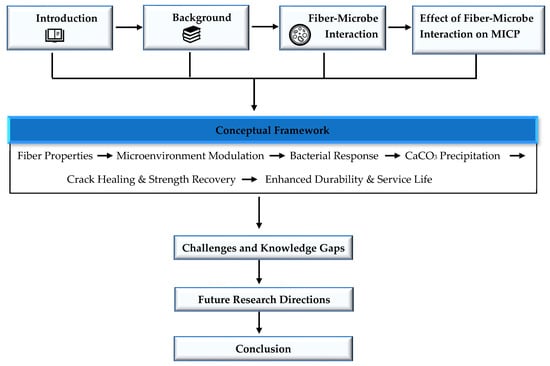
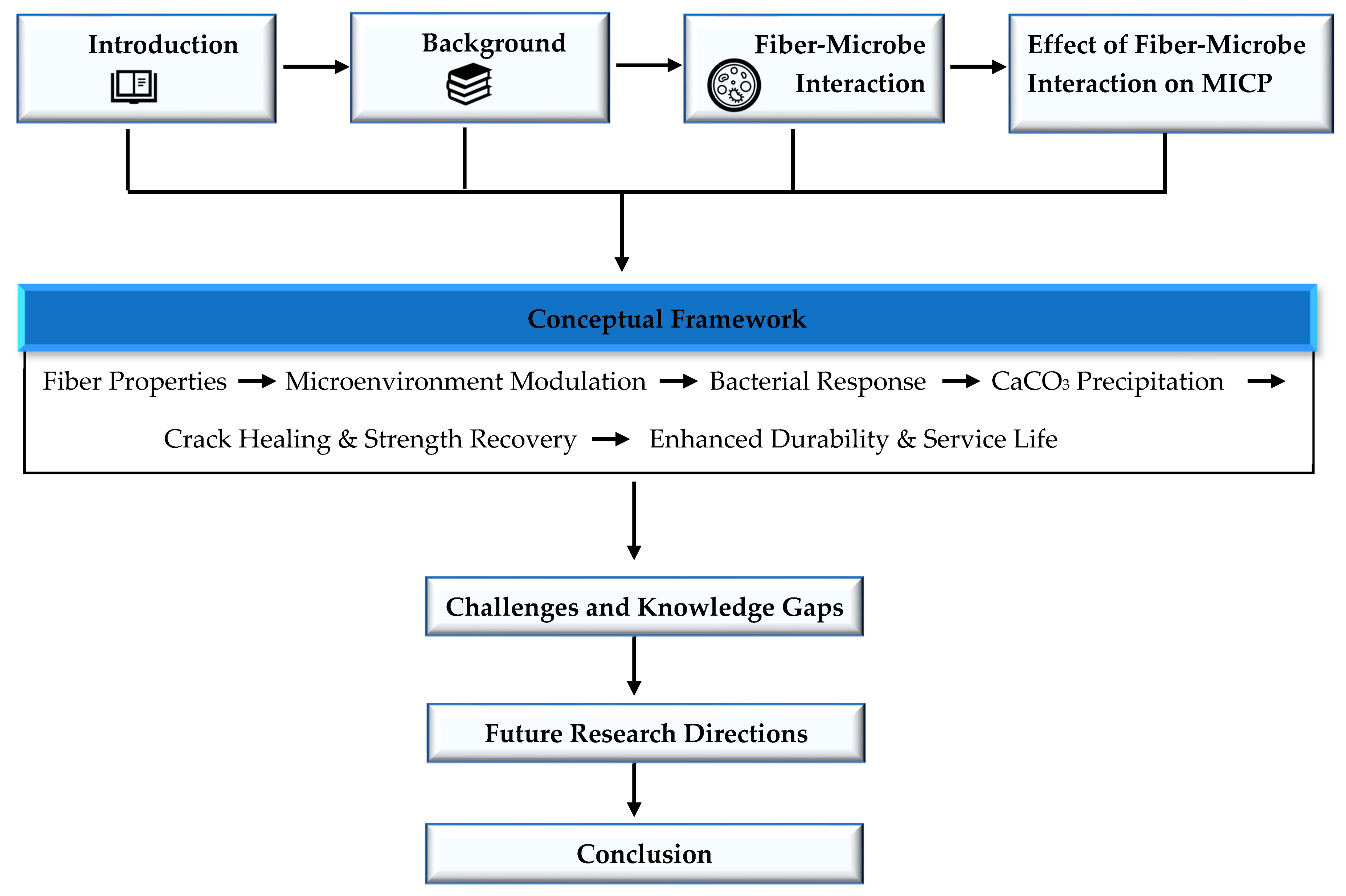
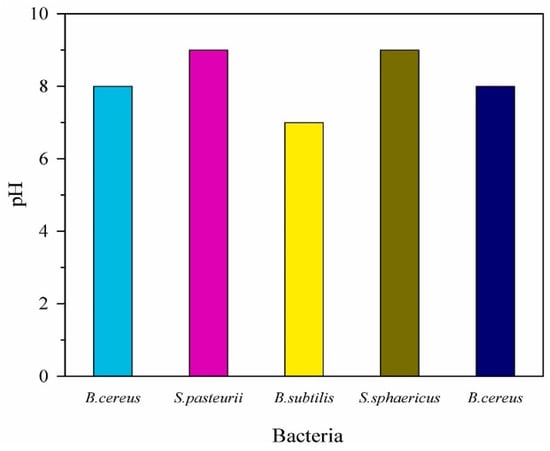
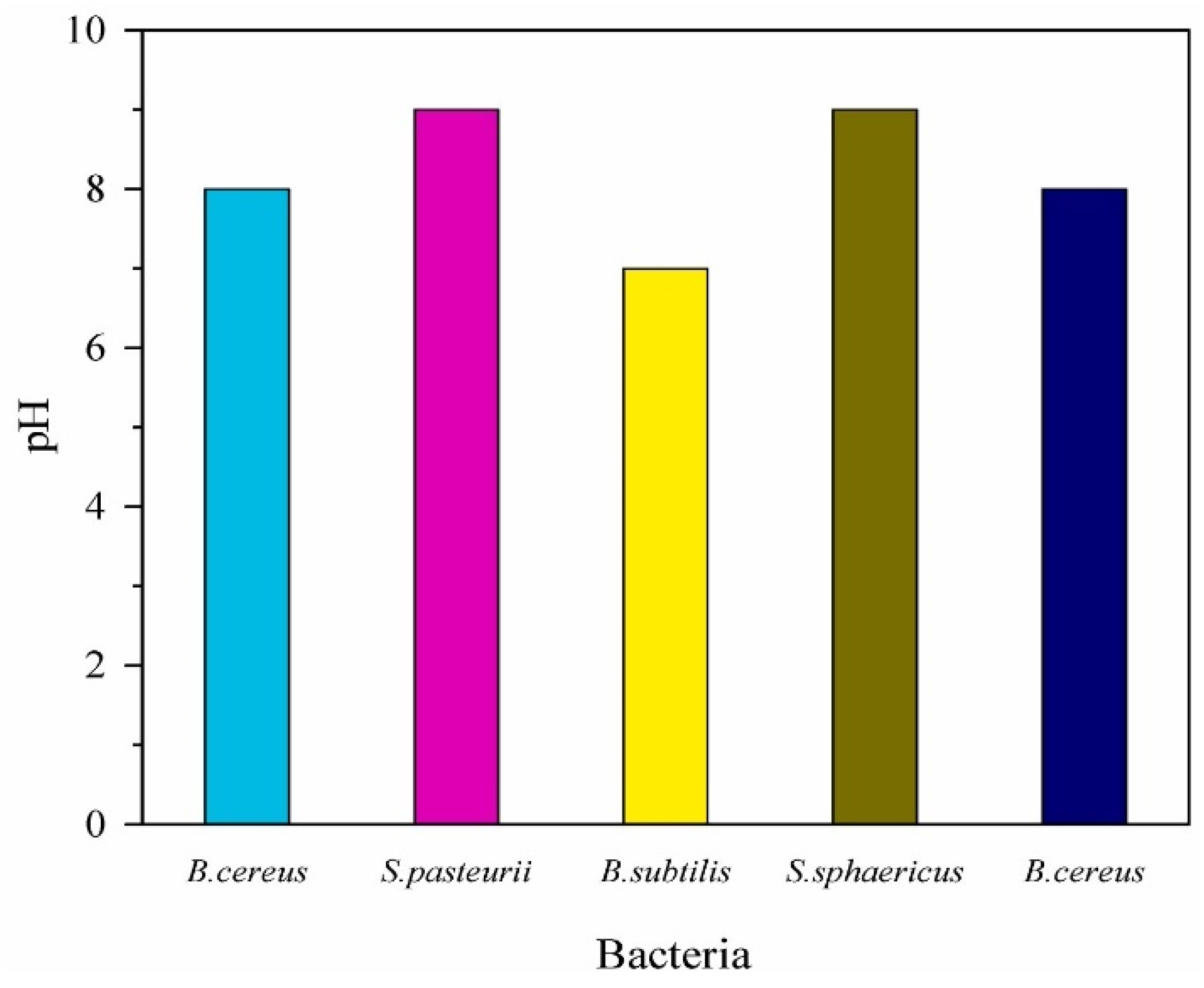
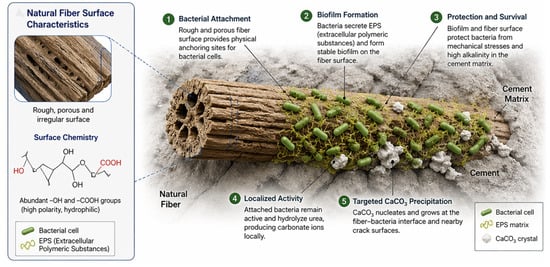
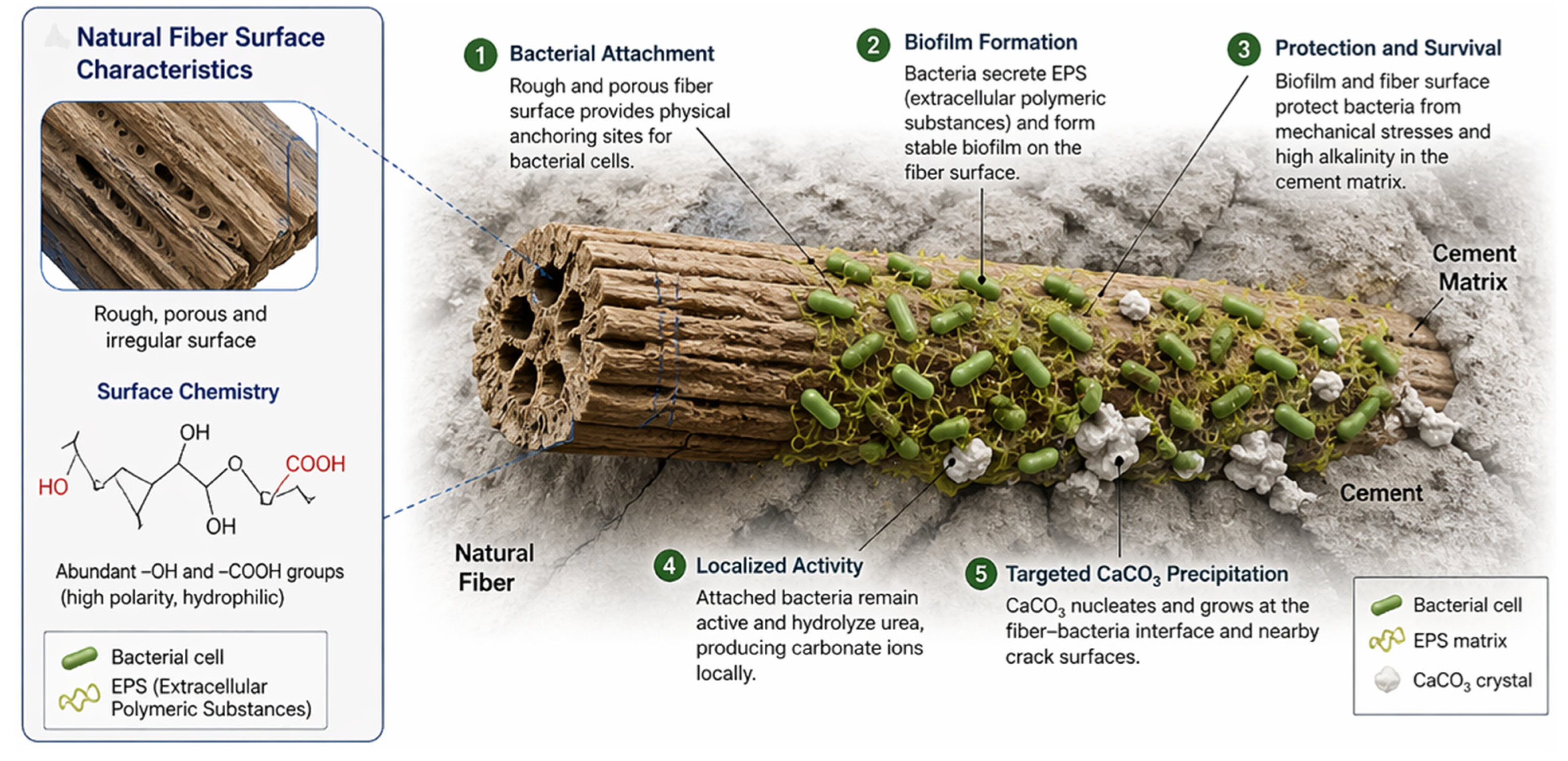
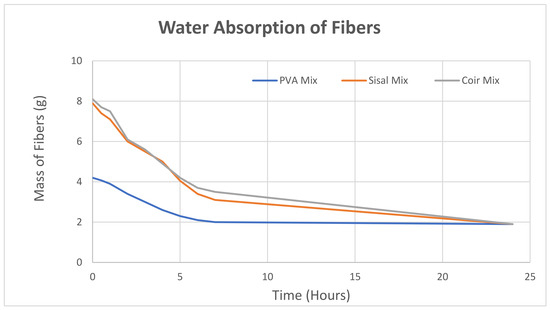
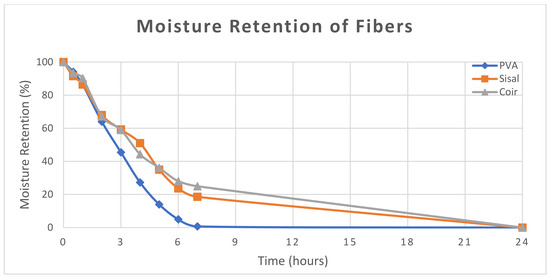
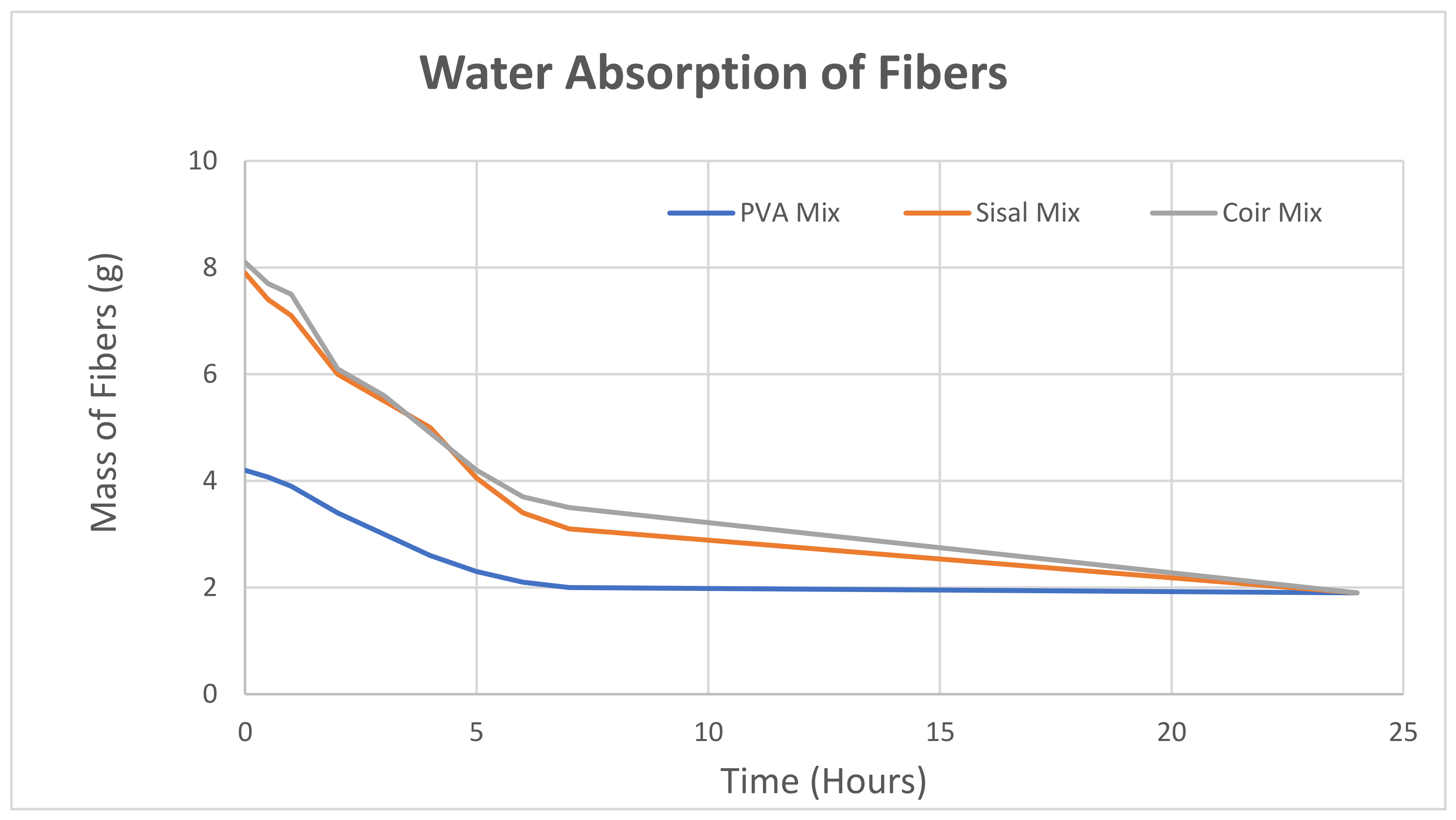
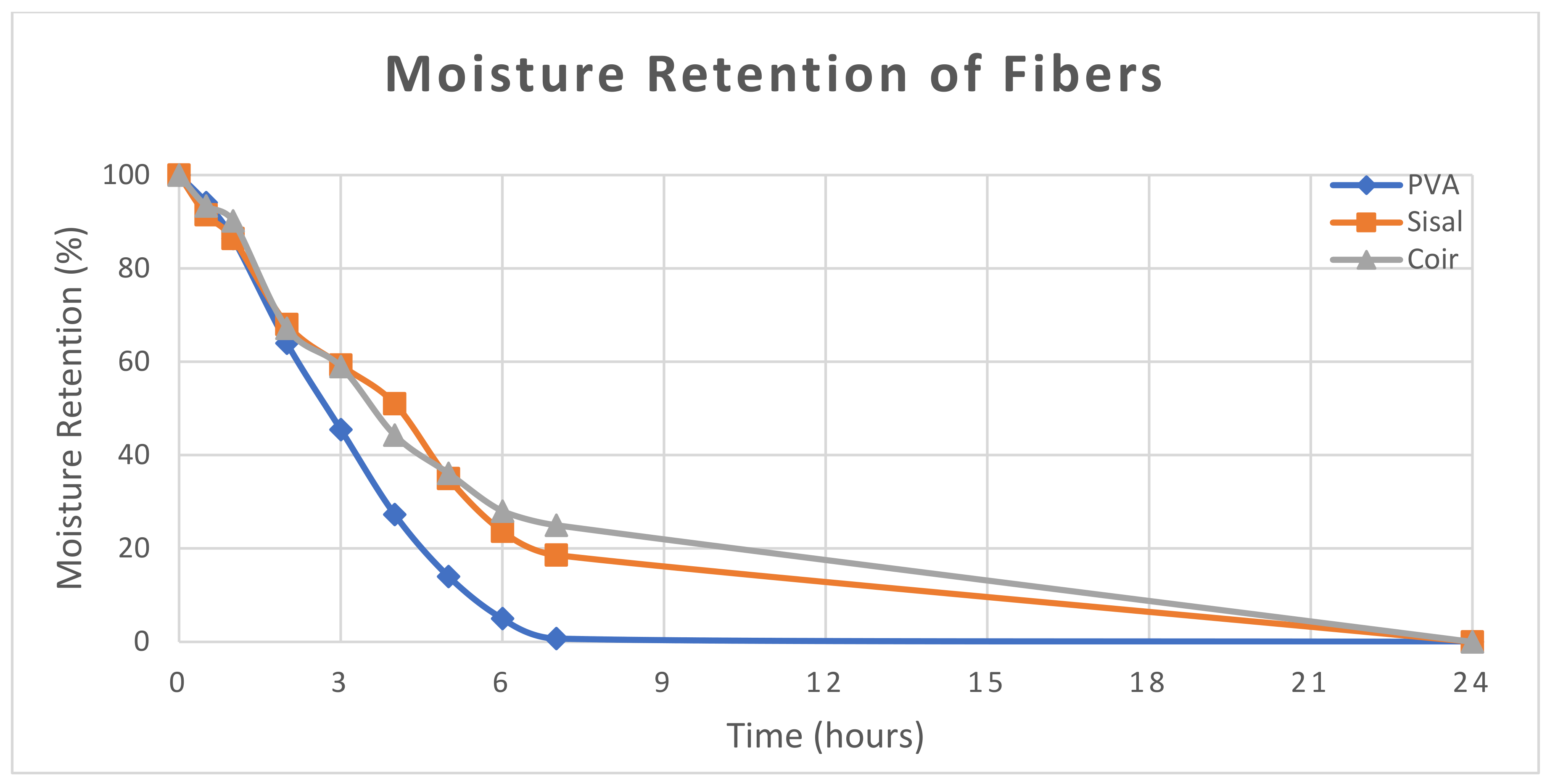
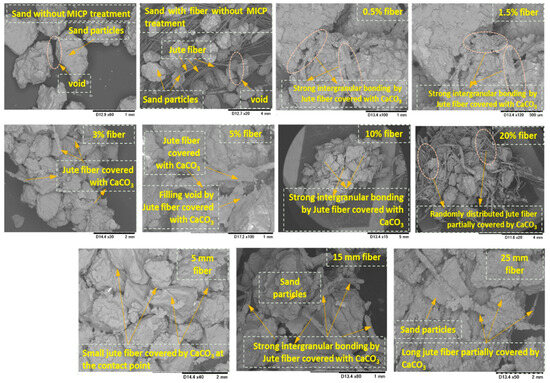
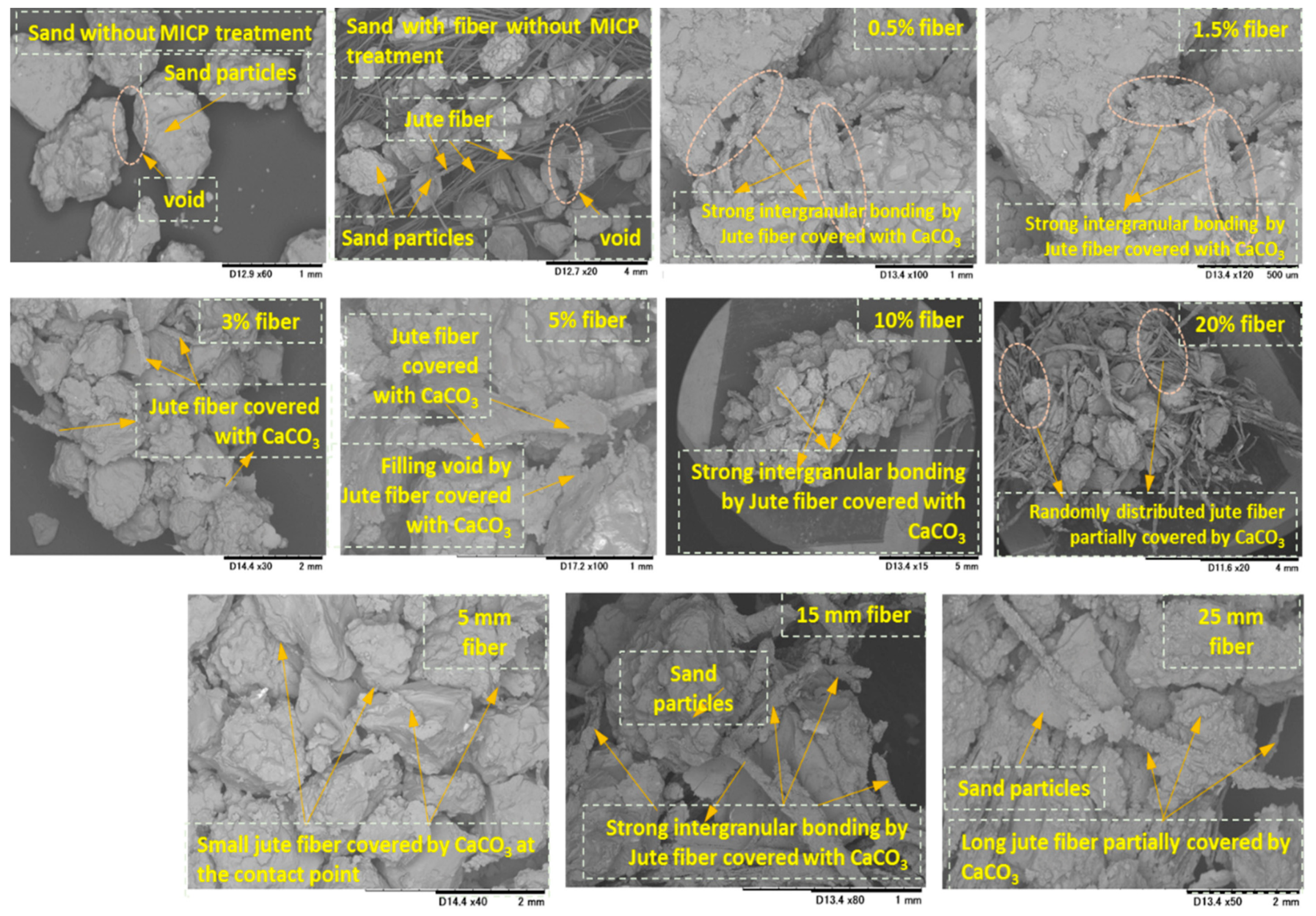
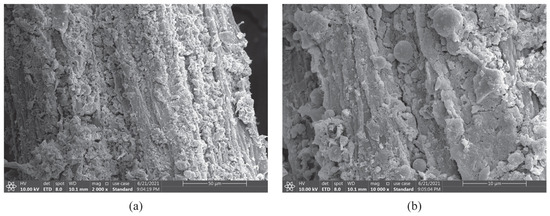
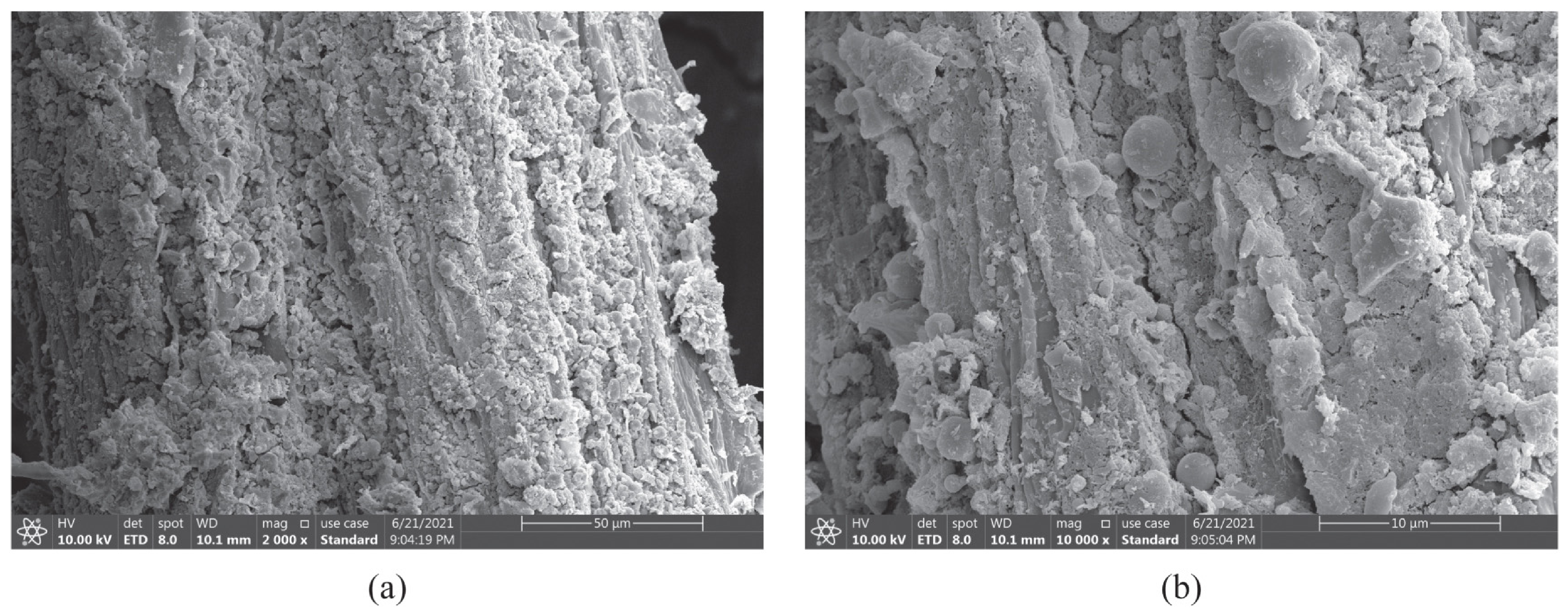
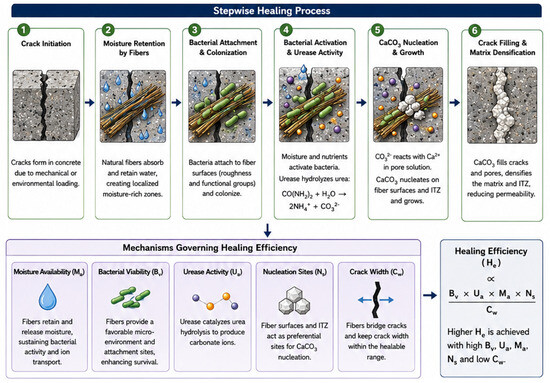
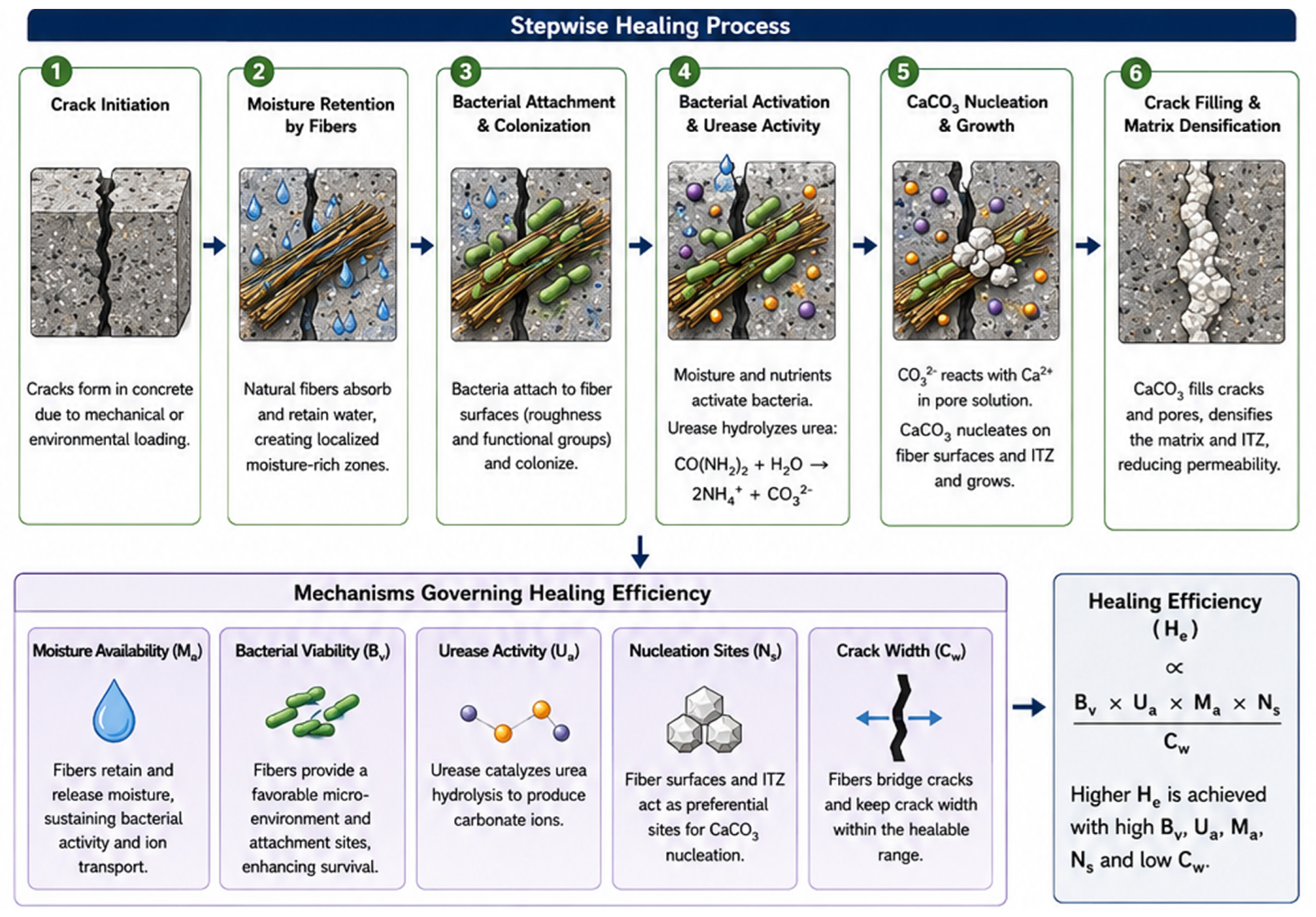

Disclaimer/Publisher’s Note: The statements, opinions and data contained in all publications are solely those of the individual author(s) and contributor(s) and not of MDPI and/or the editor(s). MDPI and/or the editor(s) disclaim responsibility for any injury to people or property resulting from any ideas, methods, instructions or products referred to in the content. |
© 2026 by the authors. Licensee MDPI, Basel, Switzerland. This article is an open access article distributed under the terms and conditions of the Creative Commons Attribution (CC BY) license.