Article

Research on the Effect of Silane Impregnation on Freeze–Thaw Durability of Airport Concrete

1
China Airport Construction Group Co., Ltd., Beijing 101317, China
2
Civil Aviation Research Base (Beijing) Co., Ltd., Beijing 101317, China
*
Author to whom correspondence should be addressed.
Buildings 2026, 16(13), 2633; https://doi.org/10.3390/buildings16132633
Submission received: 2 June 2026 / Revised: 24 June 2026 / Accepted: 25 June 2026 / Published: 1 July 2026
(This article belongs to the Special Issue Research and Development of Cement-Based Materials)

Abstract

The durability degradation of airport cement concrete pavements remains a critical concern in cold and severely cold regions. Even concrete that satisfies current durability standards often exhibits rapid performance deterioration after only a few years of service under harsh environmental conditions. This study investigates the effectiveness of a silane protective material in improving the freeze–thaw resistance of airport pavement concrete. Key durability indicators, including mass loss rate and relative dynamic modulus of elasticity, were evaluated. The experimental analysis focused on the performance enhancement provided by silane impregnation treatment under both multi-cycle freeze–thaw conditions and ultra-low-temperature (−30 °C) exposure, with particular emphasis on resistance to water freeze–thaw damage and deicing-fluid freeze–thaw corrosion. The results demonstrate that silane-impregnated specimens exhibited significantly reduced mass loss after 500 freeze–thaw cycles, along with an approximately 50% increase in flexural strength. Under ultra-low temperatures, the treatment effectively mitigated freeze–thaw deterioration, reducing deicing salt scaling by over 90%. Furthermore, the abrasion loss per unit area was reduced by approximately 68%. These findings indicate that silane impregnation enhances concrete durability from multiple perspectives—including frost resistance, salt–frost resistance, and wear resistance—by improving the pore structure and interfacial properties. Consequently, it represents a reliable technical solution for improving the long-term durability of airport concrete pavements.

1. Introduction

China has a vast territory with complex and harsh climatic conditions [1]. More than 60% of airports in China are located in severely cold and cold regions, of which over 90% are cement concrete structures that will maintain a dominant position for a long time. Most airports are situated in extreme climatic environments, with snow and ice seasons lasting 4–6 months annually. For instance, the western and northwestern regions of China experience extreme climate conditions, with hot and dry summers, dry and cold winters, large temperature variations, high wind speeds, low relative humidity, and alternating wet–dry cycles. During construction, moisture in pavement concrete evaporates rapidly, leading to plastic cracking and crack formation. During service, freeze–thaw damage in winter causes pavement spalling and foreign-object damage, affecting aircraft operational safety. In Northeast China, winters are long and severely cold, with minimum temperatures reaching −50 °C. Heavy snowfall and frequent use of aircraft deicing fluids and airport pavement deicing fluids result in widespread freeze–thaw damage. Table 1 and Table 2 present typical winter climate conditions at airports in severely cold and cold regions.
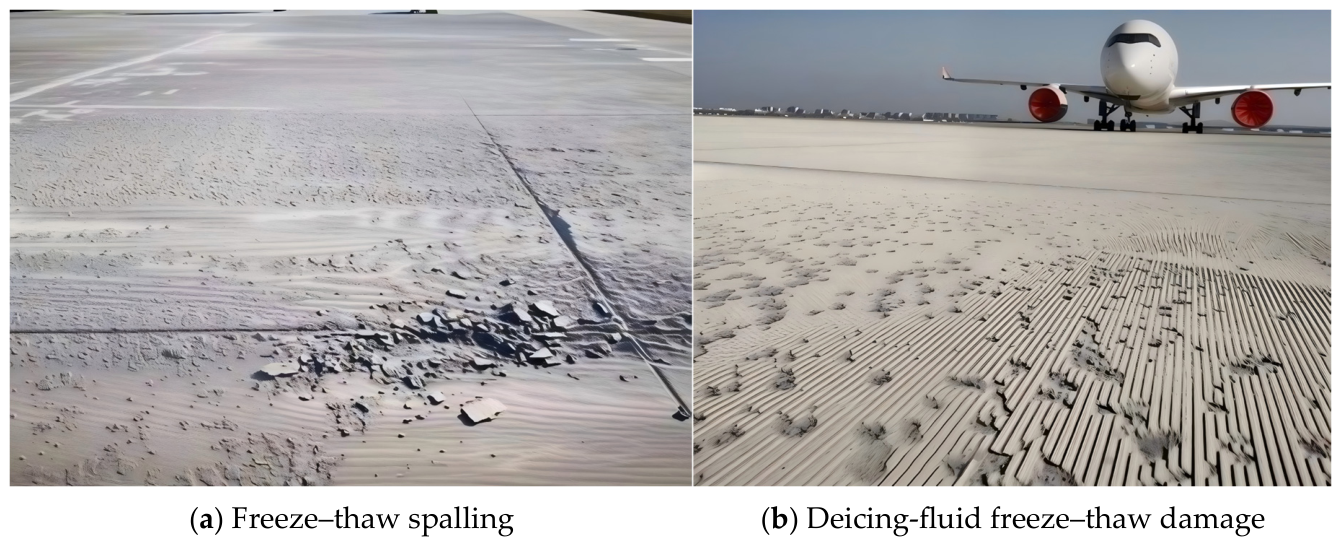
Based on field investigations and observations, durability damage phenomena in cement concrete pavements exhibit the following common characteristics: (1) Durability damage in cement concrete is prevalent at major civil aviation airports in China’s Three North Regions (Northeast, North, and Northwest China), including Harbin, Changchun, Shenyang, Urumqi, Dalian, Beijing, and Tianjin, with particularly severe cases in severely cold regions of Northwest and Northeast China. (2) Damage phenomena have become increasingly prominent in recent years, coinciding with the transition from alcohol-based to glycol-based aircraft deicing fluids since the 1990s. (3) Damaged areas are primarily concentrated at parking stands, aprons, and other locations where aircraft overnight, particularly at bases of airline companies, with damage patterns resembling aircraft outlines. Runways also exhibit freeze–thaw and salt-freeze damage, especially severe in touchdown zones. (4) Airports with higher frequencies of deicing fluid usage show more severe pavement spalling damage. Additionally, as aircraft become increasingly heavy and flight frequencies reach saturation, aircraft operate under overload conditions year-round. The powerful impact loads from aircraft and intense friction from heavy tires subject pavements to enormous instantaneous flexural tensile stresses and repeated fatigue damage, causing rapid deterioration of skid resistance and flexural strength after freeze–thaw cycles. Severe functional failure occurs, with some airport pavements showing loosening, spalling, surface-layer separation, corner damage, and block cracking within 3–5 years of service. The combined effects of multiple factors result in frequent freeze–thaw damage in airport pavements in cold and severely cold regions. This not only reduces the effective service life far below design life but also seriously impacts airport operational safety. Figure 1 shows freeze–thaw spalling and deicing-fluid damage at a northern airport.
Regarding the solution to concrete durability issues, one of the commonly adopted approaches is the use of organic protective agents. The development of organic protective agents for concrete in China started relatively early, with common types including organosilicon, polyurethane, polyurea, and acrylic, among others [2,3,4,5,6,7]. Scholars both domestically and internationally have conducted relevant research on the application effects and usage methods of different organic protective agents. Flores [8] primarily utilized polymethylsiloxane and polymethylol fibers for hydrophobic treatment of concrete surfaces. The study investigated the effects of various components of superhydrophobic solutions on the contact angle and rolling angle of concrete, concluding that the durability of superhydrophobic coated concrete is significantly improved compared to ordinary concrete. Horgnies [9] sprayed an organosiloxane polymer onto high-performance concrete surfaces, achieving a contact angle of 164°. The article pointed out that concrete with superhydrophobic properties possesses self-cleaning functionality through rainfall. Almusallam [10] studied the effects of several commonly used sealing coatings on concrete durability based on water absorption, chloride ion penetration, and chloride ion diffusion tests, and provided corresponding recommendations based on the service environment. Edao [11] investigated the effects of acrylic and silicone composite hydrophobic coatings on concrete hydrophobicity, and analyzed internal moisture diffusion using tritium isotopes. Wang et al. [12] fabricated micro–nano-dendritic hierarchical structures on concrete surfaces using copper mesh and stearic acid, resulting in excellent superhydrophobicity, self-cleaning properties, and durability. Liu Shaojun [13] formed surface-rough microstructures by covering concrete surfaces with purple copper mesh, and subsequently impregnated them with fluorosilane to reduce surface energy, creating an environmentally friendly superhydrophobic concrete that substantially enhanced its impermeability, frost resistance, and salt-expansion durability. Regarding the distinction between internal mixing and external coating, comparative experiments conducted by Zhu Fangzhi et al. [14] demonstrated that internal mixing of organosilicon waterproofing agents retards the hydration rate of cement in concrete, particularly significantly weakening the strength of the transition zone. Jin Hao et al. [15] studied the effects of internally mixed emulsion-type and powder-type organosilicon waterproofing agents on the waterproofing and mechanical properties of mortar. The results showed that at a dosage of 1.6%, the water absorption ratio of mortar was 35.5%; however, this reduced the setting speed of mortar and decreased its compressive strength by approximately 20%. Bao Jiuwen et al. [16] incorporated emulsion-type and powder-type organosilicon waterproofing agents at different mass fractions into concrete, discovering that this could render the concrete bulk hydrophobic. Even with surface abrasion or crack formation, the impermeability performance was not significantly affected. However, when 1% organosilicon waterproofing agent was incorporated, the 7-day compressive strength loss of concrete exceeded 15%. Zhang Peng et al. [17] prepared integral waterproof concrete by internally mixing organosilicon waterproofing agents, and studied the durability performance of concrete through compressive strength, water absorption coefficient, and chloride ion intrusion tests. The results indicated that the water absorption reduction rate of concrete with internally mixed organosilicon waterproofing agents exceeded 88%, and even with 7 mm of surface abrasion, the reduction rate remained above 82%. Nevertheless, the compressive strength of concrete decreased by approximately 10%. Although internal mixing of organosilicon waterproofing agents can improve the overall waterproofing of concrete, it also retards the hydration rate of cement in concrete, substantially reducing the mechanical properties of concrete. In contrast, applying organosilicon waterproofing agents to concrete surfaces can enhance durability without compromising mechanical properties [18]. Jiang Zhengwu et al. [19] applied organosilicon waterproofing agents externally to concrete surfaces to study their effects on concrete durability. The results demonstrated that external coating of organosilicon waterproofing agents could reduce chloride ion absorption by approximately 90%, with a penetration depth of approximately 3 mm, effectively improving concrete durability. Li Zhonghua [20] investigated the effects of organosilicon coatings on concrete resistance to salt freezing, concluding that the anti-freezing effect of organosilicon coating was superior to air-entrainment treatment, mineral-admixture incorporation, and water–cement-ratio reduction. Liu Guichang [21] found that after silane modification of concrete surfaces, the water absorption rate of treated concrete was significantly reduced, diffusion impedance was markedly increased, and concrete impermeability was enhanced.
Current freeze–thaw durability testing of airport pavement dry–hard concrete generally follows the Standard for Test Methods of Long-Term Performance and Durability of Ordinary Concrete (GB/T 50082-2024) [22]. The testing protocol specifies that each freeze–thaw cycle shall be completed within 2–4 h, with the melting period accounting for no less than 1/4 of the total freeze–thaw-cycle duration. During freezing and thawing processes, the minimum and maximum temperatures at the specimen center shall be set at −18 °C and 5 °C, respectively. The time required for each specimen to cool from 5 °C to −18 °C shall be no less than 1/2 of the freezing duration, and the time required to warm from −18 °C to 5 °C shall be no less than 1/2 of the total thawing duration. The internal–external temperature difference of specimens shall not exceed 28 °C, and the transition time between freezing and thawing shall not exceed 10 min. The transverse fundamental frequency of specimens shall be measured every 25 freeze–thaw cycles. For airport pavements in regions with freeze–thaw requirements, the prepared concrete meets the freeze–thaw durability requirements specified in GB/T 50082-2024. However, pavements in actual service rapidly exhibit freeze–thaw damage, with more severe damage occurring in regions with lower winter temperatures. The minimum temperatures in these regions are considerably lower than −18 °C; therefore, testing in accordance with GB/T 50082-2024 requirements does not reflect actual conditions. In addition to the effects of airport deicing fluids and loads, the influence of ultra-low temperatures on airport pavement concrete cannot be overlooked. Consequently, this study employed a self-developed ultra-low-temperature freeze–thaw device specifically designed for airport pavement dry–hard concrete to conduct ultra-low-temperature freeze–thaw experiments. The device can achieve minimum temperatures of −50 °C, capable of accommodating the actual temperature conditions of all airports in China. Through statistical analysis of temperatures at most airports in China (see Table 1 and Table 2), it was determined that an ultra-low-temperature freeze–thaw cycle range of −30 °C to 5 °C is more representative of actual conditions.
It should be noted that current domestic and international research on the effects of organic protective materials on concrete has primarily focused on marine concrete structures with special requirements. For instance, silane impregnation agents are applied at the piers of the Hangzhou Bay Cross-Sea Bridge to improve impermeability, with the main objective of preventing chloride ion-induced steel reinforcement corrosion from seawater, thereby ensuring the safety of the main structure. However, research on the effects of organic protective materials on the freeze–thaw durability of airport dry–hard concrete under harsh conditions remains relatively scarce. Moreover, existing research on the durability of airport concrete shows significant discrepancies compared to actual conditions. This study will investigate the effects of nano high-permeability protective materials for airport pavements in preventing the penetration of deicing fluids and water into the pavement, avoiding freeze–thaw damage and salt-freezing deterioration, thereby improving airport pavement durability and extending service life.

2. Materials and Methods

2.1. Raw Materials

  • Cement: Ordinary Portland cement P·O 42.5 (Shanshui Cement Group, Jinan, Shandong, China) was used, meeting all physical and chemical performance requirements for airport pavement cement.
  • Aggregates: Fine aggregate was river sand (Local supplier, Beijing, China) with a fineness modulus of 2.89; coarse aggregate was two-grade gradation with particle sizes of 4.75–19 mm (small stone) and 19–31.5 mm (large stone), meeting technical requirements in “Technical Specifications for Construction of Cement Concrete Surface Layer of Civil Airports” (MH5006-2015) [23].
  • Silane protective material: It is prepared by mixing dodecyltrimethoxysilane and hexadecyltrimethoxysilane in a 1:1 ratio. Both reagents were synthesized in our laboratory using raw materials purchased from Sinopharm Chemical Reagent Co., Ltd., Shanghai, China. It is stable in performance under ambient temperature and pressure, and exhibits excellent hydrophobic and waterproof properties. Dodecyltrimethoxysilane (CH3(CH2)11Si(OC2H5)3) is synthesized from dodecene and trimethoxysilane via hydrolyzation, using a platinum catalyst and a liquid sterically hindered amine co-catalyst. The product is a colorless transparent liquid with a molecular weight of 290.5142, a density of 0.89 g/mL, a melting point of −40 °C, a boiling point of 115 °C at atmospheric pressure, and a flash point greater than 108 °C. Hexadecyltrimethoxysilane (CH3(CH2)15Si(OC2H5)3) is synthesized from α-hexadecene and trimethoxysilane via hydrolyzation, using a platinum catalyst and a liquid sterically hindered amine co-catalyst. The product is a colorless transparent liquid with a molecular weight of 346.62, a density of 0.888 g/mL, and a flash point of 170 °C.
  • Freeze–thaw medium: 4% potassium formate solution (Aladdin Biochemical Technology Co., Ltd., Shanghai, China) was used for salt freeze–thaw testing of airport pavement concrete.
  • Naphthalene-based water reducer: A naphthalene-based water reducer primarily composed of naphthalene sulfonate formaldehyde condensate (Shandong Guoqiao Building Materials Technology Co., Ltd., Changle County, Weifang, Shandong, China) was used. It appears as a brownish-black viscous liquid, with a water reduction rate of 17%, a solid content of 40%, a pH value (5% aqueous solution) of 7.5, and a surface tension of 65 ± 2 mN/m. This type of water reducer is classified as a non-air-entraining high-efficiency water reducer, which disperses cement particles through electrostatic repulsion without introducing excessive air bubbles into the concrete mixture.
  • Air-entraining agent: Sodium dodecyl sulfate (SDS) (Dongming Jujin Chemical Co., Ltd., Dongming County, Heze, Shandong, China) was used as the primary component of the air-entraining agent, at a dosage of 0.01% by weight of cement. Air-entraining agents are surfactants that introduce numerous tiny, stable, and uniformly distributed closed bubbles during concrete mixing, significantly improving the freeze–thaw resistance and durability of the concrete. The incorporation of an air-entraining agent increases the air content of concrete, and when combined with a naphthalene-based water reducer, it can achieve a total air content of 5.2%, which is essential for frost resistance in cold-region airport pavement applications.
  • Water: Laboratory drinking water was used for concrete mixing.

2.2. Mix Proportion

The mix proportion and experimental procedures followed “Specification for Mix Proportion Design of Ordinary Concrete” (JGJ 55-2011) [24] and “Technical Specifications for Construction of Cement Concrete Surface Layer of Civil Airports” (MH5006-2015) [23]. To better compare the freeze–thaw resistance performance between airport concrete without silane protection and enhancement measures and that with silane protection and enhancement measures, and considering the widespread application in current practice, the concrete did not use polycarboxylate-based high-performance water reducers with superior water-reducing rates. Instead, a commonly used naphthalene-based water reducer was added. When the naphthalene-based water reducer was used alone, the air content was 3.1%; after compounding with an air-entraining agent, the air content reached 5.2%. The mix proportion is shown in Table 3.

2.3. Test Content

Concrete was prepared and cured for 28 days according to “Technical Specifications for Construction of Cement Concrete Surface Layer of Civil Airports” (MH5006-2015) [23] and “Test Regulations for Highway Engineering Cement and Cement Concrete” (JTG 3420-2020) [25]. The silane protection group was sprayed with silane on the concrete surface at 21 days to simulate actual airport pavement protection, and then cured at room temperature for 7 days.
To maintain a clean concrete surface before silane spraying, a small manual spray bottle was primarily used under laboratory conditions, where the impregnation area was relatively small. Silane was sprayed at least two times, with a total application rate of 350 mL/m2.
For the surface-texturing (grooving) operation of single-side salt–frost-scaling specimens, the procedure was mainly carried out in accordance with the Design Specifications for Cement Concrete Pavement of Civil Airports (MH/T 5004-2025). A brush made from a φ3 mm plastic rod was used. The optimal timing for surface texturing was determined by pressing the concrete surface with a finger: the surface was ready when an impression was left without the paste sticking to the finger. The average texture depth of the concrete pavement was controlled within the range of 0.6 to 0.8 mm.
Tests included the following items:
  • Low-temperature freeze–thaw test: Untreated and silane-protected airport pavement specimens were tested for freeze–thaw cycles in water according to “Standard for Test Methods of Long-term Performance and Durability of Concrete” (GB/T 50082-2024) [22], investigating concrete freeze–thaw durability, including mass loss rate and relative dynamic elastic modulus loss. Specimen dimensions were 100 mm × 100 mm × 400 mm. To reflect actual mass loss, data processing was based on actual loss. Low-temperature freeze–thaw-cycle temperature was −18 °C to 5 °C.
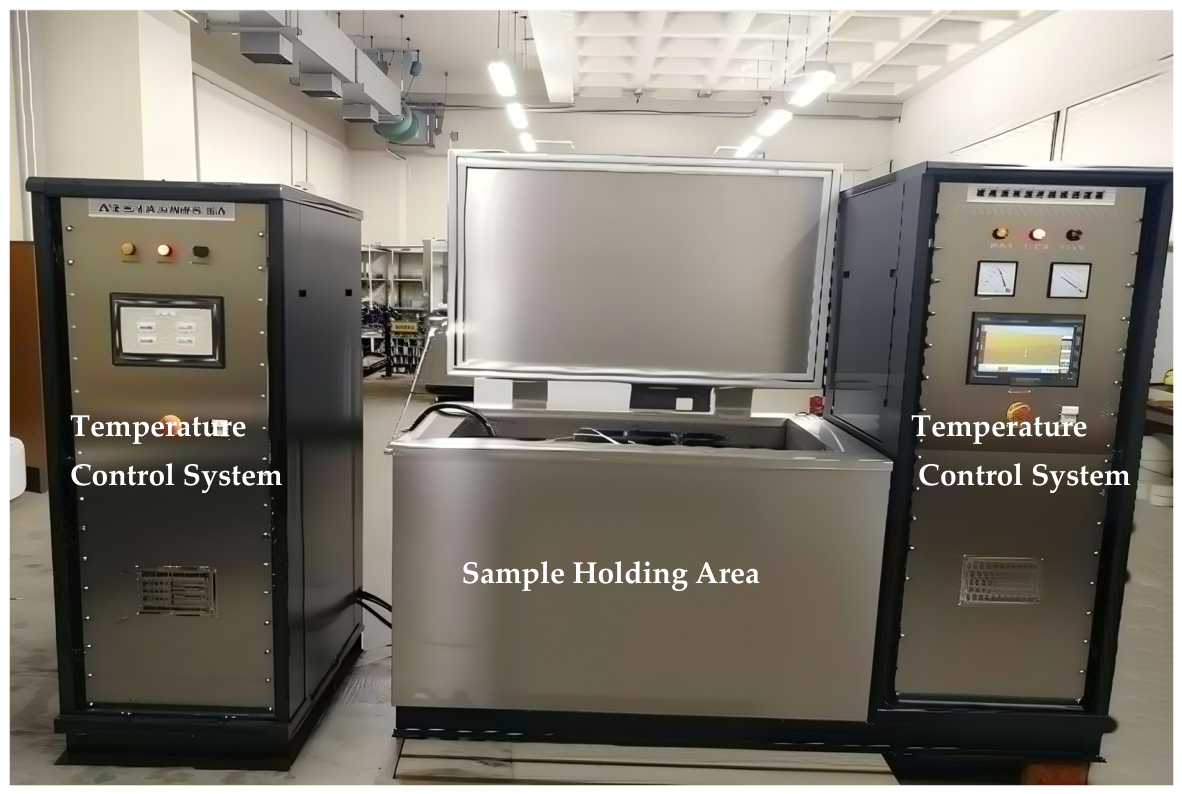
  • Ultra-low-temperature freeze–thaw test: Untreated and silane-protected airport pavement specimens were tested for freeze–thaw cycles in water using a self-developed load–ultra-low-temperature freeze–thaw coupling research device simulating actual airport pavement-service environment (Figure 2). Compared to low-temperature freeze–thaw testing, the ultra-low-temperature freeze–thaw-cycle temperature was −30 °C to 5 °C, with freezing/thawing times and intervals similar to low-temperature testing. Specimen dimensions were 100 mm × 100 mm × 400 mm. Data processing was based on actual mass loss. Single-face salt-freeze damage test: Specimen dimensions were Φ150 mm × 150 mm, with medium being 4% potassium formate solution.
  • Abrasion resistance: Abrasion resistance was tested according to “Test Method for Abrasion Resistance of Cement Mortar” (JC/T 421-2023) [26]. After 30 pre-grinding revolutions, formal testing began with initial mass recorded. Specimens were fixed on a horizontal turntable and ground for 40 additional revolutions. Final mass was recorded after 40 revolutions, and the difference between initial and final mass divided by abrasion area gave the actual unit area abrasion loss.

3. Results

3.1. Freeze–Thaw Damage in Low-Temperature Environment

3.1.1. Freeze–Thaw-Damage Process and Morphology

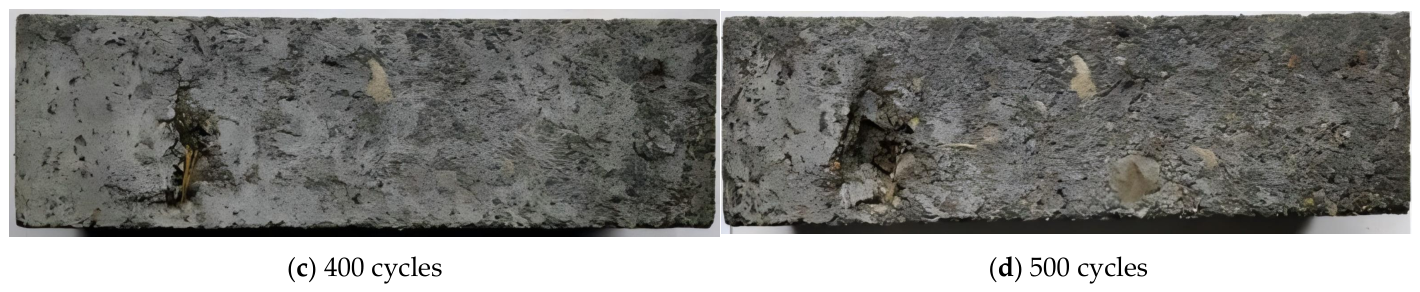
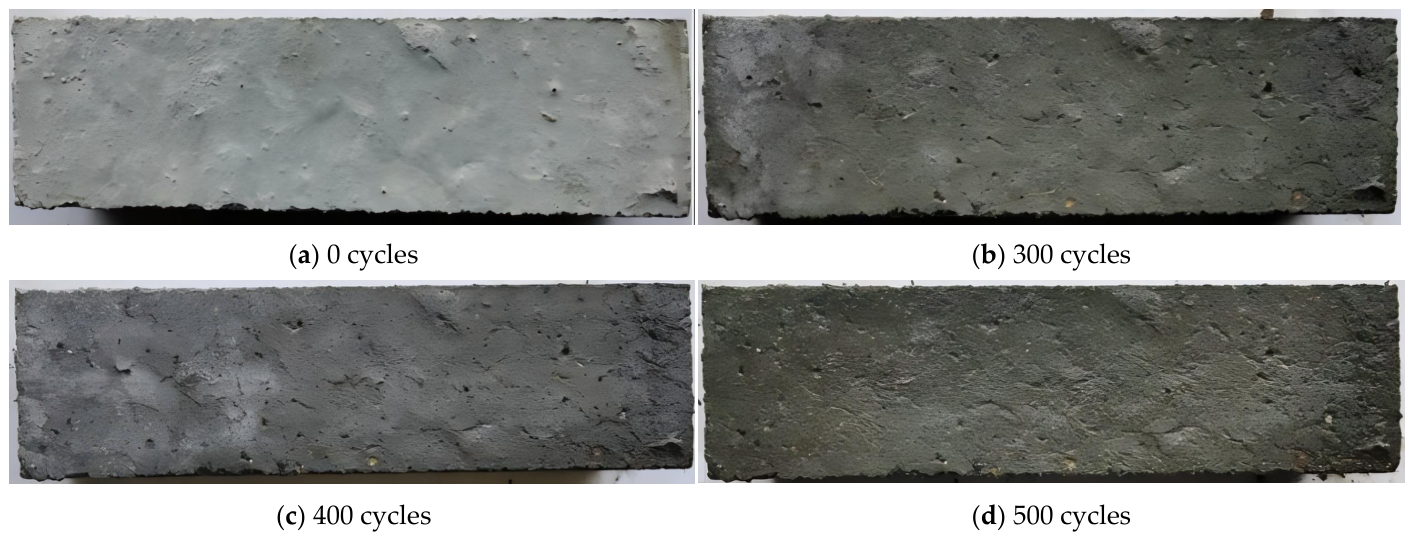
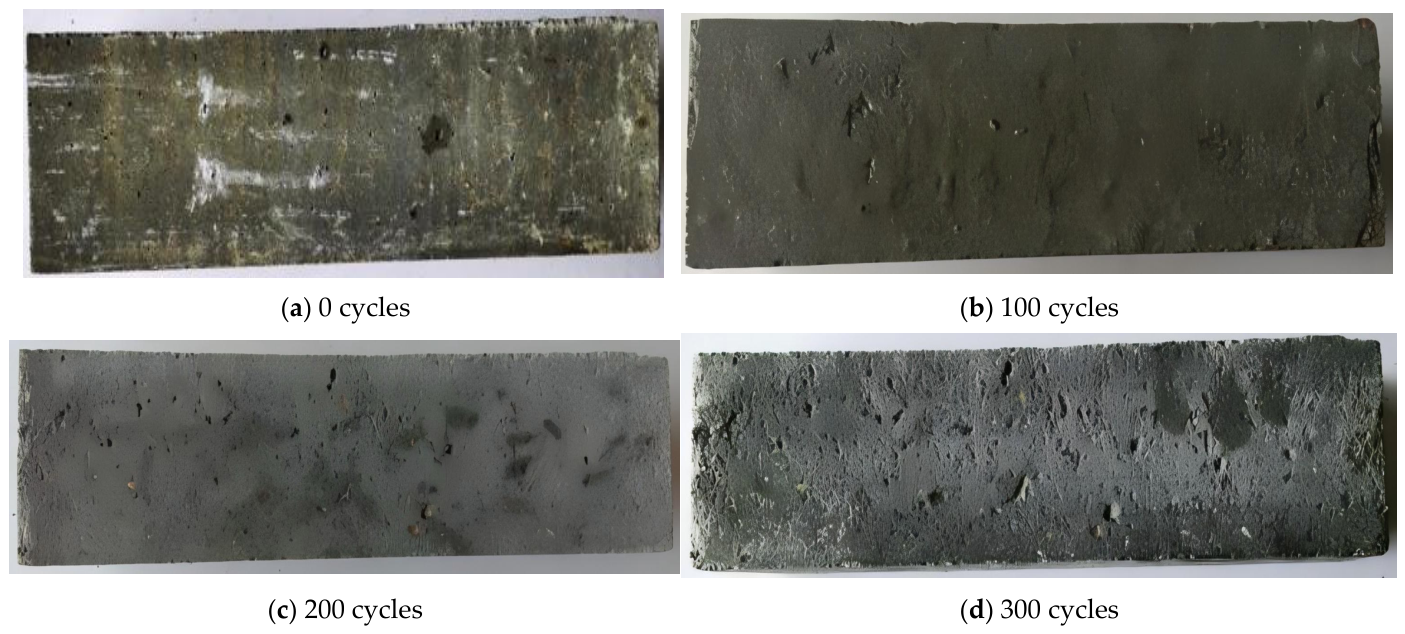
The surface-appearance characteristics of untreated and silane-protected airport pavement concrete specimens before and after freeze–thaw cycles are shown in Figure 3 and Figure 4. Prior to freeze–thaw cycling, the concrete surfaces of both specimens were in intact condition. For the untreated airport pavement concrete, certain cracking and spalling appeared on the surface after 300 freeze–thaw cycles; after 400 cycles, the mortar began to spall extensively, and the coarse aggregate particles started to loosen; after 500 cycles, spalling was severe, with coarse aggregate detaching from the concrete to form potholes. For the silane-protected airport pavement concrete surface, only a small amount of cement paste peeled off after 300 and 400 freeze–thaw cycles; even after 500 freeze–thaw cycles, surface mortar-spalling damage remained insignificant. Based on this visual comparison, silane protection demonstrates a certain positive effect on the freeze–thaw resistance of concrete.

3.1.2. Freeze–Thaw Durability Damage Analysis

  • Mass Loss Rate
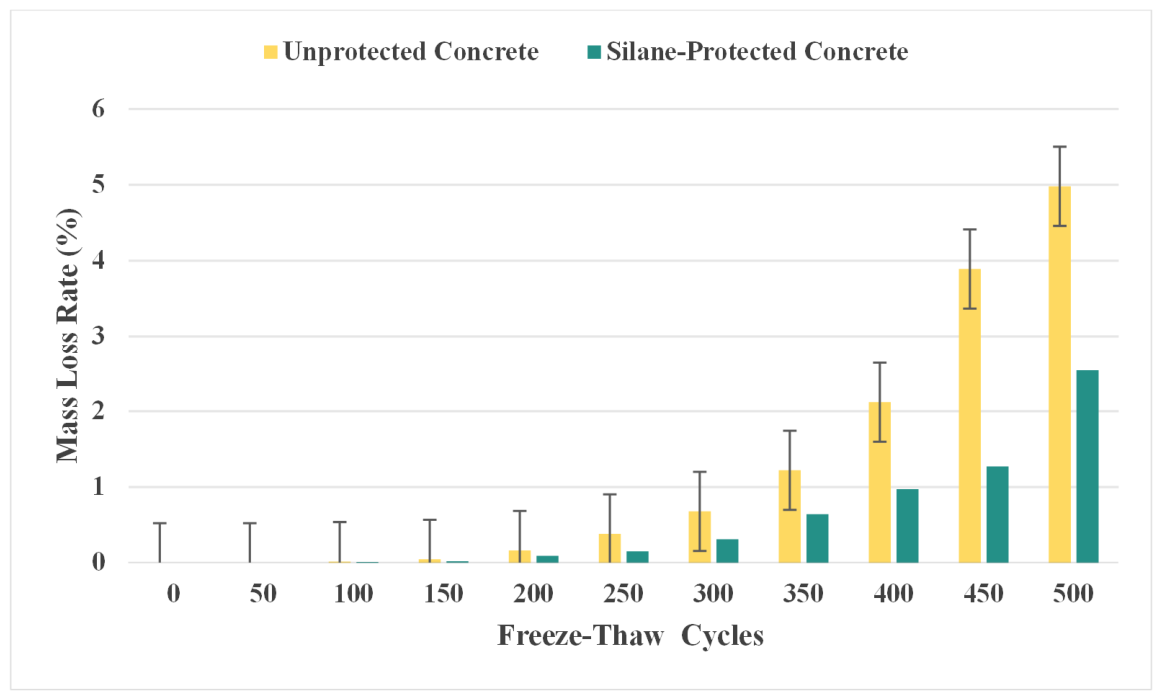
Figure 5 shows mass loss rates of untreated and silane-protected airport pavement concrete. During freeze–thaw cycling, mass loss rates of both untreated and silane-protected airport pavement concrete gradually increased, with accelerated loss rates particularly after 300 cycles. After 500 freeze–thaw cycles, mass loss rate of untreated concrete exceeded 5%, while silane-protected concrete mass loss rate was approximately 2.5%, indicating that silane protection somewhat mitigates erosion and spalling damage from freeze–thaw cycling but cannot completely prevent it. The possible reason is that silane forms a hydrophobic film structure on the specimen surface that delays but cannot prevent water penetration into concrete. After a certain number of freeze–thaw cycles, internal pore saturation leads to freeze–thaw damage [1,2,3,4,5].
  • Relative Dynamic Elastic Modulus Loss Rate
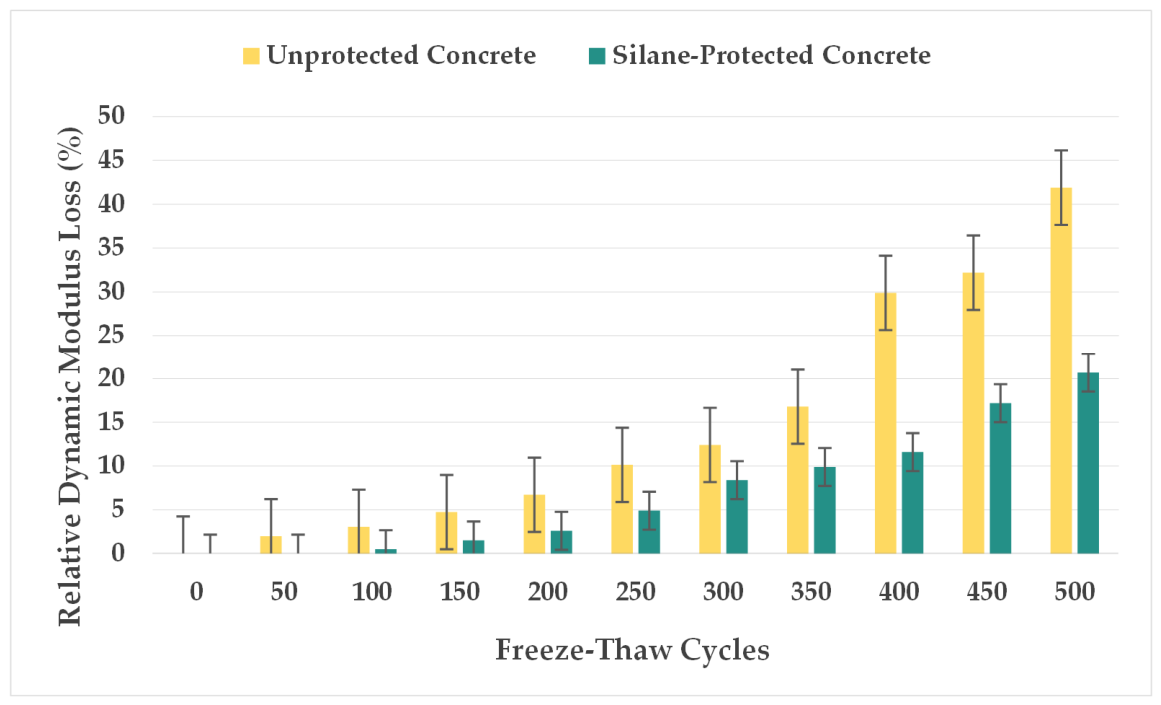
Figure 6 shows relative dynamic elastic modulus loss rates of untreated and silane-protected airport pavement concrete, both increasing with freeze–thaw cycles. At 300 freeze–thaw cycles, relative dynamic elastic modulus loss rates of untreated and silane-protected airport pavement concrete were 12.4% and 8.4%, respectively. Subsequently, relative dynamic elastic modulus loss rates increased rapidly: at 400 cycles, they were 29.9% and 11.6%; at 500 cycles, they were 41.9% and 20.7%. According to concrete testing standards, values did not exceed 40% at 300 cycles, but exceeded 40% at 500 cycles, indicating that when cycle numbers reach a certain frequency, concrete durability significantly decreases. For airports in extreme-climate regions of Northern China, concrete-service safety and effectiveness are greatly compromised. Additionally, throughout the process, the relative dynamic elastic modulus loss rate of untreated airport pavement concrete was greater than that of silane-protected airport pavement concrete.

3.1.3. Mechanical Properties

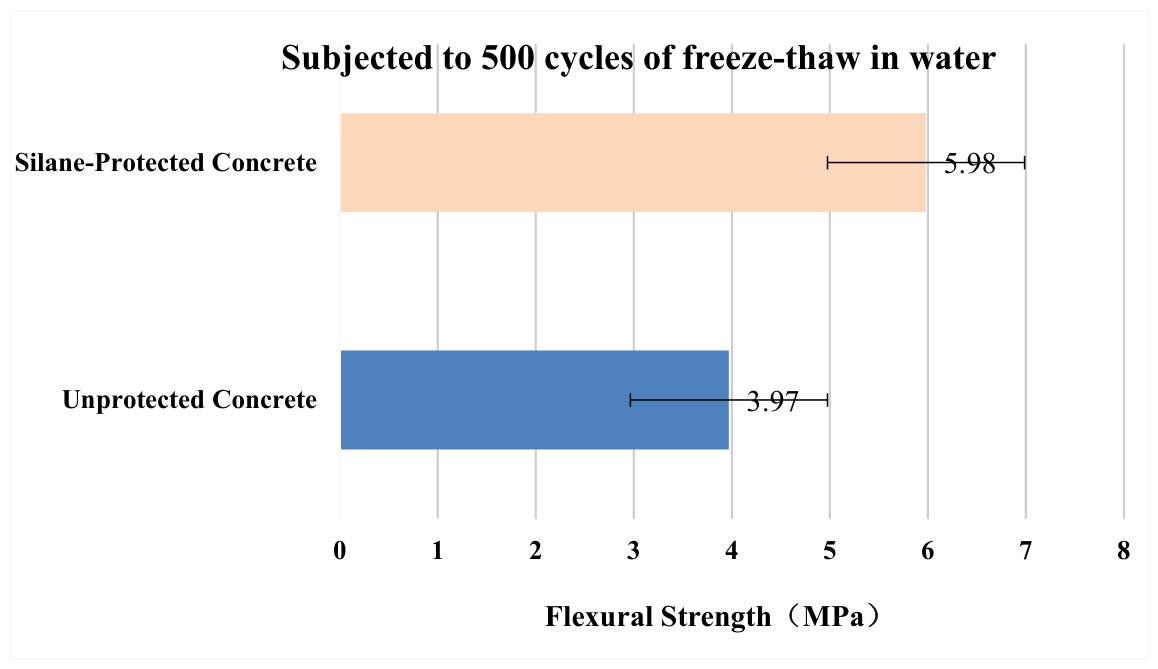
Flexural tests were conducted on untreated and silane-protected airport pavement concrete with the same mix proportion, same age, and subjected to 500 water-medium freeze–thaw cycles. Flexural strength values are shown in Figure 7. After 500 freeze–thaw cycles, the flexural strengths of untreated and silane-protected airport pavement concrete were 3.97 MPa and 5.98 MPa respectively. Silane-protected airport pavement concrete’s flexural strength was 1.5 times that of untreated airport pavement concrete, demonstrating that silane materials can delay mechanical property degradation of airport pavement concrete and significantly improve mechanical properties after freeze–thaw cycling.

3.2. Freeze–Thaw Damage Under Ultra-Low-Temperature Conditions

3.2.1. Freeze–Thaw-Damage Process and Morphology

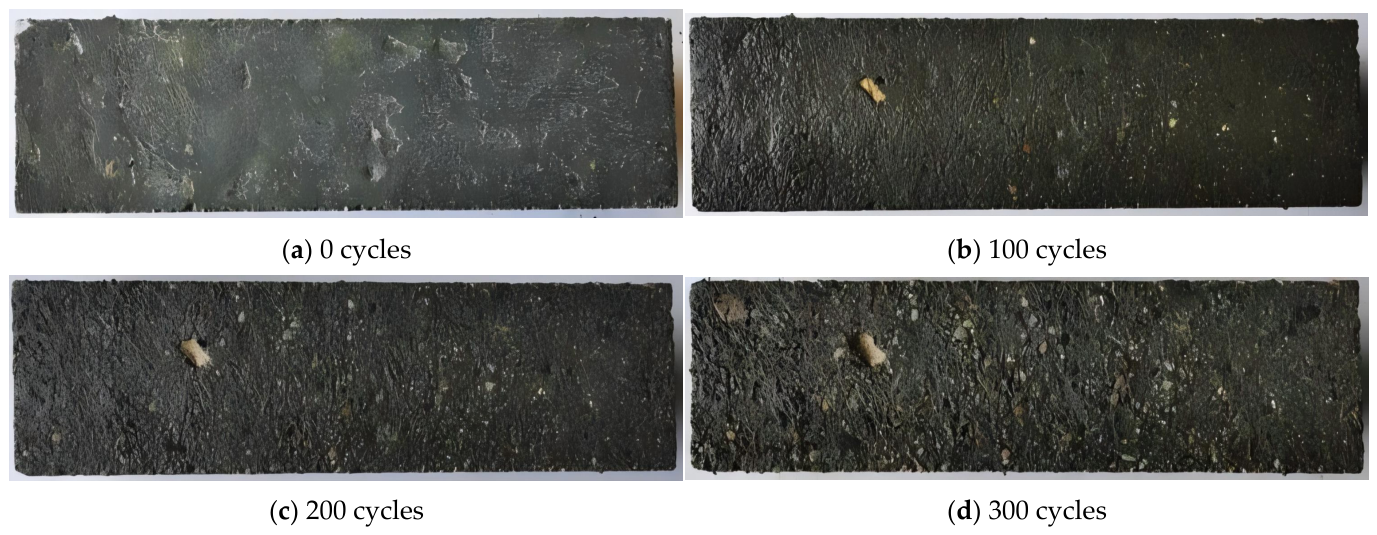
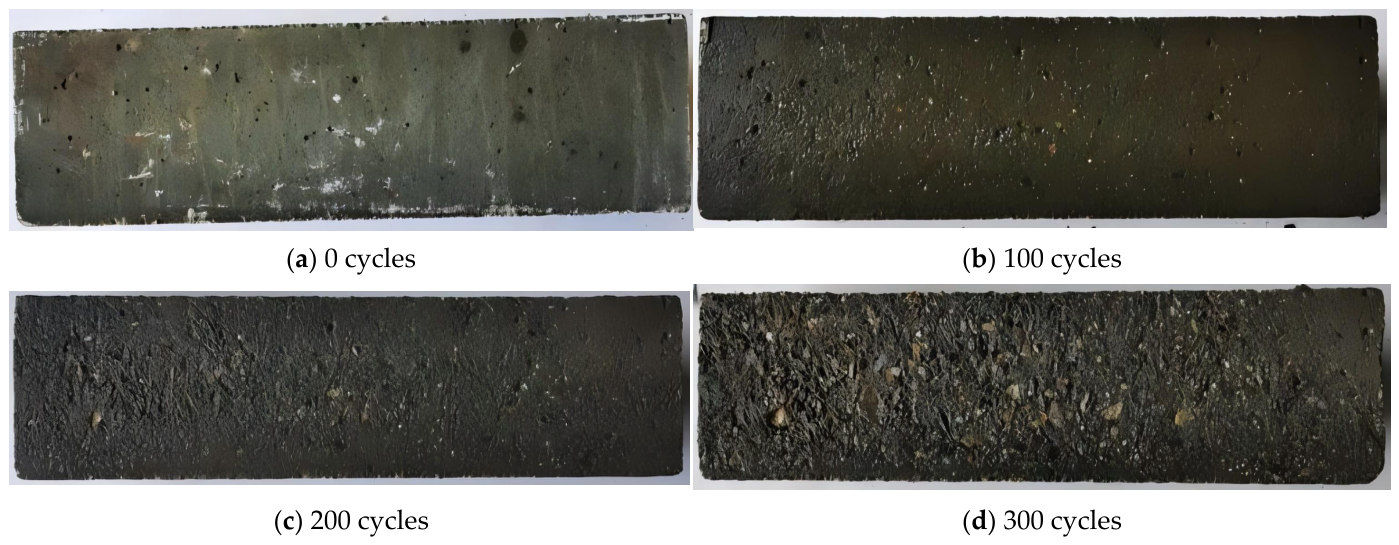
Figure 8, Figure 9 and Figure 10 show concrete specimens that did not undergo freeze–thaw cycling. All specimens exhibited intact molding surfaces and side faces in good appearance, with only a small number of tiny voids present. After 100 low-temperature freeze–thaw cycles, only a slight and uniform loss of surface cement paste occurred, with the concrete remaining basically intact; after 200 cycles, only a small number of potholes appeared on the concrete surface; after 300 cycles, numerous potholes developed on the concrete-specimen surfaces. After 100 ultra-low-temperature freeze–thaw cycles, large areas of surface cement mortar spalled off; after 200 cycles, cement-mortar spalling further intensified, with overall surface integrity becoming compromised; after 300 cycles, all surface cement mortar had spalled off, with the entire surface layer becoming loose and porous. For specimens subjected to ultra-low-temperature cycling combined with nano-protection, after 100 freeze–thaw cycles, only a small amount of surface cement paste spalled off, with the surface remaining in relatively good condition; after 200 cycles, a small number of potholes and slight spalling appeared on the surface cement mortar, with the surface remaining generally intact overall; after 300 cycles, surface cement mortar spalled off, and portions of the surface layer became loose and porous.
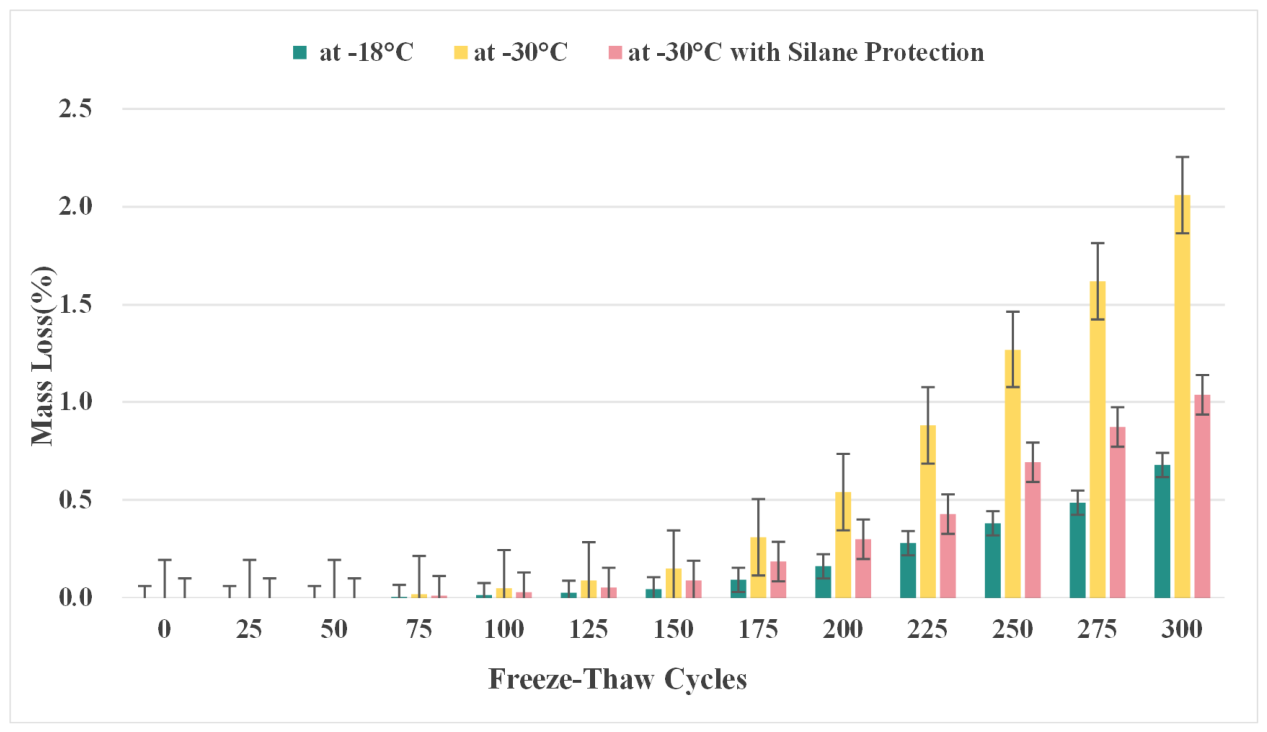
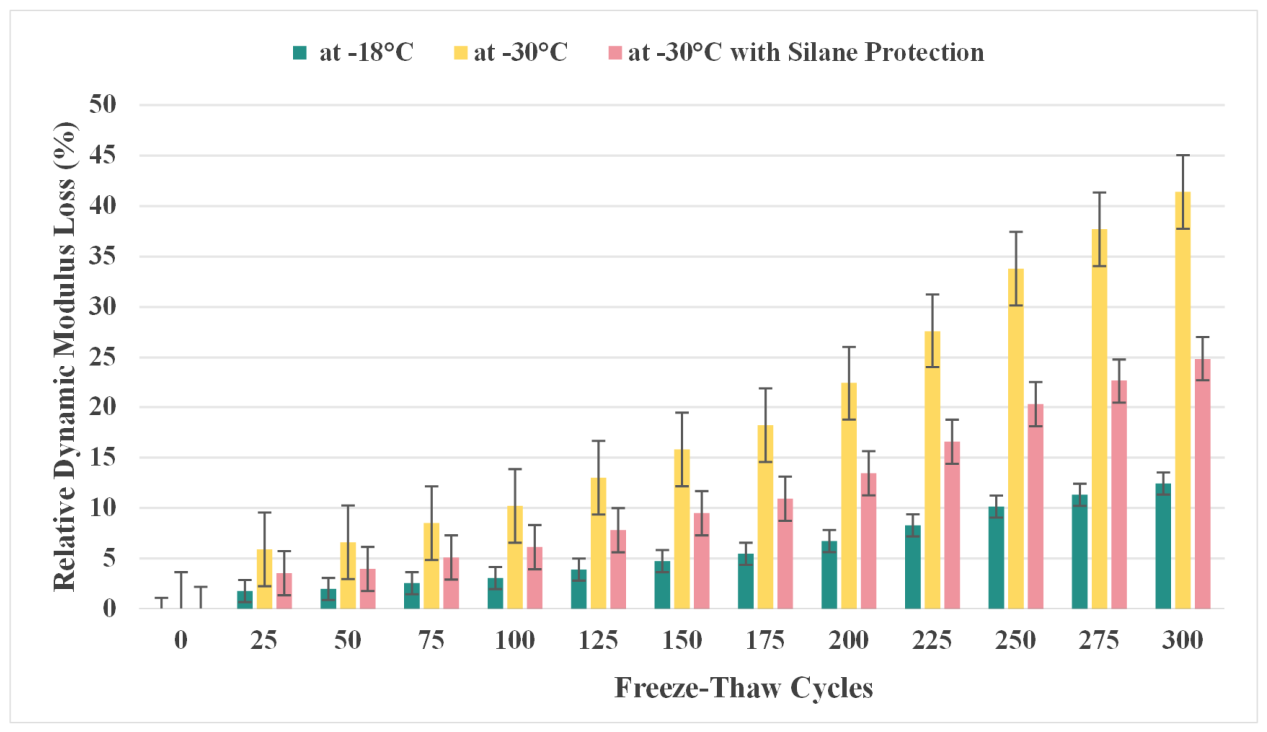
From Figure 8, Figure 9 and Figure 10, it can be clearly observed that under ultra-low-temperature freeze–thaw cycling, the surface-damage degree of concrete specimens increases rapidly with the increasing number of freeze–thaw cycles. The destructive capacity of ultra-low-temperature (−30~5 °C) freeze–thaw cycling far exceeds that of low-temperature (−18~5 °C) freeze–thaw cycling, with the deterioration rate of airport pavement under ultra-low-temperature freeze–thaw conditions being extremely rapid. The ranking of concrete freeze–thaw-damage severity is ultra-low temperature (−30~5 °C) > ultra-low temperature (−30~5 °C) + silane protection > low temperature (−18~5 °C).

3.2.2. Freeze–Thaw Durability Damage Analysis

Concrete specimens were tested for ultra-low-temperature freeze–thaw cycling in water with temperature range of −30~5 °C. This study investigated concrete freeze–thaw durability under ultra-low temperature, including mass loss rate and relative dynamic elastic modulus loss rate.
  • Mass Loss Rate
Figure 11 shows mass loss rates of concrete under low-temperature and ultra-low-temperature freeze–thaw cycling. After 75 ultra-low-temperature freeze–thaw cycles, concrete began to show mass loss with rate of 0.02%. After 100 ultra-low-temperature freeze–thaw cycles, mass loss rate was 0.05%. After 200 ultra-low-temperature freeze–thaw cycles, mass loss rate was 0.54%, 3.3 times that of low-temperature freeze–thaw concrete. After 250 ultra-low-temperature freeze–thaw cycles, mass loss rate was 1.27%, 3.3 times that of low-temperature freeze–thaw concrete. After 300 ultra-low-temperature freeze–thaw cycles, mass loss rate was 2.06%, 3 times that of low-temperature freeze–thaw concrete. Mass loss rate of ultra-low-temperature freeze–thaw concrete increased exponentially with freeze–thaw cycles. Within 300 freeze–thaw cycles, mass loss rate of ultra-low-temperature freeze–thaw concrete was 3.0–3.3 times that of low-temperature freeze–thaw concrete. Concrete mass loss rate ranking: Ultra-low temperature (−30~5 °C) > ultra-low temperature (−30~5 °C) + silane protection > low temperature (−18~5 °C).
  • Relative Dynamic Elastic Modulus
Figure 12 shows relative dynamic elastic modulus loss rates of concrete under low-temperature and ultra-low-temperature freeze–thaw cycling. After 50, 100, 150, 200, 250, and 300 ultra-low-temperature freeze–thaw cycles, relative dynamic elastic modulus loss rates were 6.6%, 10.2%, 15.8%, 22.4%, 33.8%, and 41.4% respectively. Corresponding relative dynamic elastic modulus loss rates were all 3.3 times those of low-temperature freeze–thaw concrete. Within 300 freeze–thaw cycles, relative dynamic elastic modulus loss rate of ultra-low-temperature freeze–thaw concrete was 3.3 times that of low-temperature freeze–thaw concrete. Effects of ultra-low temperature and low temperature on relative dynamic elastic modulus loss rate were of the same order of magnitude with little difference. Concrete relative dynamic elastic modulus loss rate ranking: Ultra-low temperature (−30~5 °c) > ultra-low temperature (−30~5 °c) + silane protection > low temperature (−18~5 °C).

3.3. Surface Single-Face Salt-Freeze Damage

3.3.1. Salt-Freeze Damage Process and Morphology

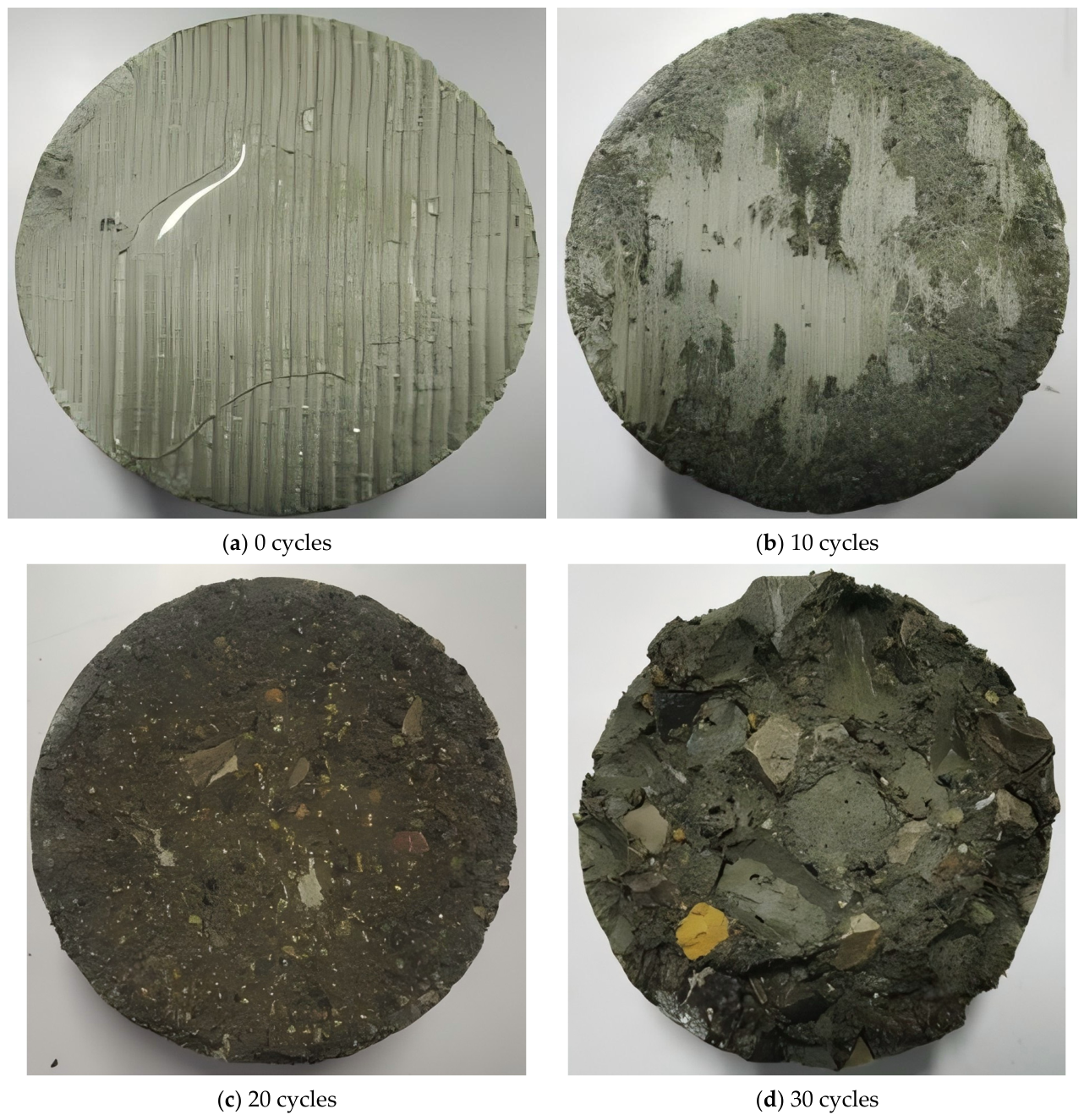
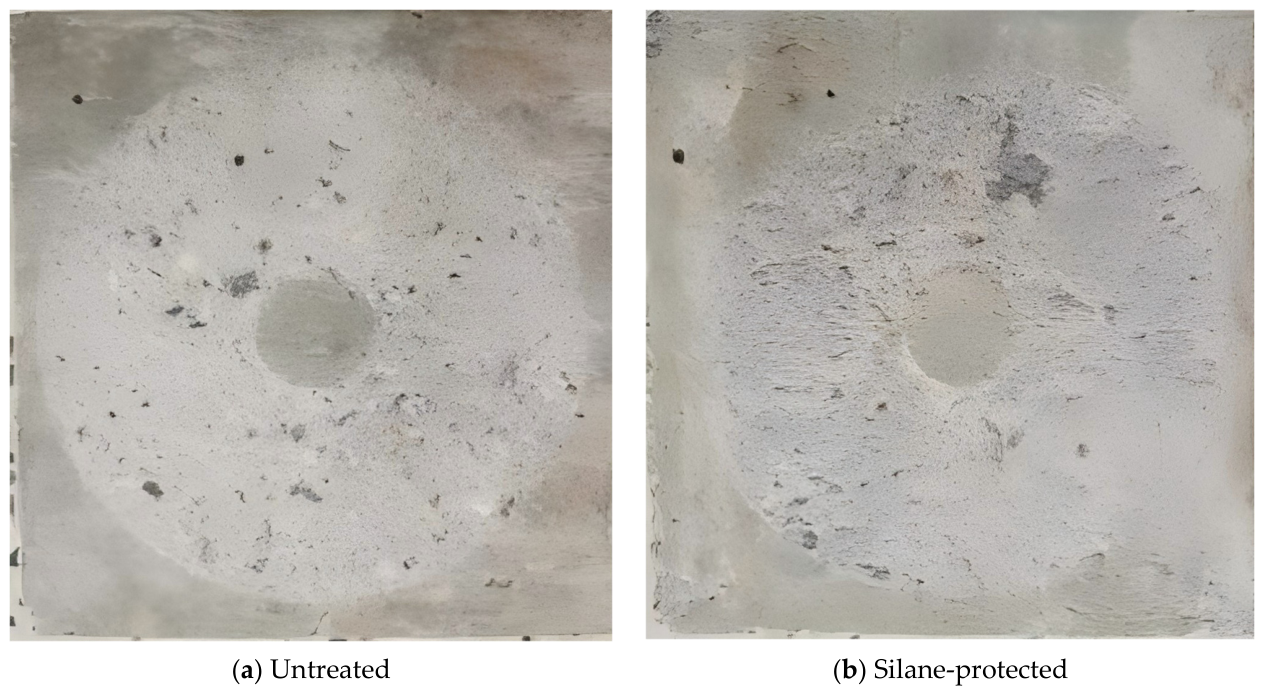
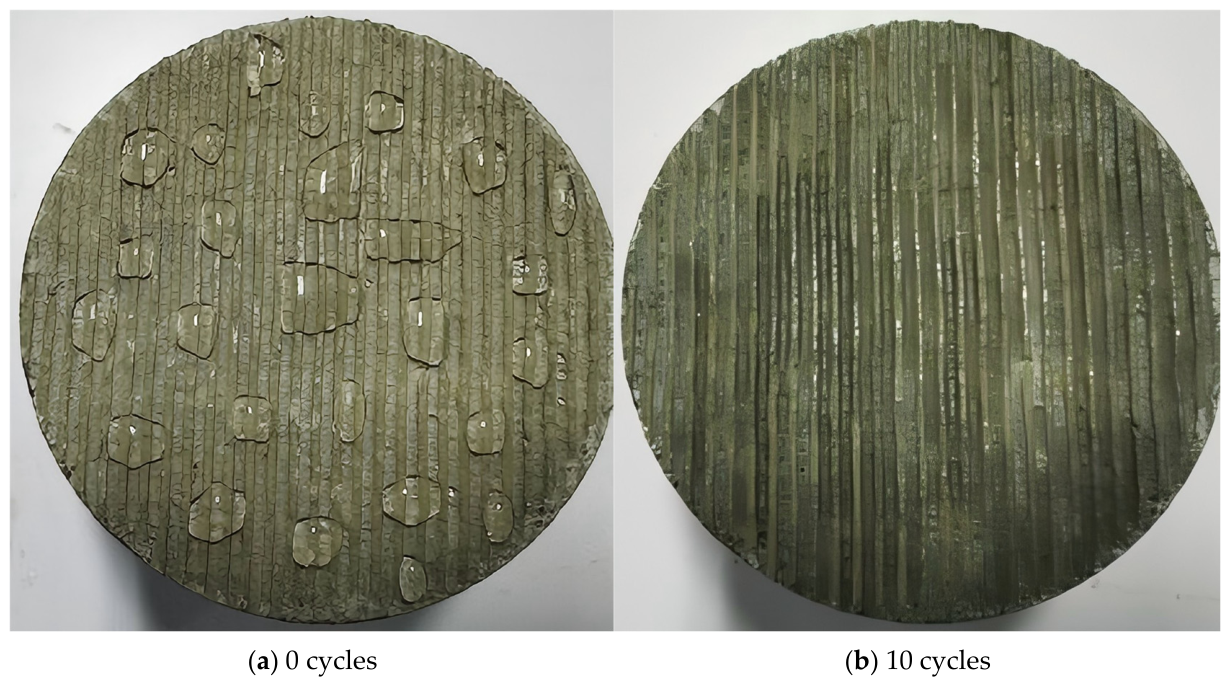
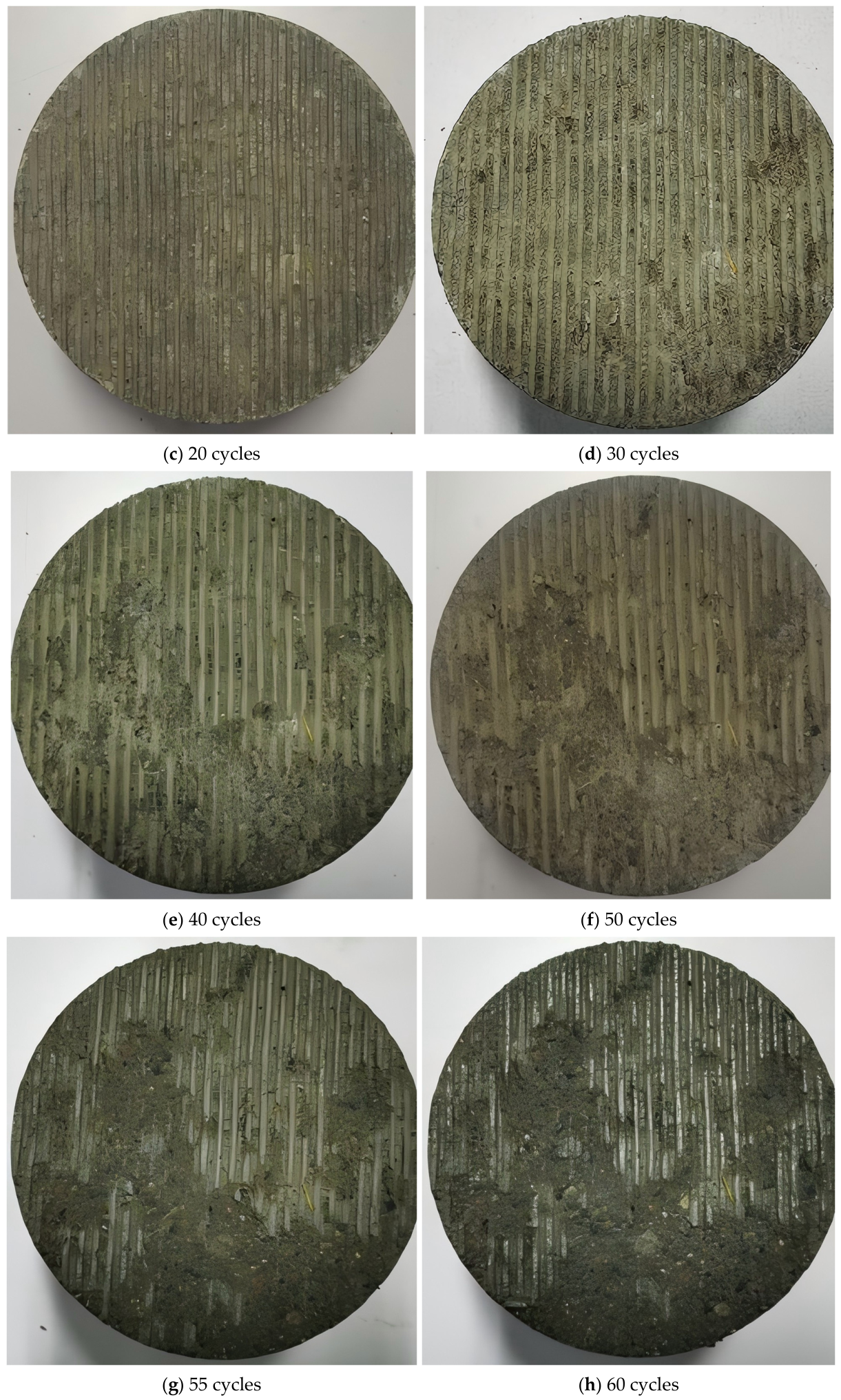
Surface characteristics of untreated and silane-protected airport pavement concrete under single-face salt freezing are shown in Figure 13 and Figure 14. Before single-face salt freezing, both untreated and silane-protected airport pavement concrete surfaces were intact. Water rapidly wetted untreated airport pavement surface, while silane-protected airport pavement surface showed multi-point water droplet distribution with lotus leaf hydrophobic effect. Untreated airport pavement concrete showed severe spalling at 10 single-face salt-freeze cycles, while silane-protected airport pavement concrete showed minor spalling only at 30 cycles, with spalling severity exceeding standard value of 600 g/m2 only at 60 cycles.

3.3.2. Salt-Freeze Durability Damage Analysis

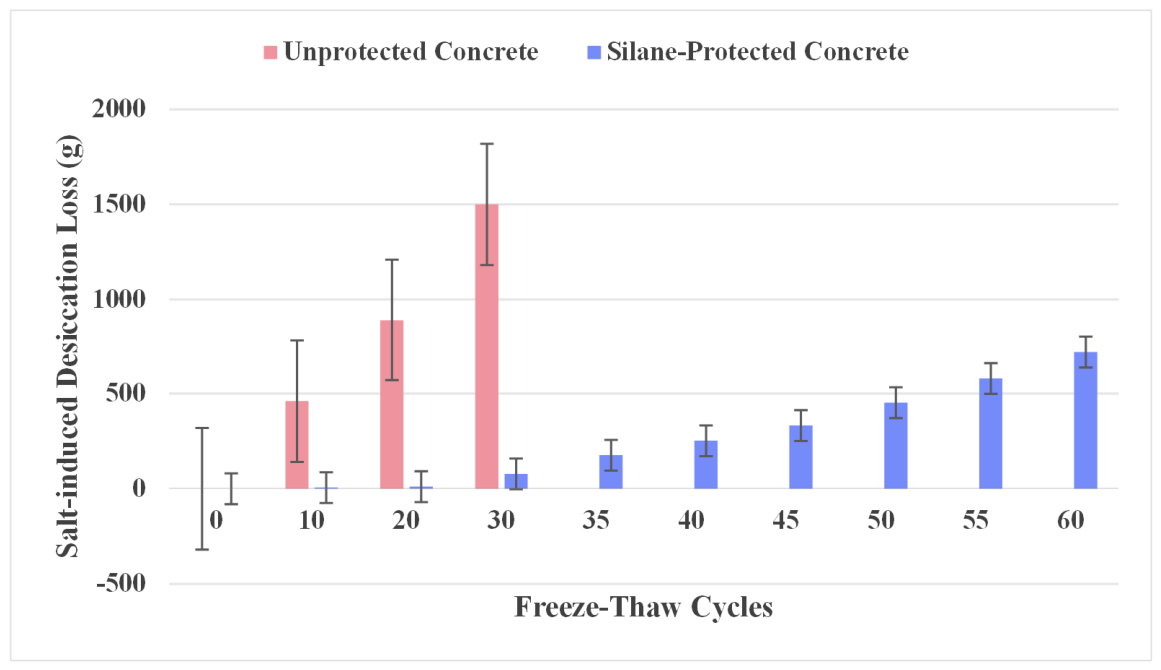
Figure 15 shows salt-freeze spalling amounts of untreated and silane-protected airport pavement concrete. After 10 single-face salt-freeze cycles, spalling amounts of untreated and silane-protected airport pavement concrete were 460 g/m2 and 6 g/m2, respectively. After 20 cycles, they were 890 g/m2 and 11 g/m2. After 30 cycles, they were 1500 g/m2 and 78 g/m2. At 55 and 60 cycles, spalling amounts of silane-protected airport pavement concrete were 579 g/m2 and 718 g/m2. At 10, 20, and 30 cycles, spalling amounts of silane-protected airport pavement concrete were 1.3%, 1.2%, and 5.2% of untreated airport pavement concrete, respectively.
From the figure, it can be seen that using developed silane-protected airport pavement can significantly reduce concrete spalling amount, and silane material-protection technology can greatly improve salt-freeze resistance of airport pavement concrete.

3.4. Abrasion Resistance

During daily use, airport pavements are subjected to repeated friction from aircraft wheels, with surface texture wearing quickly. Silane materials typically penetrate only 3–8 mm into concrete surface, and their abrasion resistance determines the duration of protection effectiveness for airport road surfaces.
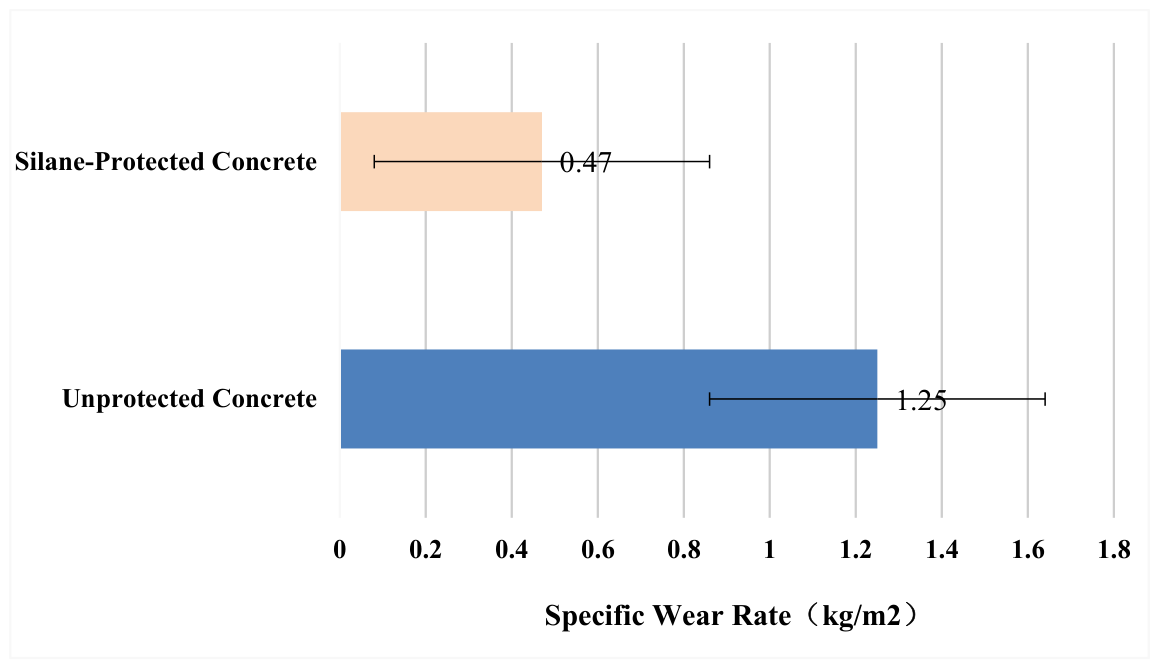
As shown in Figure 16, the wear mass per unit area of the concrete specimen protected by silane decreased from 1.25 kg/m2 to 0.47 kg/m2, a reduction of 62%. After the concrete underwent silane surface protection, the silane molecules penetrated into it, increasing its surface density. That is, after silane surface protection, the formation of a film by silane molecules on the concrete surface and the internal pore surfaces significantly enhanced the compactness of the concrete surface. Moreover, the formation of the polymer film made the surface relatively smooth, thereby reducing both the wear mass per unit area and the wear depth, and substantially improving wear resistance. This is beneficial for extending the service life of the silane surface treatment. From Figure 17, it is evident that compared to untreated airport pavement concrete, silane-protected airport pavement concrete shows lighter wear degree and smaller depth.

3.5. Interface Mechanism

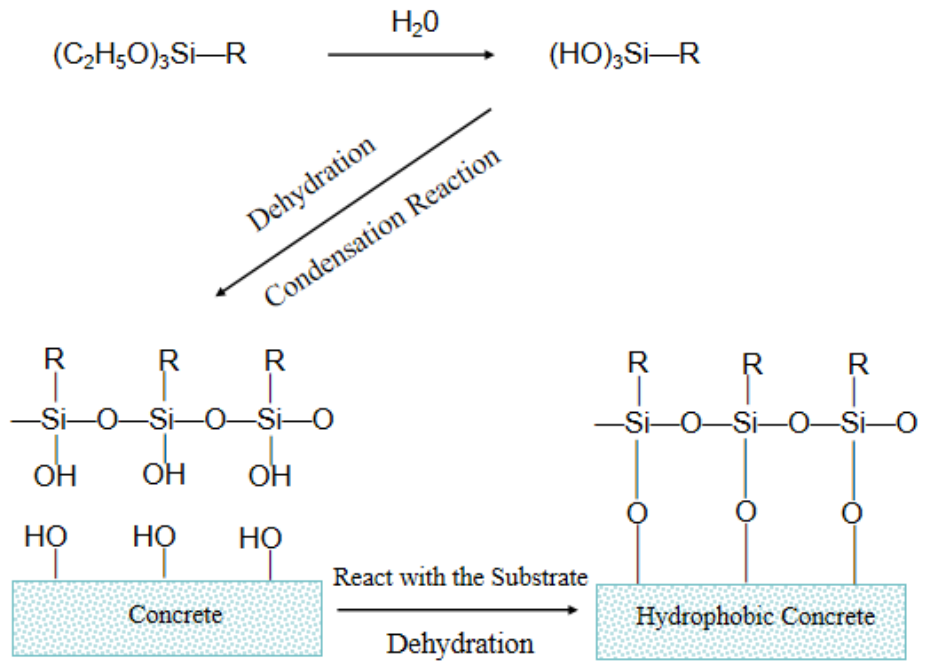
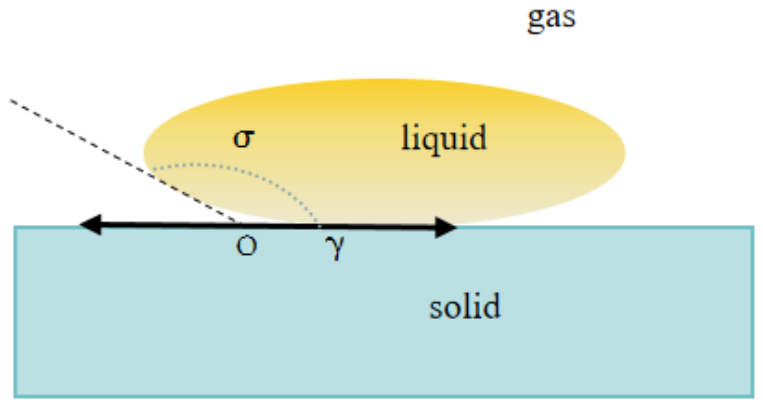
The surface of ordinary concrete pavement is hydrophilic. After spraying silane on the pavement, due to the small molecular weight, extremely low surface energy, and simple molecular structure of the silane material, it can rapidly spread on the concrete surface and penetrate through the surface layer, reaching deep into the concrete. The silane molecules distribute along the inner walls of the concrete’s capillary pores and react with water present in the pores. Specifically, the silane first hydrolyzes to form silanol (Si-OH). Subsequently, the silanol further reacts with hydroxyl groups (-OH) on the surface of the concrete substrate to form siloxane long chains with alkyl groups at their ends. These long chains undergo condensation reactions, ultimately forming a robust, reticulated silicone resin hydrophobic layer on the surface and within the capillary pore walls. This hydrophobic layer is chemically bonded to the concrete substrate, becoming an integral part of it. The reaction mechanism of silane materials is shown in Figure 18, including three steps: first, hydrolysis of silane to form silanol; second, condensation of silanol; and third, reaction of silanol condensation products with hydroxyl groups in silicates and water to form surface waterproof film through dehydration. When silane material is coated on concrete structure surface, Si-O-Si long chains form a network film structure on the surface. The large electronegativity difference between silicon and oxygen creates a bond close to ionic character with high bond strength that is not easily dissociated. At this point, the phase interface of concrete surface changes from air–concrete interface to air–silane interface, with reduced surface tension. When surface impregnation-treatment material has a surface energy of less than 40 mN/m, i.e., contact angle with water greater than 98°, it exhibits excellent hydrophobic effect. Due to the small surface tension of silane-coated concrete surface, far less than water’s surface tension of 72 mN/m, when water contacts this new interface, the wetting angle exceeds 90°, producing capillary inverse air pressure phenomenon (Figure 19). Moreover, waterproof film formation does not block capillary pores, ensuring smooth discharge of internal gases from concrete structure. Additionally, the chemically formed waterproof layer organically combines with concrete as a whole, reducing deformation caused by drying shrinkage and load effects, which is one of the main reasons for failure of traditional protection methods.

3.6. SEM Micro-Morphology

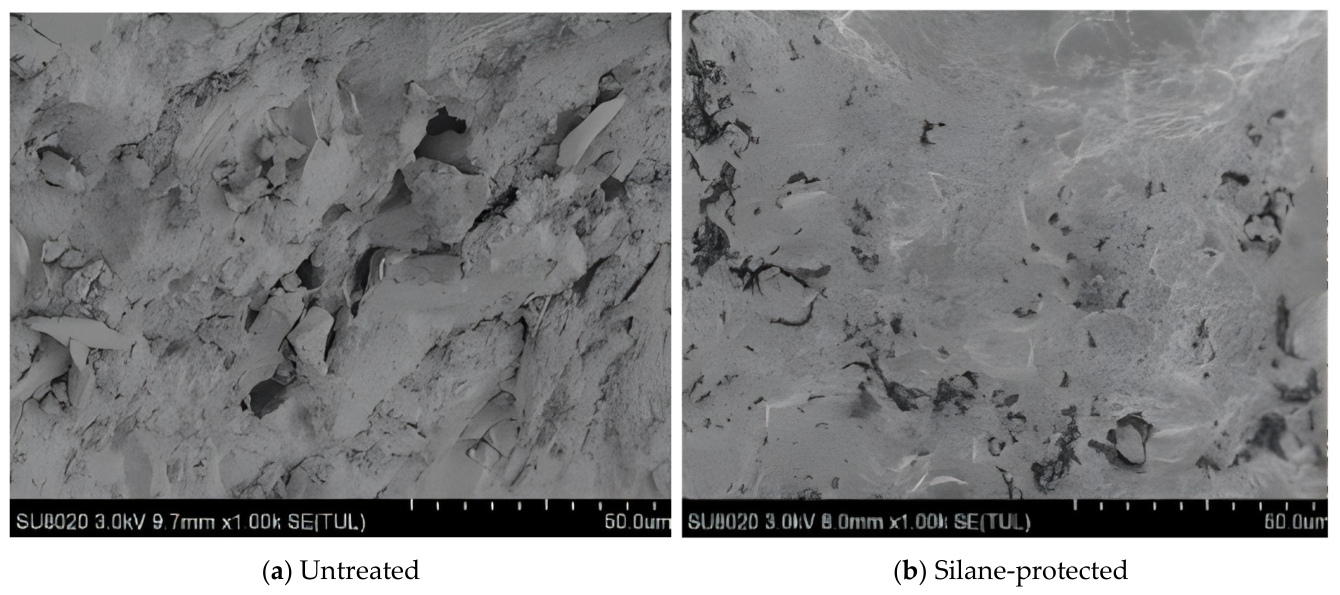
The SEM test was applied for manifesting the microstructure. The SEM test was carried out using a thermal field emission microscope (GeminiSEM 300, Carl Zeiss, Oberkochen, Germany) device with an acceleration voltage of 15 keV and a spot size of 1.8. A small piece of two airport pavement concrete samples cured for 28 d were cut. The experiment selected two airport pavement concrete samples that had been cured for 28 days, cut them, and conducted tests; one sample received no silane protection treatment, while the other underwent such treatment. Of these two concrete blocks, one did not undergo silane protection treatment, while the other was treated with silane protection. The microstructures of untreated and silane-protected airport pavement concrete are shown in Figure 20. Before freeze–thaw cycles, the unprotected airport pavement concrete exhibited relatively large pores on the cement paste surface. In contrast, after silane treatment, a white membranous structure formed on the cement paste surface of the protected concrete that provided excellent hydrophobicity to prevent water ingress into the concrete interior. However, silane material could not completely fill excessively wide pores, leaving pathways for water to penetrate into the concrete. This explains why silane-treated concrete specimens demonstrated excellent early-stage freeze–thaw resistance with virtually no loss in dynamic elastic modulus. Nevertheless, as freeze–thaw cycles progressed, the internal pores gradually became water-saturated, and upon eventual failure, the dynamic elastic modulus decreased significantly, while the surface mass loss remained relatively small. Identifying methods to fill these pores would be of significant value in further enhancing the performance of silane coatings.

4. Discussion

This study systematically evaluates the effects of silane impregnation treatment on the durability of airport pavement dry–hard concrete under various harsh environmental conditions. The experimental results demonstrate that silane treatment significantly improves the frost resistance, salt–frost-scaling resistance, and abrasion resistance of concrete. However, these outstanding performance enhancements do not occur in isolation; they must be compared carefully with the existing literature to accurately position the value and novelty of this study.

4.1. Comparative Analysis with the Existing Literature: Positioning of Novelty

The key findings of this study, such as the approximately 50% improvement in flexural strength and the over 90% reduction in salt–frost scaling, are not universally observed in all studies on silane or organosilicon protective agents. The significance of these results is closely related to the specific experimental conditions, material system, and evaluation indicators adopted in this study.

4.1.1. Comparative Analysis of the 50% Improvement in Flexural Strength

In the literature, most studies on externally applied or impregnated silane waterproofing agents have primarily focused on maintaining or slightly improving the mechanical properties of concrete, rather than achieving improvements of this magnitude. For example, the study by Zhang et al. [18] indicated that externally applied organosilicon waterproofing agents had negligible effects on the compressive strength of concrete, with their main efficacy lying in impermeability. Jiang et al. [19] found that external application could reduce chloride ion absorption but did not report such a significant improvement in flexural strength. Conversely, studies on internally mixed silane, such as those by Jin et al. [15] and Bao et al. [16], consistently reported a decrease in compressive or flexural strength (approximately 10–20%), attributed to the retardation of cement hydration and weakening of the interfacial transition zone caused by internal silane incorporation.
Therefore, the flexural strength improvement after 500 freeze–thaw cycles from 3.97 MPa to 5.98 MPa (+50%) observed in this study is a novel and exceptionally prominent finding.
The mechanism for this improvement primarily stems from two aspects. First, effective suppression of micro-damage by silane. As shown in Section 3.1.3 and Figure 7, this study evaluated the residual strength after freeze–thaw cycles. The untreated concrete suffered severe internal deterioration after 500 freeze–thaw cycles, with extensive microcrack formation, which is the fundamental reason for its significant strength loss. The hydrophobic layer formed by silane impregnation substantially slowed the intrusion of water and the destructive effect of ice-crystal pressure on the microstructure, allowing the internal structure of the silane-treated group to remain more intact after freezing and thawing, resulting in a residual strength far exceeding that of the control group. Second, strengthening of the surface layer by silane film formation. The silicone resin network formed by silane hydrolysis and condensation not only filled some capillary pores but also potentially enhanced the cohesion of the cement paste surface to a certain extent, as evidenced in the SEM images (Figure 20). This strengthening effect is particularly significant for protecting surface fibers during flexural testing, contributing notably to the flexural capacity.
In summary, the “50% flexural strength improvement” revealed in this study is not an inherent property of silane treatment, but rather a unique outcome of the specific combination of “silane protection” and “harsh freeze–thaw environment.” It emphasizes the great potential of silane treatment for preserving the structural integrity of concrete under extreme service conditions, going beyond merely preventing surface deterioration. This represents one of the core novelties of this research.

4.1.2. Comparative Analysis of over 90% Reduction in Salt–Frost Scaling

The ability of silane treatment to significantly improve the salt–frost resistance of concrete is well established in the literature. For instance, studies by Zhu Fangzhi et al. [14] and Li Zhonghua et al. [20] have confirmed this point. Li et al. [20] found that the anti-freezing effect of organosilicon coatings in a salt–frost environment was superior to air-entrainment treatment. Liu et al. [21] also reported a significant increase in diffusion impedance and enhanced corrosion resistance after silane modification of concrete.
Therefore, the qualitative trend of over 90% reduction in salt–frost scaling observed in this study is consistent with the existing literature. However, the novelty of this study lies in its quantitative significance and specific application context.
First, extremely high efficiency: After 10, 20, and 30 cycles, the scaling amounts of the silane-protected group were only 1.3%, 1.2%, and 5.2% of the control group, respectively (Figure 15). This reduction magnitude, approaching two orders of magnitude, ranks at the forefront even when compared with the optimal studies reported previously. We attribute this to the denser, more stable hydrophobic layer achieved by the specific mixed silane formulation used in this study (1:1 mixture of dodecyltrimethoxysilane and hexadecyltrimethoxysilane), as well as the optimized spraying process tailored to the surface characteristics of airport dry–hard concrete.
Second, specificity to the airport pavement environment: Existing studies on silane resistance to salt–frost scaling have mostly focused on marine concrete or ordinary concrete. The freezing medium in this study is not the traditional NaCl solution, but a 4% potassium formate solution. Potassium formate, commonly used as an environmentally friendly deicing fluid at airports, has strong hygroscopicity, and the characteristics of supercooled water and freezing pressure it generates differ from NaCl, making its erosion mechanism on concrete more complex. Achieving over a 90% reduction in scaling under such a severe medium condition strongly demonstrates the excellent adaptability of this silane technology to the specific deicing-fluid environment of airport pavements, filling a data gap in this application scenario. This constitutes another significant novelty of this research.

4.2. In-Depth Discussion of Interfacial Mechanisms and Microscopic Evidence

Section 3.5 accurately described the film-formation mechanism of silane (hydrolysis–condensation–bonding). The following section provides further in-depth discussion by integrating comparative analysis.
The SEM results of this study (Figure 20) show the formation of a “white membranous structure” on the surface of the cement paste after silane treatment, which is consistent with previous descriptions of silicone resin film formation [2,7]. However, it is crucial to emphasize that the integrity and chemical bonding strength of this film are key.
First, the transition from “physical covering” to “chemical bonding”: Unlike the peeling and failure of many physical coatings (a key research focus of Almusallam et al. [10], silane molecules chemically bond with hydroxyl groups on cement hydration products (C-S-H gel), forming an “integrated” protective layer. This means that the traditional coating/substrate interface is replaced by a graded composite layer connected by covalent bonds, greatly enhancing the durability of the protective layer. This is crucial for explaining why silane treatment remains effective after 500 freeze–thaw cycles, while many other coatings (e.g., acrylics) might fail at a much earlier stage [2,6].
Second, the capillary “counter-pressure” effect and “breathability” function: The “capillary counter-pressure” effect mentioned in the text (i.e., water contact angle > 98°, Figure 19) is a direct manifestation of the water-repellent barrier. More importantly, silane treatment does not block the pores; it only forms a hydrophobic layer on the pore walls. This endows the concrete with “breathability”: water cannot penetrate in liquid form, but internal moisture (water vapor) can still diffuse outward. This characteristic is crucial for freeze–thaw and salt–frost environments. It prevents the generation of excessive hydraulic pressure inside the concrete due to moisture migration and subsequent freezing, thereby delaying the accumulation of freeze–thaw damage. This provides mechanistic support at the microscopic level for explaining why the mass loss and relative dynamic elastic modulus loss rates of the silane-treated group were significantly lower than those of the control group in Figure 5, Figure 6, Figure 11 and Figure 12.

4.3. Research Limitations and Application Prospects

Although this study has achieved significant results, it is necessary to acknowledge its limitations, as doing so is also a hallmark of a high-quality discussion section in a scientific paper.
In terms of limitations, first, the maximum number of freeze–thaw cycles in this study was 500 for low temperature and 300 for ultra-low temperature. Although the experimental results are excellent, the long-term stability (e.g., over 10 years) of the silane protective layer, especially its performance degradation under the coupled effects of complex environmental factors such as ultraviolet radiation, carbonation, and wet–dry cycles, still requires further long-term verification. Second, SEM (Figure 20) shows that the film structure formed by silane cannot completely fill overly wide pores (e.g., native cracks). For larger defects or cracks, a single silane impregnation treatment may have limited effectiveness. Future work could consider combining it with crack repair materials or nano-filler compounding technologies to achieve synergistic enhancement of “hydrophobicity + repair.” Furthermore, this study uses a specific mixed silane formulation. Different alkyl chain lengths (e.g., C8, C12, C16, and C18), terminal groups (e.g., trimethoxy and triethoxy), and molecular structures (e.g., branched or linear) can significantly affect penetration depth, hydrophobic effect, and durability [1,8]. Future systematic comparative studies are needed on the suitability of different silane molecular structures for airport pavement concrete to optimize the formulation.
In terms of application prospects, first, this technology is highly suitable as a preventive maintenance measure before an airport pavement is put into service, especially for newly built or rehabilitated aprons, deicing pads, and other areas with the highest risk of freeze–thaw damage due to frequent contact with deicing fluids. Second, a tiered application strategy could be implemented. For airports in extreme climate regions of Northeast, North, and Northwest China, incorporating silane impregnation treatment into routine construction standards is feasible. In regions with over 150 annual freezing days (as shown in Table 1), it is strongly recommended; in cold regions with 100–150 annual freezing days (Table 2), it can be selectively applied based on aircraft stand usage frequency. Finally, from a life cycle-cost perspective, although the initial investment increases, considering the indirect costs associated with major repairs, patching, and flight delays caused by freeze–thaw damage, silane protection technology can significantly extend pavement life and reduce the overall life-cycle cost. The data from this study (50% improvement in flexural strength, over 90% reduction in scaling, and 62% reduction in abrasion loss) provide a solid quantitative basis for cost–benefit analysis.
In conclusion, this study has demonstrated through systematic experiments that a novel mixed silane impregnation technology can significantly improve the durability of airport pavement dry–hard concrete under various freeze–thaw and salt–frost conditions. Its novelty and main contributions lie in (1) revealing the exceptionally prominent result of approximately 50% improvement in residual flexural strength under the combined action of “silane protection” and “severe freeze–thaw”; (2) verifying its excellent resistance to salt–frost scaling (over 90% reduction), specifically against airport deicing fluid (potassium formate); and (3) elucidating the source of this superior performance through microscopic analysis and mechanistic discussion, comparing it with differences in the existing literature, and clarifying the position of this study within the body of knowledge. Despite limitations such as long-term performance, this technology provides a reliable and efficient solution, offering significant scientific basis and engineering reference for improving the durability and operational safety of airport pavements, especially in cold regions of China.

5. Conclusions

This study systematically evaluates the effects of silane impregnation treatment on the durability of airport pavement concrete under various environmental conditions. The main conclusions are as follows:
Improvement in freeze–thaw durability: After silane impregnation treatment, the mass loss rate of concrete subjected to 500 freeze–thaw cycles in a water medium was reduced from over 5% (untreated) to approximately 2.5% (silane-treated). The flexural strength increased from 3.97 MPa to 5.98 MPa, representing an improvement of approximately 50%. The relative dynamic elastic modulus loss rate decreased from 41.9% to 20.7%. These results indicate that silane treatment significantly delays the structural degradation of concrete under repeated freeze–thaw action, thereby enhancing long-term structural stability.
Freeze–thaw resistance under ultra-low-temperature conditions: Freeze–thaw cycling at ultra-low temperatures (−30 °C) causes significantly more severe damage to concrete compared to conventional low-temperature conditions (−18 °C). Within 300 cycles under ultra-low-temperature conditions, the mass loss rate reached 2.06%, which is 3.0 times that of low-temperature conditions. The relative dynamic elastic modulus loss rate reached 41.4%, which is 3.3 times that of low-temperature conditions. Silane treatment can moderately mitigate the damage rate under ultra-low temperatures, but its protective effect is insufficient to fully counteract the damage caused by extreme low temperatures.
Salt–frost-damage mitigation: In single-face salt–frost tests, untreated concrete exhibited severe spalling after only 10 cycles. In contrast, silane-treated concrete showed only minor spalling after 30 cycles. At 10, 20, and 30 cycles, the spalling amounts of the silane-protected concrete were only 1.3%, 1.2%, and 5.2% of those recorded for untreated concrete, respectively. The overall reduction in spalling amount exceeded 90%. This demonstrates that silane treatment significantly improves the salt–frost resistance of concrete against deicing salts and similar aggressive media.
Enhanced abrasion resistance: Following silane treatment, the wear mass per unit area of the concrete surface decreased from 1.25 kg/m2 to 0.47 kg/m2, a reduction of approximately 62%. The silane-impregnated film forms a denser surface microstructure, significantly enhancing abrasion resistance. This improvement is beneficial for extending the service life of the concrete surface under mechanical actions such as aircraft tire friction and vehicle rolling.
Microscopic mechanisms and interfacial effects: Silane forms a stable, reticulated silicone resin hydrophobic layer on the concrete surface and within the capillary pore walls. This layer is chemically bonded to the concrete substrate. It reduces the surface free energy to below 40 mN/m, resulting in a water contact angle exceeding 98° and creating a capillary counter-pressure effect. The hydrophobic layer does not block capillary pores, thereby allowing internal moisture vapor to escape. SEM analysis confirms that silane treatment forms a white membranous structure on cement paste surfaces, improving pore structure and interfacial properties. However, the silane material cannot completely fill excessively wide pores, suggesting that further optimization is required to fully enhance performance.
In summary, silane impregnation treatment is a reliable technical measure for comprehensively improving multiple durability indicators of airport concrete structures, including freeze–thaw resistance, salt–frost resistance, abrasion resistance, and impermeability. It holds significant value for engineering applications in coastal and severely cold regions.

Author Contributions

Conceptualization, D.M.; methodology, D.M., X.S., Y.L., X.Z., X.R., W.Z. and B.L.; software, D.M. and Y.L.; validation, D.M. and Y.L.; formal analysis, D.M., X.S., Y.L., X.Z., X.R., W.Z. and B.L.; investigation, D.M. and Y.L.; resources, D.M. and Y.L.; data curation, D.M., X.S. and Y.L.; writing—original draft, D.M. and Y.L.; writing—review and editing, D.M., X.S., Y.L., X.Z., X.R., W.Z. and B.L.; visualization, D.M., X.S. and Y.L.; supervision, D.M., X.S. and Y.L.; project administration, D.M. and Y.L.; funding acquisition, D.M., X.S. and Y.L. All authors have read and agreed to the published version of the manuscript.

Funding

This research was funded by the National Natural Science Foundation of China (NSFC), grant number U2433209.

Data Availability Statement

The data presented in this study are available upon request from the corresponding author.

Acknowledgments

The authors wish to acknowledge the support provided from China Airport Construction Group Co., Ltd.; and Civil Aviation Research Base (Beijing) Co., Ltd.

Conflicts of Interest

Authors Daoxun Ma, Xin Su, Xiaodan Zheng and Xiaomu Ren were employed by the company China Airport Construction Group Co., Ltd. Authors Yong Lai, Wen Zhang and Bo Li were employed by the company Civil Aviation Research Base (Beijing) Co., Ltd. Authors declare that the research was conducted in the absence of any commercial or financial relationships that could be construed as a potential conflict of interest.

References

  1. State Council Information Office of the People’s Republic of China. China’s Policies and Actions for Addressing Climate Change (White Paper). Available online: https://www.gov.cn/zhengce/2008-10/29/content_2615768.htm (accessed on 15 May 2026).
  2. Zhang, X.; Li, S.; Bu, X.; Zhao, T.; Jin, Z. Mechanism and Types of Organic Silicon Protective Materials for Concrete. Concrete 2013, 3, 72–74. [Google Scholar]
  3. Xie, Q.; Chen, X.P.; Wen, L.Y. Development Status and Prospect of Concrete Curing Agent. Bull. Chin. Ceram. Soc. 2016, 35, 1761–1766+1771. [Google Scholar]
  4. Li, M. Comparative Experimental Study on the Curing Effect of Different Types of Concrete Curing Agents. Coat. Prot. 2020, 41, 46–52. [Google Scholar]
  5. Nan, F.; Sun, Z.P.; Yang, J.B.; Yang, H.J.; Ji, Y.L.; Li, F.; Li, Z.L. Current Status and Prospect of Concrete Curing Methods and Curing Agents. Concr. World 2024, 8, 66–73. [Google Scholar]
  6. Mei, W.Y.; Liao, Z.H.; Chen, S.C.; Lai, F.K.; Zhang, W.Q.; Liu, Q.B.; Liu, Z.Y. Research Progress and Mechanism of Concrete Curing Agents and Protective Agents. Concr. World 2025, 9, 64–72. [Google Scholar]
  7. Long, G.C.; He, Z.H.; Xie, Y.J.; Yao, H.; Liao, Z.H. Research Progress of Surface Coating Protection Technology for Concrete under Complex Environments. J. Build. Mater. 2026, 9, 147–155. [Google Scholar]
  8. Flores-Vivian, I.; Hejazi, V.; Kozhukhova, M.I.; Nosonovsky, M.; Sobolev, K. Self-assembling particle-siloxane coatings for superhydrophobic concrete. ACS Appl. Mater. Interfaces 2013, 5, 13284–13294. [Google Scholar] [PubMed]
  9. Horgnies, M.; Chen, J.J. Superhydrophobic concrete surfaces with integrated microtexture. Cem. Concr. Compos. 2014, 52, 81–90. [Google Scholar] [CrossRef]
  10. Almusallam, A.; Khan, F.; Dulaijan, S.; Al-Amoudi, O. Effectiveness of surface coatings in improving concrete durability. Cem. Concr. Compos. 2003, 25, 473–481. [Google Scholar] [CrossRef]
  11. Edao, Y.; Fukada, S.; Nishimura, Y.; Katayama, K.; Takeishi, T.; Hatano, Y.; Taguchi, A. Effect of hydrophobic paints coating for tritium reduction in concrete materials. Fusion Eng. Des. 2012, 87, 995–998. [Google Scholar] [CrossRef]
  12. Wang, N.; Wang, Q.; Xu, S.; Lei, L. Fabrication of hierarchical structures on concrete surfaces with superhydrophobicity using replicated micro-nano dendritic structures. J. Ind. Eng. Chem. 2021, 103, 314–321. [Google Scholar] [CrossRef]
  13. Liu, S.J. Preparation of Environmentally Friendly Superhydrophobic Concrete and Its Application in Long-Distance Water Conveyance Channels in Cold Regions. Master’s Thesis, Northwest A&F University, Yangling, China, 2019. [Google Scholar]
  14. Zhu, F.Z.; Zhao, T.J.; Wang, P.G. Study on the Resistance to Salt Frost Scaling of Concrete with Internal and External Application of Silane Waterproofing Agent. Bull. Chin. Ceram. Soc. 2015, 34, 2157–2162. [Google Scholar]
  15. Jin, H.; Yi, Z.L.; Wen, H.; Chen, G.Z.; Tan, Y.B.; Li, L.X. Effect of Internal-Mixed Organosilicon Waterproofing Agent on Mortar Performance. Railw. Eng. 2016, 1, 89–91+95. [Google Scholar]
  16. Bao, J.W.; Hu, W.W.; Zhang, P.; Li, Z.; Lei, F.H.; Zhao, T.J. Effect of Organosilicon Hydrophobic Agent on Strength and Capillary Water Absorption of Concrete. J. Chin. Ceram. Soc. 2020, 48, 1644–1652. [Google Scholar]
  17. Zhang, P.; Zhao, T.J.; Jin, Z.Q.; Wittmann, F.H. Preparation of Integral Waterproof Concrete by Incorporating Alkylalkoxysilane Emulsion. New Build. Mater. 2009, 3, 62–65. [Google Scholar]
  18. Zhang, L.; Gao, R.X.; Rong, H.; Gao, L.X.; Zhang, Y. Study on the Influence of Permeable Organosilicon Coating Methods on the Protective Performance of Mortar and Its Mechanism. J. Build. Mater. 2019, 22, 523–529+537. [Google Scholar]
  19. Jiang, Z.W.; Sun, Z.P.; Wang, P.M. Effect of Silane on Corrosion Protection Performance of High-Performance Marine Concrete. China Harb. Eng. 2005, 1, 26–30. [Google Scholar]
  20. Li, Z.H.; Ba, H.J. Study on the Protective Performance of Organosilicon Coating for Concrete under Deicing Salt Environment. J. China Univ. Min. Technol. 2009, 38, 41–45. [Google Scholar]
  21. Liu, G.C.; Su, B.Z.; Wang, L.D. Anti-corrosion Performance of Silane-modified Concrete Surface. Corros. Prot. 2012, 33, 1087–1090. [Google Scholar]
  22. GB/T 50082-2024; Standard for Test Methods of Long-Term Performance and Durability of Ordinary Concrete. China Architecture & Building Press: Beijing, China, 2024.
  23. MH 5006-2015; Technical Specification for Construction of Cement Concrete Pavement for Civil Airports. China Civil Aviation Publishing House: Beijing, China, 2015.
  24. JGJ 55-2011; Specification for Mix Proportion Design of Ordinary Concrete. China Architecture & Building Press: Beijing, China, 2011.
  25. JTG 3420-2020; Testing Methods of Cement and Concrete for Highway Engineering. China Communications Press: Beijing, China, 2021.
  26. JC/T 421-2023; Test Method for Abrasion Resistance of Cement Mortar. China Building Materials Industry Press: Beijing, China, 2024.
Figure 1. Damage problems in cement pavement at a northern airport.
Buildings 16 02633 g001
Figure 2. Ultra-low-temperature freeze–thaw device for stiff airport pavement concrete.
Buildings 16 02633 g002
Figure 3. Surface characteristics of untreated airport pavement concrete with freeze–thaw cycling.
Buildings 16 02633 g003aBuildings 16 02633 g003b
Figure 4. Surface characteristics of silane-protected airport pavement concrete with freeze–thaw cycling.
Buildings 16 02633 g004
Figure 5. Mass loss rates of untreated and silane-protected airport pavement concrete.
Buildings 16 02633 g005
Figure 6. Relative dynamic elastic modulus loss rates of untreated and silane-protected airport pavement concrete.
Buildings 16 02633 g006
Figure 7. Flexural strength of untreated and silane-protected airport pavement concrete after 500 freeze–thaw cycles.
Buildings 16 02633 g007
Figure 8. Surface characteristics of untreated airport pavement concrete with low-temperature (−18~5 °C) freeze–thaw cycling.
Buildings 16 02633 g008
Figure 9. Surface characteristics of untreated airport pavement concrete at ultra-low-temperature (−30~5 °C) freeze–thaw cycles.
Buildings 16 02633 g009
Figure 10. Surface characteristics of silane-protected airport pavement concrete at ultra-low-temperature (−30~5 °C) freeze–thaw cycles.
Buildings 16 02633 g010
Figure 11. Mass loss rates of concrete under low-temperature and ultra-low-temperature freeze–thaw cycling.
Buildings 16 02633 g011
Figure 12. Relative dynamic elastic modulus loss rates of concrete under low-temperature and ultra-low-temperature freeze–thaw cycling.
Buildings 16 02633 g012
Figure 13. Salt-freeze surface conditions of untreated airport pavement concrete.
Buildings 16 02633 g013
Figure 14. Salt-freeze surface conditions of silane-protected airport pavement concrete.
Buildings 16 02633 g014aBuildings 16 02633 g014b
Figure 15. Salt freeze-spalling amounts of untreated and protected airport pavement concrete.
Buildings 16 02633 g015
Figure 16. Unit area abrasion loss of untreated and silane-protected airport pavement concrete.
Buildings 16 02633 g016
Figure 17. Abrasion surface conditions of untreated and silane-protected airport pavement concrete.
Buildings 16 02633 g017
Figure 18. Mechanism of silane bonding to concrete substrate.
Buildings 16 02633 g018
Figure 19. Hydrophobic effect of concrete surface coated with silane material.
Buildings 16 02633 g019
Figure 20. Microstructure of untreated and silane-protected airport pavement concrete.
Buildings 16 02633 g020
Table 1. Winter climate conditions at typical airports in severely cold regions.
No.Climate SubzoneProvinceAirportJanuary—Coldest Month (°C)Days ≤ 0 °C
(One Winter from First Year to Next Year)
Avg. LowAvg. HighExtreme LowTotalAverage
1Severely Cold RegionHeilongjiangHarbin Taiping−23−13−32166175
2Mohe Gulian−37−21−46218
3Qiqihar Sanjiazi−24−12−29175
4Yichun Lindu−29−15−35189
5Nenjiang General Airport−29−17−35188
6Jixi Xingkaihu−21−12−27166
7JilinChangchun Longjia−19−10−29151
8Yanji Chaoyangchuan−17−8−23165
9Changbaishan−23−9−31152
10LiaoningShenyang Taoxian−16−5−27145
11XinjiangUrumqi Diwopu−15−9−24137
12Inner MongoliaJiagedaqi Gaxian−32−17−39205
13Baotou Donghe−13−1−23163
14Hulunbuir Hailar−28−19−35203
15Ejina Banner−13−6−24152
16Alxa Right Banner−120−23138
17GansuGannan Xiahe−23−13−29177
18QinghaiHainan Tibetan Qinghaihu−150−20174
19ShanxiDatong Beijiazao−18−1−30188
20TibetAli Kunsha−17−1−22257
21SichuanDaocheng Yading−98−14188
22Jiuzhai Huanglong−95−17148
Table 2. Winter Climate Conditions at typical airports in cold regions.
No.Climate SubzoneProvinceAirportJanuary—Coldest Month (°C)Days ≤ 0 °C
(One Winter from First Year to Next Year)
Avg. LowAvg. HighExtreme LowTotalAverage
1Cold RegionLiaoningDalian Zhoushuizi−60−1688104
2Yingkou−13−3−23116
3Dandong Langtou−12−2−23121
4NingxiaYinchuan Hedong−122−21118
5ShaanxiXi’an Xianyang−46−1186
6BeijingBeijing Capital−91−22106
7Beijing Daxing−91−20107
8TianjinTianjin Binhai−61−1891
9HebeiShijiazhuang Zhengding−54−1589
10Handan−46−1585
11ShanxiTaiyuan Wusu−114−21129
12Luyuan−102−22115
13Changzhi Wangcun−74−19105
14TibetLhasa Gonggar−410−8162
15Chamdo Bangda−710−14149
16ShandongQingdao Liuting−23−1450
17HenanZhengzhou Xinzheng−28−1155
Table 3. Concrete mix proportion (kg/m3).
CementSandGravel (mm)WaterW/CSand RatioAir Content
(Naphthalene-Based Water Reducer + Air-Entraining Agent)
19–31.54.75–19
330643.7820.7547.2132.00.400.325.2%
Disclaimer/Publisher’s Note: The statements, opinions and data contained in all publications are solely those of the individual author(s) and contributor(s) and not of MDPI and/or the editor(s). MDPI and/or the editor(s) disclaim responsibility for any injury to people or property resulting from any ideas, methods, instructions or products referred to in the content.