1. Introduction
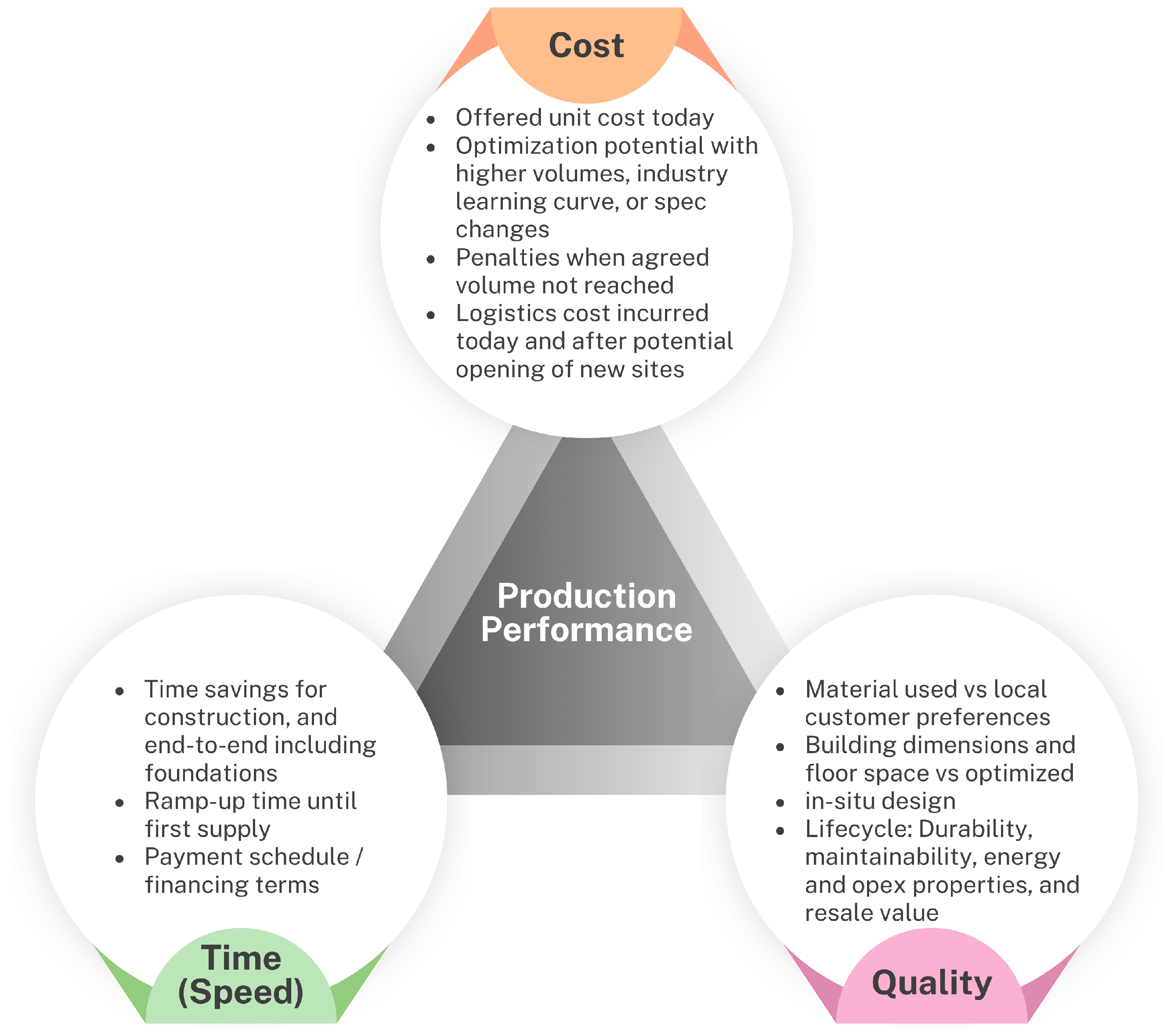
The production of permanent post-disaster housing necessitates rapid and high-quality solutions, with façade systems playing a critical role in determining overall construction cost, quality, production time, and efficiency. This study aims to address a significant gap in the literature by focusing on modular façade systems within the context of the 2023 earthquakes in Türkiye, while exploring sustainable post-disaster reconstruction solutions. Observations from the delayed delivery of permanent housing in Türkiye, compared to the reconstruction processes in countries that experienced disasters of similar magnitude, suggest that prefabricated façade systems can offer substantial contributions to the timely provision of post-disaster housing. While conventional methods often fall short in meeting demands related to speed, quality, and cost, prefabricated and modular systems shift a significant portion of the construction process to a controlled factory environment. This transition leads to cost reductions, shortened production times, enhanced quality, and reductions in material waste and labor inefficiencies. Given that façade construction is among the most time-consuming and labor-intensive stages of residential building projects, this study strategically focuses on this component. Modular panel façade systems allow for faster enclosure of buildings, earlier initiation of interior works, and increased structural flexibility. The research investigates whether these systems deliver measurable advantages in terms of speed, cost, and quality, based on the perspectives of construction industry stakeholders (
Figure 1) [
1]. Unlike previous studies that primarily focus on fully modular building systems, this study addresses the limited research on façade-level prefabrication in post-disaster housing and investigates its potential as a scalable intermediate strategy that can be integrated into conventional construction practices. By combining stakeholder-based insights with field evidence from completed residential projects, the study aims to bridge the gap between theoretical advantages of modular construction and real-world implementation constraints. To guide the investigation, the study addresses the following research question: What are the potential effects of prefabricated modular façade systems on construction time, cost, and quality in post-disaster permanent housing projects?
2. Literature Review
2.1. Post-Disaster Housing Reconstruction
Post-disaster housing reconstruction is widely acknowledged as a complex, multi-dimensional process that goes beyond the physical rebuilding of structures. It also encompasses social recovery, economic revitalization, and the establishment of long-term resilience strategies [
2]. In the aftermath of major earthquakes, governments face the dual challenge of delivering housing both rapidly and responsibly, ensuring structural safety, affordability, and community acceptance.
Comparative analyses of reconstruction efforts following earthquakes in Chile (2010), Japan (2011), and China (2008) highlight the critical role of governance, institutional capacity, and construction technologies in shaping recovery outcomes [
3,
4]. In Japan, for instance, the adoption of industrialized construction systems contributed to the relatively swift delivery of permanent housing, although high costs and demographic shifts presented additional challenges. China, in contrast, prioritized speed through standardized large-scale housing models, often at the expense of context-specific solutions.
The 2023 Kahramanmaraş-centered earthquakes in Türkiye resulted in approximately 518,000 homes becoming uninhabitable and
caused damage to more than 2 million residential units [
5]. Government announcements projected the delivery of 319,000 new homes within the first year and 650,000 in total. However, with only 46,000 units completed by the end of the first year, the reconstruction process has significantly lagged behind initial targets [
6]. This shortfall underscores the urgent need for more efficient and scalable construction solutions.
Prefabricated modular systems are increasingly viewed as a viable approach to meeting these challenges. Lessons from past earthquakes in Chile, Japan, and China suggest that industrialized and prefabricated construction approaches can contribute to reducing reconstruction timelines while maintaining structural quality [
2,
7]. However, documented evidence specifically addressing façade-level prefabrication in post-disaster housing remains limited, highlighting the need for further investigation. Following the 9.1 Mw Tohoku Earthquake and Tsunami in 2011, one of the strongest earthquakes in Japan’s history, 122,000 buildings were completely destroyed, and 734,000 sustained partial damage [
8]. Coordinated efforts between central and local authorities enabled over 90 percent of displaced residents to be rehoused by December 2020 [
9].
At the time, Japan’s housing sector had already embraced prefabrication, with 12–16 percent of new residential construction utilizing prefabricated methods between 2005 and 2016 [
10]. This relatively high level of prefabrication adoption enabled the large-scale use of industrialized construction methods during post-disaster reconstruction, making Japan one of the most frequently cited international examples in the literature. By contrast, prefabrication in Türkiye’s construction sector remains underutilized, accounting for only 2–3 percent of total production [
11] (
Figure 2). This disparity suggests a significant opportunity to adopt prefabricated modular systems more broadly within Türkiye’s post-disaster housing strategies.
2.2. Prefabrication and Modular Construction
Prefabrication involves manufacturing building components in a controlled factory environment, which are then transported and assembled on-site. Modular construction represents a more advanced application of this approach, wherein volumetric or panelized modules are produced with a high degree of completion. Both methods enable parallel processing between off-site manufacturing and on-site activities, leading to significant time savings and enhanced efficiency.
Numerous studies have shown that prefabrication can reduce construction timelines by 20–50 percent, improve cost predictability, and strengthen quality control through standardized production processes [
1,
12,
13]. In disaster recovery contexts, these advantages become even more critical, as prefabricated systems allow for accelerated project delivery, reduced on-site labor demands, and improved occupational safety [
14].
Façade systems—such as precast concrete panels, unitized curtain walls, sandwich panels, and composite claddings—play a vital role in this context. These elements often account for a substantial portion of both construction costs and project duration. Advances in materials, including glass fiber reinforced concrete (GFRC) and high-performance composites, now offer a wide range of options tailored to diverse requirements in terms of time, cost, aesthetics, and durability. The growing demand for prefabricated modular façades is driven by their compatibility with mass production, rapid manufacturing, aesthetic versatility, resistance to environmental factors, and ease of installation [
15].
Despite these benefits, several challenges hinder widespread adoption. These include high initial investment costs, design processes not aligned with prefabricated systems, logistical constraints, limited crane accessibility, and regulatory gaps [
16]. In post-disaster reconstruction contexts, the effectiveness of prefabricated façade systems also depends on the availability of transportation infrastructure, lifting equipment, and coordinated logistics planning during the reconstruction phase. In Türkiye, the integration of prefabrication into the construction sector remains limited. However, the need to scale up the use of prefabricated modular components has become increasingly apparent in the aftermath of the 2023 earthquakes [
17].
A prevailing perception in the industry is that prefabrication limits architectural creativity. Yet, particularly in concrete-based prefabricated façade panels, a wide range of colors, patterns, and surface textures are available. These systems enable the creation of complex forms that are often unattainable through conventional on-site construction methods [
18]. Previous studies have consistently emphasized the time efficiency of modular construction, reporting construction time reductions of up to 50 percent compared to conventional methods [
19], highlighting the potential relevance of industrialized production strategies for post-disaster housing delivery.
2.3. Façade Systems as a Critical Construction Interface
Façade systems are widely recognized in the literature as a substantial cost component and a frequent critical path activity within construction schedules, particularly in multi-storey residential projects [
20]. Delays in façade installation can significantly affect project completion times, particularly in multi-story residential buildings.
Prefabricated façade systems, including precast concrete panels, lightweight steel assemblies, and timber-based solutions such as cross-laminated timber (CLT), have been increasingly adopted in international projects to accelerate construction and improve performance consistency. Despite this, façade-level prefabrication remains underexplored in post-disaster housing research, particularly in contexts where full modular construction may face practical constraints. Recent reviews have also highlighted continuing challenges related to façade integration, installation processes, and implementation compatibility within industrialized construction systems, indicating that façade-focused research remains less developed than the broader literature on modular and volumetric construction [
21].
Unlike studies focusing on fully modular building systems [
22], this research deliberately concentrates on façade-level prefabrication to evaluate whether partial industrialization can capture time-related benefits while remaining compatible with conventional structural systems in post-disaster housing contexts.
Recent studies focusing on plug-and-play modular façade systems demonstrate that façade-level prefabrication can achieve significant performance improvements without requiring fully modular building systems. Torres et al. [
23] reported that a prefabricated plug-and-play façade system, tested through full-scale mock-ups and real construction projects, achieved approximately 50 percent reduction in execution time, 30 percent reduction in material consumption, and 25 percent reduction in construction waste compared to conventional façade applications. These findings indicate that façade-scale prefabrication can deliver substantial time and resource efficiencies while remaining compatible with conventional structural systems. Furthermore, recent façade engineering research highlights that prefabrication can improve productivity by enabling faster, higher-quality, and more cost-effective construction while reducing risks associated with on-site operations. The increasing adoption of pre-engineered façade systems also reflects growing efforts to better integrate façade design, fabrication, transportation, and installation processes within industrialized construction workflows [
24].
Furthermore, the increasing use of prefabricated façade systems in earthquake-prone regions has drawn attention to façade–structure interaction and seismic performance considerations. In seismic regions, the successful implementation of prefabricated façade systems depends on appropriate connection detailing and accommodation of inter-storey drift demands. Previous façade engineering studies have shown that seismic performance is often governed by connection behavior and that properly detailed façade systems can remain compatible with significant inter-storey drift demands without substantial damage [
25].
3. Research Methodology
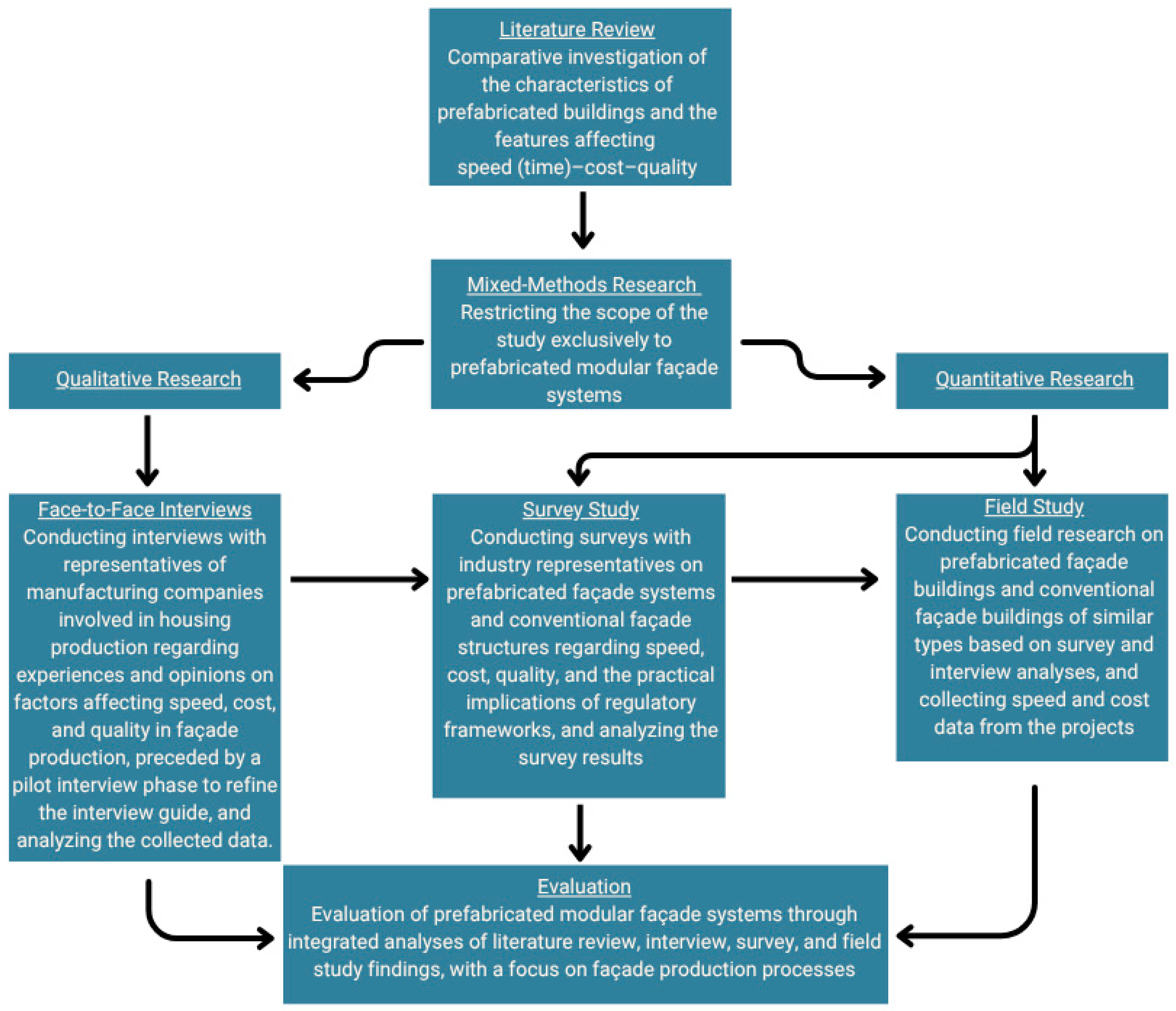
This study evaluates the applicability of prefabricated modular façade systems in post-disaster permanent housing production in Türkiye, based on insights gathered from sector stakeholders and construction professionals. A mixed-methods research design was employed, integrating both qualitative and quantitative approaches (
Figure 3).
Initially, a literature review was conducted to examine international post-disaster reconstruction case studies. This was followed by semi-structured interviews with 15 anonymous stakeholders in the construction sector, including company owners and senior representatives. Semi-structured face-to-face interviews were conducted with 15 professionals involved in housing production, including company owners, architects, civil engineers, and contractors. Participants were selected from different cities and with varying levels of professional experience to ensure diversity of perspectives. Participants were recruited using purposive sampling, with selection criteria including professional role, years of experience, and direct involvement in housing production and façade construction processes. Interviews continued until thematic saturation was reached, meaning that no substantially new themes emerged from additional interviews. Each interview lasted approximately 15–40 min and focused on participants’ practical experiences related to façade construction processes, cost distribution, construction time, regulatory constraints, and barriers to adopting prefabricated façade systems. The duration of the interviews is reported to provide transparency regarding the data collection process. Conclusions were not derived from individual interviews but from themes systematically identified across all interview transcripts through thematic analysis. As is common in semi-structured interviews, the duration varied depending on participants’ experience and the depth of discussion generated by the interview topics. The interviews were designed to elicit experience-based responses rather than abstract opinions. An initial interview guide was developed based on the literature and expert consultations, and two pilot interviews were conducted to test question clarity and relevance. Following the pilot phase, minor revisions were made to improve clarity and reduce redundancy. Several overlapping questions were merged, resulting in a final interview guide consisting of seven core questions. Findings from the qualitative phase were subsequently used to refine and structure the survey questionnaire, enabling the quantitative phase to further examine themes identified during the interviews. Participant characteristics are summarized in
Supplementary Table S2.
Subsequently, a quantitative survey was administered to a sample of 366 professionals, including architects, civil engineers, and construction technicians, using an anonymous, structured questionnaire. The survey assessed perceptions of prefabricated versus conventional construction methods with respect to time, cost, and quality dimensions. The survey did not aim to simulate disaster-response conditions directly; rather, it assessed construction-performance attributes considered critical for post-disaster housing delivery, including speed, productivity, quality control, and implementation efficiency. The research followed Creswell’s exploratory sequential design model, wherein qualitative findings informed the development of the quantitative instrument, allowing for empirical validation across a broader sample. The survey employed purposive sampling to target professionals with direct experience in housing production and façade construction. While this approach facilitated the collection of informed expert perspectives, the findings should be interpreted in light of the perception-based nature of survey responses and the characteristics of the selected sample.
Interview data were analyzed using thematic analysis [
26] and processed via MaxQDA 24.11 and TurboScribe AI transcription software. The questionnaire included 18 items, of which 14 were three-point Likert items (Agree/Neutral/Disagree) and 4 were demographic questions.
Quantitative data were analyzed using IBM SPSS Statistics 27.0. Descriptive statistics were used to summarize participant responses, and chi-square (
X2) tests were applied to examine associations between categorical variables. The sample size (
n = 366) was determined based on a 95 percent confidence level and a margin of error of ±5.1 percent. The study population was defined as white-collar and technical personnel employed in Türkiye’s construction sector. Subgroup analyses were performed across different demographic and professional categories within the sample. Subgroup-level response distributions for statistically significant items are presented in the
Supplementary Materials. Chi-square (
X2) tests were conducted to examine associations between participant subgroups and their responses. To improve transparency and reproducibility, detailed subgroup-level statistical results, including
X2 statistics, degrees of freedom (df), and
p-values, are reported in
Supplementary Table S1a,b.
All ethical protocols were strictly observed, and participant responses were fully anonymized to ensure confidentiality and data protection. In addition to survey and interview data, four completed residential projects were reviewed to obtain objective field-based indicators of façade installation duration, productivity, and unit cost. Projects were selected using a matched façade exposure approach to ensure comparability between prefabricated and conventional systems. To minimize variability, buildings were selected with comparable façade areas and identical façade exposure conditions (three-façade and four-façade configurations), allowing paired comparison between prefabricated and conventional façade applications under similar boundary conditions.
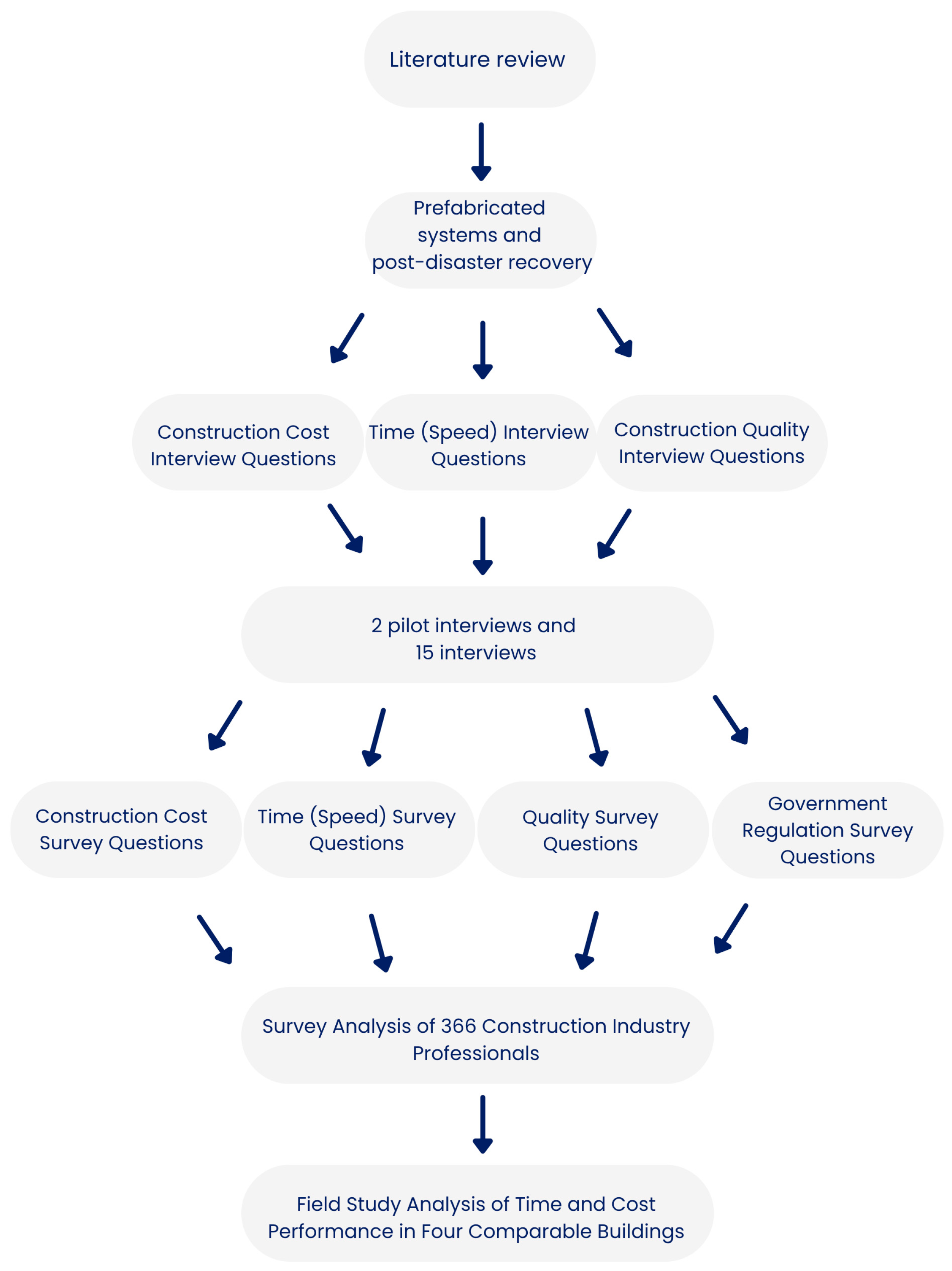
In summary, the research initially addressed time, cost, and quality dimensions derived from the literature; however, findings from pilot and semi-structured interviews led to the inclusion of government regulations, which were then examined through a survey and supported by four representative case studies (
Figure 4).
4. Results
4.1. Findings from Semi-Structured Interviews
Semi-structured interviews provided rich qualitative insights into the applicability of prefabricated modular façade systems in Türkiye’s post-disaster housing context. Thematic analysis revealed four principal themes: time efficiency, cost implications, quality performance, and regulatory and governmental frameworks. Overall, participants expressed cautious optimism about modular façades. Time savings were consistently identified as the most prominent benefit, with prefabricated panels enabling enclosure of buildings within a few weeks, thus alleviating critical bottlenecks at construction sites.
Cost assessments varied among participants; however, many indicated that overall project expenditures benefited from shortened project durations, decreased overhead, minimized weather-related delays, and reduced material waste due to factory-controlled environments. In terms of quality, participants noted improvements in thermal and moisture performance. Key challenges included regulatory ambiguity, lengthy permit processes, and limited local manufacturing capacity. The thematic analysis yielded 15 codes across the four major themes (
Table 1).
4.2. Survey Results
Following the qualitative phase, a structured questionnaire comprising 14 opinion-based Likert-scale items and 4 demographic items was developed. The target population consisted of white-collar and technical personnel (white helmets) within the Turkish construction sector. A purposive sampling strategy was applied, focusing on professionals such as architects, engineers, draftspersons, and technicians. The estimated professional population includes approximately 230,000 architects and engineers operating nationally. The sample size was calculated using a 95% confidence level and ±5.1% margin of error (see
Appendix A), resulting in a minimum required sample of 360 participants. The survey was completed by
n = 366 respondents, thus satisfying statistical power requirements.
Survey results generally supported the advantages of prefabricated façade systems (
Table 2).
The analysis employed descriptive statistics (frequencies and percentages) and chi-square (
X2) tests to assess associations between participant subgroups and their responses. Subgroup comparisons were conducted based on profession, education level, role in the construction process, and professional experience (
Table 3). All subgroup distributions were internally consistent, with category-level percentages summing to 100%.
4.3. Key Findings
Based on the empirical findings of this study, projects employing prefabricated façade systems achieved measurable reductions in façade installation time compared to conventional methods. While initial material costs were comparable, prefabricated systems exhibited advantages in labor efficiency and scheduling reliability.
A statistically significant difference was observed in perceptions of construction duration: participants from architectural disciplines (architects, technicians, draftspersons) were more likely than engineers/technicians to agree that prefabrication shortens overall project duration (82.3% vs. 70%; (
X2 (2,
n = 366) = 7.978,
p = 0.019 < 0.05) (see
Supplementary Table S1).
No significant differences were found among participants based on education level or construction role regarding their attitudes toward prefabrication (see
Supplementary Table S1).
Participants with 5 years of experience or less were more likely to view prefabrication as cost-reducing compared to more experienced professionals. Among early-career respondents, 25.7% expressed uncertainty or disagreement, compared to 47.7% among those with > 5 years of experience (
X2 (2,
n = 366) = 19.195,
p = 0.00 < 0.05) (see
Supplementary Table S1).
Conversely, those with more than 6 years of experience showed a higher tendency to agree that prefabrication could improve building longevity and reduce lifecycle costs (72.3% vs. 62.6%; (
X2 (1,
n = 366) = 3.952,
p = 0.002 < 0.05)) (see
Supplementary Table S1).
A notable difference was observed in perceptions of adaptability: 72.5% of less-experienced participants agreed that prefabricated façades offer more flexible and adaptive solutions, compared to 60% among more experienced respondents (
X2 (2,
n = 366) = 7.040,
p = 0.03 < 0.05) (see
Supplementary Table S1).
On regulatory oversight, 64% of participants agreed that prefabrication allows for more efficient quality control in factory settings. Agreement was higher among more experienced respondents (69.2%) than among less experienced professionals (57.3%) (
X2 (1,
n = 366) = 5.597,
p = 0.016 < 0.05) (see
Supplementary Table S1).
Field evidence from four representative residential projects confirms that prefabricated façade systems reduce on-site installation duration by approximately 40% and increase installation productivity compared to conventional façade construction, despite higher unit costs, highlighting a divergence between perception-based expectations and observed project-level cost data (see
Table 4 and
Table S3); (discussed further in
Section 5.3).
5. Discussion
The findings align with international literature emphasizing the role of industrialized construction in enhancing post-disaster recovery capacity. By integrating qualitative stakeholder perspectives, quantitative survey findings, and representative project-level evidence, the study provides a broader assessment of façade-level prefabrication than is typically reported in post-disaster housing research, where studies often focus either on technical performance or on policy-level considerations alone. However, this study extends existing research by demonstrating that façade-level prefabrication can function as a pragmatic intermediate strategy, enabling partial industrialization without requiring fully modular building systems. In the Turkish post-earthquake context, where current construction practices and regulatory frameworks limit the widespread adoption of fully modular housing, modular façade systems offer a more immediately applicable and scalable solution. This positions façade prefabrication not merely as a technical option, but as a transitional implementation pathway toward broader adoption of industrialized construction in post-disaster housing programs. Although much of the existing literature evaluates the performance of fully modular building systems, the present study extends this body of knowledge by empirically demonstrating that façade-level prefabrication can deliver comparable time and productivity-related advantages without requiring full modularization of the structural system. This distinction is particularly relevant in contexts where regulatory, technical, or industrial constraints limit the immediate adoption of fully modular construction. These findings are broadly consistent with previous studies reporting that industrialized construction approaches can improve reconstruction speed, productivity, and implementation reliability in post-disaster contexts. However, unlike much of the existing literature, which primarily focuses on fully modular building systems, the present study specifically evaluates façade-level prefabrication and demonstrates that measurable implementation benefits may also be achieved through partial industrialization strategies. This finding extends previous research by suggesting that substantial performance gains can be obtained without requiring a complete transition to modular building systems.
5.1. Speed and Scheduling Efficiency
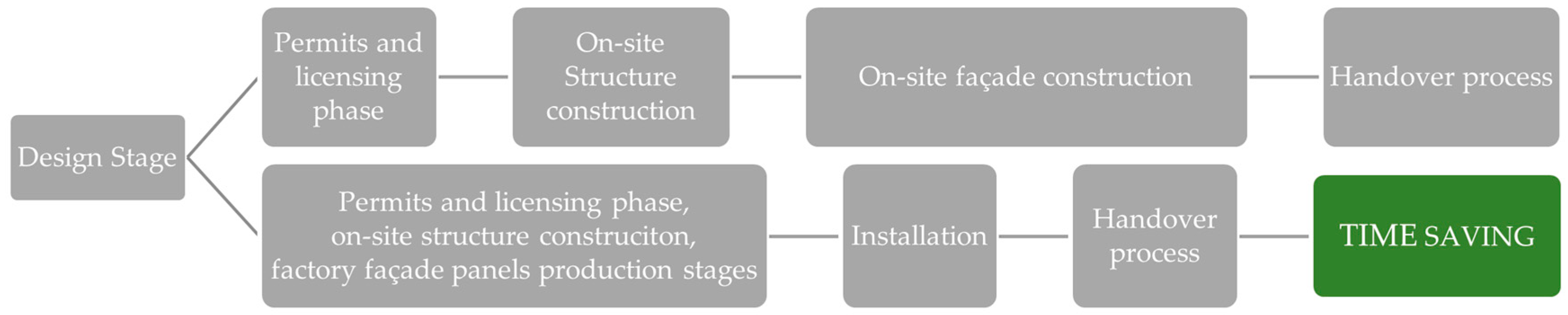
Prefabrication of façade panels enables concurrent execution of factory production and on-site operations, significantly reducing the overall project timeline (
Figure 5). When supported by proper architectural and structural detailing, prefabrication processes can be initiated even during the permitting phase. Unlike on-site construction, factory-based production is insulated from weather-related disruptions such as rainfall, storms, or freezing temperatures, which frequently delay site activities. Apart from minimal time required for on-site installation, prefabricated façade systems maintain uninterrupted production regardless of seasonal or environmental conditions [
13]. Interview participants reported that façade-related works account for approximately 15% to 30% of total on-site construction time, indicating that interventions at the façade stage can significantly influence overall project schedules in post-disaster housing projects. These interview-based estimates (15–30% of total construction time) empirically support prior studies emphasizing the time-saving potential of off-site production [
13], while also quantifying the relative impact of façade works at the project level, which is rarely reported in post-disaster housing literature. Consistent with these findings, Gunawardena et al. [
27] demonstrated that prefabricated modular construction significantly accelerates post-disaster housing delivery by enabling parallel off-site production and on-site assembly, thereby reducing overall construction timelines in post-disaster contexts. These findings align with international evidence indicating that time is the most critical factor in post-disaster housing delivery, as delayed reconstruction significantly prolongs social and economic recovery. Previous studies report that modular construction can reduce on-site construction time by approximately 50% compared to conventional site-intensive methods [
19]. While these estimates primarily refer to fully modular systems, the present study demonstrates that façade-level prefabrication can capture a substantial portion of these time-related benefits at the building envelope stage. Consistent with these findings, Ghannad et al. [
22] demonstrate that modular and prefabricated construction significantly improves post-disaster reconstruction performance by enabling concurrent off-site production and on-site activities, reducing labor dependency, and minimizing schedule disruptions caused by site constraints. Evidence from real-scale applications further supports the time-saving potential of modular façade systems. The plug-and-play façade system presented by Torres et al. [
23] was tested under real construction conditions and demonstrated verified reductions in execution time and on-site operations. The system enabled faster installation by minimizing auxiliary equipment requirements and allowing large façade areas to be installed within short timeframes, confirming the effectiveness of façade-level prefabrication in reducing overall construction duration.
5.2. Cost Efficiency
While mobilization costs may be higher for small-scale projects, economies of scale can be realized in large, standardized developments. Although unit material costs may not differ substantially between prefabricated and conventional methods, time savings from industrialized production can offset overall expenditures [
28]. Additionally, using mass-produced modular panels can lead to further cost reductions on building envelopes. With respect to costs, practitioners estimated that façade systems typically represent around 10% to 30% of total construction costs, while one participant noted that in buildings with highly specialized façade designs, this ratio may increase to approximately 40–45% of the overall project budget. While the literature generally associates prefabrication with cost efficiency in large-scale projects [
20], the interview findings indicate that façade costs may remain substantial (up to 40–45% in specialized projects), suggesting that cost advantages are highly sensitive to design complexity and production scale. In addition to perception-based findings, an indicative cost–time comparison was conducted using four comparable residential buildings with similar floor areas and façade configurations (see
Table 4 and
Table S3). Although the sample size does not allow statistical generalization, the comparison provides empirical insight into relative tendencies between prefabricated and conventional façade applications. The cases indicate that prefabricated façades may exhibit slightly higher initial façade costs in some projects, while offering measurable reductions in on-site installation time. This supports the interpretation that time savings and scheduling reliability may partially offset upfront cost differences in post-disaster housing contexts. Similar cost–time trade-offs have been reported in the literature. Rogan et al. [
29] showed that although initial investments for modular construction were approximately 2% higher than conventional methods, the overall economic performance was significantly improved, with a 39% increase in turnover and a 43% higher internal rate of return. This supports the interpretation that, even when upfront façade costs are higher, time savings and scheduling reliability can partially offset initial cost differences in post-disaster housing projects. These results should be interpreted as exploratory and case-based rather than definitive cost–benefit evidence. This exploratory pattern aligns with prior post-disaster studies indicating that while modular and prefabricated approaches may require slightly higher initial investments, their long-term benefits are primarily realized through schedule compression, reduced labor demand, and improved predictability rather than immediate cost savings [
22].
5.3. Field Evidence from Representative Case Projects
To complement perception-based findings, four representative residential projects were analyzed using a matched typology approach based on façade exposure.
Table 4 presents a summary of the key project-level performance indicators used in the comparison, while the complete dataset and additional project characteristics are provided in the
Supplementary Materials (Table S3). The selected cases were also comparable in terms of overall building size and façade surface area, ensuring a consistent basis for performance comparison between systems. This analysis provides empirical evidence to evaluate the practical performance of façade-level prefabrication under real construction conditions, directly addressing the gap between perceived benefits and measurable implementation outcomes. Two four-façade buildings and two three-façade attached buildings were selected to ensure comparability between prefabricated and conventional systems. The results indicate that prefabricated façade systems achieved substantially shorter on-site installation durations and higher installation productivity compared to conventional façade construction. For four-façade buildings, prefabricated installation required approximately 30 days, compared to 50 days for conventional systems, increasing productivity from approximately 34 m
2/day to 60 m
2/day. Similar trends were observed in three-façade attached buildings, where prefabricated systems achieved shorter installation durations despite smaller façade areas. Although unit costs of prefabricated façades were higher, the time savings and improved productivity demonstrate clear operational advantages for post-disaster reconstruction contexts. This project-level comparison provides objective performance evidence beyond perception-based survey responses, strengthening the empirical grounding of the study.
Interestingly, while both the literature and survey responses frequently associate prefabrication with cost savings, the case project data indicate higher unit façade costs for prefabricated systems. This suggests that economic benefits may not primarily arise from material cost reductions, but rather from time savings, labor efficiency, and reduced scheduling risks, particularly in post-disaster delivery contexts. This finding is also consistent with recent studies reporting mixed evidence regarding the cost performance of off-site construction. While some studies have identified higher costs associated with manufacturing and transportation [
30], others have reported overall economic benefits resulting from reduced labor requirements, shorter construction periods, and lower indirect project costs [
31].
Prior studies have shown that the cost advantages of modular construction are commonly achieved through gains in productivity and project efficiency, rather than through direct reductions in material or construction costs [
22,
24,
29]. The present findings therefore support a growing body of literature suggesting that cost-effectiveness should be evaluated at the project-delivery level rather than solely through material or component costs [
22,
29].
This discrepancy highlights the importance of distinguishing between perceived cost advantages and project-level cost outcomes, suggesting that the economic value of prefabrication may be realized through overall project delivery performance rather than lower unit construction costs. Interview findings further indicated that stakeholders rarely viewed prefabrication primarily as a low-cost alternative. Instead, participants frequently emphasized its advantages in terms of construction speed, quality control, and production consistency. This perception may also be influenced by the relatively competitive cost structure of conventional construction practices in Türkiye, where stakeholders often associate the value of prefabrication with performance-related benefits rather than lower unit costs. While the case project analysis primarily provides objective evidence for time and cost performance, quality-related outcomes were evaluated through expert perceptions and literature-based benchmarks, as direct post-occupancy performance data were not available within the scope of this study.
5.4. Quality Control and Performance Consistency
Factory-controlled environments enhance construction performance and workmanship. Up to 80% of the labor activities in a prefabricated modular project can be relocated off-site [
1], allowing for streamlined quality assurance and tighter control of material waste. In addition to construction speed, the literature highlights quality-related advantages of prefabricated modular façade systems arising from controlled manufacturing and standardized detailing. Studies on plug-and-play façade systems emphasize the use of perimeter closure profiles, sealing gaskets, and insulated junction details to ensure watertightness, continuity of façade insulation, and reduced thermal bridging. The integration of these elements within factory-controlled production environments supports consistent workmanship quality and reduces on-site variability compared to conventional façade construction methods [
23]. Prefabricated building envelope elements also contribute to long-term façade performance by enabling circular design strategies that reduce embodied carbon and improve reuse potential through modularity and design-for-disassembly principles [
32]. In addition to workmanship consistency, recent studies emphasize that prefabricated façade systems enable pre-verification of thermal, structural, and fire performance under controlled factory conditions prior to on-site installation. Such performance-based validation processes enhance construction quality and reduce uncertainty during implementation, particularly in large-scale applications [
33]. Recent reviews on façade systems for Prefabricated Prefinished Volumetric Construction (PPVC) emphasize that façade performance is often the weakest link in industrialized building systems, particularly regarding waterproofing, connection detailing, and installation tolerances. Hajirezaei et al. [
34] identify joint waterproofing as the most underestimated yet critical challenge in modular façades, noting that misalignments during assembly and inadequate sealing strategies can lead to performance failures. The study further highlights that factory-controlled detailing, design-for-manufacturing-and-assembly (DfMA) principles, and standardized façade–structure interfaces are essential to ensure construction quality, reduce on-site errors, and improve scalability of modular façade systems.
5.5. Architectural Design Flexibility
Although concerns regarding potential limitations on design freedom have frequently been associated with prefabrication in the literature, previous studies have emphasized that such constraints can be addressed through appropriate architectural design strategies [
35]. This perspective frames prefabrication not as a limitation in itself, but as a design challenge requiring architectural interpretation rather than a purely technical constraint. Contemporary façade systems allow substantial aesthetic variety, mitigating concerns regarding monotony and repetitive appearance. Advances in formwork technologies, pigmentation, surface treatments, and modular customization further support design adaptability. Recent studies have emphasized that prefabricated building-envelope elements can be redesigned as modular and multifunctional systems, enabling sustainable performance improvements while remaining adaptable within existing building frameworks [
32]. Furthermore, modular construction techniques have been shown to reduce pollution during the construction process, contributing to more sustainable production practices both during and after project delivery [
36].
5.6. Policy, Regulation, and Social Impact
The main barrier to adopting prefabricated façade systems is regulatory uncertainty and the lack of standardized approval and certification procedures. Although technical solutions exist, the absence of clear design guidelines and formal recognition in public procurement and building codes limits implementation, increasing perceived risks for contractors and encouraging continued reliance on conventional construction methods.
Recent literature similarly emphasizes that the lack of harmonized regulatory frameworks and standardized performance verification procedures significantly constrains the market uptake of prefabricated façade systems. In particular, the absence of clear certification pathways—such as those defined under the Construction Products Regulation (CPR)—limits broader implementation and increases uncertainty among stakeholders [
33].
Interview participants also noted the lack of incentives supporting alternative construction technologies. Without policy tools such as pilot projects, fast-track permits, or financial incentives, companies are reluctant to adopt new systems. In addition, faster delivery of permanent housing reduces time spent in temporary shelters, which supports social recovery and community resilience after disasters. Therefore, technologies that shorten construction time can also provide indirect social benefits.
Regulatory impacts were not directly measurable through project-level quantitative indicators; therefore, regulatory performance in this study was assessed based on stakeholder interviews and survey responses, reflecting approval processes, certification gaps, and implementation uncertainty.
5.7. Implications for Post-Disaster Housing Policy and Technology Roadmaps
Based on the findings of this study, façade-level prefabrication can be considered an intermediate strategy between conventional construction and fully modular systems. Since full modular housing is difficult to implement under current regulatory and industry conditions, modular façade systems offer a more immediately applicable solution within existing construction practices. In the short term, pilot public housing projects using standardized façade modules may reduce construction time without changing structural systems. In the medium term, updating technical standards and tender specifications may support wider adoption. In the long term, integrating façade modularity into national industrialization and disaster resilience strategies could contribute to a gradual transition toward higher levels of off-site construction. From a practical perspective, façade-level prefabrication offers the advantage of being compatible with existing structural systems and construction practices, making implementation more feasible than a full transition to modular housing systems. Although the representative case projects indicated higher unit façade costs, the observed gains in installation speed, labor efficiency, and schedule predictability suggest that their economic value may be realized through improved project delivery performance rather than lower component costs. These characteristics may be particularly valuable in post-disaster reconstruction programs, where rapid delivery and reduced implementation risks are critical priorities.
6. Conclusions and Implications
The findings indicate that prefabricated modular façade systems are perceived by construction professionals as advantageous primarily in terms of construction speed, quality control, and implementation efficiency. The survey results revealed broad support for the use of prefabricated façade systems in post-disaster housing projects, while interview findings highlighted time savings, improved production consistency, and reduced dependence on site-based operations as key benefits. In addition, the comparison of four representative residential projects demonstrated that prefabricated façade systems achieved substantially shorter installation durations and higher installation productivity than conventional façade applications, although unit façade costs were found to be higher in some cases.
The study concludes that prefabricated modular façade systems are a feasible and effective tool for accelerating permanent housing delivery in post-earthquake contexts. It should also be recognized that post-disaster reconstruction in Türkiye is typically implemented on a parcel-by-parcel basis rather than through large-scale, uniform neighborhood redevelopment. As a result, reconstruction projects frequently involve buildings with varying architectural characteristics, site constraints, and façade configurations. This context limits the applicability of fully standardized building solutions and highlights the potential value of façade-level prefabrication, which can provide construction-speed advantages while retaining the flexibility required to accommodate diverse project conditions and design requirements. Policymakers may consider targeted incentives, regulatory adaptations, and investment in local production capacity to support broader adoption. Prefabricated modular façade systems offer a viable solution for delivering fast, high-quality permanent housing while improving cost predictability and implementation efficiency in post-disaster reconstruction scenarios in Türkiye. Sector stakeholders and construction professionals generally express favorable views regarding their applicability. However, scaling this approach requires the development of a comprehensive enabling environment, including the following:
Certified design and construction protocols
Capacity-building programs for manufacturers and contractors
Careful detailing of seismic connections
Workforce training initiatives tailored to modular systems
Integrating modular façades into a holistic reconstruction strategy can contribute to the development of more resilient, durable, and dignified living environments, particularly in regions facing recurrent seismic risks. The study contributes to the field by demonstrating that façade-level prefabrication can function as a technically viable and operationally scalable intermediate solution, offering measurable improvements in construction time and implementation efficiency without requiring a full transition to modular building systems.
This study has several limitations. The findings are based on stakeholder perceptions obtained through purposive sampling and may not fully represent all actors involved in post-disaster housing delivery. In addition, the project-level comparison was limited to four residential case studies and should therefore be interpreted as indicative rather than statistically generalizable evidence. Quality-related outcomes were evaluated primarily through expert assessments and literature-based benchmarks, as long-term post-occupancy performance data were beyond the scope of the present research.
Future research should focus on longitudinal performance assessments of completed projects, including post-occupancy evaluations of durability, maintenance requirements, user satisfaction, and life-cycle costs. Further studies involving larger samples of completed projects and broader stakeholder groups would also contribute to a more comprehensive understanding of the long-term applicability of façade-level prefabrication in post-disaster reconstruction programs.
Supplementary Materials
The following supporting information can be downloaded at:
https://www.mdpi.com/article/10.3390/buildings16132634/s1, Table S1: (a,b) Comparison of survey responses by profession, education level, involvement in the construction process, and professional experience (Chi-square tests); Table S2: Characteristics of interview participants (n = 15); Table S3: Comparison of representative case projects with matched façade exposure (four-façade and three-façade attached buildings).
Author Contributions
Conceptualization, S.B. and M.E.B.; methodology, S.B. and M.E.B.; software, S.B. and M.E.B.; formal analysis, S.B. and M.E.B.; investigation, S.B. and M.E.B.; data curation, S.B. and M.E.B.; writing—original draft, S.B. and M.E.B.; writing—review & editing, S.B. and M.E.B.; supervision, S.B. All authors have read and agreed to the published version of the manuscript.
Funding
This research received no external funding.
Data Availability Statement
The original contributions presented in the study are included in the article, further inquiries can be directed to the corresponding author.
Acknowledgments
The research team utilized AI tools, mostly OpenAI’s ChatGPT (GPT-5.5), during the preparation of this paper for two primary purposes: (1) identifying grammar mistakes and (2) assisting with writing LaTeX code. These tools were employed exclusively for editorial and technical support and were not used to generate any content, research ideas, or results. This use complies with the ethical guidelines and policies of the journal and our institution.
Conflicts of Interest
The authors declare no conflicts of interest.
Appendix A
The margin of error (MoE) for the survey sample was calculated using the standard statistical formula:
where z = 1.96 corresponds to a 95% confidence level,
p represents the assumed population proportion (
p = 0.5 for maximum variability), and
n is the sample size (
n = 366). Based on these parameters, the calculated margin of error is ±5.1%.
References
- Bertram, N.; Fuchs, S.; Mischke, J.; Palter, R.; Strube, G.; Woetzel, J. Modular Construction: From Projects to Products; McKinsey & Company: New York, NY, USA, 2019. [Google Scholar]
- Comerio, M.C. Housing Recovery in Chile: A Qualitative Mid-Program Review; University of California: Berkeley, CA, USA, 2013. [Google Scholar]
- Bernal, V.A.; Procee, P. Four Years on: What China Got Right When Rebuilding After the Sichuan Earthquake. World Bank Blogs. 2012. Available online: https://blogs.worldbank.org/en/eastasiapacific/four-years-on-what-china-got-right-when-rebuilding-after-the-sichuan-earthquake (accessed on 5 May 2025).
- Kalkan, M.; Kaçar, A.D.; Alptekin, O. Ülkelerin Deprem Sonrası Yeniden Yapılaşma Süreçlerinin Karşılaştırılması: Çin, Şili ve Türkiye Örnekleri. Tasar. + Kuram 2020, 16, 152–169. [Google Scholar] [CrossRef]
- Presidency of Strategy and Budget. Türkiye Earthquakes Recovery and Reconstruction Assessment (TERRA); Presidency of Strategy and Budget: Ankara, Turkey, 2023.
- Erem, O. 6 Şubat depremleri sonrası Erdoğan’ın konut vaadi neydi, bir yılda verilen sözler tutuldu mu? BBC News Türkçe, 5 February 2024. Available online: https://www.bbc.com/turkce/articles/cd19jw0dxy6o (accessed on 12 May 2025).
- World Bank. Learning from Megadisasters: Lessons from the Great East Japan Earthquake; The World Bank: Washington, DC, USA, 2012. [Google Scholar]
- Akyıldız, Ş.; Şafak, U.; Özcan, K.; Sert, A. Deprem Sonrası Etkin Politika Tasarımı: İyi Uygulama Örnekleri; PwC Türkiye: Istanbul, Turkey, 2023. [Google Scholar]
- The Reconstruction Agency of Japan. Current Status of Reconstruction and Future Efforts; The Reconstruction Agency, Government of Japan: Tokyo, Japan, 2023.
- Seitablaiev, M.Ö.; Umaroğulları, F. Türkiye’de Betonarme Prefabrikasyon. Mimar. Bilim. Uygulamaları Derg. (MBUD) 2020, 5, 309–320. [Google Scholar] [CrossRef]
- Amani, A.; Niyazi, A.Q. Rapid Development Prefabricated Construction Sector in Turkey. Mühendis. Bilim. Tasar. Derg. 2018, 6, 487–494. [Google Scholar] [CrossRef]
- Smith, R.E.; Timberlake, J. Prefab Architecture: A Guide to Modular Design and Construction; John Wiley & Sons: Hoboken, NJ, USA, 2010. [Google Scholar]
- National Institute of Building Sciences. Modular Construction for Multifamily Affordable Housing; Off-Site Construction Council, WSP: Washington, DC, USA, 2018. [Google Scholar]
- O’Connor, J.T.; O’Brien, W.J.; Choi, J.O. Industrial Project Execution Planning: Modularization versus Stick-Built. Pract. Period. Struct. Constr. 2016, 21, 04015014. [Google Scholar] [CrossRef]
- Akyürek, Y. Giydirme Cepheler ve Cam Seçimi. In Proceedings of the Giydirme Cepheler Symposium, Istanbul, Turkey, 21 December 1991. [Google Scholar]
- Jeong, B.; Chang, S.; Mahalingam, A. Impediments to modular construction implementation: A review. J. Constr. Eng. Manag. 2016, 142, 04016066. [Google Scholar]
- Dağ, İ.; Kaçar, Ö.; Alptekin, M. Depreme dayanıklı prefabrike betonarme yapıların mimari ve yapısal açıdan incelenmesi. Afet Risk Derg. 2023, 5, 15–30. [Google Scholar]
- Gültek, M.; Avinç, G.M.; Sarıcıoğlu, P.; Yıldız, A. Beton Esaslı Prefabrike Cephe Panellerinin Tarihsel Gelişiminin Farklı Ülkelerdeki Örnekler Üzerinden Değerlendirilmesi. Uluslar. Mühendis. Araşt. Geliştirme Derg. 2023, 15, 234–249. [Google Scholar] [CrossRef]
- Lawson, M.L.; Ogden, R.G.; Bergin, R. Application of Modular Construction in High-Rise Buildings. J. Archit. Eng. 2012, 18, 148–154. [Google Scholar] [CrossRef]
- Wiggington, M.; Harris, J. Intelligent Skins; Butterworth-Heinemann: Oxford, UK, 2002. [Google Scholar]
- Hajirezaei, R.; Sharafi, P.; Farsangi, E.N. An innovative facade system for prefabricated prefinished volumetric construction: Experi-mental and numerical investigations. J. Build. Eng. 2026, 176, 115538. [Google Scholar]
- Ghannad, P.; Lee, Y.C.; Choi, J.O. Feasibility and implications of the modular construction approach for rapid post-disaster recovery. Int. J. Ind. Constr. 2020, 1, 64–75. [Google Scholar] [CrossRef]
- Torres, J.; Garay-Martinez, R.; Oregi, X.; Torrens-Galdiz, J.I.; Uriarte-Arrien, A.; Pracucci, O.; Casedei, O.; Magnani, S.; Arroyo, N.; Cea, A.M. Plug and Play Modular Façade Construction System for Renovation for Residential Buildings. Buildings 2021, 11, 419. [Google Scholar] [CrossRef]
- Rammig, L.; Zani, A.; Murphy, T.; Paparo, I.; Hildebrand, L.; Abbring, S.; Koprect, D.; Wu, C.; Lee, J.; Turpin, K. Prefab Façades—From Prototype to Product? J. Facade Desing Eng. 2023, 11, 61–75. [Google Scholar]
- Baird, A.; Palermo, A.; Pampanin, S.; Riccio, P. Focusing on Reducing the Earthquake Damage to Facade Systems. Bull. New 662Zealand Soc. Earthq. Eng. 2011, 44, 108–120. [Google Scholar] [CrossRef]
- Braun, V.; Clarke, V. Using thematic analysis in psychology. Qual. Res. Psychol. 2006, 3, 77–101. [Google Scholar] [CrossRef]
- Gunawardena, T.; Ngo, T.; Mendis, P.; Aye, L.; Crawford, R. Time-efficient post-disaster housing reconstruction with prefabricated modular structures. Open House Int. 2014, 39, 59–69. [Google Scholar]
- Gayrimenkul Yatırımcıları Derneği (GYODER). İnşaat Sektörü ve İş Gücü Dinamikleri: Türkiye’24; Bahçeşehir Üniversitesi: Istanbul, Turkey, 2025. [Google Scholar]
- Rogan, A.L.; Lawson, R.; Bates-Brkljac, N. Better Value in Steel Value and Benefits Assessment of Modular Construction; The Steel Construction Institute: Ascot, UK, 2000. [Google Scholar]
- Jang, H.; Ahn, Y.; Roh, S. Comparison of the embodied carbon emissions and direct construction costs for modular and conventional residential buildings in South Korea. Buildings 2022, 12, 51. [Google Scholar] [CrossRef]
- Lee, J.; Jeong, J.; Soh, J.; Jeong, J. Quantitative Analysis of the Accident Prevention Costs in Korean Construction Projects. Buildings 2022, 12, 1536. [Google Scholar] [CrossRef]
- Bergmans, I.J.B.; Bhochhibbhoya, S.; Oorschot, J.A.W.H.V. Assessing the circular redesign of prefabricated building envelope elements for carbon neutral renovation. J. Façade Des. Eng. 2023, 11, 169–196. [Google Scholar] [CrossRef]
- Atsonios, I.A.; Katsigiannis, E.; Koklas, A.; Kolaitis, D.; Founti, M.; Mouzakis, C.; Tsoutis, C.; Adamovský, D.; Colom, J.; Philippen, D.; et al. Off-site prefabricated hybrid façade systems: A holistic assessment. J. Façade Des. Eng. 2023, 11, 97–122. [Google Scholar]
- Hajirezaei, R.; Sharafi, P.; Farsangi, E.N. Façade systems for industrialised prefabricated prefinished modular construction. Autom. Constr. 2025, 176, 106269. [Google Scholar] [CrossRef]
- Koman, İ. İnovasyon değerinin yaratılmasında mimarın rolünün Walter Gropius’un çalışmaları bağlamında analizi. Mimar. Bilim. Uygulamaları Derg. (MBUD) 2021, 6, 97–114. [Google Scholar] [CrossRef]
- The American Institute of Architects; The National Institute of Building Sciences. Design for Modular Construction: An Introduction for Architects; Modular Building Institute: Charlottesville, VA, USA, 2019; Available online: https://www.aia.org/ (accessed on 16 April 2026).
| Disclaimer/Publisher’s Note: The statements, opinions and data contained in all publications are solely those of the individual author(s) and contributor(s) and not of MDPI and/or the editor(s). MDPI and/or the editor(s) disclaim responsibility for any injury to people or property resulting from any ideas, methods, instructions or products referred to in the content. |