


Abstract
This study presents a damage-based comparative assessment of reinforced concrete buildings affected by the 1992 Erzincan earthquake (Mw 6.8) and the 2023 Kahramanmaraş earthquake sequence (Pazarcık, Mw 7.7; Elbistan, Mw 7.6), two destructive earthquake events in Türkiye separated by nearly three decades. A distinctive contribution of the study is the presentation of original color photographs from the 1992 Erzincan earthquake, systematically documented and comparatively evaluated for the first time and directly compared with post-earthquake field observations from Malatya following the 2023 earthquake sequence. To complement the field-based evidence, representative strong ground motion records from both earthquake events were processed and compared using standard seismic intensity and spectral response parameters. The spectral evaluation indicates that the 1992 Erzincan ground motion and the 2023 Elbistan-related motion recorded in Malatya imposed comparable seismic demands relevant to typical reinforced concrete buildings, thereby providing a rational basis for cross-event damage interpretation. Despite substantial advances in Turkish seismic design codes, recurrent damage mechanisms were observed in both building stocks, particularly soft-story formation, short-column effects, inadequate transverse reinforcement, poor beam–column joint performance, and deficiencies in material quality and detailing. The findings demonstrate that seismic safety cannot be improved through code development alone unless design provisions are consistently translated into construction quality, detailing practice, inspection, and field implementation.
1. Introduction
Earthquakes are one of the most devastating natural disasters that cause serious human and economic losses, primarily due to inadequate engineering practices in buildings and failure to comply with relevant design standards and regulations during construction. The collision of the Arabian, African, and Eurasian plates, together with the interaction between the Arabian and Anatolian plates, has shaped the current tectonic framework of Eastern Anatolia [1]. The fault zones formed along these plate boundaries in Türkiye remain highly active and possess a considerable potential for generating destructive earthquakes [2,3]. As shown in Table 1, approximately 42% of the 32 earthquakes with magnitudes of Mw ≥ 6.0 and about 38% of the 15 earthquakes with magnitudes of Mw ≥ 7.0 that have occurred in Türkiye over the past century took place along this fault zone, resulting in substantial loss of life and property. These figures demonstrate the high level of seismic activity in the region and underline the critical importance of the earthquake for this area. A statistical assessment of Table 1 reveals that, on average, an earthquake with a magnitude of Mw ≥ 6.0 occurs approximately every seven years, whereas one with a magnitude of Mw ≥ 7.0 takes place roughly every twenty years within the region.
Table 1.
Major Historical Earthquakes in Türkiye (1920–2026) with Magnitudes of Mw ≥ 6.0.
Among the earthquakes listed in Table 1, the 1939 Erzincan, 1992 Erzincan, 1999 Kocaeli, and 2023 Kahramanmaraş events hold particular significance due to their devastating impacts and the new engineering approaches they prompted—such as the revision of seismic design codes in the aftermath of these events. The 1939 Erzincan earthquake, with a magnitude of Mw = 7.9, is recorded in the literature as one of the largest earthquakes that occurred along strike-slip faults [4]. The extensive structural damage and high number of fatalities observed during the 1939 earthquake were attributed not only to its large magnitude but also to the use of traditional construction materials, insufficient engineering services, and the amplification of ground motion effects due to the construction of buildings on alluvial deposits [5,6].
The first major earthquake to occur in Erzincan after the earthquake of 26 December 1939 (Mw = 7.8) was the earthquake of 13 March 1992 (Mw = 6.8). Although there was no loss of life in the earthquake of 18 November 1983 (Mw = 5.6), it should be noted that some buildings that were slightly damaged in the 1984 earthquake collapsed in the 1992 Erzincan earthquake [7]. The 13 March 1992 Erzincan earthquake caused more than 600 deaths and moderate to severe damage to more than 9000 buildings.
The field studies and findings revealed carried out after the 1992 Erzincan Earthquake represented a major milestone for the entire country. Among the notable efforts were the implementation of repair and strengthening projects for moderately damaged buildings, the enactment of special laws to support the socio-economic recovery of the region, and the introduction of new construction and inspection technologies [8].
Field investigations conducted by researchers after the 1992 Erzincan earthquake revealed the use of low-quality concrete containing honeycomb-like voids, segregated, and a frequent presence of rounded aggregate particles [9,10]. The main reason for this condition was thought to be the use of site-mixed concrete produced directly on construction sites instead of ready-mixed concrete. In addition, it was reported that the ground floors of typical residential or commercial buildings in Erzincan were generally used for commercial purposes [11]. These structural types, as seen from the observed damage patterns, contributed to the formation of soft-story mechanisms during the earthquake.
Another important issue concerns the damage observed in multi-story buildings. In this context, it was found that there were various limitations and permissions regarding the number of building stories in Erzincan. For example, until 1978, the city’s zoning plans permitted the construction of buildings up to three stories, whereas in 1978, with the approval of the municipal council and the ministry, the height limit was increased to four stories along the main road corridors.
The data presented below were obtained from the 1984 Building Census [12] and compiled from Erzincan Municipality records, covering all types of structures that were granted building permits. According to the evaluation by Koçyiğit et al. (1992), the damage observed in low-rise (one- or two-story) buildings was limited, whereas in buildings with more than three stories, structural damage was generally moderate or severe due to design and construction deficiencies [13]. Williams et al. (1992) [9] also reported that approximately 75% of the fatalities occurred in buildings with three or more stories. Furthermore, 1984 statistics for Erzincan indicated that approximately 15% of frame-structured buildings had three or more stories, and the number of high-rise buildings likely increased until 1992.
Another damage investigation in this study concerns the reinforced concrete building stock in Malatya Province, which was affected by the earthquakes that occurred on 6 February 2023 in Kahramanmaraş-Pazarcık (Mw = 7.7) and Kahramanmaraş-Elbistan (Mw = 7.6) at 04:17 and 13:24 local time, respectively. The Kahramanmaraş Pazarcık-Elbistan earthquakes caused devastating destruction across 11 provinces, primarily Gaziantep, Kahramanmaraş, Hatay, Malatya, and Adıyaman, as well as Adana, Şanlıurfa, Diyarbakır, Elazığ, Osmaniye, and Kilis. The Disaster and Emergency Management Authority of Türkiye (AFAD) announced on 22 April 2023 that 50,783 people were killed, more than 107,430 were injured, and 518,009 buildings were reported to be moderately or severely damaged or completely collapsed [14,15].
Regarding Malatya Province, post-earthquake field surveys conducted by the Ministry of Environment, Urbanization and Climate Change examined a total of 56,996 buildings. Among these, 23,359 were reported as undamaged, 21,688 as slightly damaged, 3785 as moderately damaged, 6574 as severely damaged, 735 as requiring urgent demolition, and 855 as collapsed. Figure 1 shows these damage ratios based on data from [16].
Figure 1.
Distribution of Post-Earthquake Reinforced Concrete Building Damage Levels in Malatya Province (6 March 2023) [16].
Following the devastating earthquakes of 6 February 2023, field investigations conducted in Malatya Province classified the causes of structural damage under four main categories: soil conditions, structural design and detailing, inadequate material properties, and workmanship defects [17,18]. Among the most frequently observed deficiencies in terms of design and reinforcement detailing were structural members that created short-column effects due to architectural modifications, the reduction in wall ratios on the ground floors of buildings used for commercial purposes—leading to inter-story stiffness irregularities and the formation of soft or weak-story mechanisms—and the lack of sufficient transverse reinforcement confinement in load-carrying elements, all of which were emphasized by many researchers.
Material deficiencies and workmanship defects were mostly observed in older buildings. According to data from the Turkish Statistical Institute (TÜİK) [19], approximately 42% of the current building stock in Malatya was constructed before 2000, and about 13% was built in 1980 or earlier. Buildings constructed before 2000—typically lacking proper engineering services, designed without compliance with the seismic design requirements of the relevant codes, and possessing inadequate concrete and reinforcement properties as well as poor quality control—suffered significant damage. The considerable proportion of such old buildings within the existing stock indicates that a large portion of the urban fabric remains at high risk under seismic activity.
Within the scope of this study, the reinforced concrete building stocks of Erzincan Province following the 13 March 1992 Erzincan earthquake and of Malatya Province following the 6 February 2023 Kahramanmaraş-Pazarcık (Mw = 7.7) and Elbistan (Mw = 7.6) earthquakes were comparatively evaluated in terms of the relevant seismic/design codes, material deficiencies, and workmanship quality.
Despite the large number of post-earthquake reconnaissance studies conducted following major earthquakes in Türkiye, most previous investigations have generally focused on the damage characteristics of individual earthquake events separately. Limited attention has been given to the comparative evaluation of reinforced concrete (RC) building damage mechanisms across different seismic code generations and construction practices. In particular, there remains a lack of comprehensive studies directly comparing the observed structural damage patterns between the 1992 Erzincan earthquake and the 2023 Kahramanmaraş earthquake sequence, which represent two significantly different periods in terms of seismic regulations, material quality, engineering practice, and urban construction policies in Türkiye. Therefore, this study aims to provide a comparative damage-based assessment of reinforced concrete buildings in Erzincan and Malatya provinces by considering seismic demand characteristics, code evolution, material and detailing deficiencies, and recurring structural damage mechanisms observed after both earthquake events.
In this context, the study adopts a comparative engineering assessment framework based on post-earthquake field observations, available reconnaissance findings, historical earthquake damage records, seismic code developments, and strong ground motion characteristics associated with the investigated earthquakes. The reinforced concrete building damages observed in Erzincan following the 1992 earthquake and in Malatya following the 2023 Kahramanmaraş earthquake sequence were comparatively evaluated in terms of material quality, structural irregularities, reinforcement detailing deficiencies, and recurring damage mechanisms affecting structural performance. Through this integrated assessment approach, the study aims to provide a comprehensive interpretation of the evolution of earthquake-induced reinforced concrete damage patterns in Türkiye over the last three decades.
Beyond providing a comparative interpretation of earthquake-induced damage mechanisms, the findings of this study may also contribute to the identification of structural deficiencies that should be prioritized in the seismic assessment and retrofitting of existing reinforced concrete buildings. The systematic classification of recurring damage patterns, including soft-story irregularities, short-column effects, inadequate confinement detailing, and beam–column joint deficiencies, may assist engineers in selecting and developing more effective strengthening strategies for vulnerable building stocks. In this context, previous studies have demonstrated that the accurate identification of critical structural weaknesses constitutes a fundamental basis for the selection of appropriate seismic retrofitting interventions, including reinforced concrete jacketing, FRP-based strengthening systems, steel bracing solutions, and shear-wall-based upgrading strategies [20,21]. These studies further demonstrate that post-earthquake damage classification can provide valuable guidance for selecting appropriate seismic rehabilitation strategies for existing reinforced concrete buildings.
It should be noted that the scope of the present study is limited to comparative post-earthquake damage assessment based on field observations, reconnaissance findings, and documented structural damage patterns. Detailed numerical investigations of stress–strain states and nonlinear structural response mechanisms are beyond the scope of the current work and may constitute a valuable direction for future research.
It should also be acknowledged that a consistent building-level damage inventory containing comparable quantitative damage classifications for both earthquake events was not available. Therefore, the comparative assessment was primarily based on documented damage mechanisms, field observations, reconnaissance findings, and seismic demand characteristics rather than statistical damage-grade distributions or damage-index-based evaluations. Future studies utilizing comprehensive post-earthquake building inventories may provide valuable opportunities for quantitative cross-event performance comparisons and statistical assessment of damage trends.
2. Seismological Framework and Ground Motion Characteristics
The comparative assessment presented in this study was developed using multiple data sources associated with the investigated earthquake events. The evaluation of the 1992 Erzincan earthquake primarily relied on historical photographs, published reconnaissance reports, and documented observations available in the literature, whereas the assessment of the 2023 Kahramanmaraş earthquake sequence additionally benefited from contemporary field observations and recent post-earthquake documentation. It is acknowledged that historical earthquake records may preferentially document heavily damaged structures, whereas contemporary field investigations can capture a broader range of damage conditions. Consequently, differences in data availability, documentation practices, and investigation coverage may introduce a degree of selection bias. Nevertheless, the objective of the study was not to establish statistically representative damage distributions, but rather to identify recurring structural damage mechanisms and engineering deficiencies observed across different generations of reinforced concrete building stocks.
The seismotectonic of the Anatolian block is defined by the balance between the northward push of the Arabian Plate and the westward escape (extrusion) of Anatolia against Eurasia; this shear regime is accommodated by two principal strike-slip fault systems: The North Anatolian Fault (NAF), which is right-lateral, and the East Anatolian Fault (EAF), which is left-lateral. GNSS-based velocity fields indicate lateral escape on the order of ~20–25 mm/yr along the NAF and ~6–10 mm/yr. along most segments of the EAF; this difference suggests that the NAF has a higher cumulative slip rate and therefore a greater potential for large-scale moment release. This framework is consistent with contemporary plate-scale models explaining the westward dispersion of the Anatolian microplate [22,23,24,25].
The earthquakes examined in this study—among the most significant in Türkiye’s history—the 13 March 1992 Erzincan earthquake and the 6 February 2023 Kahramanmaraş earthquakes, occurred on two of Türkiye’s most important fault systems, the North Anatolian Fault and the East Anatolian Fault, respectively. The epicentres of these events are shown together with the fault traces on the current Türkiye Earthquake Hazard Map in Figure 2.
Figure 2.
Locations of the 1992 Erzincan and 2023 Kahramanmaraş earthquake epicenters with the major active fault systems in Türkiye, including the North Anatolian Fault (NAF) and East Anatolian Fault (EAF).
Erzincan is situated on the eastern reach of the North Anatolian Fault (NAF). The 26 December 1939 Erzincan earthquake (M 7.8)—characterized by hundreds of kilometers of surface rupture and meters of right-lateral offset—constitutes a watershed event in Türkiye’s seismotectonic history. In the subsequent decades, a stepwise westward sequence of Mw ≥ 6.7 earthquakes along the NAF has exemplified triggering and migration mediated by Coulomb stress transfer [26].
Malatya, by comparison, lies near the Pazarcık-Çardak-Sürgü strands of the East Anatolian Fault (EAF). Geodetic and seismological analyses indicate that the 6 February 2023 Mw = 7.8–7.6 doublet ruptured multiple segments in a cascading sequence and, in places, produced intense ground motions due to high slip and/or rupture directivity. Although the EAF accommodates a lower slip rate than the NAF, stress accumulation over long segments can culminate in large-scale doublet or multi-segment ruptures. When compounded by long-duration demand and repeated load cycles, this poses an engineering-critical problem for basins like Malatya where local site effects are pronounced [27,28].
For damage-focused analysis, the Akçadağ station (Malatya) records from the 2023 Kahramanmaraş earthquake sequence and the Erzincan central station records from the 1992 Erzincan event were selected. This choice concentrates on provinces directly associated with documented field damage: Akçadağ captures the impacts of the Kahramanmaraş sequence in Malatya, while the Erzincan observatory station represents the 1992 Erzincan damage (Figure 2). This enables a parallel, station-scale comparison of near- to intermediate-source ground motions generated by distinct fault systems (EAF vs. NAF) under a consistent processing workflow.
Raw acceleration time histories underwent standard processing, including baseline correction; the corrected accelerations were then numerically double-integrated to derive velocity and displacement histories, as presented in Figure 3. Key metrics are summarized in Table 2. Effective duration D5-95 was computed from Arias-intensity histories, with characteristic threshold times annotated on the plots. Peak ground acceleration (PGA), peak ground velocity (PGV), and peak ground displacement (PGD) are reported per recorded component as peak (absolute) values; because the sign denotes component orientation only, magnitudes are used in interpretation.
Figure 3.
Time-domain comparisons—acceleration, velocity, displacement, and cumulative Arias intensity (Akçadağ-Malatya and Erzincan records).
Table 2.
Ground-motion intensity measures (PGA, PGV, PGD) and effective duration at representative stations.
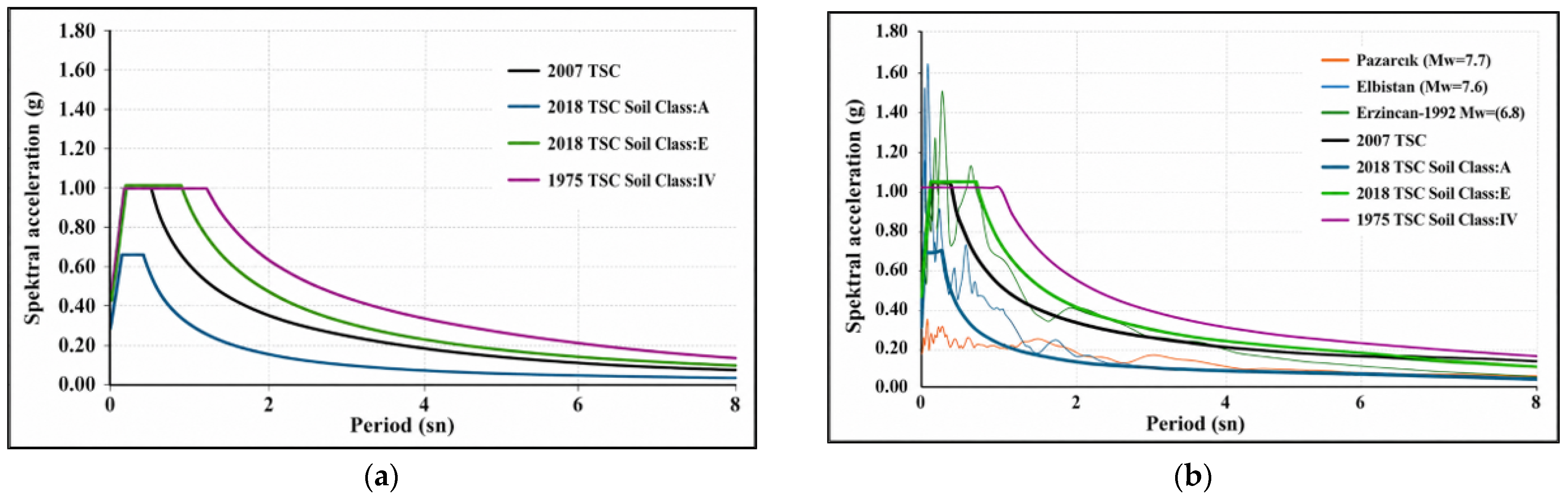
Using the raw strong-motion acceleration records, 5%-damped response spectra were generated by solving the dynamic response of a linear single-degree-of-freedom oscillator through a custom-developed numerical processing workflow. Figure 4 summarizes the workflow in two panels: (a) code-based design spectra, and (b) an overlay of 5%-damped pseudo-acceleration response spectra from the Pazarcık (Mw 7.7), Elbistan (Mw 7.6), and 1992 Erzincan (Mw 6.8) records against the same design curves.
Figure 3 highlights both amplitude and shape contrasts among the prescribed spectra. Owing to its broad plateau and longer corner periods, the 1975 TSC [29] (Class IV) sustains elevated design demand over a wider period band. At short periods, the 2018 [30] TSC Soil E generally yields the largest spectral accelerations, the 2007 [31] TSC is intermediate, and the 2018 TBEC Soil A [30] offers the lowest short period demands. In Figure 4b, the Malatya-Akçadağ record from the first event (Pazarcık) lies below the design spectra across all periods. In contrast, the second event (Elbistan) locally surpasses the 2007 TSC [31] and 2018 TSC Soil E [30] curves at short periods (~0.1–0.4 s). The 1992 Erzincan spectrum displays pronounced short-period peaks with rapid attenuation toward intermediate-long periods. Collectively, these observations align with the damage pattern in Malatya: although the first shock remained below code-level demand, the second exceeded it in the short-period range. Moreover, the approximate parity of maximum 5%-damped spectral accelerations between the Malatya Elbistan record and the 1992 Erzincan record indicates comparable demand magnitudes, providing a coherent basis for cross-comparing the resulting damage patterns.
Figure 4.
Design spectra vs. recorded spectra (a) 5%-damped design spectra: 1975 TSC (Class IV) [29], 2007 TSC [31], 2018 TBEC (Soil A, E) [30]. (b) 5%-damped record spectra (Pazarcık Mw = 7.7, Elbistan Mw = 7.6, Erzincan 1992 Mw = 6.8).
These spectral characteristics provide a rational engineering basis for interpreting the similarities and differences observed in post-earthquake reinforced concrete damage mechanisms between Erzincan and Malatya. In addition, an important distinction between the investigated earthquake events is that the 2023 Kahramanmaraş sequence consisted of two major mainshocks (Mw 7.7 Pazarcık and Mw 7.6 Elbistan) occurring within a short time interval, whereas the 1992 Erzincan earthquake was characterized by a single principal event. Although the present study focuses primarily on the comparison of observed damage patterns and representative ground-motion characteristics, the cumulative effects of repeated strong shaking may have contributed to the amplification of structural damage in Malatya, particularly in buildings that experienced initial damage during the first mainshock and were subsequently subjected to additional seismic demand during the second event. This aspect should be considered when interpreting the observed damage mechanisms and represents an important topic for future detailed analytical investigations.
3. Historical Evolution of Seismic Codes and Hazard Maps in Türkiye
Earthquake regulations in Türkiye have evolved through a cumulative learning process in which observed field damage patterns and laboratory findings are directly reflected in design. The process began with the 1940 Directive issued after the 1939 Erzincan earthquake, which established administrative/framework provisions (see Table 3); subsequent texts progressively broadened scope and technical content. The 1975 regulation is a milestone in which seismic analysis of structural systems and detailing of reinforced-concrete members were codified systematically for the first time; fundamental rules such as minimum dimensions, stirrup spacing, and confinement regions were clarified at this stage (see Table 3). With the 1998 regulation [32], the ductility approach was adopted; together with the definitions of the reduction factor (R), importance factor (I), and system ductility levels, joint details were standardized and 135°-hooked stirrups became mandatory. The clear lessons from the 1999 Kocaeli (Gölcük) earthquake were incorporated into the 2007 regulation along three main axes: (i) addition of separate and detailed chapters for performance assessment and strengthening of existing buildings; (ii) sharper criteria for capacity design principles (strong column–weak beam, boundary elements, short-column behaviour, shear safety, confinement regions); and (iii) classification of irregularities (plan/vertical) with associated design penalties, and clarification of modeling/analysis rules.
Table 3.
Historical list of Turkish seismic building codes (1940–2018).
Within this framework, the 2018 TBEC [30] achieved full integration with contemporary performance-based approaches; issues such as nonlinear analysis options (pushover, time-history), seismic isolation and energy-dissipating devices, minimum member dimensions and longitudinal/transverse reinforcement limits, the prohibition of overlapping splice (lap) regions with plastic hinge zones, and provisions for effective confinement and shear friction are elaborated. The same evolution is evident in the requirements for wall/shear-wall boundary elements, the redefinition of reinforcement detailing with respect to collapse mechanisms under seismic effects, floor-level confinement/upper-envelope requirements against story mechanisms and soft-story risks, and conditions introduced for foundation–soil interaction (e.g., liquefaction assessments, settlement/carrying-capacity scenarios). In sum, the 1975 → 1998 → 2007 → 2018 trajectory represents not merely textual revision but the maturation of a design culture that, along the axes of detailing–ductility–capacity–performance, has become progressively sharper, more practice-oriented, and directly targeted at observed damage mechanisms (see Table 3 and Table 4).
Table 4.
Historical evolution of Turkish seismic codes: scope, detailing, performance, and key provisions (1975–2018).
Türkiye’s seismic hazard cartography has evolved via a staged shift from damage-based zoning to probabilistic seismic hazard analysis (PSHA). The first official “Seismic Zoning Map” appeared in 1945 and was revised in 1947; subsequent editions in 1963 and 1972 retained deterministic/data-driven graded zoning, whereas the 1996 map, consistent with international trends, adopted a 10% probability of exceedance in 50 years (475-year return period) and introduced regional acceleration levels suitable for design input. This trajectory—enabled by higher-quality instrumental/catalog data, refined active-fault inventories, and the accumulation of post-event field and laboratory evidence—reveals a steady sharpening of methodology and classification logic [33].
Accompanying the 2018 Turkish Building Earthquake Code (TBEC-2018) [30], the new Türkiye Earthquake Hazard Map replaces zone-based prescriptions with site-specific spectral accelerations (Ss, S1). From these, SDS and SD1 design parameters and 5%-damped elastic design spectra are generated and made queryable by coordinates or address via an interactive web interface, alongside soil-class-dependent site coefficients. Consequently, the influences of fault proximity and local site conditions on design demand are incorporated directly within an integrated map-to-code framework using updated source characterization and next-generation probabilistic hazard models (AFAD, 2018) [34].
Despite the substantial evolution of seismic design codes in Türkiye, the persistence of recurring damage mechanisms observed after recent earthquakes indicates that deficiencies in construction quality, detailing practice, and implementation control continue to limit the practical effectiveness of modern seismic regulations.
4. Observed Damage Mechanisms in Reinforced Concrete Structures
4.1. Material and Workmanship Deficiencies
4.1.1. Concrete Quality and Material Deficiencies
An evaluation of the seismic codes indicates that from the 1975 regulation to the 2018 regulation, various limitations have been introduced regarding the material properties to be considered in the design of reinforced concrete structures. For instance, according to the 1975 Earthquake Code [29], the minimum concrete compressive strength required in first- and second-degree seismic zones was 18 MPa. This value was increased to 20 MPa in the 1998 Turkish Earthquake Code (TEC-1998) [32] for the same seismic zones. Furthermore, the 2007 Turkish Earthquake Code (TEC-2007) [31] maintained the minimum concrete compressive strength at 20 MPa for all seismic zones, while the 2018 Turkish Building Earthquake Code (TBEC-2018) [30] raised this requirement to 25 MPa. In line with the objective of improving concrete quality, Circular No. 248, issued by the Ministry of Public Works and Settlement in 2004, prohibited the use of hand-mixed concrete and made the use of ready-mixed concrete mandatory. These progressive improvements in concrete quality requirements were directly reflected in the reduction in severe material-related deficiencies observed in newer reinforced concrete buildings; however, workmanship-related defects and local quality-control problems continued to persist in both earthquake events.
It is known that the majority of reinforced concrete structures constructed before 2000 were constructed using concrete mixed by hand at the construction site, with low cement dosage and insufficient vibration [35].
Following the earthquake that occurred in Erzincan on 13 March 1992, researchers conducted studies to determine the quality of concrete in damaged structures. Compressive strength of the concrete was reported to be approximately 10 MPa from the results of core samples taken from damaged structures [36,37]. Ersoy (1992) [38] reported that low concrete quality, inadequate mix ratios and segregation were observed in the post-earthquake inspections. Akyüz and Uyan (1993) [39] conducted the most comprehensive study to determine the concrete material properties of the building stock in Erzincan province. As a result of destructive and non-destructive tests carried out on approximately 200 core samples, it was determined that the average compressive strength was below 150 kgf/cm2, i.e., it did not meet the minimum strength class BS 14 (B160) specified in the TS500 standards [40]. Cengiz (1993) [41] also highlighted the negative impact on concrete quality of using unwashed sand, which contains a high amount of silt, taken from the Euphrates River bed in concrete production. He also stressed that concrete is poured in Erzincan in winter, even when the temperature is unsuitable, which affects quality [42].
Even though nearly 30 years have passed since the 1992 Erzincan earthquake, similar concrete material property/quality deficiencies were still observed in the buildings examined in Malatya Province after the 6 February 2023 Kahramanmaraş earthquakes. In particular, cold joints were identified in buildings aged 5–10 years, while the use of aggregates with inappropriate gradation was detected in structures that were 25–30 years old. The generally appropriate/homogeneous aggregate gradation observed in 5–10-year-old buildings indicates that ready-mixed concrete was used instead of hand-mixed concrete and that the production process was more controlled. However, due to construction-related issues encountered during on-site applications, adverse conditions such as segregation and cold joints were still observed. Figure 5 illustrates the concrete defects observed in damaged buildings in Erzincan and Malatya provinces.
Figure 5.
Examples of concrete quality deficiencies observed in reinforced concrete buildings after the 1992 Erzincan and 2023 Malatya earthquakes. The observed deficiencies include insufficient concrete cover, honeycombing/segregation, non-granulometric aggregate use, segregation, and cold joints. The Malatya-2023 images are adapted from field observations reported in Turan et al. (2024) [43], with additional visual documentation and perspective differences introduced for comparative illustration purposes.
Although RC structures are properly designed, the inclusion or accidental presence of foreign materials within the concrete section can cause discontinuities that adversely affect the overall concrete quality [35]. Post-earthquake investigations revealed that the presence of wooden fragments embedded in column members could lead to structural problems. Although stair elements are generally not considered primary vertical load-carrying members within reinforced concrete frame systems, the presence of foreign materials in these elements still reflects poor workmanship and construction practice. Figure 6 illustrates examples of these defects observed in the field.
Figure 6.
Examples of foreign materials embedded in concrete observed in reinforced concrete buildings following the 1992 Erzincan and 2023 Malatya earthquakes, including brick and wood inclusions. The Malatya-2023 case is based on field observations reported in Turan et al. (2024) [43], with additional visual representation for comparative documentation purposes.
In addition, a further issue compromising the cross-sectional integrity of reinforced concrete members arises from user faults, particularly the passing of utility plumbing pipes through structural elements such as columns and beams. Both Malatya and Erzincan provinces observed these user-related mistakes. Some examples of this are given in Figure 7.
Figure 7.
User-related construction mistakes involving electrical conduits and water pipes embedded in reinforced concrete members observed in the 1992 Erzincan and 2023 Malatya earthquakes.
These observations indicate that, despite improvements in seismic code provisions and material standards, workmanship-related deficiencies and on-site construction errors continue to significantly influence the seismic vulnerability of reinforced concrete buildings.
4.1.2. Reinforcement Properties and Corrosion Mechanisms
One of the most important factors for earthquake-resistant structural design is the structure’s ability to demonstrate enough ductile behavior. The bond strength between the reinforcement and the concrete plays a crucial role in achieving this behavior. In this context, the importance of using deformed reinforcement cannot be overstated. In Türkiye, the use of plain reinforcement of grade S220 was permitted in the codes that were in effect until TEC 1975 [29], whereas the use of plain bars was prohibited after the TEC 1998 [32]. Following the earthquakes, the bond problems caused by the use of non-deformed reinforcement were particularly emphasized. After the 1992 Erzincan earthquake, researchers reported that the most commonly used type of reinforcement had a yield strength of 2500 kg/cm2 (275 MPa) [11]. The alkaline nature of concrete (pH ≥ 9), together with adequate concrete cover, low porosity, and low permeability, generally prevents reinforcement corrosion in reinforced concrete structures under normal conditions. However, harmful agents such as airborne salts, acidic environments, and sulfate and chloride ions present in concrete, as well as physical degradation mechanisms such as carbonation—commonly observed in structures located near coastal regions—and freeze–thaw cycles, can weaken the mechanical properties of reinforcement steel. This deterioration can eliminate the protective effect of the passive film on the reinforcement surface, leading to the onset of corrosion [44,45,46]. Considering that most of the existing building stock in Erzincan was constructed before 1992, it is likely that ready-mixed concrete was not used in many buildings and that essential factors such as adequate concrete cover and concrete quality were neglected due to the lack of proper engineering services. Corrosion in reinforced concrete structures reduces the mechanical properties of both the concrete and the reinforcement. The decrease in bar diameter caused by corrosion, along with the radial pressure exerted by the rust products on the inner surface of the concrete, results in cracking and a reduction in bond strength between the concrete and the reinforcement Corrosion of reinforcing bars typically reduces the ductility, stiffness, strength, and deformation capacity of RC structures [47,48]. As a result, corrosion-induced deterioration significantly compromises the seismic performance, ductility, and energy dissipation capacity of reinforced concrete members. Cracking and spalling in concrete sections resulting from corrosion become more evident under seismic loading. This phenomenon has been observed in both Erzincan and Malatya provinces (Figure 8).
Figure 8.
Examples of corrosion-induced deterioration and inadequate concrete cover observed in reinforced concrete members following the 1992 Erzincan and 2023 Malatya earthquakes. The Malatya-2023 case is based on field observations reported in Turan et al. (2024) [43], with ad-ditional visual representation for comparative documentation purposes.
These observations indicate that corrosion-related deterioration and insufficient concrete cover remain critical factors contributing to reduced confinement, bond deterioration, and premature damage development in reinforced concrete members subjected to seismic loading.
4.2. Short Column Effect
Short column behavior occurs in reinforced concrete structures when the lateral displacement of a column element is constrained by various openings, structural system design (architectural configurations such as mezzanine floors or stair slabs), or infill walls. Short columns are elements with high stiffness and low ductility [49]. The free portion of the column tends to drift similarly to other elements, while the deformation of the restrained portion remains negligible. Such behavior causes an increase in lateral stiffness in the unconstrained region of the column, thus concentrating shear forces in this region. Horizontal loads acting on reinforced concrete frame systems under seismic load are transferred to the columns through slabs and beams, creating bending moments and shear stresses in the columns. In short columns, these effects increase inversely proportional to the column’s clear height. Reduced effective column height significantly increases shear demand and promotes brittle shear-dominated behavior prior to flexural yielding [50]. Such behavior causes the columns to be exposed to shear forces much higher than those anticipated in the design phase and inevitably suffer shear failure [51]. Recommendations are provided in the regulations for situations where short columns cannot be avoided during the design phase. Although the 1975 earthquake code [29] does not directly define short column behavior, it mandates that the confinement zone stirrup be extended along the entire column to prevent increased shear stresses caused by shear or infill wall discontinuities. This suggests an indirect adjustment for the short column effect. The 1998 code [32] recommends that the shear force to be used as the basis for transverse reinforcement calculations in the case of short columns be calculated using Equation (1). The calculated shear force shall meet the conditions given in Equation (2). In addition, the minimum transverse reinforcement and placement conditions defined for the confinement zones of columns in 7.3.4.1 shall be applied along the short column, and the transverse reinforcement shall be extended throughout the entire story height (Figure 9). As shown in Figure 9, the lower and upper moment values shall be calculated as Ma ≅ 1.4 Mra and Mü ≅ 1.4 Mrü, meaning that a 40% increase in flexural capacity at the column ends is required. The 1998 Turkish Earthquake Code [32] introduced specific shear-force and confinement requirements for short columns, as expressed in Equations (1) and (2), which were further maintained and refined in subsequent seismic codes.
where is the design shear force considered for short-column assessment; and represent the probable moment capacities at the upper and lower ends of the column, respectively; and is the effective height of the short-column segment. In Equation (2), denotes the applied shear force, is the available shear strength of the member, is the gross web area resisting shear, and is the characteristic compressive strength of concrete.
Figure 9.
Schematic representation of reduced effective column height and increased shear demand caused by infill walls or deep beam interaction according to TBEC-2018 [30] provisions. ln represents the effective height of the short-column segment, Ve denotes the design shear force generated by the reduced effective column length, and Mru and Mrl correspond to the probable flexural capacities at the lower and upper ends of the column, respectively.
As in many earthquakes in Türkiye, previous post-earthquake investigations have consistently reported shear damage in short columns during the 1992 Erzincan and 2023 Kahramanmaraş earthquakes (Figure 10). The short column failures observed in Erzincan province were attributed to the shortening of column effective lengths due to reinforced concrete walls constructed for various purposes within infill walls, window openings on the ground floors, and shear walls on staircase landing [52]. Another researcher reported that significant damage occurred during earthquakes due to short column formation in buildings where windows extended along the entire facade between columns [53]. In Malatya province, short column failures were commonly identified due to infill walls [43].
Figure 10.
Examples of short-column damage mechanisms observed after the 1992 Erzincan and 2023 Malatya earthquakes. The notation leff represents the effective column height constrained by infill walls, window openings, or staircase elements, whereas ltotal denotes the total clear height of the column. The reduction in leff relative to ltotal increases shear demand and promotes short-column behaviour. The Malatya-2023 case is based on field observations reported in Turan et al. (2024) [43], with additional visual representation for comparative documentation purposes.
The recurrence of short-column-related damage in both the 1992 Erzincan and 2023 Malatya earthquakes demonstrates that architectural irregularities and infill–wall interactions continue to generate critical shear vulnerabilities despite the substantial evolution of seismic design codes in Türkiye.
4.3. Flexural and Shear Failures in Reinforced Concrete Beams
Many of the reinforced-concrete buildings that were damaged or collapsed in the 1992 Erzincan earthquake were governed by the rules of the 1975 code [29]. In this period, the strong-column/weak-beam principle and ductility-oriented detailing had not yet become established. In practice, beam-over strength-induced column weakness, preventing plastic hinges from forming safely at beam ends and shifting the load-carrying demand to columns and joints. Consequently, column shear failures were prevalent in many buildings, while beams exhibited limited flexural cracking; reinforcement pullout due to lap splices falling within the hinge region; flexure–shear interactive diagonal cracking and end-region crushing associated with sparsely spaced stirrups with 90° hooks; and spalling of cover concrete (Figure 11—Erzincan 1992). In addition, low concrete quality and insufficient transverse reinforcement reduced the shear capacity of the beams and promoted brittleness instead of the expected ductile hinging. Although the strong-column/weak-beam principle has been largely adopted in design in recent years, beam damage was widespread in Malatya during the 2023 Kahramanmaraş earthquakes. Thus, these damage patterns indicate that construction practice, detailing quality, and field implementation deficiencies may significantly alter the intended seismic behavior of reinforced concrete frame systems. The main factors are thought to include insufficient transverse reinforcement and lack of 135° hooks; lap splices placed near joints and inadequate anchorage; workmanship and inspection deficiencies; the short-beam effect induced by infill walls shortening clear spans; bond weaknesses hidden beneath finishes; and, in some buildings, diaphragm discontinuities. Moreover, the repeated loading imposed by the earthquake sequence exacerbated capacity loss at beam ends that had been damaged in the first event, ultimately producing a damage pattern characterized by diagonal shear cracks, end-region crushing, and spalling of cover concrete (Figure 11—Malatya 2023).
Figure 11.
Examples of flexural–shear interaction, diagonal cracking, and beam-end damage observed in reinforced concrete beams following the 1992 Erzincan and 2023 Malatya earthquakes.
The observed beam damage patterns demonstrate that insufficient transverse reinforcement, inadequate anchorage detailing, and poor field implementation continue to hinder the development of the intended ductile seismic response in reinforced concrete frame systems.
4.4. Beam–Column Joint Shear Failures
One of the important criteria determining the performance of reinforced concrete structures under seismic load is the performance of the column–beam connection zone. The TBDY 2018 code divides column–beam connection zones into two classes: confined and unconfined connections. A confined connection is defined as a beam encircling the column on all four sides and a beam width of at least 75% of the column width, while connections that do not meet this condition are called unconfined connections. Türkiye’s current earthquake code (TBDY 2018 [30]) stipulates that the shear force at the column–beam connection zone be determined using a capacity design approach and that transverse reinforcement detailing be performed based on the obtained values. According to the code, the stirrup spacing in the connection zone is limited to 150 mm for confined connections and 100 mm for unconfined connections. Additionally, to TBDY 2018 [30], various international codes (e.g., ACI 318 [54]) impose additional limitations on the shear capacity of column–beam joints. In reinforced concrete structures, the behavior of the beam–column connection under cyclic lateral loads is directly related to the anchor length, section geometry, and confining reinforcement configuration. Under seismic loading, beam–column joints commonly exhibit three principal damage mechanisms: corner-joint damage, exterior-joint damage, and internal-joint damage [55] (Figure 12).
Figure 12.
Failure mechanism of cyclic seismic load under column–beam joint: (a) corner joint, (b) exterior joint, and (c) interior joint [55].
As illustrated in Figure 12, corner joints generally experience stress concentrations due to the limited confinement provided by framing members on only two sides, making them more vulnerable to localized cracking and shear damage. Exterior joints are typically confined on three sides and often develop diagonal cracking patterns within the joint core as a result of combined shear and bond stresses. Interior joints, which are surrounded by beams on all four sides, are subjected to complex stress transfer mechanisms and may exhibit extensive diagonal cracking throughout the joint panel when the available shear resistance is exceeded. The severity and distribution of damage in each joint type depend largely on reinforcement detailing, anchorage conditions, confinement effectiveness, and the level of seismic demand.
Figure 13 shows the damage patterns at the column–beam joints for the provinces of Erzincan-1992 and Malatya-2023. The damage patterns observed in Erzincan result from factors including inadequate reinforcement detailing, as well as poor-quality reinforcement and concrete, which are discussed in the materials section. While similar causes are believed to be responsible for this type of damage in Malatya, the devastating impact of the earthquake is also taken into account. The observed joint damage patterns indicate that inadequate confinement reinforcement, insufficient anchorage detailing, and low concrete quality continue to promote brittle shear-dominated behavior in beam–column connections subjected to seismic loading.
Figure 13.
Column–beam joint damage and shear failure patterns observed in reinforced concrete buildings following the 1992 Erzincan and 2023 Malatya earthquakes, including insufficient stirrup detailing, concrete crushing, shear cracking, and reinforcement buckling. The Malatya-2023 observations are based on field data reported in Turan et al. (2024) [43].
Under strong seismic excitation, reinforced concrete members are expected to dissipate significant amounts of energy through controlled inelastic behavior without experiencing brittle shear failure [56]. Accordingly, sufficient transverse reinforcement and proper hook detailing are essential to maintain confinement efficiency and prevent premature shear-dominated damage in reinforced concrete members. In this context, codes provide recommendations for various types of confining reinforcement, such as reinforcement diameter and spacing [30,57].
Table 5 shows the limit states for transverse reinforcement in the Turkish Earthquake Codes (1975–2018). Table 5, it is recommended that column members be detailed differently according to three sections: the middle zone, the tightening zone, and the joint zone. Another issue regarding stirrups is that the bending angle of the hooks should be 135 degrees instead of 90 degrees to ensure adequate confinement. The requirement for a 135-degree hook was first introduced in the 1998 Earthquake Code.
Table 5.
Historical evolution of Turkish seismic codes: Stirrups detailing (1975–2018).
Several experimental studies have been conducted to investigate the impact of confinement on structural performance. The primary objective of these studies was to increase the flexural capacity of columns, which are vertical load-carrying elements, and to observe the formation of hinge mechanisms at the column ends. It was emphasized that significant reductions in the shear capacity of RC columns were observed when subjected to cyclic reversible loading [58]. Some researchers have also conducted studies to simulate the damage caused by stirrup corrosion in earthquakes [59]. Damage observed in structural elements in past earthquakes has revealed the importance of stirrup reinforcement detailing in limiting shear damage in buildings, thus ensuring ductile behavior. In structures examined after the 1992 Erzincan earthquake, it was noted that stirrup spacing in the buildings was between 50 and 70 cm, which was not in accordance with the design [60]. Similarly, another researcher noted that the stirrup diameter and spacing did not comply with either the earthquake code or TS500 [40]. Stirrup spacing in column elements was reported to be 30–40 cm [38]. Figure 14 shows the improper stirrup spacing observed in Erzincan 1992 and Malatya 2023. This common mistake is the main cause of shear damage in RC structures.
Figure 14.
Examples of insufficient transverse reinforcement detailing and inadequate stirrup spacing observed in reinforced concrete members following the 1992 Erzincan and 2023 Malatya earthquakes. The Malatya-2023 case is based on field observations reported in Turan et al. (2024) [43], with additional visual representation for comparative documentation purposes.
The recurrence of beam–column joint shear failures in both earthquake events demonstrates that deficiencies in confinement detailing, construction quality, and field implementation continue to limit the practical effectiveness of modern seismic code provisions in Türkiye.
4.5. Soft Story Irregularities and Collapse Mechanisms
Researchers reported that the majority of the collapse damage in the 1992 Erzincan Earthquake occurred in the form of a “bottom-up” collapse, progressing from the bottom up. The primary cause of this damage mechanism was attributed to the formation of soft stories on the ground floors. Under seismic loading, plastic hinges are expected to form primarily at the ends of ground-floor columns in buildings exhibiting soft-story irregularities. It is known that the rotations caused by these hinges would cause greater displacements than the more rigid upper floors [61]. In studies conducted in Erzincan province, soft story damage was reported in buildings with commercial units on the ground floors of the city’s main streets [9]. For example, Figure 15 shows the condition of a ground floor and three-story reinforced concrete building damaged in the 1992 Erzincan Earthquake. The first striking feature of the building, as mentioned above, is that the ground floor was designed for commercial use with a lower infill wall density compared to the upper floors [62,63]. Although infill walls are generally treated as non-structural elements in conventional design approaches, their contribution to lateral stiffness significantly alters the seismic response distribution within reinforced concrete frame systems [64,65,66]. Considering this, the ground-floor layout, which creates a difference in stiffness between floors, has caused damage to the building’s vertical load-carrying elements and fractures and collapses in the infill walls on the upper floors.
Figure 15.
Examples of soft-story collapse mechanisms observed in reinforced concrete buildings in Erzincan Province before and after the 1992 earthquake.
Similarly, in Malatya province, soft-story mechanisms caused severe damage to the buildings where the ground floor was designed for commercial purposes and where there were differences in stiffness between the floors (Figure 16).
Figure 16.
(a) Pre-earthquake and (b) post-earthquake views of a reinforced concrete building in Malatya Province exhibiting severe soft-story collapse behavior following the 2023 Kahramanmaraş earthquake sequence. The Malatya-2023 case is based on field observations reported in Turan et al. (2024) [43], with additional visual representation for comparative documentation purposes.
The recurrence of soft-story collapse mechanisms in both the 1992 Erzincan and 2023 Malatya earthquakes demonstrates that commercial ground-floor usage, stiffness discontinuities, and infill-wall irregularities continue to generate critical seismic vulnerabilities despite substantial improvements in Turkish seismic design codes.
From a structural mechanic’s perspective, the soft-story mechanism represents a concentration of lateral deformation demand within a single story, resulting in the formation of a story mechanism rather than a desirable global distribution of inelastic deformations throughout the building height. Once the deformation capacity of the ground-story columns is exceeded, the vertical load-carrying system may rapidly lose stability, leading to partial or total collapse. This behavior corresponds to a failure mechanism associated with the exceedance of ultimate limit states and highlights the importance of maintaining both stiffness and strength continuity along the building height.
4.6. Damage Mechanisms in Structural Shear Walls
Although structural shear walls are intended to enhance lateral stiffness and seismic resistance, inadequate confinement detailing and local stiffness irregularities may still result in brittle damage mechanisms under strong earthquake loading. Shear walls are load-bearing elements that, thanks to their geometric properties (aspect ratio) and high moments of inertia under seismic loads, attempt to limit the drift of the structure by carrying a significant portion of the lateral loads. Regulations provide various definitions for shear walls. For example, the 1975 regulation specified a ratio of the longest side to the thickness of the building as 5, while the 1998 and 2007 regulations defined this ratio as 7, and the 2018 regulation defined it as 6 or greater. Structural shear walls were rarely used in reinforced concrete buildings in Erzincan Province during the investigated period. As shown in Figure 17, damage to shear walls can be attributed entirely to the material and design deficiencies outlined in Section 4.1, Section 4.2, Section 4.3 and Section 4.4 (i.e., insufficient winding reinforcement, inadequate diameter of the winding reinforcement, and insufficient concrete compressive strength). A special case presented for Erzincan province in Figure 17a is the situation where the short beam in the shear wall causes shear damage by shortening the effective length of the shear wall. Concrete crushing/concrete cover separate in the confinement zones, as well as the buckling of longitudinal bars in unconfined beam–column joints, were also observed, as illustrated in Figure 17.
Figure 17.
Examples of shear wall damage observed in reinforced concrete buildings in Erzincan Province following the 1992 earthquake: (a) shear cracking associated with short-beam effects, (b) diagonal shear cracking near RC beam–wall intersections, and (c) local crushing and cracking damage in RC deep beam–shear wall regions interacting with infill walls.
According to TBEC 2018 [30], special confinement detailing should be provided at the wall end zones, corresponding to a minimum of 20% of the wall length, with a longitudinal reinforcement ratio of at least 1% within the confined area. In Malatya province, shear wall damage observed included reinforcement buckling and concrete crushing, most commonly observed in the U-shaped shear walls designed around elevator shafts (Figure 18b,c). In the shear wall damage seen in Figure 18a, crushing in the concrete and opening in the stirrups were observed due to excessive axial load. Observed shear wall damage patterns included reinforcement buckling, concrete crushing, and stirrup opening under combined axial and seismic demands. In addition to the high seismic demand imposed by the earthquake sequence, inadequate confinement detailing and insufficient boundary-zone reinforcement contributed significantly to the observed damage severity.
Figure 18.
Examples of damages observed in reinforced concrete shear walls in Malatya Province following the 2023 earthquake; (a) reinforcement buckling; (b) stirrup opening; (c) concrete crushing; (d) elevator–core wall damage.
The observed shear wall damage mechanisms demonstrate that inadequate confinement detailing, high axial-load demand, and local reinforcement deficiencies may significantly reduce the expected ductile seismic performance of reinforced concrete wall systems despite modern code provisions.
4.7. Hook Detailing and Bond Deficiencies
Inadequate hook detailing and insufficient anchorage significantly reduce bond performance and may promote premature pullout and brittle damage mechanisms in reinforced concrete members subjected to seismic loading [64,65,66]. For the effective transfer of bond between the reinforcement and the concrete in a reinforced concrete member, the reinforcement must provide sufficient bond with the surrounding concrete. Bond in reinforced concrete structures is affected by a variety of factors, including the mechanical properties of the concrete and reinforcement, the concrete cover layer, the transverse reinforcement ratio, and the reinforcement type (ribbed, plain). Hook detailing in the Erzincan province often failed to comply with the requirements specified in TS 500 [38], as revealed by field visuals. The inadequate hook anchorage of longitudinal reinforcement to another load-bearing element poses a risk of buckling damage in column elements and inadequate joints in beam members [67]. The 1992 Erzincan earthquake reported a common occurrence of these anchoring mistakes [7]. In Figure 19, the beam reinforcement was not adequately anchored to the column reinforcement cage or was anchored outside the cage within the concrete cover layer. Under cyclic seismic loading, inadequate anchorage and insufficient confinement promoted concrete cover separation and bond deterioration around the reinforcement ends. Similar damage to this type has also been observed in older structures in Malatya province.
Figure 19.
Examples of inadequate hook detailing and insufficient anchorage observed in reinforced concrete members following the 1992 Erzincan and 2023 Malatya earthquakes.
Bond-related deficiencies were more frequently observed in older reinforced concrete members [68] constructed with plain reinforcement bars, inadequate concrete cover, and poor material quality in both Erzincan and Malatya provinces (Figure 20).
Figure 20.
Examples of bond deterioration and pullout-related damage of longitudinal reinforcement observed in reinforced concrete members after the Erzincan and Malatya earthquakes. The yellow boxes indicate regions of bond degradation and reinforcement pull-out failure.
The recurrence of anchorage and bond-related deficiencies in both earthquake events demonstrates that inadequate detailing practice, insufficient confinement, and poor field implementation continue to compromise the intended ductile seismic behavior of reinforced concrete members despite modern code requirements.
4.8. Pounding Effects
Due to limited residential area in urban centers, buildings are often constructed without sufficient space or completely adjacent to each other. Multi-story buildings designed with varying floor heights exhibit different dynamic characteristics in terms of natural vibration of periods [69]. Insufficient seismic separation between adjacent buildings may result in impact-induced damage due to incompatible dynamic responses under earthquake loading [70]. Various field investigations demonstrated the devastating consequences of the hammering effect in past earthquakes [71]. For example, in the 1985 Mexico earthquake with a magnitude of Mw = 8.1, 15% of the collapsed buildings were reported to have been subjected to pounding [72]. Similarly, in the 1989 Loma Prieta earthquake (Mw = 6.9), more than 200 of the 500 RC structures examined showed damage due to pounding [73]. The pounding effect has also been investigated experimentally by researchers. Anagnostopoulos and Spiliopoulos (1992) [74] noted that adjacent structures with different story heights are subjected to high stresses under seismic loads. Karayannis and Favvata (2005) [75] emphasized that the pounding effect causes significant deformations not only in the adjacent stories but also in the upper stories. Regulations offer various recommendations and limitations to prevent damage to adjacent structures. According to TBEC-2018 [30], the minimum separation gap between adjacent structures should be at least 30 mm for buildings up to 6 m in height, with an additional 10 mm required for every 3 m of height beyond this limit. Another approach for adjacent structures in TBEC-2018 [30] is that α = 0.25 (R/I) should be used if the slabs of adjacent structures are at the same level, and α = 0.5 (R/I) if the slabs are at different levels. In the shows equations, R represents the structural behavior factor, and I represent the building importance factor. Investigations conducted after the 1992 Erzincan and 2023 Kahramanmaraş earthquakes revealed that the improper construction of adjacent reinforced concrete structures was a contributing factor to the damage. The earthquake’s deformations on adjacent structures are believed to have imposed additional loads on them, exceeding those anticipated during the design phase.
In Erzincan province, severe damage was observed in the infill walls of adjacent buildings constructed in close proximity, as well as in cantilever elements such as balconies. In adjoining buildings with soft-story irregularities, damage to infill walls and columns was also identified (Figure 21a,b). Another case, as shown in Figure 21c, indicates that the damage was more severe in buildings with different story heights. In the Erzincan Military Hospital building, which consists of 2-, 6-, and 7-story adjacent structures constructed with expansion joints, it was observed that the short-column effect contributed to severe, combined structural damage [9]. During the earthquake, the first block of the building completely collapsed, while only the ground floor collapsed in the second block. Typical floor plans of these blocks are shown in Figure 21 [76]. In addition, examination of the first-floor plan reveals asymmetric column arrangements that may have caused torsional damage in the structure. In the second-floor plan, it is seen that the vertical load-bearing elements were constructed in a single direction, which likely resulted in weaker performance depending on the direction of the earthquake. The unidirectional arrangement of vertical load-carrying elements likely amplified torsional response and reduced the overall seismic stability of the adjacent structural blocks. Furthermore, the stronger east–west ground motion of the earthquake compared to the north–south direction amplified the effects of this unfavorable design.
Figure 21.
Examples of pounding-related damage observed in Erzincan Province: (a) infill-wall pounding damage; (b) column pounding damage; (c) partial collapse associated with building pounding; (d) schematic representation of the observed collapse mechanism; (e) structural layout of the investigated building; and (f) floor plan of the building associated with the observed pounding damage. The numbers and letters shown in the structural layouts represent gridline identifiers, while the dashed box indicates the investigated or highlighted structural region.
Figure 22 shows four adjacent structures constructed in Malatya province without any distinguishing details. Although all structures designated by letters A, B, C, and D in Figure 22 have the same number of stories (ground floor + two), Structure D differs from the others in terms of floor height and the commercial use of its ground floor. Of these structures, the structures at the ends (A and D) sustained the most damage, with the ground floor and first floor of structure D suffering complete collapse. It was determined that the commercial use of the ground floor in Structure D resulted in the formation of soft stories and the most severe pounding effects.
Figure 22.
Post-earthquake damage assessment of adjacent reinforced concrete buildings (A–D) in Malatya Province following the 2023 Kahramanmaraş earthquake sequence: (a) overall view of the investigated buildings and observed damage patterns; (b) infill wall cracking, plaster spalling, and façade damage in Building A; (c) aerial view illustrating the layout and relative positions of Buildings A–D; (d) general façade view of Building D; and (e) partial-to-total story collapse and extensive structural damage recorded in Building D.
The recurrence of pounding-related damage in both Erzincan and Malatya demonstrates that dense urbanization patterns, insufficient seismic separation distances, and architectural irregularities continue to generate significant seismic vulnerabilities despite the evolution of Turkish seismic design codes.
4.9. Progressive Collapse
A progressive collapse mechanism is defined as a total or partial collapse resulting from the sequential failure of elements under earthquake-induced lateral and vertical loads. Damage propagates from one structural element to another, potentially causing widespread structural failure [77]. Seismic events, such as the 1992 Erzincan earthquake and the 2023 Kahramanmaraş sequence, were observed to trigger progressive collapse mechanisms, including impact between columns and sequential failure of lower-story elements (Figure 23) [78]. In Figure 23, the distribution of damage caused by the explosion in the second-story columns caused the total collapse of the structure [79,80].
Figure 23.
Observed sequence of progressive collapse in frame buildings following the Erzincan (1992) and Malatya (2023) earthquakes: (a) initial failure of lower-story columns, (b) propagation of collapse to adjacent floors, (c) impact between beams and columns, (d) element deformation under seismic loads, (e) element separation, (f) progressive collapse of upper stories and (g) accumulated debris (adopted from [79,80]).
Established codes such as Eurocode 2 [81] and ASCE/SEI 7-16 [82] do not recommend anything regarding the progressive collapse mechanism in the design of reinforced concrete frame structures. However, the US General Services Administration (GSA-2016) [83] and the US Department of Defense (UFC 4-023-03) [84] offer some recommendations for simulating the progressive collapse mechanism to maintain the current serviceability of structures in special situations such as explosions. Progressive collapses induced by earthquakes pose serious threats to life safety and property, resulting in substantial social and economic consequences [85]. Figure 24 shows examples of progressive collapse damage observed in the provinces of Erzincan and Malatya. The photograph shows a four-story building in Erzincan, where the collapse propagated along a horizontal plane. Observations indicate that the primary deficiency leading to progressive collapse was the presence of weak-story conditions. The absence of shear walls and inadequate interstory drift capacity further exacerbated structural vulnerability, leading to sequential failure and partial or total collapse of affected buildings. In the eight-story building located in Malatya, five stories completely collapsed, resulting in a pile of debris. It is believed that the ground floor served commercial purposes, which caused a stiffness irregularity. In addition, the condition of the upper stories indicates that the failure of this structure occurred suddenly and sequentially.
Figure 24.
Examples of progressive collapse observed in multi-story reinforced concrete buildings in Erzincan (1992) and Malatya (2023): the sequential failure of lower-story columns led to upper-story collapse, highlighting weak-story mechanisms and stiffness irregularities. Numbered annotations indicate the sequence of failure across stories. The Malatya-2023 case is based on field observations reported in Turan et al. (2024) [43], with additional visual representation for comparative documentation purposes.
The observed progressive collapse mechanisms demonstrate that structural deficiencies, including weak-story conditions, lack of confinement, and insufficient lateral-load resisting elements, can propagate failures across multiple stories, emphasizing the critical need for both code-compliant design and rigorous field-quality control to prevent cascading structural failures in urban reinforced concrete buildings.
The observed collapse sequences further demonstrate the importance of alternative load paths and structural redundancy in reinforced concrete buildings. When critical vertical or lateral load-resisting elements lose their load-carrying capacity, internal force redistribution may exceed the available reserve strength of adjacent members, resulting in progressive failure propagation. Such mechanisms reflect ultimate limit state exceedance at the system level rather than isolated local damage and therefore represent one of the most critical forms of seismic structural failure.
4.10. Infill Wall Damage Mechanisms
In addition to damage to load-carrying members during earthquakes, infill wall damage is also common [86,87,88]. Infill walls can be constructed from various unit materials, such as hollow clay brick, solid brick, aerated concrete, or briquette, depending on economic and geographical conditions [89]. Essentially, infill walls possess a much weaker structural capacity than the reinforced concrete frame systems that support them. This condition is referred to as the strong frame–weak infill principle [90]. Common damage types occurring in infill walls include corner damage, out-of-plane, and in-plane damage. TBEC 2018 [30] introduced flexible joint detailing to reduce out-of-plane failure risks and to limit unintended interaction between infill walls and surrounding frame elements. As shown in Figure 25, this flexible joint detail is provided by means of a C-shaped profile anchored to the inner faces of the column or wall along their height and to the underside of the beam or slab above.
Figure 25.
Schematic representation of a flexible connection detail proposed for infill walls in TBEC-2018 to reduce out-of-plane damage and unintended frame–wall interaction. hc denotes the cross-sectional width of the RC column/wall, whereas a denotes the thickness of the flexible insulation material (e.g., mineral wool) introduced to separate the infill wall from the surrounding frame.
The flexible joint functions by allowing limited relative movement between the infill wall and the surrounding reinforced concrete frame during seismic excitation. By introducing a deformable interface material and avoiding rigid contact between the wall and structural members, stress concentrations and unintended force transfer mechanisms can be significantly reduced. This detailing helps prevent the development of out-of-plane instability, corner crushing, and premature cracking of infill walls while simultaneously limiting adverse frame–wall interaction effects that may alter the seismic response of the structure.
The structural effects of infill walls, which are generally considered non-structural elements in the design phase of reinforced concrete structures, are often neglected [91]. Despite being classified as non-structural elements, infill walls significantly influence the global seismic response, stiffness distribution, and damage propagation mechanisms of reinforced concrete frame systems [92]. While the regular and continuous placement of infill walls provides advantages to the structure, their installation in a manner that creates discontinuities between floors or creates gaps at the floor level can lead to structural damage such as soft stories, weak stories, or short columns [93]. The effect of infill walls on the structural behavior of reinforced concrete buildings has been a subject of research for a long time, and experimental studies have been conducted in this context [94]. In the studies conducted, the infill wall was generally examined in terms of its presence or absence, or the infill wall ratio [95]. As a result of the findings, researchers have stated that infill walls significantly affect the seismic performance of RC buildings [96]. In-plane and out-of-plane infill wall damage observed for Erzincan province is presented in Figure 26. Considering the production capabilities and economic conditions of the period, infill walls were generally constructed of hollow clay-based bricks and solid bricks. The relatively high unit weight of commonly used clay-based infill materials likely increased inertial demands and amplified out-of-plane failure tendencies during strong ground motion. The SSK Hospital building, which used this type of brick, was reported to have sustained severe damage [97]. Additionally, due to the stronger east–west ground motions of the 1992 Erzincan earthquake compared to the north–south ones, out-of-plane collapses observed on the west and south walls of buildings were reported to have occurred more intensely than on the east or north facades [98]. In Malatya province, aerated concrete is typically used as the infill wall material in buildings considered new (5–10 years old). While there are many similarities in the types of infill wall damage between Erzincan and Malatya provinces, out-of-plane damage intensifies with increasing story height in multi-story buildings in Malatya province (Figure 26).
Figure 26.
In-plane cracking, corner failure, and out-of-plane collapse mechanisms observed in infill walls of reinforced concrete buildings following the Erzincan (1992) and Malatya (2023) earthquakes.
The recurring infill-wall damage patterns observed in both Erzincan and Malatya demonstrate that infill walls continue to significantly influence the seismic response of reinforced concrete buildings, particularly when stiffness discontinuities, inadequate detailing, and unintended frame–wall interaction are not properly considered in design and construction practice.
4.11. Staircase Damages Mechanisms
Staircases are secondary structural components that play a critical role in evacuation safety and interstory movement compatibility during earthquakes. Previous earthquakes have also shown that staircase components are highly vulnerable to damage during seismic events [99]. Therefore, damage or collapse of staircase elements may cause significant secondary casualties after earthquakes. Staircase landings may experience significant damage due to differential interstory displacements, diaphragm interaction, and unintended restraint effects under seismic loading. Inadequate support conditions and improper reinforcement detailing, as shown in Figure 27, may lead to severe damage in staircase components or adjacent vertical structural elements. In general, earthquake-induced staircase damage may result from support loss, construction workmanship deficiencies, diagonal strut action, interstory drift incompatibility, impact effects, and kinematic incompatibility mechanisms.
Figure 27.
Recommended and improper reinforcement detailing configurations for reinforced concrete staircase landings under seismic loading conditions: (a) correct, (b) incorrect [99]. The dashed box indicates the critical reinforcement detailing region at the staircase landing.
As illustrated in Figure 27a, the recommended detailing configuration allows staircase components to accommodate interstory drift demands without introducing excessive restraint forces between adjacent floors. This approach reduces stress concentrations in landing regions and minimizes unintended force transfer between the staircase and the primary structural system. In contrast, the improper detailing shown in Figure 27b creates a rigid connection that restricts relative floor movement during seismic loading. As a result, significant tensile and compressive stresses may develop within the landing region, leading to cracking, local crushing, reinforcement distress, and potential damage concentration at the staircase–floor interface. Therefore, proper reinforcement detailing and movement compatibility are essential to improve the seismic performance of reinforced concrete staircase systems.
For both Erzincan and Malatya provinces, it is seen that staircase damage typically occurs in the landing beams (Figure 28). Rigidly connected staircase systems may unintentionally transfer seismic forces between adjacent floors, increasing local stress concentrations and promoting cracking or crushing in landing regions.
Figure 28.
Examples of cracking and local crushing damage observed in reinforced concrete staircase landing regions following the Erzincan (1992) and Malatya (2023) earthquakes.
The observed staircase damages demonstrate that staircase systems should not be treated merely as architectural components, since inadequate detailing and unintended restraint effects may significantly influence local seismic damage patterns and evacuation safety during strong earthquakes.
5. Conclusions
In this study, field observations, photographic documentation, and post-earthquake damage reports compiled by previous researchers for the 13 March 1992 Erzincan earthquake and the 6 February 2023 Kahramanmaraş earthquake sequence (with a focus on Malatya) were evaluated together. By considering the evolution of Turkish seismic codes and the anticipated improvements in seismic performance in design and construction practice over an approximately 30-year period, the similarities and differences in the damage characteristics of reinforced concrete (RC) building stock were comparatively assessed.
Processing of the available strong ground motion records further showed that the spectral accelerations generated in Erzincan city centre during the 13 March 1992 Erzincan earthquake and those generated in Malatya during the Elbistan event of the 6 February 2023 earthquake sequence were very close, particularly within the period range of T = 0.2–1.0 s. Since this range corresponds well to the predominant vibration periods of typical low- to mid-rise RC buildings in the region, the comparison of damage patterns observed in the two earthquakes can be regarded as meaningful from both structural and seismic engineering perspectives.
The main findings of the study can be summarized as follows:
- Despite the nearly 30-year interval between the 1992 Erzincan earthquake and the 2023 Kahramanmaraş earthquake sequence, during which Turkish seismic codes were revised several times and construction practice was expected to improve, the dominant RC damage mechanisms observed in Erzincan and later in Malatya remained broadly similar. The recurrence of these damage patterns indicates that code evolution alone has not been sufficient to eliminate fundamental structural vulnerabilities. Insufficient transverse reinforcement and confinement, poor material quality, short-column effects caused by architectural interventions, soft-story irregularities, and inadequate enforcement of code provisions at the construction stage remain the principal causes of damage.
- Field observations revealed that severe workmanship deficiencies, including cold joints, poor compaction, and foreign materials embedded within concrete members, remain observable even in relatively newer building stocks.
- Although modern codes improved reinforcement quality and ductility requirements, inadequate cover thickness, poor concrete quality, and environmental exposure conditions continue to promote corrosion-related deterioration and bond degradation in reinforced concrete members.
- Flexible-joint detailing for masonry infill walls is an important measure for limiting or preventing out-of-plane failure under seismic actions. However, despite the fact that the 2018 Turkish Building Earthquake Code has been in force for several years, no such detailing was identified in relatively new buildings, approximately 1–5 years old, in Malatya where infill wall damage was observed after the 2023 earthquakes. This finding points to a clear gap between codified provisions and field implementation.
- The widespread recurrence of soft-story mechanisms suggests that the practical implementation of seismic design provisions and stiffness-control principles remains insufficient in many urban reinforced concrete buildings.
- In the Erzincan building stock, the structural significance of RC shear walls was not yet adequately recognized, and consequently shear walls were not commonly incorporated into original building designs. Although more recent codes have emphasized the seismic role of shear walls more explicitly, severe damage was still observed in some 5–10-year-old buildings in Malatya that contained U-shaped elevator core walls with inadequate boundary-zone detailing and insufficient end reinforcement. This shows that the presence of shear walls alone is not sufficient; their detailing is equally decisive for satisfactory seismic performance.
- In both earthquakes examined, buildings containing an adequate amount of properly detailed RC shear walls were able to maintain the integrity of their lateral-load-resisting systems, avoid story-level concentration of damage and global collapse mechanisms, and provide a significantly improved level of life safety. Accordingly, future code revisions and regulatory frameworks should place greater emphasis on minimum shear-wall ratios capable of safely resisting story shear demands, as well as on the balanced distribution of wall elements in plan.
From a broader regulatory perspective, the comparative damage assessment presented in this study suggests several implications for future seismic code developments. While current Turkish seismic codes contain substantially improved design and detailing requirements compared to previous generations, the recurring nature of observed damage mechanisms indicates that future revisions should increasingly focus on implementation-oriented provisions. Particular attention may be given to more rigorous control of soft-story irregularities, prevention of short-column formation resulting from architectural modifications, enhanced confinement detailing in critical regions, and mandatory verification of beam–column joint detailing during construction and inspection stages. Furthermore, post-earthquake reconnaissance findings should be more systematically integrated into future code revision processes to ensure that lessons learned from field performance are effectively translated into practical design, detailing, and quality-control requirements. Such an approach would contribute not only to improving structural safety but also to narrowing the gap between codified seismic provisions and actual construction practice.
Although the present study focuses on comparative post-earthquake damage assessment based on field observations and documented structural performance, future studies may benefit from integrating detailed nonlinear numerical simulations, representative structural modelling, and analytical verification approaches to further investigate the consistency between observed damage mechanisms and theoretical predictions.
Overall, the comparative evaluation of the 1992 Erzincan and 2023 Kahramanmaraş earthquake damage patterns demonstrates that seismic safety cannot be ensured solely through code evolution. The findings highlight that construction quality, detailing practice, field supervision, architectural configuration, and the practical enforcement of seismic design principles remain equally critical for achieving resilient reinforced concrete building performance in future earthquakes.
Author Contributions
Conceptualization, A.İ.T. and A.Ç.; methodology, A.İ.T. and A.Ç.; validation, A.İ.T. and A.Ç.; formal analysis, A.İ.T. and A.Ç.; investigation, A.İ.T. and A.Ç.; resources, A.İ.T. and A.Ç.; data curation, A.İ.T. and A.Ç.; writing—original draft preparation, A.İ.T. and A.Ç.; writing—review and editing, A.İ.T. and A.Ç.; visualization, A.İ.T. and A.Ç.; supervision, A.İ.T. and A.Ç. All authors have read and agreed to the published version of the manuscript.
Funding
This research received no external funding.
Data Availability Statement
The data supporting the findings of this study are available from the corresponding author upon reasonable request. The data are not publicly available due to ongoing research activities and data confidentiality.
Conflicts of Interest
The authors declare no conflicts of interest. The funders had no role in the design of the study; in the collection, analyses, or interpretation of data; in the writing of the manuscript; or in the decision to publish the results.
References
- Sengör, A.M.C.; Yilmaz, Y. Tethyan evolution of Turkey: A plate tectonic approach. Tectonophysics 1981, 75, 181–241. [Google Scholar] [CrossRef] [Scilit]
- Doǧangün, A.; Yon, B.; Onat, O.; Oncü, M.E.; Saǧlroǧlu, S. Seismicity of East Anatolian of Turkey and Failures of Infill Walls Induced by Major Earthquakes. J. Earthq. Tsunami 2021, 15, 2150017. [Google Scholar] [CrossRef] [Scilit]
- Sarici, T.; Ozcan, R.T. Evaluation of geotechnical properties of Doğanşehir district with geographical information systems after the February 6, 2023 earthquakes. J. Seismol. 2024, 28, 1421–1444. [Google Scholar] [CrossRef] [Scilit]
- Barka, A. Tectonics of the Erzincan basin and its vicinity and 13 March 1992 earthquake. In Proceedings of the 2nd National Conference on Earthquake Engineering, Erzincan, Türkiye, 10–13 March 1993; TMMOB Chamber of Civil Engineers: Istanbul, Türkiye, 1993; pp. 259–270. Available online: https://www.imo.org.tr/Eklenti/2426,11401pdf.pdf?0&_tag1=74FF4B9E237E8AC801D475C6778CDDBDB1B6A150 (accessed on 22 May 2026).
- Çuhadaroğlu, F.; Kara, R.; Ustaoğlu, E. (Eds.) DEPREM ve ERZİNCAN—13 Mart 1992 Erzincan Depreminin Öncesi, Deprem Olayı ve Sonrası [Earthquake and Erzincan: Before, During, and After the 13 March 1992 Erzincan Earthquake]; Erzincan Governorship Publications: Erzincan, Türkiye, 1992. (In Turkish)
- Ulusu, İ. Is Erzincan, Located on the North Anatolian Fault Zone, Which Produced the Biggest Earthquake in Turkey and the World, Ready for the Next Severe Earthquake? Buildings 2025, 15, 1884. [Google Scholar] [CrossRef] [Scilit]
- Saatcioğlu, M.; Bruneau, M. Performance of structures during the 1992 Erzincan earthquake. Can. J. Civ. Eng. 1993, 20, 305–325. [Google Scholar] [CrossRef] [Scilit]
- Birand, A.; Ergünay, O. Overview of Disaster Problems in Türkiye and the Erzincan Earthquake Case Study, Ankara, Türkiye. 2000. Available online: http://www.altaybirand.com/wp-content/uploads/2018/01/erzincenafet.pdf (accessed on 22 May 2026). (In Turkish)
- Williams, M.S.; Pomonis, A.; Booth, E.; Vaciago, G.; Ring, S. The Erzincan, Turkey Earthquake of 13 March 1992: A Field Report by EEFIT; Earthquake Engineering Field Investigation Team (EEFIT), Institution of Structural Engineers: London, UK, 1992; p. 52. Available online: https://www.researchgate.net/profile/Antonios-Pomonis/publication/301198583_THE_ERZINCAN_TURKEY_EARTHQUAKE_OF_13_MARCH_1992_A_FILED_REPORT_BY_EEFIT/links/570b95ae08ae2eb94223a133/THE-ERZINCAN-TURKEY-EARTHQUAKE-OF-13-MARCH-1992-A-FILED-REPORT-BY-EEFIT.pdf (accessed on 22 May 2026).
- Bargu, S.; Ersoy, Ş. Geological observations and some recommendations related to the 13 March 1992 Erzincan earthquake. J. Geol. Eng. 1992, 16, 70–83. (In Turkish) [Google Scholar]
- Gulkan, P. Special in-country report. Earthq. Spectra 1993, 9, 149–210. [Google Scholar] [CrossRef] [Scilit]
- State Institute of Statistics (DIE). 1984 Census of Buildings (In Places with Municipal Organization); DIE Publications: Ankara, Türkiye, 1984. [Google Scholar]
- Koçyiğit, A.; Yılmaz, Ç.; Akkaş, N. Implications of the Erzincan earthquake. Sci. Technol. 1992, 25, 22–25. (In Turkish) [Google Scholar]
- Presidency of Strategy and Budget. 2023 Kahramanmaraş and Hatay Earthquakes Report; Presidency of Strategy and Budget, Republic of Türkiye: Ankara, Türkiye, 2023; p. 145. Available online: https://www.sbb.gov.tr/wp-content/uploads/2023/03/2023-Kahramanmaras-and-Hatay-Earthquakes-Report.pdf (accessed on 22 May 2026).
- DEMA (Disaster and Emergency Management Authority). Report on the 6 February 2023 Pazarcık–Elbistan (Kahramanmaraş) Earthquakes (Mw 7.7 and Mw 7.6) 2023, Republic of Türkiye Ministry of Interior, General Directorate of Earthquake and Risk Reduction. Available online: https://deprem.afad.gov.tr/assets/pdf/Kahramanmaraş%20Depremi%20%20Raporu_-02.06.2023.pdf (accessed on 22 May 2026). (In Turkish)
- Presidency of Strategy and Budget, Republic of Türkiye. 2023 Kahramanmaraş and Hatay Earthquakes Report; Presidency of Strategy and Budget, Republic of Türkiye: Ankara, Türkiye, 2023.
- Ozmen, A.; Ince, O.; Tas, O.F.; Atar, M.; Ozbulut, O.E.; Sayın, E. Seismic performance assessment of structures in Malatya Province after 6 February 2023 Turkey earthquake sequences. Nat. Hazards 2024, 121, 5293–5327. [Google Scholar] [CrossRef] [Scilit]
- Dedeoglu, I.O.; Yetkin, M.; Tunc, G.; Ozbulut, O.E. Evaluating earthquake-induced damage in Dogansehir, Malatya after 2023 Kahramanmaras earthquake sequence: Geotechnical and structural perspectives. J. Build. Eng. 2025, 104, 112266. [Google Scholar] [CrossRef] [Scilit]
- Turkish Statistical Institute (TÜİK). Turkish Statistical Institute Official Statistics Database. 2021. Available online: www.tuik.gov.tr (accessed on 22 May 2026).
- Valente, M. Seismic Upgrading Strategies for Non-Ductile Plan-Wise Irregular R/C Structures. Procedia Eng. 2013, 54, 539–553. [Google Scholar] [CrossRef] [Scilit]
- Valente, M.; Milani, G. Alternative retrofitting strategies to prevent the failure of an under-designed reinforced concrete frame. Eng. Fail. Anal. 2018, 89, 271–285. [Google Scholar] [CrossRef] [Scilit]
- Aktug, B.; Ozener, H.; Dogru, A.; Sabuncu, A.; Turgut, B.; Halicioglu, K.; Yilmaz, O.; Havazli, E. Slip rates and seismic potential on the East Anatolian Fault System using an improved GPS velocity field. J. Geodyn. 2016, 94–95, 1–12. [Google Scholar] [CrossRef] [Scilit]
- Bulut, F.; Bohnhoff, M.; Eken, T.; Janssen, C.; Kılıç, T.; Dresen, G. The East Anatolian Fault Zone: Seismotectonic setting and spatiotemporal characteristics of seismicity based on precise earthquake locations. J. Geophys. Res. 2012, 117, 7304. [Google Scholar] [CrossRef] [Scilit]
- McClusky, S.; Balassanian, S.; Barka, A.; Demir, C.; Ergintav, S.; Georgiev, I.; Gurkan, O.; Hamburger, M.; Hurst, K.; Kahle, H.; et al. Global positioning system constraints on plate kinematics and dynamics in the eastern mediterranean and Caucasus. J. Geophys. Res. 2000, 105, 5695–5719. [Google Scholar] [CrossRef] [Scilit]
- Reilinger, R.; McClusky, S.; Vernant, P.; Lawrence, S.; Ergintav, S.; Cakmak, R.; Ozener, H.; Kadirov, F.; Guliev, I.; Stepanyan, R.; et al. GPS constraints on continental deformation in the Africa-Arabia-Eurasia continental collision zone and implications for the dynamics of plate interactions. J. Geophys. Res. 2006, 111, B05411. [Google Scholar] [CrossRef] [Scilit]
- Stein, R.S.; Barka, A.A.; Dieterich, J.H. Progressive failure on the North Anatolian fault since 1939 by earthquake stress triggering. Geophys. J. Int. 1997, 128, 594–604. [Google Scholar] [CrossRef] [Scilit]
- Jia, Z.; Jin, Z.; Marchandon, M.; Ulrich, T.; Gabriel, A.-A.; Fan, W.; Shearer, P.; Zou, X.; Rekoske, J.; Bulut, F.; et al. The Complex Dynamics of the 2023 Kahramanmaraş, Turkey, M w 7.8-7.7 Earthquake Doublet. Science 2023, 381, 985–990. [Google Scholar] [CrossRef] [Scilit] [PubMed]
- Liu, C.; Lay, T.; Wang, R.; Taymaz, T.; Xie, Z.; Xiong, X.; Irmak, T.S.; Kahraman, M.; Erman, C. Complex Multi-Fault Rupture and Triggering during the 2023 Earthquake Doublet in Southeastern Türkiye. Nat. Commun. 2023, 14, 5564. [Google Scholar] [CrossRef] [Scilit] [PubMed]
- Ministry of Public Works and Settlement. Afet Bölgelerinde Yapılacak Yapılar Hakkında Yönetmelik [Regulation on Buildings to be Constructed in Disaster Areas; Turkish Earthquake Code 1975]; Government of the Republic of Türkiye: Ankara, Türkiye, 1975. (In Turkish)
- Ministry of Interior; Disaster and Emergency Management Presidency (AFAD). Türkiye Bina Deprem Yönetmeliği [Turkish Building Earthquake Code 2018]; Government of the Republic of Türkiye: Ankara, Türkiye, 2018. (In Turkish)
- Ministry of Public Works and Settlement. Deprem Bölgelerinde Yapılacak Binalar Hakkında Yönetmelik [Regulation on Buildings to Be Constructed in Seismic Zones; Turkish Earthquake Code 2007]; Government of the Republic of Türkiye: Ankara, Türkiye, 2007. (In Turkish)
- Ministry of Public Works and Settlement. Afet Bölgelerinde Yapılacak Yapılar Hakkında Yönetmelik [Regulation on Buildings to be Constructed in Disaster Areas; Turkish Earthquake Code 1998]; Government of the Republic of Türkiye: Ankara, Türkiye, 1998. (In Turkish)
- Özmen, B. Historical development of Türkiye earthquake zone maps. Bull. Geol. Soc. Turk. 2012, 55, 43–55. (In Turkish) [Google Scholar]
- Disaster and Emergency Management Presidency (AFAD). Türkiye’s New Earthquake Hazard Map. Republic of Türkiye Ministry of Interior. 2018. Available online: https://en.afad.gov.tr/turkeys-new-earthquake-hazard-map-is-published (accessed on 22 May 2026).
- Demir, A.; Celebi, E.; Ozturk, H.; Ozcan, Z.; Ozocak, A.; Bol, E.; Sert, S.; Şahin, F.Z.; Arslan, E.; Yaman, Z.D.; et al. Destructive impact of successive high magnitude earthquakes occurred in Türkiye’s Kahramanmaraş on February 6, 2023. Bull. Earthq. Eng. 2024, 23, 893–919. [Google Scholar] [CrossRef] [Scilit]
- Erdik, M.; Yüzügüllü, Ö.; Yilmaz, C.; Akkas, N. 13 March 1992 (Ms = 6·8) Erzincan earthquake: A preliminary reconnaissance report. Soil Dyn. Earthq. Eng. 1992, 11, 279–310. [Google Scholar] [CrossRef] [Scilit]
- Boğaziçi University; Kandilli Observatory and Earthquake Research Institute (KOERI). March 13, 1992 (Ms = 6.8) Erzincan Earthquake: A Preliminary Reconnaissance Report. İstanbul, Türkiye. 1992. Available online: https://cir.nii.ac.jp/crid/1971993809775703463 (accessed on 22 May 2026).
- Ersoy, Ü. Reinforced concrete structures in the Erzincan earthquake. In 13 March 1992 Erzincan Earthquake Engineering Report; Ankara Branch of the Chamber of Civil Engineers: Ankara, Türkiye, 1992; pp. 35–61. Available online: https://ankara.imo.org.tr/Eklenti/7711,erzincan-depreminde-betonarme-yapilarpdf.pdf?0 (accessed on 22 May 2026). (In Turkish)
- Akyüz, S.; Uyan, M. On the qualities of concrete in moderately damaged buildings during the 13 March 1992 Erzincan earthquake. In Proceedings of the Second National Conference on Earthquake Engineering; TMMOB Chamber of Civil Engineers: Erzincan, Türkiye, 1993; pp. 525–532. Available online: https://imosem.imo.org.tr/e-kitap/107 (accessed on 22 May 2026). (In Turkish)
- Turkish Standards Institution (TSE). Betonarme Yapıların Hesap ve Yapım Kuralları (TS 500) [Design and Construction Rules for Reinforced Concrete Structures]; Turkish Standards Institution (TSE): Ankara, Türkiye, 1984. (In Turkish) [Google Scholar]
- Kurtuluş, C. The 13 March 1992 Erzincan earthquake and its consequences. In Proceedings of the Second National Conference on Earthquake Engineering; TMMOB Chamber of Civil Engineers: Erzincan, Türkiye, 1993; pp. 310–318. Available online: https://imosem.imo.org.tr/e-kitap/107 (accessed on 22 May 2026). (In Turkish)
- Okutucu, F.S. Building damage during the 13 March 1992 Erzincan earthquake caused by design, construction, and inspection deficiencies. In Proceedings of the Second National Conference on Earthquake Engineering; TMMOB Chamber of Civil Engineers: Erzincan, Türkiye, 1993; pp. 464–468. Available online: https://imosem.imo.org.tr/e-kitap/107 (accessed on 22 May 2026). (In Turkish)
- Turan, A.I.; Celik, A.; Kumbasaroglu, A.; Yalciner, H. Assessment of reinforced concrete building damages following the Kahramanmaraş¸ earthquakes in Malatya, Turkey (6 February 2023). Eng. Sci. Technol. Int. J. 2024, 54, 101718. [Google Scholar] [CrossRef] [Scilit]
- Bažant, Z. Physical model for steel corrosion in concrete sea structures—Theory. J. Struct. Div. ASCE 1979, 105, 1137–1153. [Google Scholar] [CrossRef] [Scilit]
- Kumar, V.; Sharma, N.; Tiwari, S.; Kango, S. Atmospheric corrosion of materials and their effects on mechanical properties: A brief review. Mater. Today Proc. 2021, 44, 4677–4681. [Google Scholar] [CrossRef] [Scilit]
- Turan, A.İ.; Ayaz, Y.; Yalciner, H.; Kumbasaroglu, A. An experimental evaluation on structural performance level of corroded reinforced concrete frames. Eng. Struct. 2025, 325, 119479. [Google Scholar] [CrossRef] [Scilit]
- Yalciner, H.; Eren, O.; Sensoy, S. An Experimental Study on the Bond Strength between Reinforcement Bars and Concrete as a Function of Concrete Cover, Strength and Corrosion Level. Cem. Concr. Res. 2012, 42, 643–655. [Google Scholar] [CrossRef] [Scilit]
- Andrade, C.; Alonso, C. On-site measurements of corrosion rate of reinforcements. Constr. Build. Mater. 2001, 15, 141–145. [Google Scholar] [CrossRef] [Scilit]
- Avcil, F.; Işık, E.; İzol, R.; Büyüksaraç, A.; Arkan, E.; Arslan, M.H.; Aksoylu, C.; Eyisüren, O.; Harirchian, E. Effects of the February 6, 2023, Kahramanmaraş earthquake on structures in Kahramanmaraş city. Nat. Hazards. 2024, 120, 2953–2991. [Google Scholar] [CrossRef] [Scilit]
- Işık, E.; Avcil, F.; Hadzima-Nyarko, M.; İzol, R.; Büyüksaraç, A.; Arkan, E.; Radu, D.; Özcan, Z. Seismic performance and failure mechanisms of reinforced concrete structures subject to the earthquakes in Türkiye. Sustainability 2024, 16, 6473. [Google Scholar] [CrossRef] [Scilit]
- Altunsu, E.; Güneş, O.; Öztürk, S.; Sorosh, S.; Sarı, A.; Beeson, S.T. Investigating the structural damage in Hatay province after Kahramanmaraş-Türkiye earthquake sequences. Eng. Fail. Anal. 2023, 157, 107857. [Google Scholar] [CrossRef] [Scilit]
- Özgen, K.; Çılı, F.; Çelik, O.C. Observations from the Erzincan earthquake. In Yapı; Yapı-Endüstri Merkezi: İstanbul, Türkiye, 1992; Volume 129, pp. 35–42. Available online: https://www.academia.edu/44132233/Erzincan_Depreminden_-G%C3%B6zlemler (accessed on 22 May 2026). (In Turkish)
- Ekinci, E. Investigation of reinforced concrete structures after the February 6, 2023 Kahramanmaraş earthquakes: A field study in Malatya province. Black Sea J. Eng. Sci. 2024, 7, 298–306. [Google Scholar] [CrossRef] [Scilit]
- Harries, K.A.; Fortney, P.J.; Shahrooz, B.M.; Brienen, P.J. Practical design of diagonally reinforced concrete coupling beams-critical review of ACI 318 requirements. ACI Struct. J. 2005, 102, 876–882. [Google Scholar]
- Oyguc, R. Seismic Responses of Buildings after the Mw 6.8 Sivrice Earthquake in January 2020. J. Perform. Constr. Facil. 2022, 36, 04022010. [Google Scholar] [CrossRef] [Scilit]
- Grgić, N.; Radnić, J.; Matešan, D.; Banović, I. Stirrups effect on the behavior of concrete columns during an earthquake: Auswirkung der Haltebügel auf das Verhalten von Betonsäulen bei Erdbeben. Mater. Werkst. 2017, 48, 406–419. [Google Scholar] [CrossRef] [Scilit]
- ACI Committee. ACI 318-02; Building Code Requirements for Structural Concrete (ACI 318-02) and Commentary (ACI 318R-02). American Concrete Institute: Farmington Hills, MI, USA, 2002.
- Abdallah, M.; Hajiloo, H.; Braimah, A. Circular concrete columns confined with GFRP tubes under repeated and sequential impact loads. Eng. Struct. 2023, 280, 115725. [Google Scholar] [CrossRef] [Scilit]
- Li, Q.; Niu, D.T.; Xiao, Q.H.; Guan, X.; Chen, S.-J. Experimental study on seismic behaviors of concrete columns confned by corroded stirrups and lateral strength prediction. Constr. Build. Mater. 2018, 162, 704–713. [Google Scholar] [CrossRef] [Scilit]
- Tekel, H. A different repair and strengthening method applied in Erzincan. In Proceedings of the 12th Turkish Civil Engineering Technical Congress; Chamber of Civil Engineers (IMO): Ankara, Türkiye, 1993; Available online: https://earsiv.imo.org.tr/mkb_dokumanlar_dijitalarsiv_konuk_list.php?goto=13 (accessed on 22 May 2026). (In Turkish)
- Ersoy, U. Lessons to be learned from the 1992 Erzincan earthquake. In Proceedings of the 2nd National Conference on Earthquake Engineering; Turkish National Committee on Earthquake Engineering: Ankara, Türkiye, 1993; pp. 395–403. Available online: https://imosem.imo.org.tr/e-kitap/107 (accessed on 22 May 2026).
- Pomonis, A. International participation in post-earthquake field investigation. In Society for Earthquake and Civil Engineering Dynamics (SECED) Newsletter; The Martin Centre, University of Cambridge; SECED: London, UK, 1992; Volume 6, Available online: https://seced.org.uk/images/newsletters/Newsletter%20vol%206%20no%202.pdf (accessed on 22 May 2026).
- Sucuoğlu, H.; Gülkan, P. General assessment of structural damages. In Engineering Report of the March 13, 1992 Erzincan Earthquake; Turkish Chamber of Civil Engineers, Ankara Branch: Ankara, Türkiye, 1992; Available online: https://ankara.imo.org.tr/Eklenti/7710,yapisal-hasarlarin-genel-degerlendirmesipdf.pdf?0 (accessed on 22 May 2026).
- Kumbasaroğlu, A.; Budak, A. An experimental study on impact of anchor bars at the steel frames with infilled walls. Chall. J. Struct. Mech. 2016, 2, 129–138. [Google Scholar] [CrossRef] [Scilit]
- Kumbasaroglu, A.; Yalciner, H.; Aydin, Y.F. The effect of infill wall frames on seismic performance levels of reinforced concrete buildings. In ICEDyn 2017: International Conference on Structural Engineering Dynamics Proceedings, Ericeira, Portugal, 3–5 July 2017; IDMEC/Instituto Superior Técnico, University of Lisbon: Lisbon, Portugal, 2017; pp. 1–11. ISBN 978-989-99424-4-8. [Google Scholar]
- Kumbasaroglu, A. Effect of anchor bars on seismic behavior of infilled walled frames. KSCE J. Civ. Eng. 2020, 24, 2980–2992. [Google Scholar] [CrossRef] [Scilit]
- Caglar, N.; Vural, I.; Kirtel, O.; Saribiyik, A.; Sumer, Y. Structural damages observed in buildings after the January 24, 2020 Elazığ-Sivrice earthquake in Türkiye. Case Stud. Constr. Mater. 2023, 18, e01886. [Google Scholar] [CrossRef] [Scilit]
- Yalciner, H.; Kumbasaroglu, A. Experimental study to predict bond-slip behavior of corroded reinforced concrete columns. ACI Struct. J. 2022, 119, 111–128. [Google Scholar] [CrossRef] [Scilit]
- Yön, B.; Dedeoğlu, İ.Ö.; Yetkin, M.; Erkek, H.; Calayır, Y. Evaluation of the seismic response of reinforced concrete buildings in the light of lessons learned from the February 6, 2023, Kahramanmaraş, Türkiye earthquake sequences. Nat. Hazards 2024, 121, 873–909. [Google Scholar] [CrossRef] [Scilit]
- Elwardany, H.; Mosa, B.; Khedr, M.D.E.; Seleemah, A. Effect of earthquake induced-pounding on the response of a series of four adjacent buildings considering soil-structure interaction. Structures 2025, 73, 108382. [Google Scholar] [CrossRef] [Scilit]
- Işık, E.; Radu, D.; Harirchian, E.; Avcil, F.; Arkan, E.; Büyüksaraç, A.; Hadzima-Nyarko, M. Failures in Reinforced-Concrete Columns and Proposals for Reinforcement Solutions: Insights from the 2023 Kahramanmaraş Earthquakes. Buildings 2025, 15, 1535. [Google Scholar] [CrossRef] [Scilit]
- Rosenblueth, E.; Meli, R. The 1985 Mexico earthquake: Cause and effects in Mexico City. Concr. Int. ACI 1986, 8, 23–34. [Google Scholar]
- Kasai, K.; Maison, B.F. Building pounding damage during the 1989 Loma Prieta earthquake. Eng. Struct. 1997, 19, 195–207. [Google Scholar] [CrossRef] [Scilit]
- Anagnostopoulos, S.; Spiliopoulos, K. An investigation of earthquake induced pounding between adjacent buildings. Earthq. Eng. Struct. Dyn. 1992, 21, 289–302. [Google Scholar] [CrossRef] [Scilit]
- Karayannis, C.G.; Favvata, M.J. Earthquake-induced interaction between adjacent reinforced concrete structures with non-equal heights. Earthq. Eng. Struct. Dyn. 2005, 34, 1–20. [Google Scholar] [CrossRef] [Scilit]
- Özdemir, P.; Boduroğlu, H. Investigation of Seismic Safety of Military Hospital Collapsed and Heavily Damaged During March 13, 1992 Erzincan Earthquake Using Seismic Index Method. Chamber of Civil Engineers (İMO), Technical Report on the Erzincan Earthquake, Ankara, Turkey. 1992. Available online: https://www.imo.org.tr/Eklenti/5110,11582pdf.pdf?0&_tag1=-BE3BFB35F6E9AD085FD2EDFC003C86C1DAB608B6 (accessed on 22 May 2026).
- Shan, S.; Wang, H.; Li, S.; Wang, B. Evaluation of progressive collapse resistances of RC frame with contributions of beam, slab and infill wall. Structures 2023, 53, 1463–1475. [Google Scholar] [CrossRef] [Scilit]
- Elshaer, A.; Mostafa, H.; Salem, H. Progressive collapse assessment of multistory reinforced concrete structures subjected to seismic actions. KSCE J. Civ. Eng. 2017, 21, 184–194. [Google Scholar] [CrossRef] [Scilit]
- Gu, X.; Wang, X.; Yin, X.; Lin, F.; Hou, J. Collapse simulation of reinforced concrete moment frames considering impact actions among blocks. Eng. Struct. 2014, 65, 30–41. [Google Scholar] [CrossRef] [Scilit]
- Kiakojouri, F.; De Biagi, V.; Chiaia, B.; Sheidaii, M.R. Progressive collapse of framed building structures: Current knowledge and future prospects. Eng. Struct. 2020, 206, 110061. [Google Scholar] [CrossRef] [Scilit]
- EC2. Eurocode 2: Design of Concrete Structures—Part 1-1: General Rules and Rules for Buildings; British Standard Institution: London, UK, 2004. [Google Scholar]
- American Society of Civil Engineers. ASCE/SEI 7-16; Minimum Design Loads and Associated Criteria for Buildings and Other Structures. American Society of Civil Engineers: Reston, VA, USA, 2021.
- GSA (General Service Administration). Alternate Path Analysis & Design Guidelines for Progressive Collapse Resistance; The U.S. General Services Administration: Washington, DC, USA, 2016.
- DoD (Department of Defense). Unified Facilities Criteria-Design of Buildings to Resist Progressive Collapse; DoD: Washington, DC, USA, 2016.
- Xiong, Z.; Jia, W.; Chen, X. Progressive collapse mechanism of RC framed structures under earthquake using energy method. KSCE J. Civ. Eng. 2025, 29, 100104. [Google Scholar] [CrossRef] [Scilit]
- Buchanan, A.; Carradine, D.; Beattie, G.; Morris, H. Performance of houses during the Christchurch earthquake of 22 February 2011. Bull. N. Z. Soc. Earthq. Eng. 2011, 44, 342–357. [Google Scholar] [CrossRef] [Scilit]
- Hermanns, L.; Fraile, A.; Alarcón, E.; Álvarez, R. Performance of Buildings with Masonry Infill Walls During the 2011 Lorca Earthquake. Bull. Earthq. Eng. 2014, 12, 1977–1997. [Google Scholar] [CrossRef] [Scilit]
- Gurbuz, T.; Cengiz, A.; Kolemenoglu, S.; Demir, C.; Ilki, A. Damages and failures of structures in İzmir (Turkey) during the october 30, 2020 Aegean sea earthquake. J. Earthq. Eng. 2023, 27, 1565–1606. [Google Scholar] [CrossRef] [Scilit]
- Sonmez, E.; Eryilmaz Yildirim, M.; Aydin, M.F.; Koroglu, F.B. Seismic Performance Assessment of Structural Systems in the Aftermath of the 2023 Kahramanmaraş Earthquakes: Observations and Fragility Analyses. Earthq. Spectra 2025, 41, 198–218. [Google Scholar] [CrossRef] [Scilit]
- Shing, P.B.; Mehrabi, A.B. Behaviour and analysis of masonry-infilled frames. Prog. Struct. Eng. Mater. 2002, 4, 320–331. [Google Scholar] [CrossRef] [Scilit]
- Abdelaziz, M.M.; Gomma, M.S.; El-Ghazaly, H. Seismic evaluation of reinforced concrete structures infilled with masonry infill walls. Asian J. Civ. Eng. 2019, 20, 961–981. [Google Scholar] [CrossRef] [Scilit]
- Abd-Elhamed, A.; Mahmoud, S. Linear and nonlinear dynamic analysis of masonry infill RC framed buildings. Civ. Eng. J. 2017, 3, 881. [Google Scholar] [CrossRef] [Scilit]
- Grünthal, G. (Ed.) European Macroseismic Scale 1998 (EMS-98); European Seismological Commission: Luxembourg, Germany, 1998; Available online: https://media.gfz.de/gfz/sec26/resources/documents/PDF/EMS-98_Original_englisch.pdf (accessed on 22 May 2026).
- Varum, H.; Furtado, A.; Rodrigues, H.; Dias-Oliveira, J.; Vila-Pouca, N.; Arêde, A. Seismic performance of the infill masonry walls and ambient vibration tests after the Ghorka 2015, Nepal earthquake. Bull. Earthq. Eng. 2017, 15, 1185–1212. [Google Scholar] [CrossRef] [Scilit]
- Monical, J.; Pujol, S. A study of the response of reinforced concrete frames with and without masonry infill walls to earthquake motions. Structures 2024, 63, 106345. [Google Scholar] [CrossRef] [Scilit]
- Tan, M.; Avşar, Ö.; Yıldızhan, F.; Atmaca, N. Effect of infill walls on the seismic performance of a severely damaged substandard RC building during the February 6, 2023, Kahramanmaras earthquake sequence. Eng. Fail. Anal. 2025, 169, 109117. [Google Scholar] [CrossRef] [Scilit]
- Bayülke, N.; Doğan, A. 13 Mart 1992 Erzincan Depreminden Depreme Dayanıklı Betonarme Yapılar İçin Çıkarılan Dersler [Lessons Learned from the March 13, 1992 Erzincan Earthquake for Earthquake-Resistant Reinforced Concrete Structures]; Disaster Research Department: Ankara, Türkiye, 1992. (In Turkish) [Google Scholar]
- İnce, O. Structural damage assessment of reinforced concrete buildings in Adıyaman after Kahramanmaraş (Türkiye) Earthquakes on 6 February 2023. Eng. Fail. Anal. 2023, 156, 107799. [Google Scholar] [CrossRef] [Scilit]
- Hutchinson, T.C.; Sorosh, S.; Bull, D.; Kovac, A.; Lizundia, B.; Ryan, K.; Sari, A.; Smith, K.; Wang, X.; Zhou, Y. Seismic Behavior, Observed Performance, and Design of Stair Systems: State-of-the-Art. J. Earthq. Eng. 2026, 30, 418–454. [Google Scholar] [CrossRef] [Scilit]
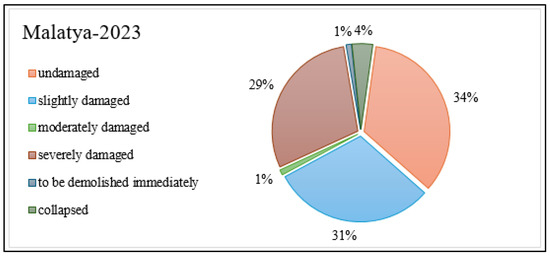
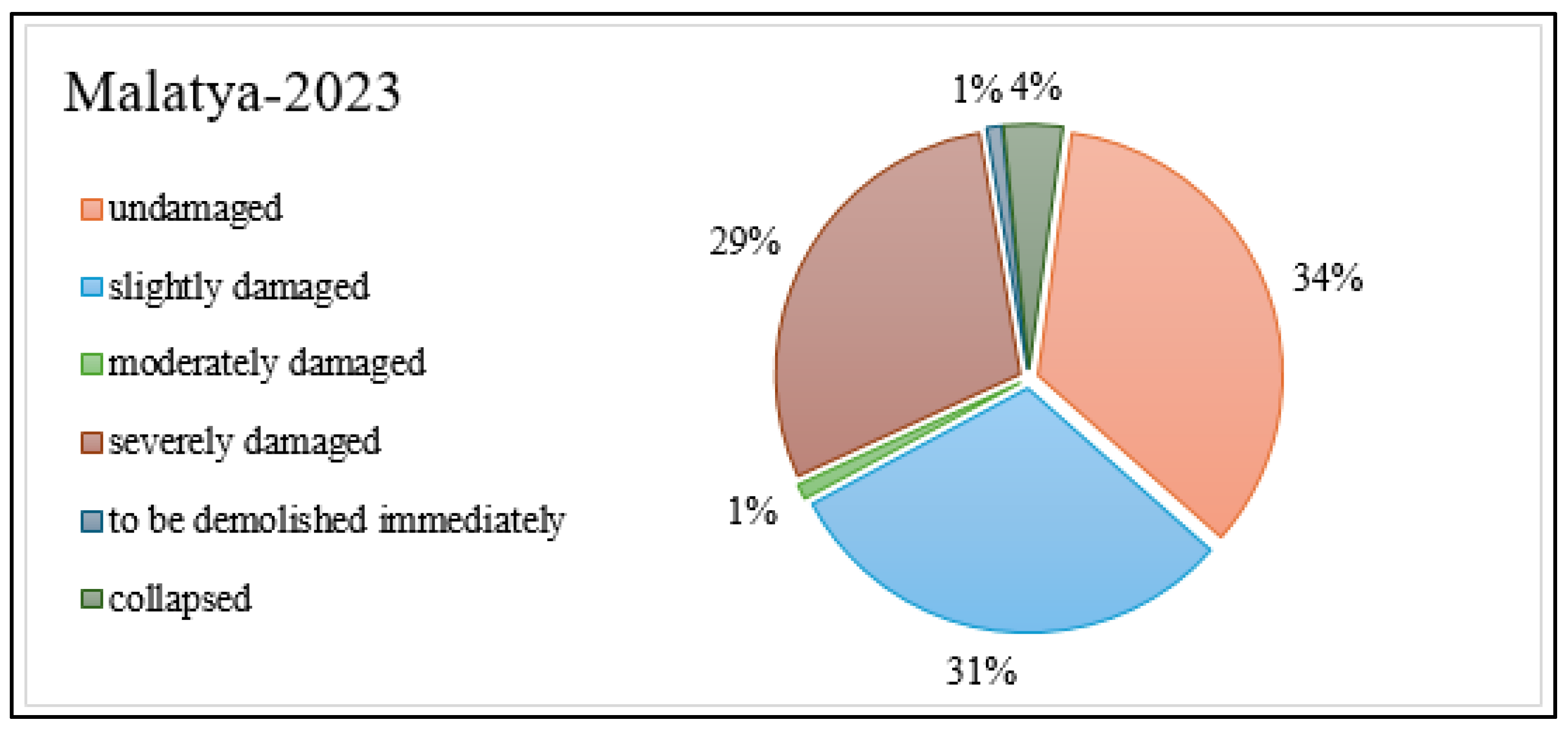
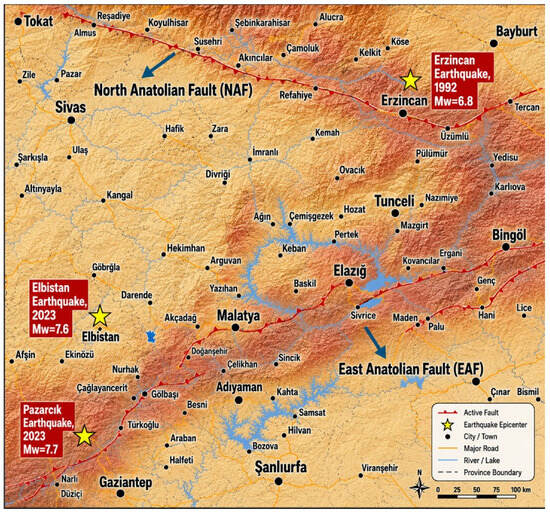
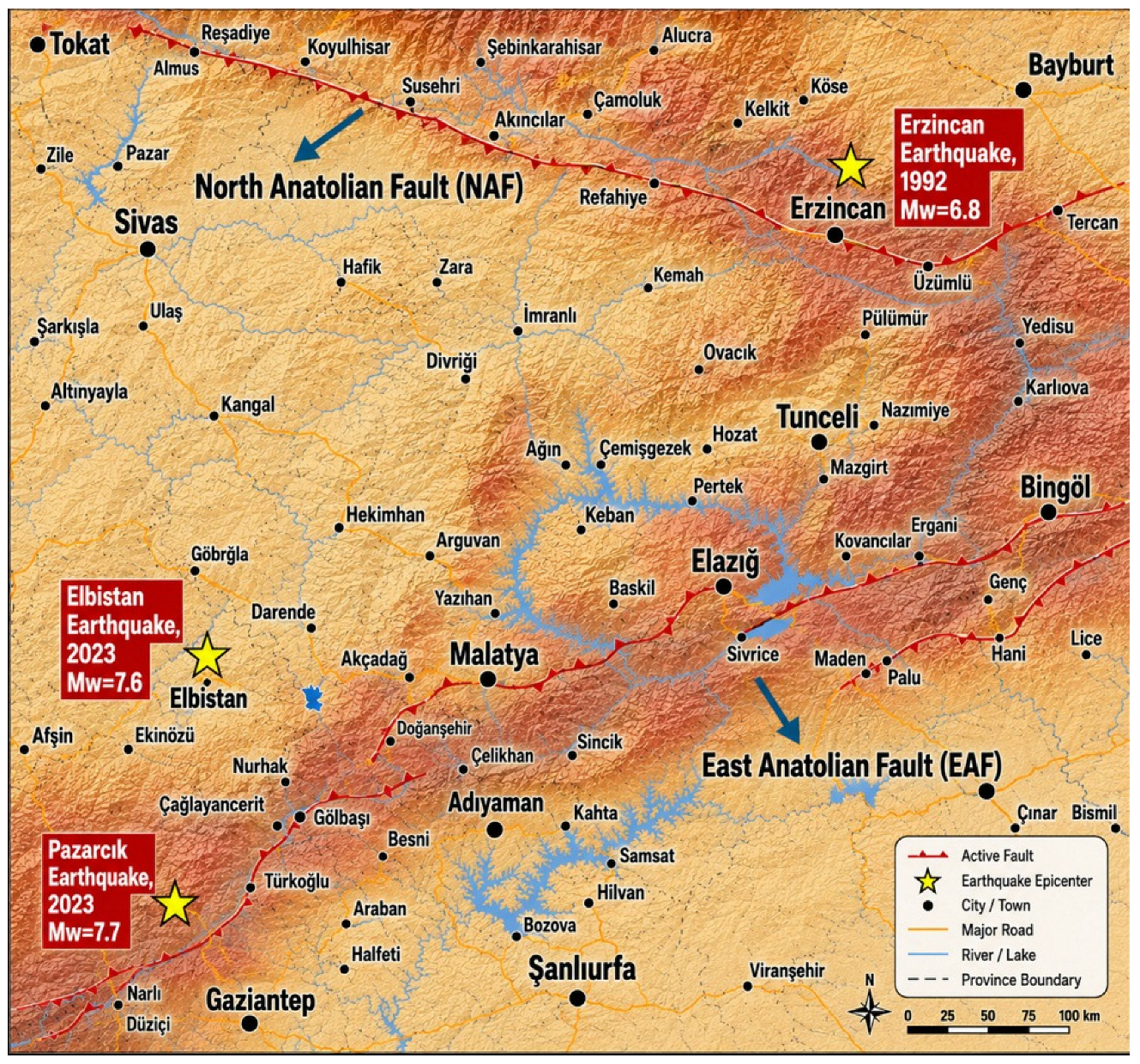
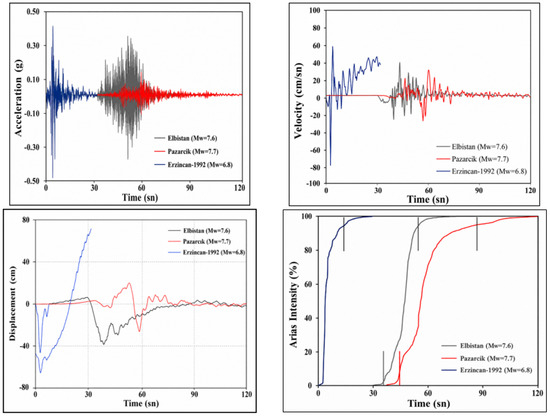
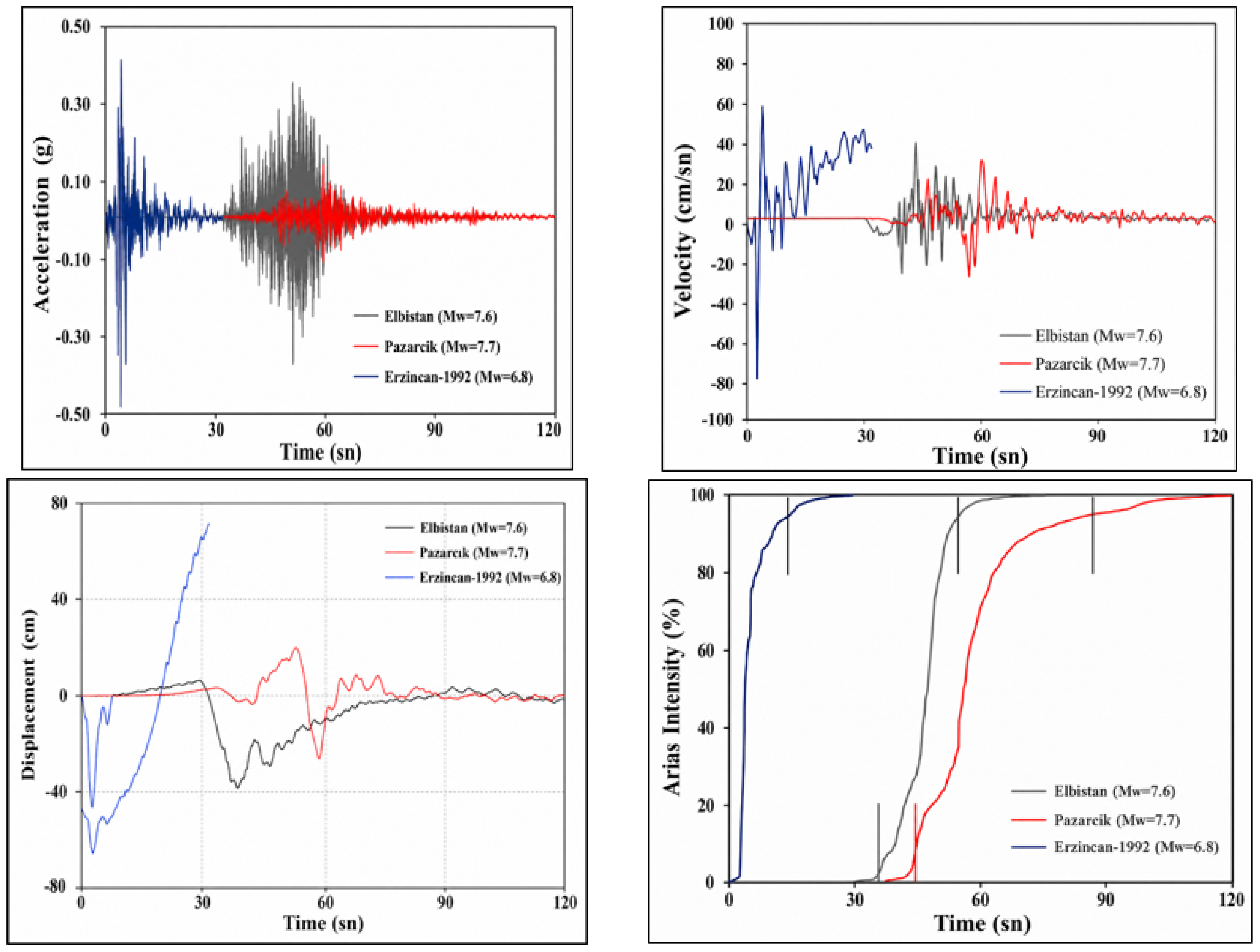
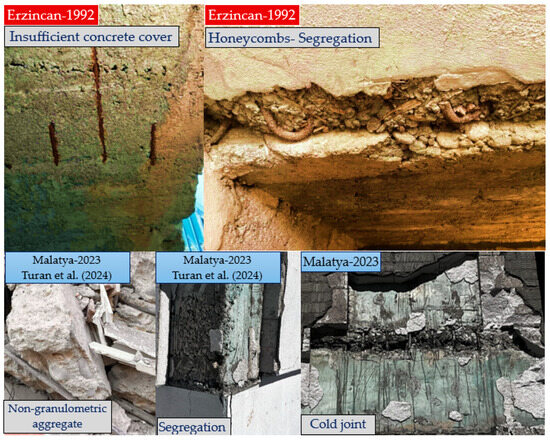
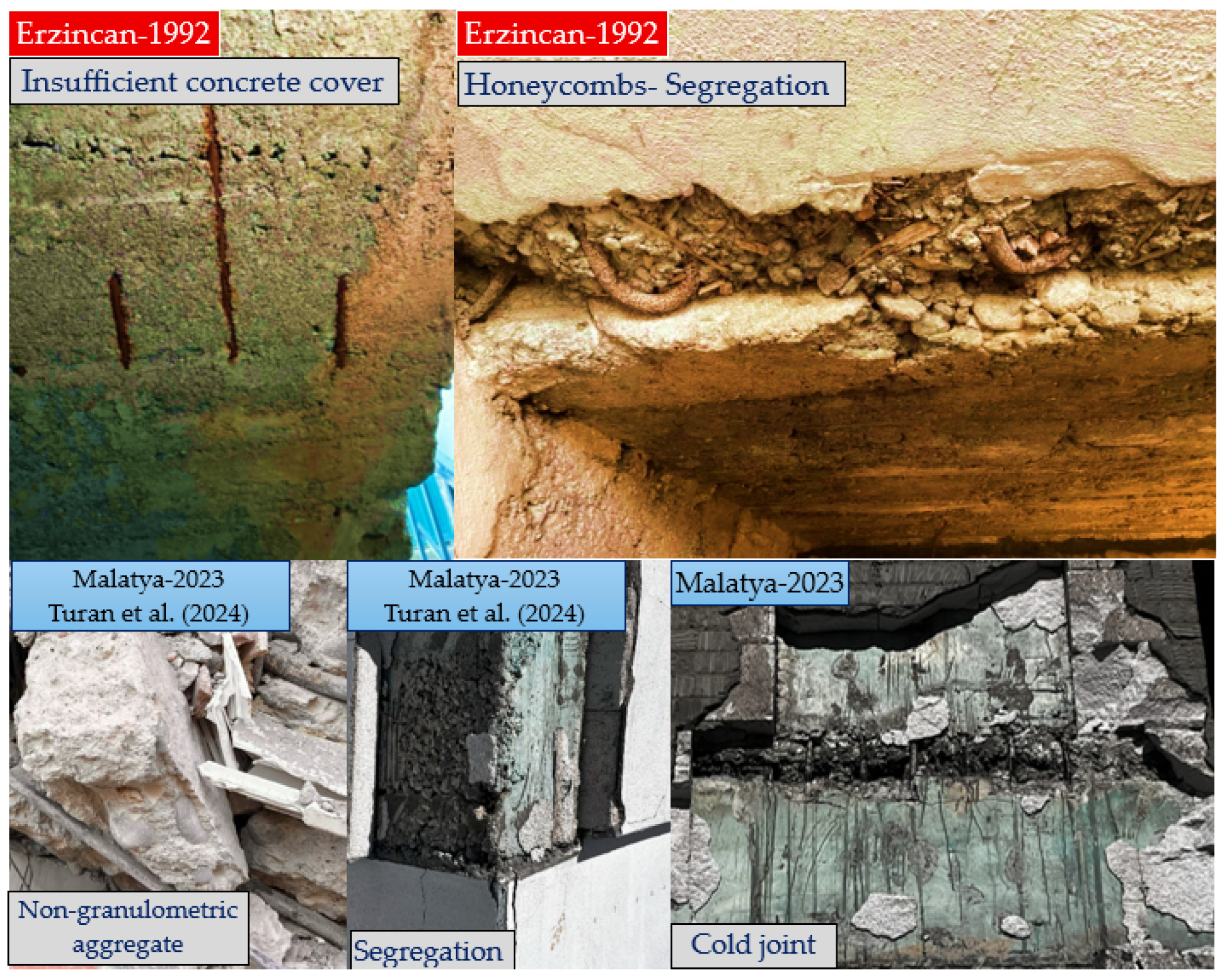
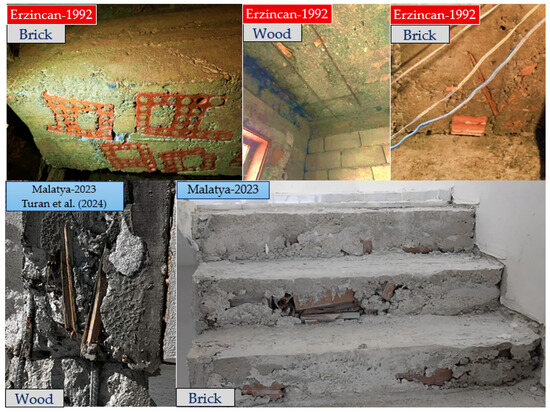
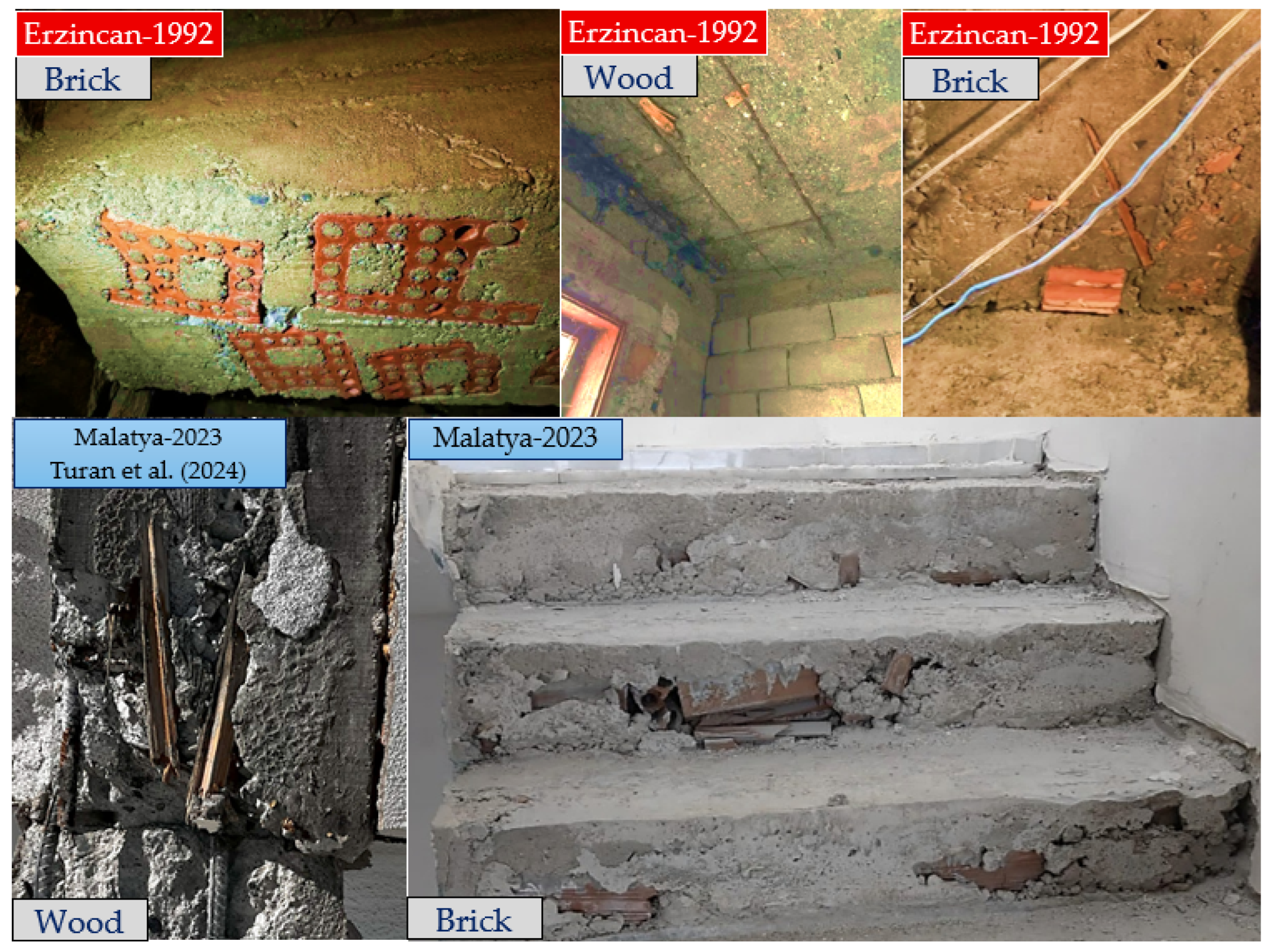
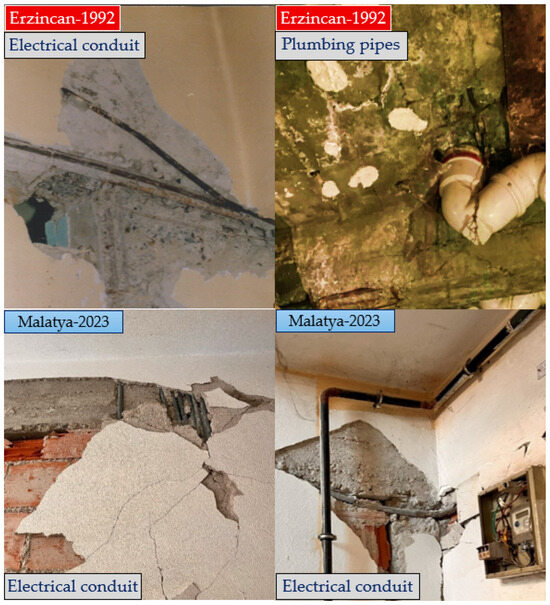
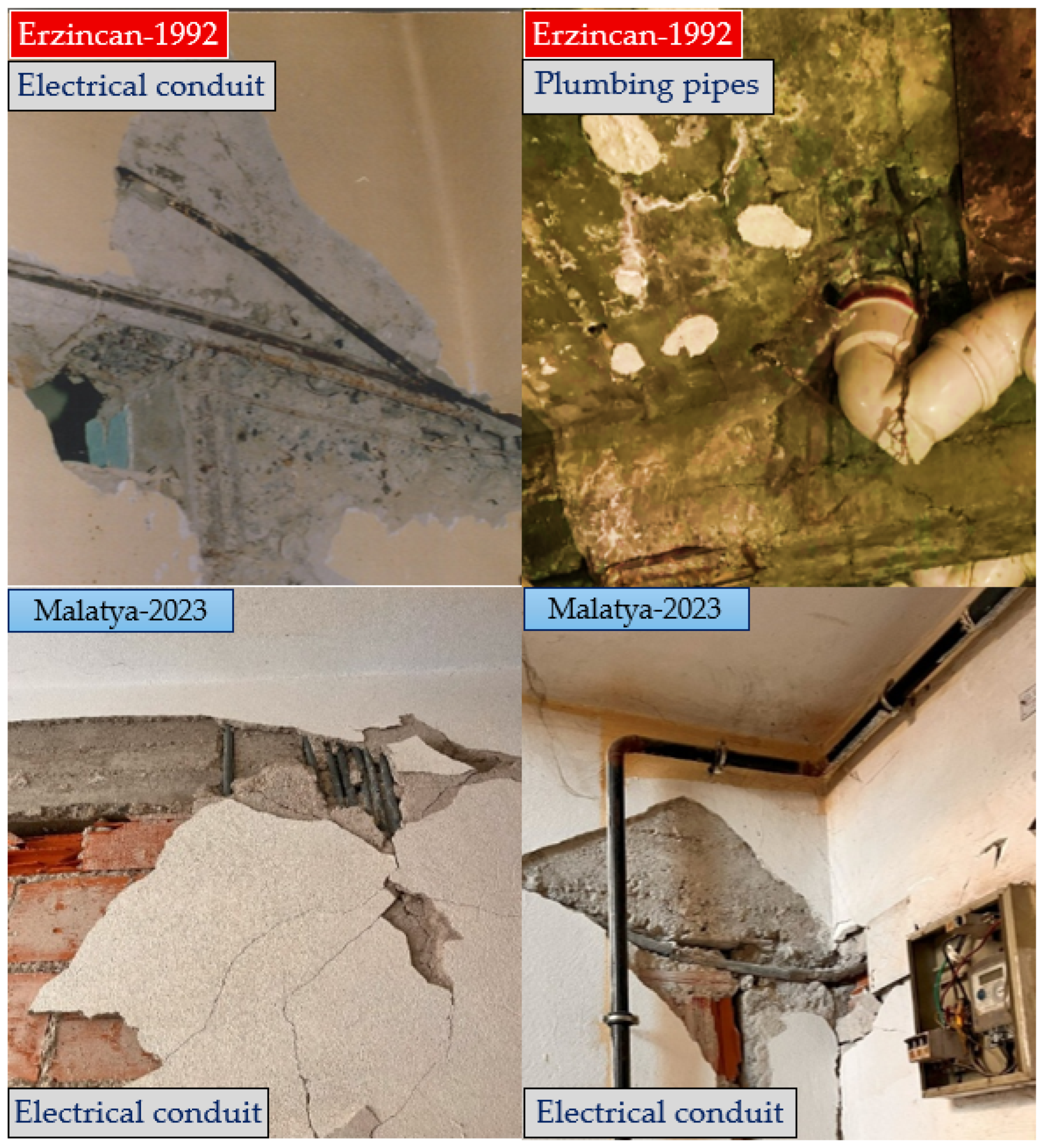
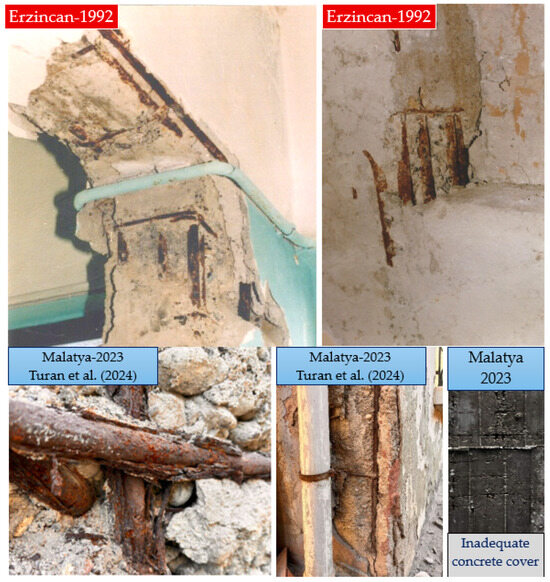
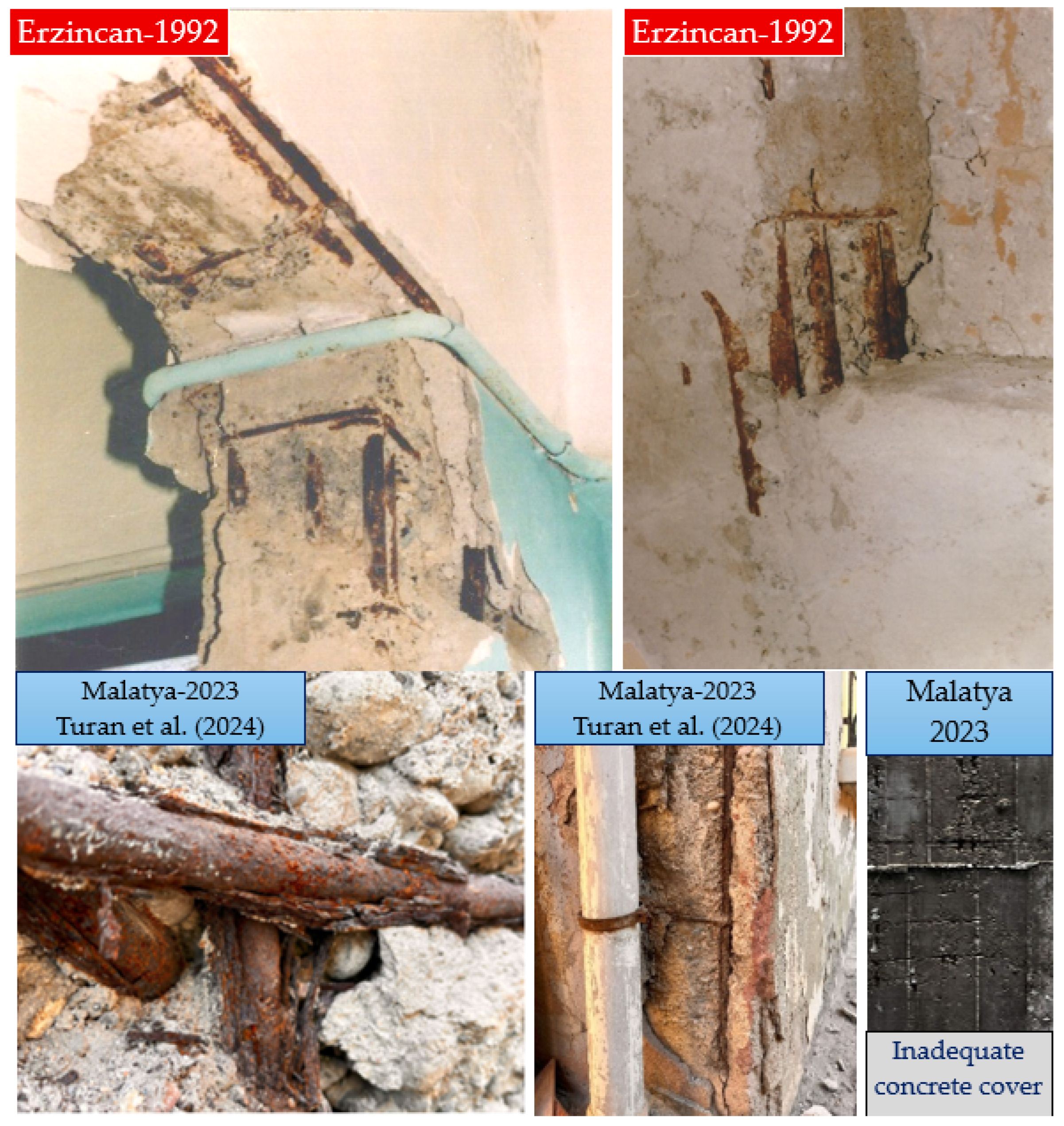
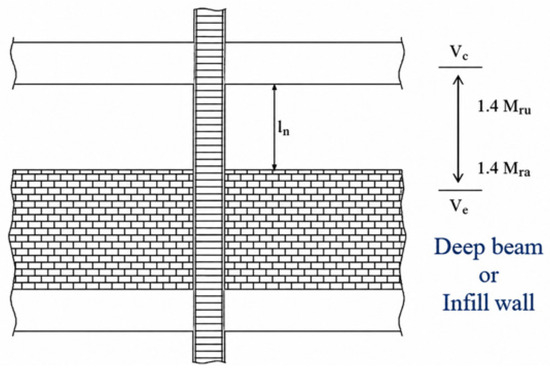
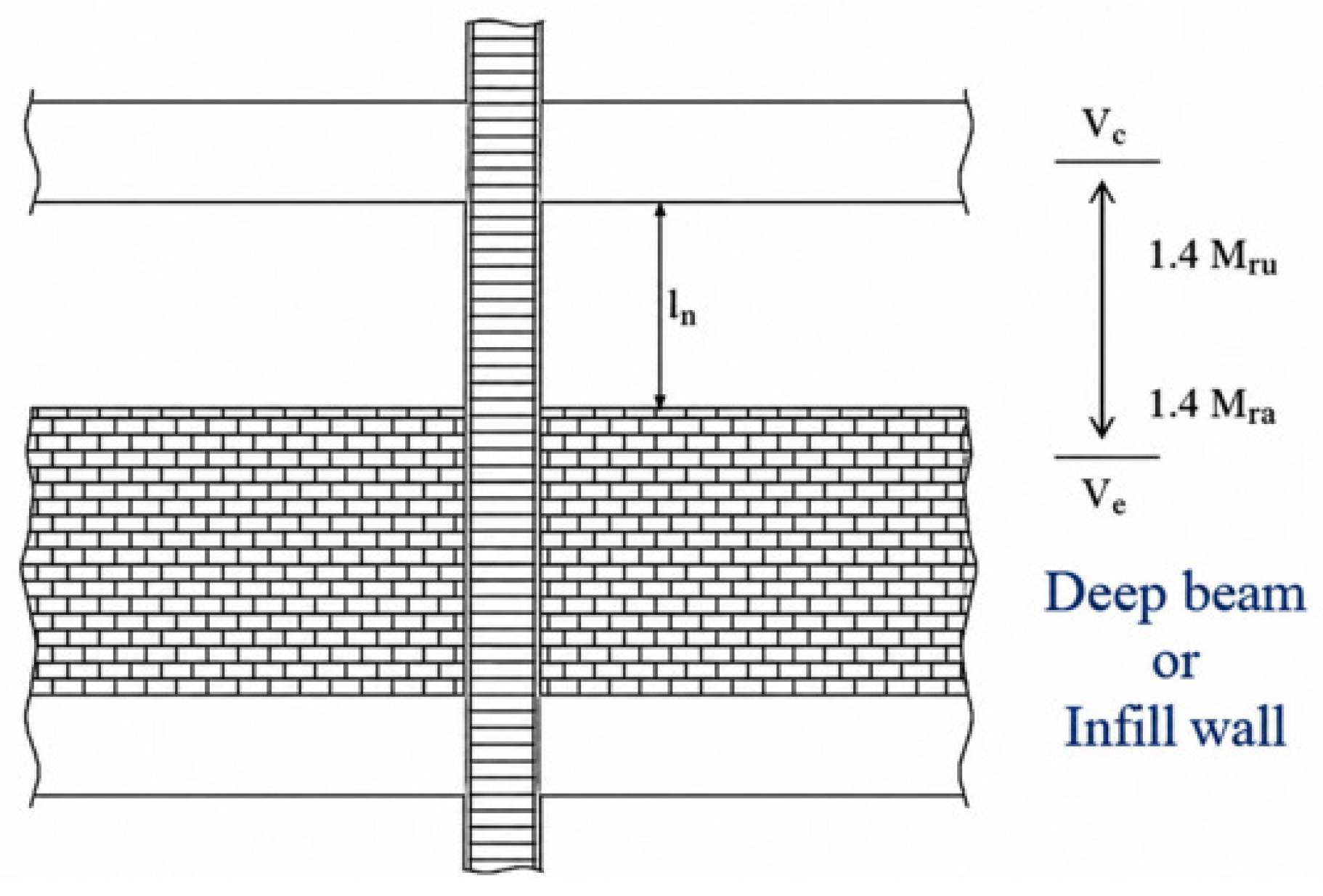
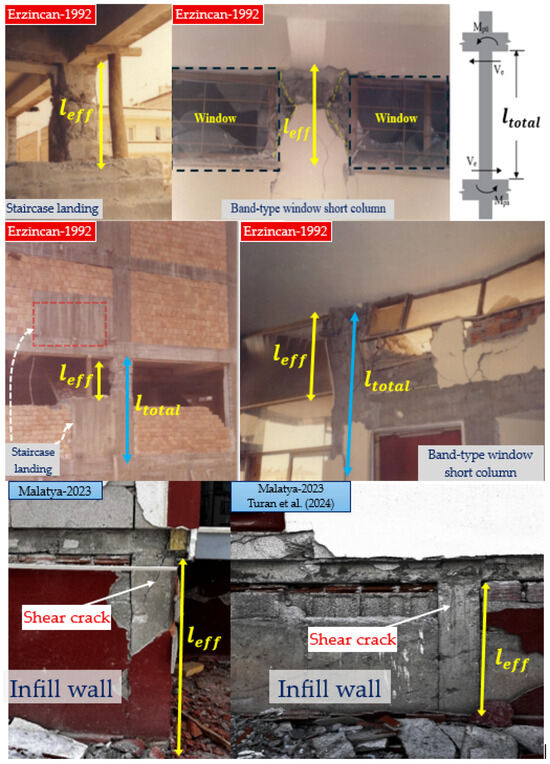
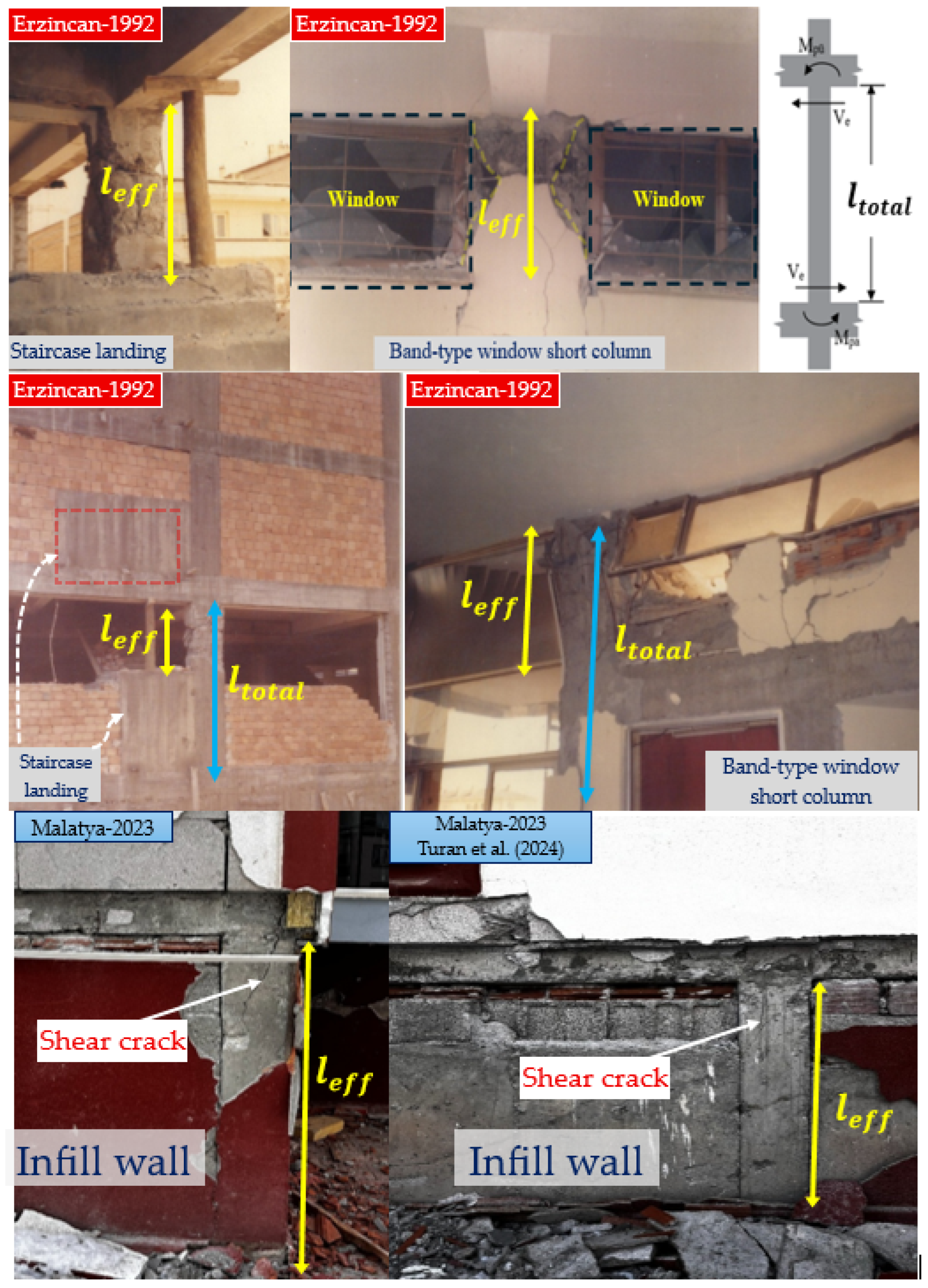
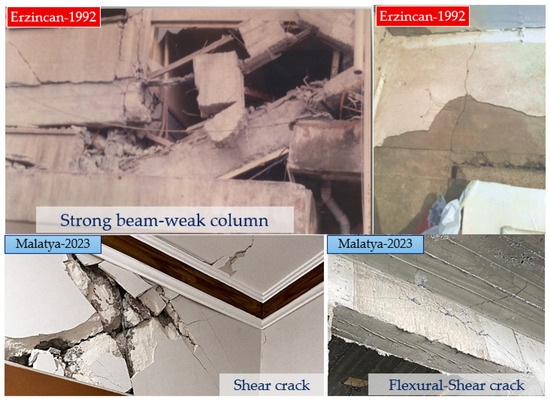
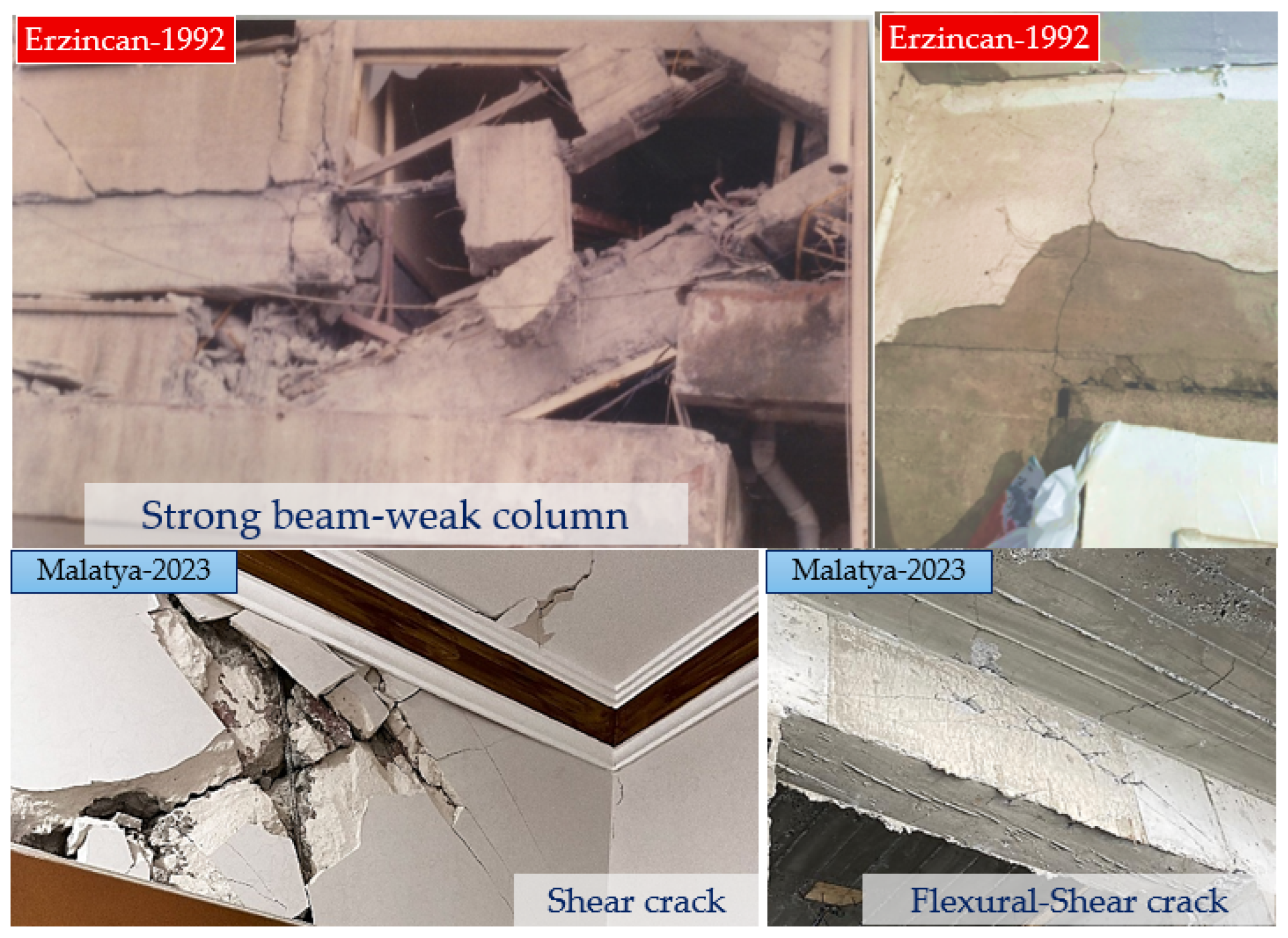
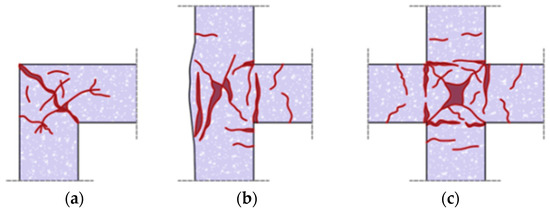
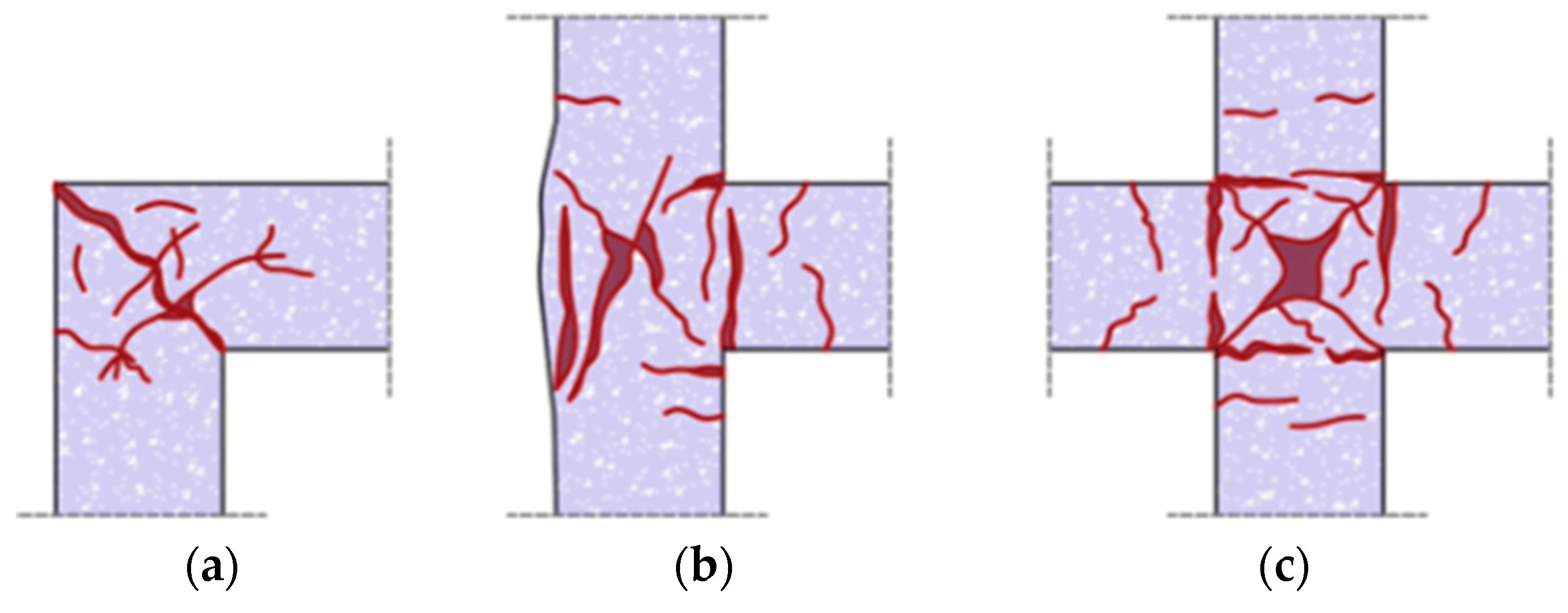
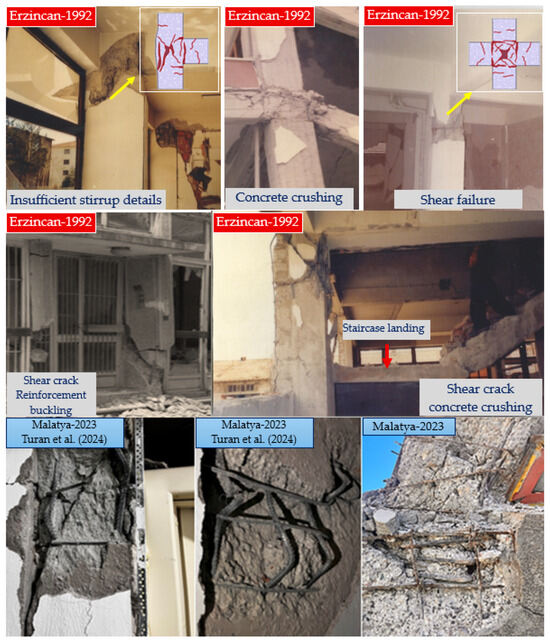
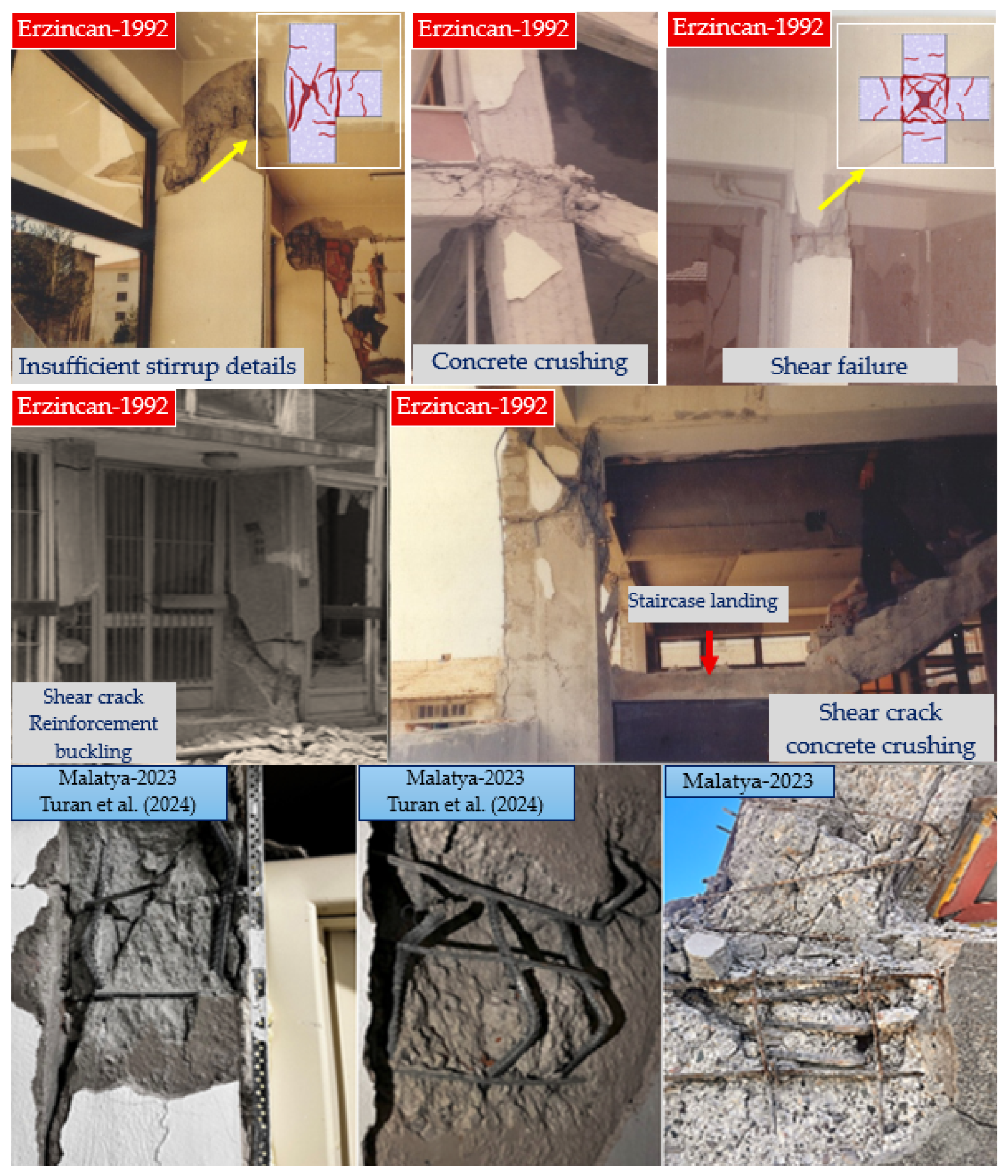
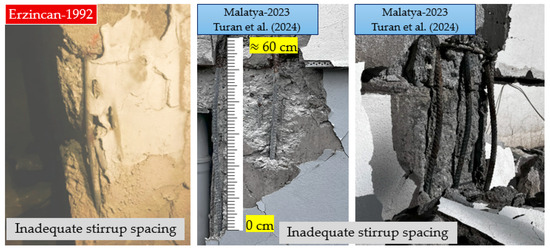
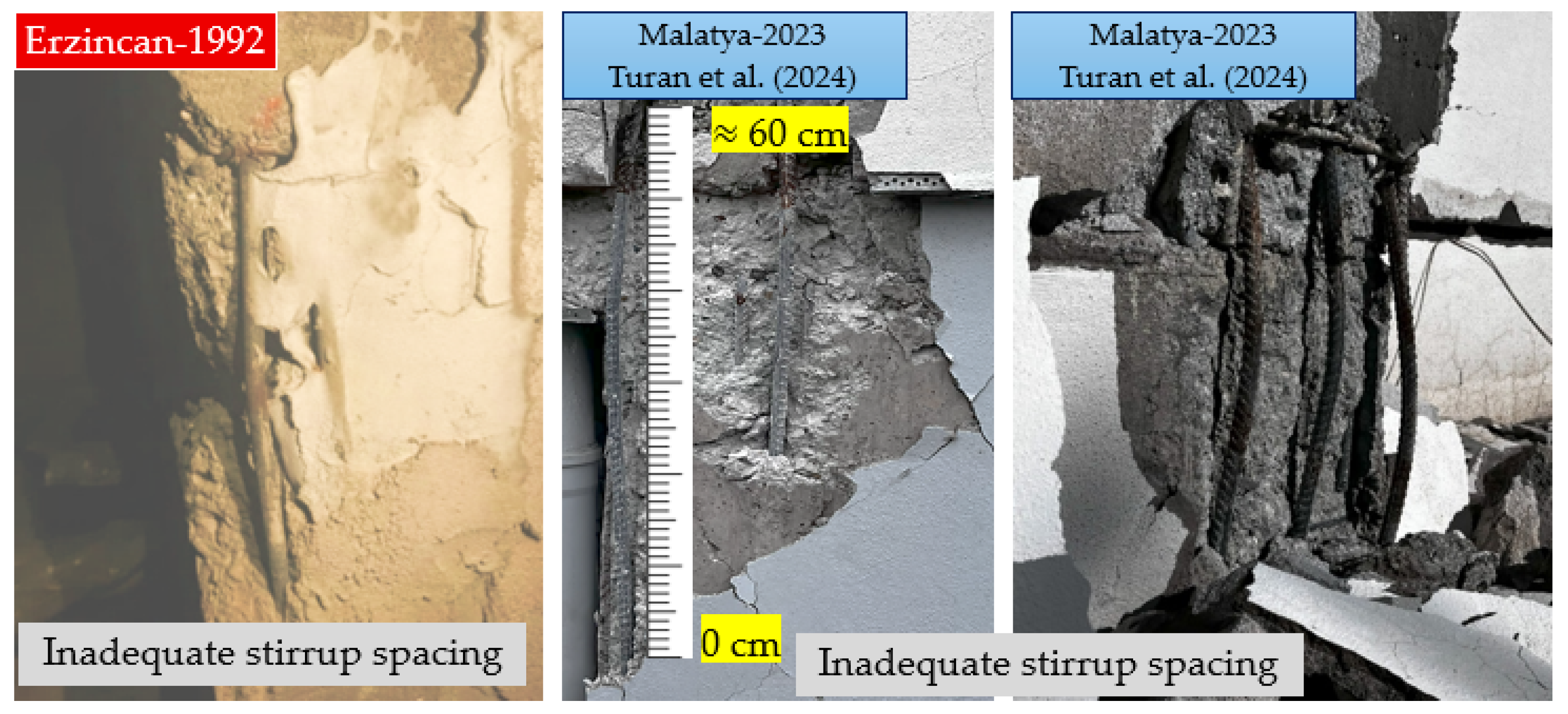
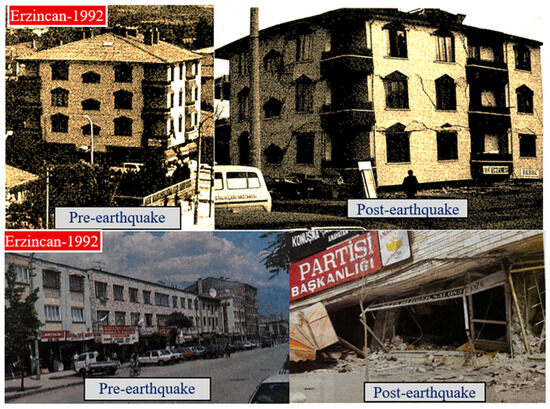
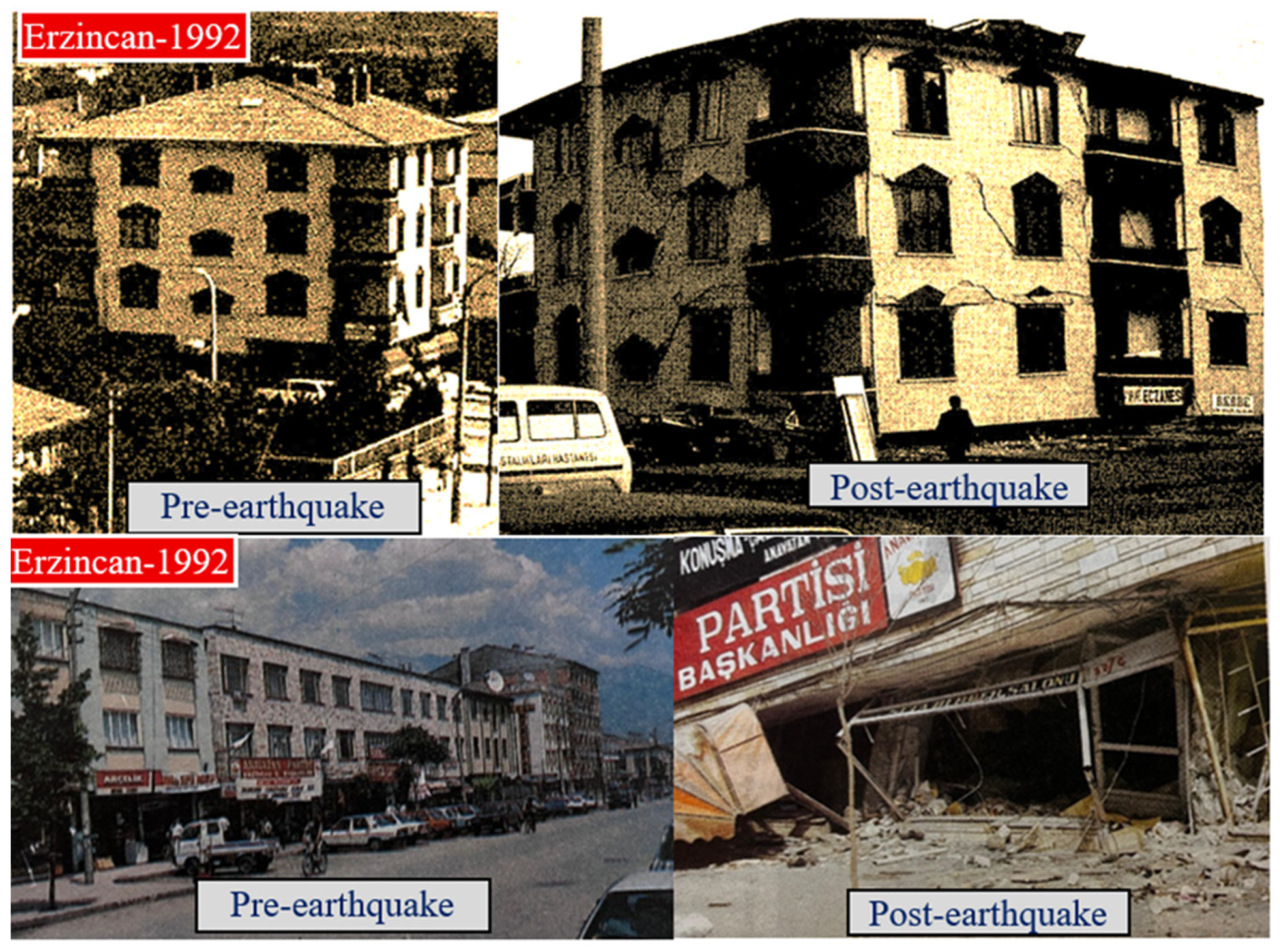
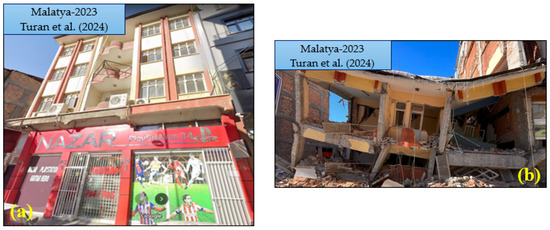
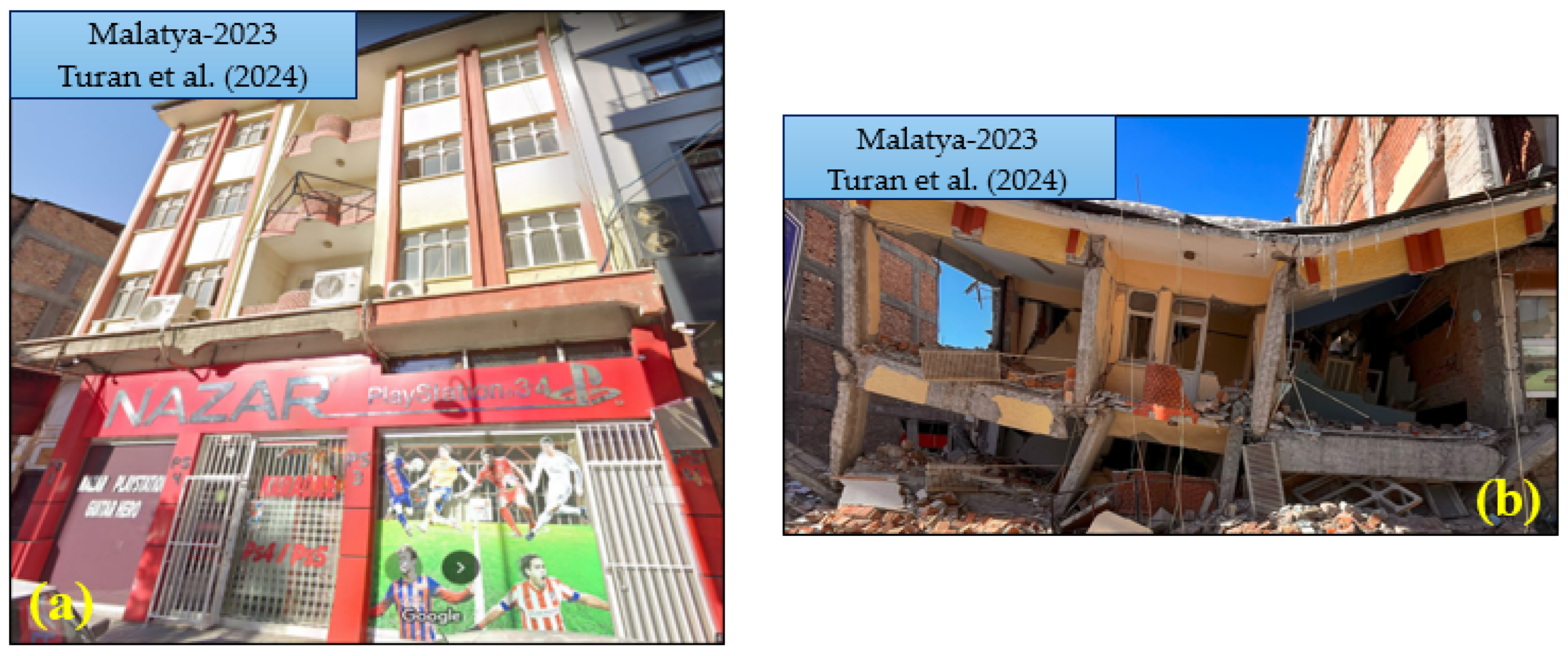
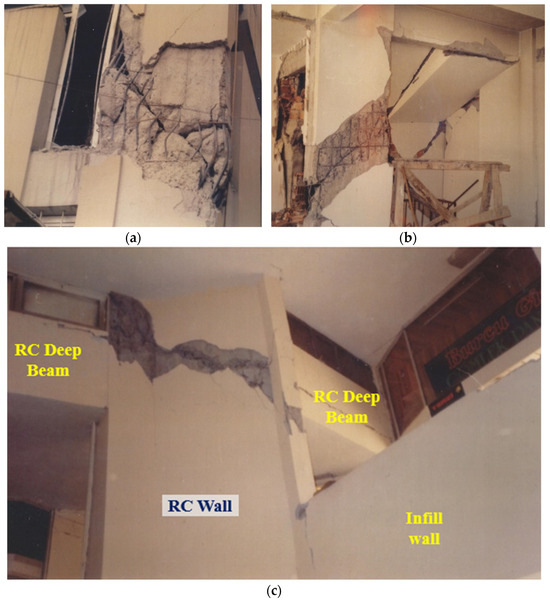
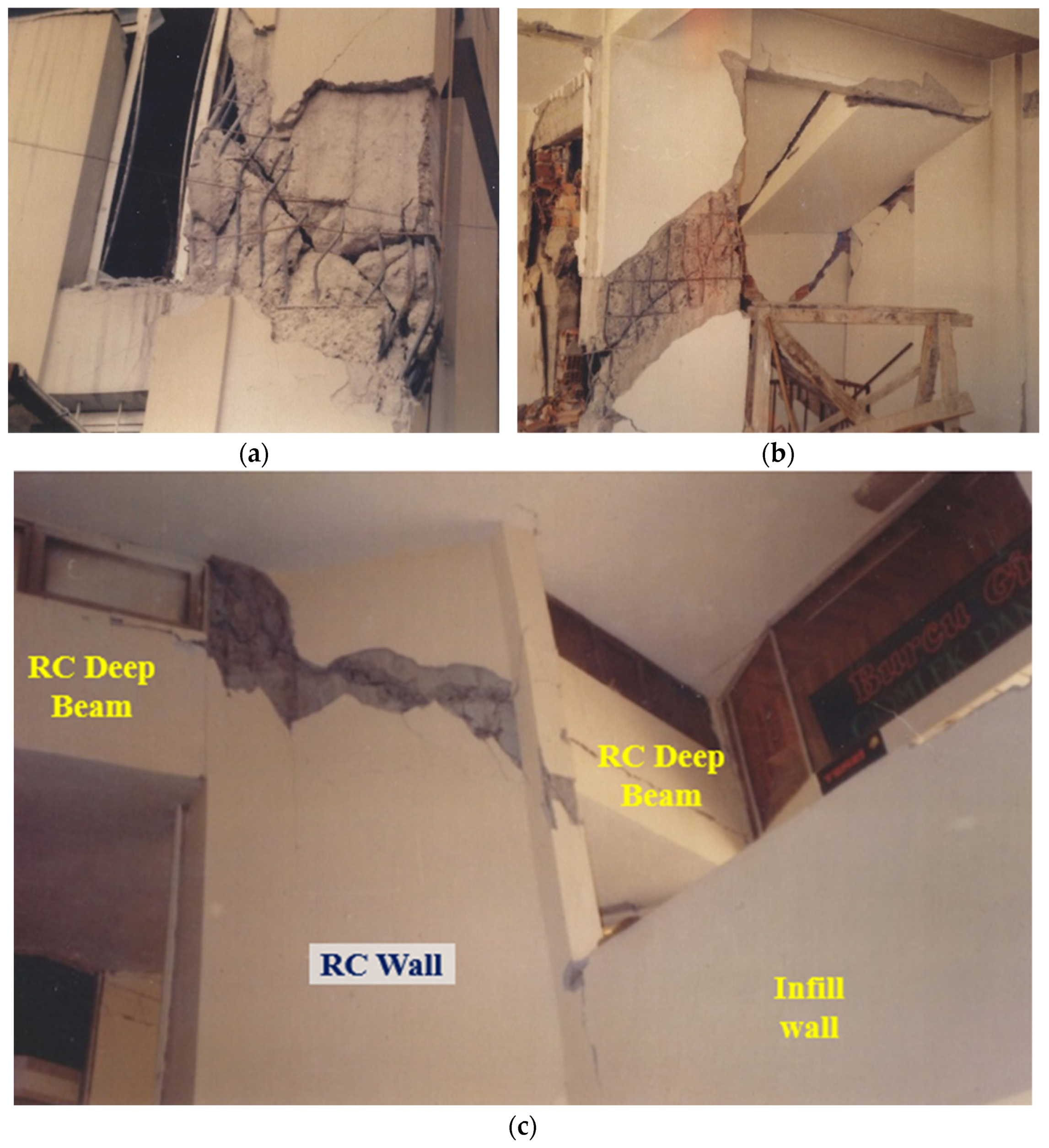
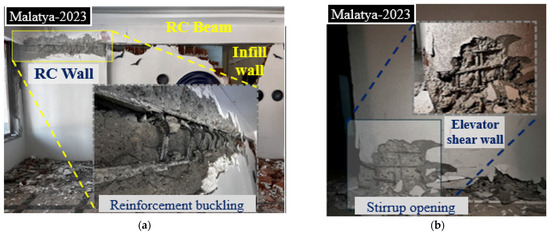
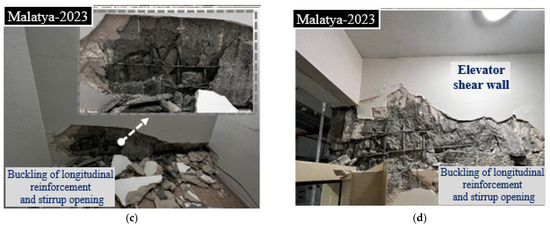
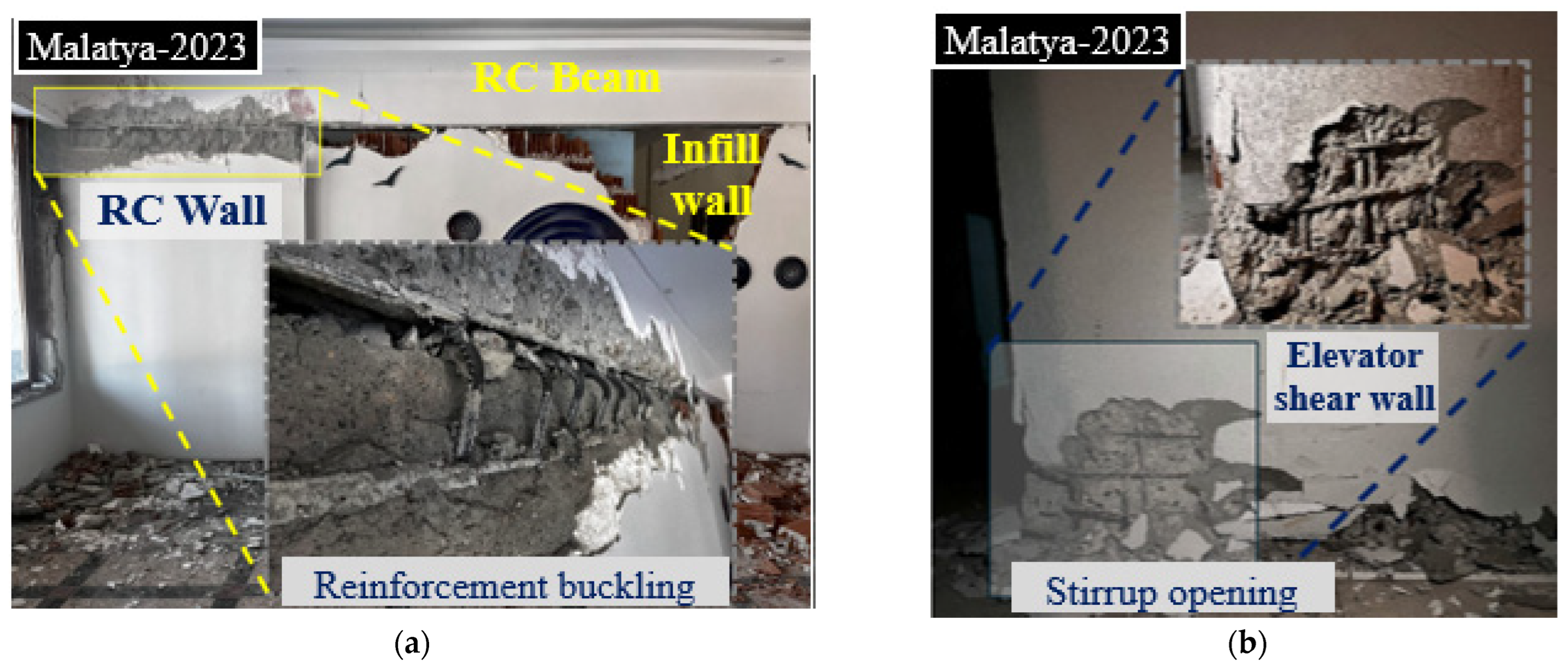
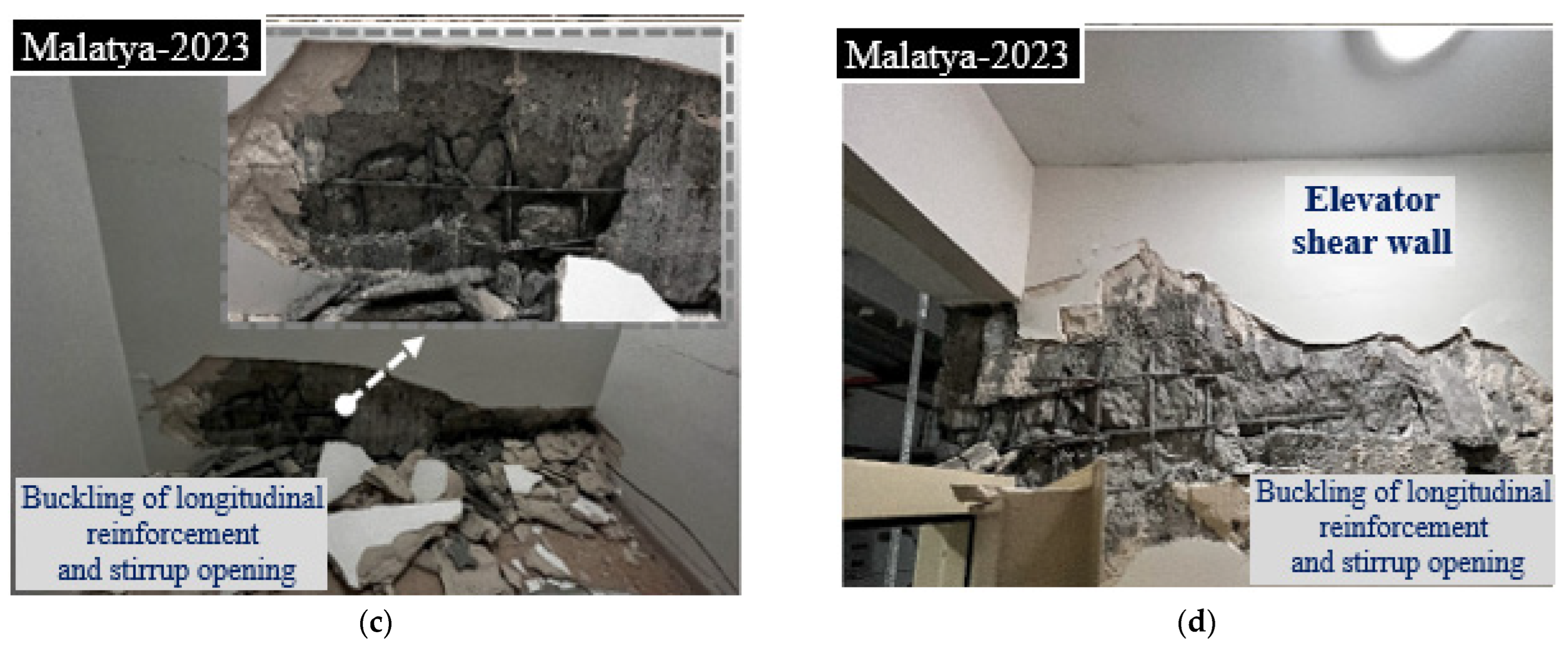
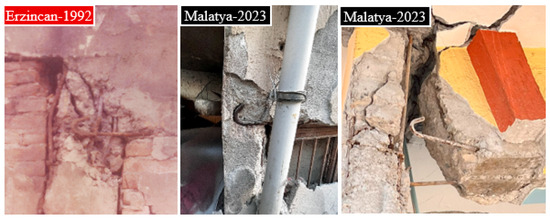
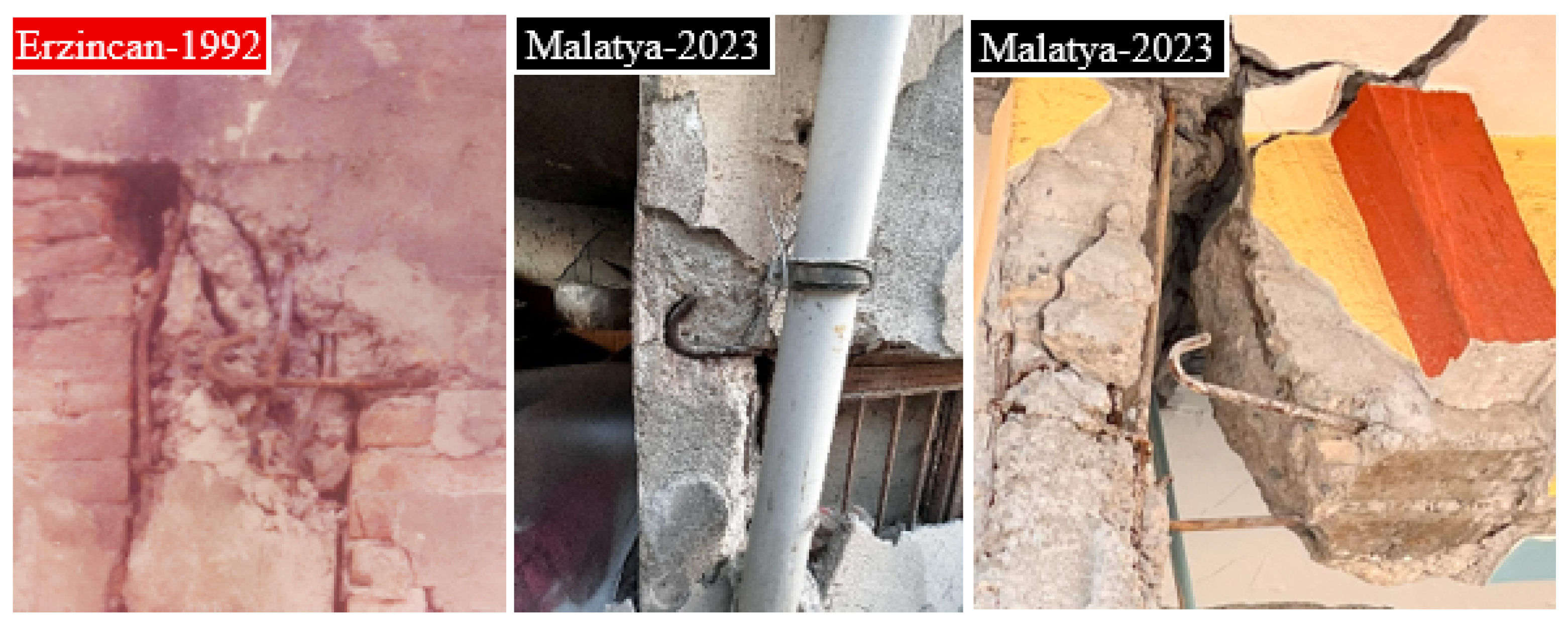
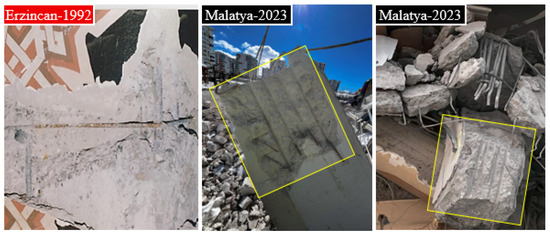
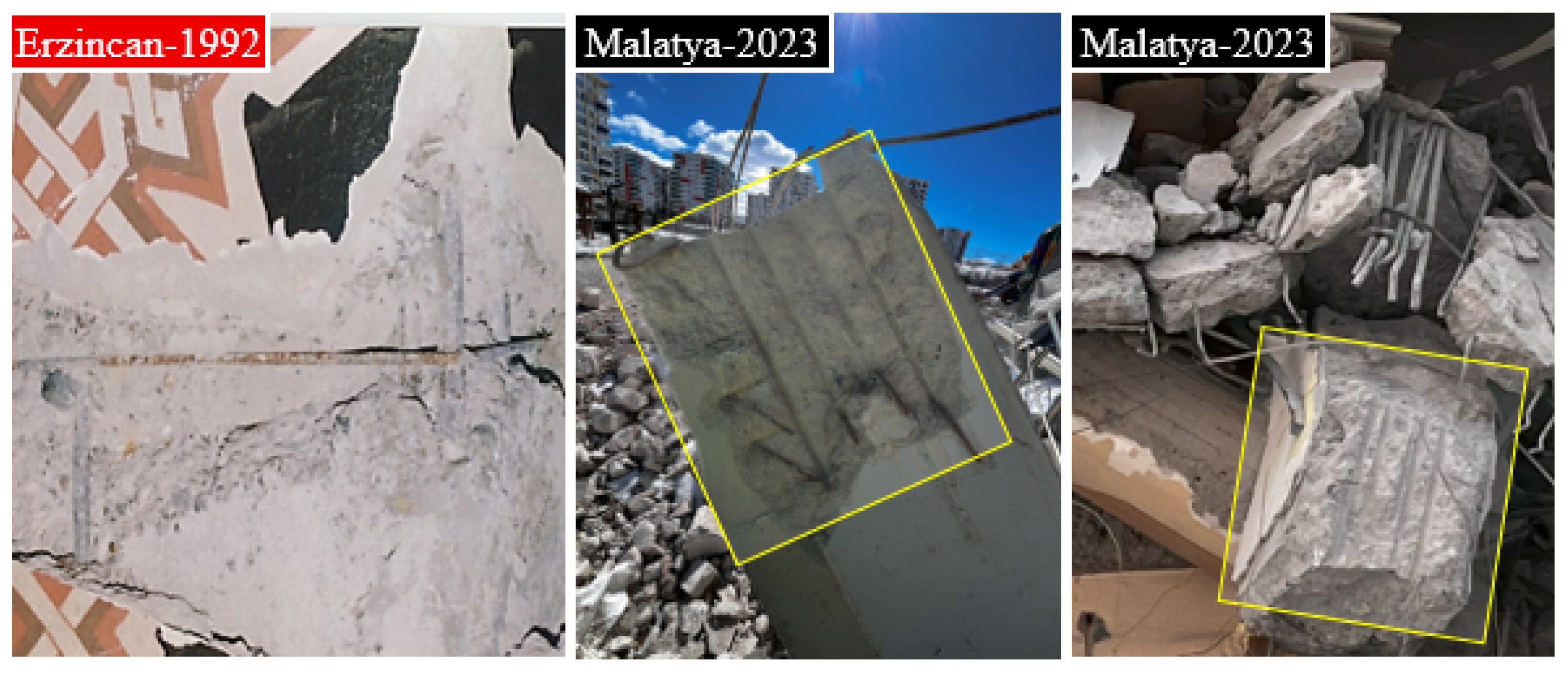
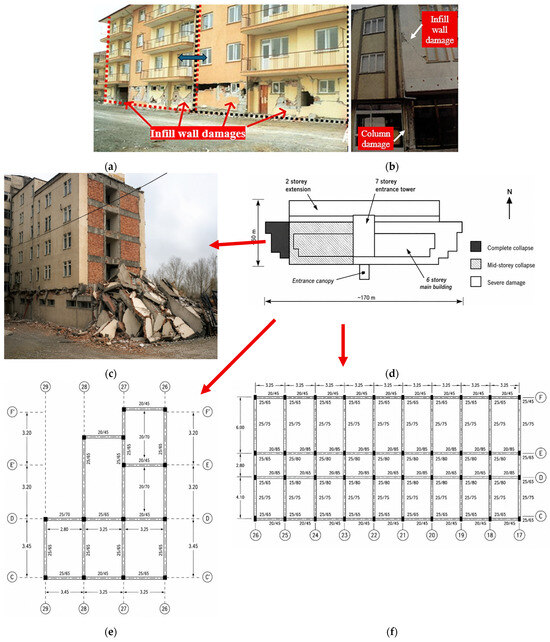
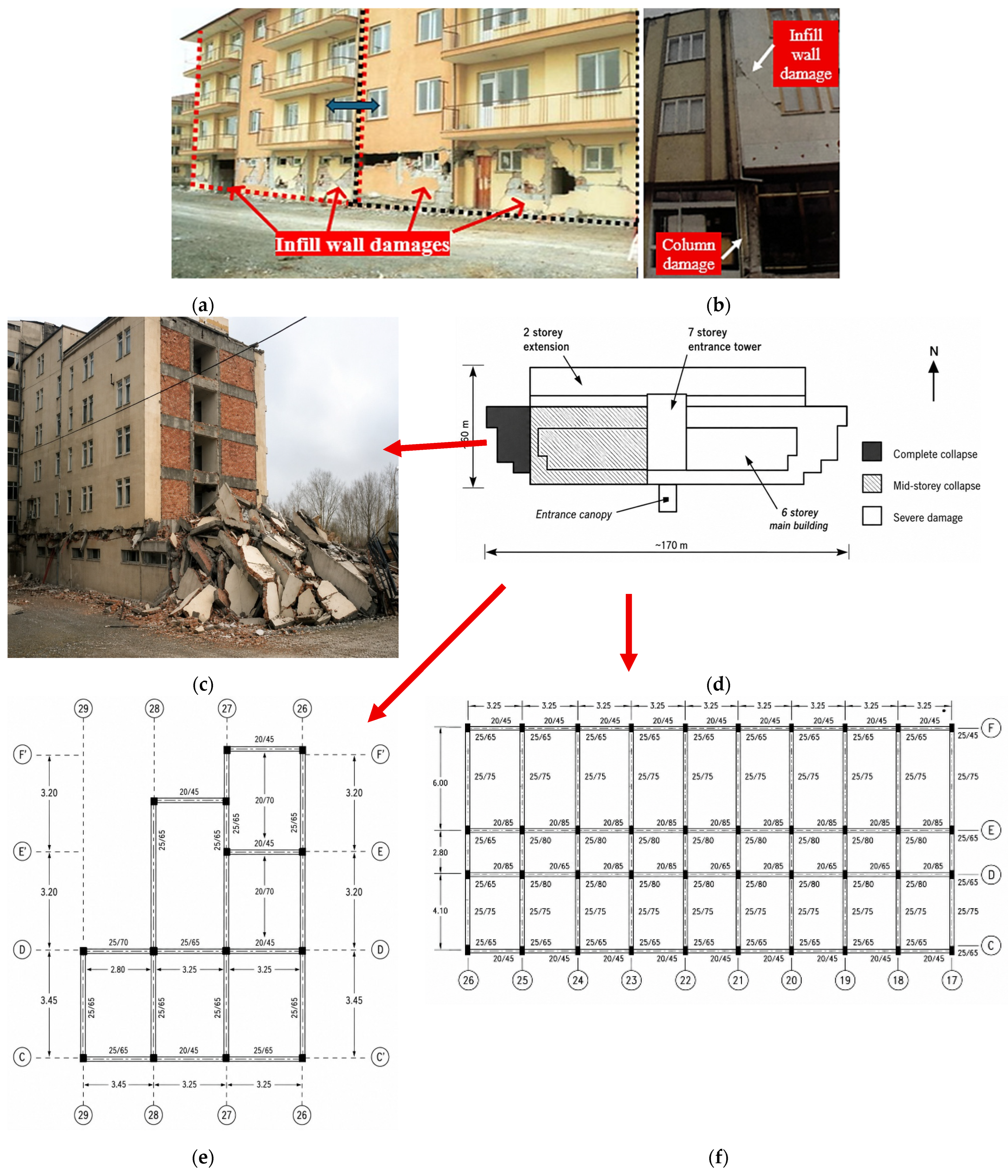
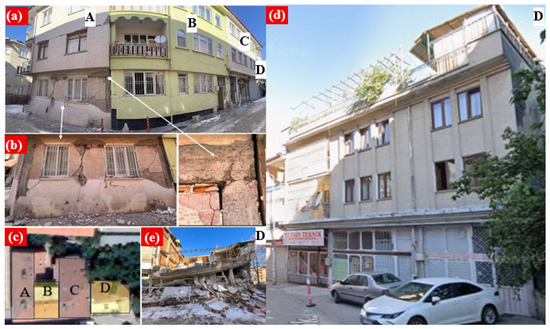
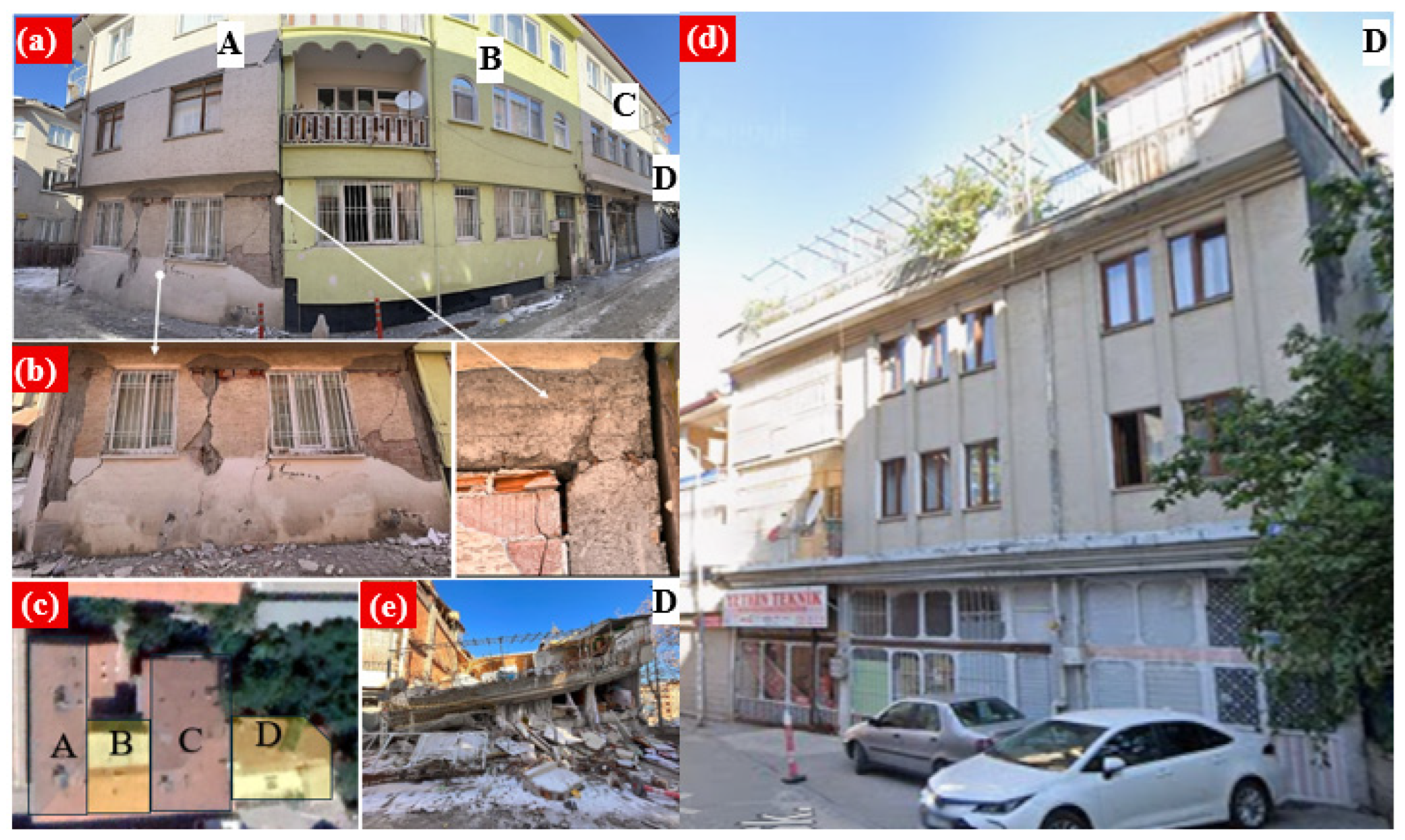
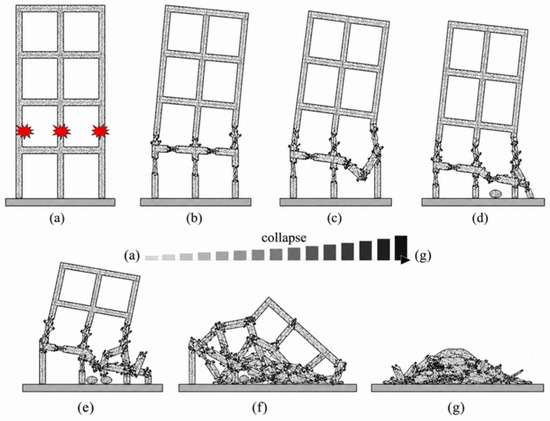
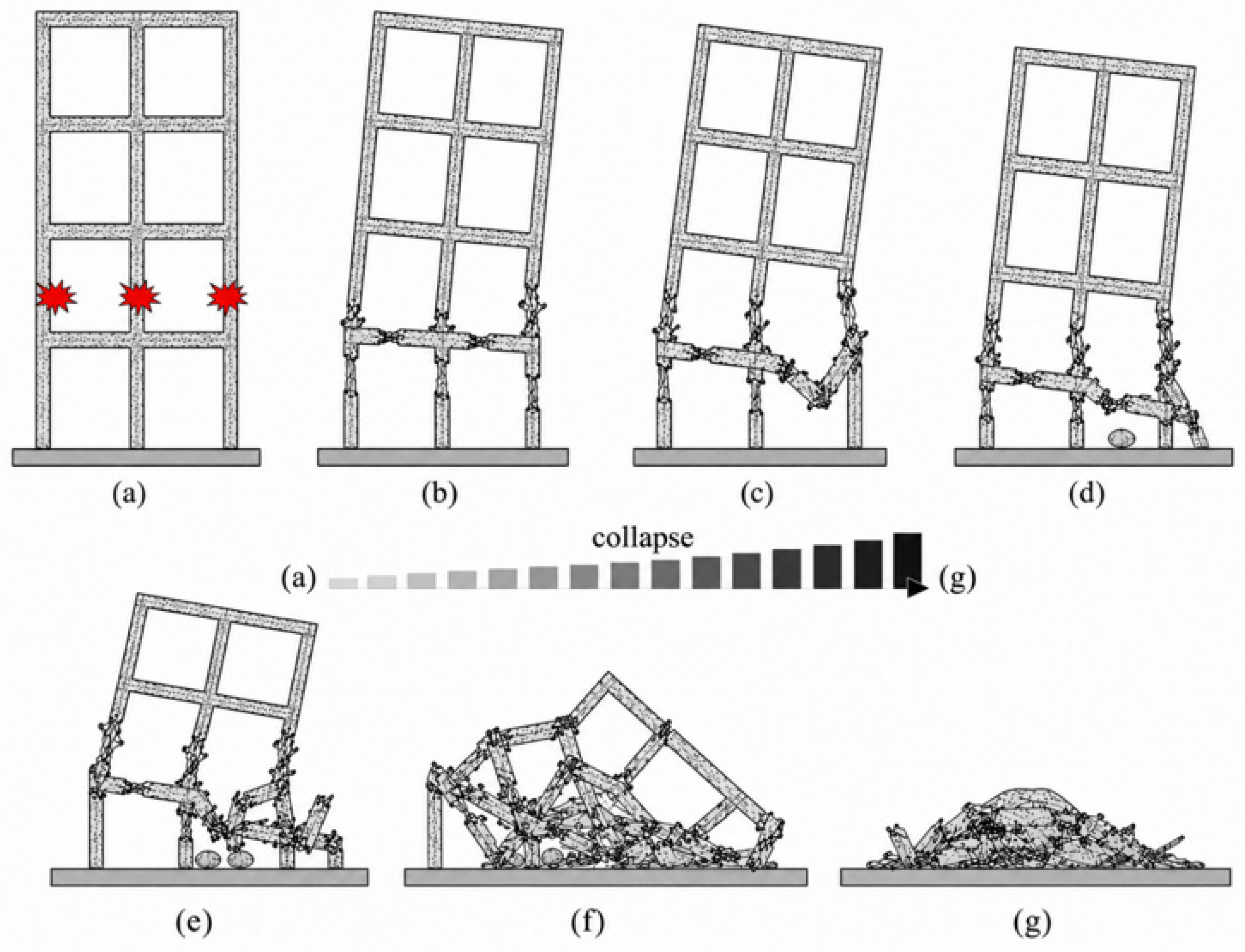
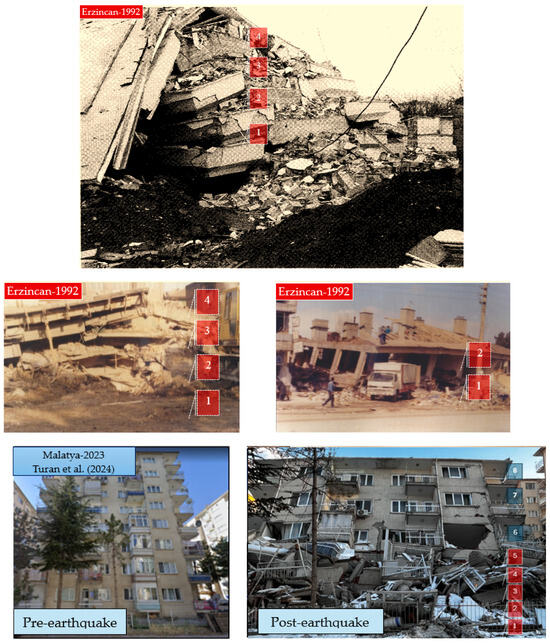
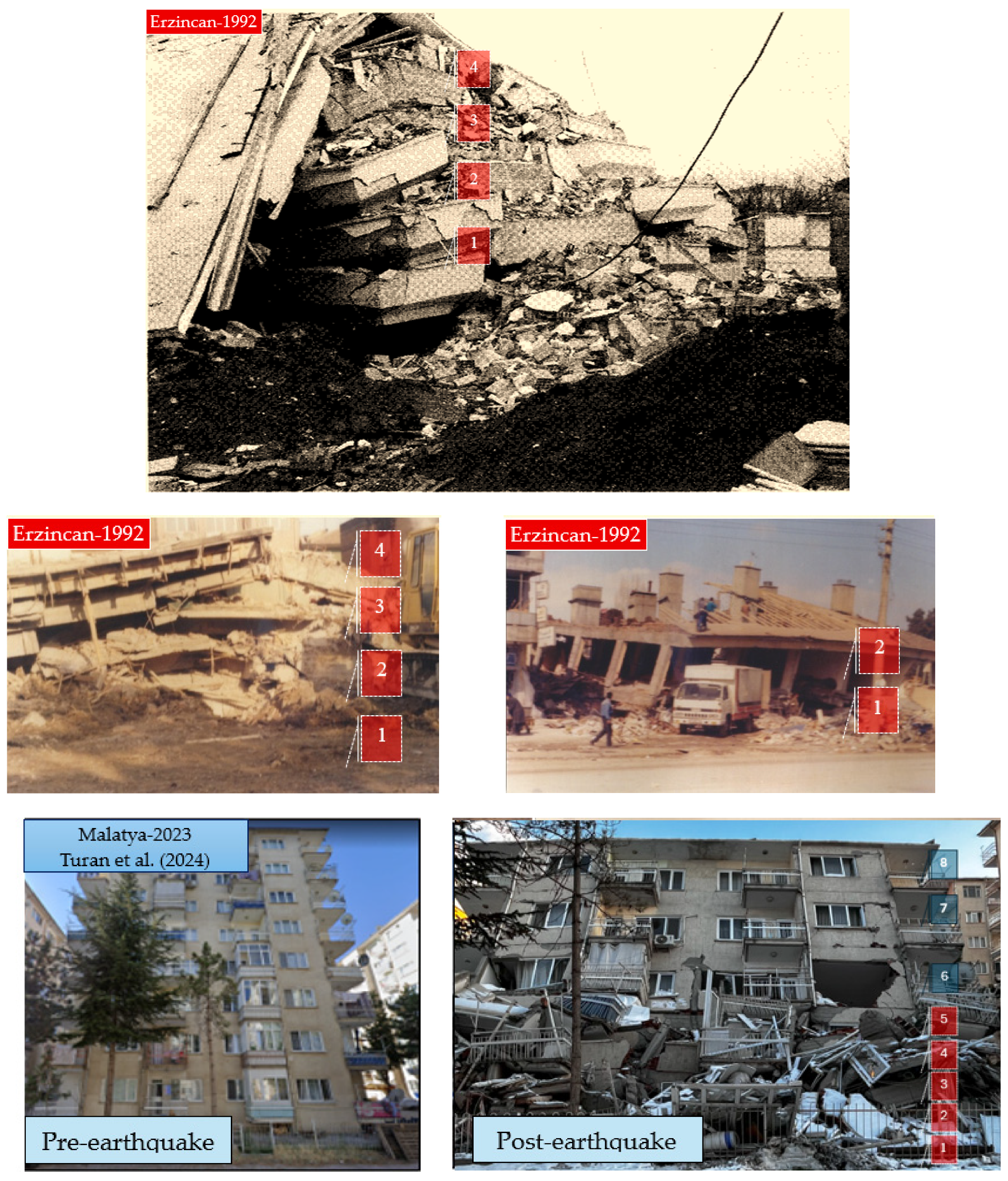
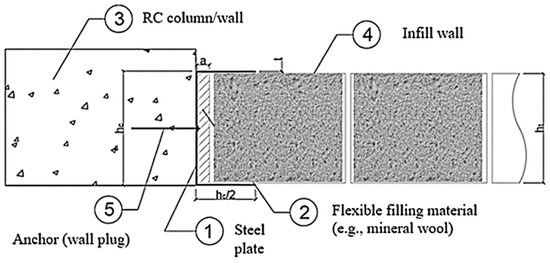
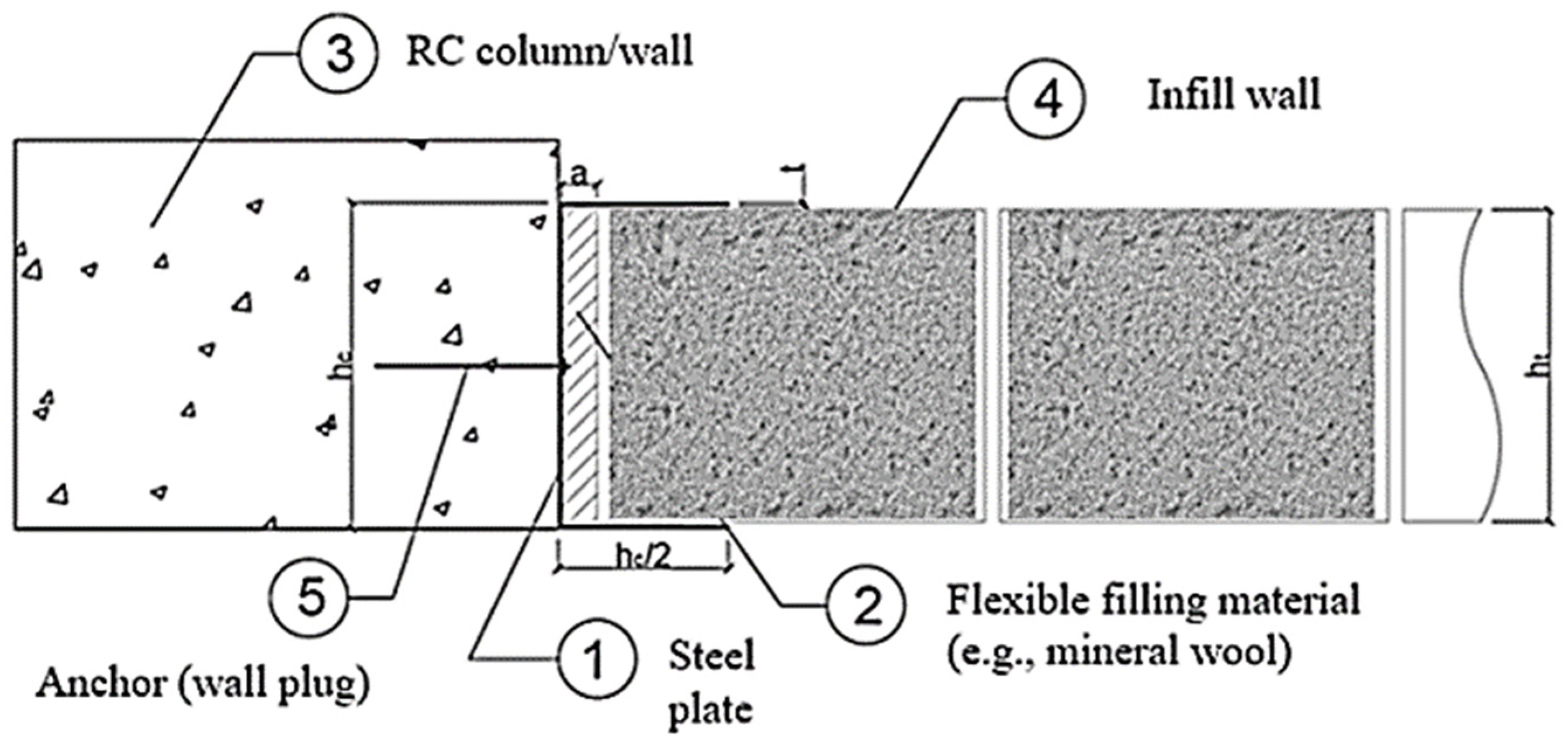
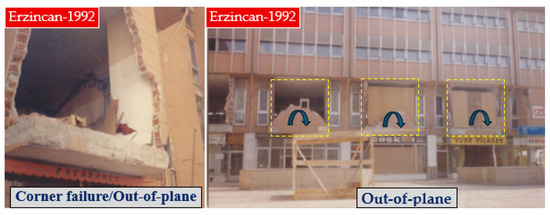
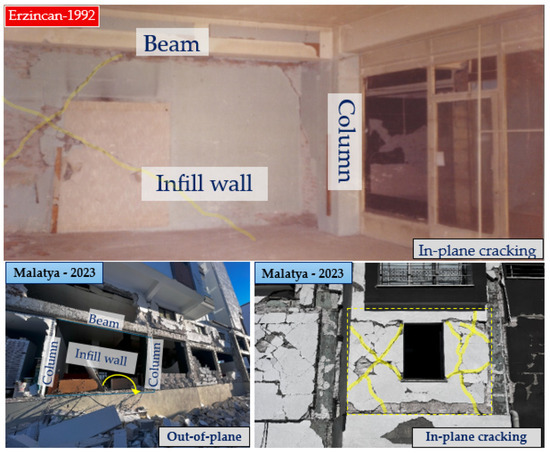
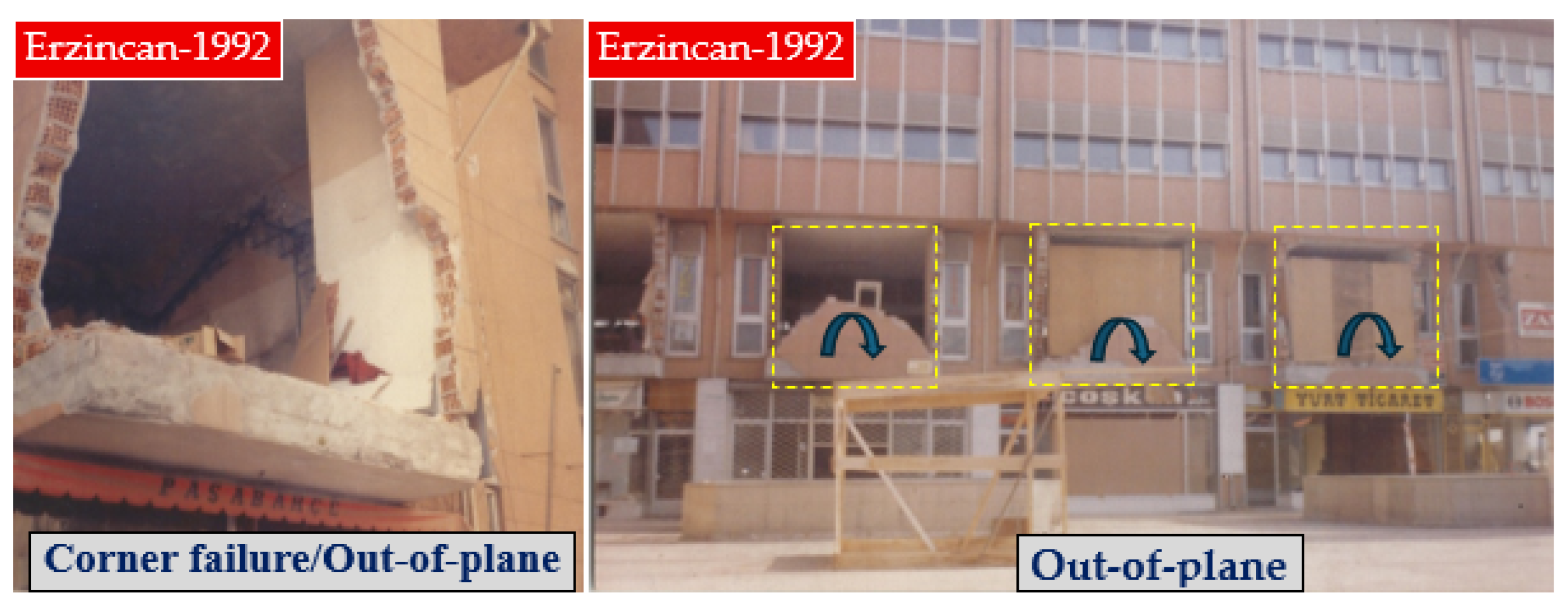
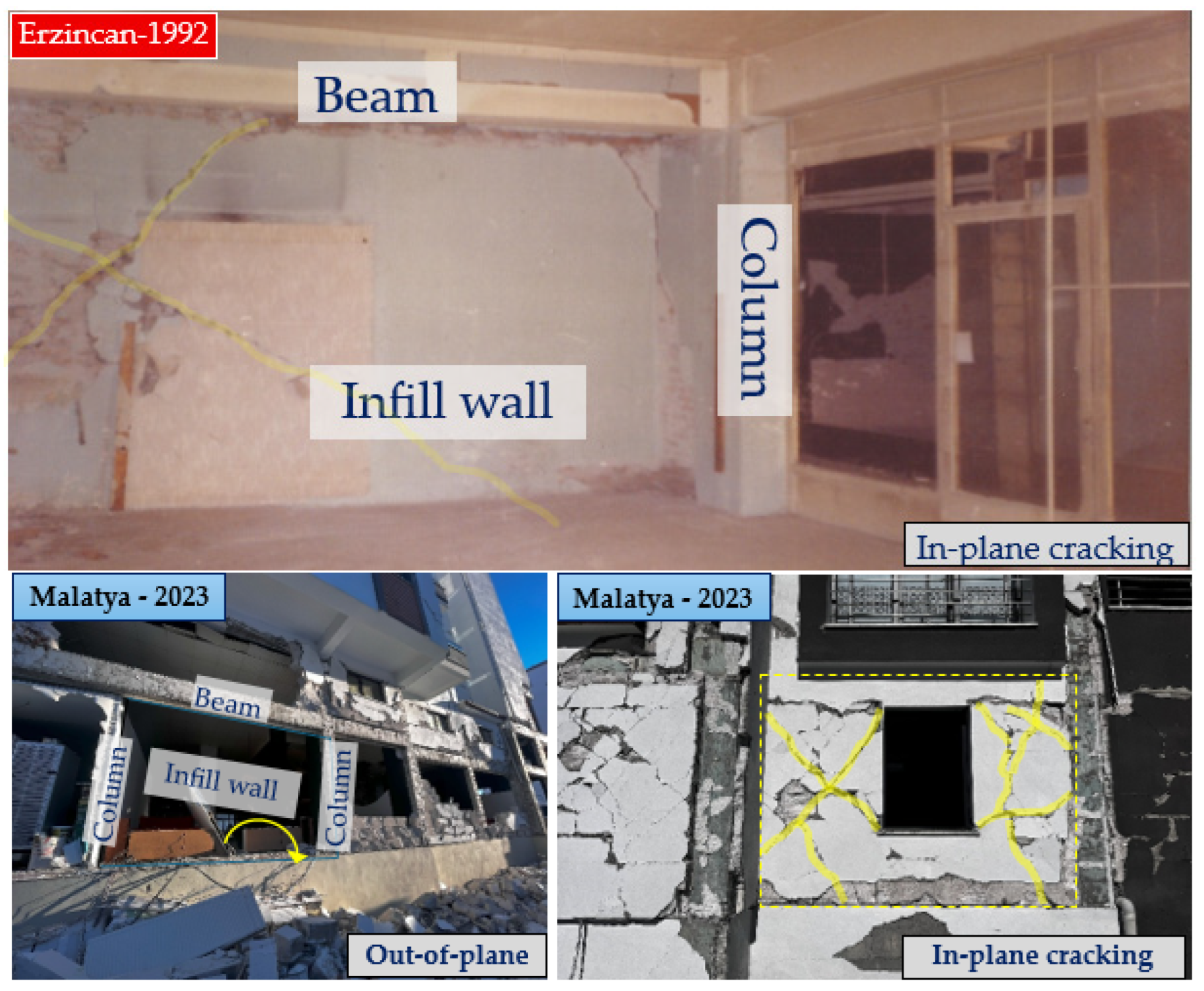
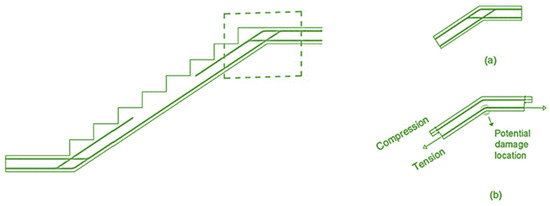
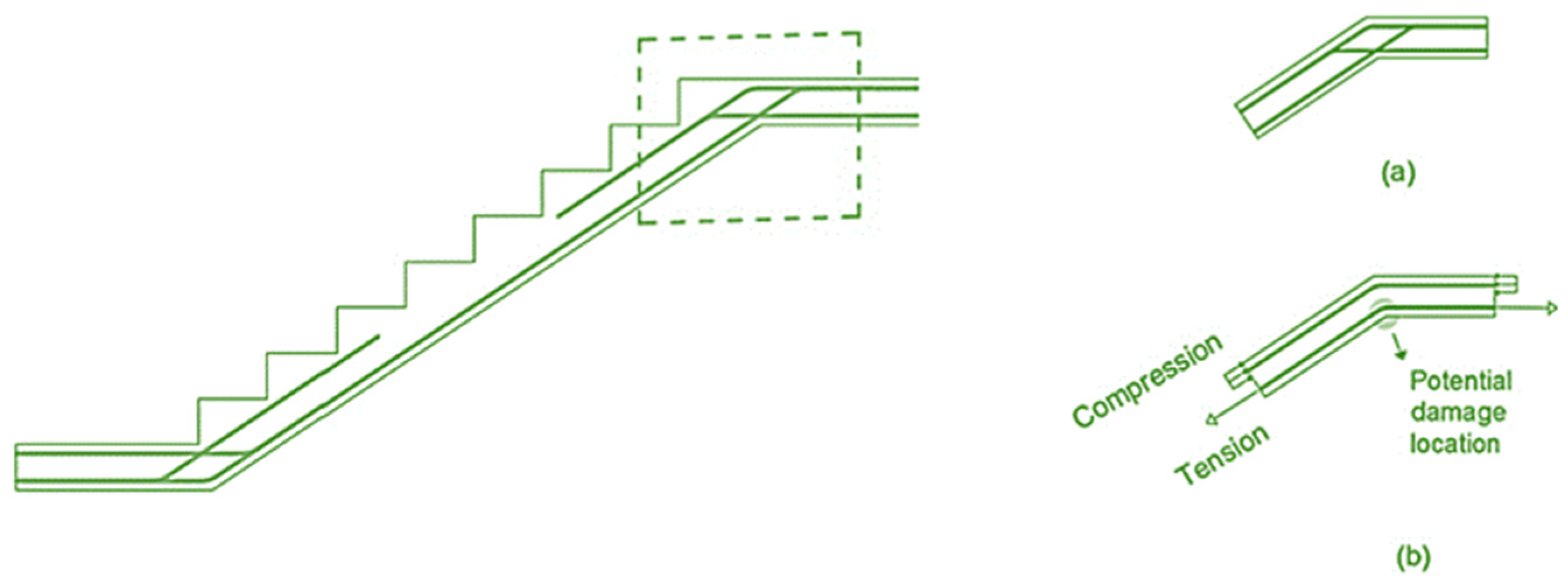
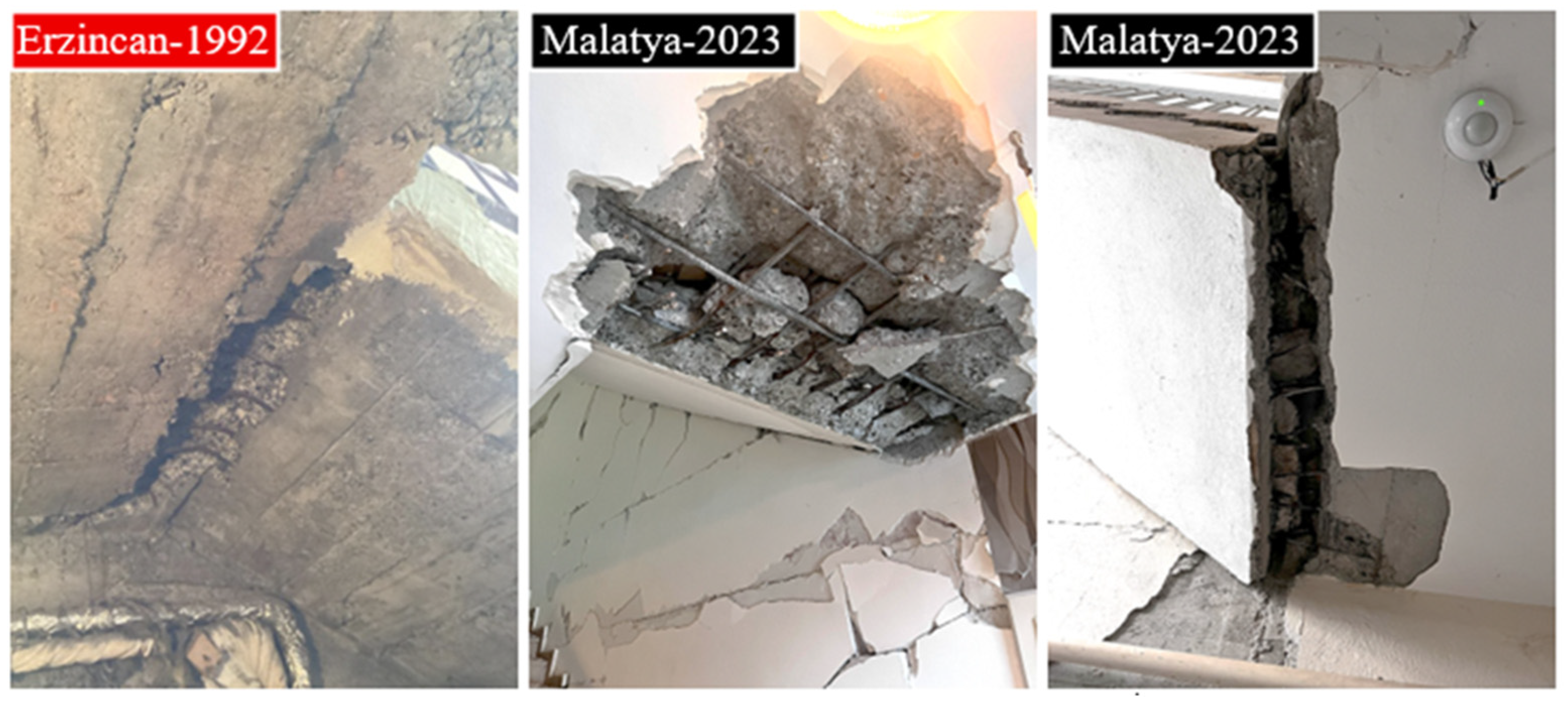

Disclaimer/Publisher’s Note: The statements, opinions and data contained in all publications are solely those of the individual author(s) and contributor(s) and not of MDPI and/or the editor(s). MDPI and/or the editor(s) disclaim responsibility for any injury to people or property resulting from any ideas, methods, instructions or products referred to in the content. |
© 2026 by the authors. Licensee MDPI, Basel, Switzerland. This article is an open access article distributed under the terms and conditions of the Creative Commons Attribution (CC BY) license.