


Abstract
With the rapid development of urban construction, modern foundation pits present increasing excavation depth and scale. Most pits are close to building red lines, characterized by complex surrounding environments and rigorous deformation control limits. Targeting the defects of conventional monitoring methods, this study optimizes equipment layout and monitoring technologies based on the Vanke Nanbeikang B-6 project, and proposes an improved monitoring scheme for deep and large foundation pits. Monitoring results reveal that the maximum horizontal displacement at the pit top is 25.20 mm, and the maximum deep horizontal displacement reaches 26.18 mm at a depth of 17.0 m. Field verification indicates that the proposed scheme can quantify foundation pit deformation with measured data and guide dynamic construction adjustment. Through analysis of field deformation data, an efficient monitoring system is established and reasonable deformation control indicators are determined. The research results can provide technical references for similar foundation pit excavation projects.
1. Introduction
Deep foundation pit engineering is a multidisciplinary field involving complex geotechnical issues. It covers typical soil strength and stability problems as well as excavation-induced disturbance and deformation responses. Meanwhile, deep excavation performance is governed by the interaction between soil, retaining structures and construction procedures [1,2,3]. With rapid urbanization, excavations tend to be deeper with increasingly stringent deformation control criteria [4,5,6]. Selecting a properly adaptable and precise monitoring scheme is essential to acquire reliable measured data during pit excavation. Extensive relevant studies have been carried out by domestic and overseas researchers. Chen [7] determined the optimal monitoring scheme for high-rise residential projects by analyzing monitoring instruments and layout from a practical construction case. Based on finite element simulation, Zhong [8] analyzed the mechanical and deformation behaviors of excavated pits and summarized deformation characteristics in terms of horizontal and vertical displacements. For foundation pits constructed in water-rich sand strata, Zhang [9] clarified corresponding deformation evolution trends. Relying on BIM technology, Sun [10] innovated deep pit monitoring approaches and integrated automatic monitoring with intelligent BIM data processing to guarantee construction safety. Focusing on deep excavation monitoring, Wang [11] adopted automatic monitoring techniques, compared three prevalent automatic measurement methods including total station survey, 3D laser scanning and fiber optic sensing, and proposed a preferable automatic monitoring solution for deep foundation pits. For deep horizontal displacement measurement, Han et al. [12] calculated accumulated errors between total station readings and true values through comparative analysis, performed error analysis, and realized more accurate deep horizontal displacement results through error correction to support construction guidance. By interpreting monitoring data of deep pits in soft soil, Lan [13] proposed countermeasures against adverse geological conditions and supplied references for deformation control thresholds of complicated pit projects. Zhong [14] put forward rational monitoring strategies based on measured pit data, enabling timely data feedback to ensure smooth and safe construction. Via field tests, Pang et al. [15] analyzed and confirmed the effective bonded length of removable anchors and surrounding rock mass, and suggested adopting PVC sleeves for isolation between anchors and grout bodies to mitigate anchor corrosion, which is suitable for temporary and short-term engineering applications. Li et al. [16] reviewed global research progress on new-type anchors, mainly summarizing recyclable anchors for urban pit reinforcement and self-cuttable recyclable anchors, and identified existing bottlenecks and construction difficulties restricting the application of recyclable anchors. Although abundant research has focused on foundation pit deformation monitoring, few investigations systematically optimize combined manual-automatic monitoring schemes for excavations adjacent to building red lines, which constitutes the research motivation of this paper.
This study takes the deep and large foundation pit of the Vanke North–South Kang Plot B-6 real estate project as the research object. The pit features considerable excavation depth and span, sits adjacent to many existing buildings and intricate underground pipelines, and overlies thick Quaternary strata, leading to rigorous deformation control requirements amid complicated urban construction surroundings. Using field monitoring, data analysis and comparative verification, continuous full-construction monitoring is performed targeting horizontal displacements at the slope crest and deep strata of the pit. Analysis of measured deformation data reveals the temporal-spatial deformation laws of this deep excavation, and the conventional monitoring scheme is optimized to accommodate geological and ambient conditions typical of urban deep and large foundation pits. Comparative analysis of field measurements further determines reasonable deformation control thresholds for pit construction, enhancing the pertinence and practicability of monitoring and deformation control for analogous high-risk deep foundation pit projects.
Rapid urbanization makes ultra-deep foundation pits surrounded by dense high-rise buildings a tough challenge for geotechnical construction, which demands reliable deformation monitoring and scientific early warning systems. Conventional manual monitoring can only obtain discrete extreme displacement values and cannot characterize continuous deformation evolution trends. Li et al. [17] put forward an integrated monitoring approach combining 3D laser scanning and wireless sensing to realize full-field deformation collection and statistical analysis. Nevertheless, this method is mostly applied to regular rectangular foundation pits, without targeted optimization for irregular parallelogram ultra-deep pits around 24 m deep. Zhu et al. [18] constructed an LSTM-based deformation prediction framework to compare predicted and measured deformation values and set dynamic early-warning thresholds; however, most available control criteria fit soft soil conditions poorly suited for complex composite strata. Chen et al. [19] generalized deformation behaviors of irregular deep excavations and put forward empirical control indices, whereas systematic staged warning benchmarks for urban ultra-deep parallelogram pits are still scarce. Distinct from conventional monitoring schemes reported in existing literature, this study optimizes monitoring layout arrangement and data filtering rules in accordance with specific project characteristics, upgrades traditional monitoring workflows, and develops a refined monitoring methodology applicable to similar engineering scenarios. This constitutes the primary innovation of this research, offering practical references for monitoring the design of comparable excavation projects.
Based on full-cycle field monitoring data, this paper reveals the quantitative deformation characteristics and reasonable deformation control thresholds of urban deep foundation pits. Different from previous studies focusing on single monitoring technology, this research proposes an optimized manual-automatic integrated monitoring scheme to improve the integrity and timeliness of monitoring data. This study fills the research gap in systematic monitoring optimization for urban deep foundation pits and provides reliable practical references for similar engineering projects globally.
2. Project Overview
The planned Vanke North–South Kang B-6 Plot Project is situated in Shizhong District, Jinan City. It lies to the west of Provincial Highway S103, south of the planned B-5 Plot, and east of the B-13 Plot. The project will feature 57-story and 34-story super high-rise office buildings, 16-story and 22-story office towers, 12-story apartment buildings, as well as 3–4-story shopping centers. Additionally, a 5-story underground garage will serve the entire complex.
The foundation pit exhibits a parallelogram shape. Spanning approximately 187.0 m at its widest point from east to west and about 196.6 m in length from north to south, the total length of the support section measures around 787.2 m. The designed overall excavation depth of the pit is H = 24.3 m. Given its significant excavation depth, proximity to the building land red line, complex surrounding environment, and strict deformation requirements, the foundation pit support safety is classified as Grade I, with a designed service life of 22 months.
Positioned on the western side of Xinglong Mountain in Jinan City’s Shizhong District, the pit site represents a tilted plain geomorphic unit at the mountain’s foot. Characterized by a high terrain with an overall east-high-west-low elevation trend, the site contains areas filled with construction debris and slag. The Quaternary soil layer extends to a thickness of roughly 19.0–28.0 m. The thickness of the moderately weathered tuff above the pit’s eastern base ranges from 3.0 to 6.0 m, while the Quaternary layer below the western base reaches about 6.0–10.0 m. Karstic fissure water constitutes the predominant type of groundwater, with the water table located at a depth of 27.60–34.00 m.
The east side of the pit is S103 provincial highway, planning to build the subway Nankang station, the proposed underground garage sideline from the subway protection line is about 7.0 m, along the S103 status quo north–south distribution of three fiber optic fibers, a 10 kV power line, a D600 sewage pipeline, from the garage sideline is about 10.0 to 20.0 m; the south side of the pit east and west of the distribution of the D800 sewage pipe, a GD 200 × 100 power supply lines, from Garage side line about 5.0~8.0 m; north and west side adjacent to the newly built municipal roads, has buried rainwater, sewage, water supply, electricity, gas, heat and other types of municipal pipelines more than ten, not yet in use, from the north side of the construction of the B5 plot of the underground structure of the nearest about 31.0 m, from the west side of the construction of the B13 plot of about 40.0 m.
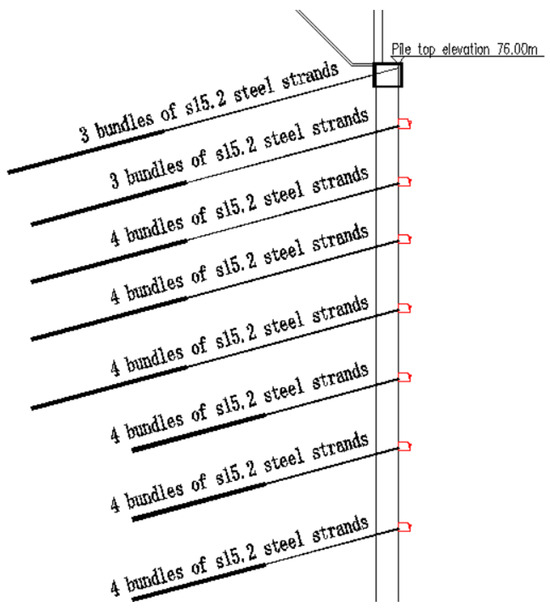
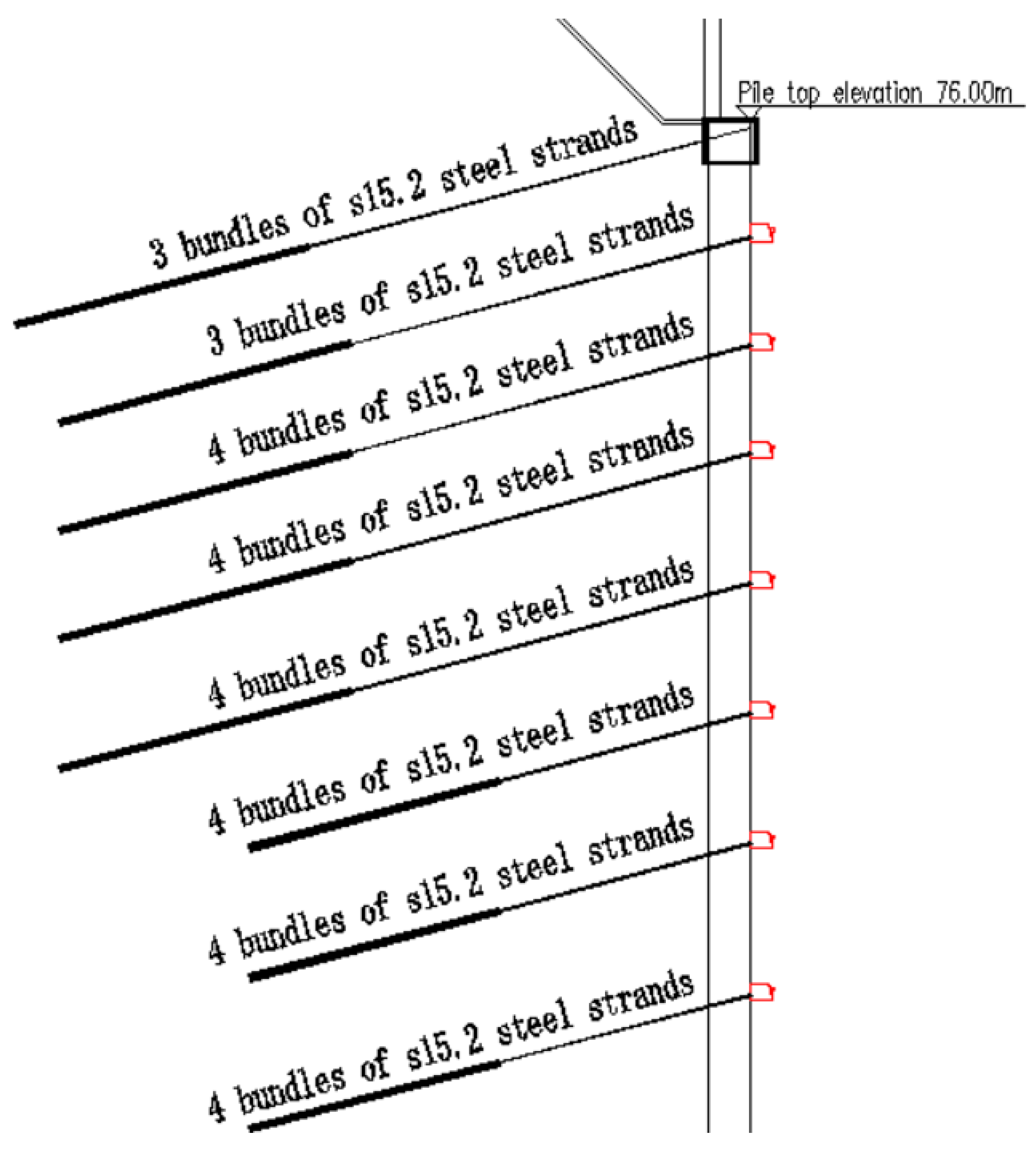
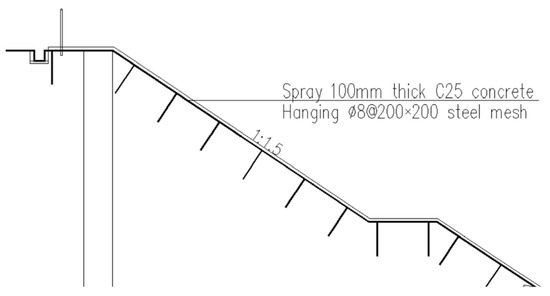
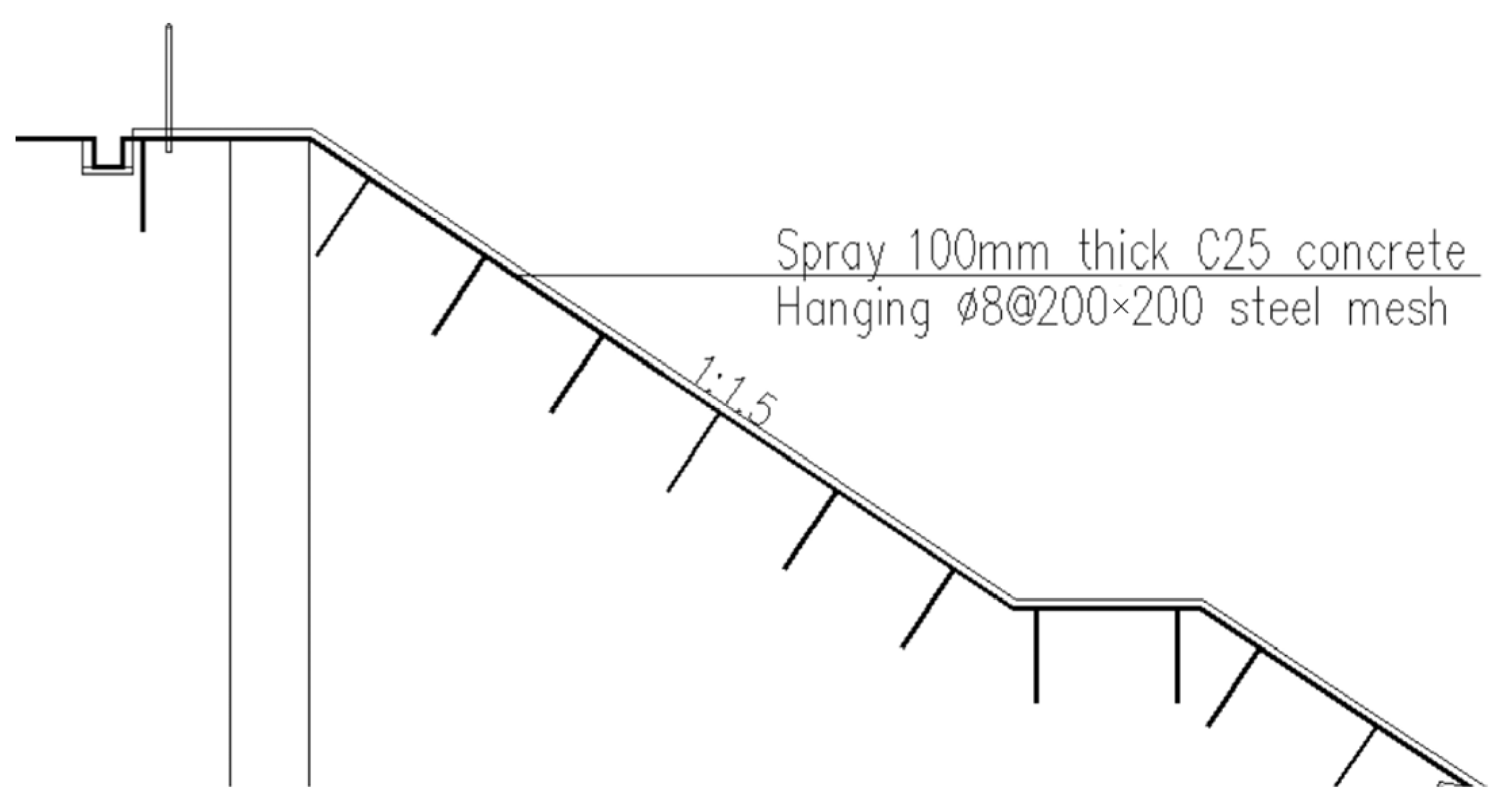
According to the design requirements, the pit is mainly divided into 12 support units. The support unit adopts the support form of “support piles + prestressed anchor cable” combined with local sloping, as shown in Figure 1. At the same time, 7 soil nail walls are set up as temporary support units, as shown in Figure 2. The stratigraphic distribution within the excavation scope is listed in Table 1.
Figure 1.
1-1 Section of the support unit. (The elevation of the pile top is 76.00 m. The prestressed anchor cables consist of two layers with 3 bundles of Φ15.2 steel strands and six layers with 4 bundles of Φ15.2 steel strands, respectively).
Figure 2.
Section of support unit 1-1 of the excavation ramp. (The slope is supported by soil nail walls with a slope ratio of 1:1.5).
Table 1.
Site soil layer.
3. Monitoring Program
3.1. Monitoring Requirements
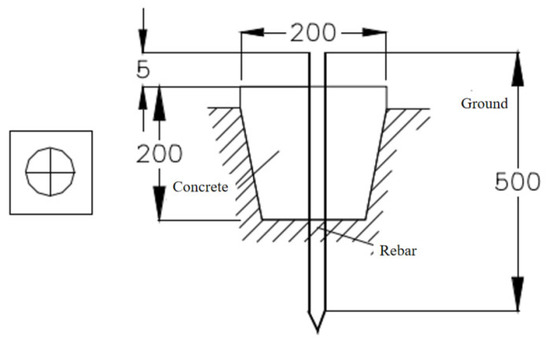
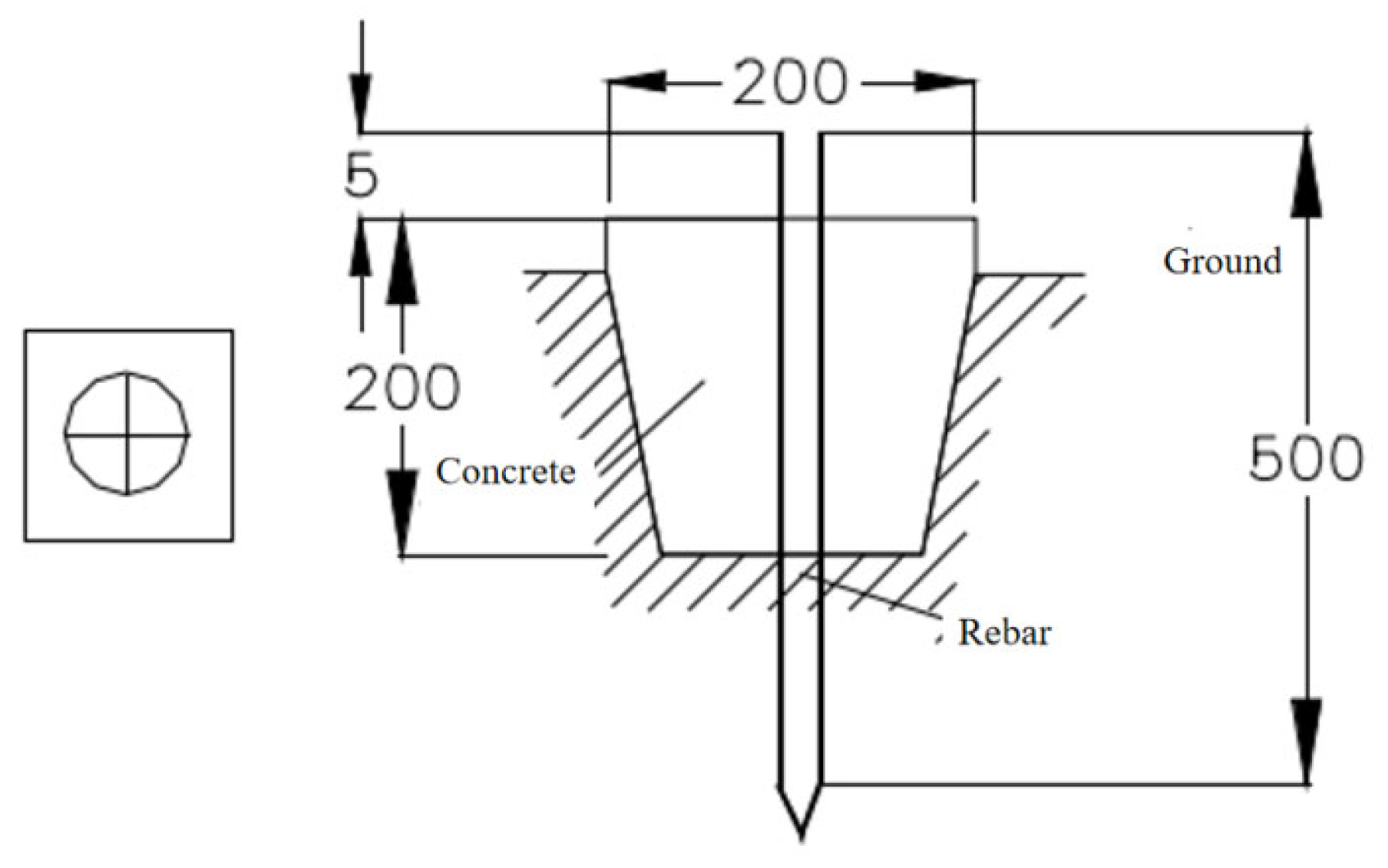
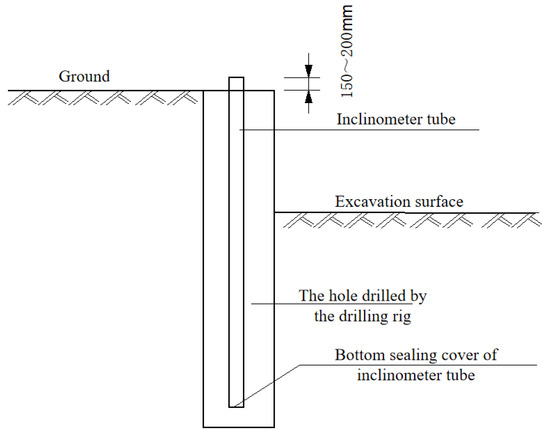
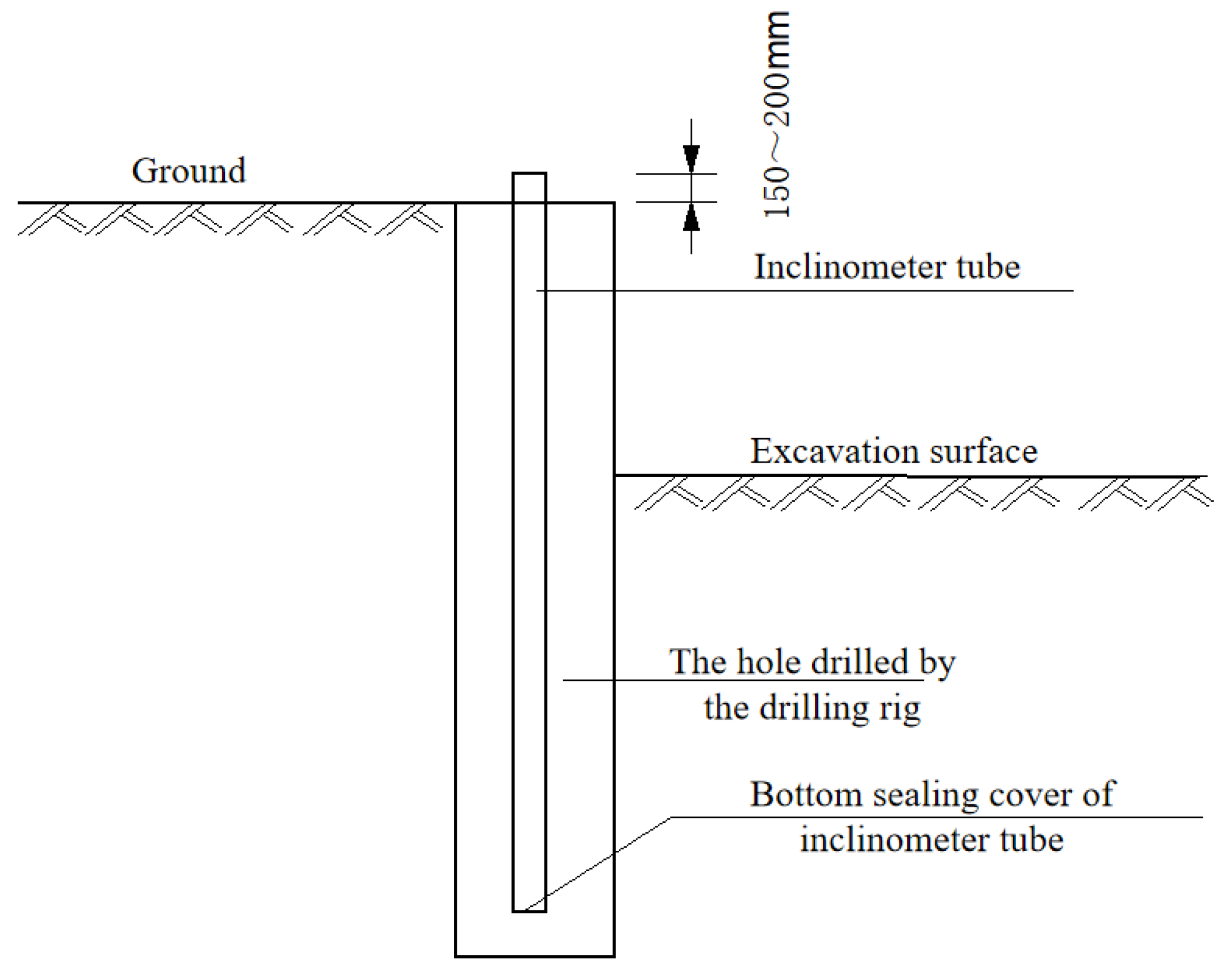
In accordance with national specifications for foundation pit monitoring, a total of 30 monitoring points are rationally arranged on the excavation surface and surrounding ground, meeting the minimum layout requirements stipulated in current codes. All monitoring points are evenly distributed in the test zone to ensure complete and representative monitoring data, which supports accurate capture of deformation modes and time-dependent deformation laws. Meanwhile, three stable benchmark points are deployed in this zone for closed-loop leveling measurement. Considering the distribution of adjacent roads and existing buildings, underground pipeline monitoring points are arranged at inspection wells and valve positions. Monitoring points for surrounding buildings are installed at structural corners via corner drilling construction [20,21,22]. As illustrated in Figure 3 and Figure 4, the overall monitoring network consists of surface monitoring points on the pit slope and deep displacement sensors embedded in surrounding soils.
Figure 3.
Buried observation points for horizontal displacement monitoring at the top of the slope (unit: mm).
Figure 4.
Buried observation points for deep horizontal displacement monitoring (unit: mm).
3.2. Monitoring Methods and Data Collection
Displacement monitoring is implemented using the MSJ-201 dynamometer, and data is read via the ZXY-2 frequency readout meter with an accuracy of 1.0% full scale; ambient temperature is recorded synchronously throughout monitoring.
Slope-top horizontal displacement is monitored by a Leica TS60 total station (Wetzlar, Germany), and deep horizontal displacement is measured with a CX-06 borehole inclinometer. Ground surface settlement is observed via a DSZ2 high-precision automatic level, and the change in groundwater level is tracked by an SWJ-90 steel tape water level indicator. The axial force of anchor cables is continuously monitored by an MSJ-201 dynamometer.
During the installation process, monitor the force gauge at any time and observe whether there are abnormalities; if any are found, take immediate measures to deal with them. Anchor cable installation must start from the middle to the surrounding anchor cable, with gradually symmetrical loading, so as to avoid the anchor cable dynamometer eccentric force.
After the anchor force gauge is installed and the anchor construction is completed, the anchor prestressing is tensioned, at which time the initial load on the anchor tension gauge is recorded, and the results of the tension gauge are calibrated against the readings of the tensioning jack. When measuring, the same batch of anchor rods should be measured at the same time or at the same temperature as far as possible, and the temperature should be recorded for each reading.
3.3. Monitoring Principles
To guarantee effective implementation of deep foundation pit monitoring and construction safety, monitoring shall comply with the following principles:
- (1)
- Monitoring data shall be authentic and reliable. Data reliability is guaranteed by standardized embedding of transducers, precision of monitoring instruments and professional competence of operators. All measurements must be recorded strictly according to original field records, and tampering or deletion of raw data is prohibited.
- (2)
- Field monitoring data shall be calculated and processed promptly; retesting shall be performed once abnormal values appear.
- (3)
- Transducers embedded in soil or supporting structures shall minimize disturbance to structural internal forces. During installation, matching between transducers and the surrounding geotechnical media should be guaranteed.
- (4)
- For key monitoring items, early-warning thresholds and alarm systems shall be predefined according to project characteristics. These thresholds cover cumulative deformation or internal force as well as their corresponding change rates.
- (5)
- Complete monitoring forms, data reports, graphs and curves shall be systematically sorted out throughout monitoring. A comprehensive final monitoring report shall be compiled upon completion of the monitoring program.
3.4. Control Value Requirements
Given the complex surroundings and large excavation scale, control thresholds for key monitoring indicators are defined as follows: the horizontal and vertical displacements of retaining structures shall not exceed the smaller value between 0.15%H and 30 mm [23], while deep lateral displacement is limited to the lesser of 0.2%H and 40 mm.
This study adopts high-frequency manual monitoring combined with automatic monitoring of deep horizontal displacement and groundwater level. Manual monitoring is conducted once daily, and the automatic system collects data hourly. This arrangement ensures the timely acquisition of pit deformation data to inform design optimization and on-site construction.
4. Analysis of Monitoring Results
Throughout the construction of the underground works, systematic tracking of lateral displacement at the pit crown and deep-seated layers was performed, producing the following dataset.
4.1. Analysis of Horizontal Displacement at the Top of the Slope
The horizontal displacement variation curve at the top of the pit slope is shown in Figure 5.
Figure 5.
Variation curve of horizontal displacement of the slope top.
Data analysis of field monitoring results draws several key conclusions. First, the horizontal displacement at the foundation pit slope top decreases with increasing excavation depth, and the displacement curve shows a clear inverse variation trend. The maximum slope-top horizontal displacement is 25.20 mm, monitored at the northern section of the test foundation pit. Overall, the slope-top horizontal displacement curves remain stable with an approximately linear variation pattern. Slight displacement fluctuations are mainly found in geologically weak zones, especially the region with the thickest Quaternary overburden on the north side of the test section. In such unfavorable geological areas, a thicker Quaternary soil layer leads to larger slope-top horizontal displacement, while displacement curves at other monitoring positions maintain steady linear characteristics. Although the north pit wall experiences relatively larger deformation, all monitored displacement values satisfy the safety control thresholds: the slope-top horizontal displacement is no more than 0.15%H and less than 30 mm. The above monitoring results verify the rationality and effectiveness of the combined supporting system consisting of retaining piles and prestressed anchor cables adopted for the northern foundation pit.
As shown in Figure 5 and Table 2, the monitored displacement at partial measuring points is obviously higher than that at other positions. On the one hand, the surrounding rock in this area is poorly integrated with developed fractures and low mechanical parameters, which makes it prone to plastic deformation under in situ stress. On the other hand, the disturbance induced by anchor tension construction accelerates crack propagation inside the rock mass and increases the surrounding rock convergence. Previous relevant studies have verified that superposition of fractured rock zone and stress concentration commonly leads to abnormally large deformation, which is consistent with our monitoring results. Due to stratum heterogeneity, uneven in situ stress distribution eventually causes prominent local displacement.
Table 2.
Variation in Slope Crest Horizontal Displacement.
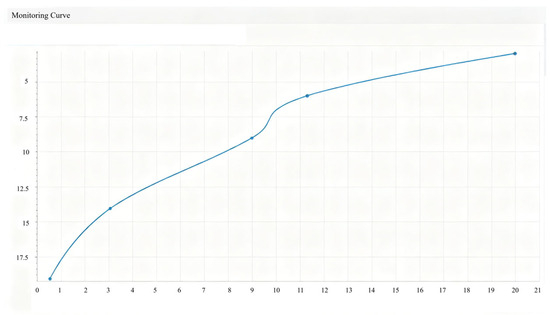
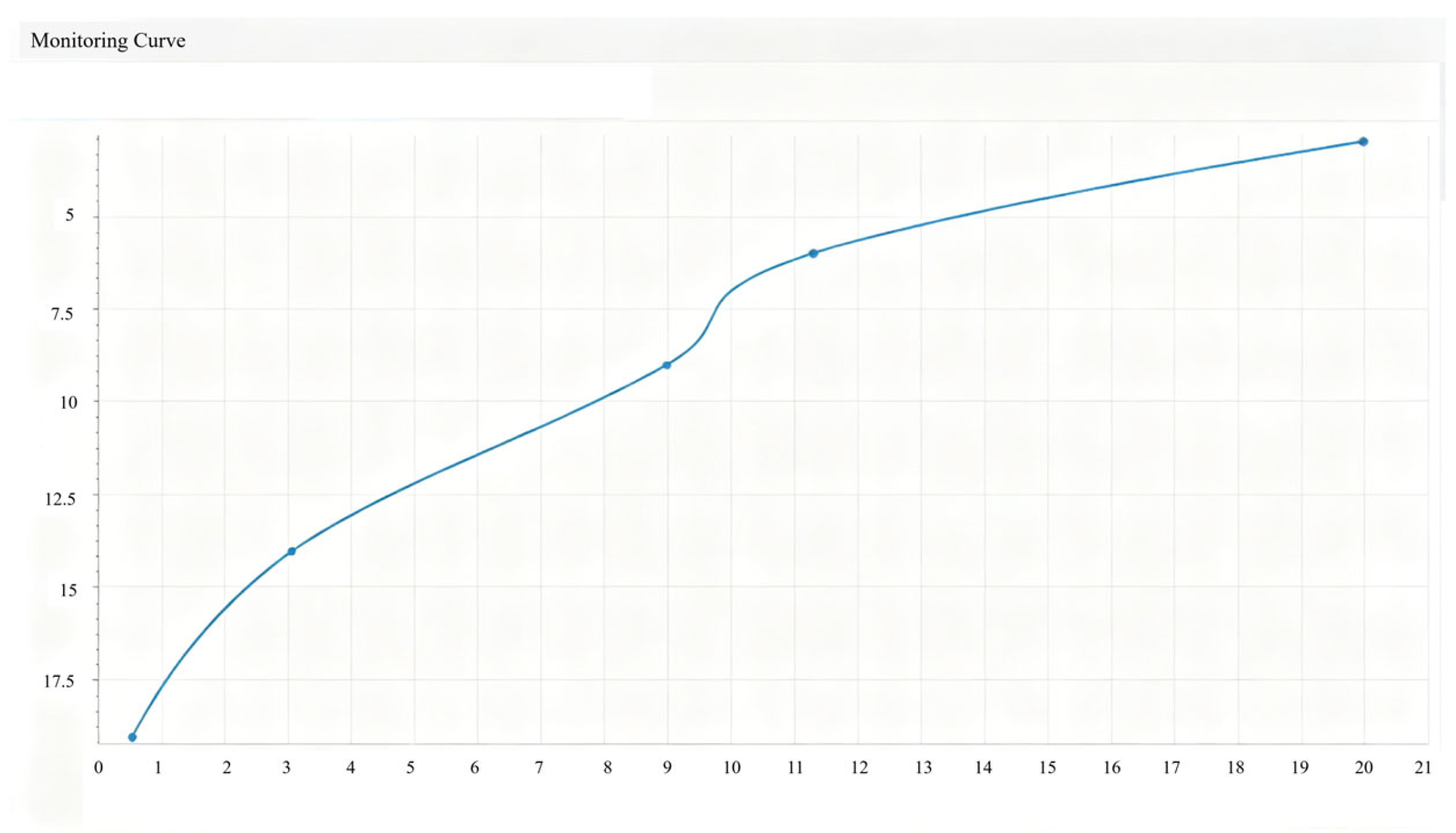
The temporal evolution of horizontal displacement at the slope summit is depicted in Figure 6, specifically for the concluding phase of the project.
Figure 6.
Change curve of horizontal displacement of the slope top in the late construction period.
Comparative analysis identifies clear behavioral differences between early and late construction phases. While early displacements were strongly affected by unfavorable geological conditions, the later stage features a more uniform structural stress distribution and stabilized deformation. The measured cumulative displacement of 19.80 mm stays within the allowable limit, verifying the performance of the support system and its adaptability to site geological conditions. Overall foundation pit deformation is governed by sequential works: layered excavation, retaining structure casting and anchor cable tensioning. Vertical marker lines are marked on displacement curves to divide construction stages for intuitive comparison. During layered excavation, soil unloading triggers significant stress release, causing rapid growth in cumulative displacement and notably higher daily deformation rates at most monitoring points. After casting and curing of retaining structures, the restraint from the support system gradually works, greatly slowing pit deformation growth. Once anchor cables are tensioned and locked, applied prestress restrains lateral soil displacement, with slight rebound deformation observed at some measuring points. In subsequent construction suspension and cushion construction, no further excavation disturbance occurs, and foundation pit deformation gradually stabilizes.
4.2. Deep Horizontal Displacement Analysis
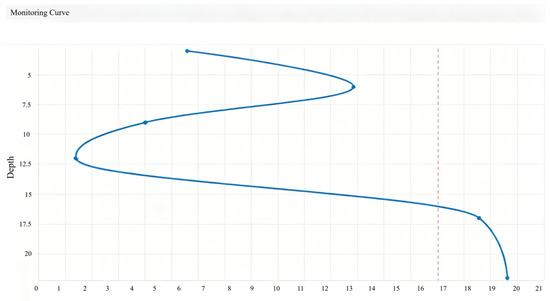
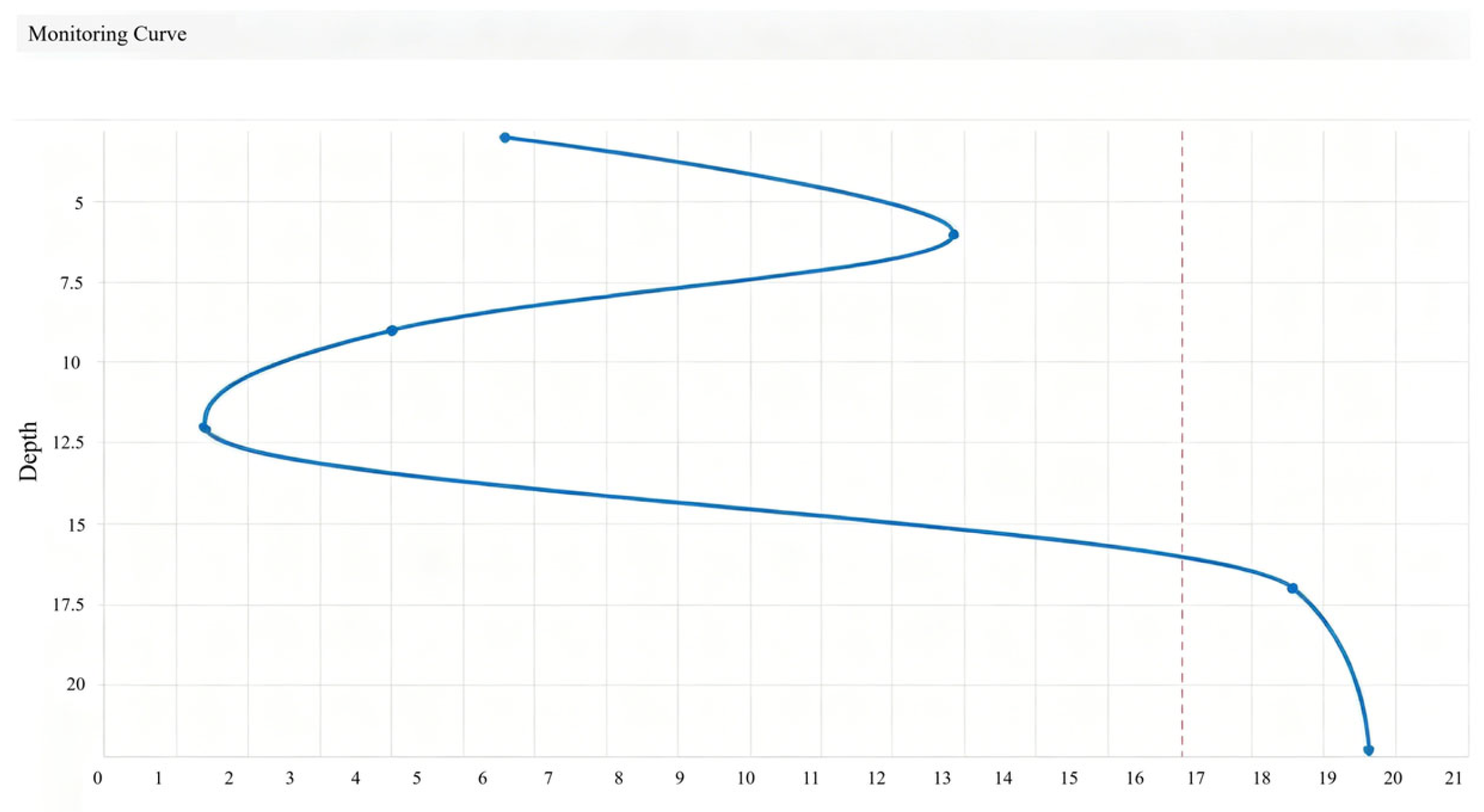
The variation curves of horizontal displacement in the deeper part of the pit are shown in Figure 7.
Figure 7.
Variation curve of deep horizontal displacement.
As shown in Figure 7 and Table 3, examination of the monitoring dataset reveals that the deep horizontal displacement within the foundation pit exhibits a distinct triphasic behavioral pattern with depth: an initial ascent followed by a reduction, and ultimately culminating in a secondary surge. This phenomenon is primarily ascribed to the heightened sensitivity of subsurface lateral movement to stratigraphic variability, contrasting with the relative stability observed at the slope crest. Within geological zones characterized by homogeneous layering and negligible lithological fluctuation, the displacement profiles demonstrate a monotonic decline correlating with increased depth. It is pertinent to note that the apex of lateral deflection, quantified at 26.18 mm, was localized at a 17.0 m depth along the eastern flank of the test section, identifying this stratum as the locus of maximal deformation. Subsequent geotechnical investigation and comparative analysis elucidated that this specific depth interval traverses a water-saturated sandy aquifer possessing compromised mechanical properties and high hydraulic conductivity; such conditions predispose the soil mass to shear failure and translational sliding under the influence of active earth pressures. Although these geotechnical complexities induced substantial horizontal displacement on the eastern side, the recorded magnitude remains in compliance with the prescribed design criterion of ≤0.2%H (or 40 mm), thereby validating the structural integrity of the support system.
Table 3.
Variation in Deep Horizontal Displacement.
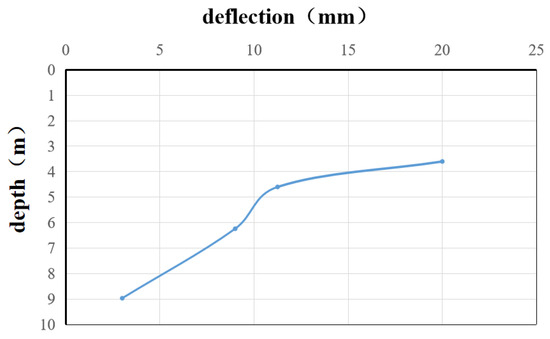
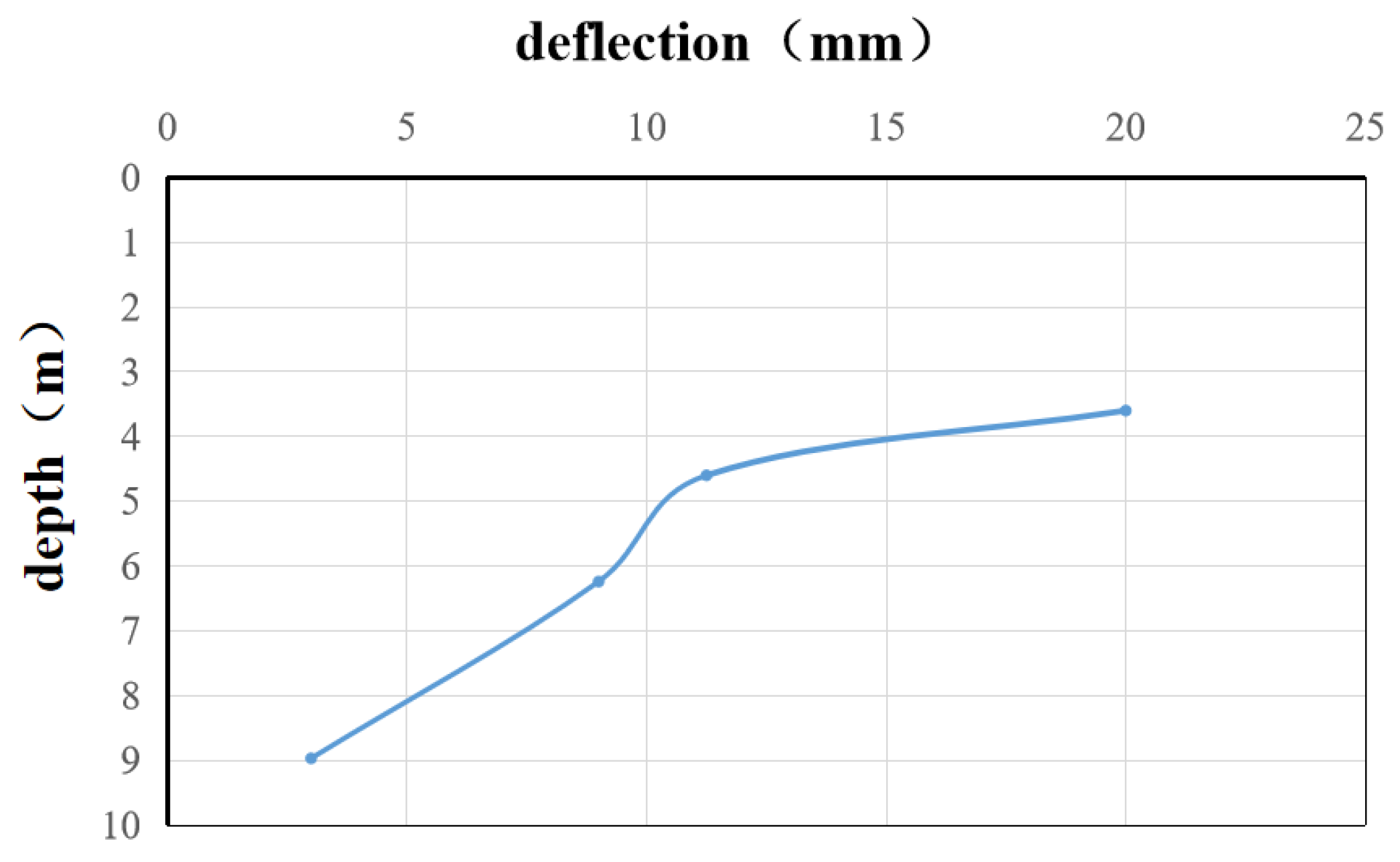
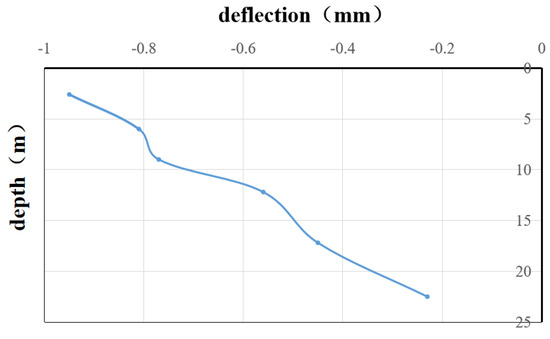
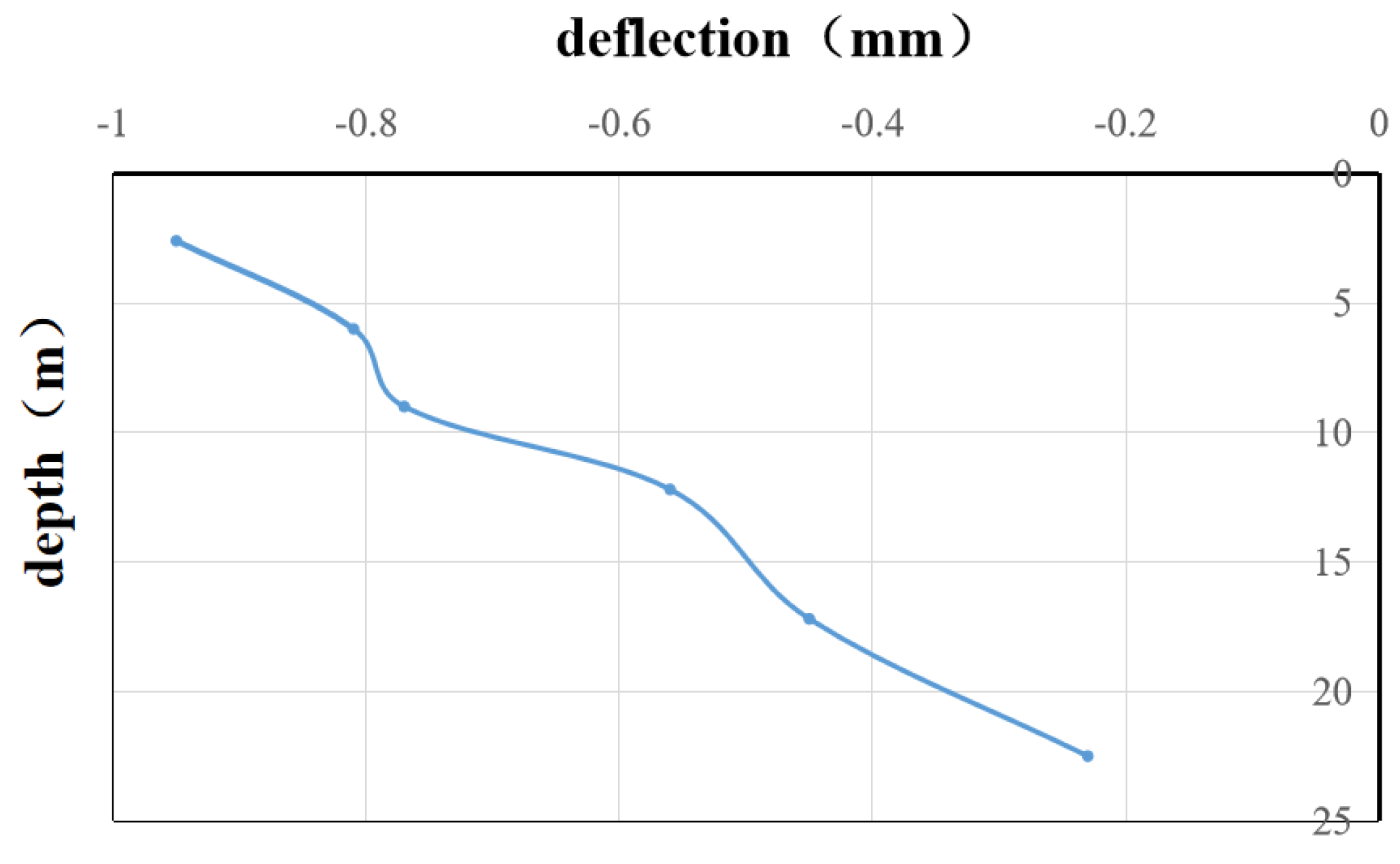
Figure 8 depicts the variation profile of deep horizontal displacement for the pertinent boreholes during the advanced stages of construction.
Figure 8.
Change curve of deep horizontal displacement in the late construction period.
On the whole, the deep horizontal displacement reflects the dynamic characteristics of the soil mass. Through the changes in the deep horizontal displacement data, it can be found that the project construction does not cause related harm to the surrounding environment, and the overall geological condition of the project is relatively stable. The deep horizontal displacement data remained relatively stable throughout the construction period, from commencement to completion, without exceeding the relevant thresholds. This stability confirms that the construction-related support measures were effectively implemented.
Through the relevant monitoring of the foundation pit deformation in this project, more complete monitoring data can be obtained for the corresponding supporting system of “supporting pile + prestressed anchor cable”, and its mechanism and effectiveness can be studied and analyzed more comprehensively. In view of the deep Quaternary geological conditions, this scheme can effectively realize the relevant control of horizontal displacement.
4.3. Comparative Analysis with Existing Studies
This study further verifies the rationality and innovation of research results through a comparative analysis of deformation characteristics with similar urban foundation pits with a depth of 15–20 m in composite geological strata. According to previous research, the horizontal displacement of foundation pits monitored by conventional schemes generally ranges from 0.15%H to 0.25%H, and the displacement value often exceeds 30 mm under complex urban construction environments. By comparison, the maximum slope top horizontal displacement (25.20 mm) and deep horizontal displacement (26.18 mm) monitored in this project are both controlled within 0.15%H, reflecting better deformation control performance and higher construction safety. Such favorable monitoring effects are attributed to the proposed risk-based differentiated monitoring layout and temperature correction method. Nevertheless, most existing studies adopt uniform monitoring point spacing without targeted monitoring encryption for high-risk areas adjacent to buildings and ignore temperature-induced monitoring data drift, thereby resulting in incomplete deformation monitoring data and overly conservative evaluation results. In addition, the deformation evolution law obtained in this study—namely gradual deformation growth during excavation and gradual convergence after construction—is consistent with the classical deformation characteristics of deep foundation pits, which proves the reliability of the measured data. Different from conventional studies focusing merely on final deformation values, this paper quantifies staged deformation responses and eliminates external environmental interference. The research findings can provide refined monitoring parameters for urban deep foundation pit projects, and also validate the technical advantages of the optimized monitoring scheme proposed in this study.
5. Conclusions
- (1)
- The adopted lateral supporting system effectively restrains the horizontal deformation of the foundation pit. The maximum horizontal displacements at the slope top and pit depth are controlled within 30 mm, complying with the control standard of 0.15%H. All deformation indicators remain below warning thresholds, guaranteeing the long-term stability of the foundation pit throughout construction.
- (2)
- Pit deformation grows gradually as excavation proceeds and tends to converge after excavation is finished. Short-term temperature fluctuations lead to obvious deviations in original monitoring data, whereas the temperature correction method proposed in this study can effectively eliminate temperature-induced errors. It offers a reliable data preprocessing approach for monitoring practices of similar urban foundation pits.
- (3)
- Whole-process monitoring and phased early-warning mechanisms efficiently prevent excessive deformation of the foundation pit and surrounding adjacent facilities. All monitored parameters satisfy the permissible limits, ensuring structural safety and construction stability of deep excavation engineering.
- (4)
- Scientific monitoring arrangement, rational equipment selection and matched monitoring frequency tailored to actual geological and excavation conditions can accurately capture deformation mutations caused by excavation unloading and anchor cable tensioning. This study provides quantitative technical guidance for safe and standardized foundation pit construction.
- (5)
- Based on full-scale field monitoring data, this study optimizes core monitoring parameters and construction schemes, remedying the limitations of conventional monitoring methods. The summarized quantitative deformation laws and optimized monitoring strategies can serve as practical references for analogous deep foundation pit projects, which also constitute the core engineering contribution of this research.
- (6)
- Limited by research samples, the optimized monitoring scheme and relevant conclusions are derived from the deep foundation pit project of Vanke Nanbeikang B-6 Plot. Given the site-specific geological conditions and supporting structure forms, the research findings cannot be directly applied to all large-scale deep foundation pits without limitations. Further research will adopt multi-source monitoring data from various projects to improve the universality of the proposed method.
Author Contributions
Conceptualization, N.Z.; methodology, S.L.; software, H.L.; validation, H.L.; data curation, X.L.; writing—original draft preparation, S.L.; writing—review and editing, N.Z.; supervision, X.L. All authors have read and agreed to the published version of the manuscript.
Funding
This research was funded by the Institute Research Fund from Qingdao Institute of Geology, grant number [2022-QDDZYKY05], and the APC had no funding.
Data Availability Statement
Dataset available on request from the authors.
Conflicts of Interest
Author Xueying Liu was employed by Qingdao Dikuang Geotechnical Engineering Co., Ltd. Author Ning Zhao was employed by the First Construction Branch of Qingdao Metro Group Co., Ltd. The remaining authors declare that the research was conducted in the absence of any commercial or financial relationships that could be construed as a potential conflict of interest.
References
- Du, J.A.; Li, T.; Yang, S.S.; Wang, C.L. Research on displacement and stress monitoring of diaphragm wall during excavation of deep and large foundation pit. J. Taiyuan Univ. Technol. 2020, 51, 900–905. [Google Scholar]
- Xu, J.; Yang, S.F.; Wu, H.Y.; Zhang, L. Monitoring and numerical analysis of pile-anchor support structure for deep and large foundation pit in loess area. J. Xi’an Univ. Archit. Technol. (Nat. Sci. Ed.) 2019, 51, 517–524. [Google Scholar]
- Ye, S.H.; Li, D.P. Monitoring and numerical simulation analysis of deep and large foundation pit excavation in complex environment. J. Civ. Eng. 2019, 52, 117–126. [Google Scholar]
- Liu, B. Measured analysis of deformation of adjacent strata of ultra-deep large foundation pit in Lujiazui area, Shanghai. J. Geotech. Eng. 2018, 40, 1950–1958. [Google Scholar]
- Xu, W.J.; Tang, D.H.; Tan, R.J.; Zhang, Q.B. Application of digital pit system in deep and large pit engineering. J. Rock Mech. Eng. 2015, 34, 3510–3517. [Google Scholar]
- Chen, B.; Lu, X.J.; Qian, D.L. Application of numerical analysis in the excavation process of deep and large foundation pit. Ind. Build. 2011, 41, 465–469. [Google Scholar]
- Chen, Q. Research on deep foundation pit monitoring program for high-rise residential buildings. Eng. Technol. Res. 2023, 8, 210–212. [Google Scholar]
- Zhong, Z.Y. Analysis of deformation monitoring during deep foundation pit excavation. Eng. Technol. Res. 2023, 8, 60–62. [Google Scholar]
- Zhang, Q.J. Study on deformation characteristics of biased deep foundation pit excavation under water-rich sand layer conditions. Sci. Innov. 2023, 1–5. [Google Scholar]
- Sun, Z.W. Research on the application of deep foundation pit monitoring based on BIM technology. Jiangsu Build. Mater. 2023, 40–42. [Google Scholar]
- Wang, L. Application of automated monitoring technology in deep foundation pit monitoring. Eng. Technol. Res. 2022, 7, 190–192. [Google Scholar]
- Han, C.; Ren, G.J.; Wang, M.Y.; Ye, Z.Q.; Zhu, D.Q. Application of deep horizontal displacement measurement in deep foundation pit monitoring. Eng. Qual. 2022, 40, 80–82+90. [Google Scholar]
- Lan, Z.W. Foundation support and deformation monitoring of a soft soil basement in Fujian. Eng. Technol. Res. 2023, 8, 4–7. [Google Scholar]
- Zhong, C.X. Deformation monitoring analysis and deformation characterization of a deep foundation pit project. Build. Struct. 2023, 53, 2598–2601. [Google Scholar]
- Pang, Y.S.; Liu, H.L.; Gong, Y.J. Experimental study on pullout resistance of recoverable anchor bolt. Rock Soil Mech. 2010, 31, 1813–1816+1821. [Google Scholar]
- Li, X.J.; Li, S.M.; Xu, B. New development and prospect of rock bolt and cable. Constr. Technol. 2015, 44, 37–43. [Google Scholar]
- Li, Y.; Wang, B.; Zhang, Q. Monitoring of the Deformation of Deep Foundation Pit Using 3D Laser Scanning and Automatic Sensing in Dense Urban Environment. Buildings 2025, 15, 1290. [Google Scholar]
- Zhu, Z.Q.; Chang, D.M.; Xu, F. LSTM-based Deformation Early Warning and Time-series Data Analysis for Ultra-deep Excavation Adjacent to High-rise Buildings. Autom. Constr. 2024, 162, 105892. [Google Scholar]
- Chen, L.; Yang, H. Deformation Law and Threshold Determination of Irregular Deep Excavation Over 20 m Excavation Depth under Complex Surrounding Construction Conditions. Comput. Geotech. 2023, 161, 105687. [Google Scholar]
- Liu, Z.M. Introduction to the current situation of deep foundation pit monitoring and the application of new technology. Residence 2018, 20. [Google Scholar]
- Yang, P.; Zhang, S.H. Some problems and countermeasures in deep foundation pit monitoring. Eng. Qual. 2020, 38, 63–66. [Google Scholar]
- Huang, X.-C.; Yu, D.-H.; Deng, C.-F.; Huang, X.-Y.; Zhang, S.-B. Study on the deployment of intensive monitoring points for internal control of large-scale deep foundation pit construction. Constr. Technol. 2020, 49, 41–44. [Google Scholar]
- Salari, M.; Lezgy-Nazargah, M.; Shafaie, V.; Rad, M.M. Numerical Study of the Ultimate Bearing Capacity of Two Adjacent Rough Strip Footings on Granular Soil: Effects of Rotational and Horizontal Constraints of Footings. Buildings 2024, 14, 1653. [Google Scholar] [CrossRef] [Scilit]

Disclaimer/Publisher’s Note: The statements, opinions and data contained in all publications are solely those of the individual author(s) and contributor(s) and not of MDPI and/or the editor(s). MDPI and/or the editor(s) disclaim responsibility for any injury to people or property resulting from any ideas, methods, instructions or products referred to in the content. |
© 2026 by the authors. Licensee MDPI, Basel, Switzerland. This article is an open access article distributed under the terms and conditions of the Creative Commons Attribution (CC BY) license.