Quantitative Analysis of Urban Canyon Morphology Impacts on Summer Outdoor Thermal Comfort: A Case Study of Chongqing, China

Abstract
1. Introduction
2. Method
2.1. Study Area
2.2. Field Measurements
2.3. Questionnaire Survey
2.4. ENVI-Met Simulations and Parameter Settings
2.5. Design Simulation Scenarios
- (1)
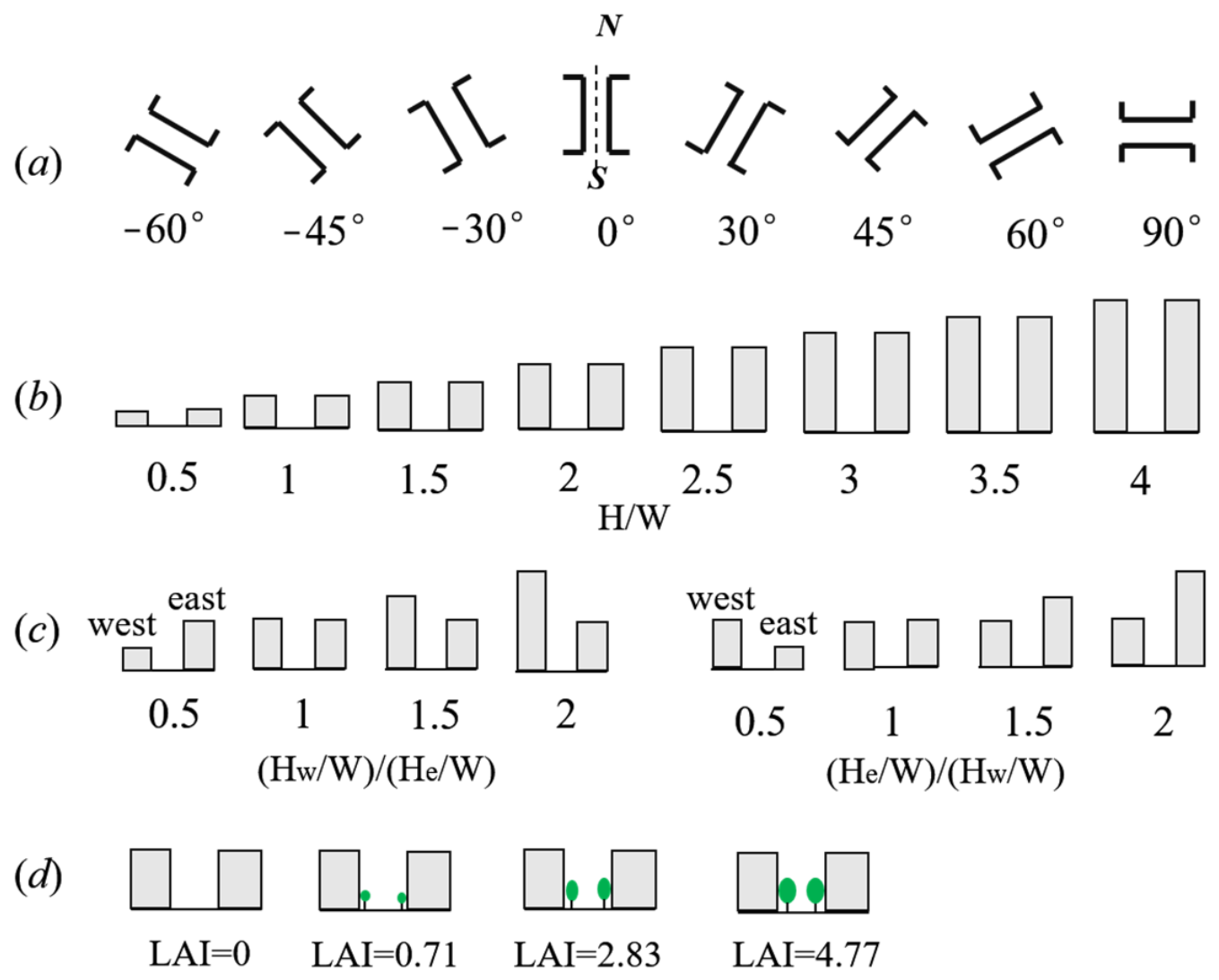
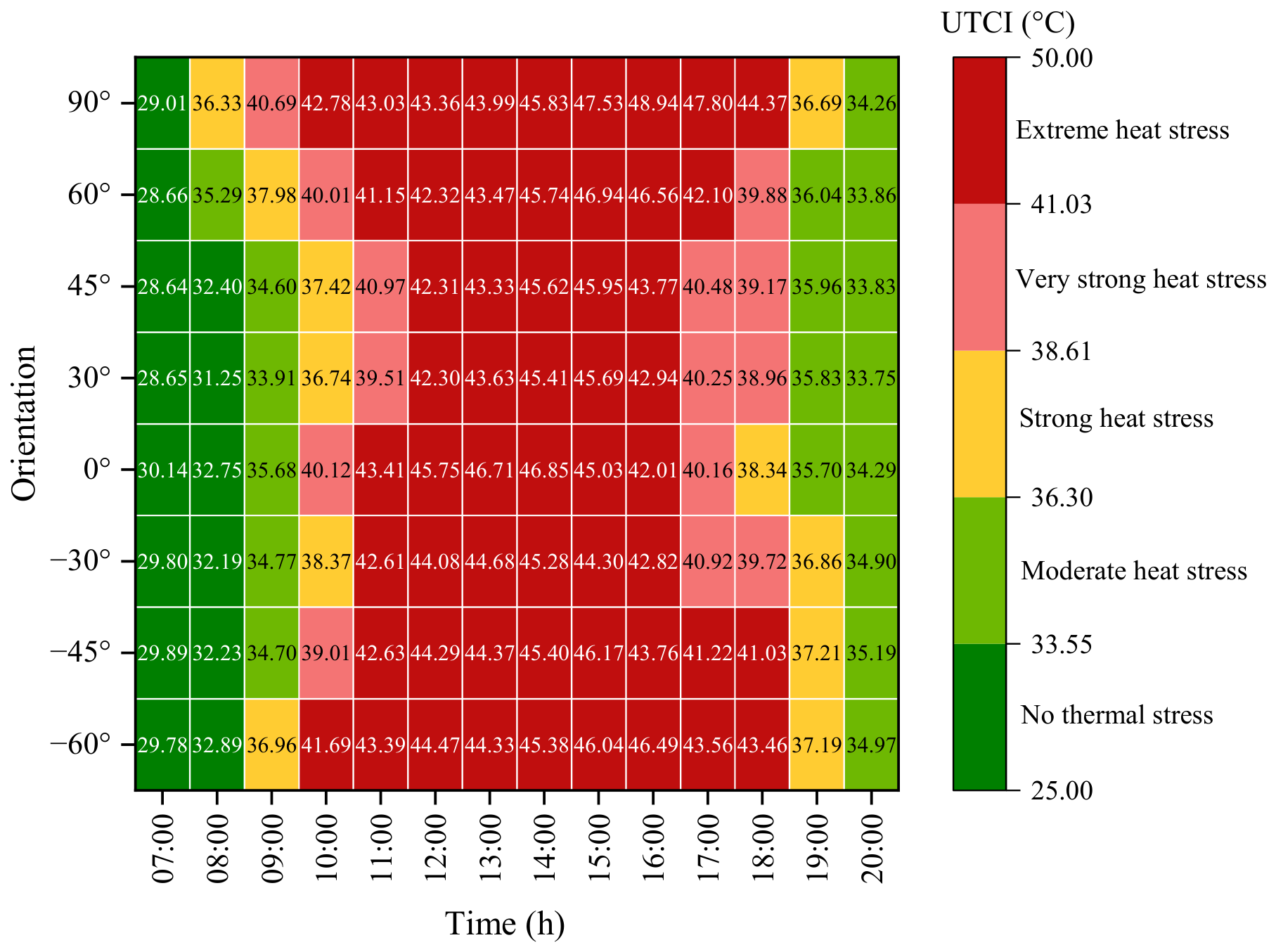
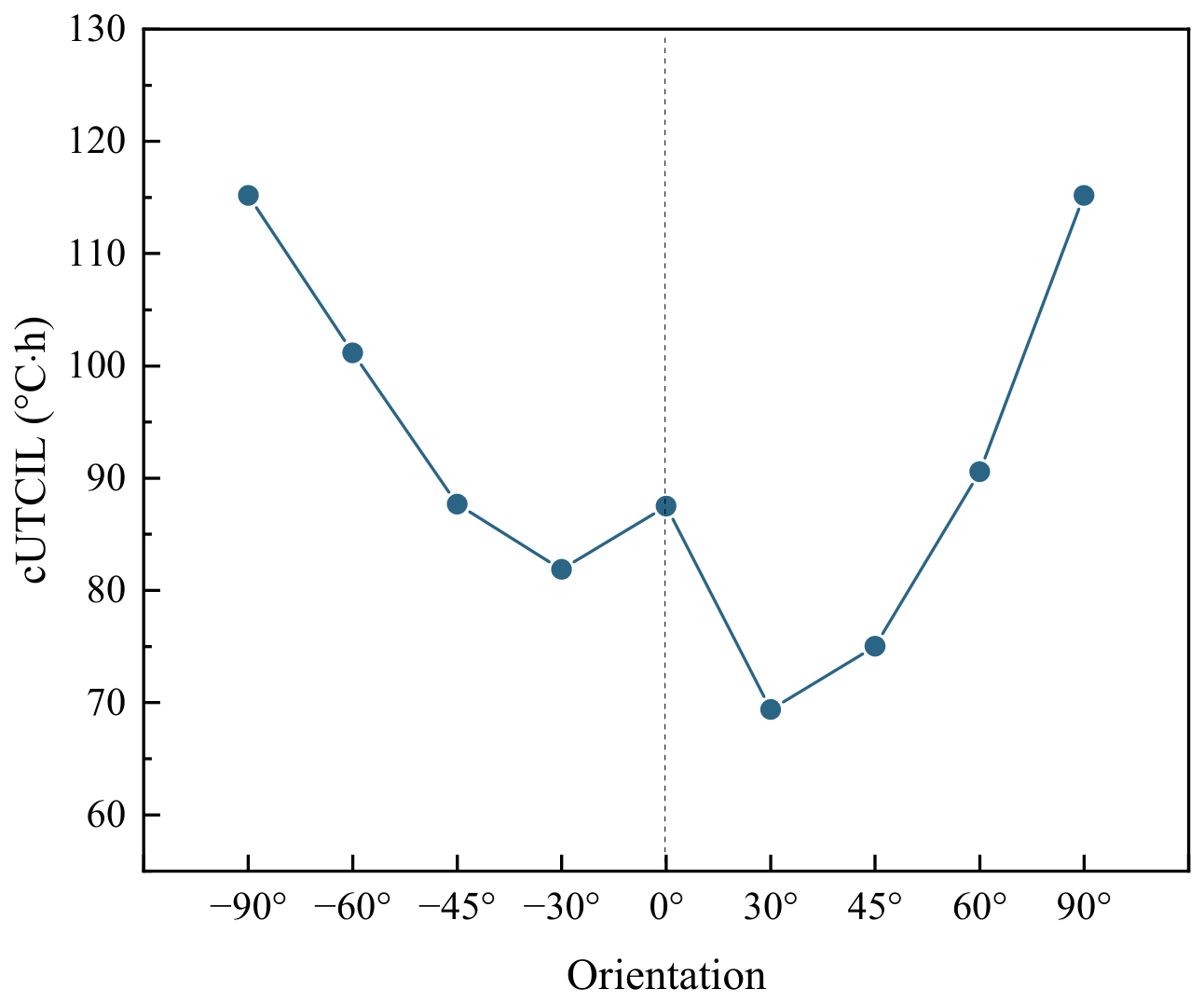
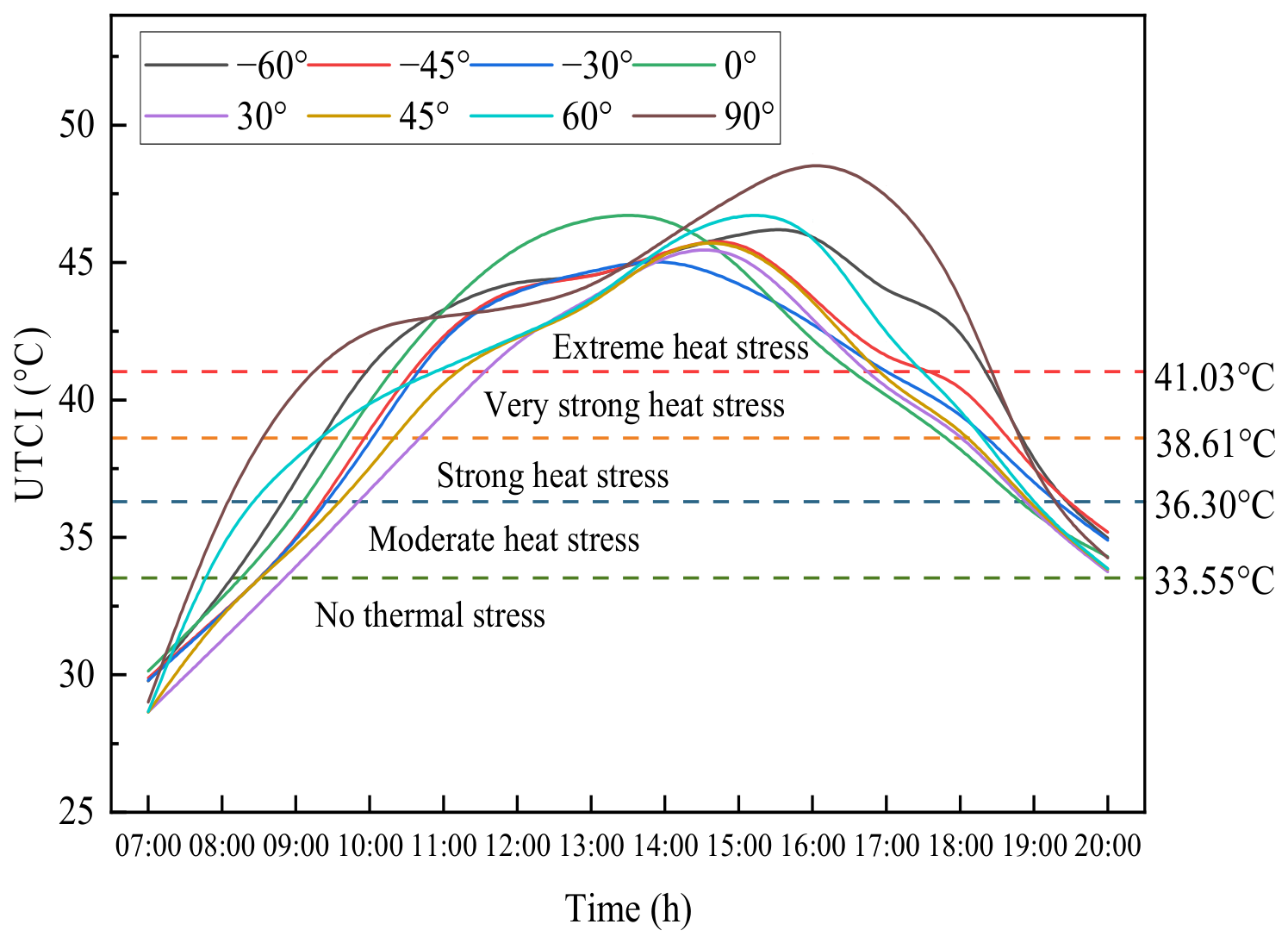
- For the street canyon orientation scenarios, a street canyon with H/W = 1.0 was used as the baseline. With the north–south orientation defined as 0°, a total of 8 typical scenarios were configured: −60°, −45°, −30°, 0°, 30°, 45°, 60°, and 90°. Negative values indicate counterclockwise rotation from the north–south axis, while positive values represent clockwise rotation.
- (2)
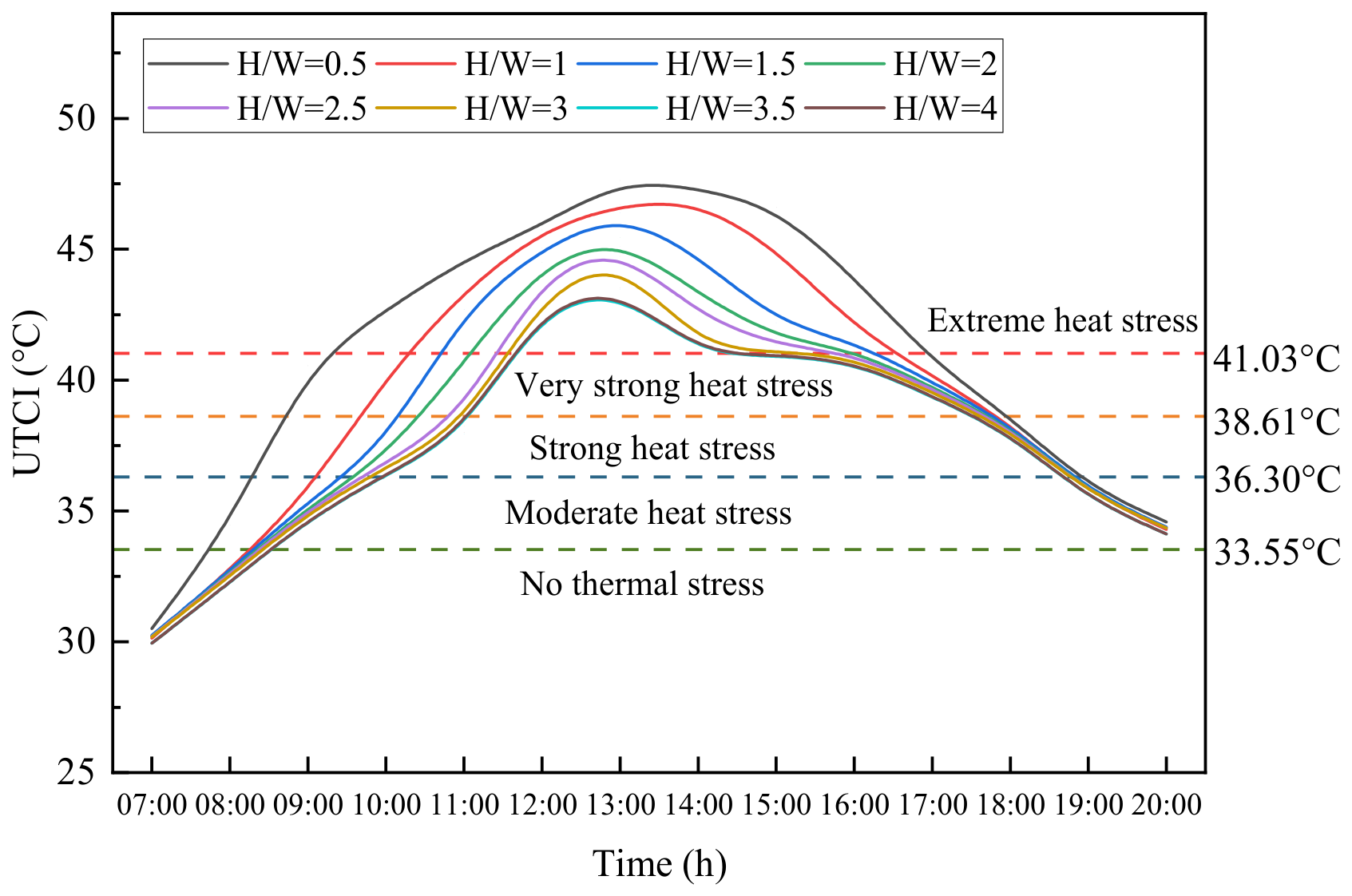
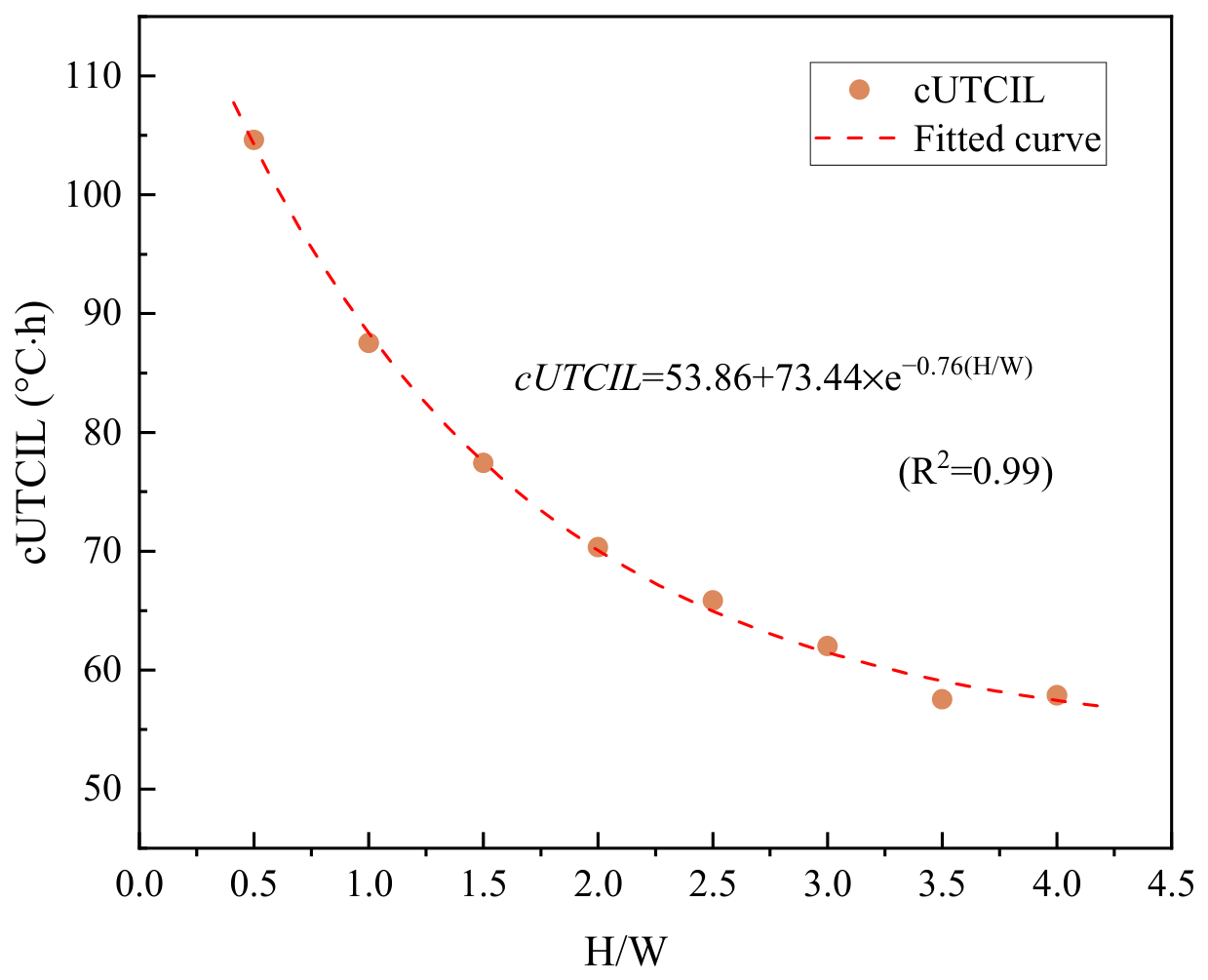
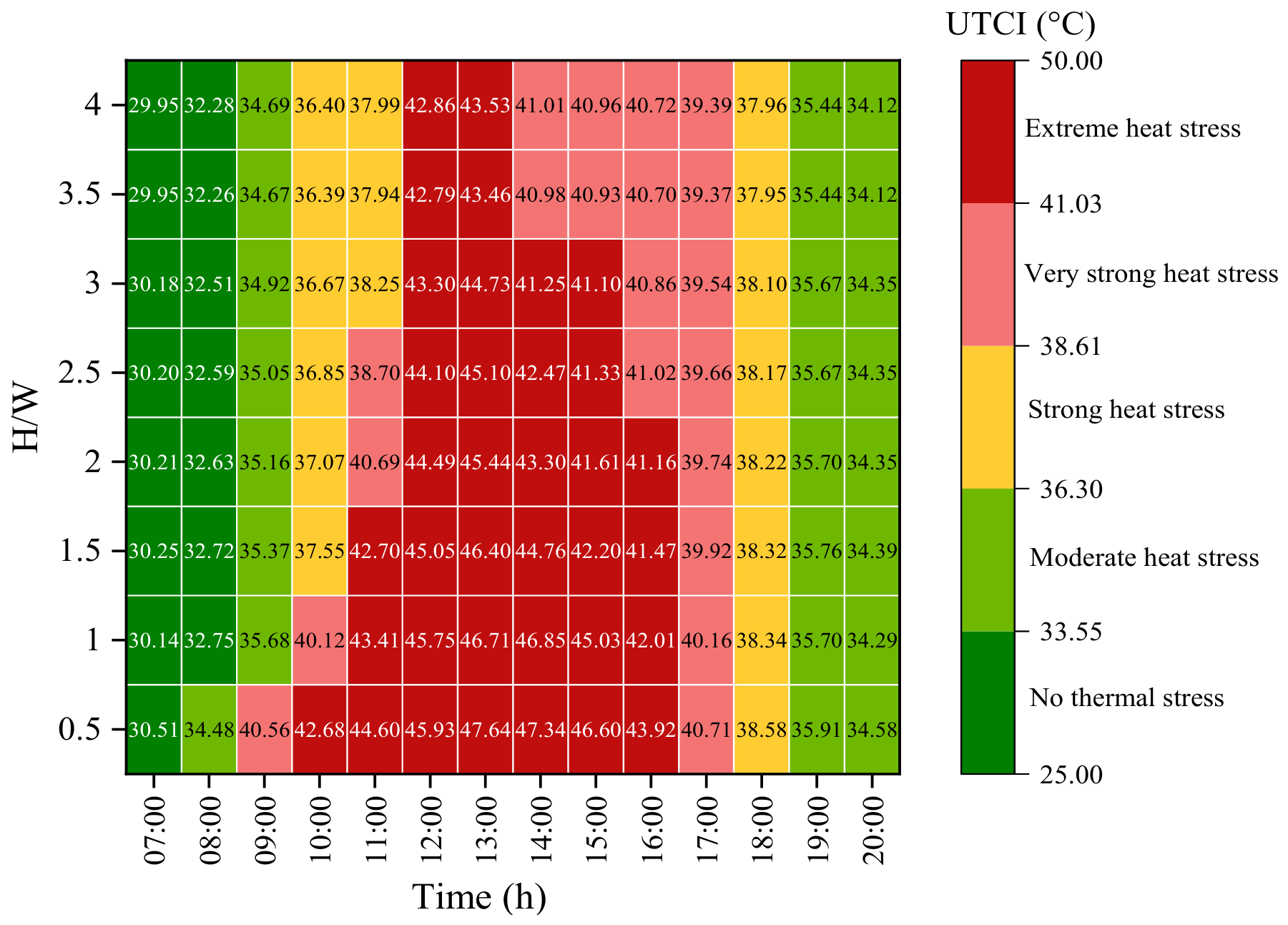
- At the urban block scale, H/W is widely recognized as a representative indicator of urban geometric spatial characteristics, which is defined as the ratio of building height (H) to street width (W) [28]. According to field surveys, H/W ranges from 0.5 to 4.0. With an interval of 0.5, the typical H/W scenarios are set to 0.5, 1.0, 1.5, 2.0, 2.5, 3.0, 3.5, and 4.0.
- (3)
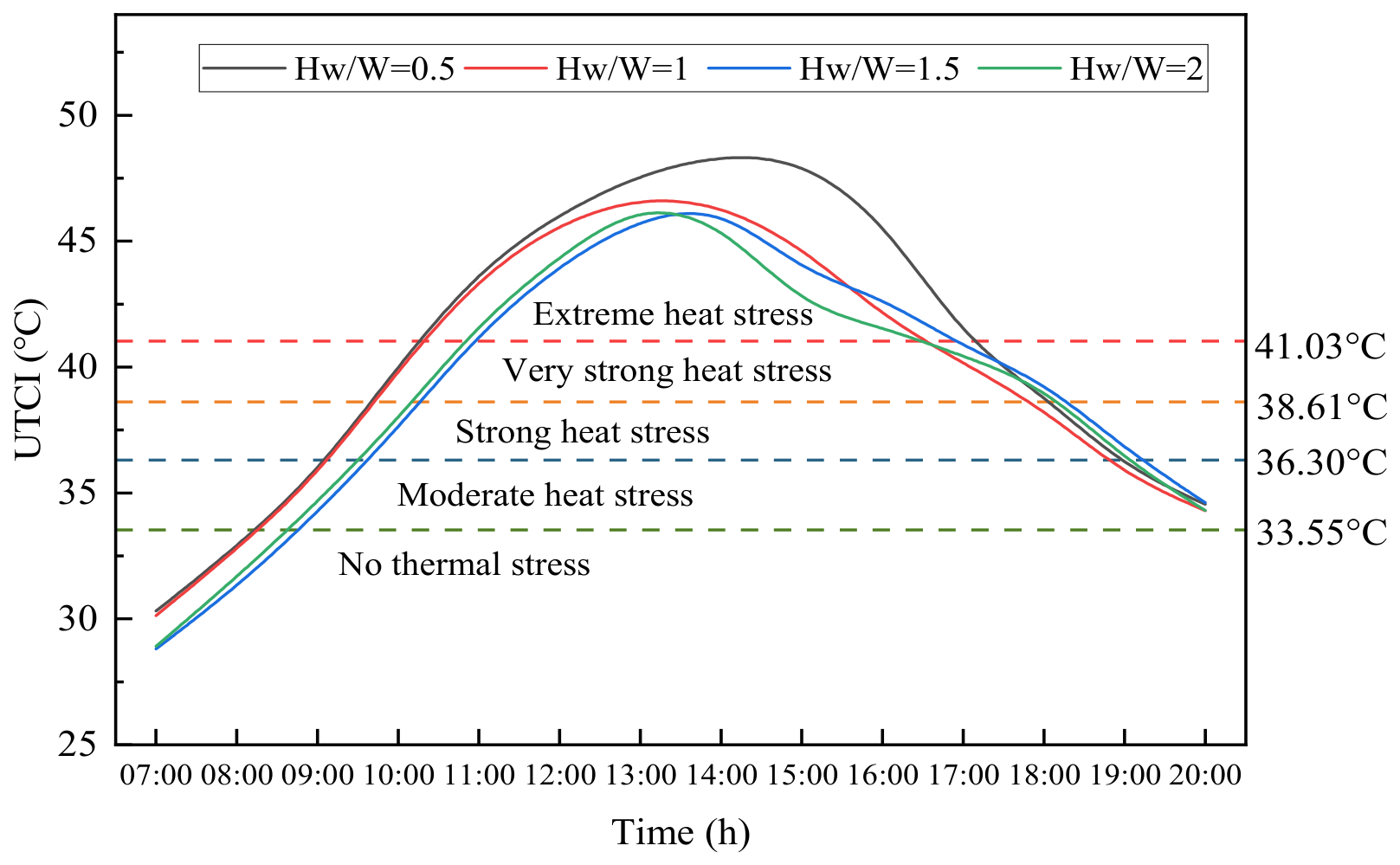
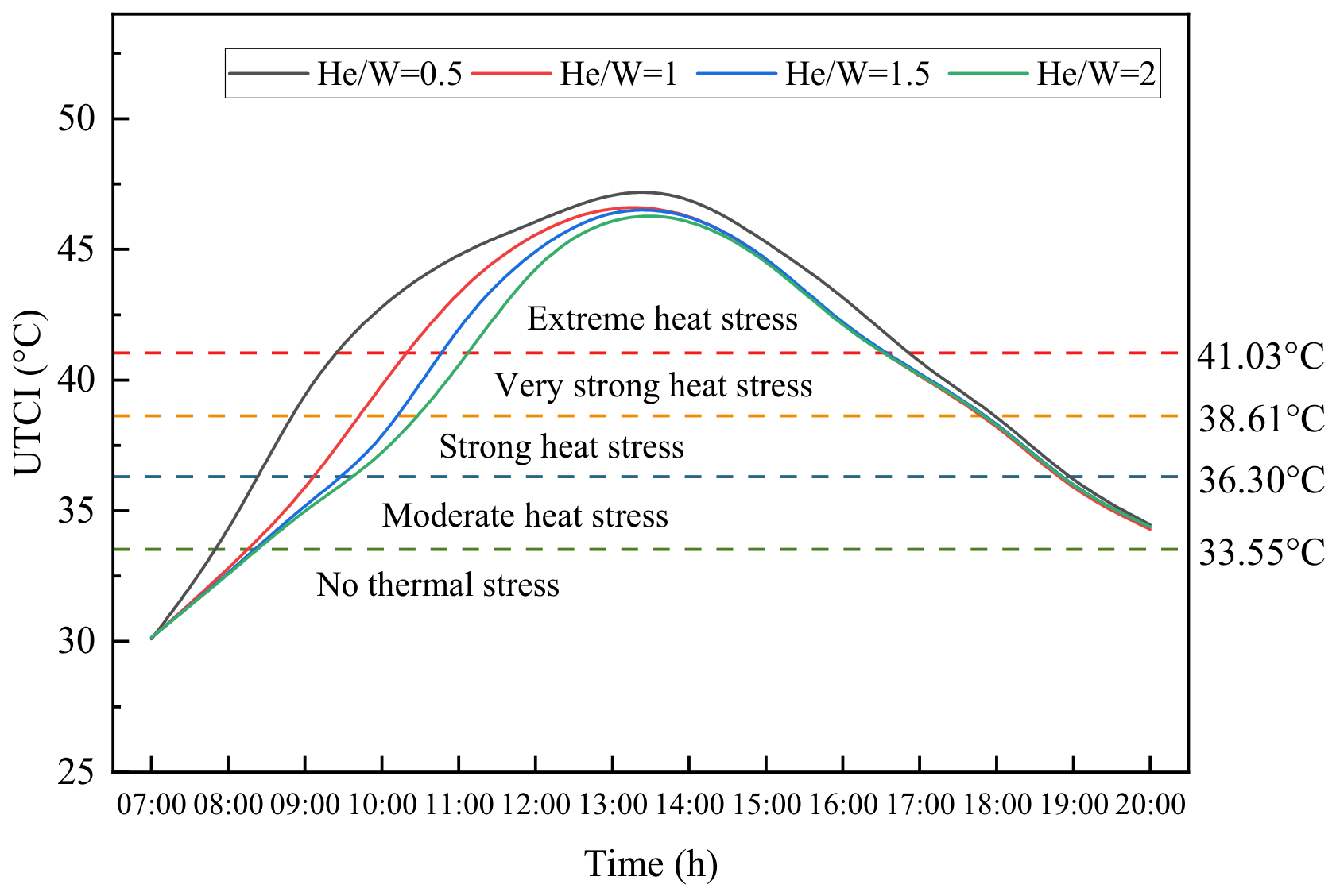
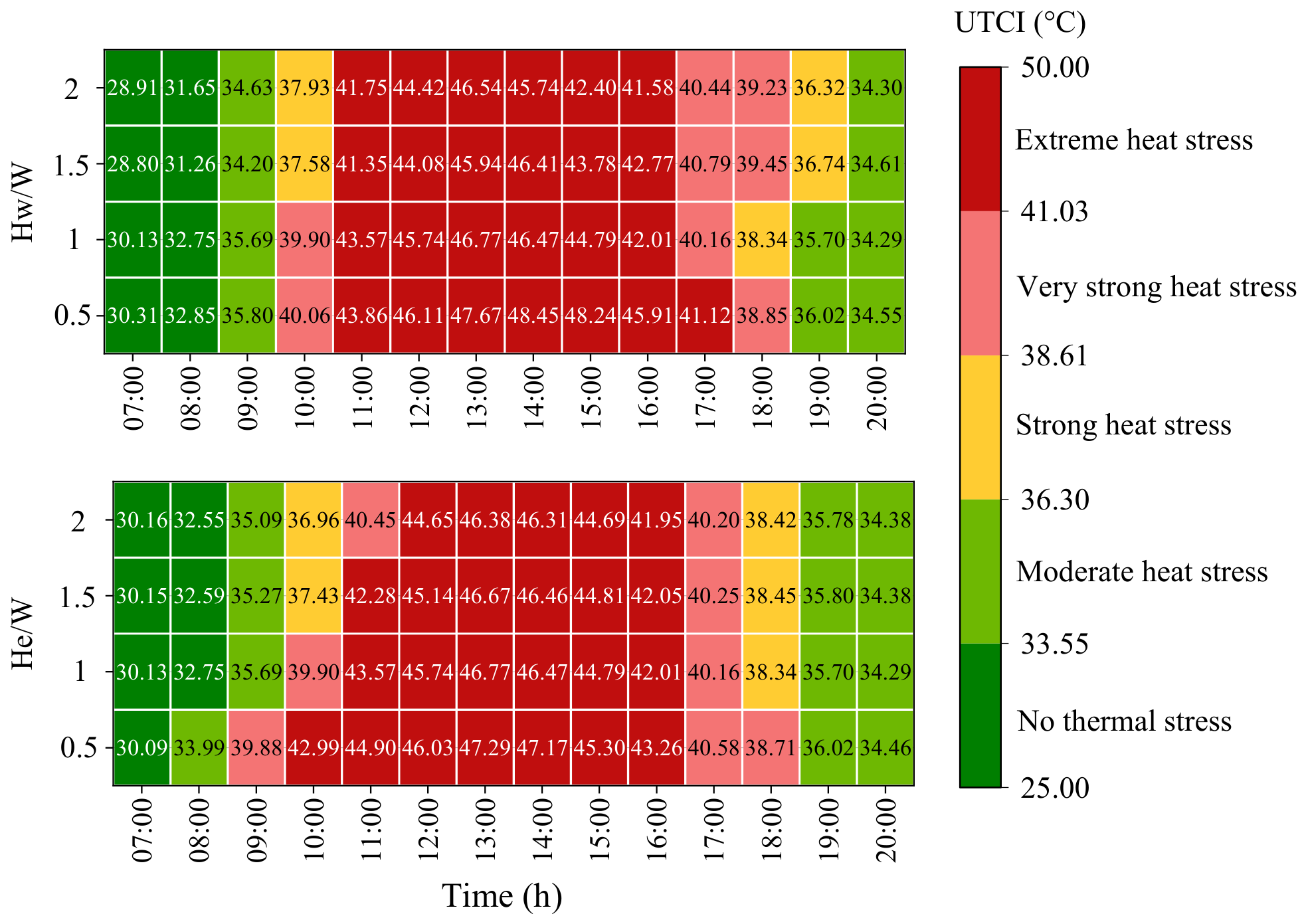
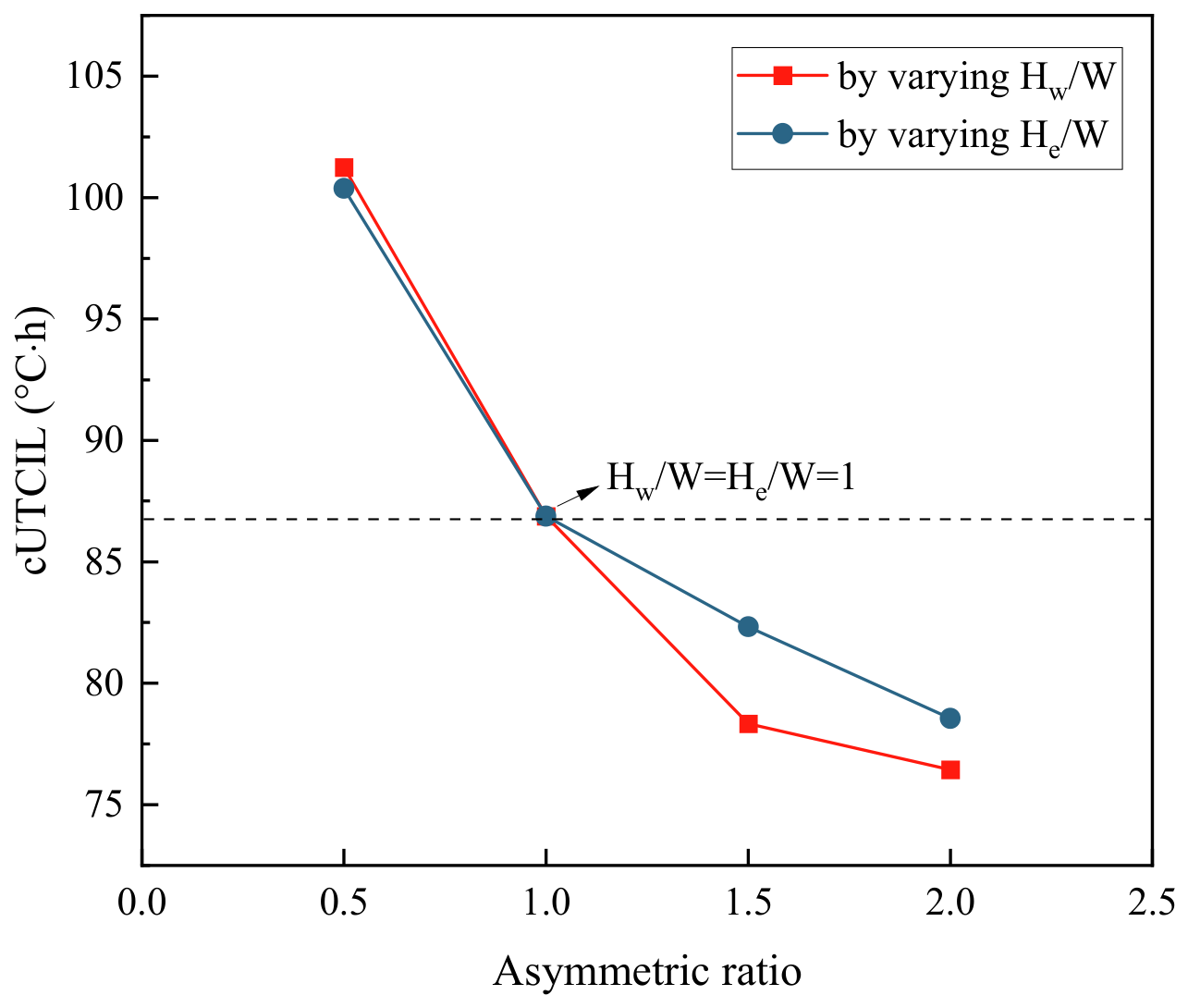
- Asymmetric street canyons represent a common feature of urban morphology and exert substantial impacts on the urban microclimate [29]. Two types of asymmetric street canyon scenarios were established in this study. Firstly, the east building height (He) was fixed at a He/W ratio of 1.0, while the west building height (Hw) was gradually increased to achieve Hw/W ratios of 0.5, 1.0, 1.5, and 2.0; secondly, the west building height (Hw) was fixed at an Hw/W ratio of 1, while the east building height (He) was gradually increased to achieve He/W ratios of 0.5, 1.0, 1.5, and 2.0.
- (4)
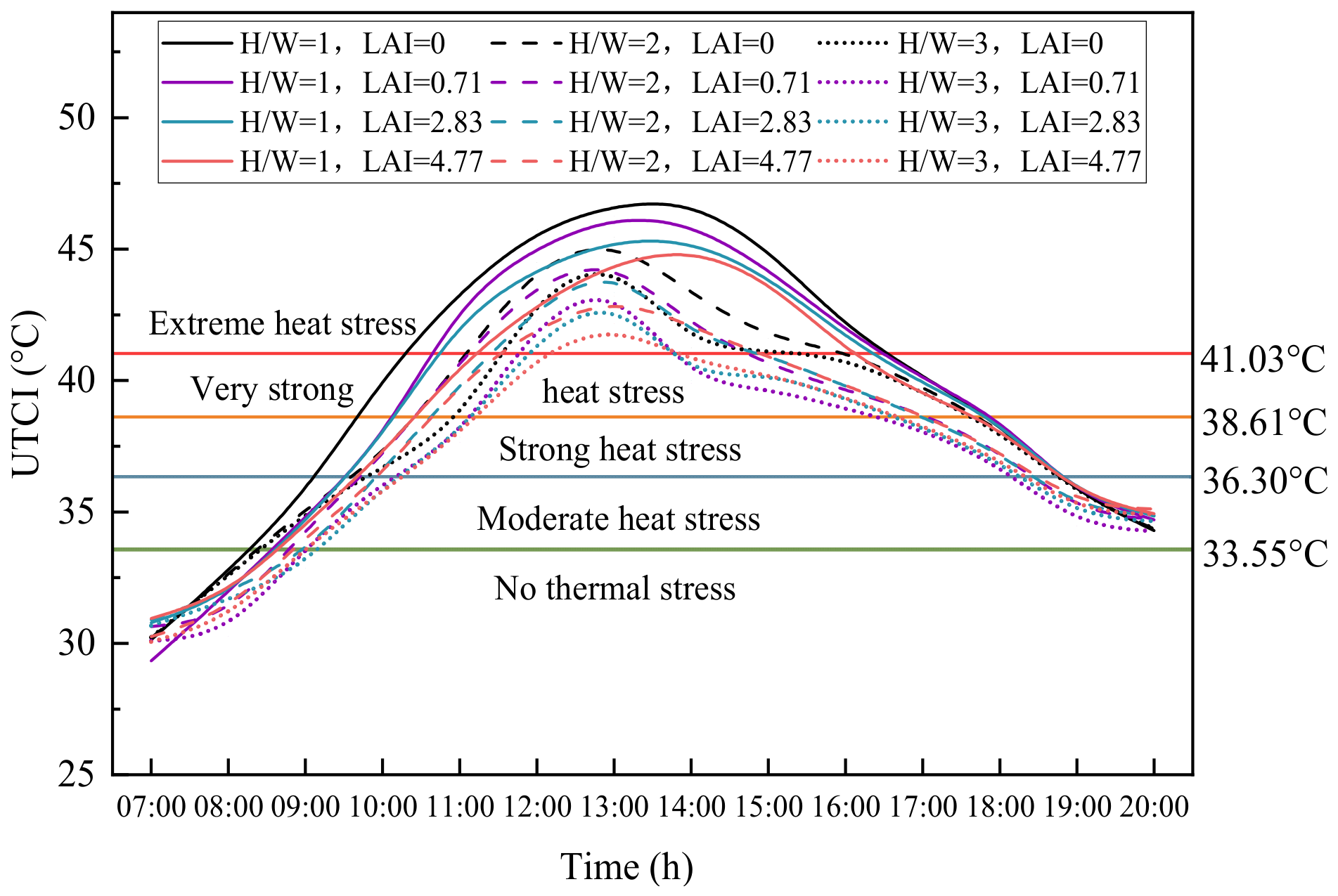
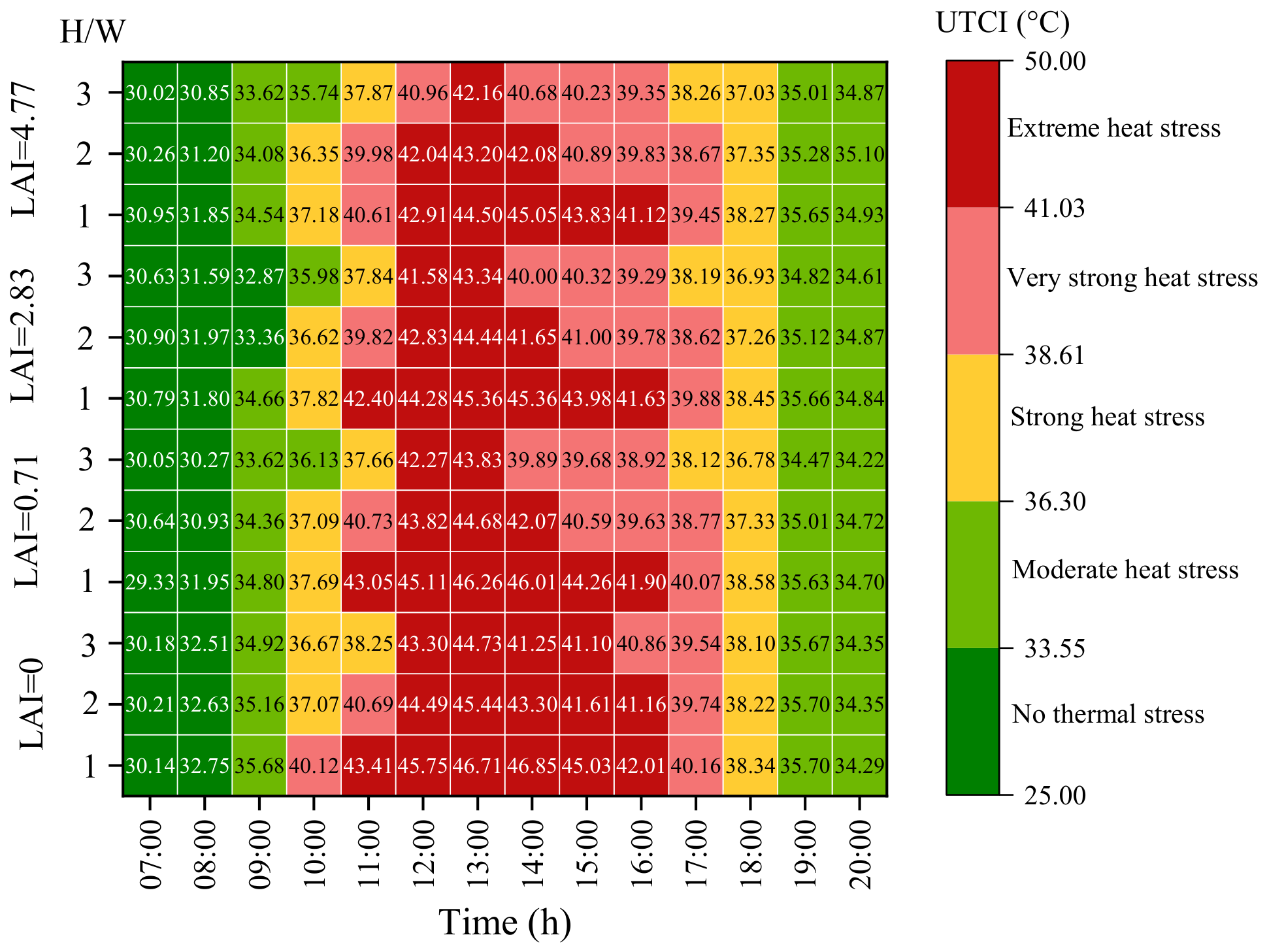
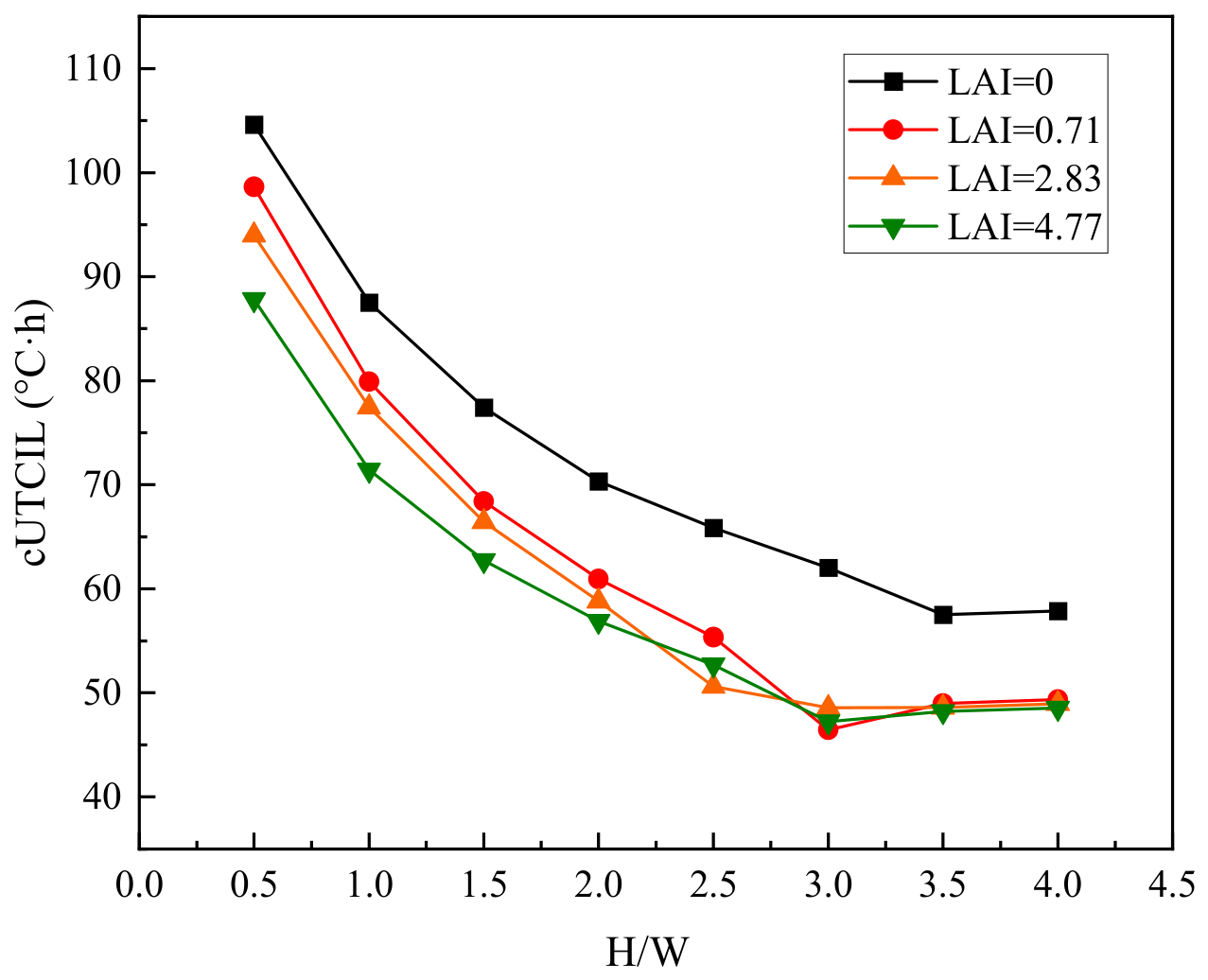
- Based on local tree species characteristics, three typical tree species with distinct leaf area indices (LAI) were selected for the baseline canyon with H/W = 1.0: Ficus concinna Miq. (LAI = 4.77), Magnolia grandiflora Linn. (LAI = 2.83), and Platanus spp. (LAI = 0.71) [30]. In the model setup, the tree planting spacing was set to 8.0 m [31].
2.6. Model Validation
2.7. Thermal Comfort Assessment
3. Results and Discussion
3.1. The Effects of Street Canyon Orientation on Outdoor Thermal Comfort Level
3.2. The Effects of Street Canyon Aspect Ratio on Outdoor Thermal Comfort
3.3. The Effects of Street Canyon Asymmetry on Outdoor Thermal Comfort Level
3.4. The Effect of Street Trees Leaf Area Index (LAI) on Outdoor Thermal Comfort Level
3.5. Outdoor Optimal Design Strategy Based on Shading Effects
4. Conclusions
Author Contributions
Funding
Data Availability Statement
Conflicts of Interest
References
- Kim, E.S.; Bae, C.; Ko, S.Y.; Won, J.E.; Lee, J.H.; Paio, Y.; Lee, D.K. Enhancing the effectiveness of heat adaptation strategies through citizen science-based outdoor thermal comfort. Heliyon 2024, 10, e39413. [Google Scholar] [CrossRef] [Scilit]
- Lam, C.K.C.; Hang, J.; Zhang, D.; Wang, Q.; Ren, M.; Huang, C. Effects of short-term physiological and psychological adaptation on summer thermal comfort of outdoor exercising people in China. Build. Environ. 2021, 198, 107877. [Google Scholar] [CrossRef] [Scilit]
- Gai, Z.; Yin, H.; Kong, F.; Su, J.; Shen, Z.; Sun, H.; Yang, S.; Liu, H.; Middel, A. How does shade infrastructure affect outdoor thermal comfort during hot, humid summers? Evidence from Nanjing, China. Build. Environ. 2025, 267, 112320. [Google Scholar] [CrossRef] [Scilit]
- Dashti, A.; Mohammadsharifi, N.; Shokuhi, M.; Matzarakis, A. A comprehensive study on wintertime outdoor thermal comfort of blue-green infrastructure in an arid climate: A case of Isfahan, Iran. Sustain. Cities Soc. 2024, 113, 105658. [Google Scholar] [CrossRef] [Scilit]
- Cui, Y.; Yin, M.; Cheng, X.; Tang, J.; He, B.-J. Towards cool cities and communities: Preparing for an increasingly hot future by the development of heat-resilient infrastructure and urban heat management plan. Environ. Technol. Innov. 2024, 34, 103568. [Google Scholar] [CrossRef] [Scilit]
- Elkhayat, K.; Hassan Abdelhafez, M.H.; Altaf, F.; Sharples, S.; Alshenaifi, M.A.; Alfraidi, S.; Aldersoni, A.; Albaqawy, G.; Ragab, A. Urban geometry as a climate adaptation strategy for enhancing outdoor thermal comfort in a hot desert climate. Front. Archit. Res. 2025, 14, 525–544. [Google Scholar] [CrossRef] [Scilit]
- Lai, D.; Liu, W.; Gan, T.; Liu, K.; Chen, Q. A review of mitigating strategies to improve the thermal environment and thermal comfort in urban outdoor spaces. Sci. Total Environ. 2019, 661, 337–353. [Google Scholar] [CrossRef] [Scilit]
- Xu, T.; Yao, R.; Du, C.; Li, B. Outdoor thermal perception and heatwave adaptation effects in summer—A case study of a humid subtropical city in China. Urban Clim. 2023, 52, 101724. [Google Scholar] [CrossRef] [Scilit]
- Lai, D.; Lian, Z.; Liu, W.; Guo, C.; Liu, W.; Liu, K.; Chen, Q. A comprehensive review of thermal comfort studies in urban open spaces. Sci. Total Environ. 2020, 742, 140092. [Google Scholar] [CrossRef] [Scilit]
- Middel, A.; Krayenhoff, E.S. Micrometeorological determinants of pedestrian thermal exposure during record-breaking heat in Tempe, Arizona: Introducing the MaRTy observational platform. Sci. Total Environ. 2019, 687, 137–151. [Google Scholar] [CrossRef] [Scilit]
- Lam, C.K.C.; Weng, J.; Liu, K.; Hang, J. The effects of shading devices on outdoor thermal and visual comfort in Southern China during summer. Build. Environ. 2023, 228, 109743. [Google Scholar] [CrossRef] [Scilit]
- Xu, M.; Hong, B.; Jiang, R.; An, L.; Zhang, T. Outdoor thermal comfort of shaded spaces in an urban park in the cold region of China. Build. Environ. 2019, 155, 408–420. [Google Scholar] [CrossRef] [Scilit]
- Watanabe, S.; Nagano, K.; Ishii, J.; Horikoshi, T. Evaluation of outdoor thermal comfort in sunlight, building shade, and pergola shade during summer in a humid subtropical region. Build. Environ. 2014, 82, 556–565. [Google Scholar] [CrossRef] [Scilit]
- Lai, D.; Liu, Y.; Liao, M.; Yu, B. Effects of different tree layouts on outdoor thermal comfort of green space in summer Shanghai. Urban Clim. 2023, 47, 101398. [Google Scholar] [CrossRef] [Scilit]
- Lopez-Cabeza, V.P.; Loor-Vera, M.J.; Diz-Mellado, E.; Rivera-Gomez, C.; Galan-Marin, C. Decoding outdoor thermal comfort: The role of location in urban canyon microclimate. Sustain. Energy Technol. Assess. 2024, 72, 104095. [Google Scholar] [CrossRef] [Scilit]
- Nicholson, S.; Nikolopoulou, M.; Watkins, R.; Löve, M.; Ratti, C. Data driven design for urban street shading: Validation and application of ladybug tools as a design tool for outdoor thermal comfort. Urban Clim. 2024, 56, 102041. [Google Scholar] [CrossRef] [Scilit]
- Zhang, T.; Fu, X.; Qi, F.; Shen, Y.; Xu, P.; Tao, Y.; Liu, T.; Song, Y. Optimizing pedestrian thermal comfort in urban street canyons for summer and winter: Tree planting or low-albedo pavements? Sustain. Cities Soc. 2025, 120, 106143. [Google Scholar] [CrossRef] [Scilit]
- Yao, R.; Zhang, S.; Du, C.; Schweiker, M.; Hodder, S.; Olesen, B.W.; Toftum, J.; Romana d’Ambrosio, F.; Gebhardt, H.; Zhou, S.; et al. Evolution and performance analysis of adaptive thermal comfort models—A comprehensive literature review. Build. Environ. 2022, 217, 109020. [Google Scholar] [CrossRef] [Scilit]
- Potchter, O.; Cohen, P.; Lin, T.-P.; Matzarakis, A. A systematic review advocating a framework and benchmarks for assessing outdoor human thermal perception. Sci. Total Environ. 2022, 833, 155128. [Google Scholar] [CrossRef] [Scilit]
- Xu, T.; Yao, R.; Du, C.; Li, B.; Fang, F. A quantitative evaluation model of outdoor dynamic thermal comfort and adaptation: A year-long longitudinal field study. Build. Environ. 2023, 237, 110308. [Google Scholar] [CrossRef] [Scilit]
- Zhang, H.; Wang, Y.; Chen, B.; Bai, J.; Zhao, J.; Guo, F.; Zhu, P. Analyzing spatial disparities in thermal comfort in a coastal city: A multi-parameter comparative study based on local climate zones. Sustain. Cities Soc. 2026, 136, 107031. [Google Scholar] [CrossRef] [Scilit]
- Qin, H.; Ma, Y.; Niu, J.; Huo, J.; Wei, X.; Yan, J.; Han, G. Investigating differences of outdoor thermal comfort for the elderly among genders across seasons: A case study in Chongqing, China. Urban Clim. 2025, 61, 102398. [Google Scholar] [CrossRef] [Scilit]
- ASHRAE Standard 55; Thermal Environmental Conditions for Human Occupancy. ASHRAE: Atlanta, GA, USA, 2020.
- ISO 7726; Ergonomics of the Thermal Environment—Instruments for Measuring Physical Quantities. International Organization for Standardization (ISO): Geneva, Switzerland, 1998.
- Xu, T.; Yao, R.; Du, C.; Huang, X. A method of predicting the dynamic thermal sensation under varying outdoor heat stress conditions in summer. Build. Environ. 2022, 223, 109454. [Google Scholar] [CrossRef] [Scilit]
- Huang, B.; Hong, B.; Tian, Y.; Yuan, T.; Su, M. Outdoor thermal benchmarks and thermal safety for children: A study in China’s cold region. Sci. Total Environ. 2021, 787, 147603. [Google Scholar] [CrossRef] [Scilit]
- Elnabawi, M.H.; Hamza, N.; Ahmed, T.M.F.; Santamouris, M. Integrated passive cooling strategies for neighborhood-scale urban heat mitigation in a hot-arid city: ENVI-met simulations in Al Ain, UAE. Results Eng. 2026, 29, 109840. [Google Scholar] [CrossRef] [Scilit]
- Salal Rajan, E.H.; Amirtham, L.R. Impact of building regulations on the perceived outdoor thermal comfort in the mixed-use neighbourhood of Chennai. Front. Arch. Res. 2021, 10, 148–163. [Google Scholar] [CrossRef] [Scilit]
- Qaid, A.; Ossen, D.R. Effect of asymmetrical street aspect ratios on microclimates in hot, humid regions. Int. J. Biometeorol. 2015, 59, 657–677. [Google Scholar] [CrossRef] [Scilit] [PubMed]
- Shi, D.; Song, J.; Huang, J.; Zhuang, C.; Guo, R.; Gao, Y. Synergistic cooling effects (SCEs) of urban green-blue spaces on local thermal environment: A case study in Chongqing, China. Sustain. Cities Soc. 2020, 55, 102065. [Google Scholar] [CrossRef] [Scilit]
- CJJ 75-97; Code for Planning and Design of Urban Road Greening. China Academy of Urban Planning and Design: Beijing, China, 2014.
- Gregorčič, T.; Ogrin, M.; Repe, B.; Savić, S. Combining interdisciplinary field measurements and ENVI-met simulations for comparative assessment of outdoor human thermal comfort across local climate zones. Sustain. Cities Soc. 2026, 142, 107304. [Google Scholar] [CrossRef] [Scilit]
- Haeri, T.; Hassan, N.; Ghaffarianhoseini, A. Evaluation of microclimate mitigation strategies in a heterogenous street canyon in Kuala Lumpur from outdoor thermal comfort perspective using Envi-met. Urban Clim. 2023, 52, 101719. [Google Scholar] [CrossRef] [Scilit]
- López-Cabeza, V.P.; Galán-Marín, C.; Rivera-Gómez, C.; Roa-Fernández, J. Courtyard microclimate ENVI-met outputs deviation from the experimental data. Build. Environ. 2018, 144, 129–141. [Google Scholar] [CrossRef] [Scilit]
- Bröde, P.; Fiala, D.; Błażejczyk, K.; Holmér, I.; Jendritzky, G.; Kampmann, B.; Tinz, B.; Havenith, G. Deriving the operational procedure for the Universal Thermal Climate Index (UTCI). Int. J. Biometeorol. 2012, 56, 481–494. [Google Scholar] [CrossRef] [Scilit]
- Thapa, S.; Rijal, H.B.; Zaki, S.A. District-wise evaluation of meteorological factors and outdoor thermal comfort in India using UTCI—Insight into future climatic scenario. Sustain. Cities Soc. 2024, 116, 105840. [Google Scholar] [CrossRef] [Scilit]
- Fiala, D.; Havenith, G.; Bröde, P.; Kampmann, B.; Jendritzky, G. UTCI-Fiala multi-node model of human heat transfer and temperature regulation. Int. J. Biometeorol. 2012, 56, 429–441. [Google Scholar] [CrossRef] [Scilit]
- Yang, D.; Xiong, J.; Liu, W. Adjustments of the adaptive thermal comfort model based on the running mean outdoor temperature for Chinese people: A case study in Changsha China. Build. Environ. 2017, 114, 357–365. [Google Scholar] [CrossRef] [Scilit]
- Carlucci, S.; Bai, L.; Dear, R.D.; Yang, L. Review of adaptive thermal comfort models in built environmental regulatory documents. Build. Environ. 2018, 137, 73–89. [Google Scholar] [CrossRef] [Scilit]
- GB/T 50785; Evaluation Standard for Indoor Thermal Environment in Civil Buildings. Ministry of Housing and Urban-Rural Development (MOHURD): Beijing, China, 2012.
- Pantavou, K.; Theoharatos, G.; Santamouris, M.; Asimakopoulos, D. Outdoor thermal sensation of pedestrians in a Mediterranean climate and a comparison with UTCI. Build. Environ. 2013, 66, 82–95. [Google Scholar] [CrossRef] [Scilit]
- Feng, X.; Zheng, Z.; Yang, Y.; Fang, Z. Quantitative seasonal outdoor thermal sensitivity in Guangzhou, China. Urban Clim. 2021, 39, 100938. [Google Scholar] [CrossRef] [Scilit]
- Tian, Y.; Hong, B.; Zhang, Z.; Wu, S.; Yuan, T. Factors influencing resident and tourist outdoor thermal comfort: A comparative study in China’s cold region. Sci. Total Environ. 2022, 808, 152079. [Google Scholar] [CrossRef] [Scilit] [PubMed]
- Xie, Y.; Wang, X.; Wen, J.; Geng, Y.; Yan, L.; Liu, S.; Zhang, D.; Lin, B. Experimental study and theoretical discussion of dynamic outdoor thermal comfort in walking spaces: Effect of short-term thermal history. Build. Environ. 2022, 216, 109039. [Google Scholar] [CrossRef] [Scilit]
- Jamei, E.; Rajagopalan, P.; Seyedmahmoudian, M.; Jamei, Y. Review on the impact of urban geometry and pedestrian level greening on outdoor thermal comfort. Renew. Sustain. Energy Rev. 2016, 54, 1002–1017. [Google Scholar] [CrossRef] [Scilit]
- Achour-Younsi, S.; Kharrat, F. Outdoor thermal comfort: Impact of the Geometry of an urban street canyon in a Mediterranean Subtropical Climate—Case Study Tunis, Tunisia. Procedia-Soc. Behav. Sci. 2016, 216, 689–700. [Google Scholar] [CrossRef] [Scilit]
- Zhang, Y.; Du, X.; Shi, Y. Effects of street canyon design on pedestrian thermal comfort in the hot-humid area of China. Int. J. Biometeorol. 2017, 61, 1421–1432. [Google Scholar] [CrossRef] [Scilit]
- Lai, B.; Fu, J.-M.; Guo, C.-K.; Zhang, D.-Y.; Wu, Z.-G. Street Geometry Factors Influencing Outdoor Pedestrian Thermal Comfort in a Historic District. Buildings 2025, 15, 613. [Google Scholar] [CrossRef] [Scilit]
- Abd Elraouf, R.; Elmokadem, A.; Megahed, N.; Abo Eleinen, O.; Eltarabily, S. The impact of urban geometry on outdoor thermal comfort in a hot-humid climate. Build. Environ. 2022, 225, 109632. [Google Scholar] [CrossRef] [Scilit]
- Nasrollahi, N.; Namazi, Y.; Taleghani, M. The effect of urban shading and canyon geometry on outdoor thermal comfort in hot climates: A case study of Ahvaz, Iran. Sustain. Cities Soc. 2021, 65, 102638. [Google Scholar] [CrossRef] [Scilit]
- Bakarman, M.A.; Chang, J.D. The influence of height/width ratio on urban heat island in Hot-arid Climates. Procedia Eng. 2015, 118, 101–108. [Google Scholar] [CrossRef] [Scilit]
- Sanagar Darbani, E.; Sharifi, E.; Soebarto, V. Investigating the effect of emissivity of fully glazed façade on outdoor thermal comfort in low to high urban canyon ratios. Sustain. Cities Soc. 2026, 143, 107337. [Google Scholar] [CrossRef] [Scilit]
- Khalvandi, R.; Karimimoshaver, M. Urban street canyons and heat islands: A systematic review on morphological solutions. Results Eng. 2025, 27, 106542. [Google Scholar] [CrossRef] [Scilit]
- Emmanuel, R.; Rosenlund, H.; Johansson, E. Urban shading—A design option for the tropics? A study in Colombo, Sri Lanka. Int. J. Climatol. 2010, 27, 1995–2004. [Google Scholar] [CrossRef] [Scilit]
- Li, X.; Wang, B.; Yang, Y.; Yang, Y.; Yu, T.; Pei, K.; Zhong, Y.; Xie, Y. How street tree structure modulates thermal comfort during urban heat extremes: Evidence from LiDAR and micrometeorological data. Urban For. Urban Green. 2026, 118, 129309. [Google Scholar] [CrossRef] [Scilit]
- Che, W.; Zhuang, W. Integrated vegetation effects on thermal environment and air quality in urban street canyons. Urban Clim. 2025, 63, 102593. [Google Scholar] [CrossRef] [Scilit]
- Hami, A.; Abdi, B.; Zarehaghi, D.; Maulan, S.B. Assessing the thermal comfort effects of green spaces: A systematic review of methods, parameters, and plants’ attributes. Sustain. Cities Soc. 2019, 49, 101634. [Google Scholar] [CrossRef] [Scilit]
- Morakinyo, T.E.; Kong, L.; Lau, K.K.-L.; Yuan, C.; Ng, E. A study on the impact of shadow-cast and tree species on in-canyon and neighborhood’s thermal comfort. Build. Environ. 2017, 115, 1–17. [Google Scholar] [CrossRef] [Scilit]







| Parameter | Instruments | Accuracy | Range | Resolution |
|---|---|---|---|---|
| Ta | Onset Hobo, UX100-011A | ±0.2 °C | −20–70 °C | 0.1 °C |
| RH | Onset Hobo, UX100-011A | ±2.0% | 1–95% RH | 0.1% RH |
| v | WWFWZY-1 | 5% ± 0.05 m/s | 0.05–30 m/s | 0.1 m/s |
| Tg | HQZY-1 | ±0.3 °C | −20–80 °C | 0.1 °C |
| Parameter Names | Parameter Values |
|---|---|
| Start time | 7:00 a.m. on 30 July 2021 |
| Simulation duration | 14 h |
| Average temperature | 36.04 |
| Maximum temperature | 39.80 °C |
| Minimum temperature | 29.00 °C |
| Average relative humidity | 54.59% |
| Maximum relative humidity | 80.16% |
| Minimum relative humidity | 41.87% |
| 10 m wind speed | 1.7 m/s |
| Dominant wind direction | South wind |
| Roughness length | 0.1 |
| Cloud cover | 0 |
| Point | Air Temperature (°C) | Relative Humidity (%) | ||
|---|---|---|---|---|
| RMSE | MAPE | RMSE | MAPE | |
| 1 | 0.97 | 2.16 | 2.65 | 3.26 |
| 2 | 2.41 | 6.32 | 4.57 | 6.42 |
| 3 | 1.47 | 3.89 | 2.06 | 2.80 |
| Stress Category | Original UTCI (°C) [41] | Modified UTCI (°C) |
|---|---|---|
| No thermal stress | 9–26 °C | <33.55 °C |
| Moderate heat stress | 26–32 °C | 33.55–36.30 °C |
| Strong heat stress | 32–38 °C | 36.30–38.61 °C |
| Very strong heat stress | 38–46 °C | 38.61–41.03 °C |
| Extreme heat stress | >46 °C | >41.03 °C |
| Factor | Scenario | UTCImax (°C) | cUTCIL (°C·h) | Extreme Heat Stress Duration |
|---|---|---|---|---|
| Orientation | Optimal (30°) | about 45.3 °C | about 69.4 °C·h | about 35.7% |
| Worst (90°) | about 48.9 °C | about 115.2 °C·h | about 64.3% | |
| Key Design Implication: Prioritize orientation within −30° to 30° from N–S axis | ||||
| H/W | Optimal (≥3.5) | about 43.5 °C | about 57.5 °C·h | about 14.3% |
| Worst (0.5) | about 47.6 °C | about 104.6 °C·h | about 50.0% | |
| Key Design Implication: Design H/W ≥ 3.5 to stabilize thermal comfort benefits | ||||
| Asymmetry | Optimal (taller west) 1 | about 46.4 °C | about 78.3 °C·h | about 42.9% |
| Worst (taller east) 1 | about 46.6 °C | about 82.3 °C·h | about 42.9% | |
| Key Design Implication: Prioritize increasing west-side building height for afternoon shading | ||||
| LAI | Optimal (4.77) 2 | about 44.8 °C | about 87.8 °C·h | about 35.7% |
| Worst (0) 2 | about 46.5 °C | about 104.6 °C·h | about 42.8% | |
| Key Design Implication: Prioritize dense-canopy trees in shallow canyons (H/W < 3); building shading dominates at deep H/W (H/W ≥ 3) | ||||
Disclaimer/Publisher’s Note: The statements, opinions and data contained in all publications are solely those of the individual author(s) and contributor(s) and not of MDPI and/or the editor(s). MDPI and/or the editor(s) disclaim responsibility for any injury to people or property resulting from any ideas, methods, instructions or products referred to in the content. |
© 2026 by the authors. Licensee MDPI, Basel, Switzerland. This article is an open access article distributed under the terms and conditions of the Creative Commons Attribution (CC BY) license.
Share and Cite
Xu, T.; Zhao, W.; Zhu, Y.; Chen, X.; Du, C. Quantitative Analysis of Urban Canyon Morphology Impacts on Summer Outdoor Thermal Comfort: A Case Study of Chongqing, China. Buildings 2026, 16, 2399. https://doi.org/10.3390/buildings16122399
Xu T, Zhao W, Zhu Y, Chen X, Du C. Quantitative Analysis of Urban Canyon Morphology Impacts on Summer Outdoor Thermal Comfort: A Case Study of Chongqing, China. Buildings. 2026; 16(12):2399. https://doi.org/10.3390/buildings16122399
Chicago/Turabian StyleXu, Tiantian, Wenlong Zhao, Yuening Zhu, Xiaoxin Chen, and Chenqiu Du. 2026. "Quantitative Analysis of Urban Canyon Morphology Impacts on Summer Outdoor Thermal Comfort: A Case Study of Chongqing, China" Buildings 16, no. 12: 2399. https://doi.org/10.3390/buildings16122399
APA StyleXu, T., Zhao, W., Zhu, Y., Chen, X., & Du, C. (2026). Quantitative Analysis of Urban Canyon Morphology Impacts on Summer Outdoor Thermal Comfort: A Case Study of Chongqing, China. Buildings, 16(12), 2399. https://doi.org/10.3390/buildings16122399