


Abstract
This study addresses the critical challenge of low reactivity and environmental leaching associated with high-volume phosphogypsum by implementing an ettringite seed induction strategy to optimize foam concrete performance. These issues may lead to insufficient mechanical reliability, weak structural integrity, and environmental safety concerns in engineering applications. The results demonstrate that an optimal 2% seed dosage increases the 28-day compressive strength to 4.7 MPa, which represents a 150% improvement over the control while maintaining mass loss below 3.0% after 15 wet–dry cycles. Microstructural analysis reveals that the seeds serve as heterogeneous nucleation sites that help mitigate the inhibitory effects of phosphogypsum impurities to facilitate the growth of a dense 3D interlocking ettringite framework within the pore walls. This densification significantly reinforces the mechanical skeleton and reduces phosphorus leaching by 64.2%. However, excessive seed dosages at or above 5% may promote local AFt accumulation and rheological slurry-bubble mismatch which could contribute to microstructural defects and strength regression. The findings are expected to provide a scientific basis for the engineering application of high-volume phosphogypsum in foam concrete, particularly as lightweight fillers and non-load-bearing construction materials for sustainable construction.
1. Introduction
The massive global accumulation of phosphogypsum (PG), a primary industrial by-product of phosphoric acid production, has evolved into a formidable environmental and economic challenge. It is estimated that the global stockpile of PG has exceeded 6 billion tons, with an annual growth rate of approximately 200 to 300 million tons [1,2]. PG primarily consists of calcium sulfate dihydrate (CaSO4·2H2O); however, residual phosphoric acid, fluorides, organic matter, and trace heavy metals from the extraction process render it acidic and potentially toxic [3]. Long-term, large-scale open-air stockpiling not only consumes vast land resources but also poses a severe ecological threat. Acidic leachate, if not properly treated, can infiltrate groundwater systems, leading to water eutrophication and heavy metal contamination [4]. Therefore, developing high-volume and high-value-added technologies for PG valorization is not only a necessity for the sustainable development of the phosphorus chemical industry but also a critical step toward achieving carbon neutrality and circular economy goals [1].
At present, the overall global utilization rate of phosphogypsum remains relatively low, at only about 10–15% [5]. From a global perspective, clear regional differences can be observed in its recycling pathways. Japan and Belgium have achieved relatively high utilization levels, mainly in gypsum-based building materials and cement retarders; Brazil primarily uses phosphogypsum for agricultural soil improvement; India mainly applies it in cement production and agriculture; and Russia has realized a certain scale of application in agriculture and road construction. In contrast, countries or regions such as the United States, Finland, Canada, and Morocco still show relatively low utilization levels and mainly rely on stockpiling, temporary storage, or marine disposal. Overall, phosphogypsum utilization has gradually expanded from traditional agricultural and road applications to building materials, environmental remediation, and rare-earth recovery, but significant differences still remain among countries in terms of utilization level, dominant application scenarios, and environmental management approaches [6].
Among various solid waste treatment pathways, foam concrete is widely recognized as an ideal matrix for the sequestration and valorization of PG due to its lightweight, thermal insulation, fire resistance, and acoustic properties [7]. By introducing a large volume of closed pores into the slurry through physical or chemical foaming, foam concrete forms a honeycomb-like structure and has been widely applied in roof insulation, foundation compensation, road widening fillers, and prefabricated wall panels [8]. Existing research has confirmed the technical feasibility of using PG as a partial substitute for cement or aggregates in foam concrete [9,10]. Scholars worldwide have also constructed various PG-based binder systems by incorporating ground granulated blast furnace slag (GGBS), fly ash (FA), quicklime, and different chemical activators [11,12,13]. Literature indicates that, with optimized proportions, PG-based foam concrete can achieve improved mechanical properties, water resistance, and frost resistance [14].
In addition to these studies, representative research on foamed phosphogypsum lightweight materials has shown that the introduction of cementitious additives and preformed foam can reduce bulk density and thermal conductivity while maintaining basic strength and water resistance [15,16]. More recent work has further extended the optimization of PG-based foamed systems from basic mix design to targeted regulation of hardening and pore structure. Activator-based strategies involving waterglass, sodium aluminate, and calcined phosphogypsum have been reported to accelerate hardening and improve the strength and water resistance of phosphogypsum foam concrete, whereas spontaneous foaming routes such as chemical foaming and biofoaming can markedly alter pore expansion behavior, matrix stability, thermal insulation, and mechanical performance [17,18]. In parallel, the research scope has expanded toward unconventional admixtures and fiber-reinforced systems. Fiber-reinforced lightweight foamed phosphogypsum composites prepared with H2O2, calcium stearate, or surfactant-assisted foaming have demonstrated that fiber bridging and foam stabilization can further improve mechanical performance, water resistance, thermal insulation, and acoustic behavior, indicating that current studies are gradually shifting from simple feasibility verification toward the coordinated regulation of binder composition, foaming behavior, pore structure, and multifunctional performance [19,20].
In addition to foam concrete, PG has also been explored in autoclaved aerated concrete (AAC), indicating that PG utilization in lightweight cellular materials is not limited to one pore-forming route. Untreated PG has been directly used as a raw material for AAC preparation, while PG-based AAC systems incorporating disused ZSM-5, natural zeolite and aluminum powder, or high-blending phosphogypsum–desulfurization ash–waste soil mixtures have been reported to achieve acceptable density, compressive strength, thermal insulation, and in some cases, additional fire resistance, sound insulation, and environmental benefits [21,22,23,24]. These studies show that PG-based lightweight porous materials have already extended from ambient-cured foamed systems to autoclaved cellular systems with broader raw-material combinations and more diversified functional objectives.
However, most of these studies focus on moderate PG dosages, autoclaved systems, or non-structural thermal-insulation materials, and the performance bottlenecks of high-volume PG foam concrete under ambient curing remain unresolved. The use of high-volume PG still results in significant performance degradation [9]. Firstly, residual phosphate (PO43−) and fluoride (F−) ions in PG severely inhibit the early hydration of cement minerals [25,26]. These impurities form insoluble calcium phosphate coatings on the surface of clinker particles, hindering ionic migration and crystallization, which results in excessively long setting times. Secondly, the high volume of PG reduces the proportion of effective cementitious components, leading to slow formation of hydration products—specifically ettringite (AFt) and C-S-H gel [14]. These products serve as the structural backbone of the material, and their slow development prevents the formation of a robust pore-wall structure at early stages. This directly leads to low early-age strength, prolonged demolding times, and a loose microstructure [27,28]. Furthermore, because the solubility of PG fluctuates with environmental conditions, high-volume systems are prone to strength regression and micro-crack development under complex wet–dry cycles, which limits their large-scale application in high-reliability scenarios such as highway engineering [29,30].
To synergistically improve the mechanical properties and durability of high-volume PG foam concrete, researchers have turned to chemical kinetic regulation [31]. Seed induction technology has recently demonstrated significant potential in the field of low-carbon cementitious materials as a highly efficient physical-chemical regulation method [32]. According to classical nucleation theory, the crystal growth process is typically limited by the nucleation energy barrier. Introducing nano- or micro-sized seeds that match the structure of the target hydration products provides abundant heterogeneous nucleation sites. This allows the hydration products to bypass the high energy barrier of spontaneous nucleation and enter the accelerated growth phase directly [33]. While research on C-S-H seeds for enhancing early strength in Portland cement is relatively mature [34], how to use ettringite seeds (ES) to directionally induce the morphological evolution and spatial arrangement of hydration products in a complex PG-GGBS-cement ternary system remains a critical scientific challenge [35,36]. As the primary strength contributor in foam concrete, the growth morphology of ettringite (acicular, prismatic, or bundled) directly determines the densification of the pore walls [37].
This study aims to develop a sustainable high-volume phosphogypsum (PG) foam concrete system with a PG mass ratio of 60%, in which self-prepared ettringite (AFt) hybrid seeds (ES) were introduced as a hydration-regulation strategy for performance optimization. The main novelty of this work lies in using ES to improve the feasibility of high-volume PG utilization, rather than reducing the PG content or increasing the cement dosage. By providing additional nucleation sites for early hydration products, ES is expected to alleviate the slow hydration and insufficient early strength commonly associated with high-volume PG systems. The influence of ES dosage on slurry fluidity, mechanical strength, wet–dry cycle durability, and leaching toxicity of harmful elements was systematically evaluated for foam concrete with a target wet density. Characterization techniques including XRD, TG-DTG, and SEM were used to analyze the seed-induced AFt formation and its strengthening effect on pore-wall densification from the perspectives of phase evolution and microstructure. The findings are expected to provide a scientific basis for the engineering application of high-volume phosphogypsum in foam concrete, particularly as lightweight roadbed fillers and non-load-bearing construction materials for sustainable construction.
2. Materials and Experiment
2.1. Raw Materials
The binders used in this study consisted of phosphogypsum (PG, Songzi Stanley Yihua New Material Technology Co., Ltd., Songzi, China), ground granulated blast furnace slag (GGBS D50 = 11.16 μm, Shaoguan Iron and Steel Plant, Shaoguan, China), and ordinary Portland cement (OPC, P.O 42.5 D50 = 11.01 μm, Baolei Brand, Huaxin Cement Co., Ltd., Huangshi, China). To ensure reactivity and uniformity, the raw PG was dried at 60 °C for 24 h and ground until the residue on a 45 μm sieve was less than 10%. The chemical compositions of PG, GGBS, and OPC, determined by X-ray fluorescence (XRF), are summarized in Table 1. An animal protein-based foaming agent (dilution ratio 1:30, foam density 45 kg/m3) was employed to introduce the porous structure.
Table 1.
Main chemical components of PG, OPC, GGBS and CSAC.
2.2. Preparation of Ettringite Seeds (ES)
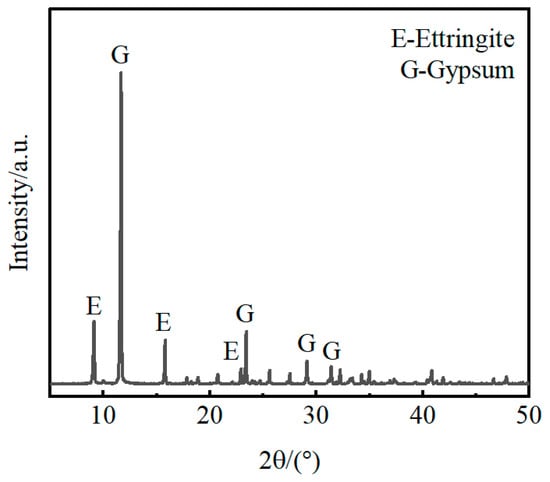
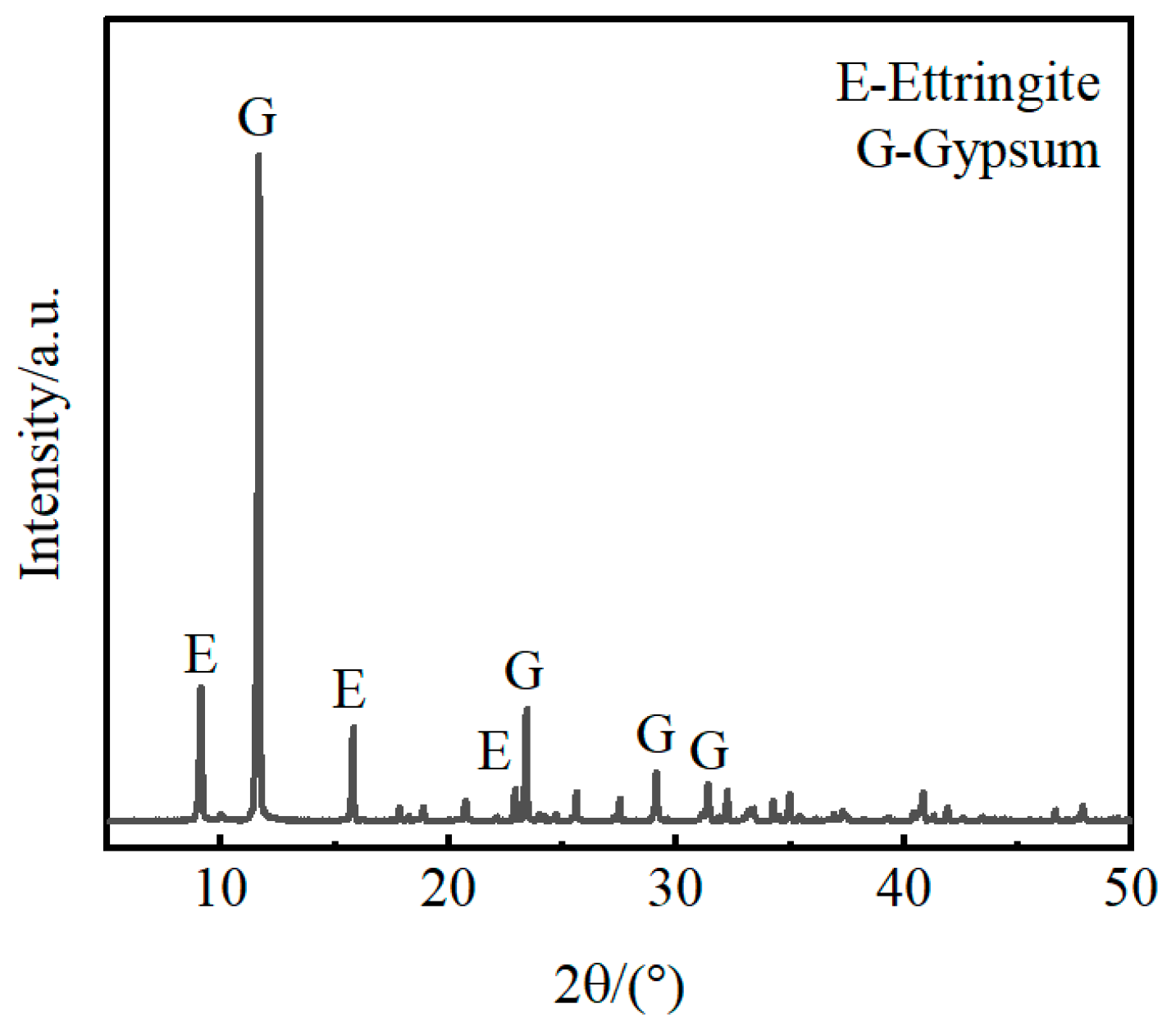
The ettringite (AFt) seeds were synthesized via a suspension method. Initially, calcium sulfoaluminate cement (CSAC D50 = 9.58 μm, Tangshan Polar Bear Building Materials Co., Ltd., Tangshan, China) and dihydrate gypsum (Sinopharm Chemical Reagent Co., Ltd., Shanghai, China) were accurately weighed at a mass ratio of 1:1 and mixed with deionized water at a liquid-to-solid (L/S) ratio of 9:1. The resulting slurry was then placed in a sealed container and stirred continuously for 24 h to ensure a complete reaction. Subsequently, the suspension was subjected to vacuum filtration. The obtained filter cake was washed twice with deionized water, followed by five consecutive washes with anhydrous ethanol to thoroughly displace residual moisture. Finally, the product was dried in a forced-air drying oven (Shanghai Yiheng Scientific Instrument Co., Ltd., Shanghai, China) at 40 °C for 24 h, then crushed, lightly ground, and passed through an 800-mesh standard sieve (Shaoxing Shangyu Yinghao Hardware Instrument Co., Ltd., Shaoxing, China) to obtain the final ettringite seeds. The crystalline phase of the synthesized ES was confirmed via XRD analysis (Figure 1), with a mean particle size (d50) of approximately 2.5 μm.
Figure 1.
Phase composition of ettringite seed.
2.3. Mix Proportions and Specimen Preparation
The control mix (labeled as M0) was designed with a fixed binder ratio of PG:GGBS:OPC = 60:34:6 (by mass) and a water-to-binder (W/B) ratio of 0.40. Based on this, the ES was incorporated at dosages of 1–5% by weight of the binder (Table 2). The preparation process followed a multi-step sequence: (1) the solid binders and ES were dry-mixed for 2 min to ensure homogeneity; (2) water was added and mixed at high speed for 3 min to form a uniform slurry; (3) pre-prepared foam was folded into the slurry until the target wet density of 950 ± 20 kg/m3 was reached. The mixture was cast into 100 mm × 100 mm × 100 mm cubic molds and 40 × 40 × 160 mm3 prismatic molds. All specimens were demolded after 24 h and cured in a standard curing room (20 ± 2 °C, RH > 95%) until the specified testing ages. For each mix and testing age, three specimens were prepared and tested. The results are reported as average values, and the error bars in the figures represent the standard deviation of the three measured values. For the main performance indicators with error bars, such as water absorption, compressive strength, and wet–dry cycle resistance, one-way ANOVA was used to evaluate the overall statistical differences among mixtures, with p < 0.05 considered statistically significant. The ANOVA results showed that the differences among mixtures for these indicators were statistically significant (p < 0.05).
Table 2.
Mix proportion design of foam concrete.
2.4. Testing Methods
2.4.1. Physical and Mechanical Properties
The fluidity of the fresh slurry was measured using a truncated cone mold with a height of 80 mm and an inner diameter of 80 mm. Compressive strength, dry density, and water absorption were tested according to GB/T 43487-2023 [38]. Compressive strength was measured at 7 d, 14 d, and 28 d. Dry density and water absorption were determined using 28 d cured specimens. For dry density, the specimens were dried in a forced-air drying oven at 40 ± 2 °C to constant mass, and the dry mass and specimen volume were recorded. For water absorption, the dried specimens were cooled to room temperature and then placed in a water tank at 20 ± 5 °C. Water was first added to one-third of the specimen height and maintained for 24 h, then to two-thirds of the specimen height and maintained for another 24 h. Subsequently, a grid was placed on the specimens, and water was added until the water level was 30 mm above the top surface of the specimens and maintained for 120 h. After immersion, the specimens were removed and placed on an iron rack to drain for 60 s. The surface water was then gently wiped off with a wrung wet cloth, and the wet mass was recorded. The water absorption was calculated from the mass difference between the wet and dry masses.
2.4.2. Durability and Environmental Safety
The wet–dry cycle test was conducted to simulate the service conditions of highway fillers. One cycle consisted of immersion in water for 12 h followed by drying at 40 °C for 12 h. The mass loss and strength loss after 5, 10, and 15 cycles were recorded. Furthermore, the environmental safety of the high-volume PG matrix was evaluated via the Horizontal Vibration Method (HJ 557-2010) [39]. The concentrations of heavy metals and phosphorus in the leachate were quantified using Inductively Coupled Plasma Optical Emission Spectroscopy (ICP-OES).
2.4.3. Microstructural Characterization
To investigate the induction mechanism of ES, hydration was terminated using the isopropanol replacement method at specific ages. Crushed samples were taken from the interior of the specimens after the compressive strength test, dried in a forced-air drying oven at 40 °C, and ground using an agate mortar (Lichen Scientific Instrument Co., Ltd., Shaoxing, China). The mineralogical evolution was analyzed using X-ray diffraction with a MiniFlex 600 diffractometer (Rigaku Corporation, Akishima, Tokyo, Japan) with a scanning angle range of 3–70°, a step size of 0.02°, and a scanning speed of 5°/min). Thermal analysis was performed via TG-DTG using an SDT 650 simultaneous thermal analyzer, (TA Instruments, New Castle, DE, USA) from 30 °C to 1000 °C at a heating rate of 10 °C/min under a N2 atmosphere. For SEM observation, small fragments were collected from the inner part of the hardened specimens and observed using a MIRA LMS scanning electron microscope (TESCAN, Brno, Czech Republic). The fractured surfaces were used mainly to observe the morphology and distribution of hydration products, including AFt crystals and C-(A)-S-H gel, and to qualitatively compare the local compactness of pore-wall structure.
3. Results and Discussion
3.1. Physical and Mechanical Performance
3.1.1. Role of Seeds on the Fluidity
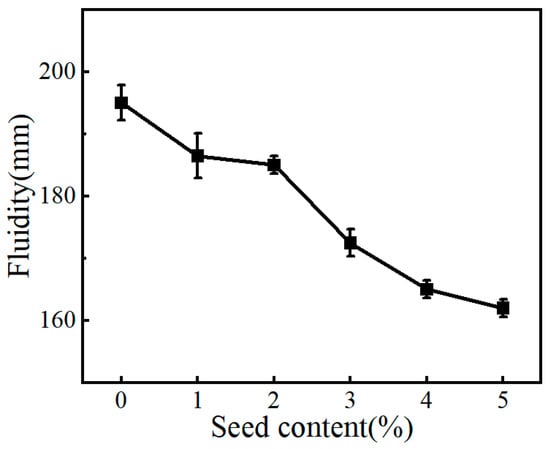
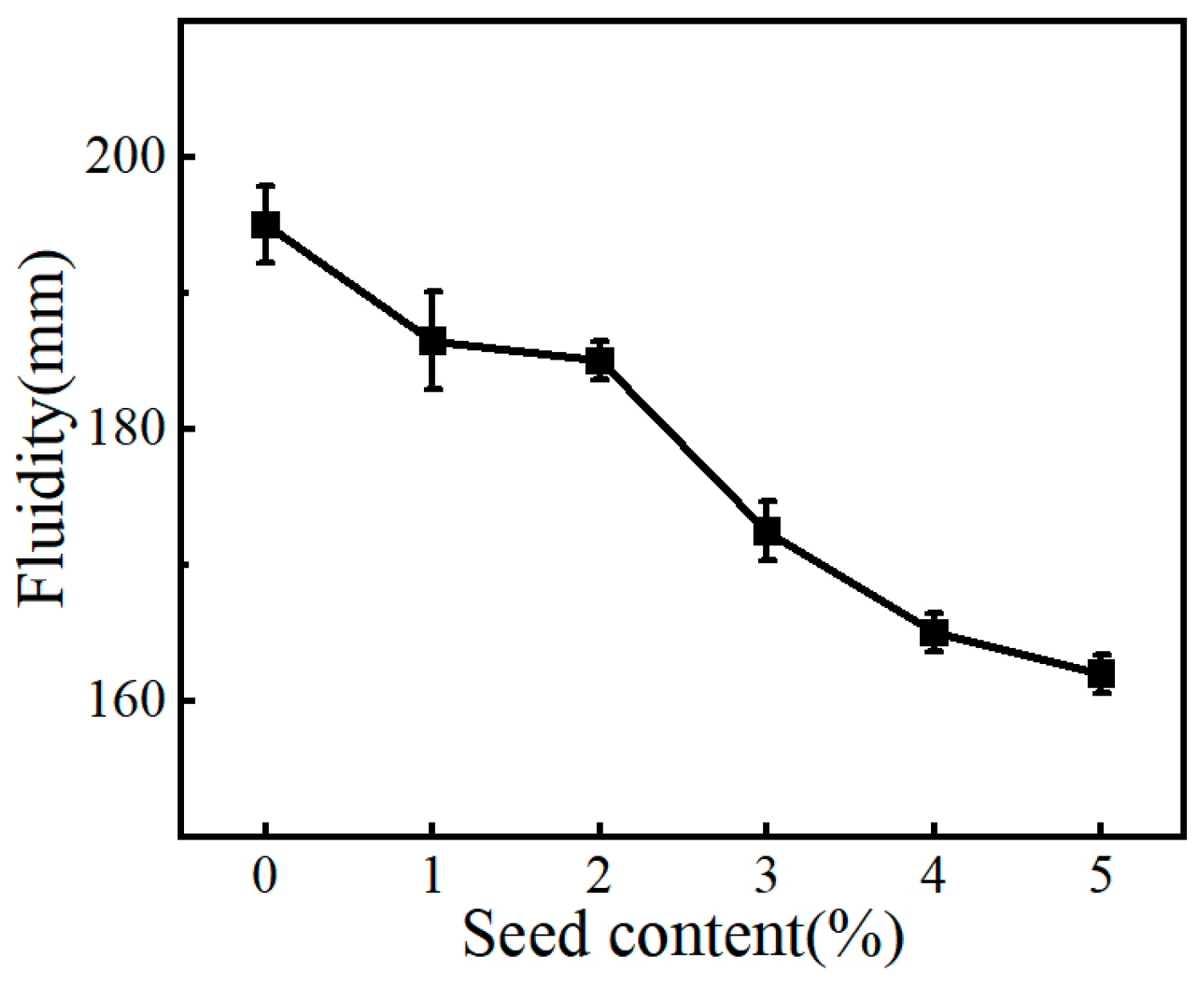
The incorporation of ettringite seeds (ES) exerts a substantial inhibitory effect on the fluidity of high-volume phosphogypsum (PG) foam concrete slurry. Experimental data indicate that with the increasing dosage of ES, the slurry fluidity exhibits a monotonic decline; specifically, at a 5% ES dosage (group M5), the fluidity decreased by 16.9% compared to the control group (Figure 2). This degradation in rheological performance is primarily governed by a dual mechanism of physical and chemical interactions. Physically, the synthesized ES crystals possess a high specific surface area, which increases the internal friction between solid phases and subsequently raises the plastic viscosity of the suspension. Chemically, from a kinetic perspective, ES serves as heterogeneous nucleation sites that significantly lower the nucleation energy barrier for ettringite (AFt) formation. According to classical nucleation theory, the presence of these seeds allows the system to bypass the high-energy spontaneous nucleation stage, inducing rapid AFt growth during the initial hydration period. This process consumes a considerable volume of free water and establishes a preliminary crystalline network, further restricting the macro-flow of the slurry. This phenomenon aligns with previous findings reported by Halder et al. [40], who observed that accelerated hydration typically results in a rapid loss of workability in cementitious systems.
Figure 2.
Effect of seed on the fluidity of foam concrete slurry.
3.1.2. Dry Density and Water Absorption
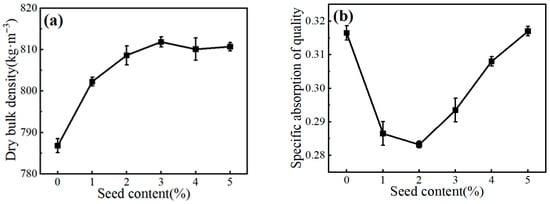
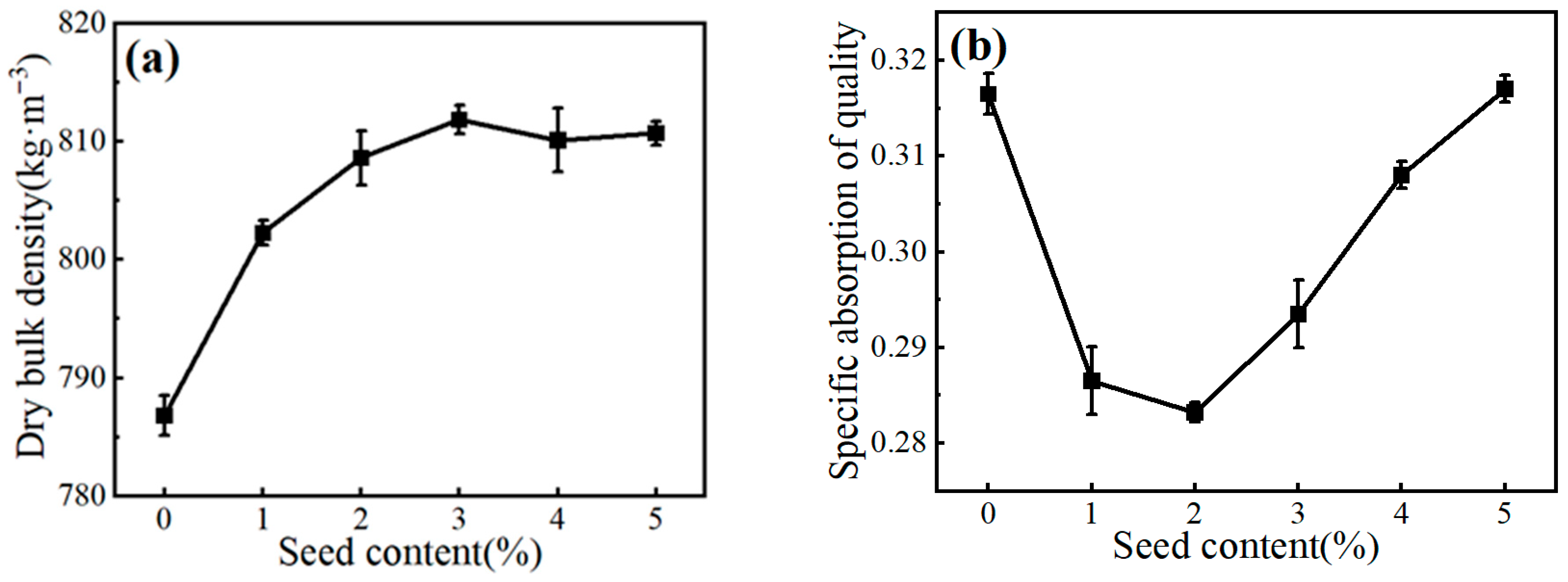
Regarding the physical properties of the hardened matrix, the apparent dry density and mass water absorption exhibit distinct non-linear correlations with the ES dosage (Figure 3). The dry density follows a trend of initial increase followed by a slight decline, reaching a peak of 812 kg/m3 at a 3% dosage (group M3). Correspondingly, the water absorption displays a U-shaped trajectory, reaching its minimum value of 28.3% at a 2% dosage (group M2), representing a 10.1% reduction compared to M0. This trend reflects the optimization of the pore-wall microstructure by moderate seed dosages: the induced acicular AFt crystals interweave with C-(A)-S-H gels to fill micro-voids within the binder paste, thereby enhancing the densification of the bubble walls. However, beyond a 3% dosage, the decrease in dry density and the rebound in water absorption reveal the emergence of structural defects. This may be attributed to internal stress induced by crystallization and associated with local AFt accumulation, together with the mismatch between slurry and bubbles caused by excessive viscosity, both of which could promote the development of microstructural defects.
Figure 3.
Effect of seed on dry density and water absorption. (a) Dry density. (b) Water absorption.
When the ES dosage is excessively high, the resultant high yield stress of the slurry prevents the entrained micro-bubbles from dispersing uniformly, leading to localized coalescence or irregular bubble arrangement. As the ability of the matrix to encapsulate and support the foam diminishes, irregular macro-pores and interconnected channels are formed within the material. These structural flaws act as stress concentrators under loading, accelerating the instability and fracture of the pore walls [37]. Literature suggests that water absorption is more sensitive to micro-cracks and pore connectivity than dry density, which explains why the minimum absorption point (M2) precedes the maximum density point (M3). Consequently, the 2% ES dosage maintains an optimal rheological state that ensures both the integrity and uniformity of the pore structure.
3.1.3. Role of Seeds on the Mechanical Performance
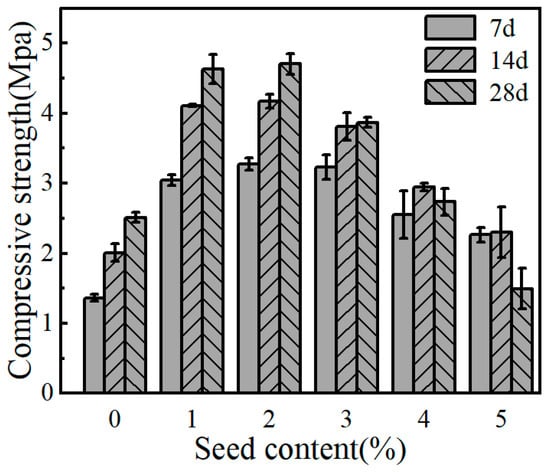
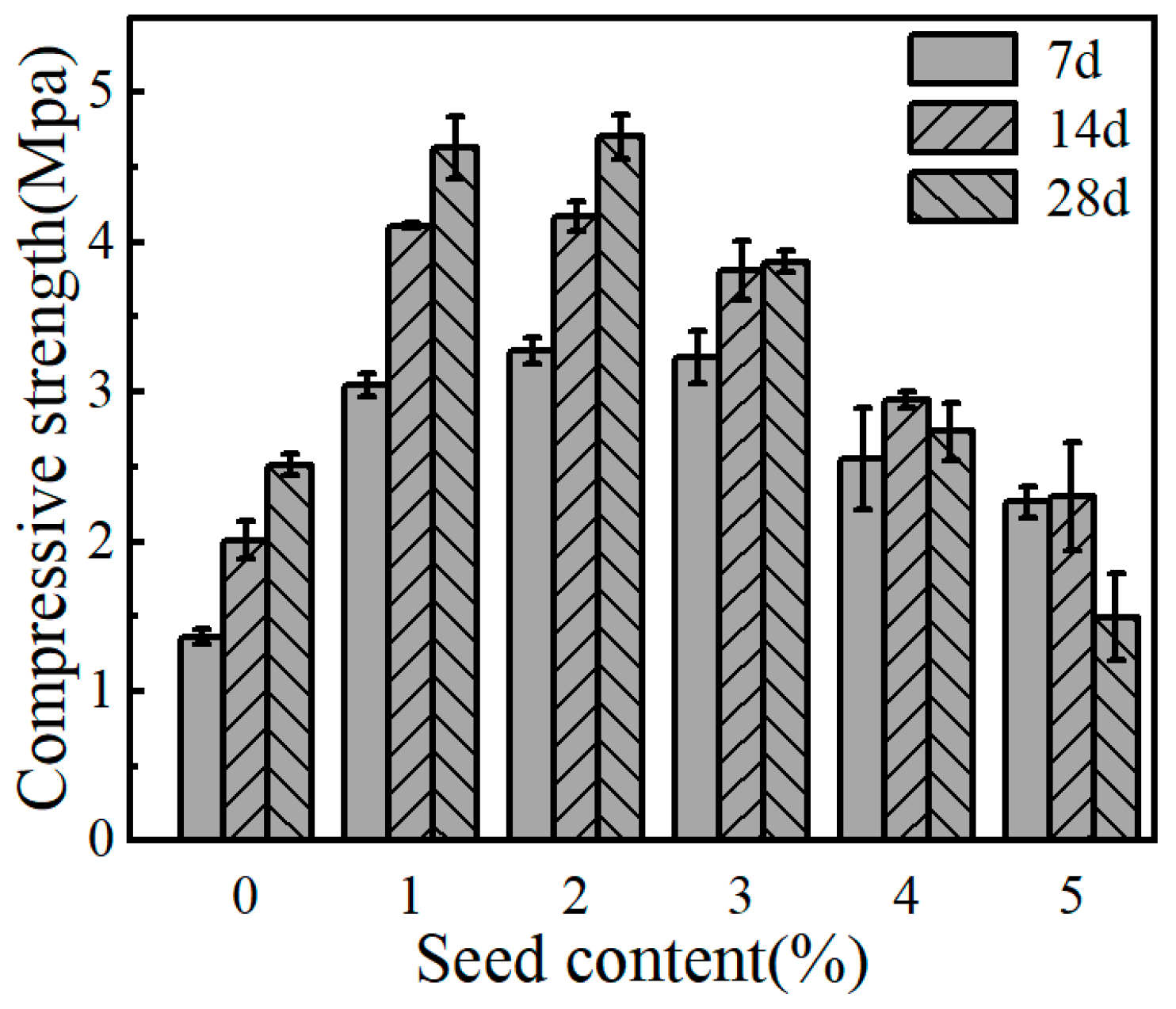
The results of compressive strength, as shown in Figure 4, demonstrate that ES significantly enhances mechanical performance across all curing ages, particularly in the early stages. Group M2 achieved a 7-day compressive strength of 3.3 MPa, a 150% increase over group M0. By 28 days, the strength reached 4.7 MPa. This leap in strength is credited to the seeding effect altering the hydration pathway, allowing the AFt framework to stabilize the foam structure before significant bubble deformation occurs, thereby reinforcing the load-bearing capacity of the pore walls. This is consistent with the findings of Li et al. [36] regarding ettringite seeding in supersulphated slag systems. In summary, for a complex binder system containing 60% PG, a 2% ES dosage represents the optimal balance between early-age activation, rheological control, and long-term structural stability, synergistically optimizing the strength and durability of the foam concrete.
Figure 4.
Effect of seed on compressive strength at different ages.
3.2. Durability and Environmental Safety Performance
3.2.1. Drying-Wetting Cycle Performance
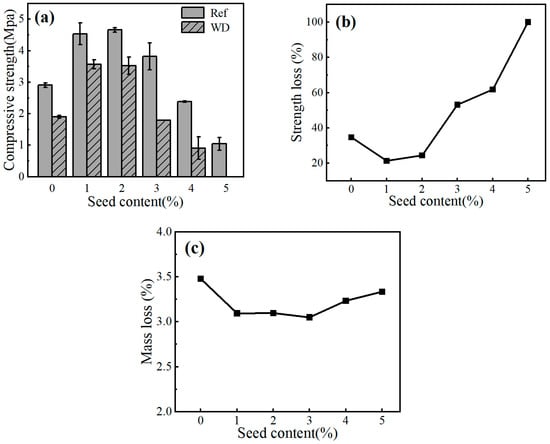
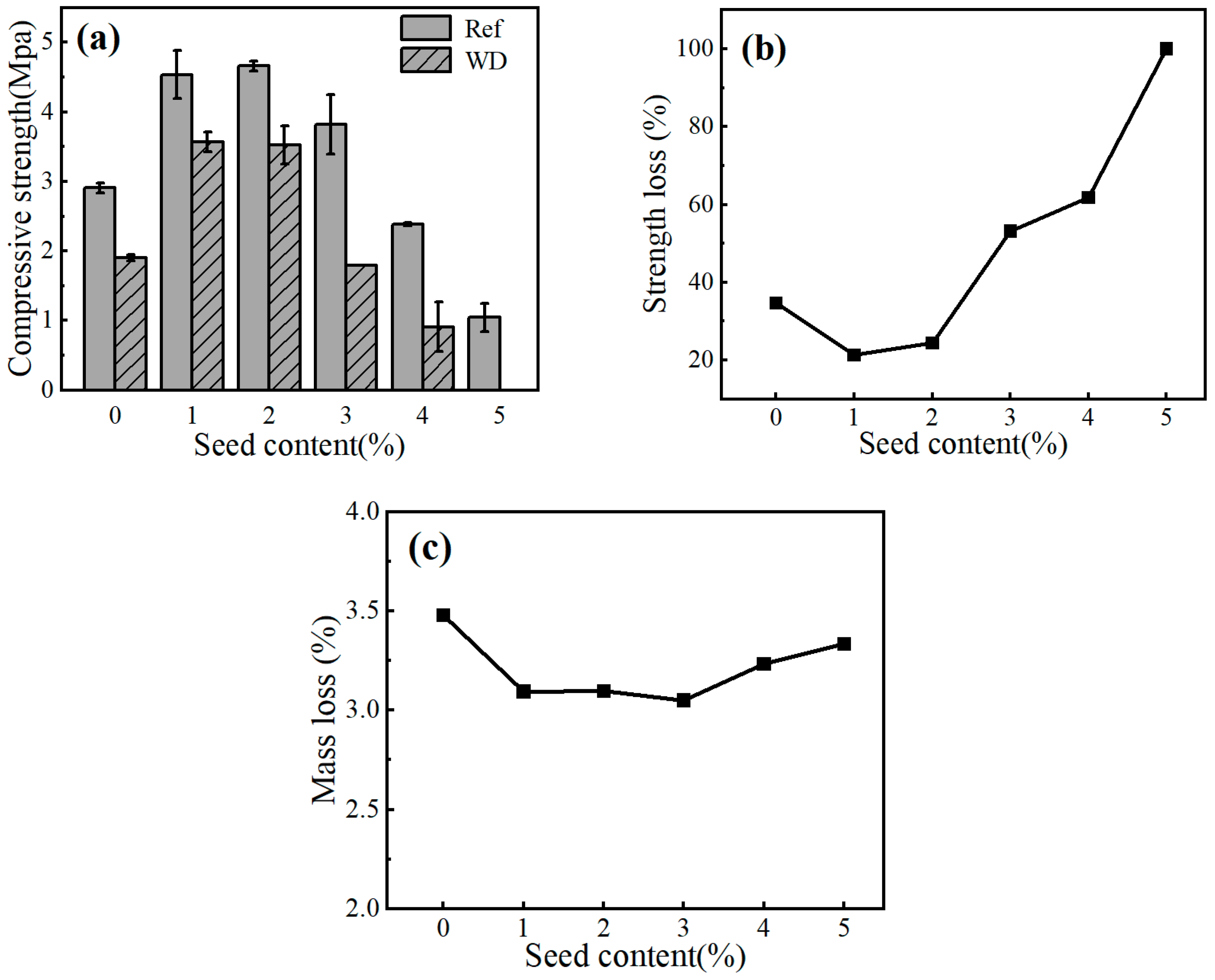
The long-term stability and environmental friendliness of foam concrete containing 60% phosphogypsum (PG) are critical criteria for its application. The mass loss and strength retention of specimens M0–M5 after 15 wet–dry cycles were evaluated to simulate the rhythmic moisture changes in roadbed environments. As illustrated in Figure 5, specimens M1 and M2 exhibited superior resistance to weathering compared to the control group M0. For instance, the mass loss rate of M2 remained below 3.0% after 15 cycles, effectively meeting the technical requirements specified in CJJ/T 177-2012 [41] for lightweight fillers.
Figure 5.
Drying-wetting cycle performance of foam concrete: (a) compressive strength, (b) strength loss and (c) mass loss.
From a mechanistic perspective, this enhanced durability is attributed to the synergistic effect of nucleation and densification induced by the ettringite seeds. In the control group M0, the relatively loose pore walls and the presence of unreacted PG particles create channels for rapid water penetration during immersion, leading to significant internal osmotic pressure and subsequent surface spalling. In contrast, the moderate introduction of seeds (2%) promotes the formation of a dense interconnected network of acicular AFt crystals and C-(A)-S-H gels within the bubble walls. This microstructural refinement limits the connectivity of capillary pores, thereby reducing the moisture diffusion coefficient and mitigating the volumetric expansion-contraction stress during the drying phases. However, consistent with the trend observed in mechanical testing, excessive seeding in group M5 led to an accelerated mass loss (exceeding 8.5%) and visible micro-cracking, which is likely due to the pre-existing damage caused by the excessive crystallization pressure of AFt prior to the durability test.
3.2.2. Leachate of Foam Concrete
Furthermore, the environmental safety of high-volume PG materials was rigorously assessed through leaching toxicity tests. The leaching concentrations of major pollutants, including phosphorus (P) and trace heavy metals (Pb, Cd, Cr, As), were significantly reduced in the ES-modified groups (Table 3). Specifically, the phosphorus concentration in the leachate of M2 was 64.2% lower than that of M0. The reduced leaching concentration may be related to two possible factors: physical encapsulation by a denser matrix and potential chemical fixation by hydration products. The accelerated hydration induced by ES results in a more tortuous and densified matrix, which physically traps the contaminants and restricts their migration into the aqueous environment. Simultaneously, the increased formation of AFt may provide additional sites for pollutant immobilization through possible surface adsorption or ionic incorporation.
Table 3.
Concentrations of common polluting elements in the leachate of foam concrete (mg/L).
Interestingly, the environmental performance reached its optimum at the M2 dosage, which coincides with the minimum water absorption point. This correlation suggests that the sealing effect of the pore walls is a major contributing factor in preventing the leaching of harmful elements. Literature on the stabilization of phosphogypsum (e.g., studies by Li et al. and Liu et al.) [4,42] confirms that the formation of ettringite is instrumental in pH buffering and pollutant immobilization. In the present study, the 2% ES dosage (M2) not only satisfies the mechanical requirements but also ensures that the leachate concentrations are well below the regulatory limits (DB42/T1991-2023) [43]. Consequently, the seed induction strategy proves to be an effective dual-purpose approach for simultaneously enhancing the structural integrity and environmental reliability of high-volume PG foam concrete.
3.3. Microstructure and Mechanism
3.3.1. Role of Seeds on the Phase Compositions
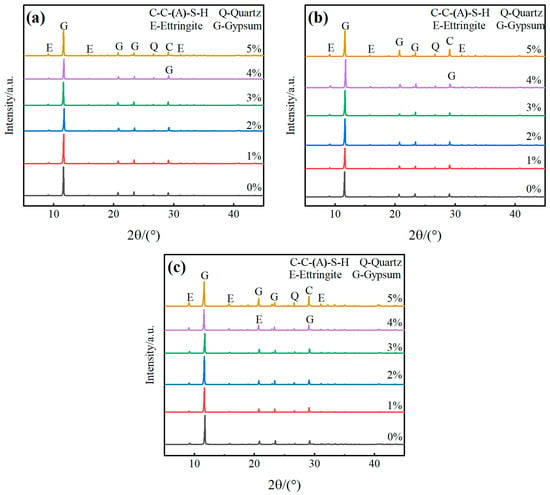
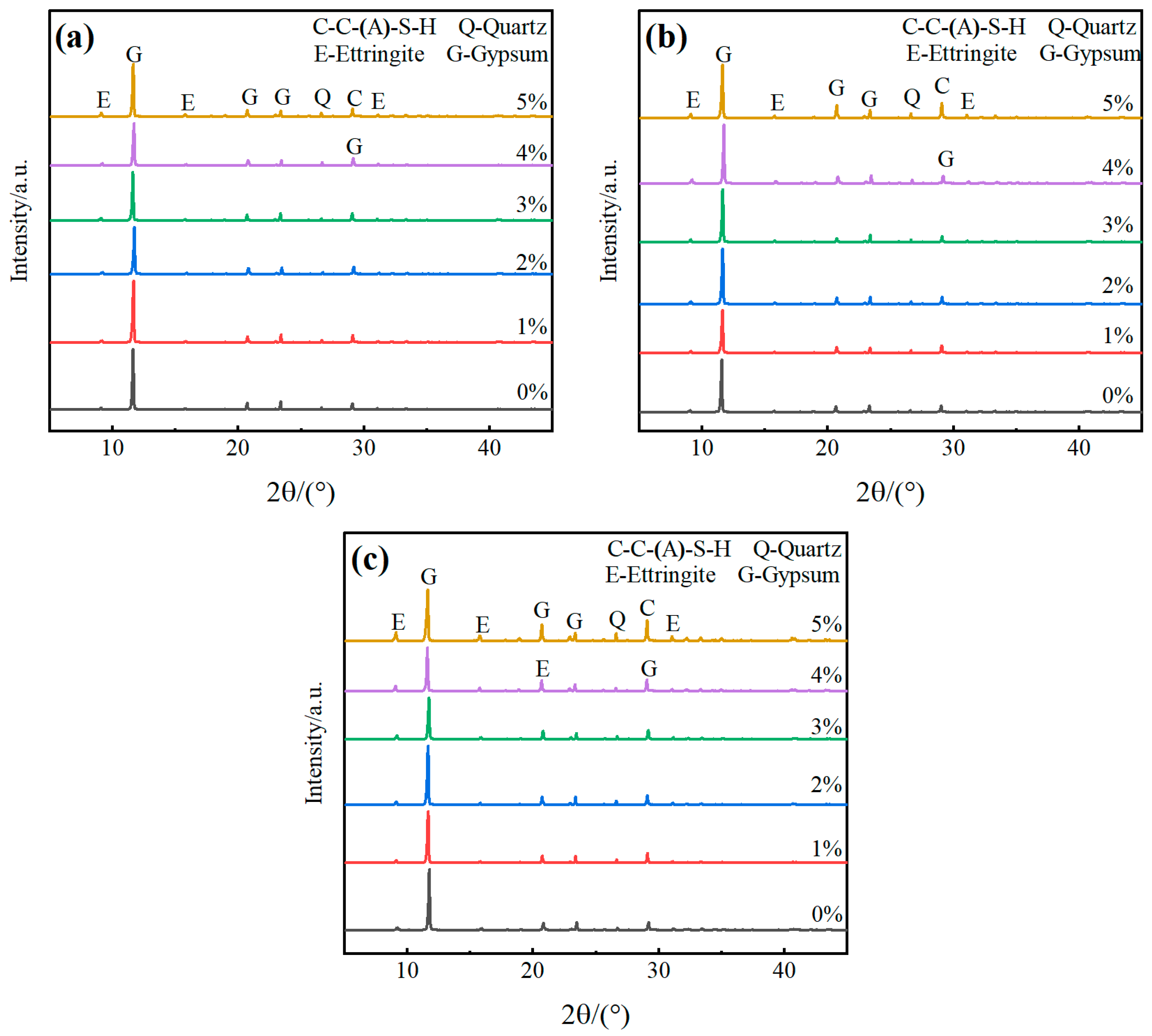
The XRD patterns, as shown in Figure 6, reveal that the primary hydration products across all groups are acicular ettringite (AFt) and amorphous C-(A)-S-H gels, accompanied by residual gypsum dihydrate (from PG) and quartz (from GGBS). The hydration behavior of the PG-GGBS-OPC system is closely related to the chemical composition of the raw materials. PG mainly provides CaSO4·2H2O, which partially dissolves during mixing and supplies Ca2+ and SO42− for the formation of sulfate-bearing hydrates. OPC hydrates rapidly in the early stage, producing Ca(OH)2 and creating an alkaline environment that promotes the dissolution of the glassy phase in GGBS. The dissolved Ca, Si, and Al species from GGBS further participate in the formation of C-(A)-S-H gel and AFt. Therefore, AFt and C-(A)-S-H are the main hydration products in this sulfate-rich low-cement system, and their formation directly affects the densification of pore walls and the mechanical performance of the foam concrete.
Figure 6.
XRD patterns of foam concrete. (a) 7 d; (b) 14 d; (c) 28 d.
A comparative analysis of the diffraction intensities indicates that the characteristic peaks of AFt in groups M1–M3 are significantly intensified during the early hydration stages (7 d) relative to the control group M0. From a physico-chemical kinetic perspective, this confirms the heterogeneous nucleation effect of ES. In the M0 system, the formation of AFt is constrained by a high nucleation energy barrier, further exacerbated by residual phosphate ions (PO43−) from the PG, which tend to form a passivation layer on the surface of binder particles. In contrast, ES act as pre-existing nuclei that facilitate the template effect, allowing Ca2+, [Al(OH)4]−, and SO42− ions to undergo epitaxial growth. This bypasses the energy-intensive spontaneous nucleation stage, manifesting macroscopically as a surge in early-age strength.
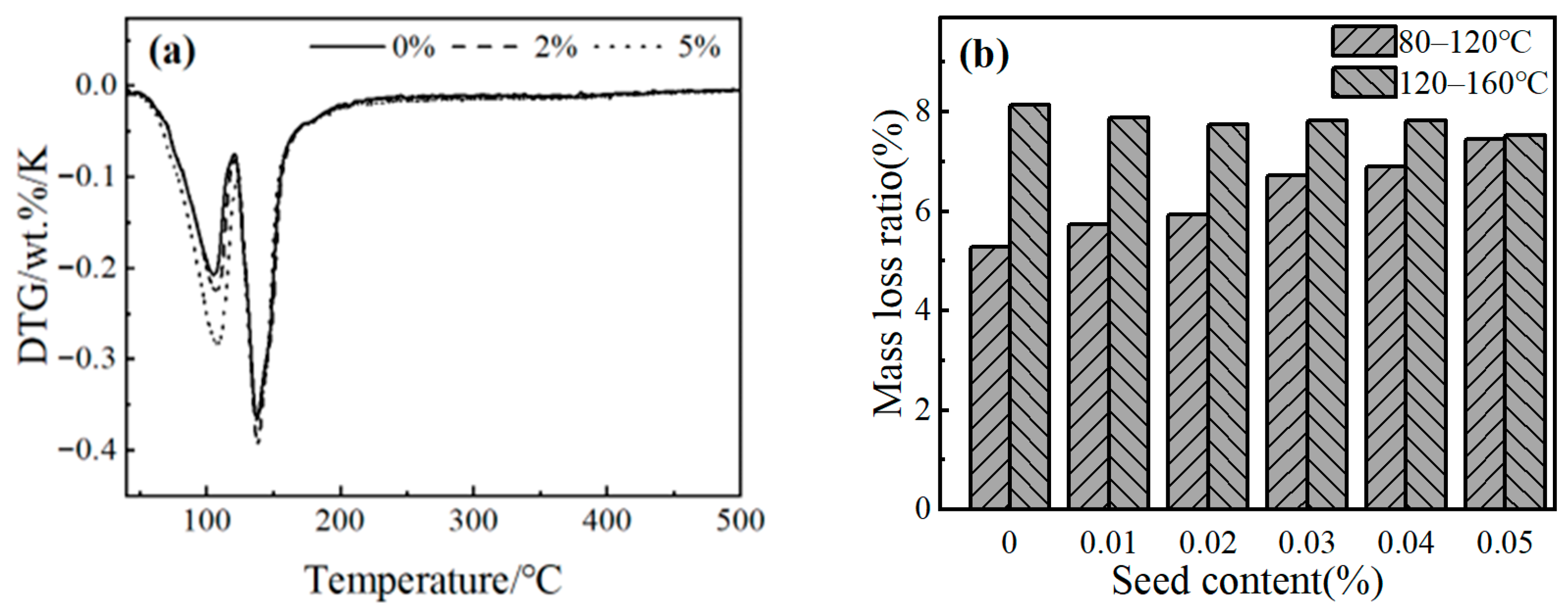
Thermogravimetric analysis (TG-DTG) provides quantitative evidence of the hydration evolution (Figure 7). The prominent endothermic peaks observed between 80 and 150 °C correspond to the dehydration of AFt crystals. Calculations based on the peak areas reveal that the AFt yield in group M2 at 28 d is approximately 42% higher than that of M0, suggesting that the densified structure effectively mitigates the interference of PG impurities on the long-term hydration process. Thermodynamically, the seeds not only redefine the kinetic pathway but also promote the alkali-activation of GGBS by accelerating the release of early hydration heat, thereby establishing a synergistic evolution cycle between AFt and C-(A)-S-H gels.
Figure 7.
Thermal analysis results of foam concrete with different ES dosages: (a) DTG curves; (b) mass loss ratios.
3.3.2. Role of Seeds on the Microstructure Development
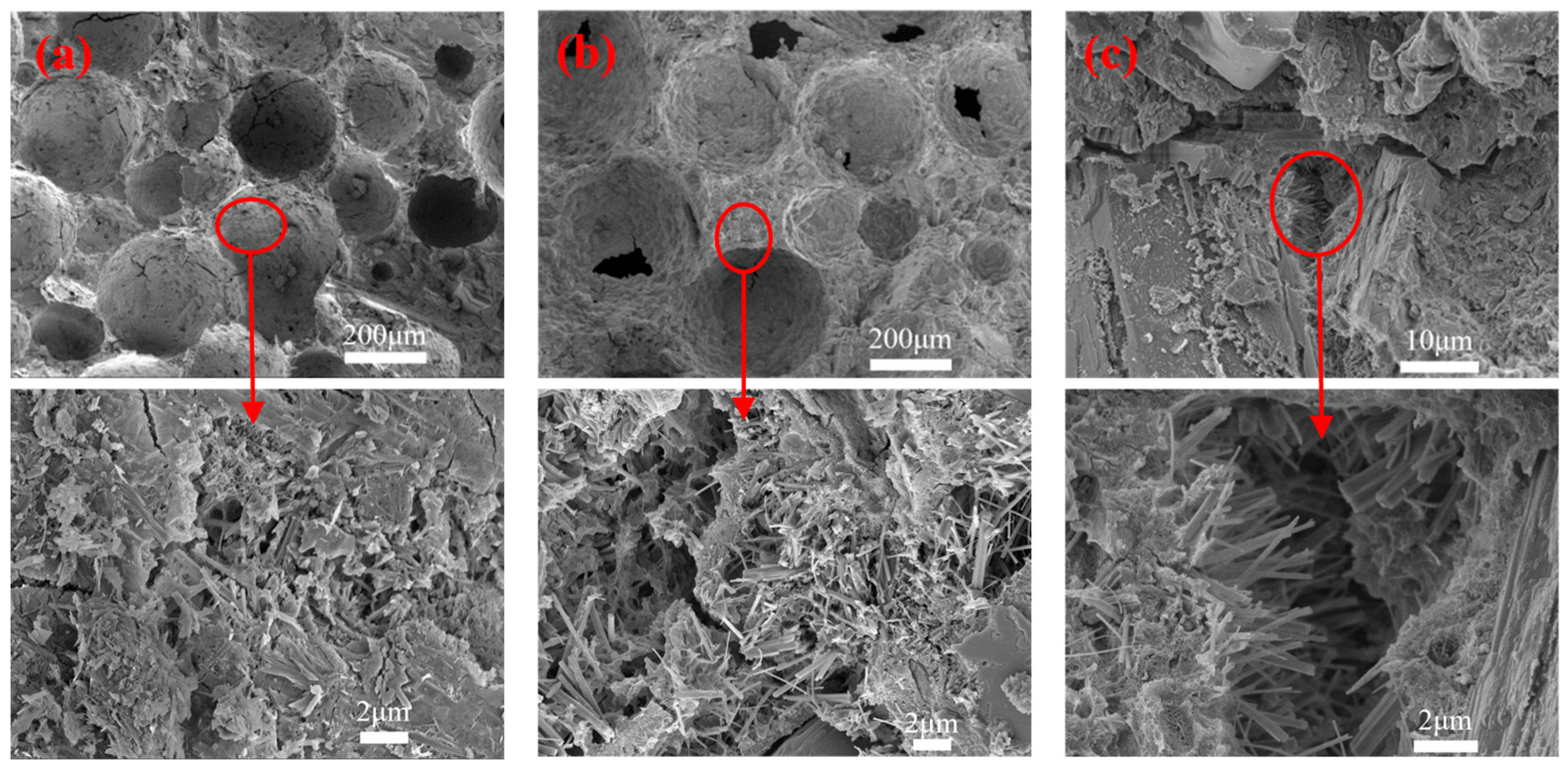
The microstructural architecture observed via Scanning Electron Microscopy (SEM) reveals the physical essence of the performance enhancement (Figure 8). In the control group M0, numerous unreacted gypsum particles are found isolated from the cementitious matrix, with AFt crystals appearing short, stubby, and randomly distributed, resulting in a porous and granular pore-wall structure. In contrast, the M2 group displays a high population of well-developed, high-aspect-ratio acicular AFt crystals growing radially from the ES nuclei. These AFt crystals form a 3D interlocking framework—analogous to micro-fiber reinforcement—within the pore walls and integrate with the C-(A)-S-H gels to construct a denser local pore-wall microstructure. This architecture significantly enhances the compressive resistance of the bubble walls, allowing them to withstand higher foaming ratios without structural collapse, which explains the high 4.7 MPa strength and low water absorption observed in M2.
Figure 8.
SEM of foam concrete at different ettringite seed dosages: (a) 0%; (b) 2%; (c) 5%.
However, as the ES dosage increases to 5% (group M5), the microstructural evolution shifts toward deterioration. SEM images reveal excessive crowding and clustering of AFt crystals within localized micro-regions. According to Correns’ crystallization pressure theory, when crystals grow in confined spaces (such as the micro-pores of a dense wall) under high supersaturation, the resultant crystallization pressure may exceed the tensile strength of the matrix. In M5, excessive AFt formation may generate local internal stress and contribute to the development of microstructural defects within the pore walls. These defects tend to increase the connectivity of transport pathways and thereby facilitate ion release during leaching, especially when combined with macro-pores associated with slurry-bubble mismatch. This finding clarifies the physical nature of strength regression and durability degradation at high seed dosages, underscoring that controlling the ES content (2–3%) to balance rheology and crystallization pressure is the key to structural optimization in 60% PG systems.
3.3.3. The Underlying Role of Seeds on the Foam Concrete
The evolutionary analysis of the microstructural characteristics within the high-volume phosphogypsum (PG) system elucidates the fundamental mechanism by which ettringite seeds (ES) regulate the performance of foam concrete. The findings suggest that the introduction of ES modifies the early hydration process mainly through a “heterogeneous nucleation” effect. In PG-rich systems, where traditional hydration is typically hindered by high nucleation energy barriers and the chemical passivation of binder surfaces by PO43− and F− impurities, ES act as pre-existing nuclei that provide low-energy templates for mineral precipitation. This induces rapid epitaxial growth of hydration products from the liquid phase, leading to a significant increase in the yield and formation rate of ettringite (AFt), as evidenced by the 42% increase in AFt-related mass loss in TG-DTG analysis.
Morphologically, a moderate ES dosage (2.0%) promotes the formation of more acicular AFt crystals, which are interwoven with C-(A)-S-H gel within the pore walls and contribute to a more compact microstructure. This microstructural densification is consistent with the improved mechanical resistance of the pore walls and may partly mitigate the adverse effects of PG impurities. It may also reduce the migration of harmful elements mainly through pore-wall densification and possible immobilization effects.
However, at a 5.0% dosage, excessive growth of AFt in confined capillary spaces is likely to generate localized crystallization pressure. Once this pressure exceeds the tensile capacity of the hardened paste, it triggers the initiation and propagation of micro-cracks. This micro-damage, coupled with the rheological “slurry-bubble mismatch” observed in the fresh state, may contribute to the reduction in strength and durability. In conclusion, controlling the ES dosage is important for balancing hydration acceleration, pore-wall densification, and structural stability in high-volume PG foam concrete.
3.4. Comparative Discussion
A detailed comparison with representative studies on modified phosphogypsum-based foam concrete is provided in Table 4. Existing studies have mainly improved PG-based foam concrete through cementitious additive modification, foaming regulation, fiber reinforcement, foam stabilization, or chemical activation. These methods are effective for specific purposes, such as reducing density and thermal conductivity, improving pore stability and water resistance, enhancing acoustic performance, or increasing compressive strength.
Table 4.
Comparison with representative studies on modified phosphogypsum-based foam concrete.
Compared with these studies, the main advantage of the present work lies in using ES as a hydration-regulation strategy for a 60 wt.% high-volume PG foam concrete system. Rather than reducing the PG content, increasing cement dosage, mainly adjusting the foam system, or introducing fibers and alkaline activators, ES was used to promote early hydration product formation and pore-wall densification. This strategy is therefore more closely related to the key bottlenecks of high-volume PG systems, namely slow early hydration, insufficient early strength development, and weak pore-wall formation. The optimized 2% ES dosage improved compressive strength, wet–dry cycle resistance, and phosphorus immobilization simultaneously. These results indicate that ES induction provides a feasible route for improving the early performance and engineering reliability of high-volume PG foam concrete while maintaining a high level of PG utilization.
4. Conclusions
This study investigated an ettringite-seed-assisted material design strategy for high-volume phosphogypsum (PG) foam concrete containing 60 wt.% PG. By systematically evaluating the workability, mechanical performance, wet–dry cycle resistance, environmental safety, phase evolution, and microstructural development of specimens M0–M5, the following conclusions were drawn:
- The incorporation of ES provides an effective hydration-regulation strategy for improving the feasibility of high-volume PG utilization in foam concrete. Under a high PG content, the introduction of ES accelerates the early hydration process and promotes the formation of hydration products within the pore walls, thereby improving the structural development of high-volume PG foam concrete.
- The performance enhancement is mainly attributed to the seed-induced formation of AFt and its synergistic interaction with C-(A)-S-H gel. The intergrowth of these hydration products densifies the pore walls, strengthens the load-bearing skeleton, and restricts the migration of harmful elements. The optimized 2% ES group achieved a 28 d compressive strength of 4.7 MPa and reduced phosphorus leaching by 64.2%, indicating improved mechanical performance and environmental safety.
- The ES dosage should be carefully controlled to balance hydration acceleration, slurry workability, and pore-structure stability. A moderate ES dosage, especially 2%, improves the mechanical performance and wet–dry cycle resistance of the foam concrete. In contrast, excessive ES reduces slurry fluidity and may induce slurry-bubble mismatch, pore coalescence, microcracking, and strength regression.
- The proposed ES-modified high-volume PG foam concrete shows potential for sustainable roadbed filler and other lightweight engineering applications. Future work may further extend this material design strategy by evaluating later-age strength development, shrinkage behavior, volumetric stability, and field performance under practical service conditions.
Author Contributions
Y.C.: Conceptualization, Methodology, Formal analysis, Writing—Original Draft; W.Y.: Conceptualization, Methodology, Data Curation; T.L.: Conceptualization, Formal analysis, Writing—Review and Editing; X.C.: Methodology, Formal analysis, Project administration; B.Y.: Writing—Review, Writing—Review and Editing, Data Curation, Resources. All authors have read and agreed to the published version of the manuscript.
Funding
This work was funded by the National Key Research and Development Program of China (2022YFC3902705), Henan Province Key Projects of Science and Technology (262102321025, 262102321030); and Training Program for Young Backbone Teachers in Higher Education Institutions of Henan Province (2025GGJS138, 2025GGJS139).
Data Availability Statement
The raw data supporting the conclusions of this article will be made available by the authors on request.
Acknowledgments
During the preparation of this work the authors used google Gemini 3.1 Pro (https://gemini.google.com/) in order to assist with language refinement and to enhance readability. After using this tool/service, the authors reviewed and edited the content as needed and take full responsibility for the content of the publication.
Conflicts of Interest
The authors declare no conflicts of interest.
Abbreviations
The following abbreviations are used in this manuscript:
| PG | Phosphogypsum |
| GGBS | Ground Granulated Blast Furnace Slag |
| OPC | Ordinary Portland Cement |
| ES | Ettringite Seeds |
| AFt | Ettringite |
| C-(A)-S-H | Calcium (Alumino) Silicate Hydrate |
| XRF | X-ray Fluorescence |
| XRD | X-ray Diffraction |
| TG-DTG | Thermogravimetry–Derivative Thermogravimetry |
| SEM | Scanning Electron Microscopy |
| ICP-OES | Inductively Coupled Plasma Optical Emission Spectroscopy |
| W/B | Water-to-Binder Ratio |
| RH | Relative Humidity |
| FA | Fly Ash |
| CSAC | Calcium Sulfoaluminate Cement |
References
- Yang, J.; Dong, S.; Ma, L.; Dai, Q.; Zheng, D.; Huang, B.; Sun, M.; Hu, B.; Du, W.; Xie, L.; et al. Review on High-Value Utilization of Phosphogypsum: Utilization of Calcium and Oxygen Resources Present in Phosphogypsum. Sep. Purif. Technol. 2024, 344, 127246. [Google Scholar] [CrossRef] [Scilit]
- Bumanis, G.; Iukynien, D.V.; Tambovceva, T.; Puzule, L.; Sinka, M.; Ien, D.N.; Fornés, I.V.; Bajare, D. Circular Economy in Practice: A Literature Review and Case Study of Phosphogypsum Use in Cement. Recycling 2024, 9, 63. [Google Scholar] [CrossRef] [Scilit]
- Akfas, F.; Elghali, A.; Aboulaich, A.; Munoz, M.; Benzaazoua, M.; Bodinier, J. Exploring the Potential Reuse of Phosphogypsum: A Waste Or a Resource? Sci. Total Environ. 2024, 908, 168196. [Google Scholar] [CrossRef] [Scilit] [PubMed]
- Li, X.; Zhou, Y.; Shi, Y.; Zhu, Q. Fluoride Immobilization and Release in Cemented Pg Backfill and its Influence on the Environment. Sci. Total Environ. 2023, 869, 161548. [Google Scholar] [CrossRef] [Scilit] [PubMed]
- Chernysh, Y.; Yakhnenko, O.; Chubur, V.; Roubík, H. Phosphogypsum Recycling: A Review of Environmental Issues, Current Trends, and Prospects. Appl. Sci. 2021, 11, 1575. [Google Scholar] [CrossRef] [Scilit]
- Liu, Y.; He, D.; Zou, H.; Chen, Z.; Xue, S. Utilization and Treatment of Phosphogypsum: Environmental Impacts and Resource Potential. J. Environ. Sci. 2025; in press. [CrossRef] [Scilit]
- Priyatham, B.P.R.V.; Lakshmayya, M.T.S.; Chaitanya, D.V.S.R. Review on Performance and Sustainability of Foam Concrete. Mater. Today Proc. 2023; in press. [CrossRef] [Scilit]
- Yang, S.; Wang, X.; Hu, Z.; Li, J.; Yao, X.; Zhang, C.; Wu, C.; Zhang, J.; Wang, W. Recent Advances in Sustainable Lightweight Foam Concrete Incorporating Recycled Waste and Byproducts: A Review. Constr. Build. Mater. 2023, 403, 133083. [Google Scholar] [CrossRef] [Scilit]
- Huang, S.; Yang, J.; Zhang, G.; Ding, Q.; Wang, A.; Ding, Y.; Sun, D.; Shi, J.; He, Y. Preparation of Sustainable Foam Concrete Using High-Volume Phosphogypsum and its Hydration Mechanism Investigation. J. Mater. Civ. Eng. 2024, 36, 04024034. [Google Scholar] [CrossRef] [Scilit]
- Murali, G.; Azab, M. Recent Research in Utilization of Phosphogypsum as Building Materials: Review. J. Mater. Res. Technol. 2023, 25, 960–987. [Google Scholar] [CrossRef] [Scilit]
- Shi, Y.; Li, Y.; Wang, H. Eco-Friendly Solid Waste-Based Cementitious Material Containing a Large Amount of Phosphogypsum: Performance Optimization, Micro-Mechanisms, and Environmental Properties. J. Clean. Prod. 2024, 471, 143335. [Google Scholar] [CrossRef] [Scilit]
- Tang, L.; He, Z.; Xia, Y.; Fort, J.; Xiang, H. Development of Phosphogypsum-Based Full-Solid-Waste Cementitious Materials: Mechanical Properties, Hydration Mechanisms, and Pollutant Stabilization Mechanisms. J. Build. Eng. 2025, 110, 113100. [Google Scholar] [CrossRef] [Scilit]
- Feng, Y.; Xue, Z.; Zhang, B.; Xie, J.; Chen, C.; Tan, J.; Zhao, C. Effects of Phosphogypsum Substitution on the Performance of Ground Granulated Blast Furnace Slag/Fly Ash-Based Alkali-Activated Binders. J. Build. Eng. 2023, 70, 106387. [Google Scholar] [CrossRef] [Scilit]
- Du, L.; Liu, J.; Zhang, Z.; Zheng, Y.; Song, T.; Liu, Y.; Fu, W.; Zhang, C.; Chen, S. Foam Concrete with Untreated Phosphogypsum and Fly Ash: Strength and Microstructure. Emerg. Mater. Res. 2025, 14, 341–351. [Google Scholar] [CrossRef] [Scilit]
- Wang, T.; Gao, X.; Wang, J. Preparation of Foamed Phosphogypsum Lightweight Materials by Incorporating Cementitious Additives. Mater. Sci. 2019, 25, 340–347. [Google Scholar] [CrossRef] [Scilit]
- Chen, M.; Liu, P.; Kong, D.; Wang, Y.; Wang, J.; Huang, Y.; Yu, K.; Wu, N. Influencing Factors of Mechanical and Thermal Conductivity of Foamed Phosphogypsum-Based Composite Cementitious Materials. Constr. Build. Mater. 2022, 346, 128462. [Google Scholar] [CrossRef] [Scilit]
- Zhang, G.; He, Y.; Yang, J.; Ding, Q.; Sun, D.; Wang, X. Performance Optimization of Low-Carbon Phosphogypsum Foam Concrete: Influence Mechanisms of Different Activators. J. Build. Eng. 2025, 112, 113688. [Google Scholar] [CrossRef] [Scilit]
- Zheng, S.; Chen, M.; Zhang, L.; Zhao, S.; Dai, T.; Liu, T. Effects of Spontaneous Foaming Methods on the Mechanical, Thermal Insulation, and Pore Expansion Behavior of Phosphogypsum-Based Composite Cementitious Materials. J. Build. Eng. 2025, 111, 113228. [Google Scholar] [CrossRef] [Scilit]
- Zhang, L.; Mo, K.H.; Tan, T.H.; Yap, S.P.; Lee, F.W.; Ling, T.-C. Synthesis and Characterization of Fiber-Reinforced Lightweight Foamed Phosphogypsum-Based Composite. Constr. Build. Mater. 2023, 394, 132244. [Google Scholar] [CrossRef] [Scilit]
- Zhang, L.; Mo, K.H.; Tan, T.H.; Yong, C.L.; Yap, S.P.; Lee, F.W. Role of Hydrogen Peroxide and Sodium Lauryl Sulfate in Producing Fiber-Reinforced Lightweight Foamed Phosphogypsum-Based Material. Mater. Rep. Solidwaste Ecomater. 2025, 1, 9520011. [Google Scholar] [CrossRef] [Scilit]
- Luo, Y.; Ma, B.; Liang, F.; Xue, Z.; Qian, B.; Wang, J.; Zhou, L.; Zang, J.; Liang, R.; Li, Y.; et al. Use of Untreated Phosphogypsum as a Raw Material for Autoclaved Aerated Concrete Preparation. J. Build. Eng. 2023, 64, 105607. [Google Scholar] [CrossRef] [Scilit]
- Zhou, H.; Wang, J.; Jiang, Y.; Liang, R.; Ma, B.; Zhang, H.; Qian, B.; Hu, Y. The Influence of Disused ZSM-5 on the Performance of Phosphogypsum-Based Autoclaved Aerated Concrete. Buildings 2023, 13, 3012. [Google Scholar] [CrossRef] [Scilit]
- Jagadheeswari, R.; Sumathy, S.R. Utilizing Industrial By-Products in Autoclaved Aerated Concrete: A Sustainable Approach. Glob. NEST J. 2025, 27, 1–13. [Google Scholar] [CrossRef] [Scilit]
- Wang, C.-Q.; Cheng, L.-X.; Wang, Z.-Y.; Qi, C.-J.; Huang, D.-M.; Wei, S. Preparation and Properties of High Blending Phosphogypsum-Desulfurization Ash-Waste Soil Based Functional Prefabricated Autoclaved Aerated Concrete Slabs. Constr. Build. Mater. 2024, 423, 135879. [Google Scholar] [CrossRef] [Scilit]
- Costa, R.P.; de Medeiros, M.H.G.; Martinez, E.D.R.; Quarcioni, V.A.; Suzuki, S.; Kirchheim, A.P. Effect of Soluble Phosphate, Fluoride, and Ph in Brazilian Phosphogypsum Used as Setting Retarder on Portland Cement Hydration. Case Stud. Constr. Mater. 2022, 17, e01413. [Google Scholar] [CrossRef] [Scilit]
- Wu, Y.; Xu, F.; Wu, X.; Jiao, Y.; Sun, T.; Li, Z.; Yang, F.; Li, H.; Li, B.; Xu, J.; et al. Retardation Mechanism of Phosphogypsum in Phosphogypsum-Based Excess-Sulfate Cement. Constr. Build. Mater. 2024, 428, 136293. [Google Scholar] [CrossRef] [Scilit]
- Zhong, Z.; Chen, Y.; Zhao, H.; Kang, X. Effect of Foaming Agent on Physical and Mechanical Properties of Foamed Phosphogypsum. J. Mater. Civ. Eng. 2024, 36, 04023611. [Google Scholar] [CrossRef] [Scilit]
- Feng, L.; Jin, K.; Wang, H. Research on the Thermal Conductivity and Water Resistance of Foamed Phosphogypsum. Coatings 2021, 11, 802. [Google Scholar] [CrossRef] [Scilit]
- Wang, W.; Su, Z.; Shi, R.; Qi, M.; Huang, Y.; Peng, W.; Cao, Y. Enhanced Waterproofing of Phosphogypsum-Based Foam Concrete Via Long-Chain Alkyl-Modified Poly(Methylhydrosiloxane): Synthesis, Characterization, and Performance Evaluation. Constr. Build. Mater. 2025, 500, 144178. [Google Scholar] [CrossRef] [Scilit]
- Men, J.; Li, Y.; Cheng, P.; Zhang, Z. Recycling Phosphogypsum in Road Construction Materials and Associated Environmental Considerations: A Review. Heliyon 2022, 8, e11518. [Google Scholar] [CrossRef] [Scilit] [PubMed]
- Zhang, J.; Cui, K.; Chang, J.; Wang, L. Phosphogypsum-Based Building Materials: Resource Utilization, Development, and Limitation. J. Build. Eng. 2024, 91, 109734. [Google Scholar] [CrossRef] [Scilit]
- John, E.; Matschei, T.; Stephan, D. Nucleation Seeding with Calcium Silicate Hydrate—A Review. Cem. Concr. Res. 2018, 113, 74–85. [Google Scholar] [CrossRef] [Scilit]
- Fan, Z.; Men, H. Heterogeneous Nucleation and Grain Initiation on a Single Substrate. Metals 2022, 12, 1454. [Google Scholar] [CrossRef] [Scilit]
- Cuesta, A.; Morales-Cantero, A.; De la Torre, A.G.G.; Aranda, M.A.G. Recent Advances in C-S-H Nucleation Seeding for Improving Cement Performances. Materials 2023, 16, 1462. [Google Scholar] [CrossRef] [Scilit]
- Wang, H.; Feng, P.; Liu, X.; Shi, J.; Wang, C.; Wang, W.; Li, H.; Hong, J. The Role of Ettringite Seeds in Enhancing the Ultra-Early Age Strength of Portland Cement Containing Aluminum Sulfate Accelerator. Compos. Part B-Eng. 2024, 287, 111856. [Google Scholar] [CrossRef] [Scilit]
- Li, M.; Deng, X.; Jian, S.; Huang, J.; He, X.; Yang, J.; Tan, H. Effects of Ettringite Seed on the Hydration and Properties of Supersulphated Phosphogypsum-Slag Cement. J. Clean. Prod. 2024, 452, 142105. [Google Scholar] [CrossRef] [Scilit]
- Wang, J.; Lu, X.; Deng, X.; Li, M.; Lv, X.; Zhu, C.; Tan, H. Modification of Super-Sulfated Cement Based Foam Concrete with Nano-Ettringite. Constr. Build. Mater. 2024, 417, 135200. [Google Scholar] [CrossRef] [Scilit]
- GB/T 43487-2023; Test Methods for Foamed Concrete and Its Products. State Administration for Market Regulation, Standardization Administration of China: Beijing, China, 2023.
- HJ 557-2010; Solid Waste—Extraction Procedure for Leaching Toxicity—Horizontal Vibration Method. Ministry of Environmental Protection of the People’s Republic of China: Beijing, China, 2010.
- Halder, R.R.; Ewuzie, U.; Ogbuehi, G.I.; Yusuf, A.O.; Egbosiuba, T.C.; Okoronkwo, M.U. Investigating the Seeding Effects of Nano-Ettringite on the Hydration and 3D Microstructure of Calcium Sulfoaluminate Cement Paste. J. Build. Eng. 2025, 113, 114079. [Google Scholar] [CrossRef] [Scilit]
- CJJ/T 177-2012; Technical Specification for Foamed Mixture Lightweight Soil Filling Engineering. Ministry of Housing and Urban-Rural Development of the People’s Republic of China: Beijing, China, 2012.
- Liu, Y.; Chen, Q.; Dalconi, M.C.; Molinari, S.; Valentini, L.; Wang, Y.; Sun, S.; Wang, P.; Artioli, G. Retention of Phosphorus and Fluorine in Phosphogypsum for Cemented Paste Backfill: Experimental and Numerical Simulation Studies. Environ. Res. 2022, 214, 113775. [Google Scholar] [CrossRef] [Scilit]
- DB42/T 1991-2023; Technical Specification for the Application of Phosphogypsum Composite Stabilized Base Materials in Highways. Hubei Administration for Market Regulation: Wuhan, China, 2023.

Disclaimer/Publisher’s Note: The statements, opinions and data contained in all publications are solely those of the individual author(s) and contributor(s) and not of MDPI and/or the editor(s). MDPI and/or the editor(s) disclaim responsibility for any injury to people or property resulting from any ideas, methods, instructions or products referred to in the content. |
© 2026 by the authors. Licensee MDPI, Basel, Switzerland. This article is an open access article distributed under the terms and conditions of the Creative Commons Attribution (CC BY) license.