


Abstract
Fiber-reinforced polymers (FRPs) are widely used as composite materials in civil engineering applications to rehabilitate or strengthen reinforced-concrete structural elements. The purpose of this study was to compile an extensive and up-to-date experimental database based on the compressive tests conducted on circular confined concrete structural elements using FRP composite materials. Strict criteria were implemented during the collection of the experimental data to minimize uncertainty and maximize uniformity. In order to compare the results, the collected data were divided into two categories based on the type of confinement, namely FRP wrapped and FRP tube encased. A detailed database of 1470 experimental test results on FRP-confined concrete cylindrical specimens demonstrated the specimens’ geometry, the jacketing materials’ physical and mechanical properties, and the effect of the confinement on the axial compressive strength and strain. The analysis of the database led to important observations on the parameters that influence FRP-confined concrete’s behavior. The unconfined concrete strength seems to be inversely related to the confinement efficiency. The confinement efficiency is quite limited in high-strength concrete specimens. Carbon fibers tend to provide greater confinement effectiveness, while the FRP axial rigidity was found to contribute significantly to the effect of confinement. Glass and aramid fibers seem to perform equally well, regardless of the confinement method. An interesting finding is that while FRP-wrapped specimens perform similarly to tube-encased specimens in terms of increases in compressive strength, the latter are associated with larger increases in ultimate axial strains.
1. Introduction
Reinforced concrete structures are exposed to seismic activity, aggressive environmental conditions, degradation due to age or changes in their use and, therefore, changes in loads. The structural deficiencies in civil engineering applications raise questions about the design and, moreover, about the safety of structures. In most cases, structural strengthening and rehabilitation are more profitable, economically and socially, than demolition and rebuilding [1,2]. Traditional strengthening methods, such as concrete or steel jacketing have been replaced by fiber confining, an effective method to improve seismic performance and, thus, axial strength, and the deformation capacity of existing reinforced-concrete structures.
This retrofitting technique functions by wrapping transversely a concrete element, using fiber-reinforced polymers (FRP) as the externally bonded strengthening materials [3]. The composite material, typically consisting of carbon, glass, or aramid fibers impregnated in a typically organic matrix, originally appeared as a promising material with which to increase the flexural, shear, and compressive capacity of concrete structural elements to achieve the performance required by modern regulations [4,5,6,7,8]. These FRPs have significant advantages, including high strength, very low weight, extremely high durability, availability in long lengths, corrosion resistance, and ease of application [9]. The differences between FRP materials are mostly affected by the properties of the fibers used. Although carbon fibers provide much higher strength, modulus, and fatigue resistance, they are associated with relatively limited deformability, especially in comparison to other fibers, such as glass, aramid or even basalt [10,11]. The cost of carbon fibers, on the other hand, is significantly higher than those of aramid, basalt, and glass fibers. These last three possess quite similar mechanical characteristics [12,13]. Although basalt fibers are very common in textile-reinforced mortar (TRM) systems, and have been used for confinement, they are not common in FRP systems [13,14].
When they are employed for concrete confinement, composite materials are activated when the specimen expands transversely, under axial compressive stress. At this point, tensile deformations develop in the fibers of the composite material, leading to transverse compressive stress vertically to the loading axis of the element. Consequently, the activated fibers offer confinement to the concrete core, and they continue to stress axially until they reach their maximum capacity. The FRP’s transverse compressive stress leads to a significant increase in the maximum compressive strength and axial deformations of the concrete element.
More specifically, in a cylindrical concrete element with a diameter D, externally confined by a composite material with thickness tfrp, with a modulus of elasticity Efrp, as shown in Figure 1, the lateral stress developing in the composite material σl (equal and opposite forces are exerted on the concrete, as reinforcement stress) is provided by the following equation:
where σf is the tensile stress and εf is the strain respectively.
Figure 1.
Cylindrical element confined by composite materials under axial compression and stress development owing to active confinement [15].
The active confinement of the concrete element and the resulting confinement stress contributes to:
- A reduction in excessive concrete cracking, resulting in increased durability;
- Increased deformability and, thus, concrete ductility;
- A better force-transfer mechanism and the prevention of premature rebar slippage due to improved bonds between the concrete and the rebars.
Many experimental and analytical studies have been conducted, since the emergence of FRP composites as confining materials for reinforced concrete (RC) structures, to determine and model the contribution of these innovative composite materials in terms of compressive strength and axial deformation. In the last three decades, extensive research work has taken place, including numerous experiments conducted to estimate the behavior of confined concrete specimens. Even though the experiments were conducted using roughly the same procedure, a number of factors influenced the measurements and the subsequent processing of the test results, including:
- The laboratory conditions (temperature, humidity, etc.);
- The equipment and instruments used (hydraulic-loading test machines, the loading rate, the sensor sensitivity, the type of displacement sensor, etc.);
- The installation of the specimens and sensors (the gauge length, sensor placement, etc.);
- The measurement accuracy (noise and data processing) [16].
Important specimen-fabrication parameters have been identified that have a significant impact on experimental results, such as:
- The material properties and the detailed construction of concrete specimens (the water/cement ratio, cement quality, type and size of aggregates, adequate curing conditions, etc.) [17];
- Appropriate specimen preparation (careful cleaning, the application of the matrix, etc.);
- The application of composite materials (the type of composite material, selection of weaving pattern, placement and orientation of fibers, number of layers, quantity and density of resinous materials, proper confinement, length of the coating, etc.) [18].
Several experimental studies on concrete confined with FRP jackets were carried out, aiming at the development of reliable and accurate numerical models of its behavior. However, most of these studies were intended to develop analytical models based on relatively limited experimental results. Obviously, the main issue related to these models is that they are biased, and their applicability is limited to experimental data from studies that contain different type of specimen [8]. Since these analytical models were developed using experimental data, they can be only as good as the data from which they were derived. In order to ensure that models are not biased, it is imperative to use extensive databases, containing specimens of different sizes and concrete strengths, confined using different FRP materials.
Experimental databases have played an extremely important role in examining and understanding several physical phenomena, and they were the basis for the development of numerous experimental equations. More specifically, several researchers dealing with concrete confinement attempted to compile databases for use as essential verification tools for evaluating a model’s effectiveness. Comprehensive reviews of experimental data on circular concrete specimens, the field of interest of this study, were reported by various researchers.
Lam and Teng [19] presented 199 test results categorized into three sets, according to the method used to determine the FRP material properties (flat coupons, splitting tests, and manufacturers, or unspecified sources). The statistical characteristics of these three sets of data showed that there is a linear relationship between the strength of confined concrete and the lateral confining pressure, whereas the unconfined concrete strength, the size, and the length-to-diameter ratio of the specimens and the FRP type do not contribute significantly on the confinement effectiveness. In addition, the authors’ database was used to assess the performance of nine existing strength models for FRP-confined concrete. The test results showed a large scatter in terms of FRP-confinement effectiveness, revealing the limited test data and the inaccuracy in the reported FRP material properties as the main causes.
De Lorenzis and Tepfers [17] collected the experimental results of about 180 tests from 17 different experimental sets available in the literature. Both FRP wrapped confined specimens and confined specimens cast in FRP tubes were taken into consideration. The experimental results were compared to those of analytical models in an attempt to identify the most significant variables for compressive-strength enhancement. According to the authors, most of the available analytical models at the time were considered as empirical and were biased because they were calibrated against the experimental data sets of each study. Moreover, the authors claimed that the number of layers, the thickness, the elastic modulus of the FRP composite, and the cylinder’s diameter were among the most important parameters affecting the ultimate strain. Furthermore, the FRP wraps were observed to rupture prematurely, at a tensile strain that was lower than the FRP uniaxial ultimate tensile strain. The FRP tubes, on the other hand, failed close to the predicted tensile strength.
Turgay et al. [20] employed 127 datasets of concrete cylinders confined with CFRP composite jackets in order to evaluate the compressive-strength predictions of five existing analytical models, aiming to determine the most accurate approach. According to their findings, the models overestimate the effect of confinement as the number of FRP layers used for confinement increases.
Realfonzo and Napoli [21] presented 465 compression tests performed on FRP-wrapped concrete cylinders. The collected results were used to perform a statistical evaluation of the influence of unconfined concrete strength () and fiber type on the FRP strain-efficiency factor (). Their study showed that the concrete strength has no significant effect on the efficiency factor. However, as the stiffness of the confining jacket rises, the value of the efficiency factor appears to slightly decrease.
According to Ozbakkaloglu and Lim [22], who presented 832 test results, covering 99 studies published between 1991 and 2013, the type of fiber used for confinement may influence the strain-reduction factor (). In addition, the authors suggested that the instrumentation arrangement used in specimen testing may significantly affect the accurate measurement of the ultimate axial strain () and hoop-rupture strain (), whereas the confinement technique used for specimens, FRP wrapping or tube encasing, does not appear to influence FRP-confined concrete’s ultimate conditions.
Wang et al. [23] reported 77 test results on partially FRP-confined concrete. Their study pointed out that the failure modes of the partially FRP-confined specimens were different according to the applied strip gaps. In particular, when the strip gaps exceeded the specimen’s diameter, the effectiveness of confinement was negligible, even though a high FRP volumetric ratio was used. On the other hand, the specimens with relatively small strip gaps failed due to FRP strip rupture.
However, some researchers, such as Wu et al. [24] and Bisby et al. [25] used published experimental data alongside their own experimental results to test their proposed models, without presenting all the detailed parameters of the experimental studies they utilized.
This paper presents the most extensive and up-to-date database of experimental data compiled from published experiments on cylindrical concrete structural elements confined with fiber-reinforced composite materials. A comprehensive literature review and assessment using specific criteria led to the compilation of 1470 test results from experimental studies conducted between 1991 and 2022 (almost double the size of the largest similar database, published by Ozbakaloglou and Lim [15]). The database provides information on material properties as well as experimental results, which are used to assess the effects of several parameters, such as unconfined concrete strength, fiber type, method of confinement, and axial rigidity, on the performance and efficiency of the confinement. Moreover, the presented database can be used as a base for the development and verification of analytical models, as well as for the implementation of statistical methodologies.
2. Experimental Database
A number of experiments on confined circular concrete specimens were identified through an extensive literature review. Data related to common test features, such as geometrical characteristics of the specimens, mechanical properties of the concrete, and information on the composite material, were carefully collected from each experimental study. All reported parameters were compiled into a complete experimental database that included 1470 experimental specimens.
More specifically, the database includes the following information for each specimen: geometrical properties, such as diameter () and height (), and mechanical properties such as unconfined concrete strength () and strain (). Regarding the confining FRP material, information on elastic modulus (), ultimate tensile strength (), total composite thickness (), and number of layers (num) is included on the database. The results of the experiments include ultimate compressive stress () and the corresponding ultimate axial strain () of each confined specimen, as well as the average hoop strain at rupture ().
The authors aimed to compile a database with the lowest possible variability. With this in mind, great attention was paid to the consistency of the experimental data collected. Therefore, the test results present on this database had to satisfy certain criteria. The selection criteria used for the collection of data were:
- Concrete specimens with a circular cross-section, with a height-to-diameter ratio of less than three.
- Fiber sheets used for confinement oriented in the specimens’ traverse direction.
- Specimens tested by a hydraulic-compression testing machine under monotonic, concentric loading.
- Datasets included specimens with ultimate conditions that corresponded to FRP rupture. Specimens that failed due to debonding of the FRP were excluded from the database.
The collected experimental data were initially categorized into two groups, according to the confinement technique. The term “Wraps” is used to describe specimens confined with externally bonded composite material, wrapped around the specimen, while the term “Tubes” is used to describe specimens cast in a prefabricated cylindrical composite mold.
A further distinction is made based on the unconfined concrete’s compressive strength, which is known to affect confinement characteristics. Specimens with unconfined compressive strength of less than 15 MPa are listed as low in strength. For unconfined compressive strength values of up to 55 MPa, specimens are described as normal in strength, and specimens with unconfined strength above 55MPa are described as high in strength [26].
The database consists of 22 low’ and 959 normal-strength and FRP-wrapped specimens, 157 tube-encased normal-strength specimens, 209 high-strength FRP-wrapped specimens, and 123 high-strength tube-encased specimens. Moreover, a further set of distinctions is provided in Table 1, according to the type of fibers used as wrapping materials:
Table 1.
Detailed categorization of specimens on experimental database.
- CFRP: carbon fibers
- GFRP: glass fibers
- AFRP: aramid fibers
- HM_UHM_CFRP (high modulus–ultra-high modulus CFRP): carbon fibers with a high or ultra-high elasticity modulus (E > 350 GPa).
- UB_TUBE (unbonded tube/CFRP, GFRP, AFRP): carbon, glass, or aramid fibers in the form of a prefabricated mantle (seamless) that can only be applied to new constructions. Due to the relatively small number of specimens, there is no category for fibers used for tube-encased specimens.
The experimental database is provided in the next two tables. More specifically, Table 2 includes experimental data from concrete specimens wrapped using externally bonded FRP sheets, whereas Table 3 presents data from experiments performed on specimens made by concrete casting in prefabricated FRP tubes. The formats of these two tables are identical. The first column presents the reference of the data, followed by the type of the confining material, as noted in Table 1, with the suffixes of L, N, or H for low, normal, and high compressive unconfined concrete strength of the specimen used. The next two columns present the geometrical properties of the cylindrical concrete specimens, such as diameter () and height (). The concretes’ mechanical properties follow, including the unconfined concrete strength () and corresponding strain (), axial rigidity () as the product of material elastic modulus () and FRP volumetric ratio , which is calculated in the subsequent column using Equation (2):
In the next four columns, FRP -related properties are presented, including elastic modulus (), tensile strength (), total jacket thickness (), and number of layers. Experimental results, such as ultimate compressive strength () and ultimate axial compressive strain of the confined concrete (), as well as average hoop strain at rupture (), are shown in the three subsequent columns.
Several researchers have claimed that mechanical properties of FRP measured in laboratory experiments are inferior to those provided by the manufacturers. Obviously, the hand-layup procedure affects the quality of the final material. Thus, it would have been ideal if all researchers had provided the mechanical properties of the FRP materials obtained from their experiments. Moreover, some researchers do not indicate the origin of their FRP properties, such as Micelli et al. [27], Karantzikis et al. [28], Ongpeng [29], and Aire et al. [30]. In these cases, it is assumed that the authors published the manufacturer’s data. Some others, such as Mandal et al. [31], report some properties obtained through coupon tests, while others reported those provided by the FRP manufacturer.
It is well documented that the FRP hoop-rupture strain does not match the ultimate FRP axial tensile strain, and that it can be calculated from the fiber properties using the strain reduction factor () [32]. More specifically, the strain-reduction factors are calculated in this study as the ratio of the average hoop strain at rupture () in the FRP jacket to the ultimate tensile strain of the fibers () specified by the manufacturer. The strain-reduction factors, , are calculated using the FRP-composite ultimate strain instead of the . It should be noted that hoop-rupture strains were obtained from strains recorded outside the overlap region of the composite jacket.
Finally, the last two columns provide information on the instrumentation used to obtain experimental measurements. The experimental setup used during a uniaxial concrete-compression test is quite simple. Typically, the load is measured using a load cell, and the strain is obtained using strain gauges externally bonded longitudinally and circumferentially to the specimen. However, strain gauges are known to record strains at specific points; thus, obtaining average strain requires the use of multiple sensors. Moreover, strain gauges are not reusable. Therefore, the use of strain gages is associated with relatively high costs, which leads many researchers to use other measurement methodologies.
The axial deformation of concrete specimens was recorded using different sensors/methods. While most researchers used strain gauges, some used compressometers, devices that consist of two aluminum rings, to which linear variable-displacement transformers are attached. Another methodology that was utilized was the use of digital cameras, known as digital-image correlation technique (DICT), a very precise, but quite expensive method. In order to provide detailed information, the following categories were created based on the method used to measure axial strains. In parentheses, the acronym for each category is mentioned:
- (a)
- The digital-image-correlation technique (ADICT);
- (b)
- Linear voltage-displacement transformers (LVDT’s) and/or dial gauges mounted on the loading plates, stroke, or load cell. In this way, the displacement was measured over the full height of the specimen (ADF);
- (c)
- LVDTs mounted on specimens using compressometers in order to avoid measuring the local strain on the ends of the specimen, or large-scale extensometers. Using this method, the gauge length was less than the specimen height (ADM);
- (d)
- Strain gauges bonded on the specimens (ASG).
The following four categories were used for the measurements of the lateral strain:
- (a)
- Digital-image-correlation technique (LDICT);
- (b)
- LVDTs and dial gauges in the hoop direction (LDL);
- (c)
- Strain gauges attached circumferentially (LSG).
However, a number of studies did not specify the type of instrumentation used to obtain the experimental values (N/A).
Table 2.
Test database of FRP-wrapped concrete specimens.
Table 3.
Test database of tube-encased concrete specimens.
3. Results and Discussion
3.1. Database-Content Analysis
According to the database analysis, nearly 80% of the 1470 specimens were confined using a wet-layup technique of externally bonded FRP jackets, which is typically used to strengthen existing reinforced-concrete structures. As illustrated in Figure 2, carbon fibers were the most commonly used composite materials for confinement, accounting for 60.48% of the specimens, followed by glass fibers, accounting for 28.37%, and aramid, representing 11.16%. It is therefore obvious that the higher strength and modulus of carbon fibers render them considerately more attractive than glass and aramid fibers.
Figure 2.
Different FRP materials used for confinement.
The properties of FRPs vary according to the material used, as shown in Table 4. For each of the three unconfined concrete compressive-strength categories, the FRP properties, such as the ultimate axial stress and the modulus of elasticity, are shown. To investigate the variability of the confining materials’ properties for each category, both the stress and modulus range and the average values are presented. The high range appears because, in some cases, only the values of the fibers, instead of those of the composite, are provided. Furthermore, the number of FRP layers used for confinement is presented in the last two columns in the Table 4. It is obvious that, typically, two or three fabric layers were used as jackets.
Table 4.
Properties of FRP fabrics used as jacketing materials.
As shown in Figure 3 in nearly 50% of the experiments, the mechanical properties, such as the tensile strength, strain, and modulus of elasticity of the FRP, were obtained through the tensile testing of flat composite coupons. Since it is known that confined specimens fail due to FRP rupture when the ultimate strain is reached, it is very important to accurately characterize the mechanical properties of the FRP material used as the jacket [159]. A significant number of studies, up to 35.7% of those analyzed, reported only the values provided by the manufacturer, while 8.2% conducted split-disc tests to obtain the properties. Split-disc tests are known to provide more appropriate measurements for applications such as the confinement of cylindrical specimens. However, approximately 7% of the studies did not state the source of the FRP materials’ properties. It is worth noting that the mechanical properties of confining FRP materials have a significant impact on the mechanical properties of confined specimens [17,159]. Additionally, some researchers observed that the methodology used to obtain the mechanical properties of FRP composites influences their mechanical properties. More specifically, it is well documented that the FRP-composite properties, such as tensile strength and elastic modulus, which are manually applied using the wet-layup process, can be quite low compared to the properties reported by the manufacturer [71]. It is critical to limit the uncertainty associated with FRP characteristics since, otherwise, the data may be highly variable, leading to inaccurate analytical formulations. Therefore, the use of experimental data related to FRP properties originating from unspecified sources should be avoided.
Figure 3.
Different methodologies used to obtain FRP properties.
When comparing specimen instrumentation (Figure 4), it was evident that in more than half of the conducted tests, strain gauges were used to measure the axial deformation. The use of strain gauges for the measurement of lateral strains was the most common approach, used in 71.7% of the total specimen population. For the axial strains, ADM was used in 23.5% of the specimens, while for 14% of the specimens, the authors did not mention how the strains were measured. It should be noted that in more than 9% of the reported specimens, the strains were measured using LVDTs that ere greater the total lengths of the specimens. These methods typically result in incorrect strain calculations and should be avoided. By contrast, DICT technology provides high-precision measurements that take into consideration the variability of the local strains, but it was used in only 2.8% and 1.5% of the specimens for axial and lateral strain measurements, respectively. The very high cost of the equipment and the recent development of the technology may be explanations for the low usage of DICT. It should be mentioned that measurements with DICT may provide better results than those obtained other types of specimen instrumentation [35,62]. Notably, in 21.4% of the specimens, the researchers failed to mention how the lateral strain was recorded. The data from such studies should be used with caution because they may contain methodological errors.
Figure 4.
Specimen (a) axial and (b) lateral instrumentation.
As stated above, the database specimens were divided into two categories based on the unconfined concrete compressive strength, which ranged from 6.20 MPa to 169.70 MPa for most of the FRP-wrapped specimens and from 12.10 MPa to 110.10 MPa for the tube-encased specimens. The frequency-count plots of the unconfined concrete strength () are illustrated in Figure 5 and Figure 6 for the low/normal- and high-strength concrete, respectively. Through these frequency plots, the distributional information for the unconfined compressive strength can be summarized. Each of these figures consists of four plots based on the types of fiber used in the jacket (namely, carbon, glass, aramid, and high-modulus carbon). In particular, the unconfined concrete strength of the FRP-wrapped specimens varied from 6.20 MPa to 55.20 MPa in the category of low and normal concrete strength for the majority of the specimens (Figure 5); carbon fibers were the most commonly used confining materials, followed by glass and aramid.
Figure 5.
Unconfined concrete strength () of specimens per material, for low- and normal-compressive-strength (a) CFRP; (b) GFRP; (c) AFRP; and (d) HM_UHM_CFRP.
Figure 6.
Unconfined concrete strengths () of specimens for high-compressive-strength (a) CFRP; (b) GFRP; (c) AFRP; and (d) HM_UHM_CFRP.
The majority of the specimens in the high-concrete-strength category confined with CFRP jackets exhibited a 28-day unconfined compressive strength that varied from 56.70 MPa to 120 MPa (Figure 6a). A similar range was also identified in the other three categories of specimens confined with GFRP, AFRP, and UHM_CFRP jackets (Figure 6b–d). Only five specimens stood out. Two, with MPa, were tested by Berthet et al. [39] in their investigation of the mechanisms of confinement for ultra-high-performance concrete (UHPC) wrapped in carbon FRPs. The other three specimens were tested by Lim and Ozbakkaloglu [147]. These specimens were wrapped in aramid FRPs with an average MPa. The total number of high-unconfined-concrete-strength specimens was 197, which was considerably lower than the number in the low/normal-concrete-strength category, which included 960 specimens. This large difference was expected, since confinement is mainly used to increase the strength of substandard or old structural elements that exhibit relatively low compressive strength.
A total of 313 specimens were cast in FRP tubes. The frequency-count plots of fco for the normal- and high-concrete-strength tube-confined specimens are shown in Figure 7a,b, respectively. The unconfined concrete strength of the tube-encased specimens ranged from 12.1 MPa to 55 MPa in the category of normal concrete strength, with a median of 36.30 MPa and an average of 39.14 MPa (Figure 7a). A total of 178 specimens were included in this group. The category of high concrete strength (Figure 7b) comprised 135 specimens, whose unconfined concrete strength varied from 55.6 MPa to 110.1 MPa, with a median of 84.69 MPa and an average of 82.54 MPa.
Figure 7.
Unconfined concrete strength () of tube-encased specimens, for normal and high compressive strength: (a) up to 55.5 MPa and (b) higher than 55.5 MPa.
3.2. Effect of FRP Type on Concrete Confined Compressive Strength
The 1470 cylindrical concrete specimens were confined by composite jackets with diverse properties. In addition to the mechanical characteristics of the composites (Young’s modulus, maximum tensile strength, etc.), other parameters, such as the application procedure, may play an important role in the contribution of confinement in terms of strengthening. However, in this study, only the effect of the fiber type used for confinement was examined. Figure 8, Figure 9 and Figure 10 highlight the impact of each fiber type in the low-, normal-, and high-strength concrete categories, respectively. The relative frequency plots presented in these figures use as a variable the confinement ratio fcc/fco, which is a quantitative measure of the confinement performance. The bars indicate the probability of reaching a particular value of the confinement ratio fcc/fco. The latter is calculated as the ratio of the number of specimens for which a specific value of fcc/fco is reached to the total number of tested specimens.
Figure 8.
Ratio of confined () to unconfined concrete strength ( ) of low-compressive-strength specimens confined with CFRP.
Figure 9.
Ratio of confined () to unconfined concrete strength ( ) for normal-compressive strength-specimens, according to confining material: (a) CFRP; (b) GFRP; (c) AFRP; and (d) HM_UHM_CFRP.
Figure 10.
Ratio of confined () to unconfined concrete strength ( ) for high-compressive-strength specimens, according to confining material: (a) CFRP; (b) GFRP; (c) AFRP; and (d) HM_UHM_CFRP.
The first examined category, which included low-strength-concrete specimens, accounted for only 22 specimens, or 1.5% of the total specimens in the database. According to Figure 8, almost 95% of the specimens wrapped with carbon fibers exhibited a strength at rupture that was at least three times higher than that of the unconfined concrete compressive strength. It is really impressive that in some cases, the confined concrete exhibited compressive strength that was as much as 17 times higher, according to Ilki et al. [16].
The effects of the confinement were found to be less pronounced when examining the specimens with normal unconfined concrete strength (Figure 9). According to the plots shown in Figure 9, 31.8% of the 587 specimens with normal concrete strength exhibited a confinement ratio of at least three when confined with carbon fibers (CFRP_N). The corresponding percentages for glass (GFRP_N), aramid (AFRP_N), and carbon fibers with high or ultra-high elasticity moduli (HM_UHM_CFRP_N) were 14.8%, 19.5%, and 12.5%, respectively. Therefore, carbon fibers seem to be more efficient as confinement materials than glass and carbon fibers with high or ultra-high elasticity moduli.
In general, GFRPs appear to have increased the compressive strength by up to 3.5 times for 98.3% of the specimens. A very similar result was observed for the 97.0% of the specimens confined with AFRP jackets. The confinement ratio was limited to 3.2 when high-modulus fibers were used in the composite jackets. The use of carbon fibers appears to have resulted in a confinement ratio of up to six for 97.92% of the specimens presented in this study. When examining the CFRP-strengthening results in Figure 9a,d, it is obvious that the modulus of elasticity appears to be a determining factor in the confinement efficiency.
The confinement ratios and, thus, the confinement-efficiency values, were less pronounced in the second category, that of high-unconfined-compressive-strength specimens, in which the highest increases reached 3.14, 2.46, 2.37, and 1.9 for CFRP_H, GFRP_H, AFRP_H, and HM_UHM_CFRP_H, respectively. However, as shown in Figure 10, the majority of the confined concrete specimens exhibited a 60% increase in compressive strength. The impact of the fiber’s modulus of elasticity was even less clear (Figure 10a,d) compared to the normal-strength specimens. One could claim that the use of ultra-high-modulus carbon fibers results in smaller increases in compressive strength compared to the use of common carbon fibers. As shown in Figure 10d, it is obvious that approximately 67% of the confined specimens with high-modulus carbon fibers had an increase in compressive strength of less than 50%, whereas only 53% of the confined specimens with normal-modulus carbon fibers fell within this strength-increase range. Moreover, more than 16% of the CFRP_H concrete specimens had an increase of more than 100%. As mentioned previously, the higher the , the more difficult it is to achieve a high confinement ratio.
The 313 tube-encased concrete specimens accounted for 21.3% of the total number of specimens in the database. Due to the relatively small specimen number, it was decided to group all the specimens, regardless of fiber type. As shown in Figure 11a, 95.6% of the normal-unconfined-strength specimens exhibited a compressive-strength increase of up to 3.5 times, whereas the maximum increase for the high-strength concrete was limited to 2.29 times the original value (Figure 11b).
Figure 11.
Ratio of confined () to unconfined concrete strength ( ) of tube-encased specimens, for normal and high compressive strength: (a) up to 55.5 MPa and (b) higher than 55.5 MPa.
In order to investigate the effect of the unconfined concrete compressive strength on the confinement ratio, regardless of the confining material, the average confining ratios for low, normal, and high concrete compressive strength (Figure 12a) for all the FRP-wrapped specimens were investigated. It is quite clear that it was easier to achieve the highest confinement ratios with low than with the other two concrete categories. Generally, as mentioned previously, the confinement ratio is inversely proportional to the unconfined concrete strength. The same conclusion applies to tube-encased specimens (Figure 12b), in which the higher the , the smaller the increase in the confinement effect. The effect was less pronounced when normal- and high-strength concrete specimens were compared.
Figure 12.
Average ratio of confined () to unconfined concrete strength ( ) with low, normal, and high compressive strength ( ) (a) for FRP-wrapped specimens and (b) for tube-encased specimens.
When the average ratio of the confined to the unconfined concrete strength () for the normal-strength concrete by material (Figure 13a) was examined, the carbon fibers were found to outperform the aramid and glass fibers in strengthening the FRP-wrapped specimens. This can be explained by the fact that the average axial rigidity of the carbon fibers used in the wrapped specimens was 2.4 GPa, while for the glass and aramid fibers, the average values were 1.1 GPa and 1.3 GPa, respectively. The axial deformability of the composite jacket also seems to have affected the confinement ratio since, in the high-strength specimens, the highest confinement ratio was exhibited by the aramid-confined specimens (in this case, the axial rigidity of the CFRP was similar to that of the AFRP). Moreover, a similar trend was identified in the tube-encased specimens. The GFRP tubes that exhibited the highest ultimate axial deformation seem to have offered the best improvements in the compressive confined strength of the concrete (Figure 13b).
Figure 13.
Average ratio of confined () to unconfined concrete strength ( ) according to the material for (a) FRP-wrapped specimens and (b) tube-encased specimens.
3.3. Effect of FRP Axial Rigidity on Confinement
Several researchers have mentioned that the axial rigidity affects the confinement ratio, and it is included directly or indirectly in most of the analytical models used to predict confined compressive strength [112,160,161]. The impact of the axial rigidity () on the ultimate axial compressive stress of FRP-confined concrete (), is illustrated in Figure 14. The Kendall correlation coefficient was calculated using a two-tailed test equal to 0.58663 for the FRP-wrapped specimens and 0.5406 for the tube-encased specimens. The Kendall coefficient was chosen because it is known to provide better statistical properties than Spearman’s [162]. In both cases, the null hypothesis of the t-test, that there is no correlation between the two variables, results in a zero p-value, indicating the significant correlation between the two variables (Table 5). Although some scatter is obvious, the general trend that can be seen in Figure 14 is that the confined compressive increases with the axial rigidity.
Figure 14.
Kendall correlation coefficient of axial rigidity () and ultimate axial compressive stress of FRP-confined concrete ( ) for (a) FRP-wrapped specimens and (b) tube-encased specimens.
Table 5.
Kendall correlations.
3.4. Ultimate Axial Deformation
The impact of the confinement on the specimens’ ultimate axial deformation (Figure 15a) was even more pronounced than that of the compressive strength. The unconfined axial concrete strain under the ultimate compressive stress had an average recorded value of 0.25%. The confinement with wrapped FRP jackets led to a significant increase in the average axial strain, since it reached the value of 1.71% (an increase of more than 680%) when low-compressive-unconfined-strength concrete was used [16]. Regarding the tube-encased specimens (Figure 15b), the average deformation of the confined specimens reached 1.94%, which corresponds to an increase of approximately 840%. The superiority of the performance of the tubes compared with that of the wraps can be explained by the better quality of their fabrication. In many instances, the FRP tubes were prefabricated in factories under strict quality control, while the wrapped specimens were fabricated in laboratories using hand layup.
Figure 15.
Ratio of unconfined concrete strain () to ultimate axial compressive strain of confined concrete ( ) for (a) FRP-wrapped specimens and (b) tube-encased specimens.
4. Conclusions
This manuscript introduces the most extensive experimental database of uniaxial compressive tests conducted on FRP-confined cylindrical concrete specimens. This experimental database consists of 1470 specimens and offers a significant tool for the analysis of concrete confinement. More specifically, the scientific community can utilize this database to develop empirical models to predict the effects of confinement using different confining materials and concrete properties. Extensive and accurate databases of the type presented in this study have proven to be valuable tools for determining the effectiveness of FRP composites [15,163].
An interesting finding was the great variability among the experimental methods used to obtain the mechanical properties of the composite jacketing materials. Furthermore, the researchers used a wide array of experimental setups, some of which may have led to ambiguous results. Furthermore, some of the researchers failed to publish critical information regarding the experimental setup used or the material properties.
The analysis of the database indicates that unconfined concrete strength plays a very important role in the effectiveness of confinement. The use of different fiber types as composite materials can affect the ultimate conditions, with CFRP jackets producing higher confinement ratios than those based on glass and aramid. This effect is even more pronounced when lower values of unconfined concrete are used. Moreover, a significant correlation was identified between the axial rigidity of the composite jacket and the confined compressive strength.
Finally, the impact of confinement was most noticeable when examining the increases in the longitudinal ultimate strains. The ultimate longitudinal strains increased, on average, by more than 600% compared to the unconfined concrete strains under ultimate stress. In terms of the ultimate strain increases, the specimens cast in FRP tubes performed somewhat better than the FRP-wrapped concrete specimens.
Author Contributions
Conceptualization, C.G.P.; methodology and investigation, M.K.V.; resources, M.K.V.; data curation, M.K.V.; writing—original draft preparation, M.K.V. and C.G.P.; writing—review and editing, C.G.P.; visualization, M.K.V.; supervision, C.G.P. All authors have read and agreed to the published version of the manuscript.
Funding
This research received no external funding.
Data Availability Statement
The data presented in this study are available on request from the authors.
Acknowledgments
The authors wish to thank George Ristas for collecting and providing material used in this research.
Conflicts of Interest
The authors declare no conflict of interest.
References
- Alba-Rodríguez, M.D.; Martínez-Rocamora, A.; González-Vallejo, P.; Ferreira-Sánchez, A.; Marrero, M. Building Rehabilitation versus Demolition and New Construction: Economic and Environmental Assessment. Environ. Impact Assess. Rev. 2017, 66, 115–126. [Google Scholar] [CrossRef] [Scilit]
- Renne, N.; Kara De Maeijer, P.; Craeye, B.; Buyle, M.; Audenaert, A. Sustainable Assessment of Concrete Repairs through Life Cycle Assessment (LCA) and Life Cycle Cost Analysis (LCCA). Infrastructures 2022, 7, 128. [Google Scholar] [CrossRef] [Scilit]
- Fardis, M.N.; Khalili, H.H. FRP-Encased Concrete as a Structural Material. Mag. Concr. Res. 1982, 34, 191–202. [Google Scholar] [CrossRef] [Scilit]
- Papakonstantinou, C.G.; Balaguru, P.N.; Auyeung, Y. Influence of FRP Confinement on Bond Behavior of Corroded Steel Reinforcement. Cem. Concr. Compos. 2011, 33, 611–621. [Google Scholar] [CrossRef] [Scilit]
- Papakonstantinou, C.G.; Petrou, M.F.; Harries, K.A. Fatigue Behavior of RC Beams Strengthened with GFRP Sheets. J. Compos. Constr. 2001, 5, 246–253. [Google Scholar] [CrossRef] [Scilit]
- Nanni, A.; Bakis, C.E.; Boothby, T.E. Test Methods for FRP-Concrete Systems Subjected to Mechanical Loads: State of the Art Review. J. Reinf. Plast. Compos. 1995, 14, 524–558. [Google Scholar] [CrossRef] [Scilit]
- Nanni, A. Flexural Behavior and Design of RC Members Using FRP Reinforcement. J. Struct. Eng. 1993, 119, 3344–3359. [Google Scholar] [CrossRef] [Scilit]
- Katakalos; Manos; Papakonstantinou Seismic Retrofit of R/C T-Beams with Steel Fiber Polymers under Cyclic Loading Conditions. Buildings 2019, 9, 101. [CrossRef] [Scilit]
- Bakis, C.E.; Bank, L.C.; Brown, V.L.; Cosenza, E.; Davalos, J.F.; Lesko, J.J.; Machida, A.; Rizkalla, S.H.; Triantafillou, T.C. Fiber-Reinforced Polymer Composites for Construction—State-of-the-Art Review. J. Compos. Constr. 2002, 6, 73–87. [Google Scholar] [CrossRef] [Scilit]
- Giancaspro, J.W.; Papakonstantinou, C.G.; Balaguru, P.N. Flexural Response of Inorganic Hybrid Composites with E-Glass and Carbon Fibers. J. Eng. Mater. Technol. 2010, 132, 021005. [Google Scholar] [CrossRef] [Scilit]
- Noël, M. Probabilistic Fatigue Life Modelling of FRP Composites for Construction. Constr. Build. Mater. 2019, 206, 279–286. [Google Scholar] [CrossRef] [Scilit]
- Sim, J.; Park, C. Characteristics of Basalt Fiber as a Strengthening Material for Concrete Structures. Compos. Part B Eng. 2005, 36, 504–512. [Google Scholar] [CrossRef] [Scilit]
- Di Ludovico, M.; Prota, A.; Manfredi, G. Structural Upgrade Using Basalt Fibers for Concrete Confinement. J. Compos. Constr. 2010, 14, 541–552. [Google Scholar] [CrossRef] [Scilit]
- Skyrianou, I.; Koutas, L.N.; Papakonstantinou, C.G. Mechanical Properties of Rubberised Concrete Confined with Basalt-Fibre Textile-Reinforced Mortar Jackets. Constr. Mater. 2022, 2, 181–199. [Google Scholar] [CrossRef] [Scilit]
- Papakonstantinou, C. Fiber Reinforced Polymer (FRP) Confined Circular Columns: Compressive Strength Assessment. J. Eng. Sci. Technol. Rev. 2020, 13, 1–13. [Google Scholar] [CrossRef] [Scilit]
- Ilki, A.; Kumbasar, N.; Koc, V. Low Strength Concrete Members Externally Confined with FRP Sheets. Struct. Eng. Mech. 2004, 18, 167–194. [Google Scholar] [CrossRef] [Scilit]
- De Lorenzis, L.; Tepfers, R. Comparative Study of Models on Confinement of Concrete Cylinders with Fiber-Reinforced Polymer Composites. J. Compos. Constr. 2003, 7, 219–237. [Google Scholar] [CrossRef] [Scilit]
- Sena-Cruz, J.; Barros, J.; Coelho, M.; Pellegrino, C. Advancements in Retrofitting Reinforced Concrete Structures by the Use of CFRP Materials. In Structural Rehabilitation of Old Buildings; Costa, A., Guedes, J.M., Varum, H., Eds.; Building Pathology and Rehabilitation; Springer: Berlin/Heidelberg, Germany, 2014; Volume 2, pp. 259–284. ISBN 978-3-642-39685-4. [Google Scholar]
- Lam, L.; Teng, J.G. Strength Models for Fiber-Reinforced Plastic-Confined Concrete. J. Struct. Eng. 2002, 128, 612–623. [Google Scholar] [CrossRef] [Scilit]
- Turgay, T.; Köksal, H.O.; Polat, Z.; Karakoc, C. Stress–Strain Model for Concrete Confined with CFRP Jackets. Mater. Des. 2009, 30, 3243–3251. [Google Scholar] [CrossRef] [Scilit]
- Realfonzo, R.; Napoli, A. Concrete Confined by FRP Systems: Confinement Efficiency and Design Strength Models. Compos. Part B Eng. 2011, 42, 736–755. [Google Scholar] [CrossRef] [Scilit]
- Ozbakkaloglu, T.; Lim, J.C. Axial Compressive Behavior of FRP-Confined Concrete: Experimental Test Database and a New Design-Oriented Model. Compos. Part B Eng. 2013, 55, 607–634. [Google Scholar] [CrossRef] [Scilit]
- Wang, W.; Sheikh, M.N.; Al-Baali, A.Q.; Hadi, M.N.S. Compressive Behaviour of Partially FRP Confined Concrete: Experimental Observations and Assessment of the Stress-Strain Models. Constr. Build. Mater. 2018, 192, 785–797. [Google Scholar] [CrossRef] [Scilit]
- Wu, G.; Lü, Z.T.; Wu, Z.S. Strength and Ductility of Concrete Cylinders Confined with FRP Composites. Constr. Build. Mater. 2006, 20, 134–148. [Google Scholar] [CrossRef] [Scilit]
- Bisby, L.A.; Dent, A.J.S.; Green, M.F. Comparison of Confinement Models for Fiber-Reinforced Polymer-Wrapped Concrete. ACI Struct. J. 2005, 102, 62–72. [Google Scholar] [CrossRef] [Scilit]
- ACI 318-19; Building Code Requirements for Structural Concrete and Commentary. American Concrete Institute: Farmington Hills, MI, USA, 2019. [CrossRef] [Scilit]
- Micelli, F.; Myers, J.J.; Murthy, S. Effect of Environmental Cycles on Concrete Cylinders Confined with FRP. In Proceedings of the CCC2001 International Conference on Composites in Construction, Porto, Portugal, 10–12 October 2001. [Google Scholar]
- Karantzikis, M.; Papanicolaou, C.G.; Antonopoulos, C.P.; Triantafillou, T.C. Experimental Investigation of Nonconventional Confinement for Concrete Using FRP. J. Compos. Constr. 2005, 9, 480–487. [Google Scholar] [CrossRef] [Scilit]
- Ongpeng, J.M.C. Retrofitting RC Circular Columns Using CFRP Sheets as Confinement. In Proceedings of the Symposium on Infrastructure Development and the Environment 2006, University of the Philippines, Diliman, Quezon City, Philippines, 7–8 December 2006; pp. 1–10. [Google Scholar]
- Aire, C.; Gettu, R.; Casas, J.R.; Marques, S.; Marques, D. Concrete Laterally Confined with Fibre-Reinforced Polymers (FRP): Experimental Study and Theoretical Model. Mater. Constr. 2010, 60, 19–31. [Google Scholar] [CrossRef] [Scilit]
- Mandal, S.; Hoskin, A.; Fam, A. Influence of Concrete Strength on Confinement Effectiveness of Fiber-Reinforced Polymer Circular Jackets. ACI Struct. J. 2005, 102, 383–392. [Google Scholar] [CrossRef] [Scilit]
- Lim, J.C.; Ozbakkloglu, T. Factors influencing hoop rupture strains of FRP-confined concrete. In Applied Mechanics and Materials; Trans Tech Publications Ltd.: Baech, Switzerland, 2014; pp. 949–953. [Google Scholar]
- Erdil, B.; Akyuz, U.; Yaman, I.O. Mechanical Behavior of CFRP Confined Low Strength Concretes Subjected to Simultaneous Heating–Cooling Cycles and Sustained Loading. Mater. Struct. 2012, 45, 223–233. [Google Scholar] [CrossRef] [Scilit]
- Pon, T.H.; Li, Y.F.; Shih, B.J.; Han, M.S.; Chu, G.D.; Chiu, Y.J.; Lin, J.C.; Cheng, Y.S. Experiments of Scale Effects on the Strength of FRP Reinforced Concrete. In Proceedings of the 4th National Conference on Structural Engineering, Taipei, Taiwan, 14–16 January 1998; pp. 2133–2140. [Google Scholar]
- Abdelrahman, K.; El-Hacha, R. Behavior of Large-Scale Concrete Columns Wrapped with CFRP and SFRP Sheets. J. Compos. Constr. 2012, 16, 430–439. [Google Scholar] [CrossRef] [Scilit]
- Akogbe, R.-K.; Liang, M.; Wu, Z.-M. Size Effect of Axial Compressive Strength of CFRP Confined Concrete Cylinders. Int. J. Concr. Struct. Mater. 2011, 5, 49–55. [Google Scholar] [CrossRef] [Scilit]
- Al-Salloum, Y.; Siddiqui, N. Compressive Strength Prediction Model for FRP-Confined Concrete. In Proceedings of the Ninth International Symposium on Fiber Reinforced Polymer Reinforcement for Concrete Structures, Sidney, Australia, 13–15 July 2009; pp. 97–106. [Google Scholar]
- Benzaid, R.; Mesbah, H. Nasr Eddine Chikh FRP-Confined Concrete Cylinders: Axial Compression Experiments and Strength Model. J. Reinf. Plast. Compos. 2010, 29, 2469–2488. [Google Scholar] [CrossRef] [Scilit]
- Berthet, J.F.; Ferrier, E.; Hamelin, P. Compressive Behavior of Concrete Externally Confined by Composite Jackets. Part A: Experimental Study. Constr. Build. Mater. 2005, 19, 223–232. [Google Scholar] [CrossRef] [Scilit]
- Bisby, L.; Take, W.A.; Caspary, A. Quantifying Strain Variation in FRP Confined Concrete Using Digital Image Correlation: Proof-of-Concept and Initial Results. In Proceedings of the Asia-Pacific Conference on FRP in Structures (APFIS 2007), Hong Kong, China, 12–14 December 2007; International Institute for FRP in Construction: Kingston, ON, Canada, 2007. [Google Scholar]
- Bisby, L.A.; Chen, J.F.; Li, S.Q.; Stratford, T.J.; Cueva, N.; Crossling, K. Strengthening Fire-Damaged Concrete by Confinement with Fibre-Reinforced Polymer Wraps. Eng. Struct. 2011, 33, 3381–3391. [Google Scholar] [CrossRef] [Scilit]
- Bouchelaghem, H.; Bezazi, A.; Scarpa, F. Compressive Behaviour of Concrete Cylindrical FRP-Confined Columns Subjected to a New Sequential Loading Technique. Compos. Part B Eng. 2011, 42, 1987–1993. [Google Scholar] [CrossRef] [Scilit]
- Campione, G.; Miraglia, N.; Scibilia, N. Compressive Behavior of R.C. Members Strengthened with Carbon Fiber Reinforced Plastic Layers. WIT Trans. Built Environ. 2001, 57, 397–406. [Google Scholar] [CrossRef]
- Carey, S.A.; Harries, K.A. Axial Behavior and Modeling of Confined Small-, Medium-, and Large-Scale Circular Sections with Carbon Fiber-Reinforced Polymer Jackets. ACI Struct. J. 2005, 102, 596. [Google Scholar] [CrossRef] [Scilit]
- Chastre, C.; Silva, M.A.G. Monotonic Axial Behavior and Modelling of RC Circular Columns Confined with CFRP. Eng. Struct. 2010, 32, 2268–2277. [Google Scholar] [CrossRef] [Scilit]
- Cui, C.; Sheikh, S.A. Experimental Study of Normal- and High-Strength Concrete Confined with Fiber-Reinforced Polymers. J. Compos. Constr. 2010, 14, 553–561. [Google Scholar] [CrossRef] [Scilit]
- De Lorenzis, L.; Micelli, F.; La Tegola, A. Influence of Specimen Size and Resin Type on the Behaviour of FRP-Confined Concrete Cylinders. In Proceedings of the First International Conference on Advanced Polymer Composites for Structural Applications in Construction, Southampton University, Southampton, UK, 15–17 April 2002; Thomas Telford: London, UK, 2002; pp. 231–239. [Google Scholar]
- Demers, M.; Neale, K.W. Strengthening of Concrete Columns with Unidirectional Composite Sheets. In Developments in Short and Medium Span Bridge Engineering; Canadian Society for Civil Engineering, Montreal: Montreal, QC, Canada, 1994; pp. 895–905. [Google Scholar]
- Dias da Silva, V.D.; Santos, J.M.C. Strengthening of Axially Loaded Concrete Cylinders by Surface Composites. Compos. Constr. 2001, 257–262. [Google Scholar]
- Elsanadedy, H.M.; Al-Salloum, Y.A.; Alsayed, S.H.; Iqbal, R.A. Experimental and Numerical Investigation of Size Effects in FRP-Wrapped Concrete Columns. Constr. Build. Mater. 2012, 29, 56–72. [Google Scholar] [CrossRef] [Scilit]
- Evans, J.; Kocman, M.; Kretschmer, T. Hybrid FRP Confined Concrete Columns; The School of Civil, Environmental and Mining Engineering, University of Adelaide: Adelaide, Australia, 2008. [Google Scholar]
- Green, M.F.; Bisby, L.A.; Fam, A.Z.; Kodur, V.K.R. FRP Confined Concrete Columns: Behaviour under Extreme Conditions. Cem. Concr. Compos. 2006, 28, 928–937. [Google Scholar] [CrossRef] [Scilit]
- Harmon, T.G.; Slattery, K.T. Advanced Composite Confinement of Concrete. In Proceedings of the Advanced Composite Materials in Bridges and Structures, Montreal, QC, Canada, 1992; pp. 299–306. [Google Scholar]
- Harries, K.A.; Kharel, G. Behavior and Modeling of Concrete Subject to Variable Confining Pressure. ACI Mater. J. 2002, 99, 180–189. [Google Scholar] [CrossRef] [Scilit]
- Hosotani, M.; Kawashima, K.; Hoshikuma, J. A Model for Confinement Effect for Concrete Cylinders Confined by Carbon Fiber Sheets. In Proceedings of the Workshop on Earthquake Engineering Frontiers in Transportation Facilities, Post-Earthquake Reconstruction Strategies: NCEER-INCEDE Center-to-Center Project, Buffalo, NY, USA, 10–11 March 1997; pp. 405–430. [Google Scholar]
- Howie, I.; Karbhari, V.M. Effect of Materials Architecture on Strengthening Efficiency of Composite Wraps for Deteriorating Columns in the North-East. In Infrastructure: New Materials and Methods of Repair; ASCE: New York, NY, USA, 1994; pp. 199–206. [Google Scholar]
- Ilki, A.; Kumbasar, N.; Koc, V. Strength and Deformability of Low Strength Concrete Confined by Carbon Fiber Composite Sheets. In Proceedings of the ASCE 15th Engineering Mechanics Conference, Columbia University, New York, NY, USA, 2–5 June 2002. [Google Scholar]
- Choudhury, M.S.I.; Amin, A.F.M.S.; Islam, M.M.; Hasnat, A. Effect of Confining Pressure Distribution on the Dilation Behavior in FRP-Confined Plain Concrete Columns Using Stone, Brick and Recycled Aggregates. Constr. Build. Mater. 2016, 102, 541–551. [Google Scholar] [CrossRef] [Scilit]
- Issa, C.A. The Effect of Elevated Temperatures on CFRP Wrapped Concrete Cylinders. In Proceedings of the 8th International Symposium on Fiber-Reinforced Polymer Reinforcement for Concrete Structures, Patras, Greece, 16–18 July 2007. [Google Scholar]
- Issa, C.A.; Chami, P.; Saad, G. Compressive Strength of Concrete Cylinders with Variable Widths CFRP Wraps: Experimental Study and Numerical Modeling. Constr. Build. Mater. 2009, 23, 2306–2318. [Google Scholar] [CrossRef] [Scilit]
- Jiang, T.; Teng, J.G. Analysis-Oriented Stress–Strain Models for FRP–Confined Concrete. Eng. Struct. 2007, 29, 2968–2986. [Google Scholar] [CrossRef] [Scilit]
- Jiang, C.; Wu, Y.-F.; Jiang, J.-F. Effect of Aggregate Size on Stress-Strain Behavior of Concrete Confined by Fiber Composites. Compos. Struct. 2017, 168, 851–862. [Google Scholar] [CrossRef] [Scilit]
- Karabinis, A.I.; Rousakis, T.C. Concrete Confined by FRP Material: A Plasticity Approach. Eng. Struct. 2002, 24, 923–932. [Google Scholar] [CrossRef] [Scilit]
- Karam, G.; Tabbara, M. Corner Effects in CFRP-Wrapped Square Columns. Mag. Concr. Res. 2004, 56, 461–464. [Google Scholar] [CrossRef]
- Karbhari, V.M.; Gao, Y. Composite Jacketed Concrete under Uniaxial Compression—Verification of Simple Design Equations. J. Mater. Civ. Eng. 1997, 9, 185–193. [Google Scholar] [CrossRef] [Scilit]
- Kono, S.; Inazumi, M.; Kaku, T. Evaluation of Confining Effects of CFRP Sheets on Reinforced Concrete Members. In Proceedings of the Second International Conference on Composites in Infrastructure ICCI’98, Department of Civil Engineering and Engineering Mechanics University of Arizona, Tucson, AZ, USA, 5–7 January 1998; Volume 1, pp. 343–355. [Google Scholar]
- Lam, L.; Teng, J.G. Ultimate Condition of Fiber Reinforced Polymer-Confined Concrete. J. Compos. Constr. 2004, 8, 539–548. [Google Scholar] [CrossRef] [Scilit]
- Lam, L.; Teng, J.G.; Cheung, C.H.; Xiao, Y. FRP-Confined Concrete under Axial Cyclic Compression. Cem. Concr. Compos. 2006, 28, 949–958. [Google Scholar] [CrossRef] [Scilit]
- Lee, J.-Y.; Yi, C.-K.; Jeong, H.-S.; Kim, S.-W.; Kim, J.-K. Compressive Response of Concrete Confined with Steel Spirals and FRP Composites. J. Compos. Mater. 2010, 44, 481–504. [Google Scholar] [CrossRef] [Scilit]
- Li, Y.; Fang, T.; Chern, C. A Constitutive Model for Concrete Cylinder Confined by Steel Reinforcement and Carbon Fibre Sheet. In Proceedings of the Pacific Conference on Earthquake Engineering, University of Canterbury Christchurch, Christchurch, New Zealand, 13–15 February 2003. [Google Scholar]
- Li, P.; Wu, Y.-F.; Gravina, R. Cyclic Response of FRP-Confined Concrete with Post-Peak Strain Softening Behavior. Constr. Build. Mater. 2016, 123, 814–828. [Google Scholar] [CrossRef] [Scilit]
- Liang, M.; Wu, Z.-M.; Ueda, T.; Zheng, J.-J.; Akogbe, R. Experiment and Modeling on Axial Behavior of Carbon Fiber Reinforced Polymer Confined Concrete Cylinders with Different Sizes. J. Reinf. Plast. Compos. 2012, 31, 389–403. [Google Scholar] [CrossRef] [Scilit]
- Lin, C.-T.; Li, Y.-F. An Effective Peak Stress Formula for Concrete Confined with Carbon Fiber Reinforced Plastics. Can. J. Civ. Eng. 2003, 30, 882–889. [Google Scholar] [CrossRef] [Scilit]
- Lin, H.-J.; Liao, C.-I. Compressive Strength of Reinforced Concrete Column Confined by Composite Material. Compos. Struct. 2004, 65, 239–250. [Google Scholar] [CrossRef] [Scilit]
- Matthys, S.; Taerwe, L.; Audenaert, K. Tests on Axially Loaded Concrete Columns Confined by Fiber Reinforced Polymer Sheet Wrapping. In Proceedings of the SP-188: 4th International Symposium—Fiber Reinforced Polymer Reinforcement for Reinforced Concrete Structures, Baltimore, MD, USA, 30 October–5 November 1999; American Concrete Institute: Detroit, MI, USA, 1999; pp. 217–228. [Google Scholar]
- Miyauchi, K. Estimation of strengthening effects with Crbon Feber sheet for concrete column. In Proceedings of the 3rd International Symposium on Non-Metallic (FRP) Reinforcement for Concrete Structures, Sapporo, Japan, 14–16 October 1997; Japan Concrete Institute: Tokyo, Japan, 1997; pp. 217–224. [Google Scholar]
- Miyauchi, K.; Inoue, S.; Kuroda, T.; Kobayashi, A. Strengthening effects with carbon fiber sheet for concrete column. Proc. Jpn. Concr. Inst. 1999, 21, 1453–1458. [Google Scholar]
- Modarelli, R.; Micelli, F.; Manni, O. FRP-Confinement of Hollow Concrete Cylinders and Prisms. In Proceedings of the 7th International Symposium on Fiber Reinforced Polymer Reinforcement of Reinforced Concrete Structures, Kansas City, MO, USA, 6–9 November 2005; pp. 1029–1046. [Google Scholar]
- Moretti, M.L.; Arvanitopoulos, E. Overlap Length for Confinement of Carbon and Glass FRP-Jacketed Concrete Columns. Compos. Struct. 2018, 195, 14–25. [Google Scholar] [CrossRef] [Scilit]
- Owen, L.M. Stress-Strain Behavior of Concrete Confined by Carbon Fiber Jacketing. Ph.D. Thesis, University of Washington, Seattle, WA, USA, 1998. [Google Scholar]
- Pessiki, S.; Harries, K.A.; Kestner, J.T.; Sause, R.; Ricles, J.M. Axial Behavior of Reinforced Concrete Columns Confined with FRP Jackets. J. Compos. Constr. 2001, 5, 237–245. [Google Scholar] [CrossRef] [Scilit]
- Picher, F.; Rochette, P.; Labossiere, P. Confinement of Concrete Cylinders with Creep. In Proceedings of the First International Conference on Composites in Infrastructure National Science Foundation, Tucson, AZ, USA, 15–17 January 1996. [Google Scholar]
- Piekarczyk, J.; Piekarczyk, W.; Blazewicz, S. Compression Strength of Concrete Cylinders Reinforced with Carbon Fiber Laminate. Constr. Build. Mater. 2011, 25, 2365–2369. [Google Scholar] [CrossRef] [Scilit]
- Purba, B.K.; Mufti, A.A. Investigation of the Behavior of Circular Concrete Columns Reinforced with Carbon Fiber Reinforced Polymer (CFRP) Jackets. Can. J. Civ. Eng. 1999, 26, 590–596. [Google Scholar] [CrossRef]
- Rochette, P.; Labossière, P. Axial Testing of Rectangular Column Models Confined with Composites. J. Compos. Constr. 2000, 4, 129–136. [Google Scholar] [CrossRef] [Scilit]
- Rousakis, T.; You, C.S.; De Lorenzis, L.; Tamužs, V.; Tepfers, R. Concrete Cylinders Confined by CFRP Sheets Subjected to Cyclic Axial Compressive Load. In Fibre-Reinforced Polymer Reinforcement for Concrete Structures; World Scientific Publishing Company: Singapore, June 2003; pp. 571–580. [Google Scholar]
- Saenz, N.; Pantelides, C.P. Short and Medium Term Durability Evaluation of FRP-Confined Circular Concrete. J. Compos. Constr. 2006, 10, 244–253. [Google Scholar] [CrossRef] [Scilit]
- Santarosa, D.; Campos Filho, A.; Beber, A.J.; Campagnolo, J.L. Concrete Columns Confined with CFRP Sheets. In Proceedings of the International Conference on FRP Composites in Civil Engineering, Hong Kong, China, 12–15 December 2001; Elsevier Science: Amsterdam, The Netherlands, 2001; pp. 301–308. [Google Scholar]
- Shahawy, M.; Mirmiran, A.; Beitelman, T. Tests and Modeling of Carbon-Wrapped Concrete Columns. Compos. Part B Eng. 2000, 31, 471–480. [Google Scholar] [CrossRef] [Scilit]
- Shehata, I.; Carneiro, L.A.V.; Shehata, L.C.D. Strength of Confined Short Concrete Columns. In Proceedings of the 8th International Symposium on Fiber Reinforced Polymer Reinforcement for Concrete Structures, Patras, Greece, 16–18 July 2007; pp. 1–10. [Google Scholar]
- Smith, S.T.; Kim, S.J.; Zhang, H. Behavior and Effectiveness of FRP Wrap in the Confinement of Large Concrete Cylinders. J. Compos. Constr. 2010, 14, 573–582. [Google Scholar] [CrossRef] [Scilit]
- Song, X.; Gu, X.; Li, Y.; Chen, T.; Zhang, W. Mechanical Behavior of FRP-Strengthened Concrete Columns Subjected to Concentric and Eccentric Compression Loading. J. Compos. Constr. 2013, 17, 336–346. [Google Scholar] [CrossRef] [Scilit]
- Stanton, J.F.; Owen, L.M. The Influence of Concrete Strength and Confinement Type on the Response of FRP-Confined Concrete Cylinders. In Proceedings of the SP-238: International Symposium on Confined Concrete, Changsha, China, 12–14 June 2006; American Concrete Institute: Farmington Hills, MI, USA, 2006; Volume 238, pp. 347–362, ISBN 9780870312182. [Google Scholar]
- Suter, R.; Pinzelli, R. Confinement of Concrete Columns with FRP Sheets. In Proceedings of the 5th International Conference on Fibre Reinforced Plastics for Reinforced Concrete Structures, Cambridge, UK, 16–18 July 2001; pp. 793–802. [Google Scholar]
- Tamuzs, V.; Valdmanis, V.; Tepfers, R.; Gylltoft, K. Stability Analysis of CFRP-Wrapped Concrete Columns Strengthened with External Longitudinal CFRP Sheets. Mech. Compos. Mater. 2008, 44, 199–208. [Google Scholar] [CrossRef] [Scilit]
- Thériault, M.; Neale, K.W.; Claude, S. Fiber-Reinforced Polymer-Confined Circular Concrete Columns: Investigation of Size and Slenderness Effects. J. Compos. Constr. 2004, 8, 323–331. [Google Scholar] [CrossRef] [Scilit]
- Touhari, M.; Mitiche-Kettab, R. Behaviour of FRP Confined Concrete Cylinders: Experimental Investigation and Strength Model. Period. Polytech. Civ. Eng. 2016, 60, 647–660. [Google Scholar] [CrossRef] [Scilit]
- Toutanji, H.; Deng, Y. Performance of Concrete Columns Strengthened with Fiber Reinforced Polymer Composite Sheets. Adv. Compos. Mater. 2001, 10, 159–168. [Google Scholar] [CrossRef] [Scilit]
- Valdmanis, V.; De Lorenzis, L.; Rousakis, T.; Tepfers, R. Behaviour and Capacity of CFRP-Confined Concrete Cylinders Subjected to Monotonic and Cyclic Axial Compressive Load. Struct. Concr. 2007, 8, 187–200. [Google Scholar] [CrossRef] [Scilit]
- Vincent, T.; Ozbakkaloglu, T. Influence of Concrete Strength and Confinement Method on Axial Compressive Behavior of FRP Confined High- and Ultra High-Strength Concrete. Compos. Part B Eng. 2013, 50, 413–428. [Google Scholar] [CrossRef] [Scilit]
- Wang, F.; Cheong, K. RC Columns Strengthened by FRP under Uniaxial Compression. In Proceedings of the International Conference on FRP Composites in Civil Engineering, Hong Kong, China, 12–15 December 2001; Elsevier Science: Amsterdam, The Netherlands, 2001; Volume 1, p. 327. [Google Scholar]
- Wang, L.-M.; Wu, Y.-F. Effect of Corner Radius on the Performance of CFRP-Confined Square Concrete Columns: Test. Eng. Struct. 2008, 30, 493–505. [Google Scholar] [CrossRef] [Scilit]
- Wang, Z.; Wang, D.; Smith, S.T.; Lu, D. Experimental Testing and Analytical Modeling of CFRP-Confined Large Circular RC Columns Subjected to Cyclic Axial Compression. Eng. Struct. 2012, 40, 64–74. [Google Scholar] [CrossRef] [Scilit]
- Watanabe, K.; Nakamura, H.; Honda, Y.; Toyoshima, M.; Iso, M.; Fujimaki, T.; Kaneto, M.; Shirai, N. Confinement Effect of FRP Sheet on Strength and Ductility of Concrete Cylinders under Uniaxial Compression. In Proceedings of the Third International Symposium on Non-Metallic (FRP) Reinforcement for Concrete Structures, Sapporo, Japan, 14–16 October 1997; Japan Concrete Institute: Tokyo, Japan, 1997; Volume 1, pp. 233–240. [Google Scholar]
- Wu, Y.-F.; Jiang, C. Effect of Load Eccentricity on the Stress–Strain Relationship of FRP-Confined Concrete Columns. Compos. Struct. 2013, 98, 228–241. [Google Scholar] [CrossRef] [Scilit]
- Wu, G.; Wu, Z.S.; Lu, Z.T.; Ando, Y.B. Structural Performance of Concrete Confined with Hybrid FRP Composites. J. Reinf. Plast. Compos. 2008, 27, 1323–1348. [Google Scholar] [CrossRef] [Scilit]
- Xiao, Y.; Wu, H. Compressive Behavior of Concrete Confined by Carbon Fiber Composite Jackets. J. Mater. Civ. Eng. 2000, 12, 139–146. [Google Scholar] [CrossRef] [Scilit]
- Yan, Z.; Pantelides, C.P.; Reaveley, L.D. Fiber-Reinforced Polymer Jacketed and Shape-Modified Compression Members: I—Experimental Behavior. ACI Struct. J. 2006, 103, 885. [Google Scholar]
- Youssef, M.N. Stress-Strain Model for Concrete Confined by FRP Composites. Ph.D. Thesis, University of California, Irvine, CA, USA, 2003. [Google Scholar]
- Youssef, M.N.; Feng, M.Q.; Mosallam, A.S. Stress–Strain Model for Concrete Confined by FRP Composites. Compos. Part B Eng. 2007, 38, 614–628. [Google Scholar] [CrossRef] [Scilit]
- Zhang, S.; Ye, L.; Mai, Y.-W. A Study on Polymer Composite Strengthening Systems for Concrete Columns. Appl. Compos. Mater. 2000, 7, 125–138. [Google Scholar] [CrossRef] [Scilit]
- Toutanji, H. Stress-Strain Characteristics of Concrete Columns Externally Confined with Advanced Fiber Composite Sheets. Mater. J. 1999, 96, 397–404. [Google Scholar]
- Al-Salloum, Y.A. Influence of Edge Sharpness on the Strength of Square Concrete Columns Confined with FRP Composite Laminates. Compos. Part B Eng. 2007, 38, 640–650. [Google Scholar] [CrossRef] [Scilit]
- Ilki, A.; Kumbasar, N. Compressive Behaviour of Carbon Fibre Composite Jacketed Concrete with Circular and Non-Circular Cross-Sections. J. Earthq. Eng. 2003, 7, 381–406. [Google Scholar] [CrossRef] [Scilit]
- Toutanji, H.; Balaguru, P. Durability Characteristics of Concrete Columns Wrapped with FRP Tow Sheets. J. Mater. Civ. Eng. 1998, 10, 52–57. [Google Scholar] [CrossRef] [Scilit]
- Lin, H.-J.; Chen, C.-T. Strength of Concrete Cylinder Confined by Composite Materials. J. Reinf. Plast. Compos. 2001, 20, 1577–1600. [Google Scholar] [CrossRef]
- Abdollahi, B.; Bakhshi, M.; Motavalli, M.; Shekarchi, M. The Experimental Modeling of GFRP Confined Concrete Cylinders Subjected to Axial Loads. In Proceedings of the 8th International Symposium on Fiber Reinforced Polymer Reinforcement for Concrete Structures, Patras, Greece, 16–18 July 2007. [Google Scholar]
- Ahmad, S.H.; Khaloot, A.R.; Irshaid, A. Behaviour of Concrete Spirally Confined by Fibreglass Filaments. Mag. Concr. Res. 1991, 43, 143–148. [Google Scholar] [CrossRef] [Scilit]
- Almusallam, T.H. Behavior of Normal and High-Strength Concrete Cylinders Confined with E-Glass/Epoxy Composite Laminates. Compos. Part B Eng. 2007, 38, 629–639. [Google Scholar] [CrossRef] [Scilit]
- Au, C.; Buyukozturk, O. Effect of Fiber Orientation and Ply Mix on Fiber Reinforced Polymer-Confined Concrete. J. Compos. Constr. 2005, 9, 397–407. [Google Scholar] [CrossRef] [Scilit]
- Bullo, S. Experimental Study of the Effects of the Ultimate Strain of Fiber Reinforced Plastic Jackets on the Behavior of Confined Concrete. In Proceedings of the International Conference Composites in Construction, Cosenza, Italy, 16–19 September 2003; pp. 16–19. [Google Scholar]
- Comert, M.; Goksu, C.; Ilki, A. Towards a Tailored Stress-Strain Behavior for FRP Confined Low Strength Concrete. In Proceedings of the 9th International Symposium on Fiber Reinforced Polymer Reinforcement for Concrete Structures, Sydney, Australia, 13–15 July 2009; pp. 13–15. [Google Scholar]
- Harries, K.A.; Carey, S.A. Shape and “Gap” Effects on the Behavior of Variably Confined Concrete. Cem. Concr. Res. 2003, 33, 881–890. [Google Scholar] [CrossRef] [Scilit]
- Harries, K.A.; Kharel, G. Experimental Investigation of the Behavior of Variably Confined Concrete. Cem. Concr. Res. 2003, 33, 873–880. [Google Scholar] [CrossRef] [Scilit]
- Kshisagar, S.; Lopez-Anido, R.A.; Gupta, R.K. Environmental Aging of Fiber-Reinforced Polymer-Wrapped Concrete Cylinders. ACI Mater. J. 2000, 97, 703–712. [Google Scholar] [CrossRef] [Scilit]
- Li, G.; Maricherla, D.; Singh, K.; Pang, S.-S.; John, M. Effect of Fiber Orientation on the Structural Behavior of FRP Wrapped Concrete Cylinders. Compos. Struct. 2006, 74, 475–483. [Google Scholar] [CrossRef] [Scilit]
- Lim, J.C.; Ozbakkaloglu, T. Influence of Concrete Age on Stress–Strain Behavior of FRP-Confined Normal- and High-Strength Concrete. Constr. Build. Mater. 2015, 82, 61–70. [Google Scholar] [CrossRef] [Scilit]
- Mastrapa, J.C. Effect of Construction Bond on Confinement with Fiber Composites. Master’s Thesis, University of Central Florida, Orlando, FL, USA, 1997. [Google Scholar]
- Mirmiran, A.; Shahawy, M.; Samaan, M.; Echary, H.E.; Mastrapa, J.C.; Pico, O. Effect of Column Parameters on FRP-Confined Concrete. J. Compos. Constr. 1998, 2, 175–185. [Google Scholar] [CrossRef] [Scilit]
- Nanni, A.; Bradford, N.M. FRP Jacketed Concrete under Uniaxial Compression. Constr. Build. Mater. 1995, 9, 115–124. [Google Scholar] [CrossRef] [Scilit]
- Shao, Y.; Zhu, Z.; Mirmiran, A. Cyclic Modeling of FRP-Confined Concrete with Improved Ductility. Cem. Concr. Compos. 2006, 28, 959–968. [Google Scholar] [CrossRef] [Scilit]
- Silva, M.A.; Rodrigues, C.C. Size and Relative Stiffness Effects on Compressive Failure of Concrete Columns Wrapped with Glass FRP. J. Mater. Civ. Eng. 2006, 18, 334–342. [Google Scholar] [CrossRef] [Scilit]
- Teng, J.G.; Yu, T.; Wong, Y.L.; Dong, S.L. Hybrid FRP–Concrete–Steel Tubular Columns: Concept and Behavior. Constr. Build. Mater. 2007, 21, 846–854. [Google Scholar] [CrossRef] [Scilit]
- Wong, Y.L.; Yu, T.; Teng, J.G.; Dong, S.L. Behavior of FRP-Confined Concrete in Annular Section Columns. Compos. Part B Eng. 2008, 39, 451–466. [Google Scholar] [CrossRef] [Scilit]
- Dai, J.-G.; Bai, Y.-L.; Teng, J.G. Behavior and Modeling of Concrete Confined with FRP Composites of Large Deformability. J. Compos. Constr. 2011, 15, 963–973. [Google Scholar] [CrossRef] [Scilit]
- Ozbakkaloglu, T.; Akin, E. Behavior of FRP-Confined Normal- and High-Strength Concrete under Cyclic Axial Compression. J. Compos. Constr. 2012, 16, 451–463. [Google Scholar] [CrossRef] [Scilit]
- Vincent, T.; Ozbakkaloglu, T. Influence of Fiber Orientation and Specimen End Condition on Axial Compressive Behavior of FRP-Confined Concrete. Constr. Build. Mater. 2013, 47, 814–826. [Google Scholar] [CrossRef] [Scilit]
- Wang, Y.; Wu, H. Size Effect of Concrete Short Columns Confined with Aramid FRP Jackets. J. Compos. Constr. 2011, 15, 535–544. [Google Scholar] [CrossRef] [Scilit]
- Wang, Y.; Zhang, D. Creep-Effect on Mechanical Behavior of Concrete Confined by FRP under Axial Compression. J. Eng. Mech. 2009, 135, 1315–1322. [Google Scholar] [CrossRef] [Scilit]
- Rousakis, T.; Tepfers, R. Experimental Investigation of Concrete Cylinders Confined by Carbon FRP Sheets, under Monotonic and Cyclic Axial Compressive Load. Res. Rep. 2001, 44, 1–87. [Google Scholar]
- Chikh, N.; Gahmous, M.; Benzaid, R. Structural Performance of High Strength Concrete Columns Confined with CFRP Sheets. In Proceedings of the World Congress on Engineering, London, UK, 4–6 July 2012; Volume 3, pp. 4–6. [Google Scholar]
- Green, M.F. FRP Repair of Concrete Structures: Performance in Cold Regions. Int. J. Mater. Prod. Technol. 2007, 28, 160. [Google Scholar] [CrossRef] [Scilit]
- Mandal, S.; Fam, A. Axial Loading Tests on FRP Confined Concrete of Different Compressive Strengths. In Proceedings of the 4th Advanced Composite Materials in Bridges and Structures, Calgary, AB, Canada, 20–23 July 2004. [Google Scholar]
- Xiao, Q.G.; Teng, J.G.; Yu, T. Behavior and Modeling of Confined High-Strength Concrete. J. Compos. Constr. 2010, 14, 249–259. [Google Scholar] [CrossRef] [Scilit]
- Aire, C.; Gettu, R.; Casas, J.R. Study of the Compressive Behavior of Concrete Confined by Fiber Reinforced Composites. In Proceedings of the International Conference on Composites in Construction, Porto, Portugal, 10–12 November 2001; Balkema Publishers: Lisse, The Netherlands, 2001; Volume 1, pp. 239–243. [Google Scholar]
- Benzaid, R.; Chikh, N.E.; Mesbah, H. Study of the Compressive Behavior of Short Concrete Columns Confined by Fiber Reinforced Composite. Arab. J. Sci. Eng. 2009, 34, 15–26. [Google Scholar]
- Lim, J.C.; Ozbakkaloglu, T. Influence of Silica Fume on Stress–Strain Behavior of FRP-Confined HSC. Constr. Build. Mater. 2014, 63, 11–24. [Google Scholar] [CrossRef] [Scilit]
- Wu, H.-L.; Wang, Y.-F.; Yu, L.; Li, X.-R. Experimental and Computational Studies on High-Strength Concrete Circular Columns Confined by Aramid Fiber-Reinforced Polymer Sheets. J. Compos. Constr. 2009, 13, 125–134. [Google Scholar] [CrossRef] [Scilit]
- Vincent, T.; Ozbakkaloglu, T. Influence of Overlap Configuration on Compressive Behavior of CFRP-Confined Normal- and High-Strength Concrete. Mater. Struct. 2016, 49, 1245–1268. [Google Scholar] [CrossRef] [Scilit]
- Hong, W.-K.; Kim, H.-C. Behavior of Concrete Columns Confined by Carbon Composite Tubes. Can. J. Civ. Eng. 2004, 31, 178–188. [Google Scholar] [CrossRef] [Scilit]
- Li, H.; Yan, X.; Ou, J. Compressive Behavior and Non Linear Analysis of Self-Sensing Concrete-Filled FRP Tubes and FRP Steel Composite Tubes. In Proceedings of the Eighth International Symposium of Non-Metallic Fiber Reinforced Polymer (FRP) Reinforcement for Concrete Structures (FRPRCS-8), Patras, Greece, 16–18 July 2007. [Google Scholar]
- Lim, J.C.; Ozbakkaloglu, T. Hoop Strains in FRP-Confined Concrete Columns: Experimental Observations. Mater. Struct. 2015, 48, 2839–2854. [Google Scholar] [CrossRef] [Scilit]
- Ozbakkaloglu, T.; Vincent, T. Axial Compressive Behavior of Circular High-Strength Concrete-Filled FRP Tubes. J. Compos. Constr. 2014, 18, 04013037. [Google Scholar] [CrossRef] [Scilit]
- Park, J.-H.; Jo, B.-W.; Yoon, S.-J.; Park, S.-K. Experimental Investigation on the Structural Behavior of Concrete Filled FRP Tubes with/without Steel Re-Bar. KSCE J. Civ. Eng. 2011, 15, 337–345. [Google Scholar] [CrossRef] [Scilit]
- Saafi, M.; Toutanji, H.A.; Li, Z. Behavior of Concrete Columns Confined with Fiber Reinforced Polymer Tubes. ACI Mater. J. 1999, 96, 500–509. [Google Scholar] [CrossRef] [Scilit]
- Vincent, T.; Ozbakkaloglu, T. Influence of Shrinkage on Compressive Behavior of Concrete-Filled FRP Tubes: An Experimental Study on Interface Gap Effect. Constr. Build. Mater. 2015, 75, 144–156. [Google Scholar] [CrossRef] [Scilit]
- Samaan, M.S. An Analytical and Experimental Investigation of Concrete-Filled Fiber-Reinforced Plastics (FRP) Tubes. Ph.D. Thesis, University of Central Florida, Orlando, FL, USA, 1997. [Google Scholar]
- Fam, A.Z. Concrete-Filled Fibre-Reinforced Polymer Tubes for Axial and Flexural Structural Members. Ph.D. Thesis, University of Manitoba, Winnipeg, MB, Canada, 2000. [Google Scholar]
- Ramesh, G.; Gettu, R.; Bharatkumar, B.H. Modified Split Disk Test for Characterization of Frp Composites. J. Struct. Eng. 2016, 43, 477–487. [Google Scholar]
- Pham, T.M.; Hadi, M.N.S. Confinement Model for FRP Confined Normal- and High-Strength Concrete Circular Columns. Constr. Build. Mater. 2014, 69, 83–90. [Google Scholar] [CrossRef] [Scilit]
- Arabshahi, A.; Gharaei-Moghaddam, N.; Tavakkolizadeh, M. Proposition of New Applicable Strength Models for Concrete Columns Confined with Fiber Reinforced Polymers. SN Appl. Sci. 2019, 1, 1–28. [Google Scholar] [CrossRef] [Scilit]
- Wayne, W.D. Kendall’s Tau. In Applied Nonparametric Statistics; PWS-Kent.: Boston, MA, USA, 1990; ISBN 978-0-534-91976-4. [Google Scholar]
- Sofos, F.; Papakonstantinou, C.G.; Valasaki, M.; Karakasidis, T.E. Fiber-Reinforced Polymer Confined Concrete: Data-Driven Predictions of Compressive Strength Utilizing Machine Learning Techniques. Appl. Sci. 2023, 13, 567. [Google Scholar] [CrossRef] [Scilit]
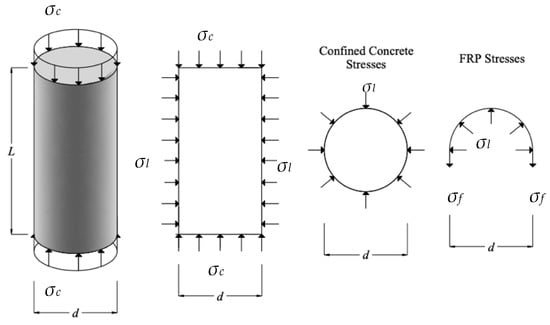
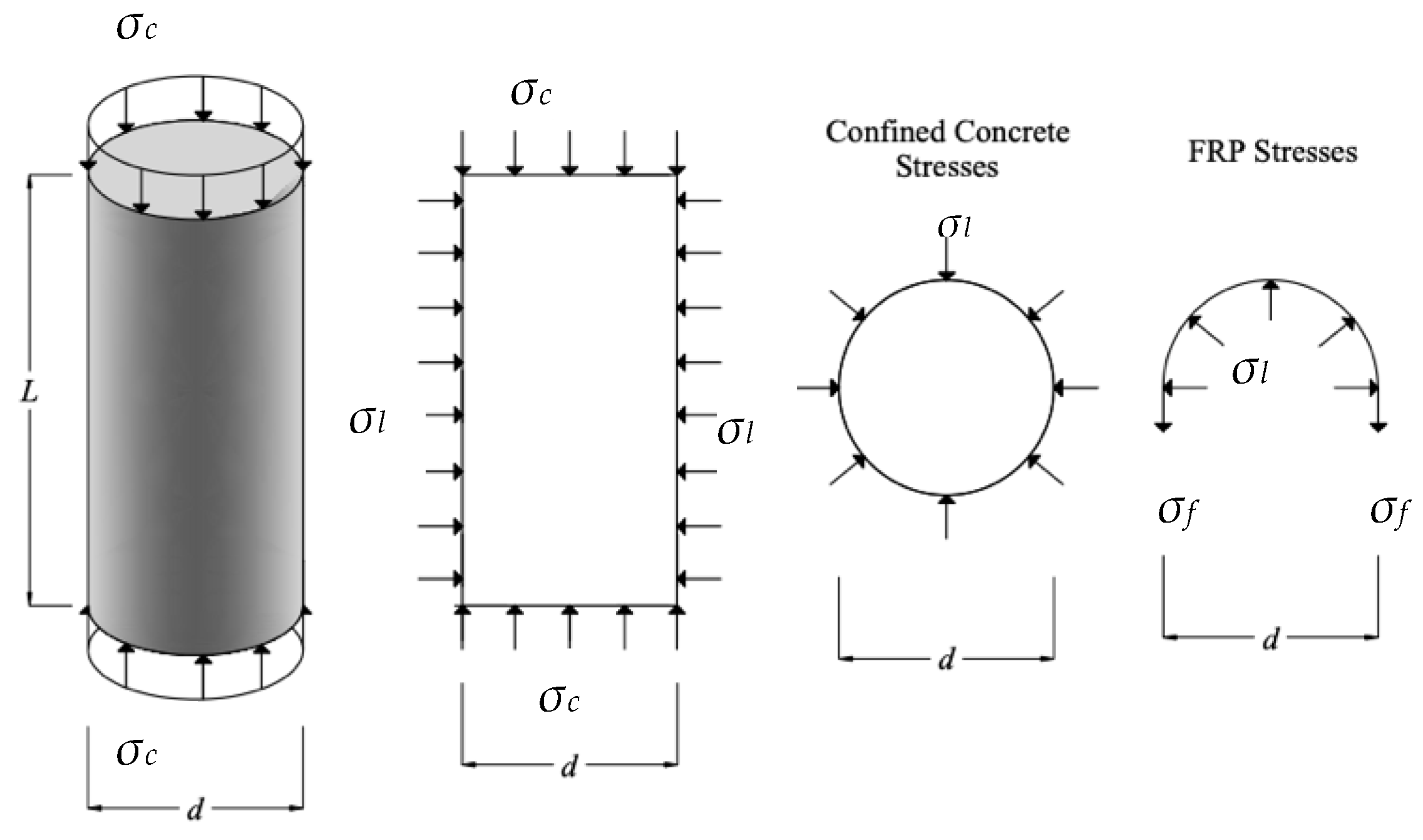
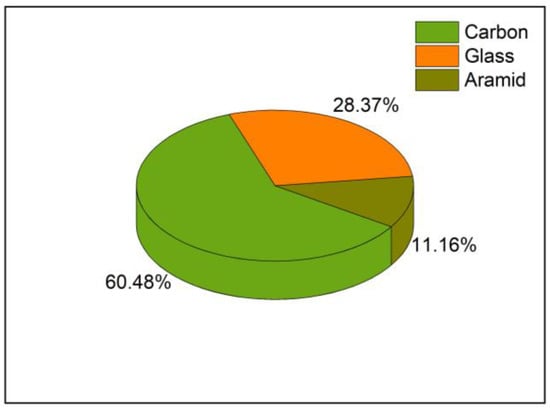
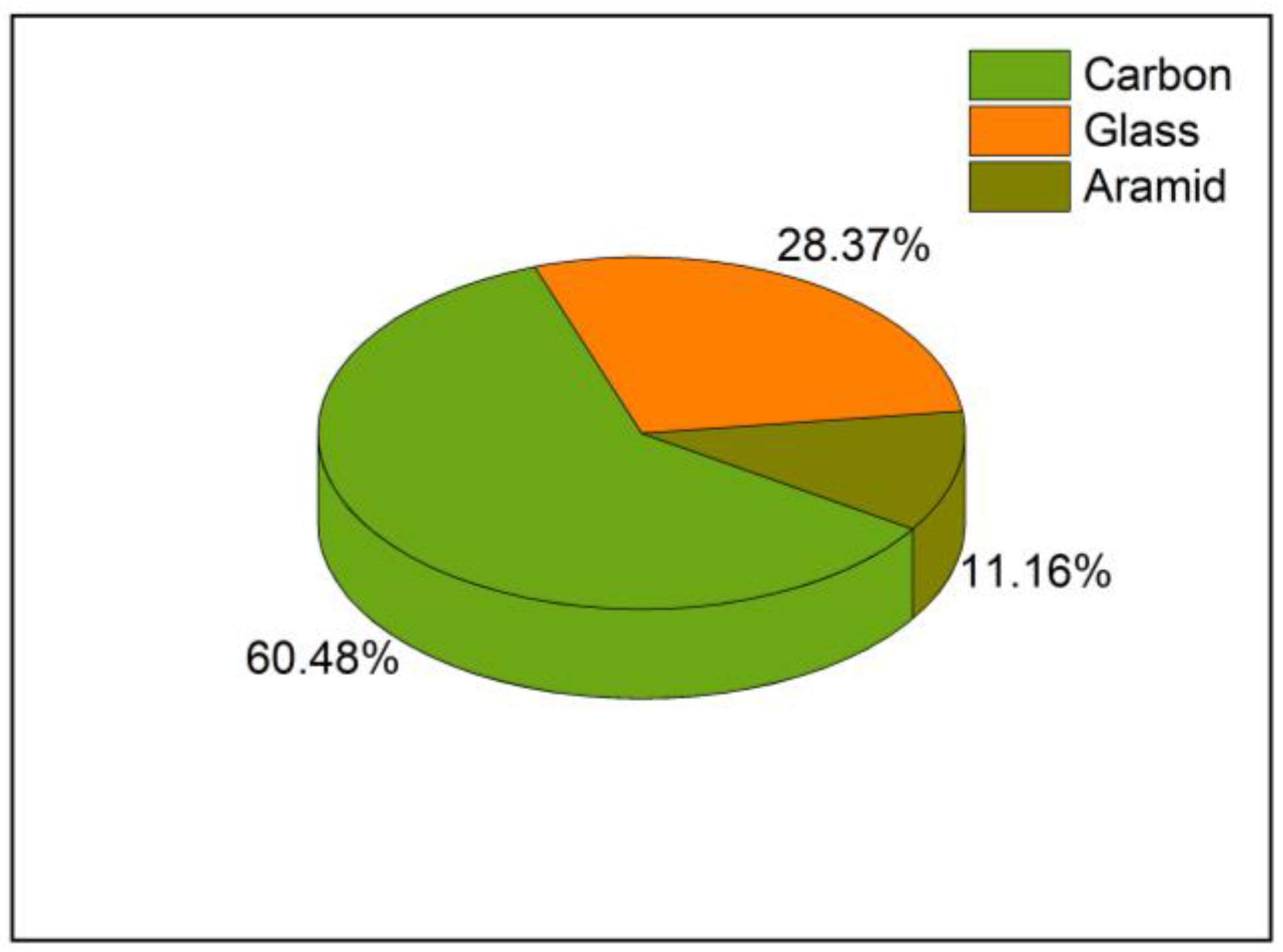
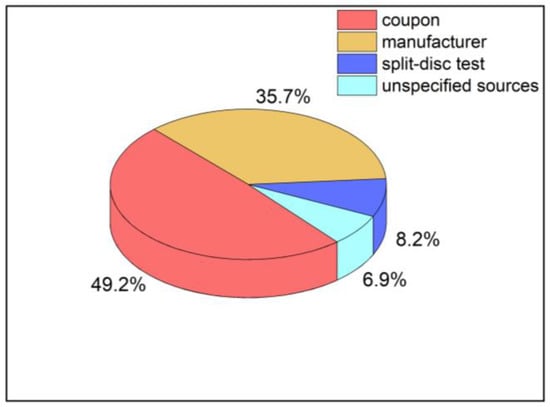
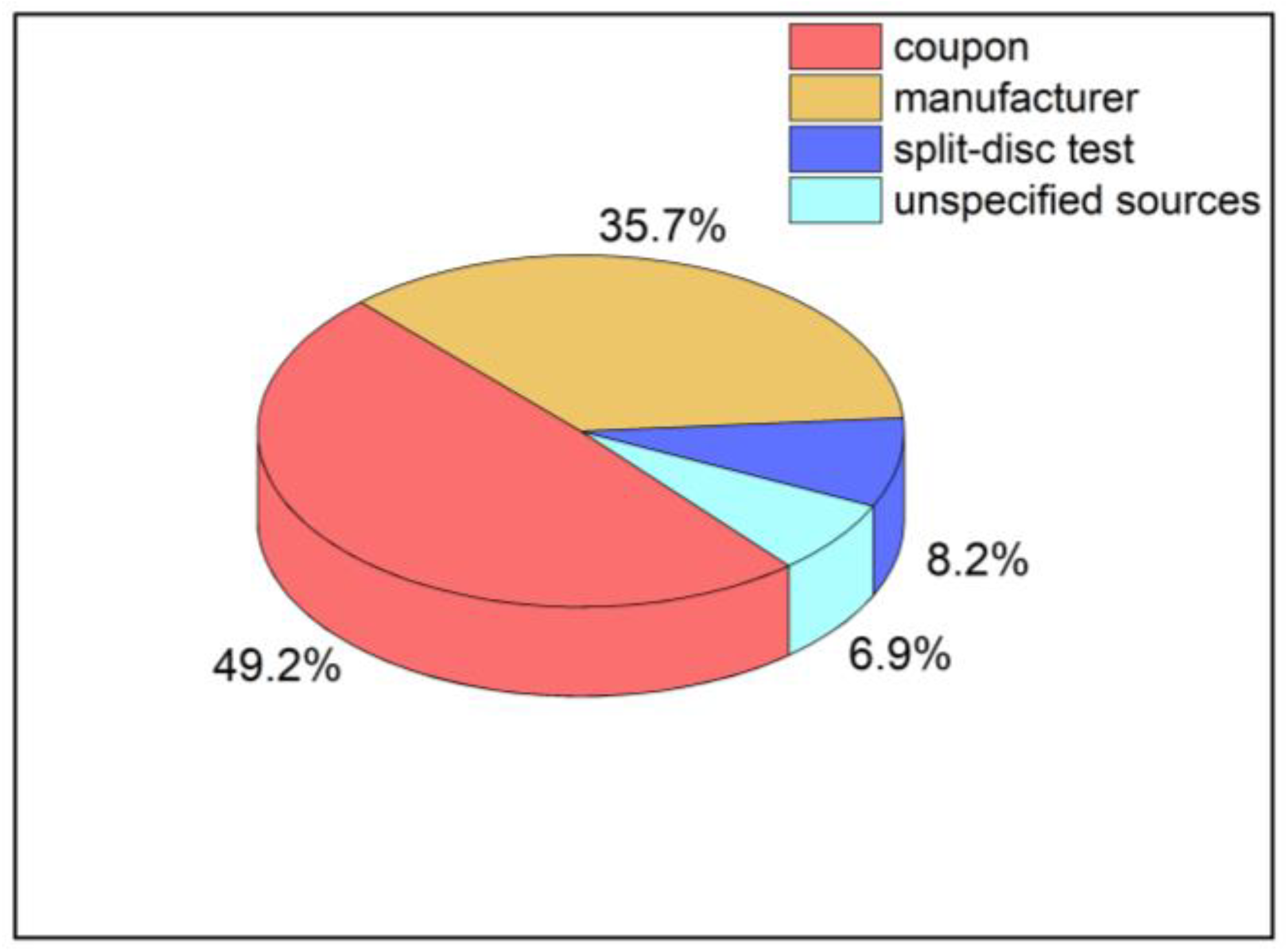
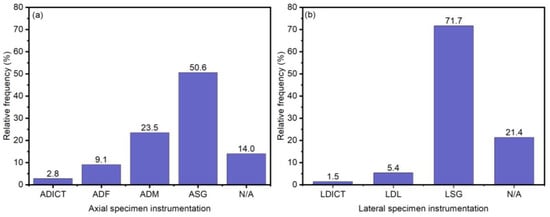
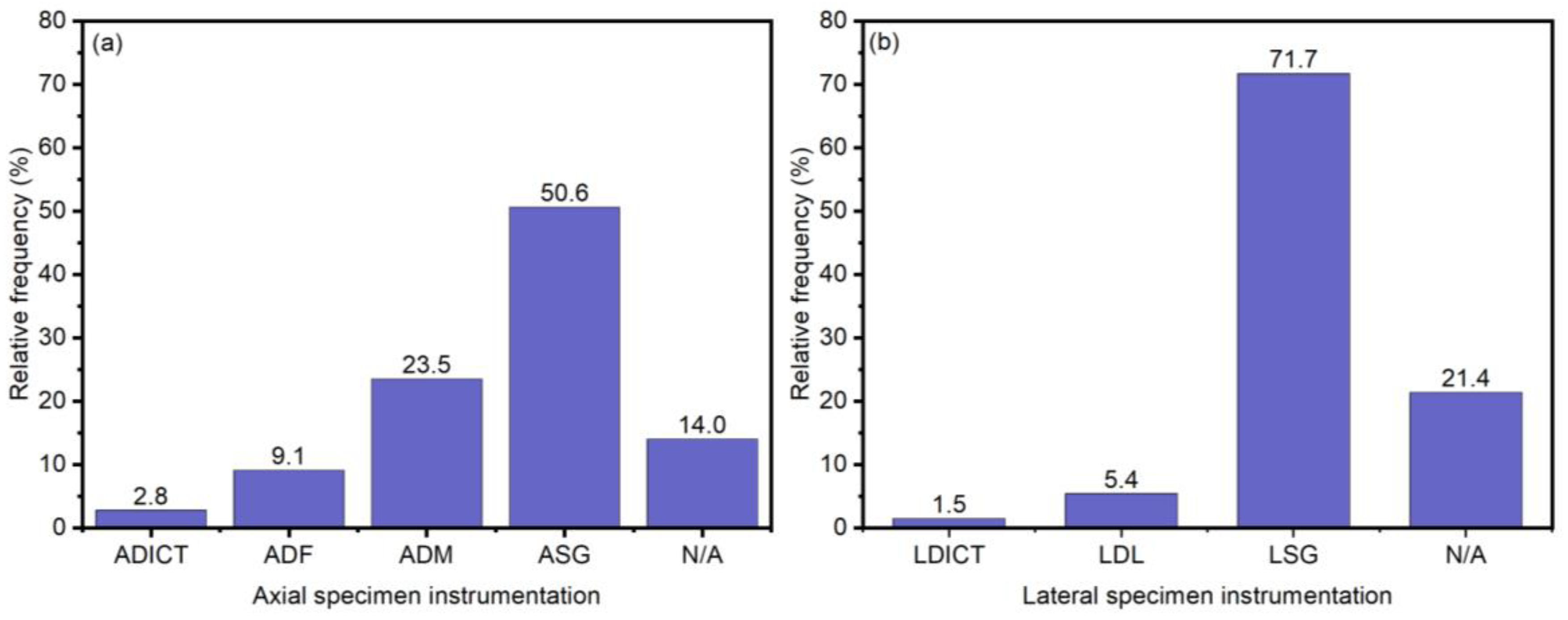
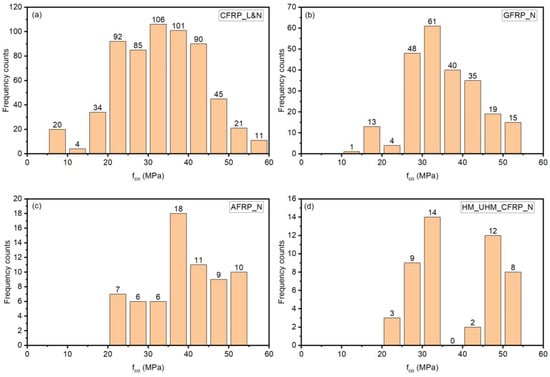
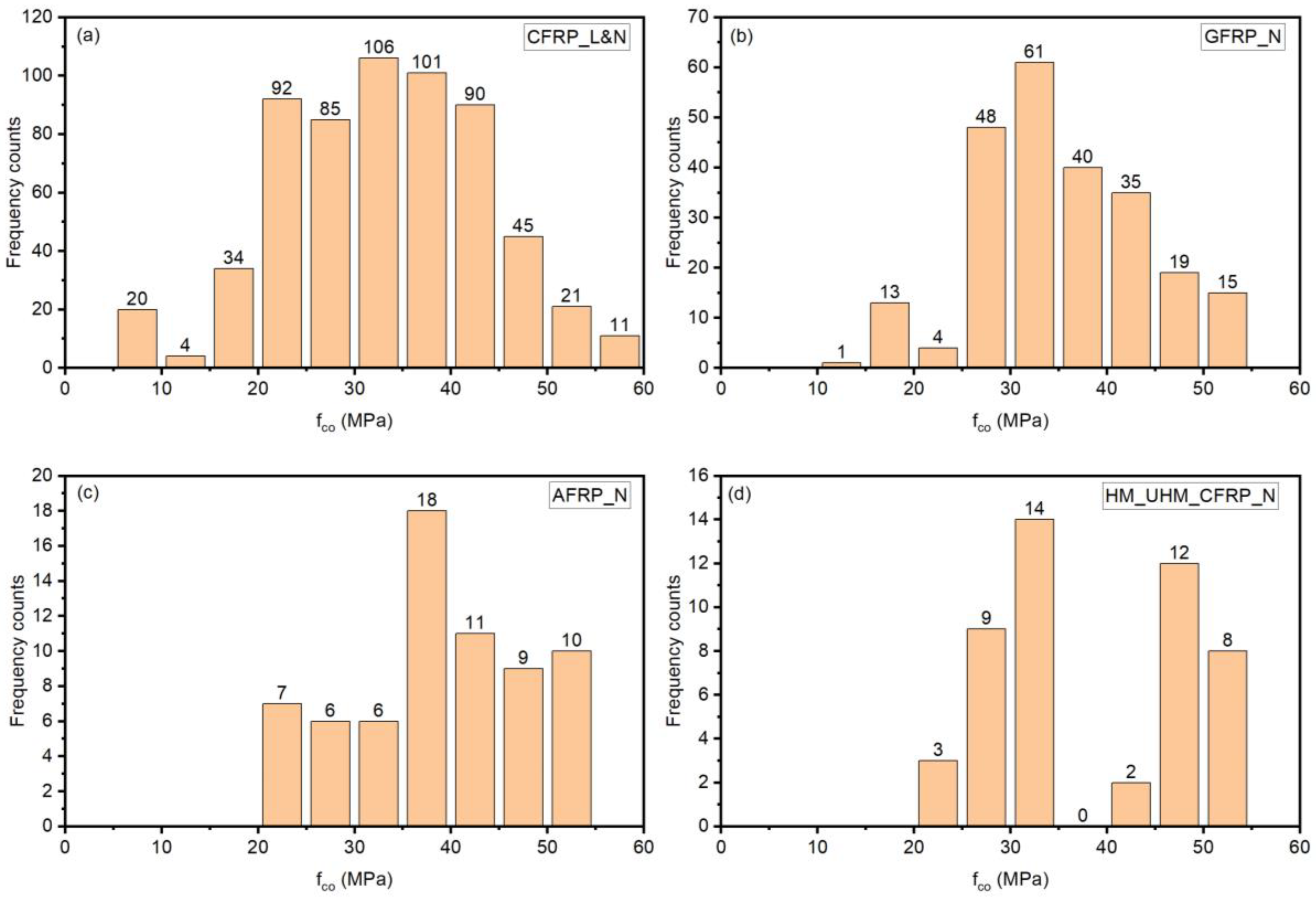
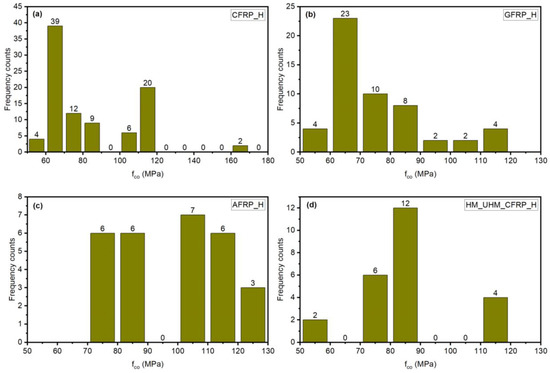
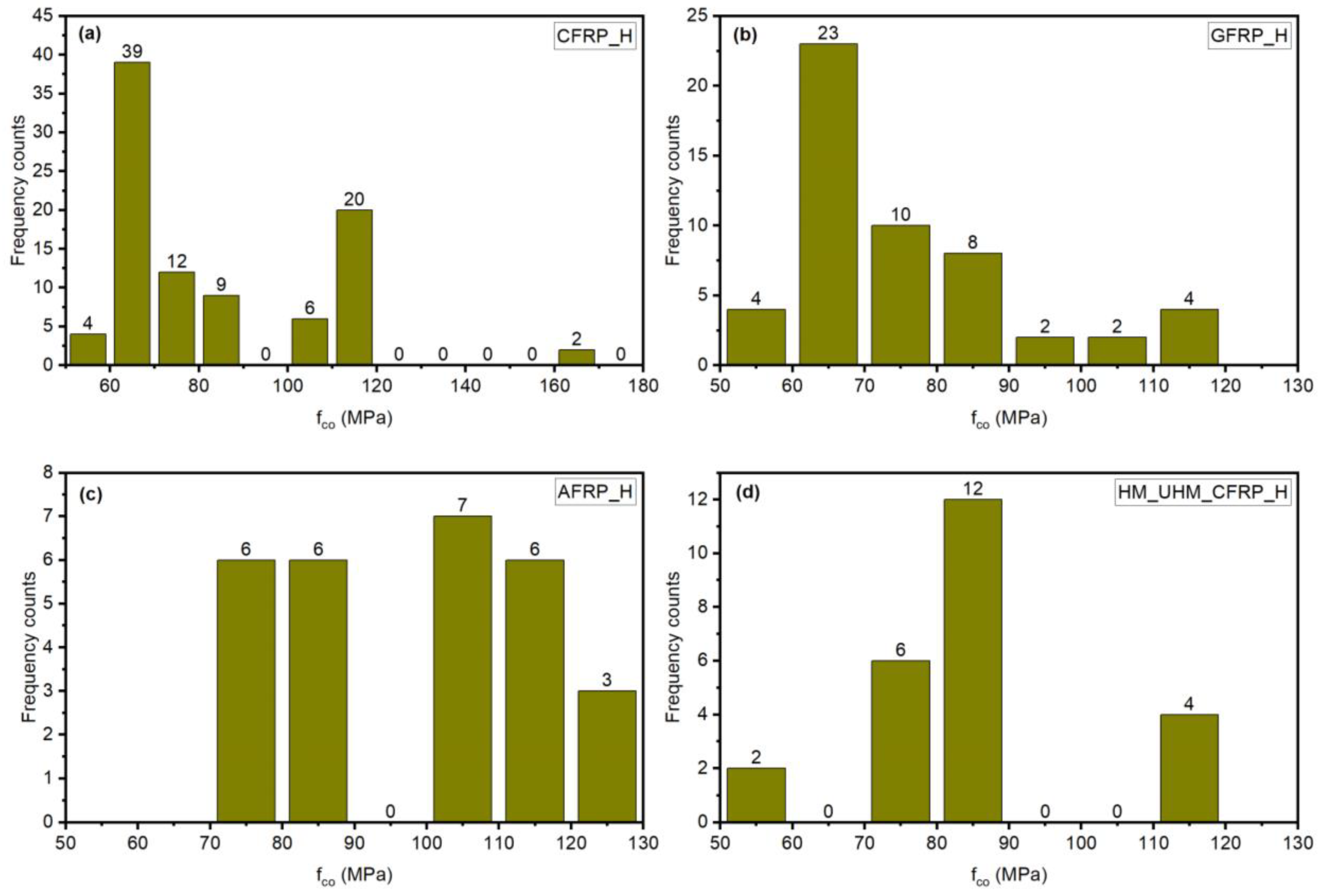
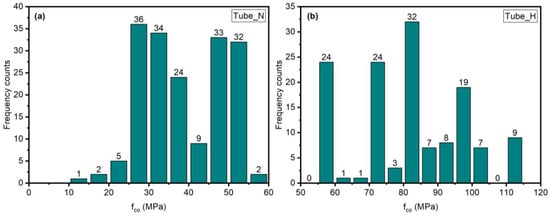
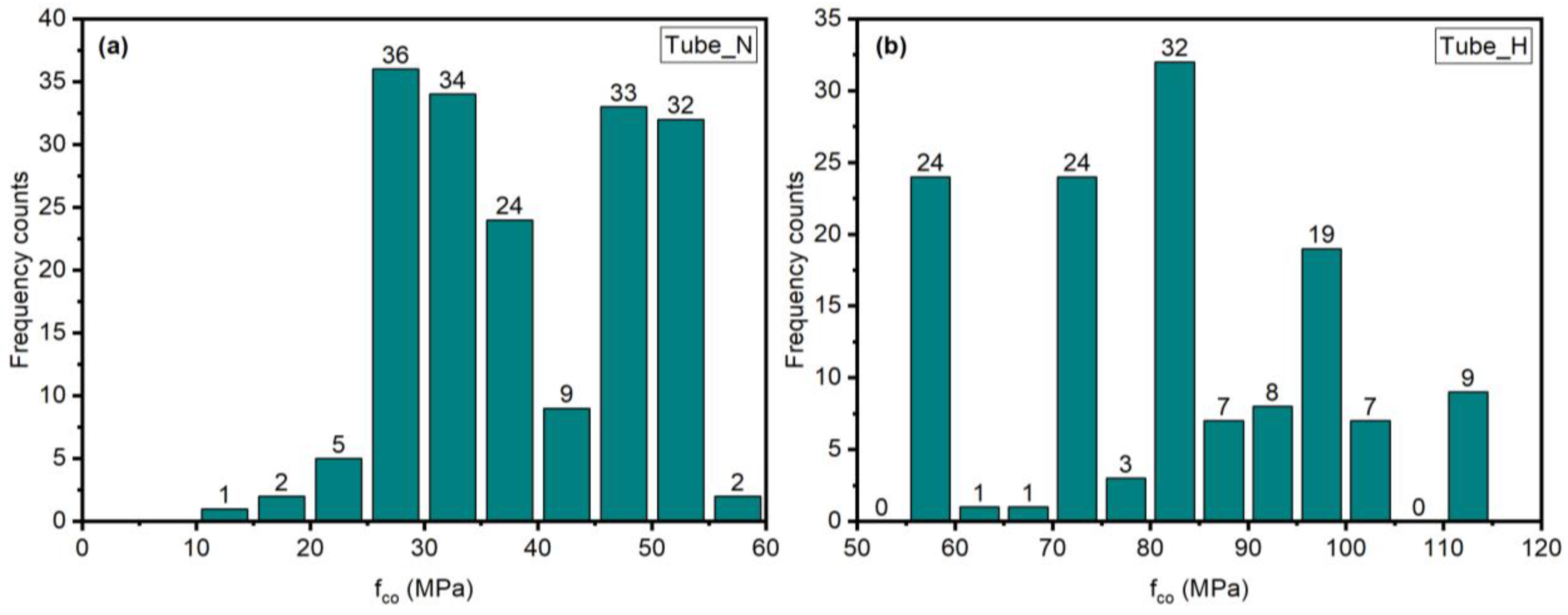
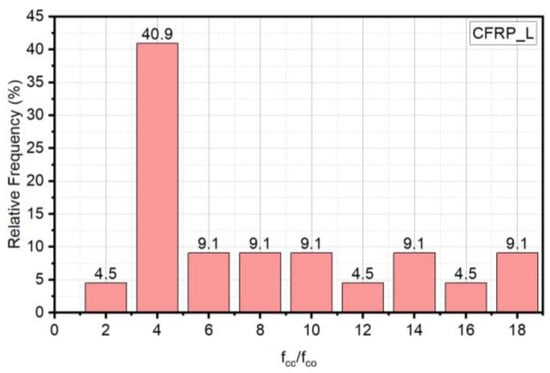
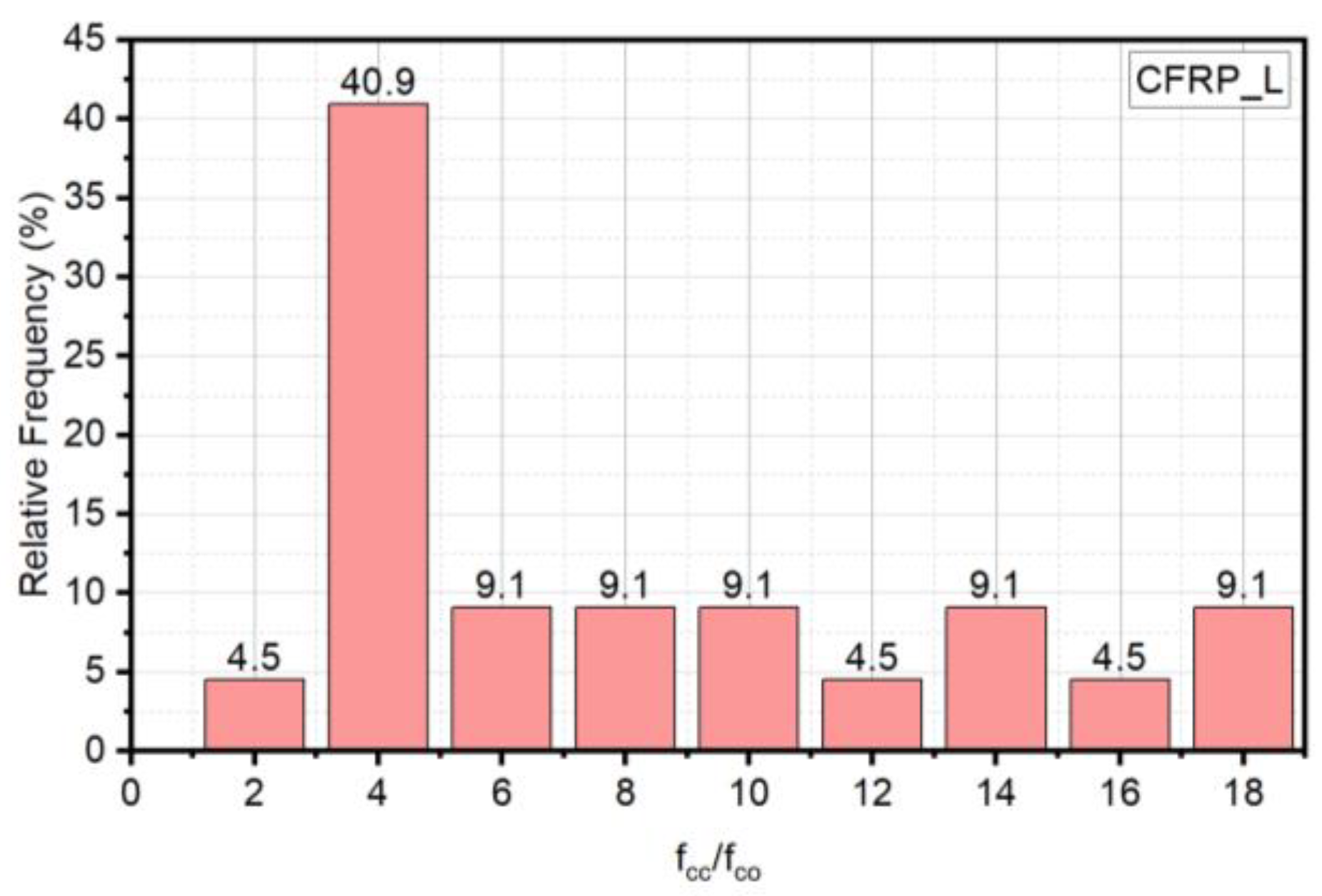
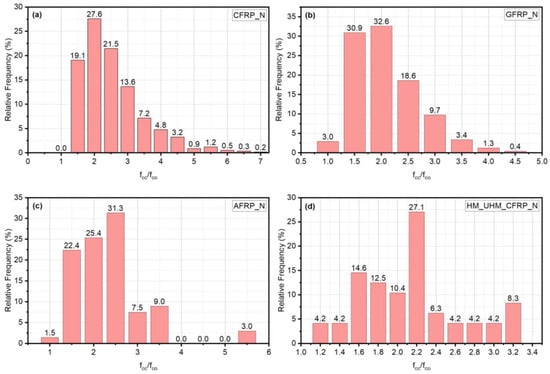
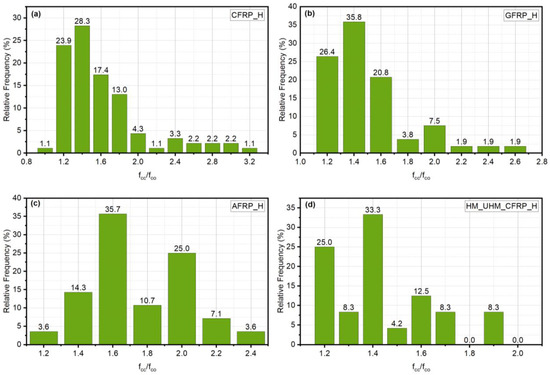
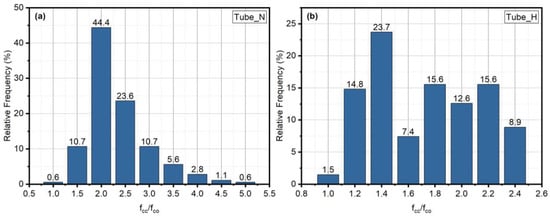
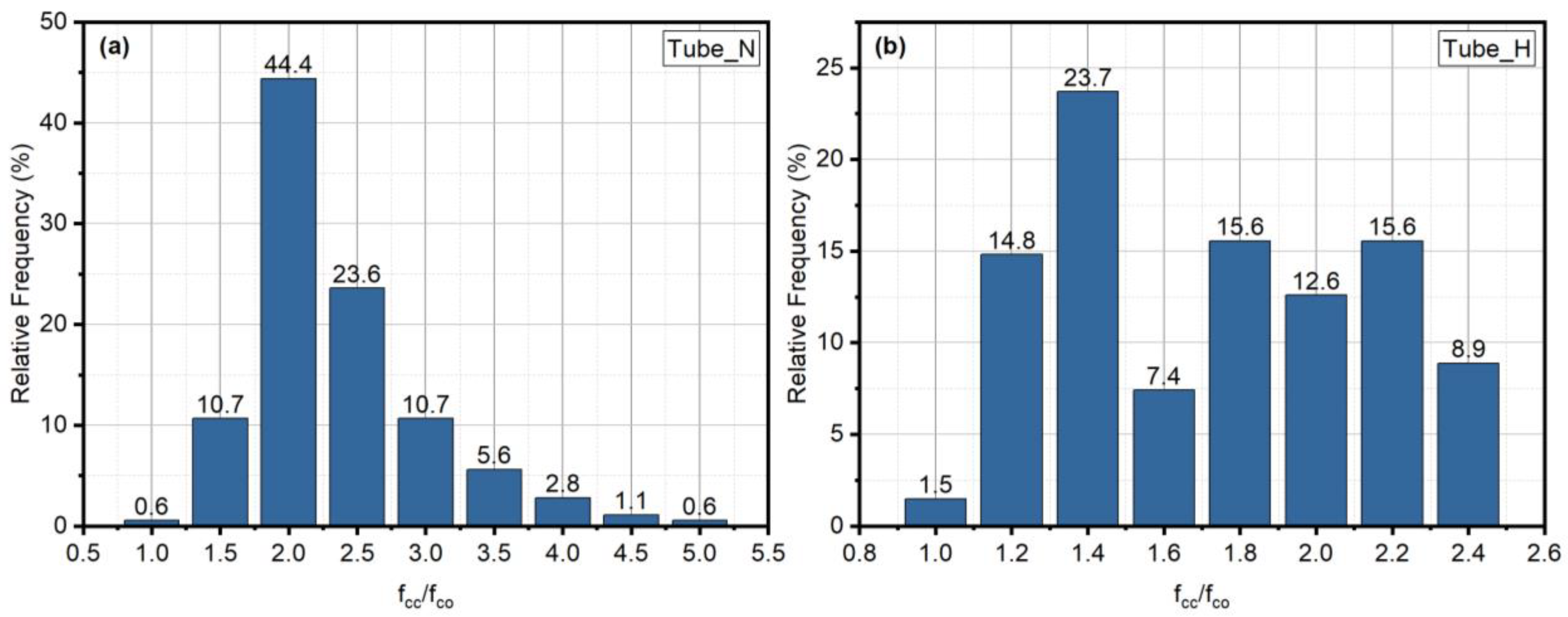
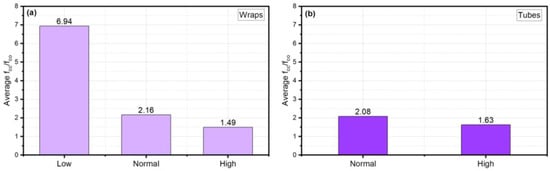
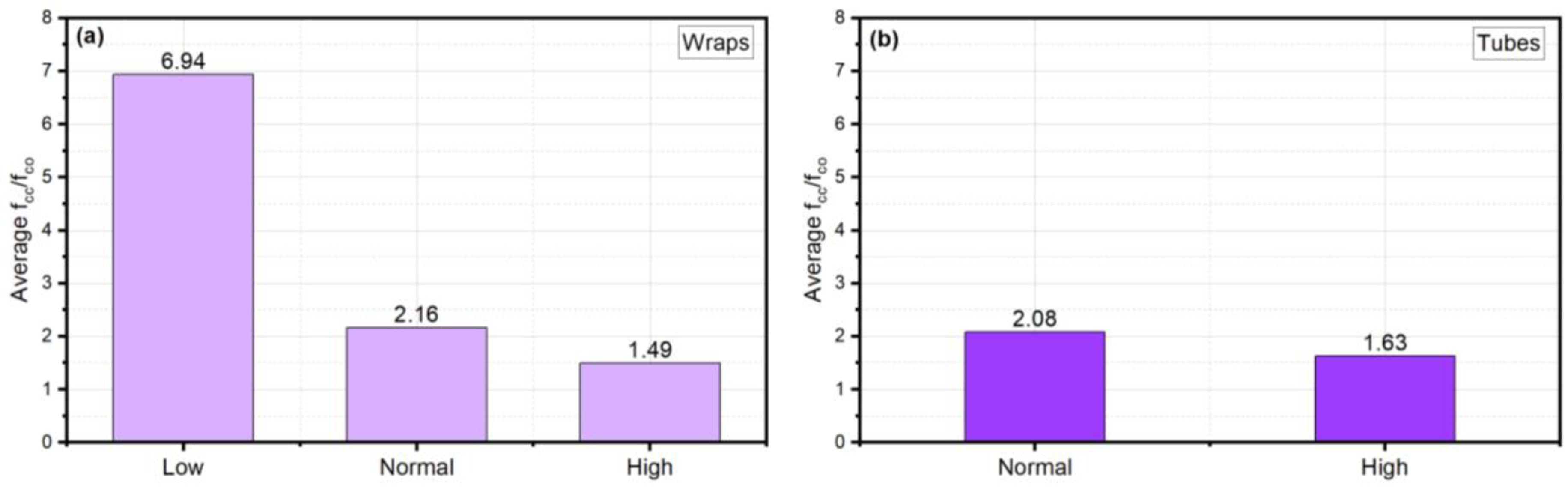
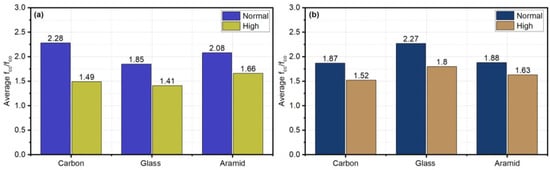
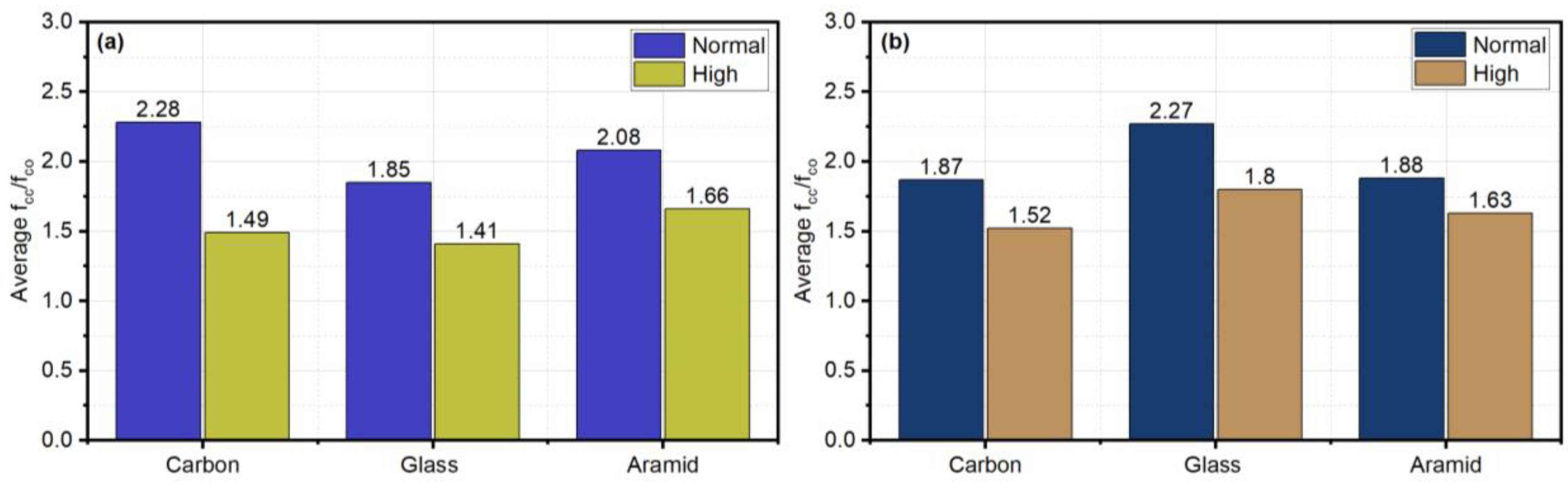
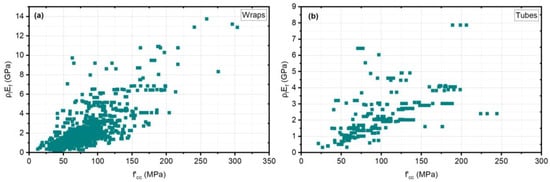
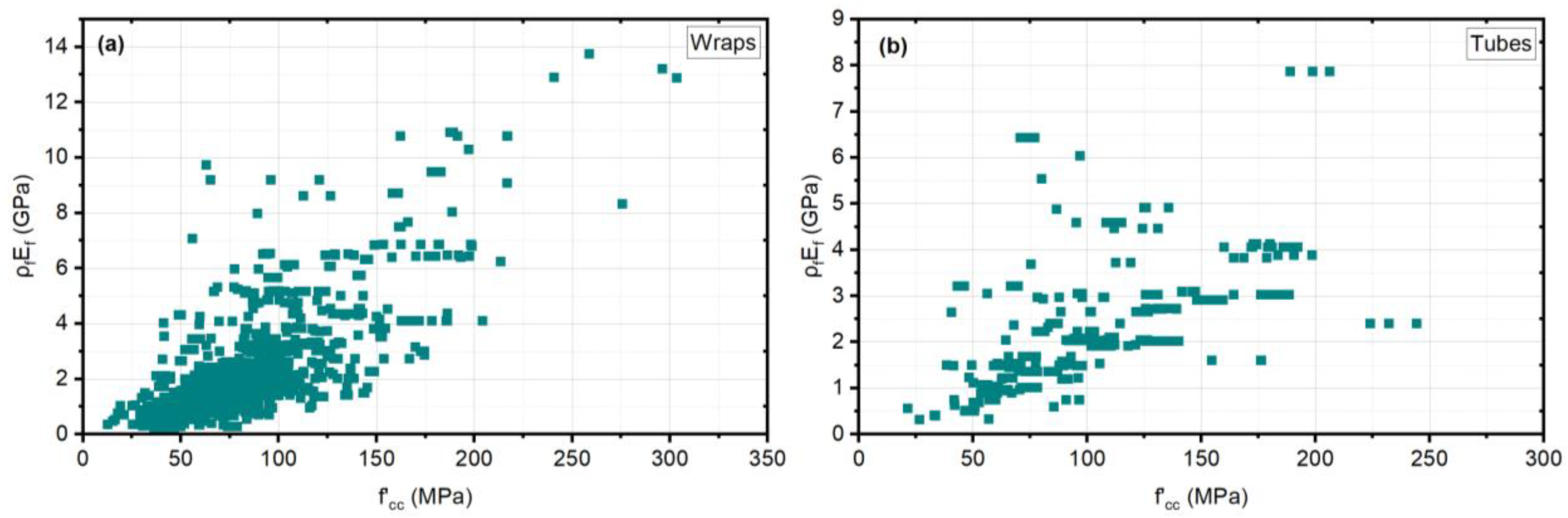
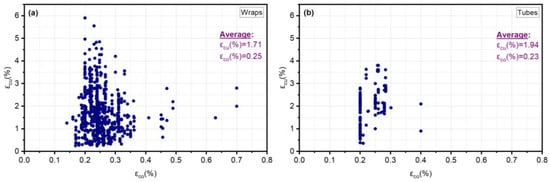
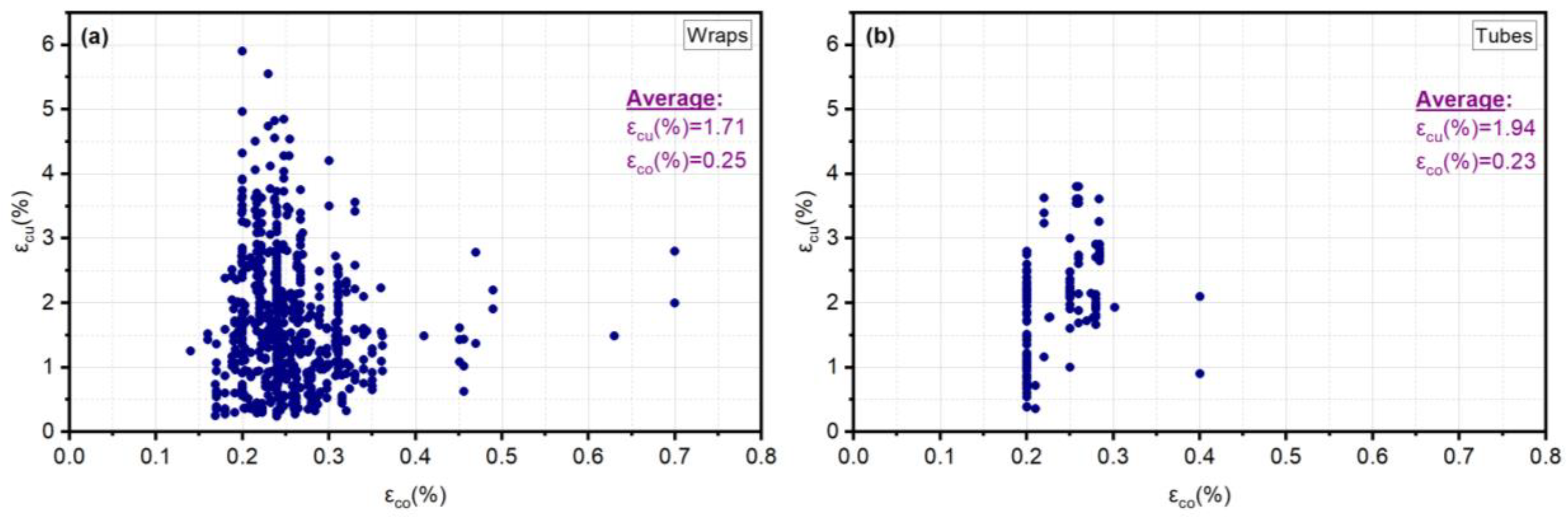

Disclaimer/Publisher’s Note: The statements, opinions and data contained in all publications are solely those of the individual author(s) and contributor(s) and not of MDPI and/or the editor(s). MDPI and/or the editor(s) disclaim responsibility for any injury to people or property resulting from any ideas, methods, instructions or products referred to in the content. |
© 2023 by the authors. Licensee MDPI, Basel, Switzerland. This article is an open access article distributed under the terms and conditions of the Creative Commons Attribution (CC BY) license (https://creativecommons.org/licenses/by/4.0/).