Article

Bonded Behavior of Hybrid-Bonded CFRP to Heat-Damaged Concrete Interface

1
International Joint Research Lab for Eco-Building Materials and Engineering of Henan, North China University of Water Resources and Electric Power, Zhengzhou 450045, China
2
China Construction Seventh Engineering Bureau Co., Ltd., Zhengzhou 450004, China
3
Collaborative Innovation Center for Efficient Utilization of Water Resources, North China University of Water Resources and Electric Power, Zhengzhou 450046, China
*
Author to whom correspondence should be addressed.
Buildings 2023, 13(11), 2736; https://doi.org/10.3390/buildings13112736

Submission received: 17 September 2023 / Revised: 18 October 2023 / Accepted: 23 October 2023 / Published: 30 October 2023
(This article belongs to the Section Building Materials, and Repair & Renovation)

Abstract

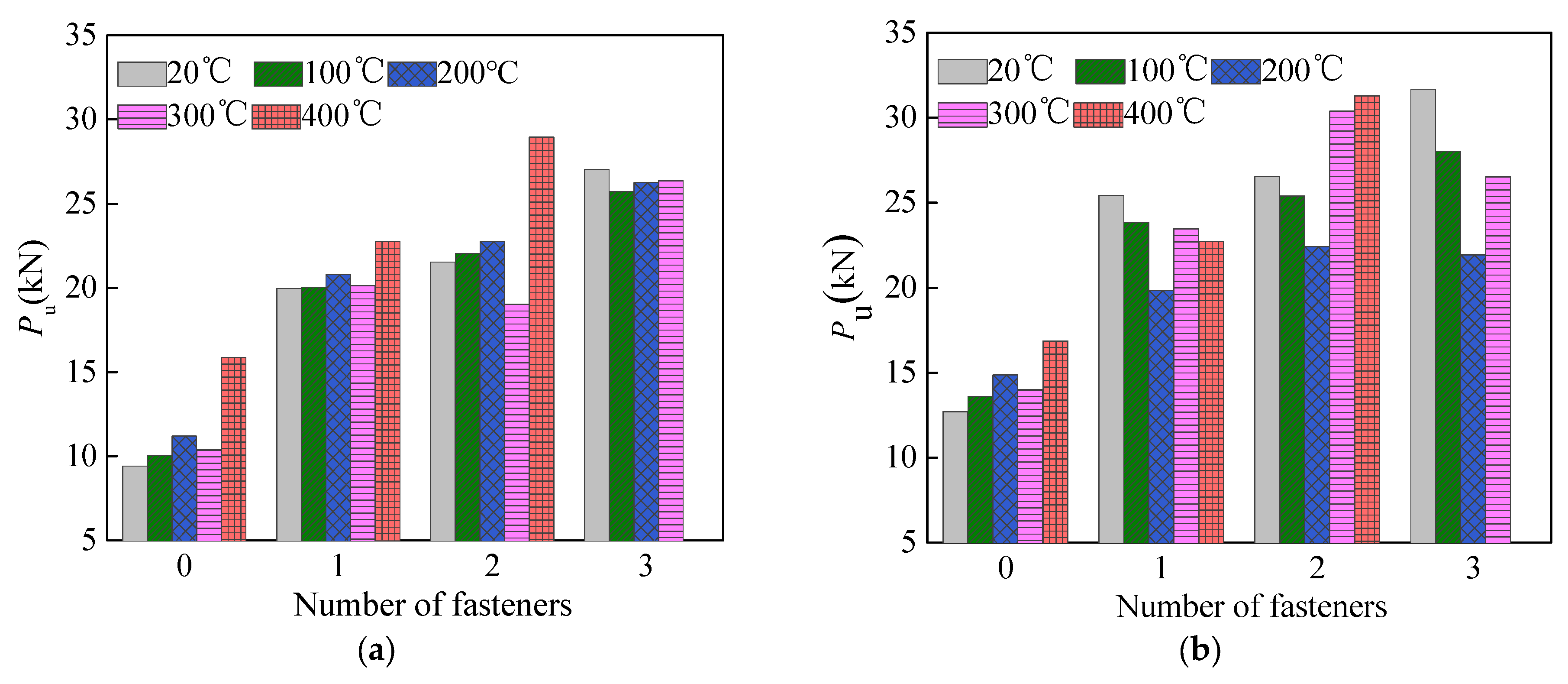
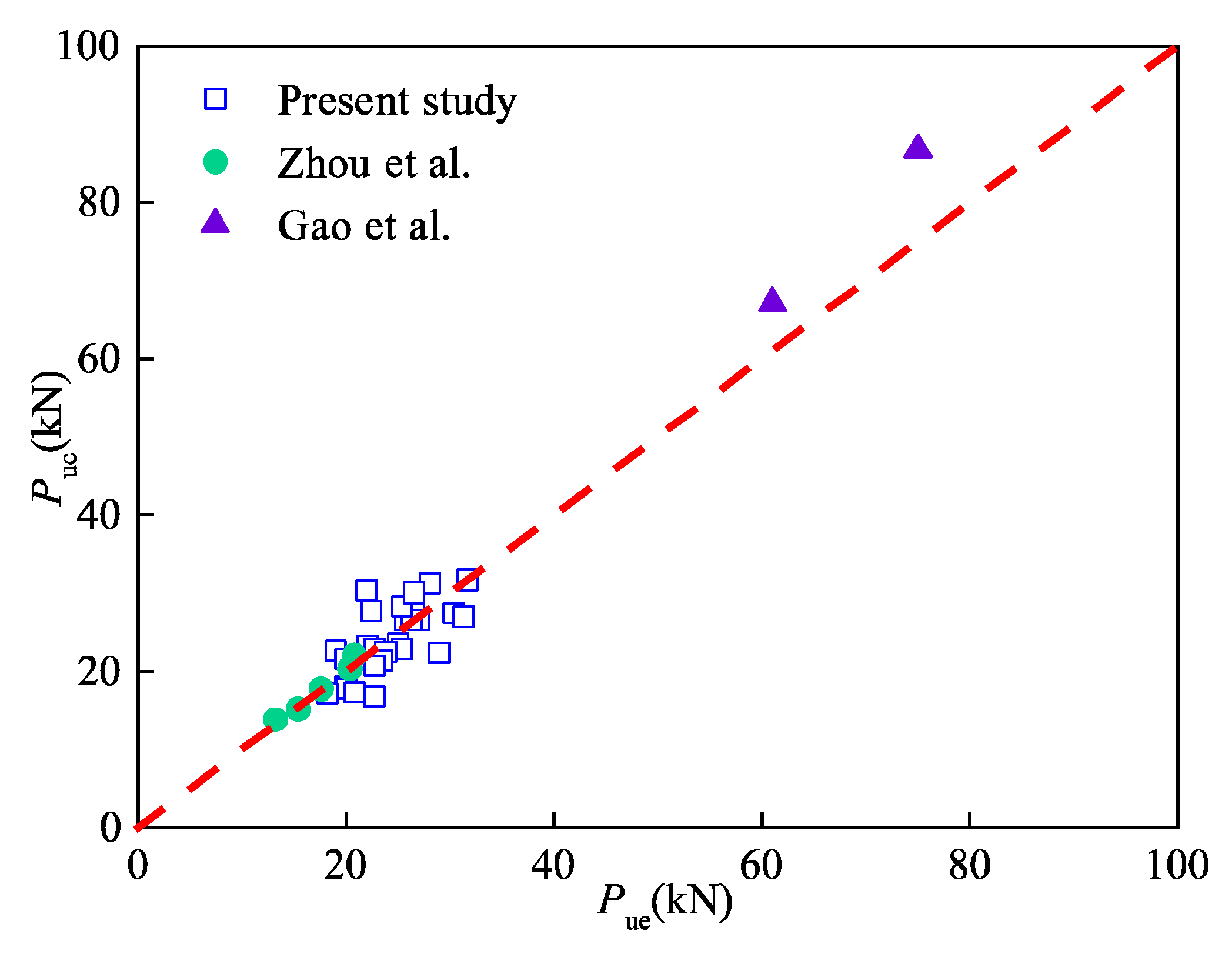
The reliable bond of CFRP to heat-damaged concrete is fundamental to ensuring cooperative working when the CFRP is applied for strengthening fire-damaged concrete structures. In this paper, the bond performance of hybrid-bonded (HB) CFRP to a heat-damaged concrete surface was investigated by using single shear tests. The concrete blocks were initially heat-damaged to temperatures of 100 °C, 200 °C, 300 °C, and 400 °C. The heat-damaged blocks were subsequently bonded with CFRP using the HB technique. The primary experiment parameters were the exposure temperature, the number of mechanical fasteners, and the bonded layers of CFRP. The test results show that the external-bonded (EB) and HB-CFRP joints with concrete exposed to a temperature of 400 °C were prone to fail with concrete shear-tension due to the decreased shear strength of concrete at high temperatures. The EB- and HB-CFRP joints with heat-damaged concrete anchored with no more than three fasteners present a higher bond than the reference joints with unheated concrete, while the HB-CFRP joints anchored with three fasteners provide a decreased bond capacity with the increase in exposure temperature. The utilization rate of single-layer CFRP joints with unheated concrete increased by 57.9%, 139.5%, and 136.8% with the mechanical fasteners in numbers of one, two, and three compared with the reference specimen. Accordingly, the bond capacity increased by 111.8%, 128.4%, and 186.7%. Finally, a model was proposed to estimate the bond strength of HB-CFRP joints with heat-damaged concrete.
Keywords: heat-damaged concrete; bond; hybrid-bonded FRP; single shear test; bond strength model heat-damaged concrete; bond; hybrid-bonded FRP; single shear test; bond strength model