


Abstract
The vibration limit is an essential prerequisite for building vibration serviceability assessment, and various biological/environmental factors affect it deeply. Yet quantitative relationships between vibration limits and these factors in general buildings, such as the human weight, height and number of stories, stay unknown. Based on data collected by an investigation conducted on a cell phone application, this paper proposed a novel approach for quantifying correlations between common relevant factors in general buildings and limits by maximal information coefficient (MIC). Vibration serviceability was thoroughly proved to be a multivariable system and crest factor/BMI had a higher correlation than other factors. A functional relationship and 95% confidence intervals between vibration limits and crest factor/BMI were proposed, respectively. Lilliefors test and normal probability plot show that residuals between fitted values of limits and measured ones follow a normal distribution. Finally, estimation of vibration serviceability based on probability was suggested when the crest factor/BMI and vibration magnitude were known.
1. Introduction
A building vibration serviceability issue refers to discomfort or disturbance of occupants and impediment of sensitive operations caused by structural vibration. Vibration limits are the key issue of vibration serviceability research. Up to the early years of the 19th century, researchers began to observe building vibration serviceability problems. However, not until the 20th century did researchers suggest any vibration limits. With the development of material and construction techniques, it became impossible to ignore the vibration serviceability problem for the reasons of larger span and weaker stiffness emerging. In 1931, Reiher and Meister [1] conducted a milestone experiment to obtain vibration limitations by using semantic labels such as ‘easily perceptible’ and ‘strongly perceptible’ to describe volunteers’ feelings of simulated vibrations. From then on, it is a common practice for researchers to employ a few volunteers and collect their judgments through vibration tests to determine vibration limits.
A growing body of literature [2,3,4,5,6] shows that vibration serviceability is a multivariable issue. Factors such as the biological characteristics of humans [2,4,5] and environmental characteristics [3] have an effect on vibration serviceability. Researchers have already reported vibration limits labeled by gender [4], and gesture of body [5]. Relationships between these factors and limits are also unlikely to be found as linear [7,8]. However, there is no research showing which one of the relevant factors is more important to vibration serviceability. The functional relationship between the most relative factors and limits also stays unknown.
Two reasons lead to the dilemma of vibration serviceability research. One is that the data scale in earlier research was too small (with dozens or a few hundred volunteers and several buildings) to contain a statistically significant range of various factors’ values. The other is that traditional correlation analysis tools are not able to quantify normalized nonlinear relationships efficiently on a large scale [8]. For example, the Pearson correlation coefficient and Spearman correlation coefficient have problems with estimating nonlinear relationships, K–nearest neighbor (KNN) and kernel density estimation (KDE) fail in normalizing the correlation coefficient, and the distance coefficient is inefficient when the data scale is large [9,10].
To overcome the obstacles in vibration serviceability research, researchers should carry out vibration serviceability investigations on a much larger scale and with smaller costs than the traditional method. A new correlation coefficient that is capable of quantifying correlation in various relationships efficiently and in a normalized way is also essential.
With the help of rapidly developing technologies, such as smart mobile phones and internet cloud calculation, it is possible to obtain reliable large-scale data at a relatively low cost. Many researchers [11,12] found that sensors integrated into smartphones, such as tri-axial accelerometers, GPS and gyroscopes, could be successfully applied for structural monitoring. In the authors’ earlier research [13], a smartphone-based application (App) was designed and spread through the network to volunteers to collect information including biological and environmental factors.
Reshef et al. [9] proposed a novel correlation analysis tool in 2011 and proved that the maximum information coefficient (MIC) has many advantages, such as being normalized, general to all kinds of functional relationships, equitable to any level of noise and low in calculation complexity. Hence the MIC is suitable for estimating the correlation coefficient between vibration limits and relevant factors.
This paper demonstrates the methodology of data collection and shows statistics of relevant factors briefly at first. By comparing the MICs of different relevant factors with vibration limits, the factor with the biggest MIC is chosen to obtain the fitting function with vibration limits. The normal distribution of residuals between fitted limits and actual ones is checked by the Lilliefors test and the normal probability plot. In the case of residuals following normal distribution, 95% confidence intervals of vibration limits are proposed. Finally, a probability-based method is suggested to predict vibration serviceability.
2. Methodology and Statistics of Factors
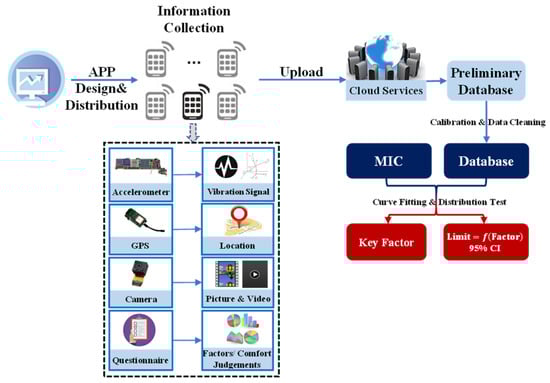
In the previous study [13], we conducted a smartphone-based data collection campaign, as shown in Figure 1. The data collection procedure, data cleaning principle and representativeness verification are briefly described herein for completeness. The scheme of data collection consists of three parts (Figure 1): App design; App promotion; Self-help investigation and upload.
Figure 1.
Proposed research scheme for correlation between vibration limits and relevant factors.
After data cleaning and representativeness analysis, the data set was then used as a database for correlation analysis. The procedure was carried out for more than 2 years and 8521 pieces of data were collected.
2.1. Data Collection of Relevant Factors
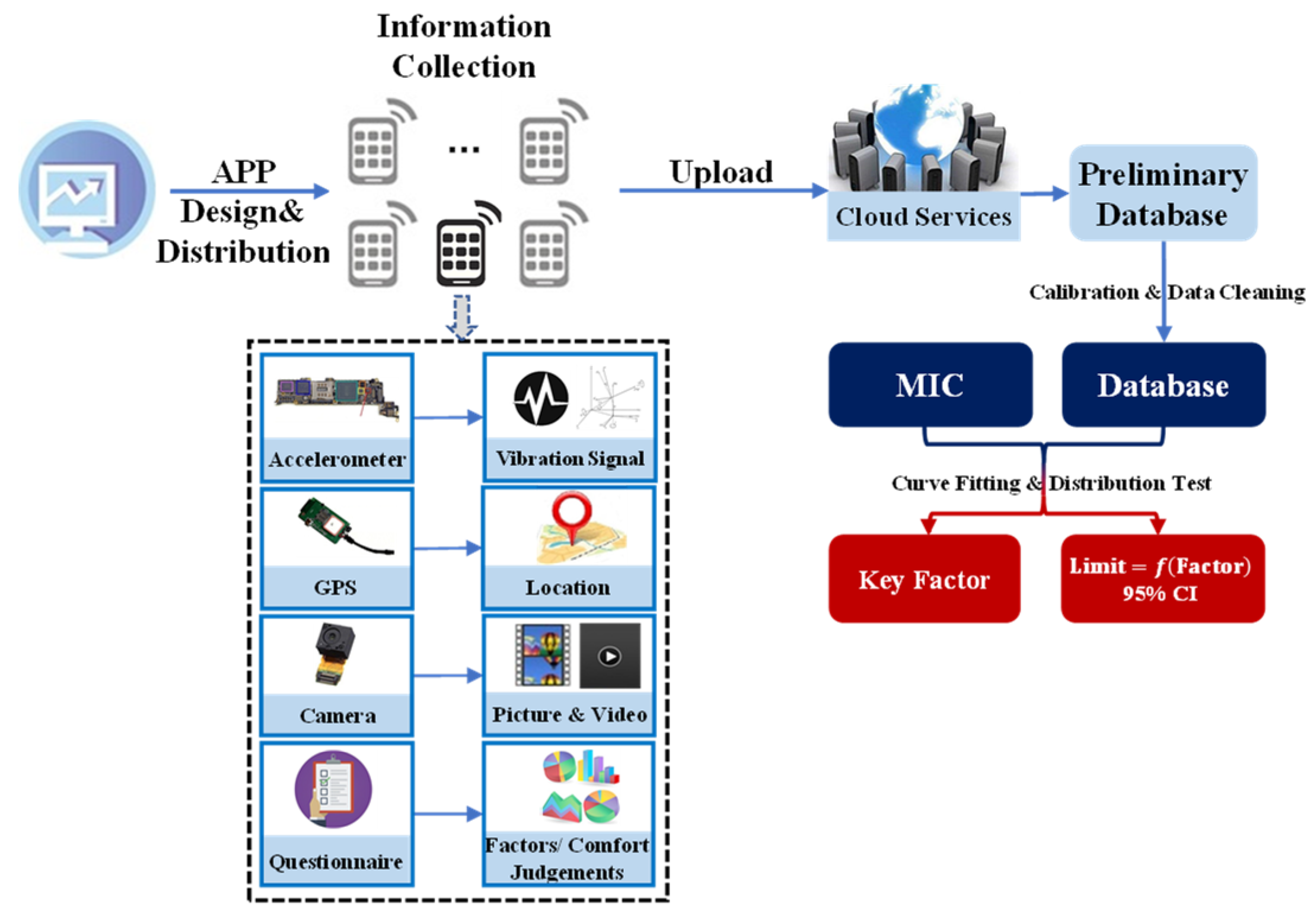
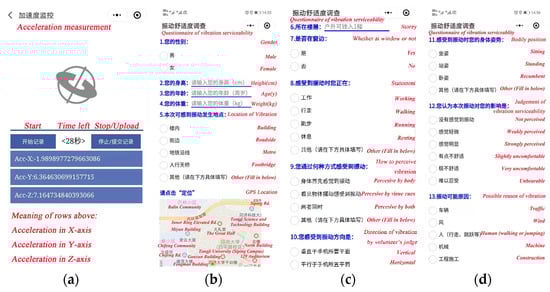
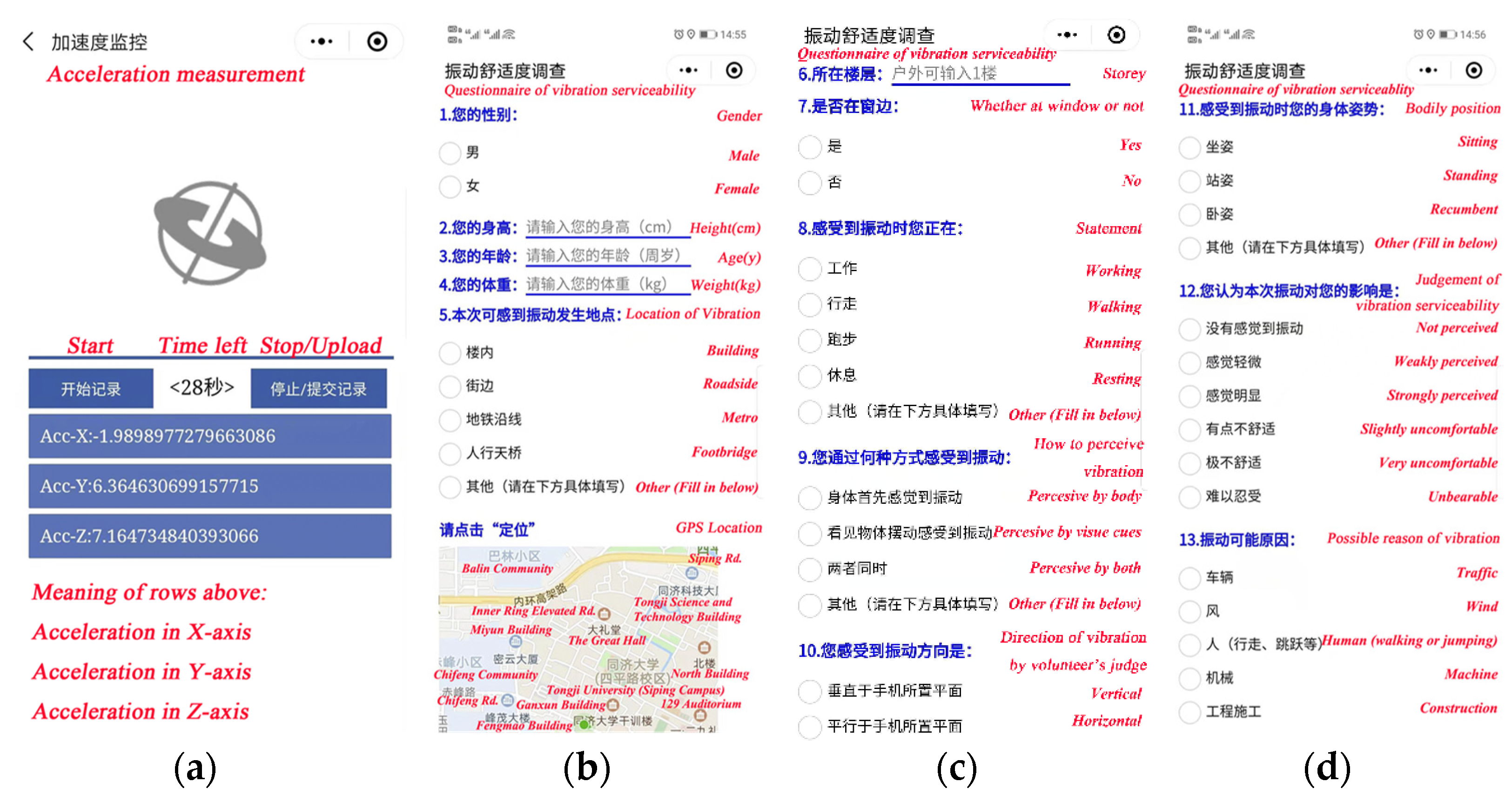
Since the natural frequencies of human organs fall in the range of 1–80 Hz [14], with most organs in the range of 4–8 Hz, it is feasible to measure vibration which may cause vibration serviceability problems by smartphone [11,13]. As a reason for resonance, the sensitive region of vibration comfort falls in the same range. Earlier researchers [11] found that the measurement accuracy of micro-electro-mechanical systems (MEMS) integrated into a smart mobile phone complies with request of vibration signal test in vibration serviceability research. A program named ‘VCheck’ (vibration check) was finally designed and the interface of vibration measurement and questionnaire are shown in Figure 2. VCheck is designed to collect system time and the reading of built-in accelerometer of smartphone at the same time. The sampling frequency of VCheck falls in the range of 100–1000 Hz, depending on the type of smartphone. In case some mistakes happened and no data were collected for some time, a corresponding gap would emerge in the series of total data.
Figure 2.
Vibration measurement (a) and questionnaire (b–d) in VCheck (Menu in Chinese, English translation in italic).
To obtain as much data as possible and make sure the data are representative, VCheck program was promoted through internet and bonuses were used to encourage smartphone users to participate in the investigation or introduce VCheck to others.
Although more than 8000 pieces of data were collected, many invalid data existed due to some smartphones being of poor quality or volunteers’ misunderstandings. Redundancy of data was also a problem in that some volunteers uploaded too much data just for more bonuses. Hence, authors carried out data cleaning by following several elaborate rules. Finally, 3319 pieces of data were recognized as valid. Further analysis of these data showed that the sample was representative and rational [13].
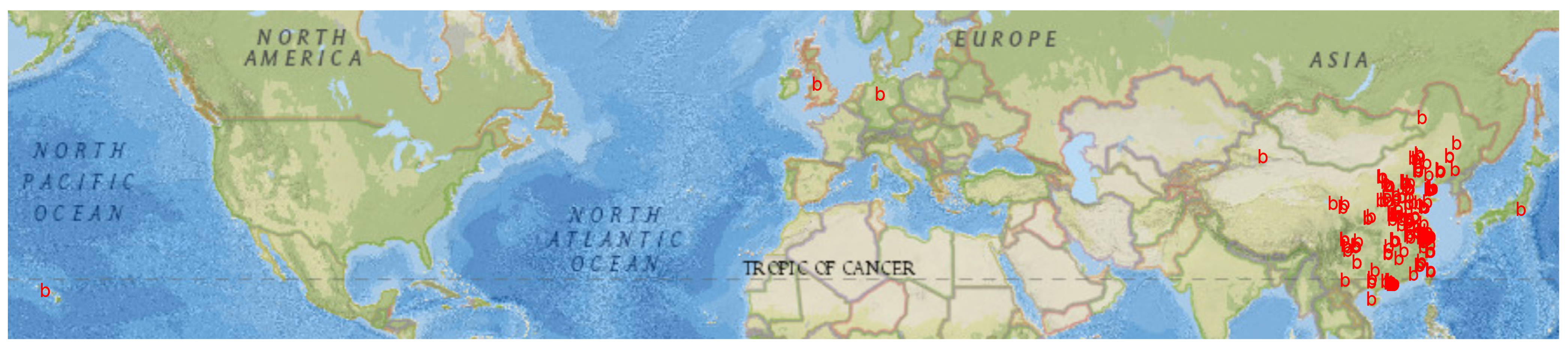
Figure 3 shows all data collected around the world.
Figure 3.
Distribution of data (by December 2021).
2.2. Statistics of Relevant Factors
Table 1 shows the factors which were studied before and found to be related to vibration serviceability in daily life. The range of these factors was also listed according to the statistics of the database after data cleaning.
Table 1.
Factors investigated in this research and the corresponding ranges.
Two types of relevant factors, which were proved to have an influence on vibration serviceability, were investigated in this research. Biological factors: gender [4], age [2], height, weight [7], statement, gesture [15]; Environmental factors: magnitude, form [3], direction [16] and source of vibration [7,17], type of site [18], storey [13], whether near a window, visual cues [19,20]. Previous researchers [3] found that the crest factor Equation (1) influenced vibration serviceability greatly, which was also a common indicator used to distinguish different types of vibration, such as constant vibration and shock.
Among these factors, vibration magnitude is obviously a key issue in vibration serviceability. Earlier research showed that different types of vibration magnitude indicators performed quite differently from each other, especially when the crest factor Equation (1) of vibration changes was large than six [21]. To make sure conclusions were exact, five most commonly used indicators were chosen to assess the magnitudes of vibration (Table 2).
Table 2.
Different indicators of vibration magnitude.
At the end of each questionnaire, six semantic labels were listed for volunteers to describe their subject senses of the vibration: ‘not perceived’, ‘weakly perceived’, ‘strongly perceived’, ‘slightly uncomfortable’, ‘very uncomfortable’, or ‘unbearable’. By analyzing vibration magnitudes corresponding to different factors, authors were able to obtain vibration limits corresponding to various factors.
2.2.1. Biological Factors
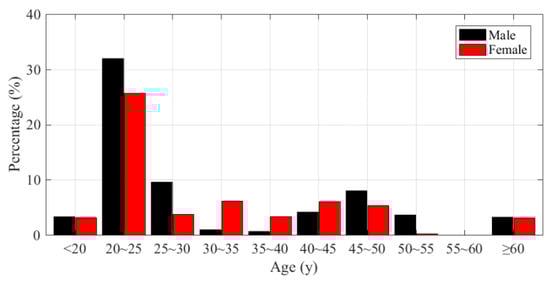
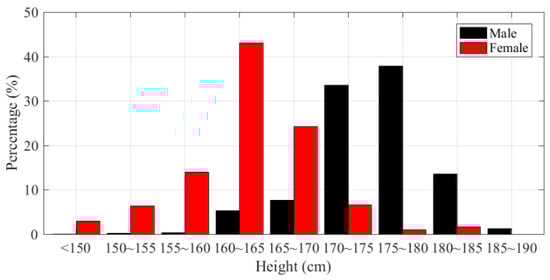
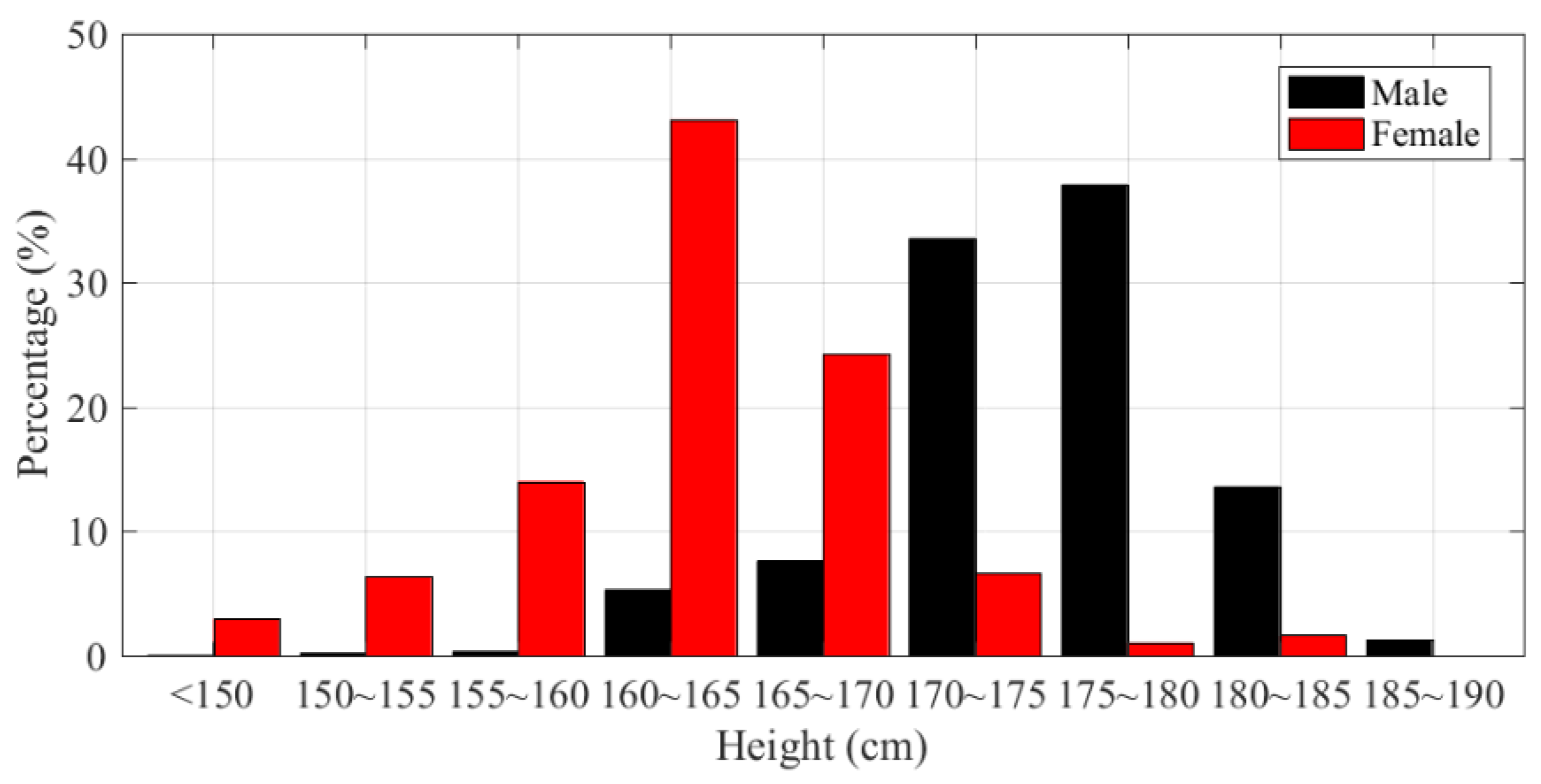
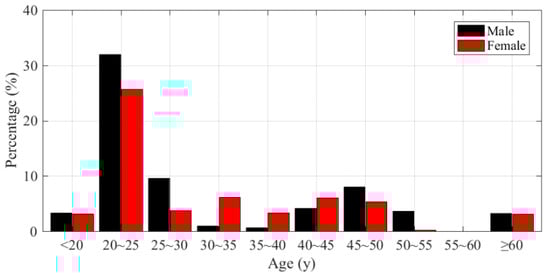
Statistics of biological factors (Figure 4, Figure 5 and Figure 6) show that the biological characteristics of the sample are abundant in diversification.
Figure 4.
Age distribution of male and female.
Figure 5.
Height distribution of male and female.
Figure 6.
Weight distribution of male and female.
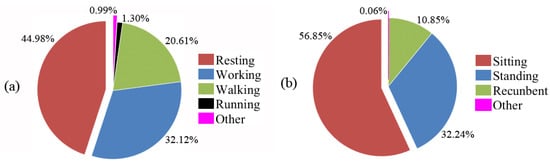
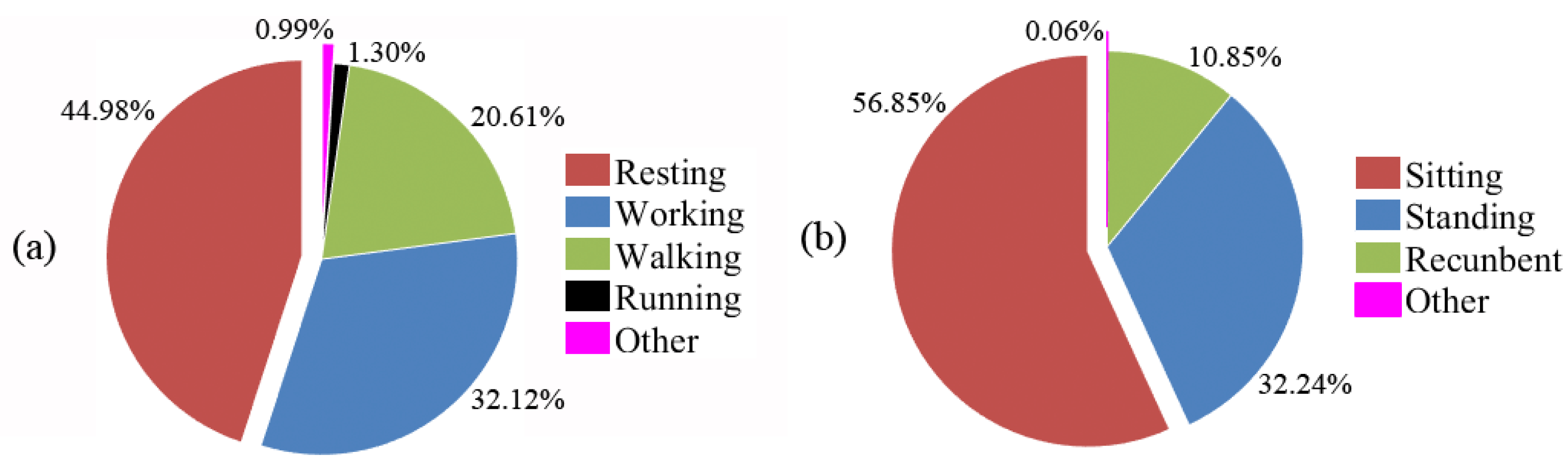
Since the proportion of ‘Other’ in both statistics (Figure 7) is very small, statistics of volunteers’ statements and gestures show that the sample covers almost all conditions where people may daily encounter vibration serviceability problems.
Figure 7.
Statistics of volunteers’ statements (a) and gestures (b).
2.2.2. Environmental Factors
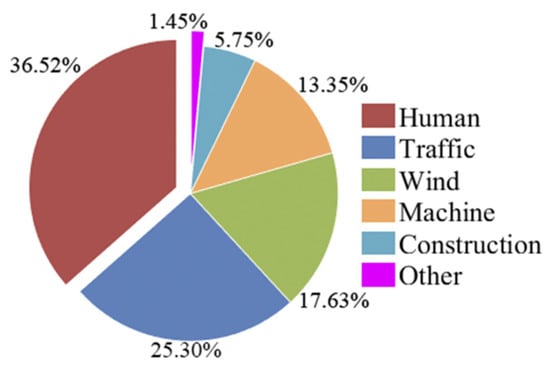
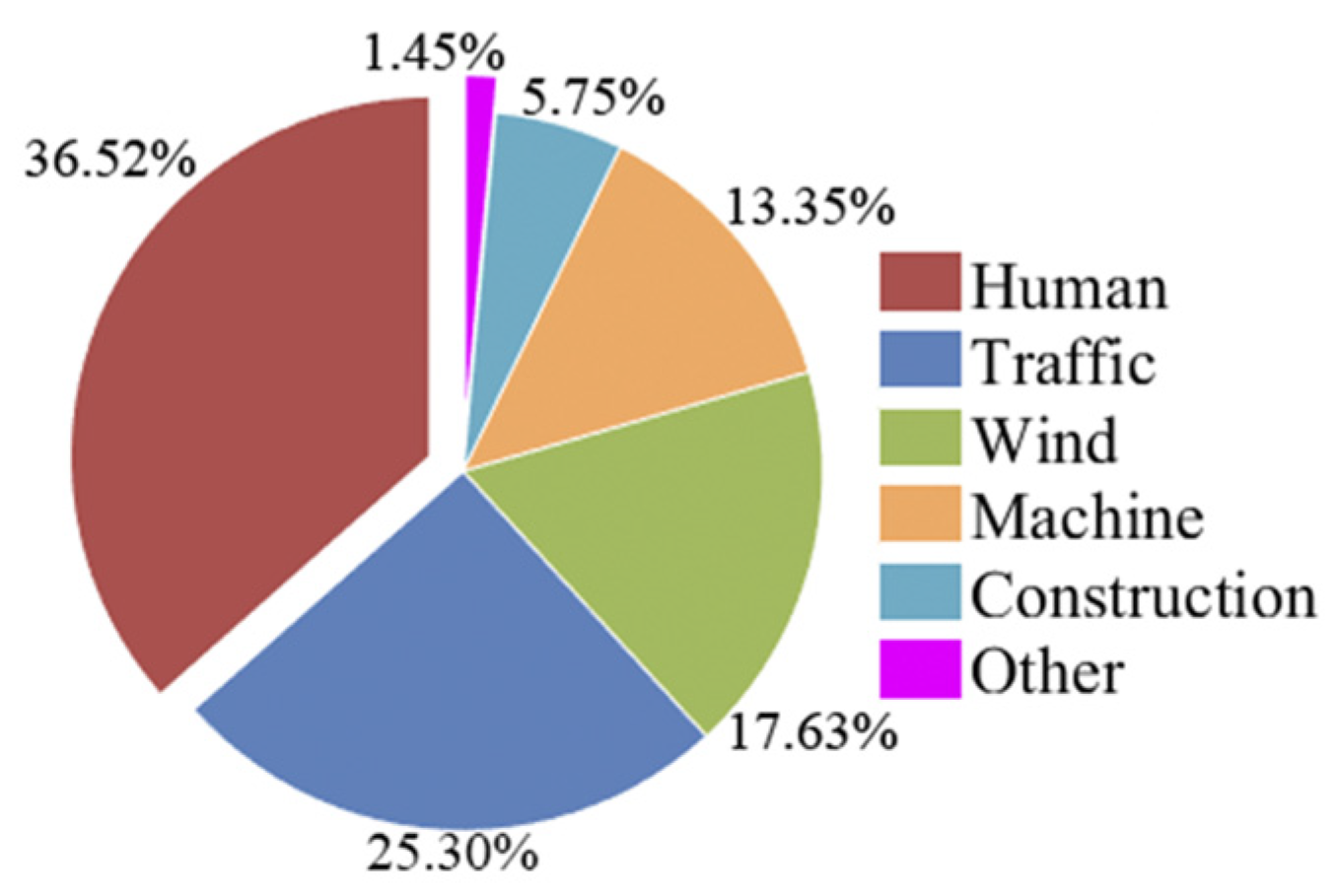
Figure 8 shows the types of vibration sources in daily life and the proportion of them. Over 98% of vibrations were caused by 5 types of commonly seen sources: humans (36.52%), traffic (25.31%), wind (17.63%), machines (13.35%) and construction (5.75%).
Figure 8.
Statistic of vibration source.
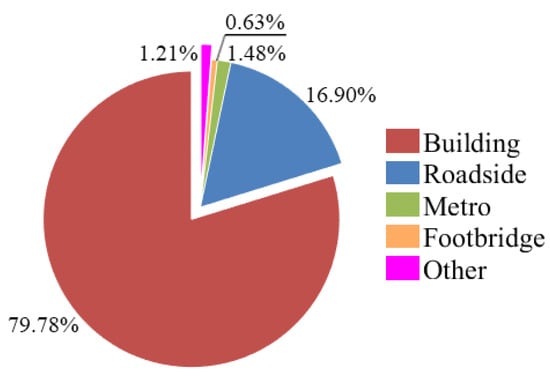
Figure 9 shows that almost all (except for vehicles) perceptible vibrations (the semantic label for vibration is at least ‘weakly perceived’) happened in buildings or roadside. In 76.84% of data uploaded, people sensed a perceptible or stronger vibration in a building, with a range of 1–58th floor.
Figure 9.
Statistic of perceptible vibration site.
The magnitudes of vibration investigated range from 0.0037–4.38 m/s2 (rms), and the crest factors of vibration range from 4–64. By contrast, in previous research and criteria of vibration serviceability, perception limits of vibration range from 0.005–0.015 m/s2 [22,23,24] while comfort limits of vibration range from 0.315–0.5 m/s2 [21,25]. Crest factor in sinusoidal vibration is 1.414 and some criteria suggest different methods of signal analysis when the crest factor is higher than 6 [26] or 9 [21]. It should be emphasized that there is seldom sinusoidal vibration in a real environment and the crest factors of most forms of actual vibration are bigger than 1.414.
The statistics of biological and environmental factors show that the data collected cover a wide range of various factors and the data set is big enough for the following analysis.
3. Correlation Analysis by MIC
The MIC (maximal information coefficient) evolves from MI (mutual information). Equation (2) shows the definition of MI between two variables of x and y:
In Equation (2), p(x, y) is the joint probability density function of x and y; p(x) and p(y) are the marginal probability density function of variable x and y, respectively; MI[x, y] is mutual information of x and y.
Although MI has many advantages in assessing how closely two variables are associated, such as generality to all function types, it is hard to obtain the joint probability density function of two variables. Furthermore, MI fails in normalization.
3.1. Definition of MIC
The basic idea of MIC is to encapsulate the joint probability density function of variables x and y by dividing grids on the scatterplot of these two variables in every possible way, then computing MIs corresponding to every kind of dividing grid and normalizing the biggest MI. There are three steps in computing the MIC between two variables:
- Explore all grids up to a maximal grid resolution (dependent on the size of the sample) and estimate the joint probability density function of vibration limits and factors;
- Compute mutual information in every possible condition and find the biggest one;
- Normalize the biggest mutual information by considering the number of grid cells.
In Equation (3), P(x, y) is the estimated joint probability density function by dividing grids on the scatterplot of variable x and y; and are the estimated marginal probability density function corresponding to variable x and y, respectively; |X| and |Y| are the number of segments by which the x-axis and y-axis are divided; B = n0.6, n is the number of data.
Since the joint probability density function in the MIC is estimated by dividing the scatterplot into boxes and computing the frequencies, the MIC is not applicable when the scale of data is not big enough [9], which is another reason it was impossible for earlier researchers to utilize the MIC.
Although previous research showed that the MIC was better because it possessed qualities such as being normalized and general to all kinds of functional relationships, it is necessary to prove them by comparing the MIC with traditional correlation analysis tools. Taking the Pearson and Spearman correlation coefficients as examples, Table 3 shows the difference between these three coefficients when quantifying the correlation between perception limits (in the form of 0.5 s MTVV) and crest factors (the ratio of peak and root-mean-square values of acceleration). Vector x stands for crest factors and vector y stands for perception limits.
Table 3.
Correlation coefficients between crest factors and perception limits.
Table 3 shows that the MIC changes little if the relationship between the crest factors and perception limits are different in forms, while the Pearson and Spearman correlation coefficients change a lot.
Compared with traditional correlation analysis tools, the MIC was proven to possess many advantages [9]:
- Generality: The MIC between two groups of data is determined by the relevance of them, not the type of functional relationship;
- Equitability: The MIC gives similar scores to equally noisy relationships of different types;
- Normalization: The MIC ranges from 0 to 1 when the correlation between two groups of data increases.
Yet the MIC suits only a large data set, which is not a problem in this research.
Hence the MIC performs better when the relationship is unknown.
3.2. MICs between Factors and Vibration Limits
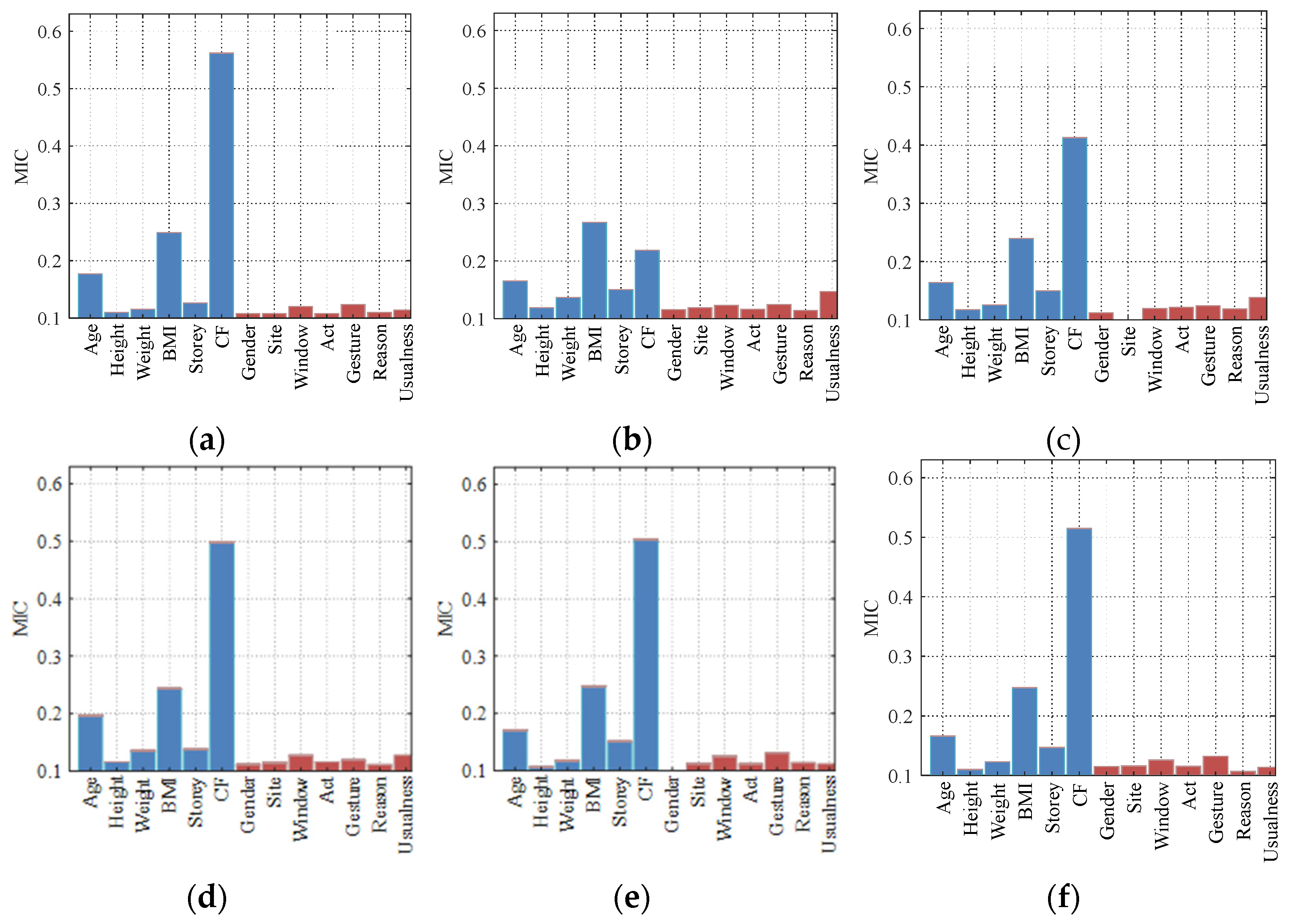
There are many kinds of factors that have an influence on vibration serviceability. By summarizing earlier research [7,27,28], 13 representative factors were employed to explore the relationship between relevant factors and vibration limits, which were gender, age, body height, body weight, body mass index (BMI), number of stories, crest factor of vibration (short for CF), site, window condition, acts of volunteers, gesture, reason of vibration, usualness of occurrence.
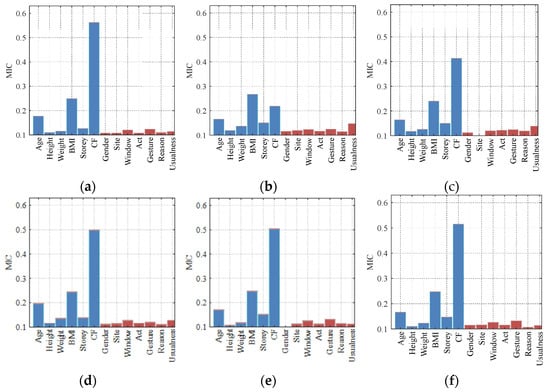
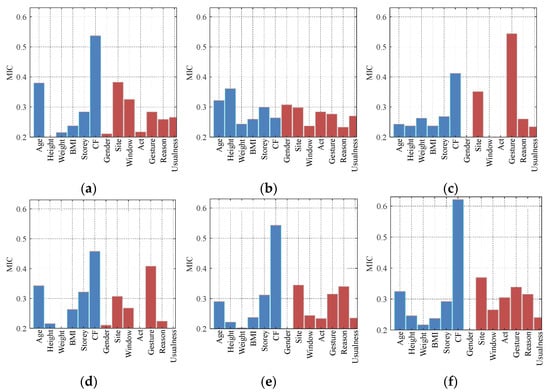
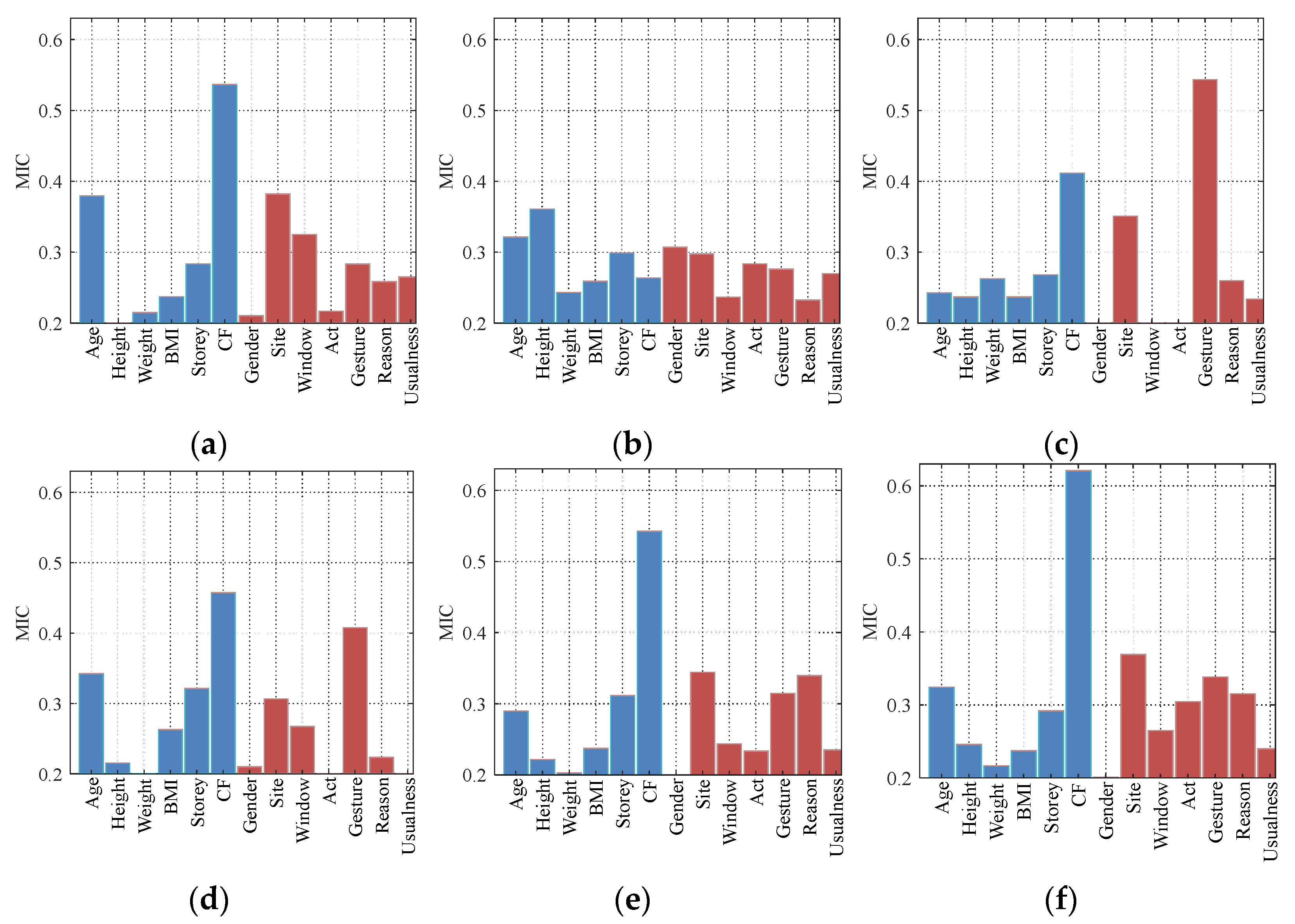
Two kinds of vibration limits were discussed in this paper: perception limits (corresponding to the semantic label of ‘weakly perceived’) and comfort limits (corresponding to the semantic label of ‘slightly uncomfortable’). Figure 10 and Figure 11 show the MICs between factors and perception/comfort limits, respectively.
Figure 10.
MICs between 13 factors and perception limits (Indices in (a–f) are peak/rms/VDV/rmq/1 s MTVV/0.5 s MTVV, respectively).
Figure 11.
MICs between 13 factors and comfort limits (Indices in (a–f) are peak/rms/VDV/rmq/1 s MTVV/0.5 s MTVV, respectively).
Researchers believed that vibration serviceability is a multivariable system [7]. However, this conclusion has not been proved before. The relatively low correlations shown in Figure 10 and Figure 11 prove explicitly and quantitatively that vibration serviceability is influenced by many factors and no single factor would determine vibration limits completely.
It can be learned from Figure 10 and Figure 11 that the crest factor has a much bigger MIC than other factors, which means the crest factor is a key factor of vibration serviceability. The correlation between crest factor and comfort limits (using MTVV as an indicator) is very strong for the MIC exceeding 0.6.
BMI has the biggest MIC among the biological factors when perception limits are concerned. Since BMI is a comprehensive and widely used indicator of human health and earlier research [21] showed that human health has a great influence on vibration serviceability, BMI is chosen as a key biological factor.
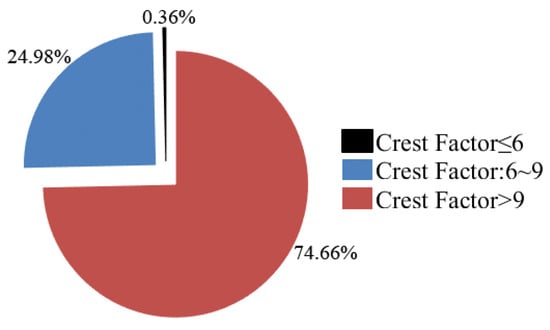
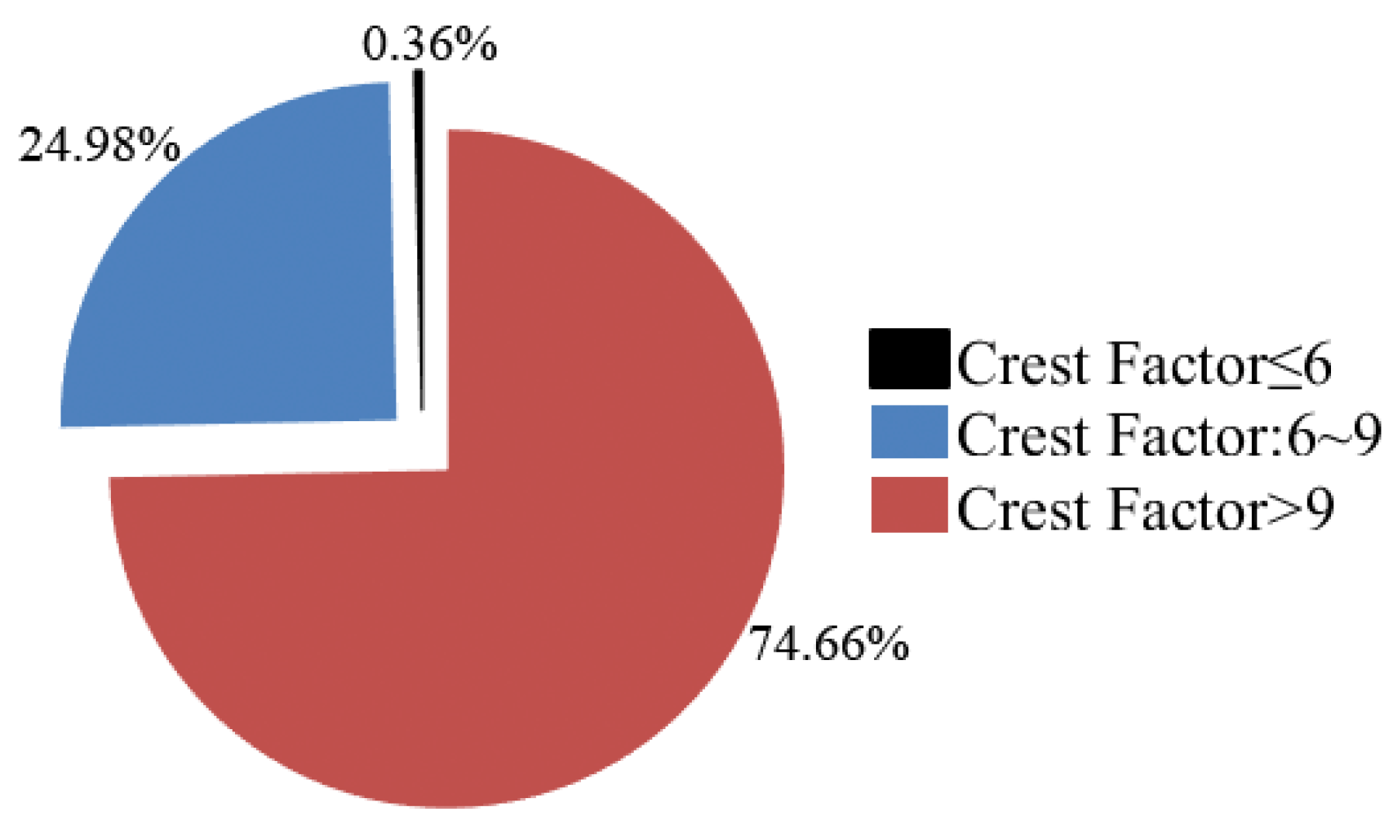
Compared with other vibration indicators, the MIC of the same factor is much lower when rms is used as a vibration indicator. Since the rms method is considered unsuitable to estimate the influence of vibrations with high crest factors (higher than six) [21,29] on human comfort and Figure 12 shows that almost all data in this research (more than 99%) have crest factors higher than six, the results of this study are reasonable and rms is not recommended as an indicator in field research on vibration serviceability.
Figure 12.
Proportion of data with different crest factors.
4. Curve Fitting of Key Factors and Vibration Limits
By comparing the MICs between different factors and limits, BMI and crest factor were chosen as key factors to fit functions with vibration limits. A 1 s MTVV and VDV were chosen as indicators of vibration magnitudes because of bigger MICs than other indicators.
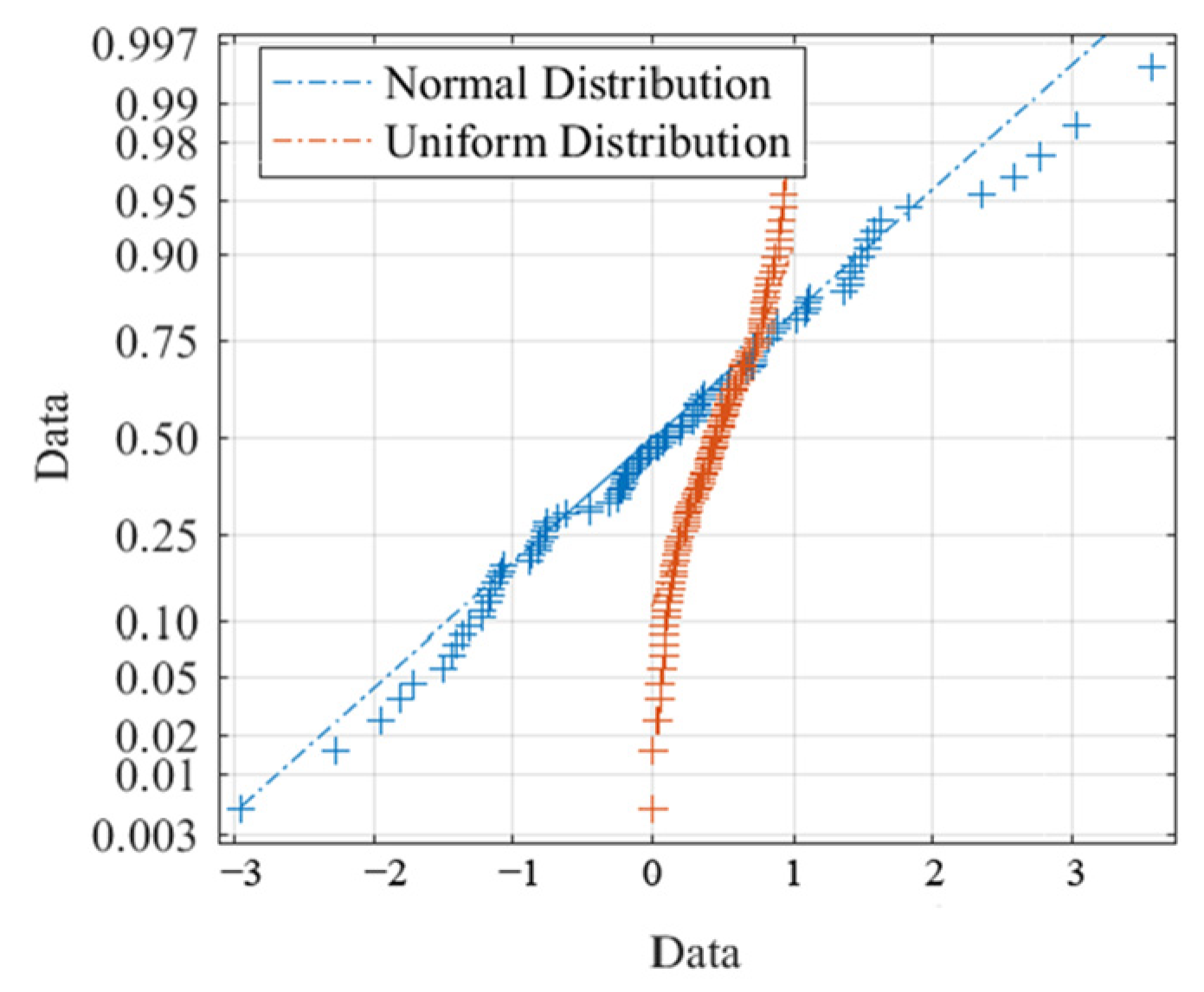
Since there is more than one data corresponding to the same value of BMI or crest factor, the mean value of vibration magnitude in these data was chosen to fit functions with relevant factors. The Lilliefors test (LF test) and normal probability plot (Figure 13) were used to check the normality of residuals. In case residuals follow a normal distribution, the result of the LF test should be 0 and the data should distribute around the line between the first quartile and third quartile of the data in a normal probability plot. Finally, fitted functions between vibration limits and BMI/crest factor, respectively, were suggested with a 95% confidence interval (95% CI).
Figure 13.
Normal probability plot of different distributions.
4.1. Fitting Function of BMI and Vibration Limits
Earlier research and standards found that human health had an important influence on vibration serviceability, and healthier people were more sensitive to vibration [21]. Since BMI is a widely used indicator to assess human health [30], it is reasonable to assume that people with a certain range of BMI are more sensitive to vibration than others, which means extreme value exists in the “Vibration limits-BMI” curves. The WHO [31] suggests that healthy people’s BMIs range from 18.5 to 24.9. Hence, this paper used quadratic polynomial to fit the relationship between BMIs and vibration limits Equation (4), with the breakpoint falling in the range of 18.5–24.9.
In Equation (4), alimit is vibration limit, there are two kinds of limits: perception limits and comfort limits; two kinds of indicators were used in each kind of limits: 1 s MTVV and VDV; a/b/c are coefficients of fitting function, b refers to the BMI with which people have the maximal or minimal value of vibration limits.
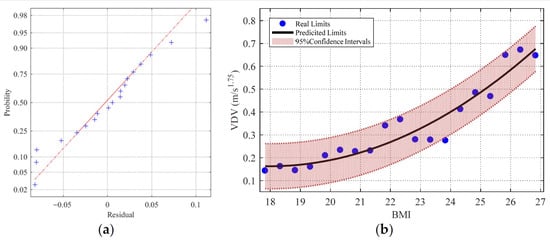
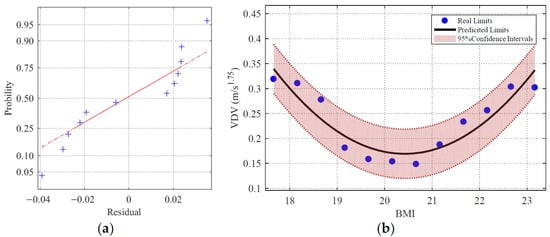
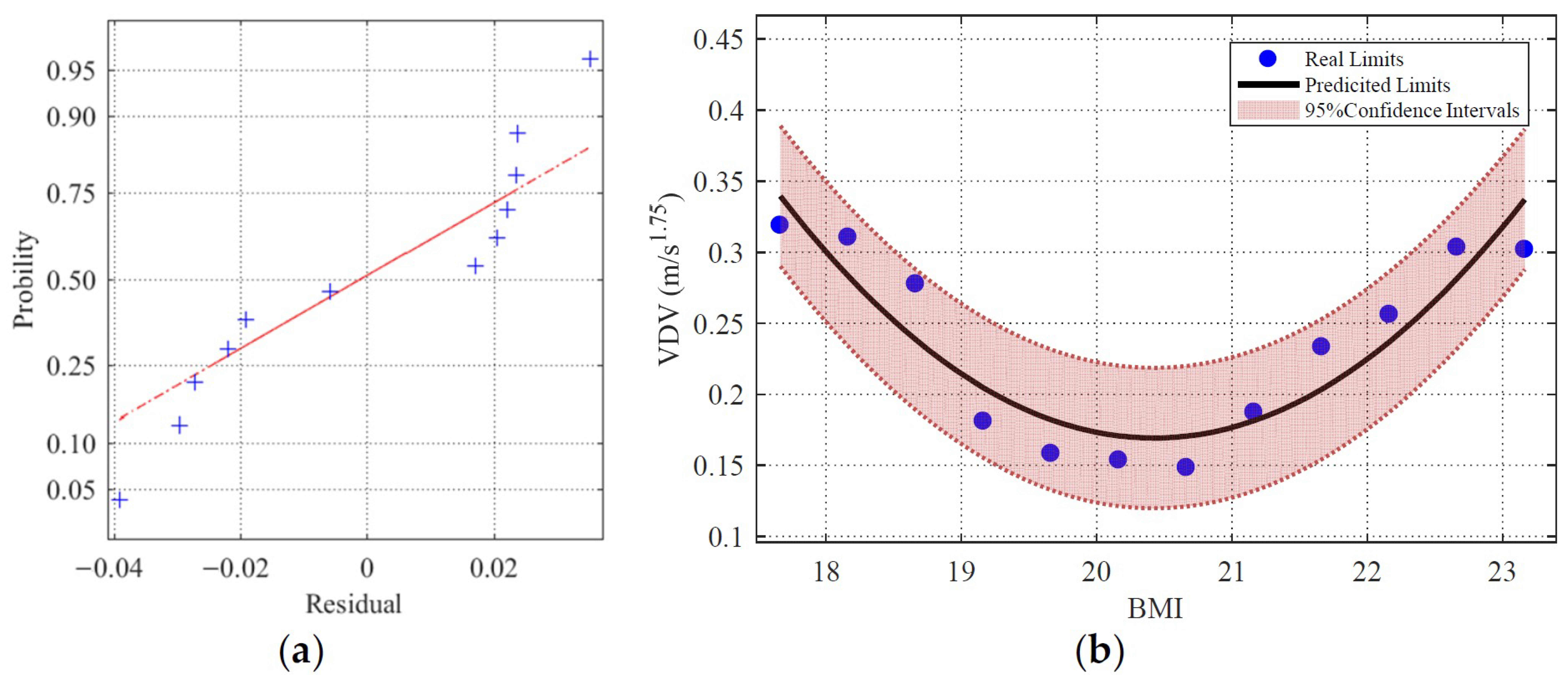
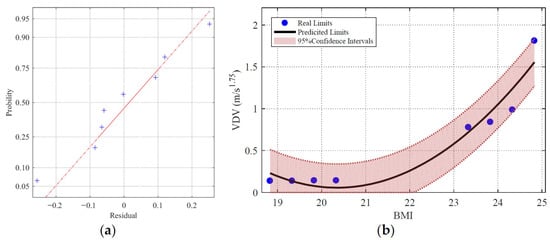
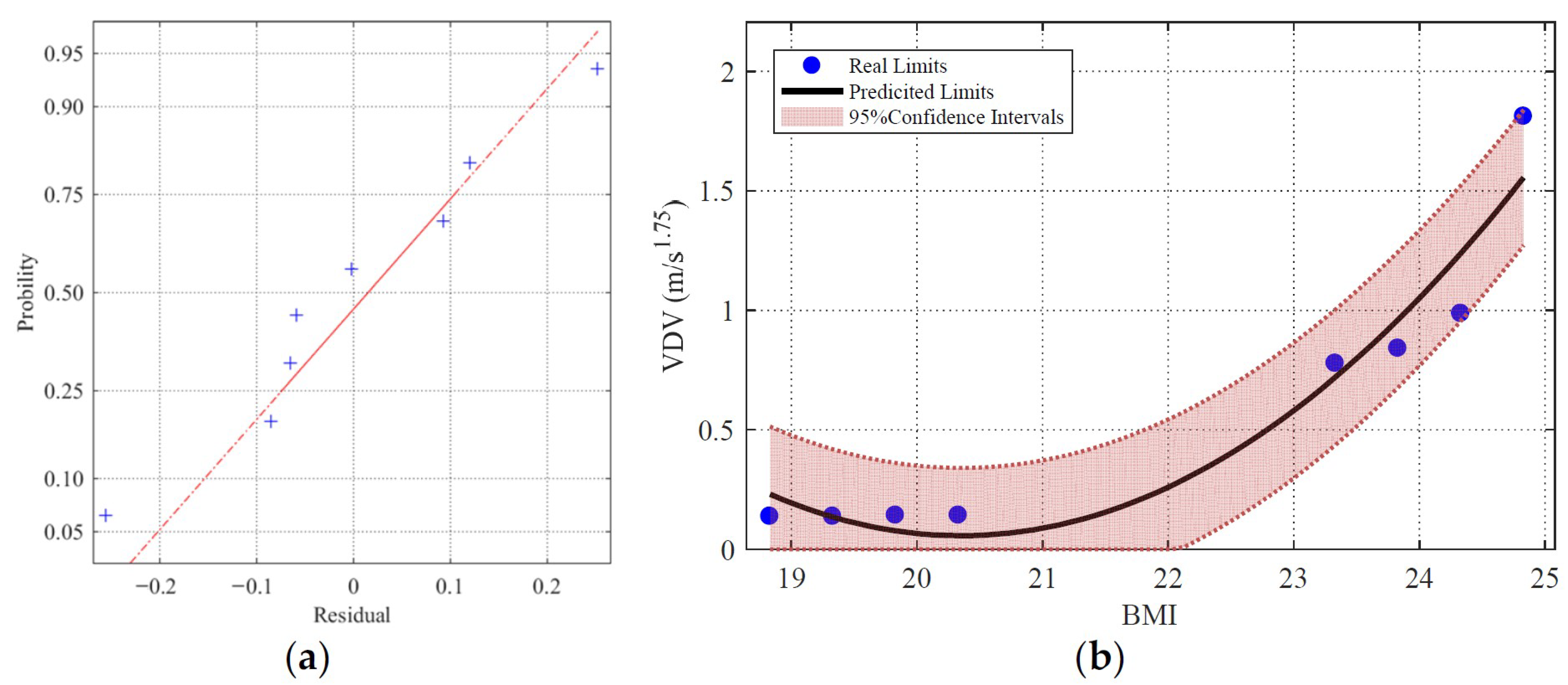
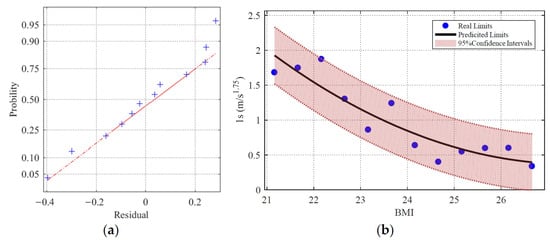
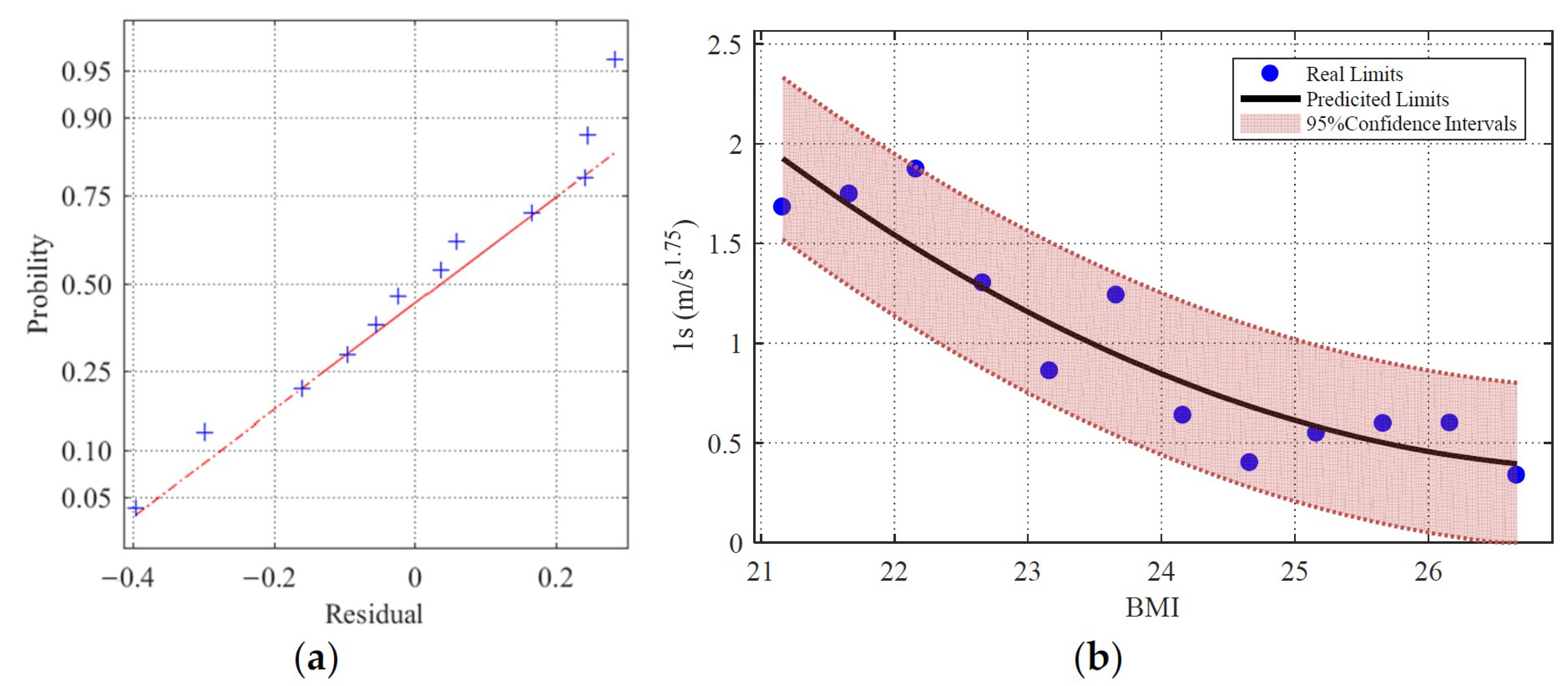
Figure 14 and Figure 15 show the fitting curves between female/male BMI and perception limits, respectively. Figure 16 and Figure 17 show the fitting curves between female/male BMI and male comfort limits, respectively.
Figure 14.
Normal probability plot (a) and fitting curves (b) (Female BMI and perception limits in VDV).
Figure 15.
Normal probability plot (a) and fitting curves (b) (Male BMI and perception limits in VDV).
Figure 16.
Normal probability plot (a) and fitting curves (b) (Female BMI and comfort limits in VDV).
Figure 17.
Normal probability plot (a) and fitting curves (b) (Male BMI and comfort limits in VDV).
Coefficients of fitting between female/male BMI and perception/comfort limits are listed in Table 4 and Table 5 when VDV or MTVV is used as an indicator of vibration magnitude, respectively.
Table 4.
Coefficients of fitting between BMI and vibration limits (VDV, m/s1.75).
Table 5.
Coefficients of fitting between BMI and vibration limits (1 s MTVV, m/s2)
The results show that these curves reflect the tendency of vibration limits to change with BMI well. Residuals between actual vibration limits and fitted values follow a normal distribution.
Women with a BMI of 17.0–18.0 possess lower perception limits than other women, which means they are more sensitive to vibration. The extreme value of the male’s ‘Perception limits—BMI’ curves fall in a BMI of 20.2–20.4, hence the BMI of the most sensitive male is a little higher than the females. The results agree well with previous conclusions of authoritative research [31]. The range of female (BMI of 18–27) perception limits fall in 0.163–0.700 m/s1.75 (VDV)/ 0.064–0.25 m/s2 (1 s MTVV), with 95% confidence intervals of ±0.099 m/s1.75 (VDV) and ±0.035 m/s2 (1 s MTVV), respectively. The range of male (BMI of 17–24) perception limits falls in 0.169–0.456 m/s1.75 (VDV)/0.073–0.181 m/s2 (1 s MTVV), with 95% confidence intervals of ±0.049 m/s1.75 (VDV) and ±0.035 m/s2 (1 s MTVV), respectively.
As for comfort limits, the BMI of women who possess the lowest limits is also lower than men. The range of female (BMI of 18–25) comfort limits fall in 0.057–1.672 m/s1.75 (VDV)/0.056–0.665 m/s2 (1 s MTVV), with 95% confidence intervals of ±0.283 m/s1.75 (VDV) and ±0.189 m/s2 (1 s MTVV), respectively. The range of male (BMI of 21–27) perception limits fall in 0.377–2.008 m/s1.75 (VDV)/0.210–0.774 m/s2 (1 s MTVV), with 95% confidence intervals of ±0.406 m/s1.75 (VDV) and ±0.127 m/s2 (1 s MTVV), respectively.
It should be emphasized that extreme values fall in nearly the same interval when different indicators are used, which also proves the reasonability of the results. As a reason of extreme value and relatively small sample corresponding to some BMIs, lower bounds of 95% CI corresponding to these BMI are lower than 0. Hence, the lower bounds are altered to 0 when they are previously lower than 0.
4.2. Fitting Function of Crest Factor and Vibration Limits
Previous research [8] shows that vibration limit tends to increase when crest factor grows bigger, yet some other research shows that the upbound of limits growing with crest factor is finite. However, there is no more precise research on the relationship between the crest factor and vibration limits. By considering the trend of data collected and the existence of finite upbound, various models (such as the Logistic model, Weibull model and polynomial model) were used to fit the relationship between the crest factor (CF) and vibration limits. At last, Richards model Equation (5) was chosen to obtain the fit function between the crest factor (CF) and vibration limits. The coefficients were computed and listed in Table 6.
Table 6.
Coefficients of fitting between CF and vibration limits.
In Equation (5), x, y are two variables to be fitted; α/β/γ/δ are parameters. α is the limit when x approaches infinite.
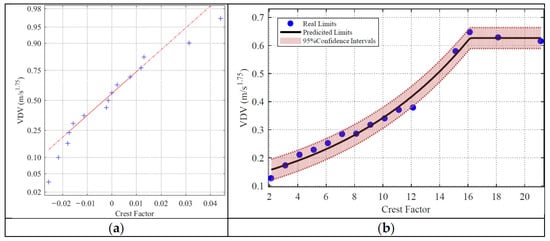
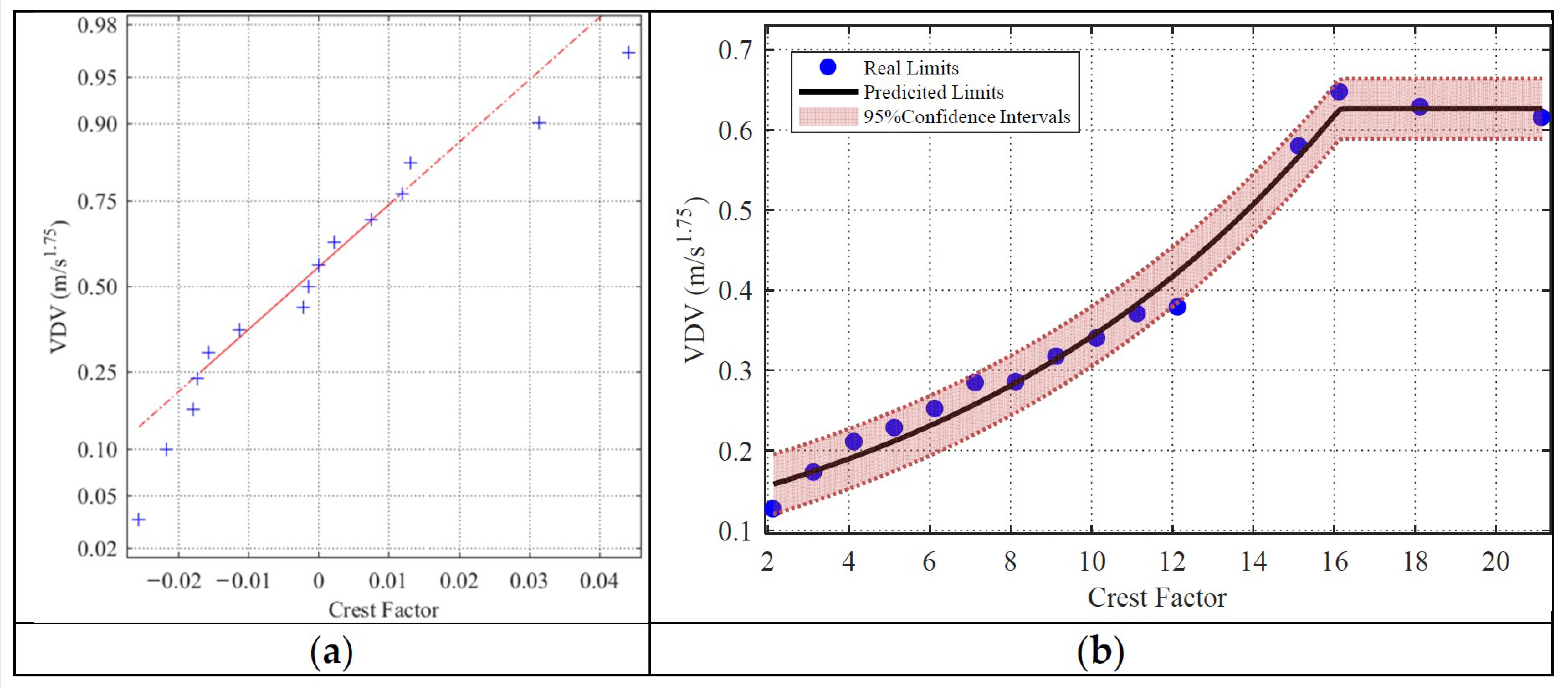
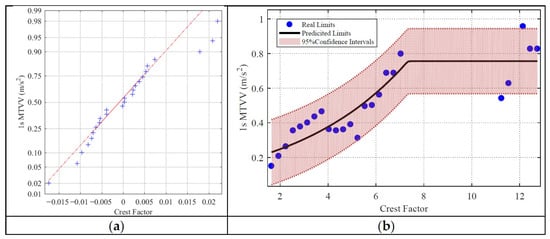
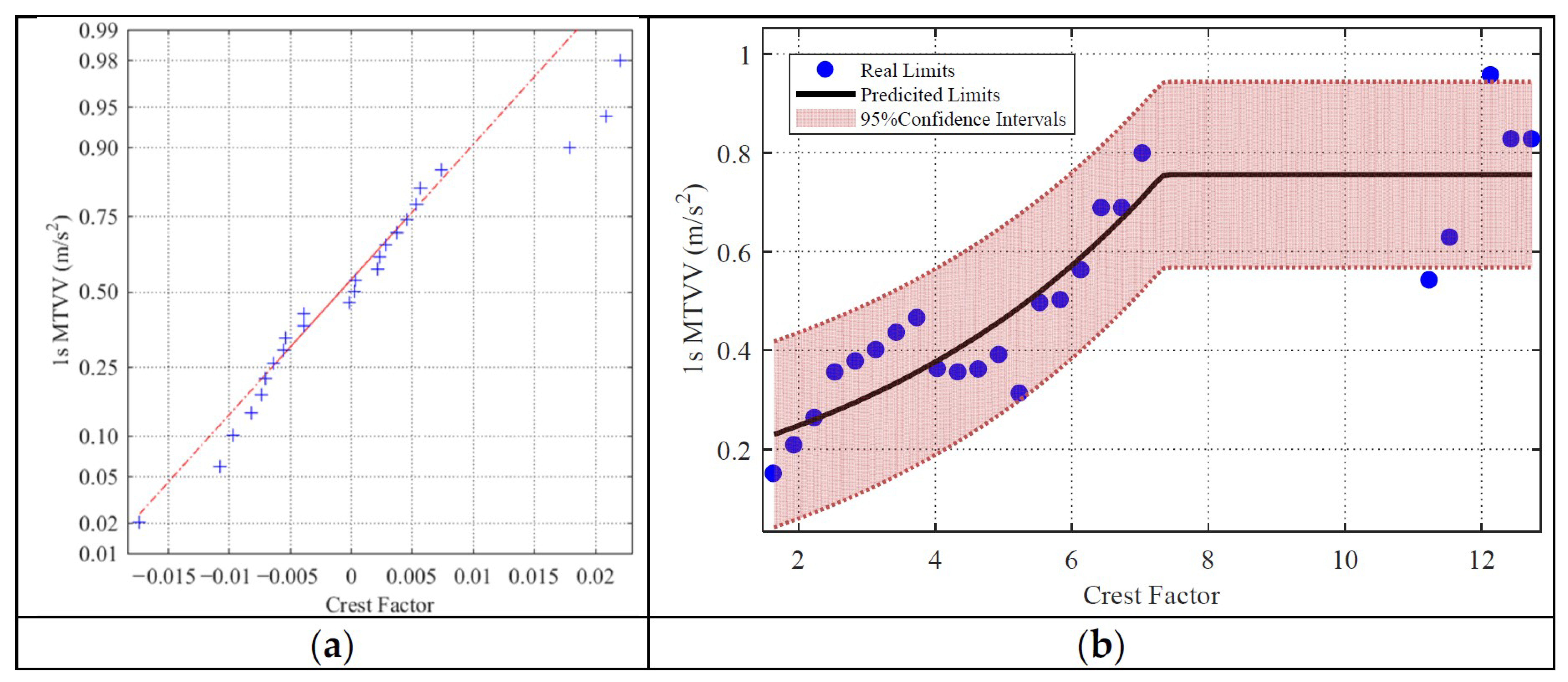
Figure 18 and Figure 19 represent the result of the normal distribution test and the curve-fitting between the crest factors (CF) and perception limits.
Figure 18.
Normal probability plot (a) and fitting curves (b) (CF and perception limits in VDV).
Figure 19.
Normal probability plot (a) and fitting curves (b) (CF and perception limits in 1 s MTVV).
Both perception and comfort limits fit well with crest factors (CF) by using the Richards models, and the residuals between the actual vibration limits and fitted values follow a normal distribution.
Since α is the limit when the crest factor approaches infinite and the fitting functions are all monotonously increasing, the upper bound of vibration limits is α. Previous research [3] and criteria [21,23] showed that vibration limits become bigger when the crest factor of vibration ascends, which is compatible with the conclusion of this research. For sinusoidal vibration, the perception limit is 0.062 m/s2 (1 s MTVV) or 0.128 m/s1.75 (VDV). The range of perception limits falls in 0.348–0.626 m/s1.75 (VDV)/ 0.119–0.309 m/s2 (1 s MTVV), with 95% confidence intervals of ±0.037 m/s1.75 (VDV) and ±0.018 m/s2 (1 s MTVV), respectively. When peak or rms is used as a vibration indicator, the perception limit is 0.062 m/s2 (rms) or 0.087 m/s2 (peak), respectively, which also fits well with the conclusions of previous research and criteria [22,32,33,34,35]. The values of comfort limits vary from 0.681 m/s1.75 to 1.830 m/s1.75 (indice as VDV) when the crest factor changes, which accords well with the criteria [32].
4.3. Probability Prediction of Vibration Serviceability
As a reason for the residuals between fitted values and actual limits following normal distribution, the probability of vibration serviceability can be predicted when the BMI of people or the crest factor is known. In order to achieve the prediction, the mean value (μ) and standard deviation (σ) of the vibration limits are necessary.
Once the value of BMI (distinguished by gender/crest factor) is known, the mean value of vibration limit (μ) can be predicted by using Equation (4)/Equation (5) and the coefficients in Table 4, Table 5 and Table 6. The standard deviation (σ) of vibration limits corresponding to the given BMI/CF can also be found in Table 4, Table 5 and Table 6. Then it is easy to obtain the probability density function of the vibration limits (perception/comfort) corresponding to the certain BMI/crest factor in Equation (6).
In case the magnitude of vibration is already known as v0, P is the possibility of people perceiving this vibration or feeling uncomfortable due to this vibration in Equation (7).
5. Conclusions and Discussion
5.1. Conclusions
Novel research on quantifying the correlation between vibration limits and relevant factors is proposed based on big data and a new mathematical tool. There are several important improvements. First of all, by introducing the MIC to estimate correlations between factors and limits, it is the first time that the correlations are quantitatively compared and proves that vibration serviceability is a multivariable system. Secondly, this study finds that crest factor and BMI are key factors to vibration serviceability. Hence, researchers and designers should consider the crest factor of vibration and BMI more seriously than other factors. Finally, the Richards model and quadratic polynomial are used to fit the relationships between the limits and the crest factor/BMI, respectively, and the results are compatible with the authority conclusion. For the reason that the residuals between actual vibration limits and fitted values follow a normal distribution, a method based on probability is proposed to predict vibration serviceability when the value of the crest factor/BMI is known.
Since the database covers a sufficient range of relevant factors and the scale is much larger than previous research, along with the fact that the correlation analysis tool (MIC) is reliable and the results fit well with previous research, the authors consider that the conclusions are reasonable and recommend the functional relationship between the vibration limits and crest factor/BMI. Corresponding confidence intervals are also suggested for vibration serviceability performance design.
5.2. Discussion
Although the scale of the investigation is much larger than earlier research and the conclusions are reasonable, some improvements could be made.
Due to combinatorial explosion, it is impossible to obtain vibration limits corresponding to the combination of different relevant factors. Yet larger scales will draw a more precise conclusion. Extreme data and small samples in some groups result in the 95% confidence intervals corresponding to these groups reaching 0. Collecting more data might have corrected this problem.
More psychological principles could be used to make the questionnaire and curve-fitting models more reasonable. Other factors (such as noise and temperature) should be taken into consideration when studying correlations between the relevant factors and vibration limits.
Author Contributions
Conceptualization, L.C. and J.C.; methodology, L.C. and J.C.; software, J.C.; validation, L.C. and J.C.; formal analysis, L.C.; investigation, L.C. and J.C.; resources, J.C.; data curation, J.C.; writing—original draft preparation, L.C.; writing—review and editing, J.C.; visualization, L.C.; supervision, J.C.; project administration, L.C. and J.C.; funding acquisition, J.C. All authors have read and agreed to the published version of the manuscript.
Funding
This research was funded by the National Science Foundation of China, grant number 52178151.
Informed Consent Statement
Not applicable.
Conflicts of Interest
The authors declare no conflict of interest.
References
- Reiher, H.; Meister, F.J. Human sensitivity to vibration. Forsch. Auf Dem Geb. Des Ing. 1931, 2, 381–386. [Google Scholar] [CrossRef] [Scilit]
- Kanda, J.; Tamura, Y.; Fujii, K. Probabilistic evaluation of human perception threshold of horizontal vibration of buildings (0.125 Hz to 6.0 Hz). In Proceedings of the Structures Congress XII, Atlanta, GA, USA, 24–28 April 1994. [Google Scholar]
- Zhou, Z.; Griffin, M.J. Response of the seated human body to whole-body vertical vibration: Discomfort caused by mechanical shocks. Ergonomics 2017, 60, 347–357. [Google Scholar] [CrossRef] [Scilit] [PubMed]
- Jones, A.J.; Saunders, D.J. Equal comfort contours for whole body vertical, pulsed sinusoidal vibration. J. Sound Vib. 1972, 23, 1–14. [Google Scholar] [CrossRef] [Scilit]
- Parsons, K.C.; Griffin, M.J. Whole-body vibration perception thresholds. J. Sound Vib. 1988, 121, 237–258. [Google Scholar] [CrossRef] [Scilit]
- Liu, H.; Lian, Z.; Gong, Z. Thermal comfort, vibration, and noise in Chinese ship cabin environment in winter time. Build. Environ. 2018, 135, 104–111. [Google Scholar] [CrossRef] [Scilit]
- Griffin, M.J. Handbook of Human Vibration; Harcourt Brace Jovanovich: San Diego, CA, USA, 1990. [Google Scholar]
- Kowalska-Koczwara, A.; Stypuła, K. Influence of crest factor on evaluation of human perception of traffic vibration. J. Meas. Eng. 2018, 6, 250–255. [Google Scholar] [CrossRef] [Scilit]
- Reshef, D.N.; Reshef, Y.A.; Finucane, H.K.; Grossman, S.R.; McVean, G.; Turnbaugh, P.J.; Lander, E.S.; Mitzenmacher, M.; Sabeti, P.C. Detecting novel associations in large data sets. Science 2011, 334, 1518–1524. [Google Scholar] [CrossRef] [Scilit] [PubMed]
- Moore, D.S.; Notz, W.I.; Notz, W. Statistics: Concepts and Controversies; Macmillan: London, UK, 2017. [Google Scholar]
- Chen, J.; Tan, H.; Pan, Z. Experimental validation of smartphones for measuring human-induced loads. Smart Struct. Syst. 2016, 18, 625–642. [Google Scholar] [CrossRef] [Scilit]
- Grossi, M. A sensor-centric survey on the development of smartphone measurement and sensing systems. Measurement 2019, 135, 572–592. [Google Scholar] [CrossRef] [Scilit]
- Cao, L.; Chen, J. Online Investigation of Vibration Serviceability Limitations using Smartphones. Measurement 2020, 162, 107850. [Google Scholar] [CrossRef] [Scilit]
- Xia, H. Traffic Induced Environmental Vibrations and Controls; Nova Publ: Beijing, China, 2013. [Google Scholar]
- Chen, P.W.; Robertson, L.E. Human perception thresholds of horizontal motion. J. Struct. Div. 1972, 92, 1681–1695. [Google Scholar] [CrossRef] [Scilit]
- Morioka, M.; Griffin, M.J. Magnitude-dependence of equivalent comfort contours for fore-and-aft, lateral, and vertical vibration at the foot for seated persons. J. Sound Vib. 2010, 329, 2939–2952. [Google Scholar] [CrossRef] [Scilit]
- Burton, M.D.; Kwok, K.; Abdelrazaq, A. Wind-Induced Motion of Tall Buildings: Designing for Occupant Comfort. Int. J. High-Rise Build. 2015, 4, 1–8. [Google Scholar]
- Burton, M.D.; Kwok, K.; Hitchcock, P.A. Occupant comfort criteria for wind-excited buildings: Based on motion duration. In Proceedings of the 12th International Conference on Wind Engineering, Cairns, Australia, 1–6 July 2007. [Google Scholar]
- Goto, T. Effects of Visual Views on the Perception Threshold of Building Motion. Jpn. Informal Group Hum. Response Vib. 1996, 13–14, 1–15. [Google Scholar]
- Kawana, S.; Tamura, Y.; Matsui, M. Study on vibration perception by visual sensation considering probability of seeing. Int. J. High-Rise Build. 2012, 1, 283–300. [Google Scholar]
- ISO 2631-1:1997 (E); Mechanical Vibration and Shock: Evaluation of Human Exposure to Whole-Body Vibration. Part 1: General Requirements. ISO: Geneva, Switzerland, 1997.
- VDI 2057-1; Human Exposure to Mechanical Vibrations Whole-Body Vibration. VDI: Berlin, Germany, 2002.
- ISO 10137; Bases for Design of Structures—Serviceability of Buildings and Walkways against Vibrations. ISO: Geneva, Switzerland, 2007.
- Miwa, T. Evaluation methods for vibration effect. Part 1 Measurements of threshold and equal sensation contours of whole body for vertical and horizontal vibrations. Ind. Health 1967, 5, 183–205. [Google Scholar] [CrossRef] [Scilit]
- AISC. AISC DG11 Floor Vibrations: Due to Human Activity, 2nd ed.; AISC: Chicago, IL, USA, 2003. [Google Scholar]
- BS 6841; Guide to Measurement and Evaluation of Human Exposure to Whole-Body Mechanical Vibration and Repeated Shock. BSI: London, UK, 1987.
- Lamb, S.; Kwok, K. The fundamental human response to wind-induced building motion. J. Wind. Eng. Ind. Aerodyn. 2017, 165, 79–85. [Google Scholar] [CrossRef] [Scilit]
- Živanović, S.; Pavic, A.; Reynolds, P. Vibration serviceability of footbridges under human-induced excitation: A literature review. J. Sound Vib. 2005, 279, 1–74. [Google Scholar] [CrossRef] [Scilit]
- Arnold, J.J.; Griffin, M.J. Discomfort caused by multiple frequency fore-and-aft, lateral or vertical whole-body vibration. In Proceedings of the 52nd UK Human Resopnse to Vibration Conference and Workshop, Shrivenham, UK, 5–6 September 2017. [Google Scholar]
- Nuttall, F.Q. BMI, and health: A critical review. Nutr. Today 2015, 50, 117. [Google Scholar] [CrossRef] [Scilit] [PubMed]
- WHO. Mean Body Mass Index (BMI): Situation and Trends; WHO: Geneva, Switzerland, 2013. [Google Scholar]
- BS 6472; Guide to Evaluation of Human Exposure to Vibration in Buildings. BSI: London, UK, 2008.
- Burton, M.D. Effects of Low Frequency Wind-Induced Building Motion on Occupant Comfort. Doctor Degree; The Hong Kong University of Science and Technology: Hong Kong, China, 2006. [Google Scholar]
- Kanda, J.; Tamura, Y.; Fujii, K. Probabilistic criteria for human perception of low-frequency horizontal motions. In Proceedings of the Symposium/Workshop on Serviceability of Buildings, Ottawa, ON, Canada, 16–18 May 1988. [Google Scholar]
- RFC2-CT-2007-00033; HiVoSS (Human Induced Vibrations of Steel Structures): Vibration Design of Floors Guideline. HiVoSS: Luxembourg, 2008.





Publisher’s Note: MDPI stays neutral with regard to jurisdictional claims in published maps and institutional affiliations. |
© 2022 by the authors. Licensee MDPI, Basel, Switzerland. This article is an open access article distributed under the terms and conditions of the Creative Commons Attribution (CC BY) license (https://creativecommons.org/licenses/by/4.0/).