4. Discussion and Analysis
The Hanyang Iron and Steel Works was one of the earliest integrated iron and steel enterprises established in China, and the performance of its rail products is considered a direct reflection of China’s early metallurgical development and technological progress.
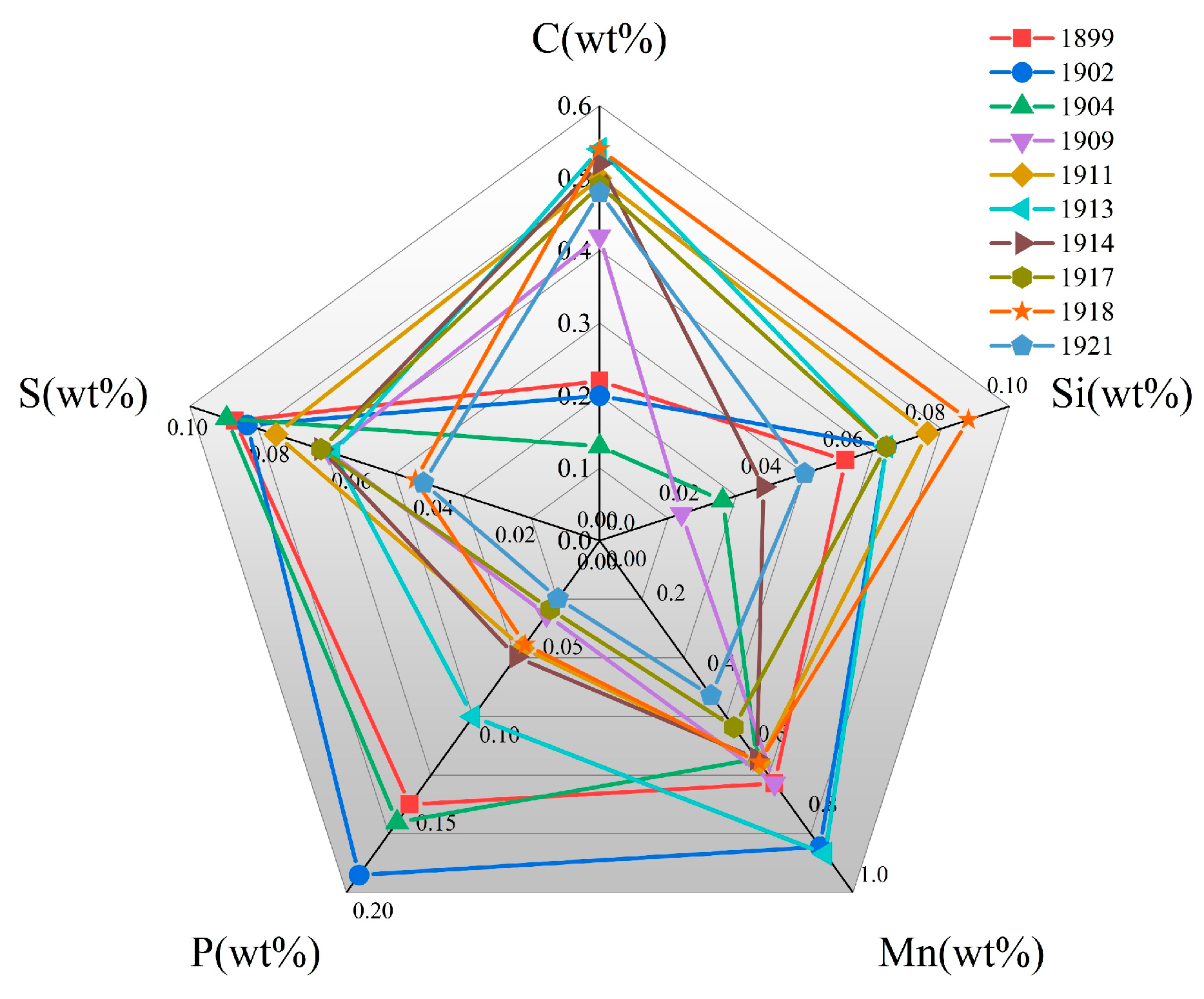
The evolution of the principal chemical elements (carbon, silicon, manganese, phosphorus, and sulfur) of the rails manufactured by Hanyang Iron and Steel Works is illustrated in the radar chart in
Figure 7. During the initial phase of the Hanyang Iron and Steel Works (prior to 1904), the Bessemer converter process was employed for rail steel production, which was consistent with the global predominance of Bessemer steelmaking during that period.
In the early stages of its invention, the Bessemer converter underwent rapid development in Europe and the United States due to its effective resolution of iron brittleness and the significant extension of the service life of steel materials. The primary disadvantage of steel produced via the Bessemer process is the elevated concentration of phosphorus (P) and sulfur (S); this phenomenon has been widely reported in the literature and is consistent with the phosphorus content exceeding 0.15% observed in the rail testing data of this study.
It is well-established that the presence of detrimental elements, namely phosphorus (P) and sulfur (S), results in an increase in the brittleness of steel. Sulfur can be sequestered through the addition of manganese to form harmless manganese sulfide (MnS) inclusions; however, phosphorus cannot be removed within an acidic Bessemer converter. Furthermore, the iron ore utilized by Hanyang Iron and Steel Works was sourced from the Daye Iron Mine in Wuhan, Hubei, China, which is characterized by relatively higher concentrations of phosphorus and copper compared to ores from other regions (the high copper content in the ore leads to elevated copper levels in the rail products). The elevated phosphorus content in the early rails produced by Hanyang Iron and Steel Works was attributed to the raw materials, the steelmaking equipment, and the specific processing techniques employed. To mitigate brittleness and ensure sufficient service performance, a reduction in carbon content was implemented in the Bessemer rail steel; this necessitated the low-carbon and high-phosphorus chemical profile characteristic of early Hanyang production.
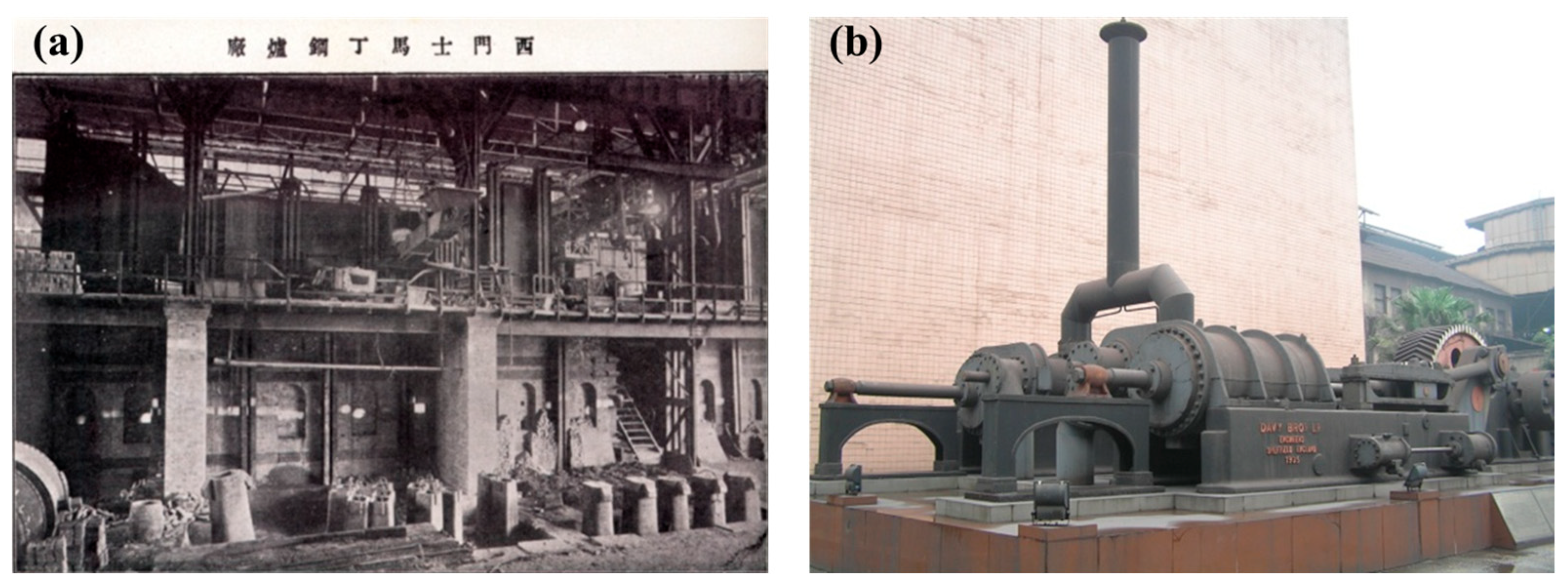
Between 1904 and 1908, a technical renovation was initiated at the Hanyang Iron and Steel Works, during which the Bessemer process was abandoned in favor of the Siemens-Martin open-hearth process for rail production. Open-hearth furnaces are characterized by large capacities, typically yielding 100–130 tons per heat, and provide superior product quality compared to Bessemer converters. Furthermore, the smelting process can be easily controlled in an open-hearth furnace, allowing for periodic sampling and analysis to ensure precise control of the molten steel composition. Phosphorus removal can also be facilitated within basic slag through the addition of agents such as lime. The completion of this functional renovation at the Hanyang Iron and Steel Works directly resulted in a significant reduction of phosphorus and sulfur content, thereby enhancing the quality of the rail products.
This specific chemical composition combination (0.13–0.22 wt.% C and P ≥ 0.15 wt.%) represented a major metallurgical limitation during the early period of steelmaking in China. Compared with contemporary international rail specifications at the end of the 19th century, such as the British Standards and the American Society of Civil Engineers (ASCE) rail guidelines—which strictly regulated medium-to-high carbon contents (0.40–0.55 wt.%) and restricted the phosphorus content to P ≤ 0.08–0.10 wt.%—the early Hanyang converter rails exhibited a tremendous anomaly. Because the acid converter was thermodynamically incapable of dephosphorization and the local Daye iron ore itself possessed a relatively high phosphorus content, the early steelmakers were forced to suppress the carbon content down to the level of low-carbon structural steel (<0.22 wt.%). This was a deliberate metallurgical compromise aimed at preventing catastrophic cold-shortness embrittlement while maintaining a nominal ductility, albeit at the immense expense of wear resistance and yield strength [
20].
To address the historical breakage and processing issues, the explicit physical metallurgy mechanisms of phosphorus, sulfur, and copper on brittleness, hot-shortness, and rail degradation are systematically summarized in
Table 4.
Briefly, phosphorus acts as the primary cause of cold shortness (ambient/low-temperature brittleness) due to grain-boundary P-segregation and intense solid-solution strengthening, explaining the catastrophic winter transgranular cleavage fractures observed on the Beijing-Hankou Railway. High sulfur content ( wt.%) inherently threatened the steel with -induced hot shortness during rolling (1000–1150 °C). Although a sufficient ratio () effectively mitigated rolling cracks by forming high-melting , the resulting heavily elongated Type A sulfide stringers severely compromised transverse toughness. Additionally, high copper content (0.15–0.62 wt.%) originating from the Daye iron ore induced localized liquid metal embrittlement (subscale Cu-rich liquid phase penetration along grain boundaries at temperatures >1083 °C), generating surface checking and micro-cracks during deformation. The technical transition to basic open-hearth steelmaking after 1908 successfully reduced phosphorus and improved cleanliness, fundamentally resolving these failure drivers.
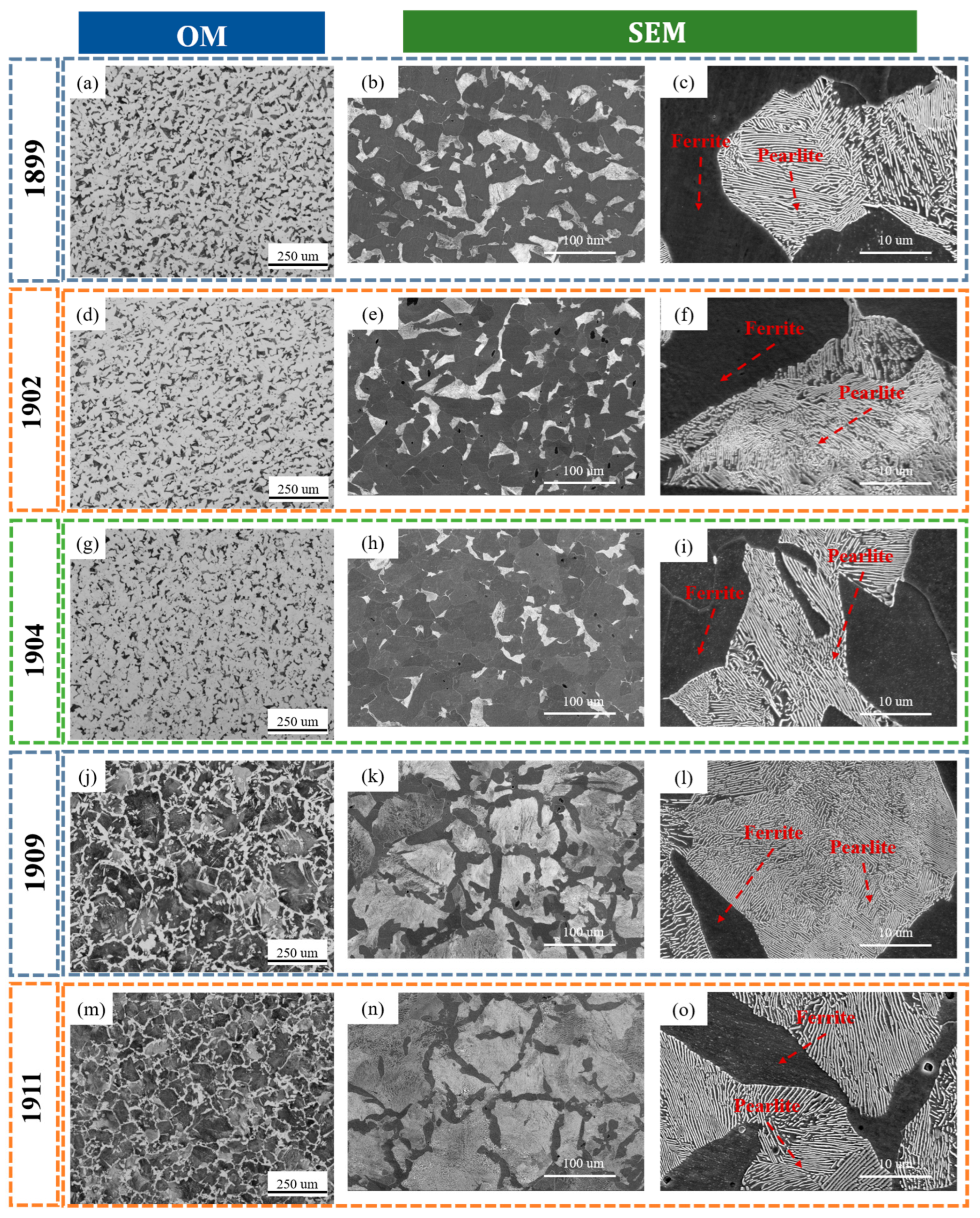
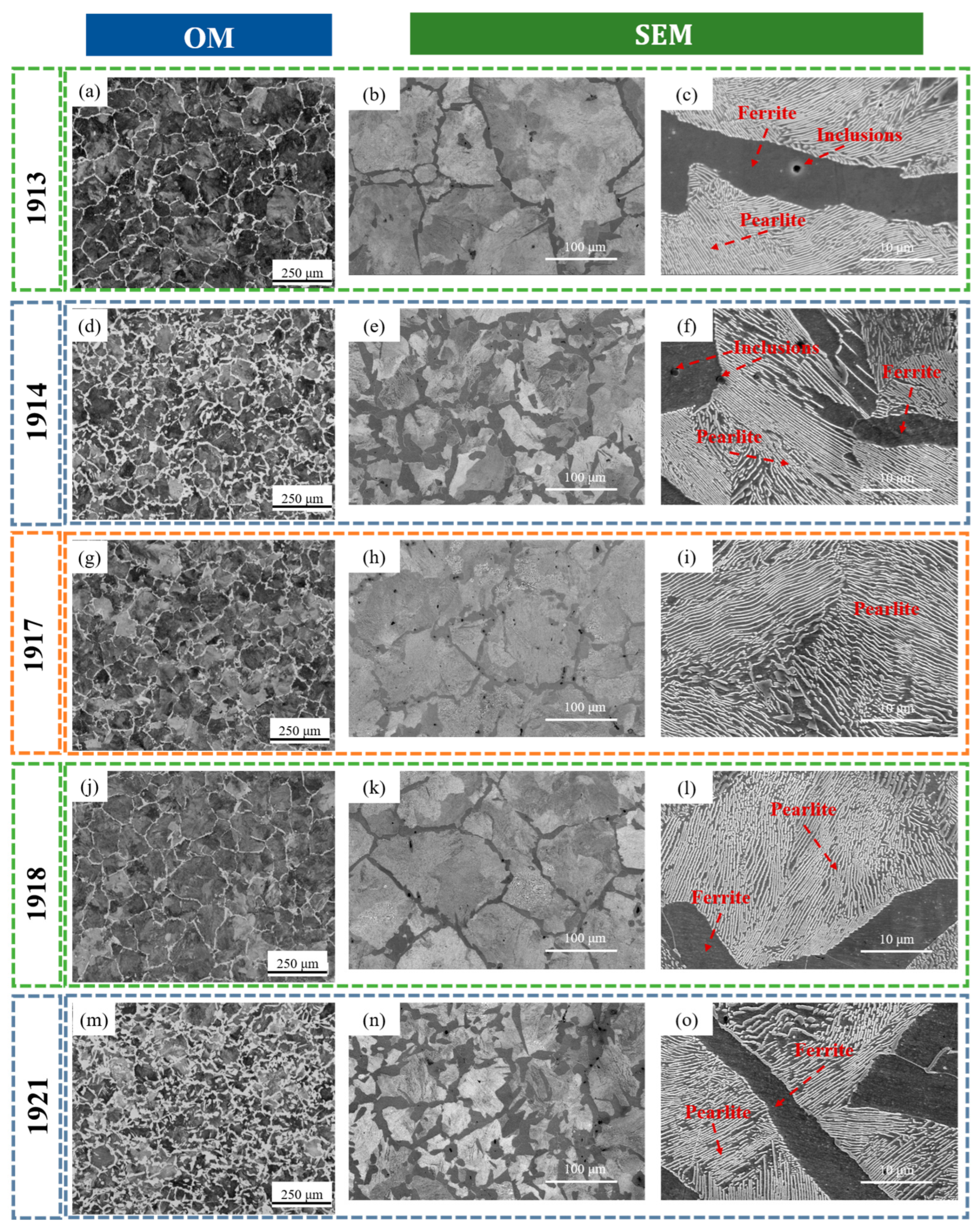
From the perspective of microstructure, a large amount of ferrite and pearlite was observed in the steel rails manufactured by Hanyang Iron and Steel Works prior to the technical transformation (before 1904). Following the completion of the technical transformation (after 1908), the microstructure was transformed into a combination of proeutectoid network ferrite and pearlite. Furthermore, a significant increase in pearlite content was observed within the microstructure after the technical transformation. This characteristic is correlated with the variations in carbon content within the steel rails produced by Hanyang Iron and Steel Works. However, the direct cause is attributed to the revolution in steelmaking technology implemented at the Hanyang plant. Open-hearth steelmaking was adopted after the technical transformation, resulting in a reduction of phosphorus content in the produced rails. The strength could be enhanced by increasing the carbon content without compromising the toughness of the rails. As the carbon content in the rails was increased, the volume fraction of pearlite within the microstructure was elevated accordingly.
The formation of the network ferrite and pearlite microstructure is primarily attributed to the relatively slow cooling rate of the rail steel during the post-rolling cooling process. Due to the high interfacial energy and rapid atomic diffusion at the prior austenite grain boundaries, proeutectoid ferrite is preferentially nucleated at these boundaries. Owing to the low solubility of carbon in ferrite, the remaining carbon atoms are rejected into the adjacent austenite. The ferrite subsequently grows rapidly along the austenite grain boundaries, interconnecting to form a ferritic network. The austenite situated within the ferritic network is gradually transformed into pearlite. The microstructural evolution of the Hanyang Iron Works rails serves as the most direct and compelling scientific evidence of its technological advancement and improved product quality.
The inclusion rating results of the early rails produced by Hanyang Iron Works demonstrate the influence of the steel smelting process. As previously mentioned, the steelmaking processes employed for rail production before and after the renovation of Hanyang Iron Works were entirely different. Production was carried out using an acidic Bessemer converter prior to the renovation, whereas basic open-hearth steelmaking was adopted upon completion of the upgrade. Although elements such as carbon and silicon in pig iron can be rapidly oxidized by air blowing in a Bessemer converter, a serious issue of increased dissolved oxygen content in the steel is introduced. Deoxidation is not inherently integrated within the Bessemer converter process; thus, deoxidation is typically performed by adding ferromanganese or ferrosilicon during subsequent processing stages to remove excess oxygen.
The post-treatment process involves the rapid addition of deoxidizers, such as ferromanganese and ferrosilicon, to the molten steel after it has been poured into the ladle following the blow. This deoxidation method is prone to the formation of liquid or semi-liquid silicates, such as FeO·SiO
2, MnO·SiO
2, MnS·SiO
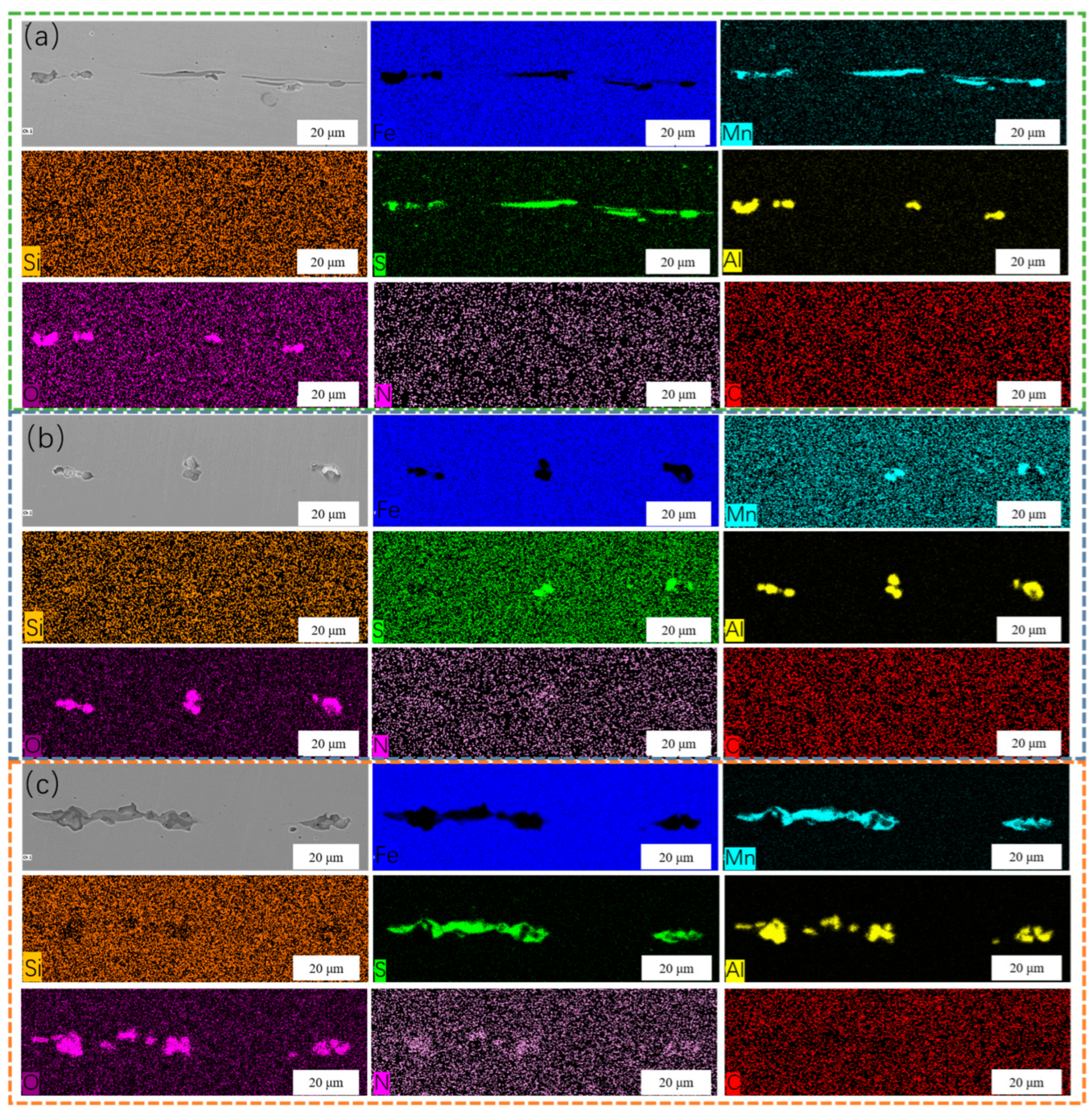
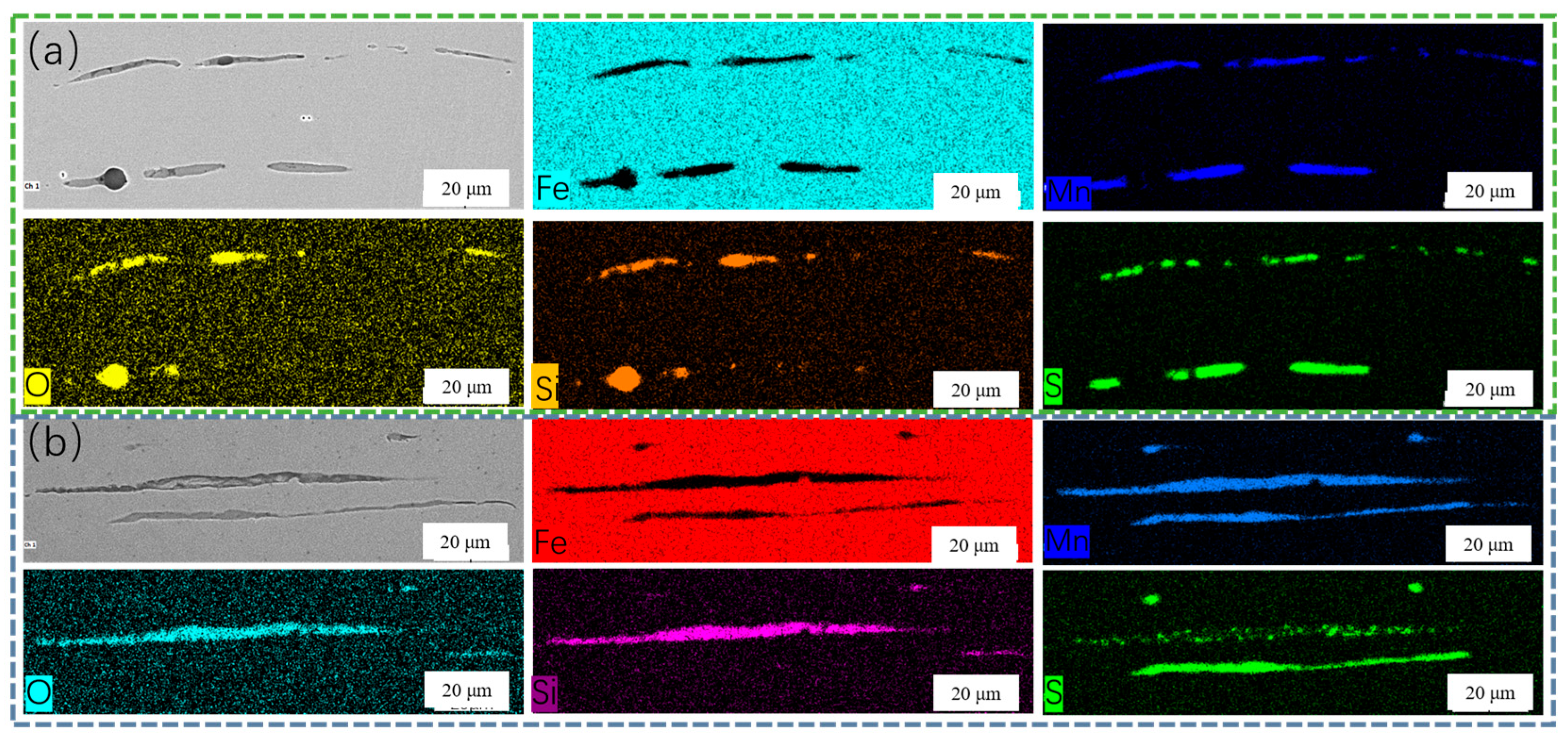
2. These silicates tend to remain trapped within the steel during the flotation removal process, thereby forming detrimental inclusions. Consequently, the early rails from Hanyang Iron Works exhibit a low concentration of Type B inclusions (aluminas) but a high content of Type C inclusions (silicates). Energy-dispersive X-ray spectroscopy (EDS) analysis of the rails produced by Hanyang Iron Works in 1899 and 1902 is illustrated in
Figure 8. The EDS results indicate that the early rails primarily contain complex inclusions such as MnS and MnS·SiO
2, whereas alumina inclusions were not detected.
Following the technical renovation of Hanyang Iron Works, Siemens-Martin open-hearth furnaces were employed for steelmaking, producing rails in which Category A and Category B inclusions predominated.
Figure 9, the energy-dispersive X-ray spectroscopy (EDS) analysis of the rails manufactured by Hanyang Iron Works in 1911, 1918, and 1921. The EDS results indicate that the inclusions within the rails are primarily composed of MnS and complex MnS·Al
2O
3 phases. The post-renovation increase in Category B inclusions and the near absence of Category C inclusions demonstrate the advancements in the deoxidation process of Siemens-Martin steelmaking. It can be inferred that aluminum deoxidation refining was adopted in the steelmaking process at Hanyang Iron Works after the renovation. Consequently, the inclusions in the Siemens-Martin steel after the upgrade were dominated by Category A (sulfides) and Category B (aluminas). The evolution of inclusion types in Hanyang rails reflects the progress in the early development of steelmaking technology in China.
The unique appearance of Type B (alumina) inclusions and composite
phases after 1909 directly marked a fundamental shift in the deoxidation practice. In the basic open-hearth process, metallic aluminum was introduced into the ladle as a potent deoxidizer, converting dissolved oxygen into highly stable, solid
clusters rather than the fluid silicate slag typical of the converter process. However, when benchmarked against modern standards such as GB/T 2585-2021 [
20] (in which the fine/heavy series of all inclusion types are strictly limited within 1.5), the historical Hanyang rails clearly exhibited a lower cleanliness. Their heavy series Type A and Type B inclusions reached a severe level of 3.5 (
Table 2). Compared with modern, highly refined clean steels, these high inclusion ratings constituted a major source of microstructural stress concentration, severely compromising the structural integrity of the material [
21].
Stress Concentration and Anisotropy: Elongated stringers (Acid Bessemer era) exhibit high aspect ratios (), acting as severe internal stress raisers () that trigger early matrix/inclusion decohesion and micro-delamination along the rolling direction. In contrast, spherical inclusions (Basic Open-Hearth era) maintain a low stress concentration factor (), suppressing premature cracking and allowing the steel matrix to reach its intrinsic yield strength and uniform strain capacity.
Fracture Path and Microvoid Nucleation: Coarse silicate droplets and aligned sulfide bands in early rails promote rapid microvoid coalescence along the inclusion stringers at low strain levels, leading to quasi-cleavage transgranular fracture with negligible necking. Conversely, fine globular inclusions act as stable sites for controlled void nucleation, delaying microvoid coalescence until high plastic strains and yielding a ductile dimple fracture surface with improved reduction in area ().
Strengthening mechanisms for steel materials primarily include solid solution strengthening, grain refinement, precipitation hardening, and strain hardening. As indicated in
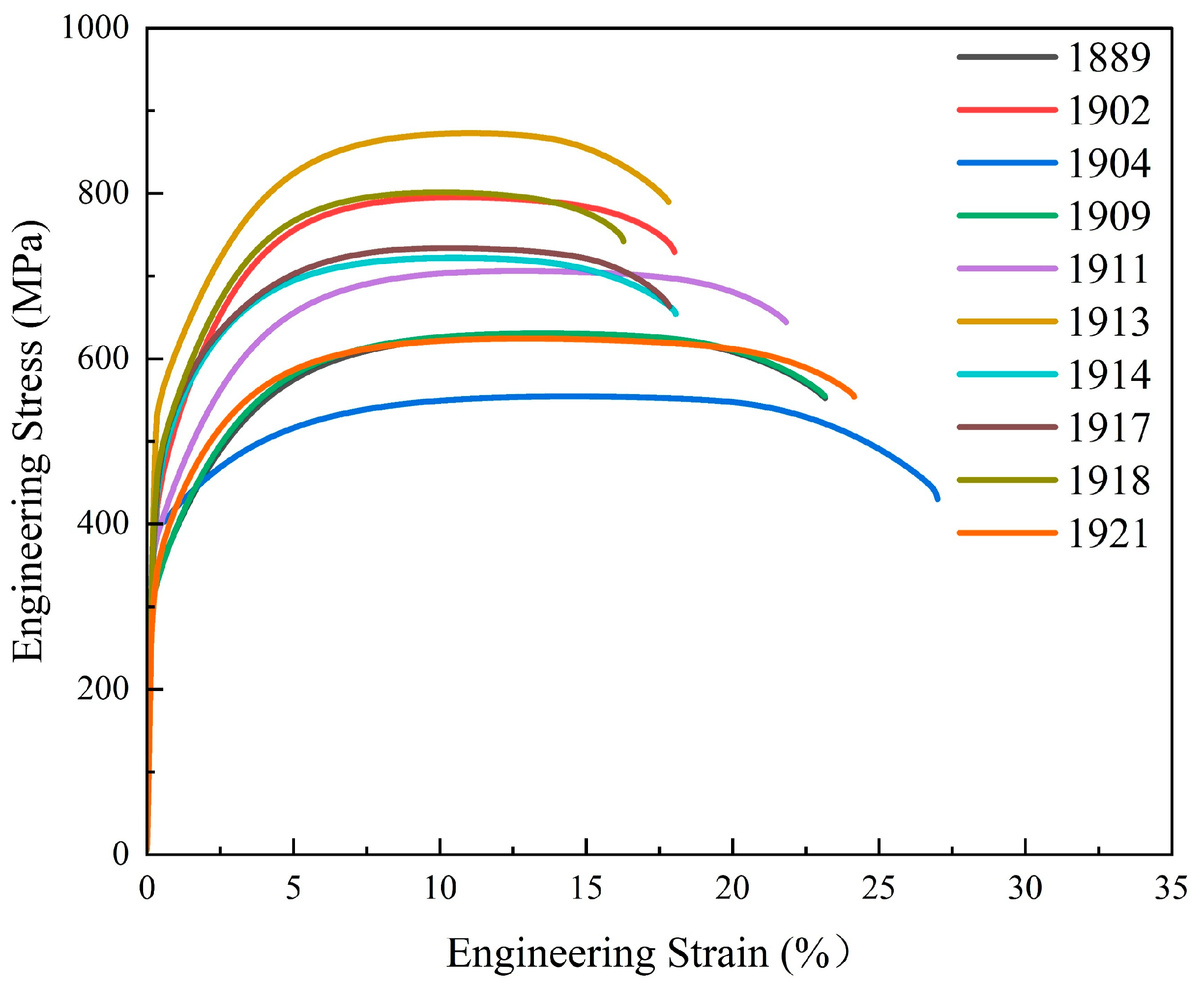
Table 3, the mechanical properties of rails produced before the renovation (1899–1904) were generally low, whereas those manufactured after the upgrade (1909–1921) were effectively enhanced. This transition was not determined by a single factor, but rather resulted from the synergy of chemical composition optimization, microstructural refinement, and inclusion purification. The core of this evolution was the transformation from high-phosphorus, low-carbon brittle ferritic steel before the renovation to toughened medium-carbon, phosphorus-controlled pearlitic-ferritic steel.
The evolution of mechanical properties across the historical rails directly reflects the quantitative shift in their microstructural constituents. Early rails (1899–1904) with low carbon contents possessed a soft ferrite-dominated matrix (), exhibiting low strength () but superior ductility. With the steelmaking transition after 1908, the increased carbon content promoted a heavily pearlitic matrix () bounded by thin intergranular ferrite networks. The fine lamellar spacing and dense cementite plates within the dominant pearlite colonies significantly enhanced dislocation barriers, elevating the ultimate tensile strength up to . Concurrently, the reduced volume of soft ferrite and restricted plastic flow along grain boundary networks led to a moderate decrease in elongation and reduction in area. This fundamental shift from a ductile ferrite-dominated to a strength-bearing pearlite-dominated constituent dictates the macro-mechanical performance trend of the historic Hanyang rails.
Prior to the renovation, the microstructure consisted of predominant ferrite and pearlite, whereas the post-renovation microstructure transitioned to a network ferrite-pearlite constituent with pearlite as the primary phase. In steel, the ferritic phase is characterized by softness and ductility, while the pearlite phase exhibits higher hardness and strength. When the microstructure is dominated by soft, ductile ferrite, the overall strength, hardness, and wear resistance of the rail are insufficient. Phosphorus is a highly deleterious element that undergoes intense solid solution in ferrite, significantly elevating the ductile-to-brittle transition temperature and making the rails prone to fracture at ambient temperatures. The abundance of Category C inclusions serves as “intrinsic cracks” within the rail, severely segmenting the continuity of the matrix. These factors represent the microstructural origins of the “brittleness and susceptibility to fracture” reported in historical literature regarding early Hanyang rails.
Following the renovation of Hanyang Iron Works, the mechanical properties of the rails reached the applicable standards for rail steel of that era. The tensile strength was increased to over 700 MPa, reaching the 800 MPa grade in some cases, accompanied by a significant elevation in hardness. Although there was a decline in plasticity and toughness indices, this is considered a typical phenomenon following an increase in strength. Both the absolute values and the balance of strength and toughness met the operational requirements for trains at that time.
The primary reasons for the performance enhancement of the rails after the completion of the technical renovation are as follows: (1) The increase in carbon content directly strengthened the matrix and led to a substantial rise in the volume fraction of pearlite within the microstructure. (2) With the implementation of the basic open-hearth furnace, phosphorus content was effectively controlled, allowing for strength enhancement via increased carbon addition. (3) The refinement of the deoxidation process led to an effective improvement in the characteristics of non-metallic inclusions within the rails. The aforementioned factors ultimately culminated in the improvement of the mechanical properties of the rails produced by Hanyang Iron Works.
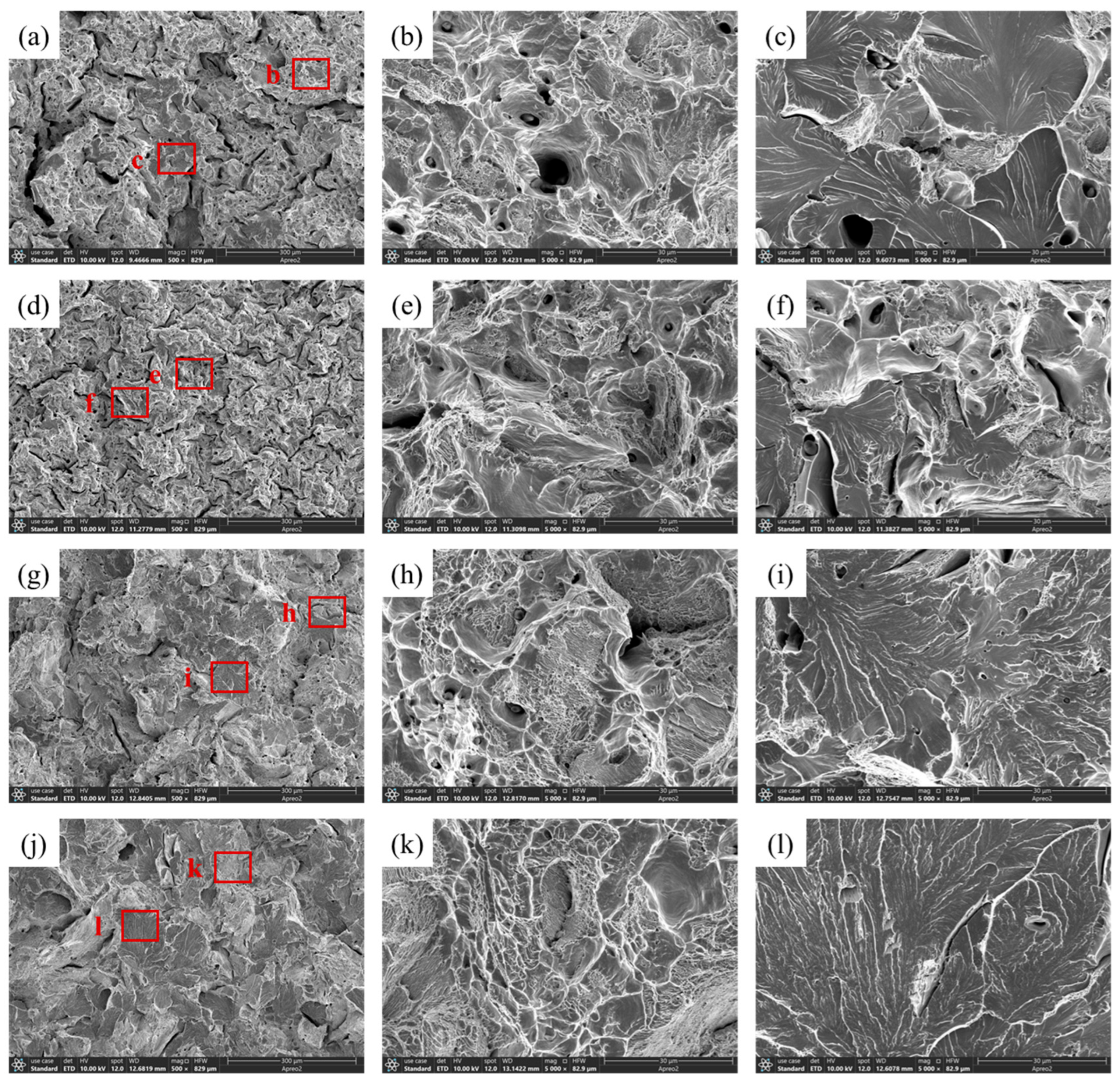
The typical fracture morphologies of the tensile specimens before (pre-1904) and after the technical renovation of Hanyang Iron Works are shown in
Figure 10. Numerous voids resulting from the removal of inclusions are visible within the fracture surfaces of the specimens. Observation of the tensile fracture surfaces reveals distinct river patterns, dimple rupture, and secondary cracking in all specimens. Furthermore, a small amount of intergranular “rock-candy” fracture morphology is observable in the specimens produced before the technical renovation. The cleavage fracture zones in the specimens from before the renovation (1899 and 1902) are less extensive than those in the post-renovation specimens. The dimples in the pre-renovation specimens are characterized as large and shallow, whereas those in the post-renovation specimens are small and shallow. Additionally, variations in the frequency of secondary cracks within the fracture surfaces are observed between the pre- and post-renovation periods. The number of secondary cracks in the pre-renovation specimens is significantly higher than that observed in the specimens produced after the renovation.
Quantitative statistical analysis of the high-magnification SEM fractographs (
Figure 10) further confirms the microstructural transition. For the pre-renovation rails (1899–1904), the fracture surfaces display non-uniform, large dimples with an average equivalent diameter of
(ranging from
to
), accompanied by coarse cleavage steps. In contrast, the post-renovation rails (1909–1921) feature significantly refined and homogeneous ductile dimples with a mean diameter of
(ranging from
to
) alongside shallow quasi-cleavage facets, reflecting improved strain localization resistance during tensile deformation.
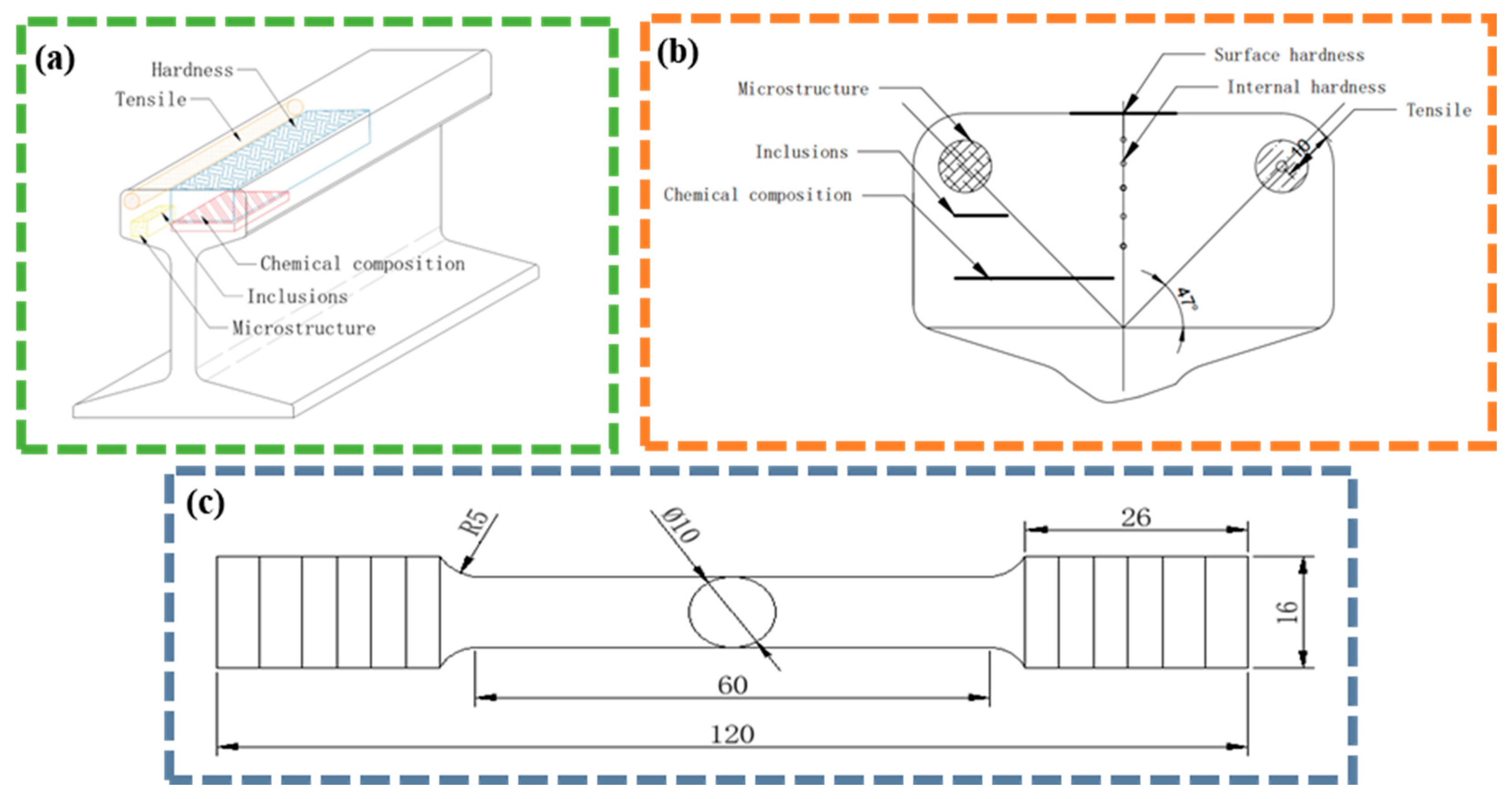
To correctly evaluate the mechanical property baseline, it is essential to decouple the interaction between the as-manufactured properties and long-term in-service degradation. Since these rails experienced decades of operational loading and environmental exposure prior to their recovery, cyclic fatigue damage and plastic flow inevitably occurred. However, as substantiated by the hardness distribution in
Table 3, these deformation artifacts and macroscopic fatigue defects were strictly confined to the wheel-rail contact surface. By utilizing core specimens rigorously extracted from the interior core of the rail head (
Figure 3), the original bulk mechanical properties (yield strength and microstructure) from the time of manufacturing were successfully isolated from the surface cyclic damage. The environmental corrosion crust was also completely mechanically removed during the bulk cutting process. The only systematic service artifact is the long-term continuous strain aging induced by historical residual interstitial nitrogen/carbon atoms, which may have led to a slight increase in the baseline yield strength (
) and a minor decrease in elongation over the past century—a common feature of classical metallurgical relics [
22].
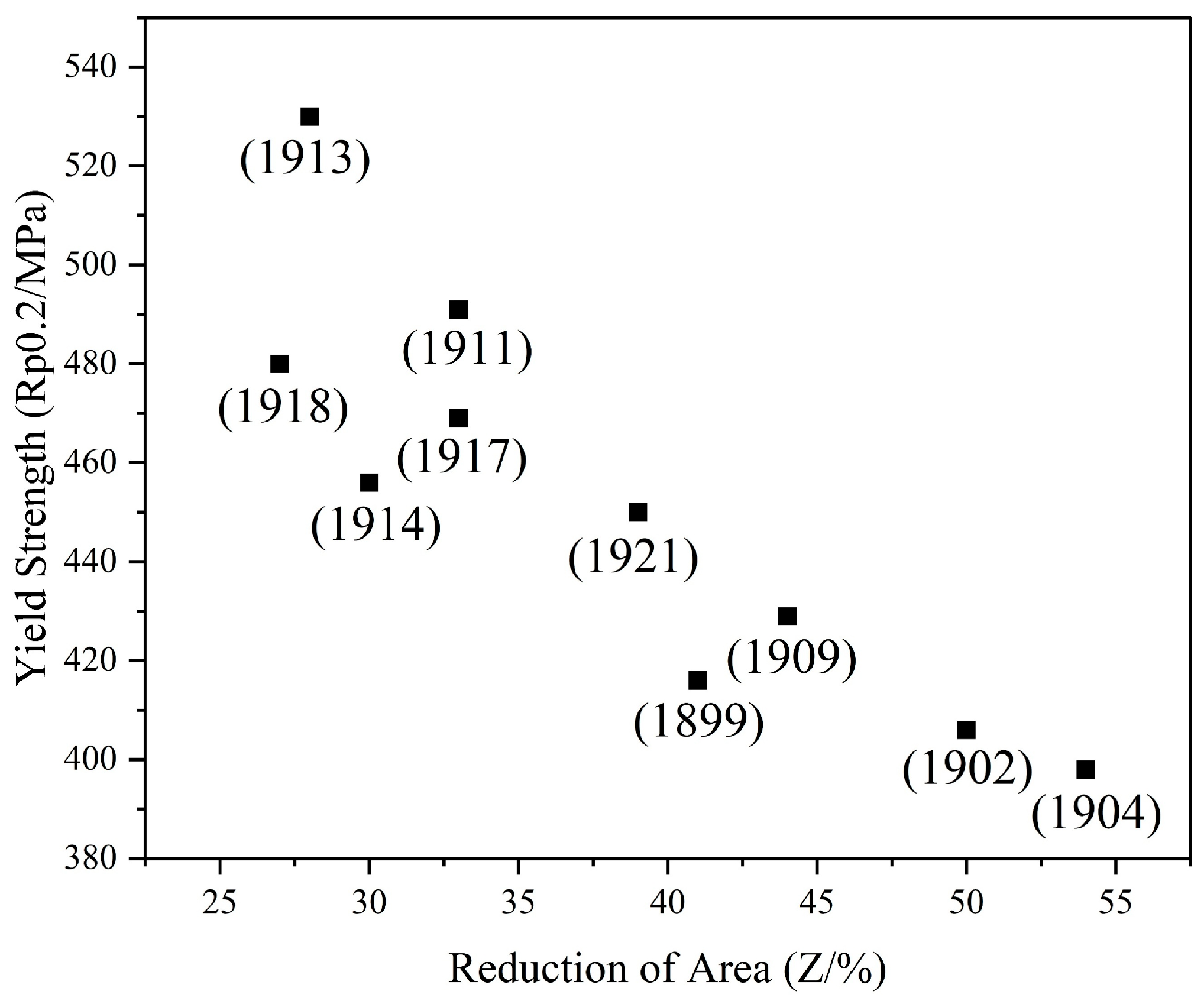
To visually demonstrate the macroscopic trajectory of mechanical property evolution across different production periods,
Figure 11 constructs an Ashby-type plot mapping the strength-ductility trade-off (yield strength versus reduction in area). This plot clearly distinguishes the early Thomas/acid converter rails—characterized by low strength (
< 420 MPa) but relatively high nominal reduction in area (
> 40%)—from the basic open-hearth pearlitic rail region, the latter shifting toward a high-strength, controlled-ductility regime (
up to 530 MPa, with
ranging between 25% and 45%). This graphical distribution intuitively illustrates how the smelting process upgrade effectively broke through the performance bottleneck induced by high-phosphorus embrittlement, establishing an excellent strength-ductility balance adapted to the heavier axle load demands of that era.
To comprehensively gauge the metallurgical status of historical Hanyang rails within the broader timeline of industrial rail steel development, a direct comparison with modern high-performance rail steels is indispensable. Modern standard rails, such as the contemporary pearlitic U71Mn steel grade used for spectrometer calibration in this study, typically possess highly refined chemical composition specifications (0.71–0.80 wt.% C, 0.15–0.58 wt.% Si, 0.70–1.20 wt.% Mn) and extremely low impurity limits (P ≤ 0.030 wt.%, S ≤ 0.025 wt.%). Owing to the ultra-high chemical cleanliness and highly optimized pearlite interlamellar spacing, modern rails can stably achieve a tensile strength exceeding 880–1180 MPa while maintaining high microstructural homogeneity.
By comparison, although the later basic open-hearth steel rails (1913–1918) from the Hanyang Iron Works successfully elevated the tensile strength to the 800 MPa level through a medium-carbon design, their hardness and strength remained inferior to those of modern counterparts [
23,
24]. The root cause of this gap lies in their higher residual phosphorus content (P approx. 0.04–0.10 wt.%) as well as the higher ratings of elongated Type A and Type B inclusions, which acted as microstructural stress concentration sources or localized crack initiation sites during tensile loading. This evolutionary trajectory profoundly reflects the major transition of rail manufacturing from the early structural steel metallurgy stage, which was limited by raw material impurities and primitive atmospheric deoxidation technology, to the modern clean steel metallurgy stage dominated by advanced secondary refining and grain boundary engineering [
25].
In conclusion, this work provides a unique and vital archaeological metallurgical contribution to the global history of iron and steel development. Although the historical metallurgical trajectories of the European and North American rail industries have been extensively documented, the systematic evaluation of ten representative Hanyang Iron Works rails (1899–1921) fills a major regional scientific gap in this field for early Chinese heavy industry. It offers quantitative scientific insights, revealing how western-imported steelmaking technologies adapted to local raw material limitations—specifically the high-phosphorus and copper-rich iron ores of the Daye Iron Mine. The precise documentation of the metallurgical leap from a brittle converter ferritic microstructure to a toughened open-hearth pearlitic-ferritic microstructure constitutes an excellent scientific benchmark, bridging industrial history with modern secondary refining concepts and providing valuable methodological references for the scientific conservation of global industrial heritage.