


Abstract
Chromo-magnesian ore materials constitute a complex resource base for producing both metallurgical and chemical products, yet existing research remains fragmented across beneficiation, smelting, chemical extraction, waste valorization, and refractory applications. This systematic review, conducted according to PRISMA 2020 using Scopus, Web of Science Core Collection, and SpringerLink, evaluates processing routes based on feedstock type and product orientation. Of 625 identified records, 19 studies met the final inclusion criteria. The reviewed technologies were classified into four groups: chemical processing, metallurgical reduction and smelting, integrated beneficiation–chemical–metallurgical routes, and refractory/materials production. Primary chromite ores and concentrates are predominantly used for ferrochrome and stainless-steel alloy production, whereas tailings, slimes, overburden, and serpentine-bearing materials are mainly processed into chromium oxide, magnesium compounds, and silica-rich products. Integrated routes show the greatest potential for low-grade and technogenic materials through multi-product recovery and improved resource efficiency. However, route selection depends on feedstock quality, mineralogy, target products, and process intensity. Major research gaps include limited comparative studies, insufficient mineralogy-driven process design, and inadequate techno-economic and environmental evaluation. Overall, future development should focus on integrated, feed-specific processing strategies that maximize resource utilization.
1. Introduction
1.1. Background
Chromo-magnesian ore materials represent a complex group of primary and secondary mineral resources associated with chromite-bearing spinel phases and magnesium-bearing silicate or oxide components. In industrial practice, these materials include chromite ores and concentrates, low-grade feeds, beneficiation tailings, slime tailings, and serpentine-bearing associated materials. Their importance is rooted in the fact that chromite is the only ore mineral from which metallic chromium and chromium compounds are obtained, and chromium remains essential for the production of stainless steel, ferroalloys, refractory materials, and chromium chemicals [1,2].
The technological significance of these materials extends beyond chromium alone. Depending on feed composition and process design, chromo-magnesian raw materials can be transformed into metallurgical products such as ferrochrome and stainless-steel master alloys, as well as chemical products such as chromium oxide, chromates, magnesium salts, and silica-rich materials. At the same time, some chromo-magnesian materials are suitable for refractory applications, particularly where Mg-bearing silicates and chromite occur together in thermally stable mineral systems [1,3].
However, the processing of these materials is complicated by their mineralogical and chemical heterogeneity. Chromite feedstocks commonly contain variable proportions of Cr2O3, FeO, MgO, Al2O3, and silicate gangue, while chromium and magnesium may be distributed between spinel, serpentine, olivine, pyroxene, and other associated phases. This affects liberation behavior, beneficiation efficiency, leachability, reducibility, slag chemistry, and final product quality. Mineralogical characterization studies have therefore emphasized that processing performance cannot be interpreted from bulk chemistry alone, because gangue identity, textural association, and mineral liberation strongly influence beneficiation and downstream route selection [1,2].
Interest in chromo-magnesian processing has increased further because the industry is increasingly required to use low-grade ores, fine concentrates, and technogenic wastes, rather than only high-grade lump ore. Recent reviews emphasize that beneficiation and downstream processing must now address not only recovery of chromium values, but also the utilization of tailings, slimes, and overburden, which may contain recoverable magnesium- and silica-bearing components. This shift is closely linked to broader priorities of resource efficiency, waste minimization, and sustainable metallurgy.
As a result, a broad spectrum of processing routes has been explored, including beneficiation, smelting and reduction, oxidative roasting, hydrometallurgical leaching, integrated beneficiation–chemical flowsheets, and refractory-oriented valorization. Yet these routes differ substantially in feed requirements, process intensity, and product orientation. This makes chromo-magnesian ore materials a particularly important case for comparative review of how raw material type, technological route, and final product class are linked [1,4].
1.2. Problem Statement
Despite the broad industrial importance of chromite-bearing raw materials, the existing literature on their processing remains fragmented and unevenly structured. Most published studies focus on a single processing route, a single feed type, or a single target product, rather than comparing alternative technological pathways on a common basis. As a result, current knowledge is rich in individual case studies but relatively weak in terms of comparative understanding of how different chromo-magnesian raw materials should be processed depending on their composition, mineralogical complexity, and intended product class.
This problem is particularly important for chromo-magnesian systems because these materials are not technologically uniform. Chromite ores, concentrates, tailings, slime tailings, and associated serpentine-bearing materials differ substantially in chromium grade, magnesium content, silicate mineralogy, impurity distribution, and physical texture. At the same time, they may be directed toward very different outputs, including ferroalloys, chromium oxide, magnesium salts, silica-rich products, and refractory materials [1]. However, the literature rarely treats these pathways within a single analytical framework. Instead, metallurgical, chemical, and waste-valorization studies are often published as separate technical domains, which makes it difficult to determine how route selection should change when the feedstock type or the desired product changes.
A further problem is that many studies report promising technological results without fully addressing the broader criteria needed for route selection. Recovery, grade, or extraction efficiency are commonly reported, but fewer studies provide a consistent basis for comparing process complexity, feed requirements, co-product potential, or the implications of waste generation and secondary residues. Abdulvaliyev et al. similarly note that traditional chromite processing is still largely centered on chromium alone, while significant associated components and beneficiation wastes remain underutilized. This means that potentially valuable magnesium- and silica-bearing fractions are often treated as peripheral, even though they may strongly influence the technological and economic logic of processing.
Therefore, the central problem addressed in this review is the absence of a systematic, product-oriented comparison of technological routes for processing chromo-magnesian ore materials. In other words, the field lacks a clear synthesis showing how different categories of raw materials are linked to different processing routes and final products, and which route families appear most suitable under different technological conditions. Addressing this gap is necessary not only for academic clarity, but also for more rational route selection in future research and industrial practice.
1.3. Rationale for the Review
A dedicated review is warranted because the literature on chromite and chromo-magnesian processing has expanded across beneficiation, smelting, chemical extraction, waste reprocessing, and refractory use, but these strands are usually discussed separately rather than within one comparative framework. Recent review literature emphasizes both the diversity of beneficiation and processing approaches and the continuing technical challenges associated with low-grade ores, fines, and tailings [4,5].
A second reason for this review is that conventional chromite processing has historically been centered on chromium recovery alone, whereas associated components and secondary resources remain insufficiently integrated into route evaluation. Abdulvaliyev et al. specifically note that traditional processing still prioritizes ferrochrome and chromium oxides, while magnesium-bearing and other valuable associated fractions often remain in tailings and dumps, despite growing interest in comprehensive and sustainable processing [1]. This creates a need for a review that does not treat chromite only as a chromium source, but instead examines how different feedstocks may be directed toward different product classes.
A third rationale is the increasing importance of low-grade raw materials and technogenic resources. Earlier and recent reviews alike highlight persistent problems such as tailing losses, accumulation of sub-grade fines, unrecoverable ultrafine particles, and the need to recover value from stockpiled tailings and complex ores [5]. These issues are especially relevant for chromo-magnesian systems, where feedstocks may contain recoverable chromium, magnesium, and silica-bearing fractions but require different technological strategies depending on mineralogy and target product.
Accordingly, the rationale for the present study is to provide a systematic, product-oriented comparison of technological routes for processing chromo-magnesian ore materials. Rather than summarizing isolated unit operations, this review links raw material type, route family, and final output in order to clarify which routes are most closely associated with metallurgical products, which are more suitable for chemical products, and where integrated processing appears most promising. Such a synthesis is needed to support clearer route selection, more consistent interpretation of published results, and better identification of future research priorities.
1.4. Aim of the Review
The aim of this review is to provide a systematic and product-oriented comparison of technological routes for processing chromo-magnesian ore materials into chemical and metallurgical products. The review focuses on how different categories of raw materials—including primary chromite ores and concentrates, low-grade feeds, tailings, slime tailings, and associated magnesium-bearing materials—are linked to different processing strategies and final outputs.
More specifically, the review seeks to:
- (i)
- identify the major technological route categories reported in the recent literature;
- (ii)
- compare these routes in relation to raw material type, process logic, and target product class;
- (iii)
- distinguish between pathways oriented toward metallurgical products and those oriented toward chemical products; and
- (iv)
- determine the principal research gaps that limit more integrated, efficient, and sustainable utilization of chromo-magnesian resources.
By doing so, the review aims to establish a clearer framework for understanding current developments in the field and for guiding future research on the selection and optimization of processing routes for chromo-magnesian raw materials.
1.5. Review Questions
To achieve the stated aim, this review addresses the following three research questions, formulated as analytical propositions: (RQ1) Which processing route categories are applied to which chromo-magnesian feedstock types? (RQ2) What is the evidence base for the comparative performance of these routes in terms of recovery, process complexity, and technological maturity? (RQ3) Which route families demonstrate the greatest potential for low-grade and technogenic feedstocks, and what are the main barriers to their industrial implementation?
2. Kazakhstan in the Global Chromite Industry: Context and Challenges
2.1. Global Chromite Industry: Production and Reserves
Global chromite production amounts to approximately 35–40 million tonnes per year, with the five largest producing countries—South Africa, Kazakhstan, India, Turkey, and Zimbabwe—accounting for more than 85% of world output. South Africa holds the largest share of global ferrochrome production, while Kazakhstan ranks among the top three chromite ore producers worldwide. Global chromite reserves are estimated at 560 million metric tons, of which Kazakhstan holds approximately 41%. Chromium is classified as a critical raw material by the European Union and the United States due to its strategic importance in stainless steel, specialty alloys, refractory materials, and chemical applications. The concentration of chromite resources and ferrochrome production in a small number of countries creates supply chain vulnerabilities that have increased interest in the processing of low-grade ores, beneficiation wastes, and technogenic materials in multiple producing regions.
2.2. Kazakhstan’s Chromite Industry: Industrial Context
Kazakhstan occupies a strategically important position in the global chromite sector. As of 2023, the country holds the world’s largest chromite reserves, estimated at approximately 230 million metric tons, representing roughly 41% of total global reserves of 560 million metric tons [6]. In terms of production volume, Kazakhstan ranked third globally in 2024, extracting 6.5 million metric tons of chromite ore, corresponding to approximately 15% of world output [7].
The chromite industry is highly concentrated within a single vertically integrated entity: JSC TNC Kazchrome, a subsidiary of Eurasian Resources Group (ERG). The company operates four main divisions: the Donskoy Ore Mining and Processing Plant (Donskoy GOK) in Khromtau (Aktobe region), the Aksu Ferroalloys Plant (Pavlodar region), the Aktobe Ferroalloys Plant, and the Kazmarganets mining enterprise [8]. Kazchrome is recognised as the world’s largest producer of high-carbon ferrochrome by chrome content, with a total resource base exceeding 200 million metric tons.
The Donskoy GOK is the centrepiece of this value chain. Founded in 1938, it operates the world’s second-largest confirmed chromium ore deposit, with proven and estimated reserves of 298.1 million metric tons grading 51.7% Cr2O3 [9]. In 2024, the plant set a production record of 6 million tons of ore, supplying the ferroalloy smelters in Aksu and Aktobe, which together produced 1.864 million tons of ferroalloys [10]. The same year saw the commissioning of the new “Bolashak” underground mine with a design capacity of 7.5 million tons per year, extracting ore from depths of 800 to 1200 m—one of the deepest chromite mining operations in the world [10].
Kazakhstan’s ferrochrome output positions it among the world’s leading exporters. In 2024, the three largest ferrochrome producers—China (5.2 million tons), South Africa (3.6 million tons), and Kazakhstan (1.5 million tons)—collectively accounted for 77% of global ferrochrome output [11]. This concentration underscores Kazakhstan’s critical role in global supply chains for stainless steel and specialty alloys.
2.3. Waste Accumulation and Environmental Burden
Despite this industrial significance, chromite ore processing in Kazakhstan generates substantial volumes of solid waste that represent both an environmental liability and an underutilised secondary resource. At Donskoy GOK alone, approximately 900,000 tons of sludge waste are generated annually during the crushing and grinding of Kempirsai chromite ores [1]. To date, the total volume of accumulated chromite beneficiation tailings at the site exceeds 14.5 million tons, with chromium oxide (Cr2O3) contents reaching up to 35 wt.% [1]. The chemical composition of these tailings is complex: beyond chromite (49 wt.%), the dominant mineral phases include chrysotile (36 wt.%) and clinochlore (14.8 wt.%), alongside significant quantities of magnesium oxide (MgO ~35 wt.%) and silicon dioxide (SiO2 ~32 wt.%), and trace concentrations of platinum-group metals [1]. The broader mining sector context is equally challenging: Kazakhstan’s mining industry has accumulated between 55 and 60 billion tons of industrial waste across all commodity types [12]. In response, the government has introduced policy incentives to promote recycling of man-made mineral formations, including proposals to reduce mineral extraction taxes for enterprises that process accumulated waste stockpiles.
2.4. Industrial Response: Tailings Reprocessing Initiatives
Recent years have seen significant investment in tailings reprocessing technology at Donskoy GOK, driven by both regulatory pressure and economic incentives. In 2023, Kazchrome commissioned the first stage of the ERG Green beneficiation plant—a gravity separation facility capable of producing chromite concentrate with a Cr2O3 content of at least 48.5 wt.%, conforming to requirements for concentrate used in ferrochrome smelting [10]. In 2025, ERG invested over US$44 million in a second stage—an industrial-scale flotation unit targeting ultrafine particle fractions that gravity separation cannot recover [13]. This technology represents the world’s first application of direct flotation for chrome recovery from tailings; flotation is well-established for non-ferrous and precious metals but had not previously been applied at industrial scale in the chromium sector. Trial results demonstrated Cr2O3 recovery rates exceeding 55% from the ultrafine fraction [14]. The combined facility has an annual processing capacity of 1.7 million tons and is designed to process the full 14.5-million-ton legacy stockpile [10].
2.5. Scientific Research Landscape in Kazakhstan
Kazakhstan’s chromite research community has grown considerably over the past decade, producing contributions directly relevant to the processing routes reviewed in this study. Work at the Institute of Metallurgy and Ore Beneficiation (Almaty) has focused on hydrometallurgical routes for chromium and associated metal extraction from low-grade and waste materials [1,15,16]. Research has also addressed the recovery of magnesium compounds from serpentinite-bearing chromite overburden—a by-product stream with commercial potential as a precursor for refractory magnesia and magnesium salts [17]. Studies on beneficiation of chromite slurry tailings at Donskoy GOK have investigated pelletisation and briquetting routes to upgrade sub-grade concentrates into feedstock suitable for electric arc furnace smelting [16,18,19]. Recent work has also addressed thermochemical–hydrometallurgical integrated routes targeting simultaneous chromium extraction and platinum-group metal enrichment from Donskoy GOK tailings [1]. Taken together, these developments establish Kazakhstan as both a major industrial actor and an active research participant in the global effort to improve the sustainability and resource efficiency of chromite ore processing. The processing challenges identified at Donskoy GOK—large-volume waste stockpiles, complex mineralogy, and the need to extract value from multiple streams simultaneously—are representative of the broader challenges addressed in this systematic review.
3. Materials and Methods
3.1. Review Design
This study was conducted as a systematic review of published literature on the processing of chromo-magnesian ore materials into chemical and metallurgical products. The review was performed in accordance with the PRISMA 2020 framework for study identification, screening, eligibility assessment, and final inclusion. No review protocol was registered.
3.2. Information Sources and Search Strategy
The primary systematic literature search was performed on 29 March 2026 in two peer-reviewed bibliographic databases: Scopus and Web of Science Core Collection. ScienceDirect was added as a third primary source to broaden coverage of engineering and materials science literature. SpringerLink was used as a supplementary source for background literature and book chapters only and was not included in the primary systematic search, as it is a publisher platform rather than a comprehensive bibliographic database. This reclassification ensures methodological compliance with PRISMA 2020 requirements. The search was limited to publications from 2015 to 2026. The year 2015 was selected as the starting point because it follows the publication of the revised PRISMA statement and coincides with increased research activity on low-grade and technogenic chromite processing. Studies published before 2015 are cited in this review as background literature only and were not included in the systematic evidence base.
The search strategy was adapted to the syntax requirements of each database. The full search strings and applied filters are presented in Table 1.
Table 1.
Search strategy used for literature retrieval.
In addition to database searching, backward reference checking, manual searching, and Google Scholar searching were performed to improve search sensitivity and support identification of potentially relevant studies.
3.3. Eligibility Criteria
Studies were included if they met the following criteria:
- (i)
- focused on chromo-magnesian ore materials, chromite-related raw materials, or closely related materials such as chromite concentrates, tailings, slime tailings, overburden, or serpentine-bearing associated materials;
- (ii)
- reported a direct product-oriented technological route;
- (iii)
- described the production of chemical products, metallurgical products, upgraded concentrates, or refractory/material products;
- (iv)
- were published in English between 2015 and 2026; and
- (v)
- were indexed as articles or review publications.
Studies were excluded if they:
- (i)
- focused only on geological description, deposit characterization, or mineral occurrence without technological relevance;
- (ii)
- addressed only mechanistic, thermodynamic, or pretreatment-related aspects without a direct product-oriented route;
- (iii)
- dealt with materials outside the defined review scope; or
- (iv)
- did not provide sufficient information for comparative synthesis.
3.4. Study Selection
All records retrieved from the database searches were exported to Zotero, where duplicate records were identified and removed. The de-duplicated records were then transferred to Microsoft Excel for screening and classification (Figure 1).
Figure 1.
PRISMA flow diagram.
The study selection process was performed by two reviewers. First, titles and abstracts were screened against the predefined eligibility criteria. Records that were clearly outside the review scope were excluded. Second, the remaining reports were sought for retrieval and assessed in full text for final eligibility.
3.5. Data Extraction
Data from the included studies were extracted using a structured Excel-based form. The extracted variables included:
- (i)
- author(s) and year of publication;
- (ii)
- raw material or feedstock type;
- (iii)
- technological route category;
- (iv)
- key process conditions;
- (v)
- main product(s);
- (vi)
- key result(s);
- (vii)
- reported advantages; and
- (viii)
- reported limitations.
These extracted data were used for the descriptive comparison of included studies, the route-grouped synthesis, and the product-oriented mapping presented in the Section 4.
3.6. Data Synthesis
A narrative and comparative synthesis approach was adopted because the included studies were heterogeneous in terms of raw materials, technological stages, product classes, and reported outcomes. Therefore, quantitative meta-analysis was not considered appropriate.
The final synthesis was structured in three complementary ways:
- (i)
- by general study characteristics;
- (ii)
- by classification of technological routes into four categories, namely chemical processing routes, metallurgical reduction and smelting routes, integrated beneficiation-chemical-metallurgical routes, and refractory/materials production routes; and
- (iii)
- by product-oriented mapping from raw material type to metallurgical and chemical outputs.
3.7. Quality Appraisal
A formal risk-of-bias tool (such as ROBIS or AMSTAR-2) was not applied, as these instruments are designed for intervention-type clinical or social science reviews and are not directly applicable to technology-focused process literature. Instead, a simplified quality appraisal framework was developed and applied to each of the 19 included studies, evaluating four criteria: (1) Completeness of process description—whether feedstock characterization, process parameters, and product quality were sufficiently reported; (2) Experimental scale—whether the study was conducted at laboratory bench scale, pilot scale, or industrial/semi-industrial scale (used to assign TRL estimates in the comparative summary table in Section 4.5; (3) Degree of quantitative reporting—whether recovery rates, grade, yield, or energy consumption were reported numerically rather than qualitatively; (4) Methodological transparency—whether sufficient information was provided to assess reproducibility and interpret the results independently. The results of this appraisal informed the TRL estimates and the quality notes included in Section 4.5 (Comparative summary with TRL assessment). Studies scoring weakly on criteria (1) and (3) were noted as having limited comparability in the synthesis.
4. Results
4.1. Study Selection Results
The database search identified a total of 625 records, including 233 from Scopus, 134 from Web of Science Core Collection, and 258 from SpringerLink. After removal of 134 duplicate records, 491 records remained for title and abstract screening. At this stage, 446 records were excluded as irrelevant to the scope of the review.
The remaining 45 reports were sought for full-text retrieval. Of these, 12 reports could not be retrieved, and 33 full-text articles were assessed for eligibility. Following full-text evaluation, 14 articles were excluded because they did not meet the final inclusion criteria, mainly due to insufficient relevance to chromo-magnesian/chromite processing, the absence of a direct product-oriented technological route, or insufficient data for comparative synthesis.
4.2. General Characteristics of Included Studies
The 19 studies included in the final synthesis demonstrate that research on the processing of chromo-magnesian ore materials is highly heterogeneous in terms of feedstock type, technological objective, and final product. The included papers were published between 2017 and 2026 and covered a wide range of raw materials, including primary chromite ores and concentrates, low-grade chromite feeds, chrome slurry or slime tailings, beneficiation tailings, and serpentine-bearing overburden or associated magnesium-rich materials. For example, the reviewed studies addressed direct processing of chromite or chromite concentrates into chromium oxide or metallurgical alloys [20,21], as well as the valorization of tailings and overburden into upgraded concentrates, magnesium-bearing chemicals, silica-rich products, fertilizers, and refractory raw materials [3,22,23,24]. The included studies varied in feedstock type, technological objective, and product orientation, as shown in Table 2.
Table 2.
Characteristics of studies included in the systematic review.
In terms of technological orientation, the included studies could be grouped into four broad categories: chemical processing routes, metallurgical reduction and smelting routes, integrated beneficiation–chemical–metallurgical routes, and refractory/materials production routes. Chemical routes were mainly represented by leaching, oxidative roasting, solution purification, precipitation, evaporation, and related recovery steps aimed at obtaining chromium oxide, chromate intermediates, magnesium salts, carnallite, or amorphous silica [21,23,31]. Metallurgical routes focused on direct reduction, carbothermic or microwave-assisted reduction, briquetted feed utilization, and ferrochrome smelting, with final products such as high-carbon ferrochrome, low-carbon ferrochromium, ferrochromium alloy, or stainless steel master alloy [20,29,33]. Integrated routes combined upgrading or beneficiation with subsequent chemical or metallurgical conversion and were particularly common in studies dealing with low-grade materials and technogenic wastes [15,22,26]. Refractory-oriented studies, although fewer in number, showed that chromo-magnesian raw materials can also be directed toward high-temperature ceramic and refractory applications rather than metal extraction alone [3,19].
Overall, the included literature indicates that the field is not dominated by a single universal processing pathway. Instead, the characteristics of the studies suggest a product-oriented and feed-specific pattern of development, in which the choice of route is shaped by the mineralogical and chemical properties of the starting material, the desired product class, and the need to balance recovery efficiency with process complexity. This diversity of study types provided the basis for the comparative route classification and synthesis presented in the following sections.
4.3. Classification of Technological Routes
The included studies were classified into four major technological route categories according to their dominant processing logic and final product orientation: (1) chemical processing routes, (2) metallurgical reduction and smelting routes, (3) integrated beneficiation-chemical-metallurgical routes, and (4) refractory/materials production routes. This classification was adopted to move beyond isolated process descriptions and provide a comparative framework for understanding how different raw-material types are transformed into either chemical products or metallurgical products, and in some cases into refractory materials. Based on their dominant processing logic and product orientation, the included studies were grouped into four major technological route categories, as illustrated in Figure 2.
Figure 2.
Classification of technological routes.
The first category, chemical processing routes, includes studies in which the main objective is the selective conversion of chromium- and/or magnesium-bearing phases into chemical products through aqueous or oxidative processing. These routes are typically based on acid leaching, oxidative roasting, solution purification, precipitation, evaporation, and related separation steps. Within the reviewed literature, such routes led to products including chromium oxide, chromate intermediates, magnesium salts, magnesium carbonates/hydroxides, synthetic carnallite, and amorphous silica [21,23,24,31]. These studies were especially common for tailings, overburden, and serpentine-bearing associated materials, where selective recovery of magnesium and silica was often as important as chromium-related recovery.
The second category, metallurgical reduction and smelting routes, comprises studies that directly target alloy production through high-temperature reduction and smelting. These routes include carbothermic reduction, direct reduction, microwave-assisted reduction, pre-reduction, and smelting with lumped, pelletized, or briquetted feeds. Their principal outputs are high-carbon ferrochrome, low-carbon ferrochromium, ferrochromium alloy, and closely related metallurgical intermediates [18,29,33]. These routes are most strongly associated with primary chromite ores and concentrates, although some studies also demonstrated the use of upgraded or pretreated lower-grade feeds. Compared with chemical routes, metallurgical pathways are generally more direct in terms of product generation but also more dependent on thermal intensity and feed quality.
The third category, integrated beneficiation-chemical-metallurgical routes, includes studies that combine two or more processing stages in order to improve overall recovery, selectivity, or resource utilization. These routes are particularly important for low-grade materials, slurry tailings, and other technogenic resources, where a single-stage process is often insufficient. Typical combinations observed in the included literature were activation plus leaching, chemical treatment followed by gravity concentration, upgrading followed by agglomeration, and sintering or blast-furnace conversion of beneficiated feeds [15,20,22,26]. The products of such routes were correspondingly diverse and included upgraded chromite concentrates, Cr2O3, Fe–Cr alloy, stainless steel master alloy, and fertilizer-related by-products. Integrated routes were the most flexible category in the reviewed literature and also the most suitable for multi-product valorization.
The fourth category, refractory/materials production routes, differs from the other three in that the main objective is not metal extraction or chemical separation, but the transformation of chromo-magnesian raw materials into refractory or high-temperature ceramic products. These studies typically involve concentrate preparation, thermal treatment, pressing, firing, and microstructural stabilization steps, producing refractory raw materials or chromite-based refractory products [3,19]. Although fewer in number, these routes are important because they demonstrate that direct utilization of chromo-magnesian materials in refractory systems may, in some cases, be more practical than full chemical or metallurgical extraction.
Taken together, this four-part classification shows that technological route selection is strongly influenced by the type and quality of raw material, the target product class, and the degree of process integration required. Chemical routes tend to favor selectivity and value recovery from complex wastes, metallurgical routes prioritize direct alloy production, integrated routes maximize flexibility and resource efficiency, and refractory/materials routes provide a non-extractive alternative for suitable feeds. This classification therefore provides the conceptual basis for the comparative analysis presented in the next subsection. The key features of these four route families, including typical feedstocks, technological steps, products, strengths, and constraints, are synthesized in Table 3.
Table 3.
Route-grouped synthesis of included studies.
4.4. Product-Oriented Synthesis
A product-oriented view of the included literature shows that the processing of chromo-magnesian ore materials is organized around two principal output families: metallurgical products and chemical products. Rather than following a single linear technological pathway, the reviewed studies indicate that route selection is primarily determined by the interaction between raw material type and target product class. Primary chromite ores and concentrates were used most frequently for metallurgical outputs such as high-carbon ferrochrome, low-carbon ferrochromium, ferrochromium alloy, and stainless steel master alloy, whereas tailings, overburden, and serpentine-bearing associated materials were more often directed toward chemical products such as chromium oxide, chromate intermediates, magnesium salts, magnesium carbonates/hydroxides, synthetic carnallite, and amorphous silica [18,20,21,23,24,33].
For metallurgical products, the reviewed studies show that primary chromite feeds and upgraded chromite-bearing materials remain the dominant raw materials. Direct smelting and reduction routes produced ferrochrome-type products from chromite ore, pre-reduced feeds, briquetted charge materials, or low-grade concentrates after appropriate pretreatment. For example, industrial and pilot-scale studies demonstrated production of high-carbon ferrochrome from pre-reduced chromite raw material and chrome-ore briquettes, as well as production of stainless steel master alloy from low-grade chromite concentrate through an integrated agglomeration–smelting route [18,20,33,34,35]. Alternative metallurgical approaches, including microwave carbothermic reduction and lower-carbon direct reduction concepts, further indicate that metallurgical product generation is evolving beyond conventional smelting alone [27,29]. Overall, the metallurgical branch of the literature is strongly oriented toward alloy production, high-temperature transformation, and feed preparation strategies that improve furnace performance and chromium recovery. A product-oriented mapping of the included studies, linking raw material types to metallurgical and chemical outputs, is shown in Figure 3.
Figure 3.
Product-oriented route map. Shading key: darker shading = higher technological maturity; lighter shading = lower technological maturity.
For chemical products, the literature reveals a different raw-material logic. Here, tailings, overburden, slime wastes, and serpentine-bearing chromite-associated materials are especially important because they contain recoverable magnesium, silica, and chromium-bearing phases that may be more efficiently valorized through selective chemical processing than through direct smelting. Several studies demonstrated conversion of such materials into magnesium-bearing solutions or salts, magnesium carbonates/hydroxides, fertilizer products, carnallite, microsilica, and amorphous silica [22,23,24,32]. At the same time, chromite itself was converted into chromium oxide or chromate intermediates through oxidative roasting and acid-based processing routes [21,31]. This indicates that the chemical branch of the field is not limited to chromium salt chemistry alone, but increasingly includes co-recovery of magnesium- and silica-rich products from chromite-related wastes and low-value by-products.
A third pattern emerging from the product-oriented synthesis is the importance of integrated multi-product routes. Some of the most technologically interesting studies did not aim at only one end product, but instead designed flowsheets capable of generating both metallurgical and chemical outputs or multiple saleable by-products from the same feed. Examples include routes yielding Cr2O3 together with Fe–Cr alloy, waste-processing routes generating chromite concentrate, fertilizer-grade salts, and forsterite, and integrated low-grade concentrate routes leading to stainless steel master alloy after agglomeration and smelting [20,22,26]. These studies suggest that integrated processing is especially promising for low-grade and technogenic raw materials, where single-product pathways may fail to capture the full value of chromium-, magnesium-, and silica-bearing fractions.
In contrast, refractory/materials routes form a smaller but distinct product branch in the literature. Instead of targeting metallic chromium or dissolved chemical species, these studies direct chromo-magnesian raw materials toward refractory raw materials and chromite-based refractory products [3,19]. From a product-oriented perspective, this route family is important because it provides a technically meaningful alternative for feedstocks whose direct use in refractory systems may be more rational than full extractive processing.
Taken together, the product-oriented synthesis demonstrates that raw material type strongly conditions product strategy. Primary ores and concentrates are most often associated with metallurgical products, tailings and overburden are more frequently associated with chemical valorization, and integrated routes are particularly suitable where multiple valuable fractions must be recovered simultaneously. This mapping also shows that no single product pathway dominates across all feedstocks; instead, the most appropriate route depends on the balance between feed quality, desired product value, selectivity requirements, and process complexity.
4.5. Research Gaps
The reviewed literature shows clear progress in the development of technological routes for converting chromo-magnesian ore materials into chemical, metallurgical, and refractory products. However, several recurring gaps remain evident across the included studies and limit the comparability, industrial transferability, and strategic interpretation of the field.
A first major gap is the lack of direct comparison between technological routes using the same raw material. Most studies evaluate a single route on a single ore, tailing, or overburden sample, which makes it difficult to determine whether differences in outcome are caused by the route itself or by differences in feed composition and mineralogy. This is especially important for chromo-magnesian materials, where phase associations, impurity levels, and Mg/Cr/Fe distribution vary substantially between deposits and wastes. As a result, the current literature provides many promising individual process options, but relatively few robust criteria for comparative route selection.
A second recurring limitation is the insufficient integration of mineralogical characterization into process design. Although chemical composition is usually reported, the role of mineral texture, spinel chemistry, gangue distribution, and phase intergrowth is often underdeveloped in the interpretation of process performance. Yet the reviewed studies suggest that these factors strongly influence beneficiation efficiency, roasting behavior, leachability, reduction kinetics, and product quality. Without a more mineralogy-driven framework, route selection remains largely empirical and deposit-specific rather than predictive and transferable.
A third gap concerns scale and industrial applicability. A substantial part of the literature remains at the laboratory or proof-of-concept level. Even when good extraction, recovery, or product-quality results are reported, fewer studies extend their findings to pilot-scale validation, process integration, or long-term operational stability. This weakens the practical relevance of many promising routes, particularly for multi-stage or waste-valorization processes that may behave differently under industrial throughput, variable feed composition, or continuous operating conditions.
Another important gap is the limited and inconsistent reporting of techno-economic and environmental indicators. Recovery, grade, and extraction efficiency are frequently emphasized, but energy demand, reagent consumption, waste generation, residue stability, water use, and economic feasibility are much less systematically addressed. This is a major weakness, because some of the most technically effective routes may also be the most complex, reagent-intensive, or difficult to scale. Similarly, the environmental implications of chromium chemistry, secondary sulfate or chloride streams, and residual solid wastes are not always assessed in a way that permits meaningful comparison between routes [35,36,37].
The literature also shows a lack of standardized reporting metrics. Different studies report product performance using different definitions of recovery, yield, grade, or extraction, and often under different sets of process descriptors. This makes cross-study synthesis more difficult and reduces the strength of any comparative conclusions. The absence of a common reporting framework is particularly problematic in a systematic review, where the goal is to compare heterogeneous studies on a common basis.
A further gap is the underdeveloped treatment of multi-product valorization as a deliberate process strategy. Several included studies show that low-grade ores, tailings, and overburden can yield not only chromium-bearing outputs, but also magnesium salts, silica-rich products, fertilizers, forsterite, or refractory materials. However, most of the literature still treats these co-products as secondary outcomes rather than as core design targets. This limits the development of integrated flowsheets capable of maximizing overall resource efficiency and reducing the waste burden of chromite-related processing.
Finally, the reviewed field still lacks a strong body of work on low-carbon and digitally optimized route design. While some emerging studies point toward alternative reduction pathways, process intensification, and hybrid technologies, conventional high-temperature or reagent-intensive routes continue to dominate. More work is needed on lower-carbon thermal strategies, electrified processing, predictive thermodynamic and kinetic modeling, and integrated optimization tools that can support route choice across variable feedstocks and product targets. The principal research gaps identified across the reviewed literature, together with their implications and proposed future directions, are summarized in Table 4.
Table 4.
Research gaps and future directions in the processing of chromo-magnesian ore materials.
To facilitate comparison among the reviewed studies, Table 5 summarizes the estimated Technological Readiness Level (TRL), reported chromium and/or magnesium recovery, approximate number of process stages, relative energy demand, and industrial implementation status for each processing route. TRL values were estimated by the authors based on the experimental scale and implementation evidence reported in the original publications. NR indicates that the corresponding parameter was not reported in the source publication.
Table 5.
Comparative summary of included studies: TRL, recovery, and industrial status.
Taken together, these gaps indicate that the field has reached a stage where isolated process demonstrations are no longer sufficient. Future progress will depend on comparative, mineralogy-informed, pilot-validated, and sustainability-oriented research frameworks that can link raw-material characteristics with product-oriented technological choices in a transparent and transferable way.
5. Discussion
5.1. Principal Findings
The principal finding of this review is that the processing of chromo-magnesian ore materials is best understood not as a single technological field, but as a set of product-oriented route families that differ according to feedstock type, processing logic, and target output. Across the included studies, four major categories were identified: chemical processing routes, metallurgical reduction and smelting routes, integrated beneficiation-chemical-metallurgical routes, and refractory/materials production routes. Together, these categories show that chromo-magnesian raw materials can support a much broader range of outputs than conventional ferrochrome production alone, including chromium oxide, chromate intermediates, magnesium salts, carnallite, silica-rich products, fertilizers, and refractory materials [19,21,22,23,31,38].
A second major finding is that raw material type strongly influences route selection. Primary chromite ores and concentrates were most commonly associated with metallurgical products, particularly ferrochrome, ferrochromium alloys, and stainless-steel master alloy. This pattern is evident in studies on pre-reduced chromite feed, microwave carbothermic reduction, chrome-ore briquettes, and integrated agglomeration-blast furnace processing of low-grade concentrates [18,20,29,33,39]. By contrast, tailings, slime wastes, overburden, and serpentine-bearing associated materials were more often directed toward chemical valorization, especially for the recovery of magnesium-bearing products, silica-rich residues, or chromium oxides through selective leaching and oxidative conversion [22,23,24]. This indicates that feed quality and mineral association are central determinants of whether a route is likely to be metallurgical or chemical in orientation [35,40,41].
A third important finding is that integrated routes appear to offer the greatest flexibility and resource efficiency, particularly for low-grade and technogenic materials. Several of the strongest studies in the review combined more than one technological stage—for example, roasting with magnetic separation and leaching, chemical treatment followed by gravity concentration, or agglomeration followed by blast-furnace smelting—to generate more than one valuable output from a single feedstock [15,20,22,26]. These flowsheets suggest that comprehensive utilization is most promising when the goal is not simply chromium extraction, but overall valorization of chromium-, magnesium-, and silica-bearing fractions. In this sense, the review supports the broader conclusion that chromite-related resources should increasingly be treated as multi-component systems rather than one-element raw materials [1].
Another principal finding is that no single route can be considered universally optimal. Metallurgical routes are more direct for alloy production, but they depend heavily on feed quality, thermal intensity, and stable high-temperature conditions. Chemical routes are more selective and often better suited for complex wastes, but they require multiple stages of leaching, purification, and residue management. Integrated routes offer higher resource efficiency, but they are also the most complex to design and scale. Refractory/materials routes, although less numerous in the literature, provide an important alternative where direct use in high-temperature materials may be more practical than full extractive processing [3,19]. Thus, the review indicates that route choice must be feed-specific, product-oriented, and context-dependent [41].
Finally, the review shows that the field is advancing toward more comprehensive and sustainability-oriented processing, but the evidence base is still limited by fragmented reporting, insufficient route-to-route comparison, and weak integration of mineralogical, economic, and environmental criteria. Abdulvaliyev et al. similarly emphasize that the future of chromite processing lies in more integrated and resource-efficient utilization of both ores and beneficiation wastes [1]. The present review refines that conclusion by showing that the most meaningful comparison is not simply between pyrometallurgy and hydrometallurgy, but between different route families aligned with different product strategies.
5.2. Technological Interpretation
Critical synthesis of route performance: Integrated beneficiation–chemical–metallurgical routes are identified as the most promising approach for low-grade and technogenic feedstocks, based on their demonstrated multi-product recovery and improved resource efficiency. Pyrometallurgical smelting routes (TRL 7–8) are the most industrially mature but are constrained by high energy intensity (typically 6000–8000 kWh/t FeCr) and significant CO2 emissions. Hydrometallurgical leaching routes show high selectivity for magnesium and silica extraction but face scalability challenges related to reagent consumption and secondary effluent management. Chemical roasting routes are promising for chromium oxide production but require complete elimination of hexavalent chromium (Cr6+) generation as a non-negotiable prerequisite for industrial adoption. Priority research directions include: hydrogen-based chromite reduction, integrated valorization of serpentine-bearing overburden, and standardized techno-economic benchmarking of competing routes. The distribution of TRL levels among reviewed studies reveals that most (14 of 19 studies) remain at TRL 3–5 (laboratory to early pilot), only 3 studies represent TRL 6–7 (pilot to early industrial), and only 2 studies correspond to TRL 7–8 (commercially demonstrated industrial processes).
The comparative results of this review can be interpreted most clearly through the interaction between feed mineralogy, target product, and process intensity. In chromo-magnesian systems, technological behavior is not controlled by chromium grade alone. Instead, it is strongly shaped by how chromium, magnesium, iron, aluminum, and silica are distributed between spinel, serpentine, olivine, pyroxene, and other associated phases. This explains why the same general class of raw material may perform very differently in beneficiation, smelting, roasting, or leaching routes. Abdulvaliyev et al. likewise emphasize that chromite processing is complicated by the presence of MgO, FeO, Al2O3, and silicate phases, and that integrated recovery depends on treating chromite ores as multi-component systems rather than chromium-only feedstocks [1].
One important technological pattern is that metallurgical routes are favored when chromium is concentrated in a form suitable for high-temperature reduction and alloy production. This is why primary chromite ores, concentrates, pre-reduced feeds, and briquetted chromite materials are the dominant starting materials for ferrochrome and related alloy routes. Studies on pre-reduced feed, microwave carbothermic reduction, briquetted chrome ore, and integrated sinter-blast furnace processing all indicate that once chromium-bearing phases are sufficiently concentrated and physically prepared, the system can be directed toward ferroalloy production with relatively high chromium recovery [18,20,29,33]. However, these routes are also highly sensitive to slag chemistry, feed size distribution, and agglomerate quality. For example, high-MgO or fine-rich feeds can disrupt furnace stability, increase viscosity or energy demand, and reduce the efficiency of chromium transfer into alloy if feed preparation is not optimized [33,42].
By contrast, chemical routes become more attractive when magnesium-bearing silicates and associated phases are abundant and when selective recovery is required. Tailings, slime wastes, serpentine-bearing overburden, and Mg-rich beneficiation residues are often poorly suited to direct alloy production because chromium is dispersed, magnesium is high, and silicate phases dominate much of the mass. Under such conditions, selective leaching or oxidative conversion can be technologically more rational than smelting. This is evident in studies that recovered magnesium salts, magnesium carbonates, synthetic carnallite, amorphous silica, and chromium oxide from tailings or overburden through acid leaching, roasting, purification, and precipitation routes [21,22,23,24]. The technological logic here is different from metallurgical reduction: instead of maximizing chromium transfer into metal, the aim is to selectively destabilize magnesium-bearing and chromium-bearing phases in solution or during oxidative transformation [43].
A further mechanistic distinction concerns the role of magnesium. In metallurgical systems, high magnesium content is frequently problematic because it contributes to refractory slag systems and can complicate smelting control. In chemical systems, however, magnesium may become an asset rather than an impurity, particularly when serpentine- or peridotite-derived materials are processed for Mg recovery. Studies on chromite overburden and serpentine-bearing waste show that once the objective shifts from alloy production to chemical valorization, the same Mg-rich character that hinders ferrochrome smelting can support production of magnesium salts, hydroxides, carbonates, or related products [24,32]. This inversion of technological meaning is one of the most important findings of the review: a compositional feature that is unfavorable in one route family may be advantageous in another [44].
The review also shows why integrated routes are often technologically superior for low-grade and technogenic resources. Single-stage routes are frequently insufficient for such materials because chromium is partly locked in spinel phases, partly diluted by gangue, and partly associated with magnesium-bearing or silicate-rich waste fractions. Integrated flowsheets address this by combining activation, selective dissolution, beneficiation, agglomeration, and final conversion stages in sequence. In practical terms, this allows one part of the feed to be upgraded for metallurgical use while another is diverted toward chemical or materials products. Studies producing Cr [45]2O3 together with Fe–Cr alloy, or chromite concentrate together with fertilizer or forsterite, illustrate how multi-stage processing can improve overall resource utilization beyond what either smelting or leaching could achieve alone [22,26,45].
Finally, the technological interpretation of the refractory/materials route is that not all chromo-magnesian materials should necessarily be pushed toward extractive recovery. Where phase composition, thermal behavior, and impurity levels are suitable, direct conversion into refractory raw materials may offer a more efficient technological endpoint than complex chemical or metallurgical extraction. The refractory-oriented studies included in the review demonstrate that, under some conditions, the most rational form of valorization is not separation of chromium and magnesium, but stabilization of these phases within a useful high-temperature material system [3,19].
Overall, the technological interpretation of the reviewed evidence is that route choice should be understood as a function of phase association and product logic, not simply of ore grade. Metallurgical routes are most effective when chromium can be concentrated and reduced efficiently; chemical routes are more suitable when selective recovery of chromium, magnesium, or silica-bearing fractions is required; integrated routes are most appropriate for heterogeneous low-grade and waste materials; and refractory routes are valuable where direct materials use is technologically preferable. This interpretation supports a more flexible, feed-specific approach to chromo-magnesian processing than is usually implied by chromium-centered processing models alone.
5.3. Practical and Industrial Implications
Techno-economic considerations in route selection: Systematic techno-economic analyses of chromo-magnesian processing routes are largely absent from the peer-reviewed literature, which itself represents an important research gap. However, the reviewed evidence allows the following qualitative observations. Capital cost drivers differ substantially across route families: pyrometallurgical smelting requires high-voltage electric arc furnaces, pre-reduction equipment, and agglomeration lines, while hydrometallurgical routes demand acid-resistant reactors, solution purification circuits, and effluent treatment systems. Operating cost drivers are equally divergent: smelting is dominated by electricity costs (6000–8000 kWh/t FeCr), while leaching routes depend on reagent costs (acid or alkali consumption) and residue disposal. The economic case for integrated multi-product routes is potentially strong when multiple saleable outputs (e.g., chromite concentrate + magnesium salts + silica) can be generated from a single low-cost technogenic feedstock, reducing both raw material costs and waste disposal charges. Process scalability is a key concern for chemical and integrated routes, which have been demonstrated mainly at laboratory scale; scale-up risks include feed variability, continuous operation stability, and reagent recovery efficiency. Future research should prioritize standardized techno-economic assessment (TEA) frameworks that enable meaningful comparison of competing routes on a common cost basis.
The findings of this review have several practical implications for both industrial processing and future process development. First, they indicate that route selection should be based on feedstock class rather than on chromium content alone. In industrial terms, this means that primary chromite ores and concentrates, especially when sufficiently upgraded and properly agglomerated, remain the most suitable feedstocks for metallurgical routes aimed at ferrochrome and related alloy production. Studies on pre-reduced chromite feed, briquetted chrome ore, and integrated sinter-based processing show that alloy-oriented routes can deliver strong technical performance when feed preparation is optimized and furnace conditions are matched to slag and burden characteristics [18,20,33,46].
Second, the review suggests that low-grade materials and technogenic wastes should not automatically be treated as unsuitable metallurgical feed, but they often require a different processing strategy. In many industrial settings, tailings, slime wastes, and Mg-rich overburden are problematic if introduced directly into conventional ferrochrome smelting because they increase process complexity, generate refractory slag systems, and may reduce recovery efficiency. However, the reviewed evidence shows that these same materials can become economically meaningful when redirected toward chemical recovery, upgrading, or integrated multi-product flowsheets. For example, chrome-containing tailings and overburden were successfully processed into chromite concentrates, magnesium-bearing salts, silica-rich products, fertilizers, and forsterite-containing fractions [22,23,24,32]. This implies that industrial plants dealing with accumulated wastes may benefit more from selective valorization routes than from attempting to force these materials into conventional smelting chains [47].
A third practical implication is the importance of integrated flowsheet design. The strongest industrially relevant studies were those that combined more than one stage—such as beneficiation followed by chemical treatment, or agglomeration followed by blast-furnace or ferroalloy conversion—and thereby improved overall utilization of complex raw materials [15,20,26,48]. From an industrial standpoint, this is important because profitability is often improved not only by increasing chromium recovery, but also by converting magnesium-, silica-, or refractory-bearing fractions into additional saleable outputs. Abdulvaliyev et al. make a similar point in arguing that chromite processing should increasingly move toward comprehensive utilization of associated components and beneficiation wastes [1].
The review also highlights the practical importance of feed preparation and agglomeration. Industrial evidence from briquetted and sintered chromite feed shows that physical form strongly affects furnace stability, energy consumption, burden permeability, and chromium extraction. In the case of briquetted ore, for instance, performance improved only after fine fractions were screened out and the operating regime was adjusted to the characteristics of the briquetted fee [33]. Likewise, integrated agglomeration routes for low-grade concentrates showed that suitable pretreatment and sintering could enable blast-furnace conversion to stainless steel master alloy, which would otherwise be difficult with untreated low-grade concentrate alone [20]. This means that industrial implementation depends not only on route chemistry, but also on reliable control of particle size, agglomerate strength, and phase behavior during heating [49].
Another implication concerns product strategy. The reviewed studies suggest that industrial decision-making should increasingly be product-oriented rather than purely extraction-oriented. Where the market and infrastructure support ferroalloy production, metallurgical routes remain appropriate for higher-quality chromite feeds. Where materials are Mg-rich, highly siliceous, fine-grained, or waste-derived, chemical or integrated routes may provide greater value. Where thermal stability and mineral composition are favorable, direct use in refractory or high-temperature materials may be more practical than full extraction [3,19]. In other words, the most rational industrial route is the one that aligns feed properties with the highest realistic value-added product, rather than assuming that all chromite-related materials should ultimately enter the same ferrochrome pathway [50].
Finally, the industrial implications of this review extend to sustainability and plant modernization. Several studies indicate that process adaptation—through lower-carbon reduction concepts, waste reprocessing, improved agglomeration, or integrated co-product recovery—can improve resource efficiency and reduce the burden of long-term waste accumulation [1,22,27]. For industry, this means that future competitiveness may depend not only on chromium recovery itself, but also on the ability to process lower-grade feedstocks, reduce disposal losses, and diversify output streams. In that sense, the practical value of the reviewed literature lies in showing that chromo-magnesian materials should be approached as flexible multi-product resources, and that industrial route choice should be tailored to both feed complexity and end-product goals [50].
5.4. Sustainability Perspective
Comparative environmental assessment of route families: (1) CO2 emission intensity: Pyrometallurgical smelting is the most carbon-intensive route. High-carbon ferrochrome production generates approximately 1.4–2.0 t CO2 per tonne of FeCr (depending on reductant and electricity source), making decarbonization a critical priority. Hydrometallurgical and chemical routes operate at lower temperatures and generate substantially less direct CO2, though indirect emissions from energy and reagent production must also be considered. (2) Hexavalent chromium (Cr6+) risk: Oxidative roasting routes—including traditional sodium chromate roasting—generate Cr6+ intermediates, which are classified as carcinogenic. Clean roasting routes (lime-free, reductive alkali) have been developed specifically to eliminate Cr6+ generation and represent the environmentally preferable alternative for chromium oxide production. (3) Water consumption and reagent recyclability: Acid-leaching routes require significant water and acid consumption; the degree of reagent recovery varies from near-complete (in closed-loop designs) to negligible (in open systems). Serpentine leaching for Mg recovery can generate large volumes of iron-rich or silicon-rich residues requiring safe disposal. (4) Solid waste and residue management: Smelting generates ferrochrome slag (0.8–1.2 t per t FeCr), which may contain leachable Cr6+ if not properly managed. Chemical routes produce solid filter cakes, hydroxide sludges, and silica residues. (5) Life Cycle Assessment gap: Full LCA studies covering chromo-magnesian processing routes are essentially absent from the reviewed literature, representing a critical gap that future research must address to substantiate sustainability claims beyond the process level.
From a sustainability perspective, the reviewed literature suggests that the future of chromo-magnesian processing depends less on maximizing chromium recovery alone and more on achieving broader resource efficiency across the whole feed system. This is particularly important because chromite-related raw materials are often multi-component in nature, containing not only chromium-bearing spinels but also magnesium-rich and silica-bearing fractions that are frequently lost to tailings or treated as secondary waste. Abdulvaliyev et al. likewise emphasize that conventional chromite processing remains too narrowly focused on chromium, whereas more comprehensive use of associated components can reduce waste volumes and improve the overall efficiency of resource utilization [1,51].
One major sustainability issue identified in the review is the contrast between high-temperature metallurgical routes and selective chemical or integrated routes. Metallurgical processing remains indispensable for ferrochrome and related alloy production, but it is also generally associated with high energy demand, strict feed requirements, and significant dependence on stable furnace conditions. Industrial and pilot studies on ferrochrome production clearly demonstrate the technical feasibility of such routes, but they also show that feed preparation, briquetting, and agglomeration are often necessary to maintain process efficiency and reduce losses [18,20,33]. From a sustainability viewpoint, this means that metallurgical routes are most defensible when they are applied to feedstocks that are genuinely suitable for alloy production and when chromium can be recovered efficiently enough to justify the energy intensity of the process [39,52].
At the same time, the review shows that chemical and integrated routes may offer sustainability advantages for low-grade and waste-derived materials, especially where selective recovery of magnesium, silica, and chromium-bearing fractions is possible. Tailings, slime wastes, and serpentine-bearing overburden were converted in several studies into magnesium salts, carbonates, fertilizers, silica-rich products, and upgraded chromite concentrates [22,23,24,32]. These routes are important because they reduce the need to regard such materials as permanent waste and instead reposition them as secondary resources. In sustainability terms, this supports both waste minimization and higher total value recovery per unit of mined material [30].
A further sustainability implication concerns multi-product valorization. The most resource-efficient studies were generally those that recovered more than one useful output from the same feedstock, such as chromium-bearing concentrates together with fertilizer products or forsterite-rich fractions, or Cr2O3 together with Fe–Cr alloy [22,26,53]. Such integrated flowsheets are important because they reduce the proportion of material that leaves the system as unrecovered waste. In practical terms, this means that sustainability should not be assessed only in terms of chromium recovery percentage, but also in terms of how effectively the route utilizes magnesium-bearing, silica-bearing, and refractory-suitable fractions that would otherwise remain unused.
However, the review also indicates that sustainability cannot simply be assumed for chemical routes. Although hydrometallurgical and selective recovery methods may reduce some of the thermal burden of conventional smelting, they often depend on acids, oxidants, multiple purification steps, and management of secondary liquid or solid residues [21,22]. Therefore, a sustainability advantage exists only when reagent use, residue handling, and product value are balanced in a technically and environmentally credible way. This is one reason why the literature still needs stronger techno-economic and environmental assessment: without such analysis, it is difficult to determine whether a route that appears selective in the laboratory is also sustainable at larger scale [53].
Another important dimension is the role of refractory and materials routes. In some cases, direct transformation of chromo-magnesian materials into refractory raw materials or chromite-based refractory products may be more sustainable than attempting full chemical or metallurgical extraction [3,19]. This is especially relevant where feedstocks already possess mineralogical characteristics favorable for high-temperature applications. In such situations, sustainability may be improved not by increasing process complexity, but by choosing a lower-transformation route that preserves material value more directly [17].
Overall, the sustainability perspective emerging from this review is that no route is inherently sustainable in all cases. Rather, sustainability depends on the alignment between feedstock quality, product strategy, process intensity, and co-product utilization. Routes that treat chromo-magnesian materials as multi-component resources, reduce disposal losses, and generate useful secondary outputs appear more sustainable than those that target chromium alone while leaving associated fractions unutilized. In this sense, the most promising direction for future development is not a universal shift from one route family to another, but a move toward feed-specific, integrated, and value-maximizing processing frameworks [54].
5.5. Limitations of the Review
This review has several limitations that should be considered when interpreting its findings. First, the included studies were highly heterogeneous in terms of raw material type, mineralogical composition, technological route, process conditions, target products, and reporting style. As a result, direct quantitative comparison between studies was often not possible, and the synthesis was necessarily narrative and comparative rather than statistical [35].
Second, the reviewed literature included a wide variety of feedstocks, ranging from primary chromite ores and concentrates to tailings, slime tailings, overburden, and serpentine-bearing associated materials. While this broad scope was necessary for a product-oriented review of chromo-magnesian systems, it also means that some comparisons were made across materials with substantially different mineralogical and technological characteristics. Accordingly, the route families identified in this review should be interpreted as analytical categories, not as strictly uniform technological systems [55].
Third, the final synthesis was based on 19 included studies, which, although sufficient for a structured comparative review, still represents a relatively limited evidence base for a field as diverse as chromite and chromo-magnesian processing. In addition, 12 reports could not be retrieved at the full-text stage, meaning that some potentially relevant studies were not assessed in detail. This may have reduced the completeness of the final synthesis [35].
A further limitation is that the review was restricted to English-language publications indexed in Scopus, Web of Science Core Collection, and SpringerLink, with additional support from backward reference checking, manual searching, and Google Scholar. Although this search strategy captured a substantial body of relevant literature, it may still have excluded some non-English, regionally published, or non-indexed studies, particularly in a field where industrial and applied research is sometimes disseminated through local technical journals, reports, or conference materials [55].
The review has the following additional limitations that should be considered: (1) Language restriction—the search was limited to English-language publications. Relevant research published in Russian, Chinese, Turkish, and other languages may have been missed; this is particularly significant given the importance of Russian and Chinese research traditions in chromite and ferrochrome metallurgy. (2) Patent literature excluded—patents were not searched, as the review focused on peer-reviewed scientific evidence. Patents may contain technologically significant process developments that are underrepresented in the included studies. (3) Industrial and grey literature—company reports, government documents, and conference proceedings were not systematically searched, which may have led to underrepresentation of industrially implemented processes relative to laboratory-scale studies. (4) Publication bias—positive results are more likely to be published in peer-reviewed journals; processes with poor performance or failed scale-up outcomes are likely underrepresented in the included literature. (5) Geographic representation—the reference list is weighted toward Kazakhstan and selected Asian research groups; efforts have been made in the revised version to include more geographically balanced literature, particularly from South Africa, India, and Turkey.
Another limitation concerns quality appraisal. A formal risk-of-bias tool was not applied because the included studies were predominantly technological and experimental rather than standardized intervention-type studies. Instead, appraisal was performed narratively during synthesis. While this approach is reasonable for heterogeneous process-oriented literature, it reduces the degree of formal methodological standardization that can be achieved in the evaluation of study quality.
Finally, many of the included studies were conducted at the laboratory or pilot scale, and relatively few provided detailed techno-economic, environmental, or long-term industrial performance data. Therefore, the conclusions of this review are stronger in relation to route classification, product orientation, and comparative technological interpretation than they are for definitive judgments about large-scale economic feasibility or environmental superiority.
Despite these limitations, the review provides a structured and transparent synthesis of a fragmented field and offers a useful comparative framework for understanding how different categories of chromo-magnesian raw materials are linked to different technological routes and product outcomes.
6. Conclusions
This systematic review examined technological routes for processing chromo-magnesian ore materials into chemical and metallurgical products and showed that the field is best understood through a product-oriented and feed-specific framework. Rather than forming a single uniform processing domain, the reviewed literature was organized into four major route families: chemical processing routes, metallurgical reduction and smelting routes, integrated beneficiation-chemical-metallurgical routes, and refractory/materials production routes.
The review shows that raw material type strongly influences route selection. Primary chromite ores and concentrates are most commonly directed toward metallurgical products, especially ferrochrome, ferrochromium alloys, and stainless-steel master alloy. In contrast, tailings, slime wastes, overburden, and serpentine-bearing associated materials are more often treated through chemical or integrated routes, yielding chromium oxide, magnesium salts, magnesium carbonates, silica-rich products, fertilizers, and related outputs. This demonstrates that chromo-magnesian materials should not be viewed only as chromium-bearing feedstocks, but as multi-component resources whose optimal utilization depends on the intended product class.
A further key finding is that integrated routes offer the greatest flexibility, particularly for low-grade and technogenic materials. These routes are best suited to situations where chromium-bearing, magnesium-bearing, and silica-bearing fractions must be valorized together rather than separated into a single-product logic. At the same time, no single route can be considered universally optimal. Metallurgical routes are advantageous for direct alloy production but are strongly dependent on feed quality and thermal intensity; chemical routes offer greater selectivity but often require more complex reagent and residue management; integrated routes maximize utilization but also increase flowsheet complexity; and refractory/materials routes provide a valuable non-extractive alternative for suitable feeds.
The review also identified several persistent gaps in the current literature, including the lack of direct route-to-route comparison on the same feedstock, insufficient mineralogy-driven process selection, limited pilot-scale validation, and weak integration of techno-economic and environmental assessment. These gaps indicate that future progress in the field will depend on more comparative, mineralogy-informed, pilot-validated, and sustainability-oriented research.
Overall, the evidence suggests that the most promising direction for future development is not the search for one universally superior route, but the design of feed-specific, product-oriented, and integrated processing strategies that can improve chromium recovery, enable co-product generation, reduce waste, and support more sustainable utilization of chromo-magnesian resources.
Based on the systematic evidence reviewed, the following specific recommendations are made: (1) Most promising routes—integrated beneficiation–chemical–metallurgical processing is recommended as the primary strategy for low-grade and technogenic chromo-magnesian feedstocks, offering the highest potential for multi-product recovery and resource efficiency; (2) Highest-priority R&D directions—hydrogen-based chromite reduction (H2 plasma smelting, H2 direct reduction) and clean Cr2O3 roasting routes (lime-free, Cr6+-free) are identified as the most important emerging technologies requiring pilot-scale validation and independent environmental impact assessment; (3) Route selection by feedstock—for high-grade chromite concentrates, pre-reduction combined with electric arc smelting represents the most industrially mature and commercially applicable route; for tailings and slimes, flotation-based beneficiation combined with hydrometallurgical extraction has demonstrated the greatest practical potential; for serpentine-bearing overburden, acid leaching for Mg recovery offers the most developed technical basis; (4) Future research priorities—standardized techno-economic assessment (TEA) frameworks, Life Cycle Assessment (LCA) of competing routes, mineralogy-driven process design for heterogeneous feedstocks, and pilot-scale demonstration of integrated processing flowsheets.
Author Contributions
Conceptualization, Y.Z., Y.S. and Z.S.; methodology, Y.Z., Z.S., K.A. and K.K.; software, B.O. and V.S.; validation, Z.S., K.A., S.Z., A.S. and A.M.; formal analysis, Y.Z., A.M. and S.S.; investigation, Y.Z., Z.S., K.A., S.Z., K.K. and A.S.; resources, Y.S., Y.Z. and K.K.; data curation, B.O., V.S. and S.Z.; writing—original draft preparation, Y.Z., Z.S. and K.A.; writing—review and editing, Y.S., Z.S., K.A., A.M., A.S., K.K. and S.S.; visualization, V.S., S.S. and B.O.; supervision, Y.S.; project administration, Y.S. and Y.Z.; funding acquisition, Y.S. All authors have read and agreed to the published version of the manuscript.
Funding
This research is funded by the Science Committee of the Ministry of Science and Higher Education of the Republic of Kazakhstan (Grant No. BR24992882).
Data Availability Statement
The data presented in this study are available within the article.
Conflicts of Interest
Author Kanat Kuanyshev and Akylbek Shairzhanov were employed by the company Aktobe Rail and Section Works LLP. The remaining authors declare that the research was conducted in the absence of any commercial or financial relationships that could be construed as a potential conflict of interest.
References
- Abdulvaliyev, R.; Abikak, Y.; Akhmadiyeva, N.; Gladyshev, S.; Manapova, A.; Kasymzhanova, A. Towards Sustainable Processing of Chromite Resources: A Review of Methods for Magnesium and Platinum-Group Metal Extraction. Inorganics 2025, 13, 353. [Google Scholar] [CrossRef] [Scilit]
- Pownceby, M.I.; McCallum, D.A.; Bruckard, W.J. Automated and Quantitative Mineralogy Applied to Chromite Ore Characterization and Beneficiation. Minerals 2023, 13, 440. [Google Scholar] [CrossRef] [Scilit]
- Kalaitzidou, K.; Pagona, E.; Skyfta, G.; Tzamos, E.; Zouboulis, A.; Mitrakas, M. Chromite Ore Addition to Serpentinized Magnesite Mining Wastes for the Production of Refractory Products Following Thermal Treatment. Int. J. Environ. Sci. Technol. 2023, 20, 13561–13570. [Google Scholar] [CrossRef] [Scilit]
- Kumar, C.R.; Rama Murthy, Y.; Bhoja, S.K. Chromite Ore Beneficiation: Prospects and Challenges. In Mineral Processing; Elsevier: Amsterdam, The Netherlands, 2023; pp. 79–116. [Google Scholar]
- Murthy, Y.R.; Tripathy, S.K.; Kumar, C.R. Chrome Ore Beneficiation Challenges & Opportunities—A Review. Miner. Eng. 2011, 24, 375–380. [Google Scholar] [CrossRef] [Scilit]
- U.S. Geological Survey. Mineral Commodity Summaries 2024: Chromium; U.S. Geological Survey: Reston, VA, USA, 2024. Available online: https://pubs.usgs.gov/periodicals/mcs2024/mcs2024-chromium.pdf (accessed on 29 March 2026).
- World Population Review. Chromium Production by Country 2026; World Population Review: Walnut, CA, USA, 2026; Available online: https://worldpopulationreview.com/country-rankings/chromium-production-by-country (accessed on 29 March 2026).
- Investing News Network. Top 5 Chromium-Producing Countries; Iran Chromite Group: Tehran, Iran, 2023; Available online: https://investingnews.com/daily/resource-investing/industrial-metals-investing/chromium-investing/top-chromium-producing-countries/ (accessed on 29 March 2026).
- U.S. Geological Survey. The Mineral Industry of Kazakhstan in 2022. In Minerals Yearbook; U.S. Geological Survey: Reston, VA, USA, 2025. Available online: https://pubs.usgs.gov/myb/vol3/2022/myb3-2022-kazakhstan.pdf (accessed on 29 March 2026).
- Kazchrome. Donskoy Ore Mining and Processing Plant; Kazchrome: Aktobe, Kazakhstan, 1938; Available online: https://www.kazchrome.com/en/business-overview/divisions/donskoy/ (accessed on 29 March 2026).
- IndexBox. Global Ferro-Chromium Market Report 2026; IndexBox: Walnut, CA, USA, 2026; Available online: https://www.indexbox.io/store/global-ferrochrome-trade-prices-imports-exports-tariffs-and-market-opportunities/ (accessed on 29 March 2026).
- Times of Central Asia. Kazakhstan’s Kazchrome Launches Flotation Plant to Recover Chromium from Waste; Times of Central Asia: Bishkek, Kyrgyzstan, 2025; Available online: https://timesca.com/kazakhstans-kazchrome-launches-flotation-plant-to-recover-chromium-from-waste/ (accessed on 29 March 2026).
- International Mining. Eurasian Resources Group Invests in Direct Flotation of Chrome from Tailings; Eurasian Resources Group (ERG): Luxembourg, 2025; Available online: https://im-mining.com/2025/09/30/eurasian-resources-group-invests-in-direct-flotation-of-chrome-from-tailings/ (accessed on 29 March 2026).
- Eurasian Resources Group (ERG). ERG’s Kazchrome Unveils Pioneering Flotation Technology for Chrome Oxide-Bearing Tailings; Modern Mining: Greenville, NC, USA, 2020; Available online: https://www.crown.co.za/modern-mining/technology-news/15094-erg-s-kazchrome-unveils-pioneering-flotation-technology-for-chrome-oxide-bearing-tailings (accessed on 29 March 2026).
- Kenzhaliyev, B.K.; Gladyshev, S.V.; Abdulvaliyev, R.A.; Kuldeev, E.I.; Beisembekova, K.O.; Omarova, S.A. Development of Technology for Chromite Concentrate from the Slurry Tailings of Enrichment. News Natl. Acad. Sci. Repub. Kazakhstan 2018, 3, 182–188. [Google Scholar] [CrossRef] [Scilit]
- Bondarenko, I.; Serzhanova, N.; Kuldeev, Y.; Sadykov, N.; Tastanova, A. Beneficiation of Chrome Slurry Tailings at Donskoy Mining and Beneficiation Plant (DMBP) JSC to Produce Hard Pellets. Metalurgija 2022, 61, 767–770. [Google Scholar]
- Bespaev, H.; Kenzhaliev, B.; Tastanov, Y.; Sadykov, N.; Ultarakova, A.; Bondarenko, I. Optimizing Technological Parameters for Chromium Extraction from Chromite Ore Beneficiation Tailings. Minerals 2025, 15, 555. [Google Scholar] [CrossRef] [Scilit]
- Shotanov, A.E.; Nurgali, N.Z.; Roshchin, A.V.; Panfilov, V.P.; Baysanov, S.O.; Almagambetov, M.S.; Dossekenov, M.S. Smelting of High-Carbon Ferrochrome from Prereduced Chromite Raw Materials of the Donskoy Ore Mining and Processing Plant. Metallurgist 2023, 66, 1619–1624. [Google Scholar] [CrossRef] [Scilit]
- Zavertkin, A.S. Preparation of Refractory Materials from Karelian Chromite Raw Material and Physicochemical Processes During Service. Refract. Ind. Ceram. 2020, 61, 241–244. [Google Scholar] [CrossRef] [Scilit]
- Zhu, D.; Yang, C.; Pan, J.; Lu, L.; Guo, Z.; Liu, X. An Integrated Approach for Production of Stainless Steel Master Alloy from a Low-Grade Chromite Concentrate. Powder Technol. 2018, 335, 103–113. [Google Scholar] [CrossRef] [Scilit]
- Zhao, Q.; Liu, C.; Yang, D.; Shi, P.; Jiang, M.; Li, B.; Saxén, H.; Zevenhoven, R. A Cleaner Method for Preparation of Chromium Oxide from Chromite. Process Saf. Environ. Prot. 2017, 105, 91–100. [Google Scholar] [CrossRef] [Scilit]
- Tastanov, Y.; Serzhanova, N.; Ultarakova, A.; Sadykov, N.; Yerzhanova, Z.; Tastanova, A. Recycling of Chrome-Containing Waste from a Mining and Processing Plant to Produce Industrial Products. Processes 2023, 11, 1659. [Google Scholar] [CrossRef] [Scilit]
- Top, S.; Yildirim, M. Preparation of Synthetic Carnallite and Amorphous Silica from Chromite Beneficiation Plant Tailings. Gospod. Surowcami Miner. 2017, 33, 5–24. [Google Scholar] [CrossRef] [Scilit]
- Singh, V.; Rautela, R.; Durbha, K.S.; Murthy, Y.R. Study of the Kinetics of Magnesium Leaching from Serpentine-Bearing Chromite Overburden Rocks for Mineral Carbonation. Miner. Process. Extr. Metall. 2020, 129, 282–289. [Google Scholar] [CrossRef] [Scilit]
- Çiftçi, H.; Arslan, B.; Bilen, A.; Arsoy, Z.; Ersoy, B. Optimization of Leaching Conditions for Extraction of Magnesium from a Chromite Beneficiation Plant Tailing Predominantly Containing Lizardite. Bull. Miner. Res. Explor. 2021, 164, 251–259. [Google Scholar] [CrossRef] [Scilit]
- Escudero-Castejón, L.; Taylor, J.; Sánchez-Segado, S.; Jha, A. A Novel Reductive Alkali Roasting of Chromite Ores for Carcinogen-Free Cr6+-Ion Extraction of Chromium Oxide (Cr2O3)—A Clean Route to Chromium Product Manufacturing! J. Hazard. Mater. 2021, 403, 123589. [Google Scholar] [CrossRef] [Scilit] [PubMed]
- Jafarzadeh, M.; Saraçoglu, M.; Zarl, M.; Ernst, D.; Michelic, S. Hydrogen Plasma Smelting Reduction of Cr2O3/Chromite: Challenges, Insights, and Initial Results of Direct and Sustainable Stainless-Steel Production. Mater. Tech. 2026, 114, 306. [Google Scholar] [CrossRef] [Scilit]
- Kanari, N.; Allain, E.; Filippov, L.; Shallari, S.; Diot, F.; Patisson, F. Reactivity of Low-Grade Chromite Concentrates towards Chlorinating Atmospheres. Materials 2020, 13, 4470. [Google Scholar] [CrossRef] [Scilit]
- Mackowiak, K.; Pickles, C.A. Microwave Reduction of Black Thor Chromite Ore. Can. Metall. Q. 2018, 57, 341–349. [Google Scholar] [CrossRef] [Scilit]
- Martirosyan, V.A.; Sasuntsyan, M.E.; Savich, V.V. Preparation of Superconcentrate and Chromium Powder from Chromite Ore. Metallurgist 2018, 62, 355–360. [Google Scholar] [CrossRef] [Scilit]
- Qi, T.-G.; Li, Y.-M.; Wang, P.; Li, X.-B.; Peng, Z.-H.; Liu, G.-H.; Zhou, Q.-S. Effect of Sodium Aluminate on Chromium Spinels Oxidation in Chromite Lime-Free Roasting Process. Trans. Nonferrous Met. Soc. China 2023, 33, 2497–2510. [Google Scholar] [CrossRef] [Scilit]
- Reddy, K.V.K.; Sanjana, V.; Singh, V.; Kapure, G. Processing of Peridotite Rocks of Chromite Ore Overburden into Magnesium Salts and Micro Silica. Min. Metall. Explor. 2020, 37, 1253–1263. [Google Scholar] [CrossRef] [Scilit]
- Zhunusov, A.K.; Tolymbekova, L.B.; Bykov, P.O.; Zayakin, O.V. Melting Ferrochrome Using Chrome-Ore Briquettes. Metallurgist 2023, 67, 606–613. [Google Scholar] [CrossRef] [Scilit]
- Wei, W.; Samuelsson, P.B.; Jönsson, P.G.; Gyllenram, R.; Glaser, B. Energy Consumption and Greenhouse Gas Emissions of High-Carbon Ferrochrome Production. JOM 2023, 75, 1206–1220. [Google Scholar] [CrossRef] [Scilit]
- Neizel, B.W.; Beukes, J.P.; van Zyl, P.G.; Pienaar, J.J. Leachability of Cr(VI) from Char Used as Reductant in Ferrochrome Production. J. Hazard. Mater. 2013, 244–245, 264–271. [Google Scholar] [CrossRef] [Scilit] [PubMed]
- Glastonbury, R.I.; van der Merwe, W.; Beukes, J.P.; van Zyl, P.G.; Lachmann, G.; Steenkamp, C.J.H.; Dawson, N.F.; Stewart, H.M. Cr(VI) generation during sample preparation of solid samples—A chromite ore case study. Water SA 2010, 36, 105–110. [Google Scholar] [CrossRef] [Scilit]
- Beukes, J.P.; du Preez, S.P.; van Zyl, P.G.; Paktunc, D.; Fabritius, T.; Päätalo, M.; Cramer, M. Review of Cr(VI) Environmental Practices in the Chromite Mining and Smelting Industry—Relevance to Development of the Ring of Fire, Canada. J. Clean. Prod. 2017, 165, 874–889. [Google Scholar] [CrossRef] [Scilit]
- Du Preez, S.P.; van Kaam, T.P.M.; Ringdalen, E.; Tangstad, M.; Morita, K.; Bessarabov, D.G.; van Zyl, P.G.; Beukes, J.P. An Overview of Currently Applied Ferrochrome Production Processes and Their Waste Management Practices. Minerals 2023, 13, 809. [Google Scholar] [CrossRef] [Scilit]
- Jones, R.T.; Erwee, M.W. Simulation of Ferro-Alloy Smelting in DC Arc Furnaces Using Pyrosim and FactSage. Calphad 2016, 55, 20–25. [Google Scholar] [CrossRef] [Scilit]
- Liu, M.; Mao, J.; Zhang, Z.; Li, L.; Long, T.; Chao, W. Current Supply Status, Demand Trends and Security Measures of Chromium Resources in China. Green Smart Min. Eng. 2024, 1, 53–57. [Google Scholar] [CrossRef] [Scilit]
- Davies, J.; Tangstad, M.; Ringdalen, E.; Beukes, J.P.; Bessarabov, D.; Du Preez, S.P. The Effect of Pre-Oxidation on the Reducibility of Chromite Using Hydrogen: A Preliminary Study. Minerals 2022, 12, 911. [Google Scholar] [CrossRef] [Scilit]
- Ernst, M.S.; Du Preez, S.P. An Overview of H2 and CH4 as Environmentally Sustainable Alternative Reductants to C for Chromite Smelting. Adv. Energy Sustain. Res. 2025, 6, 2400236. [Google Scholar] [CrossRef] [Scilit]
- Sommerfeld, M.; Friedrich, B. Replacing Fossil Carbon in the Production of Ferroalloys with a Focus on Bio-Based Carbon: A Review. Minerals 2021, 11, 1286. [Google Scholar] [CrossRef] [Scilit]
- Das, S.K.; Tripathi, A.K.; Kandi, S.K.; Mustakim, S.M.; Bhoi, B.; Rajput, P. Ferrochrome Slag: A Critical Review of Its Properties, Environmental Issues and Sustainable Utilization. J. Environ. Manag. 2023, 326, 116674. [Google Scholar] [CrossRef] [Scilit] [PubMed]
- Zhang, B.; Shi, P.; Jiang, M. Advances towards a Clean Hydrometallurgical Process for Chromite. Minerals 2016, 6, 7. [Google Scholar] [CrossRef] [Scilit]
- Coertzen, M.; Du Preez, S.P. Sequential Reduction of Chromite Pellets Using Hydrogen and Silicon Carbide for Carbon Emission Abatement During Ferrochrome Production. Steel Res. Int. 2026, 97, 2501241. [Google Scholar] [CrossRef] [Scilit]
- Parirenyatwa, S.; Escudero-Castéjon, L.; Sánchez-Segado, S.; Jha, A. Comparative Study of Alkali Roasting and Leaching of Chromite Ores and Titaniferous Minerals. Hydrometallurgy 2015, 153, 154–163. [Google Scholar] [CrossRef] [Scilit]
- Qi, T.; Zhou, Q.; Liu, G.; Li, X.; Peng, Z.; Li, Y. Pressure Oxidative Leaching of Indian Chromite Ore in Concentrated NaOH Solution. Hydrometallurgy 2013, 131–132, 45–51. [Google Scholar] [CrossRef] [Scilit]
- Kleynhans, E.L.J.; Beukes, J.P.; van Zyl, P.G.; Kestens, P.H.I.; Langa, J.M. Unique Challenges of Clay Binders in a Pelletised Chromite Pre-reduction Process. Miner. Eng. 2012, 34, 55–62. [Google Scholar] [CrossRef] [Scilit]
- Davies, J.; Paktunc, D.; Ramos-Hernandez, J.J.; Tangstad, M.; Ringdalen, E.; Beukes, J.P.; Bessarabov, D.G.; Du Preez, S.P. The Use of Hydrogen as a Potential Reductant in the Chromite Smelting Industry. Minerals 2022, 12, 534. [Google Scholar] [CrossRef] [Scilit]
- Dishwar, R.K.; Agrawal, S.; Mandal, A.K.; Sinha, O. Smelting Process of Chromite Ore Fines to Produce Crude Fe-Cr-Ni-N Alloy. Trans. Indian Inst. Met. 2020, 73, 537–542. [Google Scholar] [CrossRef] [Scilit]
- Tripathy, S.K.; Murthy, Y.R.; Singh, V. Characterisation and Separation Studies of Indian Chromite Beneficiation Plant Tailing. Int. J. Miner. Process. 2013, 122, 47–53. [Google Scholar] [CrossRef] [Scilit]
- Tangstad, M.; Ichihara, K.; Ringdalen, E. Pretreatment Unit in Ferromanganese Production. In Proceedings of the Fourteenth International Ferroalloys Congress (INFACON XIV), Kiev, Ukraine, 31 May–4 June 2015; pp. 99–106. [Google Scholar]
- Naiker, O.; Riley, T. Xstrata Alloys in Review: Technology Trends in Ferrochrome Production. In Proceedings of the XI International Conference on Innovations in the Ferro Alloy Industry (Infacon XI), New Delhi, India, 18–21 February 2007; pp. 101–109. [Google Scholar]
- Li, X.; Gu, Q.; Wang, Q.; Luo, J.; Liu, D.; Chang, Y. Renewable Energy in the Mining Industry: Status, Opportunities and Challenges. Energy Strategy Rev. 2024, 56, 101597. [Google Scholar] [CrossRef] [Scilit]
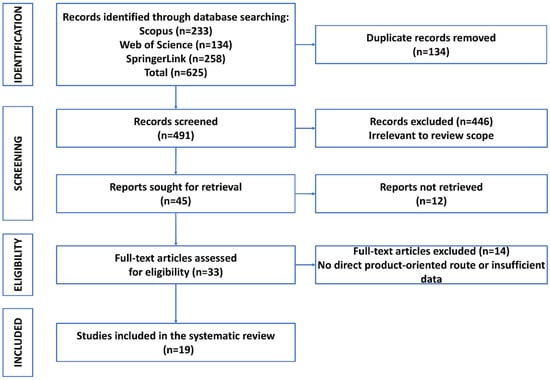
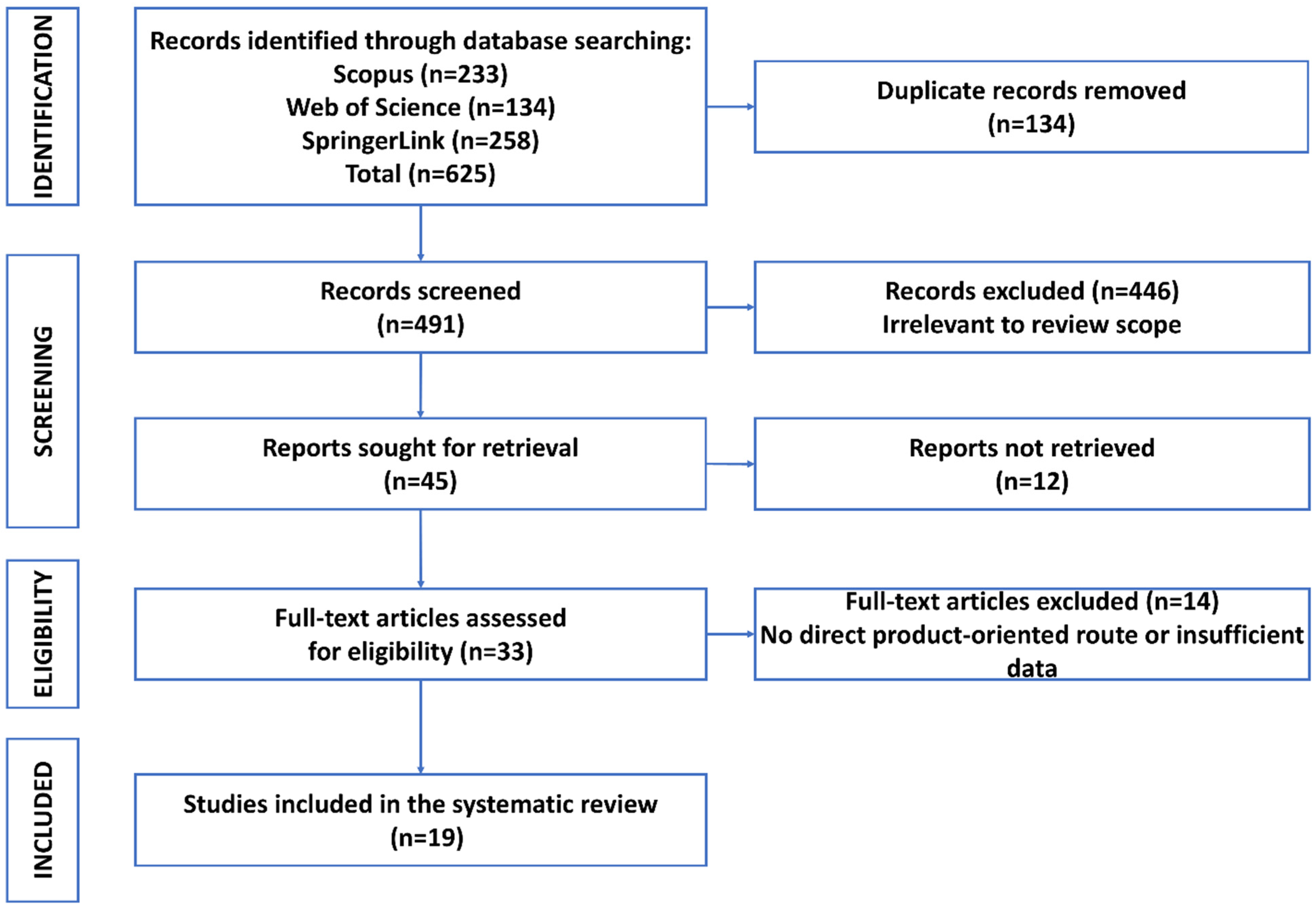
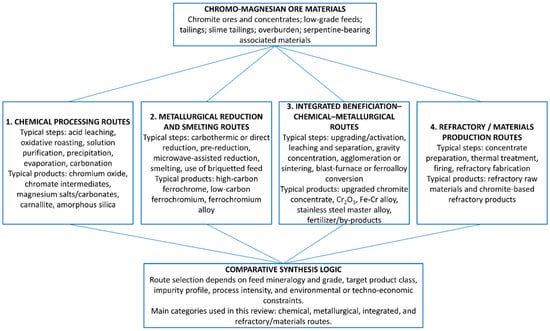
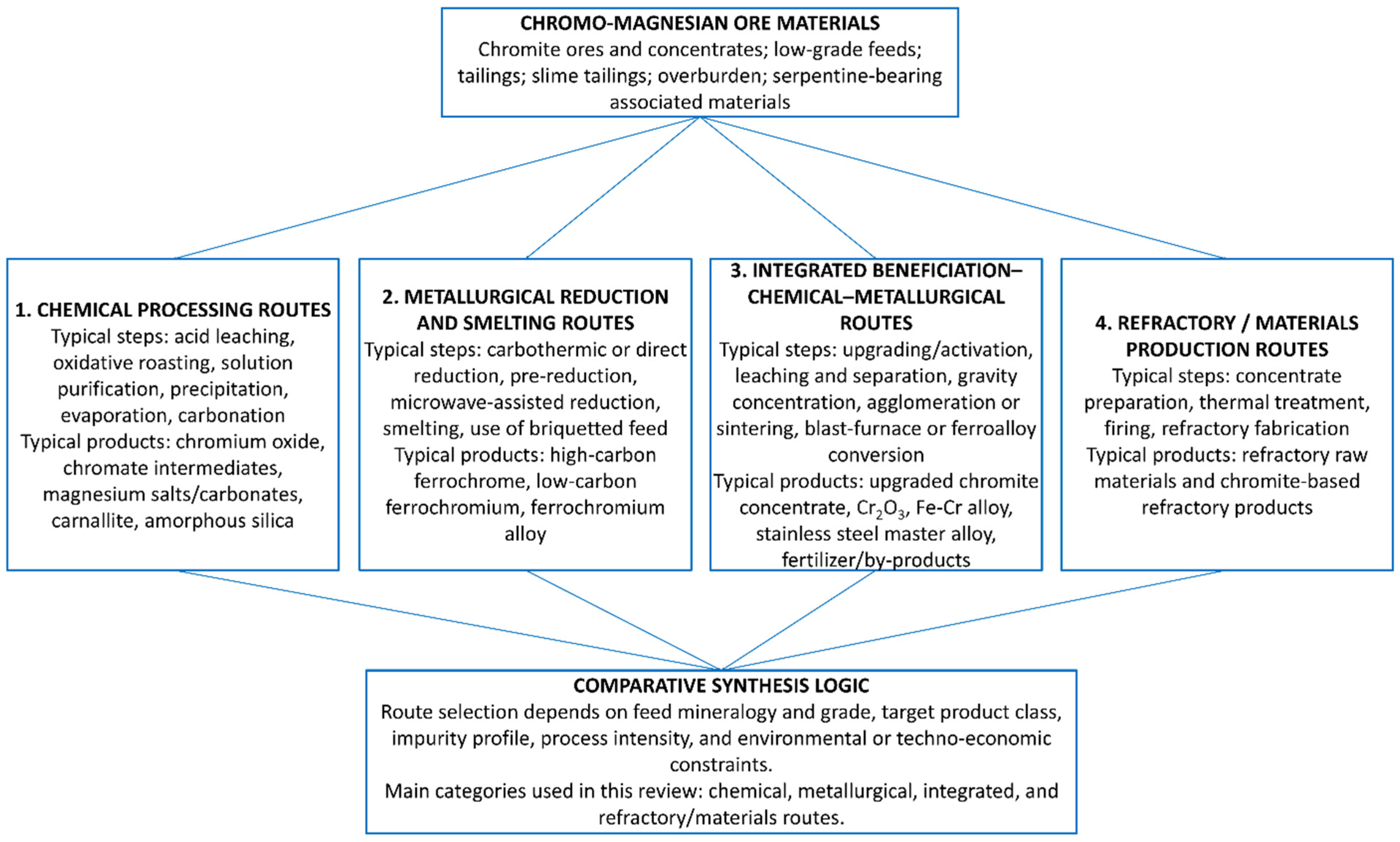
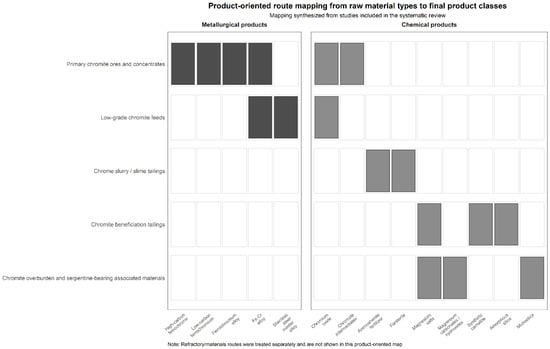
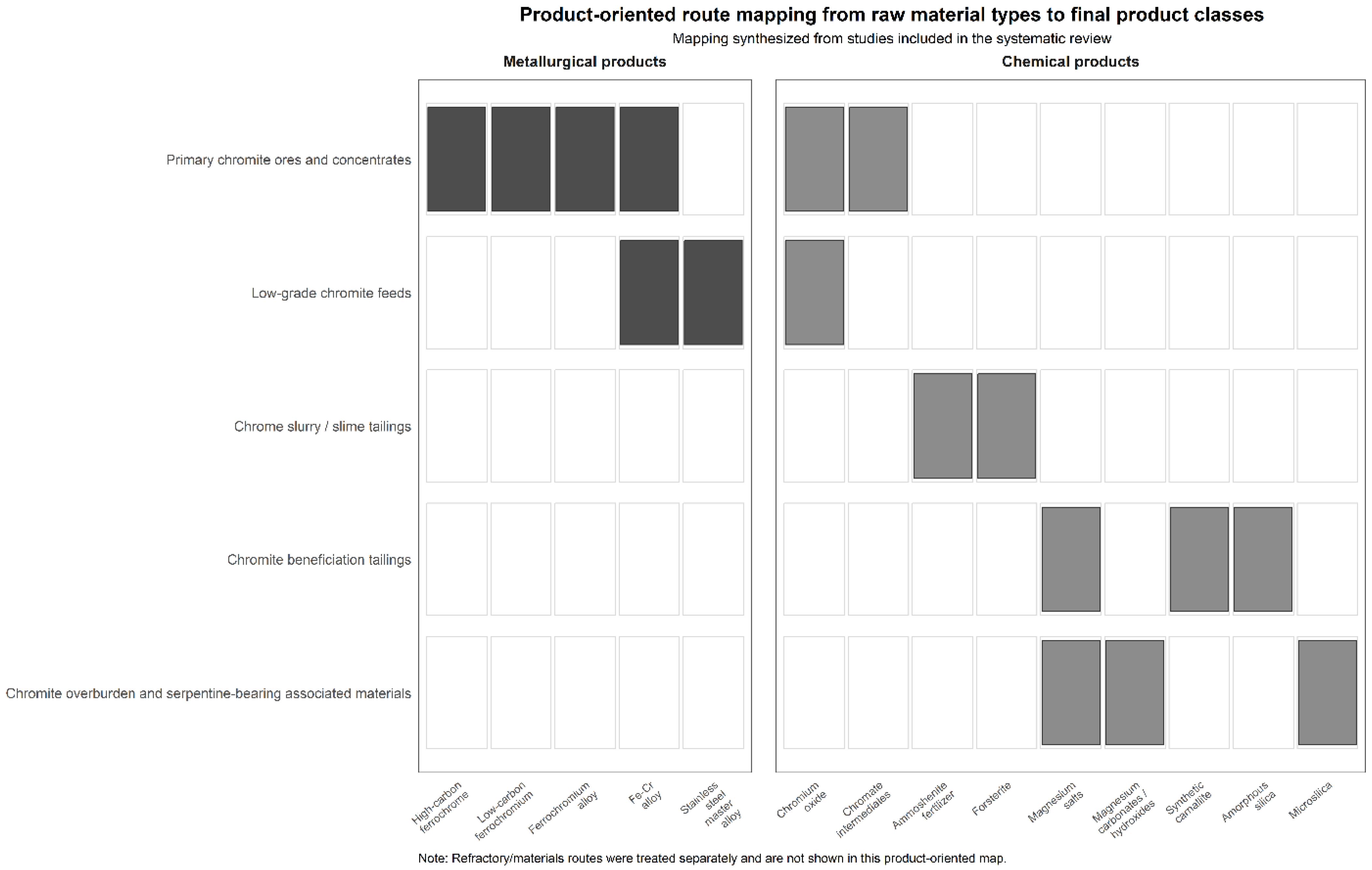

Disclaimer/Publisher’s Note: The statements, opinions and data contained in all publications are solely those of the individual author(s) and contributor(s) and not of MDPI and/or the editor(s). MDPI and/or the editor(s) disclaim responsibility for any injury to people or property resulting from any ideas, methods, instructions or products referred to in the content. |
© 2026 by the authors. Licensee MDPI, Basel, Switzerland. This article is an open access article distributed under the terms and conditions of the Creative Commons Attribution (CC BY) license.