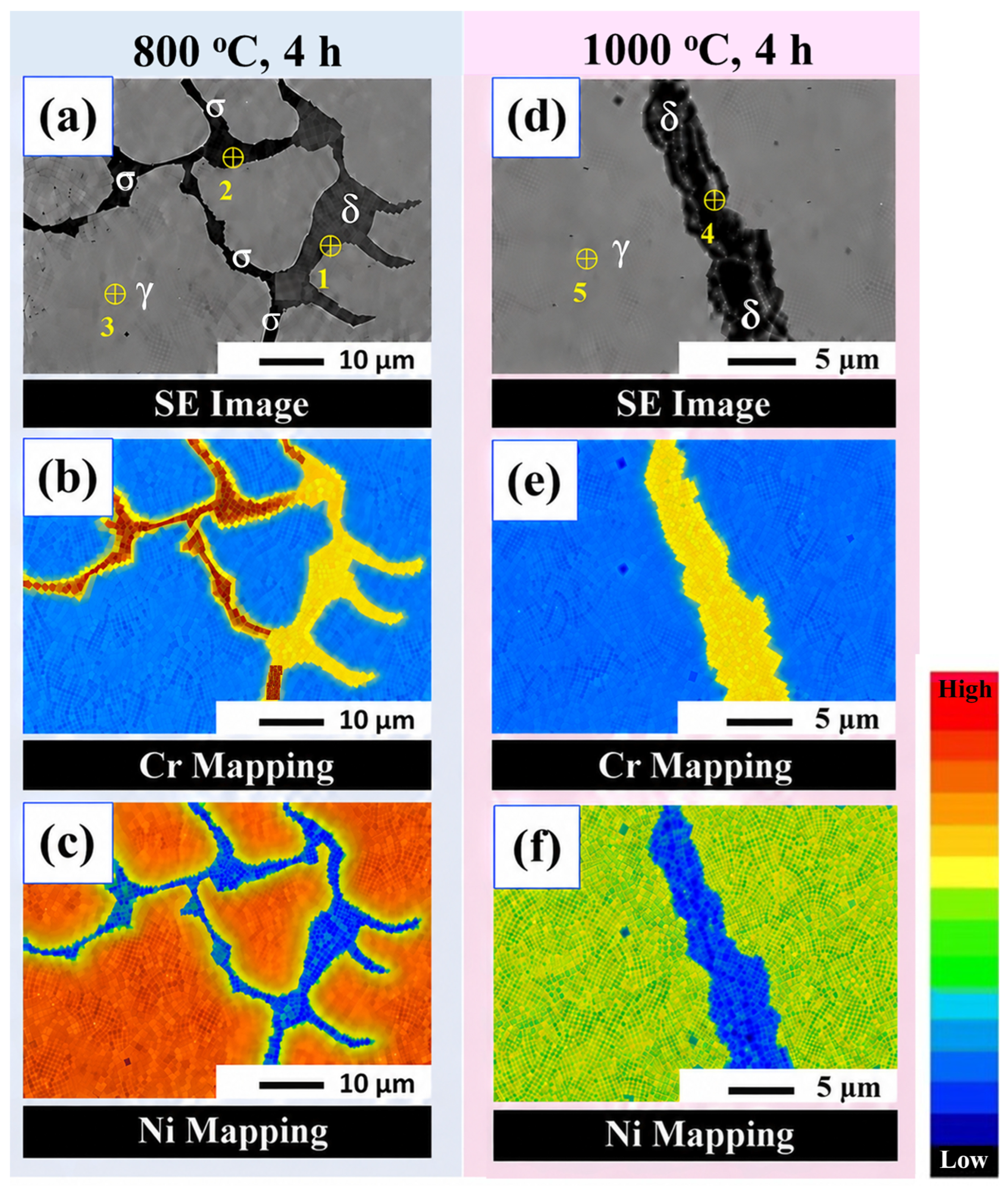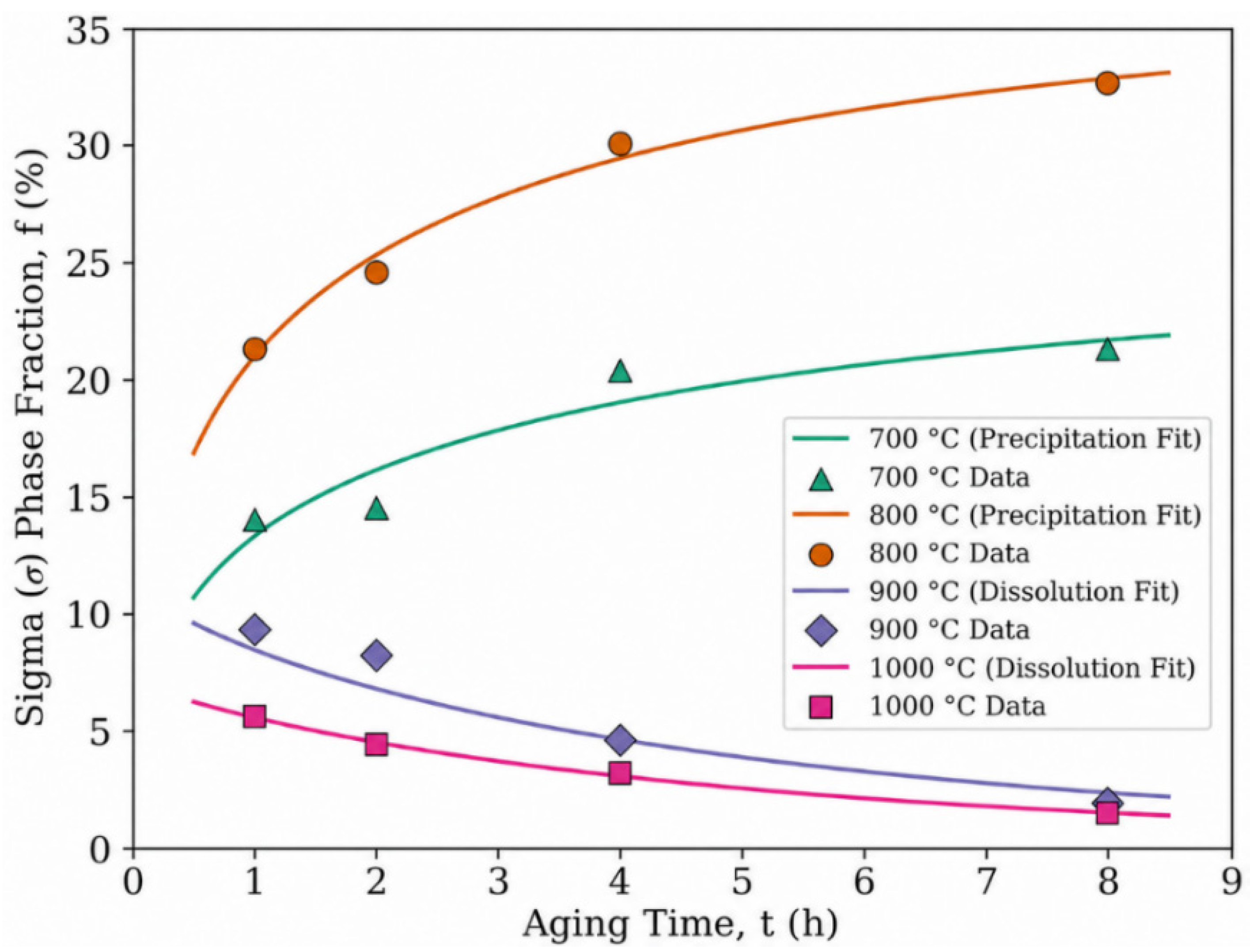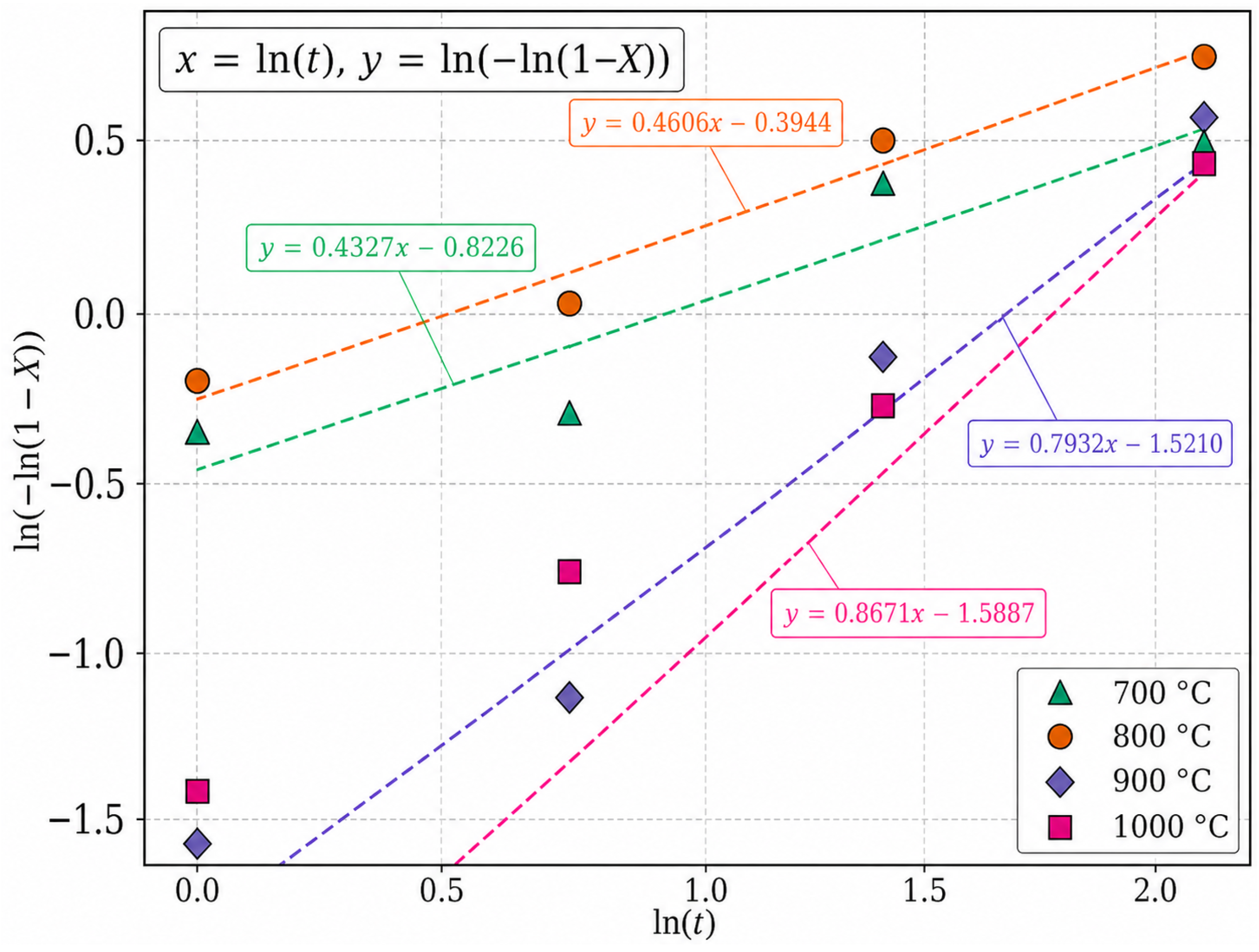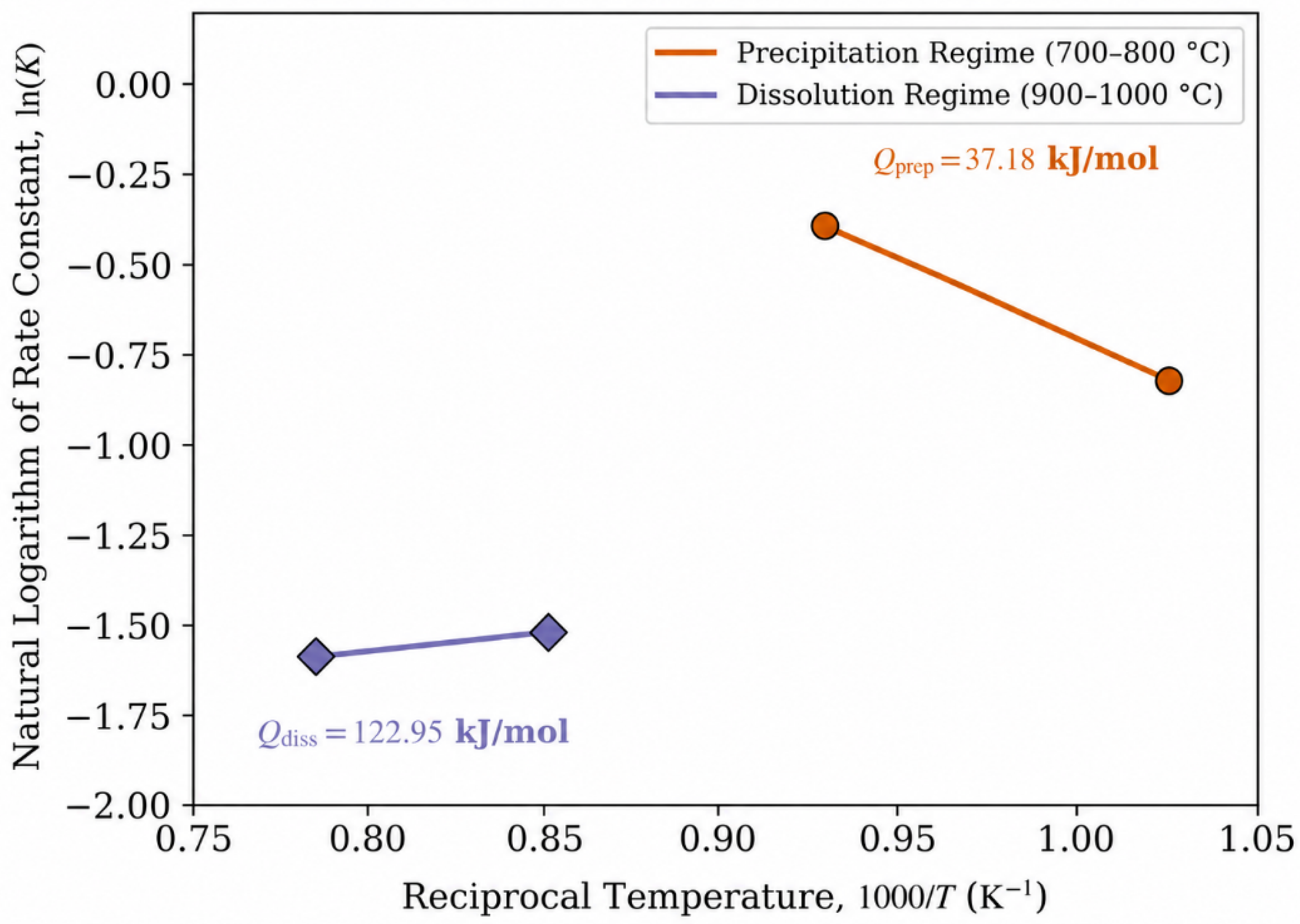

Temperature-Dependent Sigma (σ) Phase Evolution and Transformation Kinetics in 24Cr–14Ni Stainless Steel Aged at 700–1000 °C


Abstract
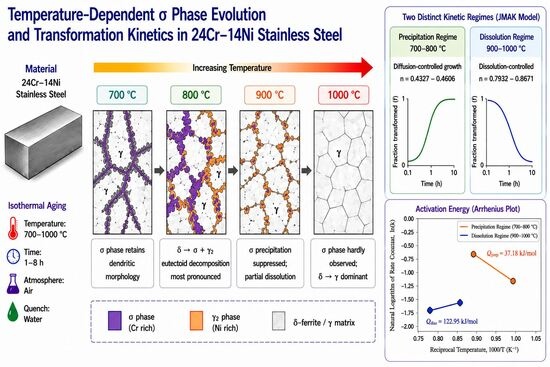
Share and Cite
Hsieh, C.-C. Temperature-Dependent Sigma (σ) Phase Evolution and Transformation Kinetics in 24Cr–14Ni Stainless Steel Aged at 700–1000 °C. Metals 2026, 16, 776. https://doi.org/10.3390/met16070776
Hsieh C-C. Temperature-Dependent Sigma (σ) Phase Evolution and Transformation Kinetics in 24Cr–14Ni Stainless Steel Aged at 700–1000 °C. Metals. 2026; 16(7):776. https://doi.org/10.3390/met16070776
Chicago/Turabian StyleHsieh, Chih-Chun. 2026. "Temperature-Dependent Sigma (σ) Phase Evolution and Transformation Kinetics in 24Cr–14Ni Stainless Steel Aged at 700–1000 °C" Metals 16, no. 7: 776. https://doi.org/10.3390/met16070776
APA StyleHsieh, C.-C. (2026). Temperature-Dependent Sigma (σ) Phase Evolution and Transformation Kinetics in 24Cr–14Ni Stainless Steel Aged at 700–1000 °C. Metals, 16(7), 776. https://doi.org/10.3390/met16070776