Article

Research on the Phase Transition Mechanisms and Consolidation Behavior of High-Titanium Vanadium–Titanium Pellets

College of Metallurgy and Energy, North China University of Science and Technology, Tangshan 063210, China
*
Author to whom correspondence should be addressed.
Metals 2026, 16(7), 777; https://doi.org/10.3390/met16070777
Submission received: 12 May 2026 / Revised: 9 July 2026 / Accepted: 10 July 2026 / Published: 12 July 2026

Abstract

To support the production of high-titanium pellets for the gas-based shaft furnace–electric furnace route used to prepare high-titanium feedstock, the phase evolution and structural development of pellets prepared from titanium concentrate, vanadium–titanium powder, and Xuanhua powder were systematically investigated. The results show that the roasting temperature for high-titanium vanadium–titanium pellets should be controlled within 1240–1260 °C. When the titanium concentrate addition is 5 wt%, the pellets exhibit the optimum compressive strength. When the titanium concentrate addition is further increased to 10 wt%, the compressive strength decreases, but the pellets still satisfy the strength requirement for gas-based shaft furnace operation. The addition of titanium concentrate promotes the formation of pseudobrookite, which fills pores and forms crystal-bridge-like bonding with hematite, thereby enhancing pellet consolidation. However, excessive titanium concentrate addition leads to the formation of large amounts of pseudobrookite, which coats hematite grains, suppresses hematite recrystallization, and hinders oxygen diffusion within the pellets. The consolidation of high-titanium vanadium–titanium pellets is dominated by hematite recrystallization and is further strengthened by the intergrowth of hematite with the newly formed Fe2TiO5-TiO2 solid solution, resulting in a denser pellet structure.

1. Introduction

Titanium is a strategically important resource and an essential material for national economic development and security, with wide applications in metallurgy, aviation, aerospace, and defense [1,2]. However, with the gradual depletion of rutile and high-grade vanadium–titanium ores [3], the supply of titanium-rich feedstock required for titanium dioxide production has become a major constraint on the development of the titanium industry.
Because of its abundant reserves and high titanium content, ilmenite has become the principal raw material for producing titanium-rich feedstock [4]. At present, the main industrial routes for producing titanium-rich feedstock include electric-furnace smelting [5,6,7], chlorination [8], and acid leaching [9,10]. However, these routes are generally associated with stringent feed requirements, high energy consumption, and considerable emissions of pollutants and CO2 [11,12,13], which impose substantial pressure on environmental protection, resource utilization, and economic development. Accordingly, the development of a green, efficient, and low-carbon process for titanium slag production is essential for the titanium industry.
The gas-based shaft furnace–electric furnace route uses hydrogen as a reducing agent, combining environmental friendliness with high efficiency [14,15,16]. In this route, high-titanium pellets are reduced in a shaft furnace using coke oven gas and the resulting metallized pellets are smelted in an electric furnace to produce high-titanium slag with a TiO2 content above 45%, which can be used as feedstock for titanium dioxide production. This method significantly reduces CO2 emissions and is gradually being adopted and promoted. Because pellets are the main burden material in this process, they must possess a compressive strength of at least 2500 N. Therefore, in view of the characteristics of China’s ilmenite resources, the development of high-titanium vanadium–titanium pellets suitable for gas-based shaft furnace operation is an effective way to alleviate the high energy consumption and severe pollution associated with conventional production of high-titanium feedstock. However, pellets prepared with titanium concentrate generally exhibit relatively low compressive strength, which can deteriorate bed permeability in the shaft furnace, reduce the metallization rate, and ultimately impair process stability and product quality.
Most previous studies on vanadium–titanium pellets have focused on raw-material composition, preheating and roasting conditions, and the effect of high-pressure grinding-roll pretreatment on the induration behavior and microstructural evolution of vanadium titanomagnetite pellets during oxidation. Previous studies [17,18,19] have correlated the contents of CaO, SiO2, and Al2O3 with the oxidation degree and compressive strength of vanadium–titanium pellets. Tang et al. [20] investigated the effect of TiO2 on the non-isothermal oxidation kinetics of iron concentrate and reported that the oxidation process proceeds in three stages. The first and second stages are controlled mainly by interfacial chemical reactions, whereas the third stage is governed by diffusion; moreover, increasing the TiO2 content raises the activation energy in the early stages but lowers it in the diffusion-controlled stage, thereby modifying the oxidation kinetics. Tang et al. [21] studied the phase transformation and induration mechanisms of high-chromium vanadium titanomagnetite pellets during oxidation and showed that these pellets require higher preheating and roasting temperatures, together with greater fuel consumption, than conventional magnetite pellets. Guo et al. [22] and Gan et al. [23] concluded that high-pressure grinding-roll treatment increases the specific surface area of vanadium titanomagnetite particles and promotes the formation of ilmenite microcrystals and recrystallization bonding during the roasting process, thereby significantly improving pellet strength. In addition, previous studies on ilmenite oxidation and pellet consolidation remain controversial. Some researchers [24] reported that hematite recrystallization improves pellet strength, whereas excessive pseudobrookite formation is detrimental to pellet quality. Other researchers [22] argued that titaniferous hematite shows poor recrystallization ability at high temperature, leading to low pellet strength. Therefore, the induration mechanism of high-titanium vanadium–titanium pellets has not yet been fully clarified. In this study, the effects of titanium concentrate addition on pellet preparation parameters were investigated, and the evolution and migration behavior of Ti-bearing iron oxide phases during oxidation and consolidation were analyzed. The results are of practical significance for the efficient, clean, and low-carbon operation of gas-based shaft furnaces.

2. Experimental Materials and Methods

2.1. Raw Materials

The main raw materials used in the experiment included three types of iron ore powder, titanium concentrate, vanadium–titanium powder, and Xuanhua powder, all sourced from Chengde Iron and Steel Group Co., Ltd., located in Chengde, China. Bentonite was selected as the binder. The chemical compositions and particle size distributions of the three iron ore powders are shown in Table 1 and Table 2, while the physical properties of the bentonite are presented in Table 3.
As shown in Table 2, the fraction smaller than 0.074 mm exceeds 80% for the vanadium–titanium powder, Xuanhua powder, and titanium concentrate. For pellet feed, a proportion of more than 80% passing 0.074 mm is generally considered indicative of suitable pelletizing raw materials. Therefore, all three iron ore powders used in this study can be classified as suitable pellet feeds.

2.2. Experimental Design and Methods

2.2.1. Experimental Scheme

The proportion of Xuanhua powder was fixed at 50.0%, while vanadium–titanium powder was progressively replaced by titanium concentrate. The titanium concentrate addition levels were 0%, 5%, 10%, 15%, and 20% by mass. The bentonite dosage in all mixtures was fixed at 1.0%, as shown in Table 4.

2.2.2. Experimental Methods

(1) Preparation and testing of green pellets
Green pellets were prepared using a disk pelletizer with a diameter of 500 mm and a height of the end flap of 150 mm, an inclination angle of 48°, and a linear velocity of 0.98 m/s. The target pellet size was 10–12.5 mm, and the pelletizing time was 15 min. After pelletizing, the quality of the green pellets was evaluated.
(1)
Green pellet compressive strength: Ten green pellets with a size of 10–12.5 mm were selected randomly, and their compressive strength was measured using an electronic single-pellet compressive-strength tester. The load borne by each pellet was recorded in real time, and the average value was calculated.
(2)
Green pellet drop number: Ten green pellets with a size of 10–12.5 mm were selected randomly and dropped freely from a height of 500 mm onto a steel plate. The number of drops sustained before fracture was recorded for each pellet, and the arithmetic mean was taken as the drop number.
(3)
Moisture content of green pellets: A representative sample of freshly prepared green pellets was weighed and the initial mass was recorded as m0. The sample was then dried in an oven (Shanghai Yiheng Scientific Instruments Co., Ltd., Shanghai, China) at 125 °C for 2 h. After drying, the mass was recorded as mt. The moisture content of the green pellets was calculated according to Equation (1):
m 0 m t m 0 × 100 %
(2) Roasting experiment
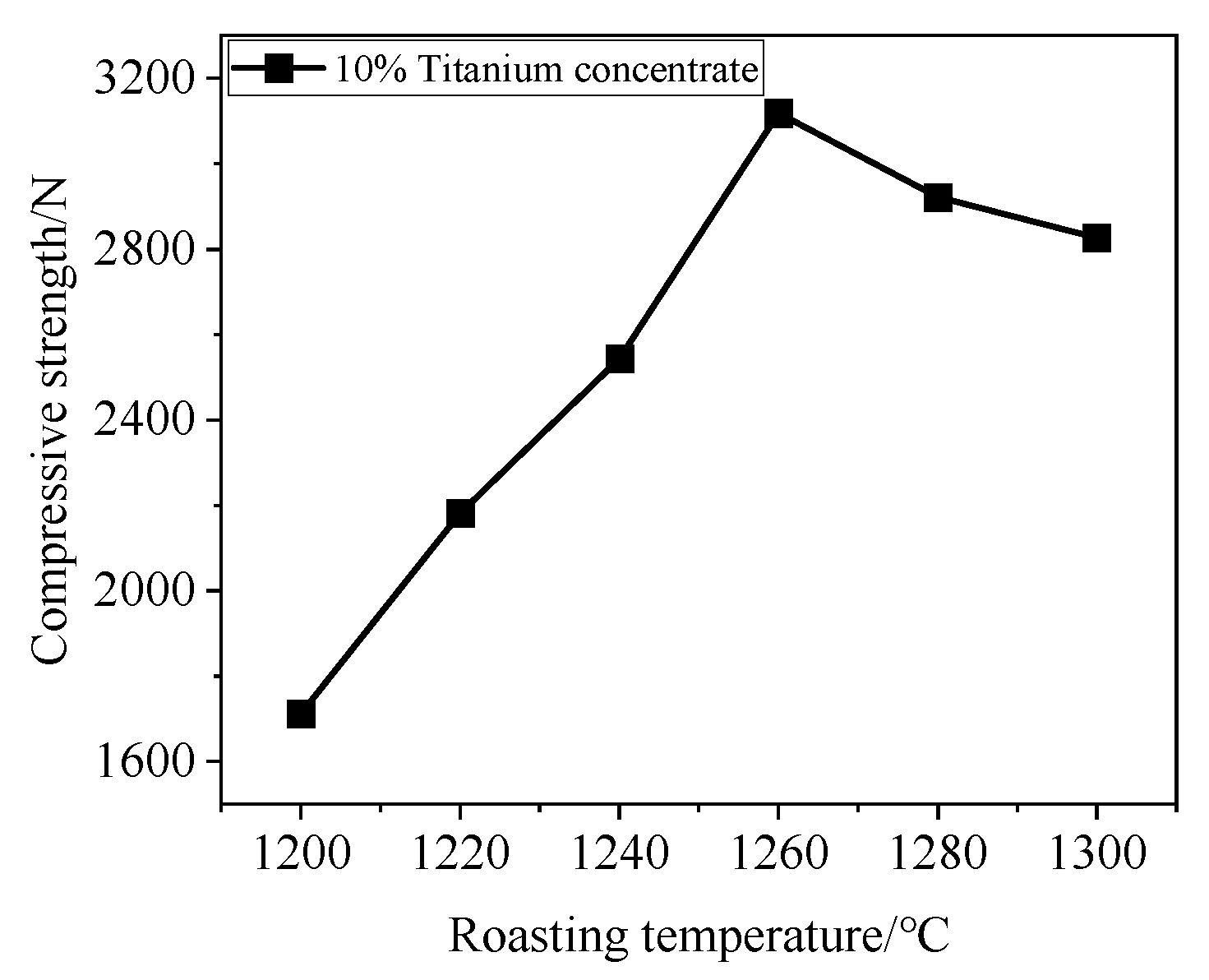
First, pellets containing 10% titanium concentrate were prepared using the disk pelletizer (Tianjin Daming Electric Motor Factory, Tianjin, China). The preheating temperature was 960 °C for 20 min. The pellets were then roasted at 1200, 1220, 1240, 1260, 1280, and 1300 °C for 15 min, respectively. Sixty pellets with a diameter of 10–12.5 mm were selected for compressive-strength testing to determine the optimum roasting temperature range. Subsequently, with the preheating condition fixed, the roasting temperatures were set at 1240 and 1260 °C for 15 min to evaluate pellets with different titanium concentrate additions. After cooling to room temperature, the compressive strength of the roasted pellets was measured according to GB/T 14201-1993 [25] so as to determine the appropriate titanium concentrate addition.
(3) Microstructural characterization
A Japanese Rigaku D/MAX2500PC X-ray diffractometer (Rigaku Corporation, Tokyo, Japan) and a German ZEISS Sigma 360 scanning electron microscope (Carl Zeiss AG, Oberkochen, Germany) equipped with an energy-dispersive spectrometer (SEM-EDS) were used to analyze the phase composition and microstructure of pellets roasted at 1240 °C with titanium concentrate additions of 0%, 5%, 10%, 15%, and 20%.

3. Results and Discussion

3.1. Effect of Titanium Concentrate Addition on the Green Pellet Properties

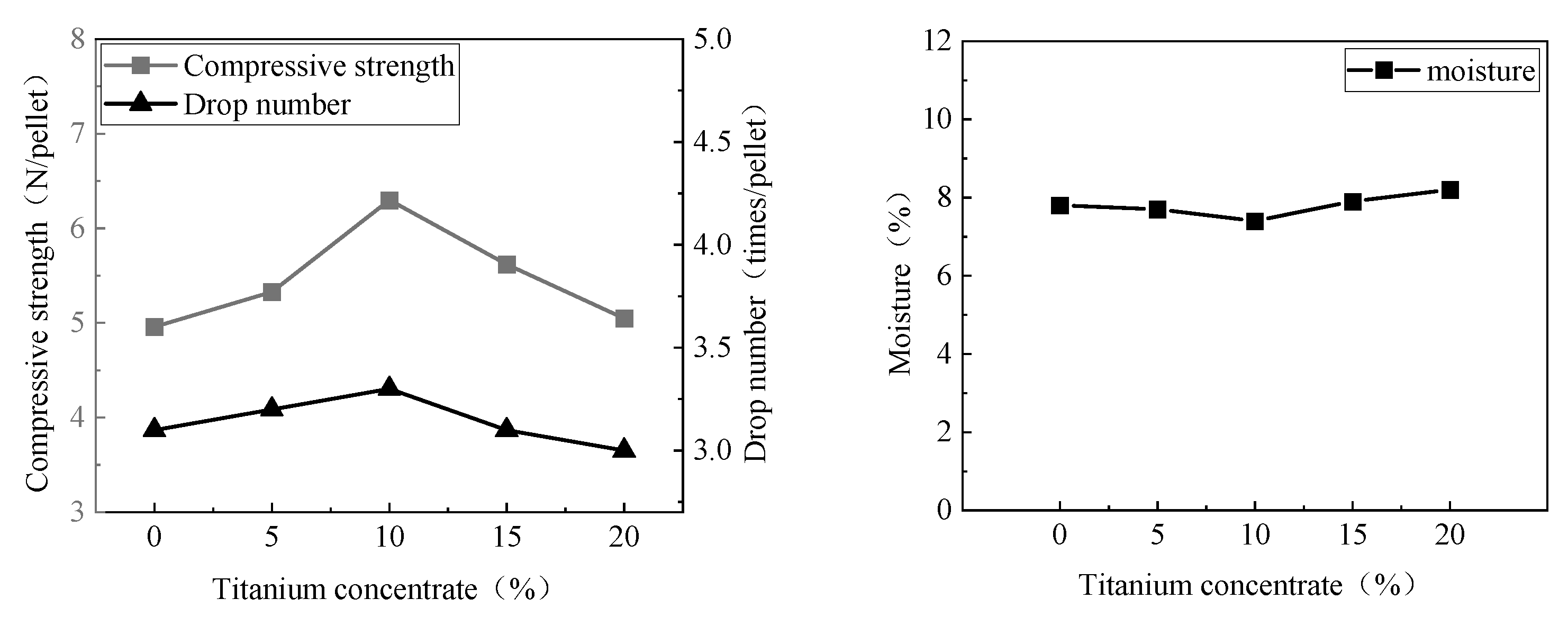
As shown in Figure 1, with increasing titanium concentrate addition, both the compressive strength and drop number of the green pellets first increase and then decrease, reaching their maximum values at a titanium concentrate addition of 10%. An appropriate amount of TiO2 can promote the flocculation of fine particles by modifying the surface charge state and weakening electrostatic repulsion, thereby improving particle adhesion during pelletizing. However, when the TiO2 content becomes too high, the larger proportion of titanium concentrate makes the overall size distribution of the mixed feed slightly coarser, resulting in a more porous pellet structure and weaker interparticle bonding. Consequently, the green pellet strength decreases. The moisture content of the green pellets remained approximately 8%.

3.2. Effect of Roasting Temperature on the Compressive Strength of High-Titanium Vanadium–Titanium Pellets

As shown in Figure 2, when the titanium concentrate addition is 10%, the compressive strength of the pellets first increases and then decreases with increasing roasting temperature, reaching a maximum value of 3118.47 N at 1260 °C. This is mainly because a higher roasting temperature accelerates iron diffusion, promotes the development of hematite crystals, and strengthens the bonding between hematite grains, thereby improving pellet strength. However, when the temperature is increased further, inter-pellet sticking occurs. In addition, excessive liquid-phase formation within the pellets hinders direct hematite grain bonding, and a large amount of glassy phase is generated during cooling, resulting in a decrease in pellet strength. For gas-based shaft furnace operation, a compressive strength of 2500 N is sufficient. Therefore, the suitable roasting temperature window for these pellets is relatively narrow, namely 1240–1260 °C.

3.3. Effect of Titanium Concentrate Content on the Compressive Strength of High-Titanium Vanadium–Titanium Pellets at Different Roasting Temperatures

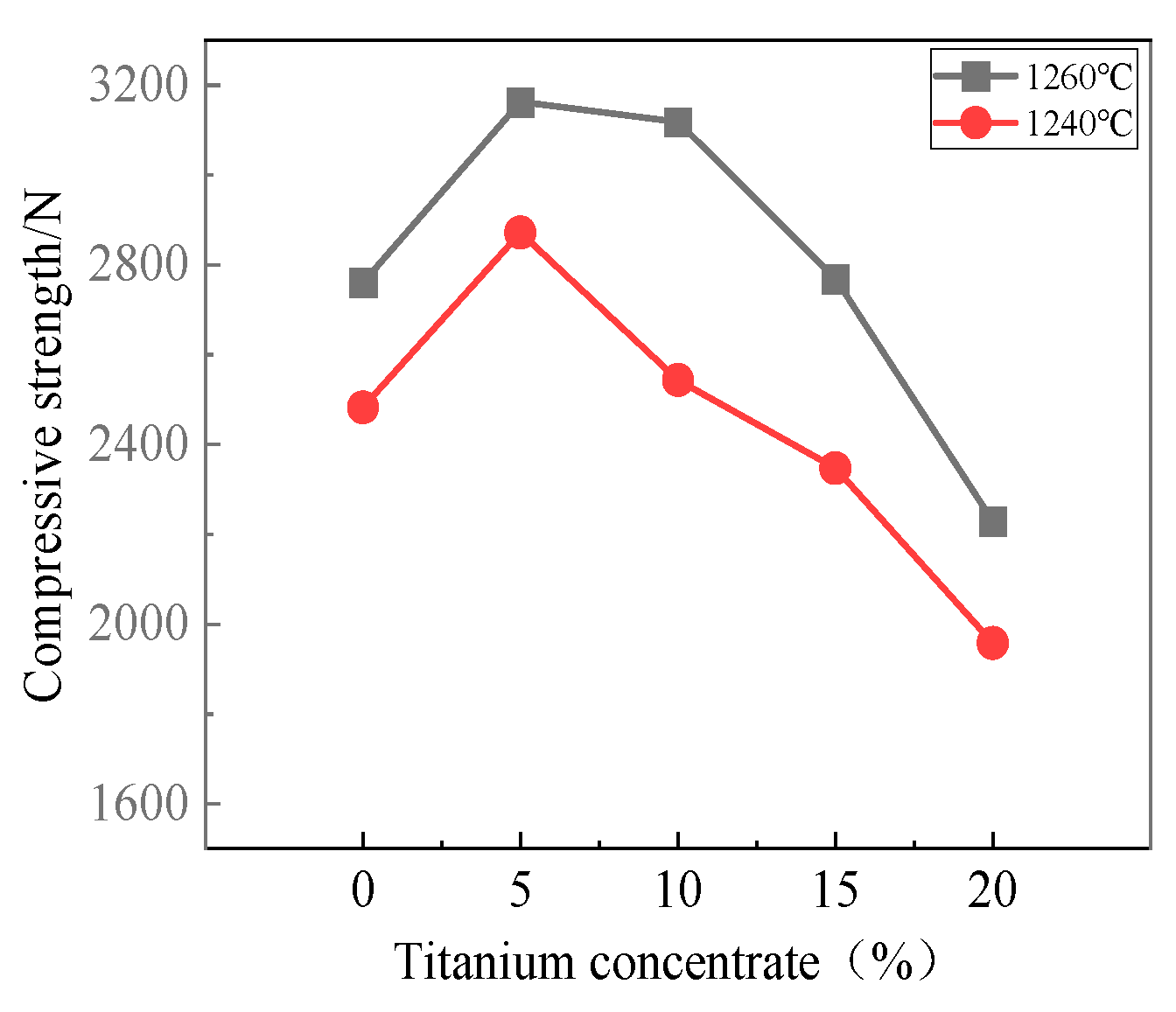
As shown in Figure 3, when the roasting temperature range of 1240–1260 °C, the compressive strength of the pellets first increases and then decreases with increasing titanium concentrate addition, reaching the optimum value at 5% titanium concentrate. When the addition is increased to 10%, the pellet compressive strength begins to decline. At 1240 °C, however, the compressive strength still reaches 2543.30 N, which satisfies the requirement for gas-based shaft furnace operation. Considering both titanium resource utilization and pellet quality, the titanium concentrate addition should not exceed 10%.

3.4. XRD Analysis

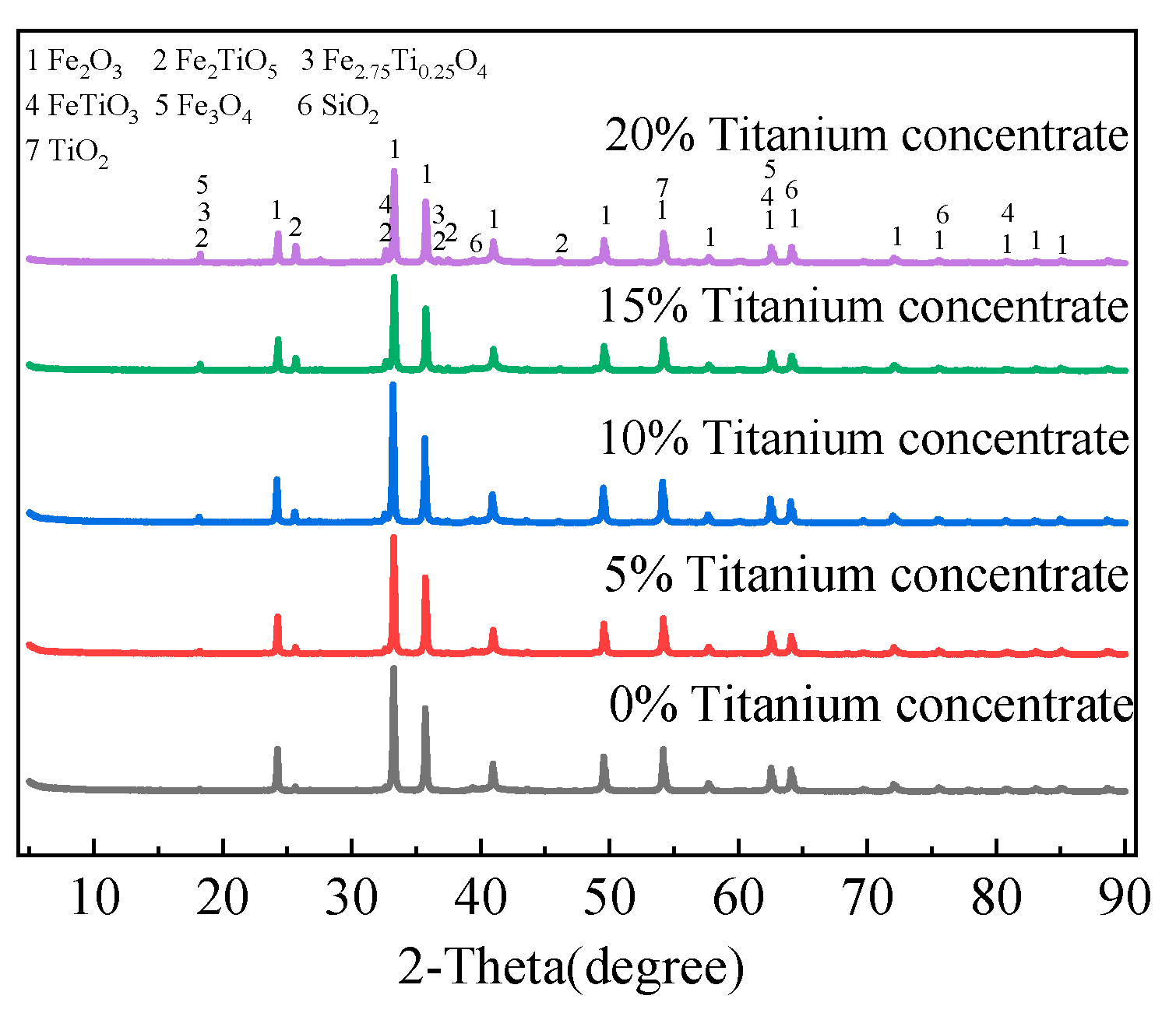
As shown in Figure 4, when the titanium concentrate addition is 0%, hematite (Fe2O3) is the dominant phase in the pellets, together with small amounts of ilmenite (FeTiO3), magnetite (Fe3O4), SiO2, and TiO2. This is mainly because titanomagnetite, the principal Ti-bearing phase in the vanadium–titanium powder, reacts with O2 to form ilmenite and hematite (Equation (2)), and the ilmenite is then further oxidized to TiO2 and hematite (Equation (3)). Therefore, TiO2 is detected in the roasted pellets.
When the titanium concentrate addition is 5%, a new phase, pseudobrookite (Fe2TiO5), appears. This is mainly because ilmenite, the principal phase in the titanium concentrate, reacts with oxygen to form pseudobrookite (Equation (4)). The formation of a moderate amount of pseudobrookite is consistent with the increase in pellet strength.
When the titanium concentrate addition reaches 10%, a residual titanomagnetite phase (Fe2.75Ti0.25O4) is detected in addition to the original phases, while the amounts of pseudobrookite, ilmenite, and magnetite increase. This indicates that the addition of titanium concentrate suppresses oxygen diffusion within the pellets and results in incomplete oxidation, which is unfavorable for grain growth and recrystallization. Consequently, the pellet strength decreases.
When the titanium concentrate addition is further increased to 20%, the diffraction intensities of pseudobrookite and titanomagnetite increase markedly. The increased amount of these phases hinders hematite intergranular bonding and leads to a further deterioration in pellet strength.
The reactions are expressed as follows:
4Fe2.75Ti0.25O4 + O2 = FeTiO3 + 5Fe2O3
2FeTiO3 + 0.5O2 = 2TiO2 + Fe2O3
4FeTiO3 + O2 = 2Fe2TiO5 + 2TiO2

3.5. SEM-EDS Analysis

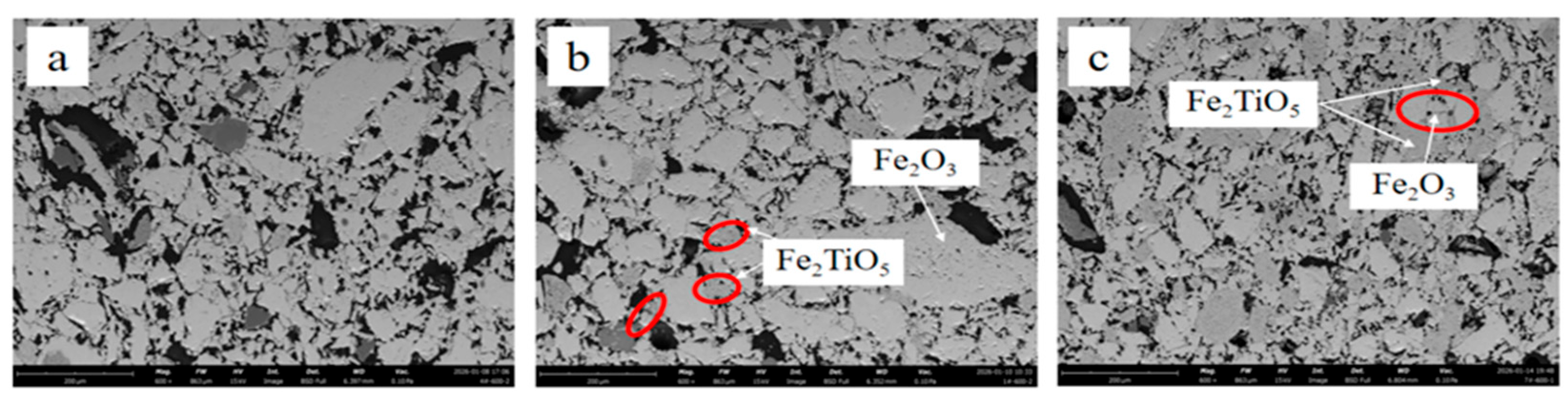
As shown in Figure 5a, when the titanium concentrate addition is 0%, hematite is the dominant phase in the pellets, accompanied by small amounts of ilmenite, magnetite, silica, and rutile. The hematite grains are well developed, and crystal bridges formed by hematite recrystallization connect adjacent particles, resulting in a relatively dense structure with few pores.
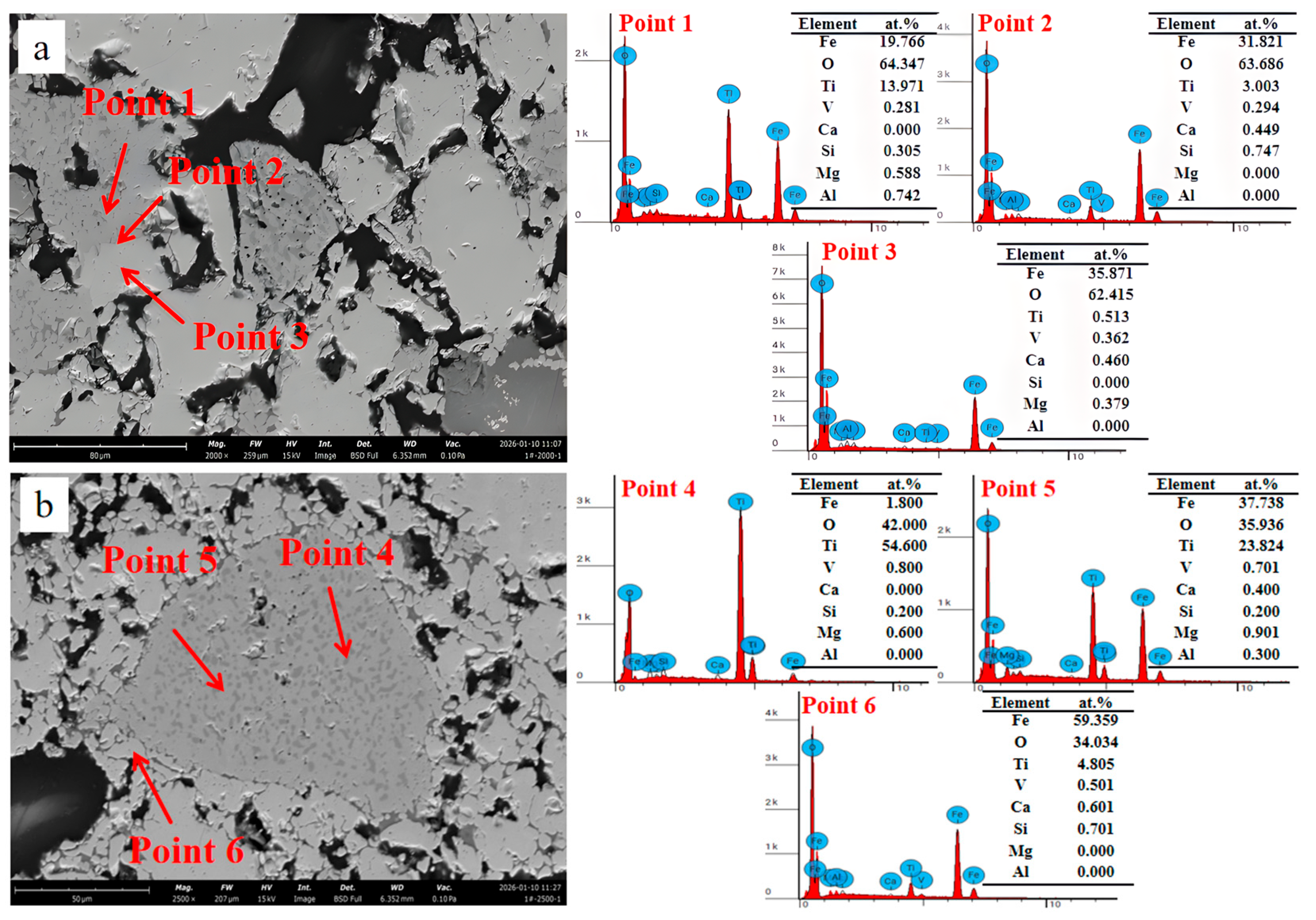
As shown in Figure 5b, when the titanium concentrate addition is increased to 5%, a certain amount of pseudobrookite appears in addition to the original phases. These Ti-bearing iron phases are distributed as fine particles between hematite grains and fill the original pores (as indicated by the red circles in Figure 5b), thereby increasing the intergranular contact area and producing a denser pellet structure. To further clarify the bonding relationship between hematite and pseudobrookite, the interface between the two phases was examined. As shown in Figure 6a, hematite (Point 3) is connected with pseudobrookite (Points 1 and 2). Compared with Point 1, Point 2 contains more Fe and less Ti. This suggests that Fe-bearing species migrate toward the grain boundaries and react with oxygen to form Fe2O3, which then interlocks with pseudobrookite through a microcrystalline bond, producing a denser structure and stronger intergranular bonding. In addition, SEM-EDS analysis indicates that TiO2 (Point 4) and pseudobrookite (Point 5) form an Fe2TiO5-TiO2 solid solution, as shown in Figure 6b. This newly formed solid solution acts as a bonding medium and effectively bridges adjacent hematite grains (Point 6), thereby strengthening pellet consolidation. These effects account for the increase in pellet compressive strength at 5% titanium concentrate addition.
As shown in Figure 5c, when the titanium concentrate addition is further increased to 20%, both the amount and the number of pseudobrookite particles in the pellets increase significantly. Moreover, a large number of pseudobrookite particles are distributed on the surfaces of hematite grains, hindering hematite intergranular bonding. Because pseudobrookite contains less iron than hematite, its bonding contribution is weaker than that provided by hematite recrystallization. As a result, intergranular bonding is weakened, grain growth is suppressed, the internal structure becomes loose, porosity increases, and the compressive strength decreases markedly.
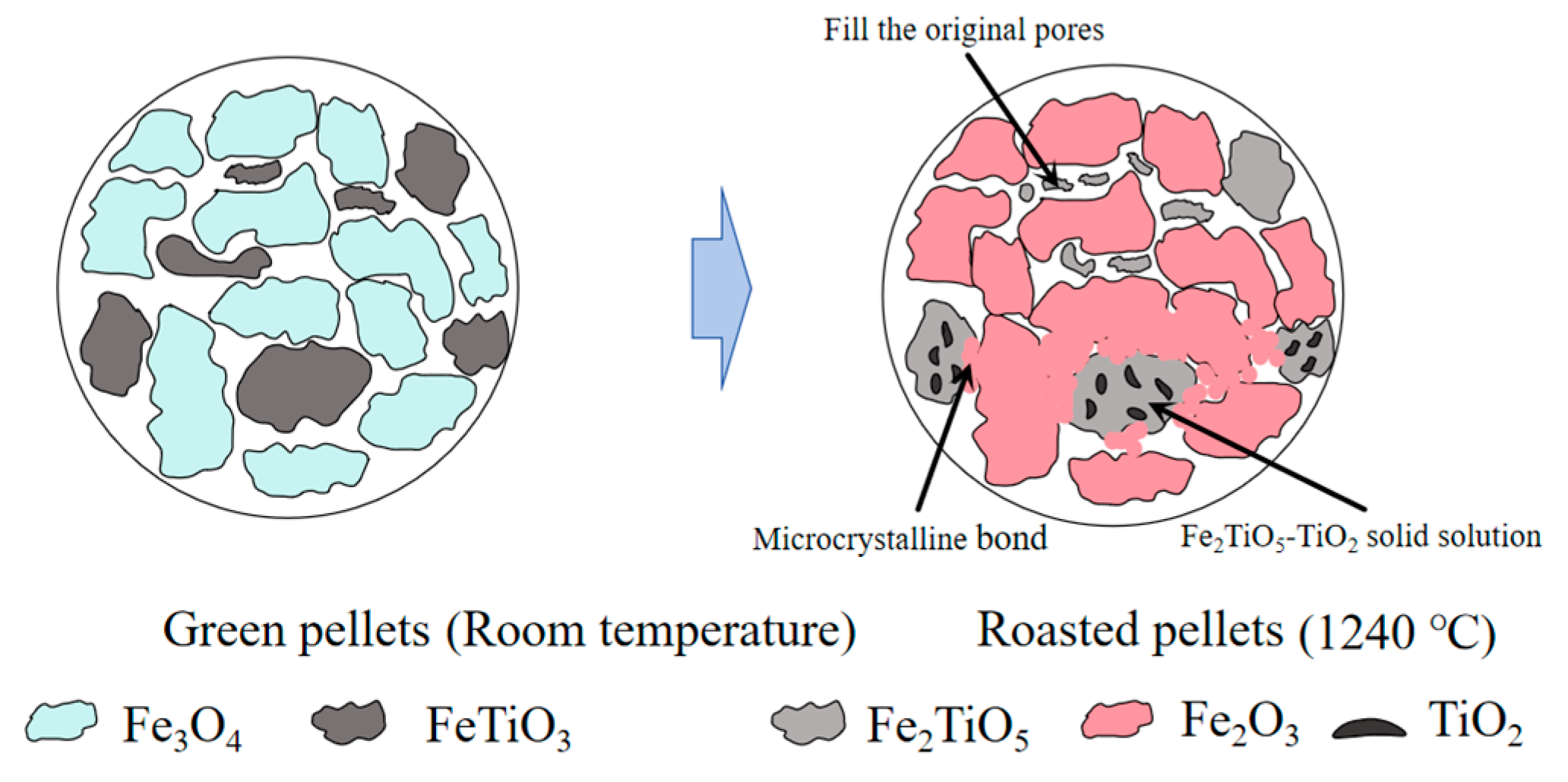
These results indicate that in high-titanium vanadium–titanium pellets during oxidative roasting a large amount of pseudobrookite is formed, filling the primary pores of the matrix and promoting microcrystalline bonding with hematite; meanwhile, as depicted in Figure 7, pseudobrookite intertwines with TiO2 to generate a new solid solution, which serves as a bonding medium to bridge adjacent hematite grains, thus effectively improving the pellet consolidation strength.

4. Conclusions

The main conclusions of this study are as follows:
(1)
The appropriate roasting temperature range for high-titanium vanadium–titanium pellets to satisfy the gas-based shaft furnace strength requirement (≥2500 N) is 1240–1260 °C.
(2)
Within the roasting temperature range of 1240–1260 °C, the compressive strength of pellets first increases and then decreases with increasing titanium concentrate addition up to 20%, and reaches the optimum value at 5%. Because it promotes the formation of pseudobrookite, which not only fills pores as fine pellets crystals but also forms crystal-bridge bonding with hematite, thereby improving structural compactness. However, when the addition is 10% and the roasting temperature is 1240 °C, the compressive strength still reaches 2543.30 N, which satisfies the process requirement. Considering both titanium utilization and pellet quality, the titanium concentrate addition should not exceed 10%.
(3)
The consolidation of high-titanium vanadium–titanium pellets is governed primarily by hematite recrystallization and is supplemented by bonding associated with the newly formed Fe2TiO5-TiO2 solid solution.

Author Contributions

Conceptualization, Y.Z. and Y.D.; methodology, Y.Z.; formal analysis, T.T., Y.Z. and Y.D.; investigation, Z.S.; resources, Y.Z.; writing—original draft preparation, Z.S.; writing—review and editing, T.T.; funding acquisition, T.T. All authors have read and agreed to the published version of the manuscript.

Funding

This research was funded by the National Key R&D Program of China, grant number 2024YFC3909500 and the National Natural Science Foundation of China, grant number 52474356.

Data Availability Statement

The original contributions presented in this study are included in the article. Further inquiries can be directed to the corresponding author.

Conflicts of Interest

The authors declare no conflict of interest.

References

  1. Chanfreau, N.; Poquillon, D.; Stark, A.; Maawad, E.; Mareau, C.; Dehmas, M. Phase transformation of the Ti-5553 titanium alloy subjected to rapid heating. J. Mater. Sci. 2022, 57, 5620–5633. [Google Scholar] [CrossRef] [Scilit]
  2. Zhang, R.; Hou, Y.L.; Fan, G.Q.; Huang, D.; Ding, X.; Dang, J. Gas-based reduction and carbonization of titanium minerals in titanium-bearing blast furnace slag: A combined thermodynamic, experimental and DFT study. Int. J. Hydrogen Energy 2022, 47, 7586–7599. [Google Scholar] [CrossRef] [Scilit]
  3. Li, Y.; Wang, Z.; Guo, Z.; Kou, M.; Zhang, G. Effects of Na2CO3 on the carbothermic reduction and magnetic separation of ilmenite concentrate. Miner. Eng. 2024, 205, 108488–108500. [Google Scholar] [CrossRef] [Scilit]
  4. Chen, F.R.; Lv, W.; Zhou, G.W.; Liu, Z.L.; Chu, M.S.; Lv, X.W. Effects of H2, CO, and a gas mixture on the reduction process of raw and pre-oxidized ilmenite concentrate powders. Int. J. Hydrogen Energy 2024, 55, 502–511. [Google Scholar] [CrossRef] [Scilit]
  5. Lv, W.; Bai, C.G.; Lv, X.W.; Hu, K.; Lv, X.M.; Xiang, J.Y.; Song, B. Carbothermic reduction of ilmenite concentrate in semi-molten state by adding sodium sulfate. Powder Technol. 2018, 340, 354–361. [Google Scholar] [CrossRef] [Scilit]
  6. Lv, W.; Lv, X.W.; Xiang, J.Y.; Hu, K.; Zhao, S.Q.; Dong, J.; Ham, K.X.; Song, B. Effect of preoxidation on the reduction of ilmenite concentrate powder by hydrogen. Int. J. Hydrogen Energy 2019, 44, 4031–4040. [Google Scholar] [CrossRef] [Scilit]
  7. Lv, X.D.; Chen, D.; Xin, Y.T.; Lv, W.; Dong, J.; Lv, X.W. Isothermal kinetics of carbothermic reduction of ilmenite concentrate with the addition of sodium carbonate. Powder Technol. 2021, 392, 14–22. [Google Scholar] [CrossRef] [Scilit]
  8. Middlemas, S.; Fang, Z.Z.; Fan, P. Life cycle assessment comparison of emerging and traditional Titanium dioxide manufacturing processes. J. Clean. Prod. 2015, 89, 137–147. [Google Scholar] [CrossRef] [Scilit]
  9. Zhu, L.G.; Kong, L.X.; Yang, B.; Xu, B.Q. Production of low-oxygen titanium powder by thermochemical and electrochemical processes: Current state and perspectives. J. Mater. Res. Technol. 2025, 36, 1522–1535. [Google Scholar] [CrossRef] [Scilit]
  10. Nie, W.L.; Wen, S.M.; Liu, D.W.; Hu, T.; Zhang, L.B. Innovative application of two-stage sulfuric acid leaching for efficient recovery of Ti from titanium-bearing electric furnace slag. J. Environ. Chem. Eng. 2023, 11, 109174–109193. [Google Scholar] [CrossRef] [Scilit]
  11. Maldybayev, G.; Korabayev, A.; Sharipov, R.; Al Azzam, K.M.; Negim, E.-S.; Baigenzhenov, O.; Alimzhanova, A.; Panigrahi, M.; Shayakhmetova, R. Processing of titanium-containing ores for the production of titanium products: A comprehensive review. Heliyon 2024, 10, 24966–24979. [Google Scholar] [CrossRef] [Scilit]
  12. Feng, Q.; Lv, M.; Mao, L.; Duan, B.; Yang, Y.; Chen, G.; Lu, X.; Li, C. Research Progress of Titanium Sponge Production: A Review. Metals 2023, 13, 408. [Google Scholar] [CrossRef] [Scilit]
  13. Nayak, D.; Ray, N.; Dash, N.; Rath, S.S.; Biswal, S.K. Reduction behaviour of Odisha Sands Complex, India ilmenite-coke composite pellets. J. Cent. South Univ. 2020, 27, 1678–1690. [Google Scholar] [CrossRef] [Scilit]
  14. Ghadi, A.Z.; Radfar, N.; Valipour, M.S.; Sohn, H.Y. A Review on the Modeling of Direct Reduction of Iron Oxides in Gas-Based Shaft Furnaces. Steel Res. Int. 2023, 94, 2200742–2200760. [Google Scholar] [CrossRef] [Scilit]
  15. Tang, J.; Chu, M.-S.; Li, F.; Feng, C.; Liu, Z.-G.; Zhou, Y.-S. Development and progress on hydrogen metallurgy. Int. J. Miner. Metall. Mater. 2020, 27, 713–723. [Google Scholar] [CrossRef] [Scilit]
  16. Yang, L.Z.; Feng, Z.; Hu, H.; Wei, G.S.; Xue, B.T.; Guo, Y.F.; Jiang, T. A review on production and application of direct reduced iron in gas-based shaft furnace-electric arc furnace route. J. Iron Steel Res. Int. 2025, 32, 485–518. [Google Scholar] [CrossRef] [Scilit]
  17. Tang, J.; Chu, M.; Feng, C.; Li, F.; Tang, Y.; Liu, Z. Coupled Effect of Valuable Components in High-Chromium Vanadium-bearing Titanomagnetite during Oxidization Roasting. ISIJ Int. 2016, 56, 1342–1351. [Google Scholar] [CrossRef] [Scilit]
  18. Tang, W.D.; Yang, S.T.; Xue, X.X. Effect of V2O5 Addition on Oxidation Induration and Swelling Behavior of Chromium-Bearing Vanadium Titanomagnetite Pellets with Simulated Coke Oven Gas Injection into Blast Furnace. ISIJ Int. 2019, 59, 988–997. [Google Scholar] [CrossRef] [Scilit]
  19. Tang, W.D.; Yang, S.T.; Cheng, G.J.; Gao, Z.X.; Xue, X.X. Effect of MgO in Sinter and Primary-Slag on Smelting Mechanism of Chromium-Bearing Vanadium Titanomagnetite. Steel Res. Int. 2018, 89, 1800226–1800236. [Google Scholar] [CrossRef] [Scilit]
  20. Feng, J.E.; Tang, J.; Wang, X.A.; Chu, M.S.; Zhao, Z.C.; Liu, Z.G.; Li, L.J. Effect of TiO2 during Oxidation Roasting Process of Pellet: Kinetic Mechanism and Microstructure. Steel Res. Int. 2024, 95, 2300435–2300447. [Google Scholar]
  21. Tang, J.; Chu, M.-S.; Feng, C.; Li, F.; Liu, Z.-G. Phases transition and consolidation mechanism of high chromium vanadiumtitanium magnetite pellet by oxidation process. High Temp. Mater. Process. 2016, 35, 729–738. [Google Scholar] [CrossRef] [Scilit]
  22. Guo, Y.F.; Liu, K.; Chen, F.; Wang, S.; Yang, L.Z.; Li, D.Y.; Zheng, Y. Effect of high-pressure grinding rolls pretreatment on the preparation of vanadium-titanium magnetite pellets. J. Mater. Res. Technol.-JMR T 2023, 23, 2479–2490. [Google Scholar] [CrossRef] [Scilit]
  23. Lv, H.; Gan, M.; Wen, X.; Ji, Z.; Fan, X.; Li, S.; Li, J.; Wang, S.; Wang, X.; Xie, L. Promoting low-temperature consolidation of vanadium titano-magnetite pellets by high-pressure grinding roll: Mechanism of mechanical activation. J. Mater. Res. Technol. 2024, 30, 2435–2445. [Google Scholar] [CrossRef] [Scilit]
  24. Gan, M.; Ji, Z.Y.; Fan, X.H.; Lv, W.; Zheng, R.Y.; Chen, X.L.; Liu, S.; Jiang, T. Preparing high-strength titanium pellets for ironmaking as furnace protector: Optimum route for ilmenite oxidation and consolidation. Powder Technol. 2018, 333, 385–393. [Google Scholar] [CrossRef] [Scilit]
  25. GB/T 14201-1993; Iron Ore Pellets—Determination of Crushing Strength. State Bureau of Technical Supervision: Beijing, China, 1993.
Figure 1. Effect of titanium concentrate content on green pellet properties.Left: compressive strength and drop strength of green pellets; Right: moisture content of green pellets.
Metals 16 00777 g001
Figure 2. Effect of roasting temperature on the compressive strength of high-titanium vanadium–titanium pellets.
Metals 16 00777 g002
Figure 3. Effect of titanium concentrate content on the compressive strength of high-titanium vanadium–titanium pellets at different roasting temperatures.
Metals 16 00777 g003
Figure 4. XRD patterns of high-titanium vanadium–titanium pellets with different titanium concentrate contents.
Metals 16 00777 g004
Figure 5. Microscopic morphology of high-titanium vanadium–titanium pellets at different titanium concentrate contents. (a) 0% titanium concentrate; (b) 5% titanium concentrate; (c) 20% titanium concentrate.
Metals 16 00777 g005
Figure 6. SEM-EDS analysis of high-titanium vanadium–titanium pellets containing 5% titanium concentrate. (a) SEM image at 2000× magnification; (b) SEM image at 2500× magnification.
Metals 16 00777 g006
Figure 7. Consolidation mechanism of high-titanium vanadium–titanium pellets.
Metals 16 00777 g007
Table 1. Chemical composition of iron ore concentrates (%).
TypeTFeSiO2CaOMgOAl2O3TiO2V2O5
Titanium concentrate powder33.824.311.341.861.7443.950.20
Vanadium–titanium powder62.484.181.000.520.926.040.63
Xuanhua powder68.762.480.280.340.780.760.05
Table 2. Raw materials under sizes of 0.074 mm (%).
Titanium concentrate powder80.0
Vanadium–titanium powder82.8
Xuanhua powder88.4
Table 3. Physical properties of bentonite.
Mt (%)CV (mL/15 mg)<0.074 mm (%)SC (mL·g−1)MC (%)MB (g·(100 g)−1)
62.25372.5096.7515.5013.8028.55
Mt—montmorillonite; CV—colloid valency; SC—swelling capacity; MC—moisture content; MB—methylene blue adsorption.
Table 4. Pellet preparation scheme.
Component0%5%10%15%20%
Titanium concentrate0.05.010.015.020.0
Vanadium–titanium powder50.045.040.035.030.0
Xuanhua Powder50.050.050.050.050.0
Bentonite1.01.01.01.01.0
Disclaimer/Publisher’s Note: The statements, opinions and data contained in all publications are solely those of the individual author(s) and contributor(s) and not of MDPI and/or the editor(s). MDPI and/or the editor(s) disclaim responsibility for any injury to people or property resulting from any ideas, methods, instructions or products referred to in the content.