


Abstract
Large TiN inclusions degrade the performance and castability of high-titanium wear-resistant steel. The evolution of TiN inclusions in molten steel under La and Mg treatments was comparatively investigated by high-temperature simulation experiments and thermodynamic calculations. In all steels, TiN precipitated and coarsened with prolonged holding time. In Al-deoxidized steel, after 60 min holding following Ti addition, the mean sizes of overall inclusions and complex TiN inclusions were 2.3882 and 3.8350 μm, respectively. With 0.0032% La treatment, Al2O3 was modified into finer LaAlO3, reducing these values to 2.1512 and 2.8749 μm. At a higher La content of 0.03%, Al2O3 was transformed into La2O2S, and these values instead increased to 2.4135 and 3.6076 μm due to the co-growth of residual La2O2S and TiN during Ti alloying. Mg treatment refined inclusions more effectively: under 0.0028% and 0.0062% Mg, overall inclusion sizes decreased to 1.9911 and 1.8743 μm, and complex TiN sizes decreased to 2.2963 and 1.9257 μm due to the formation of finer MgAl2O4 and even finer MgO with a low lattice mismatch with TiN. Therefore, Mg treatment, promoting MgO formation, is more promising than La treatment for refining TiN inclusions in high-titanium wear-resistant steel.
1. Introduction
High-titanium wear-resistant steel, with excellent wear resistance and high toughness, has been widely applied in mining machinery and large-scale engineering equipment [1,2,3]. However, unlike conventional Ti-microalloyed steels, the elevated Ti content makes it prone to the precipitation of large TiN inclusions during the refining of steel [4,5]. These inclusions not only cause nozzle clogging and mold floater but also act as potential crack initiation sites in steel, ultimately degrading its mechanical properties [6,7,8]. Therefore, controlling the precipitation of large TiN inclusions in molten steel is essential for the stable and high-quality production of high-titanium wear-resistant steels.
In Ti-microalloyed steel, TiN inclusions generally precipitate during solidification and subsequent cooling [9,10,11,12]. These fine inclusions can pin grain boundaries, thereby refining grains [13]. Accordingly, extensive studies have been conducted on the refinement of TiN inclusions in Ti-microalloyed steel. Lucas et al. [14] and Yan et al. [15] reported that controlling the solubility product of Ti and N was an effective approach to reduce large TiN inclusions. Furthermore, increasing cooling rates facilitates the precipitation of finer TiN during continuous casting. Gui et al. [16] and Zhang et al. [17] further demonstrated that enhancing the solidification cooling rate combined with moderate reduction in Ti content can effectively refine TiN inclusions. Meanwhile, vacuum denitrification can also inhibit the formation of large-sized TiN inclusions [18]. However, for steels requiring a relatively high Ti content, a large amount of TiN inclusions can be precipitated in molten steel. Under such circumstances, conventional strategies based solely on compositional adjustment and optimization of solidification conditions cannot effectively suppress the formation of large TiN inclusions, making alternative control approaches necessary.
In industrial practice, Al deoxidation is conducted before Ti alloying for high-titanium steels. Although this treatment effectively reduces the oxygen content in molten steel, thereby minimizing Ti oxidation loss, the generated Al2O3 inclusions serve as favorable heterogeneous nucleation sites for TiN, thereby promoting the formation of coarse Al2O3-TiN complex inclusions [19,20,21]. To address this problem, inclusion modification is widely regarded as a crucial strategy for regulating the precipitation behavior of TiN. Mg treatment can transform Al2O3 into MgAl2O4 or MgO [22]. Previous studies have shown that Mg-bearing inclusions generally exhibit smaller sizes and higher dispersion, and that the lower lattice misfit between MgO and TiN is more conducive to the heterogeneous nucleation and dispersed precipitation of TiN [23,24,25,26]. On the other hand, rare-earth elements have also been shown to refine TiN inclusions. After rare-earth treatment, TiN inclusions become smaller, with their morphology changing from sharp-edged cubic shapes to forms characterized by contracted corners and edges, although the effects vary depending on the type of rare-earth inclusions formed [27,28,29]. In addition, Relevant studies [30,31] have further suggested that a La-Mg-Ti complex treatment contributes positively to TiN inclusion control. Although both Mg treatment and rare-earth treatment have been proven effective in refining TiN inclusions, direct comparative studies on their refinement efficiency and the differences in their underlying mechanisms remain limited. More importantly, existing studies have mainly focused on the precipitation of inclusions during solidification, whereas systematic investigations into the evolution of TiN in the molten steel, particularly under rare-earth and Mg treatment, are still lacking.
On this basis, the present study combines high-temperature simulation experiments with thermodynamic calculations to comparatively investigate the evolution behavior of TiN inclusions in high-titanium wear-resistant molten steel under rare-earth treatment and Mg treatment. The objective is to clarify the evolution characteristics of TiN inclusions under different treatment conditions and to elucidate the differences in the refining mechanisms of rare-earth and Mg treatments. This work provides theoretical guidance for controlling large-sized TiN inclusions in high-titanium wear-resistant steel.
2. Methodology
2.1. Raw Materials
The raw materials used in this study included high-purity electrolytic iron, La-Fe alloy, Ni-Mg alloy, ferromanganese alloy, high-purity FeS2, carbon powder, sponge titanium, and aluminum chips. The lanthanum–iron alloy contained 20.52 wt.% La, while the nickel–magnesium alloy contained 17.98 wt.% Mg. The ferromanganese alloy had a manganese content of 0.8135 wt.%.
2.2. Experimental Procedure
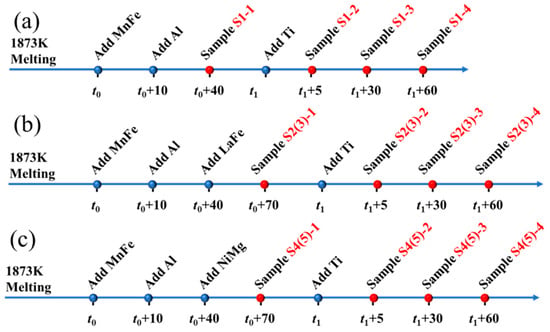
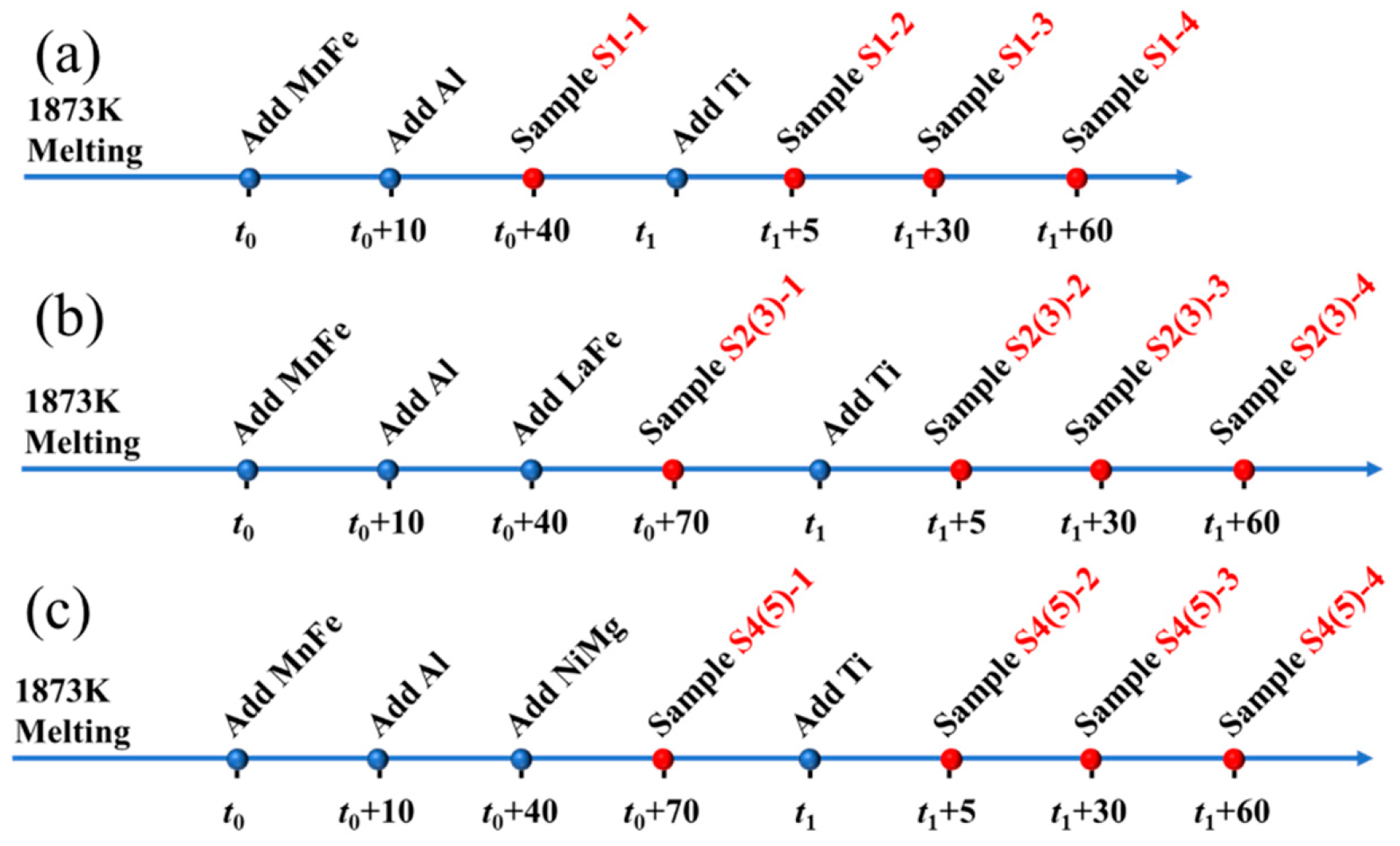
Five high-temperature simulation experiments were carried out in a MoSi2 tube furnace to comparatively investigate the evolution of inclusions under La treatment and Mg treatment. The experimental procedures are shown in Figure 1. The first group was the Al-deoxidized control group, denoted as S1. The second and third groups were La-treated groups, with low and high La treatments denoted as S2 and S3, respectively; and the fourth and fifth groups were the Mg treatment groups, with low and high Mg treatments denoted as S4 and S5, respectively.
Figure 1.
Experimental procedure of samples preparation: (a) Al-deoxidized group; (b) La-treated group; (c) Mg-treated group.
Taking group S2 as an example, approximately 400 g raw materials including electrolytic iron, carbon powder and FeS2 were firstly charged into a corundum crucible. For the Mg treatment groups, a MgO crucible was used instead. The crucible was then placed inside a graphite crucible and loaded into the furnace. Under a high-purity Ar atmosphere, the sample was heated to 1600 °C. After the molten steel was fully homogenized, low-carbon ferromanganese alloy was added, and the melt was stirred 3 min later. After 10 min of ferromanganese addition, aluminum chips wrapped in iron sheet were introduced into the molten steel using a molybdenum rod for deep deoxidation; thereafter, manual stirring with the molybdenum rod was performed every 10 min. After three stirring cycles, the La-Fe alloy was added in the same manner. During La treatment, the melt was also stirred every 10 min. After three stirring cycles, the first sample was taken. Subsequently, Ti was added to the melt. The second, third, and fourth samples were taken at 5 min, 30 min, and 60 min after the Ti addition, respectively. Throughout the entire Ti treatment process, mechanical stirring was consistently maintained at 10 min intervals. All samples were collected using quartz tubes and rapidly quenched in an ice–water mixture to preserve the high-temperature inclusion characteristics. According to Wang et al. [32], the cooling rate of water quenching is 1276 °C/s, and that of saturated brine quenching with ice is 3878 °C/s. Hence, quenching the samples in an ice–water mixture can effectively retain the characteristics of inclusions in steel at high temperatures and minimize the interference from the inclusions precipitated during solidification.
2.3. Characterization Methods
The quenched samples were first machined into steel specimens of 6 mm in diameter and 3 mm in height by wire electrical discharge machining. Subsequently, these specimens were mounted, ground, and polished. The morphology and chemical composition of the inclusions were characterized using a scanning electron microscope with energy dispersive spectrometer (SEM-EDS, Phenom ProX, Thermo Fisher Scientific Phenom-World BV, Eindhoven, the Netherlands) operated at an accelerating voltage of 15 kV. EDS mapping was conducted in the instrument’s dedicated Map intensity mode (maximum probe current) to enhance signal intensity and improve the signal-to-noise ratio. The mapping resolution was 128 × 128 pixels, with a dwell time of 50 ms per pixel, resulting in a total acquisition time of approximately 13.7 min. All elemental maps were processed using ProSuite v2.9.0 software. Brightness and contrast were adjusted linearly and uniformly across the entire image to ensure consistency between different regions. No nonlinear filtering, smoothing, or local enhancement was applied, thereby avoiding the introduction of visualization artifacts. Quantitative analysis was performed using the standardless ZAF correction procedure implemented in the ProSuite software. Under these conditions, the detection limits for most elements are approximately 0.1–0.3 wt.%. The size distribution and number density of the inclusions were statistically analyzed over a contiguous area of 3 mm2 using Image-Pro Plus (IPP) 6.0 software. Furthermore, the mass fractions of Mn, Al, La, Mg, and Ti in the steel were determined using inductively coupled plasma optical emission spectrometry (ICP-OES, PerkinElmer Avio 500, Waltham, MA, USA), with the results summarized in Table 1. The total oxygen (T.O) and nitrogen (N) contents were measured using an ONH analyzer (LECO 836), while the carbon (C) and sulfur (S) contents were determined utilizing a carbon–sulfur analyzer (CS-2300, LECO Corporation, St. Joseph, MI, USA).
Table 1.
Chemical composition of samples.
3. Results
3.1. Morphological and Compositional Evolution of Inclusions
Figure 2 shows the morphologies and compositions of inclusions in steel after the addition of different deoxidizing alloys. After Al deoxidization, Al2O3 inclusions were the dominant type in the steel. With the addition of La, the Al2O3 inclusions were modified into La-Al-O inclusions at a La content of 0.0032% and into La-O-S inclusions at a La content of 0.03%, respectively. Similarly, the addition of 0.0028% Mg resulted in the formation of Mg-Al-O inclusions, whereas a higher Mg content of 0.0062% led to the precipitation of MgO inclusions. It can be clearly seen that Al2O3 and La-Al-O inclusions are larger than Mg-Al-O and MgO inclusions, which is consistent with previous reports [22,33].
Figure 2.
Morphology and compositional characterization of inclusions by EDS point analysis and elemental mapping with corresponding compositional statistics of inclusion-containing regions after deoxidization alloy addition: (a) Al-deoxidized steel; (b) 0.0032% La; (c) 0.03% La; (d) 0.0028% Mg; (e) 0.0062% Mg.
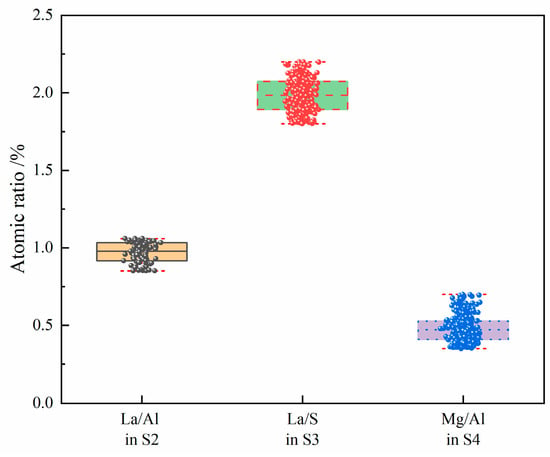
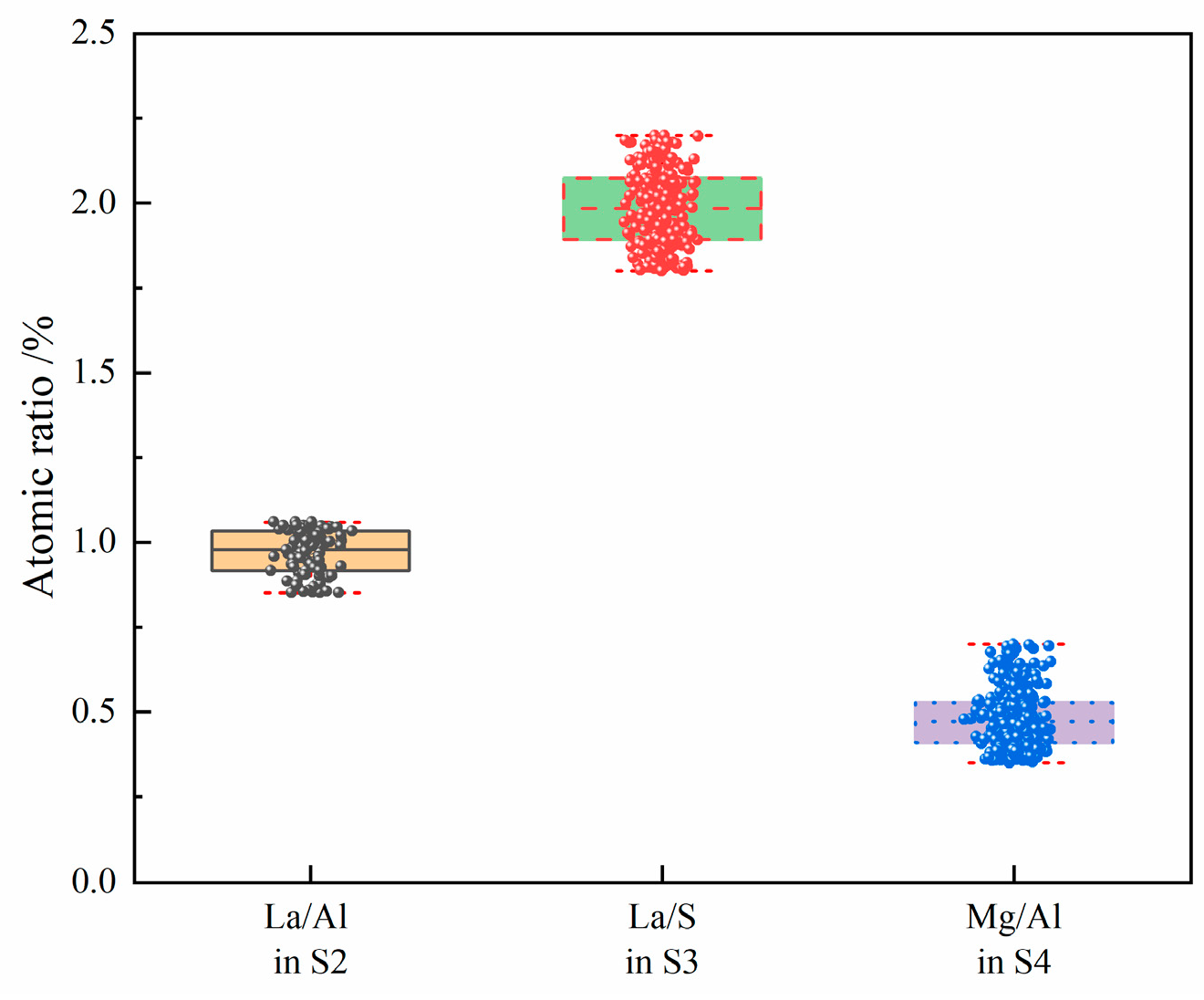
To further identify the exact inclusion types, the atomic ratios of La/Al, La/S, and Mg/Al in the low-La-treated steel, high-La-treated steel, and low-Mg-treated steel were statistically analyzed, and the results are presented in Figure 3. In the low-La-treated steel, the atomic ratio of La to Al is close to 1:1; in the high-La-treated steel, the atomic ratio of La to S is approximately 2:1; and in the low-Mg-treated steel, the atomic ratio of Mg to Al is close to 1:2. Based on the elemental composition and atomic ratio analysis, the inclusions in these steels can therefore be identified as LaAlO3, La2O2S and MgAl2O4, respectively.
Figure 3.
Statistical distribution of atomic ratios for inclusions in the low-La-treated, high-La-treated, and low-Mg-treated steels.
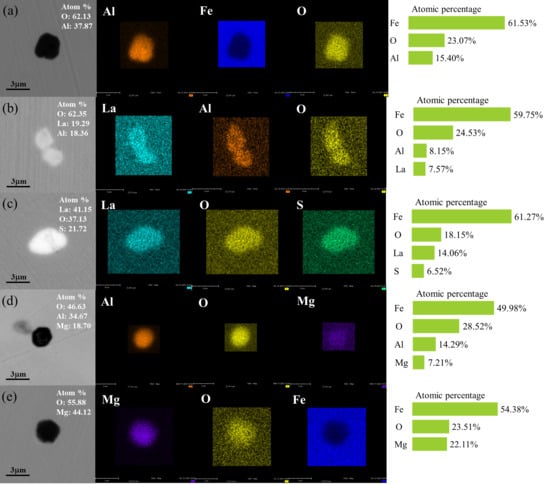
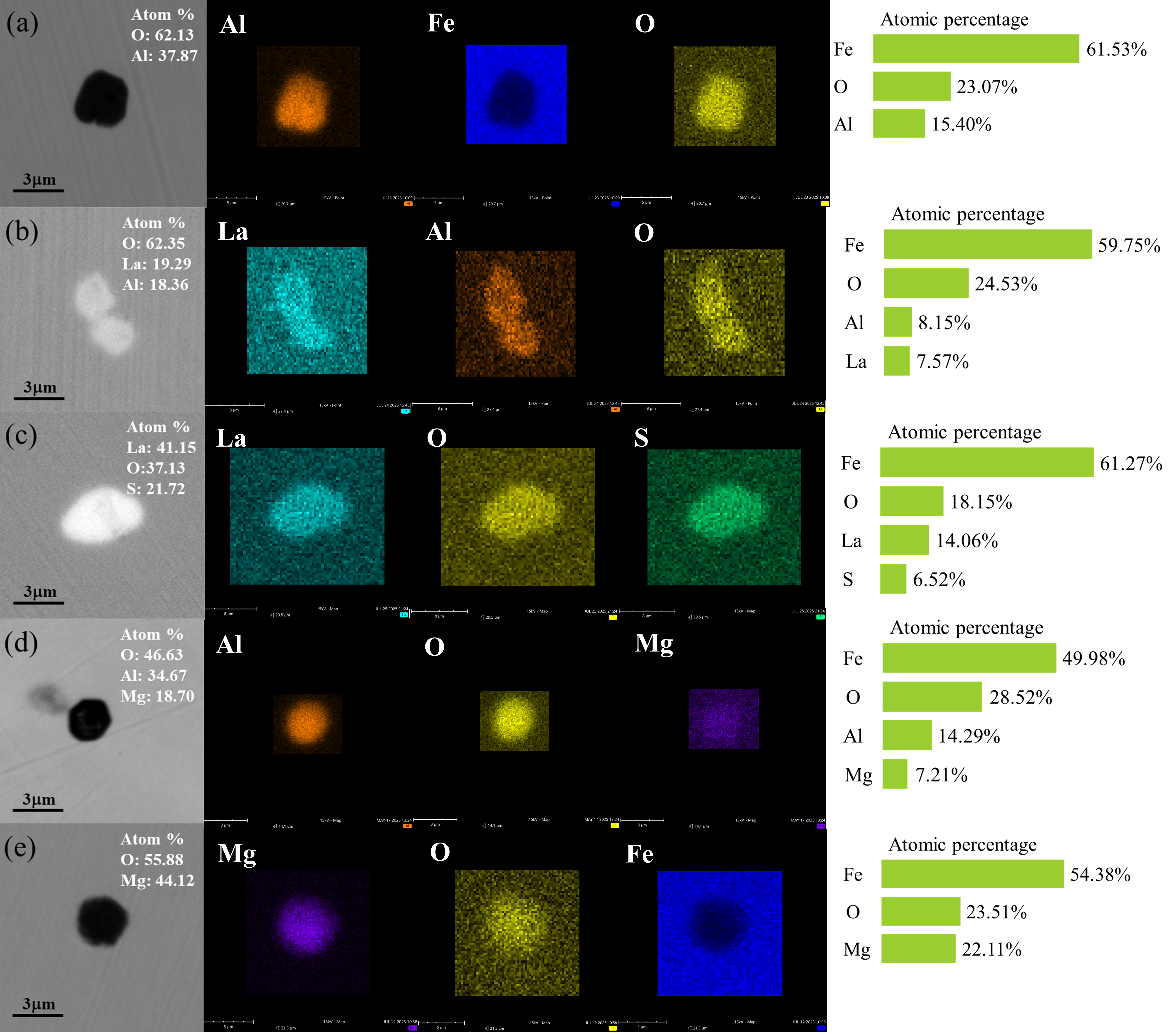
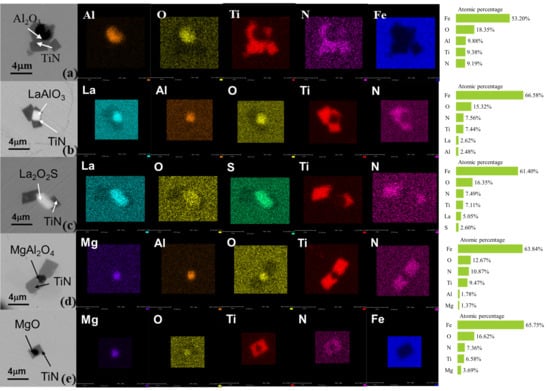
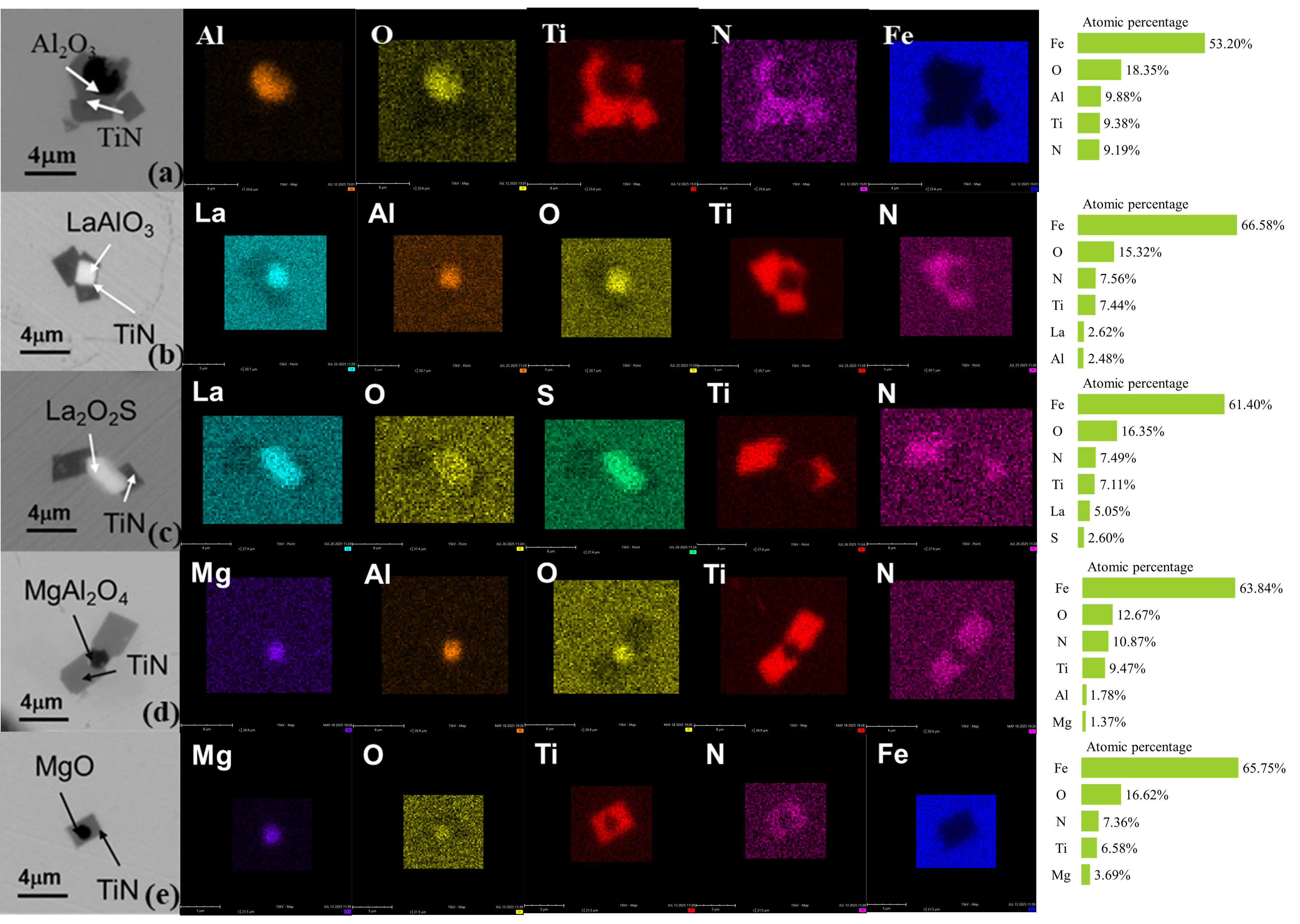
After the addition of La or Mg, approximately 0.5% Ti was added into the melt. Within 5 min of titanium addition, TiN and oxide-TiN complex inclusions became the dominant forms, with a minor fraction of oxides remaining. Figure 4 shows the morphologies and compositions of oxide-TiN complex inclusions. It can be seen that the cores of TiN complex inclusions were identified as irregular Al2O3, square-shaped LaAlO3 and La2O2S, and approximately spherical MgAl2O4 and MgO in the Al-deoxidized steel, low-La-treated steel, high-La-treated steel, low-Mg-treated steel, and high-Mg-treated steel, respectively. The shells of these complex inclusions were angular TiN. It is worth noting that Al2O3, LaAlO3, MgO, and MgAl2O4 inclusions were all completely enveloped by TiN inclusions, whereas La2O2S inclusions were only partially covered. In addition, a number of isolated La-O-S inclusions were also observed in the high-La-treated steel. Meanwhile, with increasing holding time, no obvious changes were observed in either the morphology or chemical composition of the inclusions.
Figure 4.
Morphology of inclusions and elemental mapping with corresponding compositional statistics of inclusion-containing regions after deoxidization alloy addition: (a) Al-deoxidized; (b) 0.0032% La; (c) 0.03% La; (d) 0.0028% Mg; (e) 0.0062% Mg.
3.2. Inclusion Size and Number Density
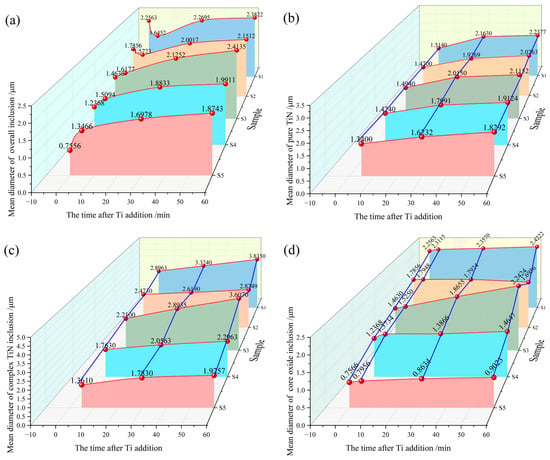
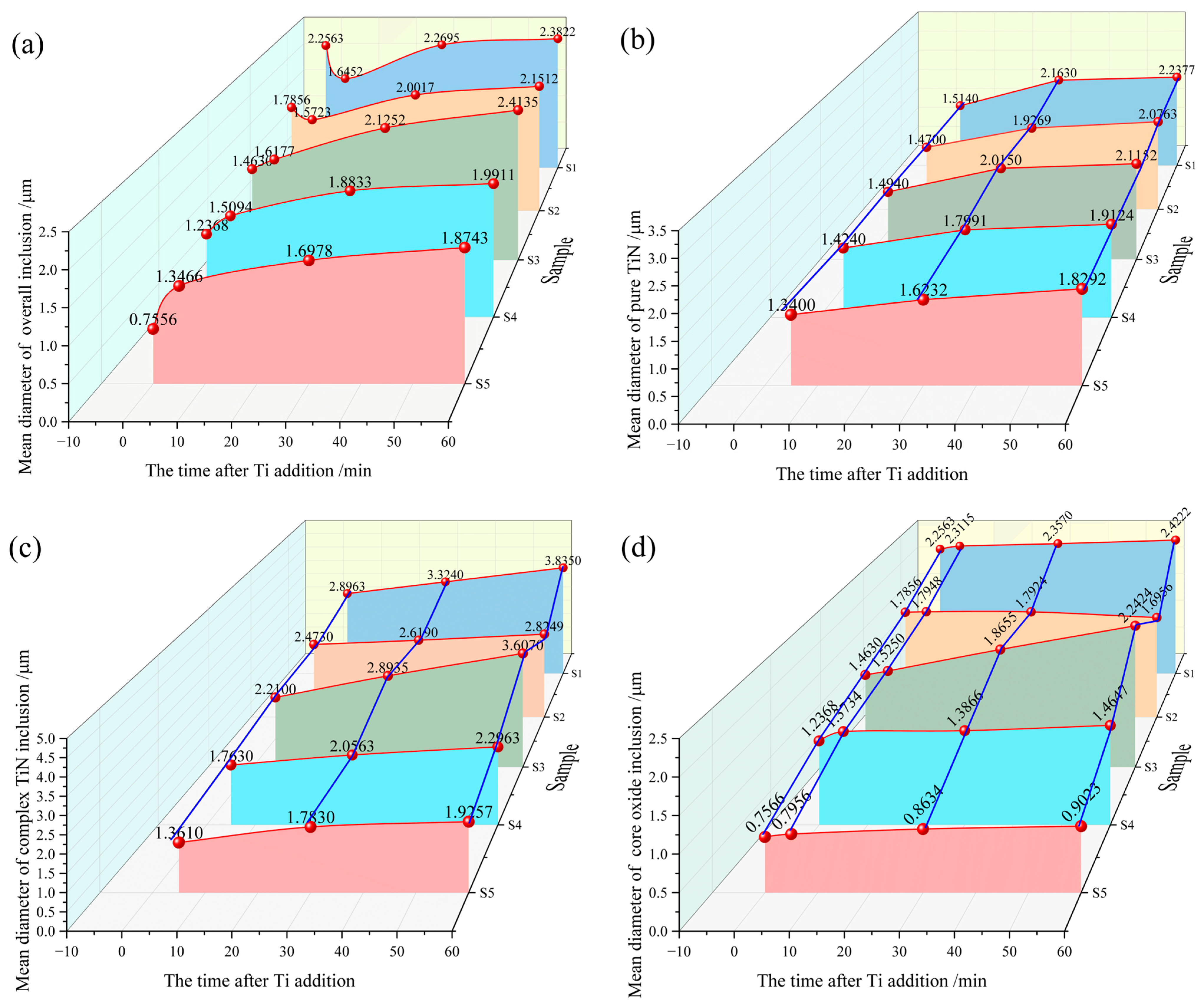
The size and number density of inclusions are key factors influencing the mechanical properties of steel. Figure 5a shows the evolution of the mean size of overall inclusions in the molten steel throughout the entire process, from deoxidation to Ti alloying and subsequent holding. Before Ti addition, oxide or oxysulfide inclusions were precipitated in the steel, and their mean size increased in the following order: MgO < MgAl2O4 < La2O2S < LaAlO3 < Al2O3 [22,33]. This result is consistent with previous studies. After 5 min of Ti addition, different trends in the mean size of overall inclusions were observed among the samples. For the Mg-treated steels and the high-La-treated steel, the mean size of overall inclusions increased, whereas it decreased in the low-La-treated steel and the Al-deoxidized steel. With the further prolongation of holding time, the overall inclusion size in all samples showed a gradual growth trend. Notably, throughout the entire holding period following the Ti treatment, the overall inclusion sizes in the low-La-treated steel, low-Mg-treated steel, and high-Mg-treated steel remained consistently smaller than that in the Al-deoxidized steel. This indicates that an appropriate La or Mg treatment can effectively refine the inclusions in high-titanium wear-resistant steel, with the Mg treatment exhibiting a more pronounced refinement. However, for the high-La-treated steel, containing 0.03% La, although the initial mean inclusion size was smaller than that in Al-deoxidized steel, its inclusion size grew rapidly as the holding time extended, eventually surpassing that of the Al-deoxidized steel.
Figure 5.
The size variation of inclusions in high-titanium wear-resistant steel under different treatment conditions over time: (a) overall inclusions after deoxidizing alloy addition; (b) pure TiN inclusions after Ti addition; (c) oxide-TiN complex inclusions after Ti addition; (d) core oxide inclusions after deoxidizing alloy addition.
To further clarify the reasons for these differences, the evolution of size of pure TiN and complex TiN inclusions was analyzed. As shown in Figure 5b, except for the Mg-treated steels, the sizes of pure TiN inclusions in the other steels are relatively large. Regarding the complex TiN inclusions, as shown in Figure 5c, their mean sizes followed the order at 5 min after Ti addition: MgO-TiN < MgAl2O4-TiN < La2O2S-TiN < LaAlO3-TiN < Al2O3-TiN. It is worth noting that after holding for 30 min, the size of La2O2S-TiN complex inclusions continued to increase and gradually became comparable to that of Al2O3-TiN inclusions. Regarding the size of the core oxide inclusions, as shown in Figure 5d, the mean size of the core inclusions within the complex inclusions remained relatively stable across the samples, with the notable exception of the high-La-treated steel, which exhibited a significant increase in the size of the core oxides within its complex TiN inclusions.
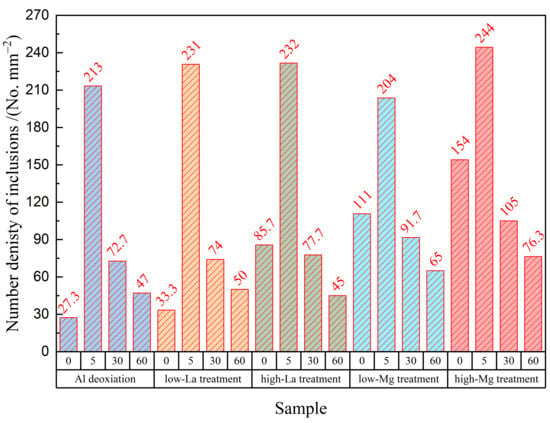
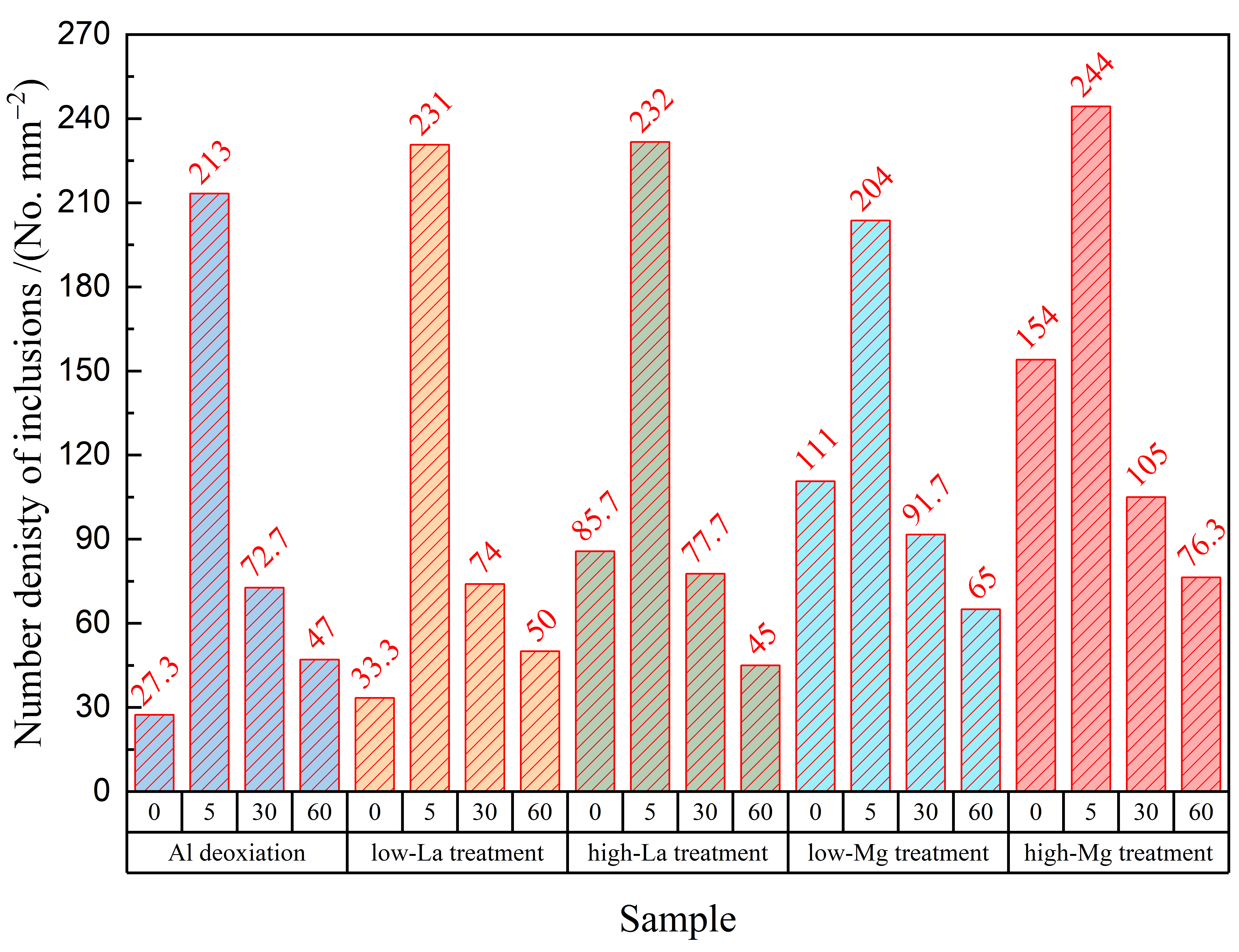
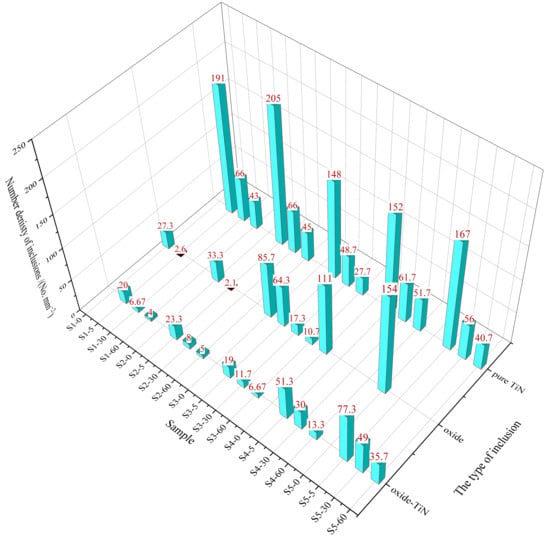
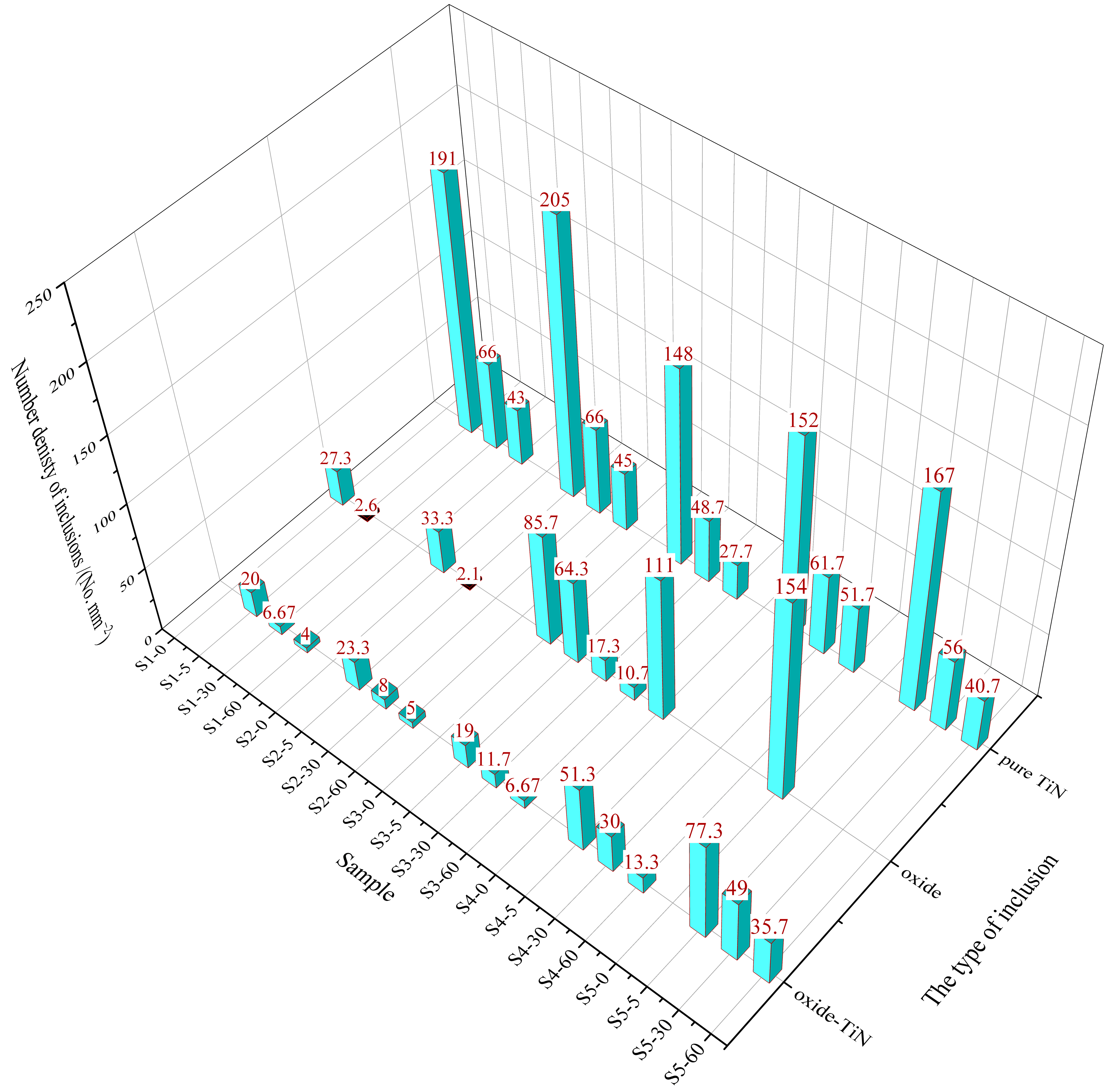
Figure 6 shows the variation in the number density of overall inclusions with the holding time under different treatment conditions. Before Ti addition, the inclusions in the steel were oxide or oxysulfide, and their number density increased in the following order: Al2O3 < LaAlO3 < La2O2S < MgAl2O4 < MgO. After Ti alloying, the number density of overall inclusions in all steels increased significantly. With prolonged holding time, the number density gradually decreased due to the growth and flotation of inclusions. However, the Mg-treated steel maintained a relatively high inclusion number density throughout the Ti treatment process, indicating that Mg treatment is more favorable for obtaining a high number-density distribution and a finely dispersed inclusion distribution. Figure 7 further shows the variation in the number density of different types of inclusions. In the Al-deoxidized steel and low-La-treated steel, the number density of oxide inclusions formed before Ti alloying was relatively low, resulting in a limited number of heterogeneous nucleation sites for TiN. Consequently, the number density of individual TiN inclusions was relatively high in these steels. In contrast, in the Mg-treated steels, a number of complex TiN inclusions formed due to the higher number density of pre-existing oxides and the relatively low mismatch between Mg-containing inclusions and TiN. For the high-La-treated steel (S3), the variation of inclusion number density was more complex. A certain amount of La-O-S inclusions existed throughout the entire process. Although the number of such inclusions was relatively high before Ti alloying, the number density of complex TiN inclusions was lower than that in other steels. With an increased holding time, the number density of all three types of inclusions showed a decreasing trend. Combined with the previously observed partially encapsulated morphology of La2O2S-TiN complex inclusions, it can be inferred that the isolated La2O2S inclusions in the steel may agglomerate and coalesce with the core oxide in the complex inclusions or that some fine La2O2S inclusions may first dissolve locally and then re-precipitate and grow on the surfaces of the core inclusions. As both the core oxides and the shell inclusions continued to grow, the mean size of the La2O2S-TiN complex inclusions gradually increased to a size comparable to that of the Al2O3-TiN complex inclusions.
Figure 6.
Evolution of number density for overall inclusions in different samples with holding time after Ti addition.
Figure 7.
Evolution of number density for various types of inclusions in different samples with holding time after Ti addition.
4. Discussion
4.1. Thermodynamic Calculation of the Formation of Inclusions
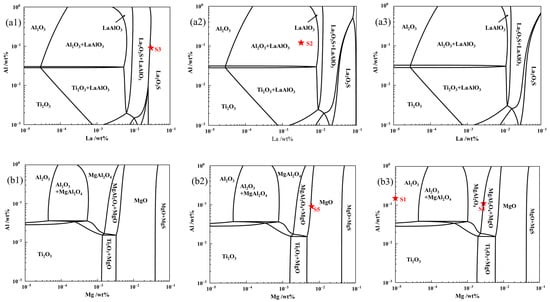
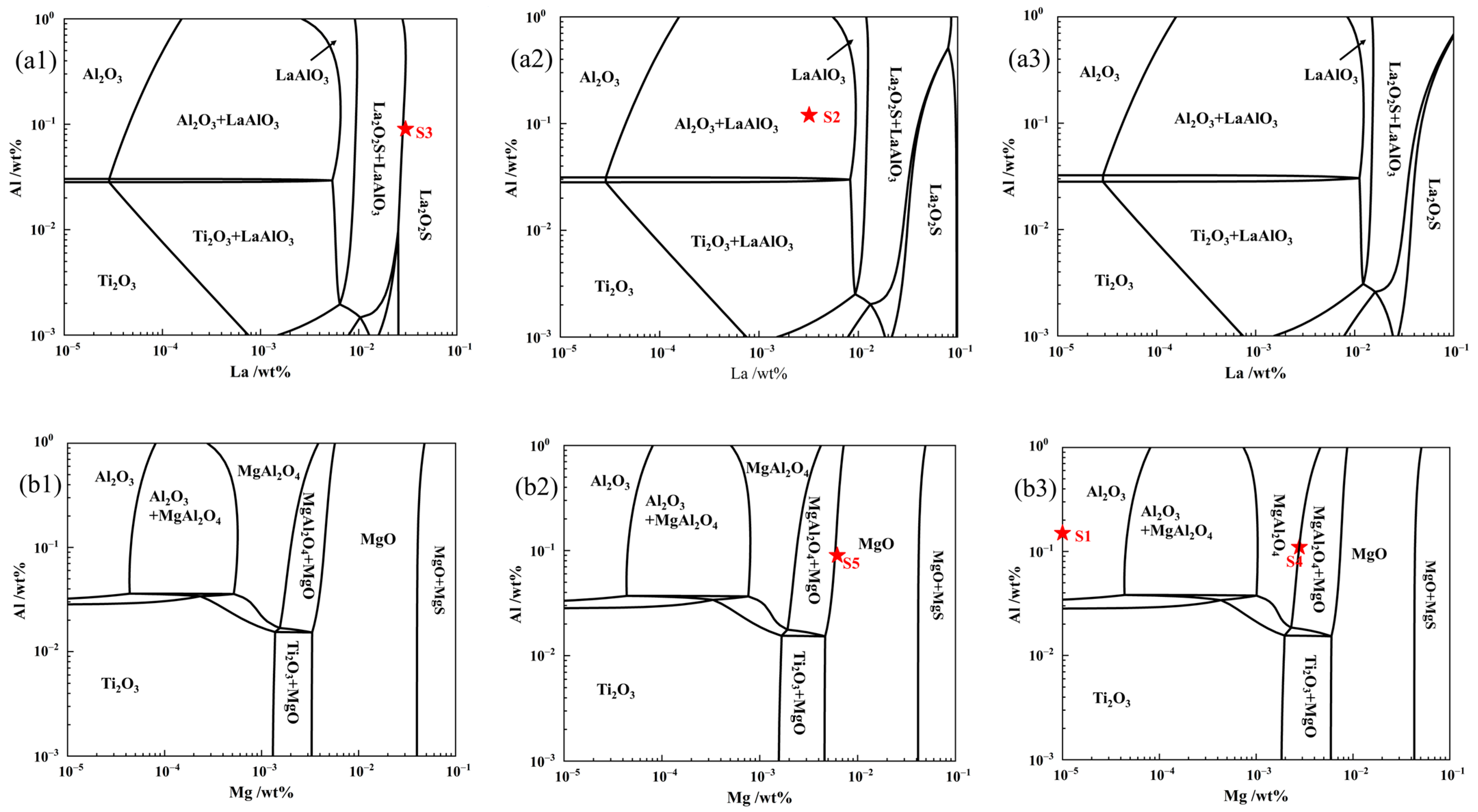
In order to investigate the evolution of oxide inclusions in high-titanium wear-resistant steel, the stability phase diagrams in Fe—0.3% C—1% Mn—0.003% S—0.5% Ti-La-Al-O and Fe—0.3% C—1% Mn—0.003% S—0.5% Ti-Mg-Al-O at 1600 °C were calculated with the Phase Diagram module in FactSage 8.4 using the FactPS, FToxid and FSstel databases. Figure 8(a1–a3) show the inclusions stability diagrams for the La-treated steel at oxygen levels of 30, 40 and 50 ppm. As La content increases, the inclusion transition is as follows: Ti2O3→LaAlO3/La2O3→La2O2S under low Al content, and Al2O3→LaAlO3→La2O2S under high Al content. Moreover, with increasing oxygen content, the regions of La2O2S and La2O3 inclusions expand. Figure 8(b1–b3) show the inclusions stability diagrams for the Mg-treated steel at oxygen levels of 30, 40 and 50 ppm. As Mg content increases, the inclusion transition is as follows: Ti2O3→MgO→MgS under low Al conditions, and Al2O3→MgAl2O4→MgO→MgS under high Al conditions. The compositions of the experimental steels are calibrated in Figure 8, as indicated by the red stars. Obviously, the inclusions corresponding to the Al-deoxidized steel, low-La-treated steel, high-La-treated steel, low-Mg-treated steel, and high-Mg-treated steel are Al2O3, LaAlO3-Al2O3, La2O2S, MgAl2O4, and MgO, respectively.
Figure 8.
Calculated inclusion stability diagrams of the high-titanium wear-resistant steel at 1600 °C: (a) Fe—1% Mn—0.003% S—0.3% C—0.5% Ti-La-Al-O system ((a1) 30ppm O, (a2) 40 ppm O, (a3) 50 ppm O); (b) Fe—1% Mn—0.003% S—0.3% C—0.5% Ti-Mg-Al-O system ((b1) 30 ppm O, (b2) 40 ppm O, (b3) 50 ppm O).
Thereafter, N was introduced into the calculations to evaluate the precipitation of TiN inclusions in the steel under different treatments. Due to the lack of thermodynamic data for the La-Ti-N complex system, the Wagner model was used to analyze the precipitation of TiN. The relevant reaction is shown in Equation (1), the reaction equilibrium constant KTiN was calculated according to Equation (2), and the activity interaction coefficients fi were obtained from Equation (3) [34].
where denotes the Gibbs free energy of formation of TiN inclusions and K represents the equilibrium constant of the reaction. aTiN, aTi, and aN are the activities of TiN, Ti, and N in molten steel, respectively, while wt% Ti and wt% N correspond to the concentrations of Ti and N in the molten steel. represents the first-order activity interaction coefficient of component i with respect to component j, whose corresponding values are listed in Table 2.
Table 2.
The interaction coefficient of component at 1600 °C adapted from [34,35,36,37,38,39].
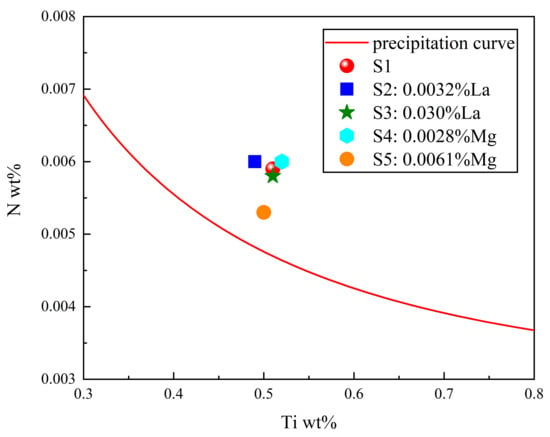
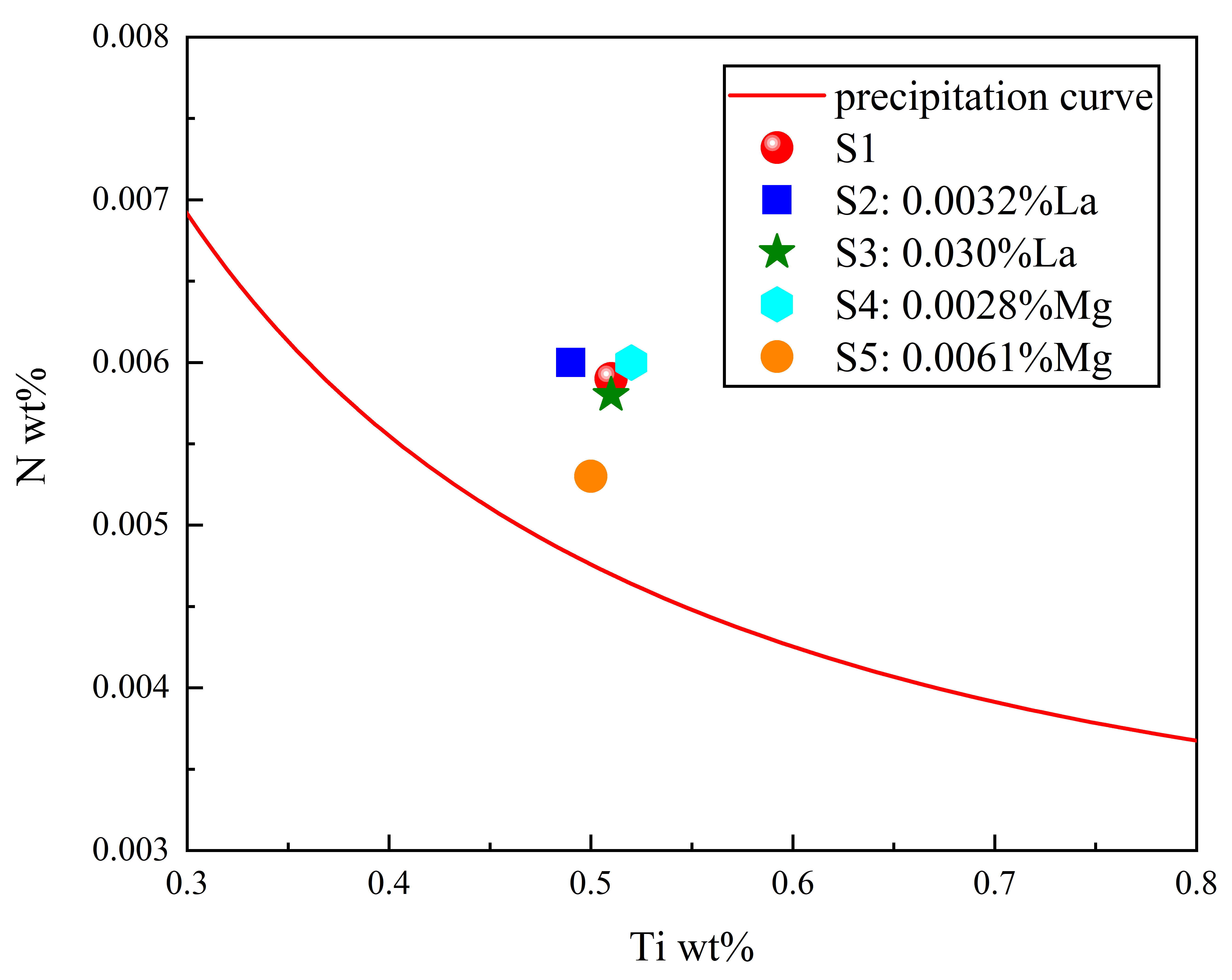
Before the calculation, the dissolved contents of Al, La, and Mg in molten steel at 1600 °C were determined using FactSage. The results showed that Al2O3 inclusions formed in S1 steel, with a dissolved Al content of 0.14758%. In low-La-treated steel, La–Al–O inclusions were formed, and the dissolved contents of La and Al were 1.983 × 10⁻⁷% and 0.1176%, respectively. In the high-La-treated steel, La2O2S inclusions were formed, with a dissolved La content of 6.4834 × 10⁻⁴%. In the low-Mg-treated steel, Mg–Al–O inclusions were formed, and the dissolved contents of Mg and Al were 2.4092 × 10⁻⁴% and 0.1078%, respectively. In the high-Mg-treated steel, MgO inclusions were formed, with a dissolved Mg content of 3.1442 × 10⁻⁴%. Based on these data, the calculated results are shown in Figure 9. As the Ti content increased, the critical N content required for TiN precipitation gradually decreased. Although a previous study showed that the addition of La can suppress the precipitation of TiN inclusions [29], the actual dissolved contents of La and Mg in the molten steel were low due to the preferential consumption of O, making their influence on TiN precipitation limited. It is worth noting that TiN inclusions could precipitate in the molten steel at 1600 °C in all tested steels, which is consistent with the findings of Yuan et al. [4].
Figure 9.
Equilibrium precipitation curve of TiN inclusions in high-titanium wear-resistant steel at 1600 °C.
4.2. Heterogeneous Nucleation of TiN Inclusions
Although TiN inclusions in all experimental steels precipitated in the molten steel, their sizes were markedly influenced by the treatment conditions. To clarify this difference, the two-dimensional mismatch degree between TiN and various oxides was calculated based on the method proposed by Bramifitt [40], as shown in Equation (4). The lattice parameters used in these calculations are listed in Table 3.
where (hkl)s is the low-index plane of the substrate; [uvw]s is a low-index direction in (hkl)s; (hkl)n is the low-index plane of the nucleate phase; [uvw]n is a low-index direction in (hkl)n; is the interatomic distance between nonmetallic elements along [uvw]s; is the interatomic distance between nonmetallic elements along [uvw]n; and θ is the angle between [uvw]s and [uvw]n.
Table 3.
The crystal structure parameters of inclusions.
The calculated results are summarized in Table 4. The mismatch degree between various oxides and TiN inclusions follows the order: MgO < MgAl2O4 < Al2O3 < LaAlO3. When the mismatch degree between the oxide and TiN is less than 12%, the oxide readily serves as a nucleation core for TiN inclusions, and this effect is enhanced when the value is less than 6%. In contrast, when the mismatch degree exceeds 12%, oxides rarely act as nucleation cores. Based on these results, MgO is the most favorable nucleation core for TiN inclusions, followed by MgAl2O4, Al2O3, and LaAlO3, while La2O2S exhibits only a weak tendency to act as a nucleation site. These findings are consistent with previously reported results in the literature [24,29,45].
Table 4.
Mismatch degree calculation table/%.
Based on the thermodynamic calculations and mismatch degree, the possible mechanisms by which La and Mg treatments refine TiN inclusions in high-titanium wear-resistant steel are summarized as follows.
In the case of Mg treatment, the addition of Mg to molten steel leads to the formation of numerous Mg-containing inclusions. Owing to the low mismatch degree between Mg-containing inclusions and TiN, TiN preferentially nucleates on the surfaces of Mg-containing inclusions. The resulting high nucleation rate effectively suppresses the growth of both complex and pure TiN inclusions, thereby refining the TiN inclusions. For Al2O3 and LaAlO3 inclusions, although they can serve as heterogeneous nucleation sites for TiN inclusions, their relatively large size and low number density limit the number of effective nucleation cores available for TiN precipitation. As a result, the formed TiN inclusions tend to exhibit a relatively low number density but a comparatively large individual size. In addition, because Al2O3 inclusions possess the largest size among the inclusions considered, the complex inclusions with Al2O3 as the core are generally larger than those associated with other inclusion types. For La2O2S inclusions, their smaller size and higher number density result in the formation of finer TiN inclusions at the initial stage when they act as nucleation cores. However, owing to the relatively large mismatch between La2O2S and TiN, a considerable number of isolated La2O2S inclusions remain in the steel without participating in the formation of complex inclusions. During subsequent holding, these isolated La2O2S inclusions may agglomerate and coalesce with the core oxides in the complex inclusions, or some fine La2O2S inclusions may first undergo local dissolution and then re-precipitate and grow on the surfaces of the core inclusions. Consequently, the La2O2S-TiN complex inclusions continue to grow during the subsequent holding process due to the concurrent growth of the core oxides and the TiN inclusions.
4.3. Evolution Mechanism of Inclusions
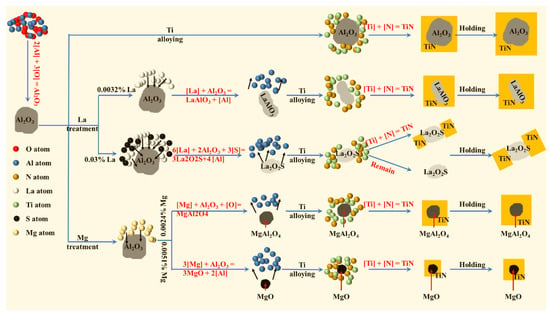
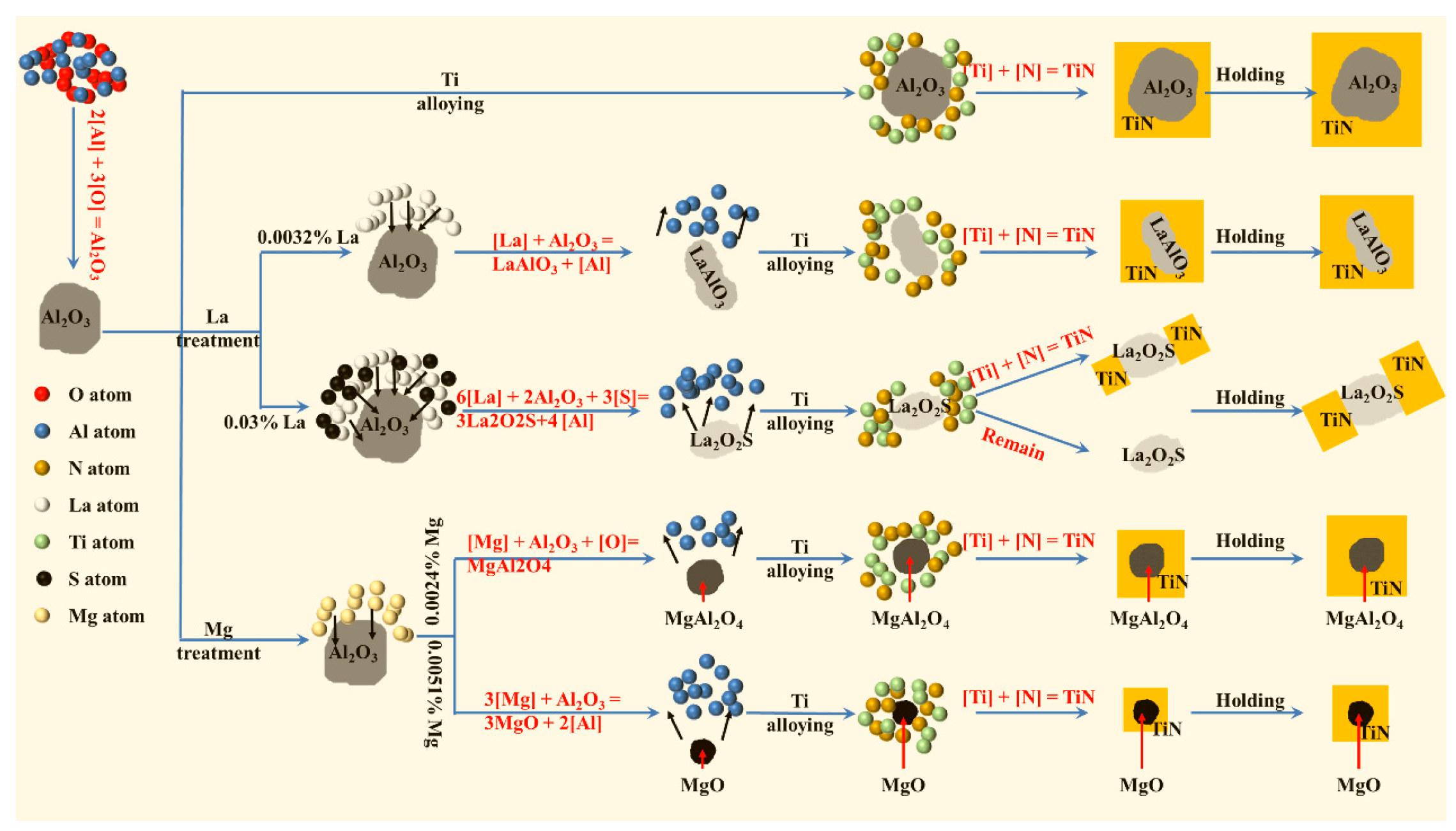
Based on the thermodynamic calculations and high-temperature simulation experiments, the evolution mechanism of inclusions in high-titanium wear-resistant steel under different treatments is shown in Figure 10. The evolution mainly involves the formation and modification of oxide inclusions, followed by the precipitation and growth of TiN inclusions.
Figure 10.
Schematic diagrams of the evolution mechanism of inclusions in high-titanium wear-resistant steel with different treatments.
After Al deoxidation, dissolved Al first reacts with oxygen in molten steel to form Al2O3 inclusions:
During the subsequent Ti treatment, thermodynamic calculations indicated that the relatively high Al content consumes the dissolved oxygen, thereby suppressing the Ti oxidation. Therefore, Ti preferentially reacts with dissolved N to form TiN inclusions:
Owing to the low mismatch between TiN and Al2O3, Ti and N atoms tend to enrich at the surface of Al2O3 inclusions and results in the formation of Al2O3-TiN complex inclusions. With prolonged holding time, TiN not only continues to precipitate and grow on these core inclusions but may also undergo collision and coalescence. In addition, some solute components may experience local dissolution and re-precipitation, and these processes jointly promote a further increase in inclusion size.
When 0.0032% La is added into the molten steel, La modifies Al2O3 inclusions into smaller LaAlO3 inclusions, which can be expressed as follows:
During the subsequent Ti treatment, Ti and N atoms enrich on the surface of LaAlO3 inclusions and react according to Equation (6), resulting in the formation of LaAlO3-TiN complex inclusions. With prolonged holding time, similar to Al-deoxidized steel, these complex inclusions continue to grow. However, due to the smaller size of the core oxide, the resulting TiN complex inclusions also exhibit a smaller size. Therefore, appropriate La addition is beneficial for inclusion refinement.
When the La addition increases to 0.03%, the Al2O3 inclusions are modified into La2O2S inclusions. The formation reaction can be expressed as follows:
After Ti alloying, Ti and N atoms similarly enrich on the surface of La2O2S inclusions. However, due to the high mismatch between La2O2S and TiN, La2O2S inclusions cannot all serve as ideal heterogeneous nucleation cores for TiN, even though these oxysulfide inclusions are smaller in size and higher in number density. Therefore, during Ti alloying, in addition to La2O2S-TiN complex inclusions, a certain amount of isolated La2O2S inclusions remains in the molten steel. During the subsequent holding process, these isolated La2O2S inclusions may collide and coalesce with existing composite inclusions or partially dissolve and then re-precipitate on the surfaces of composite inclusion cores, resulting in an increase in the size of the oxysulfide cores. Consequently, under high-La treatment conditions, both TiN and La2O2S inclusions tend to grow simultaneously, causing the overall inclusion size to gradually approach that observed in the Al-deoxidized steel. Therefore, excessive La addition is unfavorable for the effective refinement of TiN inclusions. During the subsequent holding process, these isolated La2O2S inclusions may either collide with the cores of composite inclusions or re-dissolve and then re-precipitate on the surfaces of the composite inclusion cores, thereby leading to a further increase in the size of the oxysulfide core. Therefore, under high-La treatment conditions, both the TiN inclusions and La2O2S inclusions increase simultaneously, causing the overall inclusion size to gradually approach that of the Al-deoxidized steel.
As for Mg treatment, the initially formed Al2O3 inclusions are modified into Mg-bearing inclusions, which are characterized by high number density and small size. When 0.0028% Mg is added, it is mainly MgAl2O4 inclusions that are formed, whereas MgO inclusions are formed when the Mg content increases to 0.0062%. The corresponding reactions can be expressed as:
Due to the low mismatch between TiN and the numerous finely dispersed Mg-bearing inclusions, Ti and N atoms can readily enrich on their surfaces during Ti alloying and react according to Equation (6). Consequently, a large number of TiN nucleation and precipitation events occur on Mg-bearing inclusions, forming MgAl2O4-TiN and MgO-TiN complex inclusions. These complex inclusions also continue to grow during the holding process.
In summary, different treatments have significant effects on the size of TiN inclusions in high-titanium wear-resistant steel. High-Mg treatment promotes the formation of fine and well-dispersed MgO inclusions, which serve as effective heterogeneous nucleation cores for TiN and thus exhibit the most pronounced refining effect on TiN inclusions. An appropriate La addition mainly leads to the formation of LaAlO3 inclusions, which can also reduce the size of TiN-bearing composite inclusions to some extent, although the refining effect is weaker than that of Mg treatment. In contrast, the La2O2S inclusions formed under high-La conditions show a relatively high mismatch with TiN, making them less effective as nucleation cores for TiN and therefore unfavorable for the effective refinement of TiN inclusions in high-titanium wear-resistant steel.
5. Conclusions
The influence of La and Mg additions on the precipitation of TiN inclusions in high-titanium wear-resistant steel was investigated based on high-temperature simulation experiments and thermodynamic calculations. The main conclusions are as follows:
- (1)
- According to thermodynamic calculations, the progression of oxide inclusions in high-titanium wear-resistant steel is as follows: during Al→Mg treatment, they follow the sequence Al2O3→MgAl2O4→MgO with increasing Mg content; during La treatment, they follow the sequence Al2O3→LaAlO3→La2O2S→La2S3 with increasing La content. It is also shown that TiN inclusions precipitate in the molten steel.
- (2)
- The size of TiN inclusions increased with prolonged holding time in all steels. After holding for 60 min following Ti addition, the mean sizes of overall inclusions and complex TiN inclusions in the Al-deoxidized steel were 2.3882 μm and 3.8350 μm, respectively. Under 0.0032% La treatment, these values decreased to 2.1512 μm and 2.8749 μm, which can be attributed to the smaller size and higher number density of LaAlO3 inclusions compared with Al2O3. When the La content increased to 0.03%, Al2O3 was transformed into La2O2S, and the corresponding values increased to 2.4135 μm and 3.6076 μm, respectively. This is because the relatively high mismatch between La2O2S and TiN led to the retention of isolated La2O2S and partially encapsulated La2O2S-TiN inclusions, which results in the simultaneous growth of the TiN and the oxysulfide during holding.
- (3)
- With increasing Mg content, the inclusion type changed from Al2O3 to MgAl2O4 and then to MgO. After holding for 60 min following Ti addition, the mean size of inclusions decreased to 1.9911 μm and 1.8743 μm, while the mean size of complex TiN inclusions decreased to 2.2963 μm and 1.9257 μm under 0.0028% Mg and 0.0062% Mg treatments, respectively. Meanwhile, the total number density of inclusions increased to 65 No./mm2 and 76.3 No./mm2, and that of TiN-bearing composite inclusions increased to 13.3 No./mm2 and 35.7 No./mm2, respectively. Therefore, Mg treatment, especially high-Mg treatment that promotes MgO formation, is more effective than La treatment in refining TiN inclusions in high-titanium wear-resistant steel.
Author Contributions
Conceptualization, J.Z., Y.W. and M.J.; Methodology, J.Z. and C.K.; Software, C.L. and M.J.; Validation, J.Z., C.K. and Y.W.; Formal analysis, C.L. and M.J.; Investigation, C.K. and M.J.; Resources, Y.W., C.L. and M.J.; Data curation, J.Z., C.K. and Y.W.; Writing—original draft, J.Z. and C.K.; Writing—review & editing, Y.W., C.L. and M.J.; Visualization, M.J.; Supervision, C.L.; Project administration, C.L. and M.J.; Funding acquisition, Y.W., C.L. and M.J. All authors have read and agreed to the published version of the manuscript.
Funding
The authors would like to acknowledge the support of National Natural Science Foundation of China (52404344), National Natural Science Foundation of China (52174383), and National Special Support Program for High-Level Talents of China (Ten-Thousand Talents Plan) [Grant No. ZX20240760].
Data Availability Statement
The original contributions presented in this study are included in the article. Further inquiries can be directed to the corresponding authors.
Conflicts of Interest
The authors declare no conflict of interest.
References
- Deng, Y.; Liu, H.; Zhang, M.; Zhang, X.; Wang, Q.; He, S. Wettability between titanium-containing steels and TiN ceramic substrate. J. Iron Steel Res. Int. 2023, 30, 677–686. [Google Scholar] [CrossRef] [Scilit]
- Liu, L.; Liang, X.; Liu, J.; Sun, X. Precipitation process of TiC in low alloy martensitic steel and its effect on wear resistance. ISIJ Int. 2020, 60, 168–174. [Google Scholar] [CrossRef] [Scilit]
- Huang, L.; Deng, X.; Li, C.; Jia, Y.; Wang, Q.; Wang, Z. Effect of TiC particles on three-body abrasive wear behaviour of low alloy abrasion-resistant steel. Wear 2019, 434–435, 202971. [Google Scholar] [CrossRef] [Scilit]
- Yuan, H.; Chen, X.; Li, L.; Chen, X.; Zhong, H.; Zhai, Q. Precipitation behavior of TiN during the solidification of high-titanium steel. Metall. Mater. Trans. B 2024, 55, 2750–2764. [Google Scholar] [CrossRef] [Scilit]
- Zhou, J.; Liu, C.; Wang, Y.; Liang, Z.; Liu, Z. Agglomeration behaviors of different types of complex TiN inclusions in high titanium wear resistant steel. J. Mater. Res. Technol. 2024, 30, 6552–6562. [Google Scholar] [CrossRef] [Scilit]
- Nunnington, R.; Sutcliffe, N. The steelmaking and casting of Ti stabilized stainless steels. In Proceedings of the 59th Electric Furnace Conference and 19th Process Technology Conference, Phoenix, AZ, USA, 11–14 November 2001; pp. 361–394. [Google Scholar]
- Li, J.Y.; Cheng, G.G.; Chen, X.R.; Pan, J.X.; Ruan, Q. The formation mechanism of the clogging of submerged entry nozzle of Ti-bearing ultra pure ferrite stainless steel. Contin. Cast. 2019, 44, 44–52. [Google Scholar]
- Chen, Z.; Li, M.; Wang, X.; He, S.; Wang, Q. Mechanism of floater formation in the mold during continuous casting of Ti-stabilized austenitic stainless steels. Metals 2019, 9, 635. [Google Scholar] [CrossRef] [Scilit]
- Qu, T.; Zhang, C.; Wang, D.; Zhan, J.; Tian, J.; Hou, D. Effect of Mg–Ti treatment on nucleation mechanism of TiN inclusions and ferrite. Metals 2020, 10, 755. [Google Scholar] [CrossRef] [Scilit]
- Liu, D.; Song, S.; Xue, Z.; Zietsman, J.; Qi, J.; Deng, Z. Formation of TiN inclusions during solidification of titanium micro-alloyed steel: Modeling with ChemAppPy. Metall. Mater. Trans. B 2023, 54, 382–394. [Google Scholar] [CrossRef] [Scilit]
- Wu, H.; Li, X.; Wang, Z.; Liu, W. Effect of TiN on sulfide morphology of non-quenched and tempered steel. Metals 2022, 12, 1402. [Google Scholar] [CrossRef] [Scilit]
- Liu, D.; Wang, Z.; Liu, J.; Wang, Z.; Zuo, X. Study of the fracture behavior of TiN and TiC inclusions in NM550 wear-resistant steel during the tensile process. Metals 2022, 12, 363. [Google Scholar] [CrossRef] [Scilit]
- Yuan, J.; Xiao, Y.; Min, N.; Li, W.; Zhao, S. The influence of precipitate morphology on the growth of austenite grain in Nb-Ti-Al microalloyed steels. Materials 2022, 15, 3176. [Google Scholar] [CrossRef] [Scilit]
- Lucas, E.; Drillet, P.; Boi, G. TiN formation in steels depending on titanium and nitrogen. Metall. Res. Technol. 2019, 116, 516. [Google Scholar] [CrossRef] [Scilit]
- Yan, W.; Shan, Y.Y.; Yang, K. Effect of TiN inclusions on the impact toughness of low-carbon microalloyed steels. Metall. Mater. Trans. A 2006, 37, 2147–2158. [Google Scholar] [CrossRef] [Scilit]
- Gui, L.; Long, M.; Zhang, H.; Chen, D.; Liu, S.; Wang, Q.; Duan, H.M. Study on the precipitation and coarsening of TiN inclusions in Ti-microalloyed steel by a modified coupling model. J. Mater. Res. Technol. 2020, 9, 5499–5514. [Google Scholar] [CrossRef] [Scilit]
- Zhang, M.; Sun, Y.; Zeng, J.; Feng, X.; Chen, T. Study on the evolution of TiC inclusions in high-titanium steel during the continuous casting and rolling process. Metall. Mater. Trans. B 2025, 56, 5286–5295. [Google Scholar] [CrossRef] [Scilit]
- Zhang, P.; Li, G.; Zhang, J.; Huo, X.; Liu, Y. Effects of refining slag basicity and vacuum treatment on the cleanliness of bearing steel. Vacuum 2024, 222, 112984. [Google Scholar] [CrossRef] [Scilit]
- Bai, X.; Sun, Y.; Zhang, Y. Transient evolution of inclusions during Al and Ti additions in Fe-20 mass pct Cr alloy. Metals 2019, 9, 702. [Google Scholar] [CrossRef] [Scilit]
- Park, J.S.; Lee, C.; Park, J.H. Effect of complex inclusion particles on the solidification structure of Fe-Ni-Mn-Mo alloy. Metall. Mater. Trans. B 2012, 43, 1550–1564. [Google Scholar] [CrossRef] [Scilit]
- Li, Y.; Cheng, G.; Lu, J.; Sun, J. Characteristics and formation mechanism of complex TiN inclusions in 20CrMnTi gear steel. ISIJ Int. 2022, 62, 2266–2275. [Google Scholar] [CrossRef] [Scilit]
- Wang, Y.; Liu, C. Effect of cerium and magnesium addition on evolution and particle size of inclusions in Al-killed molten steel. ISIJ Int. 2022, 62, 1852–1861. [Google Scholar] [CrossRef] [Scilit]
- Park, J.S.; Kim, D.H.; Park, J.H. TEM characterization of a TiN-MgAl2O4 epitaxial interface. J. Alloys Compd. 2017, 695, 476–481. [Google Scholar] [CrossRef] [Scilit]
- Qi, Z.; Wang, J.; Bai, Y.; Liu, W.; Yang, S.; Zhang, F.; Li, J. Effect of trace magnesium addition on TiN inclusions and microstructure in 20CrMnTi gear steel. Steel Res. Int. 2025, 96, 2400558. [Google Scholar] [CrossRef] [Scilit]
- Cao, L.; Wang, G.; Xiao, Y.; Yang, R. Effect of Mg addition on TiN inclusions in GCr15 bearing steel. J. Iron Steel Res. Int. 2022, 29, 925–938. [Google Scholar] [CrossRef] [Scilit]
- Xiao, Y.; Cao, L.; Wang, G.; Wei, J.; Sridhar, S. Formation and precipitation mechanism of TiN inclusion in Mg-treated GCr15 bearing steel. Metall. Mater. Trans. B 2022, 53, 916–930. [Google Scholar] [CrossRef] [Scilit]
- Liu, S.; Yang, F.; Liu, L.; Wang, J.; Peng, J.; Zhang, F.; An, S.L. Study on the effects of Al–Ce composite deoxidations on the modification behaviors of TiN inclusions in 20CrMnTi steel. J. Mater. Res. Technol. 2024, 29, 4863–4869. [Google Scholar] [CrossRef] [Scilit]
- Yang, S.; Tian, Q.; Yang, S.; Yi, K.W.; Liu, W.; Li, J.S.; Zhao, M.J. Study on the nucleation mechanism of carbonitrides on LaAlO3 in GH4742 superalloy. J. Mater. Res. Technol. 2023, 26, 5309–5320. [Google Scholar] [CrossRef] [Scilit]
- Li, B.; Zhu, H.; Zheng, Z.; Chen, J.; Zhao, J. Modification of nonmetallic inclusions by Ti and La complex treatment in high-Al transformation-induced plasticity steel. Steel Res. Int. 2023, 94, 2200566. [Google Scholar] [CrossRef] [Scilit]
- Xie, Y.; Song, M.; Zhu, H.; Li, J.; Ma, G.; Xue, Z. Effect of the addition orders of La, Ti and Mg on inclusions in steel AH36. Metall. Mater. Trans. B 2025, 56, 738–752. [Google Scholar] [CrossRef] [Scilit]
- Xie, Y.; Song, M.; Zhu, H.; Ma, G.; Li, J.; Xue, Z. Study on the formation of inclusions in Ti–La–Mg treated steel. Metall. Mater. Trans. B 2024, 55, 576–588. [Google Scholar] [CrossRef] [Scilit]
- Wang, X.; Li, H.; Liu, Z.; Liu, H.; Wang, G.; Luo, Z.; Zhan, F.; Chen, S.; Lyu, L. Effect of cooling rate on bending behavior of 6.5 wt.% Si electrical steel thin sheets fabricated by Strip casting and rolling. Mater. Charact. 2016, 111, 67–74. [Google Scholar] [CrossRef] [Scilit]
- Wang, Y.G.; Liu, C.J. Agglomeration characteristics of various inclusions in Al-killed molten steel containing rare earth element. Metall. Mater. Trans. B 2020, 51, 2585–2595. [Google Scholar] [CrossRef] [Scilit]
- Kim, W.Y.; Jo, J.O.; Chung, T.I.; Kim, D.S.; Pak, J.J. Thermodynamics of titanium, nitrogen and TiN formation in liquid iron. ISIJ Int. 2007, 47, 1082–1089. [Google Scholar] [CrossRef] [Scilit]
- Chen, J.X. Commonly Used Charts and Data Manual for Steelmaking, 2nd ed.; Metallurgical Industry Press: Beijing, China, 2010. [Google Scholar]
- Liu, Y.; Wu, W.; Liu, L.; Liu, M.; Li, Y. Thermodynamics behavior of titanium for BOF smelting bearing steel. J. Iron Steel Res. Int. 2006, 13, 74–78. [Google Scholar] [CrossRef] [Scilit]
- Song, M.; Xie, Y.; Zhu, H.; Ma, G.; Li, J.; Xue, Z. The formation of composite inclusions in Ti–La–Mg treated steel. Metall. Mater. Trans. B 2025, 56, 1218–1229. [Google Scholar] [CrossRef] [Scilit]
- The 19th Committee on the Steelmaking, The Japan Society for the Promotion of Science (Ed.) Steelmaking Data Sourcebook; Gordon and Breach Science Publishers: New York, NY, USA, 1998. [Google Scholar]
- Wang, C.; Verma, N.; Kwon, Y.; Tiekink, W.; Kikuchi, N.; Sridhar, S. A study on the transient inclusion evolution during reoxidation of a Fe–Al–Ti–O melt. ISIJ Int. 2011, 51, 375–381. [Google Scholar] [CrossRef] [Scilit]
- Bramfitt, B.L. The effect of carbide and nitride additions on the heterogeneous nucleation behavior of liquid iron. Metall. Trans. 1969, 1, 1970–1987. [Google Scholar]
- Fiquet, G.; Richet, P.; Montagnac, G. High-temperature thermal expansion of lime, periclase, corundum and spinel. Phys. Chem. Miner. 1999, 27, 103–111. [Google Scholar] [CrossRef] [Scilit]
- Pervushin, G.V.; Suito, H. Effect of primary deoxidation products of Al2O3, ZrO2, Ce2O3 and MgO on TiN precipitation in Fe-10 mass% Ni alloy. ISIJ Int. 2001, 41, 748–756. [Google Scholar] [CrossRef] [Scilit]
- Chakoumakos, B.C.; Schlom, D.G.; Urbanik, M.; Luine, J. Thermal expansion of LaAlO3 and (La,Sr)(Al,Ta)O3, substrate materials for superconducting thin-film device applications. J. Appl. Phys. 1998, 83, 1979–1982. [Google Scholar] [CrossRef] [Scilit]
- Zhukov, S.; Yatsenko, A.; Chernyshev, V.; Trunov, V.; Tserkovnaya, E.; Hblsii, J.; Baulés, P.; Schenk, H. Structural study of lanthanum oxysulfate (La2O2SO4). Mater. Res. Bull. 1997, 32, 43–50. [Google Scholar] [CrossRef] [Scilit]
- Hou, Y.; Ni, Z.; Li, G. The influence of alloying elements segregation on heterogeneous nucleation of TiN on Al2O3 and its local corrosion resistance. J. Mater. Res. Technol. 2024, 32, 338–346. [Google Scholar] [CrossRef] [Scilit]

Disclaimer/Publisher’s Note: The statements, opinions and data contained in all publications are solely those of the individual author(s) and contributor(s) and not of MDPI and/or the editor(s). MDPI and/or the editor(s) disclaim responsibility for any injury to people or property resulting from any ideas, methods, instructions or products referred to in the content. |
© 2026 by the authors. Licensee MDPI, Basel, Switzerland. This article is an open access article distributed under the terms and conditions of the Creative Commons Attribution (CC BY) license.