


Abstract
Against the backdrop of global climate warming and energy shortages, China proposed the “dual-carbon strategy” in 2020 to address climate change and promote ecological civilization. As a high-carbon emission industry, the iron and steel sector faces an urgent need to accelerate low-carbon transformation. In 2024, China’s crude steel production accounted for over 50% of the total global crude steel production, with the blast furnace–basic oxygen furnace route remaining the dominant process. As a natural iron-bearing raw material, lump ore features high iron grade and low cost, eliminating the requirements of high-temperature processing steps such as sintering or pelletizing. Therefore, increasing the proportion of lump ore in the blast furnace burden represents an effective approach to achieving energy conservation and emission reduction. However, constrained by technical constraints, the current utilization rate of natural lump ore in Chinese steel enterprises remains generally low. Research indicates that despite their higher iron content, lump ores exhibit deficiencies in metallurgical properties such as thermal shock resistance and softening–melting drip characteristics, limiting their large-scale application. Therefore, it is typically necessary to perform pre-treatment such as preheating before charging into the furnace. In actual blast furnace burden design, it is essential to balance metallurgical performance and economic considerations by appropriately combining lump ore with high-basicity sinter and pellets. This approach leverages high-temperature interactions among the burden materials to optimize the overall softening and melting behavior of the mixed charge, thereby ensuring smooth furnace operation while simultaneously advancing the low-carbon transition of the iron and steel industry.
1. Introduction
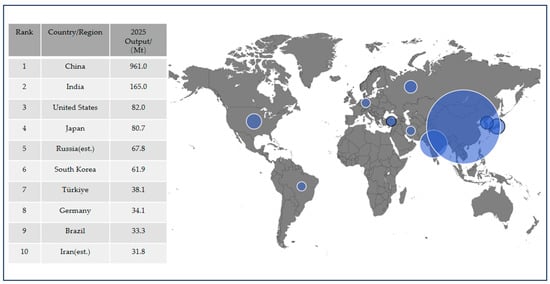
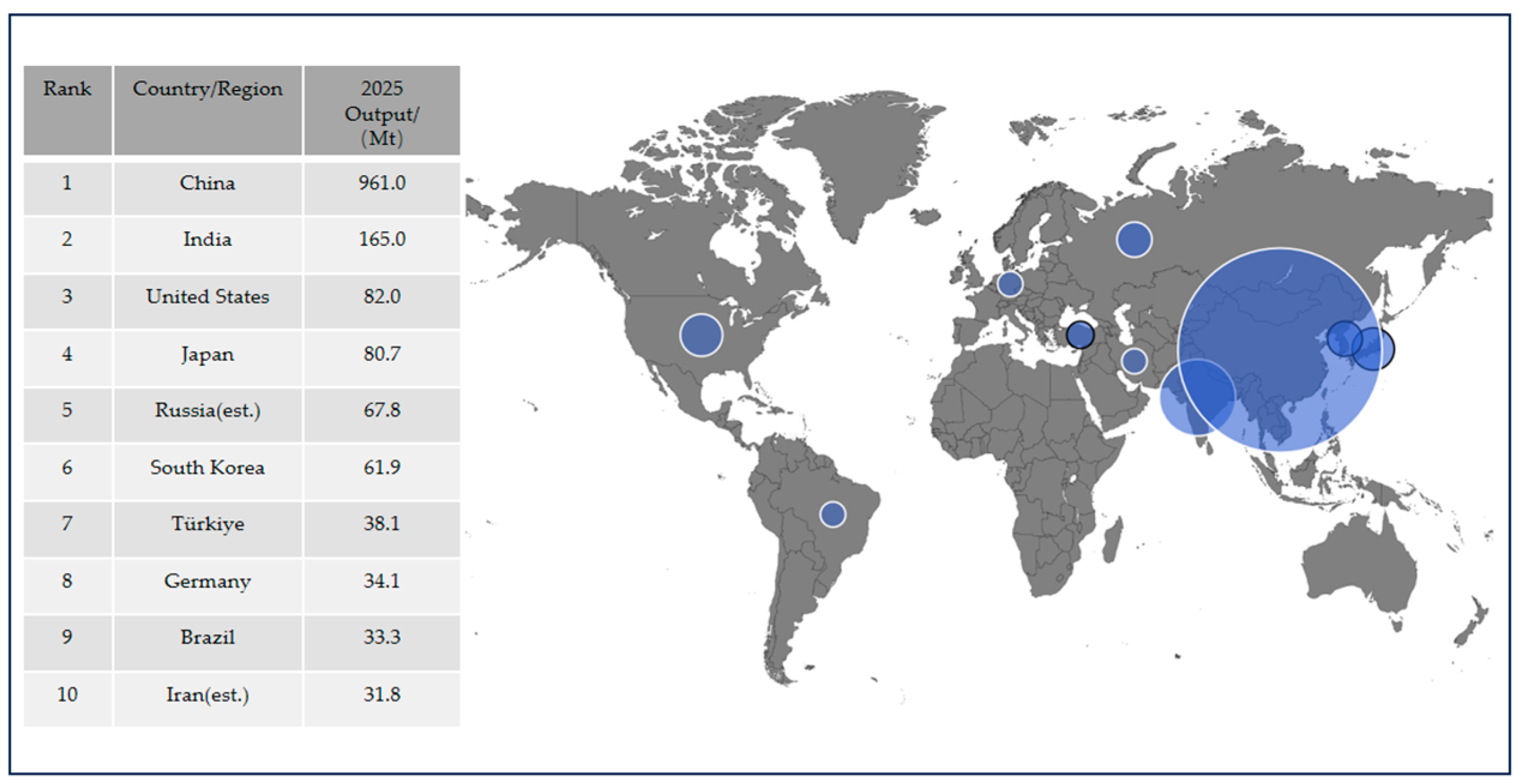
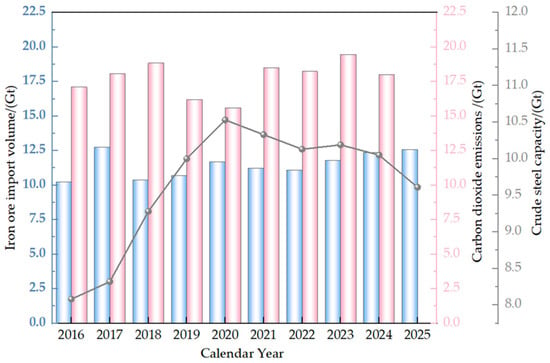
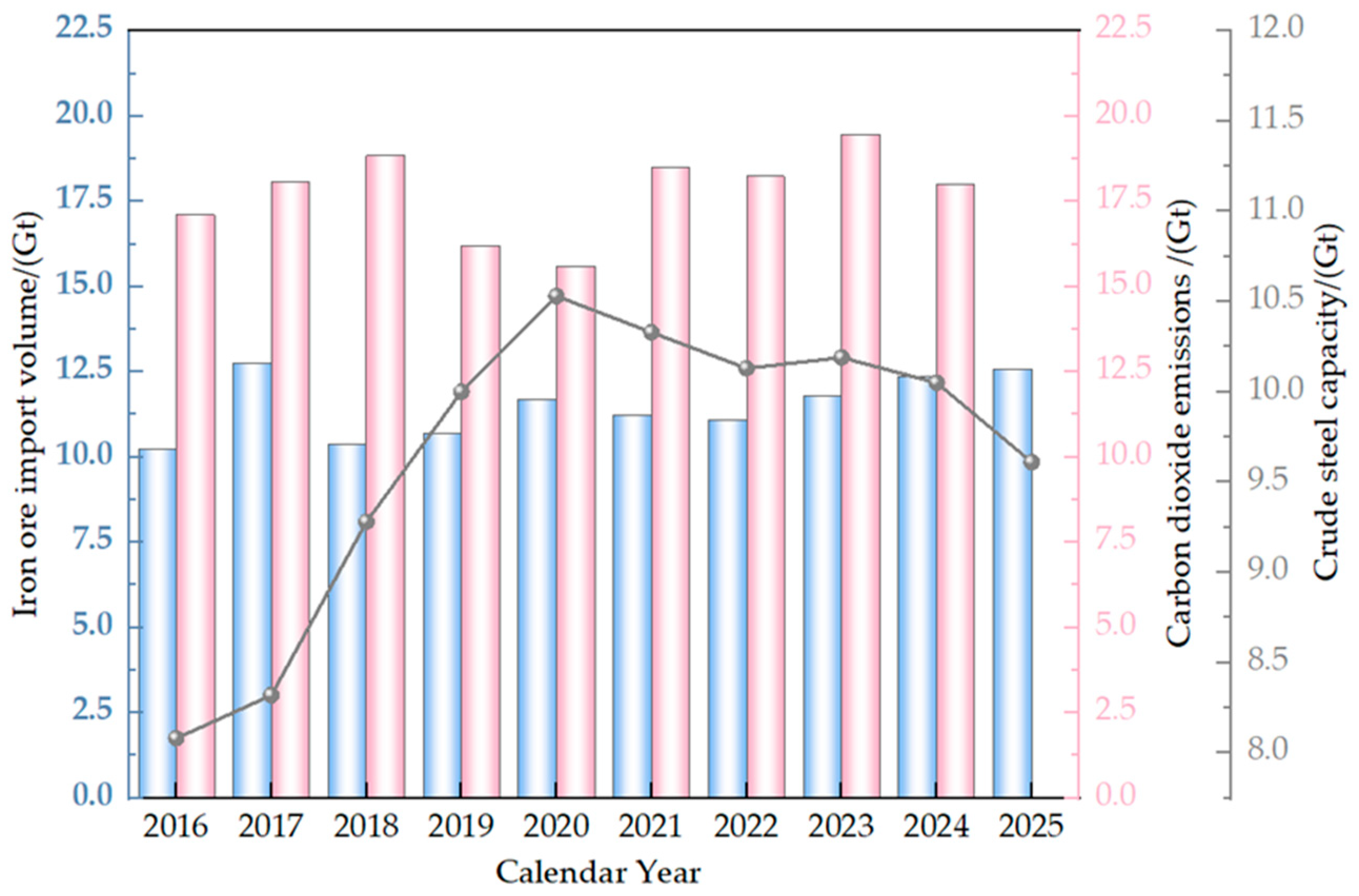
In recent years, global warming and the substantial reduction of energy resources have increased the environmental pressure faced by countries around the world. To achieve the goal of energy conservation and carbon reduction, countries have successively put forward multi-faceted policy requirements and technological innovations. The UN Glasgow Climate Conference was held in 2021 [1]. The Paris Rulebook of the Paris Agreement places emphasis on building resilience and adapting to the impacts of climate change; The twenty-eighth United Nations Climate Change Conference reached an agreement on reducing the use of fossil fuels [2]; in 2020, China proposed the “dual-carbon strategy” of achieving “carbon peak” by 2030 and “carbon neutrality” by 2060 [3]. On 20 March 2025, steel was included in the management of the national carbon emission trading market [4]. Figure 1 illustrates the distribution of global crude steel production in 2024, with China accounting for over 50% of the total output. Figure 2 presents China’s annual crude steel production, iron ore imports, and CO2 emissions from 2015 to 2024. Since 2020, when crude steel output first exceeded 1 billion tons, annual production has remained above this threshold every year. It can be observed that China’s crude steel production increased continuously from 2016 to 2020, reaching a peak of 1.065 billion tons in 2020. During this period, the growth of steel output was supported by both imported iron ore and expanded domestic iron ore production, rather than depending entirely on imports. The CO2 emissions remained at a high level without an obvious decline, which was mainly attributed to the continuous expansion of steel production and the inherent characteristics of the blast furnace ironmaking process. As a typical high-carbon-emission industry, the active development and application of green metallurgy technologies have become an urgent task for steel enterprises across the globe.
Figure 1.
Global Distribution of Crude Steel Production in 2025. Data reprinted from Ref. [5].
Figure 2.
Trends in Crude Steel Production, Iron Ore Imports, and CO2 Emissions in China (2016–2025). Data reprinted from Refs. [6,7,8].
In 2008, Japan proposed the “CO2 Ultimate Reduction in Steelmaking Process by Innovative Technology for Cool Earth 50” program (COURSE50), which achieved significant results through the application of hydrogen-enriched reduction technology in blast furnaces, reducing carbon emissions by 30% compared to previous levels [9]; in 2015, to comply with the Paris Agreement and reduce greenhouse gas emissions, ThyssenKrupp proposed the Carbon to Chemistry project (Carbon2Chem®), which involves recycling tail gas from steel plants and chemically converting them into raw materials for chemical products. This initiative enables the integration of steel, chemical, and energy sectors for the first time, thereby reducing CO2 emissions by approximately 100 kg per ton of steel [10,11]. In 2016, SSAB, LKAB, and Vattenfall collaborated to propose the Hydrogen Breakthrough Ironmaking Technology project (HYBRIT). The project developed a hydrogen-based sponge iron production process powered by fossil-free electricity, aiming to achieve the pre-treatment stage of steel production with drastically reduced or even zero fossil fuel use, featuring low energy consumption and zero carbon emissions [12,13]; the Oxygen-Blown Furnace (OBF) process, proposed in the 1970s, differs from traditional blast furnaces in its adoption of high oxygen-enriched injection or all-oxygen injection (i.e., φ(O2) ≥ 40%). This process is characterized by improving the combustion efficiency of coal powder significantly, increasing the volume fraction of reductants to boost productivity, and generating less CO2 that can be easily separated and captured by N2 [14,15,16].
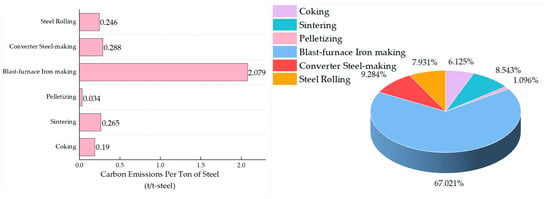
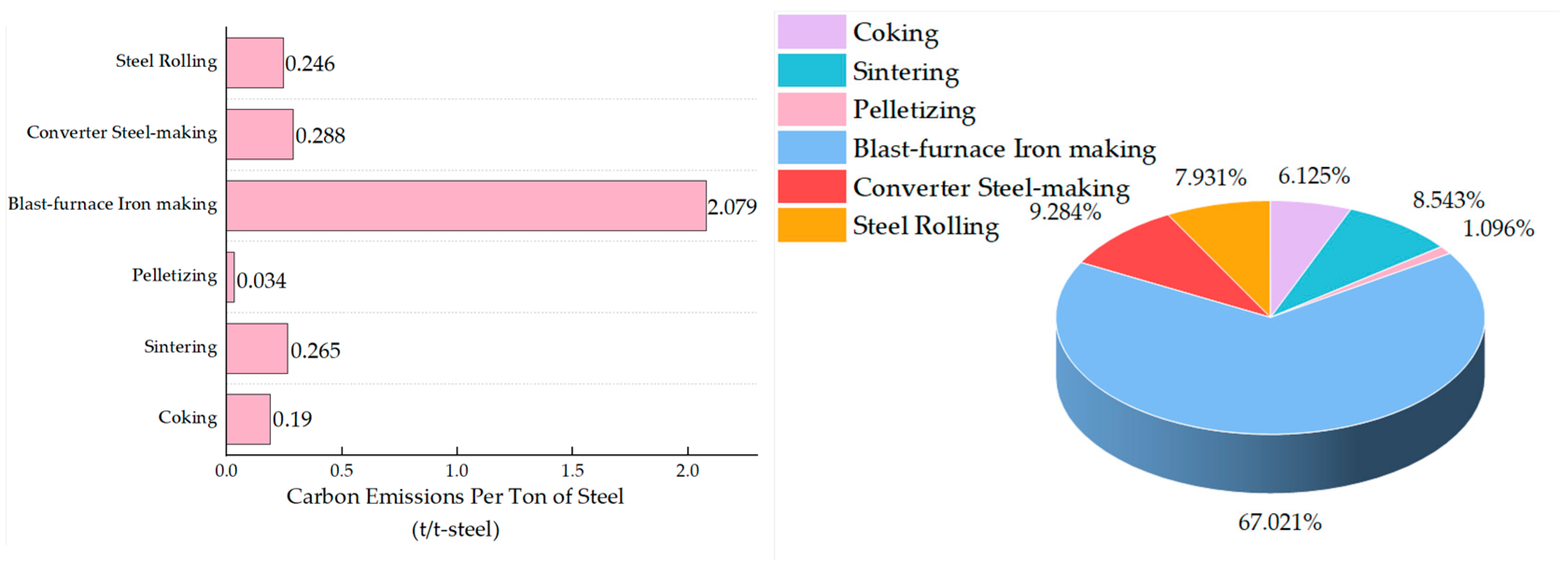
Currently, China’s steel production process is still dominated by the blast furnace-converter long process, which will remain dominant in China for decades to come due to its economic, efficient and convenient advantages [17,18]. The burden structure is composed of high-basicity sinter, acidic pellet, and a small amount of natural lump ore [19]. As Figure 3 shows, in the production of one ton of steel, the carbon emissions from the sintering process are 0.265 tons per ton (t/t), accounting for 8.543% of the entire long process; the carbon emissions from the pelletizing process are 0.034 t/t, accounting for 1.096% [20]. As a natural raw material, lump ore offers advantages of low cost and high iron grade. Compared with sinter and pellets, lump ore is a raw material that can be charged directly into the furnace without undergoing complex high-temperature processes such as sintering or pelletizing. This characteristic results in lower energy consumption and significantly reduces carbon emissions [21,22,23,24,25,26]. In summary, increasing the proportion of lump ore charged into the furnace can reduce smelting costs and improve the economic benefits of steel enterprises. Furthermore, it serves as an important approach for steel enterprises to reduce carbon emissions, which is in line with the requirements of China’s “dual-carbon strategy”.
Figure 3.
Carbon Emissions of Blast Furnace-Converter Long Process in Iron and Steel Enterprises. Reprinted from Ref. [20].
The lump ore, along with sinter and pellets, serves as blast furnace burden. As raw ore, compared with sinter and pellets, it has metallurgical property drawbacks such as a higher thermal disintegration index, lower softening temperature, and a wider softening temperature range; in terms of thermal disintegration, when the temperature rises, the ore disintegrates due to the volatilization of the crystalline water because of its high content in the lump ore. This results in a large amount of powder that affects the permeability of the blast furnace. There is a certain relationship between the total volume of pore space and the porosity of the lump ore. The smaller the average pore diameter, the more serious the thermal disintegration [27,28]. Meanwhile, lump ore has a lower softening temperature and a wider softening range, which further deteriorates the permeability of the blast furnace, leading to an increase in the furnace fuel ratio and emissions, and affecting the smooth operation of the blast furnace [29,30,31,32,33].
This work seeks to enhance the proportion of lump ore in blast furnace burden by optimizing its metallurgical performance, thereby achieving carbon emission reduction while maintaining stable blast furnace operation.
2. Overview and Current Application Status of Lump Ore for Blast Furnaces
2.1. Overview of Lump Ores for Blast Furnaces
In a broad sense, iron ore refers to substances from which metallic iron or various metal compounds can be extracted through specific technological means, essentially serving as a general term for all ores containing iron element. According to their properties, they can be classified into hematite, magnetite, limonite, and siderite. Hematite has low sulfur (S) and phosphorus (P) contents, and its internal structure features numerous pores, making it prone to fragmentation; in contrast, limonite and magnetite have higher S and P contents [34]. However, due to the low charging proportion of lump ore, its impact on the overall furnace condition is relatively minor [35]. Iron ores exhibit diverse external forms, including powdery, lumpy, and irregular shapes, primarily obtained through direct mining. Lump ore specifically refers to ores with a blocky morphology and a particle size greater than 6 mm, typically subjected to simple screening or crushing to achieve relatively uniform granularity, allowing it to be charged directly into the furnace. In terms of iron grade, lump ore denotes high-grade naturally rich ores: hematite (Fe2O3) contains 69% iron, magnetite (Fe3O4) about 72%, limonite (FeO(OH)·nH2O) about 60%, and siderite (FeCO3) 48% [36].
As a crucial raw material for ironmaking, natural lump ore remains indispensable, whether it is charged directly into the furnace or agglomerated artificially via sintering and pelletizing processes. Currently, the most widely used lump ores globally consist primarily of PB Lump, Newman Lump, South African Lump and FMG Lump.
Pilbara Mixed Lump (PB Lump) is characterized by good reducibility and moderate thermal strength; it serves as an essential raw material for blast furnace ironmaking. In terms of metallurgical properties, the decrepitation performance of PB Lump is 15.3% [37], a reducibility of 81.35%, a low-temperature reduction strength index (RDI+6.30) of 79.65, and a softening start temperature of 885 °C (below 1000 °C). Its softening–melting range spans from 885 °C to 1462 °C. During the ironmaking process, it is commonly charged into the furnace in conjunction with sinter and pellets. Owing to its high iron grade and stable quality, it is highly favored by major steel-producing nations such as China, Japan, and South Korea.
Newman Blend Lump is characterized by high iron grade, low levels of harmful elements, and excellent thermal spalling performance [38]. Newman Blend Lump has an iron grade of approximately 62.5% [39]. Due to its hematite composition, the ore features a compact structure with low porosity, resulting in poor reducibility. Compared with PB Lump, Newman Blend Lump has a lower thermal spalling index (DI−6.30). In terms of softening–melting dripping performance, Newman Blend Lump has a softening start temperature of 927 °C and a dripping temperature of 1522 °C, indicating poor dripping properties. Therefore, it is mixed with other lump ores during charging to improve blast furnace permeability, reduce costs, and enhance efficiency [40,41,42].
South African Lump has a relatively high iron grade. However, compared with lower-grade lumpy ores such as Newman Lump, it contains higher levels of harmful elements. Its silicon (Si) content exceeds 5%, and it also has relatively high potassium (K) and sodium (Na) levels, which can potentially reduce the service life of blast furnaces. However, South African lump ore exhibits excellent thermal shock resistance. The content of fine particles smaller than 6.30 mm is approximately 1.3%. Its initial softening temperature is 887 °C, and the dripping temperature is 1401 °C [43].
FMG Lump Ore, whose iron grade is approximately 57%, has low contents of harmful elements such as sulfur and phosphorus and moderate particle size, so that it can be directly charged into the blast furnace for smelting. During blast furnace smelting, it exhibits excellent gas permeability and reducibility, making it frequently used in blast furnace ironmaking. However, being limonite, FMG lump ore has a high content of crystal water and significant sintering loss. It is prone to pulverization in the blast furnace, with a low-temperature reduction degradation index (RDI+6.30) of approximately 76.3% and a thermal shock degradation index (DL-6.30) of about 10.0%. Its initial softening temperature is 1041 °C, and its final softening temperature is 1156 °C. In practical production, FMG ore is often charged into the blast furnace together with Newman lump ore, sinter, and pellets. Some also improve its thermal shock resistance through roasting treatment, which increases the proportion of lump ore charged into the furnace, achieving the effects of cost reduction, efficiency improvement, and low-carbon emission reduction [44].
2.2. Current Status of Blast Furnace Applications
In recent years, with the continuous advancement of the “dual-carbon” strategic goals, Chinese steel enterprises have faced unprecedented pressure to reduce emissions, making it increasingly urgent to achieve low-carbon transformation through optimizing the burden structure. This optimization is not only an effective method for reducing energy consumption and carbon emissions in steel production but also one of the core pathways for steel enterprises to enhance competitiveness and achieve green, sustainable development under the new development pattern, as well. This holds great significance in promoting the transformation and high-quality development of the entire steel industry.
In 2019, Hanbao Iron aimed to reduce pellet purchases and production costs. Subsequently, the proportion of lump ore usage was increased from below 10% to 21.5% by using Australian ore and Newman ore and adopting reasonable burden distribution and blast systems, which ensure stable operation of the blast furnace [45]. In 2024, Hanbao Iron reduced costs further by blending low-cost ores into the burden of the No. 1 blast furnace. After optimization, the burden structure has been transformed from the previous 75% sinter ore + 20% raw lump ore + 5% pellets to a new stable structure featuring 80% sinter ore as the main body, combined with 20% lump ore (including 18% Australian ore and 2% low-cost ore). The optimization strategy, by increasing the sinter proportion and adjusting the lump ore composition, has reduced the fuel ratio from 525–530 kg/t to below 505 kg/t while maintaining stable blast furnace operation. This provides critical support for the raw material systems of steel enterprises seeking to establish low-carbon smelting modes [46].
Ansteel selected PB ore, South African lump ore, Newman lump ore, Brazilian ore, and Indian ore, with the usage of lump ore reaching 4 million tons in 2011 [47]. Based on recent studies of the influence of basicity on the sintering process, sinter grade, and sulfur content, as well as Ansteel’s existing burden types and proportions, efforts have been made to actively explore improving the proportion of lump ore in the burden. Data shows that the softening–melting properties are significantly superior to those of traditional burden materials when the proportion of Australian ore reaches 17% [48].
Since 2014, Xinyu Iron has gradually promoted the “lump ore substitution for sinter” strategy by replacing high-cost sinter with natural lump ore through phased adjustments to its burden structure. This has resulted in a monthly increase in the lump ore proportion, reaching a maximum of 17%. As of 2022, the proportion of lump ore usage has stabilized at 15% [49].
Shougang has used Australian ore since the 1970s, reaching a maximum proportion of 25%, which has since remained between 12% and 16%. As the proportion of Australian ore increased, various technological parameters of the blast furnace, such as coke ratio, coal ratio, and blast temperature, remained stable; meanwhile, the economic benefits were remarkable [50].
After the commissioning of Baosteel’s No. 4 blast furnace, it has used lump ore to replace part of the pellets since 2015 in order to reduce molten iron costs. The blast system was optimized and the burden distribution was adjusted based on the burden structure, thus achieving reasonable gas flow distribution, improving the blast furnace permeability index, maintaining the stability of the operating furnace profile, and effectively reducing the coal ratio and fuel ratio. From January 2016 to April 2017, the lump ore proportion was consistently maintained above 20%, which was 4.6 percentage points higher than the plant-wide average lump ore ratio. In April 2017, the lump ore proportion was increased from 15% to 18%, which was 3 percentage points higher than the plant-wide average [51].
The proportion of natural lump ore used by Chinese steel enterprises is primarily influenced by two aspects. In terms of raw material supply, it is affected by the price of imported iron ore, transportation stability, and international trade policies. Regarding enterprise production, it is influenced by factors such as production equipment and production technology. Overall, the proportion of natural lump ore in the blast furnace burden of Chinese steel enterprises averages between 10% and 20%. However, there is a significant gap between different enterprises: some leading enterprises with advanced technical equipment can reach over 25% [52], while some small and medium enterprises have a proportion of less than 10% due to various constraints.
3. Research Status of Lump Ore
In the context of the “dual-carbon” strategy, extensive research has been conducted in China on increasing the proportion of lump ore in burden materials, which includes:
1. Analysis of the metallurgical properties of different lump ores, such as their physicochemical properties, reducibility, thermal shock degradation index, low-temperature reduction degradation index (RDI), and softening–melting–dripping properties;
2. Modification of lump ore through pre-treatment processes to reduce its thermal shock degradation index and meet the charging requirements of blast furnaces;
3. Studies on blending lump ore with different proportions of sinter and pellets to analyze the position of the softening–melting zone.
3.1. Research on the Properties of Lump Ore
The physicochemical properties and structure of lump ore exert a certain influence on its metallurgical performance. In turn, metallurgical properties, as key factors, are directly related to the effectiveness of the entire blast furnace ironmaking process and the product quality.
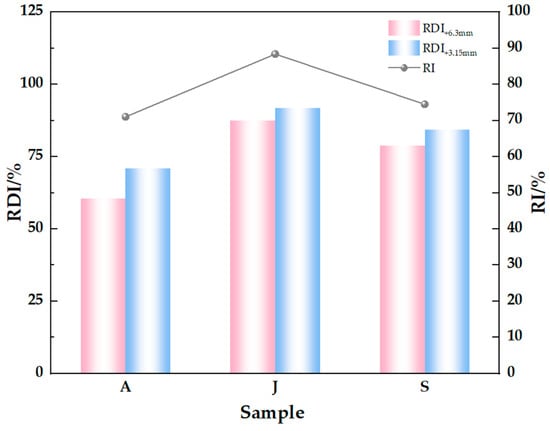
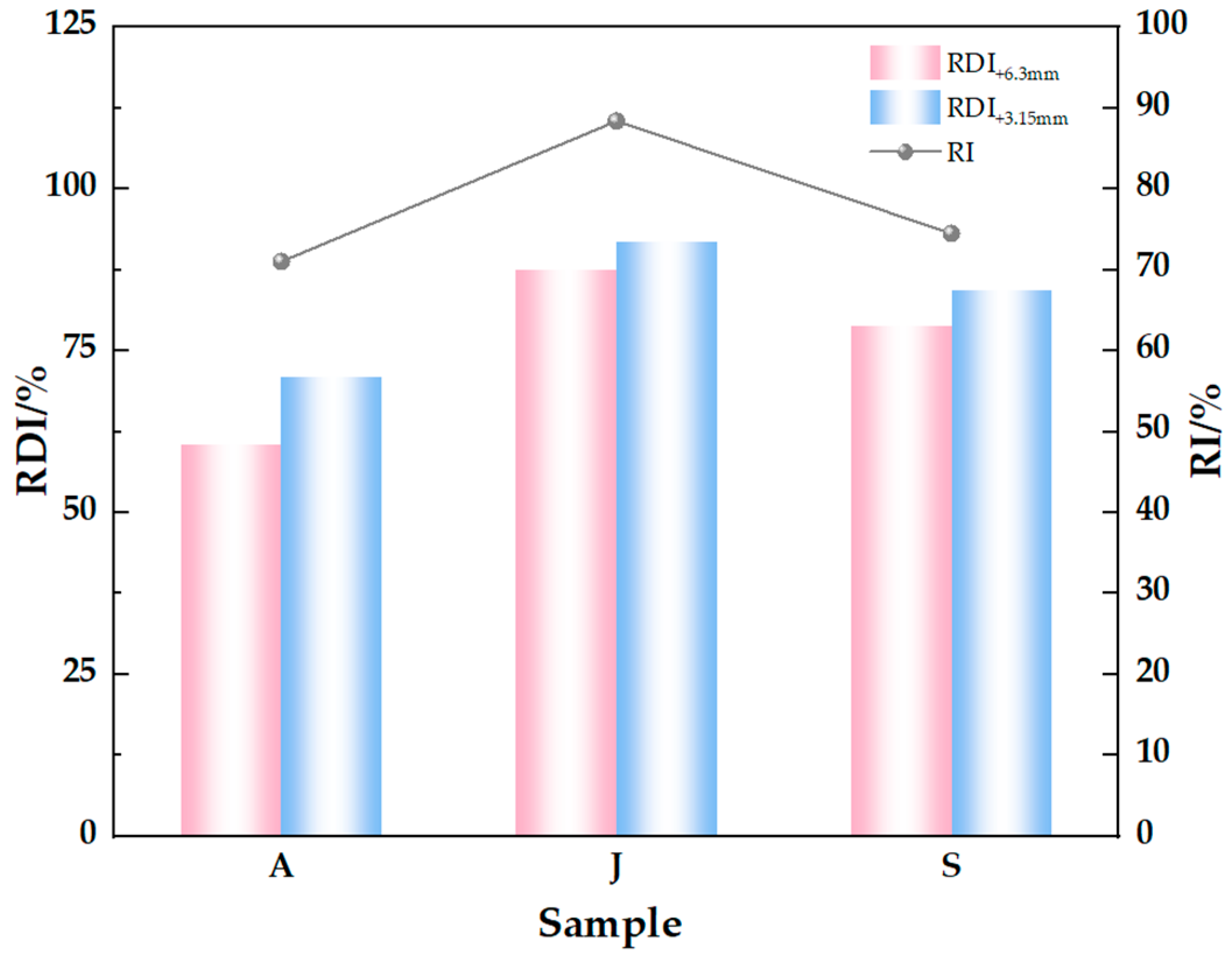
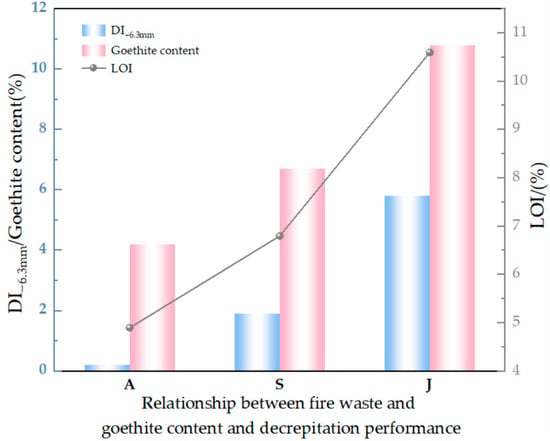
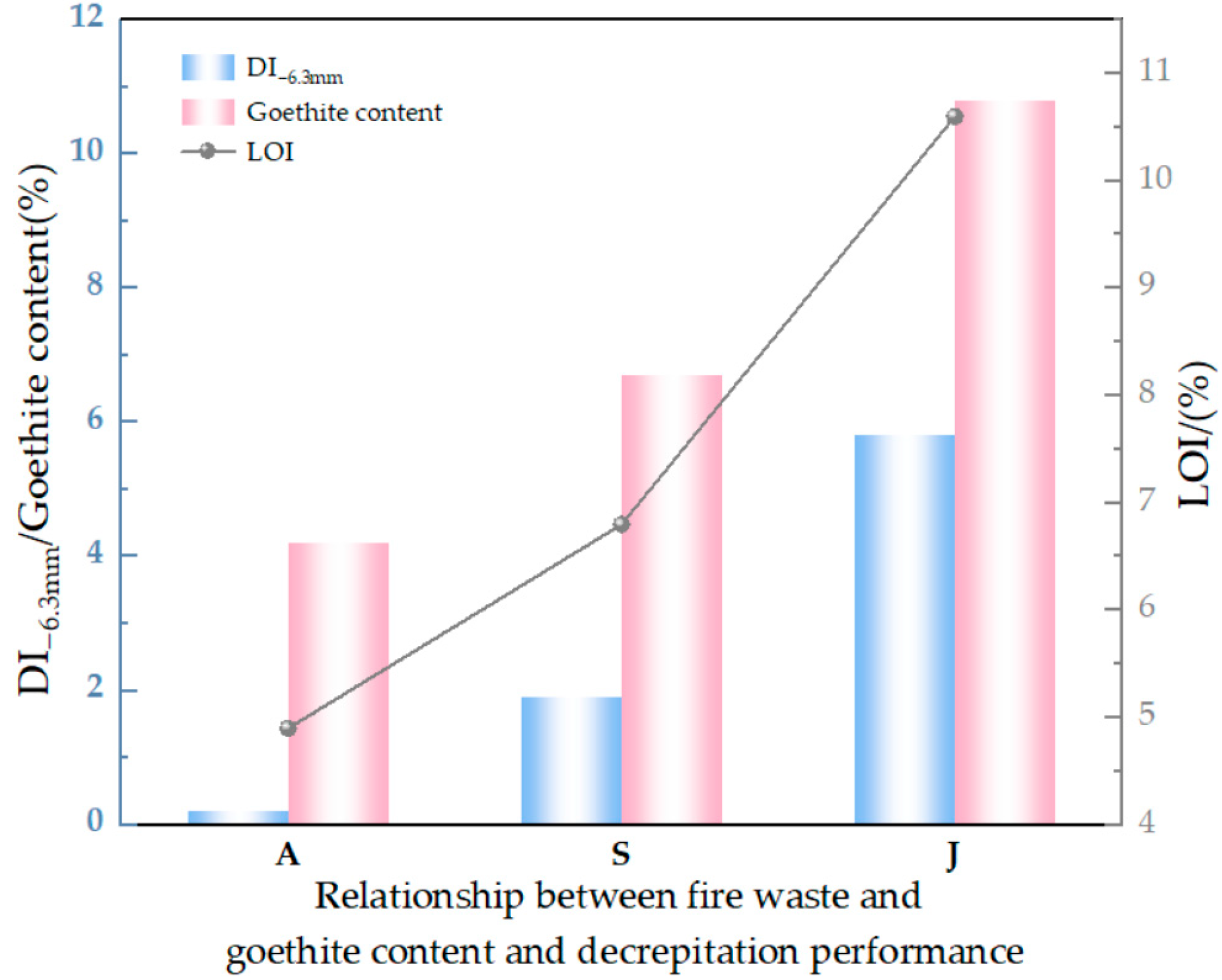
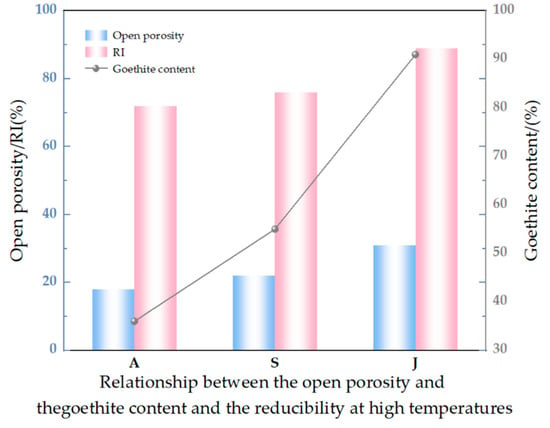
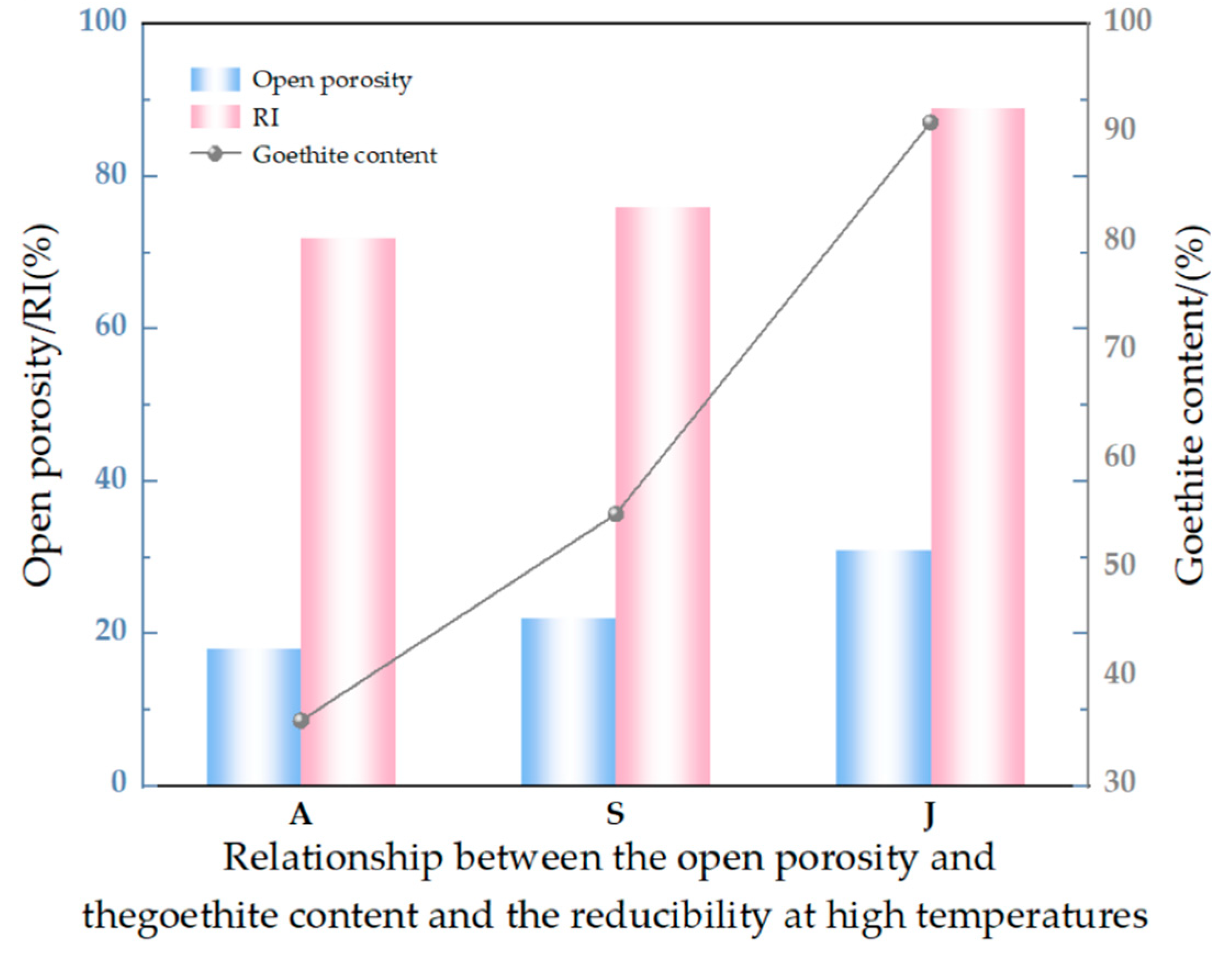
Zhu Deqing [53] et al. analyzed the chemical composition and physical properties of three Malaysian iron ores, AC, JLD and SEB (also referred to simply as lump ore A, J and S) using XRD, SEM, and EDS. They also determined their degradation index (DI), reducibility index (RI), and low-temperature reduction degradation index (RDI), as shown in Figure 4. These parameters reflect the quality and metallurgical properties of iron ore, including its resistance to degradation during reduction, reduction efficiency, and high-temperature softening and melting behavior, which are critical for evaluating the performance of ore in a blast furnace. The behavioral characteristics and variation patterns of different lump ores in the blast furnace were comprehensively analyzed. Studies have found that the thermal shock index is positively correlated with the content of FeO(OH) (Figure 5). Of the three lump ores, AC exhibits the greatest thermal shock resistance. Reducibility depends on the porosity and Fe2O3 content at high temperatures (Figure 6), while the degree of low-temperature reduction degradation is determined by the high-temperature porosity and Fe2O3 content. JLD exhibits the greatest reducibility and the best low-temperature reduction. Regarding softening–melting–dripping properties, the three lump ores all exhibit good performance and meet industry standards.
Figure 4.
Reducibility and low-temperature reduction disintegration index of three lump ores. Reprinted from Ref. [53].
Figure 5.
Relationship between fire waste and goethite content and decrepitation performance. Reprinted from Ref. [53].
Figure 6.
Relationship between the open porosity and the goethite content and the reducibility at high temperatures. Reprinted from Ref. [53].
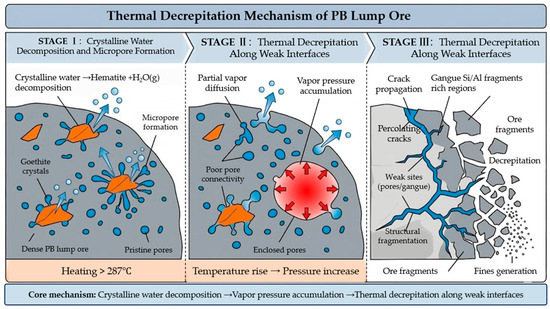
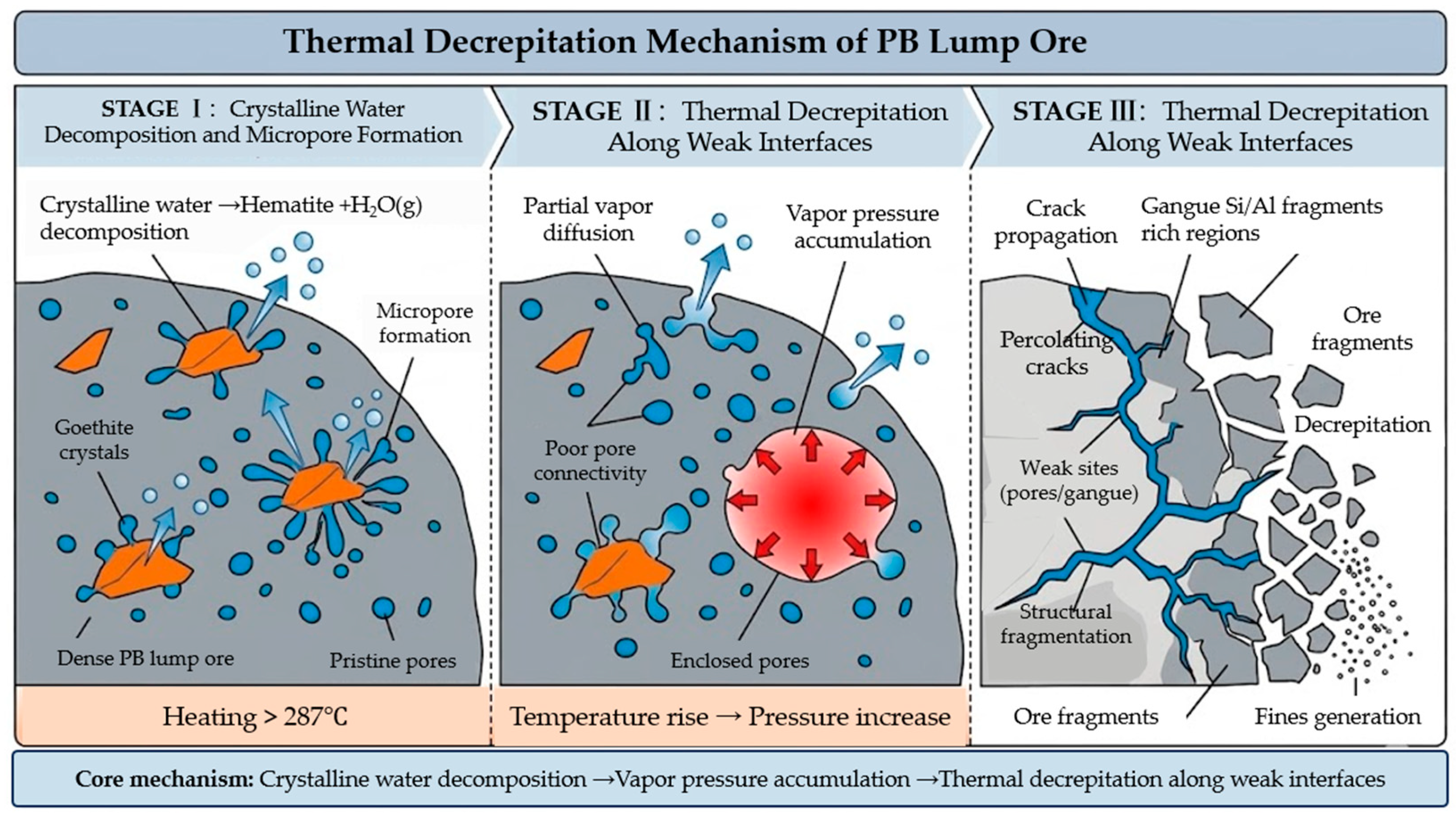
Yi Lingyun [54] selected PB ore as the research object to analyze its thermal shock mechanism and suppression strategies (Figure 7). The results show that the moisture diffusion coefficients of the raw ore and the ore preheated at temperatures between 200 and 400 °C for 60 min were determined by the PCK method. When PB ore is preheated at 400 °C for 60 min, the moisture diffusion coefficient decreases from 7.96 × 10⁻⁵ kg/(m2·s1/2) to 5.40 × 10⁻³ kg/(m2·s1/2). Meanwhile, the change in porosity of the preheated lump ore promoted water vapor diffusion, causing the DI−6.3 index to drop from 17.5% to 0.4%.
Figure 7.
Thermal decrepitation mechanism of PB lump ore. Reprinted from Ref. [54].
Zhang Jianliang [25] selected Newman lump ore mainly composed of hematite and goethite as the research object. The ore was preheated at temperatures ranging from 300 °C to 900 °C, and after cooling, changes in its microstructural and metallurgical properties were observed. With the increase in preheating temperature, FeO(OH) was gradually converted to Fe2O3. Between 300 and 500 °C, the lump ore experienced mass loss due to the dehydration of FeO(OH), and when the temperature reached 700 °C, FeO(OH) had almost completely disappeared. Regarding softening properties, with an increase in the preheating temperature, T10 and T40 gradually increase but remain lower than the raw ore overall, and the softening temperature range also gradually widens. When the temperature exceeds 700 °C, permeability starts to deteriorate, and the pressure drop and S value gradually increase.
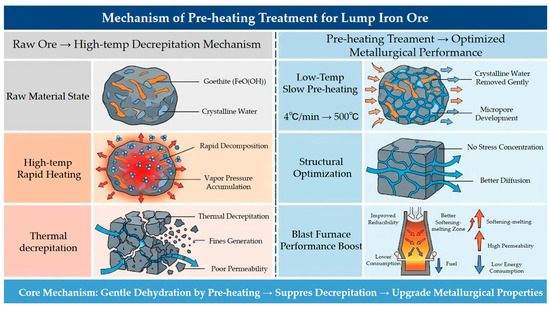
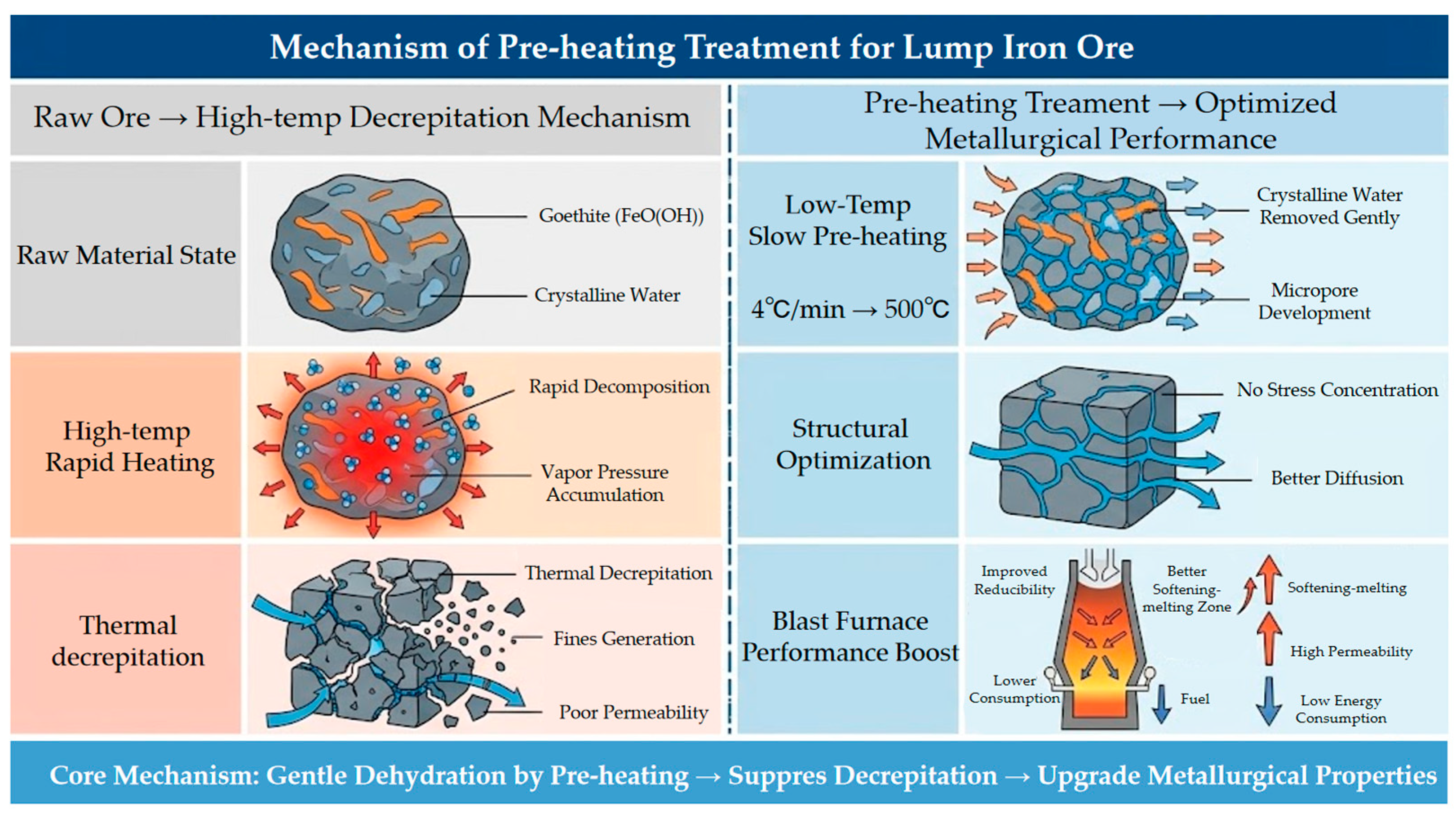
Niu Lele [29] studied the current mainstream lump ores through chemical analysis, XRD-Rietveld, BET testing, and thermogravimetric analysis. He pointed out that the thermal shock index is influenced by its own characteristics, showing a positive correlation with ignition loss and FeO(OH) content. A large pore volume and an average pore diameter increase the thermal shock index, and temperature also has a significant effect: the faster the heating rate, the higher the thermal shock index. Slow heating is more effective than reducing the target temperature for mitigating the thermal shock behavior of lump ore. Preheating treatment can not only reduce the FeO(OH) content to improve thermal shock resistance but also effectively utilize waste heat, reduce the load from sintering and pelletizing processes, promote indirect reduction in the blast furnace, and decrease carbon emissions during ironmaking (Figure 8).
Figure 8.
Preheating mechanism of lump iron ore for decrepitation suppression and performance improvement. Reprinted from Ref. [29].
Li Yunfei [55] et al. investigated the soft–melt dropping properties and primary-slag formation behaviors of mixed burden with increasing lump ore ratio. The results show that lump ore itself has poor high-temperature metallurgical properties: its primary slag is rich in FeO and SiO2, which easily forms a large number of low-melting-point phases, leading to lower softening and melting temperatures, wider softening–melting interval, thicker cohesive zone, higher maximum pressure difference, and worse gas permeability in the blast furnace. With the increase in lump ore ratio, the CaO content in primary slag decreases, while FeO and SiO2 increase continuously. This reduces the melting temperature of primary slag, shifts the cohesive zone to lower temperature region, widens its thickness, and further deteriorates the air permeability of burden. Nevertheless, blending lump ore with sinter and pellets can effectively improve its poor soft–melt dropping and primary slag characteristics. Moreover, properly increasing sinter ratio under high lump ore condition can compensate for the defects by forming more high-melting-point phases, thus optimizing the softening–melting properties and the position of cohesive zone.
Under hydrogen-rich conditions, lump ore presents superior low-temperature reduction degradation resistance compared with sinter and pellets. Hydrogen inhibits iron whisker growth, mitigates swelling, degradation and particle sticking, and thus enhances burden permeability [56]. Despite its relatively weak softening–melting characteristics, lump ore can achieve improved high-temperature performance in a hydrogen-rich atmosphere, with a narrowed cohesive zone [57]. Consistent with these findings, Nathan Barrett [58] investigated lump ore, sinter and a mixed burden (20% lump ore + 80% sinter) under standard reference gas (30% CO, 70% N2) and hydrogen-rich gas (15% H2, 30% CO, 55% N2). Results demonstrated that H2 addition degrades the softening–melting properties of sinter but improves those of lump ore, while the mixed burden behaves intermediately. Sinter shows deteriorated interparticle porosity at lower temperatures; at 1450 °C, metallic iron droplets form and drip from sinter and the mixed burden, whereas lump ore retains a highly metalized solid structure and exhibits a higher carbon gasification rate.
3.2. Lump Ore Pre-Treatment Process
In the lump zone of a blast furnace, burden materials and coke are arranged alternately, forming a packed bed composed of solid burden. As gas passes through this bed, a pressure drop occurs, the primary factor that influences the pressure drop being the properties of burden particles [59]. The high thermal shock index of lump ore causes it to crush and powder in the blast furnace, generating substantial fines that impair the permeability of the upper furnace [60]. Based on the relationship between metallurgical properties and mineralogical characteristics, Pan Jian [27] et al. found that the thermal shock index has a strong correlation with porosity. Lump ore is characterized by high crystal water content, poor thermal shock resistance, inferior low-temperature reduction degradation, and unsatisfactory softening–melting properties, which tend to deteriorate the permeability of the cohesive zone in the blast furnace and restrict its high-proportion application; in particular, lump ore with high FeO(OH) content undergoes cracking when heated under high-temperature conditions because the crystalline water in FeO(OH) decomposes upon heating [61]. In addition, earthy goethite generates a significant amount of fines and porous materials during processing [62]. After these materials enter the blast furnace, they further increase the fines content in the furnace. In summary, appropriate pre-treatment is required for lump ore before charging it into the furnace to improve its metallurgical properties and make it more suitable for blast furnace smelting requirements.
Drying treatment is a simple method of lump ore pre-treatment that typically involves drying the lump ore at approximately 105 °C for about 2 h. The main purpose of this process is to remove the free water absorbed onto the surface of the lump ore through low-temperature heating, thereby reducing the pulverization phenomenon caused by the rapid moisture evaporation in the blast furnace. Due to its simplicity and low energy consumption, drying treatment is often used as a preliminary step in lump ore pre-treatment, laying the foundation for subsequent preheating or chemical treatment.
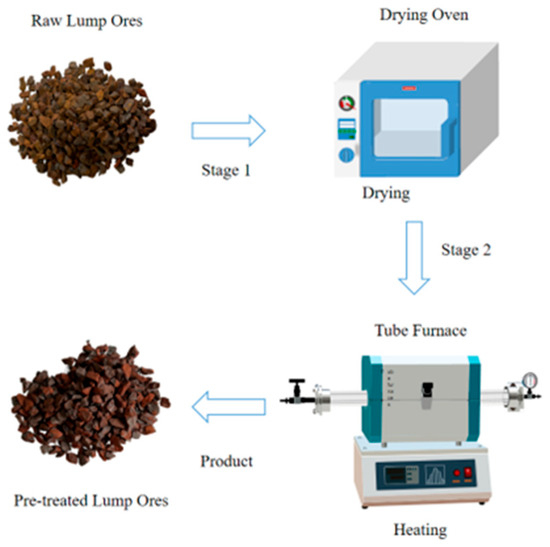
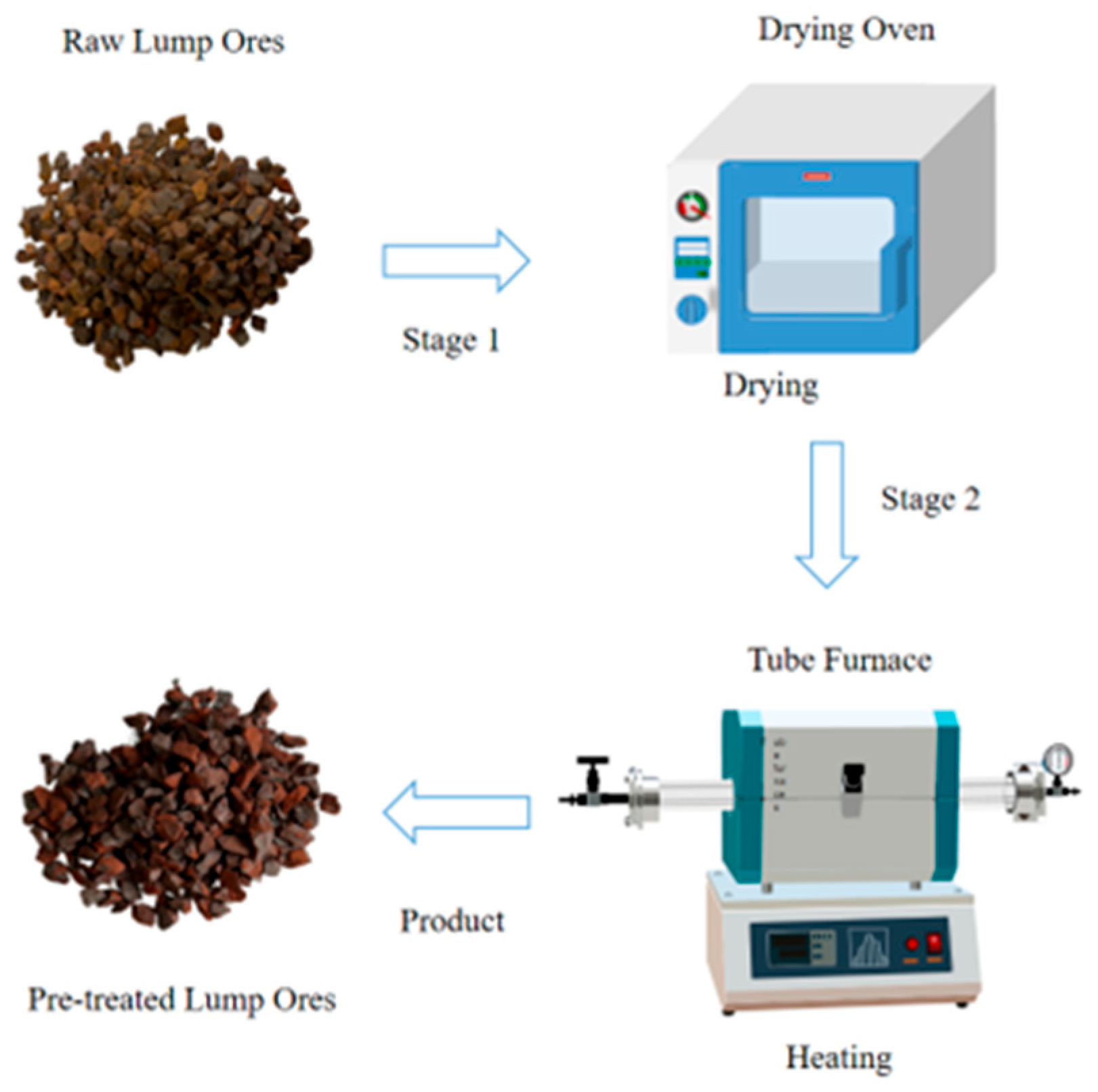
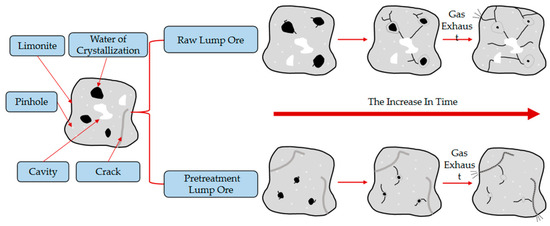
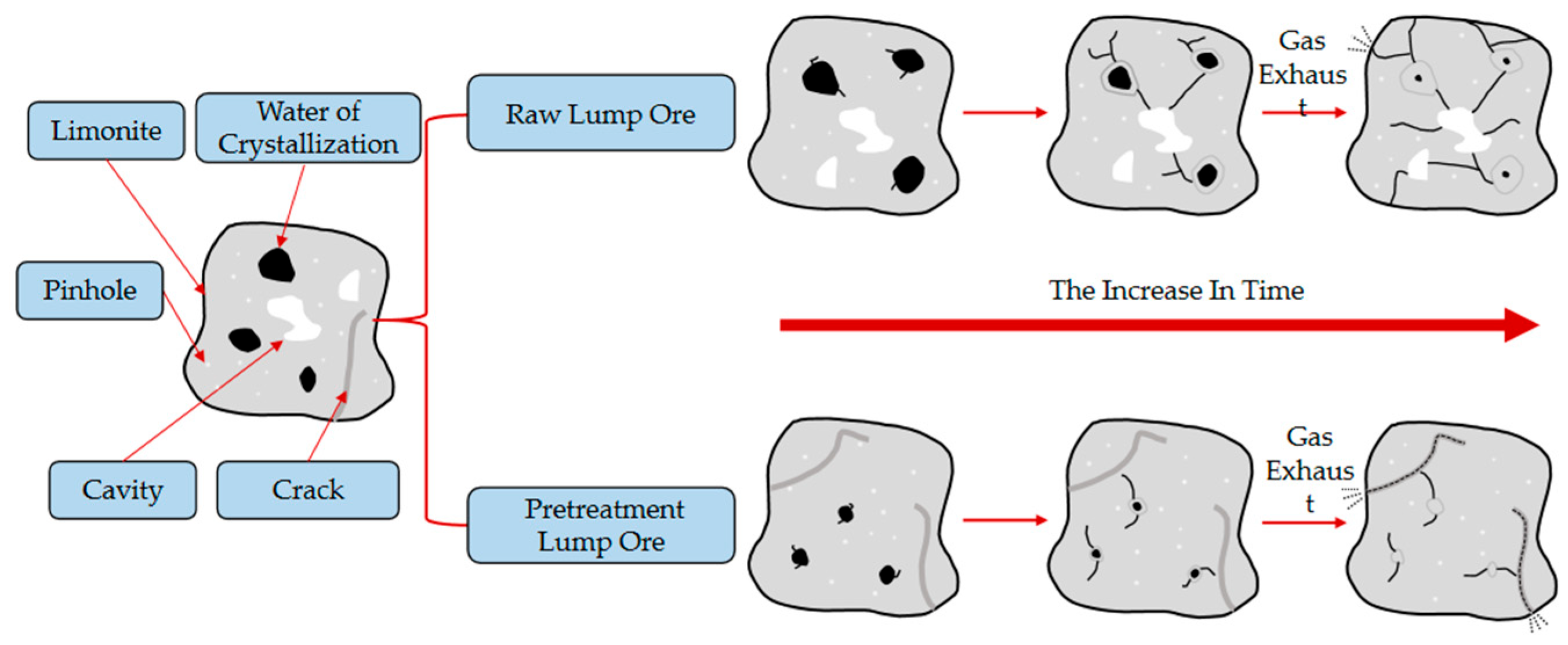
Preheating treatment is one of the most common methods for lump ore pre-treatment before blast furnace charging. As shown in Figure 9, the same raw lump ore sample is subjected to two sequential pre-treatment steps: first, drying to remove free moisture, followed by heating in the temperature range of 200–500 °C for 20–120 min. Through thermodynamic effects, FeO(OH) in the lump ore undergoes thermal decomposition and gradually converts to Fe2O3 and water vapor, which improves the thermal shock resistance of the lump ore [63]. Crystalline water is removed in the form of water vapor, optimizing the internal pore structure of the lump ore and increasing its specific surface area. This enhances the contact efficiency between the lump ore and reducing gas, thereby improving its reducibility. Meanwhile, this preheating pre-treatment effectively alleviates the thermal stress-induced pulverization of lump ore in the blast furnace, reduces the generation of fines, and creates favorable conditions for the stable operation and efficient smelting of the blast furnace [64]. The mechanism of this pre-treatment process is illustrated in Figure 10.
Figure 9.
Lump Ore Preheating Treatment Process Diagram.
Figure 10.
Mechanism of lump ore pre-treatment.
After preheating treatment, the lump ore can maintain its structural integrity at high temperatures due to the removal of crystalline water. With the improvement in reducibility, the FeO content decreases, and the formation of low-melting-point phases is consequently reduced, leading to a significant improvement in its softening–melting properties. Specifically, the initial softening temperature (T10) increases from 906 °C to 988 °C, the initial melting temperature (Ts) increases from 1144 °C to 1191 °C, the softening range (T40–T10) decreases from 144 °C to 118 °C, the melting range (Td–Ts) decreases from 331 °C to 281 °C, and the softening–melting zone shifts overall to the high-temperature region [63].
3.3. Comprehensive Research on Furnace Charge
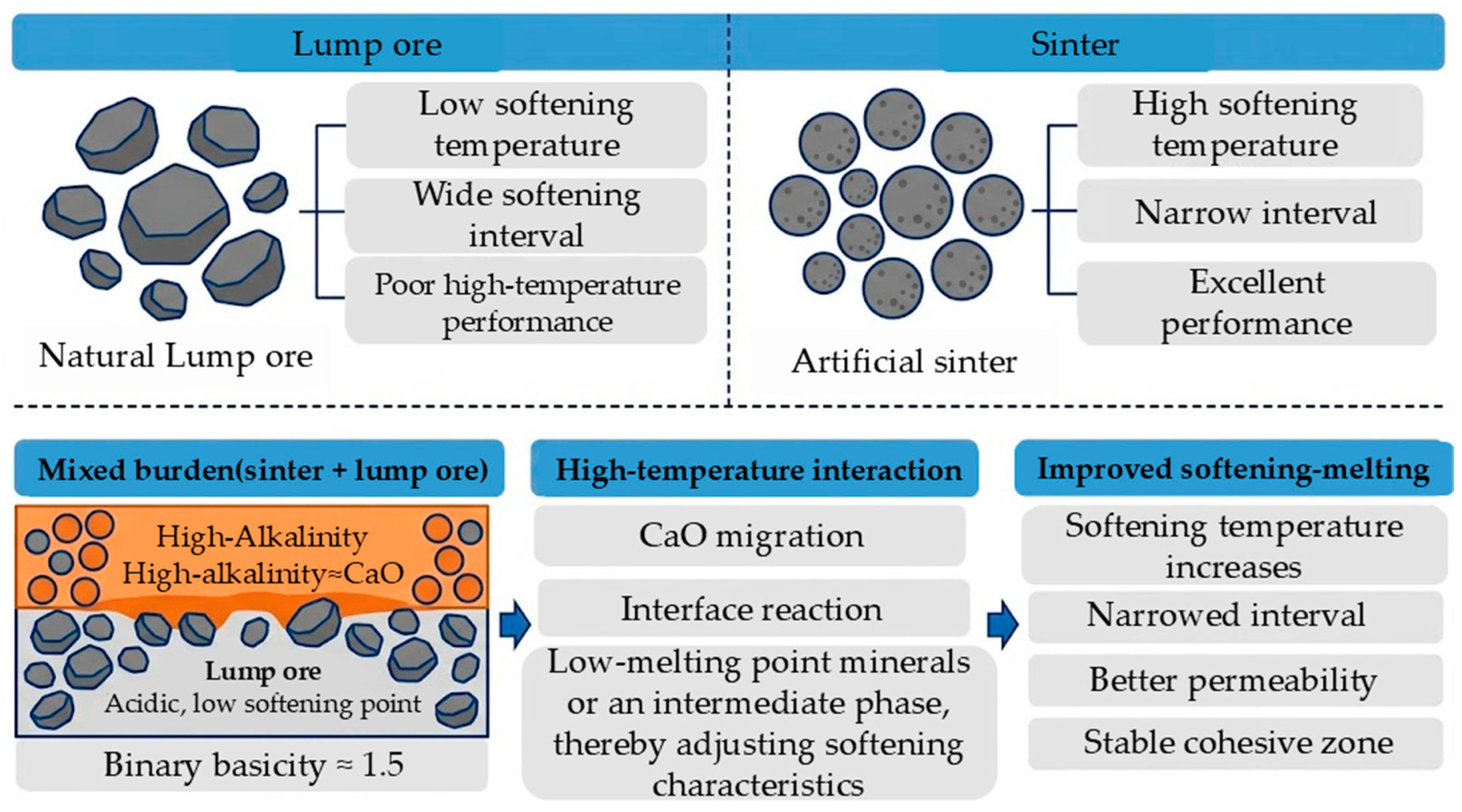
Wu Shengli [65] et al. analyzed the properties of imported ores and found that their chemical compositions are similar to those of acid pellets. The low-temperature reduction degradation index (RDI) of the imported ores is generally higher than that of the sinter, while the reducibility is basically consistent with that of the sinter. Studies have shown that the interaction between lump ore and sinter effectively improves the softening–melting properties of the burden (Figure 11). Combined with the duality of the burden, it is concluded that the melting–dripping properties are most suitable when the proportion of lump ore is 20%.
Figure 11.
High-temperature interaction mechanism of lump ore and sinter for softening–melting improvement. Reprinted from Ref. [65].
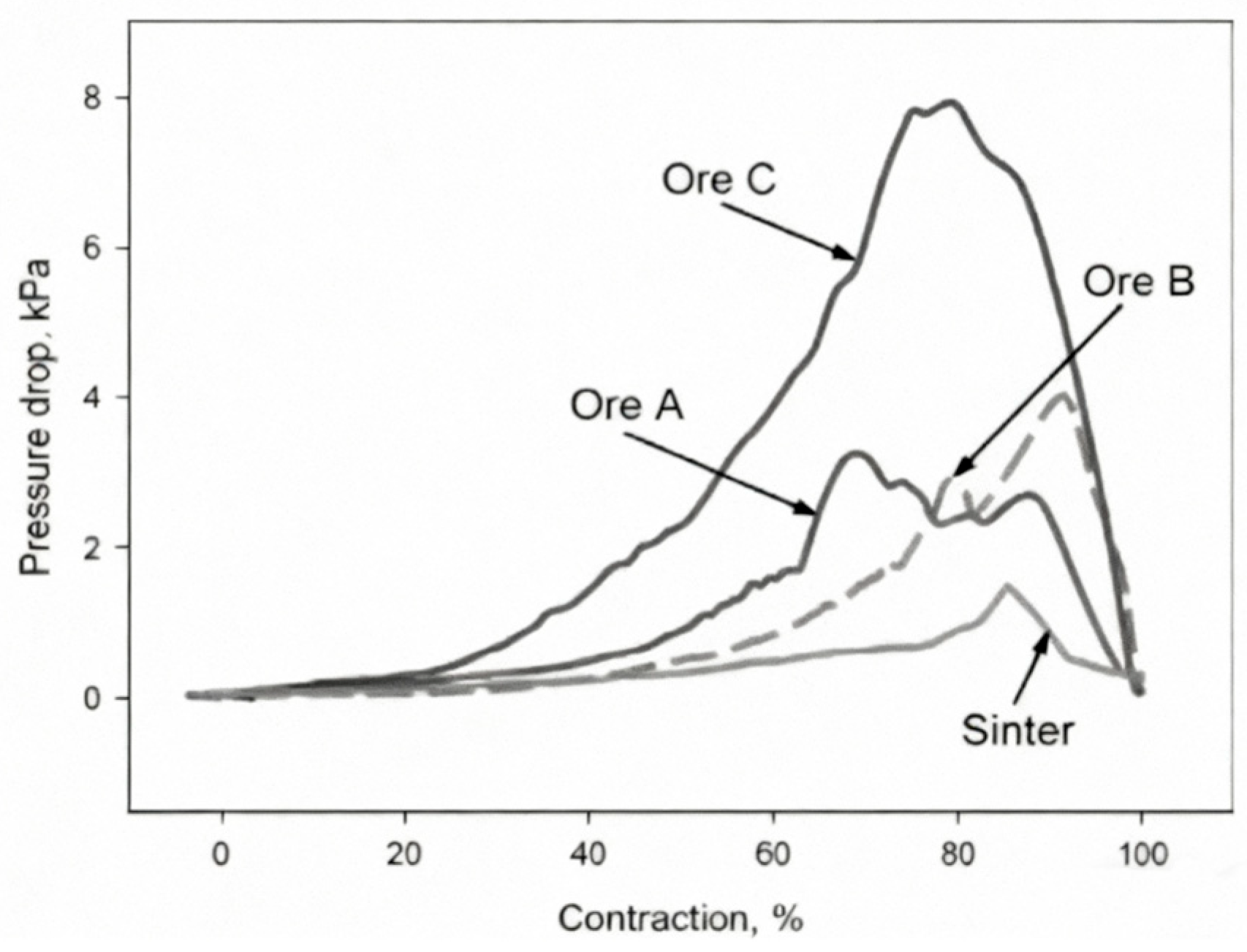
Chin Eng LOO [66] et al. simulated the high-temperature reduction environment in a blast furnace and measured the shrinkage and pressure drop changes of three lump ores (A, B, C) and sinter at different temperatures (Figure 12). They also conducted measurements by mixing lump ores with sinter at proportions of 20%, 50%, and 80%, and analyzed the microstructure of quenched samples to study the structural changes during the softening–melting process. Results show that lump ore shrinks earlier and has a higher pressure drop than the sinter, mainly because the formed fayalite has a lower melting point. The mixed burden with a 20% lump ore proportion exhibits softening and melting–dripping properties similar to those of the sinter.
Figure 12.
Averaged pressure drop curves for three lump ores and a sinter. Reprinted with permission from Ref. [66]. Copyright 2019, Iron and Steel.
Liu Changxin [67] et al. established a parameter optimization model for blast furnace ironmaking targeting maximized exergy efficiency based on material and energy balance principles. Numerical calculations were performed using the Optimization Toolbox of MATLAB R2021b (MathWorks, Natick, MA, USA) for the practical burden structure of a steel plant. The results demonstrate that increasing the lump ore ratio can effectively reduce the total input exergy and represents a critical measure for improving the exergy efficiency of the blast furnace. Within the constrained range, raising the lump ore dosage while synchronously reducing the sinter ore proportion and properly matching pellet ore can increase the exergy efficiency from 77.16% to 79.28%, providing a theoretical basis and optimization direction for low-carbon and high-efficiency blast furnace operation.
Liu Xinliang [68] selected South African hematite and Australian limonite, mixed them with sinter to conduct primary slag formation experiments, and evaluated the formation behavior of primary slag through indicators such as pressure drop, temperature, and shrinkage rate. Results show that the primary slag formation temperature of lump ore is lower, with a wider formation temperature range, while the FeO content in the primary slag is higher. Additionally, the results also indicate that when mixed with sinter under high-temperature conditions, the interaction between the sinter and the lump ore is primarily achieved through the diffusion of Al2O3, SiO2, CaO, and MgO. This interaction alters the formation behavior of primary slag, which is manifested by a narrower formation temperature range, improved fluidity and viscosity, reduced FeO content, and the formation of calcium–magnesium–aluminum silicate phases such as 2CaO·MgO·2SiO2, 3CaO·MgO·2SiO2, and 2CaO·Al2O3·SiO2 in the phase composition.
4. Calculation of Carbon Emission Reduction by Increasing the Percentage of Lump Ore
For reference and conceptual illustration, the burden structure of a large steel plant in China is exhibited in Table 1, while the chemical composition analysis is presented in Table 2.
Table 1.
Burden Structure of a Steel Plant in China.
Table 2.
Chemical Composition Analysis.
Based on iron element conservation, a simplified calculation is performed to demonstrate the practical significance of increasing the lump ore ratio. The traditional burden structure requires 1780.12 kg of ore (1266.56 kg of sinter + 513.56 kg of pellets) to produce 1 t of hot metal, while the new-type burden structure requires 1751.69 kg of ore (1193.08 kg of sinter + 244.71 kg of pellets + 313.90 kg of lump ore). The chemical composition analysis of the comprehensive burden is shown in Table 3.
Table 3.
Comprehensive Burden Chemical Composition Analysis.
According to statistics, carbon emissions for producing 1 ton of sinter are 282.4 kg, and the emissions for 1 ton of pellets are 141.2 kg [69]. It should be emphasized that this is a simplified estimate rather than a rigorous quantitative analysis. Compared with the traditional burden, the new-type burden results in a decrease of 103.367 kg in carbon emissions from sinter and an increase of 37.96 kg in carbon emissions from pellets, for a total reduction of 59.52 kg in carbon emissions.
During the smelting process, reducing 1 mol of Fe2O3 produces 1.5 mol of CO2, and reducing 1 mol of FeO produces 0.5 mol of CO2, if only the initial and final states are considered (excluding intermediate states). According to the formula:
In the formula:
is the amount of substance of FeO, in mol;
is the amount of substance of Fe2O3, in mol;
is the mass of ore required for producing 1 ton of hot metal, in kg;
is the mass of CO2 generated from reduction, in kg.
Further simplified estimation indicates that the new-type burden increases carbon emissions during smelting by 0.0037 kg. Overall, these results qualitatively demonstrate that increasing the proportion of lump ore can significantly reduce carbon emissions, with a total reduction of 59.516 kg CO2 per ton of hot metal produced.
5. Limitations, Challenges and Future Direction
Despite the valuable findings presented in this study regarding the application of lump ore as a low-carbon burden in blast furnace smelting, several limitations should be acknowledged.
First, although the research incorporates smelting data from multiple industrial scenarios, the variability in equipment configurations, raw material sources, and process parameters across different steel enterprises may still restrict the full generalizability of the results. Second, the investigation into lump ore modification focuses on specific pre-treatment technologies, and the long-term stability of modified lump ore’s performance under industrial-scale cyclic smelting conditions remains insufficiently verified. Additionally, this study primarily analyzes the technical and environmental benefits of high-proportion lump ore charging into blast furnaces, while a comprehensive economic evaluation has not yet been conducted.
Correspondingly, the promotion of high-proportion lump ore application faces key challenges. Technically, the thermal shock resistance and softening–melting properties of natural lump ore vary significantly due to differences in ore genesis and mineral composition, requiring targeted modification technologies, which increases industrial complexity. Industrially, most enterprises’ burden structures and processes are optimized for traditional mixtures (sinter + pellet). Adapting to high-proportion lump ore charging requires equipment transformation and re-optimization, leading to high initial investment and technical risks.
Future research should focus on three key aspects: First, collect data from steel enterprises with diverse technical configurations to establish a more universally applicable carbon emission prediction model for high-proportion lump ore charging. Second, deepen the research on lump ore modification technologies by developing efficient, low-cost, and environmentally friendly modification agents, and verifying their long-term stability through industrial-scale trials. Third, strengthen interdisciplinary research to explore the synergistic effects of lump ore modification with other low-carbon technologies (e.g., hydrogen-rich smelting) and promote the green transformation of the iron and steel industry.
6. Conclusions and Outlook
Based on the above analysis of lump ore as a low-carbon burden applied to blast furnace smelting, the following conclusions are drawn:
(1) In recent years, China’s crude steel output has consistently exceeded 1 billion tons annually, making it the world’s largest producer of crude steel. China’s steel production has always been dominated by the blast furnace-converter long process.
(2) Currently, the lump ores widely used in blast furnaces mainly include PB Lump, Newman Lump and FMG Lump. Natural lump ore, characterized by its high iron grade and low cost without affecting furnace conditions, has attracted significant attention from numerous enterprises. Major Chinese iron and steel enterprises such as Baosteel and Ansteel have begun implementing practices that utilize a high proportion of natural lump ore for ironmaking. This approach reduces the cost of molten iron while alleviating pressure on carbon emissions. However, overall, lump ore accounts for a relatively small proportion in China’s steel enterprises, ranging from 10% to 20%.
(3) The primary issue restricting the high-proportion charging of lump ore in furnace smelting lies in its insufficient thermal shock resistance. However, this problem can be resolved through the modified pre-treatment of the lump ore, which simultaneously improves its softening–melting properties. After modification, the overall softening–melting zone of the modified lump ore in a single burden narrows and shifts toward the high-temperature region, while its permeability is enhanced.
(4) We collected smelting data from a certain steel plant and calculated the carbon emissions under two different burden structures. Results show that after increasing the proportion of lump ore charged into the furnace, the carbon emissions per ton of iron produced in the blast furnace were 72.52 kg lower compared to the traditional burden structure.
(5) Against the backdrop of blast furnace ironmaking in China, increasing the proportion of lump ore used can serve as a breakthrough point, enabling iron and steel enterprises to reduce their carbon emissions and conserve energy. In the context of the global transition to a low-carbon economy, the modification of lump ore and its high-proportion use in furnaces are expected to become the primary means of reducing carbon emissions in the ironmaking industry in the future.
Author Contributions
Conceptualization, S.Z. and Y.C. (Yaoyi Cheng); Methodology, S.Z. and P.L.; Software, S.Z., Y.C. (Yaoyi Cheng) and P.L.; Validation, S.Z., R.Y., P.L. and Y.C. (Yifan Chai); Formal analysis, R.Y., S.Z. and Y.J.; Resources, Y.C. (Yifan Chai) and Y.J.; Data curation, S.Z. and Y.C. (Yaoyi Cheng); Writing—original draft preparation, S.Z. and Y.C. (Yaoyi Cheng); Writing—review and editing, P.L. and Y.J.; Visualization, R.Y., P.L. and Y.C. (Yifan Chai); Supervision, Y.J. and P.L.; Project administration, Y.C. (Yifan Chai); Funding acquisition. Y.C. (Yifan Chai). All authors have read and agreed to the published version of the manuscript.
Funding
This work was supported by Natural Science Foundation of Inner Mongolia Autonomous Region of China(2025YQ016), the Project of the Chinese Central Government Guides Local Science and Technology Development Funding (2024ZY0078), and the Metallurgical Engineering First-Class Discipline Scientific Research Special Project of the Department of Education of the Inner Mongolia Autonomous Region (YLXKZX-NKD-006, YLXKZX-NKD-041, YLXKZX-NKD-049).
Data Availability Statement
No new data were created or analyzed in this study. Data sharing is not applicable to this article.
Conflicts of Interest
The authors declare no conflict of interest.
Abbreviations
The following abbreviations are used in this manuscript:
| WSA | World Steel Association |
| COURSE50 | CO2 Ultimate Reduction in Steelmaking Process by Innovative Technology for Cool Earth 50 |
| Carbon2Chem® | Carbon to Chemistry project |
| HYBRIT | Hydrogen Breakthrough Ironmaking Technology project |
| OBF | Oxygen-Blown Furnace |
| PB Lump | Pilbara Mixed Lump |
References
- Sun, R.S. European Commission Proposes New Target of 90% Greenhouse Gas Emission Reduction by 2040. Available online: https://iccsd.tsinghua.edu.cn/wap/news-543.html (accessed on 13 May 2026).
- Bourzac, K. COP28 Makes It Official: Fossil Fuels Cause Climate Change. Engineering 2024, 37, 3–5. [Google Scholar] [CrossRef] [Scilit]
- Opinions of the State Council on Carbon Peaking and Carbon Neutrality. Available online: http://www.qstheory.cn/yaowen/2021-10/24/c_1127990704.htm (accessed on 6 March 2025).
- Notice on Issuing the “Work Plan for the National Carbon Emission Rights Trading Market to Cover the Iron and Steel, Cement, and Aluminum Smelting Industries”. Available online: https://www.mee.gov.cn/xxgk2018/xxgk/xxgk03/202503/t20250326_1104736.html (accessed on 5 December 2025).
- December 2025 Crude Steel Production and 2025 Global Crude Steel Production Totals. Available online: https://worldsteel.org/media/press-releases/2026/december-2025-crude-steel-production-2025-global-crude-steel-production/ (accessed on 9 April 2026).
- National Bureau of Statistics of China. Statistical Database; National Bureau of Statistics of China: Beijing, China, 2026. Available online: http://www.stats.gov.cn (accessed on 9 April 2026).
- General Administration of Customs of China. Customs Statistics Data Query Platform; General Administration of Customs of China: Beijing, China, 2026. Available online: http://stats.customs.gov.cn/ (accessed on 13 May 2026).
- Ritchie, H.; Roser, M. Global Steel Production; Our World in Data: Oxford, UK, 2025; Available online: https://ourworldindata.org/explorers/minerals?tab=map&time=2024&Mineral=Steel&Metric=Production&Type=Processing%2C+crude&Share+of+global=false&country=OWID_WRL~AUS~CHL~CHN~USA (accessed on 13 May 2026).
- Watakabe, S.; Miyagawa, K.; Matsuzaki, S.; Inada, T.; Tomita, Y.; Saito, K.; Osame, M.; Sikström, P.; Ökvist, L.S.; Wikstrom, J.-O. Operation Trial of Hydrogenous Gas Injection of COURSE50 Project at an Experimental Blast Furnace. ISIJ Int. 2013, 53, 2065–2071. [Google Scholar] [CrossRef] [Scilit]
- Sanchez-Bastardo, N.; Schloegl, R.; Ruland, H. Methane Pyrolysis for CO2-Free H2 Production: AGreen Process to Overcome Renewable Energies Unsteadiness. Chem. Ing. Tech. 2020, 92, 1596–1609. [Google Scholar] [CrossRef] [Scilit]
- Oles, M.; Lüke, W.; Kleinschmidt, R.; Büker, K.; Weddige, H.; Schmöle, P.; Achatz, R. Carbon2Chem®–Eincross-industrieller Ansatz zur Reduzierung der Treibhausgasemissionen. Chem. Ing. Tech. 2018, 5, 285–293. [Google Scholar] [CrossRef] [Scilit]
- Vogl, V.; Ahman, M.; Nilsson, L.J. Assessment of hydrogen direct reduction for fossil-free steelmaking. Clean. Prod. 2018, 203, 736–745. [Google Scholar] [CrossRef] [Scilit]
- Pei, M.; Petjniemi, M.; Regnell, A.; Wijk, O. Toward a Fossil Free Future with HYBRIT: Development of Iron and Steelmaking Technology in Sweden and Finland. Metals 2020, 10, 972. [Google Scholar] [CrossRef] [Scilit]
- Zhang, W.; Dai, J.; Li, C.Z.; Yu, X.B.; Xue, Z.L.; Saxen, H. A Review on Explorations of the Oxygen Blast Furnace Process. Steel Res. Int. 2020, 92, 2000326. [Google Scholar] [CrossRef] [Scilit]
- Pang, Z.G.; Bu, J.J.; Yuan, Y.Q.; Zheng, J.L.; Xue, Q.G.; Wang, J.S.; Guo, H.; Zuo, H.B. The Low-Carbon Production of Iron and Steel Industry Transition Process in China. Steel Res. Int. 2024, 95, 2300500. [Google Scholar] [CrossRef] [Scilit]
- Shen, Y.S.; Guo, B.Y.; Yu, A.B.; Austin, P.R.; Zulli, P. Three-dimensional modelling of in-furnace coal/coke combustion in a blast furnace. Fuel 2011, 90, 728–738. [Google Scholar] [CrossRef] [Scilit]
- Zhang, Z.L.; Meng, J.L.; Guo, L.; Guo, Z.C. Numerical Study of the Reduction Process in an Oxygen Blast Furnace. Metall. Mater. Trans. B 2016, 1, 467–484. [Google Scholar] [CrossRef] [Scilit]
- Li, Z.Y.; Kuang, S.B.; Yu, A.B.; Gao, J.J.; Qi, Y.H.; Yan, D.L.; Li, Y.T.; Mao, X.M. Numerical Investigation of Novel Oxygen Blast Furnace Ironmaking Processes. Metall. Mater. Trans. B 2018, 49, 1995–2010. [Google Scholar] [CrossRef] [Scilit]
- Heikkila, A.; Iljana, M.; Bartusch, H.; Fabritius, T. Reduction of Iron Ore Pellets, Sinter, and Lump Ore Under Simulated Blast Furnace Conditions. Steel Res. Int. 2020, 91, 2000047. [Google Scholar] [CrossRef] [Scilit]
- Na, H.M.; He, J.F.; Yuan, Y.X.; Sun, J.C. Analysis of Carbon Emissions from Different Production Processes in Iron and Steel Enterprise. In Proceedings of the 10th National Annual Conference on Energy and Thermal Engineering, Hangzhou, China, 14–16 August 2019; Northeastern University: Boston, MA, USA, 2019. [Google Scholar]
- Wu, S.L.; Han, H.L.; Xu, H.F.; Wang, H.W.; Liu, X.Q. Increasing Lump Ores Proportion in Blast Furnace Based on the High-Temperature Interactivity of Iron Bearing Materials. ISIJ Int. 2010, 5, 686–694. [Google Scholar] [CrossRef] [Scilit]
- Nie, H.; Qi, B.; Li, Y.; Qiu, D.J.; Wei, H.; Hammam, A.; Ahmed, A.; Yu, Y.W. Structure Analysis of Pellets with Different Reduction Degrees Using X-Ray Micro-Computed Tomography. Steel Res. Int. 2023, 94, 2200241. [Google Scholar] [CrossRef] [Scilit]
- Zong, Y.B.; Zhang, Y.; Zhang, J.L.; Wang, Y.Z.; Liu, Z.J. Progress and future development direction of energy-saving and pollution reduction technology for sintering flue gas circulation. J. Iron Steel Res. Int. 2025, 32, 3657–3672. [Google Scholar] [CrossRef] [Scilit]
- Conejo, A.N.; Birat, J.P.; Dutta, A. A review of the current environmental challenges of the steel industry and its value chain. J. Environ. Manag. 2020, 259, 109782. [Google Scholar] [CrossRef] [Scilit]
- Zhang, J.L.; Hao, L.Y.; Liu, Z.J.; Feng, B.; Niu, L.L.; Li, S.D.; Li, Z.; Wang, Y.Z. The Temperature of Pretreatment on Microstructure Change of Lump Ore and Improvement of Metallurgical Properties. Steel Res. Int. 2024, 95, 2400074. [Google Scholar] [CrossRef] [Scilit]
- Wang, F.; Shi, X.F.; Ping, X.D.; Gao, J.J.; Zhang, J.; Zhang, H.N. Influence of Sinter Parameters on CO Emission in Iron Ore Sintering Process. Metals 2022, 12, 1202. [Google Scholar] [CrossRef] [Scilit]
- Pan, J.; Yu, H.B.; Zhu, D.Q.; Hu, X.; Luo, Y.H. Influence of mineralogy on metallurgical properties of lump ore. In Proceedings of the 6th International Symposium on High-Temperature Metallurgical Processing: TMS 2015 144th Annual Meeting and Exhibition, Orlando, FL, USA, 15–19 March 2015. [Google Scholar]
- Zhao, Z.C.; Tang, J.; Chu, M.S.; Feng, J.G.; Li, S.N.; Qin, J.L.; Li, F.; Yuan, L. Reduction Behavior of Lump Ore and Its Applicability During Hydrogen-Based Shaft Furnace Process. J. Sustain. Metall. 2024, 10, 2534–2544. [Google Scholar] [CrossRef] [Scilit]
- Niu, L.L.; Zhang, J.L.; Wang, Y.Z.; Huang, J.Q.; Feng, B.; Liu, Z.J. Lump Iron Ore Pre-heating Treatment to Improve Softening-Melting Performance and Reduce Energy Consumption in Ironmaking Process. J. Miner. Met. Mater. Soc. 2022, 74, 2733–2741. [Google Scholar] [CrossRef] [Scilit]
- Lu, Y.N.; Wu, S.L.; Du, B.B.; Zhou, H. Increasing the Softening as well as Melting Behaviors for Iron Ore Materials Within the Blast Furnace Cohesive Zone Through the High-Temperature Interactivity. ISIJ Int. 2020, 60, 1461–1468. [Google Scholar] [CrossRef] [Scilit]
- Wu, S.L.; Wang, L.X.; Lu, Y.N.; Gu, K. Influence of High Temperature Interaction on the Softening and Melting Behaviors of Iron Bearing Materials in the Blast Furnace. Steel Res. Int. 2018, 89, 1800041. [Google Scholar] [CrossRef] [Scilit]
- Hao, L.Y.; Zhang, J.L.; Liu, Z.J.; Wang, Y.Z.; Feng, B.; Niu, L.L.; Li, S.D.; Li, Z.; Cao, S.Z. Influence of preheating lump ore on blast furnace smelting energy saving and consumption reduction. Ironmak. Steelmak. 2025, 52, 353–361. [Google Scholar] [CrossRef] [Scilit]
- Nishimura, N.; Higuchi, K.; Naito, M.; Kunitomo, K. Evaluation of Softening, Shrinking and Melting Reduction Behavior of Raw Materials for Blast Furnace. ISIJ Int. 2011, 51, 1316–1321. [Google Scholar] [CrossRef] [Scilit]
- Li, W.B.; Yu, Y.S.; Wang, M.X.; Wang, H.Y.; Huang, J.F. Efficient iron recovery and dephosphorization from high-phosphorus oolitic iron ore: Process optimization and mineralogy. J. Environ. Chem. Eng. 2025, 13, 118121. [Google Scholar] [CrossRef] [Scilit]
- Xiao, H.R. Study on The Decrepitation Behavior, Mechanism and Abatement of Natural Lump Ore. Master’s Thesis, Central South University, Changsha, China, 2022. Available online: https://kns.cnki.net/kcms2/article/abstract?v=lj-1FT9NYjA93_OZMvGD_XdSh8O6F9uTMT7OAcTwCn-I54njjhsTFHvCjvkFdreXewEVCazz-fRObG5hYRnrbt4fMTM3SMsiu8QXNHQ0_NHIU9f7UJ8myBboPBxtvMDeRVdeqkf3SNrkgaUSUY3B6jsnAS2IC6pohaQ0a1U0Eeh5zmdB2PTbGG4GTAynH90S&uniplatform=NZKPT&language=CHS (accessed on 13 May 2026).
- Angakuditi, V.B.; Bhadravathi, P.; Gujare, R.; Ayyappan, G.; Singh, L.R.; Baral, S.S. Mineralogical Aspects of Reducing Lump Iron Ore, Pellets, and Sinter with Hydrogen. Metall. Mater. Trans. B 2022, 53, 1036–1065. [Google Scholar] [CrossRef] [Scilit]
- Wu, S.; Han, H.; Liu, X.; Wang, H.; Xue, F. Highly effective use of Australian Pilbara blend lump ore in a blast furnace. Rev. Metall. 2010, 107, 187–193. [Google Scholar] [CrossRef] [Scilit]
- Hoque, M.M.; Doostmohammadi, H.; Mitra, S.; Odea, D.; Liu, X.L.; Honeyands, T. High Temperature Softening and Melting Interactions Between Newman Blend Lump and Sinter. ISIJ Int. 2021, 61, 2944–2952. [Google Scholar] [CrossRef] [Scilit]
- Barustan, M.I.A.; Copland, E.; Nguyen, T.B.T.; O’dEa, D.; Honeyands, T. Reduction Degradation of Lump, Sinter, and Pellets in Blast Furnace with Hydrogen Injection. ISIJ Int. 2024, 64, 1517–1527. [Google Scholar] [CrossRef] [Scilit]
- Mitra, S.; Liu, X.L.; Honeyands, T.; Evans, G.; Odea, D.; Zulli, P. Pressure-drop Modelling in the Softening and Melting Test for Ferrous Burden. ISIJ Int. 2020, 60, 1416–1426. [Google Scholar] [CrossRef] [Scilit]
- Ye, L.; Zhang, J.L.; Xu, R.S.; Xia, J.H.; Zhang, N.; Jia, G.L.; Lan, D.W. In-depth study on the synergistic mechanism of natural iron ores for biomass gasification: Intrinsic characteristics, iron ore properties and gasification kinetics. Energy 2025, 316, 134318. [Google Scholar] [CrossRef] [Scilit]
- Zhang, M.Y.; Liang, R.T.; Wu, X.L.; Wang, G.F.; Wen, M.C. Study on High Temperature Metallurgical Properties of Weigang Imported Block. J. Chongqing Univ. Sci. Technol. Nat. Sci. Ed. 2019, 21, 105–107+112. Available online: https://link.cnki.net/doi/10.19406/j.cnki.cqkjxyxbzkb.2019.06.022 (accessed on 13 May 2026).
- Li, S.; He, Z.J.; Li, Y.F. Metallurgical Properties of Furnace Charge Under Different Conditions of Pellet Ore and Block Ore Addition. Iron Steel 2020, 55, 6–11. [Google Scholar] [CrossRef] [Scilit]
- Xi, S. Practice of Reducing Pig Iron Cost by Adding FMG Block to Blast Furnace. Shanxi Metall. 2022, 45, 75. [Google Scholar] [CrossRef]
- Song, S.T.; Zhao, Z.J. High Lump Iron Ore Proportion Production Practice of Hanbao Iron. Gansu Metall. 2021, 43, 11–13. [Google Scholar] [CrossRef]
- Liang, H.X. Practice of Cost Reduction and Efficiency Improvement in Hanbao No.1 Blast Furnace. Gansu Metall. 2024, 46, 44–46. [Google Scholar] [CrossRef]
- Liu, J.; Zhou, M.S.; Zhai, L.W.; Zhang, H.; Xu, L.B. Study on Properties of Natural Lump Ore Charging into Ansteel Blast Furnace. Rev. Metall. 2013, 33, 94–97. [Google Scholar] [CrossRef]
- Han, S.F.; Zhou, M.S.; Shen, F.M.; Zhai, L.W.; Liu, J.; Zhang, H. Experimental Investigation on Basicity of Sinter and Burden Structure for Ansteel. J. Mater. Metall. 2013, 12, 163–168. [Google Scholar] [CrossRef]
- Li, H.W.; Tang, Y.H.; Ma, X.W. Production Practice of Increasing the Consumption of Steel Blast Furnace. Shanxi Metall. 2024, 47, 151–154. [Google Scholar] [CrossRef]
- Shan, H.J.; Wang, Y.S.; Ma, Z.J. The Chinese Society for Metals. In Proceedings of the 2004 National Conference on Ironmaking Production Technology and Ironmaking Annual Meeting; Shougang Ironmaking Plant; Shougang Technology Research Institute: Beijing, China, 2004; Volume 6. [Google Scholar]
- Zhu, Y.J.; Xu, H.; Wang, S.B. Production Practice Under Higher Lump Ore Ratio in Baosteel No.4 BF. Ironmaking 2019, 38, 32. [Google Scholar]
- Major Breakthrough! Xinyang Steel Achieves 25% Blending Ratio with First Shipment of Simandou Iron Ore. Available online: https://news.mysteel.com/a/26031217/0AB6E4A29B7D5B18.html (accessed on 7 April 2025).
- Zhu, D.Q.; Jiang, Y.; Pan, J.; Yang, C.C. Study of Mineralogy and Metallurgical Properties of Lump Ores. Metals 2022, 12, 1805. [Google Scholar] [CrossRef] [Scilit]
- Yi, L.Y.; Hao, H.W.; Shen, X.S.; Shu, Y.; Xiao, H.R.; Zhong, Q.; Zhang, X. Thermal decrepitation of Pilbara (PB) lump ore: Characteristic, mechanism, and inhibitory strategy. Power Technol. 2024, 430, 119016. [Google Scholar] [CrossRef] [Scilit]
- Li, Y.F.; He, Z.J.; Zhan, W.L.; Kong, W.G.; Han, P.; Zhang, J.H.; Pang, Q.H. Relationship and mechanism analysis of soft-melt dropping properties and primary-slag formation behaviors of the mixed burden in increasing lump ore ratio. Metals 2020, 10, 1254. [Google Scholar] [CrossRef] [Scilit]
- Chen, Y.B.; Zuo, H.B. Review of hydrogen-rich ironmaking technology in blast furnace. Ironmak. Steelmak. 2021, 48, 749–768. [Google Scholar] [CrossRef] [Scilit]
- Ma, K.H.; Deng, J.Y.; Wang, G.; Zhou, Q.; Xu, J. Utilization and impacts of hydrogen in the ironmaking processes: A review from lab-scale basics to industrial practices. Int. J. Hydrogen Energy 2021, 46, 26646–26664. [Google Scholar] [CrossRef] [Scilit]
- Barrett, N.; Mitra, S.; Chew, S.; O’dEa, D.; Honeyands, T. Effect of Hydrogen Addition on Softening and Melting Performance of Lump and Sinter Mixed Burden. ISIJ Int. 2023, 63, 1626–1636. [Google Scholar] [CrossRef] [Scilit]
- Pan, Y.Z.; Zuo, H.B.; Wang, J.S.; Xue, Q.G.; Wang, G.; She, X.F. Review on improving gas permeability of blast furnace. J. Iron Steel Res. Int. 2020, 27, 121–131, Correction in J. Iron Steel Res. Int. 2020, 27, 488. https://doi.org/10.1007/s42243-019-00321-y. [Google Scholar] [CrossRef] [Scilit]
- Biswas, A.; Das, P.K.; Singh, V. Investigation of the decrepitation phenomenon of polymorphic materials: A theoretical and experimental study. Powder Technol. 2016, 294, 119–133. [Google Scholar] [CrossRef] [Scilit]
- Hao, D.; Wang, G.; Yang, Z.W.; Wang, J.S.; Xue, Q.G. Research progress of metallurgical properties of lump ore and its application in blast furnace towards economical low carbon ironmaking: A review. J. Iron Steel Res. Int. 2026, 33, 73. [Google Scholar] [CrossRef] [Scilit]
- Santos, L.D.; Brandao, P.R.G. Morphological varieties of goethite in iron ores from Minas Gerais, Brazil. Miner. Eng. 2003, 11, 1285–1289. [Google Scholar] [CrossRef] [Scilit]
- Zuo, H.B.; Yu, W.T.; Zhang, J.L. Effects of temperature on the decrepitation performance of natural lump ores. Iron Steel 2015, 50, 7–12. [Google Scholar] [CrossRef]
- Wu, S.L.; Liu, X.Q.; Zhou, Q.; Xu, J.; Liu, C.S. Low Temperature Reduction Degradation Characteristics of Sinter, Pellet and Lump Ore. J. Iron Steel Res. Int. 2011, 18, 20–24. [Google Scholar] [CrossRef] [Scilit]
- Wu, S.L.; Xu, H.F.; Tian, Y.Q. Evaluation of lump ores for use in modern blast furnaces as part of mixed burden practice. Ironmak. Steelmak. 2009, 36, 19–23. [Google Scholar] [CrossRef] [Scilit]
- Loo, C.E.; Matthews, L.T.; Odea, D. Lump Ore and Sinter Behavior During Softening and Melting. ISIJ Int. 2011, 51, 930–938. [Google Scholar] [CrossRef] [Scilit]
- Liu, C.X.; Jia, Y.H.; He, X.; Shao, X.F. Design parameters optimization for blast furnace ironmaking process with exergy efficiency maximization. AIP Adv. 2026, 16, 015309. [Google Scholar] [CrossRef] [Scilit]
- Liu, X.L.; Wu, S.; Huang, W.; Zhang, K.; Du, K. Influence of High Temperature Interaction Between Sinter and Lump Ores on the Formation Behavior of Primary-Slags in Blast Furnace. ISIJ Int. 2014, 54, 2089–2096. [Google Scholar] [CrossRef] [Scilit]
- Wang, X.D.; Jin, Y.L. Prospect on high ratio pellet utilized in blast furnace Under the background of carbon peaking and carbon neutrality. Chin. J. Process Eng. 2022, 22, 1379–1389. [Google Scholar] [CrossRef]

Disclaimer/Publisher’s Note: The statements, opinions and data contained in all publications are solely those of the individual author(s) and contributor(s) and not of MDPI and/or the editor(s). MDPI and/or the editor(s) disclaim responsibility for any injury to people or property resulting from any ideas, methods, instructions or products referred to in the content. |
© 2026 by the authors. Licensee MDPI, Basel, Switzerland. This article is an open access article distributed under the terms and conditions of the Creative Commons Attribution (CC BY) license.