


Abstract
Stainless steel dust and aluminum dross are large-volume solid wastes in the metallurgical industry. Synergistic treatment of these wastes recovers some metals but yields an Al-rich residue (Al2O3 > 50%) that represents both a resource loss and an environmental threat if untreated. In this work, boehmite (γ-AlOOH) was synthesized via a hydrothermal route using the Al-rich residue as the aluminum source. The aim was to valorize this waste stream while comprehensively evaluating the product’s phase, morphology, pore characteristics, efficacy and underlying mechanism for Cr(VI) removal from aqueous solutions. The hydrothermal process was optimized as pH = 11.0, under which high-purity and well-crystallized γ-AlOOH was successfully prepared without harmful by-products. The product had uniform particle size distribution without obvious agglomeration, with a specific surface area of 156.7 m2/g, pore volume of 0.60 cm3/g and average pore diameter of 14.6 nm. The boehmite synthesized at pH 11.0 achieved a Cr(VI) removal efficiency of 31.28% and a maximum adsorption capacity of 15.64 mg/g. This study provides a new path for the resource utilization of high-aluminum residue, with both environmental and economic benefits and potential application value.
1. Introduction
Stainless steel dust and aluminum dross are two typical bulk hazardous solid wastes [1,2,3], with annual outputs reaching tens of millions of tons. Consequently, their co-processing and resource utilization have become a focal point for the industry. Existing research demonstrates that pyrometallurgical co-processing can efficiently recover valuable metallic elements such as iron, chromium, and nickel from stainless steel dust [4]. However, this process generates a novel secondary residue. This residue is characterized by an anomalously enriched alumina content (Al2O3 > 50%), effectively transforming it into a new type of aluminum resource repository. Without proper treatment, this residue constitutes both a loss of strategic aluminum resources and an environmental liability. This predicament highlights a common challenge in the current field of metallurgical solid waste treatment: the issue of secondary waste generation from large quantities of associated resources following the recovery of a single valuable metal urgently requires a solution.
The core scientific problem addressed in this study is that untreated stainless steel dust causes waste of metal resources and environmental pollution, while its co-processing with aluminum dross produces a large amount of Al-rich residue, which directly leads to serious waste of aluminum resources and continuous environmental risks if not properly utilized. At present, there is still a lack of green and efficient methods to convert this complex Al-rich residue into high-value functional materials, making it difficult to realize full-component recycling of the two typical metallurgical solid wastes.
In the field of materials science, boehmite (γ-AlOOH), as an important precursor for aluminum-based functional materials, has garnered widespread attention due to its unique structural and performance characteristics [5,6,7]. The hydroxyl groups inherent in its layered crystal structure, its tunable morphology, and the hierarchical pore structures formed upon appropriate treatment endow boehmite with significant advantages in adsorption applications [8]. Research has shown [9,10,11] that structurally engineered boehmite materials can exhibit synergistic adsorption effects toward dye molecules and heavy metal ions through multiple mechanisms, including surface complexation, ion exchange, and electrostatic attraction. This structural advantage renders it highly promising for applications in the field of water treatment [12,13,14]. As a key technological route for boehmite preparation, hydrothermal synthesis enables precise control over crystal growth direction and morphological features by adjusting parameters such as the type of mineralizer, reaction temperature, and pH value [15,16,17,18]. This offers a potential pathway for the preparation of structurally controllable functional materials from industrially solid wastes with complex compositions.
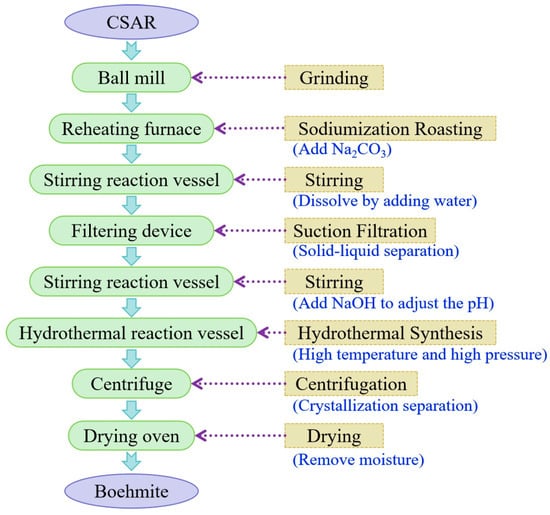
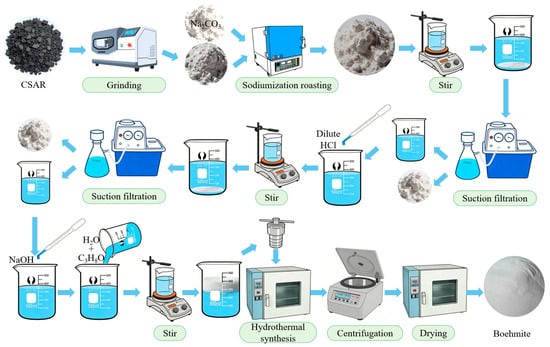
Currently, research on the high-value utilization of industrial solid waste is undergoing a strategic transformation from simple material recovery to material-oriented preparation [19,20,21]. Several studies have explored the preparation of adsorbent materials from aluminum-bearing solid wastes [22,23,24]. However, most of these approaches are limited to the extraction of conventional aluminum salts followed by subsequent synthesis, which suffers from complex process flow and high costs. The direct in situ construction of boehmite materials with specific structures from aluminum-enriched residues with complex compositions, via a one-step hydrothermal method, not only significantly simplifies the process flow but also enables the high-value utilization of aluminum. The process flow is shown in Figure 1.
Figure 1.
Process flow diagram for preparing boehmite using the CSAR.
The innovation of this technical pathway lies in two aspects: on one hand, associated impurity elements such as silicon, calcium, and magnesium in the residue may modulate the crystal growth of boehmite under hydrothermal conditions, leading to the formation of unique defect structures or composite interfaces; on the other hand, achieving controllable construction of product morphology and pore structure within such a non-ideal raw material system is the key to overcoming the technical bottleneck.
This study innovatively proposes the use of high-alumina residue generated from the co-processing of stainless steel dust and aluminum dross as an aluminum source for the hydrothermal preparation of structured boehmite materials. The research systematically investigates the influence of solution pH on the crystal structure, morphological evolution, and pore characteristics of the products, elucidating the regulatory role of impurity elements present in the residue on the growth mechanism of boehmite. Furthermore, Cr(VI) is selected as a model pollutant to conduct an in-depth study of the adsorption performance of the prepared materials. This work aims to establish a direct conversion technological system from metallurgical aluminum-enriched residue to high-efficiency adsorbent materials. It not only provides a novel approach for the disposal of such solid wastes but also offers theoretical support for the design and development of multifunctional adsorbent materials tailored for complex pollution systems, thereby contributing significantly to the promotion of sustainable development in the metallurgical industry.
2. Materials and Methods
2.1. Material
The raw material used in this experiment is the residue generated from the co-processing of stainless steel dust and aluminum dross. This residue is the product obtained after the reaction between the two materials under specific process conditions, where preliminary enrichment of valuable components and immobilization of harmful impurities have been achieved [4]. It can serve as a precursor for the preparation of aluminum-based materials such as boehmite. The chemical and phase compositions of the residue directly determine the subsequent resource utilization route and the resulting product performance. The chemical composition of the residue from the co-processing of stainless steel dust and aluminum dross was determined using X-ray fluorescence spectrometry, and the results are presented in Table 1. As shown in Table 1, the Al2O3 content in the residue is the highest, reaching 54.357%, making it the core valuable component for the preparation of aluminum-based materials. CaO (25.179%), SiO2 (15.042%), and MgO (4.904%) constitute the major impurity components. Additionally, the residue contains a small amount of Cr2O3 (0.517%), the migration and immobilization behavior of which requires attention in subsequent processes to avoid secondary pollution.
Table 1.
Chemical composition of the stainless steel dust and aluminum dross co-processing residue (wt.%).
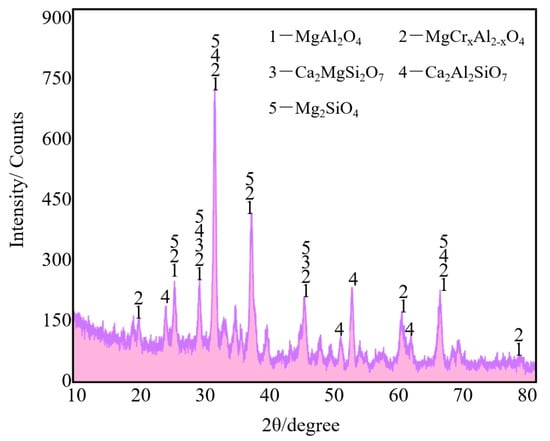
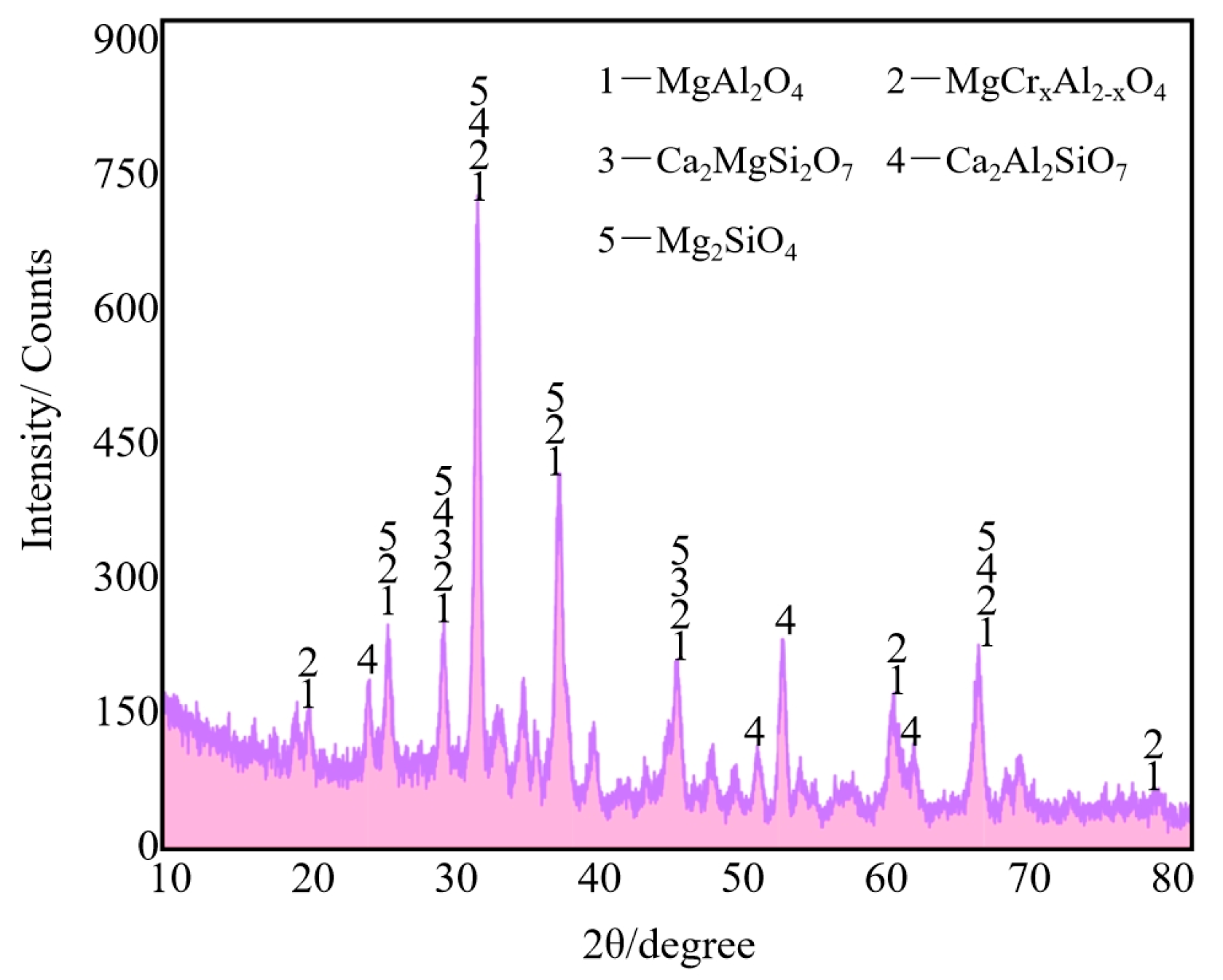
The phase composition of the residue was analyzed by X-ray diffraction (XRD), with phase identification based on the JCPDS standard database. The results are shown in Figure 2. As can be seen from the figure, the main crystalline phases in the residue are magnesium aluminate spinel (MgAl2O4), magnesium–chromium–aluminum spinel (MgCrxAl2-xO4), calcium akermanite (Ca2MgSi2O7), gehlenite (Ca2Al2SiO7), and forsterite (Mg2SiO4).
Figure 2.
Mineral phases of the raw material (XRD).
2.2. Experimental Process
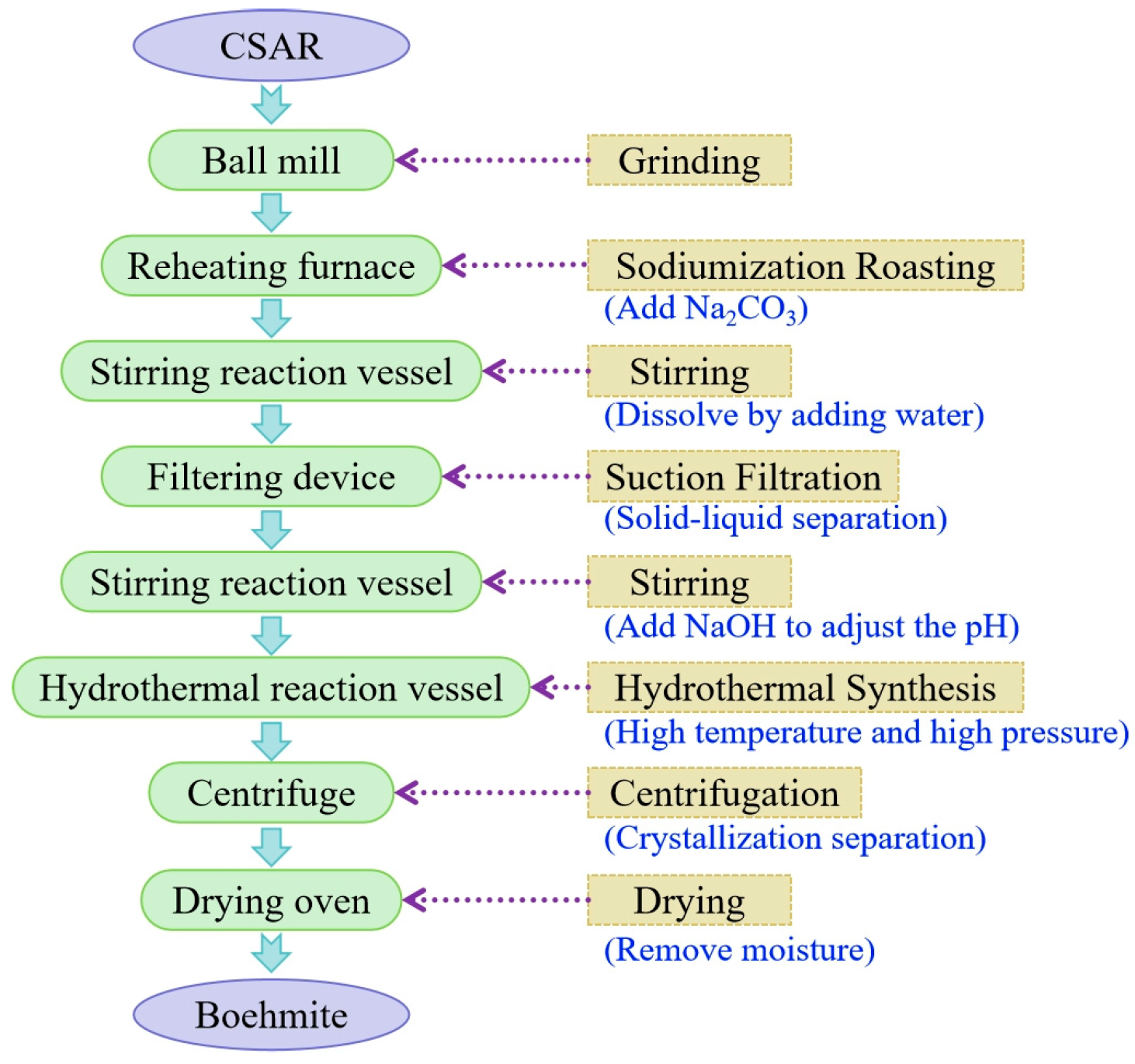
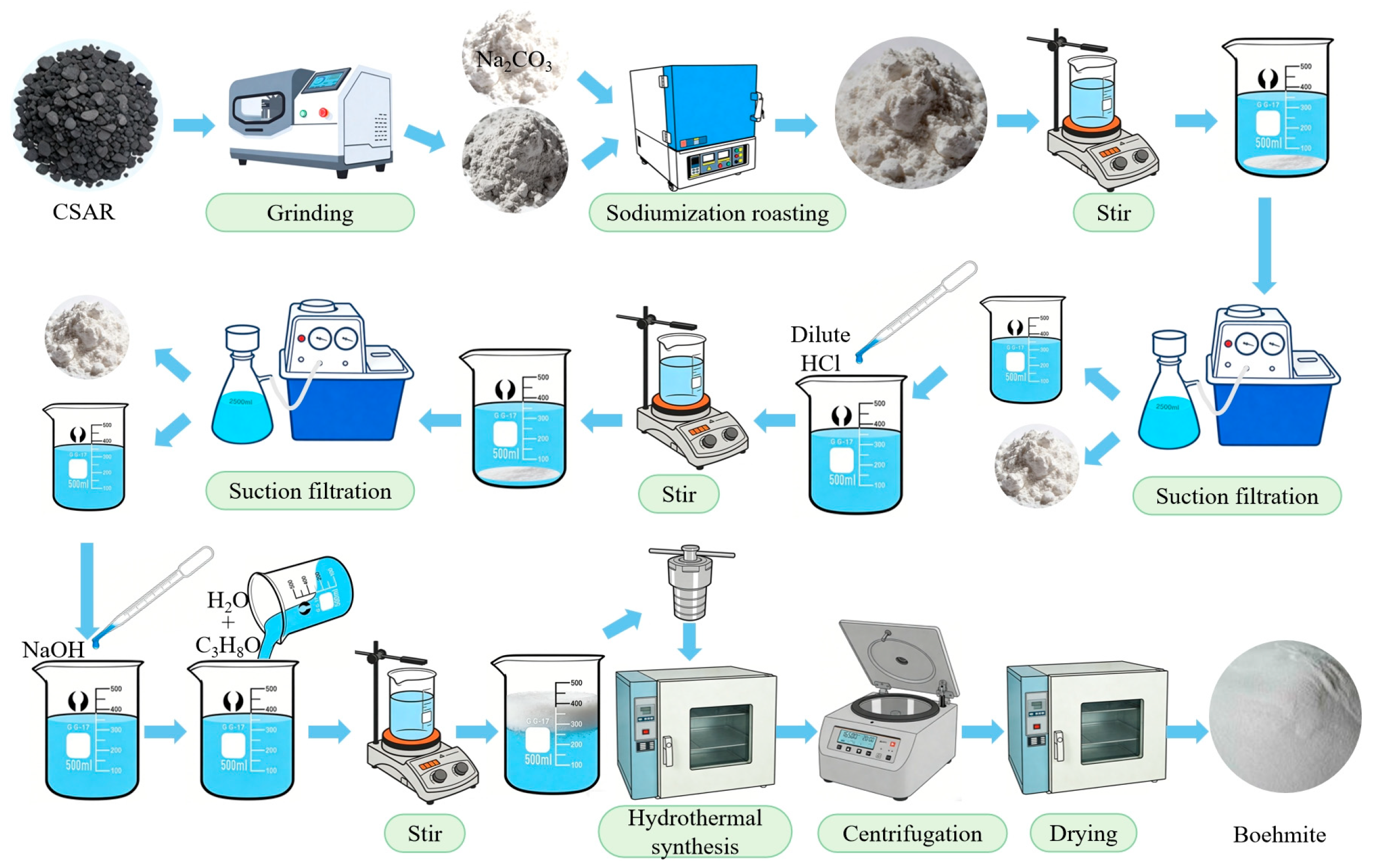
The specific experimental procedure for preparing boehmite from the co-processing residue of stainless steel dust and aluminum dross is illustrated in Figure 3. First, the raw CSAR material was ground at room temperature for 30 min using a grinding apparatus to obtain a powder with a particle size ≤ 150 μm, thereby increasing its specific surface area to enhance subsequent reaction efficiency. Subsequently, the ground CSAR powder was thoroughly mixed with sodium carbonate (Na2CO3) at a specific mass ratio of 1:0.5. The mixture was then transferred to a muffle furnace for sodium roasting at 1250 °C for 1 h. This step aims to convert the inert aluminum-bearing phases in the residue (such as MgAl2O4 and Ca2Al2SiO7) into soluble sodium aluminate through high-temperature reaction. After roasting, a mixed powder product containing sodium aluminate was obtained. The main reaction equations for the sodium roasting process are shown in Equations (1) and (2).
MgAl2O4 + Na2CO3 == 2NaAlO2 + MgO + CO2↑
Ca2Al2SiO7 + 2Na2CO3 == 2NaAlO2 +Na2CaSiO4 + CaO + 2CO2↑
Figure 3.
Experimental flowchart for the synthesis of boehmite by hydrothermal method.
Subsequently, the sodium-roasted powder product was transferred to a beaker, and deionized water was added at a liquid-to-solid ratio of 15 mL/g. The mixture was magnetically stirred at room temperature for 60 min to ensure complete dissolution of soluble sodium aluminate, yielding a mixed suspension. This suspension was then subjected to vacuum filtration to separate the filtrate containing soluble sodium aluminate from the insoluble residue, thereby obtaining a purified sodium aluminate solution. The purified sodium aluminate solution was placed on a magnetic stirrer, and 2 mol/L hydrochloric acid was slowly added dropwise at room temperature under continuous stirring for 60 min. During this process, a solution containing aluminum chloride was generated, with the corresponding reaction described by Equation (3). Subsequently, 4 mol/L sodium hydroxide solution was added dropwise to the system, following the reaction shown in Equation (4). Thereafter, 80 mL of a mixed solution consisting of deionized water and isopropanol (1:1 v/v) was introduced, and the mixture was stirred at room temperature for 12 h to form a suspension containing Al(OH)3.
NaAlO2 + 4HCl == AlCl3 + NaCl + 2H2O
AlCl3 + 3NaOH == Al(OH)3 + 3NaCl
The suspension was subsequently transferred into a hydrothermal autoclave and subjected to hydrothermal synthesis at 160 °C for 12 h. This step was intended to facilitate the directional conversion of the Al(OH)3 suspension into boehmite nuclei, with the corresponding reaction described by Equation (5). After the hydrothermal reaction, the autoclave was allowed to cool naturally to room temperature. The resulting product was collected and separated by centrifugation to obtain the wet boehmite material. Finally, the wet boehmite was placed in a drying oven and dried at 100 °C for 6 h, yielding the final dry boehmite powder product.
Al(OH)3 == γ-AlOOH + H2O
Controlled variables and levels in this study were set as follows: the independent variable was the final pH value of the hydrothermal precursor suspension, with four levels: 10.5, 11.0, 11.5, and 12.0; other parameters were kept constant as fixed variables, including sodium roasting temperature (1250 °C), roasting time (1 h), liquid–solid ratio (15 mL/g), hydrothermal temperature (160 °C), hydrothermal time (12 h), and drying temperature (100 °C).
2.3. Characterization
Observation indicators in this study included crystal phase composition, micromorphology, particle size distribution, specific surface area, pore structure parameters, Cr(VI) removal efficiency, and equilibrium adsorption capacity.
After preparation under different pH conditions, 0.05 g of the hierarchically structured boehmite powder was added to 50 mL of a 50 mg/L K2Cr2O7 solution. The mixture was then placed on a reciprocating shaker and allowed to react for varying durations. The K2Cr2O7 solution after adsorption was collected by centrifugation to determine the removal efficiency and adsorption capacity (Q). All tests were conducted in triplicate, and the average values were used for data analysis to ensure accuracy and reliability. These values were calculated using Equation (6) and Equation (7), respectively.
where C0 represents the initial concentration of the K2Cr2O7 solution; Ct represents the concentration of K2Cr2O7 after the adsorption reaction; V represents the volume of the potassium dichromate solution, and m represents the mass of the boehmite powder.
The phase compositions of solid samples, including CSAR and the synthesized boehmite, were analyzed by X-ray diffraction (XRD) (Shimadzu, Kyoto, Japan) over a scanning range of 10° to 80°. The morphological features and particle size distributions of the samples were observed using scanning electron microscopy (SEM) (FEI, Hillsboro, OR, USA). Particle size distribution data were statistically analyzed using the Kolmogorov–Smirnov (K-S) test to evaluate the significance of differences among groups. All results are expressed as mean ± standard deviation (SD) based on at least three independent measurements. Nitrogen adsorption–desorption isotherms were measured using a specific surface area and pore size analyzer. The specific surface area was calculated by the BET method, and the average pore size was determined by the BJH method. The concentration of Cr6+ in the filtrate after the adsorption experiments was determined by chemical analysis.
3. Results and Discussion
3.1. Result of Na2CO3 Calcination
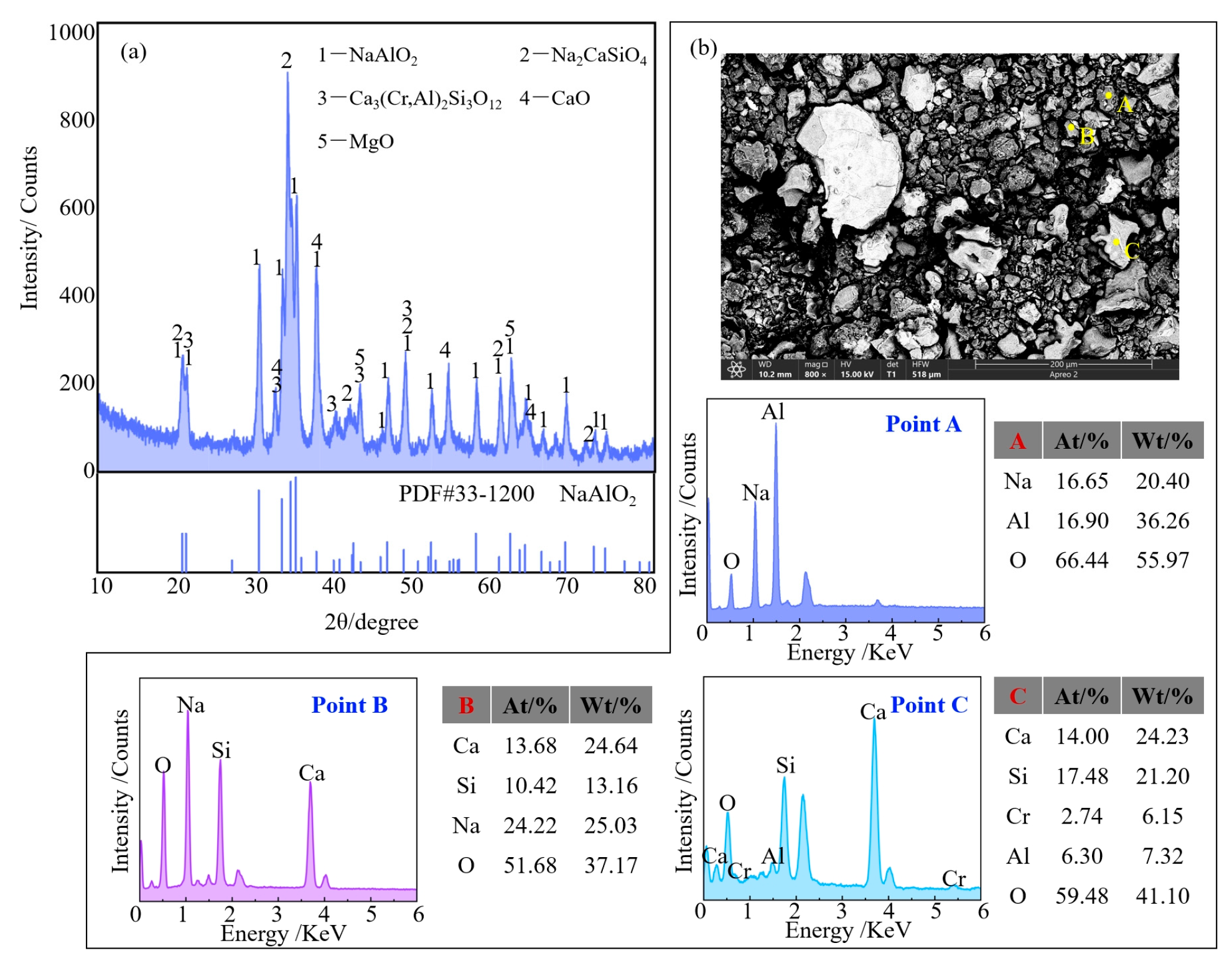
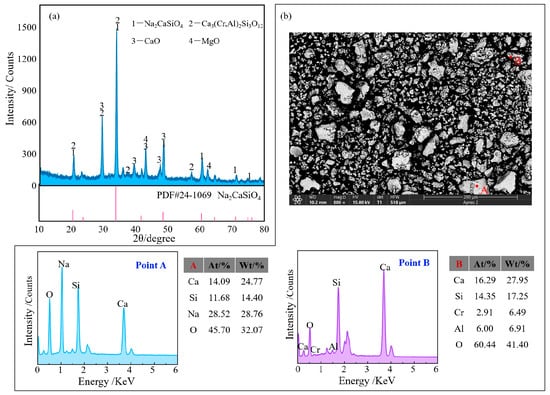
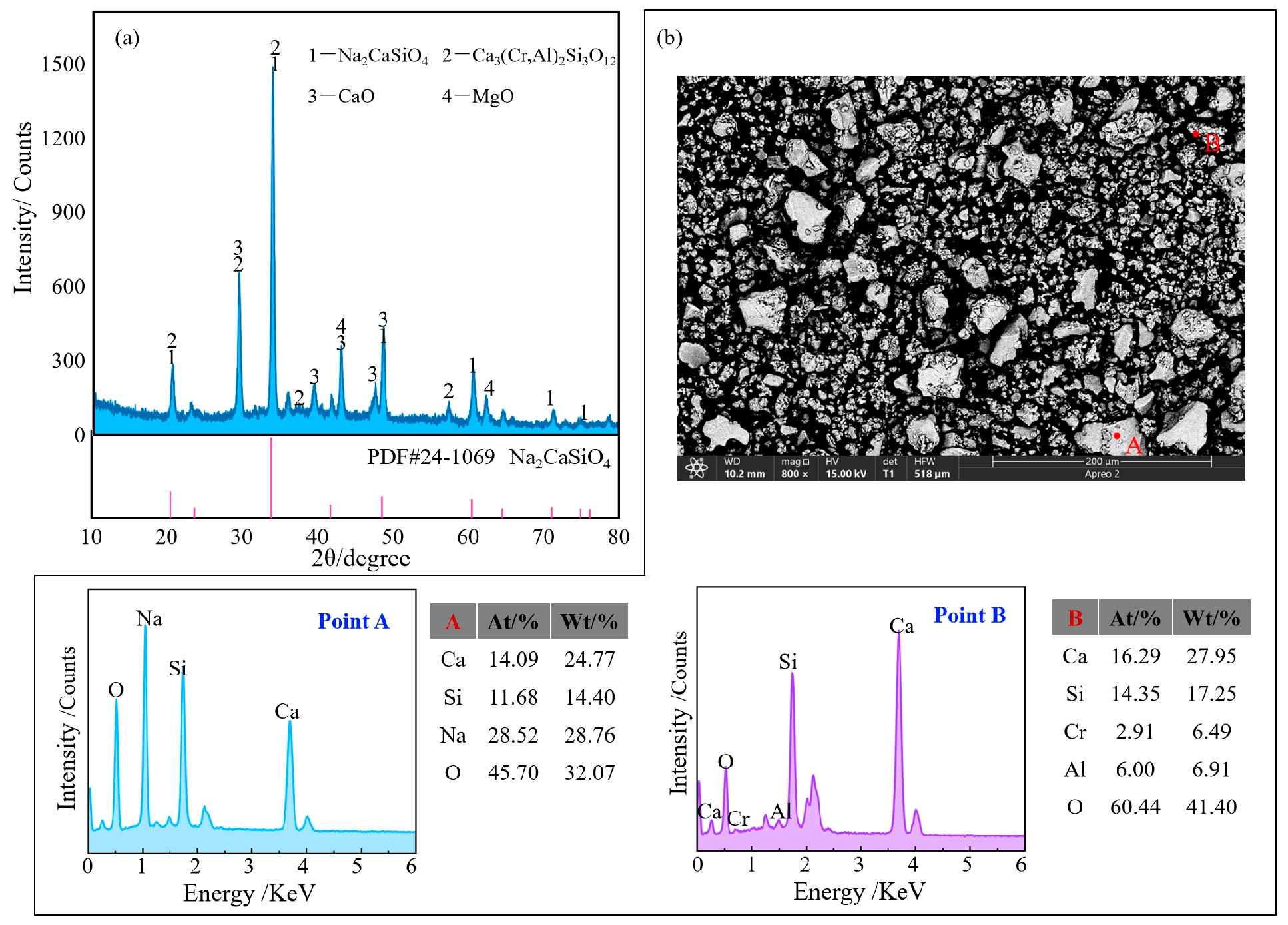
The experimental results of Na2CO3 roasting are presented in Figure 4. The phase composition of the roasted product consists of NaAlO2, Na2CaSiO4, Ca3(Cr,Al)2Si3O12, CaO, and MgO. This phase composition provides an exceptionally favorable basis for achieving the selective extraction of aluminum via water leaching. The core significance lies in the effective phase separation between aluminum and impurity elements, and the directed transformation of aluminum.
Figure 4.
Phase composition of the Na2CO3 calcination product. (a) XRD pattern; (b) SEM micrograph with EDS analysis.
The target element, aluminum, was successfully converted into highly water-soluble sodium aluminate (NaAlO2). This transformation is a direct prerequisite for the subsequent extraction of aluminum via leaching, as NaAlO2 exhibits high solubility in water at ambient temperature and can thus be efficiently transferred into solution through a straightforward hydrometallurgical operation. Simultaneously, silicon was immobilized in the form of water-insoluble calcium sodium silicate (Na2CaSiO4), effectively preventing silicon from entering the leach liquor as soluble sodium silicate. This avoids the formation of intractable aluminosilicate gels or colloids in downstream processes, which is crucial for maintaining the purity of the sodium aluminate solution and ensuring the smooth progression of precipitation steps. The calcium oxide (CaO) and magnesium oxide (MgO) present in the roasted product form hydroxides upon contact with water. Compared to sodium aluminate, these hydroxides exhibit extremely low solubility; therefore, calcium and magnesium remain almost entirely in the solid phase as hydroxides, achieving effective separation. More significantly, chromium was transformed into a highly stable, virtually water-insoluble chromium-bearing garnet phase (Ca3(Cr,Al)2Si3O12). This phase firmly locks chromium within its crystal lattice, not only preventing its dissolution as chromate during leaching, which could otherwise contaminate both the product and the environment, but also substantially reducing the environmental risk associated with the final residue. This feature highlights the green potential of the proposed process.
3.2. Results of the Aqueous Solution Dissolution
The phase composition of the residue after water dissolution is shown in Figure 5. The main phase present in the residue is calcium sodium silicate (Na2CaSiO4), while NaAlO2 is no longer detected, confirming that the resulting solution consists of NaAlO2.
Figure 5.
Phase composition of the residue after dissolution in aqueous solution. (a) XRD pattern; (b) SEM micrograph with EDS analysis.
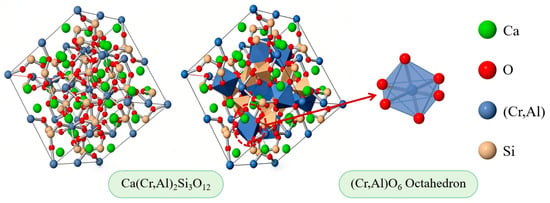
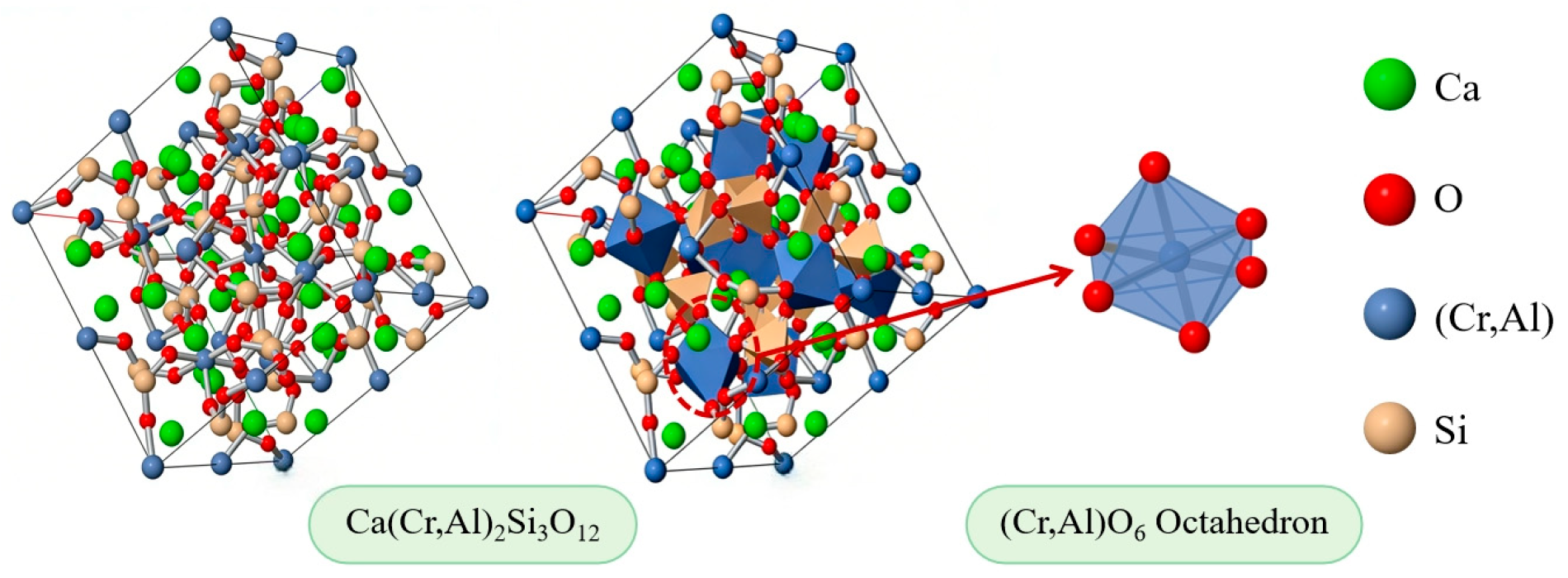
After dissolution of the sodium-roasted product in water, the chromium-containing phase, uvarovite-grossular garnet (Ca3(Cr,Al)2Si3O12), represents a mineral phase with exceptional environmental resilience in nature. Its remarkable stability originates from its three-dimensional island silicate structure, which is illustrated in Figure 6. Isolated [SiO4] tetrahedra are linked to (Cr,Al)O6 octahedra via shared oxygen atoms at their corners, forming a dense, robust, and isotropic three-dimensional network. Within this framework, Cr3+ substitutes for Al3+ via isomorphous replacement and is firmly immobilized within the inert octahedral sites. The mixed ionic-covalent bonding character confers an extremely high lattice energy to the garnet structure. Consequently, under standard surface temperature and pressure conditions, Ca3(Cr,Al)2Si3O12 is inherently insoluble in water, exhibiting negligible dissolution behavior [25].
Figure 6.
Structural schematic diagram of Ca3(Cr,Al)2Si3O12.
The leaching of chromium from Ca3(Cr,Al)2Si3O12 is extremely difficult, resulting in a minimal risk of environmental release. The key stabilization mechanism lies in both morphological immobilization and valence state stabilization [26]. Cr3+ is not only an integral structural component but also exists in a thermodynamically stable octahedral coordination state. In oxygen-containing neutral to weakly alkaline aqueous environments, an ultrathin protective hydrated silica layer forms on the mineral surface, further inhibiting the interaction between the encapsulated elements and the fluid. This garnet phase effectively immobilizes toxic metal elements within a stable mineral lattice.
3.3. Phase Composition and Microstructure of Boehmite Prepared by Hydrothermal Synthesis
3.3.1. Phase Composition of the Product
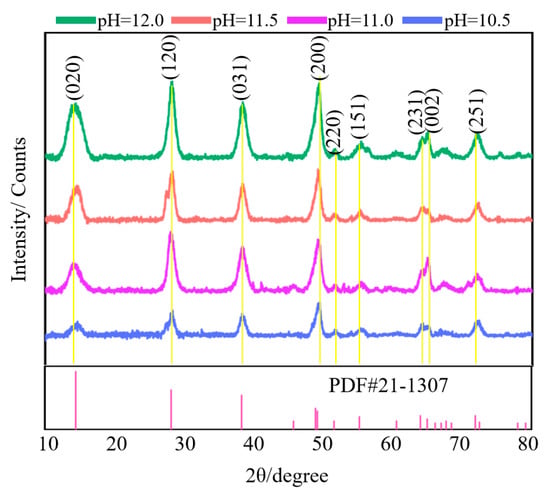
Figure 7 shows the XRD patterns of the products obtained from reaction systems with different pH values. As can be seen from the figure, the XRD patterns of the products obtained with different molar amounts of urea all exhibit characteristic diffraction peaks of boehmite at 14.88°, 29.04°, 38.96°, 49.60°, 65.36°, and 71.90°, which correspond well with the standard card (PDF#21-1307). However, notable differences in peak intensity and width are observed among the four XRD patterns, indicating variations in crystallinity and crystallite size of the boehmite products. As the pH increases from 10.5 to 12.0, the intensity of the diffraction peaks gradually increases, suggesting that the crystallinity of boehmite obtained under pH conditions of 10.5, 11, 11.5, and 12.0 improves progressively, accompanied by an increase in crystallite size.
Figure 7.
XRD patterns of the products obtained in different pH-reaction systems.
To further obtain the crystallographic information and phase content, the Debye–Scherrer method was used to calculate the crystallite size and lattice strain, and Rietveld refinement was applied to determine the mass fraction of each crystalline phase. The crystallite size of boehmite synthesized at pH 10.5, 11.0, 11.5 and 12.0 was calculated to be 6.56 nm, 9.08 nm, 11.23 nm and 13.68 nm, respectively. The lattice strain first decreased and then increased with increasing pH, reaching the minimum value of 2.0 × 10⁻³ at pH = 11.0. Meanwhile, the mass fraction of γ-AlOOH in the product reached the highest 95.8 wt% at pH = 11.0, indicating the highest phase purity and crystallinity. The moderate crystallite size, minimum lattice strain and high phase purity endow the sample prepared at pH = 11.0 with more exposed active sites and better structural stability, which is the essential crystallographic reason for its optimal Cr(VI) adsorption performance.
3.3.2. Micromorphology of the Product
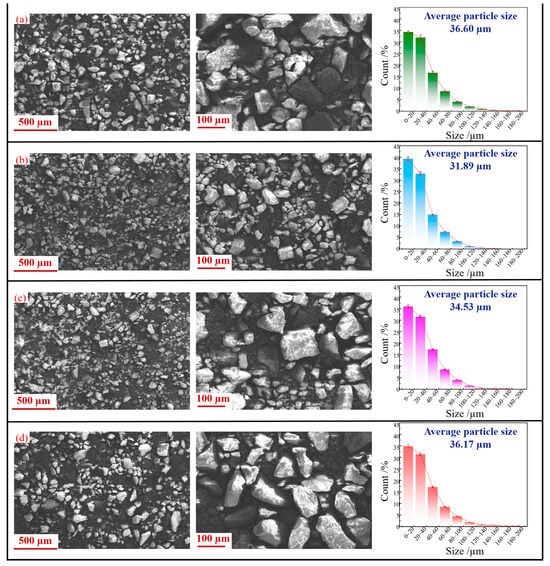
Figure 8 presents the micromorphology and particle size distribution of boehmite synthesized under different pH conditions. The SEM images reveal that at pH = 11.0 (Figure 8b), the boehmite particles exhibit a relatively small size and uniform distribution, with significantly less agglomeration compared to those obtained under other pH conditions. In contrast, samples synthesized at pH = 10.5, 11.5, and 12.0 show markedly increased particle agglomeration and more irregular morphologies. The particle size distribution histograms further corroborate this trend. At pH = 11.0, the product has an average particle size of 31.89 μm, which is considerably smaller than those obtained under the other pH conditions. Kolmogorov–Smirnov tests confirmed that the particle size distributions under different pH conditions were significantly different (p < 0.05).
Figure 8.
SEM images of the products in the different pH-reaction systems: (a): pH = 10.5; (b): pH = 11.0; (c): pH = 11.5; (d): pH = 12.0.
The smaller and more uniform particle size achieved at pH = 11.0 implies a larger specific surface area and a greater abundance of surface active sites, thereby providing more favorable interfacial reaction conditions for Cr(VI) adsorption. Moreover, the moderate suppression of agglomeration under this condition helps minimize pore blockage within the particles, ensuring effective exposure of more adsorption sites. Consequently, both the adsorption capacity and kinetic rate of the material for Cr(VI) are enhanced. In contrast, excessively high or low pH values lead to intensified particle agglomeration, increased particle size, reduced specific surface area, and consequently, diminished adsorption performance.
Based on the comprehensive analysis of micromorphology and particle size distribution, pH = 11.0 can be identified as the optimal condition for synthesizing boehmite with high Cr(VI) adsorption efficiency. Boehmite prepared under this condition possesses suitable particle size, uniform distribution, and abundant active sites key factors underlying its superior adsorption performance.
3.4. Hexavalent Chromium Ion Absorption of Boehmite
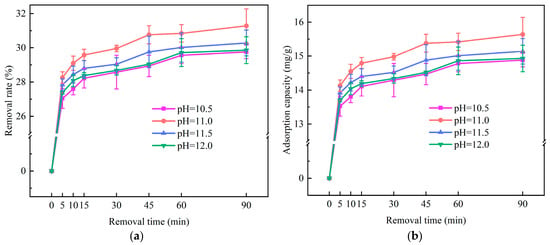
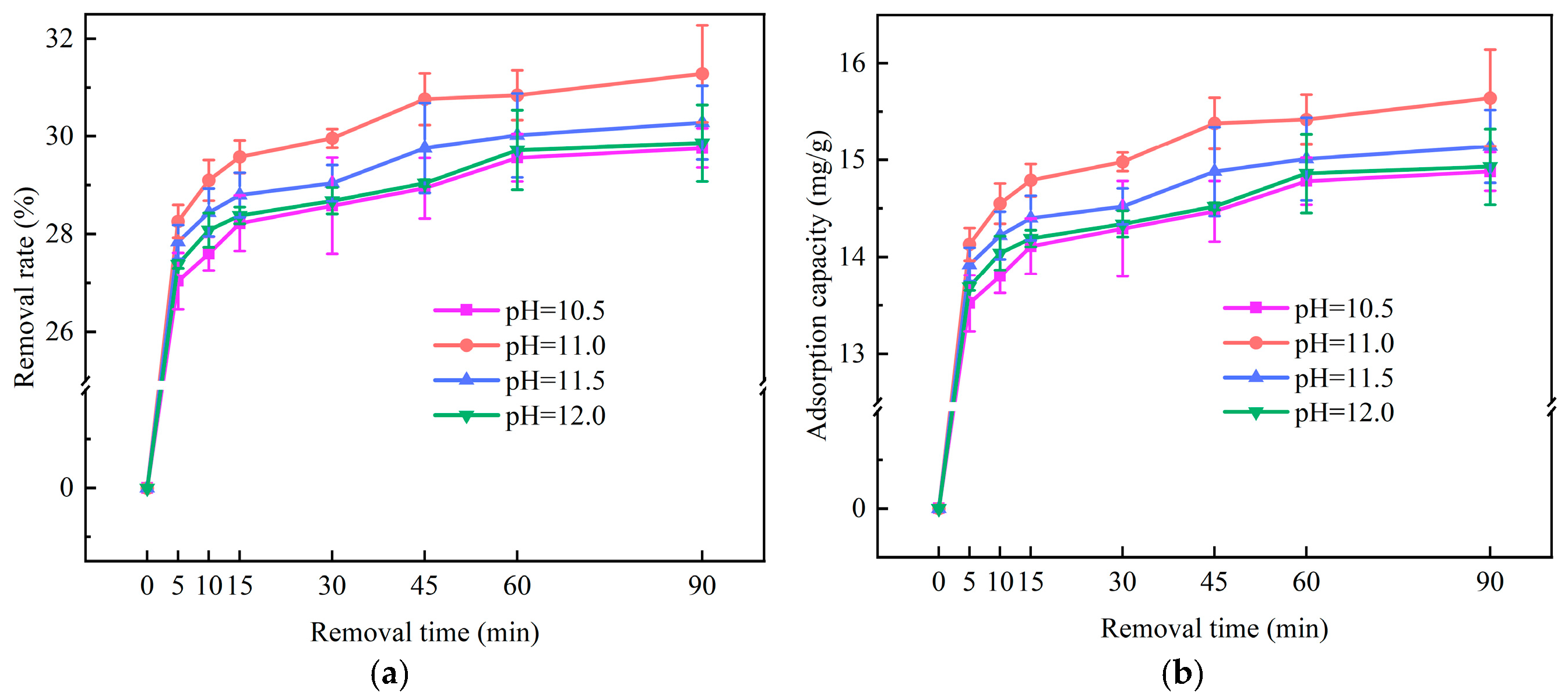
Figure 9 illustrates the time-dependent variation in Cr(VI) removal efficiency (a) and adsorption capacity (b) by boehmite synthesized under different pH conditions. All experimental data were obtained from three parallel tests and expressed as average values. The experimental conditions were as follows: an adsorbent dosage of 0.05 g boehmite for the treatment of 50 mL of a 50 mg/L Cr(VI) solution. As shown in Figure 9a, the Cr(VI) removal efficiency generally exhibited a trend of rapid increase followed by a gradual plateau with extended reaction time. Within the initial 0–5 min of the reaction, the removal efficiency under all four pH conditions increased sharply, attributable to the rapid adsorption of Cr(VI) from the solution by the abundant active sites on the boehmite surface. After 5 min, the rate of increase slowed significantly, and by 90 min, all systems approached adsorption equilibrium, with no further substantial increase in removal efficiency. Regarding adsorption capacity (Figure 9b), the trend was highly consistent with that of the removal efficiency, also characterized by rapid initial adsorption followed by a stable approach to saturation. A comparison across different pH conditions revealed that boehmite synthesized at pH 11.0 exhibited the highest Cr(VI) removal efficiency and adsorption capacity. The final removal efficiency reached 31.28%, and the maximum adsorption capacity was 15.64 mg/g, demonstrating overall performance superior to samples synthesized at pH 11.5, 12.0, and 10.5.
Figure 9.
Removal rate (a) and adsorption capacity (b) of Cr6+ by boehmite prepared under different pH conditions (mean ± SD, n = 3).
These results indicate that the synthesis pH is a critical factor in regulating the Cr(VI) adsorption performance of boehmite. The superior adsorption performance at pH = 11.0 is attributed to the optimal thermodynamic and kinetic equilibrium for boehmite crystallization provided by this pH condition. At pH = 11.0, aluminum species in the system are mainly present as [Al(OH)4]−, which is the most favorable precursor for the oriented growth of boehmite crystals. Moderate alkalinity ensures a delicate balance between nucleation and growth rates, enabling the formation of uniform particles, high specific surface area and abundant mesopores without obvious agglomeration. In comparison, insufficient alkalinity at pH = 10.5 fails to provide enough driving force for complete boehmite crystallization, leading to low crystallinity and insufficient active sites. Excessive alkalinity at pH ≥ 11.5 causes rapid and uncontrolled nucleation and serious particle agglomeration, which block pore channels and reduce effective active sites, thus deteriorating the adsorption efficiency. All adsorption experiments were conducted in triplicate, and the data are displayed as mean ± standard deviation (SD, n = 3) with the relative standard deviation lower than 5%, indicating favorable test repeatability and reliability. The rapid adsorption kinetics observed in the initial reaction stage reflect the swift consumption of active sites, while the subsequent equilibrium state indicates that the adsorption process gradually becomes controlled by diffusion steps. These findings provide important experimental evidence for optimizing the synthesis conditions of boehmite and for informing Cr(VI) removal processes in practical applications.
3.5. Analysis of N2 Adsorption–Desorption
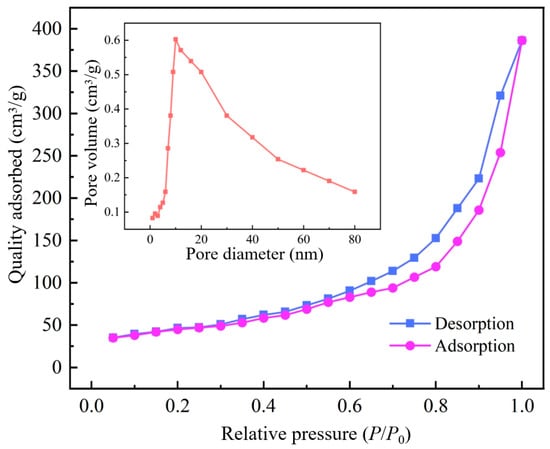
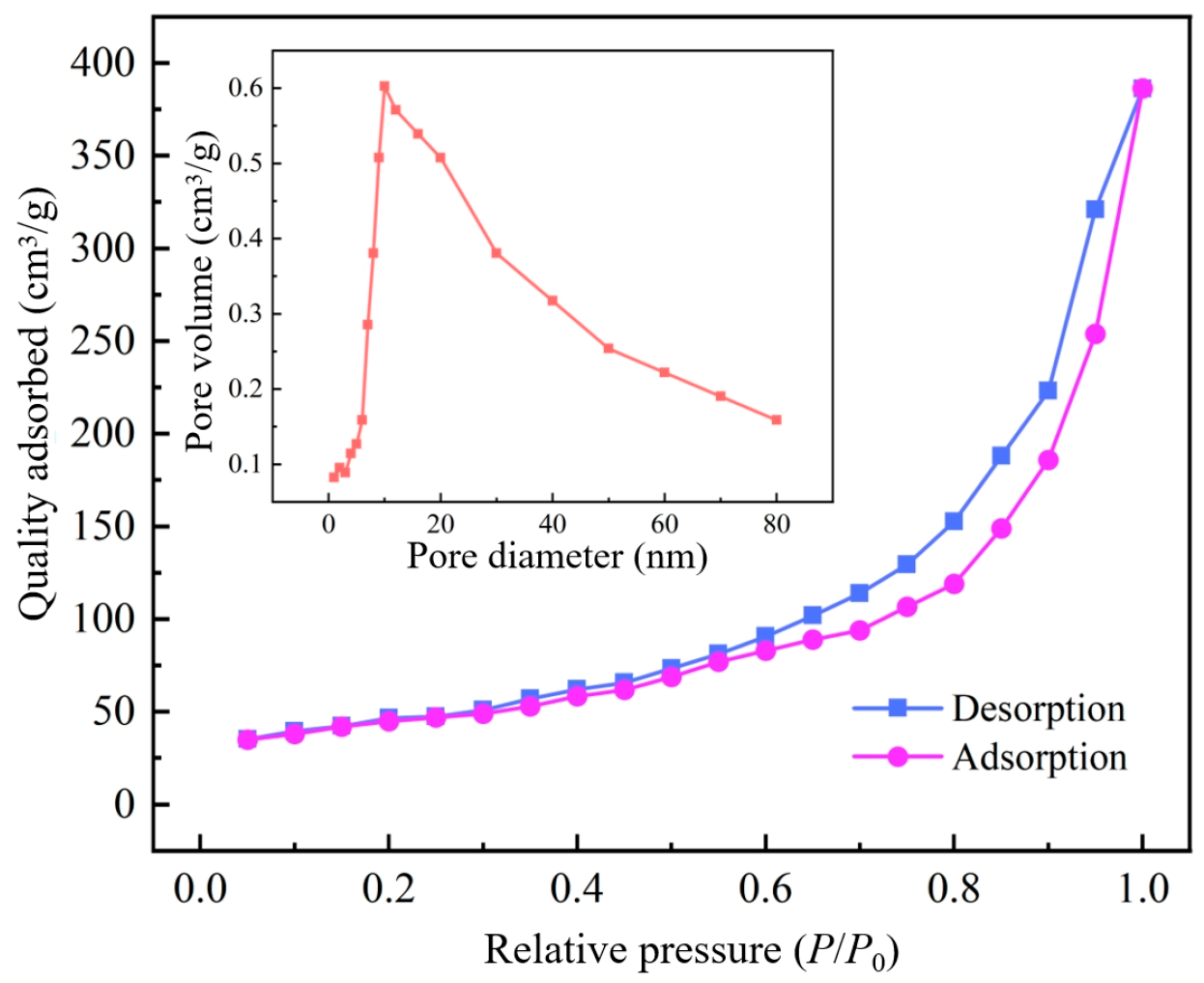
N2 adsorption–desorption experiments were conducted on the boehmite sample exhibiting the optimal adsorption performance. The resulting adsorption–desorption isotherm and pore size distribution curve are shown in Figure 10. The isotherm displays a typical Type IV characteristic, with a sharp increase in adsorption volume in the medium-to-high pressure region and a distinct hysteresis loop between the adsorption and desorption branches, indicating the presence of mesoporous structures within the sample. The pore size distribution curve reveals that the pore sizes are mainly concentrated in the range of 3–20 nm, with two prominent peaks: a primary peak centered at approximately 15 nm and a shoulder peak located at around 3–5 nm. The pore volume corresponding to the primary peak is significantly larger than that of the shoulder peak, indicating that mesopores around 15 nm constitute the dominant pore structure of the sample.
Figure 10.
N2 adsorption–desorption isotherm curve and pore size distribution diagram of boehmite under the optimal pH condition.
Calculated using the BET method, the specific surface area of the boehmite sample is approximately 156.7 m2/g, reflecting its high surface area. The total pore volume is about 0.60 cm3/g, and the BJH average pore diameter is approximately 14.6 nm, which is consistent with the primary peak position in the pore size distribution curve, further confirming the predominantly mesoporous nature of the sample. The combination of high specific surface area and well-developed mesoporous structure endows this boehmite with significant potential for applications in fields such as catalyst supports and adsorbent materials.
3.6. Formation Process and Mechanism of Boehmite
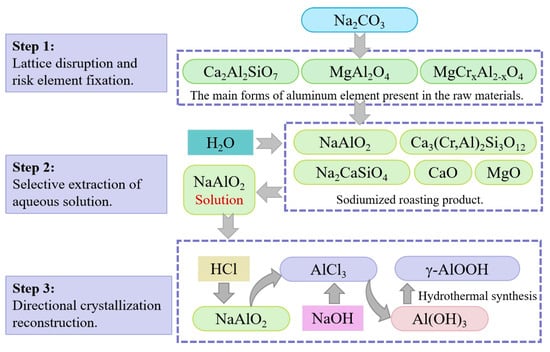
The synthesis mechanism of boehmite from secondary metallurgical solid wastes, involving the transformation of stable and inert aluminum-bearing minerals into high-value-added nanomaterials through a strategic “disintegration-purification-reconstruction” chemical pathway, is illustrated in Figure 11. The core mechanism begins with the thorough disruption of the crystal structure of aluminum-containing phases. The predominant aluminum-bearing phases in the residue, namely magnesium aluminate spinel (MgAl2O4) and gehlenite (Ca2Al2SiO7), exhibit high thermal stability and chemical inertness. During the sodium roasting step, reactive species generated from the decomposition of sodium carbonate (Na2CO3) at elevated temperatures infiltrate and break the original Al–O–Mg and Al–O–Si bond networks within the mineral lattice. This process liberates the tightly bound Al3+ ions, converting them into water-soluble sodium aluminate (NaAlO2), while impurity elements such as magnesium, calcium, and silicon are transformed into oxides or stable silicate slag phases. This accomplishes the initial activation and release of aluminum. Critically, chromium (Cr3+) originating from the stainless steel dust in the raw material is immobilized under high-temperature alkaline and oxidizing conditions through ion substitution and solid-state reactions. It becomes stably incorporated into the crystal lattice of a newly formed garnet phase, Ca3(Cr,Al)2Si3O12. This chromium-bearing garnet exhibits extremely low chemical reactivity and leaching toxicity, effectively preventing chromium dissolution during subsequent hydrometallurgical steps. This achieves permanent stabilization of the hazardous element, thereby ensuring the environmental safety of the overall process.
Figure 11.
Mechanism diagram for the preparation of boehmite.
After obtaining the soluble aluminum source, the subsequent steps are designed to achieve efficient separation and deep purification of aluminum. Acid dissolution extraction is a critical step in transferring aluminum from a complex multiphase system into solution. The NaAlO2 solution obtained after water leaching is strongly alkaline (containing Al(OH)4−). Upon addition of HCl, a vigorous acid–base neutralization reaction occurs. Protons (H+) rapidly protonate the aluminate ions, initially forming an amorphous Al(OH)3 colloid instantaneously, which then dissolves in excess acid and is ultimately converted entirely into Al3+ ions in solution. This reaction is highly spontaneous from a thermodynamic perspective. After filtration, aluminum is effectively separated from the bulk of insoluble solid impurities via liquid–solid separation. Subsequently, the aluminum solution is refined through an alkaline precipitation process. By precisely controlling the addition rate of sodium hydroxide (NaOH) and the final pH, a controlled hydrolysis-precipitation of Al3+ is induced. When the ionic concentration product exceeds the solubility product of aluminum hydroxide, homogeneous nucleation occurs in the system, generating a high-purity, high specific surface area amorphous Al(OH)3 gel precipitate. This step not only achieves chemical concentration of aluminum but also removes residual sodium salts and partially co-precipitated impurities through selective precipitation and subsequent washing, yielding a compositionally uniform aluminum precursor.
Finally, the amorphous Al(OH)3 gel was subjected to hydrothermal treatment in a sealed autoclave at 160 °C to transform the precursor into the target crystalline phase. Under high-temperature and high-pressure conditions, water enhanced the solubility and ionic mobility of the gel. Once supersaturation of aluminum hydroxyl species was reached, they preferentially nucleated and directionally deposited onto γ-AlOOH crystal seeds. The anisotropic crystal growth behavior of boehmite led to the formation of two-dimensional nanostructures. The presence of isopropanol modulated the surface energy of specific crystal facets, ultimately facilitating the reconstruction of the amorphous gel into well-defined γ-AlOOH nanomaterials. This approach successfully achieved the functional transformation of aluminum originally present in solid waste.
4. Conclusions
This study investigated the preparation of boehmite via a hydrothermal method using the co-processing residue of stainless steel dust and aluminum dross as the aluminum source, systematically evaluating process feasibility and product performance. The main conclusions are as follows:
- (1)
- Boehmite (γ-AlOOH) with high purity and well-defined crystallinity was successfully synthesized from the co-processing residue via the hydrothermal method. The optimized hydrothermal conditions effectively facilitated the leaching and conversion of aluminum from the residue without generating harmful by-products, demonstrating both the technical feasibility and industrial application potential of the proposed process.
- (2)
- Under the optimized conditions (pH = 11.0), the obtained boehmite exhibited a uniform particle size distribution predominantly in the range of 3–20 nm, with no significant agglomeration. The product possessed a high specific surface area of 156.7 m2/g, a pore volume of 0.60 cm3/g, and an average pore diameter of 14.6 nm. Such a well-developed porous architecture provides a favorable structural basis for enhanced adsorption performance.
- (3)
- The boehmite prepared under optimal conditions demonstrated excellent adsorption capacity toward Cr(VI). The adsorption process achieved a capacity of 15.64 mg/g.
This process enables the resource utilization of industrial solid waste. The obtained boehmite exhibits potential as an efficient adsorbent for Cr(VI) removal. This process offers both environmental and economic benefits and promising practical applications.
Author Contributions
Conceptualization, N.W.; methodology, H.Y.; Software, X.C.; validation, H.Y.; formal analysis, M.C.; investigation, X.C.; resources, M.C.; data curation, H.Y.; writing—original draft preparation, H.Y.; writing—review and editing, N.W.; visualization, X.C.; supervision, M.C.; project administration, M.C.; funding acquisition, N.W. and M.C. All authors have read and agreed to the published version of the manuscript.
Funding
This research was funded by the National Natural Science Foundation of China (No. 52274325 and No. 52374328).
Data Availability Statement
The original contributions presented in this study are included in the article. Further inquiries can be directed to the corresponding author.
Conflicts of Interest
The authors declare no conflicts of interest.
Abbreviations
The following abbreviations are used in this manuscript:
| CSAR | Stainless steel dust and aluminum dross co-processing residue |
References
- Liu, P.J.; Liu, Z.G.; Chu, M.S.; Yan, R.J.; Li, F.; Tang, J. Carbothermal reduction of stainless steel dust and laterite nickel ore: Slag phase behavior regulation and self-pulverization control mechanism. ISIJ Int. 2023, 63, 586–595. [Google Scholar] [CrossRef] [Scilit]
- Li, J.; Wu, M.L.; Wu, Z.; Liu, W.Z.; Lin, Z.; Li, X.Q. Efficient extraction of refractory Cr from stainless steel dust by sodium persulfate oxidation roasting. Waste Manag. 2024, 190, 423–431. [Google Scholar] [CrossRef] [Scilit]
- Mahinroosta, M.; Allahverdi, A. Hazardous aluminum dross characterization and recycling strategies: A critical review. J. Environ. Manag. 2018, 223, 452–468. [Google Scholar] [CrossRef] [Scilit]
- Yao, H.D.; Wang, N.; Chen, M.; Chen, X.Q. Green production of carbon-free Fe–Cr–Ni alloy via co-processing of stainless steel dust and aluminum dross. J. Alloys Compd. 2026, 1051, 185955. [Google Scholar] [CrossRef] [Scilit]
- Xing, H.L.; Liu, Z.C.; Bai, L.H.; Fan, Q. Preparation of morphology-controllable γ-AlOOH/RGO composites and broadband microwave absorbers. J. Mater. Sci. Mater. Electron. 2024, 35, 357. [Google Scholar] [CrossRef] [Scilit]
- Wang, D.; Li, Z.L.; Lv, F.C.; Chen, J.X.; Wu, C.Z.; Li, Y.P.; Li, Y.B.; Shen, J.L. Synthesis of Nucleoshell γ-AlOOH as an ultra-high-capacity adsorbent for organic pollutants removal. Colloid Interface Sci. Commun. 2022, 50, 100658. [Google Scholar] [CrossRef] [Scilit]
- Li, X.H.; Yang, X.X.; Yan, S.Y.; Liu, X.Y.; Yang, G. The influence of γ-AlOOH morphology on composite separator performance for lithium-ion batteries. New J. Chem. 2026, 50, 3349–3359. [Google Scholar] [CrossRef] [Scilit]
- Wang, D.; Li, Z.L.; Lv, F.C.; Guan, M.J.; Chen, J.X.; Wu, C.Z.; Li, Y.P.; Li, Y.B.; Zhang, W.G. Characterization of microspheres γ-AlOOH and the excellent removal efficiency of Congo red. J. Phys. Chem. Solids 2023, 174, 111043. [Google Scholar] [CrossRef] [Scilit]
- Vo, T.K.; Park, H.-K.; Nam, C.-W.; Kim, S.-D.; Kim, J. Facile synthesis and characterization of γ-AlOOH/PVA composite granules for Cr(VI) adsorption. J. Ind. Eng. Chem. 2018, 60, 485–492. [Google Scholar] [CrossRef] [Scilit]
- Han, Y.W.; Xiong, J.C.; Zhang, H.L.; Chen, X.; Liu, W.K.; Chang, Q.Q.; Li, Q.; Xie, H.J.; Li, G.Q.; Qin, Q.W.; et al. Adsorption of low-concentrated U(VI) on a preferable crystalline boehmite (γ-AlOOH) in alkaline conditions. Ind. Eng. Chem. Res. 2023, 62, 20802–20810. [Google Scholar] [CrossRef] [Scilit]
- Vo, T.K. Spray pyrolysis synthesis of mesoporous γ-AlOOH and γ-Al2O3 microspheres and their properties for Cr(VI) adsorption. Int. J. Environ. Anal. Chem. 2024, 104, 584–604. [Google Scholar] [CrossRef] [Scilit]
- Truong, T.V.; Kim, D.-J. Synthesis of high quality boehmite and γ-Alumina for phosphorus removal from water works sludge by extraction and hydrothermal treatment. Environ. Res. 2022, 212, 113448. [Google Scholar] [CrossRef] [Scilit] [PubMed]
- Gholizadeh, Z.; Aliannezhadi, M.; Ghominejad, M.; Tehrani, F.S. Novel boehmite and η-Alumina nanostructures synthesized using a green ultrasonic-assisted hydrothermal method by clove extract for water treatment. J. Water Process Eng. 2024, 65, 105786. [Google Scholar] [CrossRef] [Scilit]
- Abdelkader, A.; Hussien, B.M.; Fawzy, E.M.; Ibrahim, A.A. Boehmite nanopowder recovered from aluminum cans waste as a potential adsorbent for the treatment of oilfield produced water. Appl. Petrochem. Res. 2021, 11, 137–146. [Google Scholar] [CrossRef] [Scilit]
- Wang, F.; Yuan, X.; Wang, D. Hydrothermal synthesis of hierarchical boehmite (γ-AlOOH) hollow microspheres with highly active surface. AIP Adv. 2021, 11, 065209. [Google Scholar] [CrossRef] [Scilit]
- He, F.; Li, W.J.; Pang, T.L.; Zhou, L.; Wang, C.; Liu, H.; Li, M.W.; He, X.D. Hydrothermal synthesis of boehmite nanorods from alumina sols. Ceram. Int. 2022, 48, 18035–18047. [Google Scholar] [CrossRef] [Scilit]
- Zhang, Y.W.; Chen, Y.K.; Li, X.Y.; Li, A.D.; Zhao, Y.J.; Xu, Y.; Gao, Y.Y.; Wang, Z.H.; Li, C.S.; Guo, Y.L.; et al. Morphology inheritance in the synthesis of high-purity flake-like α-Al2O3 powder via hydrothermal boehmite precursor. Ceram. Int. 2026, 52, 16273–16283. [Google Scholar] [CrossRef] [Scilit]
- He, J.; Ponton, C.B. Hydrothermal synthesis and morphology control of boehmite. Int. J. High Press. Res. 2001, 20, 241–254. [Google Scholar] [CrossRef] [Scilit]
- Ren, C.Z.; Wang, W.L.; Li, G.L. Preparation of high-performance cementitious materials from industrial solid waste. Constr. Build. Mater. 2017, 152, 39–47. [Google Scholar] [CrossRef] [Scilit]
- Miao, C.; Liang, L.X.; Zhang, F.; Chen, S.M.; Shang, K.X.; Jiang, J.L.; Zhang, Y.; Ouyang, J. Review of the fabrication and application of porous materials from silicon-rich industrial solid waste. Int. J. Miner. Metall. Mater. 2022, 29, 424–438. [Google Scholar] [CrossRef] [Scilit]
- Bao, J.C.; Sun, X.; Ning, P.; Li, K.; Yang, J.; Wang, F.; Shi, L.; Fan, M.H. Industrial solid wastes to environmental protection materials for removal of gaseous pollutants: A review. Green Energy Environ. 2025, 10, 34–83. [Google Scholar] [CrossRef] [Scilit]
- Lu, G.Z.; Zhang, T.A.; Feng, W.; Zhang, W.G.; Wang, Y.X.; Zhang, Z.M.; Wang, L.; Liu, Y.; Dou, Z.H. Preparation and properties of pseudo-boehmite obtained from high-alumina fly ash by a sintering–CO2 decomposition process. JOM 2019, 71, 499–507. [Google Scholar] [CrossRef] [Scilit]
- Lin, Y.W.; Lin, K.L.; Cheng, T.W.; Chen, C.Y.; Lo, K.W. Synthesis and environmental applications of aluminum-containing MCM-41 type material from industrial waste containing silicon and aluminum. J. Non-Cryst. Solids 2021, 569, 120954. [Google Scholar] [CrossRef] [Scilit]
- Wen, J.; Yuan, R.R.; Jiang, T.; Yu, T.X.; Hu, J.Q.; Hao, W.Z. In-situ preparation of layered boehmite using high-alumina fly ash for Congo red removal. J. Sustain. Metall. 2023, 9, 1190–1200. [Google Scholar] [CrossRef] [Scilit]
- Sawada, H. Electron density study of garnets: Ca3(Cr,Al)2Si3O12. J. Solid State Chem. 1997, 132, 432–433. [Google Scholar] [CrossRef] [Scilit]
- Sinyoung, S.; Songsiriritthigul, P.; Asavapisit, S.; Kajitvichyanukul, P. Chromium behavior during cement-production processes: A clinkerization, hydration, and leaching study. J. Hazard. Mater. 2011, 191, 296–305. [Google Scholar] [CrossRef] [Scilit]

Disclaimer/Publisher’s Note: The statements, opinions and data contained in all publications are solely those of the individual author(s) and contributor(s) and not of MDPI and/or the editor(s). MDPI and/or the editor(s) disclaim responsibility for any injury to people or property resulting from any ideas, methods, instructions or products referred to in the content. |
© 2026 by the authors. Licensee MDPI, Basel, Switzerland. This article is an open access article distributed under the terms and conditions of the Creative Commons Attribution (CC BY) license.