


Abstract
Selective laser melting (SLM) is an additive manufacturing method based on powder bed fusion that has gained prominence in prosthodontics for its capability to create intricate, patient-specific metal restorations with precision and consistency. SLM has become an important part of digital dental workflows, allowing for the direct creation of dental frameworks from computer-aided design (CAD), offering advantages over traditional casting and subtractive milling techniques. This review outlines the fundamentals of SLM, the dental alloys commonly employed, and the microstructural characteristics that affect mechanical properties, corrosion resistance, and biocompatibility. It explores current uses in removable partial denture frameworks, fixed dental prostheses, metal–ceramic restorations, implant-supported prosthetics, and maxillofacial rehabilitation. Alloys based on cobalt–chromium and titanium produced through SLM exhibit strong mechanical properties, fatigue resistance, and biological compatibility when suitable post-processing is conducted. Despite these advantages, issues such as surface roughness, porosity, anisotropy, powder handling, and high costs remain, and there is a lack of extensive long-term clinical data. Ongoing process refinement and clinical validation are crucial for the wider integration of SLM into standard prosthodontic practice.
1. Introduction
The rapid progress in digital dentistry has significantly altered the approach to designing, creating, and delivering prosthodontic treatments [1]. Over the last twenty years, the adoption of computer-aided design and computer-aided manufacturing (CAD/CAM) technologies has allowed dental professionals and technicians to transition from traditional manual processes to highly accurate, data-driven techniques [2,3]. Among these technological advancements, additive manufacturing (AM), often referred to as three-dimensional (3D) printing, has become one of the most impactful innovations [4]. This is due to its capability to produce intricate structures directly from digital models with high consistency and minimal material waste [5].
Additive manufacturing includes a range of processing methods, which are generally classified according to the ISO/ASTM 52900 standard [6,7]. These methods consist of material extrusion, vat photopolymerization, binder jetting, material jetting, sheet lamination, directed energy deposition, and powder bed fusion (PBF) [8]. In the field of dentistry, PBF has become particularly prominent for creating metallic parts, as it allows for the layer-by-layer consolidation of metal powders using high-energy laser or electron beams [9,10]. Selective laser melting (SLM), a laser-based PBF method, is especially beneficial in prosthodontics because it can completely melt and fuse metal powders into dense, high-strength components that are suitable for use inside the mouth [11].
SLM marks a significant shift from conventional manufacturing methods like casting and subtractive milling [12]. Traditional lost-wax casting, despite its long-standing use, often suffers from issues such as shrinkage defects, porosity, variable alloy quality, and steps that are highly dependent on the operator’s expertise [13]. Milling, another common CAD/CAM technique, offers greater precision but is constrained by tool accessibility, substantial material waste, and difficulties in creating complex shapes. In contrast, SLM integrates effortlessly with digital processes and enables the direct production of intricate dental alloys such as cobalt–chromium (Co-Cr), titanium, and their variants with enhanced microstructural uniformity, fewer casting defects, and superior mechanical properties [14,15].
The integration of SLM in prosthodontics is propelled by both clinical and technological needs. Clinicians are increasingly in search of restorations that provide excellent fit accuracy, long-lasting durability, and customization tailored to individual patients [15]. At the same time, laboratories strive for quicker turnaround times, consistent reproducibility, and scalable digital production processes. SLM meets many of these requirements by allowing the creation of removable partial denture (RPD) frameworks, fixed dental prostheses, implant-supported bars, maxillofacial prosthetic components, and metal–ceramic substructures with high dimensional accuracy and minimal human error [16,17].
Although SLM offers several benefits, it also has its drawbacks. Issues like surface roughness, anisotropic mechanical properties, residual stresses, and powder contamination need to be addressed through effective process control and post-processing techniques [18]. Additionally, there is a lack of extensive clinical evidence supporting the long-term effectiveness of prostheses made using SLM compared to traditional methods, highlighting the need for ongoing research and standardization [19,20].
Considering these advancements, the objective of this review is to deliver a detailed and critical examination of the current role of SLM in prosthodontics. This review delves into the core principles of SLM technology, its diverse applications within prosthodontic fields, the mechanical and biological characteristics of dental alloys created using SLM, the advantages it holds over traditional fabrication methods, the challenges that persist, and the future pathways for research and clinical adoption. By compiling existing knowledge, this work aims to assist both clinicians and researchers in comprehending the increasing relevance of SLM in the realm of digital dentistry.
2. Principles of Selective Laser Melting
To understand the clinical relevance of SLM in prosthodontics, it is essential to first examine its fundamental working principles and processing mechanisms.
2.1. Basic Mechanism of SLM
SLM is an additive manufacturing method based on powder bed fusion that facilitates the direct creation of dense metal parts by melting them with a laser [21,22]. Unlike traditional prosthodontic manufacturing techniques such as casting or subtractive milling, SLM enables the formation of intricate shapes and customized microstructures by accurately managing thermal energy input, powder feedstock, and digital design [23]. The SLM process depends on a closely linked interaction between the layer-by-layer construction, laser processing settings, and powder properties, all of which influence melt pool dynamics, interlayer adhesion, and the final material characteristics [24]. In dental applications, changes in these elements can greatly affect density, surface finish, microstructural consistency, and mechanical dependability, making it crucial to understand SLM’s core mechanisms to enhance prosthodontic restorations [25].
- Layer-by-Layer Fabrication
SLM utilizes a method of constructing objects layer by layer, where a precisely aimed laser melts thin metal powder layers based on cross-sectional data from a sliced CAD model [26]. During each cycle, a consistent layer of powder is spread over the build platform and then selectively melted by a high-energy laser, which fully liquefies the powder particles to create dense layers with strong metallurgical bonds and excellent interlayer adhesion [27]. Once solidified, the build platform is lowered by a set layer thickness, and the process is repeated until the three-dimensional prosthodontic component is fully formed [28]. This layer-by-layer technique allows for precise control over the geometry and internal structures, enabling the creation of intricate features like thin clasps, undercuts, and lattice designs that are challenging to produce with traditional casting or subtractive methods [29,30]. Additionally, the additive and digital nature of SLM minimizes material waste, improves reproducibility, and seamlessly integrates with CAD/CAM workflows and intraoral scanning, supporting patient-specific and highly customized prosthodontic solutions [31].
- b.
- Laser Parameters (Power, Scan Speed, Hatch Spacing)
The parameters used in laser processing are crucial in influencing the quality, mechanical properties, and structural soundness of dental alloys produced through SLM [32]. The volumetric energy density, which is mainly determined by laser power and scanning speed, has a direct impact on the behaviour of the melt pool, the bonding between layers, and the level of densification. Insufficient energy can result in lack-of-fusion defects, while too much energy can lead to unstable melt pool dynamics, residual stresses, and inaccuracies in dimensions. Additionally, hatch spacing affects the overlap of melt pools and the formation of porosity; inadequate overlap can cause weak bonding between tracks, whereas excessively small spacing can lead to heat buildup and microstructural inconsistencies [33]. In prosthodontic applications, where restorations endure repeated occlusal loading, it is vital to carefully optimize laser parameters to create dense structures with minimal defects, ensuring reliable mechanical properties and long-term clinical success [34,35].
- c.
- Powder Characteristics (Size, Flowability, Morphology)
SLM, the characteristics of metal powders, both physical and chemical, are crucial for ensuring process stability and the quality of the final product [36]. The distribution of particle sizes significantly affects the density of powder packing, the interaction between the laser and powder, and the uniformity of layers [37]. Powders that are too fine tend to oxidize easily and have poor flowability, whereas powders that are too coarse can lead to incomplete melting and fusion defects [38]. The shape of the powder particles is also vital; spherical, gas-atomized powders offer better flowability and consistent recoating compared to irregularly shaped particles, which can cause uneven melting and dimensional errors [39]. Maintaining good powder flowability and cleanliness is essential for achieving consistent layer thickness, as contamination or inadequate spreading can increase porosity and compromise mechanical reliability [40]. Furthermore, repeated recycling of powder can change particle shape and chemical makeup, raising oxygen levels and deteriorating mechanical properties. This underscores the importance of stringent powder management and recycling control to maintain consistent quality in SLM-produced dental prostheses [41].
Figure 1 illustrates the fundamental mechanism of the Selective Laser Melting process. Initially, a thin and uniform layer of metal powder is spread across the build platform using a recoating system. A high-energy laser then selectively scans the powder bed based on the cross-sectional geometry derived from the digital model, generating a localized melt pool where complete melting of particles occurs. Upon solidification, a dense metallurgical bond is formed between adjacent tracks and successive layers. The build platform is subsequently lowered, and a new powder layer is deposited, allowing the process to repeat in a layer-by-layer manner. The stability of the melt pool, heat transfer behaviour, and solidification dynamics play critical roles in determining microstructure evolution and defect formation, directly influencing the mechanical performance and reliability of the final component [42].
Figure 1.
SLM process steps, adapted with permission from Ref. [42]. Copyright 2012, John Wiley and Sons.
2.2. Materials Commonly Used in Oral Prosthetics
Following an understanding of the SLM process, material selection becomes a critical factor that influences processing behaviour and final prosthetic performance. Since the response of a material to rapid melting and solidification strongly affects the quality of the final restoration, material selection is a critical consideration in SLM-based prosthodontics. The mechanical properties, biocompatibility, and supporting long-term clinical success of prosthodontic restorations created through SLM are heavily dependent on the choice of materials [43]. This is because the process exposes alloys to rapid and localized thermal cycles, impacting their microstructure, phase composition, and residual stress distribution [44]. As a result, not all dental alloys that are suitable for casting or milling are appropriate for SLM. The materials must demonstrate proven biocompatibility, resistance to corrosion in the oral environment, and adequate strength and fatigue resistance to endure occlusal forces [45,46]. Additionally, they must be compatible with digital workflows and capable of forming stable microstructures under rapid solidification conditions [47]. These criteria have led to the widespread use of cobalt–chromium alloys and titanium-based materials in SLM prosthodontics, while the use of stainless steel is limited due to concerns about biological compatibility and corrosion [48,49].
- Co-Cr alloys
Cobalt–chromium (Co-Cr) alloys are extensively utilized in SLM for prosthodontic purposes because of their superior mechanical strength, outstanding wear resistance, and corrosion stability in the oral environment (Table 1) [50]. The rapid melting and solidification process characteristic of SLM results in fine and uniform microstructures, which help to minimize typical casting defects like shrinkage porosity, elemental segregation, and irregular grain growth [51]. This refined microstructure improves yield strength and fatigue resistance (Table 1), which are essential for fixed dental prostheses that endure occlusal loading and for ensuring long-term stability and retention in removable partial denture frameworks [52]. Furthermore, Co-Cr alloys produced through SLM develop a stable chromium-rich passive oxide layer that offers excellent corrosion resistance, reducing ion release and adverse tissue reactions [53]. With suitable post-processing and surface finishing (Table 1), their corrosion performance is comparable to or better than that of traditionally cast alloys, contributing to their increasing acceptance as dependable, digitally compatible materials in modern prosthodontic practice, such as RPD framework, crown, bridges, and implant bars (Table 1) [54].
- b.
- Titanium and Titanium Alloys (Ti-6Al-4V)
Titanium and its alloys, especially Ti-6Al-4V, are extensively utilized in SLM for maxillofacial and implant-supported prosthodontic purposes because of their outstanding biocompatibility, excellent corrosion resistance, and advantageous mechanical characteristics (Table 1) [55]. The high strength-to-weight ratio of titanium alloys allows for the creation of lightweight yet durable prosthetic components, enhancing patient comfort while maintaining structural integrity. SLM further boosts the clinical potential of titanium by enabling the production of intricate, patient-specific shapes, thin-walled structures, and porous or lattice designs that encourage more natural stress distribution and minimize stress shielding (Table 1) [56]. The development of a stable titanium oxide (TiO2) passive layer offers robust corrosion resistance and facilitates protein adsorption, cell adhesion, and osteointegration, which are essential for supporting long-term clinical success [57]. With suitable post-processing and surface modification, SLM-produced titanium components exhibit biological and mechanical performance that is comparable to or better than traditionally manufactured counterparts, supporting their growing use in advanced prosthodontic and maxillofacial applications (Table 1) [20,58].
- c.
- Stainless Steel (Limited use)
Stainless steel has been explored as a candidate material for SLM, yet its application in permanent prosthodontics is still restricted. While austenitic stainless steels like 316L are commonly employed in biomedical devices due to their cost-effectiveness, adequate mechanical properties, and ease of manufacturing, they offer poorer corrosion resistance in the dynamic oral environment compared to cobalt–chromium and titanium alloys (Table 1) [59]. The passive oxide layer on stainless steel is less stable and can deteriorate under acidic conditions or mechanical stress, resulting in increased ion release. Furthermore, the release of nickel and chromium ions has been linked to hypersensitivity and inflammatory responses, limiting its long-term use in the mouth (Table 1) [60]. Because of these material and biological constraints, stainless steel is typically limited to experimental research, temporary restorations, or non-permanent components (Table 1), while Co-Cr and titanium alloys continue to be the preferred materials for SLM-fabricated prosthodontic restorations that require long-term durability and biocompatibility [61].
Table 1.
Materials used in SLM for prosthodontic.
2.3. Microstructural Characteristics of SLM Alloys
In addition to material selection, the microstructural characteristics generated during SLM processing play a key role in determining mechanical properties and clinical performance. Dental alloys created through SLM display unique microstructural properties compared to those made by traditional casting or subtractive manufacturing methods [62]. This is largely due to the highly localized and rapid thermal cycles inherent in the SLM process [63]. The repeated cycles of melting and solidification under sharp temperature gradients lead to distinctive microstructures that significantly affect mechanical properties, corrosion resistance, and the long-term clinical performance of prosthodontic devices [64]. It is crucial to understand these microstructural characteristics-such as the effects of rapid solidification, refined grain structures, anisotropy, and process-induced porosity-especially in dentistry, where restorations face cyclic occlusal forces and a chemically active oral environment [65,66].
- Rapid Solidification
Rapid solidification is a defining microstructural feature of alloys produced by SLM, resulting from the extremely high cooling rates associated with localized laser melting, which can reach 103–106 K/s-significantly higher than those in conventional casting processes [67]. Such rapid cooling limits atomic diffusion and leads to non-equilibrium microstructures characterized by fine cellular or dendritic morphologies and a more homogeneous distribution of alloying elements in systems such as cobalt–chromium and titanium alloys [68]. This microstructural refinement enhances mechanical uniformity and reduces segregation-related weaknesses; however, it may also promote the retention of metastable phases and the development of residual stresses, necessitating post-processing treatments such as stress-relief heat treatment to ensure dimensional stability and optimal mechanical performance [69].
The phase evolution of SLM-fabricated alloys differs significantly depending on material composition. In titanium alloys such as Ti–6Al–4V, the extremely high cooling rates associated with SLM promote the formation of metastable α′ martensite, which contributes to high strength but may reduce ductility unless appropriate heat treatment is applied. In contrast, cobalt–chromium alloys exhibit the formation of carbide phases, which enhance hardness, wear resistance, and overall mechanical stability. These differences in phase evolution highlight the importance of material-specific post-processing strategies to optimize the mechanical performance and clinical reliability of SLM-fabricated prosthodontic components [46].
- b.
- Fine Microstructure
Alloys produced through SLM generally possess a fine and highly refined microstructure characterized by small grain sizes and elevated dislocation densities due to the rapid solidification process [70]. The refinement of grains serves as an effective strengthening mechanism, as explained by the Hall-Petch relationship, where a decrease in grain size results in enhanced yield strength and hardness. In contrast to cast alloys, which often have coarse and uneven grain structures due to slow and uncontrolled cooling, SLM-fabricated alloys exhibit greater microstructural uniformity, minimizing localized stress concentrations and encouraging consistent mechanical performance [71]. This refined and uniform microstructure is especially beneficial in prosthodontic applications, where resistance to wear, deformation, and fatigue is crucial for preserving the long-term integrity of fixed prostheses and removable partial denture frameworks [72].
- c.
- Anisotropy
Even with their sophisticated microstructure, alloys produced through SLM often display anisotropic mechanical and microstructural characteristics due to the directional heat flow inherent in the layer-by-layer manufacturing process [73]. This directional solidification encourages the development of elongated columnar grains that align with the build direction, leading to mechanical behaviour that varies with orientation. Practically speaking, anisotropy can result in differences in strength, ductility, and fatigue resistance based on the loading direction in relation to the build orientation [74]. For prosthodontic components that experience complex multidirectional forces, it is crucial to carefully consider the build orientation and apply suitable post-processing treatments to reduce anisotropy and ensure reliable clinical performance [75].
- d.
- Porosities and Defects
While SLM allows for the production of nearly fully dense metal parts, porosity and microstructural flaws can still arise based on the processing conditions [76]. Typical defects include gas porosity from trapped gases in powder particles, lack-of-fusion porosity due to insufficient energy input or inadequate scan overlap, and voids from keyholes caused by excessive energy density [77]. These imperfections serve as stress concentrators and sites for crack initiation, adversely impacting fatigue strength, corrosion resistance, and overall mechanical reliability. In prosthodontic applications, which are subject to cyclic loading and a corrosive oral environment, it is crucial to rigorously control process parameters, powder quality, and scan strategies, along with suitable post-processing, to minimize defects and ensure that SLM-fabricated dental alloys meet clinical performance standards [78].
3. Current Applications of SLM in Prosthodontics
The clinical applications of SLM in prosthodontics are closely influenced by its processing principles, material selection, and the resulting microstructural characteristics and defect behaviour, which collectively determine the performance and reliability of prosthetic restorations. The following sections present representative clinical applications of SLM that illustrate these relationships in practice.
3.1. Removable Partial Denture Frameworks (RPD)
One of the earliest and most widely adopted clinical applications of SLM in prosthodontics is in RPD. SLM has been one of the pioneering and most commonly embraced clinical uses in prosthodontics, particularly for creating frameworks for RPD (Table 2) [79]. Traditionally, RPD frameworks are crafted from cobalt–chromium (Co-Cr) alloys (Table 1) through the lost-wax casting process, which is highly sensitive to technique and often results in dimensional inaccuracies due to wax distortion, investment expansion, and solidification shrinkage. These issues frequently lead to poor fit and necessitate significant adjustments at the chairside. In contrast, SLM allows for precise control over the geometry, clasp design, and thickness of the framework, enhancing reproducibility and minimizing operator-dependent variability [80,81].
SLM-produced Co-Cr RPD frameworks offer promising superior fit precision, mechanical durability, and structural dependability compared to traditional casting methods [82]. The digital manufacturing process reduces dimensional discrepancies and has been reported to improve adaptation in key areas such as clasps, rests, and major connectors, achieving fit within clinically acceptable ranges [83]. Rapid solidification in SLM contributes to a refined microstructure, which is associated with increased yield strength and fatigue resistance under repeated occlusal loading. In addition, SLM frameworks generally exhibit fewer internal defects and more uniform mechanical properties than cast counterparts. These characteristics have been linked to favourable short- to medium-term clinical outcomes, including adequate retention and functional performance (Table 2). However, it should be noted that most available evidence is derived from in vitro studies or limited clinical follow-up, and long-term clinical validation remains insufficient, including adequate retention and functional performance. Although long-term clinical data are still scarce, current evidence suggests that SLM is a clinically feasible option for RPD framework production. Issues such as shrinkage porosity, microsegregation, and incomplete mould filling are largely mitigated by the layer-by-layer laser melting process [84,85].
3.2. Fixed Dental Prostheses
SLM has emerged as an important technique in the fabrication of fixed dental prostheses, including crowns, bridges, and implant-supported restorations, providing an alternative to traditional casting and subtractive machining methods (Table 2) [86]. Conventional approaches often face challenges such as material wastage, limited tool accessibility, and distortion from casting, whereas SLM allows for the precise creation of metal frameworks with intricate designs, controlled thickness, and high reproducibility directly from digital models (Table 2) [87]. This layer-by-layer technique supports accurate reproduction of thin margins, connector areas, and patient-specific anatomical details, resulting in improved dimensional accuracy and fewer internal defects. In vitro research has shown that cobalt–chromium frameworks for crowns and bridges made using SLM achieve marginal and internal fit values within clinically acceptable limits, often matching or surpassing those produced by traditional methods [88,89]. SLM offers advantages for implant bars and superstructures, where achieving passive fit, mechanical stability, and fatigue resistance is essential [90]. By combining digital implant planning with CAD, SLM facilitates the creation of custom implant frameworks with high-dimensional precision and design versatility, including lattice structures and varying cross-sections that can improve stress distribution and reduce prosthesis weight [91]. Research has shown that implant bars made using SLM exhibit comparable passive fit and mechanical performance to milled frameworks. Additionally, the refined microstructure produced by SLM enhances fatigue resistance by reducing internal porosity and potential crack initiation points [92,93].
3.3. Metal–Ceramic Prostheses
Metal–ceramic prostheses continue to be a popular choice in prosthodontics because they offer a beneficial mix of mechanical strength, longevity, and esthetic appeal (Table 2) [94]. The enduring success of these restorations is largely reliant on the bond strength between the veneering porcelain and the metal substructure, as well as their thermal compatibility. With the growing adoption of SLM for creating metal frameworks, significant focus has been placed on assessing whether alloys made through SLM can achieve metal–ceramic bonding performance on par with traditional casting methods [45]. Research indicates that cobalt–chromium frameworks produced via SLM, when treated with surface processes like sandblasting and oxidation firing, demonstrate metal–ceramic bond strength that aligns with international clinical standards [95]. The refined and uniform microstructure of SLM alloys aids in the consistent formation of oxide layers, which enhances chemical bonding and predominantly results in cohesive or mixed failure modes, rather than adhesive failure at the metal–ceramic interface (Table 2) [96].
Another crucial aspect affecting clinical reliability is the thermal compatibility between the metal framework and the veneering porcelain. Studies show that the coefficient of thermal expansion for SLM-produced Co-Cr alloys is within the acceptable range for widely used dental porcelains and is similar to that of cast alloys. This allows for the creation of beneficial compressive stresses in the ceramic as it cools [97]. While rapid solidification in SLM can lead to residual stresses that might impact thermal behaviour if post-processing is insufficient, SLM frameworks that undergo proper heat treatment exhibit thermal compatibility and fracture resistance akin to traditional metal–ceramic systems [98]. Initial clinical reports and case studies corroborate these findings, highlighting the successful application of SLM-fabricated metal–ceramic crowns and bridges, which show good esthetic results, stable porcelain layering, and no veneer debonding or fractures during short- to medium-term follow-up. Although long-term clinical data are still scarce, the current evidence supports the clinical viability of SLM-fabricated metal–ceramic prostheses, suggesting the need for further prospective research [99,100].
3.4. Implant-Supported Prosthetics
The application of SLM is further extended to implant-supported prosthodontics, where precision, passive fit, and mechanical stability are essential. Implant-supported prosthetics are among the most challenging aspects of prosthodontics, necessitating precise accuracy, mechanical stability, and biocompatibility to support lasting clinical success [101]. Mistakes in implant-supported components can result in biological issues like peri-implant bone loss and mechanical problems such as screw loosening or framework fractures. Although traditional methods like casting and subtractive milling have been commonly employed, they are constrained by material waste, limited tool access, and dimensional inaccuracies [102]. The advent of SLM has broadened the scope for implant-supported prosthetics by facilitating a completely digital workflow that incorporates digital implant planning (Table 2), CAD, and additive manufacturing. This approach allows for the creation of patient-specific components with greater design flexibility and dimensional accuracy, especially in complex scenarios like full-arch restorations and maxillofacial reconstructions.
Custom abutments and implant frameworks created through SLM exhibit mechanical performance and fit accuracy on par with those produced by traditional milling methods. SLM allows for the precise design of custom abutments (Table 2) to enhance emergence profiles, correct angulation, and achieve esthetic results, even in situations with limited interocclusal space or non-parallel implant placement [103,104]. Additionally, SLM facilitates the creation of implant frameworks with optimized geometry, controlled rigidity, and fewer internal defects, promoting favourable stress distribution and long-term structural integrity. Research shows that SLM-fabricated frameworks can attain a passive fit similar to milled frameworks when proper design, build orientation, and post-processing protocols are followed. With reduced material waste and increased design flexibility, these benefits make SLM a competitive and increasingly popular manufacturing method for implant-supported prosthodontic restorations (Table 2) [105,106].
3.5. Maxillofacial Prosthodontics
The design flexibility of SLM also enables its application in maxillofacial prosthodontics, particularly for complex and patient-specific reconstructions. Maxillofacial prosthodontics addresses complex craniofacial defects resulting from trauma, tumour resection, infection, or congenital conditions, requiring highly individualized prosthetic solutions to restore function and esthetics [107]. Conventional fabrication methods are often limited by poor fit, prolonged production time, and difficulty adapting to irregular defect geometries. The integration of SLM with advanced imaging techniques such as CT or CBCT and computer-aided design has significantly improved digital maxillofacial prosthodontics, enabling the production of patient-specific metallic components with high-dimensional accuracy and structural reliability (Table 2) [108,109].
SLM has demonstrated clear advantages in maxillofacial prosthodontics, particularly in the fabrication of custom reconstruction plates, subperiosteal implants, and craniofacial prosthetic frameworks (Table 2) [110]. Patient-specific reconstruction plates produced by SLM closely match postoperative anatomy, reducing intraoperative adjustments and surgical time while providing high strength and fatigue resistance [111]. Advances in digital imaging combined with SLM have also revitalized the use of custom subperiosteal implants, enabling anatomically precise titanium frameworks that improve load distribution and stability in cases of severe alveolar bone loss [112]. Additionally, SLM enables the production of lightweight, anatomically accurate craniofacial frameworks with improved retention and esthetics. When appropriate design and post-processing protocols are applied, SLM-fabricated frameworks can achieve passive fit and mechanical performance comparable to milled counterparts. Despite promising early outcomes, long-term clinical evidence is still required to confirm durability and establish standardized treatment protocols [113,114].
Table 2.
Current applications of SLM in prosthodontics.
4. Advantages of SLM in Prosthodontics
The advantages of SLM in prosthodontics arise from the interplay between its processing principles, material selection, and the resulting microstructural characteristics, which collectively influence the performance, reliability, and clinical applicability of fabricated restorations. The following sections summarize these advantages as reflected across various prosthodontic applications.
4.1. Digital Workflow Integration
SLM integrates effortlessly with contemporary digital dentistry processes, allowing for the efficient and highly accurate creation of prosthodontic restorations by directly utilizing digital data [115]. This integration decreases manual interventions, reduces variability dependent on the operator, and facilitates treatment planning tailored to individual patients. It is the preferred manufacturing method for implant-supported prosthodontic restorations [116].
- CAD/CAM Compatibility
SLM seamlessly integrates with CAD/CAM systems, enabling the digital design of prosthodontic frameworks with precise control over their geometry, thickness, and structural characteristics prior to production. This digital approach allows for easy adjustments, simulations, and optimization of restorations, enhancing accuracy and consistency compared to traditional methods [117].
- b.
- Intraoral Scanning
Integrating intraoral scanning allows for precise digital recording of a patient’s anatomy, doing away with traditional impressions and improving data accuracy. When paired with SLM, intraoral scanning facilitates a seamless digital process from data collection to the creation of the final prosthesis, leading to better fit precision, quicker turnaround, and increased patient comfort [118].
4.2. Mechanical Advantages
Dental alloys produced through SLM possess mechanical characteristics that are highly suitable for use in prosthodontics, especially for restorations that endure repeated functional stress and extended clinical use [119].
- High Tensile Strength
Alloys created through SLM often demonstrate elevated tensile and yield strength, attributed to rapid solidification, fine grain structures, and a higher density of dislocations. These microstructural characteristics improve resistance to plastic deformation, enabling prosthodontic frameworks to endure occlusal forces without undergoing permanent deformation [36].
- b.
- Good Fatigue Resistance
The uniform microstructure and robust interlayer connections found in SLM-produced alloys enhance their resistance to fatigue. By minimizing stress concentration points, these alloys delay the onset and spread of cracks, thereby ensuring the long-term durability of restorations that endure repeated chewing forces [120].
- c.
- Reduced Defects Compared to Casting
SLM significantly reduces typical casting defects such as shrinkage porosity and incomplete mould filling. Although rapid solidification promotes a more uniform distribution of alloying elements, elemental segregation is not completely eliminated and may still occur at the microstructural level. By minimizing these internal imperfections, SLM enhances the mechanical reliability and predictability of prosthodontic components, making them more resistant to fatigue-related failures and mechanical degradation over time [121].
4.3. Accuracy and Reproducibility
SLM achieves high precision and consistency in creating prosthodontics by utilizing digitally managed production methods instead of traditional manual approaches [122].
- Consistent Production
SLM allows for the accurate and consistent creation of prosthodontic parts directly from digital design files. The utilization of controlled processing parameters and an automated layer-by-layer manufacturing approach ensures uniform geometry, precise dimensions, and reliable mechanical properties across various builds [123].
- b.
- Lower Human Error
By removing steps that are sensitive to technique, such as creating wax patterns and handling moulds manually, SLM greatly minimizes variability that depends on the operator. This decrease in human error enhances predictability, reduces the necessity for adjustments at the chairside, and ensures dependable clinical results [124].
Table 3 summarizes the key differences between SLM, casting, and milling techniques, showing that SLM generally achieves higher yield strength compared to casting, along with reduced porosity and improved design flexibility. While milling offers good mechanical performance, it is associated with greater material waste and limited geometric complexity. Casting, although widely used, tends to exhibit lower mechanical properties and higher defect levels due to process-related limitations. Overall, SLM provides advantages in mechanical performance, accuracy, and manufacturing efficiency, although its outcomes remain highly dependent on process parameter optimization.
Table 3.
Comparison of fabrication methods.
5. Limitations and Challenges
Despite these advantages, several technical and clinical limitations remain that may affect the broader adoption of SLM in prosthodontics.
5.1. Surface Roughness
Surface roughness poses a significant challenge for prosthodontic components produced through SLM, as the surfaces created are naturally uneven due to the presence of partially fused powder particles and the layer-by-layer construction method [135]. To attain a surface quality that meets clinical standards, post-processing techniques such as polishing, heat treatment, and machining are generally necessary to minimize surface irregularities, enhance aesthetics, improve biocompatibility, and optimize mechanical properties [136]. Nonetheless, these additional procedures extend the manufacturing duration, increase costs, and add complexity to the process, requiring careful management to maintain the dimensional precision and structural integrity of the final product [137].
5.2. Porosity and Microdefects
Porosity in SLM-fabricated alloys can be broadly categorized into lack-of-fusion porosity, keyhole porosity, and gas-induced porosity, each arising from distinct processing conditions and exhibiting different impacts on material performance. Lack-of-fusion porosity typically results from insufficient energy density, where incomplete melting prevents proper bonding between adjacent tracks or layers, leading to irregular and elongated voids. These defects are particularly detrimental to fatigue performance, as they act as stress concentrators that facilitate early crack initiation under cyclic loading [138]. In contrast, keyhole porosity occurs under excessive energy input, where deep and unstable vapour cavities form within the melt pool due to metal evaporation; upon collapse, these cavities generate near-spherical voids that can compromise both mechanical integrity and corrosion resistance. Gas porosity, on the other hand, originates from entrapped gases within powder particles or shielding environments and is generally characterized by small, spherical pores distributed throughout the material [139].
From a performance perspective, lack-of-fusion defects are considered the most critical, as they can reduce fatigue life by more than 50% compared to fully dense structures, whereas gas porosity typically has a less severe but still measurable effect depending on pore size and distribution. Furthermore, porosity increases the effective surface area exposed to the oral environment, promoting localized corrosion and accelerating electrochemical degradation. Therefore, precise control of process parameters, including energy density, scan strategy, and powder quality, is essential to minimize defect formation and ensure reliable mechanical and corrosion performance in prosthodontic applications [140,141]. The defect formation mechanisms under different processing conditions are schematically illustrated in Figure 2.
Figure 2.
Schematic illustration of melt pool dynamics, defect formation, and microstructure evolution in SLM (adapted from Refs. [142,143]).
5.3. Anisotropy in Mechanical Properties
Anisotropy in mechanical properties is a fundamental constraint of SLM due to the directional characteristics of heat flow and solidification during the layer-by-layer manufacturing process [144]. This technique encourages the development of elongated columnar grains that align with the build direction, resulting in variations in strength, ductility, and fatigue resistance based on orientation [145]. In prosthodontic applications, where restorations face complex and multidirectional occlusal forces, such anisotropic behaviour could undermine long-term mechanical reliability if not properly managed. Therefore, it is crucial to carefully choose the build orientation, optimize processing parameters, and apply suitable post-processing treatments like heat treatment to minimize anisotropy and ensure consistent clinical performance of SLM-fabricated prosthodontic components [146].
5.4. Powder Contaminations and Recycling Issues
In SLM, managing powder contamination and recycling poses considerable difficulties. The repeated reuse of metal powders can lead to changes in particle shape, size distribution, and chemical makeup. During multiple build cycles, exposure to oxygen, moisture, and high temperatures can increase oxide formation and oxygen levels, negatively impacting the stability of the melt pool, the microstructure, and the mechanical properties of the produced alloys [147]. Powders that are contaminated or overly recycled may result in higher porosity, decreased fatigue resistance, and inconsistent build quality, which are major concerns for prosthodontic applications that demand long-term dependability. Consequently, rigorous powder management practices, such as setting controlled recycling limits, implementing sieving processes, and conducting chemical monitoring, are crucial to maintaining consistent quality and ensuring the clinical safety of SLM-produced dental prostheses [148].
5.5. Cost Consideration
Cost remains a significant challenge for SLM in prosthodontics, as the initial outlay for SLM equipment is considerably higher compared to traditional casting or milling systems. Beyond the purchase price, ongoing costs such as maintenance, calibration, inert gas supply, and the replacement of optical components further elevate operational expenses [149]. Additionally, successful SLM implementation necessitates specialized training for technicians and clinicians to handle digital design, process optimization, and post-processing tasks. These financial and educational hurdles may restrict access, especially for smaller dental labs, despite the long-term advantages of enhanced precision, reproducibility, and digital integration that SLM technology provides [150].
6. Post-Processing of SLM Dental Alloys
In addition to the inherent characteristics of the SLM process, post-processing treatments play a crucial role in improving the properties of fabricated components. The following section outlines several post-processing approaches that are applied to enhance surface quality, relieve residual stress, and improve the overall performance of prosthetic restorations.
6.1. Heat Treatment
Heat treatment is essential for enhancing the structural and mechanical properties of dental alloys produced through SLM [151]. The rapid cycles of melting and solidification, along with the sharp thermal gradients characteristic of SLM, often result in a microstructure that includes residual stresses, metastable phases, and anisotropic grain patterns. These features can affect the mechanical characteristics, dimensional stability, and clinical effectiveness of the material. Consequently, post-processing heat treatments are crucial for achieving microstructural uniformity and ensuring the functional dependability of SLM components in prosthodontics [152,153].
- Stress Relief
Metal frameworks produced through SLM often experience significant residual stress due to the rapid thermal cycling and sequential layer deposition involved in the process (Table 4) [154]. These stresses can lead to issues such as distortion, warping, or the formation of microcracks, especially in thin and intricate dental structures like RPD frameworks or extensive fixed prostheses. To alleviate these internal stresses, a stress-relief heat treatment is typically applied at moderate temperatures (for instance, 600–950 °C) [155], facilitating the relaxation of stresses through controlled atomic diffusion and partial recovery of the microstructure [156,157].
- b.
- Grain Refinement
The microstructure of SLM alloys, as constructed, is defined by fine, highly oriented columnar grains that are generally aligned with the build direction due to directional solidification. While these fine grains can improve strength, excessive anisotropy might adversely impact fatigue resistance and corrosion behaviour (Table 4) [158].
- c.
- Mechanical Improvements
Proper heat treatment greatly improves the mechanical properties of SLM dental alloys, ensuring they fulfil or surpass the clinical standards required for prosthodontic use [159].
- (1)
- Increased Ductility and Reduced Brittleness
Alloys created through SLM can possess high strength but often have reduced ductility due to residual stresses and anisotropic microstructures. Applying heat treatment alleviates these internal stresses and enhances the microstructure, enabling greater plastic deformation before the material fails (Table 4) [160].
- (2)
- Improved Fatigue Resistance
Fatigue failure poses a significant issue for RPD clasps, implant bars, and long-span prostheses. Heat treatment encourages microstructural consistency, minimizes stress concentration areas, improves resistance to repeated loading This directly leads to an extended clinical service life (Table 4) [161].
- (3)
- Enhanced Corrosion Resistance
Enhancing microstructural uniformity leads to a more even distribution of chromium and molybdenum, which fortifies the passive oxide layer that shields Co–Cr alloys from corrosion in the oral environment [162].
6.2. Surface Finishing
Surface finishing plays a crucial role in the post-processing of prosthodontic components created through SLM [163]. This step is vital because the surfaces produced by the powder-based, layer-by-layer manufacturing method are naturally rough. Effective surface finishing is required to enhance smoothness, improve esthetics, minimize bacterial adhesion, and ensure the dental prostheses perform optimally in mechanical, biological, and clinical aspects [164].
- Polishing
Mechanical polishing is commonly employed to decrease the surface roughness of dental alloys produced by SLM by eliminating partially fused powder particles and irregularities caused by layering [165]. This process enhances surface smoothness, esthetics, and patient comfort, especially in areas that come into contact with oral soft tissues. Nonetheless, polishing requires precise technique and can be challenging to apply evenly on intricate shapes like undercuts or lattice structures. Over-polishing can also affect dimensional accuracy (Table 4) [166].
- b.
- Sandblasting
Airborne-particle abrasion, commonly known as sandblasting, often employs aluminum oxide particles to effectively clean SLM surfaces and enhance surface roughness in a controlled way. This technique is particularly advantageous for boosting the mechanical interlocking and bonding strength between metal frameworks and veneering ceramics. However, if sandblasting parameters are not properly set, it can lead to surface defects, embed abrasive particles, or adversely impact corrosion resistance (Table 4) [167].
- c.
- Electropolishing
Electropolishing is an electrochemical surface finishing technique that selectively removes microscopic surface asperities, producing a smooth and homogeneous surface without mechanical abrasion. This method is particularly advantageous for SLM components with complex geometries, as it preserves dimensional accuracy while significantly reducing surface roughness. Electropolished surfaces generally exhibit improved corrosion resistance and reduced bacterial adhesion, although the technique requires specialized equipment and precise process control (Table 4) [168].
6.3. Coating and Surface Modification
To further boost the functional and biological properties of SLM-produced dental alloys, surface coating and modification methods are employed, going beyond the capabilities of mere surface finishing [169]. These techniques are designed to enhance wear resistance, improve corrosion characteristics, augment esthetic appeal, and optimize tissue response, especially in implant-supported and long-term prosthodontic uses [170].
- Titanium Nitride (TiN)
Titanium nitride coatings are frequently used on dental alloys to enhance surface hardness, wear resistance, and corrosion resistance. TiN-coated SLM frameworks possess a dense and chemically stable surface that minimizes ion release and boosts durability during chewing. Additionally, the gold-like appearance of TiN may provide esthetic advantages in certain prosthodontic applications (Table 4) [171].
- b.
- Hydroxyapatite
Hydroxyapatite coatings are mainly utilized to boost the bioactivity of components made through SLM, particularly those designed for direct interaction with bone or soft tissues. By replicating the mineral makeup of natural bone, hydroxyapatite encourages cell adhesion, osteointegration, and tissue compatibility. In the field of prosthodontics, these coatings are especially significant for implant-supported frameworks and maxillofacial prostheses (Table 4) [172].
Table 4.
Post-processing and effects.
7. Biological Consideration
In addition to mechanical and structural performance, the clinical success of SLM-fabricated prosthodontic restorations is strongly influenced by their biological behaviour in the oral environment.
7.1. Biocompatibility
Ensuring biocompatibility is crucial for prosthodontic components produced through SLM, as these materials remain in extended contact with oral tissues and fluids [173]. The biological reaction to SLM dental alloys is determined by factors such as their chemical makeup, surface texture, and surface energy, all of which can be altered using post-processing methods [38].
- Cell Viability Studies (MG-63, Fibroblasts)
In vitro studies on cell viability are often performed to assess the cytocompatibility of dental alloys created through SLM [174]. Researchers frequently use osteoblast-like MG-63 cells along with human gingival or fibroblast cells to evaluate how well cells adhere, proliferate, and maintain metabolic activity on the surfaces of these alloys. Many investigations have shown that cobalt–chromium and titanium alloys produced by SLM offer cell viability that is on par with or better than that of alloys made through traditional casting or milling, especially when they undergo suitable heat treatment and surface finishing. These results indicate that SLM-fabricated alloys are appropriate for supporting biological functions related to bone and soft tissue [175,176].
- b.
- Contact Angle/Wettability
Surface wettability, often evaluated through contact angle measurements, is crucial for protein adsorption, cell attachment, and subsequent tissue integration. Surfaces created using SLM typically show increased surface energy and reduced contact angles following surface modification or finishing, which suggests enhanced wettability. Improved wettability aids in better cell spreading and adhesion, thereby enhancing biocompatibility. Surface treatments like electropolishing, coating, or laser texturing have been demonstrated to further optimize wettability, thus encouraging beneficial biological interactions in the oral environment [177,178].
7.2. Corrosion Resistance
Corrosion resistance plays a vital role in determining the long-term effectiveness of dental alloys produced through SLM, as these prosthodontic restorations are constantly subjected to the intricate and ever-changing conditions of the oral cavity [179]. Fluctuations in pH levels, temperature, the composition of saliva, and mechanical stress can hasten electrochemical deterioration and the release of ions, which may impact both the material’s durability and its biological safety [180].
- Oral Environment Effects
The oral cavity is a complex corrosive environment due to pH variations resulting from food consumption, bacterial activity, and inflammatory conditions. Saliva, which contains electrolytes, enzymes, and proteins, can affect the development and stability of passive oxide layers on dental alloys [181]. Alloys produced through SLM, especially those based on cobalt–chromium and titanium, typically form stable passive films that are rich in chromium or titanium oxides. Nonetheless, the surface roughness, residual stresses, and microstructural inconsistencies inherent in the as-built SLM condition can locally weaken passivation, highlighting the need for suitable post-processing to improve corrosion resistance [182].
- b.
- Comparison with Cast and Milled Materials
SLM dental alloys often show enhanced or similar corrosion resistance compared to traditionally cast alloys, thanks to their finer microstructure and more consistent elemental distribution. Defects associated with casting, like shrinkage porosity and micro-segregation, can serve as starting points for corrosion, whereas SLM processing generally minimizes these flaws [183]. When compared to milled materials, SLM alloys display comparable corrosion characteristics, although variations might occur based on surface finishing and heat treatment conditions [184]. Overall, research indicates that with appropriate post-processing, SLM-fabricated prosthodontic components can achieve corrosion resistance that is adequate for long-term use in the mouth [185].
7.3. Microbial Adhesion and Biofilm Formation
Microbial attachment and the subsequent formation of biofilms on prosthodontic materials pose significant challenges for maintaining long-term oral health. These issues are closely linked to peri-prosthetic inflammation, secondary caries, and infections related to implants. The surface properties of dental alloys produced through SLM are crucial in influencing bacterial adhesion and the development of biofilms [186].
- Surface Roughness Effect
Surface roughness plays a crucial role in the adhesion of microbes to dental materials. Surfaces created by SLM often have greater roughness due to the presence of partially fused powder particles and the layer-by-layer construction process, which creates ideal environments for bacteria to colonize [187]. These surface irregularities enhance the retention of oral microorganisms and shield them from being removed during regular oral hygiene practices. Research indicates that achieving smoother surfaces through methods like polishing or electropolishing can greatly decrease bacterial adhesion and biofilm formation on alloys made with SLM, underscoring the significance of surface finishing in prosthodontic applications [188].
- b.
- Need for Antibacterial Strategies
Even with advancements in surface finishing, managing biofilms over the long term remains difficult, especially for patients at high risk or with intricate prosthetic designs [189]. Consequently, there is a growing interest in exploring additional antibacterial methods for dental components made using SLM. These methods include applying antibacterial coatings, integrating antimicrobial elements, and modifying surfaces to prevent bacterial attachment while ensuring biocompatibility. Developing these strategies is crucial to reducing infection risks and enhancing the durability and clinical effectiveness of prosthodontic restorations based on SLM technology [190,191].
8. Future Direction
Despite the significant progress of SLM in prosthodontics, several challenges related to process control, material performance, and clinical validation remain. Future developments should therefore focus on translating current technological advances into feasible and clinically applicable solutions. The following sections outline key directions that may address these challenges and enhance the overall performance and reliability of SLM-based prosthetic systems.
8.1. AI-Assisted Optimization of SLM Parameters
The integration of artificial intelligence and machine learning is anticipated to greatly enhance the future of SLM in prosthodontics [192]. Current SLM processes are often limited by parameter sensitivity and variability, which can lead to inconsistent quality and defect formation. AI-assisted optimization offers a potential solution by enabling predictive control of process parameters and improving reproducibility. Although still in development, this approach may enhance process stability and reduce trial-and-error experimentation in the future [193].
8.2. Multi-Material Additive Manufacturing
Conventional prosthodontic materials are typically limited to single-material systems, which restrict the ability to combine mechanical and functional properties within a single prosthesis [194]. Multi-material additive manufacturing presents a potential solution by enabling the fabrication of components with tailored properties. While still largely experimental, this approach could significantly expand the functional capabilities of prosthodontic restorations [195].
8.3. Patient-Specific Lattice Structures for Lightweight Prosthetics
Conventional prosthetic designs are often limited by solid structures that increase weight and may result in suboptimal stress distribution, particularly in large or implant-supported restorations. Patient-specific lattice structures enabled by SLM offer a potential solution by reducing material usage while maintaining mechanical strength and improving load distribution. This approach also allows for greater design flexibility tailored to individual anatomical conditions. Although further clinical validation is still required, lattice-based designs represent a promising strategy for improving prosthesis performance and patient comfort in future applications [196].
8.4. Functional Grading for Improved Stress Distribution
Material mismatch between prosthetic components and biological tissues can result in stress concentration and mechanical failure. Functionally graded designs enable a smooth transition in material composition or porosity throughout a prosthesis, which helps to minimize stress concentrations at crucial interfaces [197]. This strategy can improve the mechanical durability and lifespan of prosthodontic restorations, especially in applications that involve bearing loads [198].
8.5. Integration with Digital Intraoral Scanning and Chairside Workflows
Conventional fabrication workflows can be time-consuming and prone to cumulative errors. Integration of SLM with digital intraoral scanning and chairside workflows offers a solution by enabling a more streamlined and fully digital process. This integration has the potential to improve efficiency, accuracy, and clinical predictability [199].
8.6. Clinical Standardization and Long-Term Data Requirements
To achieve broad clinical acceptance, it is crucial to establish standardized protocols for manufacturing, testing procedures, and reporting guidelines. Furthermore, extensive clinical trials are necessary to confirm the longevity, safety, and effectiveness of prosthodontic components produced through SLM [200].
9. Conclusions
SLM marks a significant leap forward in the field of prosthodontic production, allowing for the digital creation of intricate, patient-specific metal restorations with exceptional precision and consistency. Research shows that cobalt–chromium and titanium alloys produced through SLM offer mechanical properties, resistance to corrosion, and biocompatibility that are on par with or superior to those of traditionally manufactured prostheses in a variety of clinical settings. Nonetheless, issues such as surface roughness, porosity, anisotropy, powder handling, and cost persist, and there is still a lack of extensive long-term clinical data. To facilitate wider use of SLM in standard prosthodontic practice, further efforts in process standardization, optimization, and clinical validation are required.
Author Contributions
Conceptualization, F.R.A. and Y.-K.S.; methodology, F.R.A.; validation, Y.-K.S.; formal analysis, F.R.A. and T.A.M.; investigation, F.R.A. and T.A.M.; resources, Y.-K.S.; data curation, F.R.A. and T.A.M.; writing—original draft preparation, F.R.A.; writing—review and editing, Y.-K.S.; visualization, F.R.A.; supervision, Y.-K.S.; project administration, Y.-K.S.; funding acquisition, Y.-K.S. All authors have read and agreed to the published version of the manuscript.
Funding
The author thanks to National Science and Technology Council this research under contract 114-5605-003-300.
Data Availability Statement
No new data were created or analyzed in this study. Data sharing is not applicable to this article.
Acknowledgments
The authors would like to thank the colleagues and academic staff who provided valuable discussions and technical insights during the preparation of this review. Their guidance and feedback contributed to improving the clarity and scientific content of this manuscript.
Conflicts of Interest
The authors declare no conflicts of interest.
Abbreviations
The following abbreviations are used in this manuscript:
| SLM | Selective laser melting |
| CAD | Computer-aided design |
| CAM | Computer-aided-manufacturing |
| AM | Additive manufacturing |
| 3D | Three dimensional |
| ISO | International organization for standardization |
| ASTM | American society for testing and materials |
| PBF | Powder bed fusion |
| RPD | Removable partial denture |
| CT | Computed tomography |
| CBCT | Cone beam computed tomography |
| TiN | Titanium Nitride |
References
- Usman, M.J.; Latha, N.; Saraswathy, A.; Makkadan Thachanath, H. Integration of Three-Dimensional Scanning and Computer-Aided Design/Computer-Aided Manufacturing (CAD/CAM) Technology in Routine Prosthodontic Practice: A Cross-Sectional Study in Kerala. Cureus 2024, 16, e76409. [Google Scholar]
- Ikubanni, P.P.; Adeleke, A.A.; Agboola, O.O.; Christopher, C.T.; Ademola, B.S.; Okonkwo, J.; Adesina, O.S.; Omoniyi, P.O.; Akinlabi, E.T. Present and Future Impacts of Computer-Aided Design/Computer-Aided Manufacturing (CAD/CAM). J. Eur. Syst. Autom. 2022, 55, 349–357. [Google Scholar] [CrossRef] [Scilit]
- Blackwell, E.; Nesbit, M.; Petridis, H. Survey on the use of CAD-CAM technology by UK and Irish dental technicians. Br. Dent. J. 2017, 222, 689–693. [Google Scholar] [CrossRef] [Scilit] [PubMed]
- Mahamood, R.M.; Akinlabi, S.A.; Shatalov, M.; Murashkin, E.V.; Akinlabi, E.T. Additive Manufacturing/3D Printing Technology: A Review. Ann. Dunarea de Jos Univ. Galati Fascicle XII Weld. Equip. Technol. 2019, 30, 51–58. [Google Scholar] [CrossRef] [Scilit]
- Tavares, A.; Braga, E.; Araujo, T.M. Digital models: How can dental arch form be verified chairside? Dent. Press J. Orthod. 2017, 22, 68–73. [Google Scholar] [CrossRef] [Scilit] [PubMed]
- Koltsaki, M.; Mavri, M. A Comprehensive Overview of Additive Manufacturing Processes Through a Time-Based Classification Model. 3D Print. Addit. Manuf. 2024, 11, 363–382. [Google Scholar] [CrossRef] [Scilit] [PubMed]
- ISO/ASTM 52900:2021; Additive Manufacturing-General Principles-Fundamentals and Vocabulary. ISO/ASTM: Geneva, Switzerland, 2021.
- Tshephe, T.S.; Akinwamide, S.O.; Olevsky, E.; Olubambi, P.A. Additive manufacturing of titanium-based alloys—A review of methods, properties, challenges, and prospects. Heliyon 2022, 8, e09041. [Google Scholar] [CrossRef] [Scilit]
- Bidulsky, R.; Gobber, F.S.; Bidulska, J.; Ceroni, M.; Kvackaj, T.; Grande, M.A. Coated Metal Powders for Laser Powder Bed Fusion (L-PBF) Processing: A Review. Metals 2021, 11, 1831. [Google Scholar] [CrossRef] [Scilit]
- Kluczynski, J.; Jasik, K.; Łuszczek, J.; Sarzyński, B.; Grzelak, K.; Dražan, T.; Joska, Z.; Szachogłuchowicz, I.; Płatek, P.; Małek, M. A Comparative Investigation of Properties of Metallic Parts Additively Manufactured through MEX and PBF-LB/M Technologies. Materials 2023, 16, 5200. [Google Scholar]
- Gao, B.; Zhao, H.; Peng, L.; Sun, Z. A Review of Research Progress in Selective Laser Melting (SLM). Micromachines 2022, 14, 57. [Google Scholar] [CrossRef] [Scilit]
- Abd-Elaziem, W.; Elkatatny, S.; Abd-Elaziem, A.-E.; Khedr, M.; El-Baky, M.A.A.; Hassan, M.A.; Abu-Okail, M.; Mohammed, M.; Järvenpää, A.; Allam, T.; et al. On the current research progress of metallic materials fabricated by laser powder bed fusion process: A review. J. Mater. Res. Technol. 2022, 20, 681–707. [Google Scholar] [CrossRef] [Scilit]
- Kim, S.B.; Yim, Y.H.; Yoon, J.M.; Ştefănescu, D.M. Prediction of Shrinkage Defects in Iron Castings Using a Microporosity Model. Mater. Sci. Forum 2018, 925, 411–418. [Google Scholar] [CrossRef] [Scilit]
- Kim, H.R.; Jang, S.-H.; Kim, Y.K.; Son, J.S.; Min, B.K.; Kim, K.-H.; Kwon, T.-Y. Microstructures and Mechanical Properties of Co-Cr Dental Alloys Fabricated by Three CAD/CAM-Based Processing Techniques. Materials 2016, 9, 596. [Google Scholar] [CrossRef] [Scilit]
- Han, X.; Sawada, T.; Schille, C.; Schweizer, E.; Scheideler, L.; Geis-Gerstorfer, J.; Rupp, F.; Spintzyk, S. Comparative Analysis of Mechanical Properties and Metal-Ceramic Bond Strength of Co-Cr Dental Alloy Fabricated by Different Manufacturing Processes. Materials 2018, 11, 1801. [Google Scholar] [CrossRef] [Scilit]
- Rues, S.; Tasaka, A.; Fleckenstein, I.; Yamashita, S.; Rammelsberg, P.; Boehm, S.; Schwindling, F.S. Fit and Retention of Cobalt-Chromium Removable Partial Denture Frameworks Fabricated with Selective Laser Melting. J. Funct. Biomater. 2023, 14, 416. [Google Scholar]
- Lee, W.F.; Wang, J.-C.; Hsu, C.-Y.; Peng, P.-W. Microstructure, mechanical properties, and retentive forces of cobalt-chromium removable partial denture frameworks fabricated by selective laser melting followed by heat treatment. J. Prosthet. Dent. 2022, 127, 115–121. [Google Scholar] [CrossRef] [Scilit]
- Patterson, A.E.; Messimer, S.L.; Farrington, P.A. Overhanging Features and the SLM/DMLS Residual Stresses Problem: Review and Future Research Need. Technologies 2017, 5, 15. [Google Scholar] [CrossRef] [Scilit]
- Promoppatum, P.; Yao, S.-C. Analytical evaluation of defect generation for selective laser melting of metals. Int. J. Adv. Manuf. Technol. 2019, 103, 1185–1198. [Google Scholar] [CrossRef] [Scilit]
- Yan, K.; Ngadiman, N.H.A.; Saman, M.Z.M.; Mustafa, N.S. Advancements in selective laser melting (SLM) of titanium alloy scaffolds for bone tissue engineering. Biofabrication 2025, 17, 022016. [Google Scholar] [CrossRef] [Scilit]
- DebRoy, T.; Wei, H.L.; Zuback, J.S.; Mukherjee, T.; Elmer, J.W.; Milewski, J.O.; Beese, A.M.; Wilson-Heid, A.; De, A.; Zhang, W. Additive manufacturing of metallic components—Process, structure and properties. Prog. Mater. Sci. 2018, 92, 112–224. [Google Scholar] [CrossRef] [Scilit]
- Krolicka, A.; Malawska, J. Recent Progress in Laser Powder Bed Fusions Processes of Advanced High-Strength Steels. Materials 2024, 17, 4699. [Google Scholar] [CrossRef] [Scilit]
- Kasper, R.; Winter, K.; Pietzka, S.; Schramm, A.; Wilde, F. Biomechanical In Vitro Study on the Stability of Patient-Specific CAD/CAM Mandibular Reconstruction Plates: A Comparison Between Selective Laser Melted, Milled, and Hand-Bent Plates. Craniomaxillofac. Trauma Reconstr. 2021, 14, 135–143. [Google Scholar] [CrossRef] [Scilit]
- King, W.E.; Anderson, A.T.; Ferencz, R.M.; Hodge, N.E.; Kamath, C.; Khairallah, S.A.; Rubenchik, A.M. Laser powder bed fusion additive manufacturing of metals; physics, computational, and materials challenges. Appl. Phys. Rev. 2015, 2, 041304. [Google Scholar] [CrossRef] [Scilit]
- Khairallah, S.A.; Anderson, A.T.; Rubenchik, A.; King, W.E. Laser powder-bed fusion additive manufacturing: Physics of complex melt flow and formation mechanisms of pores, spatter, and denudation zones. Acta Mater. 2016, 108, 36–45. [Google Scholar] [CrossRef] [Scilit]
- DebRoy, T.; Mukherjee, T.; Milewski, J.O.; Elmer, J.W.; Ribic, B.; Blecher, J.J.; Zhang, W. Scientific, technological and economic issues in metal printing and their solutions. Nat. Mater. 2019, 18, 1026–1032. [Google Scholar] [CrossRef] [Scilit] [PubMed]
- Zhang, X.; Yang, D.; Jia, Y.; Wang, G. Microstructure and Nanoindentation Behavior of FeCoNiAlTi High-Entropy Alloy-Reinforced 316L Stainless Steel Composite Fabricated by Selective Laser Melting. Materials 2023, 16, 2022. [Google Scholar] [CrossRef] [Scilit]
- Spierings, A.B.; Voegtlin, M.; Bauer, T.; Wegener, K. Powder flowability characterisation methodology for powder-bed-based metal additive manufacturing. Prog. Addit. Manuf. 2015, 1, 9–20. [Google Scholar] [CrossRef] [Scilit]
- Zielinski, J.; Vervoort, S.; Mindt, H.-W.; Megahed, M. Influence of Powder Bed Characteristics on Material Quality in Additive Manufacturing. In BHM Berg- und Hüttenmännische Monatshefte; Springer: Berlin/Heidelberg, Germany, 2017; Volume 162, pp. 192–198. [Google Scholar]
- Slotwinski, J.A.; Garboczi, E.J.; Hebenstreit, K.M. Porosity Measurements and Analysis for Metal Additive Manufacturing Process Control. J. Res. Natl. Inst. Stand. Technol. 2014, 119, 494–528. [Google Scholar] [CrossRef] [Scilit]
- Ganta, M.; Kurek, M.; Emdadi, A.; Łagoda, T.; Pagáč, M. Effect of powder recycling on powder characteristics and mechanical properties of materials produced by laser powder bed fusion (LPBF): A review. Sustain. Mater. Technol. 2025, 46, e01714. [Google Scholar] [CrossRef] [Scilit]
- Takaichi, A.; Suyalatu; Nakamoto, T.; Joko, N.; Nomura, N.; Tsutsumi, Y.; Migita, S.; Doi, H.; Kurosu, S.; Chiba, A.; et al. Microstructures and mechanical properties of Co-29Cr-6Mo alloy fabricated by selective laser melting process for dental applications. J. Mech. Behav. Biomed. Mater. 2013, 21, 67–76. [Google Scholar] [CrossRef] [Scilit]
- Sing, S.L.; An, J.; Yeong, W.Y.; Wiria, F.E. Laser and electron-beam powder-bed additive manufacturing of metallic implants: A review on processes, materials and designs. J. Orthop. Res. 2016, 34, 369–385. [Google Scholar] [CrossRef] [Scilit]
- Wang, X.; Xu, S.; Zhou, S.; Xu, W.; Leary, M.; Choong, P.; Qian, M.; Brandt, M.; Xie, Y.M. Topological design and additive manufacturing of porous metals for bone scaffolds and orthopaedic implants: A review. Biomaterials 2016, 83, 127–141. [Google Scholar] [CrossRef] [Scilit]
- Bayarsaikhan, E.; Gu, H.; Hwangbo, N.-K.; Lim, J.-H.; Shim, J.-S.; Lee, K.-W.; Kim, J.-E. Influence of different postcuring parameters on mechanical properties and biocompatibility of 3D printed crown and bridge resin for temporary restorations. J. Mech. Behav. Biomed. Mater. 2022, 128, 105127. [Google Scholar] [CrossRef] [Scilit]
- Yildiz, M.T.; Babacan, N. Comparison of tensile properties and porcelain bond strength in metal frameworks fabricated by selective laser melting using three different Co-Cr alloy powders. J. Prosthet. Dent. 2024, 131, 936–942. [Google Scholar] [PubMed]
- Habiba, U.; Hebert, R.J. Powder Spreading Mechanism in Laser Powder Bed Fusion Additive Manufacturing: Experiments and Computational Approach Using Discrete Element Method. Materials 2023, 16, 2824. [Google Scholar] [CrossRef] [Scilit]
- Aldhohrah, T.; Yang, J.; Guo, J.; Zhang, H.; Wang, Y. Ion release and biocompatibility of Co-Cr alloy fabricated by selective laser melting from recycled Co-Cr powder: An in vitro study. J. Prosthet. Dent. 2023, 130, 393–401. [Google Scholar] [CrossRef] [Scilit]
- Cai, X.; Liu, T.; Yan, X.; Cheng, Z.; Pan, L.; Tian, Z.; Luo, L.; Su, Y. Effect of process parameters on microstructures and properties of Al-42Si alloy fabricated by selective laser melting. Heliyon 2022, 8, e09680. [Google Scholar] [PubMed]
- Grzelak, K.; Bielecki, M.; Kluczyński, J.; Szachogłuchowicz, I.; Śnieżek, L.; Torzewski, J.; Łuszczek, J.; Słoboda, Ł.; Wachowski, M.; Komorek, Z.; et al. A Comparative Study on Laser Powder Bed Fusion of Differently Atomized 316L Stainless Steel. Materials 2022, 15, 4938. [Google Scholar] [CrossRef] [Scilit]
- Arnold, C.; Hey, J.; Schweyen, R.; Setz, J.M. Accuracy of CAD-CAM-fabricated removable partial dentures. J. Prosthet. Dent. 2018, 119, 586–592. [Google Scholar] [PubMed]
- Bremen, S.; Meiners, W.; Diatlov, A. Selective Laser Melting. Laser Tech. J. 2012, 9, 33–38. [Google Scholar]
- Ortorp, A.; Jönsson, D.; Mouhsen, A.; von Steyern, P.V. The fit of cobalt-chromium three-unit fixed dental prostheses fabricated with four different techniques: A comparative in vitro study. Dent. Mater. 2011, 27, 356–363. [Google Scholar]
- Contrepois, M.; Soenen, A.; Bartala, M.; Laviole, O. Marginal adaptation of ceramic crowns: A systematic review. J. Prosthet. Dent. 2013, 110, 447–454.e10. [Google Scholar] [CrossRef] [Scilit] [PubMed]
- Li, J.; Chen, C.; Liao, J.; Liu, L.; Ye, X.; Lin, S.; Ye, J. Bond strengths of porcelain to cobalt-chromium alloys made by casting, milling, and selective laser melting. J. Prosthet. Dent. 2017, 118, 69–75. [Google Scholar] [CrossRef] [Scilit] [PubMed]
- Wang, X.; Qu, F.; Qiu, C. On the Microstructural Evolution and Cracking Behavior of a Titanium Aluminide Alloy During Selective Laser Melting. 3D Print. Addit. Manuf. 2024, 11, 40–49. [Google Scholar] [CrossRef] [Scilit]
- Hitzler, L.; Alifui-Segbaya, F.; Williams, P.; Heine, B.; Heitzmann, M.; Hall, W.; Merkel, M.; Öchsner, A. Additive Manufacturing of Cobalt-Based Dental Alloys: Analysis of Microstructure and Physicomechanical Properties. Adv. Mater. Sci. Eng. 2018, 2018, 8213023. [Google Scholar] [CrossRef] [Scilit]
- Nemtoi, A.; Covrig, V.; Nemtoi, A.; Stoica, G.; Vatavu, R.; Haba, D.; Zetu, I. Custom-Made Direct Metal Laser Sintering Titanium Subperiosteal Implants in Oral and Maxillofacial Surgery for Severe Bone-Deficient Patients—A Pilot Study. Diagnostics 2022, 12, 2531. [Google Scholar] [CrossRef] [Scilit] [PubMed]
- Bertotti, K.; Attik, N.; Poulon-Quintin, A.; Mwenge-Wambel, J.; Sireix, C.; Jeannin, C.; Grosgogeat, B. In vitro comparison of biological properties of CoCr, Ti-6Al-4V, and PEEK for removable partial denture. Dent. Mater. 2026, 42, 259–269. [Google Scholar] [CrossRef] [Scilit]
- Wei, W.; Zhou, Y.; Liu, W.; Li, N.; Yan, J.; Li, H. Microstructural Characterization, Mechanical Properties, and Corrosion Resistance of Dental Co-Cr-Mo-W Alloys Manufactured by Selective Laser Melting. J. Mater. Eng. Perform. 2018, 27, 5312–5320. [Google Scholar] [CrossRef] [Scilit]
- Li, X.; Zhang, M.; Qi, J.; Yang, Z.; Jiao, Z. A Simulation Study on the Effect of Residual Stress on the Multi-Layer Selective Laser Melting Processes Considering Solid-State Phase Transformation. Materials 2022, 15, 7175. [Google Scholar] [CrossRef] [Scilit]
- Akl, M.A.; Stendahl, C.G. Removable Partial Denture Frameworks in the Age of Digital Dentistry: A Review of the Literature. Prosthesis 2022, 4, 184–201. [Google Scholar] [CrossRef] [Scilit]
- Sakurai, N.; Sawada, T.; Kuwajima, Y.; Yamanaka, K.; Nomura, N.; Kasahara, M.; Chiba, A.; Satoh, K.; Takemoto, S. Metallic Ion Release Behaviors from Cobalt-Chromium Alloys Fabricated by Additive Manufacturing with Mechanical Grinding in an Acidic Saline Solution. Materials 2025, 18, 432. [Google Scholar] [CrossRef] [Scilit] [PubMed]
- Narayanan, D.; Martinez, A.; Martin, U.; Mansoor, B.; Case, R.; Castaneda, H. Localized corrosion in selective laser melted SS316L in CO2 and H2S brines at elevated temperatures. npj Mater. Degrad. 2024, 8, 50. [Google Scholar] [CrossRef] [Scilit]
- Wei, K.; Zeng, X.; Li, F.; Liu, M.; Deng, J. Microstructure and Mechanical Property of Ti-5Al-2.5Sn/Ti-6Al-4V Dissimilar Titanium Alloys Integrally Fabricated by Selective Laser Melting. JOM 2020, 72, 1031–1038. [Google Scholar] [CrossRef] [Scilit]
- Guo, Z.; Guan, T.; Liu, M.; Hui, D.; Zhai, Y. Compression and bending performance of selective laser melted Ti6Al4V porous structures with cylindrical thin walls for dental implants. Biomed. Mater. 2025, 20, 035006. [Google Scholar]
- Hasan, A.; Saxena, V.; Pandey, L.M. Surface Functionalization of Ti6Al4V via Self-assembled Monolayers for Improved Protein Adsorption and Fibroblast Adhesion. Langmuir 2018, 34, 3494–3506. [Google Scholar] [CrossRef] [Scilit] [PubMed]
- Wozniak, A.; Smok, W.; Szewczenko, J.; Staszuk, M.; Chladek, G. Influence of Hybrid Surface Modification on Biocompatibility and Physicochemical Properties of Ti-6Al-4V ELI Titanium. J. Funct. Biomater. 2024, 15, 52. [Google Scholar] [CrossRef] [Scilit]
- Cengiz, N.N.; Salunkhe, S.; Küçüktürk, G. Effects of Heat Treatment Produced by Selective Laser Melting (SLM) on SS 316L. EPJ Web Conf. 2025, 343, 01006. [Google Scholar] [CrossRef] [Scilit]
- Fathiya, A.N.; Trisnawaty, N.; Anisyah, I. Nickel and chromium ions release from stainless steel orthodontic bracket immersed in green betel leaf extract: An in vitro study. Padjadjaran J. Dent. 2024, 36, 305–313. [Google Scholar] [CrossRef] [Scilit]
- Sahin Hazir, D.; Yanik, I.S.; Guncu, M.B.; Canay, R.S. Biomechanical behavior of titanium, cobalt-chromium, zirconia, and PEEK frameworks in implant-supported prostheses: A dynamic finite element analysis. BMC Oral Health 2025, 25, 97. [Google Scholar] [CrossRef] [Scilit]
- Mangano, F.; Shibli, J.A.; Fortin, T. Digital Dentistry: New Materials and Techniques. Int. J. Dent. 2016, 2016, 5261247. [Google Scholar] [CrossRef] [Scilit] [PubMed]
- Kang, X.; Dong, S.; Wang, H.; Yan, S.; Liu, X.; Ren, H. Effect of Thermal Cycle on Microstructure Evolution and Mechanical Properties of Selective Laser Melted Low-Alloy Steel. Materials 2019, 12, 3625. [Google Scholar] [CrossRef] [Scilit]
- Abduo, J.; Lyons, K. Rationale for the use of CAD/CAM technology in implant prosthodontics. Int. J. Dent. 2013, 2013, 768121. [Google Scholar] [CrossRef] [Scilit] [PubMed]
- Ciocca, L.; Fantini, M.; De Crescenzio, F.; Corinaldesi, G.; Scotti, R. Direct metal laser sintering (DMLS) of a customized titanium mesh for prosthetically guided bone regeneration of atrophic maxillary arches. Med. Biol. Eng. Comput. 2011, 49, 1347–1352. [Google Scholar] [CrossRef] [Scilit] [PubMed]
- Goodson, A.M.; Kittur, M.A.; Evans, P.L.; Williams, E.M. Patient-specific, printed titanium implants for reconstruction of mandibular continuity defects: A systematic review of the evidence. J. Craniomaxillofac. Surg. 2019, 47, 968–976. [Google Scholar] [CrossRef] [Scilit] [PubMed]
- Vasylyev, M.O.; Mordyuk, B.M.; Voloshko, S.M.; Gurin, P.O. Microstructure of Co–Cr Dental Alloys Manufactured by Casting and 3D Selective Laser Melting. Prog. Phys. Met. 2022, 23, 337–359. [Google Scholar] [CrossRef] [Scilit]
- Zhou, Y.; Dong, X.; Li, N.; Yan, J. Effects of post-treatment on metal-ceramic bond properties of selective laser melted Co-Cr dental alloy. Part 1: Annealing temperature. J. Prosthet. Dent. 2023, 129, 657.e1–657.e9. [Google Scholar] [CrossRef] [Scilit]
- Portella, Q.; Chemkhi, M.; Retraint, D. Residual Stresses Analysis in AISI 316L Processed by Selective Laser Melting (SLM) Treated by Mechanical Post-Processing Treatments. In Residual Stresses; Materials Research Forum LLC.: Millersville, PA, USA, 2018; Volume 2018, pp. 271–276. [Google Scholar]
- Wang, Z.; Ummethala, R.; Singh, N.; Tang, S.; Suryanarayana, C.; Eckert, J.; Prashanth, K.G. Selective Laser Melting of Aluminum and Its Alloys. Materials 2020, 13, 4564. [Google Scholar] [CrossRef] [Scilit]
- Yan, K.; Huang, W.; Zuo, Z.; Liu, J.; Ren, P.; Hu, D.; Zhao, C. Evaluation of the partitioned mechanical properties and the hall-petch relationship of cast aluminum alloy cylinder head. MATEC Web Conf. 2022, 355, 01003. [Google Scholar] [CrossRef] [Scilit]
- Stamenkovic, D.; Popović, M.; Rudolf, R.; Zrilić, M.; Raić, K.; Đuričić, K.O.; Stamenković, D. Comparative Study of the Microstructure and Properties of Cast-Fabricated and 3D-Printed Laser-Sintered Co-Cr Alloys for Removable Partial Denture Frameworks. Materials 2023, 16, 3267. [Google Scholar] [CrossRef] [Scilit]
- Choi, J.-P.; Shin, G.-H.; Lee, H.-S.; Yang, D.-Y.; Yang, S.; Lee, C.-W.; Brochu, M.; Yu, J.-H. Evaluation of Powder Layer Density for the Selective Laser Melting (SLM) Process. Mater. Trans. 2017, 58, 294–297. [Google Scholar] [CrossRef] [Scilit]
- Waymel, R.F.; Chew, H.B.; Lambros, J. Loading Orientation Effects on the Strength Anisotropy of Additively-Manufactured Ti-6Al-4V Alloys under Dynamic Compression. Exp. Mech. 2019, 59, 829–841. [Google Scholar] [CrossRef] [Scilit]
- Acharya, S.; Gopal, V.; Gupta, S.K.; Nilawar, S.; Manivasagam, G.; Suwas, S.; Chatterjee, K. Anisotropy of Additively Manufactured Co-28Cr-6Mo Influences Mechanical Properties and Biomedical Performance. ACS Appl. Mater. Interfaces 2022, 14, 21906–21915. [Google Scholar] [CrossRef] [Scilit] [PubMed]
- Lee, K.; Yun, G.J. A Finite Element Model of Melt Pool for the Evaluation of Selective Laser Melting Process Parameters. J. Korea Inst. Mil. Sci. Technol. 2020, 23, 195–203. [Google Scholar] [CrossRef] [Scilit]
- Ince, F.D.; Karna, S.; Zhang, T.; Gross, A.J.; Krentz, T.; Hitchcock, D.; Yuan, L.; Özel, T. An experimental process parameter study on the identification of defects in additively fabricated Al6061 with laser powder bed fusion. Mater. Sci. Addit. Manuf. 2024, 3, 3652. [Google Scholar] [CrossRef] [Scilit]
- Hu, Y.; Chen, H.; Liang, X.; Jia, M.; Lei, J. Microstructure and Biomechanical Properties in Selective Laser Melting of Porous Metal Implants. 3D Print. Addit. Manuf. 2023, 10, 1003–1014. [Google Scholar] [CrossRef] [Scilit]
- Zhang, L.; Yi, Y.; Ding, L.; Meng, J.; Wu, G. Effect of Reinforcement Bar on Trueness of Printed Titanium Kennedy I Removable Partial Denture Frameworks by Selective Laser Melting. Int. Dent. J. 2025, 75, 817–823. [Google Scholar] [CrossRef] [Scilit] [PubMed]
- Chia, V.A.P.; Toh, Y.L.S.; Quek, H.C.; Pokharkar, Y.; Yap, A.U.; Yu, N. Comparative clinical evaluation of removable partial denture frameworks fabricated traditionally or with selective laser melting: A randomized controlled trial. J. Prosthet. Dent. 2024, 131, 42–49. [Google Scholar] [CrossRef] [Scilit] [PubMed]
- Elgamal, M.; Ibrahim, A.M.; Fadl, B.T.; Ragheb, N.A. Accuracy assessment of removable partial denture frameworks fabricated by selective laser melting using two different workflows: A cross-over clinical study. BMC Oral Health 2025, 25, 824. [Google Scholar] [CrossRef] [Scilit]
- Elhadery, S.S.; Alhajj, M.N.; Yunus, N.; Ibrahim, N.; Abidin, Z.Z.; Ahmad, S.F.; Salleh, N.M. Adaptation of cobalt chromium frameworks fabricated by conventional versus selective laser melting techniques: An in vitro and clinical assessment. J. Prosthet. Dent. 2025, 134, 1836–1842. [Google Scholar] [CrossRef] [Scilit]
- Hwang, S.; An, S.; Robles, U.; Rumpf, R.C. Process parameter optimization for removable partial denture frameworks manufactured by selective laser melting. J. Prosthet. Dent. 2023, 129, 191–198. [Google Scholar] [CrossRef] [Scilit]
- Dimitriadis, K.; Foteinidis, G.; Kosarli, M.; Moschovas, D.; Paipetis, A.S.; Agathopoulos, S. Microstructure and Mechanical Properties of Co-Cr Alloy Fabricated by Selective Laser Melting Technology for Removable Partial Denture Frameworks. J. Mater. Eng. Perform. 2022, 32, 8637–8646. [Google Scholar] [CrossRef] [Scilit]
- Kittikundecha, N.; Kajima, Y.; Takaichi, A.; Cho, H.H.W.; Htat, H.L.; Doi, H.; Takahashi, H.; Hanawa, T.; Wakabayashi, N. Fatigue properties of removable partial denture clasps fabricated by selective laser melting followed by heat treatment. J. Mech. Behav. Biomed. Mater. 2019, 98, 79–89. [Google Scholar] [CrossRef] [Scilit] [PubMed]
- Bani-Younes, S.A.; Al Fodeh, R.S.; Khasawneh, L.; Tabnjh, A. Clinical internal and marginal fit of metal-ceramic fixed dental prostheses fabricated with selective laser melting and 3D-printed pattern casting using cobalt-chromium metal alloy. J. Prosthodont. 2024, 33, 861–868. [Google Scholar] [CrossRef] [Scilit]
- Pekkan, G.; Degirmenci, K.; Tuna, S.H.; Hekimoğlu, C.; Saridag, S. Comparison of the overall fit of three-unit posterior fixed dental prostheses fabricated with laser sintering and conventional casting methods. Clin. Oral Investig. 2025, 29, 153. [Google Scholar] [CrossRef] [Scilit]
- Antanasova, M.; Kocjan, A.; Hočevar, M.; Jevnikar, P. Influence of surface airborne-particle abrasion and bonding agent application on porcelain bonding to titanium dental alloys fabricated by milling and by selective laser melting. J. Prosthet. Dent. 2020, 123, 491–499. [Google Scholar] [CrossRef] [Scilit]
- Mohamed, A.; Takaichi, A.; Kajima, Y.; Hanawa, T.; Wakabayashi, N. Reusing the Co–Cr–Mo support structures of selective laser melted parts: Evaluation of mechanical properties and microstructures. Sustain. Mater. Technol. 2023, 36, e00608. [Google Scholar] [CrossRef] [Scilit]
- Barbin, T.; Velôso, D.V.; Silva, L.D.R.; Borges, G.A.; Presotto, A.G.C.; Barão, V.A.R.; Mesquita, M.F. 3D metal printing in dentistry: An in vitro biomechanical comparative study of two additive manufacturing technologies for full-arch implant-supported prostheses. J. Mech. Behav. Biomed. Mater. 2020, 108, 103821. [Google Scholar] [CrossRef] [Scilit]
- Vohra, F.; Alsaif, R.; Khan, R.; A Bukhari, I. Comparison of misfit and roughness of CAD-CAM ZrO, selective laser sintered CoCr and preformed Ti implant abutment crowns. BMC Oral Health 2024, 24, 999. [Google Scholar] [CrossRef] [Scilit]
- Daou, E.E. Does the Build Orientation Parameter Affect the Fit of Fixed Partial Dentures Fabricated by Additive Manufacturing? Int. J. Prosthodont. 2024, 37, 41–47. [Google Scholar] [CrossRef] [Scilit]
- Nesse, H.; Ulstein, D.M.Å.; Vaage, M.M.; Øilo, M. Internal and marginal fit of cobalt-chromium fixed dental prostheses fabricated with 3 different techniques. J. Prosthet. Dent. 2015, 114, 686–692. [Google Scholar] [CrossRef] [Scilit]
- Zhou, Y.; Wei, W.; Yan, J.; Liu, W.; Li, N.; Li, H.; Xu, S. Microstructures and metal-ceramic bond properties of Co-Cr biomedical alloys fabricated by selective laser melting and casting. Mater. Sci. Eng. A 2019, 759, 594–602. [Google Scholar] [CrossRef] [Scilit]
- Yan, X.; Lin, H.; Wu, Y.; Bai, W. Effect of two heat treatments on mechanical properties of selective-laser-melted Co-Cr metal-ceramic alloys for application in thin removable partial dentures. J. Prosthet. Dent. 2018, 119, 1028.e1–1028.e6. [Google Scholar] [CrossRef] [Scilit]
- Revilla-Leon, M.; Husain, N.A.-H.; Methani, M.M.; Özcan, M. Chemical composition, surface roughness, and ceramic bond strength of additively manufactured cobalt-chromium dental alloys. J. Prosthet. Dent. 2021, 125, 825–831. [Google Scholar] [CrossRef] [Scilit]
- Daou, E.E.; Ozcan, M. Evaluation of ceramic adherence to cobalt-chromium alloys fabricated by different manufacturing techniques. J. Prosthet. Dent. 2022, 128, 1364.e1–1364.e8. [Google Scholar] [CrossRef] [Scilit]
- Revilla-Leon, M.; Sánchez-Rubio, J.L.; Pérez-López, J.; Rubenstein, J.; Özcan, M. Discrepancy at the implant abutment-prosthesis interface of complete-arch cobalt-chromium implant frameworks fabricated by additive and subtractive technologies before and after ceramic veneering. J. Prosthet. Dent. 2021, 125, 795–803. [Google Scholar] [PubMed]
- Savencu, C.E.; Șerban, C.; Porojan, L. Adaptability Evaluation of Metal-Ceramic Crowns Obtained by Additive and Subtractive Technologies. Appl. Sci. 2020, 10, 5563. [Google Scholar] [CrossRef] [Scilit]
- Mamo, H.B.; Adamiak, M.; Kunwar, A. 3D printed biomedical devices and their applications: A review on state-of-the-art technologies, existing challenges, and future perspectives. J. Mech. Behav. Biomed. Mater. 2023, 143, 105930. [Google Scholar] [CrossRef] [Scilit]
- Veloso, D.V.; Barbin, T.; Silva, L.D.R.; Barão, V.A.; Mesquita, M.F.; Borges, G.A. Additive manufacturing of CAD-CAM complete arch fixed implant restorations supported by six implants: Prosthetic screw stability and marginal precision under masticatory simulation. J. Prosthet. Dent. 2025, 134, 783.e1–783.e9. [Google Scholar] [CrossRef] [Scilit]
- Revilla-Leon, M.; Ceballos, L.; Martínez-Klemm, I.; Özcan, M. Discrepancy of complete-arch titanium frameworks manufactured using selective laser melting and electron beam melting additive manufacturing technologies. J. Prosthet. Dent. 2018, 120, 942–947. [Google Scholar] [CrossRef] [Scilit]
- Presotto, A.G.C.; Barão, V.A.R.; Bhering, C.L.B.; Mesquita, M.F. Dimensional precision of implant-supported frameworks fabricated by 3D printing. J. Prosthet. Dent. 2019, 122, 38–45. [Google Scholar] [CrossRef] [Scilit] [PubMed]
- Abu Ghofa, A.; Onoral, O. An assessment of the passivity of the fit of multiunit screw-retained implant frameworks manufactured by using additive and subtractive technologies. J. Prosthet. Dent. 2023, 129, 440–446. [Google Scholar] [CrossRef] [Scilit]
- Akcin, E.T.; Güncü, M.B.; Aktaş, G.; Aslan, Y. Effect of manufacturing techniques on the marginal and internal fit of cobalt-chromium implant-supported multiunit frameworks. J. Prosthet. Dent. 2018, 120, 715–720. [Google Scholar] [CrossRef] [Scilit] [PubMed]
- Revilla-Leon, M.; Sadeghpour, M.; Ozcan, M. A Review of the Applications of Additive Manufacturing Technologies Used to Fabricate Metals in Implant Dentistry. J. Prosthodont. 2020, 29, 579–593. [Google Scholar] [CrossRef] [Scilit]
- de Wild, M.; Schumacher, R.; Mayer, K.; Schkommodau, E.; Thoma, D.; Bredell, M.; Kruse Gujer, A.; Grätz, K.W.; Weber, F.E. Bone regeneration by the osteoconductivity of porous titanium implants manufactured by selective laser melting: A histological and micro computed tomography study in the rabbit. Tissue Eng. Part A 2013, 19, 2645–2654. [Google Scholar] [CrossRef] [Scilit]
- Michelinakis, G.; Pavlakis, M.; Igoumenakis, D. Rehabilitation of a maxillectomy patient using intraoral scanning impression technology and a computer-aided design/computer-aided manufacturing fabricated obturator prosthesis: A clinical report. J. Indian Prosthodont. Soc. 2018, 18, 282–287. [Google Scholar] [CrossRef] [Scilit] [PubMed]
- Rashidi, M.; Aminianpour, N.; Gholami, Z.; Jandaghian, Z. Management of Severely Resorbed Jaws Using Subperiosteal Implants Restored with Implant-Retained Overdentures—A Case Report. Indian J. Dent. Res. 2025, 36, 243–245. [Google Scholar] [CrossRef] [Scilit]
- Li, Z.; Lu, Y.; Liu, Q.; Ni, S.; Zhou, M.; Zheng, S.; Lin, J.; Sun, H. Applicative Assessment of a Selective Laser Melting 3D-Printed Ti-6Al-4 V Plate with a Honeycomb Structure in the Reconstruction of a Mandibular Defect of a Beagle Dog. ACS Biomater. Sci. Eng. 2023, 9, 6472–6480. [Google Scholar] [PubMed]
- Hijazi, K.M.; Mao, H.; Holdsworth, D.W.; Dixon, S.J.; Rizkalla, A.S. Mechanical and microstructural properties of additively manufactured porous titanium alloy constructs for orthopaedic and maxillofacial reconstruction. Biomed. Eng. Adv. 2025, 9, 100148. [Google Scholar] [CrossRef] [Scilit]
- Nouri, A.; Shirvan, A.R.; Li, Y.; Wen, C. Additive manufacturing of metallic and polymeric load-bearing biomaterials using laser powder bed fusion: A review. J. Mater. Sci. Technol. 2021, 94, 196–215. [Google Scholar] [CrossRef] [Scilit]
- Farajpour, H.; Bastami, F.; Bohlouli, M.; Khojasteh, A. Reconstruction of bilateral ramus-condyle unit defect using custom titanium prosthesis with preservation of both condyles. J. Mech. Behav. Biomed. Mater. 2021, 124, 104765. [Google Scholar] [CrossRef] [Scilit]
- Shuai, C.; He, C.; Qian, G.; Min, A.; Deng, Y.; Yang, W.; Zang, X. Mechanically driving supersaturated Fe–Mg solid solution for bone implant: Preparation, solubility and degradation. Compos. Part B Eng. 2021, 207, 108564. [Google Scholar] [CrossRef] [Scilit]
- Shujaat, S.; Jacobs, R. From blueprints to reality: A narrative review of evidence-based 3D printers in dentistry. J. Dent. 2026, 164, 106174. [Google Scholar]
- Liu, Y.; Li, D.; Cao, J.; Liu, S. A method of fabricating computer aided design-computer aided manufacturing implant-supported provisional restorations with clear aligner attachments: A technical report. J. Esthet. Restor. Dent. 2022, 34, 759–762. [Google Scholar]
- Alqahtani, A.S.; AlFadda, A.M.; Eldesouky, M.; Alnuwaiser, M.K.; Al-Saleh, S.; Alresayes, S.; Alshahrani, A.; Vohra, F.; Abduljabbar, T. Comparison of Marginal Integrity and Surface Roughness of Selective Laser Melting, CAD-CAM and Digital Light Processing Manufactured Co-Cr Alloy Copings. Appl. Sci. 2021, 11, 8328. [Google Scholar] [CrossRef] [Scilit]
- Zhu, C.; Yao, M.; Wang, C.; Ruan, Y.; Ming, J.; Qian, H.; Jiao, T. Clinical efficacy of maxillary digital removable partial dentures based on direct intraoral scanning and selective laser melting technology: A double-blind randomized controlled crossover clinical trial. J. Dent. 2025, 153, 105542. [Google Scholar] [PubMed]
- Ahmadi, M.; Tabary, S.B.; Rahmatabadi, D.; Ebrahimi, M.; Abrinia, K.; Hashemi, R. Review of selective laser melting of magnesium alloys: Advantages, microstructure and mechanical characterizations, defects, challenges, and applications. J. Mater. Res. Technol. 2022, 19, 1537–1562. [Google Scholar] [CrossRef] [Scilit]
- Aboulkhair, N.T.; Maskery, I.; Tuck, C.; Ashcroft, I.; Everitt, N.M. Improving the fatigue behaviour of a selectively laser melted aluminium alloy: Influence of heat treatment and surface quality. Mater. Des. 2016, 104, 174–182. [Google Scholar] [CrossRef] [Scilit]
- Qiu, Y.-D.; Wu, J.-M.; Chen, A.-N.; Chen, P.; Yang, Y.; Liu, R.-Z.; Chen, G.; Chen, S.; Shi, Y.-S.; Li, C.-H. Balling phenomenon and cracks in alumina ceramics prepared by direct selective laser melting assisted with pressure treatment. Ceram. Int. 2020, 46, 13854–13861. [Google Scholar] [CrossRef] [Scilit]
- Hong, R.; Zhang, L.; Lifton, J.; Daynes, S.; Wei, J.; Feih, S.; Lu, W.F. Artificial neural network-based geometry compensation to improve the printing accuracy of selective laser melting fabricated sub-millimetre overhang trusses. Addit. Manuf. 2021, 37, 101594. [Google Scholar] [CrossRef] [Scilit]
- Liu, J.; Dong, S.; Jin, X.; Wu, P.; Yan, S.; Liu, X.; Tan, Y.; Li, C.; Xu, B. Quality control of large-sized alloy steel parts fabricated by multi-laser selective laser melting (ML-SLM). Mater. Des. 2022, 223, 111209. [Google Scholar]
- Otawa, N.; Sumida, T.; Kitagaki, H.; Sasaki, K.; Fujibayashi, S.; Takemoto, M.; Nakamura, T.; Yamada, T.; Mori, Y.; Matsushita, T. Custom-made titanium devices as membranes for bone augmentation in implant treatment: Modeling accuracy of titanium products constructed with selective laser melting. J. Craniomaxillofac. Surg. 2015, 43, 1289–1295. [Google Scholar] [CrossRef] [Scilit]
- Zhou, Y.; Li, N.; Yan, J.; Zeng, Q. Comparative analysis of the microstructures and mechanical properties of Co-Cr dental alloys fabricated by different methods. J. Prosthet. Dent. 2018, 120, 617–623. [Google Scholar] [CrossRef] [Scilit]
- Du, K.; Dong, L.; Zhang, H.; Mu, Z.; Dong, H.; Wang, H.; Ren, Y.; Sun, L.; Zhang, L.; Yuan, X. Modeling of Eyld2000-2d Anisotropic Yield Criterion Considering Strength Differential Effect and Analysis of Optimal Calibration Strategy. Materials 2023, 16, 6445. [Google Scholar] [CrossRef] [Scilit] [PubMed]
- Dejene, N.D.; Lemu, H.G.; Gutema, E.M. Critical Review of Comparative Study of Selective Laser Melting and Investment Casting for Thin-Walled Parts. Materials 2023, 16, 7346. [Google Scholar] [CrossRef] [Scilit] [PubMed]
- Wang, M.; Pang, J.; Liu, X.; Wang, J.; Liu, Y.; Li, S.; Zhang, Z. Optimization of Thermo-Mechanical Fatigue Life for Eutectic Al-Si Alloy by the Ultrasonic Melt Treatment. Materials 2022, 15, 7113. [Google Scholar] [CrossRef] [Scilit]
- Alinejadian, N.; Wang, P.; Kollo, L.; Prashanth, K.G. Selective Laser Melting of Commercially Pure Molybdenum by Laser Rescanning. 3D Print. Addit. Manuf. 2023, 10, 785–791. [Google Scholar] [CrossRef] [Scilit]
- Rzychon, T.; Kielbus, A. Optimisation of Hot-Chamber Die-Casting Process of AM60 Alloy Using Taguchi Method. Materials 2024, 17, 6256. [Google Scholar] [CrossRef] [Scilit]
- Ahmed, N.; Abbasi, M.S.; Haider, S.; Ahmed, N.; Habib, S.R.; Altamash, S.; Zafar, M.S.; Alam, M.K. Fit Accuracy of Removable Partial Denture Frameworks Fabricated with CAD/CAM, Rapid Prototyping, and Conventional Techniques: A Systematic Review. Biomed. Res. Int. 2021, 2021, 3194433. [Google Scholar] [CrossRef] [Scilit]
- Nassar, H.I.; Fateen, A. Accuracy of fit for cobaltchromium bar over two implants fabricated with different manufacturing techniques: An in-vitro study. BMC Oral Health 2023, 23, 946. [Google Scholar] [CrossRef] [Scilit] [PubMed]
- Chicos, L.A.; Rodríguez, J.; Cañadas, I.; Galindo, J.; Cempura, G.; Kruk, A.; Ziętara, M.; Gruszczyński, A.; Pop, M.A.; Zaharia, S.M.; et al. Application of concentrated solar energy in postprocessing of selective laser melted Ti6Al4V alloy through simultaneously gas nitriding and heat treatment. Sci. Rep. 2025, 15, 28193. [Google Scholar] [CrossRef] [Scilit]
- Buryakovskaya, O.A.; Ambaryan, G.N.; Tarasenko, A.B.; Suleimanov, M.Z.; Vlaskin, M.S. Effects of Bi-Sn-Pb Alloy and Ball-Milling Duration on the Reactivity of Magnesium-Aluminum Waste-Based Materials for Hydrogen Production. Materials 2023, 16, 4745. [Google Scholar] [CrossRef] [Scilit]
- Qiao, F.; Wang, L.; Li, H.; Li, Z.; Liu, B.; Bai, P. Effect of structural parameters on the surface roughness and mechanical properties of Ti-6Al-4 V alloy thin-walled structure fabricated by selective laser melting. Mater. Today Commun. 2024, 39, 108977. [Google Scholar] [CrossRef] [Scilit]
- Önder, S.; Saklakoğlu, N.; Sever, A. Selective laser melting of Ti6Al4V alloy: Effect of post-processing on fatigue life, residual stress, microstructure, microhardness and surface roughness. Mater. Charact. 2023, 196, 112571. [Google Scholar]
- Jeong, J.-U.; Lee, K.-K.; Ahn, D.-G.; Lee, J.-W. Study of surface roughness change of AlSi10Mg based on selective laser melting (SLM) using electro-polishing technique. J. Mech. Sci. Technol. 2024, 38, 4579–4585. [Google Scholar] [CrossRef] [Scilit]
- Vele, F.; Ackermann, M.; Bittner, V.; Šafka, J. Influence of Selective Laser Melting Technology Process Parameters on Porosity and Hardness of AISI H13 Tool Steel: Statistical Approach. Materials 2021, 14, 6052. [Google Scholar] [CrossRef] [Scilit] [PubMed]
- Young, Z.; Qu, M.; Coday, M.M.; Guo, Q.; Hojjatzadeh, S.M.H.; Escano, L.I.; Fezzaa, K.; Chen, L. Effects of Particle Size Distribution with Efficient Packing on Powder Flowability and Selective Laser Melting Process. Materials 2022, 15, 705. [Google Scholar] [CrossRef] [Scilit]
- Liu, H.; Cai, G.; Peng, K.; Jin, H.; Alexander, A. Thermal Behavior and Mechanical Properties of Different Lattice Structures Fabricated Using Selective Laser Melting. Materials 2024, 17, 5603. [Google Scholar] [CrossRef] [Scilit]
- Shanmuganathan, P.K.; Purushothaman, D.B.; Ponnusamy, M. Effect of High Laser Energy Density on Selective Laser Melted 316L Stainless Steel: Analysis on Metallurgical and Mechanical Properties and Comparison with Wrought 316L Stainless Steel. 3D Print. Addit. Manuf. 2023, 10, 383–392. [Google Scholar] [CrossRef] [Scilit] [PubMed]
- Kyogoku, H.; Ikeshoji, T.-T. A review of metal additive manufacturing technologies: Mechanism of defects formation and simulation of melting and solidification phenomena in laser powder bed fusion process. Mech. Eng. Rev. 2020, 7, 19–00182. [Google Scholar] [CrossRef] [Scilit]
- Mostafaei, A.; Zhao, C.; He, Y.; Ghiaasiaan, S.R.; Shi, B.; Shao, S.; Shamsaei, N.; Wu, Z.; Kouraytem, N.; Sun, T.; et al. Defects and anomalies in powder bed fusion metal additive manufacturing. Curr. Opin. Solid State Mater. Sci. 2022, 26, 100974. [Google Scholar] [CrossRef] [Scilit]
- Dadbakhsh, S.; Vrancken, B.; Kruth, J.-P.; Luyten, J.; Van Humbeeck, J. Texture and anisotropy in selective laser melting of NiTi alloy. Mater. Sci. Eng. A 2016, 650, 225–232. [Google Scholar] [CrossRef] [Scilit]
- Takaichi, A.; Kajima, Y.; Kittikundecha, N.; Htat, H.L.; Cho, H.H.W.; Hanawa, T.; Yoneyama, T.; Wakabayashi, N. Effect of heat treatment on the anisotropic microstructural and mechanical properties of Co-Cr-Mo alloys produced by selective laser melting. J. Mech. Behav. Biomed. Mater. 2020, 102, 103496. [Google Scholar] [PubMed]
- Seki, E.; Kajima, Y.; Takaichi, A.; Kittikundecha, N.; Cho, H.H.W.; Htat, H.L.; Doi, H.; Hanawa, T.; Wakabayashi, N. Effect of heat treatment on the microstructure and fatigue strength of CoCrMo alloys fabricated by selective laser melting. Mater. Lett. 2019, 245, 53–56. [Google Scholar]
- Wang, D.; Ye, G.; Dou, W.; Zhang, M.; Yang, Y.; Mai, S.; Liu, Y. Influence of spatter particles contamination on densification behavior and tensile properties of CoCrW manufactured by selective laser melting. Opt. Laser Technol. 2020, 121, 105678. [Google Scholar] [CrossRef] [Scilit]
- Lee, H.; Jung, J.E.; Kang, D.-S.; Jeong, H.W.; Yun, D.W.; Choe, J.; Yoo, Y.S.; Seo, S.-M. Oxide dispersion strengthened IN718 owing to powder reuse in selective laser melting. Mater. Sci. Eng. A 2022, 832, 142369. [Google Scholar] [CrossRef] [Scilit]
- Xu, W.; Zhu, X.; Wang, Z.; Ran, X.; Li, Z.; Chen, R.; Du, Z.; Zhang, X.; Singh, H.; Zhang, J.; et al. Comparative study of Ti-6.5Al-2Zr-1Mo-1V (TA15) alloy fabricated by selective laser melting and laser metal deposition. Opt. Laser Technol. 2024, 176, 111052. [Google Scholar]
- Pfaff, A.; Bierdel, M.; Hoschke, K.; Wickert, M.; Riedel, W.; Hiermaier, S. Resource analysis model and validation for selective laser melting, constituting the potential of lightweight design for material efficiency. Sustain. Prod. Consum. 2020, 21, 182–191. [Google Scholar] [CrossRef] [Scilit]
- Dong, Y.; Gu, H.; Hou, C.; Zhang, Q.; Miao, D.; Duan, S. Microstructural evolution and mechanical enhancement of Co-free AlCrFeNi3 eutectic medium entropy alloy via heat treatment after selective laser melting. Mater. Sci. Eng. A 2025, 933, 148307. [Google Scholar] [CrossRef] [Scilit]
- Htat, H.L.; Limpuangthip, N.; Lee, J.-H.; Lee, S.J. Printing orientation and heat treatment effects on fit and hardness of selective laser melting-manufactured cobalt-chromium crowns. J. Dent. 2025, 160, 105856. [Google Scholar]
- Fan, Q.; Li, J.; Zheng, L.; Hao, C.; Zhang, Q.; Wang, Y. Effect of heat treatment on microstructure and mechanical properties of selective laser melted Inconel 718 alloy. PLoS ONE 2024, 19, e0309156. [Google Scholar] [CrossRef] [Scilit] [PubMed]
- Wu, S.; Wang, T.; Wu, S.; Xing, S.; Hou, J.; Zhao, Y.; Li, Z.; Liu, Y. Effect of heat treatment on the microstructure and mechanical properties of CX stainless steel fabricated by selective laser melting. Sci. Rep. 2025, 15, 32257. [Google Scholar] [CrossRef] [Scilit]
- Edin, E.; Svahn, F.; Åkerfeldt, P.; Eriksson, M.; Antti, M.-L. Rapid method for comparative studies on stress relief heat treatment of additively manufactured 316L. Mater. Sci. Eng. A 2022, 847, 143313. [Google Scholar] [CrossRef] [Scilit]
- Han, S.J.; Bang, G.B.; Kim, W.R.; Kim, G.H.; Kang, H.-S.; Han, H.S.; Lee, T.W.; Kim, H.G. Effect on microstructural and mechanical properties of selective laser melted pure Ti parts using stress relief heat-treatment process. J. Mater. Res. Technol. 2023, 27, 200–208. [Google Scholar] [CrossRef] [Scilit]
- Amir, B.; Grinberg, E.; Gale, Y.; Sadot, O.; Samuha, S. Influences of platform heating and post-processing stress relief treatment on the mechanical properties and microstructure of selective-laser-melted AlSi10Mg alloys. Mater. Sci. Eng. A 2021, 822, 141612. [Google Scholar] [CrossRef] [Scilit]
- Ghashghay, B.R.; Abedi, H.R.; Shabestari, S.G. On the capability of grain refinement during selective laser melting of AlSi10Mg alloy. J. Mater. Res. Technol. 2023, 24, 9722–9730. [Google Scholar] [CrossRef] [Scilit]
- Lam, T.N.; Chen, K.-M.; Tsai, C.-H.; Tsai, P.-I.; Wu, M.-H.; Hsu, C.-C.; Jain, J.; Huang, E.-W. Effect of Porosity and Heat Treatment on Mechanical Properties of Additive Manufactured CoCrMo Alloys. Materials 2023, 16, 751. [Google Scholar] [CrossRef] [Scilit]
- Wang, C.; Lei, Y.; Li, C. Achieving an Excellent Strength and Ductility Balance in Additive Manufactured Ti-6Al-4V Alloy through Multi-Step High-to-Low-Temperature Heat Treatment. Materials 2023, 16, 6947. [Google Scholar] [CrossRef] [Scilit]
- Odgerel, Z.; Kwak, S.W.; Ha, J.-H.; Gambarini, G.; Shen, Y.; Kim, H.-C. Effect of MT Technology of Heat Treatment on Reciproc: Comparison of Reciproc, Reciproc Blue, and Reciproc MT. J. Endod. 2024, 50, 520–526. [Google Scholar] [CrossRef] [Scilit]
- Jang, K.S.; Jang, T.; Jo, H.; Shin, D.; Lee, S.; Kim, S.-D.; Kwon, S.-H.; Lee, J. Effect of Heat Treatment on Corrosion Resistance of A356 Casting Alloy. Materials 2025, 18, 1056. [Google Scholar] [CrossRef] [Scilit]
- Wang, Z.; Grimm, M.; Lindner, T.; Schubert, F.; Winkler, K.; Weise, T.; Lampke, T. Enhanced surface finishing of selective laser melted 17-4PH steel by a novel two-step electrolyte plasma polishing process. Mater. Today Commun. 2025, 44, 111934. [Google Scholar] [CrossRef] [Scilit]
- Han, S.; Salvatore, F.; Rech, J.; Bajolet, J. Abrasive flow machining (AFM) finishing of conformal cooling channels created by selective laser melting (SLM). Precis. Eng. 2020, 64, 20–33. [Google Scholar] [CrossRef] [Scilit]
- Zheng, C.; Gao, X.; Zhang, F.; Wang, W.; Liu, K.; Xu, J. High-quality surface polishing of selective-laser-melting stainless steel by defoamed magnetorheological elastomer. Precis. Eng. 2023, 81, 104–111. [Google Scholar] [CrossRef] [Scilit]
- Qin, L.; Wei, L.; Wang, Y.; Wang, X.; Yang, G. Electrochemical polishing based on electrolyte circulation to remove selective laser melting of TC4 workpiece supports. Mater. Today Commun. 2025, 44, 111701. [Google Scholar] [CrossRef] [Scilit]
- Zhang, Z.; Yao, B.; Li, Z.; Zhu, J.; Qi, Y.; Wen, T.; Liu, Z.; Wang, D.; Yu, J. Effect of sandblasting treatment on the microstructure and mechanical properties of Ti-6Al-4V porous radial gradient scaffolds formed by SLM. Mater. Sci. Eng. B 2025, 320, 118409. [Google Scholar] [CrossRef] [Scilit]
- Zhang, Y.; Jianzhong, L.I.; Che, S. Electropolishing Mechanism of Ti-6Al-4V Alloy Fabricated by Selective Laser Melting. Int. J. Electrochem. Sci. 2018, 13, 4792–4807. [Google Scholar] [CrossRef] [Scilit]
- Xu, P.; Nie, X.; Li, S.; Li, H.; Yan, L.; Zhong, F. Rapid surface modification of SLM-fabricated GH3625 superalloy by micro-scale laser shock peening without coating. Mater. Today Commun. 2026, 51, 114665. [Google Scholar] [CrossRef] [Scilit]
- Konovalov, S.; Osintsev, K.; Golubeva, A.; Smelov, V.; Ivanov, Y.; Chen, X.; Komissarova, I. Surface modification of Ti-based alloy by selective laser melting of Ni-based superalloy powder. J. Mater. Res. Technol. 2020, 9, 8796–8807. [Google Scholar] [CrossRef] [Scilit]
- Zhao, X.; Liu, H.; Li, S.; Wang, X.; Sheng, Y.; Zhang, P.; Li, W. Combined effect of TiN coating and surface texture on corrosion-wear behavior of selective laser melted CP-titanium in simulated body fluid. J. Alloys Compd. 2020, 816, 152667. [Google Scholar] [CrossRef] [Scilit]
- Yan, C.; Hao, L.; Hussein, A.; Wei, Q.; Shi, Y. Microstructural and surface modifications and hydroxyapatite coating of Ti-6Al-4V triply periodic minimal surface lattices fabricated by selective laser melting. Mater. Sci. Eng. C Mater. Biol. Appl. 2017, 75, 1515–1524. [Google Scholar] [CrossRef] [Scilit]
- Acar, M.T.; Çomaklı, O.; Arslan, M.E. Selective laser melting of Ti6Al4V alloy: Effects of graphene-TiO2 nanotubes composites corrosion and biocompatibility. J. Alloys Compd. 2024, 1008, 176710. [Google Scholar] [CrossRef] [Scilit]
- Liang, H.; Yang, Y.; Xie, D.; Li, L.; Mao, N.; Wang, C.; Tian, Z.; Jiang, Q.; Shen, L. Trabecular-like Ti-6Al-4V scaffolds for orthopedic: Fabrication by selective laser melting and in vitro biocompatibility. J. Mater. Sci. Technol. 2019, 35, 1284–1297. [Google Scholar] [CrossRef] [Scilit]
- Wysocki, B.; Idaszek, J.; Buhagiar, J.; Szlązak, K.; Brynk, T.; Kurzydłowski, K.J.; Święszkowski, W. The influence of chemical polishing of titanium scaffolds on their mechanical strength and in-vitro cell response. Mater. Sci. Eng. C Mater. Biol. Appl. 2019, 95, 428–439. [Google Scholar] [CrossRef] [Scilit]
- Ji, H.; Zhao, M.-C.; Xie, B.; Zhao, Y.-C.; Yin, D.; Gao, C.; Shuai, C.; Atrens, A. Corrosion and antibacterial performance of novel selective-laser-melted (SLMed) Ti-xCu biomedical alloys. J. Alloys Compd. 2021, 864, 158415. [Google Scholar] [CrossRef] [Scilit]
- Sun, X.; Lin, H.; Zhang, C.; Liu, Y.; Jin, J.; Di, S. A biomimetic hierarchical structure on selective laser melting titanium with enhanced hydrophilic/hydrophobic surface. J. Alloys Compd. 2022, 895, 162585. [Google Scholar]
- Xu, G.; Liu, P.; Liu, A.; Zhang, C.; Zhang, G.; Wu, Q.; Lu, H. Mechanically stable superhydrophobic surfaces constructed by laser surface texturing and micro-arc oxidation of TC4 alloy prepared based on SLM. Mater. Chem. Phys. 2024, 325, 129791. [Google Scholar] [CrossRef] [Scilit]
- Ding, X.; Zhou, Y.; Luo, G.; Li, K.; Nie, X.; Jia, S. Enhancing the corrosion resistance of selective laser melting Ti6Al4V alloy by hot stamping post-treatment. Mater. Lett. 2025, 397, 138864. [Google Scholar]
- Tran, D.; Lin, C.-K.; Tung, P.-C.; Lin, C.-T.; Ho, J.-R.; Iizuka, Y.; Tsao, I.-Y.; Le, T.-L. Effects of TiN content and heat treatment on microstructural changes, mechanical strength, and corrosion resistance in selective laser melting of TiN/AISI 420 composites. Mater. Sci. Eng. A 2024, 900, 146438. [Google Scholar] [CrossRef] [Scilit]
- Matzeu, G.; Naveh, G.R.S.; Agarwal, S.; Roshko, J.A.; Ostrovsky-Snider, N.A.; Napier, B.S.; Omenetto, F.G. Functionalized Mouth-Conformable Interfaces for pH Evaluation of the Oral Cavity. Adv. Sci. 2021, 8, e2003416. [Google Scholar]
- Guzman-Nogales, R.; Estupiñán-López, F.; Gaona-Tiburcio, C.; Lopez-Botello, O.E.; Ramírez-Rodríguez, J.G.; Zambrano-Robledo, P.C. Corrosion Resistance Measurement of 316L Stainless Steel Manufactured by Selective Laser Melting. Materials 2021, 14, 4509. [Google Scholar] [CrossRef] [Scilit]
- Leban, M.B.; Kurnik, M.; Kopač, I.; Klug, M.J.; Podgornik, B.; Kosec, T. Differences between 3-D printed and traditionally milled CoCr dental alloy from casted block in oral environment. Electrochim. Acta 2023, 445, 142066. [Google Scholar] [CrossRef] [Scilit]
- Revilla-Leon, M.; Gómez-Polo, M.; Park, S.H.; Barmak, A.B.; Özcan, M. Adhesion of veneering porcelain to cobalt-chromium dental alloys processed with casting, milling, and additive manufacturing methods: A systematic review and meta-analysis. J. Prosthet. Dent. 2022, 128, 575–588. [Google Scholar] [CrossRef] [Scilit]
- Oilo, M.; Nesse, H.; Lundberg, O.J.; Gjerdet, N.R. Mechanical properties of cobalt-chromium 3-unit fixed dental prostheses fabricated by casting, milling, and additive manufacturing. J. Prosthet. Dent. 2018, 120, 156.e1–156.e7. [Google Scholar] [CrossRef] [Scilit]
- Palka, L.; Mazurek-Popczyk, J.; Arkusz, K.; Baldy-Chudzik, K. Susceptibility to biofilm formation on 3D-printed titanium fixation plates used in the mandible: A preliminary study. J. Oral Microbiol. 2020, 12, 1838164. [Google Scholar] [CrossRef] [Scilit] [PubMed]
- Zhong, P.; Deng, L.; Xu, S.; Cao, Y. Effect of polishing process on torque loss ratio and microgap of selective laser melting abutment: An in vitro study. BMC Oral Health 2024, 24, 1055. [Google Scholar] [CrossRef] [Scilit] [PubMed]
- Huang, L.Z.Y.; Truong, V.K.; Murdoch, B.J.; Elbourne, A.; Caruso, R.A. Inherent variation in surface roughness of Selective Laser Melting (SLM) printed titanium caused by build angle changes the mechanomicrobiocidal effectiveness of nanostructures. J. Colloid Interface Sci. 2025, 696, 137866. [Google Scholar] [CrossRef] [Scilit]
- Gao, J.; Jin, Y.; Fan, Y.; Xu, D.; Meng, L.; Wang, C.; Yu, Y.; Zhang, D.; Wang, F. Fabricating antibacterial CoCrCuFeNi high-entropy alloy via selective laser melting and in-situ alloying. J. Mater. Sci. Technol. 2022, 102, 159–165. [Google Scholar] [CrossRef] [Scilit]
- Zhu, M.-Z.; Miao, J.-L.; Zhou, X.-W.; Zhang, E.-L.; Liu, Z.-L.; Yang, H.-L. Corrosion resistance and antibacterial properties of Ti−3Cu alloy prepared by selective laser melting. Trans. Nonferrous Met. Soc. 2025, 35, 143–156. [Google Scholar] [CrossRef] [Scilit]
- Guo, S.; Lu, Y.; Wu, S.; Liu, L.; He, M.; Zhao, C.; Gan, Y.; Lin, J.; Luo, J.; Xu, X.; et al. Preliminary study on the corrosion resistance, antibacterial activity and cytotoxicity of selective-laser-melted Ti6Al4V-xCu alloys. Mater. Sci. Eng. C Mater. Biol. Appl. 2017, 72, 631–640. [Google Scholar]
- Samaranayake, L.; Tuygunov, N.; Schwendicke, F.; Osathanon, T.; Khurshid, Z.; Boymuradov, S.A.; Cahyanto, A. The Transformative Role of Artificial Intelligence in Dentistry: A Comprehensive Overview. Part 1: Fundamentals of AI, and its Contemporary Applications in Dentistry. Int. Dent. J. 2025, 75, 383–396. [Google Scholar] [CrossRef] [Scilit]
- Iosif, L.; Țâncu, A.M.C.; Amza, O.E.; Gheorghe, G.F.; Dimitriu, B.; Imre, M. AI in Prosthodontics: A Narrative Review Bridging Established Knowledge and Innovation Gaps Across Regions and Emerging Frontiers. Prosthesis 2024, 6, 1281–1299. [Google Scholar] [CrossRef] [Scilit]
- Verma, A.; Kapil, A.; Klobčar, D.; Sharma, A. A Review on Multiplicity in Multi-Material Additive Manufacturing: Process, Capability, Scale, and Structure. Materials 2023, 16, 5246. [Google Scholar] [CrossRef] [Scilit]
- Meyer, I.; Oel, M.; Ehlers, T.; Lachmayer, R. Additive manufacturing of multi-material parts—Design guidelines for manufacturing of 316L/CuCrZr in laser powder bed fusion. Heliyon 2023, 9, e18301. [Google Scholar] [CrossRef] [Scilit]
- Muller, P.; Synek, A.; Stauß, T.; Steinnagel, C.; Ehlers, T.; Gembarski, P.C.; Pahr, D.; Lachmayer, R. Development of a density-based topology optimization of homogenized lattice structures for individualized hip endoprostheses and validation using micro-FE. Sci. Rep. 2024, 14, 5719. [Google Scholar] [CrossRef] [Scilit] [PubMed]
- Xu, R.; Wang, W.; Wang, K.; Dai, Q. Finite element simulation of residual stress distribution during selective laser melting of Mg-Y-Sm-Zn-Zr alloy. Mater. Today Commun. 2023, 35, 105571. [Google Scholar] [CrossRef] [Scilit]
- Wensrich, C.M.; Luzin, V.; Hendriks, J.; Pant, P.; Gregg, A. Residual stress in additively manufactured Inconel cubes; Selective Laser Melting versus Electron Beam Melting and a comparison of modelling techniques. Mater. Des. 2024, 244, 113108. [Google Scholar] [CrossRef] [Scilit]
- Petre, A.E.; Drafta, S.; Macris, A. Chairside digital workflow to obtain an optimized 3D model of a partially edentulous mandible. Front. Oral Health 2025, 6, 1712600. [Google Scholar] [CrossRef] [Scilit] [PubMed]
- Zhai, Y.; Hu, H.; Chao, M.; Leng, Y.; Ma, X. Nonlinear continuous gradient-regulated porous architectures fabricated by selective laser melting for enhanced biomechanical compatibility. Mater. Today Commun. 2026, 51, 114826. [Google Scholar] [CrossRef] [Scilit]
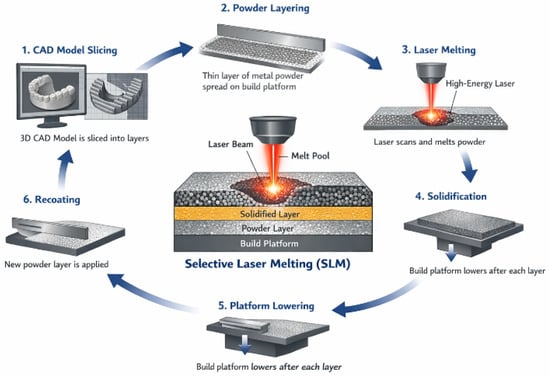
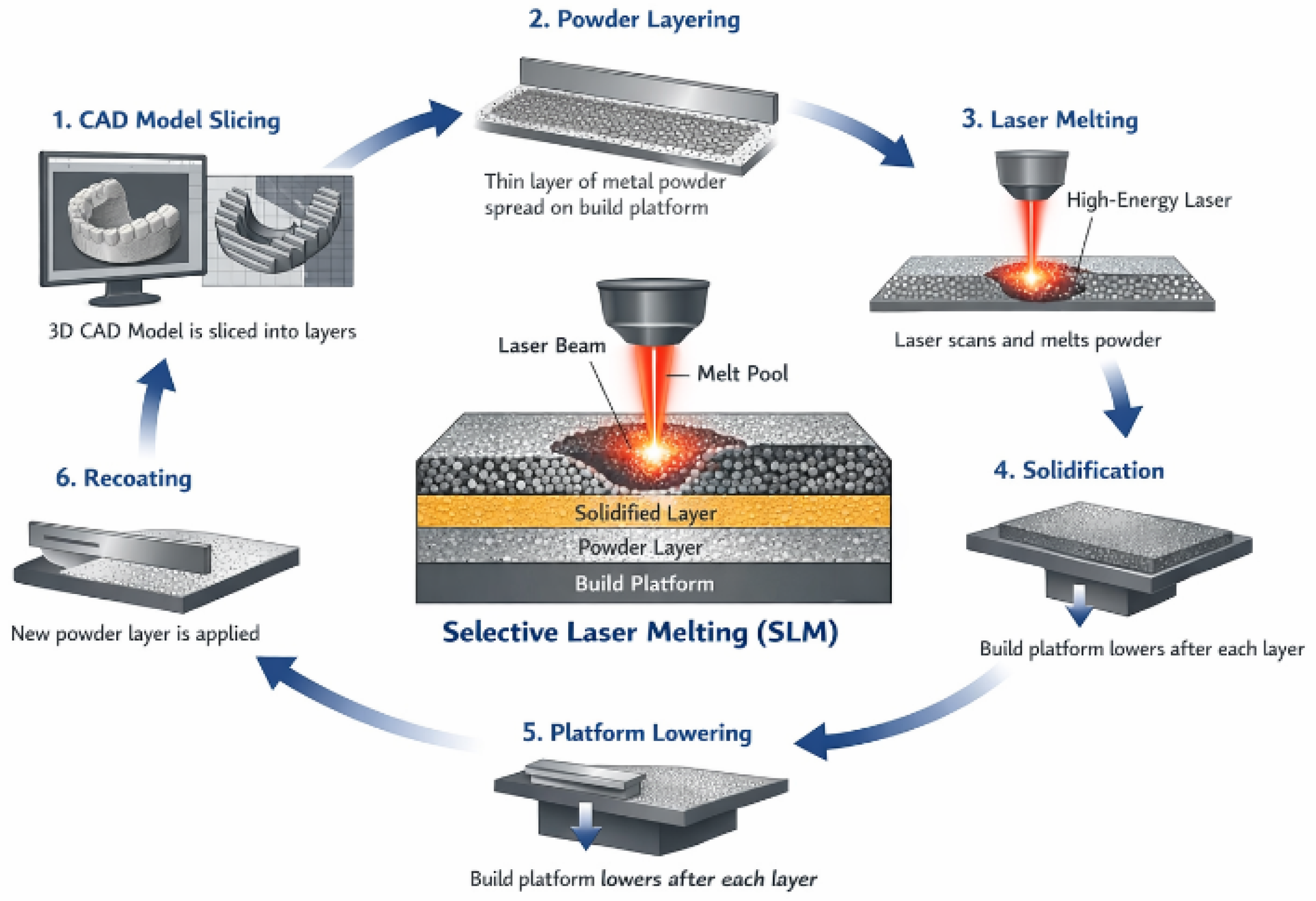
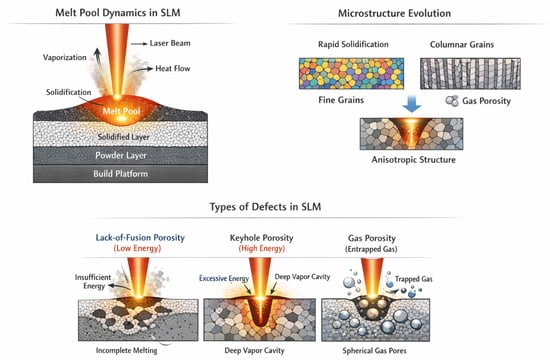
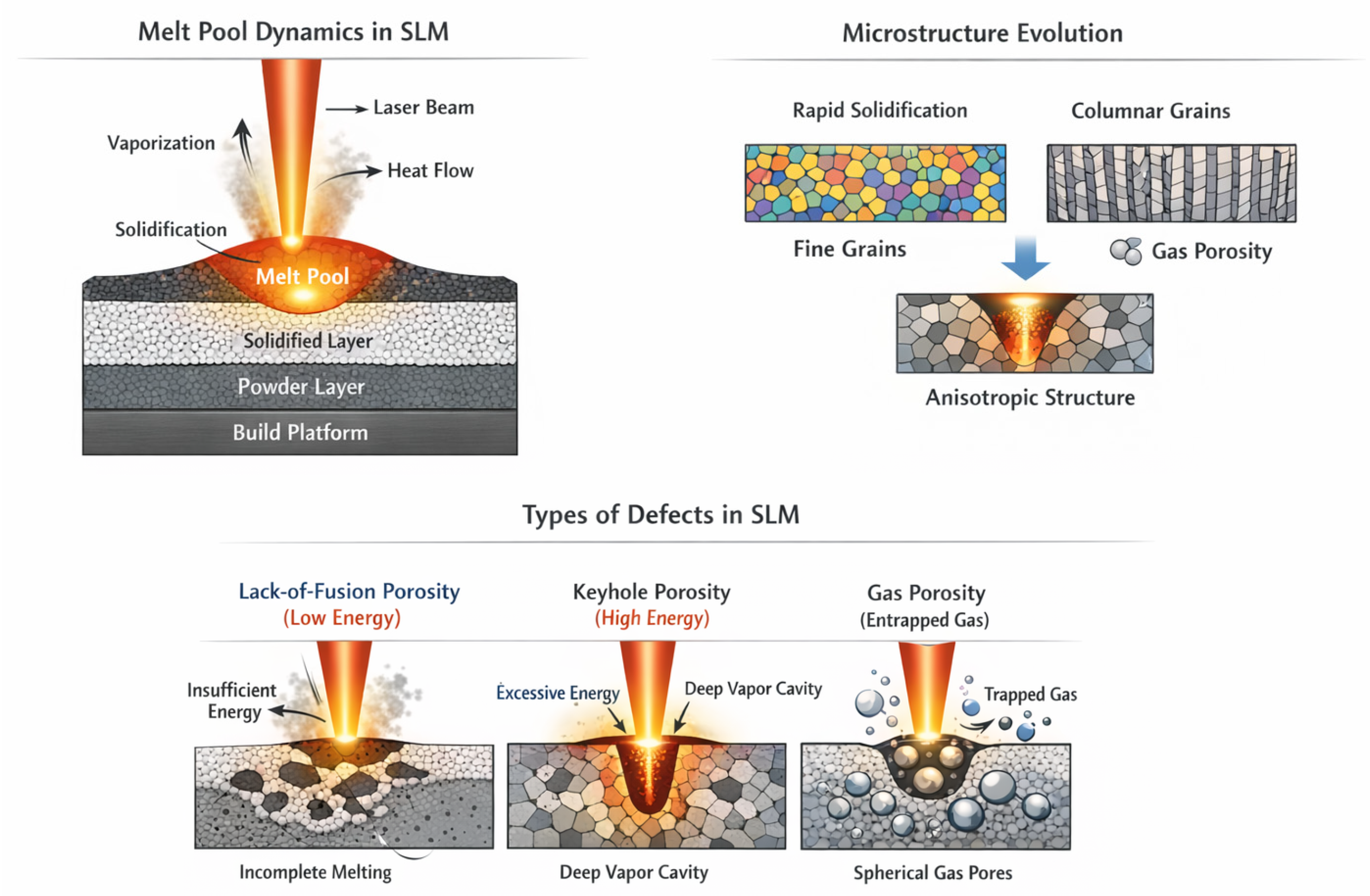
Disclaimer/Publisher’s Note: The statements, opinions and data contained in all publications are solely those of the individual author(s) and contributor(s) and not of MDPI and/or the editor(s). MDPI and/or the editor(s) disclaim responsibility for any injury to people or property resulting from any ideas, methods, instructions or products referred to in the content. |
© 2026 by the authors. Licensee MDPI, Basel, Switzerland. This article is an open access article distributed under the terms and conditions of the Creative Commons Attribution (CC BY) license.