


Abstract
In the current study, non-isothermal kinetics of NH4VO3 calcination were investigated under an air atmosphere and argon atmosphere, and the produced gas was detected by TG-MS. The results showed that the calcination process of NH4VO3 under an air atmosphere could be divided into three stages, corresponding, respectively, to the three-step deamination stage of NH4VO3 (α = 0.00–0.69; α = 0.69–0.93; α = 0.93–1.00). Furthermore, the calcination of NH4VO3 under an argon atmosphere could roughly be divided into five stages: α = 0.00–0.03; α = 0.03–0.50; α = 0.50–0.69; α = 0.69–0.94; and α = 0.94–1.00. The release of ammonia gas (NH3) in NH4VO3 could be divided into three stages regardless of the specific atmosphere, and the corresponding mechanisms were all the diffusion reaction. The activation energies for all the calcination stages were all less than 100 KJ/mol. However, a distinct stage (α = 0.94–1.00) of self-decomposition ammonia reduction of high-valent vanadium oxides emerged under the argon atmosphere. The activation energy at α = 0.95 for the reduction of high-valent vanadium oxides by self-decomposed ammonia to low-valent vanadium oxides was 53.0 KJ/mol. The sealed system could effectively promote the progress of the ammonia reduction reaction as shown in the fifth stage (α = 0.94–1.00), thereby achieving the full utilization of self-decomposed ammonia and the green preparation of different kinds of low-valent vanadium oxides during the vanadium metallurgy process.
1. Introduction
Vanadium, a crucial rare metal, has wide applications in the fields of steel, aerospace, energy storage, and chemical catalysis [1,2]. Vanadium is generally extracted from vanadium-containing steel slag, stone coal, and vanadium-containing secondary resources [3,4]. Regardless of the resource from which it is extracted, the metallurgical extraction of vanadium usually involves processes such as roasting of vanadium-containing raw materials, leaching of soluble vanadates, purification of leachate containing vanadium, and liquid-phase vanadium precipitation [5]. When NH4+ is used to precipitate V5+ under weakly alkaline conditions, the product obtained is the white crystalline powder of ammonium metavanadate (NH4VO3) with low solubility [6,7].
For the entire vanadium industry chain, NH4VO3 is an important intermediate product. It is not only the primary product obtained in the metallurgical process but also the raw material for the production of downstream vanadium-based materials [8,9]. Through further processing of NH4VO3, various vanadium oxides and vanadium nitride required by downstream related industries can be obtained. Pu Y. et al. directly prepared V2O5 by using ammonium polyvanadate (APV) as a raw material at 360 °C for 2 h with microwave irradiation calcination technology [10]. Yang et al. [11] also used NH4VO3 as a single precursor and obtained V2O3 and VN nanocrystals through decomposition and subsequent nitridation in an autoclave with metallic Na, confirming that V2O3 can form as an intermediate during NH4VO3 conversion. Alsaadi et al. [12] synthesized VO2(M) nano-powder from an NH4VO3-derived vanadyl ethylene glycolate precursor by low-temperature thermolysis/RTA, further demonstrating the versatility of NH4VO3 as a precursor for vanadium oxides. Zhang et al. [13] studied NH4VO3 thermolysis under pre-injected NH3 in a sealed reactor and reported a stepwise phase transition of NH4VO3 → NH4V3O8 → (NH4)0.38V2O5 → V6O13 → VO2 → V4O7 → V3O5 → V2O3. At 600 °C for 3 h, pure V2O3 was obtained, and the NH3 acted as a clean reductant.
Ammonium-salt-based routes have also been developed for short-flow V2O3 preparation. Song et al. [14] proposed a short process based on ammonium-salt reduction and calcination, emphasizing that traditional ammonium precipitation mainly yields V2O5 and that the NH3 generated during calcination was not fully utilized. Their work showed that low-valence vanadium oxides could be obtained by controlling the precursor and calcination atmosphere. For comparison, clean electrochemical routes using soluble NaVO3 in molten salts have been reported to produce V2O3 with low electricity consumption and without ammonia-nitrogen wastewater [15,16]. These studies provide alternative green strategies, but they do not directly address the utilization of NH3 released during NH4VO3 calcination.
The high cost of vanadium smelting and the preparation of vanadium-based materials is mainly due to the addition of a large amount of reducing agents in the ammonium metavanadate calcination process, the energy consumption required to maintain a high reduction temperature, and the long production process. Among the aforementioned process routes, one issue that has been overlooked is the full utilization of self-decomposing ammonia during the calcination of NH4VO3. In 2023, the green ammonia generated from the production of vanadium pentoxide was 29,600 tons in China [17]. Ammonia produced by the self-decomposition of ammonium metavanadate is a clean reducing agent for reducing high-valent vanadium compounds. The full utilization of self-decomposing ammonia is a highly meaningful topic and an important direction for reducing the production cost and energy consumption of vanadium-based materials. Therefore, based on the convenience of self-decomposing ammonia as a reducing agent for preparing vanadium-based materials, studying the ammonia reaction behavior during the calcination process of NH4VO3 is of great practical significance for the rational utilization of green ammonia and clean production for the entire vanadium industry. Therefore, in this work, a detailed study was conducted on the non-isothermal kinetic process of NH4VO3 calcination under both an oxidative atmosphere and inert atmosphere. Based on this analysis, the ammonia reaction behavior during the calcination process was revealed to provide a cleaner method for the preparation of vanadium-based materials with full use of green ammonia.
2. Experimental Section
2.1. Raw Materials
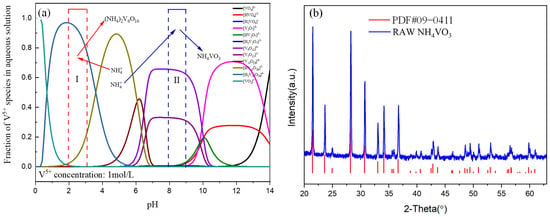
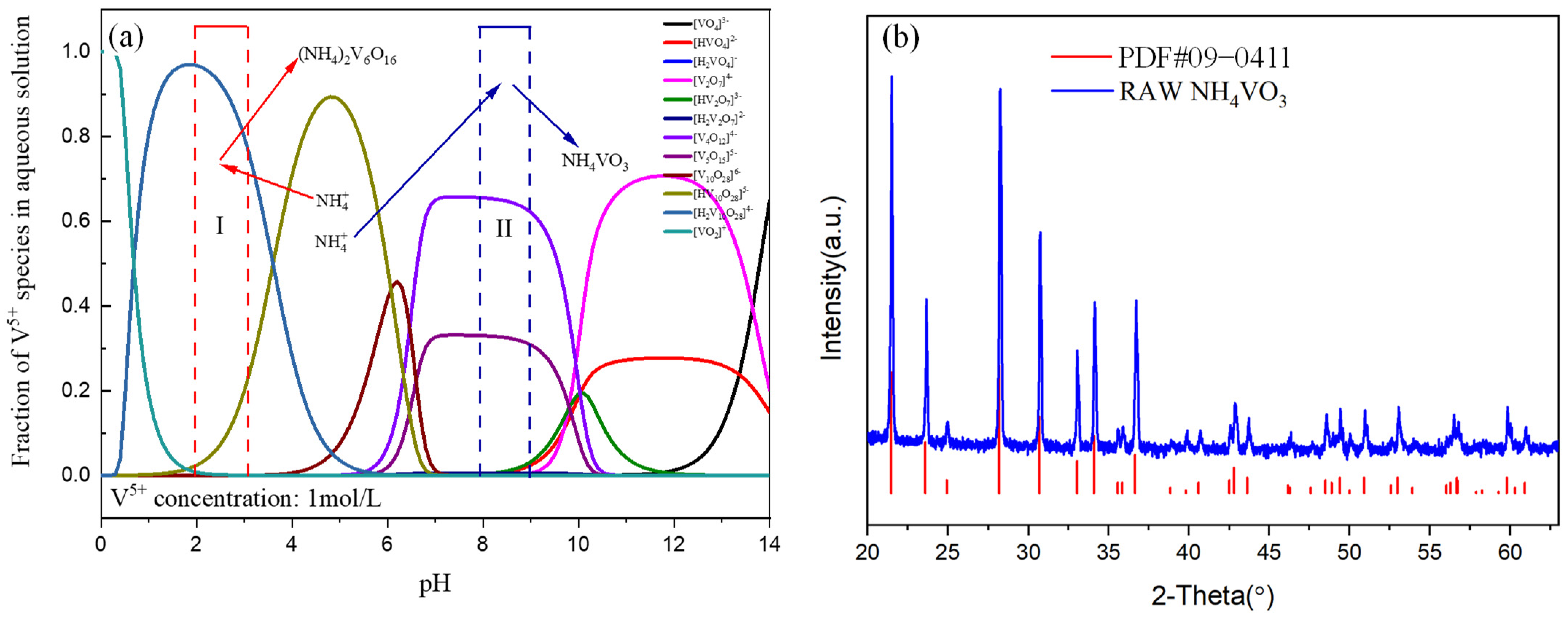
Figure 1 shows the distribution of vanadium species in the V(V)-H2O series at 25 °C [18]. As can be seen in Figure 1, in aqueous solution, V5+ had multiple ionic forms ([VO4]3−, [HVO4]2−, [H2VO4]−, [V2O7]4−, [HV2O7]3−, [H2V2O7]2−, [V4O12]4−, [V5O15]5−, [V10O28]6−, [HV10O28]5−, [H2V10O28]4−, and [VO2]+). Under weakly alkaline conditions of pH 8 to 9 (Region II), a certain amount of ammonium chloride or ammonium sulfate was added to the leachate containing pentavalent vanadium ions to participate in the reaction. By controlling the reaction conditions, NH4VO3 was obtained. In the experiment, the raw material, namely analytical pure ammonium metavanadate (NH4VO3), was purchased from Aladdin Industrial Corporation (CAS: 7803-55-6, 99%). Moreover, in Figure 1b, the XRD pattern of the raw material matches very well with the standard card of ammonium vanadate (PDF#09-0411, a = 4.902, b = 11.790, and c = 5.827).
Figure 1.
(a) Vanadium species distribution of V(V)-H2O system at 25 °C; (b) XRD pattern of raw materials (NH4VO3).
2.2. Procedure and Kinetic Analyses
The isothermal calcination experiments of NH4VO3 under closed condition were carried out in a TL1400 tubular resistance furnace with a furnace tube size of Φ60 mm × 1000 mm. The size of the corundum ark used to place the experimental samples during the experiment was 100 mm × 30 mm × 20 mm. The tube furnace was heated from room temperature (25 °C) to the target calcination temperature (e.g., 500 °C) at a heating rate of 5 °C/min. Once the temperature was raised to the specified temperature, the corundum ark containing the sample (NH4VO3) was placed in the tube furnace with the initial gas composition of air for calcination. After the holding step, the sample was cooled from the target temperature to room temperature at a cooling rate of 10 °C/min.
The kinetic formula for calculating the activation energy value of NH4VO3 calcination by the KAS equal conversion rate method (Kissinger-Akahira-Sunose) is shown in Equation (1) [19,20,21]. The slope value of the least squares of the fitting curve for scattered points with the same conversion rate was -E/R. The activation energy values corresponding to different conversion rates was calculated based on the slopes of the fitting curves with different conversion rates.
By substituting different kinetic model functions into g(α) and performing linear least squares fitting on the scattered points at different decomposition rates, the kinetic mechanisms of calcination at different reaction stages were determined based on their R2 values. The formula used in this fitting process was the Coats–Redfern dynamics formula, as shown in Equation (2) [19,20,21]. Under the present experimental conditions, Ea >> 2RT. For the activation energy values obtained in this study and the experimental temperature range, 2RT/Ea was very small. Therefore, 1 − 2RT/Ea ≈ 1 and the simplified Coats–Redfern equation applied in this work is shown in Equation (3).
where β is the heating rate, T is the Kelvin temperature, A is a pre-exponential factor, R is the molar gas constant, E is the activation energy, and g(α) is the integral expression of the dynamic model function.
2.3. Sample Characterization
The TG-DTG curves required for non-isothermal kinetic analysis were measured by a thermogravimetric analyzer (TGA5500, TA Instruments, New Castle, DE, USA) at a temperature range of 25 °C to 700 °C under different atmospheres. TG-MS (thermogravimetric mass spectrometry, TA Instruments, SDT 650+Discovery MS) was performed at a temperature range of 25 °C to 600 °C to analyze the composition of the gas produced by the calcination of ammonium metavanadate. Furthermore, the phase of the sample was analyzed by using an X-ray diffractometer (XRD, PANalytical/Empyren, Cu Kα, 45 Kv, 40 mA) with a scanning rate of 5°/min in the range of 2θ = 10–80°.
3. Results and Discussion
3.1. Non-Isothermal Kinetics Analysis
The non-isothermal kinetic study can reflect the detailed ammonia reaction behavior during the calcination of NH4VO3 from both qualitative and quantitative perspectives.
3.1.1. Under Air Atmosphere
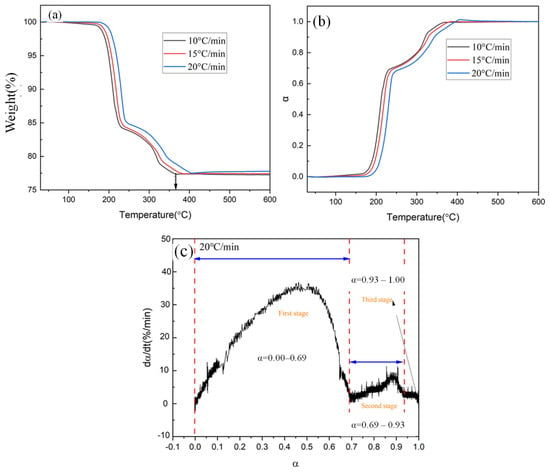
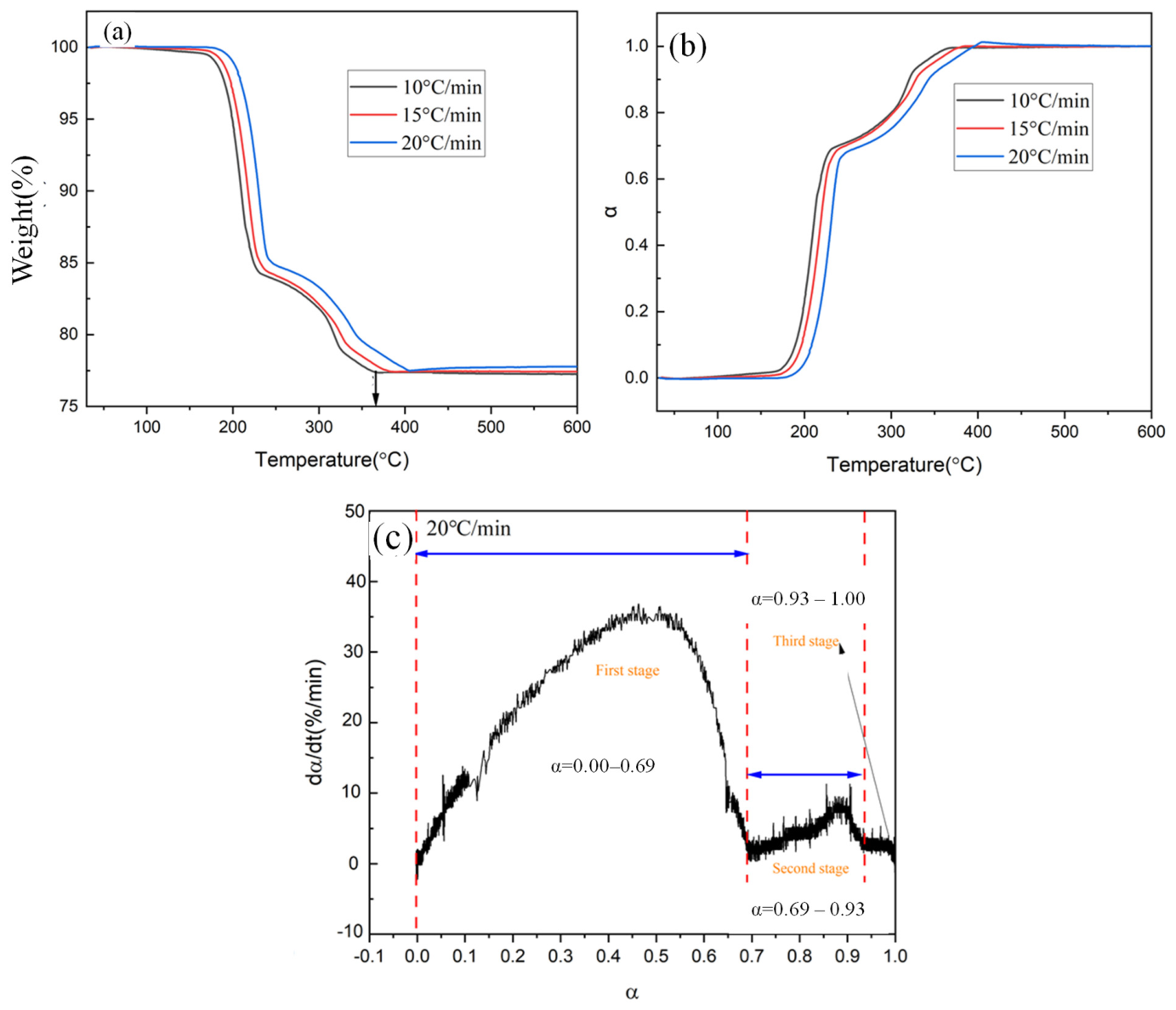
Figure 2a presents the TG curves of ammonium metavanadate calcination under air atmosphere (gas flow rate = 50 mL/min). It could be observed that the TG curves of NH4VO3 calcination at different heating rates under air atmosphere were similar in shape, and their total weight loss values were basically the same. Moreover, the final weight loss value was independent of the heating rate. For the TG curves, the only difference lay in that the starting temperature of each weight loss stage increased with the increase in the heating rate. When the temperature rose to higher than 400 °C, the weight loss value remained basically unchanged, indicating that NH4VO3 had completely decomposed.
Figure 2.
(a) TG curves of ammonium metavanadate thermal decomposition under air atmosphere (gas flow rate = 50 mL/min); (b) relationship between thermal decomposition degree of ammonium metavanadate and temperature; (c) relationship between ammonium metavanadate thermal decomposition degree and conversion rate (dα/dt).
The (α) represents the degree of complete thermal decomposition of ammonium metavanadate. Figure 2b illustrates the relationship between the thermal decomposition degree of NH4VO3 and temperature under air atmosphere. As shown in Figure 2b, the three decomposition degree curves corresponding to different heating rates are similar in shape. Compared with the decomposition degree curve at a low heating rate, a higher temperature was required at a higher heating rate to achieve the same decomposition degree value.
The relationship between the ammonium metavanadate thermal decomposition rate and conversion rate (dα/dt) with a heating rate of 20 °C/min under air atmosphere is depicted in Figure 2c. It was found that the calcination process of NH4VO3 under air atmosphere could roughly be divided into three stages, corresponding, respectively, to the three-step deamination stage of NH4VO3 (α = 0.00–0.69; α = 0.69–0.93; and α = 0.93–1.00). There were certain differences between the actual release rates of ammonia and the theoretical release rates of ammonia at different stages during the non-isothermal kinetic analysis process. The reason for this phenomenon was that the release of ammonia inside of NH4VO3 was a relatively continuous process, and the difference in ammonia release temperatures at different stages was small. As the temperature rose, the second stage of the ammonia release reaction had already begun before the first stage was completed, and there was a certain lag effect in the release of ammonia at each stage.
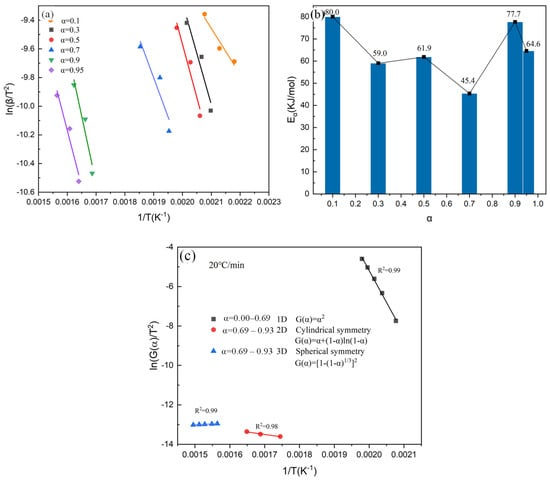
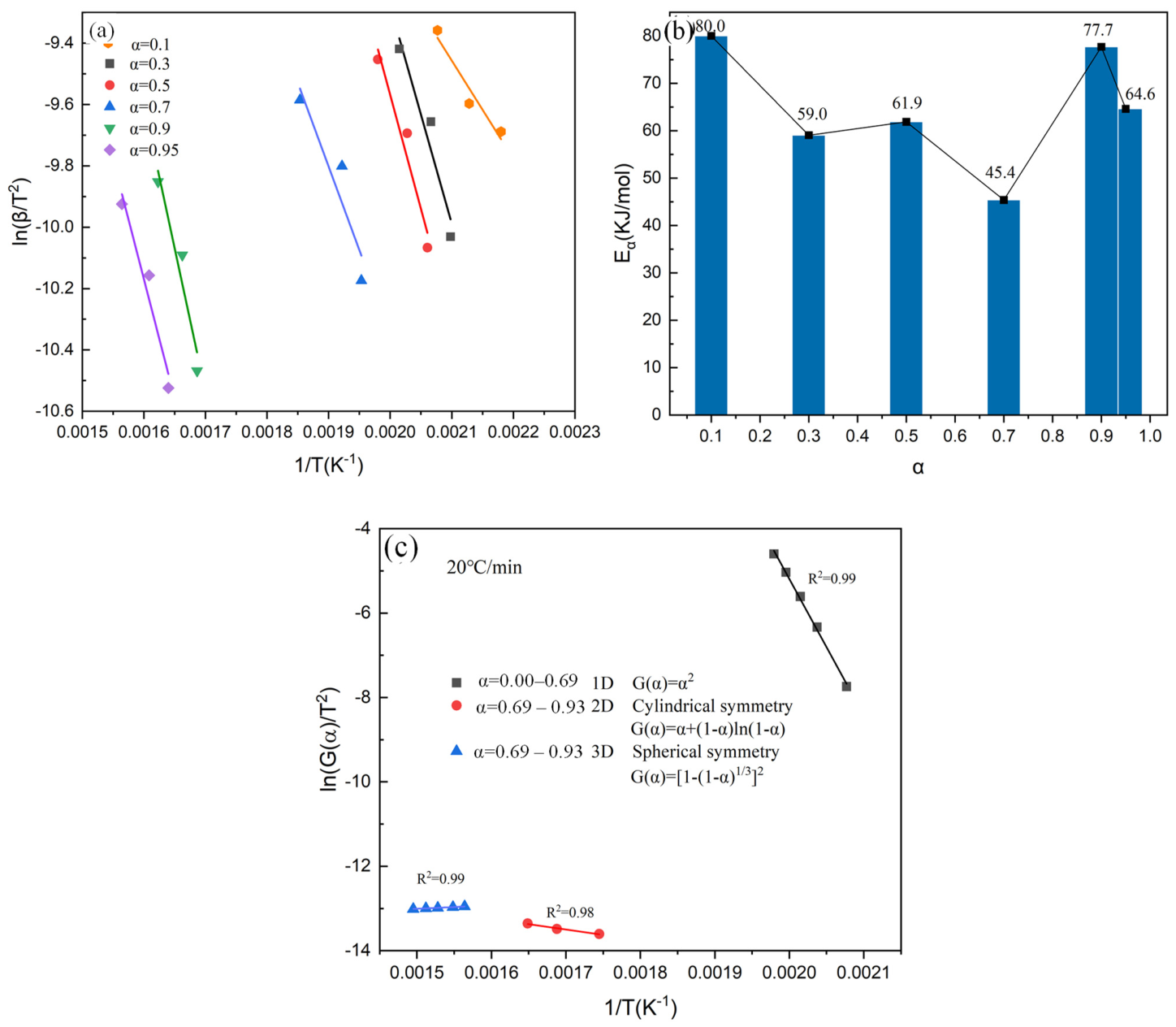
Fitting curves of the same conversion rate of NH4VO3 calcination under air atmosphere by the KAS method are presented in Figure 3a. Based on the slope values (-E/R) of the curves in Figure 3a, the activation energy values corresponding to different conversion rates could be calculated as shown in Figure 3b. It was observed that the activation energy values of the calcination of NH4VO3 were all less than 100 KJ/mol, indicating that the release of ammonia from NH4VO3 under air atmosphere was a relatively easy process. The activation energies reported here were apparent values and were intended for comparative discussion. No uncertainty or confidence intervals were given because replicate TG runs were not performed and the dominant uncertainty was systematic rather than statistical. In the first stage of calcination (α = 0.00–0.69), with the initial release of ammonia, the calcination activation energy values fluctuated around 59~80 KJ/mol. In the second stage of calcination (α = 0.69–0.93), with further release of ammonia, the calcination activation energy value was 77.7 KJ/mol at α = 0.90. In the third stage of calcination (α = 0.93–1.00), with the complete release of ammonia, the calcination activation energy value was 64.6 KJ/mol at α = 0.95.
Figure 3.
(a) Fitting curves of same conversion rate by KAS method; (b) relationship between ammonium metavanadate thermal decomposition activation energy and decomposition rate; (c) curves fitted by Coats–Redfern formula dynamics model.
The Coats–Redfern method is employed as a model-fitting approach to identify the most probable reaction mode. By plotting against 1/T and performing linear regression using the least squares method, a straight line can be obtained. Based on the fitting degree, R2, the most probable mechanism function can be inferred. Curves of NH4VO3 calcination with a heating rate of 20 °C/min under air atmosphere fitted by the Coats–Redfern formula dynamics model are shown in Figure 3c. In the range of α = 0.00–0.69, with the initial removal of ammonia (about 69% of the ammonia had been released at this stage), the integral form of the standard kinetic function of NH4VO3 calcination was fitted best with g(α) = α2 (R2 = 0.99), and the corresponding mechanism of calcination was the diffusion reaction (one-dimensional diffusion). In the range of α = 0.69–0.93, with further removal of ammonia (about 24% of the ammonia had been released at this stage), the integral form of the standard kinetic function of NH4VO3 calcination was fitted best with g(α) = α+(1 − α)ln(1 − α) (R2 = 0.98), and the corresponding mechanism of calcination was the diffusion reaction (two-dimensional diffusion with cylindrical symmetry). In the range of α = 0.93–1.00, with the complete removal of ammonia (about 7% of the ammonia had been released at this stage), the integral form of the standard kinetic function of NH4VO3 calcination was fitted best with g(α) = [1 − (1 − α)1/3]2 (R2 = 0.99), and the corresponding mechanism of calcination was the diffusion reaction (three-dimensional diffusion with spherical symmetry).
3.1.2. Under Inert Atmosphere
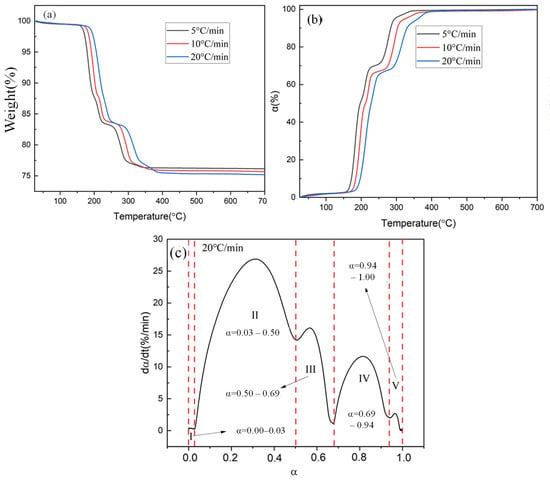
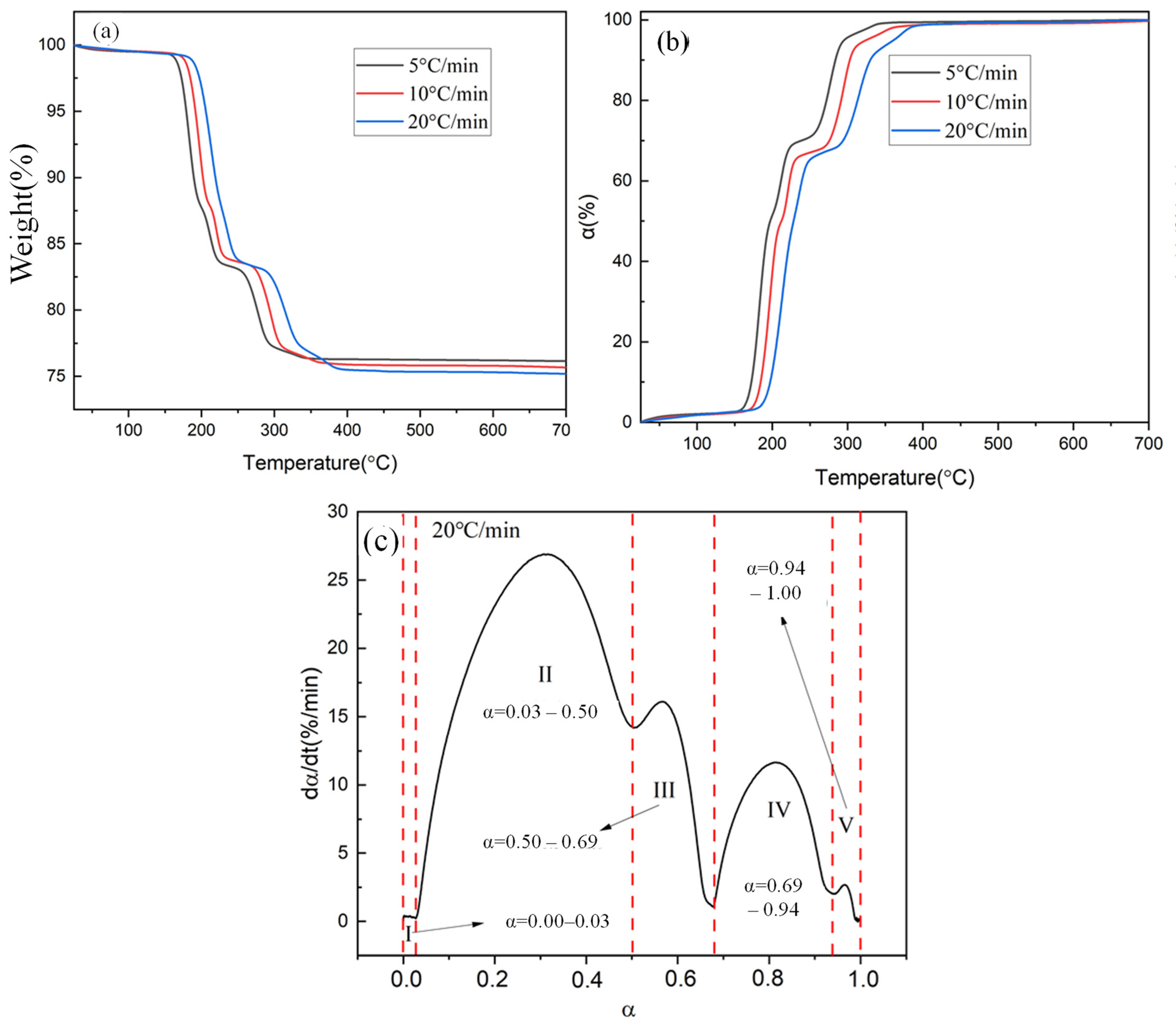
Figure 4a presents the TG curves of ammonium metavanadate calcination under argon atmosphere (gas flow rate = 50 mL/min). Similarly to the calcination of NH4VO3 under air atmosphere, when the temperature was higher than 400 °C, the TG curves remained horizontal and the product basically maintained a constant weight, indicating that NH4VO3 had undergone complete decomposition at this temperature. Although the TG curves of NH4VO3 calcination were similar at different heating rates, there was a certain relationship between its total weight loss values and the heating rate. When the heating rate was 20 °C/min, its total weight loss value was the largest (24.7%). Since the heating rate was too high, the release rate of ammonia produced by self-decomposition was relatively fast. The reducing atmosphere formed by the instantaneous accumulation of excessive ammonia that could not be discharged in time was conducive to the reduction of high-valent vanadium oxides produced by calcination. The content of low-valent vanadium oxides in the final calcination products increased, and thus the total weight loss values of the calcination process were also enhanced. NH4VO3 may absorb water when exposed to an atmospheric environment. The weight loss values in the TG curves from room temperature to the starting temperature of NH4VO3 calcination (182 °C) in Figure 4a was attributed to the release of adsorbed water in NH4VO3.
Figure 4.
(a) TG curves of ammonium metavanadate thermal decomposition under argon atmosphere (gas flow rate = 50 mL/min); (b) relationship between thermal decomposition degree of ammonium metavanadate and temperature; (c) relationship between ammonium metavanadate thermal decomposition degree and conversion rate (dα/dt).
Figure 4b shows the relationship between the thermal decomposition degree of NH4VO3 and temperature under argon atmosphere. Compared with the curves at a high heating rate, when the heating rate was lower, the time required for NH4VO3 to heat up to certain temperature was longer. As shown in Figure 4b, the shapes of the three decomposition degree curves were similar at different heating rates. When the heating rate was low, a lower temperature was required to achieve the same decomposition degree.
The relationship between the ammonium metavanadate thermal decomposition degree and conversion rate (dα/dt) with a heating rate of 20 °C/min under argon atmosphere is presented in Figure 4c. It was observed that the thermal decomposition rate showed significant changes at different stages of the thermal decomposition of NH4VO3. The calcination of NH4VO3 under an argon atmosphere could roughly be divided into five stages: α = 0.00–0.03; α = 0.03–0.50; α = 0.50–0.69; α = 0.69–0.94; and α = 0.94–1.00. The first stage corresponded to the release of water adsorbed by NH4VO3, which was merely a physical change process and did not have a significant impact on the calcination of NH4VO3. The difference in the initial decomposition stage between Section 3.1.1 and Section 3.1.2 is attributed to different amounts of adsorbed water. The sample in Section 3.1.2 contained a small amount of adsorbed water, whereas the sample in Section 3.1.1 contained no significant adsorbed water. The first-stage weight loss under air is slightly lower than that under inert atmosphere, and the difference corresponds to the adsorbed water present in the Section 3.1.2 sample. This difference does not affect the final products or the reaction mechanism; rather, it reflects the complexity and variability of the real thermal decomposition process. The second stage, the third stage, and the fourth stage, respectively, corresponded to the three-step ammonia release stage of NH4VO3. Compared with Figure 2c, a distinct stage (Stage V) emerged under argon atmosphere where V2O5 was reduced to low-valent vanadium oxides by self-decomposing ammonia. Stage V was of great significance for studying the calcination mechanism of NH4VO3 and the ammonia reaction behavior.
Regarding the change in the reaction mechanism from one- to two- to three-dimensional diffusion, the reason was that the decomposition was accompanied by the progressive formation and thickening of a solid product layer on the surface of the NH4VO3 particles. In the early stage, the process was mainly controlled by the initial reaction interface. As decomposition proceeded, the product layer grew, pores may have become blocked, and the diffusion path for gaseous species became longer and more tortuous. Consequently, the rate-controlling step gradually shifted from a lower-dimensional diffusion process to a higher-dimensional diffusion process.
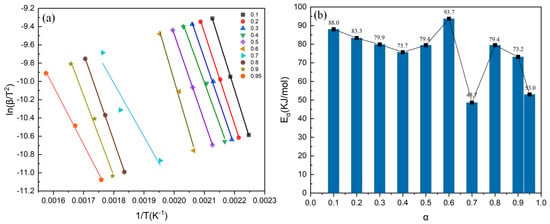
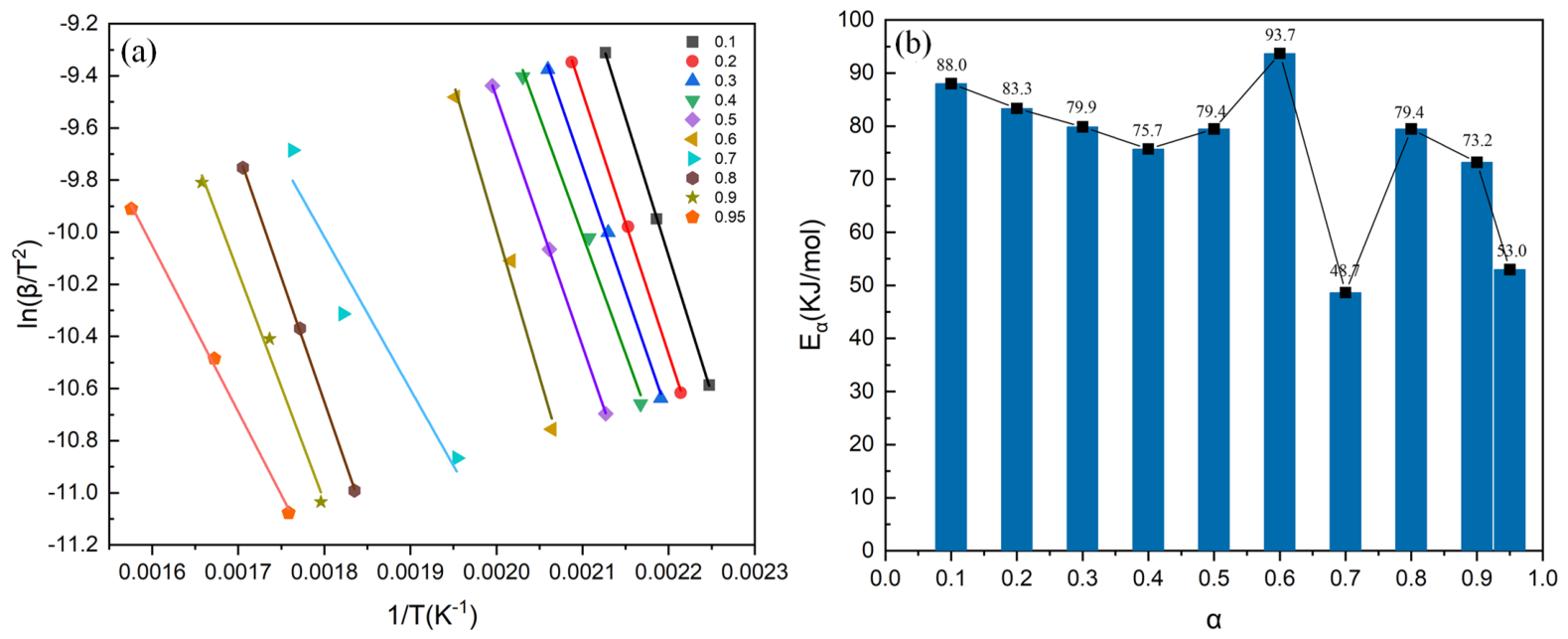
Fitting curves of the same conversion rate of NH4VO3 calcination under air atmosphere by the KAS method are depicted in Figure 5a. Based on the slope values (-E/R) of the curves in Figure 5a, the activation energy values corresponding to different conversion rates could be calculated as shown in Figure 5b. It could be observed that, similar to the calcination of NH4VO3 under air atmosphere, the activation energy values of the entire process under argon atmosphere were also less than 100 KJ/mol. In the second stage of calcination (α = 0.03–0.50), with the gradual release of ammonia, the calcination activation energy values fluctuated around 74~90 KJ/mol. In the third stage of calcination (α = 0.50–0.69), with further release of ammonia, the calcination activation energy value was 93.7 KJ/mol at α = 0.60. In the fourth stage of calcination (α = 0.69–0.94), all the remaining ammonia inside NH4VO3 was released to obtain high-valent vanadium oxides, and the calcination activation energy value was 73.2 KJ/mol at α = 0.90. In the fifth stage of calcination, the activation energy at α = 0.95 for the reduction of high-valent vanadium oxides by self-decomposing ammonia to low-valent vanadium oxides was 53.0 KJ/mol. Compared with the release of ammonia during the calcination of NH4VO3, the reduction process of high-valent vanadium oxides by self-decomposition of ammonia was easier.
Figure 5.
(a) Fitting curves of same conversion rate by using KAS method; (b) relationship between ammonium metavanadate thermal decomposition activation energy and decomposition rate.
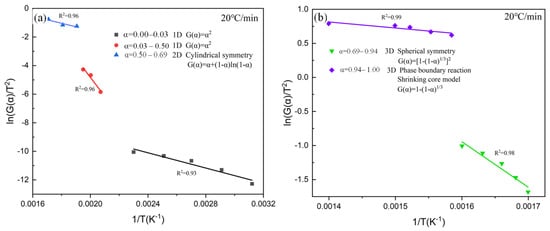
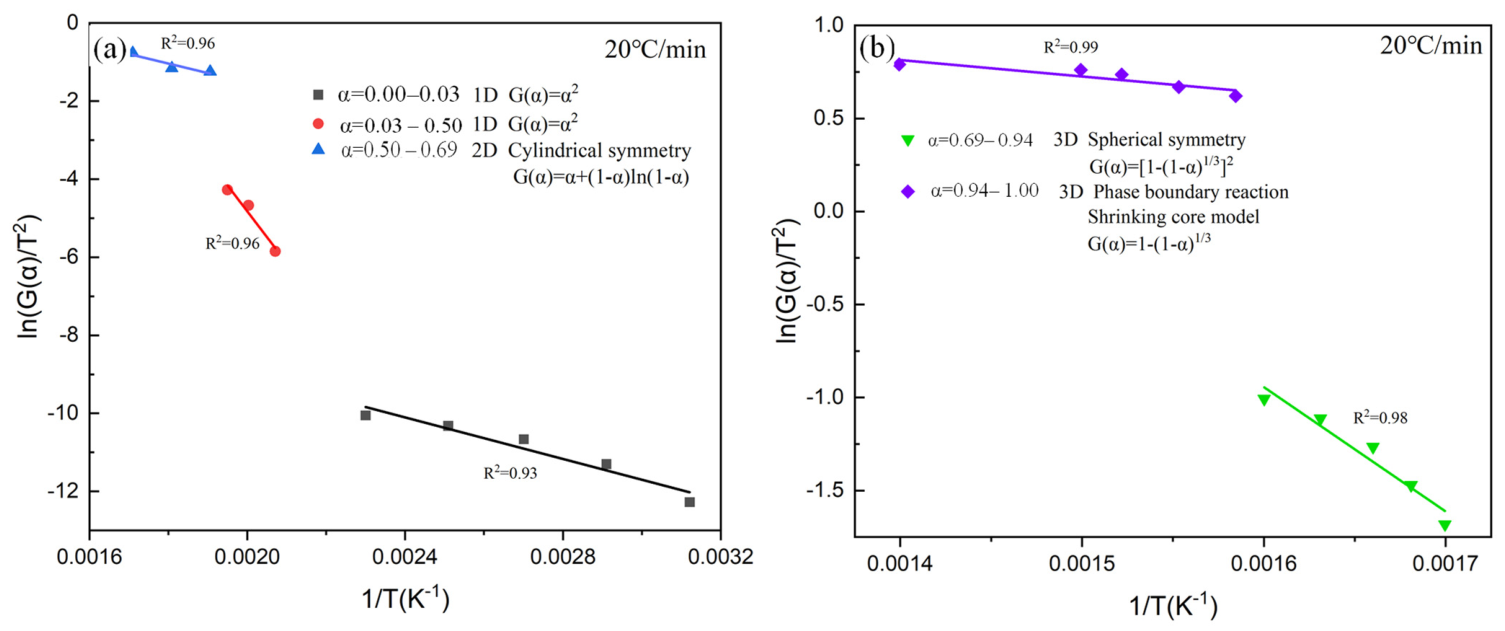
Curves of NH4VO3 calcination with a heating rate of 20 °C/min under argon atmosphere fitted by the Coats–Redfern formula dynamics model are presented in Figure 6. In the range of α = 0.00–0.03, with the release of a small amount of free water from NH4VO3, the integral form of the standard kinetic function of calcination was fitted best with g(α) = α2 (R2 = 0.93), and the corresponding mechanism was the diffusion reaction (one-dimensional diffusion). In the range of α = 0.03–0.50, with the initial release of ammonia, the integral form of the standard kinetic function of calcination was also fitted best with g(α) = α2 (R2 = 0.96), and the corresponding mechanism was still the diffusion reaction (one-dimensional diffusion). In the range of α = 0.50–0.69, with further release of ammonia, the integral form of the standard kinetic function of calcination was fitted with g(α) = α + (1 − α)ln(1 − α) (R2 = 0.96), and the corresponding mechanism was the diffusion reaction (two-dimensional diffusion with cylindrical symmetry). In the range of α = 0.69–0.94, with the complete release of ammonia, the integral form of the standard kinetic function of calcination was fitted with g(α) = [1 − (1 − α)1/3]2 (R2 = 0.98), and the corresponding mechanism was the diffusion reaction (three-dimensional diffusion with spherical symmetry). In the range of α = 0.94–1.00, as the high-valent vanadium oxide ammonia reduction reaction proceeded, the integral form of the standard kinetic function of calcination was fitted best with g(α) = 1 − (1 − α)1/3 (R2 = 0.99), and the corresponding mechanism was the phase boundary reaction (contraction nucleus model).
Figure 6.
Fitting curves of the Coats–Redfern formula dynamic model. ((a) α = 0.00−0.69; (b) α = 0.69−1.00).
The difference in the initial decomposition stage between Section 3.1.1 and Section 3.1.2 is attributed to different amounts of adsorbed water. The sample in Section 3.1.2 contained a small amount of adsorbed water, whereas the sample in Section 3.1.1 contained no significant adsorbed water. The first-stage weight loss under air is slightly lower than that under inert atmosphere, and the difference corresponds to the adsorbed water present in the Section 3.1.2 sample.
In Section 3.1.2, stage I corresponded to the release of adsorbed water. Stages II–IV corresponded to the three-step release of NH3. These stages were equivalent to stages I–III observed in Section 3.1.1. The three-step NH3 release occurred under both air and inert atmospheres. Stage V in Section 3.1.2 corresponded to the final reduction of high-valence vanadium oxide by self-generated NH3. Under inert atmosphere, this reduction was detectable by non-isothermal kinetic analysis, whereas under air it is masked by O2.
3.2. Ammonia Reaction Behavior
Simultaneous thermogravimetric analysis–mass spectrometry coupling technology (STD-MS) can transport the gases produced during the thermal decomposition of samples through heated transfer tubes into the mass spectrometer. It can identify the gas-phase products’ composition of thermal decomposition within a temperature ranging from room temperature to the specified temperature (below 1500 °C).
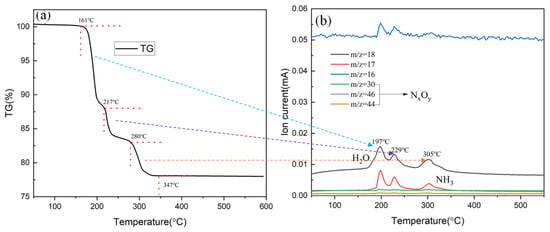
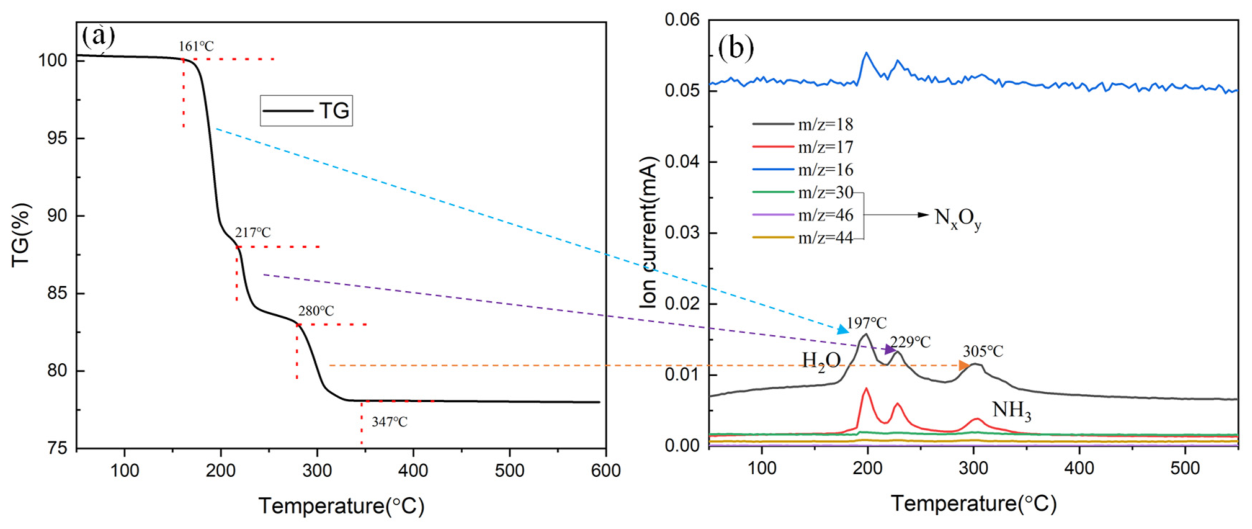
TG-MS curves of NH4VO3 calcination under air atmosphere (heating rate = 10 °C/min, gas flow rate = 100 mL/min) are shown in Figure 7. It was observed that ion fragments with m/z = 16, 17, and 18 were detected in the gas phase. Specifically, the signals at m/z = 17 and 16 correspond to NH3 and its characteristic cracking fragments (NH2 or NH), while m/z = 18 represents H2O. The three distinct multi-peak profiles corresponding to these ionic fragments matched well with the three major weight loss stages in the TG curve, further corroborating that the decomposition of NH4VO3 proceeds via multiple stages, which is consistent with the non-isothermal kinetics analysis.
Figure 7.
TG-MS curves of ammonium metavanadate calcination under air atmosphere. ((a) TG curve; (b) MS curves corresponding to TG curve).
Furthermore, it was noteworthy that the water vapor detected during these stages did not originate from physically adsorbed water but was largely attributable to the chemical interaction or reaction between the evolved NH3 and oxygen from the atmosphere or the vanadium oxide matrix (whereby the vanadium oxides are partially reduced and subsequently re-oxidized). Given the overlapping fragmentation patterns where ammonia also yields m/z = 17 (HO or NH fragments) and water vapor contributed to complex signals, the synchronous evolution signified coupled decomposition and reaction processes. Additionally, to evaluate the conversion fate of evolved NH3 in an air atmosphere, the characteristic ionic fragments of potential nitrogen oxides—namely NO (m/z = 30), N2O (m/z = 44), and NO2 (m/z = 44)—were monitored, as shown in Figure 7b. Their signal intensities remained close to the baseline, indicating that the reducing ammonia produced during calcination basically did not generate nitrogen oxides when interacting with oxygen in the air.
The introduction of additional nitrogen gas could have interfered with the detection of nitrogen-containing substances in the gas-phase products. Therefore, to further study the ammonia reaction behavior of NH4VO3 calcination, it is necessary to analyze the TG-MS curves of NH4VO3 calcination under helium or argon atmospheres.
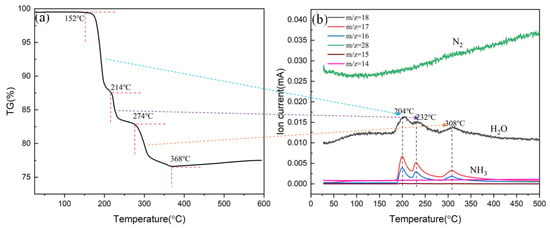
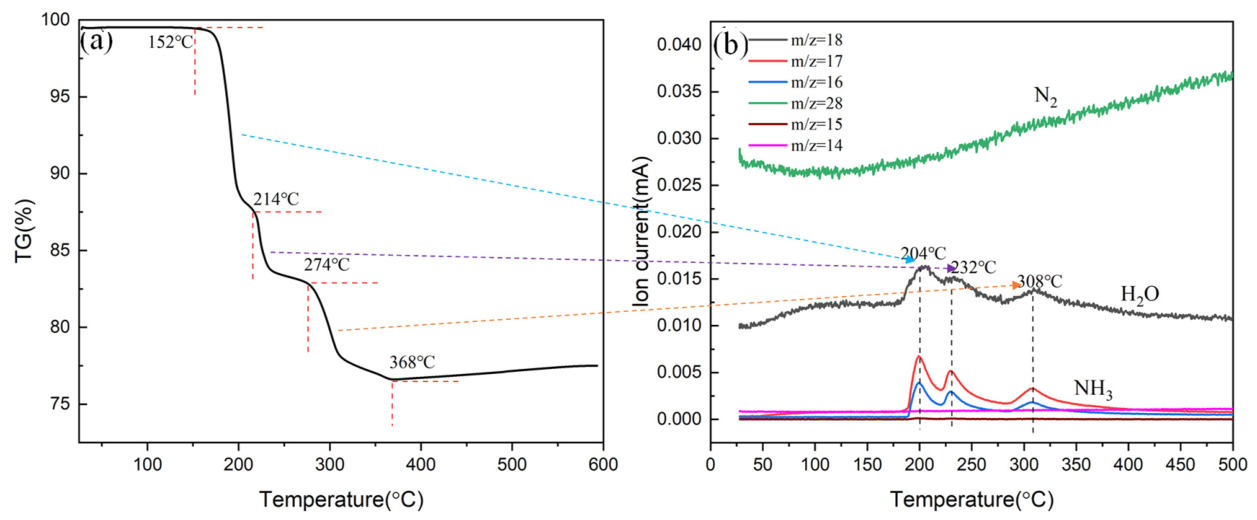
The main advantage of using helium instead of argon was that it significantly reduced mass spectrometric background interference, thereby improving the detection sensitivity for specific evolved gases. TG-MS curves of NH4VO3 calcination under a helium atmosphere (heating rate = 10 °C/min, gas flow rate = 100 mL/min) are depicted in Figure 8. The gas-phase products identified during the calcination process comprised NH3, H2O, and N2. Specifically, the ionic signals at m/z = 17 and 16 corresponded to NH3 and its characteristic cracking fragments (NH2 or NH), while m/z = 18 and 17 represented H2O and its fragment (OH). The three distinct multi-peak profiles generated by these specific ion fragments shown in Figure 8b corresponded precisely to the three rapid weight loss stages shown in Figure 8a.
Figure 8.
TG-MS curves of ammonium metavanadate calcination under helium atmosphere. ((a) TG curve; (b) MS curves corresponding to TG curve).
Due to the inherent fragmentation overlaps between NH3 and H2O, a strict individual deconvolution was complex; nevertheless, their synchronous appearance reflected coupled thermal decomposition and secondary reactions. Furthermore, the water vapor detected across stages II–IV did not originate from physically bound moisture but was primarily formed through the chemical reaction of evolved NH3 with the lattice oxygen of the vanadium oxide matrix, which led to the sequential reduction of high-valence vanadium species. This three-step synchronous release pattern was fully consistent with the non-isothermal decomposition and ammonia removal kinetics of NH4VO3. Apart from nitrogen, no nitrogen oxides were detected during the thermal decomposition under the inert helium atmosphere. The elevation of nitrogen ion fragments (m/z = 28 and 14) with increasing temperature arose from the self-decomposition of ammonia and its reduction reactions with high-valence vanadium oxides, with the plausible pathways outlined in Equation (4).
9V2O5 + 4NH3 = 3V6O13+ 6H2O+ 2N2
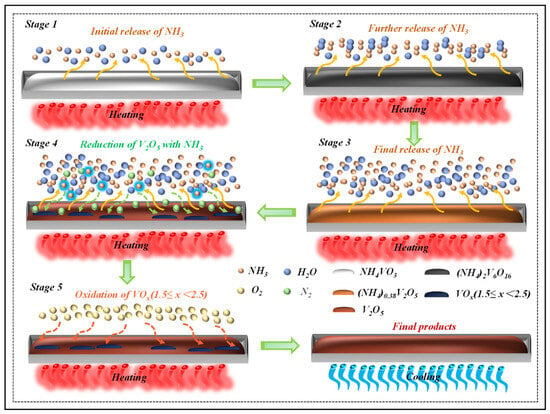
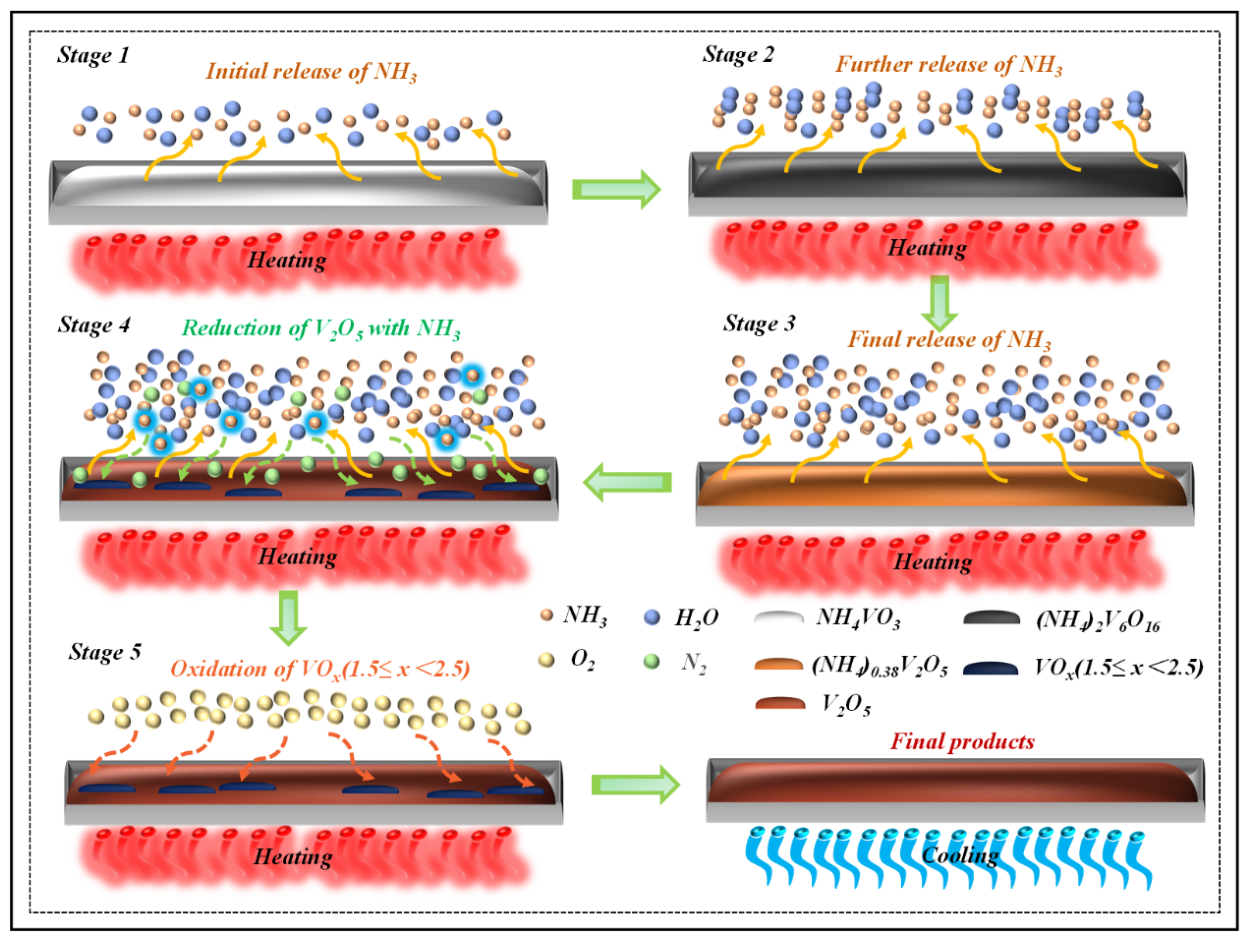
The primary focus of this study lay in utilizing non-isothermal kinetics to uncover how self-decomposed green ammonia participates in the reduction process, aiming to provide a theoretical foundation for a clean vanadium metallurgy method. Consequently, the analysis and section narratives were deliberately centered on the reaction behavior of ammonia rather than the behavior of water. Based on the aforementioned analyses, the ammonia reaction behavior during the calcination process of NH4VO3 was summarized, as shown in Figure 9.
Figure 9.
Ammonia behavior during the calcination of NH4VO3.
The reaction behaviors of ammonia during NH4VO3 calcination included the initial release of ammonia, the further release of ammonia, the final release of ammonia, and the reduction of high-valent vanadium oxides by ammonia self-decomposition. The release of NH3 was divided into three stages. The amount of NH3 released at different stages varied with different diffusion reaction mechanisms, and the products generated were also different. In the third stage of the calcination, all the remaining ammonia in NH4VO3 was released, thereby yielding high-valent vanadium oxide (V2O5). When NH4VO3 was calcined in an inert atmosphere, the ammonia released in the previous stage acted as a reducing agent for high-valent vanadium oxides to achieve the reduction of high-valent vanadium oxides (V2O5). As a result, a certain amount of low-valent vanadium oxides such as V6O13 and VO2 would exist in the final products. The process of self-decomposing ammonia reducing high-valent vanadium oxides conformed to the contraction nucleus model reaction of gas–solid reactions, which had the same mechanism as the reduction reaction when additional ammonia gas was introduced. On the contrary, when NH4VO3 was calcined in an air atmosphere, the entry of oxygen would oxidize the previously generated low-valent vanadium oxides to high-valent vanadium oxides, thereby offsetting the reduction effect caused by the self-decomposition of ammonia. And the final product obtained was pure high-valent vanadium oxides (V2O5).
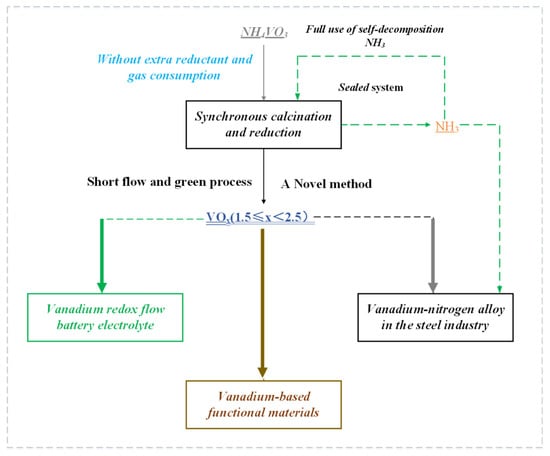
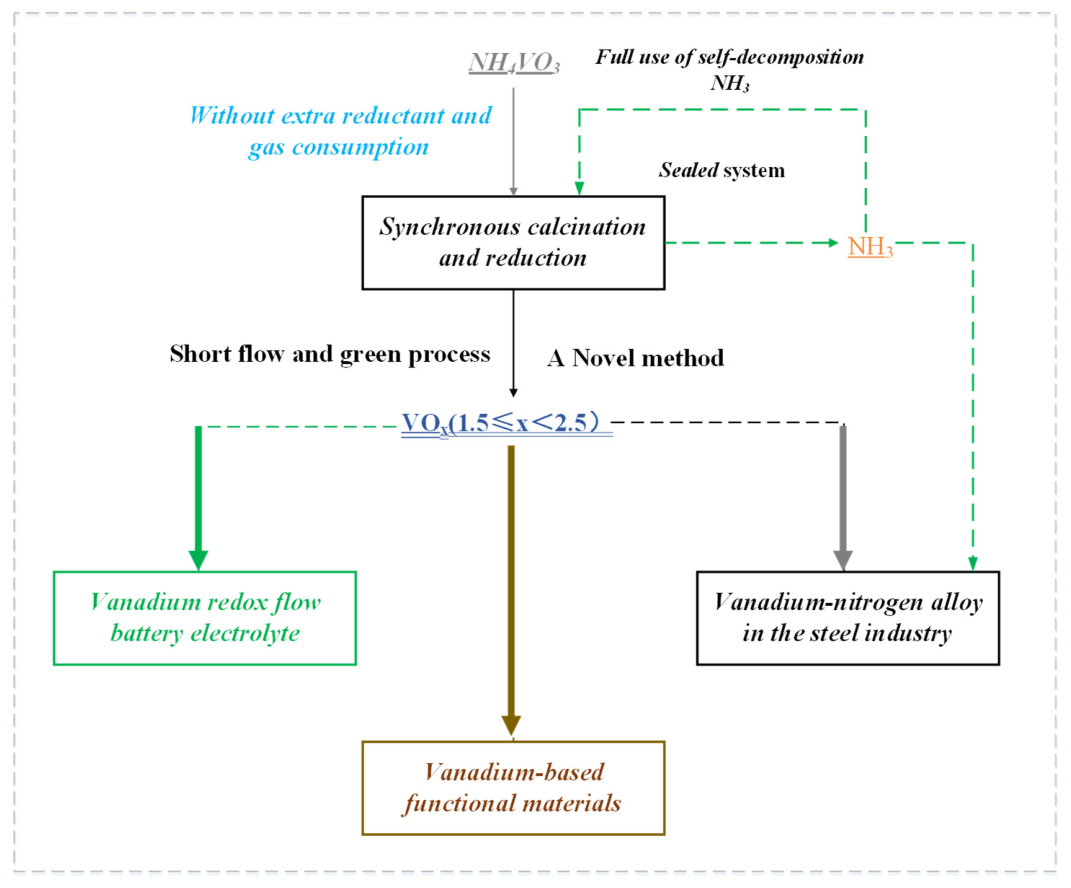
For the production of V2O5 in the vanadium metallurgical process, continuous air introduction during the calcination process was necessary. However, for the production of low-valent vanadium oxides, the utilization of the self-decomposition ammonia reduction effect was of great significance. By using self-decomposing green ammonia during the calcination process, not only could the amount of reducing agent used in the preparation of low-valent vanadium oxides be significantly reduced, but also the traditional process flow could be shortened to achieve the green preparation of different types of low-valent vanadium oxides.
3.3. Development of Green Process in Vanadium Industry Chain
Compared with the air atmosphere and inert atmosphere, a closed atmosphere can fully retain all the ammonia produced by self-decomposition to achieve the full reduction of high-valent vanadium oxides and the full utilization of self-decomposed ammonia.
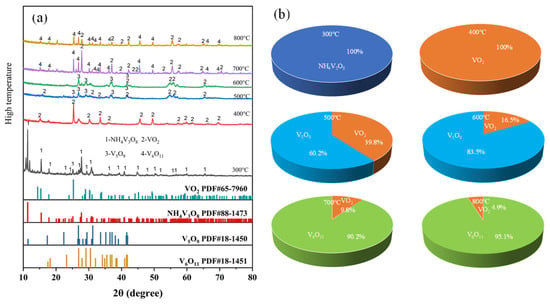
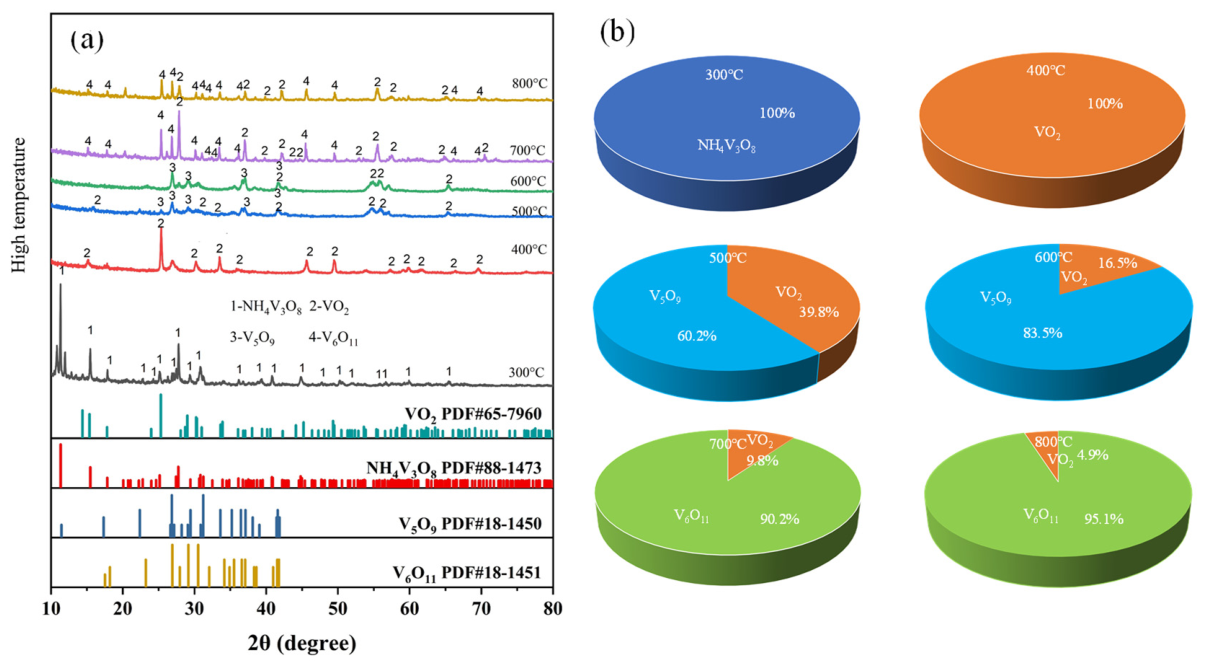
To conclusively elucidate the phase evolution pathway, standard crystallographic cards for all relevant vanadium species were indexed alongside the experimental diffraction patterns (Figure 10a). Furthermore, the relative mass fractions of the primary phases were quantified using the Reference Intensity Ratio (RIR) method, as presented in Figure 10b. The results demonstrated that the precursor NH4VO3 progressively converted into intermediate NH4V3O8, followed by stepwise reduction to VO2, V5O9, and ultimately stable V6O11 products. The dynamic trends shown in Figure 10b strongly substantiated this sequential NH4VO3 → NH4V3O8 → VO2 → V5O9 → V6O11 transformation mechanism.
Figure 10.
XRD patterns (a) and phase contents (b) of products obtained by thermal decomposition of 4 g ammonium metavanadate at different temperatures for 1.5 h under sealed condition.
When the temperature continued to rise, the reducing effect of ammonia did not always increase, but there was a certain limit. Thermodynamically, the maximum limit of self-decomposing ammonia to reduce high-valence vanadium oxides was V2O3. However, the results in Figure 10a show that the maximum reduction limit of self-decomposing ammonia at 800 °C is V6O11, and no characteristic diffraction peak of V2O3 is found in the product. This phenomenon was mainly due to the fact that part of the reducing ammonia produced by the calcination of 4 g NH4VO3 was consumed by the residual oxygen in the system.
Therefore, by adjusting the calcination conditions and oxygen content in a closed system, the rational utilization of self-decomposing ammonia and the green preparation of low-cost vanadium oxides can be achieved. And a green technology for vanadium oxide preparation based on the efficient utilization of ammonia has been developed as shown in Figure 11.
Figure 11.
New preparation process of low-valent vanadium oxides.
4. Conclusions
- (1)
- The apparent activation energies for NH4VO3 calcination were all below 100 kJ/mol, indicating that the calcination process was relatively facile.
- (2)
- Compared with the air condition, an inert atmosphere clearly revealed the ammonia reduction effect and a distinct reduction stage of high-valent vanadium oxides. This reduction stage follows the contracting nucleus model.
- (3)
- Under sealed condition, the ammonia produced by NH4VO3 calcination could be fully retained and utilized. Strengthening the ammonia reduction stage (α = 0.93–1.00) is proposed to achieve efficient ammonia utilization and cleaner production in vanadium metallurgy.
Author Contributions
Conceptualization, T.Z.; methodology, T.Z.; formal analysis, T.Z.; investigation, T.Z.; resources, Q.L.; writing—original draft, T.Z.; writing—review and editing, T.Z.; visualization, Q.L.; supervision, Q.L. All authors have read and agreed to the published version of the manuscript.
Funding
This research was funded by [Youth Talent Introduction Initiation Project (the Kunlun Elite Program) of Xinjiang Polytechnic Institute] grant number [2026XQYM004]. And The APC was funded by the Youth Talent Introduction Initiation Project (the Kunlun Elite Program) of Xinjiang Polytechnic Institute, 2026XQYM004.
Data Availability Statement
The data presented in this study are contained within the article. Further inquiries can be directed to the corresponding authors.
Conflicts of Interest
The authors declare no conflict of interest.
References
- Du, J.; Lin, H.; Zhai, R.; Liu, X.; Cui, X.; Wang, D.; Wang, B.; Zhu, J.; Zuo, H.; Li, Q.; et al. Preparation of Vanadium Trioxide from Ammonium Metavanadate and Application in Vanadium Redox Flow Battery Electrolyte. JOM 2025, 77, 7737–7747. [Google Scholar] [CrossRef] [Scilit]
- Liu, L.; Zhang, Y.; Wang, Y.; Wang, L.; Liu, J. Development of V2O3 Nanostructures for Alkali Metal Ion Batteries: A Novel Approach through Mild Metal Vapor Reduction and Interface Engineering. ACS Omega 2024, 9, 33815–33825. [Google Scholar] [CrossRef] [Scilit] [PubMed]
- Feng, G.; Gao, J.; Lan, X.; Guo, L.; Guo, Z. A green and sustainable method for stepwise extraction of V and Ti from vanadium slag using super-gravity. J. Clean. Prod. 2025, 512, 145501. [Google Scholar] [CrossRef] [Scilit]
- Levchenko, M.; Kovtun, O.; Guhl, S.; Gräbner, M.; Volkova, O. Direct Reduction of Solid V2O5 with Hydrogen at 600–1400 °C. Steel Res. Int. 2024, 96, 2300705. [Google Scholar] [CrossRef] [Scilit]
- Hu, Y.; Zhang, Y.; Xue, N.; Hu, P. Research on V2O3 preparation by stepwise catalysis solution-phase hydrogen reduction from shale V-rich solution. Sep. Purif. Technol. 2024, 338, 126496. [Google Scholar] [CrossRef] [Scilit]
- Du, G.; Sun, Z.; Xian, Y.; Jing, H.; Chen, H.; Yin, D. The nucleation kinetics of ammonium metavanadate precipitated by ammonium chloride. J. Cryst. Growth 2016, 441, 117–123. [Google Scholar] [CrossRef] [Scilit]
- Gao, F.; Yan, W.; Li, Y.; Shi, M.; Zhou, Z.; Huang, D. Preparation of Ammonium Metavanadate and Kinetic Process of Vanadium Precipitation. J. Chin. Ceram. Soc. China 2011, 39, 1424–1427. [Google Scholar]
- Cheng, G. Study on Direct Preparation of Vanadium Nitrate from Ammonium Metavanadate. Master’s Thesis, Xi’an University of Architecture and Technology, Xi’an, China, 2017. [Google Scholar]
- Guo, X. Applied Fundamental Research on the Cooling Crystallization of Ammonium Metavanadate. Ph.D. Thesis, Tianjin University, Tianjin, China, 2018. [Google Scholar]
- Pu, J.; Gao, L.; Yang, Z.; Kang, J.; Zhang, M.; Ruan, R.; Peng, J.; Chen, G. The application of microwave irradiation technology on the preparation of V2O5 from ammonium polyvanadate (APV). J. Taiwan Inst. Chem. Eng. 2020, 109, 1–7. [Google Scholar] [CrossRef] [Scilit]
- Yang, Z.; Cai, P.; Chen, L.; Gu, Y.; Shi, L.; Zhao, A.; Qian, Y. A facile route to VN and V2O3 nanocrystals from single precursor NH4VO3. J. Alloys Compd. 2006, 420, 229–232. [Google Scholar] [CrossRef] [Scilit]
- Alsaadi, M.; Chongprasit, R.; Lerttraikul, K.; Tunghathaithip, N.; Pakornchote, T.; Chatraphorn, S.; Kiatgamolchai, S.; Bovornratanaraks, T.; Kittiwatanakul, S. Low-temperature thermal synthesis of pure phase VO2(M) nanopowder for smart windows application. Phys. Scr. 2025, 100, 065976. [Google Scholar] [CrossRef] [Scilit]
- Zhang, T.; Zhang, G.; Cao, Z.; Wang, M.; Guan, W.; Wu, S.; Li, Q. Short flow and green process for the production of V2O3 powder via ammonia reduction method. J. Taiwan Inst. Chem. Eng. 2023, 151, 105100. [Google Scholar] [CrossRef] [Scilit]
- Song, K.; Wang, R.; Su, H.; Liu, M.; Hu, L.; Liu, C.; Liu, W.; Lv, X.; Xin, Y. Preparation of V2O3 by a short process of ammonium salt reduction and its electrocatalytic properties investigation. J. Environ. Chem. Eng. 2024, 12, 112854. [Google Scholar] [CrossRef] [Scilit]
- Feng, B.-Y.; Zhao, Z.-H.; Jia, Y.-Z.; An, J.-L.; Wang, M.-Y. Optimal V2O3 extraction by sustainable vanadate electrolysis in molten salts. Tungsten 2023, 6, 141–149. [Google Scholar] [CrossRef] [Scilit]
- Zhao, Z.; Wang, M.; Chen, Y.; Jia, Y.; An, J.; Jiao, S. Clean preparation of V2O3 by one-step molten salt electrochemical reduction of soluble NaVO3. Sep. Purif. Technol. 2022, 285, 120346. [Google Scholar] [CrossRef] [Scilit]
- Branch, V.I. The Production and Market Situation of Vanadium in China; Vanadium Industry Association: Panzhihua, China, 2023. [Google Scholar]
- Zhang, Y. Vanadium Extraction from Stone Coal; Science Press in China: Beijing, China, 2014. [Google Scholar]
- Liu, Y.; Lv, X.; You, Z.; Lv, X. Kinetics study on non-isothermal carbothermic reduction of nickel laterite ore in presence of Na2SO4. Powder Technol. 2020, 362, 486–492. [Google Scholar] [CrossRef] [Scilit]
- Lv, X.; Lv, W.; You, Z.; Lv, X.; Bai, C. Non-isothermal kinetics study on carbothermic reduction of nickel laterite ore. Powder Technol. 2018, 340, 495–501. [Google Scholar] [CrossRef] [Scilit]
- Tian, L.; Gong, A.; Wu, X.; Li, J.; Liu, C.; Yu, X.; Xu, Z. Non-isothermal kinetic studies of rubidium extraction from muscovite using a chlorination roasting-water leaching process. Powder Technol. 2020, 373, 362–368. [Google Scholar] [CrossRef] [Scilit]
Disclaimer/Publisher’s Note: The statements, opinions and data contained in all publications are solely those of the individual author(s) and contributor(s) and not of MDPI and/or the editor(s). MDPI and/or the editor(s) disclaim responsibility for any injury to people or property resulting from any ideas, methods, instructions or products referred to in the content. |
© 2026 by the authors. Licensee MDPI, Basel, Switzerland. This article is an open access article distributed under the terms and conditions of the Creative Commons Attribution (CC BY) license.