


Abstract
Severe surface wear serves as a critical factor that limits the service life and operational reliability of precision mechanical components, whereas protective coatings offer an effective approach to mitigate surface wear and prolong the service life of mechanical parts. Although multiple studies focus on Cr-based coatings, the systematic correlation between coating microstructure and tribological properties remains unclear. Herein, Cr, CrN, CrN/Cr multilayer, and gradient CrN coatings are deposited on CrNi3MoVA steel by arc ion plating, and their tribological behaviors are systematically evaluated through sliding tests, three-dimensional wear-track profilometry, and SEM/EDS characterization. The results reveal a pronounced dependence of wear resistance on coating architecture, with the gradient CrN coating exhibiting the most stable and uniform wear behavior with the lowest material loss during sliding service. The superior wear resistance stems from the gradual compositional and microstructural transition from metallic Cr to ceramic CrN, which achieves uniform stress transfer, alleviates stress concentration, and suppresses crack initiation and damage propagation. The wear mechanism of the gradient CrN coating is dominated by mild adhesive wear, accompanied by slight tribo-oxidation, interfacial material transfer and minor third-body abrasive wear. This study demonstrates that gradient structure design provides an effective strategy for improving the structural stability and tribological durability of Cr-based coatings and offers a promising approach for surface wear protection and service life extension of precision mechanical components.
1. Introduction
The service life of tubular components is closely related to the degradation of inner-wall surfaces under severe mechanical and tribological loading. Under service conditions, repeated sliding contact between moving counterparts and inner-wall surfaces leads to gradual material removal and surface damage, which modifies component geometry and further degrades service life and working performance [1,2,3]. Accordingly, surface coating technology has attracted increasing attention as a viable strategy to enhance the wear resistance of structural steels and mitigate surface deterioration in service.
Physical vapor deposition (PVD) techniques provide an effective route for depositing hard protective coatings on metallic substrates while retaining the bulk properties of the substrate. Among various PVD coatings, Cr-based coatings have attracted considerable attention because of their favorable combination of hardness, wear resistance, corrosion resistance, and chemical stability [4,5,6]. Metallic Cr possesses relatively good ductility and toughness, whereas CrN exhibits higher hardness and good chemical stability, making Cr and CrN representative materials for Cr-based surface protection. In particular, arc-deposited CrN coatings have demonstrated good tribological performance, although their wear resistance is strongly affected by coating microstructure, surface defects, substrate support, and deposition conditions [5,6,7]. Recent studies have shown that optimization of the deposition process can reduce particle incorporation, improve coating compactness, and consequently enhance the mechanical and wear performance of CrN coatings [6,7]. For example, the introduction of gradient voltage and arc-enhanced glow discharge was reported to suppress particle agglomeration and promote a more compact CrN microstructure, resulting in improved toughness and wear resistance [7]. Nevertheless, coating hardness alone is insufficient to describe the tribological performance of hard protective coatings. Under repeated sliding contact, the coating is subjected to coupled normal and tangential stresses, and material removal may involve adhesive transfer, abrasive ploughing, smearing, wear-debris formation, oxidation, and localized cracking. The relative contribution of these processes is governed by the interplay among coating microstructure, surface defects, mechanical response, coating/substrate integrity, and counterbody characteristics. Accordingly, the tribological performance of Cr-based coatings depends not only on their intrinsic mechanical properties but also on how their structural characteristics accommodate and dissipate contact-induced stresses and damage.
Coating architecture provides an additional means of regulating such mechanical and tribological responses. Multilayer architecture provides one approach to structural regulation by introducing repeated interfaces between different constituent layers. For CrN/Cr systems, the hard CrN layers provide high resistance to surface deformation and wear, while the relatively ductile Cr layers can modify the deformation and fracture behavior of the coating. Recent studies on Cr-based multilayer coatings have shown that the incorporation of Cr-containing layers and interfaces can modify coating mechanical response and tribological behavior [8,9]. These findings suggest that interfaces constitute an important structural feature governing stress redistribution and damage evolution during sliding. However, the tribological response of multilayer coatings remains dependent on factors such as layer composition, interface characteristics, and structural scale, indicating that the presence of discrete interfaces alone does not uniquely determine the wear behavior. Bai et al. systematically evaluated microstructures, mechanical properties, tribological behavior, and corrosion performance of Cr based coatings [5]. The results demonstrated that different structural architectures produced distinct microstructural and mechanical responses, while the alternating-gradient structure exhibited improved resistance to wear and corrosion relative to the monolithic structure. The reported study clearly demonstrates the importance of structural architecture in determining the tribological behavior of Cr-N coatings.
In addition, gradient architecture represents another approach to structural regulation, in which composition and associated properties vary continuously through the coating thickness rather than across discrete interfaces [10,11]. Compared with multilayer structures containing abrupt compositional transitions, a continuous gradient can provide a progressive variation in composition and microstructure through the thickness. Recent studies have investigated CrN-based functionally graded coatings with ceramic-to-metal transitions and reported changes in cracking, spallation, and wear behavior associated with the graded structure. Qi et al. reported that a CrN/Fe functionally graded coating possessed a gradual transition from a CrN-rich ceramic region to a ductile metal-containing region, and the introduction of the transition zone reduced the tendency for cracking and spallation during wear testing [3]. Similarly, a CrN/Cr gradient coating deposited on carbon steel exhibited a continuous transition between CrN and metallic phases, and the gradient structure was associated with reduced deformation mismatch and enhanced damage tolerance [4]. Nevertheless, the tribological response of a gradient coating depends on its composition profile, phase constitution, microstructure, mechanical properties, coating thickness, and deposition conditions; the wear behavior of Cr, CrN, CrN/Cr multilayer, and continuous gradient CrN coatings on steel substrates has not yet been systematically clarified [12,13,14,15,16].
Recently, several investigations have further enriched the understanding of Cr-based coating tribology. Gao et al. revealed that periodic gradient structures can simultaneously enhance the hardness and plasticity of Cr–CrN coatings, highlighting the advantages of gradient design in alleviating contact stress concentration [17]. Wang et al. pointed out that interfaces within Cr/CrN multilayer structures strongly mediate deformation and wear failure under heavy sliding loads, and macroparticle defects formed during arc ion plating remain a major obstacle to long-term service reliability of hard protective coatings [18]. Niu et al. demonstrated that adjusting deposition parameters can suppress droplet defects and optimize the high-load tribological performance of Cr-based protective coatings [19]. Despite these recent advances, a systematic side-by-side tribological comparison of monolithic Cr, monolithic CrN, CrN/Cr multilayer and continuous gradient CrN coatings deposited on a CrNi3MoVA steel substrate is still lacking. A quasi-PRISMA literature screening procedure was further adopted to systematically assess the relevant studies, and the overall literature screening process is presented in Figure S1.
Accordingly, a systematic comparison of these four representative Cr-based coating architectures is crucial to elucidate the relationship between coating architecture and tribological behavior. Although previous studies have demonstrated that architectural design can influence the performance of Cr-based coatings, the effects of monolithic, multilayer, and continuous-gradient architectures on friction and wear behavior, as well as the underlying wear mechanisms, remain insufficiently understood. In the present study, Cr, CrN, CrN/Cr multilayer, and gradient CrN coatings were deposited on CrNi3MoVA steel by arc ion plating to systematically examine the effect of coating architecture on tribological behavior. By employing a consistent tribological testing framework, this study provides a comparison of monolayer, multilayer, and continuous-gradient architectures within the Cr-based coating system, allowing the influence of architectural configuration and compositional continuity on wear evolution and failure mechanisms to be distinguished and elucidated. The four coating architectures were comparatively characterized in terms of their microstructural and mechanical characteristics, friction and wear responses, and wear-induced damage. Particular attention was paid to correlating the initial coating architecture and properties with wear evolution and the associated damage mechanisms. This comparative approach is intended to clarify the role of architectural design in governing the tribological degradation of Cr-based coatings and to provide a mechanistic basis for the development of durable protective coatings for precision mechanical components.
2. Materials and Methods
2.1. Experimental Materials
The substrate material used in this study was CrNi3MoVA steel, which exhibits a combination of high strength and toughness, making it suitable for evaluating the surface protection performance of Cr-based coatings under tribological conditions. The chemical composition of the CrNi3MoVA steel is listed in Table 1.
Table 1.
Chemical composition of CrNi3MoVA steel (wt.%).
The CrNi3MoVA steel was machined into specimens with dimensions of 20 mm × 10 mm × 5 mm using wire electrical discharge machining. Prior to coating deposition, the specimens were subjected to sequential mechanical polishing using SiC abrasive papers with grit sizes of 240, 600, 800, 1000, 1500, and 2000, followed by polishing with a 1 μm diamond suspension to obtain a relatively smooth and uniform surface. After polishing, the specimens were ultrasonically cleaned in anhydrous ethanol for 15 min to remove residual polishing debris, oil, and other surface contaminants. The cleaned specimens were subsequently dried using compressed air and immediately transferred into the coating chamber to minimize secondary contamination of the prepared surface. The above substrate preparation procedure was applied to all specimens prior to coating deposition. Four Cr-based coating architectures, namely Cr, CrN, CrN/Cr multilayer, and gradient CrN, were subsequently deposited on the pretreated CrNi3MoVA substrates using the same arc ion plating system.
2.2. Coating Preparation
2.2.1. Deposition Equipment and Pretreatment
The deposition of the Cr-based coatings was performed using a high-vacuum arc ion plating system (Shenyang Lebuy Vacuum Technology Co., Ltd., Shenyang, China). The deposition system mainly consists of a vacuum pumping system, cathodic arc evaporation sources, a substrate bias power supply, and an intelligent substrate heating system. The vacuum pumping system comprises a mechanical pump, Roots pump, holding pump, and molecular pump, which are used to establish and maintain the required high-vacuum environment during substrate pretreatment and coating deposition. High-purity Ar was used as the working gas, whereas N2 was introduced as the reactive gas for the deposition of CrN-based coatings.
Prior to deposition, the prepared steel substrates were mounted on the rotating holder inside the vacuum chamber. The chamber was evacuated to a base pressure below 3.5 × 10⁻³ Pa. The substrates were then heated to 320 °C and maintained at this temperature for more than 30 min to achieve thermal stabilization. To remove surface contaminants and oxides and to improve the coating/substrate interfacial condition, the substrates were subjected to Ar+ plasma etching before coating deposition. High-purity Ar was introduced at a flow rate of 400 sccm, and pulsed substrate biases of 40, 60, and 100 V were sequentially applied with a duty cycle of 20% and a frequency of 45 kHz. The plasma etching treatment was maintained for 20 min at 320 ± 3 °C. The above substrate mounting, chamber evacuation, heating, and Ar+ plasma-cleaning procedures were identical for all four coating architectures. After completion of the pretreatment, the deposition conditions were adjusted according to the specific coating architecture.
2.2.2. Cr Monolayer
The Cr monolayer was deposited as the reference metallic coating. High-purity Ar was introduced at a flow rate of 220 ± 2 sccm, and the Cr cathode was operated at an arc current of 150 ± 1 A. A substrate bias of −70 ± 2 V was applied, while the protection current was maintained at 65 ± 1 A, and the deposition time was 180 min.
2.2.3. CrN Monolayer
The substrate pretreatment procedure for the CrN coating was identical to that described above. For CrN deposition, N2 was introduced as the reactive gas at a flow rate of 180 ± 2 sccm, while the Ar flow rate was maintained at 220 ± 2 sccm. The Cr cathode current was maintained at 150 ± 1 A, and the substrate bias was adjusted to −80 ± 2 V with a deposition time of 40 min.
2.2.4. CrN/Cr Multilayer
The CrN/Cr multilayer coating was fabricated by alternately depositing CrN and Cr layers. During CrN deposition, the Ar and N2 flow rates were maintained at 220 ± 2 and 180 ± 2 sccm, respectively. The Cr cathode current was 150 ± 1 A, and the substrate bias was −80 ± 2 V. The CrN deposition stage lasted 15 min. The deposition conditions were then switched from reactive CrN deposition to metallic Cr deposition. The N2 supply was stopped, the Ar flow rate was adjusted to 200 ± 2 sccm, and the substrate bias was changed to −50 ± 2 V, while the Cr cathode current remained at 150 ± 1 A. The Cr deposition stage lasted 10 min. The CrN and Cr deposition procedures were alternately repeated to form the multilayer structure, with a total deposition time of 65 min.
2.2.5. CrN Gradient Coating
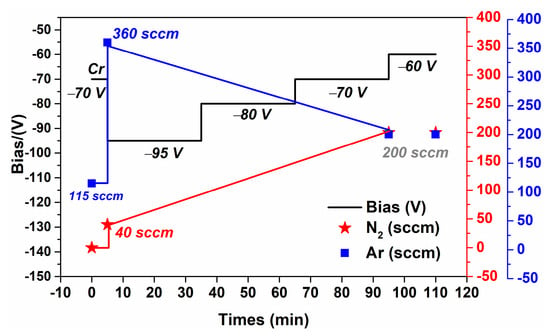
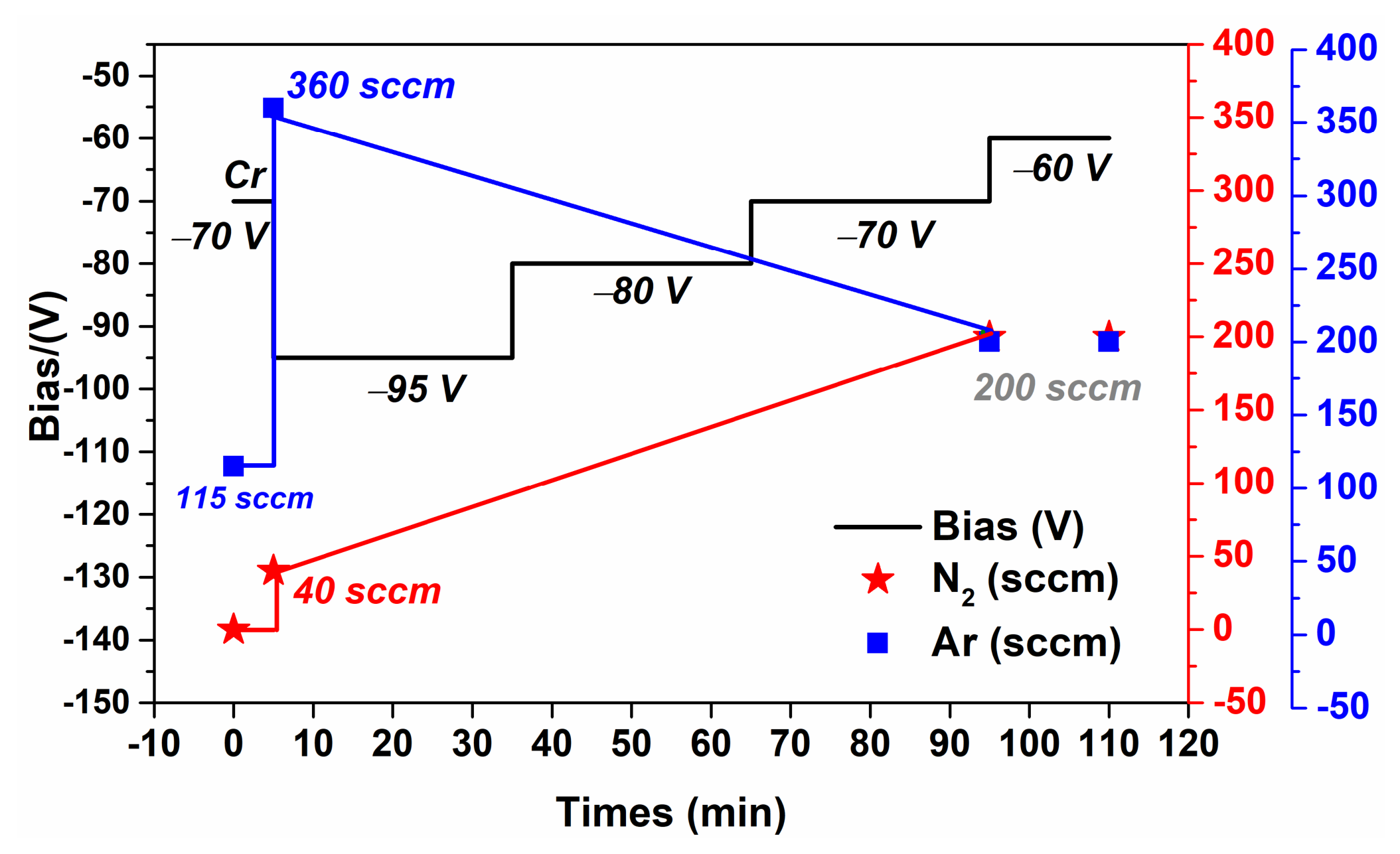
The gradient CrN coating was fabricated using a continuous variation in the deposition parameters, rather than periodic switching between discrete Cr and CrN layers. Following the same substrate pretreatment procedure described above, an initial Cr-rich region was deposited for 5 min using an Ar flow rate of 115 ± 2 sccm, a substrate bias of −70 ± 2 V, and a Cr cathode current of 150 ± 1 A. The deposition conditions were subsequently continuously varied to establish the compositional gradient. During the gradient deposition stage, the Ar flow rate was gradually decreased from 360 ± 2 to 200 ± 2 sccm, while the N2 flow rate was simultaneously increased from 40 ± 2 to 200 ± 2 sccm. At the same time, the substrate bias was gradually varied from approximately −95 ± 2 to −60 ± 2 V. The Cr cathode current was maintained at 150 ± 1 A, and the protection current was maintained at 65 ± 1 A. The total deposition time was approximately 110 min.
The continuous variation in the Ar/N2 ratio and substrate bias progressively changed the deposition environment during film growth, resulting in a gradual compositional and microstructural transition from the Cr-rich region toward the CrN-rich region. Unlike the CrN/Cr multilayer coating, no periodic switching between Cr and CrN deposition was introduced during this process. The deposition process and the corresponding evolution of the Ar/N2 flow rates and substrate bias are schematically illustrated in Figure 1. For clarity, the principal deposition parameters of the four Cr based coating architectures are summarized in Table 2.
Figure 1.
Schematic illustration of the deposition process of the gradient CrN coating.
Table 2.
Preparation process parameters of the Cr-based coatings.
2.3. Microstructural Characterization and Property Testing
2.3.1. Phase and Microstructural Characterization
The phase constitution of the as-deposited coatings was characterized by X-ray diffraction (XRD, Rigaku Smart Lab 9kw, Rigaku Corporation, Tokyo, Japan) using Cu Kα radiation. The diffraction patterns were collected in Bragg–Brentano geometry over the selected 2θ range at a scanning rate of 5°/min. The diffraction peaks were identified by comparison with standard PDF cards using Jade 9.0 software. The surface and cross-sectional morphologies of the coatings were examined using field-emission scanning electron microscopy (FE-SEM, Carl Zeiss Gemini SEM360, Carl Zeiss AG, Oberkochen, Germany). Secondary-electron imaging was used to characterize the surface morphology, while backscattered-electron imaging was employed to observe the cross-sectional microstructure. Energy-dispersive X-ray spectroscopy (EDS, Oxford Ultim MAX 100 mm2, Oxford Instruments, High Wycombe, UK) was used to analyze the elemental composition and distribution of representative regions. The three-dimensional surface morphology and roughness of the as-deposited coatings were characterized using a laser scanning confocal microscope (LSCM, LEXT OLS4100, Olympus Corporation, Tokyo, Japan). The same technique was subsequently employed to characterize the three-dimensional morphology and material removal of the wear tracks after tribological testing.
2.3.2. Mechanical
The microhardness of the four coatings was measured using an FM-300 micro-Vickers hardness tester (Future-Tech Corp., Kawasaki, Japan) with a dwell time of 15 s. The indentation loads were 0.2 kgf for the four coatings. Ten microhardness measurements were performed at different positions on each coating, and the average value was taken as the representative microhardness.
2.3.3. Tribological Testing
Dry reciprocating sliding wear tests were performed using an HSR-2M high-speed reciprocating friction and wear tester (Lanzhou Zhongke Kaihua Technology Development Co., Ltd., Lanzhou, China) under ambient-temperature conditions. The 304 stainless steel balls with a diameter of 6.00 ± 0.005 mm and a hardness of 28 HRC were used as the counterbodies for all Cr-based coatings. The tests were conducted under a normal load of 6 N, a reciprocating stroke length of 5 mm, and a frequency of 300 cycles/min for 5 min, corresponding to a total of 1500 reciprocating cycles. Three parallel tribological tests were performed for each sample under identical testing conditions. The friction coefficient was continuously recorded during each test.
After tribological testing, the wear tracks were characterized using laser scanning confocal microscopy to obtain their three-dimensional morphology and wear volume. SEM was subsequently employed to examine the detailed morphology of the worn surfaces, while EDS was used to analyze the elemental distributions in representative regions of the wear tracks. The specific wear rate was calculated according to W = V/Fs, where W is the specific wear rate, V is the wear volume, F is the applied normal load, and s is the total sliding distance.
3. Results and Discussion
3.1. Microstructure
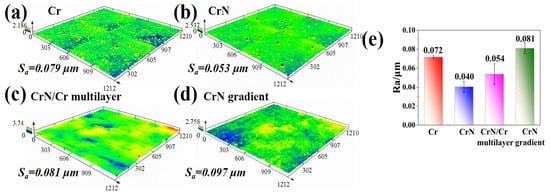
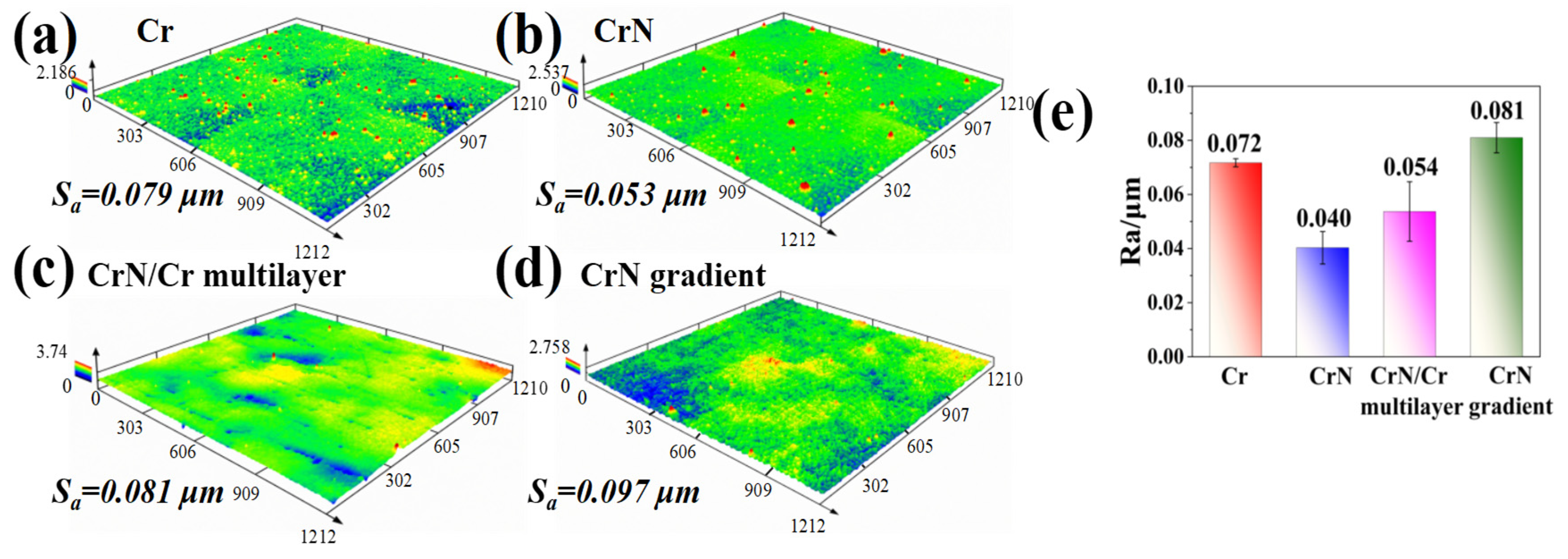
To characterize the initial three-dimensional surface morphology of the Cr-based coatings, 3D laser scanning microscopy was employed. As shown in Figure 2a–d, all four coatings completely covered the CrNi3MoVA steel substrate without obvious large-scale surface defects. The Cr coating exhibited relatively pronounced surface roughness, with Sa and Ra values of 0.079 and 0.072 μm, respectively. In contrast, the CrN coating showed the smoothest surface, with Sa and Ra of 0.053 and 0.040 μm, respectively. The CrN/Cr multilayer exhibited slightly increased surface roughness (Sa = 0.081 μm and Ra = 0.054 μm), while the gradient CrN coating showed the highest surface roughness, with Sa and Ra reaching 0.097 and 0.081 μm, respectively. Overall, the results indicate that coating architecture affects the initial surface morphology, while surface roughness alone is insufficient to determine the tribological performance and should therefore be evaluated together with the coating microstructure, mechanical properties, and wear behavior.
Figure 2.
3D morphology of four types of coatings (a) Cr, (b) CrN, (c) CrN/Cr multilayer, (d) CrN gradient coating; (e) line roughness.
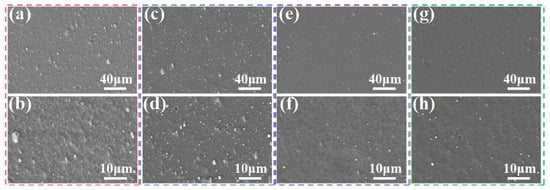
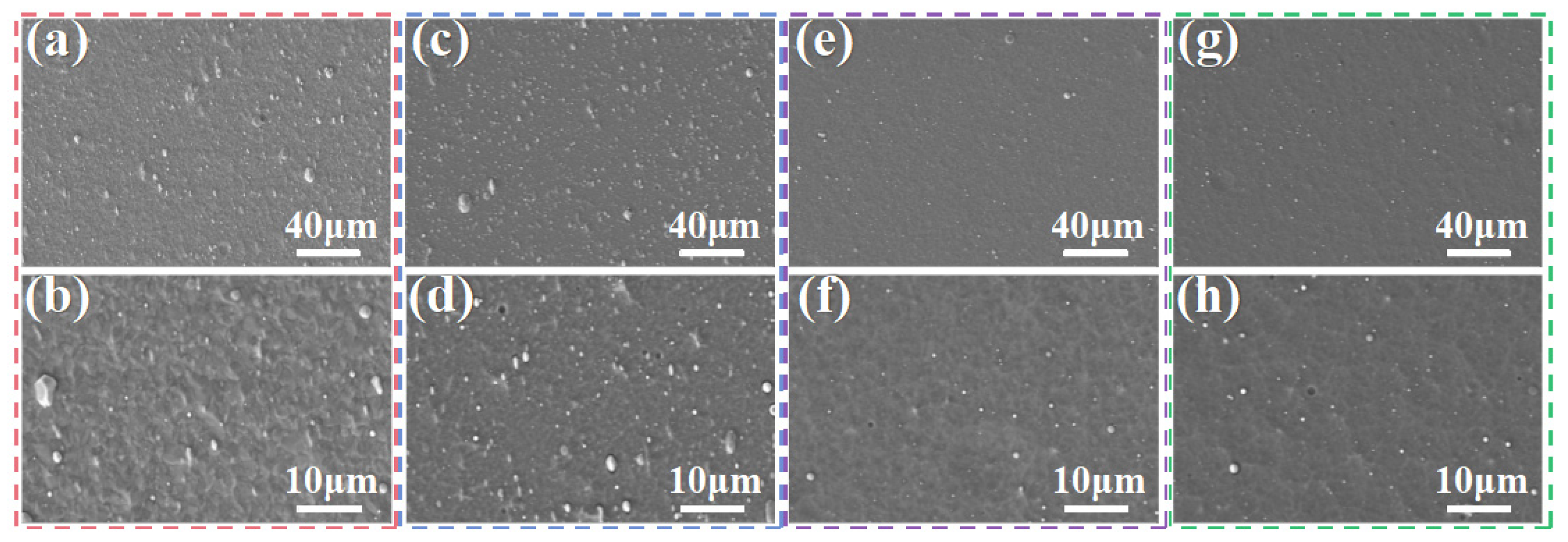
SEM observations further revealed the surface microstructural characteristics of the four Cr-based coatings, as shown in Figure 3. All coatings formed continuous and intact films on the CrNi3MoVA substrate, without obvious through-thickness cracks, local delamination, or other macroscopic deposition defects. The main differences among the coatings were associated with the size and distribution of surface droplets and the overall surface uniformity. As shown in Figure 3a,b, the Cr coating exhibited numerous spherical droplets with a relatively broad size distribution, accompanied by a few shallow pits, resulting in more pronounced surface fluctuations. These features are typical of arc ion plating, where molten droplets generated at cathode arc spots are transported to and rapidly solidify on the growing film surface, while shallow pits may be associated with droplet detachment or shadowing effects. In Figure 3c,d, the CrN coating also contained surface droplets, but their distribution was relatively more uniform. The introduction of N2 changed the deposition process from metallic to reactive arc ion plating, and the formation of CrN during deposition modified the growth behavior of the deposited species, thereby reducing the pronounced surface heterogeneity to some extent. Nevertheless, droplet-related features remained evident because their formation is an intrinsic characteristic of the cathodic arc deposition process.
Figure 3.
SEM images of (a,b) Cr, (c,d) CrN surface, (e,f) CrN/Cr multilayer; (g,h) CrN gradient coating.
The CrN/Cr multilayer coating (Figure 3e,f) exhibited a continuous and compact surface with only a small number of fine droplets, which were relatively uniform in size and showed no obvious large-droplet agglomeration. Its surface appeared more homogeneous than those of the Cr and CrN monolayers, which can be associated with the repeated alternation of CrN and Cr deposition, providing successive nucleation surfaces during multilayer growth and thereby limiting the excessive growth and local coarsening of droplets. The gradient CrN coating (Figure 3g,h) also maintained a continuous and intact surface with relatively uniform microstructure, although a few larger droplets and shallow pits were locally observed. In contrast to the multilayer coating, the gradient CrN was deposited by continuously varying the N2 flow rate and substrate bias, producing a gradual compositional transition from Cr-rich to CrN-rich regions without distinct periodic interfaces. Despite the continuously changing deposition conditions, which resulted in a small number of droplet-related defects, the coating retained a relatively homogeneous and continuous surface microstructure.
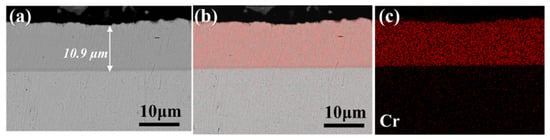
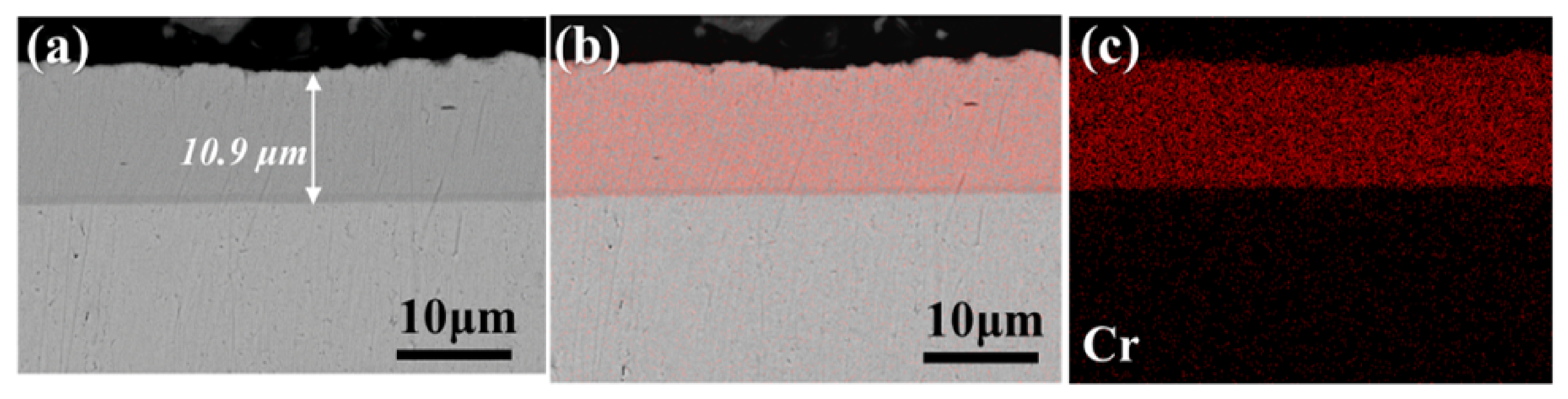
Cross-sectional SEM images were further examined to characterize the internal microstructure and coating/substrate interface, as shown in Figure 4, Figure 5, Figure 6 and Figure 7. The Cr coating was approximately 10.9 μm thick and exhibited a relatively uniform, dense structure in Figure 4a. The coating/substrate interface was continuous and well defined, without obvious pores, delamination, or through-thickness cracks. The Cr elemental map in Figure 4c showed a relatively uniform Cr distribution throughout the coating, with a clear compositional transition toward the substrate, confirming the integrity and continuity of the deposited Cr layer.
Figure 4.
(a,b) SEM images of Cr cross-section; (c) Cr element distribution map.
Figure 5.
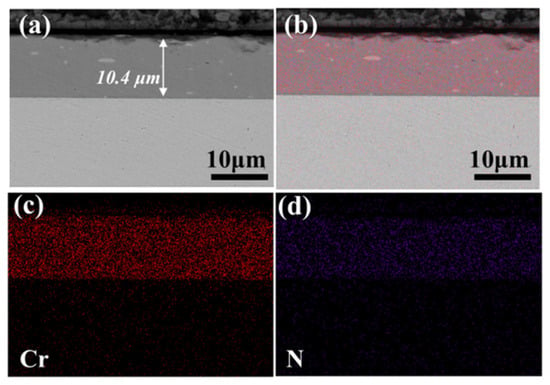
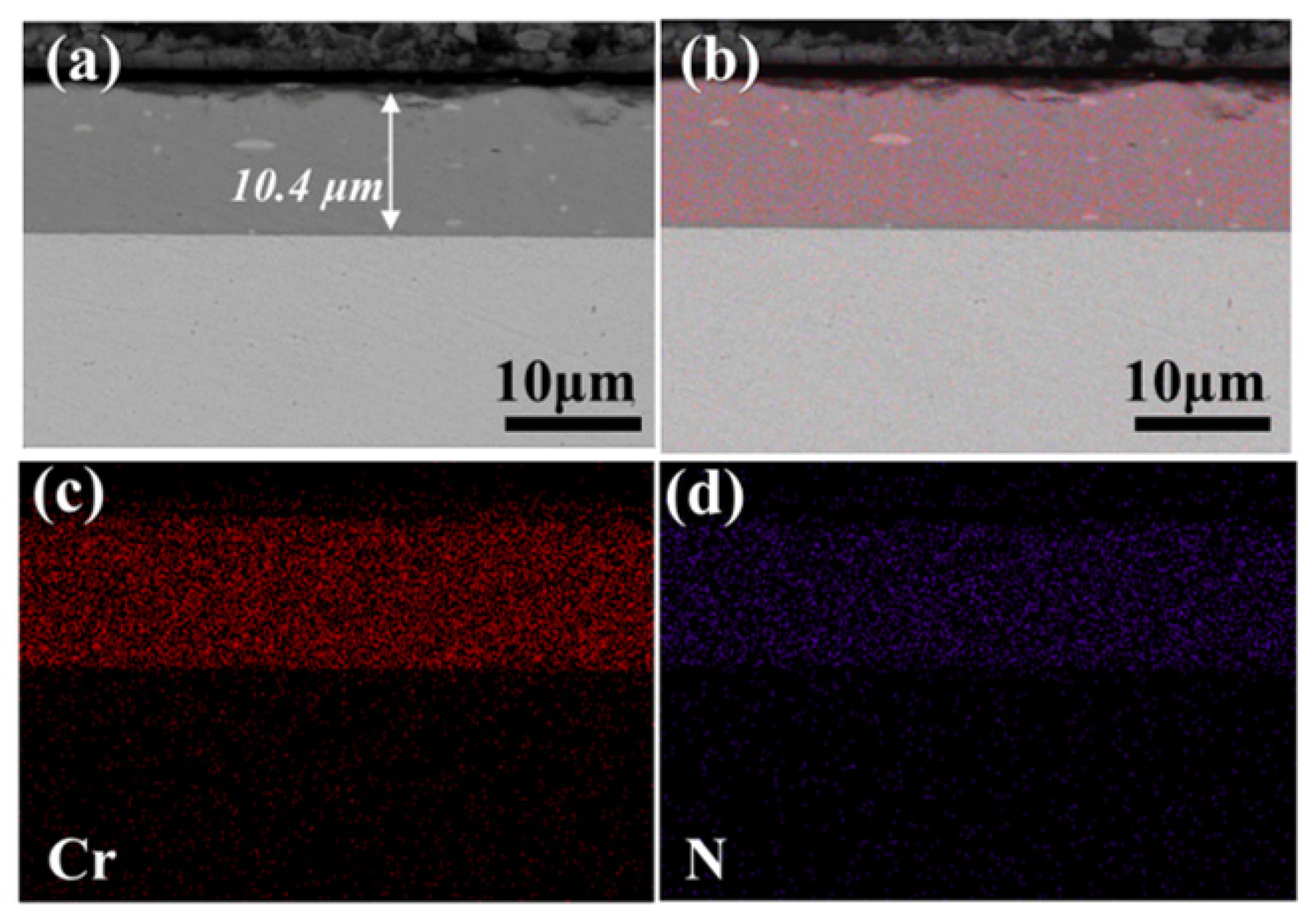
(a,b) SEM images of the CrN cross-section (c), Cr element distribution; (d) N element distribution.
Figure 6.
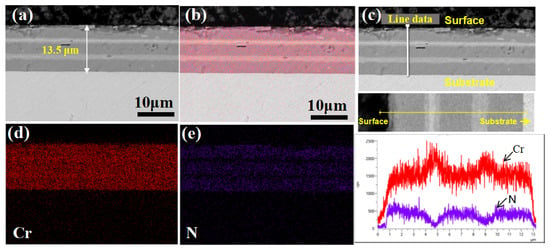
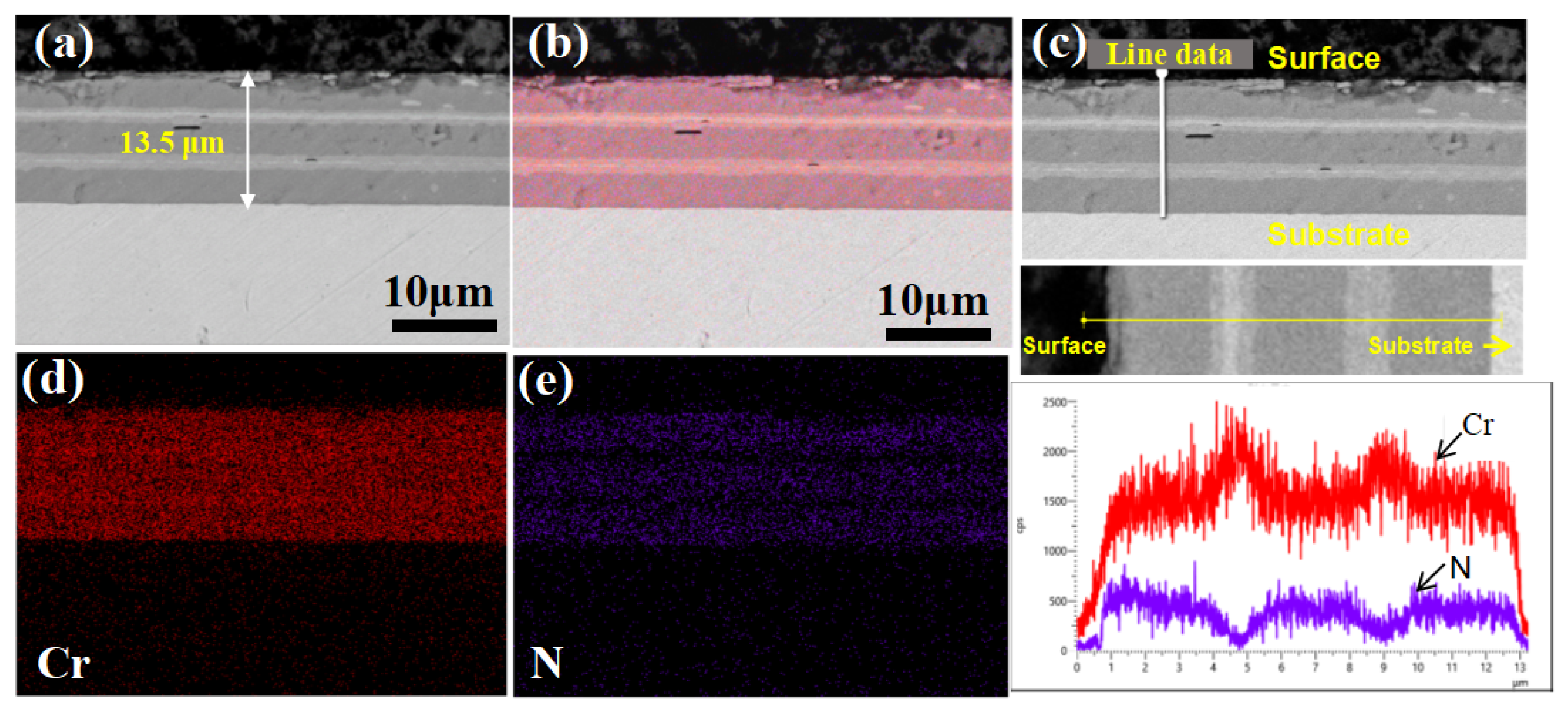
(a,b) SEM images of CrN/Cr multilayer cross-section, (c) EDS line scan from substrate to surface, (d) Cr element distribution; (e) N element distribution.
Figure 7.
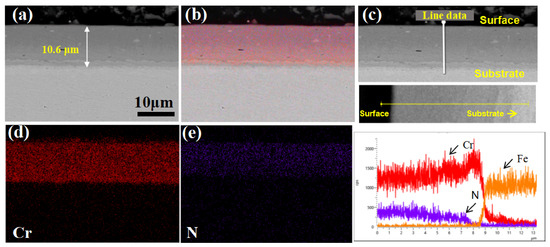
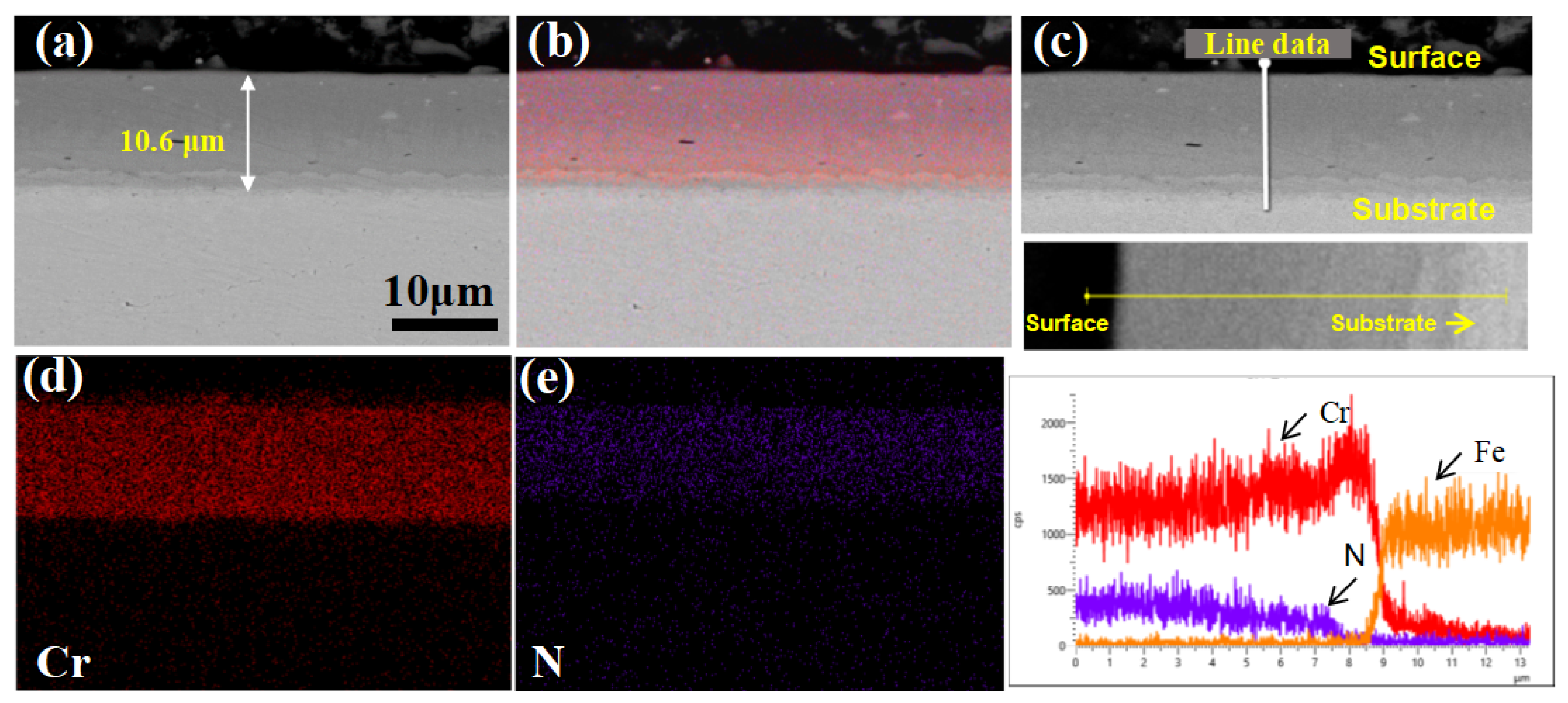
(a,b) SEM images of the cross-section of CrN gradient coatings, (c) EDS line scan from substrate to surface, (d) Cr element distribution; (e) N element distribution.
Figure 5 shows that the CrN coating was approximately 10.4 μm thick and maintained a continuous structure after the introduction of N2. Cr and N were uniformly distributed throughout the coating, without obvious elemental segregation or local enrichment, indicating a relatively homogeneous Cr–N composition across the film.
The Cr/CrN multilayer coating was approximately 13.5 μm thick and exhibited a well-defined periodic layered structure along the growth direction shown in Figure 6. The Cr and N signals showed regular fluctuations across the coating thickness, corresponding to the alternating Cr and CrN layers. The elemental maps further confirmed the continuous distribution of Cr and the layered distribution of N, without obvious segregation or local depletion. No interfacial cracking or delamination was observed, indicating good integrity of the multilayer structure.
Figure 7 confirms the cross-sectional morphology and elemental distributions of the gradient CrN coating. The coating was approximately 10.6 μm thick and exhibited a continuous structure with good interfacial integrity. No distinct layer boundaries were observed across the coating, indicating a gradual compositional transition rather than a periodically layered structure. The EDS results showed a continuous Cr distribution throughout the coating, while the N content gradually increased toward the surface. These results confirm the formation of a continuous Cr-to-CrN compositional gradient without distinct interlayer interfaces.
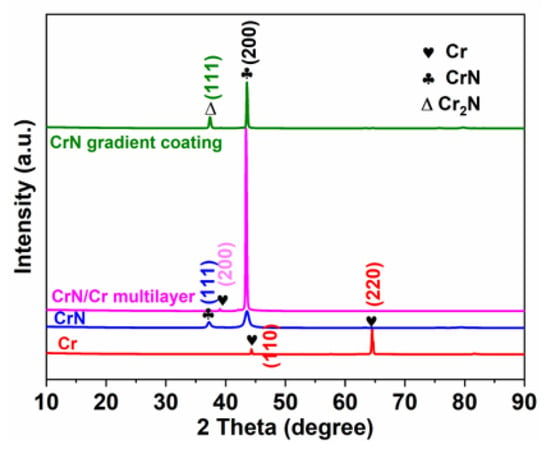
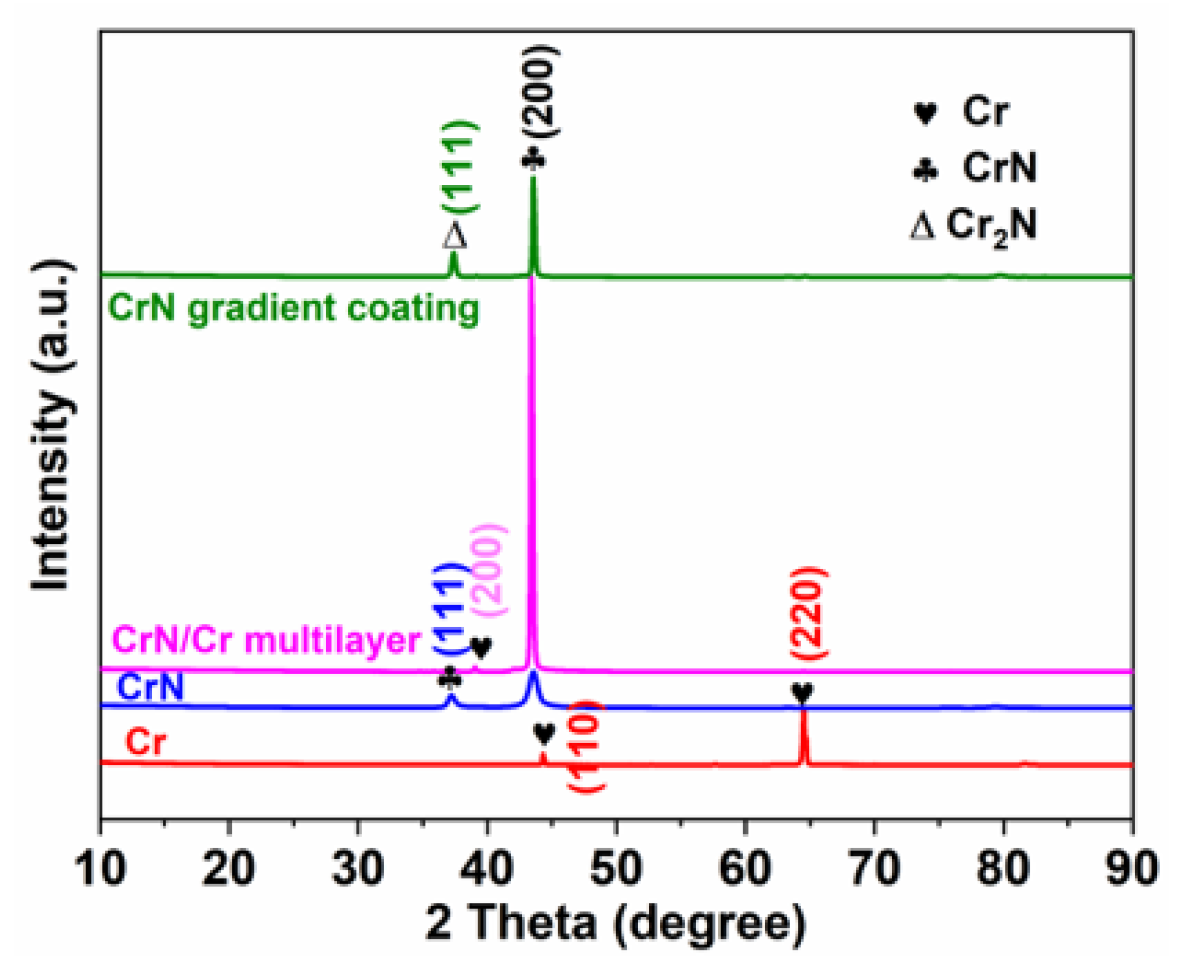
Furthermore, the XRD patterns of the Cr, CrN, CrN/Cr multilayer, and gradient CrN coatings are presented in Figure 8. The Cr coating exhibited only the characteristic peaks of body-centered cubic Cr (PDF#06-0694), with Cr (110) and Cr (220) lattice planes at approximately 44.4° and 64.6°, respectively, and a pronounced Cr (220) preferred orientation. The CrN coating mainly consisted of face-centered cubic CrN (PDF#11-0065), showing prominent CrN (111) and CrN (200) planes, with a distinct (200) preferred orientation. For the CrN/Cr multilayer, both Cr and CrN phases were detected, with the diffraction pattern dominated by the surface CrN layer and a weaker Cr (110) peak originating from the underlying Cr layers, confirming the retention of the alternating Cr/CrN architecture. The gradient CrN coating was primarily composed of CrN, accompanied by a Cr2N phase, and retained the characteristic CrN (200) plane, although its preferred orientation was less pronounced than that of the monolithic CrN coating. Combined with the cross-sectional SEM results, the gradient coating exhibited a continuous Cr-to-CrN compositional transition without distinct interlayer boundaries, indicating that the gradient deposition process modified the phase and texture characteristics while maintaining a continuous transition in the coating structure.
Figure 8.
XRD diffraction pattern of the four coatings.
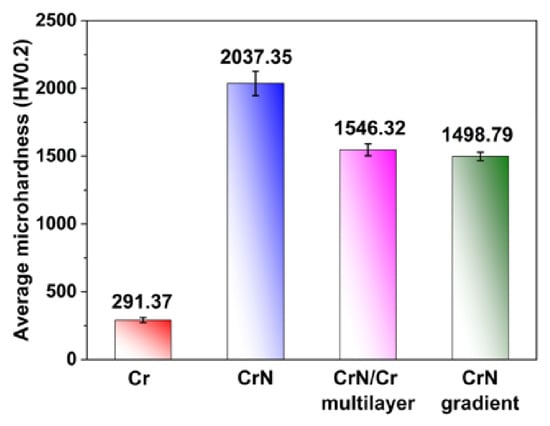
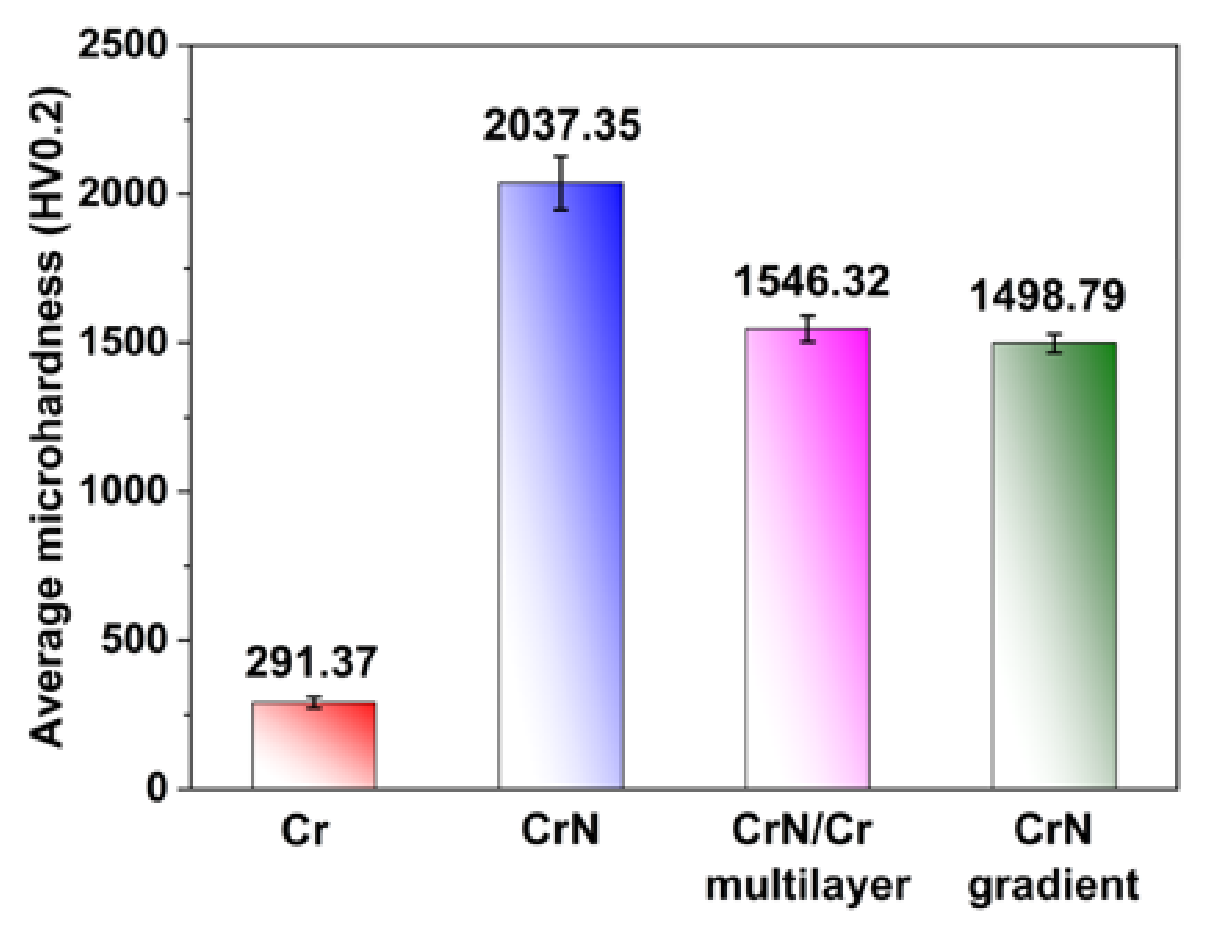
In addition, hardness is also a key parameter for protective coatings. Figure 9 shows the Cr, CrN, CrN/Cr multilayer, and gradient CrN coatings exhibited average microhardness values of 291.37, 2037.35, 1546.32, and 1498.79 HV, respectively. The hardness followed the order CrN > CrN/Cr multilayer > gradient CrN > Cr, indicating the dominant hardening effect of the CrN phase. However, the subsequent wear behavior is not governed by hardness alone and should be considered together with the coating architecture and microstructural characteristics.
Figure 9.
The hardness of the four coatings.
3.2. Analysis of Tribological Behavior
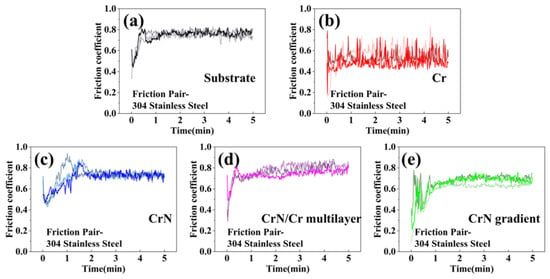
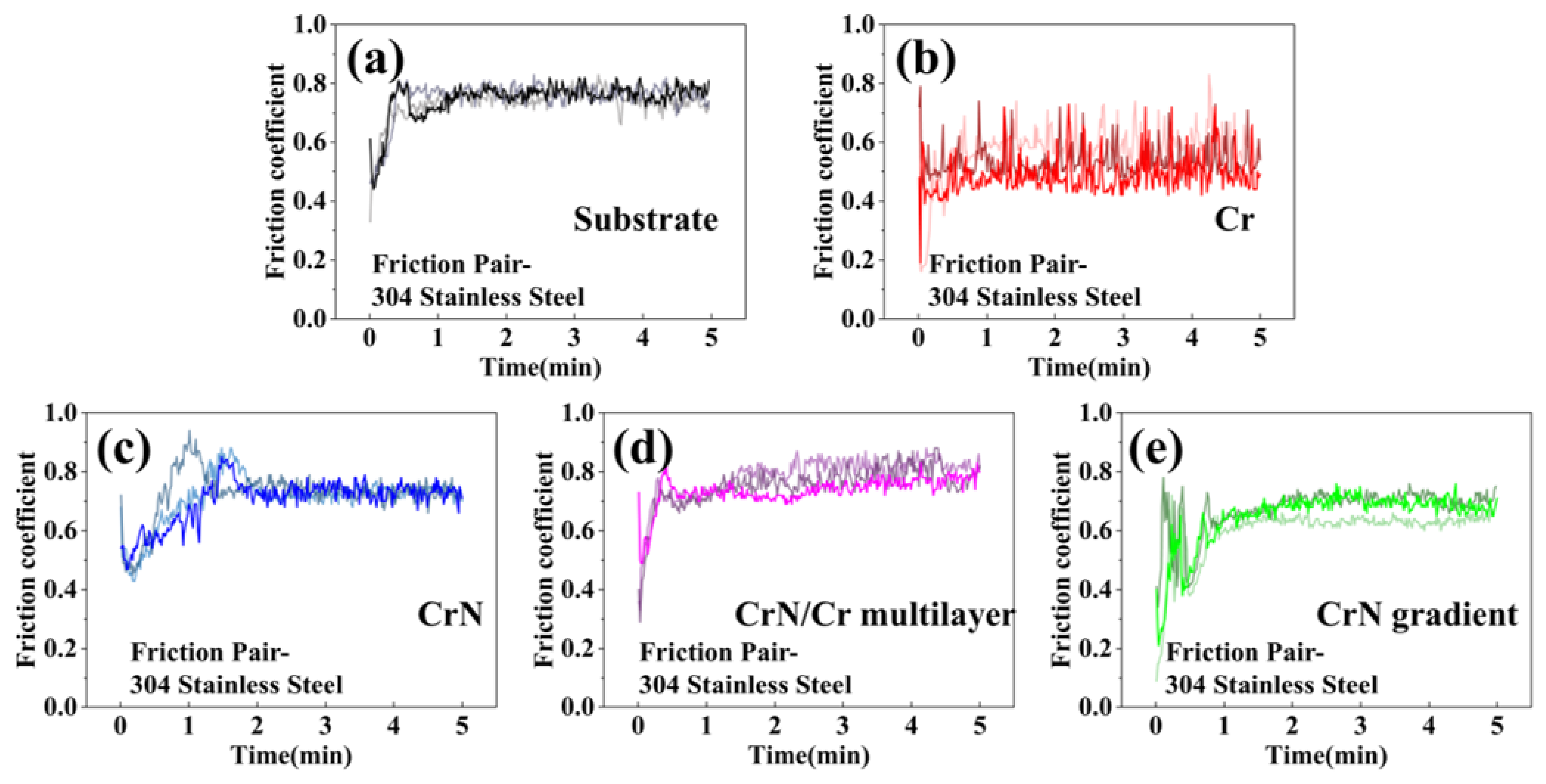
To systematically investigate the friction behavior of the four Cr-based coatings, 304 stainless steel balls were selected as the counterbodies for reciprocating sliding wear tests. Figure 10 shows the friction coefficient evolution of the CrNi3MoVA substrate and coatings during reciprocating sliding against a 304 stainless steel ball, with three independent parallel experiments performed for each sample. All specimens exhibited an initial fluctuation associated with asperity interaction, local plastic deformation, and material transfer, followed by a relatively stable friction stage [20,21]. The substrate showed a relatively high friction coefficient of approximately 0.70–0.80 after the initial running-in stage (Figure 10a), whereas the Cr coating exhibited a distinctly lower and fluctuating friction coefficient of approximately 0.45–0.55 (Figure 10b). The relatively low friction coefficient of the Cr coating may be associated with its metallic nature and the relatively compliant deformation behavior during sliding [22,23]. In contrast, the CrN, CrN/Cr multilayer, and gradient CrN in Figure 10c–e showed higher friction coefficients, with steady-state values of approximately 0.70–0.80, 0.70–0.80, and 0.65–0.72, respectively. The higher friction coefficients of the CrN-based coatings are generally consistent with the sliding interaction between the hard ceramic surfaces and the metallic counterbody. Notably, the multilayer and gradient coatings exhibited smaller friction fluctuations despite not showing lower friction coefficients, indicating that their structural designs primarily improved the stability of the sliding interface.
Figure 10.
Friction coefficient curves of the CrNi3MoVA substrate and Cr-based coatings during reciprocating sliding against a 304 stainless steel ball: (a) substrate, (b) Cr, (c) CrN, (d) CrN/Cr multilayer, and (e) gradient CrN.
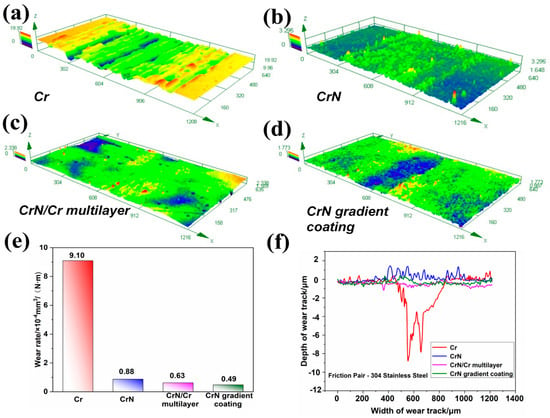
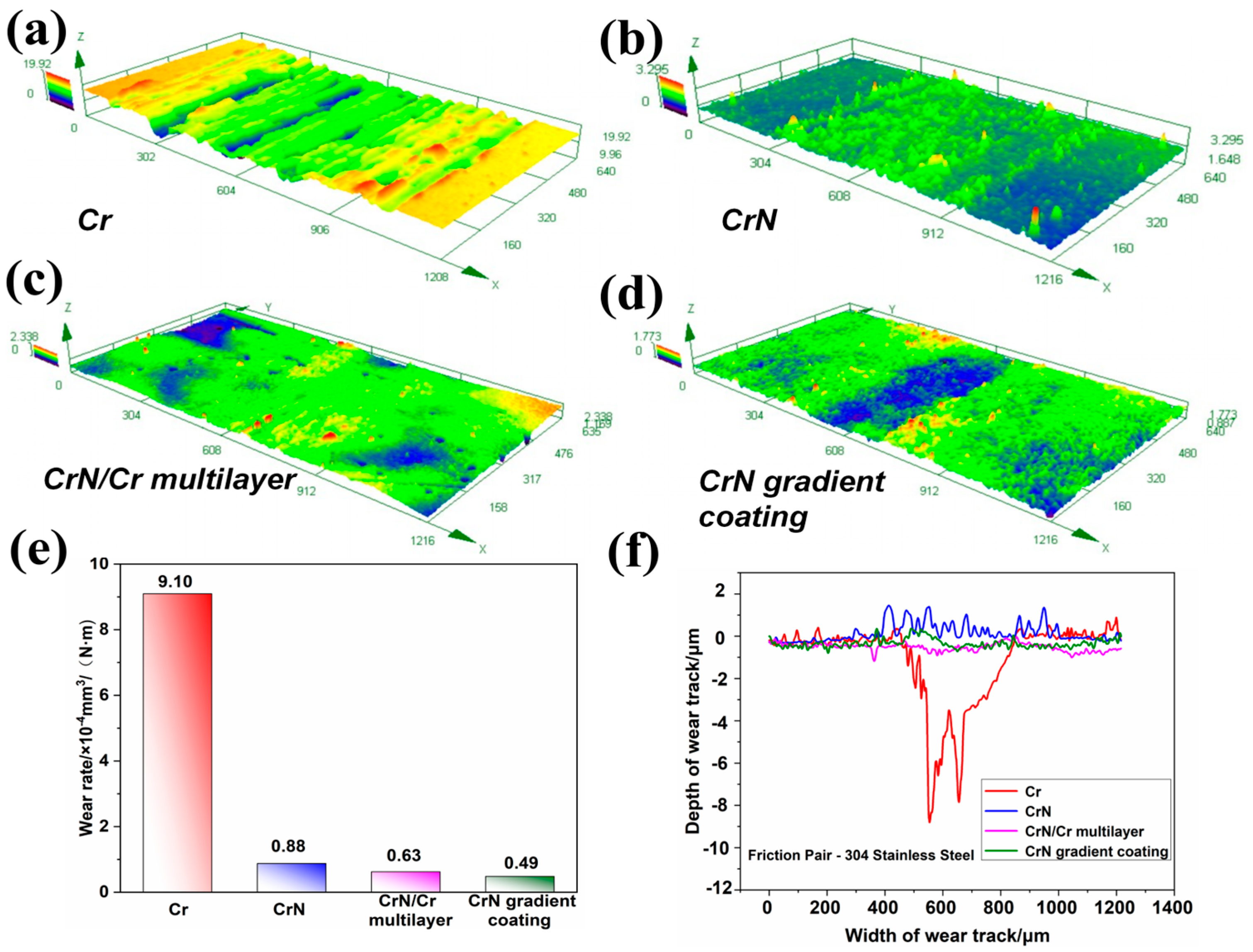
To further evaluate the wear resistance of the different Cr-based coatings, the worn surfaces were characterized by laser confocal microscopy, and the wear-track profiles and specific wear rates were quantitatively analyzed in Figure 11. The Cr coating exhibited the most severe surface damage, with pronounced grooves, height fluctuations, and material accumulation, corresponding to the highest wear rate of 9.10 × 10⁻⁴ mm3/(N·m). In contrast, the CrN coating showed a much smoother wear track and a substantially reduced wear rate of 8.8 × 10⁻⁵ mm3/(N·m), consistent with its markedly higher microhardness (2037.35 HV, compared with 291.37 HV for Cr), which enhanced resistance to plastic deformation and material removal. Further structural modification reduced the wear rate to 6.3 × 10⁻⁵ mm3/(N·m) for the CrN/Cr multilayer and 4.9 × 10⁻⁵ mm3/(N·m) for the gradient CrN coating. The gradient CrN exhibited the shallowest and most uniform wear track, with minimal profile fluctuations and no pronounced grooves or local depressions. These results demonstrate that both multilayer and gradient architectures effectively reduce material loss relative to CrN, with the gradient CrN showing the lowest wear rate and the most favorable wear-track morphology, despite its hardness (1498.79 HV) being lower than that of CrN. This indicates that the superior wear resistance of the gradient coating cannot be attributed to hardness alone and is also closely associated with its continuous compositional and microstructural transition.
Figure 11.
Laser confocal morphology of wear scars on four coatings after mating with stainless steel (a) Cr (b) CrN (c) CrN/Cr multilayer (d) CrN gradient coating (e) Wear rate (f) 2D profile.
Table 3 summarizes the wear rates of Cr-based coatings reported in the literature and obtained in this work. At a 6 N load against the 304 stainless steel counterpart, the CrN/Cr multilayer and CrN gradient coatings show lower wear rates than monolithic CrN and pure Cr from the present study, as well as Cr-based coatings in published references, demonstrating that tailored structural design improves wear resistance under high loading.
Table 3.
Friction and wear test parameters and wear rate comparison of Cr-based coatings.
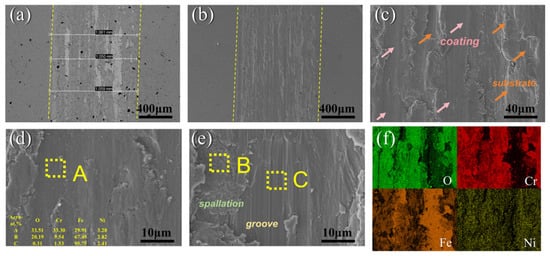
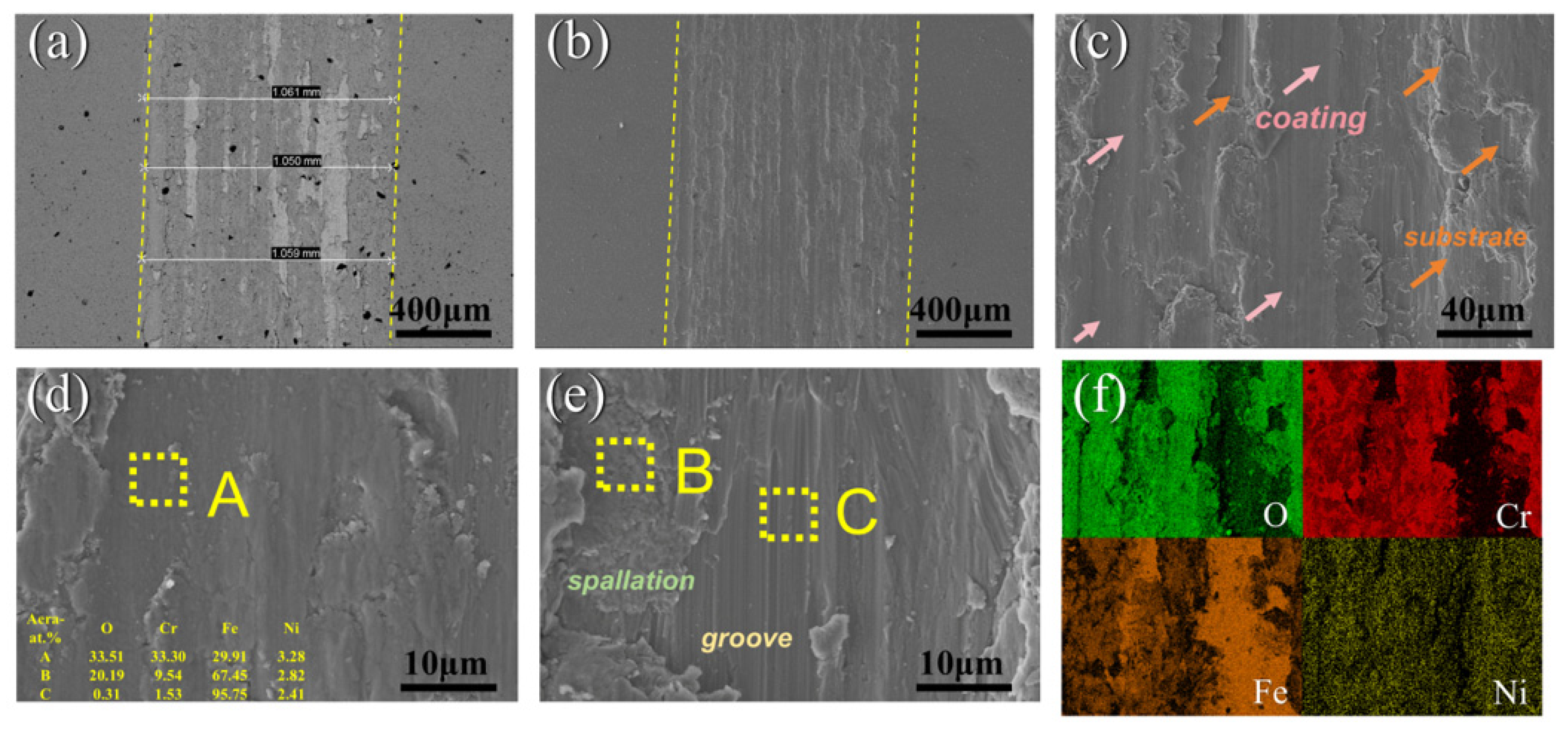
Figure 12 presents the worn morphology and EDS results of the Cr coating after sliding against 304 stainless steel. The wear track was characterized by pronounced parallel grooves, local delamination, and debris accumulation, indicating substantial material removal during sliding. In severely worn regions, the predominance of Fe indicated exposure of the underlying CrNi3MoVA substrate. These results suggest that the Cr coating experienced a combination of abrasive wear, delamination, and localized adhesive/oxidative wear. The relatively low hardness of the Cr coating promoted plastic deformation and facilitated surface plowing and subsequent coating detachment, ultimately leading to localized coating failure and substrate exposure.
Figure 12.
SEM images of wear traces of Cr coating (a) BSD, (b) SE, (c–e) Local magnifications and selected area EDS; (f) Elemental surface scan image.
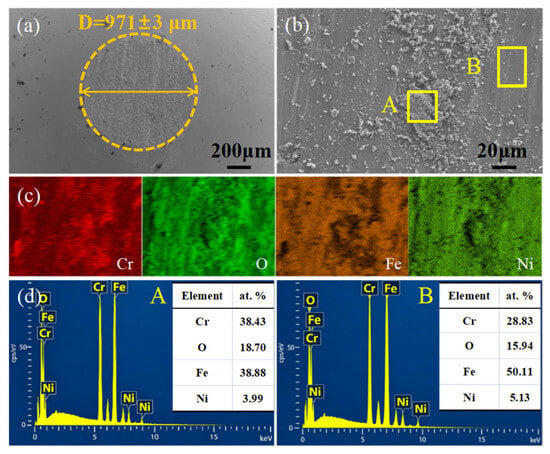
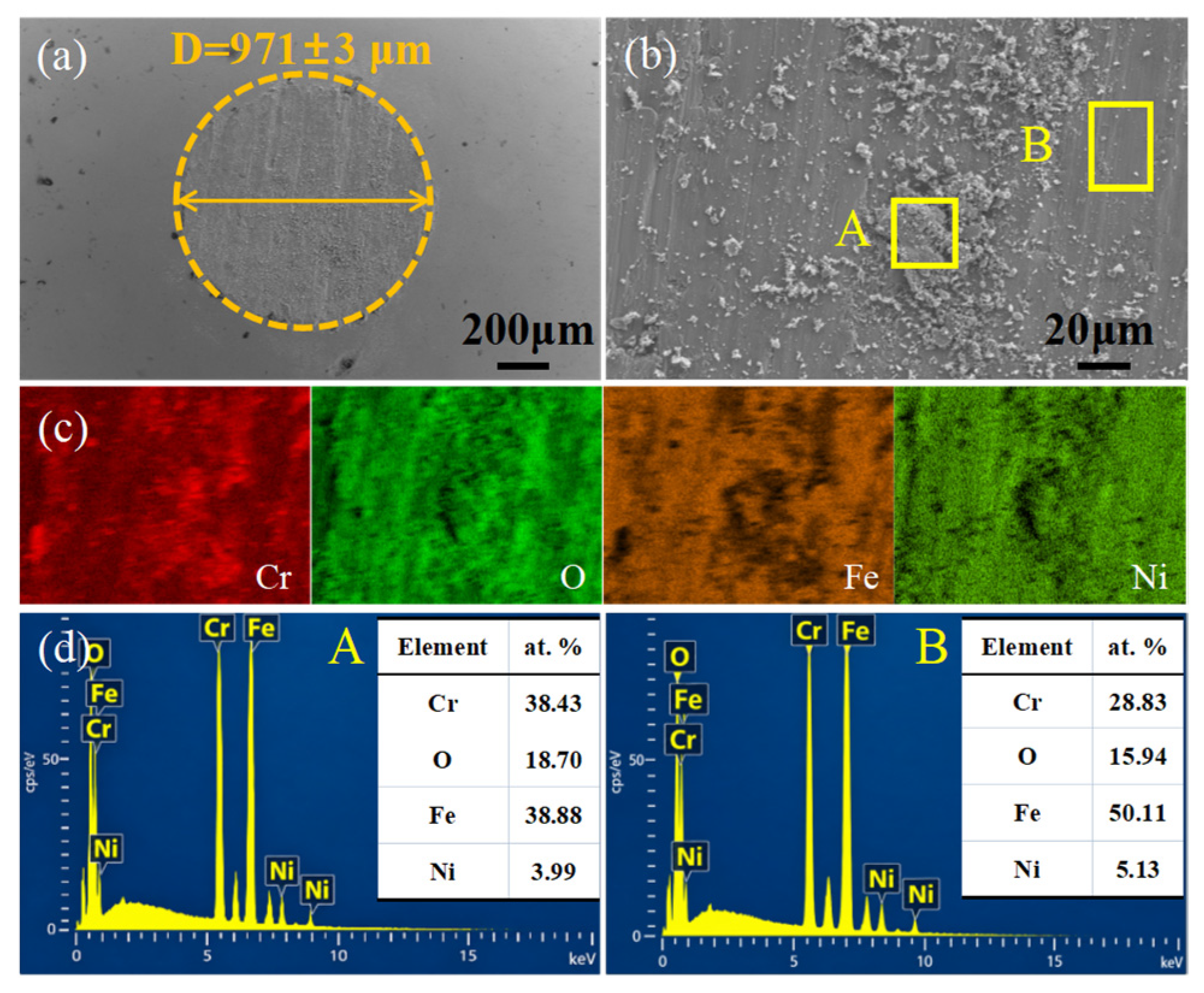
To further elucidate the interfacial material transfer and wear interactions, the worn surface of the 304 stainless steel counterbody was further examined by SEM and EDS, providing complementary evidence for the wear mechanisms identified from the coating wear track. The worn 304 stainless steel ball exhibited a wear scar of approximately 971 ± 3 μm in diameter, with considerable adhered debris and transferred material on the contact region (in Figure 13). EDS detected Cr, Fe, Ni, and O, and the relatively high Cr signal within the wear scar provides direct evidence of Cr-containing material transfer from the coating to the counterbody. The simultaneous detection of O indicates that tribo-oxidation also occurred during sliding. The heterogeneous distribution of Cr and Fe between regions A and B suggests that the transferred layer was locally redistributed under repeated sliding. Together with the pronounced grooves and local delamination observed on the Cr coating, the counterbody characterization confirms a coupled wear process involving material transfer, abrasive plowing, and localized tribo-oxidation, which ultimately contributed to the severe material loss of the Cr coating.
Figure 13.
(a,b) SEM images of worn scars on 304 stainless steel counterpart balls after sliding against the Cr coating, (c) Elemental surface scan image of b; (d) selected area EDS of regions A and B.
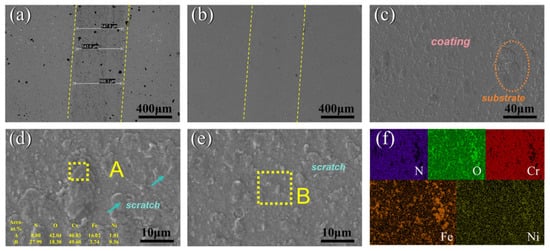
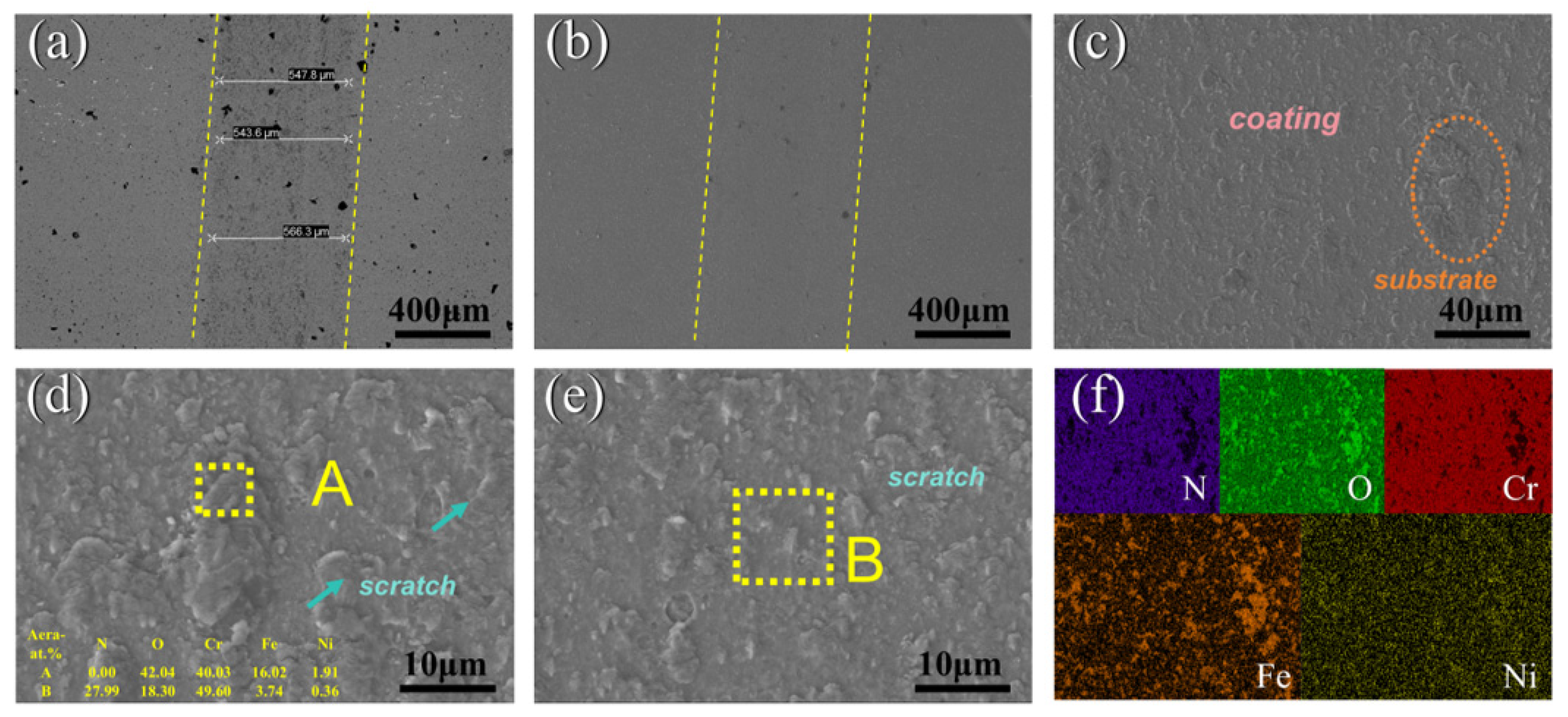
Figure 14 shows the wear morphology and EDS results of the CrN monolayer coating sliding against 304 stainless steel. The CrN coating exhibits a significantly narrower wear track (543.6–566.3 μm) than the Cr monolayer (~1.05 mm), with a relatively smooth and continuous worn surface and no extensive delamination, severe plastic deformation, or through-thickness cracking, demonstrating its superior wear resistance. EDS analysis reveals localized oxidation in region A, whereas the high Cr and N contents and low Fe signal in region B confirm that the CrN coating remains largely intact without extensive breakthrough. Overall, the wear mechanism is dominated by adhesive wear, accompanied by third-body abrasion, localized tribo-oxidation, and minor abrasive wear. The enhanced hardness and resistance to plastic deformation of CrN effectively suppress abrasive cutting and coating delamination, thereby maintaining coating integrity and improving wear resistance.
Figure 14.
SEM images of wear scars of CrN against stainless steel: (a) BSD, (b) SE, (c–e) Local magnifications and selected area EDS; (f) Elemental surface scan.
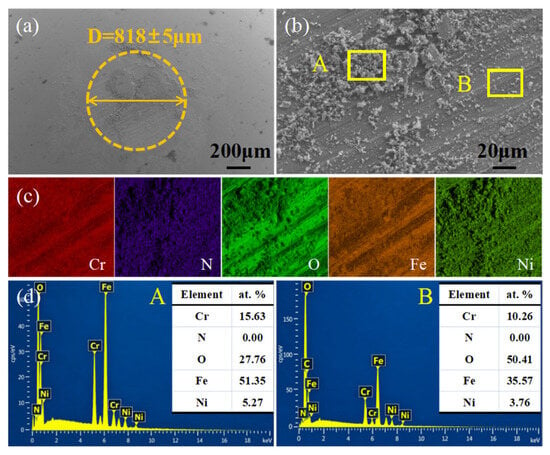
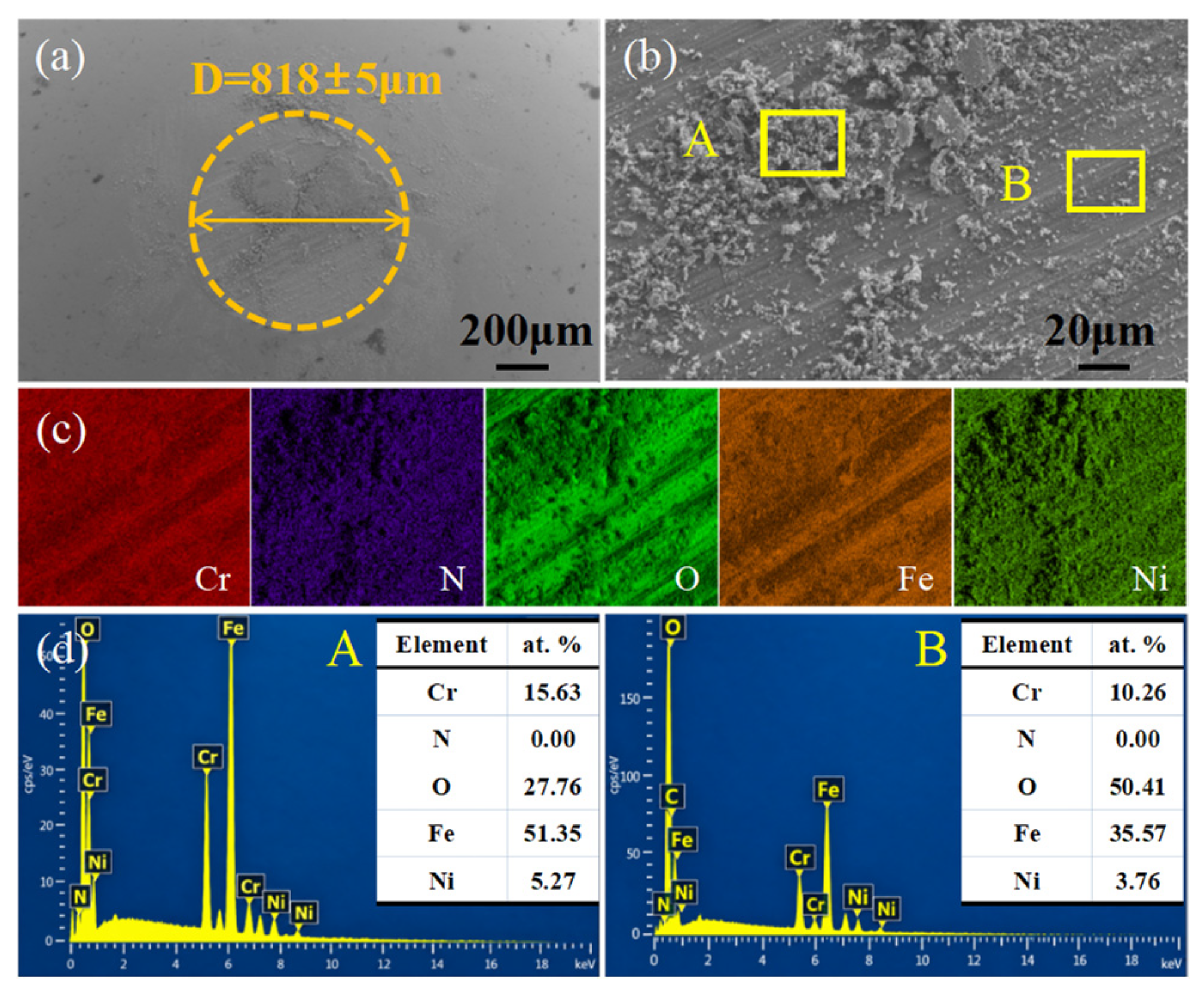
As shown in Figure 15, the worn 304 stainless-steel counterpart sliding against the CrN exhibited a wear scar with a diameter of approximately 818 ± 5 μm, accompanied by surface roughening and localized debris accumulation. EDS analysis revealed that the worn regions were mainly composed of Fe, Cr, Ni, and O. Region A retained a relatively high Fe content (51.35 at.%) with 27.76 at.% O, indicating mild oxidation of the steel counterpart, whereas region B exhibited a markedly increased O content (50.41 at.%) together with Fe (35.57 at.%) and Cr (10.26 at.%), suggesting intensified tribo-oxidation and accumulation of transferred wear debris. The detected Cr may originate from both the intrinsic Cr content of the 304 stainless steel and limited transfer of Cr-containing debris from the CrN coating, while the absence of detectable N indicates that no continuous CrN transfer layer was formed on the counterpart surface. These results suggest that sliding between the CrN coating and 304 stainless steel involves localized material transfer and tribo-oxidation, followed by mechanical compaction of the generated debris within the contact interface. The resulting oxidized debris may act as a third body and contribute to the subsequent mild wear process.
Figure 15.
(a,b) SEM images of worn scars on 304 stainless steel counterpart balls after sliding against CrN coating, (c) Elemental surface scan image of b; (d) selected area EDS of regions A and B.
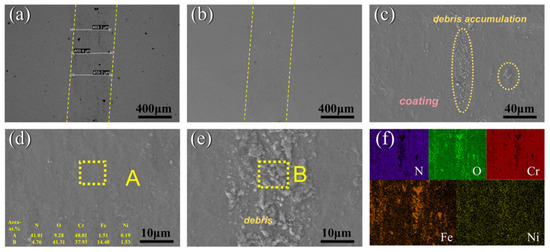
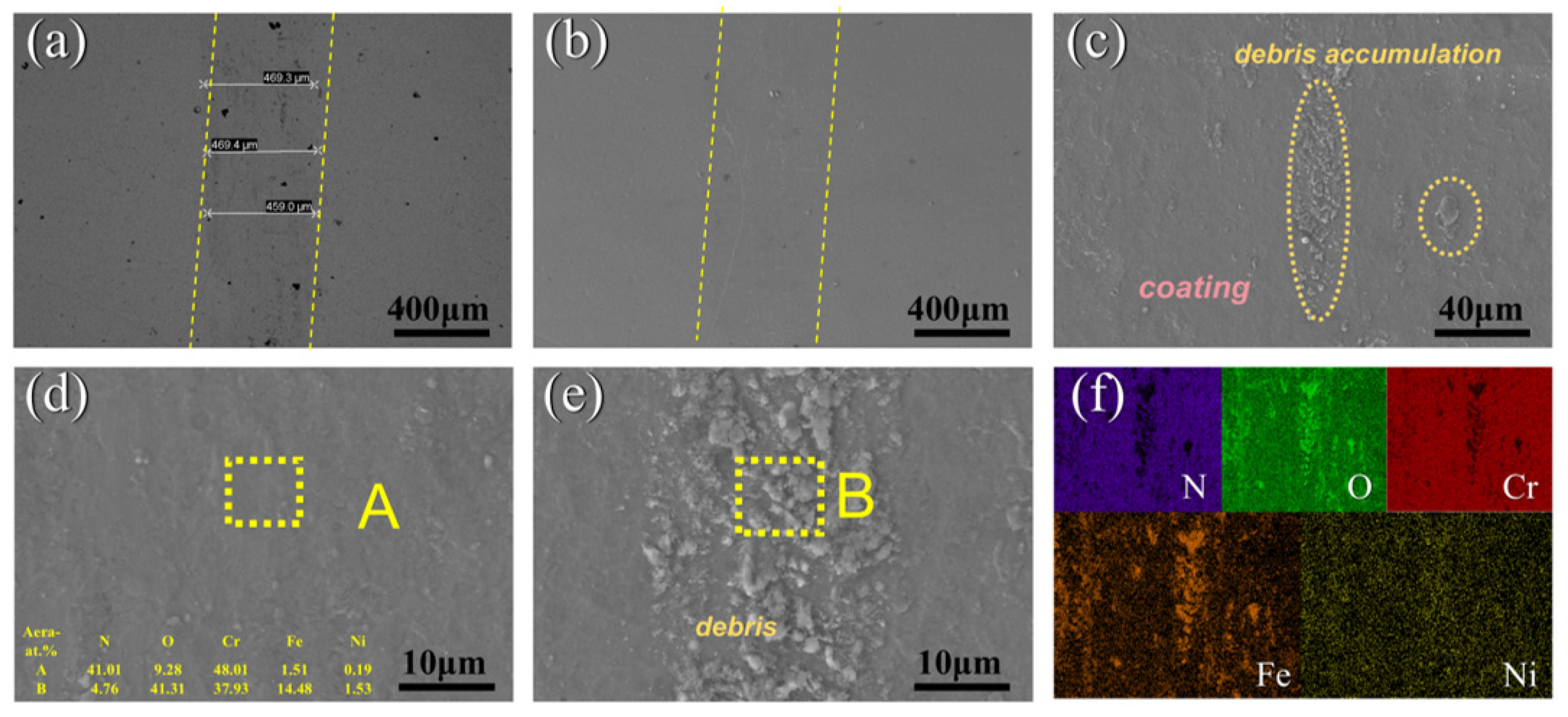
Figure 16 presents the wear morphology and EDS results of the CrN/Cr multilayer coating sliding against 304 stainless steel. The wear-track width is only 459.0–469.4 μm, substantially narrower than those of the CrN (~550 μm) and Cr (~1.05 mm) monolayers, indicating the superior wear resistance of the multilayer architecture. The worn surface remains relatively smooth and continuous, with only slight grooves and localized debris accumulation, while no pronounced delamination, deep ploughing, or through-thickness cracking is observed. EDS analysis confirms that the worn surface is predominantly retained by the CrN layer, with region A exhibiting high Cr and N contents (48.01 and 41.01 at.%, respectively) and a low Fe content (1.51 at.%), whereas the locally damaged region B shows increased O and Fe contents due to debris accumulation, material transfer, and tribo-oxidation. Nevertheless, the relatively high Cr content (37.93 at.%) and limited Fe enrichment (14.48 at.%) indicate that the coating remains largely intact without extensive substrate exposure. Elemental mapping further confirms the continuous distribution of Cr and N and the localized enrichment of O and Fe. Overall, the wear mechanism is dominated by adhesive wear accompanied by localized tribo-oxidation and the formation of a compacted tribo-transfer oxide film. Compared with the monolayer coatings, the alternating CrN/Cr architecture effectively enhances load-bearing capacity, suppresses coating delamination and damage propagation, and confines wear to the near-surface region, thereby providing improved wear resistance and structural stability.
Figure 16.
SEM images of wear tracks from CrN/Cr multilayer and stainless steel sliding (a) BSD, (b) SE, (c–e) Local magnification and selected area EDS; (f) Elemental surface scan.
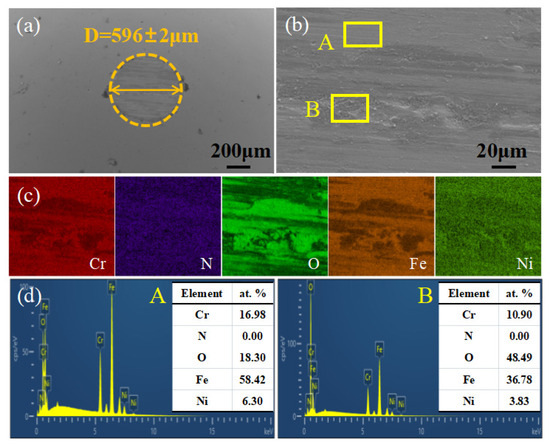
As shown in Figure 17, after sliding against the CrN/Cr multilayer coating, the 304 stainless-steel counterpart exhibited a wear scar with a diameter of approximately 596 ± 2 μm, substantially smaller than that produced against the CrN coating (~819 ± 5 μm). The worn surface remained relatively smooth, with shallow grooves predominantly aligned along the sliding direction and limited debris accumulation, demonstrating suppressed counterpart wear and interfacial material transfer. EDS analysis revealed that region A was Fe-rich (58.42 at.%) with a relatively low O content (18.30 at.%), indicative of mild tribo-oxidation, whereas the debris-rich region B exhibited markedly higher O (48.49 at.%) and Fe (36.78 at.%) contents, characteristic of localized debris accumulation and oxidation. No N was detected in either region, suggesting the absence of a continuous CrN-derived transfer film on the counterpart surface. The detected Cr primarily originated from the intrinsic Cr content of the 304 stainless steel, although limited transfer of Cr-containing debris from the CrN/Cr multilayer cannot be excluded. Overall, the reduced wear-scar size and localized oxidation demonstrate that the CrN/Cr multilayer effectively suppresses interfacial material transfer and counterpart damage. The generated wear debris was subsequently subjected to repeated mechanical compaction and oxidation within the contact interface, acting as third-body particles and contributing to a combined mild adhesive and tribo-oxidative wear mechanism.
Figure 17.
(a,b) SEM images of worn scars on 304 stainless steel counterpart balls after sliding against CrN/Cr multilayer, (c) elemental surface scan image of b; (d) selected area EDS of regions A and B.
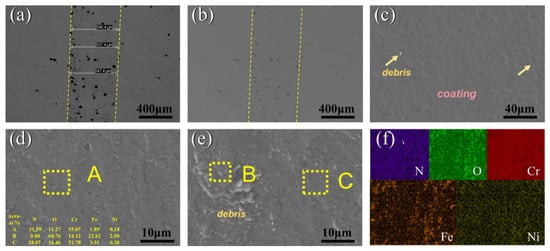
Figure 18 shows the wear morphology and EDS results of the gradient CrN coating against 304 stainless steel. The wear-track width is 537.4–547.4 μm, with a smooth, uniform, and continuous worn surface and no pronounced deep grooves, cracking, or extensive delamination, indicating stable and mild wear. EDS analysis shows that regions A and C retain high Cr and N contents with limited Fe enrichment, confirming that the CrN protective layer remains largely intact, whereas the locally debris-rich region B exhibits pronounced O and Fe enrichment, indicating localized tribo-oxidation and material transfer. Elemental mapping further demonstrates the continuous distribution of Cr and N and the absence of extensive Fe enrichment, confirming that coating breakthrough and substrate exposure are effectively suppressed. Overall, the wear mechanism is dominated by mild adhesive wear accompanied by localized tribo-oxidation. Compared with the Cr, CrN, and CrN/Cr coatings, the gradient CrN coating exhibits a more uniform wear response and reduced localized damage, which can be attributed to the gradual compositional and microstructural transition from metallic Cr to ceramic CrN [29,30,31]. This gradient architecture promotes progressive stress transfer and mitigates interfacial stress concentration, thereby suppressing crack initiation and damage propagation while maintaining the high hardness and wear resistance of the CrN surface layer. Consequently, the gradient CrN coating achieves enhanced structural integrity and wear stability, demonstrating a favorable combination of mechanical robustness and tribological performance [32].
Figure 18.
SEM images of wear tracks of CrN gradient coatings against stainless steel: (a) BSD, (b) SE, (c–e) Local magnification and selected area EDS; (f) Elemental surface scan.
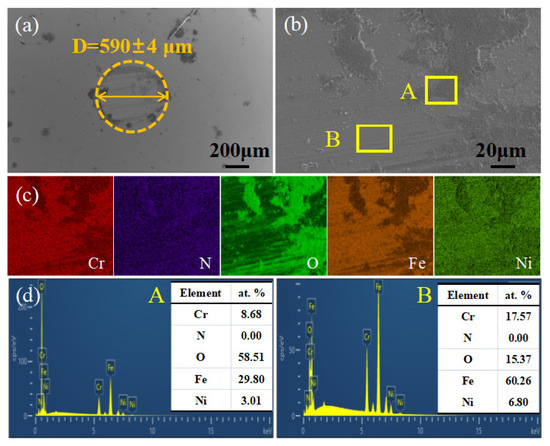
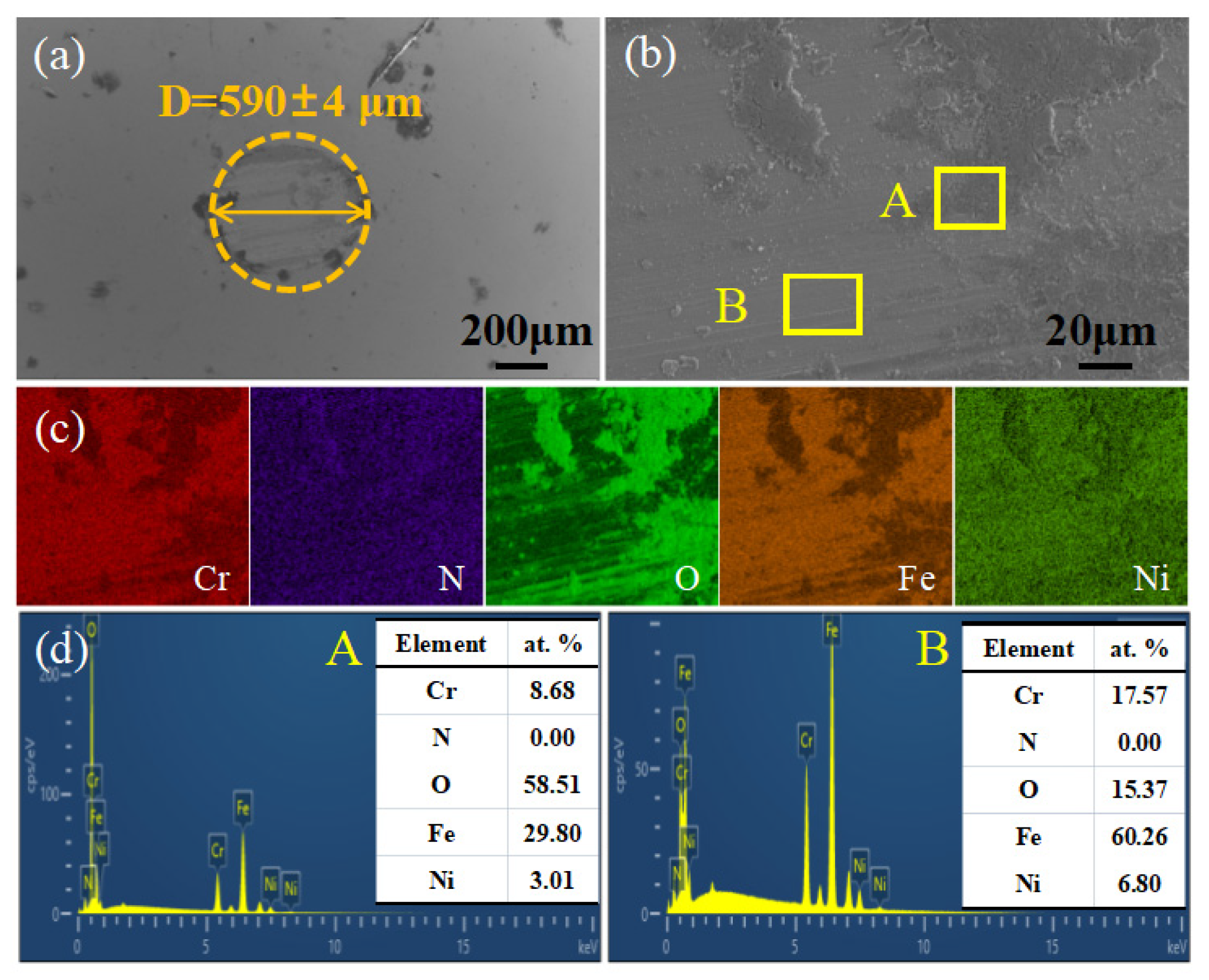
After sliding against the gradient CrN coating, the 304 stainless-steel counterpart exhibited a relatively small wear scar with a diameter of approximately 590 ± 4 μm shown in Figure 19, comparable to that obtained against the CrN/Cr multilayer (~596 ± 2 μm). The worn surface remained relatively smooth, with shallow grooves predominantly oriented along the sliding direction and limited debris accumulation, indicating suppressed counterpart wear and material transfer. EDS analysis revealed a pronounced compositional difference between regions A and B. Region A exhibited a high O content of 58.51 at.% together with 29.80 at.% Fe, characteristic of localized tribo-oxidation and accumulation of oxidized wear debris, whereas region B remained Fe-rich (60.26 at.%) with a relatively low O content of 15.37 at.%, indicating limited surface oxidation. No N was detected in either region, suggesting that no continuous CrN-derived transfer film was formed on the counterpart surface. The Cr detected in the worn regions may primarily originate from the intrinsic Cr content of the 304 stainless steel, although limited transfer of Cr-containing debris from the gradient CrN coating cannot be excluded. The pronounced spatial variation in O content further demonstrates that tribo-oxidation was highly localized rather than uniformly distributed across the wear scar. Combined with the wear-track characteristics of the gradient CrN coating, these results indicate a mild adhesive wear process involving limited material transfer, localized tribo-oxidation, and subsequent compaction of oxidized debris, which acts as a third body within the contact interface. The relatively small and uniform wear scar further confirms the effective regulation of interfacial damage by the gradient architecture [33,34,35,36,37,38].
Figure 19.
(a,b) SEM images of worn scars on 304 stainless steel counterpart balls after sliding against CrN gradient coating r; (c) Elemental surface scan image of b, (d) selected area EDS of regions A and B.
3.3. Wear Mechanism
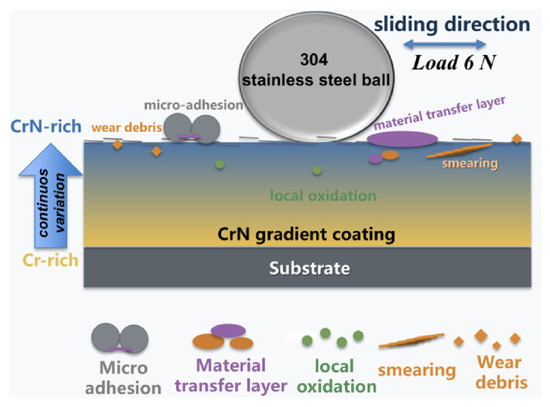
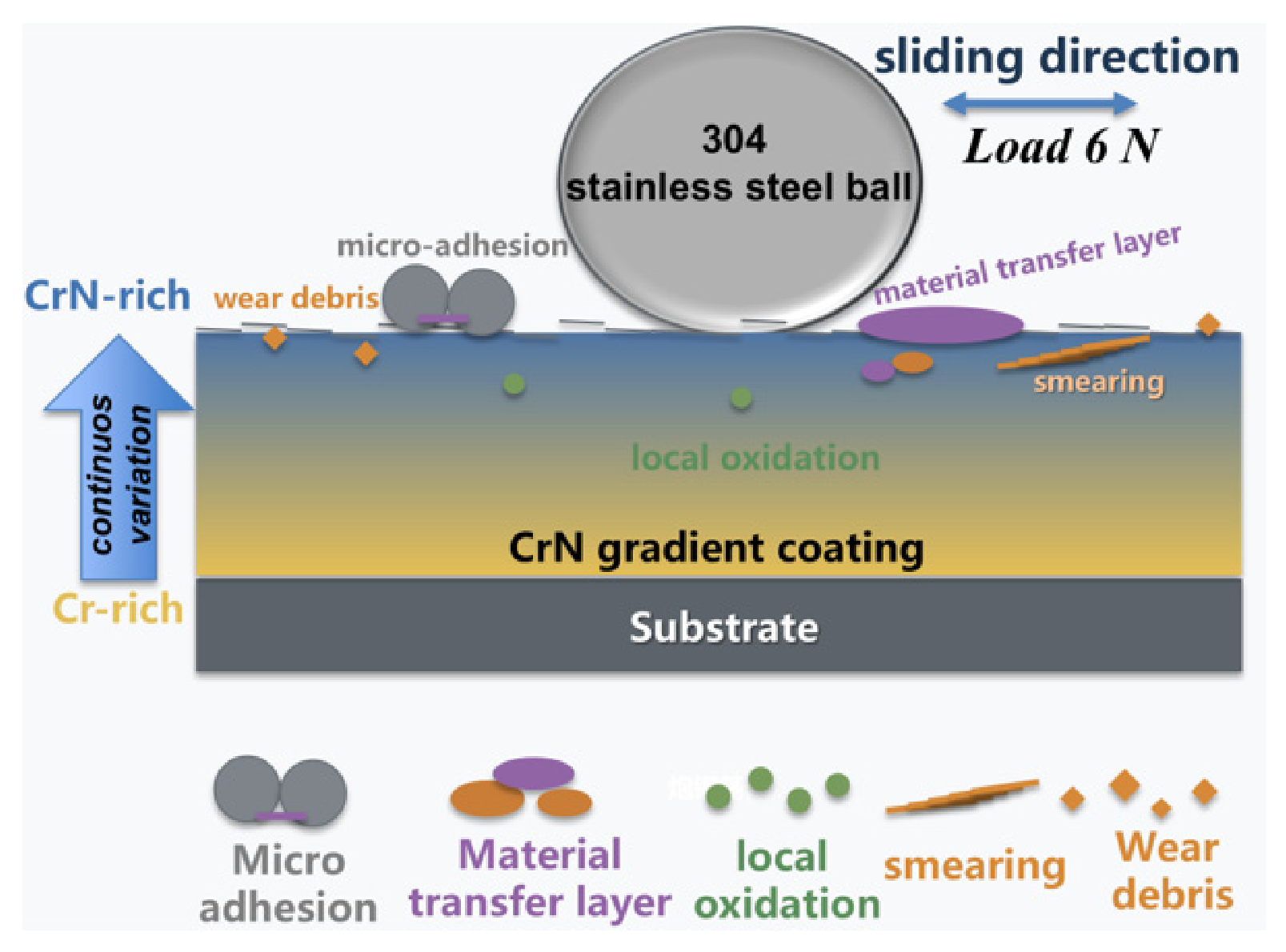
A comprehensive analysis of the friction coefficient, wear rate, three-dimensional wear-track profiles, and SEM/EDS results indicates that the gradient architecture endows the CrN coating with excellent interfacial stress-tolerance capability, exhibiting limited material removal under both sliding conditions, with wear predominantly confined to the near-surface region and no extensive delamination. Under the 304 stainless-steel counterpart condition, the wear track remains relatively shallow and smooth, characterized mainly by mild surface smearing, localized material transfer, and a small amount of wear debris, without pronounced grooves or large-area spallation. The localized detection of Fe and O, together with the retention of Cr and N from the coating, suggests that the dominant wear processes involve limited transfer of counterpart material and localized tribo-oxidation. During sliding, asperities on the 304 stainless-steel surface are subjected to high local contact stresses, promoting interfacial adhesion followed by shear-induced material transfer. The transferred metallic debris and detached wear particles may subsequently act as third bodies within the contact interface, contributing to repeated micro-ploughing and surface polishing [35,36]. Therefore, the wear of the gradient CrN coating against 304 stainless steel can be primarily attributed to mild adhesive wear and material transfer, accompanied by surface smearing, localized tribo-oxidation, and limited third-body abrasion. Benefiting from the continuous compositional transition from Cr-rich inner layer to CrN-rich outer layer, the gradient structure effectively mitigates abrupt stress discontinuity at the coating-substrate interface, restrains crack propagation, and avoids large-scale coating spallation even under cyclic frictional loading. A schematic illustration of this wear mechanism is shown in Figure 20, showing the asperity-induced adhesion and material transfer, formation and compaction of wear debris, localized oxidation, and the critical protective effect of gradient compositional design on suppressing crack initiation and large-scale coating delamination.
Figure 20.
Schematic representation of the wear mechanism diagram for the gradient CrN coating.
4. Conclusions
A comparative analysis demonstrates that the tribological performance of the Cr-based coatings is strongly dependent on their architectural design. Relative to the Cr monolayer, the CrN and CrN/Cr multilayer exhibited progressively enhanced wear resistance, whereas the gradient CrN coating delivered the most stable, uniform, and damage-tolerant wear response, with damage predominantly confined to the near-surface region. Its wear was characterized primarily by mild adhesive wear, accompanied by localized tribo-oxidation, limited material transfer, and third-body interactions, without significant delamination or substrate exposure. The superior wear resistance of gradient CrN is attributed to its continuous compositional and microstructural transition from metallic Cr to ceramic CrN, which facilitates gradual load transfer and stress redistribution throughout the coating, thereby alleviating local stress concentrations and suppressing crack initiation and damage propagation. Overall, the gradient architecture effectively integrates high surface wear resistance with enhanced structural integrity and damage tolerance, establishing a clear structure–tribological performance relationship for Cr-based coatings and highlighting continuous compositional grading as an effective strategy for regulating load transfer and wear-induced damage. Future research should further investigate the tribological behavior of Cr-based coatings against different counterbody materials and under elevated-temperature sliding conditions to clarify their wear mechanisms and damage evolution under more complex service environments.
Supplementary Materials
The following supporting information can be downloaded at: https://www.mdpi.com/article/10.3390/met16101118/s1, Figure S1: Quasi-PRISMA flowchart for literature search and screening.
Author Contributions
Conceptualization, G.W., H.Y. and C.G.; Investigation, M.D., X.Y., Y.Z. and X.C.; Resources, Q.X., X.C., Y.J. and C.G.; Data curation, G.W., M.D., X.Y. and Y.Z.; Writing – original draft, G.W., H.Y., Q.X., L.Z. and M.D.; Writing – review & editing, Q.X., L.Z., H.S. and Y.J.; Project administration, H.S., X.C., Y.J. and C.G. All authors have read and agreed to the published version of the manuscript.
Funding
This work was supported by the Basic Research Project of the Education Department of Liaoning Province (LJ222610144001), Advanced Materials-National Science and Technology Major of the Joint Science and Technology Program of Liaoning Province (2025JH2/101800434).
Data Availability Statement
The original contributions presented in this study are included in the article. Further inquiries can be directed to the corresponding authors.
Acknowledgments
The authors gratefully acknowledge the technical support provided by Shenyang Lebuy Vacuum Technology Co., Ltd., Shenyang, China, for the use of the cathodic arc ion plating equipment.
Conflicts of Interest
Qiang Xu was employed by the company No. 208 Research Institute of China Ordnance Industries. Luxin Zhang was employed by the company Shenyang Lebuy Vacuum Technology Co., Ltd. Haicheng Shi was employed by the company Liao Shen Industries Group Co., Ltd. The remaining authors declare that the research was conducted in the absence of any commercial or financial relationships that could be construed as a potential conflict of interest.
References
- Yang, J.; Wang, G.; Yan, H.; Wang, Z.; Guo, C.; Zhang, J. Load influence on the friction and wear behavior of arc ion plated Cr coatings. Mater. Technol. 2025, 59, 415–422. [Google Scholar] [CrossRef] [Scilit]
- Yang, Z.; Yu, T.; Hu, S.; Feng, Y.; Zhao, Y.; Chen, Y. Structural evolution, wear and corrosion failure mechanisms of CrN coating synthesized by applying gradient voltage and arc-enhanced glow discharge. Mater. Today Commun. 2024, 40, 109361. [Google Scholar] [CrossRef] [Scilit]
- Qi, Y.; Liang, W.; Miao, Q.; Yi, J.; Lin, H.; Liu, Y.; Ma, H. Role of the nitrogen ratio on mechanical properties and wear resistance of CrN/Fe functionally graded coating produced by double glow plasma alloying. Appl. Surf. Sci. 2022, 585, 152735. [Google Scholar] [CrossRef] [Scilit]
- Qi, Y.; Liang, W.; Miao, Q.; Lin, H.; Yi, J.; Gao, X.; Song, Y. Characterization of a CrN/Cr gradient coating deposited on carbon steel and synergistic erosion-corrosion behavior in liquid-solid flow impingement. Ceram. Int. 2023, 49, 33925–33933. [Google Scholar] [CrossRef] [Scilit]
- Bai, X.; Bai, Y.; Li, J.; Gao, J.; Jian, J.; Chen, H.; Zhao, L.; Bai, B.; He, J.; Leng, X.; et al. Tribological and mechanical properties of structure-modulated CrXN coatings fabricated by HiPIMS. Surf. Coat. Technol. 2025, 496, 131646. [Google Scholar] [CrossRef] [Scilit]
- Fan, Q.; Zhang, S.; Lin, J.; Cao, F.; Liu, Y.; Xue, R.; Wang, T. Microstructure, mechanical and tribological properties of gradient CrAlSiN coatings deposited by magnetron sputtering and arc ion plating technology. Thin Solid Films 2022, 760, 139490. [Google Scholar] [CrossRef] [Scilit]
- Poorzal, P.; Elmkhah, H.; Mazaheri, Y. Correlation between nanoindentation response and wear characteristics of CrN-based coatings deposited by an Arc-PVD method. Int. J. Appl. Ceram. Technol. 2022, 19, 2598–2612. [Google Scholar] [CrossRef] [Scilit]
- Nyman, J.; Greczynski, G.; Junaid, M.; Sarius, N.; Kahl, S.; Birch, J.; Högberg, H. Composition, structure, and mechanical properties of cathodic arc deposited Cr-rich Cr-N coatings. J. Vac. Sci. Technol. A 2023, 41, 023105. [Google Scholar] [CrossRef] [Scilit]
- Tan, D.Q.; Yang, X.Q.; He, Q.; Mo, J.L.; Zhuang, W.H.; He, J.F. Impact-sliding wear properties of PVD CrN and WC/C coatings. Surf. Eng. 2021, 37, 12–23. [Google Scholar] [CrossRef] [Scilit]
- Xu, Y.; Luo, Y.; Huang, Z. Wear mechanism and life map construction of nitride coatings on different substrates. Coatings 2022, 12, 1082. [Google Scholar] [CrossRef] [Scilit]
- Sert, Y.; Küçükömeroğlu, T.; Asl, H.G.; Göz, O. The effect of Al and Ti transition metals on the wear resistance of ceramic based CrN coatings; investigation under ambient air and vacuum conditions. Proc. Inst. Mech. Eng. Part L J. Mater. Des. Appl. 2022, 236, 455–472. [Google Scholar] [CrossRef] [Scilit]
- Jasempoor, A.; Elmkhah, H.; Imantalab, O.; Fattah-Alhosseini, A. Comparison of electrochemical behavior of CrN single-layer coating and Cr/CrN nanolayered coating produced by cathodic arc evaporation physical vapor deposition. Int. J. Appl. Ceram. Technol. 2022, 19, 2222–2235. [Google Scholar] [CrossRef] [Scilit]
- Lotfi-Khojasteh, E.; Elmkhah, H.; Nouri, M.; Imantalab, O.; Fattah-Alhosseini, A. The post-annealing effect on tribological and corrosion behaviors of CrN/AlCrN multilayered coating applied by CAE-PVD. Int. J. Appl. Ceram. Technol. 2023, 20, 2874–2887. [Google Scholar] [CrossRef] [Scilit]
- Arab Baseri, N.; Mohammadi, M.; Ghatee, M.; Abassi-Firouzjah, M.; Elmkhah, H. The effect of duty cycle on the mechanical and electrochemical corrosion properties of multilayer CrN/CrAlN coatings produced by cathodic arc evaporation. Surf. Eng. 2021, 37, 253–262. [Google Scholar] [CrossRef] [Scilit]
- Lotfi-Khojasteh, E.; Elmkhah, H.; Imantalab, O.; Keshavarz, M.K. Investigation of corrosion and tribological characteristics of annealed CrN/CrAlN coatings deposited by CAE-PVD. Ceram. Int. 2023, 49, 3016–3029. [Google Scholar] [CrossRef] [Scilit]
- Wang, D.; Tian, T.; Lin, S.S.; Zhao, N.; Liu, H.; Liu, J.-H.; Wang, Y.; Li, L.; Li, H.-Y.; Shi, Q.; et al. Tensile mechanism of wear-resistant Cr/CrN/Cr/CrAlN multilayer film. Vacuum 2023, 207, 111405. [Google Scholar] [CrossRef] [Scilit]
- Gao, J.L.; Bai, H.D.; Li, J.; Bai, Y.; Han, L.; Ni, J.; Liu, X. Enhanced hardness and plasticity of Cr–CrN coatings with periodic gradient structures. Surf. Coat. Technol. 2025, 549, 132626. [Google Scholar] [CrossRef] [Scilit]
- Wang, L.J.; Kong, Q.Q.; Sun, Q.; Yao, M.; Xu, S.; Liu, Y.; Chen, H. Role of Cr/CrN multilayer architecture in the wear behavior of DLC-based composite coatings. J. Mater. Res. Technol. 2026, 41, 1872–1885. [Google Scholar] [CrossRef] [Scilit]
- Niu, X.; Liu, M.; Dong, G.; Wang, Y.; Tian, H. Influence of substrate bias on the properties of CrAlN wear-resistant coating prepared by arc/magnetron composite technology. Chin. J. Eng. 2025, 47, 296–306. [Google Scholar] [CrossRef]
- Maskavizan, M.; Quintana, J.P.; Dalibón, E.L.; Márquez, A.B.; Brühl, S.P.; Farina, S.B. Evaluation of wear and corrosion resistance in acidic and chloride solutions of cathodic arc PVD chromium nitride coatings on untreated and plasma nitrided AISI 4140 steel. Surf. Coat. Technol. 2024, 494, 131476. [Google Scholar] [CrossRef] [Scilit]
- Liu, L.; Shao, L.; Li, W.; Shang, L.; Zhang, C.; Song, Q. Improving the tribological behavior of CrN film by PVD/HVOF design. Surf. Coat. Technol. 2023, 475, 130171. [Google Scholar] [CrossRef] [Scilit]
- Kong, J.-Z.; Zhai, Q.-W.; Shen, J.-J.; Sun, X.-Y.; Cao, Y.-Q.; Xuan, Y.; Li, A.-D.; Wang, Q.-Z.; Zhou, F. Role of atomic layer deposited TiOxNy interlayer in tribological and corrosion properties of CrN coating. Surf. Coat. Technol. 2022, 429, 127981. [Google Scholar] [CrossRef] [Scilit]
- Kong, D.J.; Fu, G.Z.; Zhang, L.; Wang, W. Friction and wear properties of AlCrN coating by cathodic arc ion plating. Rare Met. 2021, 40, 1300–1306. [Google Scholar] [CrossRef] [Scilit]
- Bouamerene, M.S.; Atmani, T.D.; Aissani, L.; Nouveau, C.; Belgroune, A.; Aknouche, H. Optimizing CrAlN coatings: Effects of deposition temperature on mechanical, tribological, and wettability properties. Mater. Today Commun. 2025, 42, 111347. [Google Scholar] [CrossRef] [Scilit]
- Xu, X.; Ma, G.; Shi, J.; Su, F. Amorphous CrN/CrAlN multilayer coating: Tailored interface design for enhanced corrosion and wear resistance in marine engineering environments. Corros. Sci. 2026, 262, 113684. [Google Scholar] [CrossRef] [Scilit]
- Muktanova, N.; Rakhadilov, B.; Naimankumaruly, E.; Kalitova, A. Structural and Phase Characteristics and Properties of Multilayer Cr/CrN Coatings Obtained by Magnetron Sputtering. Coatings 2025, 15, 1375. [Google Scholar] [CrossRef] [Scilit]
- Jokar, K.; Elmkhan, H.; Fallah-Lalehzari, A.; Fattah-alhosseini, A. Impact of duplex plasma nitriding and AlCrN coating on mechanical, tribological, and corrosion properties of H13 tool steel. J. Mater. Res. Technol. 2026, 41, 1804–1813. [Google Scholar] [CrossRef] [Scilit]
- Zhang, Y.B.; Hu, H.Y.; Ma, X.D.; Chao, L.; Fu, Z.; Zeng, Z.; Yang, B. Research on the effect of argon–nitrogen ratio on the mechanical properties and corrosion behavior of CrN-Ag self-lubricating coatings. Coatings 2025, 15, 1107. [Google Scholar] [CrossRef] [Scilit]
- Yang, J.Z.; Li, L.; Zhang, M.; Zhou, S.-l.; Zhan, Q.-q.; Huang, A.-w.; Chen, H.-b.; Li, Z.-s.; Yang, L.-j. Effects of ion nitriding on tribological performance of CrN coating by multi-arc ion plating. Surf. Technol. 2022, 51, 262–270. [Google Scholar] [CrossRef]
- Li, Y.; Guo, Q.; Qi, C.; Zhang, D.; Sun, H.; Wan, Y. Current-carrying friction behavior of CrN coatings under the influence of DC electric current discharge. Surf. Coat. Technol. 2024, 494, 131356. [Google Scholar] [CrossRef] [Scilit]
- Liu, L.; Peng, J.; He, Z.; Xu, Z.; Li, W.; Wang, C. A novel fabrication strategy of single-phase and dense CrN ceramics and its tribological behavior. Ceram. Int. 2024, 50, 25613–25620. [Google Scholar] [CrossRef] [Scilit]
- Wang, X.; Wang, Q.; Zhou, F.; Kong, J.; Zhou, Z. The improved mechanical and tribological properties of CrN coatings sealed via electrochemical polarization treatment. Tribol. Int. 2024, 198, 109892. [Google Scholar] [CrossRef] [Scilit]
- Tian, F.; Duan, H.; Pan, L.; Xu, X.; Qin, J.; Wei, Q.; Luo, G. Microstructural, frictional, and wear properties of CrN/TiAlN multilayer coatings. China Surf. Eng. 2024, 37, 232–241. [Google Scholar] [CrossRef]
- Wang, D.; Lin, S.-S.; Lu, J.-D.; Huang, S.-Q.; Yin, Z.-F.; Yang, H.-Z.; Bian, P.-Y.; Zhang, Y.-L.; Dai, M.-J.; Zhou, K.-S. Research on high temperature wear resistance mechanism of CrN/CrAlN multilayer coatings. Tribol. Int. 2023, 180, 108184. [Google Scholar] [CrossRef] [Scilit]
- Li, M.; Yu, Y.; Zou, C.; Tian, C.; Wang, Z.; Xiang, Y. Wear and corrosion resistance of CrYN coating in artificial seawater. Metals 2023, 13, 183. [Google Scholar] [CrossRef] [Scilit]
- Zhang, S.; Yang, X.; Huang, T.; Guo, F.; Dai, L.; Liu, Y.; Zhang, B. Tribological properties of CrN/DLC and CrN coatings under different testing conditions. Coatings 2024, 14, 1002. [Google Scholar] [CrossRef] [Scilit]
- Hwang, Y.H.; Seo, K.J.; Kim, T.H.; Min, Y.J.; Liu, Y.; Kim, D.-E. Tribological behavior of TiN, AlTiN, and AlTiCrN coatings in atmospheric and vacuum environments. Friction 2024, 12, 2611–2626. [Google Scholar] [CrossRef] [Scilit]
- Li, M.; Yu, Y.; Zou, C.; Tian, C.; Xiang, Y. Tribological and corrosion performance of CrAlN/CrN coatings in artificial seawater under varied nitrogen pressures. Coatings 2023, 13, 2090. [Google Scholar] [CrossRef] [Scilit]

Disclaimer/Publisher’s Note: The statements, opinions and data contained in all publications are solely those of the individual author(s) and contributor(s) and not of MDPI and/or the editor(s). MDPI and/or the editor(s) disclaim responsibility for any injury to people or property resulting from any ideas, methods, instructions or products referred to in the content. |
© 2026 by the authors. Licensee MDPI, Basel, Switzerland. This article is an open access article distributed under the terms and conditions of the Creative Commons Attribution (CC BY) license.