


Abstract
Selective zinc recovery from pregnant leach solutions obtained by sulfuric acid leaching of oxidized zinc ores is an important task in hydrometallurgy. This study comparatively evaluated zinc sulfide precipitation using gaseous H2S and Na2S solution and investigated the effects of pH and temperature on zinc recovery and precipitate characteristics. The thermodynamic feasibility of ZnS formation was assessed using Eh–pH diagrams of the Zn–S–H2O system at 25, 40, and 60 °C. The diagrams showed a ZnS stability region throughout the investigated temperature range. Using gaseous H2S at a final pH of 1.25 and 25 °C resulted in 96.8% zinc precipitation, a residual Zn concentration of 1.0 g/L, and a precipitate containing 57.2 wt.% Zn, corresponding to a calculated ZnS content of 85.3 wt.%. Using 20 wt.% Na2S at pH 2.25–2.30 and 50–60 °C resulted in 98.1% zinc precipitation, a residual Zn concentration of 0.028 g/L, and a precipitate containing 49.8 wt.% Zn, corresponding to a calculated ZnS content of 74.2 wt.%. Na2S provided more complete zinc recovery, whereas H2S produced a higher-grade sulfide precipitate with better filtration properties. These results provide a basis for selecting the sulfidizing reagent and operating conditions for zinc recovery from oxidized zinc ore leach solutions.
1. Introduction
The sustainable development of zinc production increasingly depends on expanding the available raw material base, improving the utilization of mineral resources, and developing environmentally sustainable technologies for the treatment of refractory ores [1,2]. Global zinc production currently relies predominantly on sulfide concentrates derived from high-grade sulfide deposits [3,4]. However, the progressive depletion of high-grade reserves, declining metal grades in mined ores, and increasingly stringent environmental regulations have intensified the search for alternative zinc resources [1,3,4]. In this context, oxidized zinc ores have attracted considerable attention because substantial deposits of these ores occur in many regions worldwide [2,3,4,5]. Despite their significant resource potential, oxidized zinc ores remain underutilized on an industrial scale due to their complex mineralogical composition, fine mineral intergrowths, and the limited efficiency of conventional beneficiation processes [3,4,5,6]. Consequently, the development of efficient hydrometallurgical technologies for the processing of oxidized zinc ores represents a promising direction in modern extractive metallurgy, offering opportunities for more comprehensive utilization of mineral resources, enhanced zinc recovery, and reduced environmental impacts associated with metallurgical processing [1,2,4,7].
In recent years, research on the hydrometallurgical processing of oxidized zinc ores has increasingly focused on the development of integrated process flowsheets combining efficient leaching, purification of pregnant leach solutions from accompanying impurities, and subsequent selective recovery of zinc [7,8,9]. Hydrometallurgical methods enable the treatment of low-grade and refractory zinc-bearing materials while achieving high zinc recoveries and reducing the environmental impact compared with conventional pyrometallurgical processes [7,8,10,11]. Accordingly, considerable attention has been devoted to improving leaching, pregnant leach solution purification, and subsequent zinc recovery, as the efficiency of each individual stage has a substantial influence on the overall performance of the hydrometallurgical process [8,9,12].
Oxidized zinc ores are characterized by complex mineralogical compositions and a wide variety of zinc-bearing minerals, which significantly complicate their processing [3,5,13,14]. Unlike sulfide ores, in which zinc occurs predominantly as sphalerite (ZnS), oxidized ores contain zinc in the form of carbonates, silicates, oxides, and hydroxides, with smithsonite (ZnCO3), hemimorphite (Zn4Si2O7(OH)2·H2O), willemite (Zn2SiO4), hydrozincite (Zn5(CO3)2(OH)6), and zincite (ZnO) being among the most common zinc-bearing minerals [3,13,14]. In addition, zinc-bearing minerals are often closely intergrown with gangue minerals, including quartz, calcite, dolomite, clay minerals, and iron- and manganese-bearing phases [3,4,5,6]. Such complex mineralogical characteristics substantially reduce the efficiency of conventional mineral beneficiation methods and necessitate the application of hydrometallurgical processes to achieve more complete zinc recovery [3,4,5,14].
The mineralogical characteristics of oxidized zinc ores also have a significant influence on zinc dissolution kinetics and reagent consumption during leaching [13,14,15]. The presence of carbonate minerals is associated with increased sulfuric acid consumption due to neutralization reactions, whereas zinc silicate minerals, particularly hemimorphite and willemite, exhibit more complex behavior during acid leaching and may limit zinc extraction efficiency [13,14,15,16]. Additional challenges arise from iron-, calcium-, magnesium-, and manganese-bearing phases, which may dissolve along with zinc, thereby reducing process selectivity and complicating the subsequent purification of pregnant leach solutions [8,12,17]. Therefore, the efficiency of oxidized zinc ore processing is determined not only by the extent of zinc extraction during leaching but also by the ability to selectively recover zinc from multicomponent solutions in subsequent processing stages [8,12,17,18].
A wide range of hydrometallurgical methods has been proposed for the processing of oxidized zinc ores, including sulfuric acid, ammonia, ammonia–chloride, alkaline, and organic acid leaching [14,19,20,21,22]. The choice of leaching agent is determined by the mineralogical composition of the ore, the content of associated components, process selectivity requirements, and economic considerations [9,14,19,20,21,22]. Among the various hydrometallurgical approaches, sulfuric acid leaching is one of the most widely applied methods due to the high dissolution capacity of sulfuric acid for most oxidized zinc minerals, its availability, and the possibility of integrating the process with subsequent stages of hydrometallurgical zinc recovery [2,4,10,15,16,23].
Sulfuric acid leaching is particularly effective for readily acid-soluble carbonate and oxide zinc minerals, such as smithsonite and zincite, while zinc silicates, including hemimorphite and willemite, can also be effectively leached under appropriately selected conditions [2,4,13,15,16,23,24,25]. However, silicate-rich ores may present difficulties associated with silica dissolution and gel formation, whereas carbonate-rich gangue, particularly calcite and dolomite, can substantially increase sulfuric acid consumption through neutralization reactions [8,10,16,23].
Under specific mineralogical conditions, alternative leaching systems may offer advantages over sulfuric acid leaching. Ammoniacal and chloride-containing systems, particularly NH3–NH4Cl media, can be effective for low-grade oxidized zinc ores, including those containing zinc silicates such as hemimorphite and willemite, due to the formation of soluble zinc complexes and improved process selectivity [19,22,26]. Alkaline NaOH leaching may be advantageous for ores containing acid-consuming carbonate gangue or silica-bearing zinc minerals, particularly when sulfuric acid leaching is limited by high acid consumption or silica-gel formation [21]. Organic acids provide a milder alternative for reactive zinc oxide phases; in particular, citric acid has been shown to effectively dissolve ZnO [20]. Thus, the selection of the leaching system should be based primarily on the dominant zinc-bearing minerals and gangue composition, taking into account zinc extraction, reagent consumption, and process selectivity.
In recent years, considerable attention has been devoted to improving sulfuric acid leaching processes through the application of countercurrent and multistage flowsheets, which can enhance zinc extraction, reduce sulfuric acid consumption, and produce pregnant leach solutions with higher metal concentrations.
In previous studies, the authors developed a countercurrent sulfuric acid leaching technology for oxidized zinc ores, providing high zinc extraction while minimizing reagent consumption. The main results of these studies have been reported previously, and the developed method for processing oxidized zinc ore is protected by a patent [4,27].
Despite the results achieved, the production of a pregnant leach solution with a high zinc concentration represents only an intermediate stage in the integrated hydrometallurgical processing of oxidized zinc ores [8,14]. Subsequent purification and zinc recovery are required to obtain a product suitable for further processing or use in metallurgical production [8,14,18]. The efficiency of these stages affects the overall zinc recovery, product quality, and the potential for further utilization or recycling of purified process solutions [8,12,18]. In this context, sulfide precipitation is of particular interest as a method for zinc recovery from pregnant leach solutions, with the aim of achieving high metal recovery, process selectivity, and the formation of precipitates suitable for further processing.
The selection of a zinc recovery and purification method from pregnant leach solutions is primarily governed by Zn concentration and by the type and concentration of major impurities. Chemical precipitation can be used for direct Zn recovery when Zn is present at a concentration sufficient for the selective formation of a sparingly soluble zinc compound, while elevated levels of co-precipitating impurities, such as Fe, Mn, and Al, may affect the purity of the resulting product. Solvent extraction is suitable when selective separation and concentration of Zn from solutions containing significant levels of interfering metals, such as Fe and Mn, are required [8,14,18,28]. Cementation is mainly used to remove impurities such as Cu, Cd, Co, and Ni when their concentrations must be reduced prior to subsequent Zn recovery [29], whereas ion exchange is particularly applicable to dilute Zn-bearing solutions or when selective separation of Zn from other dissolved ions is required [30]. Electrowinning requires an adequately concentrated and purified Zn-bearing electrolyte; therefore, low Zn concentrations or elevated residual impurity levels may necessitate prior concentration and/or purification [8,14,18].
Among the methods used for metal recovery from aqueous solutions, chemical precipitation is of considerable interest due to its relative process simplicity and applicability to solutions of varying composition [18,31,32]. Depending on the reagent used and the process conditions, zinc can be precipitated as hydroxide, carbonate, sulfide, or other sparingly soluble compounds [14,31]. Sulfide precipitation is of particular interest because the low solubility of ZnS enables high zinc recovery, including from solutions with relatively low metal concentrations [31,32].
Hydrogen sulfide, sodium sulfide, sodium hydrosulfide, and other compounds capable of providing sulfide species in aqueous solutions are commonly used as sulfidizing agents for metal precipitation [31,32,33]. The efficiency of sulfide precipitation is governed by several process parameters, among which pH, sulfidizing reagent concentration, temperature, process duration, mixing intensity, and the composition of the initial solution play important roles [31,32,33,34]. Variations in precipitation conditions significantly affect zinc recovery, as well as the formation, growth, and aggregation of sulfide particles and, consequently, the properties of the resulting precipitate [31,33,34].
Despite the considerable number of studies devoted to metal sulfide precipitation, the selection of an effective sulfidizing agent and the optimization of conditions for zinc precipitation from pregnant leach solutions obtained during the processing of oxidized zinc ores remain insufficiently investigated. A substantial proportion of the published studies have focused on the application of sulfide precipitation to the treatment of industrial wastewater and various process-derived solutions, whereas the precipitation of zinc from pregnant leach solutions generated by sulfuric acid leaching of oxidized zinc ores has received limited attention in the literature. This highlights the need for comparative studies of different sulfidizing agents and for establishing process conditions that enable efficient zinc recovery from such solutions.
The aim of this study is to comparatively evaluate the efficiency of zinc precipitation using hydrogen sulfide and sodium sulfide, determine the optimal process parameters, and provide a thermodynamic interpretation of zinc sulfide formation based on Eh–pH analysis of the Zn–S–H2O system. The scientific novelty of this work lies in the comparative evaluation of H2S and Na2S for zinc recovery from the same pregnant leach solution obtained by countercurrent sulfuric acid leaching of oxidized zinc ore, combined with an assessment of the effects of precipitation conditions on zinc recovery and the characteristics of the resulting sulfide precipitates.
2. Materials and Methods
2.1. Ore Sample
A representative sample of refractory oxidized zinc ore from the Shaimerden deposit (Kostanay Region, Northern Kazakhstan) was used as the object of this study. A detailed characterization of the ore, including its chemical composition, mineralogical analysis, X-ray diffraction (XRD), and scanning electron microscopy coupled with energy-dispersive X-ray spectroscopy (SEM–EDS), has been reported in our previous studies [2,4]. Therefore, only the principal characteristics of the raw material required to describe the investigated ore are presented in this paper.
The chemical composition of the investigated ore is presented in Table 1. Zinc is the principal valuable component, with a content of 21.07 wt.%.
Table 1.
Chemical composition of the investigated ore (wt.%).
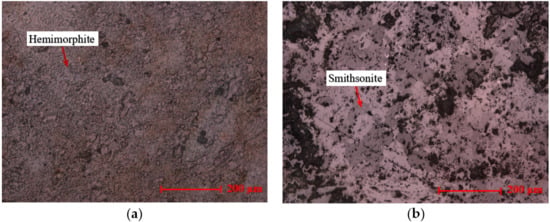
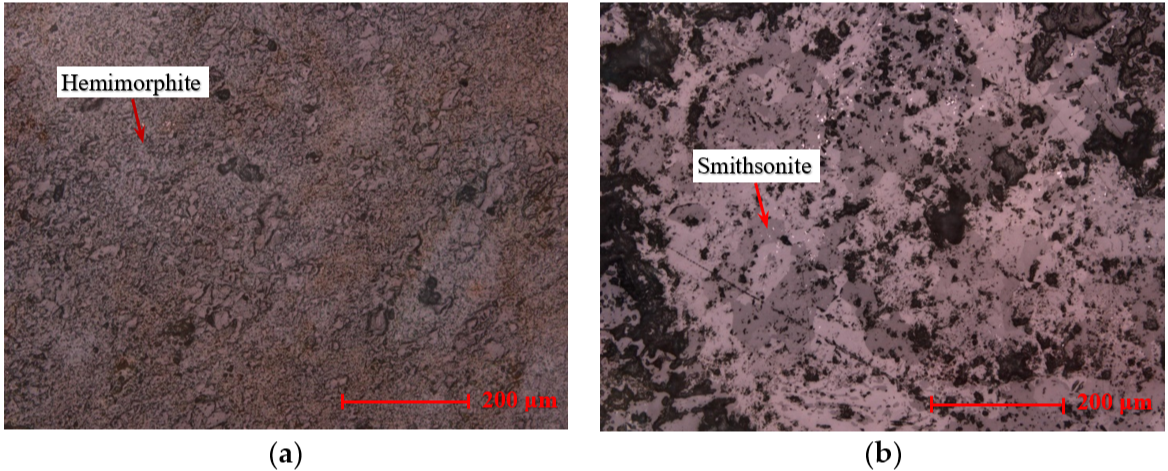
Mineralogical investigations showed that the principal zinc-bearing minerals are hemimorphite (Zn4Si2O7(OH)2·H2O) and smithsonite (ZnCO3), whereas sphalerite is present only in minor amounts. Representative polished sections of the original ore are shown in Figure 1, while a more detailed description of the mineralogical composition is provided in our previous studies [13].
Figure 1.
Representative SEM images of polished sections showing the major zinc-bearing minerals in the refractory oxidized zinc ore: (a) hemimorphite; (b) smithsonite.
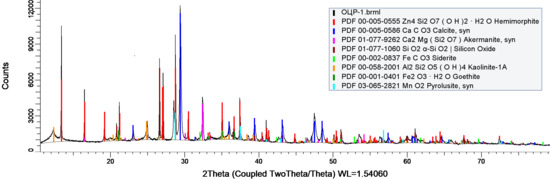
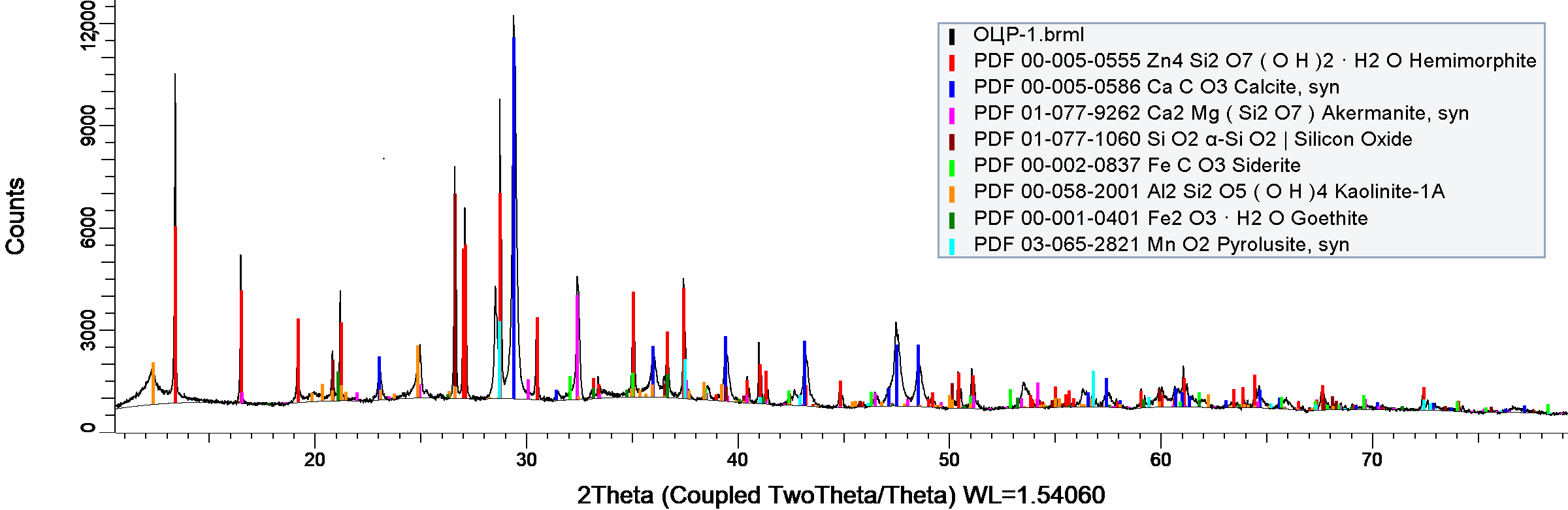
X-ray diffraction (XRD) analysis of the original ore was performed using D8 ADVANCE (Bruker, Karlsruhe, Germany) and X’Pert PRO X-ray diffractometers (Malvern Panalytical, Madison, WI, USA), and the results have previously been published [23]. A representative XRD pattern of the original ore is shown in Figure 2.
Figure 2.
XRD pattern of the original oxidized zinc ore.
The X-ray diffraction analysis revealed that the investigated ore is composed predominantly of hemimorphite and smithsonite, with calcite, quartz, akermanite, siderite, kaolinite, goethite, pyrolusite, and minor amounts of sphalerite identified as associated mineral phases.
2.2. Pregnant Leach Solution
The pregnant leach solution (PLS) used in this study was obtained by sulfuric acid leaching of the investigated ore. The leaching procedure, principal process parameters, and zinc dissolution behavior have been described in detail in our previous study [2]. Therefore, only the chemical composition of the solution used in the zinc precipitation experiments is presented in this paper. The chemical composition of the PLS is presented in Table 2.
Table 2.
Chemical Composition of the Pregnant Leach Solution Used in the Zinc Precipitation Experiments.
2.3. Experimental Procedure for Zinc Precipitation
All precipitation experiments were performed in triplicate under identical experimental conditions. The results are reported as mean values, and the error bars in the figures represent the standard deviation (n = 3).
2.3.1. Zinc Precipitation Using Hydrogen Sulfide
Zinc precipitation experiments using hydrogen sulfide were carried out using 1.0 L of the pregnant leach solution (PLS), the chemical composition of which is presented in Table 2. Prior to H2S precipitation, the PLS was neutralized with a 200 g/L sodium carbonate (Na2CO3) solution to an initial pH of approximately 3.2–3.3. The precipitation experiments were conducted at 25 °C under mechanical stirring at 1000 rpm for 40 min.
Gaseous hydrogen sulfide was generated in situ by reacting technical-grade sodium sulfide (Na2S) with a 25 wt.% sulfuric acid solution according to the following reaction:
Na2S + H2SO4 → Na2SO4 + H2S↑
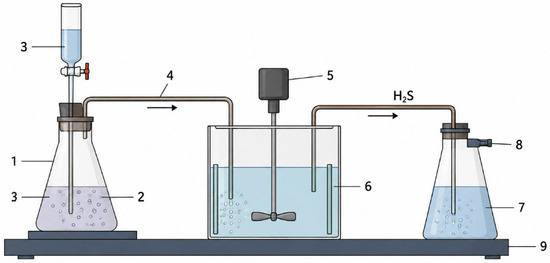
The generated H2S was continuously transferred through the gas supply line into the reactor containing the PLS during the precipitation experiment. Mechanical stirring was applied to provide intensive gas–liquid contact between the generated H2S and the reaction medium. The H2S flow rate and the total amount of H2S introduced were not quantitatively measured because the gas was generated in situ and continuously transferred directly to the precipitation reactor. Consequently, experimentally determined values of the total H2S dosage and S/Zn molar ratio are not available for these experiments.
Two experimental modes were investigated to evaluate the effect of pH control during H2S precipitation. In the first series, after the initial adjustment of the PLS to approximately pH 3.2–3.3, no further pH adjustment was performed during H2S introduction, and the pH was allowed to decrease naturally. In the second series, the decrease in pH during H2S introduction was compensated by the manual addition of a 200 g/L Na2CO3 solution in small portions as the pH decreased. A total of 300 mL of the Na2CO3 solution was used in the pH-controlled experiment. The pH of the reaction medium was monitored during precipitation using a laboratory pH meter (METTLER TOLEDO, Greifensee, Switzerland). After completion of the experiment, the resulting pulp was subjected to solid–liquid separation by filtration. The filtration performance was evaluated by the filtration rate, expressed as the volume of filtrate collected per unit filtration area and unit time (L/(m2·h)). The residual zinc concentration in the filtrate was determined as described in Section 2.5.
A schematic diagram of the experimental setup used for H2S precipitation is shown in Figure 3.
Figure 3.
Schematic diagram of the experimental setup for zinc sulfide precipitation using hydrogen sulfide: (1) reaction flask (H2S generator); (2) technical-grade sodium sulfide (Na2S); (3) 25 wt.% sulfuric acid solution; (4) H2S supply line; (5) mechanical stirrer; (6) zinc-bearing solution; (7) limewater; (8) gas absorption bottle (scrubber); (9) support stand.
2.3.2. Zinc Precipitation Using Sodium Sulfide Solution
Zinc precipitation experiments using sodium sulfide were carried out in a 1 L glass reactor using technical-grade Na2S. Working solutions containing 10 and 20 wt.% Na2S were prepared. The precipitation experiments were conducted over a final target pH range of 1.45–2.50 and at temperatures ranging from 40 to 70 °C. The initial PLS was used without prior pH adjustment. The reported pH values correspond to the final target pH attained during precipitation through the gradual addition of the Na2S solution. Different final pH values were obtained by varying the amount of Na2S solution added, with reagent addition being stopped when the specified target pH was reached.
The PLS was heated to the selected temperature and continuously stirred using a mechanical stirrer at 300–500 rpm. The Na2S solution was gradually added under continuous stirring. The reagent addition rate was not quantitatively controlled in terms of volumetric flow rate. After completion of the reagent addition, the resulting pulp was stirred for an additional 10–15 min. No separate kinetic endpoint criterion was applied; the experimental endpoint was operationally defined by reaching the target pH followed by the additional 10–15 min mixing period.
Under the selected precipitation conditions (20 wt.% Na2S solution, final pH 2.25–2.30, and 50–60 °C), the consumption of technical-grade Na2S was approximately 2.34 t per tonne of Zn contained in the initial solution, corresponding to approximately 1.50 t of 100% Na2S per tonne of Zn.
After precipitation, the ZnS-containing pulp was subjected to thickening followed by filtration. To improve the thickening and filtration characteristics of the fine ZnS-containing precipitate, a polyacrylamide-based flocculant (PAM) was added sequentially during thickening at a dosage of approximately 180 g/t of dry cake. The thickened pulp was then filtered, and the resulting precipitate was washed with hot water at approximately 0.8–1.0 mL per gram of cake. The wash solutions were combined with the main filtrate. Filtration performance was evaluated based on the filtration rate, expressed as the volume of filtrate collected per unit filtration area and unit time (L/(m2·h)).
The resulting filtrates and combined wash solutions were analyzed for Zn, Fe, Mn, Al, Na, and Si according to the analytical procedure described in Section 2.5. The silicon content was reported as SiO2 equivalent.
2.4. Thermodynamic Analysis
Eh–pH diagrams of the Zn–S–H2O system were constructed using the HSC Chemistry 6 software package for thermodynamic calculations [35]. The calculations were performed at temperatures of 25, 40, and 60 °C using total molalities of Zn and S of 1.0 mol/kg H2O each. Eh–pH diagrams are widely used in hydrometallurgical studies to evaluate the thermodynamic stability regions of dissolved and solid species as a function of pH and redox potential [36]. The calculations were performed to evaluate the effect of temperature on the thermodynamic stability regions of zinc- and sulfur-containing species and to provide a thermodynamic interpretation of the experimentally observed zinc sulfide precipitation behavior. As Eh values were not measured during the precipitation experiments, the Eh–pH diagram analysis was used for a qualitative thermodynamic assessment of the ZnS stability regions rather than for direct representation of the experimental redox conditions.
2.5. Analytical Methods
The chemical compositions of the initial pregnant leach solution (PLS), the filtrates obtained after zinc precipitation, and the wash solutions were determined by inductively coupled plasma mass spectrometry (ICP–MS) using an Agilent 7500cx mass spectrometer (Agilent Technologies, Tokyo, Japan). The pH was monitored throughout the experiments using a laboratory pH meter.
The solid precipitates obtained after H2S and Na2S precipitation were dried and subjected to acid digestion prior to elemental analysis. The resulting solutions were analyzed by ICP–MS using an Agilent 7500cx mass spectrometer for the determination of Zn, Fe, Mn, Al, and Si, with the silicon content reported as SiO2 equivalent.
The ZnS content of the precipitates was calculated stoichiometrically from the experimentally determined Zn content, assuming that zinc in the sulfide precipitates was present as ZnS and using the molar mass ratio of ZnS to Zn.
The zinc precipitation efficiency was calculated from the chemical analysis of the initial and final solutions, taking into account the change in solution volume during the precipitation process, according to the following equation:
where C0 and Cf are the zinc concentrations in the initial and final solutions, respectively (g/L), and V0 and Vf are the volumes of the initial and final solutions, respectively (L).
ηZn = C0V0 − CfVf/C0V0 × 100
3. Results and Discussion
The effects of the sulfidizing reagent and precipitation conditions on zinc recovery and precipitate characteristics were evaluated using gaseous hydrogen sulfide and sodium sulfide solution. The two precipitation routes were compared in terms of zinc precipitation efficiency, residual zinc concentration in the solution, chemical composition of the resulting precipitates, and solid–liquid separation characteristics.
3.1. Thermodynamic Analysis of the Zn–S–H2O System
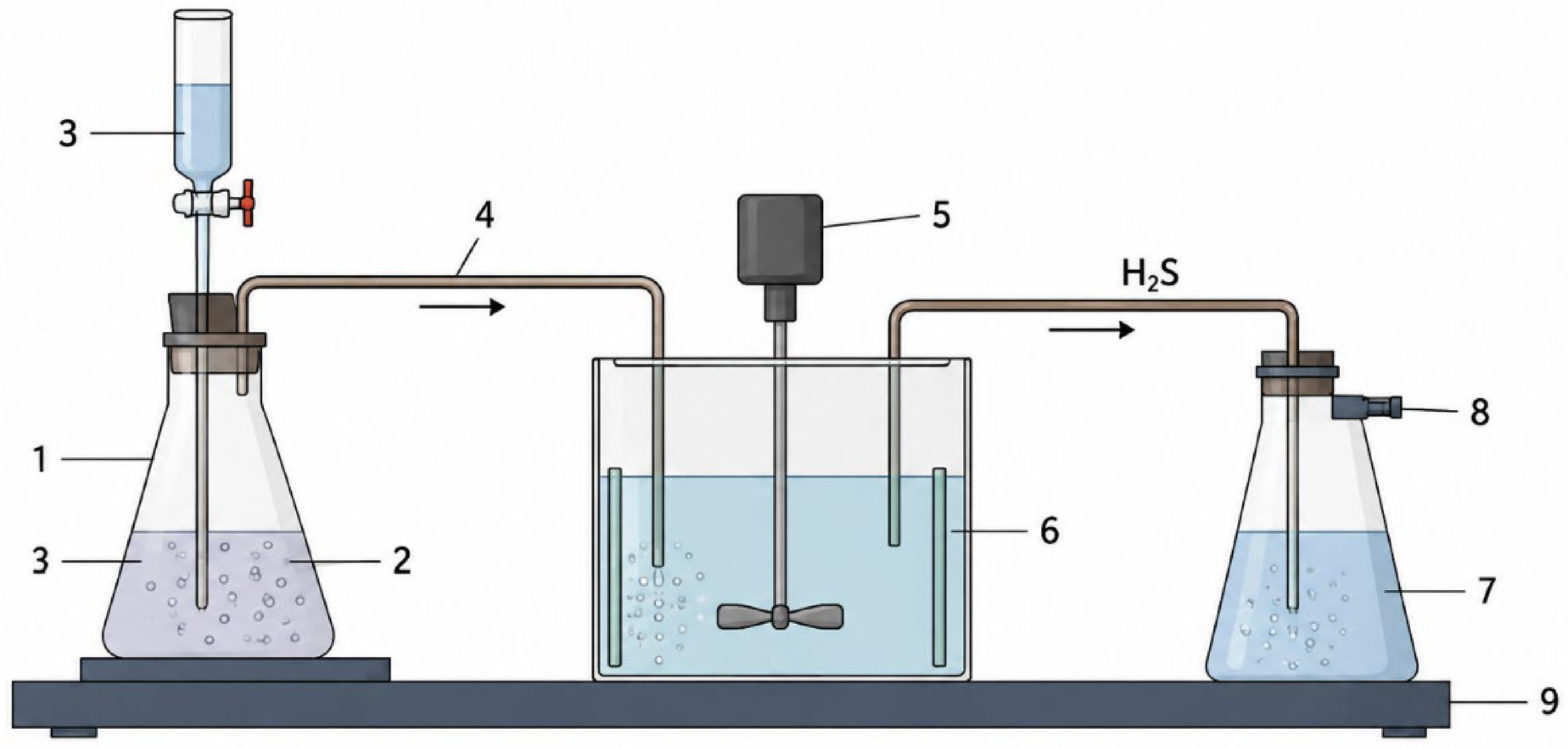
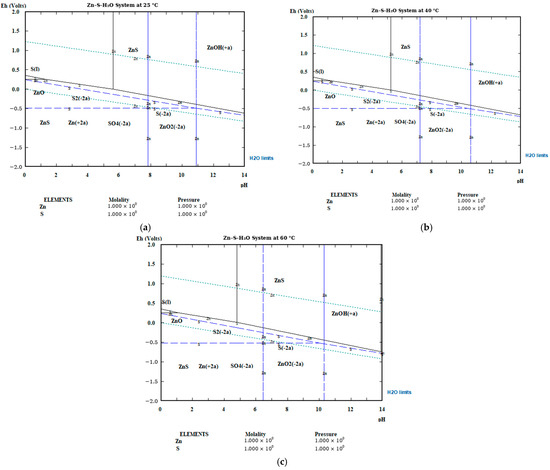
To provide a thermodynamic basis for the zinc sulfide precipitation process, Eh–pH diagrams of the Zn–S–H2O system were analyzed at temperatures of 25, 40, and 60 °C (Figure 4). The diagrams illustrate the thermodynamic stability regions of dissolved and solid zinc- and sulfur-containing species as a function of pH and the redox potential of the system. The line colors and graphical notation shown in Figure 4 correspond to the standard graphical output generated by HSC Chemistry 6 and were retained without modification. For interpretation of the diagrams, the black solid and blue dashed lines represent thermodynamic boundaries separating the stability fields of different Zn- and S-containing species. The thermodynamically stable species within a particular pH–Eh region can be identified from the corresponding labels within the stability fields (e.g., ZnS, Zn2+, ZnO, ZnOH+, ZnO22−, S, S2−, S22−, and SO42−). Thus, the black solid and blue dashed lines should be interpreted together with the adjacent species labels, which identify the corresponding stability fields. The two inclined green dotted lines indicate the upper and lower H2O stability limits.
Figure 4.
Eh–pH diagrams of the Zn–S–H2O system generated using HSC Chemistry 6 at different temperatures: (a) 25 °C; (b) 40 °C; (c) 60 °C.
At all temperatures considered, the diagrams show a broad thermodynamic stability region of ZnS, indicating that dissolved zinc can potentially be converted into a sparingly soluble sulfide form in the presence of appropriate sulfide species. In the acidic region of the diagrams, the ZnS stability field coexists with a stability region of Zn2+ ions. Therefore, the thermodynamic conditions for zinc sulfide formation are governed by the combined effects of the acidity and redox state of the system.
Increasing the temperature from 25 to 60 °C results in a shift in the boundaries of the stability regions of individual zinc species. In particular, the stability boundaries of Zn2+ and hydrolyzed zinc species shift toward lower pH values. At the same time, the thermodynamic stability region of ZnS persists throughout the investigated temperature range, indicating that zinc sulfide precipitation is thermodynamically feasible at both room and elevated temperatures.
Thus, analysis of the Eh–pH diagrams of the Zn–S–H2O system demonstrates the presence of a thermodynamic stability region for ZnS over the investigated temperature range and provides insight into the effects of pH, temperature, and redox conditions on the formation of the zinc sulfide phase. These results provide a thermodynamic basis for the subsequent analysis of the experimentally observed zinc precipitation behavior using H2S and Na2S.
3.2. Zinc Precipitation Using Hydrogen Sulfide
To evaluate the efficiency of zinc precipitation using hydrogen sulfide, laboratory experiments were conducted both without pH control and with pH control of the reaction medium. The main experimental results are summarized in Table 3.
Table 3.
Effect of pH control on zinc precipitation by hydrogen sulfide.
As shown in Table 3, bubbling hydrogen sulfide through the pregnant leach solution resulted in a pronounced decrease in the pH of the reaction medium. In the experiment performed without pH control, the pH decreased from 3.2 to 0.6, leading to incomplete zinc precipitation. Under these conditions, the residual zinc concentration in the solution remained as high as 14.0 g/L, and the zinc precipitation efficiency did not exceed 66.7%.
Maintaining the pH of the reaction medium by the addition of a sodium carbonate solution significantly improved the zinc precipitation performance. At a final pH of 1.25, the residual zinc concentration decreased to 1.0 g/L, while the zinc precipitation efficiency increased to 96.8%. The obtained results demonstrate a significant effect of the acidity of the reaction medium on the efficiency of zinc sulfide precipitation. The observed dependence is consistent with the established principles of metal sulfide precipitation, according to which pH is one of the key process parameters governing the distribution of sulfide species in solution and the conditions for the formation of sparingly soluble metal sulfides [31,32,34].
The experimentally observed pH dependence is also qualitatively consistent with the Eh–pH analysis presented in Section 3.1, which indicates that the thermodynamic stability of ZnS depends on the combined effects of pH and redox potential.
The regulation of pH also improved the quality of the resulting precipitate. The zinc content increased from 53.6 to 57.2 wt.%, whereas the calculated ZnS content increased from 79.9 to 85.3 wt.%, indicating the formation of a higher-grade sulfide precipitate with a lower content of accompanying impurities.
Overall, the results demonstrate that pH control is essential for efficient zinc precipitation using hydrogen sulfide. Under the investigated conditions, pH control resulting in a final pH of 1.25 enabled high zinc recovery, improved the quality of the sulfide precipitate, and significantly reduced the residual zinc concentration in the solution. The chemical composition of the resulting sulfide precipitate is presented in Table 4.
Table 4.
Chemical composition of the sulfide precipitate obtained by zinc precipitation using hydrogen sulfide under pH-controlled conditions (final pH 1.25) (wt.%).
Chemical analysis of the resulting precipitate showed that zinc is the principal component, with a content of 57.2 wt.%, corresponding to a calculated ZnS content of 85.3 wt.% (Table 4). The concentrations of the accompanying impurities (Fe, Mn, Al, and SiO2) remained low, indicating the high selectivity of zinc precipitation using hydrogen sulfide and the formation of a higher-grade sulfide precipitate.
The H2S-derived precipitate exhibited favorable solid–liquid separation characteristics, with a filtration rate of 510 L/(m2·h).
3.3. Zinc Precipitation Using Sodium Sulfide Solution
To evaluate the efficiency of zinc precipitation using a sodium sulfide solution, laboratory experiments were conducted by varying the final pH, process temperature, and Na2S concentration. The experiments were designed to determine the optimum conditions for obtaining a high-quality zinc sulfide precipitate while maximizing zinc recovery from the pregnant leach solution (PLS).
3.3.1. Effect of Reaction Medium pH
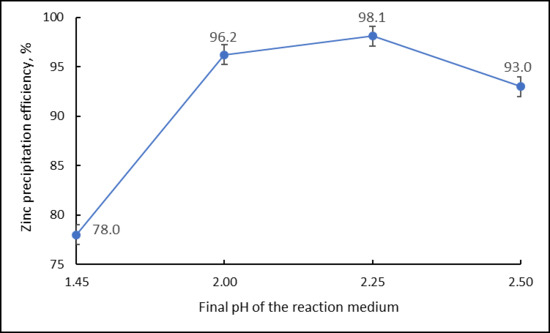
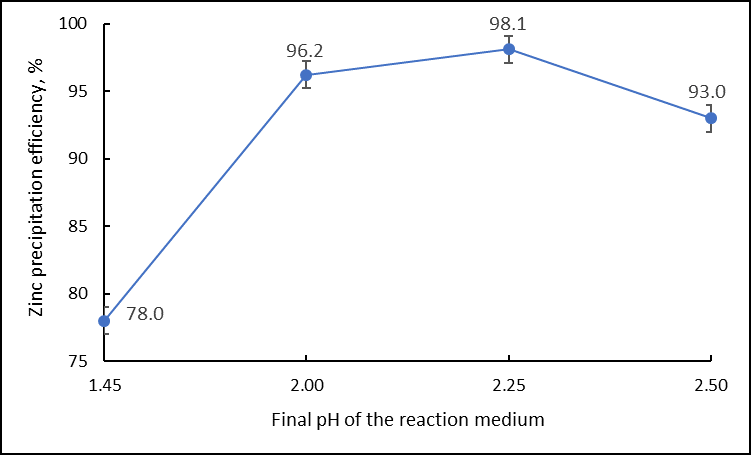
The final pH of the reaction medium had a pronounced influence on the efficiency of zinc precipitation within the investigated range of conditions. The experimental results are presented in Figure 5.
Figure 5.
Effect of the reaction medium pH on the zinc precipitation efficiency using a sodium sulfide solution. Data are presented as mean ± standard deviation (n = 3).
As shown in Figure 5, increasing the pH of the reaction medium from 1.45 to 2.25 increased the zinc precipitation efficiency from 78.0% to 98.1%. This indicates that increasing the pH promotes more complete formation of sparingly soluble zinc sulfide, thereby reducing the residual zinc concentration in the solution. A further increase in pH to 2.50 did not improve the precipitation efficiency. On the contrary, the zinc precipitation efficiency decreased to 93.0%, which is likely associated with changes in the conditions governing sulfide precipitate formation. Therefore, the optimum pH range was found to be 2.25–2.30, at which the highest zinc recovery from the pregnant leach solution was achieved.
The pronounced pH dependence observed during Na2S precipitation is consistent with the H2S precipitation results, for which pH control increased the zinc precipitation efficiency from 66.7% to 96.8%. These experimental trends are also qualitatively consistent with the Eh–pH analysis presented in Section 3.1, which indicates that the thermodynamic stability of ZnS depends on the combined effects of pH and redox potential.
3.3.2. Effect of Na2S Concentration
The effect of Na2S concentration was evaluated by comparing 10 and 20 wt.% Na2S solutions under comparable precipitation conditions (final pH 2.4–2.5 and 50–60 °C). The zinc precipitation efficiencies obtained with 10 and 20 wt.% Na2S were similar, reaching 92.0% and 93.0%, respectively. However, the filtration rate was substantially higher for the precipitate obtained with the 20 wt.% Na2S solution (38.7 L/(m2·h)) than for that obtained with the 10 wt.% solution (22.6 L/(m2·h)). Therefore, the 20 wt.% Na2S solution was selected for the subsequent temperature-effect experiments because it provided comparable zinc precipitation efficiency while exhibiting more favorable filtration characteristics.
3.3.3. Effect of Process Temperature
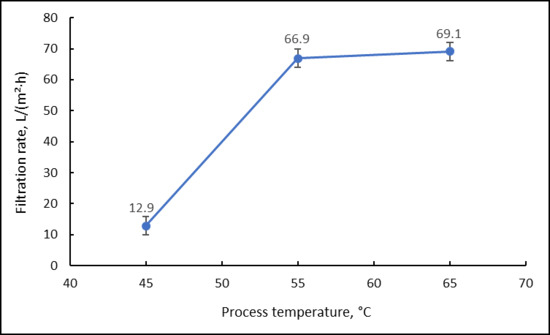
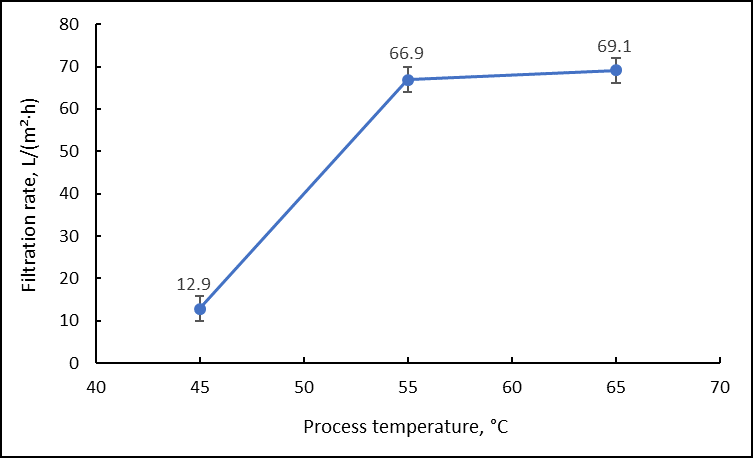
To evaluate the effect of process temperature, the experiments were carried out at a constant final pH of 2.25–2.30 using a 20 wt.% Na2S solution. In addition to the zinc precipitation efficiency, the technological properties of the resulting pulp, particularly its filtration rate, were evaluated to determine the optimum operating temperature. The experimental results are presented in Figure 6.
Figure 6.
Effect of process temperature on the filtration rate of the zinc sulfide pulp. Data are presented as mean ± standard deviation (n = 3).
In Figure 6, the temperature ranges of 40–50, 50–60, and 60–70 °C are represented by their corresponding mean values of 45, 55, and 65 °C, respectively. Increasing the mean process temperature from 45 to 55 °C resulted in a substantial increase in the pulp filtration rate from 12.9 to 66.9 L/(m2·h). A further increase in the mean temperature to 65 °C led to only a slight increase in the filtration rate, reaching 69.1 L/(m2·h). These results indicate that increasing the process temperature to 50–60 °C significantly improves the filtration properties of the zinc sulfide pulp, whereas further heating provides no appreciable technological benefit. Therefore, the optimum operating temperature range is 50–60 °C, as it ensures a high pulp filtration rate while maintaining a high zinc precipitation efficiency.
3.3.4. Chemical Composition of the Resulting Precipitate
The results of the chemical analysis of the sulfide precipitate obtained by zinc precipitation using a sodium sulfide solution are presented in Table 5.
Table 5.
Chemical composition of the sulfide precipitate obtained using a 20 wt.% Na2S solution at a final pH of 2.25–2.30 and 50–60 °C (wt.%).
Chemical analysis showed that zinc is the principal component of the resulting precipitate, with a content of 49.8 wt.%, corresponding to a calculated ZnS content of 74.2 wt.% (Table 5). The contents of iron, manganese, aluminum, and silicon dioxide were 0.70, 0.37, 0.24, and 0.52 wt.%, respectively, indicating a relatively low level of accompanying impurities. These results demonstrate that zinc precipitation using Na2S produces a sulfide product with a high zinc content and a relatively low concentration of impurities.
3.4. Comparative Evaluation of Zinc Precipitation Using Hydrogen Sulfide and Sodium Sulfide Solution
To identify the most effective conditions for zinc recovery from the pregnant leach solution (PLS), a comparative evaluation of zinc precipitation using gaseous hydrogen sulfide and sodium sulfide solution was performed. The two precipitation methods were compared in terms of zinc precipitation efficiency, residual zinc concentration in the solution, composition of the resulting sulfide precipitates, and technological characteristics of the process. The results of the comparative evaluation are summarized in Table 6.
Table 6.
Comparison of zinc precipitation using hydrogen sulfide and a sodium sulfide solution.
Both sulfidizing reagents provided high zinc precipitation efficiencies, although their performance differed in terms of zinc recovery and the characteristics of the resulting precipitates. Under the optimum conditions, the Na2S solution provided a zinc precipitation efficiency of 98.1%, slightly higher than the 96.8% obtained using H2S. Moreover, the residual zinc concentration in the solution after Na2S precipitation was only 0.028 g/L, compared with 1.0 g/L for H2S, indicating more complete zinc recovery with sodium sulfide.
In contrast, H2S produced a higher-grade sulfide precipitate. The precipitate obtained using H2S contained 57.2 wt.% Zn, corresponding to a calculated ZnS content of 85.3 wt.%, whereas the product obtained using Na2S contained 49.8 wt.% Zn, corresponding to a calculated ZnS content of 74.2 wt.%. In addition, the H2S-derived precipitate contained lower concentrations of the accompanying impurities and exhibited substantially better filtration behavior, with a filtration rate of 510 L/(m2·h), compared with 66.9 L/(m2·h) for the Na2S-derived precipitate under the selected conditions. Thus, although Na2S provided a slightly higher zinc precipitation efficiency, H2S was more favorable in terms of the composition and solid–liquid separation characteristics of the resulting sulfide product.
The experimentally established effects of pH and temperature can be considered in conjunction with the thermodynamic analysis of the Zn–S–H2O system presented in Section 3.1. The Eh–pH diagrams showed that a thermodynamic stability region of ZnS persists over the investigated temperature range of 25–60 °C, while the boundaries of the stability regions of dissolved and hydrolyzed zinc species shift with increasing temperature. These thermodynamic relationships are consistent with the experimental observation that efficient zinc sulfide precipitation can be achieved under both the relatively low-temperature conditions used for H2S precipitation and the elevated-temperature conditions applied with Na2S. At the same time, the differences between the optimum operating conditions and the properties of the resulting precipitates indicate that the practical performance of the process is governed not only by the thermodynamic stability of ZnS but also by the nature of the sulfidizing reagent and the associated precipitation and solid–liquid separation behavior.
Overall, both H2S and Na2S can be effectively applied for zinc recovery from pregnant leach solutions obtained by sulfuric acid leaching of oxidized zinc ores. Sodium sulfide is advantageous when maximum zinc recovery and minimum residual zinc concentration are the primary process objectives, whereas hydrogen sulfide is preferable when a higher-grade sulfide product and improved filtration properties are required. Therefore, the selection of the sulfidizing reagent should consider both zinc recovery efficiency and the requirements for subsequent solid–liquid separation and further processing of the sulfide precipitate.
The obtained results are generally consistent with previously published studies demonstrating the effectiveness of sulfide precipitation for zinc recovery from aqueous solutions [31,32,35,37,38,39,40]. Previous investigations have shown that zinc can be efficiently precipitated using different sulfide sources, including Na2S, H2S, and biogenic sulfide [34,37,38,39,40]. However, direct quantitative comparison with literature data is limited by differences in the composition of the initial solutions, zinc concentrations, pH, temperature, sulfide dosage, and other operating conditions. The present study provides a direct comparison of H2S and Na2S under conditions relevant to the treatment of a common pregnant leach solution obtained by sulfuric acid leaching of oxidized zinc ore.
4. Conclusions
This study provided a thermodynamically supported experimental comparison of gaseous hydrogen sulfide and sodium sulfide solution as sulfidizing reagents for zinc recovery from pregnant leach solutions obtained by sulfuric acid leaching of oxidized zinc ores. Analysis of the Eh–pH diagrams of the Zn–S–H2O system at 25, 40, and 60 °C showed the persistence of a thermodynamic stability region of ZnS throughout the investigated temperature range, providing a thermodynamic basis for zinc sulfide precipitation under the experimental conditions considered.
Both sulfidizing reagents provided high zinc precipitation efficiencies, although different optimum process conditions and precipitate characteristics were obtained. When gaseous H2S was used at a final pH of 1.25 and a temperature of 25 °C, the zinc precipitation efficiency reached 96.8%, and the residual zinc concentration in the solution decreased to 1.0 g/L. The resulting precipitate contained 57.2 wt.% Zn, corresponding to a calculated ZnS content of 85.3 wt.%, and was characterized by a low content of accompanying impurities and a filtration rate of 510 L/(m2·h).
For precipitation with sodium sulfide, the optimum conditions were a 20 wt.% Na2S solution, a final pH of 2.25–2.30, and a temperature of 50–60 °C. Under these conditions, the zinc precipitation efficiency reached 98.1%, while the residual zinc concentration decreased to 0.028 g/L. The resulting precipitate contained 49.8 wt.% Zn, corresponding to a calculated ZnS content of 74.2 wt.%.
The comparative results demonstrate that Na2S provides more complete zinc recovery and a lower residual zinc concentration, whereas H2S produces a higher-grade sulfide precipitate and exhibits substantially better filtration behavior, with a filtration rate of 510 L/(m2·h) compared with 66.9 L/(m2·h) for the Na2S-derived precipitate under the selected conditions. However, the H2S route requires pH adjustment during precipitation to compensate for the decrease in solution pH and maintain high zinc recovery. Therefore, the practical selection of the sulfidizing reagent should consider zinc recovery, product composition, pH-control requirements, and the solid–liquid separation characteristics of the resulting precipitate.
Overall, the combination of thermodynamic analysis and experimental results provides a basis for selecting appropriate conditions for sulfide precipitation of zinc from pregnant leach solutions and may contribute to the further development of hydrometallurgical flowsheets for processing oxidized zinc ores.
Author Contributions
Conceptualization, R.R. and N.S.; methodology, B.T.; validation, G.A.; formal analysis, B.S.; investigation, R.R. and N.S.; resources, B.T.; writing—original draft preparation, R.R.; writing—review and editing, N.S.; supervision, G.A. and B.S.; project administration, N.S.; funding acquisition, R.R. All authors have read and agreed to the published version of the manuscript.
Funding
This work was carried out with the financial support of the Committee of Science of the Ministry of Science and Higher Education of the Republic of Kazakhstan under grant funding No. AP25797107.
Data Availability Statement
The original contributions presented in this study are included in the article. Further inquiries can be directed to the corresponding authors.
Conflicts of Interest
The authors declare no conflicts of interest.
References
- Kaya, M.; Hussaini, S.; Kursunoglu, S. Critical Review on Secondary Zinc Resources and Their Recycling Technologies. Hydrometallurgy 2020, 195, 105362. [Google Scholar] [CrossRef] [Scilit]
- Ramazanova, R.A.; Seraya, N.V.; Samoilov, V.I.; Daumova, G.K.; Azbanbayev, E.M. New Method of Rich Oxidized Zinc Ore Sulfuric Acid Leaching. Metallurgist 2020, 64, 169–175. [Google Scholar] [CrossRef] [Scilit]
- Song, Z.; Wen, S.; Han, G.; Feng, Q. Recent Progress on Chelating Reagents in Flotation of Zinc Oxide Ores: A Review. Minerals 2023, 13, 1278. [Google Scholar] [CrossRef] [Scilit]
- Ramazanova, R.; Seraya, N.; Daumova, G.; Mamayeva, A.; Saurbayeva, B.; Idrisheva, Z. Assessing the Feasibility of Utilizing a Method for Processing Oxidized Zinc Ores. ES Mater. Manuf. 2024, 23, 993. [Google Scholar] [CrossRef] [Scilit]
- Zhang, Q.; Wen, S.; Song, Z.; Tang, Y.; Feng, Q. Advances in Zinc Oxide Mineral Flotation: Fundamentals, Practices and Perspectives. Miner. Eng. 2025, 233, 109621. [Google Scholar] [CrossRef] [Scilit]
- Altınışık, C.Y.; Cebeci, Y.; Sis, H.; Kalender, L. A Process Mineralogy Approach to the Flotation of Complex Lead–Zinc Ores from Görgü (Malatya) Region. Min. Metall. Explor. 2022, 39, 1219–1232. [Google Scholar] [CrossRef] [Scilit]
- Ozturk, Y. Selective Recovery of Zinc from Oxide Ores Using Monosodium Glutamate as a Green Lixiviant. Minerals 2025, 15, 870. [Google Scholar] [CrossRef] [Scilit]
- Soltani, F.; Darabi, H.; Aram, R.; Ghadiri, M. Leaching and Solvent Extraction Purification of Zinc from Mehdiabad Complex Oxide Ore. Sci. Rep. 2021, 11, 1566. [Google Scholar] [CrossRef] [Scilit]
- Zhang, Y.; Ma, Z.; Gu, X.; Jia, S.; An, X.; Niu, M.; Zha, X.; He, R.; Deng, R. A Review of Metallurgical Processing and Value-Added Utilization Strategies for Zinc Oxide. Sci. Prog. 2026, 109, 368504261441732. [Google Scholar] [CrossRef] [Scilit]
- Zhang, Y.; Hua, Y.; Gao, X.; Xu, C.; Li, J.; Li, Y.; Zhang, Q.; Xiong, L.; Su, Z.; Wang, M.; et al. Recovery of Zinc from a Low-Grade Zinc Oxide Ore with High Silicon by Sulfuric Acid Curing and Water Leaching. Hydrometallurgy 2016, 166, 16–21. [Google Scholar] [CrossRef] [Scilit]
- Yang, T.; Rao, S.; Zhang, D.; Wen, J.; Liu, W.; Chen, L.; Zhang, X. Leaching of Low Grade Zinc Oxide Ores in Nitrilotriacetic Acid Solutions. Hydrometallurgy 2016, 161, 107–111. [Google Scholar] [CrossRef] [Scilit]
- Peng, X.; Zou, W.; Li, X.; Wei, C.; Liu, W.; Bao, J. Iron Removal Technology from Zinc Hydrometallurgical Process: A Review. Can. Metall. Q. 2026, 1–18. [Google Scholar] [CrossRef] [Scilit]
- Ramazanova, R.A.; Zhussupova, A.K.; Mamyachenkov, S.V.; Seraya, N.V.; Daumova, G.K.; Azbanbayev, E.M. Thermodynamic Description of Oxidized Zinc Minerals and Comparative Analysis of Their Reactivity. Chem. Eng. Trans. 2021, 88, 1159–1164. [Google Scholar] [CrossRef]
- Abkhoshk, E.; Jorjani, E.; Al-Harahsheh, M.S.; Rashchi, F.; Naazeri, M. Review of the Hydrometallurgical Processing of Non-Sulfide Zinc Ores. Hydrometallurgy 2014, 149, 153–167. [Google Scholar] [CrossRef] [Scilit]
- Abdel-Aal, E.A. Kinetics of Sulfuric Acid Leaching of Low-Grade Zinc Silicate Ore. Hydrometallurgy 2000, 55, 247–254. [Google Scholar] [CrossRef] [Scilit]
- Xu, H.; Wei, C.; Li, C.; Fan, G.; Deng, Z.; Li, M.; Li, X. Sulfuric Acid Leaching of Zinc Silicate Ore under Pressure. Hydrometallurgy 2010, 105, 186–190. [Google Scholar] [CrossRef] [Scilit]
- Höber, L.; Steinlechner, S. A Comprehensive Review of Processing Strategies for Iron Precipitation Residues from Zinc Hydrometallurgy. Clean. Eng. Technol. 2021, 4, 100214. [Google Scholar] [CrossRef] [Scilit]
- Halli, P.; Agarwal, V.; Partinen, J.; Lundström, M. Recovery of Pb and Zn from a Citrate Leach Liquor of a Roasted EAF Dust Using Precipitation and Solvent Extraction. Sep. Purif. Technol. 2020, 236, 116264. [Google Scholar] [CrossRef] [Scilit]
- Ai-yuan, M.; Jin-hui, P.; Li-bo, Z.; Li, S.; Kun, Y.; Xue-mei, Z. Leaching Zn from the Low-Grade Zinc Oxide Ore in NH3–H3C6H5O7–H2O Media. Braz. J. Chem. Eng. 2016, 33, 907–917. [Google Scholar] [CrossRef] [Scilit]
- Larba, R.; Boukerche, I.; Alane, N.; Habbache, N.; Djerad, S.; Tifouti, L. Citric Acid as an Alternative Lixiviant for Zinc Oxide Dissolution. Hydrometallurgy 2013, 134, 117–123. [Google Scholar] [CrossRef] [Scilit]
- Wu, T.; Ma, B.; Liu, Y.; Cao, Z.; Chen, Y.; Wang, C. Selective Extraction of Zinc from Low-Grade Zinc Oxide Ores via NaOH Leaching. Miner. Eng. 2025, 237, 109966. [Google Scholar] [CrossRef] [Scilit]
- Wang, R.; Tang, M.; Yang, S.; Zhang, W.; Tang, C.; He, J.; Yang, J. Leaching Kinetics of Low Grade Zinc Oxide Ore in NH3–NH4Cl–H2O System. J. Cent. South Univ. Technol. 2008, 15, 679–683. [Google Scholar] [CrossRef] [Scilit]
- Ramazanova, R.A.; Seraya, N.V.; Bykov, R.A.; Mamyachenkov, S.V.; Anisimova, O.S. Features of Shaimerden Deposit Oxidized Zinc Ore Leaching. Metallurgist 2016, 60, 629–634. [Google Scholar] [CrossRef] [Scilit]
- Ramazanova, R.A.; Mamyachenkov, S.V.; Seraya, N.V.; Daumova, G.K.; Aubakirova, R.A.; Bagasharova, Z.T. Research of Kinetics of Zinc Leaching with Sulfuric Acid from Smithsonite. Metalurgija 2021, 60, 407–410. [Google Scholar]
- Ramazanova, R.A.; Samoilov, V.I.; Seraya, N.V.; Daumova, G.K.; Azbanbayev, E.M.; Aubakirova, R.A. Investigation of the Kinetics of Sulphuric Acid Leaching of Zinc from Calamine. Metalurgija 2021, 60, 113–116. [Google Scholar]
- Rao, S.; Yang, T.; Zhang, D.; Liu, W.; Chen, L.; Hao, Z.; Xiao, Q.; Wen, J. Leaching of Low Grade Zinc Oxide Ores in NH4Cl–NH3 Solutions with Nitrilotriacetic Acid as Complexing Agents. Hydrometallurgy 2015, 158, 101–106. [Google Scholar] [CrossRef] [Scilit]
- Van, E.Y.; Ramazanova, R.A.; Samoilov, V.I.; Seraya, N.V.; Daumova, G.K.; Aubakirova, R.A.; Azbanbaev, E.M. Method for Processing Oxidised Zinc Ore. Russian Federation Patent RU 2767385 C1, 17 March 2022. [Google Scholar]
- Deep, A.; de Carvalho, J.M.R. Review on the Recent Developments in the Solvent Extraction of Zinc. Solvent Extr. Ion Exch. 2008, 26, 375–404. [Google Scholar] [CrossRef] [Scilit]
- Lu, J.; Dreisinger, D.; Rees, K. Simultaneous Removal of Co, Cu, Cd and Ni from Zinc Sulfate Solution by Zinc Dust Cementation. Hydrometallurgy 2020, 197, 105479. [Google Scholar] [CrossRef] [Scilit]
- Jha, M.K.; Kumar, V. Recovery of Zinc from Aqueous Solutions by Ion Exchange Process—A Review. J. Metall. Mater. Sci. 2005, 47, 119–128. [Google Scholar]
- Lewis, A.E. Review of Metal Sulphide Precipitation. Hydrometallurgy 2010, 104, 222–234. [Google Scholar] [CrossRef] [Scilit]
- Estay, H.; Barros, L.; Troncoso, E. Metal Sulfide Precipitation: Recent Breakthroughs and Future Outlooks. Minerals 2021, 11, 1385. [Google Scholar] [CrossRef] [Scilit]
- Zhang, X.; Zeng, L.; Wang, Y.; Tian, J.; Wang, J.; Sun, W.; Han, H.; Yang, Y. Selective Separation of Metals from Wastewater Using Sulfide Precipitation: A Critical Review in Agents, Operational Factors and Particle Aggregation. J. Environ. Manag. 2023, 344, 118462. [Google Scholar] [CrossRef] [Scilit]
- Veeken, A.H.M.; Akoto, L.; Pol, L.W.H.; Weijma, J. Control of the Sulfide (S2−) Concentration for Optimal Zinc Removal by Sulfide Precipitation in a Continuously Stirred Tank Reactor. Water Res. 2003, 37, 3709–3717. [Google Scholar] [CrossRef] [Scilit]
- Ageev, N.G.; Naboichenko, S.S. Metallurgical Calculations Using the HSC Chemistry Software Package: Textbook; Ural University Press: Yekaterinburg, Russia, 2016; 124p, ISBN 978-5-7996-1713-4. [Google Scholar]
- Gánovská, E.; Sisol, M.; Laubertová, M.; Kurty, J. Application of Eh–pH Diagrams in the Hydrometallurgical Processing of Rare Earth Elements. Metals 2026, 16, 746. [Google Scholar] [CrossRef] [Scilit]
- Liu, Q.; Zhao, Y.; Zhao, G. Production of Zinc and Lead Concentrates from Lean Oxidized Zinc Ores by Alkaline Leaching Followed by Two-Step Precipitation Using Sulfides. Hydrometallurgy 2011, 110, 79–84. [Google Scholar] [CrossRef] [Scilit]
- Esposito, G.; Veeken, A.; Weijma, J.; Lens, P.N.L. Use of Biogenic Sulfide for ZnS Precipitation. Sep. Purif. Technol. 2006, 51, 31–39. [Google Scholar] [CrossRef] [Scilit]
- Radhika, V.; Subramanian, S.; Natarajan, K.A. Bioremediation of Zinc Using Desulfotomaculum nigrificans: Bioprecipitation and Characterization Studies. Water Res. 2006, 40, 3628–3636. [Google Scholar] [CrossRef] [Scilit]
- Seksenova, N.; Bykov, R.; Mamyachenkov, S.; Daumova, G.; Kozhakanova, M. Optimization of Conditions for Processing of Lead–Zinc Ores Enrichment Tailings of East Kazakhstan. Metals 2021, 11, 1802. [Google Scholar] [CrossRef] [Scilit]

Disclaimer/Publisher’s Note: The statements, opinions and data contained in all publications are solely those of the individual author(s) and contributor(s) and not of MDPI and/or the editor(s). MDPI and/or the editor(s) disclaim responsibility for any injury to people or property resulting from any ideas, methods, instructions or products referred to in the content. |
© 2026 by the authors. Licensee MDPI, Basel, Switzerland. This article is an open access article distributed under the terms and conditions of the Creative Commons Attribution (CC BY) license.