


Abstract
A sequential lithium-recovery process combining hydrogen reduction, water leaching, CaCO3-assisted thermal conversion under a CO2 atmosphere, and a second water-leaching step was investigated using an LFP cathode manufacturing byproduct as the starting material. Hydrogen reduction was first employed to decompose LiFePO4 and redistribute lithium into a Li3PO4-containing phase while Fe and P were predominantly incorporated into Fe-rich phosphide phases. Among the investigated conditions, treatment at 900 °C for 3 h resulted in the disappearance of detectable LiFePO4 peaks and the formation of Li3PO4 and Fe2P as the predominant crystalline phases. The reduced product was subsequently subjected to water leaching, and a solid-to-liquid ratio of 1:100 with a leaching time of 5 h yielded a Li3PO4-rich intermediate with a lithium recovery of 45.06% and a Li content of 17.43 wt.%. The recovered intermediate was then mixed with CaCO3 and thermally treated under a CO2 atmosphere to convert lithium phosphate into lithium carbonate while phosphorus was transferred into a Ca–P-rich phase. The most favorable phase-conversion behavior was obtained at 900 °C using a Li3PO4-to-CaCO3 weight ratio of 1:1 and a holding time of 2 h, where Li2CO3 and Ca2P2O7 were identified as the predominant crystalline products. Subsequent water leaching separated the Li-containing carbonate fraction from the water-insoluble Ca2P2O7-rich residue. A maximum lithium recovery of 93.59% was obtained at a solid-to-liquid ratio of 1:50 in the solid-to-liquid-ratio experiments, while the leaching-time experiments showed a lithium recovery of 92.54% after 5 h under the same solid-to-liquid ratio. XRD analysis of the final recovered product identified Li2CO3 as the predominant crystalline phase. Based on the selected conditions for Stage I and Stage II, the cumulative lithium recovery from the initial LFP feed to the final Li2CO3-rich product was approximately 41.70%, indicating that the first water-leaching and Li3PO4-intermediate recovery step was the principal limitation of the overall process. These results demonstrate the feasibility of recovering lithium from LFP cathode manufacturing byproducts through controlled phase conversion and water-based separation, while also highlighting the need to improve Stage I lithium recovery and to consider the thermal-energy demand associated with solution concentration and drying during future process development.
1. Introduction
The rapid expansion of lithium-ion batteries (LIBs) for electric vehicles and stationary energy-storage systems has increased the importance of recovering lithium and other resources from end-of-life batteries and manufacturing byproducts [1,2,3,4]. Among commercial cathode materials, lithium iron phosphate (LiFePO4, LFP) has attracted considerable attention owing to its structural and thermal stability, long cycle life, relatively low cost, and absence of expensive transition metals such as Ni and Co [1,5]. Its olivine structure, stabilized by strong P–O bonds within PO4 tetrahedra, contributes to its thermal safety [5,6]. However, increasing LFP production also generates manufacturing scrap and process byproducts that represent potentially recoverable lithium resources [7]. Unlike end-of-life batteries, these materials are generated before electrochemical service and can provide a relatively concentrated source of cathode constituents. Their recycling is particularly important because the economic incentive for LFP recovery depends strongly on lithium, given the comparatively low commercial value of Fe and P [3,4,8].
LFP recycling strategies include hydrometallurgical treatment, thermal processing, and direct regeneration [3,4,8,9]. Hydrometallurgical methods dissolve lithium using inorganic or organic reagents, followed by separation and product-recovery operations [10,11,12]. Selective leaching can limit the dissolution of Fe and P while recovering lithium, but reagent use and subsequent solution processing remain important considerations. For example, selective treatment with an H2SO4–H2O2 system has been reported to achieve 96.85% Li leaching with only 0.027% Fe leaching at 60 °C for 120 min [13]. Direct regeneration, in contrast, aims to restore the electrochemical properties of degraded LFP and is more dependent on feed composition and impurity levels when a purified lithium chemical is the desired product [14,15].
Thermal and roasting-assisted methods offer another approach by converting LiFePO4 into phases that facilitate subsequent lithium separation. Zhang et al. reported Na2CO3-assisted carbothermic treatment, achieving a Li recovery of up to 99.2% after separation [16]. NaHSO4·H2O-assisted roasting has also been used to form water-soluble LiNaSO4, followed by water leaching and lithium-product recovery [17]. In addition, Li et al. demonstrated NaOH-assisted roasting at temperatures as low as 150 °C, with a reported Li recovery efficiency of 96.7% [18]. These studies demonstrate that the conversion reagent influences the lithium-bearing phase formed during treatment and the subsequent separation strategy.
The main characteristics of representative LFP treatment routes are summarized in Table 1. The comparison provides a basis for considering alternative lithium-conversion pathways; however, the reported leaching efficiencies and recovery values should not be regarded as directly equivalent because the studies differ in feed materials, product forms, and recovery definitions.
Table 1.
Comparison of representative lithium-recovery routes for LFP materials with the present process.
Although the reported methods demonstrate different approaches to lithium recovery, they also illustrate the influence of reagent selection on phase conversion and downstream separation. In particular, salt-assisted roasting introduces sodium-, sulfate-, or alkaline-derived species into the reaction system, whereas selective hydrometallurgical leaching relies on subsequent solution processing. These characteristics motivate the investigation of alternative phase-control strategies in which lithium is separated from Fe-rich material as a distinct intermediate before conversion into the desired lithium product.
In our previous study, H2 reduction of LiFePO4 promoted the formation of Li3PO4 and iron phosphides, principally FeP and Fe2P. Subsequent CaCl2-assisted thermal chlorination converted the Li3PO4-containing fraction into water-soluble LiCl [21]. Although this approach demonstrated a sequential reduction–conversion pathway, LiCl and Li2CO3 represent different recovered lithium forms. In particular, Li2CO3 is an important refined lithium compound used in battery-material production and other lithium-chemical applications. A route targeting Li2CO3 from a separated Li3PO4-rich intermediate therefore warrants investigation.
The present study investigates the sequential recovery of lithium from an LFP cathode manufacturing byproduct through H2-assisted phase redistribution, water leaching of the resulting Li3PO4-containing fraction, and CaCO3-assisted conversion under a CO2 atmosphere. The resulting Li2CO3-rich fraction is subsequently recovered by water leaching and separation from the Ca2P2O7-rich residue. The scientific contribution lies in combining intermediate phase separation with controlled carbonate conversion rather than directly converting the hydrogen-reduced product into a water-soluble chloride or relying on direct acid–oxidant leaching. The effects of thermal-treatment and leaching conditions are evaluated to establish the phase-transformation behavior, quantitative Li recovery, and principal limitations of the proposed process.
2. Materials and Methods
The experimental procedure developed in this study consisted of two sequential stages for the recovery of lithium as Li2CO3 from an LFP cathode manufacturing byproduct. In the first stage, the LFP-containing feed material was thermally treated under an H2 atmosphere to transform the stable LiFePO4 phase and concentrate lithium into a Li3PO4-containing phase. The thermally treated product was subsequently subjected to water leaching and solid–liquid separation to recover a Li3PO4-rich intermediate. In the second stage, the recovered Li3PO4-rich intermediate was mixed with CaCO3 and subjected to thermal treatment under a CO2 atmosphere. This treatment was designed to convert lithium from the phosphate phase into a carbonate phase while transferring phosphorus into a Ca–P-containing phase. The converted product was subsequently subjected to water leaching and filtration to separate the soluble Li-containing fraction from the insoluble Ca–P-rich residue, followed by evaporation and drying to recover Li2CO3. The overall experimental procedure is described in detail in the following sections.
2.1. Raw Material and Characterization
An LFP-containing process byproduct generated during the manufacture of LiFePO4 cathode active material was used as the starting material in this study. Prior to the lithium-recovery experiments, the chemical composition and crystalline phases of the as-received material were characterized to determine the initial Li content and identify the major phases present in the feed material. The chemical composition of the LFP process byproduct was determined using X-ray fluorescence spectroscopy (XRF) and inductively coupled plasma optical emission spectroscopy (ICP-OES). Lithium was independently quantified by ICP-OES on a sample-mass basis, whereas Fe, P, S, Ti, Si, Mn, and Al were analyzed by XRF. The XRF-derived values were normalized to 100% among the elements quantified by XRF, excluding Li and O, and therefore represent relative elemental distributions rather than absolute bulk concentrations. Accordingly, the ICP-OES Li value and the normalized XRF values were obtained on different analytical bases and should not be directly summed to obtain the total bulk composition. Oxygen was not quantitatively determined in the present elemental analysis. Each compositional analysis was repeated five times, and the results are reported as the mean value with the corresponding standard deviation.
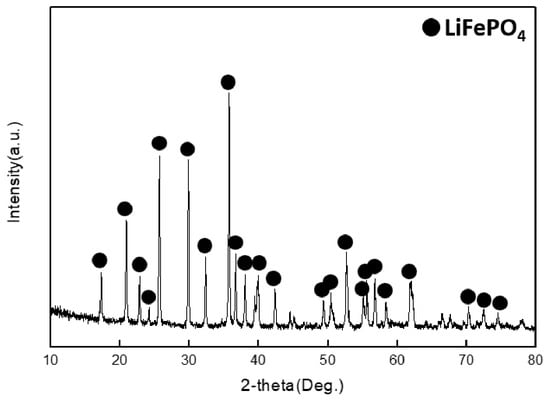
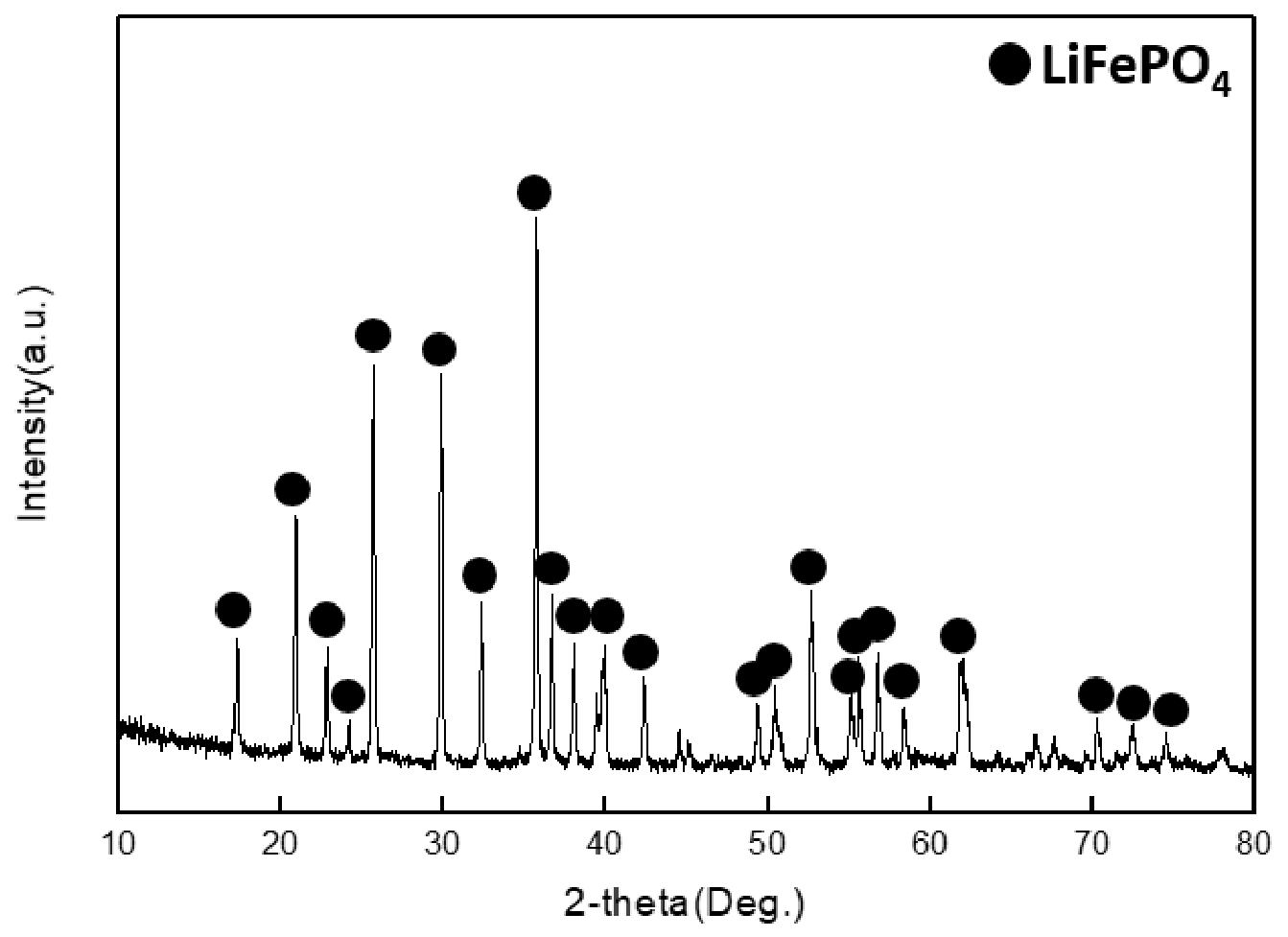
The crystalline phases of the starting material were identified by X-ray diffraction (XRD) using an X’Pert3 Powder diffractometer (PANalytical, Almelo, The Netherlands) equipped with a Cu Kα X-ray source. The diffraction patterns were collected over a 2θ range of 10–80° with a step size of 0.02° and a scan rate of 2° min−1. The XRD pattern of the as-received material is shown in Figure 1. The diffraction peaks were predominantly attributable to the LiFePO4 phase, confirming that LiFePO4 was the major crystalline phase in the LFP manufacturing byproduct. The analytical results for the starting material are summarized in Table 2. The Li content independently determined by ICP-OES was 3.03 wt.% on a sample-mass basis. On the normalized XRF basis, Fe and P accounted for 68.70 and 29.74 wt.%, respectively, of the elements quantified by XRF, while relatively small amounts of S, Ti, Si, Mn, and Al were also detected. Therefore, the XRF-derived Fe value of 68.70 wt.% should not be interpreted as the absolute Fe concentration of the bulk LFP byproduct. Rather, it represents the relative Fe fraction after normalization of the elements quantified by XRF. This distinction also explains why the normalized XRF composition is not inconsistent with the XRD result showing LiFePO4 as the predominant crystalline phase.
Figure 1.
XRD pattern of the as-received LFP cathode manufacturing byproduct, showing LiFePO4 as the predominant crystalline phase.
Table 2.
Li content determined by ICP-OES and normalized elemental distribution of the XRF-quantified constituents in the LFP cathode manufacturing byproduct.
2.2. Overall Experimental Procedure
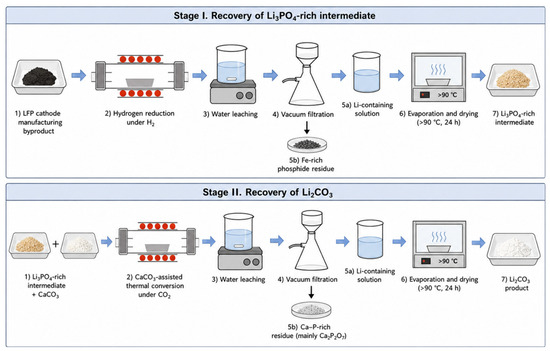
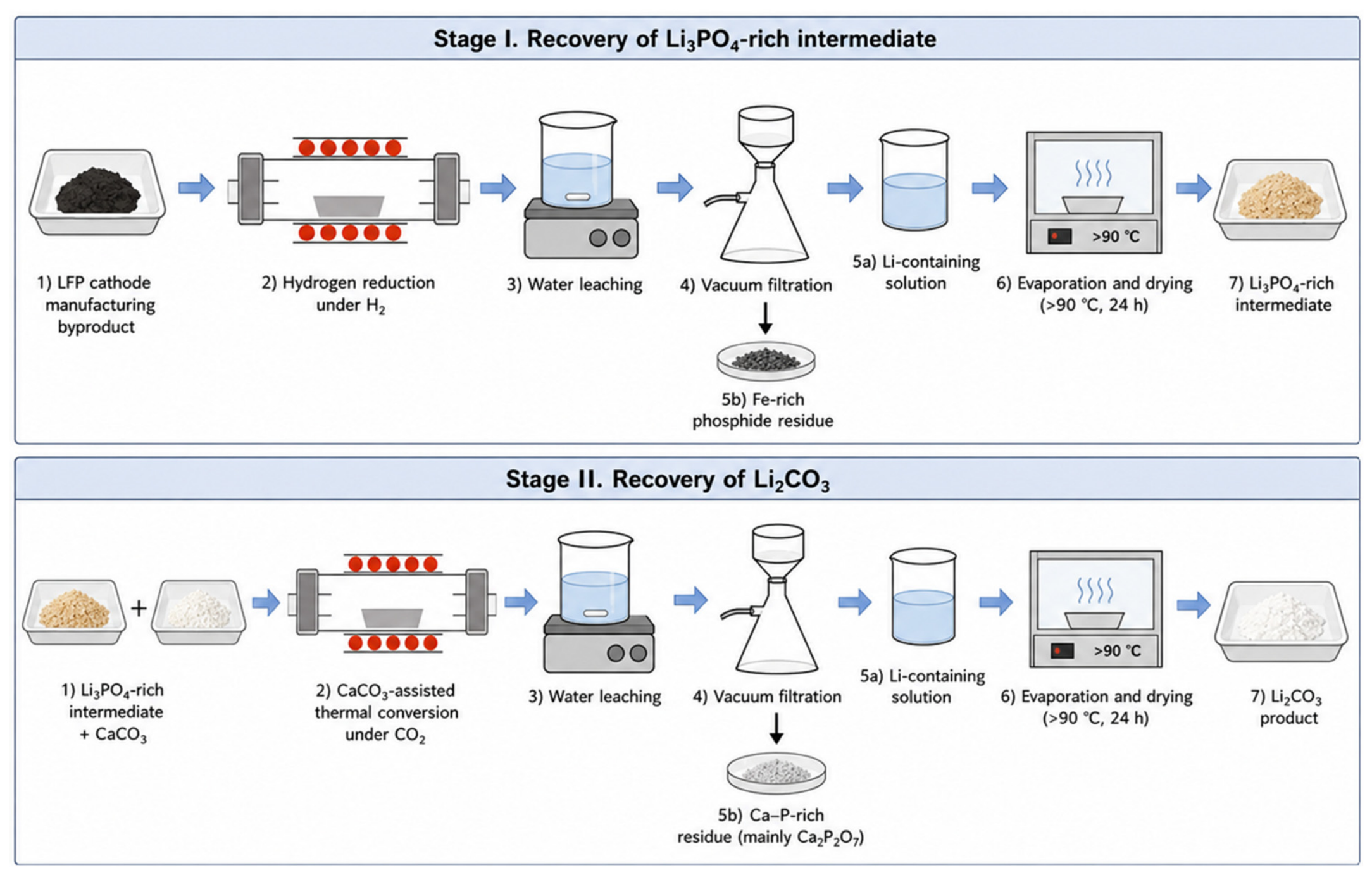
The overall process for recovering lithium as Li2CO3 from the LFP cathode manufacturing byproduct is schematically illustrated in Figure 2. The process consisted of two sequential stages. In Stage I, the LFP byproduct was subjected to hydrogen reduction to redistribute lithium into a Li3PO4-containing phase while Fe was incorporated into Fe-rich phosphide phases, followed by water leaching to recover a Li3PO4-rich intermediate. In Stage II, the recovered Li3PO4-rich intermediate was reacted with CaCO3 under a CO2 atmosphere to promote the formation of Li2CO3 and Ca2P2O7, followed by water leaching to separate the Li-containing carbonate fraction from the Ca–P-rich residue. The phase evolution and lithium recovery at each stage were evaluated by XRD and ICP-OES, respectively. Detailed experimental conditions are provided in Section 2.3 and Section 2.4.
Figure 2.
Schematic flow diagram of the overall Li2CO3 recovery process.
2.3. Hydrogen Reduction of the LFP Byproduct
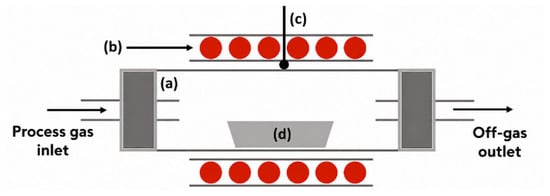
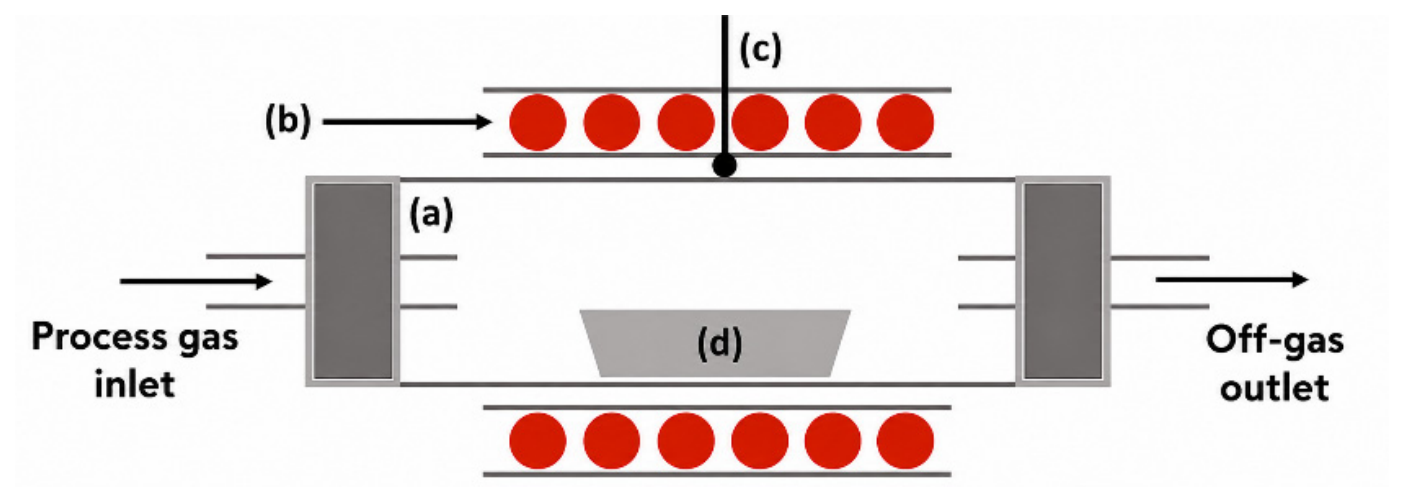
The LFP cathode manufacturing byproduct was subjected to hydrogen reduction to transform LiFePO4 into a Li-containing phosphate phase and Fe-containing phosphide phases. The experiments were conducted in a horizontal tube furnace equipped with a gas-supply system, SiC heating elements, a thermocouple, and an alumina crucible positioned in the constant-temperature zone, as illustrated in Figure 3.
Figure 3.
Schematic illustration of the horizontal tube furnace used for hydrogen-reduction and CO2-assisted thermal-conversion experiments: (a) reaction tube, (b) SiC heating elements, (c) thermocouple, and (d) alumina crucible. The red circles represent the SiC heating elements, and the arrows indicate the direction of process-gas flow.
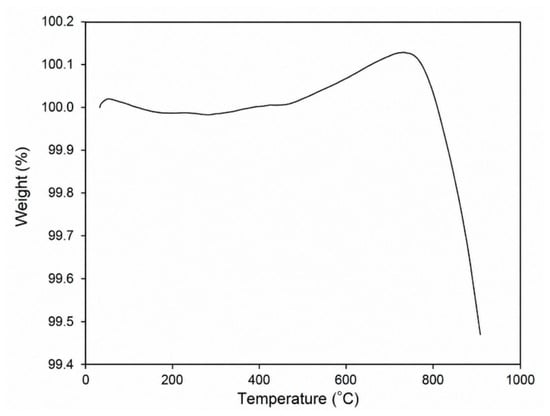
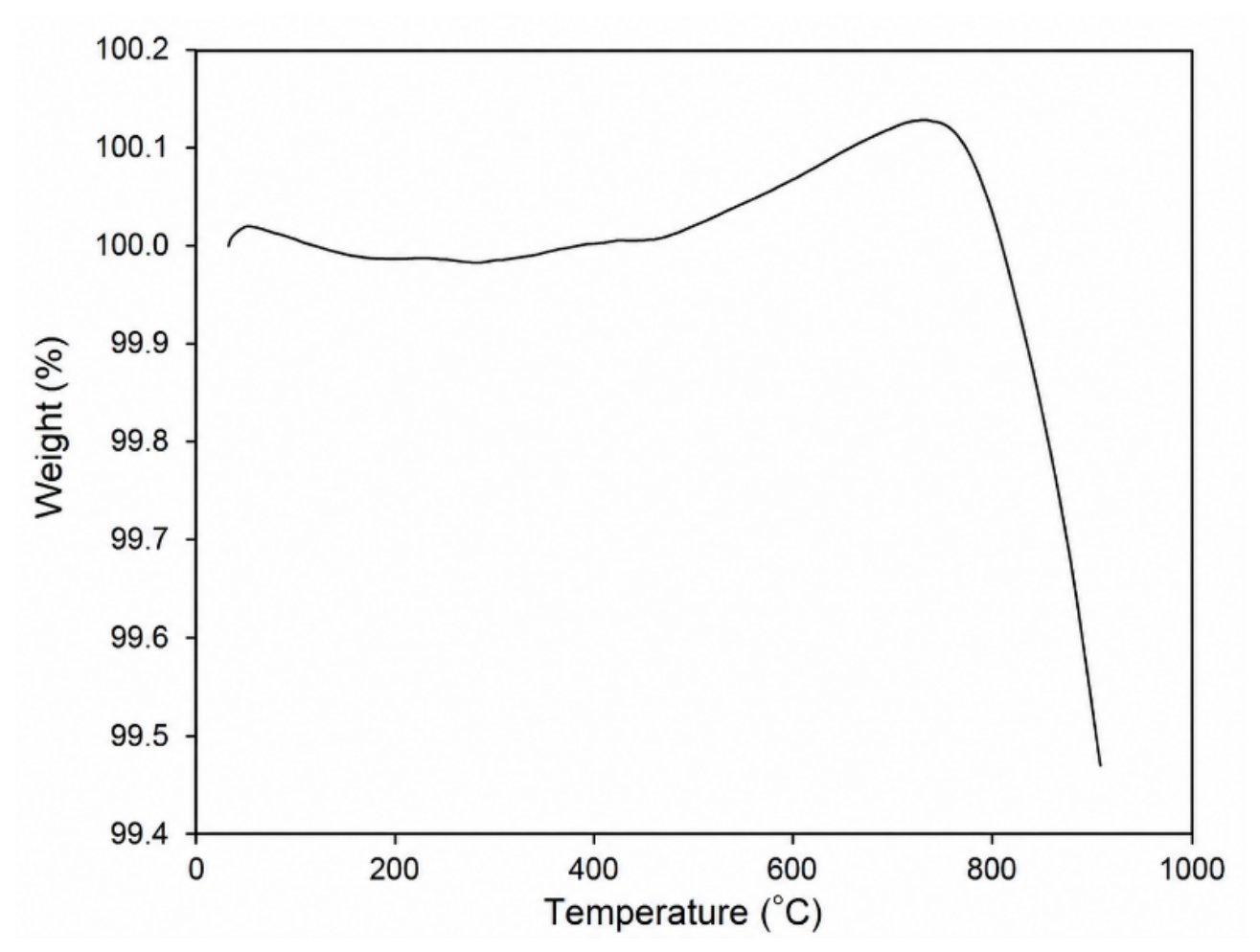
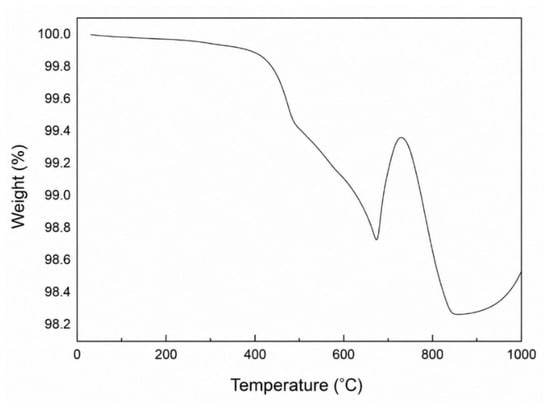
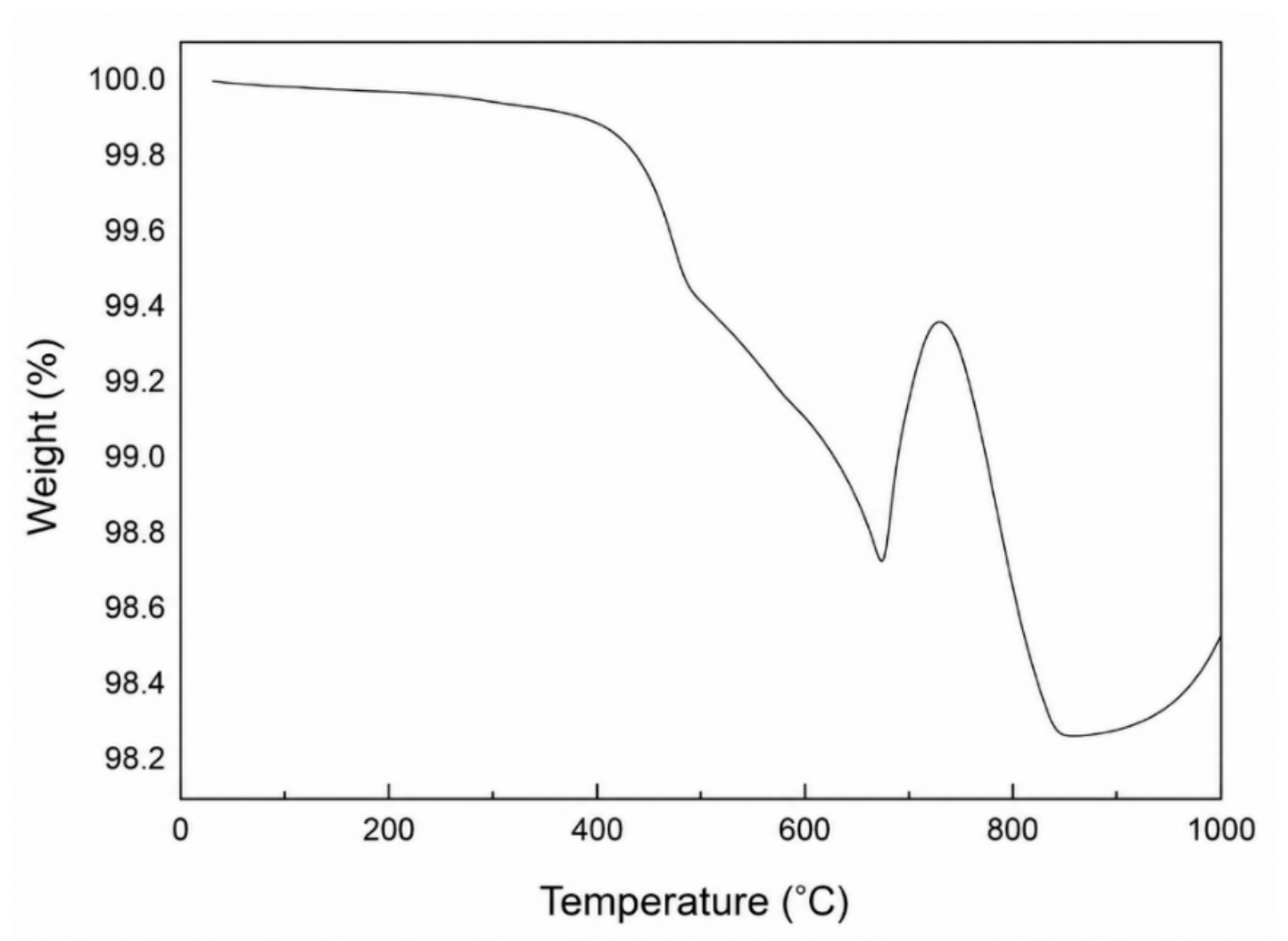
Prior to the reduction experiments, thermogravimetric analysis (TGA) was performed to establish the experimental temperature range. Approximately 2 g of the LFP byproduct was heated from 25 to 990 °C at 5 °C min−1 under flowing H2 at 300 mL min−1. Based on the mass-change behavior shown in Figure 4, reduction temperatures of 700, 800, and 900 °C were selected.
Figure 4.
Thermogravimetric profile of the LFP cathode manufacturing byproduct during heating from 25 to 990 °C under a flowing H2 atmosphere (300 mL min−1) at a heating rate of 5 °C min−1.
For each hydrogen-reduction experiment conducted to investigate the effects of reaction temperature and holding time on phase transformation, 5.0 g of the LFP byproduct was placed in an alumina crucible and heated at 5 °C min−1 under 99.9% H2 flowing at 300 mL min−1. The sample was maintained at the selected temperature for 3 h and subsequently cooled at 5 °C min−1 under the same controlled atmosphere. To examine the effect of holding time, additional experiments were conducted at 900 °C for 1, 2, and 3 h under otherwise identical conditions. The resulting products were analyzed by XRD to evaluate the phase transformation. The overall reaction considered for the H2-assisted transformation is expressed as Equation (1):
3LiFePO4(s) + 8H2(g) → Li3PO4(s) + Fe2P(s) + FeP(s) + 8H2O(g)
For the separate lithium-recovery evaluation described in Section 3.3, 6.0 g of the initial LFP byproduct was processed under the selected hydrogen-reduction conditions. This feed mass was used as the basis for calculating the initial Li amount and the subsequent Stage I Li recovery. The difference between the 5.0 g and 6.0 g feed masses therefore reflects the distinct purposes of the phase-transformation experiments and the lithium-recovery evaluation, respectively.
2.4. Water Leaching and Recovery of the Li3PO4-Rich Intermediate
The hydrogen-reduced product obtained at 900 °C for 3 h was subjected to water leaching to separate the Li-containing phosphate fraction from the Fe-rich phosphide residue. The dissolution of Li3PO4 in water is represented schematically by Equation (2):
The effect of solid-to-liquid ratio was investigated at ratios of 1:30, 1:50, and 1:100 using distilled water. Each slurry was stirred at 300 rpm for 5 h at room temperature. An additional experiment at a solid-to-liquid ratio of 1:150 was performed to determine whether a further increase in water volume improved Li recovery. Because the hydrogen-reduced product contained Fe-rich phosphide phases, all leaching experiments were conducted in a laboratory fume hood as a precaution against possible gaseous species released during contact with water; PH3 was not quantitatively monitored in the present study. After leaching, the slurry was separated by vacuum filtration. The insoluble residues were analyzed by XRD, while the Li-containing filtrates were concentrated by evaporation and dried above 90 °C for 24 h to recover Li3PO4-rich products. After selection of the solid-to-liquid ratio, the effect of leaching time was examined at a fixed ratio of 1:100 for 1, 3, and 5 h at 300 rpm and room temperature. The recovered products were analyzed for Li content by ICP-OES, and the selected Li3PO4-rich intermediate was characterized by XRD before use in the subsequent thermal-conversion experiments.
2.5. CaCO3-Assisted CO2 Thermal Conversion of the Li3PO4-Rich Intermediate
The recovered Li3PO4-rich intermediate was subjected to CaCO3-assisted thermal treatment under a CO2 atmosphere to convert the Li-containing phosphate phase into a carbonate phase while incorporating phosphorus into a Ca–P phase. Prior to the conversion experiments, TGA was performed using a mixture of 1 g of Li3PO4 and 1 g of CaCO3. The mixture was heated from 25 to 990 °C at 5 °C min−1 under flowing CO2 at 300 mL min−1. Based on the mass-change behavior shown in Figure 5, reaction temperatures of 700, 800, and 900 °C were selected.
Figure 5.
Thermogravimetric profile of the Li3PO4–CaCO3 mixture during heating from 25 to 990 °C under a flowing CO2 atmosphere (300 mL min−1) at a heating rate of 5 °C min−1.
For the temperature-dependent experiments, 3 g of the recovered Li3PO4-rich intermediate was mixed with 3 g of CaCO3, corresponding to a Li3PO4-rich-intermediate-to-CaCO3 weight ratio of 1:1. The mixture was heated at 5 °C min−1 under CO2 (≥99.9%, 300 mL min−1), maintained at the selected temperature for 3 h, and subsequently cooled at 5 °C min−1 under the same atmosphere. After selection of the reaction temperature, the effect of the Li3PO4-rich-intermediate-to-CaCO3 weight ratio was investigated at 900 °C using ratios of 1:0.5, 1:1, and 1:2 for 3 h. The effect of holding time was then examined at 900 °C and a weight ratio of 1:1 for 1, 2, and 3 h. All products were analyzed by XRD to evaluate the phase-conversion behavior. The intended overall conversion is expressed as Equation (3):
2Li3PO4(s) + 2CaCO3(s) + CO2(g) → 3Li2CO3(s) + Ca2P2O7(s)
The product obtained under the selected thermal-conversion condition was subsequently used for the Stage II water-leaching experiments.
2.6. Water Leaching and Recovery of Li2CO3
Following CaCO3-assisted thermal conversion, water leaching was performed to separate the Li-containing carbonate fraction from the Ca2P2O7-rich residue. The dissolution of Li2CO3 is represented schematically by Equation (4):
Because the aqueous solubility of Li2CO3 decreases with increasing temperature, the leaching experiments were conducted at room temperature. Reported Li2CO3 solubilities are approximately 1.54, 1.32, 1.00, and 0.72 g per 100 mL of water at 0, 20, 60, and 100 °C, respectively, whereas Ca2P2O7 is practically insoluble in water [19]. The thermally converted product obtained at 900 °C for 2 h using a 1:1 Li3PO4-rich-intermediate-to-CaCO3 weight ratio was leached with distilled water at solid-to-liquid ratios of 1:10, 1:30, and 1:50. Each slurry was stirred at 300 rpm for 5 h at room temperature and subsequently separated by vacuum filtration. The insoluble residues were analyzed by XRD, while the Li-containing filtrates were concentrated by evaporation and dried above 90 °C for 24 h to recover Li2CO3-rich products. After selection of the solid-to-liquid ratio, the effect of leaching time was examined at a fixed ratio of 1:50 for 1, 3, and 5 h under otherwise identical conditions. The recovered products were analyzed for Li content by ICP-OES, and the final product obtained under the selected condition was characterized by XRD. Lithium recovery for each stage was calculated using Equation (5):
where the recovered product mass and the corresponding feed mass are expressed in grams, and their respective Li contents are expressed as mass fractions. For Stage I, the initial LFP cathode manufacturing byproduct was used as the feed basis, whereas for Stage II, the recovered Li3PO4-rich intermediate introduced into the CaCO3-assisted thermal-conversion step was used as the feed basis. Accordingly, the calculated Li recovery represents the recovery achieved within each stage rather than the cumulative recovery of the entire process.
2.7. Thermodynamic Analysis
Thermodynamic calculations were performed using HSC Chemistry 6.12 (Outotec Research Oy, Pori, Finland) to evaluate the standard-state thermodynamic tendencies of the two principal thermal reactions involved in the proposed process: the H2-assisted transformation of LiFePO4 into Li3PO4 and Fe-containing phosphides (Equation (1)) and the CaCO3-assisted CO2 conversion of Li3PO4 into Li2CO3 and Ca2P2O7 (Equation (3)).
HSC Chemistry was used as the thermodynamic calculation software for both reactions. The thermodynamic properties of LiFePO4 were obtained separately from the literature because this compound was not included in the default HSC database used in this study. The literature-based properties were taken from Churikov et al. [22], who evaluated several thermodynamic data sets for LiFePO4 and identified a preferred set of standard formation enthalpy, Gibbs free energy, and entropy values. The standard thermodynamic properties of the other species involved in Equation (1) were obtained from the HSC Chemistry database. The reference thermodynamic data and their sources are summarized in Table 3.
Table 3.
Reference thermodynamic data for the species involved in Equation (1).
For LiFePO4, the standard enthalpy of formation and standard molar entropy at 298.15 K were −1591.23 kJ mol−1 and 136.75 J mol−1 K−1, respectively [22]. Its temperature-dependent molar heat capacity was represented using the following literature-based expression:
where T is the absolute temperature in K and is expressed in J mol−1 K−1. The temperature-dependent standard enthalpy and entropy were determined from their reference values at 298.15 K using the corresponding heat-capacity integrals. For the remaining species, the thermodynamic functions were evaluated using the applicable temperature-dependent data provided in the HSC database.
The standard Gibbs free-energy change for each reaction was calculated from the stoichiometric differences between the standard Gibbs energies of the products and reactants:
where vi represents the stoichiometric coefficient of species i. The standard Gibbs energy of each species was evaluated from its temperature-dependent enthalpy and entropy:
The thermodynamic assessment considered the phase states specified for the individual reactions. For Equation (1), H2 and H2O were treated as gaseous species, whereas CO2 was treated as a gaseous reactant in Equation (3). In the calculation of Equation (3), Li2CO3 was specified as a solid product according to the available thermodynamic input data. The calculated standard Gibbs free-energy changes were compared with the experimentally observed phase-transformation behavior.
Because the actual experiments were conducted under flowing gas atmospheres rather than strict standard-state conditions, the calculated ΔG° values were used primarily to interpret the relative thermodynamic tendencies of the reactions with temperature rather than to predict the exact equilibrium conversion.
Two limitations of the thermodynamic input data were considered when interpreting the calculations. First, the temperature-dependent heat-capacity expression adopted for LiFePO4 was reported for 290–780 K [23]. Its application at the higher temperatures investigated in this study therefore involves extrapolation and introduces uncertainty into the calculated standard Gibbs free-energy changes for Equation (1). Second, the Li3PO4 entry in the HSC Chemistry 6.12 database used in this study specifies a temperature interval of 298.15–300 K, which does not cover the thermal-treatment temperatures investigated for Equation (3). In addition, the calculation of Equation (3) treated Li2CO3 as a solid product, although pure Li2CO3 melts at approximately 993 K and is therefore expected to exist as a liquid at 800 and 900 °C. The calculated standard Gibbs free-energy changes for Equation (3) were consequently interpreted as results of the specified thermodynamic model rather than quantitatively validated predictions of the actual high-temperature conversion. Accordingly, the thermodynamic calculations were interpreted together with, rather than as a substitute for, the experimental phase-identification results.
3. Results and Discussion
3.1. Effect of Hydrogen-Reduction Temperature on Phase Transformation
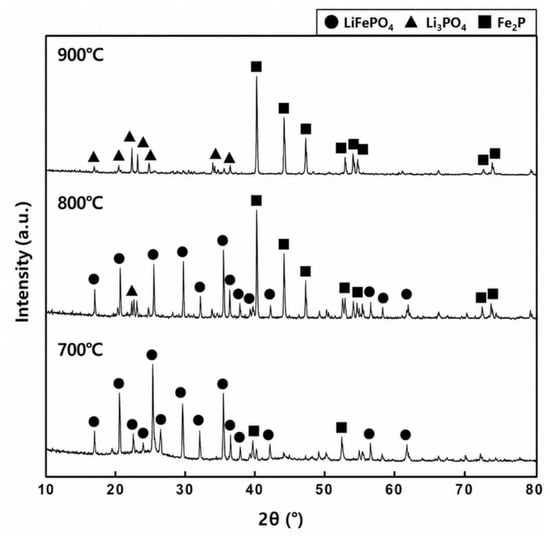
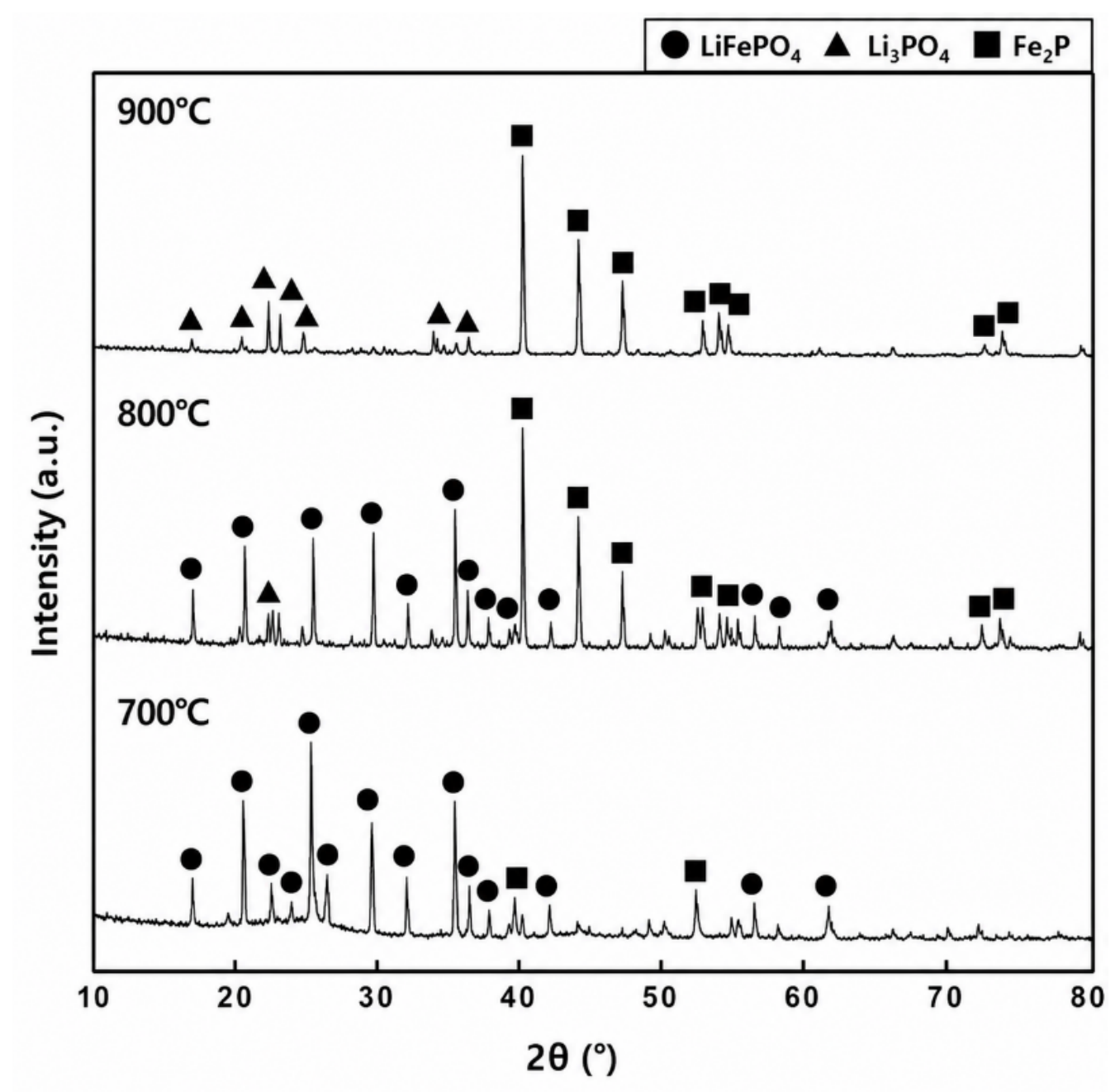
The effect of hydrogen-reduction temperature on the phase transformation of the LFP cathode manufacturing byproduct was investigated at 700, 800, and 900 °C for 3 h under an H2 atmosphere. The temperatures were selected based on the thermal behavior observed in the TGA described in Section 2.3. Figure 6 shows the XRD patterns of the products obtained at the investigated temperatures.
Figure 6.
XRD patterns of the LFP cathode manufacturing byproduct after hydrogen reduction at 700, 800, and 900 °C for 3 h under an H2 atmosphere.
At 700 °C, LiFePO4 remained detectable together with newly formed Li3PO4 and Fe2P, indicating that the transformation of the original LFP phase had begun but remained incomplete within the applied holding time. Increasing the temperature to 800 °C reduced the intensity of the residual LiFePO4 peaks, while Li3PO4 and Fe2P became more prominent. At 900 °C, LiFePO4 peaks were no longer detectable, and Li3PO4 and Fe2P were identified as the predominant crystalline phases. These observations indicate progressively more extensive transformation of the original LFP phase with increasing temperature under the investigated conditions. Because XRD was used primarily for qualitative phase identification in this study, the absence of detectable diffraction peaks was not taken as proof of complete conversion or quantitative phase removal.
The significance of the H2-assisted treatment lies in the redistribution of the constituents of the original LiFePO4 structure into chemically distinct Li-containing phosphate and Fe-rich phosphide phases. This phase redistribution establishes the basis for subsequent water leaching, during which the Li3PO4-containing fraction can be transferred into the aqueous phase while Fe-rich phosphides remain predominantly in the insoluble residue. The temperature-dependent phase evolution may reflect improved reaction progress during the fixed treatment period, although the individual contributions of reaction kinetics and transport processes were not independently determined. Among the temperatures investigated, 900 °C was therefore selected for subsequent experiments because it produced the most extensive detectable transformation of LiFePO4 into the target phase assemblage within the applied holding time.
3.2. Effect of Holding Time on the Hydrogen-Reduction Behavior
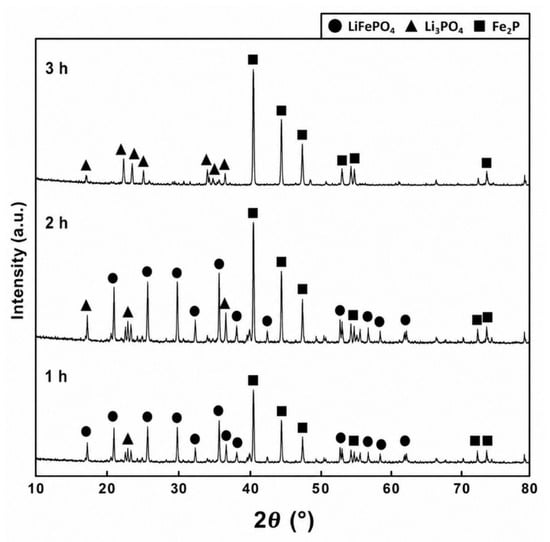
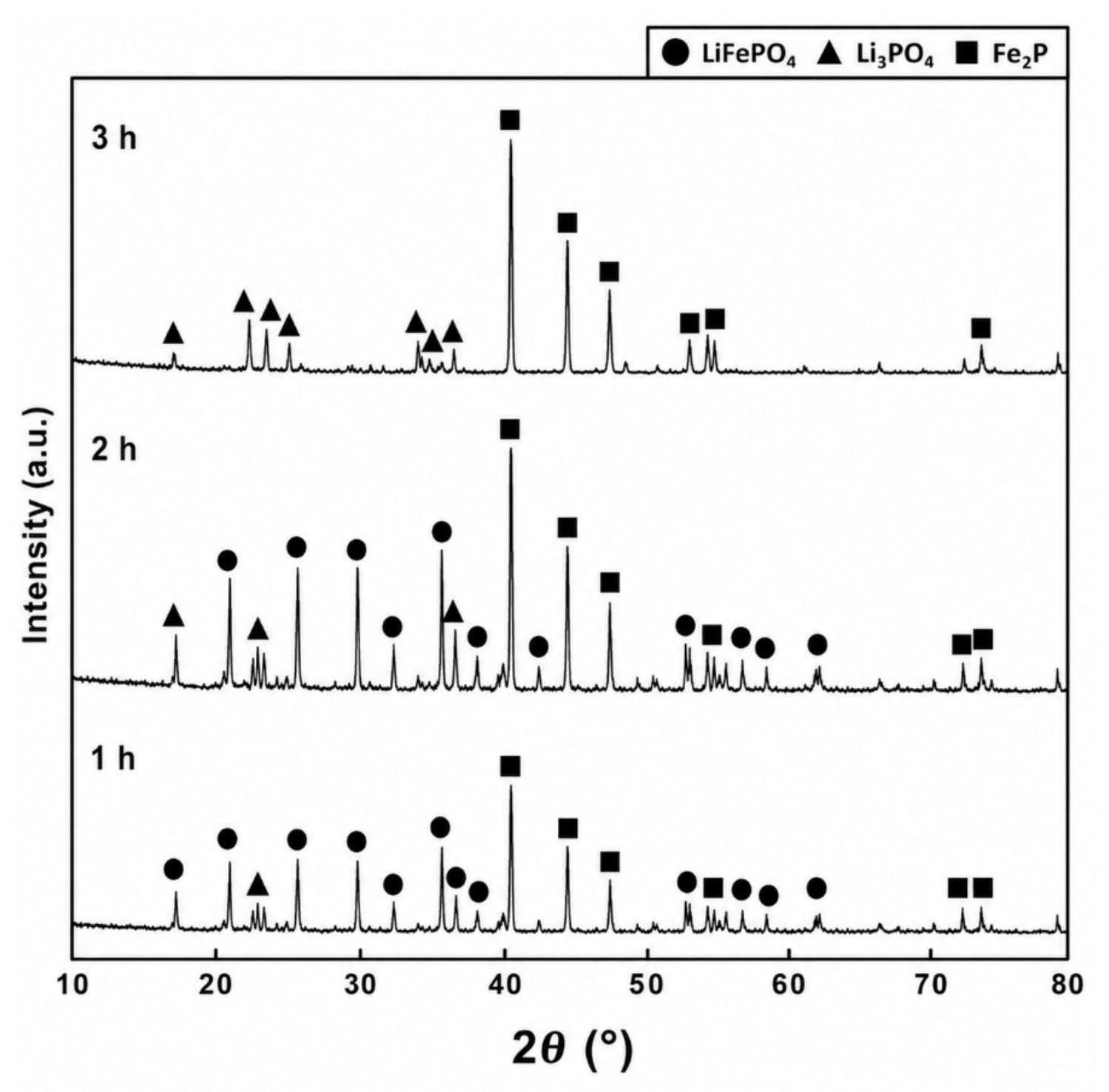
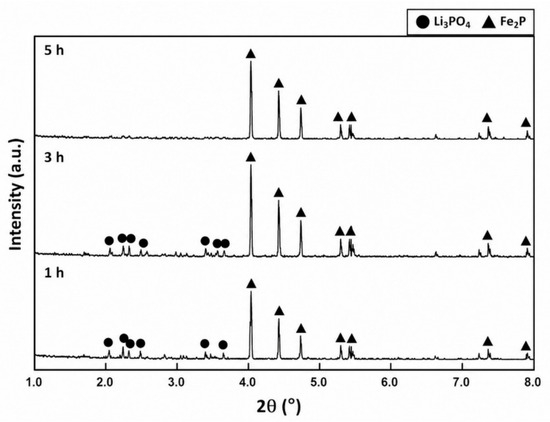
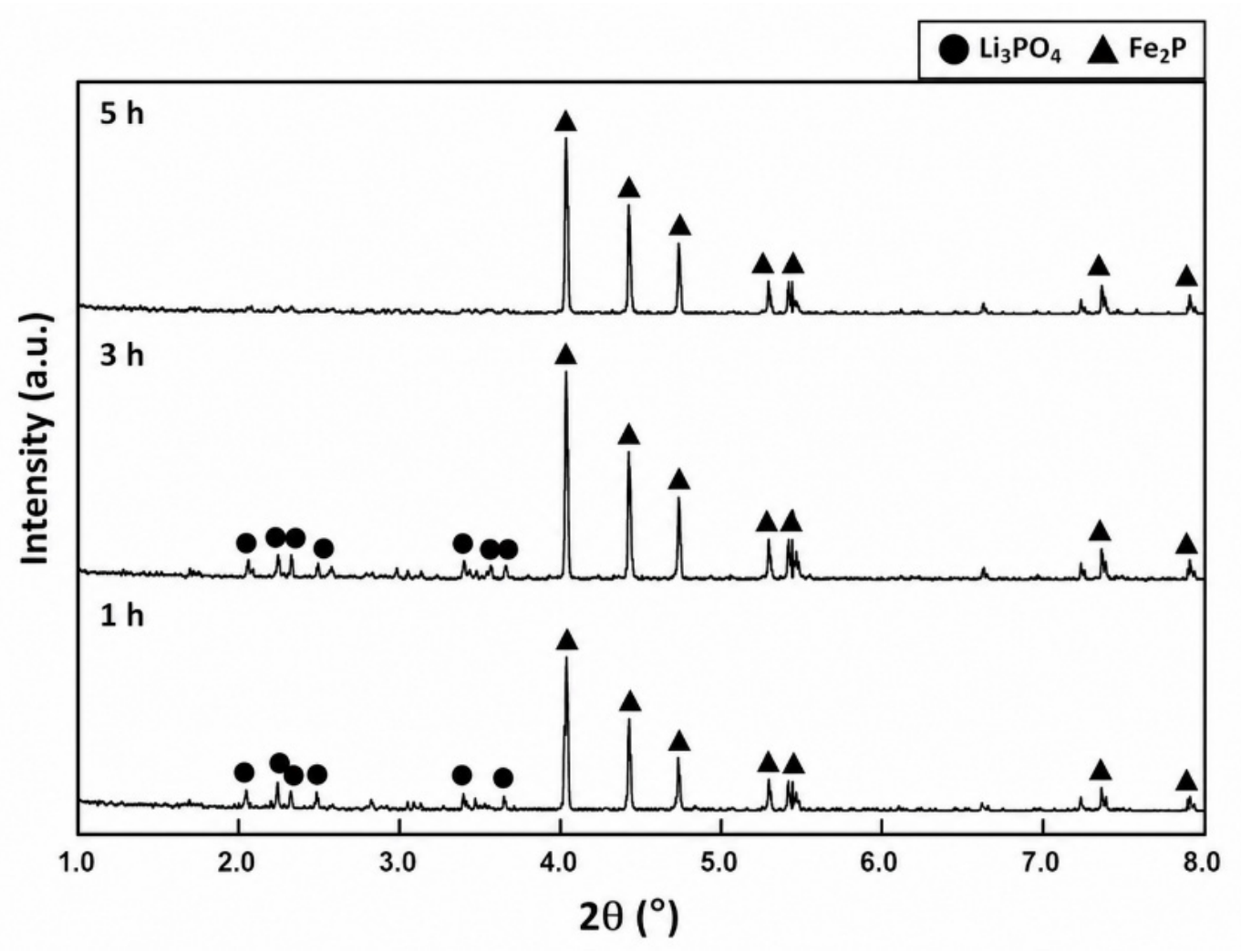
The effect of holding time on the hydrogen-reduction behavior of the LFP cathode manufacturing byproduct was investigated at the selected temperature of 900 °C. Figure 7 shows the XRD patterns of the products obtained after holding times of 1, 2, and 3 h under an H2 atmosphere.
Figure 7.
XRD patterns of the LFP cathode manufacturing byproduct after hydrogen reduction at 900 °C for 1, 2, and 3 h under an H2 atmosphere.
After 1 h, Li3PO4 and Fe2P were detected together with residual LiFePO4, indicating that phase transformation had occurred but remained incomplete within the applied holding time. The LiFePO4 peaks became less pronounced after 2 h and were no longer detectable after 3 h, when Li3PO4 and Fe2P were identified as the predominant crystalline phases. These observations indicate that extending the holding time promoted the progression of the H2-assisted transformation at a fixed temperature.
The time-dependent phase evolution suggests that the duration of exposure to the reducing atmosphere is an important operating parameter for establishing the Li3PO4-rich and Fe-rich phosphide fractions required for subsequent separation. Although longer holding times may allow further gas–solid interaction and phase transformation, the present results do not identify the rate-controlling mechanism or establish quantitative reaction kinetics. Accordingly, 3 h was selected for the subsequent water-leaching experiments because it provided the most extensive detectable transformation of LiFePO4 among the investigated holding times, rather than because it was demonstrated to be a kinetic or industrial optimum.
3.3. Effect of Solid-to-Liquid Ratio on the Recovery of the Li3PO4-Rich Intermediate
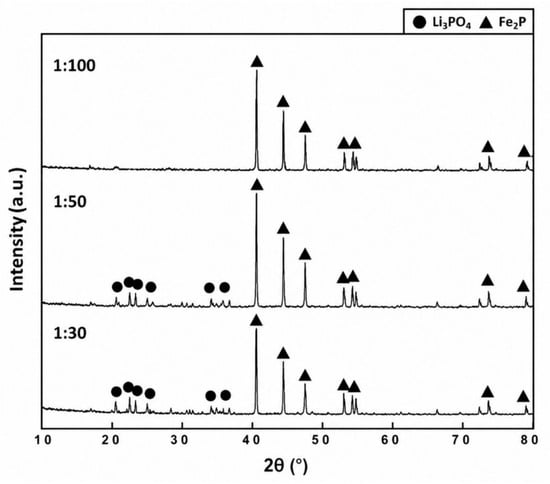
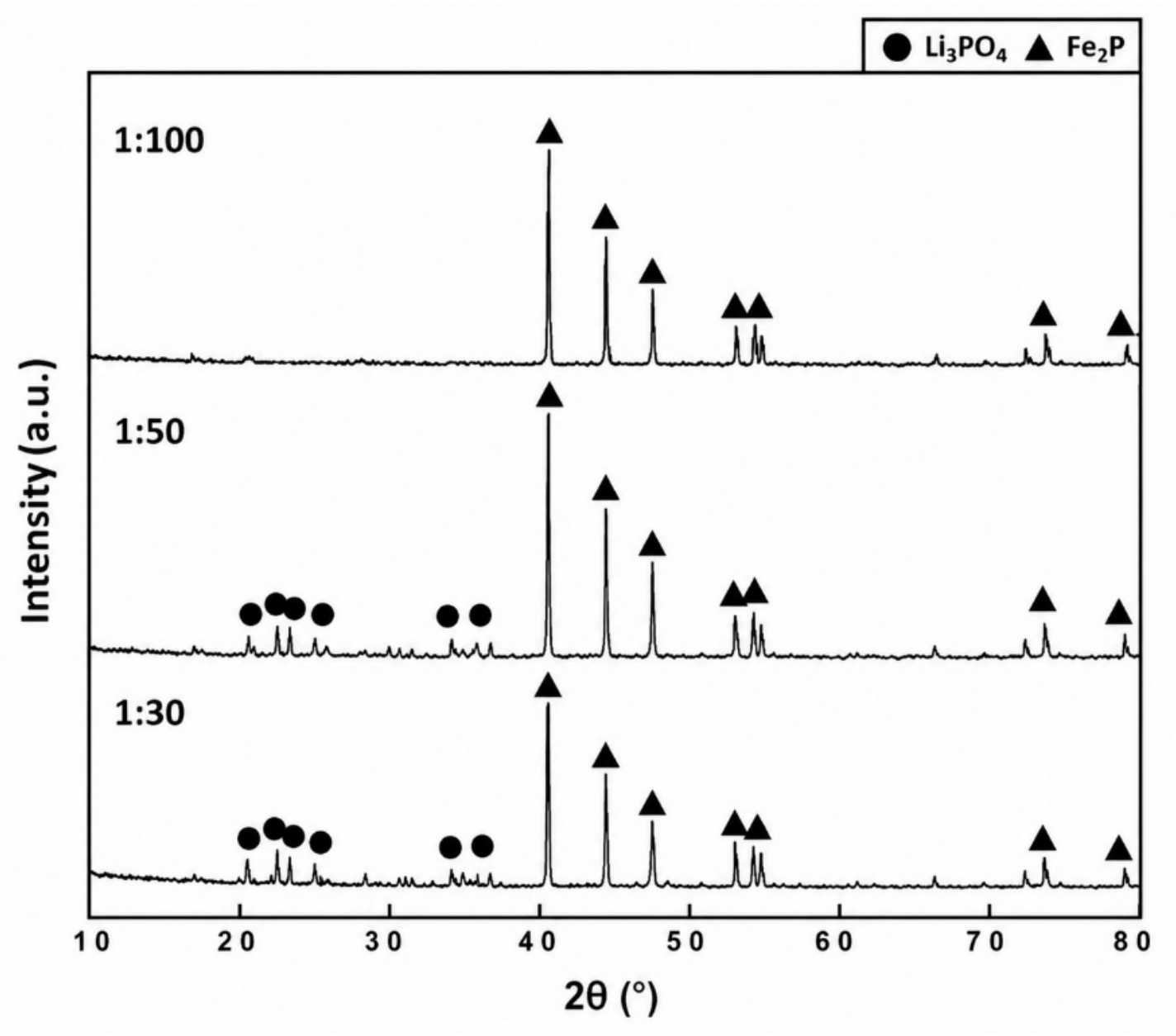
The effect of the solid-to-liquid ratio on the separation of the Li3PO4-rich fraction from the Fe-rich phosphide residue was investigated by water leaching of the hydrogen-reduced product. As shown in Figure 8, Li3PO4 and Fe2P peaks were detected in the insoluble residues obtained at solid-to-liquid ratios of 1:30 and 1:50, whereas Li3PO4 peaks were no longer detectable at 1:100. This trend indicates that increasing the liquid volume promoted the removal of the crystalline Li-containing phosphate fraction from the residue, consistent with the limited aqueous solubility of Li3PO4. To determine whether additional water improved the recovery of the isolated intermediate, quantitative Li-recovery experiments were conducted at solid-to-liquid ratios of 1:100 and 1:150.
Figure 8.
XRD patterns of the water-insoluble residues obtained after water leaching of the hydrogen-reduced product at solid-to-liquid ratios of 1:30, 1:50, and 1:100.
For the quantitative Li-recovery experiments, 6.0 g of the initial LFP cathode manufacturing byproduct was used, whereas 5.0 g was used in the separate H2-reduction experiments investigating phase transformation. Based on the initial Li content of 3.03 wt.%, the Li mass in the 6.0 g feed was 0.1818 g. Lithium recovery was calculated according to Equation (5), as defined in Section 2.6. The quantitative recovery results are summarized in Table 4. The measured Li contents of the recovered products were close to the theoretical Li content of stoichiometric Li3PO4 (approximately 17.98 wt.%), supporting their identification as Li3PO4-rich intermediates.
Table 4.
Lithium recovery at different solid-to-liquid ratios during water leaching.
Increasing the solid-to-liquid ratio from 1:100 to 1:150 required 50% more water but improved the measured Li recovery by only 0.02 percentage points. The additional liquid volume would also increase the amount of water requiring removal during subsequent product recovery. Accordingly, 1:100 was selected as the laboratory-scale condition that avoided additional water consumption without an appreciable reduction in measured Li recovery. Although the small difference between the two recoveries could not be assessed statistically because replicate experiments were not performed, the results demonstrate that a substantial fraction of the initial Li remained unrecovered in the isolated intermediate. This finding identifies Stage I recovery as an important target for further process improvement without substantially increasing water consumption.
3.4. Effect of Water-Leaching Time on the Recovery of the Li3PO4-Rich Intermediate
The effect of leaching time on the separation of the Li-containing phosphate phase from the Fe-rich phosphide residue was investigated at the selected solid-to-liquid ratio of 1:100. Figure 9 shows the XRD patterns of the insoluble residues obtained after leaching for 1, 3, and 5 h. Diffraction peaks corresponding to Li3PO4 and Fe2P were detected after 1 h. Although the intensity of the Li3PO4 peaks decreased after 3 h, they remained detectable, indicating that the separation of the crystalline Li-containing phosphate fraction was incomplete at these shorter leaching times.
Figure 9.
XRD patterns of the water-insoluble residues obtained after water leaching for 1, 3, and 5 h at a solid-to-liquid ratio of 1:100.
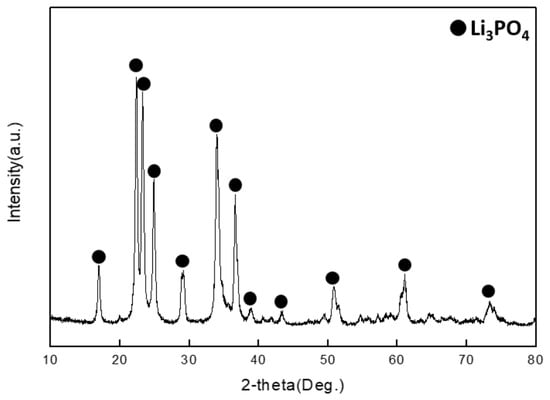
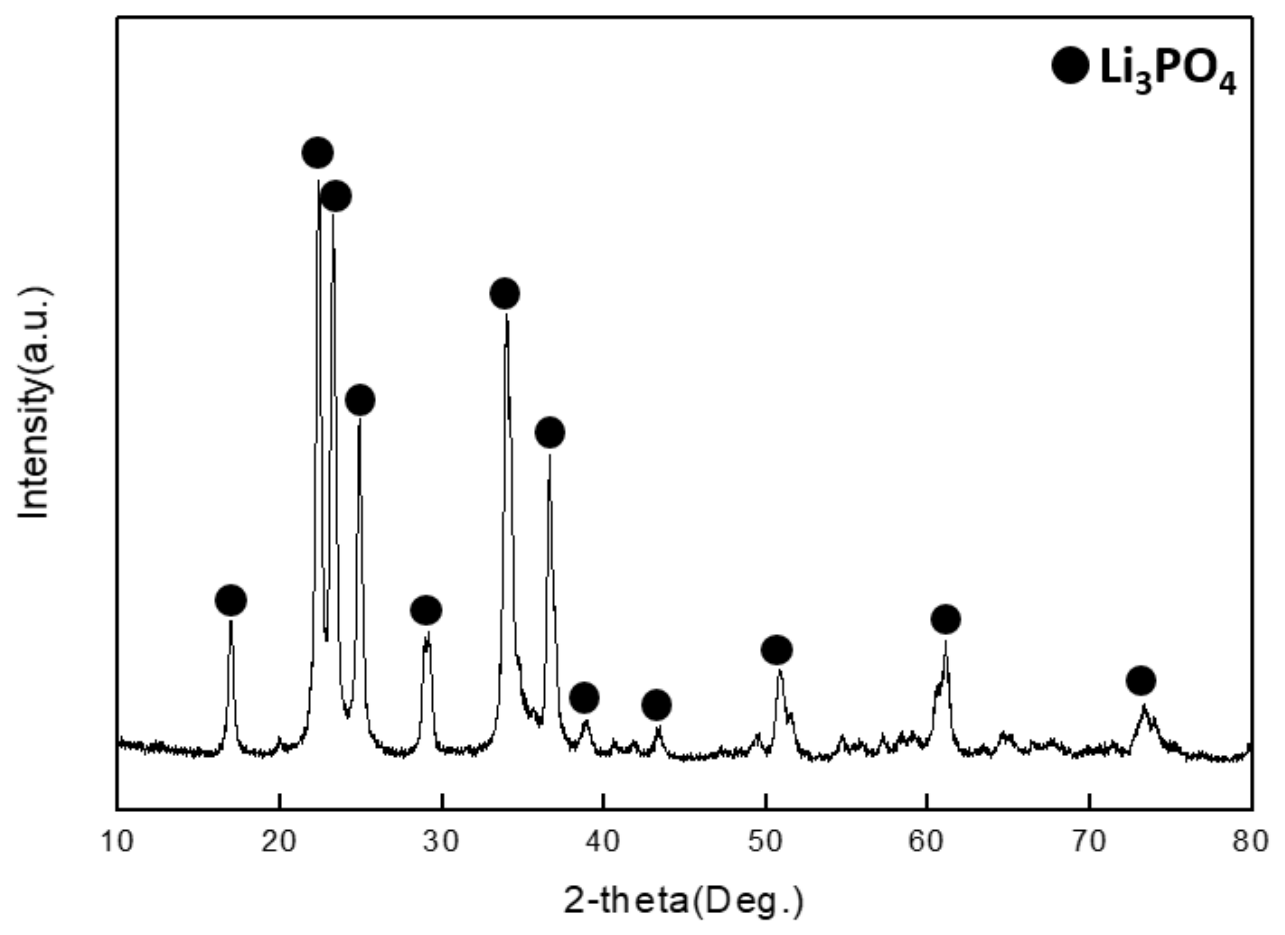
After 5 h, Li3PO4 peaks were no longer detectable in the insoluble residue, whereas Fe2P remained the predominant crystalline phase. This trend indicates that prolonged contact with water promoted the separation of the Li3PO4-containing fraction from the Fe-rich residue under the investigated conditions. However, the absence of detectable Li3PO4 peaks does not establish complete phase removal because residual amounts below the XRD detection limit cannot be excluded. The Li-containing filtrate obtained after 5 h was concentrated and dried, yielding 0.47 g of a Li3PO4-rich intermediate containing 17.43 wt.% Li. Based on the initial Li mass of 0.1818 g in the 6.0 g LFP feed used for the lithium-recovery experiment, the recovered Li mass was approximately 0.0819 g, corresponding to a Stage I Li recovery of 45.06% according to Equation (5). The measured Li content was close to the theoretical value for stoichiometric Li3PO4 (approximately 17.98 wt.%), supporting the assignment of the recovered material as a Li3PO4-rich intermediate. XRD analysis of the recovered intermediate identified Li3PO4 as the predominant crystalline phase, with no detectable Fe2P peaks (Figure 10). Together, the XRD patterns of the insoluble residue and recovered intermediate support separation of the Li3PO4-rich fraction from Fe-rich phosphides. Nevertheless, the measured Li recovery of 45.06% demonstrates that the disappearance of detectable Li3PO4 peaks from the residue did not correspond to quantitative recovery of Li in the isolated intermediate. The 5 h condition was therefore selected based on the observed phase separation, rather than a demonstrated maximum in Li recovery, because recovery was not quantified at every leaching time. The recovered Li3PO4-rich intermediate was subsequently used for CaCO3-assisted thermal conversion under a CO2 atmosphere.
Figure 10.
XRD pattern of the Li3PO4-rich intermediate recovered after water leaching, filtration, evaporation, and drying.
3.5. Effect of Temperature on CaCO3-Assisted CO2 Thermal Conversion
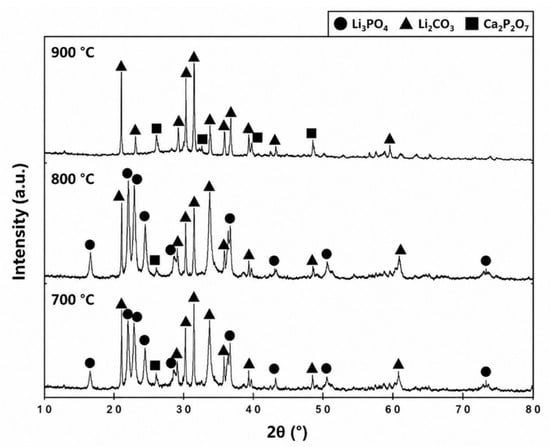
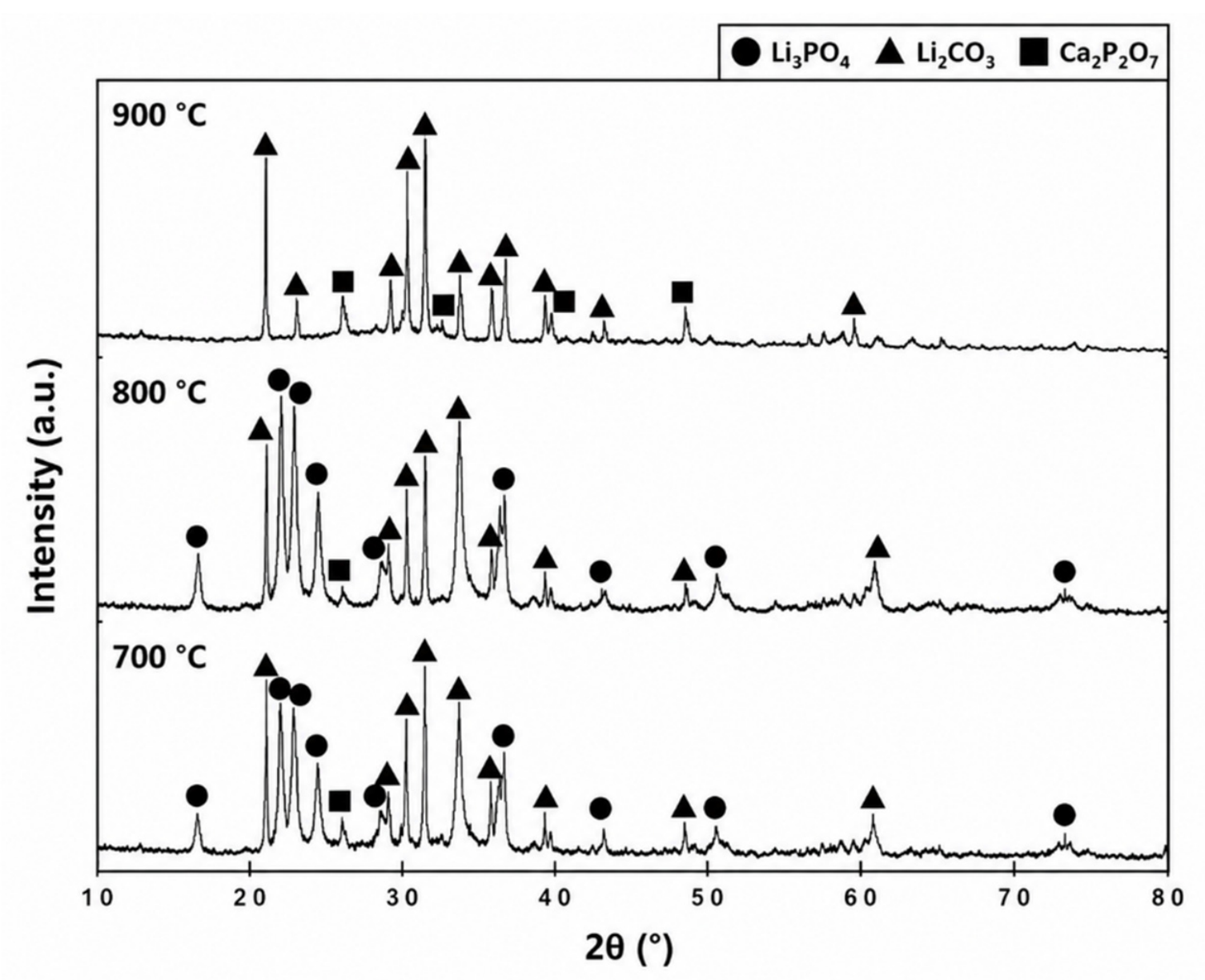
The effect of temperature on the CaCO3-assisted conversion of the Li3PO4-rich intermediate was investigated at 700, 800, and 900 °C under a CO2 atmosphere. As shown in Figure 11, Li2CO3 and Ca2P2O7 were identified in the products obtained at all three temperatures, together with residual Li3PO4 at 700 and 800 °C. The intensity of the residual Li3PO4 peaks decreased with increasing temperature, and these peaks were no longer detectable after treatment at 900 °C. This phase evolution indicates that higher treatment temperatures promoted the formation of the Li2CO3- and Ca2P2O7-containing product assemblage under the investigated conditions.
Figure 11.
XRD patterns of the Li3PO4-rich intermediate after CaCO3-assisted thermal conversion at 700, 800, and 900 °C under a CO2 atmosphere.
The concurrent formation of Li2CO3 and Ca2P2O7 is significant for the proposed separation strategy because it indicates the redistribution of lithium and phosphorus from the original phosphate-containing intermediate into chemically distinct carbonate- and calcium-phosphate-containing phases. The formation of the Ca–P-rich phase is consistent with the transfer of phosphorus into a comparatively water-insoluble fraction, while the Li-containing carbonate fraction can be recovered through subsequent water leaching. Thus, the thermal-conversion step serves not only to change the chemical form of lithium but also to establish the phase separation required for downstream Li2CO3 recovery.
The thermodynamic assessment of Equation (3) yielded positive standard Gibbs free-energy changes over the investigated temperature range, indicating that the proposed overall conversion is not thermodynamically favored under the phase and standard-state assumptions adopted in the calculation. However, the reliability of these values for representing the actual high-temperature system is subject to two important limitations. First, the Li3PO4 entry available in the HSC Chemistry 6.12 database used in this study specifies thermodynamic parameters over a limited temperature interval of 298.15–300 K, which does not cover the investigated treatment temperatures. Second, the calculation treated Li2CO3 as a solid product, although pure Li2CO3 melts at approximately 993 K and is therefore expected to exist as a liquid at 800 and 900 °C. Consequently, the calculated ΔG° values should be interpreted as indicative results for the specified thermodynamic model rather than quantitatively validated predictions of the actual high-temperature conversion.
At 900 °C, a Li2CO3-containing liquid phase may influence contact and mass transport among the reacting components, potentially contributing to the observed temperature-dependent phase evolution. Moreover, the actual starting material was a Li3PO4-rich intermediate rather than pure Li3PO4, so its phase behavior may differ from that represented by the simplified overall reaction. Nevertheless, neither liquid-phase formation nor a CO2-rich atmosphere, by itself, demonstrates that the overall Gibbs free-energy change becomes negative. Because the XRD measurements were performed after cooling, the high-temperature phase assemblage and detailed reaction pathway remain unresolved. Equation (3) is therefore treated as a formal overall representation of the observed phase redistribution rather than a thermodynamically verified single-step mechanism. Among the investigated temperatures, 900 °C was selected for subsequent experiments because it produced the most extensive detectable transformation of the Li3PO4-rich intermediate, not because it was established as a thermodynamic optimum.
3.6. Effect of Li3PO4-to-CaCO3 Weight Ratio on Phase Conversion
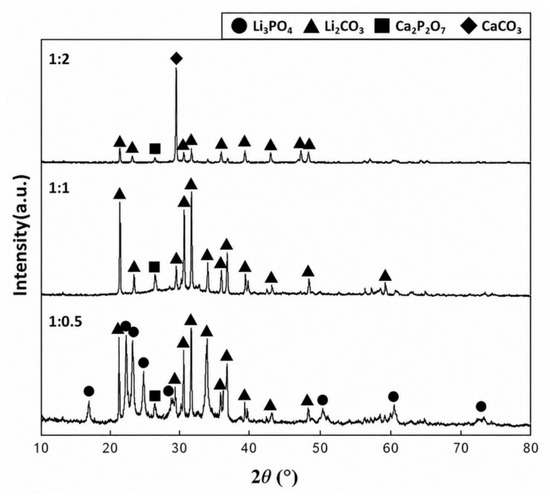
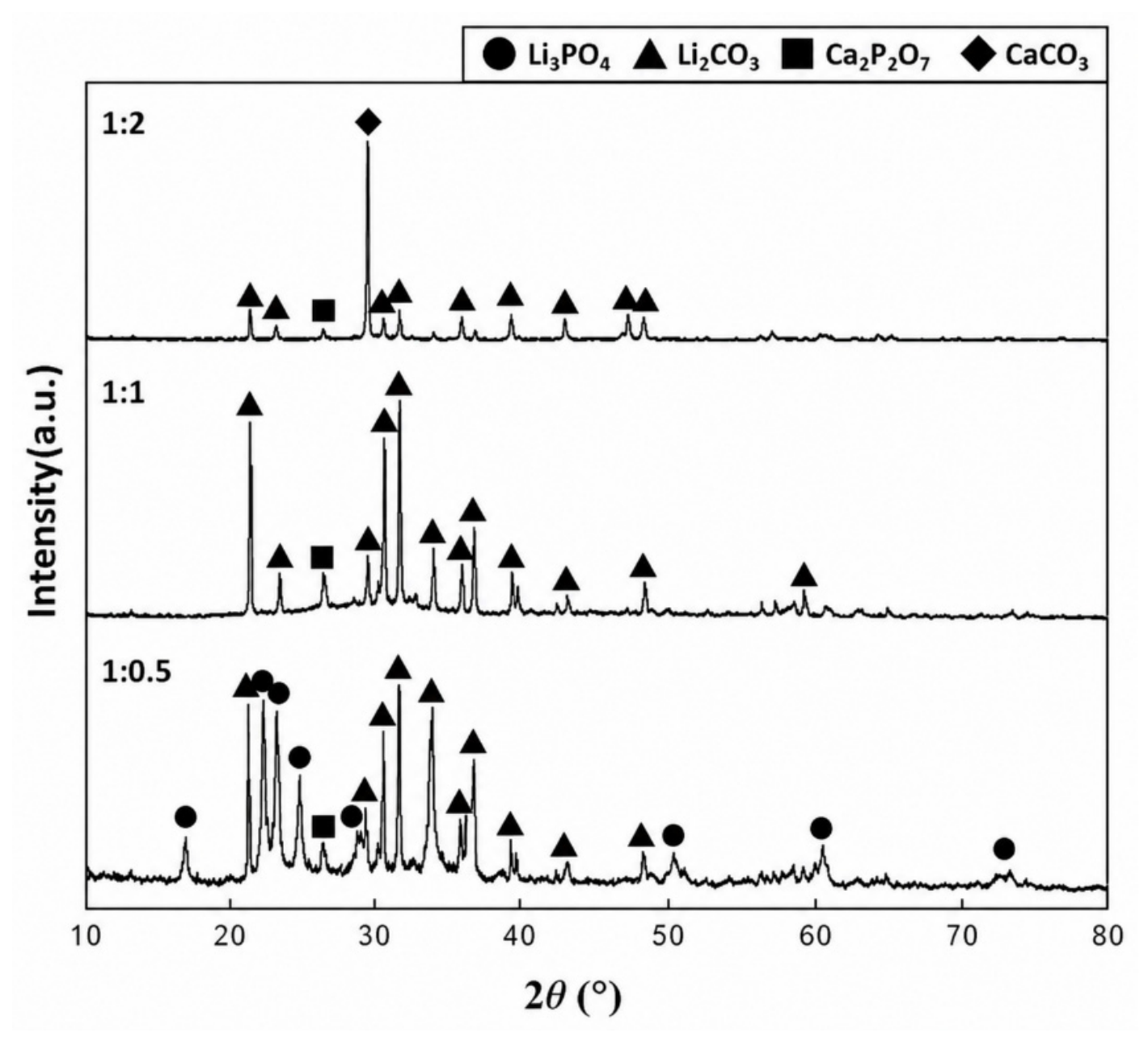
The effect of CaCO3 addition on phase conversion was investigated at 900 °C for 3 h under a CO2 atmosphere. The weight ratio of the Li3PO4-rich intermediate to CaCO3 was varied from 1:0.5 to 1:2, while the other reaction parameters were maintained constant. Figure 12 shows the XRD patterns of the products obtained at the investigated mixing ratios. At a ratio of 1:0.5, Li2CO3 and Ca2P2O7 were identified together with residual Li3PO4, whereas the Li3PO4 peaks were no longer detectable at 1:1. Increasing the CaCO3 addition to 1:2 resulted in the appearance of residual CaCO3 peaks in addition to the Li2CO3 and Ca2P2O7 phases.
Figure 12.
XRD patterns of the products obtained after CaCO3-assisted thermal conversion at 900 °C for 3 h under a CO2 atmosphere using Li3PO4-to-CaCO3 weight ratios of 1:0.5, 1:1, and 1:2.
The dependence of the product assemblage on CaCO3 addition indicates that reagent availability influences the redistribution of lithium and phosphorus during thermal conversion. Residual Li3PO4 at 1:0.5 suggests insufficient CaCO3 addition under the investigated conditions, whereas residual CaCO3 at 1:2 indicates that further reagent addition increased the Ca-containing material remaining in the recovered product. This additional solid material could complicate downstream separation without demonstrating a corresponding improvement in Li recovery. The 1:1 ratio was therefore selected because it produced Li2CO3 and Ca2P2O7 as the predominant crystalline phases without detectable residual Li3PO4 or CaCO3. Because the starting material was a Li3PO4-rich intermediate rather than pure Li3PO4, this ratio represents an empirically selected laboratory condition rather than a stoichiometric optimum.
3.7. Effect of Holding Time on CaCO3-Assisted CO2 Thermal Conversion
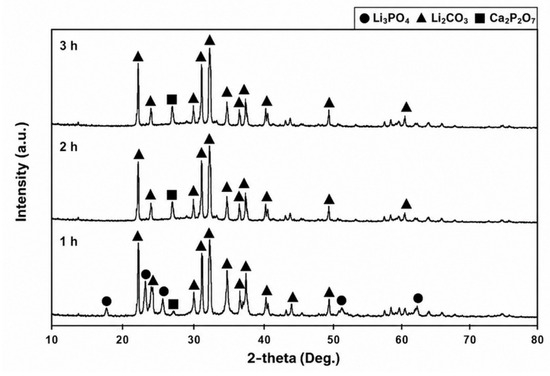
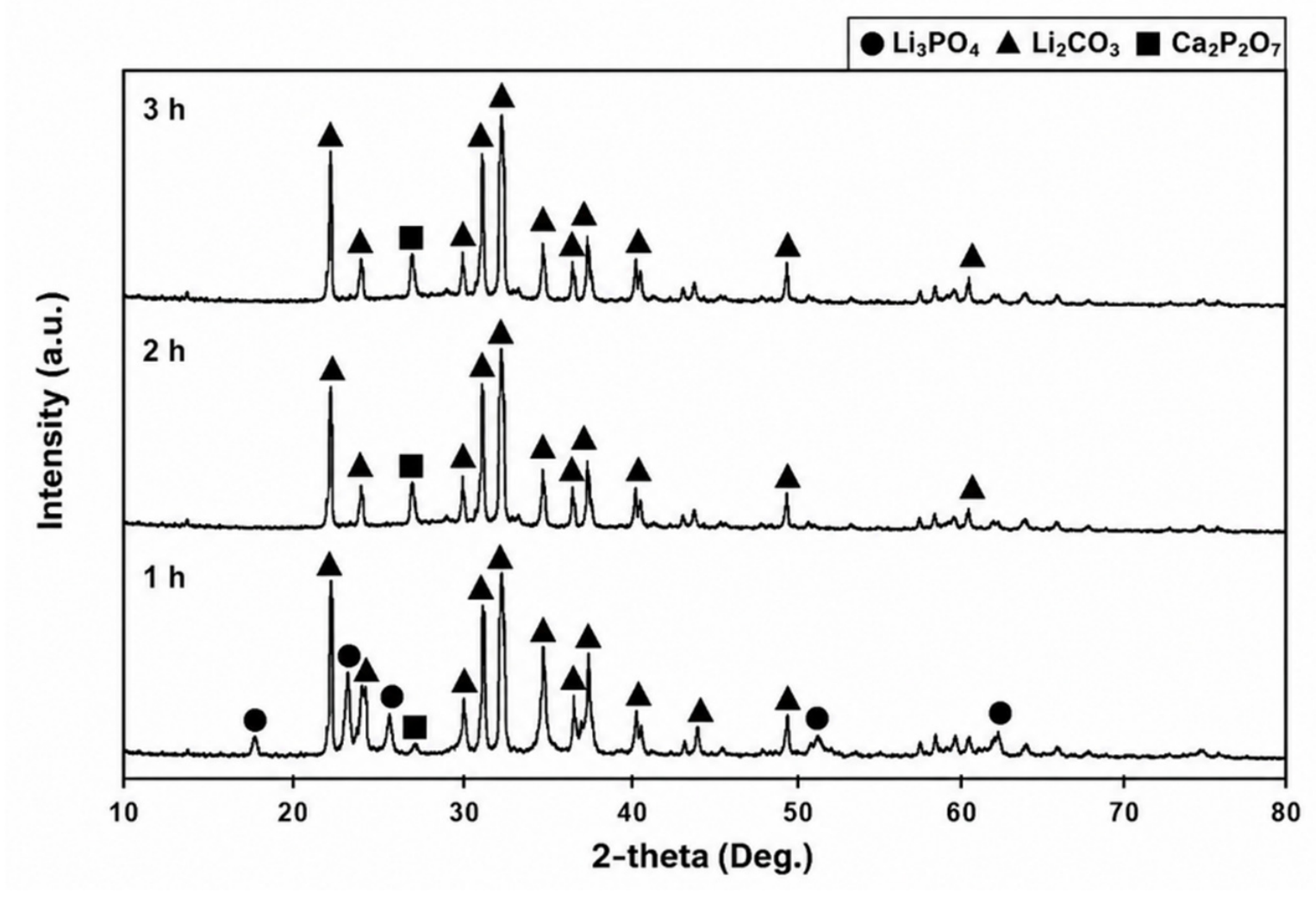
The effect of holding time on the CaCO3-assisted thermal conversion of the Li3PO4-rich intermediate was investigated at 900 °C under a CO2 atmosphere. The weight ratio of the Li3PO4-rich intermediate to CaCO3 was maintained at 1:1, and holding times of 1, 2, and 3 h were examined. Figure 13 shows the XRD patterns of the products obtained under these conditions.
Figure 13.
XRD patterns of the products obtained after CaCO3-assisted thermal conversion at 900 °C using a Li3PO4-rich intermediate-to-CaCO3 weight ratio of 1:1 for 1, 2, and 3 h under a CO2 atmosphere.
After 1 h, Li2CO3 and Ca2P2O7 were detected together with residual Li3PO4, indicating that the target phase assemblage had formed but the transformation remained incomplete within the applied holding time. After 2 h, Li3PO4 peaks were no longer detectable, while Li2CO3 and Ca2P2O7 remained the predominant crystalline phases. Extending the holding time to 3 h produced no marked additional changes in the XRD pattern. Thus, the major detectable phase evolution occurred within 2 h under the investigated conditions. The 2 h condition was selected for subsequent experiments because extending the treatment to 3 h did not demonstrate an additional phase-conversion benefit. This selection avoided an additional hour of high-temperature treatment but should not be interpreted as a quantitatively established kinetic or energy optimum.
3.8. Effect of Solid-to-Liquid Ratio on Li2CO3 Recovery
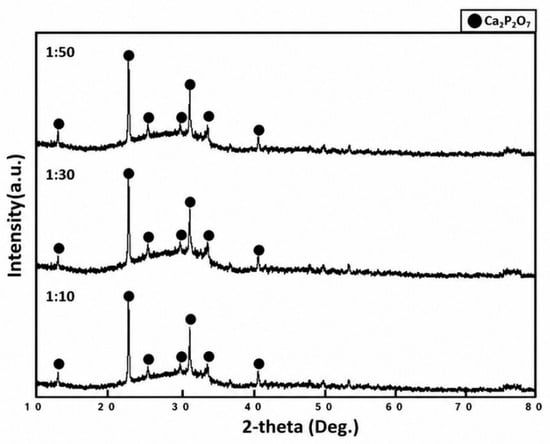
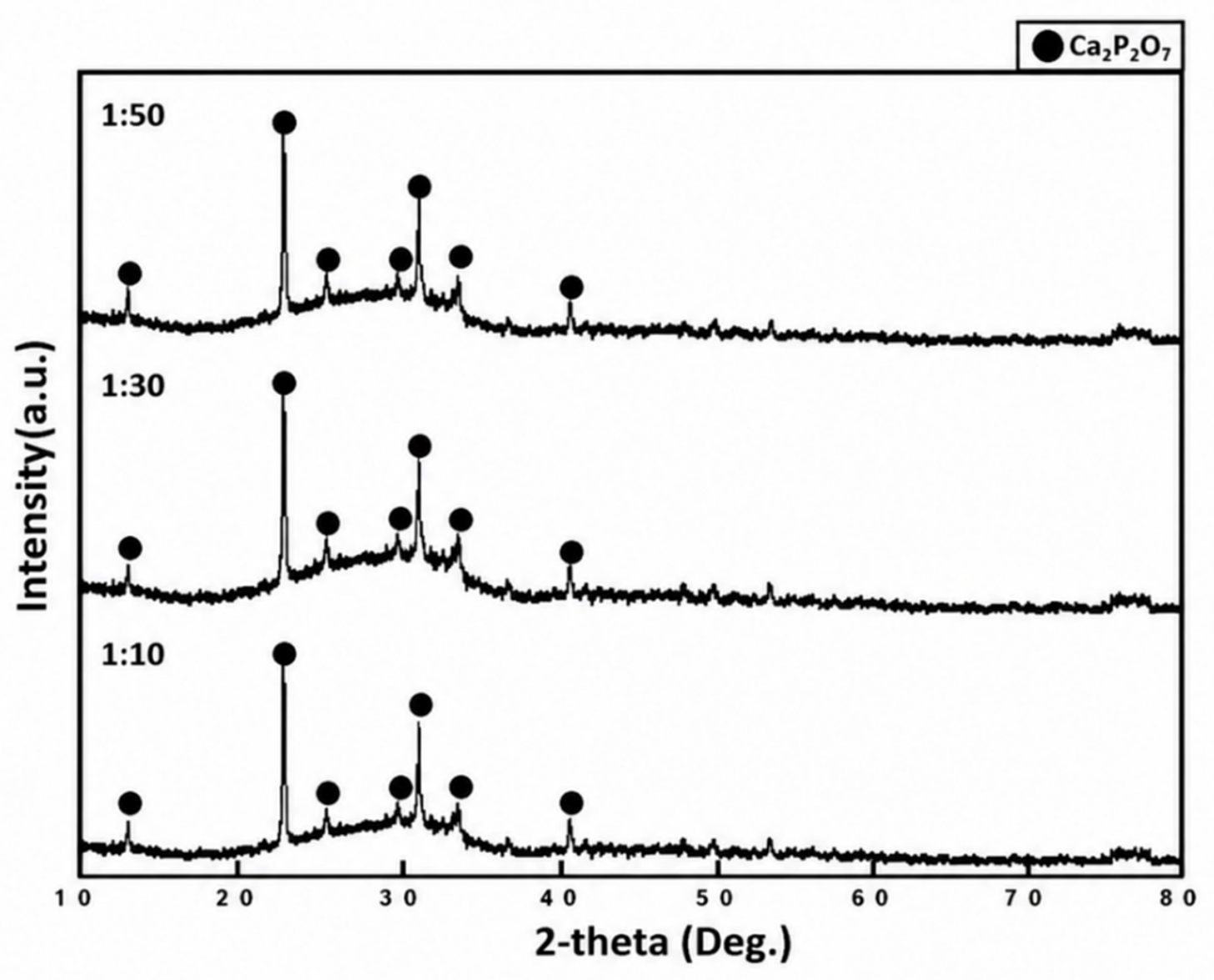
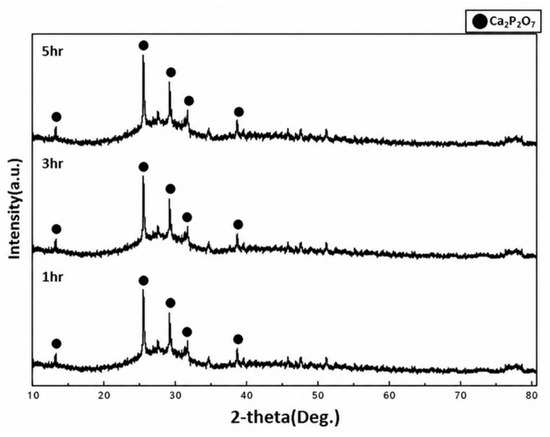
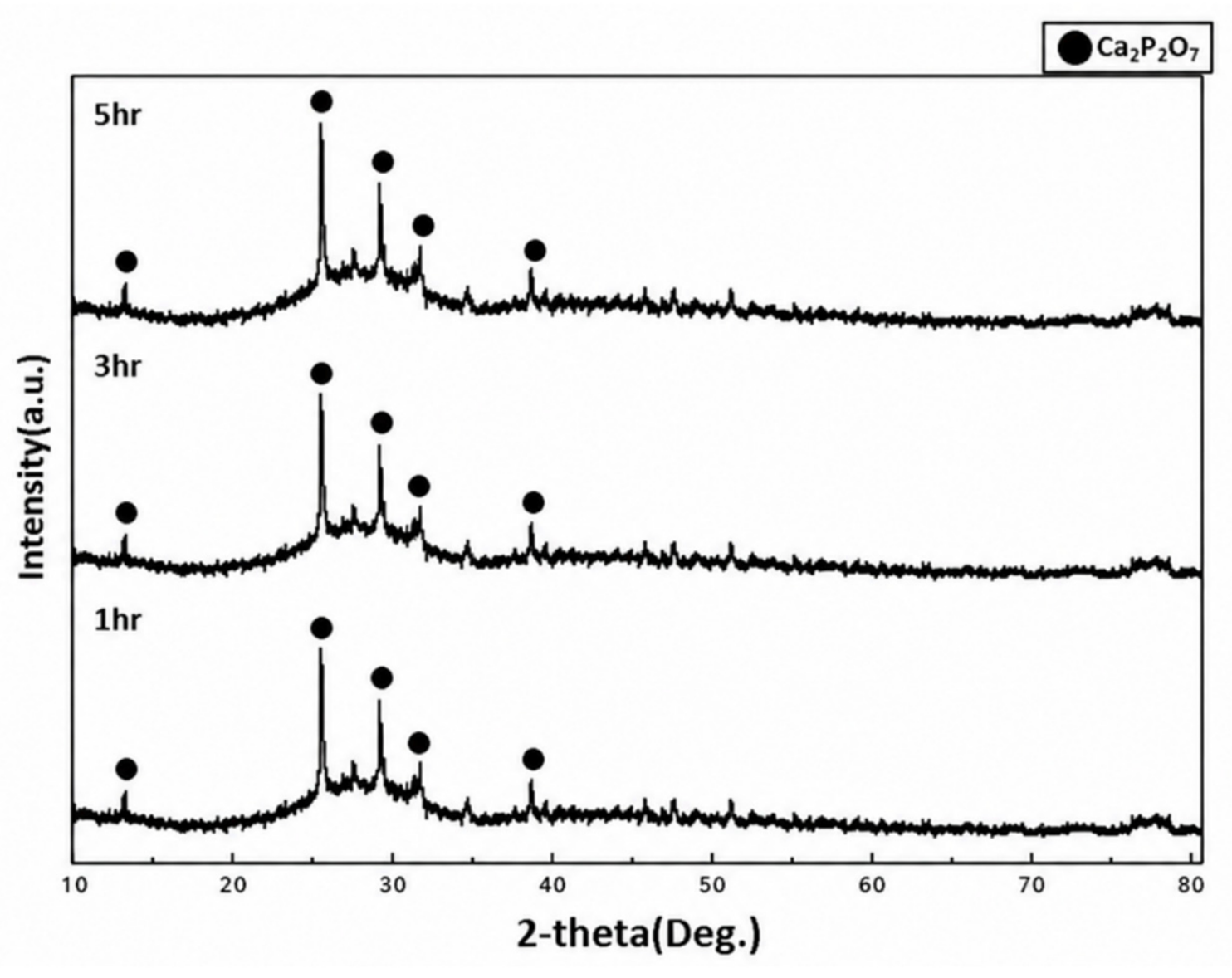
The effect of the solid-to-liquid ratio on lithium recovery was investigated by examining the water-insoluble residues and recovered Li2CO3-rich products. As shown in Figure 14, Ca2P2O7 was the predominant crystalline phase in the insoluble residues obtained at solid-to-liquid ratios of 1:10, 1:30, and 1:50, whereas Li2CO3 peaks were not detectable. This phase assemblage is consistent with the preferential separation of the Li-containing carbonate fraction from the Ca–P-rich residue. Quantitative Li recovery was evaluated separately using the recovered product masses and Li contents.
Figure 14.
XRD patterns of the water-insoluble residues obtained after water leaching of the CaCO3-assisted thermally converted product at solid-to-liquid ratios of 1:10, 1:30, and 1:50.
The Li3PO4-rich intermediate used for thermal conversion contained 16.80 wt.% Li, corresponding to an initial Li mass of 0.5040 g in the 3.00 g feed. Lithium recovery was calculated using Equation (5), as defined in Section 2.6. The quantitative results are summarized in Table 5.
Table 5.
Effect of solid-to-liquid ratio on lithium recovery during water leaching of the thermally converted product.
Increasing the solid-to-liquid ratio from 1:30 to 1:50 required approximately 66.7% more water but increased Li recovery by only 2.23 percentage points. Although 1:50 provided the highest measured recovery and was selected for subsequent laboratory experiments, the additional liquid volume would increase downstream evaporation requirements. Further process optimization should therefore consider the trade-off between Li recovery and water consumption rather than treating the highest measured recovery as an established industrial optimum.
3.9. Effect of Water-Leaching Time on Li2CO3 Recovery
The effect of water-leaching time on Li recovery was investigated at the selected solid-to-liquid ratio of 1:50. Figure 15 shows the XRD patterns of the insoluble residues obtained after leaching for 1, 3, and 5 h. Ca2P2O7 was identified as the predominant crystalline phase in all residues, whereas Li2CO3 peaks were not detectable. Because the crystalline phase assemblages were similar, the effect of leaching time was evaluated primarily using the quantitative Li-recovery results summarized in Table 6.
Figure 15.
XRD patterns of the water-insoluble residues obtained after water leaching for 1, 3, and 5 h at a solid-to-liquid ratio of 1:50.
Table 6.
Effect of water-leaching time on lithium recovery.
The Stage II recovery calculations used the initial Li mass defined in Section 3.8. Extending the leaching time from 1 to 5 h increased Li recovery by 2.05 percentage points while increasing the leaching duration fivefold. This relatively modest improvement indicates a trade-off between additional Li recovery and leaching residence time.
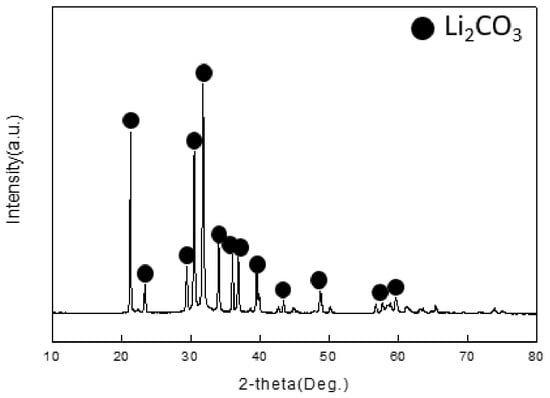
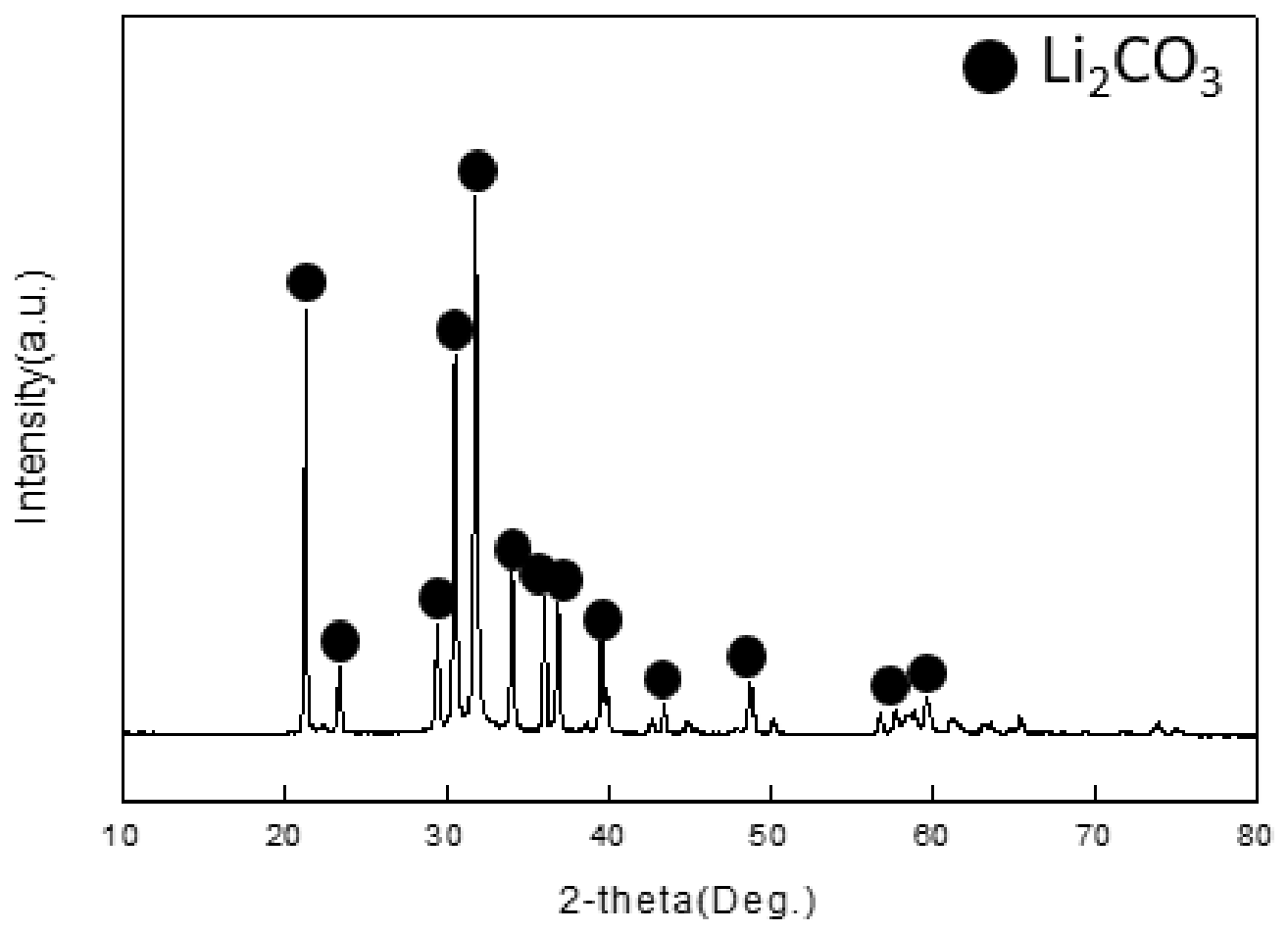
The 5 h condition was selected for further laboratory-scale product recovery because it provided the highest measured Li recovery among the investigated conditions. However, the absence of replicate experiments prevents statistical assessment of the observed differences. XRD analysis of the product recovered after evaporation and drying identified Li2CO3 as the predominant crystalline phase (Figure 16), supporting the recovery of a Li2CO3-rich product through the proposed process without establishing quantitative product purity.
Figure 16.
XRD pattern of the Li2CO3-rich product recovered after water leaching, filtration, evaporation, and drying under the selected leaching conditions.
3.10. Comparison with the Previously Reported CaCl2-Assisted LiCl Recovery Route
The present CaCO3-assisted CO2 conversion route was compared with our previously reported CaCl2-assisted LiCl recovery process [19] to clarify the differences in phase-conversion strategy, lithium recovery, and downstream processing (Table 7). Both processes employ H2 reduction to redistribute lithium from LiFePO4 into a Li3PO4-containing phase; however, their subsequent conversion and separation sequences differ. The previous process directly converts the hydrogen-reduced material into water-soluble LiCl through CaCl2-assisted thermal chlorination, whereas the present process first isolates a Li3PO4-rich intermediate and subsequently converts it into a Li2CO3-rich product using CaCO3 under a CO2 atmosphere.
Table 7.
Comparison of the present CaCO3-assisted CO2 conversion route with the previously reported CaCl2-assisted LiCl recovery route.
The previously reported route achieved an overall Li recovery of 71.70%, whereas the estimated cumulative recovery of the present process was 41.70%. The lower recovery in the present study was primarily associated with the first water-leaching stage, which recovered 45.06% of the initial Li as a Li3PO4-rich intermediate. Although the present route avoids chloride-based secondary conversion and does not require a separate Ca2+ ion-exchange step, these differences do not establish an overall process advantage. Rather, the comparison demonstrates that the choice of secondary conversion reagent and the sequence of intermediate separation determine the recovered lithium compound, downstream processing requirements, and principal sources of Li loss.
3.11. Potential Utilization of the Ca2P2O7-Rich Residue and Process-Level Considerations
The Ca2P2O7-rich residue generated during the proposed process may represent a secondary phosphorus resource rather than solely a waste stream. Calcium-phosphate materials recovered from secondary sources have been investigated for phosphorus recycling, fertilizer production, and other industrial applications [23]. Calcium pyrophosphate has also been studied as a component of calcium-phosphate ceramics and glass-ceramics [24,25]. However, the applicability of the residue obtained in the present study remains unverified because its phase purity, impurity content, phosphorus availability, and application-specific properties were not evaluated. In particular, direct agricultural utilization cannot be assumed without further assessment of phosphorus solubility and agronomic performance.
The proposed route differs from conventional acid-leaching-based hydrometallurgical approaches by using thermal phase transformation followed by water leaching to separate Li-containing compounds from Fe-rich phosphide and Ca–P-rich residues. Although this strategy reduces reliance on concentrated acidic or alkaline lixiviants, it requires two high-temperature treatments at 900 °C, H2 and CO2 supply, and subsequent evaporation and drying of the Li-containing solutions. The leaching results further indicate that increased water consumption does not necessarily produce a proportional improvement in Li recovery and may increase the downstream evaporation burden, as discussed in Section 3.3 and Section 3.8. Therefore, reduced chemical-reagent consumption should not be interpreted as evidence of lower overall energy demand or operating cost.
The estimated cumulative Li recovery of 41.70% was primarily limited by the relatively low recovery of the Li3PO4-rich intermediate during Stage I. Improving this recovery without substantially increasing water consumption is therefore a key requirement for further process development. Because the energy consumption of the thermal treatments, gas supply, evaporation, and drying operations was not quantified, the practical competitiveness of the proposed route relative to conventional hydrometallurgical alternatives remains undetermined. Future work should prioritize improving first-stage Li recovery, reducing thermal-energy demand, and optimizing water use and solution concentration. A detailed mass and energy balance, product-quality assessment, and comparative techno-economic evaluation using comparable feedstocks and product specifications will be necessary to establish the potential for industrial application.
4. Conclusions
This study demonstrated the feasibility of recovering lithium from an LFP cathode manufacturing byproduct through sequential thermal phase conversion and water leaching. The principal scientific contribution is the redistribution of lithium from LiFePO4 into a Li3PO4-rich intermediate and subsequently a Li2CO3-rich product, enabling separation from Fe-rich phosphide and Ca–P-rich residues. The experimentally observed phase evolution supports the proposed separation strategy, while the limitations of the available high-temperature thermodynamic data and phase-state assumptions prevent the calculated standard Gibbs free-energy changes from fully describing the actual conversion behavior.
The principal limitation of the proposed process was the relatively low recovery of the Li3PO4-rich intermediate during Stage I. Under the selected conditions, Stage I and Stage II Li recoveries were 45.06% and 92.54%, respectively, corresponding to an estimated cumulative recovery of approximately 41.70%. This result identifies Stage I as the main opportunity for improving overall Li recovery. The formation of a Ca2P2O7-rich residue also suggests a potential opportunity for secondary phosphorus-resource recovery, although its suitability for further utilization requires additional characterization.
Although the proposed route reduces reliance on concentrated acidic or alkaline lixiviants during leaching, its practical applicability is constrained by the relatively low cumulative Li recovery, two high-temperature treatments, and the water consumption and evaporation requirements associated with product recovery. The limited recovery improvements obtained by increasing liquid volume further emphasize the need to balance Li recovery against downstream water and energy requirements. Consequently, the present findings do not establish an overall energy, economic, or environmental advantage over conventional hydrometallurgical alternatives. Further development should prioritize improving first-stage Li recovery while minimizing water and energy demand, supported by detailed mass and energy balances, product-quality assessment, and comparative techno-economic evaluation.
Author Contributions
Conceptualization, D.-H.K. and J.-P.W.; methodology, D.-H.K. and J.-P.W.; validation, D.-H.K. and J.-P.W.; formal analysis, D.-H.K.; investigation, D.-H.K.; resources, J.-P.W.; data curation, D.-H.K.; writing—original draft preparation, D.-H.K.; writing—review and editing, J.-P.W.; visualization, D.-H.K.; supervision, J.-P.W.; project administration, J.-P.W.; funding acquisition, J.-P.W. All authors have read and agreed to the published version of the manuscript.
Funding
This work was supported by the Technology Innovation Program (Development of Manufacturing Technology for >99.5-Grade Cathode Raw Materials [Lithium Compounds, NCM/NCA] by Up-Cycling from Waste Box Saggar and Zero-Emission Discharge by Recycling of Whole By-Products; Project No. 20024238), funded by the Ministry of Trade, Industry and Energy (MOTIE), Republic of Korea.
Data Availability Statement
The original contributions presented in this study are included in the article. Further inquiries can be directed to the corresponding author.
Conflicts of Interest
The authors declare no conflicts of interest.
References
- Park, H.K. The Research and Development Trend of Cathode Materials in Lithium Ion Battery. J. Korean Electrochem. Soc. 2008, 11, 197–210. [Google Scholar] [CrossRef] [Scilit]
- Goodenough, J.B.; Kim, Y. Challenges for Rechargeable Li Batteries. Chem. Mater. 2010, 22, 587–603. [Google Scholar] [CrossRef] [Scilit]
- Xu, Y.; Zhang, B.; Ge, Z.; Zhang, S.; Song, B.; Tian, Y.; Deng, W.; Zou, G.; Hou, H.; Ji, X. Advances and perspectives towards spent LiFePO4 battery recycling. J. Clean. Prod. 2024, 434, 140077. [Google Scholar] [CrossRef] [Scilit]
- Wen, G.; Yuan, S.; Dong, Z.; Ding, H.; Gao, P. Recycling of spent lithium iron phosphate battery cathode materials: A review. J. Clean. Prod. 2024, 474, 143625. [Google Scholar] [CrossRef] [Scilit]
- Xu, Z.; Gao, L.; Liu, Y.; Li, L. Review—Recent Developments in the Doped LiFePO4 Cathode Materials for Power Lithium Ion Batteries. J. Electrochem. Soc. 2016, 163, A2600–A2610. [Google Scholar] [CrossRef] [Scilit]
- Padhi, A.K.; Nanjundaswamy, K.S.; Goodenough, J.B. Phospho-Olivines as Positive-Electrode Materials for Rechargeable Lithium Batteries. J. Electrochem. Soc. 1997, 144, 1188–1194. [Google Scholar] [CrossRef] [Scilit]
- Yu, L.; Bai, Y.; Polzin, B.; Belharouak, I. Unlocking the value of recycling scrap from Li-ion battery manufacturing: Challenges and outlook. J. Power Sources 2024, 593, 233955. [Google Scholar] [CrossRef] [Scilit]
- Azimi, G.; Mohammad Zadeh, A.H. Recycling of spent lithium iron phosphate batteries—A review of processes, economics, and carbon footprint. Waste Manag. 2026, 209, 115203. [Google Scholar] [CrossRef] [Scilit] [PubMed]
- Choi, J.-W.; Shim, H.-W.; Kim, H.-I.; Kim, S.; Tran, D.T.; Bae, M. Toward closed-loop hydrometallurgy: A critical review of wastewater reuse strategies for end-of-life LiFePO4 battery recycling. Green Chem. 2025, 27, 10423–10443. [Google Scholar] [CrossRef] [Scilit]
- Bian, D.; Sun, Y.; Li, S.; Tian, Y.; Yang, Z.; Fan, X.; Zhang, W. A novel process to recycle spent LiFePO4 for synthesizing LiFePO4/C hierarchical microflowers. Electrochim. Acta 2016, 190, 134–140. [Google Scholar] [CrossRef] [Scilit]
- Zheng, R.; Zhao, L.; Wang, W.; Liu, Y.; Ma, Q.; Mu, D.; Li, R.; Dai, C. Optimized Li and Fe recovery from spent lithium-ion batteries via a solution-precipitation method. RSC Adv. 2016, 6, 43613–43625. [Google Scholar] [CrossRef] [Scilit]
- Shin, E.J.; Kim, S.; Noh, J.-K.; Byun, D.; Chung, K.Y.; Kim, H.-S.; Cho, B.-W. A green recycling process designed for LiFePO4 cathode materials for Li-ion batteries. J. Mater. Chem. A 2015, 3, 11493–11502. [Google Scholar] [CrossRef] [Scilit]
- Zhang, B.; Qu, X.; Chen, X.; Liu, D.; Zhao, Z.; Xie, H.; Wang, D.; Yin, H. A sodium salt-assisted roasting approach followed by leaching for recovering spent LiFePO4 batteries. J. Hazard. Mater. 2022, 424, 127586. [Google Scholar] [CrossRef] [Scilit] [PubMed]
- Chen, J.; Li, Q.; Song, J.; Song, D.; Zhang, L.; Shi, X. Environmentally friendly recycling and effective repairing of cathode powders from spent LiFePO4 batteries. Green Chem. 2016, 18, 2500–2506. [Google Scholar] [CrossRef] [Scilit]
- Song, X.; Hu, T.; Liang, C.; Long, H.L.; Zhou, L.; Song, W.; You, L.; Wu, Z.S.; Liu, J.W. Direct regeneration of cathode materials from spent lithium iron phosphate batteries using a solid phase sintering method. RSC Adv. 2017, 7, 4783–4790. [Google Scholar] [CrossRef] [Scilit]
- Zhang, L.; Teng, T.; Xiao, L.; Shen, L.; Ran, J.; Zheng, J.; Zhu, Y.; Chen, H. Recovery of LiFePO4 from used lithium-ion batteries by sodium-bisulphate-assisted roasting. J. Clean. Prod. 2022, 379, 134748. [Google Scholar] [CrossRef] [Scilit]
- Li, X.; Zhou, F.; Gao, S.; Zhao, J.; Wang, D.; Yin, H. NaOH-assisted low-temperature roasting to recover spent LiFePO4 batteries. Waste Manag. 2022, 153, 347–354. [Google Scholar] [CrossRef] [Scilit] [PubMed]
- Jeon, T.-J.; Wang, J.-P. Preparation and Recovery Behavior of Lithium Chloride (LiCl) from Lithium Iron Phosphate (LiFePO4) Cathode Active Materials via Hydrogen Reduction and CaCl2-Assisted Thermal Chlorination. Materials 2026, 19, 1474. [Google Scholar] [CrossRef] [Scilit] [PubMed]
- Li, H.; Xing, S.; Liu, Y.; Li, F.; Guo, H.; Kuang, G. Recovery of Lithium, Iron, and Phosphorus from Spent LiFePO4 Batteries Using Stoichiometric Sulfuric Acid Leaching System. ACS Sustain. Chem. Eng. 2017, 5, 8017–8024. [Google Scholar] [CrossRef] [Scilit]
- Agarwal, N.; Hansda, A.; Abhilash; Meshram, P. Selective Recovery of Lithium from Spent LFP Batteries via Low Temperature Sodium Salt Roasting. Hydrometallurgy 2026, 243, 106749. [Google Scholar] [CrossRef] [Scilit]
- Green, D.W.; Southard, M.Z. (Eds.) Perry’s Chemical Engineers’ Handbook, 9th ed.; McGraw-Hill Education: New York, NY, USA, 2019. [Google Scholar]
- Churikov, A.V.; Ivanishchev, A.V.; Ushakov, A.V.; Gamayunova, I.M.; Leenson, I.A. Thermodynamics of LiFePO4 solid-phase synthesis using iron(II) oxalate and ammonium dihydrophosphate as precursors. J. Chem. Eng. Data 2013, 58, 1747–1759. [Google Scholar] [CrossRef] [Scilit]
- Deng, L.; Dhar, B.R. Phosphorus recovery from wastewater via calcium phosphate precipitation: A critical review of methods, progress, and insights. Chemosphere 2023, 330, 138685. [Google Scholar] [CrossRef] [Scilit] [PubMed]
- Kasuga, T. Bioactive calcium pyrophosphate glasses and glass-ceramics. Acta Biomater. 2005, 1, 55–64. [Google Scholar] [CrossRef] [Scilit] [PubMed]
- Eliaz, N.; Metoki, N. Calcium phosphate bioceramics: A review of their history, structure, properties, coating technologies and biomedical applications. Materials 2017, 10, 334. [Google Scholar] [CrossRef] [Scilit] [PubMed]

Disclaimer/Publisher’s Note: The statements, opinions and data contained in all publications are solely those of the individual author(s) and contributor(s) and not of MDPI and/or the editor(s). MDPI and/or the editor(s) disclaim responsibility for any injury to people or property resulting from any ideas, methods, instructions or products referred to in the content. |
© 2026 by the authors. Licensee MDPI, Basel, Switzerland. This article is an open access article distributed under the terms and conditions of the Creative Commons Attribution (CC BY) license.