


Abstract
The economic value of rare earth elements (REE) is concentrated in Nd, Pr, Dy and Tb. The supply chain for these elements is dominated by a single country, China, which accounts for about 60% of mined production, over 90% of refinement, and nearly 95% of permanent magnet manufacturing. This shifts the critical question from geological availability to the capacity to convert resources into products. Chile hosts several domain types for REE: ion-adsorption regoliths, primary mineralization associated with skarn, iron oxide–apatite (IOA) and iron oxide copper–gold (IOCG) systems, pegmatites and placers, and an Exclusive Economic Zone with marine occurrences. The inventory is organized using a five-level evidence scale, compiled through structured searches of indexed databases and institutional repositories under explicit inclusion criteria. Only one record reaches level 1, Penco, with 27.5 Mt Measured and Indicated at 2292 ppm TREO and 62.9 kt contained TREO. Its grade is two to three times higher than that of ion-adsorption deposits abroad, but its tonnage is one to two orders of magnitude lower. Recoveries vary by element, from 19.53% for Nd to 43.23% for Dy, meaning that the REE oxide it contains does not equate to fully recoverable product. Nahuelbuta reaches 2000 ppm exchangeable, Cerro Carmen contributes 19.81 Mt containing 8203 t of rare earth materials and 1811 t of U, and El Buitre contains 6.6 Mt at 337 mg/kg. Reported concentrations span four orders of magnitude, but only two of the five measurement scales include an associated tonnage. Metallurgical recoverability follows the same pattern: saline desorption is mature and retains Th and U in the solid residue, acid leaching of copper residues reaches 64.5% at laboratory scale, the monazite–xenotime and apatite routes are proven but untested on Chilean material, and no domain has demonstrated separation capability. Opportunities lie in by-product recovery from iron and copper operations, modular development of the central-southern corridor, and domestic separation. Converting the available evidence into comparable figures would reshape the national hierarchy more than additional exploration.
1. Introduction
Rare earth elements (REE) have been established as strategic raw materials for energy transition, transport electrification, renewable power generation, and digital and high-efficiency technologies. The group consists of the fifteen lanthanides plus Y and Sc, and although several have crustal abundances comparable to or higher than those of conventional metals, their economic availability is limited by the scarcity of exploitable concentrations, the complexity of their mineralogical associations, and the inherent difficulty of individual separation [1,2,3]. These limitations are not evenly distributed across the seventeen elements: permanent magnets account for about 95% of global consumption in value terms, so demand is governed by Nd, Pr, Dy, and Tb, with Dy and Tb as the most critical despite representing a smaller fraction of the magnet mass [4,5]. The strategic importance of a deposit therefore depends not only on its total content but also on what elements it contains and whether it is realistic to convert them into marketable products.
The vulnerability of this value chain is intensified by its high geographic and industrial concentration, the magnitude of which depends on the stage examined [6]. China produced approximately 270,000 t of REO in 2025, making up the vast majority of the close to 390,000 t of REO mined globally [7]; for the four magnet-associated REE, the country continues to dominate, accounting for about 60% of mined production, over 90% of refinement and nearly 95% of permanent magnet manufacturing globally [4]. The export controls introduced in 2025 on heavy rare earth elements, compounds, and magnetic products have turned that imbalance into a concrete operational constraint for consuming industries, definitively shifting the discussion from geological availability to the construction of complete value chains [8]. The exploration boom after 2010 revealed that, of the numerous initiatives that had been put in place outside of those by the dominant producer, only a minimal fraction reached production. Those that did reach production encountered a bottleneck in separation and in the commercial placement of individual oxides [7]. Consequently, hosting significant REE occurrences does not guarantee effective market participation without quantified resources, demonstrated metallurgical routes, and the capacity to produce high-purity compounds [9].
Within this context, Chile is a particularly interesting case. Its mining tradition, dominated by Cu and Fe, has generated extensive geological information, infrastructure, industrial capabilities, and large volumes of waste, while the metallogenic diversity of the country includes weathered granitoids, iron oxide–apatite and Fe-Ti-U systems, IOCG systems, pegmatites, sedimentary accumulations, and an extensive Exclusive Economic Zone with environments favorable for ferromanganese nodules and crusts [10,11,12]. Recent studies have also demonstrated REE mineralization in a regolith developed on granitoids of Chile’s Coastal Cordillera. This has expanded the range of environments that are considered prospective for ion-adsorption deposits, a type of deposit that supplies most of the world’s heavy rare earth elements despite its moderate grades [13,14,15].
The degree of knowledge about these domains, however, is uneven. On the best-documented end, the Penco Module has an estimate reported under an international code of 27.5 Mt of Measured and Indicated resources at an average grade of 2292 ppm TREO (equivalent to 62.9 kt contained); it received a favorable environmental qualification in June 2026 [16,17]. At the intermediate level, Cerro Carmen has a historical estimate of 19.81 Mt containing 8203 t of REE and 1811 t of U, predating current reporting codes, and the El Buitre tailings deposit was modeled in three dimensions from 28 drill holes and 755 samples, yielding 6.6 Mt at an average grade of about 337 mg/kg [10,18]. Further behind are systems with a well-demonstrated carrier mineralogy but no tonnage, for example, the Nahuelbuta regoliths, with up to 2000 ppm of exchangeable REE in profiles up to 60 m thick; the zoned apatite of the iron oxide deposits of the Chilean Iron Belt, hosted in orebodies exceeding hundreds of millions of tons but without a published average REE grade; and the pegmatites of the Paleozoic batholith, with point values between 321 and 10,070 ppm [13,19]. Finally, the national tailings cadastre includes more than six hundred deposits with multielement ICP-MS determinations, and the submarine occurrences in the Exclusive Economic Zone are known for their Co, Cu, and Ni content but lack REE analyses [20,21].
This summary reveals the central problem: the existence of mineralization does not equate to the existence of an economically recoverable resource, and the available figures are not mutually comparable. National information combines resources estimated under international codes, historical estimates, academic geostatistical models, point analyses of individual minerals, regional sediment anomalies, surface sampling of tailings, and poorly characterized marine occurrences. Magnitudes are also expressed using different indicators (elemental REE, TREO, TREY, exchangeable fractions, or DREO), whose conversions are non-trivial and whose differences can reach a factor of five for the same material [13]. Extrapolating a concentration measured in an apatite crystal to the full tonnage of an iron deposit, or a surface anomaly to an undelimited volume, produces inflated inventories devoid of technical meaning. Conducting a more rigorous evaluation requires distinguishing among occurrence, characterized mineralization, resource, and reserve and linking each figure to the level of evidence that actually supports it [22].
A second distinction of a mineralogical and metallurgical nature overlays the first. The total REE content is only a first approximation of the potential value of a material: two resources with similar grades may have very different prospects if one is dominated by La and Ce and the other contains higher proportions of Nd, Pr, Dy, and Tb [23,24]. Likewise, a high grade loses relevance if the elements are hosted in refractory phases or if their release requires disproportionate energy and reagent consumption [25]. Carrier mineralogy, deportment during beneficiation, the leachable or desorbable fraction, associated Th and U, the selectivity of separation stages, and the valorization of by-products are therefore as decisive as grade and tonnage [15]. The difference is quantifiable in Chilean materials themselves: leaching tests on copper processing residues in Atacama reached 64.5% recovery of total REE, equivalent to 0.355 kg per ton treated, while in Penco, the average recoveries used in the estimate vary by element, from 19.53% for Nd to 43.23% for Dy [26]. In low-grade resources and secondary materials, differences of that magnitude alone define process viability.
Despite growing interest in critical minerals in Chile, information on REE remains scattered across the scientific literature, institutional cartography and geochemistry, technical reports, tailings cadastres, and studies focused on individual deposits. The existing background addresses parts of the problem (tailings valorization, the global industry context, or characterization of a specific district) but it does not integrate primary, secondary, and marine domains under a common evidence criterion, nor does it benchmark the national inventory against the deposits that actually sustain world production [27,28]. This fragmentation prevents establishing which part of the national potential corresponds to quantified resources, what areas constitute only exploration targets, and which ones have sufficient metallurgical evidence to consider future recovery. The inclusion of REE in the National Critical Minerals Strategy makes this ambiguity especially costly because exploration, research, and public policy decisions require differentiating geological opportunity from technically demonstrable potential [29,30].
The objective of this work is to critically evaluate mineral and alternative rare earth resources in Chile, integrating geology, mineralogy, resource quality, metallurgical recoverability, and the level of available evidence. Background information is organized using an evidence scale that distinguishes formally defined resources, historical estimates or non-standard three-dimensional models, characterized mineralization without tonnage, localized occurrences, and regional anomalies. This is applied transversally to five domains: deposits hosted in regolith and ion-adsorption clays; primary rock-hosted mineralization associated with Fe-Ti-U, IOA-IOCG, and pegmatite systems; sedimentary accumulations and drainage anomalies; tailings and mining waste; and potential marine resources linked to nodules, ferromanganese crusts, and metalliferous sediments. For each domain, carrier phases, elemental composition, inventory scale, recovery evidence, and information gaps are examined together with the conditioning factors that mediate between geological availability and effective value-chain development: association with Th and U, environmental and licensing restrictions, processing of low-grade materials, and the need to prioritize elements of greater technological relevance. The purpose is not to estimate an aggregate figure of national reserves, which the available evidence does not support, but to establish what resources are demonstrated, which ones show recovery potential, where uncertainties are concentrated, and what information must be generated to convert geological occurrences into technically defensible resources.
Four contributions distinguish this work from existing reviews on Chilean critical minerals, rare earth deposits, tailings valorization and global supply. First, the five domains that concentrate rare earth elements in the country are examined jointly and under a single criterion, whereas the available background treats them separately. Second, a five-level evidence scale is applied to every published figure, separating quantified resources from occurrences and showing that only one national record reaches the first level. Third, the Chilean resource is benchmarked in grade and contained metal against the ion-adsorption deposits that sustain world production. Fourth, geological evidence is coupled with metallurgical recoverability, identifying the measurements that would modify the national hierarchy more than any exploration campaign.
Information Sources, Search Strategy and Assignment of Evidence Levels
The evidence base combines two streams. The peer-reviewed literature was retrieved through structured searches in Scopus, Web of Science (Core Collection) and ScienceDirect, with Google Scholar used only to trace citations and locate non-indexed documents. Institutional information was obtained from various organizing bodies that generate the data: the National Geology and Mining Service of Chile, or SERNAGEOMIN (cartography, regional surveys and the tailings cadastre); the Chilean Copper Commission, or COCHILCO, and the Chilean Ministry of Mining (statistics and the National Critical Minerals Strategy); the Chilean Environmental Assessment Service (studies and resolutions). For international benchmarks, data was obtained from the United States Geological Survey (USGS), the International Energy Agency (IEA), and the International Seabed Authority, as well as from technical reports filed under the NI 43-101 and JORC codes.
Queries combined a commodity block with deposit-type, process and geographic blocks in title, abstract and keyword fields, for example, (“rare earth*” OR REE OR TREO) AND (Chile OR “Coastal Cordillera” OR Atacama OR Biobío OR “Exclusive Economic Zone”), with equivalent strings for ion-adsorption regoliths, tailings and leaching, monazite–xenotime and apatite, and ferromanganese nodules. Spanish equivalents (tierras raras, arcillas iónicas, relaves, nódulos polimetálicos) were applied to national repositories whose documents are not indexed internationally.
The search window depended on content—2015–2026 for the global context (demand, supply, trade measures and environmental performance)—with priority given to post-2020 and no lower bound for geology, mineralogy and metallurgy, since several deposit models and the only quantitative records of some districts are older. Searches were last updated in July 2026, which is the cutoff date for the documents cited.
A document was included when it reported original data (analytical determinations, resource estimates, block models, cadastres or process results); addressed one of the five domains, or the global chain allowed traceability of its figures, that is, technique, samples and reporting basis; and was peer-reviewed or issued by a competent institution.
Records were excluded when they reproduced a figure already retrieved from its primary source, consisted of abstracts without accessible data, reported concentrations without stating the methodology or reporting basis, dealt with applications or prices unrelated to resources, or could not be traced to a retrievable document. Press releases were not used as quantitative sources.
Gray literature and institutional reports were admitted conditionally because much of the geological, geochemical and cadastral information on Chile exists only in that form. Three rules applied to such material: the issuing body had to be identifiable and competent and the document publicly retrievable; a quantitative figure was used only when the method, sample support and reporting basis could be established from the document itself; and corporate information was accepted as a resource figure only when backed by a technical report under a recognized code. Historical estimates were retained and labeled as such.
Each record reporting a concentration or tonnage was assigned a level by applying a fixed sequence of questions to the datum itself, not to the magnitude of the figure: tonnage and grade under a recognized code, along with categories and effective date—E1; tonnage from pre-code methods or academic modeling—E2; grade and mineralogy on a delimited body without tonnage—E3; carrier phases without geometry—E4; and drainage geochemistry, surface sampling of residues or occurrences without REE determinations—E5. In borderline cases, the level is assigned according to the most demand that the source can sustain, and an unretrievable primary document moves the record one level down.
This is not a systematic review, nor does it aim to be. Much of the relevant evidence is institutional, non-indexed and heterogeneous. What it provides is traceability, since the sources, the criteria, and the rules that place each figure on a certain level are explicit and can be reapplied.
2. Mineral and Alternative Rare Earth Resources in Chile
2.1. Criticality, Nomenclature and Evidence Levels of National Inventory
2.1.1. Position of Rare Earth Elements in Global Supply Chain
Rare earth elements (REE) include the fifteen lanthanides together with yttrium and scandium, occur in more than 250 minerals, and underpin electronics, automotive, renewable energy, medical and defense technologies [2]. Their strategic relevance does not stem from crustal scarcity (several REE are more abundant than copper or lead) but from the geographic concentration of production and, above all, processing. China has historically contributed 80% to more than 90% of the world’s primary production and controls most of the separation capacity [1,2]. This asymmetry explains why rare earth materials appear on practically all critical raw material lists and why exploration outside China has intensified following the past decade.
Demand is not evenly distributed among the seventeen elements. Growth is dominated by NdFeB permanent magnets, which require Nd and Pr as major components and Dy and Tb as additives that preserve coercivity at high temperature, while Ce and La (the most abundant REE in most deposits) face comparatively saturated markets [1]. Consequently, two deposits with identical total REE grades can have very different economic values depending on their elemental distribution, and a substantial fraction of the reported grade may correspond to low-price elements [31]. Ion-adsorption deposits hosted in regoliths occupy a unique position: they contribute about 80% of the heavy rare earth resources produced worldwide despite representing a smaller fraction of global resource tonnage because they combine moderate grades with profiles enriched in heavy REE and recovery by saline desorption that avoids grinding and intensive acid leaching [14,15].
2.1.2. Nomenclature and Comparability of Published Figures
The Chilean information on REE comes from sources that use different conventions; therefore, a direct comparison of figures requires explicitly stating what each one measures. Industry resource estimates usually report TREO (the sum of oxides of the fourteen stable lanthanides) and TREY or TREO + Y when yttrium is included, expressed in ppm or mass percent; institutional geochemical reports provide elemental concentrations, not oxides, in ppm or mg/kg; and regolith studies distinguish between total REE and exchangeable REE, that is, the fraction effectively desorbable by cation exchange. The difference is not semantic: conversion from element to oxide introduces factors of 1.15 to 1.25 depending on the element, and the exchangeable fraction can represent anything from less than one-fifth to more than half of the total REE in the same profile [13,15]. Recent industrial practice formalizes this distinction through the concept of DREO (desorbable rare earth oxides), estimated from metallurgical recoveries of the ammonium sulfate desorption process and used as the basis for block economic value instead of total grade [17].
A second convention affecting comparison is the cutoff between light and heavy REE. The most common grouping assigns La-Nd to light rare earth elements (LREE), Sm-Gd to intermediate rare earth elements, and Tb-Lu plus Y to heavy rare earth elements (HREE), but part of the literature shifts the boundary to Eu or classifies Y as light based on its ionic radius, which can change the reported HREE/LREE ratio for the same material by several points. Finally, tonnage figures respond to different reporting frameworks—an estimate under CIM or JORC standards, a historical estimate predating those codes, an academic geostatistical model, and a surface sampling campaign of residues are not equivalent categories, although all are expressed in tons.
Accordingly, no value reported here was converted by the authors: every concentration and tonnage is reproduced on the basis stated by its source (TREO, TREY, DREO, exchangeable REE, or individual oxides); that basis is indicated wherever the figure appears, and comparisons between deposits are made only between values expressed on an equivalent basis. The exchangeable fraction is treated throughout as a distinct quantity and is never equated with, or converted into, total REE content.
2.1.3. Domains of Occurrence and Evidence Scale
Chile’s REE potential does not correspond to a single deposit type, nor can it be expressed as an aggregate national figure. Available information describes a continuum ranging from formally quantified mineral resources to historical prospects, mineralization hosted in accessory minerals, sediment anomalies, mine tailings, and submarine occurrences whose economic importance remains to be demonstrated [32]. This distinction is fundamental because a given grade in a block model, a point concentration in apatite or monazite, a drainage sediment anomaly, and an average concentration in a tailings deposit represent different levels of evidence and are not directly comparable. The National Critical Minerals Strategy recognizes REE as critical minerals and highlights the national potential associated with both primary mineralization and weathering profiles capable of concentrating them by adsorption, pointing to Penco and Cerro Carmen among the most relevant expressions currently known [28,30].
On this basis, national resources and occurrences can be organized into five main domains: (i) deposits hosted in regoliths and ion-adsorption clays; (ii) primary mineralization in rock, including Fe-Ti-U-REE, IOA-IOCG, and pegmatite systems; (iii) sedimentary accumulations and geochemical anomalies derived from erosion of enriched sources; (iv) secondary resources contained in tailings and other mining wastes; and (v) potential marine resources associated with ferromanganese nodules and crusts (see Figure 1). This classification allows for the ranking of potential according to tonnage, grade, carrier mineral phase, recoverability and confidence level, avoiding interpretation of every geochemical occurrence as a mineral resource [11,12,33]. Superimposed on these domains is a transversal scale of knowledge maturity, summarized in Table 1, which allows each published record to be placed according to the type of data supporting it and not according to the magnitude of the reported figure.
Figure 1.
The distribution of rare earth resources and occurrences in Chile by geological domain and evidence level, from the Penco Module, the only categorized resource for unquantified submarine occurrences. Includes detail of the Atacama belt, with primary rock-hosted mineralization, and an inset of the oceanic territory with ferromanganese nodules and the crust of the Exclusive Economic Zone.
Table 1.
Rubric of different levels of evidence applied to Chilean rare earth supply.
Placement on this scale depends on the type of datum supporting a figure, not on its magnitude: E1 requires systematic drilling and a block model under a recognized code, with categories and an effective date; E2 requires a tonnage and grade from pre-code methods or academic modeling; E3 requires a mineralogy and grade on a delimited body without tonnage; E4 requires carrier phases without defined geometry; and E5 requires drainage geochemistry, surface sampling of residues or occurrences lacking rare earth determinations. Where the primary document could not be verified, the record was moved down one level. The levels describe the maturity of the information, not the quality of the source.
The scale is not a new classification of mineral resources but rather an ordering of the available evidence adapted from three established families of criteria. From the CRIRSCO codes (JORC, NI 43-101 and equivalents), it requires that any tonnage and grade statement be supported by drilling, a three-dimensional model, categories and an effective date. From the United Nations Framework Classification, it distinguishes between geological knowledge and project maturity. From exploration practice, it borrows a graded sequence from regional anomaly to characterized mineralization. What is specific here is the joining of both ends into a single scale that is applied uniformly to indexed and institutional sources.
Adjacent levels are separated by one discriminating attribute each, so the assignment does not depend on judgement about the source. E1 and E2 differ in the reporting standards: both state tonnage and grade, but only E1 does so under a recognized code. E2 and E3 differ in the existence of a tonnage. E3 and E4 differ in the geometry of the sample body. E4 and E5 differ in the sampling target: E4 analyzes the mineralized material, while E5 analyzes a dispersion product or an occurrence without rare earth determination. Table 1 states each criterion alongside the level it delimits.
The boundary that requires the most explicit treatment is between a well-characterized occurrence with metallurgical testing but no tonnage and a resource with a tonnage estimate outside current codes. The first is E3 and the second is E2 because the scale measures how far a figure may be extrapolated: a measured recovery indicates what fraction of the metal is accessible but does not authorize multiplication by volume, whereas a historical tonnage does support order-of-magnitude sizing. Metallurgical demonstration is recorded as an independent qualifier: E3(M) when recovery was measured on the material itself, E3(m) when inferred by analogy, and E3 when no test exists. El Buitre is E2, the Atacama residues are E3(M) and Penco is E1(M).
Each record was assigned using the boundary questions, and the results were compared with the wording used by its corresponding source, which identifies documents that call a resource a figure that does not meet a code. Consequentially, for each level, Table 1 provides the legitimate use of the figure and the error that it does not support; any such assignment can therefore be considered invalid.
The scale indicates how well a figure can be supported by the evidence, but it does not in and of itself separate three notions that the literature about Chilean rare earth materials often uses interchangeably. This is kept distinct throughout this work. An analysis reports the content of a material: a concentration in a sample, a carrier phase or a regional anomaly. It does not indicate how much material it carries. Recoverability of a mineral is a fraction of the content that a proven process can release and separate from the feed. This is measured on the feed material itself and expressed by the element. Economic recoverability provides the conditions under which that fraction can be produced and placed. This includes cost, infrastructure, licensing and environmental performance. These three factors form five successive levels; each level is meaningful only once the previous level has been satisfied (Figure 2).
Figure 2.
Successive levels from geochemical anomaly to economic recoverability, grouped into content, recoverability and economic recoverability. Each evidence level corresponds to the next. Chilean records are currently placed at each level.
Read as a sequence, the framework explains why the Chilean national inventory cannot be summarized. Levels 1 to 3 are within the domain of geology, and only the third yields a tonnage by which a concentration may legitimately be multiplied; level 4 is in the domain of metallurgy and is recorded here as the (M) qualifier of the evidence scale; and level 5, the only one that defines a reserve, has never been reached by any Chilean resource (even the two cases with published economics remain conditional). Each domain examined in the following sections is therefore evaluated against the level it has reached, and the next tables also apply the same sequence quantitatively to the entire inventory.
2.1.4. Lithological Fertility Documented by Regional Surveys
Recent geological surveys by SERNAGEOMIN broaden this view by showing REE signals in very different lithological contexts along the country. In Concepción-Talcahuano, the potential of regoliths derived from calc-alkaline granitoids has been recognized. Here, alteration of allanite, monazite and other accessory minerals can generate REE-enriched clays. In Coquimbo, granitoids with relative LREE enrichment and late pegmatitic dikes are documented. In Los Ríos-Los Lagos, granitoids and glaciofluvial deposits capable of participating in sedimentary dispersion are described. Finally, in Magallanes, xenotime, REE-rich epidote and REE-Ti-Th-U associations in mineralized rocks have been identified. This background constitutes evidence of fertility and mineralogical occurrence but does not alone equate to quantified resources [36,37,39,40].
The distribution of these signals has a metallogenic reading: it covers the Coastal Cordillera from Atacama to Magallanes, crosses magmatic arcs of very different ages, and appears both in intrusive domains and in sedimentary covers derived from them. This is consistent with the international observation that formation of ion-adsorption deposits depends less on an exceptional magmatic composition than on the combination of a parental rock with carrier accessory minerals, weathering capable of releasing them, and a geomorphology that preserves the resulting profile [14,41]. The present work integrates that institutional background with the recent scientific literature to provide an order for the Chilean rare earth inventory, according to geological domain and evidence level.
2.2. Deposits Hosted in Regoliths and Ion-Adsorption Clays
2.2.1. Penco Module: The Best-Defined Chilean REE Resource
The Penco Module, in the Biobío Region, represents the Chilean REE resource with the highest degree of quantification to date. Mineralization is hosted in a regolith developed on granitic rocks and comprises six zones: Liuna, Maite, Victoria Norte, Victoria Sur, Alexandra Oriente and Alexandra Poniente. The estimate with an effective date of 13 October 2022 reported 27.5 Mt of Measured + Indicated resources and 1.7 Mt Inferred resources, containing 62.9 and 3.4 kt of TREO, respectively. The Measured + Indicated category presents average grades of 2292 ppm TREO and 1932 ppm TREY, with 380 ppm Nd + Pr and 66 ppm Dy + Tb [17,28].
Elemental composition is particularly relevant because it confirms that potential value is not determined solely by Ce and La. In Measured + Indicated resources, 650 ppm Ce, 326 ppm Y, 318 ppm La, 302 ppm Nd and 78 ppm Pr are recorded, while among heavy REE, there are 50 ppm Dy, 49 ppm Gd, 36 ppm Er, 32 ppm Yb, 12 ppm Ho and 8 ppm Tb. This Nd-Pr and Dy-Tb association favorably differentiates the deposit with respect to resources dominated by Ce-La, although metallurgical response remains heterogeneous: for the Measured + Indicated resource, average recoveries of 22.8% TREY, 43.23% Dy and 19.53% Nd were used. Therefore, total grade must be interpreted jointly with exchangeable fraction and the individual recovery of each REE [28].
That gap between contained grade and recoverable grade is precisely what subsequent estimation practice has incorporated explicitly. In the sister module developed by the same company in Goiás, resources are estimated on TREO grades, but block value is calculated from desorbable grades derived from recoveries of the ammonium sulfate desorption process, so the grade governing economic decision-making represents only a fraction of the analytical grade [16]. Applied to Penco, this criterion implies that the 62.9 kt of TREO contained in the Measured + Indicated category does not constitute the productive target but rather the universe from which the desorbable portion on which revenues depend is drawn, dominated by Nd, Pr, Dy and Tb [17,34].
Mineralogical characterization of South American ion-adsorption clays carried out with combined XRD, SEM-EDX, XPS, ToF-SIMS, EPMA and LA-ICP-MS techniques provides a relevant nuance for interpreting these materials: the matrix is dominated by kaolinite and micas, and REE occur effectively as adsorbed species and inner-sphere complexes, but monazite is identified as the primary carrier phase, so part of the analytical inventory resides in a mineral refractory to saline desorption [42,43]. In the same vein, a study of the granulometry effect demonstrates that physiosorbed and chemisorbed fractions vary with particle size and associated mineralogy. This conditions both the sampling design and extrapolation of laboratory results to the industrial scale [44]. This dual residence (adsorbed and incorporated in phosphates) explains much of the dispersion observed among recoveries of different elements in Penko itself.
A distinctive attribute of this deposit type, relevant both to its environmental performance and its commercial position, is its radiological load. In ion-adsorption regoliths, the rare earths of economic interest are not held in a phosphate lattice but adsorbed on clay surfaces, while Th and U remain in the residual accessory minerals (monazite, xenotime, thorite and zircon) that weathering has not destroyed. Since the recovery route displaces the adsorbed fraction with a dilute salt solution and does not dissolve those phases, thorium and uranium report mostly to the solid residue, and the mixed carbonate obtained carries a radiological load well below that of concentrates produced from monazite or bastnäsite, which is precisely the burden that governs licensing and the commercialization of intermediate products in conventional routes [13,39]. The contrast within the national inventory is explicit: Cerro Carmen, a primary rock resource, has an estimate of 1811 t of U associated with its 8203 t of rare earths, and the Vertientes pegmatites carry thorite and Th-U silicates accompanying monazite and xenotime, whereas no equivalent association has been reported for the Penco regolith [17,45]. The public documentation of the project, however, does not report Th and U determinations in the ore, in the desorbable fraction or in the product, so this advantage rests at present on the extraction mechanism and on international analogy rather than on a published figure. Reporting the Th and U content in the ore and in the concentrate, in the same way as grades by element are reported, would turn an attribute of the deposit type into a verifiable attribute of the Chilean resource and would strengthen its position relative to hard-rock deposits.
2.2.2. International Position of Chilean Resource
A comparison with ion-adsorption deposits documented in other countries enables a more precise placement of the Chilean case. The south Chinese deposits, which defined the type, have modest individual tonnages and grades close to 1000 ppm: the Zudong deposit, the largest HREE regolith-hosted deposit, contains approximately 17,600 t of oxides at an average grade close to 0.1 wt% [41]. Table 2 summarizes the main Chilean sectors with REE potential in regoliths and sediments, comparing their geologies, contents, recoverabilities and evidence levels. Later discoveries in Brazil, Madagascar, Uganda and Australia inverted this relationship: Sierra Verde, Ambohimirahavavy, Makuutu, Koppamurra and Deep Leads record tonnages of tens to hundreds of millions of tons with grades of 640 to 980 ppm [14]. Penco lies at the opposite end of this space, with a tonnage that is one or two orders of magnitude lower than Brazilian or Ugandan deposits but with grades two to three times higher, and with the particularity of having formed in a temperate climate rather than a tropical climate (see Table 3).
Table 2.
Chilean REE deposits and occurrences hosted in regoliths.
Table 3.
Comparison of Penco Module with international reference ion-adsorption deposits.
This combination has direct consequences on the business model and exploration strategy. A high-grade, low-tonnage deposit sustains modular operations of limited life, in which supply continuity depends on the successive incorporation of new modules rather than the expansion of a single pit, and it shifts the focus of exploration from the search for large flat surfaces towards the identification of preserved profiles on fertile protoliths. A review of mineral systems for ion-adsorption deposits supports this reading by concluding that the REE source is more diverse than traditionally assumed, that adsorption is controlled by clay mineralogy and pH, and that preservation requires a low-erosion environment, with excessive precipitation being a factor that can destroy the profile by clay dissolution and saprolite collapse [14,45]. A spectroscopic study of speciation confirms that heavy REE are adsorbed as hydrated outer-sphere complexes, with coordination 8 to 9, predominantly on kaolinite, which supports not only the leachability of the resource but also its sensitivity to the physicochemical conditions of the profile [15].
Figure 3 compares the grade–tonnage relationship of the Penco Module with that of the ion-adsorption deposits that sustain the world production of heavy rare earth materials. Penco occupies the high-grade, low-tonnage end: its 27.5 Mt of Measured and Indicated resources at 2292 ppm TREO exceed the ceiling of the characteristic range of this type of deposit (0.05 to 0.2 wt% REO). It is two to three times the grades of Sierra Verde, Ambohimirahavavy, Makuutu, Koppamurra and Deep Leads, but its tonnage is one to two orders of magnitude lower than those deposits, which range between 52 and 628 Mt. Metal content isolines show that the grade advantage does not compensate for that difference: Penco lies on the isoline of about 60 kt contained oxides, versus 100 to 1000 kt in the Brazilian, Malagasy and Ugandan deposits. That combination sustains modular operations with a limited life rather than a single large-scale exploitation. Cerro Carmen and El Buitre, in contrast, fall below the characteristic grade band of ion-adsorption clays, with 19.81 Mt at about 414 ppm and 6.6 Mt at approximately 337 mg/kg, expressed as elemental rare earth resources and not as TREO.
Figure 3.
Grade–tonnage relationship of Chilean rare earth resources compared with international reference ion-adsorption deposits. Dashed diagonal lines are isolines of rare earth contents, where content in tons equals tonnage in Mt multiplied by grade in ppm. The shaded band marks the typical grade range of ion-adsorption deposits (0.05–0.2 wt% REO).
2.2.3. Nahuelbuta and the Regional Formation Model
The work [13] substantially modifies the interpretation of Penco because it demonstrates that REE mineralization hosted in a regolith should not be considered a local singularity. In the Nahuelbuta Range, between the Biobío and La Araucanía regions, the authors studied a regolith developed on biotite tonalites and amphibole–biotite tonalites from the Late Carboniferous–Early Permian age. Allanite and monazite constitute the main REE-carrier minerals of the parental rock, while the weathered profiles extend to depths of up to 60 m and the exchangeable REE content reaches to 2000 ppm.
Mineralization also shows vertical and geomorphological fractionation. Preserved regoliths can be dominated by HREE, reaching approximately 56% of total REE, while partially eroded profiles show the relative predominance of LREE. The progressive alteration of allanite and monazite and the advance of the pedolith–saprolite interface favor the release, migration, and subsequent retention of REE in new clay phases [13,47]. Three-dimensional modeling has identified zones with 350–500 ppm exchangeable REE with approximate extensions of 25–50 m, while sectors with more than 500 ppm can extend to about 100 m; mineralization above 350 ppm is normally concentrated between a 5 and 10 m depth [13].
These results provide a guide that is particularly important for Chile. The existence of granitic or tonalitic rock enriched in REE constitutes only the first requirement. The generation of a deposit also depends on the primary mineralogy, the weathering intensity, the depth of the pedogenic front and, decisively, the geomorphological preservation of the regolith. This explains why profiles developed on similar protoliths can present very different types of contents and HREE/LREE proportions [40]. The consistency of these observations with internationally established controls is noteworthy: the hillslope dynamics, topographic position and erosion rate govern the formation and conservation of the deposit, with a weight that is comparable to protolith composition [14].
Figure 4 summarizes the genetic model of regolith-hosted mineralization and separates its two independent controls. Panel A provides an order to the sequence along a profile: the progressive alteration of allanite and monazite releases REE3+ in the upper horizons, which migrate with pore water and are retained by adsorption on kaolinite as hydrated outer-sphere complexes. This generates an accumulation zone with up to 2000 ppm exchangeable rare earth materials and grades above 350 ppm concentrated between 5 and 10 m depth. Meanwhile, the alteration front advances downward and renews input from a tonalitic protolith [13,15]. Panel B illustrates that this sequence is not enough: geomorphological preservation decides both the grade and elemental signature. Therefore, the preserved profiles on low-slope surfaces consist of a proportion of heavy rare earth materials that can be up to 56% of the total amount, while truncated profiles on incised slopes lose the precisely highest-value fraction and remain dominated by light rare earth minerals [14]. The implication for exploration is direct: the search criterion is not lithology alone but its coincidence with low-erosion surfaces.
Figure 4.
Conceptual model of rare earth mineralization hosted in regolith developed on tonalite in Coastal Cordillera. (A) Weathering profile from soil to parental rock with progressive alteration of allanite and monazite, downward migration of REE3+ and retention by adsorption on kaolinite in upper saprolite. (B) Geomorphological control on profile preservation and elemental signature: preserved profiles reach HREE proportions close to 56% of total REE, while partially eroded profiles remain dominated by LREE.
2.2.4. The Central-Southern Prospective Corridor
The regional continuity of this system receives independent support from the Los Ríos Region. SERNAGEOMIN identified that there are sediments enriched between 4.4 and 5.7 times relative to the upper continental crust for REE between La and Gd, associating them with the erosion of granitic sources and possibly pegmatitic levels. The study proposes that the previously recognized Paleozoic prospective belt between Biobío and La Araucania could extend more than 200 km to the south. Together, Penco, Nahuelbuta and Los Ríos configure a central-southern prospective corridor in which the search follows the protolith → weathering → release from allanite/monazite → adsorption on clays → preservation of the regolith relationship [33,39].
The latitudinal extension of this corridor poses a question that the current data does not resolve and that conditions the size of the aggregate resource: to the south, increased precipitation and the imprint of Quaternary glaciation operate in conflict with one another in the preservation of profiles, favoring chemical weathering but also resulting in the stripping of regoliths and the dissolution of clay [14,39]. Delimitation of the corridor therefore requires integrating mapping of low-slope paleosurfaces with sampling of the complete profile and not only the geochemistry of the surface cover.
2.3. Primary Rock Resources: Cerro Carmen and the Iron Belt
2.3.1. Cerro Carmen
Cerro Carmen represents the main Chilean example of primary REE mineralization with a historical tonnage estimate. Work by the mining company Empresa Nacional de Minería (ENAMI) and the Chilean Nuclear Energy Commission (CChEN) carried out in the Coastal Cordillera of the Atacama Region estimated that there was approximately 19.81 Mt of ore with 8203 t of REE and 1811 t of U contained, integrating the Hypothetical, Inferred and Indicated categories. Within this, one category contained 3.88 Mt with 2944 t of REE, equivalent to an approximate grade of 760 ppm plus 595 t of U [28,30].
This deposit is related to a skarn-type system in Cretaceous intrusive and volcanic rocks and contains REE, Fe, U and Th oxides, together with ilmenite, davidite and sphene. Its composition is of particular interest because of the presence of HREE, with approximately 140 ppm Y, 20 ppm Dy, 5 ppm Ho, 21 ppm Er and 36 ppm Yb. Historical tests have also enabled the production of concentrates that are strongly enriched in REE oxides. The figures, however, predate current reporting standards and must be considered historical estimates that require updates rather than directly comparable with the estimate in the CIM standard used in Penco [19,28].
Association with uranium and thorium, which in the historical estimate reaches 1811 t of contained U, is both an attribute and a restriction. It is an attribute because systems in which U and REE share carrier phases usually admit joint recovery schemes, and because davidite and sphene documented in the deposit are minerals with a demonstrated capacity to incorporate REE. It is also a restriction because handing materials with natural radionuclides needs authorization, transport, occupational exposure and waste disposal requirements that do not apply to an ion-adsorption regolith. Any modern reevaluation of Cerro Carmen must therefore quantify the specific activity of the ore and intermediate products together with the REE grade [10,19].
2.3.2. IOA-IOCG Deposits and Apatite as Host
The literature about the Chilean Iron Belt considerably broadens the potential of the northern part of the country, where numerous iron oxide–apatite (IOA) deposits and related IOCG systems are concentrated. The importance of these deposits lies less in a currently demonstrated global REE grade than in the existence of extraordinary volumes of iron ore containing apatite and other phases capable of incorporating REE [35,48,49,50].
At Los Colorados, the largest IOA deposit in the belt, approximately 900 Mt of ore at 34.6% Fe has been reported. This figure corresponds to the iron resource and cannot be used as REE tonnage; however, it establishes the scale of the available host material. Apatite from Los Colorados reveals REE enrichment, and LA-ICP-MS analyses demonstrate differential concentrations of La, Ce, Nd, Dy, Yb, Lu and Y among crystalline domains. Evolution from F-rich cores toward domains related to Cl-rich magmatic-hydrothermal fluids also demonstrates that brines could mobilize P and REE during deposit formation. Internal zones of certain apatite crystals show relative enrichment in La, Ce, Nd, Dy and Yb, confirming that REE concentrations can vary substantially even within the same mineral phase [35].
The same association is recognized in other deposits. In El Romeral, Rojas et al. [51] describe IOA systems as an Fe source that potentially also contains REE, U, Ag and Co within an Iron Belt of approximately 1000 km, grouping more than 50 important deposits. The mineralogical relevance comes from that substitution of Ca2+ in the structure of apatite that allows for the inclusion of REE3+, plus U, Th, Sr and Ba [48]. As with the example of Los Colorados, the tonnage figures available for El Romeral correspond to iron resources and reserves; no bulk REE grade and no REE resource have been reported for the deposit.
In El Laco, the authors of [52] identified monazite and thorite inclusions both in magnetite and apatite. These textures are interpreted as evidence of metasomatic redistribution and the local supersaturation of REE-Th-P-Si during fluid–mineral interaction, showing that REE can pass from apatite to new phosphate phases during hydrothermal evolution. At Cerro Negro Norte, [49], a similar magmatic-hydrothermal evolution has been confirmed, and magnetite bodies with actinolite and subordinate apatite within the Cretaceous segment of the Iron Belt have been documented. In both cases, the evidence is mineralogical: the tonnages published for these deposits are iron resources, and no bulk REE grade or REE resource has been reported for El Laco or Cerro Negro Norte.
The economic significance of these results must be kept separate from the mineralogical evidence. The studies convincingly demonstrate that apatite, monazite and other accessory phases constitute REE reservoirs in Chilean IOAs but do not provide an average REE grade directly multipliable by hundreds of millions of tons of iron ore [53]. A future priority should therefore be quantifying the modal abundance of apatite, the elemental content of apatite, the distribution of REE among apatite, monazite, xenotime and silicates, and the partitioning of these phases among Fe concentrates, tailings and other process flows. This information will enable the transformation of the enormous geological inventory of the Iron Belt into a technically defensible REE inventory [35,49,52].
2.3.3. An International Reference: Rare Earth Materials as Iron By-Products
A Swedish example helps gauge what is missing in the Chilean case. This example began from an analogous geological configuration (iron oxide–apatite mineralization) and went from a mineralogical observation to the formal report of an REE resource. In the Kiruna district, apatite mineralization associated with iron was declared in 2023 as the largest rare earth deposit known in Europe, with more than one million tons of oxides, reported according to the PERC 2021 standard [54]. The relevant point is not the figure but the sequence: a declaration was possible because a previously modal abundance of apatite had been quantified, its REE content characterized, and the behavior of the material in the beneficiation circuit demonstrated.
The corresponding metallurgical chain is also documented. Iron tailings from Kiruna, Sweden, contain 1500 mg/kg REE, and after apatite beneficiation, the concentrate reaches approximately 5000 ppm, with REE hosted in apatite and monazite. Leaching with HNO3 allows for the simultaneous recovery of phosphorus as H3PO4 and the dissolution of REE, with extraction ratios of 75% to 100% for heavy rare earth material and removal of Ca as Ca(NO3)2 by cooling the liquor [55]. On this basis, an industrial scheme was developed that recovers phosphorus, rare earth material, fluorine and gypsum from apatite-rich tailings of iron operations [54].
Transferring this model to the Chilean Iron Belt is plausible in geological and mineralogical terms, given that apatite and monazite are also the dominant carrier phases there. However, it requires three measurements that have not yet been published for Chilean deposits: the modal abundance of apatite in the iron ore, the average REE content of that apatite at deposit scale (and not only in selected crystalline domains), and the deportment of carrier phases between iron concentrate and tailings. The second measurement is critical because the available data for Chile comes from LA-ICP-MS on individual crystals, a technique that resolves internal zonation with excellent detail but does not provide in and of itself a representative average for the deposit [35,48].
2.3.4. The Regional Geochemistry of the Belt
The regional geochemistry of Vallenar reinforces this prospective line. The SERNAGEOMIN map recognizes a La-Ce-Pr-Nd-Eu association in the northwestern sector of the sheet, accompanied by HREE and Y, and the identified mineralogy (amphibole, calcite, albite and pyrite) led to proposing an IOCG affinity. However, the cartographic intervals, which reach upper classes of 513.4 ppm Ce, 306.1 ppm La, 169 ppm Nd and 51.47 ppm Pr, are sediment values and do not constitute grades of a mineral resource [38]. Table 4 summarizes the main Chilean deposits and systems with REE associated with primary mineralization, comparing tonnages, contents, carrier phases and evidence levels, together with Kiruna as an international point of reference.
Table 4.
Primary REE mineralization in rock documented in Chile and international point of reference.
2.4. Pegmatites, Placers and Sedimentary Dispersion
2.4.1. Pegmatites of the Paleozoic Batholith
Pegmatites of the Paleozoic batholith of the Coastal Cordillera represent a third expression of primary mineralization. In the Biobó Region, occurrences of Vertientes, Poñén and Coyanmahuida demonstrate the presence of specific REE and U-Th minerals. At Vertientes [19], monazite and xenotime associated with thorite and Th ± U silicates have been identified, while surrounding granitic rocks contain monazite and allanite. The average concentration reported for Vertientes reaches approximately 610 ppm REE, versus 321 ppm in Poñén. Previous studies compiled for Coyanmahuida report much higher values, on the order of 10,070 ppm, although these occurrences still lack tonnages allowing for conversion into mineral resources.
Their importance may be more related to the role of these pegmatites as sources of resistant minerals than to eventual direct exploitation: monazite, xenotime, allanite, magnetite, ilmenite and zircon can be released during weathering and subsequently concentrated by hydraulic selection [19,56]. Researchers have precisely proposed that proximity of Paleozoic pegmatites to the Biobío coast could feed heavy sand deposits [19]. This dual function (source of refractory ore and source of adsorbable REE after alteration of its carrier phases) is what confers an exploratory value of pegmatites that is higher than suggested by their point grades, since the differential susceptibility of allanite, monazite and xenotime to weathering controls which elements remain available for adsorption and which remain in resistant phases [14].
2.4.2. Placers and Heavy Sands
The Fe-Ti placer of Playa Blanca, located north of Concepción, constitutes a concrete example of this process. The deposit extends approximately 1500 m in length and 30–50 m in width and contains black sand horizons enriched with titanomagnetite, magnetite, ilmenite, hematite and sphene. Although the historical study was mainly oriented to Fe-Ti, demonstration of monazite, xenotime and allanite in nearby source rocks justifies systematically evaluating heavy mineral fractions for their REE contents. In this case, the relevant concept is not yet an “REE resource” but a verifiable genetic route between the primary source, erosion, transport and sedimentary concentration [19].
Evaluating this type of material consists of an internationally standardized procedure: separation of the heavy mineral fraction by density and magnetic susceptibility, modal quantification of monazite, xenotime and zircon, and analysis of the concentrated fraction instead of the total sample [57,58]. A systematic measurement of the sand underestimates the interest in the deposit because it dilutes carriers in a quartz and feldspar matrix; measurement on concentrate, in contrast, directly reveals the product that an operation would deliver [2].
2.4.3. Magmatic Fertility in Coquimbo and Magallanes
In the Coquimbo Region, a map of the Cordillera de Doña Rosa-Paso de Los Azules has documented granitoids with REE enrichment patterns relative to HREE and late pegmatite dikes up to approximately 1 m composed of feldspar, quartz and white mica. These features are useful for recognizing magmatic fertility and a possible primary REE source, but available data are mainly petrogenetic and do not allow for assigning tonnages or ore grades [37].
Further south, in the Bahía Blanca-Caleta Benavente area of Magallanes, the Svea Granite contains xenotime and REE-rich epidote as accessory minerals, while mineralized sectors present REE, Ti, Th and U associations linked to titanite–leucoxene. The study included a multielement analysis of mineralized samples and confirms the existence of REE occurrences in southernmost Chile; however, it does not provide a resource estimate and must be interpreted as mineralogical and geochemical evidence for exploration [36].
2.4.4. Sedimentary Dispersion and Drainage Anomalies
Geochemical evidence of fluvial sediments broadens this perspective to the national scale [59], has determined Ce, La, Nd, Pr and Y in surface sediments of rivers of northern, central and southern Chile, and found higher concentrations of Ce, La, Nd and Pr in northern and central sectors. These data are valuable as baseline and provenance information, but caution must be taken in interpretation: REE can be found adsorbed on fine particles and subsequently remobilized towards the water column. Consequently, a fluvial anomaly may reflect the erosion of an enriched source, the sedimentary concentration or surface geochemical processes and does not by itself demonstrate the presence of an ore.
The study of Los Ríos provides an example of how to advance from regional anomaly toward a source model. The integration of national geochemical data has identified anomalous REE zones, while in the Los Ríos Region, spatial distribution, clast mineralogy and normalized REE patterns help relate anomalies to granitic and potentially pegmatite materials. This approach (anomalous sediment → provenance basin → source lithology → weathered profile) should constitute one of the main tools used to select exploration targets in regions where specific drilling for REE does not yet exist [33,39]. Table 5 synthesizes the main pegmatite, coastal, granitic and sedimentary occurrences with REE in Chile, comparing contents, carrier phases, exploratory contributions and evidence levels.
Table 5.
Pegmatites, placers and sedimentary anomalies of REE in Chile.
2.5. Tailings as a Secondary Resource
2.5.1. Magnitude and Distribution of Inventory
Tailings probably represent the most directly accessible alternative REE resource for Chilean mining, although they are also among the most heterogeneous [60,61,62,63]. Their main advantage is that the material has already been extracted, crushed and ground, eliminating an important part of the operations required by a primary deposit [64]. Their disadvantages are that grades are usually low and REE can be distributed among apatite, phyllosilicates and other phases of varying metallurgical behavior [20,27,65].
National cadastres are an exceptionally broad base from which to study this potential [20]. Integrated data from 642 Chilean deposits within a multinational base of 2976 samples have indicated that the SERNAGEOMIN information contains more than 2000 geochemical results generated since 2015, including fourteen REE determined mainly by ICP-MS. However, the same study concludes that these databases are still insufficient to declare secondary resources because they normally lack systematic information on mineralogy, grain-size distribution, three-dimensional continuity, and metallurgical response.
The most recent analysis of 653 deposits carried out by the authors of [21] grouped Chilean tailings into four main geochemical profiles. Zn-Pb-Cd-As polymetallic deposits present the highest relative concentrations of heavy metals and REE, so they combine economic potential with high environmental interest. The authors emphasize that chemical composition alone is not enough to establish reprocessing feasibility and must be complemented with mineralogy and physical properties.
Historical background also shows relevant values in tailings from Cu mining of north-central Chile. COCHILCO reported approximately 525 ppm REE on average in the Tranque Carola, with a sample reaching 868 ppm, while Planta Vallenar and Tranque El Salado presented approximately 370 and 350 ppm, respectively. These grades are within the same order of magnitude as several materials investigated internationally for secondary recovery, but their real interest depends on the tonnage and the mineral phase in which REE are hosted [10].
Technical manuals developed by JRI Ingeniería and EcoMetales provide an additional criterion by which to select tailings with valorization potential. The reprocessing guide suggests, as a preliminary filter, considering a total REE content above approximately 300 ppm together with tonnage and the presence of other valuable elements. In the candidate base presented, records close to 1692 ppm REE in Taltal, 4323 ppm in Copiapó and 812 ppm in Coquimbo are included. These values correspond to a screening stage and do not constitute resources but rather demonstrate that there are individual deposits justifying more detailed mineralogical and metallurgical characterization [66].
Mineralogical characterization is particularly important because the total concentration does not by itself identify the carrier phase [67]. In tailings studies of the “Tailings with Value” program, positive relationships between Ce-La and Al2O3 were observed, as well as associations between Ce-La and sericite/muscovite, suggesting that part of REE may be linked to phyllosilicates. The authors themselves warn that statistical correlation does not demonstrate a petrogenetic relationship and must be verified through mineralogical evidence, an essential criterion before designing a recovery route [68].
2.5.2. El Buitre: A Secondary Resource That Is Three-Dimensionally Quantified
The El Buitre tailings deposit in Tierra Amarilla is one of most complete cases for evaluating this category [18]. It hosts 28 drill holes from which 755 samples were analyzed, enabling the construction of a three-dimensional geostatistical model and the study of the deposit to depths far greater than what is normally considered in surface inventories.
The model obtained an average grade of 324 mg/kg LREE, with a range of 209.1–524.2 mg/kg, and 21.5 mg/kg HREE, with a range of 14.6–29.1 mg/kg. LREE demonstrate a relatively homogeneous distribution, although there are layers above 350 mg/kg; HREE present more marked spatial variation. Considering the complete deposit of approximately 6.6 Mt, the authors used the total REE grade of around 337 mg/kg, equivalent to an in situ inventory on the order of 2.2 kt REE. This amount must be understood as an exploratory estimate obtained from a tailings model and not as a mineral reserve under an international reporting code [18].
Mineralogy also explains why contained tonnage does not equal recoverable tonnage. In deep zones, P presents positive correlations with LREE and HREE, indicating apatite contribution, while HREE also show an important association with Al, compatible with their hosting or adsorption in silicate and phyllosilicate phases. This distribution implies that the same tailings may require different metallurgical routes to mobilize REE present in phosphates and those retained in silicates [18]. The LREE/HREE ratio of the deposit, close to 15:1, constitutes data as relevant as the total grade because the highest unit value fraction—including Dy, Tb and Y—here represents little more than 6% of the inventory. Tailings with 337 mg/kg REE dominated by Ce and La do not economically equal a regolith with the same grade and 56% HREE, even when both figures are expressed in the same units [13,18].
2.5.3. Recoverability and Economic Viability
The possibility of effectively recovering these elements has been demonstrated experimentally in Chilean mining residues [69]. Solid residues associated with processing copper minerals in Atacama have been studied, revealing that they obtain a maximum recovery of 64.5% total REE through leaching with 3 M HCl at 40 °C and a liquid/solid ratio of 4. Under these conditions, La reached 75.7% recovery and Ce reached 70.0% recovery. The reported consumption was 11 kg HCl/t, while HNO3 required 29 kg/t and reached a lower total recovery. The authors obtained 0.355 kg REE of residue recovered per ton using HCl and also pointed out the need to remove Fe from solution before subsequent separation stages.
This observation about iron anticipates the central problem of reprocessing tailings from IOCG and IOA systems: the gangue is as soluble as the mineral of interest. In tailings rich in iron oxides and silicates, REE recovery simultaneously faces low grades, incomplete liberation and reagent consumption dominated by valueless phases. Therefore, the viable route usually passes through physical preconcentration (flotation or magnetic separation) before leaching and through process mineralogy characterization that identifies which carrier is hosted in each grain-size fraction [69,70,71,72,73]. Sweden’s experience with iron tailings points in the same direction, recovering apatite as an intermediate concentrate before attacking REE, with phosphorus as a co-product absorbing part of the cost [55,74,75].
Technical feasibility, however, does not guarantee profitability [27,76]. The data evaluated from 477 Chilean installations have modeled the production of Ce, La, Nd, Y, Sm, Gd, Pr and Dy oxides. The scenario calculated has produced a positive NVP but with only approximately US$ 0.67 million, with an IRR close to 10.03%, which is practically equivalent to the discount rate used; the authors concluded that profitability was marginal and especially sensitive to the REO price and discount rate. These figures correspond to assumptions and prices used in the study and should not be used as a current economic valuation of the Chilean inventory [77].
Subsequent analysis through real options reached corresponding conclusions: some elements contained in tailings, particularly Sc, could attain economically attractive conditions, but CAPEX constitutes one of the variables with the greatest impact on viability. Therefore, the opportunity of tailings does not necessarily reside in developing mines exclusively for REE but rather in integrating these elements within polymetallic schemes in which Cu, Fe, Co, V, Sc or other products contribute to absorbing reprocessing costs [78,79].
The case of El Buitre adequately summarizes this situation: there is a quantifiable and three-dimensionally modeled inventory, but LREE and HREE are distributed between apatite and silicates, so effective recovery depends on selective mineral liberation and leaching. The transition from “tailings with REE” to an economically recoverable secondary resource therefore requires simultaneously demonstrating tonnage, continuity, speciation, liberation, recovery and separation costs [18,66,68,80]. Table 6 summarizes the potential of tailings and mining residues as secondary sources of REE.
Table 6.
REE content reported in Chilean tailings and mining residues, with comparable international reference.
2.6. Marine Resources: Ferromanganese Nodules and Crusts
2.6.1. Recognized Inventory in Exclusive Economic Zone
A category that broadens the traditional perception of Chilean resources is the seabed of the Exclusive Economic Zone [11], identified as having the most relevant non-energy mineral resources: Fe-Mn nodules and crusts, phosphorites, Au-Ti placers and environments, and potentially massive sulfides. Ferromanganese crusts are particularly relevant for REE because, on a global scale, they present important enrichments in Co, Te, Mo, Bi, Pt, W, Zr, Nb, Y and rare earth materials and can be more enriched in REE than polymetallic nodules [81,82].
In Chilean waters, there are occurrences of nodules at depths of nearly 2900–4300 m, with Co contents locally reaching approximately 0.53% and Cu + Ni combinations up to 1.38%. These values illustrate the polymetallic richness of materials but should not be confused with the REE content [83], indicating that available chemical information is still insufficient to quantify critical elements such as Y and REE in Chilean samples. Therefore, these deposits must currently be classified as prospective REE resources, not as quantified national inventories.
The review by the authors of [12] confirms and expands this prospectivity. The Co-rich crust formed on seamounts typically contains Co, Ni, Te, Pt and REE, and favorable environments are recognized within the Chilean platform and oceanic margin. Occurrences of crusts and metalliferous sediments have been described around Salas y Gómez, Rapa Nui, San Félix and San Ambrosio, while the seamount systems of Salas y Gómez-Nazca and Juan Fernández provide extensive and potentially favorable surfaces. The O’Higgins seamount and other guyots of the Juan Fernández ridge also present morphologies compatible with crust formation.
2.6.2. Global References of Content and Enrichment Mode
The enrichment mechanism explains why these materials concentrate REE and why their grade is relatively stable on a global scale. Metals are sorbed from seawater onto two carrier phases of opposite surface charges—FeO(OH) with a positive surface charge and MnO2 with a negative surface charge—so hydrogenetic crusts preferentially accumulate Co, Te, Mo, Bu, Pt, V, Zr, Nb, Y and REE while nodules become relatively more enriched in Ni, Cu and Li; in both cases, rare earth materials appear to be a potential by-product of the main metals and not the primary target [84,85,86,87]. A third marine material, pelagic muds rich in REE and Y described in the Pacific, operates with a different logic by concentrating elements in biogenic phosphates and presenting grades locally exceeding several thousand ppm [88], which has motivated systematic national characterization programs in other jurisdictions [89,90].
This contrast defines the minimum agenda in the Chilean case. Figures published for national waters correspond to Co, Cu and Ni, not to REE, and come from scattered samplings, so there is still no base that allows for a comparison of Chilean crusts with global ranges, nor that evaluates whether margin sediments contain accumulations analogous to those described in the western Pacific [11,12,83,91].
2.6.3. Environmental Restrictions
The geological potential is accompanied, however, by much greater environmental uncertainty than terrestrial resources [92,93,94]. Much of the “Salas y Gómez-Nazca” ridges constitute ecosystems of high biodiversity, and its sectors within the Chilean jurisdiction are protected. Therefore, before any economic discussion, it is necessary to establish an oceanographic and ecological baseline and obtain mineralogical and geochemical samples capable of effectively quantifying REE, Y, Co, Ni and other elements [95,96,97]. In the current state of knowledge, submarine resources are probably the category with the largest potential surface and the lowest characterization level within the Chilean REE inventory [12,98].
Along with the ecological restriction, a governance restriction operates independently of the degree of geological knowledge. Extraction of nodules and crusts is subject to unresolved international debate and is subject to a precautionary pause, as sufficient environmental regulations are not yet available. Chile’s public position in that discussion has been favorable to precaution [82,98,99]. Consequently, the immediate value of research on Chilean crusts and metalliferous sediments does not reside in enabling short-term exploitation but in building the geochemical and ecological baseline that any future decision (of exploitation or protection) will equally require [83]. Table 7 synthesizes the main submarine resources with REE potential in Chile.
Table 7.
Marine resources with REE potential in Chilean oceanic territory.
2.7. Associated Radioactive Elements and Development Constraints
2.7.1. Thorium and Uranium as Transversal Restrictions
The association between the rare earth materials thorium and uranium is not incidental but structural. Trivalent REE share crystallographic sites with Th4+ and U4+ in monazite, thorite, davidite, xenotime and apatite, so the same phases that confer economic interest in a deposit determine its radiological load [1,2]. In the Chilean inventory, this association is documented in three primary domains: Cerro Carmen contains 1811 t of U estimated together with Th oxides; Vertientes pegmatites present thorite and Th ± U silicates accompanying monazite and xenotime; and in El Laco, inclusions of monazite and thorite in magnetite and apatite have been described [19,52].
The design of any recovery route must define, early on, the destination of Th and U, since these concentrate in leaching residues and can restrict the commercialization of intermediate concentrates [100]. Here, ion-adsorption deposits present an intrinsic and frequently underestimated advantage: as REE are recovered by the saline desorption of the adsorbed fraction and not by dissolution of phosphates, thorium contained in residual monazite remains mostly solid, which reduces the radiological load of the product with respect to routes based on monazite concentrates [15,42]. This difference constitutes a ranking criterion as legitimate as grade or tonnage and should be explicitly incorporated into comparisons among domains [101].
2.7.2. Licensing and Social Acceptance
Development of REE resources in Chile has been conditioned, to date, less by geological availability than by timelines and acceptance associated with environmental assessment [102,103]. The trajectory of the Penco Module illustrates this. Its environmental impact study entered the Environmental Impact Assessment System in June 2024, was processed with thirty agencies with environmental competence, required three addenda responding to more than two thousand technical and citizen observations channeled through the maximum number of rounds contemplated institutionally, and was unanimously approved by the Environmental Assessment Commission of the Biobío Region on June 8, 2026, with a consequent Environmental Qualification Resolution authorizing the development and operation of a project associated with an investment of US$ 130 million [31]. Approval did not end its controversy. Communities, organizations and municipalities have made claims before the Committee of Ministers, and regulatory certainty remains pending [34,104].
Two lessons emerge from this trajectory for the rest of the national inventory. First, the permitting cycle can have a timeframe comparable to exploration and engineering, so planning new modules must take this into account. Second, technical attributes reduce the footprint (absence of blasting, crushing and grinding, absence of tailings deposits, and water recirculation in desorption processes) and are verifiable arguments in environmental assessments and not only cost advantages, which reinforces the convenience of characterizing the desorbable fraction from the early stages of exploration [34].
2.8. Metallurgical Recoverability: Comparative Synthesis of Recovery Routes
2.8.1. Physical Preconcentration and Its Unequal Role Between Domains
The first decision of any route is whether the material must be concentrated before chemical attack. The answer separates the domains more distinctly than grade does. In hard-rock resources, gravity, magnetic and electrostatic separation and hydroxamate flotation raise the head grade by one to two orders of magnitude, and in iron systems, magnetic separation leaves apatite in the non-magnetic fraction from which a phosphate concentrate can be floated [105]. In ion-adsorption regoliths, the logic is reversed: the elements are adsorbed on clay surfaces; thus, grinding and flotation destroy the advantage of the deposit. In tailings, the answer is intermediate, since desliming concentrates the fine fraction but low liberation limits physical separation [106].
2.8.2. Saline Desorption of Ion-Adsorption Resources
Desorption is the only route with a commercial precedent that applies directly to the best-documented Chilean resource. Rare earth resources adsorbed on kaolinite and halloysite are displaced by monovalent cations; thus, a dilute salt solution releases them under ambient conditions [107,108]: standardized tests with ammonium sulfate report 80 to 90% total extraction at pH 3 to 4 and below 50 °C [109]. Because the residual phosphates are not dissolved, thorium and uranium remain largely in the solid, relieving the product of the burden that dominates monazite routes. Recovery is bounded by the desorbable fraction and not by the total content, so the exchangeable fraction must be measured explicitly. The Penco recoveries, between 19.53% for Nd and 43.23% for Dy, show that the relevant figure is elemental.
2.8.3. Acid and Alkaline Attack of Phosphate, Silicate and Oxide Carriers
When elements sit inside a crystal lattice, the structure has to be broken. Monazite and xenotime concentrates admit alkaline cracking with sodium hydroxide at 140 to 150 °C or sulfuric acid baking followed by water leaching [110]. Both require fine grinding and dissolve thorium and uranium with the rare earth material, so the gap in the Chilean pegmatite and placer domains is not technological but rather the absence of tonnage and concentrate tests. For apatite, the attack is milder, with nitric or sulfuric acid. For tailings and copper residues, direct acid leaching is the only route tested on Chilean material: 3 M hydrochloric acid at 40 °C gave 64.5% extraction and 0.355 kg of rare earth per ton treated. The limitation of this family is not extraction but selectivity, since iron, aluminum and calcium dissolve with the elements of interest.
2.8.4. Purification, Separation and Form of Final Product
Every route leads to the same problem: turning a loaded solution into a saleable product. The first stage is the removal of impurities through the hydrolytic precipitation of iron and aluminum, a prerequisite identified in the Chilean tests on copper residues. The second is the grouping of rare earth materials according to precipitation with oxalic acid, carbonate or double sulfates. The third is separation into individual products, dominated by countercurrent solvent extraction with acidic organophosphorus extractants [111,112], with ion exchange or resin-in-pulp for dilute or high-solid liquors [113,114]; separation factors between adjacent lanthanides are small, so tens to hundreds of stages are required, and most of the capital cost lies here [115,116]. No Chilean domain has demonstrated this segment; what has been shown is extraction, not separation.
2.8.5. Comparative Synthesis by Resource Type
Table 8 organizes the routes applicable to each Chilean domain by carrier phase, preconcentration, reagent and operating conditions and distinguishes figures obtained on national material from international references applicable by analogy. Reagent aggressiveness increases with the strength of the bond between element and host.
Table 8.
Recovery routes applicable to Chilean rare earth resources: carrier phases, pretreatments, reagents and operating conditions.
Table 9 completes the comparison with recovery, selectivity, impurities, maturity and the limitation that governs each route. Only saline desorption combines commercial maturity with a Chilean resource under a reporting code, only direct acid leaching of residues has been demonstrated on national material, and the remaining four rest on international analogies: what is missing is not the process but the measurement of how the Chilean material behaves in it.
Table 9.
Comparative performances of recovery routes: recoveries, selectivities, impurities, maturities and principal limitations.
Three measurements would change this picture: the exchangeable fraction of the central-southern regolith corridor, which converts total grades into recoverable grades; the rare earth grade and deportment of the elements in the existing circuits of the Iron Belt, which establishes whether apatite can be recovered as a by-product; and the liberation and speciation of the carriers in tailings above the screening threshold. None of these require new exploration.
2.9. Ranking of National Potential
Integrating institutional reports and the scientific literature allows for Chilean REE resources to be organized according to the available evidence. At the first level of evidence is Penco because it has drilling, three-dimensional modeling, Measured–Indicated–Inferred classification, elemental grades, and metallurgical recoveries. It is therefore the only case reviewed that can be directly compared with international mineral resources under a formal standard, and since 2026, it has also had favorable environmental support [30,34].
The second level includes materials that have substantial quantification, but they cannot be directly equated with the Penco resource. Cerro Carmen has historical tonnages and REE contents, but it requires updating to modern standards. El Buitre, for its part, has 28 drill holes, 755 samples, and a three-dimensional model estimating approximately 337 ppm REE in 6.6 Mt of tailings, equivalent to about 2.2 kt contained, but it still corresponds to an exploratory secondary inventory and not to a formal mineral reserve [10,18].
At the third level are systems whose carrier mineralogy and enrichment mechanism are solidly demonstrated but where transforming mineralogical evidence into resource estimates is still lacking. Nahuelbuta regoliths contain up to 2000 ppm exchangeable REE and provide an exploration model directly applicable to the Coastal Cordillera. IOA deposits of Los Colorados, El Romeral, El Laco and Cerro Negro Norte demonstrate that apatite, monazite and other phases can concentrate REE within large-scale iron orebodies; however, the globally recoverable grade of ore is still unknown. Pegmatites of Vertientes, Poñén and Coyanmahuida demonstrate an equivalent situation: enrichments and well-defined carrier minerals exist, but there are no defined tonnages [19,35,48].
At the bottom level are drainage sediment anomalies, placers not yet specifically evaluated for REE, and submarine deposits. Their importance should not be underestimated: this data helps select the next exploration targets. However, multiplying a sediment concentration by regional surface, or a concentration measured inside an apatite crystal by the complete tonnage of an iron mine, would produce artificial inventories without any economic significance [33,38,39,59].
Figure 5 presents the scales at which rare earth concentrations have been reported in Chile, presented on a single logarithmic axis, together with the spatial support of each measurement. The comparison shows that a numerical range does not distinguish evidence levels. Grades documented at a deposit scale are concentrated between about 340 and 4300 ppm, an interval that also contains drainage sediment anomalies without a delimited volume and point values of pegmatites without tonnage, so Coyanmahuida, with approximately 10,700 ppm, exceeds any deposit grade in the country despite having a background with the least support ([33,38]). At the upper end, the carrier mineral phase is between 102 and 103 times richer than any Chilean grade, a distance that corresponds exactly to the jump covered when a micrometric-scale measurement is extrapolated to regional volume. The right column clearly illustrates the operational consequences: only two of the five levels (the grade of the regolith profile and that of the sampled tailings deposit) have associated tonnages by which concentrations can be legitimately multiplied. Table 10 ranks the main REE resources and systems in Chile according to their levels of evidence, highlighting the available figures and gaps that are needed for better technical definitions.
Figure 5.
Concentration scales of rare earth materials reported in Chile, ordered on a logarithmic axis according to spatial support for each measurement, from mineral grain to drainage basin. The right column indicates whether a level carries the tonnage by which a concentration can be legitimately multiplied.
Table 10.
Synthesis of Chilean REE inventory ordered by evidence level.
The conclusion that emerges from these different backgrounds is that the potential in Chile is considerably more diverse than a formal resource inventory suggests. The country has at least three independent geological systems that are capable of concentrating REE (ion-adsorption regoliths, primary IOA–IOCG–pegmatitic mineralization, and sedimentary or marine deposits); a fourth reservoir, tailings, was created by the mining industry itself. The fundamental gap is no longer just demonstrating the presence of REE but determining how much material there is, which elements the material contains, the minerals or adsorption sites where they are found, and what fraction could be economically feasible to recover.
Ordering the information by level of evidence reveals what is known about each resource but does not indicate which deserves attention first. Table 11 provides a means to judge this with a screening matrix in which every background of the inventory is scored from 1 to 5 against ten criteria, arranged along the sequence of Figure 2: evidence level (EV), tonnage confidence (TN), TREO grade (GR), proportion of Nd, Pr, Dy and Tb (MQ), recoverable fraction (RF), mineralogical simplicity (MS), low Th and U burden (RU), processing maturity (PM), infrastructure (IF) and low environmental or social constraint (EN). The criteria have been worded so that 5 always denotes the favorable condition. The scores are derived from the figures compiled in Table 2, Table 3, Table 4, Table 5, Table 6, Table 7, Table 8, Table 9 and Table 10, and they are relative to the Chilean inventory rather than absolute.
Table 11.
Screening matrix of Chilean rare earth resources, in order of total scores. Scores are from 1 (unfavorable) to 5 (favorable). EV, evidence level; TN, tonnage confidence; GR, TREO grade; MQ, proportion of Nd-Pr-Dy-Tb; RF, recoverable fraction; MS, mineralogical simplicity; RU, low Th-U burden; PM, processing maturity; IF, infrastructure; EN, low environmental or social constraint.
Four groups emerge, and they do not coincide with the ranking by grade. Ranked with 37 points or more, the Penco Module and the Nahuelbuta corridor are the cases in which the next step should be metallurgical and engineering work rather than exploration: optimization of the desorbable fraction by element first and drilling together with standardized desorption tests on the already characterized profiles second. Ranked between 29 and 32 points, El Buitre, the Iron Belt and the copper processing residues share a favorable position in infrastructure and environmental terms and an unfavorable position in grade and magnet–element proportion, which is precisely the combination that justifies metallurgical testing conducted as by-product screening inside operations already in production and not as stand-alone projects. Placed between 20 and 27 points are the national tailings cadastre, the Biobío pegmatites, Cerro Carmen, the granitoids of Coquimbo and Magallanes, and the drainage sediments. These remain exploration and characterization targets since their limitation is the absence of tonnage and not the process. With under 20 points, the marine domain requires a geochemical and environmental baseline before any resource discussion can take place. The matrix also illustrates that no resource scores well on every criterion, so the question is not which is the best but rather what combination of criteria is needed to make a decision.
3. Conclusions
The potential of Chilean rare earth resources is distributed across five domains (ion-adsorption regoliths, primary rock mineralization, pegmatites and placers, tailings, and marine occurrences), but only one record is in the category of mineral resources under an international code: the 27.5 Mt Measured and Indicated of the Penco Module, at 2292 ppm TREO and 62.9 kt of contained oxides. The rest are historical estimates, non-standard models, mineralization without tonnage, and regional anomalies. Presence no longer needs to be established; rather, how much material exists and what fraction is recoverable need to be determined.
The regolith domain is the most advanced and is the primary rock domain in the inverse case. Penco doubles or triples the grades of Serra Verde, Makuutu and Koppamurra, but the metal it contains, which is close to 60 kt against 100 to 1000 kt, will sustain modular operations rather than a single large-scale exploitation, and Nahuelbuta, with up to 2000 ppm of exchangeable rare earth material, demonstrates that Penco is not a singularity. The Iron Belt offers a broad inventory without the three measurements that would convert it into a resource: the modal abundance of apatite, its grade at deposit scale and the deportment of the carrier phases.
Secondary and marine resources complete the picture. The cadastres cover between 642 and 653 tailings deposits, and El Buitre shows that they can be quantified, with 6.6 Mt at 337 mg/kg, but with light-to-heavy ratios close to 15:1 and a recovery of 64.5%, equivalent to 0.355 kg per ton treated. National assessments yield marginal profitability; therefore, the question as to whether to exploit them depends on integration into polymetallic schemes with Cu, Co, Ni or Sc. Marine occurrences still lack rare earth analyses in Chilean samples; the immediate priority is establishing a geochemical and ecological baseline.
Two conclusions cut across these figures. The numerical range does not distinguish the level of evidence: the interval between 340 and 4300 ppm contains modeled deposit grades, sediment anomalies without a delimited volume, and point values without tonnage, and only two of the five measurement scales carry a tonnage. The total content never equals value: recoveries differ between 19.53% for Nd and 43.23% for Dy, saline desorption leaves Th and U in the solid, acid leaching of copper residues has been demonstrated only at laboratory scale, and no domain has demonstrated the separation stage.
Applied to the inventory, the screening matrix separates the two resources that require metallurgical work now—the Penco Module and the Nahuelbuta corridor—from the three that justify by-product testing inside operations already in production—El Buitre, the Iron Belt and the copper processing residues—and from the remainder, which are exploration or baseline targets.
Moving from resource to industry requires four measures. The first is to generate the three missing measurements (the exchangeable fraction of the central-southern corridor, the rare earth grade and deportment of apatite in the Iron Belt, and analyses in crusts and metalliferous sediments), each of which would raise a whole domain by one level of evidence. The second is to incorporate rare earth as a by-product of the iron and copper operations already in production, the only route that makes low grades viable. The third is to install the midstream segment the country lacks, the capacity to separate a mixed carbonate into individual oxides, with a national protocol for reporting desorbable fractions, Th and U contents and code-compliant resources. The fourth is to anticipate the permitting cycle, which, for Penco, consumed two years and more than two thousand observations by characterizing the desorbable fraction and the radiological load from exploration. Chile’s position will depend less on the magnitude of its geology and more on the quality of its measurements.
Author Contributions
Conceptualization, N.T., A.S. and A.N.; methodology, N.T., M.M. and M.S.; formal analysis, I.S., F.M.G.-M. and W.L.; investigation, A.S., I.S., M.M. and E.S.-R.; data curation, M.S., W.L. and F.M.G.-M.; writing—original draft preparation, N.T. and A.S.; writing—review and editing, N.T., A.S., I.S., F.M.G.-M., W.L., M.M., M.S., E.S.-R. and A.N.; supervision, N.T. and A.N.; project administration, N.T., F.M.G.-M. and A.N.; funding acquisition, N.T., F.M.G.-M. and A.N. All authors have read and agreed to the published version of the manuscript.
Funding
This research was funded by ANID-Chile through the grants ANID/SERC Chile/CIN250043 and ANID CTI 250019, Innovation Center for Sustainable Energy Transition (SET-Chile). In addition, all results presented in this work are part of the activities developed under the magister scholarship framework and were financed by the project “Transfer: Expanding horizons in mineral processing engineering”, Cod BIP 40067590-0, funded by the Regional Government of Antofagasta through the Regional Fund for Productivity and Development.
Data Availability Statement
No new data were created or analyzed in this study. Data sharing is not applicable to this article.
Acknowledgments
The authors would like to thank the Departamento de Ingeniería en Metalurgia of the Universidad de Atacama, and to ANID-Chile through the research projects Fondequip EQM-130125, EQM-210139, EQUV-003, and EQUR-16002. The contributions in conjunction with the Universidad Arturo Prat were essentials in facilitating the development of this work.
Conflicts of Interest
The authors declare no conflicts of interest.
References
- Balaram, V. Rare Earth Elements: A Review of Applications, Occurrence, Exploration, Analysis, Recycling, and Environmental Impact. Geosci. Front. 2019, 10, 1285–1303. [Google Scholar] [CrossRef] [Scilit]
- Dushyantha, N.; Batapola, N.; Ilankoon, I.M.S.K.; Rohitha, S.; Premasiri, R.; Abeysinghe, B.; Ratnayake, N.; Dissanayake, K. The Story of Rare Earth Elements (REEs): Occurrences, Global Distribution, Genesis, Geology, Mineralogy and Global Production. Ore Geol. Rev. 2020, 122, 103521. [Google Scholar] [CrossRef] [Scilit]
- Goodenough, K.M.; Wall, F.; Merriman, D. The Rare Earth Elements: Demand, Global Resources, and Challenges for Resourcing Future Generations. Nat. Resour. Res. 2018, 27, 201–216. [Google Scholar] [CrossRef] [Scilit]
- International Energy Agency. Rare Earth Elements; IEA: Paris, France, 2026. Available online: https://iea.blob.core.windows.net/assets/88d2b060-4c5b-46cc-8727-c60576cb937d/RareearthelementsPathwaystosecureanddiversifiedsupplychains.pdf (accessed on 2 August 2026).
- Smith Stegen, K. Heavy Rare Earths, Permanent Magnets, and Renewable Energies: An Imminent Crisis. Energy Policy 2015, 79, 1–8. [Google Scholar] [CrossRef] [Scilit]
- Mancheri, N.A.; Sprecher, B.; Bailey, G.; Ge, J.; Tukker, A. Effect of Chinese Policies on Rare Earth Supply Chain Resilience. Resour. Conserv. Recycl. 2019, 142, 101–112. [Google Scholar] [CrossRef] [Scilit]
- USGS. Mineral Commodity Summaries 2026: Rare Earths; U.S. Geological Survey: Reston, VA, USA, 2026. Available online: https://pubs.usgs.gov/periodicals/mcs2026/mcs2026-rare-earths.pdf (accessed on 27 July 2026).
- Paulick, H.; Machacek, E. The Global Rare Earth Element Exploration Boom: An Analysis of Resources Outside of China and Discussion of Development Perspectives. Resour. Policy 2017, 52, 134–153. [Google Scholar] [CrossRef] [Scilit]
- Golev, A.; Scott, M.; Erskine, P.D.; Ali, S.H.; Ballantyne, G.R. Rare Earths Supply Chains: Current Status, Constraints and Opportunities. Resour. Policy 2014, 41, 52–59. [Google Scholar] [CrossRef] [Scilit]
- COCHILCO. Situación Actual Del Mercado de Tierras Raras y Su Potencial En Chile; COCHILCO: Santiago, Chile, 2016; Available online: https://www.cochilco.cl/web/exploracion/ (accessed on 12 July 2026).
- García, M.; Correa, J.; Maksaev, V.; Townley, B. Potential Mineral Resources of the Chilean Offshore: An Overview. Andean Geol. 2020, 47, 1–13. [Google Scholar] [CrossRef] [Scilit]
- Villar-Muñoz, L.; Bento, J.P.; Vargas-Cordero, I.; Morales, E.; Tinivella, U.; Giustiniani, M.; Bangs, N.; Kinoshita, M.; Ronda, A.C.; Clarke, M.; et al. New Insights into the Marine Minerals and Energy Resources of the Chilean Continental Shelf with an Environmental Approach. Earth. Sci. Rev. 2024, 255, 104850. [Google Scholar] [CrossRef] [Scilit]
- Bustos, N.; Marquardt, C.; Belmar, Á.; Cordeiro, P. Regolith-Hosted Rare Earth Exploration in the Chilean Coastal Range of the Central Andes. J. Geochem. Explor. 2022, 234, 106934. [Google Scholar] [CrossRef] [Scilit]
- Russo, S.C.; González-Álvarez, I.; Cocker, H.A.; McCoy-West, A.J. The Fundamentals of Rare Earth Element Ion Adsorption Clay Deposits: A Mineral Systems Approach for Exploration. J. Geochem. Explor. 2025, 278, 107845. [Google Scholar] [CrossRef] [Scilit]
- Borst, A.M.; Smith, M.P.; Finch, A.A.; Estrade, G.; Villanova-de-Benavent, C.; Nason, P.; Marquis, E.; Horsburgh, N.J.; Goodenough, K.M.; Xu, C.; et al. Adsorption of Rare Earth Elements in Regolith-Hosted Clay Deposits. Nat. Commun. 2020, 11, 4386. [Google Scholar] [CrossRef] [Scilit] [PubMed]
- Aclara Resources Inc. Carina Porject Goias, Brazil; Aclara Resources Inc.: Vancouver, BC, Canada, 2026; Available online: https://cdn.prod.website-files.com/67b9c5dc15db73b34fcf2bf3/6a27b292f85bcd73bf159550_Press%20Release%20EIA%20Approval_%28Eng%29.pdf (accessed on 22 June 2026).
- Aclara Resources Inc. Penco Module: Environmental Permitting and Project Status; Aclara Resources Inc.: Vancouver, BC, Canada, 2021; Available online: https://cdn.prod.website-files.com/67b9c5dc15db73b34fcf2bce/67d5fa07d1a411f5bd2af7ab_Penco%20Module%20PEA%20-%20NI%2043-101%20Technical%20Report.pdf (accessed on 22 June 2026).
- González-Díaz, E.; García, S.; Soto, F.; Navarro, F.; Townley, B.; Caraballo, M.A. Geochemical, Mineralogical and Geostatistical Modelling of an IOCG Tailings Deposit (El Buitre, Chile): Implications for Environmental Safety and Economic Potential. J. Geochem. Explor. 2022, 239, 106997. [Google Scholar] [CrossRef] [Scilit]
- Collao, S.; Stange, F.; Hernández, L.; Uribe, M. Mineralogy of a Radioactive-Rare Earth Elements Occurrence in the Paleozoic Batholith, South-Central Chile. Int. J. Geosci. 2019, 10, 632–651. [Google Scholar] [CrossRef]
- Villa Gomez, D.; Sáez Salgado, E.; Mejías, O.; Pat-Espadas, A.M.; Pinedo Torres, L.A.; Jackson, L.; Parbhakar-Fox, A. Data Integration of Critical Elements from Mine Waste in Mexico, Chile and Australia. Minerals 2022, 12, 122. [Google Scholar] [CrossRef] [Scilit]
- Reyes, F.A.R.; Cortés, S.P.; Labra, E.G. Geochemical Profile Characterization of Mine Tailings by Exploited Element as Input for Receptor Models: Case of Chilean Tailings (Cu-Au-Ag-Mo-Fe-Zn-Pb-Kaolin-CaCO3). Minerals 2025, 16, 5. [Google Scholar] [CrossRef] [Scilit]
- Weng, Z.; Jowitt, S.M.; Mudd, G.M.; Haque, N. A Detailed Assessment of Global Rare Earth Element Resources: Opportunities and Challenges. Econ. Geol. 2015, 110, 1925–1952. [Google Scholar] [CrossRef] [Scilit]
- Nassar, N.T.; Du, X.; Graedel, T.E. Criticality of the Rare Earth Elements. J. Ind. Ecol. 2015, 19, 1044–1054. [Google Scholar] [CrossRef] [Scilit]
- Wang, P.; Yang, Y.-Y.; Heidrich, O.; Chen, L.-Y.; Chen, L.-H.; Fishman, T.; Chen, W.-Q. Regional Rare-Earth Element Supply and Demand Balanced with Circular Economy Strategies. Nat. Geosci. 2024, 17, 94–102. [Google Scholar] [CrossRef] [Scilit]
- Haque, N.; Hughes, A.; Lim, S.; Vernon, C. Rare Earth Elements: Overview of Mining, Mineralogy, Uses, Sustainability and Environmental Impact. Resources 2014, 3, 614–635. [Google Scholar] [CrossRef] [Scilit]
- Jordens, A.; Cheng, Y.P.; Waters, K.E. A Review of the Beneficiation of Rare Earth Element Bearing Minerals. Miner. Eng. 2013, 41, 97–114. [Google Scholar] [CrossRef] [Scilit]
- Araya, N.; Kraslawski, A.; Cisternas, L.A. Towards Mine Tailings Valorization: Recovery of Critical Materials from Chilean Mine Tailings. J. Clean. Prod. 2020, 263, 121555. [Google Scholar] [CrossRef] [Scilit]
- Marquardt, C.; Bustos, N.; Jara, J.J.; Videla, A. Desarrollo de La Minería de Tierras Raras En Chile: Contexto Global y Potencial Local; Universidad Católica de Chile: Santiago, Chile, 2025; Available online: https://s3.amazonaws.com/assets.energia.uc.cl/Desarrollo_de_la_Mineria_de_Tierras_Raras_en_Chile_Contexto_Global_y_Potencial_Local_c84e2c151d.pdf (accessed on 6 June 2026).
- Ministerio de Minería. Plan Nacional de Depósitos de Relaves Para Una Minería Sostenible; Ministerio de Minería: Santiago, Chile, 2019. Available online: https://www.minmineria.gob.cl/media/2021/05/Plan_Nacional_de_Despositos_de_Relaves_para_una_Mineria_Sostenible_2021.pdf (accessed on 2 July 2026).
- Ministerio de Minería. Estrategia Nacional de Minerales Críticos. Gobierno de Chile; Ministerio de Minería: Santiago, Chile, 2026. Available online: https://www.minmineria.gob.cl/estrategiademineralescriticos/doctos_descarga/Informe-CT_2025.pdf (accessed on 11 July 2026).
- Binnemans, K.; Jones, P.T.; Müller, T.; Yurramendi, L. Rare Earths and the Balance Problem: How to Deal with Changing Markets? J. Sustain. Metall. 2018, 4, 126–146. [Google Scholar] [CrossRef] [Scilit]
- Goodenough, K.M.; Schilling, J.; Jonsson, E.; Kalvig, P.; Charles, N.; Tuduri, J.; Deady, E.A.; Sadeghi, M.; Schiellerup, H.; Müller, A.; et al. Europe’s Rare Earth Element Resource Potential: An Overview of REE Metallogenetic Provinces and Their Geodynamic Setting. Ore Geol. Rev. 2016, 72, 838–856. [Google Scholar] [CrossRef] [Scilit]
- Lacassie, J.P.; Mardones, R.; Astudillo, F.; Oliva, P.; Barra, A. Geoquímica de Tierras Raras, Región de Los Ríos, Chile; SERNAGEOMIN: Santiago, Chile, 2025. [Google Scholar]
- Aclara Resources Inc. Aclara Receives Positive Environmental Qualification Resolution for the Penco Module; Aclara Resources Inc.: Vancouver, BC, Canada, 2026. [Google Scholar]
- La Cruz, N.L.; Simon, A.C.; Wolf, A.S.; Reich, M.; Barra, F.; Gagnon, J.E. The Geochemistry of Apatite from the Los Colorados Iron Oxide–Apatite Deposit, Chile: Implications for Ore Genesis. Miner. Depos. 2019, 54, 1143–1156. [Google Scholar] [CrossRef] [Scilit]
- Mella, M.; Quiroz, D.; Díaz, A.; Opazo, E. Geología Básica y Aplicada Del Área Bahía Blanca-Caleta Benavente, Región de Magallanes y de La Antártica Chilena; Servicio Nacional de Geología y Minería (SERNAGEOMIN): Santiago, Chile, 2025. Available online: https://www.sernageomin.cl/wp-content/uploads/2025/12/IR120_GeologiaBasicayAplicadaBahiaBlanca-CaletaBenavente.pdf (accessed on 29 April 2026).
- Merino, R.N.; Ortiz, M.; Coloma, F. Geología Del Área Cordillera de Doña Rosa-Paso de Los Azules; Servicio Nacional de Geología y Minería (SERNAGEOMIN): Santiago, Chile, 2025. Available online: https://www.sernageomin.cl/wp-content/uploads/2025/12/IR121_SusceptibilidadRemocionesEnMasaPasoAguaNegra.pdf (accessed on 12 May 2026).
- Mardones, R.; Lacassie, J.P.; Oliva, P.; Astudillo, F.; Creixell, C.; Ortiz, M.; Ramírez, C. Geoquímica de Sedimentos de La Hoja Vallenar, Regiones de Atacama y Coquimbo; Servicio Nacional de Geología y Minería (SERNAGEOMIN): Santiago, Chile, 2025. Available online: https://experience.arcgis.com/experience/df1995a3c7ee4841a238dea4f7f1dca1 (accessed on 18 May 2026).
- Carrasco, F.; Ramírez, P.; Duhart, P.; Antinao, J.L.; Mella, M.; Clayton, J.; Quiroz, D.; Elgueta, S.; Venegas, C.; McDonough, M. Geología de Las Áreas La Unión-Quilacahuín y Río Colún; Servicio Nacional de Geología y Minería (SERNAGEOMIN): Santiago, Chile, 2025. Available online: https://www.sernageomin.cl/wp-content/uploads/2025/12/GB223-224_GeologiaLaUnion-Quilacahuin_RioColun-red.pdf (accessed on 5 June 2026).
- Velásquez, R.; Creixell, C.; Merino, R.N.; Moral, J.C.; Sepúlveda, N.; Bonilla, R.; González, A.; Quinzio, L.A. Geología Del Área Concepción-Talcahuano, Región Del Biobío; Servicio Nacional de Geología y Minería (SERNAGEOMIN): Santiago, Chile, 2025. Available online: https://www.sernageomin.cl/wp-content/uploads/2025/12/Carta-geologica-Concepcion-Talcahuano.pdf (accessed on 16 June 2026).
- Li, M.Y.H.; Zhou, M.-F.; Williams-Jones, A.E. The Genesis of Regolith-Hosted Heavy Rare Earth Element Deposits: Insights from the World-Class Zudong Deposit in Jiangxi Province, South China. Econ. Geol. 2019, 114, 541–568. [Google Scholar] [CrossRef] [Scilit]
- Cunningham, S.; Grammatikopoulos, T.; Almusned, B.; Henderson, J.D.; Azimi, G. Comprehensive Characterization and Extraction Implications of Ion Adsorption Rare Earth Deposit from a South American Source. Sci. Rep. 2025, 15, 29022. [Google Scholar] [CrossRef] [Scilit] [PubMed]
- He, Q.; Chen, J.; Gan, L.; Gao, M.; Zan, M.; Xiao, Y. Insight into Leaching of Rare Earth and Aluminum from Ion Adsorption Type Rare Earth Ore: Adsorption and Desorption. J. Rare Earths 2023, 41, 1398–1407. [Google Scholar] [CrossRef] [Scilit]
- Ding, L.; Azimi, G. Impact of Particle Size and Associated Minerals on Rare Earth Desorption and Incorporation Mechanisms in a South American Ion-Adsorption Clay. Sci. Rep. 2024, 14, 16216. [Google Scholar] [CrossRef] [Scilit] [PubMed]
- Li, M.Y.H.; Zhou, M.-F. The Role of Clay Minerals in Formation of the Regolith-Hosted Heavy Rare Earth Element Deposits. Am. Mineral. 2020, 105, 92–108. [Google Scholar] [CrossRef] [Scilit]
- Li, X.-Y.; Ge, J.-P.; Chen, W.-Q.; Wang, P. Scenarios of Rare Earth Elements Demand Driven by Automotive Electrification in China: 2018–2030. Resour. Conserv. Recycl. 2019, 145, 322–331. [Google Scholar] [CrossRef] [Scilit]
- Wang, L.; Wang, C.; Li, L.; Yang, Y. Readsorption of Rare Earth Elements during Leaching Process of Ion-adsorption-type Rare Earth Ore. Rare Met. 2023, 42, 2113–2120. [Google Scholar] [CrossRef] [Scilit]
- Rojas, P.A.; Barra, F.; Deditius, A.; Reich, M.; Simon, A.; Roberts, M.; Rojo, M. New Contributions to the Understanding of Kiruna-Type Iron Oxide-Apatite Deposits Revealed by Magnetite Ore and Gangue Mineral Geochemistry at the El Romeral Deposit, Chile. Ore Geol. Rev. 2018, 93, 413–435. [Google Scholar] [CrossRef] [Scilit]
- Salazar, E.; Barra, F.; Reich, M.; Simon, A.; Leisen, M.; Palma, G.; Romero, R.; Rojo, M. Trace Element Geochemistry of Magnetite from the Cerro Negro Norte Iron Oxide−apatite Deposit, Northern Chile. Miner. Depos. 2020, 55, 409–428. [Google Scholar] [CrossRef] [Scilit]
- Frietsch, R.; Perdahl, J.-A. Rare Earth Elements in Apatite and Magnetite in Kiruna-Type Iron Ores and Some Other Iron Ore Types. Ore Geol. Rev. 1995, 9, 489–510. [Google Scholar] [CrossRef] [Scilit]
- Rojas, P.A.; Barra, F.; Reich, M.; Deditius, A.; Simon, A.; Uribe, F.; Romero, R.; Rojo, M. A Genetic Link between Magnetite Mineralization and Diorite Intrusion at the El Romeral Iron Oxide-Apatite Deposit, Northern Chile. Miner. Depos. 2018, 53, 947–966. [Google Scholar] [CrossRef] [Scilit]
- La Cruz, N.L.; Ovalle, J.T.; Simon, A.C.; Konecke, B.A.; Barra, F.; Reich, M.; Leisen, M.; Childress, T.M. The Geochemistry of Magnetite and Apatite from the El Laco Iron Oxide-Apatite Deposit, Chile: Implications for Ore Genesis. Econ. Geol. 2020, 115, 1461–1491. [Google Scholar] [CrossRef] [Scilit]
- Reich, M.; Simon, A.C.; Barra, F.; Palma, G.; Hou, T.; Bilenker, L.D. Formation of Iron Oxide–Apatite Deposits. Nat. Rev. Earth Environ. 2022, 3, 758–775. [Google Scholar] [CrossRef] [Scilit]
- LKAB. Europe’s Largest Deposit of Rare Earth Metals Located in Kiruna Area. Available online: https://lkab.com/en/press/europes-largest-deposit-of-rare-earth-metals-is-located-in-the-kiruna-area/ (accessed on 16 August 2026).
- Peelman, S.; Kooijman, D.; Sietsma, J.; Yang, Y. Hydrometallurgical Recovery of Rare Earth Elements from Mine Tailings and WEEE. J. Sustain. Metall. 2018, 4, 367–377. [Google Scholar] [CrossRef] [Scilit]
- Watts, H.; Fisher, T. Leaching the Unleachable Mineral: Rare Earth Dissolution from Monazite Ore in Condensed Phosphoric Acid. Minerals 2021, 11, 931. [Google Scholar] [CrossRef] [Scilit]
- Abaka-Wood, G.B.; Xu, S.; Ayedzi, L.D.; Addai-Mensah, J.; Skinner, W. Flotation Recovery of Monazite from Kaolinite Using Sodium Oleate Collector: Understanding Mineral–Collector Interaction. Miner. Eng. 2024, 209, 108605. [Google Scholar] [CrossRef] [Scilit]
- Chelgani, S.C.; Rudolph, M.; Leistner, T.; Gutzmer, J.; Peuker, U.A. A Review of Rare Earth Minerals Flotation: Monazite and Xenotime. Int. J. Min. Sci. Technol. 2015, 25, 877–883. [Google Scholar] [CrossRef] [Scilit]
- Celis, J.; Espejo, W.; Chiang, G.; Celis, C.; Bahamonde, P. First Report of Rare Earth Elements and Other Chemical Elements in Sediments of Rivers throughout Chile. Pol. J. Environ. Stud. 2022, 31, 4061–4069. [Google Scholar] [CrossRef] [Scilit]
- Castillo, I.; Mura, M.; Gálvez, E.; Galleguillos-Madrid, F.M.; Salinas-Rodríguez, E.; Castillo, J.; Leiva, W.; Soliz, A.; Gallegos, S.; Toro, N. Leaching of Rhenium from Secondary Resources: A Review of Advances, Challenges, and Process Optimisation. Minerals 2025, 16, 51. [Google Scholar] [CrossRef] [Scilit]
- Rodríguez, F.; Moraga, C.; Castillo, J.; Gálvez, E.; Robles, P.; Toro, N. Submarine Tailings in Chile—A Review. Metals 2021, 11, 780. [Google Scholar] [CrossRef] [Scilit]
- Yuksekdag, A.; Kose-Mutlu, B.; Siddiqui, A.F.; Wiesner, M.R.; Koyuncu, I. A Holistic Approach for the Recovery of Rare Earth Elements and Scandium from Secondary Sources under a Circular Economy Framework—A Review. Chemosphere 2022, 293, 133620. [Google Scholar] [CrossRef] [Scilit] [PubMed]
- Hajdu-Rahkama, R.; Kinnunen, P. Tailings Valorisation: Opportunities to Secure Rare Earth Supply and Make Mining Environmentally More Sustainable. J. Clean. Prod. 2025, 520, 146147. [Google Scholar] [CrossRef] [Scilit]
- Abbadi, A.; Mucsi, G. A Review on Complex Utilization of Mine Tailings: Recovery of Rare Earth Elements and Residue Valorization. J. Environ. Chem. Eng. 2024, 12, 113118. [Google Scholar] [CrossRef] [Scilit]
- Binnemans, K.; Jones, P.T.; Blanpain, B.; Van Gerven, T.; Pontikes, Y. Towards Zero-Waste Valorisation of Rare-Earth-Containing Industrial Process Residues: A Critical Review. J. Clean. Prod. 2015, 99, 17–38. [Google Scholar] [CrossRef] [Scilit]
- Gutiérrez Ubeda, I.; Álvarez Vallejos, A.; Aracena Pérez, I.; Rayo Prieto, J.; Cornejo Bravo, J.; Vera Jerez, F. Reprocesamiento de Relaves y Recuperación de Elementos de Valor; D288-MAN-GN-P2-001; JRI Ingeniería S.A. y EcoMetales Limited: Santiago, Chile, 2020; Available online: https://relavesconvalor.cl/wp-content/uploads/2020/11/Manual_UsoPublico_v2.pdf (accessed on 21 April 2026).
- Abaka-Wood, G.B.; Addai-Mensah, J.; Skinner, W. The Use of Mining Tailings as Analog of Rare Earth Elements Resources: Part 1—Characterization and Preliminary Separation. Mineral. Process. Extr. Metall. Rev. 2022, 43, 701–715. [Google Scholar] [CrossRef] [Scilit]
- Aracena Pérez, I.; Triviño Madariaga, T. Técnicas de Perforación, Muestreo y Caracterización Para La Recuperación de Elementos de Valor Desde Relaves; JRI Ingeniería S.A. y EcoMetales Limited: Santiago, Chile, 2019; Available online: https://victoryepes.blogs.upv.es/wp-content/uploads/2019/08/MANUAL_USO_PUBLICO72560.pdf (accessed on 28 April 2026).
- Fleming, P.; Orrego, P.; Pinilla, F. Recovery of Rare Earth Elements Present in Mining Tails, by Leaching with Nitric and Hydrochloric Solutions. World J. Nucl. Sci. Technol. 2021, 11, 1–16. [Google Scholar] [CrossRef]
- Abaka-Wood, G.B.; Ehrig, K.; Addai-Mensah, J.; Skinner, W. Recovery of Rare Earth Elements Minerals from Iron-Oxide-Silicate-Rich Tailings: Research Review. Eng 2022, 3, 259–275. [Google Scholar] [CrossRef] [Scilit]
- Ilyas, S.; Ranjan Srivastava, R.; Kim, H. Solvent Extraction for High Separation Strategy of Light and Heavy Rare Earth Elements from a Sulfate-Leached Solution of Low-Grade Monazite. Sep. Purif. Technol. 2024, 341, 126896. [Google Scholar] [CrossRef] [Scilit]
- Julapong, P.; Numprasanthai, A.; Tangwattananukul, L.; Juntarasakul, O.; Srichonphaisarn, P.; Aikawa, K.; Park, I.; Ito, M.; Tabelin, C.B.; Phengsaart, T. Rare Earth Elements Recovery from Primary and Secondary Resources Using Flotation: A Systematic Review. Appl. Sci. 2023, 13, 8364. [Google Scholar] [CrossRef] [Scilit]
- Abaka-Wood, G.B.; Zanin, M.; Addai-Mensah, J.; Skinner, W. Recovery of Rare Earth Elements Minerals from Iron Oxide–Silicate Rich Tailings—Part 1: Magnetic Separation. Miner. Eng. 2019, 136, 50–61. [Google Scholar] [CrossRef] [Scilit]
- Peiravi, M.; Dehghani, F.; Ackah, L.; Baharlouei, A.; Godbold, J.; Liu, J.; Mohanty, M.; Ghosh, T. A Review of Rare-Earth Elements Extraction with Emphasis on Non-Conventional Sources: Coal and Coal Byproducts, Iron Ore Tailings, Apatite, and Phosphate Byproducts. Min. Metall. Explor. 2021, 38, 1–26. [Google Scholar] [CrossRef] [Scilit]
- Alemrajabi, M.; Rasmuson, Å.C.; Korkmaz, K.; Forsberg, K. Recovery of Rare Earth Elements from Nitrophosphoric Acid Solutions. Hydrometallurgy 2017, 169, 253–262. [Google Scholar] [CrossRef] [Scilit]
- Costis, S.; Mueller, K.K.; Coudert, L.; Neculita, C.M.; Reynier, N.; Blais, J.-F. Recovery Potential of Rare Earth Elements from Mining and Industrial Residues: A Review and Cases Studies. J. Geochem. Explor. 2021, 221, 106699. [Google Scholar] [CrossRef] [Scilit]
- Hatzilyberis, K.; Tsakanika, L.-A.; Lymperopoulou, T.; Georgiou, P.; Kiskira, K.; Tsopelas, F.; Ochsenkühn, K.-M.; Ochsenkühn-Petropoulou, M. Design of an Advanced Hydrometallurgy Process for the Intensified and Optimized Industrial Recovery of Scandium from Bauxite Residue. Chem. Eng. Process.-Process Intensif. 2020, 155, 108015. [Google Scholar] [CrossRef] [Scilit]
- Araya, N.; Ramírez, Y.; Kraslawski, A.; Cisternas, L.A. Feasibility of Re-Processing Mine Tailings to Obtain Critical Raw Materials Using Real Options Analysis. J. Environ. Manag. 2021, 284, 112060. [Google Scholar] [CrossRef] [Scilit] [PubMed]
- Picazo-Rodriguez, N.G.; Toro, N.; Román, M.R.G.; Soriano, D.A.T.; Galleguillos Madrid, F.M.; Jamett, I.; Gálvez, E.; Moreno Cedillos, J.G. Cobalt Metal: Overview of Deposits, Reserves, Processing, and Recycling. Preprints 2023. [Google Scholar] [CrossRef] [Scilit]
- Ray, A.R.; Mishra, S. Hydro Metallurgical Technique as Better Option for the Recovery of Rare Earths from Mine Tailings and Industrial Wastes. Sustain. Chem. Pharm. 2023, 36, 101311. [Google Scholar] [CrossRef] [Scilit]
- Pérez, K.; Toro, N.; Mura, M.; Saldana, M.; Madrid, F.M.G.; Salazar, I.; González, F.J.; Marino, E.; Castillo, J.; Castillo, I.; et al. Modeling the Leaching of Cobalt and Manganese from Submarine Ferromanganese Crusts by Adding Steel Scrap Using Design of Experiments and Response Surface Methodology. Appl. Sci. 2025, 15, 1155. [Google Scholar] [CrossRef] [Scilit]
- Pérez, K.; Toro, N.; Robles, P.; Galleguillos Madrid, F.M.; Gálvez, E.; González, F.J.; Marino, E.; Castillo, J.; Jamett, I.; Hernández, P.C. Extraction of Cobalt and Manganese from Ferromanganese Crusts Using Industrial Metal Waste through Leaching. Metals 2024, 14, 1044. [Google Scholar] [CrossRef] [Scilit]
- Toro, N.; Jeldres, R.I.; Órdenes, J.A.; Robles, P.; Navarra, A. Manganese Nodules in Chile, an Alternative for the Production of Co and Mn in the Future—A Review. Minerals 2020, 10, 674. [Google Scholar] [CrossRef] [Scilit]
- Hein, J.R.; Mizell, K.; Koschinsky, A.; Conrad, T.A. Deep-Ocean Mineral Deposits as a Source of Critical Metals for High- and Green-Technology Applications: Comparison with Land-Based Resources. Ore Geol. Rev. 2013, 51, 1–14. [Google Scholar] [CrossRef] [Scilit]
- Muiños, S.B.; Hein, J.R.; Frank, M.; Monteiro, J.H.; Gaspar, L.; Conrad, T.; Pereira, H.G.; Abrantes, F. Deep-Sea Fe-Mn Crusts from the Northeast Atlantic Ocean: Composition and Resource Considerations. Mar. Georesources Geotechnol. 2013, 31, 40–70. [Google Scholar] [CrossRef] [Scilit]
- Hein, J.R.; Koschinsky, A. Deep-Ocean Ferromanganese Crusts and Nodules, 2nd ed.; Elsevier Inc.: Amsterdam, The Netherlands, 2013; Volume 13, ISBN 9780080983004. [Google Scholar]
- Ju, J.; Feng, Y.; Li, H.; Xue, Z.; Ma, R.; Li, Y. Research Advances, Challenges and Perspectives for Recovering Valuable Metals from Deep-Sea Ferromanganese Minerals: A Comprehensive Review. Sep. Purif. Technol. 2023, 315, 123626. [Google Scholar] [CrossRef] [Scilit]
- Ohta, J.; Yasukawa, K.; Nakamura, K.; Fujinaga, K.; Iijima, K.; Kato, Y. Geological Features and Resource Potential of Deep-Sea Mud Highly Enriched in Rare-Earth Elements in the Central Pacific Basin and the Penrhyn Basin. Ore Geol. Rev. 2021, 139, 104440. [Google Scholar] [CrossRef] [Scilit]
- Kato, Y.; Fujinaga, K.; Nakamura, K.; Takaya, Y.; Kitamura, K.; Ohta, J.; Toda, R.; Nakashima, T.; Iwamori, H. Deep-Sea Mud in the Pacific Ocean as a Potential Resource for Rare-Earth Elements. Nat. Geosci. 2011, 4, 535–539. [Google Scholar] [CrossRef] [Scilit]
- Takaya, Y.; Yasukawa, K.; Kawasaki, T.; Fujinaga, K.; Ohta, J.; Usui, Y.; Nakamura, K.; Kimura, J.-I.; Chang, Q.; Hamada, M.; et al. The Tremendous Potential of Deep-Sea Mud as a Source of Rare-Earth Elements. Sci. Rep. 2018, 8, 5763. [Google Scholar] [CrossRef] [Scilit] [PubMed]
- Achurra, L.E.; Lacassie, J.P.; Le Roux, J.P.; Marquardt, C.; Belmar, M.; Ruiz-del-Solar, J.; Ishman, S.E. Manganese Nodules in the Miocene Bahía Inglesa Formation, North-Central Chile: Petrography, Geochemistry, Genesis and Palaeoceanographic Significance. Sediment. Geol. 2009, 217, 128–139. [Google Scholar] [CrossRef] [Scilit]
- Glover, A.G.; Arias, M.B.; Bribiesca-Contreras, G.; Copley, J.T.; Dahlgren, T.G.; Drazen, J.C.; Drennan, R.; Ingels, J.; Jones, D.O.B.; O’Malley, B.J.; et al. The Environmental Impacts of Deep-Sea Mining. Curr. Biol. 2026, 36, R400–R419. [Google Scholar] [CrossRef] [Scilit] [PubMed]
- Miller, K.A.; Thompson, K.F.; Johnston, P.; Santillo, D. An Overview of Seabed Mining Including the Current State of Development, Environmental Impacts, and Knowledge Gaps. Front. Mar. Sci. 2018, 4, 418. [Google Scholar] [CrossRef] [Scilit]
- Marino, E.; González, F.; Lunar, R.; Reyes, J.; Medialdea, T.; Castillo-Carrión, M.; Bellido, E.; Somoza, L. High-Resolution Analysis of Critical Minerals and Elements in Fe–Mn Crusts from the Canary Island Seamount Province (Atlantic Ocean). Minerals 2018, 8, 285. [Google Scholar] [CrossRef] [Scilit]
- Kaikkonen, L.; Venesjärvi, R.; Nygård, H.; Kuikka, S. Assessing the Impacts of Seabed Mineral Extraction in the Deep Sea and Coastal Marine Environments: Current Methods and Recommendations for Environmental Risk Assessment. Mar. Pollut. Bull. 2018, 135, 1183–1197. [Google Scholar] [CrossRef] [Scilit] [PubMed]
- Huang, H.; Wang, L.; Ou, D.; Li, W.; Kuang, F.; Lin, C.; He, X.; An, L.; Wang, W. A Preliminary Evaluation of Some Elements for Designation of Preservation and Impact Reference Zones in Deep Sea in the Clarion-Clipperton Zone: A Case Study of the China Ocean Mineral Resources Association Contract Area. Ocean Coast. Manag. 2020, 188, 105135. [Google Scholar] [CrossRef] [Scilit]
- Amon, D.J.; Gollner, S.; Morato, T.; Smith, C.R.; Chen, C.; Christiansen, S.; Currie, B.; Drazen, J.C.; Fukushima, T.; Gianni, M.; et al. Assessment of Scientific Gaps Related to the Effective Environmental Management of Deep-Seabed Mining. Mar. Policy 2022, 138, 105006. [Google Scholar] [CrossRef] [Scilit]
- Toro, N.; Gálvez, E.; Saldaña, M.; Jeldres, R.I. Submarine Mineral Resources: A Potential Solution to Political Conflicts and Global Warming. Miner. Eng. 2022, 179, 107441. [Google Scholar] [CrossRef] [Scilit]
- Pérez, K.; Toro, N.; Robles, P.; Gallegos, S.; Gálvez, E.; González, F.J.; Marino, E.; Hernández, P.C. Cobalt and Manganese Extraction from Ocean Nodules by Co-Processing with Steel Metallurgical Slag. Metals 2023, 13, 1079. [Google Scholar] [CrossRef] [Scilit]
- Zhu, Z.; Pranolo, Y.; Cheng, C.Y. Separation of Uranium and Thorium from Rare Earths for Rare Earth Production—A Review. Miner. Eng. 2015, 77, 185–196. [Google Scholar] [CrossRef] [Scilit]
- Zapp, P.; Schreiber, A.; Marx, J.; Kuckshinrichs, W. Environmental Impacts of Rare Earth Production. MRS Bull. 2022, 47, 267–275. [Google Scholar] [CrossRef] [Scilit] [PubMed]
- Barakos, G.; Mischo, H. Insertion of the Social License to Operate into the Early Evaluation of Technical and Economic Aspects of Mining Projects: Experiences from the Norra Kärr and Bokan Dotson Rare Earth Element Projects. Extr. Ind. Soc. 2021, 8, 100814. [Google Scholar] [CrossRef] [Scilit]
- Ali, S. Social and Environmental Impact of the Rare Earth Industries. Resources 2014, 3, 123–134. [Google Scholar] [CrossRef] [Scilit]
- Uribe-Sierra, S.E.; Bianchetto, A.; Toscana-Aparicio, A. Open-Pit Mining and Latent Rural Depopulation and Corporate Energy Transition. Extr. Ind. Soc. 2026, 27, 101967. [Google Scholar] [CrossRef] [Scilit]
- Shuai, Z.; Zhu, Y.; Gao, P.; Han, Y. Rare Earth Elements Resources and Beneficiation: A Review. Miner. Eng. 2024, 218, 109011. [Google Scholar] [CrossRef] [Scilit]
- Abaka-Wood, G.B.; Zanin, M.; Addai-Mensah, J.; Skinner, W. Recovery of Rare Earth Elements Minerals from Iron Oxide–Silicate Rich Tailings—Part 2: Froth Flotation Separation. Miner. Eng. 2019, 142, 105888. [Google Scholar] [CrossRef] [Scilit]
- Li, J.; Xiao, Y.; Feng, X.; Wang, J.; Ma, Z.; Yao, R.; Zhai, Y.; Tian, L. Leaching of Ion Adsorption Rare Earths and the Role of Bioleaching in the Process: A Review. J. Clean. Prod. 2024, 468, 143067. [Google Scholar] [CrossRef] [Scilit]
- Wu, Z.; Chen, Y.; Wang, Y.; Xu, Y.; Lin, Z.; Liang, X.; Cheng, H. Review of Rare Earth Element (REE) Adsorption on and Desorption from Clay Minerals: Application to Formation and Mining of Ion-Adsorption REE Deposits. Ore Geol. Rev. 2023, 157, 105446. [Google Scholar] [CrossRef] [Scilit]
- Sobri, N.A.M.; Harun, N.; Yunus, M.Y.M. A Review of the Ion Exchange Leaching Method for Extracting Rare Earth Elements from Ion Adsorption Clay. Chem. Eng. Res. Des. 2024, 208, 94–114. [Google Scholar] [CrossRef] [Scilit]
- Demol, J.; Ho, E.; Soldenhoff, K.; Senanayake, G. The Sulfuric Acid Bake and Leach Route for Processing of Rare Earth Ores and Concentrates: A Review. Hydrometallurgy 2019, 188, 123–139. [Google Scholar] [CrossRef] [Scilit]
- Merroune, A.; Ait Brahim, J.; Berrada, M.; Essakhraoui, M.; Achiou, B.; Mazouz, H.; Beniazza, R. A Comprehensive Review on Solvent Extraction Technologies of Rare Earth Elements from Different Acidic Media: Current Challenges and Future Perspectives. J. Ind. Eng. Chem. 2024, 139, 1–17. [Google Scholar] [CrossRef] [Scilit]
- Lake, B.; Siegrist, T.; Albrecht, T.E.; Mohammadigoushki, H.; Humayun, M.; Ali, J. Recent Advances in Rare Earth Element Recovery: Liquid–Liquid Extraction and Magnetophoretic Separation. Ind. Eng. Chem. Res. 2025, 64, 19781–19796. [Google Scholar] [CrossRef] [Scilit] [PubMed]
- El Ouardi, Y.; Virolainen, S.; Massima Mouele, E.S.; Laatikainen, M.; Repo, E.; Laatikainen, K. The Recent Progress of Ion Exchange for the Separation of Rare Earths from Secondary Resources—A Review. Hydrometallurgy 2023, 218, 106047. [Google Scholar] [CrossRef] [Scilit]
- Li, D. Development Course of Separating Rare Earths with Acid Phosphorus Extractants: A Critical Review. J. Rare Earths 2019, 37, 468–486. [Google Scholar] [CrossRef] [Scilit]
- Xie, F.; Zhang, T.A.; Dreisinger, D.; Doyle, F. A Critical Review on Solvent Extraction of Rare Earths from Aqueous Solutions. Miner. Eng. 2014, 56, 10–28. [Google Scholar] [CrossRef] [Scilit]
- Binnemans, K.; Jones, P.T.; Blanpain, B.; Van Gerven, T.; Yang, Y.; Walton, A.; Buchert, M. Recycling of Rare Earths: A Critical Review. J. Clean. Prod. 2013, 51, 1–22. [Google Scholar] [CrossRef] [Scilit]
- Moldoveanu, G.A.; Papangelakis, V.G. Recovery of Rare Earth Elements Adsorbed on Clay Minerals: I. Desorption Mechanism. Hydrometallurgy 2012, 117–118, 71–78. [Google Scholar] [CrossRef] [Scilit]
- Moldoveanu, G.A.; Papangelakis, V.G. Recovery of Rare Earth Elements Adsorbed on Clay Minerals: II. Leaching with Ammonium Sulfate. Hydrometallurgy 2013, 131–132, 158–166. [Google Scholar] [CrossRef] [Scilit]
- Kumari, A.; Panda, R.; Jha, M.K.; Kumar, J.R.; Lee, J.Y. Process Development to Recover Rare Earth Metals from Monazite Mineral: A Review. Miner. Eng. 2015, 79, 102–115. [Google Scholar] [CrossRef] [Scilit]
- Demol, J.; Ho, E.; Senanayake, G. Sulfuric Acid Baking and Leaching of Rare Earth Elements, Thorium and Phosphate from a Monazite Concentrate: Effect of Bake Temperature from 200 to 800 °C. Hydrometallurgy 2018, 179, 254–267. [Google Scholar] [CrossRef] [Scilit]
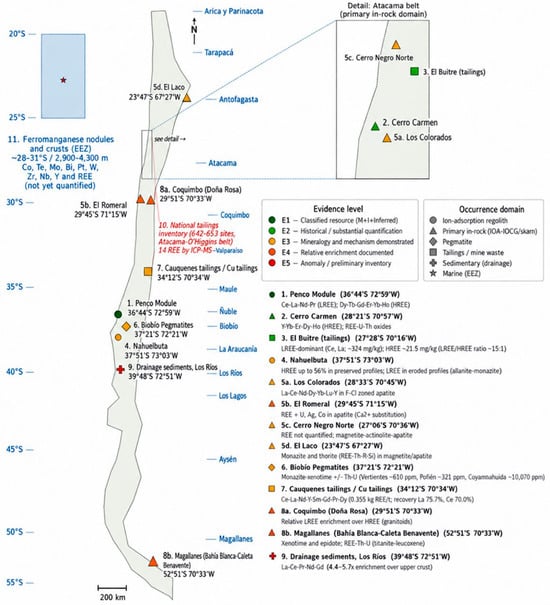
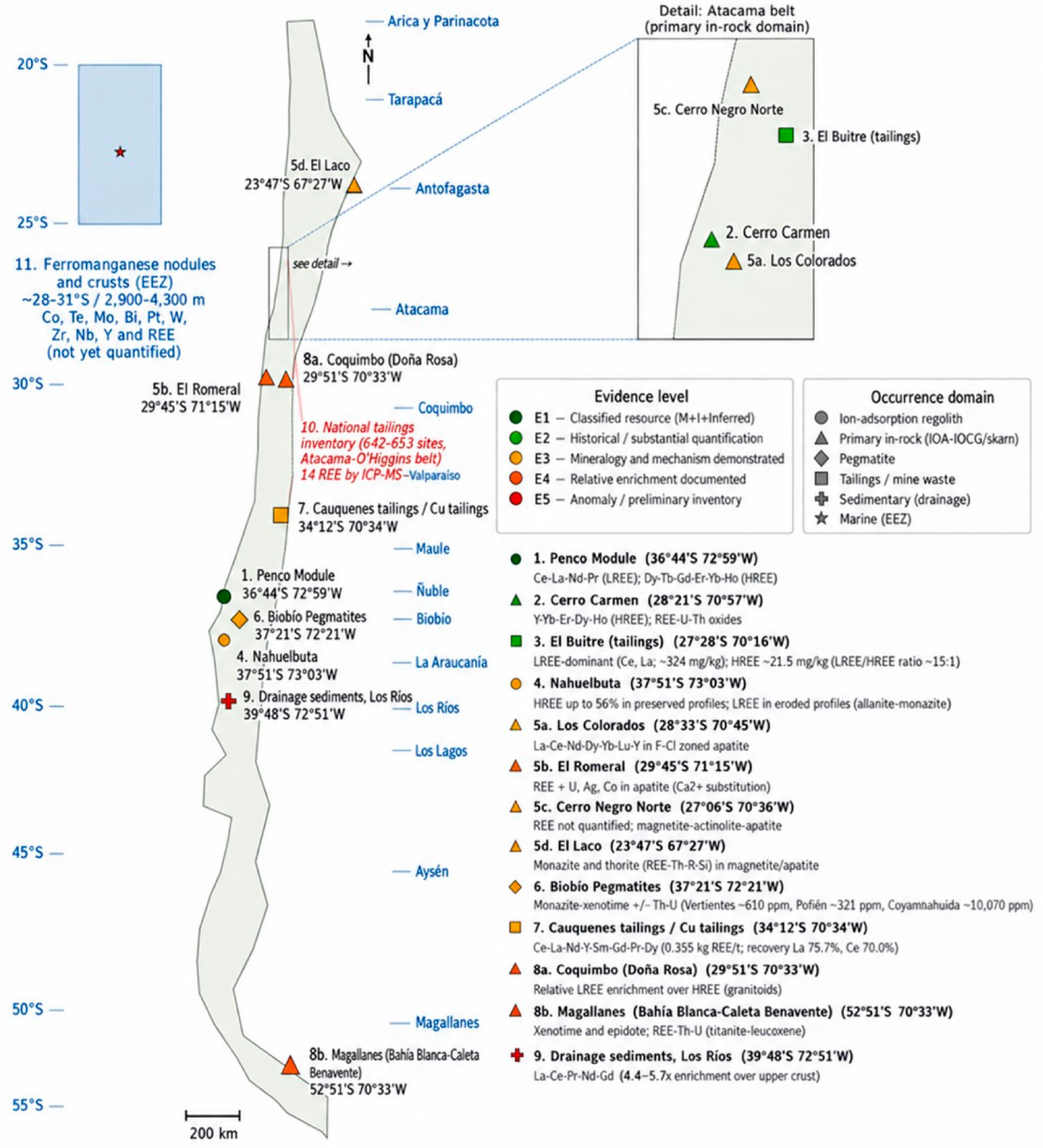
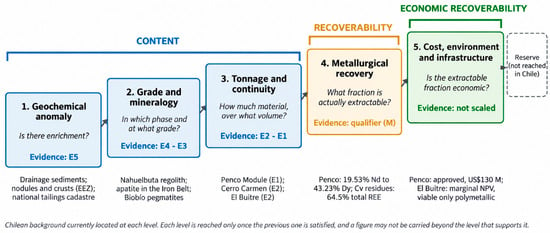
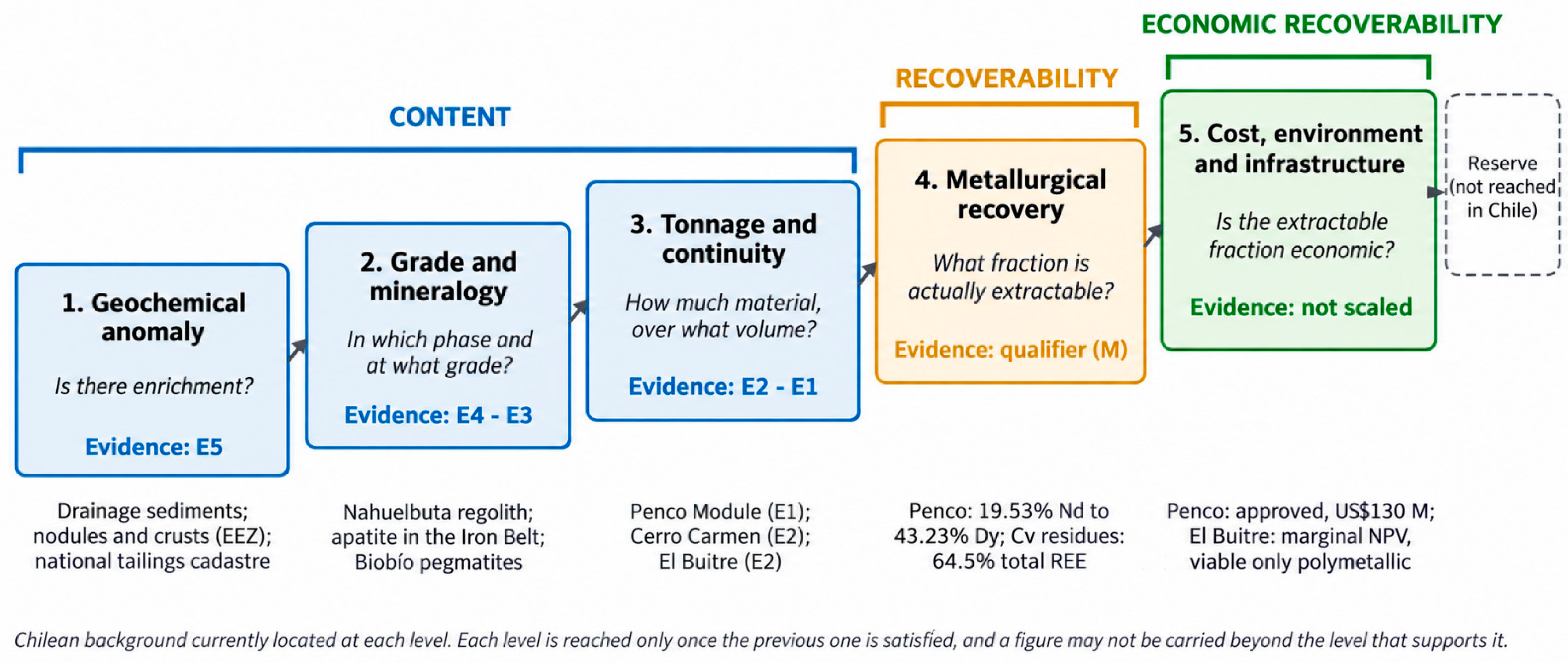
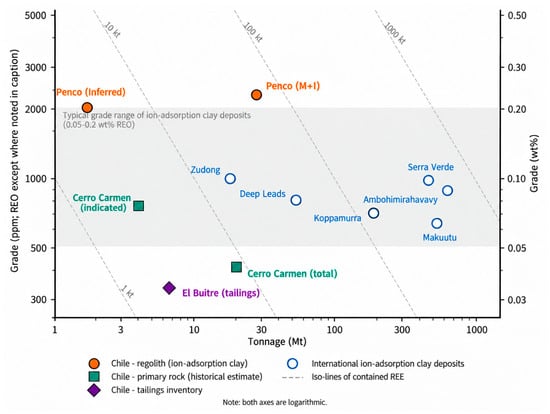
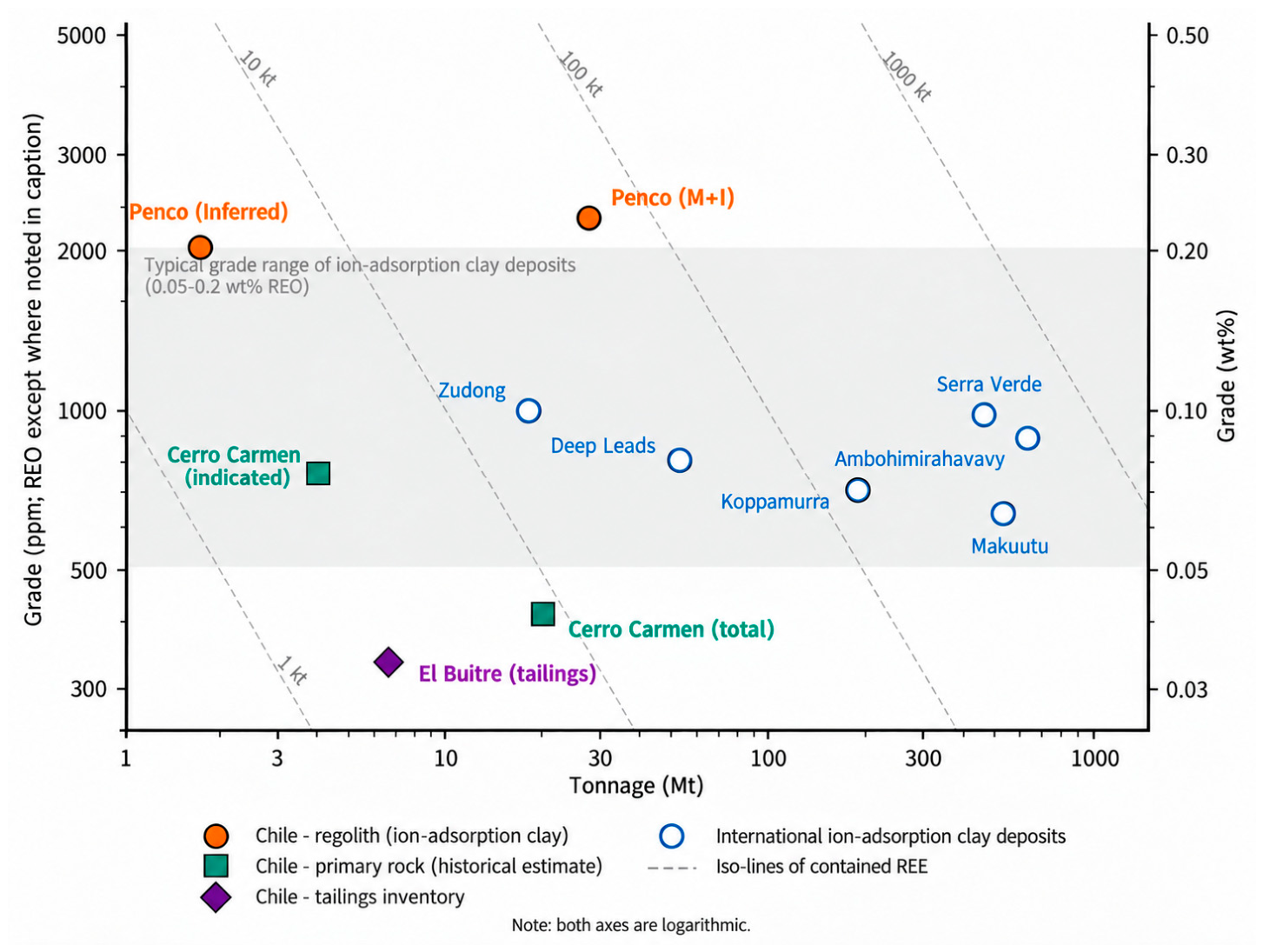
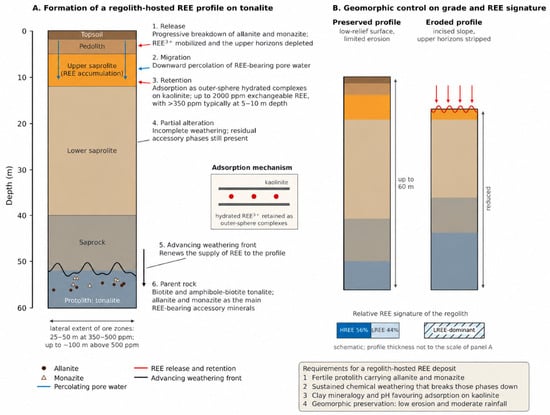
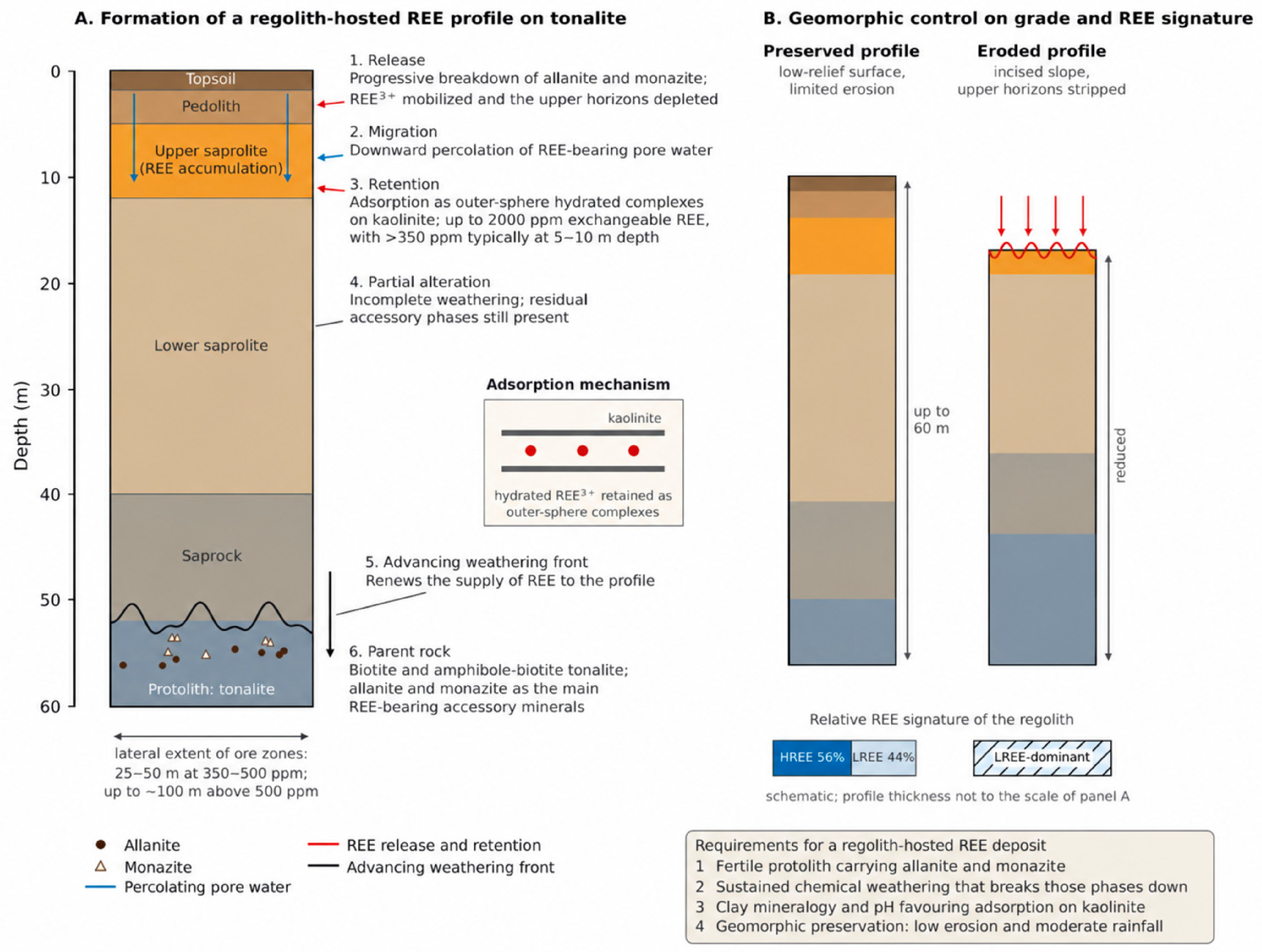
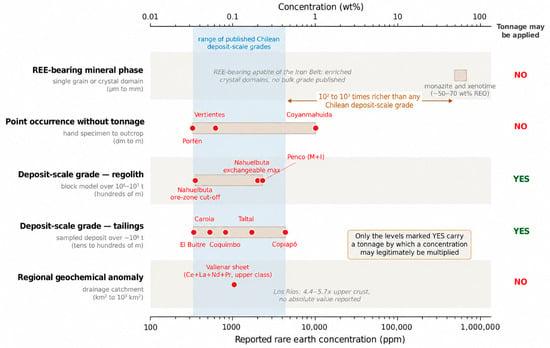
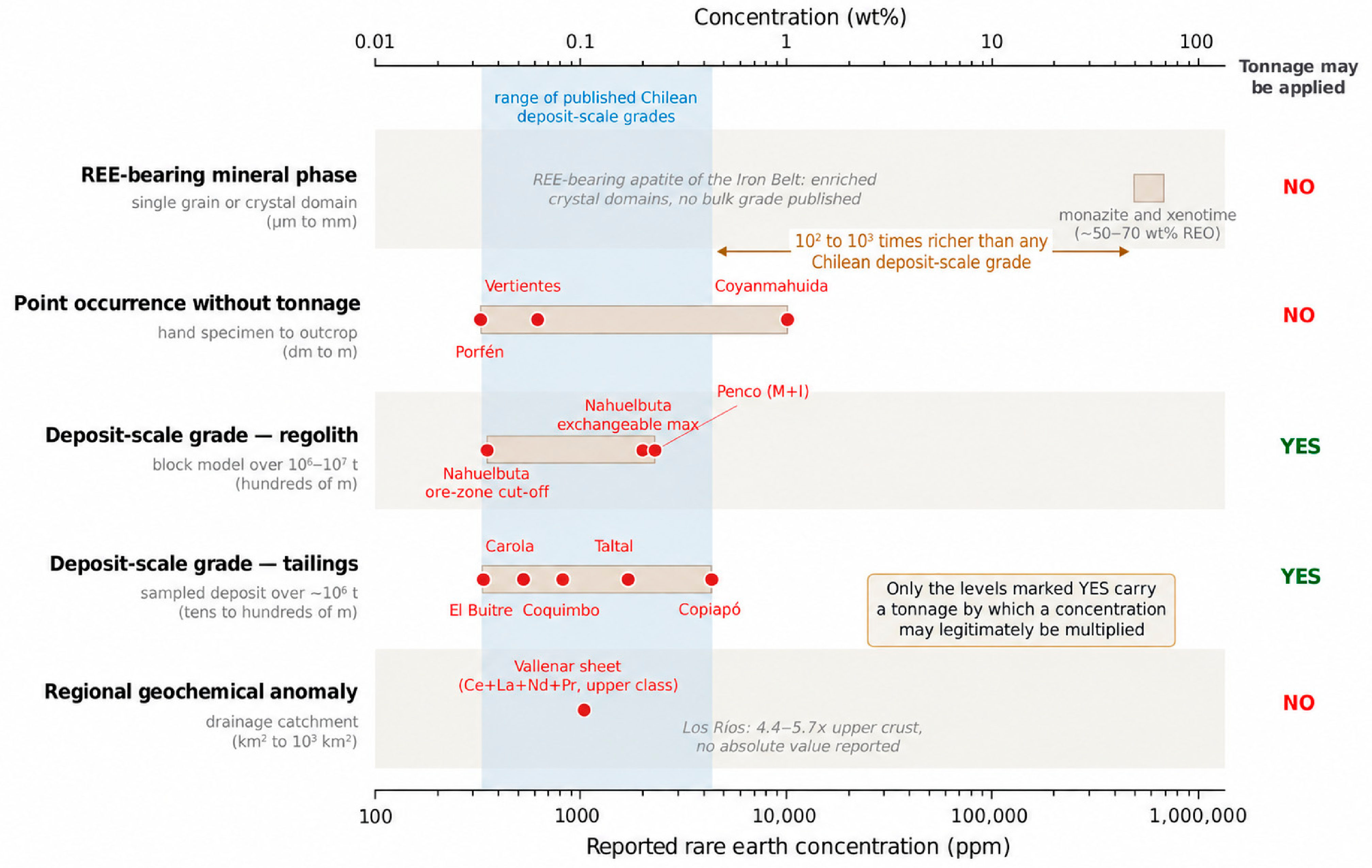

Disclaimer/Publisher’s Note: The statements, opinions and data contained in all publications are solely those of the individual author(s) and contributor(s) and not of MDPI and/or the editor(s). MDPI and/or the editor(s) disclaim responsibility for any injury to people or property resulting from any ideas, methods, instructions or products referred to in the content. |
© 2026 by the authors. Licensee MDPI, Basel, Switzerland. This article is an open access article distributed under the terms and conditions of the Creative Commons Attribution (CC BY) license.