


Abstract
Lithium is an essential material for lightweight batteries. Traditional mining of soluble salts expanded to include the extraction of hard rocks, which requires their solubilization through roasting. Among hard lithium rocks, spodumene has recently received attention from the scientific community. Its metallurgical processing can be classified according to the type of reagents, as well as the operating temperature and pressure. The use of calcium carbonate as a natural alkali avoids aggressive chemicals such as sulfuric acid or caustic soda. In this article, 0.5 g of jewelry-grade spodumene was loaded into a ceramic crucible with 2.5 g of reducing agent in a tandem of roasting at 1050 °C-1 bar-30 min and leaching with neutral water at 90 °C-1 bar-20 min at a water/clinker mass ratio of 25. Measurements by XRD, ICP-OES, and SEM-EDX suggest a pathway of spodumene cracking because of poor contact with the reductant. Potassium present in the crucible acts as a flux and encapsulates spodumene crystals, causing lithium to end up bound to silica. While lithium metasilicate is barely soluble in water, leaching potassium aluminate hoards in the liquid. The empirical observations were supported with thermodynamic spontaneity studies, which required compiling the mineral properties based on open reference tabulations.
1. Introduction
1.1. Metallurgical Routes to Process Spodumene
Lithium is the first element in the alkali group. Its electronic configuration is 1s2 2s1. This causes it to release a large amount of energy relative to its atomic weight, making it a critical material for portable batteries [1]. Sodium-based chemical cycles (1s2 2s1 2p6 3s1) are promising for static batteries [2], but they have a heavier nucleus that prevents the deployment of lightweight solutions [1]. This has led to growing interest in mapping and exploiting new lithium ores.
Traditionally, evaporite salts have been mined in Argentina, Bolivia, and Chile, where they are naturally dissolved in underground brines to be pumped to the surface to evaporate in extensive ponds and recovered as lithium carbonate or lithium hydroxide [3,4,5,6,7]. Direct lithium extraction is a set of technologies that aim to intensify the selective capture of the Li+ cation through adsorption, solvents, ion exchange, membranes, or electrochemical processes [8,9]. The decarbonization of transport in cities has driven up the price of lithium commodities, increasing interest in the exploitation of hard rock as an alternative ore. Hard rocks are virtually insoluble in neutral pH and require alkaline or acidic roasting to make them compatible with subsequent metallurgy. Despite this additional cost, a major effort has been made in recent years to map new hard rock lithium reserves. Hard rock lithium deposits are mainly concentrated in the Czech Republic, Australia, Canada, and the Democratic Republic of Congo. Spain has modest resources of lepidolite and zinnwaldite in the Valdeflórez deposit (Extremadura).
Spodumene is a hard rock that has attracted industrial interest, as it has no bound fluorine that would hinder metallurgy. The most stable crystal unit arrangement of spodumene in nature is the alpha structure [10]. As a hard lithium rock, spodumene requires roasting to make it compatible with subsequent hydrometallurgy. Furthermore, thermal pretreatment at 1050 °C can be applied before roasting to increase the surface area of the crystals prior to roasting [10]. The transition to the beta phase increases the lability of lithium oxide within the aluminosilicate structure.
Historically, spodumene roasting has relied on highly reactive chemicals. In 1948, metallurgical patent US2516109A proposed a sulfuric acid roasting process in which 100% recovery of Li2O was achieved at 1100 °C [11]. The aluminosilicate is pre-converted to the more reactive beta phase to be roasted later. When contacting beta spodumene with sulfuric acid, the proton replaces the lithium, producing H2O·Al2O3·(SiO2)4 and Li2O·SO3. This pathway is associated with solid, liquid, and gaseous acid effluents.
In 1958, patent US2801153A proposed another alternative for sulfating roasting with ammonium sulfate, (NH3)2·SO3·H2O [12] The innovation proposed thermal pretreatment followed by roasting above 980 °C (1800 °F). Lithium in sulfate form is selectively isolated with NH3·HF in an aqueous medium, so that the alkali metals remain solubilized in the mother liquor. The patent does not specify the material yield of metallurgy. The insoluble fraction retains silica and aluminum in the form of hydroxide, Al2O3·H2O.
Follow-up efforts have followed two lines: one to minimize the toxicity of effluents, and the other to reduce the operating temperature. Increasing the furnace temperature enables the use of less aggressive reducing agents with lower associated toxicity. Conversely, the use of more aggressive chemicals lowers the roasting temperature, even avoiding crystallographic phase-change pretreatment.
Patent CN109517981, filed in January 2019, proposed pressurized closed-volume leaching of beta spodumene with calcium reducing agents at moderate temperatures [13]. The proposed alkaline agents were mixtures of CaO, CaO·H2O, and CaO·CO2. The overpressure achieved is between 0.3 and 0.6 MPa, with a preferred temperature between 135 °C and 160 °C. The patent claims to work at a fast-leaching rate due to the presence of liquid water as a continuous reaction medium. The maximum Li2O yield reaches a value of 97.3% when using 100% calcium hydroxide.
In relation to using calcium as a reagent, a conference presented atmospheric roasting at 1050 °C later in 2019 [14]. The pyrometallurgical stage combined the calcination of calcium carbonate, CaO·CO2, the crystallographic change of alpha spodumene, and the reduction of the lithium content to lithium aluminate, Li2O·Al2O3. The aluminate is compatible with neutral water leaching at 90 °C. The route, published openly, avoided the use of sulfuric acid with a maximum yield on Li2O of 84% when improving the contact between solid reagents.
On the other hand, patent US9255012B2 proposed in 2013 a closed-volume pressurized leaching with Na2O·CO2 at a temperature between 160 °C and 250 °C [15]. The aim was to replace lithium with sodium from the carbonate to synthesize lithium bicarbonate, Li2O·H2O·(CO2)2. The overpressure caused by working at a closed volume causes the condensed water to immobilize the aluminum and silicon in the form of an analcime, Na2O·Al2O3·(SiO2)4·(H2O)2. Lithium carbonate is obtained by absorbing CO2 in the effluent at atmospheric pressure and then crystallizing it by evaporation. There is no reported recovery yield in the filed document.
Coming back to the use of strong chemicals, patent CA3168782A1 protects a leaching process using molten sodium hydroxide, Na2O·H2O(l), deposited directly on the surface of aluminosilicate [16]. The operation takes place at atmospheric pressure and at temperatures between 250 °C and 600 °C, without the need to alter the crystal structure first. Lithium is isolated in the form of double sodium and lithium silicate, (Li2O)3·Na2O·(SiO2)2, which dissolves instantaneously in neutral water and ambient conditions. The maximum reported yield is 99%. The authors of the study, Subasinghe and Rezaee, later published their results in the Chemical Engineering Journal [17].
Following the line of aggressive reagents, hydrofluoric acid can also be used to decompose beta spodumene in a leaching process at 80 °C and atmospheric pressure, reporting a maximum yield of 90% Li2O when leaching at 75 °C for 20 min [18]. The authors of the scientific article neutralized the excess hydrofluoric acid with sodium carbonate, Na2O·CO2, to obtain lithium carbonate by evaporative crystallization. Aluminum and silicon are separated as solids in the form of Na3F.AlF3 and Na2F.SiF4 respectively. On the other hand, the strategy of increasing the roasting temperature to use a more stable reagent is limited by the thermal stability of the clinker.
Patent US2533246A claims to have sulfated spodumene with gypsum, CaO·SO3·(H2O)2, and calcite CaO·CO2, at 1150 °C [19]. The calcium would isolate the insoluble fraction of spodumene in the form of dicalcium silicate, (CaO)2·SiO2, and the sulfate group would combine with the lithium to form Li2O·SO3 to finally isolate it in chloride form with the addition of HCl. The maximum yield is 90%. Paragenetic sodium and potassium aluminosilicates melt in this temperature environment. Table 1 lists the phase-change temperatures for each mineral.
Table 1.
Melting points of paragenetic aluminosilicate.
As an intermediate solution between temperature and chemical affinity, the University of Concepción in Chile patented a sulfate roasting process for beta spodumene at atmospheric pressure in 2020. WO2020206567A1 involves contacting spodumene, ferrous sulfate (FeO·SO3), and oxygen at a temperature between 700 °C and 800 °C [23]. Lithium is released as a sulfate, which is converted to carbonate through supersaturation with Na2O·CO2. The maximum combined yield between pyro and hydrometallurgy in Li2O is 91.1%.
The metallurgical route developed by Murdock University in 2019 is another intermediate solution in which Na2O·SO3 acts as a flux and extracts lithium directly from alpha spodumene at a lower temperature (850–900 °C) [24]. CaO is also added to isolate the insoluble fraction of silicon, and aluminum is retained as anorthite, CaO·Al2O3·(SiO2)2, while lithium is isolated as highly soluble Li2O·SO3. In addition to being openly published, the maximum yield reported in this route is 94% when roasted with a moistened charge of Na2O·SO3:CaO:Li2O·Al2O3·(SiO2)4 of 0.8:0.2:1 for 2 h and leaching the sulfate at 50 °C for 2 h with a calcine-to-water ratio of 1:100.
Table 2 summarizes the state of the art in lithium extraction from spodumene with increasing operating temperature.
Table 2.
Summary of the state of the art in lithium extraction from spodumene. NA: stands for not available, as written along the dissertation.
1.2. Process Simulation
The thermodynamic spontaneity of a chemical conversion can be studied through an analysis of the change in Gibbs free energy in the reaction at a standard pressure of 1 bar, . Although this is not sufficient for process viability, if a conversion has a negative value for , it might occur if kinetic limitations of mixing, heat transfer, and reaction are allowed. The equilibrium state of a system of chemical species preassigned by the user is that which reaches the minimum Gibbs free energy condition for each of the individual yields of all reactions. During the second half of the 20th century, there was an effort to quantify thermochemistry [25,26,27] that would later be used to calculate equilibrium with the falling cost of computation.
1.3. Aim of This Research
Among the listed options for extracting lithium from spodumene, atmospheric roasting with calcium carbonate is a natural and abundant alternative that avoids the use of synthetics. In addition, its operating temperature integrates calcination, crystallographic change, and roasting of spodumene in a single step. Literature reported a composite lithium recovery of 65%, which increased to 84% when better contacting the solid reagents [14]. This article seeks to identify the bottlenecks that can improve the recovery rate of this route.
To this end, metallurgical and analytical techniques were integrated with spontaneity analyses to expand on the pyrometallurgical mechanisms presented in the Results and Discussion. The spontaneity assessment required compilation of a thermochemical database with all species that were detected as reagents and products. The development of a systematic methodology to tabulate thermodynamic potentials from public repositories was a side objective of this research.
2. Materials and Methods
The analytical techniques were developed in the laboratories of the Technical University of Madrid (Universidad Politécnica de Madrid, UPM) and Complutense University of Madrid (Universidad Complutense de Madrid, UCM).
2.1. Analytical Techniques
2.1.1. Mineralogical Analysis by X-Ray Diffraction
Mineralogical characterization was performed by X-ray diffraction (XRD). The diffractometer used was a Bruker D-5000 X-ray diffractometer (Billerica, MA, USA) with a Cu lamp with graphite monochromator and 2 mm slit located at UPM. The scanning angle was 10° to 100° with a step size of 0.02 and a count time of 3 s. The crystalline phases were identified using Profex (Sankt Gallen, Switzerland), a graphical interface developed by Nicola Döbelin of the RMS Foundation materials laboratory based in Switzerland [28]. The mineral patterns were retrieved from the Crystallography Open Database [29,30,31].
Profex also allows for a semi-quantitative estimation method of the mass fractions of the identified phases. It consists of a deconvolution of the diffractogram into individual crystallographic contributions using a theoretical model [32]. This procedure considers the position and height of the diffraction peaks, as well as their shape, width, and instrumental conditions of the apparatus used. The degree of goodness of the semi-quantitative quantification depends on the correct preparation of the powder, scanning conditions, and the criteria for selecting the target mineralogical phases on which to perform the adjustment [33].
An accepted indicator of the degree of goodness of the Rietveld refinement is the ratio between the error derived from the selection of the patterns for deconvolution (Rwp) and the minimum gauge due to the parameters of the diffractometry experiment (Rexp) [34]. Equation (1) expresses this ratio:
2.1.2. Elemental Composition by Inductively Coupled Plasma Optical Emission Spectrometry
The elemental composition of the samples was measured using the inductively coupled plasma optical emission spectrometry (ICP-OES) analytical technique. The equipment used is a dual radial system instrument specially designed for geological samples, model ARCOS III SPECTRO AMETEK from UCM. The measurement requires prior digestion of the rock to put it into solution [35]. The rock was ground to d100 = 100 µm. Digestion was conducted in two steps in Teflon reactors. The first step was carried out with aqua regia, a mixture of azeotropic acids, in a ratio of 3 volumes of HCl to 1 volume of HNO3. The second step was carried out with HF, given its high affinity with the silica present in spodumene [36]. Hexafluorosilicic acid is generated according to Equation (2):
SiO2(s)+ 6 HF(aq) → (HF)2·SiF4 (aq) + 2 H2O(liq)
This acid is selectively evaporated for indirect recording of the amount of SiO2 [35]. Once the silicates dissolve, it is filtered to remove residues, leveled, and subjected to spectroscopy. The measurement consists of a first dispersion of the liquid sample in contact with a high-temperature argon plasma that amplifies the optical emissions of the ions present [36]. The relaxation radiation is captured when species return to their stable state, emitting a characteristic frequency according to Planck’s equation [37].
2.1.3. Microstructural and Elemental Analysis with Scanning Electron Microscopy with Energy-Dispersive X-Ray Spectroscopy
Microstructural and elemental characterization were performed using scanning electron microscopy with energy-dispersive X-ray spectroscopy (SEM-EDX). The equipment used was a HITACHI S-3700N (Tokyo, Japan) with BRUKER AXS XFLASH EDX detector (Billerica, MA, USA) at the UPM and a TESCAN VEGA Generation 4 at the UCM (Brno, Czech Republic). The instrument allows high-resolution images of the particles to be captured together with elemental mapping by EDX. This allows anomalies in the spatial distribution of the elements after roasting to be observed. Lithium cannot be detected with this technique due to its atomic lightness, though its behavior can be deducted from other heavier elements such as calcium, silicon, or aluminum. The samples were prepared by adding powder to a graphite sheet.
2.2. Reagents
Spodumene was obtained from IGE Minerales (Madrid, Spain). One hundred grams of jewelry-grade spodumene crystals weighing 1–3 g per notch and originating in Mozambique were selected. The crystals were ground to d100 < 9 µm and subjected to XRD and ICP-OES. Standard Leco calibration calcite was used, whose purity is guaranteed by the manufacturer to be almost 100% by weight.
2.3. Metallurgical Tests
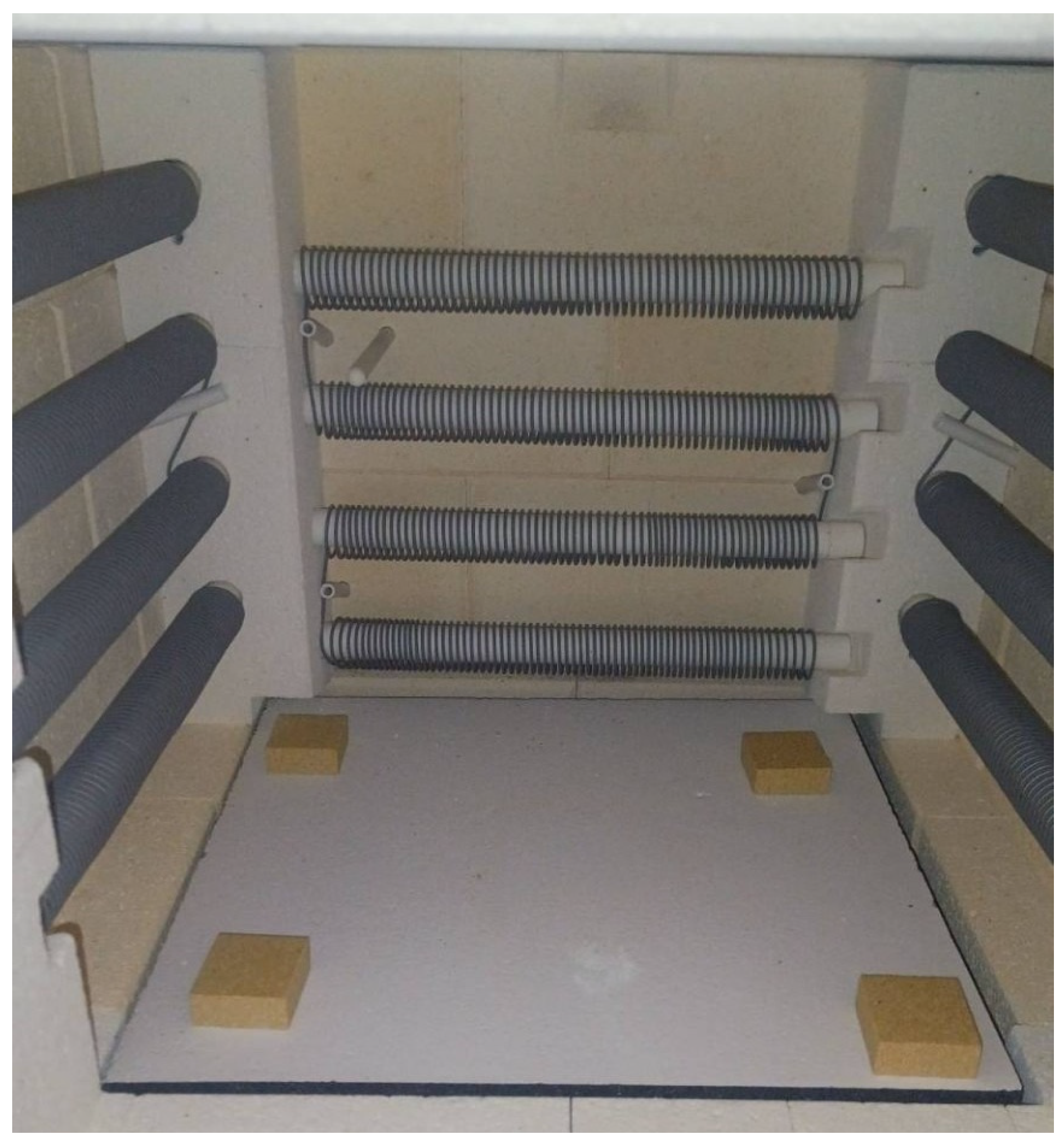
Metallurgical tests were carried out in the laboratories of the School of Mining and Energy Engineering (UPM). The spodumene was subjected to grinding, loaded with calcite, and roasted to be leached later. The mill was a Retsch RM100 (Haan, Germany), with a rotary pestle made of agate. Grinding was maintained for 60 min at 90 rpm. The Mohs hardness of both agate and spodumene is 6.5–7, with the pestle capable of reducing the aluminosilicate to powder by a narrow margin [38]. The target grinding degree was d100 = 0.009 mm (9 µm), compatible with XRD and ICP-OES. The roasting kiln was a Thermoconcept KC32/13 electric muffle (Lilienthal, Germany) with a chamber volume of 33 L and a maximum temperature of 1300 °C. The furnace operated with air at atmospheric pressure. The heating was divided into two steps with a slope of 100 °C/h during 165 min and 200 °C/h during 225 min. The exposure to 1050 °C lasted for 30 min [14], after which the chamber was cooled down at a speed of −100 °C. The temperature programming and control used protects the crucibles from thermomechanical stress. Control was carried out using an S-type thermocouple installed in the center of the chamber at the rear (see Figure 1). The PID was activated by solid-state relays. The crucible was loaded before starting to heat.
Figure 1.
Location of the thermocouple inside the kiln.
The clinker was finally leached in a stirred beaker mounted on a hot plate. The temperature was maintained by a probe connected to a control system that activated the hot plate’s resistance element. The probe was submerged down to the bottom of the liquid medium. The setpoint temperature was 90 °C [14].
2.4. Simulation Tools
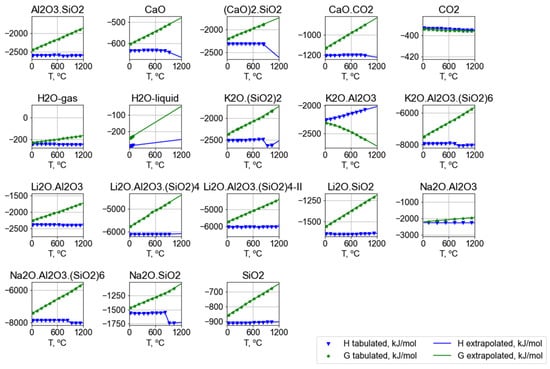
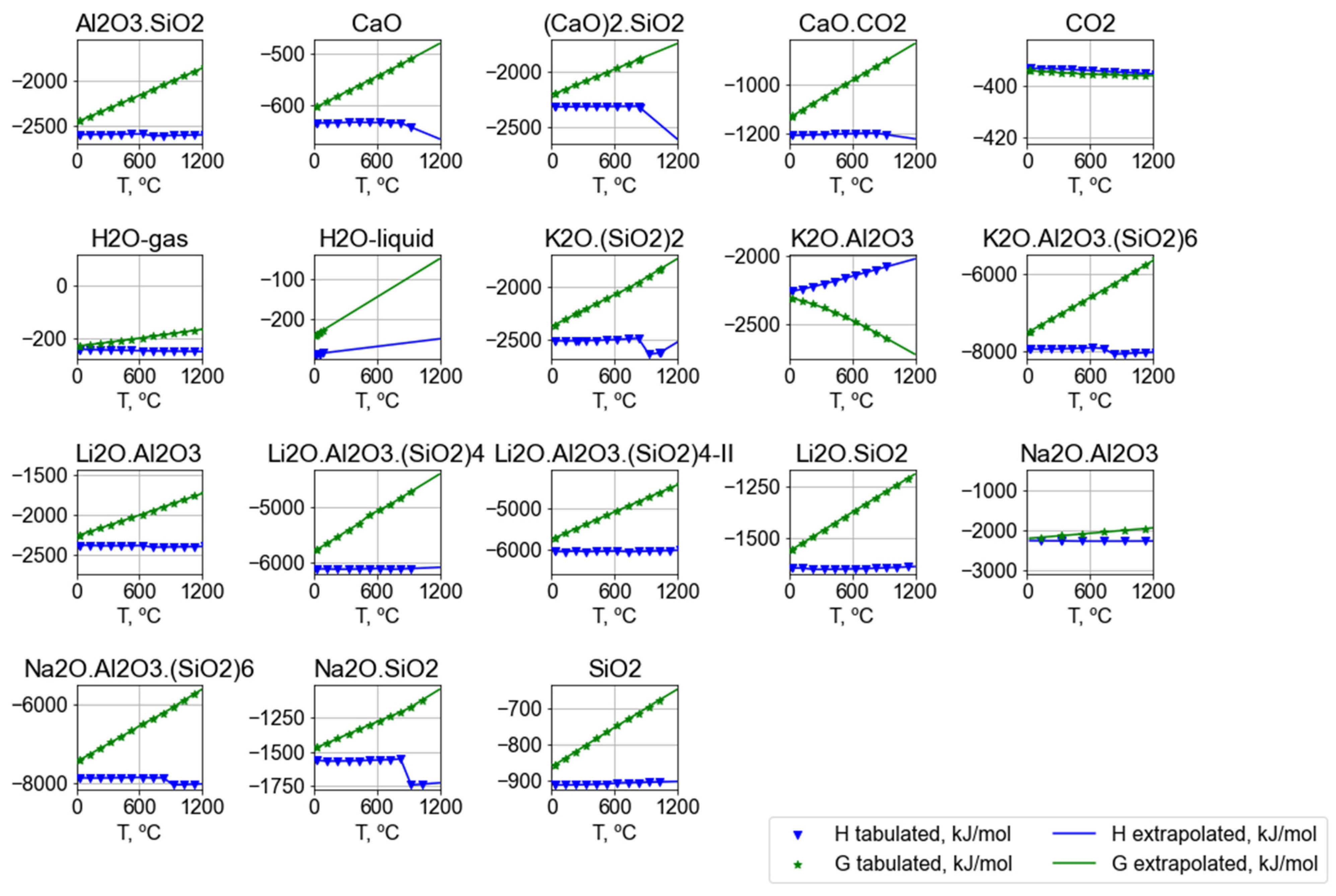
To verify the spontaneity of a chemical route, thermodynamic analysis should be performed in parallel to analytical techniques. Thermochemical data is available in open compilations such as NIST-JANAF [39] and Barin’s book [40]. JANAF stands for Joint Army–Navy–Air Force, a partnership of the United States Army, coordinated by the National Institute of Standards and Technology. The advantage of NIST-JANAF is that the data are already stored as exportable digits, while Barin requires launching and monitoring text recognition algorithms to export them as floating numbers. The selected species were iterated based on analytical chemistry. A graphical representation of both the molar enthalpy of formation and Gibbs energy of formation is shown in Figure 2. The data were slightly extrapolated up to 1200 °C at a constant pressure of 1 bar.
Figure 2.
Visual representation of the metallurgical database.
3. Results and Discussion
3.1. Mineralogical Analysis and Elemental Quantification of Spodumene
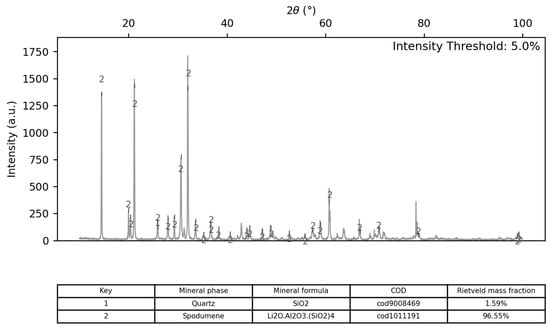
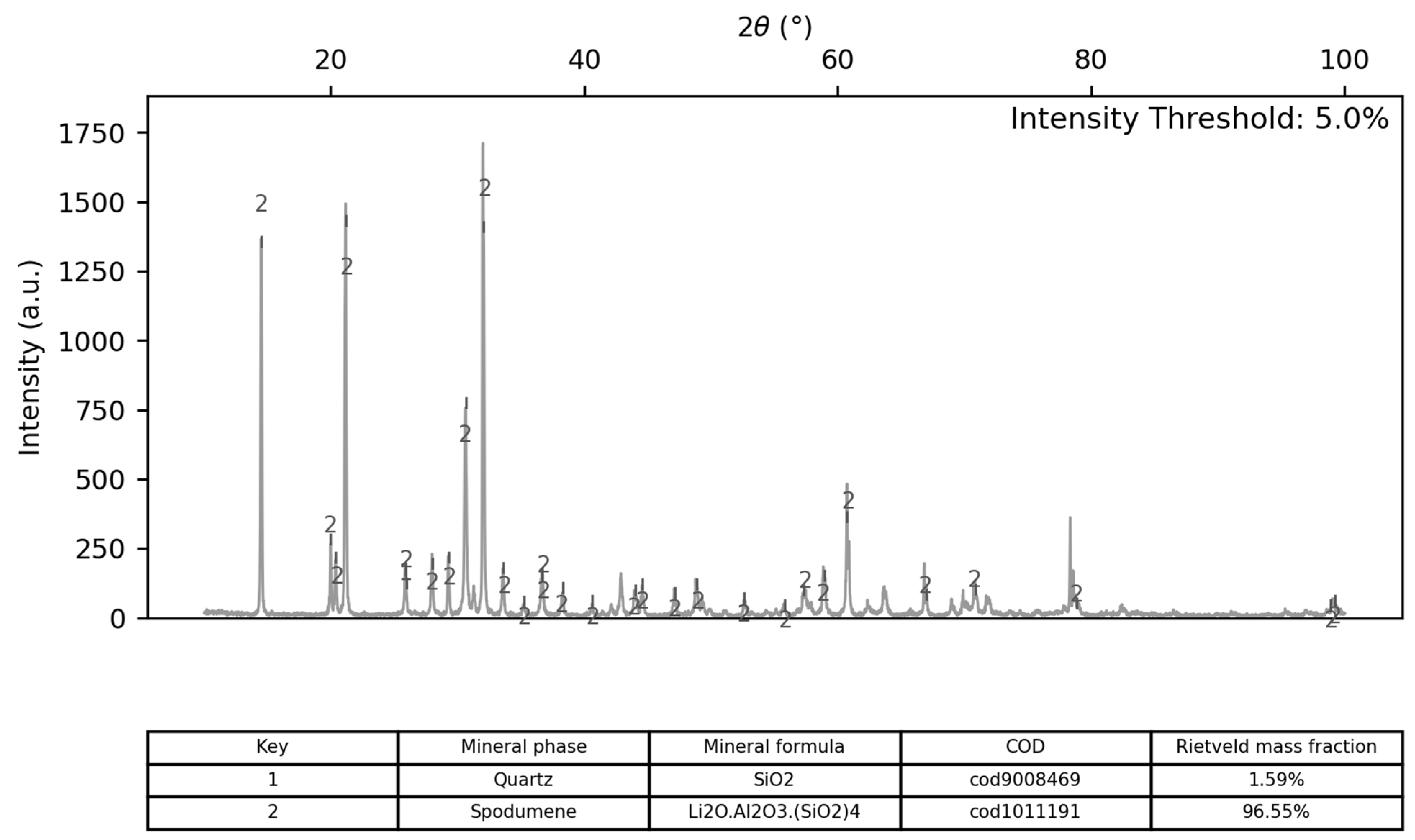
To confirm the purity of the spodumene, a powder sample was subjected to XRD. The diffractogram was then interpreted in Profex. The algorithm detected spodumene and traces of free silica, to which the Rietveld quantitative algorithm assigned a fraction of 1.59% by weight. Figure 3 labels the detected peaks, as well as the identification numbers of the patterns used and the inferred mass fractions resulting from the Rietveld algorithm. The filter for relative intensity was 5%, and the weaker peaks are not labelled.
Figure 3.
XRD peak identification of the spodumene sample (X2 = 6.10).
The sample was then digested to quantitatively determine the constituent oxides using ICP-OES. The aluminosilicate required a second digestion with HF to determine the silica content. Table 3 lists the constituent oxides, where the cumulative mass fraction of the list of measured oxide species amounts to 98.742%, leaving an open margin of 1.258% unknown.
Table 3.
Percentages of constituent oxides in spodumene.
By excluding the unknown and referring to the relative molar fractions per 1 mol of Li2O, the stoichiometry of spodumene can be compared to the pure formula of 1:1:4 Li2O:Al2O3:SiO2. Table 4 compares the molar ratios between the measured sample and the pure mineral. The jewelry-quality sample is remarkably similar to pure spodumene, except for a few traces of alkalis.
Table 4.
Stoichiometry of the constituent oxides of spodumene.
3.2. Roasting Test
A total loading of 0.5 g of the spodumene and 2.5 g of calcite was loaded in a ceramic crucible in the form of a truncated cone. The dimensions of the container were øtop = 3 cm, øbottom = 1.7 cm, h = 3.8 cm, and a wall thickness of 2 mm. A ceramic-made material was chosen to load additional potassium that would behave as a slag flux.
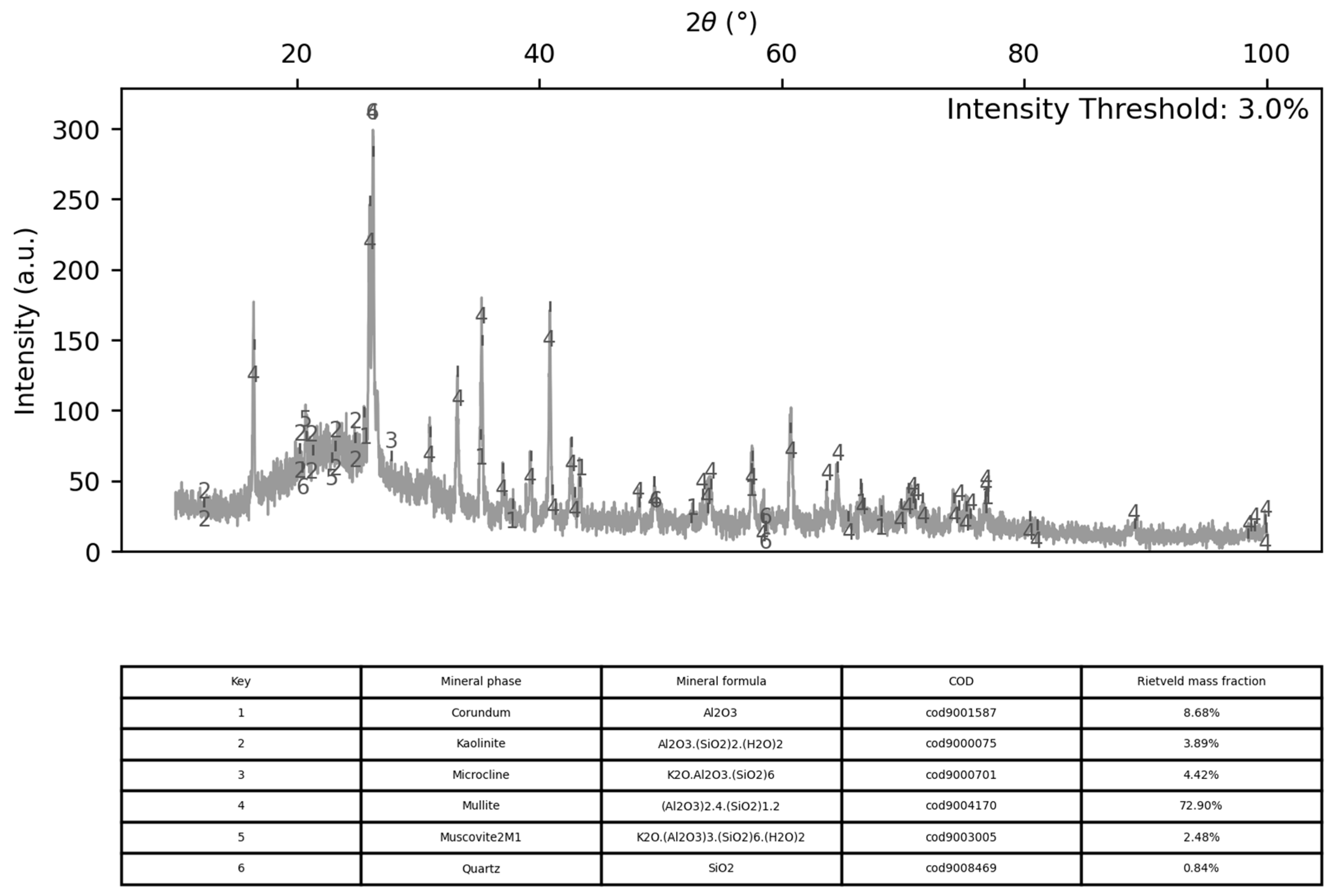
The crucible was milled down and subjected to XRD. Figure 4 shows the peak identification together with an overlapping picture of the ceramic container. According to the Rietveld inference, mullite represents 72.9 wt%, followed by free Al2O3 and SiO2. The crucible carries potassium in the form of mica and microcline, where their relative mass contents are 2.48% and 4.42%, respectively. The actual interaction of ceramic potassium with the loaded material in the crucible during roasting will be presented later. The filter for relative intensity was 3%, and the weaker peaks are not labelled.
Figure 4.
XRD peak identification of the ceramic crucible (X2 = 1.17).
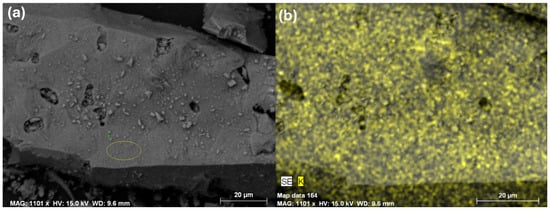
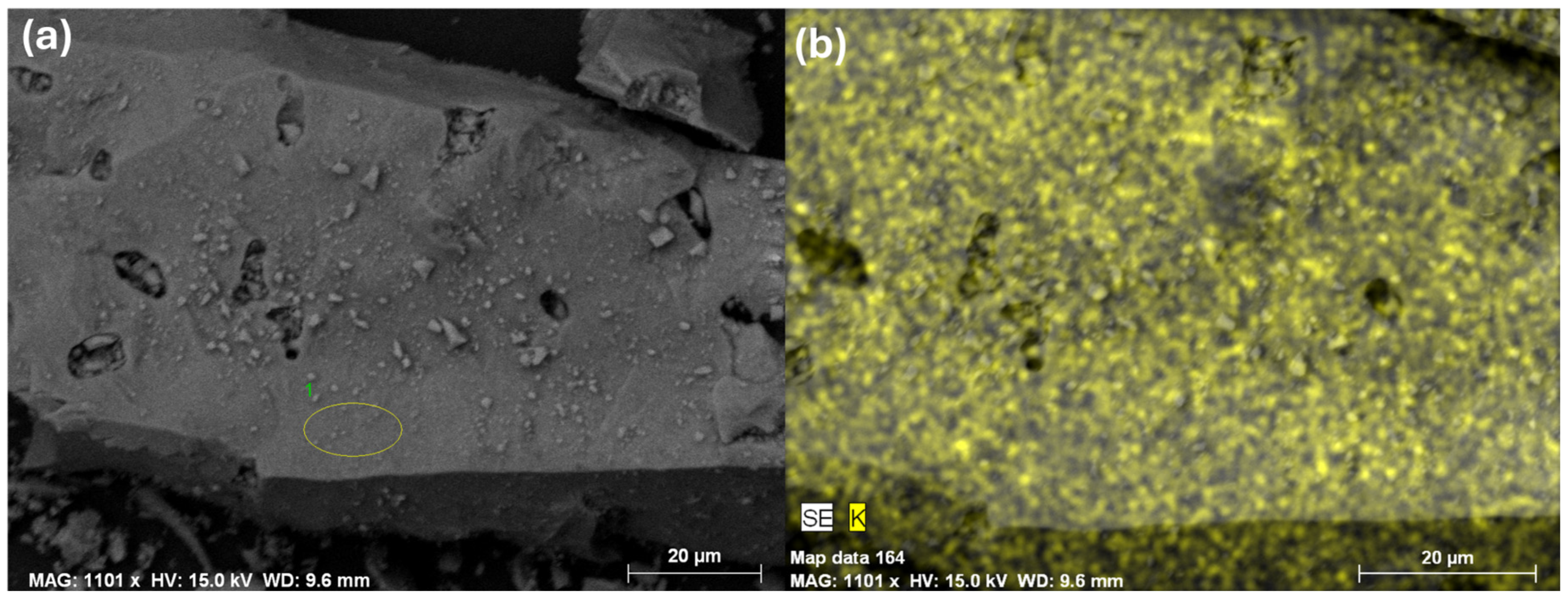
Next, the crucible powder was subjected to SEM-EDX at UPM to evaluate its potassium content. Figure 5 shows two subplots (a and b) of the ceramic powder at 1101× magnification. Figure 5a shows a secondary electron-based microscopic image, and Figure 5 shows the dispersion of potassium throughout the powder. Based on this observation, the ceramic material will dope the container’s potassium content, which will act as a flux when heated.
Figure 5.
Microscopic picture at 1101× magnification obtained by SEM-EDX: secondary electrons (a) and K mapping (b).
The loaded container was introduced in the furnace to undergo the heating ramps. Table 5 compiles the information from the test. The crucible was placed inside the furnace with no external assistance for mixing.
Table 5.
Roasting test conditions.
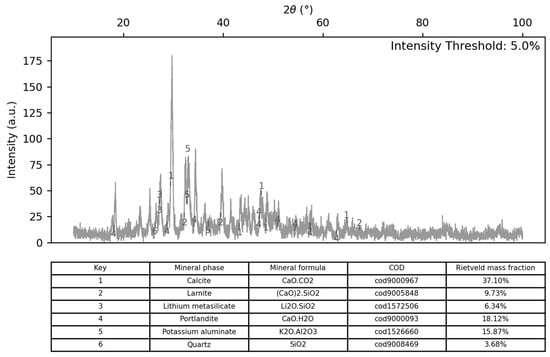
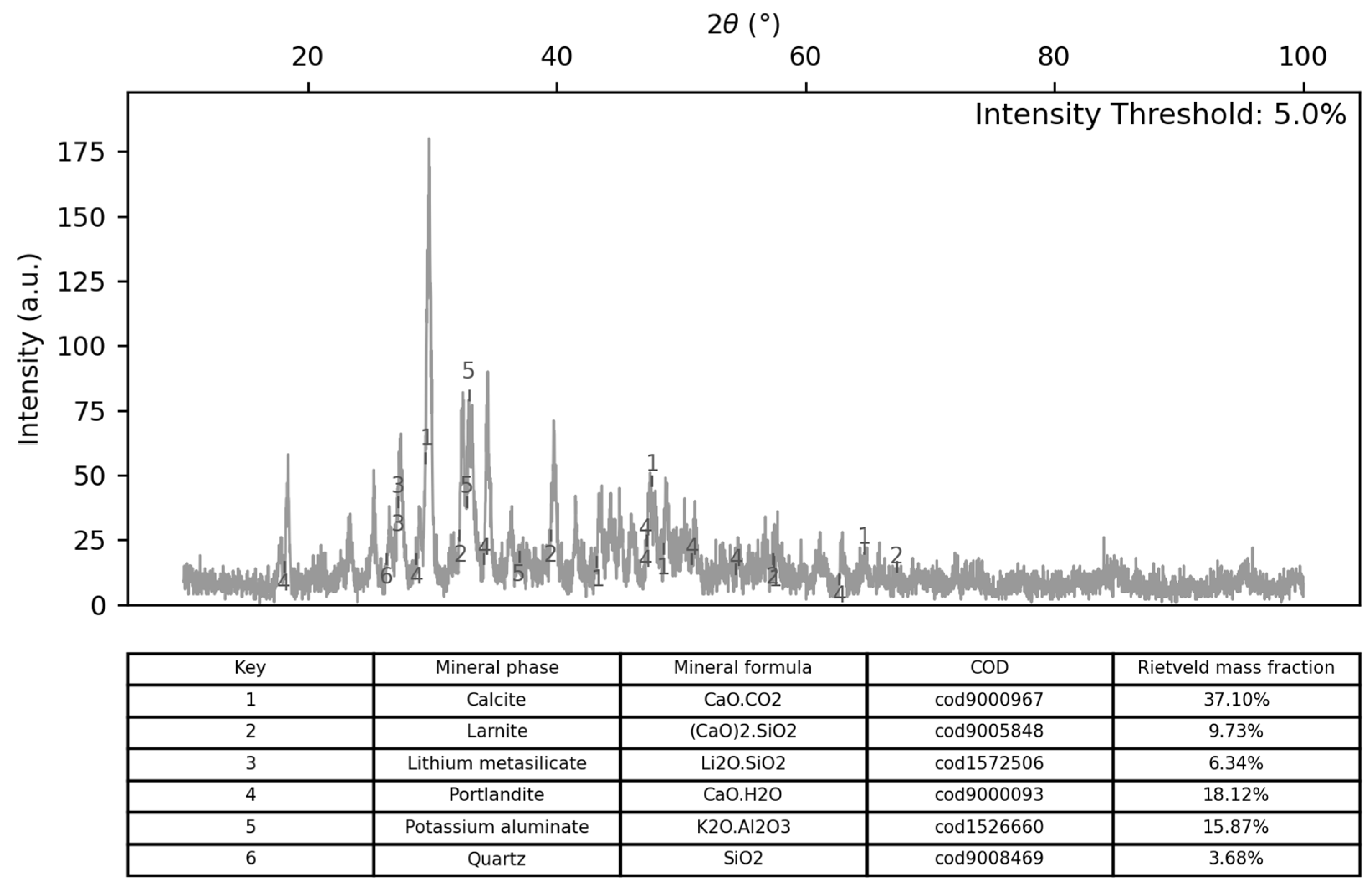
After completing the operation, the clinker was subjected to XRD analysis. Figure 6 shows the identification of the peaks in the resulting diffractogram, together with the reference patterns and inferred Rietveld mass fractions. Figure 6 indicates the presence of Li2O·SiO2 and K2O·Al2O3 in the clinker, with mass fractions of 6.34% and 15.87%, respectively. The filter for relative intensity was 5%, where the weaker peaks were not labelled.
Figure 6.
XRD peak identification of the clinker (X2 = 2.03).
Back in 2019, literature claimed that spodumene is the only aluminosilicate that roasts to Li2O·Al2O3, while the rest of the minerals pass through [14]. Recently, in 2025, an industrial spodumene concentrate was subjected to thermal studies—thermogravimetric analysis, differential thermal analysis, and differential scanning calorimetry—to conclude that potassium-rich micas melt and encapsulate spodumene crystals below 950 °C [41]. Based on this work and our XRD assessment, our hypothesis was that potassium acts as a flux and melts around spodumene. Microstructural characterization by SEM-EDX is presented later when reporting the results of leaching. As a result of the lack of contact between lithium aluminosilicate and the alkaline reductant, spodumene gets thermally cracked instead of chemically reduced. On the other hand, potassium in microcline is reduced to potassium aluminate that behaves as a flux. Mass transfer is limited by static solid-state diffusion. Lithium would remain bound to silica as Li2O·SiO2. Thermal cracking and alkaline reduction for the two aluminosilicates are listed in Equations (3)–(6).
Li2O·Al2O3·(SiO2)4 → Li2O·SiO2 + Al2O3·SiO2 + 2 SiO2
Li2O·Al2O3·(SiO2)4 + 8 CaO·CO2 → Li2O·Al2O3 + 4 (CaO)2·SiO2 + 8 CO2↑
K2O·Al2O3·(SiO2)6 → K2O·(SiO2)2 + Al2O3·SiO2 + 3 SiO2
K2O·Al2O3·(SiO2)6 + 12 CaO·CO2 → K2O·Al2O3 + 6 (CaO)2·SiO2 + 12 CO2↑
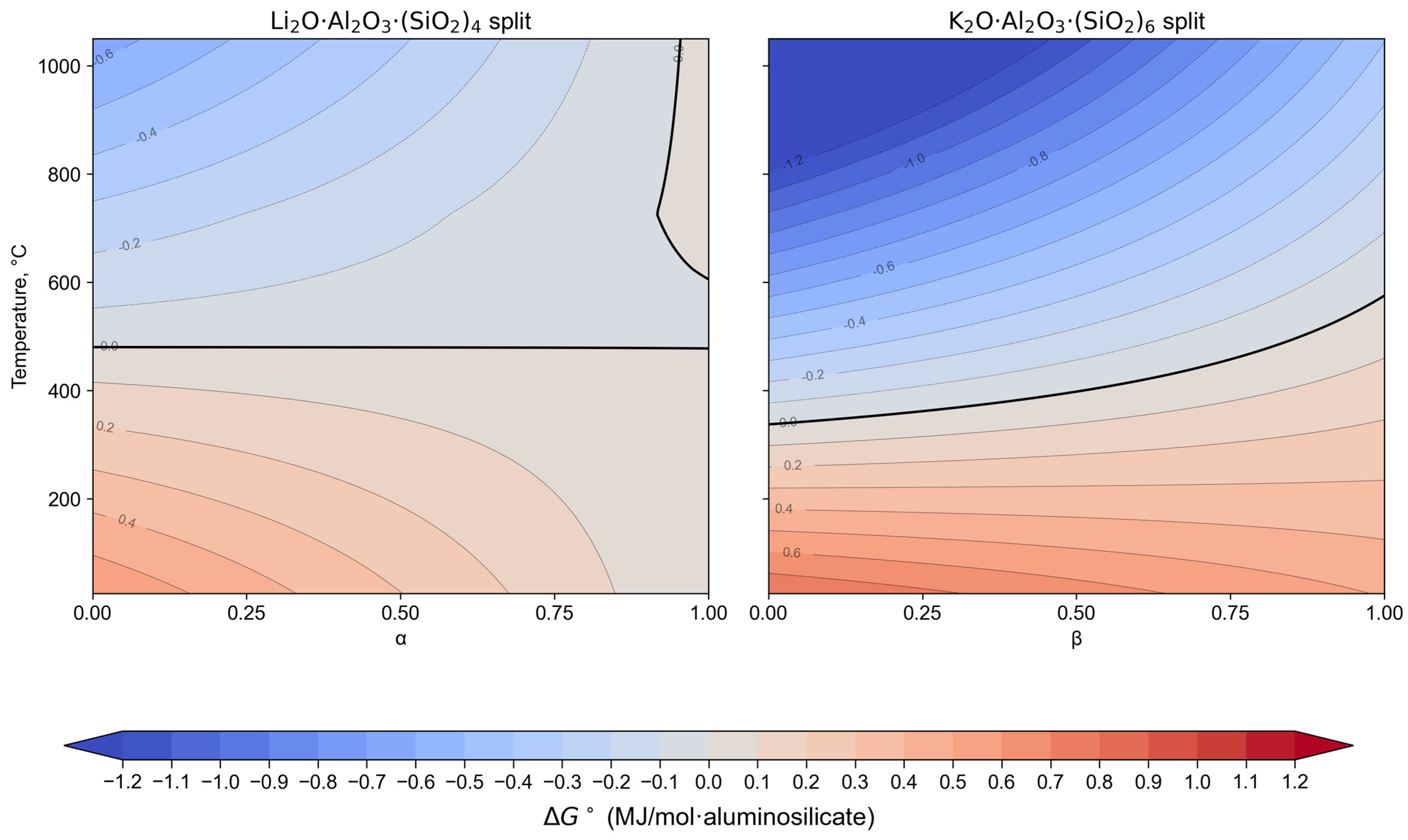
Equations (7) and (8) integrate both routes for 1 mol of aluminosilicate in the form of two compound reactions, where α and β are the cracked fractions ranging from 0, corresponding to a 100% alkaline reduction, to 1, corresponding to a 100% thermal cracking. The fractions reduced to aluminates unfold as (1 − α) and (1 − β).
Li2O·Al2O3·(SiO2)4 + (8 − 4α) CaO·CO2 → α Li2O·SiO2 + α Al2O3·SiO2 +
(1 − α) Li2O·Al2O3 + (4 − 2α) (CaO)2·SiO2 + (8 − 4α) CO2↑
(1 − α) Li2O·Al2O3 + (4 − 2α) (CaO)2·SiO2 + (8 − 4α) CO2↑
K2O·Al2O3·(SiO2)6 + (12 − 6β) CaO·CO2 → γ K2O·(SiO2)2 + β Al2O3·SiO2 +
(1 − β) K2O·Al2O3 + (6 − 3β) (CaO)2·SiO2 + (12 − 6β) CO2↑
(1 − β) K2O·Al2O3 + (6 − 3β) (CaO)2·SiO2 + (12 − 6β) CO2↑
The compound Gibbs free energy for Equations (8) and (9) (∆G°) was calculated by weighting the molar Gibbs values of the species for alpha and beta cracked fractions between 0 and 1 that determine the stoichiometric coefficients. In the case of calcium, the Gibbs free energy for total cracking corresponds to Equation (4), while for total reduction it corresponds to Equation (5). Intermediate situations correspond to a linear combination of these two contributions for each of the temperatures scanned. The objective was to evaluate trends in the compound Gibbs free energy for increasing temperatures and cracked fractions.
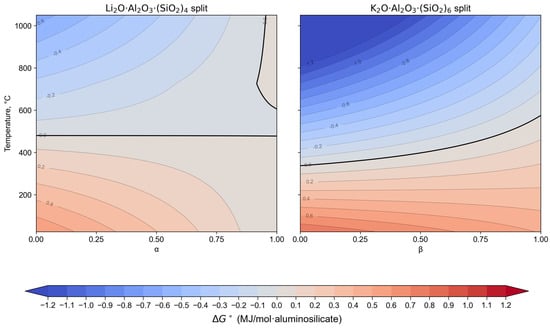
Figure 7 shows that the most thermodynamically favored reaction is high-temperature roasting, where ∆G° has a lower value for a smaller cracked fraction (towards the top left of each subplot). The co-occurrence of thermal cracking implies a mathematically reactive system. The detected lithium metasilicate is therefore an intermediate reaction product, due to poor contact of spodumene with CaO. To fight the occurrence of mass transfer-limited products, it is advisable to remove potassium at the concentration stage and to improve energy transfer by shifting to a rotary kiln or a fluidized bed reactor [41].
Figure 7.
Compound Gibbs free energy (∆G°) of the reactions listed in Equations (8) and (9) as a function of temperature and cracked fractions, α and β.
3.3. Leaching Test
The clinker was cooled down and stored. Later, a fraction of 0.94 g was recalcined to restore CaO reactivity and subjected to leaching with ultrapure water. Table 6 compiles the conditions and results of this test. The test was interrupted after 20 min, when 90% of the liquid volume had evaporated. In view of the evaporation of the aqueous medium, the operation should be carried out in a closed container and the temperature measured with an internal probe. Li2O measurements using ICP-OES resulted in a compound yield of 8.02 wt%. This means that from 2.5 g of jewelry-grade spodumene, this metallurgical processing would recover 15.96 mg of Li2O. Deviations from previously reported yields can be explained by the loading of solids without prior pressing at the top of the proposed potassium reaction and encapsulation mechanism.
Table 6.
Leaching test conditions.
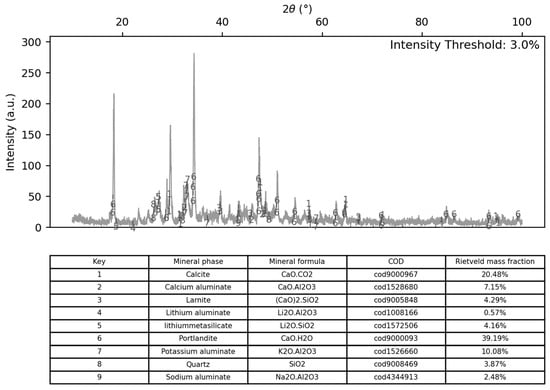
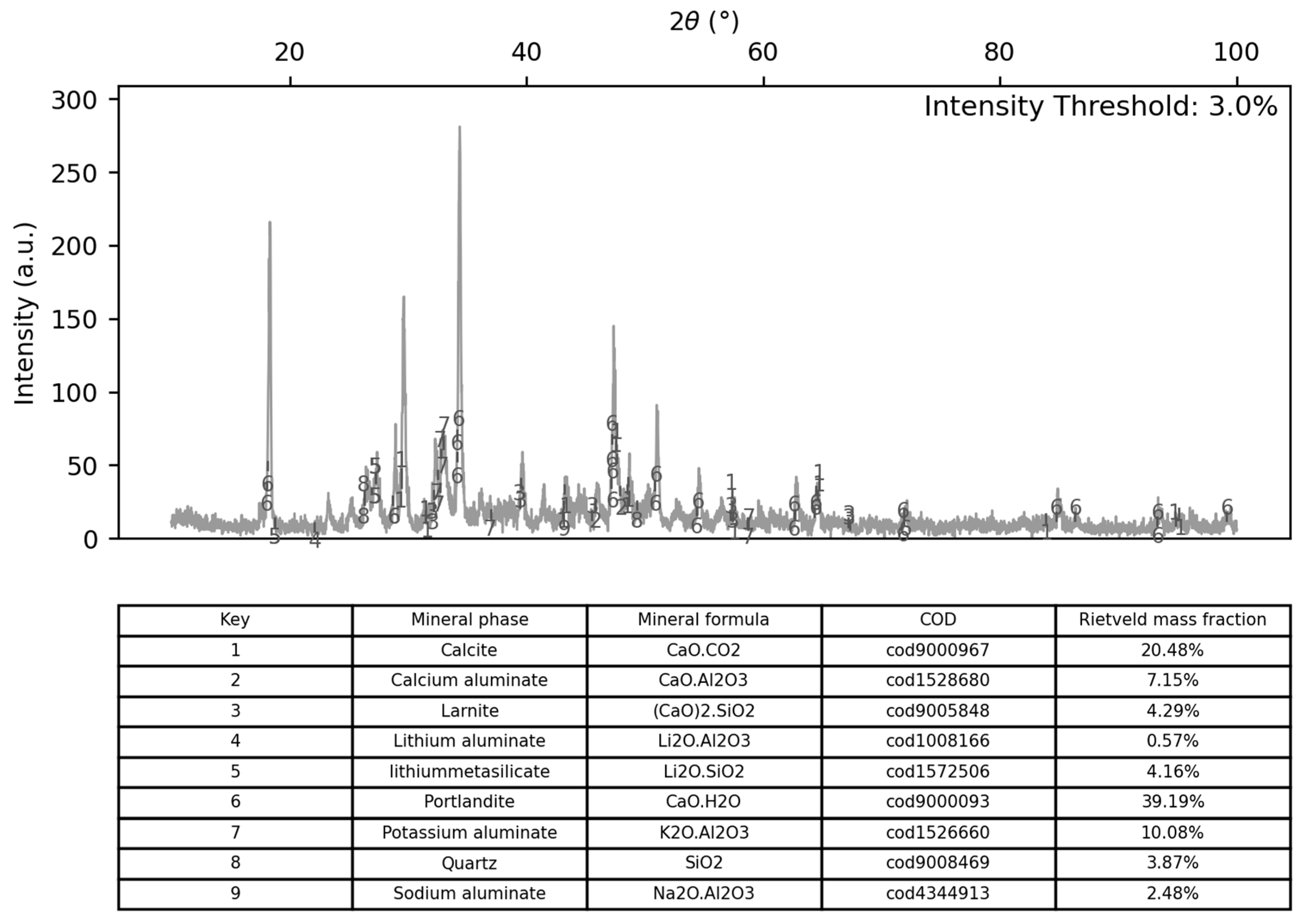
The leachate was then filtered and subjected to XRD analysis. Figure 8 shows the peak identification. The presence of CaO·CO2 also indicates the carbonation of calcium hydroxide prior to the XRD test. The filter for relative intensity was 3%, where the weaker peaks were not labelled
Figure 8.
XRD peak identification of the leachate (X2 = 1.62).
Equations (9) and (10) propose the competitive dissolution pathways observed for lithium metasilicate and potassium aluminate. While Li2O·SiO2 is virtually insoluble in neutral and cold water [1], potassium aluminate has a large solubility constant of about 100 [42].
Li2O·SiO2 + H2O + 2 CaO → Li2O·H2O + (CaO)2·SiO2
K2O·Al2O3 + H2O + CaO → K2O·H2O + CaO·Al2O3
The composition of the resulting liquor was characterized by ICP-OES. Table 7 shows the aqueous displacements of each elemental oxide per gram of clinker. A mass ratio of K2O over Li2O of 1.41 was based on these measurements.
Table 7.
Leaching oxides masses.
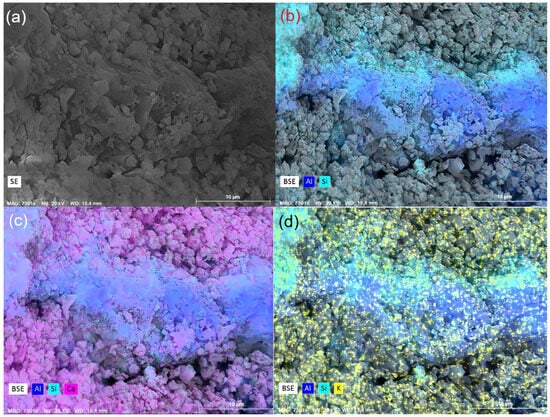
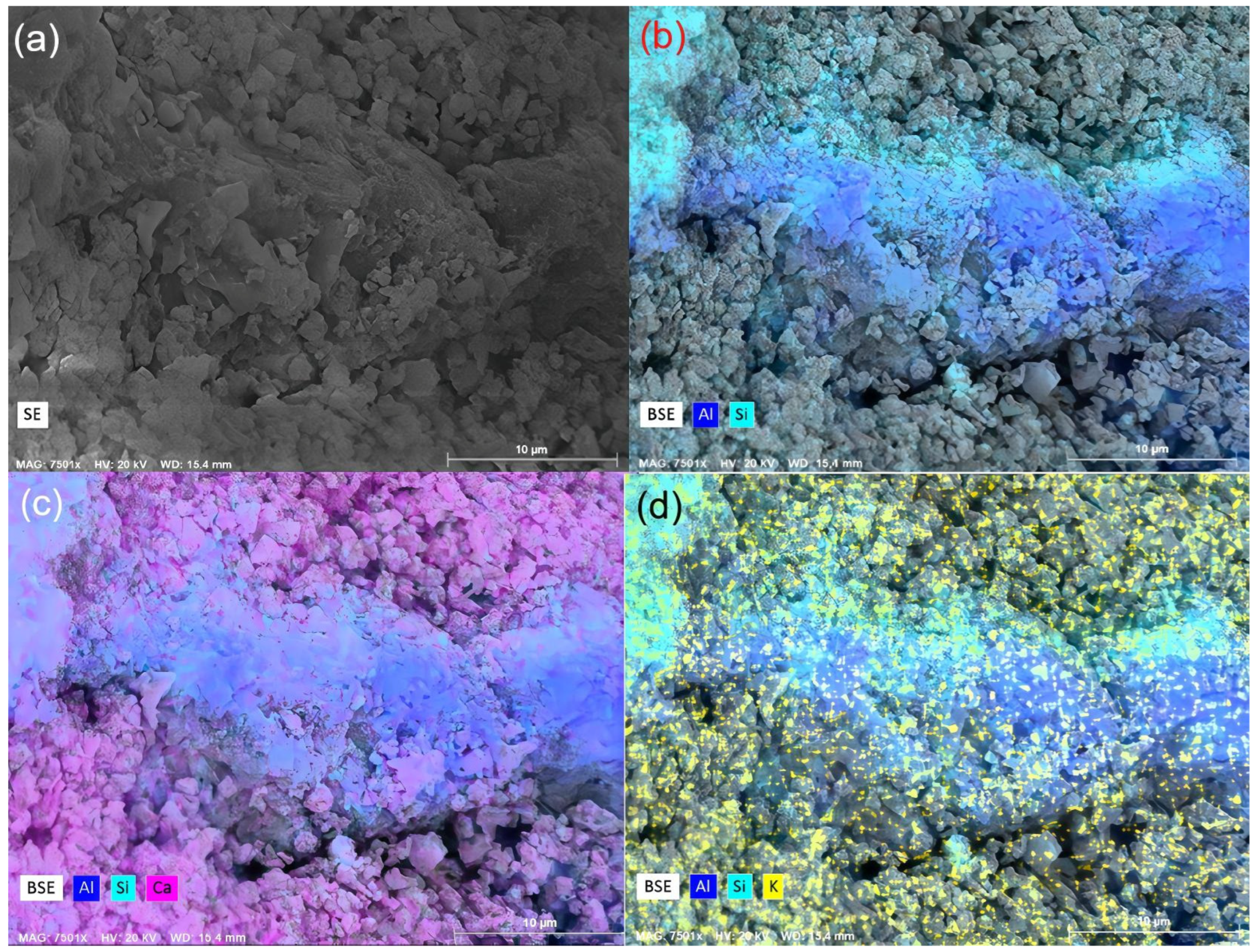
Finally, the leachate residue was subjected to SEM-EDX at UCM. The conductivity of the sample was improved by metallizing with gold. Figure 9a–d shows the solid residue at 7500× magnification: subplot (a) captures the microstructure, subplot (b) an elemental mapping of Al-Si (b), subplot (c) an elemental mapping of Al-Si-Ca, and finally subplot (d) an Al-Si-K mapping. A distinct region concentrating Al2O3 and SiO2, differentiated from CaO, can be seen. In contrast, (d) shows potassium scattered throughout the sample due to its interaction with the leaching medium in a bidirectional solubilization and solidification reaction. Considering that the XRD measured lithium metasilicate and potassium aluminate but not spodumene, added to the fact that the ICP-OES measured high potassium loads in the liquid and the SEM-EDX showed the spatial concentration of aluminum and silicon in the solid after leaching, we concluded that the spodumene was encapsulated within a potassium glass that subsequently interacted with the aqueous medium. The fusion phenomenon has already been described in an industrial spodumene concentrate with traces of micas that underwent a crystallographic change at 950 °C [41].
Figure 9.
Microscope picture at 7500× magnification obtained by SEM-EDX: secondary electrons (a), Al-Si mapping (b), Al-Si-Ca mapping (c), and Al-Si-K mapping (d).
4. Conclusions
This work delved into the co-occurrence of thermal cracking of spodumene when roasting with calcite at room pressure in the presence of potassium-rich minerals. The hypothesis of encapsulation was tested against both referenced and hands-on analytical chemistry: lithium metasilicate is surrounded by a potassium aluminate glass, which limits lithium extraction efficiency. This might explain the limited lithium recovery of 8.02 wt%: XRD not detecting leftover spodumene after roasting (1), together with ICP-OES indicating potassium dominance while leaching (2), and an anomalous concentration of aluminum and silicon when mapping with SEM-EDX (3). There are referenced works that heat up an industrial spodumene concentrate containing potassium-rich micas in the absence of alkali reductants. These authors conclude that micas melt and encapsulate spodumene, to which this work extends to alkaline roasting with calcite and follow-up leaching. Thermal cracking is an alternative pathway to previously reported works of atmospheric roasting of spodumene with calcite. Thermodynamic analysis indicates that lithium metasilicate is an incomplete reaction product. Furthermore, the high solubility of the potassium aluminate glass causes the aqueous medium to take up labile K2O while hindering the dissolution of lithium metasilicate, which is barely soluble in water. In order to increase the lithium efficiency up to that reported in existing literature, it is advisable to remove potassium from industrial spodumene concentrate before roasting, as well as to improve contact during operation through agitation in rotary kilns or fluidized bed reactors.
Author Contributions
Conceptualization, E.G.-F. and M.F.O.; methodology, E.G.-F. and M.F.O.; software, E.G.-F. and Y.S.-P.; validation, E.G.-F. and M.F.O.; formal analysis, E.G.-F., M.F.O., P.M., R.P., and M.-P.M.-H.; investigation, E.G.-F.; resources, Y.S.-P.; data curation, E.G.-F., R.P., and M.-P.M.-H.; writing—original draft preparation, E.G.-F.; writing—review and editing, E.G.-F., M.F.O., P.M., M.-P.M.-H., R.P., and Y.S.-P.; visualization, E.G.-F., R.P., and M.-P.M.-H.; supervision, M.F.O. and P.M.; project administration, M.F.O.; funding acquisition, M.F.O. All authors have read and agreed to the published version of the manuscript.
Funding
This research was funded by the Ministry of Universities of Spain, FPU19/06577 and FPU22/00900.
Informed Consent Statement
Not applicable.
Data Availability Statement
The original contributions presented in this study are included in the article. Further inquiries can be directed to the corresponding author.
Acknowledgments
We would like to thank José Eugenio Ortiz Menéndez (Laboratorio de Estratigrafía Biomolecular), Francisco Fernández Martínez (Análisis y Caracterización Óptica de Materiales), Olga Martín (Centro de Asistencia a la Investigación—Ciencias de la Tierra y Arqueometría—Unidad de Técnicas Geológicas), Xabier Arroyo (Centro de Asistencia a la Investigación—Ciencias de la Tierra y Arqueometría—Unidad de Técnicas Geológicas), Patricia Prieto Martin (Laboratorio Centralizado—School of Mining and Energy Engineering), and Marina Herrero Delfa (Laboratorio Centralizado—School of Mining and Energy Engineering), for their valuable support with the analytical techniques. We would also like to express our gratitude to Laureano Canoira, Emilio García, Cristina Fonolla and Lázaro Sánchez for their assistance in the laboratory. During the preparation of this manuscript, the authors used DeepL Translator Pro 25.12.1 to improve its readability. The authors have reviewed and edited the output and take full responsibility for the content of this publication.
Conflicts of Interest
The authors declare no conflicts of interest.
Abbreviations
The following abbreviations are used in this manuscript:
| ICP-OES | Inductively coupled plasma optical emission spectrometry |
| pH | Hydrogen potential |
| SEM-EDX | Scanning electron microscopy with energy-dispersive X-ray spectroscopy |
| UCM | Universidad Complutense de Madrid |
| UPM | Universidad Politécnica de Madrid |
| XRD | X-ray diffraction |
References
- Haynes, W.M. CRC Handbook of Chemistry and Physics: A Ready-Reference Book of Chemical and Physical Data; Lide, D.R., Bruno, T.J., Eds.; CRC Press LLC: Boca Raton, FL, USA, 2016; p. 12. [Google Scholar]
- Phogat, P.; Dey, S.; Wan, M. Comprehensive Review of Sodium-Ion Batteries: Principles, Materials, Performance, Challenges, and Future Perspectives. Mater. Sci. Eng. B 2025, 312, 117870. [Google Scholar] [CrossRef] [Scilit]
- U.S. Geological Survey. Mineral Commodity Summaries: Lithium; U.S. Geological Survey: Westbrook, ME, USA, 2023.
- Albemarle Corporation. Technical Report Summary on the Atacama Lithium Brine Project; Albemarle Corporation: Charlotte, NC, USA, 2021. [Google Scholar]
- Arcadium Lithium. Olaroz Resource Update; Arcadium Lithium Ltd.: Brisbane, Australia, 2023. [Google Scholar]
- Lithium Americas Corp. Lithium Americas Announces 40,000 TPA Feasibility Study for the Cauchari-Olaroz Lithium Project; Lithium Americas Corp.: Vancouver, BC, Canada, 2019. [Google Scholar]
- Allkem Limited. Annual Report 2022: Sal de Vida Project Resources; Allkem Limited: Brisbane, Australia, 2022. [Google Scholar]
- Farahbakhsh, J.; Arshadi, F.; Mofidi, Z.; Mohseni-Dargah, M.; Kök, C.; Assefi, M.; Soozanipour, A.; Zargar, M.; Asadnia, M.; Boroumand, Y.; et al. Direct Lithium Extraction: A New Paradigm for Lithium Production and Resource Utilization. Desalination 2024, 575, 117249. [Google Scholar] [CrossRef] [Scilit]
- Mojid, M.R.; Lee, K.J.; You, J. A Review on Advances in Direct Lithium Extraction from Continental Brines: Ion-Sieve Adsorption and Electrochemical Methods for Varied Mg/Li Ratios. Sustain. Mater. Technol. 2024, 40, e00923. [Google Scholar] [CrossRef] [Scilit]
- Abdullah, A.A.; Oskierski, H.C.; Altarawneh, M.; Senanayake, G.; Lumpkin, G.; Dlugogorski, B.Z. Phase Transformation Mechanism of Spodumene during Its Calcination. Miner. Eng. 2019, 140, 105883. [Google Scholar] [CrossRef] [Scilit]
- Ellestad, R.B.; Leute, K.M. Method of Extracting Lithium Values from Spodumene Ores. U.S. Patent US2516109A, 25 July 1950. [Google Scholar]
- Dwyer, T.E. Recovery of Lithium from Spodumene Ores. U.S. Patent US2801153A, 30 July 1957. [Google Scholar]
- Guohya, W.; Guan, W.; Shuojian, S. Method for Extracting Lithium from Spodumene. CN109517981, 26 March 2019. [Google Scholar]
- Braga, P.; França, S.; Neumann, R.; Rodriguez, M.; Rosales, G. Alkaline Process for Extracting Lithium from Spodumene. In Proceedings of the Hydroprocess 2019: 11th International Seminar on Process Hydrometallurgy, Santiago, Chile, 19–21 June 2019. [Google Scholar]
- Tiihonen, M.; Haavanlammi, L. Method for Recovering Lithium Carbonate. U.S. Patent US9255012B2, 9 February 2016. [Google Scholar]
- Akbari, H.; Rezaee, M.; Agrawal, D.; Hassas Behzad, V.; Slawecki, T. Process for Extraction of Lithium. CA3168782A1, 26 August 2021. [Google Scholar]
- Subasinghe, H.C.S.; Rezaee, M. Direct Lithium Extraction from α-Spodumene Using NaOH Roasting and Water Leaching. Chem. Eng. J. 2025, 505, 159661. [Google Scholar] [CrossRef] [Scilit]
- Rosales, G.D.; Resentera, A.C.J.; Gonzalez, J.A.; Wuilloud, R.G.; Rodriguez, M.H. Efficient Extraction of Lithium from β-Spodumene by Direct Roasting with NaF and Leaching. Chem. Eng. Res. Des. 2019, 150, 320–326. [Google Scholar] [CrossRef] [Scilit]
- Hayes, E.T.; Williams, F.P.; Stemberg, W.M. Production of Lithium Chloride from Spodumene. U.S. Patent US2533246A, 12 December 1950. [Google Scholar]
- Shi, C.G.; Low, I.M. Use of Spodumene for Liquid-Phase-Sintering of Aluminium Titanate. Mater. Lett. 1998, 36, 118–122. [Google Scholar] [CrossRef] [Scilit]
- Greenwood, J.P.; Hess, P.C. Congruent Melting Kinetics of Albite: Theory and Experiment. J. Geophys. Res. Solid Earth 1998, 103, 29815–29828. [Google Scholar] [CrossRef] [Scilit]
- Alling, H.L. The Mineralography of the Feldspars Part II; The University of Chicago Press: Chicago, IL, USA, 1923; Volume 31. [Google Scholar]
- Wilkomirsky Fuica, I.; Parada Luna, F. Process for Obtaining Lithium Carbonate from Spodumene Ore by Sulphation with Ferrous Sulphate at High Temperature. WO2020206567A1, 15 October 2020. [Google Scholar]
- Abdullah, A.A. Thermal Treatment of Spodumene (LiAlSi2O6) for Lithium Extraction. Ph.D. Thesis, Murdoch University, Murdoch, WA, Australia, 2019. [Google Scholar]
- Chase, M.W.; Curnutt, J.L.; Downey, J.R.; Mcdonald, R.A.; Syverud, A.N.; Valenzuela, E.A. JANAF Thermochemical Tables, 1982 Supplement. J. Phys. Chem. Ref. Data 1982, 11, 695–940. [Google Scholar] [CrossRef] [Scilit]
- Le Neindre, B.; Vodar, B. (Eds.) Experimental Thermodynamics of Non-Reacting Fluids (Experimental Thermodynamics, Vol II); Butterworths: London, UK, 1975; 1318p, ISBN 978-0-408-70566-0. [Google Scholar]
- McCullough, J.P.; Scott, D.W. Volume 1: Calorimetry of Non-Reacting Systems; Mobil Research and Development Corporation: Princeton, NJ, USA, 1968; p. 635. [Google Scholar]
- Doebelin, N.; Kleeberg, R. Profex: A Graphical User Interface for the Rietveld Refinement Program BGMN. J. Appl. Crystallogr. 2015, 48, 1573–1580. [Google Scholar] [CrossRef] [Scilit]
- Vaitkus, A.; Merkys, A.; Sander, T.; Quirós, M.; Thiessen, P.A.; Bolton, E.E.; Gražulis, S. A Workflow for Deriving Chemical Entities from Crystallographic Data and Its Application to the Crystallography Open Database. J. Cheminform. 2023, 15, 123. [Google Scholar] [CrossRef] [Scilit] [PubMed]
- Vaitkus, A.; Merkys, A.; Grazulis, S. Validation of the Crystallography Open Database Using the Crystallographic Information Framework. J. Appl. Crystallogr. 2021, 54, 661–672. [Google Scholar] [CrossRef] [Scilit] [PubMed]
- Merkys, A.; Vaitkus, A.; Grybauskas, A.; Konovalovas, A.; Quirós, M.; Gražulis, S. Graph Isomorphism-Based Algorithm for Cross-Checking Chemical and Crystallographic Descriptions. J. Cheminform. 2023, 15, 25. [Google Scholar] [CrossRef] [Scilit]
- Rietveld, H.M. A Profile Refinement Method for Nuclear and Magnetic Structures. J. Appl. Crystallogr. 1969, 2, 65–71. [Google Scholar] [CrossRef] [Scilit]
- Mccusker, L.B.; Von Dreele, R.B.; Cox, D.E.; Louër, D.; Scardi, P. Rietveld Refinement Guidelines. J. Appl. Crystallogr. 1999, 32, 36–50. [Google Scholar] [CrossRef] [Scilit]
- United States Pharmacopeial Convention (USP). ⟨233⟩ Elemental Impurities—Procedures; USP: Rockville, MD, USA, 2025; Available online: https://www.usp.org/sites/default/files/usp/document/harmonization/gen-chapter/20250425HSm5193.pdf (accessed on 24 December 2025).
- Xu, J.; Guo, Y.; Yang, S.; Hohl, S.V.; Zhang, W. Reliable Determination of SiO2 Concentrations in Sediments via Sequential Leaching and ICP-OES/MS Analysis. J. Geochem. Explor. 2022, 242, 107090. [Google Scholar] [CrossRef] [Scilit]
- U.S. Environmental Protection Agency (EPA). SW-846 Test Method 6010D: Inductively Coupled Plasma-Optical Emission Spectrometry (ICP-OES); (Revision 5, July 2018; SW-846 Update VI); EPA: Washington, DC, USA, 2018. Available online: https://www.epa.gov/sites/default/files/2015-12/documents/6010d.pdf (accessed on 24 December 2025).
- Planck, M. Ueber Das Gesetz Der Energieverteilung Im Normalspectrum. Ann. Phys. 1901, 309, 553–563. [Google Scholar] [CrossRef] [Scilit]
- Ralph, J.; Von Bargen, D.; Martynov, P.; Zhang, J.; Que, X.; Prabhu, A.; Morrison, S.M.; Li, W.; Chen, W.; Ma, X. Mindat.Org: The Open Access Mineralogy Database to Accelerate Data-Intensive Geoscience Research. Am. Miner. 2025, 110, 833–844. [Google Scholar] [CrossRef] [Scilit]
- NIST-JANAF Thermochemical Tables. Available online: https://janaf.nist.gov/ (accessed on 10 March 2025).
- Barin, I. Thermochemical Data of Pure Substances; John Wiley & Sons, Inc.: Hoboken, NJ, USA, 1995. [Google Scholar] [CrossRef] [Scilit]
- Aylmore, M.G.; Wells, M.A.; Quadir, Z.; Rickard, W.D.A.; Rankenburg, K.; McInnes, B.I.A. The Effect and Implication of Impurities on the Calcination of α Spodumene for Lithium Extraction. Hydrometallurgy 2025, 238, 106570. [Google Scholar] [CrossRef] [Scilit]
- Pokrovskii, V.A.; Helgeson, H.C. Thermodynamic Properties of Aqueous Species and the Solubilities of Minerals at High Pressures and Temperatures: The System Al2O3-H2O-KOH. Chem. Geol. 1997, 137, 221–242. [Google Scholar] [CrossRef] [Scilit]


Disclaimer/Publisher’s Note: The statements, opinions and data contained in all publications are solely those of the individual author(s) and contributor(s) and not of MDPI and/or the editor(s). MDPI and/or the editor(s) disclaim responsibility for any injury to people or property resulting from any ideas, methods, instructions or products referred to in the content. |
© 2026 by the authors. Licensee MDPI, Basel, Switzerland. This article is an open access article distributed under the terms and conditions of the Creative Commons Attribution (CC BY) license.