


Abstract
Digital technologies seem to contribute to health promotion and disease prevention, allowing older people to benefit from targeted health interventions supported by digital resources. The current study aimed to develop a substantive theory focusing on the experiences of older people who use smartphone technology daily and its repercussions on healthy aging. This qualitative study employed Charmaz’s constructivist grounded theory approach. Purposeful and theoretical sampling was used to recruit 37 older Brazilian people from a community extension project that integrates nurses who offer personalized guidance and support using smartphone devices. Individual phone-call interviews and reflective journals were conducted between August 2022 and March 2023. Four interrelated theoretical categories emerged: (1) technological progress during the aging process; (2) technological learning using smartphones and participation in virtual groups; (3) expanding social and personal development through smartphone communication; and (4) virtual groups for older people on healthy aging. The core category “Experiencing guided smartphone use as a resource for healthy aging” portrays the individual, social and cultural aspects involved in the habits and attitudes that older people develop to promote independence and quality of life. This study offers valuable insights into the daily use of smartphones by older people, and its repercussions on individual and social issues that bring people and places closer together, expand the social network, and modify communication patterns. The findings indicate that older adults undergo changes and adaptations in their daily lives and in the dynamics of interpersonal relationships, and that using digital applications such as smartphones contradicts the stereotype of fragility or limited understanding associated with aging. The findings can also help with the implementation of policies and practices aligned with a more person-centred care approach.
1. Introduction
With the exponential aging of the global population, there has been an expansion in the use of information and communication technologies (ICTs), namely the use of smartphones and internet access, configuring new patterns of social behaviour [1]. Personal experience with technology can provide subjective perceptions about the usefulness and benefits ICTs offer for all ages [2]. Based on the assumption that the older population is increasingly using ICTs, studies indicate that smartphone electronic devices and their respective mobile applications create opportunities for choice, information, and lifestyles that are age-appropriate and promote healthy aging [3,4]. Faced with this reality, the global movement called the Decade of Healthy Aging (DHA) 2021–2030—a multisectoral strategy to promote healthy aging—proposes the vision that longer lives deserve to be lived with more health and opportunities [5]. Health communication and information technologies are on the rise, promoting healthy behaviours [6,7]. However, for older people to maximize their opportunities, we need to improve our knowledge about the use of smartphones and their applications, as there are constant updates and evolving learning needs [1]. The purpose of this paper is to develop a substantive theory on how older people deal with smartphone technology in their daily lives and its repercussions on healthy aging.
1.1. Background
The internet has become ubiquitous and older people’s receptivity to the smartphone has changed [8]. Globally, the overall population’s use of smartphones continues to increase [9], especially among older people [10]. In Brazil, in 2022, 87.2% of the general population and 62.1% of the older population (aged 60 or over) had access to the Internet [11]; cell phones were the most used equipment (98.8% of Brazilian population).
Social isolation is an escalating issue among older people [12,13], posing a significant threat to the mental and physical health of older people, leading to depression, self-harm (like substance abuse, alcoholism, and suicide), self-neglect, worsening cognitive and/or physical disabilities, and increased mortality rates. ICTs can empower older individuals by fostering critical thinking and decision-making, and providing access to information, services, and ongoing communication with caregivers and friends [14,15,16]. In turn, improved self-confidence and empowerment can foster positive emotions about oneself, a sense of control over one’s life, and overall life satisfaction [14,17]. The promotion of intelligent living environments that ensure safety and security can mitigate dangers, disabilities, stress, fear, and social isolation [18]. Therefore, ICTs empower individuals to manage their own health, promoting the individual’s role and accountability in generating an optimum healthcare ecosystem.
Recent studies suggest that digital technologies can contribute to health promotion and disease prevention, allowing older people to benefit from targeted health interventions supported by digital resources [1,6,8]. Although most studies focus on the use and application of ICTs in the lives of younger people, there is growing evidence of their benefits among the older population [19]. Digital resources provide a relatively cheap and effective way for older people to access information that allows them to manage their health and life [8]. For some time, researchers have been concerned with the development of skills and knowledge by older adults who use technological resources. Patterns of use, perceived usefulness and sociocultural determinants of technology adoption are important predictors of the use of technologies by older people.
There is an increasingly pressing need for education and training programs capable of strengthening and promoting the digital capacity of older people to ensure their healthy aging through social participation and online and offline exchanges [20,21]. In this sense, the use of smartphones can modify behaviours and habits, and influence different contexts of life and the aging process in unique ways. In the Brazilian context, there is a gap in knowledge about how aging people experience the daily use of smartphone technology, individually or in society, and how these experiences impact their lives. Thus, the following question was formulated: How do older people experience the use of smartphone technology in their daily lives and what are the implications for a healthy aging process?
1.2. Study Aim
The present study draws primarily on the same dataset reported by Gallo et al. [22]. However, whereas the previous article explored older adults’ everyday experiences of smartphone use, the current analysis re-examines these data through the specific lens of healthy aging by developing a conceptual explanation of how participants perceived smartphone-mediated learning, social participation, communication, and access to health-related resources. Therefore, this study aims to develop a substantive theory on the experiences of older people who use smartphone technology in their daily lives and its repercussions on healthy aging. By exploring participants’ narratives, this study seeks to highlight the value of smartphone use in defining health promotion strategies involving the family and health professionals in the care of older people, and offers insights into older people’s perspective on healthy aging.
2. Materials and Methods
2.1. Study Design
A qualitative study was performed using the constructivist grounded theory (CGT) approach [23]. This approach evaluates the characteristics, framework, dynamics, and influencing factors of exposure to social phenomena in their authentic environment [24]. This study adheres to the Consolidated Criteria for Reporting Qualitative Research (COREQ) checklist (Supplementary Materials File S1) [25].
2.2. Study Setting and Recruitment
Participants were selected in the context of a community extension project (“Connected grandmas and grandpas”) linked to a municipal centre for older people and a public federal teaching institution, located in the south of Brazil (state of Paraná). This extension project involves older people who use smartphones in their daily lives in a guided manner (with a nurse coach). A virtual messaging group was specially created for this audience to express doubts and provide guidance related to the handling of the technology itself and its resources, in addition to providing health information and practical instructions.
Purposive sampling [23] was employed to recruit participants who met predefined inclusion criteria: (a) people over 60 years old; (b) who used a smartphone with internet access; and that (c) had participated in the extension project for at least six months. Older people with impaired cognitive capacity, according to the Brazilian version of Mini Mental State Examination (MMSE) [26], were excluded.
The initial purposeful sampling was complemented with theoretical sampling until theoretical saturation was achieved [23]. Participants were chosen based on information supplied by prior participants, until additional data no longer produced further novel or pertinent insights. This method facilitated an extensive examination and comprehension of the subject, grounded on the depth and complexity of participants’ experiences.
Initially, only older adults living with relatives were interviewed (n = 27). As data collection and analysis proceeded concurrently, focused coding of these interviews identified family support as a potentially important influence on participants’ technological learning, confidence, and engagement with smartphones. To further explore whether these processes depended on co-residing family relationships, theoretical sampling was used to recruit older adults living alone. Collaborating recruiters assisted in identifying eligible participants, enabling the research team to examine variation in social support contexts and refine the developing categories related to digital learning, social connectedness, autonomy, and healthy aging [27]. Subsequent interviews were guided by emerging analytical insights and were conducted to address gaps in the developing theory, with interview questions refined iteratively throughout the process [28]. An additional ten participants were recruited, resulting in a total sample of 37 older adults. All participants were enrolled in the same nurse-supported community programme and had participated for at least six months. Data obtained from participants living alone primarily confirmed, extended, and refined the emerging theory by illustrating how virtual groups, peer interactions, and professional guidance could support digital engagement in the absence of household support.
2.3. Data Collection
Data were collected by the first author while conducting her PhD study. Data collection took place between August 2022 and March 2023. The extension project’s collaborating recruiters reviewed and selected a list of all service users eligible for this study, based on the inclusion criteria. Eligible participants were contacted by telephone and presented with this study’s objective and purpose; then, participants read the consent form and were sent a copy via WhatsApp®. Participants had 48 h to return the signed consent form. Finally, the interviews were scheduled.
In-depth phone interviews were carried out to maximize access to geographically dispersed interviewees, reduce costs, and promote flexible interview scheduling. Given the COVID-19 pandemic, phone interviews were used to mitigate the risk of infection for both participants and the researcher. Based on previous evidence [10] and the researchers’ experience, a semi-structured interview guide was used that included the following themes: (a) daily experience of older people using smartphones; (b) perceived usefulness, facilitators and restrictions in smartphone use; and (c) implications of technologies on health and well-being [10]. Demographic information (including sex, age, schooling, occupation, and social support) was collected to provide social and contextual information. This background was useful in establishing an initial rapport. The researcher effectively employed tactics including questioning, answering, validating, summarizing, and silencing during the interviews to facilitate the interviewees’ expression of their innermost emotions. An open-ended question was utilized at the onset of interviews to prompt participants to openly recount their experiences: “Please, tell me about your experience of using the internet through your smartphone and what this means in your life?”. Probing questions were made based on the interviewees’ responses: “What do you mean?”, “Could you elaborate further?”, and “What was the outcome of this action?”. The original interview guide was revised and refined for the second round of interviews with older people living alone to clarify relationships and focus on the most salient aspects of the data.
Telephone interviews had an average duration of 45 min (range between 30 and 72 min). Interviews were audio-recorded and field notes were utilized to capture subjective and descriptive details. This was the foundation for memos documenting the evolving concepts, relationships, and categories [23]. Audiotaped interviews and reflective journals were transcribed verbatim, edited to remove non-verbal utterances, and assessed for precision. The reflective diary entries documented analogous accounts of the participants’ experiences as recorded in the interviews. All participants were notified of their option to obtain a summary of the study results.
2.4. Data Analysis
Data analysis was informed by constructivist epistemology, assuming that meanings are co-constructed through interaction between researcher and participants. Therefore, data were collected and analysed concurrently following the initial, focused, and theoretical coding phases, in accordance with constructivist grounded theory [23]. Initial coding was conducted by repeatedly “interrogating” the original data through line-by-line coding and seeking nuances, clear declarations, and implicit meanings. The findings were coded based on the participants’ meanings and experiences, forming the first dimensions of the analysis. In the second, focused phase, the most expressive codes were grouped to create categories and synthesize a certain fragment of data [23]. Finally, the theoretical phase included the integration of categories to reveal the core category, allowing for the development of a substantive theory that closely reflected the contextual conditions shaping participants’ actions and meanings, including social, relational, and situational influences.
The coding and analysis process was conducted entirely in Portuguese by the first author using ATLAS.ti® (version 23.1.1.0, Berlin, Germany). Emerging codes, categories, and theoretical interpretations were regularly discussed with the co-investigators, and analytical differences were resolved through iterative discussion, constant comparison with the data, and consensus-building. Following completion of the analysis, participant quotations selected for publication were translated into English by the first author, who is fluent in both languages. The translated excerpts were independently reviewed by bilingual members of the research team, and any discrepancies were resolved through comparison with the original Portuguese transcripts to ensure conceptual fidelity and consistency with the coding framework.
2.5. Rigour and Reflexivity
The criteria proposed by Charmaz and Thornberg [29]—credibility, originality, resonance and usefulness—ensured the CGT study’s rigor and validity. Credibility was ensured in the interviews, transcriptions, and analysis process. Data were collected by a researcher experienced in conducting interview studies. All researchers discussed the coding and themes and agreed that data saturation had been reached. Continuous peer debriefing with members of the research team, alongside ongoing member checking, was undertaken throughout the research process. The originality of the findings was confirmed through an extensive reflection process involving memo writing, literature evaluation, and the application of layout methodologies. The resulting discussion emphasizes the analysis’ ability to elucidate results of prior research and its relevance to similar individuals and situations.
An iterative process, through multiple sessions with the co-investigators, was employed to construct the codebook. To develop a theoretical model (criteria for usefulness), a schematic representation was suggested to elucidate the phenomenon under investigation and to depict the relationship between the core category and the other categories.
There has been a recent surge of interest in the literature about researcher reflexivity, particularly within the setting of CGT. This concern is especially pertinent in constructivist methodologies, as research is perceived as a co-constructive process. The present research was enhanced by reflexivity concerning transparency and credibility. This facilitated a more meticulous and analytical evaluation of the researchers’ perspectives and influences on this study’s development. The research team comprised a Brazilian nurse scholar and qualitative researcher (A.M.G.) who has studied older people for more than a decade. The remaining team members have expertise in qualitative research and were aligned with the constructivist epistemological framework.
2.6. Ethics
This research was approved by the Research Ethics Committee of State University of Maringá (CAAE 57993522.0.0000.0104, opinion no. 5,553,406, approved on 20 May 2022) and conducted according to the ethical precepts for research with human beings, in accordance with Resolution 466/12. Resolution 510/2016 was fundamental in guiding questions about potential risks related to issues of power, ensuring that the researcher–participant relationship was built on dialogue and reflexivity. All participants provided written informed consent. Sociodemographic data, interview recordings and transcripts were accessible only to the study team members. Participants were informed they could withdraw from this research at any time and received no reward for taking part in this study. To preserve anonymity, each participant was assigned an alphanumeric identifier (e.g., P1, P2), followed by their age and whether the participant lived alone or accompanied.
3. Results
3.1. Sample Description
The sample included 37 older Brazilian people, 27 of whom lived with family members and 10 who lived alone. Most participants were female (n = 33). The mean age was 70.6 ± 6.95 years (range 60–86 years). Regarding education, 14 of the participants were university graduates, three of which completed postgraduate studies. Twenty-seven participants were retired, and the remaining 10 were active professionally. All participants were familiar with using smartphones and the average time of daily use was 2 h 24 min. All participants were members of the same nurse-supported community programme and therefore shared exposure to professional guidance and opportunities for technological learning, regardless of their living arrangements.
3.2. Presentation of the Substantive Theory
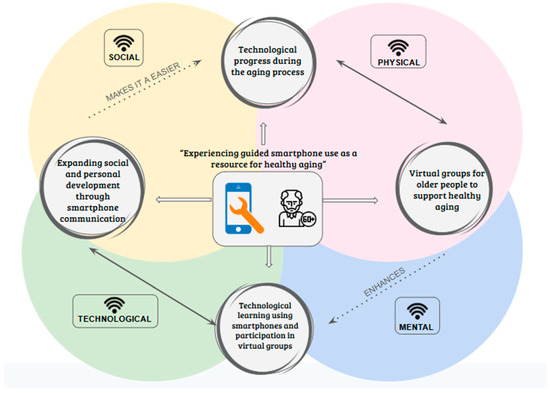
Data analysis generated the core category “Experiencing guided smartphone use as a resource for healthy aging”, around which four interrelated theoretical categories emerged: (1) technological progress during the aging process; (2) technological learning using smartphones and participation in virtual groups; (3) expanding social and personal development through smartphone communication; and (4) virtual groups for older people in healthy aging.
The substantive theory developed in this study proposes that healthy aging is enhanced through a progressive process of digital engagement mediated by smartphone use. This process begins with older adults adapting to ongoing technological changes and recognizing the need to remain connected to an increasingly digital society. Through participation in technological learning opportunities and virtual groups, they develop digital competencies and confidence in using smartphones. These competencies subsequently facilitate greater social connectedness, access to information, autonomy, and personal development. As engagement deepens, older adults use smartphone-mediated networks to access reliable health information, interact with professionals and peers, and incorporate health-promoting practices into their daily lives. The central process linking these experiences is that smartphone use functions as a mechanism through which older adults transform digital engagement into social participation, self-management, and healthy aging. The trajectory described by the substantive theory is not automatic; its positive outcomes are conditional upon supportive social relationships, opportunities for guided learning, and the ability to critically appraise digital information, as participants also reported risks related to misinformation, anxiety, and inappropriate interpretation of online health content.
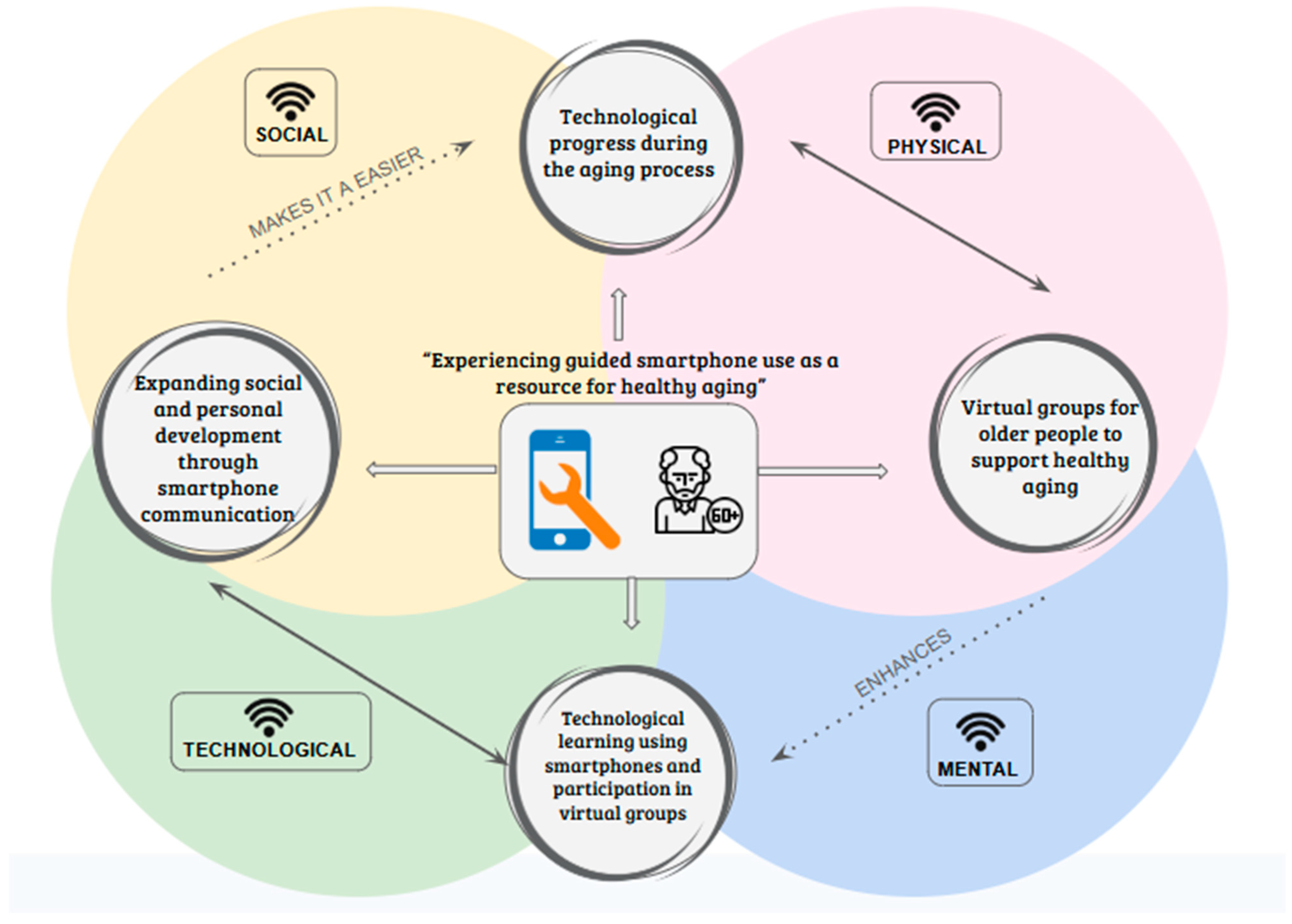
Figure 1 illustrates the substantive theory as a sequential and interactive process. Greater proficiency using technology developed throughout aging creates the context for engagement with smartphones; technological learning enables digital participation; digital participation facilitates social and personal development; and participation in virtual groups supports the adoption of health-promoting behaviours. These interconnected processes culminate in the core category “Experiencing guided smartphone use as a resource for healthy aging”.
Figure 1.
Overview of relationships between the core category and the interrelated categories. Legend: The peripheral dimensions (social, physical, mental, and technological) represent interrelated domains through which participants described the impact of guided smartphone use on healthy aging.
3.2.1. Technological Progress During the Aging Process
Participants describe a process of repositioning themselves within a rapidly evolving world. Rather than merely using a device, they are adapting to shifting temporalities where staying “up to date” is perceived as a survival strategy. The use of smartphones connected to the internet has become a reality for all age groups. Older people, in particular, have experienced the aging process in parallel with the analogue–digital transition. Although it is a current reality, older people perceive the introduction of smartphone technology as something that requires the user’s effort, as a way of surviving during changing times.
[…] we have to keep up with the world because otherwise there is no way to survive. I don’t see myself without a cell phone today at all.(P29; 69 years; alone)
[…] the eldest will become increasingly old! But the older people of my time already need a lot of help and those who are coming already know more.(P28; 67 years; alone)
[…] we live according to what is evolving in the world. For example, if from now on something comes in addition to the Internet, the Internet for me will remain in the past and I will be trying to adapt to what is happening in the world.(P11; 68 years; alone)
The use of smartphones tends to maximize communication between peers, expanding the social network beyond face-to-face contacts to include the virtual space. Thus, participants’ experiences incorporate new opportunities that goes beyond the mere access to real time information, but encompasses leisure activities and all the technical dynamics associated with constantly using the equipment. Older people follow the evolution of technology naturally, enjoying its benefits. The type of technology itself varies, including services and devices in domestic and professional equipment, audiovisual resources and others, such as access to a bank account or scheduling medical appointments.
[…] there is no point in wanting to fight against something that is natural.(P22; 63 years; accompanied)
I use my cell phone, the Internet and technology for everything. I love seeing food recipes, reading books, crocheting things, paying bills on the bank app, watching the news, looking for a doctor’s address, everything we look for has a response.(P4; 64 years; accompanied)
[…] I schedule doctors’ appointments via cell phone, by message, and this is very important and makes it faster for us who are older.(P17; 72 years; accompanied)
[…] (using a smartphone) made it easier for me, so I don’t leave the house much. Despite knowing very little, it helped me a lot in gaining access to useful information and services.(P10; 65 years; accompanied)
From an intergenerational perspective, connecting with younger people to learn how to use a smartphone and being part of the digital network awakens older people’s feelings of belonging to a larger, previously unknown world. Some participants said:
[…] Computers, internet and cell phones are added to a new vision of life. We discover new worlds without leaving home […] we research the latest in health and leisure.(P36; 68 years; accompanied)
[…] I regularly spend time with my grandson, so I feel like I’m staying up to date with technology. I taught my grandchildren things they didn’t know. Never knew that, so I taught them. So, I’m always learning…(P29; 69 years; alone)
3.2.2. Technological Learning Using Smartphones and Participation in Virtual Groups
This category focuses on the process of acquiring digital skills, confidence, social belonging, and technological literacy. Here, virtual groups function primarily as learning environments that facilitate adaptation to digital technologies and promote engagement with the digital world. Participants described how involvement in these groups supported learning, information exchange, confidence-building, and resistance to age-related stereotypes.
You know, I like reading. In the group, we share the same interests, we have books to read that I like.(P20; 60 years; alone)
[…] I like watching videos. Lately I’ve been watching some videos about politics and economics, because I didn’t understand anything about politics. In the group, we have access to reliable information that helps us deal with daily challenges.(P28; 67 years; alone)
In the virtual group, I have easy access to various topics related to older people and with a very pedagogical approach, in areas such as health, physical activity, resources that help with the safety of older people, etc.(P32; 60 years; accompanied)
By participating in a virtual group with age-related areas of interest, participants are encouraged to change their way of thinking and acting in relation to ageism and how not to feel excluded. By belonging to this group and recognizing the needs of other members, older people experience the freedom to express themselves and learn together.
[…] with the use of cell phones, participating in senior groups on the Internet, we older people integrate ourselves; we stay integrated in this wheel that is technology. After all, being old does not mean being incapable.(P18; 74 years; accompanied)
I’m learning a lot of things that I’ve never done in my own. So, the cell phone helps me in that sense too. I feel like I’m more confident… it’s a way to combat ageism.(P10; 65 years; accompanied)
Given the exponential pace of technological development, younger people (considered digital natives) use communication between technologies through the internet of things (IoT). In contrast, older people experienced the replacement of analogue with digital resources, changing from old communication patterns to the new opportunities offered by the internet. Obviously, many technologies can help in the daily lives of older people, but many are not used given the older population’s lack of integration. However, some participants perceived smartphone use and participation in virtual groups as beneficial to their daily lives, particularly by supporting communication, learning, access to information, and continued engagement with others as they age.
[…] at first it was difficult, until we got the hang of it, with the help of our children. Younger people, I think, learn faster than us elders. But, after that I managed well, I’ve been managing well for years, I started finding myself.(P31; 66 years; accompanied)
I think it’s really good to be able to use cell phones and the Internet, because before people didn’t understand any of this and didn’t even know it existed and these old people passed from this life to another without knowing about such good communication, and now, me for example, I have this privilege to do things I’ve never done, to grow old in this modern era and keep up.(P16; 74 years; alone)
Before the telephone, it was even more difficult. But nowadays with a cell phone you have [access] whenever you want, all the information you want, and then everything changed, the landline became back.(P15; 68 years; accompanied)
3.2.3. Expanding Social and Personal Development Through Smartphone Communication
Participants described smartphones as helping them maintain contact with relatives and friends who lived far away, enabling more frequent communication and facilitating the continuation of meaningful social relationships across geographic distances. Using smartphones allows you to bring people and significant places closer together. For some older people, having company to share their lives with is extremely important. The experiences portrayed demonstrate how they adapt to new circumstances and how the smartphone allowed them to maintain emotional ties.
[…] the emotion of talking to someone who is far away, like my brother in Japan. We send a message quickly, he calls via video and the answer comes immediately, this is something that never existed and if it existed it was expensive.(P14; 73 years; accompanied)
[…] I didn’t communicate much with my brothers, they are all old, we are nine brothers, I’m the oldest, 86 years old. I’m the only one who lives here, so for me it’s very good, for the whole family. I communicate with everyone, and very quickly we see ourselves on the screen …(P5; 84 years; accompanied)
The synchronization and speed with which information is disseminated is portrayed as one of the biggest incentives for older people to remain involved in communication through virtual social networks. Exchanging messages is the most common strategy and the one that best meets their needs, regardless of their social, economic condition and even educational level, since there is the possibility of interacting with varied audiovisual resources.
[…] I think it’s important, because it’s a way for you to get, so to speak, things that are sometimes on the other side of the world and you open a website, read, see, discover and have this information.(P31; 66 years; accompanied)
The Internet on my cell phone helped a lot. For example, I didn’t study, but I always tried to learn… I always read a magazine, newspaper and today I see that the virtual world is very important for people who are older, and we have to evolve on this issue, we can do it too.(P11; 68 years; alone)
The use of a smartphone provides a sense of independence for older adults, allowing for the concentration of different functionalities in a single digital device. There is an expectation of performance, however, some still use traditional communication systems, such as a landline telephone, and want to slowly welcome virtual reality.
[…] I was able to do more things that I hadn’t done before, sometimes for research, for a granddaughter, I needed books… so having the Internet has everything at hand, calm, easier to find, for me it was a liberation.(P10; 65 years; accompanied)
[…] I exchange messages on the cell phone, and I still keep the landline with the excuse that it is because of my mother who is older than me and my aunt, they hear better, but it’s not…(P21; 66 years; accompanied)
3.2.4. Virtual Groups for Older People to Support Healthy Aging
This category focuses on the outcomes and applications of digital engagement in the context of health promotion. In this category, virtual groups are conceptualized as spaces through which participants access reliable health information, receive professional guidance, develop health-related behaviours, and incorporate self-care practices into everyday life. Thus, the participation of older people in virtual groups led by trained professionals allows for the receipt and transmission of reliable health information, with understandable terms, applicable in the daily context. Such groups facilitate and support older people’s participation in virtual communities and encourage behavioural changes and the development of healthy habits.
[…] with our age, being able to use these technologies in a practical way on a daily basis is very favourable for us. I would say that we don’t even feel like we’re getting older, we just don’t look in the mirror and don’t worry about the wrinkles.(P34; 65 years; accompanied)
Exchanging messages containing health content, practical instructions, and relevant information that can be applied to everyday situations favours interactions. One participant uses virtual groups to receive and apply practical health instructions, such as hydration tips and posture care, which they incorporate into their daily routines to prevent physical decline.
[…] I apply the things I see on my cell phone to my life. I do it like this, for example, if I saw tips in the group about having to drink at least two litres or even more of water, the correct sleeping posture, the care you have to take with your body, with everything, I try to follow them. Things that sometimes I didn’t even know or care about before. At my age I didn’t know much because I wasn’t trying to learn and now it comes easy.(P7; 72 years; accompanied)
Confidence in searching for information is acquired as smartphone use becomes recurrent. In the long term, changes in attitudes are perceived as related to promoting their health and solving problems.
I’m 86 years old. I really like reading and learning. Today I can receive health information in a group and apply some of it in my life and with my wife. She doesn’t like cell phones, reading, anything like that, but it’s funny that she’s always asking me what the people trained to help us “put” there in the group that she wants to know. This greatly improves the way we age.(P8; 86 years; accompanied)
Mobile applications, participation in messaging groups, the use of video resources and even the use of health professional services offered online are perceived by older people as instruments that can promote health by disseminating simple and effective applicable information. More sensitive issues involving decision-making, such as interpreting exams and searching for medications, require greater caution.
[…] for health problems, I already have my regular doctors. When I book an appointment online, they confirm the appointment and ask if I’m going to the appointment or not.(P26; 72 years; accompanied)
At home, there are older people taking care of elders, and I was the only one who had the idea of teaching my mother how to use a smartphone and I also received criticism from my brothers, who said that now that I introduced this, mother no longer has peace of mind, but my mother is very happy and learning a lot. They think that bed-ridden people no longer need information.(P28; 67 years; alone)
I learned that we don’t look for individual test results on the Internet. Once my sister-in-law went looking for them and thought she was going to die tomorrow (laughs). Sometimes, individually they have a very bad meaning. When she went to the doctor, he said it wasn’t as simple as analysing an exam, we have to analyse the whole. Then I never did this again. I receive the exam and stay quiet and do as the doctor says. I don’t look for these things.(P10; 65 years; accompanied)
The narratives revealed that many older people feel safe using smartphone technology and this keeps them permanently connected to the network.
I am always connected, looking for what is best to age healthier. And that’s how I don’t need to leave home to seek knowledge and practice it. And using my cell phone, I feel very safe, because I know where to find the answers I need.(P33; 76 years; accompanied)
The smartphone, as a technological device that accompanies people as they age, facilitates communication, global learning and, in general, promotes healthy habits and attitudes, but can also cause damage due to erroneous actions on the Internet, as can be seen from the participants’ narratives.
[…] before the Internet and mobile phones, everything happened without knowledge, you had no way to dialogue, to exchange an idea, to speak, you were even embarrassed to speak, but today I speak… But today I feel that everything is different, I can take better care of my health, knowing what I can and cannot do.(P30; 70 years; accompanied)
[…] I am understanding myself within the technological process that we live, and with the ease that we have in obtaining information, we become better old people, with quality of life in all mental and physical aspects, but for this, it is important that we really look for the correct information.(P20; 60 years; alone)
Without a doubt, technology, when used to our advantage, can greatly contribute to improving our quality of life. The problem is when the internet and available digital resources are misused, and this can do more harm than good.(P32; 60 years; accompanied)
Although participants frequently described positive experiences with smartphone use, they also identified potential risks associated with digital engagement. Several participants reported concerns regarding misinformation, the misinterpretation of online health information, and the possibility of making inappropriate decisions based on information obtained without professional guidance. These accounts suggest that the perceived benefits of smartphone use depend not only on access to information but also on the ability to critically evaluate and appropriately apply that information in daily life.
4. Discussion
This study used qualitative interviews focused on the experiences of older people who use smartphone technology daily and its repercussions on healthy aging. The resulting theory demonstrates that for older Brazilians, the smartphone is not a mere object but a mediator of psychosocial transformation. The process begins with navigating the digital transition, then by cultivating digital literacy and bridging geographical distances, and culminates with harnessing digital resources to promote a healthier, more autonomous aging process. This journey counters the stereotypical image of older adults as fragile, regarding them as active, connected citizens in the digital era.
Many older people around the world face the challenge of digital participation given the continuous advancement of the Internet and the widespread use of smartphones [9]. There is a global effort to ensure that fewer people are exposed to ageism because they do not meet socially imposed standards. In this sense, the older population that uses the internet in the context of daily life fights against such discrimination [10]. Indeed, as new technologies develop, they greatly alter an individual’s relationships and how they feel, think and live.
The older population is increasingly exposed to a diversity of technological opportunities they can use [30,31]. Based on the perceived usefulness and their acceptance of technology, the person begins to consider the applicability of technological tools in their daily lives. Our findings highlight that digital resources assume a central place in the lives of older people, as they offer multiple uses [21]. For example, video calls to contact family or acquaintances, filling out forms available on the Internet, searching for information about personal interests, watching films, reading books, or even virtual shopping. Given the opportunities for social participation that the Internet offers, older people feel satisfaction and well-being with this connection, expanding positive perspectives not experienced before accessing these resources [9]. A variety of content can be easily shared and consumed, changing the way we communicate and maintain ties, enriching relationships, and strengthening social connections.
The findings suggest that older adults who used smartphones regularly often perceived them as beneficial in their daily lives, particularly in relation to communication, access to information, learning opportunities, and participation in health-related activities. These perceived benefits were closely associated with participants’ accounts of healthy aging. Older people access the digital world through smartphone technology, taking on the role of active citizens. Additionally, the findings indicate that older people face real difficulties when entering the virtual context, but through guidance they manage to acquire independence and confidence, contradicting the often-associated stereotype of incapacity and unproductiveness.
Park and Chang [32] emphasize that, among community-dwelling older people, digital literacy is correlated with social participation. The authors also report that improving digital literacy can promote social participation, emphasizing the importance of personalized educational programs for older adults. Therefore, the development of digital applications specific for older people must consider the effects of gender and age, as there is a difference between older and younger people in terms of their interest in seeking m-health (mobile health) [7].
Our findings suggest that opportunities for technological learning and ongoing support were important for participants’ engagement with smartphone technologies. Although our study did not directly assess digital literacy needs among the broader older population, these findings align with previous research highlighting the importance of improving access to digital literacy initiatives. Plausibly, older people use smartphones to remain informed by communicating with relatives and friends via social media. Ikeuchi et al. [33] suggest that older persons who regularly utilize smartphones to retrieve information may focus more on the future than the present, resulting in the perception of a younger subjective age. Additionally, older people who identify themselves as proficient in using a smartphone have a positive self-perception, feel included and keep up with current technological skills [28,33].
Using Internet-based information resources often requires training, social support, time, and ICT literacy [7]. Health literacy—understood as knowledge, skills, and confidence in accessing, processing, and using health information—can be improved through education and lifelong learning [7]. It is important that older people learn to use digital social media while dealing with their potential negative effects [34].
Balki et al. [35] emphasize that the use of digital applications during the COVID-19 pandemic provided support and mitigated the processes of isolation and loneliness. Conversely, the continuous use of social networks has increased levels of anxiety and negativity towards the future, with a negative impact on the aging process [5,10]. Another study discusses the importance of instant messaging and voice calling applications for smartphones in facilitating intergenerational communication within the family and strengthening family ties [2]. These applications are important resources for older people, especially for those who live alone or have a limited social network, and allow them to maintain contact with young people, strengthen bonds and promote well-being.
Our findings suggest that participants valued the guidance and support available through the extension project when learning to use smartphone technologies. Although the study design does not allow us to isolate the specific contribution of the nurse-coach, participants’ accounts indicate that supportive learning environments involving health professionals, family members, peers, and virtual communities may facilitate confidence and engagement with digital technologies. This guided support mitigates the anxiety often associated with the “analogue-to-digital” transition, allowing older adults to move from a state of “effortful survival” to one of active digital participation. By offering personalized guidance, the professional helps participants critically navigate the vast amount of online information, preventing the distress caused by unguided searches for medical results [36]. The access of older people to online health information (using the Internet via smartphones) must be mediated by professionals and evaluated and oriented towards long-term healthy aging [37]. Healthcare professionals can use messaging apps, such as WhatsApp Business® or WeChat®, to provide quality healthcare information to the public [7]. Before the use of WhatsApp®, these contents were shared less frequently, but now such applications allow for greater involvement in the lives of others and lead to greater intimacy. This provides older people with opportunities to do things they could not do before and contact other people who are physically distant. With technological development, actions that were previously restricted to the real world are now becoming increasingly common and frequent in the virtual space. In the current study, the participants’ contact with social networks, even if virtually, was marked by feelings and expressions of approximation to people and places. WhatsApp® messages can shorten geographic distances, maintain existing social relationships, and renew old friendships, such as with childhood or school friends [38].
As a communication resource, smartphone use by older people has attracted attention as an intervention and a means to help them build and maintain connections with others. Nevertheless, older individuals residing alone may be less inclined to obtain necessary support than those who cohabitate. Therefore, the presence of literate relatives or friends in ICTs can affect utilization by older individuals [33,39]. Guidance by professionals, in groups aimed at older people, fosters their willingness to use the network, helps them search for reliable sources, and contributes to their personal and social development.
Previous research suggests that living arrangements may influence positively smartphone use among older adults [40]. In contrast, participants in our study who lived alone described using smartphones to maintain social relationships, access information, and remain connected to others, indicating that living alone did not necessarily preclude meaningful digital engagement. The most common reason for having a smartphone is related to recommendations by a family member already familiar with ICTs [33]. There is much discussion about the digital inclusion of older people, since social relationships influence their social role and, consequently, their self-esteem and personal development [21]. Currently, the state of “non-digital exclusion” is assumed, as technology is present in the lives of all people, even if only informally, without segregation by age or social class, rather depending largely on the willingness of potential users [7].
Within our sample, living alone did not appear to prevent participants from developing or maintaining digital connections. Participants who lived alone described using smartphones and virtual groups to sustain relationships, communicate with relatives and friends, and remain socially connected despite physical distance. Virtual communication increases the emotional meaning associated with the use of technology, and increases the level of satisfaction with life [41], resulting in the promotion of healthy aging and self-care practices [19,37].
An important finding was the coexistence of opportunities and risks associated with smartphone use. While participants often described smartphones as facilitating communication, learning, and access to health-related information, they also reported experiences that revealed the limits of digital engagement. Difficulties identifying reliable sources, anxiety arising from online information, and concerns regarding the inappropriate use of digital resources illustrated that access alone was insufficient to ensure positive outcomes [42]. Thus, the emerging theory does not portray smartphone use as inherently beneficial; rather, it suggests that participants experience smartphones as resources whose perceived value depends on the presence of supportive relationships, digital literacy, and the ability to critically interpret information.
4.1. Strengths and Limitations
Our qualitative study offers innovative user-generated ideas regarding the use of smartphones and digital technologies for promoting healthy aging. Additionally, it offers an in-depth analysis of older individuals’ viewpoints toward these technologies, encompassing both practical and experiential aspects. Nonetheless, the qualitative interview methodology entails various constraints. A first constraint relates to sampling. Given the limited sample size (n = 37) and the selective sampling method employed in this study, the transferability of our findings to the older Brazilian population are limited. Specifically, all participants used smartphones with internet access, most were women, many lived with family, and a notable proportion had relatively high education; therefore, the findings may not accurately reflect older adults with low digital access, low literacy, rural isolation, or no structured support. An important limitation relates to the study context and participant recruitment. Secondly, all participants were active smartphone users enrolled in a nurse-supported community programme, which may have predisposed them toward greater digital engagement and more positive perceptions of technology. Consequently, the findings may not reflect the experiences of older adults with limited digital literacy, barriers to technology access, resistance to digital technologies, or no access to similar support. Although theoretical sampling included participants living alone, living arrangements did not emerge as a major source of variation in the data. Rather, participants consistently highlighted the importance of support from family members, peers, virtual groups, and healthcare professionals in facilitating their engagement with smartphone technologies. However, because this study was not designed to systematically examine support networks as an analytic dimension, these observations should be interpreted cautiously. Therefore, the transferability of the substantive theory should be restricted to the context from which it emerged. Future studies should include more diverse groups of older adults to further refine and challenge the theoretical propositions developed in this study. Thirdly, qualitative interviews are susceptible to social desirability and interviewer bias, as participants may prioritize discussing topics they see as favourable to the interviewer. This suggests that further significant factors may have gone unaddressed. Fourthly, the narratives were based on the experience of smartphone users guided by health professionals, which differs from the experiences of users who did not receive this guidance. Fifthly, there was a single source of recruitment (the extension project which the older adults were linked to), and therefore restricted cultural and regional influences of the participants. Therefore, multicentric and cross-cultural studies in different contexts involving other smartphone access conditions, whether guided or not, are recommended.
4.2. Implications for Policy and Practice
The use of digital resources, especially smartphones, has become inevitable, and its challenges require careful attention. While younger people, as digital natives, have incorporated technology in their lives since birth, older people have been forced into a digital transition largely perceived as unavoidable.
Involving older people in the process of optimizing digital opportunities implies training, a holistic approach and, above all, intergenerational effort. Such opportunities favour a healthy aging process. This finding has implications for nursing practice, which should involve the development of strategies and public policies that promote digital literacy and respective digital engagement. Older people from diverse origins can utilize video chats or social media platforms to remain connected and preserve their social and cultural identities [41,43]. In addition, they can obtain information and organise personal appointments and medications, positively impacting their independence [44].
Appropriate behaviours when using smartphones and their applications to explore e-health resources and promote healthy aging should be encouraged. To this end, health professionals must help implement ways for older people to continue the constant learning process, such as training and forming a support network that involves the family, social and health services. Education should focus on lifelong learning to improve the knowledge and confidence of older adults in accessing, processing, and correctly applying health information. Consequently, further experience is needed to tackle variables within a more comprehensive people-centred framework (e.g., usability, affordability, accessibility, emotion, confidence, independence, compatibility), assisting older people in healthcare knowledge translation and implementation. Using person-centred digital interventions, one can improve the quality of life and cognitive reserves of older people, directly promoting healthy aging [20,22,44,45]. Furthermore, privacy, safety and cost issues associated with technologies require continuous examination by regulatory authorities. Policies should encourage intergenerational efforts and support networks that involve the family and social services to ensure older adults are not excluded from the digital world. There is also a need for public health strategies that utilize digital resources, like smartphone-based messaging groups, to provide targeted health interventions and information. Future research examining specific health advantages may enhance understanding of the existing digital interventions utilized for older adults.
5. Conclusions
While smartphones are powerful tools for healthy aging, their effectiveness is maximized when embedded within structured social and professional networks. The core category, “Experiencing guided smartphone use as a resource for healthy aging” is predicated on the synergy between the device, the professional guidance of the nurse coach, and the emotional support of virtual communities. Participants described digital network resources and virtual groups as facilitating communication, social interaction, technological learning, and access to information. Within the context of the nurse-led programme, they reported experiences of increased engagement with digital technologies, opportunities to maintain social connections, and greater confidence in navigating available resources. There are inter-related physical, social, mental and technological aspects linked to the experiences of older people who use smartphones in their daily lives. As they experience the aging process, people change with technological evolution. In line with the aims of the Decade of Healthy Aging, older adults undergo changes and adaptations in their daily lives and interpersonal relationships. Their use of digital applications, such as smartphones, counters the stereotype of fragility and limited understanding associated with aging. Thus, the ease of access to information, especially guided by trained professionals in message-exchange groups, favours the promotion of health and, consequently, healthy aging.
Supplementary Materials
The following supporting information can be downloaded at: https://www.mdpi.com/article/10.3390/soc16090276/s1, Supplementary File S1: COREQ (Consolidated Criteria for Reporting Qualitative Research) checklist.
Author Contributions
Conceptualization, A.M.G. and L.C.; methodology, A.M.G.; software, A.M.G.; validation, A.M.G., W.C.B., J.P.A., and J.T.G.S.; formal analysis, A.M.G., F.R.D.M.M., W.C.B.; investigation, A.M.G., J.P.A., M.A.S.; resources, A.M.G. and J.P.A.; data curation, A.M.G., J.P.A., C.L., L.C., M.A.S.; writing—original draft preparation, A.M.G., W.C.B., C.L., J.P.A., F.F.-R. and F.R.D.M.M.; writing—review and editing, C.L., A.M.A., F.F.-R., J.T.G.S., M.A.S., and L.C.; visualization, M.A.S.; supervision, C.L.; project administration, L.C.; funding acquisition, C.L. A.M.G. and C.L. contributed equally to this work and shared the first authorship. All authors have read and agreed to the published version of the manuscript.
Funding
This work is funded by national funds through FCT—Fundação para a Ciência e a Tecnologia, I.P. (UID/05704/2025; https://doi.org/10.54499/UID/05704/2025, accessed on 16 August 2026) and under the Scientific Employment Stimulus Institutional Call—[https://doi.org/10.54499/CEECINST/00051/2018/CP1566/CT0012, accessed on 16 August 2026].
Institutional Review Board Statement
This study was conducted in accordance with the Declaration of Helsinki, and approved by the Research Ethics Committee of State University of Maringá (CAAE 57993522.0.0000.0104, opinion no. 5,553,406, approved on 20 May 2022).
Informed Consent Statement
Informed consent was obtained from all subjects involved in this study.
Data Availability Statement
The data that support the findings of this study are available from the corresponding author upon reasonable request.
Acknowledgments
We express our gratitude to all participants for allowing us to enter their spaces during a vulnerable time.
Conflicts of Interest
The authors declare no conflicts of interest. The funders had no role in the design of this study; in the collection, analyses, or interpretation of data; in the writing of this manuscript; or in the decision to publish the results.
Abbreviations
The following abbreviations are used in this manuscript:
| CGT | CGT—Constructivist Grounded Theory |
| COREQ | Consolidated Criteria for Reporting Qualitative Research |
| DHA | Decade of Healthy Aging |
| ICTs | Information and Communication Technologies |
| MMSE | Mini Mental State Examination |
| PhD | Doctor of Philosophy |
References
- Li, G.; Jin, C.; Zhao, B.; Wu, B. Smartphone use, technology affordance for healthcare and elders’ life satisfaction. Front. Public Health 2022, 10, 861897. [Google Scholar] [CrossRef] [Scilit] [PubMed]
- Casanova, G.; Zaccaria, D.; Rolandi, E.; Guaita, A. The effect of information and communication technology and social networking site use on older people’s well-being in relation to loneliness: Review of experimental studies. J. Med. Internet Res. 2021, 23, e23588. [Google Scholar] [CrossRef] [Scilit] [PubMed]
- Jarvis, M.-A.; Sartorius, B.; Chipps, J. Technology acceptance of older persons living in residential care. Inf. Dev. 2020, 36, 339–353. [Google Scholar] [CrossRef] [Scilit]
- Liu, N.; Yin, J.; Tan, S.S.; Ngiam, K.Y.; Teo, H.H. Mobile health applications for older adults: A systematic review of interface and persuasive feature design. J. Am. Med. Inf. Assoc. 2021, 28, 2483–2501. [Google Scholar] [CrossRef] [Scilit] [PubMed]
- World Health Organization [WHO]. Decade of Healthy Ageing: Baseline Report, 1st ed.; WHO: Geneva, Switzerland, 2021. [Google Scholar]
- Santis, K.K.D.; Mergenthal, L.; Christianson, L.; Busskamp, A.; Vonstein, C.; Zeeb, H. Digital technologies for health promotion and disease prevention in older people: Scoping review. J. Med. Internet Res. 2023, 25, e43542. [Google Scholar] [CrossRef] [Scilit] [PubMed]
- Guo, Z.; Zhao, S.Z.; Guo, N.; Wu, Y.; Weng, X.; Wong, J.Y.-H.; Lam, T.H.; Wang, M.P. Socioeconomic disparities in ehealth literacy and preventive behaviors during the COVID-19 pandemic in Hong Kong: Cross-sectional study. J. Med. Internet Res. 2021, 23, e24577. [Google Scholar] [CrossRef] [Scilit] [PubMed]
- Onyeaka, H.K.; Romero, P.; Healy, B.C.; Celano, C.M. Age differences in the use of health information technology among adults in the united states: An analysis of the health information national trends survey. J. Aging Health 2021, 33, 147–154. [Google Scholar] [CrossRef] [Scilit] [PubMed]
- Cheng, X.; Ge, T.; Cosco, T.D. Internet use and life satisfaction among Chinese older adults: The mediating effects of social interaction. Curr. Psychol. 2024, 43, 717–724. [Google Scholar] [CrossRef] [Scilit] [PubMed]
- Pan American Health Organization and International Telecommunication Union. The Role of Digital Technologies in Aging and Health; Pan American Health Organization: Washington, DC, USA, 2023. [Google Scholar] [CrossRef] [Scilit]
- Instituto Brasileiro de Geografia e Estatística [IBGE]. Acesso à Internet e à Televisão e Posse de Telefone Móvel Celular para Uso Pessoal 2021; IBGE: Rio de Janeiro, Brazil, 2024. [Google Scholar]
- Perissinotto, C.; Holt-Lunstad, J.; Periyakoil, V.S.; Covinsky, K. A practical approach to assessing and mitigating loneliness and isolation in older adults. J. Am. Geriatr. Soc. 2019, 67, 657–662. [Google Scholar] [CrossRef] [Scilit] [PubMed]
- Evans, I.E.M.; Martyr, A.; Collins, R.; Brayne, C.; Clare, L. Social isolation and cognitive function in later life: A systematic review and meta-analysis. J. Alzheimer’s Dis. 2019, 70, S119–S144. [Google Scholar] [CrossRef] [Scilit] [PubMed]
- Chen, Y.-R.R.; Schulz, P.J. The effect of information communication technology interventions on reducing social isolation in the elderly: A systematic review. J. Med. Internet Res. 2016, 18, e18. [Google Scholar] [CrossRef] [Scilit] [PubMed]
- Nordin, S.; Sturge, J.; Ayoub, M.; Jones, A.; McKee, K.; Dahlberg, L.; Meijering, L.; Elf, M. The Role of Information and Communication Technology (ICT) for Older Adults’ Decision-Making Related to Health, and Health and Social Care Services in Daily Life-A Scoping Review. Int. J. Environ. Res. Public Health 2021, 19, 151. [Google Scholar] [CrossRef] [Scilit] [PubMed]
- Lee, V.; Cheng, D.Y.Y.; Lit, K.K.D.; Buaton, H.; Lam, E. Active ageing in the digital era: The role of new technologies in promoting the wellbeing of older people in Hong Kong. Asia Pac. J. Soc. Work Dev. 2025, 35, 360–379. [Google Scholar] [CrossRef] [Scilit]
- Chipps, J.; Jarvis, M.A.; Ramlall, S. The effectiveness of e-Interventions on reducing social isolation in older persons: A systematic review of systematic reviews. J. Telemed. Telecare 2017, 23, 817–827. [Google Scholar] [CrossRef] [Scilit] [PubMed]
- Khosravi, P.; Ghapanchi, A.H. Investigating the effectiveness of technologies applied to assist seniors: A systematic literature review. Int. J. Med. Inform. 2016, 85, 17–26. [Google Scholar] [CrossRef] [Scilit] [PubMed]
- Chowdhury, S.Z.; Stevens, S.; Wu, C.; Woodward, C.; Andrews, T.; Ashall-Payne, L.; Leigh, S. An age-old problem or an old-age problem? A UK survey of attitudes, historical use and recommendations by healthcare professionals to use healthcare apps. BMC Geriatr. 2023, 23, 110. [Google Scholar] [CrossRef] [Scilit] [PubMed]
- Lee, H.; Nam, H.K.; Zhao, B.; Jeong, H.R.; Lim, S.; Chun, A.; Kim, M.K.; Kim, D.H.; Aung, M.N.; Koyanagi, Y.; et al. Analysis of digital capacity-related factors influencing health promotion participation and active aging of older adults residing in rural areas in South Korea: A structural equation model. Digit. Health 2024, 10, 20552076241226958. [Google Scholar] [CrossRef] [Scilit] [PubMed]
- Abdon, A.P.V.; Barros, M.C.D.V.; Abreu, C.C.T.; Falcão, T.N.; de Sousa, J.G.O.; Mont’Alverne, D.G.B. Tempo de uso do smartphone e condições de saúde relacionadas em idosos durante a pandemia da COVID-19. Rev. Bras. Geriatr. Gerontol. 2022, 25, e210194. [Google Scholar] [CrossRef] [Scilit]
- Gallo, A.M.; Laranjeira, C.; Araújo, J.P.; Marques, F.R.D.M.; Baccon, W.C.; Salci, M.A.; Carreira, L. The experiences of daily smartphone use among older adults in Brazil: A grounded theory analysis. Heliyon 2024, 10, e35120. [Google Scholar] [CrossRef] [Scilit] [PubMed]
- Charmaz, K. Constructing Grounded Theory, 2nd ed.; Sage Publications: Los Angeles, CA, USA, 2014. [Google Scholar]
- Grossoehme, D.H. Overview of qualitative research. J. Health Care Chaplain. 2014, 20, 109–122. [Google Scholar] [CrossRef] [Scilit] [PubMed]
- Tong, A.; Sainsbury, P.; Craig, J. Consolidated criteria for reporting qualitative research (Coreq): A 32-item checklist for interviews and focus groups. Int. J. Qual. Health Care 2007, 19, 349–357. [Google Scholar] [CrossRef] [Scilit] [PubMed]
- Nitrini, R.; Caramelli, P.; Bottino, C.M.C.; Damasceno, B.P.; Brucki, S.M.D.; Anghinah, R. Diagnosis of Alzheimer’s disease in Brazil: Cognitive and functional evaluation. Recommendations of the Scientific Department of Cognitive Neurology and Aging of the Brazilian Academy of Neurology. Arq. Neuro-Psiquiatr. 2005, 63, 720–727. [Google Scholar] [CrossRef] [Scilit] [PubMed]
- Conlon, C.; Timonen, V.; Elliott O’Dare, C.; O’Keeffe, S.; Foley, G. Confused about theoretical sampling? Engaging theoretical sampling in diverse grounded theory studies. Qual. Health Res. 2020, 30, 947–959. [Google Scholar] [CrossRef] [Scilit] [PubMed]
- Foley, G.; Timonen, V.; Conlon, C.; O’Dare, C.E. Interviewing as a vehicle for theoretical sampling in grounded theory. Int. J. Qual. Methods 2021, 20, 1609406920980957. [Google Scholar] [CrossRef] [Scilit]
- Charmaz, K.; Thornberg, R. The pursuit of quality in grounded theory. Qual. Res. Psychol. 2021, 18, 305–327. [Google Scholar] [CrossRef] [Scilit]
- Duplaga, M. The association between Internet use and health-related outcomes in older adults and the elderly: A cross-sectional study. BMC Med. Inform. Decis. Mak. 2021, 21, 150. [Google Scholar] [CrossRef] [Scilit] [PubMed]
- Liang, X.; Xiong, F.; Xie, F. The effect of smartphones on the self-rated health levels of the elderly. BMC Public Health 2022, 22, 508. [Google Scholar] [CrossRef] [Scilit] [PubMed]
- Park, Y.; Chang, S.J. The impact of ageism experiences on social participation among community-dwelling older adults: Exploring the moderating role of digital literacy. Geriatr. Nurs. 2024, 59, 372–378. [Google Scholar] [CrossRef] [Scilit] [PubMed]
- Ikeuchi, T.; Itoh, S.; Miwa, H.; Watanabe, K.; Wakui, T. Does smartphone use make older adults feel younger? A cross-sectional online survey during the COVID-19 pandemic. Int. J. Environ. Res. Public Health 2023, 20, 1710. [Google Scholar] [CrossRef] [Scilit] [PubMed]
- Han, M.; Tan, X.Y.; Lee, R.; Lee, J.K.; Mahendran, R. Impact of social media on health-related outcomes among older adults in Singapore: Qualitative study. JMIR Aging 2021, 4, e23826. [Google Scholar] [CrossRef] [Scilit] [PubMed]
- Balki, E.; Hayes, N.; Holland, C. Loneliness and older adults: Psychological resilience and technology use during the COVID-19 pandemic-a cross-sectional study. Front. Aging 2023, 4, 1184386. [Google Scholar] [CrossRef] [Scilit] [PubMed]
- Ma, T.; Zhang, S.; Zhu, S.; Ni, J.; Wu, Q.; Liu, M. The new role of nursing in digital inclusion: Reflections on smartphone use and willingness to increase digital skills among Chinese older adults. Geriatr. Nurs. 2022, 48, 118–126. [Google Scholar] [CrossRef] [Scilit] [PubMed]
- Gallo, A.M.; Araujo, J.P.; Siraichi, J.T.G.; Souza, D.A.; Soares, C.S.; Carreira, L. Experiência com mídias sociais para ações em saúde com idosos durante a pandemia COVID-19. Rev. Enferm. UFSM 2022, 12, e37. [Google Scholar] [CrossRef] [Scilit]
- Shinokawa, S.; Abe, H.; Takashima, R.; Onishi, R.; Hirano, M. Verification of the effectiveness of a communication application in improving social connectedness and physical health among unacquainted older men: A mixed-methods pilot study. Int. J. Environ. Res. Public Health 2023, 20, 1884. [Google Scholar] [CrossRef] [Scilit] [PubMed]
- Cho, H.; Choi, M.; Lee, H. Mobile internet use and life satisfaction among older adults: The moderating effect of living alone. J. Appl. Gerontol. 2024, 43, 841–849. [Google Scholar] [CrossRef] [Scilit] [PubMed]
- Busch, P.A.; Hausvik, G.I.; Ropstad, O.K.; Pettersen, D. Smartphone usage among older adults. Comput. Hum. Behav. 2021, 121, 106783. [Google Scholar] [CrossRef] [Scilit]
- Baldassar, L.; Wilding, R. Migration, aging, and digital kinning: The role of distant care support networks in experiences of aging well. Gerontologist 2020, 60, 313–321. [Google Scholar] [CrossRef] [Scilit] [PubMed]
- Birati, Y.; Tzemah-Shahar, R. Barriers to Digital Health Adoption in Older Adults: Scoping Review Informed by Innovation Resistance Theory. J. Med. Internet Res. 2026, 28, e75591. [Google Scholar] [CrossRef] [Scilit] [PubMed]
- Ribeiro, D.; Carreira, L.; Salci, M.A.; Marques, F.R.D.M.; Gallo, A.; Baccon, W.; Baldissera, V.; Laranjeira, C. The Institutionalisation of Brazilian Older Abused Adults: A Qualitative Study among Victims and Formal Carers. Geriatrics 2023, 8, 65. [Google Scholar] [CrossRef] [Scilit] [PubMed]
- Tsai, Y.I.-P.; Beh, J.; Ganderton, C.; Pranata, A. Digital interventions for healthy ageing and cognitive health in older adults: A systematic review of mixed-methods studies and meta-analysis. BMC Geriatr. 2024, 24, 217. [Google Scholar] [CrossRef] [Scilit] [PubMed]
- Cotten, S.R.; Schuster, A.M.; Seifert, A. Social media use and well-being among older adults. Curr. Opin. Psychol. 2022, 45, 101293. [Google Scholar] [CrossRef] [Scilit] [PubMed]
Disclaimer/Publisher’s Note: The statements, opinions and data contained in all publications are solely those of the individual author(s) and contributor(s) and not of MDPI and/or the editor(s). MDPI and/or the editor(s) disclaim responsibility for any injury to people or property resulting from any ideas, methods, instructions or products referred to in the content. |
© 2026 by the authors. Licensee MDPI, Basel, Switzerland. This article is an open access article distributed under the terms and conditions of the Creative Commons Attribution (CC BY) license.