


Abstract
Rapid advances in automation, artificial intelligence, and Industry 4.0 technologies have intensified concerns about job displacement and reshaped employment relations globally. While technological unemployment has been widely examined, its psychological dimension—technological unemployment anxiety—remains fragmented and relatively underexplored in the literature. This study conducts a bibliometric analysis of 930 articles published between 2001 and 2025 and indexed in the Web of Science database to map the intellectual structure and thematic evolution of research on technology-related employment, including anxiety-related dimensions. Using keyword co-occurrence, collaboration mapping, and thematic clustering, this study identifies a gradual shift from macro-level economic discussions toward micro-level concerns, including job insecurity perceptions, employability expectations, and worker well-being. The findings indicate that post-pandemic digital acceleration has intensified individualized forms of workplace anxiety within contemporary workplaces. The novelty of this study lies in explicitly positioning technological unemployment anxiety as a distinct analytical construct, rather than a secondary outcome of technological change, thereby extending existing bibliometric research. The results offer insights for scholars and provide practical implications for policymakers and organizational actors seeking to address technology-driven anxiety in the emerging post-digital ecosystem.
1. Introduction
During the first phase of the Industrial Revolution, emerging technological developments eventually gave rise to the Luddite movement; these protests persisted for approximately 15–25 years [1]. At the societal level, approaches linking job anxiety and job insecurity contributed to long-term social consequences, and their effects lasted for roughly a quarter-century. Industry 4.0 also involves developments with effects like those of technological and digital transformation. This phenomenon differs across sectors, but nearly all industries face not only job loss and anxiety but also the risk of closures in specific fields. Many reports published by international organizations indicate that, although thousands of occupations are at risk of disappearing, new employment fields are simultaneously being identified [2]. However, these emerging fields do not offer the employment stability individuals require to replace lost jobs or avoid losing their jobs, as they often require specific education and skill development. This situation also raises concerns about employment for the currently employed [1].
Individual habits, lifestyles, opinions, and perceptions have all been affected by the digital economy. It would be appropriate to characterize it as a “new eco-social system”, considering both social and economic factors, a term first introduced by Civelek and Sözer in 2003 [3]. However, humanity is now looking beyond this toward a new post-digital ecosystem. In 2018, Sözer, Civelek, and Çemberci introduced this concept [4]. The transition from the new eco-social system to the post-digital ecosystem may be painful, and specific dystopian scenarios have recently triggered discussions about the future of the global economy.
New technologies may eliminate many business lines in the post-digital ecosystem, and the remaining lines will thus require fewer workers than traditional ones. As a result, innovations do not produce as many jobs as Schumpeter’s theory of creative destruction suggests [5]. Product life cycles are becoming shorter due to technological advancements. Alongside these changes, the business climate is becoming more competitive and uncertain. Moreover, there have been erratic shifts in consumer preferences and needs. Customers are more engaged than ever in this chaotic business environment, and the demand for goods and services is becoming less clear [6].
In recent years, this technological uncertainty has been increasingly conceptualized not only in terms of productivity and labor demand but also through the lens of job insecurity and perceived employability. Acemoglu and Restrepo (2019) [7] argue that certain forms of artificial intelligence may generate asymmetric labor market effects, intensifying job displacement risks without proportional job creation. Similarly, Pissarides and Bughin (2019) emphasize that automation-induced welfare effects extend beyond income loss to include heightened insecurity and uncertainty among workers [7,8]. More recent studies further suggest that societal perceptions of artificial intelligence and automation shape individuals’ anxiety levels, institutional trust, and expectations regarding future employment [9]. These perspectives underline that technological unemployment should be examined not solely as an economic outcome but also as a multidimensional phenomenon encompassing uncertainty, insecurity, and psychological responses.
The concept of technological unemployment anxiety has been increasingly applied across multiple domains, including public administration, where it informs the regulation and supervision of labor market-shaping measures. These include, for example, works freely available in journals indexed in the WoS and Scopus examining the legal side of this issue, such as Peráček, Tomáš, & Michal Kaššaj (2025) and Torres Cazorla and María Isabel (2025) [10,11].
The remainder of this paper is structured as follows. Section 2 presents the conceptual foundations and theoretical framing of technological unemployment anxiety. Section 3 outlines the materials and methods, including data selection criteria and bibliometric procedures. Section 4 reports the results of the bibliometric analysis. Section 5 discusses the findings in relation to the literature, and Section 6 concludes with implications, limitations, and directions for future research.
2. Theoretical Framework
The literature review for this study’s research question, as outlined above, can be conducted using various methodologies. Accordingly, the study addresses the following research question: What is the current state and developmental trajectory of research on technological unemployment anxiety?
The concept of “technological unemployment anxiety” was introduced by Civelek and Pehlivanoğlu [12] and has been recognized as a pioneering topic in the field, as evidenced by Google Scholar and other academic databases. As a relatively recent construct, scholarly interest has steadily increased, and this scale has already been used as a measurement tool in several academic studies and theses. In the original study, this anxiety was assessed across three dimensions: (1) Lack of Technical Skills, (2) Incremental Technological Improvements, and (3) Technological Disruption. Since then, the authors have conducted multiple studies using the scale, exploring its relationships with various related concepts. As technology advances, these dimensions are likely to become increasingly relevant for understanding unemployment anxiety. To operationalize this construct, prior research has developed a multidimensional scale capturing core sources of technological unemployment anxiety, as presented in Table 1.
Table 1.
Statements of the technological unemployment anxiety scale.
Against this backdrop, the present study aims to map and systematize the academic literature on technological unemployment anxiety through a bibliometric analysis. By examining publication trends, thematic clusters, collaboration patterns, and methodological approaches, we identify the intellectual structure and evolution of this emerging research field. Unlike conceptual or empirical studies focusing on single datasets or regions, this research provides a comprehensive overview of how technological unemployment anxiety has been addressed across disciplines and time. The findings contribute to the literature by highlighting underexplored themes, regional gaps, and future research directions, thereby offering implications for scholars, policymakers, and organizational decision-makers concerned with digital transformation and labor market resilience.
It is important to conceptually distinguish technological unemployment from technological unemployment anxiety. Technological unemployment refers to the objective displacement of labor resulting from technological change, automation, and artificial intelligence, whereas technological unemployment anxiety captures individuals’ subjective perceptions, emotional responses, and anticipatory fears regarding potential job loss and skill obsolescence. While the former has been extensively examined through macroeconomic indicators and labor market outcomes, the latter remains underexplored despite its relevance for understanding workers’ behavior, well-being, and adaptation to digital transformation. This distinction constitutes a central analytical premise of the present study.
One approach is a manual literature review that utilizes specific databases such as Scopus and Web of Science, along with national portals like Dergipark for Türkiye. The second method is bibliometric analysis, performed using software such as Biblioshape, R, and VOSviewer (1.6.18). This study employs both methods to review the literature on technological unemployment and, by extension, anxiety. Section 2.1 provides a manual literature review, followed by a bibliometric analysis. The SQL statement is the same for both methods, as described in Section 2.2.
2.1. Conceptual Foundations: Technological Unemployment Anxiety
While technological unemployment has traditionally been examined through macroeconomic indicators such as job displacement, productivity change, and sectoral transformation, technological unemployment anxiety represents a distinct theoretical construct capturing individuals’ subjective perceptions, emotional responses, and anticipatory fears regarding potential job loss and skill obsolescence. Unlike technological unemployment itself, which refers to observable labor market outcomes, anxiety reflects a psychosocial process shaped by perceived employability, uncertainty, and expectations about the future of work.
Treating anxiety merely as a keyword risks overlooking its theoretical relevance in understanding how workers cognitively and emotionally interpret technological change. Prior studies on organizational behavior and occupational psychology demonstrate that perceived job insecurity and uncertainty often exert behavioral and well-being effects independent of actual employment outcomes. In this sense, technological unemployment anxiety functions as an intermediary construct linking technological transformation to individual-level responses such as stress, disengagement, reduced organizational trust, and resistance to innovation.
The conceptualization of technological unemployment anxiety as a multidimensional construct is further supported by scale development studies that operationalize anxiety across dimensions, such as perceived skill inadequacy, incremental technological change, and disruptive technological threats. These dimensions underscore that anxiety is not a residual emotional reaction but a structured perception shaped by learning opportunities, institutional support, and individual adaptability. Accordingly, examining technological unemployment anxiety requires a conceptual lens that goes beyond keyword-based frequency analysis and situates anxiety within broader debates on job insecurity, employability, and psychosocial adaptation in post-digital labor markets.
On this basis, the present study treats technological unemployment anxiety as a theoretically grounded construct rather than a descriptive term, thereby justifying its systematic examination through bibliometric mapping. This approach shows how anxiety has been framed, connected, or marginalized within the broader technological unemployment literature over time, revealing conceptual gaps that cannot be captured through economic indicators alone.
2.2. Database
Other databases beyond Web of Science, Scopus, PubMed, and national databases could be examined. However, in bibliometric analyses in the social sciences, the Web of Science portal produces results similar to those from the Scopus database [13]. Therefore, Web of Science was used in this study. Section 2.3 details the SQL statement for the Web of Science, which is also applicable to all other databases. Section 2.4 provides a literature review.
2.3. Search Queries and Dataset Construction
The Web of Science portal was searched using the SQL statement in (1), employing the technology and employment keywords.
(ALL = (technology) OR ALL = (technological)) AND (ALL = (employment) OR ALL = (unemployment))
When this query was executed, 43,749 outputs were obtained [14]. The query was subsequently refined; therefore, instead of ALL, TS was used, which means just searching for the title, abstract, and keyword parameters. By using TS, the statement can be rewritten as (2).
(TS = (technology) OR TS = (technological)) AND (TS = (employment) OR TS = (unemployment))
Using statement (2), 23,171 results are obtained. However, the search is more precise when using TI instead of TS, where TI indicates the title. This means searching for the selected words only in the study titles. It can be rewritten as statement (3).
(TI = (technology) OR TI = (technological)) AND (TI = (employment) OR TI = (unemployment))
When statement (3) is executed, 930 articles can be visualized. When we focus on the anxiety term, we can rearrange statement (2) by adding the word “anxiety” with the AND operator. This can be expressed as statement (4).
((TS = (technology) OR TS = (technological)) AND (TS = (employment) OR TS = (unemployment))) AND TS = (anxiety)
Based on the 214 results from running statement (4), the primary analysis can be considered the most appropriate for this study.
((TI = (technology) OR TI = (technological)) AND (TI = (employment) OR TI = (unemployment))) AND TS = (anxiety)
Nine documents are obtained when statement (5) is executed.
((TI = (technology) OR TI = (technological)) AND (TI = (employment) OR TI = (unemployment))) AND TI = (anxiety)
Five documents are obtained when statement (6) is executed.
((TS = (technology) OR TS = (technological)) AND (TS = (employment) OR TS = (unemployment))) AND TI = (anxiety)
Forty-four documents are obtained when the statement (7) is run. And finally,
TS (“technological unemployment”)
Two hundred and thirty-one documents are obtained when statement (8) is run.
For this study, the best SQL queries are (3) and (4). Thus, the most recent and cited studies in the literature were examined using these two queries, and bibliometric analyses were conducted.
2.4. Literature Review
This section analyzes the ten most recent studies published on the Web of Science portal and the ten most-cited studies. The latest studies were chosen to highlight current trends in the field, while the most-cited studies were selected to showcase the foundational and most influential research. Following the tables below for both groups, literature reviews are presented.
2.4.1. Latest Studies
Studies conducted in 2025 show that technological unemployment and anxiety are now more than just economic issues; they are also psychological, cognitive, and sociocultural ones.
According to the latest studies in Table 2, three principal axes emerge in this new wave of research:
Table 2.
Latest studies in Web of Science results of SQL (4).
- Individual-Level Psychological Effects
As shown by Ge et al. [15] and Li et al. [20], awareness of AI creates a “double-edged sword effect” in individuals. In other words, while it boosts career awareness, it also triggers difficulties in decision-making and fears of job loss due to future uncertainty. Zhao & Wu [19] analyze the job displacement caused by AI and its impact on employees’ psychological resilience, highlighting the importance of the concept of digital self-efficacy. This underscores the importance of technological adaptability as a key factor in this new era.
- Social and Socio-Economic Implications
Kirkpatrick & Hmielowski [17] demonstrate that as awareness of automation grows, discussions about universal basic income (UBI) also become more prominent. Education and income levels significantly influence people’s attitudes toward this policy. This indicates that technological unemployment is now being discussed in conjunction with welfare policies. Trung et al. [23] investigate the relationship between self-esteem and psychological capital among unemployed individuals in the aftermath of the pandemic. They find that the fear of technological unemployment not only leads to “job loss” but also to the erosion of self-worth and social identity.
- Side Effects of Digitalization and New Types of Anxiety
Fares [22] explores the cultural and emotional dimensions of digital anxiety regarding artificial intelligence agents, especially in the context of ChatGPT, showing that people seek trust, control, and meaning even when “talking to smart systems”. Uyaroglu et al. [24] and Osman & Lamash [21] find that psychosocial effects like digital addiction, social anxiety, and anger are rising, particularly among youth, and that technological adaptation creates a new “cognitive burden”.
However, given the studies in rows 2 and 3 of Table 2, the fact that SQL query (4) reveals the newest research and does not directly target technological unemployment and anxiety is important in terms of expressing the originality of this study.
2.4.2. Highly Cited Articles
Highly cited studies reveal the conceptual origins and historical persistence of technological unemployment and anxiety.
As Table 3 shows, the assessment of the 10 most-cited studies can be divided into three main stages.
Table 3.
Most-cited articles in Web of Science results of SQL (4).
- Historical and Theoretical Foundations
Mokyr et al. [26] argue that technological anxiety has persisted in a cycle since the Industrial Revolution. By asking, “Is this time different?” they contend that today’s digital transformation is causing more significant structural changes than previous revolutions. McClure [28] and Gallie et al. [29] focus on the cultural and emotional effects of technology on the workforce. McClure states that robots have become objects of “sociological fear”, while Gallie emphasizes the concept of hidden job insecurity.
- Psychological and Health-Focused Approaches
Proudfoot et al. [27], Okoro et al. [30], and Min et al. [31] demonstrate that technological tools enable individuals to monitor anxiety and depression and even offer self-monitoring features. Technology serves a dual purpose as both a therapeutic tool and a potential source of anxiety. Kelders et al. [25] systematically examined the psychological factors influencing individuals’ compliance with digital interventions using the Persuasive System Design framework. This study can be considered a precursor to today’s “AI-driven behavioral design” approaches.
- Social and Ethical Dimensions of Digitalization
Tandon et al. [32] analyzed the effects of social media on insomnia and well-being, showing a rise in social media-induced anxiety through quantitative data. Meanwhile, Bailey et al. [28] examined the ethical aspects of technology, especially in health and biotechnology, and were among those studies that sparked the “technological innovation = social risk” debate. Giorgi et al. [34] also demonstrated how work-related stress in the banking sector increases with digital transformation and performance pressure.
Consequently, the 2025 literature has shifted the focus on technological unemployment to a multidimensional perspective, examining it not only as a “loss of economic employment” but also along the axes of mental health, self-efficacy, digital addiction, and social adaptation. The relationships between AI awareness, career anxiety, and digital self-efficacy constitute the “technological anxiety map” of the new era. In conclusion, while highly cited research attributes the phenomenon of “technological anxiety” to the macro-level, the modern literature (2025) expands on this concept at the micro-level, incorporating psychological and cognitive variables.
The research in rows 3 and 4 of Table 2 and row 7 of Table 3 are only distantly related to the subject of this study, showing that studies with many citations may not be directly related to “technological unemployment anxiety” in the results of SQL query (4).
The first group mainly discusses the “causes” (technological transformation, unemployment, and insecurity), while the second describes the “consequences” (anxiety, self-efficacy, and digital stress). Table 4 presents a brief comparison of the two groups of studies, focusing on scope, methods, concepts, and scales.
Table 4.
A brief summation of the latest and most-cited studies.
3. Materials and Methods
The bibliometric analysis was divided into two subsections. In the first part, the query results were analyzed using the Web of Science’s built-in analysis features. In the second part, the results were exported from Web of Science using the VOSviewer program.
3.1. Inclusion and Exclusion Criteria
The dataset for this bibliometric analysis was constructed based on clearly defined inclusion and exclusion criteria to ensure consistency and analytical relevance. Only publications written in English were included, as English-language articles constitute the dominant medium of international scholarly communication in the Web of Science database. Document types were limited to peer-reviewed articles and review papers, while conference proceedings, book reviews, editorials, and notes were excluded.
The temporal scope of the analysis covers the period from 2001 to 2025, reflecting the emergence and evolution of technological unemployment and anxiety-related research in the context of digital transformation and Industry 4.0. All records were retrieved from the Web of Science Core Collection, ensuring standardized indexing and citation data suitable for bibliometric mapping.
Specifically, the inclusion and exclusion criteria were clarified, the temporal scope and data source were explicitly defined, and the dataset construction process was described in greater detail. In addition, the formulation and refinement of search queries were systematically explained, and the rationale for selecting the final SQL statements was strengthened. This provides a clearer understanding of the data collection and analytical procedures employed in this study.
3.2. Methodological Limitations
Despite its strengths, this study has several limitations that should be acknowledged. First, the analysis relies exclusively on the Web of Science database; therefore, relevant studies indexed in other databases, such as Scopus, PubMed, or national repositories, may not be captured. Second, the results are sensitive to the selected keywords and search queries, meaning that variations in terminology could influence the scope of retrieved publications.
Finally, bibliometric techniques tend to emphasize highly cited studies, which may overshadow emerging but less-cited research streams. These limitations do not undermine the validity of the findings but should be considered when interpreting the results and designing future research.
4. Results
4.1. Web of Science Analysis
In this section, the outputs from the Web of Science portal are compared with SQL queries (3) and (4).
4.1.1. Categorical Analysis
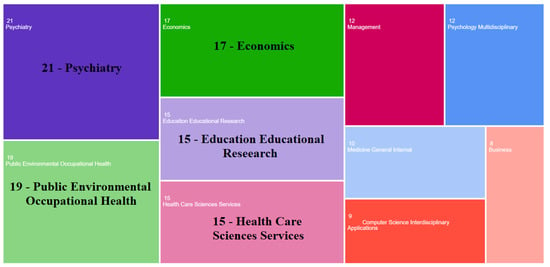
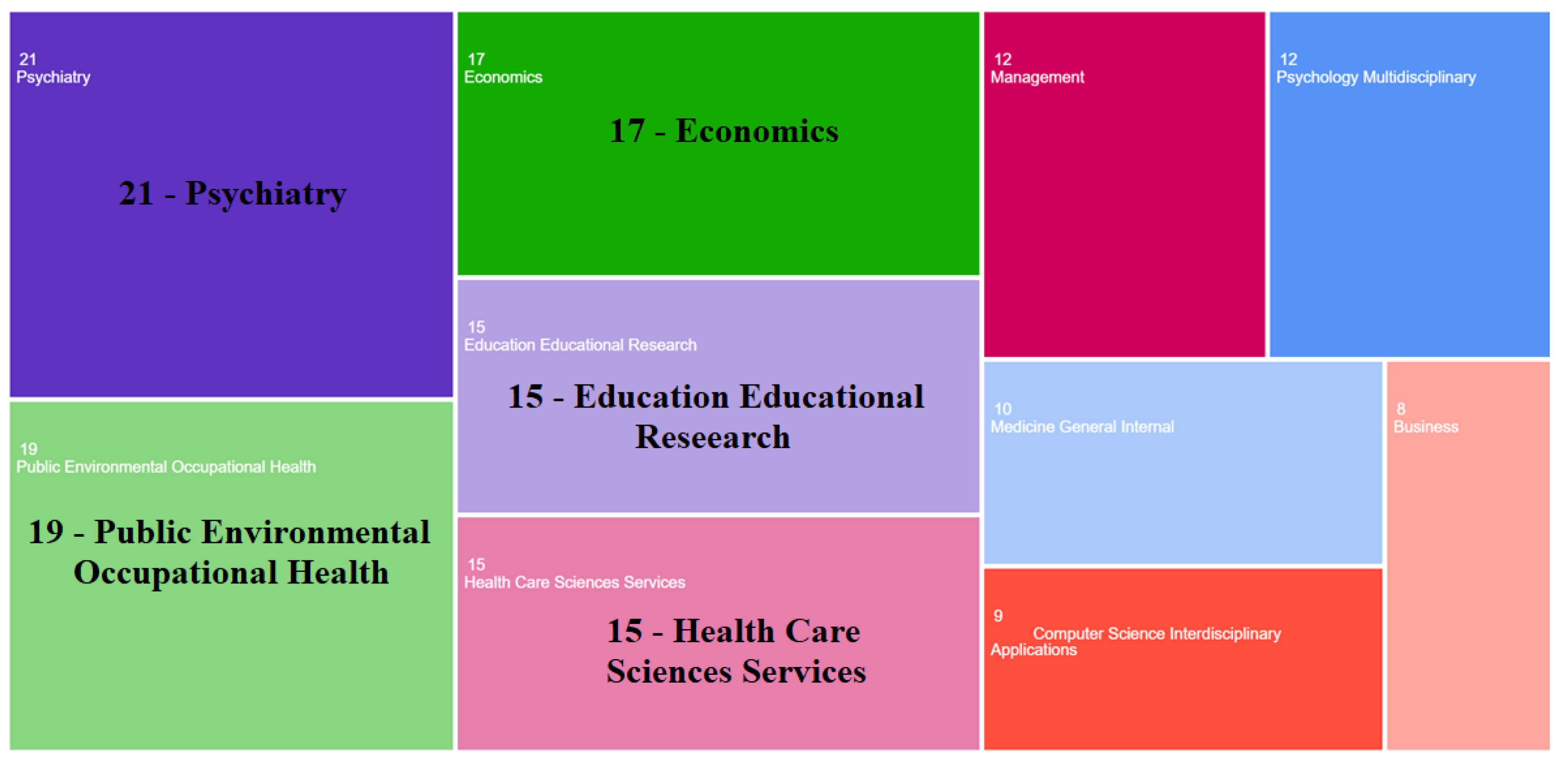
Figure 1 shows the analysis of 214 data items, categorized by Web of Science.
Figure 1.
Categorical classification of SQL query (4) on the Web of Science [14].
As shown in Figure 1, 214 studies were classified as the most extensively researched areas in psychiatry, as they included the word “anxiety”. The issue’s unemployment and employment aspects ranked third. Therefore, research on incorporating labor-based technological advancements into the economic category is becoming more significant. Additionally, the results of query (3) produced 930 outputs and contained the words “technology” and “unemployment”, and these were also categorized on the Web of Science portal. Figure 2 displays the category map.
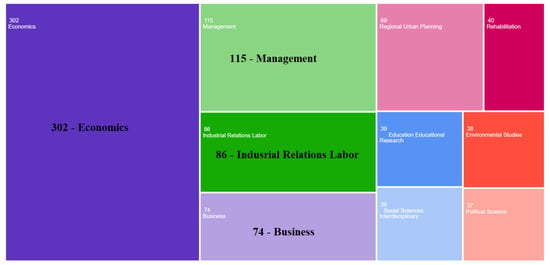
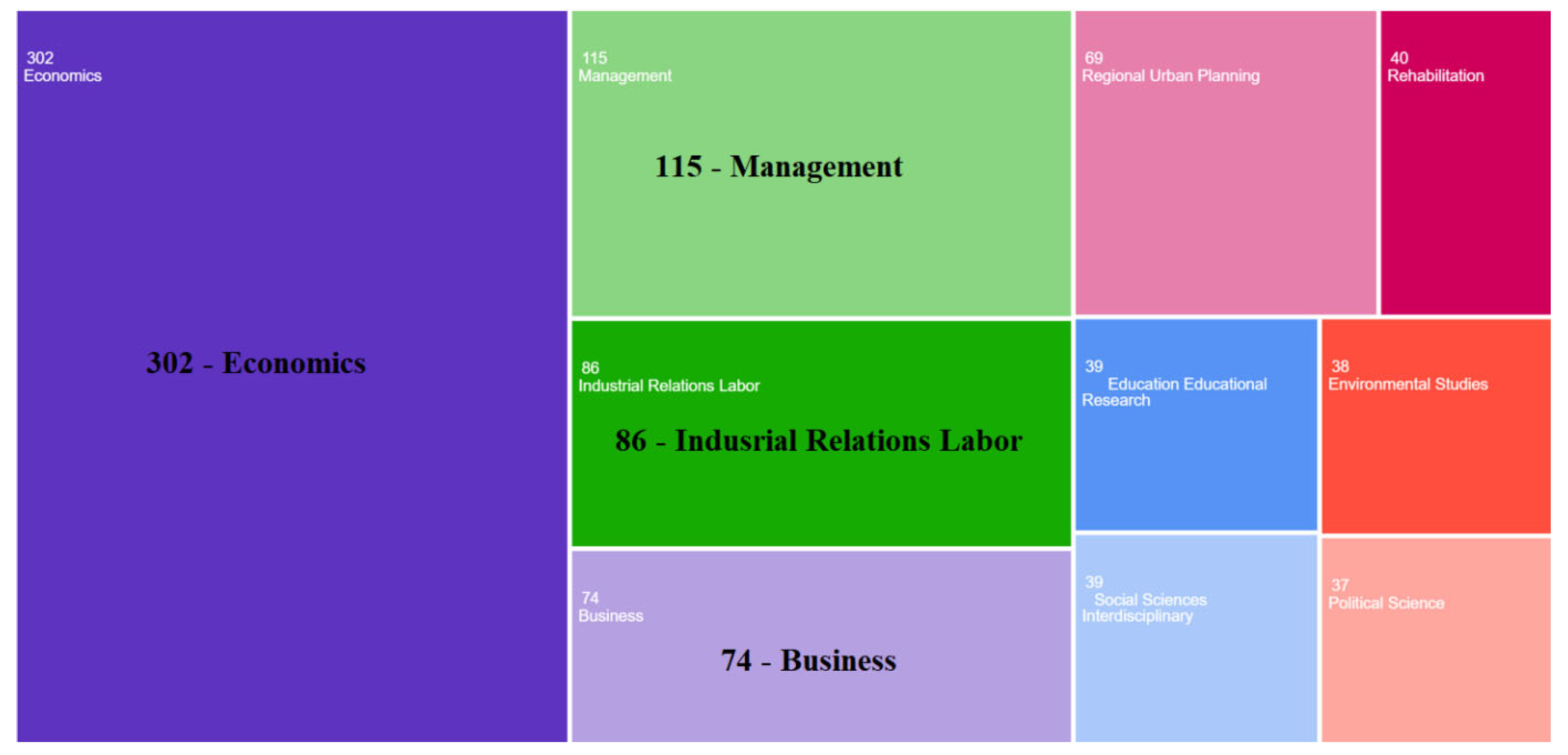
Figure 2.
Categorical classification of SQL query (3) on the Web of Science [14].
As shown in Figure 2, studies linking technology with technological unemployment and employment place economics at the forefront. Industrial relations and labor markets rank third. When considering Figure 1 and Figure 2 together, the influence of unemployment or employment anxiety on the economy or job market appears to occur relatively late. Therefore, examining anxiety and employment together can be a distinctive feature of academic research.
4.1.2. Year-by-Year Analysis
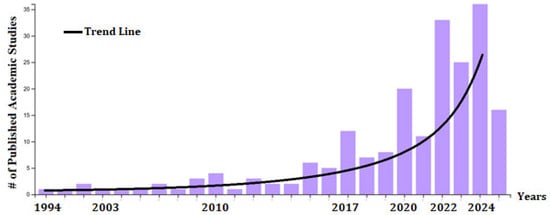
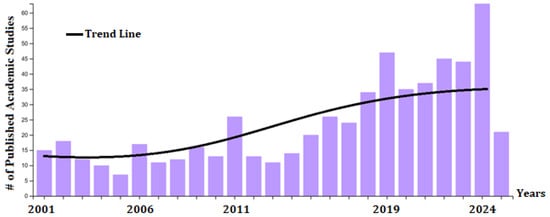
Graphs illustrating year-over-year trends in studies are also important for demonstrating academic interest in these topics. Figure 3 and Figure 4 display graphs of queries (4) and (3) over the years, respectively.
Figure 3.
Distribution of query (4) by year on the Web of Science portal [14].
Figure 4.
Distribution of query (3) by year on the Web of Science portal [14].
An analysis of the distribution shown in Figure 3 indicates that the 214 studies retrieved from query (4) mainly focused on the post-pandemic period. This reflects widespread anxiety and concern about technological unemployment during the pandemic-driven technological and digital transformation.
4.1.3. Analysis of SDGs
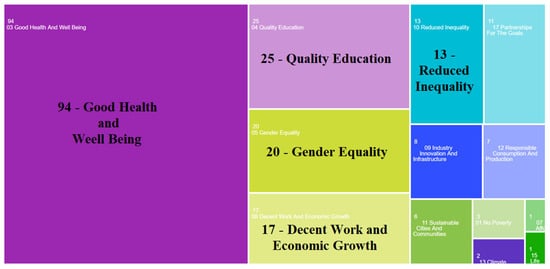
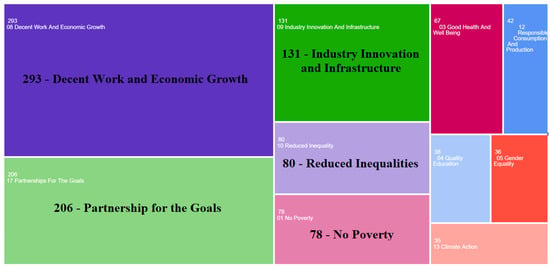
As a key feature of its analysis pages, Web of Science categorizes these studies into 17 classes aligned with the United Nations Sustainable Development Goals (SDGs). In this context, the results from queries (3) and (4) were analyzed separately based on the SDG classes. Figure 5 and Figure 6 display the analyses of queries (4) and (3), respectively.
Figure 5.
SDG distribution of query (4) on the Web of Science portal [14].
Figure 6.
SDG distribution for query (3) on the Web of Science portal [14].
In total, 28% of the studies [14] did not fall under the SDG classifications. This is because the term “anxiety” was used in 214 studies for query (4), which is ranked highest in the “Good Health and Well-Being” category. The “Decent Work and Economic Growth” category ranked fourth.
In Figure 6, the “decent work and economic growth” category is the primary focus. Additionally, 42% of the 930 studies reviewed do not fall into any SDG categories [14]. It is also clear that income distribution and income inequality have received significant attention. The “reduced inequality” and “no poverty” categories ranked fourth and fifth, respectively. When viewing Figure 5 and Figure 6 together, studies that mention “anxiety” mainly emphasize SDG principles. In contrast, research on technology and employment tends to be less closely aligned with SDG principles. In these studies, anxiety is often discussed alongside individual health issues rather than its economic context. Although some terms refer to unemployment, the primary focus remains on psychiatry, as shown in Figure 1.
4.1.4. Analysis of Regions/Countries
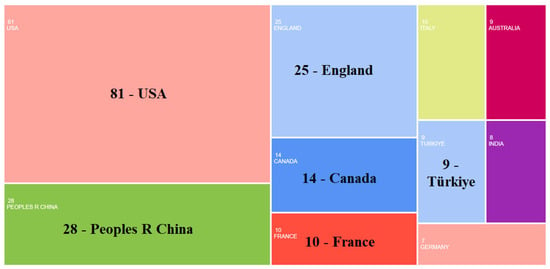
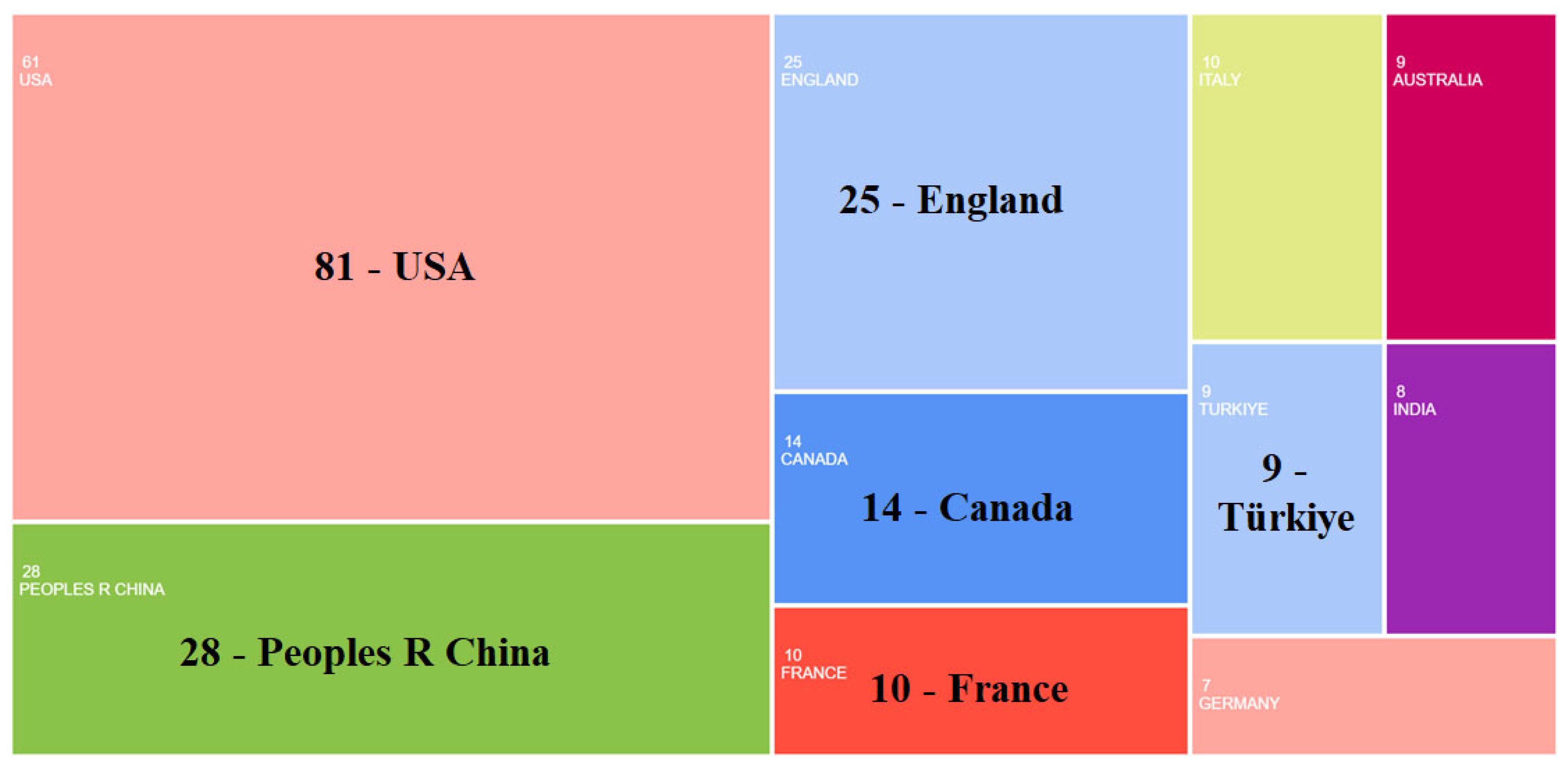
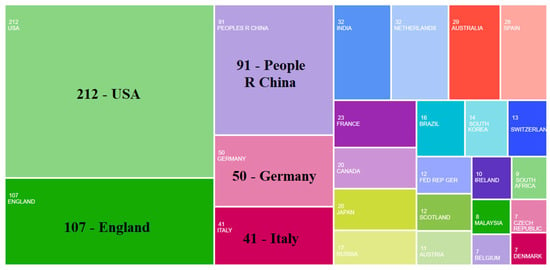
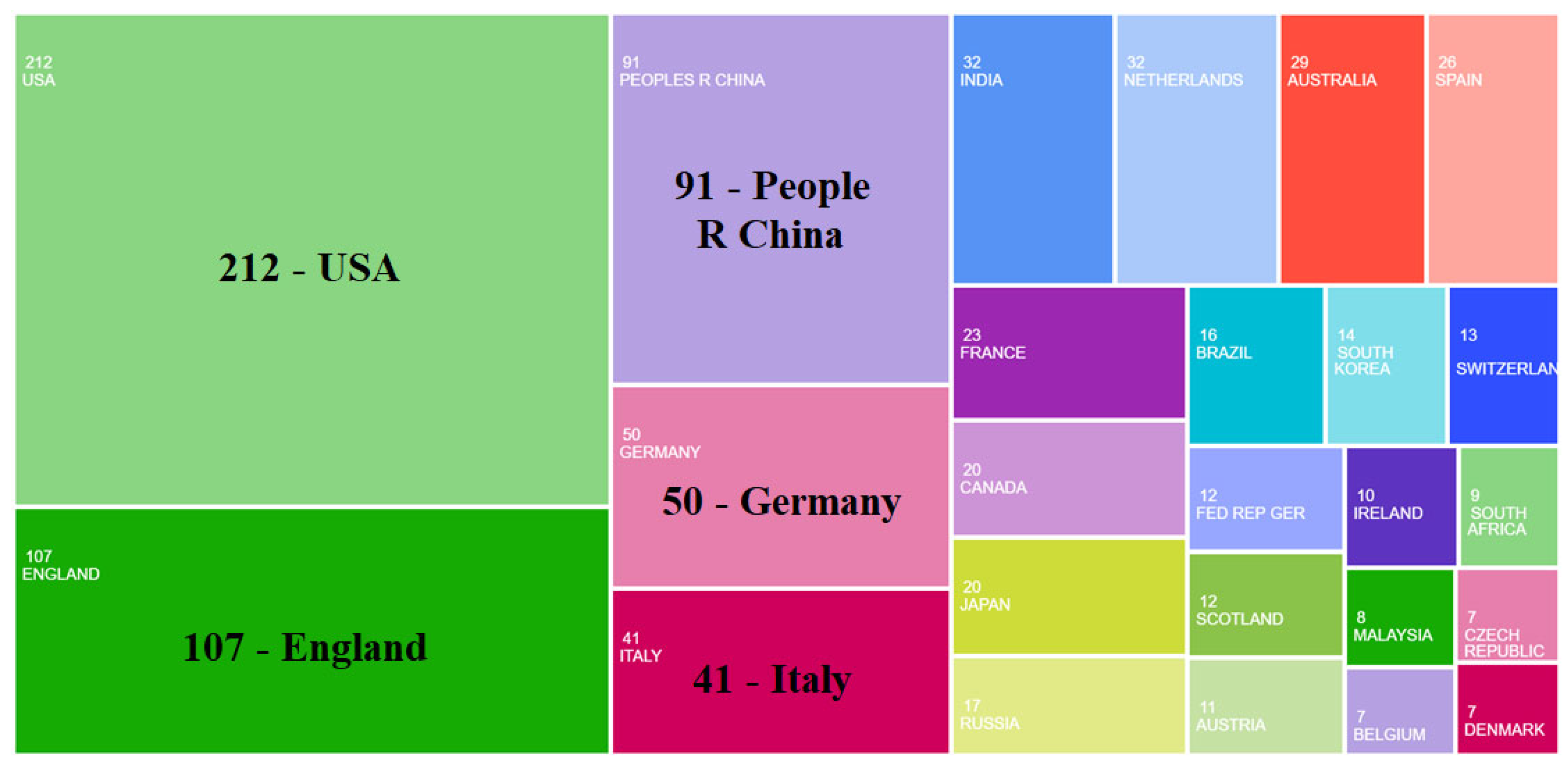
The Web of Science portal enables the analysis of author distributions by country in SQL query results. Figure 7 and Figure 8 illustrate the distribution of authors by country in scientific studies retrieved from queries (4) and (3), respectively.
Figure 7.
Distribution of authors by country for query (4) in the Web of Science portal [14].
Figure 8.
Distribution of authors by country for query (3) on the Web of Science portal [14].
As shown in Figure 7, more than one-third of the studies were conducted by researchers affiliated with the US. Studies from Türkiye ranked seventh on this topic. Studies from the People’s Republic of China made up 15% regarding the topic of anxiety about unemployment.
As shown in Figure 8, although the number of European countries included in studies on unemployment and technological unemployment appears to have increased, fewer than one-third of these studies were conducted in the United States. Additionally, Türkiye is not among the top 25 countries. When Figure 7 and Figure 8 are considered together, it appears that positions 2 and 3 have swapped places in the top three. This suggests that technological unemployment has been studied more thoroughly in the UK; however, China has become increasingly aware of the issue as anxiety grows.
4.2. Using Software: “VOSviewer” Analysis
Using the VOSviewer application, two hundred and fourteen scientific studies obtained through a query on the Web of Science portal were exported using the “tab-delimited file” option and then analyzed by keywords, authors, and countries.
4.2.1. Keyword-Based Analysis
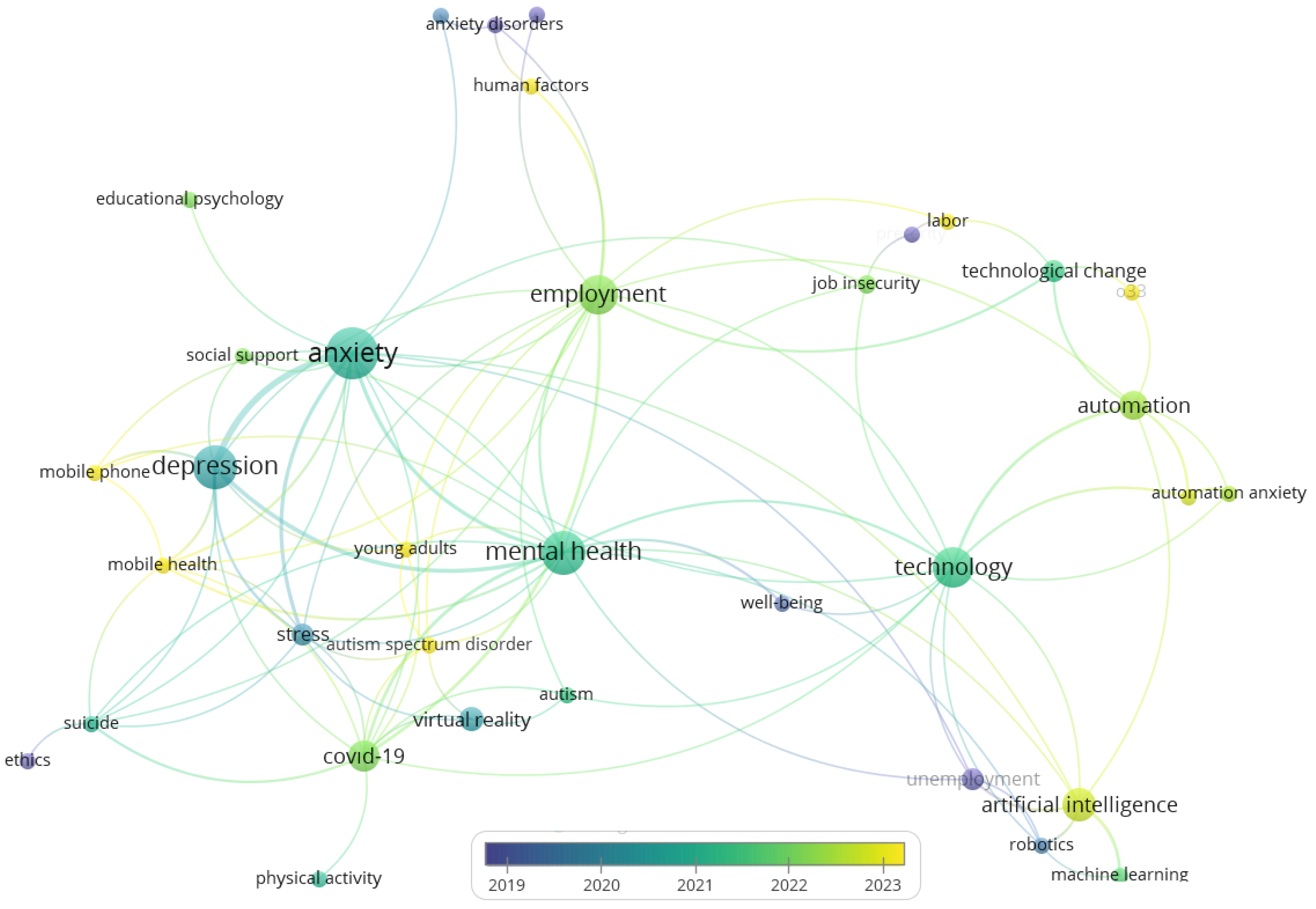
Our analysis reveals 863 unique keywords. Among these, 13 appeared at least five times. Thus, 37 keywords used three or more times were examined.
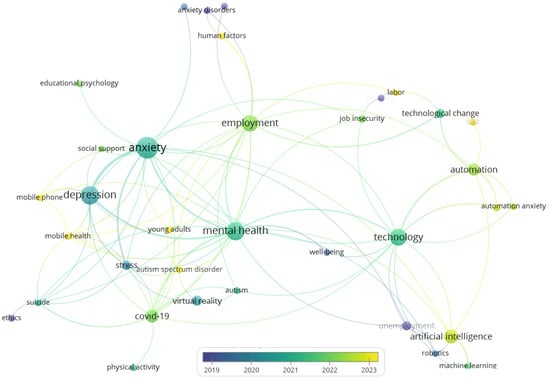
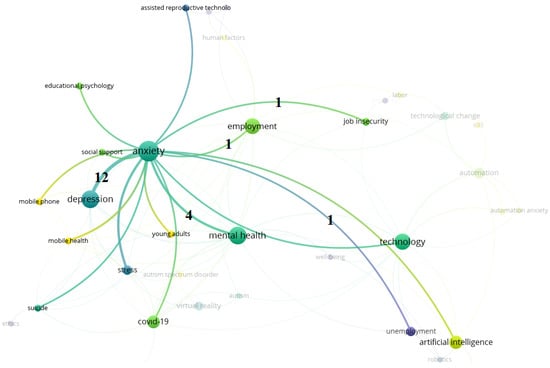
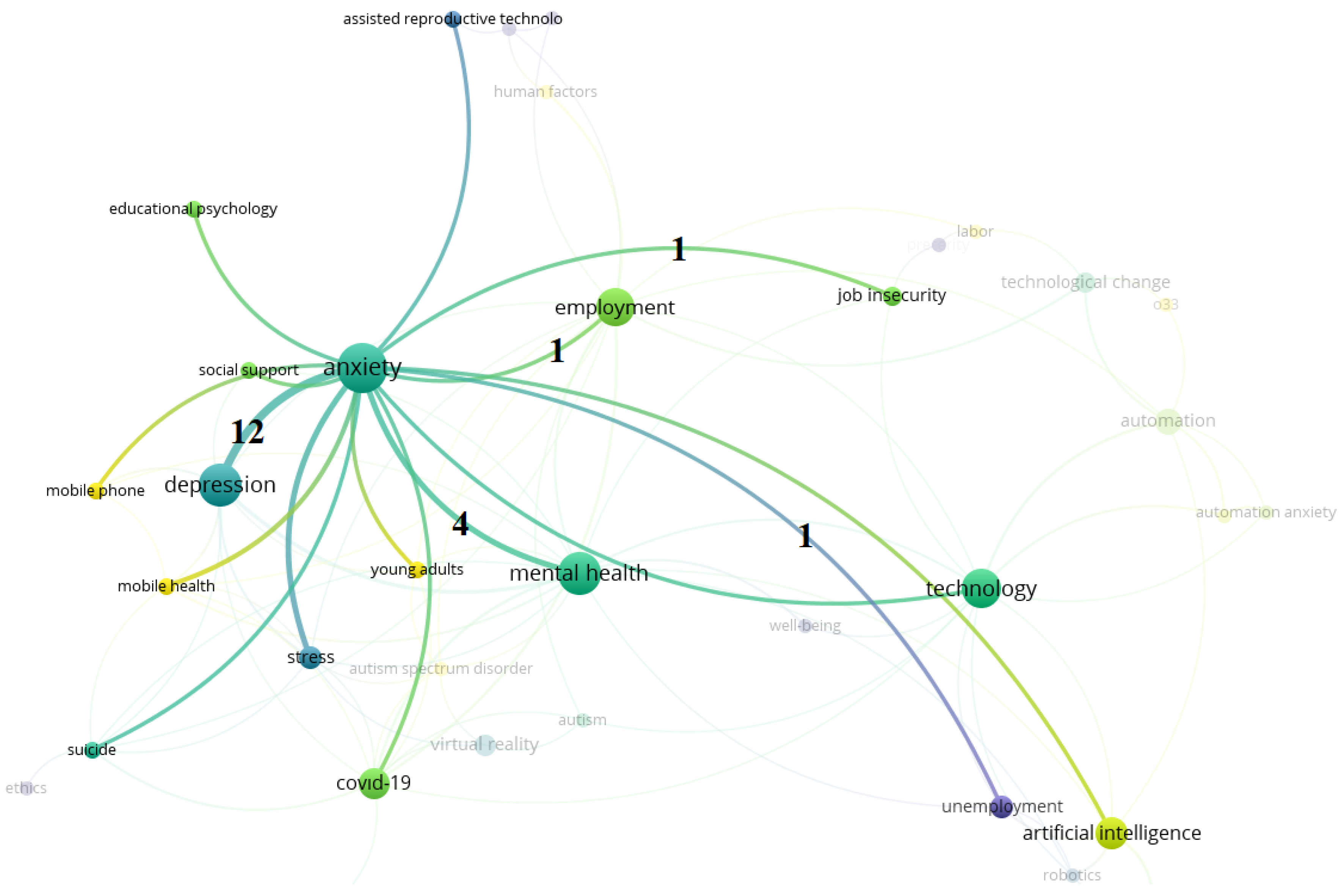
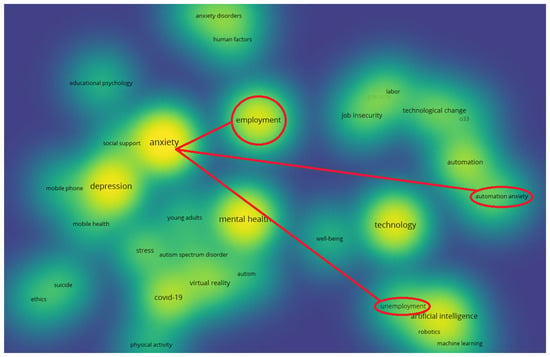
In Figure 9, the most recent studies (shown in light colors) mainly focus on digital transformation. When anxiety is examined in isolation, the relationship becomes clearer, as shown in Figure 10. No direct link has been established between anxiety and unemployment.
Figure 9.
Keywords network graph [35].
Figure 10.
Anxiety network diagram [35].
As shown in Figure 10, anxiety and depression have a link strength of 12 units, mental health has a link strength of 4 units, and employment has a link strength of 1 unit. The keywords “unemployment” and “job insecurity” also each have a link strength of 1 unit. By examining the density of studies, it is possible to identify areas that are being studied intensively or require further research. Figure 11 displays a density graph for the keywords.
Figure 11.
Density visualization of the keywords [30].
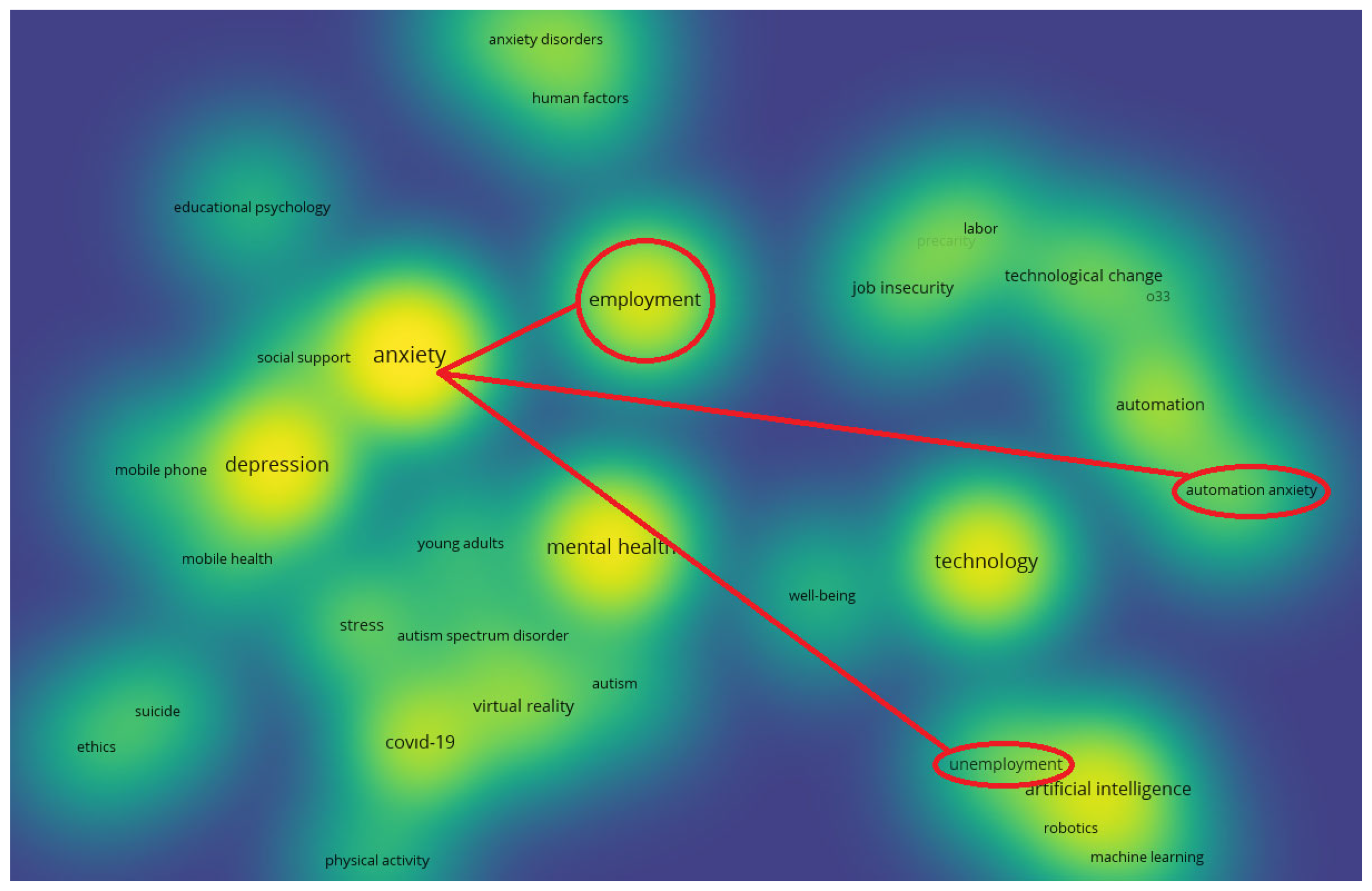
The keyword “anxiety” has received relatively little research attention in the context of labor markets and is a less prominent area, as shown in Figure 11. Automation anxiety is also an understudied concept, although its connection to unemployment is weak. Employment has received moderate research, but saturation rates for keywords such as precarity, labor, and job insecurity are relatively low.
4.2.2. Country-Based Analysis
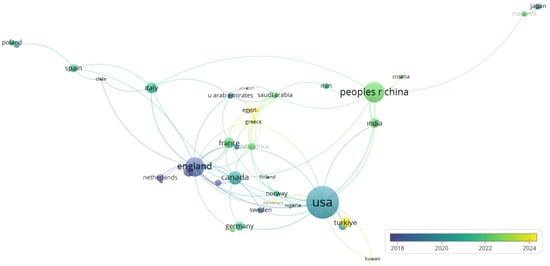
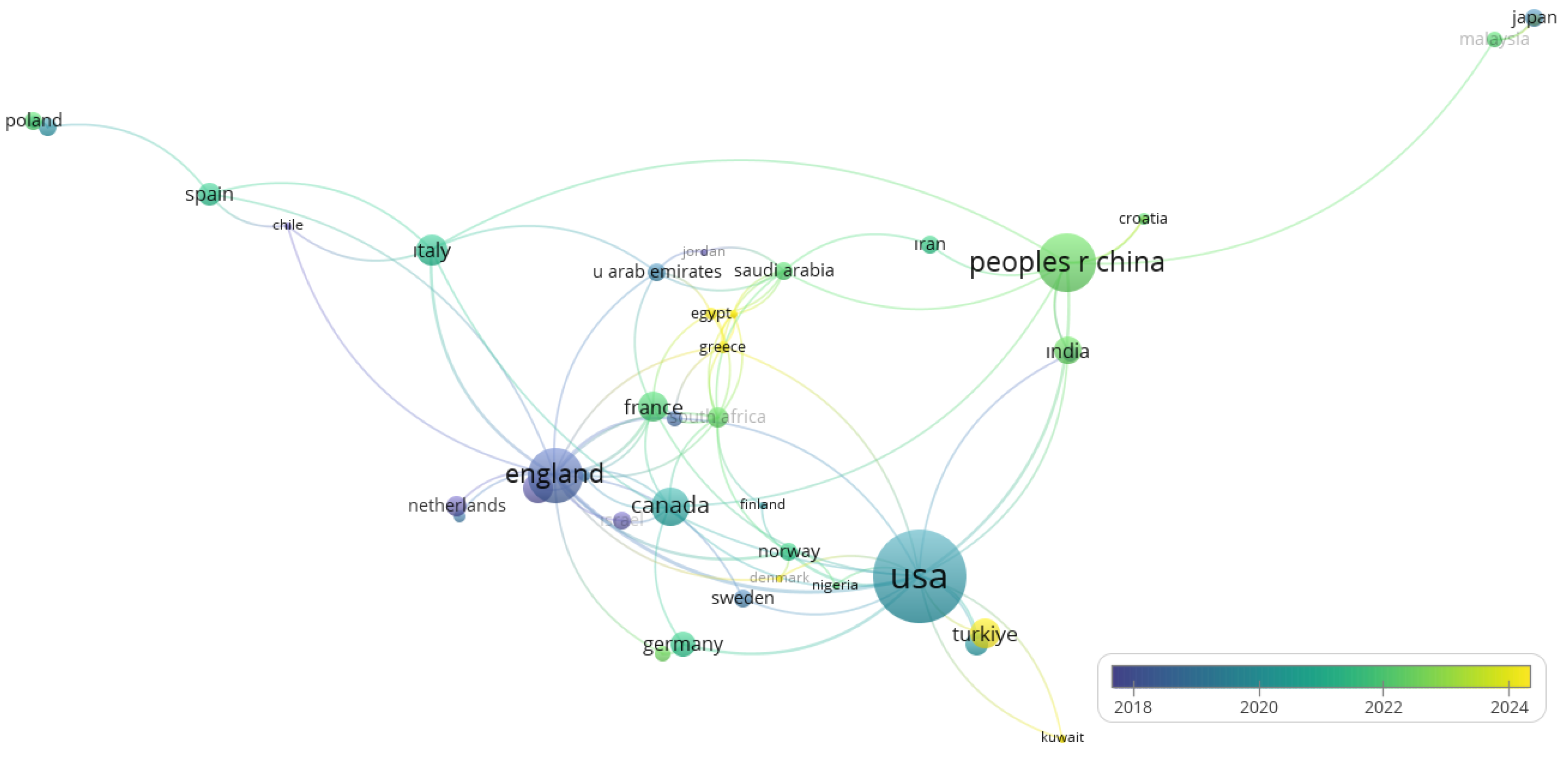
Of the 214 studies, affiliations were reported from 56 countries, with 14 having at least five studies each. Thus, a correlation graph was created for all 56 countries, as shown in Figure 12.
Figure 12.
Distribution by country [35].
The relationship graph in Figure 12 supports the findings presented in Figure 7, indicating that countries such as the USA, China, England, Germany, Italy, Türkiye, Egypt, Greece, Kuwait, and Denmark have recently conducted studies on anxiety and technological unemployment. Except in the USA, England, and the People’s Republic of China, saturation levels are low [35].
4.2.3. Author-Based Analysis
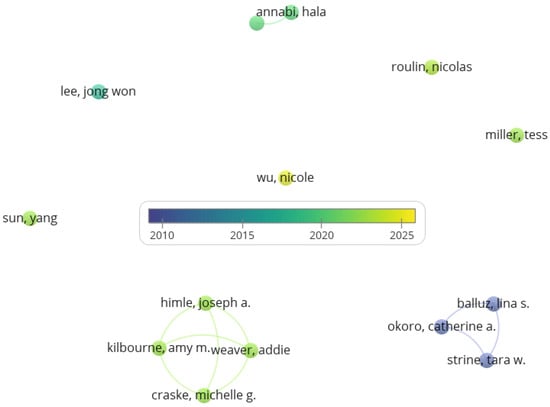
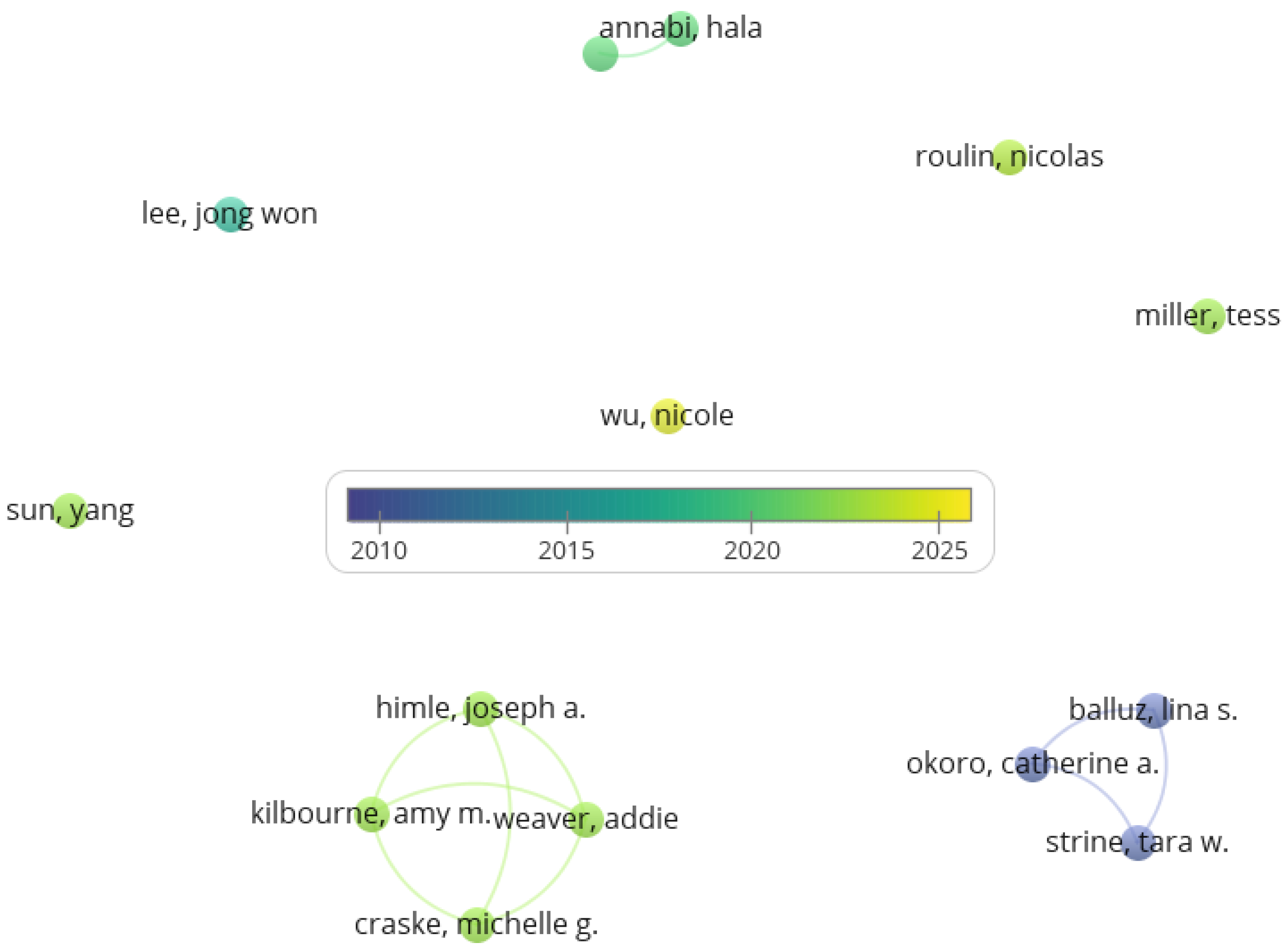
Eight hundred and two authors were involved in the 214 reviewed studies. However, no author conducted a study three times, and 14 authors conducted a study twice. A relationship graph for these 14 authors is shown in Figure 13.
Figure 13.
Distribution of authors [35].
Nicole Wu (see Figure 13) has conducted two recent studies on this subject. One was conducted by her alone [36], and the other was with Zhonwei Sun [37].
5. Discussion
The concept of unemployment anxiety addresses concerns about technological unemployment and employment within the context of digital transformation, but it has been explored in only a few studies. Among these, Civelek & Pehlivanoğlu [12], Pehlivanoğlu & Civelek [38,39], Pehlivanoğlu et al. [40,41], and Uçar et al. [42] are notable for directly including both technological unemployment and unemployment anxiety; these studies were published in Türkiye. By contrast, studies by Shen & Zhou [43], Zhang et al. [44], and Jin et al. [45] were based in China.
Examining studies conducted in Türkiye on Dergipark and tez.yok.gov.tr reveals that some writers have focused on the anxiety surrounding technological unemployment. Razan Ammoun’s Master’s thesis [46] directly addresses the issue of technological unemployment anxiety, while Keziban Sert’s Master’s thesis, also written in 2025, is significant for its discussion of the anxiety created by technological unemployment among Generations X and Y [47]. A review of the Dergipark database shows that scientific articles and research on technological unemployment do not directly address anxiety but instead focus on macro-level economic impacts [48,49,50]. Topics such as remote work, the gig economy, interactions between white- and blue-collar workers, organizational commitment, a broader perspective on technological unemployment, and work–life balance have been extensively studied. However, research on technological unemployment has not sufficiently focused on the stress and job security caused by technological advancements for employees, nor on the structural transformation of unemployment resulting from technology’s impact on the unemployed (such as hopelessness or the tendency to abandon job searches).
A notable finding in the bibliometric analysis is that authors typically worked on this topic only once or twice. The average number of co-authors per scientific study ranges from three to four; this low number of authors with a strong interest in the topic and the apparent neglect of this area are issues worth discussing. The thorough research on technological unemployment and the few studies on anxiety leave many topics unexplored, such as the lack of detailed sector-specific studies, comparisons of different methodologies, and evaluations of anxiety across various regions.
While the People’s Republic of China has recently focused on this issue, European countries have been discussing it more broadly, given their populations and demographic structures, and this also deserves attention. The decline in population growth, societal aging, and recent evaluations of the world’s largest population, along with concerns about technological unemployment caused by migration, may indicate emerging structural employment pressures in the People’s Republic of China and, by extension, in India.
In addition to the existing literature gaps, recent studies emphasize that technological unemployment anxiety should be evaluated not only as an economic outcome but also as a psychosocial and organizational phenomenon shaped by perceived employability, reskilling opportunities, and institutional trust. Prior research indicates that employees’ anxiety levels are significantly influenced by their perceptions of organizational support and lifelong learning policies during periods of digital transformation [51,52]. Moreover, emerging evidence suggests that artificial intelligence-driven automation intensifies job insecurity, particularly in routine-intensive occupations, thereby amplifying anxiety even among currently employed individuals [53]. From this perspective, technological unemployment anxiety represents a multidimensional challenge that intersects labor economics, organizational behavior, and occupational health, highlighting the need for interdisciplinary and sector-specific empirical studies across different socio-economic contexts.
Beyond its academic contribution, our findings carry important societal and policymaking implications. The growing emphasis on technological unemployment anxiety indicates that digital transformation is not only reshaping labor markets structurally but also redefining individuals’ emotional relationships with work, security, and future expectations. From a policy perspective, these findings suggest that labor market regulations, reskilling programs, and active employment policies should incorporate psychological dimensions such as perceived job security and technological uncertainty, rather than focusing solely on employment figures. At the organizational level, ignoring employees’ anxiety toward technological change may undermine trust, engagement, and long-term productivity. Therefore, addressing technological unemployment anxiety requires an integrated approach in which economic policies, organizational strategies, and social protection mechanisms jointly respond to the complex emotional and structural consequences of digital transformation.
In this respect, this study contributes to the literature by positioning technological unemployment anxiety as a critical intermediary between technological change and labor market outcomes, rather than a secondary or derivative consequence.
Linking the bibliometric findings back to the research question, the weak association between anxiety-related keywords and technological unemployment reflects the structural orientation of the literature toward measurable economic outcomes rather than subjective experiences. While technological unemployment is predominantly examined through indicators such as employment levels, productivity, and sectoral shifts, anxiety remains implicitly embedded or treated as a secondary consequence rather than a core analytical construct. This separation suggests that emotional and psychological dimensions are often methodologically sidelined, as they are more difficult to quantify and less frequently integrated into labor economics frameworks. Consequently, technological unemployment anxiety emerges as a fragmented concept, insufficiently theorized despite its growing relevance in the context of digital transformation.
The low level of author continuity observed in the field further reinforces this fragmentation. The absence of sustained research agendas may be attributed to the interdisciplinary nature of technological unemployment anxiety, which lies at the intersection of economics, psychology, sociology, and organizational studies. As a result, researchers often approach the topic episodically, addressing anxiety as an auxiliary variable within broader studies rather than developing cumulative theoretical or empirical programs. This pattern limits conceptual consolidation and hinders the formation of a stable scholarly community, thereby slowing the maturation of the field.
Taken together, these findings suggest that technological unemployment anxiety has yet to be fully recognized as an autonomous research domain, underscoring the need for longitudinal, theory-driven, and interdisciplinary studies to strengthen both conceptual coherence and scholarly continuity.
6. Conclusions
Although many studies have been conducted on unemployment and technological unemployment, research exploring their various aspects remains limited. Thus, there is a gap in the literature concerning the anxiety caused by technology. Our findings indicate that employment and technological unemployment have not been thoroughly examined in relation to anxiety. Specifically, studies conducted after the pandemic have mainly focused on the anxiety related to technological unemployment.
While the United States has been the most extensively studied country, the amount of research conducted in the People’s Republic of China has steadily risen in recent years. Furthermore, anxiety resulting from the interaction between technological unemployment and an aging population has garnered academic interest. Although studies are ongoing in European countries, a review of the density maps shows a moderate level of saturation, so this topic is open to further research. Anxiety related to technological unemployment has received almost no sector-specific study and warrants further empirical investigation. Furthermore, studies on the transition from unemployment to structural unemployment are recommended for job seekers.
We also reviewed and compared recent research and the most frequently cited works in the academic literature, showing how the focus on technological unemployment anxiety has shifted over time. Recent studies adopt a more multidimensional approach, considering not only a “loss of economic employment” but also factors like mental health, self-sufficiency, digital addiction, and social cohesion. The relationships among digital transformation components—especially artificial intelligence awareness, career anxiety, and digital self-sufficiency—have been integrated into the network of relationships in the technological anxiety map of the new era.
While VOSviewer is a powerful tool for visualizing bibliometric networks, it has limitations. Analyses are constrained by the coverage of the selected database, in this case, the Web of Science portal, meaning that relevant studies not indexed there may be excluded, such as Civelek & Pehlivanoğlu [7] and Pehlivanoğlu & Civelek [33,34]. Additionally, more-cited articles tend to dominate visualizations, potentially underrepresenting some studies. The most-cited literature has examined the phenomenon of “technological anxiety” at a macro-level, focusing on economic concerns. While the causes and effects of technological unemployment have been addressed separately, the bibliometric analyses are notably lacking in sectoral assessments, are limited in number, and require further study.
This study contributes to the literature by positioning technological unemployment anxiety as a theoretically meaningful intermediary construct rather than a secondary emotional by-product of technological change. By mapping the intellectual structure of the field, the findings demonstrate that anxiety-related dimensions remain weakly integrated into mainstream technological unemployment research, despite their growing relevance in post-digital labor markets. This conceptual repositioning contributes to and extends existing bibliometric studies by foregrounding the psychosocial dimension of technological transformation.
From a policy and organizational perspective, the results suggest that labor market regulations, reskilling initiatives, and lifelong learning policies should address not only employment outcomes but also workers’ perceived job security and technological uncertainty. Ignoring anxiety-related responses may undermine trust, adaptability, and long-term productivity in digitally transforming workplaces.
Future research could build on these findings by addressing several open questions: How does technological unemployment anxiety vary across sectors with different automation intensities? To what extent do organizational support mechanisms and reskilling opportunities mitigate anxiety over time? How do cultural and institutional contexts shape the relationship between artificial intelligence awareness and employment-related anxiety? Addressing these questions through longitudinal and sector-specific studies would further advance theoretical and empirical understanding of technological unemployment anxiety.
Author Contributions
Conceptualization, M.E.C. and M.Ç.P.; data curation, S.Ö.; formal analysis, S.Ö.; investigation, M.Ç.P.; methodology, S.Ö.; project administration, A.V.E. and M.Ç.P.; supervision, M.E.C. and A.V.E.; writing—original draft, S.Ö.; writing—review & editing, M.Ç.P., M.E.C. and A.V.E. All authors have read and agreed to the published version of the manuscript.
Funding
This research received no external funding.
Institutional Review Board Statement
Not applicable.
Informed Consent Statement
Not applicable.
Data Availability Statement
The research data could be obtained from this link https://doi.org/10.5281/zenodo.17552129.
Conflicts of Interest
The authors declare no conflict of interest.
Abbreviations
The following abbreviations are used in this manuscript:
| AI | Artificial intelligence |
| SDG | Sustainable Development Goal |
| SQL | Structured Query Language |
| WoS | Web of Science |
| STEM | Science Technology Engineering Mathematics |
| FoMO | Fear of missing out |
| UBI | Universal basic income |
| USA | United States of America |
| UK | United Kingdom |
References
- Öz, S.; İbrahim, B.; Civriz, M.; Başar, P. Unveiling the impact of digital transformation: A study on key disciplines, technological unemployment, and neo-Luddism in the textile industry. Glob. Knowl. Mem. Commu. 2024. epub ahead of printing. [Google Scholar] [CrossRef] [Scilit]
- World Economic Forum. The Future of Jobs Report 2025; World Economic Forum: Davos-Klosters, Switzerland, 2025; Available online: https://www.weforum.org/publications/the-future-of-jobs-report-2025/ (accessed on 1 January 2025).
- Civelek, M.E.; Sözer, E.G. İnternet Ticareti: Yeni EkoSosyal Sistem ve Ticaret Noktaları; Beta Basım: İstanbul, Turkiye 2003.
- Sözer, E.G.; Civelek, M.E.; Çemberci, M. Strategic Excellence in Post-Digital Ecosystems: A B2C Perspective; University of Nebraska Lincoln-Zea Books: Lincoln, NE, USA, 2018. [Google Scholar]
- Civelek, M.E. Humans of machine age: Management strategies for redundancy. J. Ind. Policy Technol. Manag. 2018, 1, 87–98. [Google Scholar]
- Civelek, M.E.; Çemberci, M.; Kibritci Artar, O.; Uca, N. Key Factors of Sustainable Firm Performance: A Strategic Approach; University of Nebraska-Lincoln-Zea Books: Lincoln, NE, USA, 2015. [Google Scholar]
- Acemoglu, D.; Restrepo, P. The Wrong Kind of AI? Artificial Intelligence and the Future of Labor Demand; NBER Working Paper No. 25682; National Bureau of Economic Research: Cambridge, MA, USA, 2019; Available online: http://www.nber.org/papers/w25682 (accessed on 22 June 2025).
- Pissarides, C.; Bughin, J.R.J. Measuring the Welfare Effects of AI and Automation; CEPR: London, UK, 2019; Available online: https://cepr.org/voxeu/columns/measuring-welfare-effects-ai-and-automation (accessed on 22 June 2025).
- Kanzola, A.M.; Papaioannou, K.; Petrakis, P.E. Unlocking society’s standings in artificial intelligence. Technol. Forecast. Soc. Change 2024, 200, 123106. [Google Scholar] [CrossRef] [Scilit]
- Peráček, T.; Kaššaj, M. The impact of effective public administration and European digital connectivity on building smart cities: An analysis of legal frameworks, policy initiatives and transformative impact in the emerging era of artificial intelligence. Jurid. Trib. Rev. Comp. Int. Law 2025, 15, 720–745. [Google Scholar] [CrossRef] [Scilit]
- Torres Cazorla, M.I. The future is now: AI and health, where are we going. Jurid. Trib. Rev. Comp. Int. Law 2025, 15, 525–538. [Google Scholar] [CrossRef] [Scilit]
- Civelek, M.E.; Pehlivanoğlu, M.Ç. Technological unemployment anxiety scale development. Eurasian Bus. Econ. J. 2020, 22, 64–76. [Google Scholar]
- Öz, S.; Kalkan, M. GIG ekonomisi ve emek piyasalari bibliometrik analizi. In Cumhuriyetin 100 Yılında Türk Emek Piyasasının Güncel Sorunları; Kalkan, M., Ed.; Filiz Kitabevi: İstanbul, Turkiye, 2023; pp. 189–212. [Google Scholar]
- Web of Science. Clarivate. Available online: https://www.webofscience.com/wos/woscc/advanced-search (accessed on 22 June 2025).
- Ge, X.; Liu, X.; Wang, K.; Li, Y. Challenge or threat? Research on the double-edged sword effect of AI awareness on career decision-making difficulties. Curr. Psychol. 2025, 44, 12288–12302. [Google Scholar] [CrossRef] [Scilit]
- Mao, Y.-J.; Lai, H.-J.; Liu, Y.-M.; Liao, M.-N.; Tung, T.-H.; Lin, Y.-C.; Beaton, R.D.; JANE, S.-W.P.; Huang, H.-P. Unmet care needs of colorectal cancer survivors in Taiwan and related predictors. J. Nurs. Res. 2025, 33, e391. [Google Scholar] [CrossRef] [Scilit]
- Kirkpatrick, A.; Hmielowski, J. Automation and Support for a Universal Basic Income: Awareness, Anxiety and the Moderating Role of Income and Education. Basic Income Stud. 2025. [Google Scholar] [CrossRef] [Scilit]
- Gálvez, A.; Pacheco-Unguetti, A. The impact of the COVID-19 pandemic on young adults with autism spectrum disorder: A systematic review. Healthcare 2025, 13, 1216. [Google Scholar] [CrossRef] [Scilit]
- Zhao, H.; Wu, P. Artificial intelligence job substitution risks, digital self-efficacy, and mental health among em-ployees. J. Occup. Environ. Med. 2025, 67, e302–e310. [Google Scholar] [CrossRef] [Scilit] [PubMed]
- Li, R.; Ouyang, J.; Lin, J.; Ouyang, S. Mediating effect of AI attitudes and AI literacy on the relationship between career self-efficacy and job-seeking anxiety. BMC Psychol. 2025, 13, 454. [Google Scholar]
- Osman, R.; Lamash, L. Smart glasses for remote assistance: Analysing usability and optimal user characteristics among young adults with and without autism. Disabil. Rehabil. Assist. Technol. 2025, 20, 2234–2248. [Google Scholar] [CrossRef] [Scilit] [PubMed]
- Fares, O. That is scary!: Consumer perceptions and discourses on ChatGPT. Qual. Mark. Res. 2025, 28, 452–473. [Google Scholar] [CrossRef] [Scilit]
- Trung, C.; Dat, N.; Teh, C.; Tee, P. Psychological capital and mental health problems among the unemployed in the post-COVID-19 era: Self-esteem as a moderator. PLoS ONE 2025, 20, e0319555. [Google Scholar] [CrossRef] [Scilit]
- Uyaroglu, A.; Ünal, E.; Tosun, A. The relationship between digital addiction and social anxiety, trait anger and anger expression style in adolescents. J. Pediatr. Nurs. 2025, 81, 175–182. [Google Scholar] [CrossRef] [Scilit]
- Kelders, S.; Kok, R.; Ossebaard, H.; Van Gemert-Pijnen, J. Persuasive system design does matter: A systematic review of adherence to web-based interventions. J. Med. Internet Res. 2012, 14, 17–40. [Google Scholar] [CrossRef] [Scilit]
- Mokyr, J.; Vickers, C.; Ziebarth, N. The history of technological anxiety and the future of economic growth: Is this time different? J. Econ. Perspect. 2015, 29, 31–50. [Google Scholar] [CrossRef] [Scilit]
- Proudfoot, J.; Parker, G.; Pavlovic, D.; Manicavasagar, V.; Adler, E.; Whitton, A. Community attitudes to the ap-propriation of mobile phones for monitoring and managing depression, anxiety, and Stress. J. Med. Internet Res. 2010, 12, e64. [Google Scholar] [CrossRef] [Scilit]
- McClure, P. You’re Fired, Says the Robot: The rise of automation in the workplace, technophobes, and fears of un-employment. Soc. Sci. Comput. Rev. 2018, 36, 139–156. [Google Scholar] [CrossRef] [Scilit]
- Gallie, D.; Felstead, A.; Green, F.; Inanc, H. The hidden face of job insecurity. Work. Employ. Soc. 2017, 31, 36–53. [Google Scholar] [CrossRef] [Scilit]
- Okoro, C.; Strine, T.; Eke, P.; Dhingra, S.; Balluz, L. The association between depression and anxiety and use of oral health services and tooth loss. Community Dent. Oral. Epidemiol. 2012, 40, 134–144. [Google Scholar] [CrossRef] [Scilit]
- Min, Y.H.; Lee, J.W.; Shin, Y.-W.; Jo, M.-W.; Sohn, G.; Lee, J.-H.; Lee, G.; Jung, K.H.; Sung, J.; Ko, B.S.; et al. Daily collection of self-reporting sleep disturbance data via a smartphone app in breast cancer patients receiving chemotherapy: A feasibility study. J. Med. Internet Res. 2014, 16, 87–100. [Google Scholar] [CrossRef] [Scilit]
- Tandon, A.; Kaur, P.; Dhir, A.; Mäntymäki, M. Sleepless due to social media? Investigating problematic sleep due to social media and social media sleep hygiene. Comput. Hum. Behav. 2020, 113, 106487. [Google Scholar] [CrossRef] [Scilit]
- Bailey, D.; Skinner, D.; Davis, A.; Whitmarsh, I.; Powell, C. Ethical, legal, and social concerns about expanded newborn screening: Fragile X syndrome as a prototype for emerging issues. Pediatrics 2008, 121, E693–E704. [Google Scholar] [CrossRef] [Scilit]
- Giorgi, G.; Arcangeli, G.; Perminiene, M.; Lorini, C.; Ariza-Montes, A.; Fiz-Perez, J.; Di Fabio, A.; Mucci, N. Work-related stress in the banking sector: A review of incidence, correlated factors, and major consequences. Front. Psychol. 2017, 8, 2166. [Google Scholar] [CrossRef] [Scilit] [PubMed]
- VOSviewer. Bibliometric Analysis; 2025, 1.6.18; Leiden University: Leiden, The Netherlands, 2025. [Google Scholar]
- Wu, N. Restrict foreigners, not robots: Partisan responses to automation threat. Econ. Pol. 2023, 35, 505–528. [Google Scholar] [CrossRef] [Scilit]
- Wu, N.; Sun, Z. Little to lose: Exit options and attitudes towards automation in Chinese manufacturing. China Q. 2025, 262, 371–391. [Google Scholar] [CrossRef] [Scilit]
- Pehlivanoğlu, M.Ç.; Civelek, M.E. Teknolojik işsizlik kaygısı ölçeği. In Teknoloji Yönetimi; Özyurt, M.A., Öz, S., Aydın, E.V., Eds.; Hiper Yayın: Istanbul, Turkey, 2023; pp. 42–61. [Google Scholar]
- Pehlivanoğlu, M.Ç.; Civelek, M.E. Managerial implications of technological unemployment anxiety: A dimensional study. J. Int. Manag. Res. Appl. 2025, 4, 1–11. [Google Scholar]
- Pehlivanoğlu, M.Ç.; Civelek, M.E.; Eymür, E. The effect of technological unemployment anxiety on organizational cynicism. Üçüncü Sektör Sos. Ekon. Derg. 2023, 58, 1861–1874. [Google Scholar] [CrossRef] [Scilit]
- Pehlivanoglu, M.; Civelek, M.; Tasova, M. The effect of technological unemployment anxiety on employee burnout. Middle East J. Manag. 2024, 11, 382–398. [Google Scholar] [CrossRef] [Scilit]
- Uçar, M.; Çapuk, H.; Yigit, M. The relationship between artificial intelligence anxiety and unemployment anxiety among university students. Work.-A J. Prev. Assess. Rehabil. 2025, 80, 701–710. [Google Scholar] [CrossRef] [Scilit] [PubMed]
- Shen, Y.; Zhou, P. Technological anxiety: Analysis of the impact of industrial intelligence on employment in China. Chin. J. Popul. Resour. Environ. 2024, 22, 343–355. [Google Scholar] [CrossRef] [Scilit]
- Zhang, P.; Liang, H.; Yue, C. Technological anxiety: How robots impact college graduates’ informal employment? J. Asian Public Policy 2025, 18, 26–42. [Google Scholar] [CrossRef] [Scilit]
- Jin, T.; Chen, Y.; Zhang, K. Effects of social media use on employment anxiety among Chinese youth: The roles of upward social comparison, online social support and self-esteem. Front. Psychol. 2024, 15, 1398801. [Google Scholar] [CrossRef] [Scilit]
- Ammoun, R. The Impact of Technological Unemployment Anxiety on Emotional Exhaustion of Employees in Tourism Sector. Master’s Thesis, Antalya Bilim Üniversitesi, Antalya, Turkiye, 2025. [Google Scholar]
- Sert, K. Examining the Relationships Between Administrative Employees’ Perceptions Towards Digital Transformation and Technological Unemployment Anxiety Levels in the Context of Generations X and Y: Selçuk University sample. Master’s Thesis, Selçuk Üniversitesi, Konya, Turkey, 2025. [Google Scholar]
- Pınar, A. Technological unemployment and the ai revolution: An investigation on macroeconomic consequences. Econharran 2024, 8, 15–26. [Google Scholar]
- Algül, Y. Complementary competitiveness: Crafting an employment policy to address technological unemployment in the age of artificial intelligence. Erzurum Tek. Üniversitesi Sos. Bilim. Enstitüsü Derg. 2024, 19, 59–78. [Google Scholar] [CrossRef] [Scilit]
- Ela, M. Fiscal solution to the technological unemployment problem: Robot tax and its potential in Türkiye. Muhasebe Vergi Uygulamaları Derg. 2019, 12, 885–906. [Google Scholar] [CrossRef] [Scilit]
- Frey, C.B.; Osborne, M.A. The future of employment: How susceptible are jobs to computerisation? Technol. Forecast. Soc. Change 2017, 114, 254–280. [Google Scholar] [CrossRef] [Scilit]
- De Stefano, V. The rise of the “just-in-time workforce”: On-demand work, crowdwork, and labor protection in the gig economy. Comp. Labor Law Policy J. 2016, 37, 471–504. [Google Scholar] [CrossRef] [Scilit]
- Acemoglu, D.; Restrepo, P. Artificial intelligence and jobs. J. Econ. Perspect. 2020, 34, 30–50. [Google Scholar]

Disclaimer/Publisher’s Note: The statements, opinions and data contained in all publications are solely those of the individual author(s) and contributor(s) and not of MDPI and/or the editor(s). MDPI and/or the editor(s) disclaim responsibility for any injury to people or property resulting from any ideas, methods, instructions or products referred to in the content. |
© 2026 by the authors. Licensee MDPI, Basel, Switzerland. This article is an open access article distributed under the terms and conditions of the Creative Commons Attribution (CC BY) license.