


Abstract
With rapid growth in the global online dating market, India represents a high-potential yet underexplored context. This study examines the key determinants of online dating application (ODA) adoption and their influence on usage behavior among Indian adult users, while incorporating the mediating role of flow experience and the moderating role of personality traits. Drawing on Unified Theory of Acceptance and Use of Technology (UTAUT) and Uses and Gratifications Theory (UGT), a research model was tested using survey data from 384 respondents. Partial Least Squares-Structural Equation Modeling (PLS-SEM) was employed to assess direct, mediating, and moderating relationships among constructs. Results show that social interaction, hedonic motivation, and escapism, along with performance expectancy, effort expectancy, and social influence, positively influence behavioral intention. Escapism emerges as the strongest positive predictor of behavioral intention. Escapism emerges as the strongest predictor. Perceived trust exhibits the largest absolute path coefficient, while both perceived trust and relationship-seeking motivation demonstrate significant negative associations with behavioral intention, contrary to the hypothesized positive relationships. Behavioral intention positively influences usage behavior, while flow experience partially mediates the relationship between behavioral intention and usage behavior. Personality traits significantly moderate the intention-behavior link, although the moderation effect is small. This study advances ODA literature by integrating UTAUT, Uses and Gratifications Theory, and Flow Theory with personality perspectives in an emerging market context. By uncovering the mediating role of flow experience and the moderating influence of personality traits, it provides deeper insights into the psychological and technological mechanisms driving dating app adoption and sustained use in India, offering actionable implications for platform design and targeted marketing strategies.
1. Introduction
Online Dating Applications (ODAs) have transformed the landscape of partner search by offering unprecedented access to diverse and geographically dispersed individuals. Unlike traditional dating mechanisms, ODAs leverage algorithmic matching, real-time interaction, and mobile accessibility to facilitate efficient and scalable relationship formation. This transformation is reflected in strong market growth: the global online dating market is projected to expand from USD 6.97 billion in 2025 to USD 13.57 billion by 2031 [1], while the Indian market alone is expected to surpass USD 1 billion by 2030, driven by increasing smartphone penetration and changing socio-cultural norms [2]. India represents a unique and rapidly evolving context for online dating adoption. Platforms such as Tinder, Bumble, Aisle, QuackQuack, and many others have gained significant traction, particularly among urban youth. The COVID-19 pandemic further accelerated this shift, normalizing virtual interactions and increasing reliance on digital platforms for social and romantic engagement [3]. Emerging evidence suggests that Indian users are increasingly open to forming meaningful relationships online, indicating a broader shift in societal attitudes toward digital intimacy [4,5].
Despite this growth, the determinants of ODA adoption and continued usage remain insufficiently understood, particularly in emerging markets. Prior research has primarily focused on technological acceptance models, emphasizing factors such as perceived usefulness and ease of use [4,6,7]. However, online dating represents a hybrid consumption context that extends beyond utilitarian considerations to include hedonic, social, and psychological gratifications. Motivations such as playfulness, emotional connection, trust, and social influence have been identified as critical drivers, yet findings remain fragmented and sometimes contradictory—particularly regarding the role of trust and personality-driven behavior [4,8,9]. Moreover, ODAs are inherently experiential platforms where user engagement is shaped by immersive and interactive features. Flow experience, characterized by deep involvement and intrinsic enjoyment, has been shown to play a crucial role in translating intention into sustained usage across digital contexts [10,11]. At the same time, individual differences, particularly personality traits, influence how users perceive, engage with, and derive value from these platforms. Integrating these perspectives is essential to develop a more comprehensive understanding of ODA adoption behavior.
Addressing these gaps, the present study develops and empirically tests an integrated framework combining UTAUT and UGT, while incorporating flow experience as a mediating mechanism and personality traits as a moderating factor. The study is guided by three key objectives: (a) to identify and examine the key determinants affecting behavioral intention to use ODAs; (b) to analyze the mediating role of flow experience in translating adoption intention into actual usage behavior; and (c) to investigate the moderating influence of personality traits on the relationship between behavioral intention to use ODAs and actual usage behavior. By addressing these objectives, the study advances theoretical understanding of digital dating behavior and provides actionable insights for platform developers and marketers to enhance user engagement in a rapidly evolving market.
2. Literature Review and Hypotheses Development
2.1. Theoretical Framework
This study draws upon Use and Gratification Theory (UGT) and the Unified Theory of Acceptance and Use of Technology (UTAUT) to comprehensively explain users’ behavioral intention and usage behavior. UGT posits that individuals actively choose media platforms to satisfy specific psychological and social needs [12]. In the context of ODAs, UGT is particularly relevant as users deliberately adopt these platforms to fulfill diverse personal and social needs. UGT has been applied to study the relationship between people and augmented reality [13], travel livestreaming [14], metaverse [15], and online dating [16]. These studies support the strong predictive power of gratification on usage intentions. The present study incorporates key gratification constructs: Social Interaction, Relationship Seeking Motivation, Hedonic Motivation, and Escapism.
While UGT explains why users are motivated to engage, UTAUT explains how users evaluate and adopt technology. UTAUT has emerged as a highly researched framework for understanding individuals’ acceptance of new technologies. Within UTAUT, four constructs address distinct dimensions of consumer behavior. Performance expectancy and effort expectancy address benefits of using technology; social influence focuses on peer influence; and facilitating conditions examine the impact of supporting infrastructure to explain individual adoption behavior [17]. Based on the comprehensive nature of UTAUT, researchers believe that it provides an effective framework for exploring the adoption of ODAs. Although Facilitating Conditions is a core construct in UTAUT, it has been excluded from this study for both theoretical and contextual reasons. First, prior research suggests that in digital platforms, effort expectancy may subsume aspects of facilitating conditions. Second, in mobile-based digital platforms, users generally possess the necessary skills and resources (smartphones, internet access). Therefore, excluding facilitating conditions enhances model parsimony without compromising explanatory power.
The integration of UGT and UTAUT enables a holistic understanding of both intrinsic motivations and technology-related beliefs driving engagement. ODA usage is not purely utilitarian nor purely hedonic; rather, it is hybrid behavior driven by both psychological needs (UGT—why users are drawn to dating apps) and technology perceptions (UTAUT—how users evaluate and adopt these platforms) [18]. UGT alone may overlook technological constraints, while UTAUT may underrepresent emotional and social motivations. This integrated approach overcomes the limitations of using either theory in isolation. Together, they offer a more nuanced explanation of behavioral intention formation in digital dating contexts. In addition, the study incorporates flow experience as a mediating factor between behavioral intention and actual use behavior. Flow reflects deep engagement and immersion, which is particularly relevant in app-based environments where continuous interaction drives sustained usage [11,19]. Additionally, personality traits are included as a moderating factor, influencing how behavioral intention translates into actual use. Individual differences shape engagement patterns, responsiveness to app features, and overall usage intensity [20,21].
2.2. Social Interaction
Social interaction includes the motive and the efforts to build and maintain social relationships, thus communicating with others [22]. Social interaction is a central gratification motive shaping behavioral intention to adopt ODAs. It reflects users’ pursuit of belongingness, intimacy, and social connectivity, enabled through features such as swiping, matching, messaging, and video interaction, which enhance perceived social presence and responsiveness. Prior studies consistently confirm their significance: socializing motives strongly predict usage intention [23], while social connection and self-presentation drive engagement [16,24]. Moreover, social interaction influences both casual and long-term relationship intentions [25]. Evidence further suggests that interaction quality and emotional engagement strengthen continuance intention and loyalty [26,27,28]. In restricted contexts, dating apps act as substitutes for offline interaction. Thus, effective social interaction fosters favorable attitudes and stronger adoption intentions. Therefore, it is proposed that:
H1.
Social interaction positively influences behavioral intention to use ODAs.
2.3. Relationship-Seeking Motivation
Relationship-seeking motivation refers to an individual’s intrinsic drive to initiate, develop, and maintain meaningful relationships characterized by emotional intimacy, commitment, and long-term orientation [16,25]. It reflects a goal-directed orientation in which individuals actively pursue partners who align with their values, expectations, and relational needs, emphasizing compatibility, trust, and emotional connection. Individuals with goals of long-term relationships, companionship, or marriage engage in purposeful and goal-directed platform use, perceiving dating apps as efficient tools to reduce search costs, access diverse partner pools, and enhance compatibility through algorithmic matching [24,29]. Empirical evidence consistently supports this association: users with serious relational goals demonstrate stronger adoption and continuance intentions than those driven by casual motives [16,25,27]. Emotional investment, perceived compatibility, and expectations of meaningful interaction further reinforce engagement and continuance [26]. Thus, relationship-seeking motivation enhances perceived value and relational gratification, leading to stronger behavioral intention. Thus, it is proposed that:
H2.
Relationship-seeking motivation positively influences behavioral intention to use ODAs.
2.4. Hedonic Motivation
Hedonic motivation reflects the extent to which individuals engage with platforms for enjoyment, excitement, and entertainment [30]. Technology adoption depends on the pleasure an individual derives from it [31]. Previous studies have found hedonic motivation as a significant predictor of behavioral intention to adopt technology [5,32]. ODAs are inherently designed to deliver pleasurable experiences through gamified features such as swipe-based matching, interactive profiles, and instant notifications, which enhance intrinsic motivation and emotional engagement. Empirical evidence consistently supports the role of hedonic value in shaping adoption and continuance intentions [33]. Perceived enjoyment, playfulness, and curiosity significantly influence usage behavior [16,25], while hedonic experiences develop positive effect and habit formation [34]. Therefore, it is hypothesized that:
H3.
Hedonic motivation positively influences behavioral intention to use ODAs.
2.5. Escapism
Escapism reflects individuals’ tendency to engage with digital platforms for mood regulation, tension release, and psychological diversion from daily stressors [35]. Ref. [36] found that escapism influences adoption and excessive use of digital and social media platforms. In online dating contexts, escapism motivates users to immerse themselves in curated and interactive environments that enable identity experimentation, selective self-presentation, and emotionally connected interactions [37]. Platform features such as swiping, asynchronous communication, and controlled disclosure reduce social risk and enhance perceived control, thereby strengthening escapist gratification. Previous studies indicate that individuals experiencing loneliness, boredom, or social anxiety are more likely to use ODAs for compensatory and diversionary purposes [25,26]. While escapism can stimulate initial engagement and positive effect, its sustained impact depends on continued emotional relief and reinforcement [27,38]. Thus, when platforms effectively provide psychological change and emotional relief, escapism enhances behavioral intention. Hence, it is proposed that:
H4.
Escapism positively influences behavioral intention to use ODAs.
2.6. Performance Expectancy
Performance expectancy refers to the degree to which individuals believe that using technology enhances task efficiency, effectiveness, and goal attainment [30]. Within UTAUT, it is consistently identified as the strongest predictor of behavioral intention, as users are more inclined to adopt technologies that provide tangible benefits and functional value. In the context of online dating, performance expectancy reflects users’ perceptions that applications can improve partner search efficiency, increase matching accuracy, and facilitate meaningful connections. Empirical evidence across technology domains confirms its robust positive influence on intention [31,32]. When users perceive dating platforms as effective tools for achieving relational outcomes, their adoption intention strengthens. Thus, it is proposed that:
H5.
Performance expectancy positively influences behavioral intention to use ODAs.
2.7. Effort Expectancy
Effort expectancy, defined as the perceived ease of use of technology, plays a crucial role in shaping behavioral intention [30]. UTAUT posits that technologies perceived as simple, intuitive, and user-friendly are more likely to be adopted, as lower cognitive and operational effort enhances perceived usefulness and reduces adoption barriers [17]. In online dating contexts, smooth navigation, quick swiping mechanisms, understandable interface, and easy communication features reduce user effort and enhance engagement [9]. Prior research demonstrates that effort expectancy has a direct and significant positive effect on behavioral intention across digital platforms [39]. Thus, when dating applications minimize complexity and enhance usability, users are more likely to develop favorable adoption intentions. Therefore, it is formulated that:
H6.
Effort expectancy positively influences behavioral intention to use ODAs.
2.8. Social Influence
Social influence refers to the extent to which individuals perceive those important others—such as peers, family, or social networks—believe they should use a particular technology [30]. Within UTAUT, it is a critical determinant of behavioral intention, particularly in socially visible and network-driven platforms [32]. ODAs operate within strong social and cultural contexts, where peer endorsement, societal norms, and network effects shape perceptions of acceptability and desirability [6]. Empirical studies confirm that social influence significantly predicts adoption intention, especially among younger and socially connected users [39,40]. As more individuals within one’s social circle adopt and normalize dating apps, perceived legitimacy and trust increase, thereby strengthening behavioral intention. Thus, it is hypothesized that:
H7.
Social influence positively influences behavioral intention to use ODAs.
2.9. Perceived Trust
Perceived trust refers to users’ confidence in a platform’s reliability, integrity, and ability to protect personal information while delivering expected outcomes [41]. Prior research integrating UTAUT with trust perspectives suggests that higher trust enhances behavioral intention by increasing perceived value and lowering risk perceptions [17,42]. In ODAs, where users disclose sensitive personal information and interact with unfamiliar individuals, trust in platform security, profile authenticity, and matching algorithms is particularly critical [4,8,43]. Given the uncertainty associated with online interactions, users’ confidence in a platform’s reliability, privacy practices, and safety measures may influence their willingness to use it. When users perceive ODAs as trustworthy, uncertainty regarding the platforms may be reduced, potentially strengthening their intention to use the application [9,27,35]. Users’ confidence in the responsible handling of personal information and the provision of a safe online environment may reduce perceived vulnerability when engaging with online dating activities [4,8]. Such confidence can make the anticipated benefits of using the application appear more attainable and the associated uncertainties more manageable [44]. Consequently, higher perceived trust is expected to strengthen behavioral intention to use ODAs. Hence, it is proposed that:
H8.
Perceived trust positively influences behavioral intention to use ODAs.
2.10. Behavioral Intention and Usage Behavior
Behavioral intention is widely recognized as the most immediate and robust predictor of actual technology use across major adoption frameworks [32]. It reflects an individual’s conscious plan and willingness to perform specific behavior, thereby serving as a strong determinant of actual usage [40]. In digital contexts, a stronger behavioral intention increases the likelihood that users will translate their motivations and attitudes into consistent and repeated platform engagement [32,45]. Ref. [30] demonstrates that behavioral intention significantly predicts technology use across diverse contexts, while similar findings have been reported in studies on mobile applications and online platforms. In the context of ODAs, users who exhibit stronger intentions are more likely to actively engage in use behavior [8]. Hence, it is hypothesized that:
H9.
Behavioral intention positively influences usage behavior of ODAs.
2.11. Flow Experience as a Mediator
Flow experience refers to a state of deep immersion, enjoyment, and engagement with technology during a task [46]. It is an important factor in understanding and creating compelling consumer experiences within internet-enabled services [19]. Drawing on Flow Theory, users who enter a state of intrinsic enjoyment during platform interaction are more likely to sustain engagement and convert intention into repeated use. In digital environments, flow is triggered by interactive, responsive, and rewarding features that create seamless and absorbing user experiences. Prior studies show that flow significantly enhances intention and usage behavior across online platforms [10,11,47,48]. In ODA contexts, immersive features such as swiping, matching, and real-time interaction create enjoyment and emotional involvement, strengthening user engagement. This will enhance user satisfaction and positive behavioral outcomes [49,50]. In the present study, flow experience is conceptualized as a mediating mechanism through which behavioral intention is associated with usage behavior. Users who intend to use an ODA may engage with its features, creating opportunities to experience immersion and enjoyment. Consistent with the studies by [51,52], the present study positions behavioral intention as an antecedent of flow experience and flow experience as a mediator in the relationship between behavioral intention and usage. This sequence reflects the theoretical specification of the proposed research model rather than an empirically established causal ordering. Thus, it is proposed that:
H10.
Flow experience positively mediates the relationship between ODA behavioral intention and usage behavior.
2.12. Personality Traits as Moderator
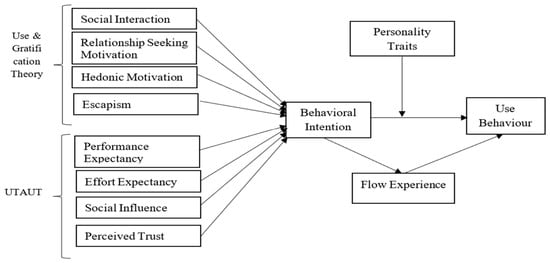
Personality represents those characteristics of the person that account for consistent patterns of feeling, thinking, and behaving [53]. Personality traits play a critical role in shaping how individuals translate adoption intentions into usage behavior in digital services [21]. Prior research consistently demonstrates that personality affects both the intensity and purpose of online interactions, thereby conditioning behavioral outcomes [54,55,56,57]. Although the Big Five personality model encompasses five broad dimensions, the present study focuses on two selected personality-related tendencies that are conceptually relevant to engagement with ODAs: extraversion-related social engagement and openness-related exploration. Social engagement reflects individuals’ inclination to initiate conversations and seek interpersonal interaction through ODAs, whereas openness-related exploration reflects their willingness to interact with people from diverse backgrounds, experiment with self-presentation, and explore application features. These tendencies may shape users’ engagement with ODAs and influence how their intentions are translated into actual usage behavior [20,58,59]. Individuals who are more inclined towards social interaction may be more likely to act on their intentions to use ODAs, while those who are more open to exploration may be more willing to engage with the diverse interactions and features offered by these platforms [60,61]. Accordingly, the strength of the relationship between behavioral intention and usage behavior may vary depending on users’ personality traits [54]. Based on this reasoning, the study examines the moderating role of personality traits in the relationship between behavioral intention to use ODAs and usage behavior (Figure 1).
Figure 1.
Conceptual Framework.
H11.
Personality traits significantly moderate the relationship between ODA intention and usage behavior.
3. Materials and Methods
The study employed primary data from a cross-sectional study. The target population comprises millennials, including college students and working professionals, as they represent a relevant segment for investigating online dating behavior. A survey conducted by Rakuten Insight (2024) in India and reported by [62] identified individuals aged 25–34 as a notable age group among mobile dating application users. This evidence supports the relevance of adults as the target population for examining factors influencing online dating behavior. Primary data was gathered using a structured questionnaire. A structured questionnaire was designed using the study constructs. The study adapted measurement scales from previous literature. Scale items of social interaction, relationship seeking motivation, hedonic motivation, and escapism were adopted from [22,23]. Items for performance expectancy, effort expectancy, social influence, and perceived trust were adopted from previous studies of [30,31,63,64]. Items for flow experience were taken from [11]. To measure Personality Traits, items were taken from [20,21,49]. The researcher altered and adjusted some statements to emphasize research objectives (Appendix A).
All constructs were measured using a five-point Likert scale (1—strongly disagree; 5—strongly agree). The questionnaire was prepared in English. For content validity, a panel of six experts (two marketing professors and four consumers) reviewed and assessed the questionnaire. A pilot survey was conducted among 30 respondents to ensure content validity. This sample size is consistent with the recommendation of [65], who suggested 10–30 participants for initial scale development and preliminary evaluation of research instruments. The feedback and Cronbach’s alpha value (0.861) confirmed that the items were clear, with no significant issues related to language or understanding. Prior to starting the survey, participants were informed of the study’s objectives and the right to withdraw from the study at any time. The authors confirmed that this study adheres to the relevant ethical guidelines, and anonymity and confidentiality of participants were maintained throughout the study. Data collection was conducted over six weeks, from January to February 2026, to allow sufficient time for questionnaire distribution, respondent participation, and follow-up. The survey was conducted within this defined period to maintain a consistent timeframe for data collection. Data was collected using convenience and snowball sampling approaches, an online questionnaire distributed to prospective respondents, and responses collected through social media sites, email and WhatsApp. Convenience sampling enabled the researchers to recruit eligible respondents, while snowball sampling facilitated further recruitment through participants’ social networks [17]. We received 402 responses. Following data screening, 18 responses were excluded because respondents provided insincere answers, selecting only 1 or 2 on the Likert scale throughout the questionnaire. Consequently, 384 responses were considered fit for the study.
Data analysis was performed using SmartPLS software 4.0. To reduce the risk of common method bias (CMB), survey items were presented in a mixed order. Harman’s single-factor test was also applied, revealing that a single factor accounted for approximately 43.77% of the total variance—well below the 50% threshold, indicating that CMB was not a significant issue. In addition, all constructs reported VIF values below 3.3. This indicated the absence of problematic multicollinearity bias in the data.
4. Results
Table 1 presents the demographic profile of respondents. Regarding age, the largest proportion of participants belonged to the 19–25 years age range (36.2%). Males (53.9%) and married people (50.5%) dominate the sample. Marital status was recorded as a demographic characteristic rather than an inclusion or exclusion criterion. This decision was informed by reports in Indian media indicating that married adults also use ODAs for varied purposes (including seeking romantic relationships, social interaction, companionship, or other personal motivations). Education-wise, a majority of respondents (38.5%) were less than graduates. Regarding profession, salaried respondents constituted the largest group (32.8%).
Table 1.
Demographic Profile (N = 384).
4.1. Measurement Model
The first stage of data analysis was performed to ensure that measurement items and constructs were valid and reliable. Model fitness was assessed using Cronbach’s alpha, composite reliability, and convergent validity (Table 2). Each construct demonstrated a Cronbach’s alpha value above the accepted threshold of 0.7, confirming adequate construct reliability. For convergent validity, composite reliability and Average Variance Extracted (AVE) values were higher than the suggested standard values of 0.7 and 0.5 respectively. Convergent validity was evaluated by factor loadings. Factor loadings for all items were above 0.5. This affirms the fitness of the measurement model [66]. VIF values range from 1.000 to 1.742, all well below the threshold of 3.3 (or even the conservative 5.0), indicating no multicollinearity issues among predictors. Overall, these results confirm that the constructs are reliable, distinct, and meet the necessary criteria for structural model evaluation.
Table 2.
Measurement.
4.2. Discriminant Validity
Table 3 presents the combined discriminant validity assessment using the Fornell–Larcker criterion and Heterotrait–Monotrait (HTMT) ratios. According to the Fornell–Larcker criterion, the square root of the AVE for each construct should exceed its correlations with other constructs, indicating adequate discriminant validity when √AVE values are above 0.70 and greater than the corresponding inter-construct correlations. In the table, all constructs demonstrate diagonal values above 0.70 and greater than their respective correlations, thereby satisfying the Fornell–Larcker criterion. Some inter-construct correlations were negative; however, negative correlations are statistically permissible and do not, in themselves, indicate a violation of discriminant validity. For example, escapism exhibits near-zero or weak correlations with several other constructs, including hedonic motivation (−0.023), performance expectancy (−0.073), relationship-seeking motivation (−0.028), and social influence (0.009). These patterns suggest that escapism may represent a relatively distinct motivation for using ODAs rather than simply reflecting users’ expected performance benefits, social influences, or relationship-seeking motives. Furthermore, HTMT ratios should remain below the conservative threshold of 0.85, with the highest value observed between Effort Expectancy and Behavioral Intention (0.778), indicating no serious discriminant validity concerns. Collectively, both the Fornell–Larcker and HTMT assessments confirm that the constructs exhibit satisfactory discriminant validity, suggesting that each construct is empirically distinct and measures a unique conceptual domain within the model.
Table 3.
Combined Discriminant Validity Matrix.
4.3. Structural Model
Table 4 presents the model fit and predictive accuracy of the structural model. Part A reports R2, adjusted R2, and Q2 values, together with the construct-level prediction errors. The R2 values indicate substantial explanatory power for Behavioral Intention (R2 = 0.755), suggesting that the antecedent variables explain 75.5% of its variance. In contrast, Flow Experience (R2 = 0.217) and Usage Behavior (R2 = 0.277) demonstrate moderate explanatory power. The adjusted R2 values are closely aligned with the R2 values, confirming model stability and minimal overfitting. The predictive relevance (Q2) values for all endogenous constructs are positive, confirming that the model has strong predictive capability. For Flow Experience, Q2 value is 0.279, while R2 value is 0.217. These measures assess different aspects of model performance: R2 indicates the proportion of variance explained by the model, whereas Q2 assesses predictive relevance under the procedure used to obtain it. Therefore, the higher Q2 value does not necessarily indicate an inconsistency with R2 result. Rather, the two statistics provide complementary information about explanatory and predictive performance.
Table 4.
Explanatory Power and Out-of-Sample Predictive Performance.
Part B provides the item-level comparison between the PLS-SEM model and the linear model benchmark (RMSE and MAE values). The results indicate positive Q2 values across all three endogenous constructs. However, the item-level comparison reveals variation in predictive performance: PLS-SEM performs less favorably than the linear model for Behavioral Intention, shows mixed performance for Flow Experience, and performs more favorably for Usage Behavior. Thus, the model demonstrates predictive relevance, but its relative predictive performance differs across constructs. Regarding model fit, SRMR values for the saturated model (0.054) and estimated model (0.073) are below the recommended cut-off of 0.08, indicating good model fit. However, the estimated model SRMR is relatively close to this threshold and should therefore be interpreted cautiously. Overall, the results confirm that the model has acceptable fitness, supporting its suitability for hypothesis testing.
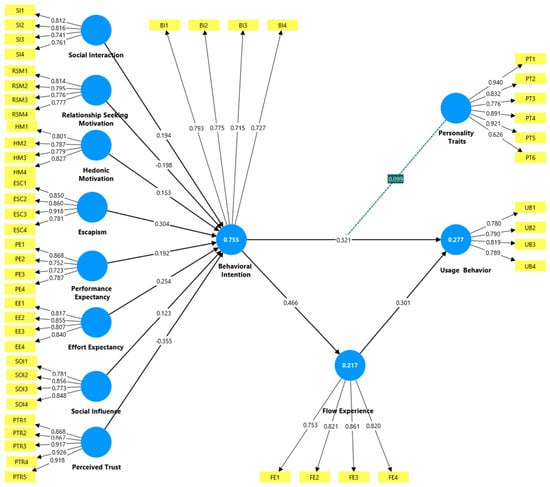
Table 5 presents the structural model assessment, where effect size (f2) and VIF values first confirm that model assumptions are satisfactorily met. The effect size (f2) results reveal that perceived trust (0.371) and escapism (0.267) exert strong influences on behavioral intention, establishing them as key drivers of ODAs adoption. Additionally, behavioral intention demonstrates a significant effect on flow experience (f2 = 0.277). Social interaction (β = 0.194) positively influences behavioral intention, confirming that users are motivated by the need for connection and belonging. Hedonic motivation (β = 0.153) also shows a significant positive effect, indicating that enjoyment and playfulness enhance adoption. Among all predictors, escapism (β = 0.304) emerges as the strongest positive driver, suggesting that ODAs function as psychological outlets for diversion and emotional relief. Effort expectancy (β = 0.254) and performance expectancy (β = 0.192) significantly influence intention, validating the relevance of usability and perceived effectiveness in this context. Social influence (β = 0.123), though weaker, remains significant, reflecting normative pressures in adoption decisions. Interestingly, relationship-seeking motivation shows a significant negative effect (β = −0.198), implying that users with serious relational goals may be less inclined toward ODAs, possibly due to concerns about authenticity or mismatch with long-term expectations. Perceived trust exhibits the strongest negative effect (β = −0.355). Behavioral intention significantly predicts usage behavior (β = 0.321), consistent with UTAUT. Overall, the findings highlight that experiential (escapism, hedonic), functional (effort, performance), and psychological (trust, personality, flow) factors jointly shape ODA adoption and usage (Figure 2).
Table 5.
Path Coefficient.
Figure 2.
Structural Model.
4.4. Mediation Analysis
The results indicate that behavioral intention is positively and significantly associated with both flow experience and usage behavior. Specifically, behavioral intention has a significant positive effect on flow experience (β = 0.466, t = 12.446, p < 0.001), while its direct effect on usage behavior is also positive and significant (β = 0.321, t = 6.788, p < 0.001). Furthermore, flow experience positively and significantly influences usage behavior (β = 0.301, t = 6.477, p < 0.001). The bootstrapping results confirm a significant positive indirect effect of behavioral intention on usage behavior through flow experience (β = 0.140, t = 5.587, p < 0.001, 95% CI [0.093, 0.191]). The variance accounted for (VAF) is approximately 30.37%, calculated as the ratio of the indirect effect to the total effect. Since the confidence interval does not include zero and the direct effect remains significant, the findings support partial mediation. This suggests that flow experience provides an additional pathway through which behavioral intention is associated with usage behavior, while a significant direct relationship between behavioral intention and usage behavior remains.
4.5. Moderation Analysis
The results indicate that personality traits significantly moderate the relationship between behavioral intention and usage behavior. The interaction effect is positive and statistically significant (β = 0.099, t = 2.139, p = 0.033), suggesting that the relationship between behavioral intention and usage behavior becomes more positive as the measured personality-trait score increases. However, the effect size is small (f2 = 0.013), indicating that the moderating contribution is relatively limited. Although the magnitude of this moderating effect is relatively small, it is meaningful, implying that individuals with certain personality characteristics are more likely to convert their intentions into actual behavior.
5. Discussion
This study examined the adoption intention and usage behavior of ODAs by integrating UTAUT and UGT, while incorporating flow experience as a mediating mechanism and personality traits as a moderator. By combining motivational, technological, and experiential perspectives, the study provides comprehensive insights into the evolving dynamics of digital dating behavior among Indian adult users.
The findings suggest that both gratification-driven and technology-driven factors shape behavioral intention, with experiential motivations emerging as particularly influential. These results are consistent with prior studies [16,25]. Notably, escapism appears as the most influential positive driver, indicating that users increasingly engage with ODAs for emotional relief and psychological diversion rather than purely relational goals [27,35,38]. This highlights the transformation of dating apps into immersive and experience-oriented platforms. Similarly, hedonic motivation reinforces the role of enjoyment and playfulness, suggesting that engaging and entertaining features significantly enhance user attraction and retention [9,33,34]. Consistent with existing literature [30,31,39], performance expectancy and effort expectancy significantly contribute to behavioral intention. Users are more likely to adopt ODAs when they perceive them as useful and easy to use, emphasizing the importance of intuitive interfaces and effective matching mechanisms. Social influence also plays a significant role, aligning with studies that highlight the impact of peer norms and societal acceptance in shaping digital platform adoption [40].
However, the negative influence of relationship-seeking motivation provides an interesting deviation from traditional assumptions. While prior research often positions relationship goals as primary drivers [24,25,27], the findings suggest a shift toward more exploratory and experience-driven usage patterns. Given the cross-sectional design and the substantial proportion of married respondents, these findings should not be interpreted as evidence of a broader shift in user preferences or of an increasing perception of ODAs as hybrid social networking and entertainment platforms. However, this finding should be interpreted considering the sample’s demographic composition. Approximately half of the respondents were married, which may be relevant to understanding the observed negative association between relationship-seeking motivation and behavioral intention. Married and unmarried users may differ in their reasons for using ODAs, and some respondents may engage with these applications for social interaction, entertainment, curiosity, or other purposes rather than seeking new romantic relationships. Nevertheless, marital status was not established as the explanation for the observed relationship in the present analysis. Therefore, this interpretation remains tentative. Future research could compare married and unmarried users and examine whether marital status moderates the relationships between usage motivations and behavioral intention. Similarly, the negative effect of perceived trust challenges conventional technology adoption logic. In line with emerging research [4,27,35,43], this finding reflects the complexity of trust in digital intimacy contexts, where heightened awareness of risks may lead to cautious or selective engagement. This unexpected finding contrasts with the hypothesized positive relationship and warrants further investigation. One possible consideration is that trust in the platform may differ from trust in other users, particularly in online dating environments where users may be uncertain about the authenticity and intentions of potential matches. This perspective may represent a boundary condition under which trust does not necessarily translate into behavioral intentions. Future research could distinguish between trust in the platform and trust in other users and investigate whether these forms of trust have different relationships with behavioral intentions.
Further, the role of flow experience highlights the importance of immersive interactions in sustaining usage behavior. Consistent with prior digital consumption research [10,11,47,48], users who experience deeper engagement are more likely to continue using the platform. This underscores the need to move beyond intention-based explanations and incorporate experiential dimensions in understanding consumer behavior. Finally, the moderating role of personality traits aligns with trait-based consumer behavior theories, indicating that individual differences influence how intentions translate into usage. This finding aligns with earlier research by [55,56,57]. This suggests that user engagement is not uniform but contingent on dispositional characteristics, offering opportunities for more personalized and targeted strategies. Overall, the study highlights that ODA usage is driven by a complex interplay of social, hedonic, technological, and psychological factors, reflecting the evolving nature of consumer engagement in digital relationship platforms.
6. Implications
6.1. Theoretical Implications
This study advances theory by developing an integrated framework that combines UGT and UTAUT within the context of ODAs. By doing so, it moves beyond single-theory explanations and demonstrates that online dating behavior is jointly shaped by gratification-driven motives and technology acceptance beliefs, thereby extending both frameworks into socially embedded and emotionally intensive consumption settings. The study contributes to UGT by positioning ODAs as experiential consumption systems, where affective gratifications such as enjoyment, escapism, and social connection play a central role. This extends UGT into digitally mediated relationship markets, emphasizing the importance of emotional and immersive value in shaping user engagement. At the same time, the research enriches UTAUT by validating its applicability in non-utilitarian, socially sensitive environments and by refining its assumptions. Further, by integrating flow experience, the study advances technology adoption literature from a purely cognitive perspective to an affective-experiential paradigm, emphasizing the role of immersive experiences in sustaining user engagement. Incorporating personality traits as a moderating mechanism introduces a dispositional layer, demonstrating that individual differences condition the intention-behavior relationship. Overall, this study contributes to marketing and consumer behavior literature by proposing a multidimensional and integrative framework that captures the interplay between technological, psychological, experiential, and personality-driven factors in digital relationships.
6.2. Practical Implications
The findings offer several implications for online dating application (ODA) managers, although these should be interpreted in light of the direction and magnitude of the observed relationships. Escapism, social interaction, and hedonic motivation emerged as relevant predictors of behavioral intention, suggesting that platforms may benefit from offering engaging and socially interactive experiences alongside relationship-oriented features. For example, managers could improve the usability of communication features, provide opportunities for meaningful interaction, and offer engaging activities that encourage users to explore the platform. These initiatives should be designed to support responsible and respectful interaction rather than to maximize engagement indiscriminately. In line with UGT, users seek enjoyment, emotional relief, and connection; therefore, platforms should invest in gamified interfaces, interactive features, and dynamic communication tools to enhance engagement and retention. Second, the significance of performance expectancy and effort expectancy highlights the relevance of usability and functional efficiency. Platforms must ensure intuitive design, easy navigation, fast response times, and transparent matching algorithms to reduce user effort and enhance perceived effectiveness.
Third, the negative association between perceived trust and behavioral intention warrants particular caution. Contrary to the hypothesized relationship, perceived trust was negatively associated with behavioral intention in the present sample. This finding does not establish that trust-building mechanisms reduce users’ intentions to use ODAs, nor does it justify weakening verification procedures, privacy safeguards, or transparency. Instead, it indicates that the relationship between users’ reported trust and their behavioral intentions requires further investigation. Managers should assess how users understand and respond to profile verification, privacy disclosures, data-use explanations, and other trust-related features through user feedback and carefully designed usability testing. Such assessments may help determine whether existing mechanisms are clear, credible, and aligned with users’ expectations. Until the negative association is replicated and better understood, managers should avoid assuming that adding more trust signals will necessarily increase adoption intentions, while continuing to maintain appropriate privacy, security, and user-protection standards.
Fourth, the findings highlight the importance of flow experience as a mechanism that converts intention into usage. Managers should design for continuous engagement by incorporating adaptive recommendations, instant feedback loops, and personalized content that develop immersion and habitual use. Fifth, although the interaction between the measured personality-related characteristics and behavioral intention was statistically significant, its effect size was small. Therefore, the result provides limited support for treating these characteristics as a major basis for user segmentation or targeted personalization. Rather than implementing AI-driven psychographic profiling or extensive personality-based targeting, ODA managers could initially test optional, user-controlled preferences, and modest interface adaptations. Any such initiatives should be evaluated through small-scale pilots against clearly defined outcomes, with attention to user consent, privacy, fairness, and the potential for unintended effects. Further research is needed to establish whether the observed moderation is practically meaningful, replicable across user groups, and sufficiently robust to inform personalization strategies. Overall, integrating experiential, technological, and psychological elements can help platforms enhance user acquisition, engagement, and loyalty in an increasingly competitive market.
7. Limitations and Future Research
Despite its contributions, this study has several limitations that provide avenues for future research. First, the sample is limited to Indian users, which may restrict the generalizability of findings. Future studies should validate and extend the model across different demographic and socio-cultural settings. Second, the study adopts a cross-sectional design, limiting the ability to infer causality or capture changes in user behavior. Longitudinal research could better examine how adoption intention evolves into sustained usage. Third, the study relies on self-reported data, which may be subject to recall errors and social-desirability bias. Fourth, the model explains 27.7% of the variance in usage behavior, indicating that a substantial proportion of its variance remains unexplained. Future studies could examine additional contextual and individual-level factors to assess whether they improve the explanatory power of the model. Fifth, although the moderating effect of personality traits on the behavioral intention and usage behavior relationship is statistically significant, its effect size is small. Further, personality traits were operationalized and analyzed as a single unidimensional construct. The six-item measure does not adequately represent the multidimensional Big Five personality model. Instead, the items were intended to capture two ODA-related tendencies: extraversion-related social engagement and openness-related exploration. Consequently, the study cannot establish the distinct moderating effects of these tendencies. Consequently, the practical significance of this moderation should not be overstated. Future research should examine the five dimensions of the Big Five personality model separately to investigate their respective moderating roles. Sixth, while the study relies on quantitative methods, deeper insights into user motivations and experiences may require qualitative approaches, such as in-depth interviews or focus group discussions, and mixed-method approaches. Next, the study focuses on selected UGT and UTAUT constructs, along with flow and personality traits. Future research could expand the framework by incorporating emerging variables such as perceived authenticity or digital fatigue. Importantly, future research should explore Gen Z’s evolving values and declining platform loyalty, as users increasingly switch between apps due to novelty-seeking behavior. The present study did not distinguish between married and unmarried adults in examining intention and usage behavior. However, these groups may differ in their motivations, usage patterns, and behavioral intentions towards ODAs. Future research could examine these differences and investigate whether marital status moderates the relationship between adoption factors, behavioral intention, and usage behavior. The effectiveness of AI-enabled services in shaping user trust and satisfaction should be examined. Collectively, these directions can advance the understanding of online dating behavior in evolving digital ecosystems.
Author Contributions
Conceptualization, D.K.; methodology, D.K.; software, S.H.; validation, S.A. and A.A.; formal analysis, A.A. and S.H.; investigation, D.K. and S.H.; resources, S.A. and D.S.C.; data curation, D.K.; writing—original draft preparation, D.K.; writing—review and editing, A.A., S.H. and D.S.C.; visualization, S.A.; supervision, S.H.; project administration, S.H.; funding acquisition, S.H. All authors have read and agreed to the published version of the manuscript.
Funding
This research received no external funding.
Institutional Review Board Statement
Ethical review and approval were waived by the Institutional Ethics Board of Uttaranchal University, Dehradun [UU/DRI/2026/49]. The waiver was granted because the study involved an opinion-based questionnaire survey and did not involve medical procedures, clinical interventions, or experimental manipulation. Participation was voluntary, and informed consent was obtained from respondents. Participants were informed about the purpose of the study, intended data use, confidentiality measures, and their right to withdraw.
Informed Consent Statement
Informed consent was obtained from all subjects involved in the study.
Data Availability Statement
The original contributions presented in this study are included in the article. Further inquiries can be directed at the corresponding authors.
Acknowledgments
Thanks to all the participants for their valuable contribution to this study. During the preparation of this manuscript/study, the authors used ChatGPT (GPT-5.5) to improve only readability and language of the work. The authors have reviewed and edited the output and take full responsibility for the content of this publication.
Conflicts of Interest
The authors declare no conflicts of interest.
Abbreviations
The following abbreviations are used in this manuscript:
| ODA | Online Dating Application |
| UTAUT | Unified Theory of Acceptance and Use of Technology |
| UGT | Uses and Gratifications Theory |
Appendix A. Scale Items
| Constructs | Items |
| Social Interaction | Using ODAs allows me to interact with a variety of people. |
| ODAs help me maintain social connections. | |
| I feel socially connected when I use ODAs. | |
| ODAs make social interaction easier for me. | |
| Relationship Seeking Motivation | I use ODAs to find a meaningful relationship. |
| ODAs increase my chances of meeting a compatible partner. | |
| I use ODAs with the intention of forming long-term relationships. | |
| Finding a romantic partner motivates me to use ODAs. | |
| Hedonic Motivation | I use ODAs for fun. |
| I get pleasure in using ODAs. | |
| I love to use ODAs as they excite my sense. | |
| I become very happy while using ODAs. | |
| Escapism | I use ODAs to escape from daily routine. |
| ODAs help me forget my problems for a while. | |
| I use ODAs to relax when I feel stressed. | |
| ODAs allow me to disconnect from real-life pressures. | |
| Performance Expectancy | Using ODAs improves my chances of finding a compatible partner. |
| ODAs help me meet people more efficiently than traditional methods. | |
| Using ODAs enhances the effectiveness of my dating experience. | |
| Effort Expectancy | Learning to use ODAs is easy for me. |
| Interacting with ODAs does not require much mental effort. | |
| I find ODAs easy to navigate and use. | |
| It is easy for me to become skillful at using ODAs. | |
| Social Influence | People who are important to me think that I should use ODAs. |
| My friends encourage me to use ODAs. | |
| People whose opinions I value influence my decision to use ODAs. | |
| ODAs are socially acceptable among people around me. | |
| Perceived Trust | I trust that ODAs handle my personal information responsibly. |
| I believe that ODAs are trustworthy. | |
| I feel very comfortable using ODAs. | |
| I feel confident using ODAs to interact with other users. | |
| I believe that ODAs are reliable in providing a safe dating environment. | |
| Behavior Intention | I intend to use ODAs regularly in the future. |
| I will continue using ODAs as part of my social life. | |
| I am likely to recommend ODAs to others. | |
| I plan to rely on ODAs to meet potential partners. | |
| Flow Experience | When using ODAs, I become deeply absorbed in the experience. |
| I often lose track of time while browsing or interacting on ODAs. | |
| Using ODAs feels enjoyable and intrinsically rewarding to me. | |
| I feel fully focused and engaged when I am active on ODAs. | |
| Personality Traits | I feel energized when interacting with others on ODAs. |
| I enjoy initiating conversations with new people on ODAs. | |
| I actively seek social interaction through ODAs. | |
| I am open to meeting people from diverse backgrounds through ODAs. | |
| I like experimenting with different ways of presenting myself on ODAs. | |
| I enjoy exploring new features and experiences on ODAs. | |
| Usage Behavior | I use ODAs frequently. |
| I use ODAs regularly. | |
| I spend considerable time using ODAs. | |
| I actively engage with ODAs (browsing, matching, liking, or messaging). |
References
- Mordor Intelligence. Global Online Dating Services Market Size & Share Analysis. 2025. Available online: https://www.mordorintelligence.com/industry-reports/global-online-dating-services-market (accessed on 15 February 2026).
- Grand View Research. India Online Dating Application Market Size & Outlook, 2023–2030. 2025. Available online: https://www.grandviewresearch.com/horizon/outlook/online-dating-application-market/india/dashboard (accessed on 4 March 2026).
- Duguay, S.; Dietzel, C.; Myles, D. The year of the “virtual date”: Reimagining dating app affordances during the COVID-19 pandemic. New Media Soc. 2024, 26, 1384–1402. [Google Scholar] [CrossRef] [Scilit]
- John, W.; Charag, A.H.; Bashir, I. Indian Millennials’ continued usage intentions toward online dating apps: The interplay between trust and perceived autonomy. Young Consum. 2025, 26, 207–226. [Google Scholar] [CrossRef] [Scilit]
- Kumar, A.; Shankar, A. See you in the metaverse! Investigating dating intentions in the metaverse. Inf. Technol. People 2026, 39, 1826–1852. [Google Scholar] [CrossRef] [Scilit]
- Alexopoulos, C.; Timmermans, E.; McNallie, J. Swiping more, committing less: Unraveling the links among dating app use, dating app success, and intention to commit infidelity. Comput. Hum. Behav. 2020, 102, 172–180. [Google Scholar] [CrossRef] [Scilit]
- Langlais, M.R.; Lee, C.T. It is a match!: Understanding the perceived effectiveness of mobile dating applications for forming romantic relationships. Hum. Behav. Emerg. Technol. 2025, 2025, 6632908. [Google Scholar] [CrossRef] [Scilit]
- Chen, Q.; Yuan, Y.; Feng, Y.; Archer, N. A decision paradox: Benefit vs risk and trust vs distrust for online dating adoption vs non-adoption. Internet Res. 2021, 31, 341–375. [Google Scholar] [CrossRef] [Scilit]
- Siddiqui, A.; Chakraborty, D.; Siddiqui, M. Dating dilemma: Predicting the barriers to adoption of Online Dating Apps (ODAs) applying Innovation Resistance Theory. J. Promot. Manag. 2023, 29, 1082–1103. [Google Scholar] [CrossRef] [Scilit]
- Dhir, A.; Kaur, P.; Rajala, R. Continued use of mobile instant messaging apps: A new perspective on theories of consumption, flow, and planned behavior. Soc. Sci. Comput. Rev. 2020, 38, 147–169. [Google Scholar] [CrossRef] [Scilit]
- Baabdullah, A.M.; Alalwan, A.A.; Algharabat, R.S.; Metri, B.; Rana, N.P. Virtual agents and flow experience: An empirical examination of AI-powered chatbots. Technol. Forecast. Soc. Change 2022, 181, 121772. [Google Scholar] [CrossRef] [Scilit]
- Ruggiero, T.E. Uses and Gratifications Theory in the 21st Century. Mass Commun. Soc. 2000, 3, 3–37. [Google Scholar] [CrossRef] [Scilit] [PubMed]
- Ibáñez-Sánchez, S.; Orús, C.; Flavián, C. Augmented reality filters on social media. Analyzing the drivers of playability based on uses and gratifications theory. Psychol. Mark. 2023, 39, 559–578. [Google Scholar] [CrossRef] [Scilit]
- Li, Z.; Li, H.; Liu, X. Finer-grained understanding of travel livestreaming adoption: A synthetic analysis from uses and gratifications theory perspective. Tour. Manag. Perspect. 2023, 47, 101130. [Google Scholar] [CrossRef] [Scilit]
- Pillai, R.; Sivathanu, B.; Rana, N.P. Unveiling virtual interactive marketplaces: Shopping motivations in the Metaverse through the lens of uses and gratifications theory. J. Bus. Res. 2025, 190, 115219. [Google Scholar] [CrossRef] [Scilit]
- Sumter, S.R.; Vandenbosch, L.; Ligtenberg, L. Love me Tinder: Untangling emerging adults’ motivations for using the dating application Tinder. Telemat. Inform. 2017, 34, 67–78. [Google Scholar] [CrossRef] [Scilit]
- Kala, D.; Chaubey, D.S. Cryptocurrency adoption and continuance intention among Indians: Moderating role of perceived government control. Digit. Policy Regul. Gov. 2023, 25, 288–304. [Google Scholar] [CrossRef] [Scilit]
- Baek, G.; Lee, H.E. Planned behavior in the use of dating apps by women in Korea. Int. J. Hum.-Comput. Interact. 2025, 41, 1543–1551. [Google Scholar] [CrossRef] [Scilit]
- Valinatajbahnamiri, M.; Siahtiri, V. Flow in computer-mediated environments: A systematic literature review. Int. J. Consum. Stud. 2021, 45, 511–545. [Google Scholar] [CrossRef] [Scilit]
- Clemens, C.; Atkin, D.; Krishnan, A. The influence of biological and personality traits on gratifications obtained through online dating websites. Comput. Hum. Behav. 2015, 49, 120–129. [Google Scholar] [CrossRef] [Scilit]
- Islam, J.U.; Rahman, Z.; Hollebeek, L.D. Personality factors as predictors of online consumer engagement: An empirical investigation. Mark. Intell. Plan. 2017, 35, 510–528. [Google Scholar] [CrossRef] [Scilit]
- Park, N.; Kee, K.F.; Valenzuela, S. Being immersed in social networking environment: Facebook groups, uses and gratifications, and social outcomes. CyberPsychology Behav. 2009, 12, 729–733. [Google Scholar] [CrossRef] [Scilit] [PubMed]
- Timmermans, E.; De Caluwé, E. Development and validation of the Tinder Motives Scale (TMS). Comput. Hum. Behav. 2017, 70, 341–350. [Google Scholar] [CrossRef] [Scilit]
- Ranzini, G.; Lutz, C. Love at first swipe? Explaining Tinder self-presentation and motives. Mob. Media Commun. 2017, 5, 80–101. [Google Scholar] [CrossRef] [Scilit]
- Timmermans, E.; Courtois, C. From swiping to casual sex and/or committed relationships: Exploring the experiences of Tinder users. Inf. Soc. 2018, 34, 59–70. [Google Scholar] [CrossRef] [Scilit]
- Orosz, G.; Tóth-Király, I.; Böthe, B.; Melher, D.; Trottier, D. Too many swipes for today: The development of the Problematic Tinder Use Scale (PTUS). J. Behav. Addctn. 2018, 7, 518–523. [Google Scholar] [CrossRef] [Scilit] [PubMed]
- Castro, Á.; Barrada, J.R. Dating apps and their sociodemographic and psychosocial correlates: A systematic review. Int. J. Environ. Res. Public Health 2020, 17, 6500. [Google Scholar] [CrossRef] [Scilit] [PubMed]
- Huang, Q.; Zhang, R.; Lee, H.; Xu, H.; Pan, Y. A study on customer behavior in online dating platforms: Analyzing the impact of perceived value on enhancing customer loyalty. Behav. Sci. 2024, 14, 973. [Google Scholar] [CrossRef] [Scilit] [PubMed]
- Chan, L.S. Who uses dating apps? Exploring the relationships among trust, sensation-seeking, smartphone use, and the intent to use dating apps based on the integrative model. Comput. Hum. Behav. 2017, 72, 246–258. [Google Scholar] [CrossRef] [Scilit]
- Venkatesh, V.; Thong, J.Y.L.; Xu, X. Consumer acceptance and use of information technology: Extending the unified theory of acceptance and use of technology. MIS Q. 2012, 36, 157–178. [Google Scholar] [CrossRef] [Scilit]
- Kala, D.; Chaubey, D.S.; Al-Adwan, A.S. Cryptocurrency investment behaviour of young Indians: Mediating role of fear of missing out. Glob. Knowl. Mem. Commun. 2025, 74, 2047–2068. [Google Scholar] [CrossRef] [Scilit]
- Al-Adwan, A.S.; Yaseen, H.; Alkhwaldi, A.F.; Jafar, R.M.S.; Fauzi, M.A.; Abdullah, A. Treasure hunting for brands: Metaverse marketing gamification effects on purchase intention, WOM, and loyalty. J. Glob. Mark. 2025, 38, 392–416. [Google Scholar] [CrossRef] [Scilit]
- Wang, Y.S. Virtual cohabitation in online dating sites: A netnography analysis. Online Inf. Rev. 2019, 43, 513–530. [Google Scholar] [CrossRef] [Scilit]
- Liew, T.W.; Tan, S.M.; Sung, J.Y.; Gan, C.L.; Lee, Y.Y. Love is in the cloud: Uncovering the factors driving continuous use intention of online dating applications. Cogent Soc. Sci. 2023, 9, 2232110. [Google Scholar] [CrossRef] [Scilit]
- McLean, G.; Al-Nabhani, K.; Marriott, H. ‘Regrettable-escapism’: The negative effects of mobile app use: A retail perspective. Psychol. Mark. 2022, 39, 150–167. [Google Scholar] [CrossRef] [Scilit]
- Miranda, S.; Trigo, I.; Rodrigues, R.; Duarte, M. Addiction to social networking sites: Motivations, flow, and sense of belonging at the root of addiction. Technol. Forecast. Soc. Change 2023, 188, 122280. [Google Scholar] [CrossRef] [Scilit]
- Liang, Y.; Liu, X.; Zhang, H.; Wang, Y.; Zhong, L. A moderated mediation model of avoidance attachment and depression among Chinese online daters: A social enhancement perspective. Acta Psychol. 2025, 258, 105282. [Google Scholar] [CrossRef] [Scilit] [PubMed]
- Mazhar, R.; Qayyum, A.; Jamil, R.A. The dimensional impact of escapism on users’ eCart abandonment: Mediating role of attitude towards online shopping. Manag. Res. Rev. 2024, 47, 374–389. [Google Scholar] [CrossRef] [Scilit]
- Hasan, A.; Habib, S.; Khan, M.A.; Hamadneh, N.N. Student adoption of E-learning in higher education institutions in Saudi Arabia: Opportunities and challenges. Int. J. Inf. Commun. Technol. Educ. 2023, 19, 1–21. [Google Scholar] [CrossRef] [Scilit]
- Kala, D.; Chaubey, D.S. Decoding direct-to-consumer brand purchase behaviour among young consumers: Role of Fear of Missing Out and AI-enabled recommendations. Int. Rev. Retail Distrib. Consum. Res. 2026, 1–26. [Google Scholar] [CrossRef] [Scilit]
- Matemba, E.D.; Li, G. Consumers’ willingness to adopt and use WeChat wallet: An empirical study in South Africa. Technol. Soc. 2018, 53, 55–68. [Google Scholar] [CrossRef] [Scilit]
- Albayati, H.; Kim, K.K.; Rho, J.J. Acceptance of financial transactions using blockchain technology and cryptocurrency: A customer perspective approach. Technol. Soc. 2020, 62, 101320. [Google Scholar] [CrossRef] [Scilit]
- Chen, Q.; Yun, G.; Lu, J.; Wang, X. Understanding active participation of online dating services: A mixed methods study. Decis. Support Syst. 2023, 170, 113960. [Google Scholar] [CrossRef] [Scilit]
- Jadil, Y.; Rana, N.P.; Dwivedi, Y.K. Understanding the drivers of online trust and intention to buy on a website: An emerging market perspective. Int. J. Inf. Manag. Data Insights 2022, 2, 100065. [Google Scholar] [CrossRef] [Scilit]
- Saklani, S.; Kala, D. Banking on bots: Examining user satisfaction and continuance intention of chatbots using multi-group analysis and necessary condition analysis. Int. J. Electron. Bus. 2026, 21, 111–134. [Google Scholar] [CrossRef] [Scilit]
- Zhu, Z.; Yang, K. Virtual community users’ travel information-seeking continuance intention: An empirical study based on the cognitive load theory and flow theory. J. Syst. Inf. Technol. 2023, 25, 91–108. [Google Scholar] [CrossRef] [Scilit]
- Ahmad, N.; Abdulkarim, H. The impact of flow experience and personality type on the intention to use virtual world. Int. J. Hum.-Comput. Interact. 2019, 35, 1074–1085. [Google Scholar] [CrossRef] [Scilit]
- Kala, D.; Chaubey, D.S.; Chamola, P. Satisfaction and beyond: Nexus of anthropomorphism, virtual flow experience, and trust in banking chatbot using expectation-confirmation model. Glob. Knowl. Mem. Commun. 2026; ahead of print. [CrossRef] [Scilit]
- Marbach, J.; Lages, C.R.; Nunan, D. Who are you and what do you value? Investigating the role of personality traits and customer-perceived value in online customer engagement. J. Mark. Manag. 2016, 32, 502–525. [Google Scholar] [CrossRef] [Scilit]
- Freyth, L.; Batinic, B. How bright and dark personality traits predict dating app behavior. Personal. Individ. Differ. 2021, 168, 110316. [Google Scholar] [CrossRef] [Scilit]
- Alshiha, A.A. Why do travelers continue using Generative AI travel assistants? The dual roles of perceived usefulness and flow experience. J. Theor. Appl. Electron. Commer. Res. 2026, 21, 311. [Google Scholar] [CrossRef] [Scilit]
- Liu, F.; Ren, L.; Hu, Y. Exploring How AI Tour Guides’ Automated Social Presence Influences Tourist Flow Experience and Behavioral Intentions. Int. J. Tour. Res. 2026, 28, e70326. [Google Scholar] [CrossRef] [Scilit]
- Pervin, L.A.; John, O.P. Personality, Theory and Research, 8th ed.; John Wiley & Sons Inc.: New York, NY, USA, 2001. [Google Scholar]
- Cummings, J.J.; Mays, K. Trait motivational reactivity as a predictor of online dating app behavior. Comput. Hum. Behav. 2021, 121, 106775. [Google Scholar] [CrossRef] [Scilit]
- Osei, H.V.; Kwateng, K.O.; Boateng, K.A. Integration of personality trait, motivation and UTAUT 2 to understand e-learning adoption in the era of COVID-19 pandemic. Educ. Inf. Technol. 2022, 27, 10705–10730. [Google Scholar] [CrossRef] [Scilit] [PubMed]
- Tripathi, N.; Upadhyay, S.; Das, H. Forced transition to technology: Role of self-efficacy and big five personality variables in the adoption of technology. Int. J. Educ. Manag. 2022, 36, 1131–1151. [Google Scholar] [CrossRef] [Scilit]
- Al-Adwan, A.S.; Al-Debei, M.M. The determinants of Gen Z’s metaverse adoption decisions in higher education: Integrating UTAUT2 with personal innovativeness in IT. Educ. Inf. Technol. 2024, 29, 7413–7445. [Google Scholar] [CrossRef] [Scilit]
- Timmermans, E.; De Caluwé, E. To Tinder or not to Tinder, that’s the question: An individual differences perspective to Tinder use and motives. Personal. Individ. Differ. 2017, 110, 74–79. [Google Scholar] [CrossRef] [Scilit]
- Timmermans, E.; Alexopoulos, C. Anxiously searching for love (among other things): Attachment orientation and mobile dating application users’ motives and outcomes. Cyberpsychology Behav. Soc. Netw. 2020, 23, 447–452. [Google Scholar] [CrossRef] [Scilit] [PubMed]
- Blackhart, G.C.; Fitzpatrick, J.; Williamson, J. Dispositional factors predicting use of online dating sites and behaviors related to online dating. Comput. Hum. Behav. 2014, 33, 113–118. [Google Scholar] [CrossRef] [Scilit]
- Castro, Á.; Barrada, J.R.; Ramos-Villagrasa, P.J.; Fernández-del-Río, E. Profiling Dating Apps Users: Sociodemographic and Personality Characteristics. Int. J. Environ. Res. Public Health 2020, 17, 3653. [Google Scholar] [CrossRef] [Scilit] [PubMed]
- Statista. Share of Dating App Users Across India in August 2024, by Age Group. 2026. Available online: https://www.statista.com/statistics/1182811/india-share-of-mobile-dating-application-users-by-age-group/ (accessed on 14 October 2026).
- Duong, B.Q.; Lee, J.; Emmanuel, A.; Jin, S.S. Antecedents of members’ trust propensity and its impact on self-disclosure intention in mobile-based online dating apps. J. South. Assoc. Inf. Syst. 2021, 8, 1–23. [Google Scholar] [CrossRef] [Scilit]
- Habib, S.; Hamadneh, N.N. Impact of perceived risk on consumers technology acceptance in online grocery adoption amid COVID-19 pandemic. Sustainability 2021, 13, 10221. [Google Scholar] [CrossRef] [Scilit]
- Johanson, G.A.; Brooks, G.P. Initial scale development: Sample size for pilot studies. Educ. Psychol. Meas. 2010, 70, 394–400. [Google Scholar] [CrossRef] [Scilit]
- Hair, J.F., Jr.; Hult, G.T.M.; Ringle, C.M.; Sarstedt, M. A Primer on Partial Least Squares Structural Equation Modeling (PLS-SEM), 2nd ed.; Sage Publications: Thousand Oaks, CA, USA, 2019. [Google Scholar]

Disclaimer/Publisher’s Note: The statements, opinions and data contained in all publications are solely those of the individual author(s) and contributor(s) and not of MDPI and/or the editor(s). MDPI and/or the editor(s) disclaim responsibility for any injury to people or property resulting from any ideas, methods, instructions or products referred to in the content. |
© 2026 by the authors. Licensee MDPI, Basel, Switzerland. This article is an open access article distributed under the terms and conditions of the Creative Commons Attribution (CC BY) license.