Article

Identification of Athleticism and Sports Profiles Throughout Machine Learning Applied to Heart Rate Variability


1
Sport Research Institute, Universitat Autònoma de Barcelona, 08193 Bellaterra, Spain
2
Laboratory of Sport Psychology, Department of Basic Psychology, Universitat Autònoma de Barcelona, 08193 Bellaterra, Spain
*
Author to whom correspondence should be addressed.
Sports 2025, 13(2), 30; https://doi.org/10.3390/sports13020030

Submission received: 13 November 2024 / Revised: 3 January 2025 / Accepted: 20 January 2025 / Published: 22 January 2025
(This article belongs to the Collection Human Physiology in Exercise, Health and Sports Performance)

Abstract

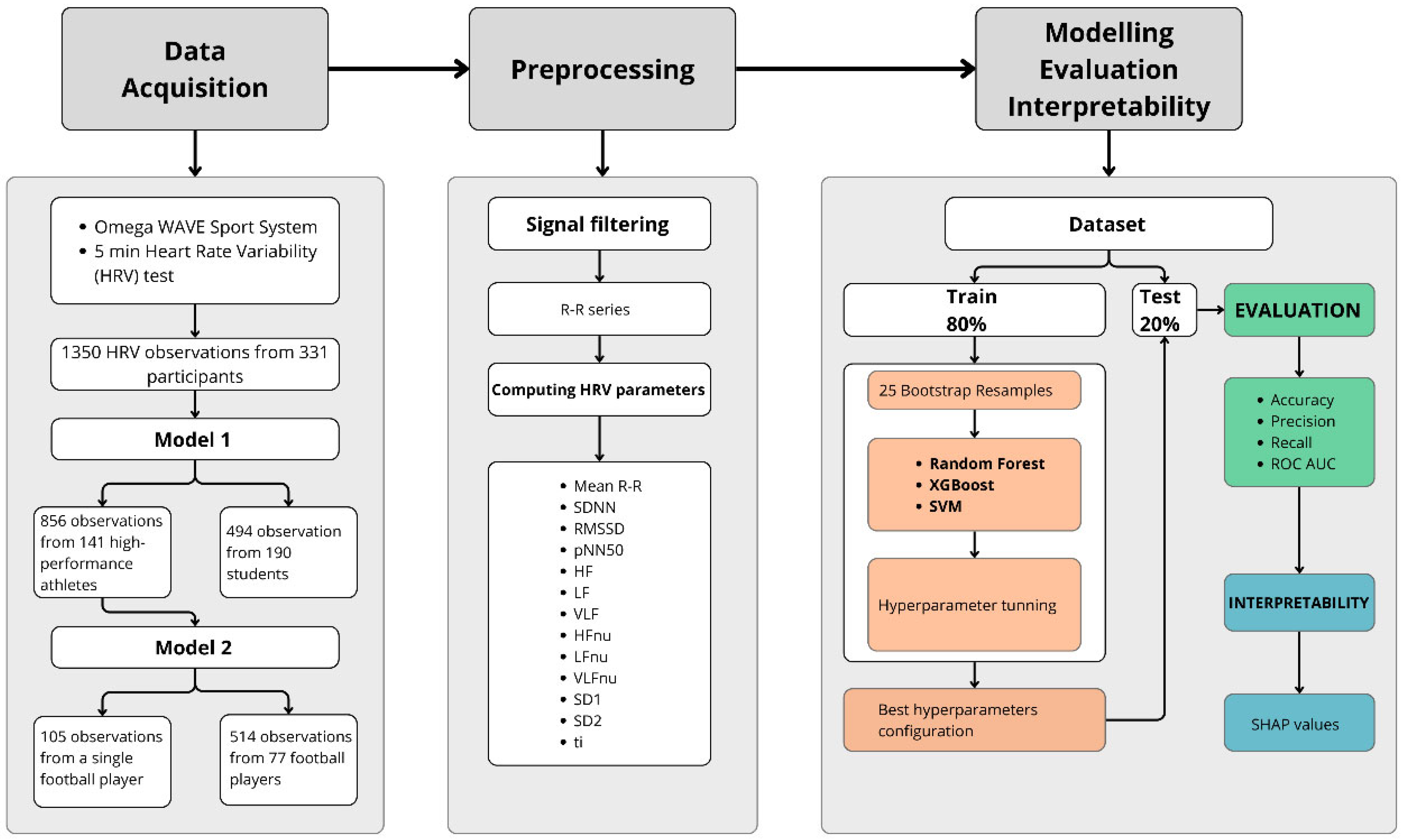
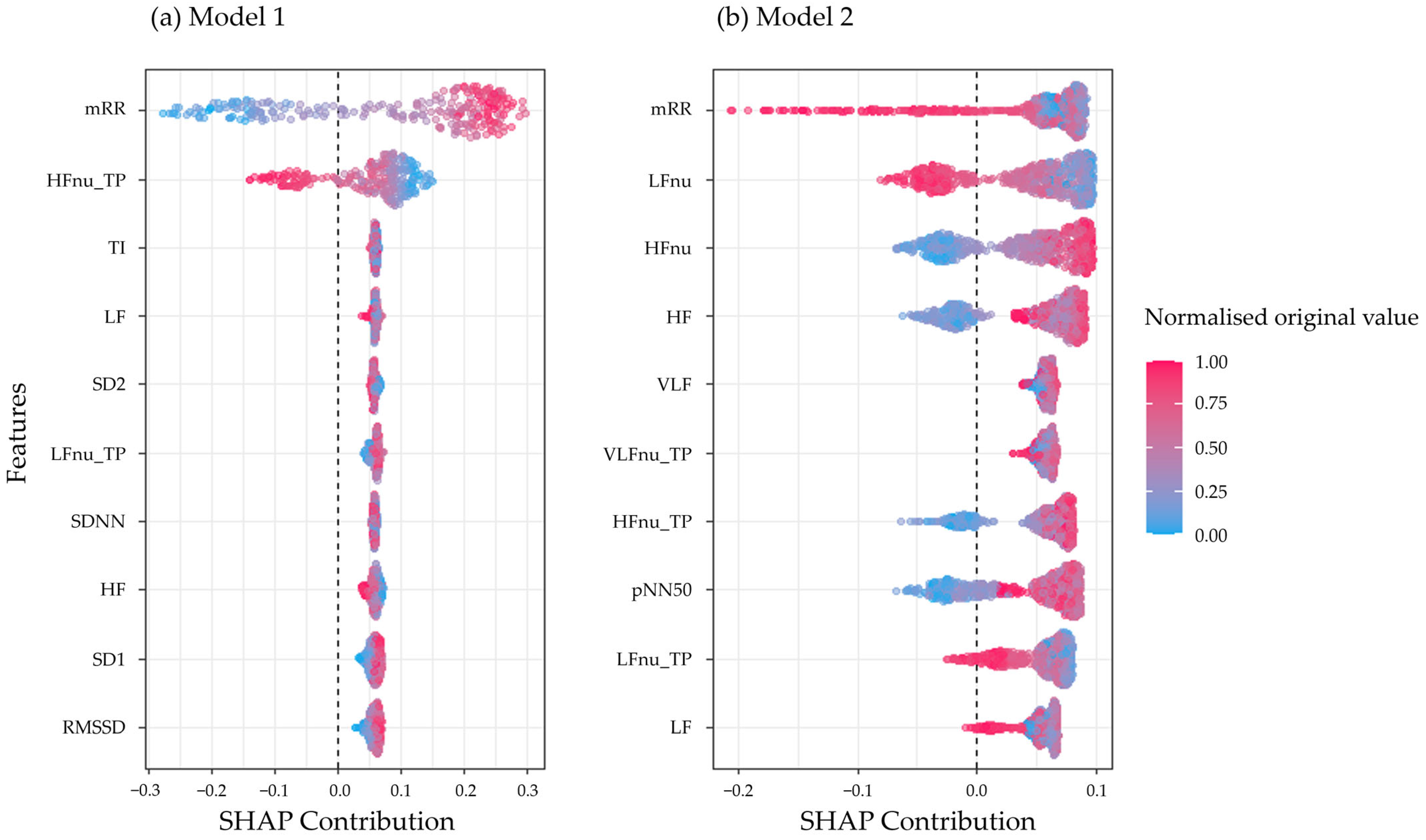
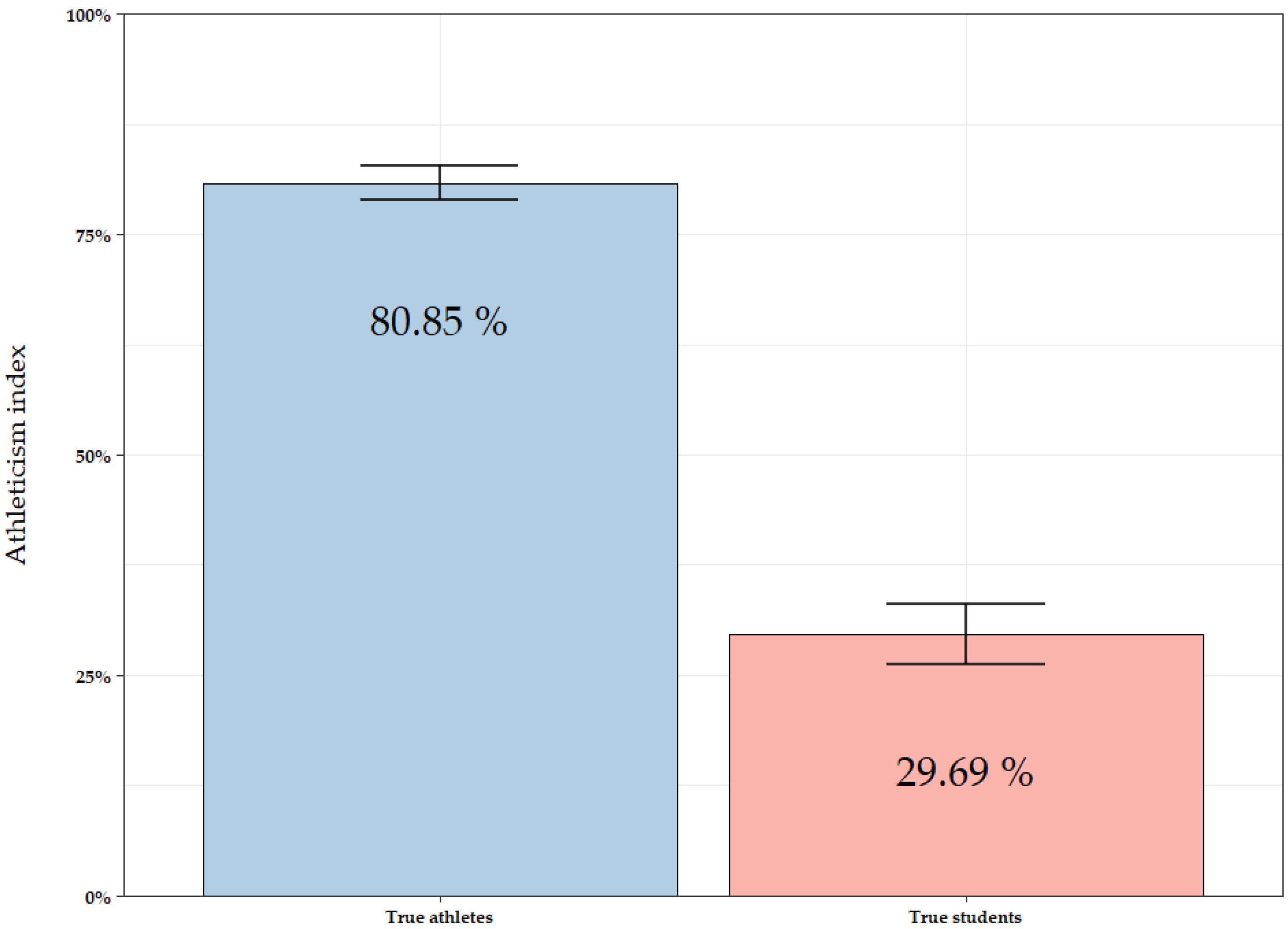
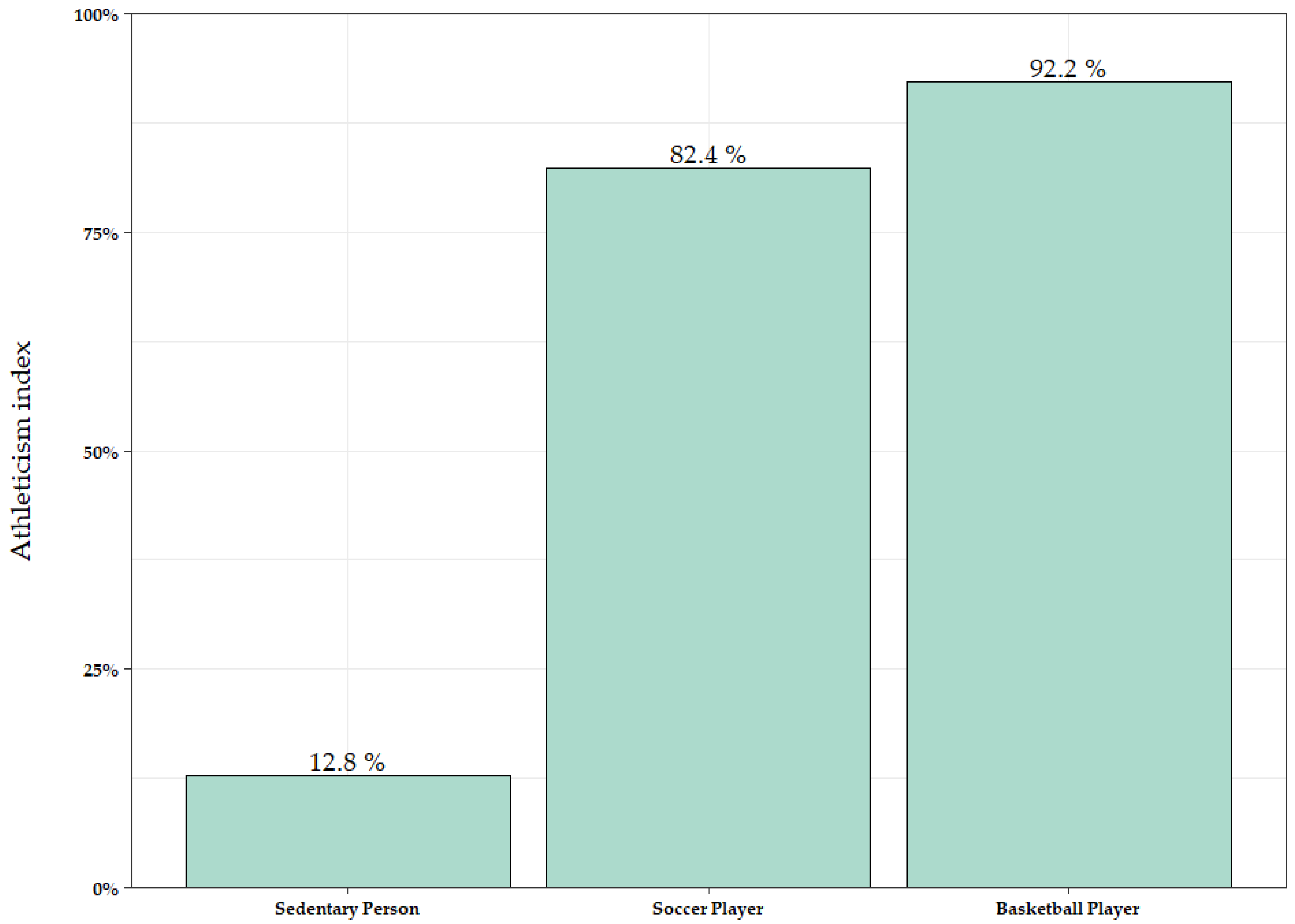
Heart rate variability (HRV) is a non-invasive health and fitness indicator, and machine learning (ML) has emerged as a powerful tool for analysing large HRV datasets. This study aims to identify athletic characteristics using the HRV test and ML algorithms. Two models were developed: Model 1 (M1) classified athletes and non-athletes using 856 observations from high-performance athletes and 494 from non-athletes. Model 2 (M2) identified an individual soccer player within a team based on 105 observations from the player and 514 from other team members. Three ML algorithms were applied —Random Forest (RF), Extreme Gradient Boosting (XGBoost), and Support Vector Machine (SVM)— and SHAP values were used to interpret the results. In M1, the SVM algorithm achieved the highest performance (accuracy = 0.84, ROC AUC = 0.91), while in M2 Random Forest performed best (accuracy = 0.92, ROC AUC = 0.94). Based on these results, we propose an athleticism index and a soccer identification index derived from HRV data. The findings suggest that ML algorithms, such as SVM and RF, can effectively generate indices based on HRV for identifying individuals with athletic characteristics or distinguishing athletes with specific sports profiles. These insights underscore the importance of integrating HRV assessments systematically into training regimens for enhanced athletic evaluation.
Keywords: heart rate variability; machine learning; athletes; sport profiles; team sports; random forest; support vector machine; SHAP values; training load heart rate variability; machine learning; athletes; sport profiles; team sports; random forest; support vector machine; SHAP values; training load