


Abstract
This scoping review aimed to systematically explore the breadth and extent of the literature regarding the relationship between contextual factors (CFs) and training load (TL) in adolescent soccer players. Further aims included comprehending potential underlying mechanisms and identifying knowledge gaps. CFs were defined as factors not part of the main training process, such as the coach–athlete relationship and educational responsibilities. PubMed, EBSCO APA PsycINFO, Web of Science, ProQuest Dissertations & Theses A&I, and SportRxiv were searched. Studies involving adolescent soccer players that investigated the CF–TL relationship and measured TL indicators were deemed eligible. Seventeen studies were included, reflecting the limited number of articles published regarding the CF–TL relationship. CFs were mostly related to match-play (N = 13) and phase of the season (N = 7). Moreover, these factors appeared to affect TL. CF related to players’ personal environment (N = 3) were underrepresented in the reviewed studies. Overall, the CF–TL relationship appears to be rarely scrutinized. A likely cause for this lack of research is the segregation of the physiological and psychological research domains, where the CF–TL relationship is often speculated upon but not measured. Therefore, a holistic approach is warranted which also investigates the effect of personal environment, such as stressful life stress events, on TL.
1. Introduction
Physical prowess is important for adolescent soccer players to reach the elite level. At the highest level, players may play up to 50 matches per season, covering up to 14 km per match [1]. During the match, a high number of accelerations and decelerations, high-intensity running and sprinting are performed, indicating the high physical demands [1].
Physical conditioning is crucial to meet those demands and through meticulous planning of training load (TL), practitioners aim to optimize the physical training process. TL can be divided into external (EL) and internal load (IL) [2]. EL is defined as “what the athlete does and can be observed”, such as the distance covered [3]. IL is the psychophysiological response of the body during the training session [3,4]. IL is often measured using objective or subjective measures, such as heart rate (HR) or rate of perceived exertion (RPE). Moreover, IL is regarded as the main stimulus for training effects [4]. Next to IL, individual factors (IFs) and contextual factors (CFs) also affect TL [3,4]. IFs are characteristics of the player (e.g., genetics or training background). CFs are factors that are not part of the main (physical) training process (e.g., environmental, social, and cultural) and potentially influence the training process [3]. Therefore, CFs are factors that occur outside of (physical) training sessions [3]. It has been suggested that CFs may have a stronger impact on players than IFs due to a perceived lack of control when stressors originate from the social or cultural context [5]. When coaches do not consider the moderating effect of CFs, unforeseen adverse effects might occur, such as under- or overtraining, or illnesses and injuries [3,6,7,8]. Therefore, gaining further insight into the effect of CFs on TL is imperative to help practitioners optimize training programs and recovery.
For practitioners working with adolescent soccer players, CFs are particularly relevant and challenging since adolescence is considered a stressful developmental period characterized as a non-linear and multidimensional process [9,10,11]. During this phase in life, many psychosocial stressors emerge for adolescents which could originate within or outside sports [7,10,11]. For example, the coach–athlete relationship or match performance are known to be psychosocial stressors for adolescents originating from the sports context [9,11]. Alternatively, education and peer influence are potential psychosocial stressors outside sports [7,8,12]. These factors could affect IL and hence indicate to practitioners the need to modify EL to get players in an optimal state [6].
Although the link between CFs and TL has been suggested multiple times, there does not appear to be a single clear mechanistic underpinning but rather a myriad of suggested pathways [6,13]. This is understandable due to the broad definition of CFs [3,14]. For example, environmental factors such as temperature and humidity are well-studied and affect TL through mainly physiological processes [15]. On the other hand, psychosocial factors, such as academic stress and media attention, potentially cause stress, which theoretically influences TL [6,8]. Still, the mechanisms behind the relationship between psychosocial CFs and TL are not yet fully understood. This is partly due to the historical biomedical focus when TL was scrutinized [14,16]. Nevertheless, some theoretical models within the sports science literature offer more insight into the relationship between CFs and TL.
Several frameworks integrate psychosocial and physical stress. In their seminal article, Kenttä & Hassmén [17] propose the interactive and additive effects of psychosocial and physical stress, making up total stress. This apparent indication that total stress is not just the sum of stress from different sources supports the notion of psychosocial stress influencing TL. Other authors propose a similar linkage. Mellalieu et al. [7] advocate for the term ‘psychological load’ instead of stressors or demands to define a player’s total psychological demands and differentiate it from physical load. Both add up and potentially interact to determine the load of players [7]. This supports the premise of a complex system with inter-relationships between important CFs and TL, yet the precise mechanisms in this linkage remain unspecified [7,13].
Although normally used for the prediction and prevention of injuries, the injury stress model from Andersen and Williams [18] offers interesting leads concerning the potential mechanisms. In this model, psychosocial factors, such as life events, influence the stress response. Due to the stress response, physiological adaptations cause increased muscle tension, which in turn can disturb motor coordination and impair flexibility. Findings by Otter et al. [19] support this conjecture. The authors observed a reduction in the running economy of runners after a severe negative life event. Increased psychosocial stress, elevated cortisol concentrations, and impaired recovery likely caused this reduction [19]. Moreover, three weeks after the event, a higher oxygen uptake of the runners was recorded at a fixed EL during the second stage of a standardized submaximal test. Thus, it seems plausible that psychosocial stress affects TL, but the underlying mechanism is yet to be explored.
Finally, it is important to recognize the different origins and nature of psychosocial stressors because they might cause different psychological responses and require different interventions [20]. Psychosocial stress can generally be categorized as organizational, performance (competition), or personal [20,21]. These are demands related to the player’s soccer academy, competition, or (life) events outside of sport, respectively [7]. This is in line with the notion that a holistic approach is warranted when investigating talented athletes’ personal environment by including both their sporting and non-sporting experiences [22]. Within the aforementioned categories, different activities, actors, or organizations could act as potential sources of stress or stress mitigators [11,22]. For adolescent soccer players, integral aspects of their personal environment involve factors such as schools, parents, peers, match-play, teammates, and coaches [22,23]. These factors were also observed as potential stressors or stress mitigators for adolescents [8,11,24]. Nowadays, with the prevalence of social media, social evaluation is easier than before. This might be especially true for adolescents, for whom social media can appear to be indispensable in life and also play a prominent role in their sports experience [25]. Additionally, match-play can be an important CF since Reeves et al. [11] reported making errors during match-play and the accompanying social evaluation as prominent stressors for adolescent soccer players. For those working with adolescent soccer players, it seems imperative to adequately gauge the potential effect of important CFs for adolescent soccer players so they can then aim to align the different CFs to minimize potential negative and maximize positive effects [3,7,8]. Hence, this study will focus on players’ personal environment including both factors within and outside of sport.
The influence of CFs on TL is seen as an important part of the physical training process [3,6]. Still, knowledge regarding this relationship seems to be unclear but could offer important insights for practitioners. Therefore, the primary aim is to explore the breadth and extent of the literature regarding the relationship between CFs and TL for adolescent soccer players. A scoping review will be conducted, since this is particularly useful as it addresses exploratory research questions [26]. Furthermore, the second aim is to gain insight into potential mechanisms underlying the relation between CFs and TL. The final aim is to identify knowledge gaps within the scope of this review and provide suggestions for future research.
2. Materials and Methods
2.1. Identifying Relevant Studies
This review was registered on 13 December 2022, with Open Sciences Framework (https://doi.org/10.17605/OSF.IO/M8CEJ (15 May 2024)). The steps as suggested by the Joanna Briggs Institute [27] and Sabiston et al. [26] were followed. These steps included the following: (I) create and consult with a stakeholder group; (II) identify the research question(s); (III) identify relevant studies; (IV) create and register a protocol; (V) select and screen studies; (VI) chart the data; (VII) collate, summarize, and report the results; and (VIII) re-consult stakeholders and identify implications. Furthermore, the ’Preferred Reporting Items for Systematic Reviews and Meta-Analyses extension for scoping reviews’ (PRISMA-ScR) was used for this review (see Appendix A) [28]. An assessment of the risk of bias or methodological limitations is generally not performed unless compelling reasons related to the aim of the scoping review are presented [28]. The PCC mnemonic Population, Context, and Concept was followed to define the eligibility criteria [27]. Thus, studies involving adolescents with a mean age of 11–19 years old (population), within Association Soccer (context) that investigated the relationship between CFs and TL (concept) were included. The selected age range for adolescence is according to the definition of Salmela-Aro [10]. Moreover, the age range is in line with many European soccer academies and youth competitions (e.g., UEFA Youth League) which include teams up to Under-19. There was no limitation concerning years of publication. However, only articles in English were included.
The search strategy for scoping reviews ought to be comprehensive and include an initial search, subsequent modification of the search strategy, and a manual search of reference lists of included articles [27]. Before selecting keywords, a group of experts was consulted, and their input was used to conduct the initial search in Pubmed. Next, the key terms of the retrieved articles were analyzed. Thereafter, Pubmed, EBSCO APA PsycINFO, and Web of Science were searched based on the initial search and relation with the aim of the scoping review. As advised, grey literature was also included in this scoping review [26]. However, in line with the research question and the available time and resources, only dissertations and theses were searched. Grey literature was examined using ProQuest Dissertations & Theses A&I and SportRxiv due to their relevance. Finally, an information specialist experienced in literature reviews was consulted during the entire process.
The PCC criteria were used to determine the inclusion and exclusion of studies (see Table 1).
Table 1.
Study inclusion and exclusion criteria.
Search terms consisted of the main themes of the scoping review. The keywords and Boolean operators for the search were as follows:
- 1.
- Contextual factors(Context* OR “Contextual factor*” OR Situation* OR Environment* OR Ecological OR “Social load” OR “Social Stress” OR “Social support” OR “Psychological Stress” OR “Psychological Load” OR “Psychosocial stress” OR “Psychosocial Load” OR “daily life” OR “Daily lives” OR “ life stress” OR “life load” OR “Match related” OR “Match-related” OR “Match location” OR “Match outcome” OR Opposition Or Opponent* OR School OR Universit* OR College OR Academic* OR Education* OR Peer OR Peers OR Friend* OR Family OR Parent OR Parents OR Sibling* OR Coach* OR Staff OR Manager* OR Trainer* OR teammate* OR “Social Media” OR “Screen time” OR “dual career” OR “dual-career” OR Work OR profession OR occupation*)
- 2.
- Training load(“Training load” OR “Internal Load*” OR “External Load*” OR workload OR Load OR RPE OR dRPE OR “differential RPE” OR Exertion OR “Heart rate” OR TRIMP OR iTRIMP OR Speed OR Velocit* OR “Speed Zone*” OR Distance* OR Acceleration* OR Deceleration* OR Sprint* OR “high speed running” OR “very-high speed running” OR “very high speed running”)
- 3.
- Adolescent(Adolescen* OR Young OR Youth OR Talent* OR Junior OR Collegiate)
- 4.
- Soccer(Soccer OR Football OR “soccer player*” OR “football player*”)
Numbers 1, 2, 3, and 4 were combined with the AND Boolean operator. Furthermore, title and abstract terms were utilized to reduce noise in the search results since the initial search demonstrated substantial noise. The search terms were adapted specifically for each database and its command language, including MeSH terms and APA Thesaurus of Psychological Index Terms, and are provided in Appendix B, Appendix C, Appendix D, Appendix E and Appendix F. The search was conducted on 20 November 2023.
All references including abstracts were exported into Covidence systematic review software (Veritas Health Innovation, Melbourne, Australia). Duplicates were removed and the remaining papers were independently assessed by two researchers (R.N. and C.G.W.) using the aforementioned criteria. In case of conflict regarding an article inclusion/exclusion, a third reviewer (T.T.) made the final decision.
2.2. Consultation
Five experts were consulted for their expert opinions concerning the aims and research questions [26,27]. The stakeholder group consisted of 1 sports scientist embedded with a professional soccer club, 1 performance coach, 1 head of a youth soccer academy, 1 study counsellor, and 1 researcher appointed at a university. All experts had multiple years (5 to 20 years) of experience in or with adolescent soccer and were under contract by or worked together with a professional soccer academy (different clubs are involved). The stakeholders have been consulted during several stages [26,29]. Three engagements were held and were in line with the expert group’s situational preferences (e.g., location): (I) topic consultation and input meeting, (II) consistent involvement, and (III) reaction and dissemination meeting [29]. The first meeting was held before the study screening, the second meeting during the selecting studies and charting data phase, and the last meeting after drawing up the results.
2.3. Data Extraction
After study selection and screening for eligibility criteria, data were extracted from the full-text articles. The following information was extracted from the studies: author(s), year of publication, source origin, aims/purpose of the study, study population and sample size, methodology, type of contextual variables, TL variables, duration of the intervention, potential underlying mechanism(s), and key findings. The data extraction format was calibrated beforehand between two authors (R.N. and C.G.W.) and discussed with the rest of the authors.
3. Results
3.1. Literature Search
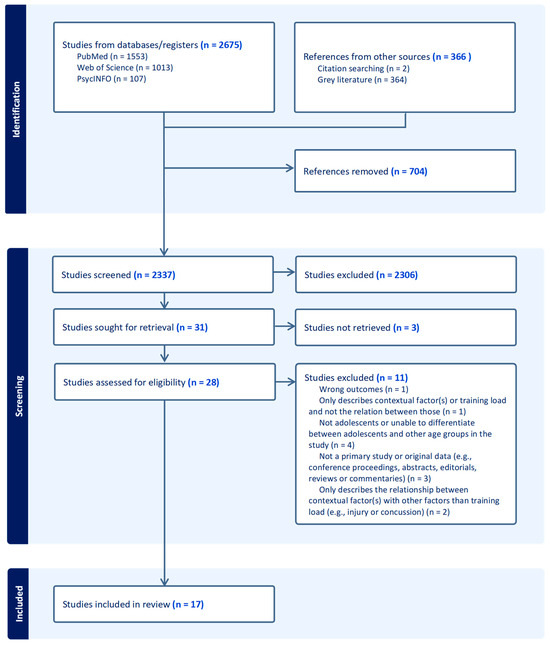
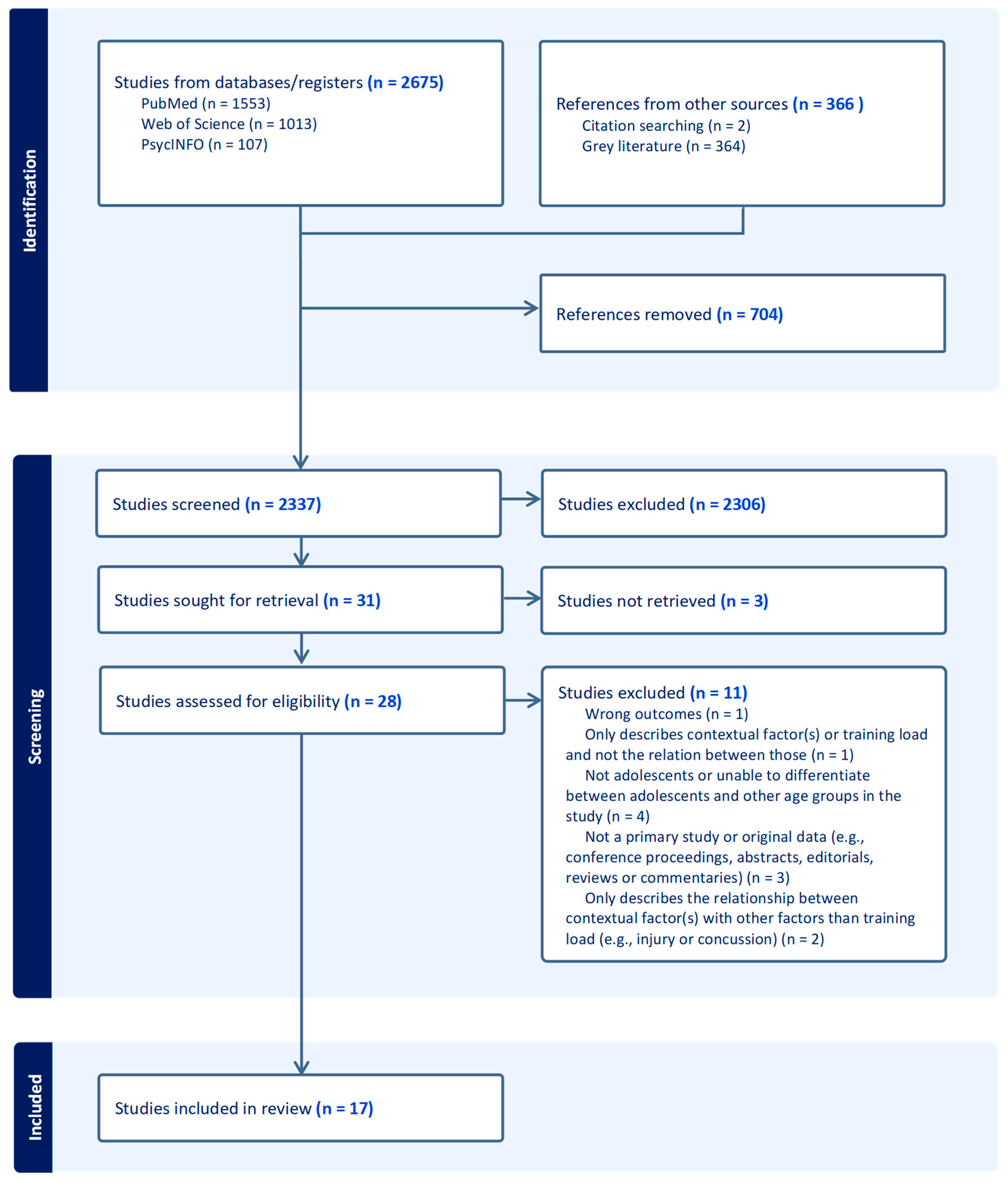
The initial search identified 3041 articles of which 704 were duplicates. A total of 2337 studies were screened for title and abstract which resulted in thirty-one articles eligible for full-text screening. Fourteen articles were excluded according to predefined exclusion criteria (see Figure 1), leaving seventeen articles.
Figure 1.
Flow chart for the article selection process of the Preferred Reporting Items for Systematic Reviews and Meta-analyses extension for Scoping Reviews (PRISMA-ScR).
3.2. Sample Characteristics
Table 2 shows the sample characteristics of the included articles. The articles were published between 2008 and 2022 with most studies (N = 4) appearing in 2021. The origins of the studies were diverse, but most studies originated from the United States of America (N = 5). Only two studies (11.1%) recruited a female population. Moreover, in the included studies, the population’s mean age ranged from 13 years old to a maximum of 20 years old for collegiate players. Playing level was not categorized according to a standard most of the time and thus a diverse terminology of playing level was present, such as collegiate playing level (e.g., NCAA Division I) or elite. The included number of participants in the studies ranged from 13 to 107 with an average of 42.2 ± 31.1 participants. The duration of the studies varied from as short as one training session up to one season or calendar year.
Table 2.
Sample characteristics and key findings of the included studies.
3.3. Breadth and Extent of Relationship between Contextual Factors and Training Load
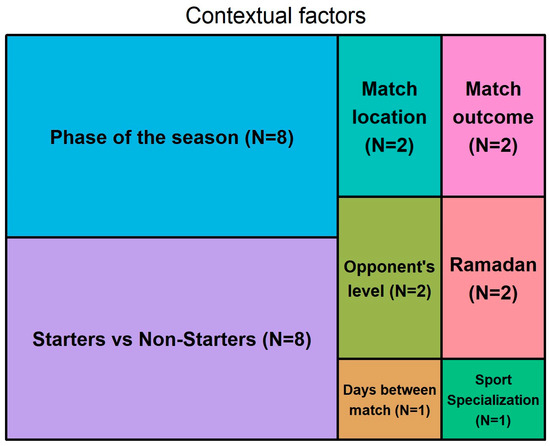
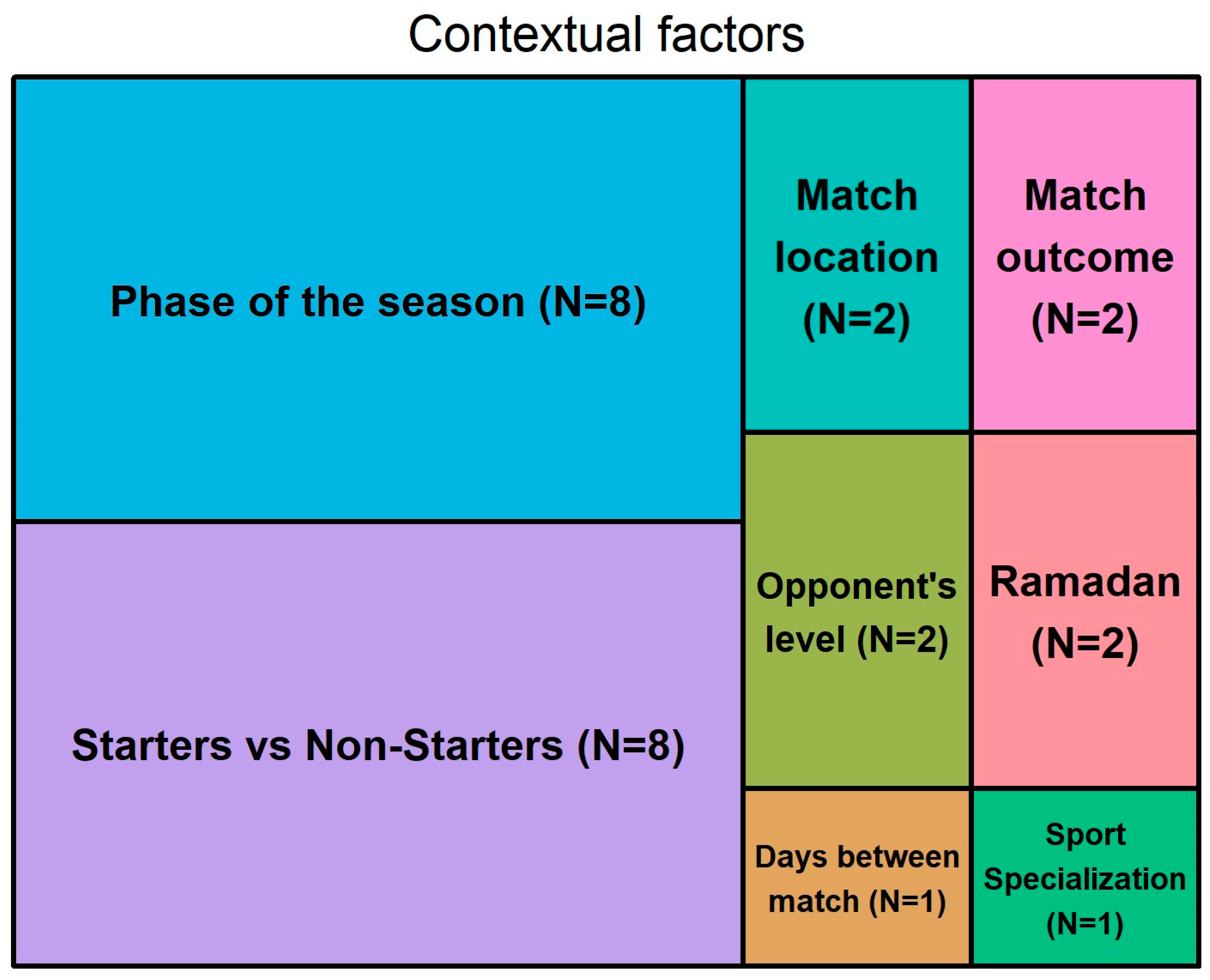
Figure 2 depicts a tree map showing the number of times CFs have been included in a study. The phase of the season (N = 7) and starters vs non-starters (N = 7) had the highest number of times they were included in studies.
Figure 2.
Treemap depicting the contextual factors and the total times they were investigated in studies.
3.4. Co-Occurrence of Contextual Factors with Training Load Indicators
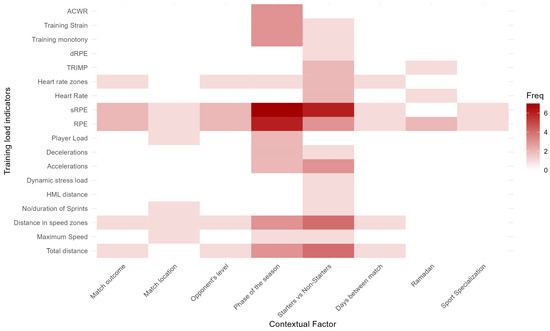
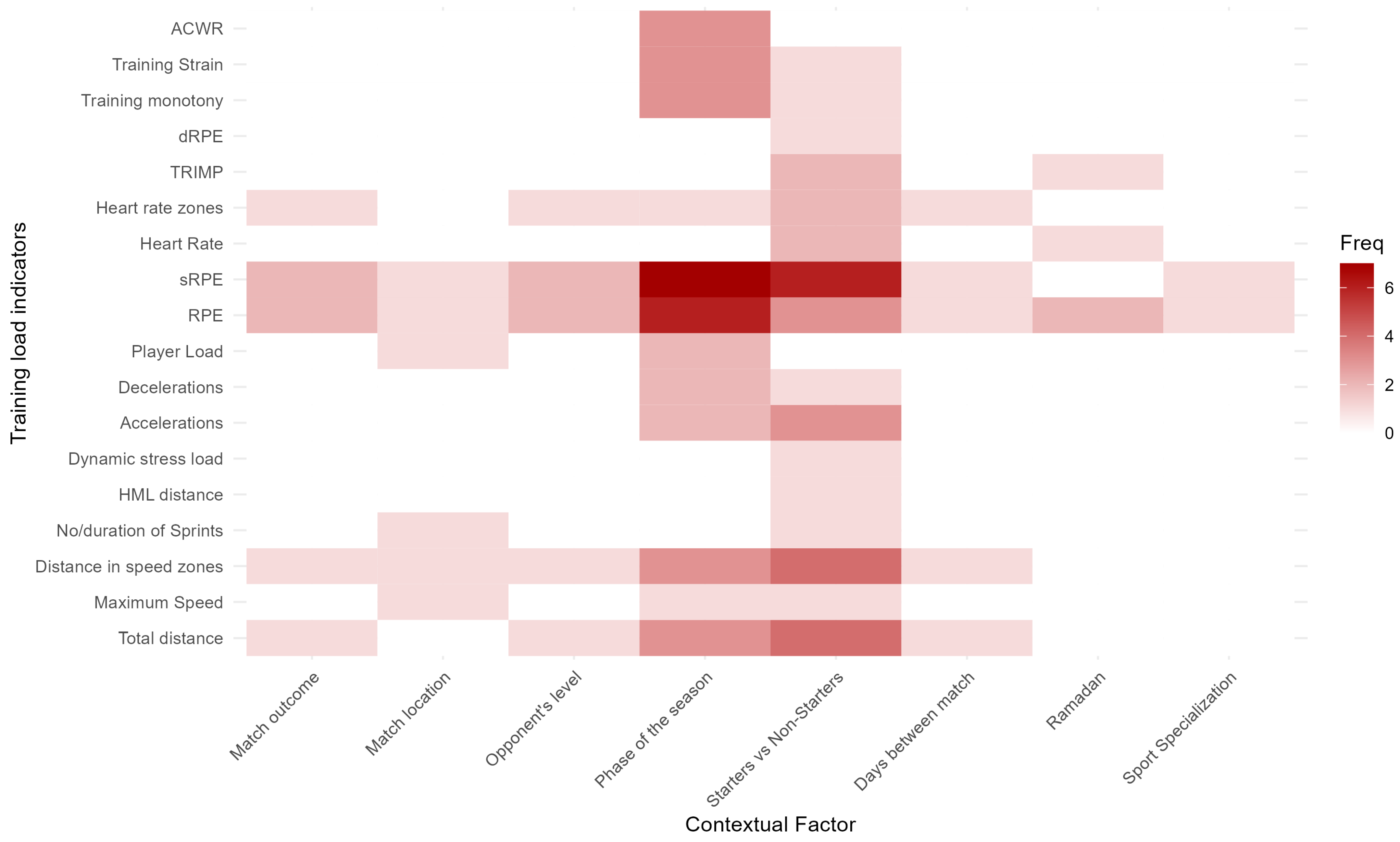
Figure 3 depicts a heatmap of CFs and TL indicators. The heatmap indicates that RPE and session-RPE (sRPE) are the most used IL indicators. The most used EL indicators are the distance covered in different speed zones and the total distance covered.
Figure 3.
Heatmap of contextual factors and training load indicators.
3.5. Effect of Contextual Factors on Training Load
In general, CFs related to the match demonstrated an effect on TL in the following or preceding weeks. Most studies concerning starting status observed a difference between starters and non-starters in TL with starters accumulating a greater weekly TL [32,33,34,37,38,40]. However, when matches were excluded, the TL for non-starters was usually higher [32,38]. Other factors related to match-play, such as match location and opponent’s level show inconclusive effects on TL. Brito et al. [30] observed an increased TL after an away match, whereas Oliva-Lozano et al. [44] did not find any difference in TL due to match location. Similar results were found concerning the opponent’s level. Brito et al. [30] noted lower TL scores before and after playing against a top-level opponent. Contrasting these results, Curtis et al. [31] did not observe differences in TL due to the opponent’s relative strength. The aforementioned studies were more in line with each other when investigating match outcomes. Both studies found that TL during training increased after a loss [30,31].
TL appears to be influenced by the phase of the season. Studies that did include a pre-season phase found that during pre-season, the TL was highest compared to other phases of the season [31,45]. For the other phases of the season, the results were equivocal. For in-season phases, several studies observed that the mid-season had the highest or the equally highest TL [42,43,47]. Alternatively, Brito et al. [30] found that TL decreased throughout the season. In a mixed-design study, Pass et al. [45] found similar results but also noticed unintended distributions and fluctuations of TL across phases. It is important to recognize, however, that the included studies differ in methodology concerning the categorization of the seasonal phases. For instance, some studies have been conducted with American collegiate soccer where a season typically lasts from August until November, whereas in other regions a season could last almost one year.
Finally, other included CFs, Ramadan and sports specialization, did not seem to significantly influence TL in adolescent soccer players. Both studies concerning Ramadan were conducted by the same research group as part of a larger study and they found a nonsignificant marginally higher IL for fasting players [35,36]. Watson et al. [46] investigated the effect of sport specialization (i.e., participating in other sports than soccer) on TL and also did not find any significant effects on TL, but noticed a decreased sleep quality in specialized players.
3.6. Potential Underlying Mechanisms
All mechanistic underpinnings between the CFs and TL proposed by the authors of each study were related to the study’s topic. For example, for match-related factors (e.g., match location) periodization strategies and coaching experience were mentioned as potential mechanisms [31,32,33]. Specifically, for starting status, coaches try to compensate for the “missed” TL for non-starters [37,38,40,44]. Martins et al. [38] suggested that non-starters might try too hard to prove themselves and thus demonstrate higher TL. For Ramadan, the explanation was related to physiological changes due to hydration status or reduced sleep quantity and quality [35,36]. Interestingly, Pass et al. [45] noted that micropolitics within the organization and organizational demands could cause deviations within and from periodization. Stress was not specifically mentioned as a potential underlying mechanism in the reviewed studies, but one study mentioned the possibility of stress affecting the TL indices in U-14 players [42].
4. Discussion
4.1. General Discussion
CFs have long been theorized to affect TL [6,17]. It has been suggested to focus on CFs which potentially cause psychosocial stress as stress could be responsible for underpinning the relationship between CFs and TL [6,17,18]. Therefore, the primary aim was to explore the breadth and extent of the literature regarding the relationship between CFs and TL. Furthermore, we aimed to gain a deeper understanding of potential mechanisms and identify knowledge gaps. Despite the acknowledged potential importance of CFs related to TL, the main result of the scoping review was the dearth of articles (N = 17) found regarding this relationship. Furthermore, most articles focus on match-related factors or phases of the season. Starting status and phase of the season are likely to affect TL in adolescent soccer players. However, due to varying methodologies and results, the external validity beyond the included studies remains unclear. Most of the indicated underlying mechanisms were related to the CF investigated, such as coaching strategies and periodization to match-related CFs and micro-politics within the sporting environment to the phase of the season. Stress was not specifically mentioned as a pathway in the reviewed studies. Since there is a paucity of research concerning the relationship between CFs and TL, a significant gap in the literature has been identified.
The lack of research regarding the breadth and extent of the relationship between CFs and TL was somewhat surprising since it has been theorized that CFs affect TL [3,6,7,13]. Mainly factors related to the sports context, such as match-related factors (e.g., match outcome) and phase of the season have been investigated. Non-sport factors were restricted to Ramadan, indicating a major lack of research concerning adolescent players’ personal lives. One likely cause is the segregation between research domains. This probably led to a mainly unidimensional approach dividing psychological stress variables from research on physiology-related TL variables. In other words, studies related to this scoping review mostly focused on either CFs regarded as directly relevant for physiology-related TL variables while studies in the psychology domain do mention the possibility of a CF–TL relationship but do not measure it. To explore this view, we conducted an additional search in PubMed with the search terms for adolescents and soccer combined with CFs or TL. Although not all relevant, this yielded approximately 3300 and 2500 additional articles for CFs and TL, respectively, supporting our notion. Moreover, the number of studies found in PsycINFO, the leading international bibliography for psychology, only resulted in 107 hits. This demonstrates a wealth of research opportunities when adopting a holistic view to scrutinize TL. Additionally, the potential importance of CFs was corroborated by two members of the stakeholder’s group who indicated during the third session that from their experience, players’ TL is affected by personal factors such as their family life, peers, or dual-career challenges. Nevertheless, our experts found it difficult to adequately gauge the effect of the CFs and how to subsequently deal with them. Therefore, analogous to other authors who advocated for a holistic approach instead of reductionism to understand the dose–response relationship of TL, our results also indicate the need for more knowledge on the impact of CFs on TL [13,48,49]. By incorporating psychological indices to determine the psychological demands inside and outside of sport, a more comprehensive view can be obtained [7].
Opposite to theoretical and expert assumptions, stress was not mentioned as a potential mechanism in the reviewed studies [7,17]. Nevertheless, research shows that psychosocial stress could originate from players’ sporting and non-sporting context (e.g., education, match performance, family life) and has the potential to moderate TL [6,7,11]. This is in line with a recent study where coaches expressed the importance of four non-physical factors (coach–athlete relationship, life stress, athletes’ belief in the plan, and psychological and emotional stress) as integral for an athlete to physically adapt to a training plan [50]. Moreover, a severe negative life event impaired the running economy for sustained periods in runners [19]. Therefore, investigating the effect of life stress on TL could lead to new perspectives, more so because it has been noted that personal factors are an under-researched area with currently unclear effects [7]. Furthermore, accounting for other factors such as coping resources, personality, and history of stressors could be considered as they possibly modify the stress response [18]. Additionally, identifying the type, intensity, duration, and frequency of the stressors and linking those to daily TL could further our understanding of the (temporal) role of the environment and aid coaches in adopting a holistic approach when developing youths into elite players [7,48].
As expected, RPE and sRPE were the most used TL indicators overall. This is likely due to RPE being a valid, low-cost, and easy-to-administer measure [4]. Moreover, subjective measures are capable of reflecting the blended input of multiple sensory information channels and thus also capture the player–environment interaction [51]. However, without EL indicators, it would be more difficult to determine the effect CFs have on IL since IL is the psychophysiological response to EL [3,4]. A total of 10 out of 17 studies only included IL indicators. Therefore, future research should include both EL and IL indicators to gain a more comprehensive view regarding the influence of CFs on TL.
4.2. Limitations
This scoping review is not without limitations. First, it could be argued that the included CFs were not exhaustive. However, a consensus regarding the definition of CFs is lacking [14]. Moreover, the available literature indicated the included CFs as important for adolescent soccer players and they were linked with stress in general [11,22]. Furthermore, we asked experts for input regarding potentially relevant CFs which lined up with the selected CFs and therefore are confident the included CFs are relevant for practitioners.
Second, a definitive age range for adolescence is not universally specified because adolescence is mostly a social and not a biological construct [10]. In this review, the maximum mean age of adolescents was 19 years. However, some studies included in this review featured adolescents with a mean age of 20 years old. Although the age of adolescents was at the high end of the spectrum, we decided to still include those studies because they involved collegiate players, meaning players needed to combine education with soccer responsibilities like younger adolescents, providing useful information. Moreover, within certain national associations (e.g., the Dutch Royal Football Association) the women’s youth competition runs up to 20 years of age. Finally, adolescence is considered a phase of transition from child to adult and emerging adulthood has also been proposed as the latest phase of adolescence which runs from 18 until 25 years old [10]. Thus, by including these studies, additional relevant information regarding the final phases of adolescence is provided, which could be utilized by sports scientists and practitioners alike.
Third, by including only English-written articles the language of publication bias might be present. It is possible that relevant articles were missed. Nevertheless, a restriction based on the English language is common [26]. Moreover, the initial search did not yield relevant articles in other languages. Therefore, we expect the language of publication bias to be of limited influence on our results.
Finally, the generalizability of the results is likely limited to male adolescent soccer players. Our findings confirm that the female population is underrepresented in the literature. Therefore, generalizing these results to female adolescents should be done with caution.
5. Conclusions
The relationship between CFs and TL is a domain where a lot of research is yet to be done. Despite the theorized link and call for action of others, the assumption is that most research is restricted to their respective research disciplines investigating CFs or TL separately. Nonetheless, the available research shows that CFs can influence TL in adolescent soccer players. Specifically, performance-related CFs could cause unwanted alterations in TL. In the included studies, mechanistic underpinnings are mainly attributed to coaching strategies and periodization. Still, the role of stress has been hypothesized and could offer interesting avenues for future research, such as the effect of life stress on TL. Moreover, if we want to further understand the TL of adolescent soccer players, a holistic approach concerning TL and recovery management is vital. Adolescent soccer players do not live in a physical training vacuum but are part of their environment, which affects their physical training process.
Author Contributions
Conceptualization, R.N., T.T., J.d.J. and K.A.P.M.L.; methodology, R.N.; software, R.N.; validation, R.N., C.G.W., T.T., J.d.J. and K.A.P.M.L.; formal analysis, R.N., C.G.W. and T.T.; investigation, R.N., C.G.W. and T.T.; resources, R.N.; data curation, R.N.; writing—original draft preparation, R.N.; writing—review and editing, C.G.W., T.T., J.d.J. and K.A.P.M.L.; visualization, R.N.; supervision, T.T., J.d.J. and K.A.P.M.L.; project administration, R.N. All authors have read and agreed to the published version of the manuscript.
Funding
This research received no external funding.
Institutional Review Board Statement
Not applicable.
Data Availability Statement
The original contributions presented in the study are included in the article, further inquiries can be directed to the corresponding author.
Acknowledgments
We would like to thank the members of the stakeholder group for their valuable insights and cooperation with the scoping review.
Conflicts of Interest
The authors declare no conflicts of interest.
Appendix A
Table A1.
Preferred Reporting Items for Systematic reviews and Meta-Analyses extension for Scoping Reviews (PRISMA-ScR) Checklist.
Appendix B
In Table A2 the search query for EBSCO APA PsycINFO.
Table A2.
Search strategy EBSCO APA PsycINFO.
Appendix C
Below is the search string for the database Web of Science.
TI=((Context* OR “Contextual factor*” OR Situation* OR Environment* OR Ecological OR “Social load” OR “Social Stress” OR “Social support” OR “Psychological Stress” OR “Psychological Load” OR “Psychosocial stress” OR “Psychosocial Load” OR “daily life” OR “Daily lives” OR “life stress” OR “life load” OR “Match related” OR “Match-related” OR “Match location” OR “Match outcome” OR Opposition Or Opponent* OR School OR Universit* OR College OR Academic* OR Education* OR Peer OR Peers OR Friend* OR Family OR Parent OR Parents OR Sibling* OR Coach* OR Staff OR Manager* OR Trainer* OR teammate* OR “Social Media” OR “Screen time” OR “dual career” OR “dual-career” OR Work OR profession OR “Social environment”[Mesh] OR Environment[Mesh] OR “Social support”[Mesh] OR Schools[Mesh] OR Universities[Mesh] OR Education[Mesh] OR “Peer group”[Mesh] OR “Peer Influence”[Mesh] OR Friends[Mesh] OR Family[Mesh] OR Parents[Mesh] OR Siblings[Mesh] OR “Social Media”[Mesh] OR “Screen Time”[Mesh] OR Work[Mesh] OR Occupations[Mesh] OR “Stress, Psychological”[Mesh] OR “Stress, Physiological”[Mesh]) AND (“Training load” OR “Internal Load*” OR “External Load*” OR Load OR RPE OR dRPE OR “differential RPE” OR Exertion OR “Heart rate” OR TRIMP OR iTRIMP OR Speed OR Velocit* OR “Speed Zone*” OR Distance* OR Acceleration* OR Deceleration* OR Sprint* OR “high speed running” OR “very-high speed running” OR “very high speed running” OR Workload[Mesh] OR “Physical Exertion”[Mesh] OR “Heart Rate”[Mesh] OR Acceleration[Mesh] OR Deceleration[Mesh] OR Running[Mesh]) AND (Adolescen* OR Young OR Youth OR Talent* OR Junior OR Collegiate OR adolescent[Mesh] OR “Young Adult”[Mesh]) AND (Soccer OR Football OR “soccer player*” OR “football player*” OR Soccer[Mesh])) OR AB=((Context* OR “Contextual factor*” OR Situation* OR Environment* OR Ecological OR “Social load” OR “Social Stress” OR “Social support” OR “Psychological Stress” OR “Psychological Load” OR “Psychosocial stress” OR “Psychosocial Load” OR “daily life” OR “Daily lives” OR “life stress” OR “life load” OR “Match related” OR “Match-related” OR “Match location” OR “Match outcome” OR Opposition Or Opponent* OR School OR Universit* OR College OR Academic* OR Education* OR Peer OR Peers OR Friend* OR Family OR Parent OR Parents OR Sibling* OR Coach* OR Staff OR Manager* OR Trainer* OR teammate* OR “Social Media” OR “Screen time” OR “dual career” OR “dual-career” OR Work OR profession OR “Social environment”[Mesh] OR Environment[Mesh] OR “Social support”[Mesh] OR Schools[Mesh] OR Universities[Mesh] OR Education[Mesh] OR “Peer group”[Mesh] OR “Peer Influence”[Mesh] OR Friends[Mesh] OR Family[Mesh] OR Parents[Mesh] OR Siblings[Mesh] OR “Social Media”[Mesh] OR “Screen Time”[Mesh] OR Work[Mesh] OR Occupations[Mesh] OR “Stress, Psychological”[Mesh] OR “Stress, Physiological”[Mesh]) AND (“Training load” OR “Internal Load*” OR “External Load*” OR Load OR RPE OR dRPE OR “differential RPE” OR Exertion OR “Heart rate” OR TRIMP OR iTRIMP OR Speed OR Velocit* OR “Speed Zone*” OR Distance* OR Acceleration* OR Deceleration* OR Sprint* OR “high speed running” OR “very-high speed running” OR “very high speed running” OR Workload[Mesh] OR “Physical Exertion”[Mesh] OR “Heart Rate”[Mesh] OR Acceleration[Mesh] OR Deceleration[Mesh] OR Running[Mesh]) AND (Adolescen* OR Young OR Youth OR Talent* OR Junior OR Collegiate OR adolescent[Mesh] OR “Young Adult”[Mesh]) AND (Soccer OR Football OR “soccer player*” OR “football player*” OR Soccer[Mesh]))
Appendix D
Below is the search string for Pubmed.
(Context*[tiab] OR “Contextual factor*”[tiab] OR Situation*[tiab] OR Environment*[tiab] OR Ecological[tiab] OR “Social load” [tiab] OR “Social Stress” [tiab] OR “Social support”[tiab] OR “Psychological Stress”[tiab] OR “Psychological Load”[tiab] OR “Psychosocial stress”[tiab] OR “Psychosocial Load”[tiab] OR “daily life”[tiab] OR “Daily lives”[tiab] OR “life stress”[tiab] OR “life load”[tiab] OR “Match related”[tiab] OR “Match-related”[tiab] OR “Match location”[tiab] OR “Match outcome”[tiab] OR Opposition[tiab] Or Opponent*[tiab] OR School[tiab] OR Universit*[tiab] OR College[tiab] OR Academic*[tiab] OR Education*[tiab] OR Peer[tiab] OR Peers[tiab] OR Friend*[tiab] OR Family[tiab] OR Parent[tiab] OR Parents[tiab] OR Sibling*[tiab] OR Coach*[tiab] OR Staff[tiab] OR Manager*[tiab] OR Trainer*[tiab] OR teammate*[tiab] OR “Social Media”[tiab] OR “Screen time”[tiab] OR “dual career”[tiab] OR “dual-career”[tiab] OR Work[tiab] OR profession[tiab] OR “Social environment”[Mesh] OR Environment[Mesh] OR “Social support”[Mesh] OR Schools[Mesh] OR Universities[Mesh] OR Education[Mesh] OR “Peer group”[Mesh] OR “Peer Influence”[Mesh] OR Friends[Mesh] OR Family[Mesh] OR Parents[Mesh] OR Siblings[Mesh] OR “Social Media”[Mesh] OR “Screen Time”[Mesh] OR Work[Mesh] OR Occupations[Mesh] OR “Stress, Psychological”[Mesh] OR “Stress, Physiological”[Mesh]) AND (“Training load”[tiab] OR “Internal Load*”[tiab] OR “External Load*”[tiab] OR Load[tiab] OR RPE[tiab] OR dRPE[tiab] OR “differential RPE”[tiab] OR Exertion[tiab] OR “Heart rate”[tiab] OR TRIMP[tiab] OR iTRIMP[tiab] OR Speed[tiab] OR Velocit*[tiab] OR “Speed Zone*”[tiab] OR Distance*[tiab] OR Acceleration*[tiab] OR Deceleration*[tiab] OR Sprint*[tiab] OR “high speed running”[tiab] OR “very-high speed running”[tiab] OR “very high speed running”[tiab] OR Workload[Mesh] OR “Physical Exertion”[Mesh] OR “Heart Rate”[Mesh] OR Acceleration[Mesh] OR Deceleration[Mesh] OR Running[Mesh]) AND (Adolescen*[tiab] OR Young[tiab] OR Youth[tiab] OR Talent*[tiab] OR Junior[tiab] OR Collegiate[tiab] OR adolescent[Mesh] OR “Young Adult”[Mesh]) AND (Soccer[tiab] OR Football[tiab] OR “soccer player*”[tiab] OR “football player*”[tiab] OR Soccer[Mesh])
Appendix E
Below is the search string for ProQuest Dissertations & Theses A&I.
abstract((Context* OR “Contextual factor*” OR Situation* OR Environment* OR Ecological OR “Social load” OR “Social Stress” OR “Social support” OR “Psychological Stress” OR “Psychological Load” OR “Psychosocial stress” OR “Psychosocial Load” OR “daily life” OR “Daily lives” OR “life stress” OR “life load” OR “Match related” OR “Match-related” OR “Match location” OR “Match outcome” OR Opposition Or Opponent* OR School OR Universit* OR College OR Academic* OR Education* OR Peer OR Peers OR Friend* OR Family OR Parent OR Parents OR Sibling* OR Coach* OR Staff OR Manager* OR Trainer* OR teammate* OR “Social Media” OR “Screen time” OR “dual career” OR “dual-career” OR Work OR profession) AND (“Training load” OR “Internal Load*” OR “External Load*” OR Load OR RPE OR dRPE OR “differential RPE” OR Exertion OR “Heart rate” OR TRIMP OR iTRIMP OR Speed OR Velocit* OR “Speed Zone*” OR Distance* OR Acceleration* OR Deceleration* OR Sprint* OR “high speed running” OR “very-high speed running” OR “very high speed running”) AND (Adolescen* OR Young OR Youth OR Talent* OR Junior OR Collegiate) AND (Soccer OR Football OR “soccer player*” OR “football player*”)) OR title((Context* OR “Contextual factor*” OR Situation* OR Environment* OR Ecological OR “Social load” OR “Social Stress” OR “Social support” OR “Psychological Stress” OR “Psychological Load” OR “Psychosocial stress” OR “Psychosocial Load” OR “daily life” OR “Daily lives” OR “life load” OR “Match related” OR “Match-related” OR “Match location” OR “Match outcome” OR Opposition Or Opponent* OR School OR Universit* OR College OR Academic* OR Education* OR Peer OR Peers OR Friend* OR Family OR Parent OR Parents OR Sibling* OR Coach* OR Staff OR Manager* OR Trainer* OR teammate* OR “Social Media” OR “Screen time” OR “dual career” OR “dual-career” OR Work OR profession) AND (“Training load” OR “Internal Load*” OR “External Load*” OR Load OR RPE OR dRPE OR “differential RPE” OR Exertion OR “Heart rate” OR TRIMP OR iTRIMP OR Speed OR Velocit* OR “Speed Zone*” OR Distance* OR Acceleration* OR Deceleration* OR Sprint* OR “high speed running” OR “very-high speed running” OR “very high speed running”) AND (Adolescen* OR Young OR Youth OR Talent* OR Junior OR Collegiate) AND (Soccer OR Football OR “soccer player*” OR “football player*”))
Appendix F
Below is the search string for SportRxiv.
Context* OR “Contextual factor*” OR Situation* OR Environment* OR Ecological OR “Social load” OR “Social Stress” OR “Social support” OR “Psychological Stress” OR “Psychological Load” OR “Psychosocial stress” OR “Psychosocial Load” OR “life stress” OR “daily life” OR “Daily lives” OR “life load” OR “Match related” OR “Match-related” OR “Match location” OR “Match outcome” OR Opposition Or Opponent* OR School OR Universit* OR College OR Academic* OR Education* OR Peer OR Peers OR Friend* OR Family OR Parent OR Parents OR Sibling* OR Coach* OR Staff OR Manager* OR Trainer* OR teammate* OR “Social Media” OR “Screen time” OR “dual career” OR “dual-career” OR Work OR profession) AND (“Training load” OR “Internal Load*” OR “External Load*” OR Load OR RPE OR dRPE OR “differential RPE” OR Exertion OR “Heart rate” OR TRIMP OR iTRIMP OR Speed OR Velocit* OR “Speed Zone*” OR Distance* OR Acceleration* OR Deceleration* OR Sprint* OR “high speed running” OR “very-high speed running” OR “very high speed running”) AND (Adolescen* OR Young OR Youth OR Talent* OR Junior OR Collegiate) AND (Soccer OR Football OR “soccer player*” OR “football player*”
References
- Morgans, R.; Bezuglov, E.; Orme, P.; Burns, K.; Rhodes, D.; Babraj, J.; Di Michele, R.; Oliveira, R.F.S. The physical demands of match-play in academy and senior soccer players from the Scottish Premiership. Sports 2022, 10, 150. [Google Scholar] [CrossRef] [Scilit] [PubMed]
- Impellizzeri, F.M.; Jeffries, A.C.; Weisman, A.; Coutts, A.J.; McCall, A.; McLaren, S.J.; Kalkhoven, J. The ‘training load’ construct: Why it is appropriate and scientific. J. Sci. Med. Sport 2022, 25, 445–448. [Google Scholar] [CrossRef] [Scilit]
- Jeffries, A.C.; Marcora, S.M.; Coutts, A.J.; Wallace, L.; McCall, A.; Impellizzeri, F.M. Development of a Revised Conceptual Framework of Physical Training for Use in Research and Practice. Sports Med. 2022, 52, 709–724. [Google Scholar] [CrossRef] [Scilit]
- Impellizzeri, F.M.; Marcora, S.M.; Coutts, A.J. Internal and external training load: 15 years on. Int. J. Sports Physiol. Perf. 2019, 14, 270–273. [Google Scholar] [CrossRef] [Scilit]
- Pensgaard, A.M.; Ivarsson, A.; Nilstad, A.; Solstad, B.E.; Steffen, K. Psychosocial stress factors, including the relationship with the coach, and their influence on acute and overuse injury risk in elite female football players. BMJ Open Sport Exerc. Med. 2018, 4, e000317. [Google Scholar] [CrossRef] [Scilit]
- Coyne, J.O.C.; Coutts, A.J.; Newton, R.U.; Haff, G.G. The Current State of Subjective Training Load Monitoring: Follow-Up and Future Directions. Sports Med. Open 2022, 8, 53. [Google Scholar] [CrossRef] [Scilit] [PubMed]
- Mellalieu, S.; Jones, C.; Wagstaff, C.; Kemp, S.; Cross, M.J. Measuring Psychological Load in Sport. Int. J. Sports Med. 2021, 42, 782–788. [Google Scholar] [CrossRef] [Scilit] [PubMed]
- Hamlin, M.J.; Wilkes, D.; Elliot, C.A.; Lizamore, C.A.; Kathiravel, Y. Monitoring Training Loads and Perceived Stress in Young Elite University Athletes. Front. Physiol. 2019, 10, 34. [Google Scholar] [CrossRef] [Scilit] [PubMed]
- Bergeron, M.F.; Mountjoy, M.; Armstrong, N.; Chia, M.; Côté, J.; Emery, C.A.; Faigenbaum, A.; Hall, G.; Kriemler, S.; Léglise, M.; et al. International Olympic Committee consensus statement on youth athletic development. Br. J. Sports Med. 2015, 49, 843–851. [Google Scholar] [CrossRef] [Scilit]
- Salmela-Aro, K. Stages of adolescence. In Encyclopedia of Adolescence, 1st ed.; Brown, B.B., Prinstein, M.J., Eds.; Academic Press: New York, NY, USA, 2011; Volume 1, pp. 360–368. [Google Scholar]
- Reeves, C.W.; Nicholls, A.R.; McKenna, J. Stressors and Coping Strategies among Early and Middle Adolescent Premier League Academy Soccer Players: Differences According to Age. J. Appl. Sport Psychol. 2009, 21, 31–48. [Google Scholar] [CrossRef] [Scilit]
- Lopes Dos Santos, M.; Uftring, M.; Stahl, C.A.; Lockie, R.G.; Alvar, B.; Mann, J.B.; Dawes, J.J. Stress in Academic and Athletic Performance in Collegiate Athletes: A Narrative Review of Sources and Monitoring Strategies. Front. Sports Act. Living 2020, 2, 42. [Google Scholar] [CrossRef] [Scilit] [PubMed]
- Verhagen, E.; Gabbett, T. Load, capacity and health: Critical pieces of the holistic performance puzzle. Br. J. Sports Med. 2019, 53, 5–6. [Google Scholar] [CrossRef] [Scilit] [PubMed]
- Bertollo, M.; Santi, G.; di Fronso, S. Comment on: Development of a Revised Conceptual Framework of Physical Training for Use in Research. Sports Med. 2022, 52, 949–951. [Google Scholar] [CrossRef] [Scilit] [PubMed]
- Draper, G.; Wright, M.D.; Ishida, A.; Chesterton, P.; Portas, M.; Atkinson, G. Do environmental temperatures and altitudes affect physical outputs of elite football athletes in match conditions? A systematic review of the ‘real world’ studies. Sci. Med. Footb. 2022, 7, 81–92. [Google Scholar] [CrossRef] [Scilit] [PubMed]
- Kiely, J. Periodization Theory: Confronting an Inconvenient Truth. Sports Med. 2018, 48, 753–764. [Google Scholar] [CrossRef] [Scilit] [PubMed]
- Kenttä, G.; Hassmén, P. Overtraining and recovery. A conceptual model. Sports Med. 1998, 26, 1–16. [Google Scholar] [CrossRef] [Scilit]
- Andersen, M.B.; Williams, J.M. A model of stress and athletic injury: Prediction and prevention. J. Sport Exerc. Psychol. 1988, 10, 294–306. [Google Scholar] [CrossRef] [Scilit]
- Otter, R.T.; Brink, M.S.; Diercks, R.L.; Lemmink, K.A. A Negative Life Event Impairs Psychosocial Stress, Recovery and Running Economy of Runners. Int. J. Sports Med. 2016, 37, 224–229. [Google Scholar] [CrossRef] [Scilit] [PubMed]
- Fletcher, D.; Hanton, S.; Mellalieu, S.D. An Organizational Stress Review: Conceptual and Theoretical Issues in Competitive Sport. In Literature Reviews in Sport Psychology; Hanton, S., Mellalieu, S.D., Eds.; Nova Science Publishers, Inc.: New York, NY, USA, 2008; pp. 1–53. [Google Scholar]
- Mellalieu, S.D.; Neil, R.; Hanton, S.; Fletcher, D. Competition stress in sport performers: Stressors experienced in the competition environment. J. Sports Sci. 2009, 27, 729–744. [Google Scholar] [CrossRef] [Scilit]
- Henriksen, K.; Stambulova, N.; Roessler, K.K. Holistic approach to athletic talent development environments: A successful sailing milieu. Psychol. Sport Exerc. 2010, 11, 212–222. [Google Scholar] [CrossRef] [Scilit]
- Larsen, C.H.; Louise, S.K.; Pyrdol, N.; Sæther, S.A.; Henriksen, K. A world class academy in professional football: The case of Ajax Amsterdam. J. Sport Exerc. Psychol. 2020, 2, 33. [Google Scholar] [CrossRef] [Scilit]
- Knight, C.J.; Harwood, C.G.; Sellars, P.A. Supporting adolescent athletes’ dual careers: The role of an athlete’s social support network. Psychol. Sport Exerc. 2018, 38, 137–147. [Google Scholar] [CrossRef] [Scilit]
- Dunn, R.; Kim, J.; Poucher, Z.A.; Ellard, C.; Tamminen, K.A. A Qualitative Study of Social Media and Electronic Communication among Canadian Adolescent Female Soccer Players. J. Adolesc. Res. 2021, 39, 272–297. [Google Scholar] [CrossRef] [Scilit]
- Sabiston, C.M.; Vani, M.; de Jonge, M.; Nesbitt, A. Scoping reviews and rapid reviews. Int. Rev. Sport Exerc. Psychol. 2022, 15, 91–119. [Google Scholar] [CrossRef] [Scilit]
- Peters, M.D.; Godfrey, C.M.; Khalil, H.; McInerney, P.; Parker, D.; Soares, C.B. Guidance for conducting systematic scoping reviews. Int. J. Evid. Based Healthc. 2015, 13, 141–146. [Google Scholar] [CrossRef] [Scilit] [PubMed]
- Tricco, A.C.; Lillie, E.; Zarin, W.; O’Brien, K.K.; Colquhoun, H.; Levac, D.; Moher, D.; Peters, M.D.J.; Horsley, T.; Weeks, L.; et al. PRISMA Extension for Scoping Reviews (PRISMA-ScR): Checklist and Explanation. Ann. Intern. Med. 2018, 169, 467–473. [Google Scholar] [CrossRef] [Scilit] [PubMed]
- Keown, K.; Van Eerd, D.; Irvin, E. Stakeholder engagement opportunities in systematic reviews: Knowledge transfer for policy and practice. J. Contin. Educ. Health Prof. 2008, 28, 67–72. [Google Scholar] [CrossRef] [Scilit]
- Brito, J.; Hertzog, M.; Nassis, G.P. Do Match-Related Contextual Variables Influence Training Load in Highly Trained Soccer Players? J. Strength Cond. Res. 2016, 30, 393–399. [Google Scholar] [CrossRef] [Scilit]
- Curtis, R.M.; Huggins, R.A.; Benjamin, C.L.; Sekiguchi, Y.; Adams, W.M.; Arent, S.M.; Jain, R.; Miller, S.J.; Walker, A.J.; Casa, D.J. Contextual Factors Influencing External and Internal Training Loads in Collegiate Men’s Soccer. J. Strength Cond. Res. 2020, 34, 374–381. [Google Scholar] [CrossRef] [Scilit]
- Curtis, R.M.; Huggins, R.A.; Benjamin, C.L.; Sekiguchi, Y.; Arent, S.M.; Armwald, B.C.; Pullara, J.M.; West, C.A.; Casa, D.J. Seasonal Accumulated Workloads in Collegiate Men’s Soccer: A Comparison of Starters and Reserves. J. Strength Cond. Res. 2021, 35, 3184–3189. [Google Scholar] [CrossRef] [Scilit]
- Dalen, T.; Lorås, H. Monitoring Training and Match Physical Load in Junior Soccer Players: Starters versus Substitutes. Sports 2019, 7, 70. [Google Scholar] [CrossRef] [Scilit] [PubMed]
- Furtado Mesa, M.; Stout, J.R.; Redd, M.J.; Fukuda, D.H. Accumulated Workload Differences in Collegiate Women’s Soccer: Starters versus Substitutes. J. Funct. Morphol. Kinesiol. 2023, 8, 78. [Google Scholar] [CrossRef] [Scilit] [PubMed]
- Leiper, J.B.; Junge, A.; Maughan, R.J.; Zerguini, Y.; Dvorak, J. Alteration of subjective feelings in football players undertaking their usual training and match schedule during the Ramadan fast. J. Sports Sci. 2008, 26 (Suppl. S3), 55. [Google Scholar] [CrossRef] [Scilit] [PubMed]
- Leiper, J.B.; Watson, P.; Evans, G.; Dvorak, J. Intensity of a training session during Ramadan in fasting and non-fasting Tunisian youth football players. J. Sports Sci. 2008, 26 (Suppl. S3), 71. [Google Scholar] [CrossRef] [Scilit] [PubMed]
- Los Arcos, A.; Mendez-Villanueva, A.; Martínez-Santos, R. In-season training periodization of professional soccer players. Biol. Sport 2017, 34, 149–155. [Google Scholar] [CrossRef] [Scilit] [PubMed]
- Martins, A.D.; Oliveira, R.; Brito, J.P.; Loureiro, N.; Querido, S.M.; Nobari, H. Intra-Season Variations in Workload Parameters in Europe’s Elite Young Soccer Players: A Comparative Pilot Study between Starters and Non-Starters. Healthcare 2021, 9, 977. [Google Scholar] [CrossRef] [Scilit] [PubMed]
- Maughan, P.C.; MacFarlane, N.G.; Swinton, P.A. The influence of season phase on multivariate load relationships in professional youth soccer. J. Sports Sci. 2022, 40, 345–350. [Google Scholar] [CrossRef] [Scilit] [PubMed]
- McLean, B.D.; Petrucelli, C.; Coyle, E.F. Maximal power output and perceptual fatigue responses during a Division I female collegiate soccer season. J. Strength Cond. Res. 2012, 26, 3189–3196. [Google Scholar] [CrossRef] [Scilit]
- Nobari, H.; Aquino, R.; Clemente, F.M.; Khalafi, M.; Adsuar, J.C.; Pérez-Gómez, J. Description of acute and chronic load, training monotony and strain over a season and its relationships with well-being status: A study in elite under-16 soccer players. Physiol. Behav. 2020, 225, 113117. [Google Scholar] [CrossRef] [Scilit]
- Nobari, H.; Kharatzadeh, M.; Khalili, S.M.; Pérez-Gómez, J.; Ardigò, L.P. Fluctuations of Training Load Variables in Elite Soccer Players U-14 throughout the Competition Season. Healthcare 2021, 9, 1418. [Google Scholar] [CrossRef] [Scilit]
- Nobari, H.; Vahabidelshad, R.; Pérez-Gómez, J.; Ardigò, L.P. Variations of Training Workload in Micro- and Meso-Cycles Based on Position in Elite Young Soccer Players: A Competition Season Study. Front. Physiol. 2021, 12, 668145. [Google Scholar] [CrossRef] [Scilit] [PubMed]
- Oliva-Lozano, J.M.; Gómez-Carmona, C.D.; Pino-Ortega, J.; Moreno-Pérez, V.; Rodríguez-Pérez, M.A. Match and Training High Intensity Activity-Demands Profile During a Competitive Mesocycle in Youth Elite Soccer Players. J. Hum. Kinet. 2020, 75, 195–205. [Google Scholar] [CrossRef] [Scilit] [PubMed]
- Pass, J.; Nelson, L.; Doncaster, G. Real world complexities of periodization in a youth soccer academy: An explanatory sequential mixed methods approach. J. Sports Sci. 2022, 40, 1290–1298. [Google Scholar] [CrossRef] [Scilit] [PubMed]
- Watson, A.; Brickson, S. Relationships between Sport Specialization, Sleep, and Subjective Well-Being in Female Adolescent Athletes. Clin. J. Sport Med. 2019, 29, 384–390. [Google Scholar] [CrossRef] [Scilit]
- Nobari, H.; Alves, A.R.; Haghighi, H.; Clemente, F.M.; Carlos-Vivas, J.; Pérez-Gómez, J.; Ardigò, L.P. Association between Training Load and Well-Being Measures in Young Soccer Players during a Season. Int. J. Environ. Res. Public Health 2021, 18, 4451. [Google Scholar] [CrossRef] [Scilit] [PubMed]
- Murray, A. Managing the Training Load in Adolescent Athletes. Int. J. Sports Physiol. Perform. 2017, 12, S242–S249. [Google Scholar] [CrossRef] [Scilit] [PubMed]
- Coyne, J.O.C.; Gregory Haff, G.; Coutts, A.J.; Newton, R.U.; Nimphius, S. The Current State of Subjective Training Load Monitoring-a Practical Perspective and Call to Action. Sports Med. Open 2018, 4, 58. [Google Scholar] [CrossRef] [Scilit] [PubMed]
- Anyadike-Danes, K.; Donath, L.; Kiely, J. Coaches’ Perceptions of Factors Driving Training Adaptation: An International Survey. Sports Med. 2023, 53, 2505–2512. [Google Scholar] [CrossRef] [Scilit]
- Montull, L.; Slapšinskaitė-Dackevičienė, A.; Kiely, J.; Hristovski, R.; Balagué, N. Integrative Proposals of Sports Monitoring: Subjective Outperforms Objective Monitoring. Sports Med. Open 2022, 8, 41. [Google Scholar] [CrossRef] [Scilit]

Disclaimer/Publisher’s Note: The statements, opinions and data contained in all publications are solely those of the individual author(s) and contributor(s) and not of MDPI and/or the editor(s). MDPI and/or the editor(s) disclaim responsibility for any injury to people or property resulting from any ideas, methods, instructions or products referred to in the content. |
© 2024 by the authors. Licensee MDPI, Basel, Switzerland. This article is an open access article distributed under the terms and conditions of the Creative Commons Attribution (CC BY) license (https://creativecommons.org/licenses/by/4.0/).