Article

Influence of Varroa Mite (Varroa destructor) Management Practices on Insecticide Sensitivity in the Honey Bee (Apis mellifera)

by
Frank D. Rinkevich
1,*,
Robert G. Danka
1 and
Kristen B. Healy
2
1
Honey Bee Breeding, Genetics, and Physiology Laboratory, Agricultural Research Service, USDA, Baton Rouge, LA 70820, USA
2
Department of Entomology, Life Sciences Annex, Louisiana State University, Baton Rouge, LA 70803, USA
*
Author to whom correspondence should be addressed.
Submission received: 18 October 2016 / Revised: 30 December 2016 / Accepted: 5 January 2017 / Published: 11 January 2017
(This article belongs to the Special Issue Interactions Among Threats to Honeybee Health)

Abstract

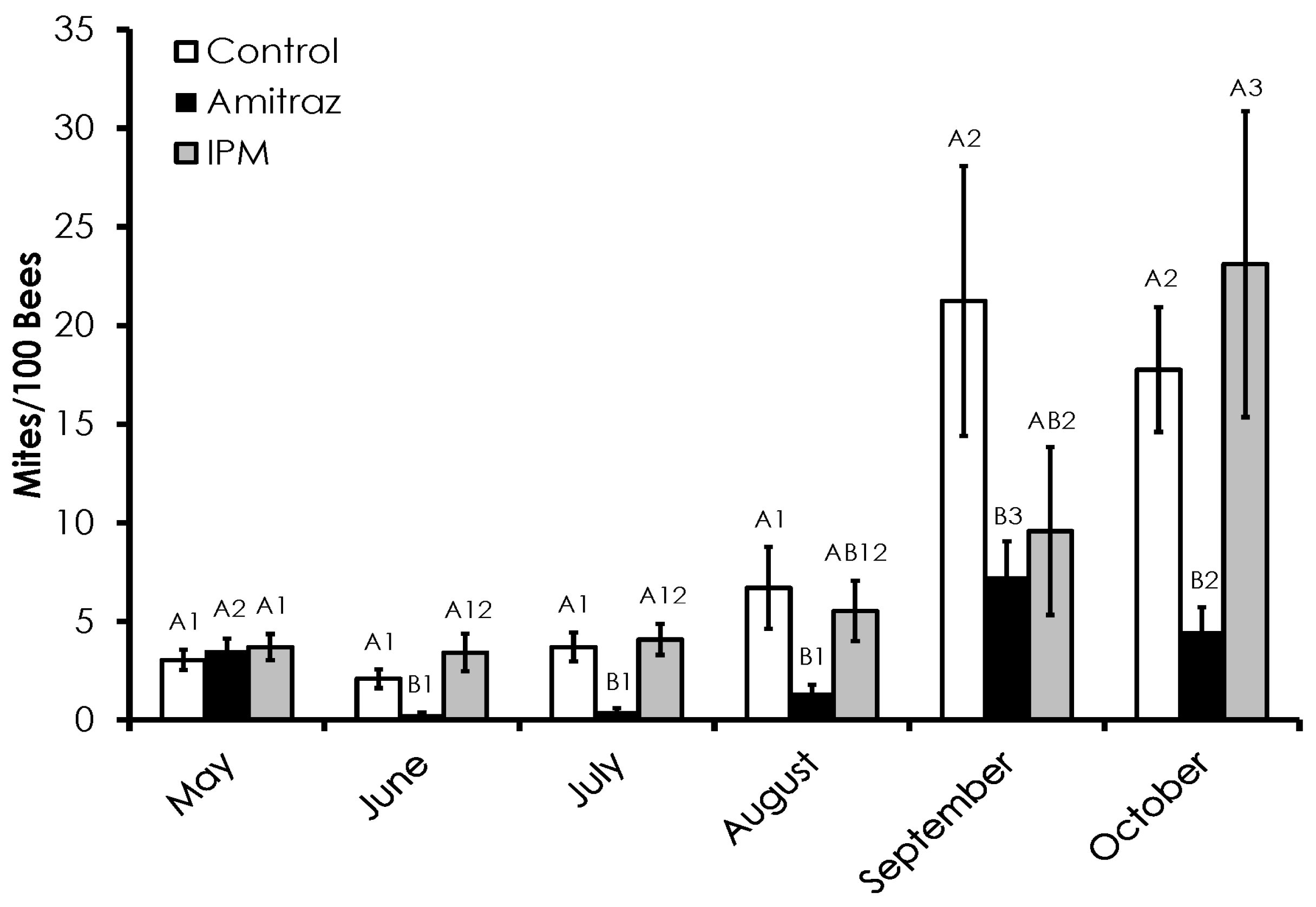
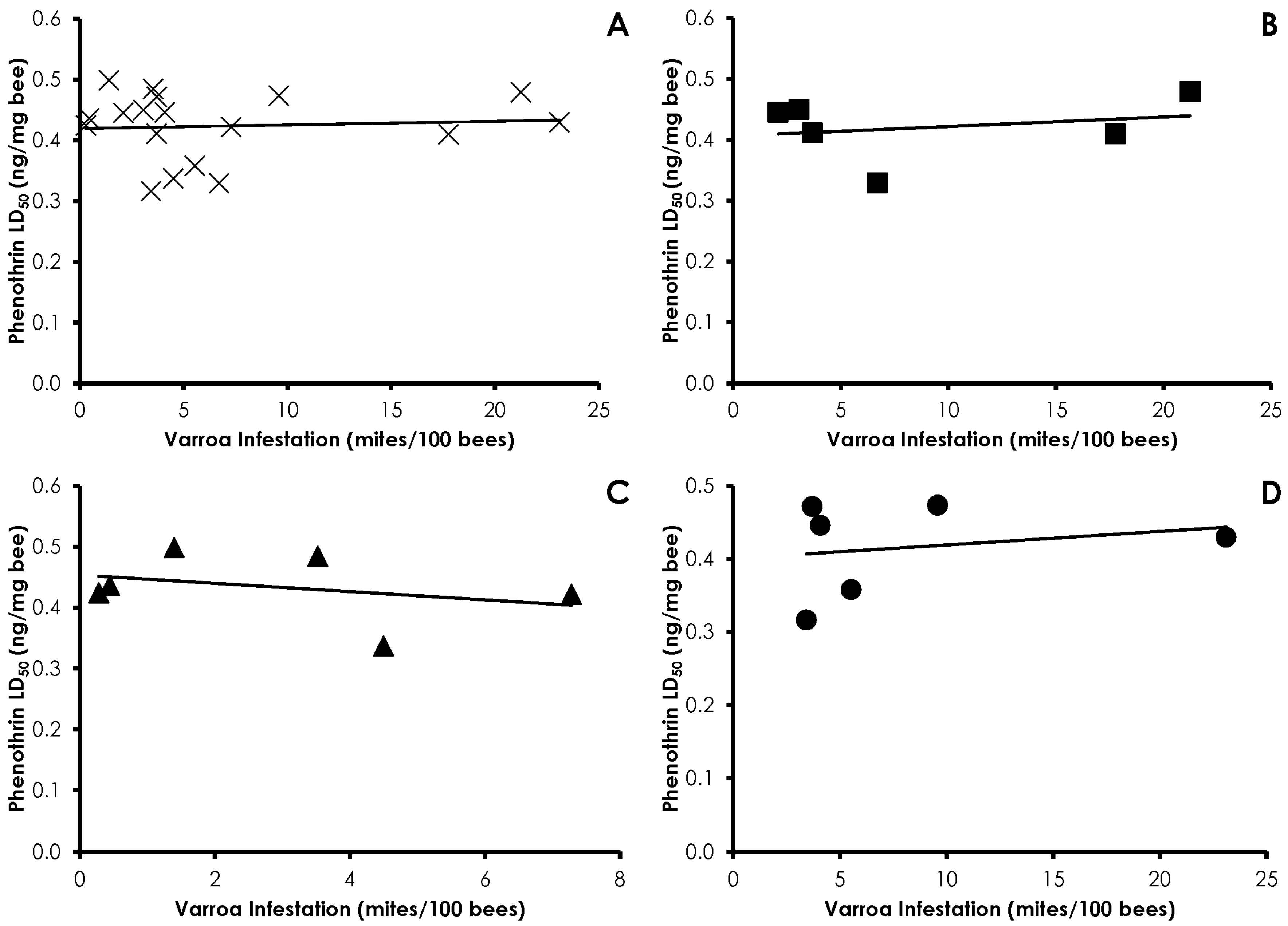
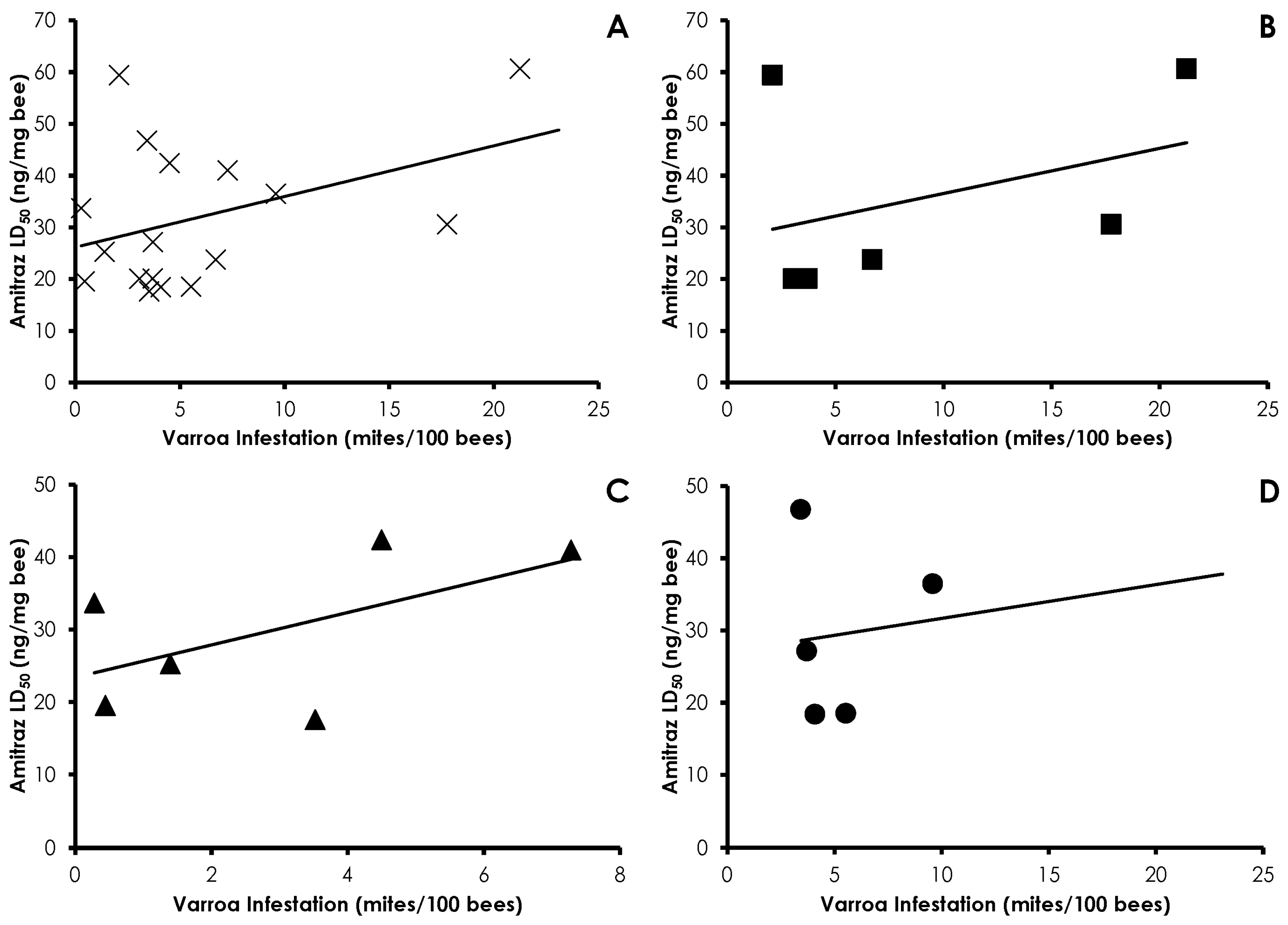
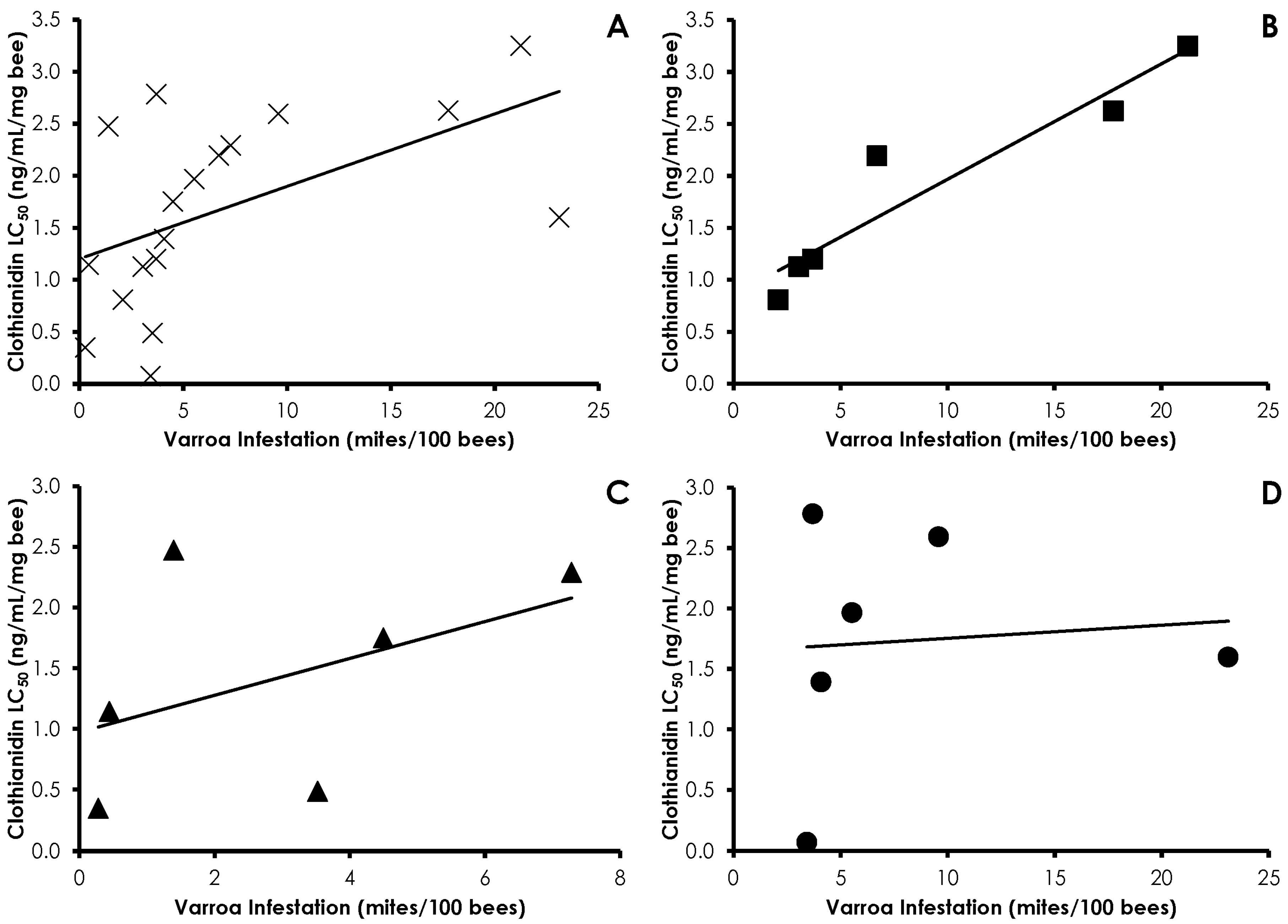
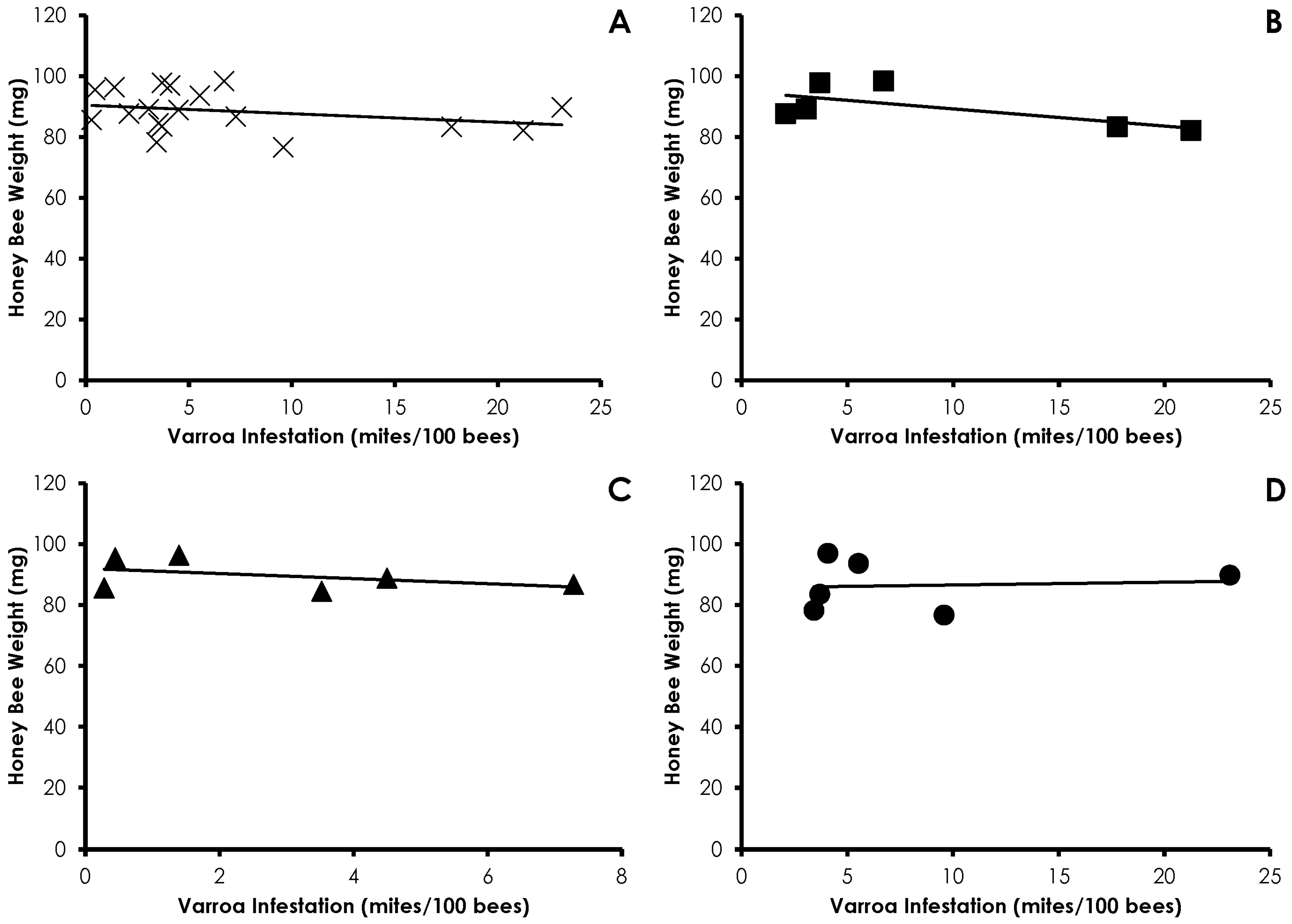
Since Varroa mites may cause devastating losses of honey bees through direct feeding, transmitting diseases, and increasing pathogen susceptibility, chemical and mechanical practices commonly are used to reduce mite infestation. While miticide applications are typically the most consistent and efficacious Varroa mite management method, miticide-induced insecticide synergism in honey bees, and the evolution of resistance in Varroa mites are reasonable concerns. We treated colonies with the miticide amitraz (Apivar®), used IPM practices, or left some colonies untreated, and then measured the effect of different levels of mite infestations on the sensitivity of bees to phenothrin, amitraz, and clothianidin. Sensitivity to all insecticides varied throughout the year among and within treatment groups. Clothianidin sensitivity decreased with increasing mite levels, but no such correlation was seen with phenothrin or amitraz. These results show that insecticide sensitivity is dynamic throughout the 5 months test. In-hive amitraz treatment according to the labeled use did not synergize sensitivity to the pesticides tested and this should alleviate concern over potential synergistic effects. Since IPM practices were largely ineffective at reducing Varroa mite infestation, reliance on chemical methods of Varroa mite management is likely to continue. However, miticides must be used judiciously so the long term effectiveness of these compounds can be maximized. These data demonstrate the complex and dynamic variables that contribute to honey bee colony health. The results underscore the importance of controlling for as many of these variables as possible in order to accurately determine the effects of each of these factors as they act alone or in concert with others.
Keywords: honeybee; Varroa mite; insecticide sensitivity; amitraz honeybee; Varroa mite; insecticide sensitivity; amitraz